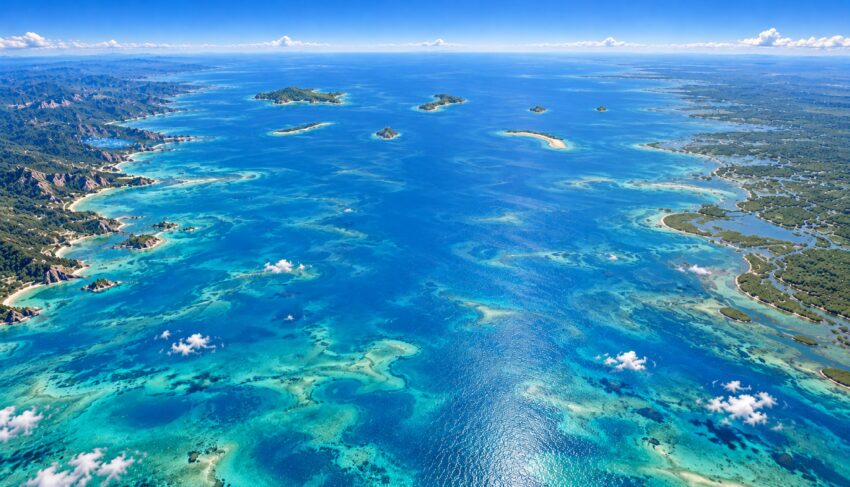
Dieser Artikel ist meine Arbeitsversion zum Fossilbericht der Meeresbewohner, die rund um die Küsten des Nordamerikanischen Kontinents vor 66 Ma lebten. Er wird – sobald alle Lagerstätten durchgearbeitet sind – dem Artikel Die Meere in und um Nordamerika beigefügt.

Vögel:
| Gattung: | Arten: | Formation: | Fundort: | Alter: | Häufigkeit: | Bemerkungen: |
|---|---|---|---|---|---|---|
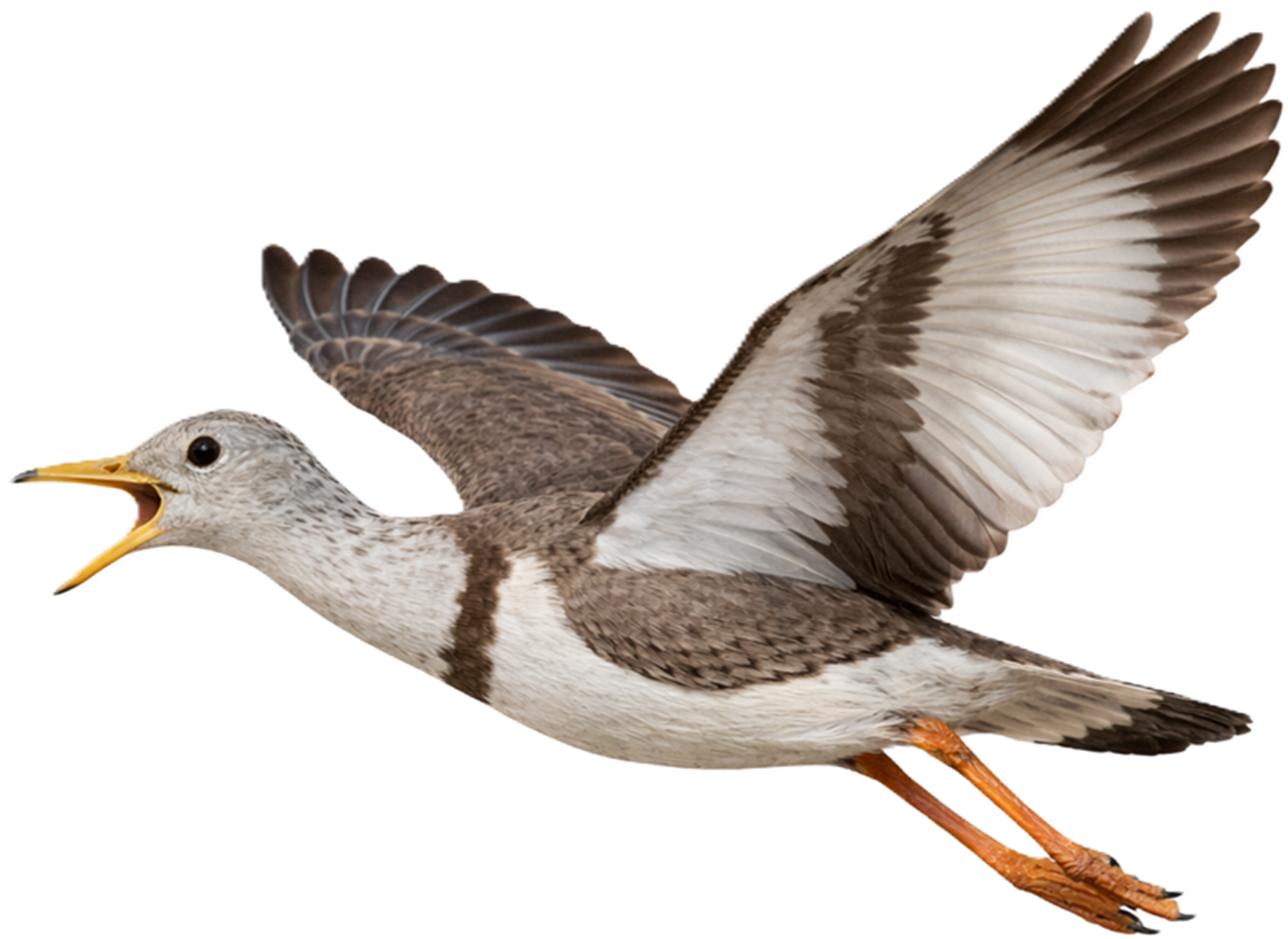 |
„Ornithurine A“1Longrich, N. R., Tokaryk, T. & Field, D. J. (2011). Mass extinction of birds at the Cretaceous–Paleogene (K–Pg) boundary. Proceedings of the National Academy of Sciences, 108(37), 15253–15257. doi:10.1073/pnas.1110395108 | Lance Formation | USA (Wyoming) | 66 Ma | selten | Unbenannter Ornithure; ähnelt Cimolopteryx |
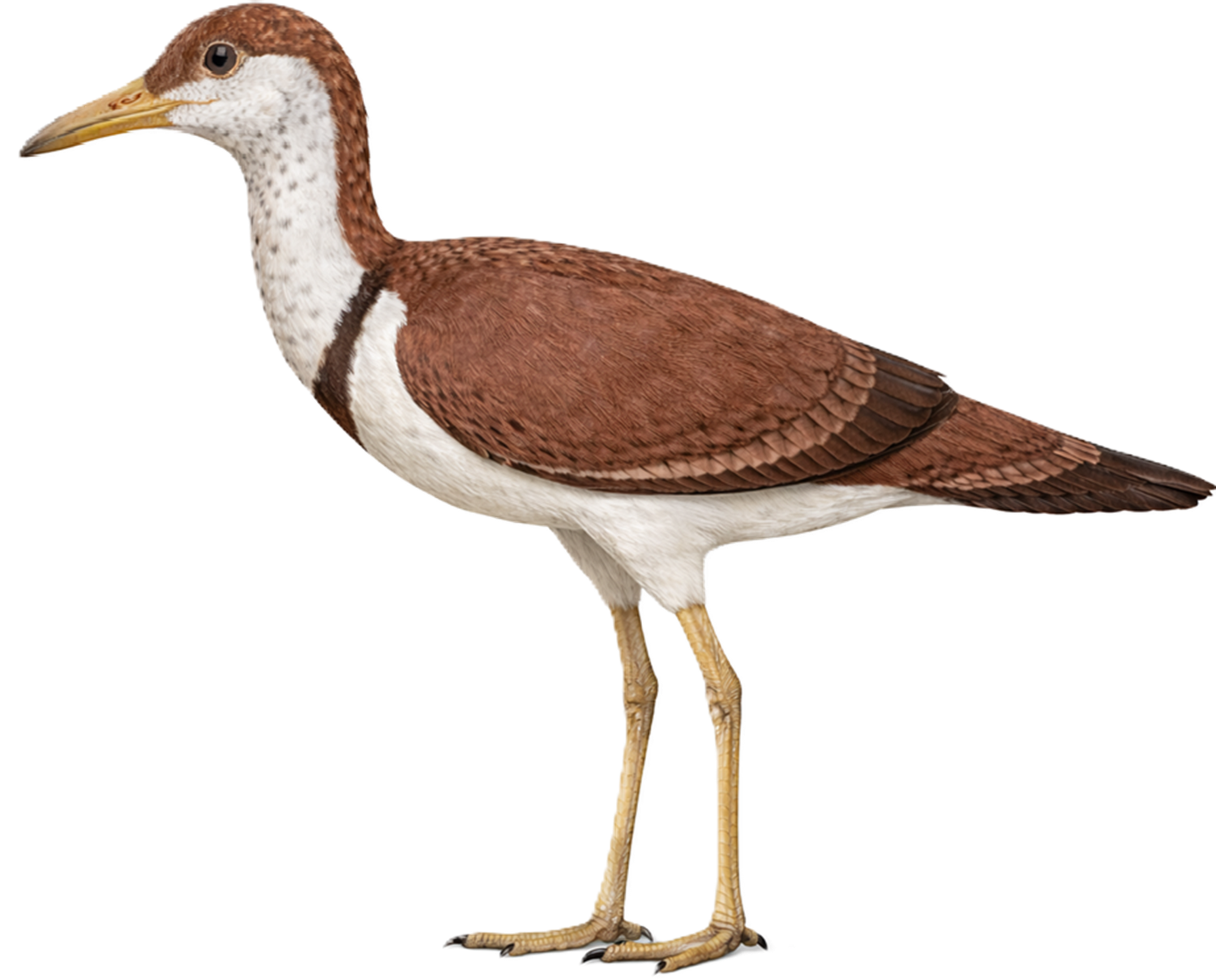 |
„Ornithurine B“2Longrich, N. R., Tokaryk, T. & Field, D. J. (2011). Mass extinction of birds at the Cretaceous–Paleogene (K–Pg) boundary. Proceedings of the National Academy of Sciences, 108(37), 15253–15257. doi:10.1073/pnas.1110395108 | Hell Creek Formation | USA (Montana) | 66 Ma | Einzelfund | Unbenannter Ornithure; ähnelt Cimolopteryx |
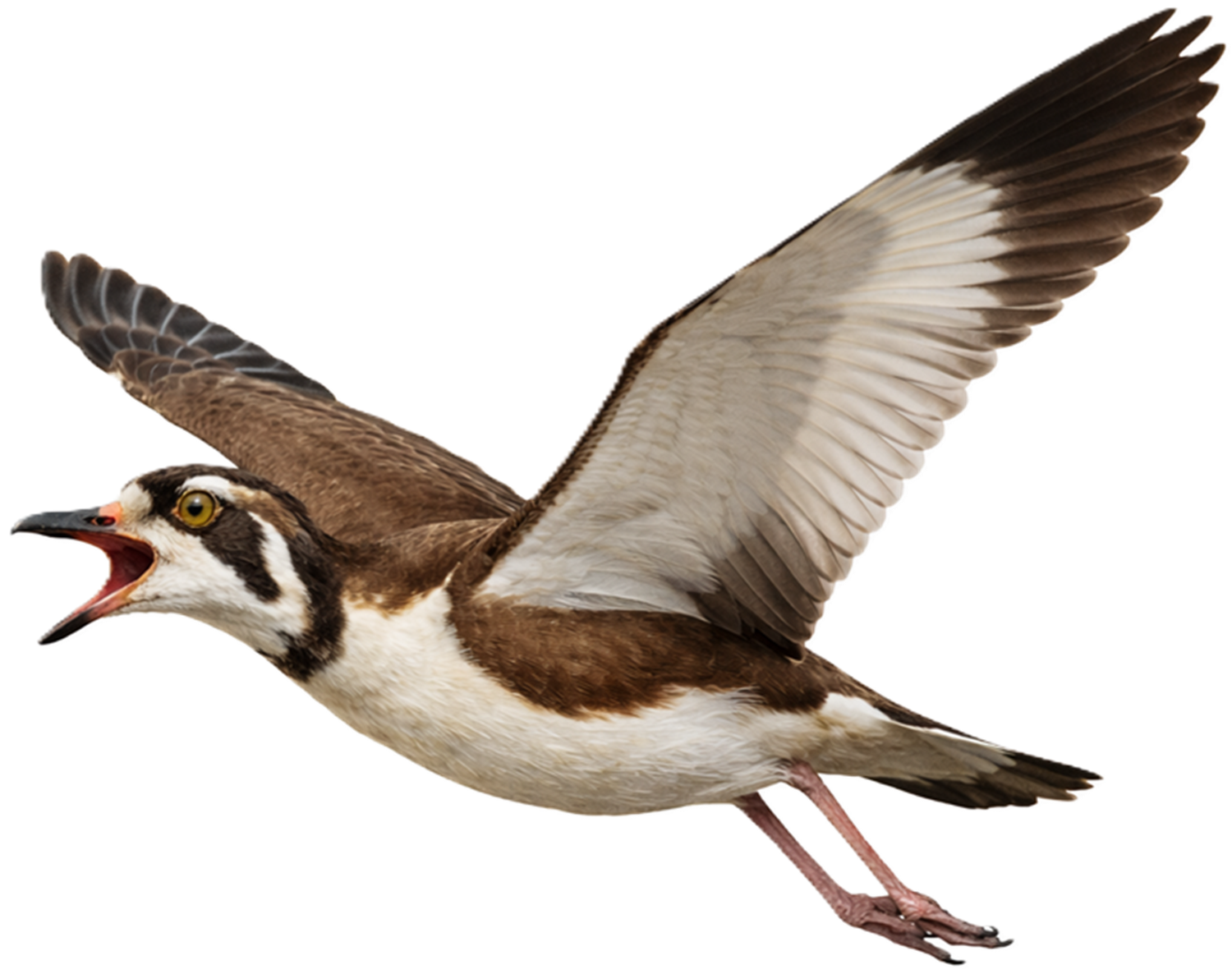 |
„Ornithurine C“3Longrich, N. R., Tokaryk, T. & Field, D. J. (2011). Mass extinction of birds at the Cretaceous–Paleogene (K–Pg) boundary. Proceedings of the National Academy of Sciences, 108(37), 15253–15257. doi:10.1073/pnas.1110395108 | Hell Creek Formation Lance Formation |
USA (Montana, South Dakota, Wyoming) | 66 Ma | häufig | Unbenannter Ornithure |
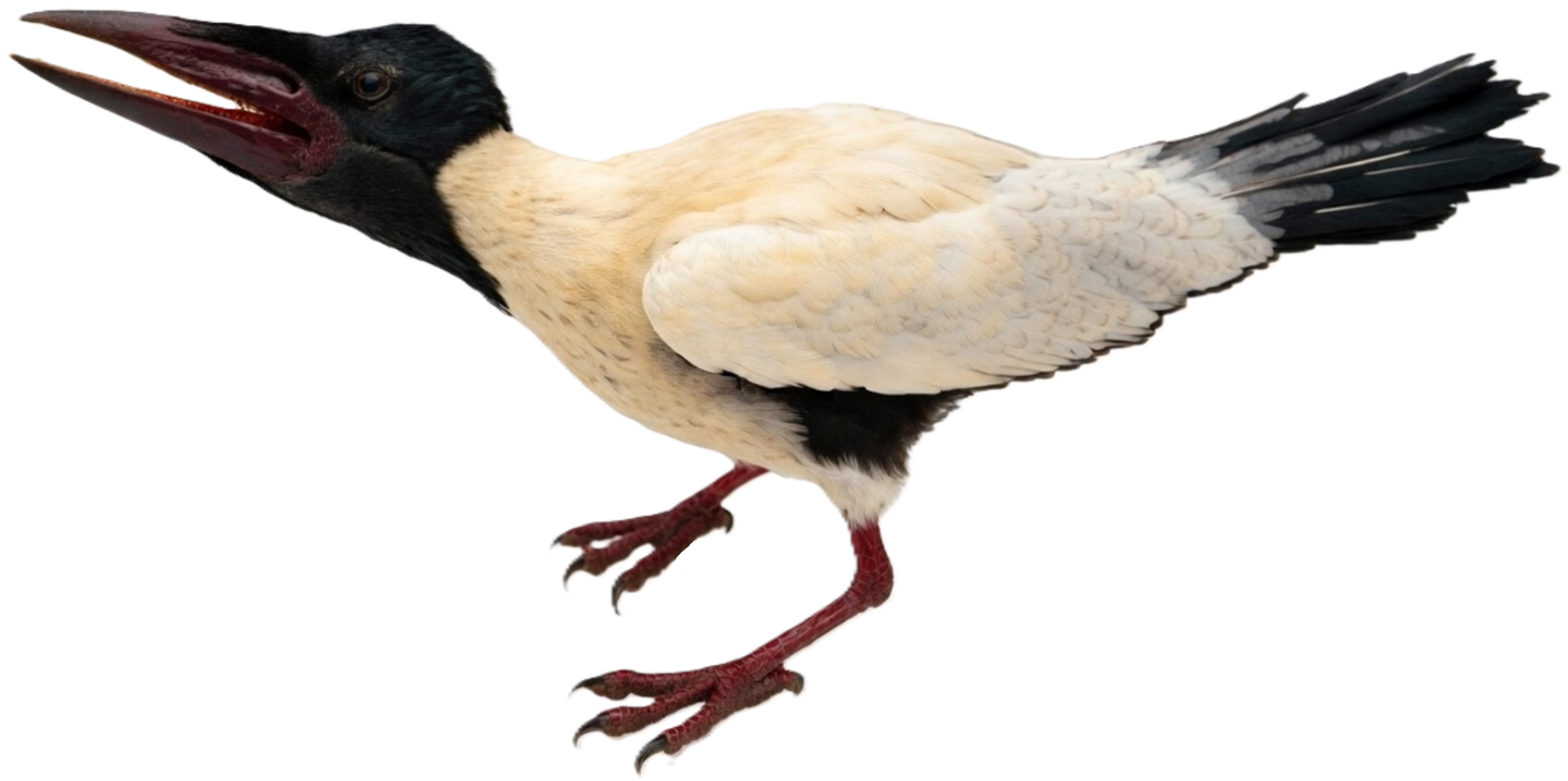 |
„Ornithurine D“4Longrich, N. R., Tokaryk, T. & Field, D. J. (2011). Mass extinction of birds at the Cretaceous–Paleogene (K–Pg) boundary. Proceedings of the National Academy of Sciences, 108(37), 15253–15257. doi:10.1073/pnas.1110395108 | Hell Creek Formation Lance Formation |
USA (Montana, Wyoming) | 66 Ma | häufig | Unbenannter Ornithure; ähnelt Ichthyornis |
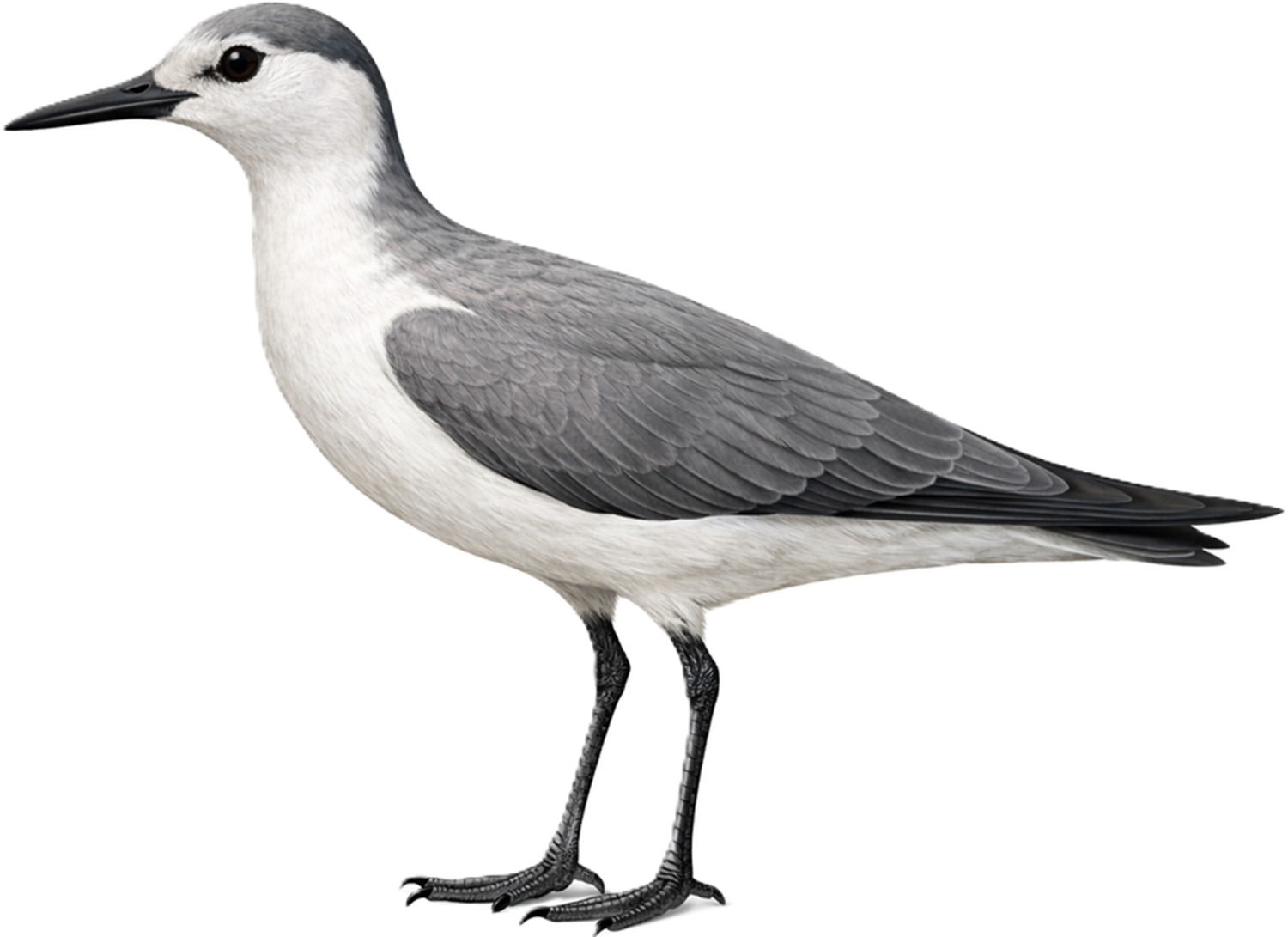 |
„Ornithurine E“5Longrich, N. R., Tokaryk, T. & Field, D. J. (2011). Mass extinction of birds at the Cretaceous–Paleogene (K–Pg) boundary. Proceedings of the National Academy of Sciences, 108(37), 15253–15257. doi:10.1073/pnas.1110395108 | Hell Creek Formation Lance Formation |
USA (Montana, South Dakota, Wyoming) | 66 Ma | häufig | Unbenannter Ornithure |
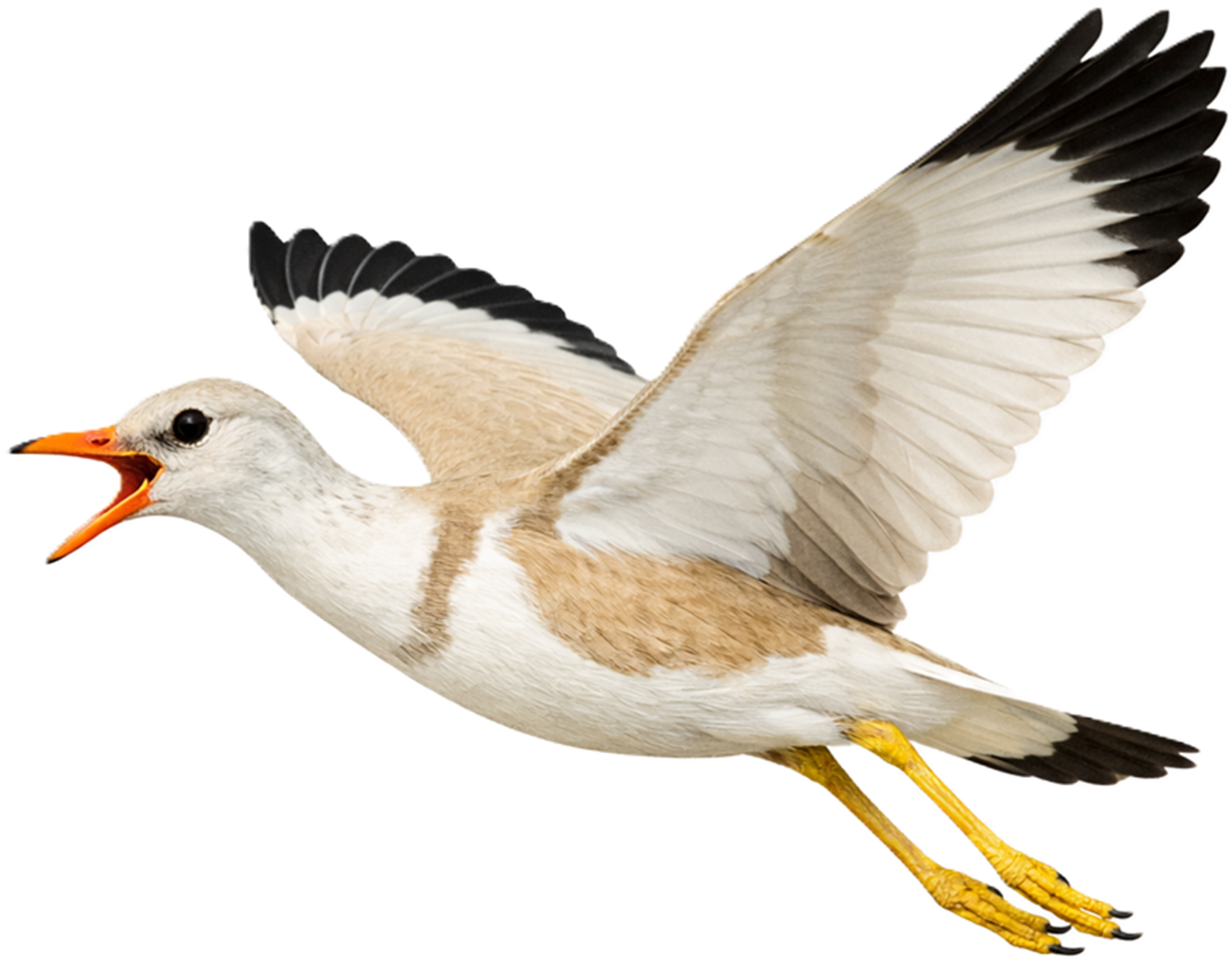 |
„Ornithurine F“6Longrich, N. R., Tokaryk, T. & Field, D. J. (2011). Mass extinction of birds at the Cretaceous–Paleogene (K–Pg) boundary. Proceedings of the National Academy of Sciences, 108(37), 15253–15257. doi:10.1073/pnas.1110395108 | Lance Formation | USA (Wyoming) | 66 Ma | selten | Unbenannter Ornithure |
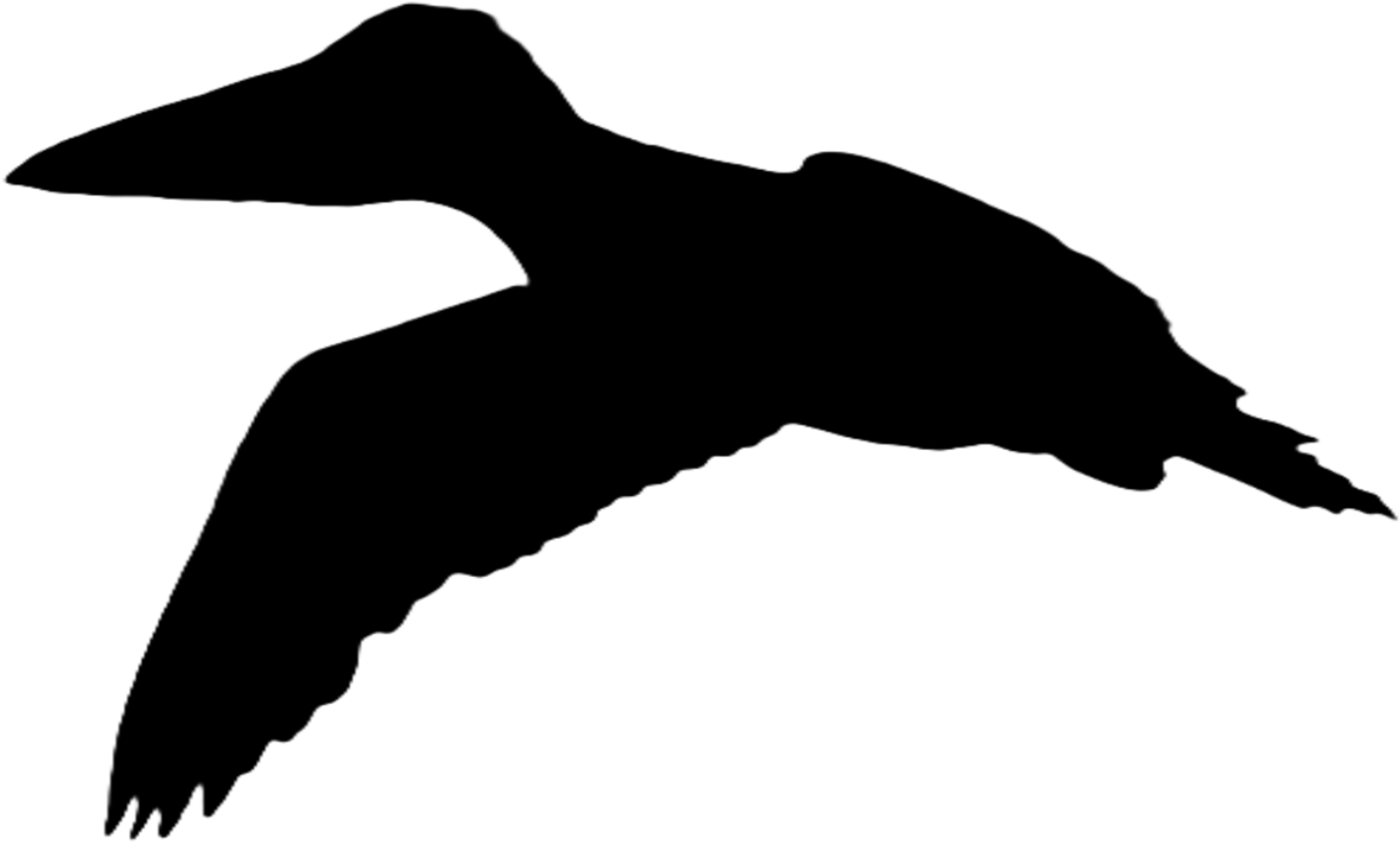 |
Aves indet.7Wroblewski, A. F.-J. (2026). Systematics and biostratigraphy of non-mammalian vertebrates across the K–Pg transition, southern Wyoming, USA. Journal of Paleontology, 100(1), 222–250. doi:10.1017/jpa.2025.101918Hoganson, J.W., Erickson, J.M. & Holland, F.D., Jr. (2007). Amphibian, reptilian, and avian remains from the Fox Hills Formation (Maastrichtian): Shoreline and estuarine deposits of the Pierre Sea in south-central North Dakota. Geological Society of America Special Paper 427: 239–256. doi:10.1130/2007.2427(18)9Ikejiri, T. et al. (2013). An overview of Late Cretaceous vertebrates from Alabama. Bulletin of the Alabama Museum of Natural History 31(1), 46–71. Appendix 1, S. 71; Tabelle 5, S. 55. Prairie Bluff Chalk. Unbestimmter Gruppenbeleg. Keine benannte Vogelart für diese Formationsmeldung. Quelle | Ferris Formation Fox Hills Formation Prairie Bluff Chalk |
USA (Alabama, North Dakota, Wyoming) | 70–66 Ma | häufig | Aves (Vögel) |
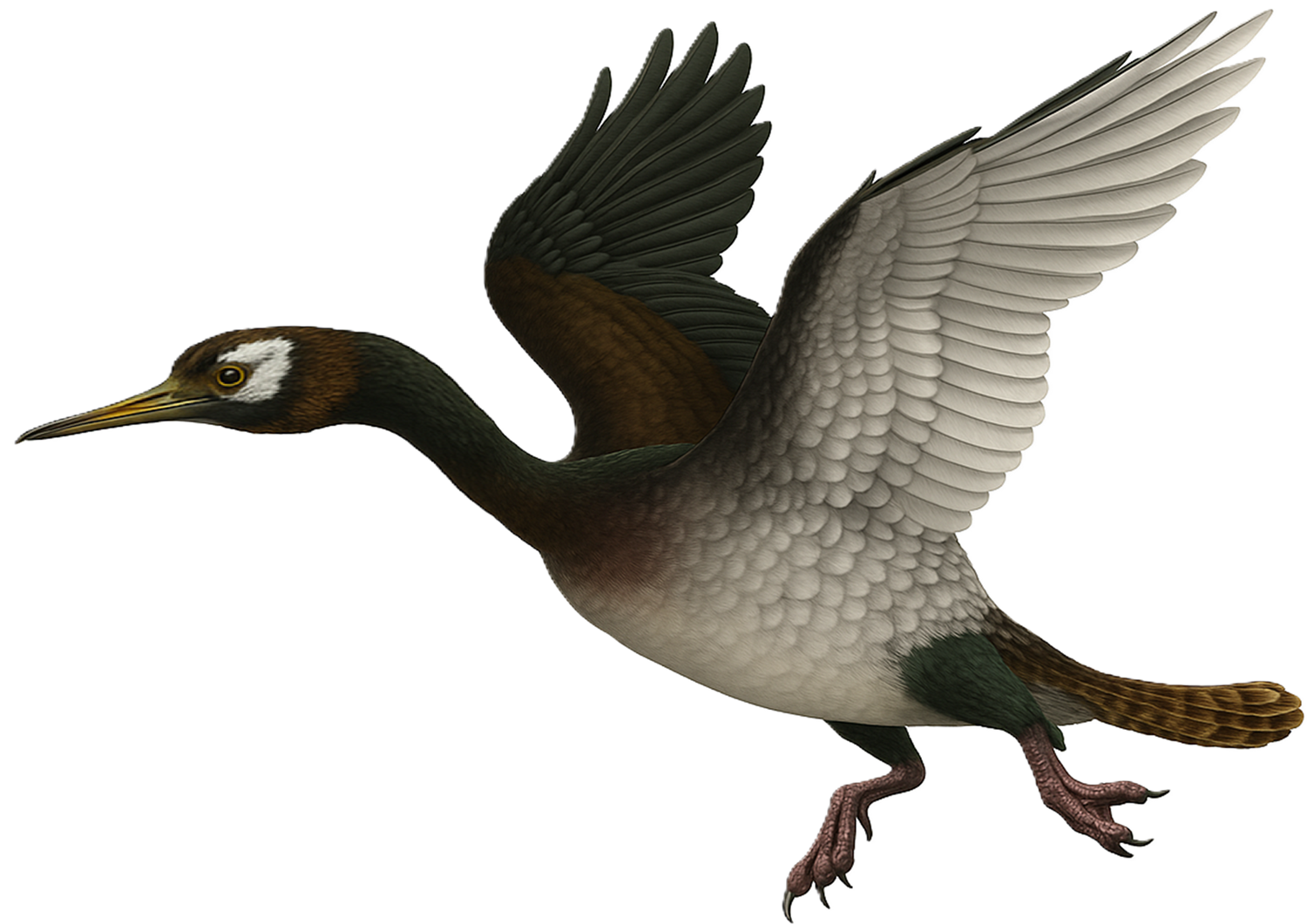 Brodavis |
B. baileyi10Martin, L. D., Kurochkin, E. N. & Tokaryk, T. T. (2012). A new evolutionary lineage of diving birds from the Late Cretaceous of North America and Asia. Palaeoworld, 21, 59–63. doi:10.1016/j.palwor.2012.02.005 B. sp.11Martin, J. E. & Cordes-Person, A. (2007). A new species of the diving bird Baptornis (Ornithurae: Hesperornithiformes) from the lower Pierre Shale Group (Upper Cretaceous) of southwestern South Dakota. Geological Society of America Special Paper, 427, 227–237. doi:10.1130/2007.2427(17)12Martin, L. D., Kurochkin, E. N. & Tokaryk, T. T. (2012). A new evolutionary lineage of diving birds from the Late Cretaceous of North America and Asia. Palaeoworld, 21, 59–63. doi:10.1016/j.palwor.2012.02.005 |
Hell Creek Formation Pierre Shale |
USA (South Dakota) | 82–66 Ma | selten | Brodavidae (Tauchvogel) |
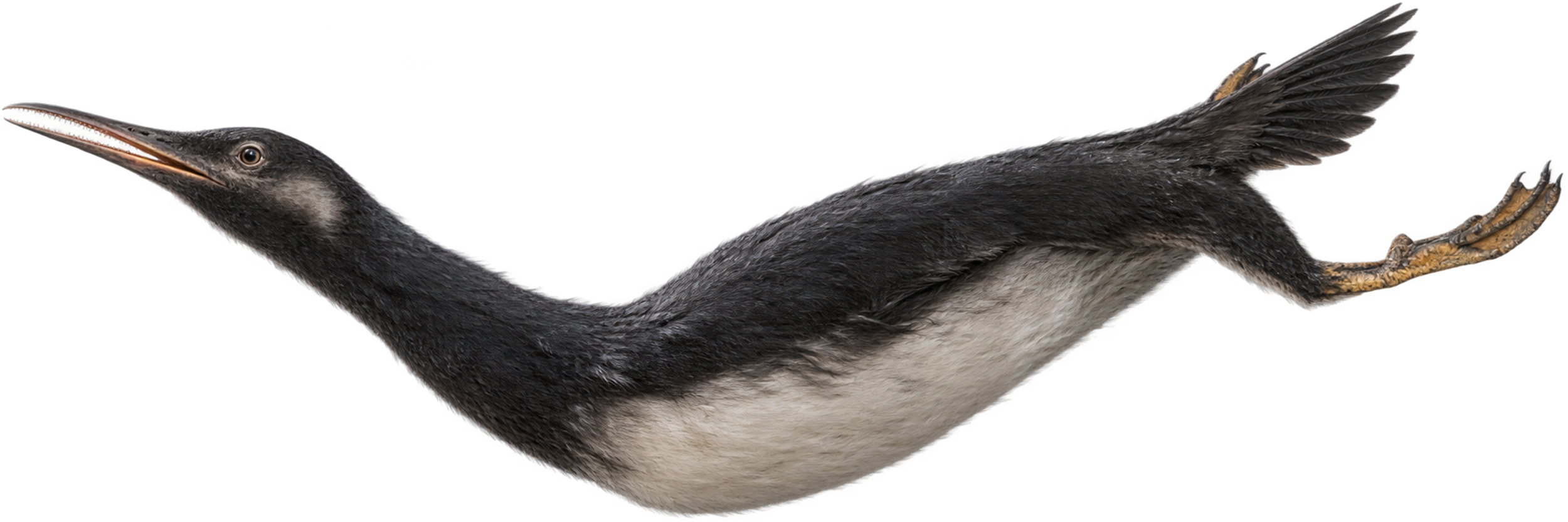 Canadaga |
C. arctica13Currie, P. J. (2001). Sino-Canadian Dinosaur Project / Le Projet dinosaurien sino-canadien. Canadian Journal of Earth Sciences, 38(12), vii–viii. doi:10.1139/e01-08314Demers-Potvin, A. V. et al. (2025). An elusive bird and non-avian dinosaur fauna from the latest Cretaceous (Campanian/Maastrichtian) Kanguk Formation of Bylot Island, Nunavut. Vertebrate Anatomy Morphology Palaeontology, 13, 16–17. | Kanguk Formation | Kanada (Nunavut) | 72–66 Ma | selten | Hesperornithidae |
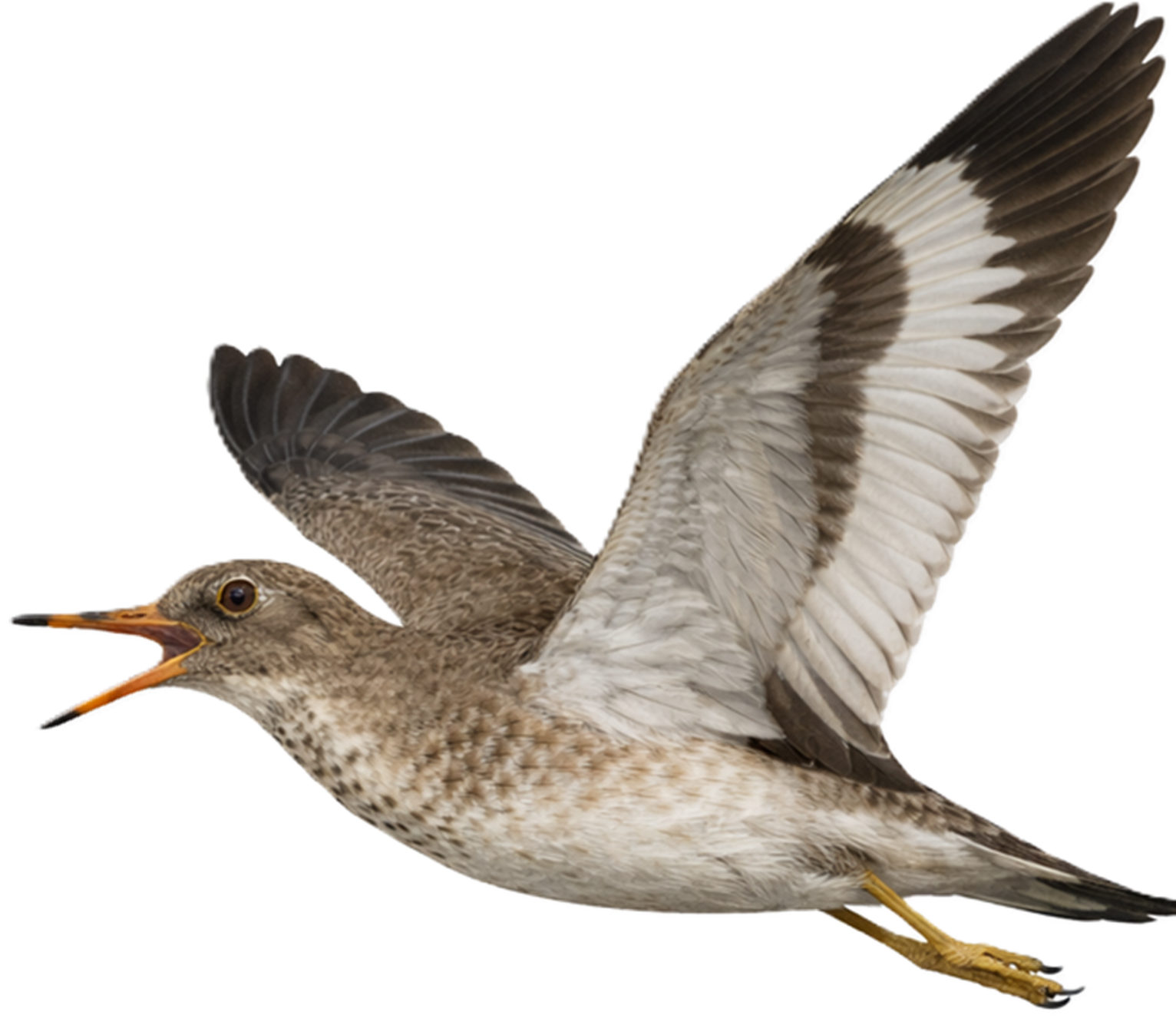 Ceramornis |
C. major15Brodkorb, P. (1963). Birds from the Upper Cretaceous of Wyoming. Proceedings of the XIII International Ornithological Congress, 55–70. | Lance Formation | USA (Wyoming) | 68–66 Ma | Einzelfund | Cimolopterygidae (?) |
 |
Cimolopterygidae indet.16Brodkorb, P. (1963). Birds from the Upper Cretaceous of Wyoming. Proceedings of the XIII International Ornithological Congress, 55–70.17Archibald, J. D. & Clemens, W. A. (1984). Mammal evolution near the Cretaceous–Tertiary boundary. In W. A. Berggren & J. A. Van Couvering (Hrsg.), Catastrophes and Earth History: The New Uniformitarianism, 339–372. Princeton University Press. | Hell Creek Formation Lance Formation |
USA (Montana, Wyoming) | 68–66 Ma | häufig | unbestimmte Cimolopterygidae |
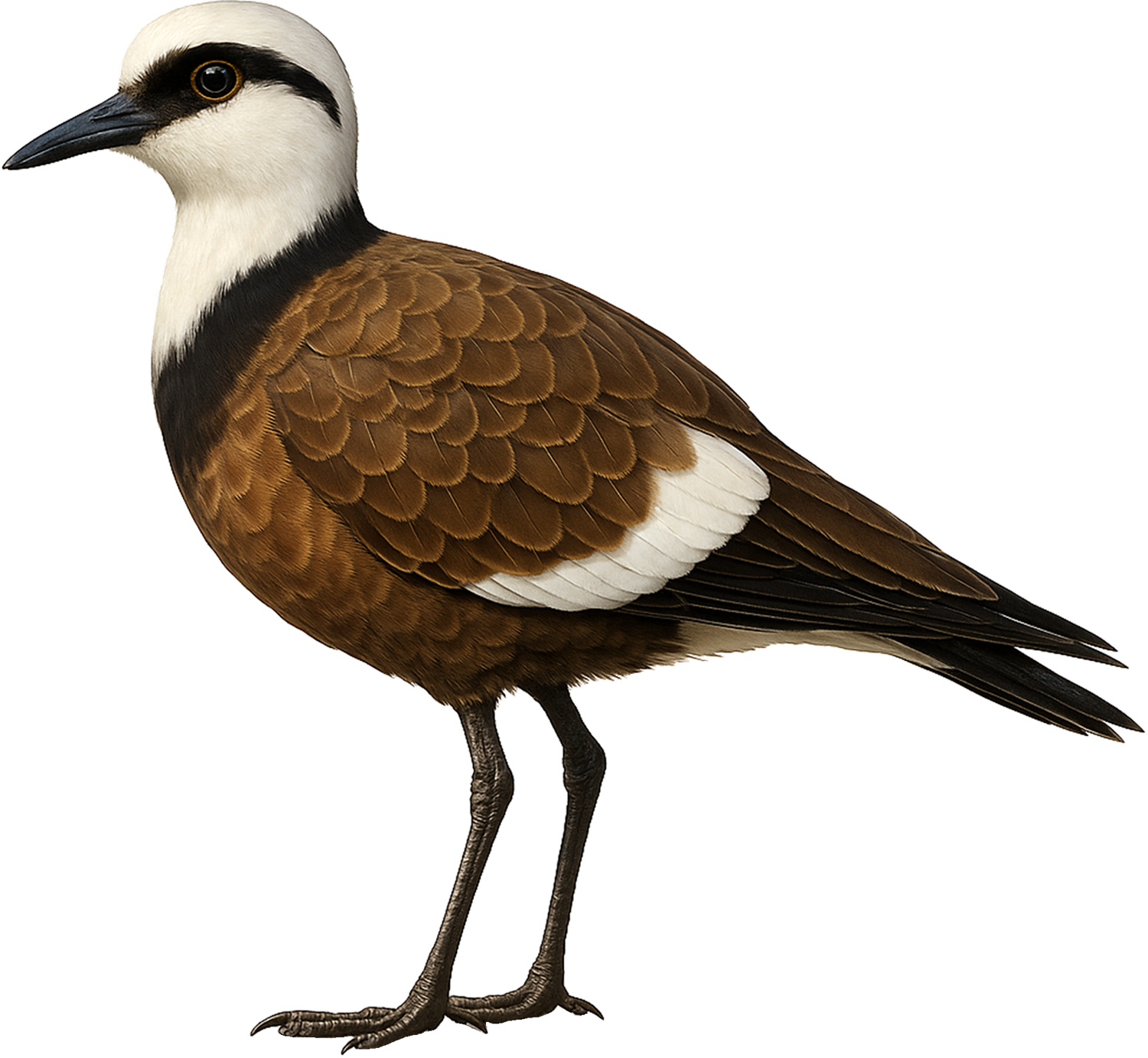 Cimolopteryx |
C. rara18Brodkorb, P. (1963). Birds from the Upper Cretaceous of Wyoming. Proceedings of the XIII International Ornithological Congress, 55–70. | Lance Formation | USA (Wyoming) | 68–66 Ma | Einzelfund | Cimolopterygidae |
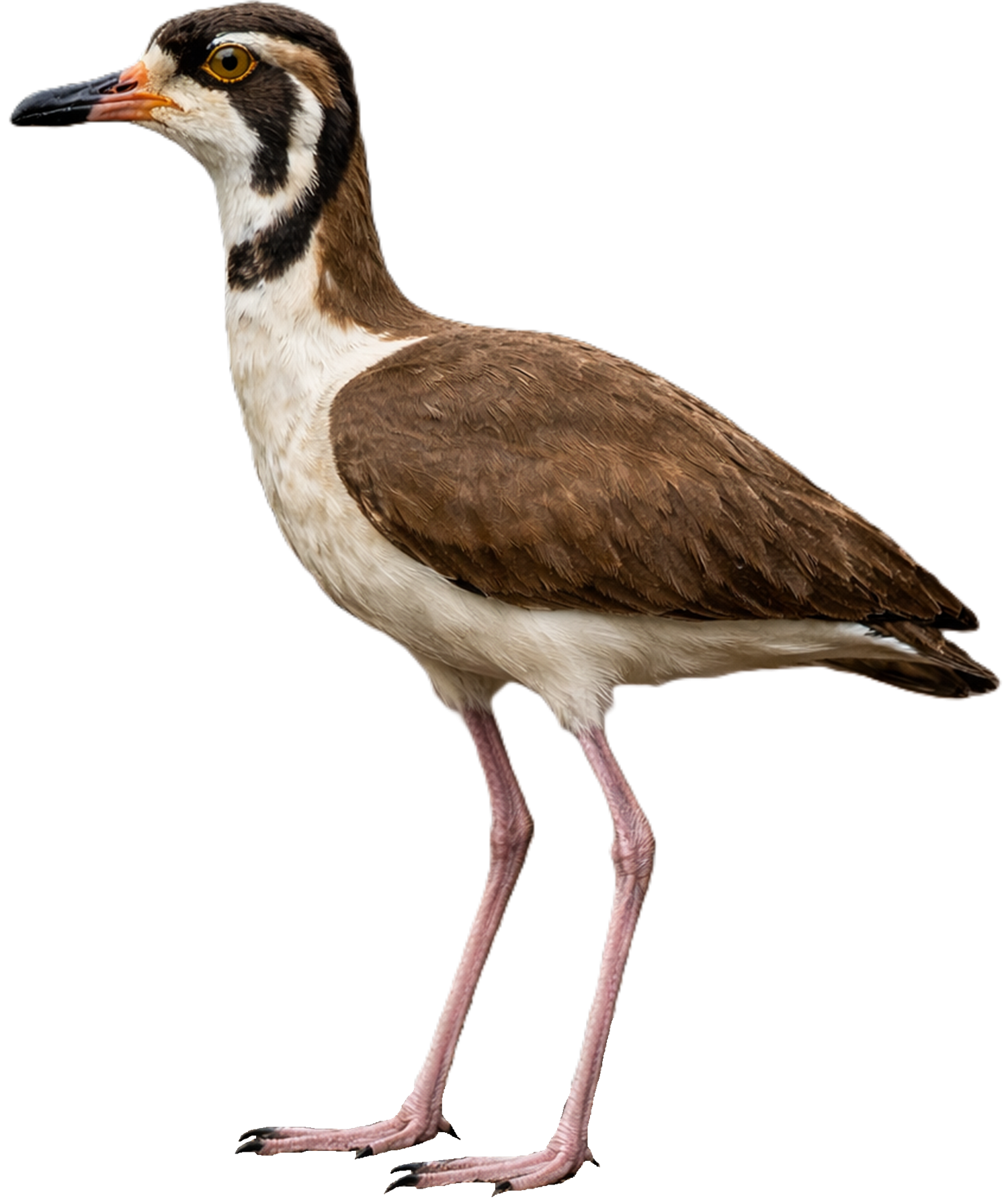 Graculavus |
G. augustus19Hope, S. (1999). A new species of Graculavus from the Cretaceous of Wyoming. Smithsonian Contributions to Paleobiology, 89, 261–266. | Lance Formation | USA (Wyoming) | 68–66 Ma | Einzelfund | Ornithurae |
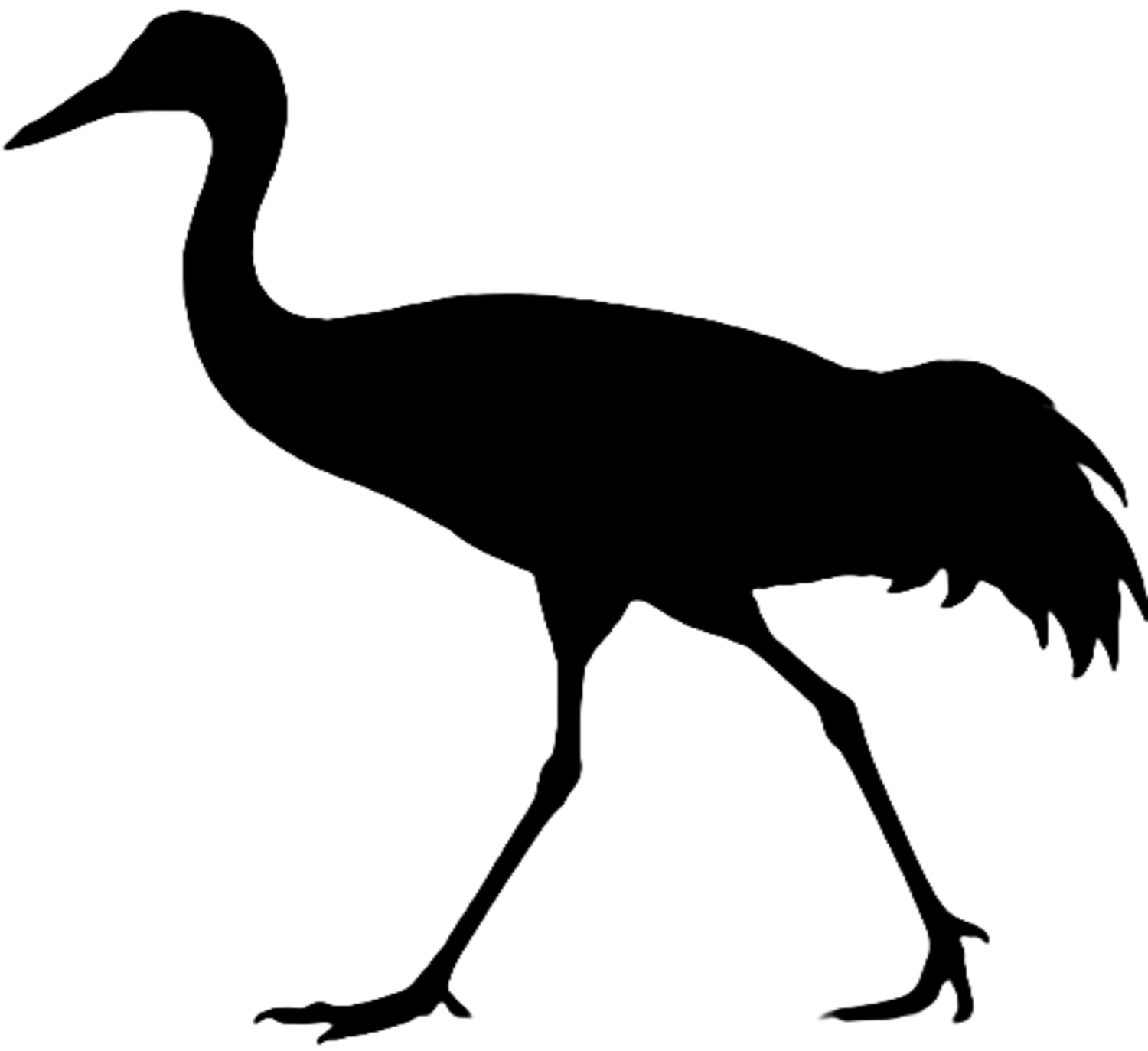 |
Gruimorphae indet.20Hope, S. (2002). The Mesozoic radiation of Neornithes. In L. M. Chiappe & L. M. Witmer (Hrsg.), Mesozoic Birds: Above the Heads of Dinosaurs, 339–388. University of California Press. | Lance Formation | USA (Wyoming) | 68–66 Ma | Einzelfund | unbestimmte Kranichartige |
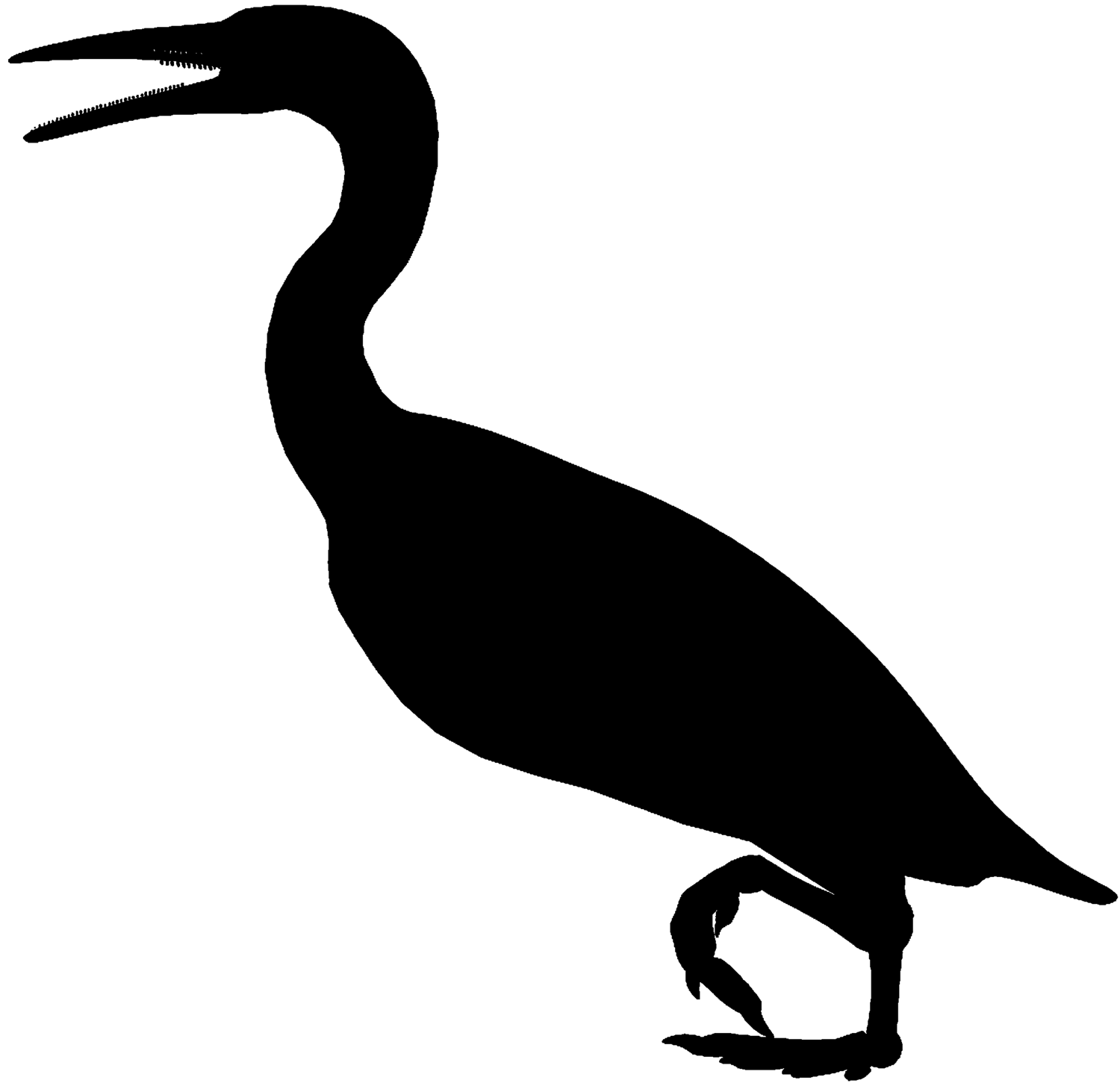 |
Hesperornithes indet.21Longrich, N. R., Tokaryk, T. & Field, D. J. (2011). Mass extinction of birds at the Cretaceous–Paleogene (K–Pg) boundary. Proceedings of the National Academy of Sciences, 108(37), 15253–15257. doi:10.1073/pnas.111039510822Demers-Potvin, A. V. et al. (2025). An elusive bird and non-avian dinosaur fauna from the latest Cretaceous (Campanian/Maastrichtian) Kanguk Formation of Bylot Island, Nunavut. Vertebrate Anatomy Morphology Palaeontology, 13, 16–17. | Hell Creek Formation Kanguk Formation |
Kanada (Nunavut); USA (Montana) | 68–66 Ma | häufig | unbestimmte Hesperornithes |
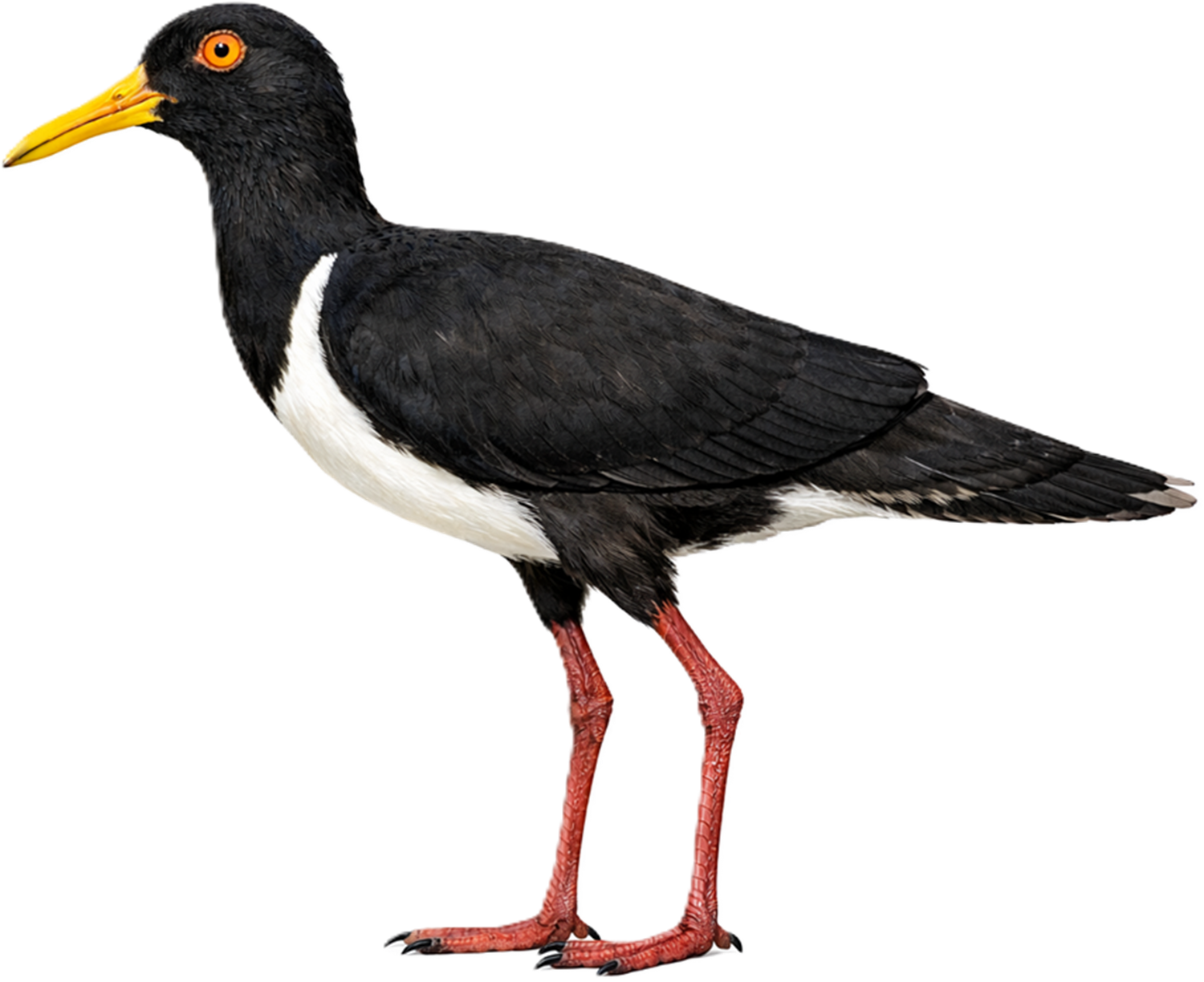 Lamarqueavis |
L. minima23Brodkorb, P. (1963). Birds from the Upper Cretaceous of Wyoming. Proceedings of the XIII International Ornithological Congress, 55–70. L. petra24Hope, S. (2002). The Mesozoic radiation of Neornithes. In L. M. Chiappe & L. M. Witmer (Hrsg.), Mesozoic Birds: Above the Heads of Dinosaurs, 339–388. University of California Press. |
Lance Formation | USA (Wyoming) | 68–66 Ma | selten | Cimolopterygidae; L. minima: historisch als Cimolopteryx minima geführt; L. petra: historisch als Cimolopteryx petra geführt |
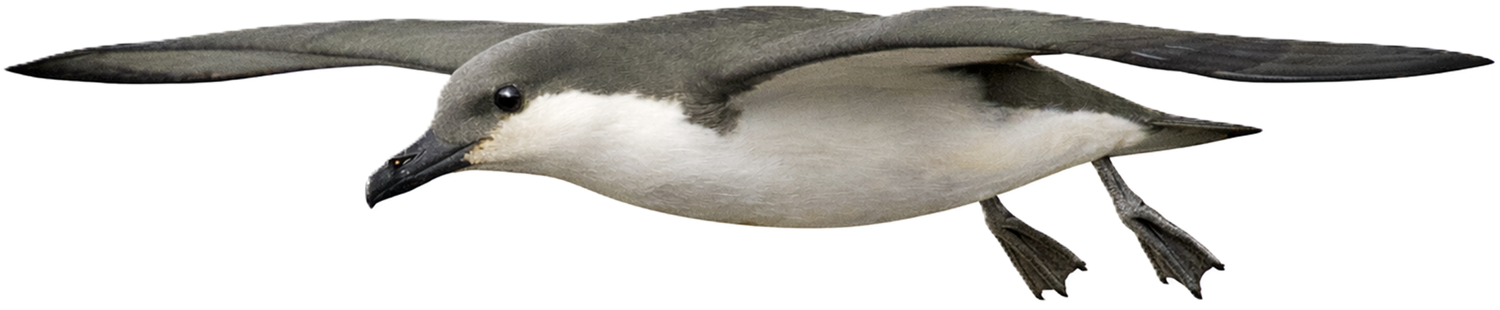 Lonchodytes |
L. estesi25Brodkorb, P. (1963). Birds from the Upper Cretaceous of Wyoming. Proceedings of the XIII International Ornithological Congress, 55–70. | Lance Formation | USA (Wyoming) | 68–66 Ma | Einzelfund | Ornithurae |
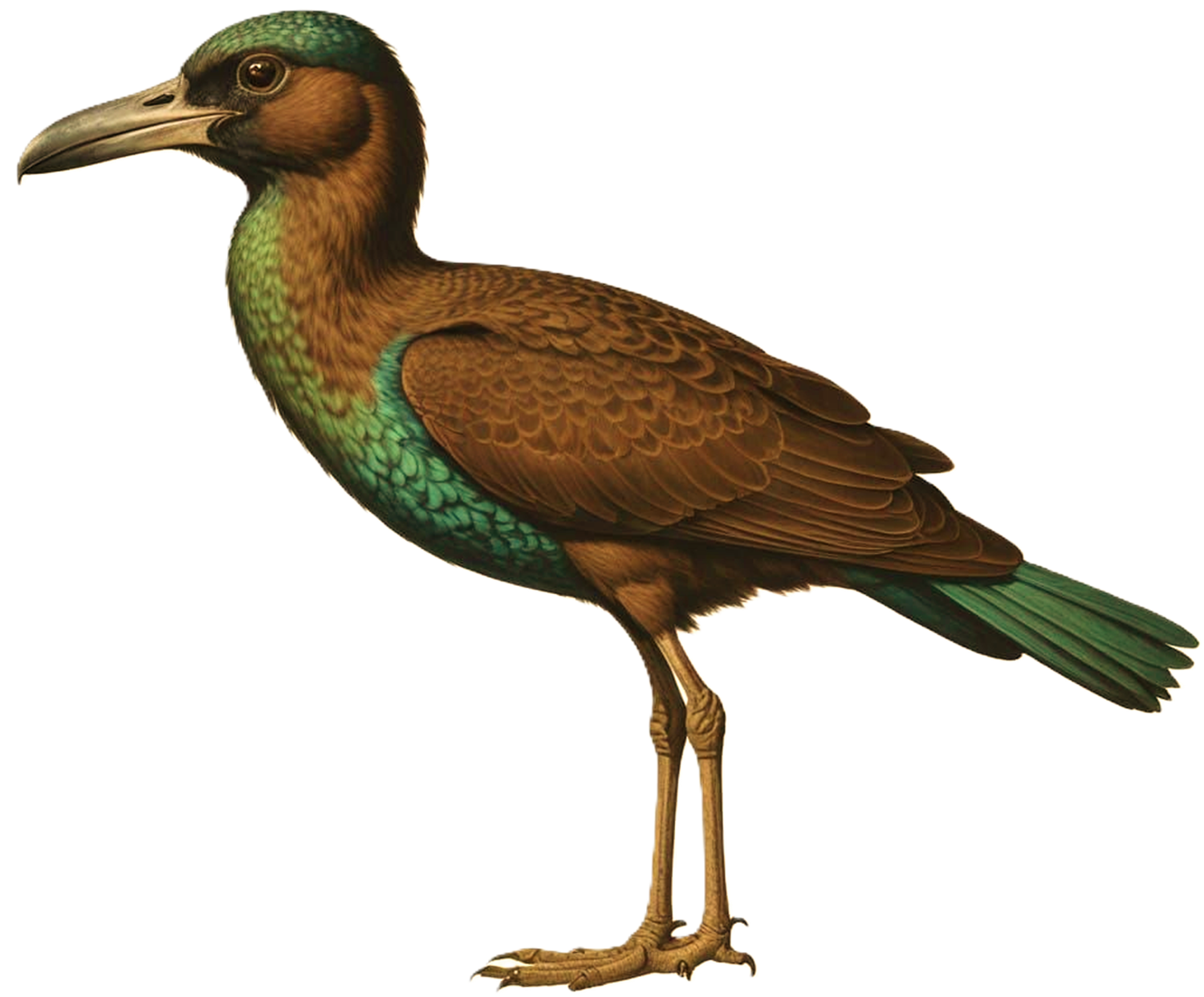 Palintropus |
P. retusus26Shufeldt, R. W. (1915). Fossil birds in the Marsh Collection of Yale University. Transactions of the Connecticut Academy of Arts and Sciences, 19, 1–110. | Lance Formation | USA (Wyoming) | 68–66 Ma | Einzelfund | Ornithuromorpha |
 |
Phalacrocoracidae indet. (?)27Hope, S. (2002). The Mesozoic radiation of Neornithes. In L. M. Chiappe & L. M. Witmer (Hrsg.), Mesozoic Birds: Above the Heads of Dinosaurs, 339–388. University of California Press. | Lance Formation | USA (Wyoming) | 68–66 Ma | Einzelfund | unbestimmte Kormorane |
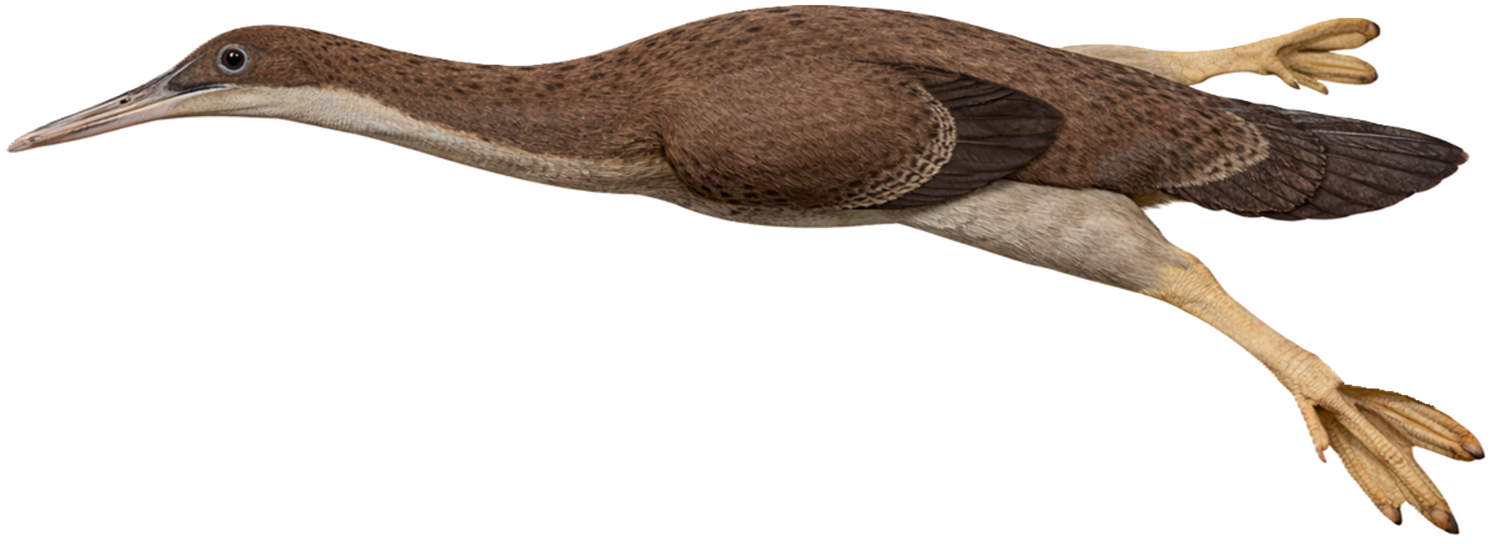 Potamornis |
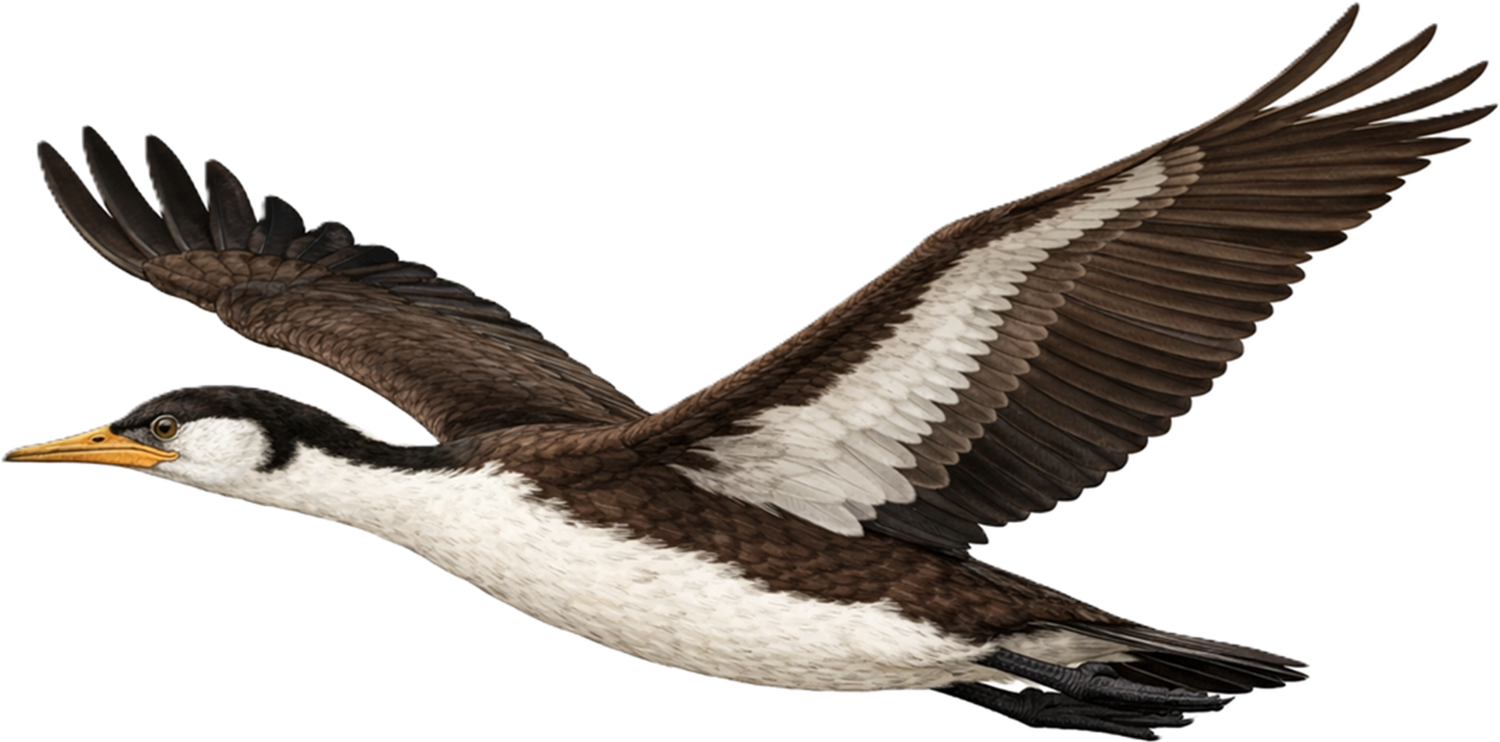
P. skutchi28Elzanowski, A., Paul, G. S. & Stidham, T. A. (2001). An avian quadrate from the Late Cretaceous Lance Formation of Wyoming. Journal of Vertebrate Paleontology, 20(4), 712–719. doi:10.1671/0272-4634(2000)020[0712:AAQFTL]2.0.CO;2 | Lance Formation | USA (Wyoming) | 68–66 Ma | selten | Hesperornithes |
 |
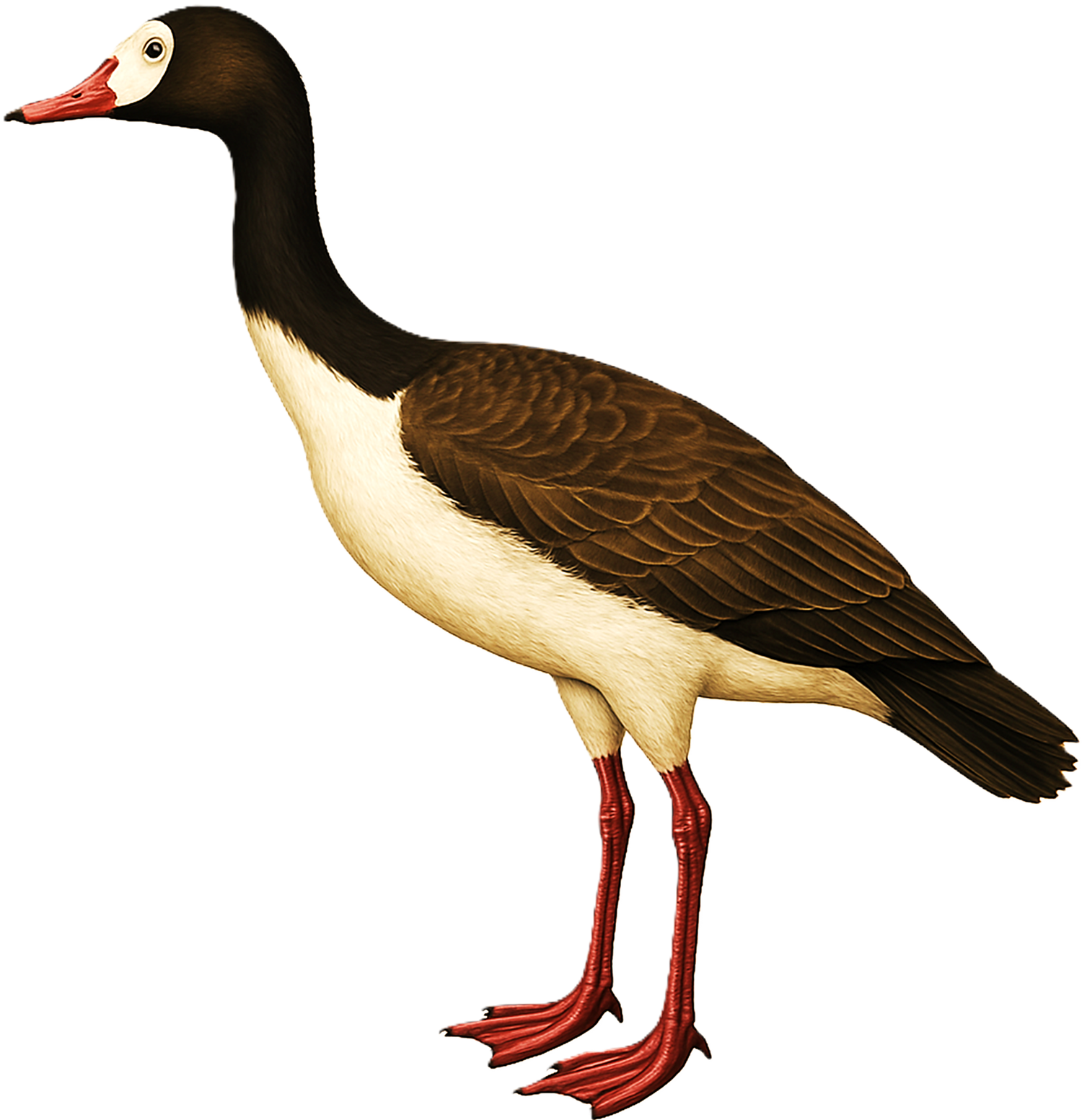
Presbyornithidae indet. (?)29Hope, S. (2002). The Mesozoic radiation of Neornithes. In L. M. Chiappe & L. M. Witmer (Hrsg.), Mesozoic Birds: Above the Heads of Dinosaurs, 339–388. University of California Press. | Lance Formation | USA (Wyoming) | 68–66 Ma | selten | unbestimmte Presbyornithidae |
 Styginetta |
„S. lofgreni„30Stidham, T. A. (2001). The origin and ecological diversification of modern birds: Evidence from the extinct wading ducks, Presbyornithidae (Neornithes: Anseriformes). Ph.D. dissertation, University of California, Berkeley, 514 S. | Hell Creek Formation | USA (Montana) | 68–66 Ma | selten | Presbyornithidae (?) |
 Torotix |
T. clemensi31Brodkorb, P. (1963). Birds from the Upper Cretaceous of Wyoming. Proceedings of the XIII International Ornithological Congress, 55–70. | Lance Formation | USA (Wyoming) | 68–66 Ma | Einzelfund | Ornithurae; möglicherweise mit Pelikanen verwandt |
Aus der Hell Creek- und Lance Formation sind einige Vogelfossilien bekannt, die bereits gut untersucht wurden. Leider ist das Material aber so dürftig, dass sich eine genaue systematische Zuordnung oft schwierig erweist, weshalb die Autoren auch auf offizielle Benennungen verzichtet haben. Statt eines Namens sind diese Vögel als „Enantiornithes A & B“ sowie als „Ornithurae A-F“ bekannt. Es dürfte sich bei jedem um mindestens eine eigene Art handeln.32Chiappe, L. M. & Walker, C. A. (2002). Skeletal morphology and systematics of the Cretaceous Euenantiornithes (Ornithothoraces: Enantiornithes). In L. M. Chiappe & L. M. Witmer (Hrsg.), Mesozoic Birds: Above the Heads of Dinosaurs, 240–267. University of California Press.33Longrich, N. R., Tokaryk, T. & Field, D. J. (2011). Mass extinction of birds at the Cretaceous–Paleogene (K–Pg) boundary. Proceedings of the National Academy of Sciences, 108(37), 15253–15257. doi:10.1073/pnas.1110395108
Ein weiterer Hell Creek-Vogel, der noch auf seinen Namen wartet, ist „Styginetta lofgreni„. Die Art wurde bislang nur in einer Doktorarbeit von Thomas A. Stidham im Jahr 2001 benannt, die jedoch nicht offiziell publiziert worden ist.34Stidham, T. A. (2001). The origin and ecological diversification of modern birds: Evidence from the extinct wading ducks, Presbyornithidae (Neornithes: Anseriformes). Ph.D. dissertation, University of California, Berkeley, 514 S. Eine Zuordnung zu den Presbyornithidae und damit zu einer modernen Linie der Gänsevögel ist bislang noch nicht durch eine überprüfbare wissenschaftliche Beschreibung abgesichert, gilt jedoch als wahrscheinlich.
Brodavis ist auch aus dem Pierre Shale belegt, aber bislang nur in Schichten aus dem Campanium. Da die Gattung aber auch in anderen Lagerstätten aus dem späten Maastrichtium vorkam, ist ein Fortbestehen bis zur K-Pg-Grenze auch in allen Küstenregionen des Pierre Seaway sehr wahrscheinlich.35Martin, J. E. & Cordes-Person, A. (2007). A new species of the diving bird Baptornis (Ornithurae: Hesperornithiformes) from the lower Pierre Shale Group (Upper Cretaceous) of southwestern South Dakota. Geological Society of America Special Paper, 427, 227–237. doi:10.1130/2007.2427(17). Die ursprünglich als Baptornis varneri beschriebene Art wurde später Brodavis zugeordnet: Martin, L. D., Kurochkin, E. N. & Tokaryk, T. T. (2012). A new evolutionary lineage of diving birds from the Late Cretaceous of North America and Asia. Palaeoworld, 21, 59–63. doi:10.1016/j.palwor.2012.02.005.
Dinosaurier:
| Gattung: | Arten: | Formation: | Fundort: | Alter: | Häufigkeit: | Bemerkungen: |
|---|---|---|---|---|---|---|
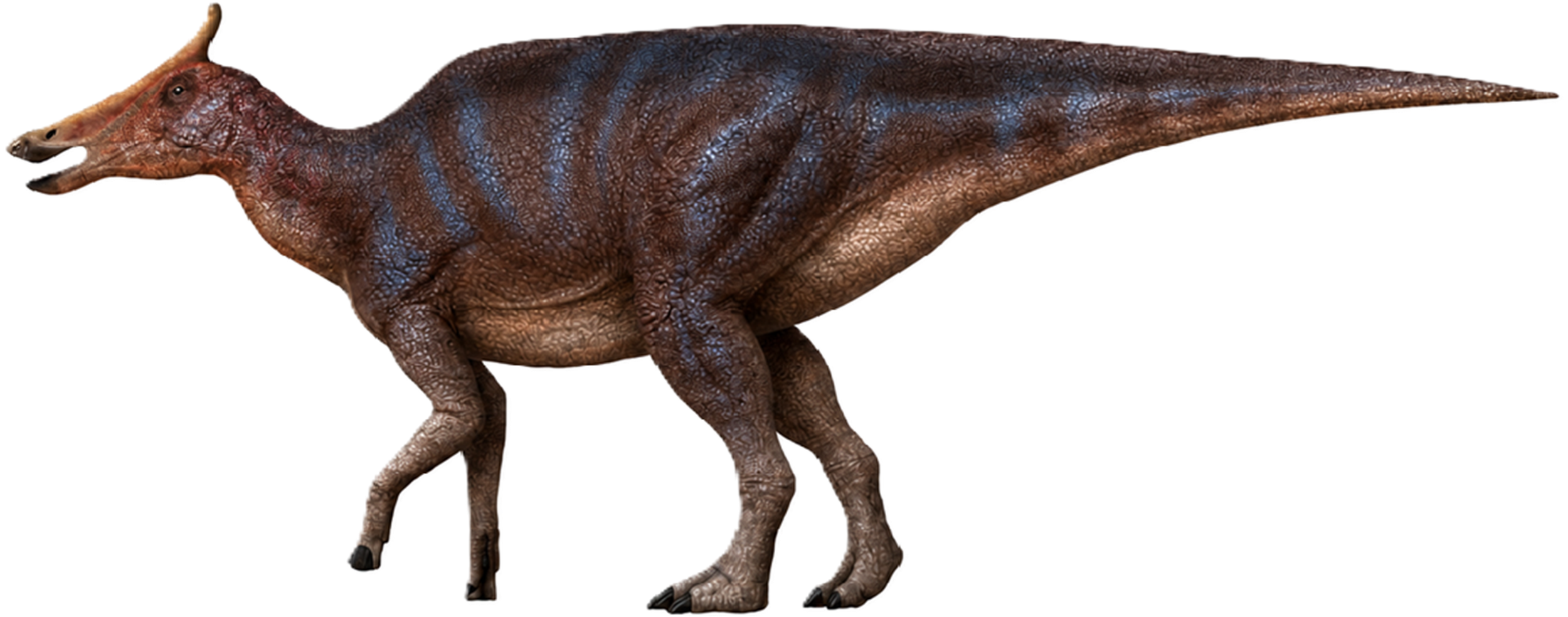 Augustynolophus |
A. morrisi36Prieto-Márquez, A. et al. (2015). The late-surviving “duck-billed” dinosaur Augustynolophus from the upper Maastrichtian of western North America and crest evolution in Saurolophini. Geological Magazine, 152(2), 225–241. doi:10.1017/S0016756814000284 | Moreno Formation | USA (Kalifornien) | 68–66 Ma | selten | Hadrosauridae |
 |
Ceratopsidae indet.37Farke, A. A. & Phillips, G. E. (2017). The first reported ceratopsid dinosaur from eastern North America (Owl Creek Formation, Upper Cretaceous, Mississippi, USA). PeerJ 5, e3342. doi:10.7717/peerj.334238Waage, K.M. (1968). The Type Fox Hills Formation, Cretaceous (Maestrichtian), South Dakota. Part 1. Stratigraphy and Paleoenvironments. Bulletin of the Peabody Museum of Natural History 27. Quelle39Chamberlain, J.A., Jr., Knoll, K. & Sertich, J.J.W. (2023). Non-avian theropod phalanges from the marine Fox Hills Formation (Maastrichtian), western South Dakota, USA. PeerJ 11: e14665. doi:10.7717/peerj.14665 | Fox Hills Formation Owl Creek Formation |
USA (Mississippi, South Dakota) | 68–66 Ma | selten | Ceratopsidae (Horndinosaurier) |
 |
Dinosauria indet.40Ikejiri, T. et al. (2013). An overview of Late Cretaceous vertebrates from Alabama. Bulletin Alabama Museum of Natural History, 31(1), 46–71. Quelle | Ripley Formation | USA (Alabama) | 75–70 Ma | nicht quantifiziert | unbestimmte Dinosaurier |
 |
Dromaeosauridae indet.41Hoganson, J.W., Erickson, J.M. & Holland, F.D., Jr. (2007). Amphibian, reptilian, and avian remains from the Fox Hills Formation (Maastrichtian): Shoreline and estuarine deposits of the Pierre Sea in south-central North Dakota. Geological Society of America Special Paper 427: 239–256. doi:10.1130/2007.2427(18)42Fix, M. F. & Darrough, G. E. (2004). Dinosauria and associated vertebrate fauna of the Late Cretaceous Chronister site of southeast Missouri. Geological Society of America Abstracts with Programs, 36(3), 14. Quelle | Fox Hills Formation, Ripley Formation | USA (North Dakota, Missouri) | 75–68 Ma (?) | häufig | unbestimmte „Raptoren“ |
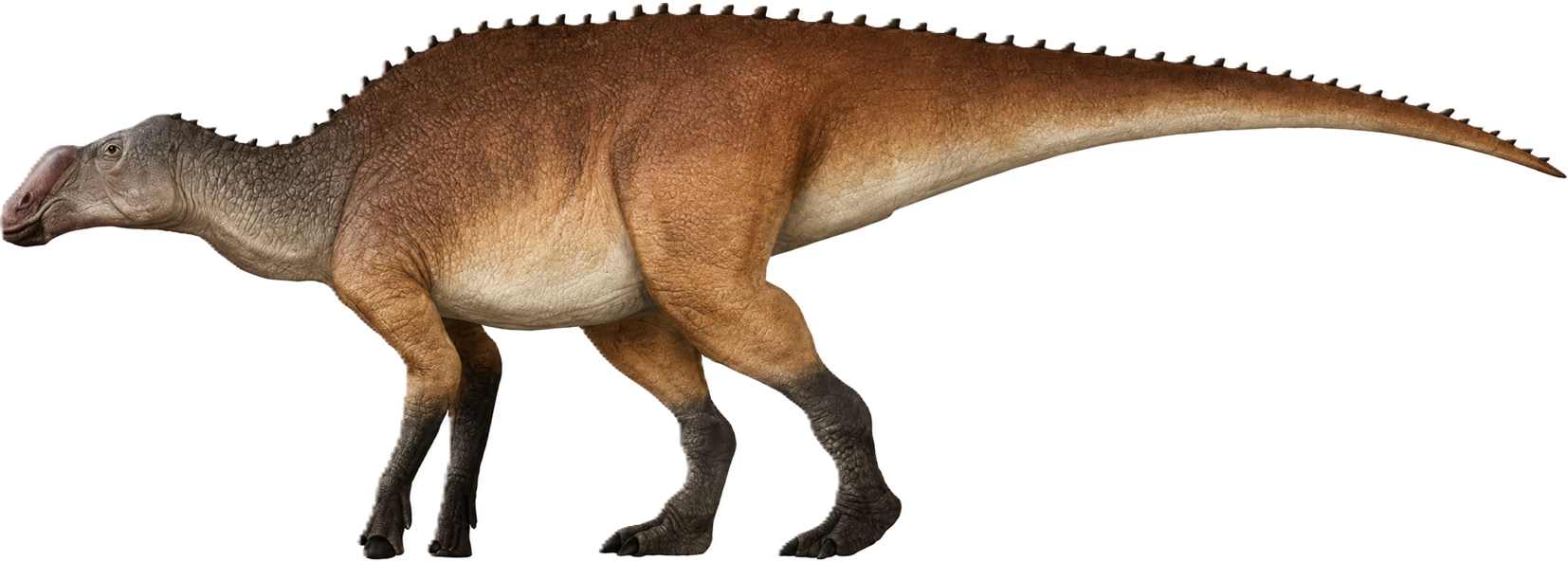 Gryposaurus |
G. cf. sp.43Parris, D. C. (2006). Chronister site investigations: New information on the Cretaceous of Missouri. In: Field Trip Guidebook – 2006 Association of Missouri Geologists Meeting, 9–13. Quelle | Ripley Formation | USA (Missouri) | 75–70 Ma (?) | nicht quantifiziert | Hadrosauridae (Entenschnabeldinosaurier) |
 |
Hadrosauridae indet.44Vavrek, M. J., Hills, L. V. & Currie, P. J. (2014). A hadrosaurid (Dinosauria: Ornithischia) from the Late Cretaceous (Campanian) Kanguk Formation of Axel Heiberg Island, Nunavut, Canada, and its ecological and geographical implications. Arctic, 67(1), 1–9. doi:10.14430/arctic436245Carpenter, K. (2006). Comparative vertebrate taphonomy of the Pembina and Sharon Springs members (Middle Campanian) of the Pierre Shale, Western Interior. Paludicola, 5(4), 125–149. Originalpublikation46Waage, K.M. (1968). The Type Fox Hills Formation, Cretaceous (Maestrichtian), South Dakota. Part 1. Stratigraphy and Paleoenvironments. Bulletin of the Peabody Museum of Natural History 27. Quelle47Chamberlain, J.A., Jr., Knoll, K. & Sertich, J.J.W. (2023). Non-avian theropod phalanges from the marine Fox Hills Formation (Maastrichtian), western South Dakota, USA. PeerJ 11: e14665. doi:10.7717/peerj.1466548Ikejiri, T. et al. (2013). An overview of Late Cretaceous vertebrates from Alabama. Bulletin Alabama Museum of Natural History, 31(1), 46–71. Quelle49Brownstein, C. D. (2018). The biogeography and ecology of the Cretaceous non-avian dinosaurs of Appalachia. Palaeontologia Electronica 21.1.5A, 1–56. Prairie Bluff Chalk. Publizierter Wirbelnachweis. Brownstein (2018), Abschnitt Prairie Bluff Formation, unter Bezug auf Ebersole & King (2011) und Phillips (pers. Mitt.). Keine Artbestimmung. doi:10.26879/801 | Fox Hills Formation Kanguk Formation Pierre Shale Prairie Bluff Chalk Ripley Formation |
Kanada (Nunavut); USA (Alabama, Mississippi, South Dakota, Wyoming) | 81–66 Ma | sehr häufig | unbestimmte „Entenschnabeldinosaurier“ |
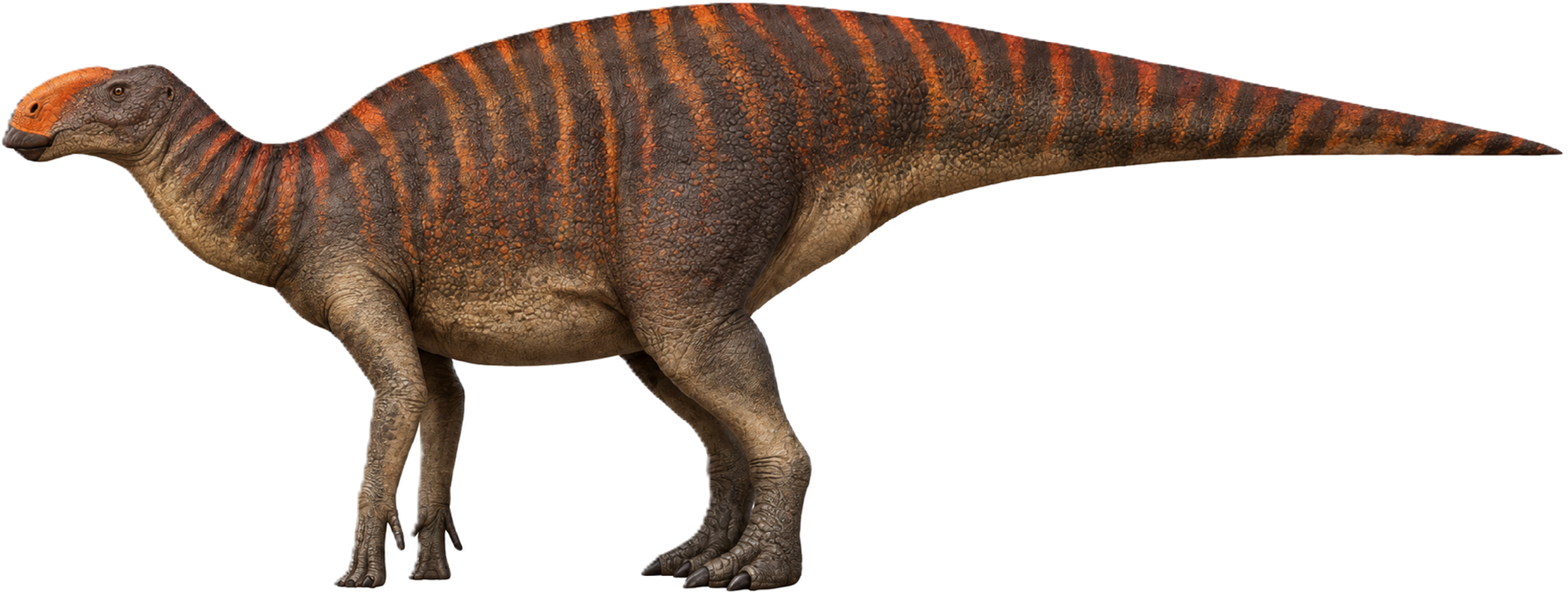 Hypsibema |
H. missouriensis50Makovicky, P. J. et al. (2020). New specimens of the basal hadrosauroid, Parrosaurus missouriensis, from the Late Cretaceous of Missouri, U.S.A. Society of Vertebrate Paleontology, 80th Annual Meeting, Program and Abstracts, 233–234. Quelle | Ripley Formation | USA (Missouri) | 75–70 Ma (?) | selten | Hadrosauroidea (Entenschnabeldinosaurier); synonym zu Neosaurus & Parrosaurus |
 |
Lambeosaurinae indet.51Brownstein, C. D. (2018). The biogeography and ecology of the Cretaceous non-avian dinosaurs of Appalachia. Palaeontologia Electronica, 21(1), 1–56. doi:10.26879/801 | Kanguk Formation | Kanada (Nunavut) | 72–66 Ma | selten | unbestimmte Lambeosaurinae |
 |
Nodosauridae indet.52Ikejiri, T. et al. (2013). An overview of Late Cretaceous vertebrates from Alabama. Bulletin Alabama Museum of Natural History, 31(1), 46–71. Quelle | Ripley Formation | USA (Alabama) | 75–70 Ma | nicht quantifiziert | unbestimmte Nodosaurier |
 |
Ornithomimidae indet.53Currie, P. J. (2001). Sino-Canadian Dinosaur Project / Le Projet dinosaurien sino-canadien. Canadian Journal of Earth Sciences, 38(12), vii–viii. doi:10.1139/e01-08354Chamberlain, J.A., Jr., Knoll, K. & Sertich, J.J.W. (2023). Non-avian theropod phalanges from the marine Fox Hills Formation (Maastrichtian), western South Dakota, USA. PeerJ 11: e14665. doi:10.7717/peerj.1466555Fix, M. F. & Darrough, G. E. (2004). Dinosauria and associated vertebrate fauna of the Late Cretaceous Chronister site of southeast Missouri. Geological Society of America Abstracts with Programs, 36(3), 14. Quelle | Fox Hills Formation Kanguk Formation Ripley Formation |
Kanada (Nunavut); USA (Missouri, South Dakota) | 75–66 Ma | häufig | unbstimmte „Straußdinosaurier“ |
 |
Ornithopoda indet.56Ebersole, S. M. & King, J. L. (2011). A review of the non-avian dinosaurs from the Late Cretaceous of Alabama, Mississippi, Georgia and Tennessee. Bulletin Alabama Museum of Natural History, 28, 81–93. Quelle | Ripley Formation | USA (Mississippi) | 75–70 Ma | nicht quantifiziert | unbestimmte Ornithopoden |
 |
Theropoda indet.57Currie, P. J. (2001). Sino-Canadian Dinosaur Project / Le Projet dinosaurien sino-canadien. Canadian Journal of Earth Sciences, 38(12), vii–viii. doi:10.1139/e01-08358Meyer, C. A. et al. (2005). Dinosaur tracks from the Late Cretaceous Sabinas Basin (Mexico). Kaupia, 14, 41–45.59Waage, K.M. (1968). The Type Fox Hills Formation, Cretaceous (Maestrichtian), South Dakota. Part 1. Stratigraphy and Paleoenvironments. Bulletin of the Peabody Museum of Natural History 27. Quelle60Chamberlain, J.A., Jr., Knoll, K. & Sertich, J.J.W. (2023). Non-avian theropod phalanges from the marine Fox Hills Formation (Maastrichtian), western South Dakota, USA. PeerJ 11: e14665. doi:10.7717/peerj.14665 | Escondido Formation Kanguk Formation Fox Hills Formation |
Kanada (Nunavut); Mexiko (Coahuila); USA (South Dakota) | 72–66 Ma | häufig | unbestimmte Theropoden |
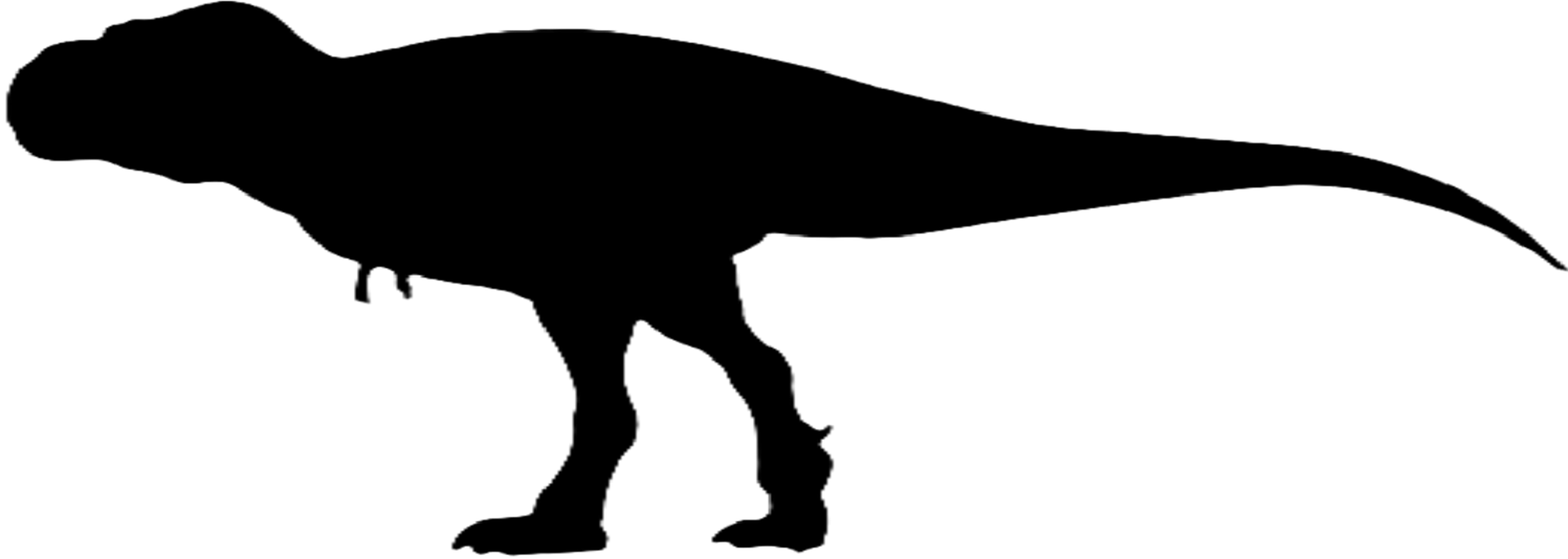 |
Tyrannosauridae indet.61Demers-Potvin, A. V. et al. (2025). An elusive bird and non-avian dinosaur fauna from the latest Cretaceous (Campanian/Maastrichtian) Kanguk Formation of Bylot Island, Nunavut. Vertebrate Anatomy Morphology Palaeontology, 13, 16–17.62Hoganson, J.W., Erickson, J.M. & Holland, F.D., Jr. (2007). Amphibian, reptilian, and avian remains from the Fox Hills Formation (Maastrichtian): Shoreline and estuarine deposits of the Pierre Sea in south-central North Dakota. Geological Society of America Special Paper 427: 239–256. doi:10.1130/2007.2427(18) | Kanguk Formation Fox Hills Formation |
Kanada (Nunavut); USA (North Dakota, South Dakota) | 72–66 Ma | sehr häufig | unbestimmte Tyrannosaurier |
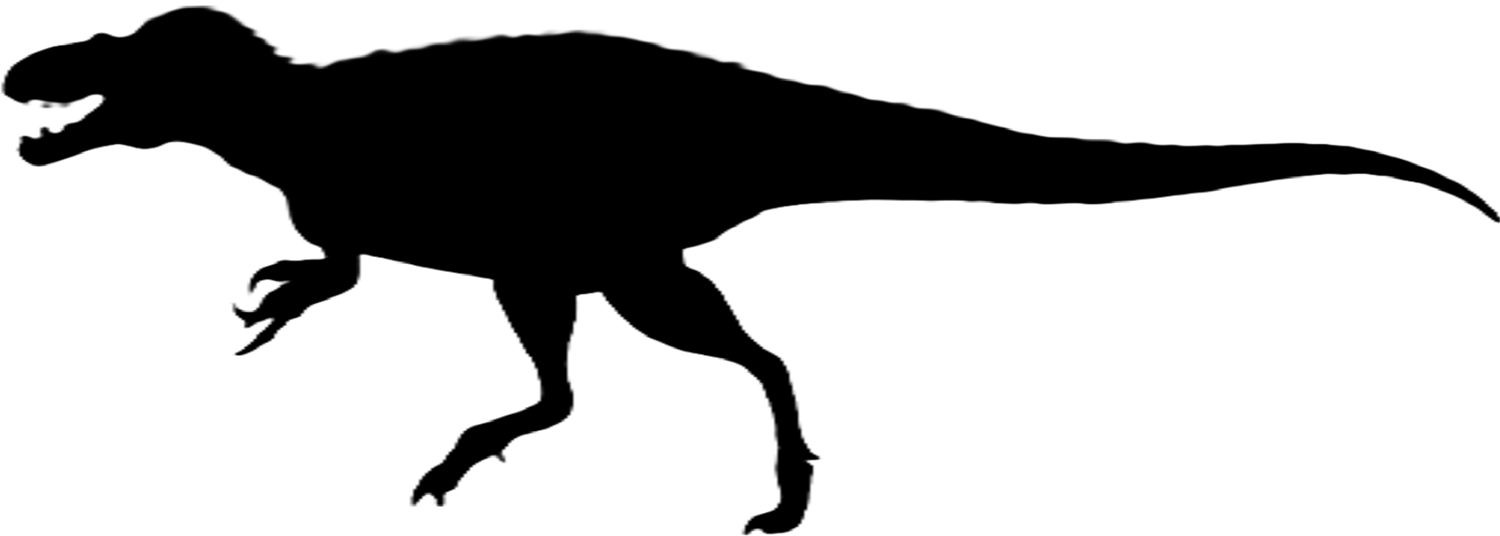 |
Tyrannosauroidea indet.63Brownstein, C. D. (2018). The biogeography and ecology of the Cretaceous non-avian dinosaurs of Appalachia. Palaeontologia Electronica, 21(1), 1–56. doi:10.26879/80164Fix, M. F. & Darrough, G. E. (2004). Dinosauria and associated vertebrate fauna of the Late Cretaceous Chronister site of southeast Missouri. Geological Society of America Abstracts with Programs, 36(3), 14. Quelle | Kanguk Formation Ripley Formation |
Kanada (Nunavut); USA (Missouri) | 75–66 Ma | selten | unbestimmte Tyrannosauroiden |
Die aus marinen Ablagerungen bekannten Dinosaurier waren selbstverständlich keine Meeresbewohner. Ihre Überreste gelangten wahrscheinlich über Flüsse oder als im Wasser treibende Kadaver in die Küsten- und Schelfmeere, sanken dort auf den Meeresboden und wurden schließlich in den Sedimenten eingebettet. An einigen Dinosaurierknochen aus marinen Ablagerungen finden sich sogar Fraßspuren von Haien, die sich an den Kadavern labten, bevor diese vollständig vom Sediment bedeckt wurden. Der unbestimmte Hadrosaurier UCM 55033 aus dem campanischen Sharon Springs Member des Pierre Shale wird beispielsweise als ein solcher ins Meer verdrifteter Kadaver interpretiert: Sein hinterer Körperabschnitt trennte sich ab und sank auf den Meeresboden.65Carpenter, K. (2006). Comparative vertebrate taphonomy of the Pembina and Sharon Springs members (Middle Campanian) of the Pierre Shale, Western Interior. Paludicola, 5(4), 125–149. Originalpublikation
Der eines Unterkieferzahn eines bislang unbestimmten Ceratopsiden aus der Owl Creek Formation ist der erste und einzige bislang bekannte Nachweis dieser Dinosaurier aus Appalachia. Er wurde lose im heutigen Bachbett unweit der damaligen Küstenlinie gefunden.66Farke, A. A. & Phillips, G. E. (2017). The first reported ceratopsid dinosaur from eastern North America (Owl Creek Formation, Upper Cretaceous, Mississippi, USA). PeerJ 5, e3342. doi:10.7717/peerj.334267Waage, K.M. (1968). The Type Fox Hills Formation, Cretaceous (Maestrichtian), South Dakota. Part 1. Stratigraphy and Paleoenvironments. Bulletin of the Peabody Museum of Natural History 27. Quelle
Fragmentarische Reste von Dinosauriern, die in marinen Sedimenten bei El Papalote in der Potrerillos Formation gefunden wurden, stammen wahrscheinlich aus kreidezeitlichen Sedimenten und wurden durch die Fluten des Chicxulub-Tsunamis in einen Ablagerungshorizont aus dem Paläozän geschwemmt. Das ursprüngliche Alter sowie die taxonomische Zugehörigkeit der einzelnen Reste ist nicht näher bestimmbar.68Schulte, P. et al. (2012): Tsunami backwash deposits with Chicxulub impact ejecta and dinosaur remains from the Cretaceous–Palaeogene boundary in the La Popa Basin, Mexico. Sedimentology 59: 737–765. doi:10.1111/j.1365-3091.2011.01274.x Zusätzlich Dinosaurierknochen wurden auch von La Cuesta del Indio (IGM 1574) gemeldet; dieser Nachweis ist unabhängig vom Tsunami-Horizont.69Vega, F.J., Feldmann, R.M. & Villalobos-Hiriart, J.L. (1995): Additions to the crustacean (Decapoda) fauna from the Potrerillos Formation (Late Cretaceous) in northeastern Mexico. Annals of Carnegie Museum 64(3): 239–249. doi:10.5962/p.215129
Aus der Escondido Formation sind mehrere Dinosaurier-Fußspuren bestätigt, die wahrscheinlich von Theropoden und Hadrosauriern stammen. Sie liefen wahrscheinlich über einen später trockengefallenen Lagunenabschnitt oder Küstenbereich. Knochenfossilien sind allerdings nicht bekannt.70Meyer, C. A. et al. (2005). Dinosaur tracks from the Late Cretaceous Sabinas Basin (Mexico). Kaupia, 14, 41–45.
Die Nachweise einschließlich des Cusseta Sand Member in Alabama und des Coon Creek Member in Mississippi gehören in manchen Arbeiten zur Ripley Formation, in anderen wiederum nicht. Die Chronister-Fauna aus Missouri ist hier ebenfalls mit aufgenommen. Ihre Zuordnung zur Ripley Formation beziehungsweise zum McNairy-Komplex ist aber nicht einheitlich anerkannt. Ebenso ist ihr Alter nicht abschließend geklärt, eine Ablagerung im frühen Maastrichtium aber immerhin wahrscheinlich.71Brownstein, C. D. (2018). The biogeography and ecology of the Cretaceous non-avian dinosaurs of Appalachia. Palaeontologia Electronica, 21.1.5A, 1–56. Ein Vorkommen von Hypsibema missouriensis und Gryposaurus bleibt damit möglich.72Makovicky, P. J. et al. (2020). New specimens of the basal hadrosauroid, Parrosaurus missouriensis, from the Late Cretaceous of Missouri, U.S.A. Society of Vertebrate Paleontology, 80th Annual Meeting, Program and Abstracts, 233–234.73Fix, M. F. & Darrough, G. E. (2004). Dinosauria and associated vertebrate fauna of the Late Cretaceous Chronister site of southeast Missouri. Geological Society of America Abstracts with Programs, 36(3), 14. Quelle74Parris, D. C. (2006). Chronister site investigations: New information on the Cretaceous of Missouri. In: Field Trip Guidebook – 2006 Association of Missouri Geologists Meeting, 9–13. Quelle
Pterosaurier:
| Gattung: | Arten: | Formation: | Fundort: | Alter: | Häufigkeit: | Bemerkungen: |
|---|---|---|---|---|---|---|
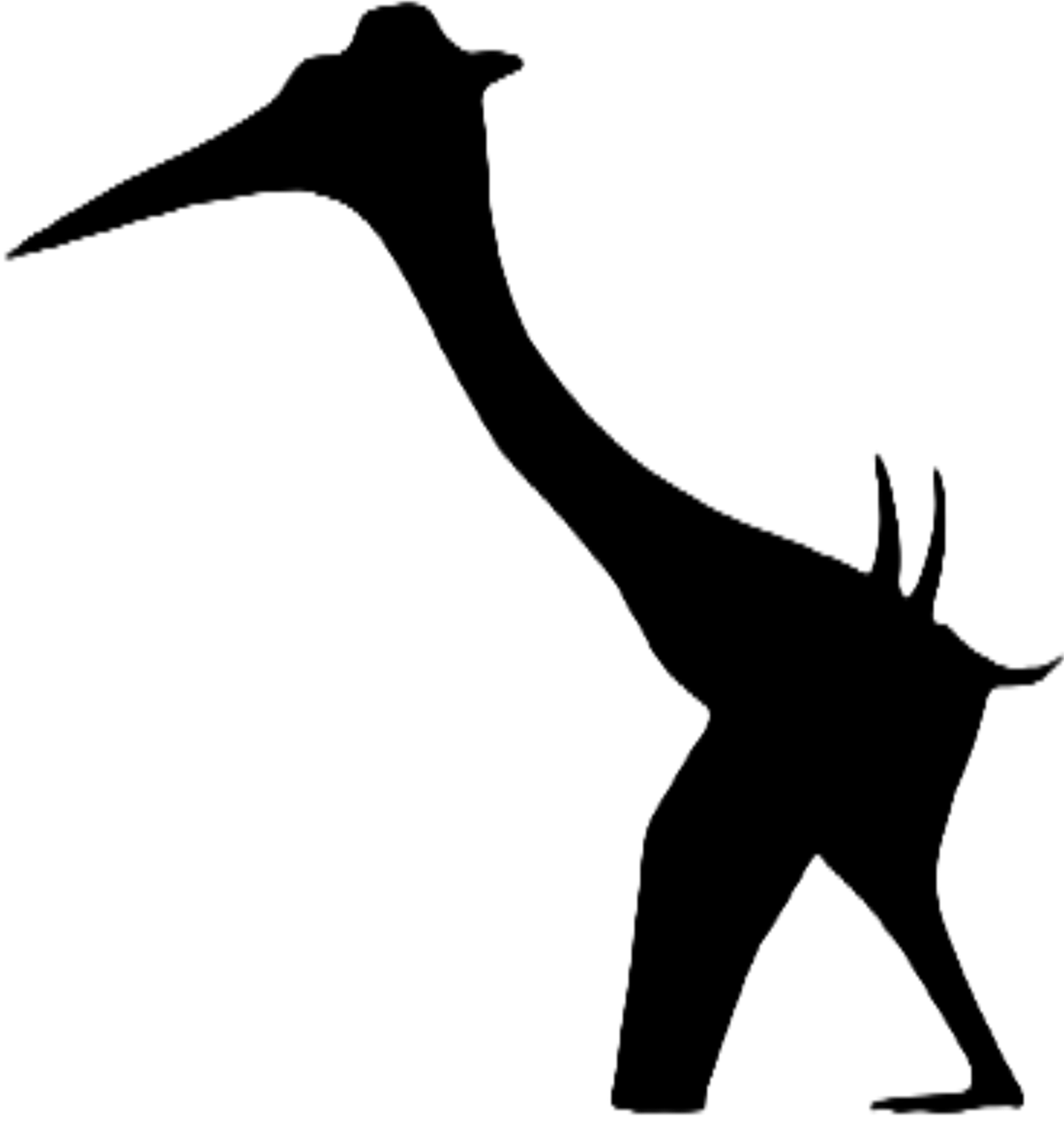 |
Azhdarchoidea indet.75Darling, C. J. & McLain, M. (2022). Peculiar fossil in Lance Formation (Cretaceous) bonebed in Wyoming determined to belong to a pterosaur. Geological Society of America Abstracts with Programs, 54(5). doi:10.1130/abs/2022AM-37994076Darling, C. J. et al. (2024). New azhdarchoid (Pterosauria: Pterodactyloidea) remains from the Lance Formation (Maastrichtian), Wyoming. Geological Society of America Abstracts with Programs, 56(5). doi:10.1130/abs/2024AM-401275 | Lance Formation | USA (Wyoming) | 68–66 Ma | selten | unbestimmte Azhdarchoidea |
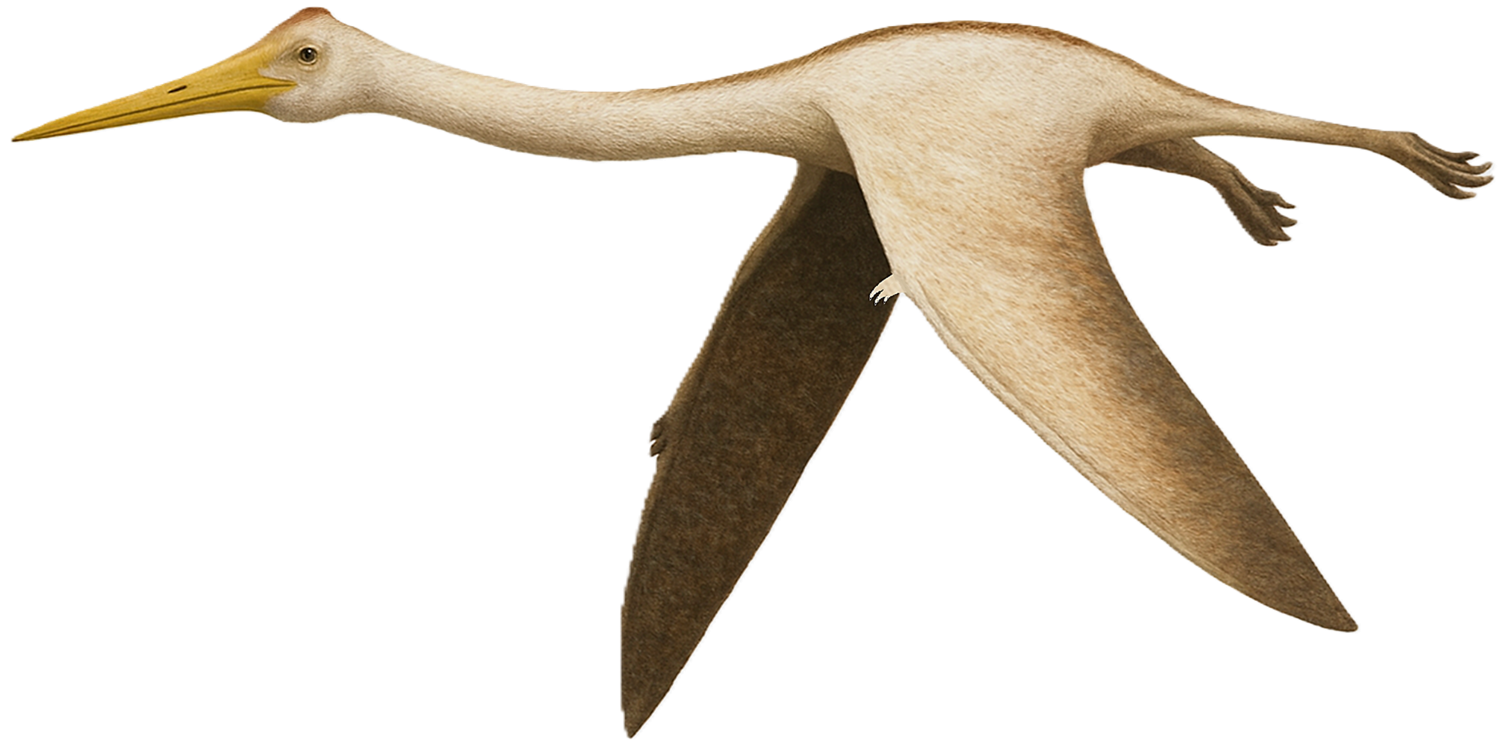 Infernodrakon |
I. hastacollis77Thomas, H. N. et al. (2024). Infernodrakon hastacollis gen. et sp. nov., a new azhdarchid pterosaur from the Hell Creek Formation of Montana, and the pterosaur diversity of Maastrichtian North America. Journal of Vertebrate Paleontology, 44(4), e2442476. doi:10.1080/02724634.2024.244247678Henderson, M. D. & Peterson, J. E. (2006). An azhdarchid pterosaur cervical vertebra from the Hell Creek Formation (Maastrichtian) of southeastern Montana. Journal of Vertebrate Paleontology, 26(1), 192–195. doi:10.1671/0272-4634(2006)26[192:AAPCVF]2.0.CO;2 | Hell Creek Formation | USA (Montana) | 68–66 Ma | Einzelfund | Azhdarchidae |
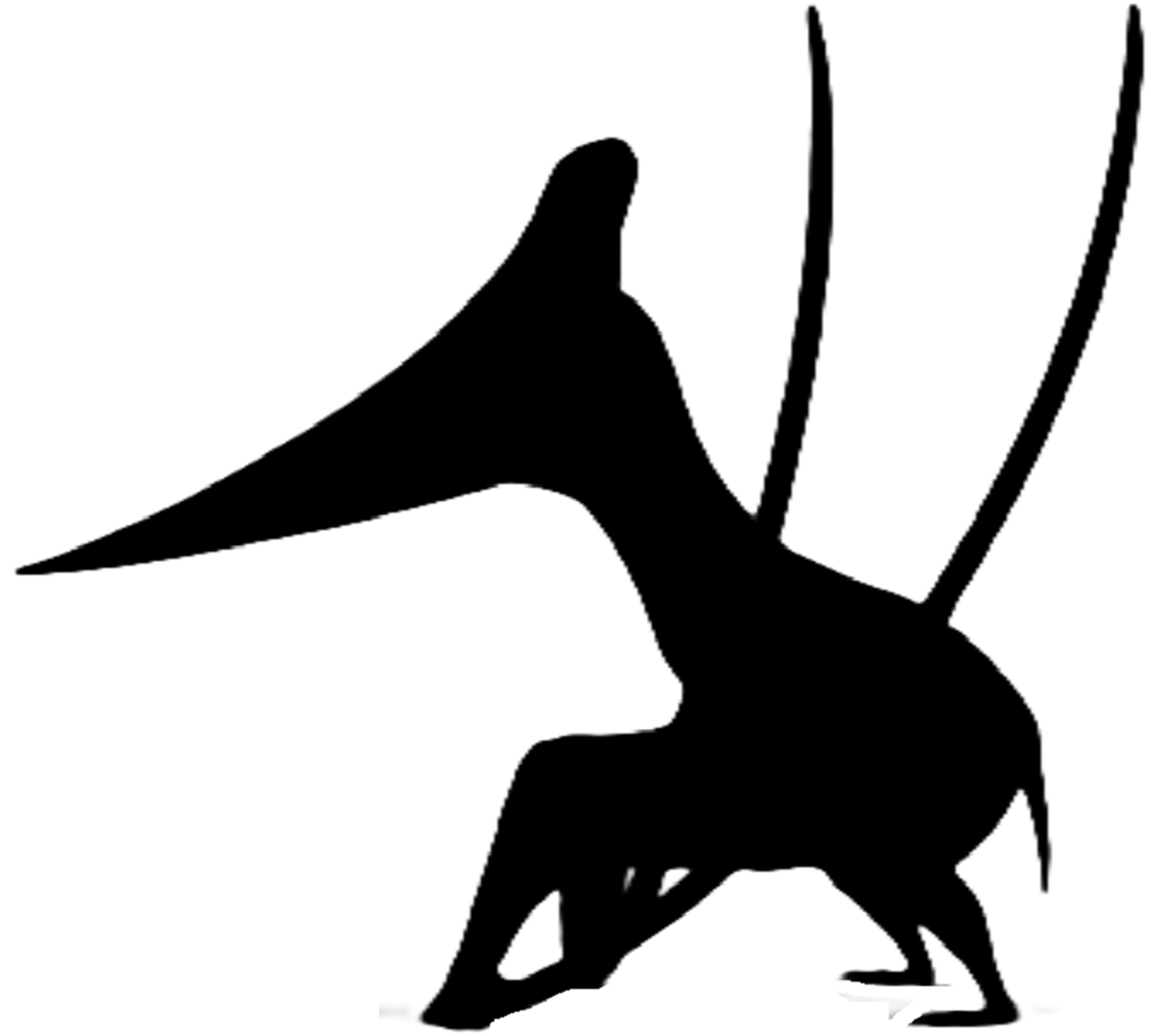 |
Pterosauria indet.79Longrich, N. R., Martill, D. M. & Andres, B. (2018). Late Maastrichtian pterosaurs from North Africa and mass extinction of Pterosauria at the Cretaceous–Paleogene boundary. PLOS Biology, 16(3), e2001663. doi:10.1371/journal.pbio.200166380Meyer, C. A. et al. (2005). Dinosaur tracks from the Late Cretaceous Sabinas Basin (Mexico). Kaupia, 14, 41–45. | Escondido Formation Hell Creek Formation |
USA (North Dakota); Mexiko (Coahuila) | 72–66 Ma | häufig | unbestimmte Flugsaurier |
Funde von Pterosauriern sind ausgesprochen selten im Fossilbericht des späten Maastrichtiums von Nordamerika, was verblüfft, da Flugsaurier insbesondere in küstennahen oder auch marinen Formationen des Mesozoikums sonst eigentlich sehr häufig sind. Einige Autoren interpretierten diesen Befund als Zeichen dafür, dass die Flugsaurier bereits vor dem kreidezeitlichen Massenaussterben im Niedergang begriffen waren und den Luftraum mehr und mehr an die Vögel verloren.81Penny, D. & Phillips, M. J. (2004). The rise of birds and mammals: are microevolutionary processes sufficient for macroevolution? Trends in Ecology & Evolution, 19(10), 516–522. doi:10.1016/j.tree.2004.07.01582Benson, R. B. J. et al. (2014). Competition and constraint drove Cope’s rule in the evolution of giant flying reptiles. Nature Communications, 5, 3567. doi:10.1038/ncomms4567 Inzwischen ist aber eine ausgesprochen vielfältige Pterosaurierfauna aus dem späten Maastrichtium von Marokko mit mindestens sieben Arten aus drei Familien beschrieben worden, wesalb plausible Argumente gegen das Szenario eines kontinuierlichen Niedergangs unmittelbar vor der K/Pg-Grenze vorliegen. Pterosaurier waren bis zum Chicxulub-Ereignis durchaus noch artenreich und ökologisch vielfältig.83Longrich, N. R., Martill, D. M. & Andres, B. (2018). Late Maastrichtian pterosaurs from North Africa and mass extinction of Pterosauria at the Cretaceous-Paleogene boundary. PLoS Biology, 16(3), e2001663. doi:10.1371/journal.pbio.2001663 Bereits zuvor war die These „Pterosaurier auf dem absteigenden Ast“ schon vorsichtig angegriffen worden: das spärliche Ausfallen des Fossilberichts hier könnte durch ungeeignete Fossilisationsbedingungen, also einen sogenannten Bias zu erklären sein.84Upchurch, P. et al. (2015). An analysis of pterosaurian biogeography: implications for the evolutionary history and fossil record quality of the first flying vertebrates. Historical Biology, 27(6), 697–717. doi:10.1080/08912963.2014.93907785Butler, R. J. et al. (2012). How do geological sampling biases affect studies of morphological evolution in deep time? A case study of pterosaur (Reptilia: Archosauria) disparity. Evolution, 66(1), 147–162. doi:10.1111/j.1558-5646.2011.01415.x Es ist somit sehr gut möglich, dass es auch an den Gestaden des Binnenmeeres viele Flugsaurier gab.
In der Beschreibung des marokkanischen Flugsaurierst Thethydraco wird bislang unbeschriebenes Material eines vermutlichen Pteranodonten aus der Hell Creek Formation genannt, das wahrscheinlich in North Dakota gefunden wurde. Bislang wurde sich aber noch nicht näher mit diesem Fund befasst. Das Paper nennt auch keine Sammlungsnummer, oder woraus das Material überhaupt besteht. Ob es also wirklich einen Pteranodonten in Hell Creek gab, ist damit alles andere als stark belegt.86Longrich, N. R., Martill, D. M. & Andres, B. (2018). Late Maastrichtian pterosaurs from North Africa and mass extinction of Pterosauria at the Cretaceous–Paleogene boundary. PLOS Biology, 16(3), e2001663. doi:10.1371/journal.pbio.2001663
Aus der Escondido Formation sind mehrere Pterosaurier-Fuß- und Schwimmsspuren bestätigt. Sie liefen wahrscheinlich über einen später trockengefallenen Lagunenabschnitt oder Küstenbereich. Knochenfossilien sind allerdings nicht bekannt.87Meyer, C. A. et al. (2005). Dinosaur tracks from the Late Cretaceous Sabinas Basin (Mexico). Kaupia, 14, 41–45.
Krokodile:
| Gattung: | Arten: | Formation: | Fundort: | Alter: | Häufigkeit: | Bemerkungen: |
|---|---|---|---|---|---|---|
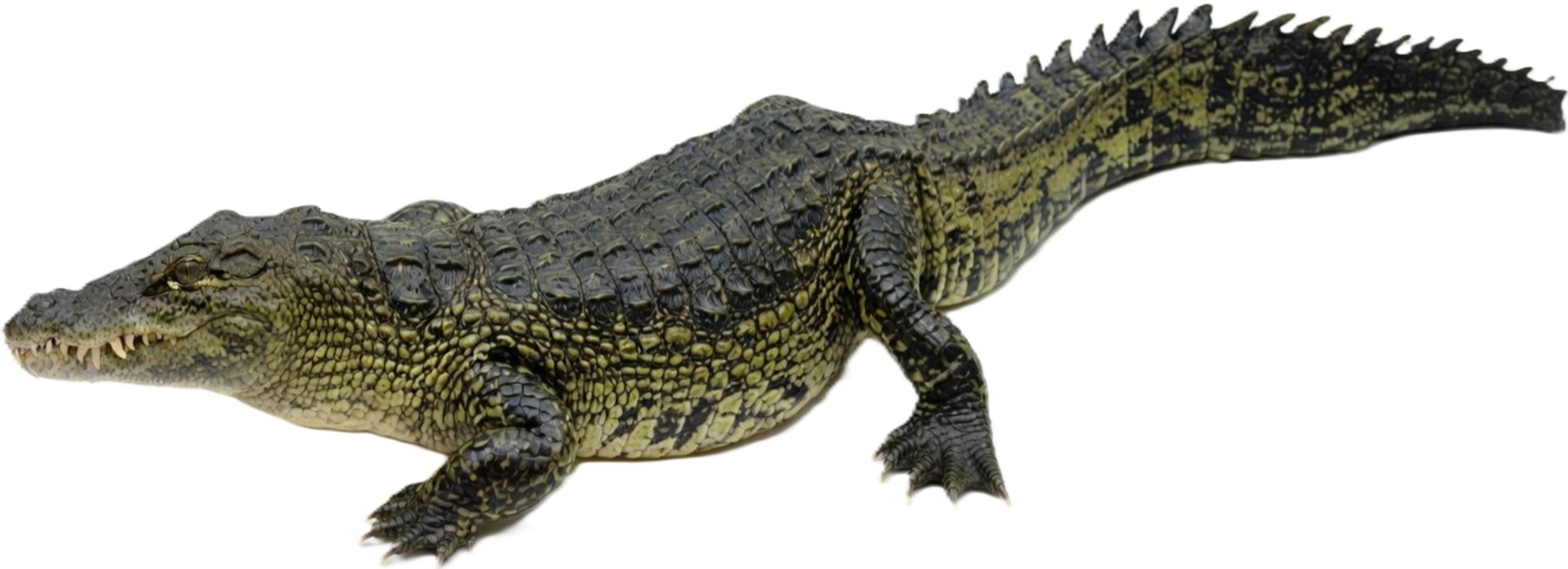 Borealosuchus |
B. sp. (?)114Brochu, C. A. (1997). A review of “Leidyosuchus” (Crocodyliformes, Eusuchia) from the Cretaceous through Eocene of North America. Journal of Vertebrate Paleontology, 17(4), 679–697. doi:10.1080/02724634.1997.10011017115Rio, J. P. & Mannion, P. D. (2021). Phylogenetic analysis of a new morphological dataset elucidates the evolutionary history of Crocodylia and resolves the long-standing gharial problem. PeerJ, 9, e12094. doi:10.7717/peerj.12094116Lessner, E. J., Petermann, H. & Lyson, T. R. (2025). First record of Borealosuchus sternbergii from the lower Paleocene Denver Formation (lower Danian), Colorado (Denver Basin). Journal of Vertebrate Paleontology, e2435490. doi:10.1080/02724634.2024.2435490 cf. sp. (?)113Wroblewski, A. F.-J. (2026). Systematics and biostratigraphy of non-mammalian vertebrates across the K/Pg transition, southern Wyoming, USA. Journal of Paleontology. doi:10.1017/jpa.2025.10191117Hoganson, J.W., Erickson, J.M. & Holland, F.D., Jr. (2007). Amphibian, reptilian, and avian remains from the Fox Hills Formation (Maastrichtian): Shoreline and estuarine deposits of the Pierre Sea in south-central North Dakota. Geological Society of America Special Paper 427: 239–256. doi:10.1130/2007.2427(18) |
Fox Hills Formation, Ferris Formation, Hell Creek Formation, Lance Formation |
USA (orth Dakota, Montana, South Dakota, Wyoming, Colorado) | ca. 70–66 Ma | sehr häufig | Crocodylia |
 Crocodylia indet. |
Crocodylia indet.118During, M.A.D. et al. (2025). King of the Riverside, a multi-proxy approach offers a new perspective on mosasaurs before their extinction. BMC Zoology 10. doi:10.1186/s40850-025-00246-y | Fox Hills Formation | USA (North Dakota) | ca. 70–68 Ma | selten | Crocodylia |
 Deinosuchus |
D. sp.119Ikejiri, T. et al. (2013). An overview of Late Cretaceous vertebrates from Alabama. Bulletin Alabama Museum of Natural History, 31(1), 46–71. Quelle | Ripley Formation | USA (Alabama) | 75–70 Ma | nicht quantifiziert | Alligatoroidea (Krokodil); historisch als D. rugosus geführt |
 Eothoracosaurus |
E. mississippiensis120Brochu, C. A. (2004). A new Late Cretaceous gavialoid crocodylian from eastern North America and the phylogenetic relationships of thoracosaurs. Journal of Vertebrate Paleontology, 24(3), 610–633. doi:10.1671/0272-4634(2004)024[0610:ANLCGC]2.0.CO;2 | Ripley Formation | USA (Mississippi) | 75–70 Ma | selten | Gavialoidea (Krokodil); Ripley-Beleg historisch als Thoracosaurus neocesariensis bestimmt |
 |
Eusuchia indet.121Brochu, C. A. (2004). A new Late Cretaceous gavialoid crocodylian from eastern North America and the phylogenetic relationships of thoracosaurs. Journal of Vertebrate Paleontology, 24(3), 610–633. doi:10.1671/0272-4634(2004)024[0610:ANLCGC]2.0.CO;2 | Ripley Formation | USA (Georgia) | 72–70 Ma | nicht quantifiziert | Eusuchia (Krokodil) |
 Leidyosuchus |
L. cf. sp.122Parris, D. C. (2006). Chronister site investigations: New information on the Cretaceous of Missouri. In: Field Trip Guidebook – 2006 Association of Missouri Geologists Meeting, 9–13. Quelle | Ripley Formation | USA (Missouri) | 75–70 Ma (?) | nicht quantifiziert | Alligatoroidea (Krokodil) |
 Sabinosuchus |
S. coahuilensis123Shiller, T. A. II, Porras-Múzquiz, H. G. & Lehman, T. M. (2016). Sabinosuchus coahuilensis, a new dyrosaurid crocodyliform from the Escondido Formation (Maastrichtian) of Coahuila, Mexico. Journal of Vertebrate Paleontology, 36(6), e1222586. doi:10.1080/02724634.2016.1222586124Jouve, S. & Jalil, N.-E. (2020). Paleocene resurrection of a crocodylomorph taxon: Biotic crises, climatic and sea level fluctuations. Gondwana Research, 85, 1–18. doi:10.1016/j.gr.2020.03.010 | Escondido Formation | Mexiko (Coahuila) | 72–66 Ma | selten | Pholidosauridae (?) |
 Thoracosaurus |
T. neocesariensis125Spamer, E. E., Daeschler, E. & Vostreys-Shapiro, L. G. (1995). A study of fossil vertebrate types in the Academy of Natural Sciences of Philadelphia: taxonomic, systematic, and historical perspectives. Academy of Natural Sciences of Philadelphia Special Publication, 16, 1–434.126Rio, J. P. & Mannion, P. D. (2021). Phylogenetic analysis of a new morphological dataset elucidates the evolutionary history of Crocodylia and resolves the long-standing gharial problem. PeerJ, 9, e12094. doi:10.7717/peerj.12094 | Hell Creek Formation | USA (North Dakota) | 68–66 Ma (Gattung bis 62 Ma) | selten | Eusuchia |
Sabinosuchus coahuilensis aus der Escondido Formation wurde ursprünglich den Dyrosauridae zugeordnet, in einer späteren Untersuchung jedoch den Pholidosauridae.127Shiller, T. A. II, Porras-Múzquiz, H. G. & Lehman, T. M. (2016). Sabinosuchus coahuilensis, a new dyrosaurid crocodyliform from the Escondido Formation (Maastrichtian) of Coahuila, Mexico. Journal of Vertebrate Paleontology, 36(6), e1222586. doi:10.1080/02724634.2016.1222586128Jouve, S. & Jalil, N.-E. (2020). Paleocene resurrection of a crocodylomorph taxon: Biotic crises, climatic and sea level fluctuations. Gondwana Research, 85, 1–18. doi:10.1016/j.gr.2020.03.010
Ein Exemplar von Thoracosaurus neocesariensis aus der Navesink Formation von New Jersey war ausgesprochen groß und könnte schätzungsweise 7–8 m lang geworden sein.129Brownstein, C. D. (2018). Trace fossils on dinosaur bones reveal ecosystem dynamics along the coast of eastern North America during the latest Cretaceous. PeerJ, 6, e4973. doi:10.7717/peerj.4973 Gelegentlich wird auch ein ähnlich großes, bislang unbeschriebenes Exemplar aus der Hell Creek Formation erwähnt, doch liegt hierfür gegenwärtig kein überprüfbarer wissenschaftlicher Beleg vor.
Die Nachweise einschließlich des Cusseta Sand Member in Alabama und des Coon Creek Member in Mississippi gehören in manchen Arbeiten zur Ripley Formation, in anderen wiederum nicht. Die Chronister-Fauna aus Missouri ist hier ebenfalls mit aufgenommen. Ihre Zuordnung zur Ripley Formation beziehungsweise zum McNairy-Komplex ist aber nicht einheitlich anerkannt. Ebenso ist ihr Alter nicht abschließend geklärt, eine Ablagerung im frühen Maastrichtium aber immerhin wahrscheinlich.130Brownstein, C. D. (2018). The biogeography and ecology of the Cretaceous non-avian dinosaurs of Appalachia. Palaeontologia Electronica, 21.1.5A, 1–56. Ein Vorkommen von Leidyosuchus und Lissodus bleibt damit möglich.131Makovicky, P. J. et al. (2020). New specimens of the basal hadrosauroid, Parrosaurus missouriensis, from the Late Cretaceous of Missouri, U.S.A. Society of Vertebrate Paleontology, 80th Annual Meeting, Program and Abstracts, 233–234.132Fix, M. F. & Darrough, G. E. (2004). Dinosauria and associated vertebrate fauna of the Late Cretaceous Chronister site of southeast Missouri. Geological Society of America Abstracts with Programs, 36(3), 14. Quelle133Parris, D. C. (2006). Chronister site investigations: New information on the Cretaceous of Missouri. In: Field Trip Guidebook – 2006 Association of Missouri Geologists Meeting, 9–13. Quelle Die historisch als Deinosuchus rugosus gemeldeten Ripley-Reste werden heute kritisch betrachtet. Die Art gilt aufgrund fehlender diagnostischer Merkmale als Nomen dubium und Synonym zu Deinosuchus schwimmeri.134Cossette, A. P. & Brochu, C. A. (2020). A systematic review of the giant alligatoroid Deinosuchus from the Campanian of North America and its implications for the relationships at the root of Crocodylia. Journal of Vertebrate Paleontology, 40(1), e1767638. doi:10.1080/02724634.2020.1767638 Eine Revision der Belegstücke aus der Ripley Formation ist bislang noch nicht erfolgt, deshalb sind sie hier nicht vorschnell D. schwimmeri zugeordnet, sondern laufen als Deinosuchus sp.135Ikejiri, T. et al. (2013). An overview of Late Cretaceous vertebrates from Alabama. Bulletin Alabama Museum of Natural History, 31(1), 46–71. Quelle
Choristodera:
| Gattung: | Arten: | Formation: | Fundort: | Alter: | Häufigkeit: | Bemerkungen: |
|---|---|---|---|---|---|---|
 Champsosaurus |
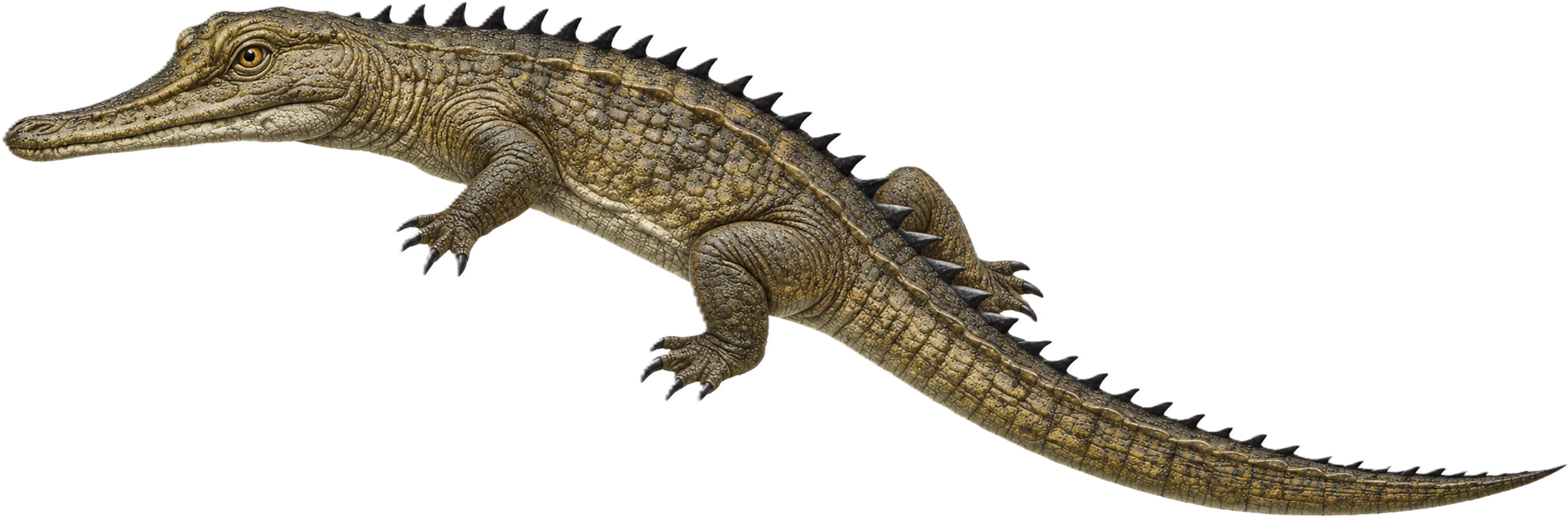
C. laramiensis136Hoganson, J.W., Erickson, J.M. & Holland, F.D., Jr. (2007). Amphibian, reptilian, and avian remains from the Fox Hills Formation (Maastrichtian): Shoreline and estuarine deposits of the Pierre Sea in south-central North Dakota. Geological Society of America Special Paper 427: 239–256. doi:10.1130/2007.2427(18)137Dudgeon, T.W., Mallon, J.C. & Evans, D.C. (2024). The first report of Champsosaurus lindoei (Choristodera: Champsosauridae) from the Campanian of the United States: anatomical, phylogenetic, and palaeoecological significance. Zoological Journal of the Linnean Society 200(3): 776–795. doi:10.1093/zoolinnean/zlad087 C. sp.138Vandermark, D., Tarduno, J. A. & Brinkman, D. B. (2006). Late Cretaceous Plesiosaur Teeth from Axel Heiberg Island, Nunavut, Canada. Arctic, 59(1), 79–82.139Estes, R. (1964). Fossil vertebrates from the Late Cretaceous Lance Formation, eastern Wyoming. University of California Publications in Geological Sciences, 49, 1–187.140Carpenter, K. (1979). Vertebrate fauna of the Laramie Formation (Maastrichtian), Weld County, Colorado. Contributions to Geology, University of Wyoming, 17, 37–49.141Lillegraven, J. A. & Eberle, J. J. (1999). Vertebrate faunal changes through Lancian and Puercan time in southern Wyoming. Journal of Paleontology, 73(4), 691–710.142Wroblewski, A. F.-J. (2026). Systematics and biostratigraphy of non-mammalian vertebrates across the K–Pg transition, southern Wyoming, USA. Journal of Paleontology. doi:10.1017/jpa.2025.10191 |
Ferris Formation Hell Creek Formation Kanguk Formation Lance Formation Fox Hills Formation |
Kanada (Nunavut); USA (Colorado, North Dakota, Wyoming) | 70–66 Ma (Gattung bis 56 Ma) | häufig | Champsosauridae |
Aus der Ferris Formation sind mindestens 33 zugeordnete Skelettelemente von Champsosaurus bekannt, die allerdings nicht auf Artebene bestimmt sind.143Wroblewski, A. F.-J. (2026). Systematics and biostratigraphy of non-mammalian vertebrates across the K–Pg transition, southern Wyoming, USA. Journal of Paleontology. doi:10.1017/jpa.2025.10191
Schildkröten:
| Gattung: | Arten: | Formation: | Fundort: | Alter: | Häufigkeit: | Bemerkungen: |
|---|---|---|---|---|---|---|
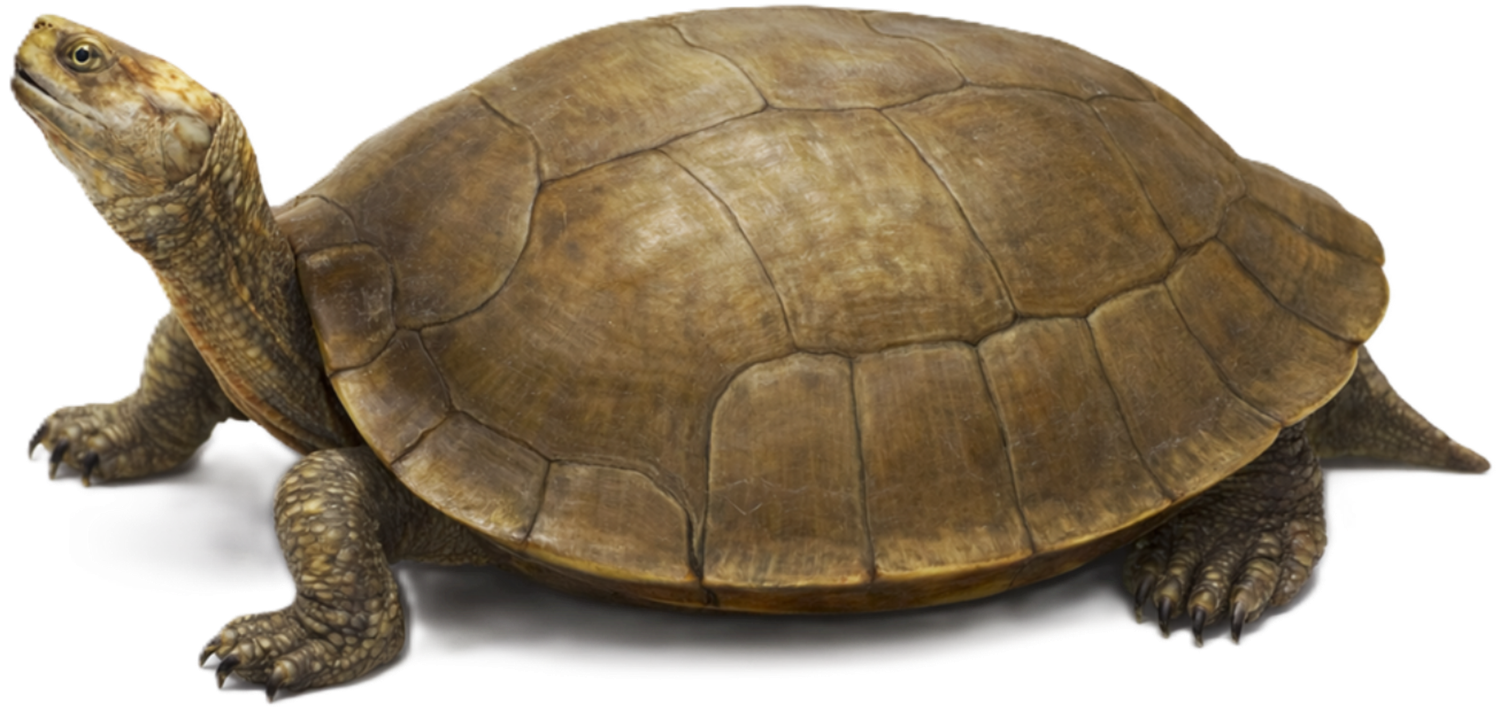 Adocus |
A. punctatus144Fix, M. F. & Darrough, G. E. (2004). Dinosauria and associated vertebrate fauna of the Late Cretaceous Chronister site of southeast Missouri. Geological Society of America Abstracts with Programs, 36(3), 14. Quelle A. sp.145Parris, D. C. (2006). Chronister site investigations: New information on the Cretaceous of Missouri. In: Field Trip Guidebook – 2006 Association of Missouri Geologists Meeting, 9–13. Quelle130Estes, R. & Berberian, P. (1970). Paleoecology of a late Cretaceous vertebrate community from Montana. Breviora, 343, 1–35.131Holroyd, P. A. & Hutchison, J. H. (2002). Patterns of geographic variation in latest Cretaceous vertebrates: evidence from the turtle component. Geological Society of America Special Paper, 361, 177–190. doi:10.1130/0-8137-2361-2.177120Carpenter, K. (1979). Vertebrate fauna of the Laramie Formation (Maastrichtian), Weld County, Colorado. Contributions to Geology, University of Wyoming, 17, 37–49. |
Ripley Formation, Ferris Formation, Hell Creek Formation, Lance Formation, Laramie Formation |
USA (North Dakota, Montana, South Dakota, Wyoming, Colorado, Missouri) | 75–66 Ma (?) | häufig | Adocidae (Landschildkröte) |
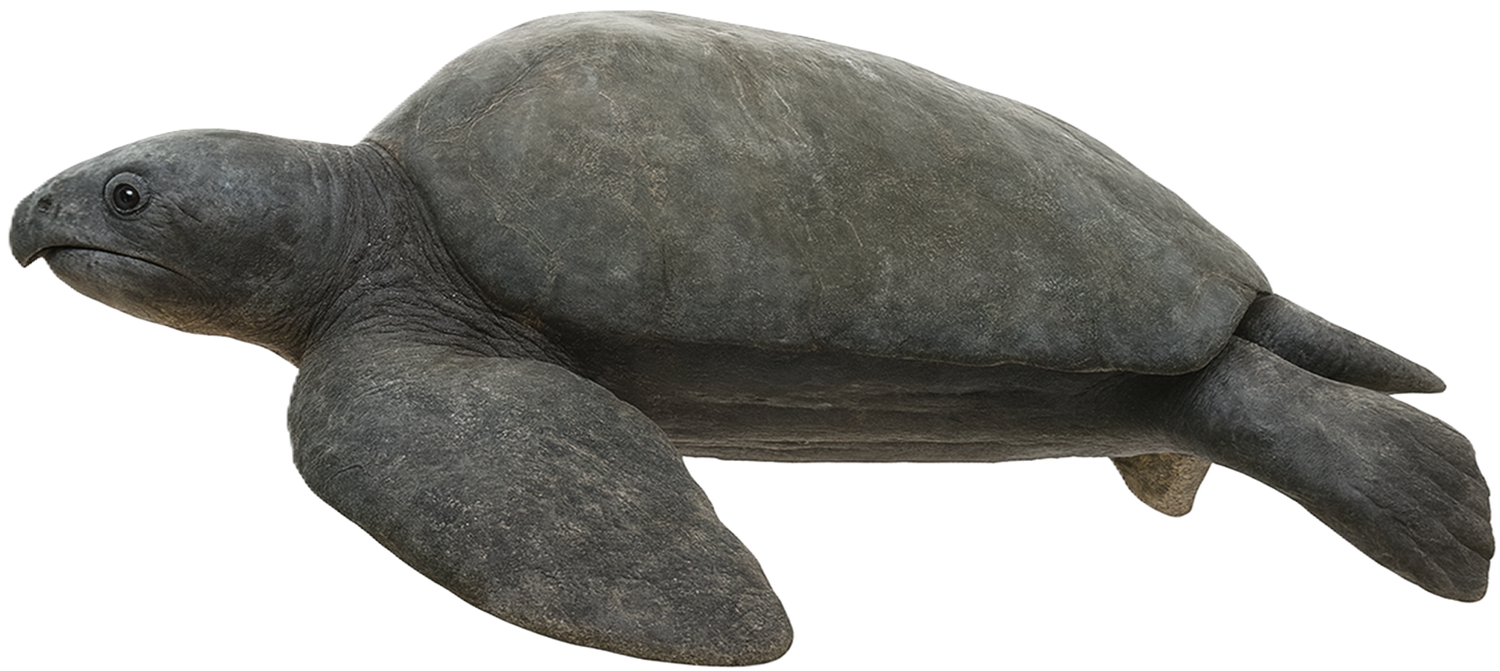 Archelon |
A. ischyros146Wieland, G. R. (1896). Archelon ischyros; a new gigantic cryptodire testudinate from the Fort Pierre Cretaceous of South Dakota. American Journal of Science, 2(12), 399–412. doi:10.2475/ajs.s4-2.12.399 Originalpublikation147Hoganson, J. W. & Woodward, B. (2003). Skeleton of the rare giant sea turtle, Archelon, recovered from the Cretaceous DeGrey Member of the Pierre Shale near Cooperstown, Griggs County, North Dakota. NDGS Newsletter, 32(1). Originalpublikation | Pierre Shale | USA (North Dakota, South Dakota) | 80–66 Ma | selten | Protostegidae (Meeresschildkröte) |
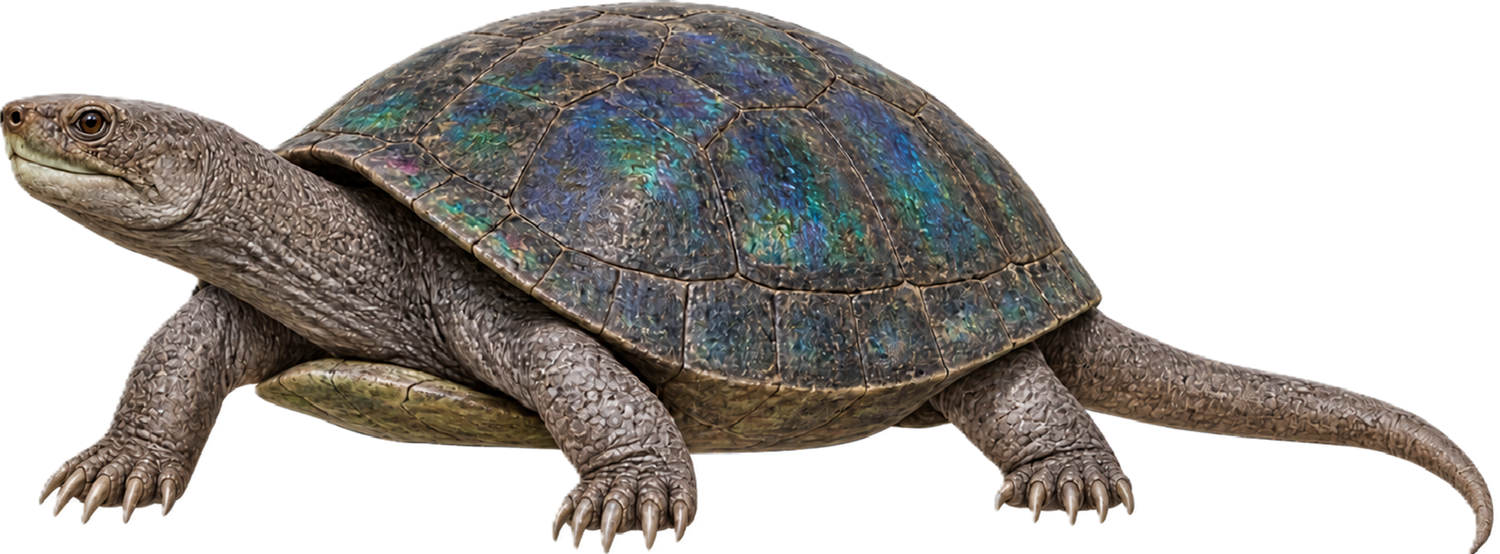 Aurorachelys |
A. gaffneyi148Vandermark, D. et al. (2009). New Late Cretaceous macrobaenid turtle with Asian affinities from the High Canadian Arctic: Dispersal via ice-free polar routes. Geology, 37(2), 183–186. doi:10.1130/G25290A.1 | Kanguk Formation | Kanada (Nunavut) | 75–66 Ma | Einzelfund | Macrobaenidae (Landschildkröte) |
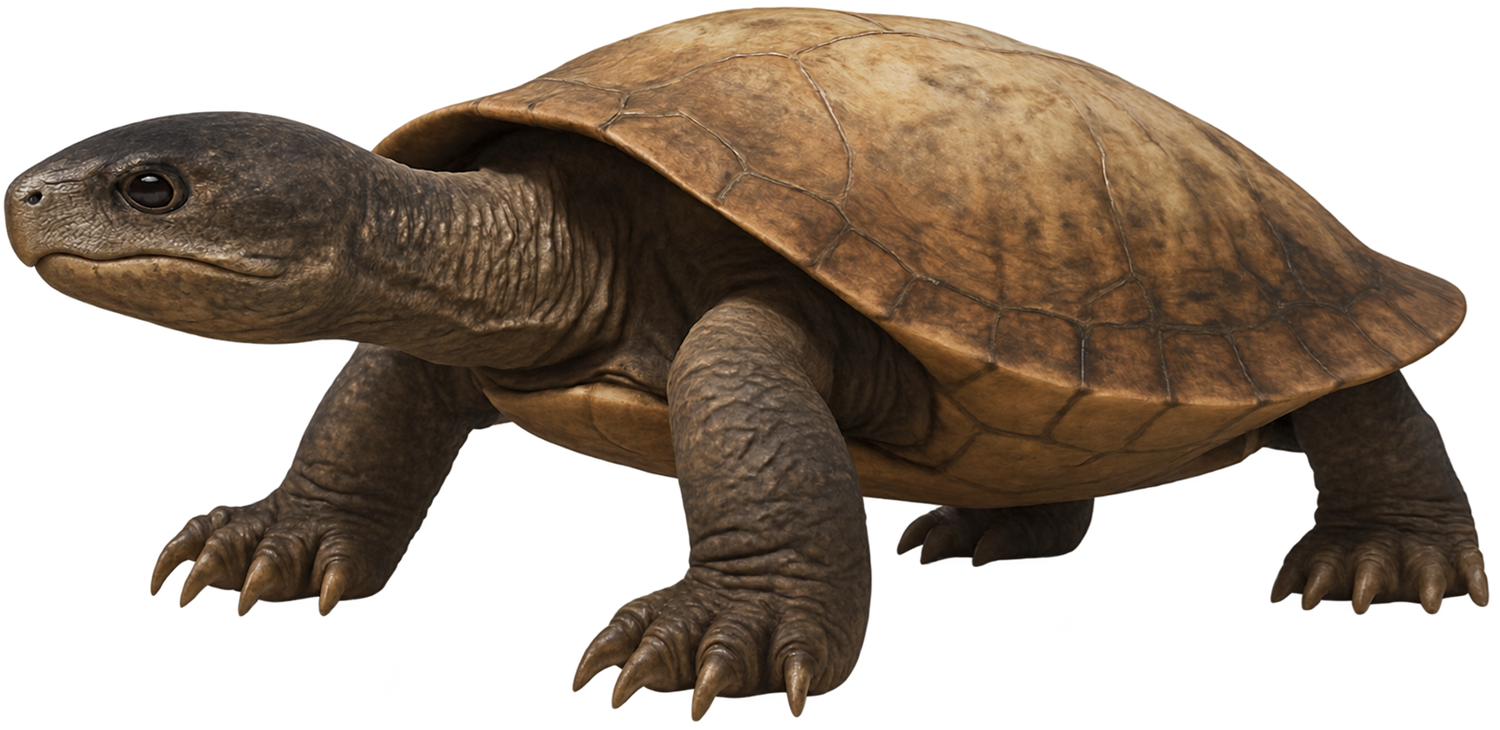 Basilemys |
B. sp.149Hilton, R. P. (2003). Dinosaurs and Other Mesozoic Reptiles of California. University of California Press, Berkeley.150Hoganson, J.W., Erickson, J.M. & Holland, F.D., Jr. (2007). Amphibian, reptilian, and avian remains from the Fox Hills Formation (Maastrichtian): Shoreline and estuarine deposits of the Pierre Sea in south-central North Dakota. Geological Society of America Special Paper 427: 239–256. doi:10.1130/2007.2427(18)120Carpenter, K. (1979). Vertebrate fauna of the Laramie Formation (Maastrichtian), Weld County, Colorado. Contributions to Geology, University of Wyoming, 17, 37–49.133Hutchison, J. H. & Holroyd, P. A. (2003). Late Cretaceous and early Paleocene turtles of the Denver Basin, Colorado. Rocky Mountain Geology, 38(1), 121–142. doi:10.2113/gsrocky.38.1.121 | Moreno Formation, Fox Hills Formation, Ferris Formation, Hell Creek Formation, Lance Formation, Laramie Formation |
USA (Kalifornien, North Dakota, Montana, South Dakota, Wyoming, Colorado) | 72–66 Ma | selten | Nanhsiungchelyidae (Landschildkröte); historisch als Adocus bestimmt |
 |
Cheloniidae indet.151Hilton, R. P. (2003). Dinosaurs and Other Mesozoic Reptiles of California. University of California Press, Berkeley. | Moreno Formation | USA (Kalifornien) | 72–66 Ma | selten | unbestimmte Meeresschildkröten |
 Ctenochelys |
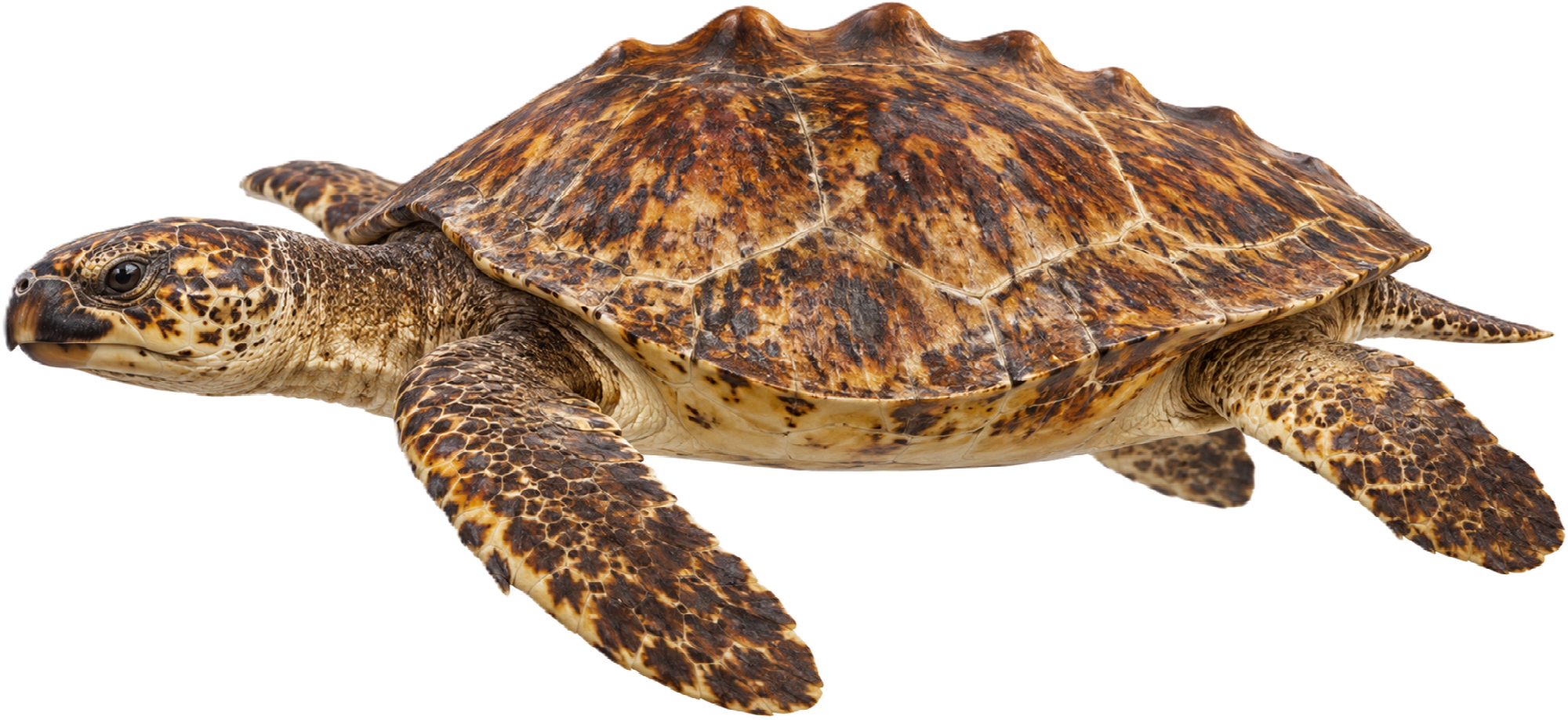
C. sp.152Gentry, A. D. et al. (2018). A new species of Peritresius Leidy, 1856 (Testudines: Pan-Cheloniidae) from the Late Cretaceous (Campanian) of Alabama, USA, and the occurrence of the genus within the Mississippi Embayment of North America. PLOS ONE, 13(4), e0195651. doi:10.1371/journal.pone.0195651 | Ripley Formation | USA (Alabama) | 84–72 Ma | selten | Ctenochelyidae (Meeresschildkröte) |
 Lophochelys |
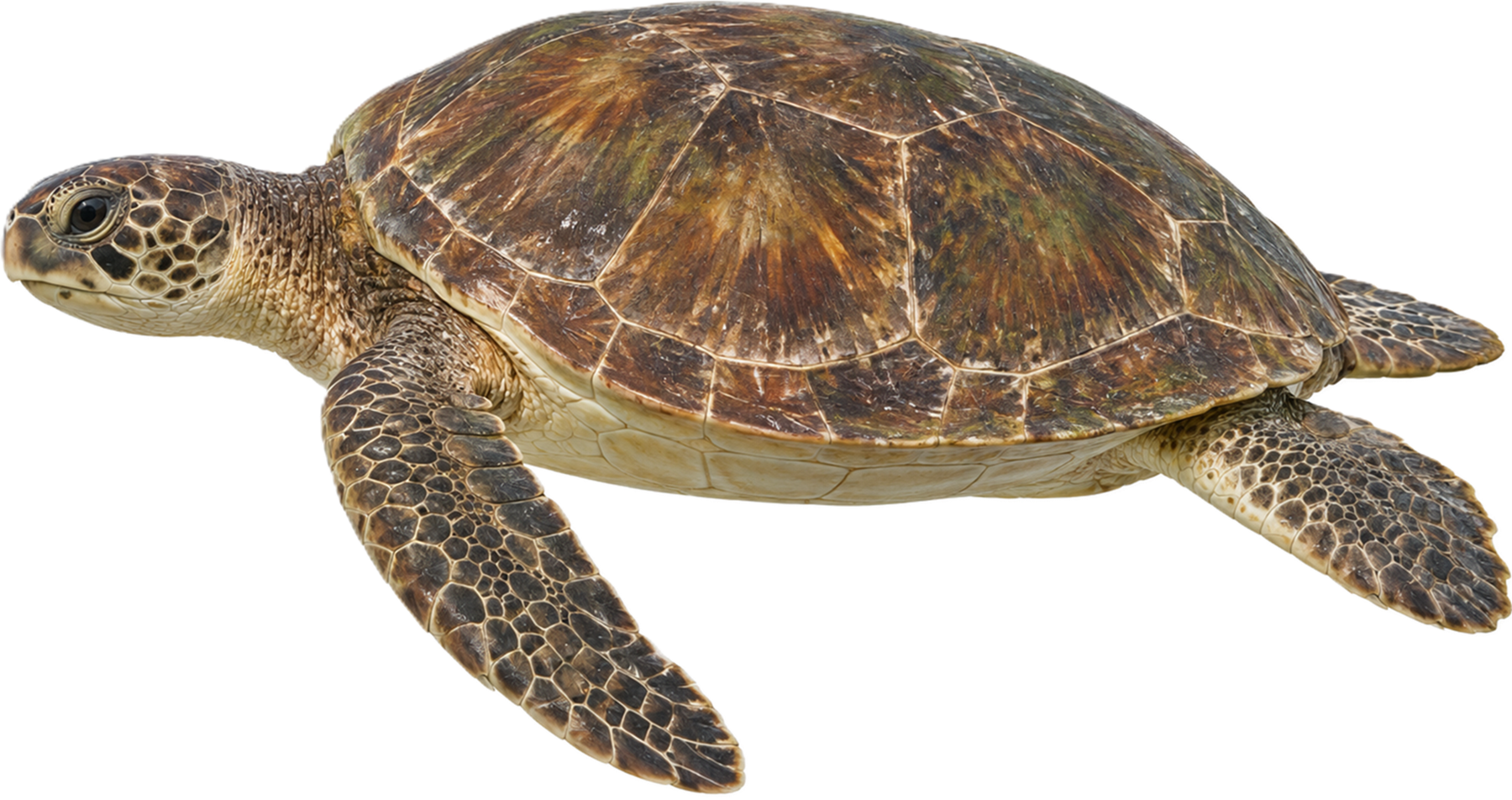
L. sp. (?)153Hoganson, J.W., Erickson, J.M. & Holland, F.D., Jr. (2007). Amphibian, reptilian, and avian remains from the Fox Hills Formation (Maastrichtian): Shoreline and estuarine deposits of the Pierre Sea in south-central North Dakota. Geological Society of America Special Paper 427: 239–256. doi:10.1130/2007.2427(18) | Fox Hills Formation | USA (North Dakota) | ca. 70–68 Ma | häufig | Chelonioidea (Meeresschildkröte) |
 Naomichelys |
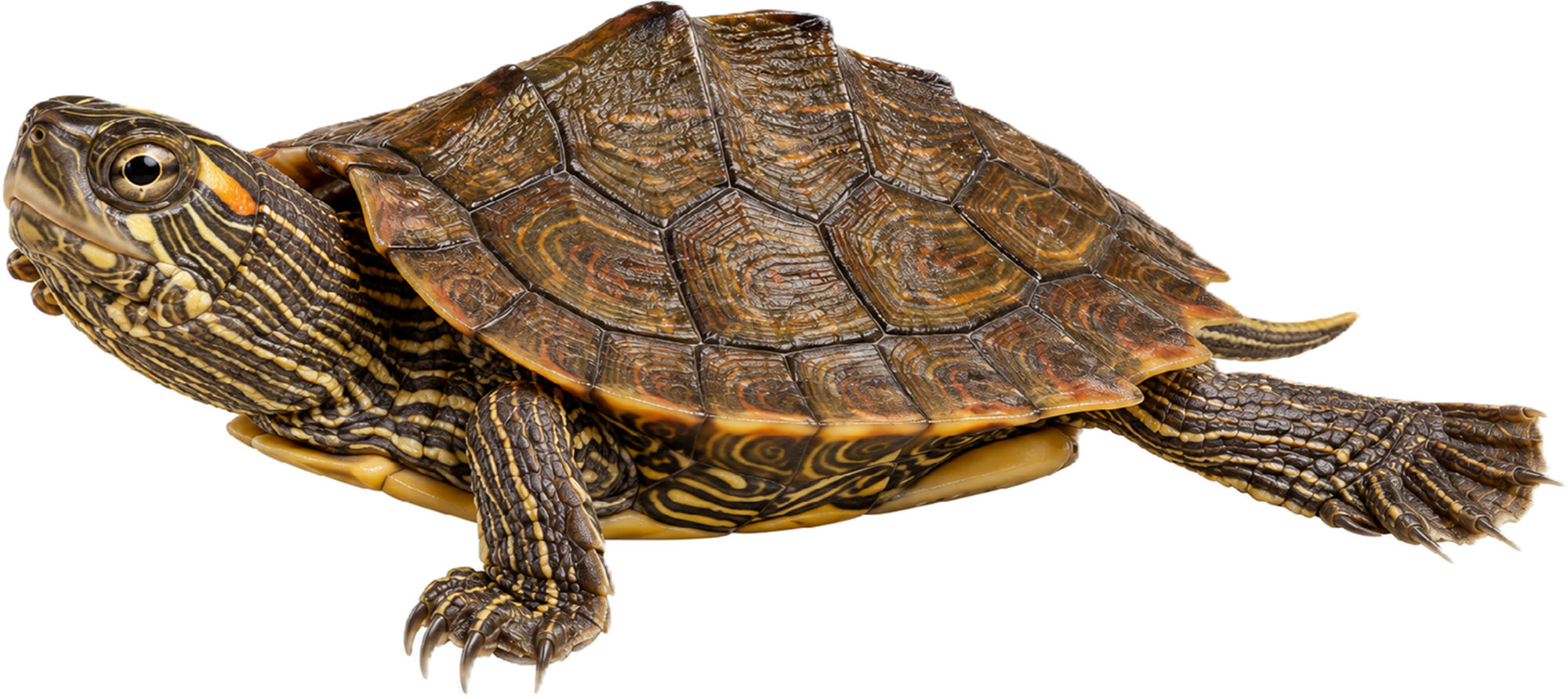
N. speciosa154Fix, M. F. & Darrough, G. E. (2004). Dinosauria and associated vertebrate fauna of the Late Cretaceous Chronister site of southeast Missouri. Geological Society of America Abstracts with Programs, 36(3), 14. Quelle | Ripley Formation | USA (Missouri) | 75–70 Ma (?) | selten | Helochelydridae (Süßwasserschildkröte) |
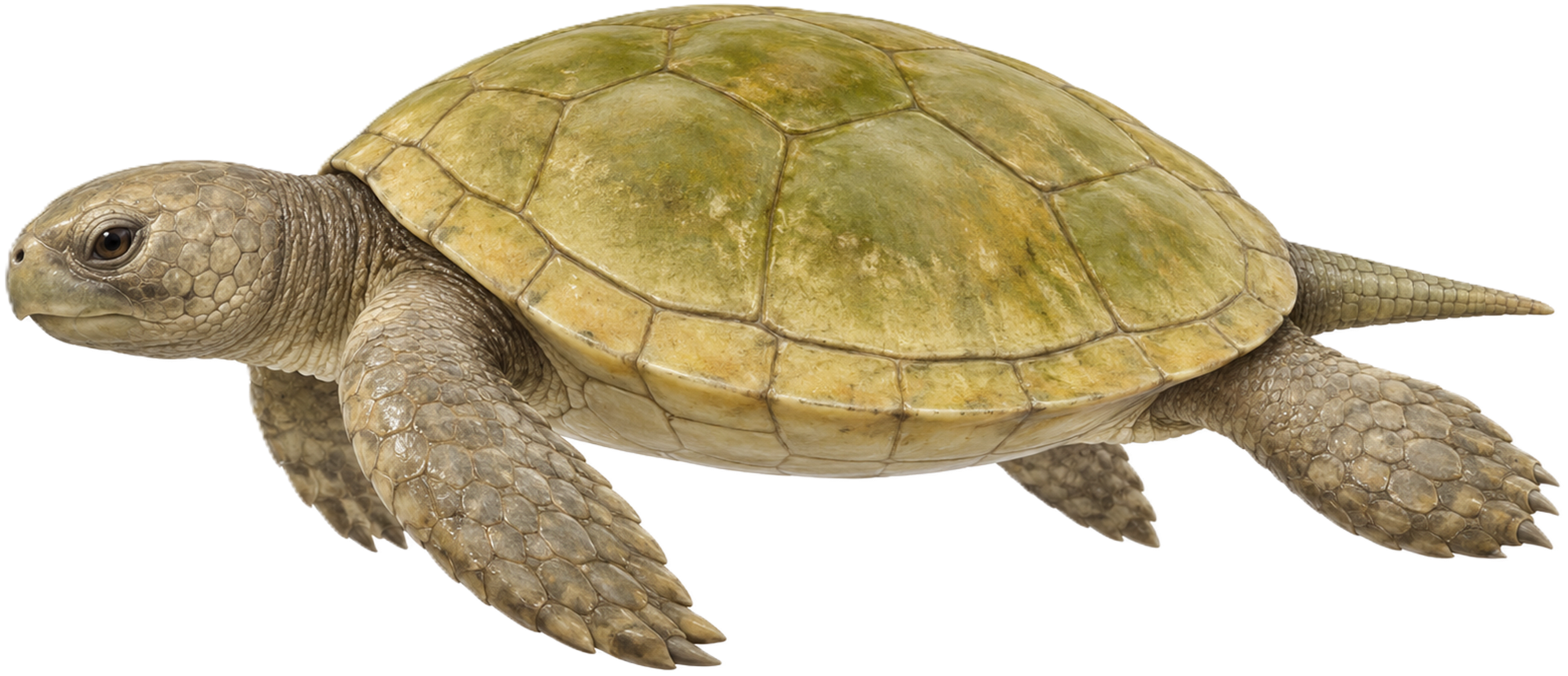 Nichollsemys |
N. baieri155Brinkman, D. et al. (2006). Nichollsemys baieri gen. et sp. nov., a primitive chelonioid turtle from the Late Campanian of North America. Paludicola, 5(4), 111–124. Originalpublikation | Pierre Shale | USA (South Dakota) | spätes Campanium | selten | Chelonioidea (Meeresschildkröte) |
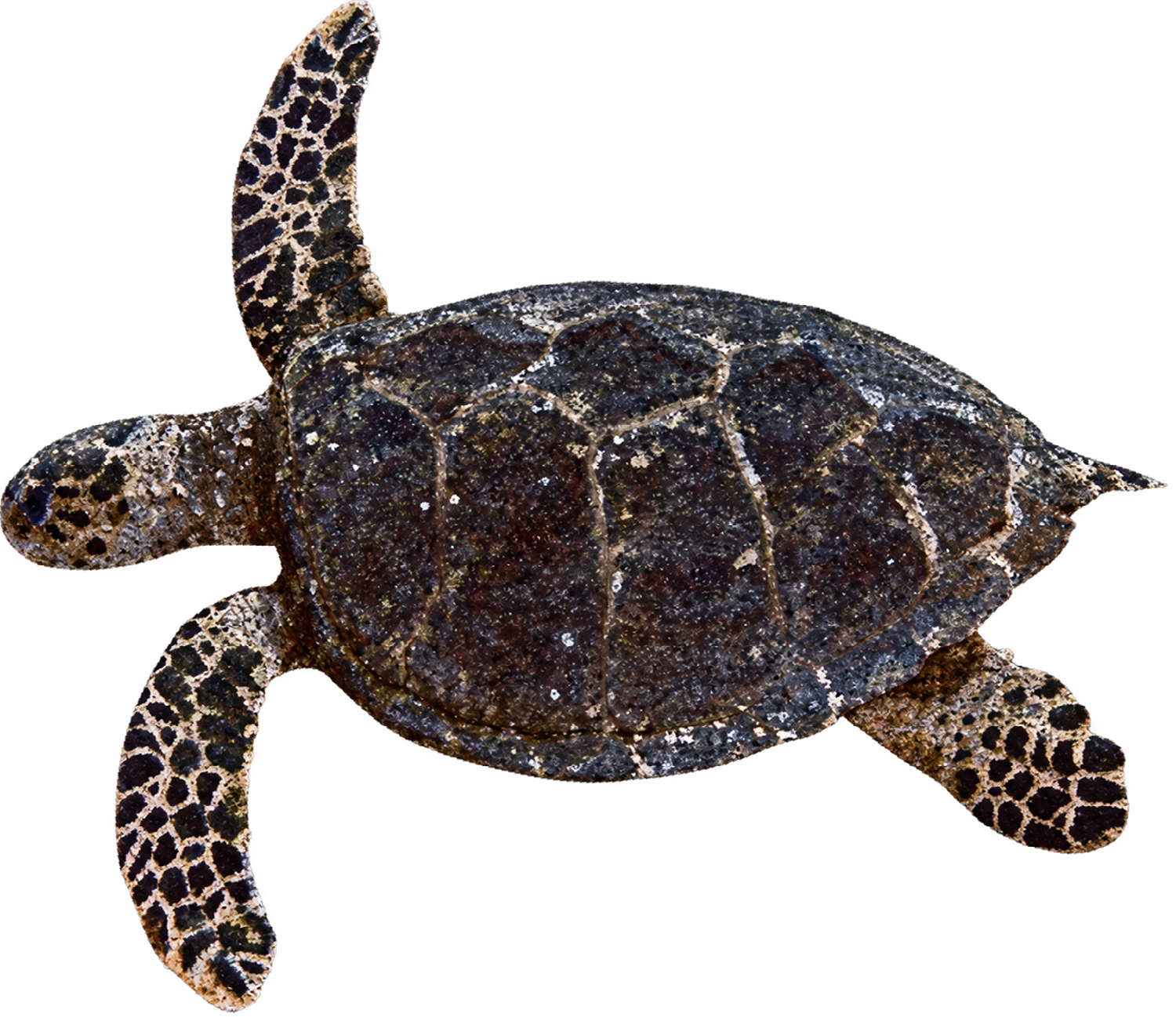 Peritresius |
P. martini156Gentry, A. D. et al. (2018). A new species of Peritresius Leidy, 1856 (Testudines: Pan-Cheloniidae) from the Late Cretaceous (Campanian) of Alabama, USA, and the occurrence of the genus within the Mississippi Embayment of North America. PLOS ONE, 13(4), e0195651. doi:10.1371/journal.pone.0195651 P. ornatus157Farke, A. A. & Phillips, G. E. (2017). The first reported ceratopsid dinosaur from eastern North America (Owl Creek Formation, Upper Cretaceous, Mississippi, USA). PeerJ 5, e3342. doi:10.7717/peerj.3342158Gentry, A. D. et al. (2018). A new species of Peritresius Leidy, 1856 (Testudines: Pan-Cheloniidae) from the Late Cretaceous (Campanian) of Alabama, USA, and the occurrence of the genus within the Mississippi Embayment of North America. PLOS ONE, 13(4), e0195651. doi:10.1371/journal.pone.0195651159Gentry, A. D. et al. (2018). A new species of Peritresius Leidy, 1856 (Testudines: Pan-Cheloniidae) from the Late Cretaceous (Campanian) of Alabama, USA, and the occurrence of the genus within the Mississippi Embayment of North America. PLOS ONE 13(4), e0195651. Prairie Bluff Chalk. Direkte Materialtabelle. Tabelle 1: MMNS 5533, 5710, 4546, 4003, 4547; ALMNH 5497. doi:10.1371/journal.pone.0195651 |
Owl Creek Formation Prairie Bluff Chalk Ripley Formation |
USA (Alabama, Georgia, Mississippi) | 84–66 Ma | sehr häufig | Ctenochelyidae (Meeresschildkröte) |
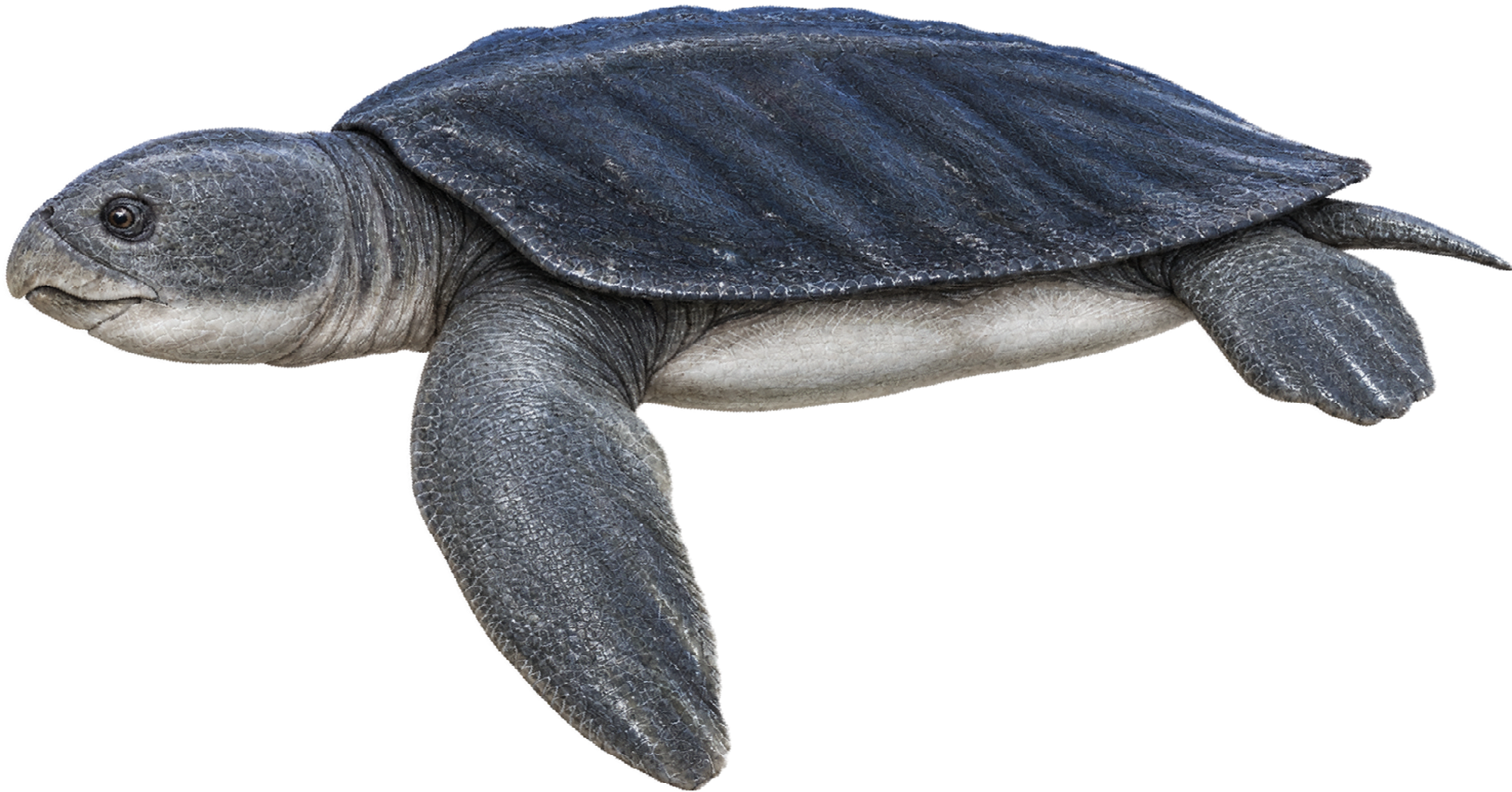 Protostega |
P. gigas160Gentry, A. D. et al. (2018). A new species of Peritresius Leidy, 1856 (Testudines: Pan-Cheloniidae) from the Late Cretaceous (Campanian) of Alabama, USA, and the occurrence of the genus within the Mississippi Embayment of North America. PLOS ONE, 13(4), e0195651. doi:10.1371/journal.pone.0195651161Ikejiri, T., Lu, Y. & Zhang, B. (2020). Two-step extinction of Late Cretaceous marine vertebrates in northern Gulf of Mexico prolonged biodiversity loss prior to the Chicxulub impact. Scientific Reports 10, 4169. Supplementary Materials, Tabellen S3 und S4. Prairie Bluff Chalk. Unit-5-Meldung. Tabelle S3 nennt 5(?); Unit 5 umfasst Prairie Bluff UND Providence Sand. Nicht auf Formationsebene getrennt. Einschränkung: gemeinsame Unit 5 (Prairie Bluff Chalk/Providence Sand); kein formationsgetrennter Nachweis. Siehe Erläuterungen unter den Tabellen. doi:10.1038/s41598-020-61089-w | Prairie Bluff Chalk Ripley Formation |
USA (Alabama) | 89–66 Ma | selten | Protostegidae (Meeresschildkröte) |
 |
Testudines indet.162Fossil Collecting Report (2007). May 2007. Sammlerbericht; Bestimmungen vorläufig. Originalbericht163Hoganson, J.W., Erickson, J.M. & Holland, F.D., Jr. (2007). Amphibian, reptilian, and avian remains from the Fox Hills Formation (Maastrichtian): Shoreline and estuarine deposits of the Pierre Sea in south-central North Dakota. Geological Society of America Special Paper 427: 239–256. doi:10.1130/2007.2427(18)164Chamberlain, J.A., Jr., Knoll, K. & Sertich, J.J.W. (2023). Non-avian theropod phalanges from the marine Fox Hills Formation (Maastrichtian), western South Dakota, USA. PeerJ 11: e14665. doi:10.7717/peerj.14665165Poropat, R., Campbell, C. & Lee, T. (2004). Upper Cretaceous (Owl Creek Formation) invertebrate fossils from a new site in Stoddard County, Missouri. Geological Society of America Abstracts with Programs 36(3), 5. Originalbeitrag166Ikejiri, T. et al. (2013). An overview of Late Cretaceous vertebrates from Alabama. Bulletin of the Alabama Museum of Natural History 31(1), 46–71. Appendix 1, S. 71; Tabelle 5, S. 55. Prairie Bluff Chalk. Unbestimmter Gruppenbeleg. Quelle | Escondido Formation Fox Hills Formation Owl Creek Formation Prairie Bluff Chalk , |
USA (Alabama, Missouri, North Dakota, South Dakota, Texas) | 72–66 Ma | häufig | unbestimmte Schildkröten |
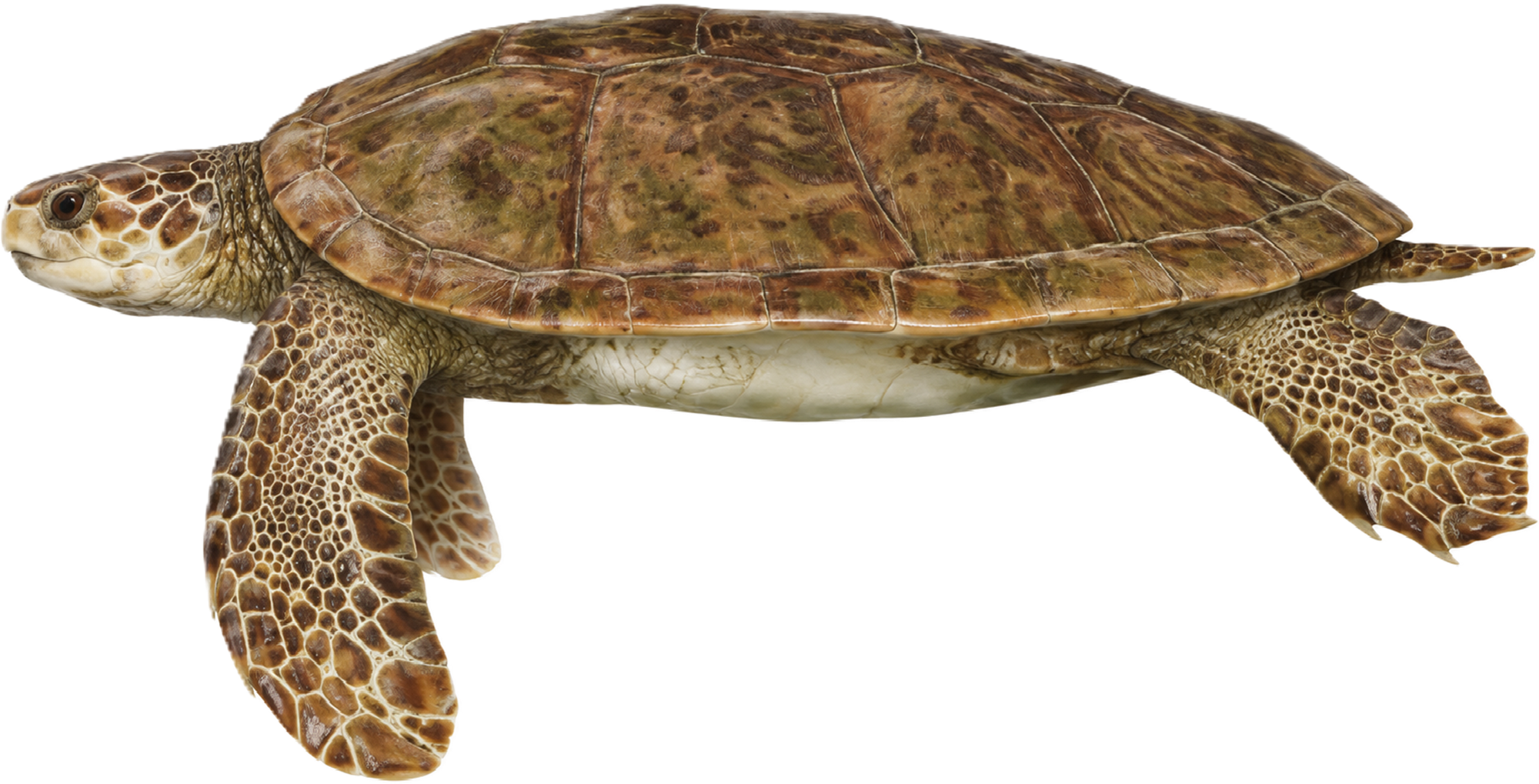 Toxochelys |
T. latiremis167Carpenter, K. (2006). Comparative vertebrate taphonomy of the Pembina and Sharon Springs members (Middle Campanian) of the Pierre Shale, Western Interior. Paludicola, 5(4), 125–149. Originalpublikation T. sp.168Hart, M. & Carrino, M. H. (2007). Taxonomic comparison and stratigraphic distribution of Toxochelys (Testudines: Cheloniidae) of South Dakota. Geological Society of America Special Paper, 427, 111–132. doi:10.1130/2007.2427(08) Originalpublikation |
Pierre Shale | Kanada (Manitoba); USA (South Dakota) | 89-66 Ma | selten | Toxochelyidae (Meeresschildkröte) |
 Trionychidae indet. |
Trionychidae indet.169Hoganson, J.W., Erickson, J.M. & Holland, F.D., Jr. (2007). Amphibian, reptilian, and avian remains from the Fox Hills Formation (Maastrichtian): Shoreline and estuarine deposits of the Pierre Sea in south-central North Dakota. Geological Society of America Special Paper 427: 239–256. doi:10.1130/2007.2427(18) | Fox Hills Formation | USA (North Dakota) | ca. 70–68 Ma | selten | unbestimmte Weichschildkröten |
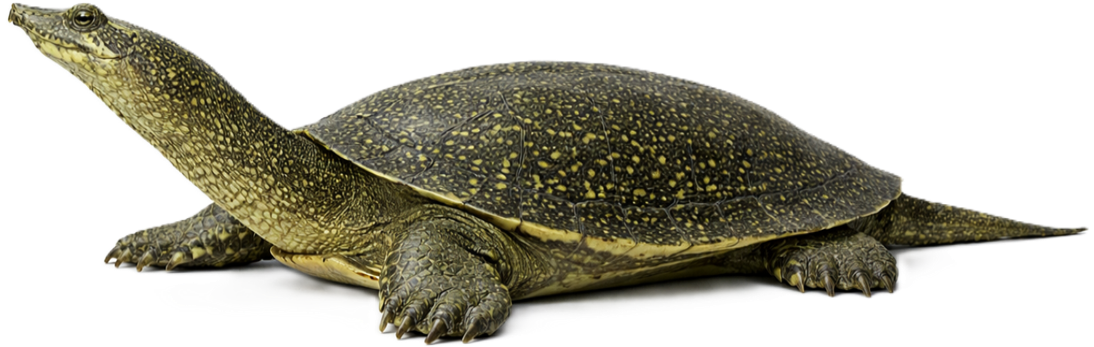 Trionyx |
T. sp.170Parris, D. C. (2006). Chronister site investigations: New information on the Cretaceous of Missouri. In: Field Trip Guidebook – 2006 Association of Missouri Geologists Meeting, 9–13. Quelle | Ripley Formation | USA (Missouri) | 75–70 Ma (?) | nicht quantifiziert | Trionychidae (Weichschildkröte) |
Die hier aufgeführten Süßwasser- und Landschildkröten sind wohl keine Meeresbewohner gewesen, sondern von Flüssen und Gezeiten nach ihrem Ableben in Meeresedimente transportiert worden.
Aus der Fox Hills Formation ist Lophochelys sp. sensu Hoganson et al. (2007) nur generisch beschrieben. Gattung und Synonymie mit Toxochelys werden diskutiert. In der Tabelle wird der Nachweis konservativ als Chelonioidea indet. übernommen. Von Basilemys sp. sind nur Panzerfragmente bekannt, die keine sichere Artbestimmung erlauben.171Hoganson, J.W., Erickson, J.M. & Holland, F.D., Jr. (2007). Amphibian, reptilian, and avian remains from the Fox Hills Formation (Maastrichtian): Shoreline and estuarine deposits of the Pierre Sea in south-central North Dakota. Geological Society of America Special Paper 427: 239–256. doi:10.1130/2007.2427(18)
Die drei Schildkrötengattungen aus dem Pierre Shale stammen noch überwiegend aus dem Campanium. Ihr Vorkommen in den Resten des Western Interior Seaways im späten Maastrichtium oder bis unmittelbar vor der K–Pg-Grenze ist somit nicht gesichert. Da Fossilien dieser Gattungen aber durchaus in anderen Teilen der Welt kurz vor der K-Pg-Grenze gefunden wurden, ist ihre Existenz auch im zurückweichenden Pierre Seaway wenigstens plausibel.172Wieland, G. R. (1896). Archelon ischyros; a new gigantic cryptodire testudinate from the Fort Pierre Cretaceous of South Dakota. American Journal of Science, 2(12), 399–412. doi:10.2475/ajs.s4-2.12.399 Originalpublikation173Hoganson, J. W. & Woodward, B. (2003). Skeleton of the rare giant sea turtle, Archelon, recovered from the Cretaceous DeGrey Member of the Pierre Shale near Cooperstown, Griggs County, North Dakota. NDGS Newsletter, 32(1). Originalpublikation174Brinkman, D. et al. (2006). Nichollsemys baieri gen. et sp. nov., a primitive chelonioid turtle from the Late Campanian of North America. Paludicola, 5(4), 111–124. Originalpublikation175Carpenter, K. (2006). Comparative vertebrate taphonomy of the Pembina and Sharon Springs members (Middle Campanian) of the Pierre Shale, Western Interior. Paludicola, 5(4), 125–149. Originalpublikation.176Hart, M. & Carrino, M. H. (2007). Taxonomic comparison and stratigraphic distribution of Toxochelys (Testudines: Cheloniidae) of South Dakota. Geological Society of America Special Paper, 427, 111–132. doi:10.1130/2007.2427(08) Originalpublikation
Einige untersuchte Schildkrötenreste stammen aus dem gemischten Umlagerungshorizont zwischen dem Arkadelphia Marl und der Midway Group. Eine Herkunft aus der jüngsten Kreidezeit ist möglich, für einzelne Stücke jedoch nicht sicher nachweisbar.177Becker, M. A., Maisch, H. M. IV & Chamberlain, J. A. Jr. (2016). Turtles from an Arkadelphia Formation–Midway Group lag deposit (Maastrichtian–Paleocene), Hot Spring County, Arkansas, USA. Geosciences, 6(3), 41. doi:10.3390/geosciences6030041
Die früher als Schildkrötenspuren gedeuteten Fährten aus der Escondido Formation wurden als Schwimmspuren von Pfeilschwanzkrebsen neu interpretiert; sie sind wohl kein Schildkrötennachweis.178Fossil Collecting Report (2007). May 2007. Sammlerbericht; Bestimmungen vorläufig. Originalbericht
Plesiosaurier:
| Gattung: | Arten: | Formation: | Fundort: | Alter: | Häufigkeit: | Bemerkungen: |
|---|---|---|---|---|---|---|
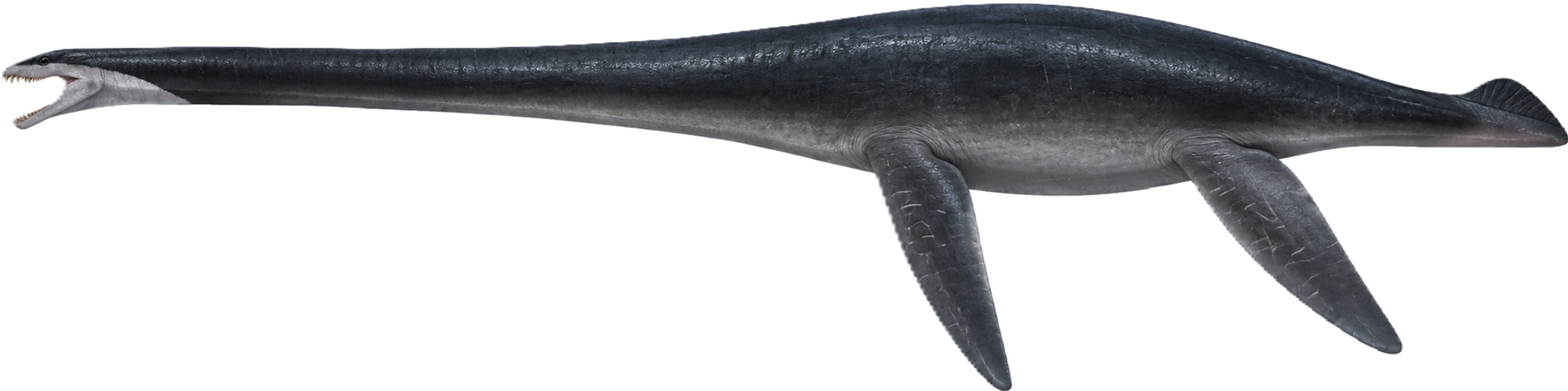 Aphrosaurus |
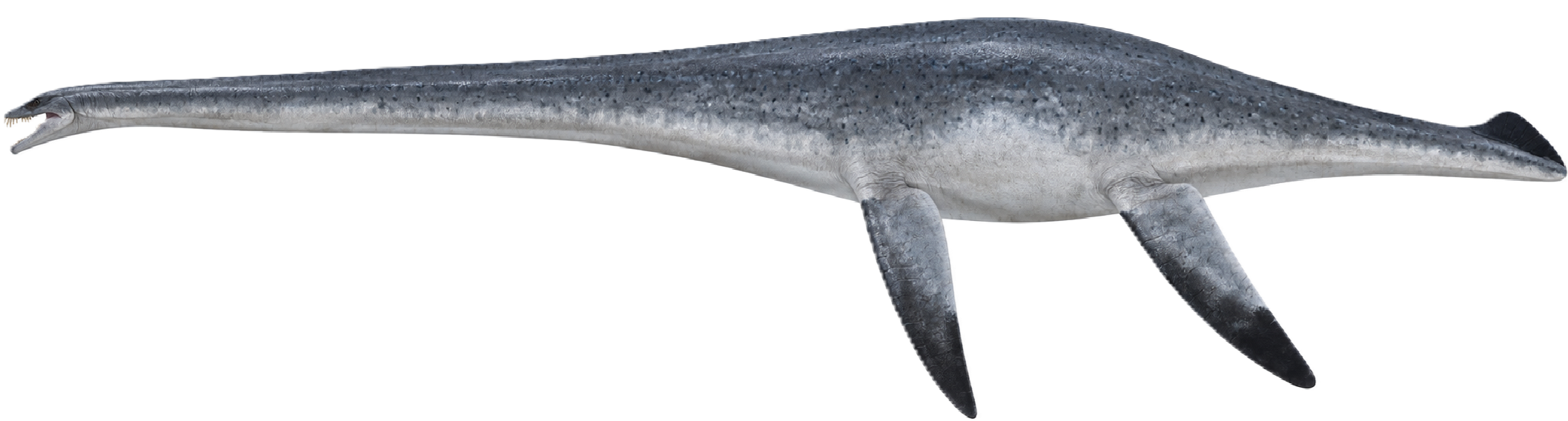
A. furlongi179Welles, S. P. (1943). Elasmosaurid plesiosaurs, with description of new material from California and Colorado. University of California Publications, Bulletin of the Department of Geological Sciences, 13(3), 125–254. | Moreno Formation | USA (Kalifornien) | 72–70 Ma | Einzelfund | Elasmosauridae |
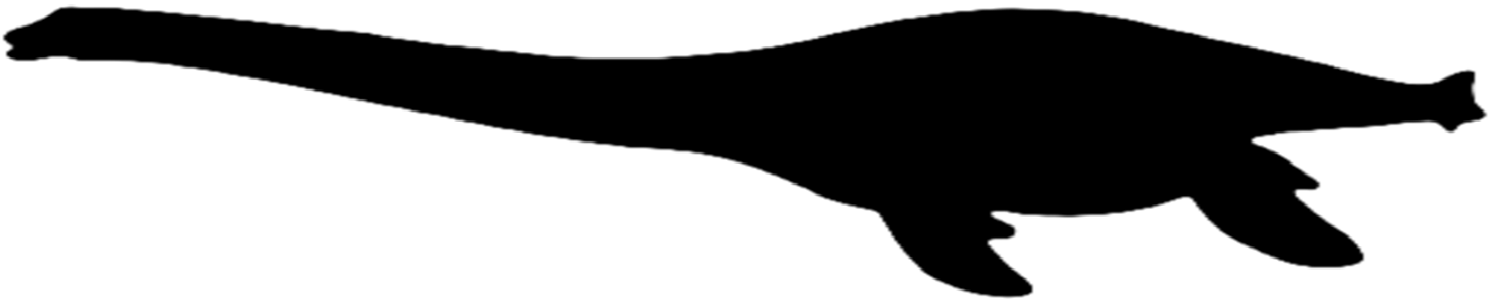 |
Elasmosauridae indet.180Welles, S. P. (1943). Elasmosaurid plesiosaurs, with description of new material from California and Colorado. University of California Publications, Bulletin of the Department of Geological Sciences, 13(3), 125–254.181Everhart, M. J. (2000). Gastroliths associated with plesiosaur remains in the Sharon Springs Member of the Pierre Shale (Late Cretaceous), western Kansas. Transactions of the Kansas Academy of Science, 103(1–2). Originalpublikation182Ikejiri, T. et al. (2013). An overview of Late Cretaceous vertebrates from Alabama. Bulletin of the Alabama Museum of Natural History 31(1), 46–71. Appendix 1, S. 71; Tabelle 5, S. 55. Prairie Bluff Chalk. Unbestimmter Familienbeleg. Quelle führt elasmosaurid (gen. indet.; Cimoliasaurus?). Cimoliasaurus? ist keine bestätigte zusätzliche Art. Quelle | Moreno Formation Pierre Shale Prairie Bluff Chalk |
USA (Alabama, Kalifornien, Kansas) | 84–66 Ma | häufig | unbestimmte Elasmosaurier Pierre: KUVP 129744 aus dem campanischen Sharon Springs Member, mit 47 Gastrolithen. Familiennachweis; kein zusätzlicher maastrichtischer Pierre-Körperfossilnachweis. |
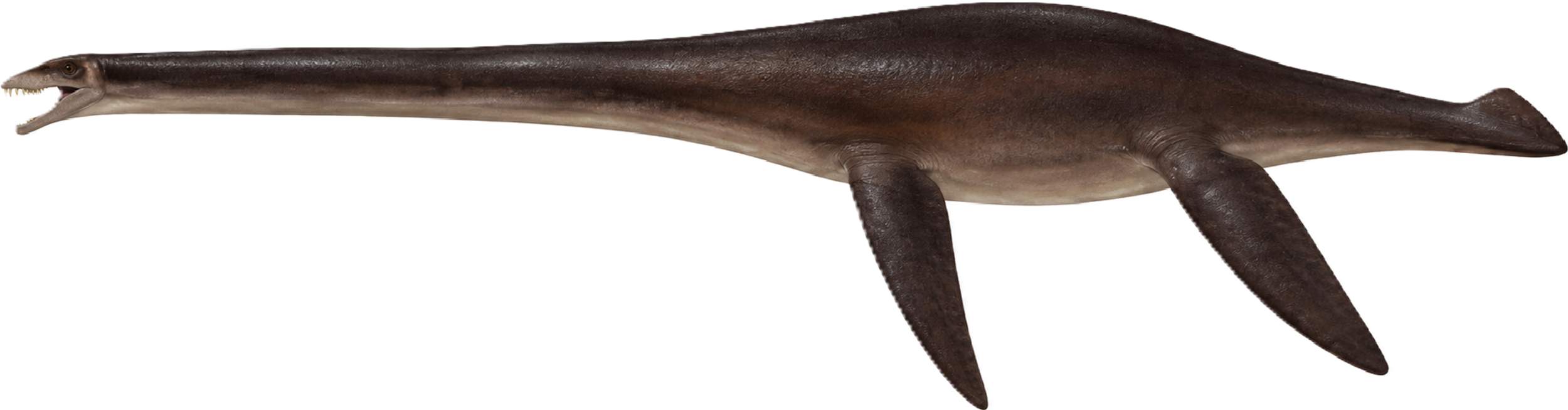 Fresnosaurus |
F. drescheri183Welles, S. P. (1943). Elasmosaurid plesiosaurs, with description of new material from California and Colorado. University of California Publications, Bulletin of the Department of Geological Sciences, 13(3), 125–254. | Moreno Formation | USA (Kalifornien) | 72–66 Ma | Einzelfund | Elasmosauridae |
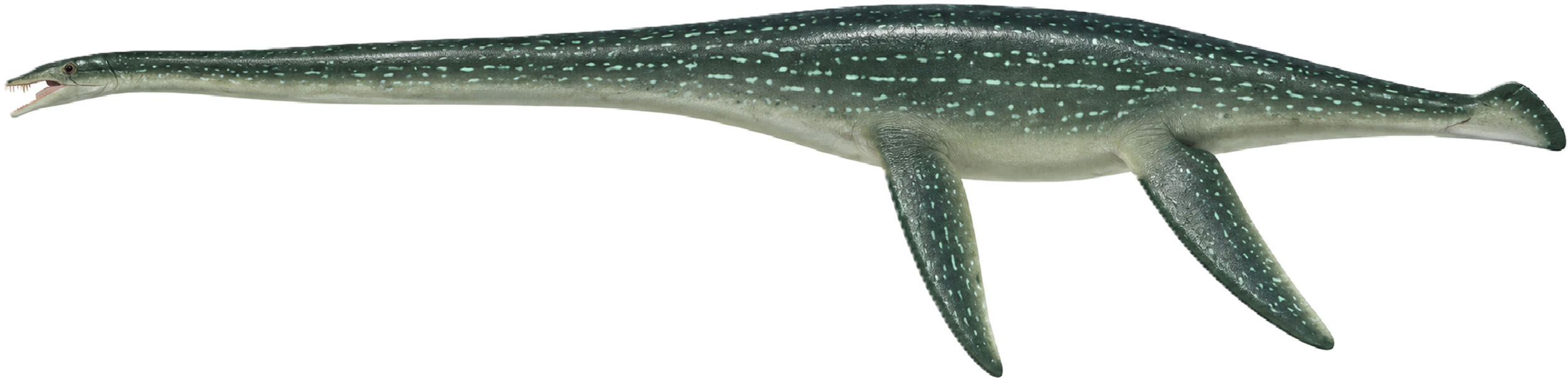 Hydrotherosaurus |
H. alexandrae184Welles, S. P. (1943). Elasmosaurid plesiosaurs, with description of new material from California and Colorado. University of California Publications, Bulletin of the Department of Geological Sciences, 13(3), 125–254. | Moreno Formation | USA (Kalifornien) | 72–66 Ma | Einzelfund | Elasmosauridae |
 Morenosaurus |
M. stocki185Welles, S. P. (1943). Elasmosaurid plesiosaurs, with description of new material from California and Colorado. University of California Publications, Bulletin of the Department of Geological Sciences, 13(3), 125–254. | Moreno Formation | USA (Kalifornien) | 72–70 Ma | Einzelfund | Elasmosauridae |
 |
Plesiosauroidea indet.186Currie, P. J. (2001). Sino-Canadian Dinosaur Project / Le Projet dinosaurien sino-canadien. Canadian Journal of Earth Sciences, 38(12), vii–viii. doi:10.1139/e01-083187Hilton, R. P. (2003). Dinosaurs and Other Mesozoic Reptiles of California. University of California Press, Berkeley.188Vandermark, D., Tarduno, J. A. & Brinkman, D. B. (2006). Late Cretaceous plesiosaur teeth from Axel Heiberg Island, Nunavut, Canada. Arctic, 59(1), 79–82. doi:10.14430/arctic366189Tarduno, J. A. et al. (1998). Evidence for extreme climatic warmth from Late Cretaceous Arctic vertebrates. Science, 282(5397), 2241–2243. doi:10.1126/science.282.5397.2241190Boyd, C.A. (2018). A Pleasing Discovery from North Dakota’s Ancient Seas. Geo News, July 2018: 5–10. Quelle | Arkadelphia Marl Fox Hills Formation Kanguk Formation Moreno Formation |
Kanada (Nunavut); USA (North Dakota, Arkansas, Kalifornien) | 72–66 Ma | häufig | unbestimmte Plesiosaurier |
 Serpentisuchops |
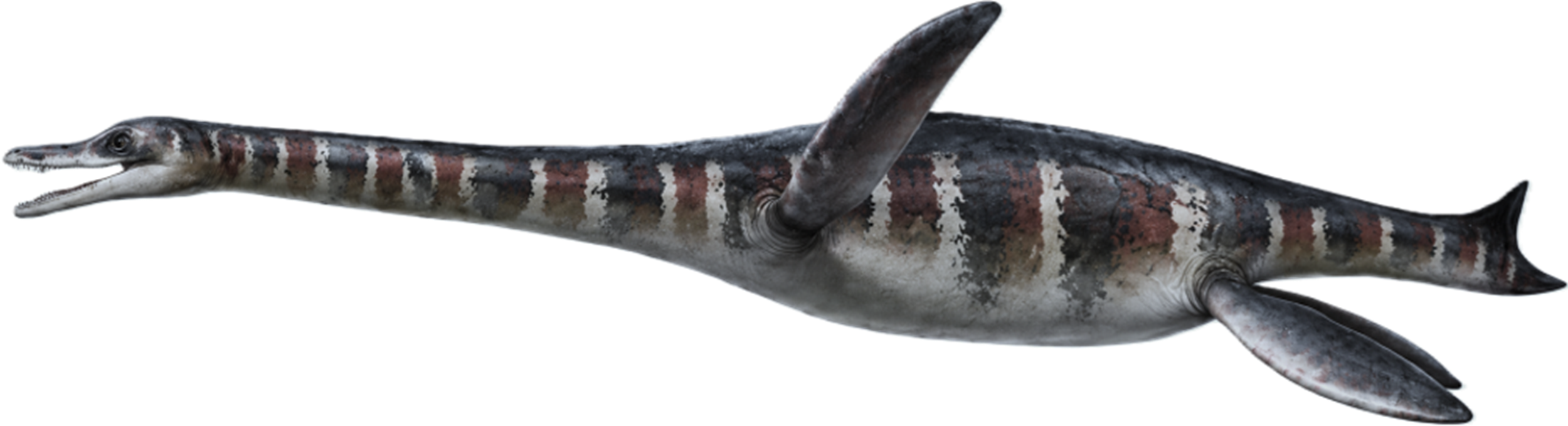
S. pfisterae191Persons, W. S. IV, Street, H. P. & Kelley, A. (2022). A long-snouted and long-necked polycotylid plesiosaur from the Late Cretaceous of North America. iScience, 25, 105033. doi:10.1016/j.isci.2022.105033 Originalpublikation | Pierre Shale | USA (Wyoming) | 70 Ma | nicht quantifiziert | Polycotylidae |
Plesiosaurier-Zähne aus der Kanguk Formation werden juvenilen Elasmosauriern zugeordnet, was ein Indiz ist, dass diese Meeresreptilien die kühleren Regionen als Geburtsstätten und Kinderstuben nutzten. Sie stammen aus nichtmarinen Ablagerungen und sprechen dafür, dass die Jungtiere hier die Süßwasserlebensräume nutzten.192Vandermark, D., Tarduno, J. A. & Brinkman, D. B. (2006). Late Cretaceous plesiosaur teeth from Axel Heiberg Island, Nunavut, Canada. Arctic, 59: 79–82. doi:10.14430/arctic366
Die unbestimmten Elasmosaurier aus dem Pierre Shale stammen aus dem noch campanischen Sharon Springs Member. Bei einigen Funden aus der Fox Hills Formation wird ebenfalls diskutiert, ob diese wirklich aus dem späten Maastrichtium stammen oder doch viel älter, vielleicht aus dem Campanium umgelagert sind. Da mehrere Plesiosaurier-Arten andernorts aber durchaus auch bis ans Ende der Kreidezeit nachgewiesen ist, könnten ihre Vertreter durchaus auch noch im Pierre Seaway bis zum Ende der Kreidezeit vorgekommen sein.193Everhart, M. J. (2000). Gastroliths associated with plesiosaur remains in the Sharon Springs Member of the Pierre Shale (Late Cretaceous), western Kansas. Transactions of the Kansas Academy of Science, 103(1–2). Originalpublikation
Plesiosaurierzähne und -wirbel aus dem Gebiet von Malvern stammen aus einem Umlagerungshorizont am Kontakt zwischen dem Arkadelphia Marl und der paläozänen Midway Group. Sie sind in jedem Fall kreidezeitlich, da die Gruppe am Ende der Kreidezeit ausstarb, können aber nicht vorbehaltlos als reguläre Fauna des Arkadelphia Marl geführt werden.194Becker, M. A., Maisch, H. M. IV & Chamberlain, J. A. Jr. (2013). Plesiosaurian remains from the Arkadelphia Formation–Midway Group contact (Maastrichtian–Paleocene), Hot Spring County, near Malvern, Arkansas, U.S.A. Paludicola, 9(3), 131–143.
Schuppenechsen:
| Gattung: | Arten: | Formation: | Fundort: | Alter: | Häufigkeit: | Bemerkungen: |
|---|---|---|---|---|---|---|
| Dallasaurus | D. ? turneri195Mississippi State University Libraries / Dunn-Seiler Museum (o. J.). Dallasaurus? turneri, DSM CH. Öffentlicher Sammlungskatalog; Formationsfeld Prairie Bluff Fm. (Chalk). Abgerufen am 24. Oktober 2026. Prairie Bluff Chalk. Sehr fragliche Katalogbestimmung. DSM CH: kleine Wirbel; der Katalog selbst nennt einen Jungmosasaurier einer größeren Art als Alternative. Siehe Erläuterungen unter den Tabellen. Quelle196Paleobiology Database (2026). Gattungsrahmen; Abfrage vom 24. Oktober 2026. Gerundeter Gattungsrahmen für Dallasaurus; erweitert um die hier dokumentierte, gegebenenfalls strittige Prairie-Bluff-Meldung. Quelle | Prairie Bluff Chalk | USA (Mississippi) | 94–66 Ma | nicht quantifiziert | Mosasauridae (Mosasaurier) |
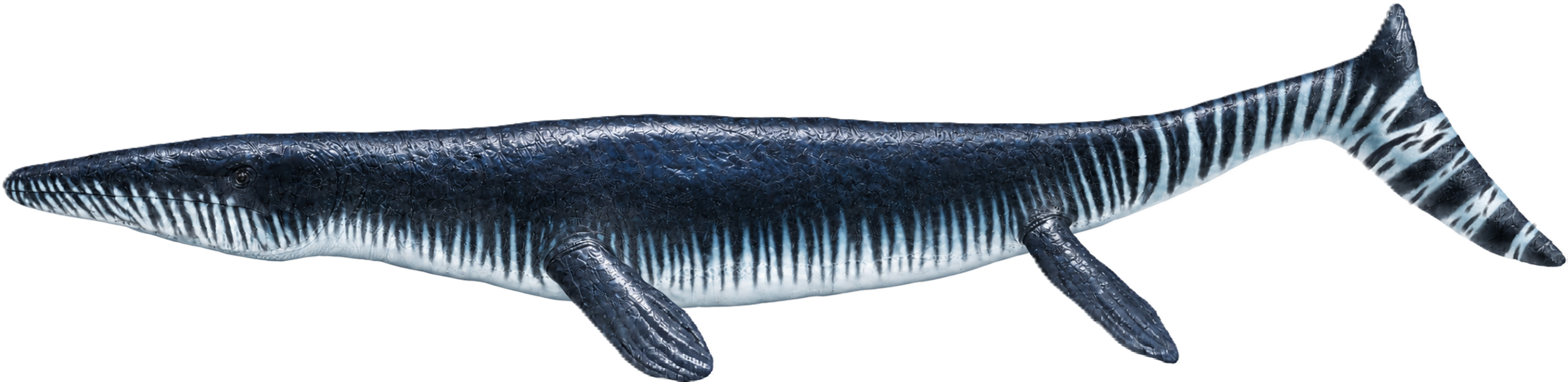 Halisaurus |
H. sp.197Lindgren, J. & Schulp, A. S. (2010). New material of Prognathodon (Squamata: Mosasauridae), and the mosasaur assemblage of the Maastrichtian of California, U.S.A. Journal of Vertebrate Paleontology, 30(5), 1632–1636. doi:10.1080/02724634.2010.501444 | Moreno Formation | USA (Kalifornien) | 72–66 Ma | selten | Mosasauridae |
 |
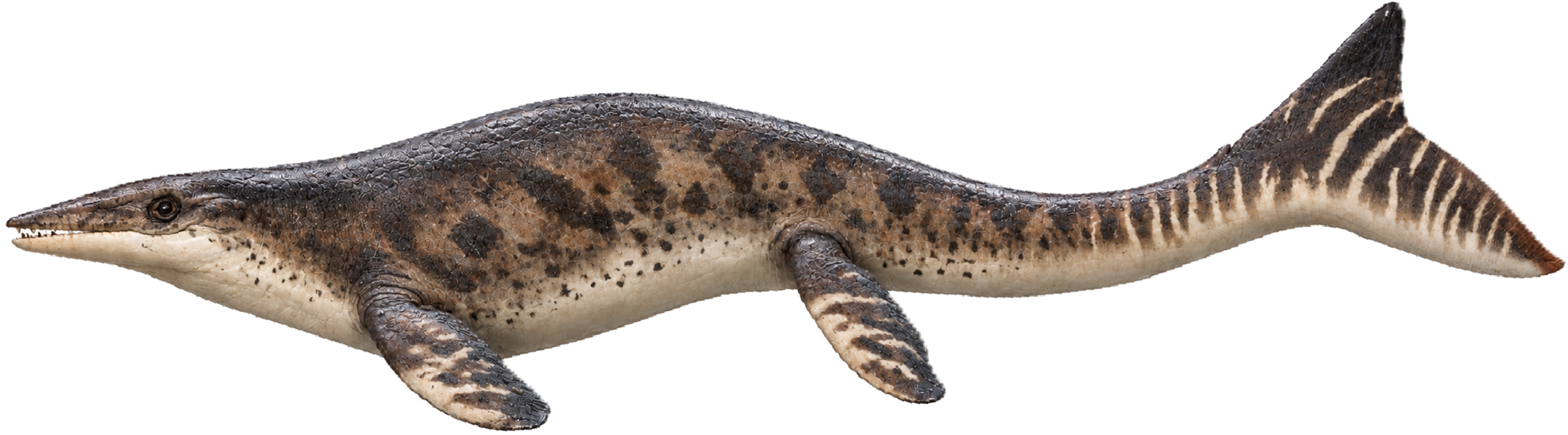
Mosasauridae indet.198Poropat, R., Campbell, C. & Lee, T. (2004). Upper Cretaceous (Owl Creek Formation) invertebrate fossils from a new site in Stoddard County, Missouri. Geological Society of America Abstracts with Programs 36(3), 5. Originalbeitrag199Currie, P. J. (2001). Sino-Canadian Dinosaur Project / Le Projet dinosaurien sino-canadien. Canadian Journal of Earth Sciences, 38(12), vii–viii. doi:10.1139/e01-083200Van Vranken, N. E. & Boyd, C. A. (2021). The first in situ collection of a mosasaurine from the marine Breien Member of the Hell Creek Formation in south-central North Dakota, USA. PaleoBios, 38(1). doi:10.5070/P938054460201Lindgren, J. & Schulp, A. S. (2010). New material of Prognathodon (Squamata: Mosasauridae), and the mosasaur assemblage of the Maastrichtian of California, U.S.A. Journal of Vertebrate Paleontology, 30(5), 1632–1636. doi:10.1080/02724634.2010.501444202Buchy, M.-C. et al. (2005). Annotated catalogue of marine squamates (Reptilia) from the Upper Cretaceous of northeastern Mexico. Netherlands Journal of Geosciences 84(3), 195–205. doi:10.1017/S0016774600020977203Müllerried, F. K. G. (1931). Un reptil y algunos invertebrados fósiles de Rayón, estado de Tamaulipas. Anales del Instituto de Biología 2(2), 171–178. Originalpublikation204Schulte, P. et al. (2012): Tsunami backwash deposits with Chicxulub impact ejecta and dinosaur remains from the Cretaceous–Palaeogene boundary in the La Popa Basin, Mexico. Sedimentology 59: 737–765. doi:10.1111/j.1365-3091.2011.01274.x205Kauffman, E. G. & Sawdo, J. K. (2013). Mosasaur predation on a nautiloid from the Maastrichtian Pierre Shale, Central Colorado, Western Interior Basin, United States. Lethaia, 46, 180–187. doi:10.1111/j.1502-3931.2012.00332.x Originalpublikation206Hoganson, J.W., Erickson, J.M. & Holland, F.D., Jr. (2007). Amphibian, reptilian, and avian remains from the Fox Hills Formation (Maastrichtian): Shoreline and estuarine deposits of the Pierre Sea in south-central North Dakota. Geological Society of America Special Paper 427: 239–256. doi:10.1130/2007.2427(18)207Cicimurri, D.J., Bell, G.L., Jr. & Stoffer, P.W. (1999). Vertebrate paleontology of the Pierre Shale and Fox Hills formations (Late Campanian–Late Maastrichtian), Badlands National Park, South Dakota. National Park Service Technical Report NPS/NRGRD/GRDTR-99/3: 1–7 | Fox Hills Formation Hell Creek Formation Kanguk Formation Moreno Formation Méndez Formation Owl Creek Formation Pierre Shale Potrerillos Formation |
Kanada (Nunavut); USA (Colorado, Kalifornien, Missouri, North Dakota, South Dakota); Mexiko (Nuevo León, Tamaulipas) | 72–66 Ma | sehr häufig | Mosasauridae (Mosasaurier) |
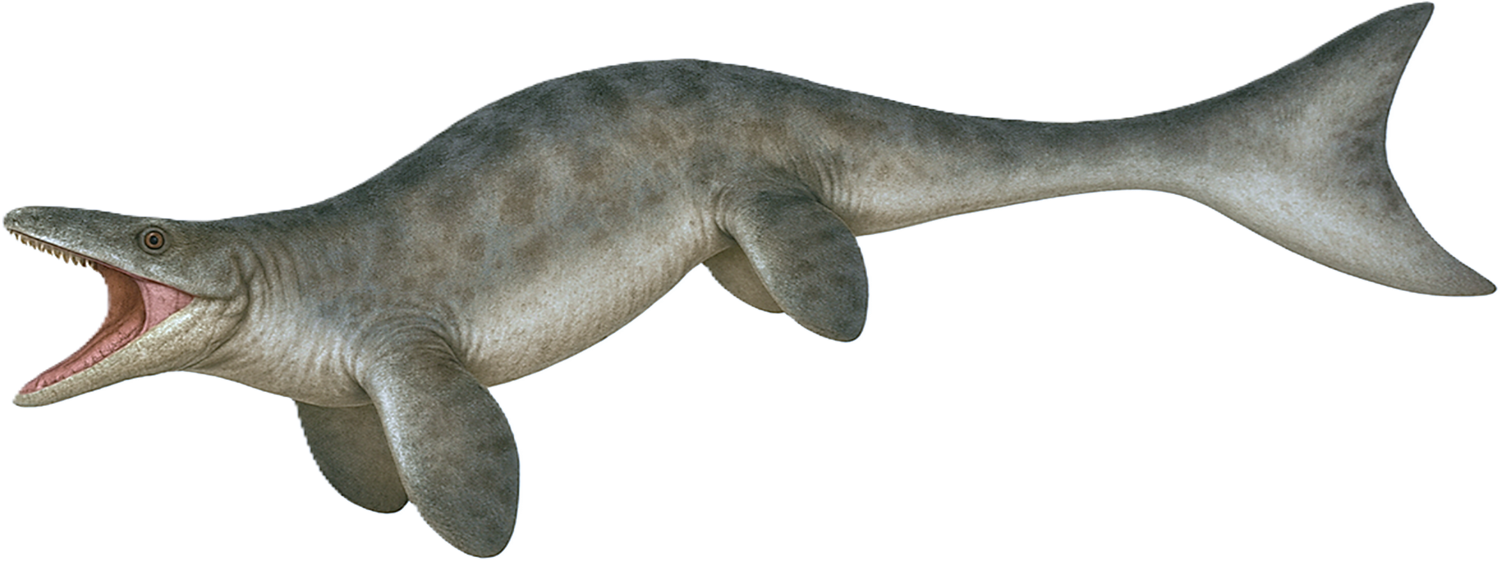 Mosasaurus |
M. conodon208Ikejiri, T. & Lucas, S. G. (2015). Osteology and taxonomy of Mosasaurus conodon Cope 1881 from the Late Cretaceous of North America. Netherlands Journal of Geosciences. doi:10.1017/njg.2014.28 Originalpublikation209Ikejiri, T. et al. (2013). An overview of Late Cretaceous vertebrates from Alabama. Bulletin of the Alabama Museum of Natural History 31(1), 46–71. Appendix 1, S. 71; Tabelle 5, S. 55. Prairie Bluff Chalk. Publizierte Faunenliste. Prairie Bluff separat von Providence auf S. 71. Quelle M. hoffmannii210Farke, A. A. & Phillips, G. E. (2017). The first reported ceratopsid dinosaur from eastern North America (Owl Creek Formation, Upper Cretaceous, Mississippi, USA). PeerJ 5, e3342. doi:10.7717/peerj.3342211Gallagher, W. B. et al. (2005). Mosasaur (Reptilia, Squamata) material from the Cretaceous-Tertiary boundary interval in Missouri. Journal of Vertebrate Paleontology 25(2), 473–475. doi:10.1671/0272-4634(2005)025[0473:MRSMFT]2.0.CO;2212Rempert, T. H., Martens, B. P. & Vinkeles Melchers, A. P. M. (2024). New Mosasaur remains from the Upper Cretaceous of Mississippi. The Mosasaur 13, 79–90. doi:10.5281/zenodo.10472410213Rempert, T. H. & Hartley, L. C. (2025). A new jaw of Mosasaurus hoffmanni Mantell 1829 from Chambers Creek in Navarro County, Texas. Researchers.One, 25.06.00004. Originalpublikation214Harrell, T.L., Jr. & Martin, J.E. (2015). A mosasaur from the Maastrichtian Fox Hills Formation of the northern Western Interior Seaway of the United States and the synonymy of Mosasaurus maximus with Mosasaurus hoffmanni (Reptilia: Mosasauridae). Netherlands Journal of Geosciences 94(1): 23–37. doi:10.1017/njg.2014.27215Gentry, A. D. et al. (2018). A new species of Peritresius Leidy, 1856 (Testudines: Pan-Cheloniidae) from the Late Cretaceous (Campanian) of Alabama, USA, and the occurrence of the genus within the Mississippi Embayment of North America. PLOS ONE, 13(4), e0195651. doi:10.1371/journal.pone.0195651216Kiernan, C. R. (2002). Stratigraphic distribution and habitat segregation of mosasaurs in the Upper Cretaceous of western and central Alabama, with an historical review of Alabama mosasaur discoveries. Journal of Vertebrate Paleontology 22(1), 91–103. Prairie Bluff Chalk. Formationsbelege; einzelne Bestimmungen cf./aff.. ALMNH PV 1988.0018 und PV 1991.0013.0002; DSM 10716 (cf.), DSM 10743 (aff.). REMPC M0190: Owl Creek/Prairie Bluff nicht getrennt. Historischer Name M. maximus ist ein Synonym. doi:10.1671/0272-4634(2002)022[0091:SDAHSO]2.0.CO;2217Harrell, T. L. Jr. & Pérez-Huerta, A. (2015). Rare earth element (REE) analysis of vertebrate fossils from the Upper Cretaceous carbonate marine formations of western and central Alabama, USA: taphonomic and paleoenvironmental implications. PALAIOS 30(7), 514–528. Prairie Bluff Chalk. Formationsbelege; einzelne Bestimmungen cf./aff.. ALMNH PV 1988.0018 und PV 1991.0013.0002; DSM 10716 (cf.), DSM 10743 (aff.). REMPC M0190: Owl Creek/Prairie Bluff nicht getrennt. Historischer Name M. maximus ist ein Synonym. doi:10.2110/palo.2014.031218Moffitt, J. (2020). Taphonomy of a Late Cretaceous mosasaur specimen from Oktibbeha County, Mississippi. Masterarbeit, Mississippi State University, Theses and Dissertations 4209. Prairie Bluff Chalk. Formationsbelege; einzelne Bestimmungen cf./aff.. ALMNH PV 1988.0018 und PV 1991.0013.0002; DSM 10716 (cf.), DSM 10743 (aff.). REMPC M0190: Owl Creek/Prairie Bluff nicht getrennt. Historischer Name M. maximus ist ein Synonym. Quelle219Rempert, T. H., Martens, B. P. & Vinkeles Melchers, A. P. M. (2024). New mosasaur remains from the Upper Cretaceous of Mississippi. The Mosasaur 13, 79–90. Prairie Bluff Chalk.doi:10.5281/zenodo.10472410220Mississippi State University Libraries / Dunn-Seiler Museum (o. J.). Mosasaurus hoffmanii, DSM 10716. Öffentlicher Sammlungskatalog; Formationsfeld Prairie Bluff Fm. (Chalk). Abgerufen am 24. Oktober 2026. Prairie Bluff Chalk. Formationsbelege; einzelne Bestimmungen cf./aff.. ALMNH PV 1988.0018 und PV 1991.0013.0002; DSM 10716 (cf.), DSM 10743 (aff.). REMPC M0190: Owl Creek/Prairie Bluff nicht getrennt. Historischer Name M. maximus ist ein Synonym. Quelle221Mississippi State University Libraries / Dunn-Seiler Museum (o. J.). Mosasaurus aff. hoffmanii, DSM 10743. Öffentlicher Sammlungskatalog; Formationsfeld Prairie Bluff Fm. (Chalk). Abgerufen am 24. Oktober 2026. Prairie Bluff Chalk. Formationsbelege; einzelne Bestimmungen cf./aff.. ALMNH PV 1988.0018 und PV 1991.0013.0002; DSM 10716 (cf.), DSM 10743 (aff.). REMPC M0190: Owl Creek/Prairie Bluff nicht getrennt. Historischer Name M. maximus ist ein Synonym. Quelle M. spp.222Lindgren, J. & Schulp, A. S. (2010). New material of Prognathodon (Squamata: Mosasauridae), and the mosasaur assemblage of the Maastrichtian of California, U.S.A. Journal of Vertebrate Paleontology, 30(5), 1632–1636. doi:10.1080/02724634.2010.501444223Hoganson, J.W., Erickson, J.M. & Holland, F.D., Jr. (2007). Amphibian, reptilian, and avian remains from the Fox Hills Formation (Maastrichtian): Shoreline and estuarine deposits of the Pierre Sea in south-central North Dakota. Geological Society of America Special Paper 427: 239–256. doi:10.1130/2007.2427(18)224During, M.A.D. et al. (2025). King of the Riverside, a multi-proxy approach offers a new perspective on mosasaurs before their extinction. BMC Zoology 10. doi:10.1186/s40850-025-00246-y225Gallagher, W.B. (2005). Recent mosasaur discoveries from New Jersey and Delaware, USA: stratigraphy, taphonomy and implications for mosasaur extinction. Netherlands Journal of Geosciences 84(3): 241–245. doi:10.1017/S0016774600021028226Kiernan, C. R. (2002). Stratigraphic distribution and habitat segregation of mosasaurs in the Upper Cretaceous of western and central Alabama, with an historical review of Alabama mosasaur discoveries. Journal of Vertebrate Paleontology 22(1), 91–103. Prairie Bluff Chalk. Vergleichsbestimmung. Zahn aus dem obersten Prairie Bluff bei Braggs; beschrieben als ähnlich dem zu M. dekayi gestellten Material. Keine gesicherte zusätzliche Art. doi:10.1671/0272-4634(2002)022[0091:SDAHSO]2.0.CO;2227Kiernan, C. R. (2002). Stratigraphic distribution and habitat segregation of mosasaurs in the Upper Cretaceous of western and central Alabama, with an historical review of Alabama mosasaur discoveries. Journal of Vertebrate Paleontology 22(1), 91–103. Prairie Bluff Chalk. Offene Bestimmungen. Moscow Landing, Sumter County; DSM CH16. doi:10.1671/0272-4634(2002)022[0091:SDAHSO]2.0.CO;2228Mississippi State University Libraries / Dunn-Seiler Museum (o. J.). Mosasaurus sp., DSM CH16. Öffentlicher Sammlungskatalog; Formationsfeld Prairie Bluff Fm. (Chalk). Abgerufen am 24. Oktober 2026. Prairie Bluff Chalk. Offene Bestimmungen. Moscow Landing, Sumter County; DSM CH16. Quelle |
Corsicana Marl Fox Hills Formation Kemp Clay Moreno Formation Owl Creek Formation Pierre Shale Prairie Bluff Chalk Ripley Formation |
USA (Alabama, Colorado, Kalifornien, Mississippi, Missouri, North Dakota, South Dakota, Texas) | 83–66 Ma | sehr häufig | Mosasauridae (Mosasaurier); M. hoffmannii synonym zu M. dekayi und M. maximus |
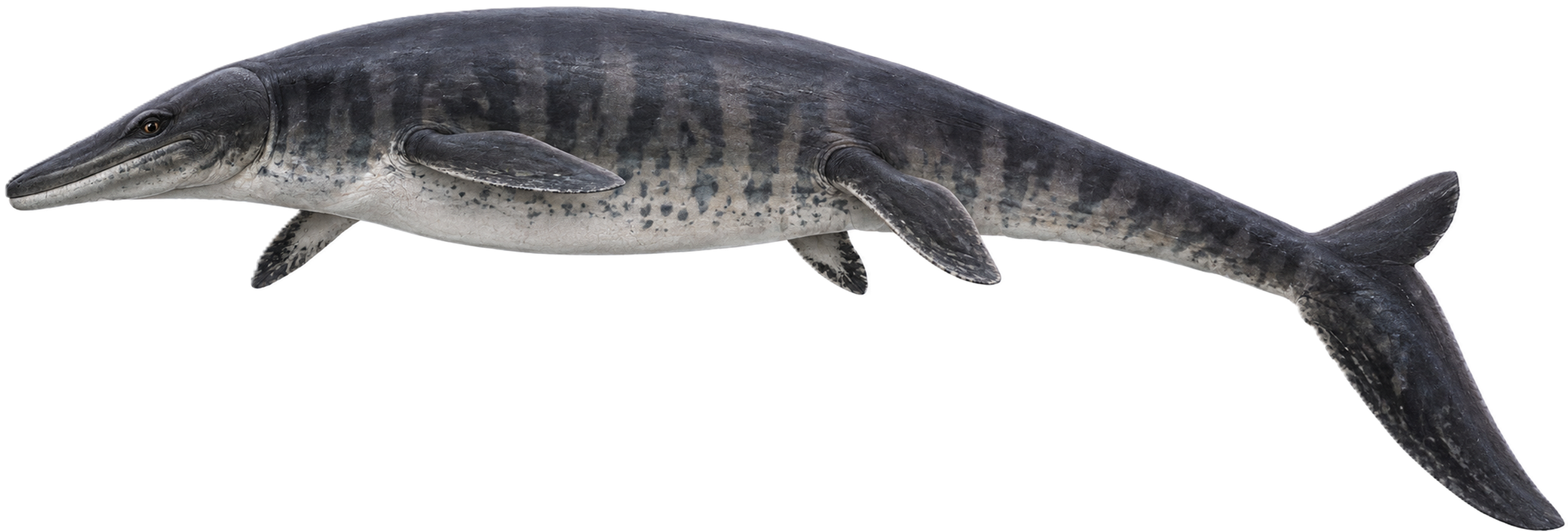 Plesiotylosaurus |
P. crassidens229Lindgren, J. & Schulp, A. S. (2010). New material of Prognathodon (Squamata: Mosasauridae), and the mosasaur assemblage of the Maastrichtian of California, U.S.A. Journal of Vertebrate Paleontology, 30(5), 1632–1636. doi:10.1080/02724634.2010.501444 | Moreno Formation | USA (Kalifornien) | 72–66 Ma | selten | Mosasauridae |
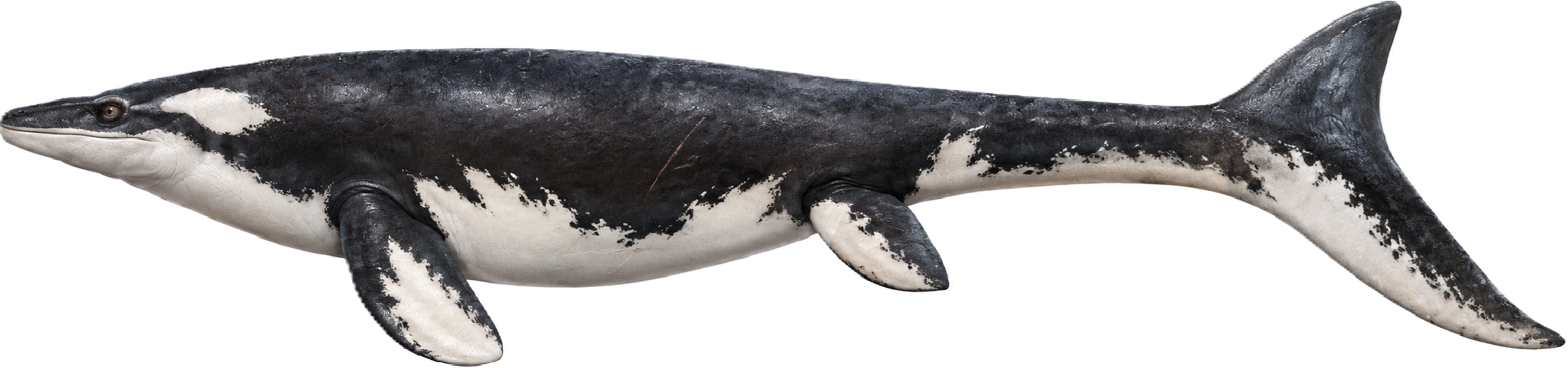 Plioplatecarpus |
P. sp. (?)230Hoganson, J.W., Erickson, J.M. & Holland, F.D., Jr. (2007). Amphibian, reptilian, and avian remains from the Fox Hills Formation (Maastrichtian): Shoreline and estuarine deposits of the Pierre Sea in south-central North Dakota. Geological Society of America Special Paper 427: 239–256. doi:10.1130/2007.2427(18)231During, M.A.D. et al. (2025). King of the Riverside, a multi-proxy approach offers a new perspective on mosasaurs before their extinction. BMC Zoology 10. doi:10.1186/s40850-025-00246-y232Ikejiri, T. et al. (2013). An overview of Late Cretaceous vertebrates from Alabama. Bulletin Alabama Museum of Natural History, 31(1), 46–71. Quelle233Ikejiri, T. et al. (2013). An overview of Late Cretaceous vertebrates from Alabama. Bulletin of the Alabama Museum of Natural History 31(1), 46–71. Appendix 1, S. 71; Tabelle 5, S. 55. Prairie Bluff Chalk. Direktes Belegstück. ALMNH PV 1991.0032.0001, Wirbel, Fort Deposit, Butler County. Quelle234Harrell, T. L. Jr. & Pérez-Huerta, A. (2015). Rare earth element (REE) analysis of vertebrate fossils from the Upper Cretaceous carbonate marine formations of western and central Alabama, USA: taphonomic and paleoenvironmental implications. PALAIOS 30(7), 514–528. Prairie Bluff Chalk. Direktes Belegstück. ALMNH PV 1991.0032.0001, Wirbel, Fort Deposit, Butler County. doi:10.2110/palo.2014.031 | Fox Hills Formation Prairie Bluff Chalk Ripley Formation |
USA (Alabama, North Dakota) | ca. 75–66 Ma | häufig | Mosasauridae (Mosasaurier) |
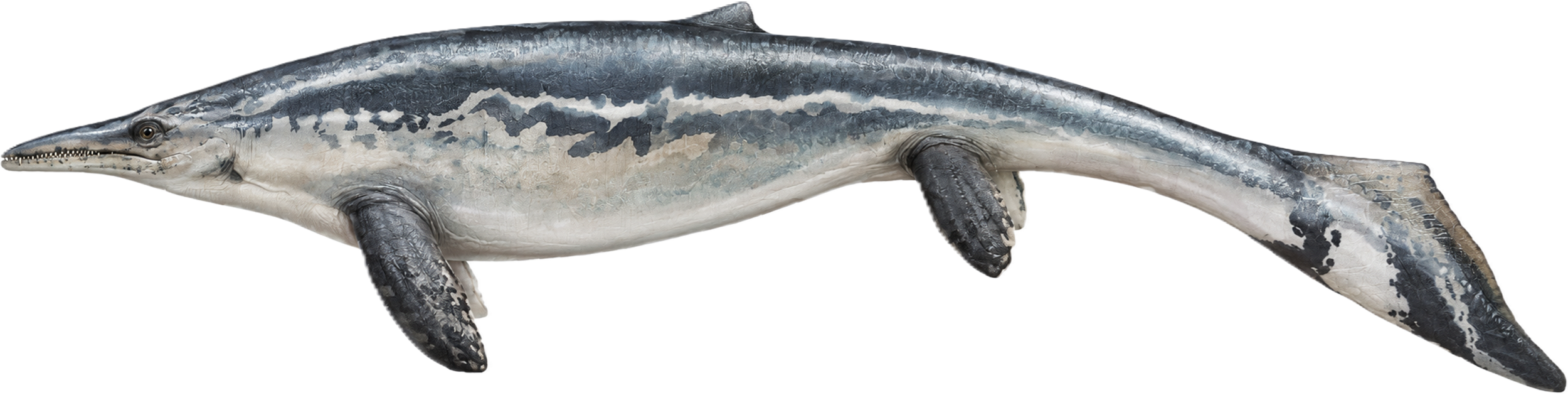 Plotosaurus |
P. bennisoni235Lindgren, J. & Schulp, A. S. (2010). New material of Prognathodon (Squamata: Mosasauridae), and the mosasaur assemblage of the Maastrichtian of California, U.S.A. Journal of Vertebrate Paleontology, 30(5), 1632–1636. doi:10.1080/02724634.2010.501444 | Moreno Formation | USA (Kalifornien) | 72–66 Ma | selten | Mosasauridae; synonym zu Plotosaurus tuckeri |
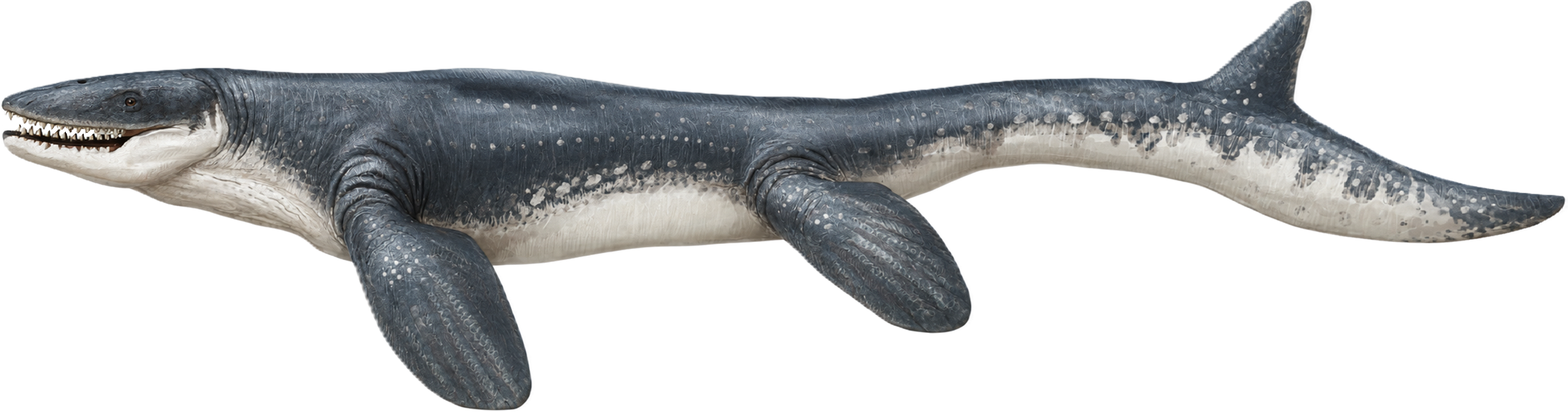 Prognathodon |
P. cipactli236Rivera-Sylva, H. E. et al. (2026). A new species of Prognathodon (Squamata: Mosasauridae) from the Early Maastrichtian of Nuevo León, Mexico. Neues Jahrbuch für Geologie und Paläontologie – Abhandlungen 317(1), 23–38. doi:10.1127/njgpa/1303 P. overtoni237Lucas, S. G. et al. (2005). The mosasaur Prognathodon from the Upper Cretaceous Lewis Shale near Durango, Colorado and distribution of Prognathodon in North America. New Mexico Geological Society Guidebook, 56, 389–393. doi:10.56577/FFC-56.389 Originalpublikation P. cf. waiparaensis (?)238Lindgren, J. & Schulp, A. S. (2010). New material of Prognathodon (Squamata: Mosasauridae), and the mosasaur assemblage of the Maastrichtian of California, U.S.A. Journal of Vertebrate Paleontology, 30(5), 1632–1636. doi:10.1080/02724634.2010.501444 |
Moreno Formation Méndez Formation Pierre Shale |
Mexiko (Nuevo León); USA (Kalifornien, South Dakota) | 72–66 Ma | häufig | Mosasauridae |
 |
Prognathodontini indet.239During, M. A. D. et al. (2025). King of the Riverside, a multi-proxy approach offers a new perspective on mosasaurs before their extinction. BMC Zoology, 10(1), 25. doi:10.1186/s40850-025-00246-y | Hell Creek Formation | USA (North Dakota) | 66 Ma | Einzelfund | unbestimmte Prognathodontini |
 |
Reptilia indet.240González-Barba, G. et al. (2010). Maastrichtian sharks of the Escondido Formation in the Sabinas Basin, northern Coahuila. Fifth International Meeting on Mesozoic Fishes: Abstract Book and Field Guides, 46.241Vega-Vera, F.J. & Perrilliat Montoya, M. del C. (1990): Moluscos del Maastrichtiano de la sierra El Antrisco, Estado de Nuevo León. Paleontología Mexicana 55: 1–69. doi:10.22201/igl.05437652e.1990.0.55.337242Hoganson, J.W., Erickson, J.M. & Holland, F.D., Jr. (2007). Amphibian, reptilian, and avian remains from the Fox Hills Formation (Maastrichtian): Shoreline and estuarine deposits of the Pierre Sea in south-central North Dakota. Geological Society of America Special Paper 427: 239–256. doi:10.1130/2007.2427(18)243Paleobiology Database (2026). Formationsabfrage Prairie Bluff, Vertebrata; Datenbankindex und zugehörige Primärreferenzen. Prairie Bluff Chalk. Unbestimmte Reste. Sohl-&-Koch-Aufsammlungen; nicht automatisch Mosasaurus zuweisen. Quelle | Escondido Formation Fox Hills Formation Potrerillos Formation Prairie Bluff Chalk |
USA (Alabama, North Dakota); Mexiko (Coahuila, Nuevo León) | 72–66 Ma; Potrerillos: Maastrichtium (72–66 Ma) | häufig | unbestimmte Reptilien |
 Tylosaurus |
T. sp. (?)244Ikejiri, T. et al. (2013). An overview of Late Cretaceous vertebrates from Alabama. Bulletin Alabama Museum of Natural History, 31(1), 46–71. Quelle | Ripley Formation | USA (Alabama) | 75–70 Ma | nicht quantifiziert | Mosasauridae (Mosasaurier) |
Ein 2025 beschriebener Kiefer von Mosasaurus hoffmanni stammt aus dem Chambers Creek. Die Autoren nennen dort jedoch unter anderem gemeinsam kartierte Corsicana Marl– und Kemp Clay–Aufschlüsse, ohne den Kiefer im Text eindeutig einer der beiden Formationen zuzuweisen. Es ist somit zwar durchaus möglich, aber nicht gesichert, dass diese Art noch am Ende des Maastrichtiums an der gesamten Golfküste vorkam.245Rempert, T. H. & Hartley, L. C. (2025). A new jaw of Mosasaurus hoffmanni Mantell 1829 from Chambers Creek in Navarro County, Texas. Researchers.One, 25.06.00004. Originalpublikation Aus dem Pierre Seaway ist er ebenfalls sicher belegt.246Harrell, T.L., Jr. & Martin, J.E. (2015). A mosasaur from the Maastrichtian Fox Hills Formation of the northern Western Interior Seaway of the United States and the synonymy of Mosasaurus maximus with Mosasaurus hoffmanni (Reptilia: Mosasauridae). Netherlands Journal of Geosciences 94(1): 23–37. doi:10.1017/njg.2014.27
Die Gattungszuweisung bei Plioplatecarpus sp. aus der Fox Hills Formation ist höchst unsicher.247Hoganson, J.W., Erickson, J.M. & Holland, F.D., Jr. (2007). Amphibian, reptilian, and avian remains from the Fox Hills Formation (Maastrichtian): Shoreline and estuarine deposits of the Pierre Sea in south-central North Dakota. Geological Society of America Special Paper 427: 239–256. doi:10.1130/2007.2427(18)248During, M.A.D. et al. (2025). King of the Riverside, a multi-proxy approach offers a new perspective on mosasaurs before their extinction. BMC Zoology 10. doi:10.1186/s40850-025-00246-y
Aus dem Pierre Shale gibt es Nautiloiden mit deutlichen Bissspuren, die wahrscheinlich von Mosasauriern stammen.249Kauffman, E. G. & Sawdo, J. K. (2013). Mosasaur predation on a nautiloid from the Maastrichtian Pierre Shale, Central Colorado, Western Interior Basin, United States. Lethaia, 46, 180–187. doi:10.1111/j.1502-3931.2012.00332.x Originalpublikation
Aus den marinen Faszies der Hell Creek Formation sind die bislang noch unbestimmten Fossilien eines großen Mosasauriers bekannt, der eine geschätzte Länge von 11 m gehabt haben könnte.250Van Vranken, N. E., & Boyd, C. A. (2021). The first in situ collection of a mosasaurine from the marine Breien Member of the Hell Creek Formation in south-central North Dakota, USA. PaleoBios, 38(1). doi:10.5070/P938054460 Doch Mosasaurier kamen in Hell Creek auch im Süßwasser vor! Bekannt ist eine Zahnkrone, die in Süßwasserablagerungen gemeinsam mit einem Zahn von T. rex, einem Oberkieferknochen eines Krokodilverwandten sowie einem Hadrosaurierzahn gefunden wurde; die stratigraphische Position liegt oberhalb des marinen Breien Members.251During, M. A. D. et al. (2025). King of the Riverside, a multi-proxy approach offers a new perspective on mosasaurs before their extinction. BMC Zoology, 10(1), 25. doi:10.1186/s40850-025-00246-y
Aus der Escondido Formation stammen Reptilienzähne, die aber bislang noch nicht näher bestimmt wurden.252González-Barba, G. et al. (2010). Maastrichtian sharks of the Escondido Formation in the Sabinas Basin, northern Coahuila. Fifth International Meeting on Mesozoic Fishes: Abstract Book and Field Guides, 46.
Aus der Potrerillos Formation bei La Cuesta del Indio werden im Fossilbericht Reptilien ohne nähere Bestimmung aufgeführt. Eine Identität mit später gemeldeten Dinosaurierknochen ist aber nicht belegt.253Vega-Vera, F.J. & Perrilliat Montoya, M. del C. (1990): Moluscos del Maastrichtiano de la sierra El Antrisco, Estado de Nuevo León. Paleontología Mexicana 55: 1–69. doi:10.22201/igl.05437652e.1990.0.55.337
Säugetiere:
| Gattung: | Arten: | Formation: | Fundort: | Alter: | Häufigkeit: | Bemerkungen: |
|---|---|---|---|---|---|---|
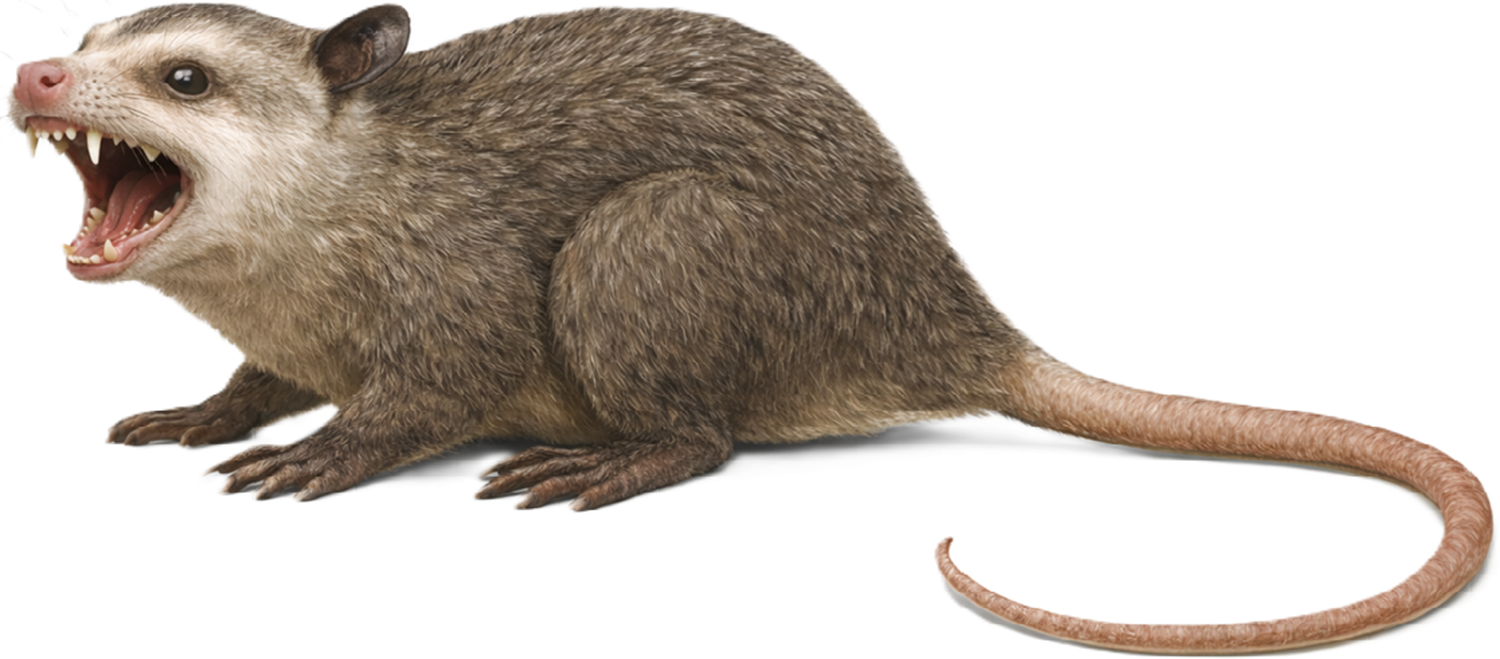 Alphadon |
A. marshi (?)254Wilson, R.W. (1983). Late Cretaceous mammals of western South Dakota, 1974. National Geographic Society Research Reports 15: 749–752255Wilson, R.W. (1987). Late Cretaceous (Fox Hills) multituberculates from the Red Owl local fauna of western South Dakota. Dakoterra 3256Hunter, J.P. & Archibald, J.D. (2002). Mammals from the end of the age of dinosaurs in North Dakota and southeastern Montana, with a reappraisal of geographic differentiation among Lancian mammals. Geological Society of America Special Paper 361: 191–216. doi:10.1130/0-8137-2361-2.191175Clemens, W. A. (1964). Fossil mammals of the type Lance Formation, Wyoming – Part I. Introduction and Marsupialia. University of California Publications in Geological Sciences, 48, 1–105.163Kielan-Jaworowska, Z., Cifelli, R. L. & Luo, Z.-X. (2004). Mammals from the Age of Dinosaurs – Origins, Evolution, and Structure. Columbia University Press, 98–99. doi:10.7312/kiel11918 A. spp. (?)257Case, J.A. & Martin, J.E. (2007). Mammals from Red Owm Quarry, Fox Hills Formation, South Dakota: an Edmontonian local fauna? Journal of Vertebrate Paleontology 27(3), Supplement: 57A. Quelle176Boyd, C. A., Person, J. J. & Barnes, B. (2017). Additions to the Lancian mammalian fauna from southwest North Dakota. Journal of Vertebrate Paleontology, e1325368. doi:10.1080/02724634.2017.1325368 |
Fox Hills Formation, Hell Creek Formation, Lance Formation |
USA (North Dakota, Montana, South Dakota, Wyoming) | ca. 70–66 Ma | sehr häufig | Metatheria |
 Bubodens |
B. magnus258Wilson, R.W. (1983). Late Cretaceous mammals of western South Dakota, 1974. National Geographic Society Research Reports 15: 749–752259Wilson, R.W. (1987). Late Cretaceous (Fox Hills) multituberculates from the Red Owl local fauna of western South Dakota. Dakoterra 3260Cifelli, R.L. et al. (2004). Mammalian Biochronology of the Latest Cretaceous. In: Woodburne, M.O. (ed.), Late Cretaceous and Cenozoic Mammals of North America: Biostratigraphy and Geochronology. Columbia University Press: 21–42. Quelle261Clemens, W.A. (2010). Were immigrants a significant part of the earliest Paleocene mammalian fauna of the North American Western Interior? Vertebrata PalAsiatica 48(4): 285–307. Quelle262Lopatin, A.V. & Averianov, A.O. (2026, online). Reappraisal of a multituberculate mammal Buginbaatar transaltaiensis from the Upper Cretaceous of Mongolia. Journal of Vertebrate Paleontology 45(5): e2601790. doi:10.1080/02724634.2025.2601790 | Fox Hills Formation | USA (South Dakota) | ca. 70–68 Ma | Einzelfund | Cimolodonta |
 Cimexomys |
C. sp. (?)263Wilson, R.W. (1983). Late Cretaceous mammals of western South Dakota, 1974. National Geographic Society Research Reports 15: 749–752264Wilson, R.W. (1987). Late Cretaceous (Fox Hills) multituberculates from the Red Owl local fauna of western South Dakota. Dakoterra 3265Cifelli, R.L. et al. (2004). Mammalian Biochronology of the Latest Cretaceous. In: Woodburne, M.O. (ed.), Late Cretaceous and Cenozoic Mammals of North America: Biostratigraphy and Geochronology. Columbia University Press: 21–42. Quelle189Donohue, S. L. et al. (2013). Latest Cretaceous multituberculates of the Black Butte Station local fauna (Lance Formation, southwestern Wyoming), with implications for compositional differences among mammalian local faunas of the western interior. Journal of Vertebrate Paleontology, 33(3), 677–695. doi:10.1080/02724634.2013.745416 | Fox Hills Formation, Hell Creek Formation, Lance Formation |
USA (Montana, Wyoming, South Dakota) | ca. 70–66 Ma | selten | Cimolodonta |
 Cimolodon |
C. nitidus (?)266Wilson, R.W. (1983). Late Cretaceous mammals of western South Dakota, 1974. National Geographic Society Research Reports 15: 749–752267Wilson, R.W. (1987). Late Cretaceous (Fox Hills) multituberculates from the Red Owl local fauna of western South Dakota. Dakoterra 3268Hunter, J.P. & Archibald, J.D. (2002). Mammals from the end of the age of dinosaurs in North Dakota and southeastern Montana, with a reappraisal of geographic differentiation among Lancian mammals. Geological Society of America Special Paper 361: 191–216. doi:10.1130/0-8137-2361-2.191163Kielan-Jaworowska, Z., Cifelli, R. L. & Luo, Z.-X. (2004). Mammals from the Age of Dinosaurs – Origins, Evolution, and Structure. Columbia University Press, 98–99. doi:10.7312/kiel11918189Donohue, S. L. et al. (2013). Latest Cretaceous multituberculates of the Black Butte Station local fauna (Lance Formation, southwestern Wyoming), with implications for compositional differences among mammalian local faunas of the western interior. Journal of Vertebrate Paleontology, 33(3), 677–695. doi:10.1080/02724634.2013.745416186Eberle, J. J. & Lillegraven, J. A. (1998). A new important record of earliest Cenozoic mammalian history: geologic setting, Multituberculata, and Peradectia. Rocky Mountain Geology, 33(1), 3–47.163Kielan-Jaworowska, Z., Cifelli, R. L. & Luo, Z.-X. (2004). Mammals from the Age of Dinosaurs – Origins, Evolution, and Structure. Columbia University Press, 98–99. doi:10.7312/kiel11918189Donohue, S. L. et al. (2013). Latest Cretaceous multituberculates of the Black Butte Station local fauna (Lance Formation, southwestern Wyoming), with implications for compositional differences among mammalian local faunas of the western interior. Journal of Vertebrate Paleontology, 33(3), 677–695. doi:10.1080/02724634.2013.745416 | Fox Hills Formation, Ferris Formation, Hell Creek Formation, Lance Formation |
USA (North Dakota, Montana, South Dakota, Wyoming, Colorado) | ca. 70–66 Ma | sehr häufig | Cimolodontidae |
 Didelphodon |
D. vorax (?)269Wilson, R.W. (1983). Late Cretaceous mammals of western South Dakota, 1974. National Geographic Society Research Reports 15: 749–752270Wilson, R.W. (1987). Late Cretaceous (Fox Hills) multituberculates from the Red Owl local fauna of western South Dakota. Dakoterra 3271Hunter, J.P. & Archibald, J.D. (2002). Mammals from the end of the age of dinosaurs in North Dakota and southeastern Montana, with a reappraisal of geographic differentiation among Lancian mammals. Geological Society of America Special Paper 361: 191–216. doi:10.1130/0-8137-2361-2.191163Kielan-Jaworowska, Z., Cifelli, R. L. & Luo, Z.-X. (2004). Mammals from the Age of Dinosaurs – Origins, Evolution, and Structure. Columbia University Press, 98–99. doi:10.7312/kiel11918 D. vorax175Clemens, W. A. (1964). Fossil mammals of the type Lance Formation, Wyoming – Part I. Introduction and Marsupialia. University of California Publications in Geological Sciences, 48, 1–105.163Kielan-Jaworowska, Z., Cifelli, R. L. & Luo, Z.-X. (2004). Mammals from the Age of Dinosaurs – Origins, Evolution, and Structure. Columbia University Press, 98–99. doi:10.7312/kiel11918 |
Fox Hills Formation, Hell Creek Formation, Lance Formation |
USA (orth Dakota, Montana, South Dakota, Wyoming) | ca. 70–66 Ma | sehr häufig | Stagodontidae |
 |
Eutheria indet.272Schwarzhans, W. & Stringer, G. L. (2020). Fish otoliths from the late Maastrichtian Kemp Clay (Texas, USA) and the early Danian Clayton Formation (Arkansas, USA) and an assessment of extinction and survival of teleost lineages across the K-Pg boundary based on otoliths. Rivista Italiana di Paleontologia e Stratigrafia 126(2), 395–446 doi:10.13130/2039-4942/13425 | Kemp Clay | USA (Texas) | 68–66 Ma | selten | unbestimmte Höhere Säugetiere |
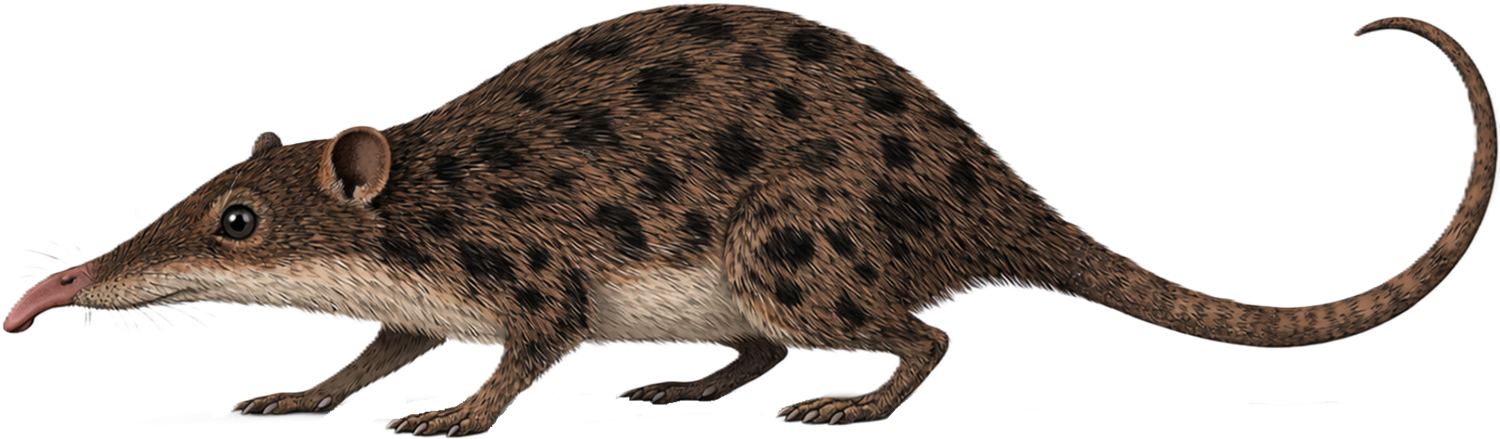 Gypsonictops |
G. hypoconus (?)273Wilson, R.W. (1983). Late Cretaceous mammals of western South Dakota, 1974. National Geographic Society Research Reports 15: 749–752274Wilson, R.W. (1987). Late Cretaceous (Fox Hills) multituberculates from the Red Owl local fauna of western South Dakota. Dakoterra 3275Hunter, J.P. & Archibald, J.D. (2002). Mammals from the end of the age of dinosaurs in North Dakota and southeastern Montana, with a reappraisal of geographic differentiation among Lancian mammals. Geological Society of America Special Paper 361: 191–216. doi:10.1130/0-8137-2361-2.191163Kielan-Jaworowska, Z., Cifelli, R. L. & Luo, Z.-X. (2004). Mammals from the Age of Dinosaurs – Origins, Evolution, and Structure. Columbia University Press, 98–99. doi:10.7312/kiel11918Hell Creek Formation, Lance Formation |
Fox Hills Formation, Hell Creek Formation, Lance Formation |
USA (North Dakota, Montana, South Dakota, Wyoming) | ca. 70–66 Ma | sehr häufig | Gypsonictopidae |
 |
Herpetotheriidae indet. (?)276Case, J.A. & Martin, J.E. (2007). Mammals from Red Owm Quarry, Fox Hills Formation, South Dakota: an Edmontonian local fauna? Journal of Vertebrate Paleontology 27(3), Supplement: 57A. Quelle | Fox Hills Formation | USA (South Dakota) | ca. 70–68 Ma | selten | Herpetotheriidae |
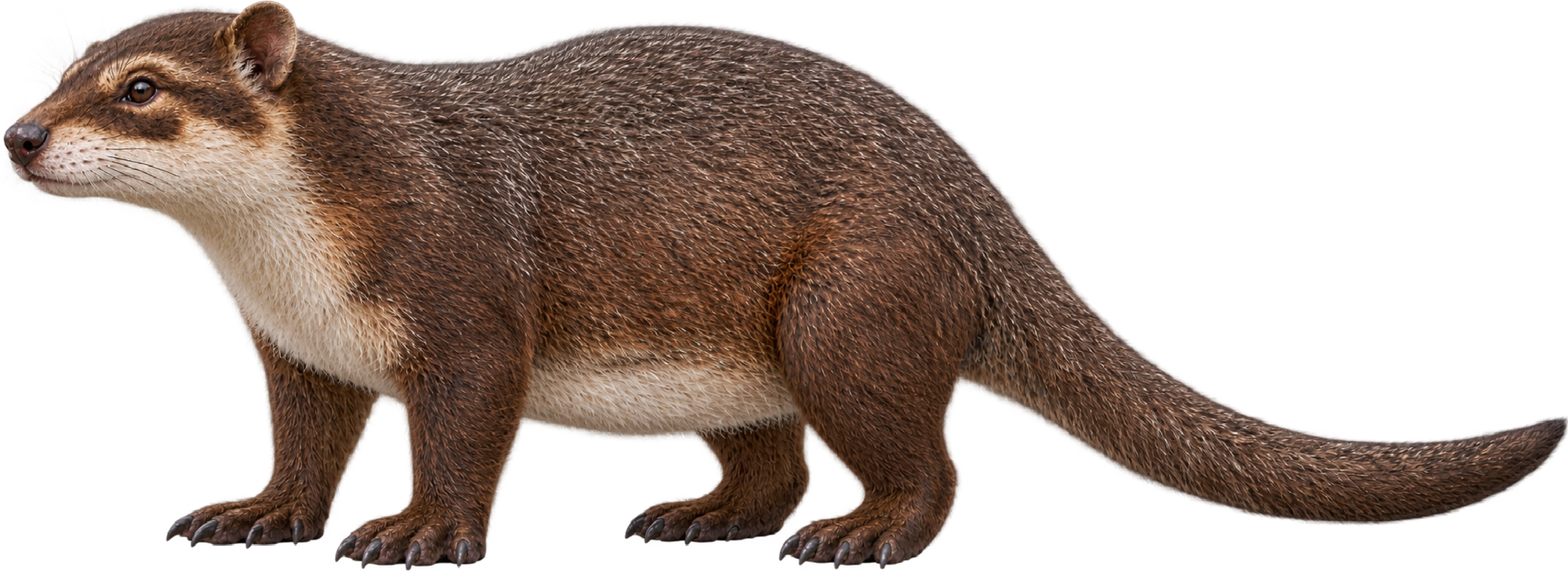 Iqualadelphis |
I. sp. (?)277Case, J.A. & Martin, J.E. (2007). Mammals from Red Owm Quarry, Fox Hills Formation, South Dakota: an Edmontonian local fauna? Journal of Vertebrate Paleontology 27(3), Supplement: 57A. Quelle | Fox Hills Formation | USA (South Dakota) | ca. 70–68 Ma | selten | Metatheria |
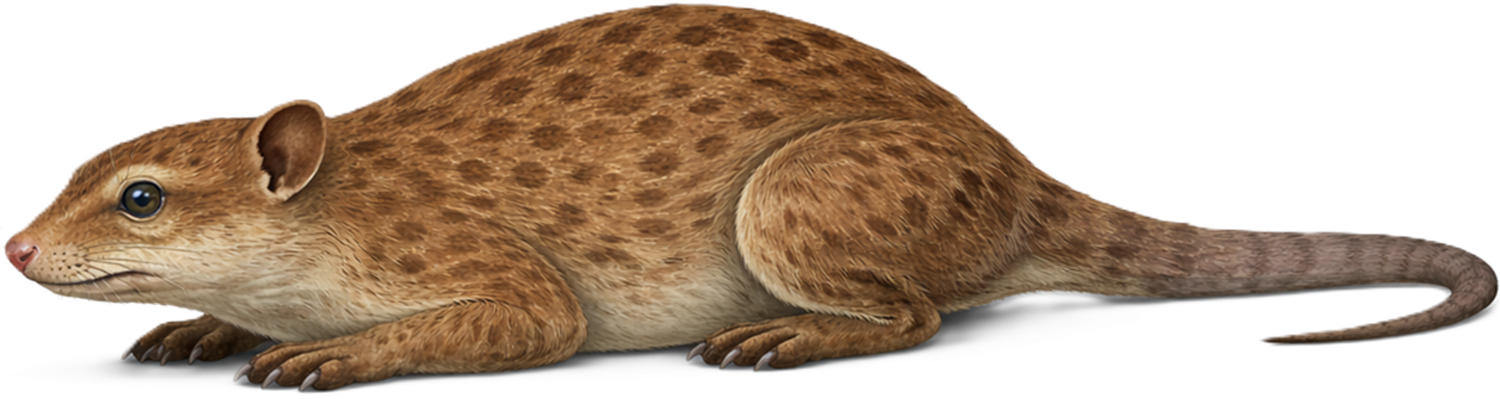 Leptalestes |
L. cooki (?)278Wilson, R.W. (1983). Late Cretaceous mammals of western South Dakota, 1974. National Geographic Society Research Reports 15: 749–752279Wilson, R.W. (1987). Late Cretaceous (Fox Hills) multituberculates from the Red Owl local fauna of western South Dakota. Dakoterra 3280Hunter, J.P. & Archibald, J.D. (2002). Mammals from the end of the age of dinosaurs in North Dakota and southeastern Montana, with a reappraisal of geographic differentiation among Lancian mammals. Geological Society of America Special Paper 361: 191–216. doi:10.1130/0-8137-2361-2.191281Davis, B.M. (2007). A revision of pediomyid marsupials from the Late Cretaceous of North America. Acta Palaeontologica Polonica 52(2): 217–256. Quelle175Clemens, W. A. (1964). Fossil mammals of the type Lance Formation, Wyoming – Part I. Introduction and Marsupialia. University of California Publications in Geological Sciences, 48, 1–105.180Davis, B. M. (2007). A revision of “pediomyid” marsupials from the Late Cretaceous of North America. Acta Palaeontologica Polonica, 52(2), 217–256.182Wilson, G. P., Dechesne, M. & Anderson, I. R. (2010). New latest Cretaceous mammals from northeastern Colorado, with biochronologic and biogeographic implications. Journal of Vertebrate Paleontology, 30(2), 499–520. doi:10.1080/02724631003620955 L. krejcii (?)282Wilson, R.W. (1983). Late Cretaceous mammals of western South Dakota, 1974. National Geographic Society Research Reports 15: 749–752283Wilson, R.W. (1987). Late Cretaceous (Fox Hills) multituberculates from the Red Owl local fauna of western South Dakota. Dakoterra 3284Hunter, J.P. & Archibald, J.D. (2002). Mammals from the end of the age of dinosaurs in North Dakota and southeastern Montana, with a reappraisal of geographic differentiation among Lancian mammals. Geological Society of America Special Paper 361: 191–216. doi:10.1130/0-8137-2361-2.191285Davis, B.M. (2007). A revision of pediomyid marsupials from the Late Cretaceous of North America. Acta Palaeontologica Polonica 52(2): 217–256. Quelle175Clemens, W. A. (1964). Fossil mammals of the type Lance Formation, Wyoming – Part I. Introduction and Marsupialia. University of California Publications in Geological Sciences, 48, 1–105.180Davis, B. M. (2007). A revision of “pediomyid” marsupials from the Late Cretaceous of North America. Acta Palaeontologica Polonica, 52(2), 217–256.163Kielan-Jaworowska, Z., Cifelli, R. L. & Luo, Z.-X. (2004). Mammals from the Age of Dinosaurs – Origins, Evolution, and Structure. Columbia University Press, 98–99. doi:10.7312/kiel11918 |
Fox Hills Formation, Hell Creek Formation, Lance Formation |
USA (Montana, South Dakota, Wyoming) | ca. 70–66 Ma | sehr häufig | Metatheria |
 |
Mammalia indet.286Waage, K.M. (1968). The Type Fox Hills Formation, Cretaceous (Maestrichtian), South Dakota. Part 1. Stratigraphy and Paleoenvironments. Bulletin of the Peabody Museum of Natural History 27. Quelle287Chamberlain, J.A., Jr., Knoll, K. & Sertich, J.J.W. (2023). Non-avian theropod phalanges from the marine Fox Hills Formation (Maastrichtian), western South Dakota, USA. PeerJ 11: e14665. doi:10.7717/peerj.14665288Cifelli, R.L. et al. (2004). Mammalian Biochronology of the Latest Cretaceous. In: Woodburne, M.O. (ed.), Late Cretaceous and Cenozoic Mammals of North America: Biostratigraphy and Geochronology. Columbia University Press: 21–42. Quelle | Fox Hills Formation | USA (South Dakota) | ca. 68–68 Ma | selten | Mammalia |
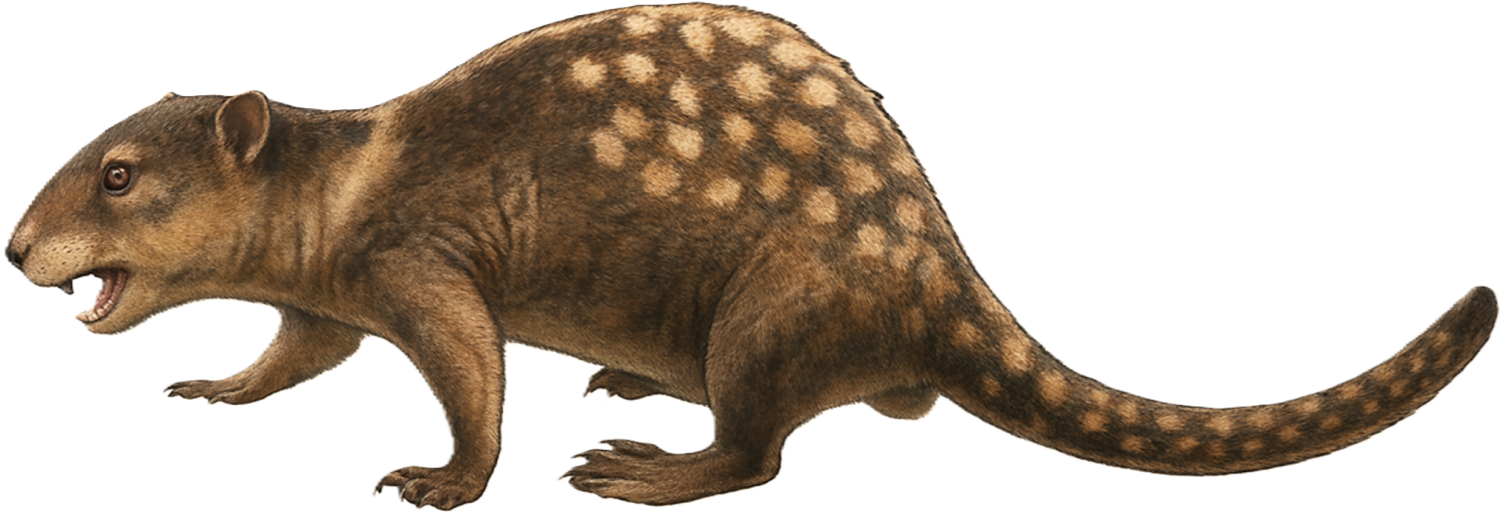 Meniscoessus |
M. robustus289Wilson, R.W. (1983). Late Cretaceous mammals of western South Dakota, 1974. National Geographic Society Research Reports 15: 749–752290Wilson, R.W. (1987). Late Cretaceous (Fox Hills) multituberculates from the Red Owl local fauna of western South Dakota. Dakoterra 3291Hunter, J.P. & Archibald, J.D. (2002). Mammals from the end of the age of dinosaurs in North Dakota and southeastern Montana, with a reappraisal of geographic differentiation among Lancian mammals. Geological Society of America Special Paper 361: 191–216. doi:10.1130/0-8137-2361-2.191292Wilson, G.P., Dechesne, M. & Anderson, I.R. (2010). New latest Cretaceous mammals from northeastern Colorado with biochronologic and biogeographic implications. Journal of Vertebrate Paleontology 30(2): 499–520. doi:10.1080/02724631003620955293Cifelli, R.L. et al. (2004). Mammalian Biochronology of the Latest Cretaceous. In: Woodburne, M.O. (ed.), Late Cretaceous and Cenozoic Mammals of North America: Biostratigraphy and Geochronology. Columbia University Press: 21–42. Quelle163Kielan-Jaworowska, Z., Cifelli, R. L. & Luo, Z.-X. (2004). Mammals from the Age of Dinosaurs – Origins, Evolution, and Structure. Columbia University Press, 98–99. doi:10.7312/kiel11918189Donohue, S. L. et al. (2013). Latest Cretaceous multituberculates of the Black Butte Station local fauna (Lance Formation, southwestern Wyoming), with implications for compositional differences among mammalian local faunas of the western interior. Journal of Vertebrate Paleontology, 33(3), 677–695. doi:10.1080/02724634.2013.745416 | Fox Hills Formation, Ferris Formation, Hell Creek Formation, Lance Formation |
USA (North Dakota, Montana, South Dakota, Wyoming) | ca. 70–66 Ma | sehr häufig | Cimolomyidae; M. robustus: synonym zu M. greeni. |
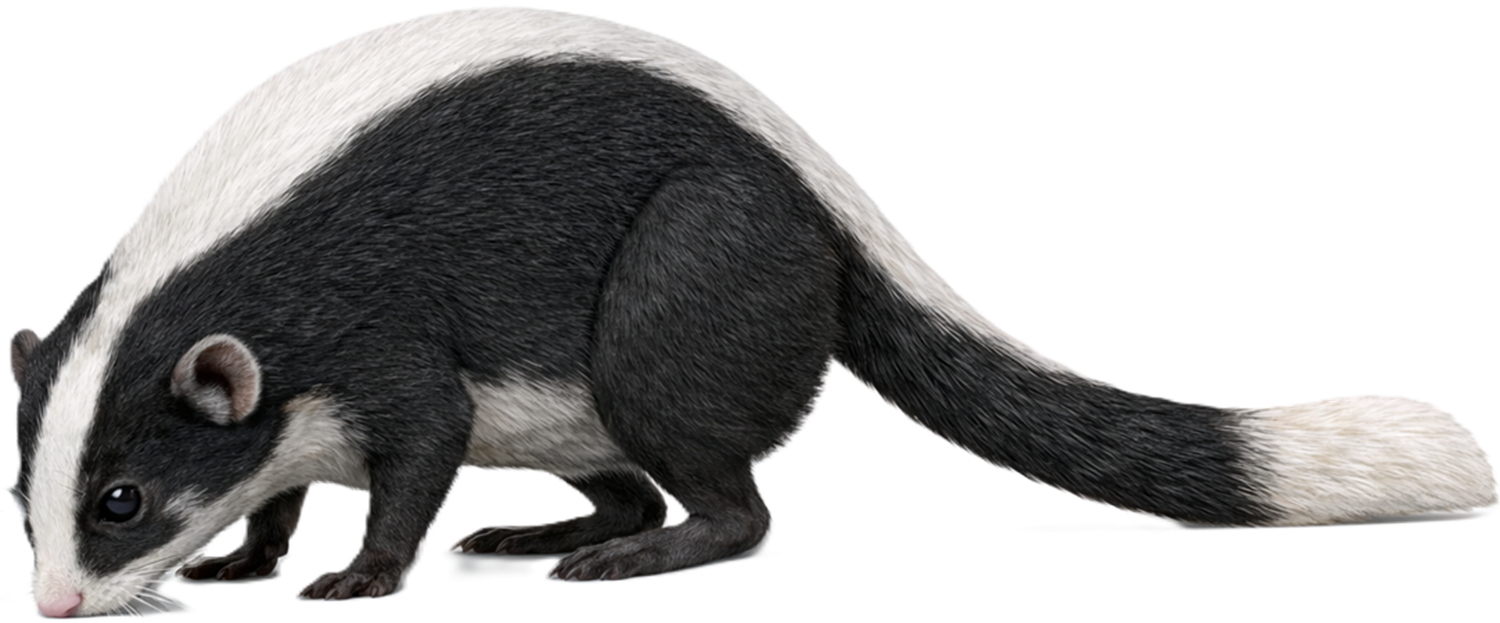 Mesodma |
M. formosa (?)294Wilson, R.W. (1983). Late Cretaceous mammals of western South Dakota, 1974. National Geographic Society Research Reports 15: 749–752295Wilson, R.W. (1987). Late Cretaceous (Fox Hills) multituberculates from the Red Owl local fauna of western South Dakota. Dakoterra 3296Hunter, J.P. & Archibald, J.D. (2002). Mammals from the end of the age of dinosaurs in North Dakota and southeastern Montana, with a reappraisal of geographic differentiation among Lancian mammals. Geological Society of America Special Paper 361: 191–216. doi:10.1130/0-8137-2361-2.191163Kielan-Jaworowska, Z., Cifelli, R. L. & Luo, Z.-X. (2004). Mammals from the Age of Dinosaurs – Origins, Evolution, and Structure. Columbia University Press, 98–99. doi:10.7312/kiel11918182Wilson, G. P., Dechesne, M. & Anderson, I. R. (2010). New latest Cretaceous mammals from northeastern Colorado, with biochronologic and biogeographic implications. Journal of Vertebrate Paleontology, 30(2), 499–520. doi:10.1080/02724631003620955 M. formosa163Kielan-Jaworowska, Z., Cifelli, R. L. & Luo, Z.-X. (2004). Mammals from the Age of Dinosaurs – Origins, Evolution, and Structure. Columbia University Press, 98–99. doi:10.7312/kiel11918189Donohue, S. L. et al. (2013). Latest Cretaceous multituberculates of the Black Butte Station local fauna (Lance Formation, southwestern Wyoming), with implications for compositional differences among mammalian local faunas of the western interior. Journal of Vertebrate Paleontology, 33(3), 677–695. doi:10.1080/02724634.2013.745416 M. hensleighi (?)297Wilson, R.W. (1983). Late Cretaceous mammals of western South Dakota, 1974. National Geographic Society Research Reports 15: 749–752298Wilson, R.W. (1987). Late Cretaceous (Fox Hills) multituberculates from the Red Owl local fauna of western South Dakota. Dakoterra 3299Hunter, J.P. & Archibald, J.D. (2002). Mammals from the end of the age of dinosaurs in North Dakota and southeastern Montana, with a reappraisal of geographic differentiation among Lancian mammals. Geological Society of America Special Paper 361: 191–216. doi:10.1130/0-8137-2361-2.191163Kielan-Jaworowska, Z., Cifelli, R. L. & Luo, Z.-X. (2004). Mammals from the Age of Dinosaurs – Origins, Evolution, and Structure. Columbia University Press, 98–99. doi:10.7312/kiel11918 163Kielan-Jaworowska, Z., Cifelli, R. L. & Luo, Z.-X. (2004). Mammals from the Age of Dinosaurs – Origins, Evolution, and Structure. Columbia University Press, 98–99. doi:10.7312/kiel11918189Donohue, S. L. et al. (2013). Latest Cretaceous multituberculates of the Black Butte Station local fauna (Lance Formation, southwestern Wyoming), with implications for compositional differences among mammalian local faunas of the western interior. Journal of Vertebrate Paleontology, 33(3), 677–695. doi:10.1080/02724634.2013.745416 M. thompsoni (?)300Wilson, R.W. (1983). Late Cretaceous mammals of western South Dakota, 1974. National Geographic Society Research Reports 15: 749–752301Wilson, R.W. (1987). Late Cretaceous (Fox Hills) multituberculates from the Red Owl local fauna of western South Dakota. Dakoterra 3302Hunter, J.P. & Archibald, J.D. (2002). Mammals from the end of the age of dinosaurs in North Dakota and southeastern Montana, with a reappraisal of geographic differentiation among Lancian mammals. Geological Society of America Special Paper 361: 191–216. doi:10.1130/0-8137-2361-2.191 M. thompsoni163Kielan-Jaworowska, Z., Cifelli, R. L. & Luo, Z.-X. (2004). Mammals from the Age of Dinosaurs – Origins, Evolution, and Structure. Columbia University Press, 98–99. doi:10.7312/kiel11918189Donohue, S. L. et al. (2013). Latest Cretaceous multituberculates of the Black Butte Station local fauna (Lance Formation, southwestern Wyoming), with implications for compositional differences among mammalian local faunas of the western interior. Journal of Vertebrate Paleontology, 33(3), 677–695. doi:10.1080/02724634.2013.745416 M. sp.189Donohue, S. L. et al. (2013). Latest Cretaceous multituberculates of the Black Butte Station local fauna (Lance Formation, southwestern Wyoming), with implications for compositional differences among mammalian local faunas of the western interior. Journal of Vertebrate Paleontology, 33(3), 677–695. doi:10.1080/02724634.2013.745416 |
Fox Hills Formation, Hell Creek Formation, Lance Formation |
USA (North Dakota, Montana, South Dakota, Wyoming) | ca. 70–66 Ma | sehr häufig | Neoplagiaulacidae |
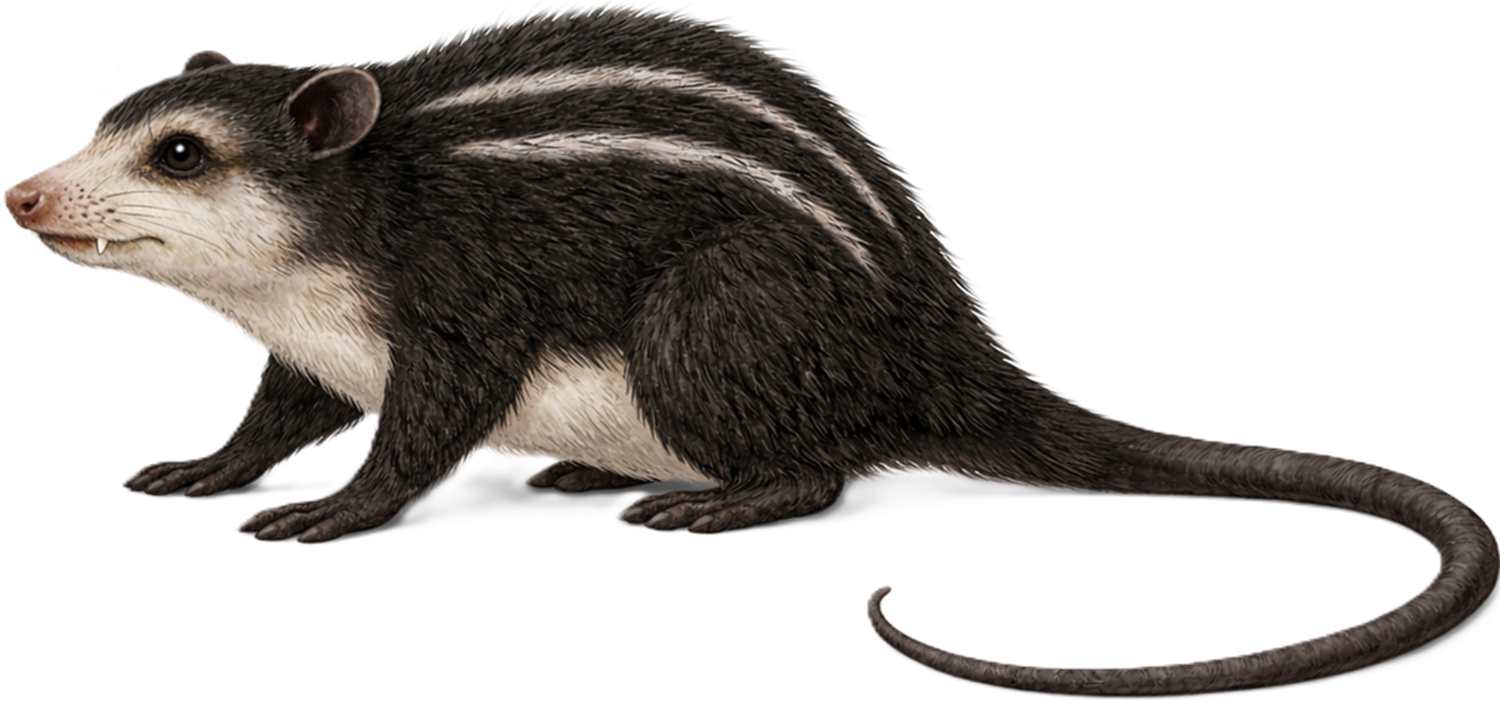 Protalphadon |
P. lulli (?)303Wilson, R.W. (1983). Late Cretaceous mammals of western South Dakota, 1974. National Geographic Society Research Reports 15: 749–752304Wilson, R.W. (1987). Late Cretaceous (Fox Hills) multituberculates from the Red Owl local fauna of western South Dakota. Dakoterra 3305Hunter, J.P. & Archibald, J.D. (2002). Mammals from the end of the age of dinosaurs in North Dakota and southeastern Montana, with a reappraisal of geographic differentiation among Lancian mammals. Geological Society of America Special Paper 361: 191–216. doi:10.1130/0-8137-2361-2.191175Clemens, W. A. (1964). Fossil mammals of the type Lance Formation, Wyoming – Part I. Introduction and Marsupialia. University of California Publications in Geological Sciences, 48, 1–105.186Eberle, J. J. & Lillegraven, J. A. (1998). A new important record of earliest Cenozoic mammalian history: geologic setting, Multituberculata, and Peradectia. Rocky Mountain Geology, 33(1), 3–47.187Lillegraven, J. A. & Eberle, J. J. (1999). Vertebrate faunal changes through Lancian and Puercan time in southern Wyoming. Journal of Paleontology, 73(4), 691–710. doi:10.1017/S0022336000032515163Kielan-Jaworowska, Z., Cifelli, R. L. & Luo, Z.-X. (2004). Mammals from the Age of Dinosaurs – Origins, Evolution, and Structure. Columbia University Press, 98–99. doi:10.7312/kiel11918 | Fox Hills Formation, Ferris Formation, Hell Creek Formation, Lance Formation |
USA (Montana, South Dakota, Wyoming) | ca. 70–66 Ma | sehr häufig | Metatheria |
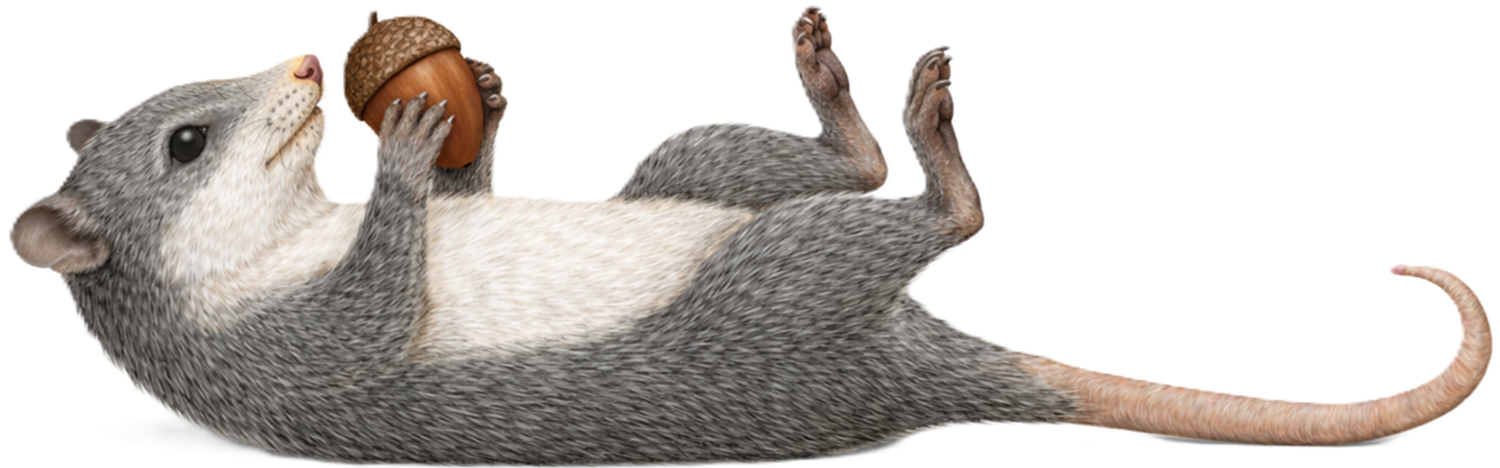 Protolambda |
P. hatcheri306Wilson, R.W. (1983). Late Cretaceous mammals of western South Dakota, 1974. National Geographic Society Research Reports 15: 749–752307Wilson, R.W. (1987). Late Cretaceous (Fox Hills) multituberculates from the Red Owl local fauna of western South Dakota. Dakoterra 3308Hunter, J.P. & Archibald, J.D. (2002). Mammals from the end of the age of dinosaurs in North Dakota and southeastern Montana, with a reappraisal of geographic differentiation among Lancian mammals. Geological Society of America Special Paper 361: 191–216. doi:10.1130/0-8137-2361-2.191309Davis, B.M. (2007). A revision of pediomyid marsupials from the Late Cretaceous of North America. Acta Palaeontologica Polonica 52(2): 217–256. Quelle175Clemens, W. A. (1964). Fossil mammals of the type Lance Formation, Wyoming – Part I. Introduction and Marsupialia. University of California Publications in Geological Sciences, 48, 1–105.180Davis, B. M. (2007). A revision of “pediomyid” marsupials from the Late Cretaceous of North America. Acta Palaeontologica Polonica, 52(2), 217–256.182Wilson, G. P., Dechesne, M. & Anderson, I. R. (2010). New latest Cretaceous mammals from northeastern Colorado, with biochronologic and biogeographic implications. Journal of Vertebrate Paleontology, 30(2), 499–520. doi:10.1080/02724631003620955163Kielan-Jaworowska, Z., Cifelli, R. L. & Luo, Z.-X. (2004). Mammals from the Age of Dinosaurs – Origins, Evolution, and Structure. Columbia University Press, 98–99. doi:10.7312/kiel11918 | Fox Hills Formation, Hell Creek Formation, Lance Formation |
USA (North Dakota, Montana, South Dakota, Wyoming) | ca. 70–65 Ma | sehr häufig | Metatheria |
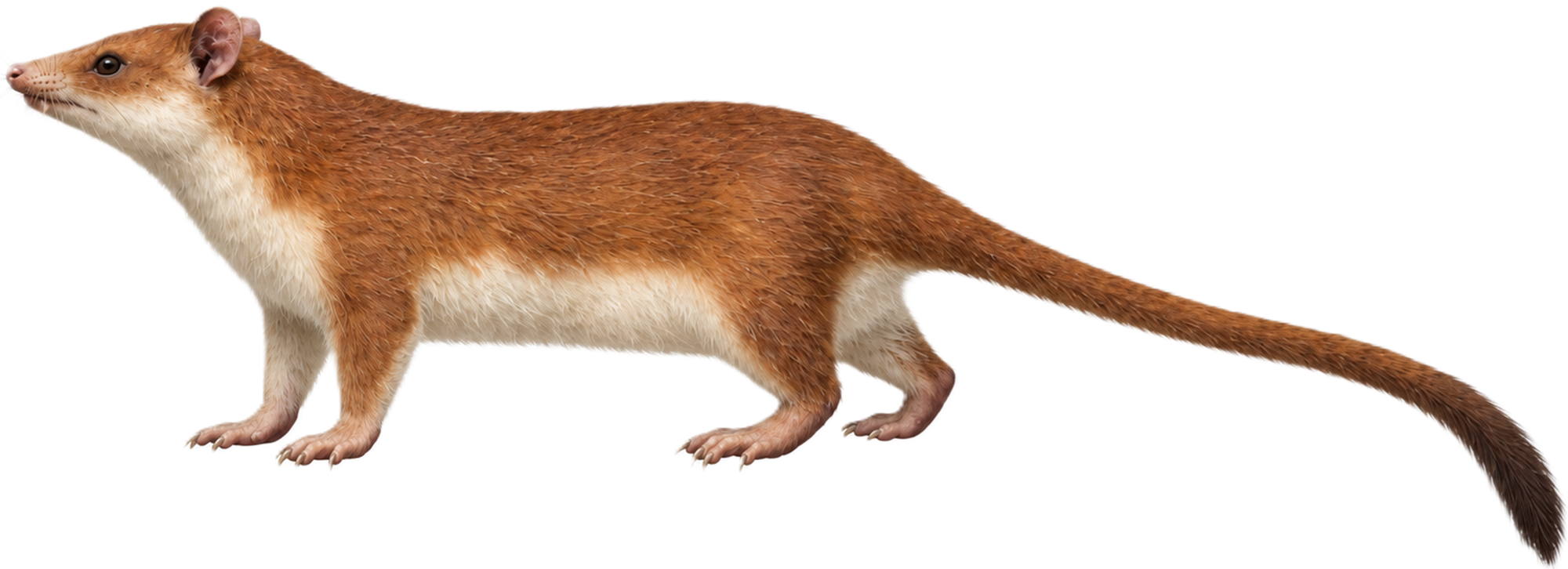 Varalphadon |
V. sp. (?)310Case, J.A. & Martin, J.E. (2007). Mammals from Red Owm Quarry, Fox Hills Formation, South Dakota: an Edmontonian local fauna? Journal of Vertebrate Paleontology 27(3), Supplement: 57A. Quelle | Fox Hills Formation | USA (South Dakota) | ca. 70–68 Ma | selten | Metatheria |
Aus der Fox Hills Formation sind mehrere Säugetierfossilien gut untersucht. Meist handelt es sich um Zahnfunde, die sich klar bekannten Gattungen und auch Arten zuordnen lassen. Es handelt sich aber höchstwahrscheinlich nicht um wirklich im Meer beheimatete frühe Meeressäuger, sondern vielmehr um Überreste, die durch einen Fluss ins Meer gespült wurden und dort sedimentierten.311Wilson, R.W. (1983). Late Cretaceous mammals of western South Dakota, 1974. National Geographic Society Research Reports 15: 749–752312Wilson, R.W. (1987). Late Cretaceous (Fox Hills) multituberculates from the Red Owl local fauna of western South Dakota. Dakoterra 3313Hunter, J.P. & Archibald, J.D. (2002). Mammals from the end of the age of dinosaurs in North Dakota and southeastern Montana, with a reappraisal of geographic differentiation among Lancian mammals. Geological Society of America Special Paper 361: 191–216. doi:10.1130/0-8137-2361-2.191314Case, J.A. & Martin, J.E. (2007). Mammals from Red Owm Quarry, Fox Hills Formation, South Dakota: an Edmontonian local fauna? Journal of Vertebrate Paleontology 27(3), Supplement: 57A. Quelle315Waage, K.M. (1968). The Type Fox Hills Formation, Cretaceous (Maestrichtian), South Dakota. Part 1. Stratigraphy and Paleoenvironments. Bulletin of the Peabody Museum of Natural History 27. Quelle316Chamberlain, J.A., Jr., Knoll, K. & Sertich, J.J.W. (2023). Non-avian theropod phalanges from the marine Fox Hills Formation (Maastrichtian), western South Dakota, USA. PeerJ 11: e14665. doi:10.7717/peerj.14665317Cifelli, R.L. et al. (2004). Mammalian Biochronology of the Latest Cretaceous. In: Woodburne, M.O. (ed.), Late Cretaceous and Cenozoic Mammals of North America: Biostratigraphy and Geochronology. Columbia University Press: 21–42. Quelle
Die bekannten Säugetierfossilien aus dem Kemp Clay lassen sich keiner konkreten Gattung oder Familie zuordnen.318Schwarzhans, W. & Stringer, G. L. (2020). Fish otoliths from the late Maastrichtian Kemp Clay (Texas, USA) and the early Danian Clayton Formation (Arkansas, USA) and an assessment of extinction and survival of teleost lineages across the K-Pg boundary based on otoliths. Rivista Italiana di Paleontologia e Stratigrafia 126(2), 395–446 doi:10.13130/2039-4942/13425
Amphibien:
| Gattung: | Arten: | Formation: | Fundort: | Alter: | Häufigkeit: | Bemerkungen: |
|---|---|---|---|---|---|---|
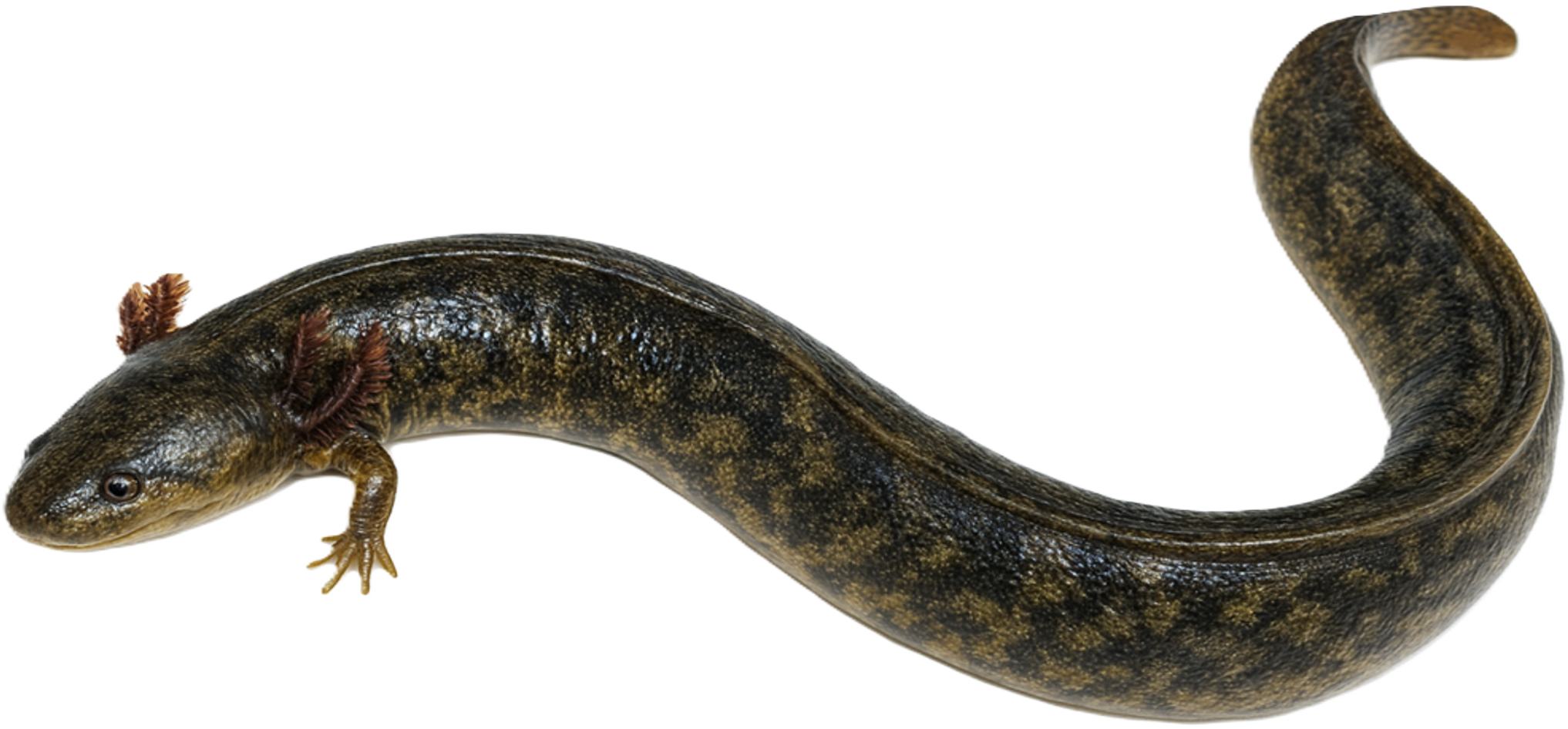 Habrosaurus |
H. sp.319Fix, M. F. & Darrough, G. E. (2004). Dinosauria and associated vertebrate fauna of the Late Cretaceous Chronister site of southeast Missouri. Geological Society of America Abstracts with Programs, 36(3), 14. Quelle | Ripley Formation | USA (Missouri) | 75–66 Ma | nicht quantifiziert | Sirenidae (Armmolch) |
 Lisserpeton |
L. bairdi320Hoganson, J.W., Erickson, J.M. & Holland, F.D., Jr. (2007). Amphibian, reptilian, and avian remains from the Fox Hills Formation (Maastrichtian): Shoreline and estuarine deposits of the Pierre Sea in south-central North Dakota. Geological Society of America Special Paper 427: 239–256. doi:10.1130/2007.2427(18)50Estes, R. (1964). Fossil vertebrates from the Late Cretaceous Lance Formation, eastern Wyoming. University of California Publications in Geological Sciences, 49, 1–187.120Carpenter, K. (1979). Vertebrate fauna of the Laramie Formation (Maastrichtian), Weld County, Colorado. Contributions to Geology, University of Wyoming, 17, 37–49.193Gardner, J. D. & DeMar, D. G. Jr. (2013). Mesozoic and Palaeocene lissamphibian assemblages of North America: a comprehensive review. Palaeobiodiversity and Palaeoenvironments, 93, 459–515. doi:10.1007/s12549-013-0130-z | Fox Hills Formation, Hell Creek Formation, Lance Formation |
USA (North Dakota, Montana, Wyoming) | ca. 70–66 Ma | selten | Scapherpetontidae |
 Opisthotriton |
O. kayi321Hoganson, J.W., Erickson, J.M. & Holland, F.D., Jr. (2007). Amphibian, reptilian, and avian remains from the Fox Hills Formation (Maastrichtian): Shoreline and estuarine deposits of the Pierre Sea in south-central North Dakota. Geological Society of America Special Paper 427: 239–256. doi:10.1130/2007.2427(18)195Pearson, D. A. et al. (2002). Vertebrate biostratigraphy of the Hell Creek Formation in southwestern North Dakota and northwestern South Dakota. In J. H. Hartman, K. R. Johnson & D. J. Nichols (Hrsg.), The Hell Creek Formation and the Cretaceous–Tertiary boundary in the Northern Great Plains. Geological Society of America Special Paper 361, 145–167. doi:10.1130/0-8137-2361-2.145120Carpenter, K. (1979). Vertebrate fauna of the Laramie Formation (Maastrichtian), Weld County, Colorado. Contributions to Geology, University of Wyoming, 17, 37–49.193Gardner, J. D. & DeMar, D. G. Jr. (2013). Mesozoic and Palaeocene lissamphibian assemblages of North America: a comprehensive review. Palaeobiodiversity and Palaeoenvironments, 93, 459–515. doi:10.1007/s12549-013-0130-z | Fox Hills Formation, Hell Creek Formation, Lance Formation |
USA (North Dakota, Montana, South Dakota, Wyoming) | ca. 70–66 Ma | selten | Batrachosauroididae |
Bei den hier genannten Amphibien handelt es sich wahrscheinlich nicht um Meeresbewohner. Die hochdurchlässige Haut der Amphibien ist für Osmose und häufig auch Hautatmung wichtig. In Meerwasser führt das starke osmotische Gefälle schnell zu Austrockung. Auch Eier und aquatische Larven vieler Arten sind gegenüber des hohen Salzgehalts des Meerwassers stark empfindlich. Es ist somit sehr wahrscheinlich, dass die hier genannten Amphibien aus Flüssen ins Meer geschwemmt wurden.322Hoganson, J.W., Erickson, J.M. & Holland, F.D., Jr. (2007). Amphibian, reptilian, and avian remains from the Fox Hills Formation (Maastrichtian): Shoreline and estuarine deposits of the Pierre Sea in south-central North Dakota. Geological Society of America Special Paper 427: 239–256. doi:10.1130/2007.2427(18)
↑ Zurück zur Gliederung
Knochenfische:
| Gattung: | Arten: | Formation: | Fundort: | Alter: | Häufigkeit: | Bemerkungen: |
|---|---|---|---|---|---|---|
 |
Acanthomorpha indet.323Brinkman, D. B., Newbrey, M. G. & Neuman, A. G. (2014). Diversity and paleoecology of actinopterygian fish from vertebrate microfossil localities of the Maastrichtian Hell Creek Formation of Montana. In G. P. Wilson et al. (Hrsg.), Through the End of the Cretaceous in the Type Locality of the Hell Creek Formation in Montana and Adjacent Areas. Geological Society of America Special Paper 503, 247–270. doi:10.1130/2014.2503(09) | Hell Creek Formation | USA (Montana) | 68–66 Ma | selten | unbestimmte Stachelflosser |
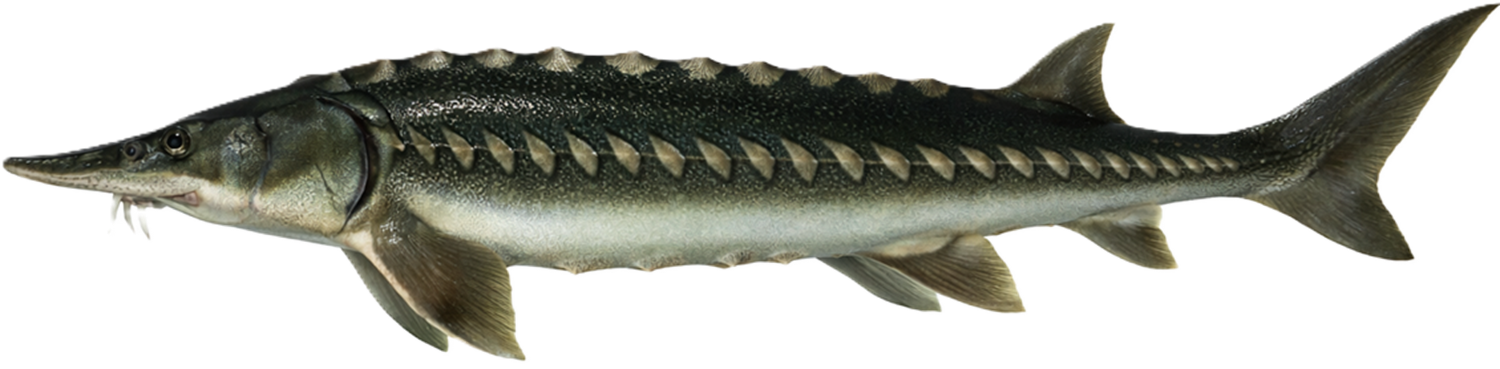 Acipenser |
A. amnisinferos324Hilton, E. J. & Grande, L. (2023). Late Cretaceous sturgeons (Acipenseridae) from North America, with two new species from the Tanis site in the Hell Creek Formation of North Dakota. Journal of Paleontology, 97(1), 189–217. doi:10.1017/jpa.2022.81 A. cf. amnisinferos (?)325Hilton, E. J. & Grande, L. (2023). Late Cretaceous sturgeons (Acipenseridae) from North America, with two new species from the Tanis site in the Hell Creek Formation of North Dakota. Journal of Paleontology, 97(1), 189–217. doi:10.1017/jpa.2022.81 A. praeparatorum326Hilton, E. J. & Grande, L. (2023). Late Cretaceous sturgeons (Acipenseridae) from North America, with two new species from the Tanis site in the Hell Creek Formation of North Dakota. Journal of Paleontology, 97(1), 189–217. doi:10.1017/jpa.2022.81 „A.“ eruciferus327Estes, R. & Berberian, P. (1970). Paleoecology of a Late Cretaceous vertebrate community from Montana. Breviora, 343, 1–35.328Hilton, E. J. & Grande, L. (2006). Review of the fossil record of sturgeons, family Acipenseridae (Actinopterygii: Acipenseriformes), from North America. Journal of Paleontology, 80(4), 672–683. doi:10.1666/0022-3360(2006)80[672:ROTFRO]2.0.CO;2 cf. sp. (?)329Pearson, D. A. et al. (2002). Vertebrate biostratigraphy of the Hell Creek Formation in southwestern North Dakota and northwestern South Dakota. In J. H. Hartman et al. (Hrsg.), The Hell Creek Formation and the Cretaceous–Tertiary Boundary in the Northern Great Plains. Geological Society of America Special Paper 361, 145–167. doi:10.1130/0-8137-2361-2.145 |
Hell Creek Formation | USA (North Dakota, Montana, South Dakota) | 68–66 Ma (Gattung 84 Ma bis heute) | selten | Acipenseridae (Stör); „A.“ eruciferus: Nomen dubium |
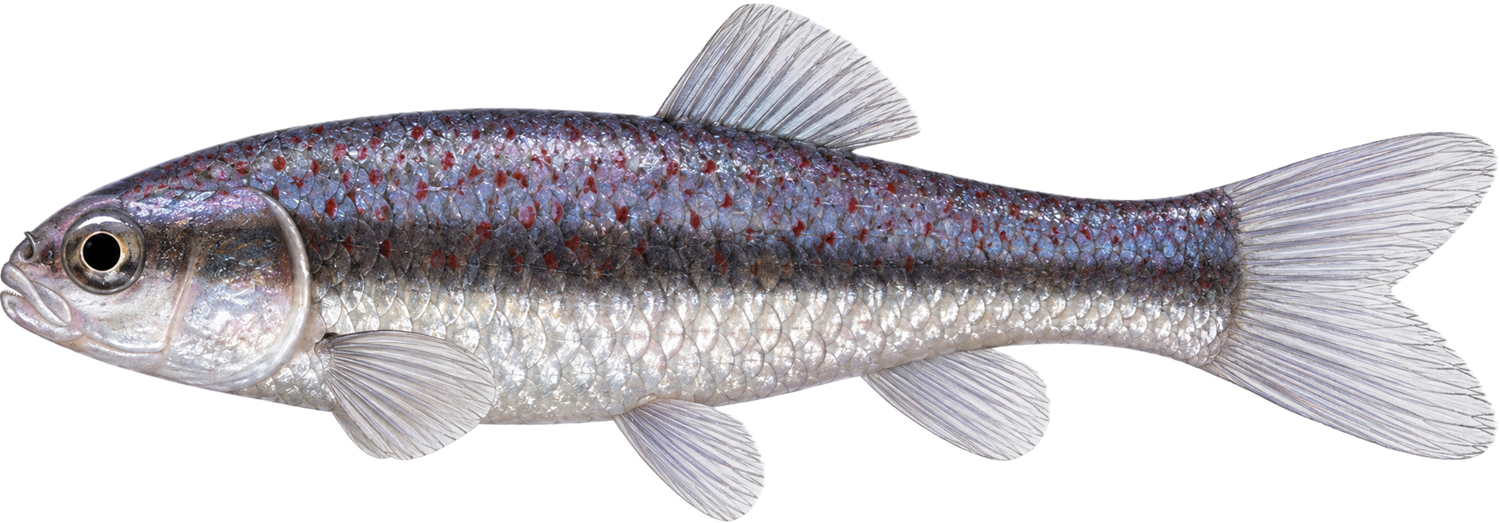 Acronichthys |
A. sp.330Brinkman, D. B. et al. (2025). Teleost fishes across the Cretaceous–Paleogene boundary. Palaeontologia Electronica. doi:10.26879/1559 | Hell Creek Formation | USA (Montana) | 68–66 Ma | selten | Acronichthyidae |
 |
Actinopterygii indet.331Stringer, G. L. et al. (2020). Highly diversified Late Cretaceous fish assemblage revealed by otoliths (Ripley Formation and Owl Creek Formation, northeast Mississippi, USA). Rivista Italiana di Paleontologia e Stratigrafia, 126(1), 111–155. doi:10.13130/2039-4942/13013332Schein, J. P. & Lewis, R. D. (2007). Actinopterygian fishes from Upper Cretaceous rocks in Alabama, with emphasis on the teleostean genus Enchodus. Paludicola, 6(2), 41–86. Quelle | Ripley Formation | USA (Alabama, Mississippi) | 75–70 Ma | nicht quantifiziert | Actinopterygii (Strahlenflosser) |
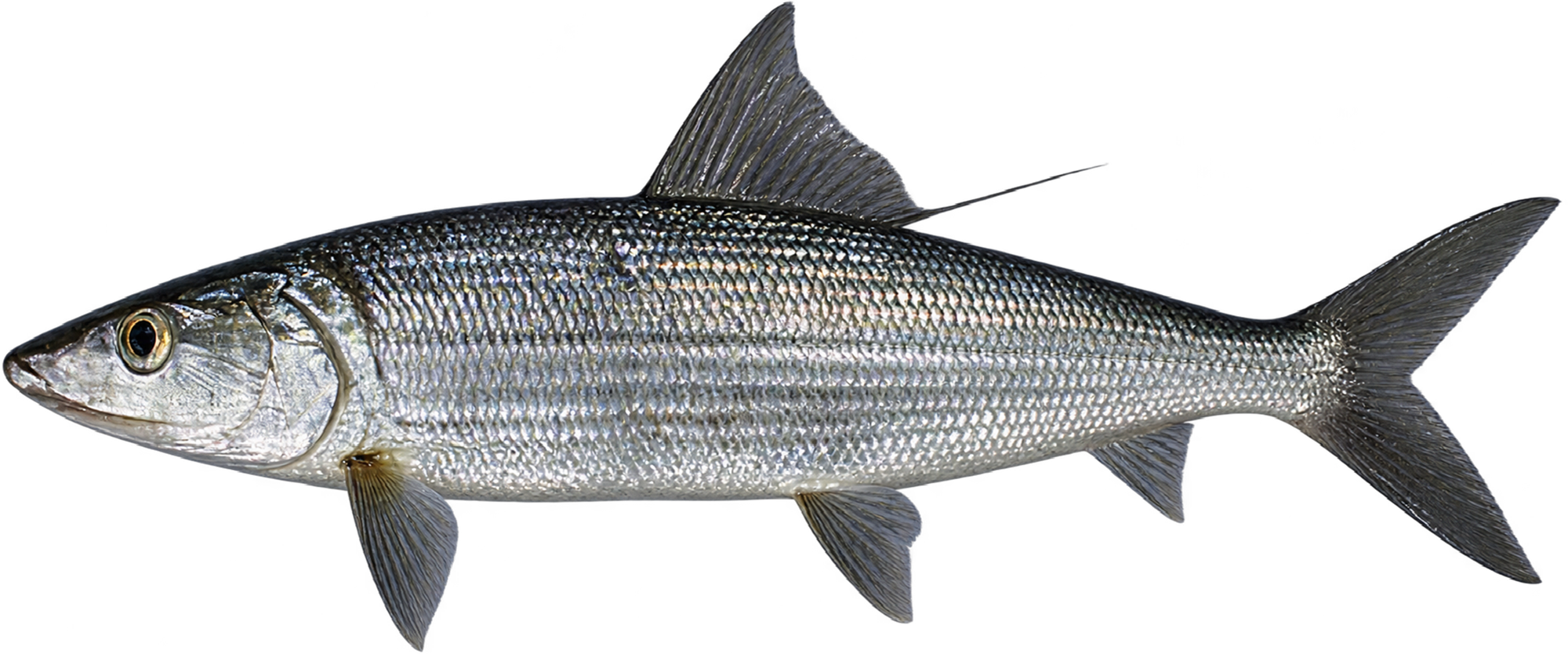 Albula |
A. cf. bashiana333Schwarzhans, W. & Stringer, G. L. (2020). Fish otoliths from the late Maastrichtian Kemp Clay (Texas, USA) and the early Danian Clayton Formation (Arkansas, USA) and an assessment of extinction and survival of teleost lineages across the K-Pg boundary based on otoliths. Rivista Italiana di Paleontologia e Stratigrafia 126(2), 395–446 doi:10.13130/2039-4942/13425 | Kemp Clay | USA (Texas) | 68–66 Ma | selten | Albulidae (Grätenfisch) |
| Albulidae indet.334Stringer, G. L. et al. (2020). Highly diversified Late Cretaceous fish assemblage revealed by otoliths (Ripley Formation and Owl Creek Formation, Northeast Mississippi, USA). Rivista Italiana di Paleontologia e Stratigrafia 126(1), 111–155, hier Tabelle 1 und zugehöriger systematischer Abschnitt; Owl Creek: 1 Otolith. doi:10.13130/2039-4942/13013 | Owl Creek Formation | USA (Mississippi) | 68–66 Ma | nicht quantifiziert | Albulidae (Grätenfisch) | |
 |
Albuliformes indet.335Stringer, G. L. & Sloan, J. C. (2023). First Cretaceous teleostean otolith assemblage (Arkadelphia Formation, upper Maastrichtian) from Arkansas, USA, early Gadiformes, and the Western Interior Seaway. PaleoBios, 40(3), 1–39. doi:10.5070/P940361192336Cowan, T. M. & Fielitz, C. (2015). Two three-dimensionally preserved teleost neurocrania from the Corsicana Formation (Upper Cretaceous, Maastrichtian), Bexar County, Texas, U.S.A. Paludicola, 10(3), 137–144.337Nguyen, C. K. & Stidham, T. (2025). A taxonomically and ecologically diverse marine vertebrate assemblage at the end of the Cretaceous in Texas (USA). Geological Society of America Abstracts with Programs, 57(6). doi:10.1130/abs/2025AM-8784338Stringer, G. L. et al. (2020). Highly diversified Late Cretaceous fish assemblage revealed by otoliths (Ripley Formation and Owl Creek Formation, northeast Mississippi, USA). Rivista Italiana di Paleontologia e Stratigrafia, 126(1), 111–155. doi:10.13130/2039-4942/13013 | Arkadelphia Marl Corsicana Marl, Ripley Formation |
USA (Arkansas, Mississippi, Texas) | 72–66 Ma | häufig | unbestimmte Grätenfische |
 |
Amiidae indet.339Fix, M. F. & Darrough, G. E. (2004). Dinosauria and associated vertebrate fauna of the Late Cretaceous Chronister site of southeast Missouri. Geological Society of America Abstracts with Programs, 36(3), 14. Quelle | Ripley Formation | USA (Missouri) | 75–70 Ma (?) | nicht quantifiziert | Amiidae (Kahlhecht) |
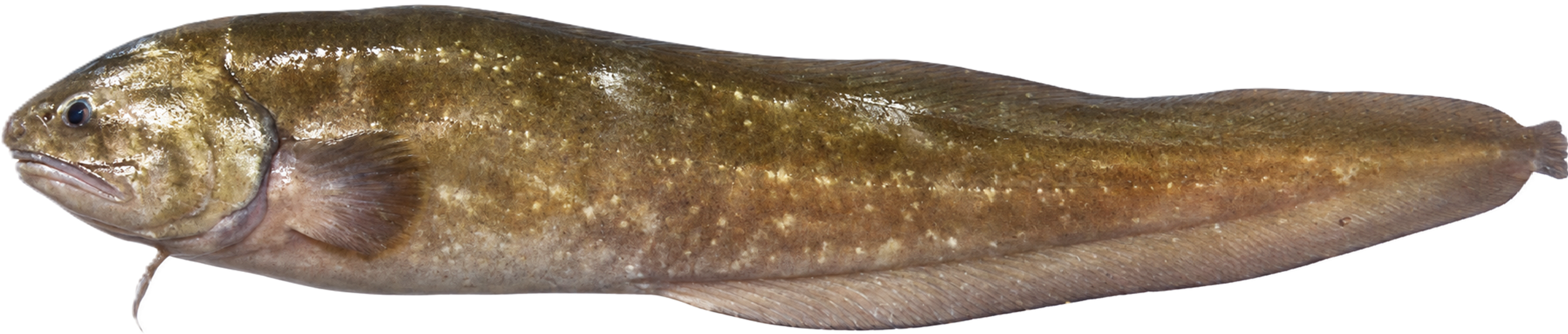 Ampheristus |
A. americanus340Schwarzhans, W. & Stringer, G. L. (2020). Fish otoliths from the late Maastrichtian Kemp Clay (Texas, USA) and the early Danian Clayton Formation (Arkansas, USA) and an assessment of extinction and survival of teleost lineages across the K-Pg boundary based on otoliths. Rivista Italiana di Paleontologia e Stratigrafia 126(2), 395–446 doi:10.13130/2039-4942/13425 A. cf. americanus (?)341Stringer, G. L. & Sloan, J. C. (2023). First Cretaceous teleostean otolith assemblage (Arkadelphia Formation, upper Maastrichtian) from Arkansas, USA, early Gadiformes, and the Western Interior Seaway. PaleoBios, 40(3), 1–39. doi:10.5070/P940361192 |
Arkadelphia Marl Kemp Clay |
USA (Arkansas, Texas) | 68–66 Ma (Gattung bis 27 Ma) | häufig | Ophidiidae |
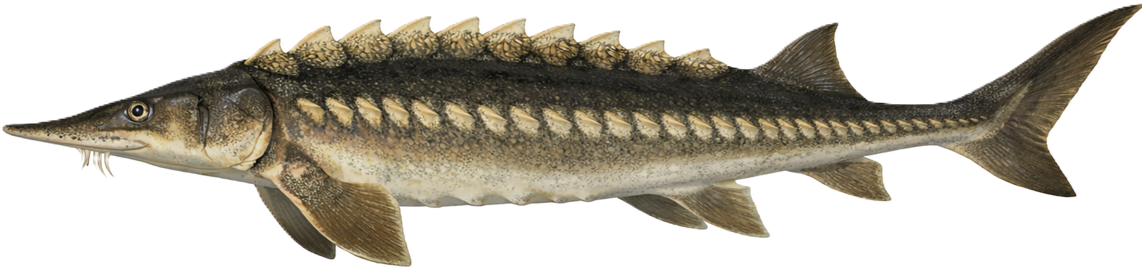 Anchiacipenser |
A. acanthaspis342Sato, H. et al. (2018). A rare, articulated sturgeon (Chondrostei: Acipenseriformes) from the Upper Cretaceous of Dinosaur Provincial Park, Alberta, Canada. Journal of Vertebrate Paleontology, 38(4), e1488137. doi:10.1080/02724634.2018.1488137343Hilton, E. J. & Grande, L. (2023). Late Cretaceous sturgeons (Acipenseridae) from North America, with two new species from the Tanis site in the Hell Creek Formation of North Dakota. Journal of Paleontology, 97(1), 189–217. doi:10.1017/jpa.2022.81 | Hell Creek Formation | USA (Montana) | 68–66 Ma | selten | Acipenseridae (Stör) |
 Anguilla |
A. chickasawae (?)344Stringer, G. L. & Sloan, J. C. (2023). First Cretaceous teleostean otolith assemblage (Arkadelphia Formation, upper Maastrichtian) from Arkansas, USA, early Gadiformes, and the Western Interior Seaway. PaleoBios, 40(3), 1–39. doi:10.5070/P940361192345Stringer, G. L. et al. (2020). Highly diversified Late Cretaceous fish assemblage revealed by otoliths (Ripley Formation and Owl Creek Formation, northeast Mississippi, USA). Rivista Italiana di Paleontologia e Stratigrafia, 126(1), 111–155. doi:10.13130/2039-4942/13013 | Arkadelphia Marl Ripley Formation |
USA (Arkansas, Mississippi) | 72–66 Ma (Gattung mindestens 72 Ma bis heute) | selten | Anguillidae (Aal) |
 Anomoeodus |
A. phaseolus346Ikejiri, T. et al. (2013). An overview of Late Cretaceous vertebrates from Alabama. Bulletin of the Alabama Museum of Natural History 31(1), 46–71. Appendix 1, S. 71; Tabelle 5, S. 55. Prairie Bluff Chalk. Historische Artbestimmung. Schein & Lewis, Katalog Nr. 24–33, unter anderem PV988.0020.0153.002. Neuere Bearbeitung belässt Alabama-Material bei sp. Quelle347Schein, J. P. & Lewis, R. D. (2007). Actinopterygian fishes from Upper Cretaceous rocks in Alabama, with emphasis on the teleostean genus Enchodus. Paludicola 6(2), 41–86. Prairie Bluff Chalk. Historische Artbestimmung. Schein & Lewis, Katalog Nr. 24–33, unter anderem PV988.0020.0153.002. Neuere Bearbeitung belässt Alabama-Material bei sp. Quelle A. spp.348Ebersole, J. A. et al. (2025). Cretaceous Fishes of Alabama: Anomoeodus version 2. In: Ebersole, J. A. (Hrsg.), Fossil Fishes of Alabama. McWane Science Center, 3(41). Quelle349Schein, J. P. & Lewis, R. D. (2007). Actinopterygian fishes from Upper Cretaceous rocks in Alabama, with emphasis on the teleostean genus Enchodus. Paludicola 6(2), 41–86. Prairie Bluff Chalk. Direkte Formationsbelege. DSM K83 in Mississippi; abweichende Schreibungen Anomaeodus/Anomoedus betreffen denselben Gattungsnamen. Quelle350Ebersole, J. A. et al. (2025). Cretaceous Fishes of Alabama: Anomoeodus version 2. In: Ebersole, J. A. (Hrsg.), Fossil Fishes of Alabama. McWane Science Center, 3(41), 1–5. Prairie Bluff Chalk. Direkte Formationsbelege. DSM K83 in Mississippi; abweichende Schreibungen Anomaeodus/Anomoedus betreffen denselben Gattungsnamen. doi:10.69737/UGWJ5621351Mississippi State University Libraries / Dunn-Seiler Museum (o. J.). Anomoedus sp., DSM K83. Öffentlicher Sammlungskatalog; Formationsfeld Prairie Bluff Fm. (Chalk). Abgerufen am 24. Oktober 2026. Prairie Bluff Chalk. Direkte Formationsbelege. DSM K83 in Mississippi; abweichende Schreibungen Anomaeodus/Anomoedus betreffen denselben Gattungsnamen. Quelle |
Prairie Bluff Chalk Ripley Formation |
USA (Alabama, Mississippi) | 75–66 Ma | sehr häufig | Pycnodontidae (Knochenfisch) |
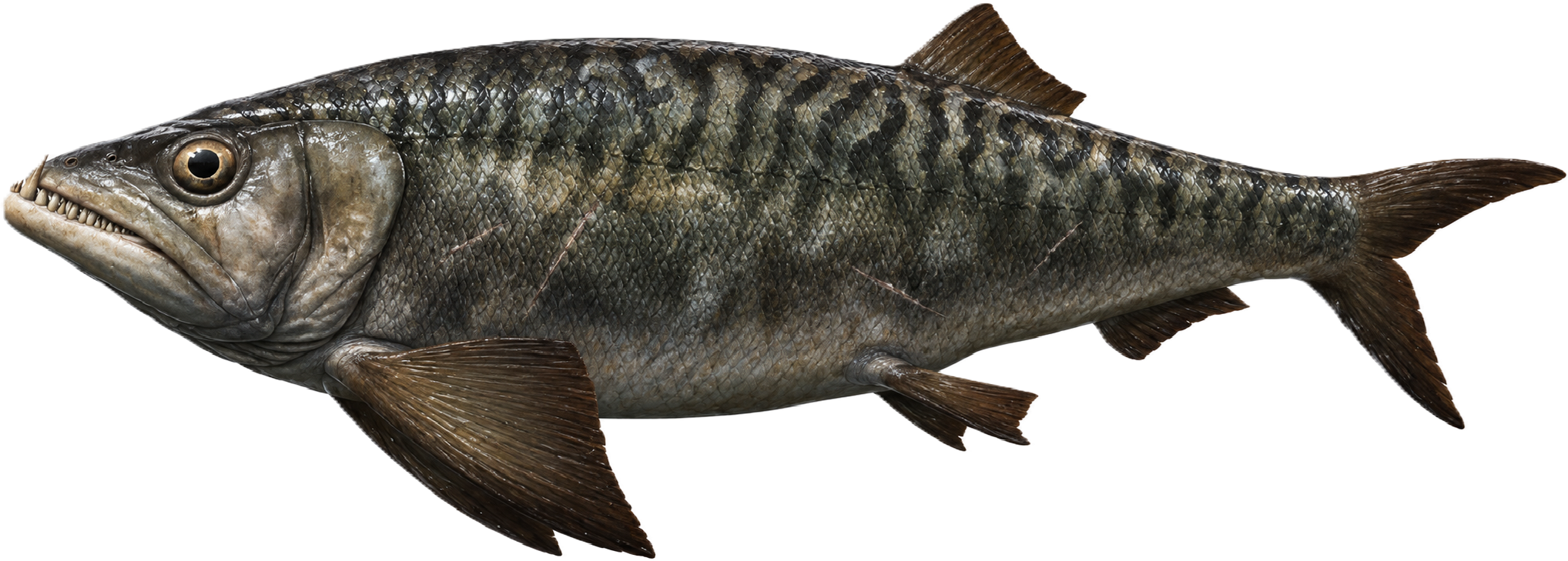 Apateodus |
A. crenellatus352Stringer, G. L. et al. (2020). Highly diversified Late Cretaceous fish assemblage revealed by otoliths (Ripley Formation and Owl Creek Formation, Northeast Mississippi, USA). Rivista Italiana di Paleontologia e Stratigrafia 126(1), 111–155, hier Tabelle 1 und zugehöriger systematischer Abschnitt; Owl Creek: 4 Otolithen. doi:10.13130/2039-4942/13013 (?)353Stringer, G. L. & Sloan, J. C. (2023). First Cretaceous teleostean otolith assemblage (Arkadelphia Formation, upper Maastrichtian) from Arkansas, USA, early Gadiformes, and the Western Interior Seaway. PaleoBios, 40(3), 1–39. doi:10.5070/P940361192354Stringer, G. L. et al. (2020). Highly diversified Late Cretaceous fish assemblage revealed by otoliths (Ripley Formation and Owl Creek Formation, northeast Mississippi, USA). Rivista Italiana di Paleontologia e Stratigrafia, 126(1), 111–155. doi:10.13130/2039-4942/13013 | Arkadelphia Marl Owl Creek Formation Ripley Formation |
USA (Arkansas, Mississippi) | 72–66 Ma | häufig | Ichthyotringidae (Knochenfisch) |
 Archaemacruroides |
A. bratishkoi355Schwarzhans, W. & Stringer, G. L. (2020). Fish otoliths from the late Maastrichtian Kemp Clay (Texas, USA) and the early Danian Clayton Formation (Arkansas, USA) and an assessment of extinction and survival of teleost lineages across the K-Pg boundary based on otoliths. Rivista Italiana di Paleontologia e Stratigrafia 126(2), 395–446 doi:10.13130/2039-4942/13425 | Kemp Clay | USA (Texas) | 68–66 Ma | selten | Gadiformes (Dorsche) |
 Argyroberyx |
A. dentatus356Schwarzhans, W. & Stringer, G. L. (2020). Fish otoliths from the late Maastrichtian Kemp Clay (Texas, USA) and the early Danian Clayton Formation (Arkansas, USA) and an assessment of extinction and survival of teleost lineages across the K-Pg boundary based on otoliths. Rivista Italiana di Paleontologia e Stratigrafia 126(2), 395–446 doi:10.13130/2039-4942/13425 A. dockeryi (?)357Stringer, G. L. et al. (2020). Highly diversified Late Cretaceous fish assemblage revealed by otoliths (Ripley Formation and Owl Creek Formation, Northeast Mississippi, USA). Rivista Italiana di Paleontologia e Stratigrafia 126(1), 111–155, hier Tabelle 1 und zugehöriger systematischer Abschnitt; Owl Creek: 6 Otolithen. doi:10.13130/2039-4942/13013358Stringer, G. L. et al. (2020). Highly diversified Late Cretaceous fish assemblage revealed by otoliths (Ripley Formation and Owl Creek Formation, northeast Mississippi, USA). Rivista Italiana di Paleontologia e Stratigrafia, 126(1), 111–155. doi:10.13130/2039-4942/13013 |
Kemp Clay Owl Creek Formation Ripley Formation |
USA (Mississippi, Texas) | 72–66 Ma | häufig | Diretmidae (Silberkopf) |
 Arius |
A. danicus (?)359Schwarzhans, W. & Stringer, G. L. (2020). Fish otoliths from the late Maastrichtian Kemp Clay (Texas, USA) and the early Danian Clayton Formation (Arkansas, USA) and an assessment of extinction and survival of teleost lineages across the K-Pg boundary based on otoliths. Rivista Italiana di Paleontologia e Stratigrafia 126(2), 395–446 doi:10.13130/2039-4942/13425 A. subtilis360Stringer, G. L. et al. (2020). Highly diversified Late Cretaceous fish assemblage revealed by otoliths (Ripley Formation and Owl Creek Formation, Northeast Mississippi, USA). Rivista Italiana di Paleontologia e Stratigrafia 126(1), 111–155, hier Tabelle 1 und zugehöriger systematischer Abschnitt; Owl Creek: 11 Otolithen. doi:10.13130/2039-4942/13013 (?)361Stringer, G. L. & Sloan, J. C. (2023). First Cretaceous teleostean otolith assemblage (Arkadelphia Formation, upper Maastrichtian) from Arkansas, USA, early Gadiformes, and the Western Interior Seaway. PaleoBios, 40(3), 1–39. doi:10.5070/P940361192362Schwarzhans, W. & Stringer, G. L. (2020). Fish otoliths from the late Maastrichtian Kemp Clay (Texas, USA) and the early Danian Clayton Formation (Arkansas, USA) and an assessment of extinction and survival of teleost lineages across the K-Pg boundary based on otoliths. Rivista Italiana di Paleontologia e Stratigrafia 126(2), 395–446 doi:10.13130/2039-4942/13425363Stringer, G. L. et al. (2020). Highly diversified Late Cretaceous fish assemblage revealed by otoliths (Ripley Formation and Owl Creek Formation, northeast Mississippi, USA). Rivista Italiana di Paleontologia e Stratigrafia, 126(1), 111–155. doi:10.13130/2039-4942/13013 |
Arkadelphia Marl Kemp Clay Owl Creek Formation Ripley Formation |
USA (Arkansas, Mississippi, Texas) | 72–66 Ma (Gattung 72 Ma bis heute) | häufig | Ariidae (Kreuzwels) |
 Belonostomus |
B. longirostris364Hoganson, J.W., Erickson, J.M. & Holland, F.D., Jr. (2019). Chondrichthyan and Osteichthyan Paleofaunas from the Cretaceous (Late Maastrichtian) Fox Hills Formation of North Dakota, USA: Paleoecology, Paleogeography, and Extinction. Bulletins of American Paleontology 398: 1–94. doi:10.32857/bap.2019.398208Estes, R. (1964). Fossil vertebrates from the Late Cretaceous Lance Formation, eastern Wyoming. University of California Publications in Geological Sciences, 49, 1–180.203Pearson, D. A. et al. (2002). Vertebrate biostratigraphy of the Hell Creek Formation in southwestern North Dakota and northwestern South Dakota. In J. H. Hartman et al. (Hrsg.), The Hell Creek Formation and the Cretaceous–Tertiary Boundary in the Northern Great Plains. Geological Society of America Special Paper 361, 145–167. doi:10.1130/0-8137-2361-2.145199Brinkman, D. B., Newbrey, M. G. & Neuman, A. G. (2014). Diversity and paleoecology of actinopterygian fish from vertebrate microfossil localities of the Maastrichtian Hell Creek Formation of Montana. In G. P. Wilson et al. (Hrsg.), Through the End of the Cretaceous in the Type Locality of the Hell Creek Formation in Montana and Adjacent Areas. Geological Society of America Special Paper 503, 247–270. doi:10.1130/2014.2503(09) B. sp.365Van Vranken, N. E., Fielitz, C. & Ebersole, J. A. (2019). New occurrences of Belonostomus (Teleostomorpha: Aspidorhynchidae) from the Late Cretaceous of the North American Gulf Coastal Plain, USA. Palaeontologia Electronica. Prairie Bluff Chalk. Direktes Belegstück. MMNS 3152, Rostrum/Prämaxillaria, Oktibbeha County, Abb. 8. Quelle |
Fox Hills Formation Hell Creek Formation Lance Formation Prairie Bluff Chalk , , |
USA (Mississippi, Montana, North Dakota, South Dakota, Wyoming) | ca. 72–66 Ma | sehr häufig | Aspidorhynchidae |
 |
Beryciformes indet. (?)366Becker, M.A. et al. (2009). Osteichthyans from the Fairpoint Member of the Fox Hills Formation (Maastrichtian), Meade County, South Dakota, USA. Cretaceous Research 30(4): 1031–1040. doi:10.1016/j.cretres.2009.03.006 | Fox Hills Formation | USA (South Dakota) | ca. 69–68 Ma | selten | unbestimmte Schleimkopfartige |
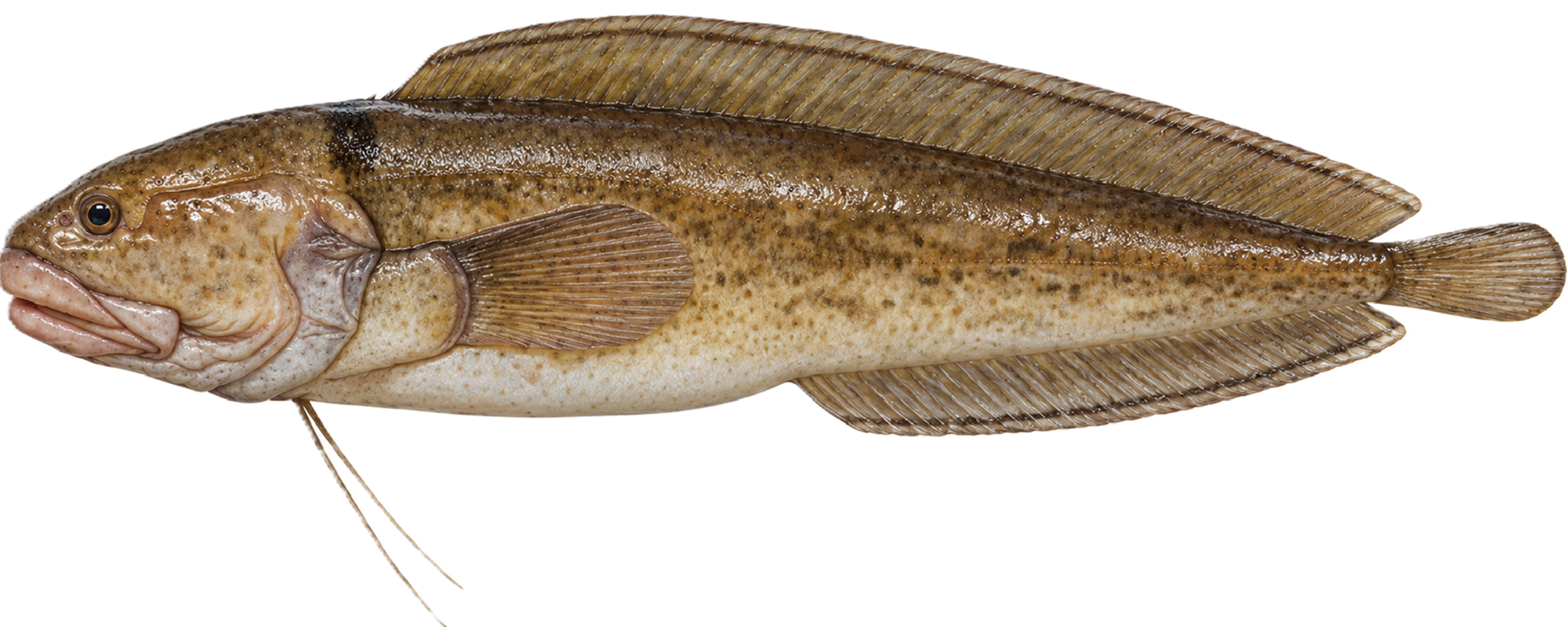 Bidenichthys |
B. crepidatus (?)367Schwarzhans, W. & Stringer, G. L. (2020). Fish otoliths from the late Maastrichtian Kemp Clay (Texas, USA) and the early Danian Clayton Formation (Arkansas, USA) and an assessment of extinction and survival of teleost lineages across the K-Pg boundary based on otoliths. Rivista Italiana di Paleontologia e Stratigrafia 126(2), 395–446 doi:10.13130/2039-4942/13425 | Kemp Clay | USA (Texas) | 68–66 Ma | selten | Bythitidae (Brotula) |
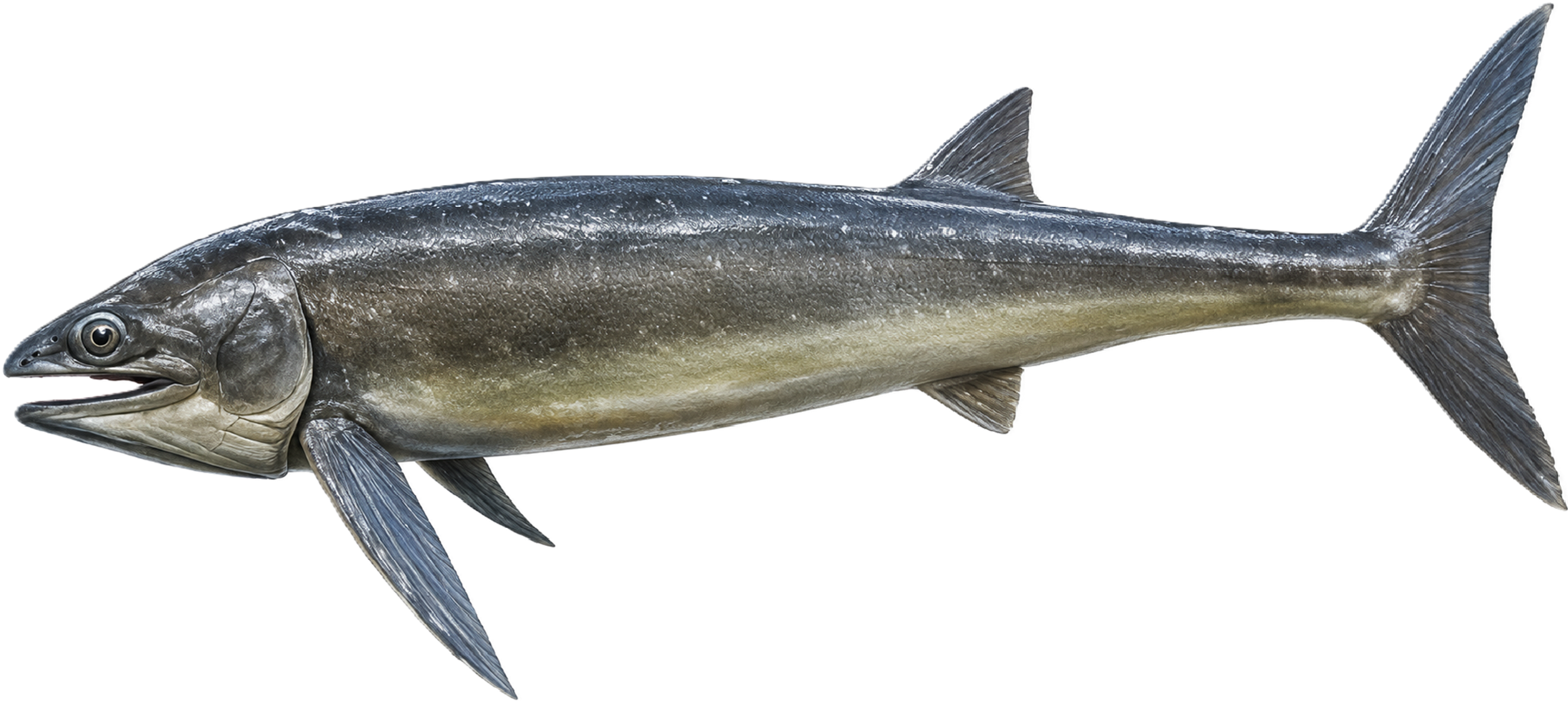 Bonnerichthys |
B. gladius368Friedman, M. et al. (2010). 100-million-year dynasty of giant planktivorous bony fishes in the Mesozoic seas. Science, 327(5968), 990–993. doi:10.1126/science.1184743369Shimada, K. et al. (2013). Geographic and stratigraphic distribution of the Late Cretaceous suspension-feeding bony fish Bonnerichthys gladius (Teleostei, Pachycormiformes). Journal of Vertebrate Paleontology, 33(1), 35–47. doi:10.1080/02724634.2012.713059 | Moreno Formation | USA (Kalifornien) | 72–66 Ma | selten | Pachycormidae |
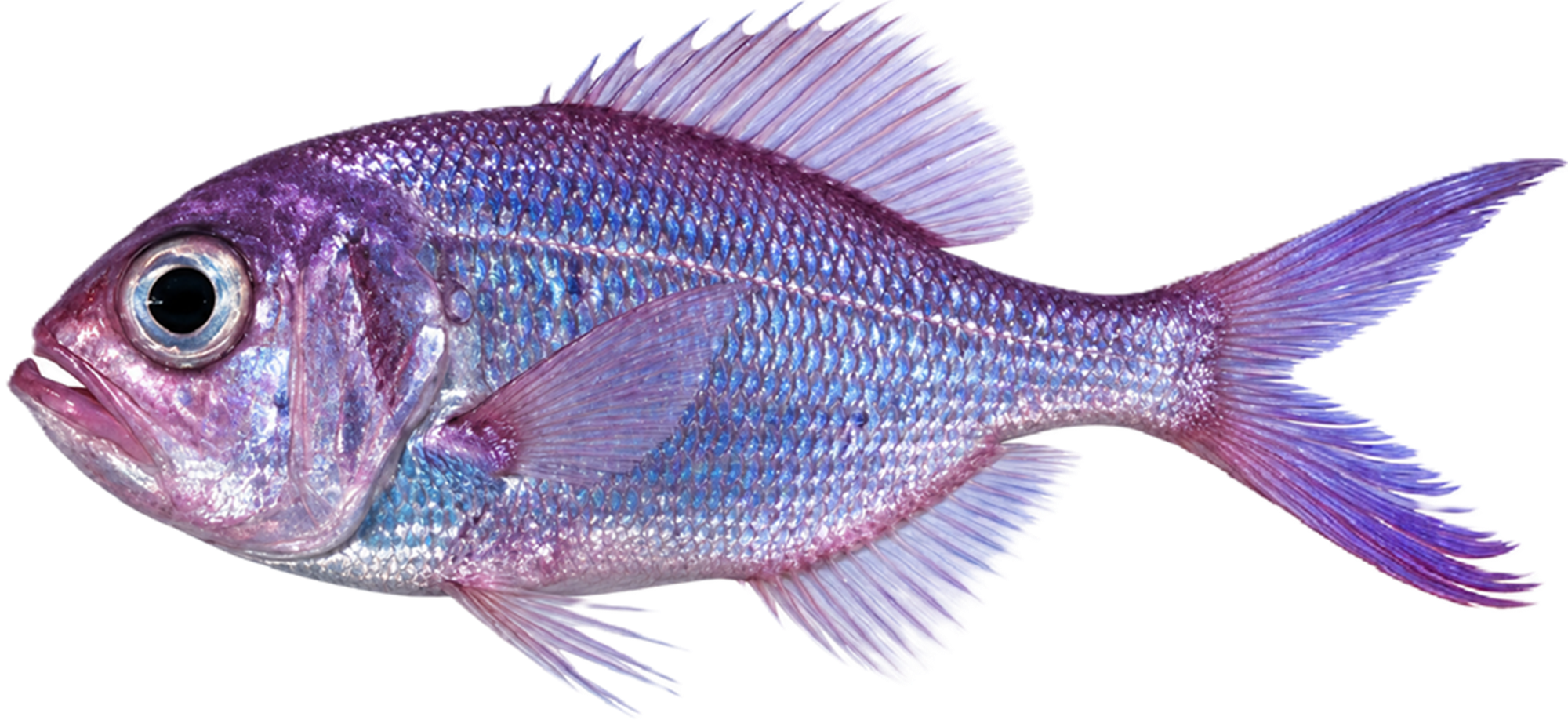 Centroberyx |
C. apogoniformis370Schwarzhans, W. & Stringer, G. L. (2020). Fish otoliths from the late Maastrichtian Kemp Clay (Texas, USA) and the early Danian Clayton Formation (Arkansas, USA) and an assessment of extinction and survival of teleost lineages across the K-Pg boundary based on otoliths. Rivista Italiana di Paleontologia e Stratigrafia 126(2), 395–446 doi:10.13130/2039-4942/13425 | Kemp Clay | USA (Texas) | 68–66 Ma | selten | Berycidae (Schleimkopf) |
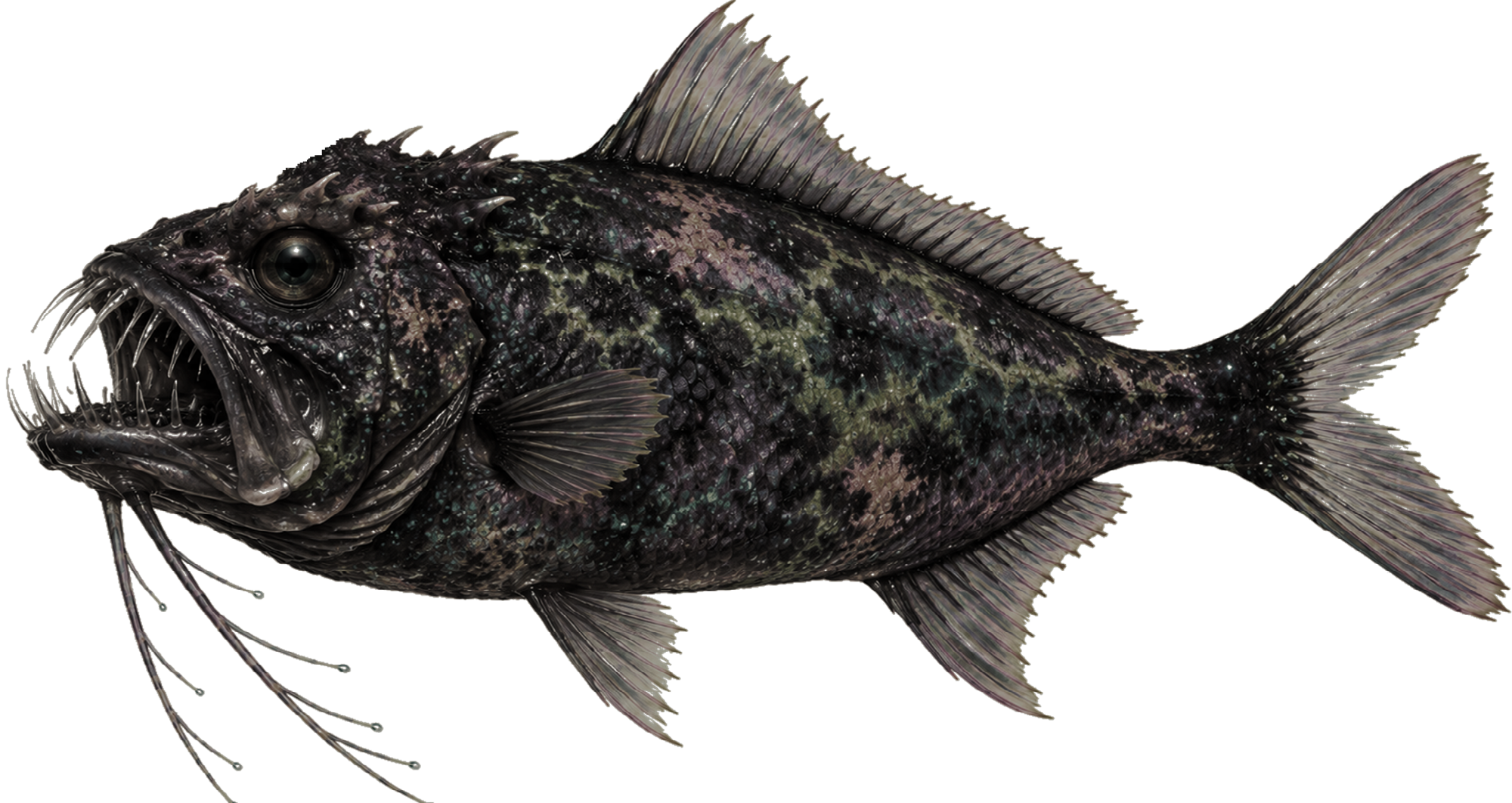 Choctawichthys |
C. cepoloides371Stringer, G. L. et al. (2020). Highly diversified Late Cretaceous fish assemblage revealed by otoliths (Ripley Formation and Owl Creek Formation, northeast Mississippi, USA). Rivista Italiana di Paleontologia e Stratigrafia, 126(1), 111–155. doi:10.13130/2039-4942/13013 | Ripley Formation | USA (Mississippi) | 84–70 Ma | nicht quantifiziert | Paracanthopterygii |
 |
Clupeiformes indet. (?)372Stringer, G. L. & Sloan, J. C. (2023). First Cretaceous teleostean otolith assemblage (Arkadelphia Formation, upper Maastrichtian) from Arkansas, USA, early Gadiformes, and the Western Interior Seaway. PaleoBios, 40(3), 1–39. doi:10.5070/P940361192 | Arkadelphia Marl | USA (Arkansas) | 68–66 Ma | selten | unbestimmte Heringe |
 Congrophichthus |
C. transterminus373Schwarzhans, W. & Stringer, G. L. (2020). Fish otoliths from the late Maastrichtian Kemp Clay (Texas, USA) and the early Danian Clayton Formation (Arkansas, USA) and an assessment of extinction and survival of teleost lineages across the K-Pg boundary based on otoliths. Rivista Italiana di Paleontologia e Stratigrafia 126(2), 395–446 doi:10.13130/2039-4942/13425 | Kemp Clay | USA (Texas) | 68–66 Ma | selten | Congridae (Meeraal) |
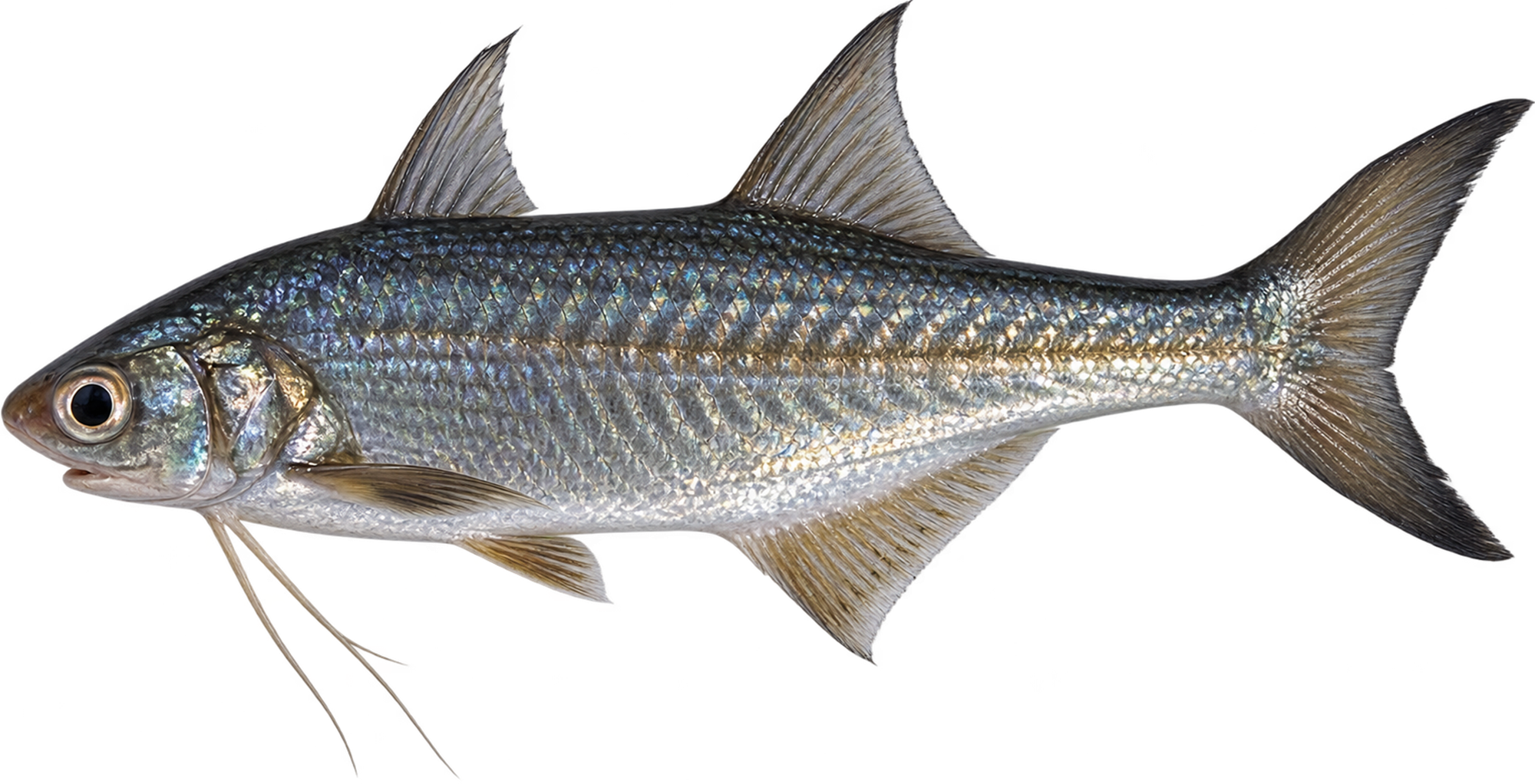 Cowetaichthys |
C. alabamae374Stringer, G. L. et al. (2020). Highly diversified Late Cretaceous fish assemblage revealed by otoliths (Ripley Formation and Owl Creek Formation, Northeast Mississippi, USA). Rivista Italiana di Paleontologia e Stratigrafia 126(1), 111–155, hier Tabelle 1 und zugehöriger systematischer Abschnitt; Owl Creek: 6 Otolithen. doi:10.13130/2039-4942/13013375Stringer, G. L. et al. (2020). Highly diversified Late Cretaceous fish assemblage revealed by otoliths (Ripley Formation and Owl Creek Formation, northeast Mississippi, USA). Rivista Italiana di Paleontologia e Stratigrafia, 126(1), 111–155. doi:10.13130/2039-4942/13013 C. carnevalei376Stringer, G. L. et al. (2020). Highly diversified Late Cretaceous fish assemblage revealed by otoliths (Ripley Formation and Owl Creek Formation, northeast Mississippi, USA). Rivista Italiana di Paleontologia e Stratigrafia, 126(1), 111–155. doi:10.13130/2039-4942/13013 |
Owl Creek Formation Ripley Formation |
USA (Mississippi) | 72–66 Ma | nicht quantifiziert | Polymixiidae (Bartfisch) |
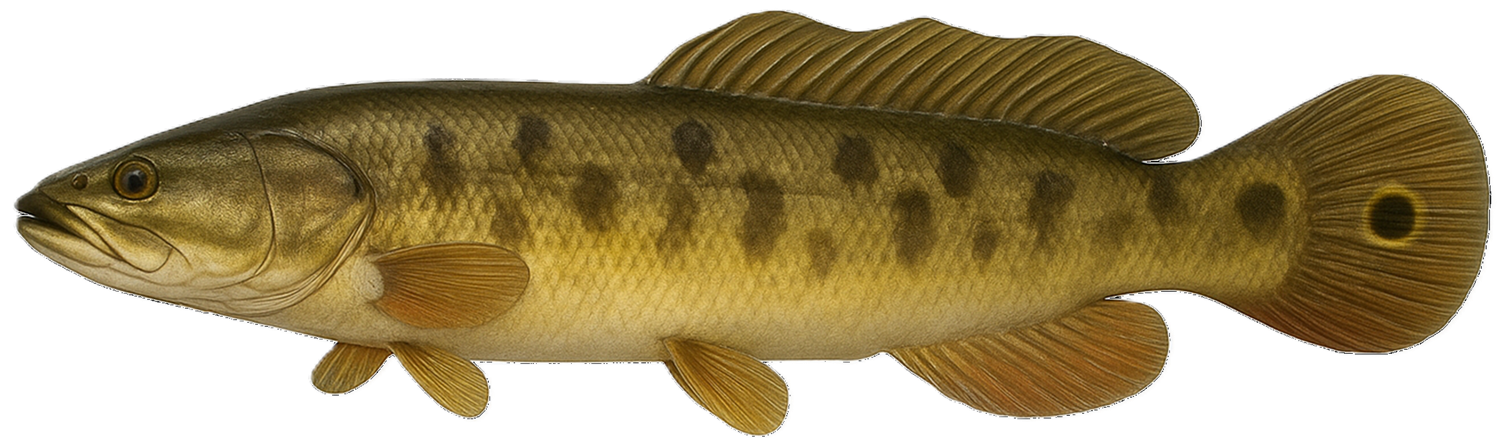 Cyclurus |
C. fragosus377Hoganson, J.W., Erickson, J.M. & Holland, F.D., Jr. (2019). Chondrichthyan and Osteichthyan Paleofaunas from the Cretaceous (Late Maastrichtian) Fox Hills Formation of North Dakota, USA: Paleoecology, Paleogeography, and Extinction. Bulletins of American Paleontology 398: 1–94. doi:10.32857/bap.2019.398208Estes, R. (1964). Fossil vertebrates from the Late Cretaceous Lance Formation, eastern Wyoming. University of California Publications in Geological Sciences, 49, 1–180.201Estes, R. & Berberian, P. (1970). Paleoecology of a Late Cretaceous vertebrate community from Montana. Breviora, 343, 1–35.199Brinkman, D. B., Newbrey, M. G. & Neuman, A. G. (2014). Diversity and paleoecology of actinopterygian fish from vertebrate microfossil localities of the Maastrichtian Hell Creek Formation of Montana. In G. P. Wilson et al. (Hrsg.), Through the End of the Cretaceous in the Type Locality of the Hell Creek Formation in Montana and Adjacent Areas. Geological Society of America Special Paper 503, 247–270. doi:10.1130/2014.2503(09) | Fox Hills Formation, Hell Creek Formation, Lance Formation |
USA (North Dakota, Montana, South Dakota, Wyoming) | ca. 72–66 Ma | sehr häufig | Amiidae |
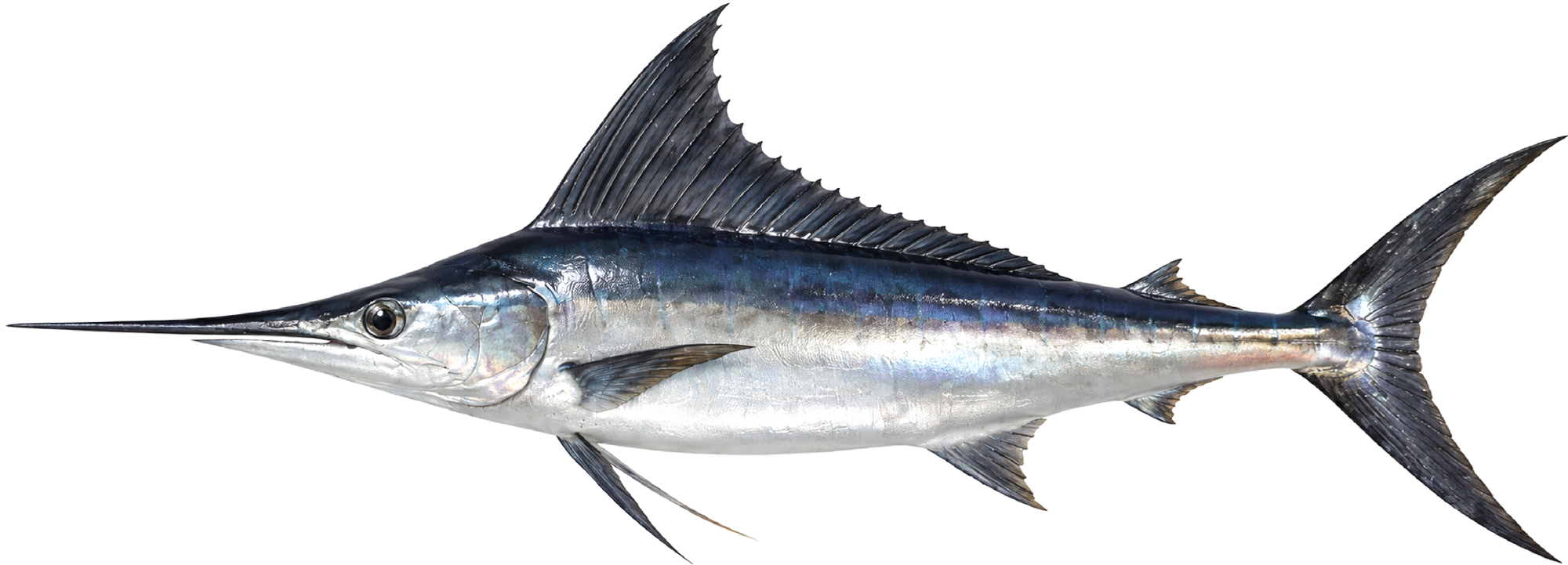 Cylindracanthus |
C. cf. ornatus (?)378Becker, M.A. et al. (2009). Osteichthyans from the Fairpoint Member of the Fox Hills Formation (Maastrichtian), Meade County, South Dakota, USA. Cretaceous Research 30(4): 1031–1040. doi:10.1016/j.cretres.2009.03.006 | Fox Hills Formation | USA (South Dakota) | ca. 69–68 Ma | selten | Actinopterygii |
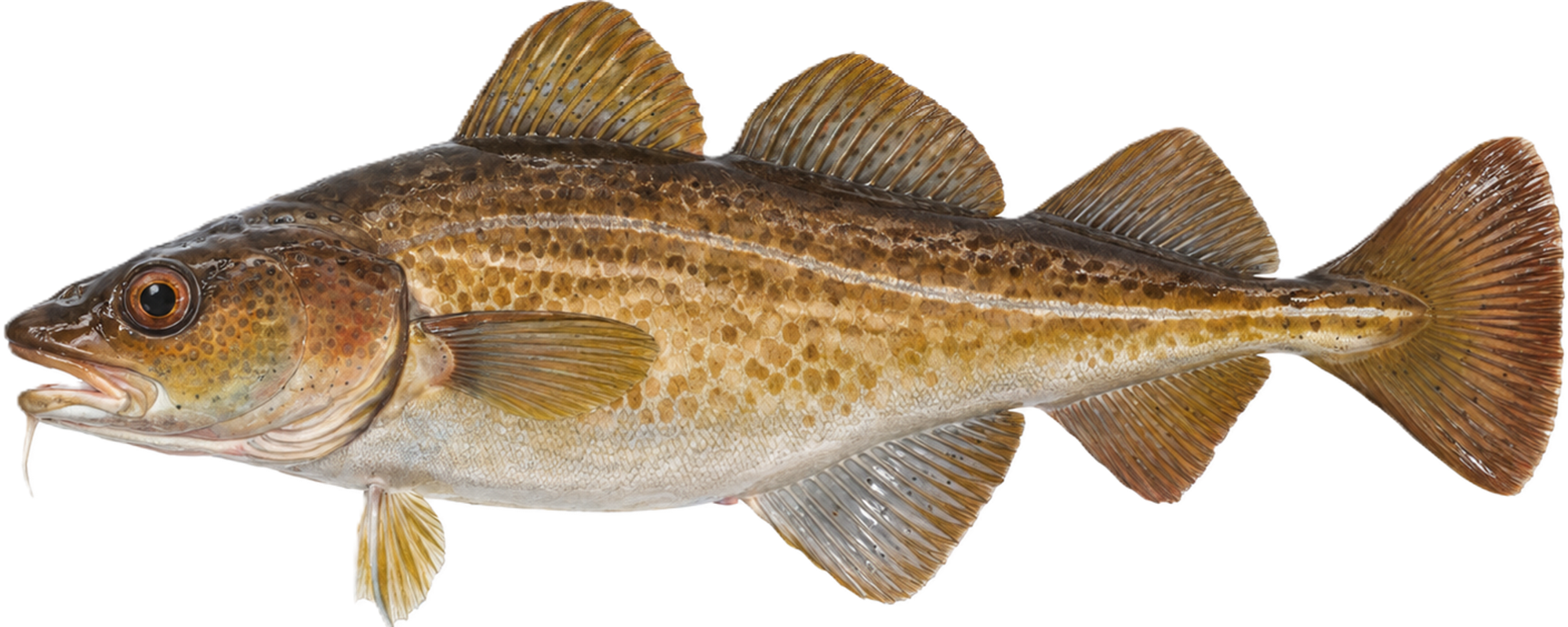 Dakotaichthys |
D. hogansoni379Schwarzhans, W. & Stringer, G. L. (2020). Fish otoliths from the late Maastrichtian Kemp Clay (Texas, USA) and the early Danian Clayton Formation (Arkansas, USA) and an assessment of extinction and survival of teleost lineages across the K-Pg boundary based on otoliths. Rivista Italiana di Paleontologia e Stratigrafia 126(2), 395–446 doi:10.13130/2039-4942/13425380Schwarzhans, W. & Stringer, G.L. (2020). Fish otoliths from the late Maastrichtian Kemp Clay (Texas, USA) and the early Danian Clayton Formation (Arkansas, USA) and an assessment of extinction and survival of teleost lineages across the K-Pg boundary based on otoliths. Rivista Italiana di Paleontologia e Stratigrafia 126(2): 395–446. doi:10.13130/2039-4942/13425 | Kemp Clay Fox Hills Formation |
USA (North Dakota, Texas) | 70–66 Ma | sehr häufig | Gadidae (Dorsch) |
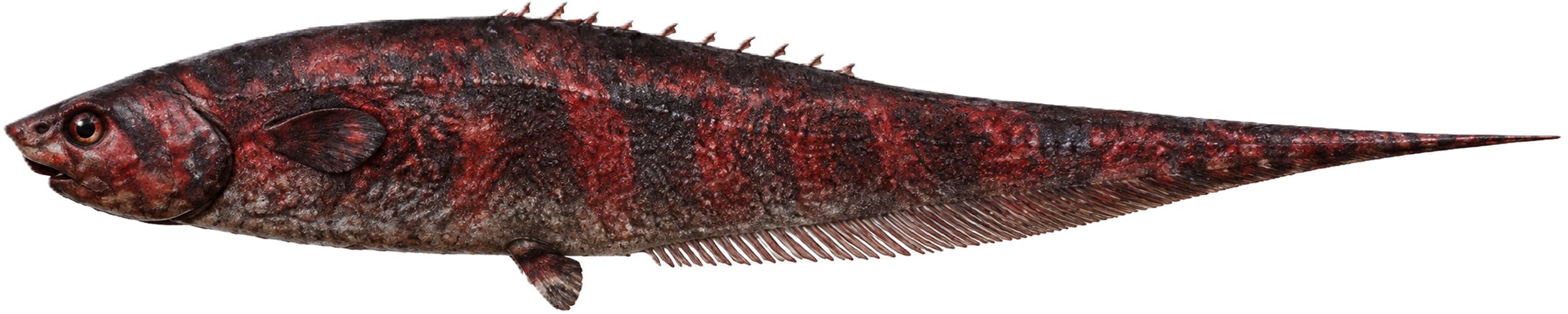 Echidnocephalus |
E. pacificus (?)381Cockerell, T. D. A. (1919). Some American Cretaceous fish scales, with notes on the classification and distribution of Cretaceous fishes. U.S. Geological Survey Professional Paper, 120-I, 165–188.382David, L. R. (1946). Upper Cretaceous fish remains from the western border of the San Joaquin Valley, California. Carnegie Institution of Washington Publication, 551, 81–112. | Moreno Formation | USA (Kalifornien) | 72–66 Ma | selten | Halosauridae |
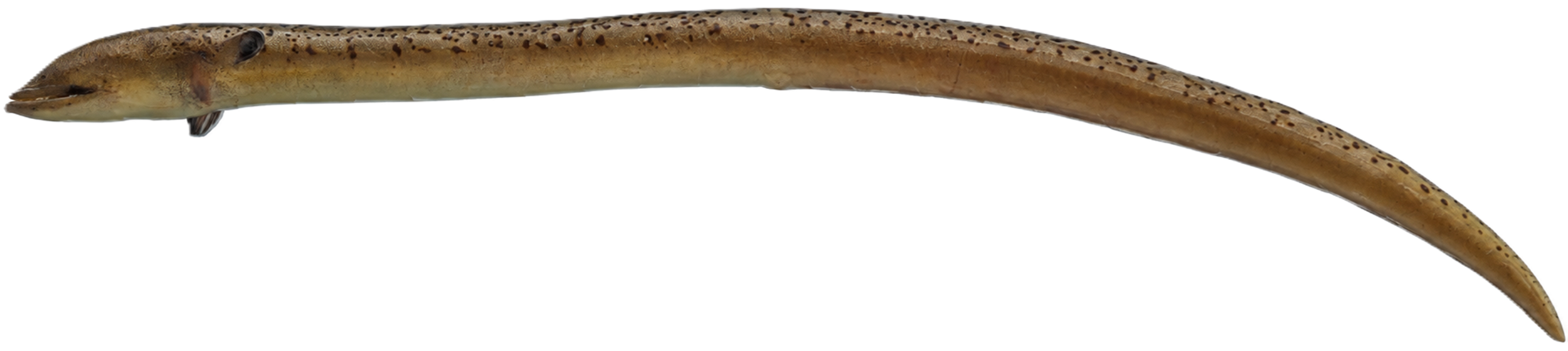 Echiophis |
E. aff. semisphaeroides383Schwarzhans, W. & Stringer, G. L. (2020). Fish otoliths from the late Maastrichtian Kemp Clay (Texas, USA) and the early Danian Clayton Formation (Arkansas, USA) and an assessment of extinction and survival of teleost lineages across the K-Pg boundary based on otoliths. Rivista Italiana di Paleontologia e Stratigrafia 126(2), 395–446 doi:10.13130/2039-4942/13425384Stringer, G. L. & Sloan, J. C. (2023). First Cretaceous teleostean otolith assemblage (Arkadelphia Formation, upper Maastrichtian) from Arkansas, USA, early Gadiformes, and the Western Interior Seaway. PaleoBios, 40(3), 1–39. doi:10.5070/P940361192 | Arkadelphia Marl Kemp Clay |
USA (Arkansas, Texas) | 68–66 Ma (Gattung mindestens 72 Ma bis heute) | häufig | Ophichthidae (Schlangenaal) |
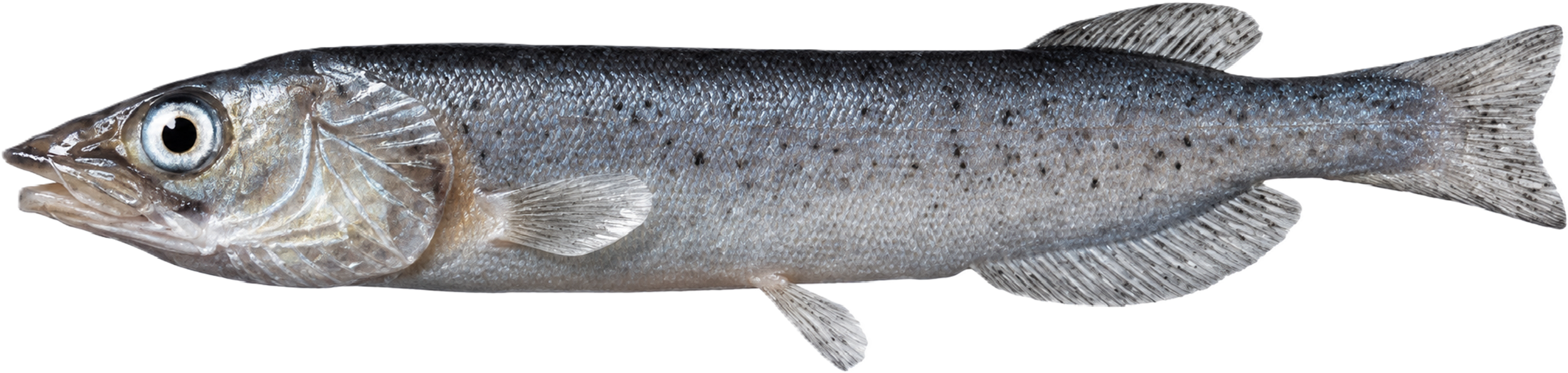 Elopothrissus |
E. sp.385Stringer, G. L. & Sloan, J. C. (2023). First Cretaceous teleostean otolith assemblage (Arkadelphia Formation, upper Maastrichtian) from Arkansas, USA, early Gadiformes, and the Western Interior Seaway. PaleoBios, 40(3), 1–39. doi:10.5070/P940361192 | Arkadelphia Marl | USA (Arkansas) | 68–66 Ma (Gattung bis 38 Ma) | Einzelfund | Albulidae (Grätenfisch) |
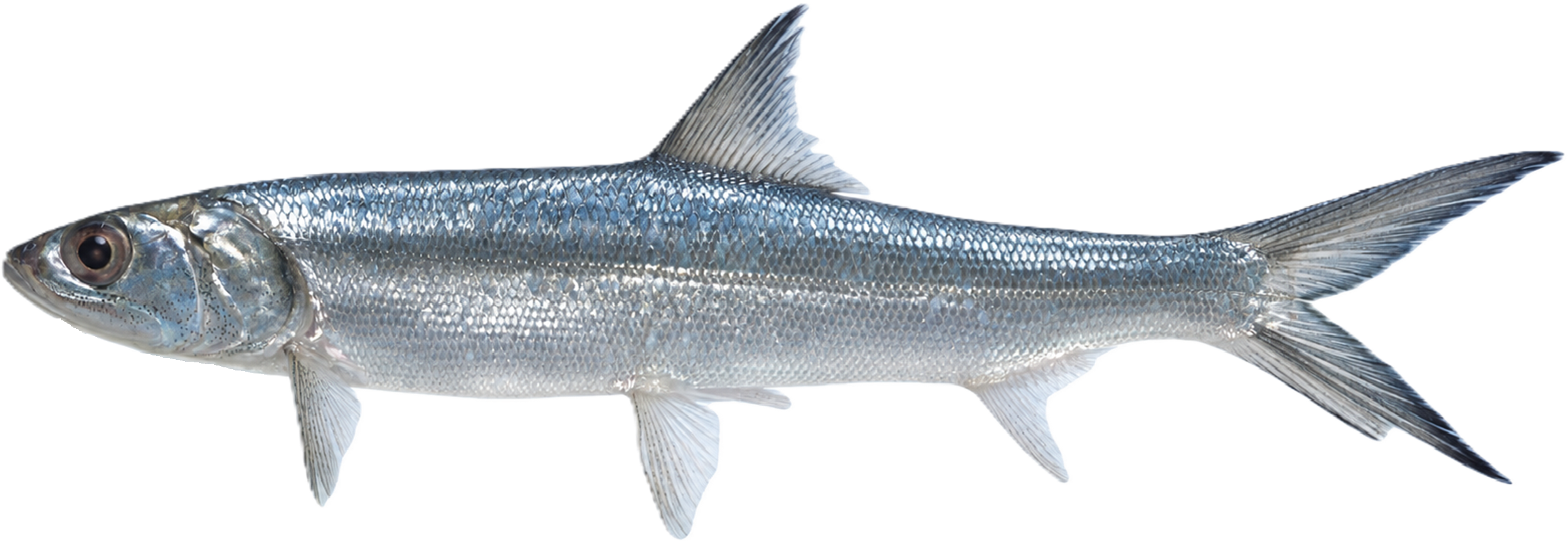 Elops |
E. sp.386Stringer, G. L. & Sloan, J. C. (2023). First Cretaceous teleostean otolith assemblage (Arkadelphia Formation, upper Maastrichtian) from Arkansas, USA, early Gadiformes, and the Western Interior Seaway. PaleoBios, 40(3), 1–39. doi:10.5070/P940361192 | Arkadelphia Marl | USA (Arkansas) | 68–66 Ma (Gattung 133 Ma bis heute) | selten | Elopidae (Frauenfisch) |
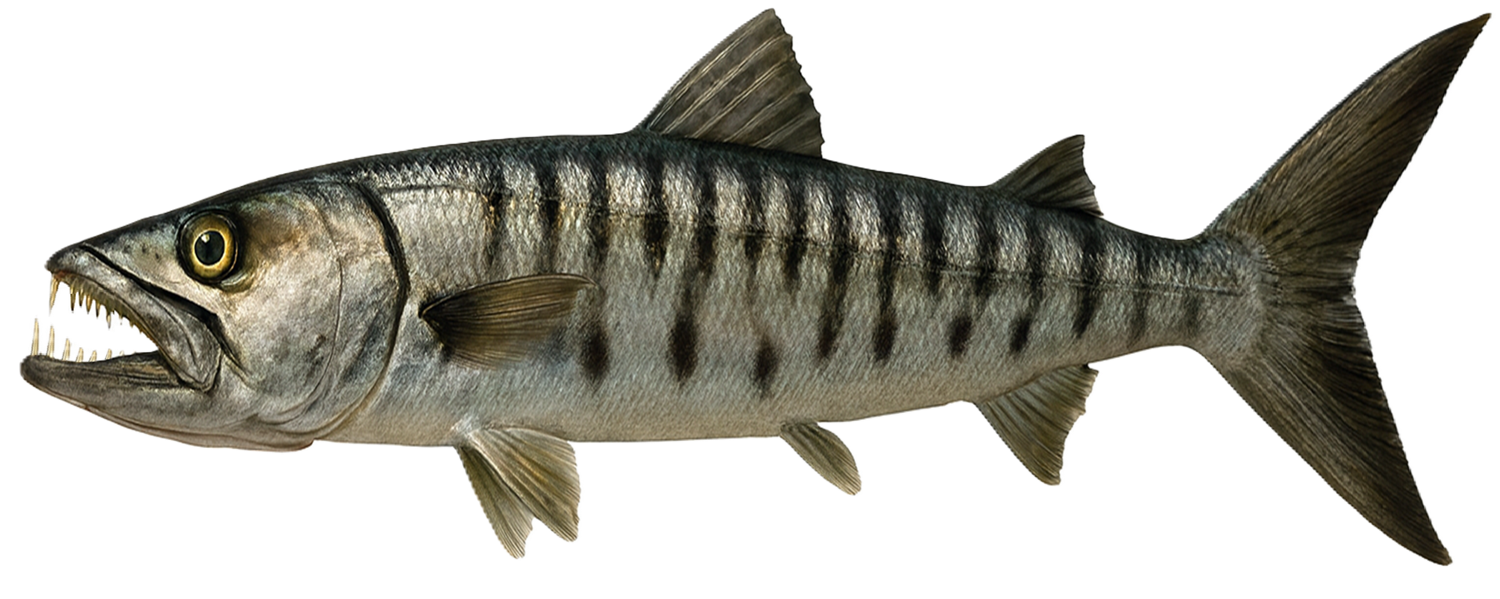 Enchodus |
E. cf. ferox (?)387Hoganson, J.W., Erickson, J.M. & Holland, F.D., Jr. (2019). Chondrichthyan and Osteichthyan Paleofaunas from the Cretaceous (Late Maastrichtian) Fox Hills Formation of North Dakota, USA: Paleoecology, Paleogeography, and Extinction. Bulletins of American Paleontology 398: 1–94. doi:10.32857/bap.2019.398388Ikejiri, T. et al. (2013). An overview of Late Cretaceous vertebrates from Alabama. Bulletin of the Alabama Museum of Natural History 31(1), 46–71. Appendix 1, S. 71; Tabelle 5, S. 55. Prairie Bluff Chalk. Direkte Belegstücke. Mehrere Zahn-/Palatinbelege aus Lowndes und Dallas Counties. Quelle389Schein, J. P. & Lewis, R. D. (2007). Actinopterygian fishes from Upper Cretaceous rocks in Alabama, with emphasis on the teleostean genus Enchodus. Paludicola 6(2), 41–86. Prairie Bluff Chalk. Direkte Belegstücke. Mehrere Zahn-/Palatinbelege aus Lowndes und Dallas Counties. Quelle E. ferox (?)390Fossil Collecting Report (2007). May 2007. Sammlerbericht; Bestimmungen vorläufig. Originalbericht391Gentry, A. D. et al. (2018). A new species of Peritresius Leidy, 1856 (Testudines: Pan-Cheloniidae) from the Late Cretaceous (Campanian) of Alabama, USA, and the occurrence of the genus within the Mississippi Embayment of North America. PLOS ONE, 13(4), e0195651. doi:10.1371/journal.pone.0195651 E. gladiolus392Becker, M.A. et al. (2009). Osteichthyans from the Fairpoint Member of the Fox Hills Formation (Maastrichtian), Meade County, South Dakota, USA. Cretaceous Research 30(4): 1031–1040. doi:10.1016/j.cretres.2009.03.006393Nelson, L.E., Murray, A.M. & Sims, M.E. (2026). A new species of Enchodus from the Western Interior Seaway of North America and a taxonomic revision of Enchodus dirus, Leidy, 1857. Journal of Vertebrate Paleontology 46(4): e2676733. doi:10.1080/02724634.2026.2676733394Schein, J. P. & Lewis, R. D. (2007). Actinopterygian fishes from Upper Cretaceous rocks in Alabama, with emphasis on the teleostean genus Enchodus. Paludicola, 6(2), 41–86. Quelle E. petrosus395Schein, J. P. & Lewis, R. D. (2007). Actinopterygian fishes from Upper Cretaceous rocks in Alabama, with emphasis on the teleostean genus Enchodus. Paludicola, 6(2), 41–86. Quelle396Mississippi State University Libraries / Dunn-Seiler Museum (o. J.). Enchodus petrosus, DSM DH13. Öffentlicher Sammlungskatalog; Formationsfeld Prairie Bluff Fm. (Chalk). Abgerufen am 24. Oktober 2026. Prairie Bluff Chalk. Katalogbestimmung. DSM DH13; ausdrücklich Prairie Bluff zugeordnet. Bestimmung nicht anhand einer Neubearbeitung bestätigt. Quelle E. spp.397Cowan, T. M. & Fielitz, C. (2015). Two three-dimensionally preserved teleost neurocrania from the Corsicana Formation (Upper Cretaceous, Maastrichtian), Bexar County, Texas, U.S.A. Paludicola, 10(3), 137–144.398Hoganson, J.W., Erickson, J.M. & Holland, F.D., Jr. (2019). Chondrichthyan and Osteichthyan Paleofaunas from the Cretaceous (Late Maastrichtian) Fox Hills Formation of North Dakota, USA: Paleoecology, Paleogeography, and Extinction. Bulletins of American Paleontology 398: 1–94. doi:10.32857/bap.2019.398399Hoganson, J.W., Erickson, J.M. & Everhart, M.J. (2022). First Report of Elasmobranchii and Osteichthyans from the Fox Hills Formation (Late Cretaceous), Poison Springs Locality, Northeastern Colorado. Transactions of the Kansas Academy of Science 125(3–4): 195–232. doi:10.1660/062.125.0310400Nelson, L.E., Murray, A.M. & Sims, M.E. (2026). A new species of Enchodus from the Western Interior Seaway of North America and a taxonomic revision of Enchodus dirus, Leidy, 1857. Journal of Vertebrate Paleontology 46(4): e2676733. doi:10.1080/02724634.2026.2676733401Schein, J. P. & Lewis, R. D. (2007). Actinopterygian fishes from Upper Cretaceous rocks in Alabama, with emphasis on the teleostean genus Enchodus. Paludicola, 6(2), 41–86. Quelle402Schein, J. P. & Lewis, R. D. (2007). Actinopterygian fishes from Upper Cretaceous rocks in Alabama, with emphasis on the teleostean genus Enchodus. Paludicola 6(2), 41–86. Prairie Bluff Chalk. Offene Bestimmungen. Nicht artbestimmte Exemplare zusätzlich zu E. ferox. Quelle403Ikejiri, T., Lu, Y. & Zhang, B. (2020). Two-step extinction of Late Cretaceous marine vertebrates in northern Gulf of Mexico prolonged biodiversity loss prior to the Chicxulub impact. Scientific Reports 10, 4169. Supplementary Materials, Tabellen S3 und S4. Prairie Bluff Chalk. Offene Bestimmungen. Nicht artbestimmte Exemplare zusätzlich zu E. ferox. doi:10.1038/s41598-020-61089-w |
Corsicana Marl Escondido Formation Fox Hills Formation Prairie Bluff Chalk Ripley Formation |
USA (Alabama, Colorado, Mississippi, North Dakota, South Dakota, Texas) | 75–66 Ma | sehr häufig | Enchodontidae |
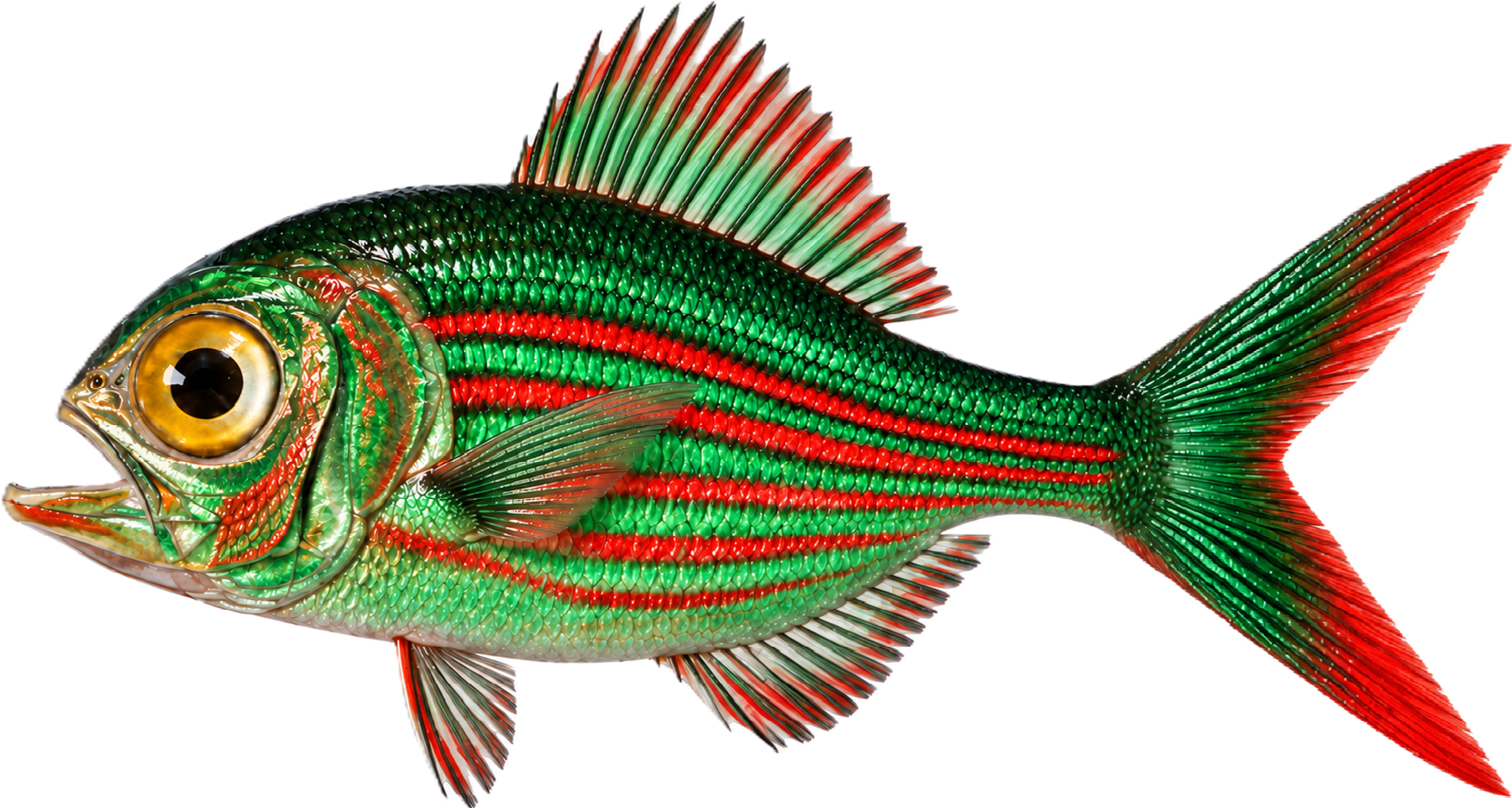 Eutawichthys |
E. cf. stringeri (?)404Stringer, G. L. & Sloan, J. C. (2023). First Cretaceous teleostean otolith assemblage (Arkadelphia Formation, upper Maastrichtian) from Arkansas, USA, early Gadiformes, and the Western Interior Seaway. PaleoBios, 40(3), 1–39. doi:10.5070/P940361192 E. choctawae405Schwarzhans, W. & Stringer, G. L. (2020). Fish otoliths from the late Maastrichtian Kemp Clay (Texas, USA) and the early Danian Clayton Formation (Arkansas, USA) and an assessment of extinction and survival of teleost lineages across the K-Pg boundary based on otoliths. Rivista Italiana di Paleontologia e Stratigrafia 126(2), 395–446 doi:10.13130/2039-4942/13425406Stringer, G. L. et al. (2020). Highly diversified Late Cretaceous fish assemblage revealed by otoliths (Ripley Formation and Owl Creek Formation, northeast Mississippi, USA). Rivista Italiana di Paleontologia e Stratigrafia, 126(1), 111–155. doi:10.13130/2039-4942/13013 E. maastrichtiensis407Stringer, G. L. & Sloan, J. C. (2023). First Cretaceous teleostean otolith assemblage (Arkadelphia Formation, upper Maastrichtian) from Arkansas, USA, early Gadiformes, and the Western Interior Seaway. PaleoBios, 40(3), 1–39. doi:10.5070/P940361192408Schwarzhans, W. & Stringer, G. L. (2020). Fish otoliths from the late Maastrichtian Kemp Clay (Texas, USA) and the early Danian Clayton Formation (Arkansas, USA) and an assessment of extinction and survival of teleost lineages across the K-Pg boundary based on otoliths. Rivista Italiana di Paleontologia e Stratigrafia 126(2), 395–446 doi:10.13130/2039-4942/13425409Hoganson, J.W., Erickson, J.M. & Holland, F.D., Jr. (2019). Chondrichthyan and Osteichthyan Paleofaunas from the Cretaceous (Late Maastrichtian) Fox Hills Formation of North Dakota, USA: Paleoecology, Paleogeography, and Extinction. Bulletins of American Paleontology 398: 1–94. doi:10.32857/bap.2019.398410Schwarzhans, W. & Stringer, G.L. (2020). Fish otoliths from the late Maastrichtian Kemp Clay (Texas, USA) and the early Danian Clayton Formation (Arkansas, USA) and an assessment of extinction and survival of teleost lineages across the K-Pg boundary based on otoliths. Rivista Italiana di Paleontologia e Stratigrafia 126(2): 395–446. doi:10.13130/2039-4942/13425411Stringer, G.L. et al. (2020). Highly diversified Late Cretaceous fish assemblage revealed by otoliths (Ripley Formation and Owl Creek Formation, northeast Mississippi, USA). Rivista Italiana di Paleontologia e Stratigrafia 126(1). doi:10.13130/2039-4942/13013412Stringer, G. L. et al. (2020). Highly diversified Late Cretaceous fish assemblage revealed by otoliths (Ripley Formation and Owl Creek Formation, northeast Mississippi, USA). Rivista Italiana di Paleontologia e Stratigrafia, 126(1), 111–155. doi:10.13130/2039-4942/13013 E. zideki413Stringer, G. L. & Sloan, J. C. (2023). First Cretaceous teleostean otolith assemblage (Arkadelphia Formation, upper Maastrichtian) from Arkansas, USA, early Gadiformes, and the Western Interior Seaway. PaleoBios, 40(3), 1–39. doi:10.5070/P940361192414Stringer, G. L. et al. (2020). Highly diversified Late Cretaceous fish assemblage revealed by otoliths (Ripley Formation and Owl Creek Formation, northeast Mississippi, USA). Rivista Italiana di Paleontologia e Stratigrafia, 126(1), 111–155. doi:10.13130/2039-4942/13013 |
Arkadelphia Marl Fox Hills Formation Kemp Clay Ripley Formation |
USA (Arkansas, Mississippi, North Dakota, Texas) | 72–66 Ma | häufig | Beryciformes (Schleimkopf) |
 |
Gadiformes indet.415Stringer, G. L. & Sloan, J. C. (2023). First Cretaceous teleostean otolith assemblage (Arkadelphia Formation, upper Maastrichtian) from Arkansas, USA, early Gadiformes, and the Western Interior Seaway. PaleoBios, 40(3), 1–39. doi:10.5070/P940361192 | Arkadelphia Marl | USA (Arkansas) | 68–66 Ma | selten | unbestimmte Dorsche |
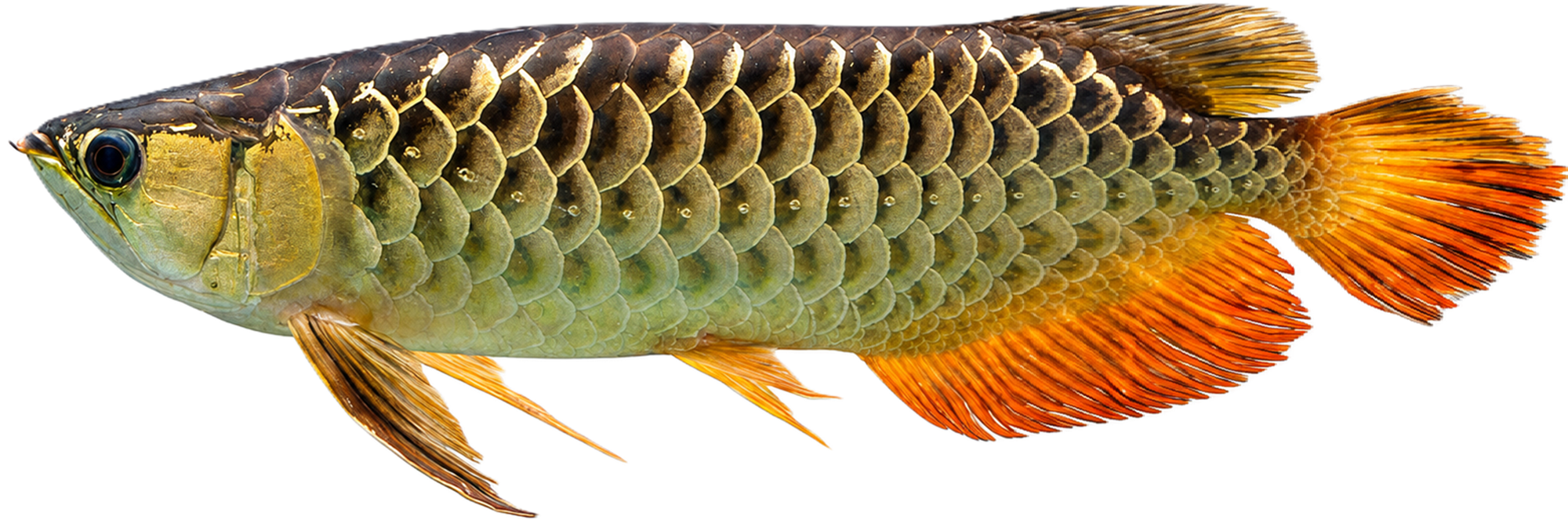 Genartina |
G. spp.416Stringer, G. L. & Sloan, J. C. (2023). First Cretaceous teleostean otolith assemblage (Arkadelphia Formation, upper Maastrichtian) from Arkansas, USA, early Gadiformes, and the Western Interior Seaway. PaleoBios, 40(3), 1–39. doi:10.5070/P940361192417Schwarzhans, W. & Stringer, G. L. (2020). Fish otoliths from the late Maastrichtian Kemp Clay (Texas, USA) and the early Danian Clayton Formation (Arkansas, USA) and an assessment of extinction and survival of teleost lineages across the K-Pg boundary based on otoliths. Rivista Italiana di Paleontologia e Stratigrafia 126(2), 395–446 doi:10.13130/2039-4942/13425 | Arkadelphia Marl Kemp Clay |
USA (Arkansas, Texas) | 68–66 Ma (Gattung bis 34 Ma) | häufig | Osteoglossiformes (Knochenzüngler) |
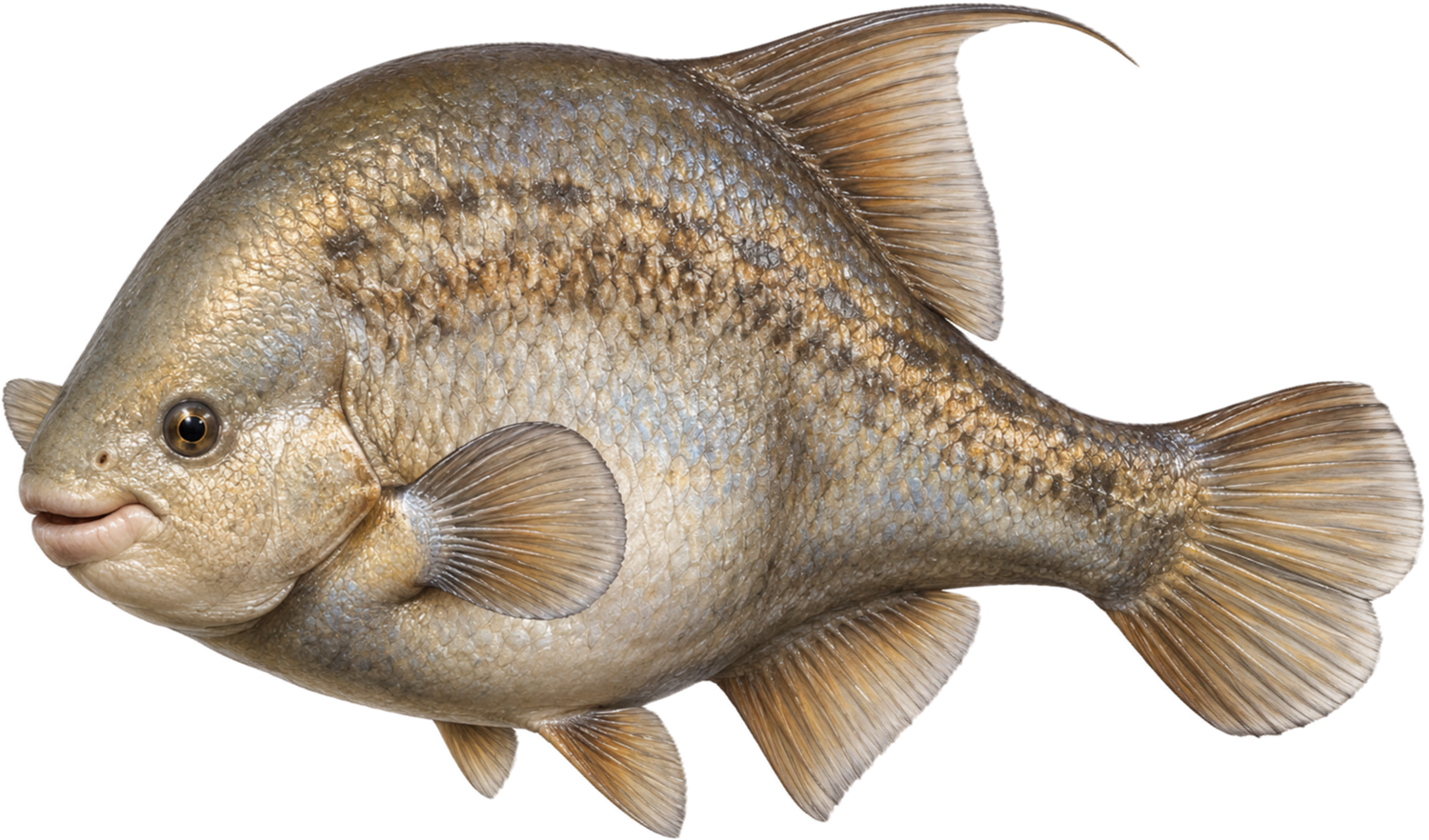 Hadrodus |
H. priscus418Ebersole, J. A. et al. (2025). Cretaceous Fishes of Alabama: Hadrodus version 2. In: Ebersole, J. A. (Hrsg.), Fossil Fishes of Alabama. McWane Science Center, 3(43). Quelle H. sp.419Becker, M.A. et al. (2009). Osteichthyans from the Fairpoint Member of the Fox Hills Formation (Maastrichtian), Meade County, South Dakota, USA. Cretaceous Research 30(4): 1031–1040. doi:10.1016/j.cretres.2009.03.006420Hoganson, J.W., Erickson, J.M. & Everhart, M.J. (2022). First Report of Elasmobranchii and Osteichthyans from the Fox Hills Formation (Late Cretaceous), Poison Springs Locality, Northeastern Colorado. Transactions of the Kansas Academy of Science 125(3–4): 195–232. doi:10.1660/062.125.0310421Stringer, G. L. (1991). Upper Cretaceous (Maastrichtian) teleostean otoliths from the Ripley Formation, Union County, Mississippi. Mississippi Geology, 11(3), 9–20. Quelle422Schein, J. P. & Lewis, R. D. (2007). Actinopterygian fishes from Upper Cretaceous rocks in Alabama, with emphasis on the teleostean genus Enchodus. Paludicola 6(2), 41–86. Prairie Bluff Chalk. Direkte Belegstücke. S. 66, Katalog Nr. 413–414: PV988 sowie PV988.0020.0300.009, Pharyngealzähne aus Lowndes County. Nr. 417 lautet Hadrodus oder Anomoeodus, kein zusätzlicher sicherer Taxonbeleg. Quelle |
Fox Hills Formation Prairie Bluff Chalk Ripley Formation |
USA (Alabama, Colorado, Mississippi, South Dakota) | ca. 75–66 Ma | sehr häufig | Hadrodontidae (Knochenfisch) |
 |
Hiodontidae indet.423Brinkman, D. B., Newbrey, M. G. & Neuman, A. G. (2014). Diversity and paleoecology of actinopterygian fish from vertebrate microfossil localities of the Maastrichtian Hell Creek Formation of Montana. In G. P. Wilson et al. (Hrsg.), Through the End of the Cretaceous in the Type Locality of the Hell Creek Formation in Montana and Adjacent Areas. Geological Society of America Special Paper 503, 247–270. doi:10.1130/2014.2503(09) | Hell Creek Formation | USA (Montana) | 68–66 Ma | selten | unbestimmte Mondaugen |
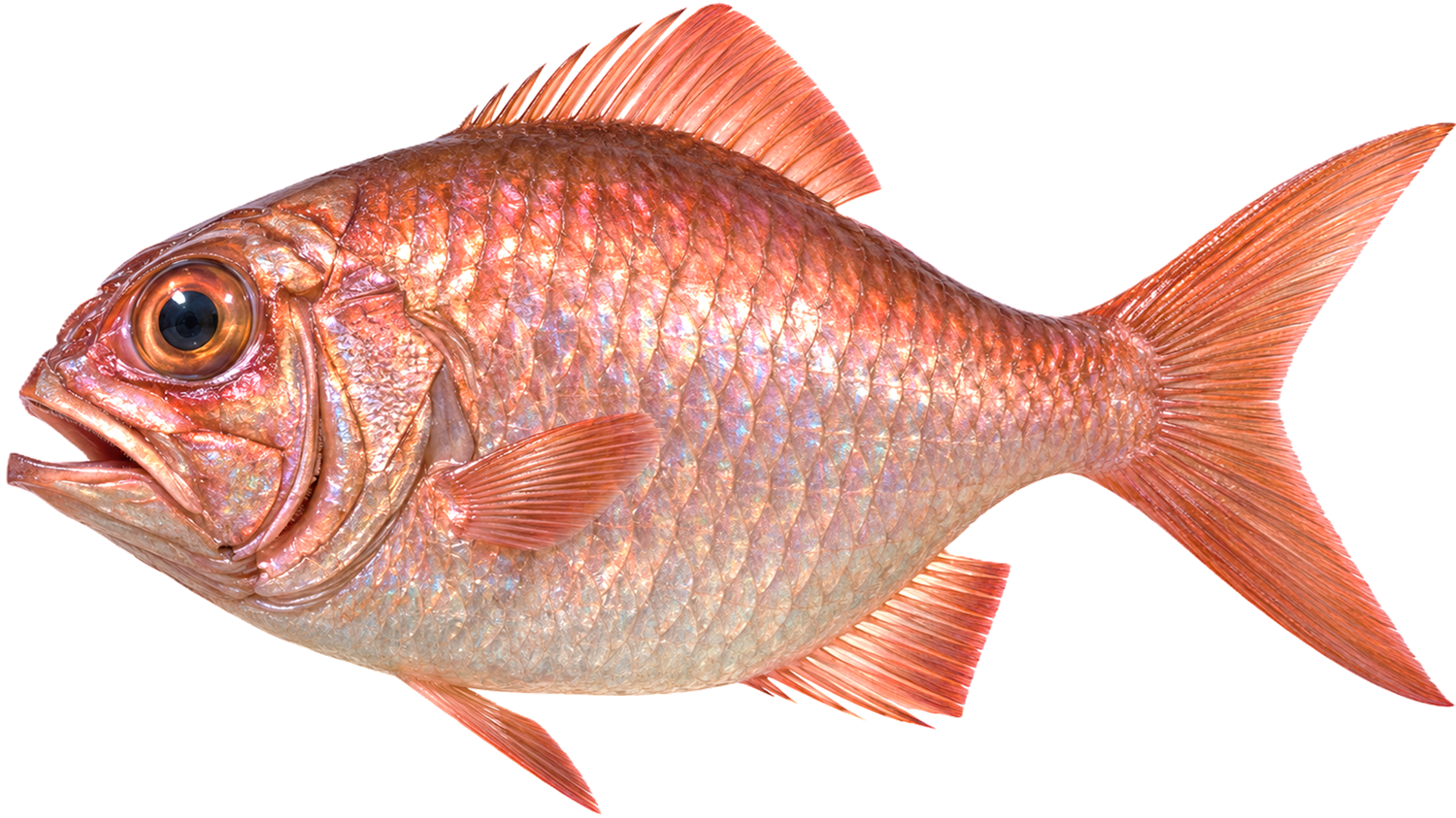 Hoplopteryx |
H. langfordi424Stringer, G. L. et al. (2020). Highly diversified Late Cretaceous fish assemblage revealed by otoliths (Ripley Formation and Owl Creek Formation, northeast Mississippi, USA). Rivista Italiana di Paleontologia e Stratigrafia, 126(1), 111–155. doi:10.13130/2039-4942/13013 H. oscitans425Stringer, G. L. et al. (2020). Highly diversified Late Cretaceous fish assemblage revealed by otoliths (Ripley Formation and Owl Creek Formation, Northeast Mississippi, USA). Rivista Italiana di Paleontologia e Stratigrafia 126(1), 111–155, hier Tabelle 1 und zugehöriger systematischer Abschnitt; Owl Creek: 3 Otolithen. doi:10.13130/2039-4942/13013426Stringer, G. L. et al. (2020). Highly diversified Late Cretaceous fish assemblage revealed by otoliths (Ripley Formation and Owl Creek Formation, northeast Mississippi, USA). Rivista Italiana di Paleontologia e Stratigrafia, 126(1), 111–155. doi:10.13130/2039-4942/13013 |
Owl Creek Formation Ripley Formation |
USA (Mississippi) | 72–66 Ma | sehr häufig | Trachichthyidae (Sägebauch) |
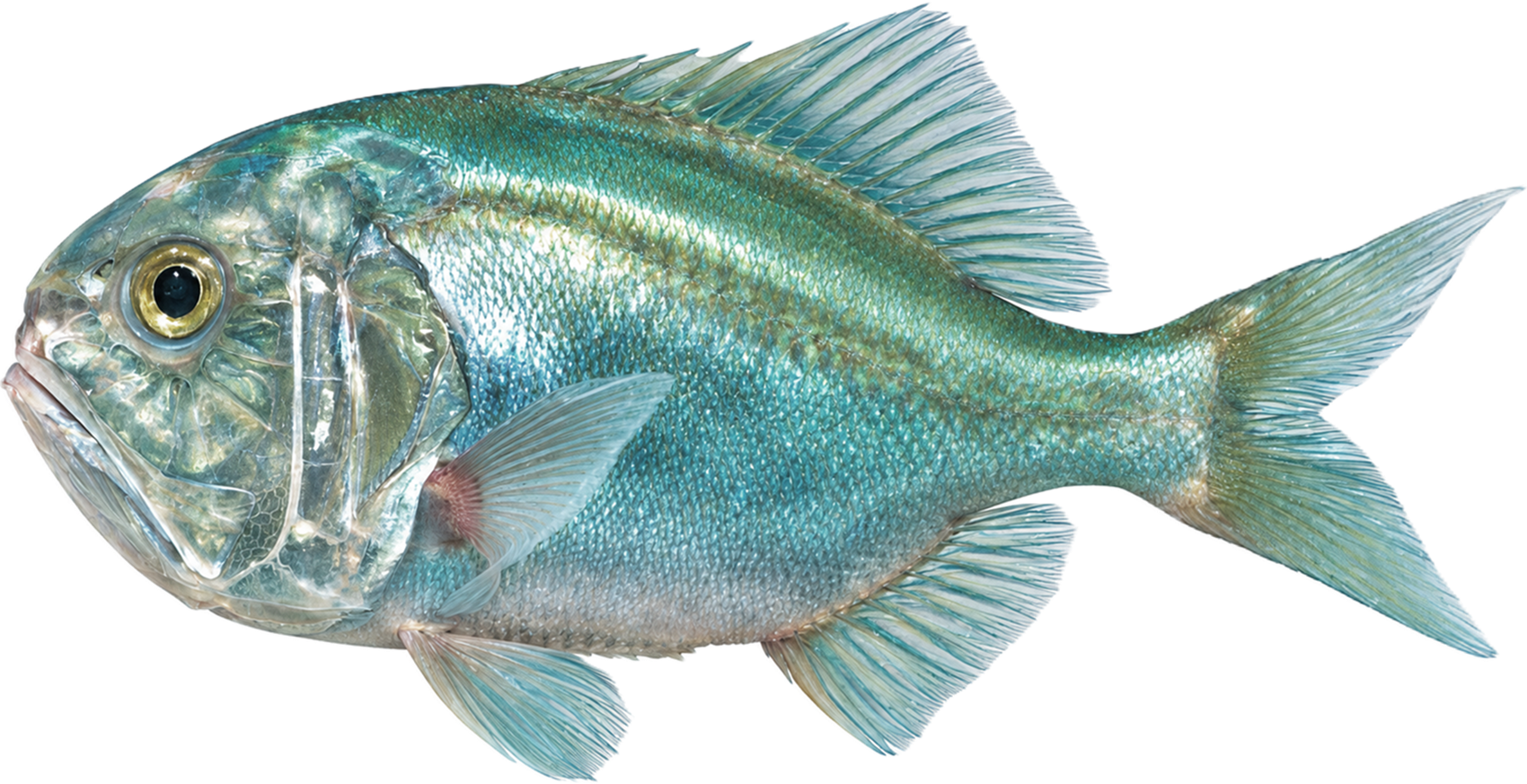 Hoplostethus |
H. stringeri427Schwarzhans, W. & Stringer, G. L. (2020). Fish otoliths from the late Maastrichtian Kemp Clay (Texas, USA) and the early Danian Clayton Formation (Arkansas, USA) and an assessment of extinction and survival of teleost lineages across the K-Pg boundary based on otoliths. Rivista Italiana di Paleontologia e Stratigrafia 126(2), 395–446 doi:10.13130/2039-4942/13425 | Kemp Clay | USA (Texas) | 68–66 Ma | selten | Trachichthyidae (Sägebauch) |
 Kokenichthys |
K. navis428Stringer, G. L. et al. (2020). Highly diversified Late Cretaceous fish assemblage revealed by otoliths (Ripley Formation and Owl Creek Formation, Northeast Mississippi, USA). Rivista Italiana di Paleontologia e Stratigrafia 126(1), 111–155, hier Tabelle 1 und zugehöriger systematischer Abschnitt; Owl Creek: 4 Otolithen. doi:10.13130/2039-4942/13013429Stringer, G. L. & Sloan, J. C. (2023). First Cretaceous teleostean otolith assemblage (Arkadelphia Formation, upper Maastrichtian) from Arkansas, USA, early Gadiformes, and the Western Interior Seaway. PaleoBios, 40(3), 1–39. doi:10.5070/P940361192430Stringer, G. L. et al. (2020). Highly diversified Late Cretaceous fish assemblage revealed by otoliths (Ripley Formation and Owl Creek Formation, northeast Mississippi, USA). Rivista Italiana di Paleontologia e Stratigrafia, 126(1), 111–155. doi:10.13130/2039-4942/13013 K. ripleyensis431Stringer, G. L. et al. (2020). Highly diversified Late Cretaceous fish assemblage revealed by otoliths (Ripley Formation and Owl Creek Formation, northeast Mississippi, USA). Rivista Italiana di Paleontologia e Stratigrafia, 126(1), 111–155. doi:10.13130/2039-4942/13013 |
Arkadelphia Marl Owl Creek Formation Ripley Formation |
USA (Arkansas, Mississippi) | 72–66 Ma | häufig | Osteoglossiformes (Knochenzüngler) |
 |
Lepisosteidae indet.432Hoganson, J.W., Erickson, J.M. & Holland, F.D., Jr. (2019). Chondrichthyan and Osteichthyan Paleofaunas from the Cretaceous (Late Maastrichtian) Fox Hills Formation of North Dakota, USA: Paleoecology, Paleogeography, and Extinction. Bulletins of American Paleontology 398: 1–94. doi:10.32857/bap.2019.398 | Fox Hills Formation | USA (North Dakota) | ca. 72–68 Ma | selten | Lepisosteidae |
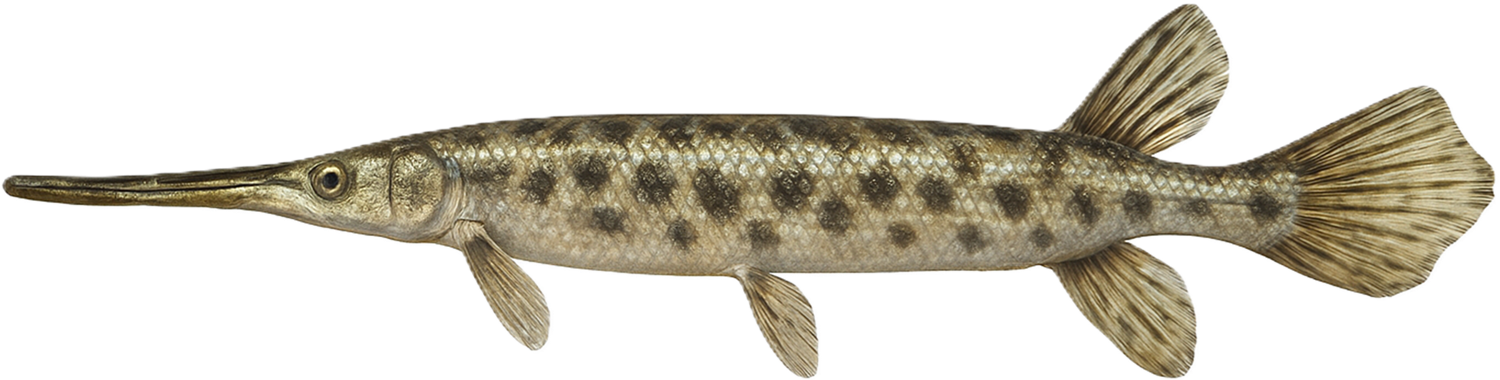 Lepisosteus |
L. sp.433Becker, M.A. et al. (2009). Osteichthyans from the Fairpoint Member of the Fox Hills Formation (Maastrichtian), Meade County, South Dakota, USA. Cretaceous Research 30(4): 1031–1040. doi:10.1016/j.cretres.2009.03.006434Parris, D. C. (2006). Chronister site investigations: New information on the Cretaceous of Missouri. In: Field Trip Guidebook – 2006 Association of Missouri Geologists Meeting, 9–13. Quelle | Fox Hills Formation Ripley Formation |
USA (Missouri, South Dakota) | ca. 75–68 Ma | sehr häufig | Lepisosteidae |
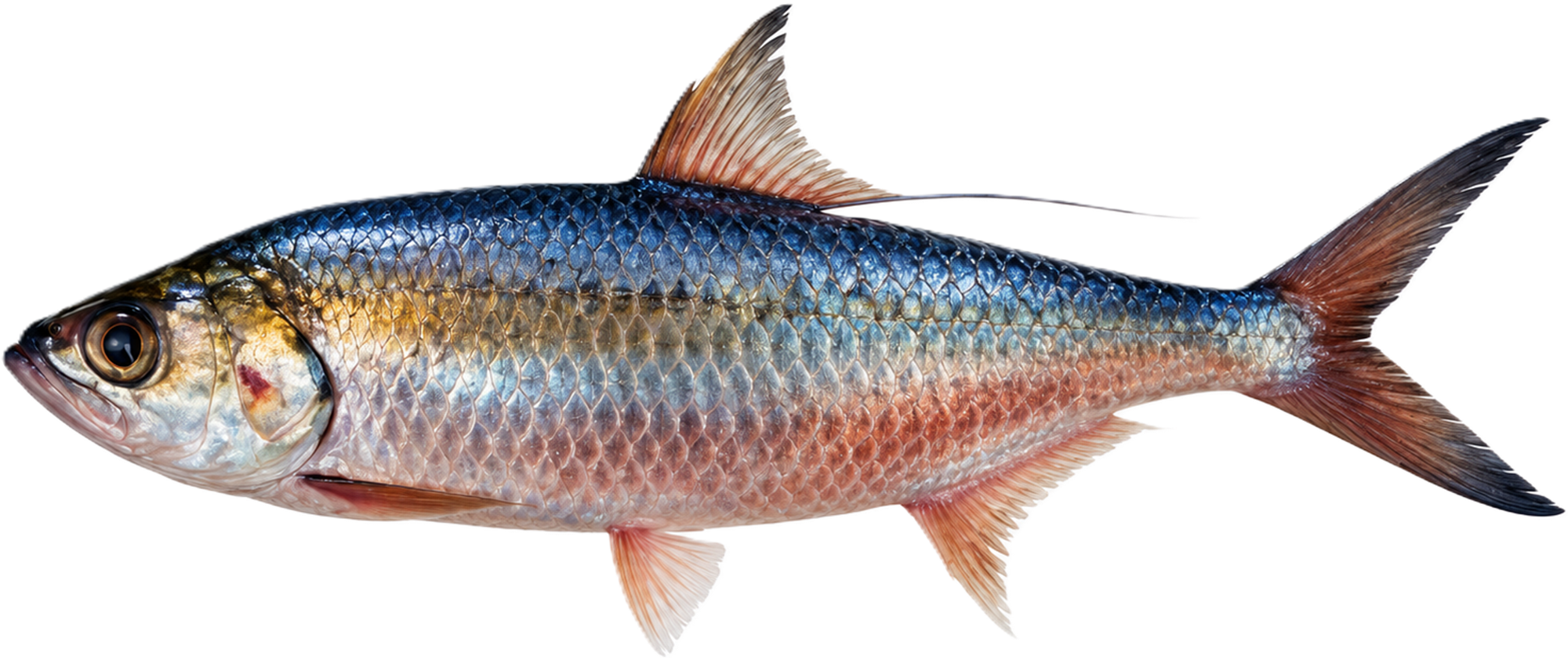 Megalops |
M. nolfi (?)435Stringer, G. L. et al. (2020). Highly diversified Late Cretaceous fish assemblage revealed by otoliths (Ripley Formation and Owl Creek Formation, northeast Mississippi, USA). Rivista Italiana di Paleontologia e Stratigrafia, 126(1), 111–155. doi:10.13130/2039-4942/13013 | Ripley Formation | USA (Mississippi) | 84–70 Ma | nicht quantifiziert | Megalopidae (Tarpun) |
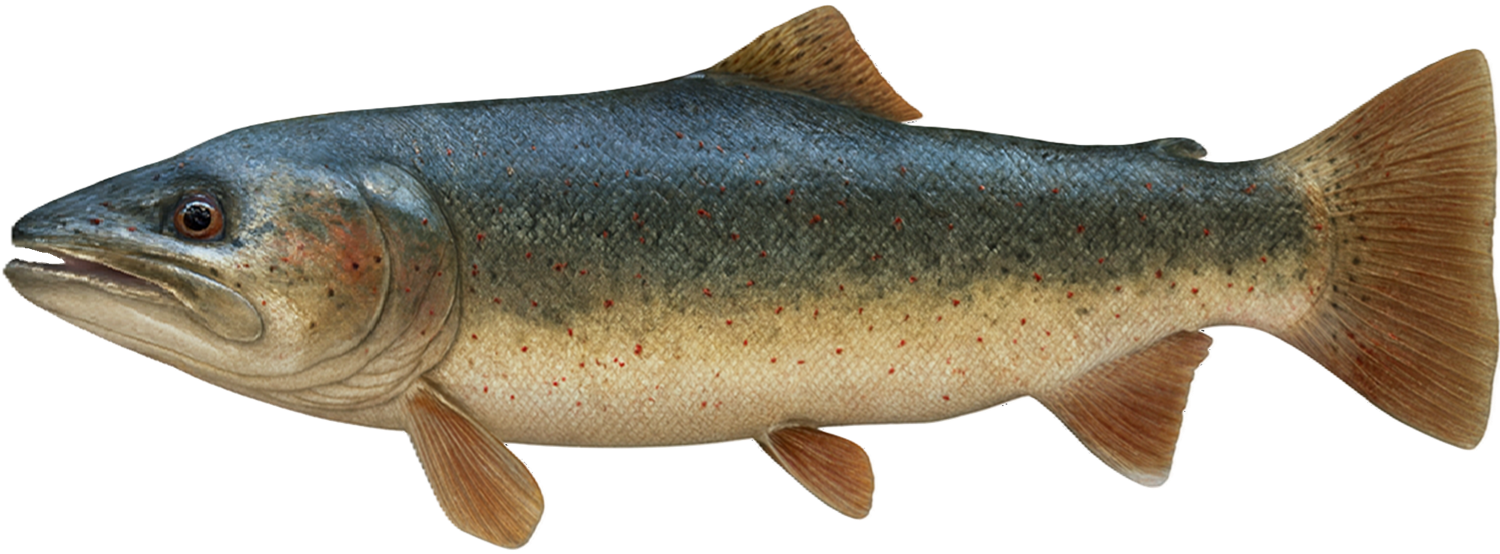 Melvius |
M. sp.436Hoganson, J.W., Erickson, J.M. & Holland, F.D., Jr. (2019). Chondrichthyan and Osteichthyan Paleofaunas from the Cretaceous (Late Maastrichtian) Fox Hills Formation of North Dakota, USA: Paleoecology, Paleogeography, and Extinction. Bulletins of American Paleontology 398: 1–94. doi:10.32857/bap.2019.398437Hoganson, J.W., Erickson, J.M. & Everhart, M.J. (2022). First Report of Elasmobranchii and Osteichthyans from the Fox Hills Formation (Late Cretaceous), Poison Springs Locality, Northeastern Colorado. Transactions of the Kansas Academy of Science 125(3–4): 195–232. doi:10.1660/062.125.0310208Estes, R. (1964). Fossil vertebrates from the Late Cretaceous Lance Formation, eastern Wyoming. University of California Publications in Geological Sciences, 49, 1–180.203Pearson, D. A. et al. (2002). Vertebrate biostratigraphy of the Hell Creek Formation in southwestern North Dakota and northwestern South Dakota. In J. H. Hartman et al. (Hrsg.), The Hell Creek Formation and the Cretaceous–Tertiary Boundary in the Northern Great Plains. Geological Society of America Special Paper 361, 145–167. doi:10.1130/0-8137-2361-2.145199Brinkman, D. B., Newbrey, M. G. & Neuman, A. G. (2014). Diversity and paleoecology of actinopterygian fish from vertebrate microfossil localities of the Maastrichtian Hell Creek Formation of Montana. In G. P. Wilson et al. (Hrsg.), Through the End of the Cretaceous in the Type Locality of the Hell Creek Formation in Montana and Adjacent Areas. Geological Society of America Special Paper 503, 247–270. doi:10.1130/2014.2503(09) | Fox Hills Formation, Hell Creek Formation, Lance Formation |
USA (Colorado, North Dakota, Montana, South Dakota, Wyoming) | ca. 75–66 Ma | sehr häufig | Amiidae |
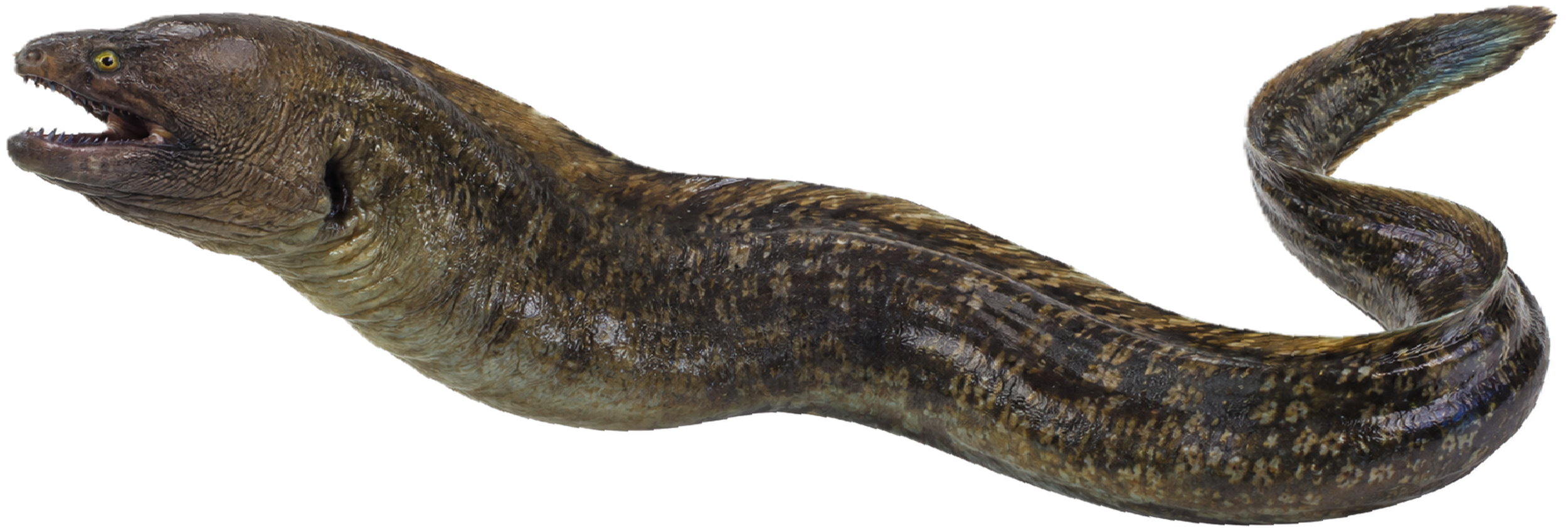 Muraenanguilla |
M. unionensis438Stringer, G. L. et al. (2020). Highly diversified Late Cretaceous fish assemblage revealed by otoliths (Ripley Formation and Owl Creek Formation, Northeast Mississippi, USA). Rivista Italiana di Paleontologia e Stratigrafia 126(1), 111–155, hier Tabelle 1 und zugehöriger systematischer Abschnitt; Owl Creek: 2 Otolithen. doi:10.13130/2039-4942/13013439Stringer, G. L. et al. (2020). Highly diversified Late Cretaceous fish assemblage revealed by otoliths (Ripley Formation and Owl Creek Formation, northeast Mississippi, USA). Rivista Italiana di Paleontologia e Stratigrafia, 126(1), 111–155. doi:10.13130/2039-4942/13013 M. sp. (?)440Stringer, G. L. & Sloan, J. C. (2023). First Cretaceous teleostean otolith assemblage (Arkadelphia Formation, upper Maastrichtian) from Arkansas, USA, early Gadiformes, and the Western Interior Seaway. PaleoBios, 40(3), 1–39. doi:10.5070/P940361192 |
Arkadelphia Marl Owl Creek Formation Ripley Formation |
USA (Arkansas, Mississippi) | 72–66 Ma (Gattung bis 34 Ma) | häufig | Anguilliformes (Aal) |
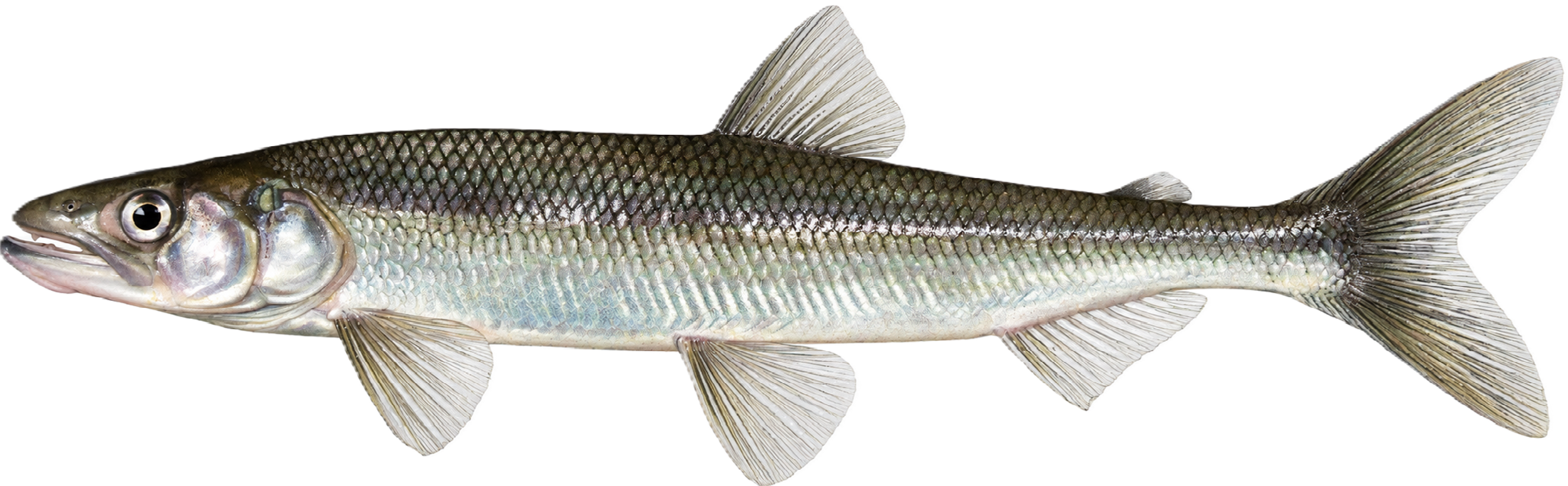 Osmeroides |
O. mississippiensis441Stringer, G. L. et al. (2020). Highly diversified Late Cretaceous fish assemblage revealed by otoliths (Ripley Formation and Owl Creek Formation, Northeast Mississippi, USA). Rivista Italiana di Paleontologia e Stratigrafia 126(1), 111–155, hier Tabelle 1 und zugehöriger systematischer Abschnitt; Owl Creek: 2 Otolithen. doi:10.13130/2039-4942/13013442Stringer, G. L. et al. (2020). Highly diversified Late Cretaceous fish assemblage revealed by otoliths (Ripley Formation and Owl Creek Formation, northeast Mississippi, USA). Rivista Italiana di Paleontologia e Stratigrafia, 126(1), 111–155. doi:10.13130/2039-4942/13013 O. sp.443Stringer, G. L. et al. (2020). Highly diversified Late Cretaceous fish assemblage revealed by otoliths (Ripley Formation and Owl Creek Formation, Northeast Mississippi, USA). Rivista Italiana di Paleontologia e Stratigrafia 126(1), 111–155, hier Tabelle 1 und zugehöriger systematischer Abschnitt; Owl Creek: 2 Otolithen. doi:10.13130/2039-4942/13013444Stringer, G. L. & Sloan, J. C. (2023). First Cretaceous teleostean otolith assemblage (Arkadelphia Formation, upper Maastrichtian) from Arkansas, USA, early Gadiformes, and the Western Interior Seaway. PaleoBios, 40(3), 1–39. doi:10.5070/P940361192445Stringer, G. L. et al. (2020). Highly diversified Late Cretaceous fish assemblage revealed by otoliths (Ripley Formation and Owl Creek Formation, northeast Mississippi, USA). Rivista Italiana di Paleontologia e Stratigrafia, 126(1), 111–155. doi:10.13130/2039-4942/13013 |
Arkadelphia Marl Owl Creek Formation Ripley Formation |
USA (Arkansas, Mississippi) | 72–66 Ma (Gattung bis 48 Ma) | häufig | Osmeroididae (Knochenfisch) |
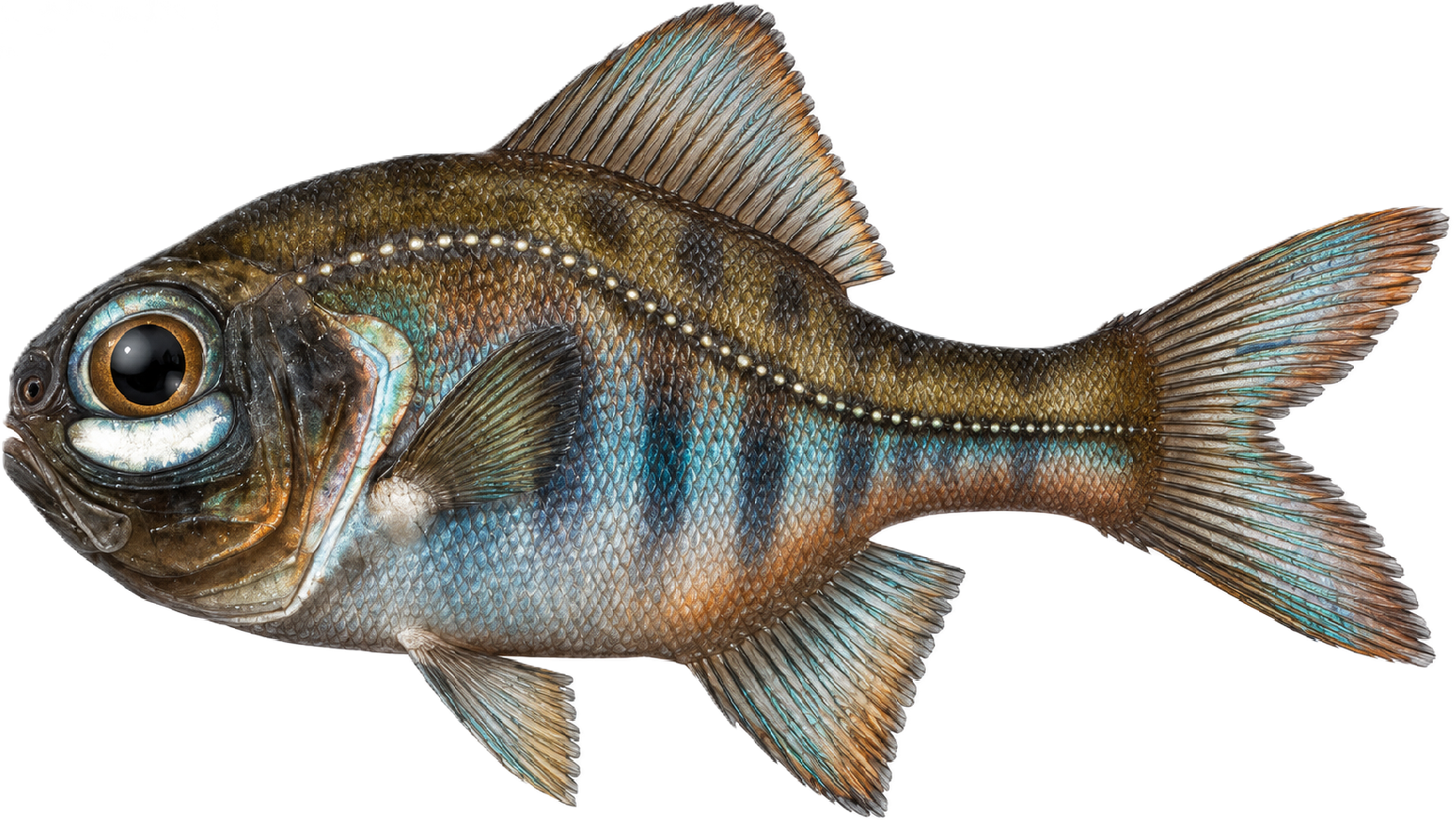 Ossulcus |
O. labiatus446Stringer, G. L. et al. (2020). Highly diversified Late Cretaceous fish assemblage revealed by otoliths (Ripley Formation and Owl Creek Formation, northeast Mississippi, USA). Rivista Italiana di Paleontologia e Stratigrafia, 126(1), 111–155. doi:10.13130/2039-4942/13013 | Ripley Formation | USA (Mississippi) | 72–70 Ma | nicht quantifiziert | Beryciformes (Knochenfisch) |
 |
Ostariophysi indet.447Brinkman, D. B., Newbrey, M. G. & Neuman, A. G. (2014). Diversity and paleoecology of actinopterygian fish from vertebrate microfossil localities of the Maastrichtian Hell Creek Formation of Montana. In G. P. Wilson et al. (Hrsg.), Through the End of the Cretaceous in the Type Locality of the Hell Creek Formation in Montana and Adjacent Areas. Geological Society of America Special Paper 503, 247–270. doi:10.1130/2014.2503(09) | Hell Creek Formation | USA (Montana) | 68–66 Ma | selten | unbestimmte Ostariophysi |
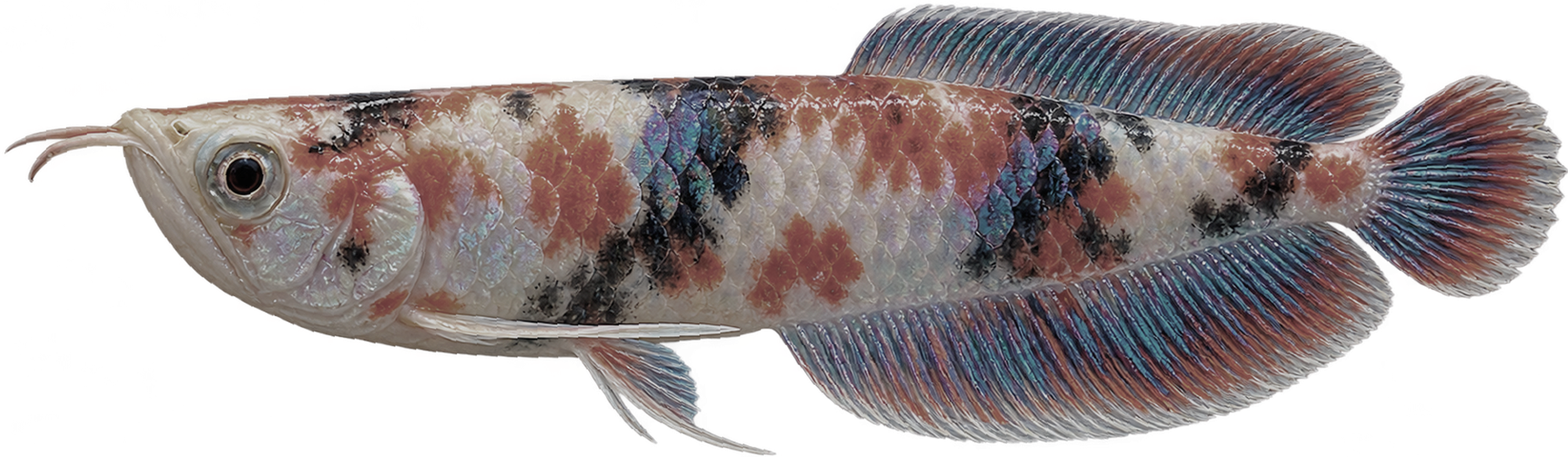 Osteoglossum |
O. tavernei (?)448Stringer, G. L. et al. (2020). Highly diversified Late Cretaceous fish assemblage revealed by otoliths (Ripley Formation and Owl Creek Formation, northeast Mississippi, USA). Rivista Italiana di Paleontologia e Stratigrafia, 126(1), 111–155. doi:10.13130/2039-4942/13013 | Ripley Formation | USA (Mississippi) | 72–70 Ma | nicht quantifiziert | Osteoglossidae (Knochenzüngler) |
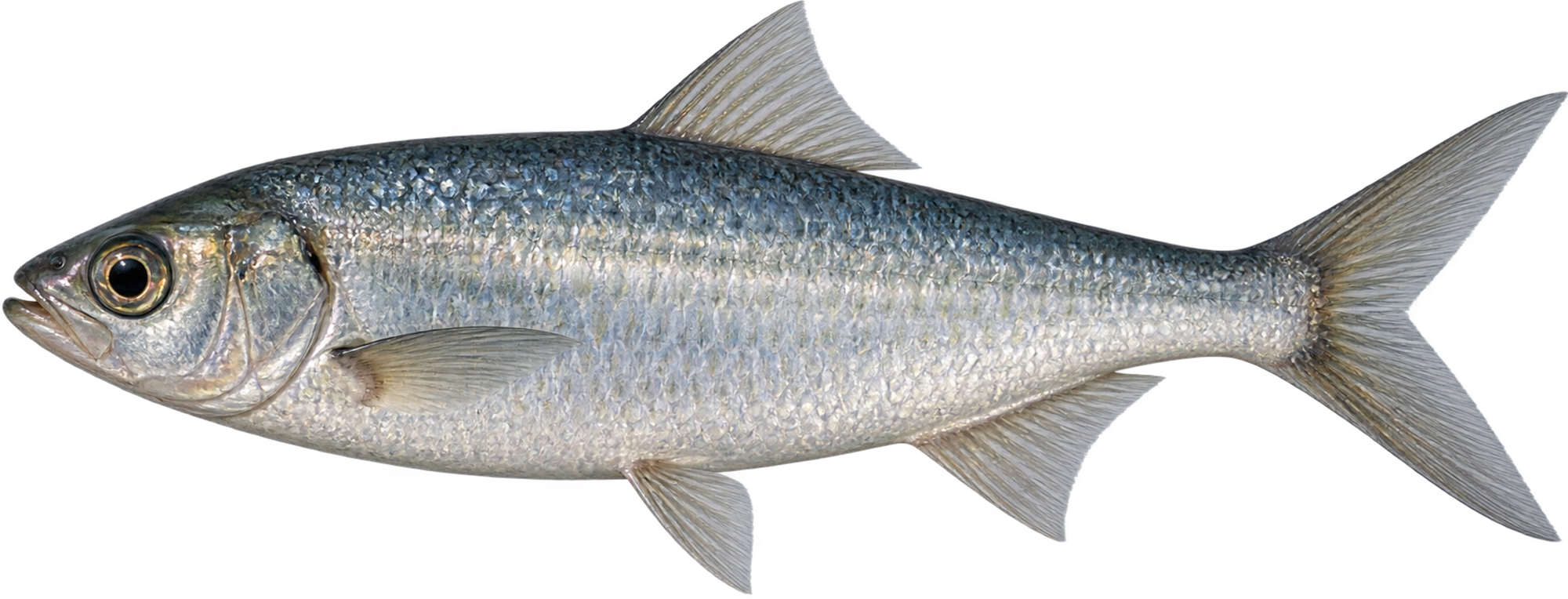 Otolithopsis |
O. cumatilis449Stringer, G. L. et al. (2020). Highly diversified Late Cretaceous fish assemblage revealed by otoliths (Ripley Formation and Owl Creek Formation, northeast Mississippi, USA). Rivista Italiana di Paleontologia e Stratigrafia, 126(1), 111–155. doi:10.13130/2039-4942/13013 | Ripley Formation | USA (Mississippi) | 72–70 Ma | nicht quantifiziert | Actinopterygii (Knochenfisch) |
 |
Pachyrhizodontoidei indet.450Bryant, L. J. (1989). Non-dinosaurian lower vertebrates across the Cretaceous–Tertiary boundary in northeastern Montana. University of California Publications in Geological Sciences, 134, 1–107. | Hell Creek Formation | USA (Montana) | 68–66 Ma | selten | unbestimmte Pachyrhizodontoidei |
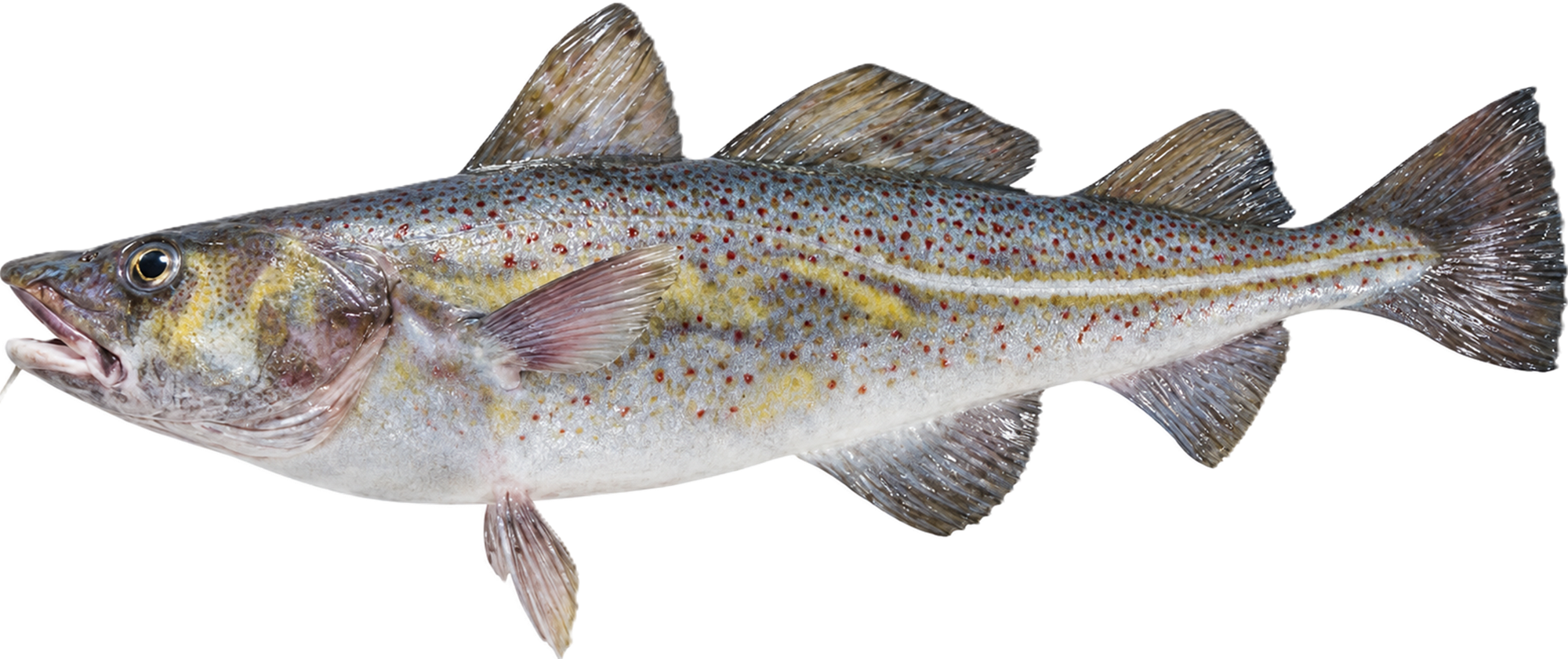 Palaeogadus |
P. belli (?)451Stringer, G. L. & Sloan, J. C. (2023). First Cretaceous teleostean otolith assemblage (Arkadelphia Formation, upper Maastrichtian) from Arkansas, USA, early Gadiformes, and the Western Interior Seaway. PaleoBios, 40(3), 1–39. doi:10.5070/P940361192 P. cf. weltoni (?)452Stringer, G. L. & Sloan, J. C. (2023). First Cretaceous teleostean otolith assemblage (Arkadelphia Formation, upper Maastrichtian) from Arkansas, USA, early Gadiformes, and the Western Interior Seaway. PaleoBios, 40(3), 1–39. doi:10.5070/P940361192 P. weltoni453Schwarzhans, W. & Stringer, G. L. (2020). Fish otoliths from the late Maastrichtian Kemp Clay (Texas, USA) and the early Danian Clayton Formation (Arkansas, USA) and an assessment of extinction and survival of teleost lineages across the K-Pg boundary based on otoliths. Rivista Italiana di Paleontologia e Stratigrafia 126(2), 395–446 doi:10.13130/2039-4942/13425 |
Arkadelphia Marl Kemp Clay |
USA (Arkansas, Texas) | 68–66 Ma (Gattung bis 5 Ma) | häufig | Merlucciidae (Seehecht) |
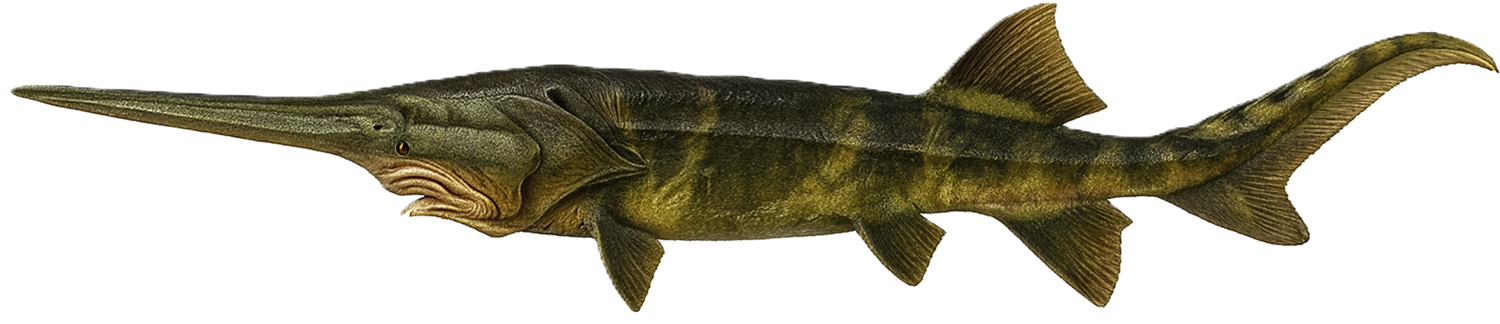 Paleopsephurus |
P. wilsoni454Grande, L. & Bemis, W. E. (1991). Osteology and phylogenetic relationships of fossil and recent paddlefishes (Polyodontidae) with comments on the interrelationships of Acipenseriformes. Journal of Vertebrate Paleontology, Memoir, 1, 1–121. doi:10.2307/3889328455Brinkman, D. B., Newbrey, M. G. & Neuman, A. G. (2014). Diversity and paleoecology of actinopterygian fish from vertebrate microfossil localities of the Maastrichtian Hell Creek Formation of Montana. In G. P. Wilson et al. (Hrsg.), Through the End of the Cretaceous in the Type Locality of the Hell Creek Formation in Montana and Adjacent Areas. Geological Society of America Special Paper 503, 247–270. doi:10.1130/2014.2503(09) | Hell Creek Formation | USA (Montana) | 68–66 Ma | selten | Polyodontidae (Löffelstör) |
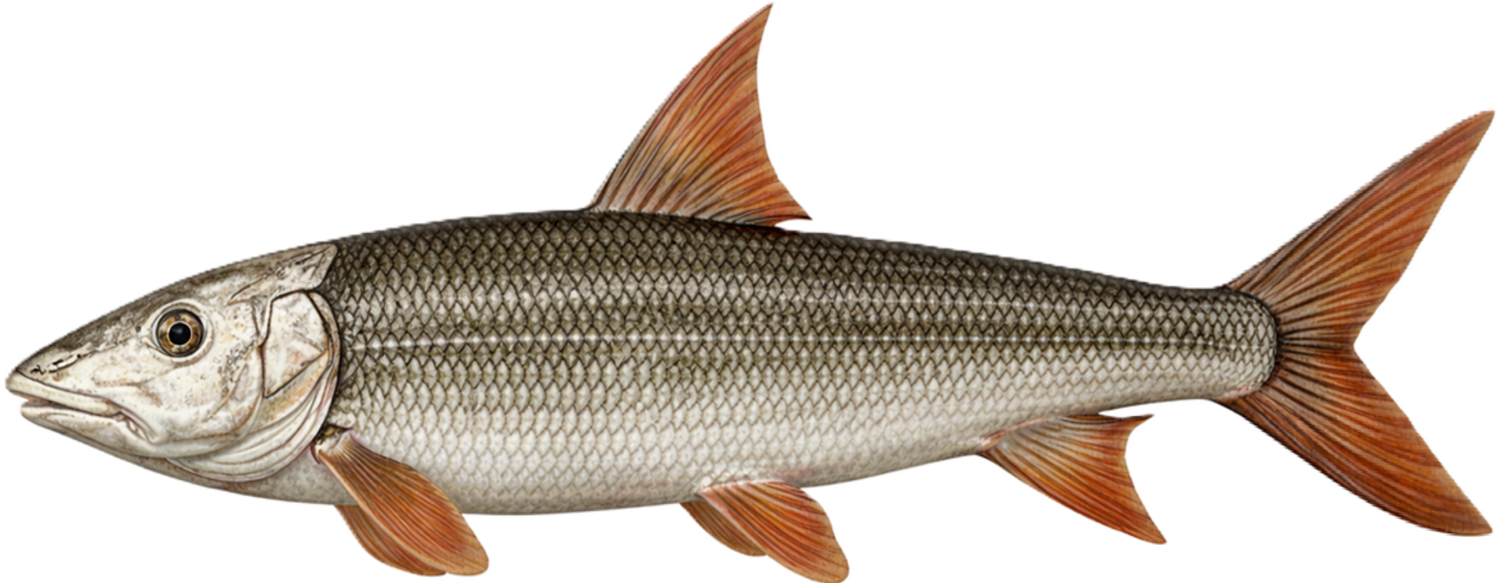 Paralbula |
P. casei456Hoganson, J.W., Erickson, J.M. & Holland, F.D., Jr. (2019). Chondrichthyan and Osteichthyan Paleofaunas from the Cretaceous (Late Maastrichtian) Fox Hills Formation of North Dakota, USA: Paleoecology, Paleogeography, and Extinction. Bulletins of American Paleontology 398: 1–94. doi:10.32857/bap.2019.398457Becker, M.A. et al. (2009). Osteichthyans from the Fairpoint Member of the Fox Hills Formation (Maastrichtian), Meade County, South Dakota, USA. Cretaceous Research 30(4): 1031–1040. doi:10.1016/j.cretres.2009.03.006458Hoganson, J.W., Erickson, J.M. & Everhart, M.J. (2022). First Report of Elasmobranchii and Osteichthyans from the Fox Hills Formation (Late Cretaceous), Poison Springs Locality, Northeastern Colorado. Transactions of the Kansas Academy of Science 125(3–4): 195–232. doi:10.1660/062.125.0310 | Fox Hills Formation | USA (Colorado, North Dakota, South Dakota) | ca. 75–68 Ma | selten | Phyllodontidae |
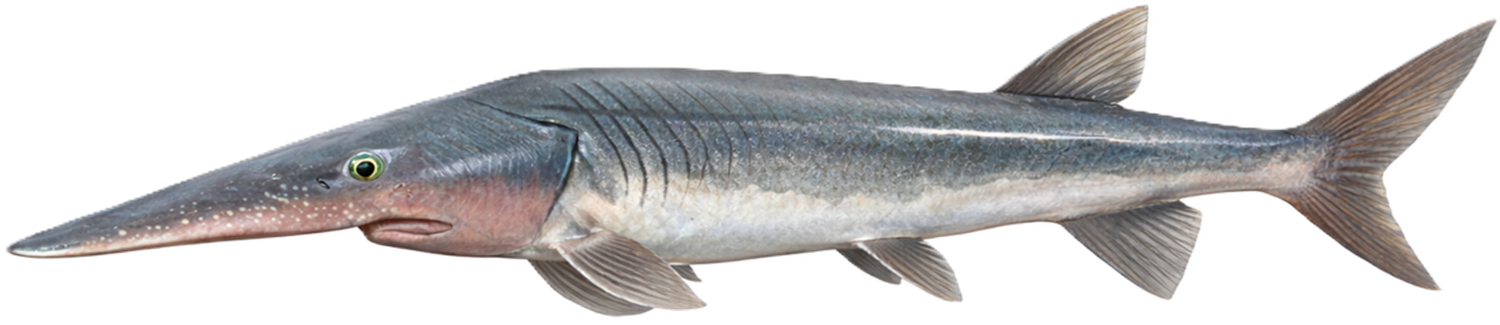 Parapsephurus |
P. willybemisi459Hilton, E. J. et al. (2023). New paddlefishes (Acipenseriformes, Polyodontidae) from the Late Cretaceous Tanis Site of the Hell Creek Formation in North Dakota, USA. Journal of Paleontology, 97(3), 675–692. doi:10.1017/jpa.2023.19 | Hell Creek Formation | USA (North Dakota) | 66 Ma | selten | Polyodontidae (Löffelstör) |
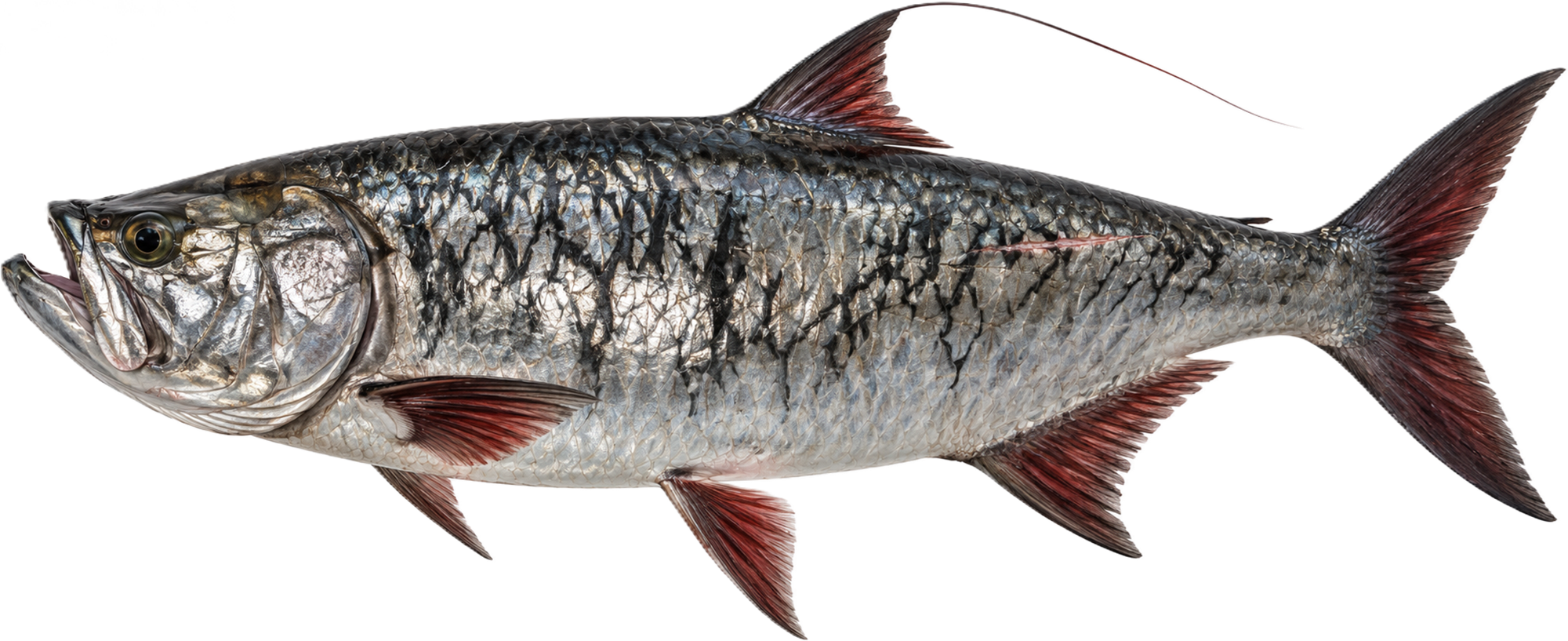 Paratarpon |
P. sp. (?)460Hoganson, J.W., Erickson, J.M. & Holland, F.D., Jr. (2019). Chondrichthyan and Osteichthyan Paleofaunas from the Cretaceous (Late Maastrichtian) Fox Hills Formation of North Dakota, USA: Paleoecology, Paleogeography, and Extinction. Bulletins of American Paleontology 398: 1–94. doi:10.32857/bap.2019.398 | Fox Hills Formation | USA (North Dakota) | ca. 72–68 Ma | selten | Elopiformes |
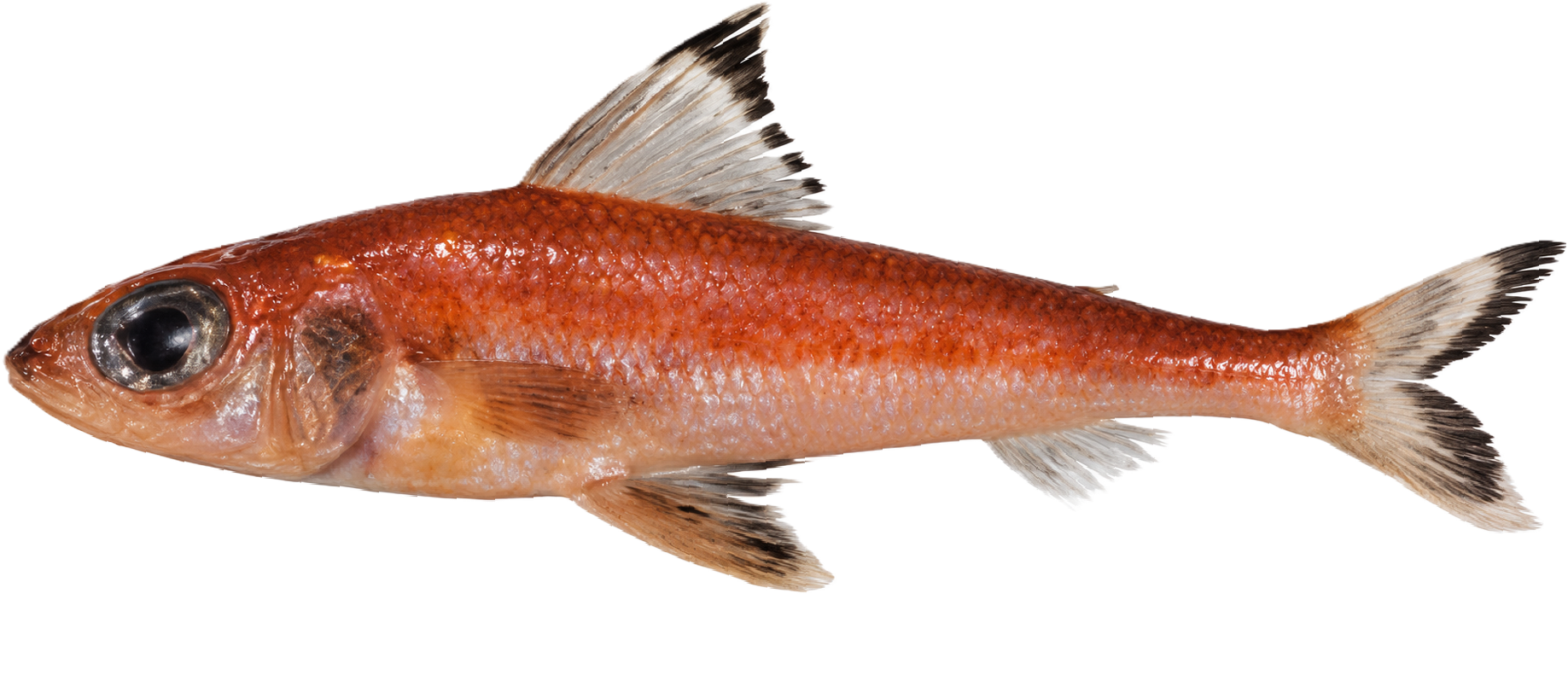 Paraulopus |
P. pseudoperca461Stringer, G. L. et al. (2020). Highly diversified Late Cretaceous fish assemblage revealed by otoliths (Ripley Formation and Owl Creek Formation, Northeast Mississippi, USA). Rivista Italiana di Paleontologia e Stratigrafia 126(1), 111–155, hier Tabelle 1 und zugehöriger systematischer Abschnitt; Owl Creek: 10 Otolithen. doi:10.13130/2039-4942/13013462Stringer, G. L. et al. (2020). Highly diversified Late Cretaceous fish assemblage revealed by otoliths (Ripley Formation and Owl Creek Formation, northeast Mississippi, USA). Rivista Italiana di Paleontologia e Stratigrafia, 126(1), 111–155. doi:10.13130/2039-4942/13013 P. sp.463Schwarzhans, W. & Stringer, G. L. (2020). Fish otoliths from the late Maastrichtian Kemp Clay (Texas, USA) and the early Danian Clayton Formation (Arkansas, USA) and an assessment of extinction and survival of teleost lineages across the K-Pg boundary based on otoliths. Rivista Italiana di Paleontologia e Stratigrafia 126(2), 395–446 doi:10.13130/2039-4942/13425 |
Kemp Clay Owl Creek Formation Ripley Formation |
USA (Mississippi, Texas) | 72–66 Ma | sehr häufig | Paraulopidae (Eidechsenfisch) |
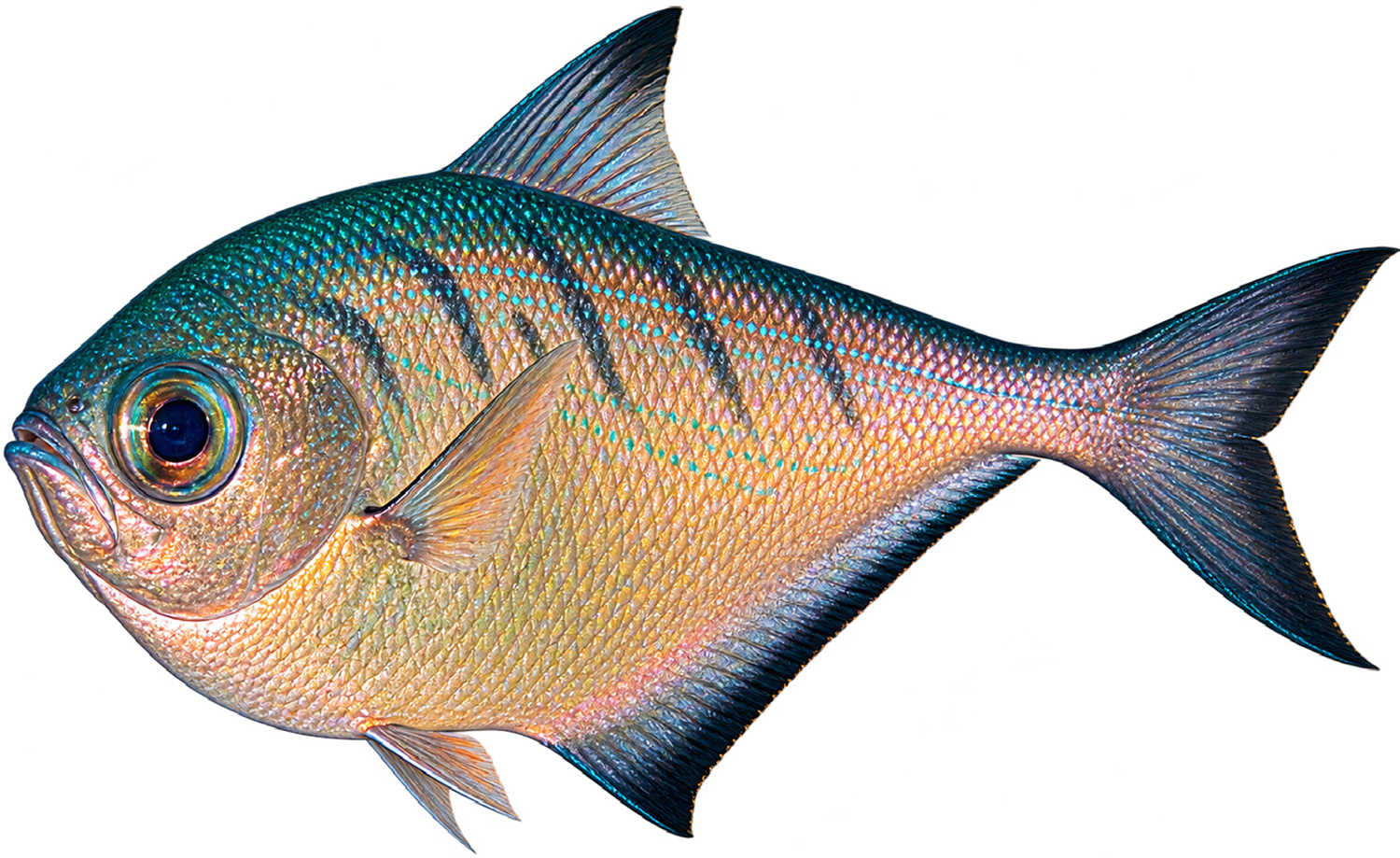 Pempheris |
P. huddlestoni (?)464Stringer, G. L. et al. (2020). Highly diversified Late Cretaceous fish assemblage revealed by otoliths (Ripley Formation and Owl Creek Formation, northeast Mississippi, USA). Rivista Italiana di Paleontologia e Stratigrafia, 126(1), 111–155. doi:10.13130/2039-4942/13013 | Ripley Formation | USA (Mississippi) | 84–70 Ma | sehr häufig | Pempheridae (Beilfisch) |
 |
Percopsiformes indet.465Brinkman, D. B., Newbrey, M. G. & Neuman, A. G. (2014). Diversity and paleoecology of actinopterygian fish from vertebrate microfossil localities of the Maastrichtian Hell Creek Formation of Montana. In G. P. Wilson et al. (Hrsg.), Through the End of the Cretaceous in the Type Locality of the Hell Creek Formation in Montana and Adjacent Areas. Geological Society of America Special Paper 503, 247–270. doi:10.1130/2014.2503(09) | Hell Creek Formation | USA (Montana) | 68–66 Ma | selten | unbestimmte Barschlachse |
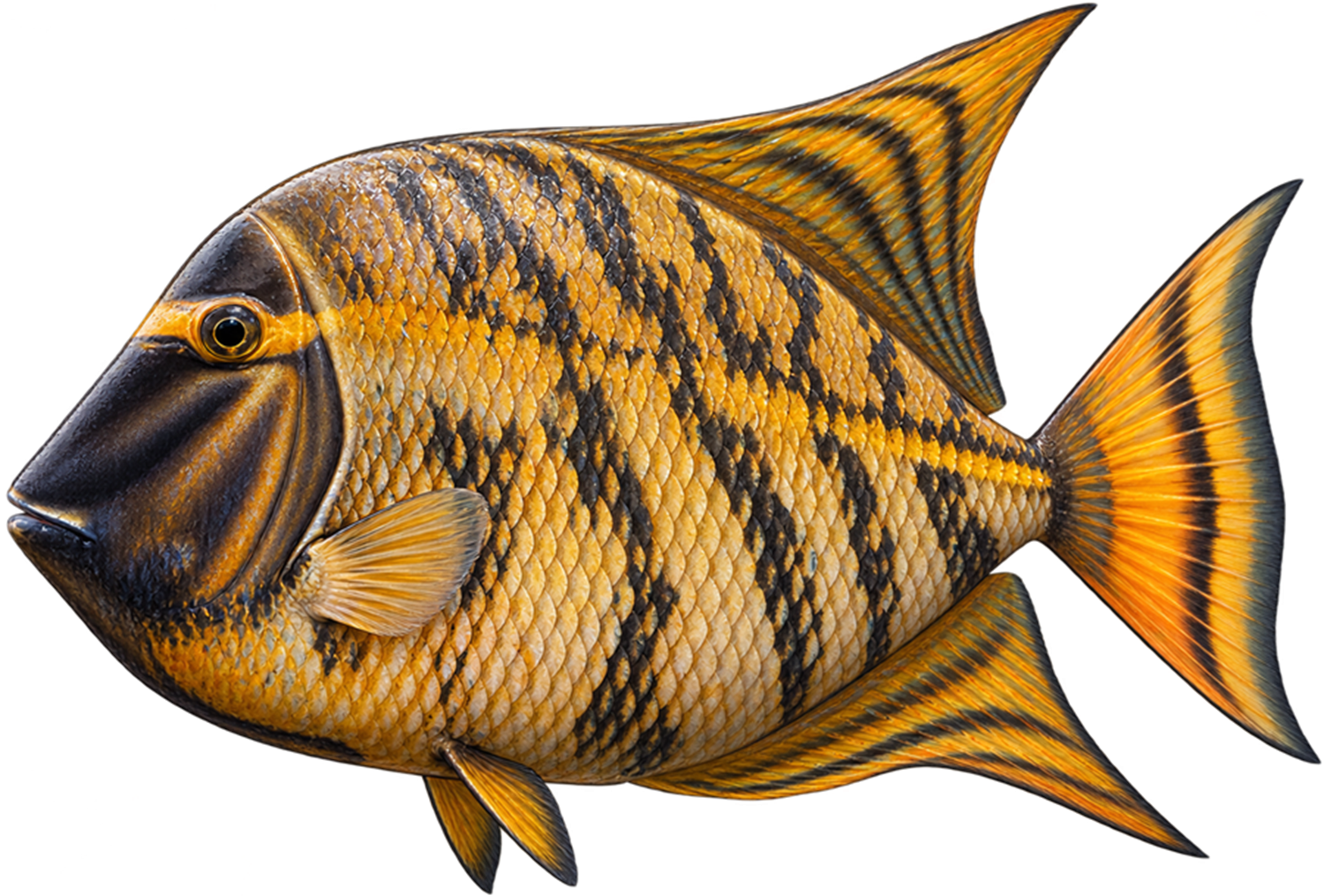 Phacodus |
P. punctatus466Ebersole, J. A. et al. (2025). Cretaceous Fishes of Alabama: Phacodus version 2. In: Ebersole, J. A. (Hrsg.), Fossil Fishes of Alabama. McWane Science Center, 3(42), 1–5. doi:10.69737/EOAY4152 | Ripley Formation | USA (Alabama) | 75–72 Ma | häufig | Pycnodontiformes (Knochenfisch) |
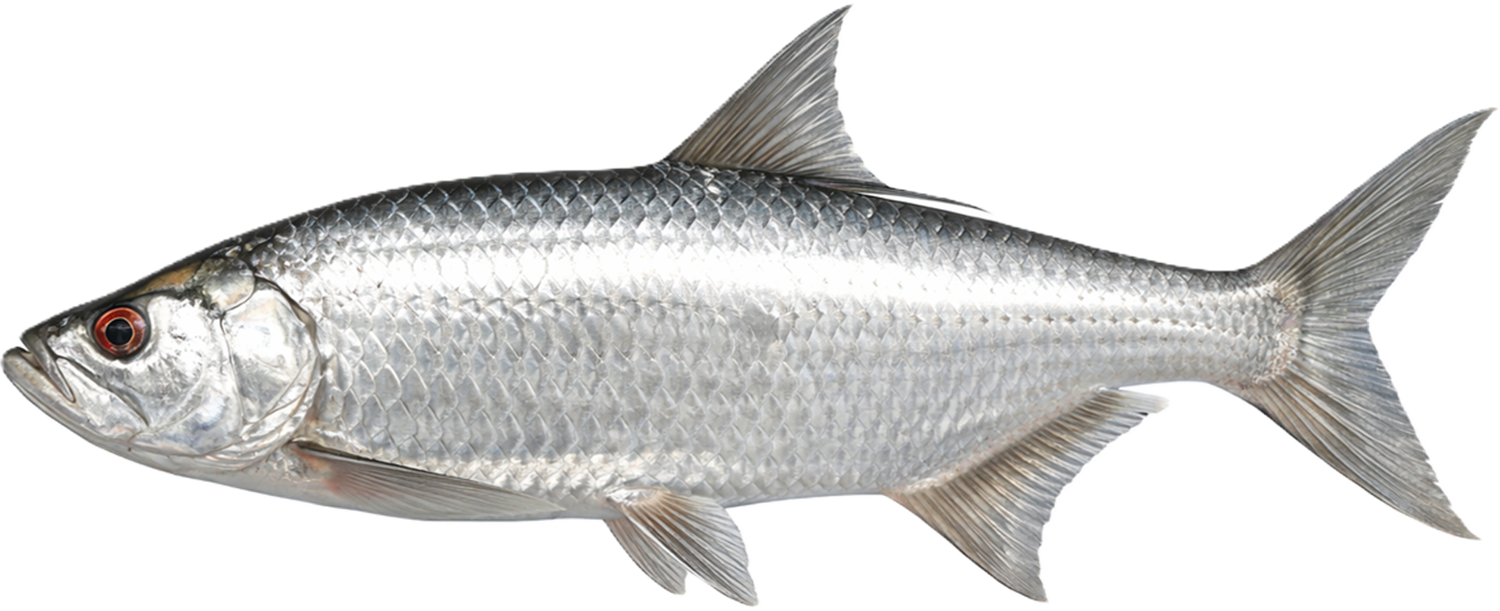 Phyllodus |
P. paulkatoi467Estes, R. & Hiatt, R. W. (1978). Studies on fossil phyllodont fishes: interrelationships and evolution in the Phyllodontidae (Albuloidei). Copeia, 1978(2), 317–331.468Brinkman, D. B., Newbrey, M. G. & Neuman, A. G. (2014). Diversity and paleoecology of actinopterygian fish from vertebrate microfossil localities of the Maastrichtian Hell Creek Formation of Montana. In G. P. Wilson et al. (Hrsg.), Through the End of the Cretaceous in the Type Locality of the Hell Creek Formation in Montana and Adjacent Areas. Geological Society of America Special Paper 503, 247–270. doi:10.1130/2014.2503(09)469Wroblewski, A. F. (2026). Systematics and biostratigraphy of non-mammalian vertebrates across the K/Pg transition, southern Wyoming, USA. Journal of Paleontology, 100(1), 222–250. doi:10.1017/jpa.2025.10191 | Ferris Formation Hell Creek Formation |
USA (Montana, Wyoming) | 68–66 Ma (Gattung bis 13 Ma) | häufig | Phyllodontidae |
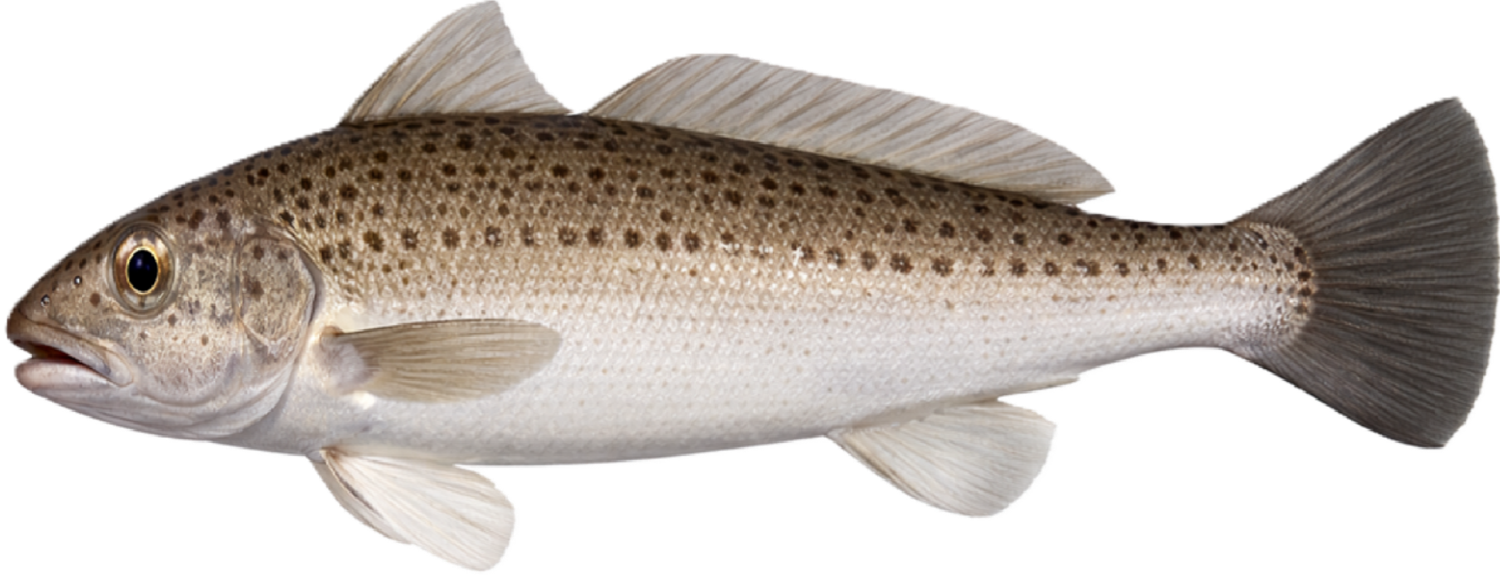 Platacodon |
P. nanus470Estes, R. (1964). Fossil vertebrates from the Late Cretaceous Lance Formation, eastern Wyoming. University of California Publications in Geological Sciences, 49, 1–180.471Estes, R. & Berberian, P. (1970). Paleoecology of a Late Cretaceous vertebrate community from Montana. Breviora, 343, 1–35.472Brinkman, D. B., Newbrey, M. G. & Neuman, A. G. (2014). Diversity and paleoecology of actinopterygian fish from vertebrate microfossil localities of the Maastrichtian Hell Creek Formation of Montana. In G. P. Wilson et al. (Hrsg.), Through the End of the Cretaceous in the Type Locality of the Hell Creek Formation in Montana and Adjacent Areas. Geological Society of America Special Paper 503, 247–270. doi:10.1130/2014.2503(09)473Parris, D. C. (2006). Chronister site investigations: New information on the Cretaceous of Missouri. In: Field Trip Guidebook – 2006 Association of Missouri Geologists Meeting, 9–13. Quelle | Hell Creek Formation Lance Formation Ripley Formation |
USA (Missouri, Montana, Wyoming) | 75–66 Ma (Gattung bis 63 Ma) | häufig | Sciaenidae (Umberfisch) |
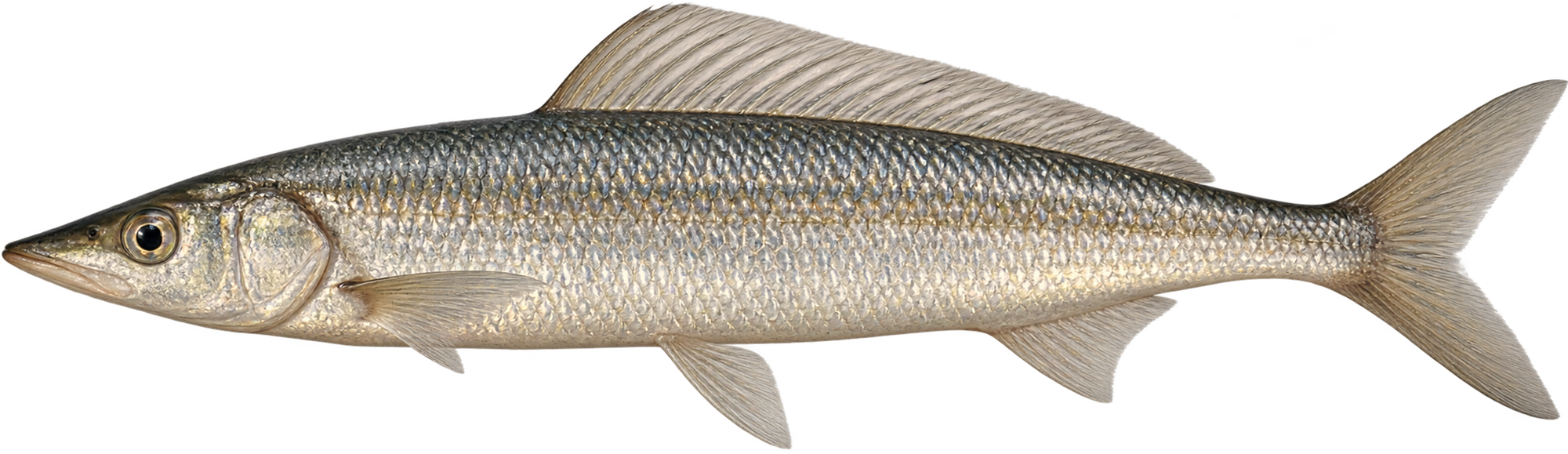 Pollerspoeckia |
P. siegsdorfensis474Hoganson, J.W., Erickson, J.M. & Holland, F.D., Jr. (2019). Chondrichthyan and Osteichthyan Paleofaunas from the Cretaceous (Late Maastrichtian) Fox Hills Formation of North Dakota, USA: Paleoecology, Paleogeography, and Extinction. Bulletins of American Paleontology 398: 1–94. doi:10.32857/bap.2019.398475Schwarzhans, W. & Stringer, G.L. (2020). Fish otoliths from the late Maastrichtian Kemp Clay (Texas, USA) and the early Danian Clayton Formation (Arkansas, USA) and an assessment of extinction and survival of teleost lineages across the K-Pg boundary based on otoliths. Rivista Italiana di Paleontologia e Stratigrafia 126(2): 395–446. doi:10.13130/2039-4942/13425 | Fox Hills Formation | USA (North Dakota) | ca. 72–68 Ma | selten | Teleostei |
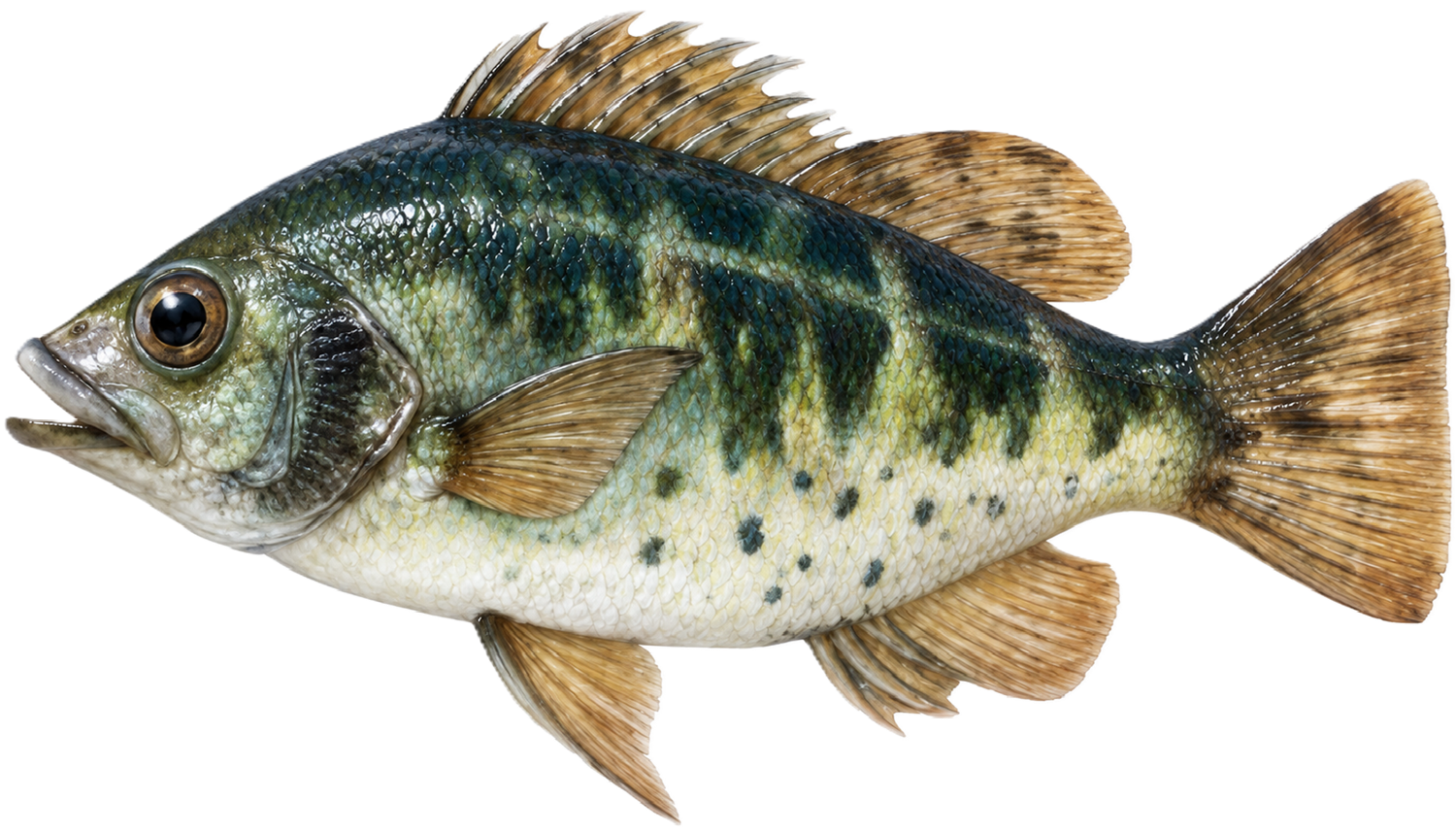 Priscacara |
P. sp.476Brinkman, D. B., Newbrey, M. G. & Neuman, A. G. (2014). Diversity and paleoecology of actinopterygian fish from vertebrate microfossil localities of the Maastrichtian Hell Creek Formation of Montana. In G. P. Wilson et al. (Hrsg.), Through the End of the Cretaceous in the Type Locality of the Hell Creek Formation in Montana and Adjacent Areas. Geological Society of America Special Paper 503, 247–270. doi:10.1130/2014.2503(09) | Hell Creek Formation | USA (Montana) | 68–66 Ma (Gattung bis 38 Ma) | selten | Percomorphaceae (Barsch) |
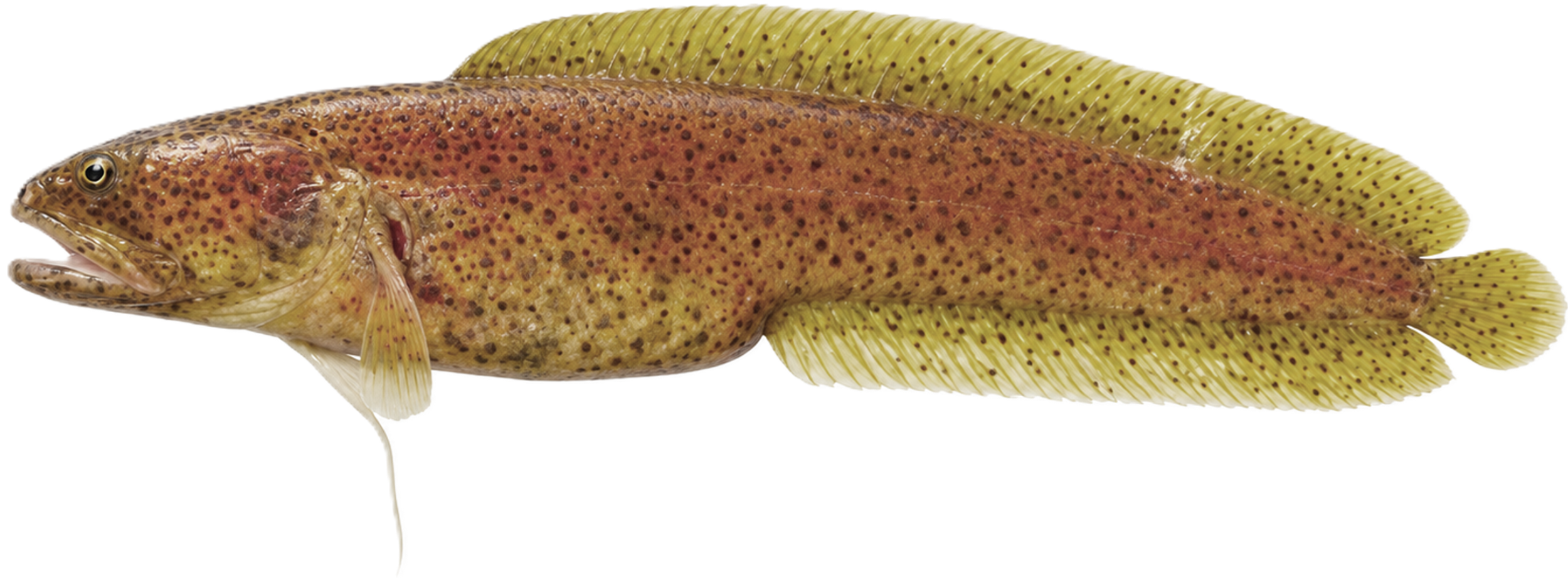 Protobythites |
P. brzobohatyi477Stringer, G. L. & Sloan, J. C. (2023). First Cretaceous teleostean otolith assemblage (Arkadelphia Formation, upper Maastrichtian) from Arkansas, USA, early Gadiformes, and the Western Interior Seaway. PaleoBios, 40(3), 1–39. doi:10.5070/P940361192478Schwarzhans, W. & Stringer, G. L. (2020). Fish otoliths from the late Maastrichtian Kemp Clay (Texas, USA) and the early Danian Clayton Formation (Arkansas, USA) and an assessment of extinction and survival of teleost lineages across the K-Pg boundary based on otoliths. Rivista Italiana di Paleontologia e Stratigrafia 126(2), 395–446 doi:10.13130/2039-4942/13425 | Arkadelphia Marl Kemp Clay |
USA (Arkansas, Texas) | 68–66 Ma (Gattung bis 59 Ma) | häufig | Bythitidae (Brotula) |
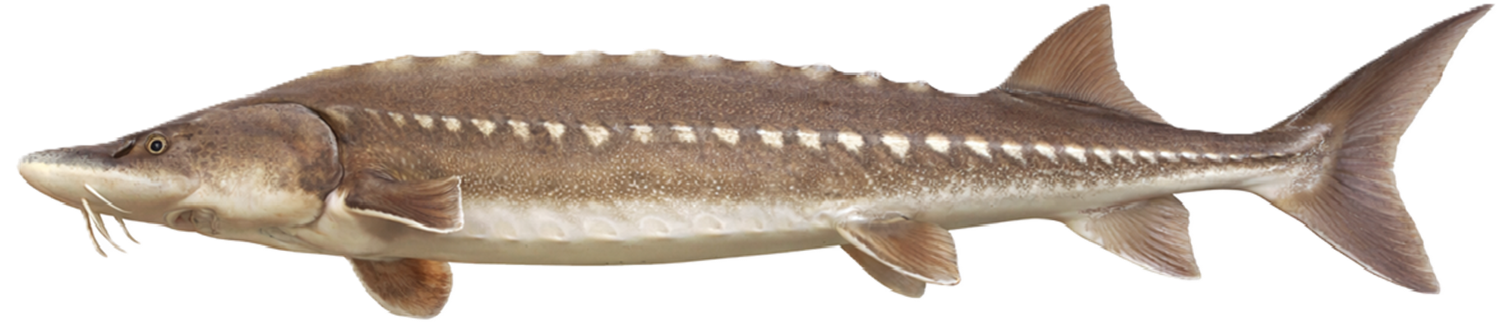 Protoscaphirhynchus |
P. squamosus479Wilimovsky, N. J. (1956). Protoscaphirhynchus squamosus, a new sturgeon from the Upper Cretaceous of Montana. Journal of Paleontology, 30(5), 1205–1208.480Hilton, E. J. & Grande, L. (2006). Review of the fossil record of sturgeons, family Acipenseridae (Actinopterygii: Acipenseriformes), from North America. Journal of Paleontology, 80(4), 672–683. doi:10.1666/0022-3360(2006)80[672:ROTFRO]2.0.CO;2 | Hell Creek Formation | USA (Montana) | 68–66 Ma | Einzelfund | Acipenseridae (Stör) |
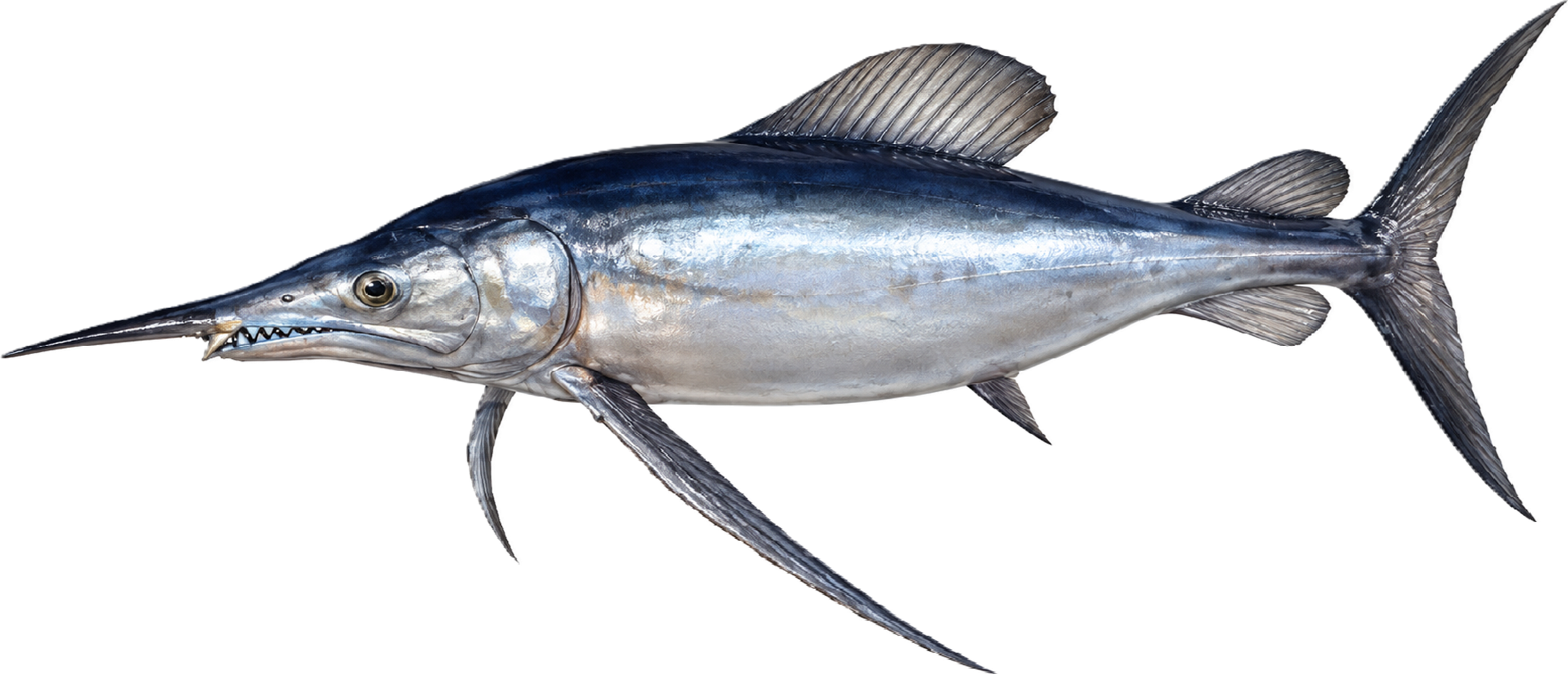 Protosphyraena |
cf. sp. (?)481Cowan, T. M. & Fielitz, C. (2015). Two three-dimensionally preserved teleost neurocrania from the Corsicana Formation (Upper Cretaceous, Maastrichtian), Bexar County, Texas, U.S.A. Paludicola, 10(3), 137–144. P. sp.482Hoganson, J.W., Erickson, J.M. & Holland, F.D., Jr. (2019). Chondrichthyan and Osteichthyan Paleofaunas from the Cretaceous (Late Maastrichtian) Fox Hills Formation of North Dakota, USA: Paleoecology, Paleogeography, and Extinction. Bulletins of American Paleontology 398: 1–94. doi:10.32857/bap.2019.398 |
Corsicana Marl Fox Hills Formation |
USA (North Dakota, Texas) | 72–66 Ma | selten | Pachycormidae |
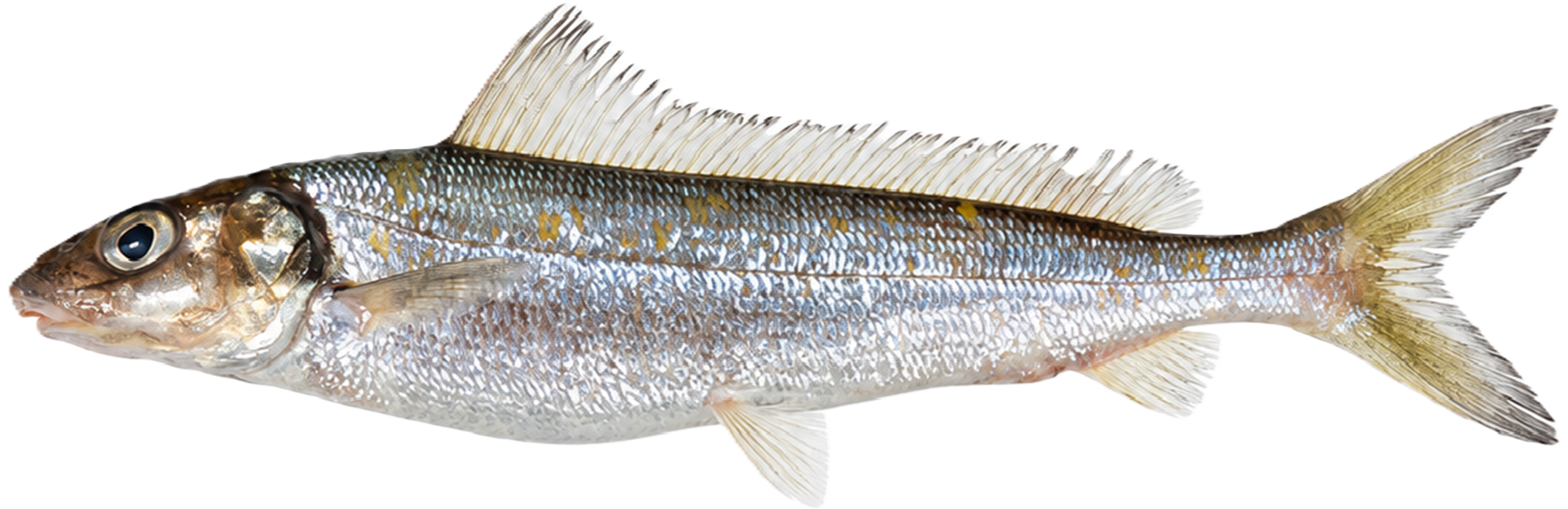 Pterothrissus |
P. cf. foreyi483Schwarzhans, W. & Stringer, G. L. (2020). Fish otoliths from the late Maastrichtian Kemp Clay (Texas, USA) and the early Danian Clayton Formation (Arkansas, USA) and an assessment of extinction and survival of teleost lineages across the K-Pg boundary based on otoliths. Rivista Italiana di Paleontologia e Stratigrafia 126(2), 395–446 doi:10.13130/2039-4942/13425 P. conchaeformis484Schwarzhans, W. & Stringer, G. L. (2020). Fish otoliths from the late Maastrichtian Kemp Clay (Texas, USA) and the early Danian Clayton Formation (Arkansas, USA) and an assessment of extinction and survival of teleost lineages across the K-Pg boundary based on otoliths. Rivista Italiana di Paleontologia e Stratigrafia 126(2), 395–446 doi:10.13130/2039-4942/13425 P. sp.485Stringer, G. L. et al. (2020). Highly diversified Late Cretaceous fish assemblage revealed by otoliths (Ripley Formation and Owl Creek Formation, Northeast Mississippi, USA). Rivista Italiana di Paleontologia e Stratigrafia 126(1), 111–155, hier Tabelle 1 und zugehöriger systematischer Abschnitt; Owl Creek: 1 Otolith. doi:10.13130/2039-4942/13013486Stringer, G. L. et al. (2020). Highly diversified Late Cretaceous fish assemblage revealed by otoliths (Ripley Formation and Owl Creek Formation, northeast Mississippi, USA). Rivista Italiana di Paleontologia e Stratigrafia, 126(1), 111–155. doi:10.13130/2039-4942/13013 |
Kemp Clay Owl Creek Formation Ripley Formation |
USA (Mississippi, Texas) | 72–66 Ma | häufig | Pterothrissidae (Grätenfisch) |
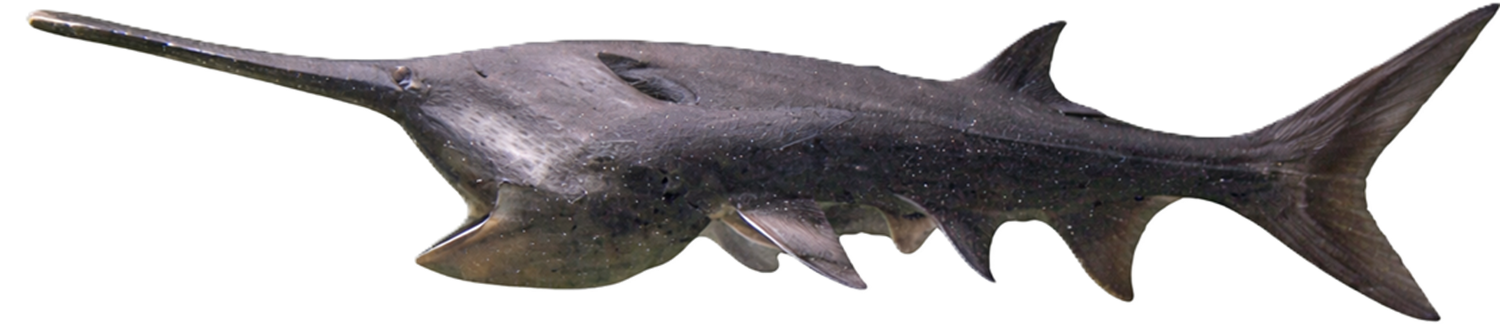 Pugiopsephurus |
P. inundatus487Hilton, E. J. et al. (2023). New paddlefishes (Acipenseriformes, Polyodontidae) from the Late Cretaceous Tanis Site of the Hell Creek Formation in North Dakota, USA. Journal of Paleontology, 97(3), 675–692. doi:10.1017/jpa.2023.19 | Hell Creek Formation | USA (North Dakota) | 66 Ma | selten | Polyodontidae (Löffelstör) |
 |
Pycnodontiformes indet.488Cowan, T. M. & Fielitz, C. (2015). Two three-dimensionally preserved teleost neurocrania from the Corsicana Formation (Upper Cretaceous, Maastrichtian), Bexar County, Texas, U.S.A. Paludicola, 10(3), 137–144.489Woehr, D. A.: Fossil Collecting Report 2009 . | Corsicana Marl Escondido Formation (?) |
USA (Texas) | 72–66 Ma | häufig | unbestimmte Pycnodontiformes |
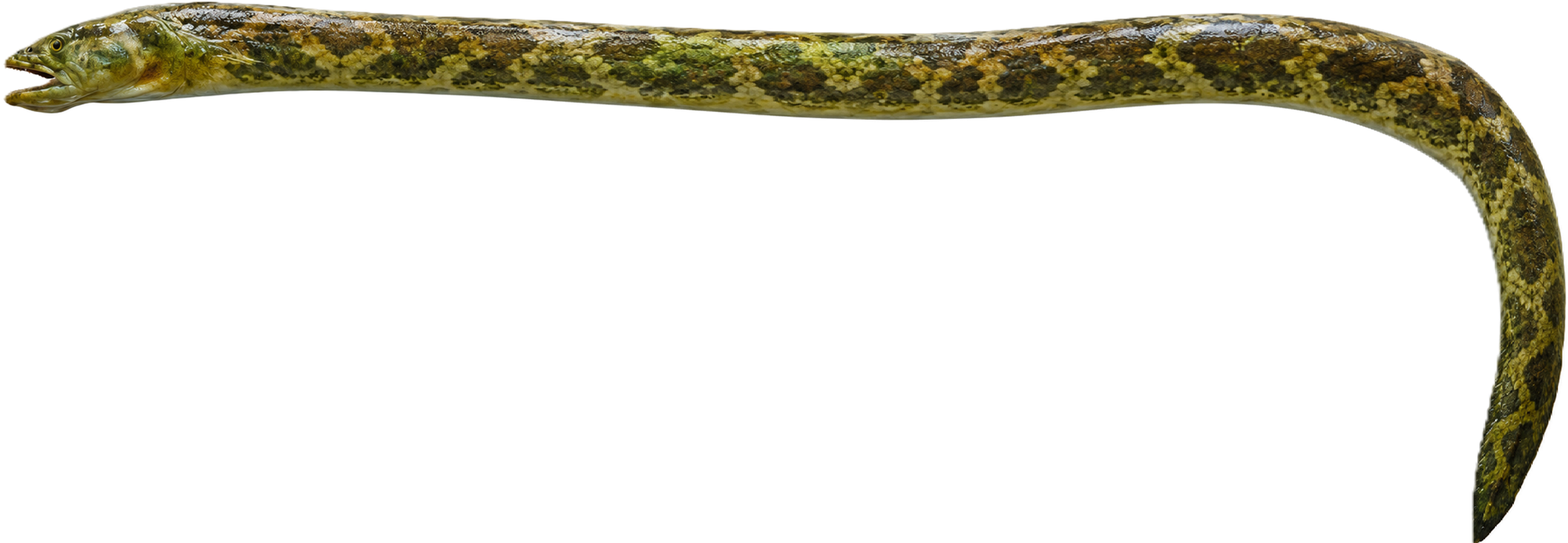 Pythonichthys |
P. arkansasensis490Schwarzhans, W. & Stringer, G. L. (2020). Fish otoliths from the late Maastrichtian Kemp Clay (Texas, USA) and the early Danian Clayton Formation (Arkansas, USA) and an assessment of extinction and survival of teleost lineages across the K-Pg boundary based on otoliths. Rivista Italiana di Paleontologia e Stratigrafia 126(2), 395–446 doi:10.13130/2039-4942/13425 | Kemp Clay | USA (Texas) | 68–66 Ma | selten | Heterenchelyidae (Schlammaal) |
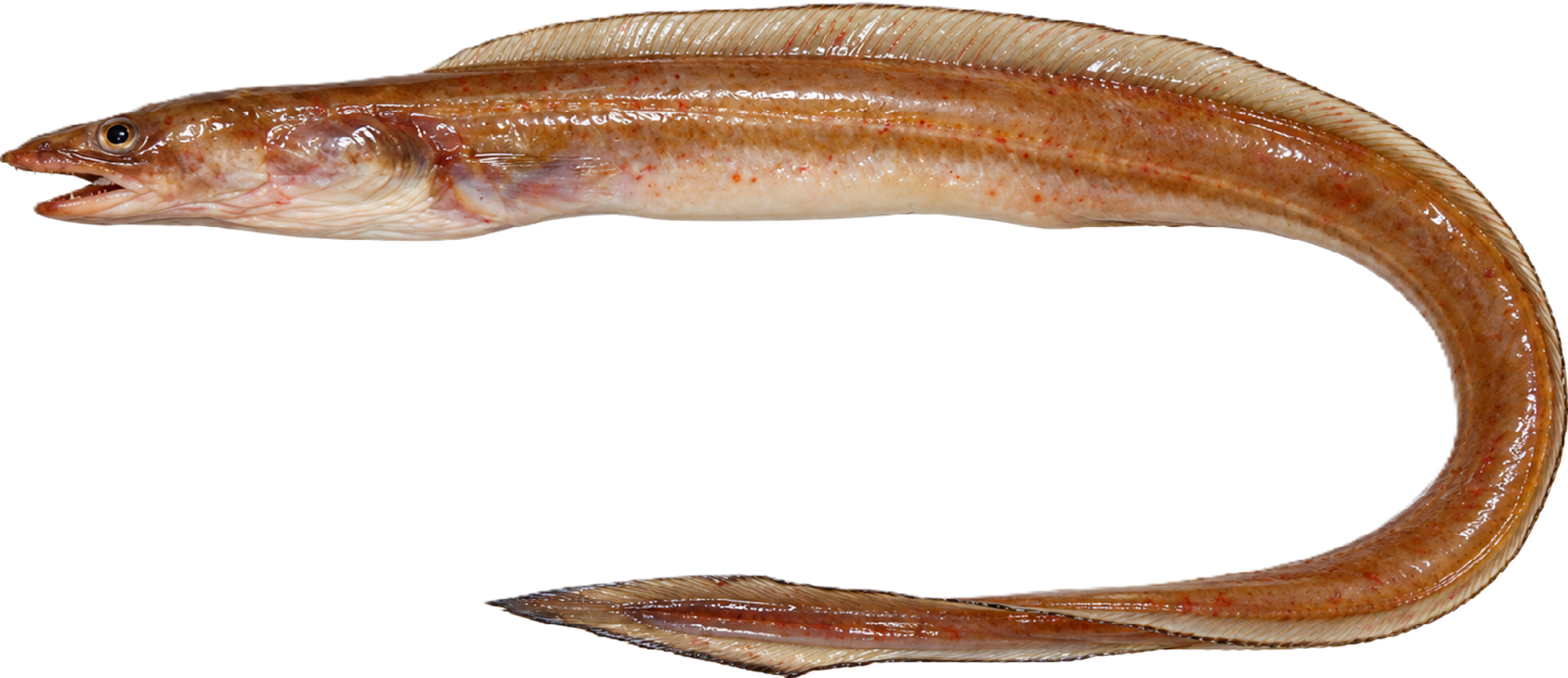 Rhynchoconger |
R. brettwoodwardi491Schwarzhans, W. & Stringer, G. L. (2020). Fish otoliths from the late Maastrichtian Kemp Clay (Texas, USA) and the early Danian Clayton Formation (Arkansas, USA) and an assessment of extinction and survival of teleost lineages across the K-Pg boundary based on otoliths. Rivista Italiana di Paleontologia e Stratigrafia 126(2), 395–446 doi:10.13130/2039-4942/13425 R. piger (?)492Schwarzhans, W. & Stringer, G. L. (2020). Fish otoliths from the late Maastrichtian Kemp Clay (Texas, USA) and the early Danian Clayton Formation (Arkansas, USA) and an assessment of extinction and survival of teleost lineages across the K-Pg boundary based on otoliths. Rivista Italiana di Paleontologia e Stratigrafia 126(2), 395–446 doi:10.13130/2039-4942/13425 |
Kemp Clay | USA (Texas) | 68–66 Ma | selten | Congridae (Meeraal) |
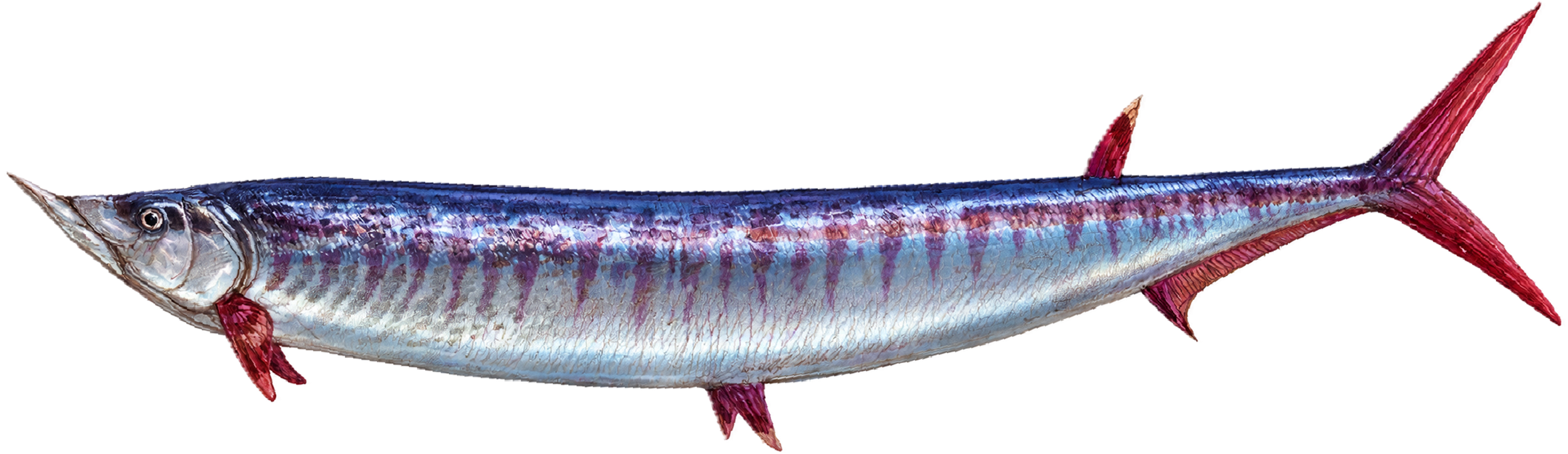 Saurodon |
S. sp.493David, L. R. (1946). Upper Cretaceous fish remains from the western border of the San Joaquin Valley, California. Carnegie Institution of Washington Publication, 551, 81–112. | Moreno Formation | USA (Kalifornien) | 72–66 Ma | selten | Saurodontidae |
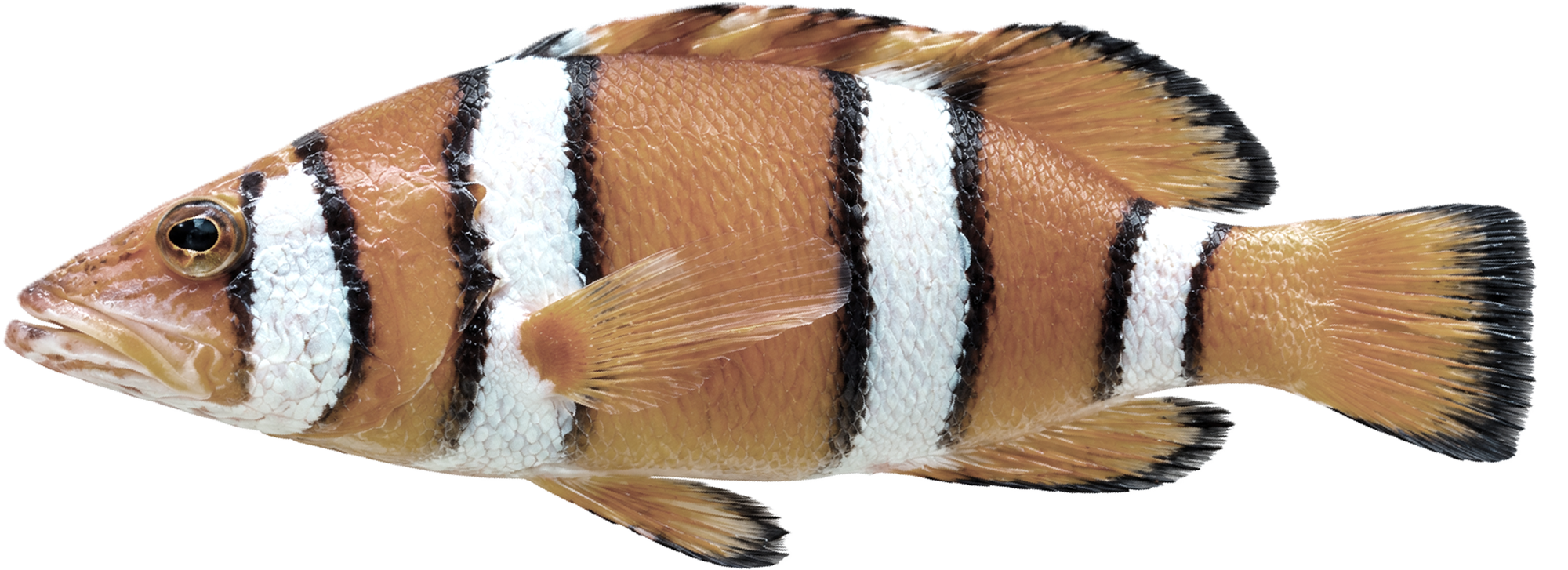 Serranus |
S. caribbaeus (?)494Schwarzhans, W. & Stringer, G. L. (2020). Fish otoliths from the late Maastrichtian Kemp Clay (Texas, USA) and the early Danian Clayton Formation (Arkansas, USA) and an assessment of extinction and survival of teleost lineages across the K-Pg boundary based on otoliths. Rivista Italiana di Paleontologia e Stratigrafia 126(2), 395–446 doi:10.13130/2039-4942/13425 S. severnensis (?)495Stringer, G. L. et al. (2020). Highly diversified Late Cretaceous fish assemblage revealed by otoliths (Ripley Formation and Owl Creek Formation, northeast Mississippi, USA). Rivista Italiana di Paleontologia e Stratigrafia, 126(1), 111–155. doi:10.13130/2039-4942/13013 |
Kemp Clay Ripley Formation |
USA (Mississippi, Texas) | 72–66 Ma | selten | Serranidae (Sägebarsch) |
 |
Siluriformes indet. (?)496Becker, M.A. et al. (2009). Osteichthyans from the Fairpoint Member of the Fox Hills Formation (Maastrichtian), Meade County, South Dakota, USA. Cretaceous Research 30(4): 1031–1040. doi:10.1016/j.cretres.2009.03.006 | Fox Hills Formation | USA (South Dakota) | ca. 69–68 Ma | selten | unbestimmte Welsartige |
|
Teleostei indet.497Brinkman, D. B., Newbrey, M. G. & Neuman, A. G. (2014). Diversity and paleoecology of actinopterygian fish from vertebrate microfossil localities of the Maastrichtian Hell Creek Formation of Montana. In G. P. Wilson et al. (Hrsg.), Through the End of the Cretaceous in the Type Locality of the Hell Creek Formation in Montana and Adjacent Areas. Geological Society of America Special Paper 503, 247–270. doi:10.1130/2014.2503(09)498Wroblewski, A. F. (2026). Systematics and biostratigraphy of non-mammalian vertebrates across the K/Pg transition, southern Wyoming, USA. Journal of Paleontology, 100(1), 222–250. doi:10.1017/jpa.2025.10191499Cowan, T. M. & Fielitz, C. (2015). Two three-dimensionally preserved teleost neurocrania from the Corsicana Formation (Upper Cretaceous, Maastrichtian), Bexar County, Texas, U.S.A. Paludicola, 10(3), 137–144.500Woehr, D. A.: Fossil Collecting Report 2007 .501Hoganson, J.W., Erickson, J.M. & Holland, F.D., Jr. (2019). Chondrichthyan and Osteichthyan Paleofaunas from the Cretaceous (Late Maastrichtian) Fox Hills Formation of North Dakota, USA: Paleoecology, Paleogeography, and Extinction. Bulletins of American Paleontology 398: 1–94. doi:10.32857/bap.2019.398502Becker, M.A. et al. (2009). Osteichthyans from the Fairpoint Member of the Fox Hills Formation (Maastrichtian), Meade County, South Dakota, USA. Cretaceous Research 30(4): 1031–1040. doi:10.1016/j.cretres.2009.03.006 | Corsicana Marl Escondido Formation Ferris Formation Hell Creek Formation Fox Hills Formation |
USA (Montana, North Dakota, South Dakota, Texas, Wyoming) | 72–66 Ma | sehr häufig | unbestimmte Knochenfische |
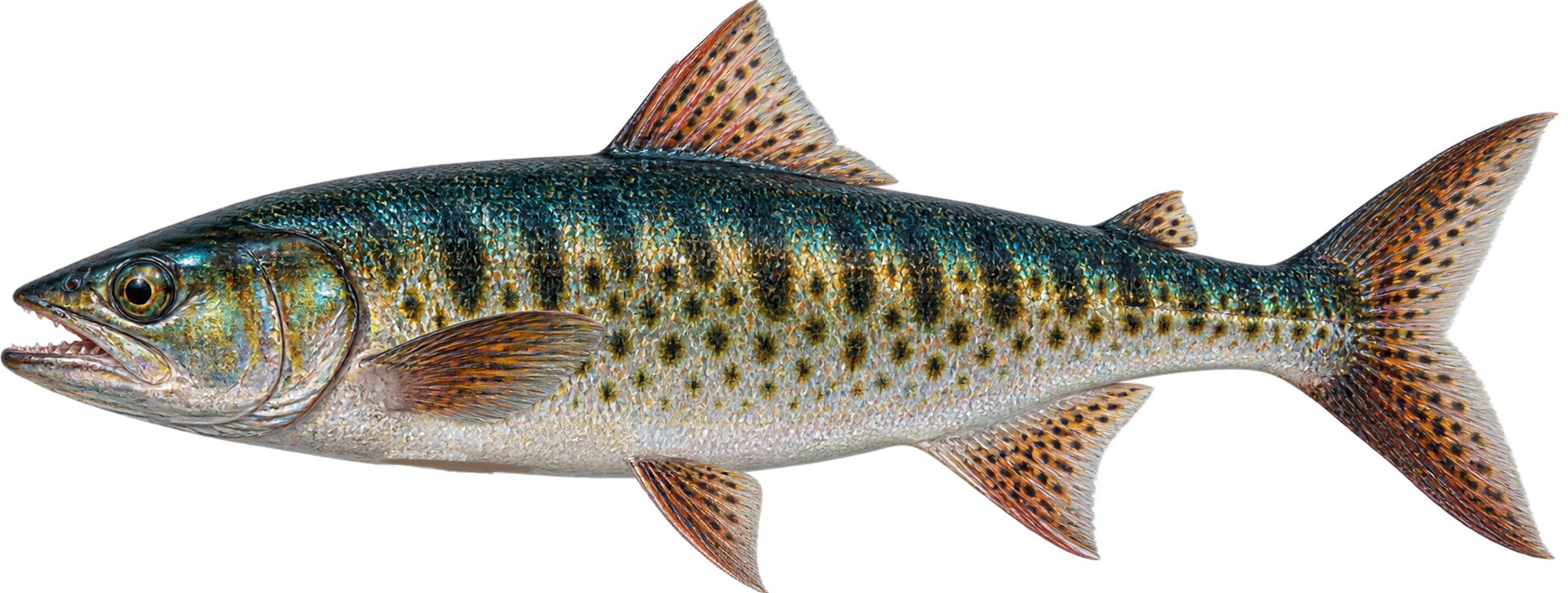 Thrax |
T. acutus503Stringer, G. L. et al. (2020). Highly diversified Late Cretaceous fish assemblage revealed by otoliths (Ripley Formation and Owl Creek Formation, northeast Mississippi, USA). Rivista Italiana di Paleontologia e Stratigrafia, 126(1), 111–155. doi:10.13130/2039-4942/13013 | Ripley Formation | USA (Mississippi) | 72–70 Ma | nicht quantifiziert | Ichthyotringidae (Eidechsenfisch) |
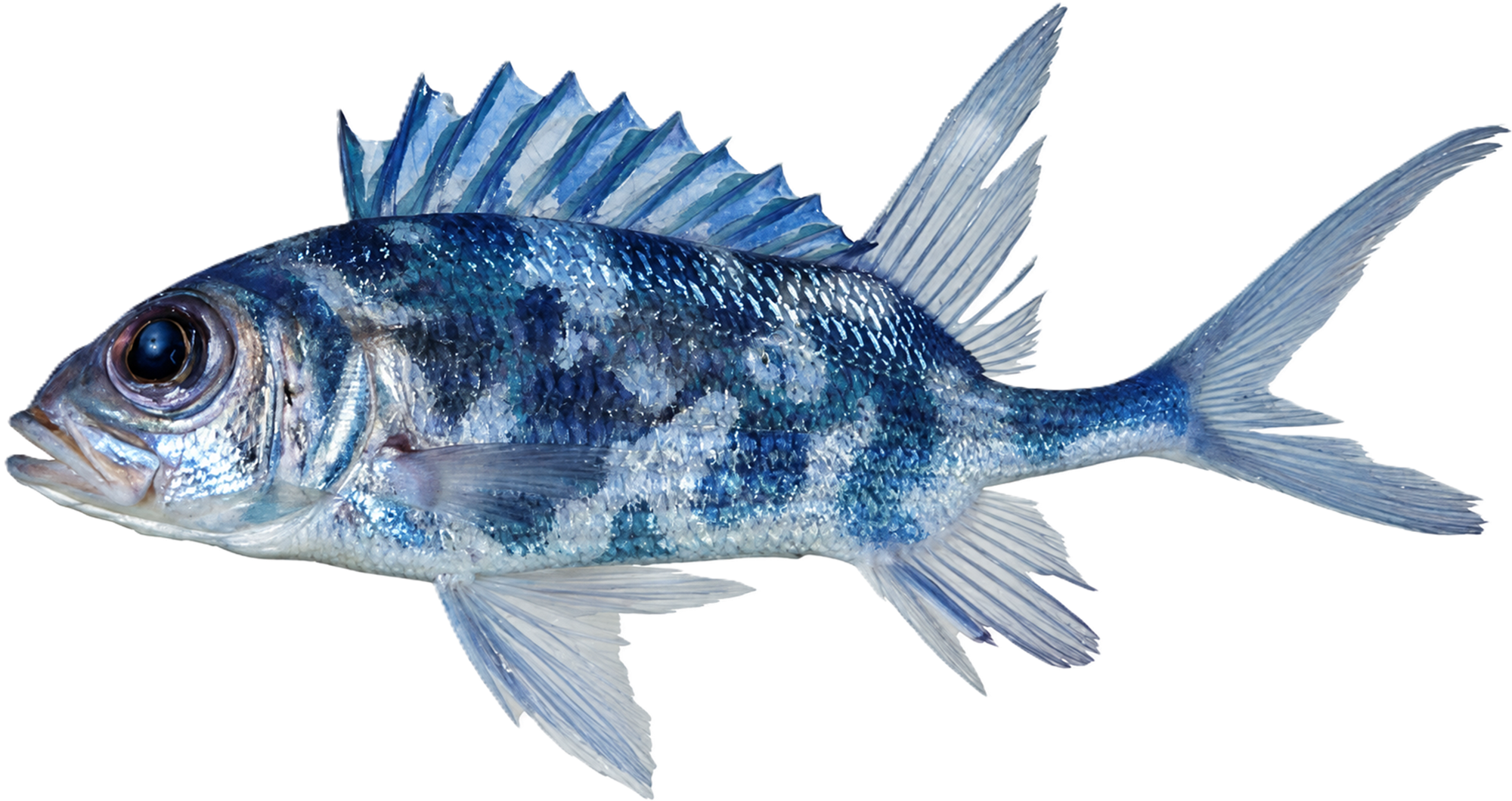 Tippaha |
T. cavata504Stringer, G. L. et al. (2020). Highly diversified Late Cretaceous fish assemblage revealed by otoliths (Ripley Formation and Owl Creek Formation, northeast Mississippi, USA). Rivista Italiana di Paleontologia e Stratigrafia, 126(1), 111–155. doi:10.13130/2039-4942/13013 T. mythica505Stringer, G. L. et al. (2020). Highly diversified Late Cretaceous fish assemblage revealed by otoliths (Ripley Formation and Owl Creek Formation, Northeast Mississippi, USA). Rivista Italiana di Paleontologia e Stratigrafia 126(1), 111–155, hier Tabelle 1 und zugehöriger systematischer Abschnitt; Owl Creek: 18 Otolithen. doi:10.13130/2039-4942/13013506Stringer, G. L. & Sloan, J. C. (2023). First Cretaceous teleostean otolith assemblage (Arkadelphia Formation, upper Maastrichtian) from Arkansas, USA, early Gadiformes, and the Western Interior Seaway. PaleoBios, 40(3), 1–39. doi:10.5070/P940361192507Stringer, G. L. et al. (2020). Highly diversified Late Cretaceous fish assemblage revealed by otoliths (Ripley Formation and Owl Creek Formation, northeast Mississippi, USA). Rivista Italiana di Paleontologia e Stratigrafia, 126(1), 111–155. doi:10.13130/2039-4942/13013 |
Arkadelphia Marl Owl Creek Formation Ripley Formation |
USA (Arkansas, Mississippi) | 72–66 Ma | häufig | Holocentriformes (Soldatenfisch) |
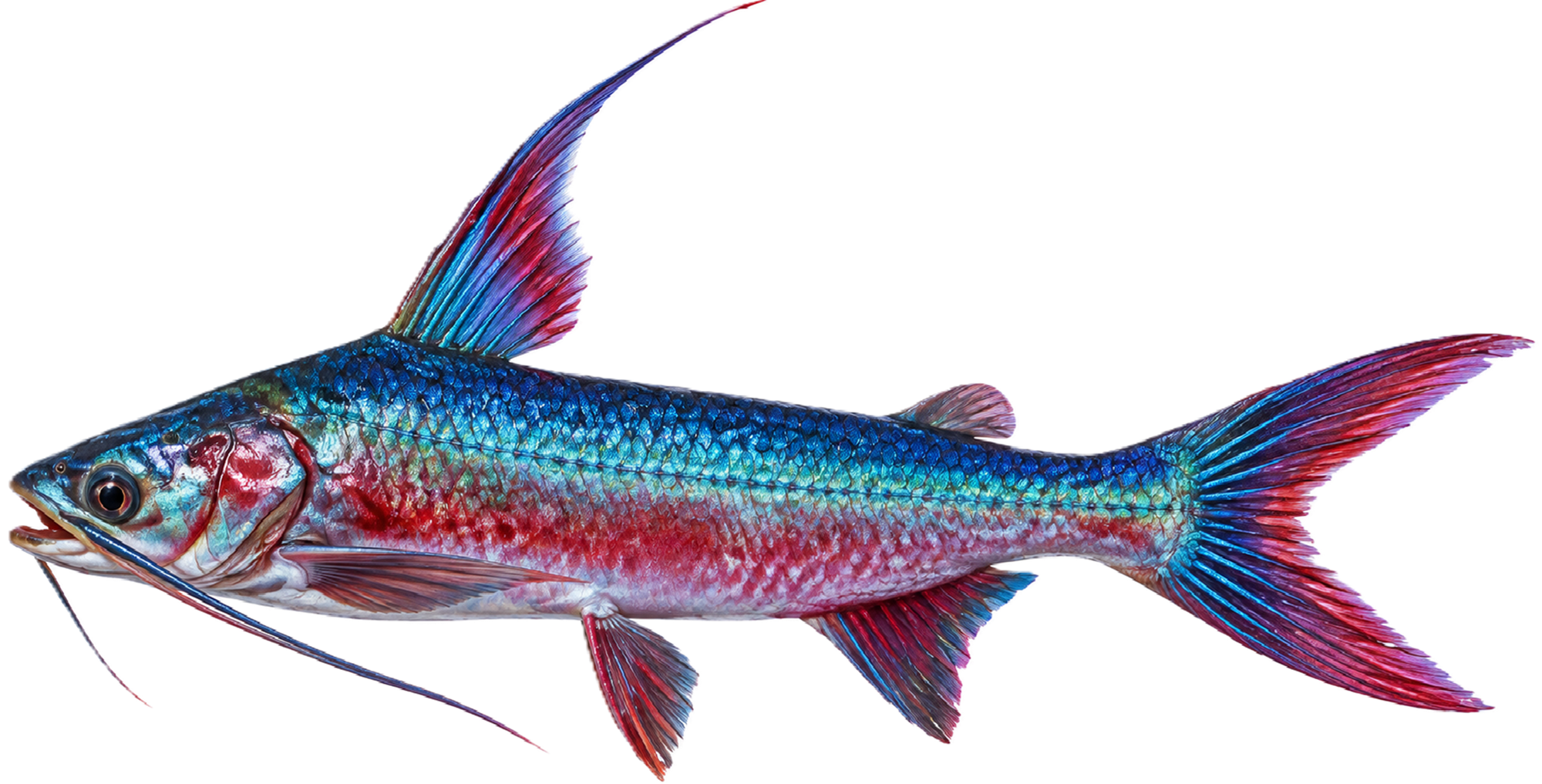 Vorhisia |
V. vulpes508Stringer, G. L. & Sloan, J. C. (2023). First Cretaceous teleostean otolith assemblage (Arkadelphia Formation, upper Maastrichtian) from Arkansas, USA, early Gadiformes, and the Western Interior Seaway. PaleoBios, 40(3), 1–39. doi:10.5070/P940361192509Schwarzhans, W. & Stringer, G. L. (2020). Fish otoliths from the late Maastrichtian Kemp Clay (Texas, USA) and the early Danian Clayton Formation (Arkansas, USA) and an assessment of extinction and survival of teleost lineages across the K-Pg boundary based on otoliths. Rivista Italiana di Paleontologia e Stratigrafia 126(2), 395–446 doi:10.13130/2039-4942/13425510Hoganson, J.W., Erickson, J.M. & Holland, F.D., Jr. (2019). Chondrichthyan and Osteichthyan Paleofaunas from the Cretaceous (Late Maastrichtian) Fox Hills Formation of North Dakota, USA: Paleoecology, Paleogeography, and Extinction. Bulletins of American Paleontology 398: 1–94. doi:10.32857/bap.2019.398511Schwarzhans, W. & Stringer, G.L. (2020). Fish otoliths from the late Maastrichtian Kemp Clay (Texas, USA) and the early Danian Clayton Formation (Arkansas, USA) and an assessment of extinction and survival of teleost lineages across the K-Pg boundary based on otoliths. Rivista Italiana di Paleontologia e Stratigrafia 126(2): 395–446. doi:10.13130/2039-4942/13425512Waage, K.M. (1968). The Type Fox Hills Formation, Cretaceous (Maestrichtian), South Dakota. Part 1. Stratigraphy and Paleoenvironments. Bulletin of the Peabody Museum of Natural History 27. Quelle513Stringer, G. L. et al. (2020). Highly diversified Late Cretaceous fish assemblage revealed by otoliths (Ripley Formation and Owl Creek Formation, northeast Mississippi, USA). Rivista Italiana di Paleontologia e Stratigrafia, 126(1), 111–155. doi:10.13130/2039-4942/13013 | Arkadelphia Marl Fox Hills Formation Kemp Clay Ripley Formation |
USA (Arkansas, Mississippi, North Dakota, South Dakota, Texas) | 72–66 Ma | häufig | Actinopterygii |
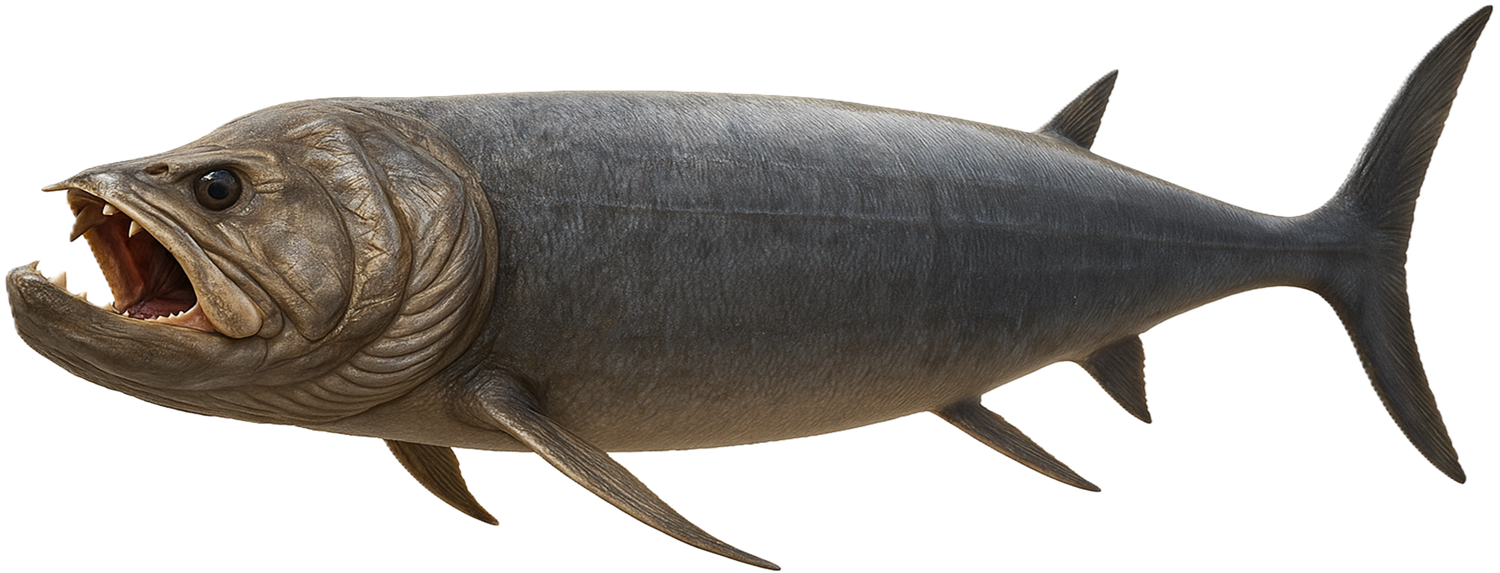 Xiphactinus |
X. audax514Gentry, A. D. et al. (2018). A new species of Peritresius Leidy, 1856 (Testudines: Pan-Cheloniidae) from the Late Cretaceous (Campanian) of Alabama, USA, and the occurrence of the genus within the Mississippi Embayment of North America. PLOS ONE, 13(4), e0195651. doi:10.1371/journal.pone.0195651 X. vetus515Hoganson, J.W., Erickson, J.M. & Holland, F.D., Jr. (2019). Chondrichthyan and Osteichthyan Paleofaunas from the Cretaceous (Late Maastrichtian) Fox Hills Formation of North Dakota, USA: Paleoecology, Paleogeography, and Extinction. Bulletins of American Paleontology 398: 1–94. doi:10.32857/bap.2019.398 X. sp.516Ikejiri, T. et al. (2013). An overview of Late Cretaceous vertebrates from Alabama. Bulletin Alabama Museum of Natural History, 31(1), 46–71. Quelle |
Fox Hills Formation Ripley Formation |
USA (Alabama, North Dakota) | ca. 75–68 Ma | sehr häufig | Ichthyodectidae |
Die Bestimmung der Enchodus-Funde aus der Fox Hills Formation ist derzeit unsicher. E. gladiolus ist aus South Dakota nachgewiesen, während als E. ferox bestimmte Funde nur unter Vorbehalt dieser Art zugeordnet werden können. Frühere Nachweise von E. dirus sollten nur noch als Enchodus sp. geführt werden, da der Holotyp von E. dirus nicht diagnostisch ist. Einige dieser Funde könnten zu E. gladiolus gehören; eine sichere Neuzuordnung ist bislang jedoch nicht möglich. E. machairus sollte für die Fox Hills Formation nicht angenommen werden.517Hoganson, J.W., Erickson, J.M. & Holland, F.D., Jr. (2019). Chondrichthyan and Osteichthyan Paleofaunas from the Cretaceous (Late Maastrichtian) Fox Hills Formation of North Dakota, USA: Paleoecology, Paleogeography, and Extinction. Bulletins of American Paleontology 398: 1–94. doi:10.32857/bap.2019.398518Becker, M.A. et al. (2009). Osteichthyans from the Fairpoint Member of the Fox Hills Formation (Maastrichtian), Meade County, South Dakota, USA. Cretaceous Research 30(4): 1031–1040. doi:10.1016/j.cretres.2009.03.006519Nelson, L.E., Murray, A.M. & Sims, M.E. (2026). A new species of Enchodus from the Western Interior Seaway of North America and a taxonomic revision of Enchodus dirus, Leidy, 1857. Journal of Vertebrate Paleontology 46(4): e2676733. doi:10.1080/02724634.2026.2676733
Enchodus sp., cf. Protosphyraena sp. und Pycnodontiformes indet. sind im Corsicana Marl nur durch fragmentarisches Material belegt. Zwei dreidimensional erhaltene Hirnschädel lassen sich den Albuliformes beziehungsweise lediglich den Teleostei zuordnen.520Cowan, T. M. & Fielitz, C. (2015). Two three-dimensionally preserved teleost neurocrania from the Corsicana Formation (Upper Cretaceous, Maastrichtian), Bexar County, Texas, U.S.A. Paludicola, 10(3), 137–144. Aus dem Corsicana Marl wurden auch Zähne der Gattung Albula erwähnt, die Art blieb aber unbestimmt. Hier in der Tabelle ist aufgrund der bestehenden Unsicherheit der Fund als unbestimmter Grätenfisch (Albuliformes indet.) geführt.521Nguyen, C. K. & Stidham, T. (2025). A taxonomically and ecologically diverse marine vertebrate assemblage at the end of the Cretaceous in Texas (USA). Geological Society of America Abstracts with Programs, 57(6). doi:10.1130/abs/2025AM-8784
Aus der Moreno Formation sind Schuppenfossilien bekannt, die histrorisch den Taxa Chicolepis punctatus, Erythrinolepis chicoensis und Pomolobus chicoensis zugeordnet wurden. Diese Arten gelten heute als zweifelhaft.522Cockerell, T. D. A. (1919). Some American Cretaceous fish scales, with notes on the classification and distribution of Cretaceous fishes. U.S. Geological Survey Professional Paper, 120-I, 165–188.523David, L. R. (1946). Upper Cretaceous fish remains from the western border of the San Joaquin Valley, California. Carnegie Institution of Washington Publication, 551, 81–112.
Aus einem Umlagerungshorizont am Kontakt zwischen dem Arkadelphia Marl und der paläozänen Midway Group sind außerdem Cylindracanthus ornatus, Atractosteus sp., Lepisosteus sp., cf. Hadrodus priscus und Pseudoegertonia cf. granulosus bekannt. Ihre kreidezeitliche Herkunft ist plausibel, doch können die einzelnen Stücke nicht in jedem Fall sicher dem eigentlichen Arkadelphia Marl und damit wirklich dem späten Maastrichtium zugeordnet werden.524Becker, M. A., Mallery, C. S. & Chamberlain, J. A. Jr. (2010). Osteichthyans from an Arkadelphia Formation–Midway Group lag deposit (Late Maastrichtian–Paleocene), Hot Spring County, Arkansas, U.S.A. Journal of Vertebrate Paleontology, 30(4), 1019–1036. doi:10.1080/02724634.2010.483603
Die Knochenfisch-Fossilien aus der Escondido Formation umfassen Zähne und Wirbel; bei einigen isolierten Mahlzähnen ist teilweise nur eine Zuordnung zu den Pycnodontiformes möglich.525Woehr, D. A.: Fossil Collecting Report 2009 .
Viele Fische aus der Ripley Formation sind vor allem aufgrund von Ohrsteinen überliefert. Diese erlauben leider nur bedingt Aufschlüsse über das tatsächliche Erscheinungsbild ihrer ehemaligen Besitzer. Die in der Bildspalte aufgeführten Rekonstruktionen sind daher weitrstgehend spekulativ.526Stringer, G. L. et al. (2020). Highly diversified Late Cretaceous fish assemblage revealed by otoliths (Ripley Formation and Owl Creek Formation, northeast Mississippi, USA). Rivista Italiana di Paleontologia e Stratigrafia, 126(1), 111–155. doi:10.13130/2039-4942/13013
Knorpelfische:
| Gattung: | Arten: | Formation: | Fundort: | Alter: | Häufigkeit: | Bemerkungen: |
|---|---|---|---|---|---|---|
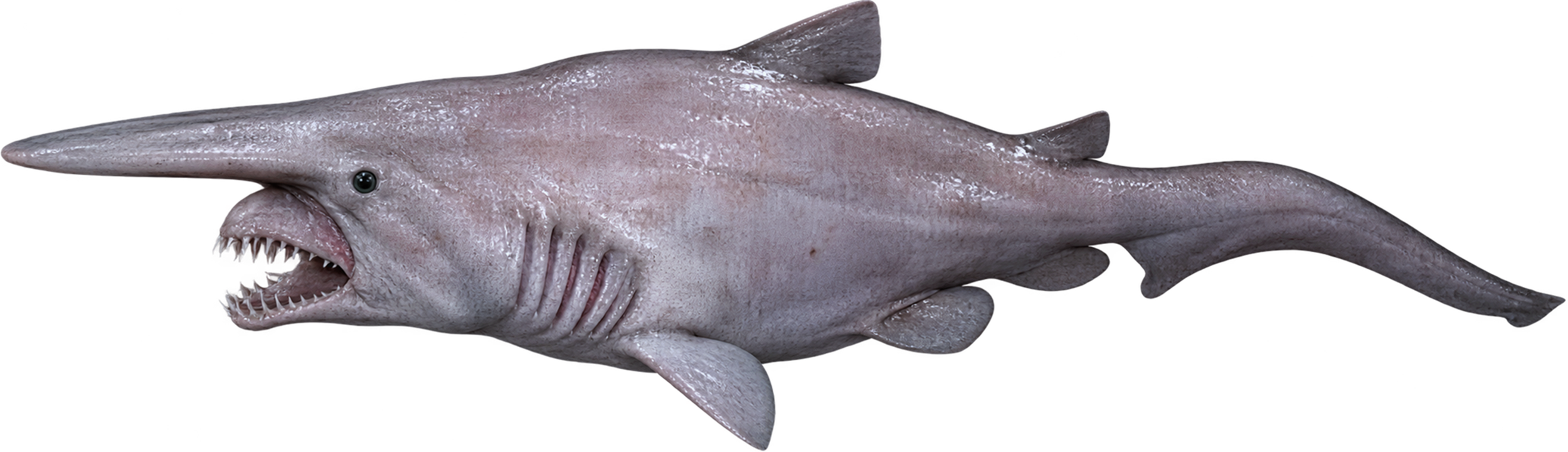 Anomotodon |
A. sp.527González-Barba, G. et al. (2010). Maastrichtian sharks of the Escondido Formation in the Sabinas Basin, northern Coahuila. Fifth International Meeting on Mesozoic Fishes: Abstract Book and Field Guides, 46. | Escondido Formation | Mexiko (Coahuila) | 72–66 Ma (Gattung bis 16 Ma) | selten | Mitsukurinidae (Koboldhai) |
| Araloselachus | A. cuspidatus (?)528Hodnett, J.-P. M., Tweet, J. S. & Santucci, V. L. (2022). The occurrence of fossil cartilaginous fishes (Chondrichthyes) within the parks and monuments of the National Park Service. New Mexico Museum of Natural History and Science Bulletin 90, 183–208. S. 197–198, Abb. 9. Prairie Bluff Chalk. Publizierter, stark prüfbedürftiger Beleg. NATR 357 und 358; im Text Araloselachus cuspidata, Bildunterschrift Odontaspis cuspidate. Siehe Erläuterungen unter den Tabellen. Quelle529Paleobiology Database (2026). Gattungsrahmen; Abfrage vom 24. Oktober 2026. Gerundeter Gattungsrahmen für Araloselachus; erweitert um die hier dokumentierte, gegebenenfalls strittige Prairie-Bluff-Meldung. Quelle | Prairie Bluff Chalk | USA (Mississippi) | 69–5 Ma | nicht quantifiziert | Odontaspididae (Hai) |
 Archaeotriakis |
A. rochelleae530Hoganson, J.W., Erickson, J.M. & Holland, F.D., Jr. (2019). Chondrichthyan and Osteichthyan Paleofaunas from the Cretaceous (Late Maastrichtian) Fox Hills Formation of North Dakota, USA: Paleoecology, Paleogeography, and Extinction. Bulletins of American Paleontology 398: 1–94. doi:10.32857/bap.2019.398531Hoganson, J.W., Erickson, J.M. & Everhart, M.J. (2022). First Report of Elasmobranchii and Osteichthyans from the Fox Hills Formation (Late Cretaceous), Poison Springs Locality, Northeastern Colorado. Transactions of the Kansas Academy of Science 125(3–4): 195–232. doi:10.1660/062.125.0310 | Fox Hills Formation | USA (Colorado, North Dakota) | ca. 75–68 Ma | häufig | Pseudotriakidae (Falscher Katzenhai) |
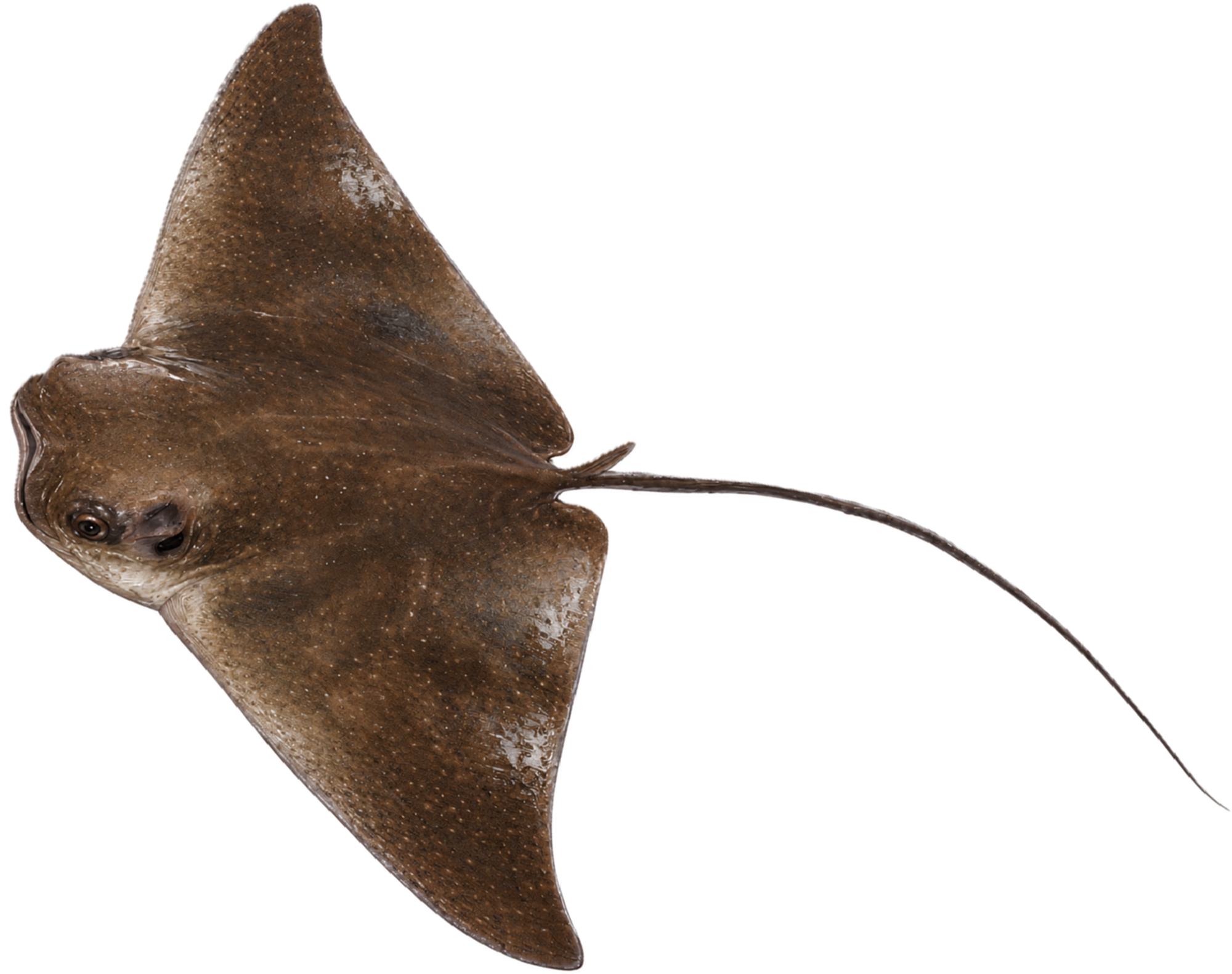 Brachyrhizodus |
B. ellipsis532Ebersole, J. A. et al. (2025). Cretaceous Fishes of Alabama: Brachyrhizodus version 2. In: Ebersole, J. A. (Hrsg.), Fossil Fishes of Alabama. McWane Science Center, 3(38), 1–6. doi:10.69737/NFTW6411 B. wichitaensis533Ebersole, J. A. et al. (2025). Cretaceous Fishes of Alabama: Brachyrhizodus version 2. In: Ebersole, J. A. (Hrsg.), Fossil Fishes of Alabama. McWane Science Center, 3(38), 1–6. doi:10.69737/NFTW6411 |
Ripley Formation | USA (Alabama) | 75–70 Ma | häufig | Myliobatidae (Rochen) |
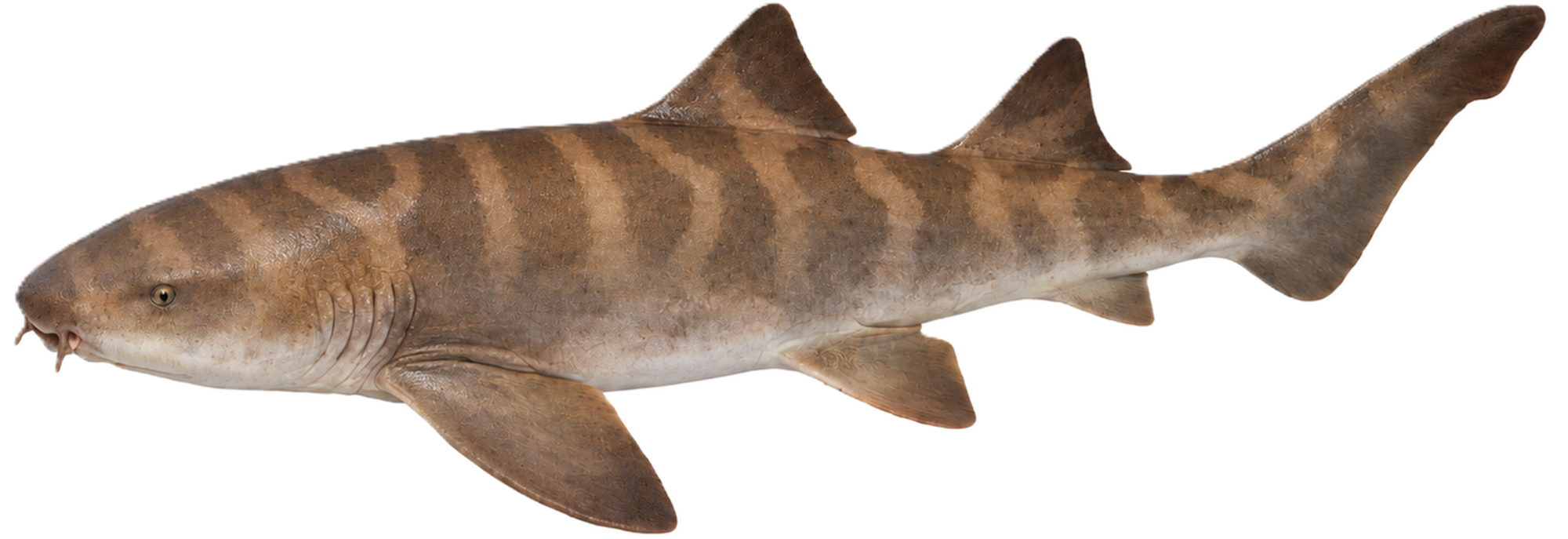 Cantioscyllium |
C. meyeri534Case, G. R. & Cappetta, H. (1997). A new selachian fauna from the Late Maastrichtian of Texas (Upper Cretaceous/Navarroan; Kemp Formation). Münchner Geowissenschaftliche Abhandlungen, Reihe A 34, 131–189 | Kemp Clay | USA (Texas) | 68–66 Ma | selten | Ginglymostomatidae (Ammenhai) |
 |
Carcharhinidae indet.535Gates, T. A., Gorscak, E. & Makovicky, P. J. (2019). New sharks and other chondrichthyans from the latest Maastrichtian (Late Cretaceous) of North America. Journal of Paleontology, 93(3), 512–530. doi:10.1017/jpa.2018.92536Nguyen, C. K. & Stidham, T. (2025). A taxonomically and ecologically diverse marine vertebrate assemblage at the end of the Cretaceous in Texas (USA). Geological Society of America Abstracts with Programs, 57(6). doi:10.1130/abs/2025AM-8784 | Corsicana Marl Hell Creek Formation |
USA (South Dakota, Texas) | 66 Ma | häufig | unbestimmte Requiemhaie |
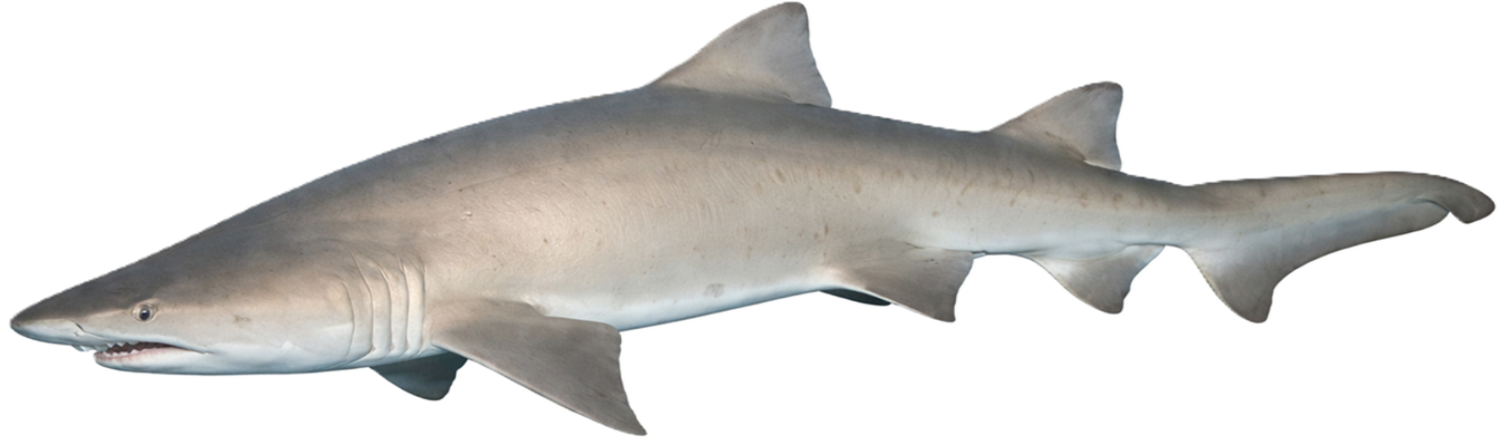 Carcharias |
C. heathi537Case, G. R. & Cappetta, H. (1997). A new selachian fauna from the Late Maastrichtian of Texas (Upper Cretaceous/Navarroan; Kemp Formation). Münchner Geowissenschaftliche Abhandlungen, Reihe A 34, 131–189 C. cf. holmdelensis (?)538Becker, M. A., Chamberlain, J. A. Jr. & Wolf, G. E. (2006). Chondrichthyans from the Arkadelphia Formation (Upper Cretaceous: Upper Maastrichtian) of Hot Spring County, Arkansas. Journal of Paleontology, 80(4), 700–716. doi:10.1666/0022-3360(2006)80[700:CFTAFU]2.0.CO;2 C. holmdelensis539Case, G. R. & Cappetta, H. (1997). A new selachian fauna from the Late Maastrichtian of Texas (Upper Cretaceous/Navarroan; Kemp Formation). Münchner Geowissenschaftliche Abhandlungen, Reihe A 34, 131–189 C. cf. samhammeri540Case, G. R. & Cappetta, H. (1997). A new selachian fauna from the Late Maastrichtian of Texas (Upper Cretaceous/Navarroan; Kemp Formation). Münchner Geowissenschaftliche Abhandlungen, Reihe A 34, 131–189 C. samhammeri541Hoganson, J.W., Erickson, J.M. & Holland, F.D., Jr. (2019). Chondrichthyan and Osteichthyan Paleofaunas from the Cretaceous (Late Maastrichtian) Fox Hills Formation of North Dakota, USA: Paleoecology, Paleogeography, and Extinction. Bulletins of American Paleontology 398: 1–94. doi:10.32857/bap.2019.398542Hoganson, J.W., Erickson, J.M. & Everhart, M.J. (2022). First Report of Elasmobranchii and Osteichthyans from the Fox Hills Formation (Late Cretaceous), Poison Springs Locality, Northeastern Colorado. Transactions of the Kansas Academy of Science 125(3–4): 195–232. doi:10.1660/062.125.0310543Becker, M.A., Chamberlain, J.A., Jr. & Terry, D.O., Jr. (2004). Chondrichthyans from the Fairpoint Member of the Fox Hills Formation (Maastrichtian), Meade County, South Dakota. Journal of Vertebrate Paleontology 24(4): 780–793. doi:10.1671/0272-4634(2004)024[0780:CFTFMO]2.0.CO;2 C. sp.544Hoganson, J. W., Campbell, J. M. & Murphy, E. C. (1994). Stratigraphy and paleontology of the Cretaceous Hell Creek Formation, Stumpf site, Morton County, North Dakota. Proceedings of the North Dakota Academy of Sciences, 48545Cowan, T. M. & Fielitz, C. (2015). Two three-dimensionally preserved teleost neurocrania from the Corsicana Formation (Upper Cretaceous, Maastrichtian), Bexar County, Texas, U.S.A. Paludicola, 10(3), 137–144546González-Barba, G. et al. (2010). Maastrichtian sharks of the Escondido Formation in the Sabinas Basin, northern Coahuila. Fifth International Meeting on Mesozoic Fishes: Abstract Book and Field Guides, 46547González-Rodríguez, K.A., Espinosa-Arrubarrena, L. & González-Barba, G. (2013): An overview of the Mexican fossil fish record. Mesozoic Fishes 5 – Global Diversity and Evolution: 9–34. Volltext548Ikejiri, T., Lu, Y. & Zhang, B. (2020). Two-step extinction of Late Cretaceous marine vertebrates in northern Gulf of Mexico prolonged biodiversity loss prior to the Chicxulub impact. Scientific Reports 10, 4169. Supplementary Materials, Tabellen S3 und S4. Prairie Bluff Chalk. Fragliche Gattung, Unit 5. Tabelle S3; die beiden Einheiten von Unit 5 werden nicht getrennt. Einschränkung: gemeinsame Unit 5 (Prairie Bluff Chalk/Providence Sand); kein formationsgetrennter Nachweis. Siehe Erläuterungen unter den Tabellen. doi:10.1038/s41598-020-61089-w |
Arkadelphia Marl Corsicana Marl Escondido Formation Fox Hills Formation Hell Creek Formation Kemp Clay Potrerillos Formation Prairie Bluff Chalk |
USA (Alabama, Arkansas, Colorado, North Dakota, South Dakota, Texas); Mexiko (Coahuila, Nuevo León) | 75–66 Ma (Gattung 126 Ma bis heute); Potrerillos: Maastrichtium (72–66 Ma) | sehr häufig | Odontaspididae (Sandhai) |
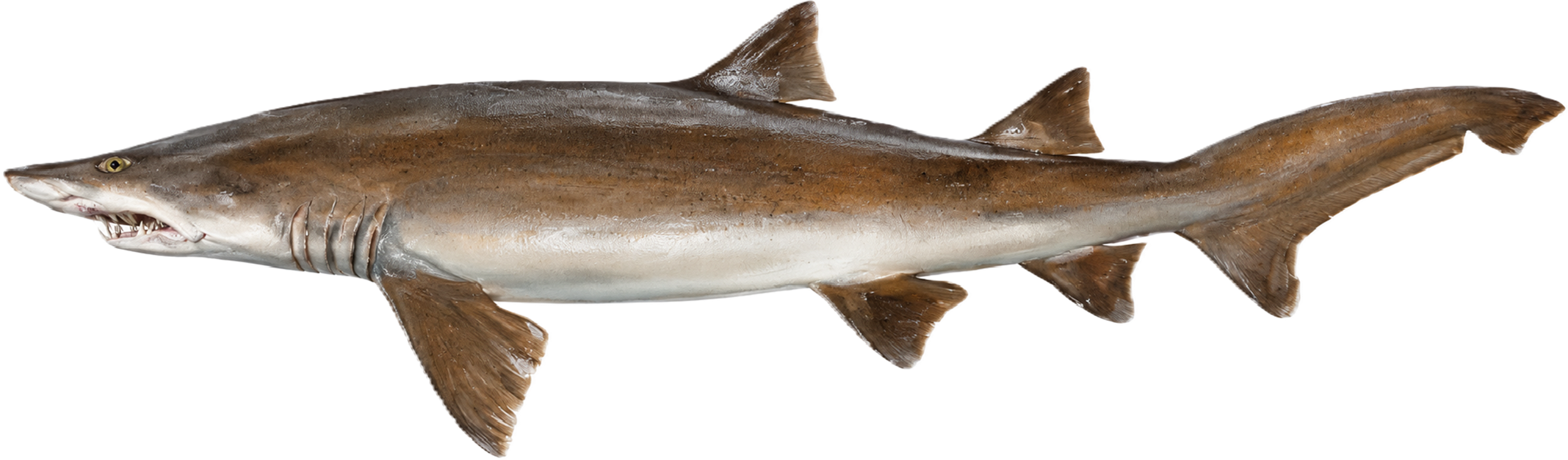 Cenocarcharias |
C. cf. tenuiplicatus (?)549Hoganson, J.W., Erickson, J.M. & Holland, F.D., Jr. (2019). Chondrichthyan and Osteichthyan Paleofaunas from the Cretaceous (Late Maastrichtian) Fox Hills Formation of North Dakota, USA: Paleoecology, Paleogeography, and Extinction. Bulletins of American Paleontology 398: 1–94. doi:10.32857/bap.2019.398550Shimada, K. et al. (2025). A New Marine Vertebrate Assemblage from the Upper Cretaceous Lincoln Limestone, Comanche National Grassland, Southeastern Colorado, USA, with Comments on the Vertebrate Assemblages at or Near the Contact between the Graneros Shale and Greenhorn Limestone in Colorado, Kansas, and Nebraska. Transactions of the Kansas Academy of Science 128(3–4): 180–200. doi:10.1660/062.128.0302 | Fox Hills Formation | USA (North Dakota) | ca. 72–68 Ma | sehr häufig | Odontaspididae (Sandhai) |
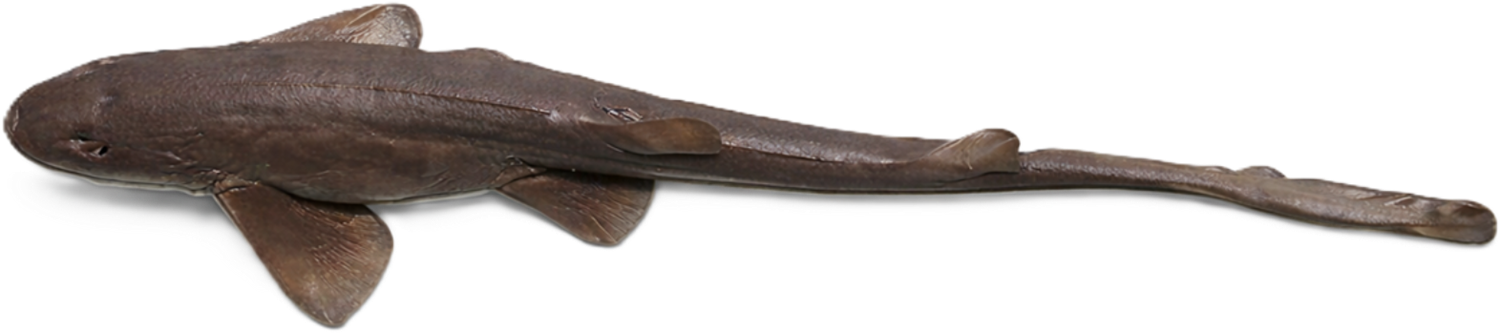 Chiloscyllium |
C. sp.551Cook, T. D. et al. (2014). Euselachians from the freshwater deposits of the Hell Creek Formation of Montana. In G. P. Wilson et al. (Hrsg.), Through the End of the Cretaceous in the Type Locality of the Hell Creek Formation in Montana and Adjacent Areas. Geological Society of America Special Paper 503, 229–246. doi:10.1130/2014.2503(08) | Hell Creek Formation | USA (Montana) | 68–66 Ma (Gattung 121 Ma bis heute) | selten | Hemiscylliidae (Bambushai) |
 |
Chimaeriformes indet.552Hoganson, J.W., Erickson, J.M. & Holland, F.D., Jr. (2019). Chondrichthyan and Osteichthyan Paleofaunas from the Cretaceous (Late Maastrichtian) Fox Hills Formation of North Dakota, USA: Paleoecology, Paleogeography, and Extinction. Bulletins of American Paleontology 398: 1–94. doi:10.32857/bap.2019.398 | Fox Hills Formation | USA (North Dakota) | ca. 72–68 Ma | selten | umbestimmte Seekatzen |
 |
Chondrichthyes indet.553Poropat, R., Campbell, C. & Lee, T. (2004). Upper Cretaceous (Owl Creek Formation) invertebrate fossils from a new site in Stoddard County, Missouri. Geological Society of America Abstracts with Programs 36(3), 5. Abstract554Currie, P. J. (2001). Sino-Canadian Dinosaur Project / Le Projet dinosaurien sino-canadien. Canadian Journal of Earth Sciences, 38(12), vii–viii. doi:10.1139/e01-083.555Hoganson, J.W., Erickson, J.M. & Holland, F.D., Jr. (2019). Chondrichthyan and Osteichthyan Paleofaunas from the Cretaceous (Late Maastrichtian) Fox Hills Formation of North Dakota, USA: Paleoecology, Paleogeography, and Extinction. Bulletins of American Paleontology 398: 1–94. doi:10.32857/bap.2019.398556Daly, E. (1992). A list, bibliography and index of the fossil vertebrates of Mississippi. Mississippi Department of Environmental Quality, Office of Geology, Bulletin 128. Prairie Bluff Chalk. Unbestimmte Zähne. Historische Faunenlisten und Aufsammlungen; keine weitere benannte Art ableiten. Quelle557Paleobiology Database (2026). Formationsabfrage Prairie Bluff, Vertebrata; Datenbankindex und zugehörige Primärreferenzen. Prairie Bluff Chalk. Unbestimmte Zähne. Historische Faunenlisten und Aufsammlungen; keine weitere benannte Art ableiten. Quelle | Fox Hills Formation Kanguk Formation Owl Creek Formation Prairie Bluff Chalk |
Kanada (Nunavut); USA (Alabama, Mississippi, Missouri, North Dakota) | 72–66 Ma | häufig | Chondrichthyes (Knorpelfisch) |
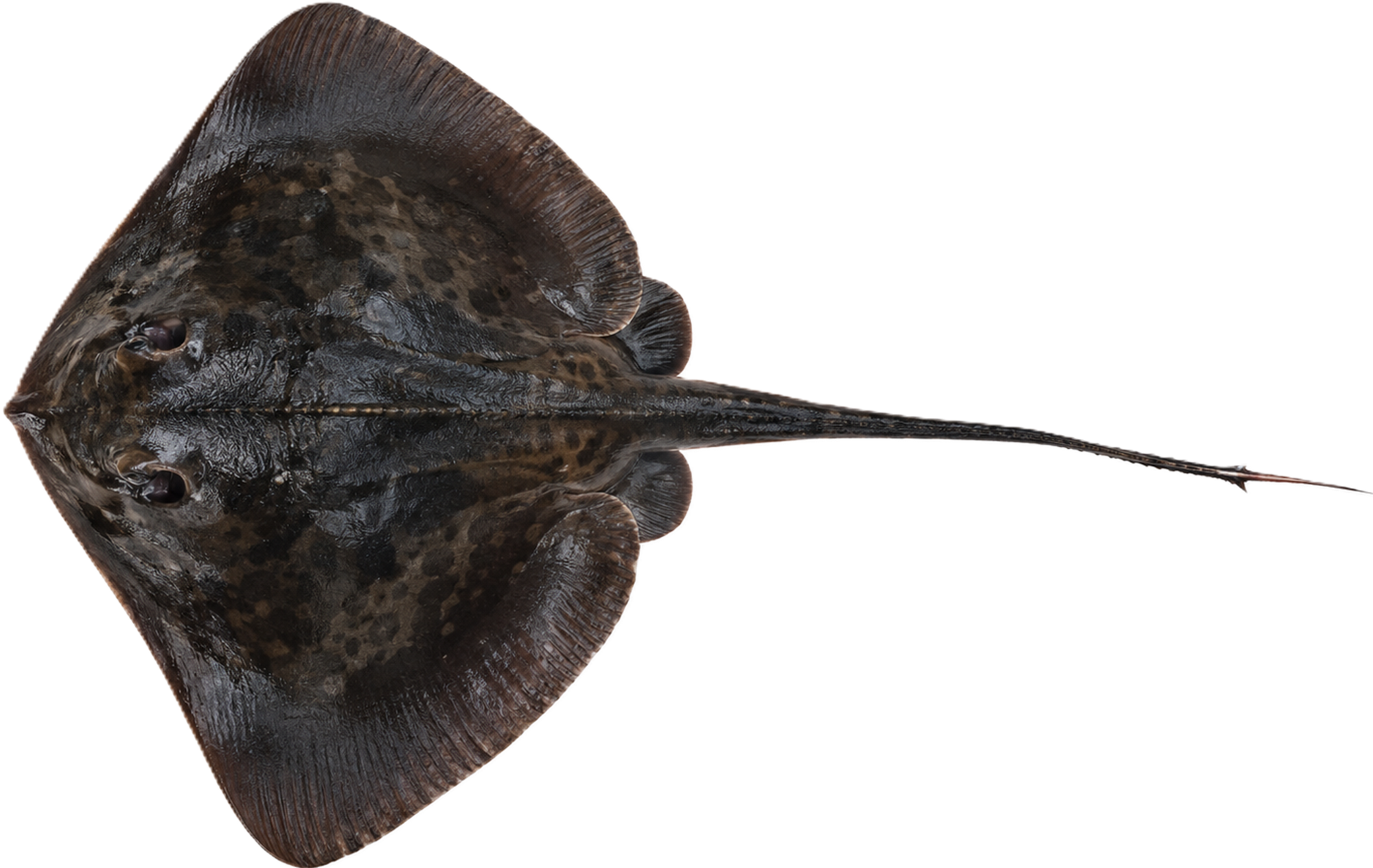 Coupatezia |
C. turneri558Case, G. R. & Cappetta, H. (1997). A new selachian fauna from the Late Maastrichtian of Texas (Upper Cretaceous/Navarroan; Kemp Formation). Münchner Geowissenschaftliche Abhandlungen, Reihe A 34, 131–189 | Kemp Clay | USA (Texas) | 68–66 Ma | selten | Dasyatidae (Stechrochen) |
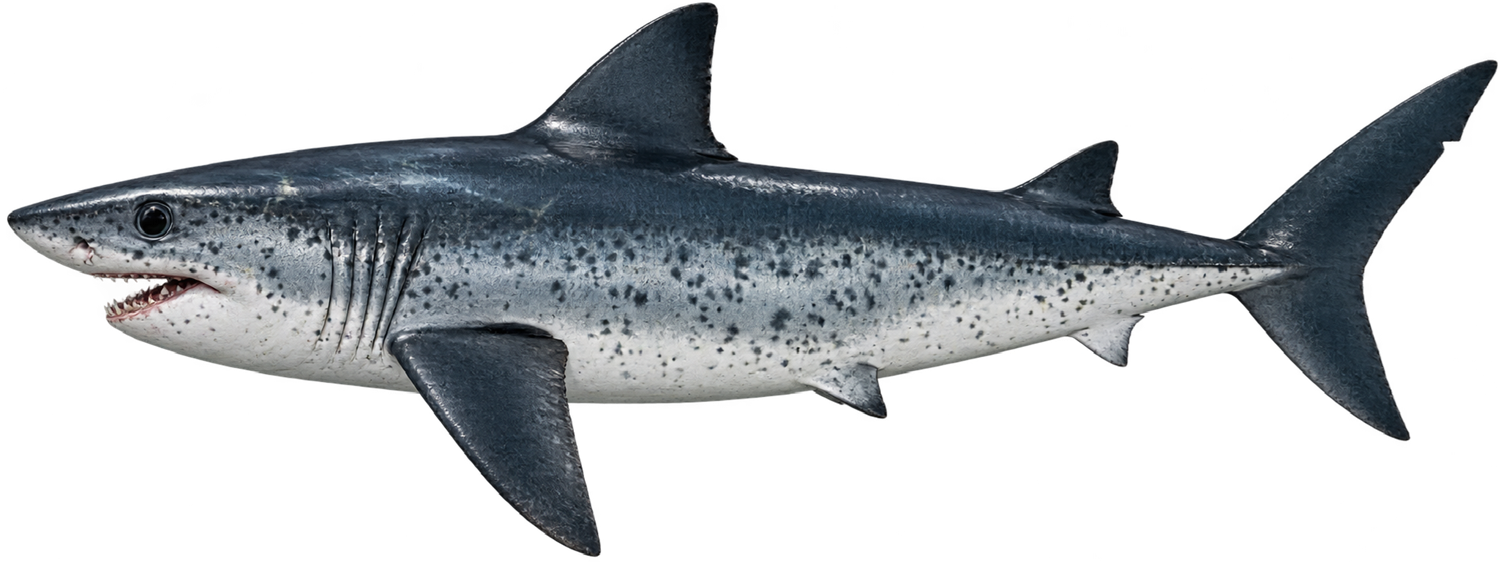 Cretalamna |
C. appendiculata559Farke, A. A. & Phillips, G. E. (2017). The first reported ceratopsid dinosaur from eastern North America (Owl Creek Formation, Upper Cretaceous, Mississippi, USA). PeerJ 5, e3342. doi:10.7717/peerj.3342560González-Barba, G. et al. (2010). Maastrichtian sharks of the Escondido Formation in the Sabinas Basin, northern Coahuila. Fifth International Meeting on Mesozoic Fishes: Abstract Book and Field Guides, 46561González-Rodríguez, K.A., Espinosa-Arrubarrena, L. & González-Barba, G. (2013): An overview of the Mexican fossil fish record. Mesozoic Fishes 5 – Global Diversity and Evolution: 9–34. Volltext562Ikejiri, T. et al. (2013). An overview of Late Cretaceous vertebrates from Alabama. Bulletin of the Alabama Museum of Natural History 31(1), 46–71. Appendix 1, S. 71; Tabelle 5, S. 55. Prairie Bluff Chalk. Publizierte formationsbezogene Faunenliste. Appendix 1, S. 71, ausdrücklich Prairie Bluff Chalk. Quelle C. feldmanni563Hoganson, J.W., Erickson, J.M. & Holland, F.D., Jr. (2019). Chondrichthyan and Osteichthyan Paleofaunas from the Cretaceous (Late Maastrichtian) Fox Hills Formation of North Dakota, USA: Paleoecology, Paleogeography, and Extinction. Bulletins of American Paleontology 398: 1–94. doi:10.32857/bap.2019.398564Hoganson, J.W., Erickson, J.M. & Everhart, M.J. (2022). First Report of Elasmobranchii and Osteichthyans from the Fox Hills Formation (Late Cretaceous), Poison Springs Locality, Northeastern Colorado. Transactions of the Kansas Academy of Science 125(3–4): 195–232. doi:10.1660/062.125.0310 C. maroccana565González-Barba, G. et al. (2010). Maastrichtian sharks of the Escondido Formation in the Sabinas Basin, northern Coahuila. Fifth International Meeting on Mesozoic Fishes: Abstract Book and Field Guides, 46566Case, G. R. & Cappetta, H. (1997). A new selachian fauna from the Late Maastrichtian of Texas (Upper Cretaceous/Navarroan; Kemp Formation). Münchner Geowissenschaftliche Abhandlungen, Reihe A 34, 131–189 C. sp.567Case, G. R. & Cappetta, H. (1997). A new selachian fauna from the Late Maastrichtian of Texas (Upper Cretaceous/Navarroan; Kemp Formation). Münchner Geowissenschaftliche Abhandlungen, Reihe A 34, 131–189568Ikejiri, T. et al. (2013). An overview of Late Cretaceous vertebrates from Alabama. Bulletin Alabama Museum of Natural History, 31(1), 46–71. Quelle569Stringer, G. L. (1991). Upper Cretaceous (Maastrichtian) teleostean otoliths from the Ripley Formation, Union County, Mississippi. Mississippi Geology, 11(3), 9–20. Quelle |
Escondido Formation Fox Hills Formation Kemp Clay Owl Creek Formation Potrerillos Formation Prairie Bluff Chalk Ripley Formation |
USA (Alabama, Colorado, Mississippi, North Dakota, Texas); Mexiko (Coahuila, Nuevo León) | 75–66 Ma (Gattung bis 48 Ma); Potrerillos: Maastrichtium (72–66 Ma) | sehr häufig | Otodontidae (Hai) |
| Cretodus | C. sp.570Ikejiri, T. et al. (2013). An overview of Late Cretaceous vertebrates from Alabama. Bulletin of the Alabama Museum of Natural History 31(1), 46–71. Appendix 1, S. 71; Tabelle 5, S. 55. Prairie Bluff Chalk. Publizierte formationsbezogene Faunenliste. Appendix 1, S. 71, ausdrücklich Prairie Bluff Chalk. Quelle571Paleobiology Database (2026). Gattungsrahmen; Abfrage vom 24. Oktober 2026. Gerundeter Gattungsrahmen für Cretodus; erweitert um die hier dokumentierte, gegebenenfalls strittige Prairie-Bluff-Meldung. Quelle | Prairie Bluff Chalk | USA (Alabama) | 121–66 Ma | nicht quantifiziert | (Hai) |
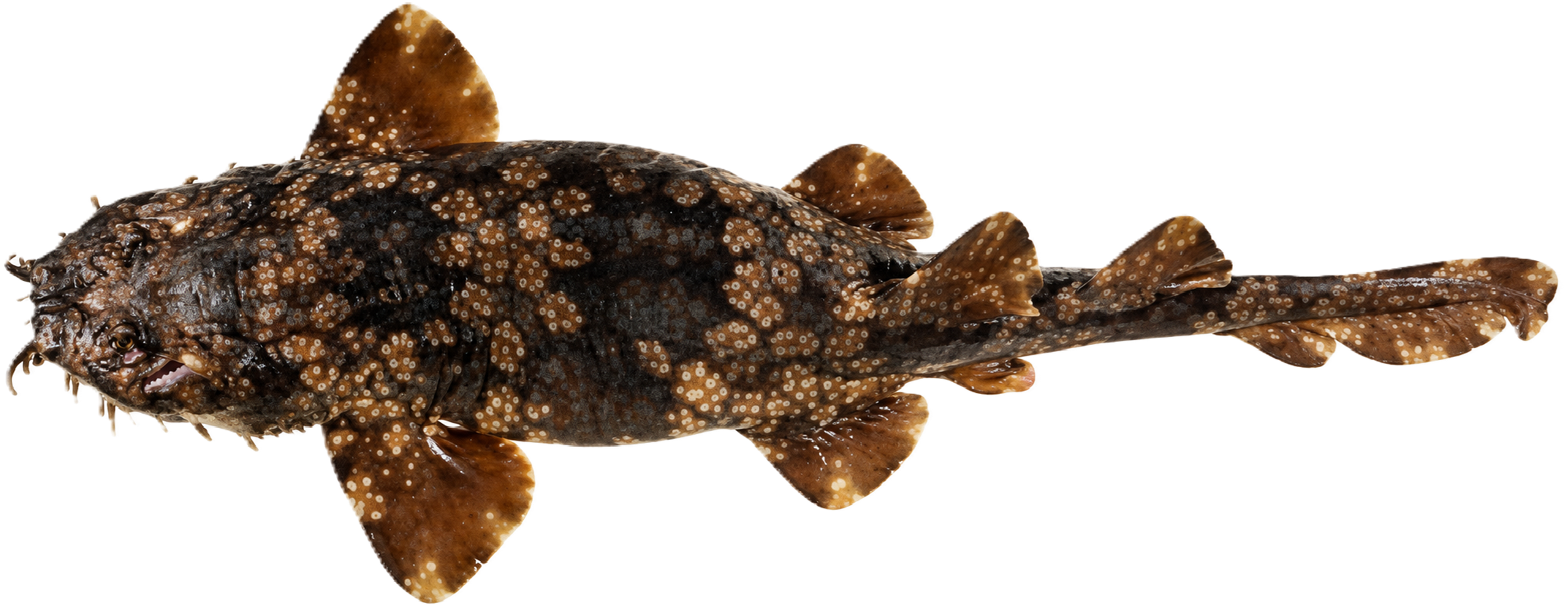 Cretorectolobus |
C. olsoni572Hoganson, J.W., Erickson, J.M. & Holland, F.D., Jr. (2019). Chondrichthyan and Osteichthyan Paleofaunas from the Cretaceous (Late Maastrichtian) Fox Hills Formation of North Dakota, USA: Paleoecology, Paleogeography, and Extinction. Bulletins of American Paleontology 398: 1–94. doi:10.32857/bap.2019.398573Hoganson, J.W., Erickson, J.M. & Everhart, M.J. (2022). First Report of Elasmobranchii and Osteichthyans from the Fox Hills Formation (Late Cretaceous), Poison Springs Locality, Northeastern Colorado. Transactions of the Kansas Academy of Science 125(3–4): 195–232. doi:10.1660/062.125.0310 | Fox Hills Formation | USA (Colorado, North Dakota) | ca. 75–68 Ma | häufig | Orectolobidae (Teppichhai) |
| Cretoxyrhina | C. mantelli (?)574Ikejiri, T., Lu, Y. & Zhang, B. (2020). Two-step extinction of Late Cretaceous marine vertebrates in northern Gulf of Mexico prolonged biodiversity loss prior to the Chicxulub impact. Scientific Reports 10, 4169. Supplementary Materials, Tabellen S3 und S4. Prairie Bluff Chalk. Unit-5-Meldung. Tabelle S3 führt 1,2,3,5. Kein in dieser Tabelle auf Prairie Bluff isolierbares Belegstück. Einschränkung: gemeinsame Unit 5 (Prairie Bluff Chalk/Providence Sand); kein formationsgetrennter Nachweis. Siehe Erläuterungen unter den Tabellen. doi:10.1038/s41598-020-61089-w575Paleobiology Database (2026). Gattungsrahmen; Abfrage vom 24. Oktober 2026. Gerundeter Gattungsrahmen für Cretoxyrhina; erweitert um die hier dokumentierte, gegebenenfalls strittige Prairie-Bluff-Meldung. Quelle | Prairie Bluff Chalk | USA (Alabama) | 121–66 Ma | nicht quantifiziert | Cretoxyrhinidae (Hai) |
 |
Dasyatidae indet.576Nguyen, C. K. & Stidham, T. (2025). A taxonomically and ecologically diverse marine vertebrate assemblage at the end of the Cretaceous in Texas (USA). Geological Society of America Abstracts with Programs, 57(6). doi:10.1130/abs/2025AM-8784 | Corsicana Marl | USA (Texas) | 68–66 Ma | selten | unbestimmte Stechrochen |
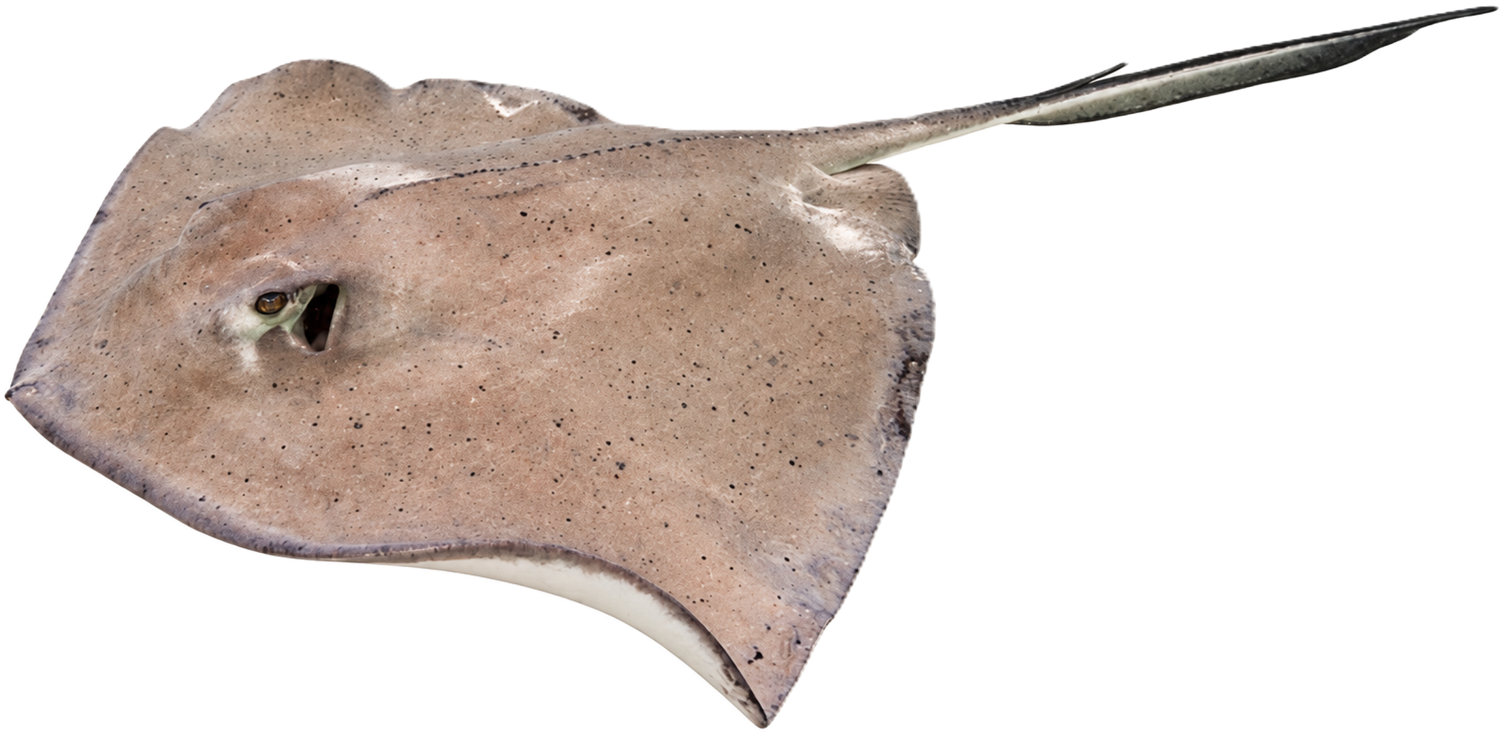 Dasyatis |
D. commercensis577Case, G. R. & Cappetta, H. (1997). A new selachian fauna from the Late Maastrichtian of Texas (Upper Cretaceous/Navarroan; Kemp Formation). Münchner Geowissenschaftliche Abhandlungen, Reihe A 34, 131–189 D. northdakotaensis578Hoganson, J.W., Erickson, J.M. & Holland, F.D., Jr. (2019). Chondrichthyan and Osteichthyan Paleofaunas from the Cretaceous (Late Maastrichtian) Fox Hills Formation of North Dakota, USA: Paleoecology, Paleogeography, and Extinction. Bulletins of American Paleontology 398: 1–94. doi:10.32857/bap.2019.398 D. sp.579Wroblewski, A. F. (2026). Systematics and biostratigraphy of non-mammalian vertebrates across the K/Pg transition, southern Wyoming, USA. Journal of Paleontology, 100(1), 222–250. doi:10.1017/jpa.2025.10191580Becker, M. A., Chamberlain, J. A. Jr. & Wolf, G. E. (2006). Chondrichthyans from the Arkadelphia Formation (Upper Cretaceous: Upper Maastrichtian) of Hot Spring County, Arkansas. Journal of Paleontology, 80(4), 700–716. doi:10.1666/0022-3360(2006)80[700:CFTAFU]2.0.CO;2581Hoganson, J.W., Erickson, J.M. & Everhart, M.J. (2022). First Report of Elasmobranchii and Osteichthyans from the Fox Hills Formation (Late Cretaceous), Poison Springs Locality, Northeastern Colorado. Transactions of the Kansas Academy of Science 125(3–4): 195–232. doi:10.1660/062.125.0310 |
Arkadelphia Marl Ferris Formation Kemp Clay Fox Hills Formation |
USA (Arkansas, Colorado, North Dakota, Texas, Wyoming) | 75–66 Ma (Gattung 100 Ma bis heute) | häufig | Dasyatidae (Stechrochen) |
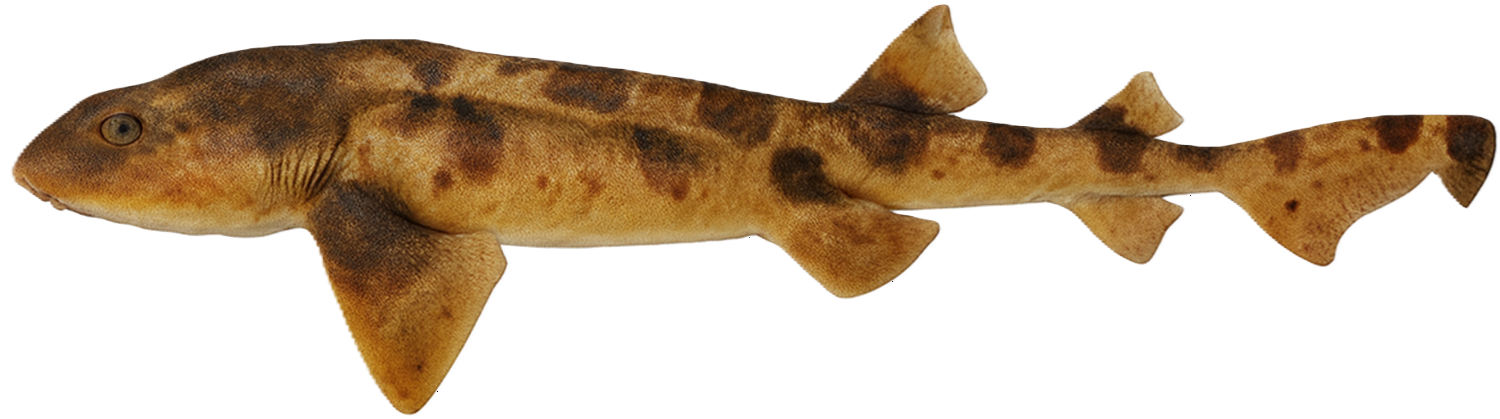 Galagadon |
G. nordquistae582Gates, T. A., Gorscak, E. & Makovicky, P. J. (2019). New sharks and other chondrichthyans from the latest Maastrichtian (Late Cretaceous) of North America. Journal of Paleontology, 93(3), 512–530. doi:10.1017/jpa.2018.92 | Hell Creek Formation | USA (South Dakota) | 68–66 Ma | Einzelfund | Orectolobiformes (Teppichhai) |
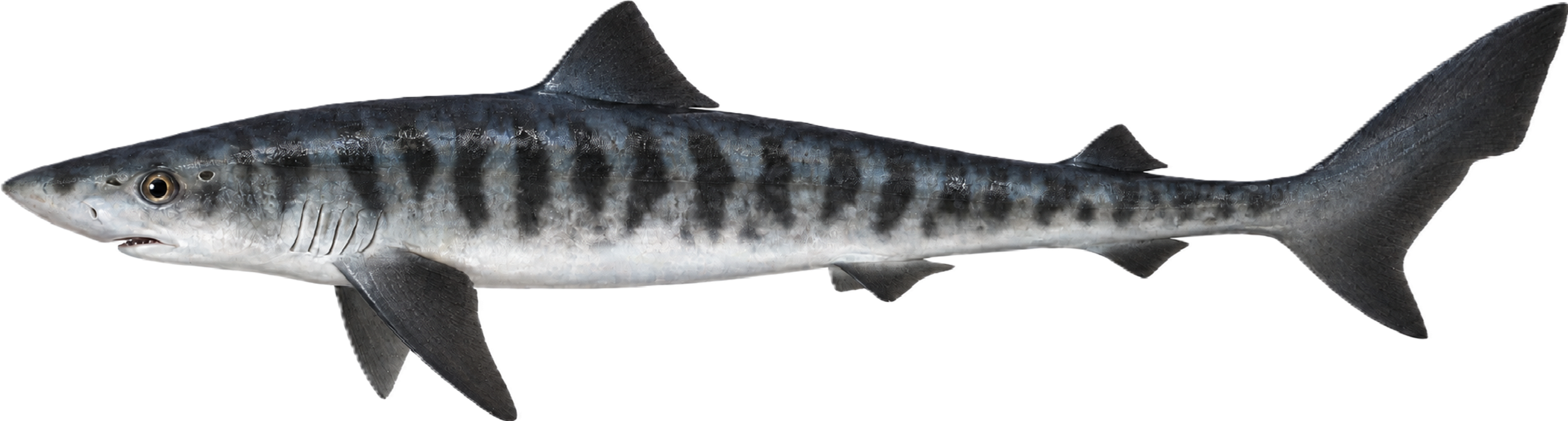 Galeorhinus |
G. aff. girardoti583Case, G. R. & Cappetta, H. (1997). A new selachian fauna from the Late Maastrichtian of Texas (Upper Cretaceous/Navarroan; Kemp Formation). Münchner Geowissenschaftliche Abhandlungen, Reihe A 34, 131–189 G. girardoti584Becker, M. A., Chamberlain, J. A. Jr. & Wolf, G. E. (2006). Chondrichthyans from the Arkadelphia Formation (Upper Cretaceous: Upper Maastrichtian) of Hot Spring County, Arkansas. Journal of Paleontology, 80(4), 700–716. doi:10.1666/0022-3360(2006)80[700:CFTAFU]2.0.CO;2585Hoganson, J.W., Erickson, J.M. & Holland, F.D., Jr. (2019). Chondrichthyan and Osteichthyan Paleofaunas from the Cretaceous (Late Maastrichtian) Fox Hills Formation of North Dakota, USA: Paleoecology, Paleogeography, and Extinction. Bulletins of American Paleontology 398: 1–94. doi:10.32857/bap.2019.398586Hoganson, J.W., Erickson, J.M. & Everhart, M.J. (2022). First Report of Elasmobranchii and Osteichthyans from the Fox Hills Formation (Late Cretaceous), Poison Springs Locality, Northeastern Colorado. Transactions of the Kansas Academy of Science 125(3–4): 195–232. doi:10.1660/062.125.0310587Becker, M.A., Chamberlain, J.A., Jr. & Terry, D.O., Jr. (2004). Chondrichthyans from the Fairpoint Member of the Fox Hills Formation (Maastrichtian), Meade County, South Dakota. Journal of Vertebrate Paleontology 24(4): 780–793. doi:10.1671/0272-4634(2004)024[0780:CFTFMO]2.0.CO;2 |
Arkadelphia Marl Kemp Clay Fox Hills Formation |
USA (Arkansas, Colorado, North Dakota, South Dakota, Texas) | 75–66 Ma (Gattung 86 Ma bis heute) | häufig | Triakidae (Glatthai) |
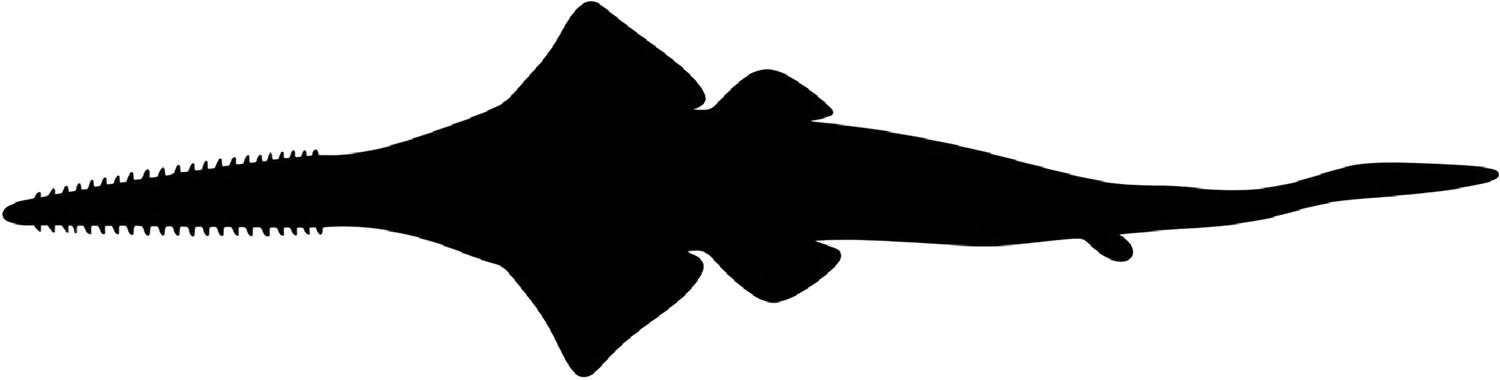 |
Ganopristidae indet.588Nguyen, C. K. & Stidham, T. (2025). A taxonomically and ecologically diverse marine vertebrate assemblage at the end of the Cretaceous in Texas (USA). Geological Society of America Abstracts with Programs, 57(6). doi:10.1130/abs/2025AM-8784 | Corsicana Marl | USA (Texas) | 68–66 Ma | selten | unbestimmte Ganopristidae |
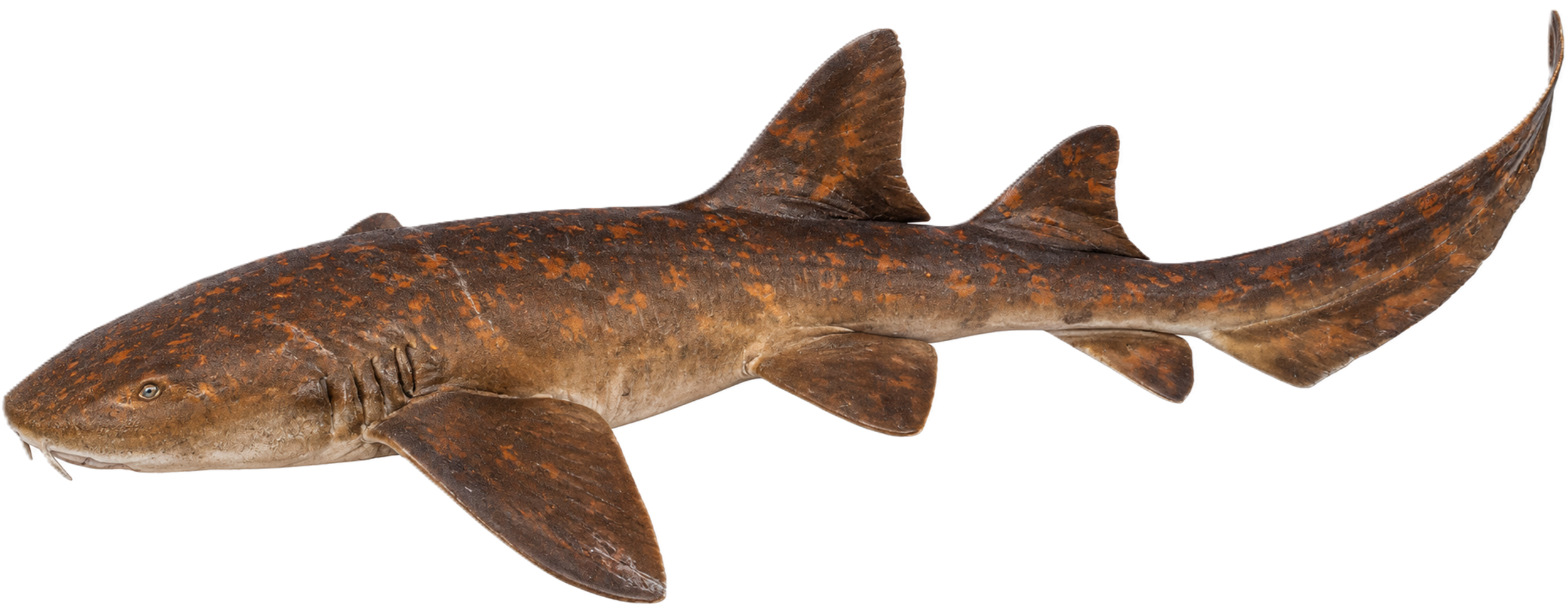 Ginglymostoma |
G. lehneri589Becker, M. A., Chamberlain, J. A. Jr. & Wolf, G. E. (2006). Chondrichthyans from the Arkadelphia Formation (Upper Cretaceous: Upper Maastrichtian) of Hot Spring County, Arkansas. Journal of Paleontology, 80(4), 700–716. doi:10.1666/0022-3360(2006)80[700:CFTAFU]2.0.CO;2590Woehr, D. A.: Fossil Collecting Report 2009 G. sp.591Case, G. R. & Cappetta, H. (1997). A new selachian fauna from the Late Maastrichtian of Texas (Upper Cretaceous/Navarroan; Kemp Formation). Münchner Geowissenschaftliche Abhandlungen, Reihe A 34, 131–189592Hoganson, J.W., Erickson, J.M. & Holland, F.D., Jr. (2019). Chondrichthyan and Osteichthyan Paleofaunas from the Cretaceous (Late Maastrichtian) Fox Hills Formation of North Dakota, USA: Paleoecology, Paleogeography, and Extinction. Bulletins of American Paleontology 398: 1–94. doi:10.32857/bap.2019.398593Ikejiri, T. et al. (2013). An overview of Late Cretaceous vertebrates from Alabama. Bulletin Alabama Museum of Natural History, 31(1), 46–71. Quelle594Ikejiri, T. et al. (2013). An overview of Late Cretaceous vertebrates from Alabama. Bulletin of the Alabama Museum of Natural History 31(1), 46–71. Appendix 1, S. 71; Tabelle 5, S. 55. Prairie Bluff Chalk. Publizierte formationsbezogene Faunenliste. Appendix 1, S. 71, ausdrücklich Prairie Bluff Chalk. Quelle |
Arkadelphia Marl Escondido Formation (?) Fox Hills Formation Kemp Clay Prairie Bluff Chalk Ripley Formation |
USA (Alabama, Arkansas, North Dakota, Texas) | 75–66 Ma (Gattung 106 Ma bis heute) | sehr häufig | Ginglymostomatidae (Ammenhai) |
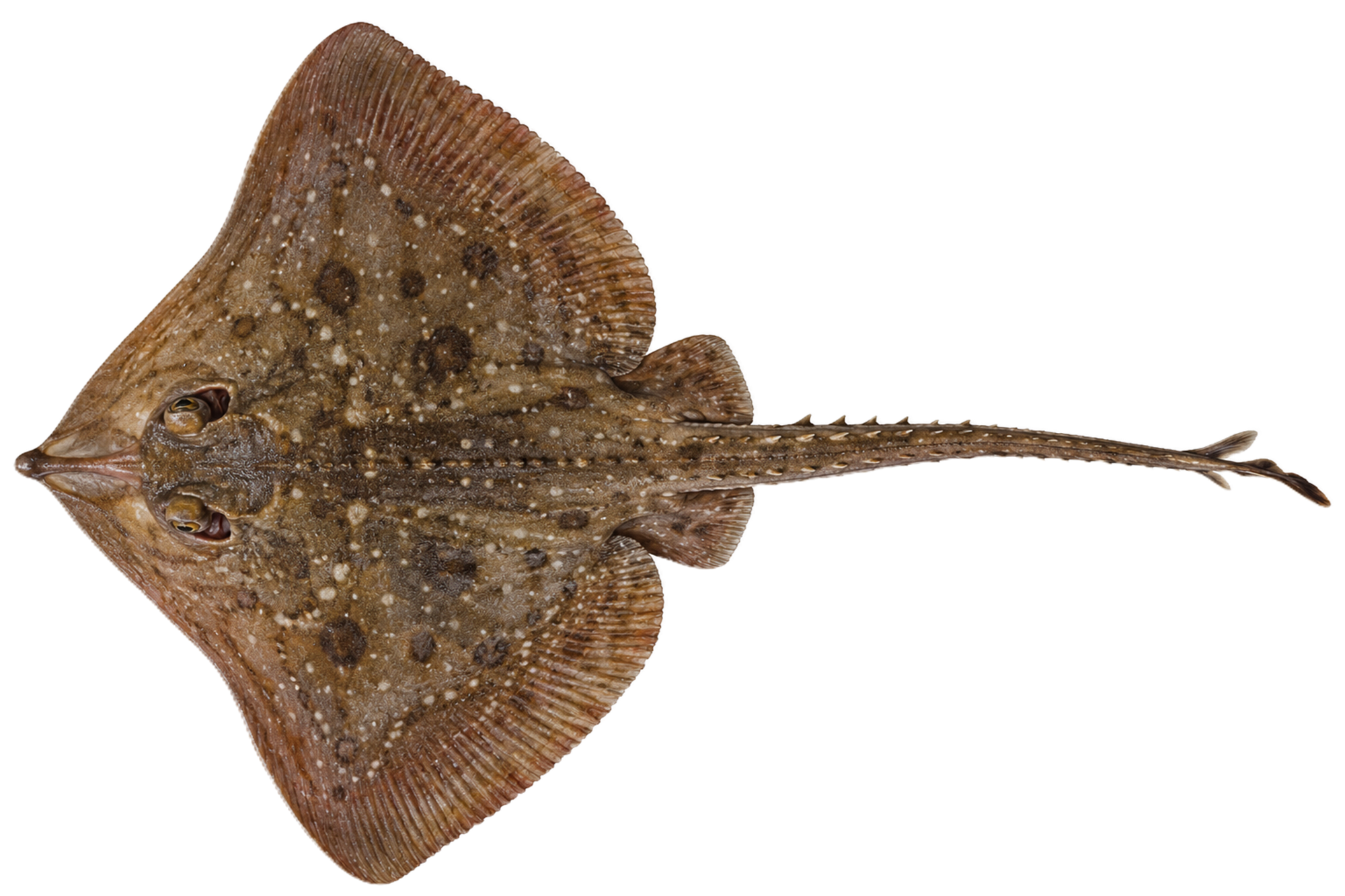 Hamrabatis |
H. weltoni595Case, G. R. & Cappetta, H. (1997). A new selachian fauna from the Late Maastrichtian of Texas (Upper Cretaceous/Navarroan; Kemp Formation). Münchner Geowissenschaftliche Abhandlungen, Reihe A 34, 131–189 | Kemp Clay | USA (Texas) | 68–66 Ma | selten | Rajiformes (Rochen); Familie unsicher |
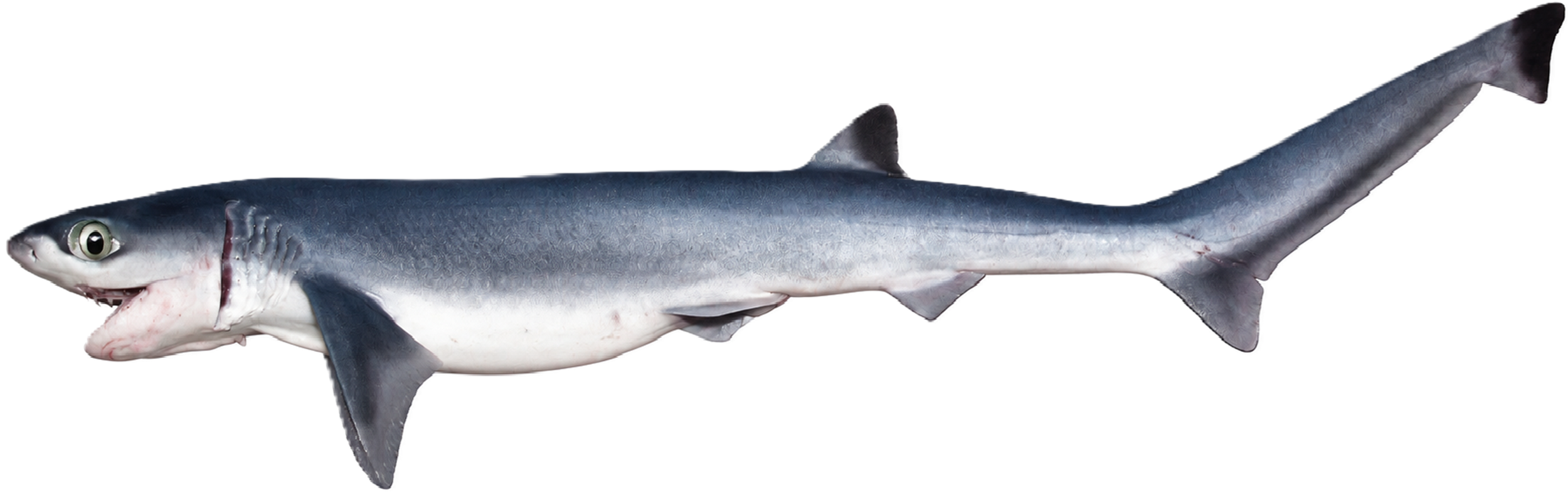 Heptranchias |
H. sp.596David, L. R. (1946). Upper Cretaceous fish remains from the western border of the San Joaquin Valley, California. Carnegie Institution of Washington Publication, 551, 81–112. | Moreno Formation | USA (Kalifornien) | 72–66 Ma (Gattung 72 Ma bis heute) | selten | Hexanchidae (Kammzähnerhai) |
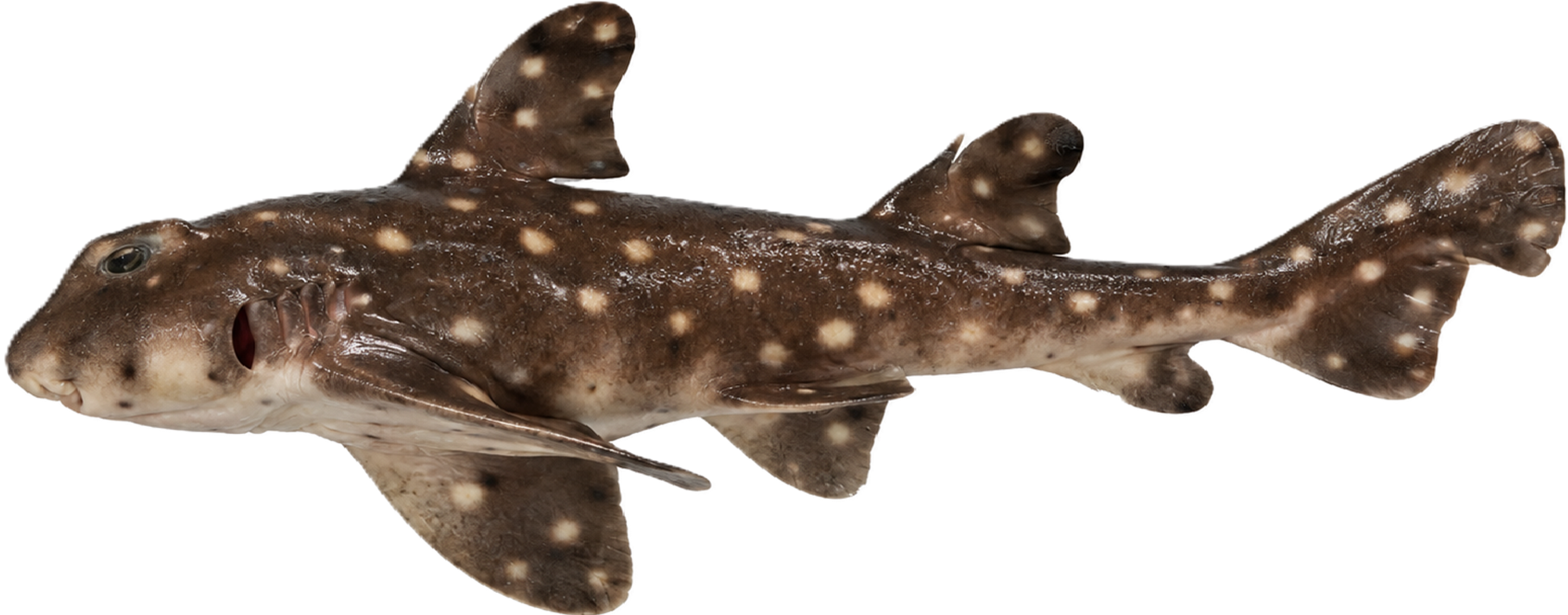 Heterodontus |
H. granti597Case, G. R. & Cappetta, H. (1997). A new selachian fauna from the Late Maastrichtian of Texas (Upper Cretaceous/Navarroan; Kemp Formation). Münchner Geowissenschaftliche Abhandlungen, Reihe A 34, 131–189 | Kemp Clay | USA (Texas) | 68–66 Ma | selten | Heterodontidae (Stierkopfhai) |
 |
Hexanchidae indet.598Nguyen, C. K. & Stidham, T. (2025). A taxonomically and ecologically diverse marine vertebrate assemblage at the end of the Cretaceous in Texas (USA). Geological Society of America Abstracts with Programs, 57(6). doi:10.1130/abs/2025AM-8784 | Corsicana Marl | USA (Texas) | 68–66 Ma | selten | unbestimmte Kammzähnerhaie |
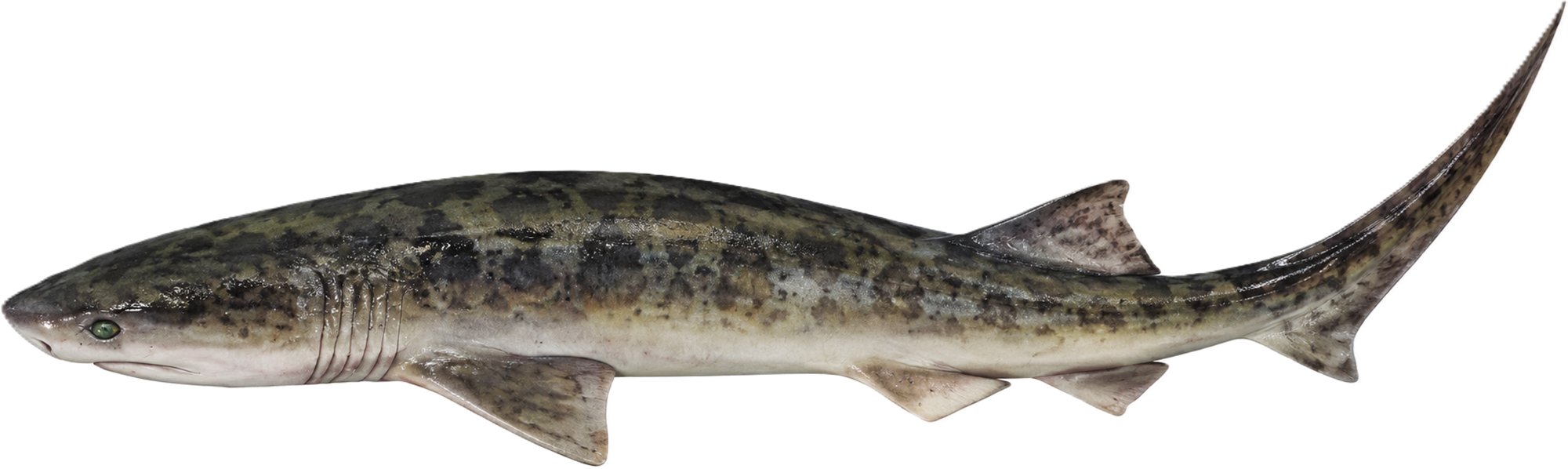 Hexanchus |
H. sp.599Case, G. R. & Cappetta, H. (1997). A new selachian fauna from the Late Maastrichtian of Texas (Upper Cretaceous/Navarroan; Kemp Formation). Münchner Geowissenschaftliche Abhandlungen, Reihe A 34, 131–189 | Kemp Clay | USA (Texas) | 68–66 Ma | selten | Hexanchidae (Kammzähnerhai) |
 |
Holocephali indet.600Demers-Potvin, A. V. et al. (2025). An elusive bird and non-avian dinosaur fauna from the latest Cretaceous (Campanian/Maastrichtian) Kanguk Formation of Bylot Island, Nunavut. Vertebrate Anatomy Morphology Palaeontology, 13, 16–17. | Kanguk Formation | Kanada (Nunavut) | 68–66 Ma | selten | unbestimmte Seekatzen |
 |
Hybodontiformes indet.601Hoganson, J.W., Erickson, J.M. & Holland, F.D., Jr. (2019). Chondrichthyan and Osteichthyan Paleofaunas from the Cretaceous (Late Maastrichtian) Fox Hills Formation of North Dakota, USA: Paleoecology, Paleogeography, and Extinction. Bulletins of American Paleontology 398: 1–94. doi:10.32857/bap.2019.398 | Fox Hills Formation | USA (North Dakota) | ca. 72–68 Ma | sehr häufig | Hybodontiformes |
| Hybodus | H. sp.602Ikejiri, T. et al. (2013). An overview of Late Cretaceous vertebrates from Alabama. Bulletin of the Alabama Museum of Natural History 31(1), 46–71. Appendix 1, S. 71; Tabelle 5, S. 55. Prairie Bluff Chalk. Publizierte formationsbezogene Faunenliste. Appendix 1, S. 71, ausdrücklich Prairie Bluff Chalk. Quelle603Paleobiology Database (2026). Gattungsrahmen; Abfrage vom 24. Oktober 2026. Gerundeter Gattungsrahmen für Hybodus; erweitert um die hier dokumentierte, gegebenenfalls strittige Prairie-Bluff-Meldung. Quelle | Prairie Bluff Chalk | USA (Alabama) | 304–66 Ma | nicht quantifiziert | Hybodontidae (Hai) |
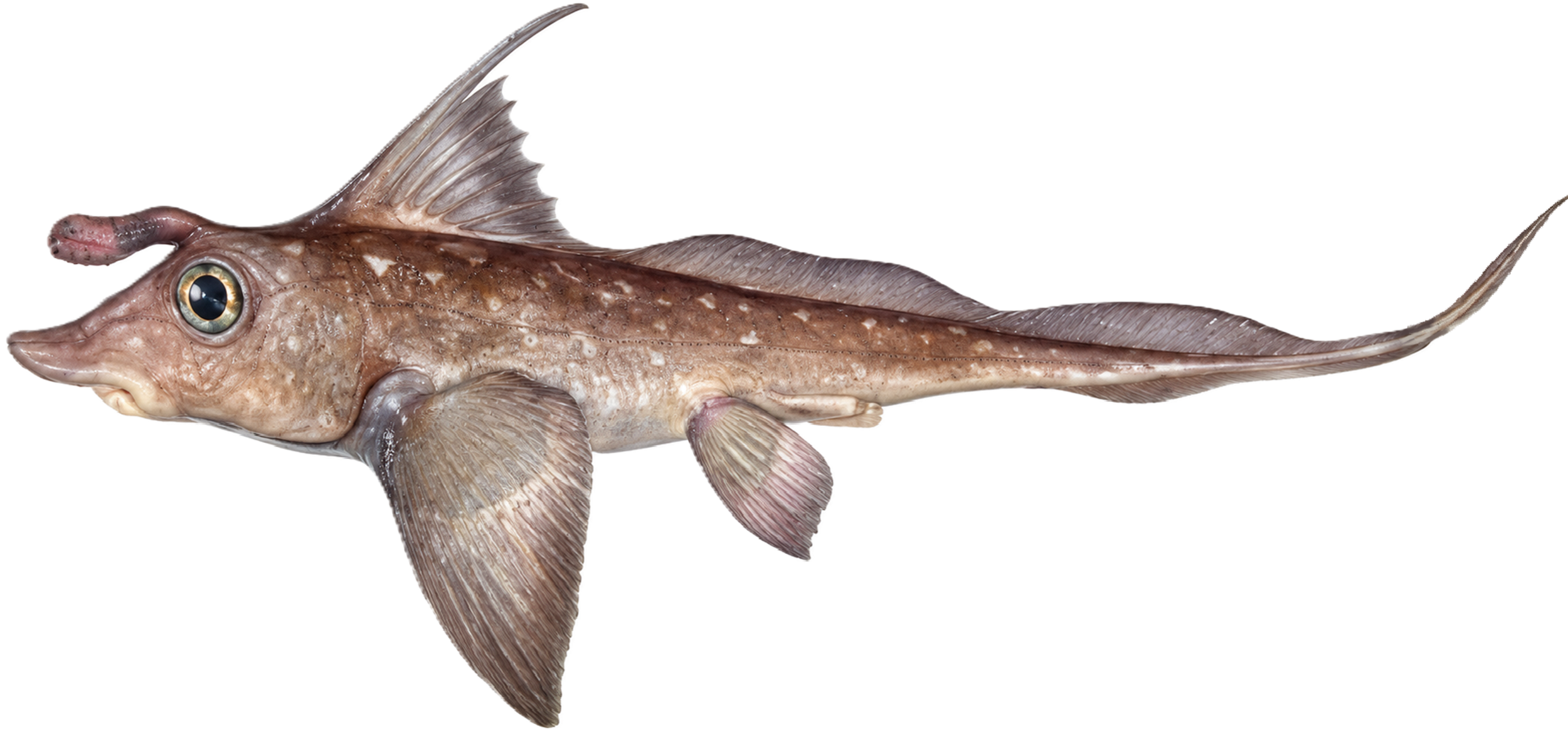 Ischyodus |
I. rayhaasi604Hoganson, J.W., Erickson, J.M. & Holland, F.D., Jr. (2019). Chondrichthyan and Osteichthyan Paleofaunas from the Cretaceous (Late Maastrichtian) Fox Hills Formation of North Dakota, USA: Paleoecology, Paleogeography, and Extinction. Bulletins of American Paleontology 398: 1–94. doi:10.32857/bap.2019.398605Hoganson, J.W., Erickson, J.M. & Everhart, M.J. (2015). Ischyodus rayhaasi (Chimaeroidei; Callorhynchidae) from the Campanian–Maastrichtian Fox Hills Formation of Northeastern Colorado, USA. Transactions of the Kansas Academy of Science 118(1–2): 27–40. doi:10.1660/062.118.0104606Hoganson, J.W. & Erickson, J.M. (2005). A new species of Ischyodus (Chondrichthyes: Holocephali: Callorhynchidae) from Upper Maastrichtian shallow marine facies of the Fox Hills and Hell Creek formations, Williston Basin, North Dakota, USA. Palaeontology 48(4): 709–721. doi:10.1111/j.1475-4983.2005.00475.x I. spp.607Farke, A. A. & Phillips, G. E. (2017). The first reported ceratopsid dinosaur from eastern North America (Owl Creek Formation, Upper Cretaceous, Mississippi, USA). PeerJ 5, e3342. doi:10.7717/peerj.3342 (?)608Hoganson, J.W., Erickson, J.M. & Everhart, M.J. (2015). Ischyodus rayhaasi (Chimaeroidei; Callorhynchidae) from the Campanian–Maastrichtian Fox Hills Formation of Northeastern Colorado, USA. Transactions of the Kansas Academy of Science 118(1–2): 27–40. doi:10.1660/062.118.0104 |
Fox Hills Formation Owl Creek Formation |
USA (Colorado, Mississippi, North Dakota) | ca. 75–66 Ma | sehr häufig | Chimaeriformes (Seekatze) |
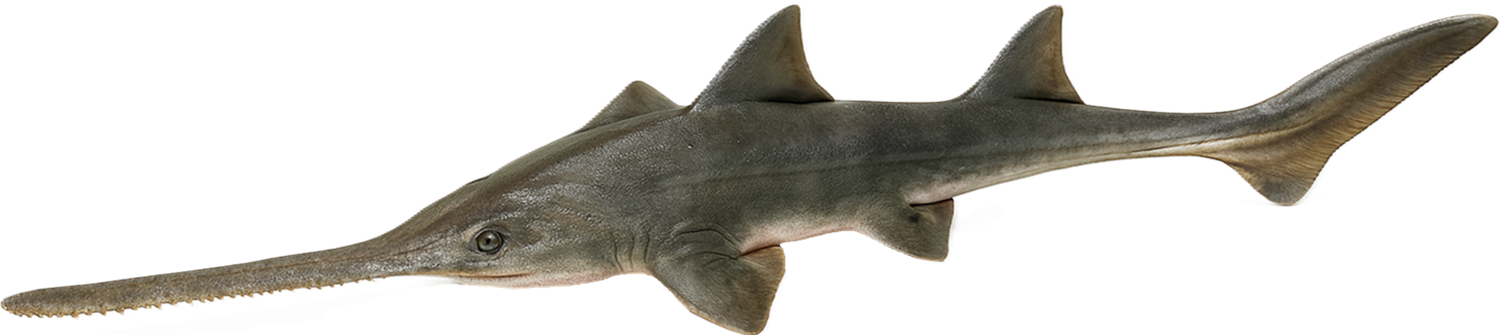 Ischyrhiza |
I. avonicola609Becker, M. A., Chamberlain, J. A. Jr. & Wolf, G. E. (2006). Chondrichthyans from the Arkadelphia Formation (Upper Cretaceous: Upper Maastrichtian) of Hot Spring County, Arkansas. Journal of Paleontology, 80(4), 700–716. doi:10.1666/0022-3360(2006)80[700:CFTAFU]2.0.CO;2610Case, G. R. & Cappetta, H. (1997). A new selachian fauna from the Late Maastrichtian of Texas (Upper Cretaceous/Navarroan; Kemp Formation). Münchner Geowissenschaftliche Abhandlungen, Reihe A 34, 131–189611Hoganson, J. W., Erickson, J. M. & Holland, F. D., Jr. (2019). Chondrichthyan and Osteichthyan Paleofaunas from the Cretaceous (Late Maastrichtian) Fox Hills Formation of North Dakota, USA: Paleoecology, Paleogeography, and Extinction. Bulletins of American Paleontology 398, 1–96 doi:10.32857/bap.2019.398612Hoganson, J.W., Erickson, J.M. & Holland, F.D., Jr. (2019). Chondrichthyan and Osteichthyan Paleofaunas from the Cretaceous (Late Maastrichtian) Fox Hills Formation of North Dakota, USA: Paleoecology, Paleogeography, and Extinction. Bulletins of American Paleontology 398: 1–94. doi:10.32857/bap.2019.398613Hoganson, J.W., Erickson, J.M. & Everhart, M.J. (2022). First Report of Elasmobranchii and Osteichthyans from the Fox Hills Formation (Late Cretaceous), Poison Springs Locality, Northeastern Colorado. Transactions of the Kansas Academy of Science 125(3–4): 195–232. doi:10.1660/062.125.0310614Becker, M.A., Chamberlain, J.A., Jr. & Terry, D.O., Jr. (2004). Chondrichthyans from the Fairpoint Member of the Fox Hills Formation (Maastrichtian), Meade County, South Dakota. Journal of Vertebrate Paleontology 24(4): 780–793. doi:10.1671/0272-4634(2004)024[0780:CFTFMO]2.0.CO;2 I. mira615González-Rodríguez, K.A., Espinosa-Arrubarrena, L. & González-Barba, G. (2013): An overview of the Mexican fossil fish record. Mesozoic Fishes 5 – Global Diversity and Evolution: 9–34. Volltext616Becker, M. A., Chamberlain, J. A. Jr. & Wolf, G. E. (2006). Chondrichthyans from the Arkadelphia Formation (Upper Cretaceous: Upper Maastrichtian) of Hot Spring County, Arkansas. Journal of Paleontology, 80(4), 700–716. doi:10.1666/0022-3360(2006)80[700:CFTAFU]2.0.CO;2617Woehr, D. A.: Fossil Collecting Report 2007618Case, G. R. & Cappetta, H. (1997). A new selachian fauna from the Late Maastrichtian of Texas (Upper Cretaceous/Navarroan; Kemp Formation). Münchner Geowissenschaftliche Abhandlungen, Reihe A 34, 131–189619Hoganson, J. W., Erickson, J. M. & Holland, F. D., Jr. (2019). Chondrichthyan and Osteichthyan Paleofaunas from the Cretaceous (Late Maastrichtian) Fox Hills Formation of North Dakota, USA: Paleoecology, Paleogeography, and Extinction. Bulletins of American Paleontology 398, 1–96 doi:10.32857/bap.2019.398620Ikejiri, T. et al. (2013). An overview of Late Cretaceous vertebrates from Alabama. Bulletin Alabama Museum of Natural History, 31(1), 46–71. Quelle621Ikejiri, T. et al. (2013). An overview of Late Cretaceous vertebrates from Alabama. Bulletin of the Alabama Museum of Natural History 31(1), 46–71. Appendix 1, S. 71; Tabelle 5, S. 55. Prairie Bluff Chalk. Publizierte formationsbezogene Faunenliste. Appendix 1, S. 71, ausdrücklich Prairie Bluff Chalk. Quelle622Mississippi State University Libraries / Dunn-Seiler Museum (o. J.). Ischyrhiza mira, DSM 10723. Öffentlicher Sammlungskatalog; Formationsfeld Prairie Bluff Fm. (Chalk). Abgerufen am 24. Oktober 2026. Prairie Bluff Chalk. Direktes Katalogstück. DSM 10723, Rostralzahn. Quelle |
Arkadelphia Marl Escondido Formation (?) Fox Hills Formation Kemp Clay Potrerillos Formation Prairie Bluff Chalk Ripley Formation |
USA (Alabama, Arkansas, Colorado, Mississippi, North Dakota, South Dakota, Texas); Mexiko (Nuevo León) | 75–66 Ma; Potrerillos: Maastrichtium (72–66 Ma) | sehr häufig | Sclerorhynchidae; I. avonicola: Synonym I. monasterica |
 |
Lamnidae indet.623Nguyen, C. K. & Stidham, T. (2025). A taxonomically and ecologically diverse marine vertebrate assemblage at the end of the Cretaceous in Texas (USA). Geological Society of America Abstracts with Programs, 57(6). doi:10.1130/abs/2025AM-8784 | Corsicana Marl | USA (Texas) | 68–66 Ma | selten | unbestimmte Makrelenhaie |
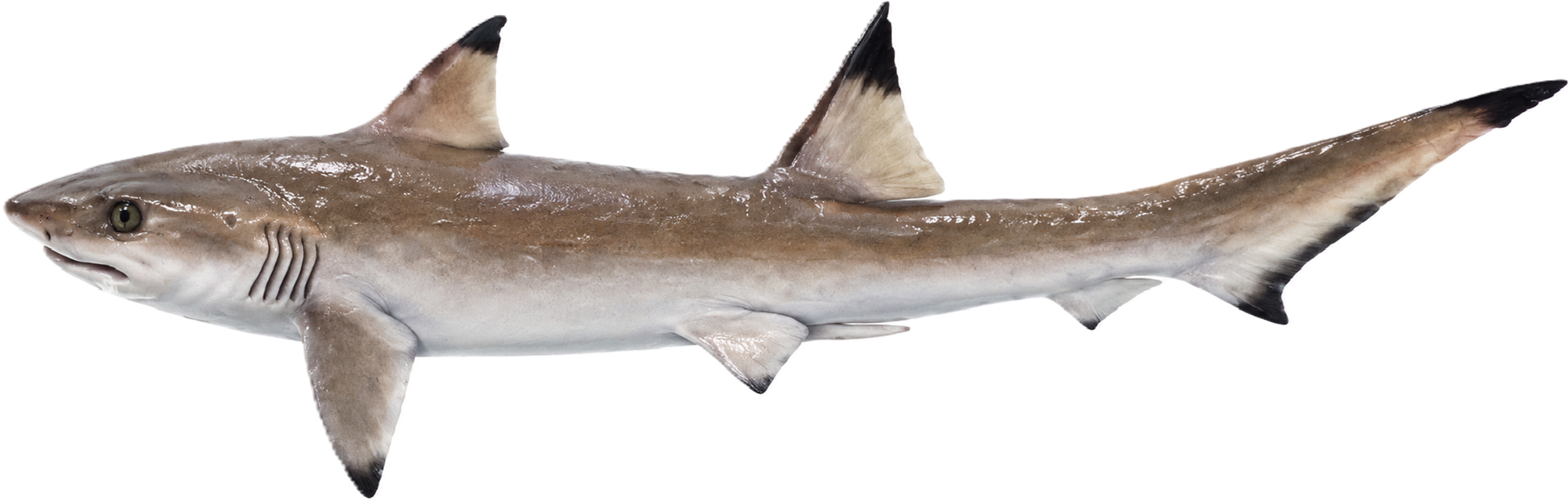 Lissodus |
L. aff. babulskii624Case, G. R. & Cappetta, H. (1997). A new selachian fauna from the Late Maastrichtian of Texas (Upper Cretaceous/Navarroan; Kemp Formation). Münchner Geowissenschaftliche Abhandlungen, Reihe A 34, 131–189 L. cf. sp.625Parris, D. C. (2006). Chronister site investigations: New information on the Cretaceous of Missouri. In: Field Trip Guidebook – 2006 Association of Missouri Geologists Meeting, 9–13. Quelle |
Kemp Clay Ripley Formation |
USA (Missouri, Texas) | 75–66 Ma | selten | Lonchidiidae |
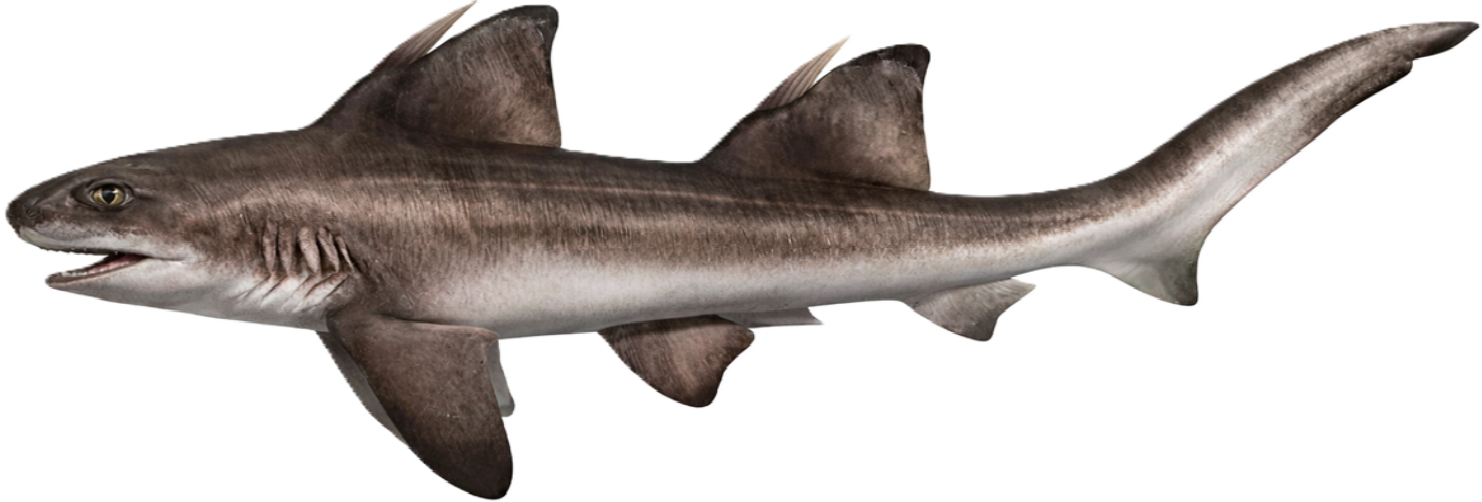 Lonchidion |
L. selachos626Estes, R. & Berberian, P. (1970). Paleoecology of a Late Cretaceous vertebrate community from Montana. Breviora, 343, 1–35.627Estes, R. (1964). Fossil vertebrates from the Late Cretaceous Lance Formation, eastern Wyoming. University of California Publications in Geological Sciences, 49, 1–180.628Carpenter, K. (1979). Vertebrate fauna of the Laramie Formation (Maastrichtian), Weld County, Colorado. Contributions to Geology, University of Wyoming, 17(1), 37–49.629Wroblewski, A. F. (2026). Systematics and biostratigraphy of non-mammalian vertebrates across the K/Pg transition, southern Wyoming, USA. Journal of Paleontology, 100(1), 222–250. doi:10.1017/jpa.2025.10191 L. sp. (?)630Becker, M.A., Chamberlain, J.A., Jr. & Terry, D.O., Jr. (2004). Chondrichthyans from the Fairpoint Member of the Fox Hills Formation (Maastrichtian), Meade County, South Dakota. Journal of Vertebrate Paleontology 24(4): 780–793. doi:10.1671/0272-4634(2004)024[0780:CFTFMO]2.0.CO;2631Cicimurri, D.J. (1998). Fossil elasmobranchs of the Cretaceous System (Neocomian–Maastrichtian), Black Hills region, South Dakota and Wyoming. M.S. thesis, South Dakota School of Mines and Technology, Rapid City |
Ferris Formation Hell Creek Formation Lance Formation Fox Hills Formation |
USA (Colorado, Montana, North Dakota, South Dakota, Wyoming) | 69–66 Ma | häufig | Lonchidiidae |
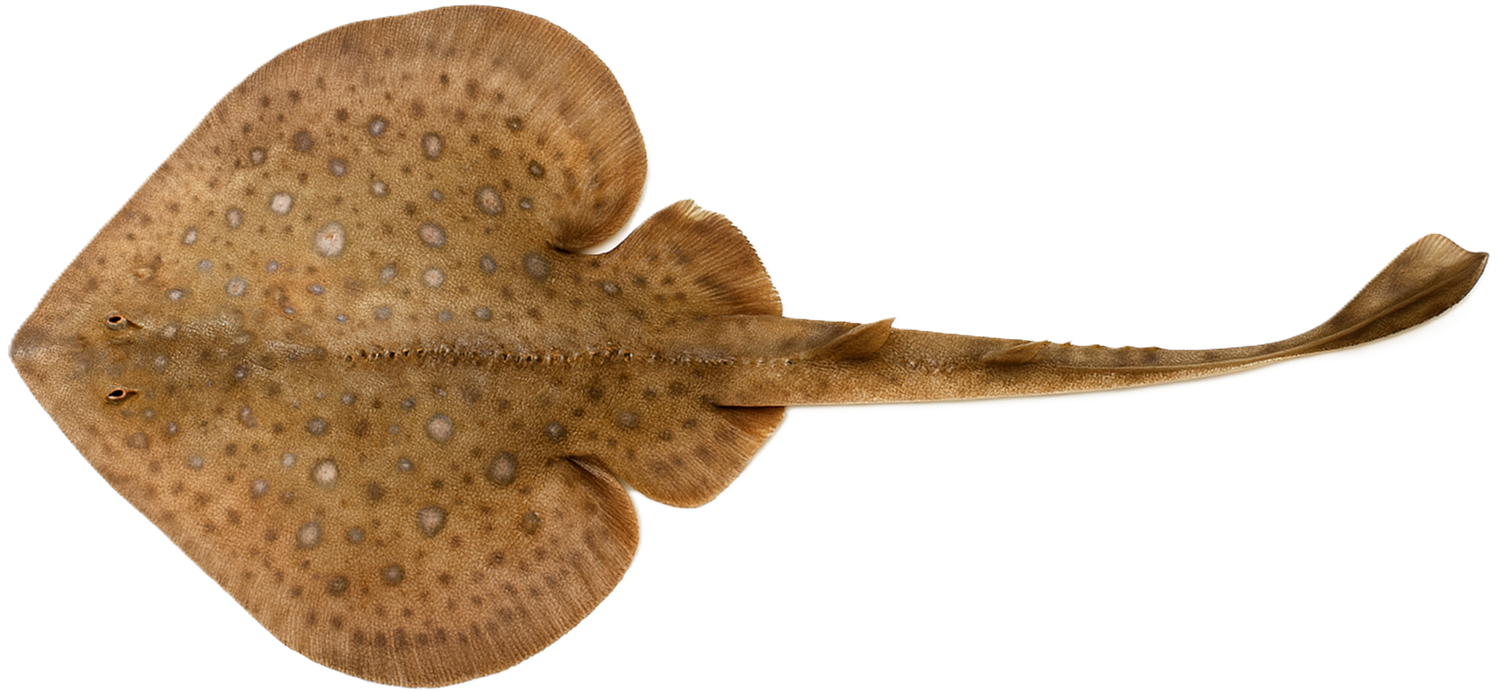 Myledaphus |
M. bipartitus632Estes, R. (1964). Fossil vertebrates from the Late Cretaceous Lance Formation, eastern Wyoming. University of California Publications in Geological Sciences, 49, 1–180.633Carpenter, K. (1979). Vertebrate fauna of the Laramie Formation (Maastrichtian), Weld County, Colorado. Contributions to Geology, University of Wyoming, 17(1), 37–49.634Becker, M.A., Chamberlain, J.A., Jr. & Terry, D.O., Jr. (2004). Chondrichthyans from the Fairpoint Member of the Fox Hills Formation (Maastrichtian), Meade County, South Dakota. Journal of Vertebrate Paleontology 24(4): 780–793. doi:10.1671/0272-4634(2004)024[0780:CFTFMO]2.0.CO;2635Hoganson, J.W., Erickson, J.M. & Holland, F.D., Jr. (2019). Chondrichthyan and Osteichthyan Paleofaunas from the Cretaceous (Late Maastrichtian) Fox Hills Formation of North Dakota, USA: Paleoecology, Paleogeography, and Extinction. Bulletins of American Paleontology 398: 1–94. doi:10.32857/bap.2019.398636Waage, K.M. (1968). The Type Fox Hills Formation, Cretaceous (Maestrichtian), South Dakota. Part 1. Stratigraphy and Paleoenvironments. Bulletin of the Peabody Museum of Natural History 27. Quelle M. pustulosus637Pearson, D. A. et al. (2002). Vertebrate biostratigraphy of the Hell Creek Formation in southwestern North Dakota and northwestern South Dakota. In J. H. Hartman et al. (Hrsg.), The Hell Creek Formation and the Cretaceous–Tertiary Boundary in the Northern Great Plains. Geological Society of America Special Paper 361, 145–167. doi:10.1130/0-8137-2361-2.145638Cook, T. D. et al. (2014). Euselachians from the freshwater deposits of the Hell Creek Formation of Montana. In G. P. Wilson et al. (Hrsg.), Through the End of the Cretaceous in the Type Locality of the Hell Creek Formation in Montana and Adjacent Areas. Geological Society of America Special Paper 503, 229–246. doi:10.1130/2014.2503(08)639Wroblewski, A. F. (2026). Systematics and biostratigraphy of non-mammalian vertebrates across the K/Pg transition, southern Wyoming, USA. Journal of Paleontology, 100(1), 222–250. doi:10.1017/jpa.2025.10191 M. sp.640Wroblewski, A. F. (2026). Systematics and biostratigraphy of non-mammalian vertebrates across the K/Pg transition, southern Wyoming, USA. Journal of Paleontology, 100(1), 222–250. doi:10.1017/jpa.2025.10191641Hoganson, J.W., Erickson, J.M. & Holland, F.D., Jr. (2019). Chondrichthyan and Osteichthyan Paleofaunas from the Cretaceous (Late Maastrichtian) Fox Hills Formation of North Dakota, USA: Paleoecology, Paleogeography, and Extinction. Bulletins of American Paleontology 398: 1–94. doi:10.32857/bap.2019.398 |
Ferris Formation Hell Creek Formation Lance Formation Laramie Formation Fox Hills Formation |
USA (Colorado, Montana, North Dakota, South Dakota, Wyoming) | 72–66 Ma (Gattung bis 62 Ma) | sehr häufig | Rhinobatidae (Geigenrochen) |
 |
Myliobatidae indet.642Nguyen, C. K. & Stidham, T. (2025). A taxonomically and ecologically diverse marine vertebrate assemblage at the end of the Cretaceous in Texas (USA). Geological Society of America Abstracts with Programs, 57(6). doi:10.1130/abs/2025AM-8784 | Corsicana Marl | USA (Texas) | 68–66 Ma | selten | unbestimmte Adlerrochen |
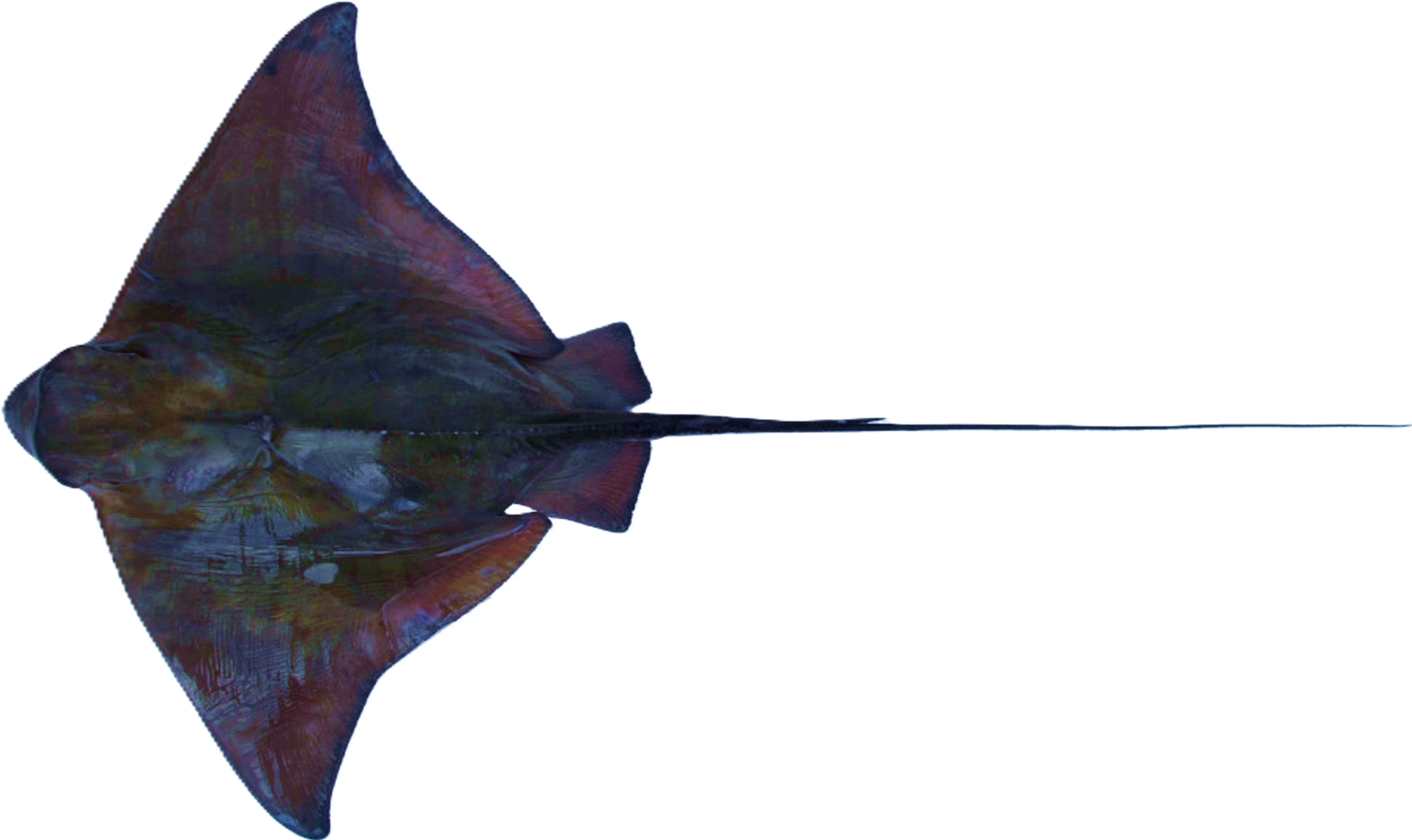 Myliobatis |
M. foxhillsensis (?)643Hoganson, J.W., Erickson, J.M. & Holland, F.D., Jr. (2019). Chondrichthyan and Osteichthyan Paleofaunas from the Cretaceous (Late Maastrichtian) Fox Hills Formation of North Dakota, USA: Paleoecology, Paleogeography, and Extinction. Bulletins of American Paleontology 398: 1–94. doi:10.32857/bap.2019.398 | Fox Hills Formation | USA (North Dakota) | ca. 72–68 Ma | selten | Myliobatidae |
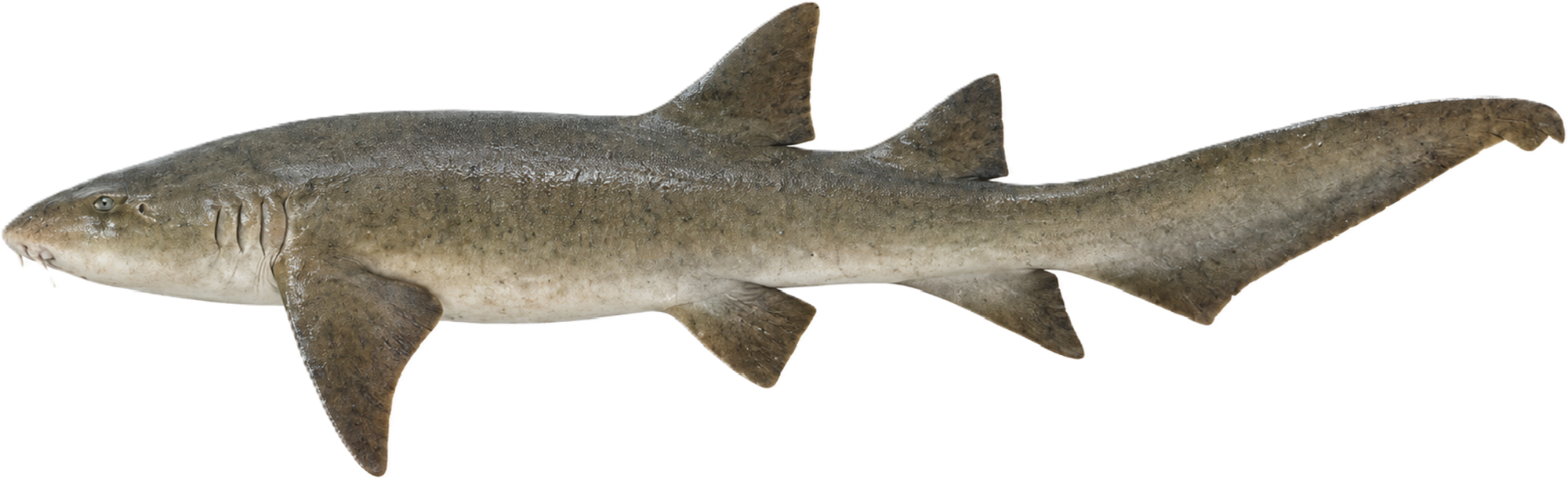 Nebrius |
N. sp.644Case, G. R. & Cappetta, H. (1997). A new selachian fauna from the Late Maastrichtian of Texas (Upper Cretaceous/Navarroan; Kemp Formation). Münchner Geowissenschaftliche Abhandlungen, Reihe A 34, 131–189 | Kemp Clay | USA (Texas) | 68–66 Ma | selten | Ginglymostomatidae (Ammenhai) |
 |
Odontaspididae indet.645Nguyen, C. K. & Stidham, T. (2025). A taxonomically and ecologically diverse marine vertebrate assemblage at the end of the Cretaceous in Texas (USA). Geological Society of America Abstracts with Programs, 57(6). doi:10.1130/abs/2025AM-8784 | Corsicana Marl | USA (Texas) | 68–66 Ma | selten | unbestimmte Sandhaie |
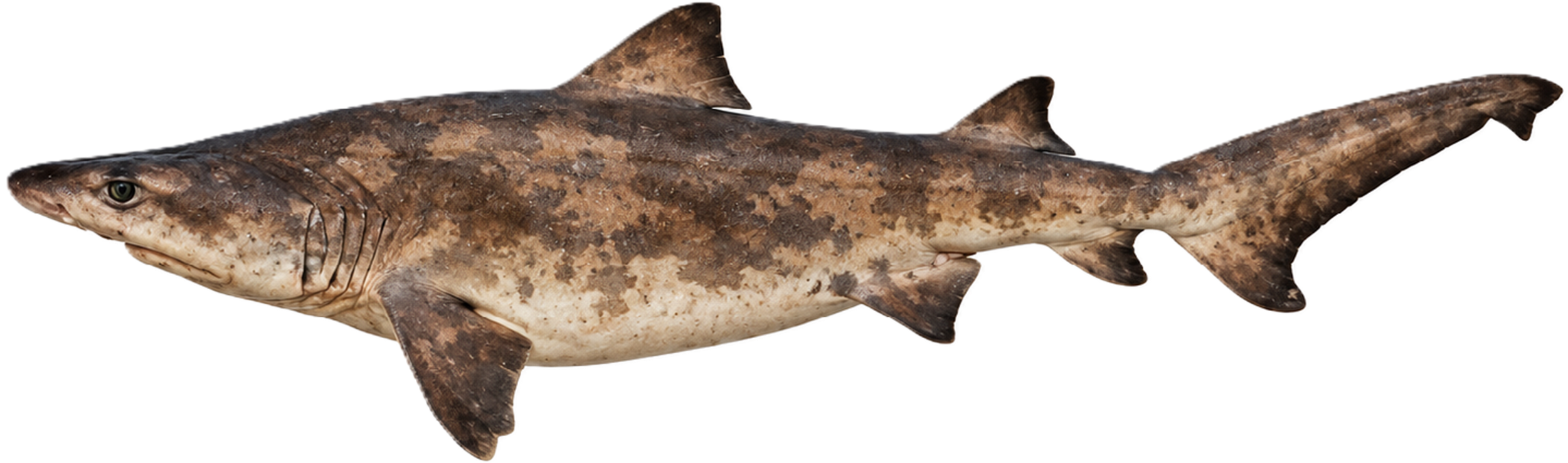 Odontaspis |
O. aculeatus646Becker, M. A., Chamberlain, J. A. Jr. & Wolf, G. E. (2006). Chondrichthyans from the Arkadelphia Formation (Upper Cretaceous: Upper Maastrichtian) of Hot Spring County, Arkansas. Journal of Paleontology, 80(4), 700–716. doi:10.1666/0022-3360(2006)80[700:CFTAFU]2.0.CO;2647Case, G. R. & Cappetta, H. (1997). A new selachian fauna from the Late Maastrichtian of Texas (Upper Cretaceous/Navarroan; Kemp Formation). Münchner Geowissenschaftliche Abhandlungen, Reihe A 34, 131–189648Hoganson, J.W., Erickson, J.M. & Holland, F.D., Jr. (2019). Chondrichthyan and Osteichthyan Paleofaunas from the Cretaceous (Late Maastrichtian) Fox Hills Formation of North Dakota, USA: Paleoecology, Paleogeography, and Extinction. Bulletins of American Paleontology 398: 1–94. doi:10.32857/bap.2019.398649Hoganson, J.W., Erickson, J.M. & Everhart, M.J. (2022). First Report of Elasmobranchii and Osteichthyans from the Fox Hills Formation (Late Cretaceous), Poison Springs Locality, Northeastern Colorado. Transactions of the Kansas Academy of Science 125(3–4): 195–232. doi:10.1660/062.125.0310650Becker, M.A., Chamberlain, J.A., Jr. & Terry, D.O., Jr. (2004). Chondrichthyans from the Fairpoint Member of the Fox Hills Formation (Maastrichtian), Meade County, South Dakota. Journal of Vertebrate Paleontology 24(4): 780–793. doi:10.1671/0272-4634(2004)024[0780:CFTFMO]2.0.CO;2 | Arkadelphia Marl Kemp Clay Fox Hills Formation |
USA (Arkansas, Colorado, North Dakota, South Dakota, Texas) | 75–66 Ma (Gattung 137 Ma bis heute) | häufig | Odontaspididae (Sandhai) |
 |
Orectolobiformes indet.651Becker, M.A., Chamberlain, J.A., Jr. & Terry, D.O., Jr. (2004). Chondrichthyans from the Fairpoint Member of the Fox Hills Formation (Maastrichtian), Meade County, South Dakota. Journal of Vertebrate Paleontology 24(4): 780–793. doi:10.1671/0272-4634(2004)024[0780:CFTFMO]2.0.CO;2652Cicimurri, D.J. (1998). Fossil elasmobranchs of the Cretaceous System (Neocomian–Maastrichtian), Black Hills region, South Dakota and Wyoming. M.S. thesis, South Dakota School of Mines and Technology, Rapid City653Nguyen, C. K. & Stidham, T. (2025). A taxonomically and ecologically diverse marine vertebrate assemblage at the end of the Cretaceous in Texas (USA). Geological Society of America Abstracts with Programs, 57(6). doi:10.1130/abs/2025AM-8784 | Corsicana Marl, Fox Hills Formation | USA (South Dakota, Texas) | ca. 69–66Ma | selten | unbestimmte Teppichhaie |
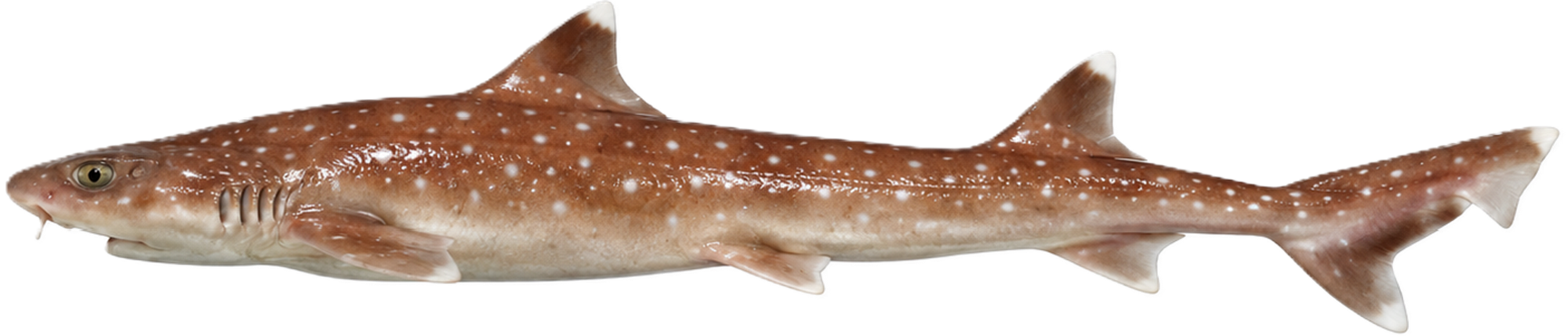 Palaeogaleus |
P. navarroensis654Case, G. R. & Cappetta, H. (1997). A new selachian fauna from the Late Maastrichtian of Texas (Upper Cretaceous/Navarroan; Kemp Formation). Münchner Geowissenschaftliche Abhandlungen, Reihe A 34, 131–189655Hoganson, J.W., Erickson, J.M. & Holland, F.D., Jr. (2019). Chondrichthyan and Osteichthyan Paleofaunas from the Cretaceous (Late Maastrichtian) Fox Hills Formation of North Dakota, USA: Paleoecology, Paleogeography, and Extinction. Bulletins of American Paleontology 398: 1–94. doi:10.32857/bap.2019.398656Hoganson, J.W., Erickson, J.M. & Everhart, M.J. (2022). First Report of Elasmobranchii and Osteichthyans from the Fox Hills Formation (Late Cretaceous), Poison Springs Locality, Northeastern Colorado. Transactions of the Kansas Academy of Science 125(3–4): 195–232. doi:10.1660/062.125.0310 P. sp.657Becker, M.A., Chamberlain, J.A., Jr. & Terry, D.O., Jr. (2004). Chondrichthyans from the Fairpoint Member of the Fox Hills Formation (Maastrichtian), Meade County, South Dakota. Journal of Vertebrate Paleontology 24(4): 780–793. doi:10.1671/0272-4634(2004)024[0780:CFTFMO]2.0.CO;2 |
Kemp Clay Fox Hills Formation |
USA (Colorado, North Dakota, South Dakota, Texas) | 75–66 Ma | selten | Triakidae (Glattthai) |
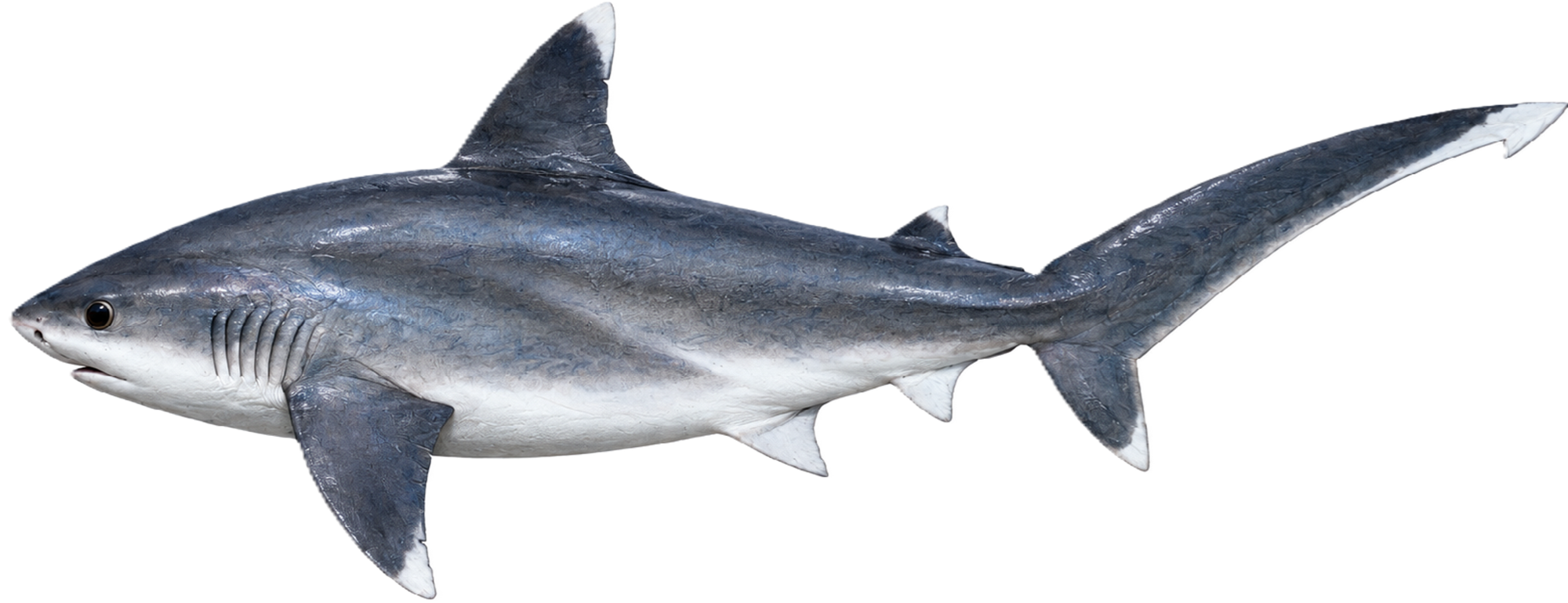 Paranomotodon |
P. angustidens658Ikejiri, T. et al. (2013). An overview of Late Cretaceous vertebrates from Alabama. Bulletin of the Alabama Museum of Natural History 31(1), 46–71. Appendix 1, S. 71; Tabelle 5, S. 55. Prairie Bluff Chalk. Publizierte formationsbezogene Faunenliste. Appendix 1, S. 71, ausdrücklich Prairie Bluff Chalk. Quelle659Ebersole, J. A. et al. (2025). Cretaceous Fishes of Alabama: Paranomotodon version 2. In: Ebersole, J. A. (Hrsg.), Fossil Fishes of Alabama. McWane Science Center. Prairie Bluff Chalk. Publizierte formationsbezogene Faunenliste. Appendix 1, S. 71, ausdrücklich Prairie Bluff Chalk. doi:10.69737/DWAX4472 P. toddi660Case, G. R. & Cappetta, H. (1997). A new selachian fauna from the Late Maastrichtian of Texas (Upper Cretaceous/Navarroan; Kemp Formation). Münchner Geowissenschaftliche Abhandlungen, Reihe A 34, 131–189661Hoganson, J. W., Erickson, J. M. & Holland, F. D., Jr. (2019). Chondrichthyan and Osteichthyan Paleofaunas from the Cretaceous (Late Maastrichtian) Fox Hills Formation of North Dakota, USA: Paleoecology, Paleogeography, and Extinction. Bulletins of American Paleontology 398, 1–96 doi:10.32857/bap.2019.398662Hoganson, J.W., Erickson, J.M. & Holland, F.D., Jr. (2019). Chondrichthyan and Osteichthyan Paleofaunas from the Cretaceous (Late Maastrichtian) Fox Hills Formation of North Dakota, USA: Paleoecology, Paleogeography, and Extinction. Bulletins of American Paleontology 398: 1–94. doi:10.32857/bap.2019.398 |
Fox Hills Formation Kemp Clay Prairie Bluff Chalk |
USA (Alabama, North Dakota, Texas) | 72–66 Ma | häufig | Alopiidae (Fuchshai); synonym zu Anomotodon toddi |
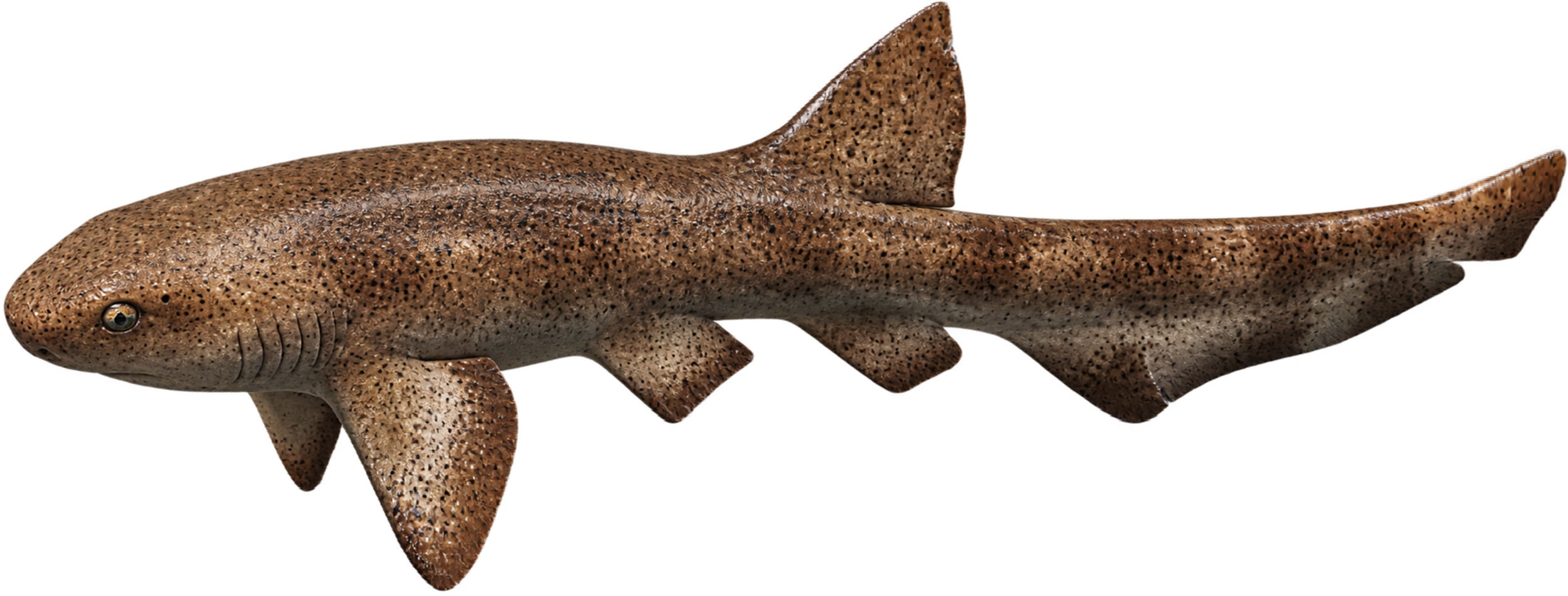 Paraorthacodus |
P. andersoni663Hoganson, J.W., Erickson, J.M. & Holland, F.D., Jr. (2019). Chondrichthyan and Osteichthyan Paleofaunas from the Cretaceous (Late Maastrichtian) Fox Hills Formation of North Dakota, USA: Paleoecology, Paleogeography, and Extinction. Bulletins of American Paleontology 398: 1–94. doi:10.32857/bap.2019.398 | Fox Hills Formation | USA (North Dakota) | ca. 72–68 Ma | sehr häufig | Paraorthacodontidae |
 |
Parascylliidae indet.664Nguyen, C. K. & Stidham, T. (2025). A taxonomically and ecologically diverse marine vertebrate assemblage at the end of the Cretaceous in Texas (USA). Geological Society of America Abstracts with Programs, 57(6). doi:10.1130/abs/2025AM-8784 | Corsicana Marl | USA (Texas) | 68–66 Ma | selten | unbestimmte Kragenteppichhaie |
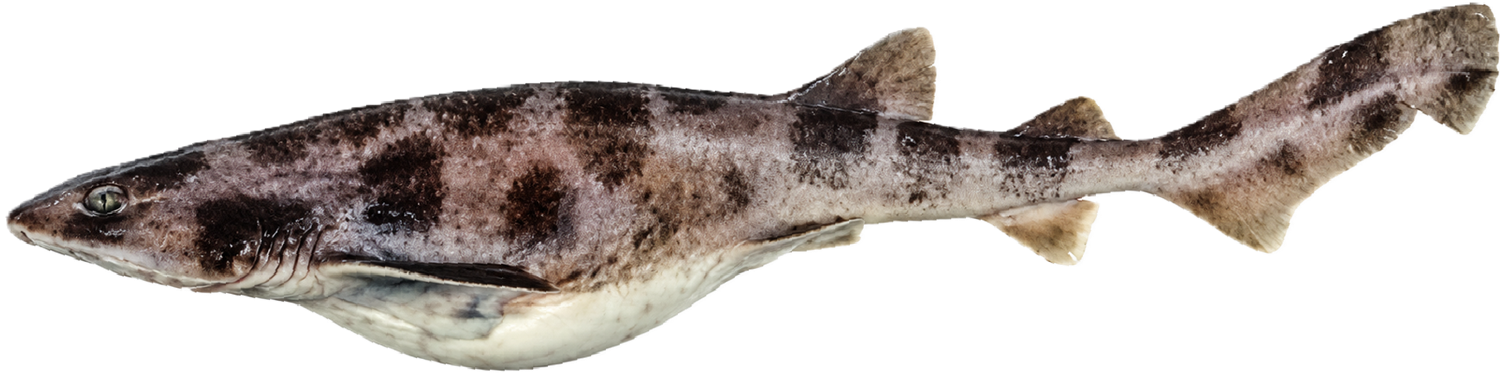 Platyrhizoscyllium |
P. jaegeri (?)665Adnet, S. (2006). Nouvelles faunes de sélaciens (Elasmobranchii, Neoselachii) de l’Éocène moyen des Landes (Sud-Ouest, France). Implication dans la connaissance des communautés de sélaciens d’eaux profondes. Palaeo Ichthyologica, 10, 1–128.666Nguyen, C. K. & Stidham, T. (2025). A taxonomically and ecologically diverse marine vertebrate assemblage at the end of the Cretaceous in Texas (USA). Geological Society of America Abstracts with Programs, 57(6). doi:10.1130/abs/2025AM-8784 | Corsicana Marl | USA (Texas) | 68–66 Ma (Gattung bis 41 Ma) | selten | Scyliorhinidae (?) (Katzenhai) |
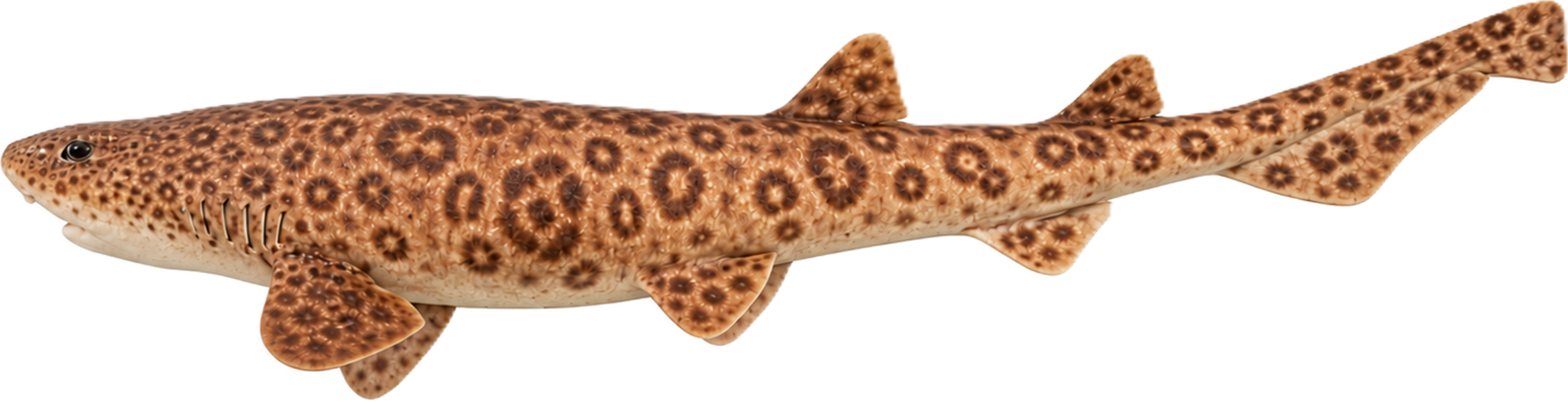 Plicatoscyllium |
P. antiquum667Case, G. R. & Cappetta, H. (1997). A new selachian fauna from the Late Maastrichtian of Texas (Upper Cretaceous/Navarroan; Kemp Formation). Münchner Geowissenschaftliche Abhandlungen, Reihe A 34, 131–189 P. cf. derameei (?)668Becker, M. A., Chamberlain, J. A. Jr. & Wolf, G. E. (2006). Chondrichthyans from the Arkadelphia Formation (Upper Cretaceous: Upper Maastrichtian) of Hot Spring County, Arkansas. Journal of Paleontology, 80(4), 700–716. doi:10.1666/0022-3360(2006)80[700:CFTAFU]2.0.CO;2 P. derameei669Case, G. R. & Cappetta, H. (1997). A new selachian fauna from the Late Maastrichtian of Texas (Upper Cretaceous/Navarroan; Kemp Formation). Münchner Geowissenschaftliche Abhandlungen, Reihe A 34, 131–189670Hoganson, J.W., Erickson, J.M. & Holland, F.D., Jr. (2019). Chondrichthyan and Osteichthyan Paleofaunas from the Cretaceous (Late Maastrichtian) Fox Hills Formation of North Dakota, USA: Paleoecology, Paleogeography, and Extinction. Bulletins of American Paleontology 398: 1–94. doi:10.32857/bap.2019.398671Hoganson, J.W., Erickson, J.M. & Everhart, M.J. (2022). First Report of Elasmobranchii and Osteichthyans from the Fox Hills Formation (Late Cretaceous), Poison Springs Locality, Northeastern Colorado. Transactions of the Kansas Academy of Science 125(3–4): 195–232. doi:10.1660/062.125.0310 P. sp.672Case, G. R. & Cappetta, H. (1997). A new selachian fauna from the Late Maastrichtian of Texas (Upper Cretaceous/Navarroan; Kemp Formation). Münchner Geowissenschaftliche Abhandlungen, Reihe A 34, 131–189 |
Arkadelphia Marl Kemp Clay Fox Hills Formation |
USA (Arkansas, Colorado, North Dakota, Texas) | 75–66 Ma (Gattung bis 38 Ma) | häufig | Plicatoscylliidae (Katzenhai) |
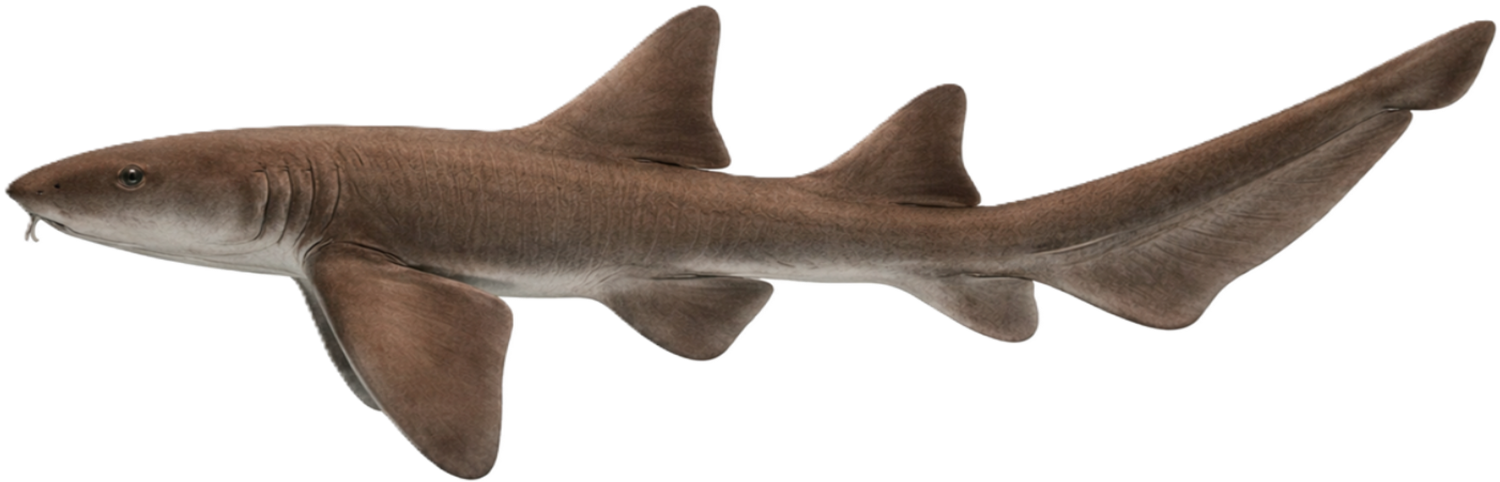 Protoginglymostoma |
P. estesi673Cook, T. D. et al. (2014). Euselachians from the freshwater deposits of the Hell Creek Formation of Montana. In G. P. Wilson et al. (Hrsg.), Through the End of the Cretaceous in the Type Locality of the Hell Creek Formation in Montana and Adjacent Areas. Geological Society of America Special Paper 503, 229–246. doi:10.1130/2014.2503(08) | Hell Creek Formation | USA (Montana) | 68–66 Ma (Gattung bis 38 Ma) | selten | Ginglymostomatidae (Ammenhai) |
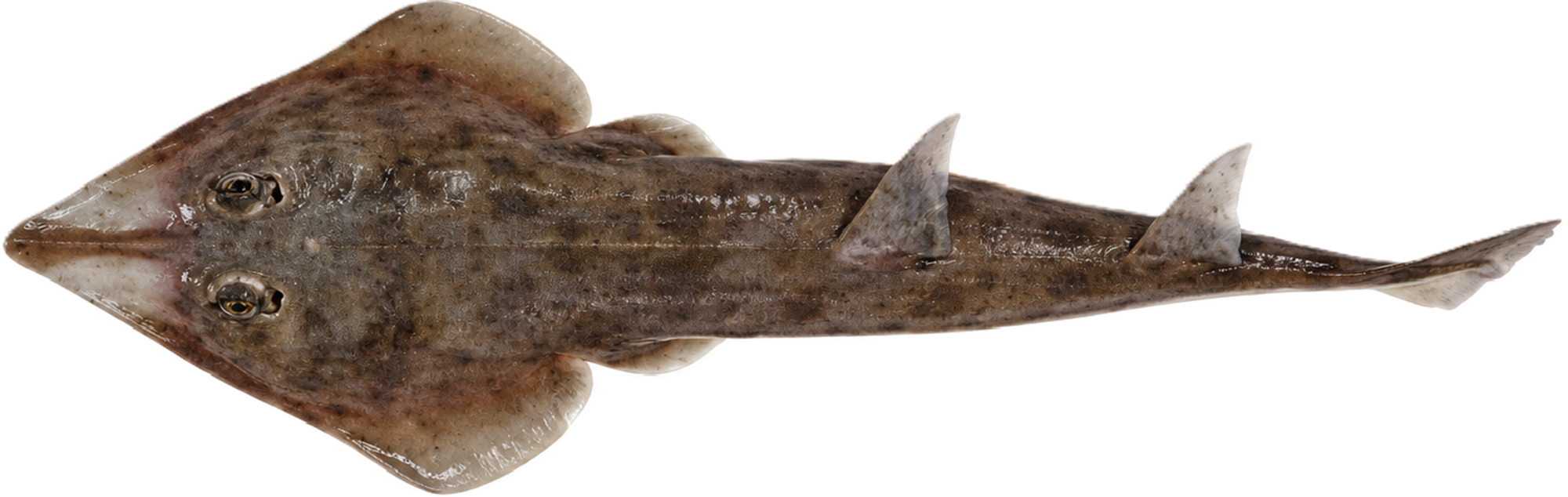 Protoplatyrhina |
P. renae674Case, G. R. & Cappetta, H. (1997). A new selachian fauna from the Late Maastrichtian of Texas (Upper Cretaceous/Navarroan; Kemp Formation). Münchner Geowissenschaftliche Abhandlungen, Reihe A 34, 131–189675Hoganson, J.W., Erickson, J.M. & Holland, F.D., Jr. (2019). Chondrichthyan and Osteichthyan Paleofaunas from the Cretaceous (Late Maastrichtian) Fox Hills Formation of North Dakota, USA: Paleoecology, Paleogeography, and Extinction. Bulletins of American Paleontology 398: 1–94. doi:10.32857/bap.2019.398676Becker, M.A., Chamberlain, J.A., Jr. & Terry, D.O., Jr. (2004). Chondrichthyans from the Fairpoint Member of the Fox Hills Formation (Maastrichtian), Meade County, South Dakota. Journal of Vertebrate Paleontology 24(4): 780–793. doi:10.1671/0272-4634(2004)024[0780:CFTFMO]2.0.CO;2 | Kemp Clay Fox Hills Formation |
USA (North Dakota, South Dakota, Texas) | 72–66 Ma | selten | Rhinobatidae (Gitarrenrochen) |
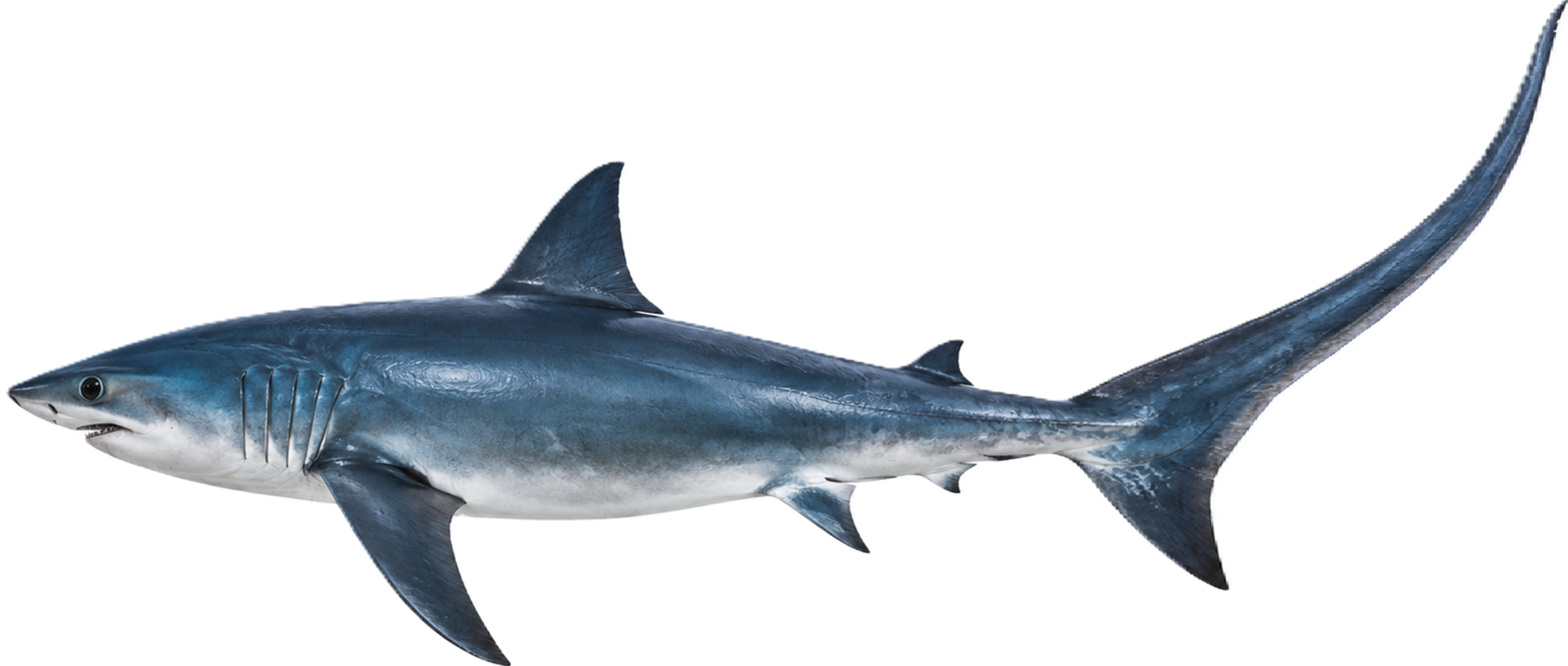 Pseudocorax |
P. granti677Case, G. R. & Cappetta, H. (1997). A new selachian fauna from the Late Maastrichtian of Texas (Upper Cretaceous/Navarroan; Kemp Formation). Münchner Geowissenschaftliche Abhandlungen, Reihe A 34, 131–189 P. laevis678Ikejiri, T. et al. (2013). An overview of Late Cretaceous vertebrates from Alabama. Bulletin Alabama Museum of Natural History, 31(1), 46–71. Quelle |
Kemp Clay Ripley Formation |
USA (Alabama, Texas) | 75–66 Ma | selten | Pseudocoracidae (Makrelenhai) |
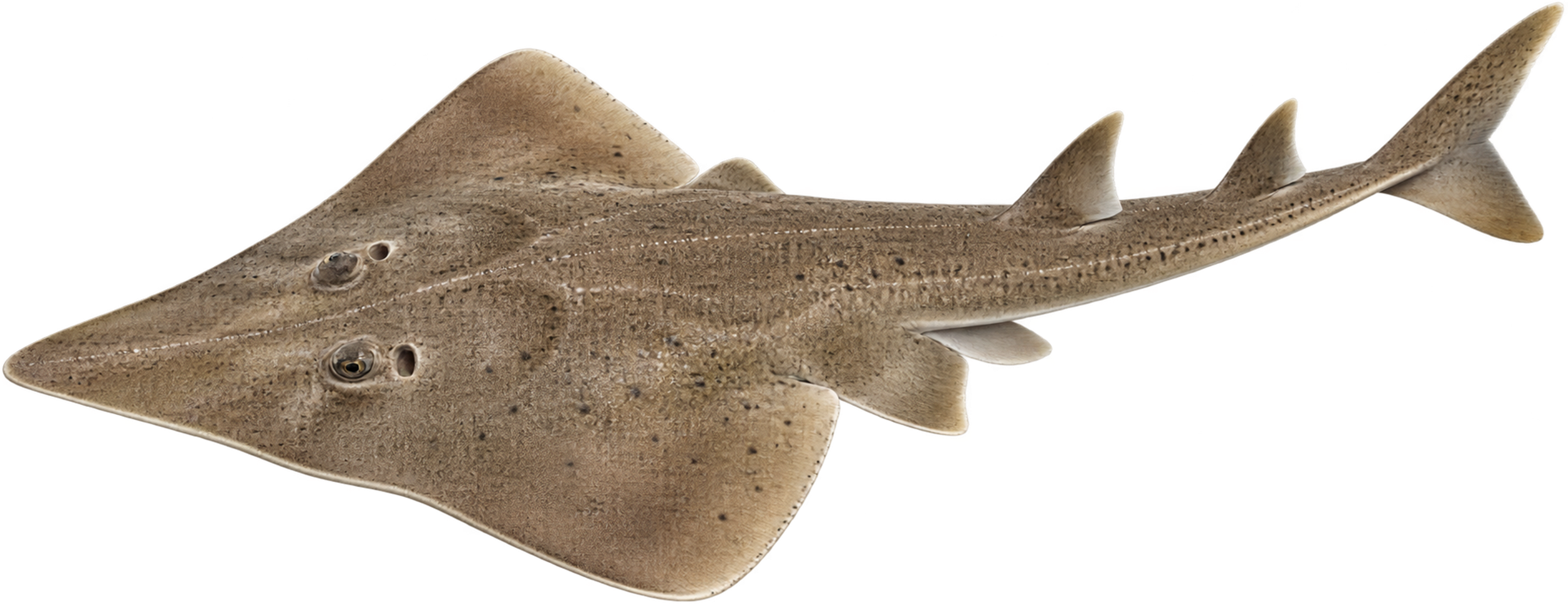 Pseudohypolophus |
P. mcnultyi679Hoganson, J.W., Erickson, J.M. & Holland, F.D., Jr. (2019). Chondrichthyan and Osteichthyan Paleofaunas from the Cretaceous (Late Maastrichtian) Fox Hills Formation of North Dakota, USA: Paleoecology, Paleogeography, and Extinction. Bulletins of American Paleontology 398: 1–94. doi:10.32857/bap.2019.398680Hoganson, J.W., Erickson, J.M. & Everhart, M.J. (2022). First Report of Elasmobranchii and Osteichthyans from the Fox Hills Formation (Late Cretaceous), Poison Springs Locality, Northeastern Colorado. Transactions of the Kansas Academy of Science 125(3–4): 195–232. doi:10.1660/062.125.0310681Becker, M.A., Chamberlain, J.A., Jr. & Terry, D.O., Jr. (2004). Chondrichthyans from the Fairpoint Member of the Fox Hills Formation (Maastrichtian), Meade County, South Dakota. Journal of Vertebrate Paleontology 24(4): 780–793. doi:10.1671/0272-4634(2004)024[0780:CFTFMO]2.0.CO;2682Ikejiri, T. et al. (2013). An overview of Late Cretaceous vertebrates from Alabama. Bulletin of the Alabama Museum of Natural History 31(1), 46–71. Appendix 1, S. 71; Tabelle 5, S. 55. Prairie Bluff Chalk. Publizierte formationsbezogene Faunenliste. Appendix 1, S. 71, ausdrücklich Prairie Bluff Chalk. Quelle | Fox Hills Formation Prairie Bluff Chalk |
USA (Alabama, Colorado, North Dakota, South Dakota) | ca. 75–66 Ma | selten | Rhinobatoidei (Geigenrochen) |
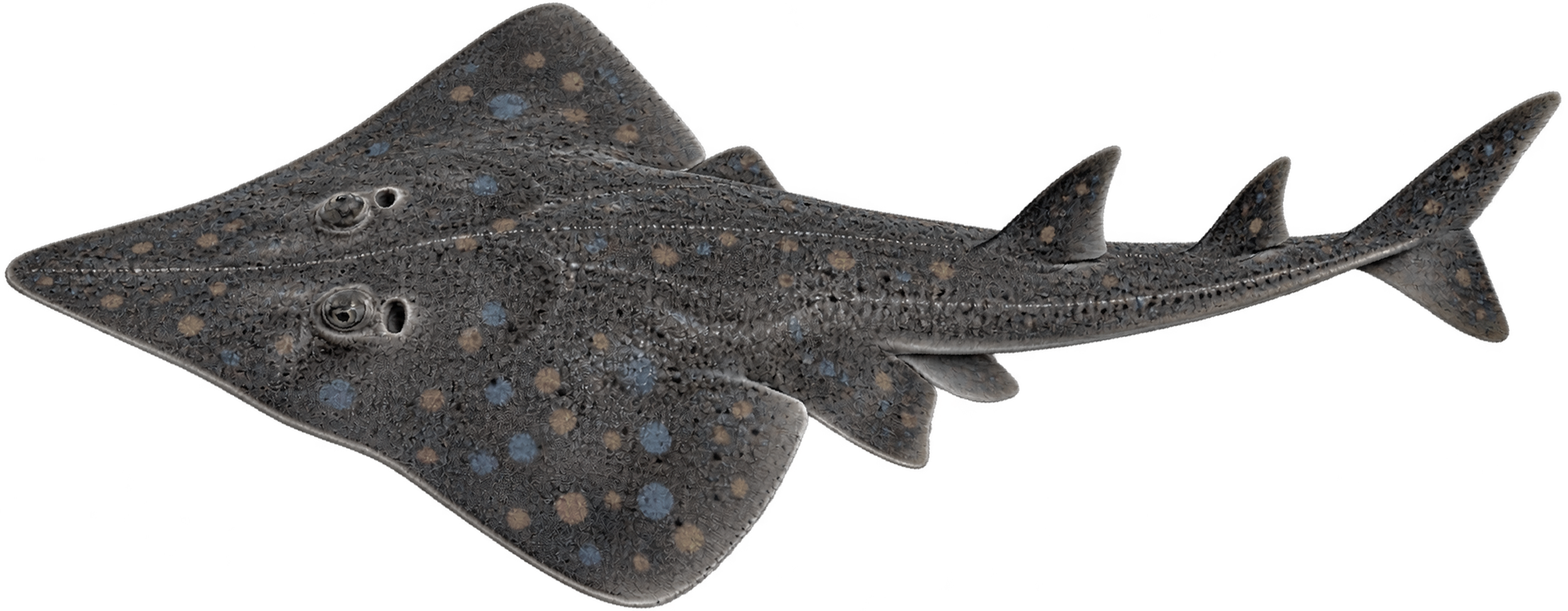 Pseudomyledaphus |
P. sp.683Hoganson, J.W., Erickson, J.M. & Everhart, M.J. (2022). First Report of Elasmobranchii and Osteichthyans from the Fox Hills Formation (Late Cretaceous), Poison Springs Locality, Northeastern Colorado. Transactions of the Kansas Academy of Science 125(3–4): 195–232. doi:10.1660/062.125.0310 | Fox Hills Formation | USA (Colorado) | ca. 75–69 Ma | sehr häufig | Rhinobatoidei (Geigenrochen) |
| Ptychodus | P. mortoni684Ikejiri, T. et al. (2013). An overview of Late Cretaceous vertebrates from Alabama. Bulletin of the Alabama Museum of Natural History 31(1), 46–71. Appendix 1, S. 71; Tabelle 5, S. 55. Prairie Bluff Chalk. Historische Formationsmeldung; jüngere Herkunftsrevision. Appendix 1, S. 71, ausdrücklich Prairie Bluff Chalk. Quelle685Ebersole, J. A. et al. (2025). Cretaceous Fishes of Alabama: Ptychodus version 2. In: Ebersole, J. A. (Hrsg.), Fossil Fishes of Alabama. McWane Science Center, 3(7), 1–10. Prairie Bluff Chalk. Historische Formationsmeldung; jüngere Herkunftsrevision. Appendix 1, S. 71, ausdrücklich Prairie Bluff Chalk. doi:10.69737/JLEE8992686Paleobiology Database (2026). Gattungsrahmen; Abfrage vom 24. Oktober 2026. Gerundeter Gattungsrahmen für Ptychodus; erweitert um die hier dokumentierte, gegebenenfalls strittige Prairie-Bluff-Meldung. Quelle | Prairie Bluff Chalk | USA (Alabama) | 165–66 Ma | nicht quantifiziert | Ptychodontidae (Hai) |
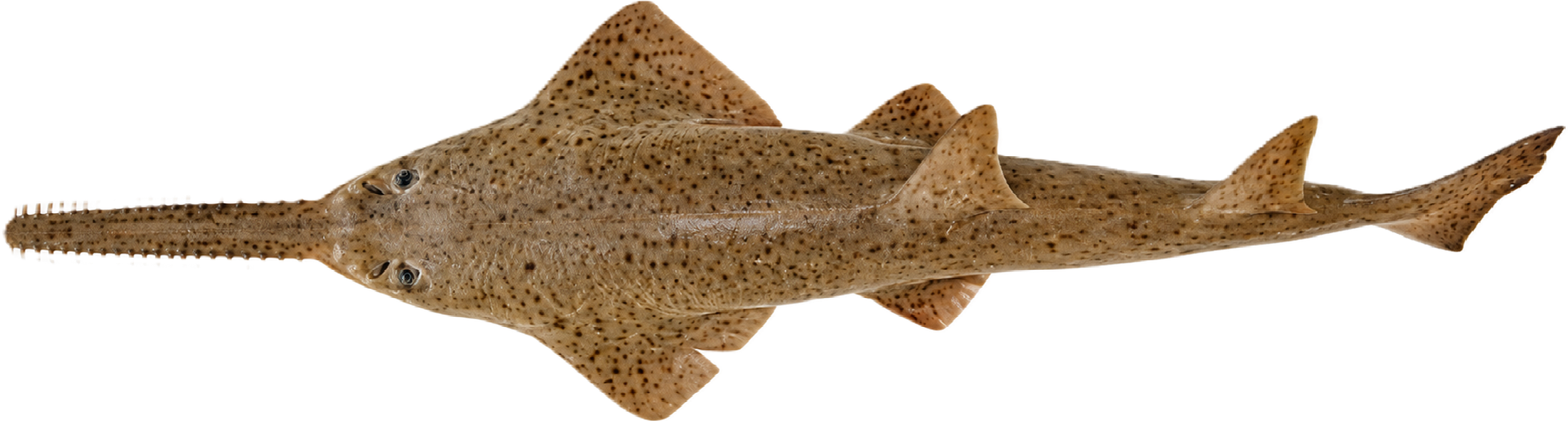 Ptychotrygon |
P. aff. triangularis687Stringer, G. L. (1991). Upper Cretaceous (Maastrichtian) teleostean otoliths from the Ripley Formation, Union County, Mississippi. Mississippi Geology, 11(3), 9–20. Quelle P. cf. vermiculata (?)688Becker, M. A., Chamberlain, J. A. Jr. & Wolf, G. E. (2006). Chondrichthyans from the Arkadelphia Formation (Upper Cretaceous: Upper Maastrichtian) of Hot Spring County, Arkansas. Journal of Paleontology, 80(4), 700–716. doi:10.1666/0022-3360(2006)80[700:CFTAFU]2.0.CO;2689Becker, M.A., Chamberlain, J.A., Jr. & Terry, D.O., Jr. (2004). Chondrichthyans from the Fairpoint Member of the Fox Hills Formation (Maastrichtian), Meade County, South Dakota. Journal of Vertebrate Paleontology 24(4): 780–793. doi:10.1671/0272-4634(2004)024[0780:CFTFMO]2.0.CO;2690Hoganson, J.W., Erickson, J.M. & Holland, F.D., Jr. (2019). Chondrichthyan and Osteichthyan Paleofaunas from the Cretaceous (Late Maastrichtian) Fox Hills Formation of North Dakota, USA: Paleoecology, Paleogeography, and Extinction. Bulletins of American Paleontology 398: 1–94. doi:10.32857/bap.2019.398 P. greybullensis691Hoganson, J.W., Erickson, J.M. & Holland, F.D., Jr. (2019). Chondrichthyan and Osteichthyan Paleofaunas from the Cretaceous (Late Maastrichtian) Fox Hills Formation of North Dakota, USA: Paleoecology, Paleogeography, and Extinction. Bulletins of American Paleontology 398: 1–94. doi:10.32857/bap.2019.398692Hoganson, J.W., Erickson, J.M. & Everhart, M.J. (2022). First Report of Elasmobranchii and Osteichthyans from the Fox Hills Formation (Late Cretaceous), Poison Springs Locality, Northeastern Colorado. Transactions of the Kansas Academy of Science 125(3–4): 195–232. doi:10.1660/062.125.0310 P. vermiculata693Case, G. R. & Cappetta, H. (1997). A new selachian fauna from the Late Maastrichtian of Texas (Upper Cretaceous/Navarroan; Kemp Formation). Münchner Geowissenschaftliche Abhandlungen, Reihe A 34, 131–189 P. winni694Case, G. R. & Cappetta, H. (1997). A new selachian fauna from the Late Maastrichtian of Texas (Upper Cretaceous/Navarroan; Kemp Formation). Münchner Geowissenschaftliche Abhandlungen, Reihe A 34, 131–189695Hoganson, J.W., Erickson, J.M. & Holland, F.D., Jr. (2019). Chondrichthyan and Osteichthyan Paleofaunas from the Cretaceous (Late Maastrichtian) Fox Hills Formation of North Dakota, USA: Paleoecology, Paleogeography, and Extinction. Bulletins of American Paleontology 398: 1–94. doi:10.32857/bap.2019.398696Hoganson, J.W., Erickson, J.M. & Everhart, M.J. (2022). First Report of Elasmobranchii and Osteichthyans from the Fox Hills Formation (Late Cretaceous), Poison Springs Locality, Northeastern Colorado. Transactions of the Kansas Academy of Science 125(3–4): 195–232. doi:10.1660/062.125.0310 P. sp.697González-Barba, G. et al. (2010). Maastrichtian sharks of the Escondido Formation in the Sabinas Basin, northern Coahuila. Fifth International Meeting on Mesozoic Fishes: Abstract Book and Field Guides, 46698Hoganson, J.W., Erickson, J.M. & Everhart, M.J. (2022). First Report of Elasmobranchii and Osteichthyans from the Fox Hills Formation (Late Cretaceous), Poison Springs Locality, Northeastern Colorado. Transactions of the Kansas Academy of Science 125(3–4): 195–232. doi:10.1660/062.125.0310 |
Arkadelphia Marl Escondido Formation Fox Hills Formation Kemp Clay Ripley Formation |
USA (Arkansas, Colorado, Mississippi, North Dakota, South Dakota, Texas); Mexiko (Coahuila) | 75–66 Ma | sehr häufig | Ptychotrygonidae (Scheinsägerochen) |
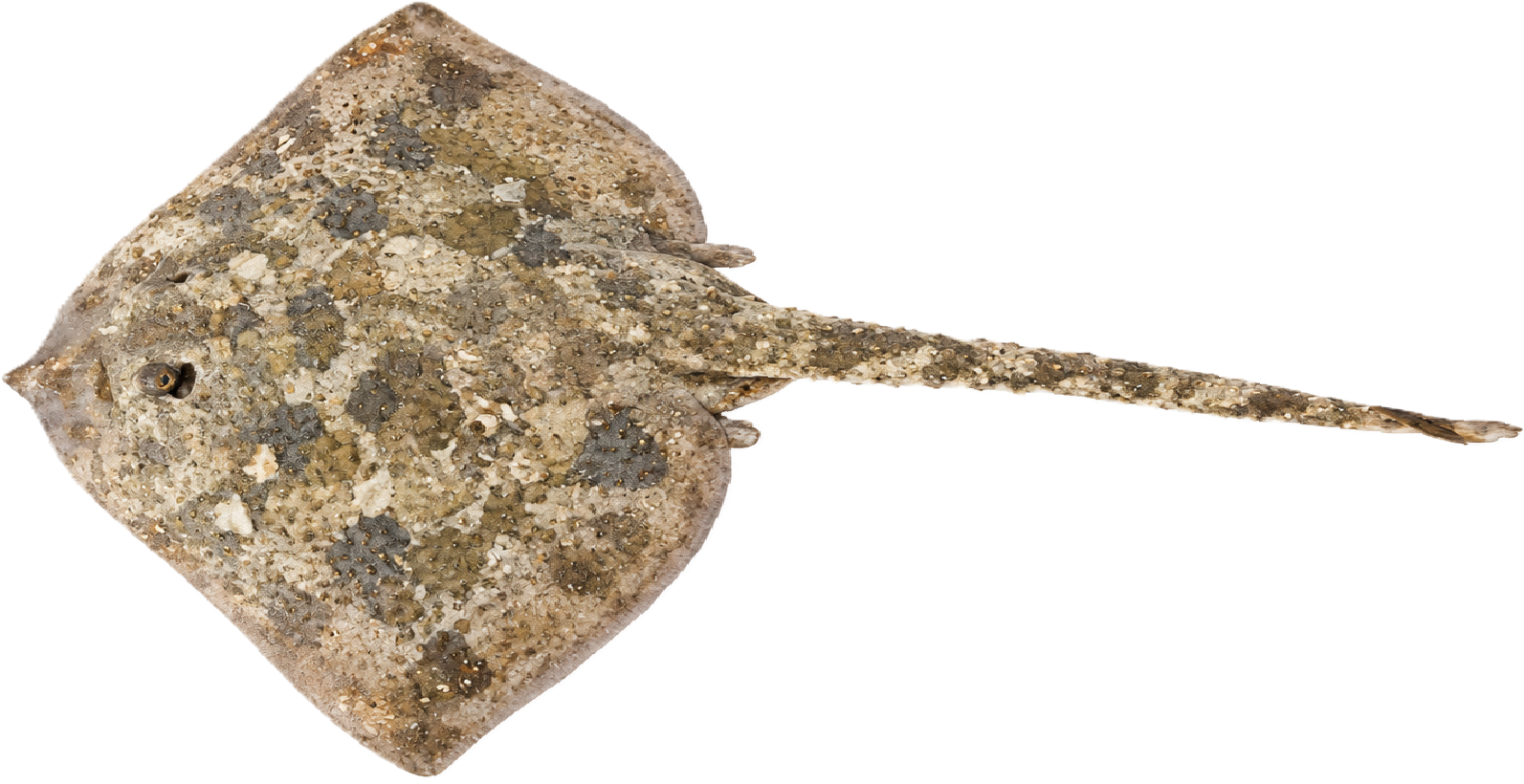 Raja |
R. farishi699Becker, M. A., Chamberlain, J. A. Jr. & Wolf, G. E. (2006). Chondrichthyans from the Arkadelphia Formation (Upper Cretaceous: Upper Maastrichtian) of Hot Spring County, Arkansas. Journal of Paleontology, 80(4), 700–716. doi:10.1666/0022-3360(2006)80[700:CFTAFU]2.0.CO;2700Case, G. R. & Cappetta, H. (1997). A new selachian fauna from the Late Maastrichtian of Texas (Upper Cretaceous/Navarroan; Kemp Formation). Münchner Geowissenschaftliche Abhandlungen, Reihe A 34, 131–189 | Arkadelphia Marl Kemp Clay |
USA (Arkansas, Texas) | 68–66 Ma (Gattung mindestens 72 Ma bis heute) | häufig | Rajidae (Echter Rochen) |
 |
Rajiformes indet.701Parris, D. C. (2006). Chronister site investigations: New information on the Cretaceous of Missouri. In: Field Trip Guidebook – 2006 Association of Missouri Geologists Meeting, 9–13. Quelle702Ikejiri, T. et al. (2013). An overview of Late Cretaceous vertebrates from Alabama. Bulletin Alabama Museum of Natural History, 31(1), 46–71. Quelle703Ikejiri, T. et al. (2013). An overview of Late Cretaceous vertebrates from Alabama. Bulletin of the Alabama Museum of Natural History 31(1), 46–71. Appendix 1, S. 71; Tabelle 5, S. 55. Prairie Bluff Chalk. Unbestimmter Gruppenbeleg. Quelle | Prairie Bluff Chalk Ripley Formation |
USA (Alabama, Missouri) | 75–66 Ma | selten | unbestimmte Rochen |
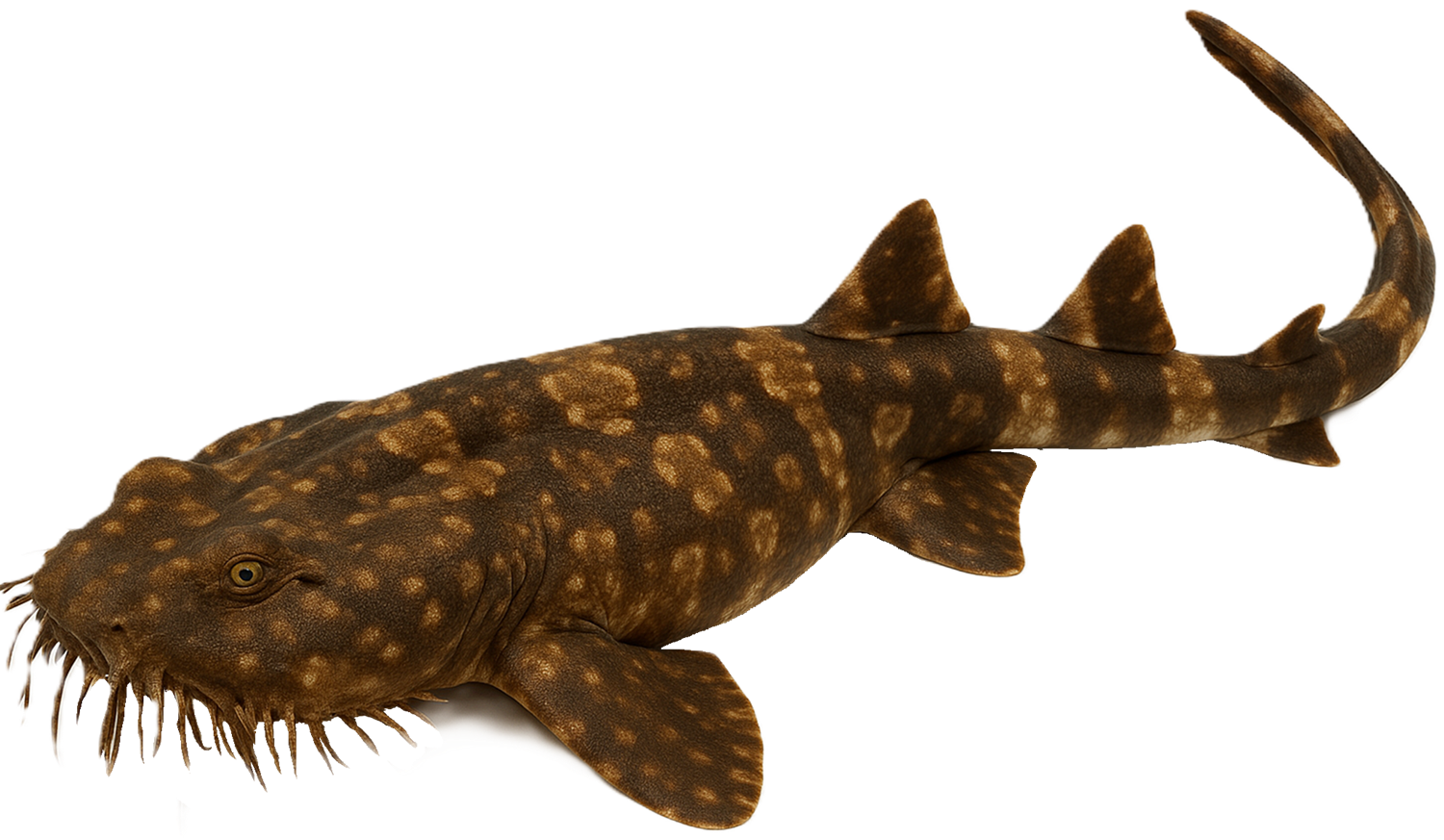 Restesia |
R. americana704Pearson, D. A. et al. (2002). Vertebrate biostratigraphy of the Hell Creek Formation in southwestern North Dakota and northwestern South Dakota. In J. H. Hartman et al. (Hrsg.), The Hell Creek Formation and the Cretaceous–Tertiary Boundary in the Northern Great Plains. Geological Society of America Special Paper 361, 145–167. doi:10.1130/0-8137-2361-2.145705Cook, T. D. et al. (2014). Euselachians from the freshwater deposits of the Hell Creek Formation of Montana. In G. P. Wilson et al. (Hrsg.), Through the End of the Cretaceous in the Type Locality of the Hell Creek Formation in Montana and Adjacent Areas. Geological Society of America Special Paper 503, 229–246. doi:10.1130/2014.2503(08)706Estes, R. (1964). Fossil vertebrates from the Late Cretaceous Lance Formation, eastern Wyoming. University of California Publications in Geological Sciences, 49, 1–180.707Carpenter, K. (1979). Vertebrate fauna of the Laramie Formation (Maastrichtian), Weld County, Colorado. Contributions to Geology, University of Wyoming, 17(1), 37–49.708Wroblewski, A. F. (2026). Systematics and biostratigraphy of non-mammalian vertebrates across the K/Pg transition, southern Wyoming, USA. Journal of Paleontology, 100(1), 222–250. doi:10.1017/jpa.2025.10191 R. monocuspilatus709Wroblewski, A. F. (2026). Systematics and biostratigraphy of non-mammalian vertebrates across the K/Pg transition, southern Wyoming, USA. Journal of Paleontology, 100(1), 222–250. doi:10.1017/jpa.2025.10191 |
Ferris Formation Hell Creek Formation Lance Formation |
USA (North Dakota, Montana, South Dakota, Wyoming, Colorado) | 68–66 Ma | häufig | Orectolobidae (Teppichhai) |
 |
Rhinobatidae indet.710Nguyen, C. K. & Stidham, T. (2025). A taxonomically and ecologically diverse marine vertebrate assemblage at the end of the Cretaceous in Texas (USA). Geological Society of America Abstracts with Programs, 57(6). doi:10.1130/abs/2025AM-8784711Hoganson, J.W., Erickson, J.M. & Holland, F.D., Jr. (2019). Chondrichthyan and Osteichthyan Paleofaunas from the Cretaceous (Late Maastrichtian) Fox Hills Formation of North Dakota, USA: Paleoecology, Paleogeography, and Extinction. Bulletins of American Paleontology 398: 1–94. doi:10.32857/bap.2019.398 | Corsicana Marl, Fox Hills Formation | USA (North Dakota, Texas) | 72–66 Ma | selten | unbestimmte Geigenrochen |
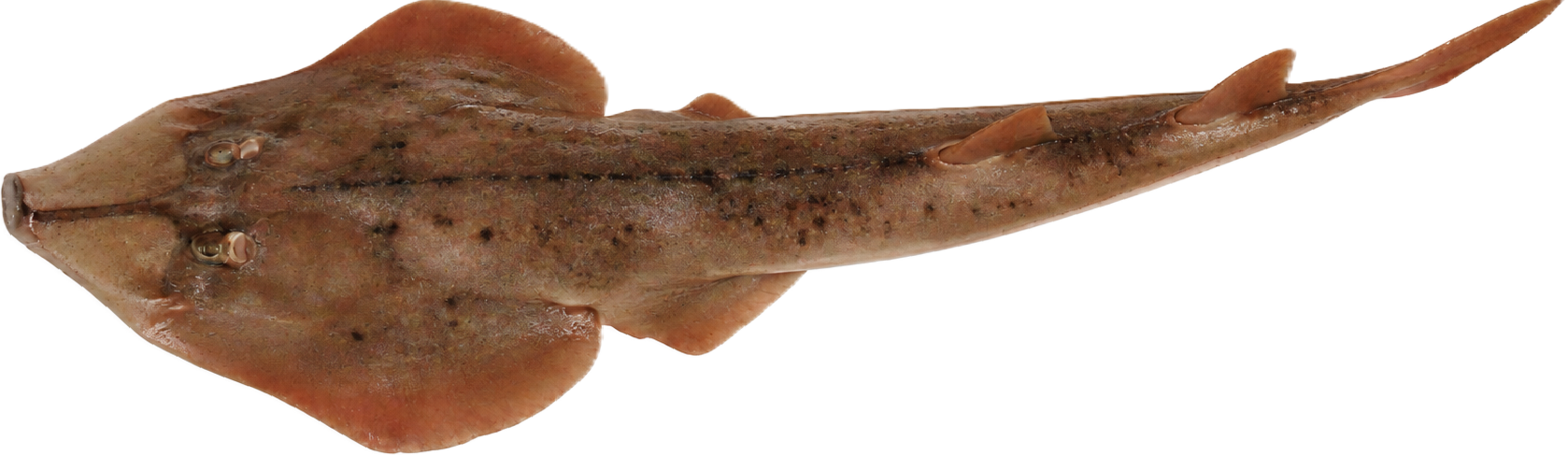 Rhinobatos |
R. casieri712Becker, M. A., Chamberlain, J. A. Jr. & Wolf, G. E. (2006). Chondrichthyans from the Arkadelphia Formation (Upper Cretaceous: Upper Maastrichtian) of Hot Spring County, Arkansas. Journal of Paleontology, 80(4), 700–716. doi:10.1666/0022-3360(2006)80[700:CFTAFU]2.0.CO;2713Ikejiri, T. et al. (2013). An overview of Late Cretaceous vertebrates from Alabama. Bulletin of the Alabama Museum of Natural History 31(1), 46–71. Appendix 1, S. 71; Tabelle 5, S. 55. Prairie Bluff Chalk. Ausdrücklich zweifelhafte Bestimmung. Tabelle 5, S. 55: Rhinobatus casieri, Kpb, Lowndes County. Siehe Erläuterungen unter den Tabellen. Quelle R. craddocki714Case, G. R. & Cappetta, H. (1997). A new selachian fauna from the Late Maastrichtian of Texas (Upper Cretaceous/Navarroan; Kemp Formation). Münchner Geowissenschaftliche Abhandlungen, Reihe A 34, 131–189 R. uvulatus715Case, G. R. & Cappetta, H. (1997). A new selachian fauna from the Late Maastrichtian of Texas (Upper Cretaceous/Navarroan; Kemp Formation). Münchner Geowissenschaftliche Abhandlungen, Reihe A 34, 131–189 |
Arkadelphia Marl Kemp Clay Prairie Bluff Chalk |
USA (Alabama, Arkansas, Texas) | 69–66 Ma (Gattung 149 Ma bis heute) | häufig | Rhinobatidae (Geigenrochen) |
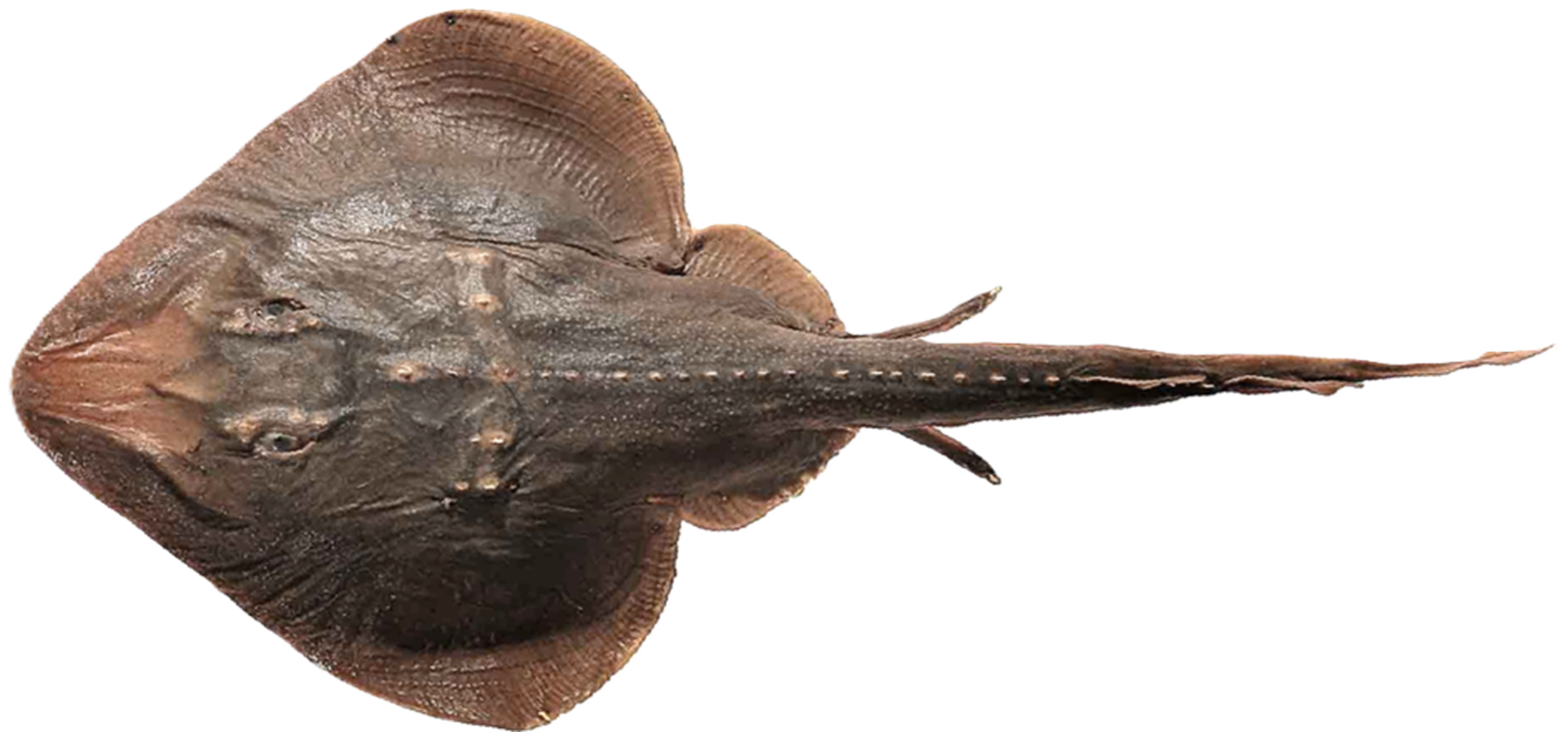 Rhombodus |
R. binkhorsti716Becker, M. A., Chamberlain, J. A. Jr. & Wolf, G. E. (2006). Chondrichthyans from the Arkadelphia Formation (Upper Cretaceous: Upper Maastrichtian) of Hot Spring County, Arkansas. Journal of Paleontology, 80(4), 700–716. doi:10.1666/0022-3360(2006)80[700:CFTAFU]2.0.CO;2717Cicimurri, D. J. & Ebersole, J. A. (2020). First occurrence of a partial dentition of Rhombodus binkhorsti (Batomorphii: Rhombodontidae) in the Americas, with comments on the North American distribution of the species. Paludicola, 13(1), 52–66. Autorenvolltext718Case, G. R. & Cappetta, H. (1997). A new selachian fauna from the Late Maastrichtian of Texas (Upper Cretaceous/Navarroan; Kemp Formation). Münchner Geowissenschaftliche Abhandlungen, Reihe A 34, 131–189719Ebersole, J. A. et al. (2025). Cretaceous Fishes of Alabama: Rhombodus version 2. In: Ebersole, J. A. (Hrsg.), Fossil Fishes of Alabama. McWane Science Center, 3(37), 1–6. doi:10.69737/EPKT4529 R. levis720Hoganson, J.W., Erickson, J.M. & Holland, F.D., Jr. (2019). Chondrichthyan and Osteichthyan Paleofaunas from the Cretaceous (Late Maastrichtian) Fox Hills Formation of North Dakota, USA: Paleoecology, Paleogeography, and Extinction. Bulletins of American Paleontology 398: 1–94. doi:10.32857/bap.2019.398721Hoganson, J.W., Erickson, J.M. & Everhart, M.J. (2022). First Report of Elasmobranchii and Osteichthyans from the Fox Hills Formation (Late Cretaceous), Poison Springs Locality, Northeastern Colorado. Transactions of the Kansas Academy of Science 125(3–4): 195–232. doi:10.1660/062.125.0310722Becker, M.A., Chamberlain, J.A., Jr. & Terry, D.O., Jr. (2004). Chondrichthyans from the Fairpoint Member of the Fox Hills Formation (Maastrichtian), Meade County, South Dakota. Journal of Vertebrate Paleontology 24(4): 780–793. doi:10.1671/0272-4634(2004)024[0780:CFTFMO]2.0.CO;2723Ebersole, J. A. et al. (2025). Cretaceous Fishes of Alabama: Rhombodus version 2. In: Ebersole, J. A. (Hrsg.), Fossil Fishes of Alabama. McWane Science Center, 3(37), 1–6. doi:10.69737/EPKT4529 R. sp. (?)724Case, G. R. & Cappetta, H. (1997). A new selachian fauna from the Late Maastrichtian of Texas (Upper Cretaceous/Navarroan; Kemp Formation). Münchner Geowissenschaftliche Abhandlungen, Reihe A 34, 131–189725Hoganson, J.W., Erickson, J.M. & Holland, F.D., Jr. (2019). Chondrichthyan and Osteichthyan Paleofaunas from the Cretaceous (Late Maastrichtian) Fox Hills Formation of North Dakota, USA: Paleoecology, Paleogeography, and Extinction. Bulletins of American Paleontology 398: 1–94. doi:10.32857/bap.2019.398 |
Arkadelphia Marl Escondido Formation Fox Hills Formation Kemp Clay Ripley Formation |
USA (Alabama, Arkansas, Colorado, Mississippi, North Dakota, South Dakota, Texas) | 75–66 Ma (Gattung bis 59 Ma) | sehr häufig | Rhombodontidae |
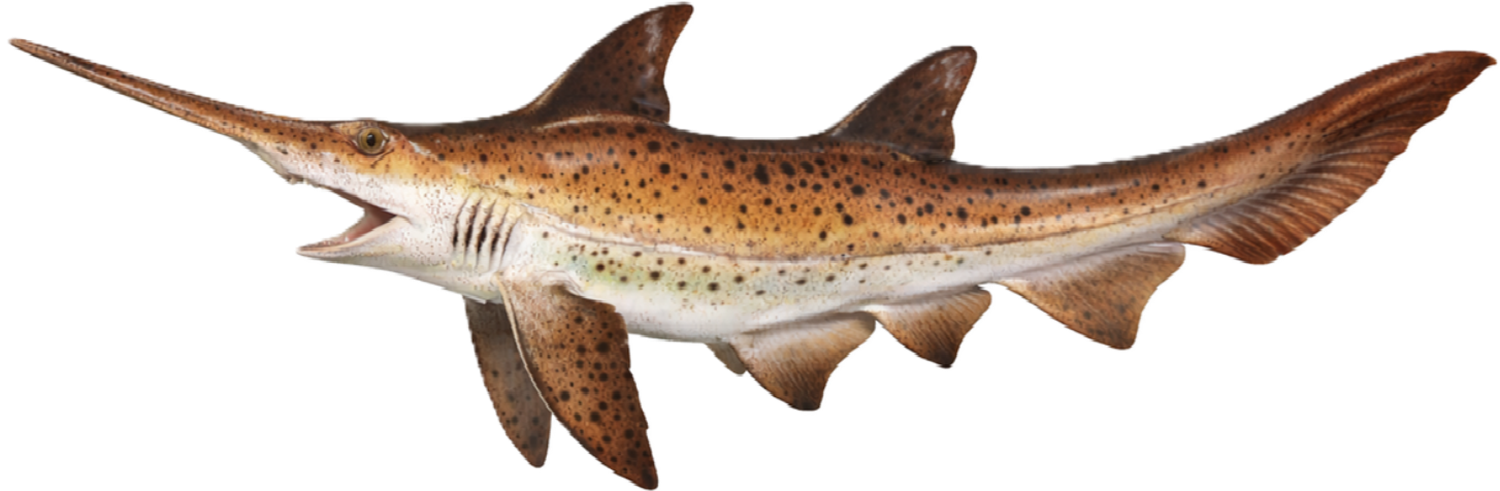 Scapanorhynchus |
S. texanus726Ebersole, J. A. et al. (2025). Cretaceous Fishes of Alabama: Scapanorhynchus version 2. In: Ebersole, J. A. (Hrsg.), Fossil Fishes of Alabama. McWane Science Center, 3(21), 1–7. doi:10.69737/HVKZ5120727Stringer, G. L. (1991). Upper Cretaceous (Maastrichtian) teleostean otoliths from the Ripley Formation, Union County, Mississippi. Mississippi Geology, 11(3), 9–20. Quelle728Ikejiri, T. et al. (2013). An overview of Late Cretaceous vertebrates from Alabama. Bulletin of the Alabama Museum of Natural History 31(1), 46–71. Appendix 1, S. 71; Tabelle 5, S. 55. Prairie Bluff Chalk. Publizierte formationsbezogene Faunenliste. Appendix 1, S. 71, ausdrücklich Prairie Bluff Chalk. Quelle S. sp.729Hoganson, J. W., Campbell, J. M. & Murphy, E. C. (1994). Stratigraphy and paleontology of the Cretaceous Hell Creek Formation, Stumpf site, Morton County, North Dakota. Proceedings of the North Dakota Academy of Sciences, 48730Case, G. R. & Cappetta, H. (1997). A new selachian fauna from the Late Maastrichtian of Texas (Upper Cretaceous/Navarroan; Kemp Formation). Münchner Geowissenschaftliche Abhandlungen, Reihe A 34, 131–189 |
Hell Creek Formation Kemp Clay Prairie Bluff Chalk Ripley Formation |
USA (Alabama, Mississippi, North Dakota, Texas) | 75–66 Ma | häufig | Mitsukurinidae (Koboldhai) |
 Schizorhiza |
S. cf. stromeri (?)731Becker, M. A., Chamberlain, J. A. Jr. & Wolf, G. E. (2006). Chondrichthyans from the Arkadelphia Formation (Upper Cretaceous: Upper Maastrichtian) of Hot Spring County, Arkansas. Journal of Paleontology, 80(4), 700–716. doi:10.1666/0022-3360(2006)80[700:CFTAFU]2.0.CO;2 | Arkadelphia Marl | USA (Arkansas) | 68–66 Ma | selten | Sclerorhynchidae (Scheinsägerochen) |
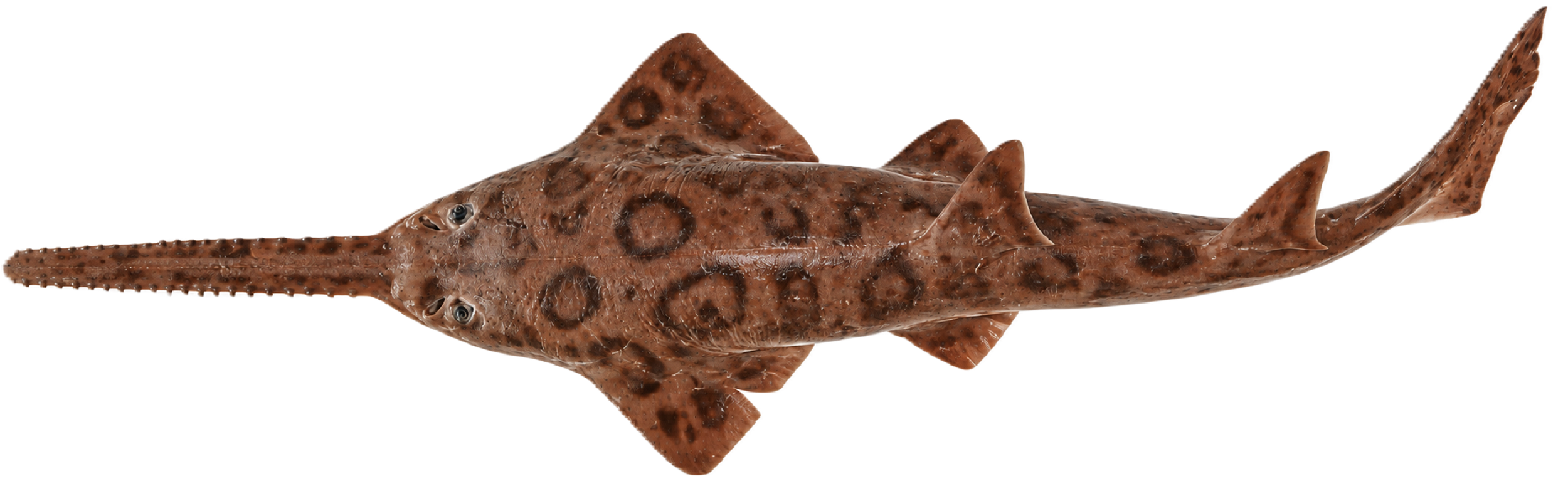 Sclerorhynchus |
S. pettersi732Case, G. R. & Cappetta, H. (1997). A new selachian fauna from the Late Maastrichtian of Texas (Upper Cretaceous/Navarroan; Kemp Formation). Münchner Geowissenschaftliche Abhandlungen, Reihe A 34, 131–189 S. sp.733Becker, M. A., Chamberlain, J. A. Jr. & Wolf, G. E. (2006). Chondrichthyans from the Arkadelphia Formation (Upper Cretaceous: Upper Maastrichtian) of Hot Spring County, Arkansas. Journal of Paleontology, 80(4), 700–716. doi:10.1666/0022-3360(2006)80[700:CFTAFU]2.0.CO;2734Becker, M.A., Chamberlain, J.A., Jr. & Terry, D.O., Jr. (2004). Chondrichthyans from the Fairpoint Member of the Fox Hills Formation (Maastrichtian), Meade County, South Dakota. Journal of Vertebrate Paleontology 24(4): 780–793. doi:10.1671/0272-4634(2004)024[0780:CFTFMO]2.0.CO;2735Ikejiri, T. et al. (2013). An overview of Late Cretaceous vertebrates from Alabama. Bulletin of the Alabama Museum of Natural History 31(1), 46–71. Appendix 1, S. 71; Tabelle 5, S. 55. Prairie Bluff Chalk. Publizierte formationsbezogene Faunenliste. Appendix 1, S. 71, ausdrücklich Prairie Bluff Chalk. Quelle |
Arkadelphia Marl Fox Hills Formation Kemp Clay Prairie Bluff Chalk |
USA (Alabama, Arkansas, South Dakota, Texas) | 69–66 Ma | häufig | Sclerorhynchidae (Scheinsägerochen) |
 |
Scyliorhinidae indet.736Nguyen, C. K. & Stidham, T. (2025). A taxonomically and ecologically diverse marine vertebrate assemblage at the end of the Cretaceous in Texas (USA). Geological Society of America Abstracts with Programs, 57(6). doi:10.1130/abs/2025AM-8784 | Corsicana Marl | USA (Texas) | 68–66 Ma | selten | unbestimmte Katzenhaie |
 Scyliorhinus |
S. ivagrantae737Case, G. R. & Cappetta, H. (1997). A new selachian fauna from the Late Maastrichtian of Texas (Upper Cretaceous/Navarroan; Kemp Formation). Münchner Geowissenschaftliche Abhandlungen, Reihe A 34, 131–189 | Kemp Clay | USA (Texas) | 68–66 Ma | selten | Scyliorhinidae (Katzenhai) |
 |
Selachimorpha indet.738Cadena-González, D. et al. (2025): Reworked K/Pg ejecta in early Paleocene deposits, Difunta Group, NE Mexico. Boletín de la Sociedad Geológica Mexicana 77(2): A190625. doi:10.18268/BSGM2025v77n2a190625 | Potrerillos Formation | Mexiko (Nuevo León) | ca. 66 Ma (Umlagerung; ursprüngliches Alter unbestimmt) | nicht quantifiziert | unbestimmte Haie, meist Zahnfunde |
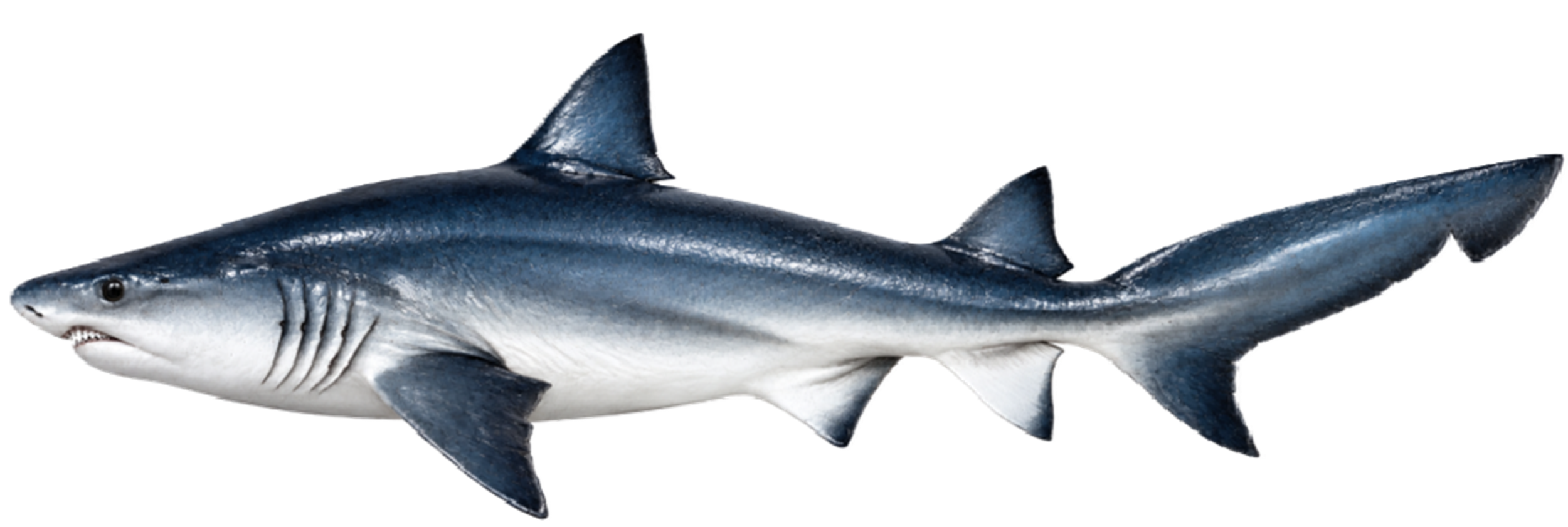 Serratolamna |
S. serrata739González-Rodríguez, K.A., Espinosa-Arrubarrena, L. & González-Barba, G. (2013): An overview of the Mexican fossil fish record. Mesozoic Fishes 5 – Global Diversity and Evolution: 9–34. Volltext740Becker, M. A., Chamberlain, J. A. Jr. & Wolf, G. E. (2006). Chondrichthyans from the Arkadelphia Formation (Upper Cretaceous: Upper Maastrichtian) of Hot Spring County, Arkansas. Journal of Paleontology, 80(4), 700–716. doi:10.1666/0022-3360(2006)80[700:CFTAFU]2.0.CO;2741González-Barba, G. et al. (2010). Maastrichtian sharks of the Escondido Formation in the Sabinas Basin, northern Coahuila. Fifth International Meeting on Mesozoic Fishes: Abstract Book and Field Guides, 46742Case, G. R. & Cappetta, H. (1997). A new selachian fauna from the Late Maastrichtian of Texas (Upper Cretaceous/Navarroan; Kemp Formation). Münchner Geowissenschaftliche Abhandlungen, Reihe A 34, 131–189743Hoganson, J.W., Erickson, J.M. & Holland, F.D., Jr. (2019). Chondrichthyan and Osteichthyan Paleofaunas from the Cretaceous (Late Maastrichtian) Fox Hills Formation of North Dakota, USA: Paleoecology, Paleogeography, and Extinction. Bulletins of American Paleontology 398: 1–94. doi:10.32857/bap.2019.398744Becker, M.A., Chamberlain, J.A., Jr. & Terry, D.O., Jr. (2004). Chondrichthyans from the Fairpoint Member of the Fox Hills Formation (Maastrichtian), Meade County, South Dakota. Journal of Vertebrate Paleontology 24(4): 780–793. doi:10.1671/0272-4634(2004)024[0780:CFTFMO]2.0.CO;2745Ebersole, J. A. et al. (2025). Cretaceous Fishes of Alabama: Serratolamna version 2. In: Ebersole, J. A. (Hrsg.), Fossil Fishes of Alabama. McWane Science Center, 3(24), 1–5. doi:10.69737/MSIQ6634746Ikejiri, T. et al. (2013). An overview of Late Cretaceous vertebrates from Alabama. Bulletin of the Alabama Museum of Natural History 31(1), 46–71. Appendix 1, S. 71; Tabelle 5, S. 55. Prairie Bluff Chalk. Publizierte formationsbezogene Faunenliste. Appendix 1, S. 71, ausdrücklich Prairie Bluff Chalk. Quelle747Ebersole, J. A. et al. (2025). Cretaceous Fishes of Alabama: Serratolamna version 2. In: Ebersole, J. A. (Hrsg.), Fossil Fishes of Alabama. McWane Science Center, 3(24), 1–5. Prairie Bluff Chalk. Publizierte formationsbezogene Faunenliste. Appendix 1, S. 71, ausdrücklich Prairie Bluff Chalk. doi:10.69737/MSIQ6634 S. sp.748Hodnett, J.-P. M., Tweet, J. S. & Santucci, V. L. (2022). The occurrence of fossil cartilaginous fishes (Chondrichthyes) within the parks and monuments of the National Park Service. New Mexico Museum of Natural History and Science Bulletin 90, 183–208. S. 197–198, Abb. 9. Prairie Bluff Chalk. Direktes Belegstück. NATR 306, Abb. 9I–J. Quelle |
Arkadelphia Marl Escondido Formation Fox Hills Formation Kemp Clay Potrerillos Formation Prairie Bluff Chalk Ripley Formation |
USA (Alabama, Arkansas, Mississippi, North Dakota, South Dakota, Texas); Mexiko (Coahuila, Nuevo León) | 75–66 Ma (Gattung bis 41 Ma); Potrerillos: Maastrichtium (72–66 Ma) | sehr häufig | Serratolamnidae (Makrelenhai) |
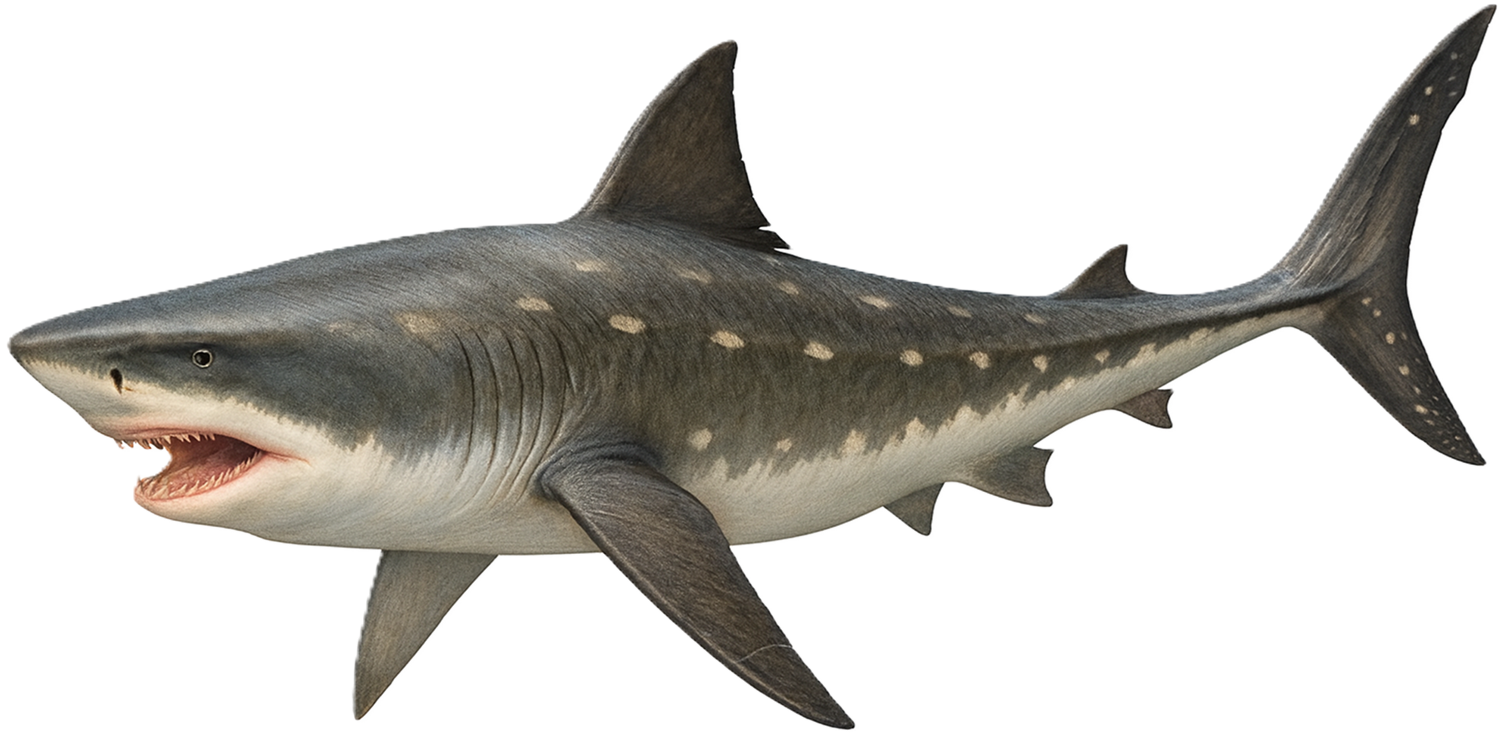 Squalicorax |
S. kaupi749González-Rodríguez, K.A., Espinosa-Arrubarrena, L. & González-Barba, G. (2013): An overview of the Mexican fossil fish record. Mesozoic Fishes 5 – Global Diversity and Evolution: 9–34. Volltext750Becker, M. A., Chamberlain, J. A. Jr. & Wolf, G. E. (2006). Chondrichthyans from the Arkadelphia Formation (Upper Cretaceous: Upper Maastrichtian) of Hot Spring County, Arkansas. Journal of Paleontology, 80(4), 700–716. doi:10.1666/0022-3360(2006)80[700:CFTAFU]2.0.CO;2751González-Barba, G. et al. (2010). Maastrichtian sharks of the Escondido Formation in the Sabinas Basin, northern Coahuila. Fifth International Meeting on Mesozoic Fishes: Abstract Book and Field Guides, 46752Case, G. R. & Cappetta, H. (1997). A new selachian fauna from the Late Maastrichtian of Texas (Upper Cretaceous/Navarroan; Kemp Formation). Münchner Geowissenschaftliche Abhandlungen, Reihe A 34, 131–189753Ikejiri, T. et al. (2013). An overview of Late Cretaceous vertebrates from Alabama. Bulletin of the Alabama Museum of Natural History 31(1), 46–71. Appendix 1, S. 71; Tabelle 5, S. 55. Prairie Bluff Chalk. Publizierte formationsbezogene Faunenliste. Appendix 1, S. 71, ausdrücklich Prairie Bluff Chalk. Quelle S. pristodontus754Farke, A. A. & Phillips, G. E. (2017). The first reported ceratopsid dinosaur from eastern North America (Owl Creek Formation, Upper Cretaceous, Mississippi, USA). PeerJ 5, e3342. doi:10.7717/peerj.3342755Case, G. R. & Cappetta, H. (1997). A new selachian fauna from the Late Maastrichtian of Texas (Upper Cretaceous/Navarroan; Kemp Formation). Münchner Geowissenschaftliche Abhandlungen, Reihe A 34, 131–189756Hoganson, J.W., Erickson, J.M. & Holland, F.D., Jr. (2019). Chondrichthyan and Osteichthyan Paleofaunas from the Cretaceous (Late Maastrichtian) Fox Hills Formation of North Dakota, USA: Paleoecology, Paleogeography, and Extinction. Bulletins of American Paleontology 398: 1–94. doi:10.32857/bap.2019.398757Ikejiri, T. et al. (2013). An overview of Late Cretaceous vertebrates from Alabama. Bulletin Alabama Museum of Natural History, 31(1), 46–71. Quelle758Ikejiri, T. et al. (2013). An overview of Late Cretaceous vertebrates from Alabama. Bulletin of the Alabama Museum of Natural History 31(1), 46–71. Appendix 1, S. 71; Tabelle 5, S. 55. Prairie Bluff Chalk. Publizierte formationsbezogene Faunenliste. Appendix 1, S. 71, ausdrücklich Prairie Bluff Chalk. Quelle759Hodnett, J.-P. M., Tweet, J. S. & Santucci, V. L. (2022). The occurrence of fossil cartilaginous fishes (Chondrichthyes) within the parks and monuments of the National Park Service. New Mexico Museum of Natural History and Science Bulletin 90, 183–208. S. 197–198, Abb. 9. Prairie Bluff Chalk. Direktes Belegstück. NATR 317, Abb. 9E–F. Quelle S. spp.760Hunt, R. K., Santucci, V. L. & Kenworthy, J. P. (2006). A preliminary inventory of fossil fish from National Park Service units. New Mexico Museum of Natural History and Science Bulletin, 34, 63–69761Cowan, T. M. & Fielitz, C. (2015). Two three-dimensionally preserved teleost neurocrania from the Corsicana Formation (Upper Cretaceous, Maastrichtian), Bexar County, Texas, U.S.A. Paludicola, 10(3), 137–144762Mississippi State University Libraries / Dunn-Seiler Museum (o. J.). Squalicorax prisnodontus kaupi, DSM 10752. Öffentlicher Sammlungskatalog; Formationsfeld Prairie Bluff Fm. (Chalk). Abgerufen am 24. Oktober 2026. Prairie Bluff Chalk. Uneinheitliche Katalogbeschriftung. DSM 10752: Bezeichnung Squalicorax prisnodontus kaupi lässt keine eindeutige Artzuweisung zu. Den Katalogbeleg nicht als zwei Arten werten. Quelle |
Arkadelphia Marl Cabrillo Formation Corsicana Marl Escondido Formation Fox Hills Formation Kemp Clay Owl Creek Formation Potrerillos Formation Prairie Bluff Chalk Ripley Formation |
USA (Alabama, Arkansas, Kalifornien, Mississippi, North Dakota, Texas); Mexiko (Coahuila, Nuevo León) | 75–66 Ma; Potrerillos: Maastrichtium (72–66 Ma) | sehr häufig | Anacoracidae (Makrelenhai) |
 |
Squalidae indet.763Nguyen, C. K. & Stidham, T. (2025). A taxonomically and ecologically diverse marine vertebrate assemblage at the end of the Cretaceous in Texas (USA). Geological Society of America Abstracts with Programs, 57(6). doi:10.1130/abs/2025AM-8784 | Corsicana Marl | USA (Texas) | 68–66 Ma | selten | unbestimmte Dornhaie |
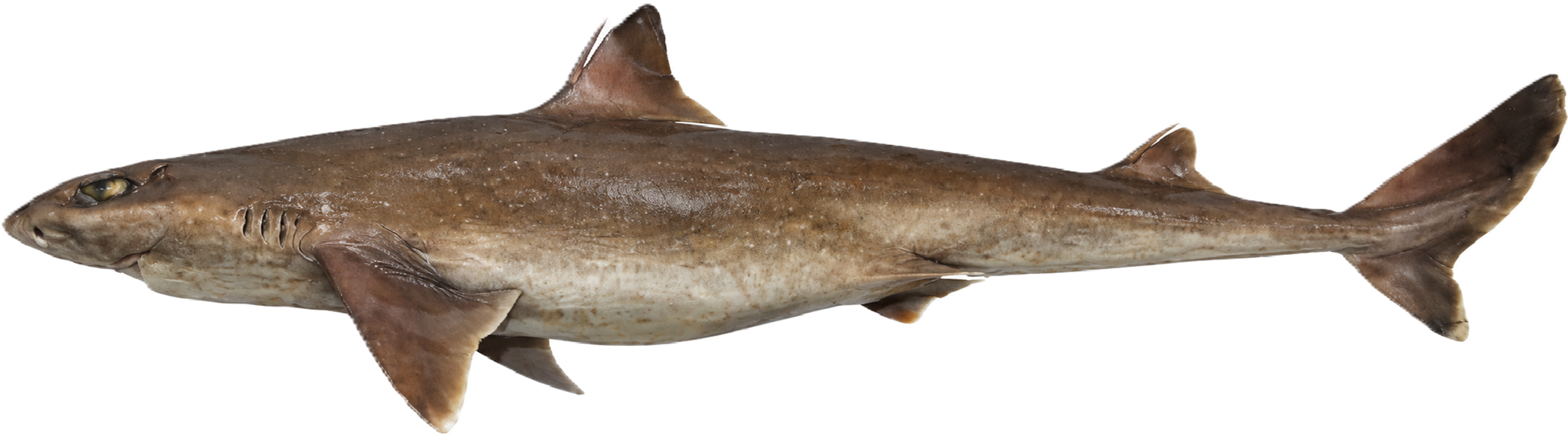 Squalus |
S. ballingsloevensis764Hoganson, J.W., Erickson, J.M. & Holland, F.D., Jr. (2019). Chondrichthyan and Osteichthyan Paleofaunas from the Cretaceous (Late Maastrichtian) Fox Hills Formation of North Dakota, USA: Paleoecology, Paleogeography, and Extinction. Bulletins of American Paleontology 398: 1–94. doi:10.32857/bap.2019.398 S. huntensis765Case, G. R. & Cappetta, H. (1997). A new selachian fauna from the Late Maastrichtian of Texas (Upper Cretaceous/Navarroan; Kemp Formation). Münchner Geowissenschaftliche Abhandlungen, Reihe A 34, 131–189 S. sp.766Hoganson, J.W., Erickson, J.M. & Holland, F.D., Jr. (2019). Chondrichthyan and Osteichthyan Paleofaunas from the Cretaceous (Late Maastrichtian) Fox Hills Formation of North Dakota, USA: Paleoecology, Paleogeography, and Extinction. Bulletins of American Paleontology 398: 1–94. doi:10.32857/bap.2019.398 |
Kemp Clay Fox Hills Formation |
USA (North Dakota, Texas) | 72–66 Ma | selten | Squalidae (Dornhai) |
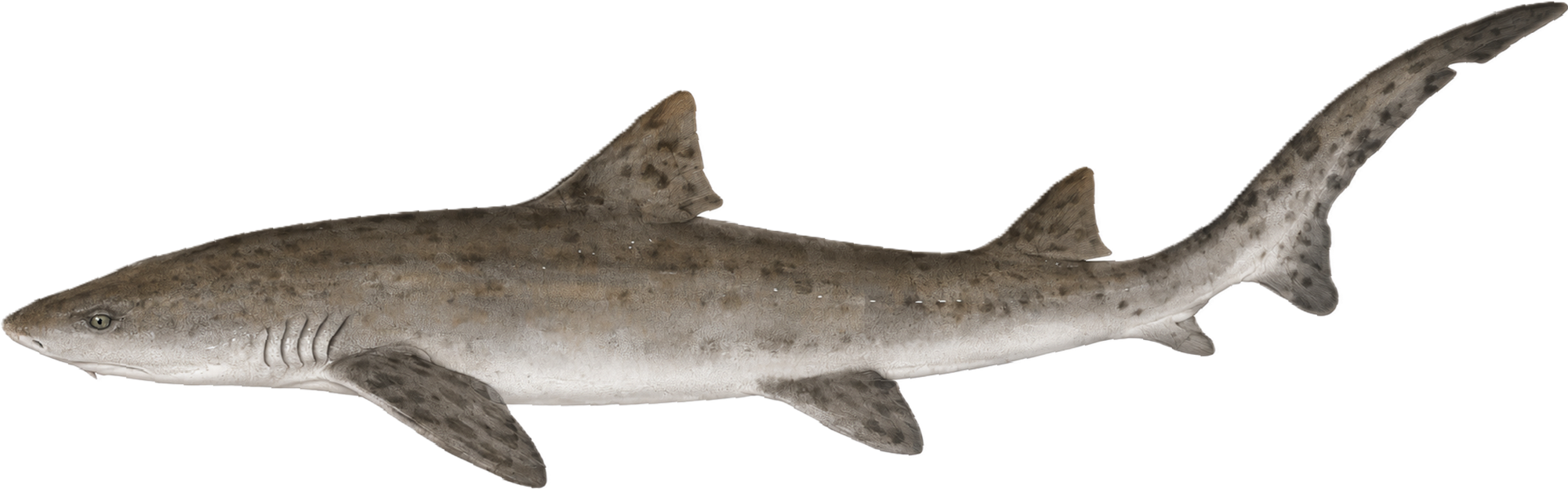 Squatigaleus |
S. sulphurensis767Case, G. R. & Cappetta, H. (1997). A new selachian fauna from the Late Maastrichtian of Texas (Upper Cretaceous/Navarroan; Kemp Formation). Münchner Geowissenschaftliche Abhandlungen, Reihe A 34, 131–189 | Kemp Clay | USA (Texas) | 68–66 Ma | selten | Triakidae (Glattthai) |
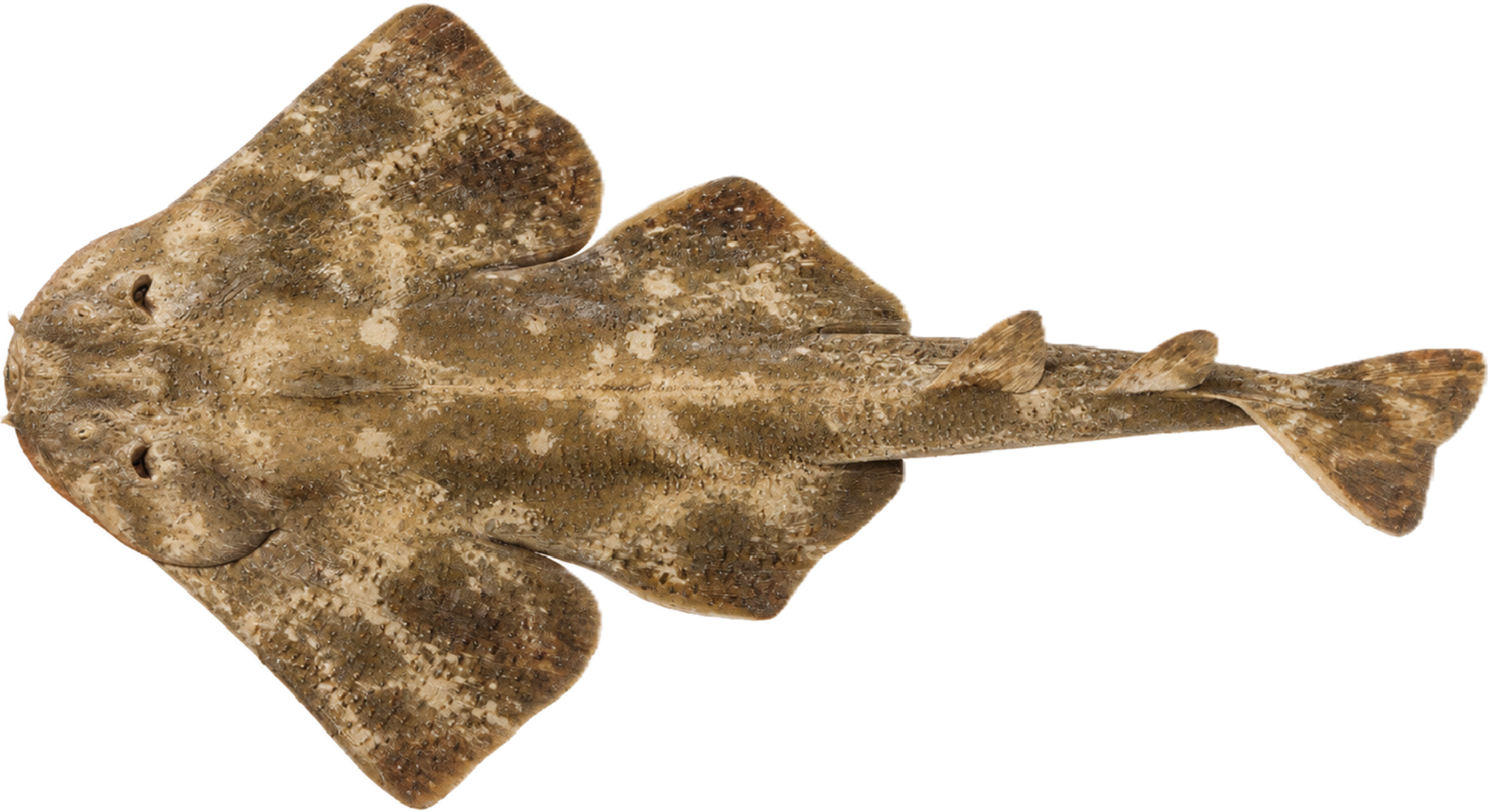 Squatina |
S. hassei768Becker, M. A., Chamberlain, J. A. Jr. & Wolf, G. E. (2006). Chondrichthyans from the Arkadelphia Formation (Upper Cretaceous: Upper Maastrichtian) of Hot Spring County, Arkansas. Journal of Paleontology, 80(4), 700–716. doi:10.1666/0022-3360(2006)80[700:CFTAFU]2.0.CO;2769Case, G. R. & Cappetta, H. (1997). A new selachian fauna from the Late Maastrichtian of Texas (Upper Cretaceous/Navarroan; Kemp Formation). Münchner Geowissenschaftliche Abhandlungen, Reihe A 34, 131–189770Hoganson, J. W., Erickson, J. M. & Holland, F. D., Jr. (2019). Chondrichthyan and Osteichthyan Paleofaunas from the Cretaceous (Late Maastrichtian) Fox Hills Formation of North Dakota, USA: Paleoecology, Paleogeography, and Extinction. Bulletins of American Paleontology 398, 1–96 doi:10.32857/bap.2019.398771Hoganson, J.W., Erickson, J.M. & Holland, F.D., Jr. (2019). Chondrichthyan and Osteichthyan Paleofaunas from the Cretaceous (Late Maastrichtian) Fox Hills Formation of North Dakota, USA: Paleoecology, Paleogeography, and Extinction. Bulletins of American Paleontology 398: 1–94. doi:10.32857/bap.2019.398772Hoganson, J.W., Erickson, J.M. & Everhart, M.J. (2022). First Report of Elasmobranchii and Osteichthyans from the Fox Hills Formation (Late Cretaceous), Poison Springs Locality, Northeastern Colorado. Transactions of the Kansas Academy of Science 125(3–4): 195–232. doi:10.1660/062.125.0310773Becker, M.A., Chamberlain, J.A., Jr. & Terry, D.O., Jr. (2004). Chondrichthyans from the Fairpoint Member of the Fox Hills Formation (Maastrichtian), Meade County, South Dakota. Journal of Vertebrate Paleontology 24(4): 780–793. doi:10.1671/0272-4634(2004)024[0780:CFTFMO]2.0.CO;2 | Arkadelphia Marl Kemp Clay Fox Hills Formation |
USA (Arkansas, Colorado, North Dakota, South Dakota, Texas) | 75–66 Ma (Gattung 158 Ma bis heute) | häufig | Squatinidae (Engelhai); S. hassei: Synonym Cretorectolobus cf. olsoni |
| Striatolamia | S. elegans (?)774Hodnett, J.-P. M., Tweet, J. S. & Santucci, V. L. (2022). The occurrence of fossil cartilaginous fishes (Chondrichthyes) within the parks and monuments of the National Park Service. New Mexico Museum of Natural History and Science Bulletin 90, 183–208. S. 197–198, Abb. 9. Prairie Bluff Chalk. Publizierter, stark prüfbedürftiger Beleg. NATR 305, Abb. 9G–H. Siehe Erläuterungen unter den Tabellen. Quelle775Paleobiology Database (2026). Gattungsrahmen; Abfrage vom 24. Oktober 2026. Gerundeter Gattungsrahmen für Striatolamia; erweitert um die hier dokumentierte, gegebenenfalls strittige Prairie-Bluff-Meldung. Quelle | Prairie Bluff Chalk | USA (Mississippi) | 84–5 Ma | nicht quantifiziert | Mitsukurinidae (Hai) |
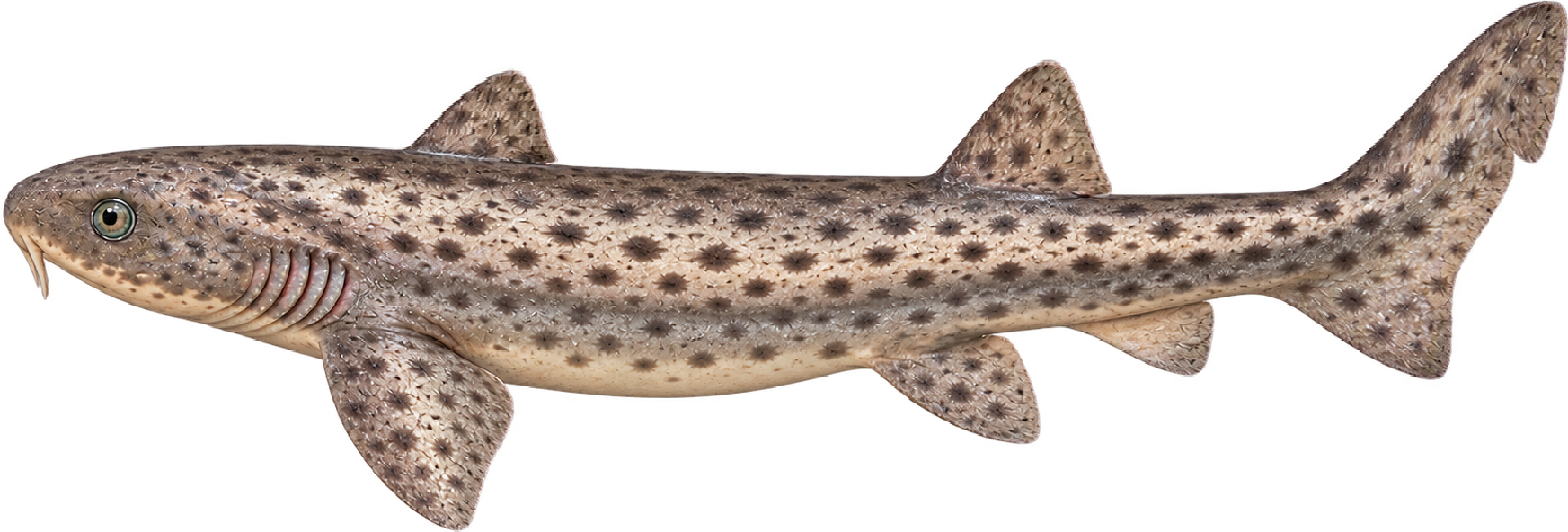 Synechodus |
S. turneri776Hoganson, J.W., Erickson, J.M. & Holland, F.D., Jr. (2019). Chondrichthyan and Osteichthyan Paleofaunas from the Cretaceous (Late Maastrichtian) Fox Hills Formation of North Dakota, USA: Paleoecology, Paleogeography, and Extinction. Bulletins of American Paleontology 398: 1–94. doi:10.32857/bap.2019.398 | Fox Hills Formation | USA (North Dakota) | ca. 72–68 Ma | sehr häufig | Palaeospinacidae |
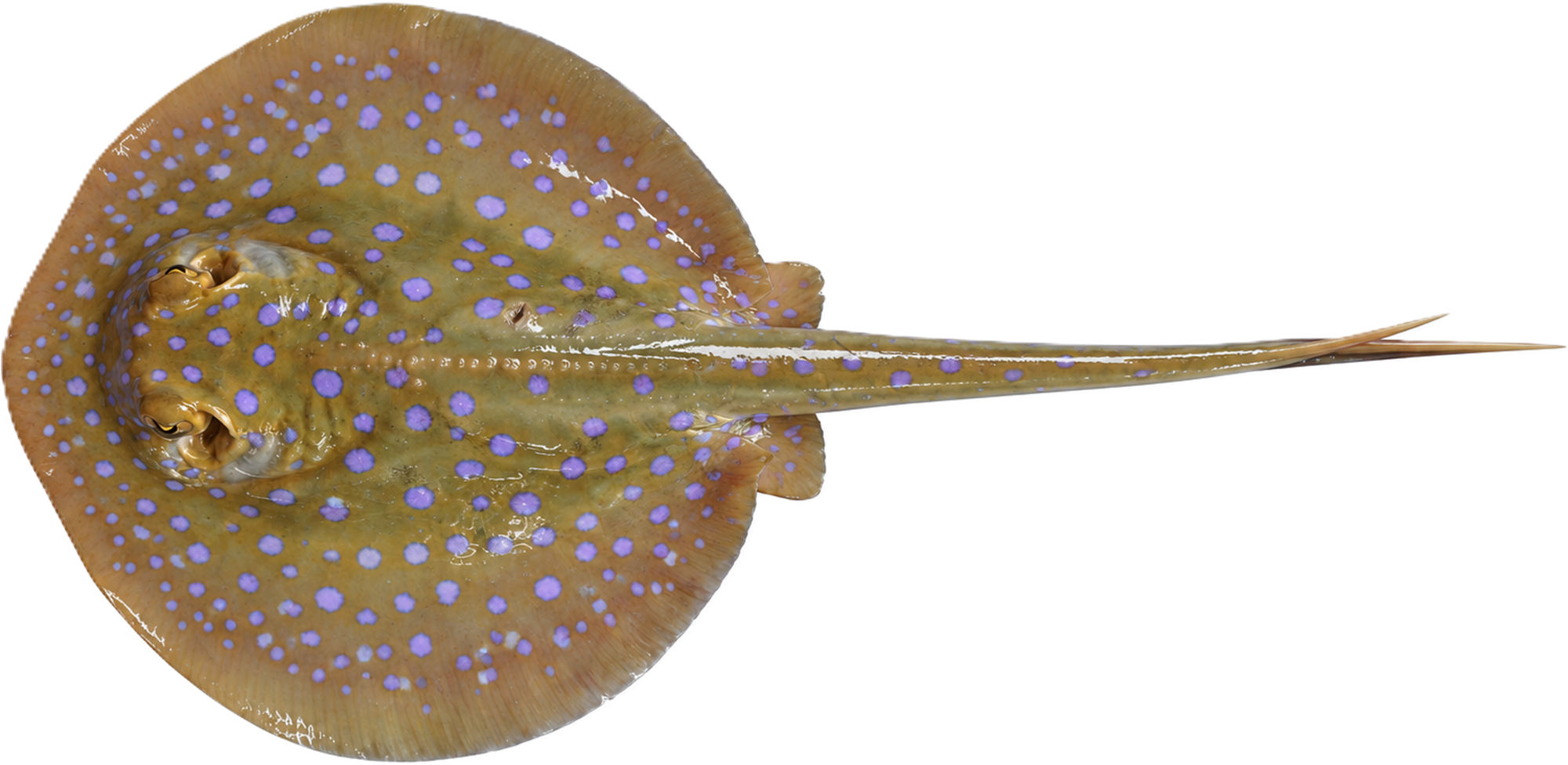 Texabatis |
T. corrugata777Case, G. R. & Cappetta, H. (1997). A new selachian fauna from the Late Maastrichtian of Texas (Upper Cretaceous/Navarroan; Kemp Formation). Münchner Geowissenschaftliche Abhandlungen, Reihe A 34, 131–189 T. sp.778Case, G. R. & Cappetta, H. (1997). A new selachian fauna from the Late Maastrichtian of Texas (Upper Cretaceous/Navarroan; Kemp Formation). Münchner Geowissenschaftliche Abhandlungen, Reihe A 34, 131–189 |
Kemp Clay | USA (Texas) | 68–66 Ma | selten | Myliobatiformes (Stechrochenartige); Familie unklar |
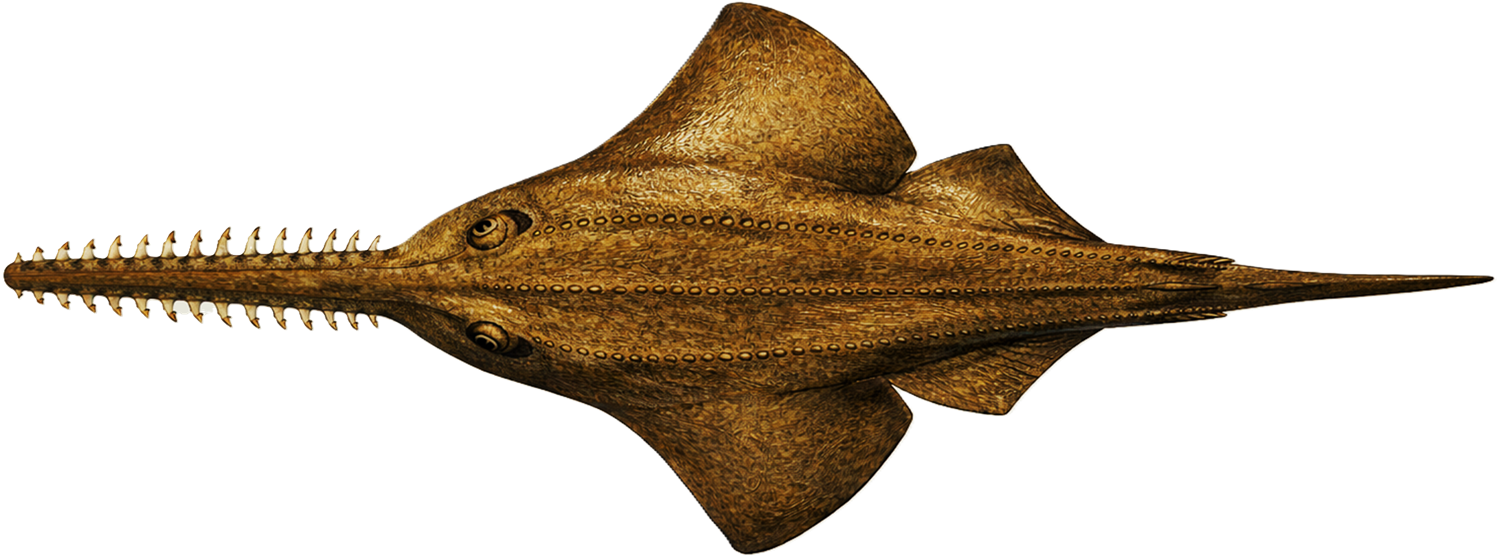 Texatrygon |
T. avonicola779Estes, R. (1964). Fossil vertebrates from the Late Cretaceous Lance Formation, eastern Wyoming. University of California Publications in Geological Sciences, 49, 1–180.780Carpenter, K. (1979). Vertebrate fauna of the Laramie Formation (Maastrichtian), Weld County, Colorado. Contributions to Geology, University of Wyoming, 17(1), 37–49. | Lance Formation Laramie Formation |
USA (Wyoming, Colorado) | 68–66 Ma | häufig | Ptychotrygonidae (Scheinsägerochen) |
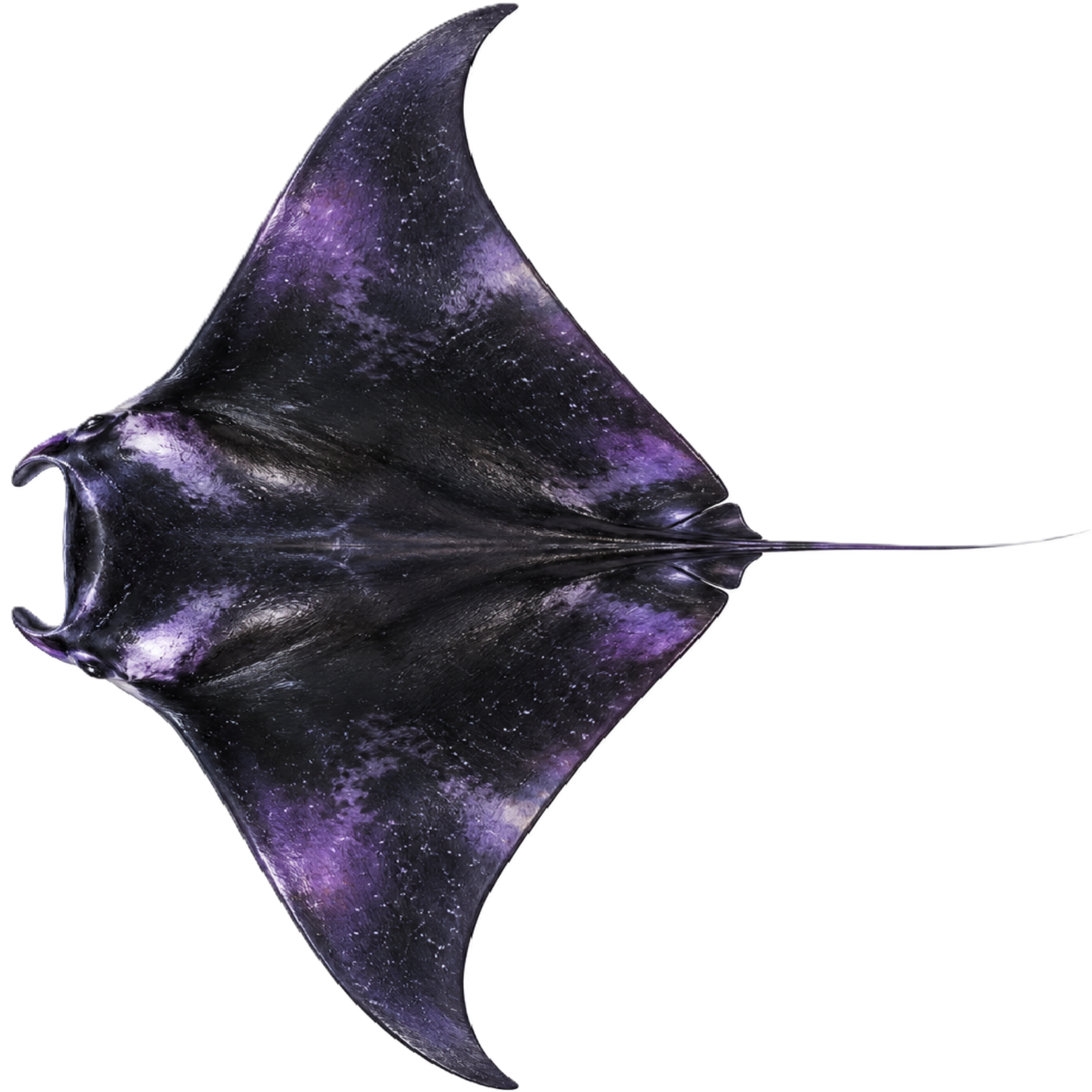 Tomewingia |
T. cf. problematica (?)781Becker, M.A., Chamberlain, J.A., Jr. & Terry, D.O., Jr. (2004). Chondrichthyans from the Fairpoint Member of the Fox Hills Formation (Maastrichtian), Meade County, South Dakota. Journal of Vertebrate Paleontology 24(4): 780–793. doi:10.1671/0272-4634(2004)024[0780:CFTFMO]2.0.CO;2 T. problematica782Case, G. R. & Cappetta, H. (1997). A new selachian fauna from the Late Maastrichtian of Texas (Upper Cretaceous/Navarroan; Kemp Formation). Münchner Geowissenschaftliche Abhandlungen, Reihe A 34, 131–189783Case, G. R. & Cappetta, H. (2013). Ewingia Case & Cappetta, 1997 (Chondrichthyes: Rajiformes), preoccupied by Ewingia Pearse, 1929 (Insecta: Arachnida). Neues Jahrbuch für Geologie und Paläontologie – Abhandlungen 268(1), 125–126 doi:10.1127/0077-7749/2013/0320 T. sp.784Case, G. R. & Cappetta, H. (2013). Ewingia Case & Cappetta, 1997 (Chondrichthyes: Rajiformes), preoccupied by Ewingia Pearse, 1929 (Insecta: Arachnida). Neues Jahrbuch für Geologie und Paläontologie – Abhandlungen 268(1), 125–126 doi:10.1127/0077-7749/2013/0320 |
Kemp Clay Fox Hills Formation |
USA (South Dakota, Texas) | 69–66 Ma | selten | Rajiformes (Rochen); Familie unsicher; synonym zu Ewingia |
 |
Torpedinidae indet.785Nguyen, C. K. & Stidham, T. (2025). A taxonomically and ecologically diverse marine vertebrate assemblage at the end of the Cretaceous in Texas (USA). Geological Society of America Abstracts with Programs, 57(6). doi:10.1130/abs/2025AM-8784 | Corsicana Marl | USA (Texas) | 68–66 Ma | selten | unbestimmte Zitterrochen |
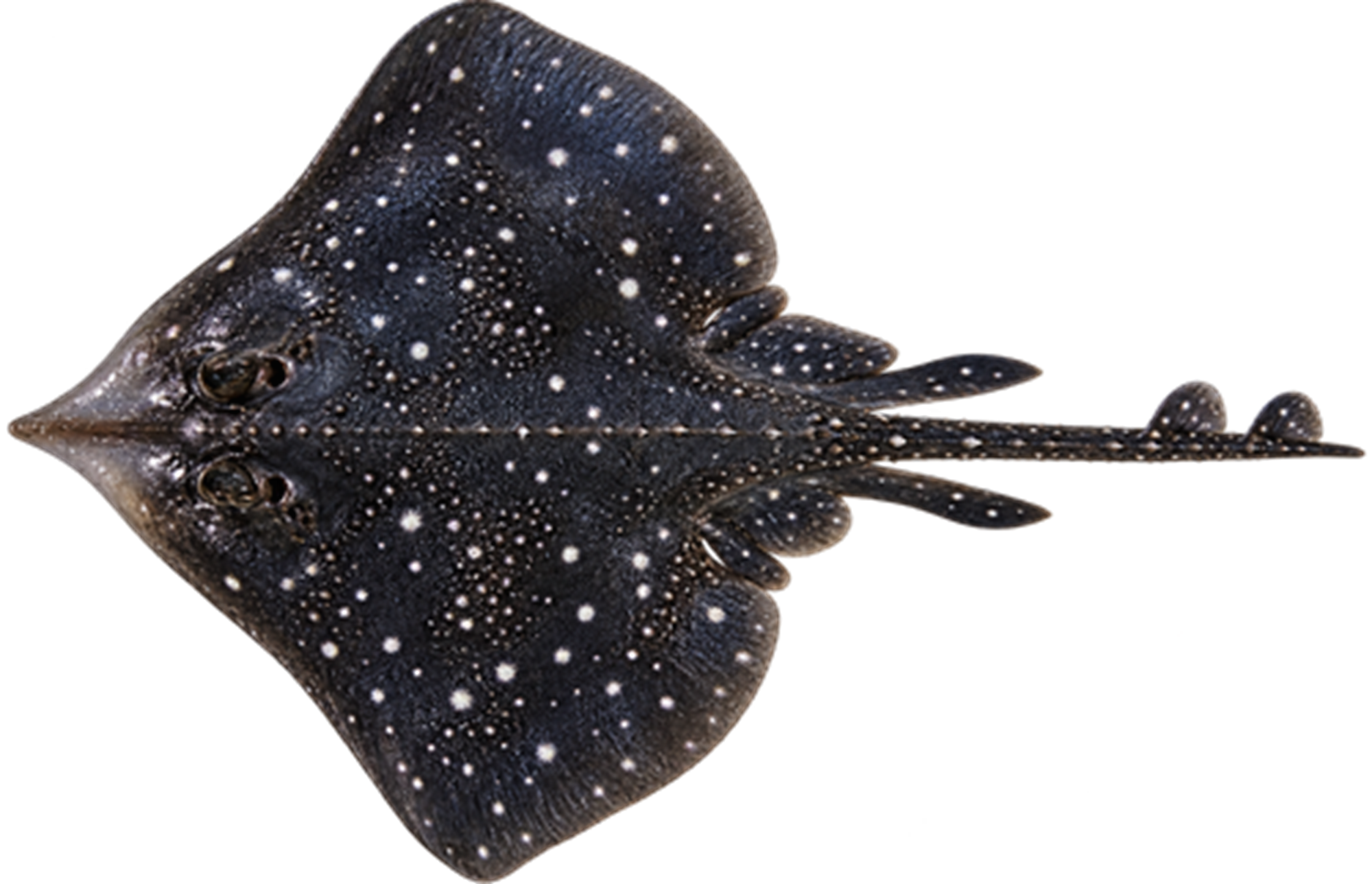 Walteraja |
W. exigua786Hoganson, J.W., Erickson, J.M. & Holland, F.D., Jr. (2019). Chondrichthyan and Osteichthyan Paleofaunas from the Cretaceous (Late Maastrichtian) Fox Hills Formation of North Dakota, USA: Paleoecology, Paleogeography, and Extinction. Bulletins of American Paleontology 398: 1–94. doi:10.32857/bap.2019.398 | Fox Hills Formation | USA (North Dakota) | ca. 72–68 Ma | selten | Rajidae (Rochen) |
Nicht näher bestimmbare Wirbeltiere:
| Gattung: | Arten: | Formation: | Fundort: | Alter: | Häufigkeit: | Bemerkungen: |
|---|---|---|---|---|---|---|
| Vertebrata indet.787Paleobiology Database (2026). Formationsabfrage Prairie Bluff, Vertebrata; Datenbankindex und zugehörige Primärreferenzen. Prairie Bluff Chalk. Unbestimmte Reste. Sohl-&-Koch-Aufsammlungen und historische Fischwirbel-/Knochenmeldungen; nicht zu benannten Arten aufwerten. Quelle788Daly, E. (1992). A list, bibliography and index of the fossil vertebrates of Mississippi. Mississippi Department of Environmental Quality, Office of Geology, Bulletin 128. Prairie Bluff Chalk. Unbestimmte Reste. Sohl-&-Koch-Aufsammlungen und historische Fischwirbel-/Knochenmeldungen; nicht zu benannten Arten aufwerten. Quelle | Prairie Bluff Chalk | USA (Alabama, Mississippi) | 69–66 Ma | nicht quantifiziert | (Wirbeltier) |
Bei einigen Knorpelfischen der Fox Hills Formation ist die taxonomische Einordnung seit ihrer Erstbeschreibung verändert oder weiterhin umstritten. Cenocarcharias cf. tenuiplicatus wird in der Literatur alternativ als Eostriatolamia tenuiplicatus geführt, da die Abgrenzung der beiden Gattungen unterschiedlich beurteilt wird. Ältere, als Mylognathus priscus bestimmte Zahnplatten wurden später Ischyodus rayhaasi zugeordnet. Myledaphus sp. aus North Dakota ist dagegen nicht mit dem separat aus Colorado nachgewiesenen Pseudomyledaphus sp. gleichzusetzen. Bei „Myliobatis“ foxhillsensis ist bereits die Gattungszuordnung unsicher, weshalb Myliobatis nur unter Vorbehalt verwendet wird. Ältere Nachweise von Ptychotrygon triangularis aus North Dakota wurden später P. winni zugeordnet, während Tomewingia cf. problematica in älterer Literatur noch als Ewingia cf. problematica geführt wurde. Besondere Vorsicht ist schließlich bei dem historischen Nachweis von Squatirhina sp. geboten: Vergleichbare nordamerikanische Funde wurden inzwischen teilweise der Gattung Restesia zugeordnet, eine entsprechende Revision des Materials aus der Fox Hills Formation liegt jedoch bislang nicht vor. Die Fox Hills Formation ist regional auch unterschiedlich alt. Die Altersangaben hier sind ungefähre lokale Korrelationsrahmen: North Dakota überwiegend etwa 72–68 Ma, südzentral etwa 70–68 Ma; White Owl etwa 69 Ma, Iron Lightning etwa 68 Ma; Red Owl ungefähr 70–68 Ma. Poison Springs in Colorado ist älter und wird nur breit in das späte Campanium bis frühe Maastrichtium gestellt (etwa 75–69 Ma). Diese Rahmen belegen keine kontinuierliche Lebensspanne jeder einzelnen Art und kein pauschales Überleben aller Fox-Hills-Taxa bis 66 Ma.789Hoganson, J.W., Erickson, J.M. & Holland, F.D., Jr. (2019). Chondrichthyan and Osteichthyan Paleofaunas from the Cretaceous (Late Maastrichtian) Fox Hills Formation of North Dakota, USA: Paleoecology, Paleogeography, and Extinction. Bulletins of American Paleontology 398: 1–94. doi:10.32857/bap.2019.398790Hoganson, J.W., Erickson, J.M. & Everhart, M.J. (2022). First Report of Elasmobranchii and Osteichthyans from the Fox Hills Formation (Late Cretaceous), Poison Springs Locality, Northeastern Colorado. Transactions of the Kansas Academy of Science 125(3–4): 195–232. doi:10.1660/062.125.0310791Hoganson, J.W., Erickson, J.M. & Everhart, M.J. (2015). Ischyodus rayhaasi (Chimaeroidei; Callorhynchidae) from the Campanian–Maastrichtian Fox Hills Formation of Northeastern Colorado, USA. Transactions of the Kansas Academy of Science 118(1–2): 27–40. doi:10.1660/062.118.0104792Schwarzhans, W. & Stringer, G.L. (2020). Fish otoliths from the late Maastrichtian Kemp Clay (Texas, USA) and the early Danian Clayton Formation (Arkansas, USA) and an assessment of extinction and survival of teleost lineages across the K-Pg boundary based on otoliths. Rivista Italiana di Paleontologia e Stratigrafia 126(2): 395–446. doi:10.13130/2039-4942/13425793Chamberlain, J.A., Jr., Knoll, K. & Sertich, J.J.W. (2023). Non-avian theropod phalanges from the marine Fox Hills Formation (Maastrichtian), western South Dakota, USA. PeerJ 11: e14665. doi:10.7717/peerj.14665794Cifelli, R.L. et al. (2004). Mammalian Biochronology of the Latest Cretaceous. In: Woodburne, M.O. (ed.), Late Cretaceous and Cenozoic Mammals of North America: Biostratigraphy and Geochronology. Columbia University Press: 21–42. Quelle
Ein aus der Fox Hills Formation beschriebener Hai, der in der betreffenden arbeit als Hybodus sp. beschrieben wurde, ist hier als Hybodontiformes indet. geführt. Die Gattung Hybodus ist ein Mülleimertaxon, dem historisch viele Haie, darunter auch etliche Zahntaxa aus dem gesamten Mesozoikum zugeordnet wurden. Heute wird sie aber auf den Jura beschränkt, sodass der Fox Hills-Hybodus sicher nicht zu dieser Gattung gehört.795Hoganson, J.W., Erickson, J.M. & Holland, F.D., Jr. (2019). Chondrichthyan and Osteichthyan Paleofaunas from the Cretaceous (Late Maastrichtian) Fox Hills Formation of North Dakota, USA: Paleoecology, Paleogeography, and Extinction. Bulletins of American Paleontology 398: 1–94. doi:10.32857/bap.2019.398
Zu Platyrhizoscyllium jaegeri: Die Art wurde ursprünglich anhand eozäner Funde aus Frankreich beschrieben, was eine Existenz dieser Art im kreidezeitlichen Nordamerika eher fraglich macht. Das hier zitierte Abstract von Nguyen und Stidham führt für die obersten Schichten des Corsicana Marl zwar Katzenhaie (Scyliorhinidae) auf, aber weder diese Art noch sechs ihr zugeordnete Exemplare ausdrücklich auf. Die für die Liste gemeldeten sechs Exemplare sind damit aus dem zugänglichen Abstract nicht unabhängig überprüfbar. Der Eintrag und die außergewöhnliche Ausdehnung der bekannten zeitlichen Verbreitung bleiben vorläufig, bis eine Abbildung und Beschreibung des texanischen Materials vorliegen.796Adnet, S. (2006). Nouvelles faunes de sélaciens (Elasmobranchii, Neoselachii) de l’Éocène moyen des Landes (Sud-Ouest, France). Implication dans la connaissance des communautés de sélaciens d’eaux profondes. Palaeo Ichthyologica, 10, 1–128.797Nguyen, C. K. & Stidham, T. (2025). A taxonomically and ecologically diverse marine vertebrate assemblage at the end of the Cretaceous in Texas (USA). Geological Society of America Abstracts with Programs, 57(6). doi:10.1130/abs/2025AM-8784
Squalicorax sp. und Carcharias sp. sind im Corsicana Marl nur durch isolierte, nicht bis zur Art bestimmbare Reste belegt.798Cowan, T. M. & Fielitz, C. (2015). Two three-dimensionally preserved teleost neurocrania from the Corsicana Formation (Upper Cretaceous, Maastrichtian), Bexar County, Texas, U.S.A. Paludicola, 10(3), 137–144.
Ein Haizahn, der Squalicorax zugeordnet wurde, ist zwar aus der Cabrillo Formation belegt, wurde aber wahrscheinlich aus älteren Sedimenten umgelagert.799Hunt, R. K., Santucci, V. L. & Kenworthy, J. P. (2006). A preliminary inventory of fossil fish from National Park Service units. New Mexico Museum of Natural History and Science Bulletin, 34, 63–69.
Aus der Escondido Formation wurden Haizähne bisher nur in einem Konferenzabstract vorgestellt. Für die einzelnen Taxa nennt es aber keine Fundzahlen. Der Literaturhinweis auf Rhombodus binkhorsti konnte in einer späteren Untersuchung nicht bestätigt werden.800González-Barba, G. et al. (2010). Maastrichtian sharks of the Escondido Formation in the Sabinas Basin, northern Coahuila. Fifth International Meeting on Mesozoic Fishes: Abstract Book and Field Guides, 46.
Die unbestimmten Haifunde aus Stoddard County, Missouri, stammen aus einer umgelagerten Fossilvergesellschaftung, die Poropat, Campbell & Lee (2004) der Clayton Formation zuweisen. Sie könnten aber auch aus der Owl Creek Formation stammen, deshalb sind sie hier mit einem Fragezeichen aufgeführt.
Prairie Bluff Chalk: Hinweise zu strittigen Nachweisen
Die Bestimmung von DSM 10765 als Hadrosaurus ist eine Katalogangabe; eine moderne Gattungsdiagnose wurde nicht ermittelt. Der publizierte Hadrosaurierwirbel und das Katalogmaterial dürfen daher nicht als zwei sicher getrennte Arten gezählt werden. Bei Dallasaurus? turneri nennt der Katalog selbst juvenile Wirbel eines größeren Mosasauriers als Alternative.
Die Prairie-Bluff-Meldung von Ptychodus mortoni aus der Übersicht von 2013 bleibt erhalten. Die Neubearbeitung von 2025 führt historische Funde am geographischen Ort Prairie Bluff jedoch auf dort früher zugängliche ältere Kreideeinheiten zurück. Ortsname und Formationsname sind hier zu unterscheiden.
Carcharias? sp., Cretoxyrhina mantelli und Protostega gigas werden 2020 für eine gemeinsame Unit 5 aus Prairie Bluff Chalk und Providence Sand gemeldet; bei Protostega steht bereits die Unit-Zuordnung unter Vorbehalt. Die Meldungen bleiben mit dieser Einschränkung erhalten und sichern keine Herkunft aus beiden Formationen.
Hodnett et al. (2022) ordnen katalogisierte und abgebildete Zähne von Araloselachus cuspidatus und Striatolamia elegans ausdrücklich der Prairie Bluff Chalk zu. Wegen der sonst vor allem känozoischen Überlieferung dieser Arten sind Bestimmung und Herkunft revisionsbedürftig. Die veröffentlichten Meldungen werden deshalb als fraglich geführt.
Die historische Bestimmung Anomoeodus phaseolus bleibt neben der offenen Bestimmung der neueren Alabama-Bearbeitung erhalten. Der Mississippi-Katalog führt Enchodus petrosus, während die geprüfte Alabama-Revision dort nur E. ferox artlich bestätigt. Diese Angaben sind keine gleichwertigen Neubestimmungen.
Der dekayi-ähnliche Mosasaurierzahn wird unter Mosasaurus spp. erfasst und begründet keinen bestätigten zusätzlichen Artbeleg. REMPC M0190 ist ausdrücklich Owl Creek/Prairie Bluff zugeordnet; diese Herkunft bleibt unaufgelöst. M. maximus wird als Synonym von M. hoffmannii behandelt.
Für Tylosaurus sp. liegt bislang eine PBDB-Indexspur zu Russell (1964) aus Greene County vor; der konkrete Primärbeleg wurde nicht unmittelbar überprüft. Sie bleibt hier als offene Literaturspur dokumentiert. Das 2024 beschriebene Mississippi-Material besitzt keine gesicherte Prairie-Bluff-Herkunft.
Die als Unit 5 gemeldeten Funde sind in den betreffenden Artfußnoten ausdrücklich als gemeinsame Prairie-Bluff-/Providence-Meldungen gekennzeichnet. Daraus folgt keine gesicherte Herkunft aus beiden Formationen. Die offene Tylosaurus-Indexspur wird hier dokumentiert, ohne einen unmittelbar geprüften Primärnachweis vorzutäuschen.
801Paleobiology Database (2026). Formationsabfrage Prairie Bluff, Vertebrata; Datenbankindex und zugehörige Primärreferenzen. Tylosaurus sp., occurrence 934262, collection 107501, Greene County, Alabama; Verweis auf Russell (1964), Primärbeleg noch nicht unmittelbar geprüft. Quelle
Stachelhäuter:
| Gattung: | Arten: | Formation: | Fundort: | Alter: | Häufigkeit: | Bemerkungen: |
|---|---|---|---|---|---|---|
| Austinocrinus | A. mexicanus802Springer, F. (1922). Crinoids from the Upper Cretaceous of Tamaulipas, Mexico. Proceedings of the United States National Museum 61(2426), 1–4. Originalpublikation | Méndez Formation | Mexiko (Tamaulipas) | — | selten | Isocrinidae (?) (Seelilie); synonym zu Balanocrinus mexicanus |
| Bolbaster | B. wetherbyi803Mindat.org / Paleobiology Database (o. J.). OWLCREEK: gemeldeter Nachweis von Hemiaster wetherbyi; Quellenzuordnung zu Cooke (1953), Formationszuordnung ungeklärt. Datensatz804Ciampaglio, C. N. & Phillips, G. E. (2016). Irregular echinoids of the Upper Cretaceous Coon Creek beds in Tennessee. Bulletin of the Alabama Museum of Natural History 33(2), 59–77. Originalpublikation805Cooke, C. W. (1953). American Upper Cretaceous Echinoidea. United States Geological Survey Professional Paper 254-A, 1–44. Prairie Bluff Chalk; historische Kombinationen nach den dokumentierten Revisionen abgeglichen. doi:10.3133/pp254a | Owl Creek Formation Prairie Bluff Chalk Ripley Formation |
USA (Alabama, Mississippi, Tennessee) | 76–66 Ma | häufig | Hemiasteridae (Herzigel); Synonym: Hemiaster wetherbyi |
| Boletechinus | B. mcglameryae806Cooke, C. W. (1955). Some Cretaceous echinoids from the Americas. U.S. Geological Survey Professional Paper 264-E. Prairie Bluff Chalk. doi:10.3133/pp264E807Paleobiology Database (2026). Gattungs-Vorkommensrahmen; Datenabfrage vom 24. Oktober 2026. Gerundeter Gattungsrahmen für Boletechinus; durch die direkt geprüften Formationsnachweise gegebenenfalls erweitert. Originalpublikation | Prairie Bluff Chalk | USA (Alabama) | 84–66 Ma | nicht quantifiziert | Zeuglopleuridae (Seeigel) |
| Bourgueticrinus | B. mississippiensis808Gale, A. S. (2026). Taxonomy and phylogeny of stalked crinoids (Comatulida: Bourgueticrinina) from the Upper Cretaceous of France, southern England, UK and northern Germany. Journal of Systematic Palaeontology 24(2), 2679100. Prairie Bluff Chalk, Starkville; NHMUK PI EE 18380. doi:10.1080/14772019.2026.2679100809Paleobiology Database (2026). Gattungs-Vorkommensrahmen; Datenabfrage vom 24. Oktober 2026. Gerundeter Gattungsrahmen für Bourgueticrinus; durch die direkt geprüften Formationsnachweise gegebenenfalls erweitert. Originalpublikation | Prairie Bluff Chalk | USA (Mississippi) | 100–34 Ma | nicht quantifiziert | Bourgueticrinidae (Seelilie); Synonym: Dunnicrinus mississippiensis |
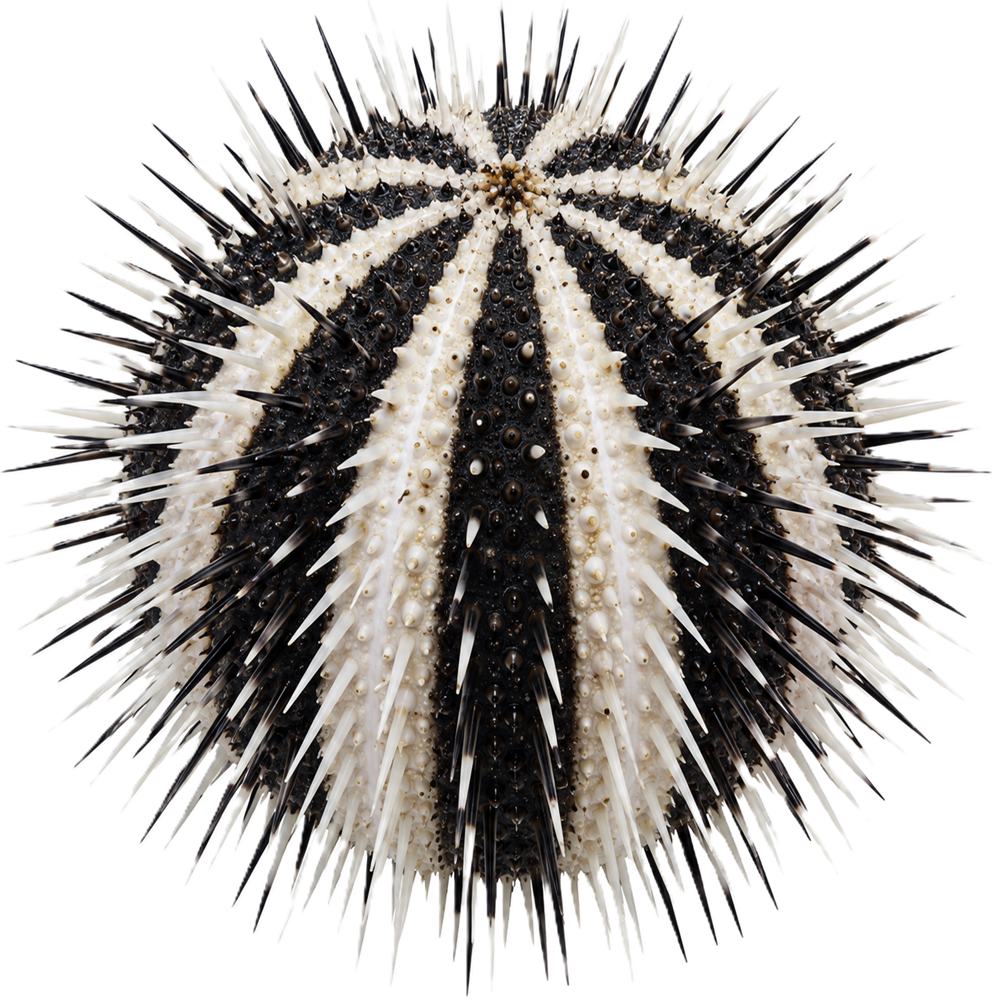 Cardiaster |
C. leonensis810Cooke, C. W. (1953). American Upper Cretaceous Echinoidea. United States Geological Survey Professional Paper, 254-A, 1–44. doi:10.3133/pp254A C. sp.811Ciampaglio, C. N. & Phillips, G. E. (2016). Irregular echinoids of the Upper Cretaceous Coon Creek beds in Tennessee. Bulletin of the Alabama Museum of Natural History 33(2), 59–77. Originalpublikation |
Corsicana Marl Ripley Formation |
USA (Tennessee, Texas) | 76–66 Ma (Gattung bis 52 Ma) | selten | Cardiasteridae (Seeigel) |
| Catopygus | C. mississippiensis812Fossil collecting report (2011). December 2011. Bericht über Aufsammlungen in Mississippi. Originalpublikation813Cooke, C. W. (1953). American Upper Cretaceous Echinoidea. United States Geological Survey Professional Paper 254-A, 1–44. Prairie Bluff Chalk; historische Kombinationen nach den dokumentierten Revisionen abgeglichen. doi:10.3133/pp254a | Prairie Bluff Chalk Ripley Formation |
USA (Mississippi) | 72–66 Ma | nicht quantifiziert | Nucleolitidae (Seeigel) |
 |
Cidaridae indet.814Stephenson, L. W. (1941). The larger invertebrate fossils of the Navarro Group of Texas (exclusive of corals and crustaceans and exclusive of the fauna of the Escondido Formation). The University of Texas Publication, 4101, 1–641. | Corsicana Marl | USA (Texas) | 70–66 Ma | selten | unbestimmte Lanzenseeigel |
| Cidaris | C. wahalakensis815Cooke, C. W. (1953). American Upper Cretaceous Echinoidea. United States Geological Survey Professional Paper 254-A, 1–44. Prairie Bluff Chalk; historische Kombinationen nach den dokumentierten Revisionen abgeglichen. doi:10.3133/pp254a816Paleobiology Database (2026). Gattungs-Vorkommensrahmen; Datenabfrage vom 24. Oktober 2026. Gerundeter Gattungsrahmen für Cidaris; durch die direkt geprüften Formationsnachweise gegebenenfalls erweitert. Originalpublikation | Prairie Bluff Chalk | USA (Alabama, Mississippi) | 247–0 Ma | nicht quantifiziert | Cidaridae (Seeigel) |
| Clarkiella | C. conoideus817Cooke, C. W. (1953). American Upper Cretaceous Echinoidea. United States Geological Survey Professional Paper 254-A, 1–44. doi:10.3133/pp254a818Cooke, C. W. (1953). American Upper Cretaceous Echinoidea. United States Geological Survey Professional Paper 254-A, 1–44. Prairie Bluff Chalk; historische Kombinationen nach den dokumentierten Revisionen abgeglichen. doi:10.3133/pp254a | Prairie Bluff Chalk Ripley Formation |
USA (Georgia, Mississippi) | 72–66 Ma | nicht quantifiziert | Faujasiidae (Seeigel); ältere Zuordnungen: Cassidulus conoideus, Clarkiella hemispherica |
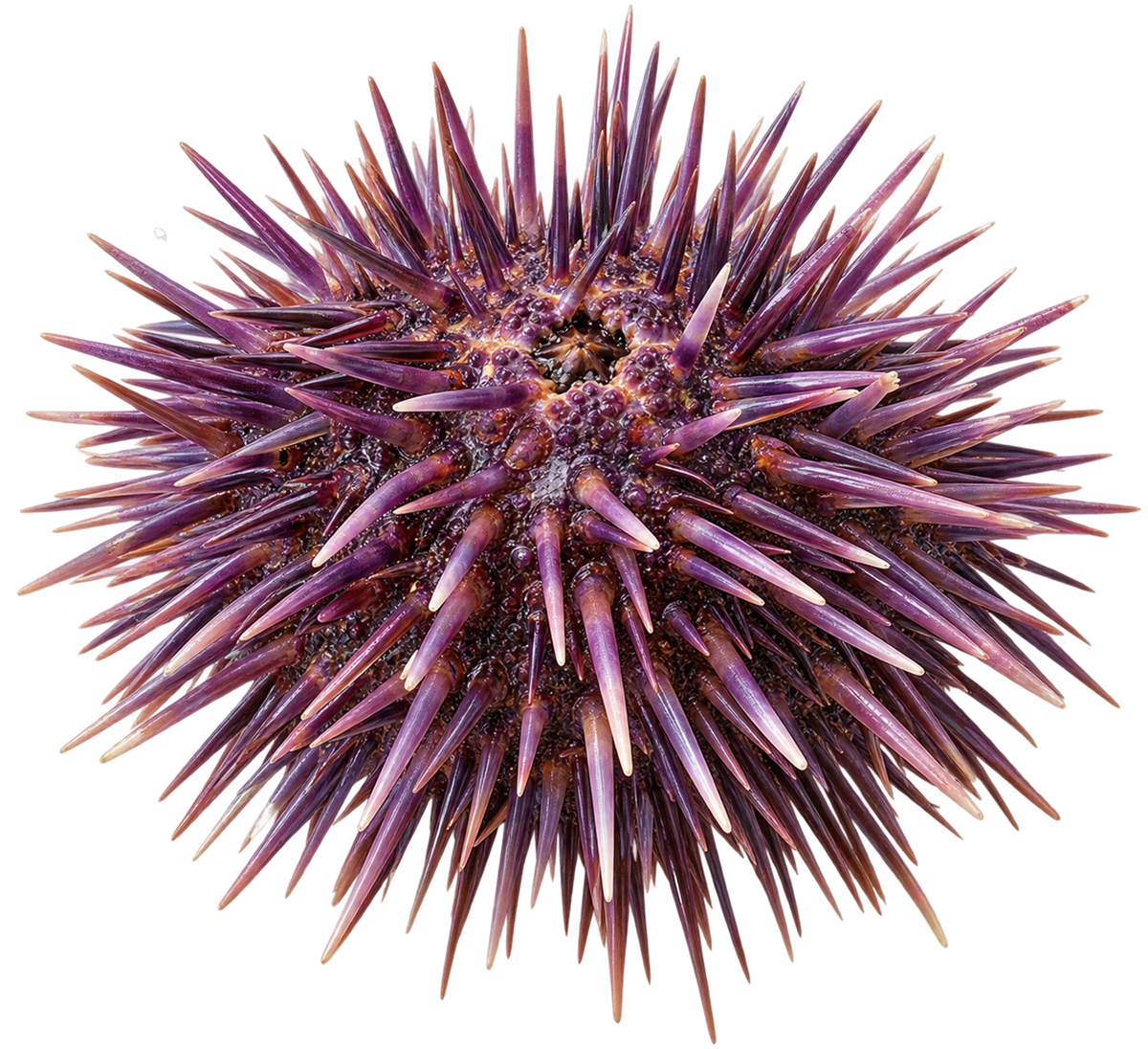 Codiopsis |
C. stephensoni819Cooke, C. W. (1953). American Upper Cretaceous Echinoidea. U.S. Geological Survey Professional Paper, 254-A, 1–44. doi:10.3133/pp254a | Escondido Formation | USA (Texas) | 72–66 Ma | selten | Arbaciidae (Seeigel) |
| Coulonia | C. sp.820Berry, K. & Lucas, S. G. (2017): An astropectinid sea star from the early Maastrichtian Pierre Shale in Southern Colorado, USA, and the extinction of inoceramid bivalves. Neues Jahrbuch für Geologie und Paläontologie, Abhandlungen 286(2): 159–168. doi:10.1127/njgpa/2017/0692 | Pierre Shale | USA (Colorado) | 71–66 Ma | Einzelfund | Astropectinidae (Seestern) |
 |
Crinoidea indet.821Stephenson, L. W. (1941). The larger invertebrate fossils of the Navarro Group of Texas (exclusive of corals and crustaceans and exclusive of the fauna of the Escondido Formation). The University of Texas Publication, 4101, 1–641. | Corsicana Marl Escondido Formation |
USA (Texas) | 72–66 Ma | häufig | unbestimmte Seelilie |
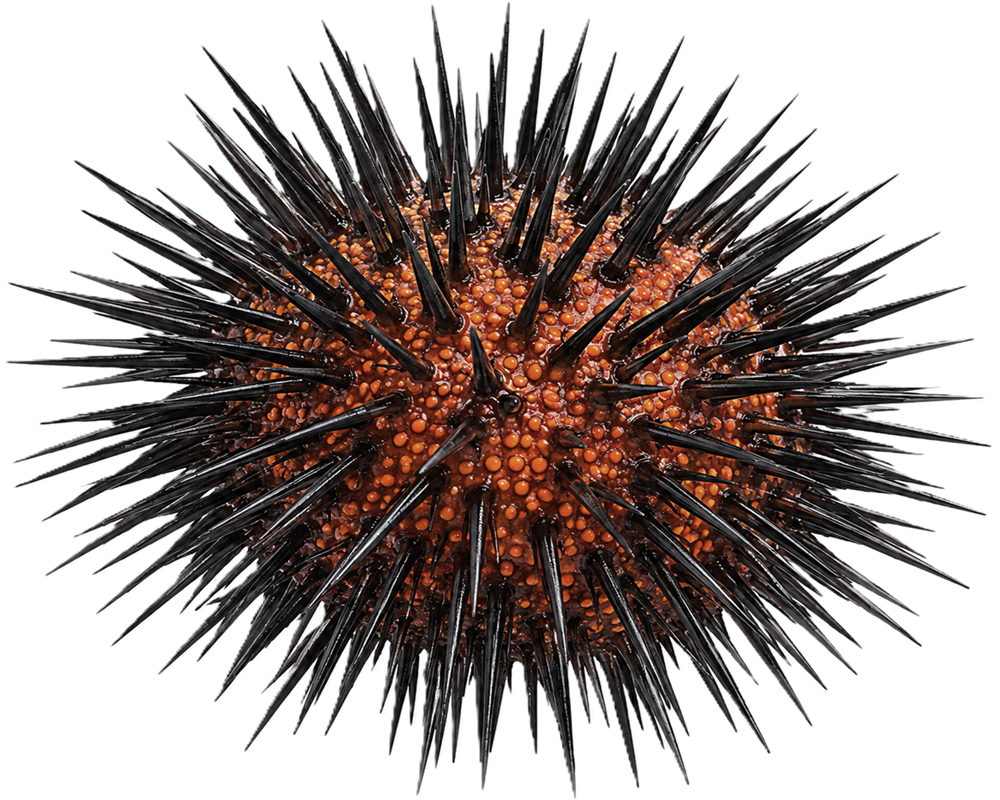 Diplodetus |
D. americanus822Cooke, C. W. (1953). American Upper Cretaceous Echinoidea. United States Geological Survey Professional Paper, 254-A, 1–44. doi:10.3133/pp254A823Vega, F.J., Feldmann, R.M. & Villalobos-Hiriart, J.L. (1995): Additions to the crustacean (Decapoda) fauna from the Potrerillos Formation (Late Cretaceous) in northeastern Mexico. Annals of Carnegie Museum 64(3): 239–249. doi:10.5962/p.215129824Vega, F.J., Feldmann, R.M. & Villalobos-Hiriart, J.L. (1995): Additions to the crustacean (Decapoda) fauna from the Potrerillos Formation (Late Cretaceous) in northeastern Mexico. Annals of Carnegie Museum 64(3): 239–249. doi:10.5962/p.215129825Ciampaglio, C. N. & Phillips, G. E. (2016). Irregular echinoids of the Upper Cretaceous Coon Creek beds in Tennessee. Bulletin of the Alabama Museum of Natural History 33(2), 59–77. Originalpublikation826Cooke, C. W. (1953). American Upper Cretaceous Echinoidea. United States Geological Survey Professional Paper 254-A, 1–44. Prairie Bluff Chalk; historische Kombinationen nach den dokumentierten Revisionen abgeglichen. doi:10.3133/pp254a | Corsicana Marl Cárdenas Formation Potrerillos Formation Prairie Bluff Chalk Ripley Formation |
USA (Mississippi, Tennessee, Texas); Mexiko (Nuevo León, San Luis Potosí) | 76–66 Ma (Gattung bis 56 Ma) | sehr häufig | Micrasteridae (Herzigel); Synonyme: Micraster americanus, Plesiaster americanus; als Hemiaster ungula fehlbestimmt |
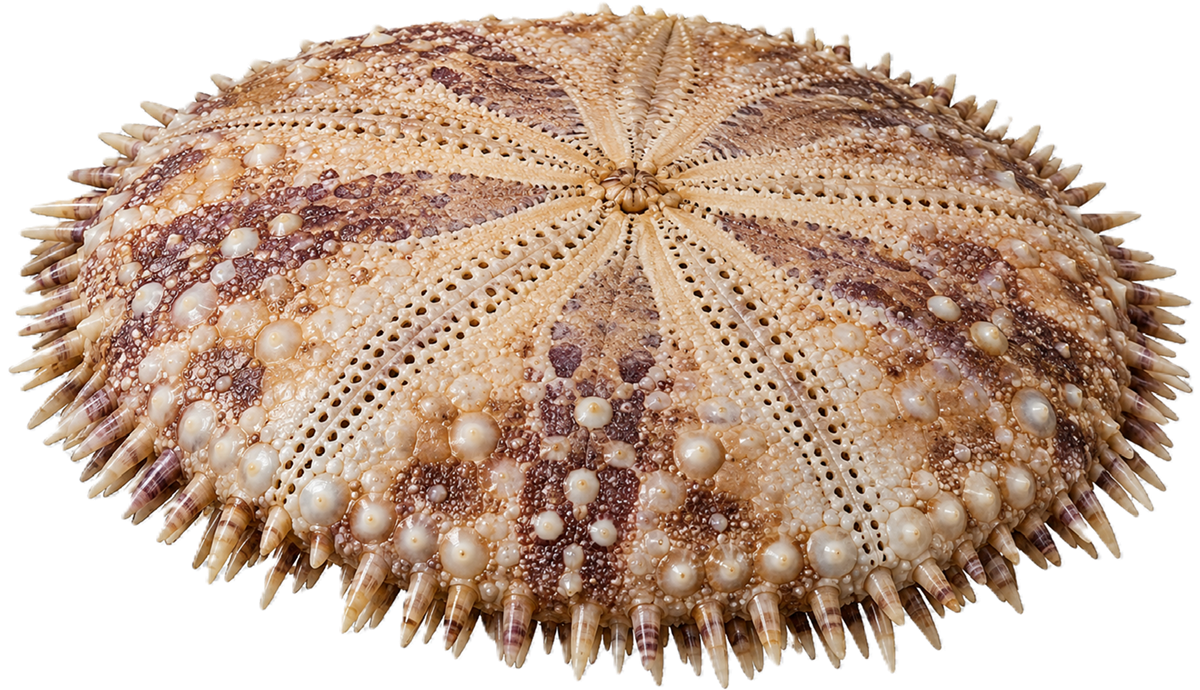 Domechinus |
D. chelonium827Cooke, C. W. (1953). American Upper Cretaceous Echinoidea. U.S. Geological Survey Professional Paper, 254-A, 1–44. doi:10.3133/pp254a | Escondido Formation | USA (Texas) | 72–66 Ma | selten | Faujasiidae (Sanddollar) |
 |
Echinodermata indet.828Dawson, M. K. (1978). The paleontology of the Cabrillo Formation. M.S. thesis, San Diego State University, 1–87. | Cabrillo Formation | USA (Kalifornien) | 70–66 Ma | selten | unbestimmte Stachelhäuter |
 |
Echinoidea indet.829Sohl, N. F. & Koch, C. F. (1984). Upper Cretaceous (Maastrichtian) larger invertebrate fossils from the Haustator bilira assemblage zone in the West Gulf Coastal Plain. U.S. Geological Survey Open-File Report, 84-687, 1–282. doi:10.3133/ofr84687830Ifrim, C., Stinnesbeck, W. & López-Oliva, J. G. (2004). Maastrichtian cephalopods from Cerralvo, north-eastern Mexico. Palaeontology 47(6), 1575–1627. doi:10.1111/j.0031-0239.2004.00426.x831Springer, F. (1922). Crinoids from the Upper Cretaceous of Tamaulipas, Mexico. Proceedings of the United States National Museum 61(2426), 1–4. Originalpublikation | Arkadelphia Marl Escondido Formation Méndez Formation |
USA (Arkansas, Texas); Mexiko (Nuevo León, Tamaulipas) | 72–66 Ma | häufig | unbestimmte Seeigel |
| Eurysalenia | E. minima832Hook, S. C. & Cobban, W. A. (2017): Mecaster batnensis (Coquand, 1862), a late Cenomanian echinoid from New Mexico, with a compilation of Late Cretaceous echinoid records in the Western Interior of the United States and Canada. Acta Geologica Polonica 67(1): 1–30. doi:10.1515/agp-2017-0002833Ryan, D. R., Witts, J. D. & Landman, N. H. (2021): Palaeoecological analysis of a methane seep deposit from the Upper Cretaceous (Maastrichtian) of the U.S. Western Interior. Lethaia 54(2): 185–203. doi:10.1111/let.12396834Rendall, B. E., Erickson, J. M. & Hoganson, J. W. (2010): New, rare echinoid records from the Pierre–Fox Hills transition (Late Cretaceous: Campanian–Maastrichtian) in the Williston Basin. Geological Society of America Abstracts with Programs 42(5): 249. Originalnachweis | Pierre Shale | USA (Montana, North Dakota, Wyoming) | 77–66 Ma | sehr häufig | Glyphocyphidae (Seeigel) |
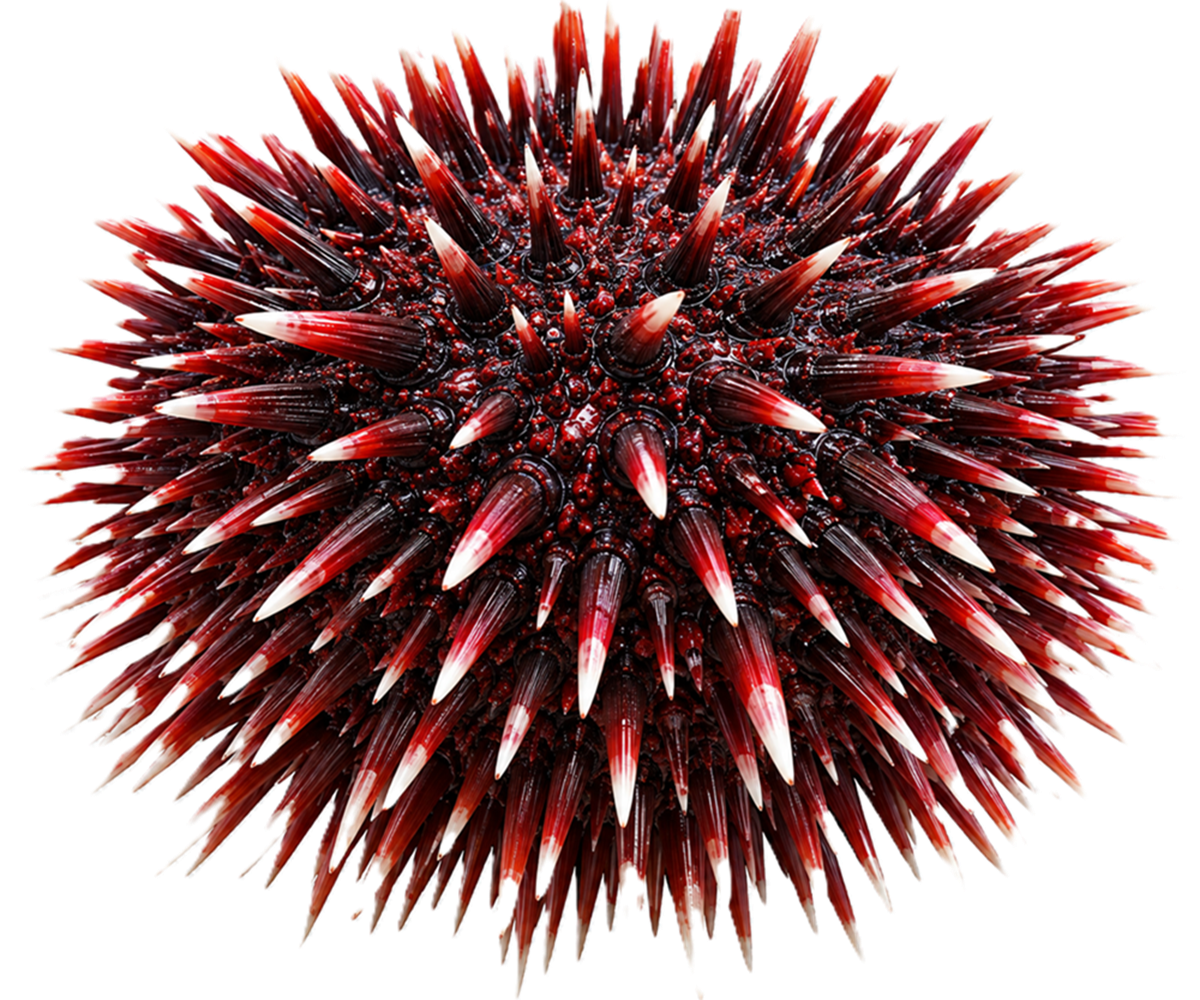 Globator |
G. vaughani (?)835iDigBio (o. J.). Globator vaughani, Katalognummer NPL00101686.000. Originaler Museumskatalog über iDigBio (abgerufen am 1. Oktober 2026). | Escondido Formation | USA (Texas) | 72–66 Ma | selten | Conulidae (Seeigel) |
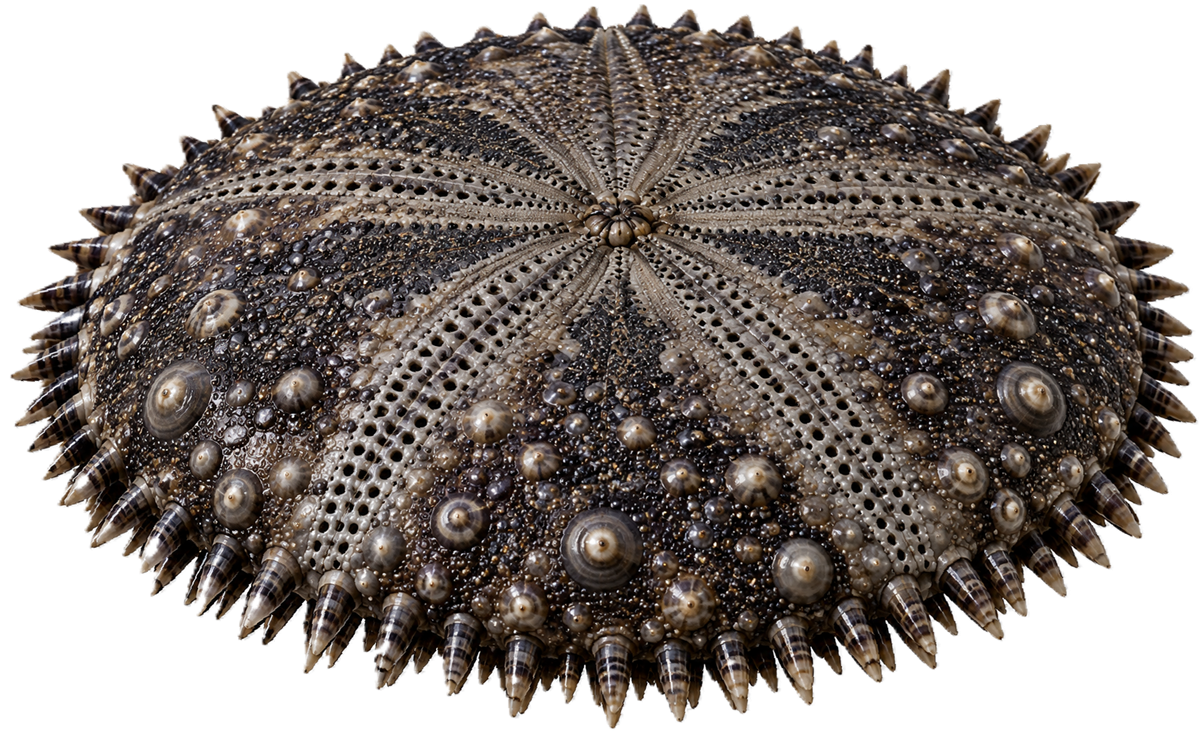 Hardouinia |
H. aequorea836Cooke, C. W. (1953). American Upper Cretaceous Echinoidea. United States Geological Survey Professional Paper 254-A, 1–44. doi:10.3133/pp254a837Cooke, C. W. (1953). American Upper Cretaceous Echinoidea. United States Geological Survey Professional Paper 254-A, 1–44. Prairie Bluff Chalk; historische Kombinationen nach den dokumentierten Revisionen abgeglichen. doi:10.3133/pp254a H. micrococcus838Cooke, C. W. (1953). American Upper Cretaceous Echinoidea. United States Geological Survey Professional Paper 254-A, 1–44. doi:10.3133/pp254a H. mortonis839Cooke, C. W. (1953). American Upper Cretaceous Echinoidea. U.S. Geological Survey Professional Paper, 254-A, 1–44. doi:10.3133/pp254a840Sohl, N. F. (1960). Archeogastropoda, Mesogastropoda, and stratigraphy of the Ripley, Owl Creek, and Prairie Bluff Formations. United States Geological Survey Professional Paper 331-A. doi:10.3133/pp331A841Priddy, R. R. & McCutcheon, T. E. (1943). Pontotoc County mineral resources. Mississippi State Geological Survey Bulletin 54, 1–139. S. 30, als Hardouinia subquadrata; Synonymie nach Cooke (1953), S. 20. Originalpublikation H. waagei842Rendall, B. E., Erickson, J. M. & Hoganson, J. W. (2010). New, rare echinoid records from the Pierre–Fox Hills transition (Late Cretaceous: Campanian–Maastrichtian) in the Williston Basin. Geological Society of America Abstracts with Programs, 42(5), 249. Quelle |
Escondido Formation Fox Hills Formation Prairie Bluff Chalk Ripley Formation |
USA (Alabama, Georgia, Mississippi, North Dakota, Texas) | 80–66 Ma (Gattung bis 56 Ma) | häufig | Faujasiidae (Seeigel); Synonym: Cassidulus intermedius; Synonyme: Cassidulus porrectus, Hardouinia porrecta |
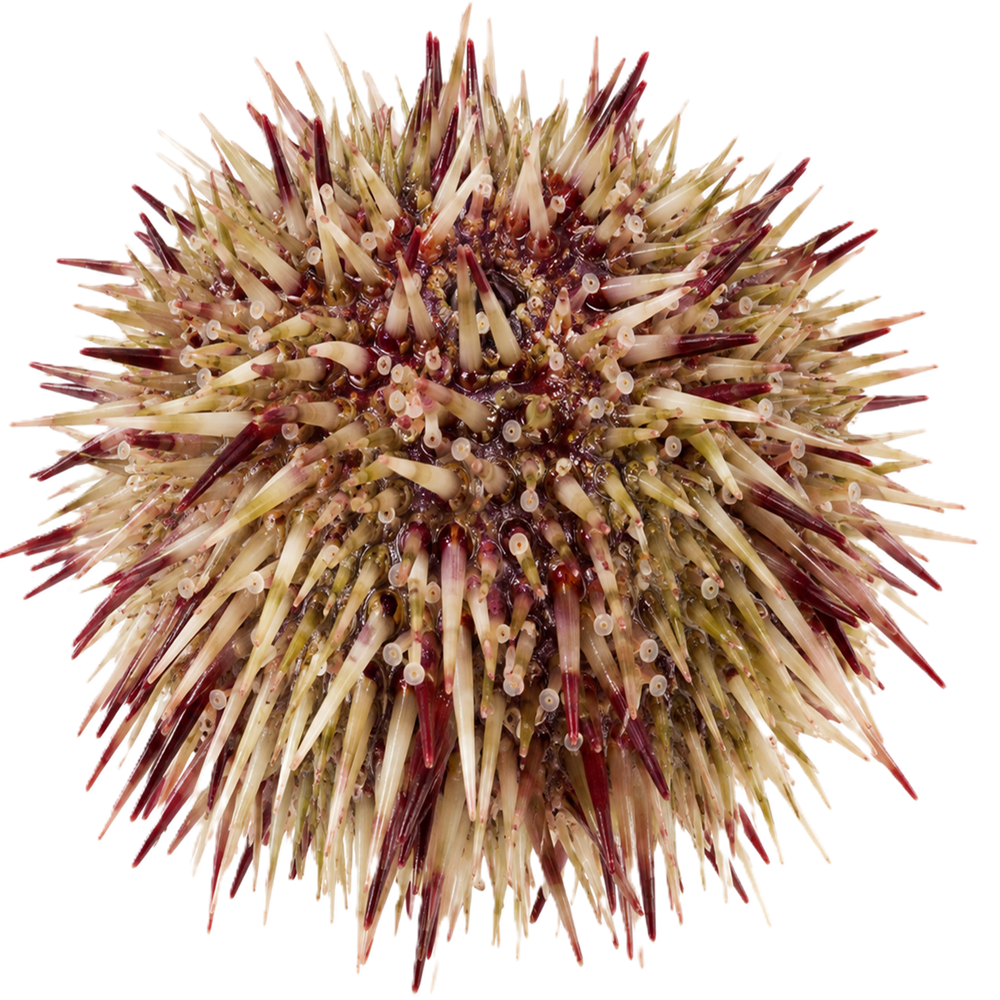 Hemiaster |
H. bexari843Vega, F.J., Feldmann, R.M. & Villalobos-Hiriart, J.L. (1995): Additions to the crustacean (Decapoda) fauna from the Potrerillos Formation (Late Cretaceous) in northeastern Mexico. Annals of Carnegie Museum 64(3): 239–249. doi:10.5962/p.215129844Vega, F. J., Feldmann, R. M. & Sour-Tovar, F. (1995). Fossil crabs (Crustacea: Decapoda) from the Late Cretaceous Cárdenas Formation, east-central Mexico. Journal of Paleontology, 69(2), 340–350. doi:10.1017/S0022336000034661845Cooke, C. W. (1953). American Upper Cretaceous Echinoidea. United States Geological Survey Professional Paper, 254-A, 1–44. doi:10.3133/pp254A H. humphreysanus846Hook, S. C. & Cobban, W. A. (2017): Mecaster batnensis (Coquand, 1862), a late Cenomanian echinoid from New Mexico, with a compilation of Late Cretaceous echinoid records in the Western Interior of the United States and Canada. Acta Geologica Polonica 67(1): 1–30. doi:10.1515/agp-2017-0002847Ryan, D. R., Witts, J. D. & Landman, N. H. (2021): Palaeoecological analysis of a methane seep deposit from the Upper Cretaceous (Maastrichtian) of the U.S. Western Interior. Lethaia 54(2): 185–203. doi:10.1111/let.12396848Rendall, B. E., Erickson, J. M. & Hoganson, J. W. (2010): New, rare echinoid records from the Pierre–Fox Hills transition (Late Cretaceous: Campanian–Maastrichtian) in the Williston Basin. Geological Society of America Abstracts with Programs 42(5): 249. Originalnachweis849Rendall, B. E., Erickson, J. M. & Hoganson, J. W. (2010). New, rare echinoid records from the Pierre–Fox Hills transition (Late Cretaceous: Campanian–Maastrichtian) in the Williston Basin. Geological Society of America Abstracts with Programs, 42(5), 249. Quelle H. spp.850Vega, F. J., Feldmann, R. M. & Sour-Tovar, F. (1995). Fossil crabs (Crustacea: Decapoda) from the Late Cretaceous Cárdenas Formation, east-central Mexico. Journal of Paleontology, 69(2), 340–350. doi:10.1017/S0022336000034661851Stephenson, L. W. (1941). The larger invertebrate fossils of the Navarro group of Texas (exclusive of corals and crustaceans and exclusive of the fauna of the Escondido formation). University of Texas Publication 4101, 1–641 |
Cárdenas Formation Corsicana Marl Fox Hills Formation (?) Kemp Clay Pierre Shale Potrerillos Formation |
USA (Colorado, Montana, North Dakota, Texas); Mexiko (Nuevo León, San Luis Potosí) | 75–66 Ma (Gattung 120 Ma bis heute) | sehr häufig | Hemiasteridae (Herzigel) |
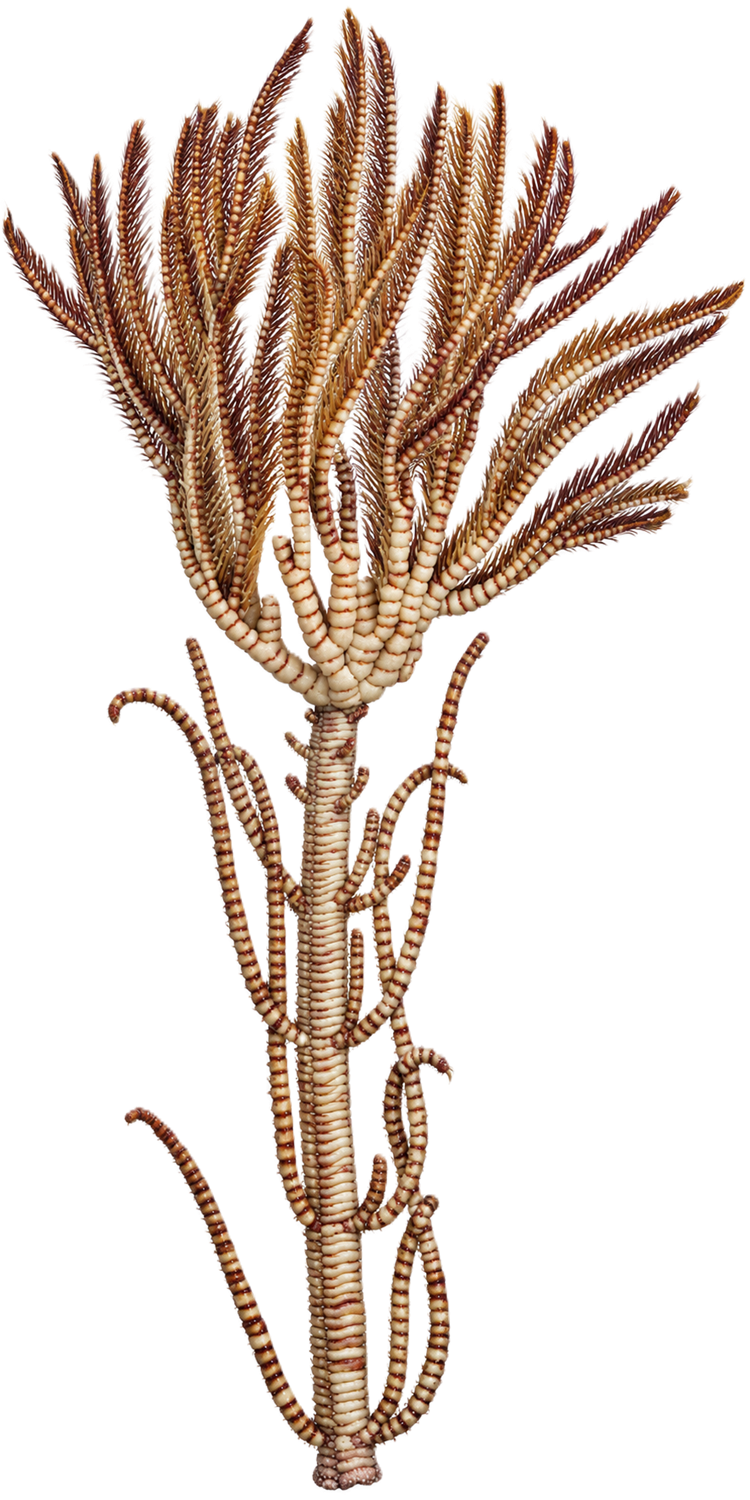 Isocrinus |
I. sp.852National Park Service (2021). Fossils. Katmai National Park & Preserve. | Kaguyak Formation | USA (Alaska) | 72–70 Ma (Gattung 249 Ma bis heute) | selten | Isocrinidae (Seelilie) |
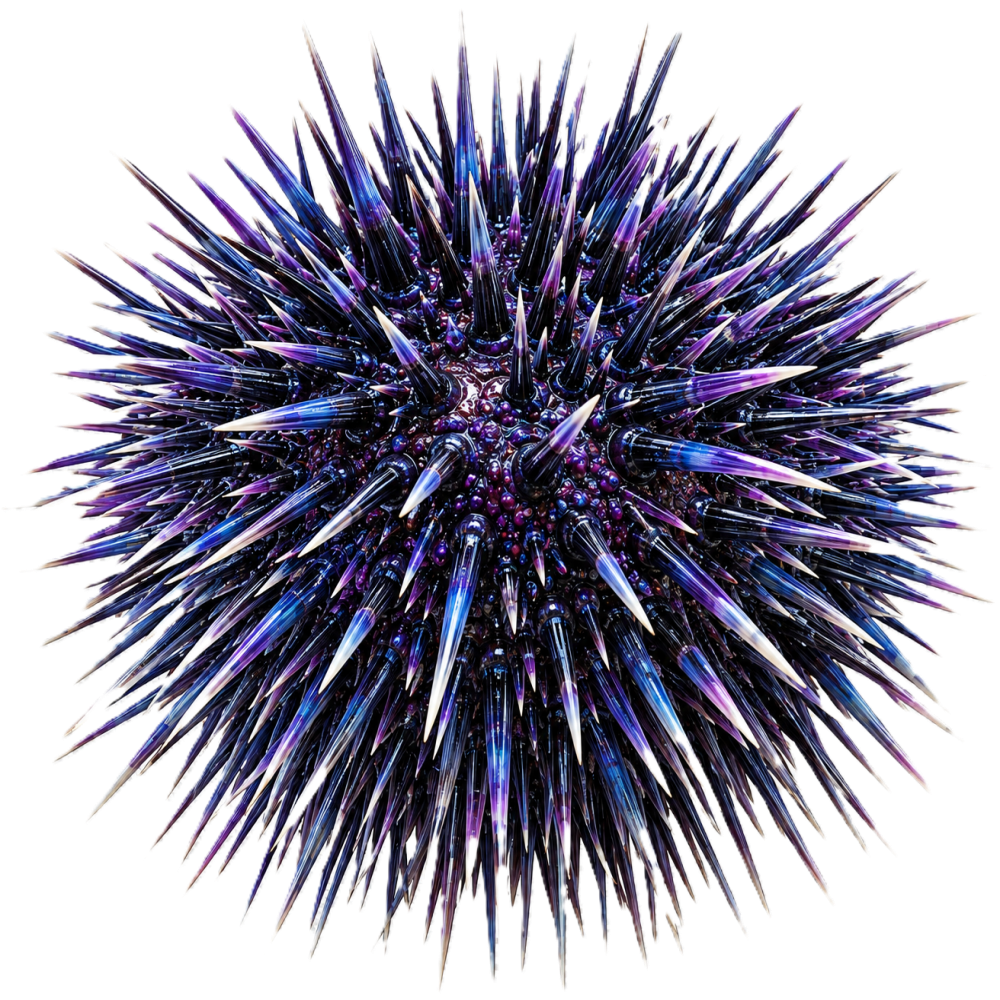 Lanieria |
L. uvaldana (?)853iDigBio (o. J.). Lanieria uvaldana, Katalognummer NPL00101687.000. Originaler Museumskatalog über iDigBio (abgerufen am 1. Oktober 2026). | Escondido Formation | USA (Texas) | 72–66 Ma | selten | Coenholectypidae (Seeigel) |
| Lefortia | L. trojana854Ciampaglio, C. N. & Phillips, G. E. (2016). Irregular echinoids of the Upper Cretaceous Coon Creek beds in Tennessee. Bulletin of the Alabama Museum of Natural History 33(2), 59–77. Originalpublikation | Ripley Formation | USA (Mississippi, Tennessee) | 76–68 Ma | nicht quantifiziert | Faujasiidae (Seeigel) |
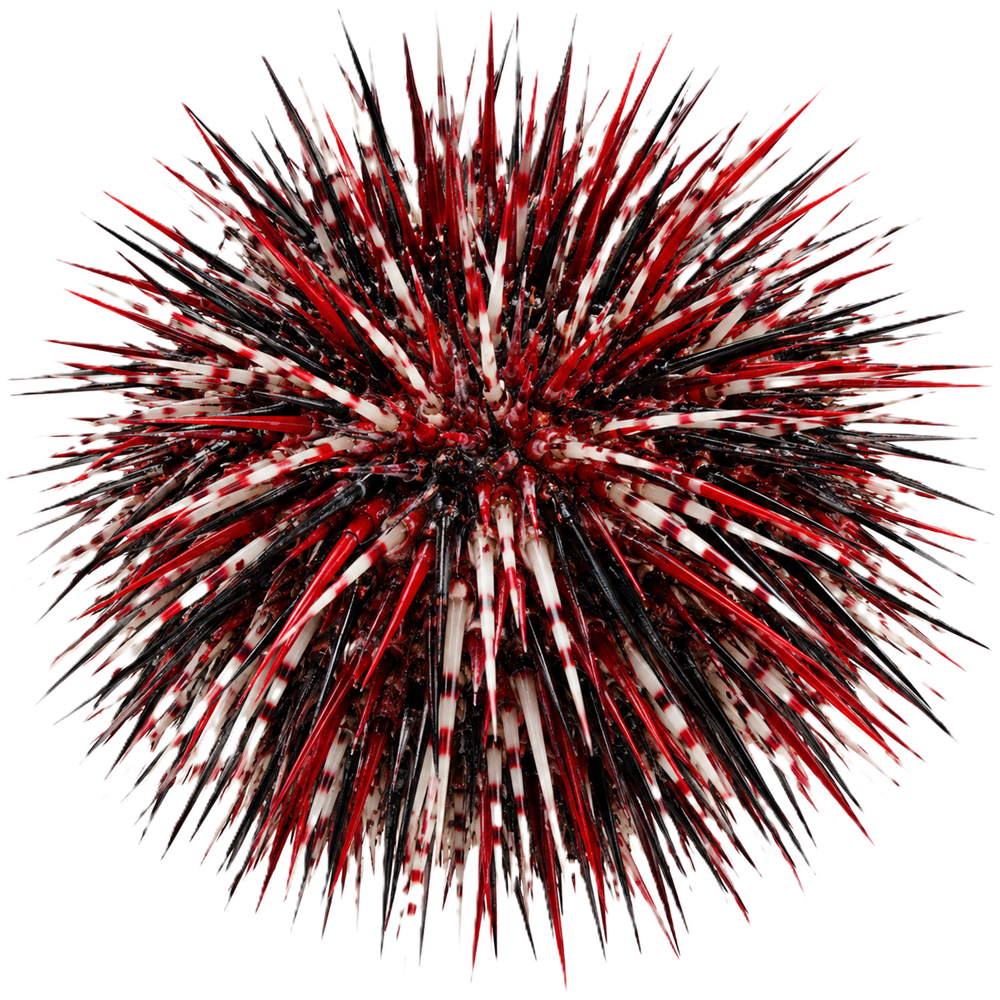 Linthia |
L. sp. (?)855Stephenson, L. W. (1941). The larger invertebrate fossils of the Navarro group of Texas (exclusive of corals and crustaceans and exclusive of the fauna of the Escondido formation). University of Texas Publication 4101, 1–641 | Kemp Clay | USA (Texas) | 68–66 Ma | selten | Schizasteridae (Seeigel) |
| Metopaster | M. tennesseensis856Wade, B. (1926). The fauna of the Ripley Formation on Coon Creek, Tennessee. United States Geological Survey Professional Paper 137, 1–272. doi:10.3133/pp137 | Ripley Formation | USA (Tennessee) | 76–72 Ma | nicht quantifiziert | Goniasteridae (Seestern) |
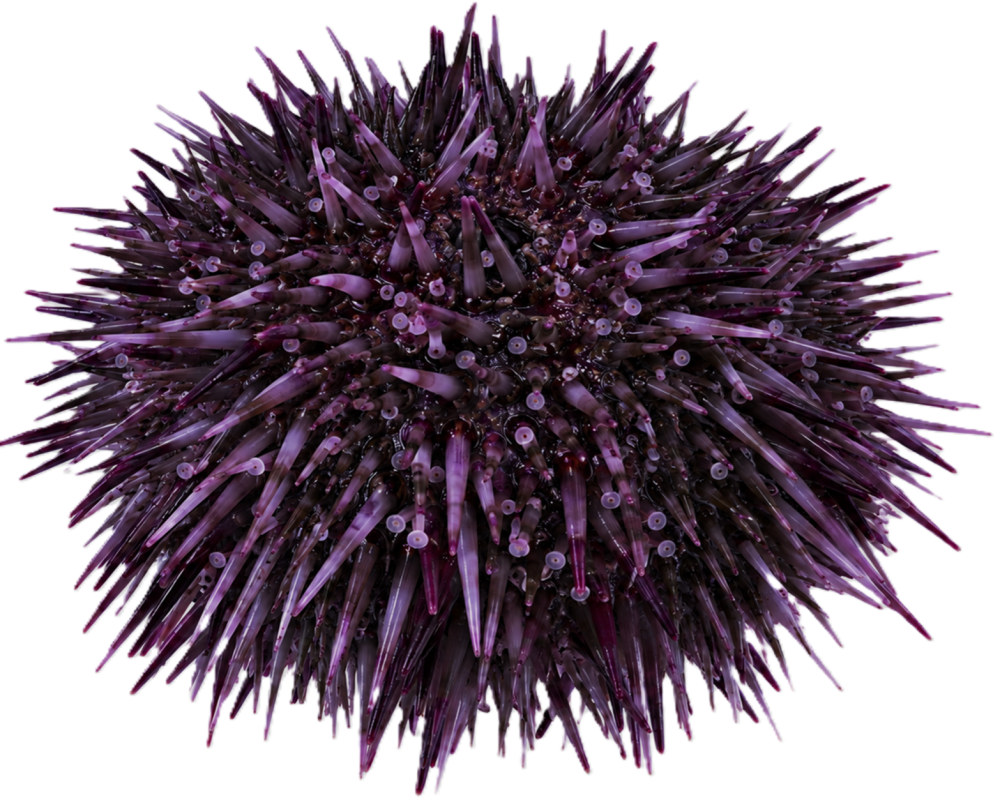 Micraster |
M. sp.857Vega, F. J., Feldmann, R. M. & Sour-Tovar, F. (1995). Fossil crabs (Crustacea: Decapoda) from the Late Cretaceous Cárdenas Formation, east-central Mexico. Journal of Paleontology, 69(2), 340–350. doi:10.1017/S0022336000034661 | Cárdenas Formation Potrerillos Formation |
Mexiko (Nuevo León, San Luis Potosí) | 72–66 Ma (Gattung bis 56 Ma) | selten | Micrasteridae (Herzigel) |
 Petalobrissus |
P. cubensis (?)858iDigBio (o. J.). Petalobrissus cubensis, Katalognummer NPL00097189.000. Originaler Museumskatalog über iDigBio (abgerufen am 1. Oktober 2026).859iDigBio (o. J.). Phyllobrissus cubensis, Katalognummer NPL00101318.000. Originaler Museumskatalog über iDigBio (abgerufen am 1. Oktober 2026). | Escondido Formation | USA (Texas) | 72–66 Ma | selten | Faujasiidae (Seeigel) |
 Proraster |
P. dalli860Cooke, C. W. (1953). American Upper Cretaceous Echinoidea. United States Geological Survey Professional Paper, 254-A, 1–44. doi:10.3133/pp254A P. humphreysanus861Cooke, C. W. (1953). American Upper Cretaceous Echinoidea. United States Geological Survey Professional Paper 254-A, 1–44. doi:10.3133/pp254a |
Corsicana Marl Ripley Formation |
USA (Mississippi, Texas) | 72–66 Ma | selten | Schizasteridae (Herzigel); Synonyme: Hemiaster humphreysanus, Hemiaster parastatus |
| Pseudholaster | P. sp.862Rendall, B. E., Erickson, J. M. & Hoganson, J. W. (2010). New, rare echinoid records from the Pierre–Fox Hills transition (Late Cretaceous: Campanian–Maastrichtian) in the Williston Basin. Geological Society of America Abstracts with Programs, 42(5), 249. Quelle | Fox Hills Formation | USA (North Dakota) | 72–68 Ma (?) | Einzelfund | Holasteridae (Seeigel) |
 Rachiosoma |
R. hondoense863Cooke, C. W. (1953). American Upper Cretaceous Echinoidea. U.S. Geological Survey Professional Paper, 254-A, 1–44. doi:10.3133/pp254a R. mortoni864Cooke, C. W. (1953). American Upper Cretaceous Echinoidea. United States Geological Survey Professional Paper 254-A, 1–44. doi:10.3133/pp254a |
Escondido Formation Ripley Formation |
USA (Alabama, Texas) | 72–66 Ma | selten | Phymosomatidae (Seeigel) |
| Rhizocrinus | R. alabamensis865Clark, W. B. & Twitchell, M. W. (1915). The Mesozoic and Cenozoic Echinodermata of the United States. United States Geological Survey Monograph 54, 1–341. doi:10.3133/m54 | Ripley Formation | USA (Alabama) | 72–68 Ma | nicht quantifiziert | Bourgueticrinidae (Haarstern); Synonym: Bourgueticrinus alabamensis |
 Schizaster |
S. variabilis866Ciampaglio, C. N. & Phillips, G. E. (2016). Irregular echinoids of the Upper Cretaceous Coon Creek beds in Tennessee. Bulletin of the Alabama Museum of Natural History 33(2), 59–77. Originalpublikation867Cooke, C. W. (1953). American Upper Cretaceous Echinoidea. United States Geological Survey Professional Paper, 254-A, 1–44. doi:10.3133/pp254A868Ciampaglio, C. N. & Phillips, G. E. (2016). Irregular echinoids of the Upper Cretaceous Coon Creek beds in Tennessee. Bulletin of the Alabama Museum of Natural History 33(2), 59–77. Originalpublikation869Cooke, C. W. (1953). American Upper Cretaceous Echinoidea. United States Geological Survey Professional Paper 254-A, 1–44. Prairie Bluff Chalk; historische Kombinationen nach den dokumentierten Revisionen abgeglichen. doi:10.3133/pp254a | Corsicana Marl Owl Creek Formation Prairie Bluff Chalk Ripley Formation |
USA (Mississippi, Tennessee, Texas) | 76–66 Ma (Gattung 76 Ma bis heute) | häufig | Schizasteridae (Herzigel); Synonym: Linthia variabilis |
Der Owl-Creek-Nachweis von Bolbaster wetherbyi wird unter dem älteren Namen Hemiaster wetherbyi in der Datenbank geführt und hier mit aufgenommen. Die zugrunde liegende Formationszuordnung bleibt ungeklärt: Cooke (1953) weist das überprüfte Stück von USGS 6856 der Prairie Bluff Chalk zu. Der gesicherte Ripley-Nachweis bleibt bestehen; die Erweiterung bis 66 Ma berücksichtigt den vorläufig übernommenen Owl-Creek-Nachweis und belegt keine kontinuierliche Lebensspanne.
Der Seestern NMMNH P-78593 stammt aus dem oberen Pierre Shale im südlichen Colorado (frühes Maastrichtium). Die Zuordnung zur Gattung Coulonia ist vorläufig; eine Bestimmung als Coulonia platyspina wird hier nicht übernommen. Eurysalenia minima und Hemiaster humphreysanus besitzen neben campanischen auch maastrichtische Nachweise. Die Altersangaben sind gerundete Näherungen aus den jeweils angegebenen Schichten beziehungsweise Ammonitenzonen; sie belegen nicht direkt ein Überleben bis 66 Ma. Die sehr hohe Häufigkeit von Eurysalenia beruht insbesondere auf den zahlreichen Gehäusen aus Wyoming.
Der Nachweis von Hemiaster humphreysanus stammt direkt aus dem Übergangsraum vom Pierre Shale in die Fox Hills Formation. Er kann also beiden Formationen zugeordnet werden.870Rendall, B. E., Erickson, J. M. & Hoganson, J. W. (2010). New, rare echinoid records from the Pierre–Fox Hills transition (Late Cretaceous: Campanian–Maastrichtian) in the Williston Basin. Geological Society of America Abstracts with Programs, 42(5), 249. Quelle
Die historische Zuordnung von Scutellaster cretaceus aus der Fox Hills Formation ist nicht zu sichern: Bereits die Herkunft des Typus ist zweifelhaft.Sogar eine eingeschleppte Herkunft von der Westküste ist nicht unwahrscheinlich.871Cooke, C. W. (1953). American Upper Cretaceous Echinoidea. U.S. Geological Survey Professional Paper, 254-A, 1–44. doi:10.3133/pp254a
Gliederfüßer:
| Gattung: | Arten: | Formation: | Fundort: | Alter: | Häufigkeit: | Bemerkungen: |
|---|---|---|---|---|---|---|
| ? Atelecyclidae indet.872Phillips, G. E., Nyborg, T. & Vega, F. J. (2013). Icriocarcinidae: a family of portunoid crabs from the Upper Cretaceous of North America. Diskussion älterer, problematischer Prairie-Bluff-Meldungen; bei Raninidae unter anderem als Raninoides ovalis publiziert. Originalpublikation | Prairie Bluff Chalk | USA (Mississippi) | 69–66 Ma | nicht quantifiziert | Atelecyclidae (Krabbe) | |
| ? Macrophthalmidae indet.873Phillips, G. E., Nyborg, T. & Vega, F. J. (2013). Icriocarcinidae: a family of portunoid crabs from the Upper Cretaceous of North America. Diskussion älterer, problematischer Prairie-Bluff-Meldungen; bei Raninidae unter anderem als Raninoides ovalis publiziert. Originalpublikation | Prairie Bluff Chalk | USA (Mississippi) | 69–66 Ma | nicht quantifiziert | Macrophthalmidae (Krabbe) | |
| ? Raninidae indet.874Phillips, G. E., Nyborg, T. & Vega, F. J. (2013). Icriocarcinidae: a family of portunoid crabs from the Upper Cretaceous of North America. Diskussion älterer, problematischer Prairie-Bluff-Meldungen; bei Raninidae unter anderem als Raninoides ovalis publiziert. Originalpublikation | Prairie Bluff Chalk | USA (Mississippi) | 69–66 Ma | nicht quantifiziert | Raninidae (Krabbe) | |
| Archaeopus | A. diabolus875Schweitzer, C. E. et al. (2019). Cretaceous Decapoda (Crustacea) from Mississippi, USA. Neues Jahrbuch für Geologie und Paläontologie, Abhandlungen 293(2), 145–197. doi:10.1127/njgpa/2019/0838 | Ripley Formation | USA (Mississippi) | 72–68 Ma | selten | Archaeopidae (Krabbe) |
| Arcoscalpellum | A. bakeri876Collins, J. S. H. & Mellen, F. F. (1973). Cirripedes from the Upper Cretaceous of Alabama and Mississippi, eastern Gulf Region, U.S.A. Bulletin of the British Museum (Natural History), Geology 23(6), 349–388. Originalpublikation A. campus877Collins, J. S. H. & Mellen, F. F. (1973). Cirripedes from the Upper Cretaceous of Alabama and Mississippi, eastern Gulf Region, U.S.A. Bulletin of the British Museum (Natural History), Geology 23(6), 349–388. Originalpublikation A. withersi878Collins, J. S. H. & Mellen, F. F. (1973). Cirripedes from the Upper Cretaceous of Alabama and Mississippi, eastern Gulf Region, U.S.A. Bulletin of the British Museum (Natural History), Geology 23(6), 349–388. Originalpublikation |
Ripley Formation | USA (Mississippi) | 72–68 Ma | nicht quantifiziert | Scalpellidae (Rankenfußkrebs) |
| Avitelmessus | A. grapsoideus879Kornecki, K. M., Feldmann, R. M. & Schweitzer, C. E. (2017). Decapoda (Crustacea) of the Coon Creek Formation (Maastrichtian) of Mississippi and Tennessee. Bulletin of the Florida Museum of Natural History 53(6), 269–334. doi:10.58782/flmnh.danf1986 A. spp.880Sohl, N. F. (1960). Archeogastropoda, Mesogastropoda, and stratigraphy of the Ripley, Owl Creek, and Prairie Bluff Formations. U.S. Geological Survey Professional Paper 331-A, 1–151. S. 30, Prairie Bluff(?), Lokalität 53; veröffentlichte fragliche Formationszuordnung. doi:10.3133/pp331A |
Prairie Bluff Chalk Ripley Formation |
USA (Alabama, Mississippi, Tennessee) | 76–66 Ma | nicht quantifiziert | Torynommidae (Krabbe) |
| Axiidae indet.881Schweitzer, C. E. et al. (2019). Cretaceous Decapoda (Crustacea) from Mississippi, USA. Neues Jahrbuch für Geologie und Paläontologie, Abhandlungen 293(2), 145–197. doi:10.1127/njgpa/2019/0838 | Ripley Formation | USA (Mississippi) | 72–68 Ma | nicht quantifiziert | Axiidae (Grabkrebs) | |
| Bournelyreidus | B. ericksoni882Schweitzer, C. E. et al. (2019). Cretaceous Decapoda (Crustacea) from Mississippi, USA. Neues Jahrbuch für Geologie und Paläontologie, Abhandlungen 293(2), 145–197. doi:10.1127/njgpa/2019/0838883Kornecki, K. M., Feldmann, R. M. & Schweitzer, C. E. (2017). Decapoda (Crustacea) of the Coon Creek Formation (Maastrichtian) of Mississippi and Tennessee. Bulletin of the Florida Museum of Natural History 53(6), 269–334. doi:10.58782/flmnh.danf1986884Schweitzer, C. E. et al. (2019). Cretaceous Decapoda (Crustacea) from Mississippi, USA. Neues Jahrbuch für Geologie und Paläontologie, Abhandlungen 293(2), 145–197. Prairie-Bluff-Belegmaterial aus New Albany bzw. den Nixon beds. doi:10.1127/njgpa/2019/0838 B. oaheensis885Bishop, G. A. (1978): Two new crabs, Sodakus tatankayotankaensis n. gen., n. sp. and Raninella oaheensis n. sp. (Crustacea, Decapoda), from the Upper Cretaceous Pierre Shale of South Dakota. Journal of Paleontology 52(3): 608–617.886Karasawa, H., Schweitzer, C. E., Feldmann, R. M. & Luque, J. (2014): Phylogeny and classification of Raninoida (Decapoda: Brachyura). Journal of Crustacean Biology 34(2): 216–272. doi:10.1163/1937240X-00002216887Crawford, R. S. et al. (2006). Decapod crustaceans from the Maastrichtian Fox Hills Formation. Bulletin of the Peabody Museum of Natural History, 47(1–2), 3–28. doi:10.3374/0079-032X(2006)47[3:DCFTMF]2.0.CO;2 B. paredonensis888Vega, F.J., Nyborg, T. & Garassino, A. (2024): New frog crabs (Brachyura, Raninoidea) from the early Maastrichtian of Paredón (Coahuila, NE Mexico). Journal of South American Earth Sciences 134: 104746. doi:10.1016/j.jsames.2023.104746 |
Fox Hills Formation Owl Creek Formation Pierre Shale Potrerillos Formation Prairie Bluff Chalk Ripley Formation |
USA (Mississippi, South Dakota); Mexiko (Coahuila) | 77–66 Ma | sehr häufig | Lyreididae (Krabbe); synonym zu Raninella oaheensis |
| Brachylepas | B. angulosa889Collins, J. S. H. & Mellen, F. F. (1973). Cirripedes from the Upper Cretaceous of Alabama and Mississippi, eastern Gulf Region, U.S.A. Bulletin of the British Museum (Natural History), Geology 23(6), 349–388. Originalpublikation | Ripley Formation | USA (Mississippi) | 72–68 Ma | Einzelfund | Brachylepadidae (Rankenfußkrebs) |
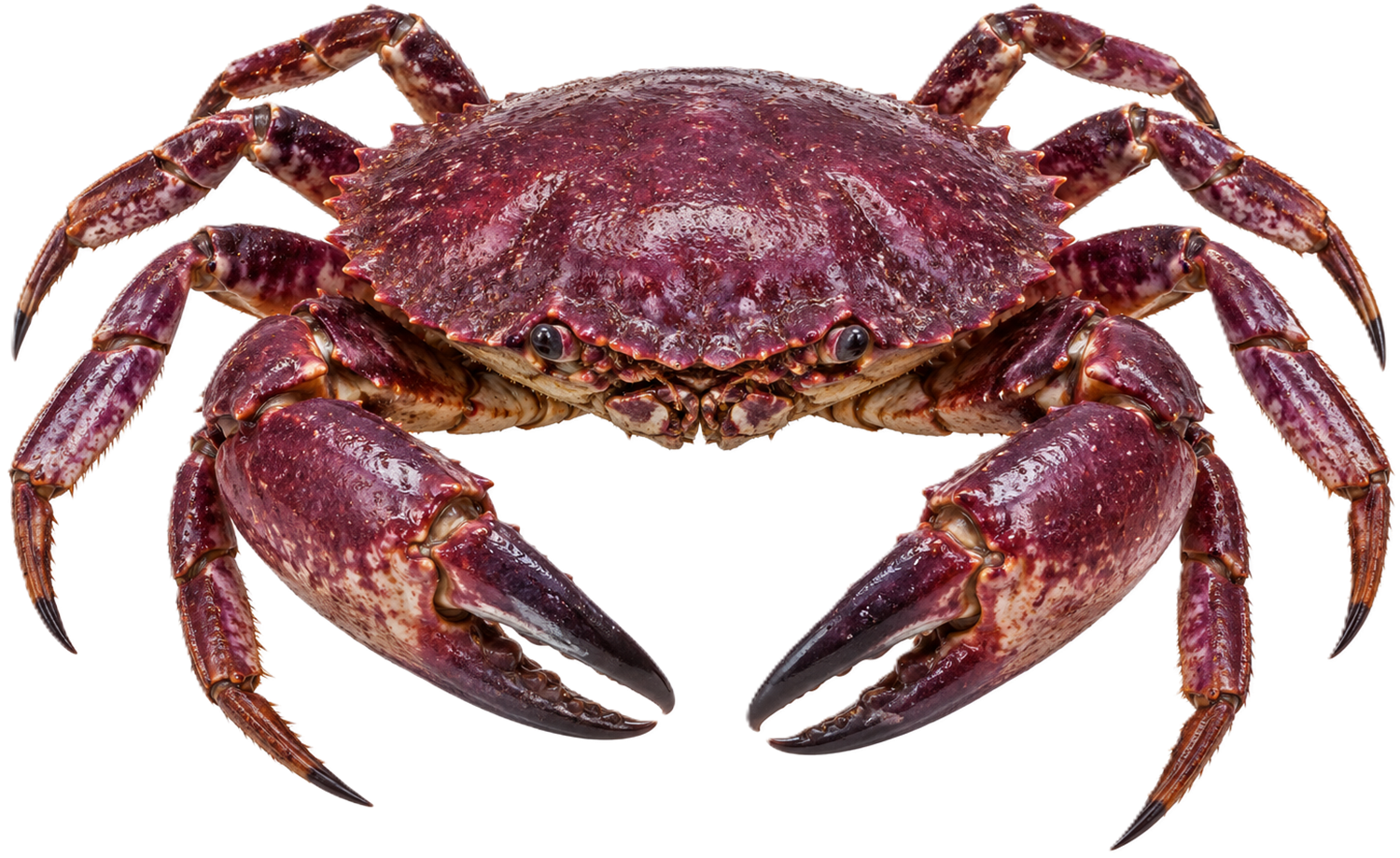 Branchiocarcinus |
B. cornatus890Vega, F. J., Feldmann, R. M. & Sour-Tovar, F. (1995). Fossil crabs (Crustacea: Decapoda) from the Late Cretaceous Cárdenas Formation, east-central Mexico. Journal of Paleontology, 69(2), 340–350. doi:10.1017/S0022336000034661 | Cárdenas Formation | Mexiko (San Luis Potosí) | 72–68 Ma | selten | Carcineretidae (Krabbe) |
| Callianassa | C. sp.891Vega, F.J., Feldmann, R.M. & Villalobos-Hiriart, J.L. (1995): Additions to the crustacean (Decapoda) fauna from the Potrerillos Formation (Late Cretaceous) in northeastern Mexico. Annals of Carnegie Museum 64(3): 239–249. doi:10.5962/p.215129892Bishop, G. A. (1981): Occurrence and fossilization of the Dakoticancer Assemblage, Upper Cretaceous Pierre Shale, South Dakota. In: Gray, J., Boucot, A. J. & Berry, W. B. N. (Hrsg.): Communities of the Past. Hutchinson Ross, Stroudsburg, S. 383–413. | Potrerillos Formation Pierre Shale |
Mexiko (Nuevo León); USA (South Dakota) | 72–66 Ma (Maastrichtium) | sehr häufig | Axiidea (Zehnfußkrebs) |
| Callichirus | C. waagei893Crawford, R. S. et al. (2006). Decapod crustaceans from the Maastrichtian Fox Hills Formation. Bulletin of the Peabody Museum of Natural History, 47(1–2), 3–28. doi:10.3374/0079-032X(2006)47[3:DCFTMF]2.0.CO;2 | Fox Hills Formation | USA (South Dakota) | 72–68 Ma (?) | Einzelfund | Callichiridae (Grabkrebs) |
| Carabites | C. russelli894Northrop, S. A. (1928). Beetles from the Fox Hills Cretaceous strata of South Dakota; with an appendix by T. D. A. Cockerell. American Journal of Science, (5)15(85), 28–38. doi:10.2475/ajs.s5-15.85.28 C. sp.895Northrop, S. A. (1928). Beetles from the Fox Hills Cretaceous strata of South Dakota; with an appendix by T. D. A. Cockerell. American Journal of Science, (5)15(85), 28–38. doi:10.2475/ajs.s5-15.85.28 |
Fox Hills Formation | USA (South Dakota) | 72–68 Ma (?) | selten | Carabidae (Laufkäfer) |
| Carinatus | C. galebishopi896Nyborg, T. et al. (2017). A new genus and species of raninoid crab from the Upper Cretaceous of Mississippi. Paläontologische Zeitschrift 91, 291–298. doi:10.1007/s12542-017-0373-5897Schweitzer, C. E. et al. (2019). Cretaceous Decapoda (Crustacea) from Mississippi, USA. Neues Jahrbuch für Geologie und Paläontologie, Abhandlungen 293(2), 145–197. doi:10.1127/njgpa/2019/0838 | Owl Creek Formation Ripley Formation |
USA (Mississippi) | 72–66 Ma | selten | Raninidae (Krabbe); historisch als Raninella? sp. geführt |
| Casterolimulus | C. kletti898Holland, F. D. Jr., Erickson, J. M. & O’Brien, D. E. (1975). Casterolimulus: a new Late Cretaceous generic link in limulid lineage. Bulletins of American Paleontology, 67(287), 235–249. Quelle | Fox Hills Formation | USA (North Dakota) | 72–68 Ma (?) | Einzelfund | Limulidae (Pfeilschwanzkrebs) |
| Cenomanocarcinus | C. siouxensis899Crawford, R. S. et al. (2006). Decapod crustaceans from the Maastrichtian Fox Hills Formation. Bulletin of the Peabody Museum of Natural History, 47(1–2), 3–28. doi:10.3374/0079-032X(2006)47[3:DCFTMF]2.0.CO;2 | Fox Hills Formation | USA (North Dakota) | 72–68 Ma (?) | Einzelfund | Cenomanocarcinidae (Krabbe); Synonym: Necrocarcinus siouxensis |
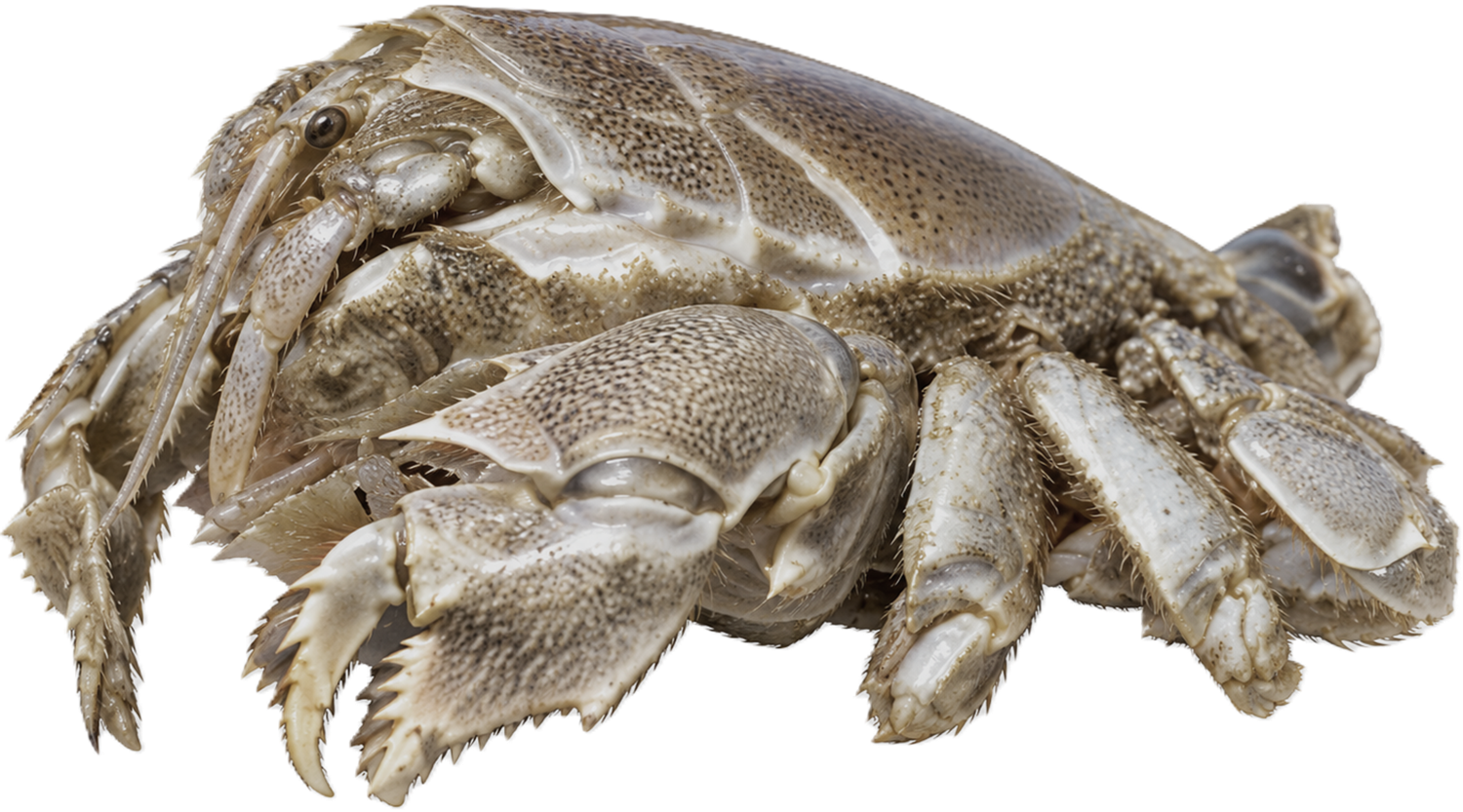 Cheramus |
C. sp.900Vega, F. J., Feldmann, R. M. & Sour-Tovar, F. (1995). Fossil crabs (Crustacea: Decapoda) from the Late Cretaceous Cárdenas Formation, east-central Mexico. Journal of Paleontology, 69(2), 340–350. doi:10.1017/S0022336000034661 | Cárdenas Formation | Mexiko (San Luis Potosí) | 72–68 Ma (Gattung 76 Ma bis heute) | Einzelfund | Callianassidae (Maulwurfkrebs) |
 |
Cirripedia indet. (?)901Hendy, A. J. W. (2008). Personal opinions and reidentification of pre-Cenozoic Mollusca. Unveröffentlichte Neubestimmungen in der Paleobiology Database. | Escondido Formation | USA (Texas) | 72–66 Ma | selten | unbestimmte Rankenfußkrebse (Seepocken) |
| Coahuilanina | C. difuntaensis902Vega, F.J., Nyborg, T. & Garassino, A. (2024): New frog crabs (Brachyura, Raninoidea) from the early Maastrichtian of Paredón (Coahuila, NE Mexico). Journal of South American Earth Sciences 134: 104746. doi:10.1016/j.jsames.2023.104746 | Potrerillos Formation | Mexiko (Coahuila) | 72–66 Ma (Maastrichtium) | nicht quantifiziert | Raninoidea (Krabbe) |
| Coreidae indet.903Oman, P. W. (1937). Fossil Hemiptera from the Fox Hills sandstone (Cretaceous) of Colorado. Journal of Paleontology, 11(1), 38. | Fox Hills Formation | USA (Colorado) | 72–68 Ma (?) | Einzelfund | Coreidae (Randwanze) | |
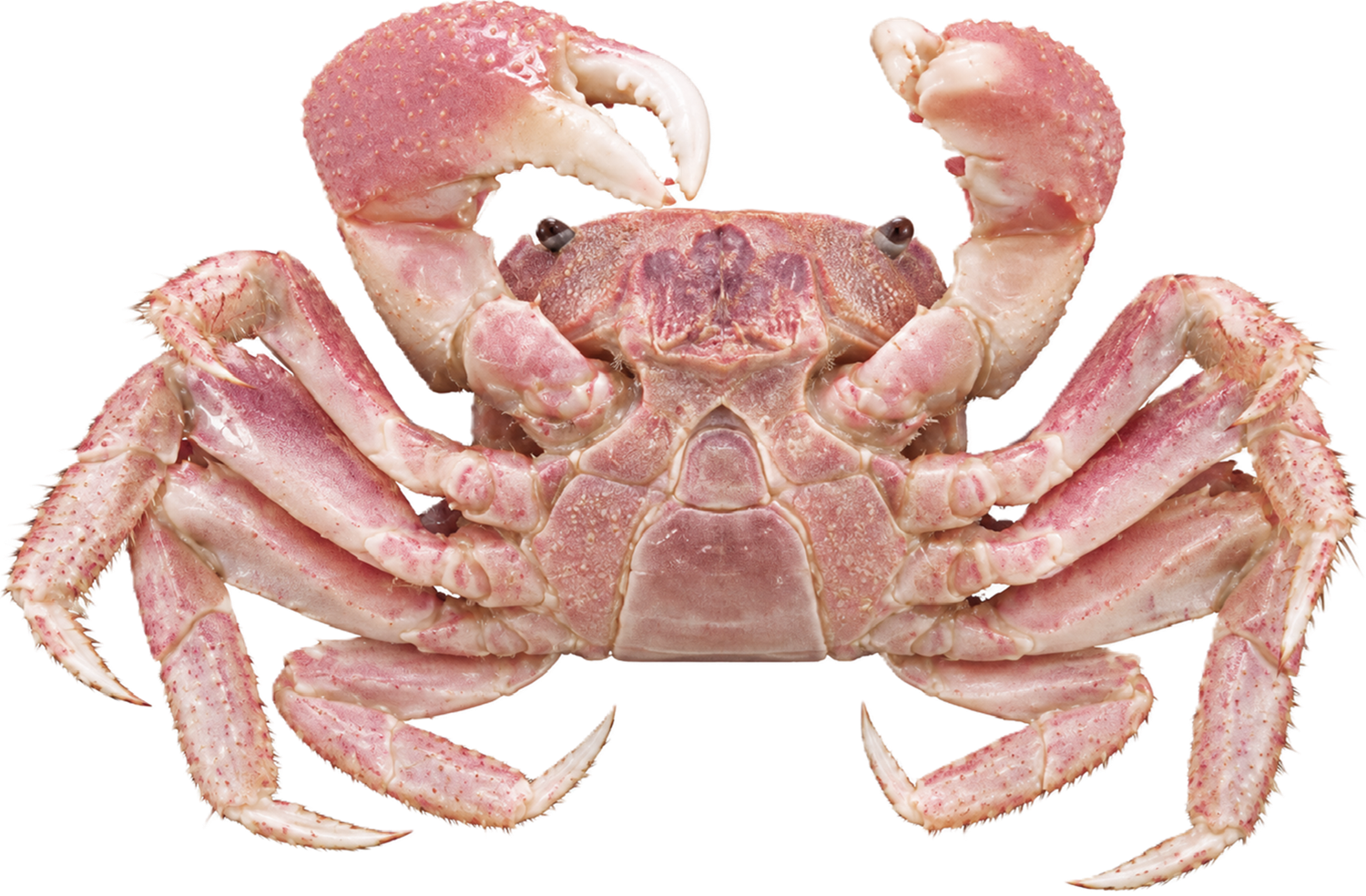 Costacopluma |
C. bishopi904Vega, F. J., Feldmann, R. M. & Sour-Tovar, F. (1995). Fossil crabs (Crustacea: Decapoda) from the Late Cretaceous Cárdenas Formation, east-central Mexico. Journal of Paleontology, 69(2), 340–350. doi:10.1017/S0022336000034661 C. grayi905Farke, A. A. & Phillips, G. E. (2017). The first reported ceratopsid dinosaur from eastern North America (Owl Creek Formation, Upper Cretaceous, Mississippi, USA). PeerJ 5, e3342. doi:10.7717/peerj.3342 C. mexicana906Schweitzer, C. E. et al. (2019). Cretaceous Decapoda (Crustacea) from Mississippi, USA. Neues Jahrbuch für Geologie und Paläontologie, Abhandlungen 293(2), 145–197. doi:10.1127/njgpa/2019/0838907Vega, F.J., Feldmann, R.M. & Villalobos-Hiriart, J.L. (1995): Additions to the crustacean (Decapoda) fauna from the Potrerillos Formation (Late Cretaceous) in northeastern Mexico. Annals of Carnegie Museum 64(3): 239–249. doi:10.5962/p.215129 908Vega, F.J., Feldmann, R.M. & Villalobos-Hiriart, J.L. (1995): Additions to the crustacean (Decapoda) fauna from the Potrerillos Formation (Late Cretaceous) in northeastern Mexico. Annals of Carnegie Museum 64(3): 239–249. doi:10.5962/p.215129909Schweitzer, C. E. et al. (2019). Cretaceous Decapoda (Crustacea) from Mississippi, USA. Neues Jahrbuch für Geologie und Paläontologie, Abhandlungen 293(2), 145–197. Prairie-Bluff-Belegmaterial aus New Albany bzw. den Nixon beds. doi:10.1127/njgpa/2019/0838 |
Cárdenas Formation Owl Creek Formation Potrerillos Formation Prairie Bluff Chalk |
USA (Mississippi); Mexiko (Nuevo León, San Luis Potosí) | 72–66 Ma (Gattung bis 41 Ma) | häufig | Retroplumidae (Krabbe) |
| Cretacoranina | C. testacea910Schweitzer, C. E. et al. (2019). Cretaceous Decapoda (Crustacea) from Mississippi, USA. Neues Jahrbuch für Geologie und Paläontologie, Abhandlungen 293(2), 145–197. doi:10.1127/njgpa/2019/0838911Kornecki, K. M., Feldmann, R. M. & Schweitzer, C. E. (2017). Decapoda (Crustacea) of the Coon Creek Formation (Maastrichtian) of Mississippi and Tennessee. Bulletin of the Florida Museum of Natural History 53(6), 269–334. doi:10.58782/flmnh.danf1986912Schweitzer, C. E. et al. (2019). Cretaceous Decapoda (Crustacea) from Mississippi, USA. Neues Jahrbuch für Geologie und Paläontologie, Abhandlungen 293(2), 145–197. Prairie-Bluff-Belegmaterial aus New Albany bzw. den Nixon beds. doi:10.1127/njgpa/2019/0838 | Owl Creek Formation Prairie Bluff Chalk Ripley Formation |
USA (Mississippi, Tennessee) | 76–66 Ma | häufig | Palaeocorystidae (Krabbe); Synonym: Raninella testacea |
| Cretiscalpellum | C. harnedi913Collins, J. S. H. & Mellen, F. F. (1973). Cirripedes from the Upper Cretaceous of Alabama and Mississippi, eastern Gulf Region, U.S.A. Bulletin of the British Museum (Natural History), Geology 23(6), 349–388. Originalpublikation | Ripley Formation | USA (Mississippi) | 72–68 Ma | nicht quantifiziert | Cretiscalpellidae (Rankenfußkrebs) |
| Cristipluma | C. mississippiensis914Kornecki, K. M., Feldmann, R. M. & Schweitzer, C. E. (2017). Decapoda (Crustacea) of the Coon Creek Formation (Maastrichtian) of Mississippi and Tennessee. Bulletin of the Florida Museum of Natural History 53(6), 269–334. doi:10.58782/flmnh.danf1986 | Ripley Formation | USA (Mississippi) | 72–68 Ma | nicht quantifiziert | Retroplumidae (Krabbe) |
| Curculionites | C. hylobioides915Northrop, S. A. (1928). Beetles from the Fox Hills Cretaceous strata of South Dakota; with an appendix by T. D. A. Cockerell. American Journal of Science, (5)15(85), 28–38. doi:10.2475/ajs.s5-15.85.28 C. northropi916Northrop, S. A. (1928). Beetles from the Fox Hills Cretaceous strata of South Dakota; with an appendix by T. D. A. Cockerell. American Journal of Science, (5)15(85), 28–38. doi:10.2475/ajs.s5-15.85.28 C. vulpinus917Northrop, S. A. (1928). Beetles from the Fox Hills Cretaceous strata of South Dakota; with an appendix by T. D. A. Cockerell. American Journal of Science, (5)15(85), 28–38. doi:10.2475/ajs.s5-15.85.28 C. sp.918Northrop, S. A. (1928). Beetles from the Fox Hills Cretaceous strata of South Dakota; with an appendix by T. D. A. Cockerell. American Journal of Science, (5)15(85), 28–38. doi:10.2475/ajs.s5-15.85.28 |
Fox Hills Formation | USA (South Dakota) | 72–68 Ma (?) | selten | Curculionidae (Rüsselkäfer) |
| Dakotaeschnidium | D. spedeni919Nel, A. (2021). Maastrichtian representatives of the dragonfly family Aeschnidiidae question the entomofaunal turnover of the early Late Cretaceous. Palaeoentomology, 4(3), 209–212. doi:10.11646/palaeoentomology.4.3.5 | Fox Hills Formation | USA (South Dakota) | 72–68 Ma (?) | Einzelfund | Aeschnidiidae (Libelle) |
| Dakoticancer | D. overanus920Bishop, G. A. (1981): Occurrence and fossilization of the Dakoticancer Assemblage, Upper Cretaceous Pierre Shale, South Dakota. In: Gray, J., Boucot, A. J. & Berry, W. B. N. (Hrsg.): Communities of the Past. Hutchinson Ross, Stroudsburg, S. 383–413. | Pierre Shale | USA (South Dakota) | 75–69 Ma | sehr häufig | Dakoticancridae (Krabbe) |
 |
Decapoda indet.921Rathbun, M. J. (1935). Fossil Crustacea of the Atlantic and Gulf Coastal Plain. Geological Society of America Special Paper, 2, 1–160.922Crawford, R. S. et al. (2006). Decapod crustaceans from the Maastrichtian Fox Hills Formation. Bulletin of the Peabody Museum of Natural History, 47(1–2), 3–28. doi:10.3374/0079-032X(2006)47[3:DCFTMF]2.0.CO;2923Rathbun, M. J. (1935). Fossil Crustacea of the Atlantic and Gulf Coastal Plain. Geological Society of America Special Paper 2, 1–160. Originalpublikation | Corsicana Marl Fox Hills Formation Ripley Formation |
USA (Alabama, South Dakota, Texas) | 72–66 Ma | häufig | Decapoda (Zehnfußkrebs) |
| Ekalakia | E. exophthalmops924Feldmann, R. M., Schweitzer, C. E. & Wahl, W. R. (2008): Ekalakia (Decapoda: Brachyura): the preservation of eyes links Cretaceous crabs to Jurassic ancestors. Journal of Paleontology 82(5): 1030–1034. doi:10.1666/08-006.1 E. lamberti925Feldmann, R. M., Schweitzer, C. E. & Wahl, W. R. (2008): Ekalakia (Decapoda: Brachyura): the preservation of eyes links Cretaceous crabs to Jurassic ancestors. Journal of Paleontology 82(5): 1030–1034. doi:10.1666/08-006.1 |
Pierre Shale | USA (Montana, North Dakota, Wyoming) | 73–69 Ma | selten | Glaessneropsidae (Krabbe) |
| Elektrocarcinus | E. pierrensis926Bishop, G. A. (1981): Occurrence and fossilization of the Dakoticancer Assemblage, Upper Cretaceous Pierre Shale, South Dakota. In: Gray, J., Boucot, A. J. & Berry, W. B. N. (Hrsg.): Communities of the Past. Hutchinson Ross, Stroudsburg, S. 383–413.927Schweitzer, C. E., Karasawa, H., Luque, J. & Feldmann, R. M. (2016): Phylogeny and Classification of Necrocarcinoidea Förster, 1968 (Brachyura: Raninoida) with the Description of Two New Genera. Journal of Crustacean Biology 36(3): 338–372. doi:10.1163/1937240X-00002432 | Pierre Shale | USA (South Dakota) | 75–69 Ma | sehr häufig | Necrocarcinidae (Krabbe); synonym zu Necrocarcinus pierrensis |
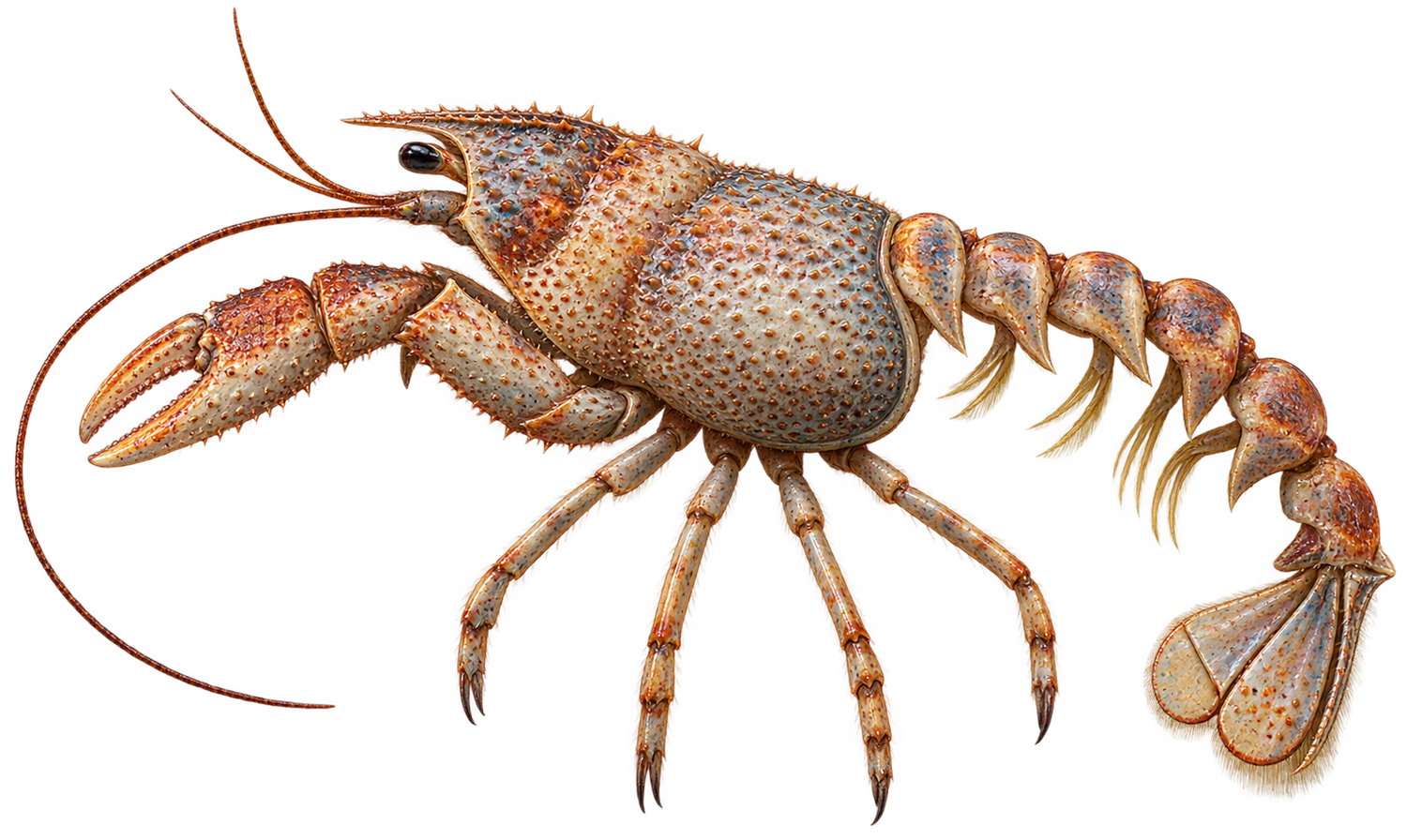 Enoploclytia |
E. sculpta928Rathbun, M. J. (1935). Fossil Crustacea of the Atlantic and Gulf Coastal Plain. Geological Society of America Special Paper 2, 1–160. Originalpublikation E. tumimanus929Rathbun, M. J. (1935). Fossil Crustacea of the Atlantic and Gulf Coastal Plain. Geological Society of America Special Paper, 2, 1–160. Volltext |
Escondido Formation Ripley Formation |
USA (Tennessee); Mexiko (Coahuila) | 76–66 Ma (Gattung bis 34 Ma) | selten | Erymidae (Zehnfußkrebs) |
| Eryma | E. stantoni930Rathbun, M. J. (1935). Fossil Crustacea of the Atlantic and Gulf Coastal Plain. Geological Society of America Special Paper 2, 1–160. Originalpublikation | Ripley Formation | USA (Alabama) | 72–68 Ma | nicht quantifiziert | Erymidae (Zehnfußkrebs) |
| Gyroplanus | G. sapphirinus931Schweitzer, C. E. et al. (2019). Cretaceous Decapoda (Crustacea) from Mississippi, USA. Neues Jahrbuch für Geologie und Paläontologie, Abhandlungen 293(2), 145–197. doi:10.1127/njgpa/2019/0838 | Ripley Formation | USA (Mississippi) | 72–68 Ma | Einzelfund | Quadratoplanidae (Krabbe) |
| Hoploparia | H. georgeana932Kornecki, K. M., Feldmann, R. M. & Schweitzer, C. E. (2017). Decapoda (Crustacea) of the Coon Creek Formation (Maastrichtian) of Mississippi and Tennessee. Bulletin of the Florida Museum of Natural History 53(6), 269–334. doi:10.58782/flmnh.danf1986 H. mcnairyensis933Kornecki, K. M., Feldmann, R. M. & Schweitzer, C. E. (2017). Decapoda (Crustacea) of the Coon Creek Formation (Maastrichtian) of Mississippi and Tennessee. Bulletin of the Florida Museum of Natural History 53(6), 269–334. doi:10.58782/flmnh.danf1986 H. tennesseensis934Kornecki, K. M., Feldmann, R. M. & Schweitzer, C. E. (2017). Decapoda (Crustacea) of the Coon Creek Formation (Maastrichtian) of Mississippi and Tennessee. Bulletin of the Florida Museum of Natural History 53(6), 269–334. doi:10.58782/flmnh.danf1986 H. cf. tennesseensis935Schweitzer, C. E. et al. (2019). Cretaceous Decapoda (Crustacea) from Mississippi, USA. Neues Jahrbuch für Geologie und Paläontologie, Abhandlungen 293(2), 145–197. doi:10.1127/njgpa/2019/0838 H. spp.936Bishop, G. A. (1978): Two new crabs, Sodakus tatankayotankaensis n. gen., n. sp. and Raninella oaheensis n. sp. (Crustacea, Decapoda), from the Upper Cretaceous Pierre Shale of South Dakota. Journal of Paleontology 52(3): 608–617.937Bishop, G. A. (1981): Occurrence and fossilization of the Dakoticancer Assemblage, Upper Cretaceous Pierre Shale, South Dakota. In: Gray, J., Boucot, A. J. & Berry, W. B. N. (Hrsg.): Communities of the Past. Hutchinson Ross, Stroudsburg, S. 383–413.938Crawford, R. S. et al. (2006). Decapod crustaceans from the Maastrichtian Fox Hills Formation. Bulletin of the Peabody Museum of Natural History, 47(1–2), 3–28. doi:10.3374/0079-032X(2006)47[3:DCFTMF]2.0.CO;2 |
Fox Hills Formation Owl Creek Formation Pierre Shale Ripley Formation |
USA (Mississippi, North Dakota, South Dakota, Tennessee, Wyoming) | 76–66 Ma | häufig | Nephropidae (Hummer) |
| Latheticocarcinus | L. atlanticus939Kornecki, K. M., Feldmann, R. M. & Schweitzer, C. E. (2017). Decapoda (Crustacea) of the Coon Creek Formation (Maastrichtian) of Mississippi and Tennessee. Bulletin of the Florida Museum of Natural History 53(6), 269–334. doi:10.58782/flmnh.danf1986 L. punctatus940Feldmann, R. M. & Schweitzer, C. E. (2015): Latheticocarcinus punctatus (Rathbun, 1917) (Decapoda, Brachyura) from the Ranch 777 site, Custer County, South Dakota, USA. Bulletin of the Mizunami Fossil Museum 41: 1–5. L. shapiroi941Bishop, G. A. (1988): New fossil crabs, Plagiophthalmus izetti, Latheticocarcinus shapiroi, and Sagittiformosus carabus (Crustacea, Decapoda) from the Western Interior Cretaceous, U.S.A. Proceedings of the Biological Society of Washington 101: 375–381.942Crawford, R. S. et al. (2006). Decapod crustaceans from the Maastrichtian Fox Hills Formation. Bulletin of the Peabody Museum of Natural History, 47(1–2), 3–28. doi:10.3374/0079-032X(2006)47[3:DCFTMF]2.0.CO;2 |
Fox Hills Formation Pierre Shale Ripley Formation |
USA (Colorado, Mississippi, South Dakota, Wyoming) | 76–68 Ma | sehr häufig | Homolidae (Krabbe); synonym zu Homolopsis punctata und Hoplitocarcinus punctatus; Synonyme von L. shapiroi: Hoplitocarcinus shapiroi, Homola shapiroi |
| Linuparus | L. keyesi943Kornecki, K. M., Feldmann, R. M. & Schweitzer, C. E. (2017). Decapoda (Crustacea) of the Coon Creek Formation (Maastrichtian) of Mississippi and Tennessee. Bulletin of the Florida Museum of Natural History 53(6), 269–334. doi:10.58782/flmnh.danf1986 L. shacklefordae944Schweitzer, C. E. et al. (2019). Cretaceous Decapoda (Crustacea) from Mississippi, USA. Neues Jahrbuch für Geologie und Paläontologie, Abhandlungen 293(2), 145–197. doi:10.1127/njgpa/2019/0838 L. sp.945Kornecki, K. M., Feldmann, R. M. & Schweitzer, C. E. (2017). Decapoda (Crustacea) of the Coon Creek Formation (Maastrichtian) of Mississippi and Tennessee. Bulletin of the Florida Museum of Natural History 53(6), 269–334. doi:10.58782/flmnh.danf1986 |
Owl Creek Formation Ripley Formation |
USA (Mississippi, Tennessee) | 76–66 Ma | nicht quantifiziert | Palinuridae (Languste) |
| Lithophylax | L. flectus946Phillips, G. E., Nyborg, T. & Vega, F. J. (2014). Icriocarcinidae: a family of portunoid crabs from the Upper Cretaceous of North America. Paläontologische Zeitschrift 88, 139–158. doi:10.1007/s12542-013-0190-4947Kornecki, K. M., Feldmann, R. M. & Schweitzer, C. E. (2017). Decapoda (Crustacea) of the Coon Creek Formation (Maastrichtian) of Mississippi and Tennessee. Bulletin of the Florida Museum of Natural History 53(6), 269–334. doi:10.58782/flmnh.danf1986948Phillips, G. E., Nyborg, T. & Vega, F. J. (2013). Icriocarcinidae: a family of portunoid crabs from the Upper Cretaceous of North America. Als Branchiocarcinus flectus; MMNS IP-3723, Goodfood, typische Prairie-Bluff-Kreide. Originalpublikation | Owl Creek Formation Prairie Bluff Chalk Ripley Formation |
USA (Mississippi, Tennessee) | 76–66 Ma | häufig | Lithophylacidae (Krabbe); Synonyme: Eryma flecta, Branchiocarcinus flectus |
| Lyreidinae indet.949Schweitzer, C. E. et al. (2019). Cretaceous Decapoda (Crustacea) from Mississippi, USA. Neues Jahrbuch für Geologie und Paläontologie, Abhandlungen 293(2), 145–197. doi:10.1127/njgpa/2019/0838 | Ripley Formation | USA (Mississippi) | 72–68 Ma | nicht quantifiziert | Lyreididae (Krabbe) | |
| Macroacaena | M. tridens950Schweitzer, C. E. et al. (2019). Cretaceous Decapoda (Crustacea) from Mississippi, USA. Neues Jahrbuch für Geologie und Paläontologie, Abhandlungen 293(2), 145–197. doi:10.1127/njgpa/2019/0838 | Ripley Formation | USA (Mississippi) | 72–68 Ma | nicht quantifiziert | Lyreididae (Krabbe); Synonym: Raninella tridens |
 |
Majidae indet. (?)951Vega, F. J., Feldmann, R. M. & Sour-Tovar, F. (1995). Fossil crabs (Crustacea: Decapoda) from the Late Cretaceous Cárdenas Formation, east-central Mexico. Journal of Paleontology, 69(2), 340–350. doi:10.1017/S0022336000034661 | Cárdenas Formation | Mexiko (San Luis Potosí) | 72–68 Ma | Einzelfund | unbestimmte Krabben |
 |
Malacostraca indet.952Sohl, N. F. & Koch, C. F. (1984). Upper Cretaceous (Maastrichtian) larger invertebrate fossils from the Haustator bilira assemblage zone in the West Gulf Coastal Plain. U.S. Geological Survey Open-File Report, 84-687, 1–282. doi:10.3133/ofr84687 | Escondido Formation | USA (Texas) | 72–66 Ma | selten | unbestimmte höhere Krebse |
| Mesojassoides | M. gigantea953Oman, P. W. (1937). Fossil Hemiptera from the Fox Hills sandstone (Cretaceous) of Colorado. Journal of Paleontology, 11(1), 38. | Fox Hills Formation | USA (Colorado) | 72–68 Ma (?) | Einzelfund | Cicadellidae (Zwergzikade) |
| Mesostylus | M. mortoni954Kornecki, K. M., Feldmann, R. M. & Schweitzer, C. E. (2017). Decapoda (Crustacea) of the Coon Creek Formation (Maastrichtian) of Mississippi and Tennessee. Bulletin of the Florida Museum of Natural History 53(6), 269–334. doi:10.58782/flmnh.danf1986955Schweitzer, C. E. et al. (2019). Cretaceous Decapoda (Crustacea) from Mississippi, USA. Neues Jahrbuch für Geologie und Paläontologie, Abhandlungen 293(2), 145–197. Prairie-Bluff-Belegmaterial aus New Albany bzw. den Nixon beds. doi:10.1127/njgpa/2019/0838 | Prairie Bluff Chalk Ripley Formation |
USA (Alabama, Mississippi, Tennessee) | 76–66 Ma | nicht quantifiziert | Callianassidae (Grabkrebs); Synonyme: Callianassa mortoni, Protocallianassa mortoni |
| Notopocorystes | N. ripleyensis956Rathbun, M. J. (1935). Fossil Crustacea of the Atlantic and Gulf Coastal Plain. Geological Society of America Special Paper 2, 1–160. Originalpublikation N. sp.957Phillips, G. E., Nyborg, T. & Vega, F. J. (2014). Icriocarcinidae: a family of portunoid crabs from the Upper Cretaceous of North America. Paläontologische Zeitschrift 88, 139–158. doi:10.1007/s12542-013-0190-4 |
Owl Creek Formation Ripley Formation |
USA (Mississippi) | 72–66 Ma | nicht quantifiziert | Palaeocorystidae (Krabbe) |
| Ophthalmoplax | O. brasiliana958Vega, F. J. et al. (2013). Morphology and size variation of a portunoid crab from the Maastrichtian of the Americas. Journal of South American Earth Sciences 47, 116–135. doi:10.1016/j.jsames.2013.07.005959Vega, F.J., Feldmann, R.M. & Villalobos-Hiriart, J.L. (1995): Additions to the crustacean (Decapoda) fauna from the Potrerillos Formation (Late Cretaceous) in northeastern Mexico. Annals of Carnegie Museum 64(3): 239–249. doi:10.5962/p.215129960Guzmán, W. et al. (2016): Ophthalmoplax (Decapoda: Brachyura: Portunoidea) from the late Campanian, Upper Cretaceous, of Colombia. Boletín de la Sociedad Geológica Mexicana 68(1): 93–103. doi:10.18268/BSGM2016v68n1a11. Taxonomischer Vergleich O. stephensoni961Schweitzer, C. E. et al. (2019). Cretaceous Decapoda (Crustacea) from Mississippi, USA. Neues Jahrbuch für Geologie und Paläontologie, Abhandlungen 293(2), 145–197. doi:10.1127/njgpa/2019/0838962Schweitzer, C. E. et al. (2019). Cretaceous Decapoda (Crustacea) from Mississippi, USA. Neues Jahrbuch für Geologie und Paläontologie, Abhandlungen 293(2), 145–197. doi:10.1127/njgpa/2019/0838 |
Owl Creek Formation Potrerillos Formation Ripley Formation |
USA (Alabama, Mississippi); Mexiko (Nuevo León) | 72–66 Ma (Maastrichtium) | nicht quantifiziert | Portunoidea (Krabbe); synonym zu Mascaranada difuntaensis |
| Paguristes | P. tuberculatus963Schweitzer, C. E. et al. (2019). Cretaceous Decapoda (Crustacea) from Mississippi, USA. Neues Jahrbuch für Geologie und Paläontologie, Abhandlungen 293(2), 145–197. doi:10.1127/njgpa/2019/0838964Schweitzer, C. E. et al. (2019). Cretaceous Decapoda (Crustacea) from Mississippi, USA. Neues Jahrbuch für Geologie und Paläontologie, Abhandlungen 293(2), 145–197. Prairie-Bluff-Belegmaterial aus New Albany bzw. den Nixon beds. doi:10.1127/njgpa/2019/0838 | Prairie Bluff Chalk Ripley Formation |
USA (Mississippi) | 72–66 Ma | nicht quantifiziert | Diogenidae (Einsiedlerkrebs) |
| Palaeonephrops | P. browni965Bishop, G. A. (1981): Occurrence and fossilization of the Dakoticancer Assemblage, Upper Cretaceous Pierre Shale, South Dakota. In: Gray, J., Boucot, A. J. & Berry, W. B. N. (Hrsg.): Communities of the Past. Hutchinson Ross, Stroudsburg, S. 383–413. | Pierre Shale | USA (South Dakota) | 75–69 Ma | nicht quantifiziert | Nephropidae (Hummer) |
| Palaeopetrochirus | P. enigmus966Kornecki, K. M., Feldmann, R. M. & Schweitzer, C. E. (2017). Decapoda (Crustacea) of the Coon Creek Formation (Maastrichtian) of Mississippi and Tennessee. Bulletin of the Florida Museum of Natural History 53(6), 269–334. doi:10.58782/flmnh.danf1986 | Ripley Formation | USA (Mississippi) | 72–68 Ma | Einzelfund | Diogenidae (Einsiedlerkrebs) |
| Palaeoxantho | P. libertiensis967Schweitzer, C. E. et al. (2019). Cretaceous Decapoda (Crustacea) from Mississippi, USA. Neues Jahrbuch für Geologie und Paläontologie, Abhandlungen 293(2), 145–197. doi:10.1127/njgpa/2019/0838968Schweitzer, C. E. et al. (2019). Cretaceous Decapoda (Crustacea) from Mississippi, USA. Neues Jahrbuch für Geologie und Paläontologie, Abhandlungen 293(2), 145–197. doi:10.1127/njgpa/2019/0838969Schweitzer, C. E. et al. (2019). Cretaceous Decapoda (Crustacea) from Mississippi, USA. Neues Jahrbuch für Geologie und Paläontologie, Abhandlungen 293(2), 145–197. Prairie-Bluff-Belegmaterial aus New Albany bzw. den Nixon beds. doi:10.1127/njgpa/2019/0838 | Owl Creek Formation Prairie Bluff Chalk Ripley Formation |
USA (Mississippi) | 72–66 Ma | häufig | Palaeoxanthopsidae (Krabbe); Synonym: Palaeoxanthopsis libertiensis |
| Paleopagurus | P. pilsbryi (?)970Vega, F.J., Feldmann, R.M. & Villalobos-Hiriart, J.L. (1995): Additions to the crustacean (Decapoda) fauna from the Potrerillos Formation (Late Cretaceous) in northeastern Mexico. Annals of Carnegie Museum 64(3): 239–249. doi:10.5962/p.215129 | Potrerillos Formation | Mexiko (Nuevo León) | 72–66 Ma (Maastrichtium) | nicht quantifiziert | Paguroidea (Einsiedlerkrebs) |
| Paredonius | P. mexicanus971Vega, F.J., Feldmann, R.M. & Villalobos-Hiriart, J.L. (1995): Additions to the crustacean (Decapoda) fauna from the Potrerillos Formation (Late Cretaceous) in northeastern Mexico. Annals of Carnegie Museum 64(3): 239–249. doi:10.5962/p.215129972Vega, F.J. & Garassino, A. (2022): A new genus of crab (Crustacea: Brachyura: Cyclodorippidae) from the lower Maastrichtian of NE Mexico. Neues Jahrbuch für Geologie und Paläontologie, Abhandlungen 305(2): 131–143. doi:10.1127/njgpa/2022/1081 | Potrerillos Formation | Mexiko (Nuevo León) | 72–66 Ma (Maastrichtium) | nicht quantifiziert | Cyclodorippidae (Krabbe); synonym zu Sodakus mexicanus |
| Peedeehomola | P. deanbrogani973Schweitzer, C. E. et al. (2019). Cretaceous Decapoda (Crustacea) from Mississippi, USA. Neues Jahrbuch für Geologie und Paläontologie, Abhandlungen 293(2), 145–197. doi:10.1127/njgpa/2019/0838 | Ripley Formation | USA (Alabama) | 72–68 Ma | nicht quantifiziert | Homolidae (Krabbe) |
| Penaeus | P. wenasogensis974Rathbun, M. J. (1935). Fossil Crustacea of the Atlantic and Gulf Coastal Plain. Geological Society of America Special Paper 2, 1–160. Originalpublikation | Ripley Formation | USA (Tennessee) | 76–68 Ma | nicht quantifiziert | Penaeidae (Garnele) |
| Prehepatus | P. harrisi975Schweitzer, C. E. et al. (2019). Cretaceous Decapoda (Crustacea) from Mississippi, USA. Neues Jahrbuch für Geologie und Paläontologie, Abhandlungen 293(2), 145–197. doi:10.1127/njgpa/2019/0838976Vega, F.J., Feldmann, R.M. & Villalobos-Hiriart, J.L. (1995): Additions to the crustacean (Decapoda) fauna from the Potrerillos Formation (Late Cretaceous) in northeastern Mexico. Annals of Carnegie Museum 64(3): 239–249. doi:10.5962/p.215129977Kornecki, K. M., Feldmann, R. M. & Schweitzer, C. E. (2017). Decapoda (Crustacea) of the Coon Creek Formation (Maastrichtian) of Mississippi and Tennessee. Bulletin of the Florida Museum of Natural History 53(6), 269–334. doi:10.58782/flmnh.danf1986978Schweitzer, C. E. et al. (2019). Cretaceous Decapoda (Crustacea) from Mississippi, USA. Neues Jahrbuch für Geologie und Paläontologie, Abhandlungen 293(2), 145–197. Prairie-Bluff-Belegmaterial aus New Albany bzw. den Nixon beds. doi:10.1127/njgpa/2019/0838 P. sp.979Phillips, G. E., Nyborg, T. & Vega, F. J. (2014). Icriocarcinidae: a family of portunoid crabs from the Upper Cretaceous of North America. Paläontologische Zeitschrift 88, 139–158. doi:10.1007/s12542-013-0190-4 |
Owl Creek Formation Potrerillos Formation Prairie Bluff Chalk Ripley Formation |
USA (Mississippi); Mexiko (Nuevo León) | 72–66 Ma (Maastrichtium) | häufig | Brachyura (Krabbe) |
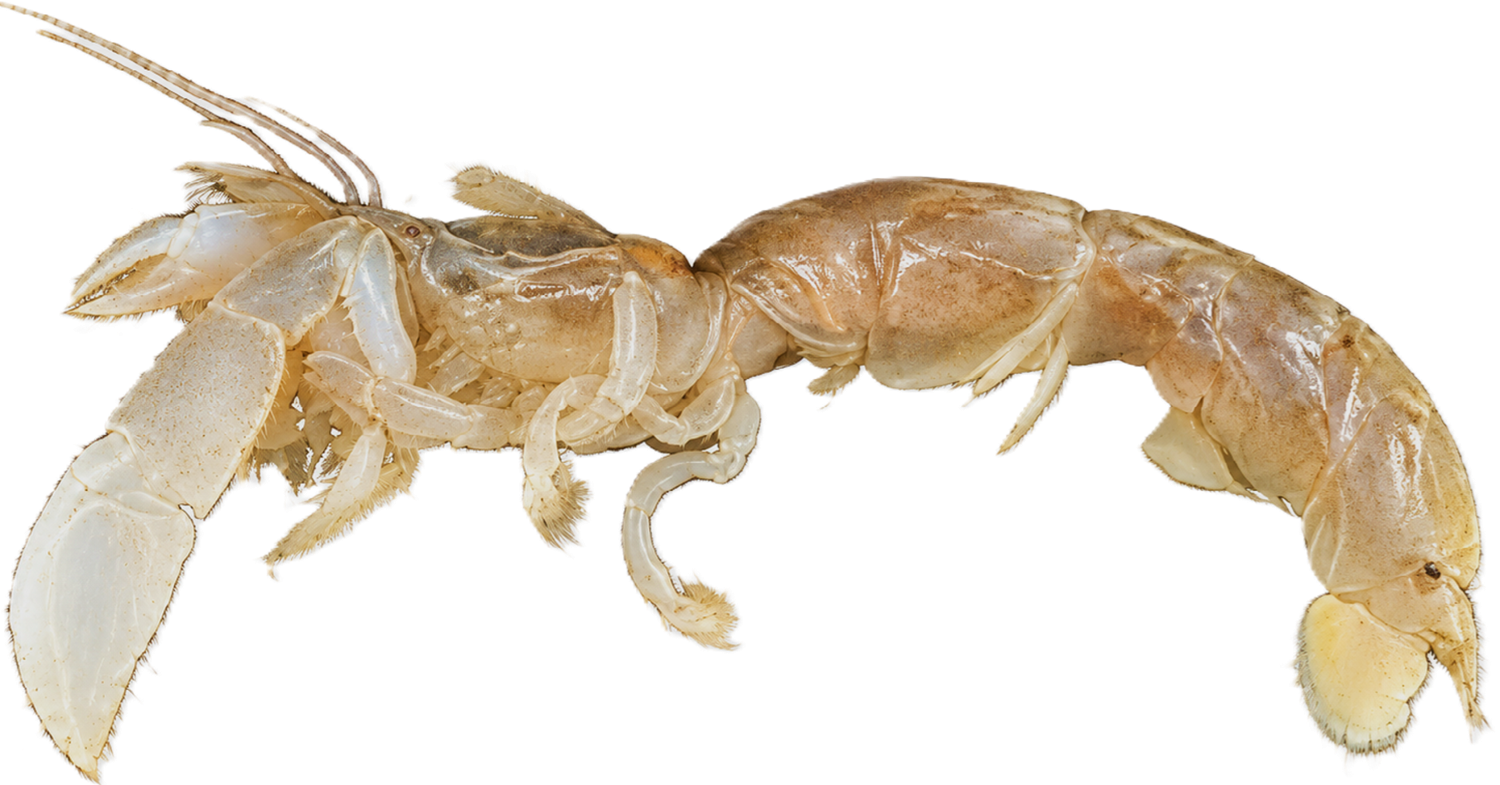 Protocallianassa |
P. pilsbryi980Rathbun, M. J. (1935). Fossil Crustacea of the Atlantic and Gulf Coastal Plain. Geological Society of America Special Paper 2, 1–160. Originalpublikation P. spp.981Phillips, G. E., Nyborg, T. & Vega, F. J. (2014). Icriocarcinidae: a family of portunoid crabs from the Upper Cretaceous of North America. Paläontologische Zeitschrift 88, 139–158. doi:10.1007/s12542-013-0190-4982Vega, F. J., Feldmann, R. M. & Sour-Tovar, F. (1995). Fossil crabs (Crustacea: Decapoda) from the Late Cretaceous Cárdenas Formation, east-central Mexico. Journal of Paleontology, 69(2), 340–350. doi:10.1017/S0022336000034661 |
Cárdenas Formation Owl Creek Formation Ripley Formation |
USA (Mississippi); Mexiko (San Luis Potosí) | 72–66 Ma (Gattung bis 41 Ma) | häufig | Callianassidae (Maulwurfkrebs) |
| Ripleycarcinus | R. primaevus983Schweitzer, C. E. et al. (2019). Cretaceous Decapoda (Crustacea) from Mississippi, USA. Neues Jahrbuch für Geologie und Paläontologie, Abhandlungen 293(2), 145–197. doi:10.1127/njgpa/2019/0838 | Ripley Formation | USA (Mississippi) | 72–68 Ma | selten | Latreilliidae (Krabbe) |
| Ripleycorystes | R. cardwelli984Schweitzer, C. E. et al. (2019). Cretaceous Decapoda (Crustacea) from Mississippi, USA. Neues Jahrbuch für Geologie und Paläontologie, Abhandlungen 293(2), 145–197. doi:10.1127/njgpa/2019/0838 | Ripley Formation | USA (Mississippi) | 72–68 Ma | Einzelfund | Palaeocorystidae (Krabbe) |
| Sodakus | S. tatankayotankaensis985Bishop, G. A. (1978): Two new crabs, Sodakus tatankayotankaensis n. gen., n. sp. and Raninella oaheensis n. sp. (Crustacea, Decapoda), from the Upper Cretaceous Pierre Shale of South Dakota. Journal of Paleontology 52(3): 608–617.986Schweitzer, C. E., Feldmann, R. M. & Findling, J. (2025): Ontogenetic morphology changes in a crab assemblage (Crustacea, Decapoda, Brachyura, Dakoticancroida) from the Late Cretaceous (Maastrichtian) of the Mississippi Embayment, USA. Journal of Paleontology 99(3): 640–657. doi:10.1017/jpa.2024.25 | Pierre Shale | USA (South Dakota) | 71–70 Ma | selten | Ibericancridae (Krebs) |
| Symethoides | S. danieli987Schweitzer, C. E. et al. (2019). Cretaceous Decapoda (Crustacea) from Mississippi, USA. Neues Jahrbuch für Geologie und Paläontologie, Abhandlungen 293(2), 145–197. doi:10.1127/njgpa/2019/0838 | Ripley Formation | USA (Mississippi) | 72–68 Ma | Einzelfund | Lyreididae (Krabbe) |
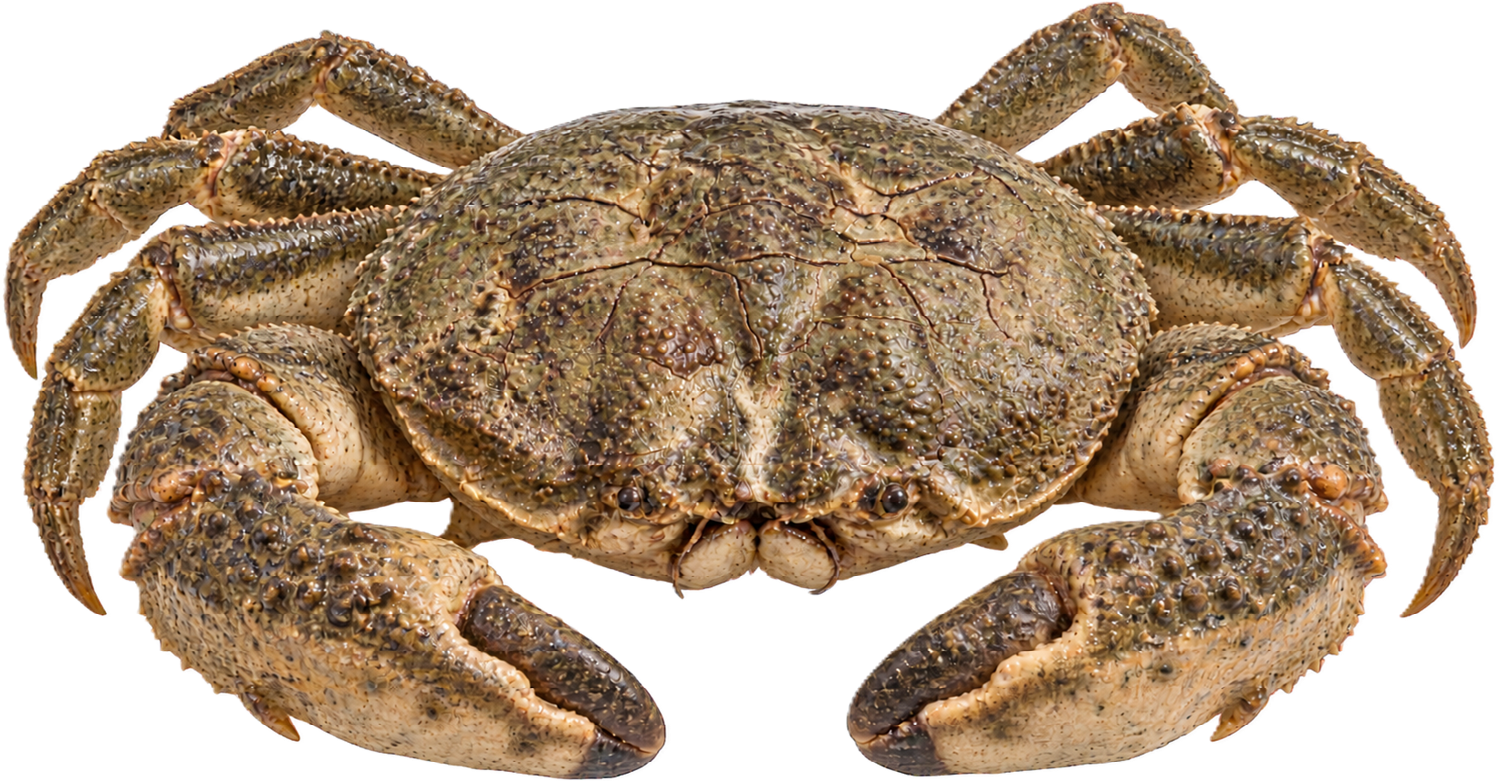 Tetracarcinus |
T. subquadratus988Vega, F.J., Feldmann, R.M. & Villalobos-Hiriart, J.L. (1995): Additions to the crustacean (Decapoda) fauna from the Potrerillos Formation (Late Cretaceous) in northeastern Mexico. Annals of Carnegie Museum 64(3): 239–249. doi:10.5962/p.215129989Vega, F. J., Feldmann, R. M. & Sour-Tovar, F. (1995). Fossil crabs (Crustacea: Decapoda) from the Late Cretaceous Cárdenas Formation, east-central Mexico. Journal of Paleontology, 69(2), 340–350. doi:10.1017/S0022336000034661990Rathbun, M. J. (1935). Fossil Crustacea of the Atlantic and Gulf Coastal Plain. Geological Society of America Special Paper, 2, 1–160.991Schweitzer, C. E., Feldmann, R. M. & Findling, J. (2025): Ontogenetic morphology changes in a crab assemblage (Crustacea, Decapoda, Brachyura, Dakoticancroida) from the Late Cretaceous (Maastrichtian) of the Mississippi Embayment, USA. Journal of Paleontology 99(3): 640–657. doi:10.1017/jpa.2024.25992Schweitzer, C. E., Feldmann, R. M. & Findling, J. (2025). Ontogenetic morphology changes in a crab assemblage (Crustacea, Decapoda, Brachyura, Dakoticancroida) from the Late Cretaceous (Maastrichtian) of the Mississippi Embayment, USA. Journal of Paleontology 99(3), 640–657. doi:10.1017/jpa.2024.25993Schweitzer, C. E. et al. (2019). Cretaceous Decapoda (Crustacea) from Mississippi, USA. Neues Jahrbuch für Geologie und Paläontologie, Abhandlungen 293(2), 145–197. Tabelle 7; Prairie Bluff: MMNS IP-6132, 7752 und als Dakoticancer australis publiziertes Material. doi:10.1127/njgpa/2019/0838994Schweitzer, C. E., Feldmann, R. M. & Findling, J. (2025). Ontogenetic morphology changes in a crab assemblage (Crustacea, Decapoda, Brachyura, Dakoticancroida) from the Late Cretaceous (Maastrichtian) of the Mississippi Embayment, USA. Journal of Paleontology 99(3), 640–657. Revision der auch aus Prairie Bluff belegten Dakoticancer-australis-Materialien. doi:10.1017/jpa.2024.25 | Corsicana Marl Cárdenas Formation Potrerillos Formation Prairie Bluff Chalk Ripley Formation |
USA (Alabama, Mississippi, Tennessee, Texas); Mexiko (Nuevo León, San Luis Potosí) | 76–66 Ma | sehr häufig | Dakoticancridae (Krabbe); synonym zu Dakoticancer australis und Seorsus wadei |
| Tropidicarcinus | T. starnesi995Schweitzer, C. E. et al. (2019). Cretaceous Decapoda (Crustacea) from Mississippi, USA. Neues Jahrbuch für Geologie und Paläontologie, Abhandlungen 293(2), 145–197. doi:10.1127/njgpa/2019/0838 | Ripley Formation | USA (Mississippi) | 72–68 Ma | Einzelfund | Brachyura (Krabbe) |
| Vespridromites | V. dawsonensis996Bishop, G. A. (1973): Homolopsis dawsonensis: a new crab (Crustacea, Decapoda) from the Pierre Shale (Upper Cretaceous, Maastrichtian) of Cedar Creek Anticline, eastern Montana. Journal of Paleontology 47(1): 19–20.997Schweitzer, C. E. & Feldmann, R. M. (2011): Revision of some fossil podotrematous Brachyura (Homolodromiidae; Longodromitidae; Torynommidae). Neues Jahrbuch für Geologie und Paläontologie, Abhandlungen 260: 237–256. doi:10.1127/0077-7749/2011/0138 | Pierre Shale | USA (Montana) | 72–69 Ma | selten | Longodromitidae (Krabbe); synonym zu Homolopsis dawsonensis und Dioratiopus dawsonensis |
| Virgiscalpellum | V. gabbi998Collins, J. S. H. & Mellen, F. F. (1973). Cirripedes from the Upper Cretaceous of Alabama and Mississippi, eastern Gulf Region, U.S.A. Bulletin of the British Museum (Natural History), Geology 23(6), 349–388. Originalpublikation V. sp.999Collins, J. S. H. & Mellen, F. F. (1973). Cirripedes from the Upper Cretaceous of Alabama and Mississippi, eastern Gulf Region, U.S.A. Bulletin of the British Museum (Natural History), Geology 23(6), 349–388. Originalpublikation |
Ripley Formation | USA (Mississippi, Tennessee) | 76–68 Ma | nicht quantifiziert | Scalpellidae (Rankenfußkrebs) |
| Zygastrocarcinus | Z. mendryki1000Bishop, G. A. (1982): Homolopsis mendryki: a new fossil crab (Crustacea, Decapoda) from the Late Cretaceous Dakoticancer assemblage, Pierre Shale (Maastrichtian) of South Dakota. Journal of Paleontology 56(1): 221–225.1001Bishop, G. A. (1986): A new crab, Zygastrocarcinus cardsmithi (Crustacea, Decapoda), from the lower Pierre Shale, southeastern Montana. Journal of Paleontology 60(5): 1092–1099. | Pierre Shale | USA (South Dakota) | 71–70 Ma | nicht quantifiziert | Homolidae (Krabbe); synonym zu Homolopsis mendryki |
Carabites und Curculionites aus der Fox Hills Formation werden mit den historischen Bestimmungen geführt. Die Vergleichsnamen moderner Käfergattungen in der Originalbeschreibung sind keine gesicherten Neubestimmungen. Die unbestimmten Käferreste stehen jeweils hinter den benannten Arten.1002Northrop, S. A. (1928). Beetles from the Fox Hills Cretaceous strata of South Dakota; with an appendix by T. D. A. Cockerell. American Journal of Science, (5)15(85), 28–38. doi:10.2475/ajs.s5-15.85.28 Ophiomorpha ist zudem eine Spurgattung; der darin gefundene Callichirus waagei wird als Körperfossil separat geführt. Die nur anhand von Bohrspuren gemeldeten Rankenfußkrebse werden nicht als gesicherter Körperfossilnachweis ergänzt.1003Crawford, R. S. et al. (2006). Decapod crustaceans from the Maastrichtian Fox Hills Formation. Bulletin of the Peabody Museum of Natural History, 47(1–2), 3–28. doi:10.3374/0079-032X(2006)47[3:DCFTMF]2.0.CO;21004Cvancara, A. M. (1976). Geology of the Fox Hills Formation (Late Cretaceous) in the Williston Basin of North Dakota, with reference to uranium potential. North Dakota Geological Survey, Report of Investigation, 55. Quelle
Die Zuweisung zum Pierre Shale für Latheticocarcinus shapiroi ist unsicher. Das Fossil könnte auch aus der Fox Hills Formation stammen.1005Bishop, G. A. (1988): New fossil crabs, Plagiophthalmus izetti, Latheticocarcinus shapiroi, and Sagittiformosus carabus (Crustacea, Decapoda) from the Western Interior Cretaceous, U.S.A. Proceedings of the Biological Society of Washington 101: 375–381. Die Angaben 75–69 Ma bei Mitgliedern der Dakoticancer-Fauna bezeichnen den ungefähren stratigraphischen Rahmen der zitierten Vorkommen im Pierre Shale, keine durchgehend nachgewiesene Lebensdauer jeder Art. Unzonierte maastrichtische Funde werden nur grob auf 72–69 Ma eingegrenzt. Ekalakia exophthalmops ist aus der frühen maastrichtischen Baculites-grandis-Zone belegt; die übrigen Ekalakia-Funde sind teilweise weniger genau datiert.1006Feldmann, R. M., Schweitzer, C. E. & Wahl, W. R. (2008): Ekalakia (Decapoda: Brachyura): the preservation of eyes links Cretaceous crabs to Jurassic ancestors. Journal of Paleontology 82(5): 1030–1034. doi:10.1666/08-006.11007Feldmann, R. M., Schweitzer, C. E. & Wahl, W. R. (2008): Ekalakia (Decapoda: Brachyura): the preservation of eyes links Cretaceous crabs to Jurassic ancestors. Journal of Paleontology 82(5): 1030–1034. doi:10.1666/08-006.1
Die Nachweise aus der Ripley Formation schließen die historisch zur Ripley gerechneten Coon-Creek-Schichten Tennessees ein. Catopygus mississippiensis ist aus der Coon Creek Tongue in einem veröffentlichten Sammelbericht angegeben. Eine systematische Neubearbeitung dieses konkreten Fundes liegt der Eintragung nicht zugrunde. Diplodetus americanus vereinigt die bisher als Micraster americanus und Plesiaster americanus geführten Artbelege. Der unbestimmte Micraster-Nachweis bleibt separat. Bei Clarkiella ist die Abgrenzung der historischen Namen C. conoideus und C. hemispherica revisionsbedürftig; sie werden hier nicht als zwei sicher getrennte Ripley-Arten gezählt. Die historischen Nachweise von Proraster humphreysanus beruhen auf als Hemiaster parastatus bezeichnetem Material; die Neubearbeitung bestätigt diesen Nachweis nicht für Tennessee.1008Ciampaglio, C. N. & Phillips, G. E. (2016). Irregular echinoids of the Upper Cretaceous Coon Creek beds in Tennessee. Bulletin of the Alabama Museum of Natural History 33(2), 59–77. Originalpublikation1009Cooke, C. W. (1953). American Upper Cretaceous Echinoidea. United States Geological Survey Professional Paper 254-A, 1–44. doi:10.3133/pp254a Die Übersicht von 2019 führt Carinatus galebishopi, Paguristes tuberculatus, Peedeehomola deanbrogani und Macroacaena tridens für Ripley. Diese Literaturangaben sind aufgenommen; die zugehörigen Ripley-Belegstücke beziehungsweise die Abgrenzung gegenüber Bournelyreidus ericksoni sind im Beschreibungstext nicht durchgehend nachvollziehbar. Bei Latheticocarcinus atlanticus und Palaeopetrochirus enigmus besteht zusätzlich Unsicherheit über die Herkunft des Materials; beim Mississippi-Material von Hoploparia mcnairyensis über die Artbestimmung. Die Gattungszuordnung von Enoploclytia sculpta, Eryma stantoni und Notopocorystes ripleyensis ist wegen fragmentarischer Erhaltung vorläufig. Die ursprüngliche Schichtzuweisung von Penaeus wenasogensis lautet nur wahrscheinlich untere Ripley.1010Schweitzer, C. E. et al. (2019). Cretaceous Decapoda (Crustacea) from Mississippi, USA. Neues Jahrbuch für Geologie und Paläontologie, Abhandlungen 293(2), 145–197. doi:10.1127/njgpa/2019/08381011Kornecki, K. M., Feldmann, R. M. & Schweitzer, C. E. (2017). Decapoda (Crustacea) of the Coon Creek Formation (Maastrichtian) of Mississippi and Tennessee. Bulletin of the Florida Museum of Natural History 53(6), 269–334. doi:10.58782/flmnh.danf19861012Rathbun, M. J. (1935). Fossil Crustacea of the Atlantic and Gulf Coastal Plain. Geological Society of America Special Paper 2, 1–160. Originalpublikation Die Coon-Creek-Funde von Linuparus canadensis gehören nach der Neubearbeitung zu L. keyesi. Dakoticancer australis und Seorsus wadei werden als Synonyme von Tetracarcinus subquadratus geführt; auch das früher als Paguristes whitteni bezeichnete Material liefert keine zusätzliche Einsiedlerkrebsart. Die vormals als Majidae indet. beschriebenen Ripley-Fragmente sind in Ripleycarcinus primaevus enthalten. Bei Virgiscalpellum gabbi werden die Unterarten V. g. gabbi und V. g. apertus unter einer Art zusammengefasst.1013Feldmann, R. M. & Schweitzer, C. E. (2022). Illustration of type material of Cretaceous Linuparus spp. (Decapoda: Achelata: Palinuridae) from British Columbia, Canada, and reevaluation of American occurrences of Linuparus. Bulletin of the Mizunami Fossil Museum 49, 17–24. doi:10.50897/bmfm.49.0_171014Schweitzer, C. E., Feldmann, R. M. & Findling, J. (2025). Ontogenetic morphology changes in a crab assemblage (Crustacea, Decapoda, Brachyura, Dakoticancroida) from the Late Cretaceous (Maastrichtian) of the Mississippi Embayment, USA. Journal of Paleontology 99(3), 640–657. doi:10.1017/jpa.2024.251015Collins, J. S. H. & Mellen, F. F. (1973). Cirripedes from the Upper Cretaceous of Alabama and Mississippi, eastern Gulf Region, U.S.A. Bulletin of the British Museum (Natural History), Geology 23(6), 349–388. Originalpublikation
Die Nachweise von Lithophylax flectus aus der Owl Creek Formation sind in älterer Literatur als Branchiocarcinus flectus geführt. Die nur bis zur Gattung bestimmten Angaben zu Notopocorystes, Prehepatus und Protocallianassa bleiben erhalten, ohne daraus zusätzliche benannte Arten abzuleiten. Bei Prehepatus harrisi nennt Schweitzer et al. (2019) die Owl Creek Formation im Diskussionstext, die dortige Materialliste ordnet die betreffenden Exemplare jedoch nicht eindeutig zu. Auch die Bestimmungen Ophthalmoplax brasiliana und O. stephensoni sind unklar, sie beruhen auf unterschiedlichen Artkonzepten: Vega et al. (2013) fassen amerikanische Formen unter O. brasiliana zusammen, Schweitzer et al. (2019) erkennen O. stephensoni als eigene Art an. Und Hoploparia cf. tennesseensis bleibt wegen unvollständiger Erhaltung ausdrücklich vorbehaltlich bestimmt.
Kopffüßer:
| Gattung: | Arten: | Formation: | Fundort: | Alter: | Häufigkeit: | Bemerkungen: |
|---|---|---|---|---|---|---|
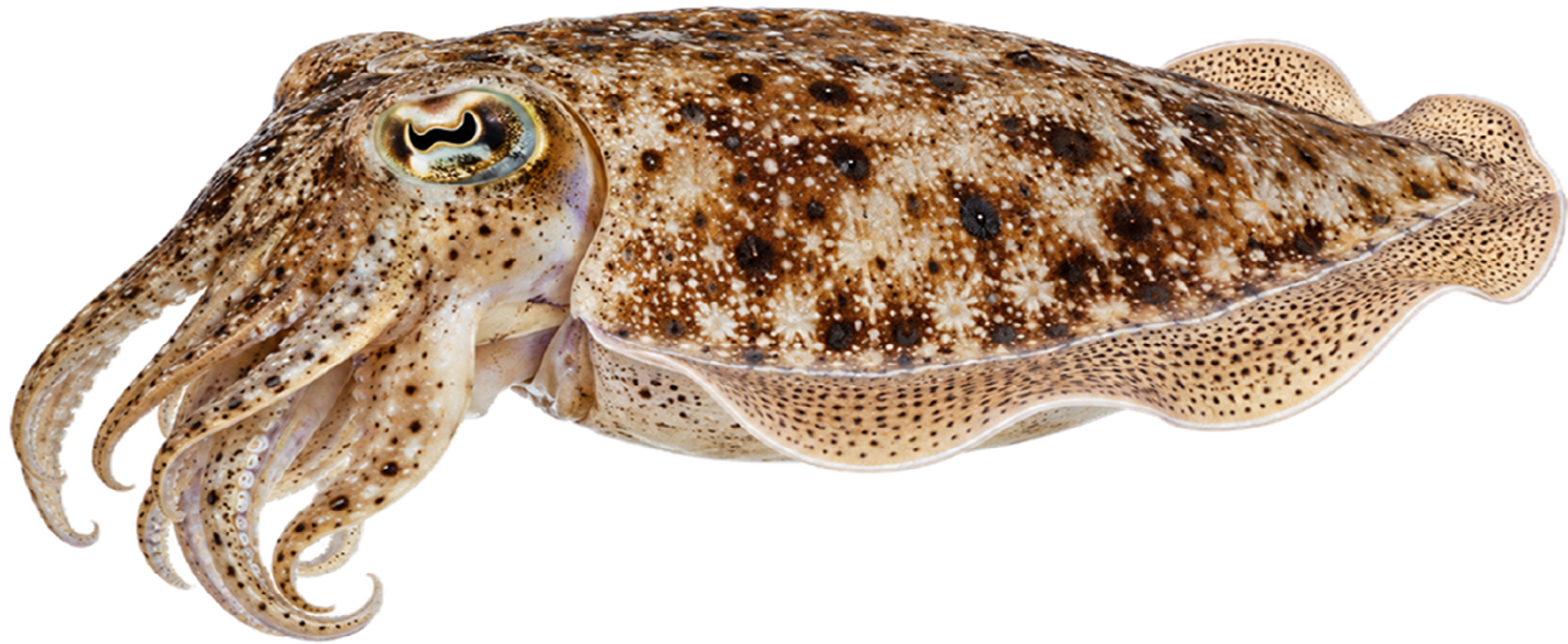 Actinosepia |
A. landmani1016Larson, N. L. (2010). Fossil coleoids from the Late Cretaceous (Campanian & Maastrichtian) of the Western Interior. Ferrantia 59: 78–113. Originalpublikation A. mapesi1017Larson, N. L. (2010). Fossil coleoids from the Late Cretaceous (Campanian & Maastrichtian) of the Western Interior. Ferrantia 59: 78–113. Originalpublikation |
Fox Hills Formation | USA (North Dakota, South Dakota, Wyoming) | 69–67 Ma | häufig | Actinosepiidae (Tintenfisch); A. landmani: synonym zu A. canadensis |
 |
Ammonoidea indet.1018Dawson, M. K. (1978). The paleontology of the Cabrillo Formation. M.S. thesis, San Diego State University, 1–87.1019iDigBio (o. J.). Ammonitida, Katalognummer 181709. Originaler Museumskatalog über iDigBio (abgerufen am 1. Oktober 2026).1020iDigBio (o. J.). Ammonoidea, Katalognummer WSA00004030.000. Originaler Museumskatalog über iDigBio (abgerufen am 1. Oktober 2026). | Cabrillo Formation Escondido Formation (?) |
USA (Kalifornien, Texas); Mexiko (Coahuila) | 72–66 Ma | häufig | Ammonit (unbestimmt) |
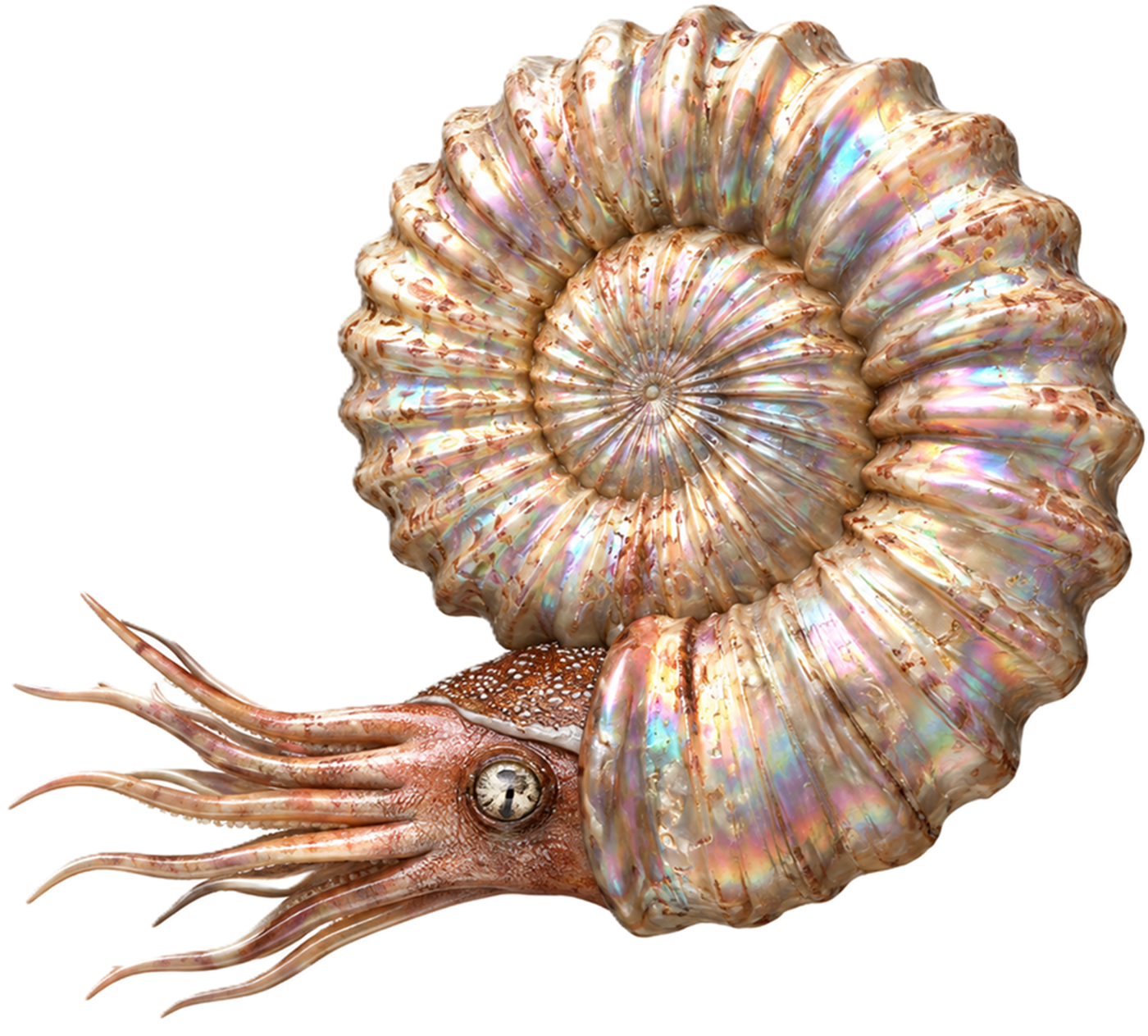 Anagaudryceras |
A. politissimum1021Ifrim, C., Stinnesbeck, W. & López-Oliva, J. G. (2004). Maastrichtian cephalopods from Cerralvo, north-eastern Mexico. Palaeontology 47(6), 1575–1627. doi:10.1111/j.0031-0239.2004.00426.x1022Ifrim, C. et al. (2017). The Upper Campanian – lower Maastrichtian cephalopod fauna of Botellos, Nuevo León: a key to understand faunal turnover across the Campanian–Maastrichtian boundary in NE Mexico. Acta Geologica Polonica 67(1), 145–162. doi:10.1515/agp-2017-0009 | Méndez Formation | Mexiko (Nuevo León) | 75–69 Ma | selten | Gaudryceratidae (Ammonit) |
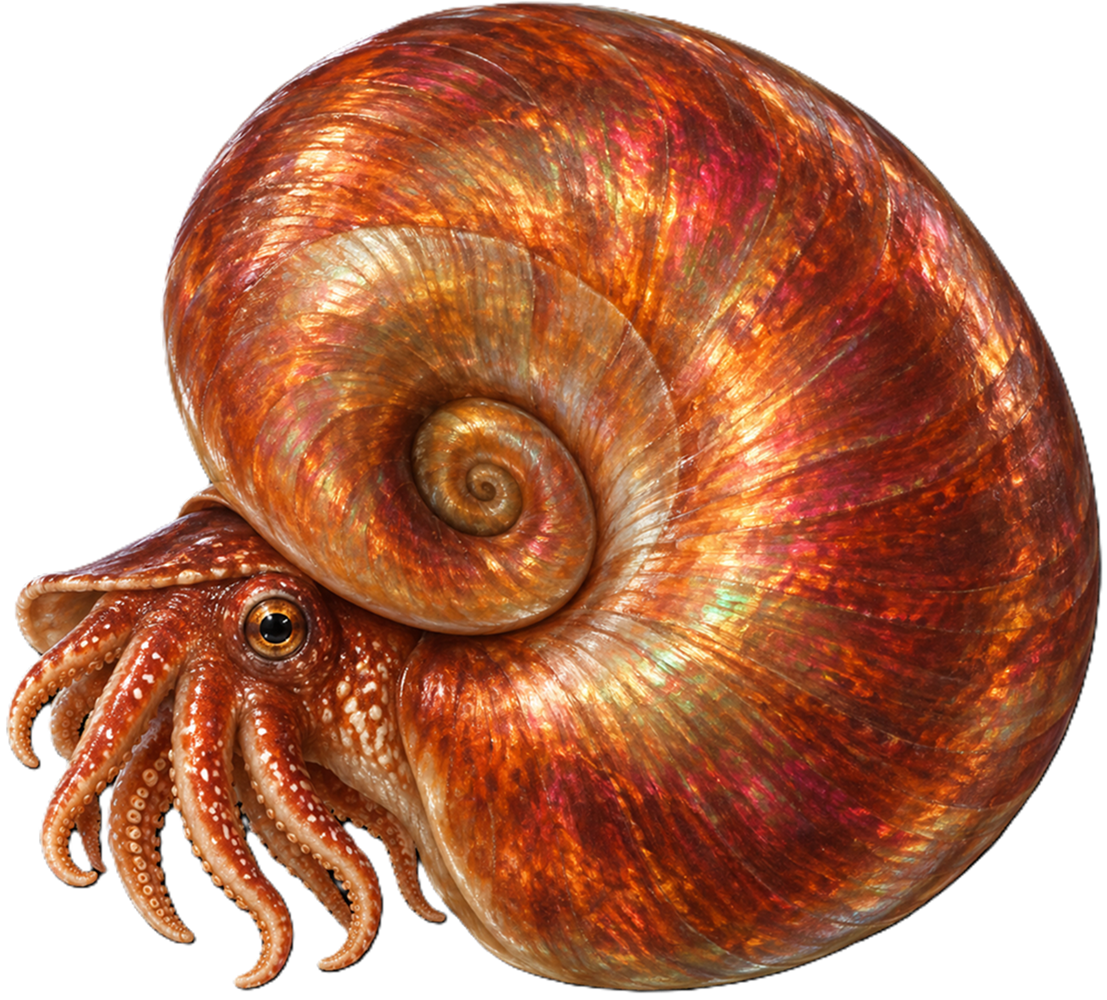 Anapachydiscus |
A. sp.1023Jones, D. L. & Detterman, R. L. (1966). Cretaceous stratigraphy of the Kamishak Hills, Alaska Peninsula. U.S. Geological Survey Professional Paper, 550-D, D53–D58. | Kaguyak Formation | USA (Alaska) | 72–66 Ma | selten | Pachydiscidae (Ammonit) |
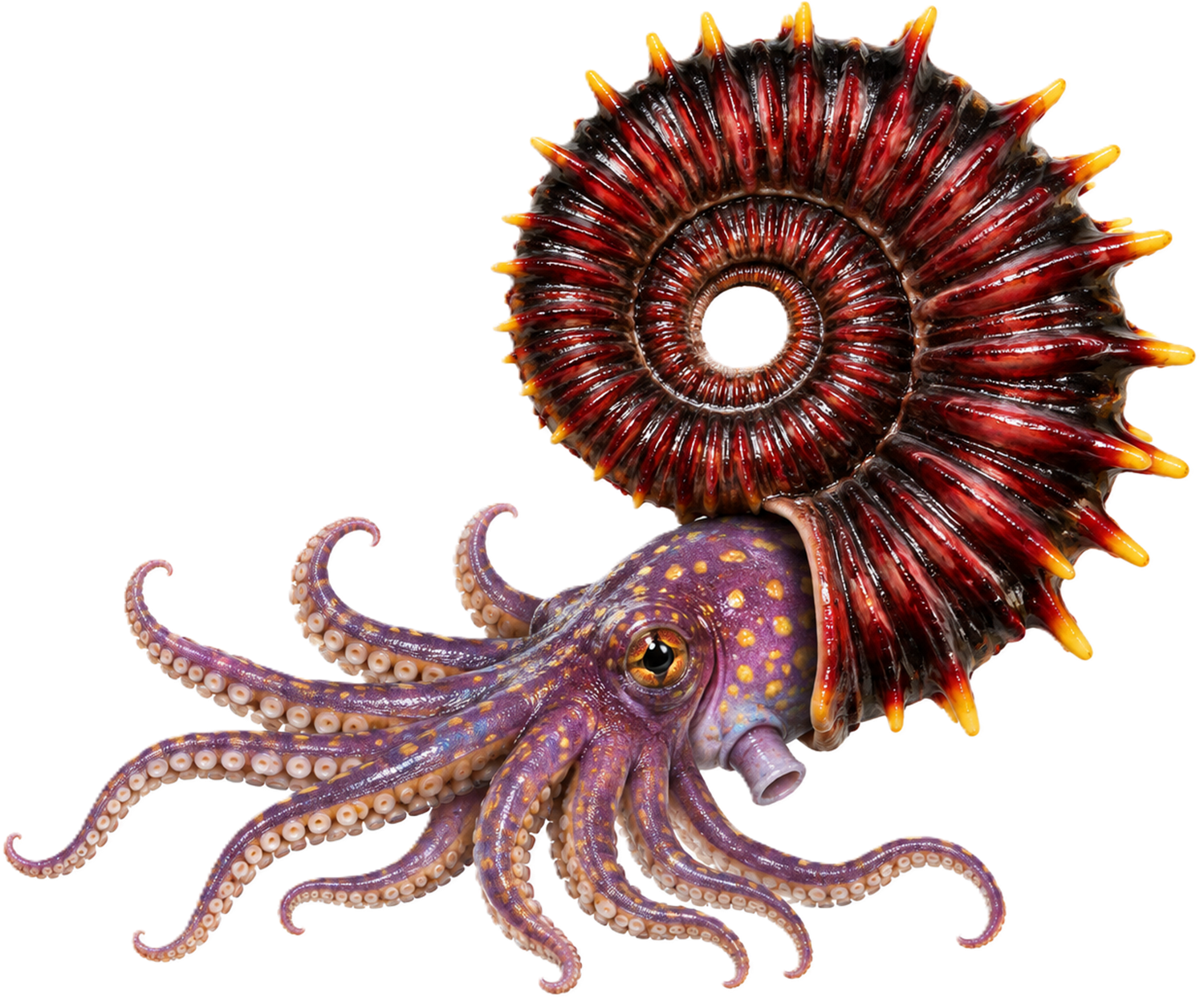 Axonoceras |
A. sohli1024Cobban, W. A. (1974). Some ammonoids from the Ripley Formation of Mississippi, Alabama, and Georgia. Journal of Research of the U.S. Geological Survey 2(1), 81–88. Originalpublikation A. sp.1025Cobban, W. A. (1974). Some ammonoids from the Ripley Formation of Mississippi, Alabama, and Georgia. Journal of Research of the U.S. Geological Survey 2(1), 81–88. Originalpublikation |
Ripley Formation | USA (Mississippi) | 72–69 Ma | selten | Nostoceratidae (Ammonit) |
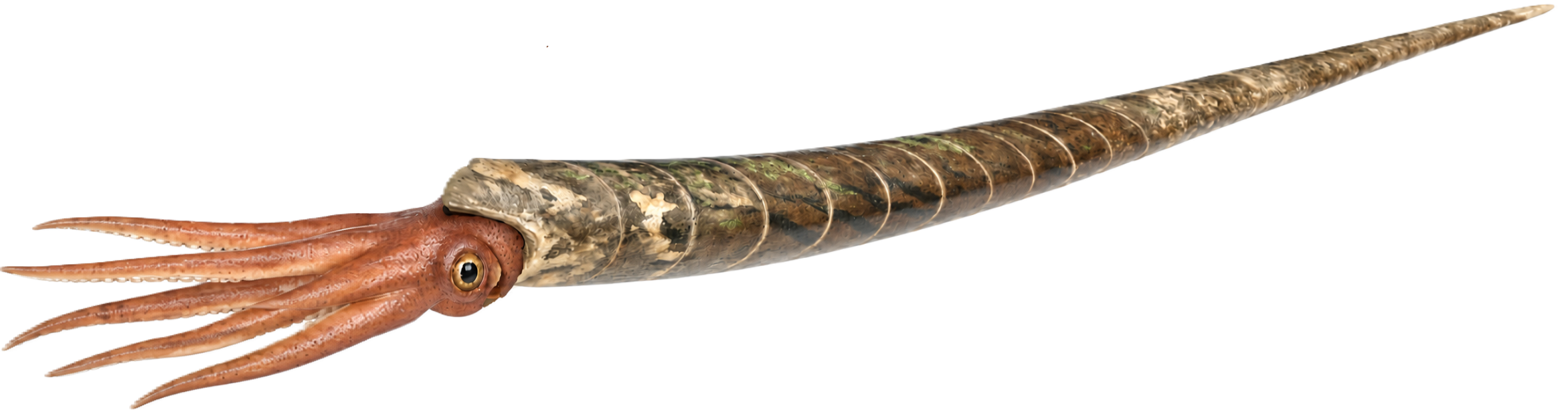 Baculites |
B. anceps1026Crider, A. F. (1906). Geology and mineral resources of Mississippi. United States Geological Survey Bulletin 283, 1–99. doi:10.3133/b283 B. baculus1027Sealey, P. L., Berry, K. & Lucas, S. G. (2019). The Campanian-Maastrichtian baculite zonal sequence in the Pierre Shale, Berwind Canyon, Las Animas County, Colorado. New Mexico Geological Society Guidebook 70: 81–88. doi:10.56577/FFC-70.811028Sealey, P. L. & Lucas, S. G. (2019). Baculites baculus Meek and Hayden, 1861 (earliest Maastrichtian) from the uppermost Pierre Shale in the Raton Basin of northeastern New Mexico and its significance. New Mexico Geological Society Guidebook 70: 73–80. Originalpublikation B. claviformis1029Larson, N. L. (2016). The Late Cretaceous (upper Campanian) cephalopod fauna from the Coon Creek Science Center, McNairy County, Tennessee. Bulletin of the Alabama Museum of Natural History 33(2), 21–58. Originalpublikation B. cf. claviformis1030Kennedy, W. J. & Cobban, W. A. (2000). Maastrichtian (Late Cretaceous) ammonites from the Owl Creek Formation in northeastern Mississippi, U.S.A. Acta Geologica Polonica 50(1), 175–190. Originalpublikation B. clinolobatus1031Sealey, P. L., Berry, K. & Lucas, S. G. (2019). The Campanian-Maastrichtian baculite zonal sequence in the Pierre Shale, Berwind Canyon, Las Animas County, Colorado. New Mexico Geological Society Guidebook 70: 81–88. doi:10.56577/FFC-70.81 B. grandis1032Sealey, P. L., Berry, K. & Lucas, S. G. (2019). The Campanian-Maastrichtian baculite zonal sequence in the Pierre Shale, Berwind Canyon, Las Animas County, Colorado. New Mexico Geological Society Guidebook 70: 81–88. doi:10.56577/FFC-70.81 B. cf. grandis1033Sohl, N. F. & Koch, C. F. (1983). Upper Cretaceous (Maestrichtian) Mollusca from the Haustator bilira Assemblage Zone in the East Gulf Coastal Plain. U.S. Geological Survey Open-File Report 83-451, 1–239. doi:10.3133/ofr834511034Sohl, N. F. & Koch, C. F. (1983). Upper Cretaceous (Maestrichtian) Mollusca from the Haustator bilira Assemblage Zone in the East Gulf Coastal Plain. U.S. Geological Survey Open-File Report 83-451, 1–239. Als Prairie Bluff bezeichnete Aufsammlungen; historische Synonyme nach Cobban & Kennedy (1995) abgeglichen. doi:10.3133/ofr83451 B. larsoni1035Cobban, W. A. & Kennedy, W. J. (1992). The last Western Interior Baculites from the Fox Hills Formation of South Dakota. Journal of Paleontology 66(4): 682–684. Originalpublikation B. lomaensis1036Cobban, W. A. & Kennedy, W. J. (1995). Maastrichtian ammonites chiefly from the Prairie Bluff Chalk in Alabama and Mississippi. Paleontological Society Memoir 44, 1–40. Prairie Bluff Chalk; systematischer Teil und Fundortanhang. doi:10.1017/S0022336000061096 B. occidentalis1037Jones, D. L. (1963). Upper Cretaceous (Campanian and Maestrichtian) ammonites from southern Alaska. U.S. Geological Survey Professional Paper, 432, 1–53. doi:10.3133/pp432 B. ovatus1038Vega-Vera, F.J. & Perrilliat Montoya, M. del C. (1990): Moluscos del Maastrichtiano de la sierra El Antrisco, Estado de Nuevo León. Paleontología Mexicana 55: 1–69. doi:10.22201/igl.05437652e.1990.0.55.3371039Cobban, W. A. et al. (2006). A USGS zonal table for the Upper Cretaceous middle Cenomanian–Maastrichtian of the Western Interior of the United States based on ammonites, inoceramids, and radiometric ages. U.S. Geological Survey Open-File Report, 2006-1250. doi:10.3133/ofr200612501040Ifrim, C., Stinnesbeck, W. & Schafhauser, A. (2005). Maastrichtian shallow-water ammonites of northeastern Mexico. Revista Mexicana de Ciencias Geológicas, 22(1), 48–641041Ifrim, C., Stinnesbeck, W. & López-Oliva, J. G. (2004). Maastrichtian cephalopods from Cerralvo, north-eastern Mexico. Palaeontology 47(6), 1575–1627. doi:10.1111/j.0031-0239.2004.00426.x1042Ifrim, C. et al. (2017). The Upper Campanian – lower Maastrichtian cephalopod fauna of Botellos, Nuevo León: a key to understand faunal turnover across the Campanian–Maastrichtian boundary in NE Mexico. Acta Geologica Polonica 67(1), 145–162. doi:10.1515/agp-2017-00091043Ifrim, C. & Stinnesbeck, W. (2013). Ammonoids from the Maastrichtian (Late Cretaceous) at El Zancudo, Nuevo Laredo, Tamaulipas, Mexico. Boletín de la Sociedad Geológica Mexicana 65(1), 189–200. doi:10.18268/BSGM2013v65n1a141044Crider, A. F. (1906). Geology and mineral resources of Mississippi. United States Geological Survey Bulletin 283, 1–99. doi:10.3133/b283 B. ? trabeatus1045Cobban, W. A. & Kennedy, W. J. (1995). Maastrichtian ammonites chiefly from the Prairie Bluff Chalk in Alabama and Mississippi. Paleontological Society Memoir 44, 1–40. Prairie Bluff Chalk; systematischer Teil und Fundortanhang. doi:10.1017/S0022336000061096 B. undatus1046Ifrim, C., Stinnesbeck, W. & Schafhauser, A. (2005): Maastrichtian shallow-water ammonites of northeastern Mexico. Revista Mexicana de Ciencias Geológicas 22(1): 48–64.1047Larson, N. L. (2016). The Late Cretaceous (upper Campanian) cephalopod fauna from the Coon Creek Science Center, McNairy County, Tennessee. Bulletin of the Alabama Museum of Natural History 33(2), 21–58. Originalpublikation B. cf. undatus1048Kennedy, W. J. & Cobban, W. A. (2000). Maastrichtian (Late Cretaceous) ammonites from the Owl Creek Formation in northeastern Mississippi, U.S.A. Acta Geologica Polonica 50(1), 175–190. Originalpublikation1049Cobban, W. A. (1974). Some ammonoids from the Ripley Formation of Mississippi, Alabama, and Georgia. Journal of Research of the U.S. Geological Survey 2(1), 81–88. Originalpublikation B. spp.1050Witts, J. D. et al. (2018). A fossiliferous spherule-rich bed at the Cretaceous–Paleogene (K–Pg) boundary in Mississippi, USA: Implications for the K–Pg mass extinction event in the Mississippi Embayment and Eastern Gulf Coastal Plain. Cretaceous Research 91, 147–167, Anhang 1. doi:10.1016/j.cretres.2018.06.0021051Larina, E. et al. (2016). Upper Maastrichtian ammonite biostratigraphy of the Gulf Coastal Plain (Mississippi Embayment, southern USA). Cretaceous Research, 60, 128–151. doi:10.1016/j.cretres.2015.11.0101052Stephenson, L. W. (1941). The larger invertebrate fossils of the Navarro group of Texas (exclusive of corals and crustaceans and exclusive of the fauna of the Escondido formation). University of Texas Publication 4101, 1–6411053Kennedy, W. J. et al. (1998). Marine connections in North America during the late Maastrichtian: palaeogeographic and palaeobiogeographic significance of Jeletzkytes nebrascensis Zone cephalopod fauna from the Elk Butte Member of the Pierre Shale, SE South Dakota and NE Nebraska. Cretaceous Research 19(6): 745–775. doi:10.1006/cres.1998.01291054Vega-Vera, F.J. & Perrilliat Montoya, M. del C. (1990): Moluscos del Maastrichtiano de la sierra El Antrisco, Estado de Nuevo León. Paleontología Mexicana 55: 1–69. doi:10.22201/igl.05437652e.1990.0.55.3371055Cobban, W. A. (1974). Some ammonoids from the Ripley Formation of Mississippi, Alabama, and Georgia. Journal of Research of the U.S. Geological Survey 2(1), 81–88. Originalpublikation1056Bryan, J. R. & Jones, D. S. (1989). Fabric of the Cretaceous-Tertiary marine macrofaunal transition at Braggs, Alabama. Palaeogeography, Palaeoclimatology, Palaeoecology 69, 279–301. Appendix I, S. 297, Prairie-Bluff-Spalten L. Quellenbezeichnung: Baculites sp. doi:10.1016/0031-0182(89)90170-31057Cobban, W. A. & Kennedy, W. J. (1995). Maastrichtian ammonites chiefly from the Prairie Bluff Chalk in Alabama and Mississippi. Paleontological Society Memoir 44, 1–40. Prairie Bluff Chalk; systematischer Teil und Fundortanhang. doi:10.1017/S0022336000061096 |
Arkadelphia Marl Cárdenas Formation Escondido Formation Fox Hills Formation Kaguyak Formation Kemp Clay Matanuska Formation Méndez Formation Owl Creek Formation Pierre Shale Potrerillos Formation Prairie Bluff Chalk Ripley Formation |
USA (Alabama, Alaska, Arkansas, Colorado, Kansas, Mississippi, Montana, Nebraska, New Mexico, South Dakota, Tennessee, Texas, Wyoming); Mexiko (Coahuila, Nuevo León, San Luis Potosí, Tamaulipas) | 75–66 Ma | sehr häufig | Baculitidae (Ammonit) |
 Belemnitella |
B. americana1058Sohl, N. F. & Koch, C. F. (1984). Upper Cretaceous (Maestrichtian) larger invertebrate fossils from the Haustator bilira Assemblage Zone in the West Gulf Coastal Plain. U.S. Geological Survey Open-File Report, 84-687, 1–282. doi:10.3133/ofr846871059Stephenson, L. W. (1941). The larger invertebrate fossils of the Navarro group of Texas (exclusive of corals and crustaceans and exclusive of the fauna of the Escondido formation). University of Texas Publication 4101, 1–6411060Priddy, R. R. & McCutcheon, T. E. (1943). Pontotoc County mineral resources. Mississippi State Geological Survey Bulletin 54, 1–139. Originalpublikation1061Sohl, N. F. & Koch, C. F. (1983). Upper Cretaceous (Maestrichtian) Mollusca from the Haustator bilira Assemblage Zone in the East Gulf Coastal Plain. U.S. Geological Survey Open-File Report 83-451, 1–239. Als Prairie Bluff bezeichnete Aufsammlungen; historische Synonyme nach Cobban & Kennedy (1995) abgeglichen. doi:10.3133/ofr83451 B. badlandsensis1062Landman, N. H. et al. (2013). Cephalopods from the Badlands National Park area, South Dakota: Reassessment of the position of the Cretaceous/Paleogene boundary. Cretaceous Research 42: 1–27. doi:10.1016/j.cretres.2012.12.011 B. cf. bulbosa1063Kennedy, W. J. et al. (1998). Marine connections in North America during the late Maastrichtian: palaeogeographic and palaeobiogeographic significance of Jeletzkytes nebrascensis Zone cephalopod fauna from the Elk Butte Member of the Pierre Shale, SE South Dakota and NE Nebraska. Cretaceous Research 19(6): 745–775. doi:10.1006/cres.1998.01291064Landman, N. H. et al. (2013). Cephalopods from the Badlands National Park area, South Dakota: Reassessment of the position of the Cretaceous/Paleogene boundary. Cretaceous Research 42: 1–27. doi:10.1016/j.cretres.2012.12.011 B. bulbosa1065Landman, N. H. et al. (2013). Cephalopods from the Badlands National Park area, South Dakota: Reassessment of the position of the Cretaceous/Paleogene boundary. Cretaceous Research 42: 1–27. doi:10.1016/j.cretres.2012.12.011 B. sp.1066Kennedy, W. J. et al. (1998). Marine connections in North America during the late Maastrichtian: palaeogeographic and palaeobiogeographic significance of Jeletzkytes nebrascensis Zone cephalopod fauna from the Elk Butte Member of the Pierre Shale, SE South Dakota and NE Nebraska. Cretaceous Research 19(6): 745–775. doi:10.1006/cres.1998.01291067Landman, N. H. et al. (2013). Cephalopods from the Badlands National Park area, South Dakota: Reassessment of the position of the Cretaceous/Paleogene boundary. Cretaceous Research 42: 1–27. doi:10.1016/j.cretres.2012.12.011 |
Corsicana Marl Fox Hills Formation Kemp Clay Pierre Shale Prairie Bluff Chalk Ripley Formation |
USA (Alabama, Mississippi, Nebraska, South Dakota, Texas) | 72–66 Ma | sehr häufig | Belemnitellidae (Belemnit) |
 |
Belemnitida indet.1068Schraer, C. D. et al. (2021). An inventory of belemnites documented in six US National Parks in Alaska. New Mexico Museum of Natural History and Science Bulletin, 82, 357–365.1069Capps, S. R. & Mertie, J. B. (1927). Geology of the upper Matanuska valley, Alaska, with a section on the igneous rocks. U.S. Geological Survey Bulletin 791, 92 pp. doi:10.3133/b791 | Kaguyak Formation Matanuska Formation |
USA (Alaska) | 72–66 Ma | häufig | Belemnit (unbestimmt) |
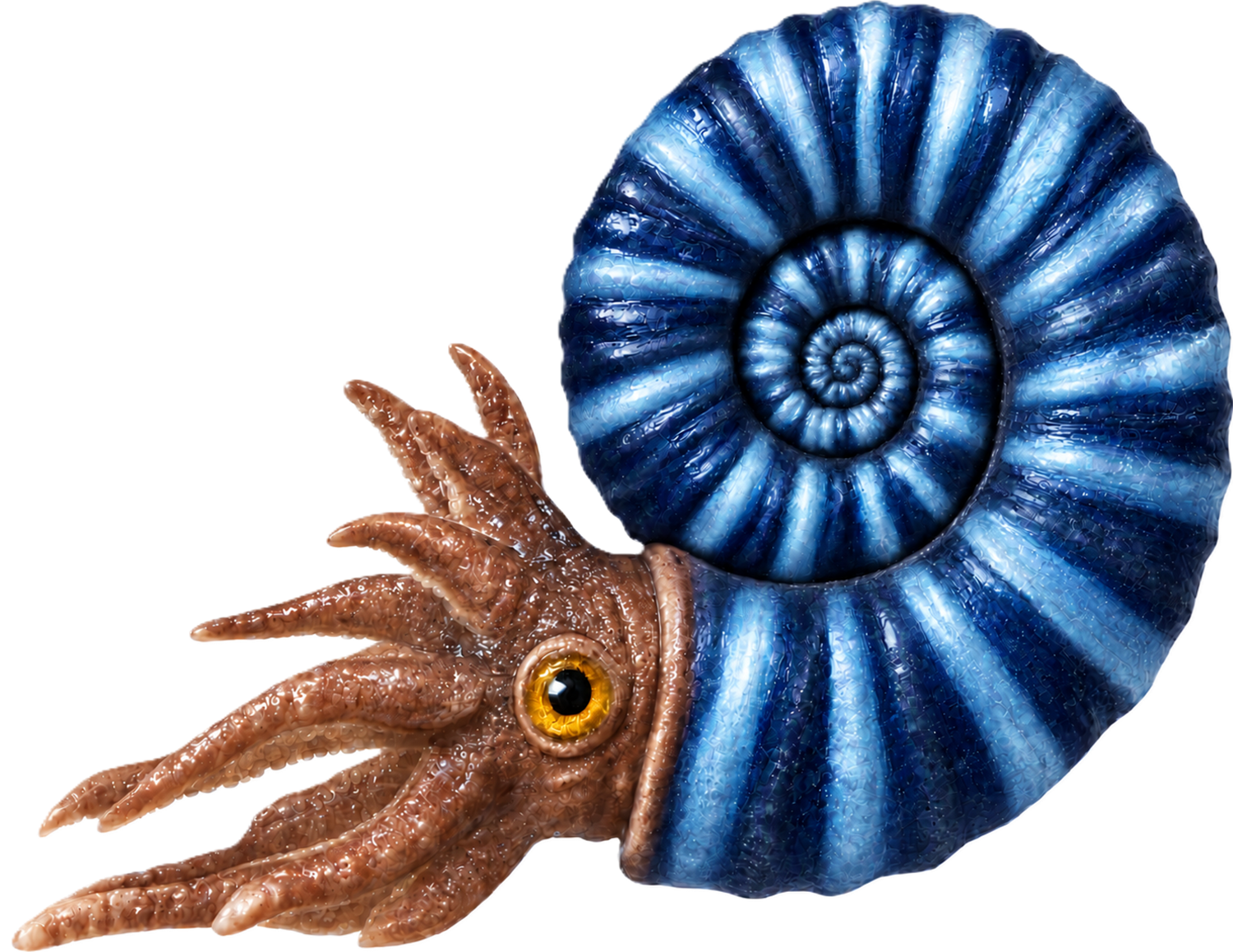 Brahmaites |
B. vishnu1070Ifrim, C., Stinnesbeck, W. & López-Oliva, J. G. (2004). Maastrichtian cephalopods from Cerralvo, north-eastern Mexico. Palaeontology 47(6), 1575–1627. doi:10.1111/j.0031-0239.2004.00426.x1071Ifrim, C. et al. (2017). The Upper Campanian – lower Maastrichtian cephalopod fauna of Botellos, Nuevo León: a key to understand faunal turnover across the Campanian–Maastrichtian boundary in NE Mexico. Acta Geologica Polonica 67(1), 145–162. doi:10.1515/agp-2017-00091072Ifrim, C. & Stinnesbeck, W. (2013). Ammonoids from the Maastrichtian (Late Cretaceous) at El Zancudo, Nuevo Laredo, Tamaulipas, Mexico. Boletín de la Sociedad Geológica Mexicana 65(1), 189–200. doi:10.18268/BSGM2013v65n1a14 | Méndez Formation | Mexiko (Nuevo León, Tamaulipas) | 75–68 Ma | selten | Pachydiscidae (Ammonit) |
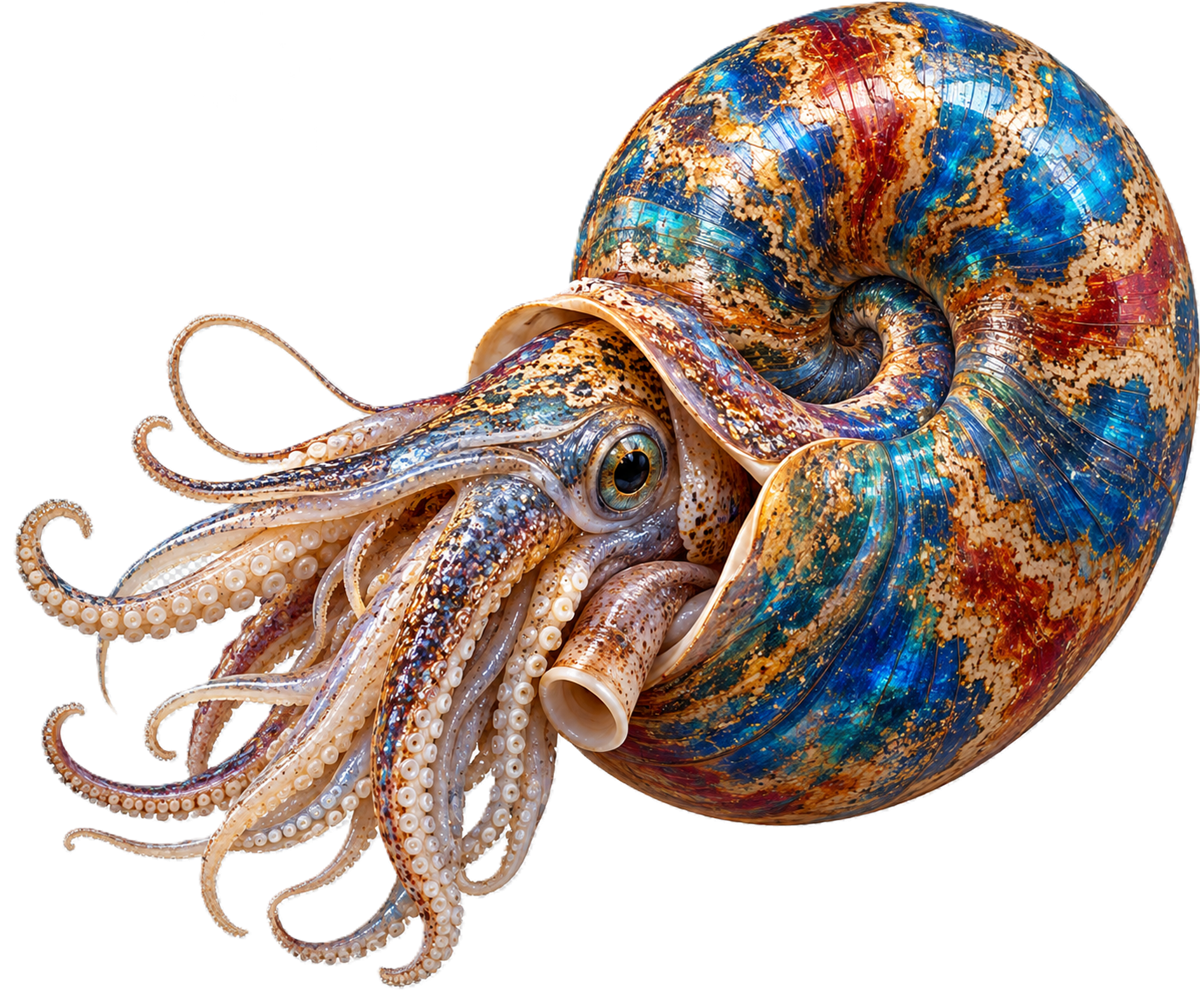 Coahuilites |
C. sheltoni1073Ifrim, C., Stinnesbeck, W. & Schafhauser, A. (2005): Maastrichtian shallow-water ammonites of northeastern Mexico. Revista Mexicana de Ciencias Geológicas 22(1): 48–64.1074Ifrim, C., Stinnesbeck, W. & Schafhauser, A. (2005). Maastrichtian shallow-water ammonites of northeastern Mexico. Revista Mexicana de Ciencias Geológicas, 22(1), 48–64.1075Böse, E. (1928). Cretaceous ammonites from Texas and northern Mexico. University of Texas Bulletin, 2748, 143–357.1076Landman, N. H. & Cobban, W. A. (2003). Ammonites from the upper part of the Pierre Shale and Fox Hills Formation of Colorado. American Museum Novitates 3388: 1–45. Originalpublikation1077Landman, N. H. & Cobban, W. A. (2003). Ammonites from the upper part of the Pierre Shale and Fox Hills Formation of Colorado. American Museum Novitates 3388: 1–45. Originalpublikation1078Cobban, W. A. & Kennedy, W. J. (1995). Maastrichtian ammonites chiefly from the Prairie Bluff Chalk in Alabama and Mississippi. Paleontological Society Memoir 44, 1–40. Prairie Bluff Chalk; systematischer Teil und Fundortanhang. doi:10.1017/S0022336000061096 C. sp.1079Sohl, N. F. & Koch, C. F. (1984). Upper Cretaceous (Maastrichtian) larger invertebrate fossils from the Haustator bilira assemblage zone in the West Gulf Coastal Plain. U.S. Geological Survey Open-File Report, 84-687, 1–282. doi:10.3133/ofr84687 |
Cárdenas Formation Escondido Formation Fox Hills Formation Pierre Shale Potrerillos Formation Prairie Bluff Chalk |
USA (Alabama, Colorado, Mississippi, Texas, Wyoming); Mexiko (Coahuila, Nuevo León, San Luis Potosí) | 72–66 Ma | sehr häufig | Sphenodiscidae (Ammonit) |
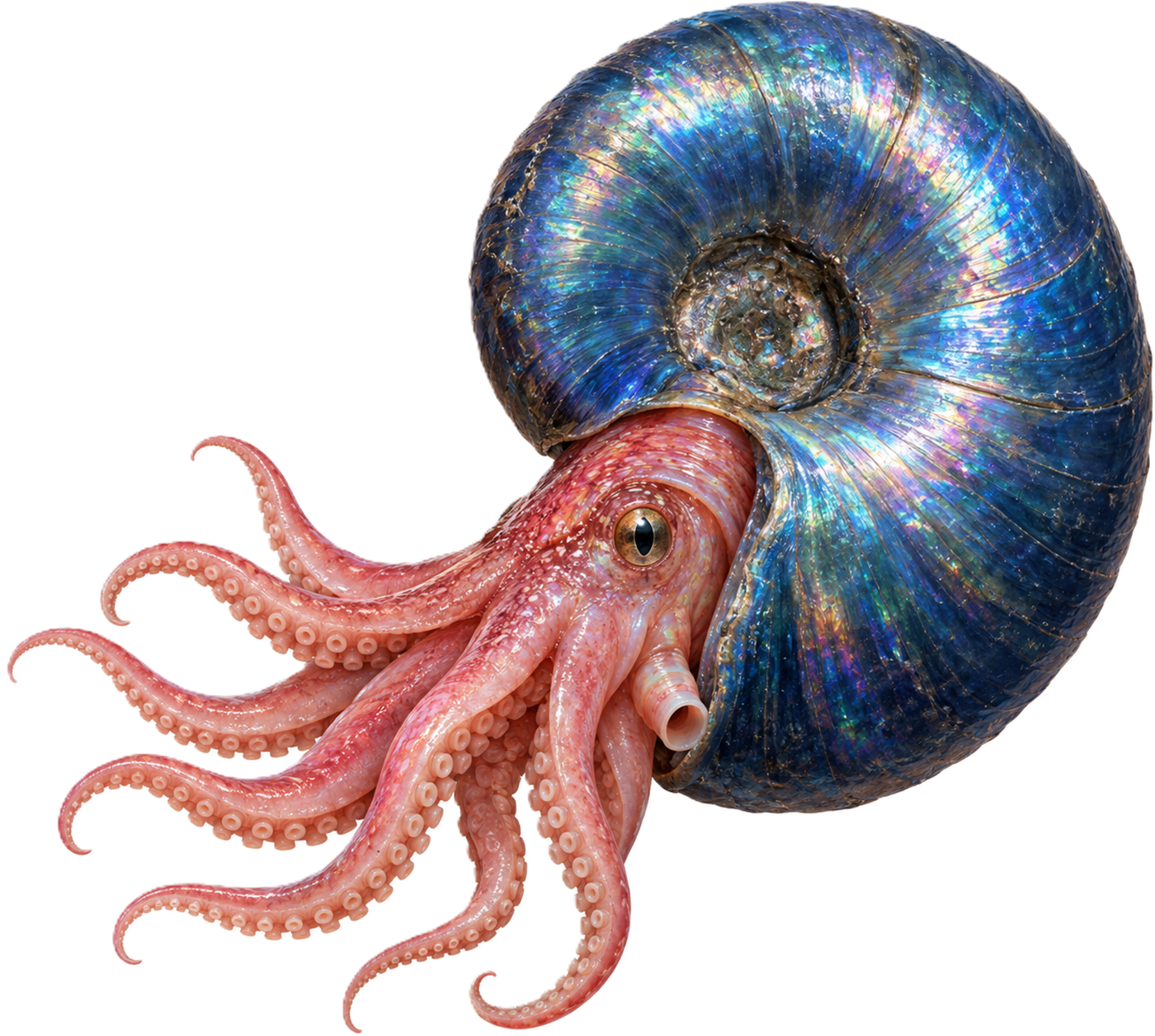 Desmophyllites |
D. diphylloides1080Ifrim, C., Stinnesbeck, W. & López-Oliva, J. G. (2004). Maastrichtian cephalopods from Cerralvo, north-eastern Mexico. Palaeontology 47(6), 1575–1627. doi:10.1111/j.0031-0239.2004.00426.x1081Ifrim, C. et al. (2017). The Upper Campanian – lower Maastrichtian cephalopod fauna of Botellos, Nuevo León: a key to understand faunal turnover across the Campanian–Maastrichtian boundary in NE Mexico. Acta Geologica Polonica 67(1), 145–162. doi:10.1515/agp-2017-0009 | Méndez Formation | Mexiko (Nuevo León) | 75–69 Ma | selten | Desmoceratidae (Ammonit) |
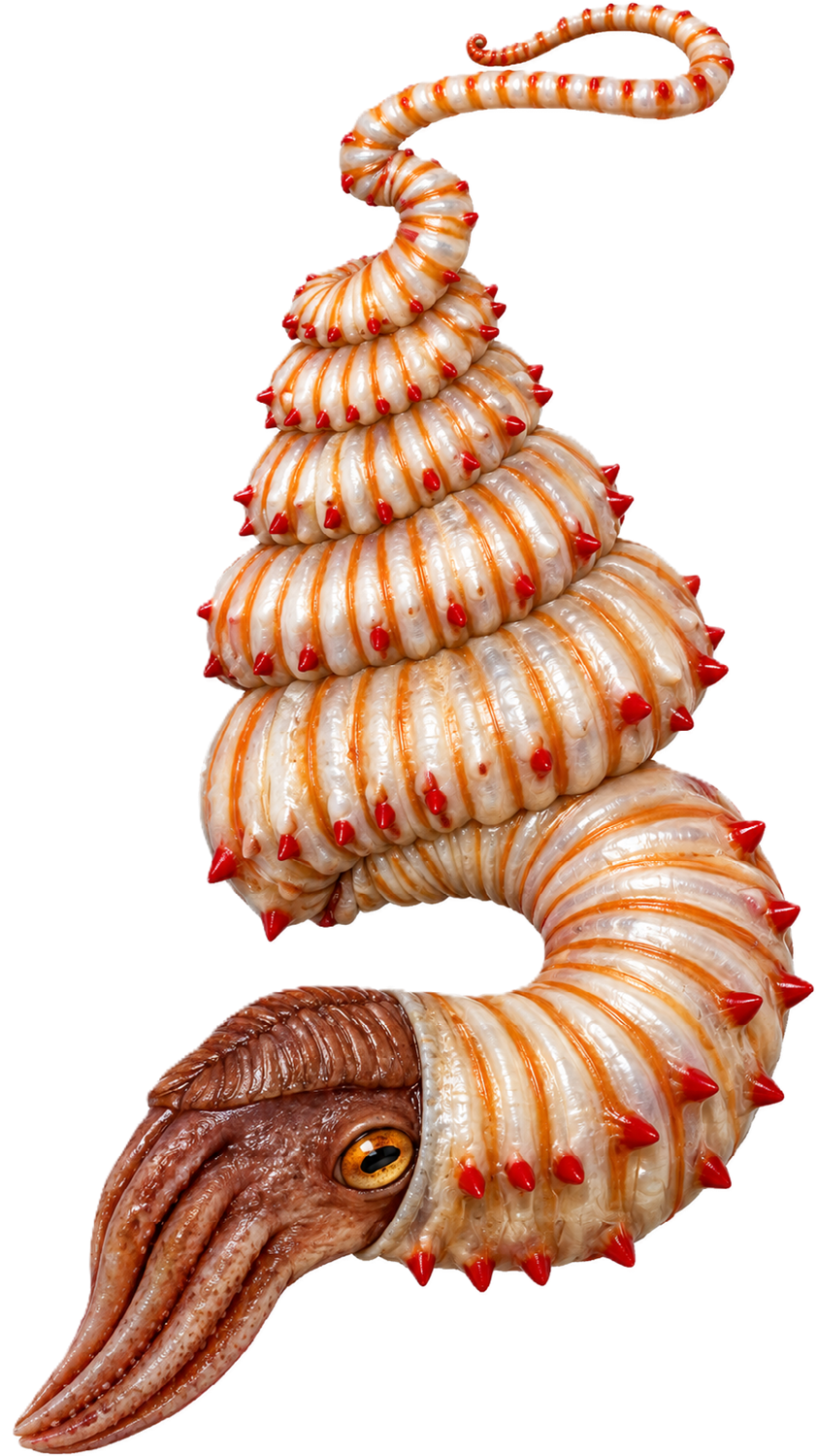 Didymoceras |
D. cf. aurarium1082Larson, N. L. (2016). The Late Cretaceous (upper Campanian) cephalopod fauna from the Coon Creek Science Center, McNairy County, Tennessee. Bulletin of the Alabama Museum of Natural History 33(2), 21–58. Originalpublikation D. conradi1083Larson, N. L. (2016). The Late Cretaceous (upper Campanian) cephalopod fauna from the Coon Creek Science Center, McNairy County, Tennessee. Bulletin of the Alabama Museum of Natural History 33(2), 21–58. Originalpublikation D. hornbyense (?)1084Jones, D. L. (1963). Upper Cretaceous (Campanian and Maestrichtian) ammonites from southern Alaska. U.S. Geological Survey Professional Paper, 432, 1–53. doi:10.3133/pp432 D. sp.1085Ifrim, C. et al. (2017). The Upper Campanian – lower Maastrichtian cephalopod fauna of Botellos, Nuevo León: a key to understand faunal turnover across the Campanian–Maastrichtian boundary in NE Mexico. Acta Geologica Polonica 67(1), 145–162. doi:10.1515/agp-2017-0009 |
Kaguyak Formation Matanuska Formation Méndez Formation Ripley Formation |
USA (Alaska, Tennessee); Mexiko (Nuevo León) | 75–66 Ma | häufig | Nostoceratidae (Ammonit) |
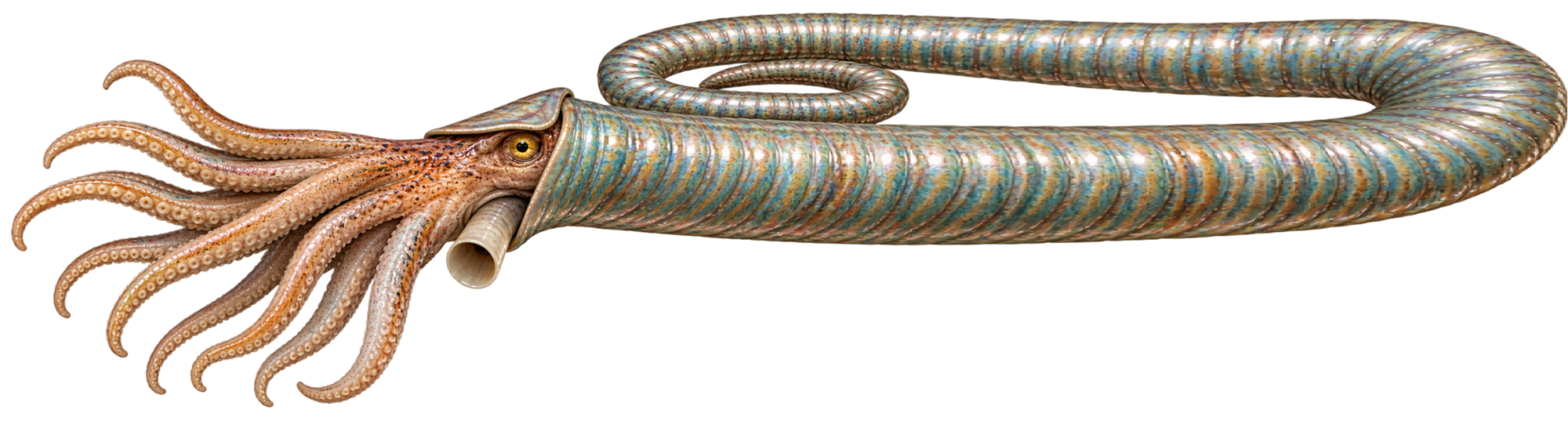 Diplomoceras |
D. cylindraceum1086Jones, D. L. (1963). Upper Cretaceous (Campanian and Maestrichtian) ammonites from southern Alaska. U.S. Geological Survey Professional Paper, 432, 1–53. doi:10.3133/pp4321087Ifrim, C., Stinnesbeck, W. & López-Oliva, J. G. (2004). Maastrichtian cephalopods from Cerralvo, north-eastern Mexico. Palaeontology 47(6), 1575–1627. doi:10.1111/j.0031-0239.2004.00426.x1088Ifrim, C. et al. (2017). The Upper Campanian – lower Maastrichtian cephalopod fauna of Botellos, Nuevo León: a key to understand faunal turnover across the Campanian–Maastrichtian boundary in NE Mexico. Acta Geologica Polonica 67(1), 145–162. doi:10.1515/agp-2017-00091089Ifrim, C. & Stinnesbeck, W. (2013). Ammonoids from the Maastrichtian (Late Cretaceous) at El Zancudo, Nuevo Laredo, Tamaulipas, Mexico. Boletín de la Sociedad Geológica Mexicana 65(1), 189–200. doi:10.18268/BSGM2013v65n1a14 D. sp.1090Sohl, N. F. & Koch, C. F. (1984). Upper Cretaceous (Maastrichtian) larger invertebrate fossils from the Haustator bilira assemblage zone in the West Gulf Coastal Plain. U.S. Geological Survey Open-File Report, 84-687, 1–282. doi:10.3133/ofr84687 |
Escondido Formation Kaguyak Formation Matanuska Formation Méndez Formation |
USA (Alaska, Texas); Mexiko (Nuevo León, Tamaulipas) | 75–66 Ma | häufig | Diplomoceratidae (Ammonit); D. cylindraceum: synonym zu Diplomoceras notabile |
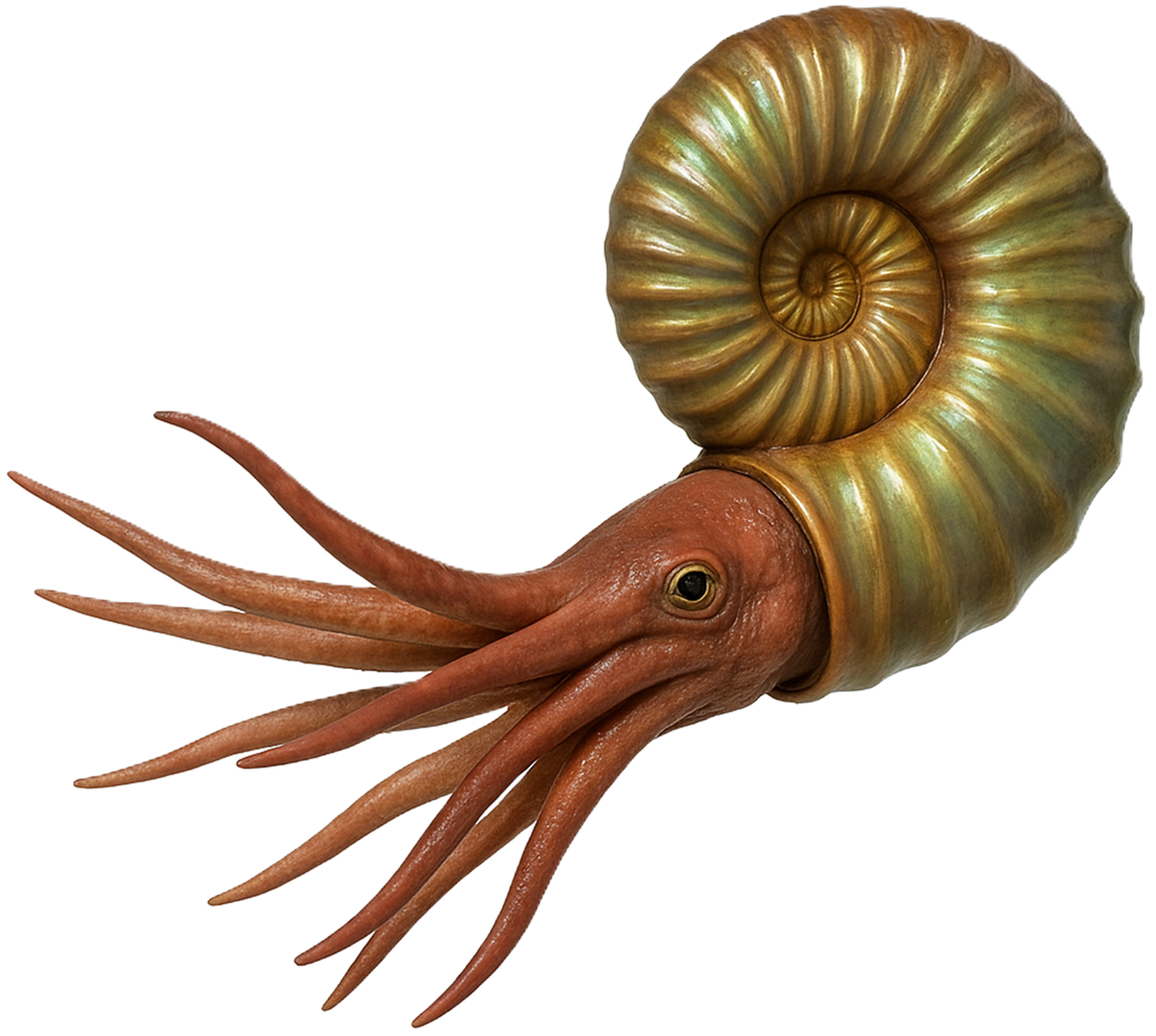 Discoscaphites |
D. conradi1091Landman, N. H. & Waage, K. M. (1993). Scaphitid ammonites of the Upper Cretaceous (Maastrichtian) Fox Hills Formation in South Dakota and Wyoming. Bulletin of the American Museum of Natural History, 215, 1–2571092Larina, E. et al. (2016). Upper Maastrichtian ammonite biostratigraphy of the Gulf Coastal Plain (Mississippi Embayment, southern USA). Cretaceous Research, 60, 128–151. doi:10.1016/j.cretres.2015.11.0101093Kennedy, W. J. & Cobban, W. A. (1993). Maastrichtian ammonites from the Corsicana Formation in northeast Texas. Geological Magazine, 130(1), 57–67. doi:10.1017/S00167568000237241094Landman, N. H. et al. (2013). Cephalopods from the Badlands National Park area, South Dakota: Reassessment of the position of the Cretaceous/Paleogene boundary. Cretaceous Research 42: 1–27. doi:10.1016/j.cretres.2012.12.0111095Stephenson, L. W. (1941). The larger invertebrate fossils of the Navarro group of Texas (exclusive of corals and crustaceans and exclusive of the fauna of the Escondido formation). University of Texas Publication 4101, 1–6411096Landman, N. H. et al. (2013). Cephalopods from the Badlands National Park area, South Dakota: Reassessment of the position of the Cretaceous/Paleogene boundary. Cretaceous Research 42: 1–27. doi:10.1016/j.cretres.2012.12.0111097Crider, A. F. (1906). Geology and mineral resources of Mississippi. United States Geological Survey Bulletin 283, 1–99. doi:10.3133/b2831098Bryan, J. R. & Jones, D. S. (1989). Fabric of the Cretaceous-Tertiary marine macrofaunal transition at Braggs, Alabama. Palaeogeography, Palaeoclimatology, Palaeoecology 69, 279–301. Appendix I, S. 297, Prairie-Bluff-Spalten L. Quellenbezeichnung: Discoscaphites conradi. doi:10.1016/0031-0182(89)90170-31099Cobban, W. A. & Kennedy, W. J. (1995). Maastrichtian ammonites chiefly from the Prairie Bluff Chalk in Alabama and Mississippi. Paleontological Society Memoir 44, 1–40. Prairie Bluff Chalk; systematischer Teil und Fundortanhang. doi:10.1017/S0022336000061096 D. cf. conradi1100Kennedy, W. J. & Cobban, W. A. (2000). Maastrichtian (Late Cretaceous) ammonites from the Owl Creek Formation in northeastern Mississippi, U.S.A. Acta Geologica Polonica 50(1), 175–190. Originalpublikation D. gulosus1101Landman, N. H. & Waage, K. M. (1993). Scaphitid ammonites of the Upper Cretaceous (Maastrichtian) Fox Hills Formation in South Dakota and Wyoming. Bulletin of the American Museum of Natural History 215: 1–257. Originalpublikation1102Landman, N. H. et al. (2013). Cephalopods from the Badlands National Park area, South Dakota: Reassessment of the position of the Cretaceous/Paleogene boundary. Cretaceous Research 42: 1–27. doi:10.1016/j.cretres.2012.12.0111103Landman, N. H. et al. (2013). Cephalopods from the Badlands National Park area, South Dakota: Reassessment of the position of the Cretaceous/Paleogene boundary. Cretaceous Research 42: 1–27. doi:10.1016/j.cretres.2012.12.0111104Cobban, W. A. & Kennedy, W. J. (1995). Maastrichtian ammonites chiefly from the Prairie Bluff Chalk in Alabama and Mississippi. Paleontological Society Memoir 44, 1–40. Prairie Bluff Chalk; systematischer Teil und Fundortanhang. doi:10.1017/S0022336000061096 D. iris1105Campbell, C. E. & Landman, N. H. (2010). Microtektite morphology and affinities at the Cretaceous-Paleogene boundary interval in southeast Missouri. Geological Society of America Abstracts with Programs 42(2), 91. Abstract1106Kennedy, W. J. & Cobban, W. A. (2000). Maastrichtian (Late Cretaceous) ammonites from the Owl Creek Formation in northeastern Mississippi, U.S.A. Acta Geologica Polonica 50(1), 175–190. Originalpublikation1107Larina, E. et al. (2016). Upper Maastrichtian ammonite biostratigraphy of the Gulf Coastal Plain (Mississippi Embayment, southern USA). Cretaceous Research 60, 128–151. Prairie Bluff Chalk; jüngste Ammonitenzone. doi:10.1016/j.cretres.2015.11.0101108Naujokaitytė, J. et al. (2021). Milankovitch cyclicity in the latest Cretaceous of the Gulf Coastal Plain, USA. Sedimentary Geology 421, 105954. Prairie Bluff Chalk; Discoscaphites-iris-Zone. doi:10.1016/j.sedgeo.2021.105954 D. minardi1109Larina, E. et al. (2016). Upper Maastrichtian ammonite biostratigraphy of the Gulf Coastal Plain (Mississippi Embayment, southern USA). Cretaceous Research 60, 128–151. doi:10.1016/j.cretres.2015.11.0101110Larina, E. et al. (2016). Upper Maastrichtian ammonite biostratigraphy of the Gulf Coastal Plain (Mississippi Embayment, southern USA). Cretaceous Research 60, 128–151. Prairie Bluff Chalk; Discoscaphites-minardi-Zone, unter anderem Moscow Landing. doi:10.1016/j.cretres.2015.11.010 D. mullinaxorum1111Witts, J. D. et al. (2021). Cephalopods from the Cretaceous–Paleogene (K–Pg) boundary interval on the Brazos River, Texas, and extinction of the ammonites. American Museum Novitates, 3964, 1–52. doi:10.1206/3964.1 D. rossi1112Landman, N. H. & Waage, K. M. (1993). Scaphitid ammonites of the Upper Cretaceous (Maastrichtian) Fox Hills Formation in South Dakota and Wyoming. Bulletin of the American Museum of Natural History, 215, 1–2571113Landman, N. H. & Waage, K. M. (1993). Scaphitid ammonites of the Upper Cretaceous (Maastrichtian) Fox Hills Formation in South Dakota and Wyoming. Bulletin of the American Museum of Natural History 215: 1–257. Originalpublikation D. sphaeroidalis1114Campbell, C. E. & Landman, N. H. (2010). Microtektite morphology and affinities at the Cretaceous-Paleogene boundary interval in southeast Missouri. Geological Society of America Abstracts with Programs 42(2), 91. Abstract1115Kennedy, W. J. & Cobban, W. A. (2000). Maastrichtian (Late Cretaceous) ammonites from the Owl Creek Formation in northeastern Mississippi, U.S.A. Acta Geologica Polonica 50(1), 175–190. Originalpublikation D. spp.1116Witts, J. D. et al. (2018). A fossiliferous spherule-rich bed at the Cretaceous–Paleogene (K–Pg) boundary in Mississippi, USA: Implications for the K–Pg mass extinction event in the Mississippi Embayment and Eastern Gulf Coastal Plain. Cretaceous Research 91, 147–167, Anhang 1. doi:10.1016/j.cretres.2018.06.0021117Larina, E. et al. (2016). Upper Maastrichtian ammonite biostratigraphy of the Gulf Coastal Plain (Mississippi Embayment, southern USA). Cretaceous Research, 60, 128–151. doi:10.1016/j.cretres.2015.11.0101118Stephenson, L. W. (1941). The larger invertebrate fossils of the Navarro Group of Texas (exclusive of corals and crustaceans and exclusive of the fauna of the Escondido Formation). The University of Texas Publication, 4101, 1–6411119Stephenson, L. W. (1941). The larger invertebrate fossils of the Navarro group of Texas (exclusive of corals and crustaceans and exclusive of the fauna of the Escondido formation). University of Texas Publication 4101, 1–6411120Ifrim, C. & Stinnesbeck, W. (2013). Ammonoids from the Maastrichtian (Late Cretaceous) at El Zancudo, Nuevo Laredo, Tamaulipas, Mexico. Boletín de la Sociedad Geológica Mexicana 65(1), 189–200. doi:10.18268/BSGM2013v65n1a141121Larson, N. L. (2016). The Late Cretaceous (upper Campanian) cephalopod fauna from the Coon Creek Science Center, McNairy County, Tennessee. Bulletin of the Alabama Museum of Natural History 33(2), 21–58. Originalpublikation1122Bryan, J. R. & Jones, D. S. (1989). Fabric of the Cretaceous-Tertiary marine macrofaunal transition at Braggs, Alabama. Palaeogeography, Palaeoclimatology, Palaeoecology 69, 279–301. Appendix I, S. 297, Prairie-Bluff-Spalten U. Quellenbezeichnung: Discoscaphites sp. doi:10.1016/0031-0182(89)90170-3 |
Arkadelphia Marl Corsicana Marl Escondido Formation (?) Fox Hills Formation Hell Creek Formation Kemp Clay Méndez Formation Owl Creek Formation Pierre Shale Prairie Bluff Chalk Ripley Formation |
USA (Alabama, Arkansas, Mississippi, Missouri, North Dakota, South Dakota, Tennessee, Texas, Wyoming); Mexiko (Coahuila, Tamaulipas) | 72–66 Ma | sehr häufig | Scaphitidae (Ammonit); D. conradi: synonym zu Discoscaphites roanensis |
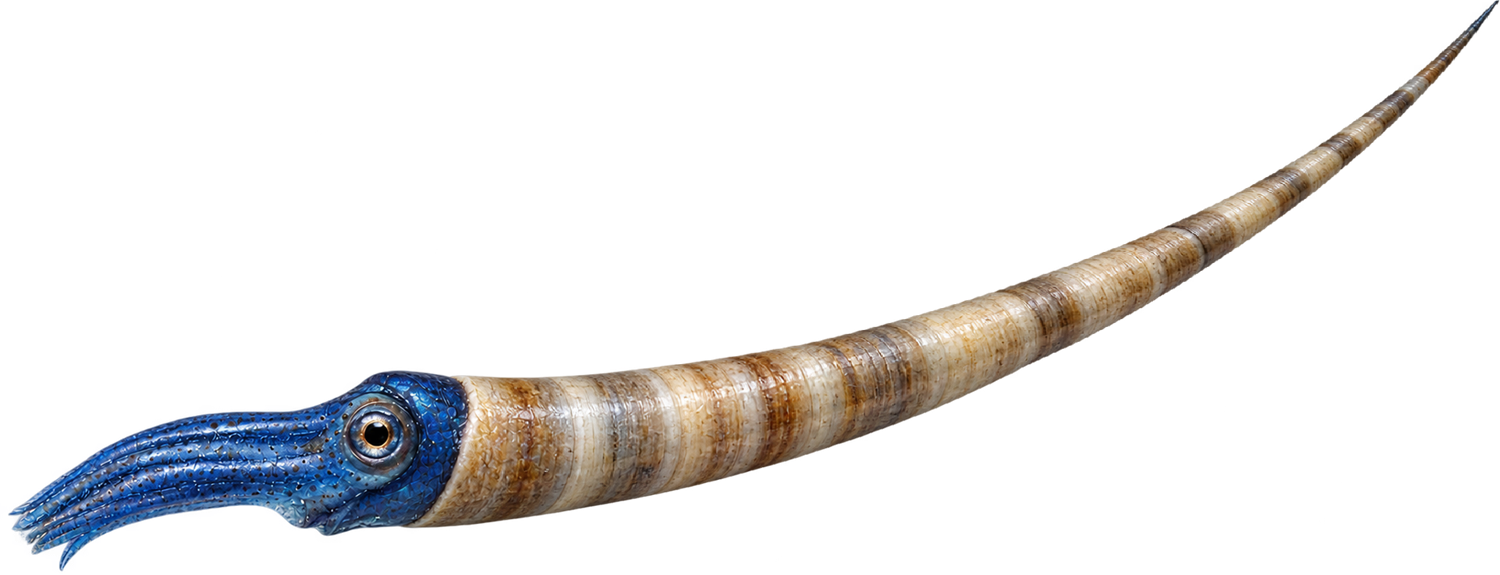 Eubaculites |
E. carinatus1123Kennedy, W. J. & Cobban, W. A. (2000). Maastrichtian (Late Cretaceous) ammonites from the Owl Creek Formation in northeastern Mississippi, U.S.A. Acta Geologica Polonica 50(1), 175–190. Originalpublikation1124Ifrim, C., Stinnesbeck, W. & Schafhauser, A. (2005): Maastrichtian shallow-water ammonites of northeastern Mexico. Revista Mexicana de Ciencias Geológicas 22(1): 48–64.1125Kennedy, W. J. & Cobban, W. A. (1993). Maastrichtian ammonites from the Corsicana Formation in northeast Texas. Geological Magazine, 130(1), 57–67. doi:10.1017/S00167568000237241126Priddy, R. R. & McCutcheon, T. E. (1943). Pontotoc County mineral resources. Mississippi State Geological Survey Bulletin 54, 1–139. Originalpublikation1127Bryan, J. R. & Jones, D. S. (1989). Fabric of the Cretaceous-Tertiary marine macrofaunal transition at Braggs, Alabama. Palaeogeography, Palaeoclimatology, Palaeoecology 69, 279–301. Appendix I, S. 297, Prairie-Bluff-Spalten L, U. Quellenbezeichnung: Baculites carinatus. doi:10.1016/0031-0182(89)90170-31128Cobban, W. A. & Kennedy, W. J. (1995). Maastrichtian ammonites chiefly from the Prairie Bluff Chalk in Alabama and Mississippi. Paleontological Society Memoir 44, 1–40. Prairie Bluff Chalk; systematischer Teil und Fundortanhang. doi:10.1017/S0022336000061096 E. labyrinthicus1129Cobban, W. A. & Kennedy, W. J. (1995). Maastrichtian ammonites chiefly from the Prairie Bluff Chalk in Alabama and Mississippi. Paleontological Society Memoir 44, 1–40. Prairie Bluff Chalk; systematischer Teil und Fundortanhang. doi:10.1017/S0022336000061096 E. latecarinatus1130Campbell, C. E. & Landman, N. H. (2010). Microtektite morphology and affinities at the Cretaceous-Paleogene boundary interval in southeast Missouri. Geological Society of America Abstracts with Programs 42(2), 91. Abstract1131Larina, E. et al. (2016). Upper Maastrichtian ammonite biostratigraphy of the Gulf Coastal Plain (Mississippi Embayment, southern USA). Cretaceous Research 60, 128–151. doi:10.1016/j.cretres.2015.11.010 E. spp.1132Witts, J. D. et al. (2018). A fossiliferous spherule-rich bed at the Cretaceous–Paleogene (K–Pg) boundary in Mississippi, USA: Implications for the K–Pg mass extinction event in the Mississippi Embayment and Eastern Gulf Coastal Plain. Cretaceous Research 91, 147–167, Anhang 1. doi:10.1016/j.cretres.2018.06.0021133Larson, N. L. (2016). The Late Cretaceous (upper Campanian) cephalopod fauna from the Coon Creek Science Center, McNairy County, Tennessee. Bulletin of the Alabama Museum of Natural History 33(2), 21–58. Originalpublikation |
Corsicana Marl Owl Creek Formation Potrerillos Formation Prairie Bluff Chalk Ripley Formation |
USA (Alabama, Mississippi, Missouri, Tennessee, Texas); Mexiko (Nuevo León) | 72–66 Ma | sehr häufig | Baculitidae (Ammonit); E. carinatus: Synonyme Baculites tippaensis, Baculites spillmani |
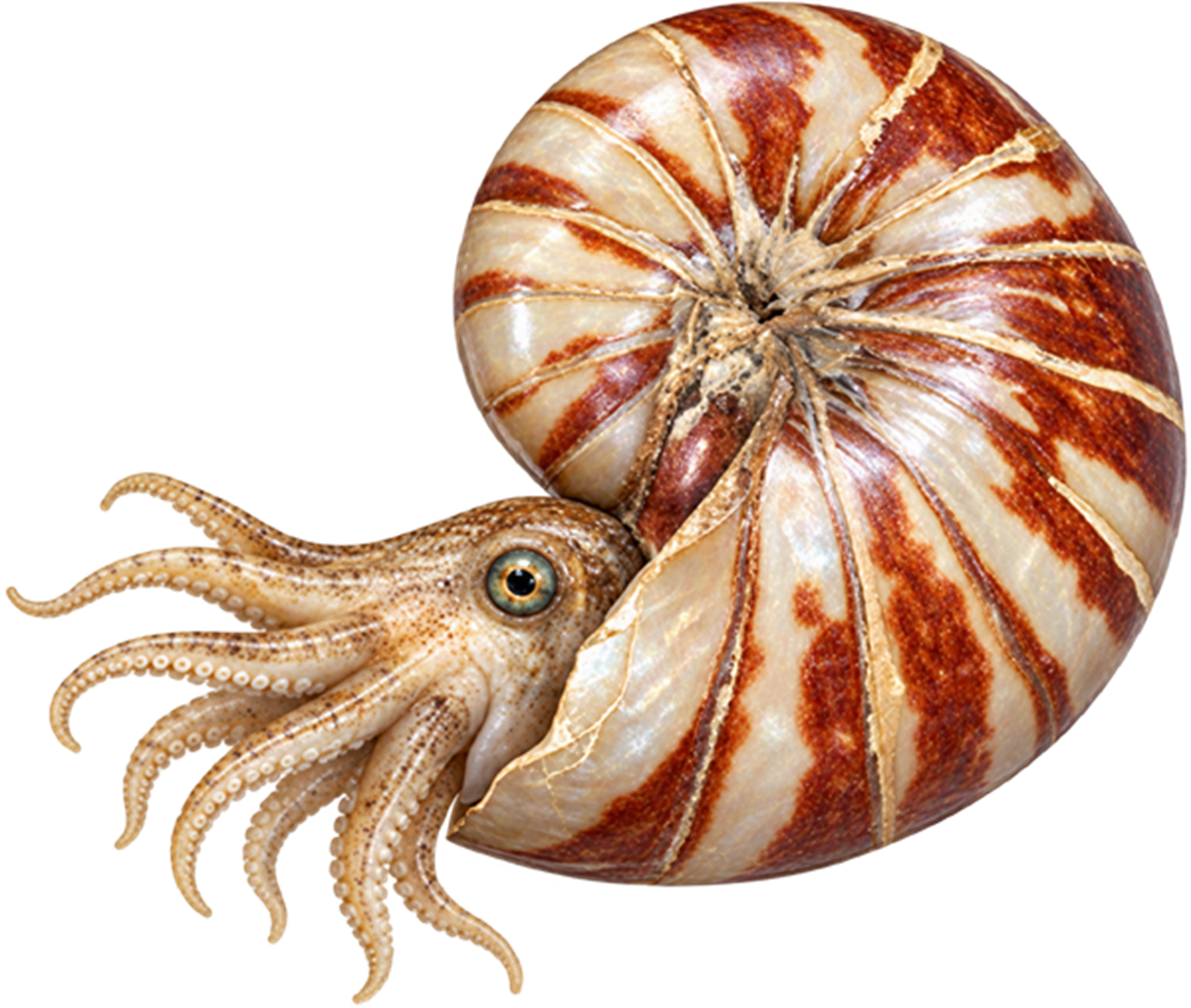 Eutrephoceras |
E. dekayi1134Campbell, C. E. & Landman, N. H. (2010). Microtektite morphology and affinities at the Cretaceous-Paleogene boundary interval in southeast Missouri. Geological Society of America Abstracts with Programs 42(2), 91. Abstract1135Sohl, N. F. & Koch, C. F. (1984). Upper Cretaceous (Maastrichtian) larger invertebrate fossils from the Haustator bilira assemblage zone in the West Gulf Coastal Plain. U.S. Geological Survey Open-File Report, 84-687, 1–282. doi:10.3133/ofr846871136Landman, N. H. et al. (2018). Nautilid nurseries: hatchlings and juveniles of Eutrephoceras dekayi from the lower Maastrichtian (Upper Cretaceous) Pierre Shale of east-central Montana. Lethaia 51(1): 48–74. doi:10.1111/let.122221137Kauffman, E. G. & Sawdo, J. K. (2013). Mosasaur predation on a nautiloid from the Maastrichtian Pierre Shale, Central Colorado, Western Interior Basin, United States. Lethaia 46: 180–187. doi:10.1111/j.1502-3931.2012.00332.x1138Kennedy, W. J. et al. (1998). Marine connections in North America during the late Maastrichtian: palaeogeographic and palaeobiogeographic significance of Jeletzkytes nebrascensis Zone cephalopod fauna from the Elk Butte Member of the Pierre Shale, SE South Dakota and NE Nebraska. Cretaceous Research 19(6): 745–775. doi:10.1006/cres.1998.01291139Smithsonian Institution (o. J.). Eutrephoceras dekayi (Morton), Fox Hills Sandstone, Trail City Member. Sammlungskatalog. Museumskatalog1140Crider, A. F. (1906). Geology and mineral resources of Mississippi. United States Geological Survey Bulletin 283, 1–99. doi:10.3133/b2831141Bryan, J. R. & Jones, D. S. (1989). Fabric of the Cretaceous-Tertiary marine macrofaunal transition at Braggs, Alabama. Palaeogeography, Palaeoclimatology, Palaeoecology 69, 279–301. Appendix I, S. 297, Prairie-Bluff-Spalten L. Quellenbezeichnung: Eutrephoceras dekayi. doi:10.1016/0031-0182(89)90170-31142Sohl, N. F. & Koch, C. F. (1983). Upper Cretaceous (Maestrichtian) Mollusca from the Haustator bilira Assemblage Zone in the East Gulf Coastal Plain. U.S. Geological Survey Open-File Report 83-451, 1–239. Als Prairie Bluff bezeichnete Aufsammlungen; historische Synonyme nach Cobban & Kennedy (1995) abgeglichen. doi:10.3133/ofr83451 E. cf. dekayi1143Tajika, A. et al. (2023). Ammonoid extinction versus nautiloid survival: Is metabolism responsible? Geology 51(7), 621–625. doi:10.1130/G51116.1 E. montanaensis1144Sealey, P. L. & Lucas, S. G. (2019). Baculites baculus Meek and Hayden, 1861 (earliest Maastrichtian) from the uppermost Pierre Shale in the Raton Basin of northeastern New Mexico and its significance. New Mexico Geological Society Guidebook 70: 73–80. Originalpublikation1145Sealey, P. L., Berry, K. & Lucas, S. G. (2019). The Campanian-Maastrichtian baculite zonal sequence in the Pierre Shale, Berwind Canyon, Las Animas County, Colorado. New Mexico Geological Society Guidebook 70: 81–88. doi:10.56577/FFC-70.81 E. perlatus1146Sohl, N. F. & Koch, C. F. (1983). Upper Cretaceous (Maestrichtian) Mollusca from the Haustator bilira Assemblage Zone in the East Gulf Coastal Plain. U.S. Geological Survey Open-File Report 83-451, 1–239. doi:10.3133/ofr834511147Sohl, N. F. & Koch, C. F. (1983). Upper Cretaceous (Maestrichtian) Mollusca from the Haustator bilira Assemblage Zone in the East Gulf Coastal Plain. U.S. Geological Survey Open-File Report 83-451, 1–239. Als Prairie Bluff bezeichnete Aufsammlungen; historische Synonyme nach Cobban & Kennedy (1995) abgeglichen. doi:10.3133/ofr83451 E. planoventer1148Vega-Vera, F.J. & Perrilliat Montoya, M. del C. (1990): Moluscos del Maastrichtiano de la sierra El Antrisco, Estado de Nuevo León. Paleontología Mexicana 55: 1–69. doi:10.22201/igl.05437652e.1990.0.55.3371149Stephenson, L. W. (1941). The larger invertebrate fossils of the Navarro Group of Texas (exclusive of corals and crustaceans and exclusive of the fauna of the Escondido Formation). The University of Texas Publication, 4101, 1–641.1150Larson, N. L. (2016). The Late Cretaceous (upper Campanian) cephalopod fauna from the Coon Creek Science Center, McNairy County, Tennessee. Bulletin of the Alabama Museum of Natural History 33(2), 21–58. Originalpublikation E. spp.1151Witts, J. D. et al. (2018). A fossiliferous spherule-rich bed at the Cretaceous–Paleogene (K–Pg) boundary in Mississippi, USA: Implications for the K–Pg mass extinction event in the Mississippi Embayment and Eastern Gulf Coastal Plain. Cretaceous Research 91, 147–167, Anhang 1. doi:10.1016/j.cretres.2018.06.002 (?)1152Vega, F. J., Feldmann, R. M. & Sour-Tovar, F. (1995). Fossil crabs (Crustacea: Decapoda) from the Late Cretaceous Cárdenas Formation, east-central Mexico. Journal of Paleontology, 69(2), 340–350. doi:10.1017/S00223360000346611153Stephenson, L. W. (1941). The larger invertebrate fossils of the Navarro Group of Texas (exclusive of corals and crustaceans and exclusive of the fauna of the Escondido Formation). The University of Texas Publication, 4101, 1–641.1154Ifrim, C. et al. (2017). The Upper Campanian – lower Maastrichtian cephalopod fauna of Botellos, Nuevo León: a key to understand faunal turnover across the Campanian–Maastrichtian boundary in NE Mexico. Acta Geologica Polonica 67(1), 145–162. doi:10.1515/agp-2017-00091155Larson, N. L. (2016). The Late Cretaceous (upper Campanian) cephalopod fauna from the Coon Creek Science Center, McNairy County, Tennessee. Bulletin of the Alabama Museum of Natural History 33(2), 21–58. Originalpublikation1156Sohl, N. F. & Koch, C. F. (1983). Upper Cretaceous (Maestrichtian) Mollusca from the Haustator bilira Assemblage Zone in the East Gulf Coastal Plain. U.S. Geological Survey Open-File Report 83-451, 1–239. Als Prairie Bluff bezeichnete Aufsammlungen; historische Synonyme nach Cobban & Kennedy (1995) abgeglichen. doi:10.3133/ofr83451 |
Corsicana Marl Cárdenas Formation Escondido Formation Fox Hills Formation Méndez Formation Owl Creek Formation Pierre Shale Potrerillos Formation Prairie Bluff Chalk Ripley Formation |
USA (Alabama, Colorado, Mississippi, Missouri, Montana, Nebraska, New Mexico, South Dakota, Tennessee, Texas); Mexiko (Coahuila, Nuevo León, San Luis Potosí) | 75–66 Ma (Gattung bis 5 Ma) | sehr häufig | Nautilidae (Perlboot) |
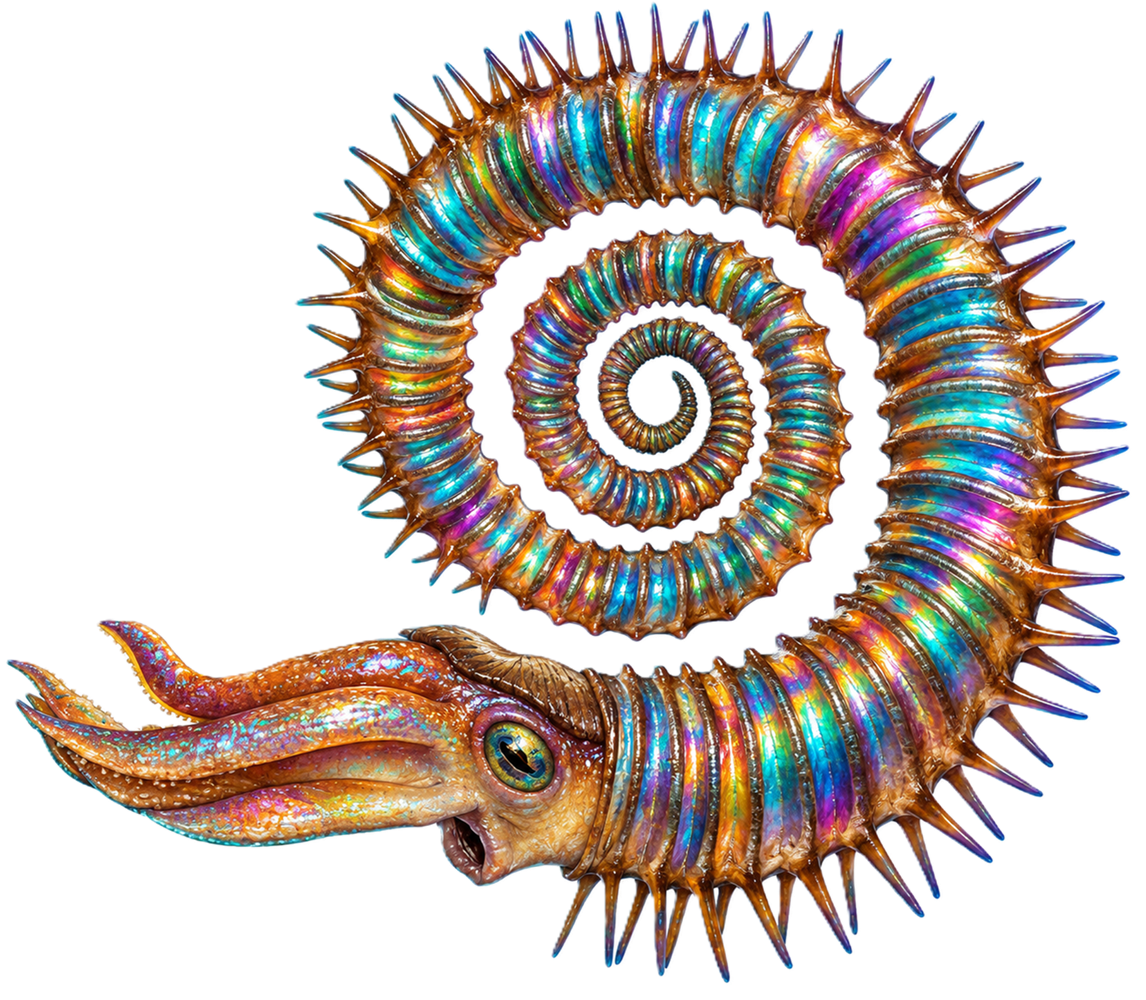 Exiteloceras |
E. jenneyi1157Ifrim, C. et al. (2017). The Upper Campanian – lower Maastrichtian cephalopod fauna of Botellos, Nuevo León: a key to understand faunal turnover across the Campanian–Maastrichtian boundary in NE Mexico. Acta Geologica Polonica 67(1), 145–162. doi:10.1515/agp-2017-0009 E. spp.1158National Park Service (2021). Fossils. Katmai National Park & Preserve.1159Cobban, W. A. (1974). Some ammonoids from the Ripley Formation of Mississippi, Alabama, and Georgia. Journal of Research of the U.S. Geological Survey 2(1), 81–88. Originalpublikation |
Kaguyak Formation Méndez Formation Ripley Formation |
USA (Alaska, Mississippi); Mexiko (Nuevo León) | 75–66 Ma | häufig | Nostoceratidae (Ammonit) |
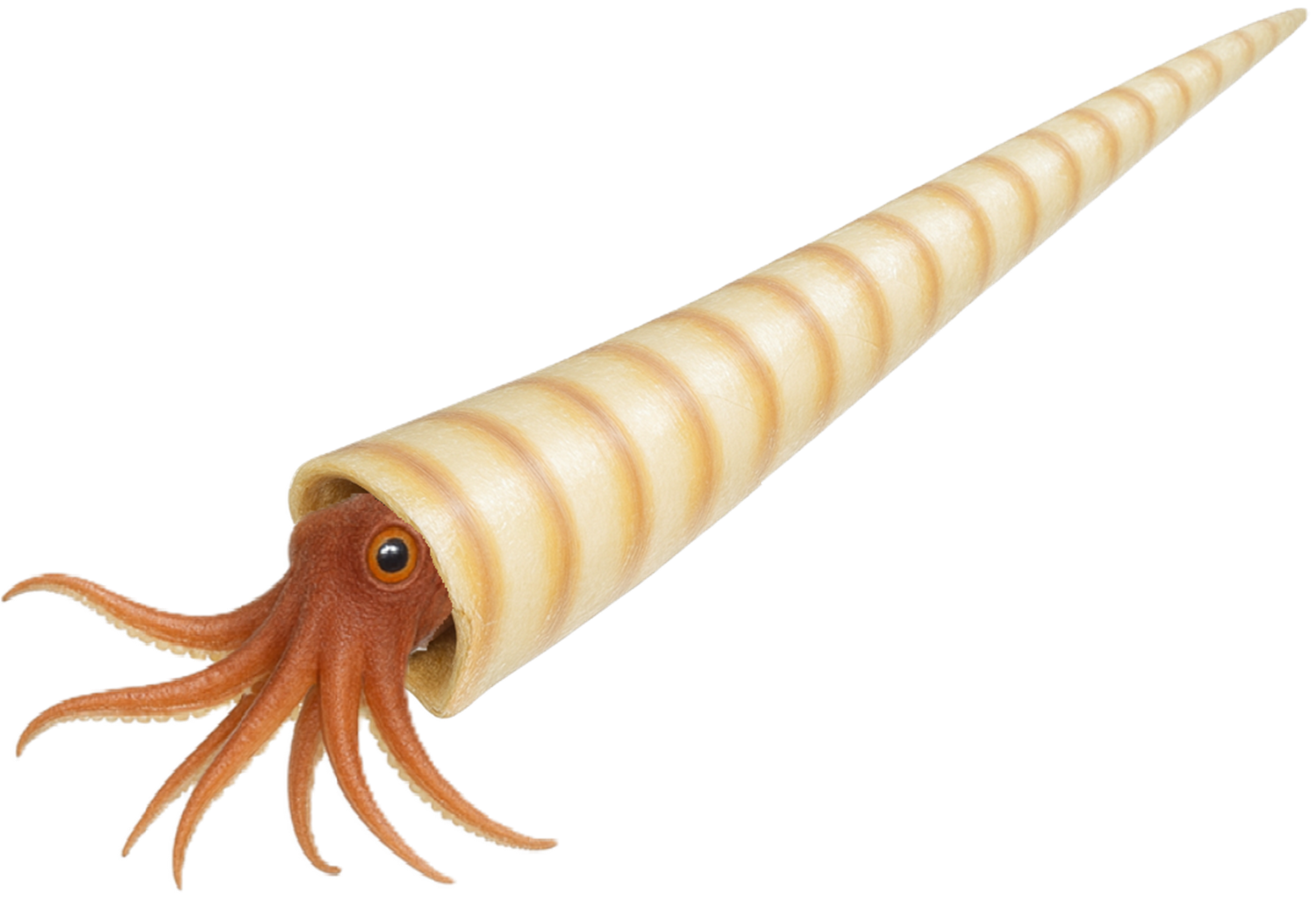 Fresvillia |
F. constricta1160Ifrim, C., Stinnesbeck, W. & López-Oliva, J. G. (2004). Maastrichtian cephalopods from Cerralvo, north-eastern Mexico. Palaeontology 47(6), 1575–1627. doi:10.1111/j.0031-0239.2004.00426.x1161Ifrim, C. et al. (2017). The Upper Campanian – lower Maastrichtian cephalopod fauna of Botellos, Nuevo León: a key to understand faunal turnover across the Campanian–Maastrichtian boundary in NE Mexico. Acta Geologica Polonica 67(1), 145–162. doi:10.1515/agp-2017-0009 F. teres1162Ifrim, C., Stinnesbeck, W. & López-Oliva, J. G. (2004). Maastrichtian cephalopods from Cerralvo, north-eastern Mexico. Palaeontology 47(6), 1575–1627. doi:10.1111/j.0031-0239.2004.00426.x1163Ifrim, C. et al. (2017). The Upper Campanian – lower Maastrichtian cephalopod fauna of Botellos, Nuevo León: a key to understand faunal turnover across the Campanian–Maastrichtian boundary in NE Mexico. Acta Geologica Polonica 67(1), 145–162. doi:10.1515/agp-2017-0009 F. sp.1164Ifrim, C. & Stinnesbeck, W. (2013). Ammonoids from the Maastrichtian (Late Cretaceous) at El Zancudo, Nuevo Laredo, Tamaulipas, Mexico. Boletín de la Sociedad Geológica Mexicana 65(1), 189–200. doi:10.18268/BSGM2013v65n1a14 |
Méndez Formation | Mexiko (Nuevo León, Tamaulipas) | 75–68 Ma | selten | Kossmaticeratidae (Ammonit) |
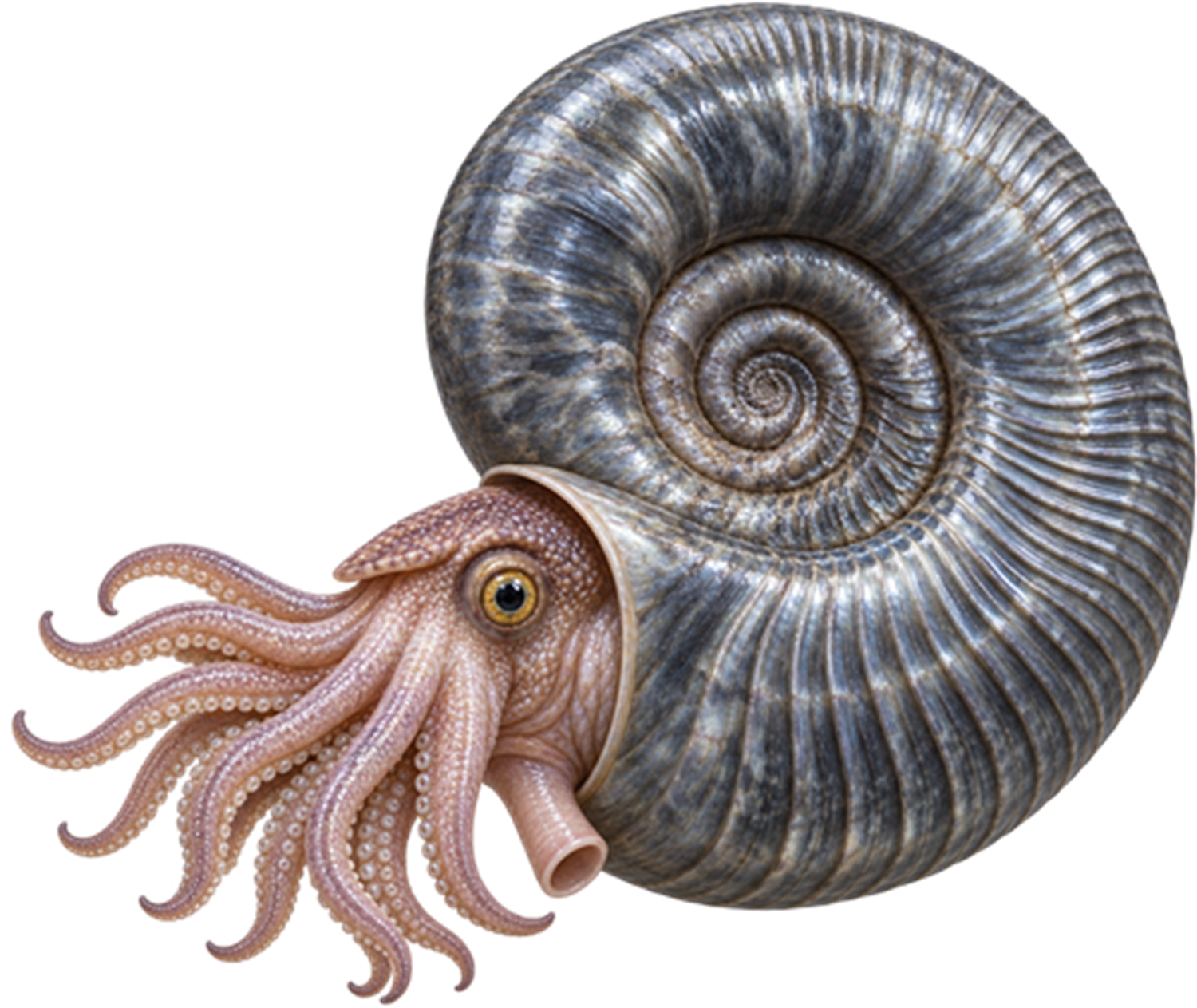 Gaudryceras |
G. kayei1165Ifrim, C., Stinnesbeck, W. & López-Oliva, J. G. (2004). Maastrichtian cephalopods from Cerralvo, north-eastern Mexico. Palaeontology 47(6), 1575–1627. doi:10.1111/j.0031-0239.2004.00426.x1166Ifrim, C. et al. (2017). The Upper Campanian – lower Maastrichtian cephalopod fauna of Botellos, Nuevo León: a key to understand faunal turnover across the Campanian–Maastrichtian boundary in NE Mexico. Acta Geologica Polonica 67(1), 145–162. doi:10.1515/agp-2017-00091167Ifrim, C. & Stinnesbeck, W. (2013). Ammonoids from the Maastrichtian (Late Cretaceous) at El Zancudo, Nuevo Laredo, Tamaulipas, Mexico. Boletín de la Sociedad Geológica Mexicana 65(1), 189–200. doi:10.18268/BSGM2013v65n1a14 G. tenuiliratum1168Jones, D. L. (1963). Upper Cretaceous (Campanian and Maestrichtian) ammonites from southern Alaska. U.S. Geological Survey Professional Paper, 432, 1–53. doi:10.3133/pp432 G. sp.1169Witts, J. D. et al. (2021). Cephalopods from the Cretaceous–Paleogene (K–Pg) boundary interval on the Brazos River, Texas, and extinction of the ammonites. American Museum Novitates, 3964, 1–52. doi:10.1206/3964.1 |
Corsicana Marl Kaguyak Formation Matanuska Formation Méndez Formation |
USA (Alaska, Texas); Mexiko (Nuevo León, Tamaulipas) | 75–66 Ma | häufig | Gaudryceratidae (Ammonit) |
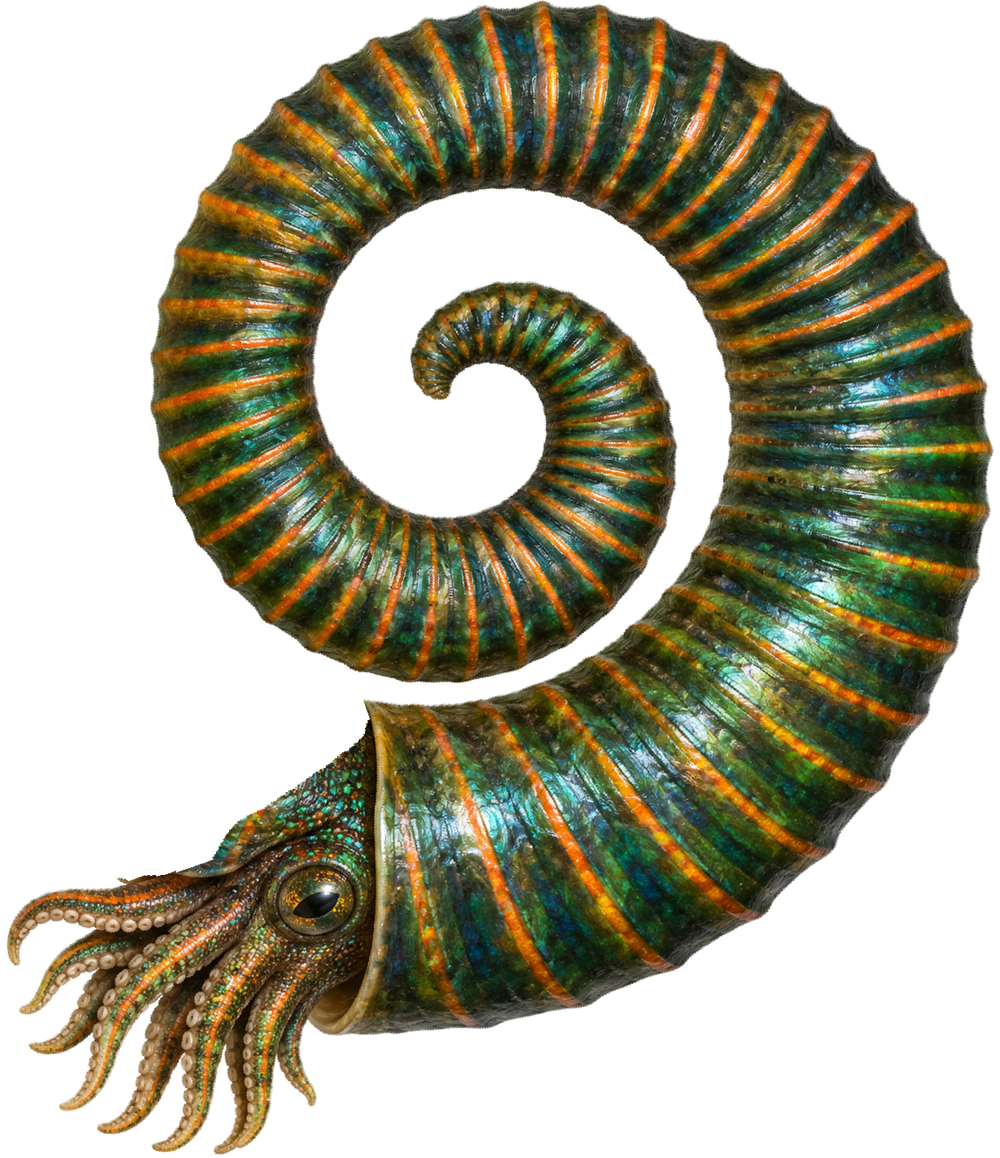 Glyptoxoceras |
G. torquatum1170Cobban, W. A. & Kennedy, W. J. (1995). Maastrichtian ammonites chiefly from the Prairie Bluff Chalk in Alabama and Mississippi. Paleontological Society Memoir 44, 1–40. Prairie Bluff Chalk; systematischer Teil und Fundortanhang. doi:10.1017/S0022336000061096 G. spp.1171National Park Service (2021). Fossils. Katmai National Park & Preserve.1172Kennedy, W. J. & Cobban, W. A. (1993). Maastrichtian ammonites from the Corsicana Formation in northeast Texas. Geological Magazine, 130(1), 57–67. doi:10.1017/S00167568000237241173Cobban, W. A. & Kennedy, W. J. (1995). Maastrichtian ammonites chiefly from the Prairie Bluff Chalk in Alabama and Mississippi. Paleontological Society Memoir 44, 1–40. Prairie Bluff Chalk; systematischer Teil und Fundortanhang. doi:10.1017/S0022336000061096 |
Corsicana Marl Kaguyak Formation Prairie Bluff Chalk |
USA (Alabama, Alaska, Texas) | 72–66 Ma | häufig | Diplomoceratidae (Ammonit) |
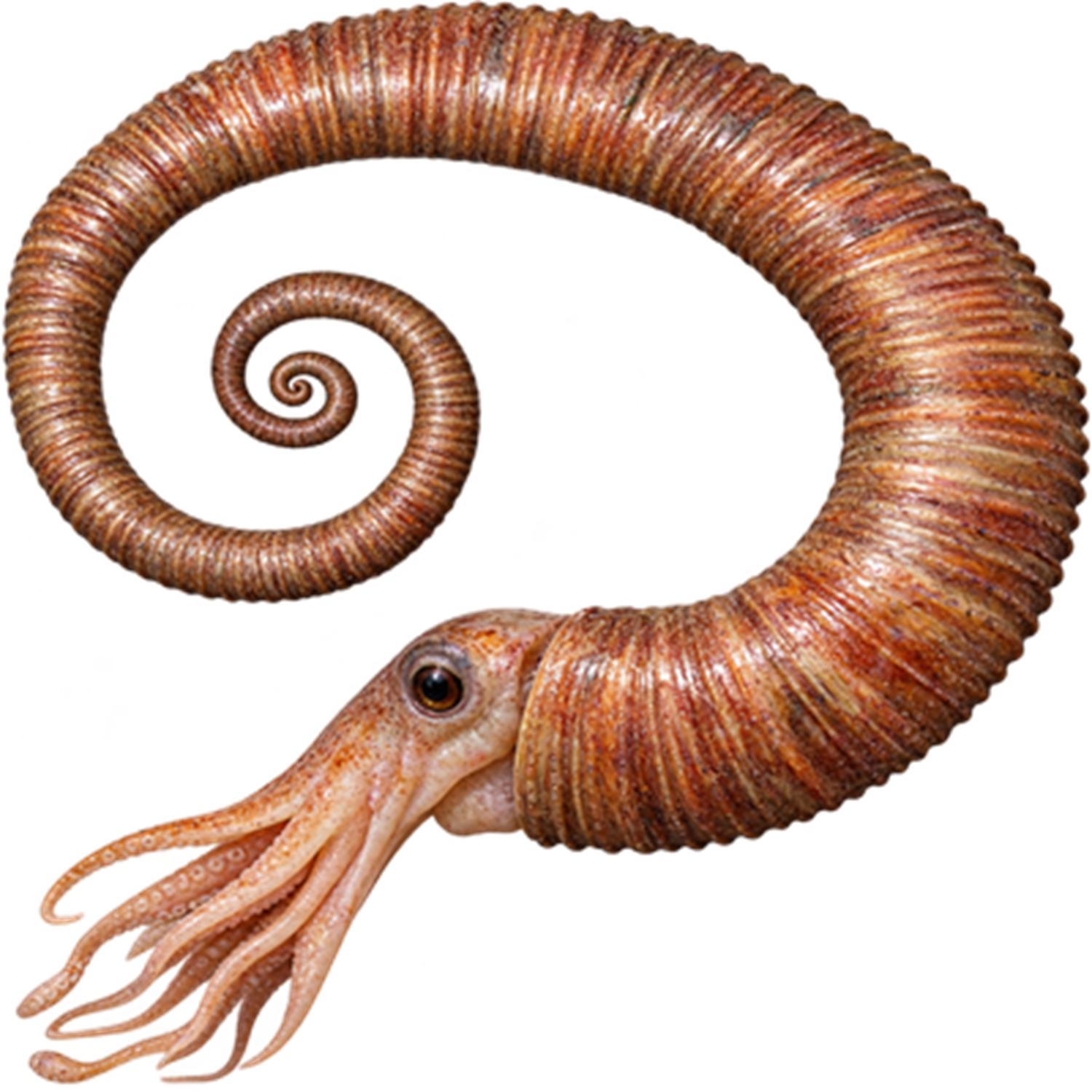 Hamites |
H. sp. (?)1174Stephenson, L. W. (1941). The larger invertebrate fossils of the Navarro Group of Texas (exclusive of corals and crustaceans and exclusive of the fauna of the Escondido Formation). The University of Texas Publication, 4101, 1–641. | Corsicana Marl | USA (Texas) | 70–66 Ma | selten | Hamitidae (Ammonit) |
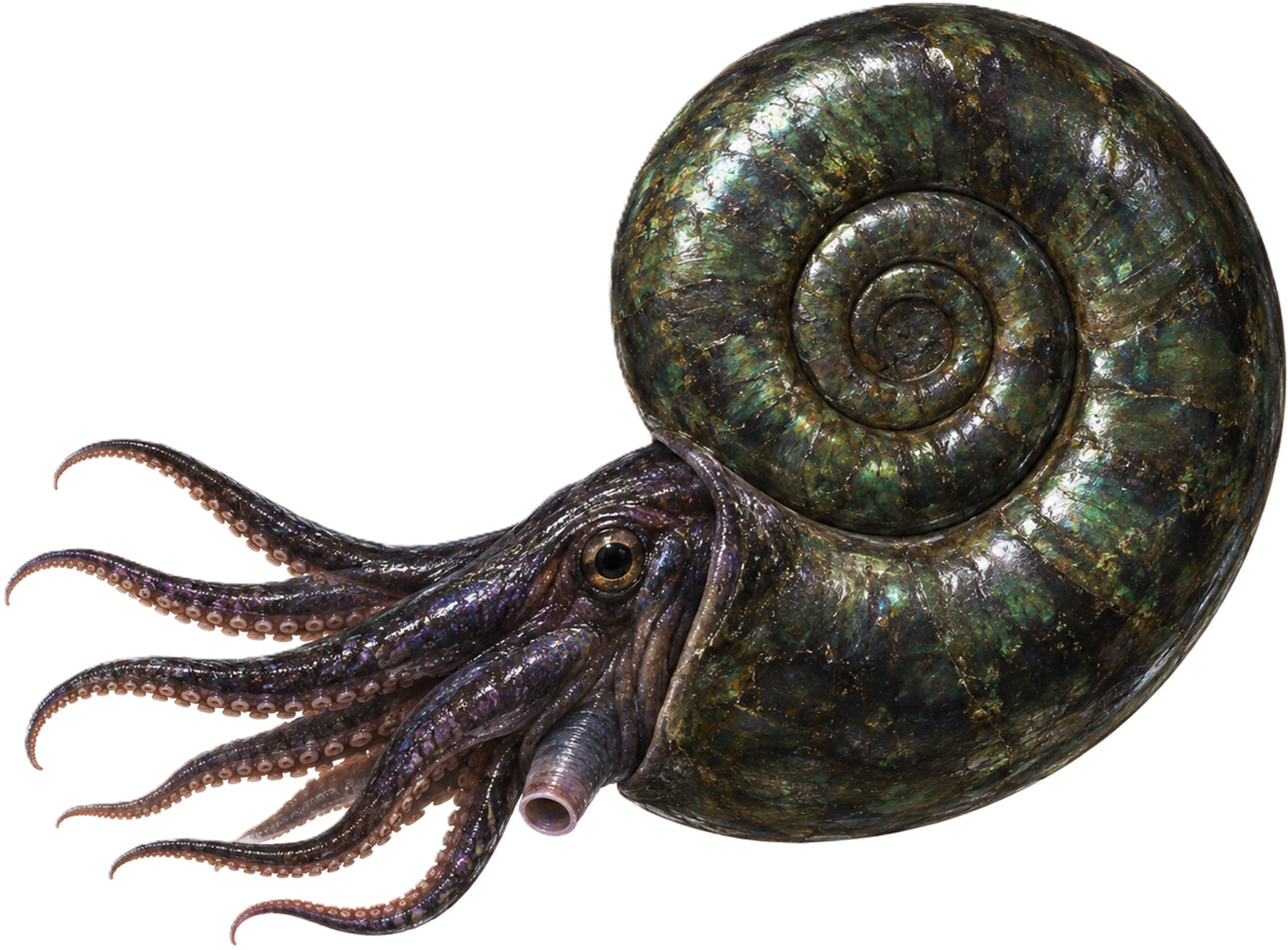 Hauericeras |
H. rembda1175Ifrim, C., Stinnesbeck, W. & López-Oliva, J. G. (2004). Maastrichtian cephalopods from Cerralvo, north-eastern Mexico. Palaeontology 47(6), 1575–1627. doi:10.1111/j.0031-0239.2004.00426.x1176Ifrim, C. et al. (2017). The Upper Campanian – lower Maastrichtian cephalopod fauna of Botellos, Nuevo León: a key to understand faunal turnover across the Campanian–Maastrichtian boundary in NE Mexico. Acta Geologica Polonica 67(1), 145–162. doi:10.1515/agp-2017-00091177Cobban, W. A. & Kennedy, W. J. (1995). Maastrichtian ammonites chiefly from the Prairie Bluff Chalk in Alabama and Mississippi. Paleontological Society Memoir 44, 1–40. Prairie Bluff Chalk; systematischer Teil und Fundortanhang. doi:10.1017/S0022336000061096 | Méndez Formation Prairie Bluff Chalk |
USA (Alabama); Mexiko (Nuevo León) | 75–66 Ma | selten | Desmoceratidae (Ammonit) |
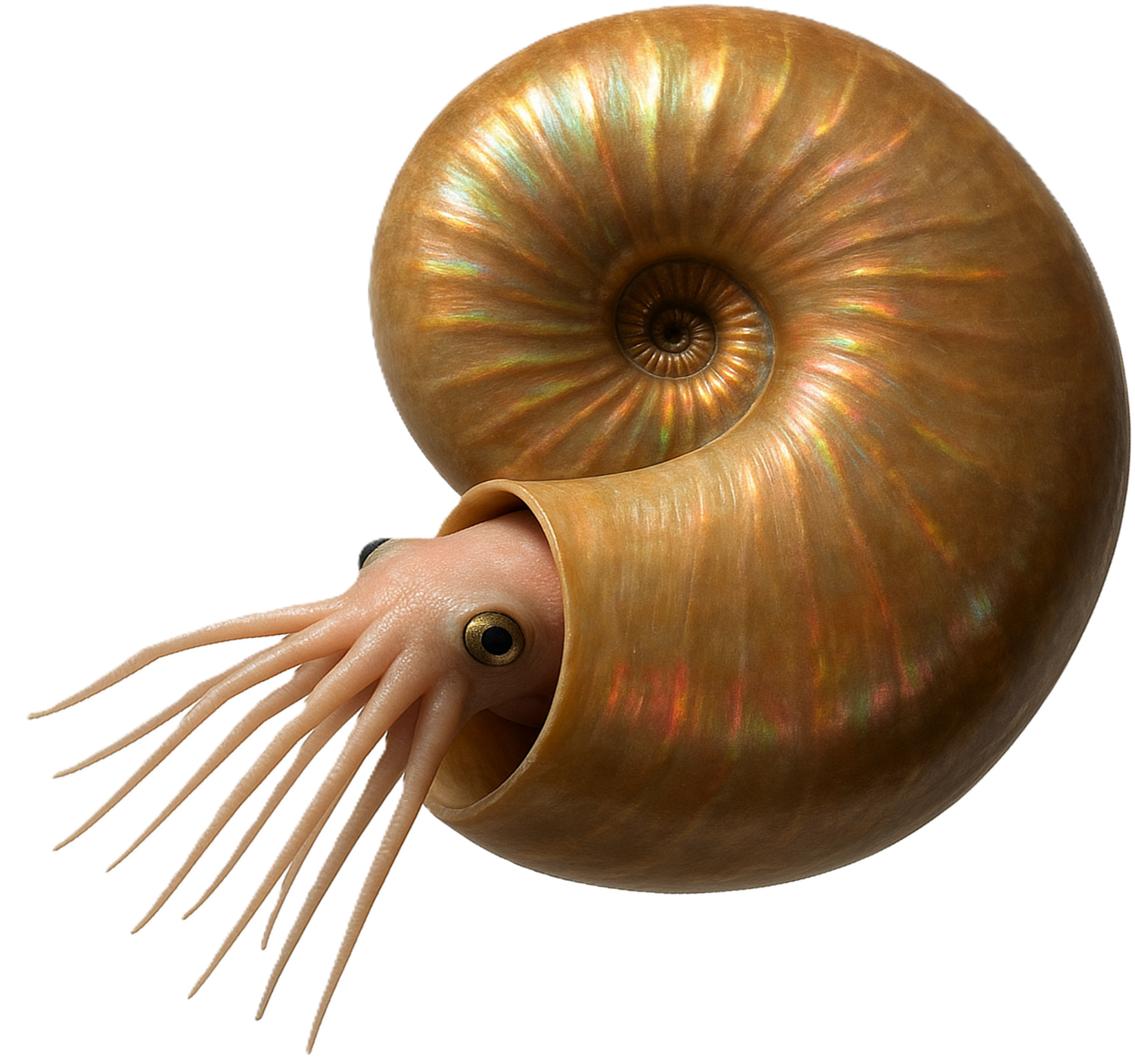 Hoploscaphites |
H. birkelundae1178Landman, N. H. & Cobban, W. A. (2003). Ammonites from the upper part of the Pierre Shale and Fox Hills Formation of Colorado. American Museum Novitates 3388: 1–45. Originalpublikation1179Landman, N. H. & Waage, K. M. (1993). Scaphitid ammonites of the Upper Cretaceous (Maastrichtian) Fox Hills Formation in South Dakota and Wyoming. Bulletin of the American Museum of Natural History 215: 1–257. Originalpublikation H. comprimus1180Kennedy, W. J. et al. (1998). Marine connections in North America during the late Maastrichtian: palaeogeographic and palaeobiogeographic significance of Jeletzkytes nebrascensis Zone cephalopod fauna from the Elk Butte Member of the Pierre Shale, SE South Dakota and NE Nebraska. Cretaceous Research 19(6): 745–775. doi:10.1006/cres.1998.01291181Landman, N. H. & Waage, K. M. (1993). Scaphitid ammonites of the Upper Cretaceous (Maastrichtian) Fox Hills Formation in South Dakota and Wyoming. Bulletin of the American Museum of Natural History 215: 1–257. Originalpublikation H. crassus1182Landman, N. H. et al. (2020). Large scaphitid ammonites (Hoploscaphites) from the Upper Cretaceous (upper Campanian–lower Maastrichtian) of North America: Endless variation on a single theme. Bulletin of the American Museum of Natural History 441: 1–131. doi:10.1206/0003-0090.441.1.1 H. criptonodosus1183Landman, N. H. et al. (2019). Description of two species of Hoploscaphites (Ammonoidea: Ancyloceratina) from the Upper Cretaceous (lower Maastrichtian) of the U.S. Western Interior. Bulletin of the American Museum of Natural History 427: 1–72. doi:10.1206/0003-0090.427.1.11184Cobban, W. A. & Kennedy, W. J. (1995). Maastrichtian ammonites chiefly from the Prairie Bluff Chalk in Alabama and Mississippi. Paleontological Society Memoir 44, 1–40. Prairie Bluff Chalk; systematischer Teil und Fundortanhang. doi:10.1017/S0022336000061096 H. dorfi1185Landman, N. H. & Cobban, W. A. (2003). Ammonites from the upper part of the Pierre Shale and Fox Hills Formation of Colorado. American Museum Novitates 3388: 1–45. Originalpublikation1186Landman, N. H. & Waage, K. M. (1993). Scaphitid ammonites of the Upper Cretaceous (Maastrichtian) Fox Hills Formation in South Dakota and Wyoming. Bulletin of the American Museum of Natural History 215: 1–257. Originalpublikation H. macer1187Landman, N. H. et al. (2019). Description of two species of Hoploscaphites (Ammonoidea: Ancyloceratina) from the Upper Cretaceous (lower Maastrichtian) of the U.S. Western Interior. Bulletin of the American Museum of Natural History 427: 1–72. doi:10.1206/0003-0090.427.1.1 H. melloi1188Landman, N. H. & Waage, K. M. (1993). Scaphitid ammonites of the Upper Cretaceous (Maastrichtian) Fox Hills Formation in South Dakota and Wyoming. Bulletin of the American Museum of Natural History 215: 1–257. Originalpublikation H. nebrascensis1189Landman, N. H. & Waage, K. M. (1993). Scaphitid ammonites of the Upper Cretaceous (Maastrichtian) Fox Hills Formation in South Dakota and Wyoming. Bulletin of the American Museum of Natural History, 215, 1–257.1190Hoganson, J. W. & Murphy, E. C. (2002). Marine Breien Member (Maastrichtian) of the Hell Creek Formation in North Dakota: Stratigraphy, vertebrate fossil record, and age. In J. H. Hartman, K. R. Johnson & D. J. Nichols (Hrsg.), The Hell Creek Formation and the Cretaceous-Tertiary boundary in the northern Great Plains: An integrated continental record of the end of the Cretaceous. Geological Society of America Special Paper, 361, 247–269. doi:10.1130/0-8137-2361-2.2471191Kennedy, W. J. et al. (1998). Marine connections in North America during the late Maastrichtian: palaeogeographic and palaeobiogeographic significance of Jeletzkytes nebrascensis Zone cephalopod fauna from the Elk Butte Member of the Pierre Shale, SE South Dakota and NE Nebraska. Cretaceous Research 19(6): 745–775. doi:10.1006/cres.1998.01291192Landman, N. H. et al. (2013). Cephalopods from the Badlands National Park area, South Dakota: Reassessment of the position of the Cretaceous/Paleogene boundary. Cretaceous Research 42: 1–27. doi:10.1016/j.cretres.2012.12.0111193Landman, N. H. & Waage, K. M. (1993). Scaphitid ammonites of the Upper Cretaceous (Maastrichtian) Fox Hills Formation in South Dakota and Wyoming. Bulletin of the American Museum of Natural History 215: 1–257. Originalpublikation H. nicolletii1194Landman, N. H. & Waage, K. M. (1993). Scaphitid ammonites of the Upper Cretaceous (Maastrichtian) Fox Hills Formation in South Dakota and Wyoming. Bulletin of the American Museum of Natural History, 215, 1–257.1195Landman, N. H. et al. (2013). Cephalopods from the Badlands National Park area, South Dakota: Reassessment of the position of the Cretaceous/Paleogene boundary. Cretaceous Research 42: 1–27. doi:10.1016/j.cretres.2012.12.0111196Tajika, A. et al. (2025). Lethal injuries on the scaphitid ammonoid Hoploscaphites nicolletii (Morton, 1842) in the Upper Cretaceous Fox Hills Formation, South Dakota, USA. Swiss Journal of Palaeontology 144: 1. doi:10.1186/s13358-024-00341-6 H. peterseni1197Landman, N. H. et al. (2020). Large scaphitid ammonites (Hoploscaphites) from the Upper Cretaceous (upper Campanian–lower Maastrichtian) of North America: Endless variation on a single theme. Bulletin of the American Museum of Natural History 441: 1–131. doi:10.1206/0003-0090.441.1.1 H. plenus1198Landman, N. H. et al. (2020). Large scaphitid ammonites (Hoploscaphites) from the Upper Cretaceous (upper Campanian–lower Maastrichtian) of North America: Endless variation on a single theme. Bulletin of the American Museum of Natural History 441: 1–131. doi:10.1206/0003-0090.441.1.1 H. pumilus1199Larson, N. L. (2016). The Late Cretaceous (upper Campanian) cephalopod fauna from the Coon Creek Science Center, McNairy County, Tennessee. Bulletin of the Alabama Museum of Natural History 33(2), 21–58. Originalpublikation H. reesidei1200Larson, N. L. (2016). The Late Cretaceous (upper Campanian) cephalopod fauna from the Coon Creek Science Center, McNairy County, Tennessee. Bulletin of the Alabama Museum of Natural History 33(2), 21–58. Originalpublikation H. sargklofak1201Landman, N. H., Kennedy, W. J. & Larson, N. L. (2015). A new species of scaphitid ammonite from the lower Maastrichtian of the Western Interior of North America, with close affinities to Hoploscaphites constrictus Sowerby, 1817. American Museum Novitates 3833: 1–40. doi:10.1206/3833.1 H. spedeni1202Landman, N. H. & Waage, K. M. (1993). Scaphitid ammonites of the Upper Cretaceous (Maastrichtian) Fox Hills Formation in South Dakota and Wyoming. Bulletin of the American Museum of Natural History 215: 1–257. Originalpublikation1203Landman, N. H. et al. (2013). Cephalopods from the Badlands National Park area, South Dakota: Reassessment of the position of the Cretaceous/Paleogene boundary. Cretaceous Research 42: 1–27. doi:10.1016/j.cretres.2012.12.0111204Landman, N. H. et al. (2013). Cephalopods from the Badlands National Park area, South Dakota: Reassessment of the position of the Cretaceous/Paleogene boundary. Cretaceous Research 42: 1–27. doi:10.1016/j.cretres.2012.12.011 H. youngi1205Larson, N. L. (2016). The Late Cretaceous (upper Campanian) cephalopod fauna from the Coon Creek Science Center, McNairy County, Tennessee. Bulletin of the Alabama Museum of Natural History 33(2), 21–58. Originalpublikation H. spp.1206Kennedy, W. J. & Cobban, W. A. (1993). Maastrichtian ammonites from the Corsicana Formation in northeast Texas. Geological Magazine, 130(1), 57–67. doi:10.1017/S00167568000237241207Cobban, W. A. (1974). Some ammonoids from the Ripley Formation of Mississippi, Alabama, and Georgia. Journal of Research of the U.S. Geological Survey 2(1), 81–88. Originalpublikation1208Bryan, J. R. & Jones, D. S. (1989). Fabric of the Cretaceous-Tertiary marine macrofaunal transition at Braggs, Alabama. Palaeogeography, Palaeoclimatology, Palaeoecology 69, 279–301. Appendix I, S. 297, Prairie-Bluff-Spalten U. Quellenbezeichnung: Hoploscaphites? sp.*. doi:10.1016/0031-0182(89)90170-3 |
Corsicana Marl Fox Hills Formation Hell Creek Formation Pierre Shale Prairie Bluff Chalk Ripley Formation |
USA (Alabama, Colorado, Mississippi, Montana, Nebraska, North Dakota, South Dakota, Tennessee, Texas, Wyoming) | 74–66 Ma | sehr häufig | Scaphitidae (Ammonit); synonym zu Jeletzkytes; H. birkelundae: synonym zu H. birkelundi; H. reesidei: ältere Kombination Jeletzkytes reesidei |
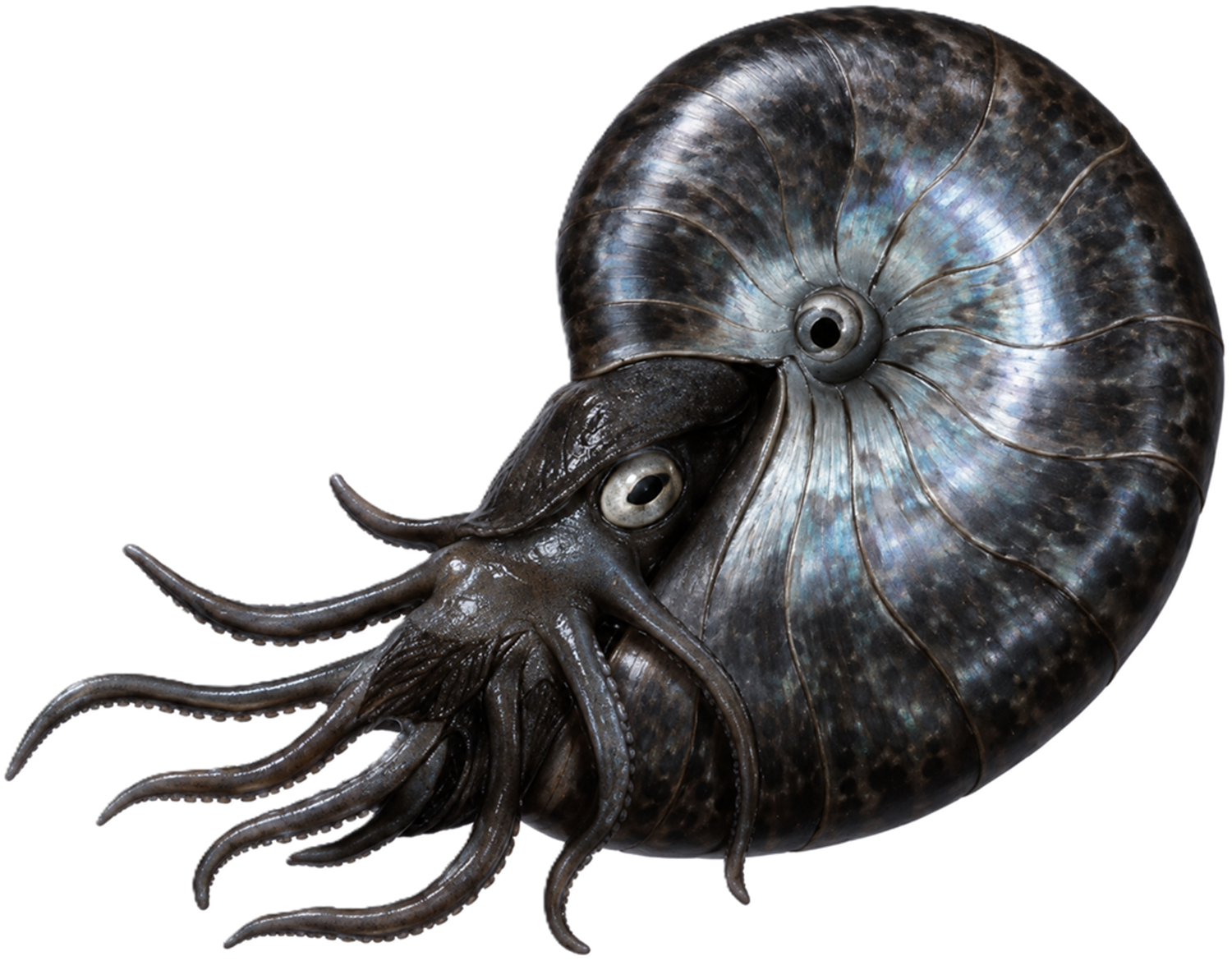 Hypophylloceras |
H. hetonaiense1209Jones, D. L. (1963). Upper Cretaceous (Campanian and Maestrichtian) ammonites from southern Alaska. U.S. Geological Survey Professional Paper, 432, 1–53. doi:10.3133/pp4321210Ifrim, C., Stinnesbeck, W. & López-Oliva, J. G. (2004). Maastrichtian cephalopods from Cerralvo, north-eastern Mexico. Palaeontology 47(6), 1575–1627. doi:10.1111/j.0031-0239.2004.00426.x1211Ifrim, C. et al. (2017). The Upper Campanian – lower Maastrichtian cephalopod fauna of Botellos, Nuevo León: a key to understand faunal turnover across the Campanian–Maastrichtian boundary in NE Mexico. Acta Geologica Polonica 67(1), 145–162. doi:10.1515/agp-2017-0009 H. ramosum1212Jones, D. L. (1963). Upper Cretaceous (Campanian and Maestrichtian) ammonites from southern Alaska. U.S. Geological Survey Professional Paper, 432, 1–53. doi:10.3133/pp432 H. surya (?)1213Ifrim, C., Stinnesbeck, W. & López-Oliva, J. G. (2004). Maastrichtian cephalopods from Cerralvo, north-eastern Mexico. Palaeontology 47(6), 1575–1627. doi:10.1111/j.0031-0239.2004.00426.x1214Ifrim, C. et al. (2017). The Upper Campanian – lower Maastrichtian cephalopod fauna of Botellos, Nuevo León: a key to understand faunal turnover across the Campanian–Maastrichtian boundary in NE Mexico. Acta Geologica Polonica 67(1), 145–162. doi:10.1515/agp-2017-00091215Ifrim, C. & Stinnesbeck, W. (2013). Ammonoids from the Maastrichtian (Late Cretaceous) at El Zancudo, Nuevo Laredo, Tamaulipas, Mexico. Boletín de la Sociedad Geológica Mexicana 65(1), 189–200. doi:10.18268/BSGM2013v65n1a14 |
Kaguyak Formation Matanuska Formation Méndez Formation |
USA (Alaska); Mexiko (Nuevo León, Tamaulipas) | 75–66 Ma | häufig | Phylloceratidae (Ammonit); Hypophylloceras hetonaiense: synonym zu Neophylloceras hetonaiense |
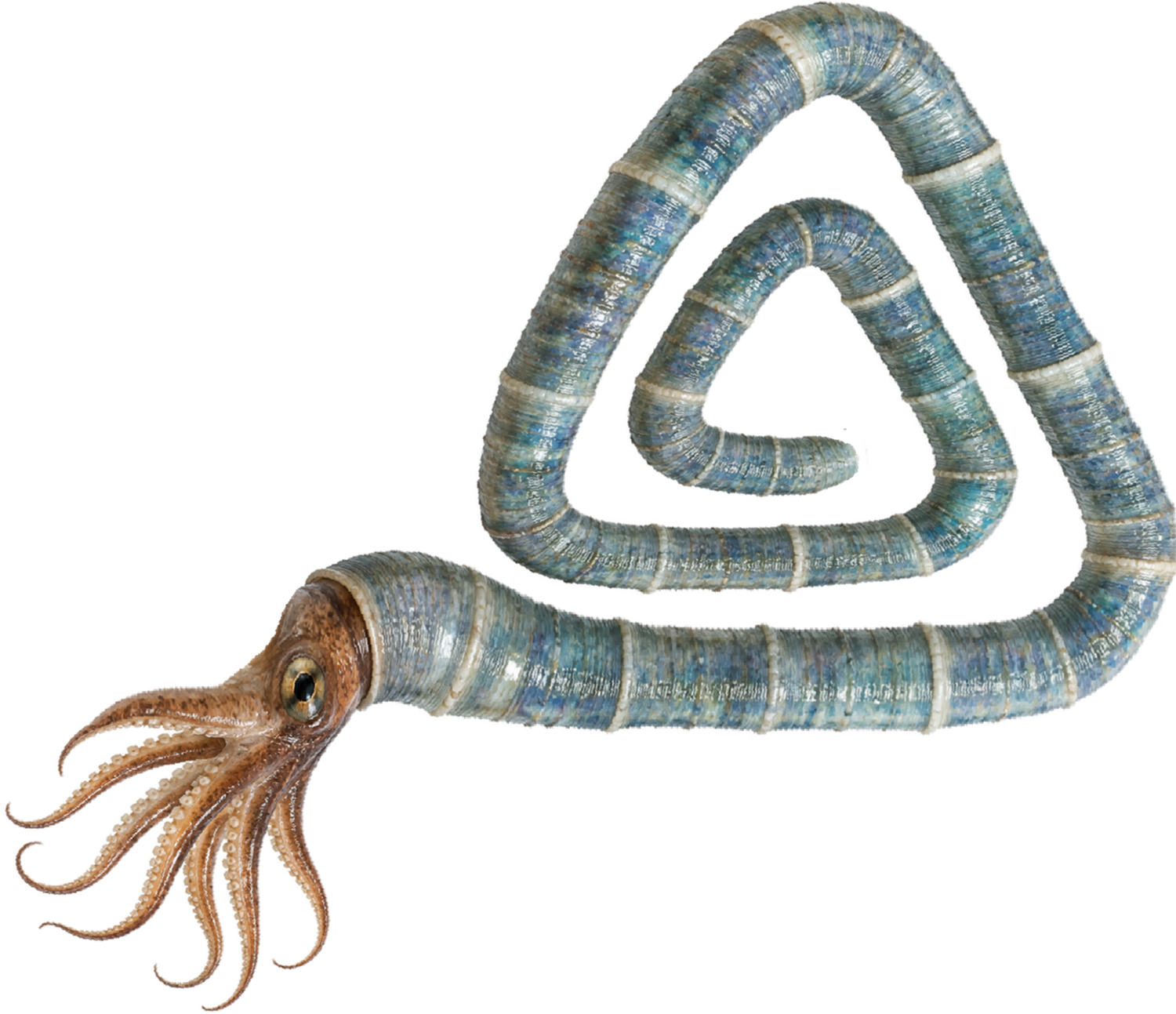 Lewyites |
L. oronensis1216Larson, N. L. (2016). The Late Cretaceous (upper Campanian) cephalopod fauna from the Coon Creek Science Center, McNairy County, Tennessee. Bulletin of the Alabama Museum of Natural History 33(2), 21–58. Originalpublikation | Ripley Formation | USA (Tennessee) | 72–71 Ma | sehr häufig | Diplomoceratidae (Ammonit) |
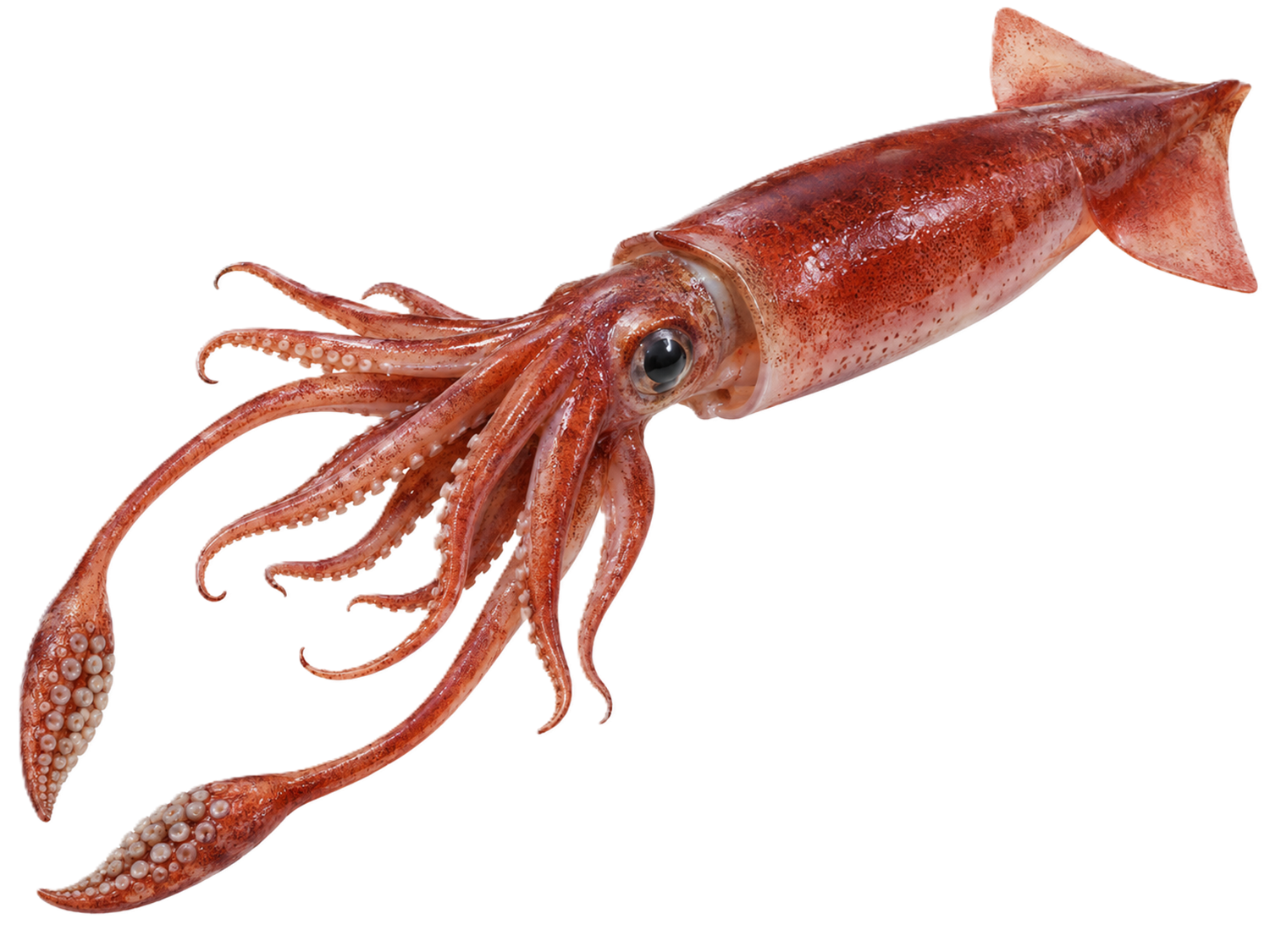 Longibelus |
L. sp.1217Fuchs, D. et al. (2013). Longibelus gen. nov., a new Cretaceous coleoid genus linking Belemnoidea and early Decabrachia. Palaeontology 56(5), 1081–1106. doi:10.1111/pala.120361218Ifrim, C. et al. (2017). The Upper Campanian – lower Maastrichtian cephalopod fauna of Botellos, Nuevo León: a key to understand faunal turnover across the Campanian–Maastrichtian boundary in NE Mexico. Acta Geologica Polonica 67(1), 145–162. doi:10.1515/agp-2017-0009 | Méndez Formation | Mexiko (Nuevo León) | 75–69 Ma | selten | Coleoidea (Tintenfisch); synonym zu Naefia neogaeia |
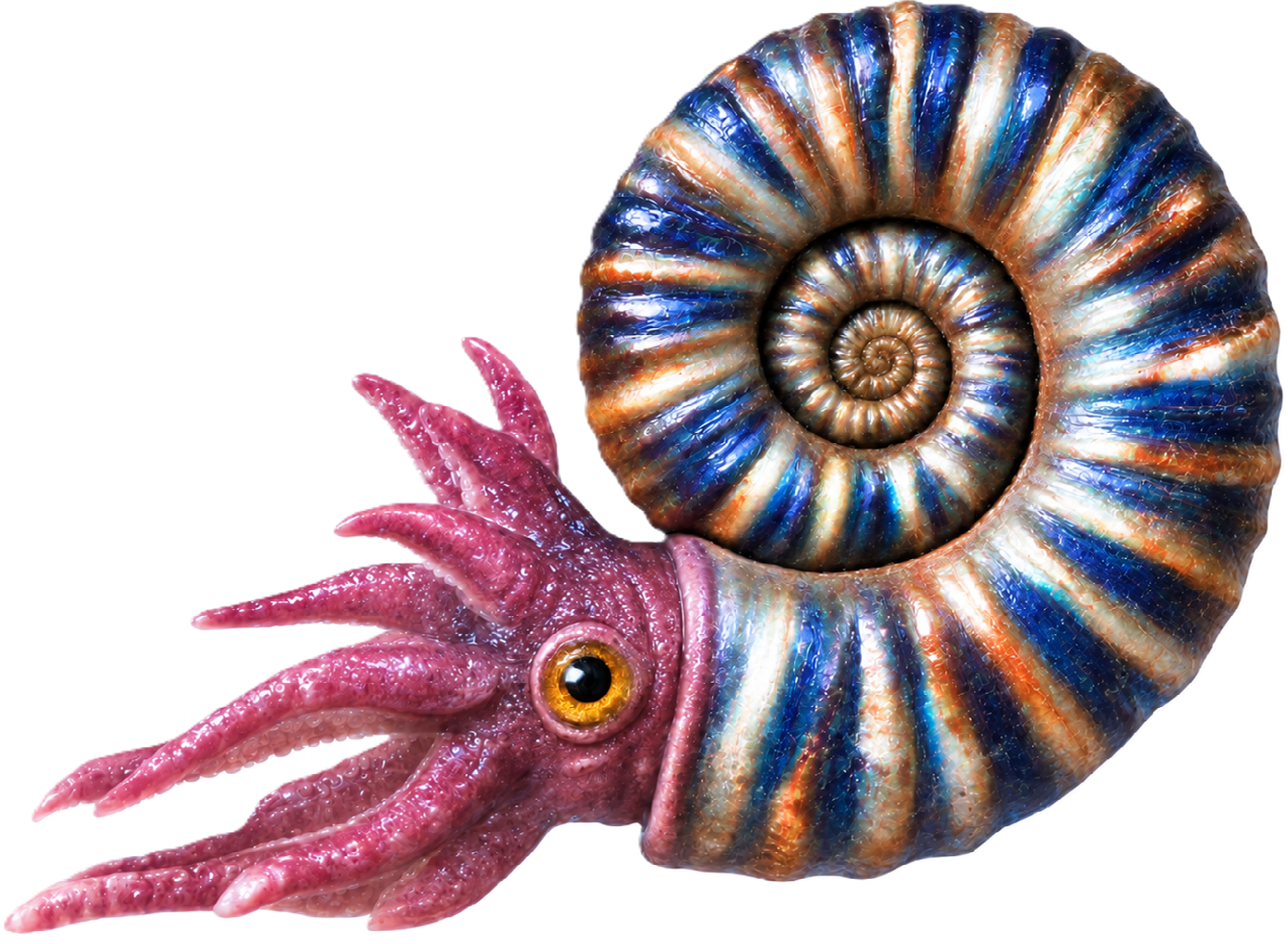 Menuites |
M. sp.1219Ifrim, C., Stinnesbeck, W. & López-Oliva, J. G. (2004). Maastrichtian cephalopods from Cerralvo, north-eastern Mexico. Palaeontology 47(6), 1575–1627. doi:10.1111/j.0031-0239.2004.00426.x | Méndez Formation | Mexiko (Nuevo León) | 71–69 Ma | selten | Pachydiscidae (Ammonit) |
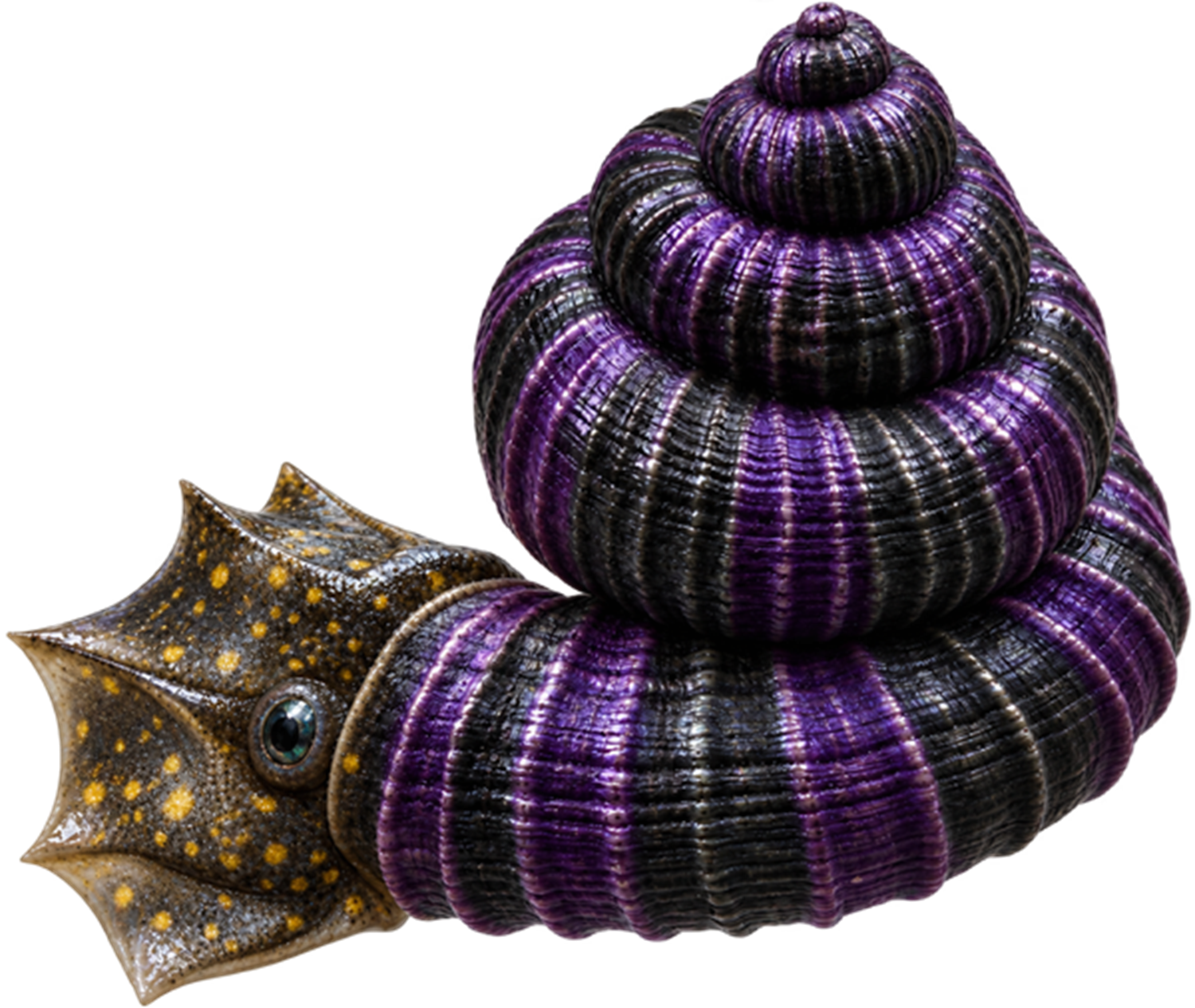 Nostoceras |
N. alternatum1220Kennedy, W. J. & Cobban, W. A. (2000). Maastrichtian (Late Cretaceous) ammonites from the Owl Creek Formation in northeastern Mississippi, U.S.A. Acta Geologica Polonica 50(1), 175–190. Originalpublikation1221Ifrim, C., Stinnesbeck, W. & López-Oliva, J. G. (2004). Maastrichtian cephalopods from Cerralvo, north-eastern Mexico. Palaeontology 47(6), 1575–1627. doi:10.1111/j.0031-0239.2004.00426.x1222Ifrim, C. et al. (2017). The Upper Campanian – lower Maastrichtian cephalopod fauna of Botellos, Nuevo León: a key to understand faunal turnover across the Campanian–Maastrichtian boundary in NE Mexico. Acta Geologica Polonica 67(1), 145–162. doi:10.1515/agp-2017-00091223Cobban, W. A. (1974). Some ammonoids from the Ripley Formation of Mississippi, Alabama, and Georgia. Journal of Research of the U.S. Geological Survey 2(1), 81–88. Originalpublikation1224Cobban, W. A. & Kennedy, W. J. (1995). Maastrichtian ammonites chiefly from the Prairie Bluff Chalk in Alabama and Mississippi. Paleontological Society Memoir 44, 1–40. Prairie Bluff Chalk; systematischer Teil und Fundortanhang. doi:10.1017/S0022336000061096 N. approximans1225Larson, N. L. (2016). The Late Cretaceous (upper Campanian) cephalopod fauna from the Coon Creek Science Center, McNairy County, Tennessee. Bulletin of the Alabama Museum of Natural History 33(2), 21–58. Originalpublikation N. colubriformis1226Ifrim, C., Stinnesbeck, W. & López-Oliva, J. G. (2004). Maastrichtian cephalopods from Cerralvo, north-eastern Mexico. Palaeontology 47(6), 1575–1627. doi:10.1111/j.0031-0239.2004.00426.x N. helicinum1227Larson, N. L. (2016). The Late Cretaceous (upper Campanian) cephalopod fauna from the Coon Creek Science Center, McNairy County, Tennessee. Bulletin of the Alabama Museum of Natural History 33(2), 21–58. Originalpublikation N. hyatti1228Ifrim, C. et al. (2017). The Upper Campanian – lower Maastrichtian cephalopod fauna of Botellos, Nuevo León: a key to understand faunal turnover across the Campanian–Maastrichtian boundary in NE Mexico. Acta Geologica Polonica 67(1), 145–162. doi:10.1515/agp-2017-00091229Larson, N. L. (2016). The Late Cretaceous (upper Campanian) cephalopod fauna from the Coon Creek Science Center, McNairy County, Tennessee. Bulletin of the Alabama Museum of Natural History 33(2), 21–58. Originalpublikation N. irregulare1230Cobban, W. A. & Kennedy, W. J. (1995). Maastrichtian ammonites chiefly from the Prairie Bluff Chalk in Alabama and Mississippi. Paleontological Society Memoir 44, 1–40. Prairie Bluff Chalk; systematischer Teil und Fundortanhang. doi:10.1017/S0022336000061096 N. magdadiae1231Cobban, W. A. & Kennedy, W. J. (1995). Maastrichtian ammonites chiefly from the Prairie Bluff Chalk in Alabama and Mississippi. Paleontological Society Memoir 44, 1–40. Prairie Bluff Chalk; systematischer Teil und Fundortanhang. doi:10.1017/S0022336000061096 N. major1232Kennedy, W. J. & Cobban, W. A. (1993). Maastrichtian ammonites from the Corsicana Formation in northeast Texas. Geological Magazine, 130(1), 57–67. doi:10.1017/S0016756800023724 N. mendryki1233Cobban, W. A. & Kennedy, W. J. (1995). Maastrichtian ammonites chiefly from the Prairie Bluff Chalk in Alabama and Mississippi. Paleontological Society Memoir 44, 1–40. Prairie Bluff Chalk; systematischer Teil und Fundortanhang. doi:10.1017/S0022336000061096 N. rugosum1234Ifrim, C., Stinnesbeck, W. & López-Oliva, J. G. (2004). Maastrichtian cephalopods from Cerralvo, north-eastern Mexico. Palaeontology 47(6), 1575–1627. doi:10.1111/j.0031-0239.2004.00426.x1235Ifrim, C. et al. (2017). The Upper Campanian – lower Maastrichtian cephalopod fauna of Botellos, Nuevo León: a key to understand faunal turnover across the Campanian–Maastrichtian boundary in NE Mexico. Acta Geologica Polonica 67(1), 145–162. doi:10.1515/agp-2017-0009 N. spp.1236Jones, D. L. & Detterman, R. L. (1966). Cretaceous stratigraphy of the Kamishak Hills, Alaska Peninsula. U.S. Geological Survey Professional Paper, 550-D, D53–D58.1237Larson, N. L. (2016). The Late Cretaceous (upper Campanian) cephalopod fauna from the Coon Creek Science Center, McNairy County, Tennessee. Bulletin of the Alabama Museum of Natural History 33(2), 21–58. Originalpublikation1238Sohl, N. F. & Koch, C. F. (1983). Upper Cretaceous (Maestrichtian) Mollusca from the Haustator bilira Assemblage Zone in the East Gulf Coastal Plain. U.S. Geological Survey Open-File Report 83-451, 1–239. Als Prairie Bluff bezeichnete Aufsammlungen; historische Synonyme nach Cobban & Kennedy (1995) abgeglichen. doi:10.3133/ofr83451 |
Corsicana Marl Kaguyak Formation Méndez Formation Owl Creek Formation Prairie Bluff Chalk Ripley Formation |
USA (Alabama, Alaska, Georgia, Mississippi, Tennessee, Texas); Mexiko (Nuevo León) | 75–66 Ma | sehr häufig | Nostoceratidae (Ammonit); N. approximans: Synonym Nostoceras stantoni; N. alternatum: Synonym Turrilites spinifera |
 |
Nostoceratidae indet.1239Ifrim, C., Stinnesbeck, W. & Schafhauser, A. (2005): Maastrichtian shallow-water ammonites of northeastern Mexico. Revista Mexicana de Ciencias Geológicas 22(1): 48–64. | Potrerillos Formation | Mexiko (Nuevo León) | 72–66 Ma (Maastrichtium) | selten | Nostoceratidae (Ammonit) |
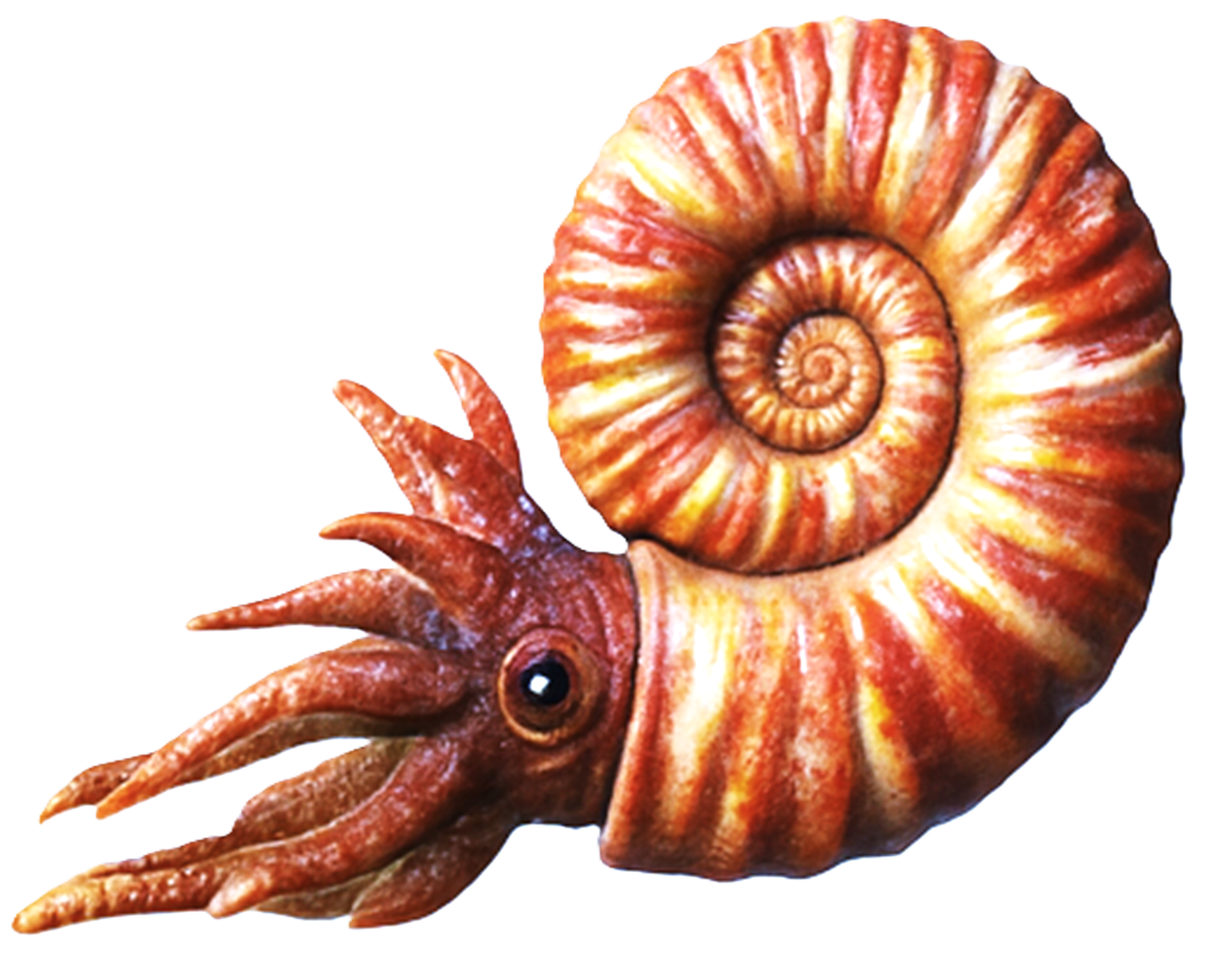 Pachydiscus |
P. arkansanus (?)1240Vega-Vera, F.J. & Perrilliat Montoya, M. del C. (1990): Moluscos del Maastrichtiano de la sierra El Antrisco, Estado de Nuevo León. Paleontología Mexicana 55: 1–69. doi:10.22201/igl.05437652e.1990.0.55.3371241Larson, N. L. (2016). The Late Cretaceous (upper Campanian) cephalopod fauna from the Coon Creek Science Center, McNairy County, Tennessee. Bulletin of the Alabama Museum of Natural History 33(2), 21–58. Originalpublikation P. cf. colligatus (?)1242Böse, E. (1928). Cretaceous ammonites from Texas and northern Mexico. University of Texas Bulletin, 2748, 143–357.1243Ifrim, C., Stinnesbeck, W. & Schafhauser, A. (2005). Maastrichtian shallow-water ammonites of northeastern Mexico. Revista Mexicana de Ciencias Geológicas, 22(1), 48–64. Volltext P. egertoni1244Cobban, W. A. & Kennedy, W. J. (1995). Maastrichtian ammonites chiefly from the Prairie Bluff Chalk in Alabama and Mississippi. Paleontological Society Memoir 44, 1–40. Prairie Bluff Chalk; systematischer Teil und Fundortanhang. doi:10.1017/S0022336000061096 P. egertoni (?)1245Ifrim, C. et al. (2017). The Upper Campanian – lower Maastrichtian cephalopod fauna of Botellos, Nuevo León: a key to understand faunal turnover across the Campanian–Maastrichtian boundary in NE Mexico. Acta Geologica Polonica 67(1), 145–162. doi:10.1515/agp-2017-0009 P. cf. gollevillensis1246Cobban, W. A. & Kennedy, W. J. (1995). Maastrichtian ammonites chiefly from the Prairie Bluff Chalk in Alabama and Mississippi. Paleontological Society Memoir 44, 1–40. Prairie Bluff Chalk; systematischer Teil und Fundortanhang. doi:10.1017/S0022336000061096 P. hazzardi1247Jones, D. L. (1963). Upper Cretaceous (Campanian and Maestrichtian) ammonites from southern Alaska. U.S. Geological Survey Professional Paper, 432, 1–53. doi:10.3133/pp432 P. cf. jacquoti1248Kennedy, W. J. & Cobban, W. A. (2000). Maastrichtian (Late Cretaceous) ammonites from the Owl Creek Formation in northeastern Mississippi, U.S.A. Acta Geologica Polonica 50(1), 175–190. Originalpublikation P. jacquoti1249Cobban, W. A. & Kennedy, W. J. (1995). Maastrichtian ammonites chiefly from the Prairie Bluff Chalk in Alabama and Mississippi. Paleontological Society Memoir 44, 1–40. Prairie Bluff Chalk; systematischer Teil und Fundortanhang. doi:10.1017/S0022336000061096 P. kamishakensis1250Jones, D. L. (1963). Upper Cretaceous (Campanian and Maestrichtian) ammonites from southern Alaska. U.S. Geological Survey Professional Paper, 432, 1–53. doi:10.3133/pp432 P. maconensis1251Cobban, W. A. & Kennedy, W. J. (1995). Maastrichtian ammonites chiefly from the Prairie Bluff Chalk in Alabama and Mississippi. Paleontological Society Memoir 44, 1–40. Prairie Bluff Chalk; systematischer Teil und Fundortanhang. doi:10.1017/S0022336000061096 P. neubergicus1252Ifrim, C., Stinnesbeck, W. & Schafhauser, A. (2005). Maastrichtian shallow-water ammonites of northeastern Mexico. Revista Mexicana de Ciencias Geológicas, 22(1), 48–64.1253Ifrim, C. et al. (2017). The Upper Campanian – lower Maastrichtian cephalopod fauna of Botellos, Nuevo León: a key to understand faunal turnover across the Campanian–Maastrichtian boundary in NE Mexico. Acta Geologica Polonica 67(1), 145–162. doi:10.1515/agp-2017-0009 P. obsoletiformis1254Jones, D. L. (1963). Upper Cretaceous (Campanian and Maestrichtian) ammonites from southern Alaska. U.S. Geological Survey Professional Paper, 432, 1–53. doi:10.3133/pp432 P. ootacodensis1255Jones, D. L. (1963). Upper Cretaceous (Campanian and Maestrichtian) ammonites from southern Alaska. U.S. Geological Survey Professional Paper, 432, 1–53. doi:10.3133/pp432 P. spp.1256Jones, D. L. (1963). Upper Cretaceous (Campanian and Maestrichtian) ammonites from southern Alaska. U.S. Geological Survey Professional Paper, 432, 1–53. doi:10.3133/pp4321257Witts, J. D. et al. (2021). Cephalopods from the Cretaceous–Paleogene (K–Pg) boundary interval on the Brazos River, Texas, and extinction of the ammonites. American Museum Novitates, 3964, 1–52. doi:10.1206/3964.11258Ifrim, C., Stinnesbeck, W. & López-Oliva, J. G. (2004). Maastrichtian cephalopods from Cerralvo, north-eastern Mexico. Palaeontology 47(6), 1575–1627. doi:10.1111/j.0031-0239.2004.00426.x1259Sohl, N. F. & Koch, C. F. (1983). Upper Cretaceous (Maestrichtian) Mollusca from the Haustator bilira Assemblage Zone in the East Gulf Coastal Plain. U.S. Geological Survey Open-File Report 83-451, 1–239. Als Prairie Bluff bezeichnete Aufsammlungen; historische Synonyme nach Cobban & Kennedy (1995) abgeglichen. doi:10.3133/ofr83451 |
Corsicana Marl Cárdenas Formation Escondido Formation Kaguyak Formation Matanuska Formation Méndez Formation Owl Creek Formation Potrerillos Formation Prairie Bluff Chalk Ripley Formation |
USA (Alabama, Alaska, Mississippi, Missouri, Tennessee, Texas); Mexiko (Coahuila, Nuevo León, San Luis Potosí) | 75–66 Ma | sehr häufig | Pachydiscidae (Ammonit); P. obsoletiformis: synonym zu Neodesmoceras obsoletiformis |
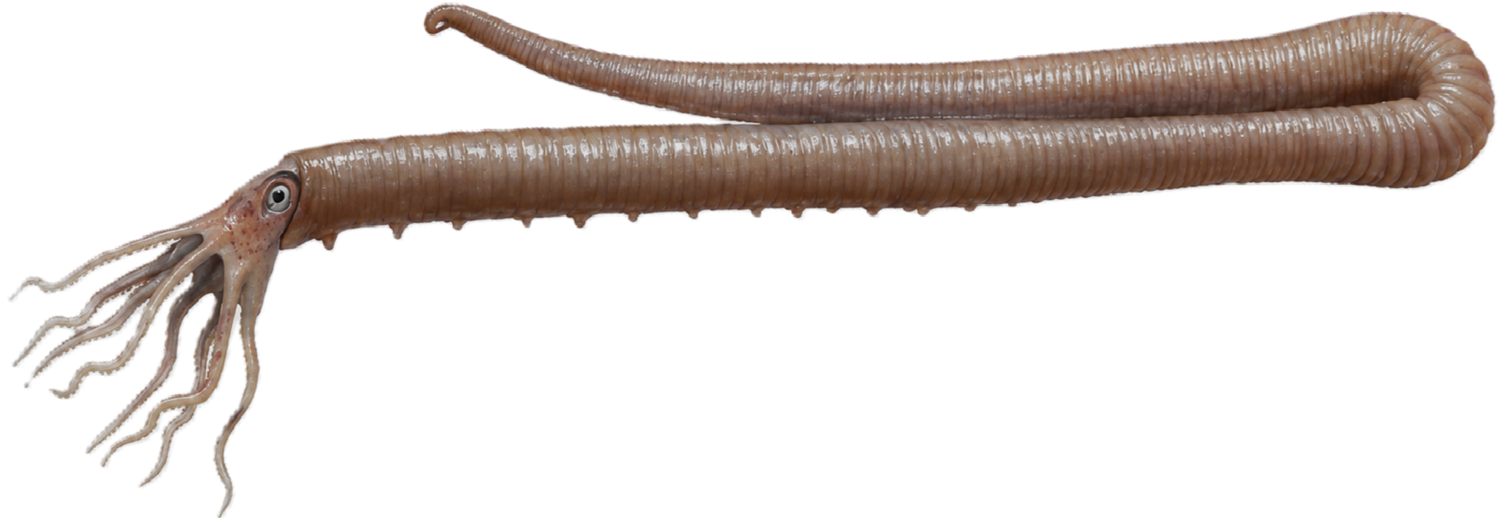 Parasolenoceras |
P. pulcher1260Larson, N. L. (2016). The Late Cretaceous (upper Campanian) cephalopod fauna from the Coon Creek Science Center, McNairy County, Tennessee. Bulletin of the Alabama Museum of Natural History 33(2), 21–58. Originalpublikation P. sp.1261Ifrim, C. et al. (2017). The Upper Campanian – lower Maastrichtian cephalopod fauna of Botellos, Nuevo León: a key to understand faunal turnover across the Campanian–Maastrichtian boundary in NE Mexico. Acta Geologica Polonica 67(1), 145–162. doi:10.1515/agp-2017-0009 |
Méndez Formation Ripley Formation |
USA (Tennessee); Mexiko (Nuevo León) | 75–69 Ma | selten | Diplomoceratidae (Ammonit) |
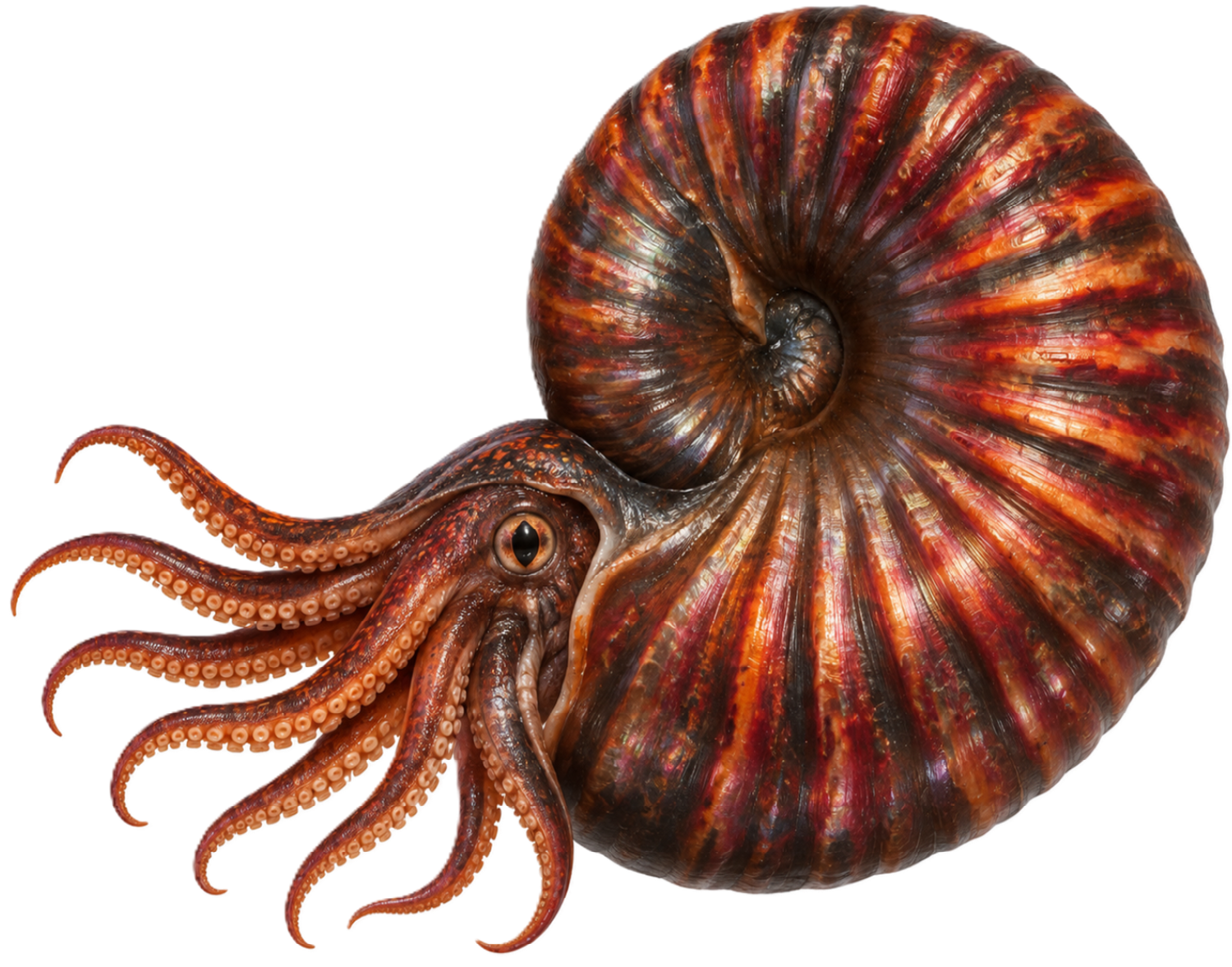 Phyllopachyceras |
P. forbesianum1262Jones, D. L. (1963). Upper Cretaceous (Campanian and Maestrichtian) ammonites from southern Alaska. U.S. Geological Survey Professional Paper, 432, 1–53. doi:10.3133/pp4321263Ifrim, C., Stinnesbeck, W. & López-Oliva, J. G. (2004). Maastrichtian cephalopods from Cerralvo, north-eastern Mexico. Palaeontology 47(6), 1575–1627. doi:10.1111/j.0031-0239.2004.00426.x1264Ifrim, C. et al. (2017). The Upper Campanian – lower Maastrichtian cephalopod fauna of Botellos, Nuevo León: a key to understand faunal turnover across the Campanian–Maastrichtian boundary in NE Mexico. Acta Geologica Polonica 67(1), 145–162. doi:10.1515/agp-2017-00091265Ifrim, C. & Stinnesbeck, W. (2013). Ammonoids from the Maastrichtian (Late Cretaceous) at El Zancudo, Nuevo Laredo, Tamaulipas, Mexico. Boletín de la Sociedad Geológica Mexicana 65(1), 189–200. doi:10.18268/BSGM2013v65n1a14 | Kaguyak Formation Matanuska Formation Méndez Formation |
USA (Alaska); Mexiko (Nuevo León, Tamaulipas) | 75–66 Ma | häufig | Phylloceratidae (Ammonit) |
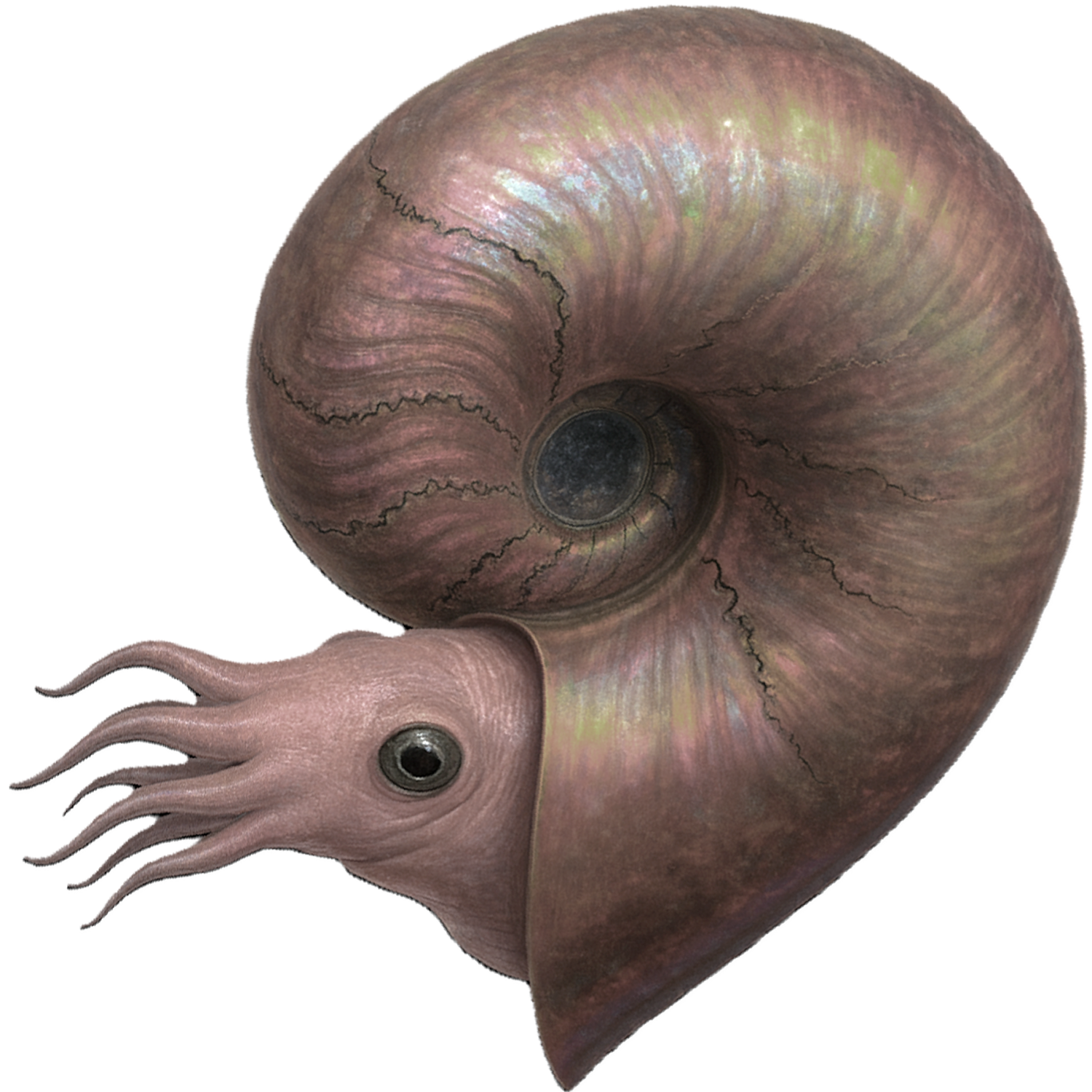 Placenticeras |
P. costatum1266Sealey, P. L. & Lucas, S. G. (2025). The youngest records of the Cretaceous ammonite genus Placenticeras are Maastrichtian. New Mexico Museum of Natural History and Science Bulletin 101: 425–438. Originalpublikation P. meeki1267Cobban, W. A. et al. (2006). A USGS zonal table for the Upper Cretaceous middle Cenomanian–Maastrichtian of the Western Interior of the United States based on ammonites, inoceramids, and radiometric ages. U.S. Geological Survey Open-File Report, 2006-1250. doi:10.3133/ofr200612501268Cobban, W. A. (2016; herausgegeben und ergänzt von W. J. Kennedy). A survey of the Cretaceous ammonite Placenticeras Meek, 1876, in the United States Western Interior, with notes on the earliest species from Texas. Acta Geologica Polonica 66(4): 587–608. doi:10.1515/agp-2016-00311269Sealey, P. L. & Lucas, S. G. (2025). The youngest records of the Cretaceous ammonite genus Placenticeras are Maastrichtian. New Mexico Museum of Natural History and Science Bulletin 101: 425–438. Originalpublikation P. spp.1270iDigBio (o. J.). Placenticeras, Katalognummer WSA00000296.000. Originaler Museumskatalog über iDigBio (abgerufen am 1. Oktober 2026).1271Larson, N. L. (2016). The Late Cretaceous (upper Campanian) cephalopod fauna from the Coon Creek Science Center, McNairy County, Tennessee. Bulletin of the Alabama Museum of Natural History 33(2), 21–58. Originalpublikation |
Escondido Formation Pierre Shale Ripley Formation |
USA (Colorado, Montana, New Mexico, South Dakota, Tennessee, Texas, Wyoming) | 75–66 Ma | häufig | Placenticeratidae (Ammonit); synonym zu Placenticeras whitfieldi |
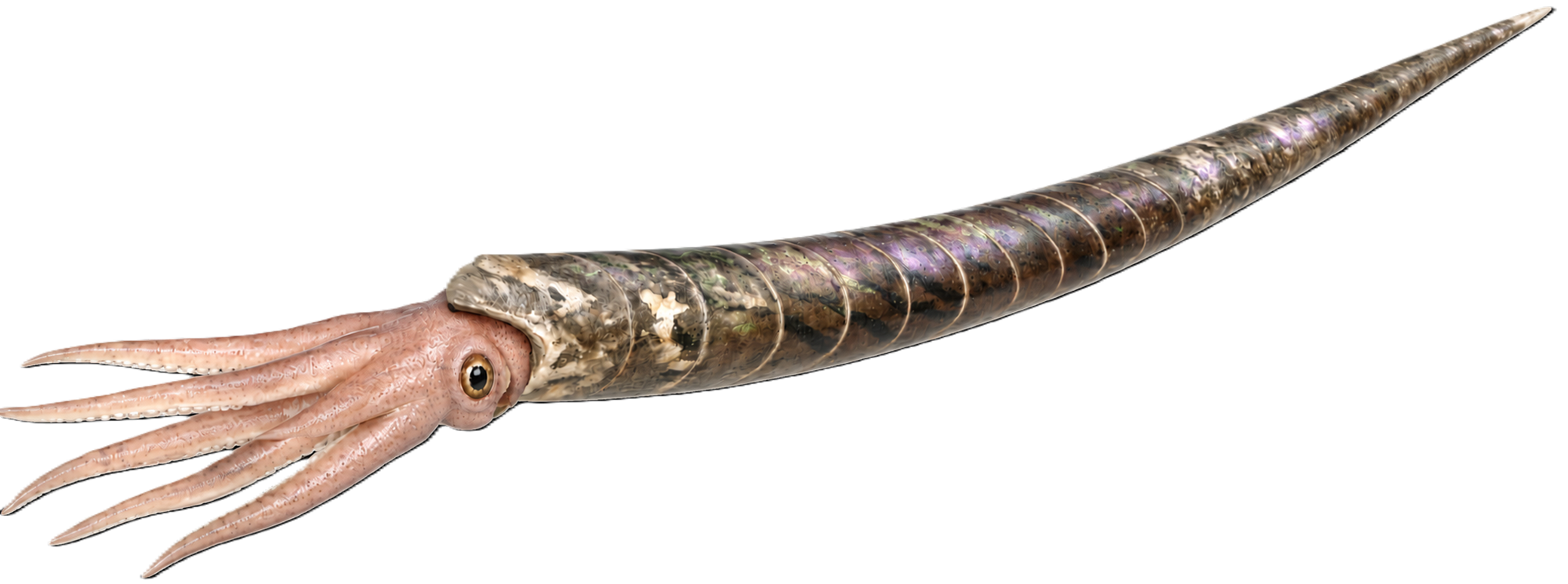 Pseudobaculites |
P. sp.1272Ifrim, C., Stinnesbeck, W. & Schafhauser, A. (2005): Maastrichtian shallow-water ammonites of northeastern Mexico. Revista Mexicana de Ciencias Geológicas 22(1): 48–64. | Potrerillos Formation | Mexiko (Nuevo León) | 72–66 Ma (Maastrichtium) | selten | Baculitidae (Ammonit) |
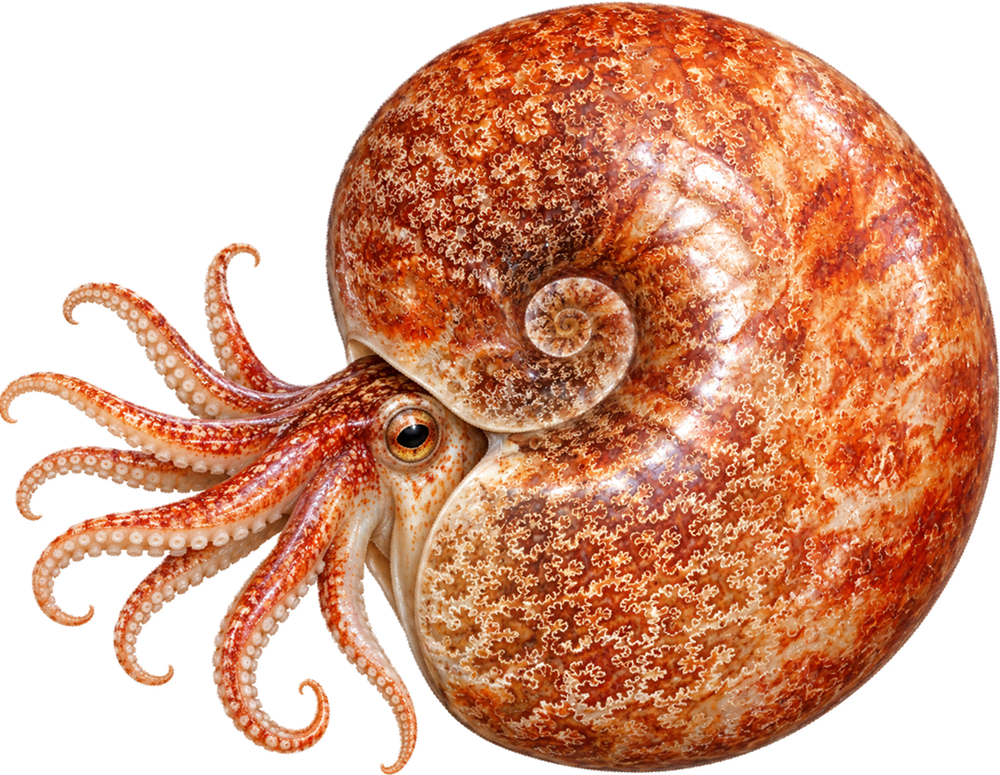 Pseudophyllites |
P. indra1273Jones, D. L. (1963). Upper Cretaceous (Campanian and Maestrichtian) ammonites from southern Alaska. U.S. Geological Survey Professional Paper, 432, 1–53. doi:10.3133/pp4321274Ifrim, C., Stinnesbeck, W. & López-Oliva, J. G. (2004). Maastrichtian cephalopods from Cerralvo, north-eastern Mexico. Palaeontology 47(6), 1575–1627. doi:10.1111/j.0031-0239.2004.00426.x1275Ifrim, C. et al. (2017). The Upper Campanian – lower Maastrichtian cephalopod fauna of Botellos, Nuevo León: a key to understand faunal turnover across the Campanian–Maastrichtian boundary in NE Mexico. Acta Geologica Polonica 67(1), 145–162. doi:10.1515/agp-2017-00091276Cobban, W. A. & Kennedy, W. J. (1995). Maastrichtian ammonites chiefly from the Prairie Bluff Chalk in Alabama and Mississippi. Paleontological Society Memoir 44, 1–40. Prairie Bluff Chalk; systematischer Teil und Fundortanhang. doi:10.1017/S0022336000061096 | Kaguyak Formation Matanuska Formation Méndez Formation Prairie Bluff Chalk |
USA (Alaska, Mississippi); Mexiko (Nuevo León) | 75–66 Ma | häufig | Tetragonitidae (Ammonit) |
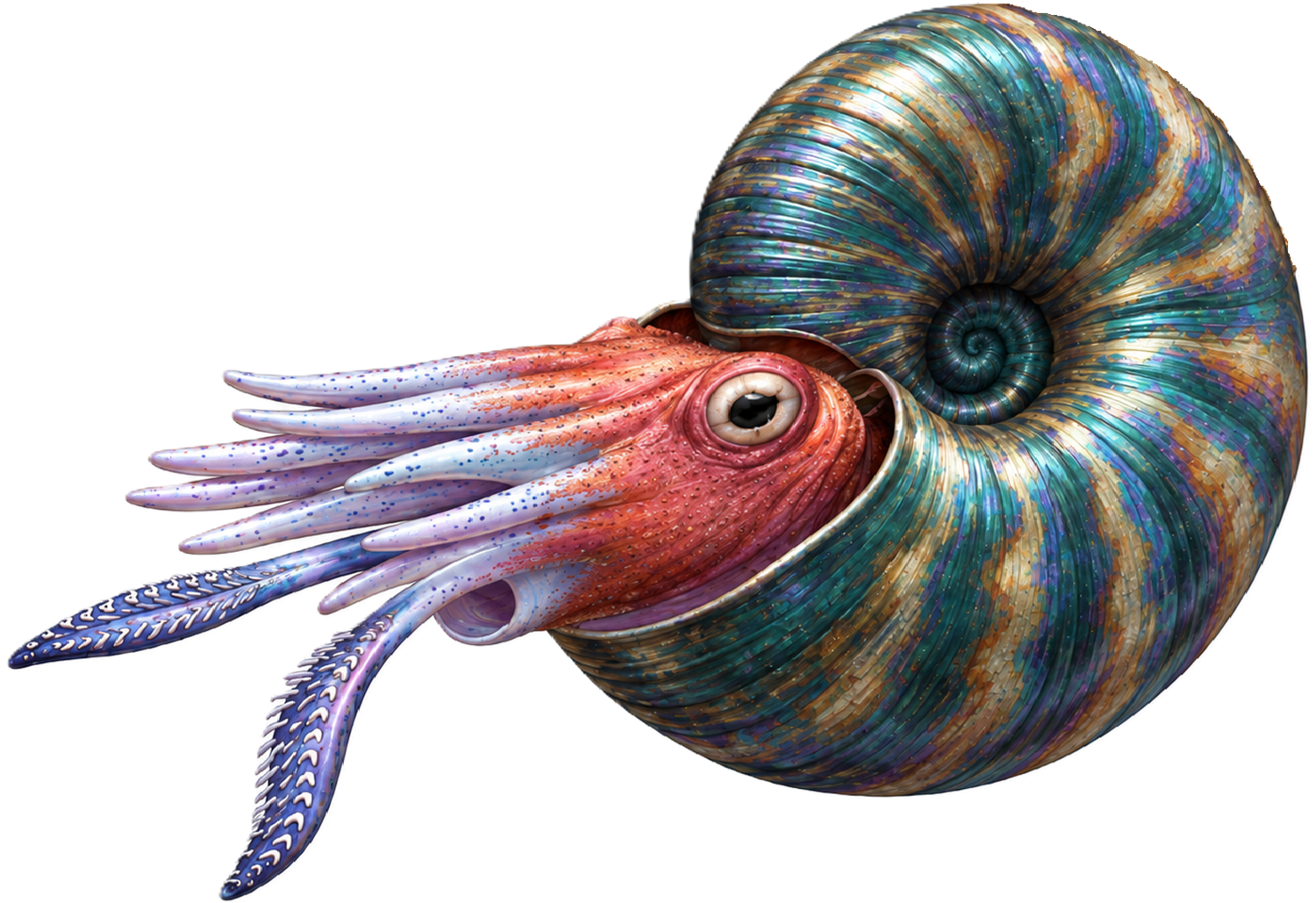 Rhaeboceras |
R. cedarense1277Grier, J. C. & Grier, J. W. (1998). New findings of the ammonite Rhaeboceras, including a new species, from the Pierre Shale of eastern Montana. Journal of Paleontology 72(3): 473–476. doi:10.1017/S00223360000242271278Grier, J. W. et al. (2007). Synonymy of the ammonite genus Ponteixites Warren with Rhaeboceras Meek. Rocky Mountain Geology 42(2): 123–136. doi:10.2113/gsrocky.42.2.123 | Pierre Shale | USA (Montana) | 72–70 Ma | sehr häufig | Scaphitidae (Ammonit); synonym zu Ponteixites |
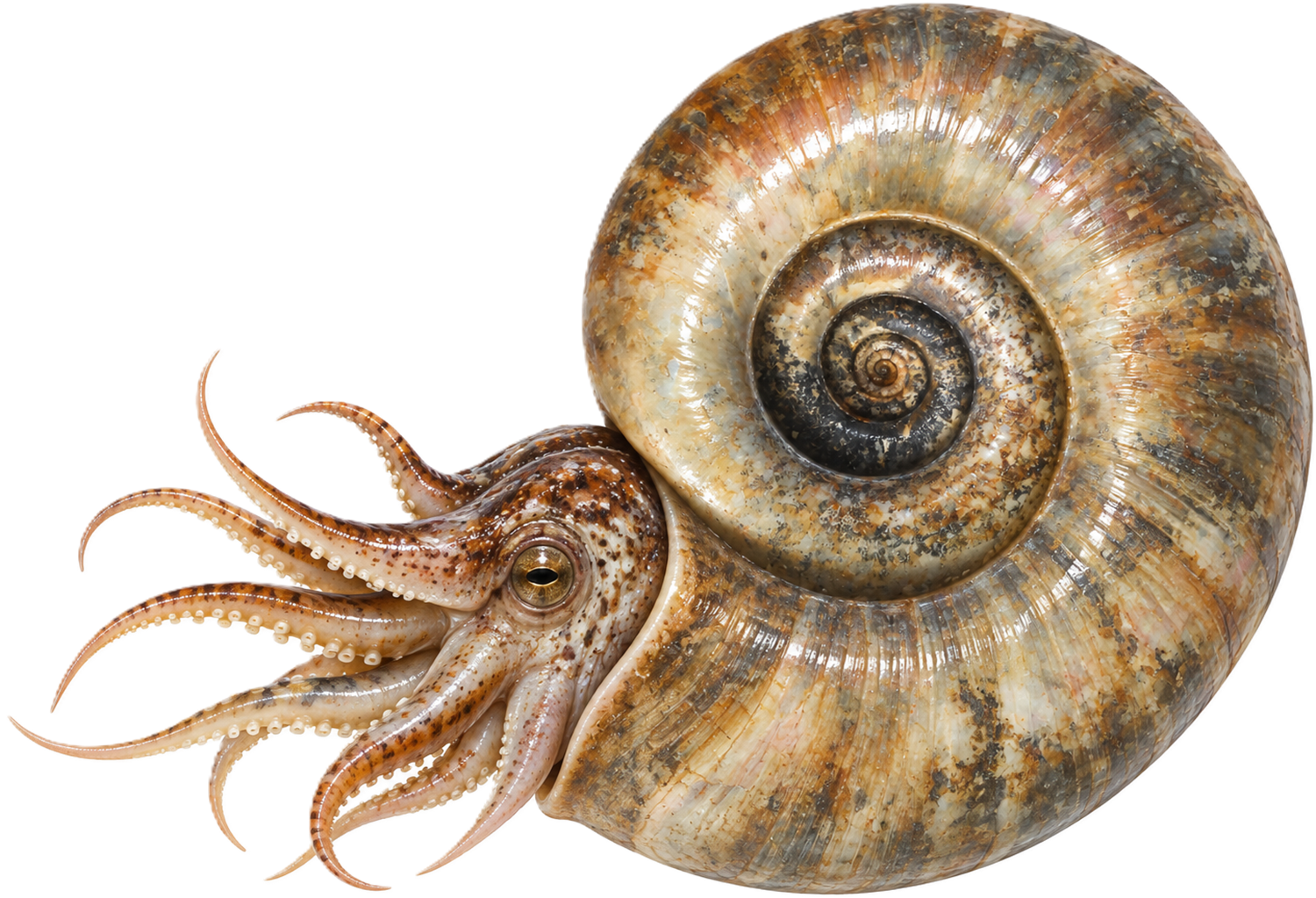 Saghalinites |
S. cala1279Ifrim, C., Stinnesbeck, W. & López-Oliva, J. G. (2004). Maastrichtian cephalopods from Cerralvo, north-eastern Mexico. Palaeontology 47(6), 1575–1627. doi:10.1111/j.0031-0239.2004.00426.x1280Ifrim, C. et al. (2017). The Upper Campanian – lower Maastrichtian cephalopod fauna of Botellos, Nuevo León: a key to understand faunal turnover across the Campanian–Maastrichtian boundary in NE Mexico. Acta Geologica Polonica 67(1), 145–162. doi:10.1515/agp-2017-0009 | Méndez Formation | Mexiko (Nuevo León) | 75–69 Ma | selten | Tetragonitidae (Ammonit) |
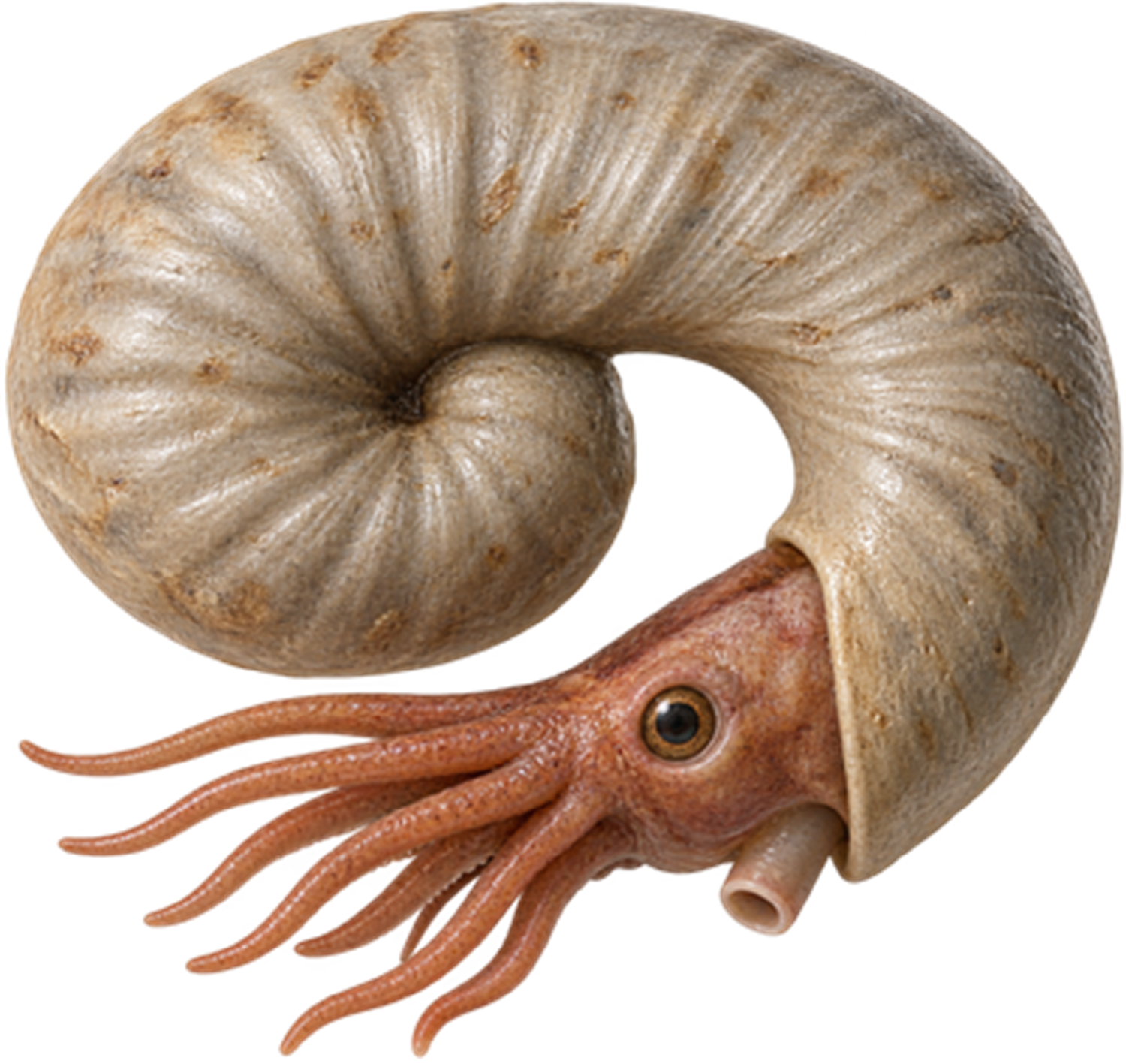 Scaphites |
S. yorkensis1281Stephenson, L. W. (1941). The larger invertebrate fossils of the Navarro group of Texas (exclusive of corals and crustaceans and exclusive of the fauna of the Escondido formation). University of Texas Publication 4101, 1–641 S. sp.1282Vega, F. J., Feldmann, R. M. & Sour-Tovar, F. (1995). Fossil crabs (Crustacea: Decapoda) from the Late Cretaceous Cárdenas Formation, east-central Mexico. Journal of Paleontology, 69(2), 340–350. doi:10.1017/S0022336000034661 |
Cárdenas Formation Kemp Clay |
USA (Texas); Mexiko (San Luis Potosí) | 72–66 Ma | häufig | Scaphitidae (Ammonit) |
 |
Scaphitidae indet.1283Hartman, J. H. & Kirkland, J. I. (2002). Brackish and marine mollusks of the Hell Creek Formation of North Dakota: Evidence for a persisting Cretaceous seaway. In J. H. Hartman, K. R. Johnson & D. J. Nichols (Hrsg.), The Hell Creek Formation and the Cretaceous–Tertiary Boundary in the Northern Great Plains. Geological Society of America Special Paper, 361, 271–296. doi:10.1130/0-8137-2361-2.2711284Larson, N. L. (2016). The Late Cretaceous (upper Campanian) cephalopod fauna from the Coon Creek Science Center, McNairy County, Tennessee. Bulletin of the Alabama Museum of Natural History 33(2), 21–58. Originalpublikation | Hell Creek Formation Ripley Formation |
USA (North Dakota, Tennessee) | 72–66 Ma | selten | Scaphitidae (Ammonit) |
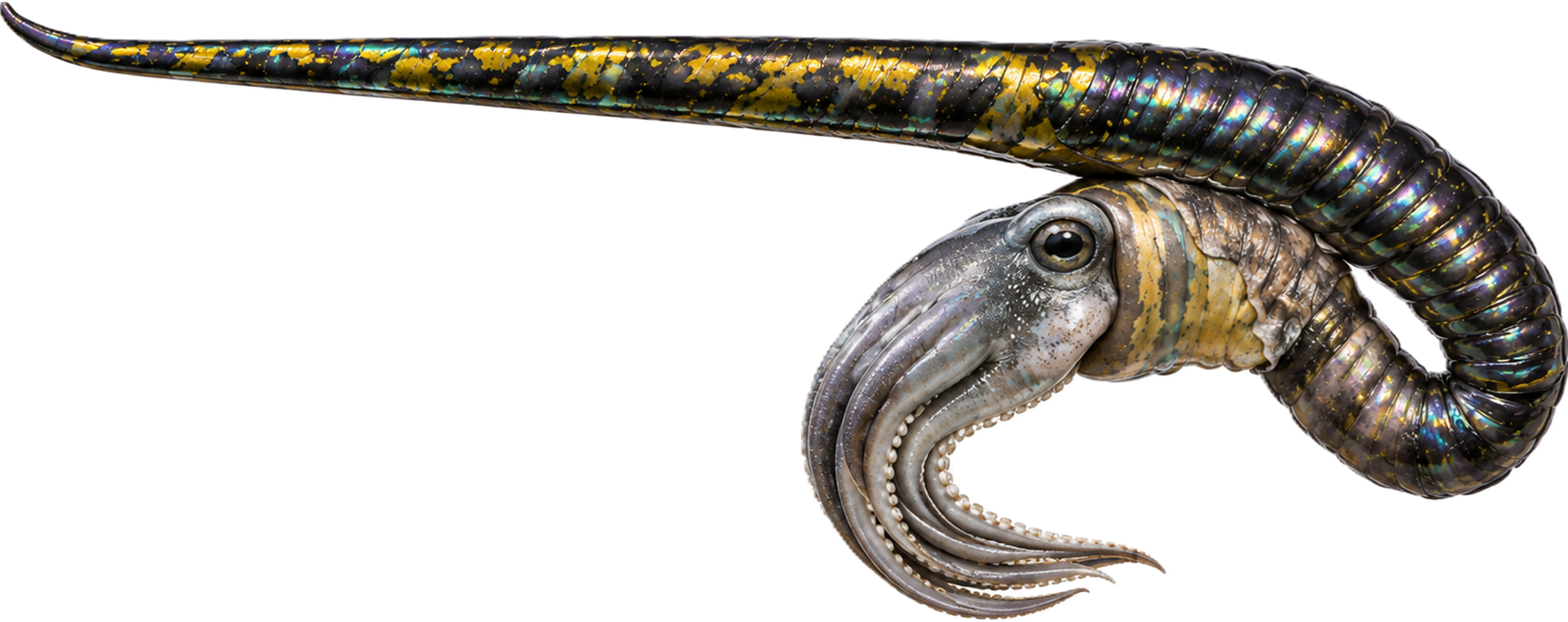 Solenoceras |
S. elegans1285Ifrim, C. et al. (2017). The Upper Campanian – lower Maastrichtian cephalopod fauna of Botellos, Nuevo León: a key to understand faunal turnover across the Campanian–Maastrichtian boundary in NE Mexico. Acta Geologica Polonica 67(1), 145–162. doi:10.1515/agp-2017-0009 S. nitidum1286Cobban, W. A. (1974). Some ammonoids from the Ripley Formation of Mississippi, Alabama, and Georgia. Journal of Research of the U.S. Geological Survey 2(1), 81–88. Originalpublikation S. reesidei1287Ifrim, C., Stinnesbeck, W. & López-Oliva, J. G. (2004). Maastrichtian cephalopods from Cerralvo, north-eastern Mexico. Palaeontology 47(6), 1575–1627. doi:10.1111/j.0031-0239.2004.00426.x1288Ifrim, C. et al. (2017). The Upper Campanian – lower Maastrichtian cephalopod fauna of Botellos, Nuevo León: a key to understand faunal turnover across the Campanian–Maastrichtian boundary in NE Mexico. Acta Geologica Polonica 67(1), 145–162. doi:10.1515/agp-2017-00091289Larson, N. L. (2016). The Late Cretaceous (upper Campanian) cephalopod fauna from the Coon Creek Science Center, McNairy County, Tennessee. Bulletin of the Alabama Museum of Natural History 33(2), 21–58. Originalpublikation S. texanum1290Ifrim, C., Stinnesbeck, W. & López-Oliva, J. G. (2004). Maastrichtian cephalopods from Cerralvo, north-eastern Mexico. Palaeontology 47(6), 1575–1627. doi:10.1111/j.0031-0239.2004.00426.x1291Ifrim, C. et al. (2017). The Upper Campanian – lower Maastrichtian cephalopod fauna of Botellos, Nuevo León: a key to understand faunal turnover across the Campanian–Maastrichtian boundary in NE Mexico. Acta Geologica Polonica 67(1), 145–162. doi:10.1515/agp-2017-00091292Larson, N. L. (2016). The Late Cretaceous (upper Campanian) cephalopod fauna from the Coon Creek Science Center, McNairy County, Tennessee. Bulletin of the Alabama Museum of Natural History 33(2), 21–58. Originalpublikation S. spp.1293Vega, F. J., Feldmann, R. M. & Sour-Tovar, F. (1995). Fossil crabs (Crustacea: Decapoda) from the Late Cretaceous Cárdenas Formation, east-central Mexico. Journal of Paleontology, 69(2), 340–350. doi:10.1017/S00223360000346611294Ifrim, C., Stinnesbeck, W. & Schafhauser, A. (2005): Maastrichtian shallow-water ammonites of northeastern Mexico. Revista Mexicana de Ciencias Geológicas 22(1): 48–64.1295Cobban, W. A. (1974). Some ammonoids from the Ripley Formation of Mississippi, Alabama, and Georgia. Journal of Research of the U.S. Geological Survey 2(1), 81–88. Originalpublikation |
Cárdenas Formation Méndez Formation Potrerillos Formation Ripley Formation |
USA (Georgia, Mississippi, Tennessee); Mexiko (Nuevo León, San Luis Potosí) | 75–66 Ma | häufig | Diplomoceratidae (Ammonit) |
 |
Sphenodiscidae indet.1296iDigBio (o. J.). Sphenodiscidae, Katalognummer WSA00003433.000. Originaler Museumskatalog über iDigBio (abgerufen am 1. Oktober 2026). | Escondido Formation | USA (Texas) | 72–66 Ma | selten | Sphenodiscidae (Ammonit) |
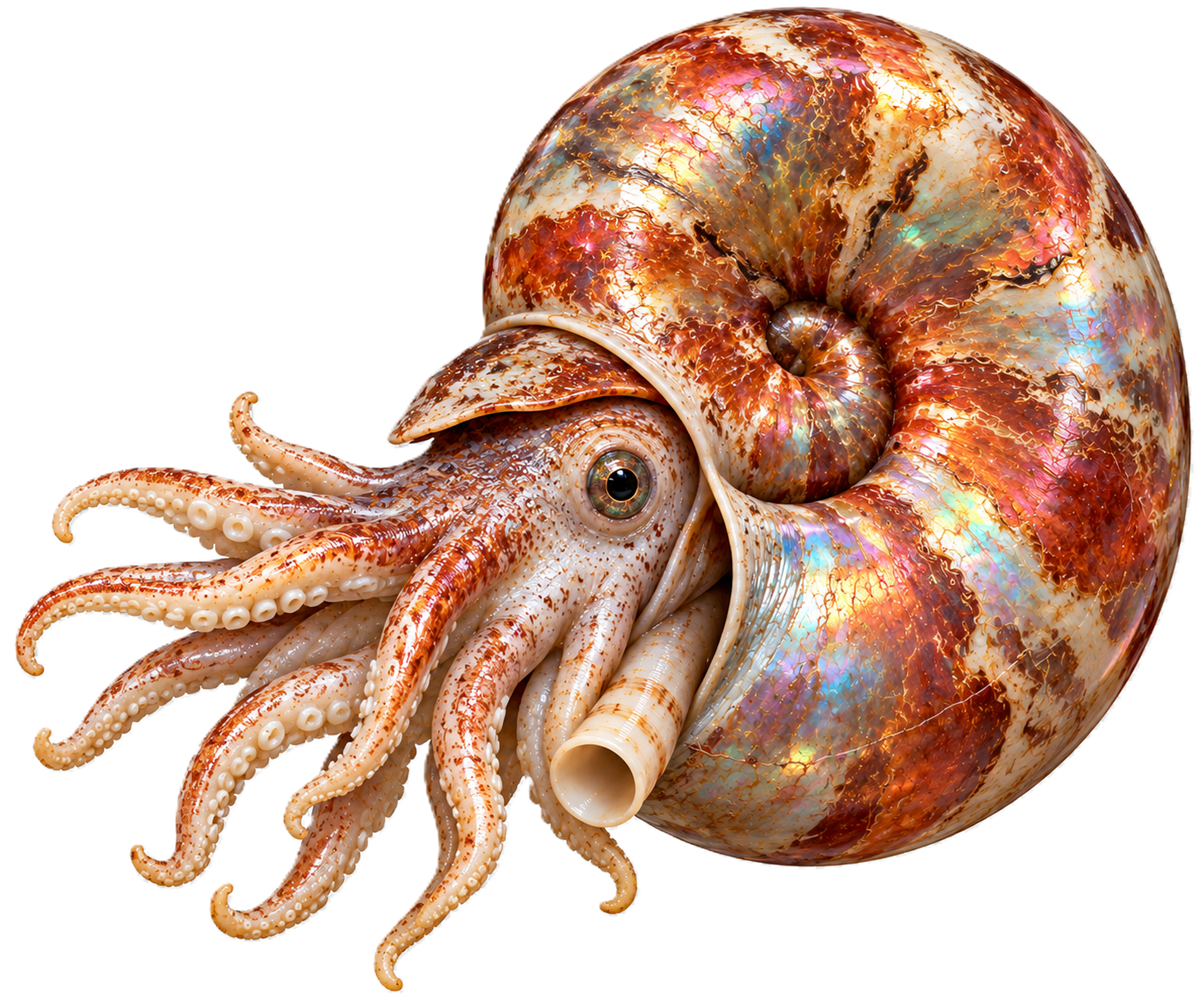 Sphenodiscus |
S. aberrans1297Böse, E. (1928). Cretaceous ammonites from Texas and northern Mexico. University of Texas Bulletin, 2748, 143–3571298Ifrim, C., Stinnesbeck, W. & Schafhauser, A. (2005). Maastrichtian shallow-water ammonites of northeastern Mexico. Revista Mexicana de Ciencias Geológicas, 22(1), 48–64. Volltext S. aff. aberrans (?)1299iDigBio (o. J.). Sphenodiscus aberrans, Katalognummer WSA00003413.000. Originaler Museumskatalog über iDigBio (abgerufen am 1. Oktober 2026) S. lobatus1300Campbell, C. E. & Landman, N. H. (2010). Microtektite morphology and affinities at the Cretaceous-Paleogene boundary interval in southeast Missouri. Geological Society of America Abstracts with Programs 42(2), 91. Abstract1301Larina, E. et al. (2016). Upper Maastrichtian ammonite biostratigraphy of the Gulf Coastal Plain (Mississippi Embayment, southern USA). Cretaceous Research 60, 128–151. doi:10.1016/j.cretres.2015.11.0101302Kennedy, W. J. & Cobban, W. A. (1993). Maastrichtian ammonites from the Corsicana Formation in northeast Texas. Geological Magazine, 130(1), 57–67. doi:10.1017/S00167568000237241303Landman, N. H. & Waage, K. M. (1993). Scaphitid ammonites of the Upper Cretaceous (Maastrichtian) Fox Hills Formation in South Dakota and Wyoming. Bulletin of the American Museum of Natural History, 215, 1–2571304Ifrim, C., Stinnesbeck, W. & Schafhauser, A. (2005). Maastrichtian shallow-water ammonites of northeastern Mexico. Revista Mexicana de Ciencias Geológicas, 22(1), 48–64. Volltext1305Sohl, N. F. & Koch, C. F. (1984). Upper Cretaceous (Maastrichtian) larger invertebrate fossils from the Haustator bilira assemblage zone in the West Gulf Coastal Plain. U.S. Geological Survey Open-File Report, 84-687, 1–282. doi:10.3133/ofr846871306Böse, E. (1928). Cretaceous ammonites from Texas and northern Mexico. University of Texas Bulletin, 2748, 143–3571307Kennedy, W. J. et al. (1998). Marine connections in North America during the late Maastrichtian: palaeogeographic and palaeobiogeographic significance of Jeletzkytes nebrascensis Zone cephalopod fauna from the Elk Butte Member of the Pierre Shale, SE South Dakota and NE Nebraska. Cretaceous Research 19(6): 745–775. doi:10.1006/cres.1998.01291308Landman, N. H. et al. (2013). Cephalopods from the Badlands National Park area, South Dakota: Reassessment of the position of the Cretaceous/Paleogene boundary. Cretaceous Research 42: 1–27. doi:10.1016/j.cretres.2012.12.0111309Landman, N. H. et al. (2013). Cephalopods from the Badlands National Park area, South Dakota: Reassessment of the position of the Cretaceous/Paleogene boundary. Cretaceous Research 42: 1–27. doi:10.1016/j.cretres.2012.12.0111310Cobban, W. A. & Kennedy, W. J. (1995). Maastrichtian ammonites chiefly from the Prairie Bluff Chalk in Alabama and Mississippi. The Paleontological Society Memoir 44, 1–40. doi:10.1017/S00223360000610961311Cobban, W. A. & Kennedy, W. J. (1995). Maastrichtian ammonites chiefly from the Prairie Bluff Chalk in Alabama and Mississippi. Paleontological Society Memoir 44, 1–40. Prairie Bluff Chalk; systematischer Teil und Fundortanhang. doi:10.1017/S0022336000061096 S. cf. lobatus (?)1312iDigBio (o. J.). Sphenodiscus lenticularis, Katalognummer WSA00004222.000. Originaler Museumskatalog über iDigBio (abgerufen am 1. Oktober 2026) S. pleurisepta1313Campbell, C. E. & Landman, N. H. (2010). Microtektite morphology and affinities at the Cretaceous-Paleogene boundary interval in southeast Missouri. Geological Society of America Abstracts with Programs 42(2), 91. Abstract1314Kennedy, W. J. & Cobban, W. A. (2000). Maastrichtian (Late Cretaceous) ammonites from the Owl Creek Formation in northeastern Mississippi, U.S.A. Acta Geologica Polonica 50(1), 175–190. Originalpublikation1315Vega-Vera, F.J. & Perrilliat Montoya, M. del C. (1990): Moluscos del Maastrichtiano de la sierra El Antrisco, Estado de Nuevo León. Paleontología Mexicana 55: 1–69. doi:10.22201/igl.05437652e.1990.0.55.3371316Ifrim, C., Stinnesbeck, W. & Schafhauser, A. (2005). Maastrichtian shallow-water ammonites of northeastern Mexico. Revista Mexicana de Ciencias Geológicas, 22(1), 48–641317Kennedy, W. J. & Cobban, W. A. (1993). Maastrichtian ammonites from the Corsicana Formation in northeast Texas. Geological Magazine, 130(1), 57–67. doi:10.1017/S00167568000237241318Sohl, N. F. & Koch, C. F. (1984). Upper Cretaceous (Maastrichtian) larger invertebrate fossils from the Haustator bilira assemblage zone in the West Gulf Coastal Plain. U.S. Geological Survey Open-File Report, 84-687, 1–282. doi:10.3133/ofr846871319Böse, E. (1928). Cretaceous ammonites from Texas and northern Mexico. University of Texas Bulletin, 2748, 143–3571320Stephenson, L. W. (1941). The larger invertebrate fossils of the Navarro group of Texas (exclusive of corals and crustaceans and exclusive of the fauna of the Escondido formation). University of Texas Publication 4101, 1–6411321Landman, N. H. & Cobban, W. A. (2003). Ammonites from the upper part of the Pierre Shale and Fox Hills Formation of Colorado. American Museum Novitates 3388: 1–45. Originalpublikation1322Landman, N. H. & Cobban, W. A. (2003). Ammonites from the upper part of the Pierre Shale and Fox Hills Formation of Colorado. American Museum Novitates 3388: 1–45. Originalpublikation1323Cooke, C. W. (1943). Geology of the Coastal Plain of Georgia. United States Geological Survey Bulletin 941, 1–121. doi:10.3133/b9411324Cobban, W. A. & Kennedy, W. J. (1995). Maastrichtian ammonites chiefly from the Prairie Bluff Chalk in Alabama and Mississippi. Paleontological Society Memoir 44, 1–40. Prairie Bluff Chalk; systematischer Teil und Fundortanhang. doi:10.1017/S0022336000061096 S. tirensis1325Stephenson, L. W. (1941). The larger invertebrate fossils of the Navarro group of Texas (exclusive of corals and crustaceans and exclusive of the fauna of the Escondido formation). University of Texas Publication 4101, 1–641 S. spp.1326Witts, J. D. et al. (2018). A fossiliferous spherule-rich bed at the Cretaceous–Paleogene (K–Pg) boundary in Mississippi, USA: Implications for the K–Pg mass extinction event in the Mississippi Embayment and Eastern Gulf Coastal Plain. Cretaceous Research 91, 147–167, Anhang 1. doi:10.1016/j.cretres.2018.06.0021327Larina, E. et al. (2016). Upper Maastrichtian ammonite biostratigraphy of the Gulf Coastal Plain (Mississippi Embayment, southern USA). Cretaceous Research, 60, 128–151. doi:10.1016/j.cretres.2015.11.0101328Stephenson, L. W. (1941). The larger invertebrate fossils of the Navarro Group of Texas (exclusive of corals and crustaceans and exclusive of the fauna of the Escondido Formation). The University of Texas Publication, 4101, 1–6411329Sohl, N. F. & Koch, C. F. (1984). Upper Cretaceous (Maastrichtian) larger invertebrate fossils from the Haustator bilira assemblage zone in the West Gulf Coastal Plain. U.S. Geological Survey Open-File Report, 84-687, 1–282. doi:10.3133/ofr846871330Shiller, T. A. II, Porras-Múzquiz, H. G. & Lehman, T. M. (2016). Sabinosuchus coahuilensis, a new dyrosaurid crocodyliform from the Escondido Formation (Maastrichtian) of Coahuila, Mexico. Journal of Vertebrate Paleontology, 36(6), e1222586. doi:10.1080/02724634.2016.12225861331Stephenson, L. W. (1941). The larger invertebrate fossils of the Navarro group of Texas (exclusive of corals and crustaceans and exclusive of the fauna of the Escondido formation). University of Texas Publication 4101, 1–6411332Larson, N. L. (2016). The Late Cretaceous (upper Campanian) cephalopod fauna from the Coon Creek Science Center, McNairy County, Tennessee. Bulletin of the Alabama Museum of Natural History 33(2), 21–58. Originalpublikation1333Sohl, N. F. & Koch, C. F. (1983). Upper Cretaceous (Maestrichtian) Mollusca from the Haustator bilira Assemblage Zone in the East Gulf Coastal Plain. U.S. Geological Survey Open-File Report 83-451, 1–239. Als Prairie Bluff bezeichnete Aufsammlungen; historische Synonyme nach Cobban & Kennedy (1995) abgeglichen. doi:10.3133/ofr83451 |
Arkadelphia Marl Corsicana Marl Cárdenas Formation Escondido Formation Fox Hills Formation Hell Creek Formation Kemp Clay Owl Creek Formation Pierre Shale Potrerillos Formation Prairie Bluff Chalk Ripley Formation |
USA (Alabama, Arkansas, Colorado, Georgia, Mississippi, Missouri, Nebraska, South Dakota, Tennessee, Texas, Wyoming); Mexiko (Coahuila, Nuevo León, San Luis Potosí) | 72–66 Ma | sehr häufig | Sphenodiscidae (Ammonit); S. lobatus: Synonyme S. lenticularis und S. splendens |
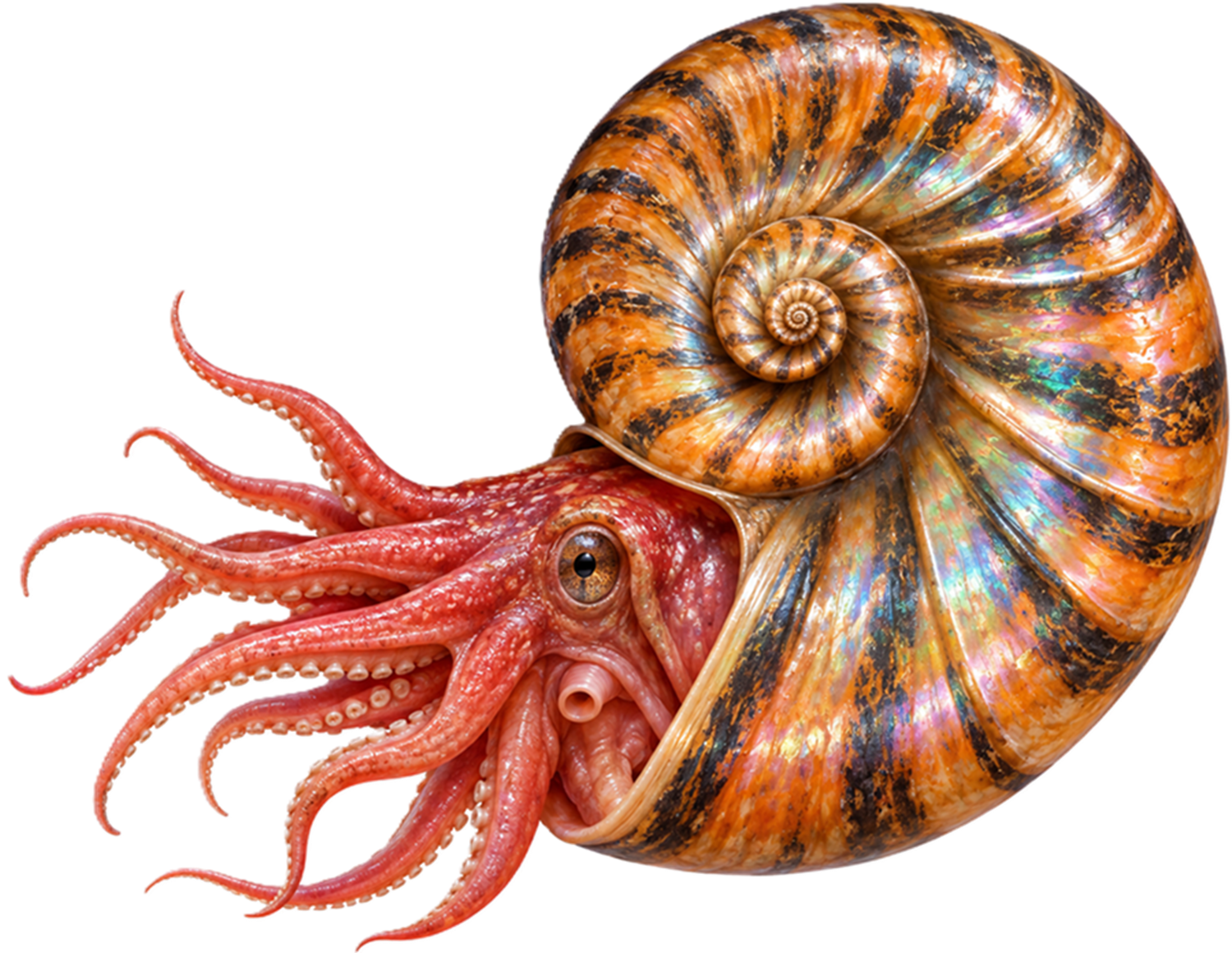 Tetragonites |
T. superstes1334Ifrim, C., Stinnesbeck, W. & López-Oliva, J. G. (2004). Maastrichtian cephalopods from Cerralvo, north-eastern Mexico. Palaeontology 47(6), 1575–1627. doi:10.1111/j.0031-0239.2004.00426.x1335Ifrim, C. et al. (2017). The Upper Campanian – lower Maastrichtian cephalopod fauna of Botellos, Nuevo León: a key to understand faunal turnover across the Campanian–Maastrichtian boundary in NE Mexico. Acta Geologica Polonica 67(1), 145–162. doi:10.1515/agp-2017-00091336Ifrim, C. & Stinnesbeck, W. (2013). Ammonoids from the Maastrichtian (Late Cretaceous) at El Zancudo, Nuevo Laredo, Tamaulipas, Mexico. Boletín de la Sociedad Geológica Mexicana 65(1), 189–200. doi:10.18268/BSGM2013v65n1a14 | Méndez Formation | Mexiko (Nuevo León, Tamaulipas) | 75–68 Ma | selten | Tetragonitidae (Ammonit) |
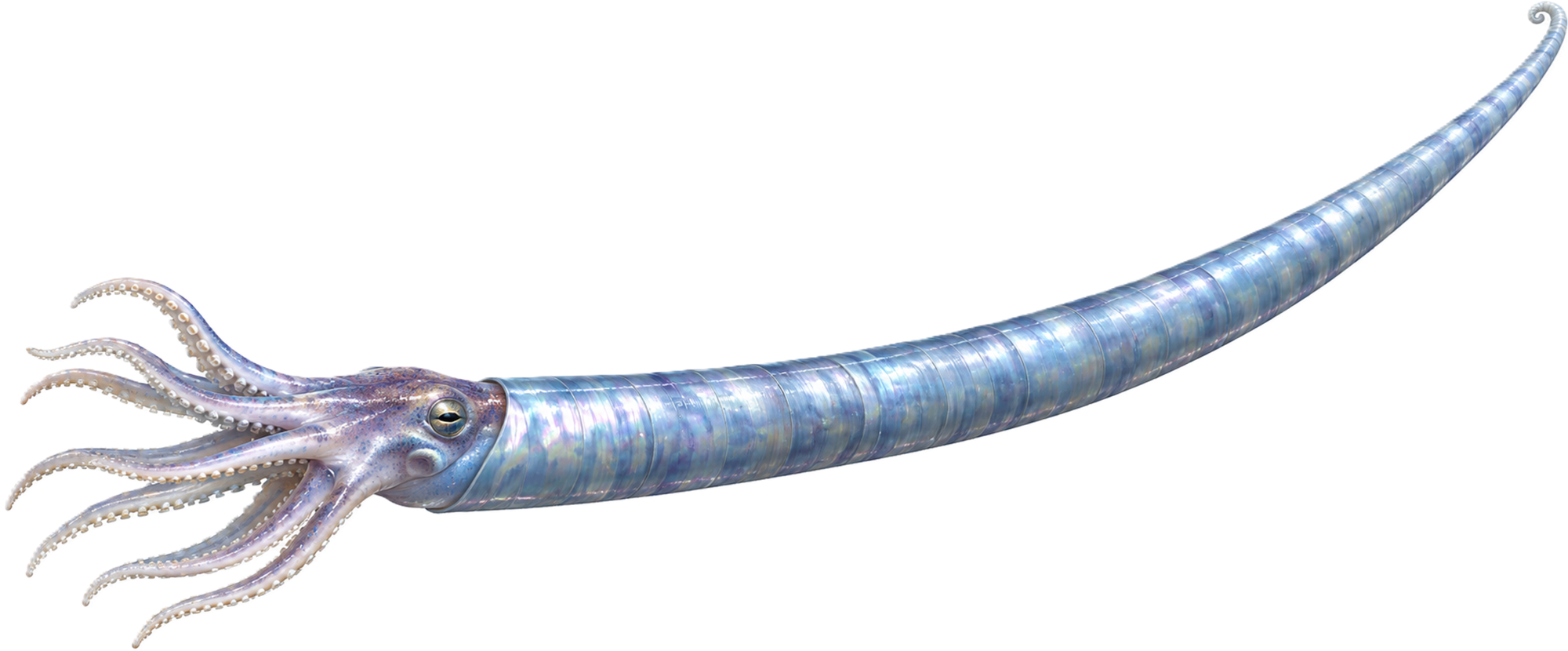 Trachybaculites |
T. columna1337Kennedy, W. J. & Cobban, W. A. (1993). Maastrichtian ammonites from the Corsicana Formation in northeast Texas. Geological Magazine, 130(1), 57–67. doi:10.1017/S00167568000237241338Sohl, N. F. & Koch, C. F. (1984). Upper Cretaceous (Maastrichtian) larger invertebrate fossils from the Haustator bilira assemblage zone in the West Gulf Coastal Plain. U.S. Geological Survey Open-File Report, 84-687, 1–282. doi:10.3133/ofr846871339Cobban, W. A. & Kennedy, W. J. (1992). The last Western Interior Baculites from the Fox Hills Formation of South Dakota. Journal of Paleontology 66(4): 682–684. Originalpublikation1340Bryan, J. R. & Jones, D. S. (1989). Fabric of the Cretaceous-Tertiary marine macrofaunal transition at Braggs, Alabama. Palaeogeography, Palaeoclimatology, Palaeoecology 69, 279–301. Appendix I, S. 297, Prairie-Bluff-Spalten L. Quellenbezeichnung: Baculites columna. doi:10.1016/0031-0182(89)90170-31341Cobban, W. A. & Kennedy, W. J. (1995). Maastrichtian ammonites chiefly from the Prairie Bluff Chalk in Alabama and Mississippi. Paleontological Society Memoir 44, 1–40. Prairie Bluff Chalk; systematischer Teil und Fundortanhang. doi:10.1017/S0022336000061096 T. cf. columna1342Landman, N. H. & Cobban, W. A. (2003). Ammonites from the upper part of the Pierre Shale and Fox Hills Formation of Colorado. American Museum Novitates 3388: 1–45. Originalpublikation |
Corsicana Marl Escondido Formation Fox Hills Formation Prairie Bluff Chalk |
USA (Alabama, Colorado, Mississippi, South Dakota, Texas) | 72–66 Ma | häufig | Baculitidae (Ammonit); T. columna: früher Baculites columna |
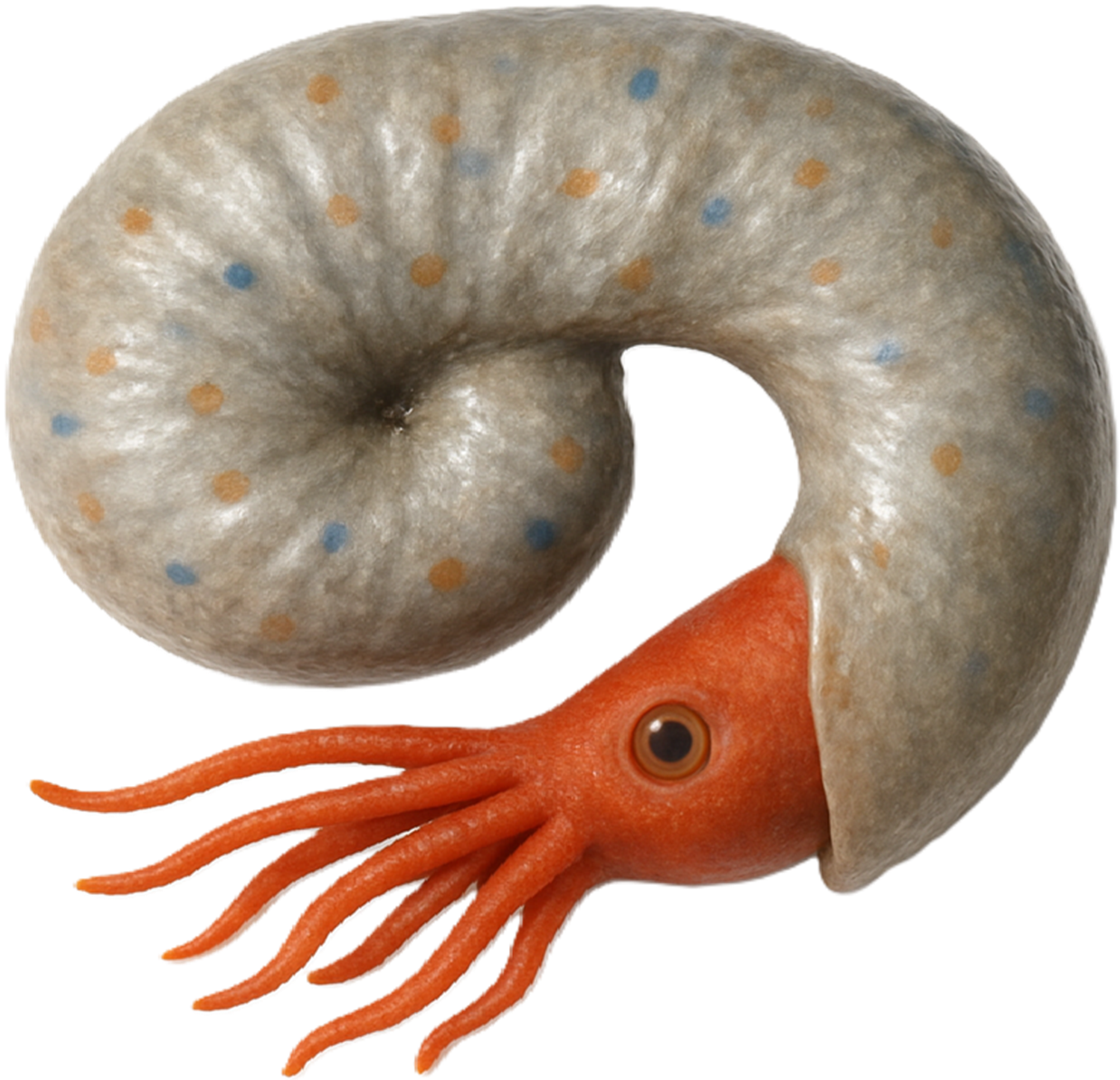 Trachyscaphites |
T. alabamensis1343Cobban, W. A. & Kennedy, W. J. (1995). Maastrichtian ammonites chiefly from the Prairie Bluff Chalk in Alabama and Mississippi. Paleontological Society Memoir 44, 1–40. Prairie Bluff Chalk; systematischer Teil und Fundortanhang. doi:10.1017/S0022336000061096 T. yorkensis1344Kennedy, W. J. & Cobban, W. A. (1993). Maastrichtian ammonites from the Corsicana Formation in northeast Texas. Geological Magazine, 130(1), 57–67. doi:10.1017/S00167568000237241345Cobban, W. A. & Kennedy, W. J. (1995). Maastrichtian ammonites chiefly from the Prairie Bluff Chalk in Alabama and Mississippi. Paleontological Society Memoir 44, 1–40. Prairie Bluff Chalk; systematischer Teil und Fundortanhang. doi:10.1017/S0022336000061096 T. sp.1346Farke, A. A. & Phillips, G. E. (2017). The first reported ceratopsid dinosaur from eastern North America (Owl Creek Formation, Upper Cretaceous, Mississippi, USA). PeerJ 5, e3342. doi:10.7717/peerj.3342 |
Corsicana Marl Owl Creek Formation Prairie Bluff Chalk |
USA (Alabama, Mississippi, Texas) | 70–66 Ma | häufig | Scaphitidae (Ammonit) |
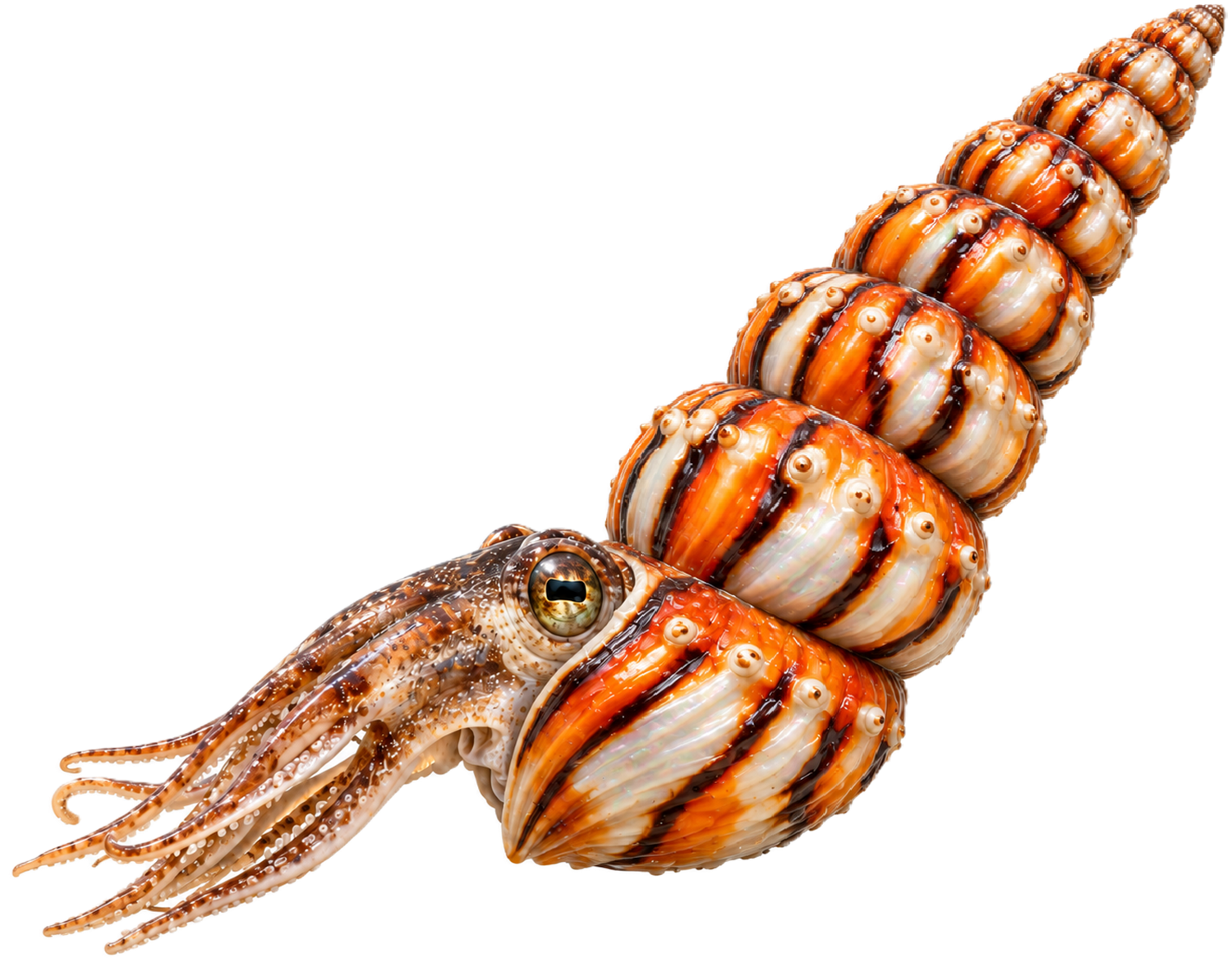 Turrilites |
T. sandersorum1347Stephenson, L. W. (1941). The larger invertebrate fossils of the Navarro group of Texas (exclusive of corals and crustaceans and exclusive of the fauna of the Escondido formation). University of Texas Publication 4101, 1–641 | Kemp Clay | USA (Texas) | 68–66 Ma | selten | Turrilitidae (Ammonit) |
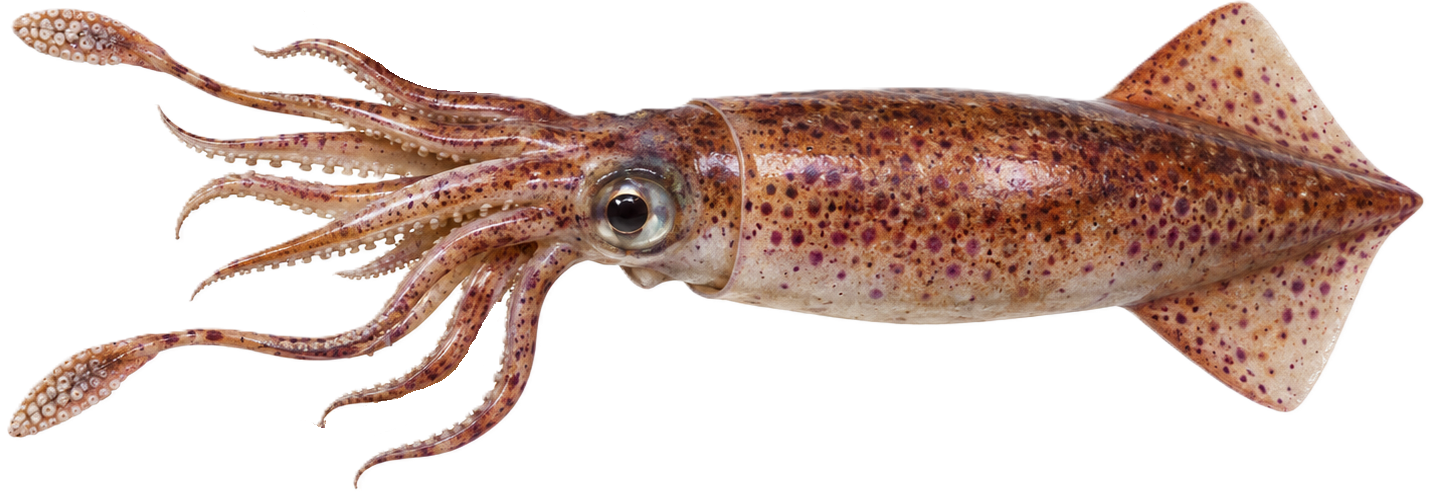 Uluciala |
U. rotundata1348Sugiura, K. et al. (2026). The oldest sepioid cephalopod from the Cretaceous discovered by Digital fossil-mining with zero-shot learning AI. Communications Biology 9: 301. doi:10.1038/s42003-026-09519-91349Sugiura, K. et al. (2026). The oldest sepioid cephalopod from the Cretaceous discovered by Digital fossil-mining with zero-shot learning AI. Communications Biology 9: 301. doi:10.1038/s42003-026-09519-9 | Fox Hills Formation Pierre Shale |
USA (South Dakota) | 74–67 Ma | selten | Decabrachia (Tintenfisch) |
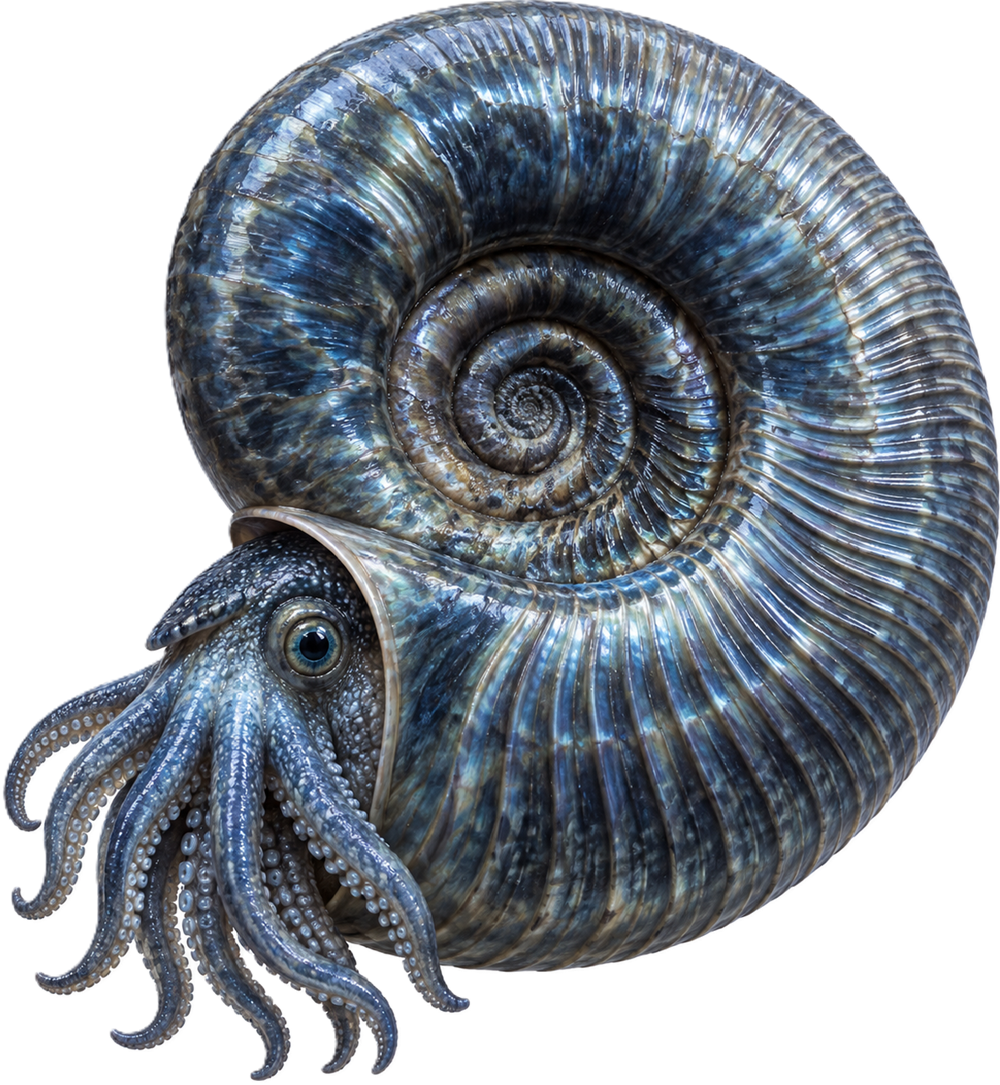 Zelandites |
Z. varuna1350Ifrim, C., Stinnesbeck, W. & López-Oliva, J. G. (2004). Maastrichtian cephalopods from Cerralvo, north-eastern Mexico. Palaeontology 47(6), 1575–1627. doi:10.1111/j.0031-0239.2004.00426.x1351Ifrim, C. et al. (2017). The Upper Campanian – lower Maastrichtian cephalopod fauna of Botellos, Nuevo León: a key to understand faunal turnover across the Campanian–Maastrichtian boundary in NE Mexico. Acta Geologica Polonica 67(1), 145–162. doi:10.1515/agp-2017-0009 | Méndez Formation | Mexiko (Nuevo León) | 75–69 Ma | selten | Gaudryceratidae (Ammonit) |
Die aus dem Elk Butte Member des Pierre Shale in South Dakota und Nebraska beschriebenen Nachweise von Hoploscaphites comprimus, H. nebrascensis, Sphenodiscus lobatus, Eutrephoceras dekayi, Baculites sp. und Belemnitella cf. bulbosa werden hier unter der historischen Formationsbezeichnung geführt. Die betreffenden obersten Schichten werden in der neueren regionalen Gliederung der Elk Creek Formation zugeordnet.1352Hoganson, J. W., Erickson, J. M. & Holland, F. D., Jr. (2019). Chondrichthyan and osteichthyan paleofaunas from the Cretaceous (Late Maastrichtian) Fox Hills Formation of North Dakota, USA: Paleoecology, paleogeography, and extinction. Bulletins of American Paleontology 398: 1–94, hier S. 9. Originalpublikation
Actinosepia-Funde aus der Fox Hills Formation, die früher als A. canadensis geführt wurden, gehören nach Larsons Revision zu A. landmani. A. mapesi ist dagegen eine gesonderte Art; ihr Holotypus ist bislang das einzige beschriebene Exemplar. Die Häufigkeitsangabe der Tabellenzeile bezieht sich auf beide Arten gemeinsam: Für A. landmani nennt Larson bereits 73 Exemplare.1353Larson, N. L. (2010). Fossil coleoids from the Late Cretaceous (Campanian & Maastrichtian) of the Western Interior. Ferrantia 59: 78–113. Originalpublikation
Die Nachweise aus der Ripley Formation umfassen teilweise auch die historisch zur Formation gerechneten Coon-Creek-Schichten Tennessees. Publizierte Angaben werden trotz umstrittener Alterszuordnung berücksichtigt. Die Tennessee-Fauna wurde mehrfach revidiert: Wades Baculites grandis gehört zu B. claviformis, sein B. ovatus zu B. undatus. Die älteren Mississippi-Angaben von B. anceps und B. ovatus bleiben als eigenständige historische Literaturangaben erhalten. Didymoceras navarroense wird unter Cirroceras conradi geführt; das Tennessee-Material von D. hornbyense später als D. cf. aurarium. Das sind Neubestimmungen der betreffenden Funde, keine weltweite Synonymisierung der Arten.1354Larson, N. L. (2016). The Late Cretaceous (upper Campanian) cephalopod fauna from the Coon Creek Science Center, McNairy County, Tennessee. Bulletin of the Alabama Museum of Natural History 33(2), 21–58. Originalpublikation1355Crider, A. F. (1906). Geology and mineral resources of Mississippi. United States Geological Survey Bulletin 283, 1–99. doi:10.3133/b283
Zu den Kopffüßern der Owl Creek Formation: Die Bestimmungen Baculites cf. claviformis, B. cf. grandis, B. cf. undatus, Discoscaphites cf. conradi und Pachydiscus cf. jacquoti bleiben vorbehaltlich. Letzterer Nachweis beruht auf zwei Fragmenten aus Missouri. Der historische, als Turrilites alternatus veröffentlichte Nachweis von Nostoceras alternatum wird beibehalten; Kennedy & Cobban (2000) nennen dazu keine genaue Fundstelle.1356Kennedy, W. J. & Cobban, W. A. (2000). Maastrichtian (Late Cretaceous) ammonites from the Owl Creek Formation in northeastern Mississippi, U.S.A. Acta Geologica Polonica 50(1), 175–190. Originalpublikation Die ältere Bestimmung Eutrephoceras perlatus ist in Sohl & Koch (1983) unter anderem für King Creek Valley dokumentiert. Dieser Fundpunkt ist ausdrücklich als umgelagert gekennzeichnet. E. dekayi und die vorsichtigere Bestimmung E. cf. dekayi bleiben als unterschiedliche Bestimmungsstände nachvollziehbar, ohne daraus zusätzliche sicher getrennte Arten abzuleiten. Die unbestimmten Gattungsnachweise werden unter sp. beziehungsweise spp. zusammengefasst und sind ebenfalls keine pauschale Zahl zusätzlicher Arten.1357Sohl, N. F. & Koch, C. F. (1983). Upper Cretaceous (Maestrichtian) Mollusca from the Haustator bilira Assemblage Zone in the East Gulf Coastal Plain. U.S. Geological Survey Open-File Report 83-451, 1–239. doi:10.3133/ofr834511358Tajika, A. et al. (2023). Ammonoid extinction versus nautiloid survival: Is metabolism responsible? Geology 51(7), 621–625. doi:10.1130/G51116.1

Schnecken:
| Gattung: | Arten: | Formation: | Fundort: | Alter: | Häufigkeit: | Bemerkungen: |
|---|---|---|---|---|---|---|
| Aciculiscala | A. acuta1359Bandel, K. & Dockery, D. T. III (2016). Mollusca of the Coon Creek Formation in Tennessee and Mississippi with a systematic discussion of the Gastropoda. Bulletin of the Alabama Museum of Natural History 33(1), 34–96. Systematischer Katalog, Nr. 60. Originalpublikation | Ripley Formation | USA (Tennessee) | 72–69 Ma | nicht quantifiziert | Epitoniidae (Schnecke) |
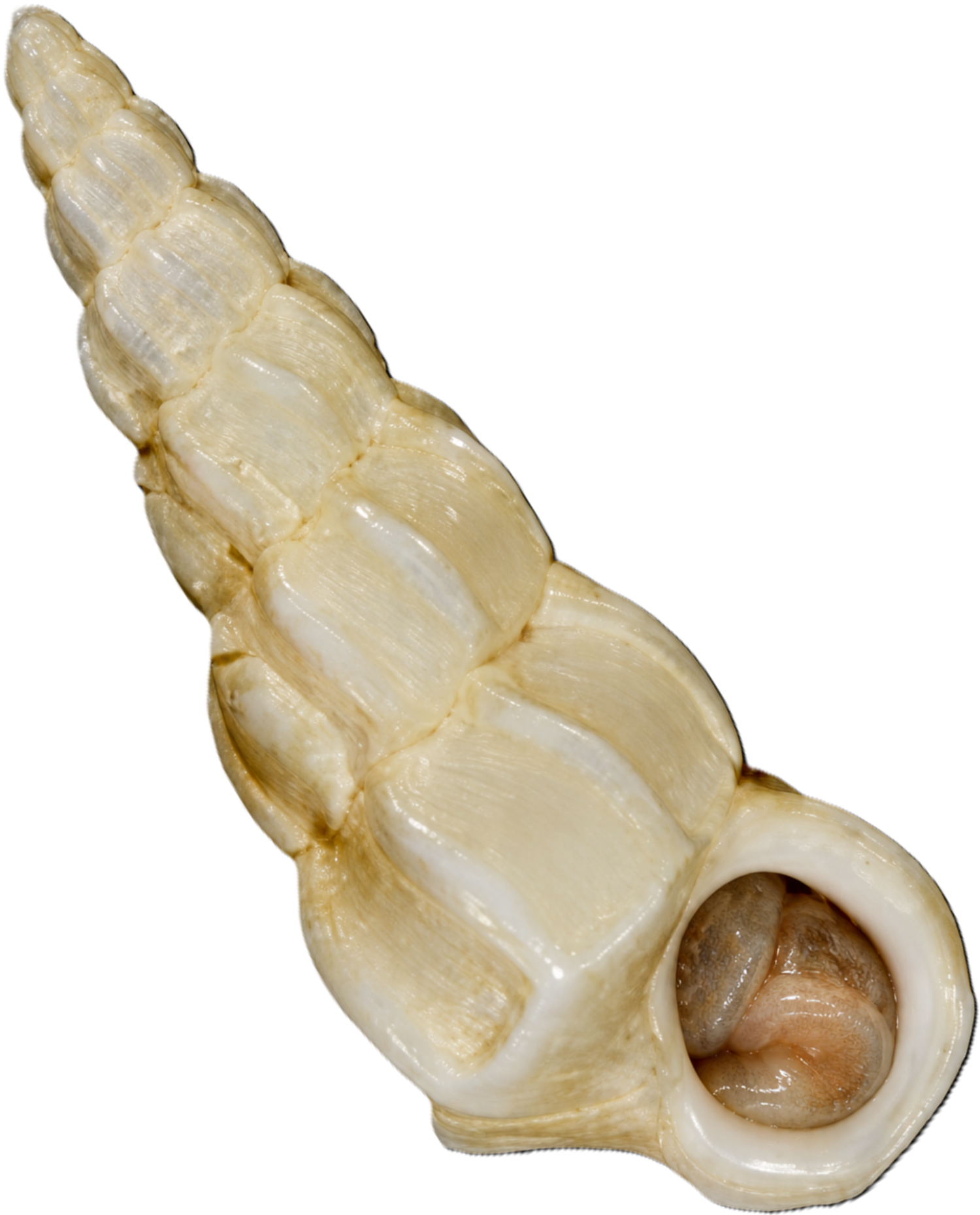 Acirsa |
A. americana1360Foster, W. J. et al. (2020). Resilience of marine invertebrate communities during the early Cenozoic hyperthermals. Scientific Reports 10, 2176. Supplementary Data 1 doi:10.1038/s41598-020-58986-51361Bandel, K. & Dockery, D. T. III (2016). Mollusca of the Coon Creek Formation in Tennessee and Mississippi with a systematic discussion of the Gastropoda. Bulletin of the Alabama Museum of Natural History 33(1), 34–96. Systematischer Katalog, Nr. 50. Originalpublikation A. clathrata1362Bandel, K. & Dockery, D. T. III (2016). Mollusca of the Coon Creek Formation in Tennessee and Mississippi with a systematic discussion of the Gastropoda. Bulletin of the Alabama Museum of Natural History 33(1), 34–96. Systematischer Katalog, Nr. 52. Originalpublikation A. cretacea1363Bandel, K. & Dockery, D. T. III (2016). Mollusca of the Coon Creek Formation in Tennessee and Mississippi with a systematic discussion of the Gastropoda. Bulletin of the Alabama Museum of Natural History 33(1), 34–96. Systematischer Katalog, Nr. 49. Originalpublikation A. flexicostata1364Bandel, K. & Dockery, D. T. III (2016). Mollusca of the Coon Creek Formation in Tennessee and Mississippi with a systematic discussion of the Gastropoda. Bulletin of the Alabama Museum of Natural History 33(1), 34–96. Systematischer Katalog, Nr. 51. Originalpublikation A. implexa1365Bandel, K. & Dockery, D. T. III (2016). Mollusca of the Coon Creek Formation in Tennessee and Mississippi with a systematic discussion of the Gastropoda. Bulletin of the Alabama Museum of Natural History 33(1), 34–96. Systematischer Katalog, Nr. 55. Originalpublikation A. microstriata1366Bandel, K. & Dockery, D. T. III (2016). Mollusca of the Coon Creek Formation in Tennessee and Mississippi with a systematic discussion of the Gastropoda. Bulletin of the Alabama Museum of Natural History 33(1), 34–96. Systematischer Katalog, Nr. 53. Originalpublikation A. wadei1367Bandel, K. & Dockery, D. T. III (2016). Mollusca of the Coon Creek Formation in Tennessee and Mississippi with a systematic discussion of the Gastropoda. Bulletin of the Alabama Museum of Natural History 33(1), 34–96. Systematischer Katalog, Nr. 54. Originalpublikation A. sp. (?)1368Foster, W. J. et al. (2020). Resilience of marine invertebrate communities during the early Cenozoic hyperthermals. Scientific Reports 10, 2176. Supplementary Data 1 doi:10.1038/s41598-020-58986-51369Bandel, K. & Dockery, D. T. III (2016). Mollusca of the Coon Creek Formation in Tennessee and Mississippi with a systematic discussion of the Gastropoda. Bulletin of the Alabama Museum of Natural History 33(1), 34–96. Literaturübersicht. Zusätzlicher historischer bzw. revidierter Nachweis außerhalb der nummerierten Artenfolge. Originalpublikation |
Kemp Clay Ripley Formation |
USA (Tennessee, Texas) | 72–66 Ma | selten | Epitoniidae (Wendeltreppenschnecke) |
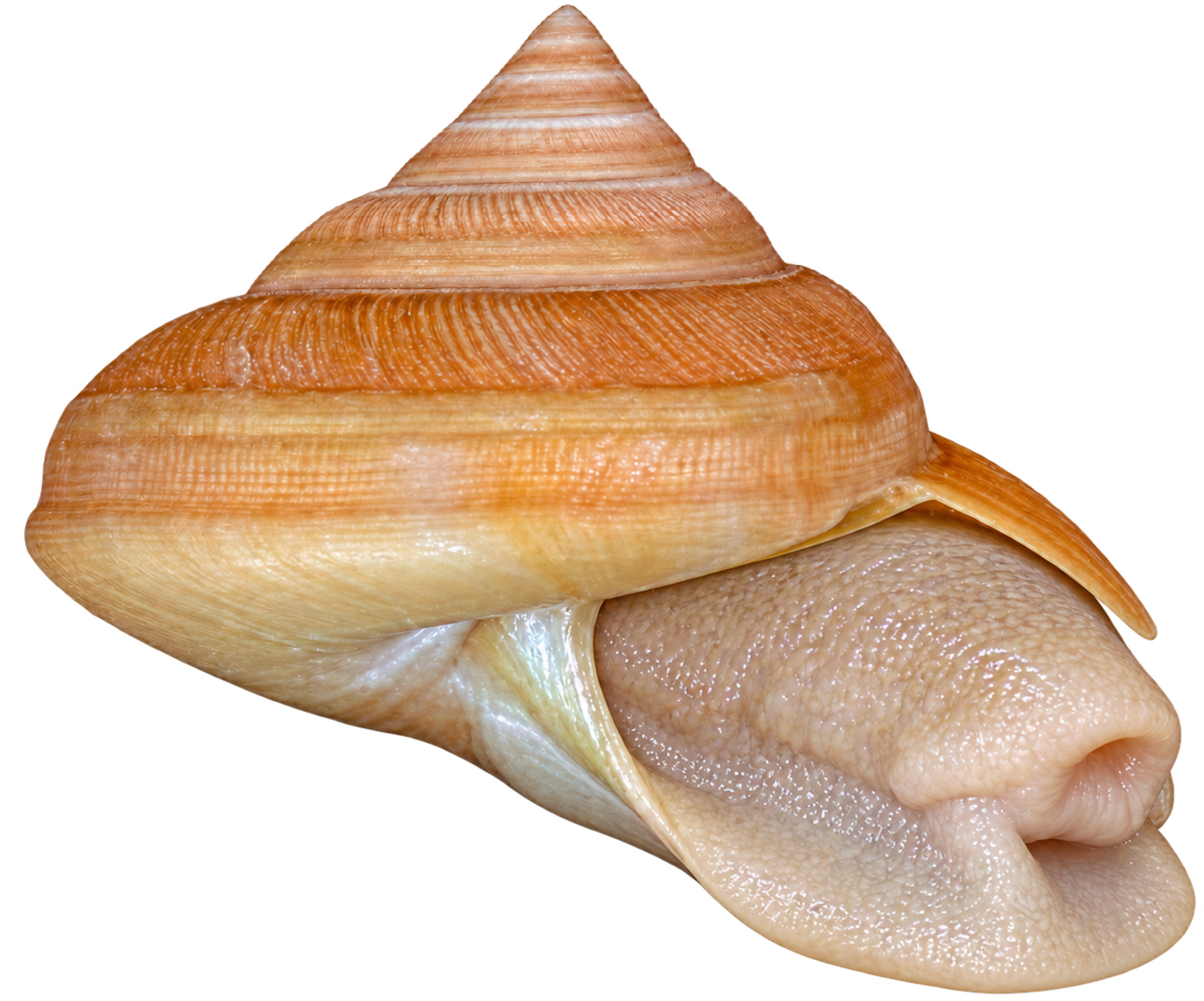 Acmaea |
A. galea1370Bandel, K. & Dockery, D. T. III (2016). Mollusca of the Coon Creek Formation in Tennessee and Mississippi with a systematic discussion of the Gastropoda. Bulletin of the Alabama Museum of Natural History 33(1), 34–96. Systematischer Katalog, Nr. 1. Originalpublikation A. occidentalis (?)1371Stephenson, L. W. (1941). The larger invertebrate fossils of the Navarro Group of Texas (exclusive of corals and crustaceans and exclusive of the fauna of the Escondido Formation). The University of Texas Publication, 4101, 1–6411372Stephenson, L. W. (1941). The larger invertebrate fossils of the Navarro group of Texas (exclusive of corals and crustaceans and exclusive of the fauna of the Escondido formation). University of Texas Publication 4101, 1–641 A. spp.1373Foster, W. J. et al. (2020). Resilience of marine invertebrate communities during the early Cenozoic hyperthermals. Scientific Reports 10, 2176. Dataset S1. Prairie Bluff Chalk; Dataset-IDs 15706. Quellenbezeichnung: Acmaea sp.. doi:10.1038/s41598-020-58986-5 |
Corsicana Marl Kemp Clay Prairie Bluff Chalk Ripley Formation |
USA (Alabama, Tennessee, Texas) | 72–66 Ma (Gattung 206 Ma bis heute) | häufig | Acmaeidae |
| Acrocoelum | A. cereum1374Bandel, K. & Dockery, D. T. III (2016). Mollusca of the Coon Creek Formation in Tennessee and Mississippi with a systematic discussion of the Gastropoda. Bulletin of the Alabama Museum of Natural History 33(1), 34–96. Systematischer Katalog, Nr. 223. Originalpublikation | Ripley Formation | USA (Bundesstaat nicht einzeln ausgewiesen) | 72–69 Ma | nicht quantifiziert | Mathildidae (Schnecke) |
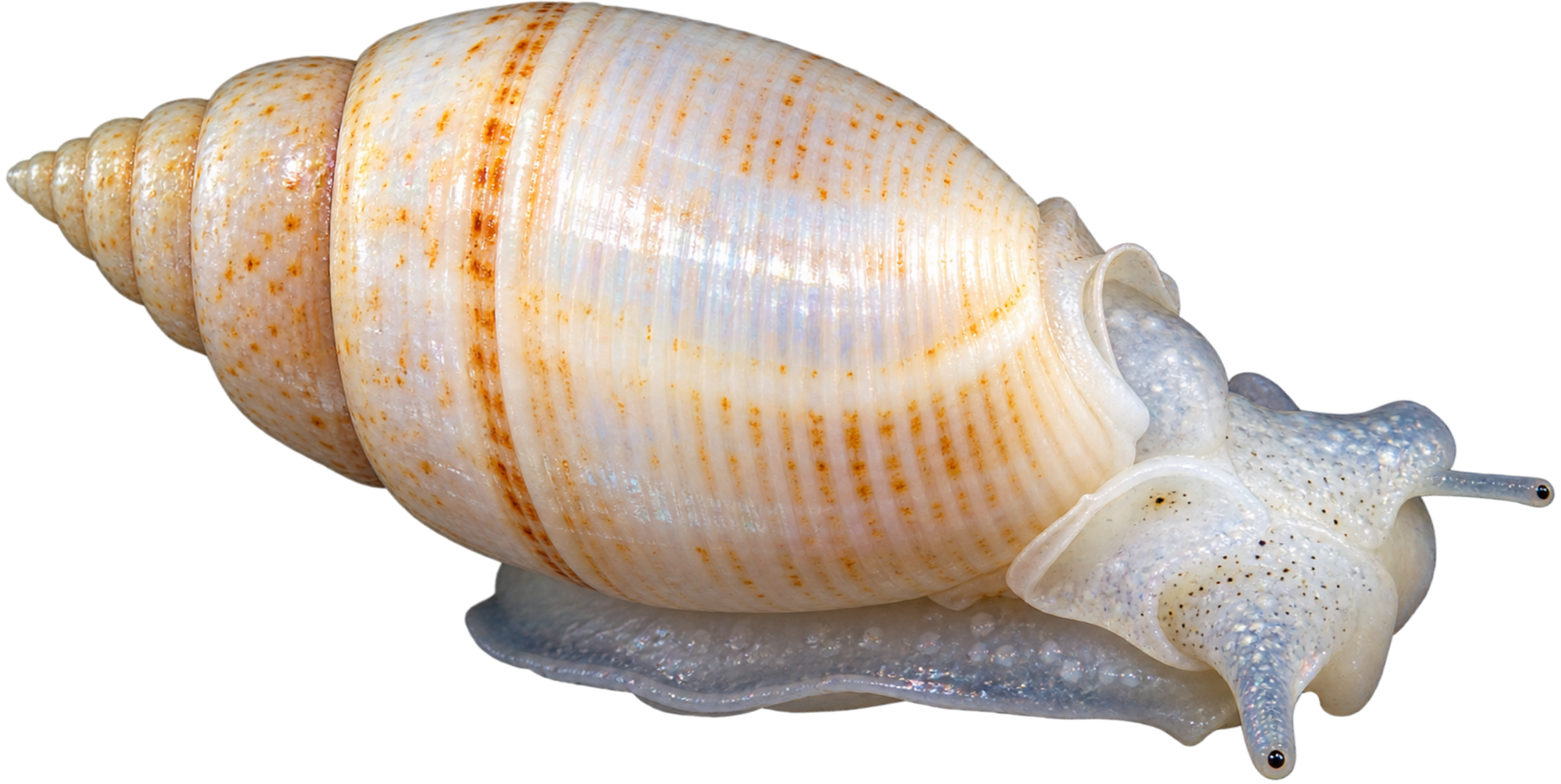 Acteon |
A. cicatricosus1375Bandel, K. & Dockery, D. T. III (2016). Mollusca of the Coon Creek Formation in Tennessee and Mississippi with a systematic discussion of the Gastropoda. Bulletin of the Alabama Museum of Natural History 33(1), 34–96. Systematischer Katalog, Nr. 235. Originalpublikation1376Sohl, N. F. & Koch, C. F. (1983). Upper Cretaceous (Maestrichtian) Mollusca from the Haustator bilira Assemblage Zone in the East Gulf Coastal Plain. U.S. Geological Survey Open-File Report 83-451, 1–239. Owl-Creek-Aufsammlungen 46; S. 30–33. doi:10.3133/ofr83451 Quellenbezeichnung: Acteon cicatricosus.1377Foster, W. J. et al. (2020). Resilience of marine invertebrate communities during the early Cenozoic hyperthermals. Scientific Reports 10, 2176. Dataset S1. Prairie Bluff Chalk; Dataset-IDs 16708. Quellenbezeichnung: Acteon cicatricosus. doi:10.1038/s41598-020-58986-51378Sohl, N. F. (1964). Neogastropoda, Opisthobranchia, and Basommatophora from the Ripley, Owl Creek, and Prairie Bluff Formations. U.S. Geological Survey Professional Paper 331-B, 153–344. Owl Creek Formation; Sohl (1964), S. 288. Quellenbestimmung: Acteon cicatricosus Sohl, n. sp.. doi:10.3133/pp331B A. ellipticus1379Bandel, K. & Dockery, D. T. III (2016). Mollusca of the Coon Creek Formation in Tennessee and Mississippi with a systematic discussion of the Gastropoda. Bulletin of the Alabama Museum of Natural History 33(1), 34–96. Systematischer Katalog, Nr. 237. Originalpublikation A. nitidus (?)1380Stephenson, L. W. (1941). The larger invertebrate fossils of the Navarro group of Texas (exclusive of corals and crustaceans and exclusive of the fauna of the Escondido formation). University of Texas Publication 4101, 1–641 A. percultus1381Bandel, K. & Dockery, D. T. III (2016). Mollusca of the Coon Creek Formation in Tennessee and Mississippi with a systematic discussion of the Gastropoda. Bulletin of the Alabama Museum of Natural History 33(1), 34–96. Systematischer Katalog, Nr. 236. Originalpublikation A. pistilliformis1382Bandel, K. & Dockery, D. T. III (2016). Mollusca of the Coon Creek Formation in Tennessee and Mississippi with a systematic discussion of the Gastropoda. Bulletin of the Alabama Museum of Natural History 33(1), 34–96. Systematischer Katalog, Nr. 234. Originalpublikation A. spp.1383Sohl, N. F. & Koch, C. F. (1984). Upper Cretaceous (Maastrichtian) larger invertebrate fossils from the Haustator bilira assemblage zone in the West Gulf Coastal Plain. U.S. Geological Survey Open-File Report, 84-687, 1–282. doi:10.3133/ofr846871384Foster, W. J. et al. (2020). Resilience of marine invertebrate communities during the early Cenozoic hyperthermals. Scientific Reports 10, 2176. Supplementary Data 1 doi:10.1038/s41598-020-58986-51385Foster, W. J. et al. (2020). Resilience of marine invertebrate communities during the early Cenozoic hyperthermals. Scientific Reports 10, 2176. Supplementary Data 1 doi:10.1038/s41598-020-58986-51386Foster, W. J. et al. (2020). Resilience of marine invertebrate communities during the early Cenozoic hyperthermals. Scientific Reports 10, 2176. Dataset S1. Prairie Bluff Chalk; Dataset-IDs 15561, 15617, 15996, 16210, 16361, 16707. Quellenbezeichnung: Acteon sp.. doi:10.1038/s41598-020-58986-51387Bryan, J. R. & Jones, D. S. (1989). Fabric of the Cretaceous-Tertiary marine macrofaunal transition at Braggs, Alabama. Palaeogeography, Palaeoclimatology, Palaeoecology 69, 279–301. Appendix I, S. 294, Prairie-Bluff-Spalten L, M. Quellenbezeichnung: Acteon sp. doi:10.1016/0031-0182(89)90170-3 |
Escondido Formation Kemp Clay Owl Creek Formation Prairie Bluff Chalk Ripley Formation |
USA (Alabama, Mississippi, Tennessee, Texas) | 72–66 Ma (Gattung 184 Ma bis heute) | sehr häufig | Acteonidae (Drechselschnecke) |
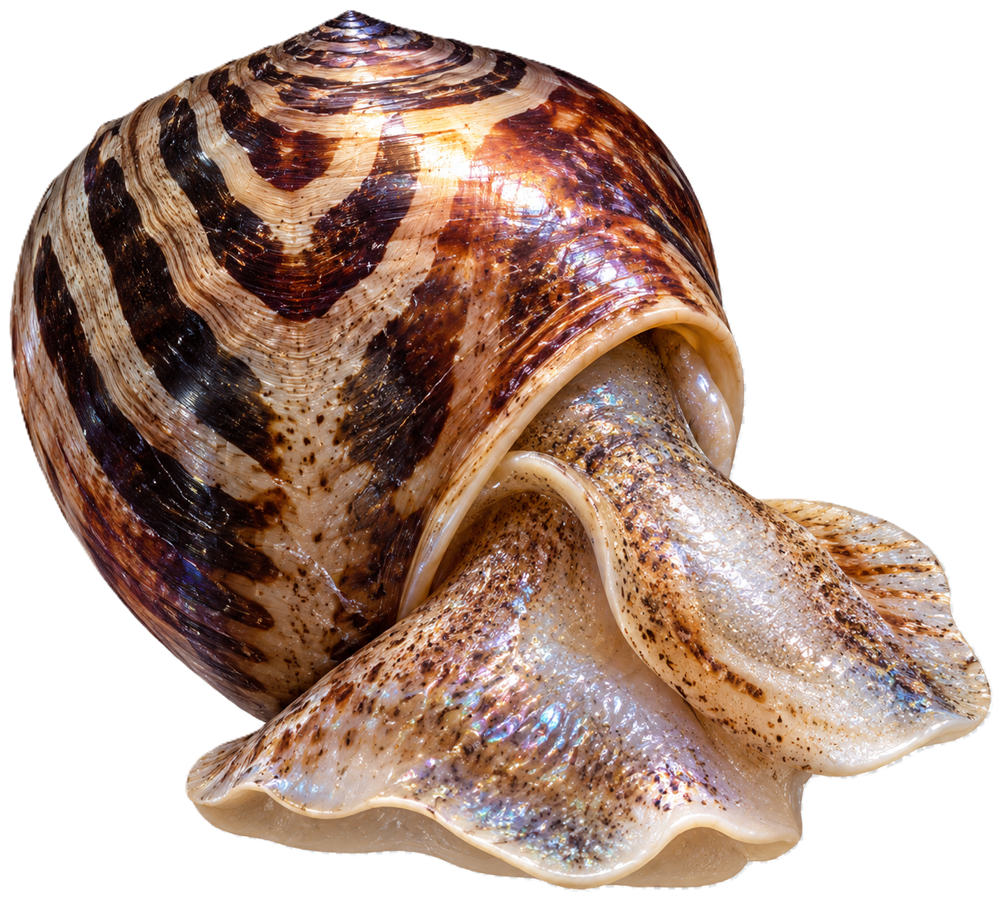 Acteonella |
A. sp.1388iDigBio (o. J.). Acteonella, Katalognummer UT000043228.000. Originaler Museumskatalog über iDigBio (abgerufen am 1. Oktober 2026). | Escondido Formation | Mexiko (Nuevo León) | 72–66 Ma | selten | Acteonellidae |
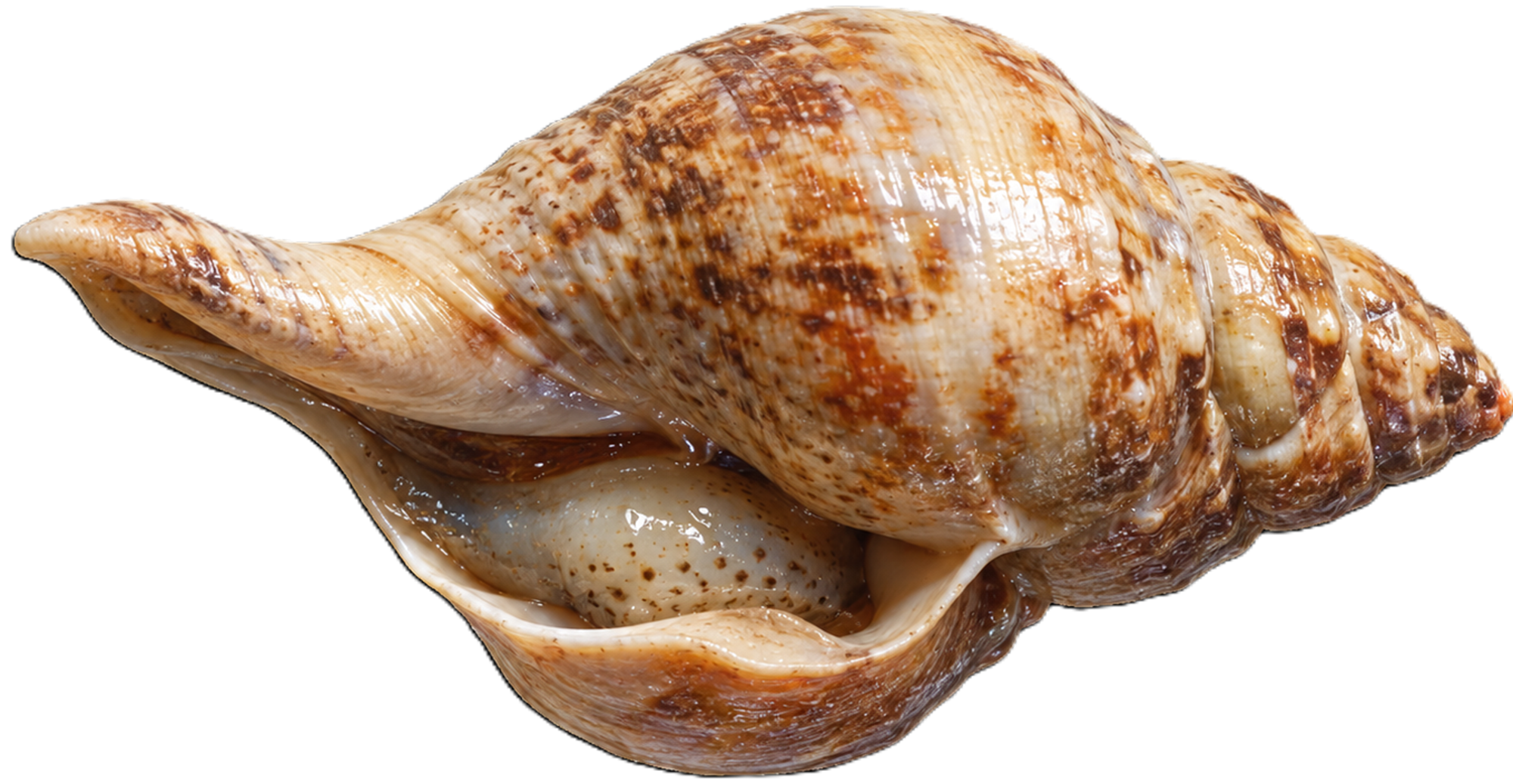 Aliofusus |
A. stamineus1389Bandel, K. & Dockery, D. T. III (2016). Mollusca of the Coon Creek Formation in Tennessee and Mississippi with a systematic discussion of the Gastropoda. Bulletin of the Alabama Museum of Natural History 33(1), 34–96. Systematischer Katalog, Nr. 143. Originalpublikation A. sp.1390Sohl, N. F. & Koch, C. F. (1984). Upper Cretaceous (Maastrichtian) larger invertebrate fossils from the Haustator bilira assemblage zone in the West Gulf Coastal Plain. U.S. Geological Survey Open-File Report, 84-687, 1–282. doi:10.3133/ofr846871391Foster, W. J. et al. (2020). Resilience of marine invertebrate communities during the early Cenozoic hyperthermals. Scientific Reports 10, 2176. Supplementary Data 1 doi:10.1038/s41598-020-58986-51392Stephenson, L. W. (1941). The larger invertebrate fossils of the Navarro group of Texas (exclusive of corals and crustaceans and exclusive of the fauna of the Escondido formation). University of Texas Publication 4101, 1–641 |
Escondido Formation Kemp Clay Ripley Formation |
USA (Texas) | 72–66 Ma | häufig | Buccinidae (Hornschnecke); auch als Pseudorapa (Aliofusus) geführt |
| Alvania | A. costata1393Bandel, K. & Dockery, D. T. III (2016). Mollusca of the Coon Creek Formation in Tennessee and Mississippi with a systematic discussion of the Gastropoda. Bulletin of the Alabama Museum of Natural History 33(1), 34–96. Systematischer Katalog, Nr. 27. Originalpublikation A. crebricostata1394Bandel, K. & Dockery, D. T. III (2016). Mollusca of the Coon Creek Formation in Tennessee and Mississippi with a systematic discussion of the Gastropoda. Bulletin of the Alabama Museum of Natural History 33(1), 34–96. Systematischer Katalog, Nr. 28. Originalpublikation A. tallahatchiensis1395Bandel, K. & Dockery, D. T. III (2016). Mollusca of the Coon Creek Formation in Tennessee and Mississippi with a systematic discussion of the Gastropoda. Bulletin of the Alabama Museum of Natural History 33(1), 34–96. Systematischer Katalog, Nr. 26. Originalpublikation |
Ripley Formation | USA (Tennessee) | 72–69 Ma | nicht quantifiziert | Rissoidae (Schnecke) |
 Amaea |
A. aff. sp.1396Foster, W. J. et al. (2020). Resilience of marine invertebrate communities during the early Cenozoic hyperthermals. Scientific Reports 10, 2176. Supplementary Data 1 doi:10.1038/s41598-020-58986-5 | Kemp Clay | USA (Texas) | 68–66 Ma | selten | Epitoniidae (Wendeltreppenschnecke) |
 Amaurellina |
A. stephensoni1397Bandel, K. & Dockery, D. T. III (2016). Mollusca of the Coon Creek Formation in Tennessee and Mississippi with a systematic discussion of the Gastropoda. Bulletin of the Alabama Museum of Natural History 33(1), 34–96. Systematischer Katalog, Nr. 37. Originalpublikation1398Foster, W. J. et al. (2020). Resilience of marine invertebrate communities during the early Cenozoic hyperthermals. Scientific Reports 10, 2176. Dataset S1. Prairie Bluff Chalk; Dataset-IDs 14415, 14987, 15085, 15260, 15832, 16052. Quellenbezeichnung: Amaurellina stephensoni. doi:10.1038/s41598-020-58986-51399Bryan, J. R. & Jones, D. S. (1989). Fabric of the Cretaceous-Tertiary marine macrofaunal transition at Braggs, Alabama. Palaeogeography, Palaeoclimatology, Palaeoecology 69, 279–301. Appendix I, S. 294, Prairie-Bluff-Spalten L. Quellenbezeichnung: Amaurellina stephensoni. doi:10.1016/0031-0182(89)90170-3 A. sp.1400Foster, W. J. et al. (2020). Resilience of marine invertebrate communities during the early Cenozoic hyperthermals. Scientific Reports 10, 2176. Supplementary Data 1 doi:10.1038/s41598-020-58986-51401Foster, W. J. et al. (2020). Resilience of marine invertebrate communities during the early Cenozoic hyperthermals. Scientific Reports 10, 2176. Dataset S1. Prairie Bluff Chalk; Dataset-IDs 15154, 15465, 15618, 16212. Quellenbezeichnung: Amaurellina spp.. doi:10.1038/s41598-020-58986-51402Bryan, J. R. & Jones, D. S. (1989). Fabric of the Cretaceous-Tertiary marine macrofaunal transition at Braggs, Alabama. Palaeogeography, Palaeoclimatology, Palaeoecology 69, 279–301. Appendix I, S. 294, Prairie-Bluff-Spalten L, M. Quellenbezeichnung: Amaurellina sp. doi:10.1016/0031-0182(89)90170-3 |
Kemp Clay Prairie Bluff Chalk Ripley Formation |
USA (Alabama, Mississippi, Tennessee, Texas) | 72–66 Ma | häufig | Ampullinidae |
 Amauropsis |
A. sp.1403Stephenson, L. W. (1941). The larger invertebrate fossils of the Navarro group of Texas (exclusive of corals and crustaceans and exclusive of the fauna of the Escondido formation). University of Texas Publication 4101, 1–641 | Kemp Clay | USA (Texas) | 68–66 Ma | selten | Ampullinidae |
 Ampullina |
A. potens1404Bandel, K. & Dockery, D. T. III (2016). Mollusca of the Coon Creek Formation in Tennessee and Mississippi with a systematic discussion of the Gastropoda. Bulletin of the Alabama Museum of Natural History 33(1), 34–96. Systematischer Katalog, Nr. 36. Originalpublikation A. sp.1405Foster, W. J. et al. (2020). Resilience of marine invertebrate communities during the early Cenozoic hyperthermals. Scientific Reports 10, 2176. Supplementary Data 1 doi:10.1038/s41598-020-58986-51406Foster, W. J. et al. (2020). Resilience of marine invertebrate communities during the early Cenozoic hyperthermals. Scientific Reports 10, 2176. Dataset S1. Prairie Bluff Chalk; Dataset-IDs 15181, 15262, 15362, 15537, 15708, 15834, 16364, 16507. Quellenbezeichnung: Ampullina sp.. doi:10.1038/s41598-020-58986-5 |
Kemp Clay Prairie Bluff Chalk Ripley Formation |
USA (Alabama, Tennessee, Texas) | 72–66 Ma | häufig | Ampullinidae |
| Ampullinidae indet.1407Foster, W. J. et al. (2020). Resilience of marine invertebrate communities during the early Cenozoic hyperthermals. Scientific Reports 10, 2176. Dataset S1. Prairie Bluff Chalk; Dataset-IDs 14074, 14424, 14527. Quellenbezeichnung: Ampulinidae sp.. doi:10.1038/s41598-020-58986-5 | Prairie Bluff Chalk | USA (Mississippi) | 69–66 Ma | nicht quantifiziert | Ampullinidae (Schnecke) | |
 Amuletum |
A. dumasensis1408Bandel, K. & Dockery, D. T. III (2016). Mollusca of the Coon Creek Formation in Tennessee and Mississippi with a systematic discussion of the Gastropoda. Bulletin of the Alabama Museum of Natural History 33(1), 34–96. Systematischer Katalog, Nr. 198. Originalpublikation A. fasciolatum1409Bandel, K. & Dockery, D. T. III (2016). Mollusca of the Coon Creek Formation in Tennessee and Mississippi with a systematic discussion of the Gastropoda. Bulletin of the Alabama Museum of Natural History 33(1), 34–96. Systematischer Katalog, Nr. 200. Originalpublikation1410Reinhold, M. E. (2002). Extension of the biostratigraphic range of the gastropod (Neogastropoda) Amuletum (Amuletum) fasciolatum (Wade). Geological Society of America Abstracts with Programs 34(2), 96. Drei Exemplare aus Owl Creek, Tippah County, Mississippi. Originalabstract A. macnairyensis1411Bandel, K. & Dockery, D. T. III (2016). Mollusca of the Coon Creek Formation in Tennessee and Mississippi with a systematic discussion of the Gastropoda. Bulletin of the Alabama Museum of Natural History 33(1), 34–96. Systematischer Katalog, Nr. 196. Originalpublikation A. macnairyensis torquatum1412Bandel, K. & Dockery, D. T. III (2016). Mollusca of the Coon Creek Formation in Tennessee and Mississippi with a systematic discussion of the Gastropoda. Bulletin of the Alabama Museum of Natural History 33(1), 34–96. Systematischer Katalog, Nr. 197. Originalpublikation A. minor1413Cvancara, A. M. (1957): Gastropoda from the Pierre Shale (Upper Cretaceous) of Emmons County, south-central North Dakota. M.Sc.-Abschlussarbeit, University of North Dakota, Grand Forks. Tabelle 1 und S. 46–48. Originalveröffentlichung1414Erickson, J. M. (1974): Revision of the Gastropoda of the Fox Hills Formation, Upper Cretaceous (Maestrichtian) of North Dakota. Bulletins of American Paleontology 66(284): 131–253. Revision und Fundortzuordnung. Originalveröffentlichung1415Erickson, J. M. (1974): Revision of the Gastropoda of the Fox Hills Formation, Upper Cretaceous (Maestrichtian) of North Dakota. Bulletins of American Paleontology 66(284): 131–253. S. 221–222. Originalveröffentlichung A. cf. munda1416Foster, W. J. et al. (2020). Resilience of marine invertebrate communities during the early Cenozoic hyperthermals. Scientific Reports 10, 2176. Supplementary Data 1 doi:10.1038/s41598-020-58986-5 A. wadei1417Bandel, K. & Dockery, D. T. III (2016). Mollusca of the Coon Creek Formation in Tennessee and Mississippi with a systematic discussion of the Gastropoda. Bulletin of the Alabama Museum of Natural History 33(1), 34–96. Systematischer Katalog, Nr. 199. Originalpublikation A. spp.1418Foster, W. J. et al. (2020). Resilience of marine invertebrate communities during the early Cenozoic hyperthermals. Scientific Reports 10, 2176. Supplementary Data 1 doi:10.1038/s41598-020-58986-51419Stephenson, L. W. (1941). The larger invertebrate fossils of the Navarro group of Texas (exclusive of corals and crustaceans and exclusive of the fauna of the Escondido formation). University of Texas Publication 4101, 1–6411420Foster, W. J. et al. (2020). Resilience of marine invertebrate communities during the early Cenozoic hyperthermals. Scientific Reports 10, 2176. Dataset S1. Prairie Bluff Chalk; Dataset-IDs 15998. Quellenbezeichnung: Amuletum sp.. doi:10.1038/s41598-020-58986-5 |
Fox Hills Formation Kemp Clay Owl Creek Formation Pierre Shale (?) Prairie Bluff Chalk Ripley Formation |
USA (Alabama, Mississippi, North Dakota, Tennessee, Texas) | 72–66 Ma | sehr häufig | Turridae (Schlitzturmschnecke); A. minor: synonym zu Turris minor |
 Anchura |
A. abrupta1421Bandel, K. & Dockery, D. T. III (2016). Mollusca of the Coon Creek Formation in Tennessee and Mississippi with a systematic discussion of the Gastropoda. Bulletin of the Alabama Museum of Natural History 33(1), 34–96. Systematischer Katalog, Nr. 70. Originalpublikation A. cf. bexarensis1422Foster, W. J. et al. (2020). Resilience of marine invertebrate communities during the early Cenozoic hyperthermals. Scientific Reports 10, 2176. Supplementary Data 1 doi:10.1038/s41598-020-58986-5 A. bexarensis1423Stephenson, L. W. (1941). The larger invertebrate fossils of the Navarro group of Texas (exclusive of corals and crustaceans and exclusive of the fauna of the Escondido formation). University of Texas Publication 4101, 1–641 A. cf. ciboloensis1424Foster, W. J. et al. (2020). Resilience of marine invertebrate communities during the early Cenozoic hyperthermals. Scientific Reports 10, 2176. Supplementary Data 1 doi:10.1038/s41598-020-58986-5 A. ciboloensis (?)1425Stephenson, L. W. (1941). The larger invertebrate fossils of the Navarro group of Texas (exclusive of corals and crustaceans and exclusive of the fauna of the Escondido formation). University of Texas Publication 4101, 1–641 A. convexa1426Bandel, K. & Dockery, D. T. III (2016). Mollusca of the Coon Creek Formation in Tennessee and Mississippi with a systematic discussion of the Gastropoda. Bulletin of the Alabama Museum of Natural History 33(1), 34–96. Systematischer Katalog, Nr. 72. Originalpublikation A. cookei (?)1427Stephenson, L. W. (1941). The larger invertebrate fossils of the Navarro Group of Texas (exclusive of corals and crustaceans and exclusive of the fauna of the Escondido Formation). The University of Texas Publication, 4101, 1–641 A. hoggi1428Foster, W. J. et al. (2020). Resilience of marine invertebrate communities during the early Cenozoic hyperthermals. Scientific Reports 10, 2176. Supplementary Data 1 doi:10.1038/s41598-020-58986-51429Ryan, D. R., Witts, J. D. & Landman, N. H. (2021): Palaeoecological analysis of a methane seep deposit from the Upper Cretaceous (Maastrichtian) of the U.S. Western Interior. Lethaia 54(2): 185–203. Tabelle 1. doi:10.1111/let.12396 A. hoggi (?)1430Stephenson, L. W. (1941). The larger invertebrate fossils of the Navarro group of Texas (exclusive of corals and crustaceans and exclusive of the fauna of the Escondido formation). University of Texas Publication 4101, 1–641 A. lamari1431Vega, F. J., Feldmann, R. M. & Sour-Tovar, F. (1995). Fossil crabs (Crustacea: Decapoda) from the Late Cretaceous Cárdenas Formation, east-central Mexico. Journal of Paleontology, 69(2), 340–350. doi:10.1017/S0022336000034661 A. noackensis1432Stephenson, L. W. (1941). The larger invertebrate fossils of the Navarro group of Texas (exclusive of corals and crustaceans and exclusive of the fauna of the Escondido formation). University of Texas Publication 4101, 1–6411433Sohl, N. F. & Koch, C. F. (1983). Upper Cretaceous (Maestrichtian) Mollusca from the Haustator bilira Assemblage Zone in the East Gulf Coastal Plain. U.S. Geological Survey Open-File Report 83-451, 1–239. Owl-Creek-Aufsammlungen 40, 49; S. 21–22; 36. doi:10.3133/ofr83451 Quellenbezeichnung: Anchura noakensis?.1434Sohl, N. F. (1960). Archeogastropoda, Mesogastropoda, and stratigraphy of the Ripley, Owl Creek, and Prairie Bluff Formations. U.S. Geological Survey Professional Paper 331-A, 1–151. Prairie Bluff Chalk; Sohl (1960), S. 107. Quellenbestimmung: Anchura noackensis Stephenson?. doi:10.3133/pp331A A. ? noackensis1435Foster, W. J. et al. (2020). Resilience of marine invertebrate communities during the early Cenozoic hyperthermals. Scientific Reports 10, 2176. Dataset S1. Prairie Bluff Chalk; Dataset-IDs 14075, 14125, 14201, 14296, 14331, 14426, 14521, 14528, 14561, 14617, 14625, 15183, 15363, 15562, 15835, 15897, 16152, 16482. Quellenbezeichnung: Anchura noakensis. doi:10.1038/s41598-020-58986-5 A. substriata1436Bandel, K. & Dockery, D. T. III (2016). Mollusca of the Coon Creek Formation in Tennessee and Mississippi with a systematic discussion of the Gastropoda. Bulletin of the Alabama Museum of Natural History 33(1), 34–96. Systematischer Katalog, Nr. 71. Originalpublikation A. tippana (?)1437Stephenson, L. W. (1941). The larger invertebrate fossils of the Navarro Group of Texas (exclusive of corals and crustaceans and exclusive of the fauna of the Escondido Formation). The University of Texas Publication, 4101, 1–641 A. spp.1438Sohl, N. F. & Koch, C. F. (1984). Upper Cretaceous (Maastrichtian) larger invertebrate fossils from the Haustator bilira assemblage zone in the West Gulf Coastal Plain. U.S. Geological Survey Open-File Report, 84-687, 1–282. doi:10.3133/ofr846871439Vega, F. J., Feldmann, R. M. & Sour-Tovar, F. (1995). Fossil crabs (Crustacea: Decapoda) from the Late Cretaceous Cárdenas Formation, east-central Mexico. Journal of Paleontology, 69(2), 340–350. doi:10.1017/S00223360000346611440Stephenson, L. W. (1941). The larger invertebrate fossils of the Navarro Group of Texas (exclusive of corals and crustaceans and exclusive of the fauna of the Escondido Formation). The University of Texas Publication, 4101, 1–6411441Ryan, D. R., Witts, J. D. & Landman, N. H. (2021): Palaeoecological analysis of a methane seep deposit from the Upper Cretaceous (Maastrichtian) of the U.S. Western Interior. Lethaia 54(2): 185–203. Tabelle 1. doi:10.1111/let.123961442Foster, W. J. et al. (2020). Resilience of marine invertebrate communities during the early Cenozoic hyperthermals. Scientific Reports 10, 2176. Supplementary Data 1 doi:10.1038/s41598-020-58986-51443Stephenson, L. W. (1941). The larger invertebrate fossils of the Navarro group of Texas (exclusive of corals and crustaceans and exclusive of the fauna of the Escondido formation). University of Texas Publication 4101, 1–6411444Sohl, N. F. & Koch, C. F. (1983). Upper Cretaceous (Maestrichtian) Mollusca from the Haustator bilira Assemblage Zone in the East Gulf Coastal Plain. U.S. Geological Survey Open-File Report 83-451, 1–239. Owl-Creek-Aufsammlungen 45, 46; S. 28–29; 30–33. doi:10.3133/ofr83451 Quellenbezeichnung: Anchura sp..1445Foster, W. J. et al. (2020). Resilience of marine invertebrate communities during the early Cenozoic hyperthermals. Scientific Reports 10, 2176. Dataset S1. Prairie Bluff Chalk; Dataset-IDs 14103, 14124, 14200, 14255, 14330, 14373, 14400, 14425, 14489, 14529, 14626, 14716, 14931, 14989, 15049, 15087, 15156, 15182, 15263, 15467, 15620, 15709, 16053, 16111, 16574, 16681. Quellenbezeichnung: Anchura sp.. doi:10.1038/s41598-020-58986-51446Sohl, N. F. (1960). Archeogastropoda, Mesogastropoda, and stratigraphy of the Ripley, Owl Creek, and Prairie Bluff Formations. U.S. Geological Survey Professional Paper 331-A, 1–151. Prairie Bluff Chalk; Sohl (1960), S. 108. Quellenbestimmung: Anchura sp.. doi:10.3133/pp331A1447Sohl, N. F. (1960). Archeogastropoda, Mesogastropoda, and stratigraphy of the Ripley, Owl Creek, and Prairie Bluff Formations. U.S. Geological Survey Professional Paper 331-A, 1–151. Prairie Bluff Chalk; Sohl (1960), S. 108. Quellenbestimmung: Anchura? sp.. doi:10.3133/pp331A1448Sohl, N. F. (1960). Archeogastropoda, Mesogastropoda, and stratigraphy of the Ripley, Owl Creek, and Prairie Bluff Formations. U.S. Geological Survey Professional Paper 331-A, 1–151. Owl Creek Formation; Sohl (1960), S. 108. Quellenbestimmung: Anchura sp.. doi:10.3133/pp331A |
Arkadelphia Marl Corsicana Marl Cárdenas Formation Kemp Clay Owl Creek Formation Pierre Shale Prairie Bluff Chalk Ripley Formation |
USA (Alabama, Arkansas, Mississippi, Montana, Tennessee, Texas); Mexiko (San Luis Potosí) | 72–66 Ma (Gattung bis 56 Ma) | sehr häufig | Aporrhaidae (Pelikanfußschnecke); A. noakensis: Schreibfehler für A. noackensis |
 Anisomyon |
A. borealis1449Sohl, N. F. (1967): Upper Cretaceous gastropods from the Pierre Shale at Red Bird, Wyoming. U.S. Geological Survey Professional Paper 393-B: B1–B46. S. B37. doi:10.3133/pp393B1450Gill, J. R. & Cobban, W. A. (1966): The Red Bird section of the Upper Cretaceous Pierre Shale in Wyoming. U.S. Geological Survey Professional Paper 393-A: A1–A73. S. A54 und A57. doi:10.3133/pp393A A. aff. borealis1451Foster, W. J. et al. (2020). Resilience of marine invertebrate communities during the early Cenozoic hyperthermals. Scientific Reports 10, 2176. Dataset S1. Prairie Bluff Chalk; Dataset-IDs 15710. Quellenbezeichnung: Anisomyon borealis. doi:10.1038/s41598-020-58986-5 A. haydeni1452Foster, W. J. et al. (2020). Resilience of marine invertebrate communities during the early Cenozoic hyperthermals. Scientific Reports 10, 2176. Supplementary Data 1 doi:10.1038/s41598-020-58986-5 A. patelliformis1453Sohl, N. F. (1967): Upper Cretaceous gastropods from the Pierre Shale at Red Bird, Wyoming. U.S. Geological Survey Professional Paper 393-B: B1–B46. S. B40. doi:10.3133/pp393B1454Gill, J. R. & Cobban, W. A. (1966): The Red Bird section of the Upper Cretaceous Pierre Shale in Wyoming. U.S. Geological Survey Professional Paper 393-A: A1–A73. S. A52. doi:10.3133/pp393A A. spp. (?)1455Sohl, N. F. & Koch, C. F. (1983). Upper Cretaceous (Maestrichtian) Mollusca from the Haustator bilira Assemblage Zone in the East Gulf Coastal Plain. U.S. Geological Survey Open-File Report 83-451, 1–239. Owl-Creek-Aufsammlungen 46; S. 30–33. doi:10.3133/ofr83451 Quellenbezeichnung: Anisomyon? sp..1456Foster, W. J. et al. (2020). Resilience of marine invertebrate communities during the early Cenozoic hyperthermals. Scientific Reports 10, 2176. Dataset S1. Prairie Bluff Chalk; Dataset-IDs 15264, 15621, 16365, 16575. Quellenbezeichnung: Anisomyon sp.. doi:10.1038/s41598-020-58986-51457Sohl, N. F. (1964). Neogastropoda, Opisthobranchia, and Basommatophora from the Ripley, Owl Creek, and Prairie Bluff Formations. U.S. Geological Survey Professional Paper 331-B, 153–344. Owl Creek Formation; Sohl (1964), S. 323. Quellenbestimmung: Anisomyon? sp.. doi:10.3133/pp331B1458Bryan, J. R. & Jones, D. S. (1989). Fabric of the Cretaceous-Tertiary marine macrofaunal transition at Braggs, Alabama. Palaeogeography, Palaeoclimatology, Palaeoecology 69, 279–301. Appendix I, S. 295, Prairie-Bluff-Spalten L. Quellenbezeichnung: Anisomyon sp. doi:10.1016/0031-0182(89)90170-3 |
Kemp Clay Owl Creek Formation Pierre Shale Prairie Bluff Chalk |
USA (Alabama, Mississippi, Montana, South Dakota, Texas, Wyoming) | 84–66 Ma | häufig | Gastropoda (Schnecke) |
 Anomalofusus |
A. lemniscatus1459Sohl, N. F. & Koch, C. F. (1983). Upper Cretaceous (Maestrichtian) Mollusca from the Haustator bilira Assemblage Zone in the East Gulf Coastal Plain. U.S. Geological Survey Open-File Report 83-451, 1–239. Owl-Creek-Aufsammlungen 43, 45, 46; S. 25; 28–29; 30–33. doi:10.3133/ofr83451 Quellenbezeichnung: Anomalofusus lemniscatus.1460Sohl, N. F. (1964). Neogastropoda, Opisthobranchia, and Basommatophora from the Ripley, Owl Creek, and Prairie Bluff Formations. U.S. Geological Survey Professional Paper 331-B, 153–344. Owl Creek Formation; Sohl (1964), S. 230. Quellenbestimmung: Anomalofusus lemniscatus Sohl, n. sp.. doi:10.3133/pp331B A. subnodosus1461Bandel, K. & Dockery, D. T. III (2016). Mollusca of the Coon Creek Formation in Tennessee and Mississippi with a systematic discussion of the Gastropoda. Bulletin of the Alabama Museum of Natural History 33(1), 34–96. Systematischer Katalog, Nr. 95. Originalpublikation A. substriatus1462Bandel, K. & Dockery, D. T. III (2016). Mollusca of the Coon Creek Formation in Tennessee and Mississippi with a systematic discussion of the Gastropoda. Bulletin of the Alabama Museum of Natural History 33(1), 34–96. Systematischer Katalog, Nr. 94. Originalpublikation A. spp.1463Foster, W. J. et al. (2020). Resilience of marine invertebrate communities during the early Cenozoic hyperthermals. Scientific Reports 10, 2176. Supplementary Data 1 doi:10.1038/s41598-020-58986-51464Stephenson, L. W. (1941). The larger invertebrate fossils of the Navarro Group of Texas (exclusive of corals and crustaceans and exclusive of the fauna of the Escondido Formation). The University of Texas Publication, 4101, 1–6411465Foster, W. J. et al. (2020). Resilience of marine invertebrate communities during the early Cenozoic hyperthermals. Scientific Reports 10, 2176. Dataset S1. Prairie Bluff Chalk; Dataset-IDs 14040, 14427, 14490, 14932, 15088, 15184, 15364, 15468, 15563, 15622, 15836, 16054, 16508. Quellenbezeichnung: Anomalofusus sp.. doi:10.1038/s41598-020-58986-51466Sohl, N. F. (1964). Neogastropoda, Opisthobranchia, and Basommatophora from the Ripley, Owl Creek, and Prairie Bluff Formations. U.S. Geological Survey Professional Paper 331-B, 153–344. Prairie Bluff Chalk; Sohl (1964), S. 231. Quellenbestimmung: Anomalofusus sp.. doi:10.3133/pp331B1467Bryan, J. R. & Jones, D. S. (1989). Fabric of the Cretaceous-Tertiary marine macrofaunal transition at Braggs, Alabama. Palaeogeography, Palaeoclimatology, Palaeoecology 69, 279–301. Appendix I, S. 294, Prairie-Bluff-Spalten L, U. Quellenbezeichnung: Anomalofusus sp. doi:10.1016/0031-0182(89)90170-3 |
Corsicana Marl Kemp Clay Owl Creek Formation Prairie Bluff Chalk Ripley Formation |
USA (Alabama, Mississippi, Texas) | 72–66 Ma (Gattung bis 62 Ma) | sehr häufig | Fasciolariidae (Spindelschnecke) |
| Anteglosia | A. subornata1468Bandel, K. & Dockery, D. T. III (2016). Mollusca of the Coon Creek Formation in Tennessee and Mississippi with a systematic discussion of the Gastropoda. Bulletin of the Alabama Museum of Natural History 33(1), 34–96. Systematischer Katalog, Nr. 30. Originalpublikation A. tennesseensis1469Bandel, K. & Dockery, D. T. III (2016). Mollusca of the Coon Creek Formation in Tennessee and Mississippi with a systematic discussion of the Gastropoda. Bulletin of the Alabama Museum of Natural History 33(1), 34–96. Systematischer Katalog, Nr. 29. Originalpublikation A. spp.1470Sohl, N. F. & Koch, C. F. (1983). Upper Cretaceous (Maestrichtian) Mollusca from the Haustator bilira Assemblage Zone in the East Gulf Coastal Plain. U.S. Geological Survey Open-File Report 83-451, 1–239. Owl-Creek-Aufsammlungen 46; S. 30–33. doi:10.3133/ofr83451 Quellenbezeichnung: Anteglosia sp..1471Foster, W. J. et al. (2020). Resilience of marine invertebrate communities during the early Cenozoic hyperthermals. Scientific Reports 10, 2176. Dataset S1. Prairie Bluff Chalk; Dataset-IDs 14933. Quellenbezeichnung: Anteglosia sp.. doi:10.1038/s41598-020-58986-51472Sohl, N. F. (1960). Archeogastropoda, Mesogastropoda, and stratigraphy of the Ripley, Owl Creek, and Prairie Bluff Formations. U.S. Geological Survey Professional Paper 331-A, 1–151. Owl Creek Formation; Sohl (1960), S. 87. Quellenbestimmung: Anteglosia sp.. doi:10.3133/pp331A |
Owl Creek Formation Prairie Bluff Chalk Ripley Formation |
USA (Alabama, Mississippi, Tennessee) | 72–66 Ma | häufig | Rissoidae (Schnecke) |
 Anticlimax |
A. sp. (?)1473Foster, W. J. et al. (2020). Resilience of marine invertebrate communities during the early Cenozoic hyperthermals. Scientific Reports 10, 2176. Supplementary Data 1 doi:10.1038/s41598-020-58986-5 | Kemp Clay | USA (Texas) | 68–66 Ma | selten | Tornidae (Tornusschnecke) |
| Aporrhaidae indet.1474Foster, W. J. et al. (2020). Resilience of marine invertebrate communities during the early Cenozoic hyperthermals. Scientific Reports 10, 2176. Dataset S1. Prairie Bluff Chalk; Dataset-IDs 16510. Quellenbezeichnung: Aporrhaidae sp.. doi:10.1038/s41598-020-58986-5 | Prairie Bluff Chalk | USA (Alabama) | 69–66 Ma | nicht quantifiziert | Aporrhaidae (Schnecke) | |
| Aporrhais | A. biangulata1475Landman, N. H., Slattery, J. S. & Harries, P. J. (2016): Encrustation of inarticulate brachiopods on scaphitid ammonites and inoceramid bivalves from the Upper Cretaceous U.S. Western Interior. Acta Geologica Polonica 66(4): 645–662. Anhang, Tabelle 1. doi:10.1515/agp-2016-00341476Landman, N. H. et al. (2026): The Campanian-Maastrichtian Boundary in the Pierre Shale, Cedar Creek Anticline, Montana: Environment of Deposition Based on Geochemical, Sedimentological, and Paleontological Evidence. American Museum Novitates 4052: 1–53. Anhang 1. doi:10.1206/4052.1 | Pierre Shale | USA (Montana) | 72–71 Ma | häufig | Aporrhaidae |
 Architectonica |
A. voragiformis1477Vega, F.J., Feldmann, R.M. & Sour-Tovar, F. (1995): Fossil crabs (Crustacea: Decapoda) from the Late Cretaceous Cárdenas Formation, east-central Mexico. Journal of Paleontology 69(2): 340–350. Volltext A. sp.1478Foster, W. J. et al. (2020). Resilience of marine invertebrate communities during the early Cenozoic hyperthermals. Scientific Reports 10, 2176. Supplementary Data 1 doi:10.1038/s41598-020-58986-51479Stephenson, L. W. (1941). The larger invertebrate fossils of the Navarro group of Texas (exclusive of corals and crustaceans and exclusive of the fauna of the Escondido formation). University of Texas Publication 4101, 1–6411480Stephenson, L. W. (1941). The larger invertebrate fossils of the Navarro Group of Texas (exclusive of corals and crustaceans and exclusive of the fauna of the Escondido Formation). The University of Texas Publication, 4101, 1–6411481Sohl, N. F. & Koch, C. F. (1984). Upper Cretaceous (Maastrichtian) larger invertebrate fossils from the Haustator bilira assemblage zone in the West Gulf Coastal Plain. U.S. Geological Survey Open-File Report, 84-687, 1–282. doi:10.3133/ofr846871482Foster, W. J. et al. (2020). Resilience of marine invertebrate communities during the early Cenozoic hyperthermals. Scientific Reports 10, 2176. Dataset S1. Prairie Bluff Chalk; Dataset-IDs 14934. Quellenbezeichnung: Architectonica sp.. doi:10.1038/s41598-020-58986-5 |
Corsicana Marl Escondido Formation Kemp Clay Potrerillos Formation Prairie Bluff Chalk |
USA (Alabama, Texas); Mexiko (Nuevo León) | 72–66 Ma (Gattung 165 Ma bis heute); Potrerillos: Maastrichtium (72–66 Ma) | sehr häufig | Architectonicidae (Sonnenuhrschnecke) |
| Assimineidae? indet.1483Erickson, J. M. (1974): Revision of the Gastropoda of the Fox Hills Formation, Upper Cretaceous (Maestrichtian) of North Dakota. Bulletins of American Paleontology 66(284): 131–253. S. 171–172. Originalveröffentlichung | Fox Hills Formation | USA (North Dakota) | 69–66 Ma | Einzelfund | Assimineidae (Schnecke) | |
| Astandes | A. densatus1484Ryan, D. R., Witts, J. D. & Landman, N. H. (2021): Palaeoecological analysis of a methane seep deposit from the Upper Cretaceous (Maastrichtian) of the U.S. Western Interior. Lethaia 54(2): 185–203. Tabelle 1. doi:10.1111/let.123961485Bandel, K. & Dockery, D. T. III (2016). Mollusca of the Coon Creek Formation in Tennessee and Mississippi with a systematic discussion of the Gastropoda. Bulletin of the Alabama Museum of Natural History 33(1), 34–96. Systematischer Katalog, Nr. 85. Originalpublikation | Pierre Shale Ripley Formation |
USA (Montana, Tennessee) | 72–69 Ma | selten | Gastropoda |
| Atira | A. nebrascensis (?)1486Landman, N. H., Slattery, J. S. & Harries, P. J. (2016): Encrustation of inarticulate brachiopods on scaphitid ammonites and inoceramid bivalves from the Upper Cretaceous U.S. Western Interior. Acta Geologica Polonica 66(4): 645–662. Anhang, Tabelle 1. doi:10.1515/agp-2016-00341487Landman, N. H. et al. (2026): The Campanian-Maastrichtian Boundary in the Pierre Shale, Cedar Creek Anticline, Montana: Environment of Deposition Based on Geochemical, Sedimentological, and Paleontological Evidence. American Museum Novitates 4052: 1–53. Anhang 1. doi:10.1206/4052.11488Sohl, N. F. (1967): Upper Cretaceous gastropods from the Pierre Shale at Red Bird, Wyoming. U.S. Geological Survey Professional Paper 393-B: B1–B46. S. B5 und B11, Exiteloceras jenneyi bis Baculites clinolobatus. doi:10.3133/pp393B1489Brinster, K. F. (1970): Molluscan paleontology of the Pierre Shale (Upper Cretaceous), Bowman County, North Dakota. M.Sc.-Abschlussarbeit, University of North Dakota, Grand Forks. Systematik S. 35–49. Originalveröffentlichung A. sp. (?)1490Cvancara, A. M. (1957): Gastropoda from the Pierre Shale (Upper Cretaceous) of Emmons County, south-central North Dakota. M.Sc.-Abschlussarbeit, University of North Dakota, Grand Forks. Tabelle 1 und S. 17–20. Originalveröffentlichung1491Erickson, J. M. (1974): Revision of the Gastropoda of the Fox Hills Formation, Upper Cretaceous (Maestrichtian) of North Dakota. Bulletins of American Paleontology 66(284): 131–253. Revision und Fundortzuordnung. Originalveröffentlichung |
Pierre Shale Pierre Shale (?) |
USA (Colorado, Montana, North Dakota) | 76–69 Ma | sehr häufig | Gastropoda; Gattungszuordnung unsicher |
| Avellana | A. spp.1492Ifrim, C., Stinnesbeck, W. & López-Oliva, J. G. (2004). Maastrichtian cephalopods from Cerralvo, north-eastern Mexico. Palaeontology 47(6), 1575–1627. doi:10.1111/j.0031-0239.2004.00426.x1493Foster, W. J. et al. (2020). Resilience of marine invertebrate communities during the early Cenozoic hyperthermals. Scientific Reports 10, 2176. Dataset S1. Prairie Bluff Chalk; Dataset-IDs 14843. Quellenbezeichnung: Avellana sp.. doi:10.1038/s41598-020-58986-5 | Méndez Formation Prairie Bluff Chalk |
USA (Alabama); Mexiko (Nuevo León) | 71–66 Ma | selten | Ringiculidae |
 Banis |
B. siniformis1494Sohl, N. F. & Koch, C. F. (1984). Upper Cretaceous (Maastrichtian) larger invertebrate fossils from the Haustator bilira assemblage zone in the West Gulf Coastal Plain. U.S. Geological Survey Open-File Report, 84-687, 1–282. doi:10.3133/ofr84687 B. sp.1495Sohl, N. F. & Koch, C. F. (1984). Upper Cretaceous (Maastrichtian) larger invertebrate fossils from the Haustator bilira assemblage zone in the West Gulf Coastal Plain. U.S. Geological Survey Open-File Report, 84-687, 1–282. doi:10.3133/ofr84687 |
Escondido Formation | USA (Texas) | 72–66 Ma | selten | Naticidae (Mondschnecke) |
 Bellifusus |
B. angulicostatus1496Bandel, K. & Dockery, D. T. III (2016). Mollusca of the Coon Creek Formation in Tennessee and Mississippi with a systematic discussion of the Gastropoda. Bulletin of the Alabama Museum of Natural History 33(1), 34–96. Systematischer Katalog, Nr. 130. Originalpublikation B. aff. angulicostatus (?)1497Sohl, N. F. & Koch, C. F. (1984). Upper Cretaceous (Maastrichtian) larger invertebrate fossils from the Haustator bilira assemblage zone in the West Gulf Coastal Plain. U.S. Geological Survey Open-File Report, 84-687, 1–282. doi:10.3133/ofr84687 B. buffaloensis1498Stephenson, L. W. (1941). The larger invertebrate fossils of the Navarro group of Texas (exclusive of corals and crustaceans and exclusive of the fauna of the Escondido formation). University of Texas Publication 4101, 1–641 B. crassicostatus1499Stephenson, L. W. (1941). The larger invertebrate fossils of the Navarro group of Texas (exclusive of corals and crustaceans and exclusive of the fauna of the Escondido formation). University of Texas Publication 4101, 1–641 B. curvicostatus1500Bandel, K. & Dockery, D. T. III (2016). Mollusca of the Coon Creek Formation in Tennessee and Mississippi with a systematic discussion of the Gastropoda. Bulletin of the Alabama Museum of Natural History 33(1), 34–96. Systematischer Katalog, Nr. 129. Originalpublikation1501Foster, W. J. et al. (2020). Resilience of marine invertebrate communities during the early Cenozoic hyperthermals. Scientific Reports 10, 2176. Dataset S1. Prairie Bluff Chalk; Dataset-IDs 16717. Quellenbezeichnung: Bellifusus curvicostatus. doi:10.1038/s41598-020-58986-51502Sohl, N. F. (1964). Neogastropoda, Opisthobranchia, and Basommatophora from the Ripley, Owl Creek, and Prairie Bluff Formations. U.S. Geological Survey Professional Paper 331-B, 153–344. Prairie Bluff Chalk; Sohl (1964), S. 203. Quellenbestimmung: Bellifusus curvicostatus crenulatus Sohl, n. subsp.. doi:10.3133/pp331B1503Sohl, N. F. (1964). Neogastropoda, Opisthobranchia, and Basommatophora from the Ripley, Owl Creek, and Prairie Bluff Formations. U.S. Geological Survey Professional Paper 331-B, 153–344. Owl Creek Formation; Sohl (1964), S. 203. Quellenbestimmung: Bellifusus curvicostatus crenulatus Sohl, n. subsp.. doi:10.3133/pp331B B. deatsvillensis (?)1504Stephenson, L. W. (1941). The larger invertebrate fossils of the Navarro group of Texas (exclusive of corals and crustaceans and exclusive of the fauna of the Escondido formation). University of Texas Publication 4101, 1–641 B. multicostatus1505Stephenson, L. W. (1941). The larger invertebrate fossils of the Navarro group of Texas (exclusive of corals and crustaceans and exclusive of the fauna of the Escondido formation). University of Texas Publication 4101, 1–641 B. spinosus1506Sohl, N. F. & Koch, C. F. (1984). Upper Cretaceous (Maastrichtian) larger invertebrate fossils from the Haustator bilira assemblage zone in the West Gulf Coastal Plain. U.S. Geological Survey Open-File Report, 84-687, 1–282. doi:10.3133/ofr846871507Sohl, N. F. & Koch, C. F. (1983). Upper Cretaceous (Maestrichtian) Mollusca from the Haustator bilira Assemblage Zone in the East Gulf Coastal Plain. U.S. Geological Survey Open-File Report 83-451, 1–239. Owl-Creek-Aufsammlungen 40, 45; S. 21–22; 28–29. doi:10.3133/ofr83451 Quellenbezeichnung: Bellifusus spinosus.1508Sohl, N. F. (1964). Neogastropoda, Opisthobranchia, and Basommatophora from the Ripley, Owl Creek, and Prairie Bluff Formations. U.S. Geological Survey Professional Paper 331-B, 153–344. Owl Creek Formation; Sohl (1964), S. 203. Quellenbestimmung: Bellifusus spinosus Sohl, n. sp.. doi:10.3133/pp331B B. spp.1509Vega-Vera, F.J. & Perrilliat Montoya, M. del C. (1990): Moluscos del Maastrichtiano de la sierra El Antrisco, Estado de Nuevo León. Paleontología Mexicana 55: 1–69. doi:10.22201/igl.05437652e.1990.0.55.3371510Stephenson, L. W. (1941). The larger invertebrate fossils of the Navarro Group of Texas (exclusive of corals and crustaceans and exclusive of the fauna of the Escondido Formation). The University of Texas Publication, 4101, 1–6411511Sohl, N. F. & Koch, C. F. (1984). Upper Cretaceous (Maastrichtian) larger invertebrate fossils from the Haustator bilira assemblage zone in the West Gulf Coastal Plain. U.S. Geological Survey Open-File Report, 84-687, 1–282. doi:10.3133/ofr846871512Sohl, N. F. (1967): Upper Cretaceous gastropods from the Pierre Shale at Red Bird, Wyoming. U.S. Geological Survey Professional Paper 393-B: B1–B46. S. B5, Baculites clinolobatus-Zone. doi:10.3133/pp393B1513Foster, W. J. et al. (2020). Resilience of marine invertebrate communities during the early Cenozoic hyperthermals. Scientific Reports 10, 2176. Supplementary Data 1 doi:10.1038/s41598-020-58986-51514Foster, W. J. et al. (2020). Resilience of marine invertebrate communities during the early Cenozoic hyperthermals. Scientific Reports 10, 2176. Dataset S1. Prairie Bluff Chalk; Dataset-IDs 14076, 14204, 14297, 14332, 14432, 14491, 14565, 14602, 14629, 14743, 14775, 14844, 14878, 14939, 14994, 15054, 15092, 15185, 15269, 15341, 15355, 15366, 15407, 15471, 15564, 15626, 15715, 15788, 15839, 15899, 15929, 16001, 16113, 16155, 16216, 16368, 16451, 16485, 16514, 16578. Quellenbezeichnung: Bellifusus sp.. doi:10.1038/s41598-020-58986-51515Sohl, N. F. (1964). Neogastropoda, Opisthobranchia, and Basommatophora from the Ripley, Owl Creek, and Prairie Bluff Formations. U.S. Geological Survey Professional Paper 331-B, 153–344. Prairie Bluff Chalk; Sohl (1964), S. 204. Quellenbestimmung: Bellifusus? spp.. doi:10.3133/pp331B1516Bryan, J. R. & Jones, D. S. (1989). Fabric of the Cretaceous-Tertiary marine macrofaunal transition at Braggs, Alabama. Palaeogeography, Palaeoclimatology, Palaeoecology 69, 279–301. Appendix I, S. 294, Prairie-Bluff-Spalten L, M, U. Quellenbezeichnung: Bellifusus? sp.*. doi:10.1016/0031-0182(89)90170-3 |
Arkadelphia Marl Corsicana Marl Escondido Formation Kemp Clay Owl Creek Formation Pierre Shale Potrerillos Formation Prairie Bluff Chalk Ripley Formation |
USA (Alabama, Arkansas, Colorado, Mississippi, Tennessee, Texas); Mexiko (Nuevo León) | 72–66 Ma | sehr häufig | Pholidotomidae (Schnecke) |
| Belliscala | B. cf. rockensis1517Bandel, K. & Dockery, D. T. III (2016). Mollusca of the Coon Creek Formation in Tennessee and Mississippi with a systematic discussion of the Gastropoda. Bulletin of the Alabama Museum of Natural History 33(1), 34–96. Systematischer Katalog, Nr. 56. Originalpublikation B. spp.1518Foster, W. J. et al. (2020). Resilience of marine invertebrate communities during the early Cenozoic hyperthermals. Scientific Reports 10, 2176. Dataset S1. Prairie Bluff Chalk; Dataset-IDs 15367. Quellenbezeichnung: Belliscala sp.. doi:10.1038/s41598-020-58986-5 |
Prairie Bluff Chalk Ripley Formation |
USA (Alabama, Tennessee) | 72–66 Ma | nicht quantifiziert | Epitoniidae (Schnecke) |
 Beretra |
B. contracta1519Foster, W. J. et al. (2020). Resilience of marine invertebrate communities during the early Cenozoic hyperthermals. Scientific Reports 10, 2176. Supplementary Data 1 doi:10.1038/s41598-020-58986-5 B. elongata (?)1520Stephenson, L. W. (1941). The larger invertebrate fossils of the Navarro Group of Texas (exclusive of corals and crustaceans and exclusive of the fauna of the Escondido Formation). The University of Texas Publication, 4101, 1–641 B. gracilis1521Bandel, K. & Dockery, D. T. III (2016). Mollusca of the Coon Creek Formation in Tennessee and Mississippi with a systematic discussion of the Gastropoda. Bulletin of the Alabama Museum of Natural History 33(1), 34–96. Systematischer Katalog, Nr. 153. Originalpublikation B. ripleyana1522Sohl, N. F. & Koch, C. F. (1983). Upper Cretaceous (Maestrichtian) Mollusca from the Haustator bilira Assemblage Zone in the East Gulf Coastal Plain. U.S. Geological Survey Open-File Report 83-451, 1–239. Owl-Creek-Aufsammlungen 40, 46; S. 21–22; 30–33. doi:10.3133/ofr83451 Quellenbezeichnung: Beretra ripleyana.1523Foster, W. J. et al. (2020). Resilience of marine invertebrate communities during the early Cenozoic hyperthermals. Scientific Reports 10, 2176. Dataset S1. Prairie Bluff Chalk; Dataset-IDs 16002. Quellenbezeichnung: Beretra ripleyana. doi:10.1038/s41598-020-58986-51524Sohl, N. F. (1964). Neogastropoda, Opisthobranchia, and Basommatophora from the Ripley, Owl Creek, and Prairie Bluff Formations. U.S. Geological Survey Professional Paper 331-B, 153–344. Owl Creek Formation; Sohl (1964), S. 282. Quellenbestimmung: Beretra ripleyana (Conrad). doi:10.3133/pp331B B. speciosa1525Bandel, K. & Dockery, D. T. III (2016). Mollusca of the Coon Creek Formation in Tennessee and Mississippi with a systematic discussion of the Gastropoda. Bulletin of the Alabama Museum of Natural History 33(1), 34–96. Systematischer Katalog, Nr. 154. Originalpublikation B. cf. striata1526Foster, W. J. et al. (2020). Resilience of marine invertebrate communities during the early Cenozoic hyperthermals. Scientific Reports 10, 2176. Supplementary Data 1 doi:10.1038/s41598-020-58986-5 B. striata1527Stephenson, L. W. (1941). The larger invertebrate fossils of the Navarro group of Texas (exclusive of corals and crustaceans and exclusive of the fauna of the Escondido formation). University of Texas Publication 4101, 1–641 B. spp.1528Vega, F. J., Feldmann, R. M. & Sour-Tovar, F. (1995). Fossil crabs (Crustacea: Decapoda) from the Late Cretaceous Cárdenas Formation, east-central Mexico. Journal of Paleontology, 69(2), 340–350. doi:10.1017/S00223360000346611529Foster, W. J. et al. (2020). Resilience of marine invertebrate communities during the early Cenozoic hyperthermals. Scientific Reports 10, 2176. Supplementary Data 1 doi:10.1038/s41598-020-58986-51530Foster, W. J. et al. (2020). Resilience of marine invertebrate communities during the early Cenozoic hyperthermals. Scientific Reports 10, 2176. Dataset S1. Prairie Bluff Chalk; Dataset-IDs 15186, 15565, 16027. Quellenbezeichnung: Beretra sp.. doi:10.1038/s41598-020-58986-5 |
Corsicana Marl Cárdenas Formation Kemp Clay Owl Creek Formation Prairie Bluff Chalk Ripley Formation |
USA (Alabama, Mississippi, Tennessee, Texas); Mexiko (San Luis Potosí) | 72–66 Ma (Gattung bis 62 Ma) | sehr häufig | Turridae (Schlitzturmschnecke) |
 Biplica |
B. sp.1531National Park Service (2021). Fossils. Katmai National Park & Preserve. | Kaguyak Formation | USA (Alaska) | 72–66 Ma (Gattung bis 56 Ma) | selten | Ringiculidae (Ringelschnecke) |
 Bittium |
B. sp.1532Foster, W. J. et al. (2020). Resilience of marine invertebrate communities during the early Cenozoic hyperthermals. Scientific Reports 10, 2176. Supplementary Data 1 doi:10.1038/s41598-020-58986-5 | Kemp Clay | USA (Texas) | 68–66 Ma | selten | Cerithiidae (Hornschnecke) |
 Buccinanops |
B. sp. (?)1533Foster, W. J. et al. (2020). Resilience of marine invertebrate communities during the early Cenozoic hyperthermals. Scientific Reports 10, 2176. Supplementary Data 1 doi:10.1038/s41598-020-58986-5 | Kemp Clay | USA (Texas) | 68–66 Ma | selten | Nassariidae (Reusenschnecke) |
| Buccinidae indet.1534Foster, W. J. et al. (2020). Resilience of marine invertebrate communities during the early Cenozoic hyperthermals. Scientific Reports 10, 2176. Dataset S1. Prairie Bluff Chalk; Dataset-IDs 14744. Quellenbezeichnung: Buccinidae sp.. doi:10.1038/s41598-020-58986-5 | Prairie Bluff Chalk | USA (Mississippi) | 69–66 Ma | nicht quantifiziert | Buccinidae (Schnecke) | |
 Buccinopsis |
B. crassa1535Bandel, K. & Dockery, D. T. III (2016). Mollusca of the Coon Creek Formation in Tennessee and Mississippi with a systematic discussion of the Gastropoda. Bulletin of the Alabama Museum of Natural History 33(1), 34–96. Systematischer Katalog, Nr. 120. Originalpublikation B. crassicostata1536Sohl, N. F. & Koch, C. F. (1983). Upper Cretaceous (Maestrichtian) Mollusca from the Haustator bilira Assemblage Zone in the East Gulf Coastal Plain. U.S. Geological Survey Open-File Report 83-451, 1–239. Owl-Creek-Aufsammlungen 40, 42, 46; S. 21–22; 24; 30–33. doi:10.3133/ofr83451 Quellenbezeichnung: Buccinopsis crassicostata.1537Sohl, N. F. (1964). Neogastropoda, Opisthobranchia, and Basommatophora from the Ripley, Owl Creek, and Prairie Bluff Formations. U.S. Geological Survey Professional Paper 331-B, 153–344. Owl Creek Formation; Sohl (1964), S. 191. Quellenbestimmung: Buccinopsis crassicostata (Gabb). doi:10.3133/pp331B B. dorothiella1538Bandel, K. & Dockery, D. T. III (2016). Mollusca of the Coon Creek Formation in Tennessee and Mississippi with a systematic discussion of the Gastropoda. Bulletin of the Alabama Museum of Natural History 33(1), 34–96. Systematischer Katalog, Nr. 122. Originalpublikation B. perryi1539Sohl, N. F. & Koch, C. F. (1984). Upper Cretaceous (Maastrichtian) larger invertebrate fossils from the Haustator bilira assemblage zone in the West Gulf Coastal Plain. U.S. Geological Survey Open-File Report, 84-687, 1–282. doi:10.3133/ofr84687 B. solida1540Sohl, N. F. & Koch, C. F. (1984). Upper Cretaceous (Maastrichtian) larger invertebrate fossils from the Haustator bilira assemblage zone in the West Gulf Coastal Plain. U.S. Geological Survey Open-File Report, 84-687, 1–282. doi:10.3133/ofr846871541Bandel, K. & Dockery, D. T. III (2016). Mollusca of the Coon Creek Formation in Tennessee and Mississippi with a systematic discussion of the Gastropoda. Bulletin of the Alabama Museum of Natural History 33(1), 34–96. Systematischer Katalog, Nr. 121. Originalpublikation1542Sohl, N. F. (1964). Neogastropoda, Opisthobranchia, and Basommatophora from the Ripley, Owl Creek, and Prairie Bluff Formations. U.S. Geological Survey Professional Paper 331-B, 153–344. Owl Creek Formation; Sohl (1964), S. 190. Quellenbestimmung: Buccinopsis solida sulcata Sohl, n. subsp.. doi:10.3133/pp331B B. solida sulcata1543Sohl, N. F. & Koch, C. F. (1983). Upper Cretaceous (Maestrichtian) Mollusca from the Haustator bilira Assemblage Zone in the East Gulf Coastal Plain. U.S. Geological Survey Open-File Report 83-451, 1–239. Owl-Creek-Aufsammlungen 40; S. 21–22. doi:10.3133/ofr83451 Quellenbezeichnung: Buccinopsis solida sulcata. B. spp.1544Sohl, N. F. & Koch, C. F. (1984). Upper Cretaceous (Maastrichtian) larger invertebrate fossils from the Haustator bilira assemblage zone in the West Gulf Coastal Plain. U.S. Geological Survey Open-File Report, 84-687, 1–282. doi:10.3133/ofr846871545Stephenson, L. W. (1941). The larger invertebrate fossils of the Navarro group of Texas (exclusive of corals and crustaceans and exclusive of the fauna of the Escondido formation). University of Texas Publication 4101, 1–6411546Garvie, C. L. (2021). The Macrofauna of the Tehuacana Limestone Member (Danian, Kincaid Formation) of Central Texas, with the Description of a Few New Taxa from the Pisgah Member. Bulletins of American Paleontology 399–400, 1–292 doi:10.32857/bap.2021.399.011547Vega-Vera, F.J. & Perrilliat Montoya, M. del C. (1990): Moluscos del Maastrichtiano de la sierra El Antrisco, Estado de Nuevo León. Paleontología Mexicana 55: 1–69. doi:10.22201/igl.05437652e.1990.0.55.3371548Sohl, N. F. (1964). Neogastropoda, Opisthobranchia, and Basommatophora from the Ripley, Owl Creek, and Prairie Bluff Formations. U.S. Geological Survey Professional Paper 331-B, 153–344. Prairie Bluff Chalk; Sohl (1964), S. 192. Quellenbestimmung: Buccinopsis sp.. doi:10.3133/pp331B1549Bryan, J. R. & Jones, D. S. (1989). Fabric of the Cretaceous-Tertiary marine macrofaunal transition at Braggs, Alabama. Palaeogeography, Palaeoclimatology, Palaeoecology 69, 279–301. Appendix I, S. 294, Prairie-Bluff-Spalten U. Quellenbezeichnung: Buccinopsis sp. doi:10.1016/0031-0182(89)90170-3 |
Arkadelphia Marl Escondido Formation Kemp Clay Owl Creek Formation Potrerillos Formation Prairie Bluff Chalk Ripley Formation |
USA (Alabama, Arkansas, Mississippi, Tennessee, Texas); Mexiko (Nuevo León) | 72–66 Ma (Gattung bis 62 Ma); Potrerillos: Maastrichtium (72–66 Ma) | sehr häufig | Buccinidae (Hornschnecke); Synonym: Seminola |
| Bulla | B. spp. (?)1550Sohl, N. F. & Koch, C. F. (1983). Upper Cretaceous (Maestrichtian) Mollusca from the Haustator bilira Assemblage Zone in the East Gulf Coastal Plain. U.S. Geological Survey Open-File Report 83-451, 1–239. Owl-Creek-Aufsammlungen 46; S. 30–33. doi:10.3133/ofr83451 Quellenbezeichnung: Bulla? sp..1551Foster, W. J. et al. (2020). Resilience of marine invertebrate communities during the early Cenozoic hyperthermals. Scientific Reports 10, 2176. Dataset S1. Prairie Bluff Chalk; Dataset-IDs 14879. Quellenbezeichnung: Bulla sp.. doi:10.1038/s41598-020-58986-51552Sohl, N. F. (1964). Neogastropoda, Opisthobranchia, and Basommatophora from the Ripley, Owl Creek, and Prairie Bluff Formations. U.S. Geological Survey Professional Paper 331-B, 153–344. Owl Creek Formation; Sohl (1964), S. 308. Quellenbestimmung: Bulla? sp.. doi:10.3133/pp331B | Owl Creek Formation Prairie Bluff Chalk |
USA (Alabama, Mississippi) | 69–66 Ma | nicht quantifiziert | Bullidae (Blasenschnecke) |
 Bulliopsis |
B. sp.1553Foster, W. J. et al. (2020). Resilience of marine invertebrate communities during the early Cenozoic hyperthermals. Scientific Reports 10, 2176. Supplementary Data 1 doi:10.1038/s41598-020-58986-5 | Kemp Clay | USA (Texas) | 68–66 Ma | selten | Nassariidae (Reusenschnecke) |
| Bullopsis | B. cretacea1554Sohl, N. F. & Koch, C. F. (1983). Upper Cretaceous (Maestrichtian) Mollusca from the Haustator bilira Assemblage Zone in the East Gulf Coastal Plain. U.S. Geological Survey Open-File Report 83-451, 1–239. Owl-Creek-Aufsammlungen 41, 45, 46, 47, 49; S. 23; 28–29; 30–33; 34; 36. doi:10.3133/ofr83451 Quellenbezeichnung: Bullopsis cretacea.1555Sohl, N. F. (1964). Neogastropoda, Opisthobranchia, and Basommatophora from the Ripley, Owl Creek, and Prairie Bluff Formations. U.S. Geological Survey Professional Paper 331-B, 153–344. Owl Creek Formation; Sohl (1964), S. 306. Quellenbestimmung: Bullopsis cretacea Conrad. doi:10.3133/pp331B B. demersus1556Bandel, K. & Dockery, D. T. III (2016). Mollusca of the Coon Creek Formation in Tennessee and Mississippi with a systematic discussion of the Gastropoda. Bulletin of the Alabama Museum of Natural History 33(1), 34–96. Systematischer Katalog, Nr. 243. Originalpublikation B. sp.1557Sohl, N. F. (1967): Upper Cretaceous gastropods from the Pierre Shale at Red Bird, Wyoming. U.S. Geological Survey Professional Paper 393-B: B1–B46. Tafelerklärung, Baculites grandis-Zone. doi:10.3133/pp393B |
Owl Creek Formation Pierre Shale Ripley Formation |
USA (Mississippi, Missouri, Wyoming) | 72–66 Ma | sehr häufig | Bullidae (Blasenschnecke) |
 Calliomphalus |
C. americanus1558Bandel, K. & Dockery, D. T. III (2016). Mollusca of the Coon Creek Formation in Tennessee and Mississippi with a systematic discussion of the Gastropoda. Bulletin of the Alabama Museum of Natural History 33(1), 34–96. Systematischer Katalog, Nr. 2. Originalpublikation1559Sohl, N. F. & Koch, C. F. (1983). Upper Cretaceous (Maestrichtian) Mollusca from the Haustator bilira Assemblage Zone in the East Gulf Coastal Plain. U.S. Geological Survey Open-File Report 83-451, 1–239. Owl-Creek-Aufsammlungen 44, 46; S. 26–27; 30–33. doi:10.3133/ofr83451 Quellenbezeichnung: Calliomphalus americanus.1560Foster, W. J. et al. (2020). Resilience of marine invertebrate communities during the early Cenozoic hyperthermals. Scientific Reports 10, 2176. Dataset S1. Prairie Bluff Chalk; Dataset-IDs 14719, 14777, 14882, 15628, 16004, 16722. Quellenbezeichnung: Calliomphalus americanus. doi:10.1038/s41598-020-58986-51561Sohl, N. F. (1960). Archeogastropoda, Mesogastropoda, and stratigraphy of the Ripley, Owl Creek, and Prairie Bluff Formations. U.S. Geological Survey Professional Paper 331-A, 1–151. Owl Creek Formation; Sohl (1960), S. 54. Quellenbestimmung: Calliomphalus (Calliomphalus) americanus Wade. doi:10.3133/pp331A C. angustus1562Bandel, K. & Dockery, D. T. III (2016). Mollusca of the Coon Creek Formation in Tennessee and Mississippi with a systematic discussion of the Gastropoda. Bulletin of the Alabama Museum of Natural History 33(1), 34–96. Systematischer Katalog, Nr. 6. Originalpublikation C. argenteus1563Bandel, K. & Dockery, D. T. III (2016). Mollusca of the Coon Creek Formation in Tennessee and Mississippi with a systematic discussion of the Gastropoda. Bulletin of the Alabama Museum of Natural History 33(1), 34–96. Systematischer Katalog, Nr. 3. Originalpublikation C. argenteus spinosus1564Bandel, K. & Dockery, D. T. III (2016). Mollusca of the Coon Creek Formation in Tennessee and Mississippi with a systematic discussion of the Gastropoda. Bulletin of the Alabama Museum of Natural History 33(1), 34–96. Systematischer Katalog, Nr. 4. Originalpublikation C. conanti1565Bandel, K. & Dockery, D. T. III (2016). Mollusca of the Coon Creek Formation in Tennessee and Mississippi with a systematic discussion of the Gastropoda. Bulletin of the Alabama Museum of Natural History 33(1), 34–96. Systematischer Katalog, Nr. 7. Originalpublikation C. decoris1566Bandel, K. & Dockery, D. T. III (2016). Mollusca of the Coon Creek Formation in Tennessee and Mississippi with a systematic discussion of the Gastropoda. Bulletin of the Alabama Museum of Natural History 33(1), 34–96. Systematischer Katalog, Nr. 5. Originalpublikation C. microcancelli1567Stephenson, L. W. (1941). The larger invertebrate fossils of the Navarro Group of Texas (exclusive of corals and crustaceans and exclusive of the fauna of the Escondido Formation). The University of Texas Publication, 4101, 1–6411568Stephenson, L. W. (1941). The larger invertebrate fossils of the Navarro group of Texas (exclusive of corals and crustaceans and exclusive of the fauna of the Escondido formation). University of Texas Publication 4101, 1–641 C. nudus1569Foster, W. J. et al. (2020). Resilience of marine invertebrate communities during the early Cenozoic hyperthermals. Scientific Reports 10, 2176. Dataset S1. Prairie Bluff Chalk; Dataset-IDs 16636, 16723. Quellenbezeichnung: Calliomphalus nudus. doi:10.1038/s41598-020-58986-5 C. spp.1570Stephenson, L. W. (1941). The larger invertebrate fossils of the Navarro Group of Texas (exclusive of corals and crustaceans and exclusive of the fauna of the Escondido Formation). The University of Texas Publication, 4101, 1–6411571Foster, W. J. et al. (2020). Resilience of marine invertebrate communities during the early Cenozoic hyperthermals. Scientific Reports 10, 2176. Supplementary Data 1 doi:10.1038/s41598-020-58986-51572Sohl, N. F. & Koch, C. F. (1983). Upper Cretaceous (Maestrichtian) Mollusca from the Haustator bilira Assemblage Zone in the East Gulf Coastal Plain. U.S. Geological Survey Open-File Report 83-451, 1–239. Owl-Creek-Aufsammlungen 45; S. 28–29. doi:10.3133/ofr83451 Quellenbezeichnung: Calliomphalus sp..1573Foster, W. J. et al. (2020). Resilience of marine invertebrate communities during the early Cenozoic hyperthermals. Scientific Reports 10, 2176. Dataset S1. Prairie Bluff Chalk; Dataset-IDs 14132, 14333, 15840, 16005, 16030, 16158, 16218, 16517, 16635. Quellenbezeichnung: Calliomphalus sp.. doi:10.1038/s41598-020-58986-51574Sohl, N. F. (1960). Archeogastropoda, Mesogastropoda, and stratigraphy of the Ripley, Owl Creek, and Prairie Bluff Formations. U.S. Geological Survey Professional Paper 331-A, 1–151. Prairie Bluff Chalk; Sohl (1960), S. 58. Quellenbestimmung: Calliomphalus? sp.. doi:10.3133/pp331A1575Sohl, N. F. (1960). Archeogastropoda, Mesogastropoda, and stratigraphy of the Ripley, Owl Creek, and Prairie Bluff Formations. U.S. Geological Survey Professional Paper 331-A, 1–151. Owl Creek Formation; Sohl (1960), S. 55. Quellenbestimmung: Calliomphalus (Calliomphalus) sp.. doi:10.3133/pp331A1576Bryan, J. R. & Jones, D. S. (1989). Fabric of the Cretaceous-Tertiary marine macrofaunal transition at Braggs, Alabama. Palaeogeography, Palaeoclimatology, Palaeoecology 69, 279–301. Appendix I, S. 294, Prairie-Bluff-Spalten L, M. Quellenbezeichnung: Calliomphalus (Planolateralis) sp. doi:10.1016/0031-0182(89)90170-3 |
Corsicana Marl Kemp Clay Owl Creek Formation Prairie Bluff Chalk Ripley Formation |
USA (Alabama, Mississippi, Tennessee, Texas) | 72–66 Ma (Gattung bis 34 Ma) | sehr häufig | Calliotropidae (Schnecke) |
 Calotrophon |
C. sp.1577Foster, W. J. et al. (2020). Resilience of marine invertebrate communities during the early Cenozoic hyperthermals. Scientific Reports 10, 2176. Supplementary Data 1 doi:10.1038/s41598-020-58986-5 | Kemp Clay | USA (Texas) | 68–66 Ma | selten | Muricidae (Stachelschnecke) |
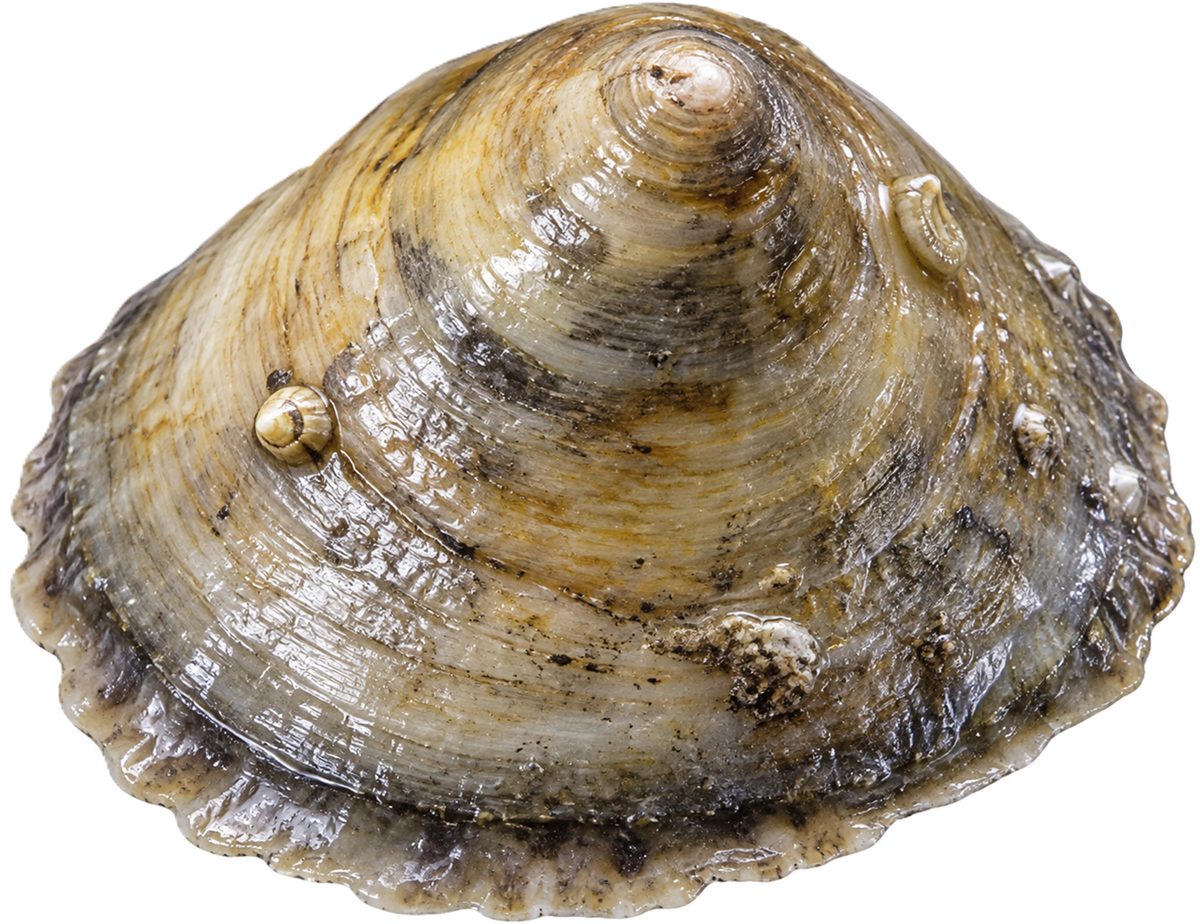 Calyptraea |
C. sp.1578Sohl, N. F. & Koch, C. F. (1984). Upper Cretaceous (Maastrichtian) larger invertebrate fossils from the Haustator bilira assemblage zone in the West Gulf Coastal Plain. U.S. Geological Survey Open-File Report, 84-687, 1–282. doi:10.3133/ofr846871579Foster, W. J. et al. (2020). Resilience of marine invertebrate communities during the early Cenozoic hyperthermals. Scientific Reports 10, 2176. Dataset S1. Prairie Bluff Chalk; Dataset-IDs 16159, 16637, 16724. Quellenbezeichnung: Calyptraea spp.. doi:10.1038/s41598-020-58986-51580Bryan, J. R. & Jones, D. S. (1989). Fabric of the Cretaceous-Tertiary marine macrofaunal transition at Braggs, Alabama. Palaeogeography, Palaeoclimatology, Palaeoecology 69, 279–301. Appendix I, S. 294, Prairie-Bluff-Spalten L. Quellenbezeichnung: Calyptraea sp. doi:10.1016/0031-0182(89)90170-3 | Escondido Formation Prairie Bluff Chalk |
USA (Alabama, Texas) | 72–66 Ma (Gattung 113 Ma bis heute) | selten | Calyptraeidae (Pantoffelschnecke) |
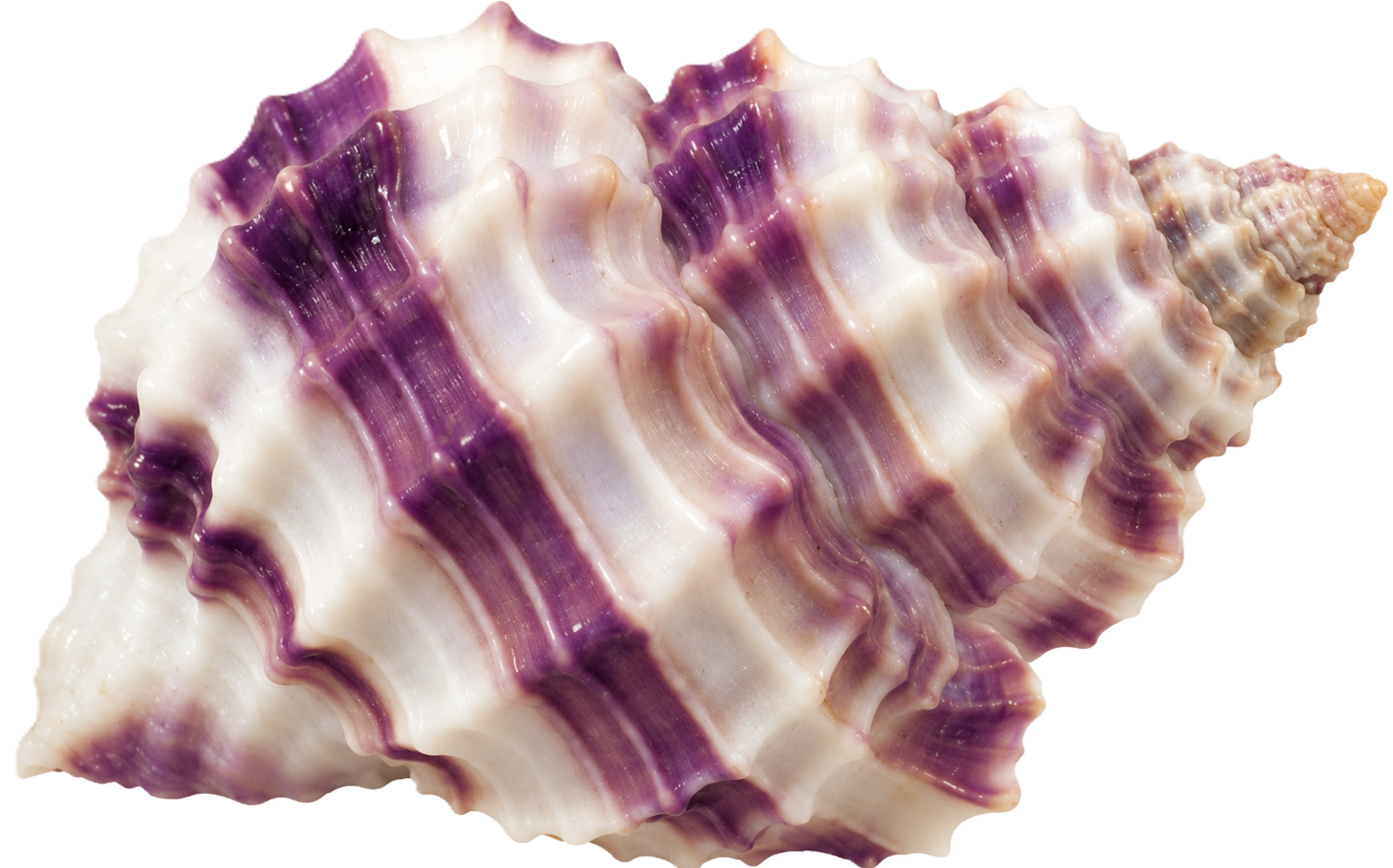 Cancellaria |
C. macnairyensis1581Bandel, K. & Dockery, D. T. III (2016). Mollusca of the Coon Creek Formation in Tennessee and Mississippi with a systematic discussion of the Gastropoda. Bulletin of the Alabama Museum of Natural History 33(1), 34–96. Systematischer Katalog, Nr. 214. Originalpublikation C. matsoni (?)1582Stephenson, L. W. (1941). The larger invertebrate fossils of the Navarro group of Texas (exclusive of corals and crustaceans and exclusive of the fauna of the Escondido formation). University of Texas Publication 4101, 1–641 C. siouxensis1583Erickson, J. M. (1974): Revision of the Gastropoda of the Fox Hills Formation, Upper Cretaceous (Maestrichtian) of North Dakota. Bulletins of American Paleontology 66(284): 131–253. S. 217–220. Originalveröffentlichung C. spp.1584Foster, W. J. et al. (2020). Resilience of marine invertebrate communities during the early Cenozoic hyperthermals. Scientific Reports 10, 2176. Supplementary Data 1 doi:10.1038/s41598-020-58986-5 |
Fox Hills Formation Kemp Clay Ripley Formation |
USA (North Dakota, Tennessee, Texas) | 72–66 Ma | häufig | Cancellariidae (Gitterschnecke) |
 |
Capulidae indet.1585Garvie, C. L. (2021). The Macrofauna of the Tehuacana Limestone Member (Danian, Kincaid Formation) of Central Texas, with the Description of a Few New Taxa from the Pisgah Member. Bulletins of American Paleontology 399–400, 1–292 doi:10.32857/bap.2021.399.01 | Kemp Clay | USA (Texas) | 68–66 Ma | Einzelfund | Capulidae (Kappenschnecke) |
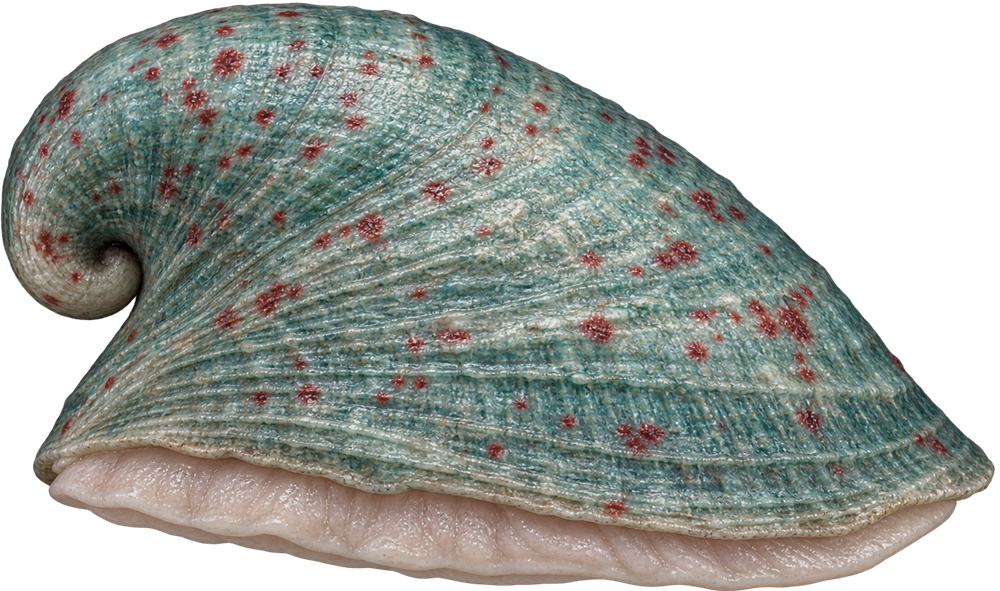 Capulus |
C. corrugatus1586Bandel, K. & Dockery, D. T. III (2016). Mollusca of the Coon Creek Formation in Tennessee and Mississippi with a systematic discussion of the Gastropoda. Bulletin of the Alabama Museum of Natural History 33(1), 34–96. Systematischer Katalog, Nr. 87. Originalpublikation C. cuthandensis1587Foster, W. J. et al. (2020). Resilience of marine invertebrate communities during the early Cenozoic hyperthermals. Scientific Reports 10, 2176. Dataset S1. Prairie Bluff Chalk; Dataset-IDs 14433, 14630. Quellenbezeichnung: Capulus cuthandensis. doi:10.1038/s41598-020-58986-51588Sohl, N. F. (1960). Archeogastropoda, Mesogastropoda, and stratigraphy of the Ripley, Owl Creek, and Prairie Bluff Formations. U.S. Geological Survey Professional Paper 331-A, 1–151. Prairie Bluff Chalk; Sohl (1960), S. 93. Quellenbestimmung: Capulus cuthandensis Stephenson?. doi:10.3133/pp331A C. microstriatus (?)1589Stephenson, L. W. (1941). The larger invertebrate fossils of the Navarro Group of Texas (exclusive of corals and crustaceans and exclusive of the fauna of the Escondido Formation). The University of Texas Publication, 4101, 1–641. C. monroei1590Bandel, K. & Dockery, D. T. III (2016). Mollusca of the Coon Creek Formation in Tennessee and Mississippi with a systematic discussion of the Gastropoda. Bulletin of the Alabama Museum of Natural History 33(1), 34–96. Systematischer Katalog, Nr. 86. Originalpublikation C. spangleri1591Foster, W. J. et al. (2020). Resilience of marine invertebrate communities during the early Cenozoic hyperthermals. Scientific Reports 10, 2176. Dataset S1. Prairie Bluff Chalk; Dataset-IDs 14780, 14996, 15140, 15159, 15274. Quellenbezeichnung: Capulus spangleri. doi:10.1038/s41598-020-58986-5 C. spp.1592Foster, W. J. et al. (2020). Resilience of marine invertebrate communities during the early Cenozoic hyperthermals. Scientific Reports 10, 2176. Dataset S1. Prairie Bluff Chalk; Dataset-IDs 15789. Quellenbezeichnung: Capulus sp.. doi:10.1038/s41598-020-58986-5 |
Corsicana Marl Prairie Bluff Chalk Ripley Formation |
USA (Alabama, Mississippi, Tennessee, Texas) | 72–66 Ma (Gattung mindestens 70 Ma bis heute) | häufig | Capulidae (Kappenschnecke) |
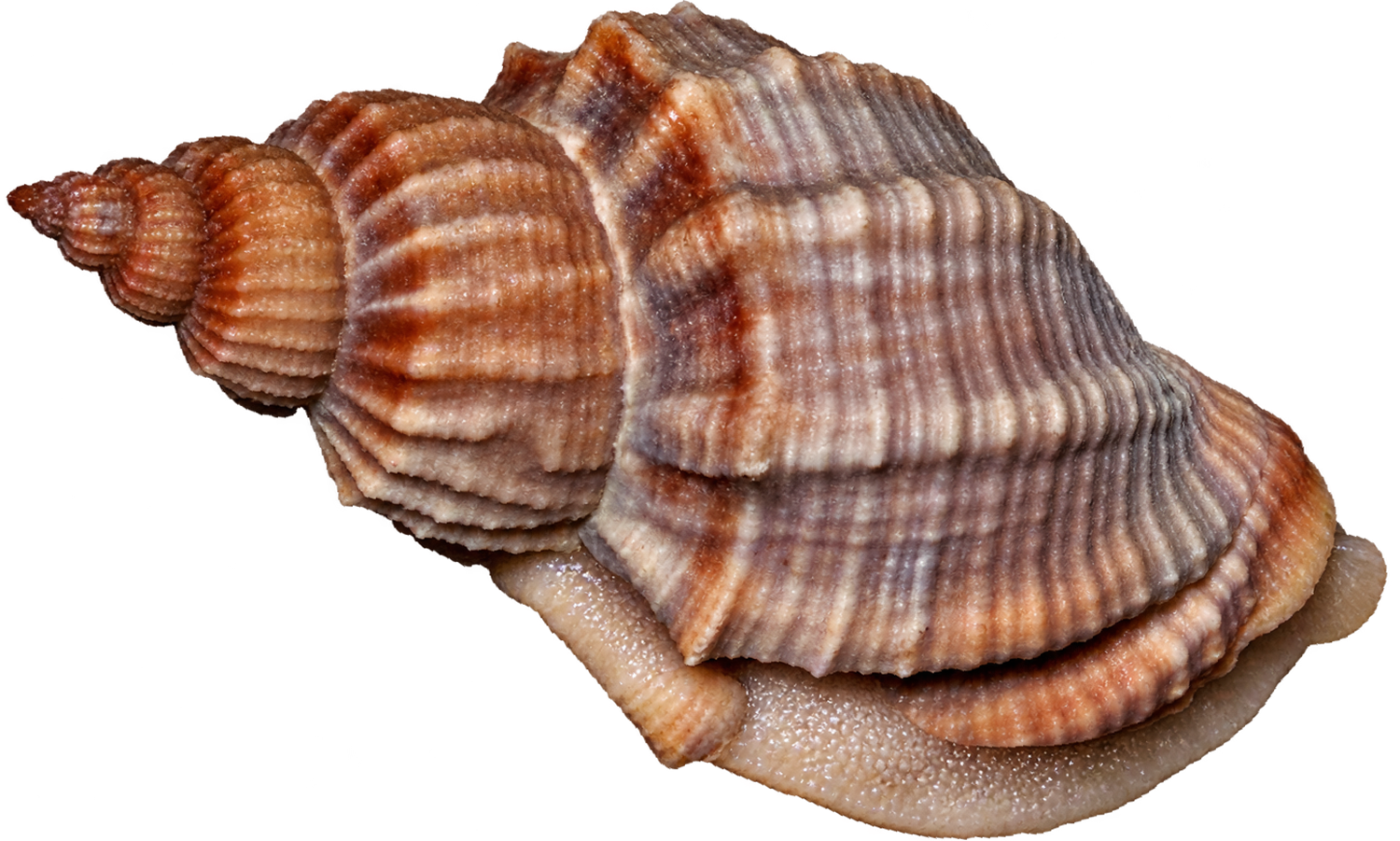 Caveola |
C. acuta1593Bandel, K. & Dockery, D. T. III (2016). Mollusca of the Coon Creek Formation in Tennessee and Mississippi with a systematic discussion of the Gastropoda. Bulletin of the Alabama Museum of Natural History 33(1), 34–96. Systematischer Katalog, Nr. 96. Originalpublikation C. acuta speciosa1594Bandel, K. & Dockery, D. T. III (2016). Mollusca of the Coon Creek Formation in Tennessee and Mississippi with a systematic discussion of the Gastropoda. Bulletin of the Alabama Museum of Natural History 33(1), 34–96. Systematischer Katalog, Nr. 97. Originalpublikation1595Sohl, N. F. & Koch, C. F. (1983). Upper Cretaceous (Maestrichtian) Mollusca from the Haustator bilira Assemblage Zone in the East Gulf Coastal Plain. U.S. Geological Survey Open-File Report 83-451, 1–239. Owl-Creek-Aufsammlungen 41, 45, 46; S. 23; 28–29; 30–33. doi:10.3133/ofr83451 Quellenbezeichnung: Caveola acuta speciosa. C. sp.1596Stephenson, L. W. (1941). The larger invertebrate fossils of the Navarro Group of Texas (exclusive of corals and crustaceans and exclusive of the fauna of the Escondido Formation). The University of Texas Publication, 4101, 1–6411597Foster, W. J. et al. (2020). Resilience of marine invertebrate communities during the early Cenozoic hyperthermals. Scientific Reports 10, 2176. Supplementary Data 1 doi:10.1038/s41598-020-58986-51598Stephenson, L. W. (1941). The larger invertebrate fossils of the Navarro group of Texas (exclusive of corals and crustaceans and exclusive of the fauna of the Escondido formation). University of Texas Publication 4101, 1–6411599Sohl, N. F. (1964). Neogastropoda, Opisthobranchia, and Basommatophora from the Ripley, Owl Creek, and Prairie Bluff Formations. U.S. Geological Survey Professional Paper 331-B, 153–344. Owl Creek Formation; Sohl (1964), S. 270. Quellenbestimmung: Caveola sp.. doi:10.3133/pp331B |
Corsicana Marl Kemp Clay Owl Creek Formation Ripley Formation |
USA (Mississippi, Tennessee, Texas) | 72–66 Ma (Gattung bis 56 Ma) | häufig | Cancellariidae (Gitterschnecke) |
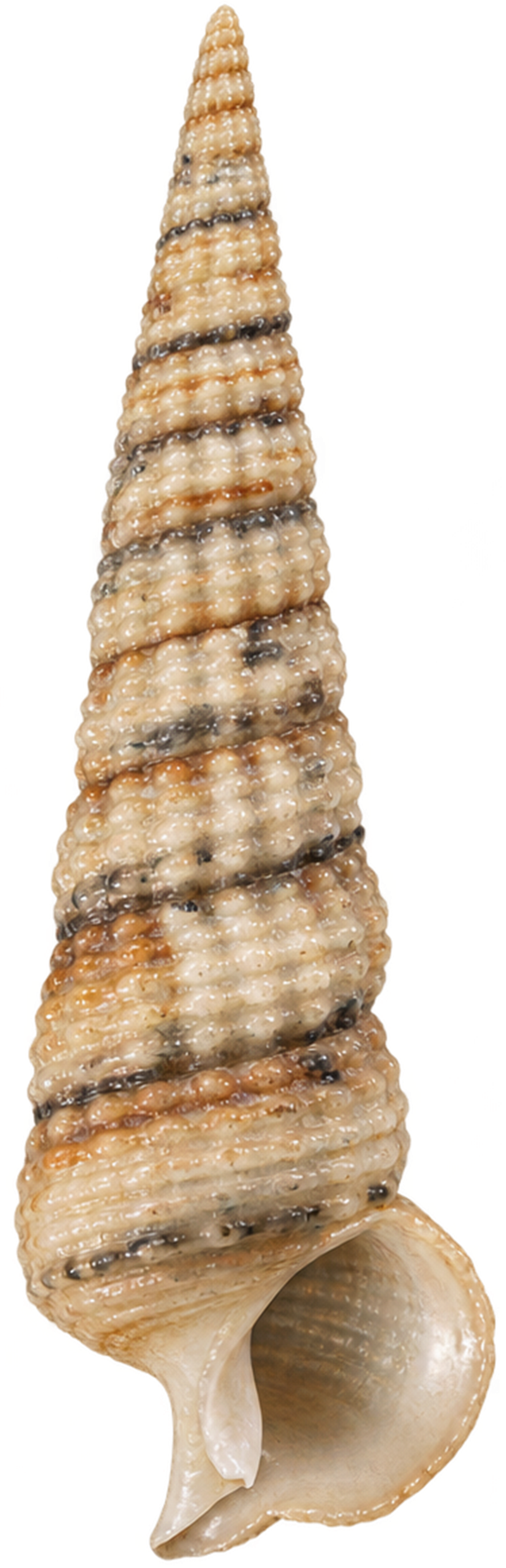 Cerithiella |
C. aff. nodolirata (?)1600Sohl, N. F. & Koch, C. F. (1984). Upper Cretaceous (Maastrichtian) larger invertebrate fossils from the Haustator bilira assemblage zone in the West Gulf Coastal Plain. U.S. Geological Survey Open-File Report, 84-687, 1–282. doi:10.3133/ofr84687 C. semirugata1601Sohl, N. F. & Koch, C. F. (1984). Upper Cretaceous (Maastrichtian) larger invertebrate fossils from the Haustator bilira assemblage zone in the West Gulf Coastal Plain. U.S. Geological Survey Open-File Report, 84-687, 1–282. doi:10.3133/ofr846871602Foster, W. J. et al. (2020). Resilience of marine invertebrate communities during the early Cenozoic hyperthermals. Scientific Reports 10, 2176. Dataset S1. Prairie Bluff Chalk; Dataset-IDs 16726. Quellenbezeichnung: Cerithiella semirugatum. doi:10.1038/s41598-020-58986-5 C. sp.1603Sohl, N. F. & Koch, C. F. (1984). Upper Cretaceous (Maastrichtian) larger invertebrate fossils from the Haustator bilira assemblage zone in the West Gulf Coastal Plain. U.S. Geological Survey Open-File Report, 84-687, 1–282. doi:10.3133/ofr846871604Foster, W. J. et al. (2020). Resilience of marine invertebrate communities during the early Cenozoic hyperthermals. Scientific Reports 10, 2176. Dataset S1. Prairie Bluff Chalk; Dataset-IDs 15569. Quellenbezeichnung: Cerithiella sp.. doi:10.1038/s41598-020-58986-5 |
Escondido Formation Prairie Bluff Chalk |
USA (Alabama, Texas) | 72–66 Ma (Gattung 121 Ma bis heute) | selten | Newtoniellidae |
| Cerithioderma | C. americana1605Bandel, K. & Dockery, D. T. III (2016). Mollusca of the Coon Creek Formation in Tennessee and Mississippi with a systematic discussion of the Gastropoda. Bulletin of the Alabama Museum of Natural History 33(1), 34–96. Systematischer Katalog, Nr. 83. Originalpublikation | Ripley Formation | USA (Tennessee) | 72–69 Ma | nicht quantifiziert | Trichotropidae (Schnecke) |
 |
Cerithioidea indet.1606Sohl, N. F. & Koch, C. F. (1984). Upper Cretaceous (Maastrichtian) larger invertebrate fossils from the Haustator bilira assemblage zone in the West Gulf Coastal Plain. U.S. Geological Survey Open-File Report, 84-687, 1–282. doi:10.3133/ofr84687 | Escondido Formation | USA (Texas) | 72–66 Ma | selten | Cerithioidea (Hornschnecke) |
| Cerithiopsis | C. spp.1607Foster, W. J. et al. (2020). Resilience of marine invertebrate communities during the early Cenozoic hyperthermals. Scientific Reports 10, 2176. Dataset S1. Prairie Bluff Chalk; Dataset-IDs 14885. Quellenbezeichnung: Cerithiopsis sp.. doi:10.1038/s41598-020-58986-51608Paleobiology Database (2026). Gattungs-Vorkommensrahmen; Datenabfrage vom 24. Oktober 2026. Gerundeter Gattungsrahmen für Cerithiopsis; durch die direkt geprüften Formationsnachweise gegebenenfalls erweitert. Originalpublikation | Prairie Bluff Chalk | USA (Alabama) | 126–0 Ma | nicht quantifiziert | Cerithiopsidae (Schnecke) |
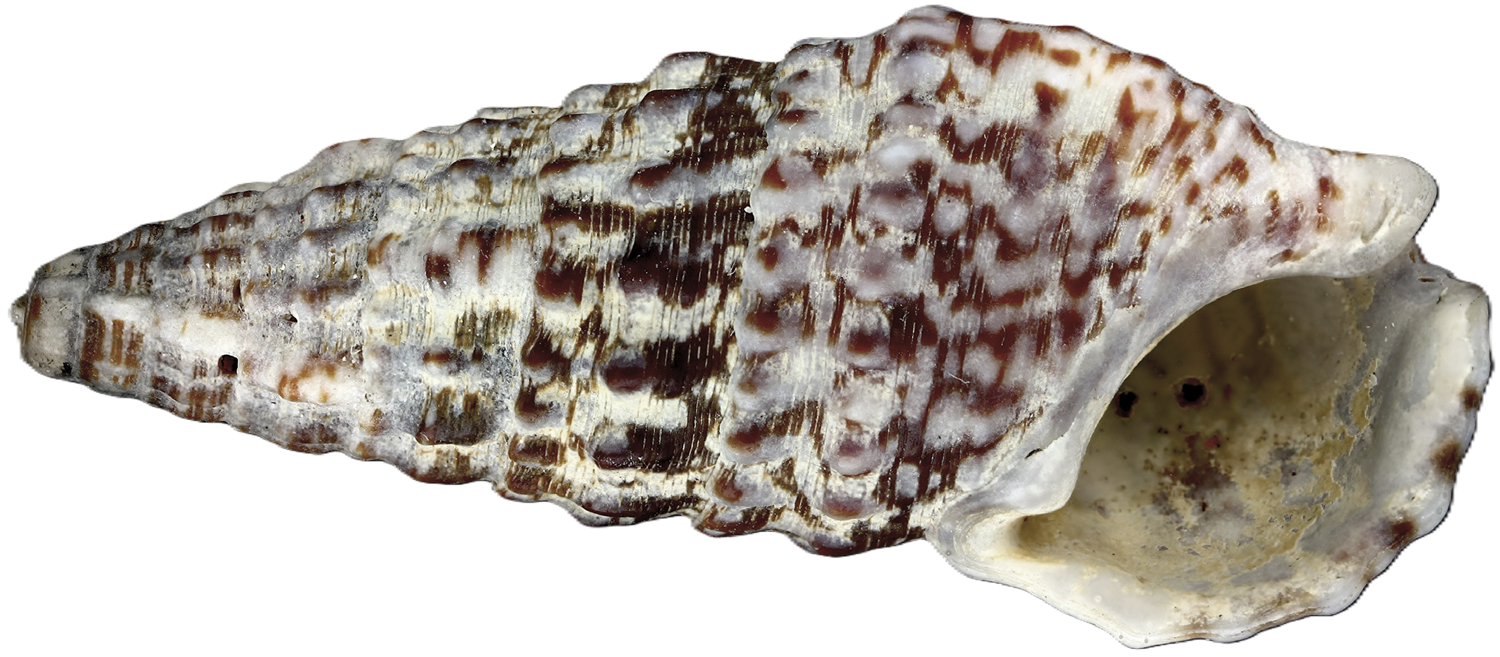 Cerithium |
C. nodoliratum1609Bandel, K. & Dockery, D. T. III (2016). Mollusca of the Coon Creek Formation in Tennessee and Mississippi with a systematic discussion of the Gastropoda. Bulletin of the Alabama Museum of Natural History 33(1), 34–96. Systematischer Katalog, Nr. 12. Originalpublikation C. pecosense1610Ryan, D. R., Witts, J. D. & Landman, N. H. (2021): Palaeoecological analysis of a methane seep deposit from the Upper Cretaceous (Maastrichtian) of the U.S. Western Interior. Lethaia 54(2): 185–203. Tabelle 1. doi:10.1111/let.12396 C. semirugatum1611Bandel, K. & Dockery, D. T. III (2016). Mollusca of the Coon Creek Formation in Tennessee and Mississippi with a systematic discussion of the Gastropoda. Bulletin of the Alabama Museum of Natural History 33(1), 34–96. Systematischer Katalog, Nr. 13. Originalpublikation C. cf. simpsonense1612Foster, W. J. et al. (2020). Resilience of marine invertebrate communities during the early Cenozoic hyperthermals. Scientific Reports 10, 2176. Supplementary Data 1 doi:10.1038/s41598-020-58986-5 C. weeksi1613Bandel, K. & Dockery, D. T. III (2016). Mollusca of the Coon Creek Formation in Tennessee and Mississippi with a systematic discussion of the Gastropoda. Bulletin of the Alabama Museum of Natural History 33(1), 34–96. Systematischer Katalog, Nr. 11. Originalpublikation1614Foster, W. J. et al. (2020). Resilience of marine invertebrate communities during the early Cenozoic hyperthermals. Scientific Reports 10, 2176. Dataset S1. Prairie Bluff Chalk; Dataset-IDs 15189, 16727. Quellenbezeichnung: Cerithium weeksi. doi:10.1038/s41598-020-58986-5 C. sp.1615Sohl, N. F. & Koch, C. F. (1984). Upper Cretaceous (Maastrichtian) larger invertebrate fossils from the Haustator bilira assemblage zone in the West Gulf Coastal Plain. U.S. Geological Survey Open-File Report, 84-687, 1–282. doi:10.3133/ofr846871616Stephenson, L. W. (1941). The larger invertebrate fossils of the Navarro group of Texas (exclusive of corals and crustaceans and exclusive of the fauna of the Escondido formation). University of Texas Publication 4101, 1–6411617Foster, W. J. et al. (2020). Resilience of marine invertebrate communities during the early Cenozoic hyperthermals. Scientific Reports 10, 2176. Dataset S1. Prairie Bluff Chalk; Dataset-IDs 15570. Quellenbezeichnung: Cerithium sp.. doi:10.1038/s41598-020-58986-5 |
Escondido Formation Kemp Clay Pierre Shale Prairie Bluff Chalk Ripley Formation |
USA (Alabama, Montana, Tennessee, Texas) | 72–66 Ma (Gattung 237 Ma bis heute) | sehr häufig | Cerithiidae (Hornschnecke) |
| Charonia | C. univaricosum1618Bandel, K. & Dockery, D. T. III (2016). Mollusca of the Coon Creek Formation in Tennessee and Mississippi with a systematic discussion of the Gastropoda. Bulletin of the Alabama Museum of Natural History 33(1), 34–96. Systematischer Katalog, Nr. 98. Originalpublikation C. spp.1619Foster, W. J. et al. (2020). Resilience of marine invertebrate communities during the early Cenozoic hyperthermals. Scientific Reports 10, 2176. Dataset S1. Prairie Bluff Chalk; Dataset-IDs 15369, 15474, 15932. Quellenbezeichnung: Charonia sp.. doi:10.1038/s41598-020-58986-5 |
Prairie Bluff Chalk Ripley Formation |
USA (Alabama, Tennessee) | 72–66 Ma | nicht quantifiziert | Ranellidae (Schnecke) |
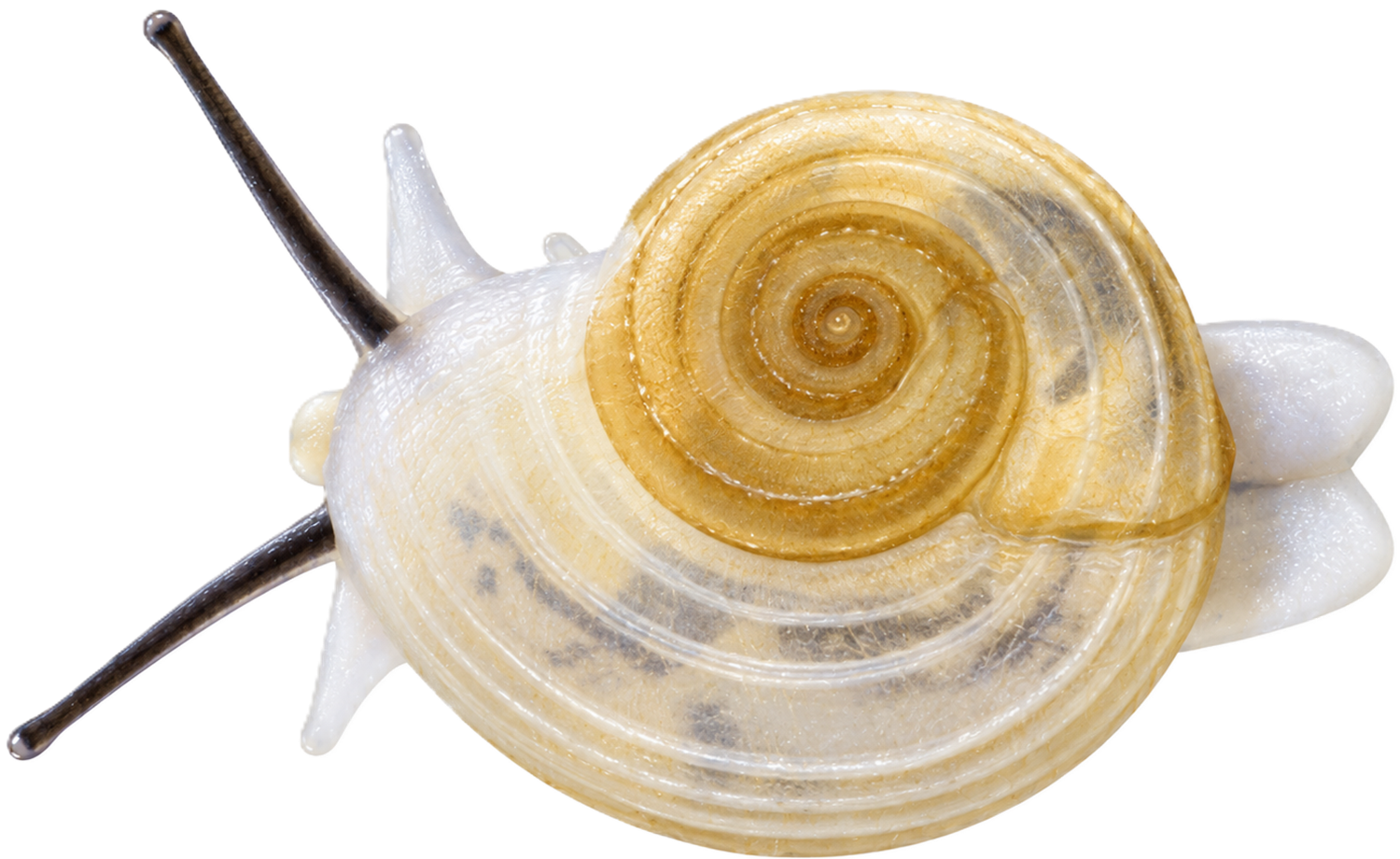 Circulus |
C. sp. (?)1620Foster, W. J. et al. (2020). Resilience of marine invertebrate communities during the early Cenozoic hyperthermals. Scientific Reports 10, 2176. Supplementary Data 1 doi:10.1038/s41598-020-58986-5 | Kemp Clay | USA (Texas) | 68–66 Ma | selten | Tornidae (Tornusschnecke) |
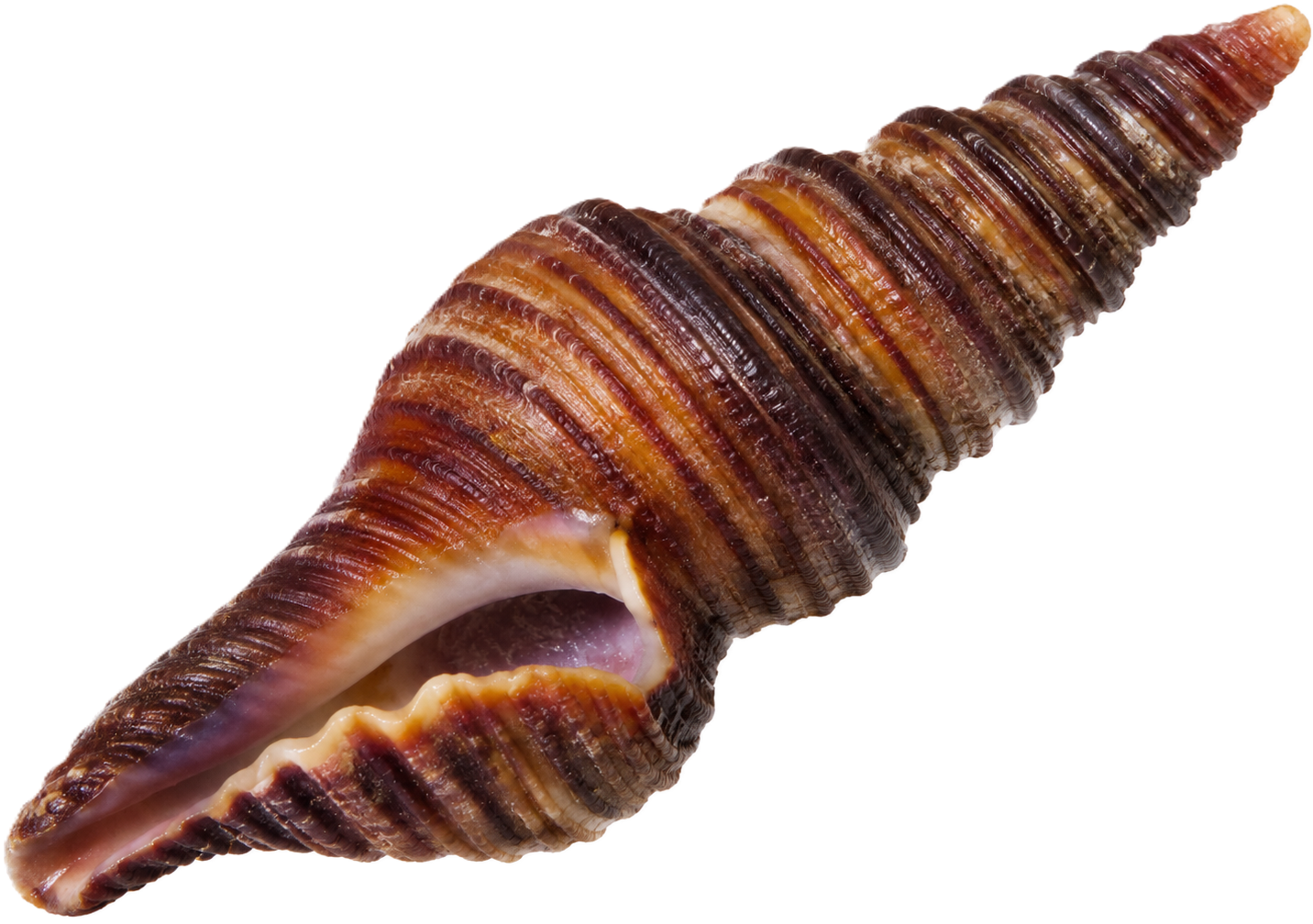 Coronia |
C. sp.1621Foster, W. J. et al. (2020). Resilience of marine invertebrate communities during the early Cenozoic hyperthermals. Scientific Reports 10, 2176. Supplementary Data 1 doi:10.1038/s41598-020-58986-5 | Kemp Clay | USA (Texas) | 68–66 Ma | selten | Turridae (Schlitzturmschnecke) |
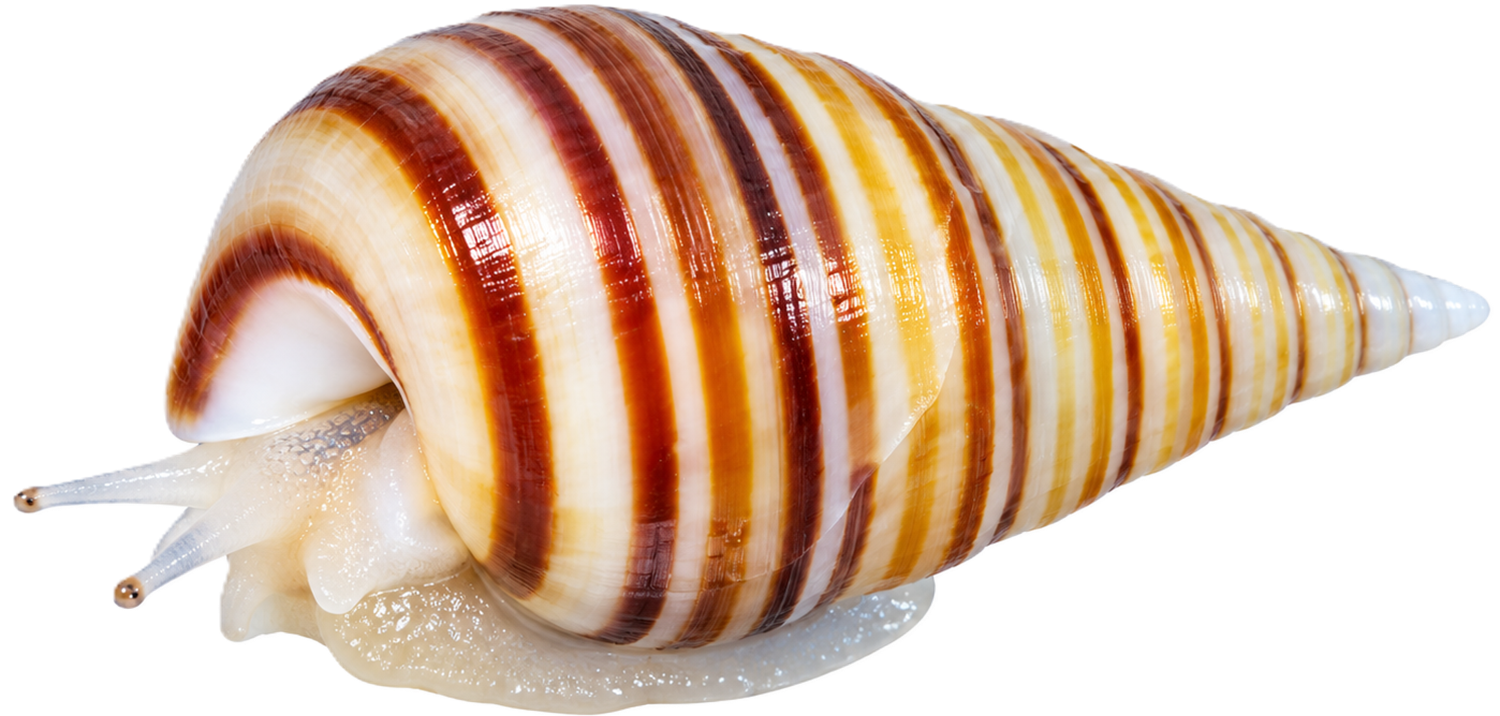 Creonella |
C. deusseni1622Stephenson, L. W. (1941). The larger invertebrate fossils of the Navarro group of Texas (exclusive of corals and crustaceans and exclusive of the fauna of the Escondido formation). University of Texas Publication 4101, 1–641 C. subangulata1623Bandel, K. & Dockery, D. T. III (2016). Mollusca of the Coon Creek Formation in Tennessee and Mississippi with a systematic discussion of the Gastropoda. Bulletin of the Alabama Museum of Natural History 33(1), 34–96. Systematischer Katalog, Nr. 230. Originalpublikation C. cf. subangulata1624Sohl, N. F. & Koch, C. F. (1983). Upper Cretaceous (Maestrichtian) Mollusca from the Haustator bilira Assemblage Zone in the East Gulf Coastal Plain. U.S. Geological Survey Open-File Report 83-451, 1–239. Owl-Creek-Aufsammlungen 45; S. 28–29. doi:10.3133/ofr83451 Quellenbezeichnung: Creonella cf. subangulata.1625Sohl, N. F. (1964). Neogastropoda, Opisthobranchia, and Basommatophora from the Ripley, Owl Creek, and Prairie Bluff Formations. U.S. Geological Survey Professional Paper 331-B, 153–344. Owl Creek Formation; Sohl (1964), S. 311. Quellenbestimmung: Creonella cf. C. subangulata Sohl. doi:10.3133/pp331B C. triplicata1626Bandel, K. & Dockery, D. T. III (2016). Mollusca of the Coon Creek Formation in Tennessee and Mississippi with a systematic discussion of the Gastropoda. Bulletin of the Alabama Museum of Natural History 33(1), 34–96. Systematischer Katalog, Nr. 229. Originalpublikation C. turretiforma1627Bandel, K. & Dockery, D. T. III (2016). Mollusca of the Coon Creek Formation in Tennessee and Mississippi with a systematic discussion of the Gastropoda. Bulletin of the Alabama Museum of Natural History 33(1), 34–96. Systematischer Katalog, Nr. 231. Originalpublikation C. sp.1628Foster, W. J. et al. (2020). Resilience of marine invertebrate communities during the early Cenozoic hyperthermals. Scientific Reports 10, 2176. Supplementary Data 1 doi:10.1038/s41598-020-58986-51629Foster, W. J. et al. (2020). Resilience of marine invertebrate communities during the early Cenozoic hyperthermals. Scientific Reports 10, 2176. Dataset S1. Prairie Bluff Chalk; Dataset-IDs 14786. Quellenbezeichnung: Creonella sp.. doi:10.1038/s41598-020-58986-5 |
Kemp Clay Owl Creek Formation Prairie Bluff Chalk Ripley Formation |
USA (Mississippi, Tennessee, Texas) | 72–66 Ma | häufig | Pyramidellidae (Pyramidenschnecke) |
| Crucibulum | C. spp.1630Bandel, K. & Dockery, D. T. III (2016). Mollusca of the Coon Creek Formation in Tennessee and Mississippi with a systematic discussion of the Gastropoda. Bulletin of the Alabama Museum of Natural History 33(1), 34–96. Systematischer Katalog, Nr. 81. Originalpublikation1631Foster, W. J. et al. (2020). Resilience of marine invertebrate communities during the early Cenozoic hyperthermals. Scientific Reports 10, 2176. Dataset S1. Prairie Bluff Chalk; Dataset-IDs 16117, 16374. Quellenbezeichnung: Crucibulum sp.. doi:10.1038/s41598-020-58986-51632Bryan, J. R. & Jones, D. S. (1989). Fabric of the Cretaceous-Tertiary marine macrofaunal transition at Braggs, Alabama. Palaeogeography, Palaeoclimatology, Palaeoecology 69, 279–301. Appendix I, S. 294, Prairie-Bluff-Spalten L. Quellenbezeichnung: Crucibulum sp. doi:10.1016/0031-0182(89)90170-3 | Prairie Bluff Chalk Ripley Formation |
USA (Alabama, Bundesstaat nicht einzeln ausgewiesen) | 72–66 Ma | nicht quantifiziert | Calyptraeidae (Schnecke) |
| Cryptoconus | C. mcnairyensis1633Bandel, K. & Dockery, D. T. III (2016). Mollusca of the Coon Creek Formation in Tennessee and Mississippi with a systematic discussion of the Gastropoda. Bulletin of the Alabama Museum of Natural History 33(1), 34–96. Systematischer Katalog, Nr. 194. Originalpublikation | Ripley Formation | USA (Tennessee) | 72–69 Ma | nicht quantifiziert | Pseudolividae (Schnecke) |
| Cryptorhytis | C. cheyennensis1634Ryan, D. R., Witts, J. D. & Landman, N. H. (2021): Palaeoecological analysis of a methane seep deposit from the Upper Cretaceous (Maastrichtian) of the U.S. Western Interior. Lethaia 54(2): 185–203. Tabelle 1. doi:10.1111/let.12396 C. cf. flexicostata1635Sohl, N. F. (1967): Upper Cretaceous gastropods from the Pierre Shale at Red Bird, Wyoming. U.S. Geological Survey Professional Paper 393-B: B1–B46. S. B5, Baculites clinolobatus-Zone. doi:10.3133/pp393B C. flexicostata (?)1636Erickson, J. M. (1974): Revision of the Gastropoda of the Fox Hills Formation, Upper Cretaceous (Maestrichtian) of North Dakota. Bulletins of American Paleontology 66(284): 131–253. Fox-Hills-Bestimmung fraglich. S. 208–210. Originalveröffentlichung C. nobilis1637Bandel, K. & Dockery, D. T. III (2016). Mollusca of the Coon Creek Formation in Tennessee and Mississippi with a systematic discussion of the Gastropoda. Bulletin of the Alabama Museum of Natural History 33(1), 34–96. Systematischer Katalog, Nr. 135. Originalpublikation C. sp. (?)1638Foster, W. J. et al. (2020). Resilience of marine invertebrate communities during the early Cenozoic hyperthermals. Scientific Reports 10, 2176. Supplementary Data 1 doi:10.1038/s41598-020-58986-5 |
Fox Hills Formation Kemp Clay Pierre Shale Ripley Formation |
USA (Colorado, Montana, North Dakota, Tennessee, Texas) | 72–66 Ma | häufig | Fasciolariidae |
 Cylichna |
C. diversilirata1639Sohl, N. F. & Koch, C. F. (1983). Upper Cretaceous (Maestrichtian) Mollusca from the Haustator bilira Assemblage Zone in the East Gulf Coastal Plain. U.S. Geological Survey Open-File Report 83-451, 1–239. Owl-Creek-Aufsammlungen 41, 44, 45, 46; S. 23; 26–27; 28–29; 30–33. doi:10.3133/ofr83451 Quellenbezeichnung: Cylichna diversilirata.1640Foster, W. J. et al. (2020). Resilience of marine invertebrate communities during the early Cenozoic hyperthermals. Scientific Reports 10, 2176. Dataset S1. Prairie Bluff Chalk; Dataset-IDs 16735. Quellenbezeichnung: Cylichna diversilirata. doi:10.1038/s41598-020-58986-51641Sohl, N. F. (1964). Neogastropoda, Opisthobranchia, and Basommatophora from the Ripley, Owl Creek, and Prairie Bluff Formations. U.S. Geological Survey Professional Paper 331-B, 153–344. Owl Creek Formation; Sohl (1964), S. 299. Quellenbestimmung: Cylichna diversilirata Sohl, n. sp.. doi:10.3133/pp331B C. incisa1642Bandel, K. & Dockery, D. T. III (2016). Mollusca of the Coon Creek Formation in Tennessee and Mississippi with a systematic discussion of the Gastropoda. Bulletin of the Alabama Museum of Natural History 33(1), 34–96. Systematischer Katalog, Nr. 252. Originalpublikation1643Sohl, N. F. & Koch, C. F. (1983). Upper Cretaceous (Maestrichtian) Mollusca from the Haustator bilira Assemblage Zone in the East Gulf Coastal Plain. U.S. Geological Survey Open-File Report 83-451, 1–239. Owl-Creek-Aufsammlungen 40, 46; S. 21–22; 30–33. doi:10.3133/ofr83451 Quellenbezeichnung: Cylichna incisa.1644Foster, W. J. et al. (2020). Resilience of marine invertebrate communities during the early Cenozoic hyperthermals. Scientific Reports 10, 2176. Dataset S1. Prairie Bluff Chalk; Dataset-IDs 16736. Quellenbezeichnung: Cylichna incisa. doi:10.1038/s41598-020-58986-51645Sohl, N. F. (1964). Neogastropoda, Opisthobranchia, and Basommatophora from the Ripley, Owl Creek, and Prairie Bluff Formations. U.S. Geological Survey Professional Paper 331-B, 153–344. Owl Creek Formation; Sohl (1964), S. 300. Quellenbestimmung: Cylichna incisa Stephenson. doi:10.3133/pp331B C. intermissia1646Bandel, K. & Dockery, D. T. III (2016). Mollusca of the Coon Creek Formation in Tennessee and Mississippi with a systematic discussion of the Gastropoda. Bulletin of the Alabama Museum of Natural History 33(1), 34–96. Systematischer Katalog, Nr. 253. Originalpublikation C. intermissia curta1647Bandel, K. & Dockery, D. T. III (2016). Mollusca of the Coon Creek Formation in Tennessee and Mississippi with a systematic discussion of the Gastropoda. Bulletin of the Alabama Museum of Natural History 33(1), 34–96. Systematischer Katalog, Nr. 254. Originalpublikation C. pessumata1648Bandel, K. & Dockery, D. T. III (2016). Mollusca of the Coon Creek Formation in Tennessee and Mississippi with a systematic discussion of the Gastropoda. Bulletin of the Alabama Museum of Natural History 33(1), 34–96. Systematischer Katalog, Nr. 255. Originalpublikation C. scitula1649Erickson, J. M. (1974): Revision of the Gastropoda of the Fox Hills Formation, Upper Cretaceous (Maestrichtian) of North Dakota. Bulletins of American Paleontology 66(284): 131–253. S. 228–229. Originalveröffentlichung C. secalina1650Bandel, K. & Dockery, D. T. III (2016). Mollusca of the Coon Creek Formation in Tennessee and Mississippi with a systematic discussion of the Gastropoda. Bulletin of the Alabama Museum of Natural History 33(1), 34–96. Systematischer Katalog, Nr. 251. Originalpublikation C. volvaria (?)1651Erickson, J. M. (1974): Revision of the Gastropoda of the Fox Hills Formation, Upper Cretaceous (Maestrichtian) of North Dakota. Bulletins of American Paleontology 66(284): 131–253. Fox-Hills-Bestimmung fraglich. S. 229–230. Originalveröffentlichung C. spp.1652Sohl, N. F. & Koch, C. F. (1984). Upper Cretaceous (Maastrichtian) larger invertebrate fossils from the Haustator bilira assemblage zone in the West Gulf Coastal Plain. U.S. Geological Survey Open-File Report, 84-687, 1–282. doi:10.3133/ofr846871653Stephenson, L. W. (1941). The larger invertebrate fossils of the Navarro Group of Texas (exclusive of corals and crustaceans and exclusive of the fauna of the Escondido Formation). The University of Texas Publication, 4101, 1–6411654Stephenson, L. W. (1941). The larger invertebrate fossils of the Navarro group of Texas (exclusive of corals and crustaceans and exclusive of the fauna of the Escondido formation). University of Texas Publication 4101, 1–6411655Foster, W. J. et al. (2020). Resilience of marine invertebrate communities during the early Cenozoic hyperthermals. Scientific Reports 10, 2176. Supplementary Data 1 doi:10.1038/s41598-020-58986-51656Ifrim, C., Stinnesbeck, W. & López-Oliva, J. G. (2004). Maastrichtian cephalopods from Cerralvo, north-eastern Mexico. Palaeontology 47(6), 1575–1627. doi:10.1111/j.0031-0239.2004.00426.x1657Sohl, N. F. (1967): Upper Cretaceous gastropods from the Pierre Shale at Red Bird, Wyoming. U.S. Geological Survey Professional Paper 393-B: B1–B46. S. B5, Baculites clinolobatus-Zone. doi:10.3133/pp393B1658Darton, N. H. (1905): Preliminary report on the geology and underground water resources of the central Great Plains. U.S. Geological Survey Professional Paper 32: 1–433. S. 110. doi:10.3133/pp32 Originalveröffentlichung1659Cvancara, A. M. (1957): Gastropoda from the Pierre Shale (Upper Cretaceous) of Emmons County, south-central North Dakota. M.Sc.-Abschlussarbeit, University of North Dakota, Grand Forks. Tabelle 1 und S. 53–55. Originalveröffentlichung1660Erickson, J. M. (1974): Revision of the Gastropoda of the Fox Hills Formation, Upper Cretaceous (Maestrichtian) of North Dakota. Bulletins of American Paleontology 66(284): 131–253. Revision und Fundortzuordnung. Originalveröffentlichung1661Foster, W. J. et al. (2020). Resilience of marine invertebrate communities during the early Cenozoic hyperthermals. Scientific Reports 10, 2176. Dataset S1. Prairie Bluff Chalk; Dataset-IDs 14889, 16291, 16584. Quellenbezeichnung: Cylichna sp.. doi:10.1038/s41598-020-58986-51662Bryan, J. R. & Jones, D. S. (1989). Fabric of the Cretaceous-Tertiary marine macrofaunal transition at Braggs, Alabama. Palaeogeography, Palaeoclimatology, Palaeoecology 69, 279–301. Appendix I, S. 295, Prairie-Bluff-Spalten U. Quellenbezeichnung: Cyclichna sp. doi:10.1016/0031-0182(89)90170-3 |
Arkadelphia Marl Corsicana Marl Escondido Formation Fox Hills Formation Kemp Clay Méndez Formation Owl Creek Formation Pierre Shale (?) Prairie Bluff Chalk Ripley Formation |
USA (Alabama, Arkansas, Colorado, Mississippi, North Dakota, South Dakota, Tennessee, Texas); Mexiko (Nuevo León) | 72–66 Ma (Gattung 168 Ma bis heute) | sehr häufig | Cylichnidae (Zylinderschnecke) |
| Cylindriscala | C. coffea1663Bandel, K. & Dockery, D. T. III (2016). Mollusca of the Coon Creek Formation in Tennessee and Mississippi with a systematic discussion of the Gastropoda. Bulletin of the Alabama Museum of Natural History 33(1), 34–96. Literaturübersicht. Zusätzlicher historischer bzw. revidierter Nachweis außerhalb der nummerierten Artenfolge. Originalpublikation | Ripley Formation | USA (Tennessee) | 72–69 Ma | nicht quantifiziert | Epitoniidae (Schnecke) |
| Cylindrotruncatum | C. demersum1664Landman, N. H., Slattery, J. S. & Harries, P. J. (2016): Encrustation of inarticulate brachiopods on scaphitid ammonites and inoceramid bivalves from the Upper Cretaceous U.S. Western Interior. Acta Geologica Polonica 66(4): 645–662. Anhang, Tabelle 1. doi:10.1515/agp-2016-00341665Landman, N. H. et al. (2026): The Campanian-Maastrichtian Boundary in the Pierre Shale, Cedar Creek Anticline, Montana: Environment of Deposition Based on Geochemical, Sedimentological, and Paleontological Evidence. American Museum Novitates 4052: 1–53. Anhang 1. doi:10.1206/4052.11666Bandel, K. & Dockery, D. T. III (2016). Mollusca of the Coon Creek Formation in Tennessee and Mississippi with a systematic discussion of the Gastropoda. Bulletin of the Alabama Museum of Natural History 33(1), 34–96. Systematischer Katalog, Nr. 256. Originalpublikation C. cf. demersum1667Brinster, K. F. (1970): Molluscan paleontology of the Pierre Shale (Upper Cretaceous), Bowman County, North Dakota. M.Sc.-Abschlussarbeit, University of North Dakota, Grand Forks. Systematik S. 35–49. Originalveröffentlichung C. sp.1668Foster, W. J. et al. (2020). Resilience of marine invertebrate communities during the early Cenozoic hyperthermals. Scientific Reports 10, 2176. Supplementary Data 1 doi:10.1038/s41598-020-58986-51669Foster, W. J. et al. (2020). Resilience of marine invertebrate communities during the early Cenozoic hyperthermals. Scientific Reports 10, 2176. Dataset S1. Prairie Bluff Chalk; Dataset-IDs 15413. Quellenbezeichnung: Cylindrotruncatum sp.. doi:10.1038/s41598-020-58986-5 |
Kemp Clay Pierre Shale Prairie Bluff Chalk Ripley Formation |
USA (Alabama, Montana, North Dakota, Tennessee, Texas) | 74–66 Ma | häufig | Tornatinidae |
| Cypraea | C. spp.1670Foster, W. J. et al. (2020). Resilience of marine invertebrate communities during the early Cenozoic hyperthermals. Scientific Reports 10, 2176. Dataset S1. Prairie Bluff Chalk; Dataset-IDs 15344. Quellenbezeichnung: Cypraea sp.. doi:10.1038/s41598-020-58986-51671Paleobiology Database (2026). Gattungs-Vorkommensrahmen; Datenabfrage vom 24. Oktober 2026. Gerundeter Gattungsrahmen für Cypraea; durch die direkt geprüften Formationsnachweise gegebenenfalls erweitert. Originalpublikation | Prairie Bluff Chalk | USA (Alabama) | 72–0 Ma | nicht quantifiziert | Cypraeidae (Schnecke) |
| Damesia | D. keownvillensis1672Bandel, K. & Dockery, D. T. III (2016). Mollusca of the Coon Creek Formation in Tennessee and Mississippi with a systematic discussion of the Gastropoda. Bulletin of the Alabama Museum of Natural History 33(1), 34–96. Systematischer Katalog, Nr. 88. Originalpublikation | Ripley Formation | USA (Bundesstaat nicht einzeln ausgewiesen) | 72–69 Ma | nicht quantifiziert | Trichotropidae (Schnecke) |
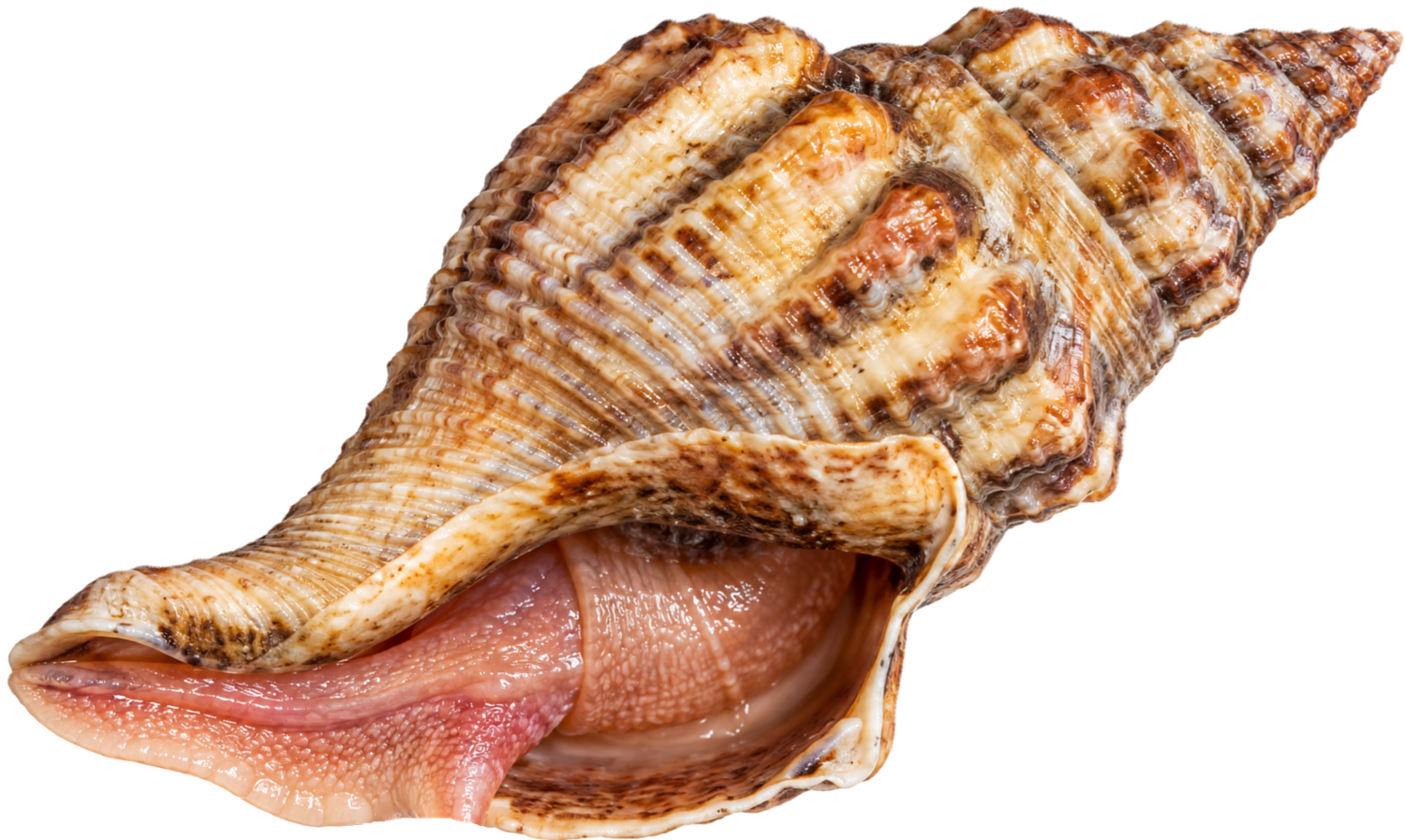 Deussenia |
D. bellalirata1673Sohl, N. F. & Koch, C. F. (1983). Upper Cretaceous (Maestrichtian) Mollusca from the Haustator bilira Assemblage Zone in the East Gulf Coastal Plain. U.S. Geological Survey Open-File Report 83-451, 1–239. Owl-Creek-Aufsammlungen 46; S. 30–33. doi:10.3133/ofr83451 Quellenbezeichnung: Deussenia bellalirata.1674Sohl, N. F. (1964). Neogastropoda, Opisthobranchia, and Basommatophora from the Ripley, Owl Creek, and Prairie Bluff Formations. U.S. Geological Survey Professional Paper 331-B, 153–344. Owl Creek Formation; Sohl (1964), S. 200. Quellenbestimmung: Deussenia bellalirata bellalirata (Conrad). doi:10.3133/pp331B1675Sohl, N. F. (1964). Neogastropoda, Opisthobranchia, and Basommatophora from the Ripley, Owl Creek, and Prairie Bluff Formations. U.S. Geological Survey Professional Paper 331-B, 153–344. Owl Creek Formation; Sohl (1964), S. 200. Quellenbestimmung: Deussenia bellalirata costata Sohl, n. subsp.. doi:10.3133/pp331B D. ? bellalirata bellalirata1676Sohl, N. F. (1964). Neogastropoda, Opisthobranchia, and Basommatophora from the Ripley, Owl Creek, and Prairie Bluff Formations. U.S. Geological Survey Professional Paper 331-B, 153–344. Prairie Bluff Chalk; Sohl (1964), S. 200. Quellenbestimmung: Deussenia bellalirata bellalirata (Conrad). doi:10.3133/pp331B D. bellalirata costata1677Sohl, N. F. & Koch, C. F. (1983). Upper Cretaceous (Maestrichtian) Mollusca from the Haustator bilira Assemblage Zone in the East Gulf Coastal Plain. U.S. Geological Survey Open-File Report 83-451, 1–239. Owl-Creek-Aufsammlungen 40, 45, 46; S. 21–22; 28–29; 30–33. doi:10.3133/ofr83451 Quellenbezeichnung: Deussenia bellalirata costata. D. cf. ciboloensis1678Foster, W. J. et al. (2020). Resilience of marine invertebrate communities during the early Cenozoic hyperthermals. Scientific Reports 10, 2176. Supplementary Data 1 doi:10.1038/s41598-020-58986-5 D. ciboloensis1679Wolleben, J.A. (1977): Paleontology of the Difunta Group (Upper Cretaceous–Tertiary) in northeastern Mexico. Journal of Paleontology 51(2): 373–398.1680Stephenson, L. W. (1941). The larger invertebrate fossils of the Navarro group of Texas (exclusive of corals and crustaceans and exclusive of the fauna of the Escondido formation). University of Texas Publication 4101, 1–641 D. corbis1681Stephenson, L. W. (1941). The larger invertebrate fossils of the Navarro group of Texas (exclusive of corals and crustaceans and exclusive of the fauna of the Escondido formation). University of Texas Publication 4101, 1–641 D. microstriata1682Bandel, K. & Dockery, D. T. III (2016). Mollusca of the Coon Creek Formation in Tennessee and Mississippi with a systematic discussion of the Gastropoda. Bulletin of the Alabama Museum of Natural History 33(1), 34–96. Systematischer Katalog, Nr. 128. Originalpublikation D. multilirae1683Foster, W. J. et al. (2020). Resilience of marine invertebrate communities during the early Cenozoic hyperthermals. Scientific Reports 10, 2176. Supplementary Data 1 doi:10.1038/s41598-020-58986-51684Stephenson, L. W. (1941). The larger invertebrate fossils of the Navarro group of Texas (exclusive of corals and crustaceans and exclusive of the fauna of the Escondido formation). University of Texas Publication 4101, 1–641 D. ripleyana1685Bandel, K. & Dockery, D. T. III (2016). Mollusca of the Coon Creek Formation in Tennessee and Mississippi with a systematic discussion of the Gastropoda. Bulletin of the Alabama Museum of Natural History 33(1), 34–96. Systematischer Katalog, Nr. 126. Originalpublikation D. travisana1686Stephenson, L. W. (1941). The larger invertebrate fossils of the Navarro group of Texas (exclusive of corals and crustaceans and exclusive of the fauna of the Escondido formation). University of Texas Publication 4101, 1–641 D. cf. travisana1687Sohl, N. F. & Koch, C. F. (1983). Upper Cretaceous (Maestrichtian) Mollusca from the Haustator bilira Assemblage Zone in the East Gulf Coastal Plain. U.S. Geological Survey Open-File Report 83-451, 1–239. Owl-Creek-Aufsammlungen 46; S. 30–33. doi:10.3133/ofr83451 Quellenbezeichnung: Deussenia cf. travisana.1688Sohl, N. F. (1964). Neogastropoda, Opisthobranchia, and Basommatophora from the Ripley, Owl Creek, and Prairie Bluff Formations. U.S. Geological Survey Professional Paper 331-B, 153–344. Owl Creek Formation; Sohl (1964), S. 201. Quellenbestimmung: Deussenia cf. D. travisana Stephenson. doi:10.3133/pp331B D. spp.1689Foster, W. J. et al. (2020). Resilience of marine invertebrate communities during the early Cenozoic hyperthermals. Scientific Reports 10, 2176. Supplementary Data 1 doi:10.1038/s41598-020-58986-51690Vega, F. J., Feldmann, R. M. & Sour-Tovar, F. (1995). Fossil crabs (Crustacea: Decapoda) from the Late Cretaceous Cárdenas Formation, east-central Mexico. Journal of Paleontology, 69(2), 340–350. doi:10.1017/S00223360000346611691Sohl, N. F. & Koch, C. F. (1984). Upper Cretaceous (Maastrichtian) larger invertebrate fossils from the Haustator bilira assemblage zone in the West Gulf Coastal Plain. U.S. Geological Survey Open-File Report, 84-687, 1–282. doi:10.3133/ofr846871692Bandel, K. & Dockery, D. T. III (2016). Mollusca of the Coon Creek Formation in Tennessee and Mississippi with a systematic discussion of the Gastropoda. Bulletin of the Alabama Museum of Natural History 33(1), 34–96. Systematischer Katalog, Nr. 127. Originalpublikation1693Foster, W. J. et al. (2020). Resilience of marine invertebrate communities during the early Cenozoic hyperthermals. Scientific Reports 10, 2176. Dataset S1. Prairie Bluff Chalk; Dataset-IDs 14141, 14259, 14319, 14401, 14438, 14495, 15724, 15847. Quellenbezeichnung: Deussenia sp.. doi:10.1038/s41598-020-58986-51694Sohl, N. F. (1964). Neogastropoda, Opisthobranchia, and Basommatophora from the Ripley, Owl Creek, and Prairie Bluff Formations. U.S. Geological Survey Professional Paper 331-B, 153–344. Prairie Bluff Chalk; Sohl (1964), S. 202. Quellenbestimmung: Deussenia? sp.. doi:10.3133/pp331B |
Cárdenas Formation Escondido Formation Kemp Clay Owl Creek Formation Potrerillos Formation Prairie Bluff Chalk Ripley Formation |
USA (Alabama, Mississippi, Tennessee, Texas); Mexiko (Nuevo León) | 72–66 Ma; Potrerillos: Maastrichtium (72–66 Ma) | sehr häufig | Melongenidae (Kronenschnecke) |
| Deussenia (?) | D. sp.1695Vega-Vera, F.J. & Perrilliat Montoya, M. del C. (1990): Moluscos del Maastrichtiano de la sierra El Antrisco, Estado de Nuevo León. Paleontología Mexicana 55: 1–69. doi:10.22201/igl.05437652e.1990.0.55.337 | Potrerillos Formation | Mexiko (Nuevo León) | 72–66 Ma (Maastrichtium) | selten | |
| Dircella | D. spillmani1696Bandel, K. & Dockery, D. T. III (2016). Mollusca of the Coon Creek Formation in Tennessee and Mississippi with a systematic discussion of the Gastropoda. Bulletin of the Alabama Museum of Natural History 33(1), 34–96. Literaturübersicht. Zusätzlicher historischer bzw. revidierter Nachweis außerhalb der nummerierten Artenfolge. Originalpublikation1697Sohl, N. F. & Koch, C. F. (1983). Upper Cretaceous (Maestrichtian) Mollusca from the Haustator bilira Assemblage Zone in the East Gulf Coastal Plain. U.S. Geological Survey Open-File Report 83-451, 1–239. Owl-Creek-Aufsammlungen 40, 46; S. 21–22; 30–33. doi:10.3133/ofr83451 Quellenbezeichnung: Dircella spillmani.1698Sohl, N. F. (1960). Archeogastropoda, Mesogastropoda, and stratigraphy of the Ripley, Owl Creek, and Prairie Bluff Formations. U.S. Geological Survey Professional Paper 331-A, 1–151. Owl Creek Formation; Sohl (1960), S. 80. Quellenbestimmung: Dircella spillmani (Conrad). doi:10.3133/pp331A | Owl Creek Formation Ripley Formation |
USA (Mississippi, Tennessee) | 72–66 Ma | nicht quantifiziert | Cerithiidae (Schnecke) |
 Dolicholatirus |
D. torquatus1699Sohl, N. F. & Koch, C. F. (1983). Upper Cretaceous (Maestrichtian) Mollusca from the Haustator bilira Assemblage Zone in the East Gulf Coastal Plain. U.S. Geological Survey Open-File Report 83-451, 1–239. Owl-Creek-Aufsammlungen 40, 41, 46; S. 21–22; 23; 30–33. doi:10.3133/ofr83451 Quellenbezeichnung: Dolicholatirus torquatus.1700Foster, W. J. et al. (2020). Resilience of marine invertebrate communities during the early Cenozoic hyperthermals. Scientific Reports 10, 2176. Dataset S1. Prairie Bluff Chalk; Dataset-IDs 16742. Quellenbezeichnung: Dolicholatirus torquatus. doi:10.1038/s41598-020-58986-51701Sohl, N. F. (1964). Neogastropoda, Opisthobranchia, and Basommatophora from the Ripley, Owl Creek, and Prairie Bluff Formations. U.S. Geological Survey Professional Paper 331-B, 153–344. Owl Creek Formation; Sohl (1964), S. 209. Quellenbestimmung: Dolicholatirus torquatus Sohl, n. sp.. doi:10.3133/pp331B D. spp.1702Vega, F. J., Feldmann, R. M. & Sour-Tovar, F. (1995). Fossil crabs (Crustacea: Decapoda) from the Late Cretaceous Cárdenas Formation, east-central Mexico. Journal of Paleontology, 69(2), 340–350. doi:10.1017/S00223360000346611703Foster, W. J. et al. (2020). Resilience of marine invertebrate communities during the early Cenozoic hyperthermals. Scientific Reports 10, 2176. Supplementary Data 1 doi:10.1038/s41598-020-58986-5 |
Cárdenas Formation Kemp Clay Owl Creek Formation Prairie Bluff Chalk |
USA (Alabama, Mississippi, Tennessee, Texas); Mexiko (San Luis Potosí) | 72–66 Ma (Gattung 100 Ma bis heute) | häufig | Fasciolariidae (Spindelschnecke) |
 Drepanochilus |
D. evansi1704Landman, N. H., Slattery, J. S. & Harries, P. J. (2016): Encrustation of inarticulate brachiopods on scaphitid ammonites and inoceramid bivalves from the Upper Cretaceous U.S. Western Interior. Acta Geologica Polonica 66(4): 645–662. Anhang, Tabelle 1. doi:10.1515/agp-2016-00341705Landman, N. H. et al. (2026): The Campanian-Maastrichtian Boundary in the Pierre Shale, Cedar Creek Anticline, Montana: Environment of Deposition Based on Geochemical, Sedimentological, and Paleontological Evidence. American Museum Novitates 4052: 1–53. Anhang 1. doi:10.1206/4052.11706Sohl, N. F. (1967): Upper Cretaceous gastropods from the Pierre Shale at Red Bird, Wyoming. U.S. Geological Survey Professional Paper 393-B: B1–B46. S. B14–B15, Baculites baculus bis B. clinolobatus. doi:10.3133/pp393B1707Sava, L. A. (2007): The Molluscan and Brachiopod Fauna of the Late Cretaceous Pierre Shale (Baculites compressus/Baculites cuneatus biozones) near Kremmling, Colorado. M.Sc.-Abschlussarbeit, University of South Florida, Tampa. Tabelle 1 und systematischer Teil, S. 52–66. Originalveröffentlichung1708Cvancara, A. M. (1957): Gastropoda from the Pierre Shale (Upper Cretaceous) of Emmons County, south-central North Dakota. M.Sc.-Abschlussarbeit, University of North Dakota, Grand Forks. Tabelle 1 und S. 29–32. Originalveröffentlichung1709Erickson, J. M. (1974): Revision of the Gastropoda of the Fox Hills Formation, Upper Cretaceous (Maestrichtian) of North Dakota. Bulletins of American Paleontology 66(284): 131–253. Revision und Fundortzuordnung. Originalveröffentlichung1710Erickson, J. M. (1974): Revision of the Gastropoda of the Fox Hills Formation, Upper Cretaceous (Maestrichtian) of North Dakota. Bulletins of American Paleontology 66(284): 131–253. S. 173–174. Originalveröffentlichung D. nebrascensis1711Ryan, D. R., Witts, J. D. & Landman, N. H. (2021): Palaeoecological analysis of a methane seep deposit from the Upper Cretaceous (Maastrichtian) of the U.S. Western Interior. Lethaia 54(2): 185–203. Tabelle 1. doi:10.1111/let.123961712Sava, L. A. (2007): The Molluscan and Brachiopod Fauna of the Late Cretaceous Pierre Shale (Baculites compressus/Baculites cuneatus biozones) near Kremmling, Colorado. M.Sc.-Abschlussarbeit, University of South Florida, Tampa. Tabelle 1 und systematischer Teil, S. 52–66. Originalveröffentlichung1713Erickson, J. M. (1974): Revision of the Gastropoda of the Fox Hills Formation, Upper Cretaceous (Maestrichtian) of North Dakota. Bulletins of American Paleontology 66(284): 131–253. Fox-Hills-Bestimmung fraglich. S. 174–175. Originalveröffentlichung D. quadriliratus1714Bandel, K. & Dockery, D. T. III (2016). Mollusca of the Coon Creek Formation in Tennessee and Mississippi with a systematic discussion of the Gastropoda. Bulletin of the Alabama Museum of Natural History 33(1), 34–96. Systematischer Katalog, Nr. 67. Originalpublikation D. scotti1715Ryan, D. R., Witts, J. D. & Landman, N. H. (2021): Palaeoecological analysis of a methane seep deposit from the Upper Cretaceous (Maastrichtian) of the U.S. Western Interior. Lethaia 54(2): 185–203. Tabelle 1. doi:10.1111/let.123961716Sohl, N. F. (1967): Upper Cretaceous gastropods from the Pierre Shale at Red Bird, Wyoming. U.S. Geological Survey Professional Paper 393-B: B1–B46. S. B5, Baculites reesidei bis B. baculus. doi:10.3133/pp393B D. texanus1717Stephenson, L. W. (1941). The larger invertebrate fossils of the Navarro group of Texas (exclusive of corals and crustaceans and exclusive of the fauna of the Escondido formation). University of Texas Publication 4101, 1–6411718Foster, W. J. et al. (2020). Resilience of marine invertebrate communities during the early Cenozoic hyperthermals. Scientific Reports 10, 2176. Dataset S1. Prairie Bluff Chalk; Dataset-IDs 15003, 15848. Quellenbezeichnung: Drepanocheilus texanus. doi:10.1038/s41598-020-58986-5 D. triliratus1719Bandel, K. & Dockery, D. T. III (2016). Mollusca of the Coon Creek Formation in Tennessee and Mississippi with a systematic discussion of the Gastropoda. Bulletin of the Alabama Museum of Natural History 33(1), 34–96. Systematischer Katalog, Nr. 68. Originalpublikation D. spp.1720Erickson, J. M. (1992). Subsurface stratigraphy, lithofacies and paleoenvironments of the Fox Hills Formation (Maastrichtian: Late Cretaceous) adjacent to the type area, North Dakota and South Dakota. In Erickson, J. M. & Hoganson, J. W. (Hrsg.), Proceedings of the F. D. Holland, Jr., Geological Symposium, North Dakota Geological Survey Miscellaneous Series, 761721Vega, F. J., Feldmann, R. M. & Sour-Tovar, F. (1995). Fossil crabs (Crustacea: Decapoda) from the Late Cretaceous Cárdenas Formation, east-central Mexico. Journal of Paleontology, 69(2), 340–350. doi:10.1017/S00223360000346611722Foster, W. J. et al. (2020). Resilience of marine invertebrate communities during the early Cenozoic hyperthermals. Scientific Reports 10, 2176. Supplementary Data 1 doi:10.1038/s41598-020-58986-51723Ryan, D. R., Witts, J. D. & Landman, N. H. (2021): Palaeoecological analysis of a methane seep deposit from the Upper Cretaceous (Maastrichtian) of the U.S. Western Interior. Lethaia 54(2): 185–203. Tabelle 1. doi:10.1111/let.123961724Foster, W. J. et al. (2020). Resilience of marine invertebrate communities during the early Cenozoic hyperthermals. Scientific Reports 10, 2176. Dataset S1. Prairie Bluff Chalk; Dataset-IDs 14604, 15577. Quellenbezeichnung: Drepanocheilus sp.. doi:10.1038/s41598-020-58986-5 |
Cárdenas Formation Fox Hills Formation Hell Creek Formation Kemp Clay Pierre Shale Pierre Shale (?) Prairie Bluff Chalk Ripley Formation |
USA (Alabama, Colorado, Mississippi, Montana, North Dakota, South Dakota, Tennessee, Texas, Wyoming); Mexiko (San Luis Potosí) | 74–66 Ma (Gattung bis 62 Ma) | sehr häufig | Aporrhaidae (Pelikanfußschnecke); synonym zu Drepanocheilus; D. evansi: synonym zu Anchura parva und Anchura sublevis |
 Drilluta |
D. buboanus1725Sohl, N. F. & Koch, C. F. (1983). Upper Cretaceous (Maestrichtian) Mollusca from the Haustator bilira Assemblage Zone in the East Gulf Coastal Plain. U.S. Geological Survey Open-File Report 83-451, 1–239. Owl-Creek-Aufsammlungen 45, 46; S. 28–29; 30–33. doi:10.3133/ofr83451 Quellenbezeichnung: Drilluta buboanus.1726Foster, W. J. et al. (2020). Resilience of marine invertebrate communities during the early Cenozoic hyperthermals. Scientific Reports 10, 2176. Dataset S1. Prairie Bluff Chalk; Dataset-IDs 13933, 13971. Quellenbezeichnung: Drilluta buboanus. doi:10.1038/s41598-020-58986-51727Sohl, N. F. (1964). Neogastropoda, Opisthobranchia, and Basommatophora from the Ripley, Owl Creek, and Prairie Bluff Formations. U.S. Geological Survey Professional Paper 331-B, 153–344. Owl Creek Formation; Sohl (1964), S. 207. Quellenbestimmung: Drilluta buboanus Sohl, n. sp.. doi:10.3133/pp331B D. cf. buboanus1728Sohl, N. F. (1964). Neogastropoda, Opisthobranchia, and Basommatophora from the Ripley, Owl Creek, and Prairie Bluff Formations. U.S. Geological Survey Professional Paper 331-B, 153–344. Prairie Bluff Chalk; Sohl (1964), S. 208. Quellenbestimmung: Drilluta cf. D. buboanus Sohl. doi:10.3133/pp331B D. communis1729Bandel, K. & Dockery, D. T. III (2016). Mollusca of the Coon Creek Formation in Tennessee and Mississippi with a systematic discussion of the Gastropoda. Bulletin of the Alabama Museum of Natural History 33(1), 34–96. Systematischer Katalog, Nr. 146. Originalpublikation D. aff. distans1730Foster, W. J. et al. (2020). Resilience of marine invertebrate communities during the early Cenozoic hyperthermals. Scientific Reports 10, 2176. Supplementary Data 1 doi:10.1038/s41598-020-58986-5 D. distans1731Bandel, K. & Dockery, D. T. III (2016). Mollusca of the Coon Creek Formation in Tennessee and Mississippi with a systematic discussion of the Gastropoda. Bulletin of the Alabama Museum of Natural History 33(1), 34–96. Systematischer Katalog, Nr. 147. Originalpublikation D. lemniscata1732Bandel, K. & Dockery, D. T. III (2016). Mollusca of the Coon Creek Formation in Tennessee and Mississippi with a systematic discussion of the Gastropoda. Bulletin of the Alabama Museum of Natural History 33(1), 34–96. Systematischer Katalog, Nr. 149. Originalpublikation1733Sohl, N. F. & Koch, C. F. (1983). Upper Cretaceous (Maestrichtian) Mollusca from the Haustator bilira Assemblage Zone in the East Gulf Coastal Plain. U.S. Geological Survey Open-File Report 83-451, 1–239. Owl-Creek-Aufsammlungen 42, 46; S. 24; 30–33. doi:10.3133/ofr83451 Quellenbezeichnung: Drilluta lemniscata. D. major1734Bandel, K. & Dockery, D. T. III (2016). Mollusca of the Coon Creek Formation in Tennessee and Mississippi with a systematic discussion of the Gastropoda. Bulletin of the Alabama Museum of Natural History 33(1), 34–96. Systematischer Katalog, Nr. 148. Originalpublikation D. spp.1735Foster, W. J. et al. (2020). Resilience of marine invertebrate communities during the early Cenozoic hyperthermals. Scientific Reports 10, 2176. Supplementary Data 1 doi:10.1038/s41598-020-58986-51736Stephenson, L. W. (1941). The larger invertebrate fossils of the Navarro Group of Texas (exclusive of corals and crustaceans and exclusive of the fauna of the Escondido Formation). The University of Texas Publication, 4101, 1–6411737Stephenson, L. W. (1941). The larger invertebrate fossils of the Navarro group of Texas (exclusive of corals and crustaceans and exclusive of the fauna of the Escondido formation). University of Texas Publication 4101, 1–6411738Foster, W. J. et al. (2020). Resilience of marine invertebrate communities during the early Cenozoic hyperthermals. Scientific Reports 10, 2176. Dataset S1. Prairie Bluff Chalk; Dataset-IDs 14046, 14142, 14209, 14292, 14320, 14340, 14402, 14439, 14496, 14534, 14572, 14605, 14634, 14672, 14748, 14851, 14891, 14949, 15004, 15057, 15098, 15161, 15285, 15345, 15374, 15415, 15478, 15522, 15543, 15578, 15645, 15725, 15795, 15849, 15907, 16009, 16164, 16459, 16527. Quellenbezeichnung: Drilluta sp.. doi:10.1038/s41598-020-58986-51739Sohl, N. F. (1964). Neogastropoda, Opisthobranchia, and Basommatophora from the Ripley, Owl Creek, and Prairie Bluff Formations. U.S. Geological Survey Professional Paper 331-B, 153–344. Prairie Bluff Chalk; Sohl (1964), S. 208. Quellenbestimmung: Drilluta? sp.. doi:10.3133/pp331B1740Bryan, J. R. & Jones, D. S. (1989). Fabric of the Cretaceous-Tertiary marine macrofaunal transition at Braggs, Alabama. Palaeogeography, Palaeoclimatology, Palaeoecology 69, 279–301. Appendix I, S. 294, Prairie-Bluff-Spalten L. Quellenbezeichnung: Drilluta? sp. doi:10.1016/0031-0182(89)90170-3 |
Corsicana Marl Kemp Clay Owl Creek Formation Prairie Bluff Chalk Ripley Formation |
USA (Alabama, Mississippi, Tennessee, Texas) | 72–66 Ma | sehr häufig | Pholidotomidae (Schnecke) |
 Ellipsoscapha |
E. cylindrica1741Sohl, N. F. & Koch, C. F. (1983). Upper Cretaceous (Maestrichtian) Mollusca from the Haustator bilira Assemblage Zone in the East Gulf Coastal Plain. U.S. Geological Survey Open-File Report 83-451, 1–239. Owl-Creek-Aufsammlungen 40; S. 21–22. doi:10.3133/ofr83451 Quellenbezeichnung: Ellipsoscapha cylindrica. E. cf. minor (?)1742Cvancara, A. M. (1957): Gastropoda from the Pierre Shale (Upper Cretaceous) of Emmons County, south-central North Dakota. M.Sc.-Abschlussarbeit, University of North Dakota, Grand Forks. Tabelle 1 und S. 51–53. Originalveröffentlichung1743Erickson, J. M. (1974): Revision of the Gastropoda of the Fox Hills Formation, Upper Cretaceous (Maestrichtian) of North Dakota. Bulletins of American Paleontology 66(284): 131–253. Revision und Fundortzuordnung. Originalveröffentlichung1744Erickson, J. M. (1974): Revision of the Gastropoda of the Fox Hills Formation, Upper Cretaceous (Maestrichtian) of North Dakota. Bulletins of American Paleontology 66(284): 131–253. Fox-Hills-Bestimmung fraglich. S. 227–228. Originalveröffentlichung E. mortoni1745Sohl, N. F. & Koch, C. F. (1984). Upper Cretaceous (Maastrichtian) larger invertebrate fossils from the Haustator bilira assemblage zone in the West Gulf Coastal Plain. U.S. Geological Survey Open-File Report, 84-687, 1–282. doi:10.3133/ofr846871746Sohl, N. F. & Koch, C. F. (1983). Upper Cretaceous (Maestrichtian) Mollusca from the Haustator bilira Assemblage Zone in the East Gulf Coastal Plain. U.S. Geological Survey Open-File Report 83-451, 1–239. Owl-Creek-Aufsammlungen 46; S. 30–33. doi:10.3133/ofr83451 Quellenbezeichnung: Ellipsoscapha mortoni.1747Foster, W. J. et al. (2020). Resilience of marine invertebrate communities during the early Cenozoic hyperthermals. Scientific Reports 10, 2176. Dataset S1. Prairie Bluff Chalk; Dataset-IDs 13972, 14081, 14210, 14260, 14341, 14440, 14635, 15005, 15286, 15375, 15479, 15646, 15796, 16165, 16585, 16690, 16743. Quellenbezeichnung: Ellipsoscapha mortoni. doi:10.1038/s41598-020-58986-51748Sohl, N. F. (1964). Neogastropoda, Opisthobranchia, and Basommatophora from the Ripley, Owl Creek, and Prairie Bluff Formations. U.S. Geological Survey Professional Paper 331-B, 153–344. Prairie Bluff Chalk; Sohl (1964), S. 298. Quellenbestimmung: Ellipsoscapha mortoni (Forbes) ?. doi:10.3133/pp331B1749Sohl, N. F. (1964). Neogastropoda, Opisthobranchia, and Basommatophora from the Ripley, Owl Creek, and Prairie Bluff Formations. U.S. Geological Survey Professional Paper 331-B, 153–344. Owl Creek Formation; Sohl (1964), S. 298. Quellenbestimmung: Ellipsoscapha mortoni (Forbes) ?. doi:10.3133/pp331B1750Bryan, J. R. & Jones, D. S. (1989). Fabric of the Cretaceous-Tertiary marine macrofaunal transition at Braggs, Alabama. Palaeogeography, Palaeoclimatology, Palaeoecology 69, 279–301. Appendix I, S. 295, Prairie-Bluff-Spalten L, U. Quellenbezeichnung: Ellipsoscapha mortoni?*. doi:10.1016/0031-0182(89)90170-3 E. occidentalis1751Ryan, D. R., Witts, J. D. & Landman, N. H. (2021): Palaeoecological analysis of a methane seep deposit from the Upper Cretaceous (Maastrichtian) of the U.S. Western Interior. Lethaia 54(2): 185–203. Tabelle 1. doi:10.1111/let.123961752Gill, J. R. & Cobban, W. A. (1966): The Red Bird section of the Upper Cretaceous Pierre Shale in Wyoming. U.S. Geological Survey Professional Paper 393-A: A1–A73. S. A51–A52. doi:10.3133/pp393A1753Sohl, N. F. (1967): Upper Cretaceous gastropods from the Pierre Shale at Red Bird, Wyoming. U.S. Geological Survey Professional Paper 393-B: B1–B46. systematischer Teil und Tafeln. doi:10.3133/pp393B E. subcylindrica1754Mapel, W. J. & Pillmore, C. L. (1964): Geology of the Upton Quadrangle, Crook and Weston counties, Wyoming. U.S. Geological Survey Bulletin 1181-J: J1–J54. Fox-Hills-Fundort USGS 11924. doi:10.3133/b1181J Originalveröffentlichung E. spp.1755Stephenson, L. W. (1941). The larger invertebrate fossils of the Navarro group of Texas (exclusive of corals and crustaceans and exclusive of the fauna of the Escondido formation). University of Texas Publication 4101, 1–6411756Ryan, D. R., Witts, J. D. & Landman, N. H. (2021): Palaeoecological analysis of a methane seep deposit from the Upper Cretaceous (Maastrichtian) of the U.S. Western Interior. Lethaia 54(2): 185–203. Tabelle 1. doi:10.1111/let.123961757Foster, W. J. et al. (2020). Resilience of marine invertebrate communities during the early Cenozoic hyperthermals. Scientific Reports 10, 2176. Supplementary Data 1 doi:10.1038/s41598-020-58986-51758Bandel, K. & Dockery, D. T. III (2016). Mollusca of the Coon Creek Formation in Tennessee and Mississippi with a systematic discussion of the Gastropoda. Bulletin of the Alabama Museum of Natural History 33(1), 34–96. Systematischer Katalog, Nr. 249. Originalpublikation1759Foster, W. J. et al. (2020). Resilience of marine invertebrate communities during the early Cenozoic hyperthermals. Scientific Reports 10, 2176. Dataset S1. Prairie Bluff Chalk; Dataset-IDs 13973, 14047, 14082, 14211, 14441, 14497, 14535, 14573, 14636, 15194, 15579, 16529, 16627. Quellenbezeichnung: Ellipsoscapha sp.. doi:10.1038/s41598-020-58986-51760Sohl, N. F. (1964). Neogastropoda, Opisthobranchia, and Basommatophora from the Ripley, Owl Creek, and Prairie Bluff Formations. U.S. Geological Survey Professional Paper 331-B, 153–344. Prairie Bluff Chalk; Sohl (1964), S. 298. Quellenbestimmung: Ellipsoscapha? sp.. doi:10.3133/pp331B |
Escondido Formation Fox Hills Formation Kemp Clay Owl Creek Formation Pierre Shale (?) Prairie Bluff Chalk Ripley Formation |
USA (Alabama, Mississippi, Montana, North Dakota, Tennessee, Texas, Wyoming) | 72–66 Ma (Gattung bis 56 Ma) | sehr häufig | Scaphandridae (Kahnfüßerschnecke) |
| Eoacteon | E. linteus1761Sohl, N. F. & Koch, C. F. (1983). Upper Cretaceous (Maestrichtian) Mollusca from the Haustator bilira Assemblage Zone in the East Gulf Coastal Plain. U.S. Geological Survey Open-File Report 83-451, 1–239. Owl-Creek-Aufsammlungen 45, 46; S. 28–29; 30–33. doi:10.3133/ofr83451 Quellenbezeichnung: Eoacteon linteus.1762Sohl, N. F. (1964). Neogastropoda, Opisthobranchia, and Basommatophora from the Ripley, Owl Creek, and Prairie Bluff Formations. U.S. Geological Survey Professional Paper 331-B, 153–344. Owl Creek Formation; Sohl (1964), S. 289. Quellenbestimmung: Eoacteon linteus (Conrad). doi:10.3133/pp331B E. spp.1763Foster, W. J. et al. (2020). Resilience of marine invertebrate communities during the early Cenozoic hyperthermals. Scientific Reports 10, 2176. Dataset S1. Prairie Bluff Chalk; Dataset-IDs 14442, 14536, 14574, 16087, 16119, 16166. Quellenbezeichnung: Eoacteon sp.. doi:10.1038/s41598-020-58986-51764Sohl, N. F. (1964). Neogastropoda, Opisthobranchia, and Basommatophora from the Ripley, Owl Creek, and Prairie Bluff Formations. U.S. Geological Survey Professional Paper 331-B, 153–344. Prairie Bluff Chalk; Sohl (1964), S. 290. Quellenbestimmung: Eoacteon sp.. doi:10.3133/pp331B1765Bryan, J. R. & Jones, D. S. (1989). Fabric of the Cretaceous-Tertiary marine macrofaunal transition at Braggs, Alabama. Palaeogeography, Palaeoclimatology, Palaeoecology 69, 279–301. Appendix I, S. 295, Prairie-Bluff-Spalten L. Quellenbezeichnung: Eoacteon sp. doi:10.1016/0031-0182(89)90170-3 |
Owl Creek Formation Prairie Bluff Chalk |
USA (Alabama, Mississippi) | 69–66 Ma | nicht quantifiziert | Acteoninidae (Schnecke) |
 Eoancilla |
E. acutula1766Foster, W. J. et al. (2020). Resilience of marine invertebrate communities during the early Cenozoic hyperthermals. Scientific Reports 10, 2176. Supplementary Data 1 doi:10.1038/s41598-020-58986-51767Stephenson, L. W. (1941). The larger invertebrate fossils of the Navarro group of Texas (exclusive of corals and crustaceans and exclusive of the fauna of the Escondido formation). University of Texas Publication 4101, 1–6411768Sohl, N. F. & Koch, C. F. (1984). Upper Cretaceous (Maastrichtian) larger invertebrate fossils from the Haustator bilira assemblage zone in the West Gulf Coastal Plain. U.S. Geological Survey Open-File Report, 84-687, 1–282. doi:10.3133/ofr846871769Sohl, N. F. & Koch, C. F. (1983). Upper Cretaceous (Maestrichtian) Mollusca from the Haustator bilira Assemblage Zone in the East Gulf Coastal Plain. U.S. Geological Survey Open-File Report 83-451, 1–239. Owl-Creek-Aufsammlungen 40, 45, 46; S. 21–22; 28–29; 30–33. doi:10.3133/ofr83451 Quellenbezeichnung: Ancilla acutula.1770Allmon, W. D. & Friend, D. S. (2023). Review and revision of the Olivoidea (Neogastropoda) from the Paleocene and Eocene of the U.S. Gulf Coastal Plain. Journal of Paleontology 97, Memoir 91, 1–42. Systematischer Abschnitt Eoancilla acutula und Abb. 16. doi:10.1017/jpa.2022.791771Sohl, N. F. (1964). Neogastropoda, Opisthobranchia, and Basommatophora from the Ripley, Owl Creek, and Prairie Bluff Formations. U.S. Geological Survey Professional Paper 331-B, 153–344. Owl Creek Formation; Sohl (1964), S. 248. Quellenbestimmung: Ancilla (Ancillus) acutula (Stephenson). doi:10.3133/pp331B | Escondido Formation Kemp Clay Owl Creek Formation |
USA (Mississippi, Tennessee, Texas) | 72–66 Ma | häufig | Ancillariidae (Olivenwalzenschnecke); E. acutula: früher Ancilla (Ancillus) acutula |
| Eoharpa | E. sinuosa1772Sohl, N. F. & Koch, C. F. (1983). Upper Cretaceous (Maestrichtian) Mollusca from the Haustator bilira Assemblage Zone in the East Gulf Coastal Plain. U.S. Geological Survey Open-File Report 83-451, 1–239. Owl-Creek-Aufsammlungen 46; S. 30–33. doi:10.3133/ofr83451 Quellenbezeichnung: Eoharpa sinuosa. | Owl Creek Formation | USA (Mississippi) | 68–66 Ma | nicht quantifiziert | Harpidae (Harfenschnecke) |
| Eopleurotoma | E. sp. (?)1773Foster, W. J. et al. (2020). Resilience of marine invertebrate communities during the early Cenozoic hyperthermals. Scientific Reports 10, 2176. Supplementary Data 1 doi:10.1038/s41598-020-58986-5 | Kemp Clay | USA (Texas) | 68–66 Ma | selten | Turridae (Schlitzturmschnecke) |
 Epitonium |
E. bexarense1774Stephenson, L. W. (1941). The larger invertebrate fossils of the Navarro Group of Texas (exclusive of corals and crustaceans and exclusive of the fauna of the Escondido Formation). The University of Texas Publication, 4101, 1–641 E. pondi1775Vega, F. J., Feldmann, R. M. & Sour-Tovar, F. (1995). Fossil crabs (Crustacea: Decapoda) from the Late Cretaceous Cárdenas Formation, east-central Mexico. Journal of Paleontology, 69(2), 340–350. doi:10.1017/S00223360000346611776Stephenson, L. W. (1941). The larger invertebrate fossils of the Navarro Group of Texas (exclusive of corals and crustaceans and exclusive of the fauna of the Escondido Formation). The University of Texas Publication, 4101, 1–641 E. sp.1777Stephenson, L. W. (1941). The larger invertebrate fossils of the Navarro group of Texas (exclusive of corals and crustaceans and exclusive of the fauna of the Escondido formation). University of Texas Publication 4101, 1–641 E. sp. (?)1778Foster, W. J. et al. (2020). Resilience of marine invertebrate communities during the early Cenozoic hyperthermals. Scientific Reports 10, 2176. Supplementary Data 1 doi:10.1038/s41598-020-58986-5 |
Corsicana Marl Cárdenas Formation Kemp Clay |
USA (Texas); Mexiko (San Luis Potosí) | 72–66 Ma (Gattung 113 Ma bis heute) | häufig | Epitoniidae (Wendeltreppenschnecke) |
 Eulima |
E. clara1779Sohl, N. F. & Koch, C. F. (1984). Upper Cretaceous (Maastrichtian) larger invertebrate fossils from the Haustator bilira assemblage zone in the West Gulf Coastal Plain. U.S. Geological Survey Open-File Report, 84-687, 1–282. doi:10.3133/ofr846871780Bandel, K. & Dockery, D. T. III (2016). Mollusca of the Coon Creek Formation in Tennessee and Mississippi with a systematic discussion of the Gastropoda. Bulletin of the Alabama Museum of Natural History 33(1), 34–96. Systematischer Katalog, Nr. 65. Originalpublikation1781Sohl, N. F. & Koch, C. F. (1983). Upper Cretaceous (Maestrichtian) Mollusca from the Haustator bilira Assemblage Zone in the East Gulf Coastal Plain. U.S. Geological Survey Open-File Report 83-451, 1–239. Owl-Creek-Aufsammlungen 46; S. 30–33. doi:10.3133/ofr83451 Quellenbezeichnung: Eulima? clara. E. cf. clara1782Foster, W. J. et al. (2020). Resilience of marine invertebrate communities during the early Cenozoic hyperthermals. Scientific Reports 10, 2176. Supplementary Data 1 doi:10.1038/s41598-020-58986-5 E. ? clara1783Sohl, N. F. (1964). Neogastropoda, Opisthobranchia, and Basommatophora from the Ripley, Owl Creek, and Prairie Bluff Formations. U.S. Geological Survey Professional Paper 331-B, 153–344. Owl Creek Formation; Sohl (1964), S. 310. Quellenbestimmung: Eulima? clara Wade. doi:10.3133/pp331B E. gracilistylis1784Bandel, K. & Dockery, D. T. III (2016). Mollusca of the Coon Creek Formation in Tennessee and Mississippi with a systematic discussion of the Gastropoda. Bulletin of the Alabama Museum of Natural History 33(1), 34–96. Systematischer Katalog, Nr. 64. Originalpublikation1785Sohl, N. F. & Koch, C. F. (1983). Upper Cretaceous (Maestrichtian) Mollusca from the Haustator bilira Assemblage Zone in the East Gulf Coastal Plain. U.S. Geological Survey Open-File Report 83-451, 1–239. Owl-Creek-Aufsammlungen 46; S. 30–33. doi:10.3133/ofr83451 Quellenbezeichnung: Eulima gracilistylus.1786Sohl, N. F. (1964). Neogastropoda, Opisthobranchia, and Basommatophora from the Ripley, Owl Creek, and Prairie Bluff Formations. U.S. Geological Survey Professional Paper 331-B, 153–344. Owl Creek Formation; Sohl (1964), S. 309. Quellenbestimmung: Eulima gracilistylis Sohl, n. sp.. doi:10.3133/pp331B E. laevigata1787Foster, W. J. et al. (2020). Resilience of marine invertebrate communities during the early Cenozoic hyperthermals. Scientific Reports 10, 2176. Supplementary Data 1 doi:10.1038/s41598-020-58986-51788Sohl, N. F. (1964). Neogastropoda, Opisthobranchia, and Basommatophora from the Ripley, Owl Creek, and Prairie Bluff Formations. U.S. Geological Survey Professional Paper 331-B, 153–344 doi:10.3133/pp331B1789Stephenson, L. W. (1941). The larger invertebrate fossils of the Navarro group of Texas (exclusive of corals and crustaceans and exclusive of the fauna of the Escondido formation). University of Texas Publication 4101, 1–6411790Bandel, K. & Dockery, D. T. III (2016). Mollusca of the Coon Creek Formation in Tennessee and Mississippi with a systematic discussion of the Gastropoda. Bulletin of the Alabama Museum of Natural History 33(1), 34–96. Systematischer Katalog, Nr. 63. Originalpublikation E. monmouthensis1791Sohl, N. F. & Koch, C. F. (1983). Upper Cretaceous (Maestrichtian) Mollusca from the Haustator bilira Assemblage Zone in the East Gulf Coastal Plain. U.S. Geological Survey Open-File Report 83-451, 1–239. Owl-Creek-Aufsammlungen 46; S. 30–33. doi:10.3133/ofr83451 Quellenbezeichnung: Eulima monmouthensis. E. cf. monmouthensis1792Sohl, N. F. (1964). Neogastropoda, Opisthobranchia, and Basommatophora from the Ripley, Owl Creek, and Prairie Bluff Formations. U.S. Geological Survey Professional Paper 331-B, 153–344. Owl Creek Formation; Sohl (1964), S. 309. Quellenbestimmung: Eulima cf. E. monmouthensis (Gardner). doi:10.3133/pp331B E. persimplica1793Bandel, K. & Dockery, D. T. III (2016). Mollusca of the Coon Creek Formation in Tennessee and Mississippi with a systematic discussion of the Gastropoda. Bulletin of the Alabama Museum of Natural History 33(1), 34–96. Systematischer Katalog, Nr. 62. Originalpublikation E. sp.1794Foster, W. J. et al. (2020). Resilience of marine invertebrate communities during the early Cenozoic hyperthermals. Scientific Reports 10, 2176. Supplementary Data 1 doi:10.1038/s41598-020-58986-51795Foster, W. J. et al. (2020). Resilience of marine invertebrate communities during the early Cenozoic hyperthermals. Scientific Reports 10, 2176. Dataset S1. Prairie Bluff Chalk; Dataset-IDs 15581. Quellenbezeichnung: Eulima sp.. doi:10.1038/s41598-020-58986-5 |
Escondido Formation Kemp Clay Owl Creek Formation Prairie Bluff Chalk Ripley Formation |
USA (Alabama, Mississippi, Tennessee, Texas) | 72–66 Ma (Gattung 241 Ma bis heute) | sehr häufig | Eulimidae (Nadelschnecke); E. laevigata: Synonym Pseudomelania runnelsi; E. gracilistylus bei Sohl & Koch (1983): Schreibfehler für E. gracilistylis Sohl, 1964 |
 Euspira |
E. dakotensis (?)1796Cvancara, A. M. (1957): Gastropoda from the Pierre Shale (Upper Cretaceous) of Emmons County, south-central North Dakota. M.Sc.-Abschlussarbeit, University of North Dakota, Grand Forks. Tabelle 1 und S. 26–29. Originalveröffentlichung1797Erickson, J. M. (1974): Revision of the Gastropoda of the Fox Hills Formation, Upper Cretaceous (Maestrichtian) of North Dakota. Bulletins of American Paleontology 66(284): 131–253. Revision und Fundortzuordnung. Originalveröffentlichung1798Erickson, J. M. (1974): Revision of the Gastropoda of the Fox Hills Formation, Upper Cretaceous (Maestrichtian) of North Dakota. Bulletins of American Paleontology 66(284): 131–253. Fox-Hills-Bestimmung fraglich. S. 186–187. Originalveröffentlichung E. obliquata1799Landman, N. H., Slattery, J. S. & Harries, P. J. (2016): Encrustation of inarticulate brachiopods on scaphitid ammonites and inoceramid bivalves from the Upper Cretaceous U.S. Western Interior. Acta Geologica Polonica 66(4): 645–662. Anhang, Tabelle 1. doi:10.1515/agp-2016-00341800Landman, N. H. et al. (2026): The Campanian-Maastrichtian Boundary in the Pierre Shale, Cedar Creek Anticline, Montana: Environment of Deposition Based on Geochemical, Sedimentological, and Paleontological Evidence. American Museum Novitates 4052: 1–53. Anhang 1. doi:10.1206/4052.11801Gill, J. R. & Cobban, W. A. (1966): The Red Bird section of the Upper Cretaceous Pierre Shale in Wyoming. U.S. Geological Survey Professional Paper 393-A: A1–A73. S. A51–A52. doi:10.3133/pp393A1802Sohl, N. F. (1967): Upper Cretaceous gastropods from the Pierre Shale at Red Bird, Wyoming. U.S. Geological Survey Professional Paper 393-B: B1–B46. systematischer Teil und Tafeln. doi:10.3133/pp393B1803Sohl, N. F. (1967): Upper Cretaceous gastropods from the Pierre Shale at Red Bird, Wyoming. U.S. Geological Survey Professional Paper 393-B: B1–B46. S. B5, Baculites perplexus bis B. clinolobatus. doi:10.3133/pp393B1804Brinster, K. F. (1970): Molluscan paleontology of the Pierre Shale (Upper Cretaceous), Bowman County, North Dakota. M.Sc.-Abschlussarbeit, University of North Dakota, Grand Forks. Systematik S. 35–49. Originalveröffentlichung1805Cvancara, A. M. (1957): Gastropoda from the Pierre Shale (Upper Cretaceous) of Emmons County, south-central North Dakota. M.Sc.-Abschlussarbeit, University of North Dakota, Grand Forks. Tabelle 1 und S. 22–26. Originalveröffentlichung1806Erickson, J. M. (1974): Revision of the Gastropoda of the Fox Hills Formation, Upper Cretaceous (Maestrichtian) of North Dakota. Bulletins of American Paleontology 66(284): 131–253. Revision und Fundortzuordnung. Originalveröffentlichung1807Erickson, J. M. (1974): Revision of the Gastropoda of the Fox Hills Formation, Upper Cretaceous (Maestrichtian) of North Dakota. Bulletins of American Paleontology 66(284): 131–253. S. 183–185. Originalveröffentlichung E. rectilabrum1808Vega, F. J., Feldmann, R. M. & Sour-Tovar, F. (1995). Fossil crabs (Crustacea: Decapoda) from the Late Cretaceous Cárdenas Formation, east-central Mexico. Journal of Paleontology, 69(2), 340–350. doi:10.1017/S00223360000346611809Stephenson, L. W. (1941). The larger invertebrate fossils of the Navarro Group of Texas (exclusive of corals and crustaceans and exclusive of the fauna of the Escondido Formation). The University of Texas Publication, 4101, 1–6411810Sohl, N. F. & Koch, C. F. (1984). Upper Cretaceous (Maastrichtian) larger invertebrate fossils from the Haustator bilira assemblage zone in the West Gulf Coastal Plain. U.S. Geological Survey Open-File Report, 84-687, 1–282. doi:10.3133/ofr846871811Foster, W. J. et al. (2020). Resilience of marine invertebrate communities during the early Cenozoic hyperthermals. Scientific Reports 10, 2176. Supplementary Data 1 doi:10.1038/s41598-020-58986-51812Stephenson, L. W. (1941). The larger invertebrate fossils of the Navarro group of Texas (exclusive of corals and crustaceans and exclusive of the fauna of the Escondido formation). University of Texas Publication 4101, 1–6411813Brinster, K. F. (1970): Molluscan paleontology of the Pierre Shale (Upper Cretaceous), Bowman County, North Dakota. M.Sc.-Abschlussarbeit, University of North Dakota, Grand Forks. S. 48–49. Originalveröffentlichung1814Kunath, M., Phillips, G. & Clary, R. M. (2020): Cretaceous cultch: substrate availability for oyster Exogyra in the Maastrichtian of the eastern Mississippi Embayment. Revista Mexicana de Ciencias Geológicas 37(3): 197–211. Ergänzungstabelle S2. doi:10.22201/cgeo.20072902e.2020.3.15801815Erickson, J. M. (1974): Revision of the Gastropoda of the Fox Hills Formation, Upper Cretaceous (Maestrichtian) of North Dakota. Bulletins of American Paleontology 66(284): 131–253. S. 182–183. Originalveröffentlichung1816Bandel, K. & Dockery, D. T. III (2016). Mollusca of the Coon Creek Formation in Tennessee and Mississippi with a systematic discussion of the Gastropoda. Bulletin of the Alabama Museum of Natural History 33(1), 34–96. Systematischer Katalog, Nr. 93. Originalpublikation1817Sohl, N. F. & Koch, C. F. (1983). Upper Cretaceous (Maestrichtian) Mollusca from the Haustator bilira Assemblage Zone in the East Gulf Coastal Plain. U.S. Geological Survey Open-File Report 83-451, 1–239. Owl-Creek-Aufsammlungen 40, 41, 43, 44, 45, 46, 47; S. 21–22; 23; 25; 26–27; 28–29; 30–33; 34. doi:10.3133/ofr83451 Quellenbezeichnung: Euspira rectilabrum.1818Foster, W. J. et al. (2020). Resilience of marine invertebrate communities during the early Cenozoic hyperthermals. Scientific Reports 10, 2176. Dataset S1. Prairie Bluff Chalk; Dataset-IDs 13916, 13934, 14083, 14145, 14212, 14262, 14301, 14342, 14379, 14403, 14637, 15728, 16225, 16745. Quellenbezeichnung: Euspira rectilabrum. doi:10.1038/s41598-020-58986-51819Sohl, N. F. (1960). Archeogastropoda, Mesogastropoda, and stratigraphy of the Ripley, Owl Creek, and Prairie Bluff Formations. U.S. Geological Survey Professional Paper 331-A, 1–151. Owl Creek Formation; Sohl (1960), S. 122. Quellenbestimmung: Euspira rectilabrum (Conrad). doi:10.3133/pp331A1820Bryan, J. R. & Jones, D. S. (1989). Fabric of the Cretaceous-Tertiary marine macrofaunal transition at Braggs, Alabama. Palaeogeography, Palaeoclimatology, Palaeoecology 69, 279–301. Appendix I, S. 294, Prairie-Bluff-Spalten M, U. Quellenbezeichnung: Euspira rectilabrum. doi:10.1016/0031-0182(89)90170-3 E. cf. rectilabrum1821Sohl, N. F. (1960). Archeogastropoda, Mesogastropoda, and stratigraphy of the Ripley, Owl Creek, and Prairie Bluff Formations. U.S. Geological Survey Professional Paper 331-A, 1–151. Prairie Bluff Chalk; Sohl (1960), S. 124. Quellenbestimmung: Euspira cf. E. rectilabrum (Conrad). doi:10.3133/pp331A E. subcrassa1822Erickson, J. M. (1974): Revision of the Gastropoda of the Fox Hills Formation, Upper Cretaceous (Maestrichtian) of North Dakota. Bulletins of American Paleontology 66(284): 131–253. S. 185–186. Originalveröffentlichung E. spp.1823Sohl, N. F. & Koch, C. F. (1984). Upper Cretaceous (Maastrichtian) larger invertebrate fossils from the Haustator bilira assemblage zone in the West Gulf Coastal Plain. U.S. Geological Survey Open-File Report, 84-687, 1–282. doi:10.3133/ofr846871824Foster, W. J. et al. (2020). Resilience of marine invertebrate communities during the early Cenozoic hyperthermals. Scientific Reports 10, 2176. Supplementary Data 1 doi:10.1038/s41598-020-58986-51825Foster, W. J. et al. (2020). Resilience of marine invertebrate communities during the early Cenozoic hyperthermals. Scientific Reports 10, 2176. Dataset S1. Prairie Bluff Chalk; Dataset-IDs 14728, 14749, 14853, 14950, 15008, 15101, 15195, 15289, 15417, 15648, 15727, 15851, 15934, 16037, 16168, 16377, 16531. Quellenbezeichnung: Euspira sp.. doi:10.1038/s41598-020-58986-51826Bryan, J. R. & Jones, D. S. (1989). Fabric of the Cretaceous-Tertiary marine macrofaunal transition at Braggs, Alabama. Palaeogeography, Palaeoclimatology, Palaeoecology 69, 279–301. Appendix I, S. 294, Prairie-Bluff-Spalten L. Quellenbezeichnung: Euspira sp. doi:10.1016/0031-0182(89)90170-3 |
Corsicana Marl Cárdenas Formation Escondido Formation Fox Hills Formation Kemp Clay Owl Creek Formation Pierre Shale (?) Prairie Bluff Chalk Ripley Formation |
USA (Alabama, Colorado, Mississippi, Montana, North Dakota, South Dakota, Tennessee, Texas, Wyoming); Mexiko (San Luis Potosí) | 78–66 Ma (Gattung 241 Ma bis heute) | sehr häufig | Naticidae (Mondschnecke); E. rectilabrum: synonym zu Polinices rectilabrum.; E. obliquata: synonym zu Lunatia obliquata; E. dakotensis: synonym zu Lunatia occidentalis (Meek & Hayden; präokkupierter Name); E. obliquata: synonym zu Natica concinna / Lunatia concinna und Natica moreauensis |
| Exilia | E. spp.1827Foster, W. J. et al. (2020). Resilience of marine invertebrate communities during the early Cenozoic hyperthermals. Scientific Reports 10, 2176. Dataset S1. Prairie Bluff Chalk; Dataset-IDs 13974, 14049, 14343, 14380, 14418, 14443, 14498, 14538, 14576, 14788, 14951, 15009, 15058, 15102, 15196, 15290, 15378, 15418, 15481, 15523, 15545, 15582, 15649, 15729, 15798, 15852, 15908, 15935, 16059, 16378, 16532. Quellenbezeichnung: Exilia sp.. doi:10.1038/s41598-020-58986-51828Paleobiology Database (2026). Gattungs-Vorkommensrahmen; Datenabfrage vom 24. Oktober 2026. Gerundeter Gattungsrahmen für Exilia; durch die direkt geprüften Formationsnachweise gegebenenfalls erweitert. Originalpublikation | Prairie Bluff Chalk | USA (Alabama, Mississippi) | 86–0 Ma | sehr häufig | Ptychatractidae (Schnecke) |
| Falsifusus | F. cf. sp.1829Foster, W. J. et al. (2020). Resilience of marine invertebrate communities during the early Cenozoic hyperthermals. Scientific Reports 10, 2176. Supplementary Data 1 doi:10.1038/s41598-020-58986-5 | Kemp Clay | USA (Texas) | 68–66 Ma | selten | Fasciolariidae |
 Fulgerca |
F. attenuata1830Sohl, N. F. & Koch, C. F. (1984). Upper Cretaceous (Maastrichtian) larger invertebrate fossils from the Haustator bilira assemblage zone in the West Gulf Coastal Plain. U.S. Geological Survey Open-File Report, 84-687, 1–282. doi:10.3133/ofr846871831Foster, W. J. et al. (2020). Resilience of marine invertebrate communities during the early Cenozoic hyperthermals. Scientific Reports 10, 2176. Supplementary Data 1 doi:10.1038/s41598-020-58986-51832Bandel, K. & Dockery, D. T. III (2016). Mollusca of the Coon Creek Formation in Tennessee and Mississippi with a systematic discussion of the Gastropoda. Bulletin of the Alabama Museum of Natural History 33(1), 34–96. Systematischer Katalog, Nr. 190. Originalpublikation1833Foster, W. J. et al. (2020). Resilience of marine invertebrate communities during the early Cenozoic hyperthermals. Scientific Reports 10, 2176. Dataset S1. Prairie Bluff Chalk; Dataset-IDs 16747. Quellenbezeichnung: Fulgerca attenuata. doi:10.1038/s41598-020-58986-5 F. sp.1834Sohl, N. F. & Koch, C. F. (1984). Upper Cretaceous (Maastrichtian) larger invertebrate fossils from the Haustator bilira assemblage zone in the West Gulf Coastal Plain. U.S. Geological Survey Open-File Report, 84-687, 1–282. doi:10.3133/ofr84687 |
Escondido Formation Kemp Clay Prairie Bluff Chalk Ripley Formation |
USA (Alabama, Texas) | 72–66 Ma | häufig | Muricidae (Stachelschnecke); Fulgerca sp. |
 Fusimilis |
F. kummeli1835Bandel, K. & Dockery, D. T. III (2016). Mollusca of the Coon Creek Formation in Tennessee and Mississippi with a systematic discussion of the Gastropoda. Bulletin of the Alabama Museum of Natural History 33(1), 34–96. Systematischer Katalog, Nr. 156. Originalpublikation F. novemcostatus1836Sohl, N. F. & Koch, C. F. (1983). Upper Cretaceous (Maestrichtian) Mollusca from the Haustator bilira Assemblage Zone in the East Gulf Coastal Plain. U.S. Geological Survey Open-File Report 83-451, 1–239. Owl-Creek-Aufsammlungen 45, 46; S. 28–29; 30–33. doi:10.3133/ofr83451 Quellenbezeichnung: Fusimilis novemcostatus.1837Sohl, N. F. (1964). Neogastropoda, Opisthobranchia, and Basommatophora from the Ripley, Owl Creek, and Prairie Bluff Formations. U.S. Geological Survey Professional Paper 331-B, 153–344. Owl Creek Formation; Sohl (1964), S. 285. Quellenbestimmung: Fusimilis novemcostatus (Conrad). doi:10.3133/pp331B F. proxima1838Bandel, K. & Dockery, D. T. III (2016). Mollusca of the Coon Creek Formation in Tennessee and Mississippi with a systematic discussion of the Gastropoda. Bulletin of the Alabama Museum of Natural History 33(1), 34–96. Systematischer Katalog, Nr. 155. Originalpublikation F. tippanus1839Sohl, N. F. & Koch, C. F. (1983). Upper Cretaceous (Maestrichtian) Mollusca from the Haustator bilira Assemblage Zone in the East Gulf Coastal Plain. U.S. Geological Survey Open-File Report 83-451, 1–239. Owl-Creek-Aufsammlungen 40, 45; S. 21–22; 28–29. doi:10.3133/ofr83451 Quellenbezeichnung: Fusimilis tippanus.1840Sohl, N. F. (1964). Neogastropoda, Opisthobranchia, and Basommatophora from the Ripley, Owl Creek, and Prairie Bluff Formations. U.S. Geological Survey Professional Paper 331-B, 153–344. Owl Creek Formation; Sohl (1964), S. 286. Quellenbestimmung: Fusimilis tippanus (Conrad) ?. doi:10.3133/pp331B F. spp.1841Foster, W. J. et al. (2020). Resilience of marine invertebrate communities during the early Cenozoic hyperthermals. Scientific Reports 10, 2176. Supplementary Data 1 doi:10.1038/s41598-020-58986-51842Sohl, N. F. & Koch, C. F. (1984). Upper Cretaceous (Maastrichtian) larger invertebrate fossils from the Haustator bilira assemblage zone in the West Gulf Coastal Plain. U.S. Geological Survey Open-File Report, 84-687, 1–282. doi:10.3133/ofr846871843Foster, W. J. et al. (2020). Resilience of marine invertebrate communities during the early Cenozoic hyperthermals. Scientific Reports 10, 2176. Dataset S1. Prairie Bluff Chalk; Dataset-IDs 14214. Quellenbezeichnung: Fusimilis sp.. doi:10.1038/s41598-020-58986-51844Sohl, N. F. (1964). Neogastropoda, Opisthobranchia, and Basommatophora from the Ripley, Owl Creek, and Prairie Bluff Formations. U.S. Geological Survey Professional Paper 331-B, 153–344. Prairie Bluff Chalk; Sohl (1964), S. 286. Quellenbestimmung: Fusimilis? sp.. doi:10.3133/pp331B |
Escondido Formation Kemp Clay Owl Creek Formation Prairie Bluff Chalk Ripley Formation |
USA (Mississippi, Tennessee, Texas) | 72–66 Ma (Gattung bis 62 Ma) | sehr häufig | Turridae (Schlitzturmschnecke) |
 Fusinus |
F. macnairyensis1845Bandel, K. & Dockery, D. T. III (2016). Mollusca of the Coon Creek Formation in Tennessee and Mississippi with a systematic discussion of the Gastropoda. Bulletin of the Alabama Museum of Natural History 33(1), 34–96. Systematischer Katalog, Nr. 157. Originalpublikation F. sp.1846Vega, F. J., Feldmann, R. M. & Sour-Tovar, F. (1995). Fossil crabs (Crustacea: Decapoda) from the Late Cretaceous Cárdenas Formation, east-central Mexico. Journal of Paleontology, 69(2), 340–350. doi:10.1017/S00223360000346611847Foster, W. J. et al. (2020). Resilience of marine invertebrate communities during the early Cenozoic hyperthermals. Scientific Reports 10, 2176. Supplementary Data 1 doi:10.1038/s41598-020-58986-5 |
Cárdenas Formation Kemp Clay Ripley Formation |
USA (Tennessee, Texas); Mexiko (San Luis Potosí) | 72–66 Ma (Gattung 100 Ma bis heute) | häufig | Fasciolariidae (Spindelschnecke) |
 Fusus |
F. sp. (?)1848Foster, W. J. et al. (2020). Resilience of marine invertebrate communities during the early Cenozoic hyperthermals. Scientific Reports 10, 2176. Supplementary Data 1 doi:10.1038/s41598-020-58986-5 F. spp. (?)1849Stephenson, L. W. (1941). The larger invertebrate fossils of the Navarro Group of Texas (exclusive of corals and crustaceans and exclusive of the fauna of the Escondido Formation). The University of Texas Publication, 4101, 1–641 |
Corsicana Marl Kemp Clay |
USA (Texas) | 70–66 Ma (Gattung 100 Ma bis heute) | häufig | Fasciolariidae (Spindelschnecke) |
| Fusus (?) | F. sp.1850Vega-Vera, F.J. & Perrilliat Montoya, M. del C. (1990): Moluscos del Maastrichtiano de la sierra El Antrisco, Estado de Nuevo León. Paleontología Mexicana 55: 1–69. doi:10.22201/igl.05437652e.1990.0.55.337 | Potrerillos Formation | Mexiko (Nuevo León) | 72–66 Ma (Maastrichtium) | selten | |
|
Gastropoda indet.1851Dawson, M. K. (1978). The paleontology of the Cabrillo Formation. M.S. thesis, San Diego State University, 1–87.1852Sohl, N. F. & Koch, C. F. (1984). Upper Cretaceous (Maastrichtian) larger invertebrate fossils from the Haustator bilira assemblage zone in the West Gulf Coastal Plain. U.S. Geological Survey Open-File Report, 84-687, 1–282. doi:10.3133/ofr846871853Cadena-González, D. et al. (2025): Reworked K/Pg ejecta in early Paleocene deposits, Difunta Group, NE Mexico. Boletín de la Sociedad Geológica Mexicana 77(2): A190625. doi:10.18268/BSGM2025v77n2a1906251854Erickson, J. M. (1974): Revision of the Gastropoda of the Fox Hills Formation, Upper Cretaceous (Maestrichtian) of North Dakota. Bulletins of American Paleontology 66(284): 131–253. S. 223–224. Originalveröffentlichung1855Bandel, K. & Dockery, D. T. III (2016). Mollusca of the Coon Creek Formation in Tennessee and Mississippi with a systematic discussion of the Gastropoda. Bulletin of the Alabama Museum of Natural History 33(1), 34–96. Systematischer Katalog, Nr. 43. Originalpublikation1856Bandel, K. & Dockery, D. T. III (2016). Mollusca of the Coon Creek Formation in Tennessee and Mississippi with a systematic discussion of the Gastropoda. Bulletin of the Alabama Museum of Natural History 33(1), 34–96. Systematischer Katalog, Nr. 44. Originalpublikation1857Bandel, K. & Dockery, D. T. III (2016). Mollusca of the Coon Creek Formation in Tennessee and Mississippi with a systematic discussion of the Gastropoda. Bulletin of the Alabama Museum of Natural History 33(1), 34–96. Systematischer Katalog, Nr. 45. Originalpublikation1858Bryan, J. R. & Jones, D. S. (1989). Fabric of the Cretaceous-Tertiary marine macrofaunal transition at Braggs, Alabama. Palaeogeography, Palaeoclimatology, Palaeoecology 69, 279–301. Appendix I, S. 295, Prairie-Bluff-Spalten L, M, U. Quellenbezeichnung: Misc. unident, steinkerns. doi:10.1016/0031-0182(89)90170-3 | Cabrillo Formation Escondido Formation Fox Hills Formation Potrerillos Formation Prairie Bluff Chalk Ripley Formation |
USA (Alabama, Kalifornien, North Dakota, Texas); Mexiko (Coahuila, Nuevo León, Zacatecas) | 72–66 Ma; Potrerillos: Maastrichtium (72–66 Ma) | sehr häufig | Gastropoda (Schnecke) |
| Gegania | G. bella prodiga1859Bandel, K. & Dockery, D. T. III (2016). Mollusca of the Coon Creek Formation in Tennessee and Mississippi with a systematic discussion of the Gastropoda. Bulletin of the Alabama Museum of Natural History 33(1), 34–96. Systematischer Katalog, Nr. 221. Originalpublikation G. parabella1860Bandel, K. & Dockery, D. T. III (2016). Mollusca of the Coon Creek Formation in Tennessee and Mississippi with a systematic discussion of the Gastropoda. Bulletin of the Alabama Museum of Natural History 33(1), 34–96. Systematischer Katalog, Nr. 220. Originalpublikation G. spp.1861Sohl, N. F. (1960). Archeogastropoda, Mesogastropoda, and stratigraphy of the Ripley, Owl Creek, and Prairie Bluff Formations. U.S. Geological Survey Professional Paper 331-A, 1–151. Prairie Bluff Chalk; Sohl (1960), S. 135. Quellenbestimmung: Gegania? sp.. doi:10.3133/pp331A |
Prairie Bluff Chalk Ripley Formation |
USA (Mississippi, Tennessee) | 72–66 Ma | nicht quantifiziert | Mathildidae (Schnecke) |
| Globularia | G. umbilica1862Bandel, K. & Dockery, D. T. III (2016). Mollusca of the Coon Creek Formation in Tennessee and Mississippi with a systematic discussion of the Gastropoda. Bulletin of the Alabama Museum of Natural History 33(1), 34–96. Systematischer Katalog, Nr. 38. Originalpublikation | Ripley Formation | USA (Tennessee) | 72–69 Ma | nicht quantifiziert | Pseudamauridae (Schnecke) |
| Goniocylichna | G. bisculpturata1863Erickson, J. M. (1974): Revision of the Gastropoda of the Fox Hills Formation, Upper Cretaceous (Maestrichtian) of North Dakota. Bulletins of American Paleontology 66(284): 131–253. S. 231. Originalveröffentlichung1864Bandel, K. & Dockery, D. T. III (2016). Mollusca of the Coon Creek Formation in Tennessee and Mississippi with a systematic discussion of the Gastropoda. Bulletin of the Alabama Museum of Natural History 33(1), 34–96. Systematischer Katalog, Nr. 257. Originalpublikation G. elongata1865Bandel, K. & Dockery, D. T. III (2016). Mollusca of the Coon Creek Formation in Tennessee and Mississippi with a systematic discussion of the Gastropoda. Bulletin of the Alabama Museum of Natural History 33(1), 34–96. Systematischer Katalog, Nr. 258. Originalpublikation G. spp.1866Foster, W. J. et al. (2020). Resilience of marine invertebrate communities during the early Cenozoic hyperthermals. Scientific Reports 10, 2176. Supplementary Data 1 doi:10.1038/s41598-020-58986-51867Erickson, J. M. (1974): Revision of the Gastropoda of the Fox Hills Formation, Upper Cretaceous (Maestrichtian) of North Dakota. Bulletins of American Paleontology 66(284): 131–253. Fox-Hills-Bestimmung fraglich. S. 231–232. Originalveröffentlichung1868Foster, W. J. et al. (2020). Resilience of marine invertebrate communities during the early Cenozoic hyperthermals. Scientific Reports 10, 2176. Dataset S1. Prairie Bluff Chalk; Dataset-IDs 14893, 15651. Quellenbezeichnung: Goniocylichna sp.. doi:10.1038/s41598-020-58986-5 |
Fox Hills Formation Kemp Clay Prairie Bluff Chalk Ripley Formation |
USA (Alabama, North Dakota, Tennessee, Texas) | 72–66 Ma | häufig | Tornatinidae |
| Graciliala | G. calcaris1869Ryan, D. R., Witts, J. D. & Landman, N. H. (2021): Palaeoecological analysis of a methane seep deposit from the Upper Cretaceous (Maastrichtian) of the U.S. Western Interior. Lethaia 54(2): 185–203. Tabelle 1. doi:10.1111/let.123961870Bandel, K. & Dockery, D. T. III (2016). Mollusca of the Coon Creek Formation in Tennessee and Mississippi with a systematic discussion of the Gastropoda. Bulletin of the Alabama Museum of Natural History 33(1), 34–96. Systematischer Katalog, Nr. 66. Originalpublikation G. decemlirata1871Sohl, N. F. & Koch, C. F. (1983). Upper Cretaceous (Maestrichtian) Mollusca from the Haustator bilira Assemblage Zone in the East Gulf Coastal Plain. U.S. Geological Survey Open-File Report 83-451, 1–239. Owl-Creek-Aufsammlungen 40, 41, 43, 44, 45, 46; S. 21–22; 23; 25; 26–27; 28–29; 30–33. doi:10.3133/ofr83451 Quellenbezeichnung: Graciliala decemlirata.1872Sohl, N. F. (1960). Archeogastropoda, Mesogastropoda, and stratigraphy of the Ripley, Owl Creek, and Prairie Bluff Formations. U.S. Geological Survey Professional Paper 331-A, 1–151. Owl Creek Formation; Sohl (1960), S. 99. Quellenbestimmung: Graciliala decemlirata (Conrad). doi:10.3133/pp331A G. spp.1873Foster, W. J. et al. (2020). Resilience of marine invertebrate communities during the early Cenozoic hyperthermals. Scientific Reports 10, 2176. Supplementary Data 1 doi:10.1038/s41598-020-58986-51874Foster, W. J. et al. (2020). Resilience of marine invertebrate communities during the early Cenozoic hyperthermals. Scientific Reports 10, 2176. Supplementary Data 1 doi:10.1038/s41598-020-58986-51875Foster, W. J. et al. (2020). Resilience of marine invertebrate communities during the early Cenozoic hyperthermals. Scientific Reports 10, 2176. Dataset S1. Prairie Bluff Chalk; Dataset-IDs 15584, 16010. Quellenbezeichnung: Graciliala sp.. doi:10.1038/s41598-020-58986-5 |
Kemp Clay Owl Creek Formation Pierre Shale Prairie Bluff Chalk Ripley Formation |
USA (Alabama, Mississippi, Montana, Tennessee, Texas) | 72–66 Ma | sehr häufig | Aporrhaidae (Pelikanfußschnecke); G. calcaris: synonym zu Anchura calcaris |
 Graphidula |
G. cancellata1876Bandel, K. & Dockery, D. T. III (2016). Mollusca of the Coon Creek Formation in Tennessee and Mississippi with a systematic discussion of the Gastropoda. Bulletin of the Alabama Museum of Natural History 33(1), 34–96. Systematischer Katalog, Nr. 207. Originalpublikation G. cretacea (?)1877Erickson, J. M. (1974): Revision of the Gastropoda of the Fox Hills Formation, Upper Cretaceous (Maestrichtian) of North Dakota. Bulletins of American Paleontology 66(284): 131–253. Fox-Hills-Bestimmung fraglich. S. 195–196. Originalveröffentlichung G. culbertsoni1878Ryan, D. R., Witts, J. D. & Landman, N. H. (2021): Palaeoecological analysis of a methane seep deposit from the Upper Cretaceous (Maastrichtian) of the U.S. Western Interior. Lethaia 54(2): 185–203. Tabelle 1. doi:10.1111/let.123961879Gill, J. R. & Cobban, W. A. (1966): The Red Bird section of the Upper Cretaceous Pierre Shale in Wyoming. U.S. Geological Survey Professional Paper 393-A: A1–A73. S. A51–A52. doi:10.3133/pp393A1880Sohl, N. F. (1967): Upper Cretaceous gastropods from the Pierre Shale at Red Bird, Wyoming. U.S. Geological Survey Professional Paper 393-B: B1–B46. systematischer Teil und Tafeln. doi:10.3133/pp393B1881Sohl, N. F. (1967): Upper Cretaceous gastropods from the Pierre Shale at Red Bird, Wyoming. U.S. Geological Survey Professional Paper 393-B: B1–B46. S. B5, Baculites clinolobatus-Zone. doi:10.3133/pp393B1882Cvancara, A. M. (1957): Gastropoda from the Pierre Shale (Upper Cretaceous) of Emmons County, south-central North Dakota. M.Sc.-Abschlussarbeit, University of North Dakota, Grand Forks. Tabelle 1 und S. 42–46. Originalveröffentlichung1883Erickson, J. M. (1974): Revision of the Gastropoda of the Fox Hills Formation, Upper Cretaceous (Maestrichtian) of North Dakota. Bulletins of American Paleontology 66(284): 131–253. Revision und Fundortzuordnung. Originalveröffentlichung1884Erickson, J. M. (1974): Revision of the Gastropoda of the Fox Hills Formation, Upper Cretaceous (Maestrichtian) of North Dakota. Bulletins of American Paleontology 66(284): 131–253. S. 194–195. Originalveröffentlichung G. gabrielensis (?)1885Stephenson, L. W. (1941). The larger invertebrate fossils of the Navarro group of Texas (exclusive of corals and crustaceans and exclusive of the fauna of the Escondido formation). University of Texas Publication 4101, 1–641 G. melanopsis1886Bandel, K. & Dockery, D. T. III (2016). Mollusca of the Coon Creek Formation in Tennessee and Mississippi with a systematic discussion of the Gastropoda. Bulletin of the Alabama Museum of Natural History 33(1), 34–96. Systematischer Katalog, Nr. 211. Originalpublikation G. cf. multicostata1887Sohl, N. F. (1964). Neogastropoda, Opisthobranchia, and Basommatophora from the Ripley, Owl Creek, and Prairie Bluff Formations. U.S. Geological Survey Professional Paper 331-B, 153–344. Owl Creek Formation; Sohl (1964), S. 213. Quellenbestimmung: Graphidula cf. G.? multicostata Stephenson. doi:10.3133/pp331B G. multicostata (?)1888Stephenson, L. W. (1941). The larger invertebrate fossils of the Navarro group of Texas (exclusive of corals and crustaceans and exclusive of the fauna of the Escondido formation). University of Texas Publication 4101, 1–6411889Sohl, N. F. & Koch, C. F. (1983). Upper Cretaceous (Maestrichtian) Mollusca from the Haustator bilira Assemblage Zone in the East Gulf Coastal Plain. U.S. Geological Survey Open-File Report 83-451, 1–239. Owl-Creek-Aufsammlungen 45; S. 28–29. doi:10.3133/ofr83451 Quellenbezeichnung: Graphidula multicostata. G. obscura1890Bandel, K. & Dockery, D. T. III (2016). Mollusca of the Coon Creek Formation in Tennessee and Mississippi with a systematic discussion of the Gastropoda. Bulletin of the Alabama Museum of Natural History 33(1), 34–96. Systematischer Katalog, Nr. 209. Originalpublikation G. pergracilis1891Bandel, K. & Dockery, D. T. III (2016). Mollusca of the Coon Creek Formation in Tennessee and Mississippi with a systematic discussion of the Gastropoda. Bulletin of the Alabama Museum of Natural History 33(1), 34–96. Systematischer Katalog, Nr. 208. Originalpublikation G. terebriformis1892Bandel, K. & Dockery, D. T. III (2016). Mollusca of the Coon Creek Formation in Tennessee and Mississippi with a systematic discussion of the Gastropoda. Bulletin of the Alabama Museum of Natural History 33(1), 34–96. Systematischer Katalog, Nr. 210. Originalpublikation G. spp.1893Vega, F. J., Feldmann, R. M. & Sour-Tovar, F. (1995). Fossil crabs (Crustacea: Decapoda) from the Late Cretaceous Cárdenas Formation, east-central Mexico. Journal of Paleontology, 69(2), 340–350. doi:10.1017/S00223360000346611894Sohl, N. F. & Koch, C. F. (1984). Upper Cretaceous (Maastrichtian) larger invertebrate fossils from the Haustator bilira assemblage zone in the West Gulf Coastal Plain. U.S. Geological Survey Open-File Report, 84-687, 1–282. doi:10.3133/ofr846871895Ryan, D. R., Witts, J. D. & Landman, N. H. (2021): Palaeoecological analysis of a methane seep deposit from the Upper Cretaceous (Maastrichtian) of the U.S. Western Interior. Lethaia 54(2): 185–203. Tabelle 1. doi:10.1111/let.123961896Sohl, N. F. (1964). Neogastropoda, Opisthobranchia, and Basommatophora from the Ripley, Owl Creek, and Prairie Bluff Formations. U.S. Geological Survey Professional Paper 331-B, 153–344. Prairie Bluff Chalk; Sohl (1964), S. 213. Quellenbestimmung: Graphidula sp.. doi:10.3133/pp331B1897Bryan, J. R. & Jones, D. S. (1989). Fabric of the Cretaceous-Tertiary marine macrofaunal transition at Braggs, Alabama. Palaeogeography, Palaeoclimatology, Palaeoecology 69, 279–301. Appendix I, S. 294, Prairie-Bluff-Spalten L. Quellenbezeichnung: Graphidula sp. doi:10.1016/0031-0182(89)90170-3 |
Cárdenas Formation Escondido Formation Fox Hills Formation Kemp Clay Owl Creek Formation Pierre Shale (?) Prairie Bluff Chalk Ripley Formation |
USA (Alabama, Colorado, Mississippi, Montana, North Dakota, South Dakota, Tennessee, Texas, Wyoming); Mexiko (San Luis Potosí) | 72–66 Ma | sehr häufig | Fasciolariidae (Spindelschnecke); G. culbertsoni: synonym zu Piestochilus culbertsoni |
| Gymnarus | G. abnormalis1898Bandel, K. & Dockery, D. T. III (2016). Mollusca of the Coon Creek Formation in Tennessee and Mississippi with a systematic discussion of the Gastropoda. Bulletin of the Alabama Museum of Natural History 33(1), 34–96. Systematischer Katalog, Nr. 76. Originalpublikation | Ripley Formation | USA (Tennessee) | 72–69 Ma | nicht quantifiziert | Pugnellidae (Schnecke) |
 Gyrodes |
G. abyssinus1899Vega, F.J., Feldmann, R.M. & Sour-Tovar, F. (1995): Fossil crabs (Crustacea: Decapoda) from the Late Cretaceous Cárdenas Formation, east-central Mexico. Journal of Paleontology 69(2): 340–350. Volltext1900Foster, W. J. et al. (2020). Resilience of marine invertebrate communities during the early Cenozoic hyperthermals. Scientific Reports 10, 2176. Dataset S1. Prairie Bluff Chalk; Dataset-IDs 13979, 14036, 14086, 14107, 14148, 14216, 14304, 14323, 14347, 14384, 14404, 14447, 15655, 15734, 15803, 15857, 15911, 15938, 16062, 16090, 16126, 16173, 16382, 16463, 16536. Quellenbezeichnung: Gyrodes abyssinus. doi:10.1038/s41598-020-58986-51901Sohl, N. F. (1960). Archeogastropoda, Mesogastropoda, and stratigraphy of the Ripley, Owl Creek, and Prairie Bluff Formations. U.S. Geological Survey Professional Paper 331-A, 1–151. Prairie Bluff Chalk; Sohl (1960), S. 120. Quellenbestimmung: Gyrodes abyssinus (Morton). doi:10.3133/pp331A1902Bryan, J. R. & Jones, D. S. (1989). Fabric of the Cretaceous-Tertiary marine macrofaunal transition at Braggs, Alabama. Palaeogeography, Palaeoclimatology, Palaeoecology 69, 279–301. Appendix I, S. 294, Prairie-Bluff-Spalten L. Quellenbezeichnung: Gyrodes abyssinus. doi:10.1016/0031-0182(89)90170-3 G. americanus1903Wolleben, J.A. (1977): Paleontology of the Difunta Group (Upper Cretaceous–Tertiary) in northeastern Mexico. Journal of Paleontology 51(2): 373–398.1904Sohl, N. F. & Koch, C. F. (1984). Upper Cretaceous (Maastrichtian) larger invertebrate fossils from the Haustator bilira assemblage zone in the West Gulf Coastal Plain. U.S. Geological Survey Open-File Report, 84-687, 1–282. doi:10.3133/ofr846871905Foster, W. J. et al. (2020). Resilience of marine invertebrate communities during the early Cenozoic hyperthermals. Scientific Reports 10, 2176. Supplementary Data 1 doi:10.1038/s41598-020-58986-51906Bandel, K. & Dockery, D. T. III (2016). Mollusca of the Coon Creek Formation in Tennessee and Mississippi with a systematic discussion of the Gastropoda. Bulletin of the Alabama Museum of Natural History 33(1), 34–96. Systematischer Katalog, Nr. 92. Originalpublikation1907Foster, W. J. et al. (2020). Resilience of marine invertebrate communities during the early Cenozoic hyperthermals. Scientific Reports 10, 2176. Dataset S1. Prairie Bluff Chalk; Dataset-IDs 16752. Quellenbezeichnung: Gyrodes americanus. doi:10.1038/s41598-020-58986-5 G. major1908Bandel, K. & Dockery, D. T. III (2016). Mollusca of the Coon Creek Formation in Tennessee and Mississippi with a systematic discussion of the Gastropoda. Bulletin of the Alabama Museum of Natural History 33(1), 34–96. Systematischer Katalog, Nr. 90. Originalpublikation G. pelagica1909Foster, W. J. et al. (2020). Resilience of marine invertebrate communities during the early Cenozoic hyperthermals. Scientific Reports 10, 2176. Dataset S1. Prairie Bluff Chalk; Dataset-IDs 15912. Quellenbezeichnung: Gyrodes pelagica. doi:10.1038/s41598-020-58986-5 G. petrosus1910Stephenson, L. W. (1941). The larger invertebrate fossils of the Navarro Group of Texas (exclusive of corals and crustaceans and exclusive of the fauna of the Escondido Formation). The University of Texas Publication, 4101, 1–6411911Foster, W. J. et al. (2020). Resilience of marine invertebrate communities during the early Cenozoic hyperthermals. Scientific Reports 10, 2176. Dataset S1. Prairie Bluff Chalk; Dataset-IDs 13905, 13938, 13980, 14052, 14108, 14149, 14215, 14230, 14242, 14264, 14294, 14305, 14322, 14346, 14385, 14405, 14446, 14500, 14540, 14579, 14608, 14620, 14640, 14705, 14855, 14895, 14955, 15012, 15061, 15107, 15166, 15198, 15232, 15295, 15348, 15381, 15421, 15485, 15548, 15586, 15654, 15735, 15937, 16063, 16091, 16125, 16172, 16381, 16537. Quellenbezeichnung: Gyrodes petrosus. doi:10.1038/s41598-020-58986-51912Sohl, N. F. (1960). Archeogastropoda, Mesogastropoda, and stratigraphy of the Ripley, Owl Creek, and Prairie Bluff Formations. U.S. Geological Survey Professional Paper 331-A, 1–151. Prairie Bluff Chalk; Sohl (1960), S. 120. Quellenbestimmung: Gyrodes petrosus (Morton). doi:10.3133/pp331A1913Bryan, J. R. & Jones, D. S. (1989). Fabric of the Cretaceous-Tertiary marine macrofaunal transition at Braggs, Alabama. Palaeogeography, Palaeoclimatology, Palaeoecology 69, 279–301. Appendix I, S. 294, Prairie-Bluff-Spalten L. Quellenbezeichnung: Gyrodes petrosus. doi:10.1016/0031-0182(89)90170-3 G. rotundus1914Vega-Vera, F.J. & Perrilliat Montoya, M. del C. (1990): Moluscos del Maastrichtiano de la sierra El Antrisco, Estado de Nuevo León. Paleontología Mexicana 55: 1–69. doi:10.22201/igl.05437652e.1990.0.55.3371915Stephenson, L. W. (1941). The larger invertebrate fossils of the Navarro Group of Texas (exclusive of corals and crustaceans and exclusive of the fauna of the Escondido Formation). The University of Texas Publication, 4101, 1–6411916Stephenson, L. W. (1941). The larger invertebrate fossils of the Navarro group of Texas (exclusive of corals and crustaceans and exclusive of the fauna of the Escondido formation). University of Texas Publication 4101, 1–641 G. cf. rotundus1917Foster, W. J. et al. (2020). Resilience of marine invertebrate communities during the early Cenozoic hyperthermals. Scientific Reports 10, 2176. Supplementary Data 1 doi:10.1038/s41598-020-58986-5 G. spillmani1918Stephenson, L. W. (1941). The larger invertebrate fossils of the Navarro Group of Texas (exclusive of corals and crustaceans and exclusive of the fauna of the Escondido Formation). The University of Texas Publication, 4101, 1–6411919Sohl, N. F. & Koch, C. F. (1984). Upper Cretaceous (Maastrichtian) larger invertebrate fossils from the Haustator bilira assemblage zone in the West Gulf Coastal Plain. U.S. Geological Survey Open-File Report, 84-687, 1–282. doi:10.3133/ofr846871920Bandel, K. & Dockery, D. T. III (2016). Mollusca of the Coon Creek Formation in Tennessee and Mississippi with a systematic discussion of the Gastropoda. Bulletin of the Alabama Museum of Natural History 33(1), 34–96. Systematischer Katalog, Nr. 91. Originalpublikation1921Sohl, N. F. & Koch, C. F. (1983). Upper Cretaceous (Maestrichtian) Mollusca from the Haustator bilira Assemblage Zone in the East Gulf Coastal Plain. U.S. Geological Survey Open-File Report 83-451, 1–239. Owl-Creek-Aufsammlungen 40, 43, 46, 51; S. 21–22; 25; 30–33; 38. doi:10.3133/ofr83451 Quellenbezeichnung: Gyrodes spillmani.1922Foster, W. J. et al. (2020). Resilience of marine invertebrate communities during the early Cenozoic hyperthermals. Scientific Reports 10, 2176. Dataset S1. Prairie Bluff Chalk; Dataset-IDs 13939, 13981, 14037, 14053, 14150, 14243, 14386, 14448, 15013, 15062, 15106, 15296, 15382, 15802, 15858, 16538. Quellenbezeichnung: Gyrodes spillmani. doi:10.1038/s41598-020-58986-51923Sohl, N. F. (1960). Archeogastropoda, Mesogastropoda, and stratigraphy of the Ripley, Owl Creek, and Prairie Bluff Formations. U.S. Geological Survey Professional Paper 331-A, 1–151. Prairie Bluff Chalk; Sohl (1960), S. 118. Quellenbestimmung: Gyrodes spillmani Gabb. doi:10.3133/pp331A1924Sohl, N. F. (1960). Archeogastropoda, Mesogastropoda, and stratigraphy of the Ripley, Owl Creek, and Prairie Bluff Formations. U.S. Geological Survey Professional Paper 331-A, 1–151. Owl Creek Formation; Sohl (1960), S. 118. Quellenbestimmung: Gyrodes spillmani Gabb. doi:10.3133/pp331A G. subcarinatus1925Stephenson, L. W. (1941). The larger invertebrate fossils of the Navarro Group of Texas (exclusive of corals and crustaceans and exclusive of the fauna of the Escondido Formation). The University of Texas Publication, 4101, 1–641 G. supraplicatus1926Vega, F. J., Feldmann, R. M. & Sour-Tovar, F. (1995). Fossil crabs (Crustacea: Decapoda) from the Late Cretaceous Cárdenas Formation, east-central Mexico. Journal of Paleontology, 69(2), 340–350. doi:10.1017/S00223360000346611927Stephenson, L. W. (1941). The larger invertebrate fossils of the Navarro Group of Texas (exclusive of corals and crustaceans and exclusive of the fauna of the Escondido Formation). The University of Texas Publication, 4101, 1–6411928Stephenson, L. W. (1941). The larger invertebrate fossils of the Navarro group of Texas (exclusive of corals and crustaceans and exclusive of the fauna of the Escondido formation). University of Texas Publication 4101, 1–6411929Bandel, K. & Dockery, D. T. III (2016). Mollusca of the Coon Creek Formation in Tennessee and Mississippi with a systematic discussion of the Gastropoda. Bulletin of the Alabama Museum of Natural History 33(1), 34–96. Systematischer Katalog, Nr. 89. Originalpublikation1930Sohl, N. F. & Koch, C. F. (1983). Upper Cretaceous (Maestrichtian) Mollusca from the Haustator bilira Assemblage Zone in the East Gulf Coastal Plain. U.S. Geological Survey Open-File Report 83-451, 1–239. Owl-Creek-Aufsammlungen 40, 43, 46, 48; S. 21–22; 25; 30–33; 35. doi:10.3133/ofr83451 Quellenbezeichnung: Gyrodes supraplicatus.1931Foster, W. J. et al. (2020). Resilience of marine invertebrate communities during the early Cenozoic hyperthermals. Scientific Reports 10, 2176. Dataset S1. Prairie Bluff Chalk; Dataset-IDs 16753. Quellenbezeichnung: Gyrodes supraplicatus. doi:10.1038/s41598-020-58986-51932Sohl, N. F. (1960). Archeogastropoda, Mesogastropoda, and stratigraphy of the Ripley, Owl Creek, and Prairie Bluff Formations. U.S. Geological Survey Professional Paper 331-A, 1–151. Owl Creek Formation; Sohl (1960), S. 117. Quellenbestimmung: Gyrodes supraplicatus (Conrad). doi:10.3133/pp331A G. sp.1933Vega, F. J., Feldmann, R. M. & Sour-Tovar, F. (1995). Fossil crabs (Crustacea: Decapoda) from the Late Cretaceous Cárdenas Formation, east-central Mexico. Journal of Paleontology, 69(2), 340–350. doi:10.1017/S00223360000346611934Sohl, N. F. & Koch, C. F. (1984). Upper Cretaceous (Maastrichtian) larger invertebrate fossils from the Haustator bilira assemblage zone in the West Gulf Coastal Plain. U.S. Geological Survey Open-File Report, 84-687, 1–282. doi:10.3133/ofr846871935Foster, W. J. et al. (2020). Resilience of marine invertebrate communities during the early Cenozoic hyperthermals. Scientific Reports 10, 2176. Supplementary Data 1 doi:10.1038/s41598-020-58986-51936Foster, W. J. et al. (2020). Resilience of marine invertebrate communities during the early Cenozoic hyperthermals. Scientific Reports 10, 2176. Dataset S1. Prairie Bluff Chalk; Dataset-IDs 14118, 16422. Quellenbezeichnung: Gyrodes spp.. doi:10.1038/s41598-020-58986-51937Bryan, J. R. & Jones, D. S. (1989). Fabric of the Cretaceous-Tertiary marine macrofaunal transition at Braggs, Alabama. Palaeogeography, Palaeoclimatology, Palaeoecology 69, 279–301. Appendix I, S. 294, Prairie-Bluff-Spalten M, U. Quellenbezeichnung: Gyrodes sp.*. doi:10.1016/0031-0182(89)90170-3 |
Corsicana Marl Cárdenas Formation Escondido Formation Kemp Clay Owl Creek Formation Potrerillos Formation Prairie Bluff Chalk Ripley Formation |
USA (Alabama, Mississippi, Tennessee, Texas); Mexiko (Nuevo León) | 72–66 Ma (Gattung bis 38 Ma); Potrerillos: Maastrichtium (72–66 Ma) | sehr häufig | Gyrodidae |
| Haustator | H. bilira1938Foster, W. J. et al. (2020). Resilience of marine invertebrate communities during the early Cenozoic hyperthermals. Scientific Reports 10, 2176. Dataset S1. Prairie Bluff Chalk; Dataset-IDs 14009, 14023, 14812, 14981, 15613, 15700, 15993, 16023, 16050, 16078, 16148, 16205, 16243, 16286, 16300, 16409, 16437, 16798. Quellenbezeichnung: Turritella bilira. doi:10.1038/s41598-020-58986-51939Sohl, N. F. (1960). Archeogastropoda, Mesogastropoda, and stratigraphy of the Ripley, Owl Creek, and Prairie Bluff Formations. U.S. Geological Survey Professional Paper 331-A, 1–151. Prairie Bluff Chalk; Sohl (1960), S. 73. Quellenbestimmung: Turritella bilira Stephenson. doi:10.3133/pp331A1940Bryan, J. R. & Jones, D. S. (1989). Fabric of the Cretaceous-Tertiary marine macrofaunal transition at Braggs, Alabama. Palaeogeography, Palaeoclimatology, Palaeoecology 69, 279–301. Appendix I, S. 294, Prairie-Bluff-Spalten L, M, U. Quellenbezeichnung: Haustator bilira. doi:10.1016/0031-0182(89)90170-3 H. trilira1941Vega-Vera, F.J. & Perrilliat Montoya, M. del C. (1990): Moluscos del Maastrichtiano de la sierra El Antrisco, Estado de Nuevo León. Paleontología Mexicana 55: 1–69. doi:10.22201/igl.05437652e.1990.0.55.3371942Cadena-González, D. et al. (2025): Reworked K/Pg ejecta in early Paleocene deposits, Difunta Group, NE Mexico. Boletín de la Sociedad Geológica Mexicana 77(2): A190625. doi:10.18268/BSGM2025v77n2a1906251943Foster, W. J. et al. (2020). Resilience of marine invertebrate communities during the early Cenozoic hyperthermals. Scientific Reports 10, 2176. Dataset S1. Prairie Bluff Chalk; Dataset-IDs 13922, 14008, 14192, 14226, 14276, 14482, 14516, 14517, 14698, 14738, 14764, 15081, 15401, 15438, 15560, 15699, 15779, 15926, 15951, 16024, 16105, 16206, 16244, 16436, 16504, 16569, 16603, 16622, 16657, 16704, 16794. Quellenbezeichnung: Turritella trilira. doi:10.1038/s41598-020-58986-51944Sohl, N. F. (1960). Archeogastropoda, Mesogastropoda, and stratigraphy of the Ripley, Owl Creek, and Prairie Bluff Formations. U.S. Geological Survey Professional Paper 331-A, 1–151. Prairie Bluff Chalk; Sohl (1960), S. 71. Quellenbestimmung: Turritella trilira Conrad. doi:10.3133/pp331A1945Sohl, N. F. (1960). Archeogastropoda, Mesogastropoda, and stratigraphy of the Ripley, Owl Creek, and Prairie Bluff Formations. U.S. Geological Survey Professional Paper 331-A, 1–151. Owl Creek Formation; Sohl (1960), S. 71. Quellenbestimmung: Turritella trilira Conrad. doi:10.3133/pp331A1946Bryan, J. R. & Jones, D. S. (1989). Fabric of the Cretaceous-Tertiary marine macrofaunal transition at Braggs, Alabama. Palaeogeography, Palaeoclimatology, Palaeoecology 69, 279–301. Appendix I, S. 294, Prairie-Bluff-Spalten L, M, U. Quellenbezeichnung: Turritella trilira?*. doi:10.1016/0031-0182(89)90170-3 |
Owl Creek Formation Potrerillos Formation Prairie Bluff Chalk |
USA (Alabama, Mississippi); Mexiko (Nuevo León) | 72–66 Ma (Maastrichtium) | häufig | Als Turritella trilira beschrieben; später auch im Tsunami-Rückstromdeposit von El Papalote nachgewiesen. |
| Helicaulax | H. formosa1947Sohl, N. F. & Koch, C. F. (1983). Upper Cretaceous (Maestrichtian) Mollusca from the Haustator bilira Assemblage Zone in the East Gulf Coastal Plain. U.S. Geological Survey Open-File Report 83-451, 1–239. Owl-Creek-Aufsammlungen 40, 41, 46; S. 21–22; 23; 30–33. doi:10.3133/ofr83451 Quellenbezeichnung: Helicaulax formosa.1948Sohl, N. F. (1960). Archeogastropoda, Mesogastropoda and stratigraphy of the Ripley, Owl Creek, and Prairie Bluff Formations. U.S. Geological Survey Professional Paper 331-A, 1–151. S. 104. doi:10.3133/pp331A1949Sohl, N. F. (1960). Archeogastropoda, Mesogastropoda, and stratigraphy of the Ripley, Owl Creek, and Prairie Bluff Formations. U.S. Geological Survey Professional Paper 331-A, 1–151. Owl Creek Formation; Sohl (1960), S. 104. Quellenbestimmung: Helicaulax formosa Stephenson. doi:10.3133/pp331A | Owl Creek Formation | USA (Mississippi, Missouri, Tennessee) | 69–66 Ma | häufig | Aporrhaidae (Pelikanfußschnecke) |
 Hercorhyncus |
H. bicarinatus1950Bandel, K. & Dockery, D. T. III (2016). Mollusca of the Coon Creek Formation in Tennessee and Mississippi with a systematic discussion of the Gastropoda. Bulletin of the Alabama Museum of Natural History 33(1), 34–96. Systematischer Katalog, Nr. 187. Originalpublikation H. coronale1951Foster, W. J. et al. (2020). Resilience of marine invertebrate communities during the early Cenozoic hyperthermals. Scientific Reports 10, 2176. Supplementary Data 1 doi:10.1038/s41598-020-58986-5 H. hollandi1952Erickson, J. M. (1974): Revision of the Gastropoda of the Fox Hills Formation, Upper Cretaceous (Maestrichtian) of North Dakota. Bulletins of American Paleontology 66(284): 131–253. S. 202–204. Originalveröffentlichung H. malleiforme1953Foster, W. J. et al. (2020). Resilience of marine invertebrate communities during the early Cenozoic hyperthermals. Scientific Reports 10, 2176. Supplementary Data 1 doi:10.1038/s41598-020-58986-51954Stephenson, L. W. (1941). The larger invertebrate fossils of the Navarro group of Texas (exclusive of corals and crustaceans and exclusive of the fauna of the Escondido formation). University of Texas Publication 4101, 1–641 H. pagodaformis1955Sohl, N. F. & Koch, C. F. (1983). Upper Cretaceous (Maestrichtian) Mollusca from the Haustator bilira Assemblage Zone in the East Gulf Coastal Plain. U.S. Geological Survey Open-File Report 83-451, 1–239. Owl-Creek-Aufsammlungen 40, 45, 46, 47; S. 21–22; 28–29; 30–33; 34. doi:10.3133/ofr83451 Quellenbezeichnung: Hercorhyncus (Hercorhyncus) pagodaformis.1956Sohl, N. F. (1964). Neogastropoda, Opisthobranchia, and Basommatophora from the Ripley, Owl Creek, and Prairie Bluff Formations. U.S. Geological Survey Professional Paper 331-B, 153–344. Owl Creek Formation; Sohl (1964), S. 222. Quellenbestimmung: Hercorhyncus (Hercorhyncus) pagodiformis Sohl, n. sp.. doi:10.3133/pp331B H. quadriliratus1957Sohl, N. F. & Koch, C. F. (1983). Upper Cretaceous (Maestrichtian) Mollusca from the Haustator bilira Assemblage Zone in the East Gulf Coastal Plain. U.S. Geological Survey Open-File Report 83-451, 1–239. Owl-Creek-Aufsammlungen 44, 46; S. 26–27; 30–33. doi:10.3133/ofr83451 Quellenbezeichnung: Hercorhyncus (Haplovoluta) quadriliratus.1958Sohl, N. F. (1964). Neogastropoda, Opisthobranchia, and Basommatophora from the Ripley, Owl Creek, and Prairie Bluff Formations. U.S. Geological Survey Professional Paper 331-B, 153–344. Owl Creek Formation; Sohl (1964), S. 224. Quellenbestimmung: Hercorhyncus (Haplovoluta) quadriliratus Sohl, n. sp.. doi:10.3133/pp331B H. tennesseensis1959Bandel, K. & Dockery, D. T. III (2016). Mollusca of the Coon Creek Formation in Tennessee and Mississippi with a systematic discussion of the Gastropoda. Bulletin of the Alabama Museum of Natural History 33(1), 34–96. Systematischer Katalog, Nr. 186. Originalpublikation H. tippanus1960Bandel, K. & Dockery, D. T. III (2016). Mollusca of the Coon Creek Formation in Tennessee and Mississippi with a systematic discussion of the Gastropoda. Bulletin of the Alabama Museum of Natural History 33(1), 34–96. Systematischer Katalog, Nr. 185. Originalpublikation H. triliratus1961Bandel, K. & Dockery, D. T. III (2016). Mollusca of the Coon Creek Formation in Tennessee and Mississippi with a systematic discussion of the Gastropoda. Bulletin of the Alabama Museum of Natural History 33(1), 34–96. Systematischer Katalog, Nr. 188. Originalpublikation H. spp.1962Foster, W. J. et al. (2020). Resilience of marine invertebrate communities during the early Cenozoic hyperthermals. Scientific Reports 10, 2176. Supplementary Data 1 doi:10.1038/s41598-020-58986-51963Stephenson, L. W. (1941). The larger invertebrate fossils of the Navarro Group of Texas (exclusive of corals and crustaceans and exclusive of the fauna of the Escondido Formation). The University of Texas Publication, 4101, 1–6411964Foster, W. J. et al. (2020). Resilience of marine invertebrate communities during the early Cenozoic hyperthermals. Scientific Reports 10, 2176. Dataset S1. Prairie Bluff Chalk; Dataset-IDs 15014, 16228, 16383, 16754. Quellenbezeichnung: Hercorhyncus sp.. doi:10.1038/s41598-020-58986-51965Bryan, J. R. & Jones, D. S. (1989). Fabric of the Cretaceous-Tertiary marine macrofaunal transition at Braggs, Alabama. Palaeogeography, Palaeoclimatology, Palaeoecology 69, 279–301. Appendix I, S. 294, Prairie-Bluff-Spalten M. Quellenbezeichnung: Hercorhyncus (Haplovoluta) sp. doi:10.1016/0031-0182(89)90170-3 |
Corsicana Marl Fox Hills Formation Kemp Clay Owl Creek Formation Prairie Bluff Chalk Ripley Formation |
USA (Alabama, Mississippi, North Dakota, Tennessee, Texas) | 72–66 Ma | sehr häufig | Fasciolariidae (Spindelschnecke) |
| Hesperiturris | H. aff. sp.1966Foster, W. J. et al. (2020). Resilience of marine invertebrate communities during the early Cenozoic hyperthermals. Scientific Reports 10, 2176. Supplementary Data 1 doi:10.1038/s41598-020-58986-5 | Kemp Clay | USA (Texas) | 68–66 Ma | selten | Turridae (Schlitzturmschnecke) |
 Hippocampoides |
H. serratus1967Bandel, K. & Dockery, D. T. III (2016). Mollusca of the Coon Creek Formation in Tennessee and Mississippi with a systematic discussion of the Gastropoda. Bulletin of the Alabama Museum of Natural History 33(1), 34–96. Systematischer Katalog, Nr. 107. Originalpublikation H. sp.1968Stephenson, L. W. (1941). The larger invertebrate fossils of the Navarro Group of Texas (exclusive of corals and crustaceans and exclusive of the fauna of the Escondido Formation). The University of Texas Publication, 4101, 1–6411969Foster, W. J. et al. (2020). Resilience of marine invertebrate communities during the early Cenozoic hyperthermals. Scientific Reports 10, 2176. Supplementary Data 1 doi:10.1038/s41598-020-58986-5 |
Corsicana Marl Kemp Clay Ripley Formation |
USA (Tennessee, Texas) | 72–66 Ma | häufig | Euomphalidae |
 Hydrobia |
H. cf. anthonyi (?)1970Roth, B. & Hartman, J. H. (1998). A probable Cerion (Gastropoda: Pulmonata) from the uppermost Cretaceous Hell Creek Formation, Garfield County, Montana. PaleoBios, 18(2–3), 16–20. | Hell Creek Formation | USA (Montana) | 68–66 Ma (Gattung 149 Ma bis heute) | selten | Hydrobiidae (Wasserdeckelschnecke) |
| Hydrotribulus | H. asper1971Foster, W. J. et al. (2020). Resilience of marine invertebrate communities during the early Cenozoic hyperthermals. Scientific Reports 10, 2176. Supplementary Data 1 doi:10.1038/s41598-020-58986-51972Stephenson, L. W. (1941). The larger invertebrate fossils of the Navarro group of Texas (exclusive of corals and crustaceans and exclusive of the fauna of the Escondido formation). University of Texas Publication 4101, 1–641 H. elegans1973Bandel, K. & Dockery, D. T. III (2016). Mollusca of the Coon Creek Formation in Tennessee and Mississippi with a systematic discussion of the Gastropoda. Bulletin of the Alabama Museum of Natural History 33(1), 34–96. Systematischer Katalog, Nr. 184. Originalpublikation H. nodosus1974Bandel, K. & Dockery, D. T. III (2016). Mollusca of the Coon Creek Formation in Tennessee and Mississippi with a systematic discussion of the Gastropoda. Bulletin of the Alabama Museum of Natural History 33(1), 34–96. Systematischer Katalog, Nr. 183. Originalpublikation H. spp.1975Foster, W. J. et al. (2020). Resilience of marine invertebrate communities during the early Cenozoic hyperthermals. Scientific Reports 10, 2176. Dataset S1. Prairie Bluff Chalk; Dataset-IDs 14054, 15108, 15525, 15549, 15859, 16492. Quellenbezeichnung: Hydrotribulus sp.. doi:10.1038/s41598-020-58986-51976Sohl, N. F. (1964). Neogastropoda, Opisthobranchia, and Basommatophora from the Ripley, Owl Creek, and Prairie Bluff Formations. U.S. Geological Survey Professional Paper 331-B, 153–344. Prairie Bluff Chalk; Sohl (1964), S. 246. Quellenbestimmung: Hydrotribulus? sp.. doi:10.3133/pp331B |
Kemp Clay Prairie Bluff Chalk Ripley Formation |
USA (Alabama, Mississippi, Tennessee, Texas) | 72–66 Ma | häufig | Olividae (Olivenschnecke) |
| Lacrimiforma | L. secunda1977Bandel, K. & Dockery, D. T. III (2016). Mollusca of the Coon Creek Formation in Tennessee and Mississippi with a systematic discussion of the Gastropoda. Bulletin of the Alabama Museum of Natural History 33(1), 34–96. Systematischer Katalog, Nr. 232. Originalpublikation | Ripley Formation | USA (Tennessee) | 72–69 Ma | nicht quantifiziert | Pyramidellidae (Schnecke) |
| Latiala | L. lobata1978Bandel, K. & Dockery, D. T. III (2016). Mollusca of the Coon Creek Formation in Tennessee and Mississippi with a systematic discussion of the Gastropoda. Bulletin of the Alabama Museum of Natural History 33(1), 34–96. Systematischer Katalog, Nr. 69. Originalpublikation1979Foster, W. J. et al. (2020). Resilience of marine invertebrate communities during the early Cenozoic hyperthermals. Scientific Reports 10, 2176. Dataset S1. Prairie Bluff Chalk; Dataset-IDs 14152, 14450, 16174. Quellenbezeichnung: Latiala lobata. doi:10.1038/s41598-020-58986-51980Bryan, J. R. & Jones, D. S. (1989). Fabric of the Cretaceous-Tertiary marine macrofaunal transition at Braggs, Alabama. Palaeogeography, Palaeoclimatology, Palaeoecology 69, 279–301. Appendix I, S. 294, Prairie-Bluff-Spalten L. Quellenbezeichnung: Arrhoges (Latiala) lobata. doi:10.1016/0031-0182(89)90170-3 L. cf. lobata1981Sohl, N. F. (1960). Archeogastropoda, Mesogastropoda, and stratigraphy of the Ripley, Owl Creek, and Prairie Bluff Formations. U.S. Geological Survey Professional Paper 331-A, 1–151. Prairie Bluff Chalk; Sohl (1960), S. 102. Quellenbestimmung: Arrhoges (Latiala) cf. A. (L.) lobata (Wade). doi:10.3133/pp331A L. noackensis1982Bryan, J. R. & Jones, D. S. (1989). Fabric of the Cretaceous-Tertiary marine macrofaunal transition at Braggs, Alabama. Palaeogeography, Palaeoclimatology, Palaeoecology 69, 279–301. Appendix I, S. 294, Prairie-Bluff-Spalten L. Quellenbezeichnung: A. noackensis. doi:10.1016/0031-0182(89)90170-3 L. plenacosta1983Foster, W. J. et al. (2020). Resilience of marine invertebrate communities during the early Cenozoic hyperthermals. Scientific Reports 10, 2176. Dataset S1. Prairie Bluff Chalk; Dataset-IDs 14021. Quellenbezeichnung: Arrhoges plenacosta. doi:10.1038/s41598-020-58986-5 L. spp.1984Sohl, N. F. & Koch, C. F. (1983). Upper Cretaceous (Maestrichtian) Mollusca from the Haustator bilira Assemblage Zone in the East Gulf Coastal Plain. U.S. Geological Survey Open-File Report 83-451, 1–239. Owl-Creek-Aufsammlungen 42, 45, 46; S. 24; 28–29; 30–33. doi:10.3133/ofr83451 Quellenbezeichnung: Arrhoges (Latiala) sp..1985Saul, L. R. (1998). Eight Aporrhaid Gastropod Species from the Cretaceous of the Pacific Slope of North America and Clarification of the Type Species of Perissoptera. The Nautilus 111(4), 119–142. S. 125: Latiala als eigenständige Gattung. Originalpublikation1986Foster, W. J. et al. (2020). Resilience of marine invertebrate communities during the early Cenozoic hyperthermals. Scientific Reports 10, 2176. Dataset S1. Prairie Bluff Chalk; Dataset-IDs 14717, 14936, 15052, 15714, 15787, 16513, 16577, 16715. Quellenbezeichnung: Arrhoges sp.. doi:10.1038/s41598-020-58986-5 |
Owl Creek Formation Prairie Bluff Chalk Ripley Formation |
USA (Alabama, Mississippi, Tennessee) | 72–66 Ma | häufig | Aporrhaidae (Pelikanfußschnecke); ältere Kombination Arrhoges (Latiala); Arroges: Schreibfehler |
| Latiaxis | L. sp.1987Foster, W. J. et al. (2020). Resilience of marine invertebrate communities during the early Cenozoic hyperthermals. Scientific Reports 10, 2176. Supplementary Data 1 doi:10.1038/s41598-020-58986-5 | Kemp Clay | USA (Texas) | 68–66 Ma | selten | Muricidae (Stachelschnecke) |
| Latirus | L. keownvillensis1988Sohl, N. F. (1964). Neogastropoda, Opisthobranchia, and Basommatophora from the Ripley, Owl Creek, and Prairie Bluff Formations. U.S. Geological Survey Professional Paper 331-B, 153–344. Prairie Bluff Chalk; Sohl (1964), S. 220. Quellenbestimmung: Latirus keownvillensis Sohl, n. sp.. doi:10.3133/pp331B L. sp. (?)1989Foster, W. J. et al. (2020). Resilience of marine invertebrate communities during the early Cenozoic hyperthermals. Scientific Reports 10, 2176. Supplementary Data 1 doi:10.1038/s41598-020-58986-5 |
Kemp Clay Prairie Bluff Chalk |
USA (Mississippi, Texas) | 69–66 Ma | selten | Fasciolariidae |
| Laxispira | L. lumbricalis1990Bandel, K. & Dockery, D. T. III (2016). Mollusca of the Coon Creek Formation in Tennessee and Mississippi with a systematic discussion of the Gastropoda. Bulletin of the Alabama Museum of Natural History 33(1), 34–96. Systematischer Katalog, Nr. 25. Originalpublikation L. monilifera1991Foster, W. J. et al. (2020). Resilience of marine invertebrate communities during the early Cenozoic hyperthermals. Scientific Reports 10, 2176. Dataset S1. Prairie Bluff Chalk; Dataset-IDs 14793, 15656, 15737, 15959, 16011, 16175, 16232, 16270, 16294, 16351, 16385, 16423, 16464, 16540, 16613, 16646, 16669, 16756. Quellenbezeichnung: Laxispira monilifera. doi:10.1038/s41598-020-58986-51992Bryan, J. R. & Jones, D. S. (1989). Fabric of the Cretaceous-Tertiary marine macrofaunal transition at Braggs, Alabama. Palaeogeography, Palaeoclimatology, Palaeoecology 69, 279–301. Appendix I, S. 294, Prairie-Bluff-Spalten L, M, U. Quellenbezeichnung: Laxispira monilifera. doi:10.1016/0031-0182(89)90170-3 L. sp.1993Foster, W. J. et al. (2020). Resilience of marine invertebrate communities during the early Cenozoic hyperthermals. Scientific Reports 10, 2176. Supplementary Data 1 doi:10.1038/s41598-020-58986-51994Foster, W. J. et al. (2020). Resilience of marine invertebrate communities during the early Cenozoic hyperthermals. Scientific Reports 10, 2176. Dataset S1. Prairie Bluff Chalk; Dataset-IDs 14732, 15587, 15657. Quellenbezeichnung: Laxispira sp.. doi:10.1038/s41598-020-58986-5 |
Kemp Clay Prairie Bluff Chalk Ripley Formation |
USA (Alabama, Mississippi, Tennessee, Texas) | 72–66 Ma | sehr häufig | Turritellidae (Turmschnecke) |
| Lemniscolittorina | L. berryi1995Bandel, K. & Dockery, D. T. III (2016). Mollusca of the Coon Creek Formation in Tennessee and Mississippi with a systematic discussion of the Gastropoda. Bulletin of the Alabama Museum of Natural History 33(1), 34–96. Systematischer Katalog, Nr. 222. Originalpublikation | Ripley Formation | USA (Tennessee) | 72–69 Ma | nicht quantifiziert | Mathildidae (Schnecke) |
| Leptosurcula | L. aff. sp.1996Foster, W. J. et al. (2020). Resilience of marine invertebrate communities during the early Cenozoic hyperthermals. Scientific Reports 10, 2176. Supplementary Data 1 doi:10.1038/s41598-020-58986-5 | Kemp Clay | USA (Texas) | 68–66 Ma | selten | Turridae (Schlitzturmschnecke) |
| Levifusus | L. sp.1997Foster, W. J. et al. (2020). Resilience of marine invertebrate communities during the early Cenozoic hyperthermals. Scientific Reports 10, 2176. Supplementary Data 1 doi:10.1038/s41598-020-58986-5 | Kemp Clay | USA (Texas) | 68–66 Ma | selten | Echinofulguridae |
| Liomesus | L. sp.1998Foster, W. J. et al. (2020). Resilience of marine invertebrate communities during the early Cenozoic hyperthermals. Scientific Reports 10, 2176. Supplementary Data 1 doi:10.1038/s41598-020-58986-51999Foster, W. J. et al. (2020). Resilience of marine invertebrate communities during the early Cenozoic hyperthermals. Scientific Reports 10, 2176. Dataset S1. Prairie Bluff Chalk; Dataset-IDs 14157, 14306, 14453, 14542, 14957, 15019, 15111, 15233, 15302, 15358, 15384, 15550, 15740, 15867, 16275, 16544. Quellenbezeichnung: Liomesus sp.. doi:10.1038/s41598-020-58986-5 | Kemp Clay Prairie Bluff Chalk |
USA (Alabama, Mississippi, Texas) | 69–66 Ma | selten | Buccinidae (Wellhornschnecke) |
 Liopeplum |
L. canalis2000Sohl, N. F. & Koch, C. F. (1983). Upper Cretaceous (Maestrichtian) Mollusca from the Haustator bilira Assemblage Zone in the East Gulf Coastal Plain. U.S. Geological Survey Open-File Report 83-451, 1–239. Owl-Creek-Aufsammlungen 40, 42, 45, 46; S. 21–22; 24; 28–29; 30–33. doi:10.3133/ofr83451 Quellenbezeichnung: Liopeplum canalis.2001Sohl, N. F. (1964). Neogastropoda, Opisthobranchia, and Basommatophora from the Ripley, Owl Creek, and Prairie Bluff Formations. U.S. Geological Survey Professional Paper 331-B, 153–344. Owl Creek Formation; Sohl (1964), S. 261. Quellenbestimmung: Liopeplum canalis (Conrad). doi:10.3133/pp331B L. coronatum2002Bandel, K. & Dockery, D. T. III (2016). Mollusca of the Coon Creek Formation in Tennessee and Mississippi with a systematic discussion of the Gastropoda. Bulletin of the Alabama Museum of Natural History 33(1), 34–96. Systematischer Katalog, Nr. 168. Originalpublikation L. cretaceum2003Sohl, N. F. & Koch, C. F. (1984). Upper Cretaceous (Maastrichtian) larger invertebrate fossils from the Haustator bilira assemblage zone in the West Gulf Coastal Plain. U.S. Geological Survey Open-File Report, 84-687, 1–282. doi:10.3133/ofr846872004Sohl, N. F. & Koch, C. F. (1983). Upper Cretaceous (Maestrichtian) Mollusca from the Haustator bilira Assemblage Zone in the East Gulf Coastal Plain. U.S. Geological Survey Open-File Report 83-451, 1–239. Owl-Creek-Aufsammlungen 40, 42, 45, 46; S. 21–22; 24; 28–29; 30–33. doi:10.3133/ofr83451 Quellenbezeichnung: Liopeplum cretaceum.2005Sohl, N. F. (1964). Neogastropoda, Opisthobranchia, and Basommatophora from the Ripley, Owl Creek, and Prairie Bluff Formations. U.S. Geological Survey Professional Paper 331-B, 153–344. Owl Creek Formation; Sohl (1964), S. 261. Quellenbestimmung: Liopeplum cretaceum (Conrad). doi:10.3133/pp331B L. aff. cretaceum2006Foster, W. J. et al. (2020). Resilience of marine invertebrate communities during the early Cenozoic hyperthermals. Scientific Reports 10, 2176. Supplementary Data 1 doi:10.1038/s41598-020-58986-5 L. cf. leioderma2007Foster, W. J. et al. (2020). Resilience of marine invertebrate communities during the early Cenozoic hyperthermals. Scientific Reports 10, 2176. Supplementary Data 1 doi:10.1038/s41598-020-58986-5 L. leioderma2008Bandel, K. & Dockery, D. T. III (2016). Mollusca of the Coon Creek Formation in Tennessee and Mississippi with a systematic discussion of the Gastropoda. Bulletin of the Alabama Museum of Natural History 33(1), 34–96. Systematischer Katalog, Nr. 167. Originalpublikation L. leiodermum2009Vega, F. J., Feldmann, R. M. & Sour-Tovar, F. (1995). Fossil crabs (Crustacea: Decapoda) from the Late Cretaceous Cárdenas Formation, east-central Mexico. Journal of Paleontology, 69(2), 340–350. doi:10.1017/S0022336000034661 L. nodosum2010Bandel, K. & Dockery, D. T. III (2016). Mollusca of the Coon Creek Formation in Tennessee and Mississippi with a systematic discussion of the Gastropoda. Bulletin of the Alabama Museum of Natural History 33(1), 34–96. Systematischer Katalog, Nr. 169. Originalpublikation L. rugosum2011Sohl, N. F. & Koch, C. F. (1984). Upper Cretaceous (Maastrichtian) larger invertebrate fossils from the Haustator bilira assemblage zone in the West Gulf Coastal Plain. U.S. Geological Survey Open-File Report, 84-687, 1–282. doi:10.3133/ofr846872012Sohl, N. F. & Koch, C. F. (1983). Upper Cretaceous (Maestrichtian) Mollusca from the Haustator bilira Assemblage Zone in the East Gulf Coastal Plain. U.S. Geological Survey Open-File Report 83-451, 1–239. Owl-Creek-Aufsammlungen 44, 46, 49; S. 26–27; 30–33; 36. doi:10.3133/ofr83451 Quellenbezeichnung: Liopeplum rugosum.2013Foster, W. J. et al. (2020). Resilience of marine invertebrate communities during the early Cenozoic hyperthermals. Scientific Reports 10, 2176. Dataset S1. Prairie Bluff Chalk; Dataset-IDs 13907. Quellenbezeichnung: Liopeplum rugosum. doi:10.1038/s41598-020-58986-52014Sohl, N. F. (1964). Neogastropoda, Opisthobranchia, and Basommatophora from the Ripley, Owl Creek, and Prairie Bluff Formations. U.S. Geological Survey Professional Paper 331-B, 153–344. Owl Creek Formation; Sohl (1964), S. 262. Quellenbestimmung: Liopeplum rugosum Stephenson. doi:10.3133/pp331B L. ? rugosum2015Sohl, N. F. (1964). Neogastropoda, Opisthobranchia, and Basommatophora from the Ripley, Owl Creek, and Prairie Bluff Formations. U.S. Geological Survey Professional Paper 331-B, 153–344. Prairie Bluff Chalk; Sohl (1964), S. 262. Quellenbestimmung: Liopeplum rugosum Stephenson. doi:10.3133/pp331B L. spp.2016Sohl, N. F. & Koch, C. F. (1984). Upper Cretaceous (Maastrichtian) larger invertebrate fossils from the Haustator bilira assemblage zone in the West Gulf Coastal Plain. U.S. Geological Survey Open-File Report, 84-687, 1–282. doi:10.3133/ofr846872017Vega-Vera, F.J. & Perrilliat Montoya, M. del C. (1990): Moluscos del Maastrichtiano de la sierra El Antrisco, Estado de Nuevo León. Paleontología Mexicana 55: 1–69. doi:10.22201/igl.05437652e.1990.0.55.3372018Foster, W. J. et al. (2020). Resilience of marine invertebrate communities during the early Cenozoic hyperthermals. Scientific Reports 10, 2176. Dataset S1. Prairie Bluff Chalk; Dataset-IDs 15112, 15741, 15806. Quellenbezeichnung: Liopeplum sp.. doi:10.1038/s41598-020-58986-5 |
Cárdenas Formation Escondido Formation Kemp Clay Owl Creek Formation Potrerillos Formation Prairie Bluff Chalk Ripley Formation |
USA (Alabama, Mississippi, Tennessee, Texas); Mexiko (Nuevo León) | 72–66 Ma; Potrerillos: Maastrichtium (72–66 Ma) | sehr häufig | Volutidae (Walzenschnecke) |
| Lirpsa | L. mississippiensis2019Bandel, K. & Dockery, D. T. III (2016). Mollusca of the Coon Creek Formation in Tennessee and Mississippi with a systematic discussion of the Gastropoda. Bulletin of the Alabama Museum of Natural History 33(1), 34–96. Systematischer Katalog, Nr. 82. Originalpublikation | Ripley Formation | USA (Bundesstaat nicht einzeln ausgewiesen) | 72–69 Ma | nicht quantifiziert | Trichotropidae (Schnecke) |
 Lomirosa |
L. cretacea2020Bandel, K. & Dockery, D. T. III (2016). Mollusca of the Coon Creek Formation in Tennessee and Mississippi with a systematic discussion of the Gastropoda. Bulletin of the Alabama Museum of Natural History 33(1), 34–96. Systematischer Katalog, Nr. 138. Originalpublikation L. spp.2021Foster, W. J. et al. (2020). Resilience of marine invertebrate communities during the early Cenozoic hyperthermals. Scientific Reports 10, 2176. Supplementary Data 1 doi:10.1038/s41598-020-58986-52022Stephenson, L. W. (1941). The larger invertebrate fossils of the Navarro Group of Texas (exclusive of corals and crustaceans and exclusive of the fauna of the Escondido Formation). The University of Texas Publication, 4101, 1–641 |
Corsicana Marl Kemp Clay Ripley Formation |
USA (Tennessee, Texas) | 72–66 Ma | häufig | Melongenidae (Kronenschnecke); Limirosa: Schreibfehler |
| Longoconcha | L. dalli2023Sohl, N. F. (1964). Neogastropoda, Opisthobranchia, and Basommatophora from the Ripley, Owl Creek, and Prairie Bluff Formations. U.S. Geological Survey Professional Paper 331-B, 153–344. Owl Creek Formation; Sohl (1964), S. 252. Quellenbestimmung: Longoconcha dalli (Stephenson) ?. doi:10.3133/pp331B2024Bryan, J. R. & Jones, D. S. (1989). Fabric of the Cretaceous-Tertiary marine macrofaunal transition at Braggs, Alabama. Palaeogeography, Palaeoclimatology, Palaeoecology 69, 279–301. Appendix I, S. 294, Prairie-Bluff-Spalten U. Quellenbezeichnung: Longoconcha dalli?*. doi:10.1016/0031-0182(89)90170-3 L. dalli?2025Sohl, N. F. & Koch, C. F. (1983). Upper Cretaceous (Maestrichtian) Mollusca from the Haustator bilira Assemblage Zone in the East Gulf Coastal Plain. U.S. Geological Survey Open-File Report 83-451, 1–239. Owl-Creek-Aufsammlungen 45, 46; S. 28–29; 30–33. doi:10.3133/ofr83451 Quellenbezeichnung: Longoconcha dalli?. L. quadrilirata2026Bandel, K. & Dockery, D. T. III (2016). Mollusca of the Coon Creek Formation in Tennessee and Mississippi with a systematic discussion of the Gastropoda. Bulletin of the Alabama Museum of Natural History 33(1), 34–96. Systematischer Katalog, Nr. 160. Originalpublikation L. tennesseensis2027Bandel, K. & Dockery, D. T. III (2016). Mollusca of the Coon Creek Formation in Tennessee and Mississippi with a systematic discussion of the Gastropoda. Bulletin of the Alabama Museum of Natural History 33(1), 34–96. Systematischer Katalog, Nr. 159. Originalpublikation L. spp.2028Foster, W. J. et al. (2020). Resilience of marine invertebrate communities during the early Cenozoic hyperthermals. Scientific Reports 10, 2176. Dataset S1. Prairie Bluff Chalk; Dataset-IDs 14059, 14159, 14244, 14267, 14307, 14351, 14388, 14406, 14454, 14502, 14543, 14644, 15021, 15114, 15201, 15304, 15424, 15456, 15665, 15744, 15808, 15869, 15914, 16065, 16093, 16131, 16181, 16391, 16466, 16547. Quellenbezeichnung: Longoconcha sp.. doi:10.1038/s41598-020-58986-5 |
Owl Creek Formation Prairie Bluff Chalk Ripley Formation |
USA (Alabama, Mississippi, Tennessee) | 72–66 Ma | sehr häufig | Pyrifusidae (Schnecke); auch als Volutoderma (Longoconcha) geführt |
| Lupira | L. pyriformis2029Bandel, K. & Dockery, D. T. III (2016). Mollusca of the Coon Creek Formation in Tennessee and Mississippi with a systematic discussion of the Gastropoda. Bulletin of the Alabama Museum of Natural History 33(1), 34–96. Systematischer Katalog, Nr. 179. Originalpublikation L. turbinae2030Bandel, K. & Dockery, D. T. III (2016). Mollusca of the Coon Creek Formation in Tennessee and Mississippi with a systematic discussion of the Gastropoda. Bulletin of the Alabama Museum of Natural History 33(1), 34–96. Systematischer Katalog, Nr. 180. Originalpublikation L. variabilis2031Bandel, K. & Dockery, D. T. III (2016). Mollusca of the Coon Creek Formation in Tennessee and Mississippi with a systematic discussion of the Gastropoda. Bulletin of the Alabama Museum of Natural History 33(1), 34–96. Systematischer Katalog, Nr. 178. Originalpublikation L. sp.2032Foster, W. J. et al. (2020). Resilience of marine invertebrate communities during the early Cenozoic hyperthermals. Scientific Reports 10, 2176. Supplementary Data 1 doi:10.1038/s41598-020-58986-52033Garvie, C. L. (2021). The Macrofauna of the Tehuacana Limestone Member (Danian, Kincaid Formation) of Central Texas, with the Description of a Few New Taxa from the Pisgah Member. Bulletins of American Paleontology 399–400, 1–292 doi:10.32857/bap.2021.399.012034Foster, W. J. et al. (2020). Resilience of marine invertebrate communities during the early Cenozoic hyperthermals. Scientific Reports 10, 2176. Dataset S1. Prairie Bluff Chalk; Dataset-IDs 14161, 14456, 16183. Quellenbezeichnung: Lupira spp.. doi:10.1038/s41598-020-58986-52035Sohl, N. F. (1964). Neogastropoda, Opisthobranchia, and Basommatophora from the Ripley, Owl Creek, and Prairie Bluff Formations. U.S. Geological Survey Professional Paper 331-B, 153–344. Prairie Bluff Chalk; Sohl (1964), S. 234. Quellenbestimmung: Lupira spp.. doi:10.3133/pp331B2036Bryan, J. R. & Jones, D. S. (1989). Fabric of the Cretaceous-Tertiary marine macrofaunal transition at Braggs, Alabama. Palaeogeography, Palaeoclimatology, Palaeoecology 69, 279–301. Appendix I, S. 294, Prairie-Bluff-Spalten L. Quellenbezeichnung: Lupira sp. doi:10.1016/0031-0182(89)90170-3 |
Kemp Clay Prairie Bluff Chalk Ripley Formation |
USA (Alabama, Mississippi, Tennessee, Texas) | 72–66 Ma | häufig | Turbinellidae |
| Lutema | L. limbatum2037Bandel, K. & Dockery, D. T. III (2016). Mollusca of the Coon Creek Formation in Tennessee and Mississippi with a systematic discussion of the Gastropoda. Bulletin of the Alabama Museum of Natural History 33(1), 34–96. Systematischer Katalog, Nr. 201. Originalpublikation L. sp.2038Stephenson, L. W. (1941). The larger invertebrate fossils of the Navarro group of Texas (exclusive of corals and crustaceans and exclusive of the fauna of the Escondido formation). University of Texas Publication 4101, 1–6412039Erickson, J. M. (1974): Revision of the Gastropoda of the Fox Hills Formation, Upper Cretaceous (Maestrichtian) of North Dakota. Bulletins of American Paleontology 66(284): 131–253. S. 222–223. Originalveröffentlichung2040Bandel, K. & Dockery, D. T. III (2016). Mollusca of the Coon Creek Formation in Tennessee and Mississippi with a systematic discussion of the Gastropoda. Bulletin of the Alabama Museum of Natural History 33(1), 34–96. Systematischer Katalog, Nr. 202. Originalpublikation |
Fox Hills Formation Kemp Clay Ripley Formation |
USA (North Dakota, Texas) | 72–66 Ma | häufig | Turridae (Schlitzturmschnecke); Fox-Hills-Nachweis früher Amuletum (Lutema) sp.; auch als Amuletum (Lutema) geführt |
| Margarella | M. pumila2041Foster, W. J. et al. (2020). Resilience of marine invertebrate communities during the early Cenozoic hyperthermals. Scientific Reports 10, 2176. Supplementary Data 1 doi:10.1038/s41598-020-58986-5 M. sp.2042Foster, W. J. et al. (2020). Resilience of marine invertebrate communities during the early Cenozoic hyperthermals. Scientific Reports 10, 2176. Supplementary Data 1 doi:10.1038/s41598-020-58986-52043Foster, W. J. et al. (2020). Resilience of marine invertebrate communities during the early Cenozoic hyperthermals. Scientific Reports 10, 2176. Dataset S1. Prairie Bluff Chalk; Dataset-IDs 14089, 14163, 14407, 14544, 14861, 15668, 15871. Quellenbezeichnung: Margarella sp.. doi:10.1038/s41598-020-58986-5 |
Kemp Clay Prairie Bluff Chalk |
USA (Alabama, Mississippi, Texas) | 69–66 Ma | selten | Calliostomatidae |
| Margaritella | M. flexistriata2044Hoganson, J. W. et al. (o. J.): Plioplatecarpus (Reptilia, Mosasauridae) and associated vertebrate and invertebrate fossils from the Pierre Shale (Campanian), Cooperstown site, Griggs County, North Dakota. North Dakota Geological Survey. Cooperstown, Gregory Member, Baculites gregoryensis. Originalveröffentlichung M. pumila2045Bandel, K. & Dockery, D. T. III (2016). Mollusca of the Coon Creek Formation in Tennessee and Mississippi with a systematic discussion of the Gastropoda. Bulletin of the Alabama Museum of Natural History 33(1), 34–96. Systematischer Katalog, Nr. 8. Originalpublikation M. spp.2046Ryan, D. R., Witts, J. D. & Landman, N. H. (2021): Palaeoecological analysis of a methane seep deposit from the Upper Cretaceous (Maastrichtian) of the U.S. Western Interior. Lethaia 54(2): 185–203. Tabelle 1. doi:10.1111/let.123962047Sohl, N. F. (1960). Archeogastropoda, Mesogastropoda, and stratigraphy of the Ripley, Owl Creek, and Prairie Bluff Formations. U.S. Geological Survey Professional Paper 331-A, 1–151. Prairie Bluff Chalk; Sohl (1960), S. 68. Quellenbestimmung: Margaritella? sp.. doi:10.3133/pp331A |
Pierre Shale Prairie Bluff Chalk Ripley Formation |
USA (Mississippi, Montana, North Dakota) | 78–66 Ma | sehr häufig | Gastropoda |
| Marginella | M. sp.2048Foster, W. J. et al. (2020). Resilience of marine invertebrate communities during the early Cenozoic hyperthermals. Scientific Reports 10, 2176. Supplementary Data 1 doi:10.1038/s41598-020-58986-5 | Kemp Clay | USA (Texas) | 68–66 Ma | selten | Marginellidae |
| Mataxa | M. elegans2049Bandel, K. & Dockery, D. T. III (2016). Mollusca of the Coon Creek Formation in Tennessee and Mississippi with a systematic discussion of the Gastropoda. Bulletin of the Alabama Museum of Natural History 33(1), 34–96. Systematischer Katalog, Nr. 193. Originalpublikation M. spp.2050Foster, W. J. et al. (2020). Resilience of marine invertebrate communities during the early Cenozoic hyperthermals. Scientific Reports 10, 2176. Dataset S1. Prairie Bluff Chalk; Dataset-IDs 15669. Quellenbezeichnung: Mataxa sp.. doi:10.1038/s41598-020-58986-5 |
Prairie Bluff Chalk Ripley Formation |
USA (Alabama, Tennessee) | 72–66 Ma | nicht quantifiziert | Pseudolividae (Schnecke) |
 Mathilda |
M. cedarensis2051Bandel, K. & Dockery, D. T. III (2016). Mollusca of the Coon Creek Formation in Tennessee and Mississippi with a systematic discussion of the Gastropoda. Bulletin of the Alabama Museum of Natural History 33(1), 34–96. Systematischer Katalog, Nr. 42. Originalpublikation2052Foster, W. J. et al. (2020). Resilience of marine invertebrate communities during the early Cenozoic hyperthermals. Scientific Reports 10, 2176. Dataset S1. Prairie Bluff Chalk; Dataset-IDs 14961, 16767. Quellenbezeichnung: Mathilda cedarensis. doi:10.1038/s41598-020-58986-5 M. corona2053Sohl, N. F. & Koch, C. F. (1983). Upper Cretaceous (Maestrichtian) Mollusca from the Haustator bilira Assemblage Zone in the East Gulf Coastal Plain. U.S. Geological Survey Open-File Report 83-451, 1–239. Owl-Creek-Aufsammlungen 46; S. 30–33. doi:10.3133/ofr83451 Quellenbezeichnung: Mathilda (Echinimathilda) corona.2054Sohl, N. F. (1960). Archeogastropoda, Mesogastropoda, and stratigraphy of the Ripley, Owl Creek, and Prairie Bluff Formations. U.S. Geological Survey Professional Paper 331-A, 1–151. Owl Creek Formation; Sohl (1960), S. 131. Quellenbestimmung: Mathilda (Echinimathilda) corona Sohl, n. sp.. doi:10.3133/pp331A M. cretacea2055Bandel, K. & Dockery, D. T. III (2016). Mollusca of the Coon Creek Formation in Tennessee and Mississippi with a systematic discussion of the Gastropoda. Bulletin of the Alabama Museum of Natural History 33(1), 34–96. Systematischer Katalog, Nr. 219. Originalpublikation M. parvula2056Bandel, K. & Dockery, D. T. III (2016). Mollusca of the Coon Creek Formation in Tennessee and Mississippi with a systematic discussion of the Gastropoda. Bulletin of the Alabama Museum of Natural History 33(1), 34–96. Systematischer Katalog, Nr. 217. Originalpublikation M. ripleyana2057Bandel, K. & Dockery, D. T. III (2016). Mollusca of the Coon Creek Formation in Tennessee and Mississippi with a systematic discussion of the Gastropoda. Bulletin of the Alabama Museum of Natural History 33(1), 34–96. Systematischer Katalog, Nr. 216. Originalpublikation2058Foster, W. J. et al. (2020). Resilience of marine invertebrate communities during the early Cenozoic hyperthermals. Scientific Reports 10, 2176. Dataset S1. Prairie Bluff Chalk; Dataset-IDs 14960. Quellenbezeichnung: Mathilda ripleyana. doi:10.1038/s41598-020-58986-5 M. aff. ripleyana (?)2059Sohl, N. F. & Koch, C. F. (1984). Upper Cretaceous (Maastrichtian) larger invertebrate fossils from the Haustator bilira assemblage zone in the West Gulf Coastal Plain. U.S. Geological Survey Open-File Report, 84-687, 1–282. doi:10.3133/ofr84687 M. unionensis2060Bandel, K. & Dockery, D. T. III (2016). Mollusca of the Coon Creek Formation in Tennessee and Mississippi with a systematic discussion of the Gastropoda. Bulletin of the Alabama Museum of Natural History 33(1), 34–96. Systematischer Katalog, Nr. 218. Originalpublikation M. spp.2061Foster, W. J. et al. (2020). Resilience of marine invertebrate communities during the early Cenozoic hyperthermals. Scientific Reports 10, 2176. Supplementary Data 1 doi:10.1038/s41598-020-58986-5 |
Arkadelphia Marl Kemp Clay Owl Creek Formation Prairie Bluff Chalk Ripley Formation |
USA (Alabama, Arkansas, Mississippi, Tennessee, Texas) | 72–66 Ma (Gattung 237 Ma bis heute) | sehr häufig | Mathildidae (Schnecke) |
| Melanatria | M. cretacea2062Bandel, K. & Dockery, D. T. III (2016). Mollusca of the Coon Creek Formation in Tennessee and Mississippi with a systematic discussion of the Gastropoda. Bulletin of the Alabama Museum of Natural History 33(1), 34–96. Systematischer Katalog, Nr. 17. Originalpublikation M. spp. (?)2063Sohl, N. F. (1960). Archeogastropoda, Mesogastropoda and stratigraphy of the Ripley, Owl Creek, and Prairie Bluff Formations. U.S. Geological Survey Professional Paper 331-A, 1–151. S. 79; Aufsammlung 45, USNM 128455; Taf. 9, Fig. 38–39. doi:10.3133/pp331A2064Sohl, N. F. (1960). Archeogastropoda, Mesogastropoda, and stratigraphy of the Ripley, Owl Creek, and Prairie Bluff Formations. U.S. Geological Survey Professional Paper 331-A, 1–151. Owl Creek Formation; Sohl (1960), S. 79. Quellenbestimmung: Melanatria? sp.. doi:10.3133/pp331A |
Owl Creek Formation Ripley Formation |
USA (Mississippi, Tennessee) | 72–66 Ma | nicht quantifiziert | Cerithiidae (Schnecke) |
| Mitridomus | M. ripleyana2065Bandel, K. & Dockery, D. T. III (2016). Mollusca of the Coon Creek Formation in Tennessee and Mississippi with a systematic discussion of the Gastropoda. Bulletin of the Alabama Museum of Natural History 33(1), 34–96. Systematischer Katalog, Nr. 213. Originalpublikation | Ripley Formation | USA (Tennessee) | 72–69 Ma | nicht quantifiziert | Turridae (Schnecke) |
| Morea | M. cancellaria2066Wolleben, J.A. (1977): Paleontology of the Difunta Group (Upper Cretaceous–Tertiary) in northeastern Mexico. Journal of Paleontology 51(2): 373–398.2067Bandel, K. & Dockery, D. T. III (2016). Mollusca of the Coon Creek Formation in Tennessee and Mississippi with a systematic discussion of the Gastropoda. Bulletin of the Alabama Museum of Natural History 33(1), 34–96. Literaturübersicht. Zusätzlicher historischer bzw. revidierter Nachweis außerhalb der nummerierten Artenfolge. Originalpublikation M. corsicanensis2068Bandel, K. & Dockery, D. T. III (2016). Mollusca of the Coon Creek Formation in Tennessee and Mississippi with a systematic discussion of the Gastropoda. Bulletin of the Alabama Museum of Natural History 33(1), 34–96. Systematischer Katalog, Nr. 114. Originalpublikation M. corsicanensis coonensis2069Bandel, K. & Dockery, D. T. III (2016). Mollusca of the Coon Creek Formation in Tennessee and Mississippi with a systematic discussion of the Gastropoda. Bulletin of the Alabama Museum of Natural History 33(1), 34–96. Systematischer Katalog, Nr. 115. Originalpublikation M. marylandica2070Foster, W. J. et al. (2020). Resilience of marine invertebrate communities during the early Cenozoic hyperthermals. Scientific Reports 10, 2176. Supplementary Data 1 doi:10.1038/s41598-020-58986-52071Bandel, K. & Dockery, D. T. III (2016). Mollusca of the Coon Creek Formation in Tennessee and Mississippi with a systematic discussion of the Gastropoda. Bulletin of the Alabama Museum of Natural History 33(1), 34–96. Systematischer Katalog, Nr. 117. Originalpublikation M. marylandica halli2072Bandel, K. & Dockery, D. T. III (2016). Mollusca of the Coon Creek Formation in Tennessee and Mississippi with a systematic discussion of the Gastropoda. Bulletin of the Alabama Museum of Natural History 33(1), 34–96. Systematischer Katalog, Nr. 118. Originalpublikation M. rotunda2073Bandel, K. & Dockery, D. T. III (2016). Mollusca of the Coon Creek Formation in Tennessee and Mississippi with a systematic discussion of the Gastropoda. Bulletin of the Alabama Museum of Natural History 33(1), 34–96. Systematischer Katalog, Nr. 116. Originalpublikation M. transenna2074Sohl, N. F. & Koch, C. F. (1983). Upper Cretaceous (Maestrichtian) Mollusca from the Haustator bilira Assemblage Zone in the East Gulf Coastal Plain. U.S. Geological Survey Open-File Report 83-451, 1–239. Owl-Creek-Aufsammlungen 45, 46; S. 28–29; 30–33. doi:10.3133/ofr83451 Quellenbezeichnung: Morea transenna.2075Foster, W. J. et al. (2020). Resilience of marine invertebrate communities during the early Cenozoic hyperthermals. Scientific Reports 10, 2176. Dataset S1. Prairie Bluff Chalk; Dataset-IDs 15117, 15591. Quellenbezeichnung: Morea transenna. doi:10.1038/s41598-020-58986-52076Sohl, N. F. (1964). Neogastropoda, Opisthobranchia, and Basommatophora from the Ripley, Owl Creek, and Prairie Bluff Formations. U.S. Geological Survey Professional Paper 331-B, 153–344. Owl Creek Formation; Sohl (1964), S. 178. Quellenbestimmung: Morea transenna Stephenson. doi:10.3133/pp331B M. sp. (?)2077Foster, W. J. et al. (2020). Resilience of marine invertebrate communities during the early Cenozoic hyperthermals. Scientific Reports 10, 2176. Supplementary Data 1 doi:10.1038/s41598-020-58986-52078Foster, W. J. et al. (2020). Resilience of marine invertebrate communities during the early Cenozoic hyperthermals. Scientific Reports 10, 2176. Dataset S1. Prairie Bluff Chalk; Dataset-IDs 14458, 14681, 14758, 15022, 15116, 15491. Quellenbezeichnung: Morea spp.. doi:10.1038/s41598-020-58986-52079Sohl, N. F. (1964). Neogastropoda, Opisthobranchia, and Basommatophora from the Ripley, Owl Creek, and Prairie Bluff Formations. U.S. Geological Survey Professional Paper 331-B, 153–344. Prairie Bluff Chalk; Sohl (1964), S. 179. Quellenbestimmung: Morea sp.. doi:10.3133/pp331B |
Kemp Clay Owl Creek Formation Potrerillos Formation Prairie Bluff Chalk Ripley Formation |
USA (Alabama, Mississippi, Tennessee, Texas); Mexiko (Nuevo León) | 72–66 Ma; Potrerillos: Maastrichtium (72–66 Ma) | sehr häufig | Muricidae (Stachelschnecke) |
 Myobarbum |
M. laevigatum2080Sohl, N. F. & Koch, C. F. (1984). Upper Cretaceous (Maastrichtian) larger invertebrate fossils from the Haustator bilira assemblage zone in the West Gulf Coastal Plain. U.S. Geological Survey Open-File Report, 84-687, 1–282. doi:10.3133/ofr846872081Bandel, K. & Dockery, D. T. III (2016). Mollusca of the Coon Creek Formation in Tennessee and Mississippi with a systematic discussion of the Gastropoda. Bulletin of the Alabama Museum of Natural History 33(1), 34–96. Systematischer Katalog, Nr. 170. Originalpublikation2082Sohl, N. F. & Koch, C. F. (1983). Upper Cretaceous (Maestrichtian) Mollusca from the Haustator bilira Assemblage Zone in the East Gulf Coastal Plain. U.S. Geological Survey Open-File Report 83-451, 1–239. Owl-Creek-Aufsammlungen 46; S. 30–33. doi:10.3133/ofr83451 Quellenbezeichnung: Myobarbum laevigatum.2083Sohl, N. F. (1964). Neogastropoda, Opisthobranchia, and Basommatophora from the Ripley, Owl Creek, and Prairie Bluff Formations. U.S. Geological Survey Professional Paper 331-B, 153–344. Owl Creek Formation; Sohl (1964), S. 266. Quellenbestimmung: Myobarbum laevigatum Sohl. doi:10.3133/pp331B M. sp. (?)2084Sohl, N. F. & Koch, C. F. (1984). Upper Cretaceous (Maastrichtian) larger invertebrate fossils from the Haustator bilira assemblage zone in the West Gulf Coastal Plain. U.S. Geological Survey Open-File Report, 84-687, 1–282. doi:10.3133/ofr84687 |
Escondido Formation Owl Creek Formation Ripley Formation |
USA (Mississippi, Texas) | 72–66 Ma | häufig | Volutidae (Walzenschnecke); Myobarum: Schreibfehler |
 Napulus |
N. fragilis2085Bandel, K. & Dockery, D. T. III (2016). Mollusca of the Coon Creek Formation in Tennessee and Mississippi with a systematic discussion of the Gastropoda. Bulletin of the Alabama Museum of Natural History 33(1), 34–96. Systematischer Katalog, Nr. 182. Originalpublikation N. octoliratus2086Foster, W. J. et al. (2020). Resilience of marine invertebrate communities during the early Cenozoic hyperthermals. Scientific Reports 10, 2176. Dataset S1. Prairie Bluff Chalk; Dataset-IDs 15492, 15748, 16768. Quellenbezeichnung: Napulus octoliratus. doi:10.1038/s41598-020-58986-52087Sohl, N. F. (1964). Neogastropoda, Opisthobranchia, and Basommatophora from the Ripley, Owl Creek, and Prairie Bluff Formations. U.S. Geological Survey Professional Paper 331-B, 153–344. Owl Creek Formation; Sohl (1964), S. 243. Quellenbestimmung: Napulus octoliratus Conrad. doi:10.3133/pp331B N. octoliratus (?)2088Stephenson, L. W. (1941). The larger invertebrate fossils of the Navarro group of Texas (exclusive of corals and crustaceans and exclusive of the fauna of the Escondido formation). University of Texas Publication 4101, 1–6412089Sohl, N. F. & Koch, C. F. (1983). Upper Cretaceous (Maestrichtian) Mollusca from the Haustator bilira Assemblage Zone in the East Gulf Coastal Plain. U.S. Geological Survey Open-File Report 83-451, 1–239. Owl-Creek-Aufsammlungen 43, 45, 46; S. 25; 28–29; 30–33. doi:10.3133/ofr83451 Quellenbezeichnung: Napulus octoliratus. N. reesidei2090Bandel, K. & Dockery, D. T. III (2016). Mollusca of the Coon Creek Formation in Tennessee and Mississippi with a systematic discussion of the Gastropoda. Bulletin of the Alabama Museum of Natural History 33(1), 34–96. Systematischer Katalog, Nr. 181. Originalpublikation N. spp.2091Stephenson, L. W. (1941). The larger invertebrate fossils of the Navarro group of Texas (exclusive of corals and crustaceans and exclusive of the fauna of the Escondido formation). University of Texas Publication 4101, 1–6412092Stephenson, L. W. (1941). The larger invertebrate fossils of the Navarro Group of Texas (exclusive of corals and crustaceans and exclusive of the fauna of the Escondido Formation). The University of Texas Publication, 4101, 1–6412093Sohl, N. F. & Koch, C. F. (1984). Upper Cretaceous (Maastrichtian) larger invertebrate fossils from the Haustator bilira assemblage zone in the West Gulf Coastal Plain. U.S. Geological Survey Open-File Report, 84-687, 1–282. doi:10.3133/ofr846872094Foster, W. J. et al. (2020). Resilience of marine invertebrate communities during the early Cenozoic hyperthermals. Scientific Reports 10, 2176. Dataset S1. Prairie Bluff Chalk; Dataset-IDs 13909, 13990, 14061, 14090, 14164, 14308, 14352, 14459, 14585, 14609, 14645, 14759, 14863, 15023, 15205, 15237, 15307, 15349, 15387, 15426, 15493, 15527, 15592, 15671, 15809, 15916, 15939, 16068, 16096, 16135, 16184, 16297, 16353, 16394, 16550, 16590. Quellenbezeichnung: Napulus sp.. doi:10.1038/s41598-020-58986-52095Sohl, N. F. (1964). Neogastropoda, Opisthobranchia, and Basommatophora from the Ripley, Owl Creek, and Prairie Bluff Formations. U.S. Geological Survey Professional Paper 331-B, 153–344. Prairie Bluff Chalk; Sohl (1964), S. 244. Quellenbestimmung: Napulus sp.. doi:10.3133/pp331B2096Bryan, J. R. & Jones, D. S. (1989). Fabric of the Cretaceous-Tertiary marine macrofaunal transition at Braggs, Alabama. Palaeogeography, Palaeoclimatology, Palaeoecology 69, 279–301. Appendix I, S. 294, Prairie-Bluff-Spalten L, M, U. Quellenbezeichnung: Napulus sp. doi:10.1016/0031-0182(89)90170-3 |
Corsicana Marl Escondido Formation Kemp Clay Owl Creek Formation Prairie Bluff Chalk Ripley Formation |
USA (Alabama, Mississippi, Tennessee, Texas) | 72–66 Ma | sehr häufig | Moreidae (Schnecke) |
 |
Naticidae indet.2097Sohl, N. F. & Koch, C. F. (1984). Upper Cretaceous (Maastrichtian) larger invertebrate fossils from the Haustator bilira assemblage zone in the West Gulf Coastal Plain. U.S. Geological Survey Open-File Report, 84-687, 1–282. doi:10.3133/ofr84687 | Escondido Formation | USA (Texas); Mexiko (Nuevo León) | 72–66 Ma | selten | Naticidae (Mondschnecke) |
| Neamphitomaria | N. stantoni2098Bandel, K. & Dockery, D. T. III (2016). Mollusca of the Coon Creek Formation in Tennessee and Mississippi with a systematic discussion of the Gastropoda. Bulletin of the Alabama Museum of Natural History 33(1), 34–96. Systematischer Katalog, Nr. 228. Originalpublikation N. sp.2099Foster, W. J. et al. (2020). Resilience of marine invertebrate communities during the early Cenozoic hyperthermals. Scientific Reports 10, 2176. Supplementary Data 1 doi:10.1038/s41598-020-58986-5 |
Kemp Clay Ripley Formation |
USA (Texas) | 72–66 Ma | selten | Amphitomariidae |
|
Neogastropoda indet.2100Sohl, N. F. & Koch, C. F. (1984). Upper Cretaceous (Maastrichtian) larger invertebrate fossils from the Haustator bilira assemblage zone in the West Gulf Coastal Plain. U.S. Geological Survey Open-File Report, 84-687, 1–282. doi:10.3133/ofr846872101Sohl, N. F. & Koch, C. F. (1983). Upper Cretaceous (Maestrichtian) Mollusca from the Haustator bilira Assemblage Zone in the East Gulf Coastal Plain. U.S. Geological Survey Open-File Report 83-451, 1–239. Owl-Creek-Aufsammlungen 46; S. 30–33. doi:10.3133/ofr834512102Foster, W. J. et al. (2020). Resilience of marine invertebrate communities during the early Cenozoic hyperthermals. Scientific Reports 10, 2176. Dataset S1. Prairie Bluff Chalk; Dataset-IDs 14797, 14828, 14864, 14900, 14963, 15026, 15067, 15119, 15169, 15207, 15238, 15256, 15309, 15388, 15429, 15457, 15494, 15552, 15595, 15675, 15751, 15810, 15873, 15917, 15941, 15986, 16043, 16337, 16396, 16468, 16553, 16592, 16615, 16649, 16695. Quellenbezeichnung: Neogastropod sp.. doi:10.1038/s41598-020-58986-5 | Arkadelphia Marl Escondido Formation Owl Creek Formation Prairie Bluff Chalk |
USA (Alabama, Arkansas, Mississippi, Texas) | 72–66 Ma | sehr häufig | Neogastropoda (Neuschnecke) |
 |
Neritidae indet.2103iDigBio (o. J.). Neritidae, Katalognummer UT000043185.000. Originaler Museumskatalog über iDigBio (abgerufen am 1. Oktober 2026). | Escondido Formation | Mexiko (Coahuila) | 72–66 Ma | selten | Neritidae (Kahnschnecke) |
 Neritina |
N. densata (?)2104Sohl, N. F. & Koch, C. F. (1983). Upper Cretaceous (Maestrichtian) Mollusca from the Haustator bilira Assemblage Zone in the East Gulf Coastal Plain. U.S. Geological Survey Open-File Report 83-451, 1–239. Owl-Creek-Aufsammlungen 46; S. 30–33. doi:10.3133/ofr83451 Quellenbezeichnung: Neritina? densata.2105Sohl, N. F. (1960). Archeogastropoda, Mesogastropoda, and stratigraphy of the Ripley, Owl Creek, and Prairie Bluff Formations. U.S. Geological Survey Professional Paper 331-A, 1–151. Owl Creek Formation; Sohl (1960), S. 63. Quellenbestimmung: Neritina? densata Conrad. doi:10.3133/pp331A N. loganensis2106Bandel, K. & Kiel, S. (2003): Relationships of Cretaceous Neritimorpha (Gastropoda, Mollusca), with the description of seven new species. Bulletin of the Czech Geological Survey 78(1): 53–65. S. 57, Zuordnung zu Neritoplica. Originalveröffentlichung2107Erickson, J. M. (1999). The Dakota Isthmus—Closing the Late Cretaceous Western Interior Seaway. In Hoganson, J. W. (Hrsg.), Proceedings of the F. D. Holland, Jr., Geological Symposium. N. sp.2108Sohl, N. F. & Koch, C. F. (1984). Upper Cretaceous (Maastrichtian) larger invertebrate fossils from the Haustator bilira assemblage zone in the West Gulf Coastal Plain. U.S. Geological Survey Open-File Report, 84-687, 1–282. doi:10.3133/ofr846872109Foster, W. J. et al. (2020). Resilience of marine invertebrate communities during the early Cenozoic hyperthermals. Scientific Reports 10, 2176. Dataset S1. Prairie Bluff Chalk; Dataset-IDs 13992, 14092. Quellenbezeichnung: Neritina spp.. doi:10.1038/s41598-020-58986-52110Sohl, N. F. (1960). Archeogastropoda, Mesogastropoda, and stratigraphy of the Ripley, Owl Creek, and Prairie Bluff Formations. U.S. Geological Survey Professional Paper 331-A, 1–151. Prairie Bluff Chalk; Sohl (1960), S. 63. Quellenbestimmung: Neritina? sp.. doi:10.3133/pp331A |
Escondido Formation Hell Creek Formation Owl Creek Formation Prairie Bluff Chalk |
USA (Mississippi, North Dakota, Texas) | 72–66 Ma (Gattung 237 Ma bis heute) | häufig | Neritidae (Kahnschnecke) |
| Neritoplica | N. dockeryi2111Bandel, K. & Dockery, D. T. III (2016). Mollusca of the Coon Creek Formation in Tennessee and Mississippi with a systematic discussion of the Gastropoda. Bulletin of the Alabama Museum of Natural History 33(1), 34–96. Systematischer Katalog, Nr. 9. Als Neritoplica sp. abgebildet; dasselbe Stück ist der Holotypus von N. dockeryi (Bandel & Kiel, 2003). Originalpublikation N. loganensis2112Erickson, J. M. (1974): Revision of the Gastropoda of the Fox Hills Formation, Upper Cretaceous (Maestrichtian) of North Dakota. Bulletins of American Paleontology 66(284): 131–253. S. 163–164. Originalveröffentlichung |
Fox Hills Formation Ripley Formation |
USA (North Dakota) | 72–66 Ma | selten | Neritidae (Kahnschnecke); N. loganensis: früher Neritina loganensis |
| Neritoptyx | N. hogansoni2113Erickson, J. M. (2019): Neritoptyx hogansoni new species (Gastropoda, Mollusca) from the Upper Cretaceous Fox Hills Formation on the Dakota Isthmus, western United States. Journal of Paleontology 93(2): 278–290. doi:10.1017/jpa.2018.82 Originalveröffentlichung | Fox Hills Formation | USA (North Dakota) | 69–66 Ma | selten | Neritidae (Kahnschnecke) |
 Nonactaeonina |
N. attenuata (?)2114Sohl, N. F. (1967): Upper Cretaceous gastropods from the Pierre Shale at Red Bird, Wyoming. U.S. Geological Survey Professional Paper 393-B: B1–B46. systematischer Teil und Tafeln. doi:10.3133/pp393B N. orientalis2115Bandel, K. & Dockery, D. T. III (2016). Mollusca of the Coon Creek Formation in Tennessee and Mississippi with a systematic discussion of the Gastropoda. Bulletin of the Alabama Museum of Natural History 33(1), 34–96. Systematischer Katalog, Nr. 233. Originalpublikation N. sp.2116Stephenson, L. W. (1941). The larger invertebrate fossils of the Navarro Group of Texas (exclusive of corals and crustaceans and exclusive of the fauna of the Escondido Formation). The University of Texas Publication, 4101, 1–641.2117Foster, W. J. et al. (2020). Resilience of marine invertebrate communities during the early Cenozoic hyperthermals. Scientific Reports 10, 2176. Dataset S1. Prairie Bluff Chalk; Dataset-IDs 15024, 15206, 15672, 15940, 16467. Quellenbezeichnung: Neactaeonina sp.. doi:10.1038/s41598-020-58986-5 |
Corsicana Marl Pierre Shale Prairie Bluff Chalk Ripley Formation |
USA (Alabama, Montana, Tennessee, Texas) | 72–66 Ma | häufig | Acteonidae; Schreibvariante Nonacteonina; ältere Schreibweise Nonacteonina |
| Nudivagus | N. simplicus2118Bandel, K. & Dockery, D. T. III (2016). Mollusca of the Coon Creek Formation in Tennessee and Mississippi with a systematic discussion of the Gastropoda. Bulletin of the Alabama Museum of Natural History 33(1), 34–96. Systematischer Katalog, Nr. 14. Originalpublikation N. sp.2119Foster, W. J. et al. (2020). Resilience of marine invertebrate communities during the early Cenozoic hyperthermals. Scientific Reports 10, 2176. Supplementary Data 1 doi:10.1038/s41598-020-58986-52120Bandel, K. & Dockery, D. T. III (2016). Mollusca of the Coon Creek Formation in Tennessee and Mississippi with a systematic discussion of the Gastropoda. Bulletin of the Alabama Museum of Natural History 33(1), 34–96. Systematischer Katalog, Nr. 15. Originalpublikation |
Kemp Clay Ripley Formation |
USA (Tennessee, Texas) | 72–66 Ma | selten | Procerithiidae |
| Odontobasis | O. australis2121Bandel, K. & Dockery, D. T. III (2016). Mollusca of the Coon Creek Formation in Tennessee and Mississippi with a systematic discussion of the Gastropoda. Bulletin of the Alabama Museum of Natural History 33(1), 34–96. Systematischer Katalog, Nr. 144. Originalpublikation O. sulcata2122Bandel, K. & Dockery, D. T. III (2016). Mollusca of the Coon Creek Formation in Tennessee and Mississippi with a systematic discussion of the Gastropoda. Bulletin of the Alabama Museum of Natural History 33(1), 34–96. Systematischer Katalog, Nr. 145. Originalpublikation O. ventricosa (?)2123Cvancara, A. M. (1957): Gastropoda from the Pierre Shale (Upper Cretaceous) of Emmons County, south-central North Dakota. M.Sc.-Abschlussarbeit, University of North Dakota, Grand Forks. Tabelle 1 und S. 35–38. Originalveröffentlichung2124Erickson, J. M. (1974): Revision of the Gastropoda of the Fox Hills Formation, Upper Cretaceous (Maestrichtian) of North Dakota. Bulletins of American Paleontology 66(284): 131–253. Revision und Fundortzuordnung. Originalveröffentlichung O. sp. (?)2125Foster, W. J. et al. (2020). Resilience of marine invertebrate communities during the early Cenozoic hyperthermals. Scientific Reports 10, 2176. Supplementary Data 1 doi:10.1038/s41598-020-58986-5 |
Kemp Clay Pierre Shale (?) Ripley Formation |
USA (North Dakota, Tennessee, Texas) | 72–66 Ma | häufig | Neogastropoda; Gattungszuordnung von O. ventricosa unsicher |
 Odostomia |
O. sp. (?)2126Foster, W. J. et al. (2020). Resilience of marine invertebrate communities during the early Cenozoic hyperthermals. Scientific Reports 10, 2176. Supplementary Data 1 doi:10.1038/s41598-020-58986-5 | Kemp Clay | USA (Texas) | 68–66 Ma | selten | Pyramidellidae (Pyramidenschnecke) |
| Oligoptycha | O. americana (?)2127Stephenson, L. W. (1941). The larger invertebrate fossils of the Navarro group of Texas (exclusive of corals and crustaceans and exclusive of the fauna of the Escondido formation). University of Texas Publication 4101, 1–6412128Bandel, K. & Dockery, D. T. III (2016). Mollusca of the Coon Creek Formation in Tennessee and Mississippi with a systematic discussion of the Gastropoda. Bulletin of the Alabama Museum of Natural History 33(1), 34–96. Systematischer Katalog, Nr. 247. Originalpublikation O. concinna2129Landman, N. H., Slattery, J. S. & Harries, P. J. (2016): Encrustation of inarticulate brachiopods on scaphitid ammonites and inoceramid bivalves from the Upper Cretaceous U.S. Western Interior. Acta Geologica Polonica 66(4): 645–662. Anhang, Tabelle 1. doi:10.1515/agp-2016-00342130Landman, N. H. et al. (2026): The Campanian-Maastrichtian Boundary in the Pierre Shale, Cedar Creek Anticline, Montana: Environment of Deposition Based on Geochemical, Sedimentological, and Paleontological Evidence. American Museum Novitates 4052: 1–53. Anhang 1. doi:10.1206/4052.12131Gill, J. R. & Cobban, W. A. (1966): The Red Bird section of the Upper Cretaceous Pierre Shale in Wyoming. U.S. Geological Survey Professional Paper 393-A: A1–A73. S. A51–A52. doi:10.3133/pp393A2132Sohl, N. F. (1967): Upper Cretaceous gastropods from the Pierre Shale at Red Bird, Wyoming. U.S. Geological Survey Professional Paper 393-B: B1–B46. systematischer Teil und Tafeln. doi:10.3133/pp393B2133Sava, L. A. (2007): The Molluscan and Brachiopod Fauna of the Late Cretaceous Pierre Shale (Baculites compressus/Baculites cuneatus biozones) near Kremmling, Colorado. M.Sc.-Abschlussarbeit, University of South Florida, Tampa. Tabelle 1 und systematischer Teil, S. 52–66. Originalveröffentlichung2134Brinster, K. F. (1970): Molluscan paleontology of the Pierre Shale (Upper Cretaceous), Bowman County, North Dakota. M.Sc.-Abschlussarbeit, University of North Dakota, Grand Forks. Systematik S. 35–49. Originalveröffentlichung2135Cvancara, A. M. (1957): Gastropoda from the Pierre Shale (Upper Cretaceous) of Emmons County, south-central North Dakota. M.Sc.-Abschlussarbeit, University of North Dakota, Grand Forks. Tabelle 1 und S. 48–51. Originalveröffentlichung2136Erickson, J. M. (1974): Revision of the Gastropoda of the Fox Hills Formation, Upper Cretaceous (Maestrichtian) of North Dakota. Bulletins of American Paleontology 66(284): 131–253. Revision und Fundortzuordnung. Originalveröffentlichung2137Erickson, J. M. (1974): Revision of the Gastropoda of the Fox Hills Formation, Upper Cretaceous (Maestrichtian) of North Dakota. Bulletins of American Paleontology 66(284): 131–253. S. 225–227. Originalveröffentlichung O. corrugata2138Bandel, K. & Dockery, D. T. III (2016). Mollusca of the Coon Creek Formation in Tennessee and Mississippi with a systematic discussion of the Gastropoda. Bulletin of the Alabama Museum of Natural History 33(1), 34–96. Systematischer Katalog, Nr. 248. Originalpublikation O. spp.2139Foster, W. J. et al. (2020). Resilience of marine invertebrate communities during the early Cenozoic hyperthermals. Scientific Reports 10, 2176. Supplementary Data 1 doi:10.1038/s41598-020-58986-52140Sohl, N. F. & Koch, C. F. (1983). Upper Cretaceous (Maestrichtian) Mollusca from the Haustator bilira Assemblage Zone in the East Gulf Coastal Plain. U.S. Geological Survey Open-File Report 83-451, 1–239. Owl-Creek-Aufsammlungen 44; S. 26–27. doi:10.3133/ofr83451 Quellenbezeichnung: Oligoptycha sp..2141Sohl, N. F. (1964). Neogastropoda, Opisthobranchia, and Basommatophora from the Ripley, Owl Creek, and Prairie Bluff Formations. U.S. Geological Survey Professional Paper 331-B, 153–344. Owl Creek Formation; Sohl (1964), S. 297. Quellenbestimmung: Oligoptycha sp.. doi:10.3133/pp331B |
Fox Hills Formation Kemp Clay Owl Creek Formation Pierre Shale (?) Ripley Formation |
USA (Colorado, Mississippi, Montana, North Dakota, Tennessee, Texas, Wyoming) | 74–66 Ma | sehr häufig | Ringiculidae (Schnecke) |
| Omalaxis | O. sp. (?)2142Foster, W. J. et al. (2020). Resilience of marine invertebrate communities during the early Cenozoic hyperthermals. Scientific Reports 10, 2176. Supplementary Data 1 doi:10.1038/s41598-020-58986-5 | Kemp Clay | USA (Texas) | 68–66 Ma | selten | Turritellidae (Turmschnecke) |
| Opalia | O. fistulosa2143Bandel, K. & Dockery, D. T. III (2016). Mollusca of the Coon Creek Formation in Tennessee and Mississippi with a systematic discussion of the Gastropoda. Bulletin of the Alabama Museum of Natural History 33(1), 34–96. Systematischer Katalog, Nr. 47. Originalpublikation O. wadei2144Bandel, K. & Dockery, D. T. III (2016). Mollusca of the Coon Creek Formation in Tennessee and Mississippi with a systematic discussion of the Gastropoda. Bulletin of the Alabama Museum of Natural History 33(1), 34–96. Systematischer Katalog, Nr. 48. Originalpublikation O. sp. (?)2145Foster, W. J. et al. (2020). Resilience of marine invertebrate communities during the early Cenozoic hyperthermals. Scientific Reports 10, 2176. Supplementary Data 1 doi:10.1038/s41598-020-58986-5 |
Kemp Clay Ripley Formation |
USA (Tennessee, Texas) | 72–66 Ma | selten | Epitoniidae (Wendeltreppenschnecke) |
| Opaliopsis | O. aff. faearium2146Bandel, K. & Dockery, D. T. III (2016). Mollusca of the Coon Creek Formation in Tennessee and Mississippi with a systematic discussion of the Gastropoda. Bulletin of the Alabama Museum of Natural History 33(1), 34–96. Systematischer Katalog, Nr. 61. Originalpublikation | Ripley Formation | USA (Bundesstaat nicht einzeln ausgewiesen) | 72–69 Ma | nicht quantifiziert | Nystiellidae (Schnecke) |
 Ornopsis |
O. digressa2147Bandel, K. & Dockery, D. T. III (2016). Mollusca of the Coon Creek Formation in Tennessee and Mississippi with a systematic discussion of the Gastropoda. Bulletin of the Alabama Museum of Natural History 33(1), 34–96. Systematischer Katalog, Nr. 133. Originalpublikation O. aff. elevata2148Foster, W. J. et al. (2020). Resilience of marine invertebrate communities during the early Cenozoic hyperthermals. Scientific Reports 10, 2176. Supplementary Data 1 doi:10.1038/s41598-020-58986-5 O. elevata2149Bandel, K. & Dockery, D. T. III (2016). Mollusca of the Coon Creek Formation in Tennessee and Mississippi with a systematic discussion of the Gastropoda. Bulletin of the Alabama Museum of Natural History 33(1), 34–96. Systematischer Katalog, Nr. 132. Originalpublikation O. glenni2150Bandel, K. & Dockery, D. T. III (2016). Mollusca of the Coon Creek Formation in Tennessee and Mississippi with a systematic discussion of the Gastropoda. Bulletin of the Alabama Museum of Natural History 33(1), 34–96. Systematischer Katalog, Nr. 131. Originalpublikation O. modica2151Bandel, K. & Dockery, D. T. III (2016). Mollusca of the Coon Creek Formation in Tennessee and Mississippi with a systematic discussion of the Gastropoda. Bulletin of the Alabama Museum of Natural History 33(1), 34–96. Systematischer Katalog, Nr. 134. Originalpublikation2152Sohl, N. F. (1964). Neogastropoda, Opisthobranchia, and Basommatophora from the Ripley, Owl Creek, and Prairie Bluff Formations. U.S. Geological Survey Professional Paper 331-B, 153–344. Owl Creek Formation; Sohl (1964), S. 219. Quellenbestimmung: Ornopsis (Pornosis) modica laevis Sohl, n. subsp.. doi:10.3133/pp331B O. modica laevis2153Sohl, N. F. & Koch, C. F. (1983). Upper Cretaceous (Maestrichtian) Mollusca from the Haustator bilira Assemblage Zone in the East Gulf Coastal Plain. U.S. Geological Survey Open-File Report 83-451, 1–239. Owl-Creek-Aufsammlungen 46; S. 30–33. doi:10.3133/ofr83451 Quellenbezeichnung: Ornopsis (Pornosis) modica laevis. O. spp.2154Stephenson, L. W. (1941). The larger invertebrate fossils of the Navarro Group of Texas (exclusive of corals and crustaceans and exclusive of the fauna of the Escondido Formation). The University of Texas Publication, 4101, 1–6412155Foster, W. J. et al. (2020). Resilience of marine invertebrate communities during the early Cenozoic hyperthermals. Scientific Reports 10, 2176. Supplementary Data 1 doi:10.1038/s41598-020-58986-52156Stephenson, L. W. (1941). The larger invertebrate fossils of the Navarro group of Texas (exclusive of corals and crustaceans and exclusive of the fauna of the Escondido formation). University of Texas Publication 4101, 1–6412157Foster, W. J. et al. (2020). Resilience of marine invertebrate communities during the early Cenozoic hyperthermals. Scientific Reports 10, 2176. Supplementary Data 1 doi:10.1038/s41598-020-58986-52158Foster, W. J. et al. (2020). Resilience of marine invertebrate communities during the early Cenozoic hyperthermals. Scientific Reports 10, 2176. Dataset S1. Prairie Bluff Chalk; Dataset-IDs 14064, 14166, 14268, 14355, 14408, 14462, 14506, 14546, 15029, 15209, 15311, 15389, 15529, 15553, 15598, 15812, 15875, 15942, 16189. Quellenbezeichnung: Ornopsis sp.. doi:10.1038/s41598-020-58986-52159Sohl, N. F. (1964). Neogastropoda, Opisthobranchia, and Basommatophora from the Ripley, Owl Creek, and Prairie Bluff Formations. U.S. Geological Survey Professional Paper 331-B, 153–344. Prairie Bluff Chalk; Sohl (1964), S. 219. Quellenbestimmung: Ornopsis (Pornosis?) sp.. doi:10.3133/pp331B2160Sohl, N. F. (1964). Neogastropoda, Opisthobranchia, and Basommatophora from the Ripley, Owl Creek, and Prairie Bluff Formations. U.S. Geological Survey Professional Paper 331-B, 153–344. Prairie Bluff Chalk; Sohl (1964), S. 216. Quellenbestimmung: Ornopsis? sp.. doi:10.3133/pp331B2161Bryan, J. R. & Jones, D. S. (1989). Fabric of the Cretaceous-Tertiary marine macrofaunal transition at Braggs, Alabama. Palaeogeography, Palaeoclimatology, Palaeoecology 69, 279–301. Appendix I, S. 294, Prairie-Bluff-Spalten L. Quellenbezeichnung: Ornopsis sp. doi:10.1016/0031-0182(89)90170-3 |
Corsicana Marl Kemp Clay Owl Creek Formation Prairie Bluff Chalk Ripley Formation |
USA (Alabama, Mississippi, Tennessee, Texas) | 72–66 Ma (Gattung bis 62 Ma) | sehr häufig | Pholidotomidae (Schnecke) |
| Orthosurcula | O. sp. (?)2162Foster, W. J. et al. (2020). Resilience of marine invertebrate communities during the early Cenozoic hyperthermals. Scientific Reports 10, 2176. Supplementary Data 1 doi:10.1038/s41598-020-58986-5 | Kemp Clay | USA (Texas) | 68–66 Ma | selten | Clavatulidae |
 Pachymelania |
P. insculpta2163Erickson, J. M. (1974): Revision of the Gastropoda of the Fox Hills Formation, Upper Cretaceous (Maestrichtian) of North Dakota. Bulletins of American Paleontology 66(284): 131–253. S. 168–169. Originalveröffentlichung P. wyomingensis2164Hartman, J. H. & Kirkland, J. I. (2002). Brackish and marine mollusks of the Hell Creek Formation of North Dakota: Evidence for a persisting Cretaceous seaway. Geological Society of America Special Paper, 361, 271–296. doi:10.1130/0-8137-2361-2.2712165Erickson, J. M. (1974): Revision of the Gastropoda of the Fox Hills Formation, Upper Cretaceous (Maestrichtian) of North Dakota. Bulletins of American Paleontology 66(284): 131–253. S. 167–168. Originalveröffentlichung P. spp.2166Sohl, N. F. & Koch, C. F. (1984). Upper Cretaceous (Maastrichtian) larger invertebrate fossils from the Haustator bilira assemblage zone in the West Gulf Coastal Plain. U.S. Geological Survey Open-File Report, 84-687, 1–282. doi:10.3133/ofr846872167Sohl, N. F. & Koch, C. F. (1983). Upper Cretaceous (Maestrichtian) Mollusca from the Haustator bilira Assemblage Zone in the East Gulf Coastal Plain. U.S. Geological Survey Open-File Report 83-451, 1–239. Owl-Creek-Aufsammlungen 45; S. 28–29. doi:10.3133/ofr83451 Quellenbezeichnung: Pachymelania? sp.. |
Escondido Formation Fox Hills Formation Hell Creek Formation Owl Creek Formation |
USA (Mississippi, North Dakota, South Dakota, Texas) | 72–66 Ma (Gattung 100 Ma bis heute) | häufig | Hemisinidae (Kronenschnecke); P. wyomingensis: synonym zu Melania wyomingensis; P. wyomingensis: synonym zu Melania larunda; P. insculpta: früher Goniobasis insculpta |
 Paladmete |
P. alta2168Stephenson, L. W. (1941). The larger invertebrate fossils of the Navarro group of Texas (exclusive of corals and crustaceans and exclusive of the fauna of the Escondido formation). University of Texas Publication 4101, 1–641 P. cancellaria2169Sohl, N. F. & Koch, C. F. (1984). Upper Cretaceous (Maastrichtian) larger invertebrate fossils from the Haustator bilira assemblage zone in the West Gulf Coastal Plain. U.S. Geological Survey Open-File Report, 84-687, 1–282. doi:10.3133/ofr846872170Bandel, K. & Dockery, D. T. III (2016). Mollusca of the Coon Creek Formation in Tennessee and Mississippi with a systematic discussion of the Gastropoda. Bulletin of the Alabama Museum of Natural History 33(1), 34–96. Systematischer Katalog, Nr. 103. Originalpublikation2171Sohl, N. F. & Koch, C. F. (1983). Upper Cretaceous (Maestrichtian) Mollusca from the Haustator bilira Assemblage Zone in the East Gulf Coastal Plain. U.S. Geological Survey Open-File Report 83-451, 1–239. Owl-Creek-Aufsammlungen 40, 41, 42, 43, 45, 46, 47; S. 21–22; 23; 24; 25; 28–29; 30–33; 34. doi:10.3133/ofr83451 Quellenbezeichnung: Paladmete cancellaria.2172Foster, W. J. et al. (2020). Resilience of marine invertebrate communities during the early Cenozoic hyperthermals. Scientific Reports 10, 2176. Dataset S1. Prairie Bluff Chalk; Dataset-IDs 14967, 15989, 16017, 16046, 16240, 16279, 16427, 16772. Quellenbezeichnung: Paladmete cancellaria. doi:10.1038/s41598-020-58986-52173Sohl, N. F. (1964). Neogastropoda, Opisthobranchia, and Basommatophora from the Ripley, Owl Creek, and Prairie Bluff Formations. U.S. Geological Survey Professional Paper 331-B, 153–344. Owl Creek Formation; Sohl (1964), S. 271. Quellenbestimmung: Paladmete cancellaria (Conrad). doi:10.3133/pp331B2174Bryan, J. R. & Jones, D. S. (1989). Fabric of the Cretaceous-Tertiary marine macrofaunal transition at Braggs, Alabama. Palaeogeography, Palaeoclimatology, Palaeoecology 69, 279–301. Appendix I, S. 294, Prairie-Bluff-Spalten M, U. Quellenbezeichnung: Paladmete cancellaria. doi:10.1016/0031-0182(89)90170-3 P. elegans2175Foster, W. J. et al. (2020). Resilience of marine invertebrate communities during the early Cenozoic hyperthermals. Scientific Reports 10, 2176. Supplementary Data 1 doi:10.1038/s41598-020-58986-52176Stephenson, L. W. (1941). The larger invertebrate fossils of the Navarro group of Texas (exclusive of corals and crustaceans and exclusive of the fauna of the Escondido formation). University of Texas Publication 4101, 1–641 P. gardnerae2177Bandel, K. & Dockery, D. T. III (2016). Mollusca of the Coon Creek Formation in Tennessee and Mississippi with a systematic discussion of the Gastropoda. Bulletin of the Alabama Museum of Natural History 33(1), 34–96. Systematischer Katalog, Nr. 104. Originalpublikation P. gardnerae pygmaea2178Bandel, K. & Dockery, D. T. III (2016). Mollusca of the Coon Creek Formation in Tennessee and Mississippi with a systematic discussion of the Gastropoda. Bulletin of the Alabama Museum of Natural History 33(1), 34–96. Systematischer Katalog, Nr. 105. Originalpublikation P. laevis2179Bandel, K. & Dockery, D. T. III (2016). Mollusca of the Coon Creek Formation in Tennessee and Mississippi with a systematic discussion of the Gastropoda. Bulletin of the Alabama Museum of Natural History 33(1), 34–96. Systematischer Katalog, Nr. 106. Originalpublikation P. sp.2180Sohl, N. F. & Koch, C. F. (1984). Upper Cretaceous (Maastrichtian) larger invertebrate fossils from the Haustator bilira assemblage zone in the West Gulf Coastal Plain. U.S. Geological Survey Open-File Report, 84-687, 1–282. doi:10.3133/ofr846872181Foster, W. J. et al. (2020). Resilience of marine invertebrate communities during the early Cenozoic hyperthermals. Scientific Reports 10, 2176. Dataset S1. Prairie Bluff Chalk; Dataset-IDs 15554, 15599. Quellenbezeichnung: Paladmete sp.. doi:10.1038/s41598-020-58986-5 |
Escondido Formation Kemp Clay Owl Creek Formation Prairie Bluff Chalk Ripley Formation |
USA (Alabama, Mississippi, Tennessee, Texas) | 72–66 Ma | sehr häufig | Cancellariidae (Gitterschnecke) |
| Palaeoloxotoma | P. spp.2182Foster, W. J. et al. (2020). Resilience of marine invertebrate communities during the early Cenozoic hyperthermals. Scientific Reports 10, 2176. Dataset S1. Prairie Bluff Chalk; Dataset-IDs 16766. Quellenbezeichnung: Loxotoma sp.. doi:10.1038/s41598-020-58986-52183Hansen, T. (2019). Gastropods from the Cretaceous-Palaeogene boundary in Denmark. Zootaxa 4654(1), 1–196. Ersatzname für Loxotoma Fischer, 1885; Prairie-Bluff-Nachweis siehe Foster et al. (2020). doi:10.11646/zootaxa.4654.1.1 | Prairie Bluff Chalk | USA (Alabama) | 145–61 Ma | nicht quantifiziert | Fissurellidae (Schnecke); Synonym: Loxotoma Fischer, 1885 |
| Paleofusimitra | P. elongata2184Bandel, K. & Dockery, D. T. III (2016). Mollusca of the Coon Creek Formation in Tennessee and Mississippi with a systematic discussion of the Gastropoda. Bulletin of the Alabama Museum of Natural History 33(1), 34–96. Systematischer Katalog, Nr. 212. Originalpublikation P. aff. sp.2185Foster, W. J. et al. (2020). Resilience of marine invertebrate communities during the early Cenozoic hyperthermals. Scientific Reports 10, 2176. Supplementary Data 1 doi:10.1038/s41598-020-58986-5 |
Kemp Clay Ripley Formation |
USA (Texas) | 72–66 Ma | selten | Mitridae (Mitra-Schnecke) |
| Paleopsephaea | P. mutabilis2186Bandel, K. & Dockery, D. T. III (2016). Mollusca of the Coon Creek Formation in Tennessee and Mississippi with a systematic discussion of the Gastropoda. Bulletin of the Alabama Museum of Natural History 33(1), 34–96. Systematischer Katalog, Nr. 150. Originalpublikation P. pergracilis2187Bandel, K. & Dockery, D. T. III (2016). Mollusca of the Coon Creek Formation in Tennessee and Mississippi with a systematic discussion of the Gastropoda. Bulletin of the Alabama Museum of Natural History 33(1), 34–96. Systematischer Katalog, Nr. 151. Originalpublikation P. tenuilirata2188Bandel, K. & Dockery, D. T. III (2016). Mollusca of the Coon Creek Formation in Tennessee and Mississippi with a systematic discussion of the Gastropoda. Bulletin of the Alabama Museum of Natural History 33(1), 34–96. Systematischer Katalog, Nr. 152. Originalpublikation P. spp.2189Foster, W. J. et al. (2020). Resilience of marine invertebrate communities during the early Cenozoic hyperthermals. Scientific Reports 10, 2176. Supplementary Data 1 doi:10.1038/s41598-020-58986-52190Stephenson, L. W. (1941). The larger invertebrate fossils of the Navarro group of Texas (exclusive of corals and crustaceans and exclusive of the fauna of the Escondido formation). University of Texas Publication 4101, 1–641 |
Kemp Clay Ripley Formation |
USA (Tennessee, Texas) | 72–66 Ma | selten | Pholidotomidae |
| Parafusus | P. callilateris2191Bandel, K. & Dockery, D. T. III (2016). Mollusca of the Coon Creek Formation in Tennessee and Mississippi with a systematic discussion of the Gastropoda. Bulletin of the Alabama Museum of Natural History 33(1), 34–96. Systematischer Katalog, Nr. 192. Originalpublikation P. coloratus2192Bandel, K. & Dockery, D. T. III (2016). Mollusca of the Coon Creek Formation in Tennessee and Mississippi with a systematic discussion of the Gastropoda. Bulletin of the Alabama Museum of Natural History 33(1), 34–96. Systematischer Katalog, Nr. 191. Originalpublikation P. saffordi2193Sohl, N. F. & Koch, C. F. (1983). Upper Cretaceous (Maestrichtian) Mollusca from the Haustator bilira Assemblage Zone in the East Gulf Coastal Plain. U.S. Geological Survey Open-File Report 83-451, 1–239. Owl-Creek-Aufsammlungen 40, 45, 46; S. 21–22; 28–29; 30–33. doi:10.3133/ofr83451 Quellenbezeichnung: Parafus saffordi.2194Sohl, N. F. (1964). Neogastropoda, Opisthobranchia, and Basommatophora from the Ripley, Owl Creek, and Prairie Bluff Formations. U.S. Geological Survey Professional Paper 331-B, 153–344. Owl Creek Formation; Sohl (1964), S. 265. Quellenbestimmung: Parafusus saffordi Sohl, n. sp.. doi:10.3133/pp331B |
Owl Creek Formation Ripley Formation |
USA (Mississippi, Tennessee) | 72–66 Ma | häufig | Pseudolividae (Schnecke); Parafus saffordi: Schreibfehler für Parafusus saffordi |
| Paramorea | P. lirata2195Bandel, K. & Dockery, D. T. III (2016). Mollusca of the Coon Creek Formation in Tennessee and Mississippi with a systematic discussion of the Gastropoda. Bulletin of the Alabama Museum of Natural History 33(1), 34–96. Systematischer Katalog, Nr. 119. Originalpublikation | Ripley Formation | USA (Tennessee) | 72–69 Ma | nicht quantifiziert | Moreidae (Schnecke) |
| Parietiplicatum | P. conicus2196Bandel, K. & Dockery, D. T. III (2016). Mollusca of the Coon Creek Formation in Tennessee and Mississippi with a systematic discussion of the Gastropoda. Bulletin of the Alabama Museum of Natural History 33(1), 34–96. Systematischer Katalog, Nr. 240. Originalpublikation | Ripley Formation | USA (Tennessee) | 72–69 Ma | nicht quantifiziert | Actaeonidae (Schnecke) |
| Patella | P. aff. sp.2197Foster, W. J. et al. (2020). Resilience of marine invertebrate communities during the early Cenozoic hyperthermals. Scientific Reports 10, 2176. Supplementary Data 1 doi:10.1038/s41598-020-58986-5 | Kemp Clay | USA (Texas) | 68–66 Ma | selten | Patellidae (Napfschnecke) |
| Perissitys | P. spp. (?)2198Erickson, J. M. (1974): Revision of the Gastropoda of the Fox Hills Formation, Upper Cretaceous (Maestrichtian) of North Dakota. Bulletins of American Paleontology 66(284): 131–253. Fox-Hills-Bestimmung fraglich. S. 214–215. Originalveröffentlichung | Fox Hills Formation | USA (North Dakota) | 69–66 Ma | selten | Perissityidae |
| Philine | P. sp. (?)2199Foster, W. J. et al. (2020). Resilience of marine invertebrate communities during the early Cenozoic hyperthermals. Scientific Reports 10, 2176. Supplementary Data 1 doi:10.1038/s41598-020-58986-5 | Kemp Clay | USA (Texas) | 68–66 Ma | selten | Philinidae |
| Piestochilus | P. curviliratus2200Foster, W. J. et al. (2020). Resilience of marine invertebrate communities during the early Cenozoic hyperthermals. Scientific Reports 10, 2176. Supplementary Data 1 doi:10.1038/s41598-020-58986-52201Sohl, N. F. & Koch, C. F. (1983). Upper Cretaceous (Maestrichtian) Mollusca from the Haustator bilira Assemblage Zone in the East Gulf Coastal Plain. U.S. Geological Survey Open-File Report 83-451, 1–239. Owl-Creek-Aufsammlungen 46; S. 30–33. doi:10.3133/ofr83451 Quellenbezeichnung: Piestochilus curviliratus.2202Sohl, N. F. (1964). Neogastropoda, Opisthobranchia, and Basommatophora from the Ripley, Owl Creek, and Prairie Bluff Formations. U.S. Geological Survey Professional Paper 331-B, 153–344. Owl Creek Formation; Sohl (1964), S. 214. Quellenbestimmung: Piestochilus curviliratus (Conrad). doi:10.3133/pp331B P. feldmanni2203Erickson, J. M. (1974): Revision of the Gastropoda of the Fox Hills Formation, Upper Cretaceous (Maestrichtian) of North Dakota. Bulletins of American Paleontology 66(284): 131–253. S. 198–200. Originalveröffentlichung P. galpiniana (?)2204Erickson, J. M. (1974): Revision of the Gastropoda of the Fox Hills Formation, Upper Cretaceous (Maestrichtian) of North Dakota. Bulletins of American Paleontology 66(284): 131–253. Fox-Hills-Bestimmung fraglich. S. 200. Originalveröffentlichung P. levis (?)2205Foster, W. J. et al. (2020). Resilience of marine invertebrate communities during the early Cenozoic hyperthermals. Scientific Reports 10, 2176. Supplementary Data 1 doi:10.1038/s41598-020-58986-52206Stephenson, L. W. (1941). The larger invertebrate fossils of the Navarro group of Texas (exclusive of corals and crustaceans and exclusive of the fauna of the Escondido formation). University of Texas Publication 4101, 1–641 P. scarboroughi2207Erickson, J. M. (1974): Revision of the Gastropoda of the Fox Hills Formation, Upper Cretaceous (Maestrichtian) of North Dakota. Bulletins of American Paleontology 66(284): 131–253. S. 197–198. Originalveröffentlichung P. spp. (?)2208Foster, W. J. et al. (2020). Resilience of marine invertebrate communities during the early Cenozoic hyperthermals. Scientific Reports 10, 2176. Supplementary Data 1 doi:10.1038/s41598-020-58986-52209Foster, W. J. et al. (2020). Resilience of marine invertebrate communities during the early Cenozoic hyperthermals. Scientific Reports 10, 2176. Dataset S1. Prairie Bluff Chalk; Dataset-IDs 14169, 15314, 15813, 16191. Quellenbezeichnung: Piestochilus sp.. doi:10.1038/s41598-020-58986-52210Sohl, N. F. (1964). Neogastropoda, Opisthobranchia, and Basommatophora from the Ripley, Owl Creek, and Prairie Bluff Formations. U.S. Geological Survey Professional Paper 331-B, 153–344. Prairie Bluff Chalk; Sohl (1964), S. 214. Quellenbestimmung: Piestochilus? sp.. doi:10.3133/pp331B2211Bryan, J. R. & Jones, D. S. (1989). Fabric of the Cretaceous-Tertiary marine macrofaunal transition at Braggs, Alabama. Palaeogeography, Palaeoclimatology, Palaeoecology 69, 279–301. Appendix I, S. 294, Prairie-Bluff-Spalten L. Quellenbezeichnung: Piestochilus sp. doi:10.1016/0031-0182(89)90170-3 |
Fox Hills Formation Kemp Clay Owl Creek Formation Prairie Bluff Chalk |
USA (Alabama, Mississippi, North Dakota, Texas) | 69–66 Ma | häufig | Fasciolariidae (Schnecke) |
| Pinella | P. reticulata2212Stephenson, L. W. (1941). The larger invertebrate fossils of the Navarro group of Texas (exclusive of corals and crustaceans and exclusive of the fauna of the Escondido formation). University of Texas Publication 4101, 1–641 | Kemp Clay | USA (Texas) | 68–66 Ma | selten | Pyropsidae |
| Plesiotriton | P. cretaceus2213Bandel, K. & Dockery, D. T. III (2016). Mollusca of the Coon Creek Formation in Tennessee and Mississippi with a systematic discussion of the Gastropoda. Bulletin of the Alabama Museum of Natural History 33(1), 34–96. Systematischer Katalog, Nr. 99. Originalpublikation | Ripley Formation | USA (Bundesstaat nicht einzeln ausgewiesen) | 72–69 Ma | nicht quantifiziert | Ranellidae (Schnecke) |
| Poirieria | P. cretacea2214Foster, W. J. et al. (2020). Resilience of marine invertebrate communities during the early Cenozoic hyperthermals. Scientific Reports 10, 2176. Supplementary Data 1 doi:10.1038/s41598-020-58986-5 | Kemp Clay | USA (Texas) | 68–66 Ma | selten | Muricidae (Stachelschnecke) |
 Polinices |
P. kummeli2215Sohl, N. F. & Koch, C. F. (1984). Upper Cretaceous (Maastrichtian) larger invertebrate fossils from the Haustator bilira assemblage zone in the West Gulf Coastal Plain. U.S. Geological Survey Open-File Report, 84-687, 1–282. doi:10.3133/ofr846872216Sohl, N. F. & Koch, C. F. (1983). Upper Cretaceous (Maestrichtian) Mollusca from the Haustator bilira Assemblage Zone in the East Gulf Coastal Plain. U.S. Geological Survey Open-File Report 83-451, 1–239. Owl-Creek-Aufsammlungen 40, 46; S. 21–22; 30–33. doi:10.3133/ofr83451 Quellenbezeichnung: Polinices kummeli.2217Sohl, N. F. (1960). Archeogastropoda, Mesogastropoda, and stratigraphy of the Ripley, Owl Creek, and Prairie Bluff Formations. U.S. Geological Survey Professional Paper 331-A, 1–151. Owl Creek Formation; Sohl (1960), S. 121. Quellenbestimmung: Polinices kummeli Sohl, n. sp.. doi:10.3133/pp331A P. cf. kummeli2218Foster, W. J. et al. (2020). Resilience of marine invertebrate communities during the early Cenozoic hyperthermals. Scientific Reports 10, 2176. Supplementary Data 1 doi:10.1038/s41598-020-58986-5 P. rectilabrum texanus2219Stephenson, L. W. (1941). The larger invertebrate fossils of the Navarro group of Texas (exclusive of corals and crustaceans and exclusive of the fauna of the Escondido formation). University of Texas Publication 4101, 1–641 P. sp.2220Vega, F. J., Feldmann, R. M. & Sour-Tovar, F. (1995). Fossil crabs (Crustacea: Decapoda) from the Late Cretaceous Cárdenas Formation, east-central Mexico. Journal of Paleontology, 69(2), 340–350. doi:10.1017/S00223360000346612221Stephenson, L. W. (1941). The larger invertebrate fossils of the Navarro group of Texas (exclusive of corals and crustaceans and exclusive of the fauna of the Escondido formation). University of Texas Publication 4101, 1–641 |
Cárdenas Formation Escondido Formation Kemp Clay Owl Creek Formation |
USA (Mississippi, Tennessee, Texas); Mexiko (San Luis Potosí) | 72–66 Ma (Gattung 251 Ma bis heute) | häufig | Naticidae (Mondschnecke) |
| Profusinus | P. convexus2222Bandel, K. & Dockery, D. T. III (2016). Mollusca of the Coon Creek Formation in Tennessee and Mississippi with a systematic discussion of the Gastropoda. Bulletin of the Alabama Museum of Natural History 33(1), 34–96. Systematischer Katalog, Nr. 101. Originalpublikation P. mesozoicus2223Bandel, K. & Dockery, D. T. III (2016). Mollusca of the Coon Creek Formation in Tennessee and Mississippi with a systematic discussion of the Gastropoda. Bulletin of the Alabama Museum of Natural History 33(1), 34–96. Systematischer Katalog, Nr. 102. Originalpublikation |
Ripley Formation | USA (Bundesstaat nicht einzeln ausgewiesen) | 72–69 Ma | nicht quantifiziert | Ranellidae (Schnecke) |
| Promathilda | P. sp. (?)2224Foster, W. J. et al. (2020). Resilience of marine invertebrate communities during the early Cenozoic hyperthermals. Scientific Reports 10, 2176. Supplementary Data 1 doi:10.1038/s41598-020-58986-5 | Kemp Clay | USA (Texas) | 68–66 Ma | selten | Mathildidae |
| Protobusycon | P. binodosum2225Bandel, K. & Dockery, D. T. III (2016). Mollusca of the Coon Creek Formation in Tennessee and Mississippi with a systematic discussion of the Gastropoda. Bulletin of the Alabama Museum of Natural History 33(1), 34–96. Systematischer Katalog, Nr. 140. Originalpublikation P. cretaceum2226Bandel, K. & Dockery, D. T. III (2016). Mollusca of the Coon Creek Formation in Tennessee and Mississippi with a systematic discussion of the Gastropoda. Bulletin of the Alabama Museum of Natural History 33(1), 34–96. Systematischer Katalog, Nr. 139. Originalpublikation |
Ripley Formation | USA (Tennessee) | 72–69 Ma | nicht quantifiziert | Pyrifusidae (Schnecke) |
| Protogemmula | P. cretacea2227Sohl, N. F. & Koch, C. F. (1983). Upper Cretaceous (Maestrichtian) Mollusca from the Haustator bilira Assemblage Zone in the East Gulf Coastal Plain. U.S. Geological Survey Open-File Report 83-451, 1–239. Owl-Creek-Aufsammlungen 40, 45, 46; S. 21–22; 28–29; 30–33. doi:10.3133/ofr83451 Quellenbezeichnung: Gemmula cretacea.2228Oyama, K. (1966). On Living Japanese Turridae (1). Venus (Japanese Journal of Malacology) 25(1), 1–20. doi:10.18941/venusjjm.25.1_12229Sohl, N. F. (1964). Neogastropoda, Opisthobranchia, and Basommatophora from the Ripley, Owl Creek, and Prairie Bluff Formations. U.S. Geological Survey Professional Paper 331-B, 153–344. Owl Creek Formation; Sohl (1964), S. 281. Quellenbestimmung: Gemmula cretacea Sohl, n. sp.. doi:10.3133/pp331B | Owl Creek Formation | USA (Mississippi, Tennessee) | 69–66 Ma | häufig | Turridae (Schlitzturmschnecke); P. cretacea: frühere Kombination Gemmula cretacea |
| Pseudamaura | P. lirata2230Bandel, K. & Dockery, D. T. III (2016). Mollusca of the Coon Creek Formation in Tennessee and Mississippi with a systematic discussion of the Gastropoda. Bulletin of the Alabama Museum of Natural History 33(1), 34–96. Systematischer Katalog, Nr. 35. Originalpublikation P. sp.2231Garvie, C. L. (2021). The Macrofauna of the Tehuacana Limestone Member (Danian, Kincaid Formation) of Central Texas, with the Description of a Few New Taxa from the Pisgah Member. Bulletins of American Paleontology 399–400, 1–292 doi:10.32857/bap.2021.399.012232Bryan, J. R. & Jones, D. S. (1989). Fabric of the Cretaceous-Tertiary marine macrofaunal transition at Braggs, Alabama. Palaeogeography, Palaeoclimatology, Palaeoecology 69, 279–301. Appendix I, S. 294, Prairie-Bluff-Spalten L. Quellenbezeichnung: Pseudomaura sp. doi:10.1016/0031-0182(89)90170-3 |
Kemp Clay Prairie Bluff Chalk Ripley Formation |
USA (Alabama, Tennessee, Texas) | 72–66 Ma | häufig | Ampullinidae |
| Pseudecphora | P. proquadricostata2233Bandel, K. & Dockery, D. T. III (2016). Mollusca of the Coon Creek Formation in Tennessee and Mississippi with a systematic discussion of the Gastropoda. Bulletin of the Alabama Museum of Natural History 33(1), 34–96. Systematischer Katalog, Nr. 109. Originalpublikation P. spp.2234Foster, W. J. et al. (2020). Resilience of marine invertebrate communities during the early Cenozoic hyperthermals. Scientific Reports 10, 2176. Dataset S1. Prairie Bluff Chalk; Dataset-IDs 16528. Quellenbezeichnung: Ecphora sp.. doi:10.1038/s41598-020-58986-5 |
Prairie Bluff Chalk Ripley Formation |
USA (Alabama, Tennessee) | 72–66 Ma | nicht quantifiziert | Thalassoscynidae (Schnecke) |
| Pseudobuccinum | P. nebrascense2235Darton, N. H. (1905): Preliminary report on the geology and underground water resources of the central Great Plains. U.S. Geological Survey Professional Paper 32: 1–433. S. 110. doi:10.3133/pp32 Originalveröffentlichung2236Merrill, G. P. (1905): Catalogue of the type and figured specimens of fossils, minerals, rocks, and ores in the Department of Geology, United States National Museum. Part I. Fossil invertebrates. Bulletin of the United States National Museum 53. Holotypus USNM 292, Moreau River, South Dakota. Originalveröffentlichung | Fox Hills Formation | USA (Colorado, South Dakota) | 69–66 Ma | selten | P. nebrascense: früher Buccinum? nebrascensis |
| Pseudoclaviscala | P. sp.2237Foster, W. J. et al. (2020). Resilience of marine invertebrate communities during the early Cenozoic hyperthermals. Scientific Reports 10, 2176. Supplementary Data 1 doi:10.1038/s41598-020-58986-5 | Kemp Clay | USA (Texas) | 68–66 Ma | selten | Epitoniidae (Wendeltreppenschnecke) |
| Pseudomalaxis | P. pateriformis2238Sohl, N. F. & Koch, C. F. (1983). Upper Cretaceous (Maestrichtian) Mollusca from the Haustator bilira Assemblage Zone in the East Gulf Coastal Plain. U.S. Geological Survey Open-File Report 83-451, 1–239. Owl-Creek-Aufsammlungen 46; S. 30–33. doi:10.3133/ofr83451 Quellenbezeichnung: Pseudomalaxis pateriformis.2239Sohl, N. F. (1960). Archeogastropoda, Mesogastropoda and stratigraphy of the Ripley, Owl Creek, and Prairie Bluff Formations. U.S. Geological Survey Professional Paper 331-A, 1–151. S. 67. doi:10.3133/pp331A2240Sohl, N. F. (1960). Archeogastropoda, Mesogastropoda, and stratigraphy of the Ripley, Owl Creek, and Prairie Bluff Formations. U.S. Geological Survey Professional Paper 331-A, 1–151. Owl Creek Formation; Sohl (1960), S. 67. Quellenbestimmung: Pseudomalaxis pateriformis Stephenson. doi:10.3133/pp331A P. pilsbryi2241Bandel, K. & Dockery, D. T. III (2016). Mollusca of the Coon Creek Formation in Tennessee and Mississippi with a systematic discussion of the Gastropoda. Bulletin of the Alabama Museum of Natural History 33(1), 34–96. Systematischer Katalog, Nr. 225. Originalpublikation2242Foster, W. J. et al. (2020). Resilience of marine invertebrate communities during the early Cenozoic hyperthermals. Scientific Reports 10, 2176. Dataset S1. Prairie Bluff Chalk; Dataset-IDs 16782. Quellenbezeichnung: Pseudomalaxis pilsbryi. doi:10.1038/s41598-020-58986-5 P. ripleyana2243Bandel, K. & Dockery, D. T. III (2016). Mollusca of the Coon Creek Formation in Tennessee and Mississippi with a systematic discussion of the Gastropoda. Bulletin of the Alabama Museum of Natural History 33(1), 34–96. Systematischer Katalog, Nr. 224. Originalpublikation P. spp.2244Foster, W. J. et al. (2020). Resilience of marine invertebrate communities during the early Cenozoic hyperthermals. Scientific Reports 10, 2176. Supplementary Data 1 doi:10.1038/s41598-020-58986-52245Stephenson, L. W. (1941). The larger invertebrate fossils of the Navarro group of Texas (exclusive of corals and crustaceans and exclusive of the fauna of the Escondido formation). University of Texas Publication 4101, 1–6412246Bandel, K. & Dockery, D. T. III (2016). Mollusca of the Coon Creek Formation in Tennessee and Mississippi with a systematic discussion of the Gastropoda. Bulletin of the Alabama Museum of Natural History 33(1), 34–96. Systematischer Katalog, Nr. 226. Originalpublikation2247Bandel, K. & Dockery, D. T. III (2016). Mollusca of the Coon Creek Formation in Tennessee and Mississippi with a systematic discussion of the Gastropoda. Bulletin of the Alabama Museum of Natural History 33(1), 34–96. Systematischer Katalog, Nr. 227. Originalpublikation |
Kemp Clay Owl Creek Formation Prairie Bluff Chalk Ripley Formation |
USA (Alabama, Mississippi, Missouri, Tennessee, Texas) | 72–66 Ma | häufig | Architectonicidae (Sonnenuhrschnecke) |
| Pterocerella | P. maryae2248Bandel, K. & Dockery, D. T. III (2016). Mollusca of the Coon Creek Formation in Tennessee and Mississippi with a systematic discussion of the Gastropoda. Bulletin of the Alabama Museum of Natural History 33(1), 34–96. Systematischer Katalog, Nr. 75. Originalpublikation P. poinsettiformis2249Bandel, K. & Dockery, D. T. III (2016). Mollusca of the Coon Creek Formation in Tennessee and Mississippi with a systematic discussion of the Gastropoda. Bulletin of the Alabama Museum of Natural History 33(1), 34–96. Systematischer Katalog, Nr. 73. Originalpublikation P. pontotocensis2250Foster, W. J. et al. (2020). Resilience of marine invertebrate communities during the early Cenozoic hyperthermals. Scientific Reports 10, 2176. Dataset S1. Prairie Bluff Chalk; Dataset-IDs 14000, 14176. Quellenbezeichnung: Pterocerella pontotocensis. doi:10.1038/s41598-020-58986-52251Sohl, N. F. (1960). Archeogastropoda, Mesogastropoda, and stratigraphy of the Ripley, Owl Creek, and Prairie Bluff Formations. U.S. Geological Survey Professional Paper 331-A, 1–151. Prairie Bluff Chalk; Sohl (1960), S. 110. Quellenbestimmung: Pterocerella pontotocensis Sohl, n. sp.. doi:10.3133/pp331A P. tippana2252Sohl, N. F. & Koch, C. F. (1983). Upper Cretaceous (Maestrichtian) Mollusca from the Haustator bilira Assemblage Zone in the East Gulf Coastal Plain. U.S. Geological Survey Open-File Report 83-451, 1–239. Owl-Creek-Aufsammlungen 46; S. 30–33. doi:10.3133/ofr83451 Quellenbezeichnung: Pterocerella tippana.2253Foster, W. J. et al. (2020). Resilience of marine invertebrate communities during the early Cenozoic hyperthermals. Scientific Reports 10, 2176. Dataset S1. Prairie Bluff Chalk; Dataset-IDs 15242, 15319, 15763. Quellenbezeichnung: Pterocerella tippana. doi:10.1038/s41598-020-58986-52254Sohl, N. F. (1960). Archeogastropoda, Mesogastropoda, and stratigraphy of the Ripley, Owl Creek, and Prairie Bluff Formations. U.S. Geological Survey Professional Paper 331-A, 1–151. Owl Creek Formation; Sohl (1960), S. 109. Quellenbestimmung: Pterocerella tippana (Conrad). doi:10.3133/pp331A2255Bryan, J. R. & Jones, D. S. (1989). Fabric of the Cretaceous-Tertiary marine macrofaunal transition at Braggs, Alabama. Palaeogeography, Palaeoclimatology, Palaeoecology 69, 279–301. Appendix I, S. 294, Prairie-Bluff-Spalten U. Quellenbezeichnung: Pterocerella tippana*. doi:10.1016/0031-0182(89)90170-3 P. spp.2256Foster, W. J. et al. (2020). Resilience of marine invertebrate communities during the early Cenozoic hyperthermals. Scientific Reports 10, 2176. Supplementary Data 1 doi:10.1038/s41598-020-58986-52257Bandel, K. & Dockery, D. T. III (2016). Mollusca of the Coon Creek Formation in Tennessee and Mississippi with a systematic discussion of the Gastropoda. Bulletin of the Alabama Museum of Natural History 33(1), 34–96. Systematischer Katalog, Nr. 74. Originalpublikation2258Sohl, N. F. & Koch, C. F. (1983). Upper Cretaceous (Maestrichtian) Mollusca from the Haustator bilira Assemblage Zone in the East Gulf Coastal Plain. U.S. Geological Survey Open-File Report 83-451, 1–239. Owl-Creek-Aufsammlungen 46; S. 30–33. doi:10.3133/ofr83451 Quellenbezeichnung: Pterocerella sp..2259Foster, W. J. et al. (2020). Resilience of marine invertebrate communities during the early Cenozoic hyperthermals. Scientific Reports 10, 2176. Dataset S1. Prairie Bluff Chalk; Dataset-IDs 14067, 14175, 14270, 14392, 15320, 15351, 15762. Quellenbezeichnung: Pterocerella sp.. doi:10.1038/s41598-020-58986-52260Sohl, N. F. (1960). Archeogastropoda, Mesogastropoda, and stratigraphy of the Ripley, Owl Creek, and Prairie Bluff Formations. U.S. Geological Survey Professional Paper 331-A, 1–151. Prairie Bluff Chalk; Sohl (1960), S. 110. Quellenbestimmung: Pterocerella species B. doi:10.3133/pp331A2261Sohl, N. F. (1960). Archeogastropoda, Mesogastropoda, and stratigraphy of the Ripley, Owl Creek, and Prairie Bluff Formations. U.S. Geological Survey Professional Paper 331-A, 1–151. Owl Creek Formation; Sohl (1960), S. 110. Quellenbestimmung: Pterocerella species A. doi:10.3133/pp331A |
Kemp Clay Owl Creek Formation Prairie Bluff Chalk Ripley Formation |
USA (Alabama, Mississippi, Tennessee, Texas) | 72–66 Ma | häufig | Aporrhaidae (Pelikanfußschnecke) |
| Ptychosyca | P. inornata2262Bandel, K. & Dockery, D. T. III (2016). Mollusca of the Coon Creek Formation in Tennessee and Mississippi with a systematic discussion of the Gastropoda. Bulletin of the Alabama Museum of Natural History 33(1), 34–96. Systematischer Katalog, Nr. 189. Originalpublikation | Ripley Formation | USA (Tennessee) | 72–69 Ma | nicht quantifiziert | Pseudolividae (Schnecke) |
 Pugnellus |
P. densatus2263Vega, F.J., Feldmann, R.M. & Sour-Tovar, F. (1995): Fossil crabs (Crustacea: Decapoda) from the Late Cretaceous Cárdenas Formation, east-central Mexico. Journal of Paleontology 69(2): 340–350. Volltext2264Vega, F. J., Feldmann, R. M. & Sour-Tovar, F. (1995). Fossil crabs (Crustacea: Decapoda) from the Late Cretaceous Cárdenas Formation, east-central Mexico. Journal of Paleontology, 69(2), 340–350. doi:10.1017/S00223360000346612265Bandel, K. & Dockery, D. T. III (2016). Mollusca of the Coon Creek Formation in Tennessee and Mississippi with a systematic discussion of the Gastropoda. Bulletin of the Alabama Museum of Natural History 33(1), 34–96. Systematischer Katalog, Nr. 77. Originalpublikation2266Sohl, N. F. & Koch, C. F. (1983). Upper Cretaceous (Maestrichtian) Mollusca from the Haustator bilira Assemblage Zone in the East Gulf Coastal Plain. U.S. Geological Survey Open-File Report 83-451, 1–239. Owl-Creek-Aufsammlungen 40, 43, 44, 45, 46; S. 21–22; 25; 26–27; 28–29; 30–33. doi:10.3133/ofr83451 Quellenbezeichnung: Pugnellus densatus.2267Foster, W. J. et al. (2020). Resilience of marine invertebrate communities during the early Cenozoic hyperthermals. Scientific Reports 10, 2176. Dataset S1. Prairie Bluff Chalk; Dataset-IDs 15174, 16195, 16630. Quellenbezeichnung: Pugnellus densatus. doi:10.1038/s41598-020-58986-52268Sohl, N. F. (1960). Archeogastropoda, Mesogastropoda, and stratigraphy of the Ripley, Owl Creek, and Prairie Bluff Formations. U.S. Geological Survey Professional Paper 331-A, 1–151. Prairie Bluff Chalk; Sohl (1960), S. 114. Quellenbestimmung: Pugnellus (Pugnellus) densatus Conrad?. doi:10.3133/pp331A2269Sohl, N. F. (1960). Archeogastropoda, Mesogastropoda, and stratigraphy of the Ripley, Owl Creek, and Prairie Bluff Formations. U.S. Geological Survey Professional Paper 331-A, 1–151. Owl Creek Formation; Sohl (1960), S. 112. Quellenbestimmung: Pugnellus densatus Conrad. doi:10.3133/pp331A2270Bryan, J. R. & Jones, D. S. (1989). Fabric of the Cretaceous-Tertiary marine macrofaunal transition at Braggs, Alabama. Palaeogeography, Palaeoclimatology, Palaeoecology 69, 279–301. Appendix I, S. 294, Prairie-Bluff-Spalten L, U. Quellenbezeichnung: Pugnellus densatus*. doi:10.1016/0031-0182(89)90170-3 P. densatus (?)2271Vega-Vera, F.J. & Perrilliat Montoya, M. del C. (1990): Moluscos del Maastrichtiano de la sierra El Antrisco, Estado de Nuevo León. Paleontología Mexicana 55: 1–69. doi:10.22201/igl.05437652e.1990.0.55.337 P. goldmani2272Sohl, N. F. & Koch, C. F. (1984). Upper Cretaceous (Maastrichtian) larger invertebrate fossils from the Haustator bilira assemblage zone in the West Gulf Coastal Plain. U.S. Geological Survey Open-File Report, 84-687, 1–282. doi:10.3133/ofr846872273Sohl, N. F. & Koch, C. F. (1983). Upper Cretaceous (Maestrichtian) Mollusca from the Haustator bilira Assemblage Zone in the East Gulf Coastal Plain. U.S. Geological Survey Open-File Report 83-451, 1–239. Owl-Creek-Aufsammlungen 40, 46; S. 21–22; 30–33. doi:10.3133/ofr83451 Quellenbezeichnung: Pugnellus goldmani.2274Sohl, N. F. (1960). Archeogastropoda, Mesogastropoda, and stratigraphy of the Ripley, Owl Creek, and Prairie Bluff Formations. U.S. Geological Survey Professional Paper 331-A, 1–151. Owl Creek Formation; Sohl (1960), S. 114. Quellenbestimmung: Pugnellus (Pugnellus) goldmani Gardner. doi:10.3133/pp331A P. spp.2275Stephenson, L. W. (1941). The larger invertebrate fossils of the Navarro group of Texas (exclusive of corals and crustaceans and exclusive of the fauna of the Escondido formation). University of Texas Publication 4101, 1–6412276Stephenson, L. W. (1941). The larger invertebrate fossils of the Navarro Group of Texas (exclusive of corals and crustaceans and exclusive of the fauna of the Escondido Formation). The University of Texas Publication, 4101, 1–6412277Sohl, N. F. & Koch, C. F. (1984). Upper Cretaceous (Maastrichtian) larger invertebrate fossils from the Haustator bilira assemblage zone in the West Gulf Coastal Plain. U.S. Geological Survey Open-File Report, 84-687, 1–282. doi:10.3133/ofr846872278Foster, W. J. et al. (2020). Resilience of marine invertebrate communities during the early Cenozoic hyperthermals. Scientific Reports 10, 2176. Dataset S1. Prairie Bluff Chalk; Dataset-IDs 14003, 14069, 14096, 14179, 14246, 14272, 14360, 14410, 14469, 15036, 15125, 15324, 15393, 15766, 15883, 16100, 16401. Quellenbezeichnung: Pugnellus sp.. doi:10.1038/s41598-020-58986-52279Sohl, N. F. (1960). Archeogastropoda, Mesogastropoda, and stratigraphy of the Ripley, Owl Creek, and Prairie Bluff Formations. U.S. Geological Survey Professional Paper 331-A, 1–151. Prairie Bluff Chalk; Sohl (1960), S. 115. Quellenbestimmung: Pugnellus (Pugnellus) sp.. doi:10.3133/pp331A |
Corsicana Marl Cárdenas Formation Escondido Formation Kemp Clay Owl Creek Formation Potrerillos Formation Prairie Bluff Chalk Ripley Formation |
USA (Alabama, Mississippi, Tennessee, Texas); Mexiko (Nuevo León) | 72–66 Ma; Potrerillos: Maastrichtium (72–66 Ma) | sehr häufig | Aporrhaidae (Pelikanfußschnecke) |
 Pyramidella |
P. spp. (?)2280Foster, W. J. et al. (2020). Resilience of marine invertebrate communities during the early Cenozoic hyperthermals. Scientific Reports 10, 2176. Supplementary Data 1 doi:10.1038/s41598-020-58986-5 | Kemp Clay | USA (Texas) | 68–66 Ma | selten | Pyramidellidae (Pyramidenschnecke) |
 Pyrifusus |
P. crassus2281Bandel, K. & Dockery, D. T. III (2016). Mollusca of the Coon Creek Formation in Tennessee and Mississippi with a systematic discussion of the Gastropoda. Bulletin of the Alabama Museum of Natural History 33(1), 34–96. Systematischer Katalog, Nr. 123. Originalpublikation P. ejundicus2282Bandel, K. & Dockery, D. T. III (2016). Mollusca of the Coon Creek Formation in Tennessee and Mississippi with a systematic discussion of the Gastropoda. Bulletin of the Alabama Museum of Natural History 33(1), 34–96. Systematischer Katalog, Nr. 125. Originalpublikation P. subdensatus2283Landman, N. H., Slattery, J. S. & Harries, P. J. (2016): Encrustation of inarticulate brachiopods on scaphitid ammonites and inoceramid bivalves from the Upper Cretaceous U.S. Western Interior. Acta Geologica Polonica 66(4): 645–662. Anhang, Tabelle 1. doi:10.1515/agp-2016-00342284Landman, N. H. et al. (2026): The Campanian-Maastrichtian Boundary in the Pierre Shale, Cedar Creek Anticline, Montana: Environment of Deposition Based on Geochemical, Sedimentological, and Paleontological Evidence. American Museum Novitates 4052: 1–53. Anhang 1. doi:10.1206/4052.12285Bandel, K. & Dockery, D. T. III (2016). Mollusca of the Coon Creek Formation in Tennessee and Mississippi with a systematic discussion of the Gastropoda. Bulletin of the Alabama Museum of Natural History 33(1), 34–96. Literaturübersicht. Zusätzlicher historischer bzw. revidierter Nachweis außerhalb der nummerierten Artenfolge. Originalpublikation2286Sohl, N. F. & Koch, C. F. (1983). Upper Cretaceous (Maestrichtian) Mollusca from the Haustator bilira Assemblage Zone in the East Gulf Coastal Plain. U.S. Geological Survey Open-File Report 83-451, 1–239. Owl-Creek-Aufsammlungen 43, 44, 45, 46; S. 25; 26–27; 28–29; 30–33. doi:10.3133/ofr83451 Quellenbezeichnung: Pyrifusus subdensatus.2287Sohl, N. F. (1964). Neogastropoda, Opisthobranchia, and Basommatophora from the Ripley, Owl Creek, and Prairie Bluff Formations. U.S. Geological Survey Professional Paper 331-B, 153–344. Owl Creek Formation; Sohl (1964), S. 196. Quellenbestimmung: Pyrifusus subdensatus Conrad. doi:10.3133/pp331B P. subliratus2288Bandel, K. & Dockery, D. T. III (2016). Mollusca of the Coon Creek Formation in Tennessee and Mississippi with a systematic discussion of the Gastropoda. Bulletin of the Alabama Museum of Natural History 33(1), 34–96. Systematischer Katalog, Nr. 124. Originalpublikation P. spp.2289Vega, F. J., Feldmann, R. M. & Sour-Tovar, F. (1995). Fossil crabs (Crustacea: Decapoda) from the Late Cretaceous Cárdenas Formation, east-central Mexico. Journal of Paleontology, 69(2), 340–350. doi:10.1017/S00223360000346612290Sohl, N. F. & Koch, C. F. (1984). Upper Cretaceous (Maastrichtian) larger invertebrate fossils from the Haustator bilira assemblage zone in the West Gulf Coastal Plain. U.S. Geological Survey Open-File Report, 84-687, 1–282. doi:10.3133/ofr846872291Vega-Vera, F.J. & Perrilliat Montoya, M. del C. (1990): Moluscos del Maastrichtiano de la sierra El Antrisco, Estado de Nuevo León. Paleontología Mexicana 55: 1–69. doi:10.22201/igl.05437652e.1990.0.55.3372292Foster, W. J. et al. (2020). Resilience of marine invertebrate communities during the early Cenozoic hyperthermals. Scientific Reports 10, 2176. Dataset S1. Prairie Bluff Chalk; Dataset-IDs 14004, 14071, 14181, 14248, 14273, 14311, 14362, 14411, 14471, 14511, 14550, 14591, 14612, 14652, 14737, 14763, 14806, 15039, 15076, 15127, 15215, 15245, 15327, 15353, 15395, 15435, 15502, 15557, 15605, 15691, 15769, 15817, 15886, 15922, 15945, 16142, 16197, 16403, 16474, 16563, 16598. Quellenbezeichnung: Pyrifusus sp.. doi:10.1038/s41598-020-58986-52293Sohl, N. F. (1964). Neogastropoda, Opisthobranchia, and Basommatophora from the Ripley, Owl Creek, and Prairie Bluff Formations. U.S. Geological Survey Professional Paper 331-B, 153–344. Prairie Bluff Chalk; Sohl (1964), S. 198. Quellenbestimmung: Pyrifusus sp.. doi:10.3133/pp331B2294Bryan, J. R. & Jones, D. S. (1989). Fabric of the Cretaceous-Tertiary marine macrofaunal transition at Braggs, Alabama. Palaeogeography, Palaeoclimatology, Palaeoecology 69, 279–301. Appendix I, S. 294, Prairie-Bluff-Spalten L. Quellenbezeichnung: Pyrifus sp. doi:10.1016/0031-0182(89)90170-3 |
Cárdenas Formation Escondido Formation Owl Creek Formation Pierre Shale Potrerillos Formation Prairie Bluff Chalk Ripley Formation |
USA (Alabama, Mississippi, Montana, Tennessee, Texas); Mexiko (Nuevo León, San Luis Potosí) | 72–66 Ma | sehr häufig | Pholidotomidae (Schnecke) |
 Pyropsis |
P. bairdi2295Erickson, J. M. (1974): Revision of the Gastropoda of the Fox Hills Formation, Upper Cretaceous (Maestrichtian) of North Dakota. Bulletins of American Paleontology 66(284): 131–253. S. 211–213. Originalveröffentlichung P. cornutus2296Bandel, K. & Dockery, D. T. III (2016). Mollusca of the Coon Creek Formation in Tennessee and Mississippi with a systematic discussion of the Gastropoda. Bulletin of the Alabama Museum of Natural History 33(1), 34–96. Systematischer Katalog, Nr. 173. Originalpublikation P. imperfecta2297Bandel, K. & Dockery, D. T. III (2016). Mollusca of the Coon Creek Formation in Tennessee and Mississippi with a systematic discussion of the Gastropoda. Bulletin of the Alabama Museum of Natural History 33(1), 34–96. Systematischer Katalog, Nr. 177. Originalpublikation P. interstriatus2298Bandel, K. & Dockery, D. T. III (2016). Mollusca of the Coon Creek Formation in Tennessee and Mississippi with a systematic discussion of the Gastropoda. Bulletin of the Alabama Museum of Natural History 33(1), 34–96. Systematischer Katalog, Nr. 175. Originalpublikation P. lanhami2299Foster, W. J. et al. (2020). Resilience of marine invertebrate communities during the early Cenozoic hyperthermals. Scientific Reports 10, 2176. Supplementary Data 1 doi:10.1038/s41598-020-58986-52300Stephenson, L. W. (1941). The larger invertebrate fossils of the Navarro group of Texas (exclusive of corals and crustaceans and exclusive of the fauna of the Escondido formation). University of Texas Publication 4101, 1–641 P. lanhami (?)2301Wolleben, J.A. (1977): Paleontology of the Difunta Group (Upper Cretaceous–Tertiary) in northeastern Mexico. Journal of Paleontology 51(2): 373–398. P. perlata2302Bandel, K. & Dockery, D. T. III (2016). Mollusca of the Coon Creek Formation in Tennessee and Mississippi with a systematic discussion of the Gastropoda. Bulletin of the Alabama Museum of Natural History 33(1), 34–96. Systematischer Katalog, Nr. 171. Originalpublikation P. perornatus2303Bandel, K. & Dockery, D. T. III (2016). Mollusca of the Coon Creek Formation in Tennessee and Mississippi with a systematic discussion of the Gastropoda. Bulletin of the Alabama Museum of Natural History 33(1), 34–96. Systematischer Katalog, Nr. 176. Originalpublikation P. prolixa2304Sohl, N. F. & Koch, C. F. (1983). Upper Cretaceous (Maestrichtian) Mollusca from the Haustator bilira Assemblage Zone in the East Gulf Coastal Plain. U.S. Geological Survey Open-File Report 83-451, 1–239. Owl-Creek-Aufsammlungen 46; S. 30–33. doi:10.3133/ofr83451 Quellenbezeichnung: Pyropsis prolixa.2305Sohl, N. F. (1964). Neogastropoda, Opisthobranchia, and Basommatophora from the Ripley, Owl Creek, and Prairie Bluff Formations. U.S. Geological Survey Professional Paper 331-B, 153–344. Owl Creek Formation; Sohl (1964), S. 240. Quellenbestimmung: Pyropsis prolixa Sohl, n. sp.. doi:10.3133/pp331B P. proxima2306Vega, F. J., Feldmann, R. M. & Sour-Tovar, F. (1995). Fossil crabs (Crustacea: Decapoda) from the Late Cretaceous Cárdenas Formation, east-central Mexico. Journal of Paleontology, 69(2), 340–350. doi:10.1017/S00223360000346612307Bandel, K. & Dockery, D. T. III (2016). Mollusca of the Coon Creek Formation in Tennessee and Mississippi with a systematic discussion of the Gastropoda. Bulletin of the Alabama Museum of Natural History 33(1), 34–96. Systematischer Katalog, Nr. 172. Originalpublikation P. spinosus2308Bandel, K. & Dockery, D. T. III (2016). Mollusca of the Coon Creek Formation in Tennessee and Mississippi with a systematic discussion of the Gastropoda. Bulletin of the Alabama Museum of Natural History 33(1), 34–96. Systematischer Katalog, Nr. 174. Originalpublikation P. spp.2309Sohl, N. F. & Koch, C. F. (1984). Upper Cretaceous (Maastrichtian) larger invertebrate fossils from the Haustator bilira assemblage zone in the West Gulf Coastal Plain. U.S. Geological Survey Open-File Report, 84-687, 1–282. doi:10.3133/ofr846872310Vega, F. J., Feldmann, R. M. & Sour-Tovar, F. (1995). Fossil crabs (Crustacea: Decapoda) from the Late Cretaceous Cárdenas Formation, east-central Mexico. Journal of Paleontology, 69(2), 340–350. doi:10.1017/S00223360000346612311Stephenson, L. W. (1941). The larger invertebrate fossils of the Navarro Group of Texas (exclusive of corals and crustaceans and exclusive of the fauna of the Escondido Formation). The University of Texas Publication, 4101, 1–6412312Vega-Vera, F.J. & Perrilliat Montoya, M. del C. (1990): Moluscos del Maastrichtiano de la sierra El Antrisco, Estado de Nuevo León. Paleontología Mexicana 55: 1–69. doi:10.22201/igl.05437652e.1990.0.55.3372313Sohl, N. F. & Koch, C. F. (1983). Upper Cretaceous (Maestrichtian) Mollusca from the Haustator bilira Assemblage Zone in the East Gulf Coastal Plain. U.S. Geological Survey Open-File Report 83-451, 1–239. Owl-Creek-Aufsammlungen 46; S. 30–33. doi:10.3133/ofr83451 Quellenbezeichnung: Pyropsis spp..2314Foster, W. J. et al. (2020). Resilience of marine invertebrate communities during the early Cenozoic hyperthermals. Scientific Reports 10, 2176. Dataset S1. Prairie Bluff Chalk; Dataset-IDs 14098, 14183, 14182, 14250, 14312, 14364, 14363, 14395, 14412, 14472, 14473, 14512, 14552, 14551, 14593, 14592, 14613, 14653, 14898, 14973, 15040, 15066, 15077, 15115, 15128, 15176, 15203, 15216, 15306, 15328, 15386, 15396, 15425, 15503, 15590, 15670, 15692, 15746, 15770, 15818, 15872, 15887, 15915, 15923, 15946, 16074, 16101, 16198, 16404, 16564. Quellenbezeichnung: Medionapus sp.; Pyropsis sp.. doi:10.1038/s41598-020-58986-52315Sohl, N. F. (1964). Neogastropoda, Opisthobranchia, and Basommatophora from the Ripley, Owl Creek, and Prairie Bluff Formations. U.S. Geological Survey Professional Paper 331-B, 153–344. Prairie Bluff Chalk; Sohl (1964), S. 241. Quellenbestimmung: Pyropsis sp. C.. doi:10.3133/pp331B2316Sohl, N. F. (1964). Neogastropoda, Opisthobranchia, and Basommatophora from the Ripley, Owl Creek, and Prairie Bluff Formations. U.S. Geological Survey Professional Paper 331-B, 153–344. Prairie Bluff Chalk; Sohl (1964), S. 241. Quellenbestimmung: Pyropsis sp. D.. doi:10.3133/pp331B2317Sohl, N. F. (1964). Neogastropoda, Opisthobranchia, and Basommatophora from the Ripley, Owl Creek, and Prairie Bluff Formations. U.S. Geological Survey Professional Paper 331-B, 153–344. Prairie Bluff Chalk; Sohl (1964), S. 241. Quellenbestimmung: Pyropsis sp. E.. doi:10.3133/pp331B2318Sohl, N. F. (1964). Neogastropoda, Opisthobranchia, and Basommatophora from the Ripley, Owl Creek, and Prairie Bluff Formations. U.S. Geological Survey Professional Paper 331-B, 153–344. Prairie Bluff Chalk; Sohl (1964), S. 241. Quellenbestimmung: Pyropsis? sp.. doi:10.3133/pp331B2319Sohl, N. F. (1964). Neogastropoda, Opisthobranchia, and Basommatophora from the Ripley, Owl Creek, and Prairie Bluff Formations. U.S. Geological Survey Professional Paper 331-B, 153–344. Owl Creek Formation; Sohl (1964), S. 237. Quellenbestimmung: Pyropsis sp. A.. doi:10.3133/pp331B2320Bryan, J. R. & Jones, D. S. (1989). Fabric of the Cretaceous-Tertiary marine macrofaunal transition at Braggs, Alabama. Palaeogeography, Palaeoclimatology, Palaeoecology 69, 279–301. Appendix I, S. 294, Prairie-Bluff-Spalten L, U. Quellenbezeichnung: Pyropsis sp.*. doi:10.1016/0031-0182(89)90170-3 |
Arkadelphia Marl Corsicana Marl Cárdenas Formation Escondido Formation Fox Hills Formation Kemp Clay Owl Creek Formation Potrerillos Formation Prairie Bluff Chalk Ripley Formation |
USA (Alabama, Arkansas, Mississippi, North Dakota, South Dakota, Tennessee, Texas); Mexiko (Nuevo León, San Luis Potosí) | 72–66 Ma (Gattung bis 38 Ma); Potrerillos: Maastrichtium (72–66 Ma) | sehr häufig | Pyropsidae |
| Remera | R. cvancarai (?)2321Erickson, J. M. (1974): Revision of the Gastropoda of the Fox Hills Formation, Upper Cretaceous (Maestrichtian) of North Dakota. Bulletins of American Paleontology 66(284): 131–253. Fox-Hills-Bestimmung fraglich. S. 206–208. Originalveröffentlichung R. flexicostata2322Sohl, N. F. & Koch, C. F. (1983). Upper Cretaceous (Maestrichtian) Mollusca from the Haustator bilira Assemblage Zone in the East Gulf Coastal Plain. U.S. Geological Survey Open-File Report 83-451, 1–239. Owl-Creek-Aufsammlungen 46; S. 30–33. doi:10.3133/ofr83451 Quellenbezeichnung: Remera flexicostata.2323Sohl, N. F. (1964). Neogastropoda, Opisthobranchia, and Basommatophora from the Ripley, Owl Creek, and Prairie Bluff Formations. U.S. Geological Survey Professional Paper 331-B, 153–344. Owl Creek Formation; Sohl (1964), S. 227. Quellenbestimmung: Remera flexicostata Sohl, n. sp.. doi:10.3133/pp331B R. microstriata2324Foster, W. J. et al. (2020). Resilience of marine invertebrate communities during the early Cenozoic hyperthermals. Scientific Reports 10, 2176. Supplementary Data 1 doi:10.1038/s41598-020-58986-52325Bandel, K. & Dockery, D. T. III (2016). Mollusca of the Coon Creek Formation in Tennessee and Mississippi with a systematic discussion of the Gastropoda. Bulletin of the Alabama Museum of Natural History 33(1), 34–96. Systematischer Katalog, Nr. 206. Originalpublikation R. stephensoni2326Bandel, K. & Dockery, D. T. III (2016). Mollusca of the Coon Creek Formation in Tennessee and Mississippi with a systematic discussion of the Gastropoda. Bulletin of the Alabama Museum of Natural History 33(1), 34–96. Systematischer Katalog, Nr. 205. Originalpublikation R. spp.2327Foster, W. J. et al. (2020). Resilience of marine invertebrate communities during the early Cenozoic hyperthermals. Scientific Reports 10, 2176. Supplementary Data 1 doi:10.1038/s41598-020-58986-52328Bryan, J. R. & Jones, D. S. (1989). Fabric of the Cretaceous-Tertiary marine macrofaunal transition at Braggs, Alabama. Palaeogeography, Palaeoclimatology, Palaeoecology 69, 279–301. Appendix I, S. 294, Prairie-Bluff-Spalten U. Quellenbezeichnung: Remera? sp.*. doi:10.1016/0031-0182(89)90170-3 |
Fox Hills Formation Kemp Clay Owl Creek Formation Prairie Bluff Chalk Ripley Formation |
USA (Alabama, Mississippi, North Dakota, Tennessee, Texas) | 72–66 Ma | sehr häufig | Fasciolariidae (Schnecke) |
| Remnita | R. anomalocostata2329Bandel, K. & Dockery, D. T. III (2016). Mollusca of the Coon Creek Formation in Tennessee and Mississippi with a systematic discussion of the Gastropoda. Bulletin of the Alabama Museum of Natural History 33(1), 34–96. Systematischer Katalog, Nr. 204. Originalpublikation2330Sohl, N. F. & Koch, C. F. (1983). Upper Cretaceous (Maestrichtian) Mollusca from the Haustator bilira Assemblage Zone in the East Gulf Coastal Plain. U.S. Geological Survey Open-File Report 83-451, 1–239. Owl-Creek-Aufsammlungen 45, 46; S. 28–29; 30–33. doi:10.3133/ofr83451 Quellenbezeichnung: Remnita anomalocostata. R. biacuminata2331Bandel, K. & Dockery, D. T. III (2016). Mollusca of the Coon Creek Formation in Tennessee and Mississippi with a systematic discussion of the Gastropoda. Bulletin of the Alabama Museum of Natural History 33(1), 34–96. Systematischer Katalog, Nr. 203. Originalpublikation R. hastata2332Sohl, N. F. (1964). Neogastropoda, Opisthobranchia, and Basommatophora from the Ripley, Owl Creek, and Prairie Bluff Formations. U.S. Geological Survey Professional Paper 331-B, 153–344. Owl Creek Formation; Sohl (1964), S. 280. Quellenbestimmung: Remnita hastata Sohl, n. sp.. Holotyp USNM 20410; Fundorte 45 und 46, Mississippi. doi:10.3133/pp331B R. spp.2333Foster, W. J. et al. (2020). Resilience of marine invertebrate communities during the early Cenozoic hyperthermals. Scientific Reports 10, 2176. Dataset S1. Prairie Bluff Chalk; Dataset-IDs 15606. Quellenbezeichnung: Remnita sp.. doi:10.1038/s41598-020-58986-5 |
Owl Creek Formation Prairie Bluff Chalk Ripley Formation |
USA (Alabama, Mississippi, Tennessee) | 72–66 Ma | häufig | Turridae (Schnecke) |
| Rhombopsis | R. intertextus2334Landman, N. H., Slattery, J. S. & Harries, P. J. (2016): Encrustation of inarticulate brachiopods on scaphitid ammonites and inoceramid bivalves from the Upper Cretaceous U.S. Western Interior. Acta Geologica Polonica 66(4): 645–662. Anhang, Tabelle 1. doi:10.1515/agp-2016-00342335Landman, N. H. et al. (2026): The Campanian-Maastrichtian Boundary in the Pierre Shale, Cedar Creek Anticline, Montana: Environment of Deposition Based on Geochemical, Sedimentological, and Paleontological Evidence. American Museum Novitates 4052: 1–53. Anhang 1. doi:10.1206/4052.1 R. cf. intertextus2336Cvancara, A. M. (1957): Gastropoda from the Pierre Shale (Upper Cretaceous) of Emmons County, south-central North Dakota. M.Sc.-Abschlussarbeit, University of North Dakota, Grand Forks. Tabelle 1 und S. 38–40. Originalveröffentlichung2337Erickson, J. M. (1974): Revision of the Gastropoda of the Fox Hills Formation, Upper Cretaceous (Maestrichtian) of North Dakota. Bulletins of American Paleontology 66(284): 131–253. Revision und Fundortzuordnung. Originalveröffentlichung R. molinoensis2338Bandel, K. & Dockery, D. T. III (2016). Mollusca of the Coon Creek Formation in Tennessee and Mississippi with a systematic discussion of the Gastropoda. Bulletin of the Alabama Museum of Natural History 33(1), 34–96. Systematischer Katalog, Nr. 136. Originalpublikation R. newberryi2339Mapel, W. J. & Pillmore, C. L. (1964): Geology of the Upton Quadrangle, Crook and Weston counties, Wyoming. U.S. Geological Survey Bulletin 1181-J: J1–J54. Fox-Hills-Fundort USGS 11924. doi:10.3133/b1181J Originalveröffentlichung R. orientalis2340Bandel, K. & Dockery, D. T. III (2016). Mollusca of the Coon Creek Formation in Tennessee and Mississippi with a systematic discussion of the Gastropoda. Bulletin of the Alabama Museum of Natural History 33(1), 34–96. Systematischer Katalog, Nr. 137. Originalpublikation R. subturritus2341Erickson, J. M. (1974): Revision of the Gastropoda of the Fox Hills Formation, Upper Cretaceous (Maestrichtian) of North Dakota. Bulletins of American Paleontology 66(284): 131–253. S. 191. Originalveröffentlichung R. sp.2342Cvancara, A. M. (1957): Gastropoda from the Pierre Shale (Upper Cretaceous) of Emmons County, south-central North Dakota. M.Sc.-Abschlussarbeit, University of North Dakota, Grand Forks. Tabelle 1 und S. 41–42. Originalveröffentlichung2343Erickson, J. M. (1974): Revision of the Gastropoda of the Fox Hills Formation, Upper Cretaceous (Maestrichtian) of North Dakota. Bulletins of American Paleontology 66(284): 131–253. Revision und Fundortzuordnung. Originalveröffentlichung |
Fox Hills Formation Pierre Shale Pierre Shale (?) Ripley Formation |
USA (Montana, North Dakota, Tennessee, Wyoming) | 72–66 Ma | häufig | Melongenidae; synonym zu Neptunella (Meek; präokkupierter Name) |
 Ringicula |
R. anfractolineata2344Foster, W. J. et al. (2020). Resilience of marine invertebrate communities during the early Cenozoic hyperthermals. Scientific Reports 10, 2176. Supplementary Data 1 doi:10.1038/s41598-020-58986-52345Stephenson, L. W. (1941). The larger invertebrate fossils of the Navarro group of Texas (exclusive of corals and crustaceans and exclusive of the fauna of the Escondido formation). University of Texas Publication 4101, 1–641 R. cf. clarki2346Bandel, K. & Dockery, D. T. III (2016). Mollusca of the Coon Creek Formation in Tennessee and Mississippi with a systematic discussion of the Gastropoda. Bulletin of the Alabama Museum of Natural History 33(1), 34–96. Systematischer Katalog, Nr. 246. Originalpublikation R. culbertsoni2347Stephenson, L. W. (1941). The larger invertebrate fossils of the Navarro group of Texas (exclusive of corals and crustaceans and exclusive of the fauna of the Escondido formation). University of Texas Publication 4101, 1–641 R. pulchella2348Bandel, K. & Dockery, D. T. III (2016). Mollusca of the Coon Creek Formation in Tennessee and Mississippi with a systematic discussion of the Gastropoda. Bulletin of the Alabama Museum of Natural History 33(1), 34–96. Systematischer Katalog, Nr. 244. Originalpublikation2349Foster, W. J. et al. (2020). Resilience of marine invertebrate communities during the early Cenozoic hyperthermals. Scientific Reports 10, 2176. Dataset S1. Prairie Bluff Chalk; Dataset-IDs 14907, 14974. Quellenbezeichnung: Ringicula pulchella. doi:10.1038/s41598-020-58986-5 R. sufflata2350Foster, W. J. et al. (2020). Resilience of marine invertebrate communities during the early Cenozoic hyperthermals. Scientific Reports 10, 2176. Supplementary Data 1 doi:10.1038/s41598-020-58986-52351Stephenson, L. W. (1941). The larger invertebrate fossils of the Navarro group of Texas (exclusive of corals and crustaceans and exclusive of the fauna of the Escondido formation). University of Texas Publication 4101, 1–641 R. yochelsoni2352Bandel, K. & Dockery, D. T. III (2016). Mollusca of the Coon Creek Formation in Tennessee and Mississippi with a systematic discussion of the Gastropoda. Bulletin of the Alabama Museum of Natural History 33(1), 34–96. Systematischer Katalog, Nr. 245. Originalpublikation R. spp.2353Stephenson, L. W. (1941). The larger invertebrate fossils of the Navarro Group of Texas (exclusive of corals and crustaceans and exclusive of the fauna of the Escondido Formation). The University of Texas Publication, 4101, 1–6412354Foster, W. J. et al. (2020). Resilience of marine invertebrate communities during the early Cenozoic hyperthermals. Scientific Reports 10, 2176. Dataset S1. Prairie Bluff Chalk; Dataset-IDs 15607, 16019, 16102. Quellenbezeichnung: Ringicula sp.. doi:10.1038/s41598-020-58986-52355Bryan, J. R. & Jones, D. S. (1989). Fabric of the Cretaceous-Tertiary marine macrofaunal transition at Braggs, Alabama. Palaeogeography, Palaeoclimatology, Palaeoecology 69, 279–301. Appendix I, S. 295, Prairie-Bluff-Spalten L. Quellenbezeichnung: Ringicula sp. doi:10.1016/0031-0182(89)90170-3 |
Corsicana Marl Kemp Clay Prairie Bluff Chalk Ripley Formation |
USA (Alabama, Tennessee, Texas) | 72–66 Ma (Gattung 165 Ma bis heute) | häufig | Ringiculidae (Ringelschnecke) |
| Rissoa | R. aff. tallahatchiensis2356Foster, W. J. et al. (2020). Resilience of marine invertebrate communities during the early Cenozoic hyperthermals. Scientific Reports 10, 2176. Supplementary Data 1 doi:10.1038/s41598-020-58986-5 R. spp.2357Foster, W. J. et al. (2020). Resilience of marine invertebrate communities during the early Cenozoic hyperthermals. Scientific Reports 10, 2176. Dataset S1. Prairie Bluff Chalk; Dataset-IDs 16199. Quellenbezeichnung: Rissoa sp.. doi:10.1038/s41598-020-58986-52358Bryan, J. R. & Jones, D. S. (1989). Fabric of the Cretaceous-Tertiary marine macrofaunal transition at Braggs, Alabama. Palaeogeography, Palaeoclimatology, Palaeoecology 69, 279–301. Appendix I, S. 294, Prairie-Bluff-Spalten L. Quellenbezeichnung: Turboella n. sp. doi:10.1016/0031-0182(89)90170-3 |
Kemp Clay Prairie Bluff Chalk |
USA (Alabama, Texas) | 69–66 Ma | selten | Rissoidae |
| Rissoina | R. tennesseensis2359Foster, W. J. et al. (2020). Resilience of marine invertebrate communities during the early Cenozoic hyperthermals. Scientific Reports 10, 2176. Dataset S1. Prairie Bluff Chalk; Dataset-IDs 16784. Quellenbezeichnung: Rissoina tennesseensis. doi:10.1038/s41598-020-58986-5 R. sp. (?)2360Foster, W. J. et al. (2020). Resilience of marine invertebrate communities during the early Cenozoic hyperthermals. Scientific Reports 10, 2176. Supplementary Data 1 doi:10.1038/s41598-020-58986-5 |
Kemp Clay Prairie Bluff Chalk |
USA (Alabama, Texas) | 69–66 Ma | selten | Rissoidae |
| Sargana | S. cf. stantoni2361Foster, W. J. et al. (2020). Resilience of marine invertebrate communities during the early Cenozoic hyperthermals. Scientific Reports 10, 2176. Supplementary Data 1 doi:10.1038/s41598-020-58986-5 S. stantoni2362Bandel, K. & Dockery, D. T. III (2016). Mollusca of the Coon Creek Formation in Tennessee and Mississippi with a systematic discussion of the Gastropoda. Bulletin of the Alabama Museum of Natural History 33(1), 34–96. Systematischer Katalog, Nr. 108. Originalpublikation2363Foster, W. J. et al. (2020). Resilience of marine invertebrate communities during the early Cenozoic hyperthermals. Scientific Reports 10, 2176. Dataset S1. Prairie Bluff Chalk; Dataset-IDs 16785. Quellenbezeichnung: Sargana stantoni. doi:10.1038/s41598-020-58986-5 S. spp.2364Foster, W. J. et al. (2020). Resilience of marine invertebrate communities during the early Cenozoic hyperthermals. Scientific Reports 10, 2176. Dataset S1. Prairie Bluff Chalk; Dataset-IDs 15041, 15129, 15177, 15218, 15329, 15504, 15693, 15771, 15947, 16475, 16565. Quellenbezeichnung: Sargana sp.. doi:10.1038/s41598-020-58986-5 |
Kemp Clay Prairie Bluff Chalk Ripley Formation |
USA (Alabama, Tennessee, Texas) | 72–66 Ma | häufig | Capulidae |
| Scaphander | S. rarus2365Bandel, K. & Dockery, D. T. III (2016). Mollusca of the Coon Creek Formation in Tennessee and Mississippi with a systematic discussion of the Gastropoda. Bulletin of the Alabama Museum of Natural History 33(1), 34–96. Systematischer Katalog, Nr. 250. Originalpublikation S. sp.2366Foster, W. J. et al. (2020). Resilience of marine invertebrate communities during the early Cenozoic hyperthermals. Scientific Reports 10, 2176. Supplementary Data 1 doi:10.1038/s41598-020-58986-5 |
Kemp Clay Ripley Formation |
USA (Tennessee, Texas) | 72–66 Ma | selten | Scaphandridae |
| Schizobasis | S. depressa2367Bandel, K. & Dockery, D. T. III (2016). Mollusca of the Coon Creek Formation in Tennessee and Mississippi with a systematic discussion of the Gastropoda. Bulletin of the Alabama Museum of Natural History 33(1), 34–96. Systematischer Katalog, Nr. 110. Originalpublikation S. immersa2368Bandel, K. & Dockery, D. T. III (2016). Mollusca of the Coon Creek Formation in Tennessee and Mississippi with a systematic discussion of the Gastropoda. Bulletin of the Alabama Museum of Natural History 33(1), 34–96. Systematischer Katalog, Nr. 111. Originalpublikation |
Ripley Formation | USA (Tennessee) | 72–69 Ma | nicht quantifiziert | Thalassoscynidae (Schnecke) |
| Scobinidola | S. guttata2369Bandel, K. & Dockery, D. T. III (2016). Mollusca of the Coon Creek Formation in Tennessee and Mississippi with a systematic discussion of the Gastropoda. Bulletin of the Alabama Museum of Natural History 33(1), 34–96. Systematischer Katalog, Nr. 260. Originalpublikation S. sp.2370Foster, W. J. et al. (2020). Resilience of marine invertebrate communities during the early Cenozoic hyperthermals. Scientific Reports 10, 2176. Supplementary Data 1 doi:10.1038/s41598-020-58986-5 |
Kemp Clay Ripley Formation |
USA (Texas) | 72–66 Ma | selten | Tornatinidae |
| Seila | S. sp. (?)2371Foster, W. J. et al. (2020). Resilience of marine invertebrate communities during the early Cenozoic hyperthermals. Scientific Reports 10, 2176. Supplementary Data 1 doi:10.1038/s41598-020-58986-5 | Kemp Clay | USA (Texas) | 68–66 Ma | selten | Cerithiopsidae |
| Semitriton | S. buccinoides2372Schnetler, K. I. & Petit, R. E. (2006): Revision of the gastropod family Cancellariidae from the Danian (Early Paleocene) of Fakse, Denmark. Cainozoic Research 4(1–2): 97–108. Familienzuordnung von Semitriton. Originalveröffentlichung2373Erickson, J. M. (1974): Revision of the Gastropoda of the Fox Hills Formation, Upper Cretaceous (Maestrichtian) of North Dakota. Bulletins of American Paleontology 66(284): 131–253. S. 188–190. Originalveröffentlichung | Fox Hills Formation | USA (North Dakota, South Dakota) | 69–66 Ma | selten | Cancellariidae (Gitterschnecke); S. buccinoides: früher Fasciolaria buccinoides und Mazzalina buccinoides |
| Serrifusus | S. dakotaensis2374Erickson, J. M. (1974): Revision of the Gastropoda of the Fox Hills Formation, Upper Cretaceous (Maestrichtian) of North Dakota. Bulletins of American Paleontology 66(284): 131–253. S. 204–206. Originalveröffentlichung S. cf. dakotensis2375Sohl, N. F. (1967): Upper Cretaceous gastropods from the Pierre Shale at Red Bird, Wyoming. U.S. Geological Survey Professional Paper 393-B: B1–B46. Diskussion und Tafel 6. doi:10.3133/pp393B |
Fox Hills Formation Pierre Shale |
USA (North Dakota, Wyoming) | 72–66 Ma | selten | Fasciolariidae |
| Sinum | S. sp.2376Garvie, C. L. (2021). The Macrofauna of the Tehuacana Limestone Member (Danian, Kincaid Formation) of Central Texas, with the Description of a Few New Taxa from the Pisgah Member. Bulletins of American Paleontology 399–400, 1–292 doi:10.32857/bap.2021.399.01 S. sp. (?)2377Foster, W. J. et al. (2020). Resilience of marine invertebrate communities during the early Cenozoic hyperthermals. Scientific Reports 10, 2176. Supplementary Data 1 doi:10.1038/s41598-020-58986-5 |
Kemp Clay | USA (Texas) | 68–66 Ma | selten | Naticidae (Mondschnecke) |
| Siphonaria | S. wieseri2378Bandel, K. & Dockery, D. T. III (2016). Mollusca of the Coon Creek Formation in Tennessee and Mississippi with a systematic discussion of the Gastropoda. Bulletin of the Alabama Museum of Natural History 33(1), 34–96. Systematischer Katalog, Nr. 262. Originalpublikation S. sp.2379Foster, W. J. et al. (2020). Resilience of marine invertebrate communities during the early Cenozoic hyperthermals. Scientific Reports 10, 2176. Supplementary Data 1 doi:10.1038/s41598-020-58986-5 |
Kemp Clay Ripley Formation |
USA (Tennessee, Texas) | 72–66 Ma | selten | Siphonariidae |
| Sohliina | S. cucullata2380Sohl, N. F. & Koch, C. F. (1983). Upper Cretaceous (Maestrichtian) Mollusca from the Haustator bilira Assemblage Zone in the East Gulf Coastal Plain. U.S. Geological Survey Open-File Report 83-451, 1–239. Owl-Creek-Aufsammlungen 42, 46; S. 24; 30–33. doi:10.3133/ofr83451 Quellenbezeichnung: Lowenstamia cucullata.2381Özdikmen, H. (2013). Substitute names for three preoccupied generic names in Gastropoda. Munis Entomology & Zoology 8(1), 252–256. Originalpublikation2382Sohl, N. F. (1964). Neogastropoda, Opisthobranchia, and Basommatophora from the Ripley, Owl Creek, and Prairie Bluff Formations. U.S. Geological Survey Professional Paper 331-B, 153–344. Owl Creek Formation; Sohl (1964), S. 183. Quellenbestimmung: Lowenstamia cucullata Sohl, n. sp.. doi:10.3133/pp331B2383Bryan, J. R. & Jones, D. S. (1989). Fabric of the Cretaceous-Tertiary marine macrofaunal transition at Braggs, Alabama. Palaeogeography, Palaeoclimatology, Palaeoecology 69, 279–301. Appendix I, S. 294, Prairie-Bluff-Spalten U. Quellenbezeichnung: Lowenstamia cucullata. doi:10.1016/0031-0182(89)90170-3 S. cf. liratus2384Foster, W. J. et al. (2020). Resilience of marine invertebrate communities during the early Cenozoic hyperthermals. Scientific Reports 10, 2176. Supplementary Data 1 doi:10.1038/s41598-020-58986-52385Özdikmen, H. (2013). Substitute names for three preoccupied generic names in Gastropoda. Munis Entomology & Zoology 8(1), 252–256 S. liratus2386Bandel, K. & Dockery, D. T. III (2016). Mollusca of the Coon Creek Formation in Tennessee and Mississippi with a systematic discussion of the Gastropoda. Bulletin of the Alabama Museum of Natural History 33(1), 34–96. Systematischer Katalog, Nr. 112. Originalpublikation2387Özdikmen, H. (2013). Substitute names for three preoccupied generic names in Gastropoda. Munis Entomology & Zoology 8(1), 252–256. S. subplanus2388Foster, W. J. et al. (2020). Resilience of marine invertebrate communities during the early Cenozoic hyperthermals. Scientific Reports 10, 2176. Dataset S1. Prairie Bluff Chalk; Dataset-IDs 13918. Quellenbezeichnung: Lowenstamia subplanus. doi:10.1038/s41598-020-58986-52389Bryan, J. R. & Jones, D. S. (1989). Fabric of the Cretaceous-Tertiary marine macrofaunal transition at Braggs, Alabama. Palaeogeography, Palaeoclimatology, Palaeoecology 69, 279–301. Appendix I, S. 294, Prairie-Bluff-Spalten L. Quellenbezeichnung: Lowenstamia subplanas. doi:10.1016/0031-0182(89)90170-3 S. cf. subplanus2390Foster, W. J. et al. (2020). Resilience of marine invertebrate communities during the early Cenozoic hyperthermals. Scientific Reports 10, 2176. Dataset S1. Prairie Bluff Chalk; Dataset-IDs 13988, 14060, 14088, 14160, 14324, 14455, 14503, 14958, 15489, 15589, 16066, 16094, 16132, 16182. Quellenbezeichnung: Lowenstamia subplanus. doi:10.1038/s41598-020-58986-52391Sohl, N. F. (1964). Neogastropoda, Opisthobranchia, and Basommatophora from the Ripley, Owl Creek, and Prairie Bluff Formations. U.S. Geological Survey Professional Paper 331-B, 153–344. Prairie Bluff Chalk; Sohl (1964), S. 184. Quellenbestimmung: Lowenstamia cf. L. subplanus (Gabb). doi:10.3133/pp331B S. spp.2392Foster, W. J. et al. (2020). Resilience of marine invertebrate communities during the early Cenozoic hyperthermals. Scientific Reports 10, 2176. Dataset S1. Prairie Bluff Chalk; Dataset-IDs 15146, 15202, 15235, 15305, 15666, 15745, 15870, 16236, 16548, 16765. Quellenbezeichnung: Lowenstamia sp.. doi:10.1038/s41598-020-58986-5 |
Kemp Clay Owl Creek Formation Prairie Bluff Chalk Ripley Formation |
USA (Alabama, Mississippi, Tennessee, Texas) | 72–66 Ma | häufig | Muricidae (Stachelschnecke); Synonym: Lowenstamia; Lowenstamia: präokkupierter Gattungsname; Ersatzname Sohliina |
| Solariella | S. sp.2393Foster, W. J. et al. (2020). Resilience of marine invertebrate communities during the early Cenozoic hyperthermals. Scientific Reports 10, 2176. Supplementary Data 1 doi:10.1038/s41598-020-58986-5 | Kemp Clay | USA (Texas) | 68–66 Ma | selten | Solariellidae |
| Solariorbis | S. aff. sp.2394Foster, W. J. et al. (2020). Resilience of marine invertebrate communities during the early Cenozoic hyperthermals. Scientific Reports 10, 2176. Supplementary Data 1 doi:10.1038/s41598-020-58986-5 | Kemp Clay | USA (Texas) | 68–66 Ma | selten | Tornidae (Tornusschnecke) |
| Spironema | S. tenuilineata2395Cvancara, A. M. (1957): Gastropoda from the Pierre Shale (Upper Cretaceous) of Emmons County, south-central North Dakota. M.Sc.-Abschlussarbeit, University of North Dakota, Grand Forks. Tabelle 1 und S. 20–22. Originalveröffentlichung2396Erickson, J. M. (1974): Revision of the Gastropoda of the Fox Hills Formation, Upper Cretaceous (Maestrichtian) of North Dakota. Bulletins of American Paleontology 66(284): 131–253. Revision und Fundortzuordnung. Originalveröffentlichung2397Erickson, J. M. (1974): Revision of the Gastropoda of the Fox Hills Formation, Upper Cretaceous (Maestrichtian) of North Dakota. Bulletins of American Paleontology 66(284): 131–253. S. 170–171. Originalveröffentlichung | Fox Hills Formation Pierre Shale (?) |
USA (North Dakota) | 72–66 Ma | häufig | Gastropoda; Familienzuordnung unsicher; mögliche Synonymie mit Vanikoropsis ungeklärt |
 Stantonella |
S. interrupta2398Sohl, N. F. & Koch, C. F. (1984). Upper Cretaceous (Maastrichtian) larger invertebrate fossils from the Haustator bilira assemblage zone in the West Gulf Coastal Plain. U.S. Geological Survey Open-File Report, 84-687, 1–282. doi:10.3133/ofr846872399Sohl, N. F. & Koch, C. F. (1983). Upper Cretaceous (Maestrichtian) Mollusca from the Haustator bilira Assemblage Zone in the East Gulf Coastal Plain. U.S. Geological Survey Open-File Report 83-451, 1–239. Owl-Creek-Aufsammlungen 43, 45; S. 25; 28–29. doi:10.3133/ofr83451 Quellenbezeichnung: Stantonella interrupta.2400Sohl, N. F. (1964). Neogastropoda, Opisthobranchia, and Basommatophora from the Ripley, Owl Creek, and Prairie Bluff Formations. U.S. Geological Survey Professional Paper 331-B, 153–344. Owl Creek Formation; Sohl (1964), S. 186. Quellenbestimmung: Stantonella interrupta (Conrad). doi:10.3133/pp331B S. ripleyana2401Vega, F. J., Feldmann, R. M. & Sour-Tovar, F. (1995). Fossil crabs (Crustacea: Decapoda) from the Late Cretaceous Cárdenas Formation, east-central Mexico. Journal of Paleontology, 69(2), 340–350. doi:10.1017/S00223360000346612402Bandel, K. & Dockery, D. T. III (2016). Mollusca of the Coon Creek Formation in Tennessee and Mississippi with a systematic discussion of the Gastropoda. Bulletin of the Alabama Museum of Natural History 33(1), 34–96. Systematischer Katalog, Nr. 142. Originalpublikation S. subnodosa2403Bandel, K. & Dockery, D. T. III (2016). Mollusca of the Coon Creek Formation in Tennessee and Mississippi with a systematic discussion of the Gastropoda. Bulletin of the Alabama Museum of Natural History 33(1), 34–96. Systematischer Katalog, Nr. 141. Originalpublikation S. spp.2404Vega, F. J., Feldmann, R. M. & Sour-Tovar, F. (1995). Fossil crabs (Crustacea: Decapoda) from the Late Cretaceous Cárdenas Formation, east-central Mexico. Journal of Paleontology, 69(2), 340–350. doi:10.1017/S00223360000346612405Sohl, N. F. & Koch, C. F. (1984). Upper Cretaceous (Maastrichtian) larger invertebrate fossils from the Haustator bilira assemblage zone in the West Gulf Coastal Plain. U.S. Geological Survey Open-File Report, 84-687, 1–282. doi:10.3133/ofr846872406Vega-Vera, F.J. & Perrilliat Montoya, M. del C. (1990): Moluscos del Maastrichtiano de la sierra El Antrisco, Estado de Nuevo León. Paleontología Mexicana 55: 1–69. doi:10.22201/igl.05437652e.1990.0.55.3372407Foster, W. J. et al. (2020). Resilience of marine invertebrate communities during the early Cenozoic hyperthermals. Scientific Reports 10, 2176. Dataset S1. Prairie Bluff Chalk; Dataset-IDs 14184, 14365, 14475, 14554, 14594, 14614, 14654, 14807, 14976, 15246, 15330, 15398, 15558, 15773, 15821, 15889, 15948, 16600. Quellenbezeichnung: Stantonella sp.. doi:10.1038/s41598-020-58986-52408Sohl, N. F. (1964). Neogastropoda, Opisthobranchia, and Basommatophora from the Ripley, Owl Creek, and Prairie Bluff Formations. U.S. Geological Survey Professional Paper 331-B, 153–344. Prairie Bluff Chalk; Sohl (1964), S. 187. Quellenbestimmung: Stantonella? sp.. doi:10.3133/pp331B2409Bryan, J. R. & Jones, D. S. (1989). Fabric of the Cretaceous-Tertiary marine macrofaunal transition at Braggs, Alabama. Palaeogeography, Palaeoclimatology, Palaeoecology 69, 279–301. Appendix I, S. 294, Prairie-Bluff-Spalten U. Quellenbezeichnung: Stantonella? sp.*. doi:10.1016/0031-0182(89)90170-3 |
Cárdenas Formation Escondido Formation Owl Creek Formation Potrerillos Formation Prairie Bluff Chalk Ripley Formation |
USA (Alabama, Mississippi, Tennessee, Texas); Mexiko (Nuevo León) | 72–66 Ma; Potrerillos: Maastrichtium (72–66 Ma) | sehr häufig | Buccinidae (Hornschnecke); auch als Pseudorapa (Stantonella) geführt |
 Striaticostatum |
S. asperum2410Foster, W. J. et al. (2020). Resilience of marine invertebrate communities during the early Cenozoic hyperthermals. Scientific Reports 10, 2176. Dataset S1. Prairie Bluff Chalk; Dataset-IDs 14185, 14223, 14326, 14413, 14476, 14513, 15130, 15331, 15822. Quellenbezeichnung: Striaticostatum asperum. doi:10.1038/s41598-020-58986-52411Sohl, N. F. (1964). Neogastropoda, Opisthobranchia, and Basommatophora from the Ripley, Owl Creek, and Prairie Bluff Formations. U.S. Geological Survey Professional Paper 331-B, 153–344. Prairie Bluff Chalk; Sohl (1964), S. 319. Quellenbestimmung: Striaticostatum asperum Sohl, n. sp.. doi:10.3133/pp331B S. bexarense2412Bandel, K. & Dockery, D. T. III (2016). Mollusca of the Coon Creek Formation in Tennessee and Mississippi with a systematic discussion of the Gastropoda. Bulletin of the Alabama Museum of Natural History 33(1), 34–96. Systematischer Katalog, Nr. 58. Originalpublikation S. congestum2413Foster, W. J. et al. (2020). Resilience of marine invertebrate communities during the early Cenozoic hyperthermals. Scientific Reports 10, 2176. Dataset S1. Prairie Bluff Chalk; Dataset-IDs 14396, 14477. Quellenbezeichnung: Striaticostatum congestum. doi:10.1038/s41598-020-58986-52414Sohl, N. F. (1964). Neogastropoda, Opisthobranchia, and Basommatophora from the Ripley, Owl Creek, and Prairie Bluff Formations. U.S. Geological Survey Professional Paper 331-B, 153–344. Prairie Bluff Chalk; Sohl (1964), S. 320. Quellenbestimmung: Striaticostatum congestum Sohl, n. sp.. doi:10.3133/pp331B S. harbisoni2415Bandel, K. & Dockery, D. T. III (2016). Mollusca of the Coon Creek Formation in Tennessee and Mississippi with a systematic discussion of the Gastropoda. Bulletin of the Alabama Museum of Natural History 33(1), 34–96. Systematischer Katalog, Nr. 57. Originalpublikation S. pondi2416Wolleben, J.A. (1977): Paleontology of the Difunta Group (Upper Cretaceous–Tertiary) in northeastern Mexico. Journal of Paleontology 51(2): 373–398.2417Bandel, K. & Dockery, D. T. III (2016). Mollusca of the Coon Creek Formation in Tennessee and Mississippi with a systematic discussion of the Gastropoda. Bulletin of the Alabama Museum of Natural History 33(1), 34–96. Systematischer Katalog, Nr. 59. Originalpublikation S. sillimani2418Foster, W. J. et al. (2020). Resilience of marine invertebrate communities during the early Cenozoic hyperthermals. Scientific Reports 10, 2176. Dataset S1. Prairie Bluff Chalk; Dataset-IDs 14048, 14143, 14239, 14537, 14606, 14673, 14852, 15006, 15099, 15162, 15287, 15376, 15416, 15446, 15480, 15544, 15726, 15797, 15850, 16120, 16489. Quellenbezeichnung: Epitonium sillimani. doi:10.1038/s41598-020-58986-52419Sohl, N. F. (1964). Neogastropoda, Opisthobranchia, and Basommatophora from the Ripley, Owl Creek, and Prairie Bluff Formations. U.S. Geological Survey Professional Paper 331-B, 153–344. Prairie Bluff Chalk; Sohl (1964), S. 319. Quellenbestimmung: Striaticostatum sillimani (Morton). doi:10.3133/pp331B2420Bryan, J. R. & Jones, D. S. (1989). Fabric of the Cretaceous-Tertiary marine macrofaunal transition at Braggs, Alabama. Palaeogeography, Palaeoclimatology, Palaeoecology 69, 279–301. Appendix I, S. 295, Prairie-Bluff-Spalten L. Quellenbezeichnung: Striaticostatum sillimani. doi:10.1016/0031-0182(89)90170-3 S. sparsum2421Foster, W. J. et al. (2020). Resilience of marine invertebrate communities during the early Cenozoic hyperthermals. Scientific Reports 10, 2176. Supplementary Data 1 doi:10.1038/s41598-020-58986-52422Foster, W. J. et al. (2020). Resilience of marine invertebrate communities during the early Cenozoic hyperthermals. Scientific Reports 10, 2176. Dataset S1. Prairie Bluff Chalk; Dataset-IDs 13919, 13950, 14478, 14873. Quellenbezeichnung: Striaticostatum sparsum. doi:10.1038/s41598-020-58986-52423Sohl, N. F. (1964). Neogastropoda, Opisthobranchia, and Basommatophora from the Ripley, Owl Creek, and Prairie Bluff Formations. U.S. Geological Survey Professional Paper 331-B, 153–344. Prairie Bluff Chalk; Sohl (1964), S. 320. Quellenbestimmung: Striaticostatum sparsum Sohl, n. sp.. doi:10.3133/pp331B S. cf. sparsum2424Farke, A. A. & Phillips, G. (2017). The first reported ceratopsid dinosaur from eastern North America (Owl Creek Formation, Upper Cretaceous, Mississippi, USA). PeerJ 5, e3342. Tabelle 1 und Abb. 3A, MMNS IP-8648; Union County, Mississippi. doi:10.7717/peerj.3342 S. spp.2425Sohl, N. F. & Koch, C. F. (1984). Upper Cretaceous (Maastrichtian) larger invertebrate fossils from the Haustator bilira assemblage zone in the West Gulf Coastal Plain. U.S. Geological Survey Open-File Report, 84-687, 1–282. doi:10.3133/ofr846872426Foster, W. J. et al. (2020). Resilience of marine invertebrate communities during the early Cenozoic hyperthermals. Scientific Reports 10, 2176. Supplementary Data 1 doi:10.1038/s41598-020-58986-52427Vega-Vera, F.J. & Perrilliat Montoya, M. del C. (1990): Moluscos del Maastrichtiano de la sierra El Antrisco, Estado de Nuevo León. Paleontología Mexicana 55: 1–69. doi:10.22201/igl.05437652e.1990.0.55.3372428Foster, W. J. et al. (2020). Resilience of marine invertebrate communities during the early Cenozoic hyperthermals. Scientific Reports 10, 2176. Dataset S1. Prairie Bluff Chalk; Dataset-IDs 14837, 14910, 16502, 16789. Quellenbezeichnung: Striaticostatum sp.. doi:10.1038/s41598-020-58986-5 |
Arkadelphia Marl Escondido Formation Kemp Clay Owl Creek Formation Potrerillos Formation Prairie Bluff Chalk Ripley Formation |
USA (Alabama, Arkansas, Mississippi, Tennessee, Texas); Mexiko (Nuevo León) | 72–66 Ma (Gattung bis 62 Ma); Potrerillos: Maastrichtium (72–66 Ma) | sehr häufig | Epitoniidae (Wendeltreppenschnecke) |
| Sulcoretusa | S. spinosa2429Bandel, K. & Dockery, D. T. III (2016). Mollusca of the Coon Creek Formation in Tennessee and Mississippi with a systematic discussion of the Gastropoda. Bulletin of the Alabama Museum of Natural History 33(1), 34–96. Systematischer Katalog, Nr. 261. Originalpublikation S. spp.2430Foster, W. J. et al. (2020). Resilience of marine invertebrate communities during the early Cenozoic hyperthermals. Scientific Reports 10, 2176. Dataset S1. Prairie Bluff Chalk; Dataset-IDs 16021. Quellenbezeichnung: Sulcoretusa sp.. doi:10.1038/s41598-020-58986-5 |
Prairie Bluff Chalk Ripley Formation |
USA (Alabama, Bundesstaat nicht einzeln ausgewiesen) | 72–66 Ma | nicht quantifiziert | Retusidae (Schnecke) |
| Tectaplica | T. simplica2431Bandel, K. & Dockery, D. T. III (2016). Mollusca of the Coon Creek Formation in Tennessee and Mississippi with a systematic discussion of the Gastropoda. Bulletin of the Alabama Museum of Natural History 33(1), 34–96. Systematischer Katalog, Nr. 195. Originalpublikation | Ripley Formation | USA (Tennessee) | 72–69 Ma | nicht quantifiziert | Pseudolividae (Schnecke) |
 Teinostoma |
T. clara2432Bandel, K. & Dockery, D. T. III (2016). Mollusca of the Coon Creek Formation in Tennessee and Mississippi with a systematic discussion of the Gastropoda. Bulletin of the Alabama Museum of Natural History 33(1), 34–96. Systematischer Katalog, Nr. 32. Originalpublikation2433Sohl, N. F. & Koch, C. F. (1983). Upper Cretaceous (Maestrichtian) Mollusca from the Haustator bilira Assemblage Zone in the East Gulf Coastal Plain. U.S. Geological Survey Open-File Report 83-451, 1–239. Owl-Creek-Aufsammlungen 40; S. 21–22. doi:10.3133/ofr83451 Quellenbezeichnung: Teinostoma clara. T. prenanum2434Bandel, K. & Dockery, D. T. III (2016). Mollusca of the Coon Creek Formation in Tennessee and Mississippi with a systematic discussion of the Gastropoda. Bulletin of the Alabama Museum of Natural History 33(1), 34–96. Systematischer Katalog, Nr. 31. Originalpublikation T. cf. prenanum2435Sohl, N. F. & Koch, C. F. (1983). Upper Cretaceous (Maestrichtian) Mollusca from the Haustator bilira Assemblage Zone in the East Gulf Coastal Plain. U.S. Geological Survey Open-File Report 83-451, 1–239. Owl-Creek-Aufsammlungen 40; S. 21–22. doi:10.3133/ofr83451 Quellenbezeichnung: Teinostoma cf. prenanum. T. sp.2436Sohl, N. F. & Koch, C. F. (1984). Upper Cretaceous (Maastrichtian) larger invertebrate fossils from the Haustator bilira assemblage zone in the West Gulf Coastal Plain. U.S. Geological Survey Open-File Report, 84-687, 1–282. doi:10.3133/ofr846872437Foster, W. J. et al. (2020). Resilience of marine invertebrate communities during the early Cenozoic hyperthermals. Scientific Reports 10, 2176. Supplementary Data 1 doi:10.1038/s41598-020-58986-5 |
Escondido Formation Kemp Clay Owl Creek Formation Ripley Formation |
USA (Tennessee, Texas) | 72–66 Ma (Gattung 193 Ma bis heute) | häufig | Tornidae (Tornusschnecke) |
| Thylacus | T. cretaceus2438Bandel, K. & Dockery, D. T. III (2016). Mollusca of the Coon Creek Formation in Tennessee and Mississippi with a systematic discussion of the Gastropoda. Bulletin of the Alabama Museum of Natural History 33(1), 34–96. Systematischer Katalog, Nr. 80. Originalpublikation2439Sohl, N. F. & Koch, C. F. (1983). Upper Cretaceous (Maestrichtian) Mollusca from the Haustator bilira Assemblage Zone in the East Gulf Coastal Plain. U.S. Geological Survey Open-File Report 83-451, 1–239. Owl-Creek-Aufsammlungen 40, 42, 44, 46; S. 21–22; 24; 26–27; 30–33. doi:10.3133/ofr83451 Quellenbezeichnung: Thylacus cretaceus.2440Foster, W. J. et al. (2020). Resilience of marine invertebrate communities during the early Cenozoic hyperthermals. Scientific Reports 10, 2176. Dataset S1. Prairie Bluff Chalk; Dataset-IDs 14808, 14911, 14978, 15042, 15132, 15436, 15506, 15610, 16145, 16202, 16406, 16476. Quellenbezeichnung: Thylacus cretaceus. doi:10.1038/s41598-020-58986-52441Sohl, N. F. (1960). Archeogastropoda, Mesogastropoda, and stratigraphy of the Ripley, Owl Creek, and Prairie Bluff Formations. U.S. Geological Survey Professional Paper 331-A, 1–151. Owl Creek Formation; Sohl (1960), S. 94. Quellenbestimmung: Thylacus cretaceus Conrad. doi:10.3133/pp331A2442Bryan, J. R. & Jones, D. S. (1989). Fabric of the Cretaceous-Tertiary marine macrofaunal transition at Braggs, Alabama. Palaeogeography, Palaeoclimatology, Palaeoecology 69, 279–301. Appendix I, S. 294, Prairie-Bluff-Spalten L. Quellenbezeichnung: Thylacus cretacea. doi:10.1016/0031-0182(89)90170-3 | Owl Creek Formation Prairie Bluff Chalk Ripley Formation |
USA (Alabama, Mississippi, Tennessee) | 72–66 Ma | häufig | Hipponicidae (Schnecke) |
| Tibia | T. spp.2443Foster, W. J. et al. (2020). Resilience of marine invertebrate communities during the early Cenozoic hyperthermals. Scientific Reports 10, 2176. Dataset S1. Prairie Bluff Chalk; Dataset-IDs 16434. Quellenbezeichnung: Tibia sp.. doi:10.1038/s41598-020-58986-52444Paleobiology Database (2026). Gattungs-Vorkommensrahmen; Datenabfrage vom 24. Oktober 2026. Gerundeter Gattungsrahmen für Tibia; durch die direkt geprüften Formationsnachweise gegebenenfalls erweitert. Originalpublikation | Prairie Bluff Chalk | USA (Alabama) | 155–0 Ma | nicht quantifiziert | Rostellariidae (Schnecke) |
| Tintorium | T. pagadiforme2445Bandel, K. & Dockery, D. T. III (2016). Mollusca of the Coon Creek Formation in Tennessee and Mississippi with a systematic discussion of the Gastropoda. Bulletin of the Alabama Museum of Natural History 33(1), 34–96. Systematischer Katalog, Nr. 100. Originalpublikation | Ripley Formation | USA (Tennessee) | 72–69 Ma | nicht quantifiziert | Ranellidae (Schnecke) |
| Tornatellaea | T. cretacea2446Bandel, K. & Dockery, D. T. III (2016). Mollusca of the Coon Creek Formation in Tennessee and Mississippi with a systematic discussion of the Gastropoda. Bulletin of the Alabama Museum of Natural History 33(1), 34–96. Systematischer Katalog, Nr. 241. Originalpublikation T. globulosa2447Bandel, K. & Dockery, D. T. III (2016). Mollusca of the Coon Creek Formation in Tennessee and Mississippi with a systematic discussion of the Gastropoda. Bulletin of the Alabama Museum of Natural History 33(1), 34–96. Systematischer Katalog, Nr. 242. Originalpublikation T. grandis2448Stephenson, L. W. (1941). The larger invertebrate fossils of the Navarro group of Texas (exclusive of corals and crustaceans and exclusive of the fauna of the Escondido formation). University of Texas Publication 4101, 1–641 T. sp.2449Foster, W. J. et al. (2020). Resilience of marine invertebrate communities during the early Cenozoic hyperthermals. Scientific Reports 10, 2176. Supplementary Data 1 doi:10.1038/s41598-020-58986-5 |
Kemp Clay Ripley Formation |
USA (Tennessee, Texas) | 72–66 Ma | selten | Acteonidae |
| Trachytriton | T. vinculum2450Ryan, D. R., Witts, J. D. & Landman, N. H. (2021): Palaeoecological analysis of a methane seep deposit from the Upper Cretaceous (Maastrichtian) of the U.S. Western Interior. Lethaia 54(2): 185–203. Tabelle 1. doi:10.1111/let.12396 | Pierre Shale | USA (Montana) | 72–71 Ma | selten | Gastropoda |
| Trigonostoma | T. ripleyana2451Bandel, K. & Dockery, D. T. III (2016). Mollusca of the Coon Creek Formation in Tennessee and Mississippi with a systematic discussion of the Gastropoda. Bulletin of the Alabama Museum of Natural History 33(1), 34–96. Systematischer Katalog, Nr. 215. Originalpublikation | Ripley Formation | USA (Bundesstaat nicht einzeln ausgewiesen) | 72–69 Ma | nicht quantifiziert | Cancellariidae (Schnecke) |
| Trobus | T. buboanus2452Sohl, N. F. & Koch, C. F. (1983). Upper Cretaceous (Maestrichtian) Mollusca from the Haustator bilira Assemblage Zone in the East Gulf Coastal Plain. U.S. Geological Survey Open-File Report 83-451, 1–239. Owl-Creek-Aufsammlungen 44, 45, 46; S. 26–27; 28–29; 30–33. doi:10.3133/ofr83451 Quellenbezeichnung: Trobus buboanus.2453Sohl, N. F. (1960). Archeogastropoda, Mesogastropoda and stratigraphy of the Ripley, Owl Creek, and Prairie Bluff Formations. U.S. Geological Survey Professional Paper 331-A, 1–151. S. 78. doi:10.3133/pp331A2454Sohl, N. F. (1960). Archeogastropoda, Mesogastropoda, and stratigraphy of the Ripley, Owl Creek, and Prairie Bluff Formations. U.S. Geological Survey Professional Paper 331-A, 1–151. Owl Creek Formation; Sohl (1960), S. 78. Quellenbestimmung: Trobus buboanus Stephenson. doi:10.3133/pp331A T. corona2455Bandel, K. & Dockery, D. T. III (2016). Mollusca of the Coon Creek Formation in Tennessee and Mississippi with a systematic discussion of the Gastropoda. Bulletin of the Alabama Museum of Natural History 33(1), 34–96. Systematischer Katalog, Nr. 16. Originalpublikation |
Owl Creek Formation Ripley Formation |
USA (Mississippi, Missouri) | 72–66 Ma | häufig | Cerithiidae (Schnecke) |
| Trochidae indet. (Margaritinae?)2456Erickson, J. M. (1974): Revision of the Gastropoda of the Fox Hills Formation, Upper Cretaceous (Maestrichtian) of North Dakota. Bulletins of American Paleontology 66(284): 131–253. S. 160–162. Originalveröffentlichung | Fox Hills Formation | USA (North Dakota) | 69–66 Ma | selten | Trochidae (Kreiselschnecke) | |
| Trochifusus | T. sp.2457Foster, W. J. et al. (2020). Resilience of marine invertebrate communities during the early Cenozoic hyperthermals. Scientific Reports 10, 2176. Supplementary Data 1 doi:10.1038/s41598-020-58986-5 | Kemp Clay | USA (Texas) | 68–66 Ma | selten | Fasciolariidae |
| Troostella | T. perimpressa2458Bandel, K. & Dockery, D. T. III (2016). Mollusca of the Coon Creek Formation in Tennessee and Mississippi with a systematic discussion of the Gastropoda. Bulletin of the Alabama Museum of Natural History 33(1), 34–96. Systematischer Katalog, Nr. 238. Originalpublikation T. substriata2459Bandel, K. & Dockery, D. T. III (2016). Mollusca of the Coon Creek Formation in Tennessee and Mississippi with a systematic discussion of the Gastropoda. Bulletin of the Alabama Museum of Natural History 33(1), 34–96. Systematischer Katalog, Nr. 239. Originalpublikation T. sp. (?)2460Stephenson, L. W. (1941). The larger invertebrate fossils of the Navarro group of Texas (exclusive of corals and crustaceans and exclusive of the fauna of the Escondido formation). University of Texas Publication 4101, 1–641 |
Kemp Clay Ripley Formation |
USA (Tennessee, Texas) | 72–66 Ma | selten | Turridae (Schlitzturmschnecke) |
| Tuba | T. sp.2461Foster, W. J. et al. (2020). Resilience of marine invertebrate communities during the early Cenozoic hyperthermals. Scientific Reports 10, 2176. Supplementary Data 1 doi:10.1038/s41598-020-58986-52462Foster, W. J. et al. (2020). Resilience of marine invertebrate communities during the early Cenozoic hyperthermals. Scientific Reports 10, 2176. Supplementary Data 1 doi:10.1038/s41598-020-58986-52463Stephenson, L. W. (1941). The larger invertebrate fossils of the Navarro group of Texas (exclusive of corals and crustaceans and exclusive of the fauna of the Escondido formation). University of Texas Publication 4101, 1–6412464Foster, W. J. et al. (2020). Resilience of marine invertebrate communities during the early Cenozoic hyperthermals. Scientific Reports 10, 2176. Dataset S1. Prairie Bluff Chalk; Dataset-IDs 14187, 14480, 14912, 14979, 15133, 15507. Quellenbezeichnung: Tuba sp.. doi:10.1038/s41598-020-58986-5 | Kemp Clay Prairie Bluff Chalk |
USA (Alabama, Mississippi, Texas) | 69–66 Ma | selten | Mathildidae |
| Turbinopsis | T. ? cf. curta2465Sohl, N. F. (1960). Archeogastropoda, Mesogastropoda, and stratigraphy of the Ripley, Owl Creek, and Prairie Bluff Formations. U.S. Geological Survey Professional Paper 331-A, 1–151. Prairie Bluff Chalk; Sohl (1960), S. 91. Quellenbestimmung: Turbinopsis? cf. T. curta Whitfield. doi:10.3133/pp331A T. ? cf. depressa2466Sohl, N. F. (1960). Archeogastropoda, Mesogastropoda, and stratigraphy of the Ripley, Owl Creek, and Prairie Bluff Formations. U.S. Geological Survey Professional Paper 331-A, 1–151. Prairie Bluff Chalk; Sohl (1960), S. 91. Quellenbestimmung: Turbinopsis? cf. T. depressa Gabb. doi:10.3133/pp331A T. cf. curta2467Foster, W. J. et al. (2020). Resilience of marine invertebrate communities during the early Cenozoic hyperthermals. Scientific Reports 10, 2176. Dataset S1. Prairie Bluff Chalk; Dataset-IDs 14189, 14313, 14367, 14514, 14615. Quellenbezeichnung: Turbinopsis curta. doi:10.1038/s41598-020-58986-5 T. hilgardi2468Bandel, K. & Dockery, D. T. III (2016). Mollusca of the Coon Creek Formation in Tennessee and Mississippi with a systematic discussion of the Gastropoda. Bulletin of the Alabama Museum of Natural History 33(1), 34–96. Systematischer Katalog, Nr. 84. Originalpublikation T. sp.2469Foster, W. J. et al. (2020). Resilience of marine invertebrate communities during the early Cenozoic hyperthermals. Scientific Reports 10, 2176. Supplementary Data 1 doi:10.1038/s41598-020-58986-52470Foster, W. J. et al. (2020). Resilience of marine invertebrate communities during the early Cenozoic hyperthermals. Scientific Reports 10, 2176. Dataset S1. Prairie Bluff Chalk; Dataset-IDs 14006, 14188, 14274, 14366, 14656. Quellenbezeichnung: Turbinopsis spp.. doi:10.1038/s41598-020-58986-52471Sohl, N. F. (1960). Archeogastropoda, Mesogastropoda, and stratigraphy of the Ripley, Owl Creek, and Prairie Bluff Formations. U.S. Geological Survey Professional Paper 331-A, 1–151. Prairie Bluff Chalk; Sohl (1960), S. 91. Quellenbestimmung: Turbinopsis? sp.. doi:10.3133/pp331A |
Kemp Clay Prairie Bluff Chalk Ripley Formation |
USA (Mississippi, Texas) | 72–66 Ma | häufig | Modulidae |
| Turbo | T. sp.2472Foster, W. J. et al. (2020). Resilience of marine invertebrate communities during the early Cenozoic hyperthermals. Scientific Reports 10, 2176. Supplementary Data 1 doi:10.1038/s41598-020-58986-5 | Kemp Clay | USA (Texas) | 68–66 Ma | selten | Turbinidae |
 Turbonilla |
T. sp.2473Foster, W. J. et al. (2020). Resilience of marine invertebrate communities during the early Cenozoic hyperthermals. Scientific Reports 10, 2176. Supplementary Data 1 doi:10.1038/s41598-020-58986-5 T. sp. A2474Foster, W. J. et al. (2020). Resilience of marine invertebrate communities during the early Cenozoic hyperthermals. Scientific Reports 10, 2176. Supplementary Data 1 doi:10.1038/s41598-020-58986-5 |
Kemp Clay | USA (Texas) | 68–66 Ma | selten | Pyramidellidae (Pyramidenschnecke) |
| Turridae indet.2475Foster, W. J. et al. (2020). Resilience of marine invertebrate communities during the early Cenozoic hyperthermals. Scientific Reports 10, 2176. Supplementary Data 1 doi:10.1038/s41598-020-58986-5 | Kemp Clay | USA (Texas) | 68–66 Ma | selten | Turridae (Schlitzturmschnecke) | |
 Turritella |
T. bilira2476Sohl, N. F. & Koch, C. F. (1984). Upper Cretaceous (Maastrichtian) larger invertebrate fossils from the Haustator bilira assemblage zone in the West Gulf Coastal Plain. U.S. Geological Survey Open-File Report, 84-687, 1–282. doi:10.3133/ofr846872477Stephenson, L. W. (1941). The larger invertebrate fossils of the Navarro Group of Texas (exclusive of corals and crustaceans and exclusive of the fauna of the Escondido Formation). The University of Texas Publication, 4101, 1–6412478Foster, W. J. et al. (2020). Resilience of marine invertebrate communities during the early Cenozoic hyperthermals. Scientific Reports 10, 2176. Supplementary Data 1 doi:10.1038/s41598-020-58986-52479Stephenson, L. W. (1941). The larger invertebrate fossils of the Navarro group of Texas (exclusive of corals and crustaceans and exclusive of the fauna of the Escondido formation). University of Texas Publication 4101, 1–6412480Bandel, K. & Dockery, D. T. III (2016). Mollusca of the Coon Creek Formation in Tennessee and Mississippi with a systematic discussion of the Gastropoda. Bulletin of the Alabama Museum of Natural History 33(1), 34–96. Systematischer Katalog, Nr. 18. Originalpublikation2481Sohl, N. F. & Koch, C. F. (1983). Upper Cretaceous (Maestrichtian) Mollusca from the Haustator bilira Assemblage Zone in the East Gulf Coastal Plain. U.S. Geological Survey Open-File Report 83-451, 1–239. Owl-Creek-Aufsammlungen 40, 47; S. 21–22; 34. doi:10.3133/ofr83451 Quellenbezeichnung: Turritella bilira. T. chalybeatensis2482Sohl, N. F. & Koch, C. F. (1983). Upper Cretaceous (Maestrichtian) Mollusca from the Haustator bilira Assemblage Zone in the East Gulf Coastal Plain. U.S. Geological Survey Open-File Report 83-451, 1–239. Owl-Creek-Aufsammlungen 41, 46; S. 23; 30–33. doi:10.3133/ofr83451 Quellenbezeichnung: Turritella chalybeatensis.2483Foster, W. J. et al. (2020). Resilience of marine invertebrate communities during the early Cenozoic hyperthermals. Scientific Reports 10, 2176. Dataset S1. Prairie Bluff Chalk; Dataset-IDs 16793. Quellenbezeichnung: Turritella chalybeatensis. doi:10.1038/s41598-020-58986-52484Sohl, N. F. (1960). Archeogastropoda, Mesogastropoda, and stratigraphy of the Ripley, Owl Creek, and Prairie Bluff Formations. U.S. Geological Survey Professional Paper 331-A, 1–151. Owl Creek Formation; Sohl (1960), S. 76. Quellenbestimmung: Turritella chalybeatensis Sohl, n. sp.. doi:10.3133/pp331A T. deatsvillensis2485Stephenson, L. W. (1941). The larger invertebrate fossils of the Navarro group of Texas (exclusive of corals and crustaceans and exclusive of the fauna of the Escondido formation). University of Texas Publication 4101, 1–641 T. cf. encrinoides2486Sohl, N. F. (1960). Archeogastropoda, Mesogastropoda, and stratigraphy of the Ripley, Owl Creek, and Prairie Bluff Formations. U.S. Geological Survey Professional Paper 331-A, 1–151. Prairie Bluff Chalk; Sohl (1960), S. 77. Quellenbestimmung: Turritella cf. T. encrinoides Morton. doi:10.3133/pp331A T. cf. forgemoli2487Foster, W. J. et al. (2020). Resilience of marine invertebrate communities during the early Cenozoic hyperthermals. Scientific Reports 10, 2176. Dataset S1. Prairie Bluff Chalk; Dataset-IDs 15892. Quellenbezeichnung: Turritella forgemoli. doi:10.1038/s41598-020-58986-5 T. cf. forgemoli (?)2488Sohl, N. F. & Koch, C. F. (1984). Upper Cretaceous (Maastrichtian) larger invertebrate fossils from the Haustator bilira assemblage zone in the West Gulf Coastal Plain. U.S. Geological Survey Open-File Report, 84-687, 1–282. doi:10.3133/ofr84687 T. hilgardi2489Bandel, K. & Dockery, D. T. III (2016). Mollusca of the Coon Creek Formation in Tennessee and Mississippi with a systematic discussion of the Gastropoda. Bulletin of the Alabama Museum of Natural History 33(1), 34–96. Systematischer Katalog, Nr. 23. Originalpublikation2490Foster, W. J. et al. (2020). Resilience of marine invertebrate communities during the early Cenozoic hyperthermals. Scientific Reports 10, 2176. Dataset S1. Prairie Bluff Chalk; Dataset-IDs 16601. Quellenbezeichnung: Turritella hilgardi. doi:10.1038/s41598-020-58986-52491Bryan, J. R. & Jones, D. S. (1989). Fabric of the Cretaceous-Tertiary marine macrofaunal transition at Braggs, Alabama. Palaeogeography, Palaeoclimatology, Palaeoecology 69, 279–301. Appendix I, S. 294, Prairie-Bluff-Spalten M. Quellenbezeichnung: T. hilgardi. doi:10.1016/0031-0182(89)90170-3 T. howelli2492Bandel, K. & Dockery, D. T. III (2016). Mollusca of the Coon Creek Formation in Tennessee and Mississippi with a systematic discussion of the Gastropoda. Bulletin of the Alabama Museum of Natural History 33(1), 34–96. Systematischer Katalog, Nr. 19. Originalpublikation T. mcnairyensis2493Bandel, K. & Dockery, D. T. III (2016). Mollusca of the Coon Creek Formation in Tennessee and Mississippi with a systematic discussion of the Gastropoda. Bulletin of the Alabama Museum of Natural History 33(1), 34–96. Systematischer Katalog, Nr. 22. Originalpublikation T. ola2494Foster, W. J. et al. (2020). Resilience of marine invertebrate communities during the early Cenozoic hyperthermals. Scientific Reports 10, 2176. Supplementary Data 1 doi:10.1038/s41598-020-58986-5 T. paravertebroides2495Foster, W. J. et al. (2020). Resilience of marine invertebrate communities during the early Cenozoic hyperthermals. Scientific Reports 10, 2176. Dataset S1. Prairie Bluff Chalk; Dataset-IDs 14810. Quellenbezeichnung: Turritella paravertebroides. doi:10.1038/s41598-020-58986-5 T. potosiana2496Vega, F. J., Feldmann, R. M. & Sour-Tovar, F. (1995). Fossil crabs (Crustacea: Decapoda) from the Late Cretaceous Cárdenas Formation, east-central Mexico. Journal of Paleontology, 69(2), 340–350. doi:10.1017/S0022336000034661 T. tippana2497Bandel, K. & Dockery, D. T. III (2016). Mollusca of the Coon Creek Formation in Tennessee and Mississippi with a systematic discussion of the Gastropoda. Bulletin of the Alabama Museum of Natural History 33(1), 34–96. Systematischer Katalog, Nr. 20. Originalpublikation2498Sohl, N. F. & Koch, C. F. (1983). Upper Cretaceous (Maestrichtian) Mollusca from the Haustator bilira Assemblage Zone in the East Gulf Coastal Plain. U.S. Geological Survey Open-File Report 83-451, 1–239. Owl-Creek-Aufsammlungen 40, 43, 44, 45, 46, 51; S. 21–22; 25; 26–27; 28–29; 30–33; 38. doi:10.3133/ofr83451 Quellenbezeichnung: Turritella tippana.2499Foster, W. J. et al. (2020). Resilience of marine invertebrate communities during the early Cenozoic hyperthermals. Scientific Reports 10, 2176. Dataset S1. Prairie Bluff Chalk; Dataset-IDs 13952, 14019, 14193, 16797. Quellenbezeichnung: Turritella tippana. doi:10.1038/s41598-020-58986-52500Sohl, N. F. (1960). Archeogastropoda, Mesogastropoda, and stratigraphy of the Ripley, Owl Creek, and Prairie Bluff Formations. U.S. Geological Survey Professional Paper 331-A, 1–151. Prairie Bluff Chalk; Sohl (1960), S. 74. Quellenbestimmung: Turritella tippana Conrad. doi:10.3133/pp331A2501Sohl, N. F. (1960). Archeogastropoda, Mesogastropoda, and stratigraphy of the Ripley, Owl Creek, and Prairie Bluff Formations. U.S. Geological Survey Professional Paper 331-A, 1–151. Owl Creek Formation; Sohl (1960), S. 74. Quellenbestimmung: Turritella tippana Conrad. doi:10.3133/pp331A2502Bryan, J. R. & Jones, D. S. (1989). Fabric of the Cretaceous-Tertiary marine macrofaunal transition at Braggs, Alabama. Palaeogeography, Palaeoclimatology, Palaeoecology 69, 279–301. Appendix I, S. 294, Prairie-Bluff-Spalten U. Quellenbezeichnung: T. tippana. doi:10.1016/0031-0182(89)90170-3 T. trilira2503Sohl, N. F. & Koch, C. F. (1984). Upper Cretaceous (Maastrichtian) larger invertebrate fossils from the Haustator bilira assemblage zone in the West Gulf Coastal Plain. U.S. Geological Survey Open-File Report, 84-687, 1–282. doi:10.3133/ofr846872504Vega, F. J., Feldmann, R. M. & Sour-Tovar, F. (1995). Fossil crabs (Crustacea: Decapoda) from the Late Cretaceous Cárdenas Formation, east-central Mexico. Journal of Paleontology, 69(2), 340–350. doi:10.1017/S00223360000346612505Bandel, K. & Dockery, D. T. III (2016). Mollusca of the Coon Creek Formation in Tennessee and Mississippi with a systematic discussion of the Gastropoda. Bulletin of the Alabama Museum of Natural History 33(1), 34–96. Systematischer Katalog, Nr. 24. Originalpublikation2506Sohl, N. F. & Koch, C. F. (1983). Upper Cretaceous (Maestrichtian) Mollusca from the Haustator bilira Assemblage Zone in the East Gulf Coastal Plain. U.S. Geological Survey Open-File Report 83-451, 1–239. Owl-Creek-Aufsammlungen 40, 43, 45, 46; S. 21–22; 25; 28–29; 30–33. doi:10.3133/ofr83451 Quellenbezeichnung: Turritella trilira. T. vertebroides2507Vega, F.J., Feldmann, R.M. & Sour-Tovar, F. (1995): Fossil crabs (Crustacea: Decapoda) from the Late Cretaceous Cárdenas Formation, east-central Mexico. Journal of Paleontology 69(2): 340–350. Volltext2508Vega, F. J., Feldmann, R. M. & Sour-Tovar, F. (1995). Fossil crabs (Crustacea: Decapoda) from the Late Cretaceous Cárdenas Formation, east-central Mexico. Journal of Paleontology, 69(2), 340–350. doi:10.1017/S00223360000346612509Stephenson, L. W. (1941). The larger invertebrate fossils of the Navarro Group of Texas (exclusive of corals and crustaceans and exclusive of the fauna of the Escondido Formation). The University of Texas Publication, 4101, 1–6412510Sohl, N. F. & Koch, C. F. (1984). Upper Cretaceous (Maastrichtian) larger invertebrate fossils from the Haustator bilira assemblage zone in the West Gulf Coastal Plain. U.S. Geological Survey Open-File Report, 84-687, 1–282. doi:10.3133/ofr846872511Foster, W. J. et al. (2020). Resilience of marine invertebrate communities during the early Cenozoic hyperthermals. Scientific Reports 10, 2176. Supplementary Data 1 doi:10.1038/s41598-020-58986-52512Bandel, K. & Dockery, D. T. III (2016). Mollusca of the Coon Creek Formation in Tennessee and Mississippi with a systematic discussion of the Gastropoda. Bulletin of the Alabama Museum of Natural History 33(1), 34–96. Systematischer Katalog, Nr. 21. Originalpublikation2513Sohl, N. F. & Koch, C. F. (1983). Upper Cretaceous (Maestrichtian) Mollusca from the Haustator bilira Assemblage Zone in the East Gulf Coastal Plain. U.S. Geological Survey Open-File Report 83-451, 1–239. Owl-Creek-Aufsammlungen 40, 41, 43, 44, 45, 46, 52; S. 21–22; 23; 25; 26–27; 28–29; 30–33; 39. doi:10.3133/ofr83451 Quellenbezeichnung: Turritella vertebroides.2514Foster, W. J. et al. (2020). Resilience of marine invertebrate communities during the early Cenozoic hyperthermals. Scientific Reports 10, 2176. Dataset S1. Prairie Bluff Chalk; Dataset-IDs 13913, 13921, 13951, 14191, 14225, 14253, 14275, 14369, 14398, 14483, 14518, 14597, 14658, 14697, 14739, 14766, 14811, 14914, 15044, 15082, 15135, 15334, 15400, 15439, 15463, 15509, 15698, 15777, 15823, 15891, 15925, 15950, 15994, 16025, 16049, 16076, 16106, 16147, 16204, 16285, 16325, 16359, 16408, 16478, 16568, 16604, 16621, 16655, 16678, 16705, 16795. Quellenbezeichnung: Turritella vertebroides. doi:10.1038/s41598-020-58986-52515Sohl, N. F. (1960). Archeogastropoda, Mesogastropoda, and stratigraphy of the Ripley, Owl Creek, and Prairie Bluff Formations. U.S. Geological Survey Professional Paper 331-A, 1–151. Prairie Bluff Chalk; Sohl (1960), S. 75. Quellenbestimmung: Turritella vertebroides Morton. doi:10.3133/pp331A2516Sohl, N. F. (1960). Archeogastropoda, Mesogastropoda, and stratigraphy of the Ripley, Owl Creek, and Prairie Bluff Formations. U.S. Geological Survey Professional Paper 331-A, 1–151. Owl Creek Formation; Sohl (1960), S. 75. Quellenbestimmung: Turritella vertebroides Morton. doi:10.3133/pp331A2517Bryan, J. R. & Jones, D. S. (1989). Fabric of the Cretaceous-Tertiary marine macrofaunal transition at Braggs, Alabama. Palaeogeography, Palaeoclimatology, Palaeoecology 69, 279–301. Appendix I, S. 294, Prairie-Bluff-Spalten L, U. Quellenbezeichnung: T. vertebroides. doi:10.1016/0031-0182(89)90170-3 T. vertebroides (?)2518Vega-Vera, F.J. & Perrilliat Montoya, M. del C. (1990): Moluscos del Maastrichtiano de la sierra El Antrisco, Estado de Nuevo León. Paleontología Mexicana 55: 1–69. doi:10.22201/igl.05437652e.1990.0.55.337 T. vertebroides jonesi2519Stephenson, L. W. (1941). The larger invertebrate fossils of the Navarro group of Texas (exclusive of corals and crustaceans and exclusive of the fauna of the Escondido formation). University of Texas Publication 4101, 1–641 T. vertebroides leoni2520Stephenson, L. W. (1941). The larger invertebrate fossils of the Navarro group of Texas (exclusive of corals and crustaceans and exclusive of the fauna of the Escondido formation). University of Texas Publication 4101, 1–641 T. vertebroides longi2521Stephenson, L. W. (1941). The larger invertebrate fossils of the Navarro group of Texas (exclusive of corals and crustaceans and exclusive of the fauna of the Escondido formation). University of Texas Publication 4101, 1–641 T. spp.2522Vega, F. J., Feldmann, R. M. & Sour-Tovar, F. (1995). Fossil crabs (Crustacea: Decapoda) from the Late Cretaceous Cárdenas Formation, east-central Mexico. Journal of Paleontology, 69(2), 340–350. doi:10.1017/S00223360000346612523Stephenson, L. W. (1941). The larger invertebrate fossils of the Navarro Group of Texas (exclusive of corals and crustaceans and exclusive of the fauna of the Escondido Formation). The University of Texas Publication, 4101, 1–6412524Sohl, N. F. & Koch, C. F. (1984). Upper Cretaceous (Maastrichtian) larger invertebrate fossils from the Haustator bilira assemblage zone in the West Gulf Coastal Plain. U.S. Geological Survey Open-File Report, 84-687, 1–282. doi:10.3133/ofr846872525Foster, W. J. et al. (2020). Resilience of marine invertebrate communities during the early Cenozoic hyperthermals. Scientific Reports 10, 2176. Supplementary Data 1 doi:10.1038/s41598-020-58986-52526Darton, N. H. (1905): Preliminary report on the geology and underground water resources of the central Great Plains. U.S. Geological Survey Professional Paper 32: 1–433. S. 110. doi:10.3133/pp32 Originalveröffentlichung2527Stephenson, L. W. (1941). The larger invertebrate fossils of the Navarro group of Texas (exclusive of corals and crustaceans and exclusive of the fauna of the Escondido formation). University of Texas Publication 4101, 1–6412528Farke, A. A. & Phillips, G. (2017). The first reported ceratopsid dinosaur from eastern North America (Owl Creek Formation, Upper Cretaceous, Mississippi, USA). PeerJ 5, e3342. Tabelle 1 und Abb. 3A, MMNS IP-8648; Union County, Mississippi. doi:10.7717/peerj.33422529Foster, W. J. et al. (2020). Resilience of marine invertebrate communities during the early Cenozoic hyperthermals. Scientific Reports 10, 2176. Dataset S1. Prairie Bluff Chalk; Dataset-IDs 13920, 14007, 14072, 14121, 14190, 14224, 14231, 14252, 14314, 14327, 14368, 14397, 14414, 14481, 14515, 14555, 14616, 14622, 14657, 14696, 14765, 14809, 14875, 14913, 14980, 15043, 15080, 15134, 15178, 15220, 15249, 15333, 15360, 15399, 15437, 15508, 15559, 15612, 15697, 15776, 15824, 15890, 15924, 15949, 15976, 16077, 16104, 16146, 16203, 16258, 16299, 16324, 16407, 16435, 16445, 16477, 16503, 16567, 16602, 16620, 16656, 16703, 16796. Quellenbezeichnung: Turritella sp.. doi:10.1038/s41598-020-58986-52530Sohl, N. F. (1960). Archeogastropoda, Mesogastropoda, and stratigraphy of the Ripley, Owl Creek, and Prairie Bluff Formations. U.S. Geological Survey Professional Paper 331-A, 1–151. Prairie Bluff Chalk; Sohl (1960), S. 77. Quellenbestimmung: Turritella sp.. doi:10.3133/pp331A |
Arkadelphia Marl Corsicana Marl Cárdenas Formation Escondido Formation Fox Hills Formation Kemp Clay Owl Creek Formation Potrerillos Formation Prairie Bluff Chalk Ripley Formation |
USA (Alabama, Arkansas, Colorado, Mississippi, Tennessee, Texas); Mexiko (Coahuila, Nuevo León, San Luis Potosí) | 72–66 Ma (Gattung 152 Ma bis heute); Potrerillos: Maastrichtium (72–66 Ma) | sehr häufig | Turritellidae (Turmschnecke) |
| Tympanotonos | T. cretaceus2531Bandel, K. & Dockery, D. T. III (2016). Mollusca of the Coon Creek Formation in Tennessee and Mississippi with a systematic discussion of the Gastropoda. Bulletin of the Alabama Museum of Natural History 33(1), 34–96. Systematischer Katalog, Nr. 10. Originalpublikation | Ripley Formation | USA (Tennessee) | 72–69 Ma | nicht quantifiziert | Potamididae (Schnecke) |
| Unitas | U. sp.2532Foster, W. J. et al. (2020). Resilience of marine invertebrate communities during the early Cenozoic hyperthermals. Scientific Reports 10, 2176. Supplementary Data 1 doi:10.1038/s41598-020-58986-5 | Kemp Clay | USA (Texas) | 68–66 Ma | selten | Cancellariidae (Gitterschnecke) |
| Urceolabrum | U. tuberculatum2533Foster, W. J. et al. (2020). Resilience of marine invertebrate communities during the early Cenozoic hyperthermals. Scientific Reports 10, 2176. Supplementary Data 1 doi:10.1038/s41598-020-58986-52534Bandel, K. & Dockery, D. T. III (2016). Mollusca of the Coon Creek Formation in Tennessee and Mississippi with a systematic discussion of the Gastropoda. Bulletin of the Alabama Museum of Natural History 33(1), 34–96. Systematischer Katalog, Nr. 33. Originalpublikation2535Foster, W. J. et al. (2020). Resilience of marine invertebrate communities during the early Cenozoic hyperthermals. Scientific Reports 10, 2176. Dataset S1. Prairie Bluff Chalk; Dataset-IDs 16799. Quellenbezeichnung: Urceolabrum tuberculatum. doi:10.1038/s41598-020-58986-5 U. tuberculatum callistum2536Bandel, K. & Dockery, D. T. III (2016). Mollusca of the Coon Creek Formation in Tennessee and Mississippi with a systematic discussion of the Gastropoda. Bulletin of the Alabama Museum of Natural History 33(1), 34–96. Systematischer Katalog, Nr. 34. Originalpublikation U. spp.2537Ryan, D. R., Witts, J. D. & Landman, N. H. (2021): Palaeoecological analysis of a methane seep deposit from the Upper Cretaceous (Maastrichtian) of the U.S. Western Interior. Lethaia 54(2): 185–203. Tabelle 1. doi:10.1111/let.123962538Sohl, N. F. & Koch, C. F. (1983). Upper Cretaceous (Maestrichtian) Mollusca from the Haustator bilira Assemblage Zone in the East Gulf Coastal Plain. U.S. Geological Survey Open-File Report 83-451, 1–239. Owl-Creek-Aufsammlungen 41, 46; S. 23; 30–33. doi:10.3133/ofr83451 Quellenbezeichnung: Urceolabrum sp..2539Foster, W. J. et al. (2020). Resilience of marine invertebrate communities during the early Cenozoic hyperthermals. Scientific Reports 10, 2176. Dataset S1. Prairie Bluff Chalk; Dataset-IDs 15702, 16571. Quellenbezeichnung: Urceolabrum sp.. doi:10.1038/s41598-020-58986-52540Sohl, N. F. (1960). Archeogastropoda, Mesogastropoda, and stratigraphy of the Ripley, Owl Creek, and Prairie Bluff Formations. U.S. Geological Survey Professional Paper 331-A, 1–151. Owl Creek Formation; Sohl (1960), S. 61. Quellenbestimmung: Urceolabrum sp.. doi:10.3133/pp331A |
Kemp Clay Owl Creek Formation Pierre Shale Prairie Bluff Chalk Ripley Formation |
USA (Alabama, Mississippi, Montana, Tennessee, Texas) | 72–66 Ma | sehr häufig | Turbinidae (Schnecke) |
| Vanikoropsis | V. nebrascensis2541Sohl, N. F. (1967): Upper Cretaceous gastropods from the Pierre Shale at Red Bird, Wyoming. U.S. Geological Survey Professional Paper 393-B: B1–B46. S. B23 und Tafeln 5–6. doi:10.3133/pp393B2542Sava, L. A. (2007): The Molluscan and Brachiopod Fauna of the Late Cretaceous Pierre Shale (Baculites compressus/Baculites cuneatus biozones) near Kremmling, Colorado. M.Sc.-Abschlussarbeit, University of South Florida, Tampa. Tabelle 1 und systematischer Teil, S. 52–66. Originalveröffentlichung2543Cvancara, A. M. (1957): Gastropoda from the Pierre Shale (Upper Cretaceous) of Emmons County, south-central North Dakota. M.Sc.-Abschlussarbeit, University of North Dakota, Grand Forks. Tabelle 1 und S. 32–35. Originalveröffentlichung2544Erickson, J. M. (1974): Revision of the Gastropoda of the Fox Hills Formation, Upper Cretaceous (Maestrichtian) of North Dakota. Bulletins of American Paleontology 66(284): 131–253. Revision und Fundortzuordnung. Originalveröffentlichung2545Erickson, J. M. (1974): Revision of the Gastropoda of the Fox Hills Formation, Upper Cretaceous (Maestrichtian) of North Dakota. Bulletins of American Paleontology 66(284): 131–253. S. 177–179. Originalveröffentlichung | Fox Hills Formation Pierre Shale Pierre Shale (?) |
USA (Colorado, Montana, North Dakota, Wyoming) | 74–66 Ma | selten | Vanikoridae; V. nebrascensis: synonym zu Vanikoro ambigua, Natica haydeni und Natica praenominata |
| Variseila | V. meeki2546Bandel, K. & Dockery, D. T. III (2016). Mollusca of the Coon Creek Formation in Tennessee and Mississippi with a systematic discussion of the Gastropoda. Bulletin of the Alabama Museum of Natural History 33(1), 34–96. Systematischer Katalog, Nr. 39. Originalpublikation V. quadrilirata2547Bandel, K. & Dockery, D. T. III (2016). Mollusca of the Coon Creek Formation in Tennessee and Mississippi with a systematic discussion of the Gastropoda. Bulletin of the Alabama Museum of Natural History 33(1), 34–96. Systematischer Katalog, Nr. 40. Originalpublikation V. sp.2548Bandel, K. & Dockery, D. T. III (2016). Mollusca of the Coon Creek Formation in Tennessee and Mississippi with a systematic discussion of the Gastropoda. Bulletin of the Alabama Museum of Natural History 33(1), 34–96. Systematischer Katalog, Nr. 41. Originalpublikation |
Ripley Formation | USA (Tennessee) | 72–69 Ma | nicht quantifiziert | Eumetulidae (Schnecke) |
| Vatopsis | V. sp.2549Bandel, K. & Dockery, D. T. III (2016). Mollusca of the Coon Creek Formation in Tennessee and Mississippi with a systematic discussion of the Gastropoda. Bulletin of the Alabama Museum of Natural History 33(1), 34–96. Systematischer Katalog, Nr. 46. Originalpublikation | Ripley Formation | USA (Tennessee) | 72–69 Ma | nicht quantifiziert | Eumetulidae (Schnecke) |
 Volutoderma |
V. dalli2550Stephenson, L. W. (1941). The larger invertebrate fossils of the Navarro group of Texas (exclusive of corals and crustaceans and exclusive of the fauna of the Escondido formation). University of Texas Publication 4101, 1–641 V. sp.2551Vega, F. J., Feldmann, R. M. & Sour-Tovar, F. (1995). Fossil crabs (Crustacea: Decapoda) from the Late Cretaceous Cárdenas Formation, east-central Mexico. Journal of Paleontology, 69(2), 340–350. doi:10.1017/S00223360000346612552Sohl, N. F. & Koch, C. F. (1984). Upper Cretaceous (Maastrichtian) larger invertebrate fossils from the Haustator bilira assemblage zone in the West Gulf Coastal Plain. U.S. Geological Survey Open-File Report, 84-687, 1–282. doi:10.3133/ofr84687 |
Cárdenas Formation Escondido Formation Kemp Clay |
USA (Texas); Mexiko (San Luis Potosí) | 72–66 Ma (Gattung bis 56 Ma) | häufig | Volutodermatidae; synonym zu Longoconcha sp. |
 Volutomorpha |
V. aspera2553Bandel, K. & Dockery, D. T. III (2016). Mollusca of the Coon Creek Formation in Tennessee and Mississippi with a systematic discussion of the Gastropoda. Bulletin of the Alabama Museum of Natural History 33(1), 34–96. Systematischer Katalog, Nr. 166. Originalpublikation2554Sohl, N. F. & Koch, C. F. (1983). Upper Cretaceous (Maestrichtian) Mollusca from the Haustator bilira Assemblage Zone in the East Gulf Coastal Plain. U.S. Geological Survey Open-File Report 83-451, 1–239. Owl-Creek-Aufsammlungen 46; S. 30–33. doi:10.3133/ofr83451 Quellenbezeichnung: „Volutomorpha“ aspera.2555Foster, W. J. et al. (2020). Resilience of marine invertebrate communities during the early Cenozoic hyperthermals. Scientific Reports 10, 2176. Dataset S1. Prairie Bluff Chalk; Dataset-IDs 13954. Quellenbezeichnung: Volutomorpha aspera. doi:10.1038/s41598-020-58986-52556Sohl, N. F. (1964). Neogastropoda, Opisthobranchia, and Basommatophora from the Ripley, Owl Creek, and Prairie Bluff Formations. U.S. Geological Survey Professional Paper 331-B, 153–344. Prairie Bluff Chalk; Sohl (1964), S. 257. Quellenbestimmung: Volutomorpha aspera Dall. doi:10.3133/pp331B2557Sohl, N. F. (1964). Neogastropoda, Opisthobranchia, and Basommatophora from the Ripley, Owl Creek, and Prairie Bluff Formations. U.S. Geological Survey Professional Paper 331-B, 153–344. Owl Creek Formation; Sohl (1964), S. 257. Quellenbestimmung: Volutomorpha aspera Dall. doi:10.3133/pp331B V. dumasensis2558Bandel, K. & Dockery, D. T. III (2016). Mollusca of the Coon Creek Formation in Tennessee and Mississippi with a systematic discussion of the Gastropoda. Bulletin of the Alabama Museum of Natural History 33(1), 34–96. Systematischer Katalog, Nr. 162. Originalpublikation V. cf. gigantea2559Foster, W. J. et al. (2020). Resilience of marine invertebrate communities during the early Cenozoic hyperthermals. Scientific Reports 10, 2176. Supplementary Data 1 doi:10.1038/s41598-020-58986-5 V. gigantea2560Bandel, K. & Dockery, D. T. III (2016). Mollusca of the Coon Creek Formation in Tennessee and Mississippi with a systematic discussion of the Gastropoda. Bulletin of the Alabama Museum of Natural History 33(1), 34–96. Systematischer Katalog, Nr. 164. Originalpublikation V. mutabilis2561Bandel, K. & Dockery, D. T. III (2016). Mollusca of the Coon Creek Formation in Tennessee and Mississippi with a systematic discussion of the Gastropoda. Bulletin of the Alabama Museum of Natural History 33(1), 34–96. Systematischer Katalog, Nr. 163. Originalpublikation V. aff. mutabilis2562Foster, W. J. et al. (2020). Resilience of marine invertebrate communities during the early Cenozoic hyperthermals. Scientific Reports 10, 2176. Dataset S1. Prairie Bluff Chalk; Dataset-IDs 15403, 15781. Quellenbezeichnung: Volutomorpha mutabilis. doi:10.1038/s41598-020-58986-5 V. retifera2563Bandel, K. & Dockery, D. T. III (2016). Mollusca of the Coon Creek Formation in Tennessee and Mississippi with a systematic discussion of the Gastropoda. Bulletin of the Alabama Museum of Natural History 33(1), 34–96. Systematischer Katalog, Nr. 165. Originalpublikation2564Foster, W. J. et al. (2020). Resilience of marine invertebrate communities during the early Cenozoic hyperthermals. Scientific Reports 10, 2176. Dataset S1. Prairie Bluff Chalk; Dataset-IDs 14485. Quellenbezeichnung: Volutomorpha retifera. doi:10.1038/s41598-020-58986-5 V. cf. retifera2565Foster, W. J. et al. (2020). Resilience of marine invertebrate communities during the early Cenozoic hyperthermals. Scientific Reports 10, 2176. Dataset S1. Prairie Bluff Chalk; Dataset-IDs 14195, 14484. Quellenbezeichnung: Volutomorpha retifera. doi:10.1038/s41598-020-58986-52566Sohl, N. F. (1964). Neogastropoda, Opisthobranchia, and Basommatophora from the Ripley, Owl Creek, and Prairie Bluff Formations. U.S. Geological Survey Professional Paper 331-B, 153–344. Prairie Bluff Chalk; Sohl (1964), S. 257. Quellenbestimmung: Volutomorpha cf. V. retifera Dall. doi:10.3133/pp331B2567Sohl, N. F. (1964). Neogastropoda, Opisthobranchia, and Basommatophora from the Ripley, Owl Creek, and Prairie Bluff Formations. U.S. Geological Survey Professional Paper 331-B, 153–344. Owl Creek Formation; Sohl (1964), S. 257. Quellenbestimmung: Volutomorpha cf. V. retifera Dall. doi:10.3133/pp331B V. cf. retifera (?)2568Sohl, N. F. & Koch, C. F. (1984). Upper Cretaceous (Maastrichtian) larger invertebrate fossils from the Haustator bilira assemblage zone in the West Gulf Coastal Plain. U.S. Geological Survey Open-File Report, 84-687, 1–282. doi:10.3133/ofr846872569Sohl, N. F. & Koch, C. F. (1983). Upper Cretaceous (Maestrichtian) Mollusca from the Haustator bilira Assemblage Zone in the East Gulf Coastal Plain. U.S. Geological Survey Open-File Report 83-451, 1–239. Owl-Creek-Aufsammlungen 40, 46; S. 21–22; 30–33. doi:10.3133/ofr83451 Quellenbezeichnung: Volutomorpha cf. retifera. V. valida2570Bandel, K. & Dockery, D. T. III (2016). Mollusca of the Coon Creek Formation in Tennessee and Mississippi with a systematic discussion of the Gastropoda. Bulletin of the Alabama Museum of Natural History 33(1), 34–96. Systematischer Katalog, Nr. 161. Originalpublikation V. spp.2571Vega, F. J., Feldmann, R. M. & Sour-Tovar, F. (1995). Fossil crabs (Crustacea: Decapoda) from the Late Cretaceous Cárdenas Formation, east-central Mexico. Journal of Paleontology, 69(2), 340–350. doi:10.1017/S00223360000346612572Stephenson, L. W. (1941). The larger invertebrate fossils of the Navarro Group of Texas (exclusive of corals and crustaceans and exclusive of the fauna of the Escondido Formation). The University of Texas Publication, 4101, 1–6412573Sohl, N. F. & Koch, C. F. (1984). Upper Cretaceous (Maastrichtian) larger invertebrate fossils from the Haustator bilira assemblage zone in the West Gulf Coastal Plain. U.S. Geological Survey Open-File Report, 84-687, 1–282. doi:10.3133/ofr846872574Foster, W. J. et al. (2020). Resilience of marine invertebrate communities during the early Cenozoic hyperthermals. Scientific Reports 10, 2176. Supplementary Data 1 doi:10.1038/s41598-020-58986-52575Stephenson, L. W. (1941). The larger invertebrate fossils of the Navarro group of Texas (exclusive of corals and crustaceans and exclusive of the fauna of the Escondido formation). University of Texas Publication 4101, 1–6412576Vega-Vera, F.J. & Perrilliat Montoya, M. del C. (1990): Moluscos del Maastrichtiano de la sierra El Antrisco, Estado de Nuevo León. Paleontología Mexicana 55: 1–69. doi:10.22201/igl.05437652e.1990.0.55.3372577Foster, W. J. et al. (2020). Resilience of marine invertebrate communities during the early Cenozoic hyperthermals. Scientific Reports 10, 2176. Dataset S1. Prairie Bluff Chalk; Dataset-IDs 13915, 14011, 14101, 14194, 14227, 14290, 14316, 14519, 14556, 15338, 15402, 15782, 15895. Quellenbezeichnung: Volutomorpha sp.. doi:10.1038/s41598-020-58986-52578Sohl, N. F. (1964). Neogastropoda, Opisthobranchia, and Basommatophora from the Ripley, Owl Creek, and Prairie Bluff Formations. U.S. Geological Survey Professional Paper 331-B, 153–344. Prairie Bluff Chalk; Sohl (1964), S. 257. Quellenbestimmung: Volutomorpha spp.. doi:10.3133/pp331B |
Corsicana Marl Cárdenas Formation Escondido Formation Kemp Clay Owl Creek Formation Potrerillos Formation Prairie Bluff Chalk Ripley Formation |
USA (Alabama, Mississippi, Tennessee, Texas); Mexiko (Nuevo León) | 72–66 Ma (Gattung bis 56 Ma); Potrerillos: Maastrichtium (72–66 Ma) | sehr häufig | Volutidae (Walzenschnecke) |
| Wadeina | W. americana2579Bandel, K. & Dockery, D. T. III (2016). Mollusca of the Coon Creek Formation in Tennessee and Mississippi with a systematic discussion of the Gastropoda. Bulletin of the Alabama Museum of Natural History 33(1), 34–96. Systematischer Katalog, Nr. 79. Originalpublikation2580Bakayeva, S. et al. (2026). At the dawn of higher caenogastropods – the importance of colombellinid gastropods in deciphering the origin of Tonnoidea and Cypraeidae. Geological Magazine 163, e15. doi:10.1017/S0016756826100557 | Ripley Formation | USA (Tennessee) | 72–69 Ma | nicht quantifiziert | Personidae (Schnecke); W. americana: früher Colombellina americana |
| Weeksia | W. amplificata2581Bandel, K. & Dockery, D. T. III (2016). Mollusca of the Coon Creek Formation in Tennessee and Mississippi with a systematic discussion of the Gastropoda. Bulletin of the Alabama Museum of Natural History 33(1), 34–96. Systematischer Katalog, Nr. 113. Originalpublikation2582Foster, W. J. et al. (2020). Resilience of marine invertebrate communities during the early Cenozoic hyperthermals. Scientific Reports 10, 2176. Dataset S1. Prairie Bluff Chalk; Dataset-IDs 15512. Quellenbezeichnung: Weeksia amplificata. doi:10.1038/s41598-020-58986-5 W. cf. amplificata2583Bandel, K. & Dockery, D. T. III (2016). Mollusca of the Coon Creek Formation in Tennessee and Mississippi with a systematic discussion of the Gastropoda. Bulletin of the Alabama Museum of Natural History 33(1), 34–96. Literaturübersicht. Zusätzlicher historischer bzw. revidierter Nachweis außerhalb der nummerierten Artenfolge. Originalpublikation W. deplanata2584Foster, W. J. et al. (2020). Resilience of marine invertebrate communities during the early Cenozoic hyperthermals. Scientific Reports 10, 2176. Dataset S1. Prairie Bluff Chalk; Dataset-IDs 13923, 14012, 14029, 14196, 14486, 14599, 14660, 15339, 15464, 16246, 16411. Quellenbezeichnung: Weeksia deplanata. doi:10.1038/s41598-020-58986-52585Sohl, N. F. (1960). Archeogastropoda, Mesogastropoda, and stratigraphy of the Ripley, Owl Creek, and Prairie Bluff Formations. U.S. Geological Survey Professional Paper 331-A, 1–151. Prairie Bluff Chalk; Sohl (1960), S. 52. Quellenbestimmung: Weeksia deplanata (Johnson). doi:10.3133/pp331A2586Bryan, J. R. & Jones, D. S. (1989). Fabric of the Cretaceous-Tertiary marine macrofaunal transition at Braggs, Alabama. Palaeogeography, Palaeoclimatology, Palaeoecology 69, 279–301. Appendix I, S. 294, Prairie-Bluff-Spalten L, M. Quellenbezeichnung: Weeksia deplanata. doi:10.1016/0031-0182(89)90170-3 W. spp.2587Foster, W. J. et al. (2020). Resilience of marine invertebrate communities during the early Cenozoic hyperthermals. Scientific Reports 10, 2176. Dataset S1. Prairie Bluff Chalk; Dataset-IDs 16208. Quellenbezeichnung: Weeksia sp.. doi:10.1038/s41598-020-58986-5 |
Prairie Bluff Chalk Ripley Formation |
USA (Alabama, Mississippi, Tennessee) | 72–66 Ma | nicht quantifiziert | Weeksiidae (Schnecke) |
| Woodsella | W. typica2588Bandel, K. & Dockery, D. T. III (2016). Mollusca of the Coon Creek Formation in Tennessee and Mississippi with a systematic discussion of the Gastropoda. Bulletin of the Alabama Museum of Natural History 33(1), 34–96. Systematischer Katalog, Nr. 158. Originalpublikation | Ripley Formation | USA (Bundesstaat nicht einzeln ausgewiesen) | 72–69 Ma | nicht quantifiziert | Pyrifusidae (Schnecke) |
 Xenophora |
X. leprosa2589Stephenson, L. W. (1941). The larger invertebrate fossils of the Navarro Group of Texas (exclusive of corals and crustaceans and exclusive of the fauna of the Escondido Formation). The University of Texas Publication, 4101, 1–6412590Bandel, K. & Dockery, D. T. III (2016). Mollusca of the Coon Creek Formation in Tennessee and Mississippi with a systematic discussion of the Gastropoda. Bulletin of the Alabama Museum of Natural History 33(1), 34–96. Systematischer Katalog, Nr. 78. Originalpublikation2591Foster, W. J. et al. (2020). Resilience of marine invertebrate communities during the early Cenozoic hyperthermals. Scientific Reports 10, 2176. Dataset S1. Prairie Bluff Chalk; Dataset-IDs 14013, 14102, 14197, 14228, 14232, 14277, 14291, 14295, 14317, 14328, 14371, 14487, 14520, 14557, 14600, 14661, 15222, 15251, 15340, 15404, 15513, 15616, 15705, 15783, 15827, 15896, 15952, 16080, 16108, 16150, 16209, 16326, 16412, 16505, 16573, 16606, 16660. Quellenbezeichnung: Xenophora leprosa. doi:10.1038/s41598-020-58986-52592Sohl, N. F. (1960). Archeogastropoda, Mesogastropoda, and stratigraphy of the Ripley, Owl Creek, and Prairie Bluff Formations. U.S. Geological Survey Professional Paper 331-A, 1–151. Prairie Bluff Chalk; Sohl (1960), S. 96. Quellenbestimmung: Xenophora leprosa (Morton). doi:10.3133/pp331A2593Bryan, J. R. & Jones, D. S. (1989). Fabric of the Cretaceous-Tertiary marine macrofaunal transition at Braggs, Alabama. Palaeogeography, Palaeoclimatology, Palaeoecology 69, 279–301. Appendix I, S. 294, Prairie-Bluff-Spalten L. Quellenbezeichnung: Xenophora leprosa. doi:10.1016/0031-0182(89)90170-3 X. sp.2594Foster, W. J. et al. (2020). Resilience of marine invertebrate communities during the early Cenozoic hyperthermals. Scientific Reports 10, 2176. Supplementary Data 1 doi:10.1038/s41598-020-58986-52595Foster, W. J. et al. (2020). Resilience of marine invertebrate communities during the early Cenozoic hyperthermals. Scientific Reports 10, 2176. Dataset S1. Prairie Bluff Chalk; Dataset-IDs 15828. Quellenbezeichnung: Xenophora sp.. doi:10.1038/s41598-020-58986-5 |
Corsicana Marl Kemp Clay Prairie Bluff Chalk Ripley Formation |
USA (Alabama, Mississippi, Tennessee, Texas) | 72–66 Ma (Gattung 94 Ma bis heute) | sehr häufig | Xenophoridae (Trägerschnecke) |
| Zikkuratia | Z. tabanneensis2596Bandel, K. & Dockery, D. T. III (2016). Mollusca of the Coon Creek Formation in Tennessee and Mississippi with a systematic discussion of the Gastropoda. Bulletin of the Alabama Museum of Natural History 33(1), 34–96. Systematischer Katalog, Nr. 259. Originalpublikation | Ripley Formation | USA (Bundesstaat nicht einzeln ausgewiesen) | 72–69 Ma | nicht quantifiziert | Cylichnidae (Schnecke) |
Einige Schneckenfossilien aus Tennessee und Mississippi stammen aus umgelagerten kreidezeitlichen Ablagerungen und können deshalb nicht zweifelsfrei der Owl Creek Formation zugeordnet werden. Auch bei mehreren anderen Funden sind die Artbestimmungen unsicher, weshalb sie nicht als eigenständige Arten gezählt werden sollten. Weitere Nachweise aus der Owl Creek Formation und der Potrerillos Formation sind zwar dokumentiert, beruhen teilweise jedoch auf wenigen Exemplaren, losem Fundmaterial oder unzureichend bestimmbaren Fossilien.2597Sohl, N. F. (1960). Archeogastropoda, Mesogastropoda and stratigraphy of the Ripley, Owl Creek, and Prairie Bluff Formations. U.S. Geological Survey Professional Paper 331-A, 1–151. S. 62. doi:10.3133/pp331A
Die 37 Formen der Revision von Erickson (1974) umfassen auch unbestimmte und fragliche Nachweise aus der Fox Hills Formation. Historische Angaben aus der weiter gefassten Fox Hills Group werden ohne gesicherte Zuordnung zur Formation nicht übernommen. Pyropsis bairdi var. rotula wird zum Beispiel nicht als zusätzliche Art gezählt, weil Erickson eine mögliche Eigenständigkeit diskutiert, aber keine Neuzuordnung vornimmt.2598Erickson, J. M. (1974): Revision of the Gastropoda of the Fox Hills Formation, Upper Cretaceous (Maestrichtian) of North Dakota. Bulletins of American Paleontology 66(284): 131–253. S. 131–132, 162 und 211–213. Originalveröffentlichung Bei Lutema steht der Fox-Hills-Nachweis in der älteren Revision noch unter Amuletum (Lutema). Der als Syncera? sp. beschriebene Einzelbeleg bleibt auf der höheren Bestimmungsebene Assimineidae?; der nomenklatorisch ungültige Name rechtfertigt keine sichere Neubestimmung als Assiminea. Die neuen Fundfenster von 69–66 Ma sind gerundete stratigraphische Arbeitsrahmen, keine exakt datierten Artgrenzen.
Die Art Euspira rectilabrum ist im Pierre Shale in dem hier zitierten Nachweis nur aus wahrscheinlich campanischen Konkretionen überliefert (ungefähr 74–73 Ma). Da sie aber auch in Fundstellen belegt ist, die ins späte Maastrichtium fallen (ungefähr 68–66 Ma), ist ihr Überleben bis zum Ende der Kreidezeit auch im Pierre Shale plausibel. Dies lässt sich momentan aber nicht konkret belegen.2599Brinster, K. F. (1970): Molluscan paleontology of the Pierre Shale (Upper Cretaceous), Bowman County, North Dakota. M.Sc.-Abschlussarbeit, University of North Dakota, Grand Forks. S. 48–49. Originalveröffentlichung2600Kunath, M., Phillips, G. & Clary, R. M. (2020): Cretaceous cultch: substrate availability for oyster Exogyra in the Maastrichtian of the eastern Mississippi Embayment. Revista Mexicana de Ciencias Geológicas 37(3): 197–211. Ergänzungstabelle S2. doi:10.22201/cgeo.20072902e.2020.3.1580
Bei den 14 von Cvancara untersuchten Schneckenformen aus Emmons County, North Dakota, ist unklar, ob sie wirklich aus dem Pierre Shale stammen.. Mehrere Originalstücke vom Fundort bei Seeman Park/Linton werden von Erickson später der Fox Hills Formation zugeordnet. Für Cvancaras Material wird lediglich ein grober maastrichtischer Rahmen von etwa 72–69 Ma angesetzt, keine genau datierte Reichweite.2601Cvancara, A. M. (1957): Gastropoda from the Pierre Shale (Upper Cretaceous) of Emmons County, south-central North Dakota. M.Sc.-Abschlussarbeit, University of North Dakota, Grand Forks. Tabelle 1 und systematischer Teil. Originalveröffentlichung2602Erickson, J. M. (1974): Revision of the Gastropoda of the Fox Hills Formation, Upper Cretaceous (Maestrichtian) of North Dakota. Bulletins of American Paleontology 66(284): 131–253. Fundort A469 und systematischer Teil. Originalveröffentlichung
Die umfangreiche Fauna der Meeresschnecken ist zwar gut erforscht, aber Gegenstand einiger taxonomischer Kontroversen. Viele der schon seit über 100 Jahren beschriebenen Taxa sind inwischen revidiert worden, bei anderen besteht Uneinigkeit darüber, ob sie wirklich eigenständige Arten repräsentieren. Das ist bei den Schnecken noch um einiges komplexer als bei den Dinosauriern! Insofern kann diese Liste bald schon wieder ganz anders aussehen, wenn das nächste Paper zu ihrer Einordnung erscheint. Offene Bestimmungen mit sp., cf., aff. oder Fragezeichen sind keine sicher belegten zusätzlichen Arten. So ist auch die Datierung mit einigen Unsicherheiten behaftet. Zum Beispiel bei den Bowman-Funden von Brinster stammen zahlreiche Exemplare nur aus losen Konkretionen. Ihre vermutete Zone erlaubt somit keine sichere Datierung jedes einzelnen Stücks.2603Ryan, D. R., Witts, J. D. & Landman, N. H. (2021): Palaeoecological analysis of a methane seep deposit from the Upper Cretaceous (Maastrichtian) of the U.S. Western Interior. Lethaia 54(2): 185–203. Tabelle 1. doi:10.1111/let.123962604Sohl, N. F. (1967): Upper Cretaceous gastropods from the Pierre Shale at Red Bird, Wyoming. U.S. Geological Survey Professional Paper 393-B: B1–B46. Tafelerklärungen. doi:10.3133/pp393B2605Brinster, K. F. (1970): Molluscan paleontology of the Pierre Shale (Upper Cretaceous), Bowman County, North Dakota. M.Sc.-Abschlussarbeit, University of North Dakota, Grand Forks. Stratigraphischer und systematischer Teil. Originalveröffentlichung
Muscheln:
| Gattung: | Arten: | Formation: | Fundort: | Alter: | Häufigkeit: | Bemerkungen: |
|---|---|---|---|---|---|---|
| ? Crassatellidae indet.2606Bryan, J. R. & Jones, D. S. (1989). Fabric of the Cretaceous-Tertiary marine macrofaunal transition at Braggs, Alabama. Palaeogeography, Palaeoclimatology, Palaeoecology 69, 279–301. Appendix I, S. 296, Prairie-Bluff-Spalten L, U. Quellenbezeichnung: Crassatellidae?*. doi:10.1016/0031-0182(89)90170-3 | Prairie Bluff Chalk | USA (Alabama) | 69–66 Ma | nicht quantifiziert | (Muschel) | |
| Acesta | A. riddlei2607Foster, W. J. et al. (2020). Resilience of marine invertebrate communities during the early Cenozoic hyperthermals. Scientific Reports 10, 2176. Dataset S1. Dataset S1, ID 13343 doi:10.1038/s41598-020-58986-5 | Ripley Formation | USA (Mississippi) | 72–66 Ma | nicht quantifiziert | Limidae (Feilenmuschel) |
| Acutostrea | A. plumosa2608Sealey, P. L. & Lucas, S. G. (2019): Baculites baculus Meek and Hayden, 1861 (earliest Maastrichtian) from the uppermost Pierre Shale, Raton Basin, northeastern New Mexico. New Mexico Geological Society Guidebook 70: 73–80. Tabelle 2. doi:10.56577/FFC-70.732609Kunath, M., Phillips, G. & Clary, R. M. (2020): Cretaceous cultch: substrate availability for oyster Exogyra in the Maastrichtian of the eastern Mississippi Embayment. Revista Mexicana de Ciencias Geológicas 37(3): 197–211. Ergänzungstabelle S2. doi:10.22201/cgeo.20072902e.2020.3.15802610Sohl, N. F. & Koch, C. F. (1984). Upper Cretaceous (Maastrichtian) larger invertebrate fossils from the Haustator bilira assemblage zone in the West Gulf Coastal Plain. U.S. Geological Survey Open-File Report, 84-687, 1–282. doi:10.3133/ofr846872611Vega, F. J., Feldmann, R. M. & Sour-Tovar, F. (1995). Fossil crabs (Crustacea: Decapoda) from the Late Cretaceous Cárdenas Formation, east-central Mexico. Journal of Paleontology, 69(2), 340–350. doi:10.1017/S00223360000346612612Bandel, K. & Dockery, D. T. III (2016). Mollusca of the Coon Creek Formation in Tennessee and Mississippi with a systematic discussion of the Gastropoda. Bulletin of the Alabama Museum of Natural History 33(1), 34–96. Muschelliste S. 90–92. 45 Originalpublikation2613Veatch, O. & Stephenson, L. W. (1911). Preliminary report on the geology of the coastal plain of Georgia. Geological Survey of Georgia Bulletin 26, 1–466. S. 176–177, Eufaula-Liste. Originalpublikation2614Crider, A. F. (1906). Geology and mineral resources of Mississippi. United States Geological Survey Bulletin 283, 1–99. S. 21, Ripley-Fossilien aus Tippah County. doi:10.3133/b2832615Foster, W. J. et al. (2020). Resilience of marine invertebrate communities during the early Cenozoic hyperthermals. Scientific Reports 10, 2176. Dataset S1. Dataset S1, ID 13250 doi:10.1038/s41598-020-58986-52616Sohl, N. F. (1960). Archeogastropoda, Mesogastropoda, and stratigraphy of the Ripley, Owl Creek, and Prairie Bluff formations. United States Geological Survey Professional Paper 331-A, 1–151. Ripley-Vorkommensindex PBDB, Literatur 463. doi:10.3133/pp331A2617Wade, B. (1926). The fauna of the Ripley Formation on Coon Creek, Tennessee. United States Geological Survey Professional Paper 137, 1–272. Ripley-Vorkommensindex PBDB, Literatur 7434. doi:10.3133/pp1372618Stephenson, L. W. (1914). Cretaceous deposits of the eastern Gulf region and species of Exogyra from the eastern Gulf region and the Carolinas. United States Geological Survey Professional Paper 81, 1–77. Ripley-Vorkommensindex PBDB, Literatur 91288. doi:10.3133/pp812619Foster, W. J. et al. (2020). Resilience of marine invertebrate communities during the early Cenozoic hyperthermals. Scientific Reports 10, 2176. Dataset S1, Formation Owl Creek; Datensatz-IDs 13467, 13525, 13562, 13609, 13680. doi:10.1038/s41598-020-58986-52620Sohl, N. F. & Koch, C. F. (1983). Upper Cretaceous (Maestrichtian) Mollusca from the Haustator bilira Assemblage Zone in the East Gulf Coastal Plain. U.S. Geological Survey Open-File Report 83-451, 1–239. Owl Creek Formation, Aufsammlungen 41, 43, 44, 45, 46. doi:10.3133/ofr834512621Foster, W. J. et al. (2020). Resilience of marine invertebrate communities during the early Cenozoic hyperthermals. Scientific Reports 10, 2176. Dataset S1. Prairie Bluff Chalk; Dataset-IDs 13924, 13955, 14014, 14030, 14423, 14558, 14623, 14768, 14815, 14839, 14929, 14985, 15153, 15361, 15514, 15831, 16109, 16341, 16362. Quellenbezeichnung: Acutostrea plumosa. doi:10.1038/s41598-020-58986-52622Bryan, J. R. & Jones, D. S. (1989). Fabric of the Cretaceous-Tertiary marine macrofaunal transition at Braggs, Alabama. Palaeogeography, Palaeoclimatology, Palaeoecology 69, 279–301. Appendix I, S. 295, Prairie-Bluff-Spalten L. Quellenbezeichnung: Ostrea plumosa. doi:10.1016/0031-0182(89)90170-3 | Cárdenas Formation Owl Creek Formation Pierre Shale Prairie Bluff Chalk Ripley Formation |
USA (Alabama, Mississippi, New Mexico, Tennessee); Mexiko (San Luis Potosí) | 76–66 Ma | sehr häufig | Ostreidae; synonym zu Ostrea plumosa |
 Adelodonax |
A. altus2623Squires, R. L. & Saul, L. R. (2009). Cretaceous opine bivalves from the Pacific slope of North America and palaeobiogeography of subfamily Opinae Chavan, 1969. Palaeontology, 52(6), 1315–1346. doi:10.1111/j.1475-4983.2009.00905.x | Cabrillo Formation | USA (Kalifornien) | 70–66 Ma | selten | Donacidae (Koffermuschel) |
| Aenona | A. eufaulensis2624Bandel, K. & Dockery, D. T. III (2016). Mollusca of the Coon Creek Formation in Tennessee and Mississippi with a systematic discussion of the Gastropoda. Bulletin of the Alabama Museum of Natural History 33(1), 34–96. Muschelliste S. 90–92. 74 Originalpublikation2625Veatch, O. & Stephenson, L. W. (1911). Preliminary report on the geology of the coastal plain of Georgia. Geological Survey of Georgia Bulletin 26, 1–466. S. 176–177, Eufaula-Liste. Originalpublikation2626Crider, A. F. (1906). Geology and mineral resources of Mississippi. United States Geological Survey Bulletin 283, 1–99. S. 21, Ripley-Fossilien aus Tippah County. doi:10.3133/b2832627Sohl, N. F. & Koch, C. F. (1983). Upper Cretaceous (Maestrichtian) Mollusca from the Haustator bilira Assemblage Zone in the East Gulf Coastal Plain. United States Geological Survey Open-File Report 83–451, 238 S. Loc.9; Loc.10; Loc.11 doi:10.3133/ofr834512628Bryan, J. R. & Jones, D. S. (1989). Fabric of the Cretaceous-Tertiary marine macrofaunal transition at Braggs, Alabama. Palaeogeography, Palaeoclimatology, Palaeoecology 69, 279–301. Appendix I, S. 295–296, Spalte Ripley. Appendix I, S.295–296 doi:10.1016/0031-0182(89)90170-32629Wade, B. (1926). The fauna of the Ripley Formation on Coon Creek, Tennessee. United States Geological Survey Professional Paper 137, 1–272. Ripley-Vorkommensindex PBDB, Literatur 7434. doi:10.3133/pp1372630Foster, W. J. et al. (2020). Resilience of marine invertebrate communities during the early Cenozoic hyperthermals. Scientific Reports 10, 2176. Dataset S1. Dataset S1, ID 12914; Dataset S1, ID 12945; Dataset S1, ID 13027; Dataset S1, ID 13068 doi:10.1038/s41598-020-58986-52631Foster, W. J. et al. (2020). Resilience of marine invertebrate communities during the early Cenozoic hyperthermals. Scientific Reports 10, 2176. Dataset S1, Formation Owl Creek; Datensatz-IDs 13468, 13610, 13681, 13830, 23864, 23939. Publiziert als Aenoma eufaulensis. doi:10.1038/s41598-020-58986-52632Sohl, N. F. & Koch, C. F. (1983). Upper Cretaceous (Maestrichtian) Mollusca from the Haustator bilira Assemblage Zone in the East Gulf Coastal Plain. U.S. Geological Survey Open-File Report 83-451, 1–239. Owl Creek Formation, Aufsammlungen 41, 45, 46, 47. doi:10.3133/ofr834512633Foster, W. J. et al. (2020). Resilience of marine invertebrate communities during the early Cenozoic hyperthermals. Scientific Reports 10, 2176. Dataset S1. Prairie Bluff Chalk; Dataset-IDs 16709. Quellenbezeichnung: Aenoma eufaulensis. doi:10.1038/s41598-020-58986-52634Bryan, J. R. & Jones, D. S. (1989). Fabric of the Cretaceous-Tertiary marine macrofaunal transition at Braggs, Alabama. Palaeogeography, Palaeoclimatology, Palaeoecology 69, 279–301. Appendix I, S. 296, Prairie-Bluff-Spalten M. Quellenbezeichnung: Aenona eufaulensis. doi:10.1016/0031-0182(89)90170-3 A. spp.2635Foster, W. J. et al. (2020). Resilience of marine invertebrate communities during the early Cenozoic hyperthermals. Scientific Reports 10, 2176. Dataset S1. Dataset S1, ID 13251 doi:10.1038/s41598-020-58986-52636Foster, W. J. et al. (2020). Resilience of marine invertebrate communities during the early Cenozoic hyperthermals. Scientific Reports 10, 2176. Dataset S1. Prairie Bluff Chalk; Dataset-IDs 16211. Quellenbezeichnung: Aenoma sp.. doi:10.1038/s41598-020-58986-5 |
Owl Creek Formation Prairie Bluff Chalk Ripley Formation |
USA (Alabama, Mississippi, Missouri, Tennessee) | 72–66 Ma | sehr häufig | Tellinidae (Tellmuschel); historische bzw. alternative Kombinationen: Aenoma eufaulensis, Aenoma spp. |
| Agerostrea | A. falcata2637Bandel, K. & Dockery, D. T. III (2016). Mollusca of the Coon Creek Formation in Tennessee and Mississippi with a systematic discussion of the Gastropoda. Bulletin of the Alabama Museum of Natural History 33(1), 34–96. Muschelliste S. 90–92. 48 Originalpublikation2638Foster, W. J. et al. (2020). Resilience of marine invertebrate communities during the early Cenozoic hyperthermals. Scientific Reports 10, 2176. Dataset S1. Dataset S1, ID 23923; Dataset S1, ID 13282 doi:10.1038/s41598-020-58986-52639Sohl, N. F. (1960). Archeogastropoda, Mesogastropoda, and stratigraphy of the Ripley, Owl Creek, and Prairie Bluff formations. United States Geological Survey Professional Paper 331-A, 1–151. Ripley-Vorkommensindex PBDB, Literatur 463. doi:10.3133/pp331A2640Wade, B. (1926). The fauna of the Ripley Formation on Coon Creek, Tennessee. United States Geological Survey Professional Paper 137, 1–272. Ripley-Vorkommensindex PBDB, Literatur 7434. doi:10.3133/pp1372641Foster, W. J. et al. (2020). Resilience of marine invertebrate communities during the early Cenozoic hyperthermals. Scientific Reports 10, 2176. Dataset S1. Prairie Bluff Chalk; Dataset-IDs 13961, 14112, 14129, 14256, 14430, 14522, 14563, 14628, 14773, 14817, 14935, 14992, 15091, 15267, 15365, 15786, 16215, 16367, 16512. Quellenbezeichnung: Arctostrea falacata. doi:10.1038/s41598-020-58986-5 A. ? falcata2642Bryan, J. R. & Jones, D. S. (1989). Fabric of the Cretaceous-Tertiary marine macrofaunal transition at Braggs, Alabama. Palaeogeography, Palaeoclimatology, Palaeoecology 69, 279–301. Appendix I, S. 295, Prairie-Bluff-Spalten L, M. Quellenbezeichnung: Rastellum? falcata. doi:10.1016/0031-0182(89)90170-3 A. mesenterica2643Foster, W. J. et al. (2020). Resilience of marine invertebrate communities during the early Cenozoic hyperthermals. Scientific Reports 10, 2176. Dataset S1. Prairie Bluff Chalk; Dataset-IDs 14198, 14488, 14559, 14624, 14986, 15047, 15084, 15252, 15259, 15515, 16051, 16301, 16446, 16506, 16624. Quellenbezeichnung: Agerostrea mesenterica. doi:10.1038/s41598-020-58986-52644Bryan, J. R. & Jones, D. S. (1989). Fabric of the Cretaceous-Tertiary marine macrofaunal transition at Braggs, Alabama. Palaeogeography, Palaeoclimatology, Palaeoecology 69, 279–301. Appendix I, S. 295, Prairie-Bluff-Spalten L, U. Quellenbezeichnung: Rastellum mesenterica*. doi:10.1016/0031-0182(89)90170-3 A. mesenterica (?)2645Foster, W. J. et al. (2020). Resilience of marine invertebrate communities during the early Cenozoic hyperthermals. Scientific Reports 10, 2176. Supplementary Data 1 doi:10.1038/s41598-020-58986-52646Foster, W. J. et al. (2020). Resilience of marine invertebrate communities during the early Cenozoic hyperthermals. Scientific Reports 10, 2176. Dataset S1. Dataset S1, ID 13069; Dataset S1, ID 13177; Dataset S1, ID 13227; Dataset S1, ID 13252; Dataset S1, ID 13320; Dataset S1, ID 13344 doi:10.1038/s41598-020-58986-52647Foster, W. J. et al. (2020). Resilience of marine invertebrate communities during the early Cenozoic hyperthermals. Scientific Reports 10, 2176. Dataset S1, Formation Owl Creek; Datensatz-IDs 13885. doi:10.1038/s41598-020-58986-52648Sohl, N. F. & Koch, C. F. (1983). Upper Cretaceous (Maestrichtian) Mollusca from the Haustator bilira Assemblage Zone in the East Gulf Coastal Plain. U.S. Geological Survey Open-File Report 83-451, 1–239. Owl Creek Formation, Aufsammlungen 51. doi:10.3133/ofr83451 A. ungulata2649Veatch, O. & Stephenson, L. W. (1911). Preliminary report on the geology of the coastal plain of Georgia. Geological Survey of Georgia Bulletin 26, 1–466. S. 176–177, Eufaula-Liste. Originalpublikation2650Stephenson, L. W. (1914). Cretaceous deposits of the eastern Gulf region and species of Exogyra from the eastern Gulf region and the Carolinas. United States Geological Survey Professional Paper 81, 1–77. Ripley-Vorkommensindex PBDB, Literatur 91288. doi:10.3133/pp81 |
Kemp Clay Owl Creek Formation Prairie Bluff Chalk Ripley Formation |
USA (Alabama, Mississippi, Tennessee, Texas) | 72–66 Ma | sehr häufig | Ostreidae (Auster) |
| Ambigostrea | A. tecticosta2651Foster, W. J. et al. (2020). Resilience of marine invertebrate communities during the early Cenozoic hyperthermals. Scientific Reports 10, 2176. Dataset S1, Formation Owl Creek; Datensatz-IDs 13563, 13611, 13682, 13831, 23818, 23881, 23950. doi:10.1038/s41598-020-58986-52652Stephenson, L. W. (1955). Owl Creek (Upper Cretaceous) fossils from Crowleys Ridge, southeastern Missouri. U.S. Geological Survey Professional Paper 274-E, 97–140. Owl Creek Formation, Missouri; Verbreitungstabelle S. 104–105. doi:10.3133/pp274E2653Sohl, N. F. & Koch, C. F. (1983). Upper Cretaceous (Maestrichtian) Mollusca from the Haustator bilira Assemblage Zone in the East Gulf Coastal Plain. U.S. Geological Survey Open-File Report 83-451, 1–239. Owl Creek Formation, Aufsammlungen 44, 45, 46, 47. doi:10.3133/ofr834512654Witts, J. D. et al. (2018). A fossiliferous spherule-rich bed at the Cretaceous–Paleogene (K–Pg) boundary in Mississippi, USA: Implications for the K–Pg mass extinction event in the Mississippi Embayment and Eastern Gulf Coastal Plain. Cretaceous Research 91, 147–167. Anhang 1, nur Owl-Creek-Spalten, Zeilen 2. doi:10.1016/j.cretres.2018.06.0022655Foster, W. J. et al. (2020). Resilience of marine invertebrate communities during the early Cenozoic hyperthermals. Scientific Reports 10, 2176. Dataset S1. Prairie Bluff Chalk; Dataset-IDs 13925, 13956, 14015, 14020, 14024, 14031, 14110, 14122, 14233, 14278, 14318, 14372, 14416, 14560, 14601, 14662, 14715, 14740, 14769, 14840, 14930, 14988, 15048, 15086, 15138, 15155, 15223, 15253, 15261, 15405, 15441, 15466, 15516, 15619, 15707, 15784, 15833, 16110, 16151, 16342, 16363, 16413, 16440, 16447, 16481, 16632, 16662, 16680, 16710. Quellenbezeichnung: Ambigostrea tecticosta. doi:10.1038/s41598-020-58986-5 | Owl Creek Formation Prairie Bluff Chalk |
USA (Alabama, Mississippi, Missouri) | 69–66 Ma | sehr häufig | Ostreidae (Muschel); historische bzw. alternative Kombinationen: Ostrea tecticosta; Cubitostrea tecticosta |
 Amusium |
A. danei2656Stephenson, L. W. (1941). The larger invertebrate fossils of the Navarro Group of Texas (exclusive of corals and crustaceans and exclusive of the fauna of the Escondido Formation). The University of Texas Publication, 4101, 1–641. | Corsicana Marl | USA (Texas) | 70–66 Ma (Gattung mindestens 70 Ma bis heute) | selten | Pectinidae (Kammmuschel); synonym zu Pecten danei |
| Anatimya | A. anteradiata2657Veatch, O. & Stephenson, L. W. (1911). Preliminary report on the geology of the coastal plain of Georgia. Geological Survey of Georgia Bulletin 26, 1–466. S. 176–177, Eufaula-Liste. Originalpublikation2658Foster, W. J. et al. (2020). Resilience of marine invertebrate communities during the early Cenozoic hyperthermals. Scientific Reports 10, 2176. Dataset S1, Formation Owl Creek; Datensatz-IDs 13683, 23865. doi:10.1038/s41598-020-58986-52659Stephenson, L. W. (1955). Owl Creek (Upper Cretaceous) fossils from Crowleys Ridge, southeastern Missouri. U.S. Geological Survey Professional Paper 274-E, 97–140. Owl Creek Formation, Missouri; Verbreitungstabelle S. 104–105. doi:10.3133/pp274E2660Sohl, N. F. & Koch, C. F. (1983). Upper Cretaceous (Maestrichtian) Mollusca from the Haustator bilira Assemblage Zone in the East Gulf Coastal Plain. U.S. Geological Survey Open-File Report 83-451, 1–239. Owl Creek Formation, Aufsammlungen 46. doi:10.3133/ofr834512661Witts, J. D. et al. (2018). A fossiliferous spherule-rich bed at the Cretaceous–Paleogene (K–Pg) boundary in Mississippi, USA: Implications for the K–Pg mass extinction event in the Mississippi Embayment and Eastern Gulf Coastal Plain. Cretaceous Research 91, 147–167. Anhang 1, nur Owl-Creek-Spalten, Zeilen 3. doi:10.1016/j.cretres.2018.06.002 A. lata2662Bandel, K. & Dockery, D. T. III (2016). Mollusca of the Coon Creek Formation in Tennessee and Mississippi with a systematic discussion of the Gastropoda. Bulletin of the Alabama Museum of Natural History 33(1), 34–96. Muschelliste S. 90–92. 106 Originalpublikation2663Wade, B. (1926). The fauna of the Ripley Formation on Coon Creek, Tennessee. United States Geological Survey Professional Paper 137, 1–272. Ripley-Vorkommensindex PBDB, Literatur 7434. doi:10.3133/pp137 A. postsulcata2664Foster, W. J. et al. (2020). Resilience of marine invertebrate communities during the early Cenozoic hyperthermals. Scientific Reports 10, 2176. Dataset S1, Formation Owl Creek; Datensatz-IDs 13684. doi:10.1038/s41598-020-58986-52665Sohl, N. F. & Koch, C. F. (1983). Upper Cretaceous (Maestrichtian) Mollusca from the Haustator bilira Assemblage Zone in the East Gulf Coastal Plain. U.S. Geological Survey Open-File Report 83-451, 1–239. Owl Creek Formation, Aufsammlungen 46. doi:10.3133/ofr83451 A. spp.2666Foster, W. J. et al. (2020). Resilience of marine invertebrate communities during the early Cenozoic hyperthermals. Scientific Reports 10, 2176. Supplementary Data 1 doi:10.1038/s41598-020-58986-52667Foster, W. J. et al. (2020). Resilience of marine invertebrate communities during the early Cenozoic hyperthermals. Scientific Reports 10, 2176. Dataset S1, Formation Owl Creek; Datensatz-IDs 23940. doi:10.1038/s41598-020-58986-52668Stephenson, L. W. (1955). Owl Creek (Upper Cretaceous) fossils from Crowleys Ridge, southeastern Missouri. U.S. Geological Survey Professional Paper 274-E, 97–140. Owl Creek Formation, Missouri; Verbreitungstabelle S. 104–105. doi:10.3133/pp274E2669Foster, W. J. et al. (2020). Resilience of marine invertebrate communities during the early Cenozoic hyperthermals. Scientific Reports 10, 2176. Dataset S1. Prairie Bluff Chalk; Dataset-IDs 13957, 14123, 14199, 14254, 14329. Quellenbezeichnung: Anatimya sp.. doi:10.1038/s41598-020-58986-5 |
Kemp Clay Owl Creek Formation Prairie Bluff Chalk Ripley Formation |
USA (Alabama, Mississippi, Missouri, Tennessee, Texas) | 72–66 Ma | häufig | Laternulidae |
 Anatina |
A. interadiata2670Crider, A. F. (1906). Geology and mineral resources of Mississippi. United States Geological Survey Bulletin 283, 1–99. S. 21, Ripley-Fossilien aus Tippah County. doi:10.3133/b283 A. postsulcata2671Crider, A. F. (1906). Geology and mineral resources of Mississippi. United States Geological Survey Bulletin 283, 1–99. S. 21, Ripley-Fossilien aus Tippah County. doi:10.3133/b283 A. spp.2672iDigBio (o. J.). Anatina, Katalognummer UT000009845.000. Originaler Museumskatalog über iDigBio (abgerufen am 1. Oktober 2026). |
Escondido Formation Ripley Formation |
USA (Mississippi, Texas) | 72–66 Ma (Gattung mindestens 72 Ma bis heute) | selten | Mactridae (Trogmuschel) |
 Anomia |
A. argentaria2673Vega, F.J., Feldmann, R.M. & Sour-Tovar, F. (1995): Fossil crabs (Crustacea: Decapoda) from the Late Cretaceous Cárdenas Formation, east-central Mexico. Journal of Paleontology 69(2): 340–350. Volltext2674Sohl, N. F. & Koch, C. F. (1984). Upper Cretaceous (Maastrichtian) larger invertebrate fossils from the Haustator bilira assemblage zone in the West Gulf Coastal Plain. U.S. Geological Survey Open-File Report, 84-687, 1–282. doi:10.3133/ofr846872675Stephenson, L. W. (1941). The larger invertebrate fossils of the Navarro Group of Texas (exclusive of corals and crustaceans and exclusive of the fauna of the Escondido Formation). The University of Texas Publication, 4101, 1–6412676Foster, W. J. et al. (2020). Resilience of marine invertebrate communities during the early Cenozoic hyperthermals. Scientific Reports 10, 2176. Supplementary Data 1 doi:10.1038/s41598-020-58986-52677Stephenson, L. W. (1941). The larger invertebrate fossils of the Navarro group of Texas (exclusive of corals and crustaceans and exclusive of the fauna of the Escondido formation). University of Texas Publication 4101, 1–6412678Bandel, K. & Dockery, D. T. III (2016). Mollusca of the Coon Creek Formation in Tennessee and Mississippi with a systematic discussion of the Gastropoda. Bulletin of the Alabama Museum of Natural History 33(1), 34–96. Muschelliste S. 90–92. 41 Originalpublikation2679Veatch, O. & Stephenson, L. W. (1911). Preliminary report on the geology of the coastal plain of Georgia. Geological Survey of Georgia Bulletin 26, 1–466. S. 176–177, Eufaula-Liste. Originalpublikation2680Crider, A. F. (1906). Geology and mineral resources of Mississippi. United States Geological Survey Bulletin 283, 1–99. S. 21, Ripley-Fossilien aus Tippah County. doi:10.3133/b2832681Sohl, N. F. & Koch, C. F. (1983). Upper Cretaceous (Maestrichtian) Mollusca from the Haustator bilira Assemblage Zone in the East Gulf Coastal Plain. United States Geological Survey Open-File Report 83–451, 238 S. Loc.10; Loc.32; Loc.37; Loc.38; Loc.220; Loc.221 doi:10.3133/ofr834512682Bryan, J. R. & Jones, D. S. (1989). Fabric of the Cretaceous-Tertiary marine macrofaunal transition at Braggs, Alabama. Palaeogeography, Palaeoclimatology, Palaeoecology 69, 279–301. Appendix I, S. 295–296, Spalte Ripley. Appendix I, S.295–296 doi:10.1016/0031-0182(89)90170-32683Foster, W. J. et al. (2020). Resilience of marine invertebrate communities during the early Cenozoic hyperthermals. Scientific Reports 10, 2176. Dataset S1. Dataset S1, ID 23957; Dataset S1, ID 24082; Dataset S1, ID 12948; Dataset S1, ID 13052; Dataset S1, ID 13071; Dataset S1, ID 13111; Dataset S1, ID 13148; Dataset S1, ID 13178; Dataset S1, ID 13202; Dataset S1, ID 13229; Dataset S1, ID 13253; Dataset S1, ID 13280; Dataset S1, ID 13321; Dataset S1, ID 13345; Dataset S1, ID 13372; Dataset S1, ID 13384; Dataset S1, ID 13395; Dataset S1, ID 13413; Dataset S1, ID 13450; Dataset S1, ID 13459; Dataset S1, ID 17674; Dataset S1, ID 17692 doi:10.1038/s41598-020-58986-52684Sohl, N. F. (1960). Archeogastropoda, Mesogastropoda, and stratigraphy of the Ripley, Owl Creek, and Prairie Bluff formations. United States Geological Survey Professional Paper 331-A, 1–151. Ripley-Vorkommensindex PBDB, Literatur 463. doi:10.3133/pp331A2685Wade, B. (1926). The fauna of the Ripley Formation on Coon Creek, Tennessee. United States Geological Survey Professional Paper 137, 1–272. Ripley-Vorkommensindex PBDB, Literatur 7434. doi:10.3133/pp1372686Stephenson, L. W. (1914). Cretaceous deposits of the eastern Gulf region and species of Exogyra from the eastern Gulf region and the Carolinas. United States Geological Survey Professional Paper 81, 1–77. Ripley-Vorkommensindex PBDB, Literatur 91288. doi:10.3133/pp812687Foster, W. J. et al. (2020). Resilience of marine invertebrate communities during the early Cenozoic hyperthermals. Scientific Reports 10, 2176. Dataset S1, Formation Owl Creek; Datensatz-IDs 13564, 13615, 13689, 13832, 23778. doi:10.1038/s41598-020-58986-52688Sohl, N. F. & Koch, C. F. (1983). Upper Cretaceous (Maestrichtian) Mollusca from the Haustator bilira Assemblage Zone in the East Gulf Coastal Plain. U.S. Geological Survey Open-File Report 83-451, 1–239. Owl Creek Formation, Aufsammlungen 40, 44, 45, 47. Aufsammlung 40: umgelagert. doi:10.3133/ofr834512689Witts, J. D. et al. (2018). A fossiliferous spherule-rich bed at the Cretaceous–Paleogene (K–Pg) boundary in Mississippi, USA: Implications for the K–Pg mass extinction event in the Mississippi Embayment and Eastern Gulf Coastal Plain. Cretaceous Research 91, 147–167. Anhang 1, nur Owl-Creek-Spalten, Zeilen 6. doi:10.1016/j.cretres.2018.06.0022690Foster, W. J. et al. (2020). Resilience of marine invertebrate communities during the early Cenozoic hyperthermals. Scientific Reports 10, 2176. Dataset S1. Prairie Bluff Chalk; Dataset-IDs 13926, 13958, 14025, 14032, 14041, 14111, 14126, 14234, 14279, 14374, 14428, 14530, 14562, 14627, 14663, 14700, 14741, 14770, 14816, 14841, 14917, 15050, 15089, 15157, 15224, 15265, 15442, 15452, 15517, 15623, 15711, 15837, 15898, 15928, 15962, 15978, 15997, 15999, 16026, 16055, 16081, 16112, 16153, 16213, 16247, 16260, 16309, 16327, 16343, 16366, 16414, 16442, 16448, 16483, 16509, 16576, 16607, 16625, 16661, 16663, 16682, 16711. Quellenbezeichnung: Aenoma argentaria; Anomia argentaria. doi:10.1038/s41598-020-58986-52691Bryan, J. R. & Jones, D. S. (1989). Fabric of the Cretaceous-Tertiary marine macrofaunal transition at Braggs, Alabama. Palaeogeography, Palaeoclimatology, Palaeoecology 69, 279–301. Appendix I, S. 295, Prairie-Bluff-Spalten L, M, U. Quellenbezeichnung: Anomia (Anomia) argenteria. doi:10.1016/0031-0182(89)90170-3 A. gryphorhyncha2692Landman, N. H. & Waage, K. M. (1993). Scaphitid ammonites of the Upper Cretaceous (Maastrichtian) Fox Hills Formation in South Dakota and Wyoming. Bulletin of the American Museum of Natural History, 215, 1–2572693Landman, N. H., Slattery, J. S. & Harries, P. J. (2016): Encrustation of inarticulate brachiopods on scaphitid ammonites and inoceramid bivalves from the Upper Cretaceous U.S. Western Interior. Acta Geologica Polonica 66(4): 645–662. Anhang, Tabelle 1. doi:10.1515/agp-2016-00342694Speden, I. G. (1970). The type Fox Hills Formation, Cretaceous (Maestrichtian), South Dakota. Part 2. Systematics of the Bivalvia. Bulletin of the Peabody Museum of Natural History 33: 1–222. S. 88–90. Originalveröffentlichung A. ornata2695Sohl, N. F. & Koch, C. F. (1984). Upper Cretaceous (Maastrichtian) larger invertebrate fossils from the Haustator bilira assemblage zone in the West Gulf Coastal Plain. U.S. Geological Survey Open-File Report, 84-687, 1–282. doi:10.3133/ofr846872696Sohl, N. F. & Koch, C. F. (1983). Upper Cretaceous (Maestrichtian) Mollusca from the Haustator bilira Assemblage Zone in the East Gulf Coastal Plain. United States Geological Survey Open-File Report 83–451, 238 S. Loc.9; Loc.10 doi:10.3133/ofr834512697Foster, W. J. et al. (2020). Resilience of marine invertebrate communities during the early Cenozoic hyperthermals. Scientific Reports 10, 2176. Dataset S1. Dataset S1, ID 12916; Dataset S1, ID 12949; Dataset S1, ID 13072 doi:10.1038/s41598-020-58986-52698Foster, W. J. et al. (2020). Resilience of marine invertebrate communities during the early Cenozoic hyperthermals. Scientific Reports 10, 2176. Dataset S1, Formation Owl Creek; Datensatz-IDs 23867. doi:10.1038/s41598-020-58986-52699Foster, W. J. et al. (2020). Resilience of marine invertebrate communities during the early Cenozoic hyperthermals. Scientific Reports 10, 2176. Dataset S1. Prairie Bluff Chalk; Dataset-IDs 16344, 16441, 16626. Quellenbezeichnung: Anomia ornata. doi:10.1038/s41598-020-58986-52700Bryan, J. R. & Jones, D. S. (1989). Fabric of the Cretaceous-Tertiary marine macrofaunal transition at Braggs, Alabama. Palaeogeography, Palaeoclimatology, Palaeoecology 69, 279–301. Appendix I, S. 295, Prairie-Bluff-Spalten L, M. Quellenbezeichnung: Anomia ornata. doi:10.1016/0031-0182(89)90170-3 A. perlineata2701Bandel, K. & Dockery, D. T. III (2016). Mollusca of the Coon Creek Formation in Tennessee and Mississippi with a systematic discussion of the Gastropoda. Bulletin of the Alabama Museum of Natural History 33(1), 34–96. Muschelliste S. 90–92. 42 Originalpublikation2702Foster, W. J. et al. (2020). Resilience of marine invertebrate communities during the early Cenozoic hyperthermals. Scientific Reports 10, 2176. Dataset S1. Dataset S1, ID 23946 doi:10.1038/s41598-020-58986-52703Wade, B. (1926). The fauna of the Ripley Formation on Coon Creek, Tennessee. United States Geological Survey Professional Paper 137, 1–272. Ripley-Vorkommensindex PBDB, Literatur 7434. doi:10.3133/pp137 A. cf. perlineata2704Sohl, N. F. & Koch, C. F. (1983). Upper Cretaceous (Maestrichtian) Mollusca from the Haustator bilira Assemblage Zone in the East Gulf Coastal Plain. United States Geological Survey Open-File Report 83–451, 238 S. Loc.220 doi:10.3133/ofr834512705Foster, W. J. et al. (2020). Resilience of marine invertebrate communities during the early Cenozoic hyperthermals. Scientific Reports 10, 2176. Dataset S1. Dataset S1, ID 17675 doi:10.1038/s41598-020-58986-52706Foster, W. J. et al. (2020). Resilience of marine invertebrate communities during the early Cenozoic hyperthermals. Scientific Reports 10, 2176. Dataset S1. Prairie Bluff Chalk; Dataset-IDs 15443. Quellenbezeichnung: Anomia perlineata. doi:10.1038/s41598-020-58986-5 A. tellinoides2707Bandel, K. & Dockery, D. T. III (2016). Mollusca of the Coon Creek Formation in Tennessee and Mississippi with a systematic discussion of the Gastropoda. Bulletin of the Alabama Museum of Natural History 33(1), 34–96. Muschelliste S. 90–92. 43 Originalpublikation2708Wade, B. (1926). The fauna of the Ripley Formation on Coon Creek, Tennessee. United States Geological Survey Professional Paper 137, 1–272. Ripley-Vorkommensindex PBDB, Literatur 7434. doi:10.3133/pp137 A. spp.2709Sohl, N. F. & Koch, C. F. (1984). Upper Cretaceous (Maastrichtian) larger invertebrate fossils from the Haustator bilira assemblage zone in the West Gulf Coastal Plain. U.S. Geological Survey Open-File Report, 84-687, 1–282. doi:10.3133/ofr846872710Ryan, D. R., Witts, J. D. & Landman, N. H. (2021): Palaeoecological analysis of a methane seep deposit from the Upper Cretaceous (Maastrichtian) of the U.S. Western Interior. Lethaia 54(2): 185–203. Tabelle 1. doi:10.1111/let.123962711Veatch, O. & Stephenson, L. W. (1911). Preliminary report on the geology of the coastal plain of Georgia. Geological Survey of Georgia Bulletin 26, 1–466. S. 176–177, Eufaula-Liste. Originalpublikation2712Foster, W. J. et al. (2020). Resilience of marine invertebrate communities during the early Cenozoic hyperthermals. Scientific Reports 10, 2176. Dataset S1, Formation Owl Creek; Datensatz-IDs 23868. doi:10.1038/s41598-020-58986-52713Witts, J. D. et al. (2018). A fossiliferous spherule-rich bed at the Cretaceous–Paleogene (K–Pg) boundary in Mississippi, USA: Implications for the K–Pg mass extinction event in the Mississippi Embayment and Eastern Gulf Coastal Plain. Cretaceous Research 91, 147–167. Anhang 1, nur Owl-Creek-Spalten, Zeilen 7. doi:10.1016/j.cretres.2018.06.002 |
Arkadelphia Marl Corsicana Marl Escondido Formation Fox Hills Formation Hell Creek Formation Kemp Clay Owl Creek Formation Pierre Shale Potrerillos Formation Prairie Bluff Chalk Ripley Formation |
USA (Alabama, Arkansas, Mississippi, Missouri, Montana, North Dakota, South Dakota, Tennessee, Texas); Mexiko (Nuevo León) | 72–66 Ma (Gattung 299 Ma bis heute) | sehr häufig | Anomiidae (Sattelmuschel) |
| Antillocaprina | A. spp.2714Foster, W. J. et al. (2020). Resilience of marine invertebrate communities during the early Cenozoic hyperthermals. Scientific Reports 10, 2176. Dataset S1. Dataset S1, ID 13112; Dataset S1, ID 13346 doi:10.1038/s41598-020-58986-52715Foster, W. J. et al. (2020). Resilience of marine invertebrate communities during the early Cenozoic hyperthermals. Scientific Reports 10, 2176. Dataset S1. Prairie Bluff Chalk; Dataset-IDs 14531, 15624, 15712. Quellenbezeichnung: Antillocaprina sp.. doi:10.1038/s41598-020-58986-5 | Prairie Bluff Chalk Ripley Formation |
USA (Alabama, Mississippi) | 72–66 Ma | nicht quantifiziert | Caprinidae (Rudist) |
 Aphrodina |
A. cretacea2716Bandel, K. & Dockery, D. T. III (2016). Mollusca of the Coon Creek Formation in Tennessee and Mississippi with a systematic discussion of the Gastropoda. Bulletin of the Alabama Museum of Natural History 33(1), 34–96. Muschelliste S. 90–92. 87 Originalpublikation2717Foster, W. J. et al. (2020). Resilience of marine invertebrate communities during the early Cenozoic hyperthermals. Scientific Reports 10, 2176. Dataset S1. Dataset S1, ID 23975; Dataset S1, ID 23987 doi:10.1038/s41598-020-58986-52718Wade, B. (1926). The fauna of the Ripley Formation on Coon Creek, Tennessee. United States Geological Survey Professional Paper 137, 1–272. Ripley-Vorkommensindex PBDB, Literatur 7434. doi:10.3133/pp137 A. ? eufaulensis2719Bryan, J. R. & Jones, D. S. (1989). Fabric of the Cretaceous-Tertiary marine macrofaunal transition at Braggs, Alabama. Palaeogeography, Palaeoclimatology, Palaeoecology 69, 279–301. Appendix I, S. 295–296, Spalte Ripley. Appendix I, S.295–296 doi:10.1016/0031-0182(89)90170-32720Foster, W. J. et al. (2020). Resilience of marine invertebrate communities during the early Cenozoic hyperthermals. Scientific Reports 10, 2176. Dataset S1. Prairie Bluff Chalk; Dataset-IDs 16712. Quellenbezeichnung: Aphrodina eufaulensis. doi:10.1038/s41598-020-58986-5 A. eufaulensis2721Bandel, K. & Dockery, D. T. III (2016). Mollusca of the Coon Creek Formation in Tennessee and Mississippi with a systematic discussion of the Gastropoda. Bulletin of the Alabama Museum of Natural History 33(1), 34–96. Muschelliste S. 90–92. 88 Originalpublikation2722Foster, W. J. et al. (2020). Resilience of marine invertebrate communities during the early Cenozoic hyperthermals. Scientific Reports 10, 2176. Dataset S1. Dataset S1, ID 23988 doi:10.1038/s41598-020-58986-52723Wade, B. (1926). The fauna of the Ripley Formation on Coon Creek, Tennessee. United States Geological Survey Professional Paper 137, 1–272. Ripley-Vorkommensindex PBDB, Literatur 7434. doi:10.3133/pp1372724Foster, W. J. et al. (2020). Resilience of marine invertebrate communities during the early Cenozoic hyperthermals. Scientific Reports 10, 2176. Dataset S1, Formation Owl Creek; Datensatz-IDs 13616. Publiziert als Aphrodina eufaulensis. Gattungszuordnung fraglich. doi:10.1038/s41598-020-58986-5 A. tippana2725Stephenson, L. W. (1941). The larger invertebrate fossils of the Navarro Group of Texas (exclusive of corals and crustaceans and exclusive of the fauna of the Escondido Formation). The University of Texas Publication, 4101, 1–6412726Sohl, N. F. & Koch, C. F. (1984). Upper Cretaceous (Maastrichtian) larger invertebrate fossils from the Haustator bilira assemblage zone in the West Gulf Coastal Plain. U.S. Geological Survey Open-File Report, 84-687, 1–282. doi:10.3133/ofr846872727Stephenson, L. W. (1941). The larger invertebrate fossils of the Navarro group of Texas (exclusive of corals and crustaceans and exclusive of the fauna of the Escondido formation). University of Texas Publication 4101, 1–6412728Bandel, K. & Dockery, D. T. III (2016). Mollusca of the Coon Creek Formation in Tennessee and Mississippi with a systematic discussion of the Gastropoda. Bulletin of the Alabama Museum of Natural History 33(1), 34–96. Muschelliste S. 90–92. 86 Originalpublikation2729Veatch, O. & Stephenson, L. W. (1911). Preliminary report on the geology of the coastal plain of Georgia. Geological Survey of Georgia Bulletin 26, 1–466. S. 176–177, Eufaula-Liste. Originalpublikation2730Crider, A. F. (1906). Geology and mineral resources of Mississippi. United States Geological Survey Bulletin 283, 1–99. S. 21, Ripley-Fossilien aus Tippah County. doi:10.3133/b2832731Sohl, N. F. & Koch, C. F. (1983). Upper Cretaceous (Maestrichtian) Mollusca from the Haustator bilira Assemblage Zone in the East Gulf Coastal Plain. United States Geological Survey Open-File Report 83–451, 238 S. Loc.10; Loc.32 doi:10.3133/ofr834512732Foster, W. J. et al. (2020). Resilience of marine invertebrate communities during the early Cenozoic hyperthermals. Scientific Reports 10, 2176. Dataset S1. Dataset S1, ID 12950; Dataset S1, ID 13073; Dataset S1, ID 13113; Dataset S1, ID 13322; Dataset S1, ID 13347; Dataset S1, ID 13414 doi:10.1038/s41598-020-58986-52733Wade, B. (1926). The fauna of the Ripley Formation on Coon Creek, Tennessee. United States Geological Survey Professional Paper 137, 1–272. Ripley-Vorkommensindex PBDB, Literatur 7434. doi:10.3133/pp1372734Foster, W. J. et al. (2020). Resilience of marine invertebrate communities during the early Cenozoic hyperthermals. Scientific Reports 10, 2176. Dataset S1, Formation Owl Creek; Datensatz-IDs 11658, 13469, 13565, 13691, 13833, 23774, 23809, 23869, 23942. doi:10.1038/s41598-020-58986-52735Stephenson, L. W. (1955). Owl Creek (Upper Cretaceous) fossils from Crowleys Ridge, southeastern Missouri. U.S. Geological Survey Professional Paper 274-E, 97–140. Owl Creek Formation, Missouri; Verbreitungstabelle S. 104–105. doi:10.3133/pp274E2736Sohl, N. F. & Koch, C. F. (1983). Upper Cretaceous (Maestrichtian) Mollusca from the Haustator bilira Assemblage Zone in the East Gulf Coastal Plain. U.S. Geological Survey Open-File Report 83-451, 1–239. Owl Creek Formation, Aufsammlungen 41, 44, 45, 46, 47. doi:10.3133/ofr834512737Foster, W. J. et al. (2020). Resilience of marine invertebrate communities during the early Cenozoic hyperthermals. Scientific Reports 10, 2176. Dataset S1. Prairie Bluff Chalk; Dataset-IDs 13899, 13959, 16713. Quellenbezeichnung: Aphrodina tippana. doi:10.1038/s41598-020-58986-5 A. ? tippana2738Bryan, J. R. & Jones, D. S. (1989). Fabric of the Cretaceous-Tertiary marine macrofaunal transition at Braggs, Alabama. Palaeogeography, Palaeoclimatology, Palaeoecology 69, 279–301. Appendix I, S. 296, Prairie-Bluff-Spalten U. Quellenbezeichnung: Aphrodina? tippana*. doi:10.1016/0031-0182(89)90170-3 A. spp.2739Vega, F.J., Feldmann, R.M. & Sour-Tovar, F. (1995): Fossil crabs (Crustacea: Decapoda) from the Late Cretaceous Cárdenas Formation, east-central Mexico. Journal of Paleontology 69(2): 340–350. Volltext2740Foster, W. J. et al. (2020). Resilience of marine invertebrate communities during the early Cenozoic hyperthermals. Scientific Reports 10, 2176. Dataset S1. Dataset S1, ID 23986 doi:10.1038/s41598-020-58986-52741Foster, W. J. et al. (2020). Resilience of marine invertebrate communities during the early Cenozoic hyperthermals. Scientific Reports 10, 2176. Dataset S1, Formation Owl Creek; Datensatz-IDs 13861. doi:10.1038/s41598-020-58986-52742Sohl, N. F. & Koch, C. F. (1983). Upper Cretaceous (Maestrichtian) Mollusca from the Haustator bilira Assemblage Zone in the East Gulf Coastal Plain. U.S. Geological Survey Open-File Report 83-451, 1–239. Owl Creek Formation, Aufsammlungen 48. doi:10.3133/ofr834512743Foster, W. J. et al. (2020). Resilience of marine invertebrate communities during the early Cenozoic hyperthermals. Scientific Reports 10, 2176. Dataset S1. Prairie Bluff Chalk; Dataset-IDs 13960, 14127, 14202, 14771, 16154. Quellenbezeichnung: Aphrodina sp.. doi:10.1038/s41598-020-58986-52744Bryan, J. R. & Jones, D. S. (1989). Fabric of the Cretaceous-Tertiary marine macrofaunal transition at Braggs, Alabama. Palaeogeography, Palaeoclimatology, Palaeoecology 69, 279–301. Appendix I, S. 296, Prairie-Bluff-Spalten L. Quellenbezeichnung: Aphrodina sp. doi:10.1016/0031-0182(89)90170-3 |
Corsicana Marl Escondido Formation Kemp Clay Owl Creek Formation Potrerillos Formation Prairie Bluff Chalk Ripley Formation |
USA (Alabama, Mississippi, Missouri, Tennessee, Texas); Mexiko (Nuevo León) | 72–66 Ma (Gattung bis 34 Ma); Potrerillos: Maastrichtium (72–66 Ma) | sehr häufig | Veneridae (Venusmuschel); historische bzw. alternative Kombinationen: Meretrix cretacea, Meretrix eufaulensis |
 Arca |
A. martindalensis2745Foster, W. J. et al. (2020). Resilience of marine invertebrate communities during the early Cenozoic hyperthermals. Scientific Reports 10, 2176. Dataset S1. Prairie Bluff Chalk; Dataset-IDs 16714. Quellenbezeichnung: Arca martindalensis. doi:10.1038/s41598-020-58986-5 A. cf. mcnairyensis2746Foster, W. J. et al. (2020). Resilience of marine invertebrate communities during the early Cenozoic hyperthermals. Scientific Reports 10, 2176. Supplementary Data 1 doi:10.1038/s41598-020-58986-5 A. mcnairyensis2747Bandel, K. & Dockery, D. T. III (2016). Mollusca of the Coon Creek Formation in Tennessee and Mississippi with a systematic discussion of the Gastropoda. Bulletin of the Alabama Museum of Natural History 33(1), 34–96. Muschelliste S. 90–92. 8 Originalpublikation2748Foster, W. J. et al. (2020). Resilience of marine invertebrate communities during the early Cenozoic hyperthermals. Scientific Reports 10, 2176. Dataset S1. Dataset S1, ID 23933 doi:10.1038/s41598-020-58986-52749Wade, B. (1926). The fauna of the Ripley Formation on Coon Creek, Tennessee. United States Geological Survey Professional Paper 137, 1–272. Ripley-Vorkommensindex PBDB, Literatur 7434. doi:10.3133/pp137 A. pergracilis2750Bandel, K. & Dockery, D. T. III (2016). Mollusca of the Coon Creek Formation in Tennessee and Mississippi with a systematic discussion of the Gastropoda. Bulletin of the Alabama Museum of Natural History 33(1), 34–96. Muschelliste S. 90–92. 10 Originalpublikation2751Foster, W. J. et al. (2020). Resilience of marine invertebrate communities during the early Cenozoic hyperthermals. Scientific Reports 10, 2176. Dataset S1. Dataset S1, ID 23931 doi:10.1038/s41598-020-58986-52752Wade, B. (1926). The fauna of the Ripley Formation on Coon Creek, Tennessee. United States Geological Survey Professional Paper 137, 1–272. Ripley-Vorkommensindex PBDB, Literatur 7434. doi:10.3133/pp137 A. rostellata2753Sohl, N. F. & Koch, C. F. (1984). Upper Cretaceous (Maastrichtian) larger invertebrate fossils from the Haustator bilira assemblage zone in the West Gulf Coastal Plain. U.S. Geological Survey Open-File Report, 84-687, 1–282. doi:10.3133/ofr846872754Sohl, N. F. & Koch, C. F. (1983). Upper Cretaceous (Maestrichtian) Mollusca from the Haustator bilira Assemblage Zone in the East Gulf Coastal Plain. United States Geological Survey Open-File Report 83–451, 238 S. Loc.32 doi:10.3133/ofr834512755Foster, W. J. et al. (2020). Resilience of marine invertebrate communities during the early Cenozoic hyperthermals. Scientific Reports 10, 2176. Dataset S1. Dataset S1, ID 13415 doi:10.1038/s41598-020-58986-52756Foster, W. J. et al. (2020). Resilience of marine invertebrate communities during the early Cenozoic hyperthermals. Scientific Reports 10, 2176. Dataset S1. Prairie Bluff Chalk; Dataset-IDs 14990, 15051, 15158, 15225, 15266, 15406, 15469, 15625. Quellenbezeichnung: Arca rostellata. doi:10.1038/s41598-020-58986-5 A. securiculata2757Bandel, K. & Dockery, D. T. III (2016). Mollusca of the Coon Creek Formation in Tennessee and Mississippi with a systematic discussion of the Gastropoda. Bulletin of the Alabama Museum of Natural History 33(1), 34–96. Muschelliste S. 90–92. 9 Originalpublikation2758Wade, B. (1926). The fauna of the Ripley Formation on Coon Creek, Tennessee. United States Geological Survey Professional Paper 137, 1–272. Ripley-Vorkommensindex PBDB, Literatur 7434. doi:10.3133/pp137 A. spp.2759Sohl, N. F. & Koch, C. F. (1984). Upper Cretaceous (Maastrichtian) larger invertebrate fossils from the Haustator bilira assemblage zone in the West Gulf Coastal Plain. U.S. Geological Survey Open-File Report, 84-687, 1–282. doi:10.3133/ofr846872760Foster, W. J. et al. (2020). Resilience of marine invertebrate communities during the early Cenozoic hyperthermals. Scientific Reports 10, 2176. Supplementary Data 1 doi:10.1038/s41598-020-58986-52761Sohl, N. F. & Koch, C. F. (1983). Upper Cretaceous (Maestrichtian) Mollusca from the Haustator bilira Assemblage Zone in the East Gulf Coastal Plain. United States Geological Survey Open-File Report 83–451, 238 S. Loc.9 doi:10.3133/ofr834512762Foster, W. J. et al. (2020). Resilience of marine invertebrate communities during the early Cenozoic hyperthermals. Scientific Reports 10, 2176. Dataset S1. Dataset S1, ID 12917 doi:10.1038/s41598-020-58986-52763Foster, W. J. et al. (2020). Resilience of marine invertebrate communities during the early Cenozoic hyperthermals. Scientific Reports 10, 2176. Dataset S1, Formation Owl Creek; Datensatz-IDs 13886. doi:10.1038/s41598-020-58986-52764Sohl, N. F. & Koch, C. F. (1983). Upper Cretaceous (Maestrichtian) Mollusca from the Haustator bilira Assemblage Zone in the East Gulf Coastal Plain. U.S. Geological Survey Open-File Report 83-451, 1–239. Owl Creek Formation, Aufsammlungen 51. doi:10.3133/ofr834512765Foster, W. J. et al. (2020). Resilience of marine invertebrate communities during the early Cenozoic hyperthermals. Scientific Reports 10, 2176. Dataset S1. Prairie Bluff Chalk; Dataset-IDs 14104, 14128, 14203, 14429, 14772, 14876, 14991, 15090, 15785, 15838, 16000, 16214, 16449, 16511. Quellenbezeichnung: Arca sp.. doi:10.1038/s41598-020-58986-52766Bryan, J. R. & Jones, D. S. (1989). Fabric of the Cretaceous-Tertiary marine macrofaunal transition at Braggs, Alabama. Palaeogeography, Palaeoclimatology, Palaeoecology 69, 279–301. Appendix I, S. 295, Prairie-Bluff-Spalten M. Quellenbezeichnung: Arca sp. doi:10.1016/0031-0182(89)90170-3 |
Escondido Formation Kemp Clay Owl Creek Formation Prairie Bluff Chalk Ripley Formation |
USA (Alabama, Mississippi, Tennessee, Texas) | 72–66 Ma (Gattung 175 Ma bis heute) | sehr häufig | Arcidae (Archenmuschel) |
| Arctica | A. incerta2767Bandel, K. & Dockery, D. T. III (2016). Mollusca of the Coon Creek Formation in Tennessee and Mississippi with a systematic discussion of the Gastropoda. Bulletin of the Alabama Museum of Natural History 33(1), 34–96. Muschelliste S. 90–92. 81 Originalpublikation2768Wade, B. (1926). The fauna of the Ripley Formation on Coon Creek, Tennessee. United States Geological Survey Professional Paper 137, 1–272. Ripley-Vorkommensindex PBDB, Literatur 7434. doi:10.3133/pp137 A. cf. ovata2769Erickson, J. M. (1978). Bivalve mollusk range extensions in the Fox Hills Formation (Maestrichtian) of North and South Dakota and their implications for the Late Cretaceous geologic history of the Williston Basin. Proceedings of the North Dakota Academy of Science 32(2): 79–89. Originalveröffentlichung |
Fox Hills Formation Ripley Formation |
USA (North Dakota, Tennessee) | 72–66 Ma | selten | Arcticidae (Islandmuschel); historische bzw. alternative Kombinationen: Cyprina incerta |
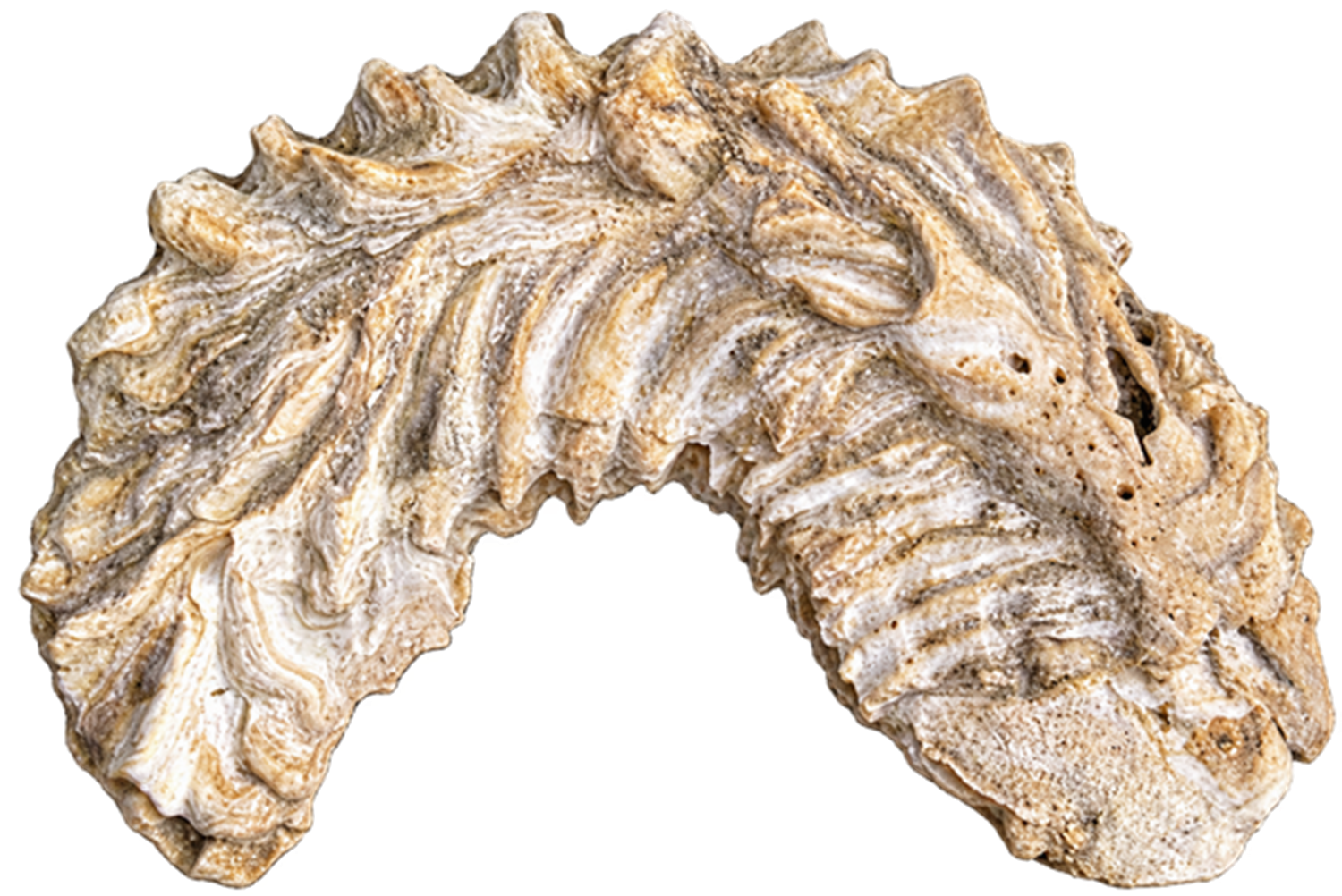 Arctostrea |
A. aguilerae2770Vega, F.J., Feldmann, R.M. & Sour-Tovar, F. (1995): Fossil crabs (Crustacea: Decapoda) from the Late Cretaceous Cárdenas Formation, east-central Mexico. Journal of Paleontology 69(2): 340–350. Volltext2771Vega, F. J., Feldmann, R. M. & Sour-Tovar, F. (1995). Fossil crabs (Crustacea: Decapoda) from the Late Cretaceous Cárdenas Formation, east-central Mexico. Journal of Paleontology, 69(2), 340–350. doi:10.1017/S00223360000346612772Foster, W. J. et al. (2020). Resilience of marine invertebrate communities during the early Cenozoic hyperthermals. Scientific Reports 10, 2176. Dataset S1. Prairie Bluff Chalk; Dataset-IDs 15713. Quellenbezeichnung: Arctostrea aquilerae. doi:10.1038/s41598-020-58986-5 A. spp.2773Sohl, N. F. (1960). Archeogastropoda, Mesogastropoda, and stratigraphy of the Ripley, Owl Creek, and Prairie Bluff formations. United States Geological Survey Professional Paper 331-A, 1–151. Ripley-Vorkommensindex PBDB, Literatur 463. doi:10.3133/pp331A |
Cárdenas Formation Potrerillos Formation Prairie Bluff Chalk Ripley Formation |
USA (Alabama, Mississippi); Mexiko (Nuevo León) | 72–66 Ma; Potrerillos: Maastrichtium (72–66 Ma) | häufig | Ostreidae (Auster) |
| Ascaulocardium | A. armatum2774Bandel, K. & Dockery, D. T. III (2016). Mollusca of the Coon Creek Formation in Tennessee and Mississippi with a systematic discussion of the Gastropoda. Bulletin of the Alabama Museum of Natural History 33(1), 34–96. Muschelliste S. 90–92. 111 Originalpublikation2775Foster, W. J. et al. (2020). Resilience of marine invertebrate communities during the early Cenozoic hyperthermals. Scientific Reports 10, 2176. Dataset S1. Dataset S1, ID 23969 doi:10.1038/s41598-020-58986-52776Wade, B. (1926). The fauna of the Ripley Formation on Coon Creek, Tennessee. United States Geological Survey Professional Paper 137, 1–272. Ripley-Vorkommensindex PBDB, Literatur 7434. doi:10.3133/pp137 | Ripley Formation | USA (Tennessee) | 72–66 Ma | nicht quantifiziert | Clavagellidae |
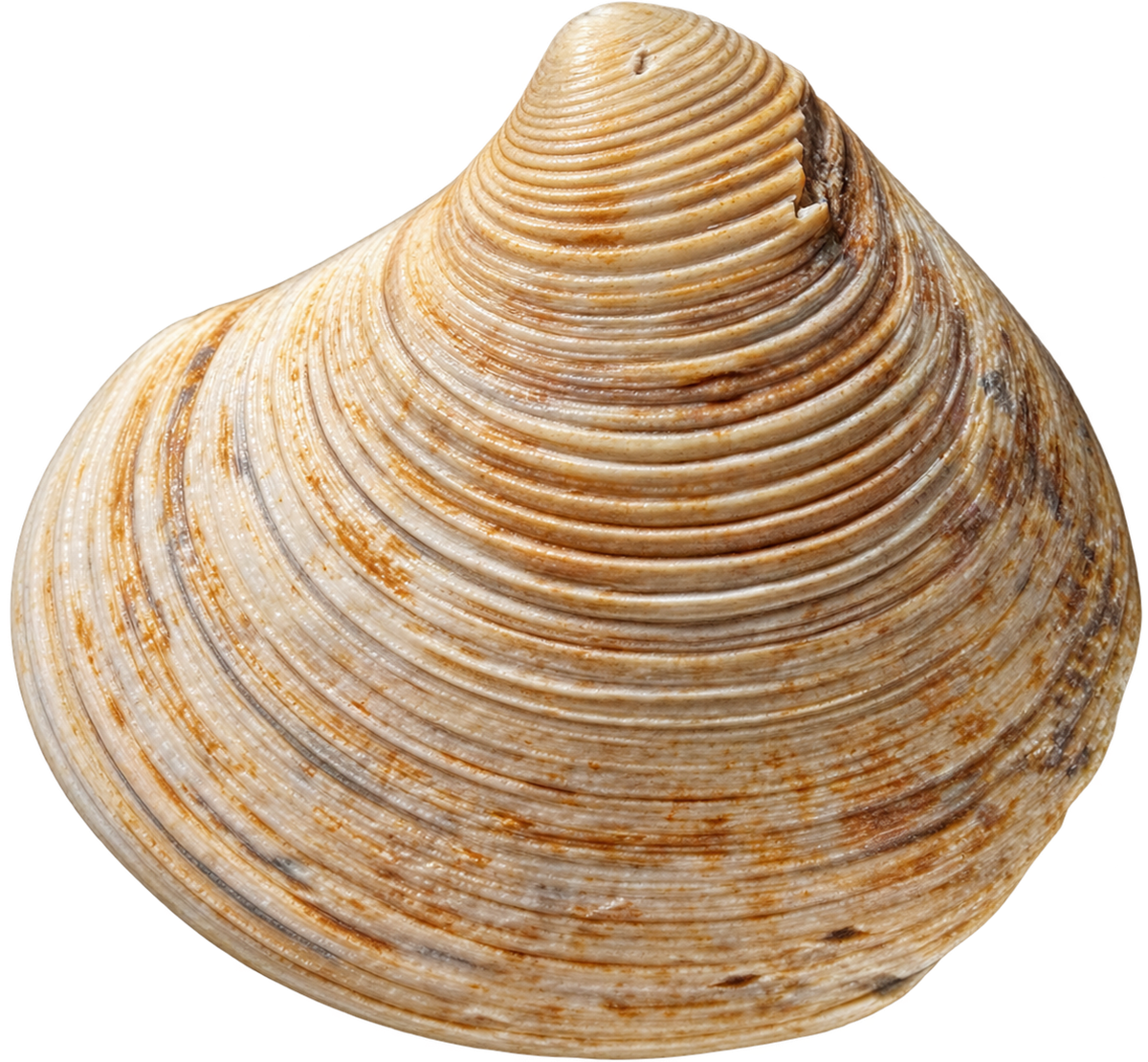 Astarte |
A. ? culebrensis2777Sohl, N. F. & Koch, C. F. (1983). Upper Cretaceous (Maestrichtian) Mollusca from the Haustator bilira Assemblage Zone in the East Gulf Coastal Plain. United States Geological Survey Open-File Report 83–451, 238 S. Loc.10; Loc.11 doi:10.3133/ofr834512778Bryan, J. R. & Jones, D. S. (1989). Fabric of the Cretaceous-Tertiary marine macrofaunal transition at Braggs, Alabama. Palaeogeography, Palaeoclimatology, Palaeoecology 69, 279–301. Appendix I, S. 295–296, Spalte Ripley. Appendix I, S.295–296 doi:10.1016/0031-0182(89)90170-3 A. culebrensis2779Foster, W. J. et al. (2020). Resilience of marine invertebrate communities during the early Cenozoic hyperthermals. Scientific Reports 10, 2176. Dataset S1. Prairie Bluff Chalk; Dataset-IDs 14937, 16716. Quellenbezeichnung: Astarte culebrensis. doi:10.1038/s41598-020-58986-5 A. culebrensis (?)2780Stephenson, L. W. (1941). The larger invertebrate fossils of the Navarro Group of Texas (exclusive of corals and crustaceans and exclusive of the fauna of the Escondido Formation). The University of Texas Publication, 4101, 1–641.2781Foster, W. J. et al. (2020). Resilience of marine invertebrate communities during the early Cenozoic hyperthermals. Scientific Reports 10, 2176. Dataset S1. Dataset S1, ID 12951; Dataset S1, ID 13029; Dataset S1, ID 13074; Dataset S1, ID 13114; Dataset S1, ID 13179; Dataset S1, ID 13203; Dataset S1, ID 13230; Dataset S1, ID 13283 doi:10.1038/s41598-020-58986-5 A. spp.2782Sohl, N. F. & Koch, C. F. (1983). Upper Cretaceous (Maestrichtian) Mollusca from the Haustator bilira Assemblage Zone in the East Gulf Coastal Plain. United States Geological Survey Open-File Report 83–451, 238 S. Loc.32 doi:10.3133/ofr834512783Foster, W. J. et al. (2020). Resilience of marine invertebrate communities during the early Cenozoic hyperthermals. Scientific Reports 10, 2176. Dataset S1. Dataset S1, ID 24103; Dataset S1, ID 13416 doi:10.1038/s41598-020-58986-5 |
Corsicana Marl Prairie Bluff Chalk Ripley Formation |
USA (Alabama, Mississippi, Tennessee, Texas) | 72–66 Ma (Gattung 201 Ma bis heute) | häufig | Astartidae (Astarte) |
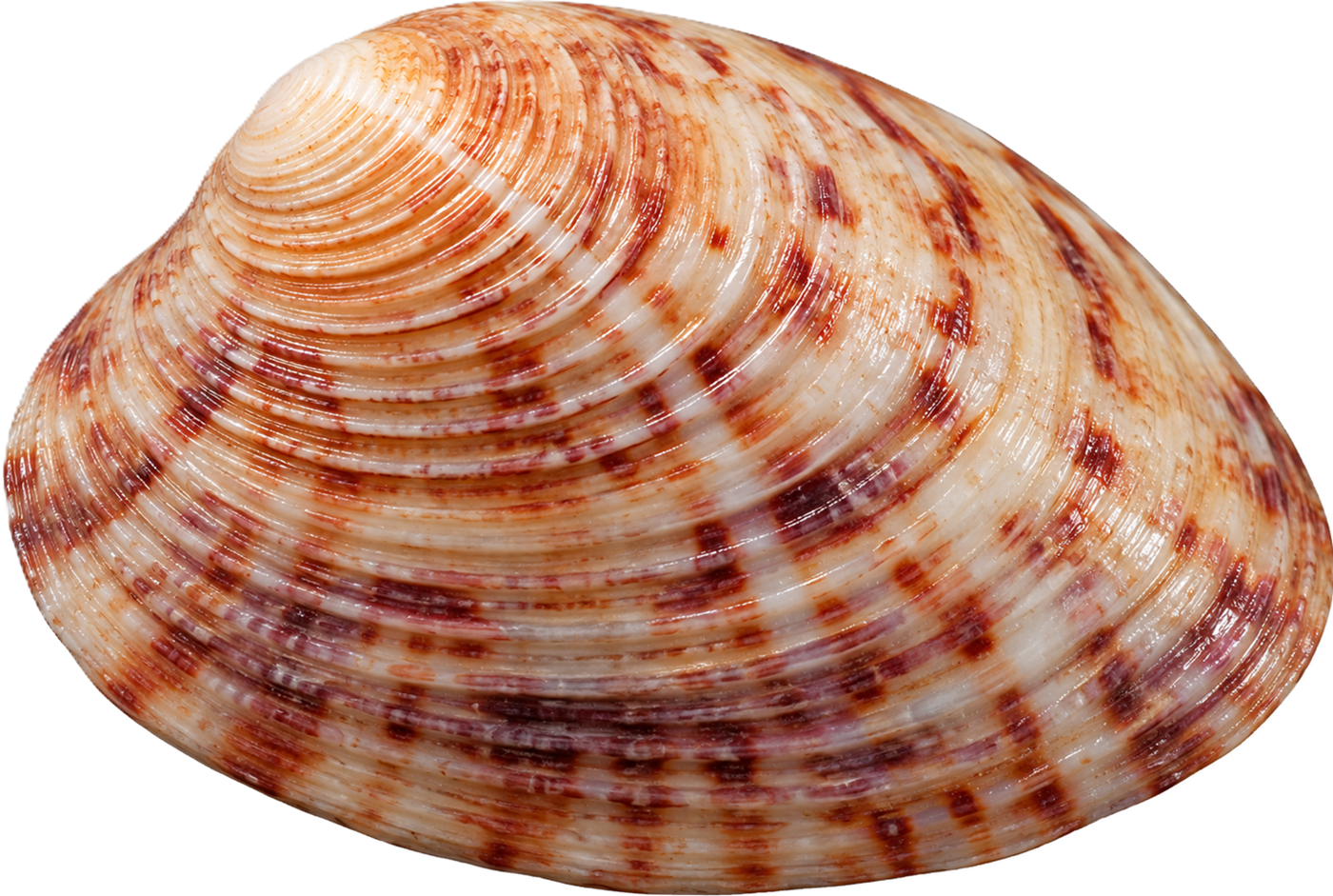 Astartemya |
A. fentressensis2784Sohl, N. F. & Koch, C. F. (1984). Upper Cretaceous (Maastrichtian) larger invertebrate fossils from the Haustator bilira assemblage zone in the West Gulf Coastal Plain. U.S. Geological Survey Open-File Report, 84-687, 1–282. doi:10.3133/ofr846872785Stephenson, L. W. (1941). The larger invertebrate fossils of the Navarro group of Texas (exclusive of corals and crustaceans and exclusive of the fauna of the Escondido formation). University of Texas Publication 4101, 1–641 | Escondido Formation Kemp Clay |
USA (Texas) | 72–66 Ma | häufig | Astartidae (Astarte) |
| Atreta | A. melleni2786Foster, W. J. et al. (2020). Resilience of marine invertebrate communities during the early Cenozoic hyperthermals. Scientific Reports 10, 2176. Dataset S1. Prairie Bluff Chalk; Dataset-IDs 14130, 14235, 14431, 14564, 14718, 14742, 14774, 14818, 14842, 14877, 14918, 14938, 14993, 15053, 15254, 15268, 15444, 15470, 15538, 16302, 16310, 16450, 16484. Quellenbezeichnung: Atreta melleni. doi:10.1038/s41598-020-58986-52787Paleobiology Database (2026). Gattungs-Vorkommensrahmen; Datenabfrage vom 24. Oktober 2026. Gerundeter Gattungsrahmen für Atreta; durch die direkt geprüften Formationsnachweise gegebenenfalls erweitert. Originalpublikation2788Bryan, J. R. & Jones, D. S. (1989). Fabric of the Cretaceous-Tertiary marine macrofaunal transition at Braggs, Alabama. Palaeogeography, Palaeoclimatology, Palaeoecology 69, 279–301. Appendix I, S. 295, Prairie-Bluff-Spalten L. Quellenbezeichnung: Atreta melleni. doi:10.1016/0031-0182(89)90170-3 | Prairie Bluff Chalk | USA (Alabama, Mississippi) | 247–4 Ma | sehr häufig | Dimyidae (Muschel) |
| Atrina | A. nebrascensis (?)2789Gill, J. R. & Cobban, W. A. (1966): The Red Bird section of the Upper Cretaceous Pierre Shale in Wyoming. U.S. Geological Survey Professional Paper 393-A: A1–A73. S. A52, Einheiten 89 und 91. doi:10.3133/pp393A | Pierre Shale | USA (Wyoming) | 72–71 Ma | selten | Pinnidae |
| Bankia | B. spp.2790Foster, W. J. et al. (2020). Resilience of marine invertebrate communities during the early Cenozoic hyperthermals. Scientific Reports 10, 2176. Supplementary Data 1 doi:10.1038/s41598-020-58986-5 | Kemp Clay | USA (Texas) | 68–66 Ma | selten | Teredinidae (Schiffsbohrmuschel) |
| Barbatia | B. cochlearis2791Bandel, K. & Dockery, D. T. III (2016). Mollusca of the Coon Creek Formation in Tennessee and Mississippi with a systematic discussion of the Gastropoda. Bulletin of the Alabama Museum of Natural History 33(1), 34–96. Muschelliste S. 90–92. 12 Originalpublikation2792Wade, B. (1926). The fauna of the Ripley Formation on Coon Creek, Tennessee. United States Geological Survey Professional Paper 137, 1–272. Ripley-Vorkommensindex PBDB, Literatur 7434. doi:10.3133/pp137 B. fractura2793Bandel, K. & Dockery, D. T. III (2016). Mollusca of the Coon Creek Formation in Tennessee and Mississippi with a systematic discussion of the Gastropoda. Bulletin of the Alabama Museum of Natural History 33(1), 34–96. Muschelliste S. 90–92. 11 Originalpublikation2794Foster, W. J. et al. (2020). Resilience of marine invertebrate communities during the early Cenozoic hyperthermals. Scientific Reports 10, 2176. Dataset S1. Dataset S1, ID 24093 doi:10.1038/s41598-020-58986-52795Wade, B. (1926). The fauna of the Ripley Formation on Coon Creek, Tennessee. United States Geological Survey Professional Paper 137, 1–272. Ripley-Vorkommensindex PBDB, Literatur 7434. doi:10.3133/pp137 B. spp.2796Sohl, N. F. & Koch, C. F. (1983). Upper Cretaceous (Maestrichtian) Mollusca from the Haustator bilira Assemblage Zone in the East Gulf Coastal Plain. United States Geological Survey Open-File Report 83–451, 238 S. Loc.10 doi:10.3133/ofr834512797Bryan, J. R. & Jones, D. S. (1989). Fabric of the Cretaceous-Tertiary marine macrofaunal transition at Braggs, Alabama. Palaeogeography, Palaeoclimatology, Palaeoecology 69, 279–301. Appendix I, S. 295–296, Spalte Ripley. Appendix I, S.295–296 doi:10.1016/0031-0182(89)90170-32798Foster, W. J. et al. (2020). Resilience of marine invertebrate communities during the early Cenozoic hyperthermals. Scientific Reports 10, 2176. Dataset S1. Dataset S1, ID 12953; Dataset S1, ID 13076 doi:10.1038/s41598-020-58986-52799Bryan, J. R. & Jones, D. S. (1989). Fabric of the Cretaceous-Tertiary marine macrofaunal transition at Braggs, Alabama. Palaeogeography, Palaeoclimatology, Palaeoecology 69, 279–301. Appendix I, S. 295, Prairie-Bluff-Spalten L. Quellenbezeichnung: Barbatia sp. doi:10.1016/0031-0182(89)90170-3 |
Prairie Bluff Chalk Ripley Formation |
USA (Alabama, Mississippi, Tennessee) | 72–66 Ma | nicht quantifiziert | Arcidae (Archenmuschel) |
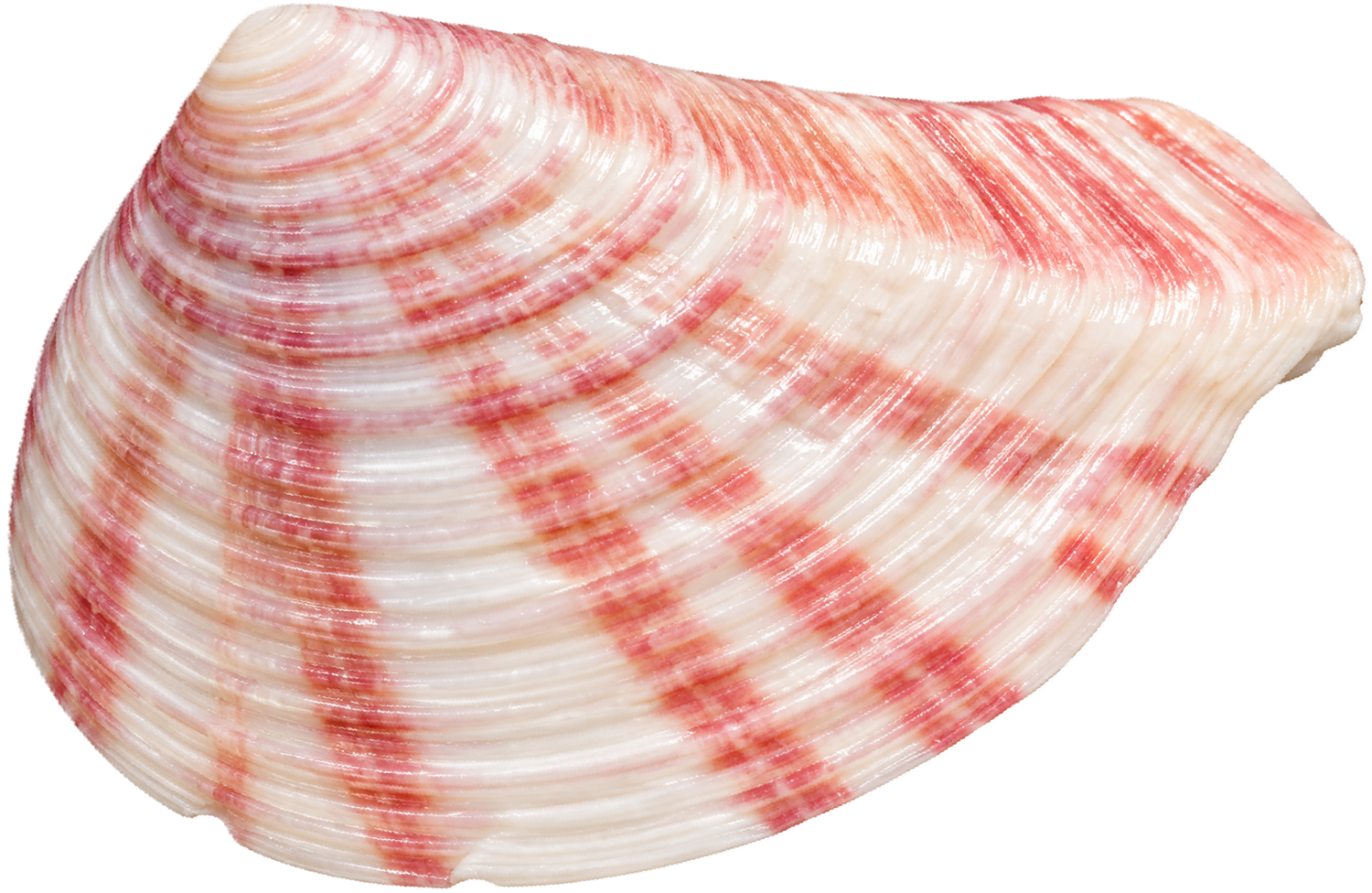 Bathytormus |
B. pteropsis2800Sohl, N. F. & Koch, C. F. (1984). Upper Cretaceous (Maastrichtian) larger invertebrate fossils from the Haustator bilira assemblage zone in the West Gulf Coastal Plain. U.S. Geological Survey Open-File Report, 84-687, 1–282. doi:10.3133/ofr846872801Wingard, G. L. (1993). A detailed taxonomy of Upper Cretaceous and Lower Tertiary Crassatellidae in the Eastern United States—an example of the nature of extinction at the boundary. United States Geological Survey Professional Paper 1535, 1–131. doi:10.3133/pp15352802Veatch, O. & Stephenson, L. W. (1911). Preliminary report on the geology of the coastal plain of Georgia. Geological Survey of Georgia Bulletin 26, 1–466. S. 176–177, Eufaula-Liste. Originalpublikation2803Crider, A. F. (1906). Geology and mineral resources of Mississippi. United States Geological Survey Bulletin 283, 1–99. S. 21, Ripley-Fossilien aus Tippah County. doi:10.3133/b2832804Sohl, N. F. & Koch, C. F. (1983). Upper Cretaceous (Maestrichtian) Mollusca from the Haustator bilira Assemblage Zone in the East Gulf Coastal Plain. United States Geological Survey Open-File Report 83–451, 238 S. Loc.10 doi:10.3133/ofr834512805Foster, W. J. et al. (2020). Resilience of marine invertebrate communities during the early Cenozoic hyperthermals. Scientific Reports 10, 2176. Dataset S1. Dataset S1, ID 12954 doi:10.1038/s41598-020-58986-52806Foster, W. J. et al. (2020). Resilience of marine invertebrate communities during the early Cenozoic hyperthermals. Scientific Reports 10, 2176. Dataset S1, Formation Owl Creek; Datensatz-IDs 13693. doi:10.1038/s41598-020-58986-52807Sohl, N. F. & Koch, C. F. (1983). Upper Cretaceous (Maestrichtian) Mollusca from the Haustator bilira Assemblage Zone in the East Gulf Coastal Plain. U.S. Geological Survey Open-File Report 83-451, 1–239. Owl Creek Formation, Aufsammlungen 46. doi:10.3133/ofr83451 B. spp.2808Wingard, G. L. (1993). A detailed taxonomy of Upper Cretaceous and Lower Tertiary Crassatellidae in the Eastern United States—an example of the nature of extinction at the boundary. United States Geological Survey Professional Paper 1535, 1–131. Ripley-Vorkommensindex PBDB, Literatur 7416. doi:10.3133/pp1535 |
Escondido Formation Owl Creek Formation Ripley Formation |
USA (Alabama, Mississippi, Texas) | 72–66 Ma (Gattung 84 Ma bis heute) | selten | Crassatellidae (Dickmuschel) |
 Biradiolites |
B. aguilerae2809Pons, J. M., García-Barrera, P., Oviedo, A. & Vicens, E. (2021). Mexican Upper Cretaceous rudists (Hippuritida, Bivalvia): Taxonomic, stratigraphic, and geologic data. Journal of South American Earth Sciences, 109, 103237. doi:10.1016/j.jsames.2021.103237 B. cardenasensis2810Pons, J. M., García-Barrera, P., Oviedo, A. & Vicens, E. (2021). Mexican Upper Cretaceous rudists (Hippuritida, Bivalvia): Taxonomic, stratigraphic, and geologic data. Journal of South American Earth Sciences, 109, 103237. doi:10.1016/j.jsames.2021.103237 |
Cárdenas Formation | Mexiko (San Luis Potosí) | 72–68 Ma (Gattung bis 66 Ma) | selten | Radiolitidae |
 |
Bivalvia indet.2811Demers-Potvin, A. V. et al. (2025). An elusive bird and non-avian dinosaur fauna from the latest Cretaceous (Campanian/Maastrichtian) Kanguk Formation of Bylot Island, Nunavut. Vertebrate Anatomy Morphology Palaeontology, 13, 16–17.2812Doe, N. (2017). Gabriola Island’s late-Cretaceous fossils. SILT, 21, 1–46.2813Russell, L. S. (1976). Pelecypods of the Hell Creek Formation (Uppermost Cretaceous) of Garfield County, Montana. Canadian Journal of Earth Sciences, 13, 365–388. doi:10.1139/e76-0392814Dawson, M. K. (1978). The paleontology of the Cabrillo Formation. M.S. thesis, San Diego State University, 1–87.2815Anderson, F. M. (1958). Upper Cretaceous of the Pacific Coast. Geological Society of America Memoir, 71, 1–378. doi:10.1130/MEM71-p1 Crassatellites eufalensis (historischer Beleg)2816Veatch, O. & Stephenson, L. W. (1911). Preliminary report on the geology of the coastal plain of Georgia. Geological Survey of Georgia Bulletin 26, 1–466. S. 176–177, Eufaula-Liste. Originalpublikation Sphaerella concentrica (historischer Beleg)2817Veatch, O. & Stephenson, L. W. (1911). Preliminary report on the geology of the coastal plain of Georgia. Geological Survey of Georgia Bulletin 26, 1–466. S. 176–177, Eufaula-Liste. Originalpublikation Veleda linea (historischer Beleg)2818Crider, A. F. (1906). Geology and mineral resources of Mississippi. United States Geological Survey Bulletin 283, 1–99. S. 21, Ripley-Fossilien aus Tippah County. doi:10.3133/b283 |
Cabrillo Formation Escondido Formation (?) Gabriola Formation Hell Creek Formation Kanguk Formation Moreno Formation Ripley Formation |
Kanada (British Columbia, Nunavut); USA (Alabama, Kalifornien, Mississippi, Montana, Texas) | 72–66 Ma | sehr häufig | unbestimmte Muscheln |
 Botula |
B. carolinensis2819Bryan, J. R. & Jones, D. S. (1989). Fabric of the Cretaceous-Tertiary marine macrofaunal transition at Braggs, Alabama. Palaeogeography, Palaeoclimatology, Palaeoecology 69, 279–301. Appendix I, S. 295–296, Spalte Ripley. Appendix I, S.295–296 doi:10.1016/0031-0182(89)90170-32820Foster, W. J. et al. (2020). Resilience of marine invertebrate communities during the early Cenozoic hyperthermals. Scientific Reports 10, 2176. Dataset S1. Dataset S1, ID 13150 doi:10.1038/s41598-020-58986-52821Foster, W. J. et al. (2020). Resilience of marine invertebrate communities during the early Cenozoic hyperthermals. Scientific Reports 10, 2176. Dataset S1, Formation Owl Creek; Datensatz-IDs 13695, 13834. doi:10.1038/s41598-020-58986-52822Sohl, N. F. & Koch, C. F. (1983). Upper Cretaceous (Maestrichtian) Mollusca from the Haustator bilira Assemblage Zone in the East Gulf Coastal Plain. U.S. Geological Survey Open-File Report 83-451, 1–239. Owl Creek Formation, Aufsammlungen 46, 47, 52. doi:10.3133/ofr834512823Foster, W. J. et al. (2020). Resilience of marine invertebrate communities during the early Cenozoic hyperthermals. Scientific Reports 10, 2176. Dataset S1. Prairie Bluff Chalk; Dataset-IDs 13927, 13963, 14113, 14131, 14492. Quellenbezeichnung: Botula carolinensis. doi:10.1038/s41598-020-58986-52824Bryan, J. R. & Jones, D. S. (1989). Fabric of the Cretaceous-Tertiary marine macrofaunal transition at Braggs, Alabama. Palaeogeography, Palaeoclimatology, Palaeoecology 69, 279–301. Appendix I, S. 295, Prairie-Bluff-Spalten U. Quellenbezeichnung: Botula carolinensis*. doi:10.1016/0031-0182(89)90170-3 B. conchafodentis2825Sohl, N. F. & Koch, C. F. (1984). Upper Cretaceous (Maastrichtian) larger invertebrate fossils from the Haustator bilira assemblage zone in the West Gulf Coastal Plain. U.S. Geological Survey Open-File Report, 84-687, 1–282. doi:10.3133/ofr84687 B. ripleyana2826Foster, W. J. et al. (2020). Resilience of marine invertebrate communities during the early Cenozoic hyperthermals. Scientific Reports 10, 2176. Dataset S1. Prairie Bluff Chalk; Dataset-IDs 13962, 14042, 15930. Quellenbezeichnung: Botula ripleyana. doi:10.1038/s41598-020-58986-5 |
Arkadelphia Marl Escondido Formation Owl Creek Formation Prairie Bluff Chalk Ripley Formation |
USA (Alabama, Arkansas, Mississippi, Texas) | 72–66 Ma (Gattung mindestens 72 Ma bis heute) | sehr häufig | Mytilidae (Miesmuschel) |
 Brachidontes |
B. spp.2827Sohl, N. F. & Koch, C. F. (1984). Upper Cretaceous (Maastrichtian) larger invertebrate fossils from the Haustator bilira assemblage zone in the West Gulf Coastal Plain. U.S. Geological Survey Open-File Report, 84-687, 1–282. doi:10.3133/ofr846872828Speden, I. G. (1970). The type Fox Hills Formation, Cretaceous (Maestrichtian), South Dakota. Part 2. Systematics of the Bivalvia. Bulletin of the Peabody Museum of Natural History 33: 1–222. S. 78. Gattungszuordnung bzw. Bestimmung fraglich. Originalveröffentlichung2829Sohl, N. F. & Koch, C. F. (1983). Upper Cretaceous (Maestrichtian) Mollusca from the Haustator bilira Assemblage Zone in the East Gulf Coastal Plain. United States Geological Survey Open-File Report 83–451, 238 S. Loc.10 doi:10.3133/ofr834512830Foster, W. J. et al. (2020). Resilience of marine invertebrate communities during the early Cenozoic hyperthermals. Scientific Reports 10, 2176. Dataset S1. Dataset S1, ID 12955 doi:10.1038/s41598-020-58986-52831Foster, W. J. et al. (2020). Resilience of marine invertebrate communities during the early Cenozoic hyperthermals. Scientific Reports 10, 2176. Dataset S1, Formation Owl Creek; Datensatz-IDs 13696, 23781. doi:10.1038/s41598-020-58986-52832Sohl, N. F. & Koch, C. F. (1983). Upper Cretaceous (Maestrichtian) Mollusca from the Haustator bilira Assemblage Zone in the East Gulf Coastal Plain. U.S. Geological Survey Open-File Report 83-451, 1–239. Owl Creek Formation, Aufsammlungen 40, 46. Aufsammlung 40: umgelagert. doi:10.3133/ofr834512833Foster, W. J. et al. (2020). Resilience of marine invertebrate communities during the early Cenozoic hyperthermals. Scientific Reports 10, 2176. Dataset S1. Prairie Bluff Chalk; Dataset-IDs 16261. Quellenbezeichnung: Brachidontes sp.. doi:10.1038/s41598-020-58986-52834Bryan, J. R. & Jones, D. S. (1989). Fabric of the Cretaceous-Tertiary marine macrofaunal transition at Braggs, Alabama. Palaeogeography, Palaeoclimatology, Palaeoecology 69, 279–301. Appendix I, S. 295, Prairie-Bluff-Spalten U. Quellenbezeichnung: Brachiodontes? sp. doi:10.1016/0031-0182(89)90170-3 | Escondido Formation Fox Hills Formation Owl Creek Formation Prairie Bluff Chalk Ripley Formation |
USA (Alabama, Mississippi, South Dakota, Tennessee, Texas) | 72–66 Ma (Gattung 201 Ma bis heute) | sehr häufig | Mytilidae (Miesmuschel) |
| Breviarca | B. cuneata2835Veatch, O. & Stephenson, L. W. (1911). Preliminary report on the geology of the coastal plain of Georgia. Geological Survey of Georgia Bulletin 26, 1–466. S. 176–177, Eufaula-Liste. Originalpublikation B. cf. nolani2836Foster, W. J. et al. (2020). Resilience of marine invertebrate communities during the early Cenozoic hyperthermals. Scientific Reports 10, 2176. Supplementary Data 1 doi:10.1038/s41598-020-58986-5 B. stearnsii2837Garvie, C. L. (2021). The Macrofauna of the Tehuacana Limestone Member (Danian, Kincaid Formation) of Central Texas, with the Description of a Few New Taxa from the Pisgah Member. Bulletins of American Paleontology 399–400, 1–292 doi:10.32857/bap.2021.399.01 B. webbervillensis2838Foster, W. J. et al. (2020). Resilience of marine invertebrate communities during the early Cenozoic hyperthermals. Scientific Reports 10, 2176. Supplementary Data 1 doi:10.1038/s41598-020-58986-52839Stephenson, L. W. (1941). The larger invertebrate fossils of the Navarro group of Texas (exclusive of corals and crustaceans and exclusive of the fauna of the Escondido formation). University of Texas Publication 4101, 1–641 B. spp.2840Stephenson, L. W. (1941). The larger invertebrate fossils of the Navarro group of Texas (exclusive of corals and crustaceans and exclusive of the fauna of the Escondido formation). University of Texas Publication 4101, 1–6412841Stephenson, L. W. (1955). Owl Creek (Upper Cretaceous) fossils from Crowleys Ridge, southeastern Missouri. U.S. Geological Survey Professional Paper 274-E, 97–140. Owl Creek Formation, Missouri; Verbreitungstabelle S. 104–105. Gattungszuordnung fraglich. doi:10.3133/pp274E |
Kemp Clay Owl Creek Formation Ripley Formation |
USA (Alabama, Missouri, Texas) | 72–66 Ma | selten | Noetiidae |
 Brevicardium |
B. bexarensis (?)2842Stephenson, L. W. (1941). The larger invertebrate fossils of the Navarro Group of Texas (exclusive of corals and crustaceans and exclusive of the fauna of the Escondido Formation). The University of Texas Publication, 4101, 1–641 B. fragile2843Stephenson, L. W. (1941). The larger invertebrate fossils of the Navarro Group of Texas (exclusive of corals and crustaceans and exclusive of the fauna of the Escondido Formation). The University of Texas Publication, 4101, 1–641 B. guadalupense2844Stephenson, L. W. (1941). The larger invertebrate fossils of the Navarro group of Texas (exclusive of corals and crustaceans and exclusive of the fauna of the Escondido formation). University of Texas Publication 4101, 1–641 |
Corsicana Marl Kemp Clay |
USA (Texas) | 70–66 Ma | häufig | Cardiidae (Herzmuschel) |
 Caestocorbula |
C. crassaplica2845Bryan, J. R. & Jones, D. S. (1989). Fabric of the Cretaceous-Tertiary marine macrofaunal transition at Braggs, Alabama. Palaeogeography, Palaeoclimatology, Palaeoecology 69, 279–301. Appendix I, S. 296, Prairie-Bluff-Spalten L, M, U. Quellenbezeichnung: Caesticorbula (Caesticorbula) crassaplica. doi:10.1016/0031-0182(89)90170-3 C. ? crassiplica2846Sohl, N. F. (1960). Archeogastropoda, Mesogastropoda, and stratigraphy of the Ripley, Owl Creek, and Prairie Bluff formations. United States Geological Survey Professional Paper 331-A, 1–151. Ripley-Vorkommensindex PBDB, Literatur 463. doi:10.3133/pp331A C. crassiplica2847Sohl, N. F. & Koch, C. F. (1984). Upper Cretaceous (Maastrichtian) larger invertebrate fossils from the Haustator bilira assemblage zone in the West Gulf Coastal Plain. U.S. Geological Survey Open-File Report, 84-687, 1–282. doi:10.3133/ofr846872848Bandel, K. & Dockery, D. T. III (2016). Mollusca of the Coon Creek Formation in Tennessee and Mississippi with a systematic discussion of the Gastropoda. Bulletin of the Alabama Museum of Natural History 33(1), 34–96. Muschelliste S. 90–92. 96 Originalpublikation2849Veatch, O. & Stephenson, L. W. (1911). Preliminary report on the geology of the coastal plain of Georgia. Geological Survey of Georgia Bulletin 26, 1–466. S. 176–177, Eufaula-Liste. Originalpublikation2850Crider, A. F. (1906). Geology and mineral resources of Mississippi. United States Geological Survey Bulletin 283, 1–99. S. 21, Ripley-Fossilien aus Tippah County. doi:10.3133/b2832851Sohl, N. F. & Koch, C. F. (1983). Upper Cretaceous (Maestrichtian) Mollusca from the Haustator bilira Assemblage Zone in the East Gulf Coastal Plain. United States Geological Survey Open-File Report 83–451, 238 S. Loc.10; Loc.220 doi:10.3133/ofr834512852Foster, W. J. et al. (2020). Resilience of marine invertebrate communities during the early Cenozoic hyperthermals. Scientific Reports 10, 2176. Dataset S1. Dataset S1, ID 23996; Dataset S1, ID 12958; Dataset S1, ID 13284; Dataset S1, ID 13373; Dataset S1, ID 17676 doi:10.1038/s41598-020-58986-52853Sohl, N. F. (1960). Archeogastropoda, Mesogastropoda, and stratigraphy of the Ripley, Owl Creek, and Prairie Bluff formations. United States Geological Survey Professional Paper 331-A, 1–151. Ripley-Vorkommensindex PBDB, Literatur 463. doi:10.3133/pp331A2854Wade, B. (1926). The fauna of the Ripley Formation on Coon Creek, Tennessee. United States Geological Survey Professional Paper 137, 1–272. Ripley-Vorkommensindex PBDB, Literatur 7434. doi:10.3133/pp1372855Foster, W. J. et al. (2020). Resilience of marine invertebrate communities during the early Cenozoic hyperthermals. Scientific Reports 10, 2176. Dataset S1, Formation Owl Creek; Datensatz-IDs 13620, 13702, 13837, 23812, 23873, 23945. Publiziert als Caestocorbula crassaplica. doi:10.1038/s41598-020-58986-52856Sohl, N. F. & Koch, C. F. (1983). Upper Cretaceous (Maestrichtian) Mollusca from the Haustator bilira Assemblage Zone in the East Gulf Coastal Plain. U.S. Geological Survey Open-File Report 83-451, 1–239. Owl Creek Formation, Aufsammlungen 45, 46, 47. doi:10.3133/ofr834512857Foster, W. J. et al. (2020). Resilience of marine invertebrate communities during the early Cenozoic hyperthermals. Scientific Reports 10, 2176. Dataset S1. Prairie Bluff Chalk; Dataset-IDs 14776, 14819, 14846, 14881, 14941, 15139, 15270, 15566, 15900, 15953, 15963, 15979, 16003, 16028, 16056, 16114, 16156, 16217, 16248, 16369, 16415, 16452, 16515, 16608, 16633, 16664, 16683, 16718. Quellenbezeichnung: Caestocorbula crassaplica. doi:10.1038/s41598-020-58986-5 C. percompressa2858Foster, W. J. et al. (2020). Resilience of marine invertebrate communities during the early Cenozoic hyperthermals. Scientific Reports 10, 2176. Dataset S1, Formation Owl Creek; Datensatz-IDs 23813. doi:10.1038/s41598-020-58986-52859Foster, W. J. et al. (2020). Resilience of marine invertebrate communities during the early Cenozoic hyperthermals. Scientific Reports 10, 2176. Dataset S1. Prairie Bluff Chalk; Dataset-IDs 16719. Quellenbezeichnung: Caestocorbula percompressa. doi:10.1038/s41598-020-58986-5 C. suffalciata2860Sohl, N. F. & Koch, C. F. (1984). Upper Cretaceous (Maastrichtian) larger invertebrate fossils from the Haustator bilira assemblage zone in the West Gulf Coastal Plain. U.S. Geological Survey Open-File Report, 84-687, 1–282. doi:10.3133/ofr846872861Sohl, N. F. & Koch, C. F. (1983). Upper Cretaceous (Maestrichtian) Mollusca from the Haustator bilira Assemblage Zone in the East Gulf Coastal Plain. United States Geological Survey Open-File Report 83–451, 238 S. Loc.10; Loc.11 doi:10.3133/ofr834512862Bryan, J. R. & Jones, D. S. (1989). Fabric of the Cretaceous-Tertiary marine macrofaunal transition at Braggs, Alabama. Palaeogeography, Palaeoclimatology, Palaeoecology 69, 279–301. Appendix I, S. 295–296, Spalte Ripley. Appendix I, S.295–296 doi:10.1016/0031-0182(89)90170-32863Foster, W. J. et al. (2020). Resilience of marine invertebrate communities during the early Cenozoic hyperthermals. Scientific Reports 10, 2176. Dataset S1. Dataset S1, ID 12957; Dataset S1, ID 13030 doi:10.1038/s41598-020-58986-52864Foster, W. J. et al. (2020). Resilience of marine invertebrate communities during the early Cenozoic hyperthermals. Scientific Reports 10, 2176. Dataset S1. Prairie Bluff Chalk; Dataset-IDs 15964, 16516, 16634. Quellenbezeichnung: Caestocorbula suffalciata. doi:10.1038/s41598-020-58986-5 C. terramaria2865Sohl, N. F. & Koch, C. F. (1983). Upper Cretaceous (Maestrichtian) Mollusca from the Haustator bilira Assemblage Zone in the East Gulf Coastal Plain. United States Geological Survey Open-File Report 83–451, 238 S. Loc.10 doi:10.3133/ofr834512866Foster, W. J. et al. (2020). Resilience of marine invertebrate communities during the early Cenozoic hyperthermals. Scientific Reports 10, 2176. Dataset S1. Dataset S1, ID 12956 doi:10.1038/s41598-020-58986-52867Foster, W. J. et al. (2020). Resilience of marine invertebrate communities during the early Cenozoic hyperthermals. Scientific Reports 10, 2176. Dataset S1. Prairie Bluff Chalk; Dataset-IDs 16721. Quellenbezeichnung: Caestocorbula terramaria. doi:10.1038/s41598-020-58986-5 C. spp.2868Sohl, N. F. & Koch, C. F. (1984). Upper Cretaceous (Maastrichtian) larger invertebrate fossils from the Haustator bilira assemblage zone in the West Gulf Coastal Plain. U.S. Geological Survey Open-File Report, 84-687, 1–282. doi:10.3133/ofr846872869Kelley, P. H. & Hansen, T. A. (1993). Evolution of the naticid gastropod predator-prey system: an evaluation of the hypothesis of escalation. PALAIOS 8, 358–375. Tabellen 1, 4 und 5, Ripley/Georgia. Originalpublikation2870Foster, W. J. et al. (2020). Resilience of marine invertebrate communities during the early Cenozoic hyperthermals. Scientific Reports 10, 2176. Dataset S1. Prairie Bluff Chalk; Dataset-IDs 14942, 16029, 16157, 16720. Quellenbezeichnung: Caestocorbula sp.. doi:10.1038/s41598-020-58986-5 |
Arkadelphia Marl Escondido Formation Owl Creek Formation Prairie Bluff Chalk Ripley Formation |
USA (Alabama, Arkansas, Georgia, Mississippi, Missouri, Tennessee, Texas) | 72–66 Ma (Gattung bis 23 Ma) | sehr häufig | Corbulidae (Korbmuschel) |
 Camptonectes |
C. argillensis2871Crider, A. F. (1906). Geology and mineral resources of Mississippi. United States Geological Survey Bulletin 283, 1–99. S. 21, Ripley-Fossilien aus Tippah County. doi:10.3133/b283 C. bubonis2872Sohl, N. F. & Koch, C. F. (1984). Upper Cretaceous (Maastrichtian) larger invertebrate fossils from the Haustator bilira assemblage zone in the West Gulf Coastal Plain. U.S. Geological Survey Open-File Report, 84-687, 1–282. doi:10.3133/ofr846872873Stephenson, L. W. (1941). The larger invertebrate fossils of the Navarro Group of Texas (exclusive of corals and crustaceans and exclusive of the fauna of the Escondido Formation). The University of Texas Publication, 4101, 1–6412874Stephenson, L. W. (1941). The larger invertebrate fossils of the Navarro group of Texas (exclusive of corals and crustaceans and exclusive of the fauna of the Escondido formation). University of Texas Publication 4101, 1–6412875Sohl, N. F. & Koch, C. F. (1983). Upper Cretaceous (Maestrichtian) Mollusca from the Haustator bilira Assemblage Zone in the East Gulf Coastal Plain. United States Geological Survey Open-File Report 83–451, 238 S. Loc.38; Loc.220 doi:10.3133/ofr834512876Foster, W. J. et al. (2020). Resilience of marine invertebrate communities during the early Cenozoic hyperthermals. Scientific Reports 10, 2176. Dataset S1. Dataset S1, ID 13078; Dataset S1, ID 13116; Dataset S1, ID 13152; Dataset S1, ID 13181; Dataset S1, ID 13205; Dataset S1, ID 13232; Dataset S1, ID 13286; Dataset S1, ID 13323; Dataset S1, ID 13348; Dataset S1, ID 13460; Dataset S1, ID 17677 doi:10.1038/s41598-020-58986-52877Foster, W. J. et al. (2020). Resilience of marine invertebrate communities during the early Cenozoic hyperthermals. Scientific Reports 10, 2176. Dataset S1, Formation Owl Creek; Datensatz-IDs 11663, 13471, 13526, 13567, 13704, 13862, 13876, 23814, 23846, 23874, 23946. doi:10.1038/s41598-020-58986-52878Stephenson, L. W. (1955). Owl Creek (Upper Cretaceous) fossils from Crowleys Ridge, southeastern Missouri. U.S. Geological Survey Professional Paper 274-E, 97–140. Owl Creek Formation, Missouri; Verbreitungstabelle S. 104–105. doi:10.3133/pp274E2879Sohl, N. F. & Koch, C. F. (1983). Upper Cretaceous (Maestrichtian) Mollusca from the Haustator bilira Assemblage Zone in the East Gulf Coastal Plain. U.S. Geological Survey Open-File Report 83-451, 1–239. Owl Creek Formation, Aufsammlungen 41, 43, 44, 46, 48, 50. doi:10.3133/ofr834512880Witts, J. D. et al. (2018). A fossiliferous spherule-rich bed at the Cretaceous–Paleogene (K–Pg) boundary in Mississippi, USA: Implications for the K–Pg mass extinction event in the Mississippi Embayment and Eastern Gulf Coastal Plain. Cretaceous Research 91, 147–167. Anhang 1, nur Owl-Creek-Spalten, Zeilen 12. doi:10.1016/j.cretres.2018.06.0022881Foster, W. J. et al. (2020). Resilience of marine invertebrate communities during the early Cenozoic hyperthermals. Scientific Reports 10, 2176. Dataset S1. Prairie Bluff Chalk; Dataset-IDs 13928, 13964, 14077, 14664, 14720, 14779, 14883, 15272, 15472, 15567, 15630, 15716, 15841, 15965, 15980, 16160, 16219, 16262, 16345, 16725. Quellenbezeichnung: Camptonectes bubonis. doi:10.1038/s41598-020-58986-52882Bryan, J. R. & Jones, D. S. (1989). Fabric of the Cretaceous-Tertiary marine macrofaunal transition at Braggs, Alabama. Palaeogeography, Palaeoclimatology, Palaeoecology 69, 279–301. Appendix I, S. 295, Prairie-Bluff-Spalten L, M, U. Quellenbezeichnung: Camptonectes (Camptonectes) bubonis. doi:10.1016/0031-0182(89)90170-3 C. cf. bubonis2883Foster, W. J. et al. (2020). Resilience of marine invertebrate communities during the early Cenozoic hyperthermals. Scientific Reports 10, 2176. Supplementary Data 1 doi:10.1038/s41598-020-58986-5 C. burlingtonensis2884Bandel, K. & Dockery, D. T. III (2016). Mollusca of the Coon Creek Formation in Tennessee and Mississippi with a systematic discussion of the Gastropoda. Bulletin of the Alabama Museum of Natural History 33(1), 34–96. Muschelliste S. 90–92. 37 Originalpublikation2885Foster, W. J. et al. (2020). Resilience of marine invertebrate communities during the early Cenozoic hyperthermals. Scientific Reports 10, 2176. Dataset S1. Dataset S1, ID 23947 doi:10.1038/s41598-020-58986-5 C. hilgardi?2886Stephenson, L. W. (1955). Owl Creek (Upper Cretaceous) fossils from Crowleys Ridge, southeastern Missouri. U.S. Geological Survey Professional Paper 274-E, 97–140. Owl Creek Formation, Missouri; Verbreitungstabelle S. 104–105. doi:10.3133/pp274E C. kaufmanensis2887Foster, W. J. et al. (2020). Resilience of marine invertebrate communities during the early Cenozoic hyperthermals. Scientific Reports 10, 2176. Supplementary Data 1 doi:10.1038/s41598-020-58986-5 C. parvus2888Crider, A. F. (1906). Geology and mineral resources of Mississippi. United States Geological Survey Bulletin 283, 1–99. S. 21, Ripley-Fossilien aus Tippah County. doi:10.3133/b283 C. spp.2889Sohl, N. F. & Koch, C. F. (1984). Upper Cretaceous (Maastrichtian) larger invertebrate fossils from the Haustator bilira assemblage zone in the West Gulf Coastal Plain. U.S. Geological Survey Open-File Report, 84-687, 1–282. doi:10.3133/ofr846872890Foster, W. J. et al. (2020). Resilience of marine invertebrate communities during the early Cenozoic hyperthermals. Scientific Reports 10, 2176. Supplementary Data 1 doi:10.1038/s41598-020-58986-52891Sohl, N. F. & Koch, C. F. (1983). Upper Cretaceous (Maestrichtian) Mollusca from the Haustator bilira Assemblage Zone in the East Gulf Coastal Plain. United States Geological Survey Open-File Report 83–451, 238 S. Loc.220; Loc.221 doi:10.3133/ofr834512892Foster, W. J. et al. (2020). Resilience of marine invertebrate communities during the early Cenozoic hyperthermals. Scientific Reports 10, 2176. Dataset S1. Dataset S1, ID 13374; Dataset S1, ID 17678; Dataset S1, ID 17693 doi:10.1038/s41598-020-58986-52893Witts, J. D. et al. (2018). A fossiliferous spherule-rich bed at the Cretaceous–Paleogene (K–Pg) boundary in Mississippi, USA: Implications for the K–Pg mass extinction event in the Mississippi Embayment and Eastern Gulf Coastal Plain. Cretaceous Research 91, 147–167. Anhang 1, nur Owl-Creek-Spalten, Zeilen 13. doi:10.1016/j.cretres.2018.06.0022894Foster, W. J. et al. (2020). Resilience of marine invertebrate communities during the early Cenozoic hyperthermals. Scientific Reports 10, 2176. Dataset S1. Prairie Bluff Chalk; Dataset-IDs 13965, 14133, 14701, 14721, 14778, 14943, 14995, 15187, 15271, 15518, 15629, 16311, 16453, 16518, 16638. Quellenbezeichnung: Camptonectes sp.. doi:10.1038/s41598-020-58986-5 |
Arkadelphia Marl Corsicana Marl Escondido Formation Kemp Clay Owl Creek Formation Prairie Bluff Chalk Ripley Formation |
USA (Alabama, Arkansas, Mississippi, Missouri, Tennessee, Texas) | 72–66 Ma | sehr häufig | Pectinidae (Kammmuschel); C. bubonis: synonym zu Pecten bubonis |
| Caprinella | C. cf. coraloidea2895Bandel, K. & Dockery, D. T. III (2016). Mollusca of the Coon Creek Formation in Tennessee and Mississippi with a systematic discussion of the Gastropoda. Bulletin of the Alabama Museum of Natural History 33(1), 34–96. Muschelliste S. 90–92. 103 Originalpublikation2896Wade, B. (1926). The fauna of the Ripley Formation on Coon Creek, Tennessee. United States Geological Survey Professional Paper 137, 1–272. Ripley-Vorkommensindex PBDB, Literatur 7434. doi:10.3133/pp137 | Ripley Formation | USA (Tennessee) | 72–66 Ma | nicht quantifiziert | Caprinidae (Rudist) |
 |
Caprinidae indet.2897Sohl, N. F. & Koch, C. F. (1984). Upper Cretaceous (Maastrichtian) larger invertebrate fossils from the Haustator bilira assemblage zone in the West Gulf Coastal Plain. U.S. Geological Survey Open-File Report, 84-687, 1–282. doi:10.3133/ofr846872898Foster, W. J. et al. (2020). Resilience of marine invertebrate communities during the early Cenozoic hyperthermals. Scientific Reports 10, 2176. Dataset S1. Prairie Bluff Chalk; Dataset-IDs 15273, 15631, 15717, 15842, 15931, 16370. Quellenbezeichnung: Caprinidae sp.. doi:10.1038/s41598-020-58986-5 | Escondido Formation Prairie Bluff Chalk |
USA (Alabama, Texas) | 72–66 Ma | selten | unbestimmte Rudisten |
 |
Caprinuloideidae indet.2899iDigBio (o. J.). Caprinuloideidae, Katalognummer UT000009977.000. Originaler Museumskatalog über iDigBio (abgerufen am 1. Oktober 2026). | Escondido Formation | USA (Texas) | 72–66 Ma | selten | unbestimmte Rudisten |
 |
Cardiidae indet.2900iDigBio (o. J.). Cardiidae, Katalognummer UT000043189.000. Originaler Museumskatalog über iDigBio (abgerufen am 1. Oktober 2026). | Escondido Formation | USA (Texas); Mexiko (Coahuila, Nuevo León) | 72–66 Ma | selten | unbestimmte Herzmuscheln |
 Cardium |
C. alabamense2901Crider, A. F. (1906). Geology and mineral resources of Mississippi. United States Geological Survey Bulletin 283, 1–99. S. 21, Ripley-Fossilien aus Tippah County. doi:10.3133/b283 C. deltanum2902Foster, W. J. et al. (2020). Resilience of marine invertebrate communities during the early Cenozoic hyperthermals. Scientific Reports 10, 2176. Supplementary Data 1 doi:10.1038/s41598-020-58986-5 C. spp.2903Ifrim, C., Stinnesbeck, W. & Schafhauser, A. (2005). Maastrichtian shallow-water ammonites of northeastern Mexico. Revista Mexicana de Ciencias Geológicas, 22(1), 48–64. Volltext2904Foster, W. J. et al. (2020). Resilience of marine invertebrate communities during the early Cenozoic hyperthermals. Scientific Reports 10, 2176. Supplementary Data 1 doi:10.1038/s41598-020-58986-52905Foster, W. J. et al. (2020). Resilience of marine invertebrate communities during the early Cenozoic hyperthermals. Scientific Reports 10, 2176. Supplementary Data 1 doi:10.1038/s41598-020-58986-52906Stephenson, L. W. (1941). The larger invertebrate fossils of the Navarro group of Texas (exclusive of corals and crustaceans and exclusive of the fauna of the Escondido formation). University of Texas Publication 4101, 1–6412907Sohl, N. F. & Koch, C. F. (1983). Upper Cretaceous (Maestrichtian) Mollusca from the Haustator bilira Assemblage Zone in the East Gulf Coastal Plain. United States Geological Survey Open-File Report 83–451, 238 S. Loc.10; Loc.220 doi:10.3133/ofr834512908Foster, W. J. et al. (2020). Resilience of marine invertebrate communities during the early Cenozoic hyperthermals. Scientific Reports 10, 2176. Dataset S1. Dataset S1, ID 12961; Dataset S1, ID 17679 doi:10.1038/s41598-020-58986-52909Sohl, N. F. (1960). Archeogastropoda, Mesogastropoda, and stratigraphy of the Ripley, Owl Creek, and Prairie Bluff formations. United States Geological Survey Professional Paper 331-A, 1–151. Ripley-Vorkommensindex PBDB, Literatur 463. doi:10.3133/pp331A2910Foster, W. J. et al. (2020). Resilience of marine invertebrate communities during the early Cenozoic hyperthermals. Scientific Reports 10, 2176. Dataset S1, Formation Owl Creek; Datensatz-IDs 11665. doi:10.1038/s41598-020-58986-52911Foster, W. J. et al. (2020). Resilience of marine invertebrate communities during the early Cenozoic hyperthermals. Scientific Reports 10, 2176. Dataset S1. Prairie Bluff Chalk; Dataset-IDs 13929, 13966, 14043, 14078, 14134, 14205, 14257, 14298, 14334, 14434, 14566, 14665, 14722, 14745, 14781, 14847, 14884, 14997, 15055, 15093, 15188, 15226, 15275, 15368, 15473, 15519, 15539, 15568, 15632, 15718, 15790, 15843, 15901, 16082, 16220, 16289, 16328, 16371, 16454, 16486, 16519, 16579, 16684. Quellenbezeichnung: Cardium sp.. doi:10.1038/s41598-020-58986-5 |
Escondido Formation Kemp Clay Owl Creek Formation Prairie Bluff Chalk Ripley Formation |
USA (Alabama, Mississippi, Texas); Mexiko (Nuevo León) | 72–66 Ma (Gattung mindestens 72 Ma bis heute) | sehr häufig | Cardiidae (Herzmuschel) |
 Caribbea |
C. muellerriedi2912Pons, J. M., García-Barrera, P., Oviedo, A. & Vicens, E. (2021). Mexican Upper Cretaceous rudists (Hippuritida, Bivalvia): Taxonomic, stratigraphic, and geologic data. Journal of South American Earth Sciences, 109, 103237. doi:10.1016/j.jsames.2021.103237 | Cárdenas Formation | Mexiko (San Luis Potosí) | 72–68 Ma | selten | Hippuritidae |
| Caryocorbula | C. sp.2913Foster, W. J. et al. (2020). Resilience of marine invertebrate communities during the early Cenozoic hyperthermals. Scientific Reports 10, 2176. Dataset S1, Formation Owl Creek; Datensatz-IDs 11667. Publiziert als Caryocorbula sp.. Gattungszuordnung fraglich. doi:10.1038/s41598-020-58986-5 | Owl Creek Formation | USA (Mississippi) | 68–66 Ma | nicht quantifiziert | Corbulidae (Muschel) |
| Cataceramus | C. barabini (?)2914Sealey, P. L., Berry, K. & Lucas, S. G. (2019): The Campanian-Maastrichtian baculite zonal sequence in the Pierre Shale, Berwind Canyon, Las Animas County, Colorado. New Mexico Geological Society Guidebook 70: 81–88. Tabelle 1, Baculites baculus-Zone. doi:10.56577/FFC-70.812915Landman, N. H., Slattery, J. S. & Harries, P. J. (2016): Encrustation of inarticulate brachiopods on scaphitid ammonites and inoceramid bivalves from the Upper Cretaceous U.S. Western Interior. Acta Geologica Polonica 66(4): 645–662. Anhang, Tabelle 2. doi:10.1515/agp-2016-00342916Brinster, K. F. (1970): Molluscan paleontology of the Pierre Shale (Upper Cretaceous), Bowman County, North Dakota. M.Sc.-Abschlussarbeit, University of North Dakota, Grand Forks. Systematik S. 52–88. Originalveröffentlichung C. subcircularis (?)2917Landman, N. H. et al. (2026): The Campanian-Maastrichtian Boundary in the Pierre Shale, Cedar Creek Anticline, Montana: Environment of Deposition Based on Geochemical, Sedimentological, and Paleontological Evidence. American Museum Novitates 4052: 1–53. Text, Abbildungen und Anhang 1. doi:10.1206/4052.12918Sealey, P. L., Berry, K. & Lucas, S. G. (2019): The Campanian-Maastrichtian baculite zonal sequence in the Pierre Shale, Berwind Canyon, Las Animas County, Colorado. New Mexico Geological Society Guidebook 70: 81–88. Tabelle 1, Baculites baculus-Zone. doi:10.56577/FFC-70.81 |
Pierre Shale | USA (Colorado, Montana, North Dakota, Wyoming) | 72–70 Ma | selten | Inoceramidae |
| Chiapasella | C. aguilae2919Pons, J. M. et al. (2021). Mexican Upper Cretaceous rudists (Hippuritida, Bivalvia): Taxonomic, stratigraphic, and geologic data. Journal of South American Earth Sciences 109, 103237. doi:10.1016/j.jsames.2021.103237 | Méndez Formation | Mexiko (Tamaulipas) | 72–66 Ma | Einzelfund | Radiolitidae; C. aguilae: früher Durania aguilae; Chiapasella trechmanni ist ein jüngeres Synonym |
 Chlamys |
C. mississippiensis2920Sohl, N. F. & Koch, C. F. (1983). Upper Cretaceous (Maestrichtian) Mollusca from the Haustator bilira Assemblage Zone in the East Gulf Coastal Plain. United States Geological Survey Open-File Report 83–451, 238 S. Loc.11 doi:10.3133/ofr834512921Bryan, J. R. & Jones, D. S. (1989). Fabric of the Cretaceous-Tertiary marine macrofaunal transition at Braggs, Alabama. Palaeogeography, Palaeoclimatology, Palaeoecology 69, 279–301. Appendix I, S. 295–296, Spalte Ripley. Appendix I, S.295–296 doi:10.1016/0031-0182(89)90170-32922Foster, W. J. et al. (2020). Resilience of marine invertebrate communities during the early Cenozoic hyperthermals. Scientific Reports 10, 2176. Dataset S1. Dataset S1, ID 13032 doi:10.1038/s41598-020-58986-52923Foster, W. J. et al. (2020). Resilience of marine invertebrate communities during the early Cenozoic hyperthermals. Scientific Reports 10, 2176. Dataset S1, Formation Owl Creek; Datensatz-IDs 13496. Publiziert als Chlamys mississippensis. doi:10.1038/s41598-020-58986-52924Sohl, N. F. & Koch, C. F. (1983). Upper Cretaceous (Maestrichtian) Mollusca from the Haustator bilira Assemblage Zone in the East Gulf Coastal Plain. U.S. Geological Survey Open-File Report 83-451, 1–239. Owl Creek Formation, Aufsammlungen 42. doi:10.3133/ofr834512925Foster, W. J. et al. (2020). Resilience of marine invertebrate communities during the early Cenozoic hyperthermals. Scientific Reports 10, 2176. Dataset S1. Prairie Bluff Chalk; Dataset-IDs 14079, 14135, 14335, 14723, 14782, 14998. Quellenbezeichnung: Chlamys mississippensis. doi:10.1038/s41598-020-58986-5 C. spp.2926iDigBio (o. J.). Chlamys, Katalognummer UT000043195.000. Originaler Museumskatalog über iDigBio (abgerufen am 1. Oktober 2026).2927Foster, W. J. et al. (2020). Resilience of marine invertebrate communities during the early Cenozoic hyperthermals. Scientific Reports 10, 2176. Dataset S1. Prairie Bluff Chalk; Dataset-IDs 14919, 15141, 15277, 15278. Quellenbezeichnung: Chlamys sp.. doi:10.1038/s41598-020-58986-5 |
Escondido Formation Owl Creek Formation Prairie Bluff Chalk Ripley Formation |
USA (Alabama, Mississippi); Mexiko (Coahuila) | 72–66 Ma (Gattung 252 Ma bis heute) | häufig | Pectinidae (Kammmuschel) |
| Clavagella | C. spp.2928Foster, W. J. et al. (2020). Resilience of marine invertebrate communities during the early Cenozoic hyperthermals. Scientific Reports 10, 2176. Dataset S1. Prairie Bluff Chalk; Dataset-IDs 14136, 14375, 14493. Quellenbezeichnung: Clavagella sp.. doi:10.1038/s41598-020-58986-52929Paleobiology Database (2026). Gattungs-Vorkommensrahmen; Datenabfrage vom 24. Oktober 2026. Gerundeter Gattungsrahmen für Clavagella; durch die direkt geprüften Formationsnachweise gegebenenfalls erweitert. Originalpublikation | Prairie Bluff Chalk | USA (Mississippi) | 86–16 Ma | nicht quantifiziert | Clavagellidae (Muschel) |
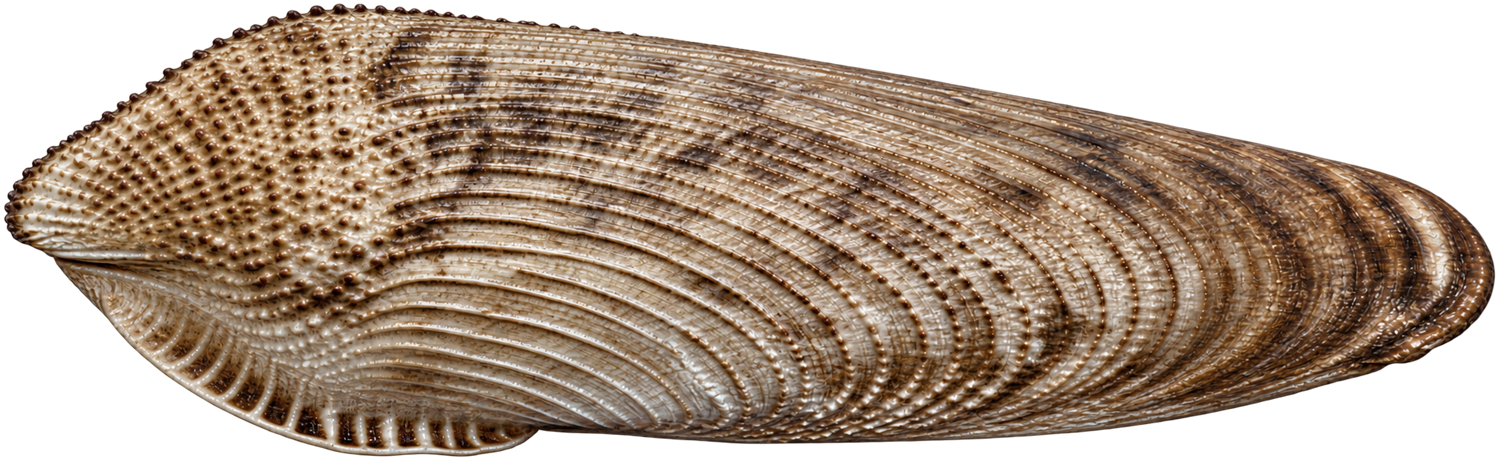 Clavipholas |
C. pectorosa2930Stephenson, L. W. (1941). The larger invertebrate fossils of the Navarro Group of Texas (exclusive of corals and crustaceans and exclusive of the fauna of the Escondido Formation). The University of Texas Publication, 4101, 1–641.2931Foster, W. J. et al. (2020). Resilience of marine invertebrate communities during the early Cenozoic hyperthermals. Scientific Reports 10, 2176. Dataset S1, Formation Owl Creek; Datensatz-IDs 13473, 13527, 13623, 13706, 23847, 23877. doi:10.1038/s41598-020-58986-52932Sohl, N. F. & Koch, C. F. (1983). Upper Cretaceous (Maestrichtian) Mollusca from the Haustator bilira Assemblage Zone in the East Gulf Coastal Plain. U.S. Geological Survey Open-File Report 83-451, 1–239. Owl Creek Formation, Aufsammlungen 41, 43, 45, 46. doi:10.3133/ofr834512933Foster, W. J. et al. (2020). Resilience of marine invertebrate communities during the early Cenozoic hyperthermals. Scientific Reports 10, 2176. Dataset S1. Prairie Bluff Chalk; Dataset-IDs 13967, 14114, 15633, 16487. Quellenbezeichnung: Clavipholas pectorosa. doi:10.1038/s41598-020-58986-52934Bryan, J. R. & Jones, D. S. (1989). Fabric of the Cretaceous-Tertiary marine macrofaunal transition at Braggs, Alabama. Palaeogeography, Palaeoclimatology, Palaeoecology 69, 279–301. Appendix I, S. 296, Prairie-Bluff-Spalten L, U. Quellenbezeichnung: Clavipholas pectorosa*. doi:10.1016/0031-0182(89)90170-3 | Corsicana Marl Owl Creek Formation Prairie Bluff Chalk |
USA (Alabama, Mississippi, Missouri, Texas) | 70–66 Ma (Gattung bis 34 Ma) | sehr häufig | Pholadidae (Bohrmuschel); synonym zu Pholas pectorosa |
| Clisocolus | C. moreauensis2935Speden, I. G. (1970). The type Fox Hills Formation, Cretaceous (Maestrichtian), South Dakota. Part 2. Systematics of the Bivalvia. Bulletin of the Peabody Museum of Natural History 33: 1–222. S. 110–112. Originalveröffentlichung2936Erickson, J. M. (1978). Bivalve mollusk range extensions in the Fox Hills Formation (Maestrichtian) of North and South Dakota and their implications for the Late Cretaceous geologic history of the Williston Basin. Proceedings of the North Dakota Academy of Science 32(2): 79–89. Originalveröffentlichung C. spp.2937Foster, W. J. et al. (2020). Resilience of marine invertebrate communities during the early Cenozoic hyperthermals. Scientific Reports 10, 2176. Supplementary Data 1 doi:10.1038/s41598-020-58986-5 |
Fox Hills Formation Kemp Clay |
USA (North Dakota, South Dakota, Texas) | 69–66 Ma | sehr häufig | Mactromyidae |
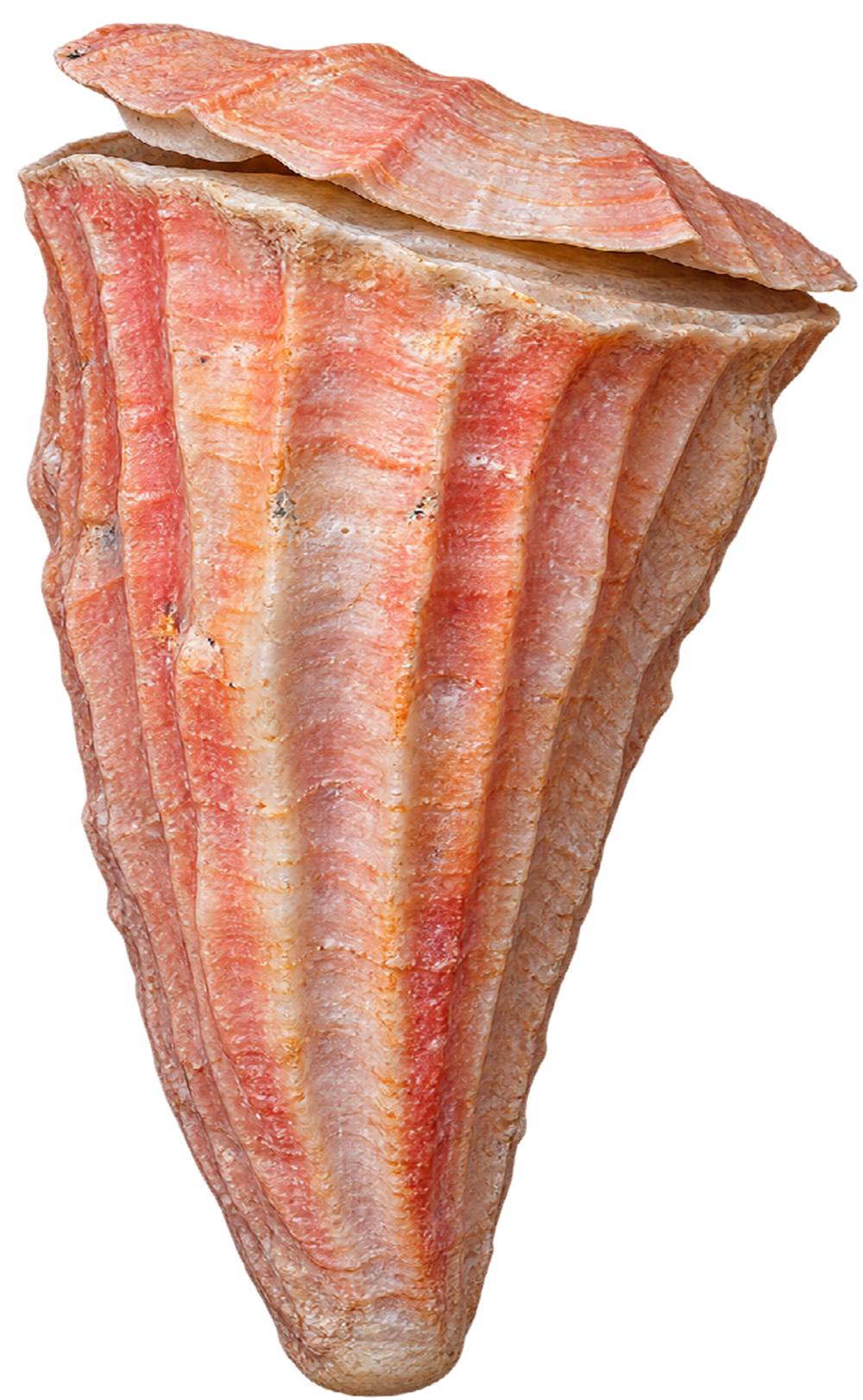 Coralliochama |
C. gboehmi (?)2938Pons, J. M., García-Barrera, P., Oviedo, A. & Vicens, E. (2021). Mexican Upper Cretaceous rudists (Hippuritida, Bivalvia): Taxonomic, stratigraphic, and geologic data. Journal of South American Earth Sciences, 109, 103237. doi:10.1016/j.jsames.2021.103237 C. orcutti2939Dawson, M. K. (1978). The paleontology of the Cabrillo Formation. M.S. thesis, San Diego State University, 1–87. C. spp.2940Müllerried, F. K. G. (1931). Un reptil y algunos invertebrados fósiles de Rayón, estado de Tamaulipas. Anales del Instituto de Biología 2(2), 171–178. Originalpublikation |
Cabrillo Formation Cárdenas Formation Escondido Formation Méndez Formation |
USA (Kalifornien, Texas); Mexiko (Tamaulipas, San Luis Potosí) | 72–66 Ma | häufig | Plagioptychidae |
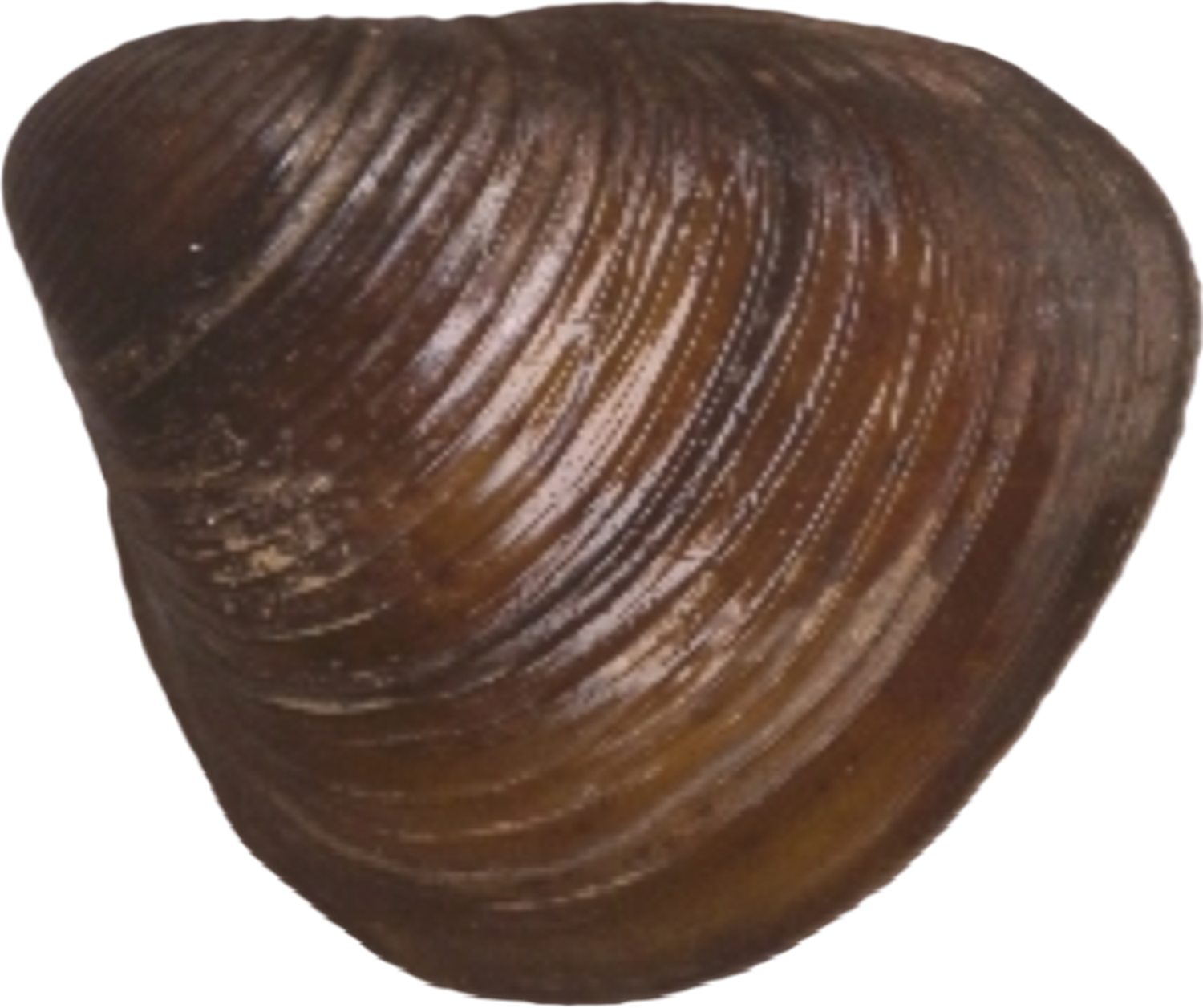 Corbicula |
C. cytheriformis2941Feldmann, R. M. (1967). Bivalvia and paleoecology of the Fox Hills Formation (Upper Cretaceous) of North Dakota. Dissertation, University of North Dakota, Grand Forks. Tabelle 2, S. 105–107; systematischer Teil. Originalveröffentlichung C. moreauensis2942Feldmann, R. M. (1967). Bivalvia and paleoecology of the Fox Hills Formation (Upper Cretaceous) of North Dakota. Dissertation, University of North Dakota, Grand Forks. Tabelle 2, S. 105–107; systematischer Teil. Originalveröffentlichung C. cf. subelliptica (?)2943Russell, L. S. (1976). Pelecypods of the Hell Creek Formation (Uppermost Cretaceous) of Garfield County, Montana. Canadian Journal of Earth Sciences, 13, 365–388. doi:10.1139/e76-039 C. spp.2944Sohl, N. F. & Koch, C. F. (1984). Upper Cretaceous (Maastrichtian) larger invertebrate fossils from the Haustator bilira assemblage zone in the West Gulf Coastal Plain. U.S. Geological Survey Open-File Report, 84-687, 1–282. doi:10.3133/ofr846872945Speden, I. G. (1970). The type Fox Hills Formation, Cretaceous (Maestrichtian), South Dakota. Part 2. Systematics of the Bivalvia. Bulletin of the Peabody Museum of Natural History 33: 1–222. S. 96–99. Originalveröffentlichung |
Escondido Formation Fox Hills Formation Hell Creek Formation |
USA (Montana, North Dakota, South Dakota, Texas) | 72–66 Ma (Gattung 143 Ma bis heute) | häufig | Corbiculidae (Körbchenmuschel) |
 |
Corbiculidae indet.2946Hartman, J. H. & Kirkland, J. I. (2002). Brackish and marine mollusks of the Hell Creek Formation of North Dakota: Evidence for a persisting Cretaceous seaway. In J. H. Hartman, K. R. Johnson & D. J. Nichols (Eds.), The Hell Creek Formation and the Cretaceous–Tertiary Boundary in the Northern Great Plains. Geological Society of America Special Paper, 361, 271–296. doi:10.1130/0-8137-2361-2.271 | Hell Creek Formation Lance Formation |
USA (South Dakota, Wyoming) | 68–66 Ma | häufig | unbestimmte Körbchenmuscheln |
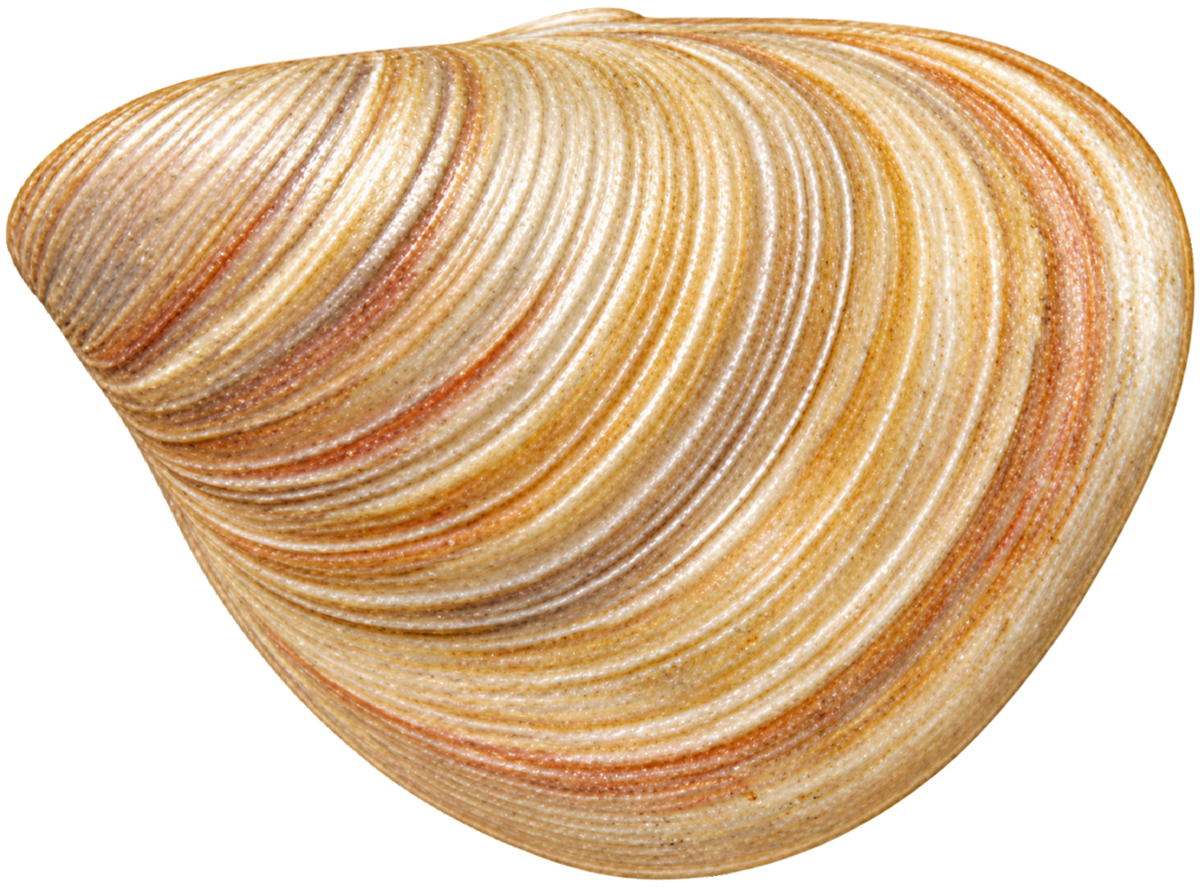 Corbula |
C. crassaplica2947Stephenson, L. W. (1941). The larger invertebrate fossils of the Navarro group of Texas (exclusive of corals and crustaceans and exclusive of the fauna of the Escondido formation). University of Texas Publication 4101, 1–641 C. crassiplica2948Stephenson, L. W. (1941). The larger invertebrate fossils of the Navarro Group of Texas (exclusive of corals and crustaceans and exclusive of the fauna of the Escondido Formation). The University of Texas Publication, 4101, 1–6412949Foster, W. J. et al. (2020). Resilience of marine invertebrate communities during the early Cenozoic hyperthermals. Scientific Reports 10, 2176. Supplementary Data 1 doi:10.1038/s41598-020-58986-5 C. linteroidea2950Foster, W. J. et al. (2020). Resilience of marine invertebrate communities during the early Cenozoic hyperthermals. Scientific Reports 10, 2176. Supplementary Data 1 doi:10.1038/s41598-020-58986-5 C. monmouthensis2951Sohl, N. F. & Koch, C. F. (1984). Upper Cretaceous (Maastrichtian) larger invertebrate fossils from the Haustator bilira assemblage zone in the West Gulf Coastal Plain. U.S. Geological Survey Open-File Report, 84-687, 1–282. doi:10.3133/ofr846872952Feldmann, R. M. (1967). Bivalvia and paleoecology of the Fox Hills Formation (Upper Cretaceous) of North Dakota. Dissertation, University of North Dakota, Grand Forks. Tabelle 2, S. 105–107; systematischer Teil. Originalveröffentlichung2953Bandel, K. & Dockery, D. T. III (2016). Mollusca of the Coon Creek Formation in Tennessee and Mississippi with a systematic discussion of the Gastropoda. Bulletin of the Alabama Museum of Natural History 33(1), 34–96. Muschelliste S. 90–92. 93 Originalpublikation2954Sohl, N. F. & Koch, C. F. (1983). Upper Cretaceous (Maestrichtian) Mollusca from the Haustator bilira Assemblage Zone in the East Gulf Coastal Plain. United States Geological Survey Open-File Report 83–451, 238 S. Loc.10 doi:10.3133/ofr834512955Wade, B. (1926). The fauna of the Ripley Formation on Coon Creek, Tennessee. United States Geological Survey Professional Paper 137, 1–272. Ripley-Vorkommensindex PBDB, Literatur 7434. doi:10.3133/pp1372956Foster, W. J. et al. (2020). Resilience of marine invertebrate communities during the early Cenozoic hyperthermals. Scientific Reports 10, 2176. Dataset S1. Dataset S1, ID 23997; Dataset S1, ID 12985; Dataset S1, ID 13127; Dataset S1, ID 13161; Dataset S1, ID 13301 doi:10.1038/s41598-020-58986-52957Foster, W. J. et al. (2020). Resilience of marine invertebrate communities during the early Cenozoic hyperthermals. Scientific Reports 10, 2176. Dataset S1. Ripley-Vorkommensindex PBDB, Literatur 28119. doi:10.1038/s41598-020-58986-5 C. paracrassa2958Bandel, K. & Dockery, D. T. III (2016). Mollusca of the Coon Creek Formation in Tennessee and Mississippi with a systematic discussion of the Gastropoda. Bulletin of the Alabama Museum of Natural History 33(1), 34–96. Muschelliste S. 90–92. 94 Originalpublikation2959Foster, W. J. et al. (2020). Resilience of marine invertebrate communities during the early Cenozoic hyperthermals. Scientific Reports 10, 2176. Dataset S1. Dataset S1, ID 23993 doi:10.1038/s41598-020-58986-52960Wade, B. (1926). The fauna of the Ripley Formation on Coon Creek, Tennessee. United States Geological Survey Professional Paper 137, 1–272. Ripley-Vorkommensindex PBDB, Literatur 7434. doi:10.3133/pp137 C. perbrevis2961Crider, A. F. (1906). Geology and mineral resources of Mississippi. United States Geological Survey Bulletin 283, 1–99. S. 21, Ripley-Fossilien aus Tippah County. doi:10.3133/b283 C. cf. subcompressa2962Crider, A. F. (1906). Geology and mineral resources of Mississippi. United States Geological Survey Bulletin 283, 1–99. S. 21, Ripley-Fossilien aus Tippah County. doi:10.3133/b283 C. subradiata2963Foster, W. J. et al. (2020). Resilience of marine invertebrate communities during the early Cenozoic hyperthermals. Scientific Reports 10, 2176. Dataset S1. Prairie Bluff Chalk; Dataset-IDs 15635. Quellenbezeichnung: Corbula subradiata. doi:10.1038/s41598-020-58986-5 C. torta2964Foster, W. J. et al. (2020). Resilience of marine invertebrate communities during the early Cenozoic hyperthermals. Scientific Reports 10, 2176. Dataset S1, Formation Owl Creek; Datensatz-IDs 13568, 13624, 13707, 13838. doi:10.1038/s41598-020-58986-52965Sohl, N. F. & Koch, C. F. (1983). Upper Cretaceous (Maestrichtian) Mollusca from the Haustator bilira Assemblage Zone in the East Gulf Coastal Plain. U.S. Geological Survey Open-File Report 83-451, 1–239. Owl Creek Formation, Aufsammlungen 40, 44, 45, 46, 47. Aufsammlung 40: umgelagert. doi:10.3133/ofr83451 C. williardi2966Bandel, K. & Dockery, D. T. III (2016). Mollusca of the Coon Creek Formation in Tennessee and Mississippi with a systematic discussion of the Gastropoda. Bulletin of the Alabama Museum of Natural History 33(1), 34–96. Muschelliste S. 90–92. 95 Originalpublikation2967Foster, W. J. et al. (2020). Resilience of marine invertebrate communities during the early Cenozoic hyperthermals. Scientific Reports 10, 2176. Dataset S1. Dataset S1, ID 23995 doi:10.1038/s41598-020-58986-52968Wade, B. (1926). The fauna of the Ripley Formation on Coon Creek, Tennessee. United States Geological Survey Professional Paper 137, 1–272. Ripley-Vorkommensindex PBDB, Literatur 7434. doi:10.3133/pp137 C. spp.2969Vega, F. J., Feldmann, R. M. & Sour-Tovar, F. (1995). Fossil crabs (Crustacea: Decapoda) from the Late Cretaceous Cárdenas Formation, east-central Mexico. Journal of Paleontology, 69(2), 340–350. doi:10.1017/S00223360000346612970Sohl, N. F. & Koch, C. F. (1984). Upper Cretaceous (Maastrichtian) larger invertebrate fossils from the Haustator bilira assemblage zone in the West Gulf Coastal Plain. U.S. Geological Survey Open-File Report, 84-687, 1–282. doi:10.3133/ofr846872971Foster, W. J. et al. (2020). Resilience of marine invertebrate communities during the early Cenozoic hyperthermals. Scientific Reports 10, 2176. Supplementary Data 1 doi:10.1038/s41598-020-58986-52972Stephenson, L. W. (1941). The larger invertebrate fossils of the Navarro group of Texas (exclusive of corals and crustaceans and exclusive of the fauna of the Escondido formation). University of Texas Publication 4101, 1–6412973Kelley, P. H. & Hansen, T. A. (1993). Evolution of the naticid gastropod predator-prey system: an evaluation of the hypothesis of escalation. PALAIOS 8, 358–375. Tabellen 1, 4 und 5, Ripley/Georgia. Originalpublikation2974Veatch, O. & Stephenson, L. W. (1911). Preliminary report on the geology of the coastal plain of Georgia. Geological Survey of Georgia Bulletin 26, 1–466. S. 176–177, Eufaula-Liste. Originalpublikation2975Sohl, N. F. & Koch, C. F. (1983). Upper Cretaceous (Maestrichtian) Mollusca from the Haustator bilira Assemblage Zone in the East Gulf Coastal Plain. United States Geological Survey Open-File Report 83–451, 238 S. Loc.10; Loc.220 doi:10.3133/ofr834512976Foster, W. J. et al. (2020). Resilience of marine invertebrate communities during the early Cenozoic hyperthermals. Scientific Reports 10, 2176. Dataset S1. Dataset S1, ID 12964; Dataset S1, ID 13287; Dataset S1, ID 17680 doi:10.1038/s41598-020-58986-52977Foster, W. J. et al. (2020). Resilience of marine invertebrate communities during the early Cenozoic hyperthermals. Scientific Reports 10, 2176. Dataset S1, Formation Owl Creek; Datensatz-IDs 13474, 23777, 23815, 23947. doi:10.1038/s41598-020-58986-52978Stephenson, L. W. (1955). Owl Creek (Upper Cretaceous) fossils from Crowleys Ridge, southeastern Missouri. U.S. Geological Survey Professional Paper 274-E, 97–140. Owl Creek Formation, Missouri; Verbreitungstabelle S. 104–105. doi:10.3133/pp274E2979Sohl, N. F. & Koch, C. F. (1983). Upper Cretaceous (Maestrichtian) Mollusca from the Haustator bilira Assemblage Zone in the East Gulf Coastal Plain. U.S. Geological Survey Open-File Report 83-451, 1–239. Owl Creek Formation, Aufsammlungen 40, 41. Aufsammlung 40: umgelagert. doi:10.3133/ofr834512980Foster, W. J. et al. (2020). Resilience of marine invertebrate communities during the early Cenozoic hyperthermals. Scientific Reports 10, 2176. Dataset S1. Prairie Bluff Chalk; Dataset-IDs 14783, 14886, 15094, 15279, 15571, 15634, 15719, 15791, 15954, 16031, 16083, 16346, 16416, 16520, 16609, 16639, 16665. Quellenbezeichnung: Corbula sp.. doi:10.1038/s41598-020-58986-5 |
Corsicana Marl Cárdenas Formation Escondido Formation Fox Hills Formation Kemp Clay Owl Creek Formation Pierre Shale Prairie Bluff Chalk Ripley Formation |
USA (Alabama, Georgia, Mississippi, Missouri, North Dakota, Tennessee, Texas, Wyoming); Mexiko (San Luis Potosí) | 72–66 Ma (Gattung 143 Ma bis heute) | sehr häufig | Corbulidae (Korbmuschel); historische bzw. alternative Kombinationen: Caryocorbula monmouthensis, Juliacorbula monmouthensis |
| Corbulamella | C. gregaria2981Speden, I. G. (1970). The type Fox Hills Formation, Cretaceous (Maestrichtian), South Dakota. Part 2. Systematics of the Bivalvia. Bulletin of the Peabody Museum of Natural History 33: 1–222. S. 143–145. Originalveröffentlichung2982Feldmann, R. M. (1967). Bivalvia and paleoecology of the Fox Hills Formation (Upper Cretaceous) of North Dakota. Dissertation, University of North Dakota, Grand Forks. Tabelle 2, S. 105–107; systematischer Teil. Originalveröffentlichung2983Speden, I. G. (1970). The type Fox Hills Formation, Cretaceous (Maestrichtian), South Dakota. Part 2. Systematics of the Bivalvia. Bulletin of the Peabody Museum of Natural History 33: 1–222. S. 143–146. Der ältere norddakotische Nachweis als Corbulamella inornata wird hier in der von Speden vorgeschlagenen Synonymie berücksichtigt. Originalveröffentlichung C. suffalciata2984Bandel, K. & Dockery, D. T. III (2016). Mollusca of the Coon Creek Formation in Tennessee and Mississippi with a systematic discussion of the Gastropoda. Bulletin of the Alabama Museum of Natural History 33(1), 34–96. Muschelliste S. 90–92. 97 Originalpublikation2985Foster, W. J. et al. (2020). Resilience of marine invertebrate communities during the early Cenozoic hyperthermals. Scientific Reports 10, 2176. Dataset S1. Dataset S1, ID 23983 doi:10.1038/s41598-020-58986-52986Wade, B. (1926). The fauna of the Ripley Formation on Coon Creek, Tennessee. United States Geological Survey Professional Paper 137, 1–272. Ripley-Vorkommensindex PBDB, Literatur 7434. doi:10.3133/pp137 |
Fox Hills Formation Ripley Formation |
USA (North Dakota, South Dakota, Tennessee) | 72–66 Ma | sehr häufig | Corbulidae (Korbmuschel); C. gregaria: früher Corbula gregaria |
| Corculum | C. sp.2987Foster, W. J. et al. (2020). Resilience of marine invertebrate communities during the early Cenozoic hyperthermals. Scientific Reports 10, 2176. Dataset S1, Formation Owl Creek; Datensatz-IDs 11669. doi:10.1038/s41598-020-58986-5 | Owl Creek Formation | USA (Mississippi) | 68–66 Ma | nicht quantifiziert | Cardiidae (Muschel) |
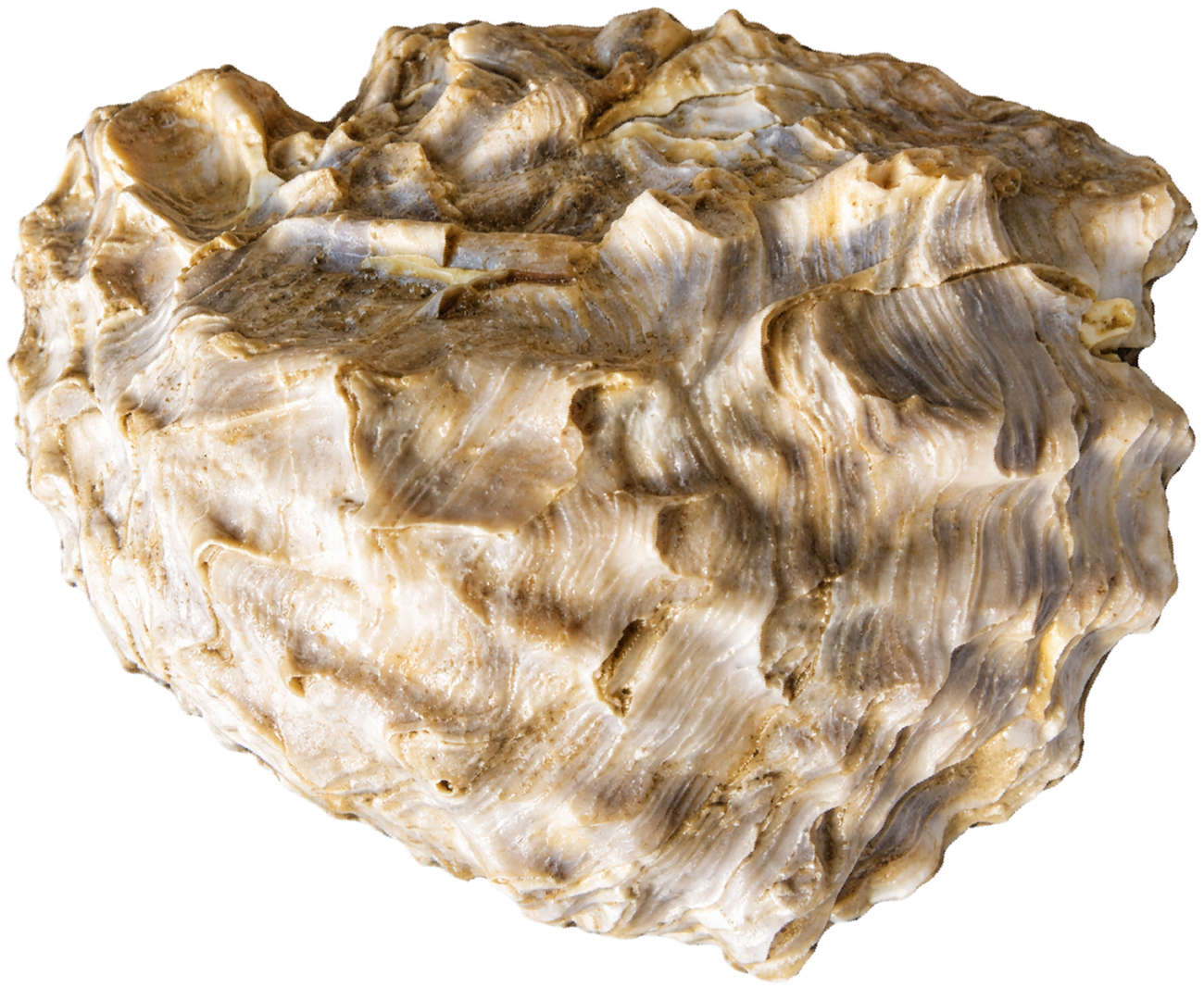 Costagyra |
C. garza2988Squires, R. L. (2017). Late Cretaceous oysters from the Pacific Slope of North America: Revision of named species and discovery of new species. Contributions in Science, 525, 25–53. doi:10.5962/p.318346 | Moreno Formation | USA (Kalifornien) | 72–66 Ma | selten | Gryphaeidae (Auster) |
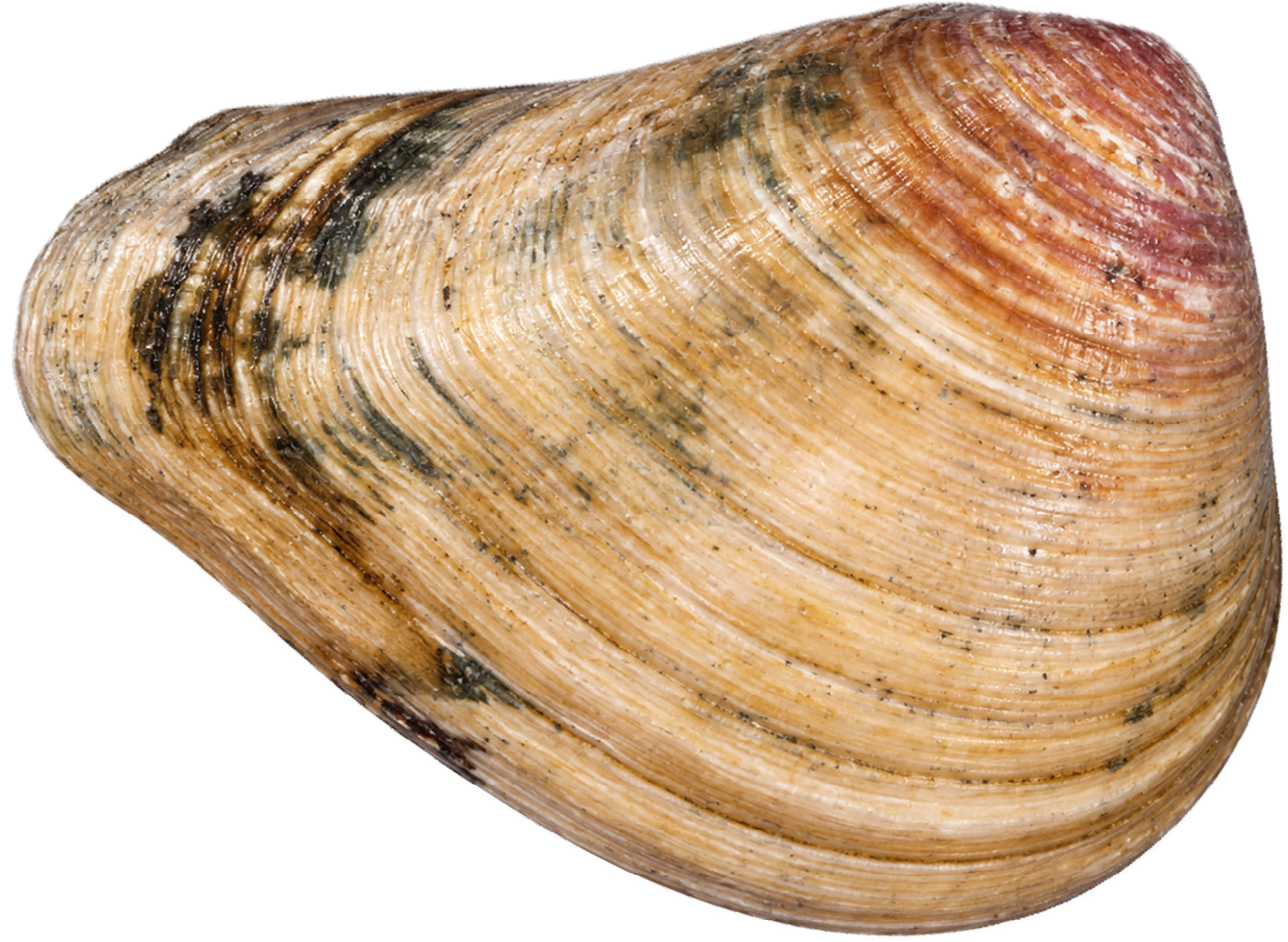 Crassatella |
C. hodgei2989Wingard, G. L. (1993). A detailed taxonomy of Upper Cretaceous and Lower Tertiary Crassatellidae in the Eastern United States—an example of the nature of extinction at the boundary. United States Geological Survey Professional Paper 1535, 1–131. Ripley-Vorkommensindex PBDB, Literatur 7416. doi:10.3133/pp1535 C. vadosa2990Vega-Vera, F.J. & Perrilliat Montoya, M. del C. (1990): Moluscos del Maastrichtiano de la sierra El Antrisco, Estado de Nuevo León. Paleontología Mexicana 55: 1–69. doi:10.22201/igl.05437652e.1990.0.55.3372991Sohl, N. F. & Koch, C. F. (1984). Upper Cretaceous (Maastrichtian) larger invertebrate fossils from the Haustator bilira assemblage zone in the West Gulf Coastal Plain. U.S. Geological Survey Open-File Report, 84-687, 1–282. doi:10.3133/ofr846872992Stephenson, L. W. (1941). The larger invertebrate fossils of the Navarro Group of Texas (exclusive of corals and crustaceans and exclusive of the fauna of the Escondido Formation). The University of Texas Publication, 4101, 1–6412993Foster, W. J. et al. (2020). Resilience of marine invertebrate communities during the early Cenozoic hyperthermals. Scientific Reports 10, 2176. Supplementary Data 1 doi:10.1038/s41598-020-58986-52994Bandel, K. & Dockery, D. T. III (2016). Mollusca of the Coon Creek Formation in Tennessee and Mississippi with a systematic discussion of the Gastropoda. Bulletin of the Alabama Museum of Natural History 33(1), 34–96. Muschelliste S. 90–92. 62; 63; 64 Originalpublikation2995Wingard, G. L. (1993). A detailed taxonomy of Upper Cretaceous and Lower Tertiary Crassatellidae in the Eastern United States—an example of the nature of extinction at the boundary. United States Geological Survey Professional Paper 1535, 1–131. doi:10.3133/pp15352996Crider, A. F. (1906). Geology and mineral resources of Mississippi. United States Geological Survey Bulletin 283, 1–99. S. 21, Ripley-Fossilien aus Tippah County. doi:10.3133/b2832997Sohl, N. F. & Koch, C. F. (1983). Upper Cretaceous (Maestrichtian) Mollusca from the Haustator bilira Assemblage Zone in the East Gulf Coastal Plain. United States Geological Survey Open-File Report 83–451, 238 S. Loc.11; Loc.32; Loc.37 doi:10.3133/ofr834512998Foster, W. J. et al. (2020). Resilience of marine invertebrate communities during the early Cenozoic hyperthermals. Scientific Reports 10, 2176. Dataset S1. Dataset S1, ID 23972; Dataset S1, ID 13033; Dataset S1, ID 13054; Dataset S1, ID 13080; Dataset S1, ID 13117; Dataset S1, ID 13153; Dataset S1, ID 13233; Dataset S1, ID 13257; Dataset S1, ID 13288; Dataset S1, ID 13324; Dataset S1, ID 13349; Dataset S1, ID 13385; Dataset S1, ID 13418; Dataset S1, ID 13451 doi:10.1038/s41598-020-58986-52999Wade, B. (1926). The fauna of the Ripley Formation on Coon Creek, Tennessee. United States Geological Survey Professional Paper 137, 1–272. Ripley-Vorkommensindex PBDB, Literatur 7434. doi:10.3133/pp1373000Foster, W. J. et al. (2020). Resilience of marine invertebrate communities during the early Cenozoic hyperthermals. Scientific Reports 10, 2176. Dataset S1, Formation Owl Creek; Datensatz-IDs 11671, 13497, 13569, 13625, 13708, 13839, 23782, 23816, 23849, 23879, 23948. doi:10.1038/s41598-020-58986-53001Stephenson, L. W. (1955). Owl Creek (Upper Cretaceous) fossils from Crowleys Ridge, southeastern Missouri. U.S. Geological Survey Professional Paper 274-E, 97–140. Owl Creek Formation, Missouri; Verbreitungstabelle S. 104–105. doi:10.3133/pp274E3002Sohl, N. F. & Koch, C. F. (1983). Upper Cretaceous (Maestrichtian) Mollusca from the Haustator bilira Assemblage Zone in the East Gulf Coastal Plain. U.S. Geological Survey Open-File Report 83-451, 1–239. Owl Creek Formation, Aufsammlungen 40, 42, 44, 45, 46, 47. Aufsammlung 40: umgelagert. doi:10.3133/ofr834513003Foster, W. J. et al. (2020). Resilience of marine invertebrate communities during the early Cenozoic hyperthermals. Scientific Reports 10, 2176. Dataset S1. Prairie Bluff Chalk; Dataset-IDs 13900, 13930, 13968, 14033, 14044, 14137, 14206, 14280, 14336, 14435, 14494, 14567, 14618, 14631, 14848, 14999, 15095, 15142, 15190, 15227, 15280, 15342, 15370, 15408, 15475, 15520, 15540, 15572, 15636, 15720, 15792, 15844, 15902, 16032, 16084, 16115, 16161, 16221, 16263, 16312, 16329, 16347, 16372, 16417, 16455, 16521, 16581, 16610, 16641, 16666, 16728. Quellenbezeichnung: Crassatella vadosa. doi:10.1038/s41598-020-58986-53004Bryan, J. R. & Jones, D. S. (1989). Fabric of the Cretaceous-Tertiary marine macrofaunal transition at Braggs, Alabama. Palaeogeography, Palaeoclimatology, Palaeoecology 69, 279–301. Appendix I, S. 296, Prairie-Bluff-Spalten L, M, U. Quellenbezeichnung: Crassatella vadosa. doi:10.1016/0031-0182(89)90170-3 C. vadosa bexarensis3005Stephenson, L. W. (1941). The larger invertebrate fossils of the Navarro group of Texas (exclusive of corals and crustaceans and exclusive of the fauna of the Escondido formation). University of Texas Publication 4101, 1–641 C. vadosa manorensis3006Stephenson, L. W. (1941). The larger invertebrate fossils of the Navarro group of Texas (exclusive of corals and crustaceans and exclusive of the fauna of the Escondido formation). University of Texas Publication 4101, 1–641 C. spp.3007Vega, F. J., Feldmann, R. M. & Sour-Tovar, F. (1995). Fossil crabs (Crustacea: Decapoda) from the Late Cretaceous Cárdenas Formation, east-central Mexico. Journal of Paleontology, 69(2), 340–350. doi:10.1017/S00223360000346613008Stephenson, L. W. (1941). The larger invertebrate fossils of the Navarro Group of Texas (exclusive of corals and crustaceans and exclusive of the fauna of the Escondido Formation). The University of Texas Publication, 4101, 1–6413009Sohl, N. F. & Koch, C. F. (1984). Upper Cretaceous (Maastrichtian) larger invertebrate fossils from the Haustator bilira assemblage zone in the West Gulf Coastal Plain. U.S. Geological Survey Open-File Report, 84-687, 1–282. doi:10.3133/ofr846873010Foster, W. J. et al. (2020). Resilience of marine invertebrate communities during the early Cenozoic hyperthermals. Scientific Reports 10, 2176. Supplementary Data 1 doi:10.1038/s41598-020-58986-53011Stephenson, L. W. (1941). The larger invertebrate fossils of the Navarro group of Texas (exclusive of corals and crustaceans and exclusive of the fauna of the Escondido formation). University of Texas Publication 4101, 1–6413012Vega-Vera, F.J. & Perrilliat Montoya, M. del C. (1990): Moluscos del Maastrichtiano de la sierra El Antrisco, Estado de Nuevo León. Paleontología Mexicana 55: 1–69. doi:10.22201/igl.05437652e.1990.0.55.3373013Foster, W. J. et al. (2020). Resilience of marine invertebrate communities during the early Cenozoic hyperthermals. Scientific Reports 10, 2176. Dataset S1. Dataset S1, ID 4802; Dataset S1, ID 23977; Dataset S1, ID 23265 doi:10.1038/s41598-020-58986-53014Wingard, G. L. (1993). A detailed taxonomy of Upper Cretaceous and Lower Tertiary Crassatellidae in the Eastern United States—an example of the nature of extinction at the boundary. United States Geological Survey Professional Paper 1535, 1–131. Ripley-Vorkommensindex PBDB, Literatur 7416. doi:10.3133/pp15353015Foster, W. J. et al. (2020). Resilience of marine invertebrate communities during the early Cenozoic hyperthermals. Scientific Reports 10, 2176. Dataset S1. Ripley-Vorkommensindex PBDB, Literatur 28119. doi:10.1038/s41598-020-58986-53016Foster, W. J. et al. (2020). Resilience of marine invertebrate communities during the early Cenozoic hyperthermals. Scientific Reports 10, 2176. Dataset S1, Formation Owl Creek; Datensatz-IDs 11670. Publiziert als Crassatella sp. A. doi:10.1038/s41598-020-58986-53017Farke, A. A. & Phillips, G. (2017). The first reported ceratopsid dinosaur from eastern North America (Owl Creek Formation, Upper Cretaceous, Mississippi, USA). PeerJ 5, e3342. Tabelle 1, Owl Creek Formation, Union County, Mississippi; MMNS MS.73.001b. doi:10.7717/peerj.33423018Foster, W. J. et al. (2020). Resilience of marine invertebrate communities during the early Cenozoic hyperthermals. Scientific Reports 10, 2176. Dataset S1. Prairie Bluff Chalk; Dataset-IDs 14666, 14724, 14784, 14944, 15000, 15281, 15453, 15903, 15933, 16057, 16522, 16580, 16640, 16685. Quellenbezeichnung: Crassatella sp.. doi:10.1038/s41598-020-58986-5 |
Arkadelphia Marl Corsicana Marl Cárdenas Formation Escondido Formation Kemp Clay Owl Creek Formation Potrerillos Formation Prairie Bluff Chalk Ripley Formation |
USA (Alabama, Arkansas, Mississippi, Missouri, Tennessee, Texas); Mexiko (Nuevo León) | 72–66 Ma (Gattung 94 Ma bis heute); Potrerillos: Maastrichtium (72–66 Ma) | sehr häufig | Crassatellidae (Dickmuschel); historische bzw. alternative Kombinationen: Crassatellites spp.; historische bzw. alternative Kombinationen: Crassatella vadosa ripleyana |
| Crassatellina | C. carolinensis3019Foster, W. J. et al. (2020). Resilience of marine invertebrate communities during the early Cenozoic hyperthermals. Scientific Reports 10, 2176. Dataset S1. Dataset S1, ID 23982 doi:10.1038/s41598-020-58986-5 C. hollandi3020Feldmann, R. M. & Kammer, T. W. (1976). Crassatellina hollandi n. sp. (Bivalvia: Astartidae) from the Fox Hills Formation (Maastrichtian, Cretaceous) of North Dakota and South Dakota. Journal of Paleontology 50(3): 481–487. Originalveröffentlichung |
Fox Hills Formation Ripley Formation |
USA (North Dakota, South Dakota, Tennessee) | 72–66 Ma | selten | Astartidae |
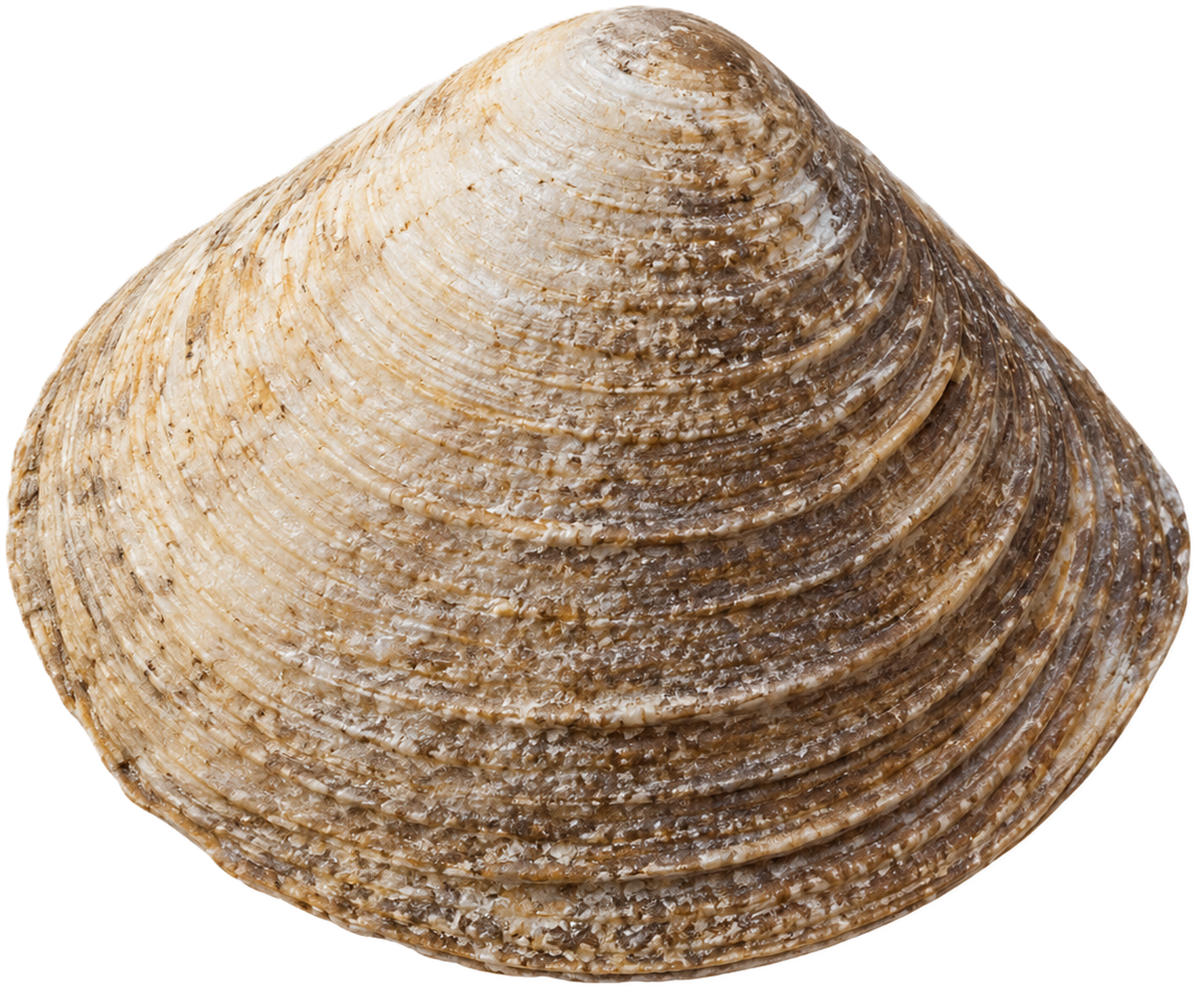 Crassatellites |
C. spp.3021iDigBio (o. J.). Crassatellites, Katalognummer UT000009588.000. Originaler Museumskatalog über iDigBio (abgerufen am 1. Oktober 2026). | Escondido Formation | USA (Texas); Mexiko (Coahuila, Nuevo León) | 72–66 Ma (Gattung 94 Ma bis heute) | selten | Crassatellidae (Dickmuschel) |
 Crassostrea |
C. cortex3022Sohl, N. F. & Koch, C. F. (1984). Upper Cretaceous (Maastrichtian) larger invertebrate fossils from the Haustator bilira assemblage zone in the West Gulf Coastal Plain. U.S. Geological Survey Open-File Report, 84-687, 1–282. doi:10.3133/ofr84687 C. subtrigonalis3023Hartman, J. H. & Kirkland, J. I. (2002). Brackish and marine mollusks of the Hell Creek Formation of North Dakota: Evidence for a persisting Cretaceous seaway. In J. H. Hartman, K. R. Johnson & D. J. Nichols (Eds.), The Hell Creek Formation and the Cretaceous–Tertiary Boundary in the Northern Great Plains. Geological Society of America Special Paper, 361, 271–296. doi:10.1130/0-8137-2361-2.2713024Speden, I. G. (1970). The type Fox Hills Formation, Cretaceous (Maestrichtian), South Dakota. Part 2. Systematics of the Bivalvia. Bulletin of the Peabody Museum of Natural History 33: 1–222. S. 93–95. Originalveröffentlichung3025Feldmann, R. M. (1967). Bivalvia and paleoecology of the Fox Hills Formation (Upper Cretaceous) of North Dakota. Dissertation, University of North Dakota, Grand Forks. Tabelle 2, S. 105–107; systematischer Teil. Originalveröffentlichung C. spp.3026Hoganson, J. W., Campbell, J. M. & Murphy, E. C. (1994). Stratigraphy and paleontology of the Cretaceous Hell Creek Formation, Stumpf site, Morton County, North Dakota. Proceedings of the North Dakota Academy of Science, 48, 95. |
Escondido Formation Fox Hills Formation Hell Creek Formation |
USA (North Dakota, South Dakota, Texas) | 72–66 Ma (Gattung 143 Ma bis heute) | sehr häufig | Ostreidae (Auster); C. subtrigonalis: synonym zu Ostrea glabra Meek & Hayden (präokkupiert) |
 Crenella |
C. elegantula3027Sohl, N. F. & Koch, C. F. (1984). Upper Cretaceous (Maastrichtian) larger invertebrate fossils from the Haustator bilira assemblage zone in the West Gulf Coastal Plain. U.S. Geological Survey Open-File Report, 84-687, 1–282. doi:10.3133/ofr846873028Landman, N. H., Slattery, J. S. & Harries, P. J. (2016): Encrustation of inarticulate brachiopods on scaphitid ammonites and inoceramid bivalves from the Upper Cretaceous U.S. Western Interior. Acta Geologica Polonica 66(4): 645–662. Anhang, Tabelle 1. doi:10.1515/agp-2016-00343029Speden, I. G. (1970). The type Fox Hills Formation, Cretaceous (Maestrichtian), South Dakota. Part 2. Systematics of the Bivalvia. Bulletin of the Peabody Museum of Natural History 33: 1–222. S. 79–81. Originalveröffentlichung3030Feldmann, R. M. (1967). Bivalvia and paleoecology of the Fox Hills Formation (Upper Cretaceous) of North Dakota. Dissertation, University of North Dakota, Grand Forks. Tabelle 2, S. 105–107; systematischer Teil. Originalveröffentlichung3031Bandel, K. & Dockery, D. T. III (2016). Mollusca of the Coon Creek Formation in Tennessee and Mississippi with a systematic discussion of the Gastropoda. Bulletin of the Alabama Museum of Natural History 33(1), 34–96. Muschelliste S. 90–92. 26 Originalpublikation3032Foster, W. J. et al. (2020). Resilience of marine invertebrate communities during the early Cenozoic hyperthermals. Scientific Reports 10, 2176. Dataset S1. Dataset S1, ID 13155; Dataset S1, ID 13207; Dataset S1, ID 13290 doi:10.1038/s41598-020-58986-53033Wade, B. (1926). The fauna of the Ripley Formation on Coon Creek, Tennessee. United States Geological Survey Professional Paper 137, 1–272. Ripley-Vorkommensindex PBDB, Literatur 7434. doi:10.3133/pp1373034Foster, W. J. et al. (2020). Resilience of marine invertebrate communities during the early Cenozoic hyperthermals. Scientific Reports 10, 2176. Dataset S1, Formation Owl Creek; Datensatz-IDs 13529, 13570, 13626, 13709, 23778, 23880, 23949. doi:10.1038/s41598-020-58986-53035Sohl, N. F. & Koch, C. F. (1983). Upper Cretaceous (Maestrichtian) Mollusca from the Haustator bilira Assemblage Zone in the East Gulf Coastal Plain. U.S. Geological Survey Open-File Report 83-451, 1–239. Owl Creek Formation, Aufsammlungen 43, 44, 45, 46. doi:10.3133/ofr834513036Foster, W. J. et al. (2020). Resilience of marine invertebrate communities during the early Cenozoic hyperthermals. Scientific Reports 10, 2176. Dataset S1. Prairie Bluff Chalk; Dataset-IDs 14668, 14946, 16642, 16730. Quellenbezeichnung: Crenella elegantula. doi:10.1038/s41598-020-58986-5 C. microstriata3037Stephenson, L. W. (1955). Owl Creek (Upper Cretaceous) fossils from Crowleys Ridge, southeastern Missouri. U.S. Geological Survey Professional Paper 274-E, 97–140. Owl Creek Formation, Missouri; Verbreitungstabelle S. 104–105. doi:10.3133/pp274E C. serica3038Sohl, N. F. & Koch, C. F. (1984). Upper Cretaceous (Maastrichtian) larger invertebrate fossils from the Haustator bilira assemblage zone in the West Gulf Coastal Plain. U.S. Geological Survey Open-File Report, 84-687, 1–282. doi:10.3133/ofr846873039Stephenson, L. W. (1941). The larger invertebrate fossils of the Navarro Group of Texas (exclusive of corals and crustaceans and exclusive of the fauna of the Escondido Formation). The University of Texas Publication, 4101, 1–6413040Foster, W. J. et al. (2020). Resilience of marine invertebrate communities during the early Cenozoic hyperthermals. Scientific Reports 10, 2176. Supplementary Data 1 doi:10.1038/s41598-020-58986-53041Stephenson, L. W. (1941). The larger invertebrate fossils of the Navarro group of Texas (exclusive of corals and crustaceans and exclusive of the fauna of the Escondido formation). University of Texas Publication 4101, 1–6413042Bandel, K. & Dockery, D. T. III (2016). Mollusca of the Coon Creek Formation in Tennessee and Mississippi with a systematic discussion of the Gastropoda. Bulletin of the Alabama Museum of Natural History 33(1), 34–96. Muschelliste S. 90–92. 25 Originalpublikation3043Veatch, O. & Stephenson, L. W. (1911). Preliminary report on the geology of the coastal plain of Georgia. Geological Survey of Georgia Bulletin 26, 1–466. S. 176–177, Eufaula-Liste. Originalpublikation3044Crider, A. F. (1906). Geology and mineral resources of Mississippi. United States Geological Survey Bulletin 283, 1–99. S. 21, Ripley-Fossilien aus Tippah County. doi:10.3133/b2833045Sohl, N. F. & Koch, C. F. (1983). Upper Cretaceous (Maestrichtian) Mollusca from the Haustator bilira Assemblage Zone in the East Gulf Coastal Plain. United States Geological Survey Open-File Report 83–451, 238 S. Loc.10 doi:10.3133/ofr834513046Bryan, J. R. & Jones, D. S. (1989). Fabric of the Cretaceous-Tertiary marine macrofaunal transition at Braggs, Alabama. Palaeogeography, Palaeoclimatology, Palaeoecology 69, 279–301. Appendix I, S. 295–296, Spalte Ripley. Appendix I, S.295–296 doi:10.1016/0031-0182(89)90170-33047Foster, W. J. et al. (2020). Resilience of marine invertebrate communities during the early Cenozoic hyperthermals. Scientific Reports 10, 2176. Dataset S1. Dataset S1, ID 12965; Dataset S1, ID 13055; Dataset S1, ID 13081; Dataset S1, ID 13118; Dataset S1, ID 13154; Dataset S1, ID 13182; Dataset S1, ID 13206; Dataset S1, ID 13234; Dataset S1, ID 13258; Dataset S1, ID 13289; Dataset S1, ID 13325; Dataset S1, ID 13350; Dataset S1, ID 13375; Dataset S1, ID 13386; Dataset S1, ID 13396 doi:10.1038/s41598-020-58986-53048Wade, B. (1926). The fauna of the Ripley Formation on Coon Creek, Tennessee. United States Geological Survey Professional Paper 137, 1–272. Ripley-Vorkommensindex PBDB, Literatur 7434. doi:10.3133/pp1373049Foster, W. J. et al. (2020). Resilience of marine invertebrate communities during the early Cenozoic hyperthermals. Scientific Reports 10, 2176. Dataset S1, Formation Owl Creek; Datensatz-IDs 13498, 13528, 13710, 23817. doi:10.1038/s41598-020-58986-53050Stephenson, L. W. (1955). Owl Creek (Upper Cretaceous) fossils from Crowleys Ridge, southeastern Missouri. U.S. Geological Survey Professional Paper 274-E, 97–140. Owl Creek Formation, Missouri; Verbreitungstabelle S. 104–105. doi:10.3133/pp274E3051Sohl, N. F. & Koch, C. F. (1983). Upper Cretaceous (Maestrichtian) Mollusca from the Haustator bilira Assemblage Zone in the East Gulf Coastal Plain. U.S. Geological Survey Open-File Report 83-451, 1–239. Owl Creek Formation, Aufsammlungen 42, 43, 46. doi:10.3133/ofr834513052Foster, W. J. et al. (2020). Resilience of marine invertebrate communities during the early Cenozoic hyperthermals. Scientific Reports 10, 2176. Dataset S1. Prairie Bluff Chalk; Dataset-IDs 14667, 14702, 14725, 14746, 14785, 14820, 14849, 14887, 14920, 14945, 15001, 15282, 15371, 15409, 15445, 15454, 15573, 15637, 15721, 15793, 15955, 15966, 15981, 16006, 16033, 16085, 16116, 16162, 16222, 16249, 16264, 16330, 16348, 16373, 16418, 16456, 16488, 16582, 16643, 16686, 16729. Quellenbezeichnung: Crenella serica. doi:10.1038/s41598-020-58986-53053Bryan, J. R. & Jones, D. S. (1989). Fabric of the Cretaceous-Tertiary marine macrofaunal transition at Braggs, Alabama. Palaeogeography, Palaeoclimatology, Palaeoecology 69, 279–301. Appendix I, S. 295, Prairie-Bluff-Spalten L, M, U. Quellenbezeichnung: Crenella senica. doi:10.1016/0031-0182(89)90170-3 C. spherica3054Witts, J. D. et al. (2018). A fossiliferous spherule-rich bed at the Cretaceous–Paleogene (K–Pg) boundary in Mississippi, USA: Implications for the K–Pg mass extinction event in the Mississippi Embayment and Eastern Gulf Coastal Plain. Cretaceous Research 91, 147–167. Anhang 1, nur Owl-Creek-Spalten, Zeilen 18. doi:10.1016/j.cretres.2018.06.002 C. spp.3055Foster, W. J. et al. (2020). Resilience of marine invertebrate communities during the early Cenozoic hyperthermals. Scientific Reports 10, 2176. Supplementary Data 1 doi:10.1038/s41598-020-58986-53056Stephenson, L. W. (1941). The larger invertebrate fossils of the Navarro group of Texas (exclusive of corals and crustaceans and exclusive of the fauna of the Escondido formation). University of Texas Publication 4101, 1–6413057Foster, W. J. et al. (2020). Resilience of marine invertebrate communities during the early Cenozoic hyperthermals. Scientific Reports 10, 2176. Dataset S1. Dataset S1, ID 23953 doi:10.1038/s41598-020-58986-5 |
Arkadelphia Marl Corsicana Marl Escondido Formation Fox Hills Formation Kemp Clay Owl Creek Formation Pierre Shale Prairie Bluff Chalk Ripley Formation |
USA (Alabama, Arkansas, Mississippi, Missouri, Montana, North Dakota, South Dakota, Tennessee, Texas) | 72–66 Ma (Gattung 143 Ma bis heute) | sehr häufig | Mytilidae (Miesmuschel) |
 Cubitostrea |
C. tecticosta3058Sohl, N. F. & Koch, C. F. (1984). Upper Cretaceous (Maastrichtian) larger invertebrate fossils from the Haustator bilira assemblage zone in the West Gulf Coastal Plain. U.S. Geological Survey Open-File Report, 84-687, 1–282. doi:10.3133/ofr846873059Stephenson, L. W. (1941). The larger invertebrate fossils of the Navarro Group of Texas (exclusive of corals and crustaceans and exclusive of the fauna of the Escondido Formation). The University of Texas Publication, 4101, 1–641.3060Bandel, K. & Dockery, D. T. III (2016). Mollusca of the Coon Creek Formation in Tennessee and Mississippi with a systematic discussion of the Gastropoda. Bulletin of the Alabama Museum of Natural History 33(1), 34–96. Muschelliste S. 90–92. 46 Originalpublikation3061Veatch, O. & Stephenson, L. W. (1911). Preliminary report on the geology of the coastal plain of Georgia. Geological Survey of Georgia Bulletin 26, 1–466. S. 176–177, Eufaula-Liste. Originalpublikation3062Crider, A. F. (1906). Geology and mineral resources of Mississippi. United States Geological Survey Bulletin 283, 1–99. S. 21, Ripley-Fossilien aus Tippah County. doi:10.3133/b2833063Sohl, N. F. & Koch, C. F. (1983). Upper Cretaceous (Maestrichtian) Mollusca from the Haustator bilira Assemblage Zone in the East Gulf Coastal Plain. United States Geological Survey Open-File Report 83–451, 238 S. Loc.8; Loc.10; Loc.11; Loc.30; Loc.220 doi:10.3133/ofr834513064Bryan, J. R. & Jones, D. S. (1989). Fabric of the Cretaceous-Tertiary marine macrofaunal transition at Braggs, Alabama. Palaeogeography, Palaeoclimatology, Palaeoecology 69, 279–301. Appendix I, S. 295–296, Spalte Ripley. Appendix I, S.295–296 doi:10.1016/0031-0182(89)90170-33065Wade, B. (1926). The fauna of the Ripley Formation on Coon Creek, Tennessee. United States Geological Survey Professional Paper 137, 1–272. Ripley-Vorkommensindex PBDB, Literatur 7434. doi:10.3133/pp1373066Stephenson, L. W. (1914). Cretaceous deposits of the eastern Gulf region and species of Exogyra from the eastern Gulf region and the Carolinas. United States Geological Survey Professional Paper 81, 1–77. Ripley-Vorkommensindex PBDB, Literatur 91288. doi:10.3133/pp813067Foster, W. J. et al. (2020). Resilience of marine invertebrate communities during the early Cenozoic hyperthermals. Scientific Reports 10, 2176. Dataset S1. Dataset S1, ID 12904; Dataset S1, ID 12915; Dataset S1, ID 12946; Dataset S1, ID 13028; Dataset S1, ID 13051; Dataset S1, ID 13070; Dataset S1, ID 13228; Dataset S1, ID 13279; Dataset S1, ID 13394; Dataset S1, ID 13406; Dataset S1, ID 17673 doi:10.1038/s41598-020-58986-53068Bryan, J. R. & Jones, D. S. (1989). Fabric of the Cretaceous-Tertiary marine macrofaunal transition at Braggs, Alabama. Palaeogeography, Palaeoclimatology, Palaeoecology 69, 279–301. Appendix I, S. 295, Prairie-Bluff-Spalten L, M, U. Quellenbezeichnung: Cubitostera tecticosta*. doi:10.1016/0031-0182(89)90170-3 | Arkadelphia Marl Corsicana Marl Escondido Formation Prairie Bluff Chalk Ripley Formation |
USA (Alabama, Arkansas, Mississippi, Tennessee, Texas) | 72–66 Ma (Gattung bis 5 Ma) | sehr häufig | Ostreidae (Auster); historische bzw. alternative Kombinationen: Ambigostrea tecticosta |
 Cucullaea |
C. capax3069Vega, F.J., Feldmann, R.M. & Sour-Tovar, F. (1995): Fossil crabs (Crustacea: Decapoda) from the Late Cretaceous Cárdenas Formation, east-central Mexico. Journal of Paleontology 69(2): 340–350. Volltext3070Foster, W. J. et al. (2020). Resilience of marine invertebrate communities during the early Cenozoic hyperthermals. Scientific Reports 10, 2176. Dataset S1. Dataset S1, ID 13082; Dataset S1, ID 13259; Dataset S1, ID 13291; Dataset S1, ID 13326 doi:10.1038/s41598-020-58986-53071Sohl, N. F. (1960). Archeogastropoda, Mesogastropoda, and stratigraphy of the Ripley, Owl Creek, and Prairie Bluff formations. United States Geological Survey Professional Paper 331-A, 1–151. Ripley-Vorkommensindex PBDB, Literatur 463. doi:10.3133/pp331A3072Foster, W. J. et al. (2020). Resilience of marine invertebrate communities during the early Cenozoic hyperthermals. Scientific Reports 10, 2176. Dataset S1, Formation Owl Creek; Datensatz-IDs 11673, 13499, 13530, 13571, 13628, 13711, 13863, 13877, 13887, 23776, 23779, 23882, 23951. Publiziert als Cucullaea capex. doi:10.1038/s41598-020-58986-53073Farke, A. A. & Phillips, G. (2017). The first reported ceratopsid dinosaur from eastern North America (Owl Creek Formation, Upper Cretaceous, Mississippi, USA). PeerJ 5, e3342. Tabelle 1, Owl Creek Formation, Union County, Mississippi; MMNS MS.73.001b. doi:10.7717/peerj.33423074Stephenson, L. W. (1955). Owl Creek (Upper Cretaceous) fossils from Crowleys Ridge, southeastern Missouri. U.S. Geological Survey Professional Paper 274-E, 97–140. Owl Creek Formation, Missouri; Verbreitungstabelle S. 104–105. doi:10.3133/pp274E3075Sohl, N. F. & Koch, C. F. (1983). Upper Cretaceous (Maestrichtian) Mollusca from the Haustator bilira Assemblage Zone in the East Gulf Coastal Plain. U.S. Geological Survey Open-File Report 83-451, 1–239. Owl Creek Formation, Aufsammlungen 40, 42, 43, 44, 45, 46, 48, 50, 51. Aufsammlung 40: umgelagert. doi:10.3133/ofr834513076Foster, W. J. et al. (2020). Resilience of marine invertebrate communities during the early Cenozoic hyperthermals. Scientific Reports 10, 2176. Dataset S1. Prairie Bluff Chalk; Dataset-IDs 13931, 13969, 14016, 14045, 14080, 14138, 14207, 14229, 14236, 14258, 14281, 14299, 14337, 14376, 14417, 14436, 14523, 14532, 14568, 14603, 14619, 14632, 14669, 14703, 14726, 14747, 14787, 14821, 14888, 14947, 15002, 15056, 15096, 15160, 15191, 15228, 15283, 15343, 15356, 15372, 15410, 15476, 15521, 15541, 15574, 15638, 15722, 15794, 15845, 15906, 16058, 16086, 16118, 16163, 16250, 16265, 16313, 16375, 16457, 16523, 16583, 16687, 16731. Quellenbezeichnung: Cucullaea capax. doi:10.1038/s41598-020-58986-53077Bryan, J. R. & Jones, D. S. (1989). Fabric of the Cretaceous-Tertiary marine macrofaunal transition at Braggs, Alabama. Palaeogeography, Palaeoclimatology, Palaeoecology 69, 279–301. Appendix I, S. 295, Prairie-Bluff-Spalten L, U. Quellenbezeichnung: Cucullaea (Idonearca) capax. doi:10.1016/0031-0182(89)90170-3 C. deatsvillensis3078Foster, W. J. et al. (2020). Resilience of marine invertebrate communities during the early Cenozoic hyperthermals. Scientific Reports 10, 2176. Supplementary Data 1 doi:10.1038/s41598-020-58986-5 C. littlei3079Bandel, K. & Dockery, D. T. III (2016). Mollusca of the Coon Creek Formation in Tennessee and Mississippi with a systematic discussion of the Gastropoda. Bulletin of the Alabama Museum of Natural History 33(1), 34–96. Muschelliste S. 90–92. 18 Originalpublikation3080Sohl, N. F. & Koch, C. F. (1983). Upper Cretaceous (Maestrichtian) Mollusca from the Haustator bilira Assemblage Zone in the East Gulf Coastal Plain. United States Geological Survey Open-File Report 83–451, 238 S. Loc.32; Loc.220; Loc.221 doi:10.3133/ofr834513081Bryan, J. R. & Jones, D. S. (1989). Fabric of the Cretaceous-Tertiary marine macrofaunal transition at Braggs, Alabama. Palaeogeography, Palaeoclimatology, Palaeoecology 69, 279–301. Appendix I, S. 295–296, Spalte Ripley. Appendix I, S.295–296 doi:10.1016/0031-0182(89)90170-33082Foster, W. J. et al. (2020). Resilience of marine invertebrate communities during the early Cenozoic hyperthermals. Scientific Reports 10, 2176. Dataset S1. Dataset S1, ID 13083; Dataset S1, ID 13351; Dataset S1, ID 13419; Dataset S1, ID 17681; Dataset S1, ID 17694 doi:10.1038/s41598-020-58986-53083Sohl, N. F. (1960). Archeogastropoda, Mesogastropoda, and stratigraphy of the Ripley, Owl Creek, and Prairie Bluff formations. United States Geological Survey Professional Paper 331-A, 1–151. Ripley-Vorkommensindex PBDB, Literatur 463. doi:10.3133/pp331A3084Wade, B. (1926). The fauna of the Ripley Formation on Coon Creek, Tennessee. United States Geological Survey Professional Paper 137, 1–272. Ripley-Vorkommensindex PBDB, Literatur 7434. doi:10.3133/pp1373085Foster, W. J. et al. (2020). Resilience of marine invertebrate communities during the early Cenozoic hyperthermals. Scientific Reports 10, 2176. Dataset S1. Prairie Bluff Chalk; Dataset-IDs 15904. Quellenbezeichnung: Cucullaea littlei. doi:10.1038/s41598-020-58986-5 C. nebrascensis3086Landman, N. H., Slattery, J. S. & Harries, P. J. (2016): Encrustation of inarticulate brachiopods on scaphitid ammonites and inoceramid bivalves from the Upper Cretaceous U.S. Western Interior. Acta Geologica Polonica 66(4): 645–662. Anhang, Tabelle 1. doi:10.1515/agp-2016-00343087Sava, L. A. (2007): The Molluscan and Brachiopod Fauna of the Late Cretaceous Pierre Shale (Baculites compressus/Baculites cuneatus biozones) near Kremmling, Colorado. M.Sc.-Abschlussarbeit, University of South Florida, Tampa. Tabelle 1 und systematischer Teil, S. 21–52. Originalveröffentlichung3088Speden, I. G. (1970). The type Fox Hills Formation, Cretaceous (Maestrichtian), South Dakota. Part 2. Systematics of the Bivalvia. Bulletin of the Peabody Museum of Natural History 33: 1–222. S. 49–56. Originalveröffentlichung3089Feldmann, R. M. (1967). Bivalvia and paleoecology of the Fox Hills Formation (Upper Cretaceous) of North Dakota. Dissertation, University of North Dakota, Grand Forks. Tabelle 2, S. 105–107; systematischer Teil. Originalveröffentlichung C. powersi3090Foster, W. J. et al. (2020). Resilience of marine invertebrate communities during the early Cenozoic hyperthermals. Scientific Reports 10, 2176. Dataset S1. Prairie Bluff Chalk; Dataset-IDs 15639. Quellenbezeichnung: Cucullaea powersi. doi:10.1038/s41598-020-58986-5 C. cf. powersi3091Foster, W. J. et al. (2020). Resilience of marine invertebrate communities during the early Cenozoic hyperthermals. Scientific Reports 10, 2176. Dataset S1. Prairie Bluff Chalk; Dataset-IDs 15905. Quellenbezeichnung: Cucullaea powersi. doi:10.1038/s41598-020-58986-5 C. vulgaris3092Bandel, K. & Dockery, D. T. III (2016). Mollusca of the Coon Creek Formation in Tennessee and Mississippi with a systematic discussion of the Gastropoda. Bulletin of the Alabama Museum of Natural History 33(1), 34–96. Muschelliste S. 90–92. 17 Originalpublikation3093Veatch, O. & Stephenson, L. W. (1911). Preliminary report on the geology of the coastal plain of Georgia. Geological Survey of Georgia Bulletin 26, 1–466. S. 176–177, Eufaula-Liste. Originalpublikation3094Crider, A. F. (1906). Geology and mineral resources of Mississippi. United States Geological Survey Bulletin 283, 1–99. S. 21, Ripley-Fossilien aus Tippah County. doi:10.3133/b2833095Foster, W. J. et al. (2020). Resilience of marine invertebrate communities during the early Cenozoic hyperthermals. Scientific Reports 10, 2176. Dataset S1. Dataset S1, ID 23960 doi:10.1038/s41598-020-58986-53096Wade, B. (1926). The fauna of the Ripley Formation on Coon Creek, Tennessee. United States Geological Survey Professional Paper 137, 1–272. Ripley-Vorkommensindex PBDB, Literatur 7434. doi:10.3133/pp137 C. aff. vulgaris3097Foster, W. J. et al. (2020). Resilience of marine invertebrate communities during the early Cenozoic hyperthermals. Scientific Reports 10, 2176. Dataset S1. Dataset S1, ID 23959 doi:10.1038/s41598-020-58986-5 C. spp.3098Ifrim, C., Stinnesbeck, W. & Schafhauser, A. (2005). Maastrichtian shallow-water ammonites of northeastern Mexico. Revista Mexicana de Ciencias Geológicas, 22(1), 48–64. Volltext3099Foster, W. J. et al. (2020). Resilience of marine invertebrate communities during the early Cenozoic hyperthermals. Scientific Reports 10, 2176. Supplementary Data 1 doi:10.1038/s41598-020-58986-53100Foster, W. J. et al. (2020). Resilience of marine invertebrate communities during the early Cenozoic hyperthermals. Scientific Reports 10, 2176. Dataset S1. Dataset S1, ID 13119; Dataset S1, ID 13156 doi:10.1038/s41598-020-58986-53101Witts, J. D. et al. (2018). A fossiliferous spherule-rich bed at the Cretaceous–Paleogene (K–Pg) boundary in Mississippi, USA: Implications for the K–Pg mass extinction event in the Mississippi Embayment and Eastern Gulf Coastal Plain. Cretaceous Research 91, 147–167. Anhang 1, nur Owl-Creek-Spalten, Zeilen 19, 20. doi:10.1016/j.cretres.2018.06.0023102Foster, W. J. et al. (2020). Resilience of marine invertebrate communities during the early Cenozoic hyperthermals. Scientific Reports 10, 2176. Dataset S1. Prairie Bluff Chalk; Dataset-IDs 14850, 16290, 16732. Quellenbezeichnung: Cucullaea sp.. doi:10.1038/s41598-020-58986-5 |
Escondido Formation Fox Hills Formation Kemp Clay Owl Creek Formation Pierre Shale Potrerillos Formation Prairie Bluff Chalk Ripley Formation |
USA (Alabama, Colorado, Mississippi, Missouri, Montana, North Dakota, South Dakota, Tennessee, Texas); Mexiko (Nuevo León) | 74–66 Ma (Gattung 201 Ma bis heute) | sehr häufig | Cucullaeidae; C. nebrascensis: synonym zu C. shumardi und C. cordata; historische bzw. alternative Kombinationen: Idonearca littlei, Idonearca vulgaris |
| Cuna | C. texana3103Bryan, J. R. & Jones, D. S. (1989). Fabric of the Cretaceous-Tertiary marine macrofaunal transition at Braggs, Alabama. Palaeogeography, Palaeoclimatology, Palaeoecology 69, 279–301. Appendix I, S. 295–296, Spalte Ripley. Appendix I, S.295–296 doi:10.1016/0031-0182(89)90170-33104Foster, W. J. et al. (2020). Resilience of marine invertebrate communities during the early Cenozoic hyperthermals. Scientific Reports 10, 2176. Dataset S1. Dataset S1, ID 13260 doi:10.1038/s41598-020-58986-53105Foster, W. J. et al. (2020). Resilience of marine invertebrate communities during the early Cenozoic hyperthermals. Scientific Reports 10, 2176. Dataset S1. Prairie Bluff Chalk; Dataset-IDs 15411, 15640, 16733. Quellenbezeichnung: Cuna texana. doi:10.1038/s41598-020-58986-5 C. spp.3106Foster, W. J. et al. (2020). Resilience of marine invertebrate communities during the early Cenozoic hyperthermals. Scientific Reports 10, 2176. Supplementary Data 1 doi:10.1038/s41598-020-58986-5 |
Kemp Clay Prairie Bluff Chalk Ripley Formation |
USA (Alabama, Mississippi, Texas) | 72–66 Ma | häufig | Condylocardiidae; historische bzw. alternative Kombinationen: Uddenia texana |
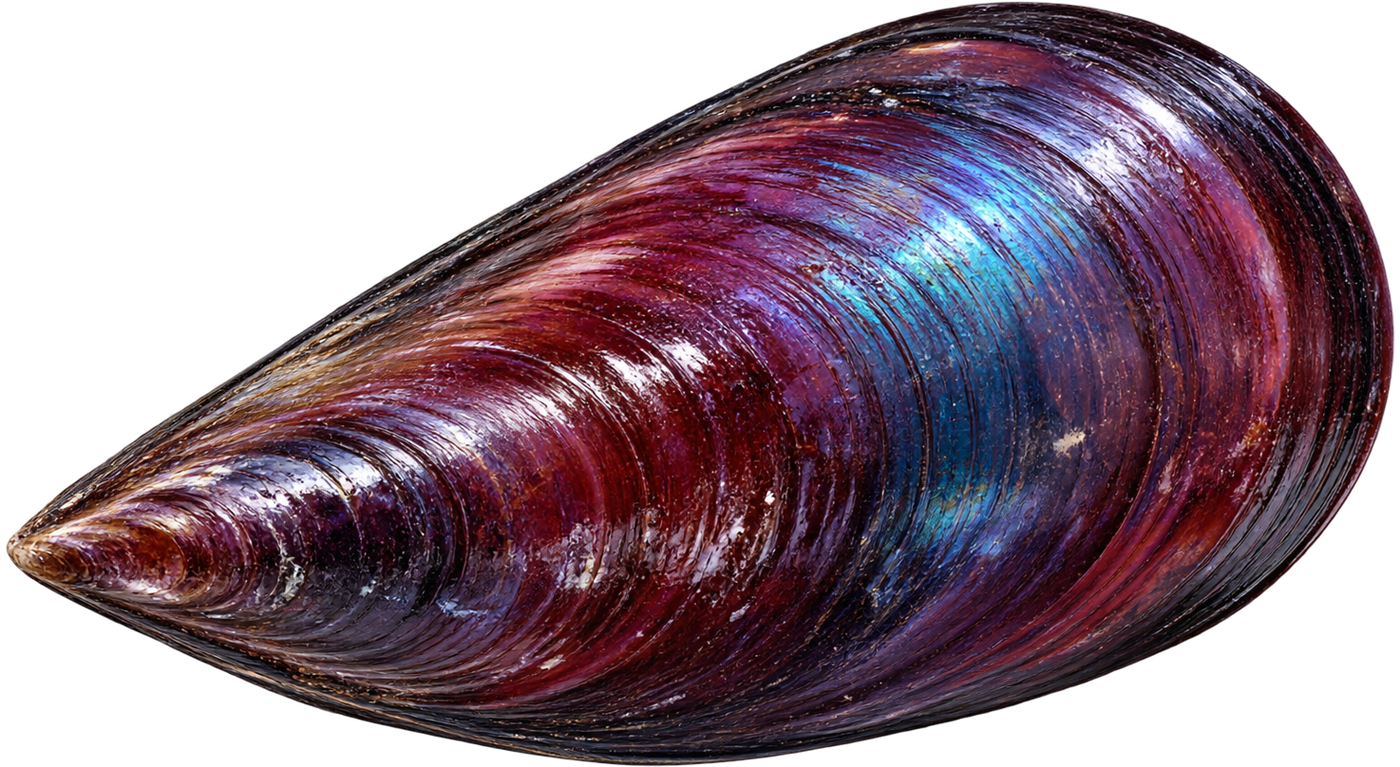 Cuneolus |
C. tippanus3107Stephenson, L. W. (1941). The larger invertebrate fossils of the Navarro Group of Texas (exclusive of corals and crustaceans and exclusive of the fauna of the Escondido Formation). The University of Texas Publication, 4101, 1–641.3108Bandel, K. & Dockery, D. T. III (2016). Mollusca of the Coon Creek Formation in Tennessee and Mississippi with a systematic discussion of the Gastropoda. Bulletin of the Alabama Museum of Natural History 33(1), 34–96. Muschelliste S. 90–92. 80 Originalpublikation3109Veatch, O. & Stephenson, L. W. (1911). Preliminary report on the geology of the coastal plain of Georgia. Geological Survey of Georgia Bulletin 26, 1–466. S. 176–177, Eufaula-Liste. Originalpublikation3110Crider, A. F. (1906). Geology and mineral resources of Mississippi. United States Geological Survey Bulletin 283, 1–99. S. 21, Ripley-Fossilien aus Tippah County. doi:10.3133/b2833111Sohl, N. F. & Koch, C. F. (1983). Upper Cretaceous (Maestrichtian) Mollusca from the Haustator bilira Assemblage Zone in the East Gulf Coastal Plain. United States Geological Survey Open-File Report 83–451, 238 S. Loc.10; Loc.32 doi:10.3133/ofr834513112Foster, W. J. et al. (2020). Resilience of marine invertebrate communities during the early Cenozoic hyperthermals. Scientific Reports 10, 2176. Dataset S1. Dataset S1, ID 23970; Dataset S1, ID 12993; Dataset S1, ID 13435 doi:10.1038/s41598-020-58986-53113Foster, W. J. et al. (2020). Resilience of marine invertebrate communities during the early Cenozoic hyperthermals. Scientific Reports 10, 2176. Dataset S1. Ripley-Vorkommensindex PBDB, Literatur 28119. doi:10.1038/s41598-020-58986-53114Foster, W. J. et al. (2020). Resilience of marine invertebrate communities during the early Cenozoic hyperthermals. Scientific Reports 10, 2176. Dataset S1. Prairie Bluff Chalk; Dataset-IDs 13908, 13989, 14162. Quellenbezeichnung: Lycettia tippanus. doi:10.1038/s41598-020-58986-5 | Corsicana Marl Prairie Bluff Chalk Ripley Formation |
USA (Alabama, Mississippi, Tennessee, Texas) | 72–66 Ma | häufig | Mytilidae (Miesmuschel); synonym zu Lycettia tippana; historische bzw. alternative Kombinationen: Dreissensia tippana, Lycettia tippana, Lycettia tippanus |
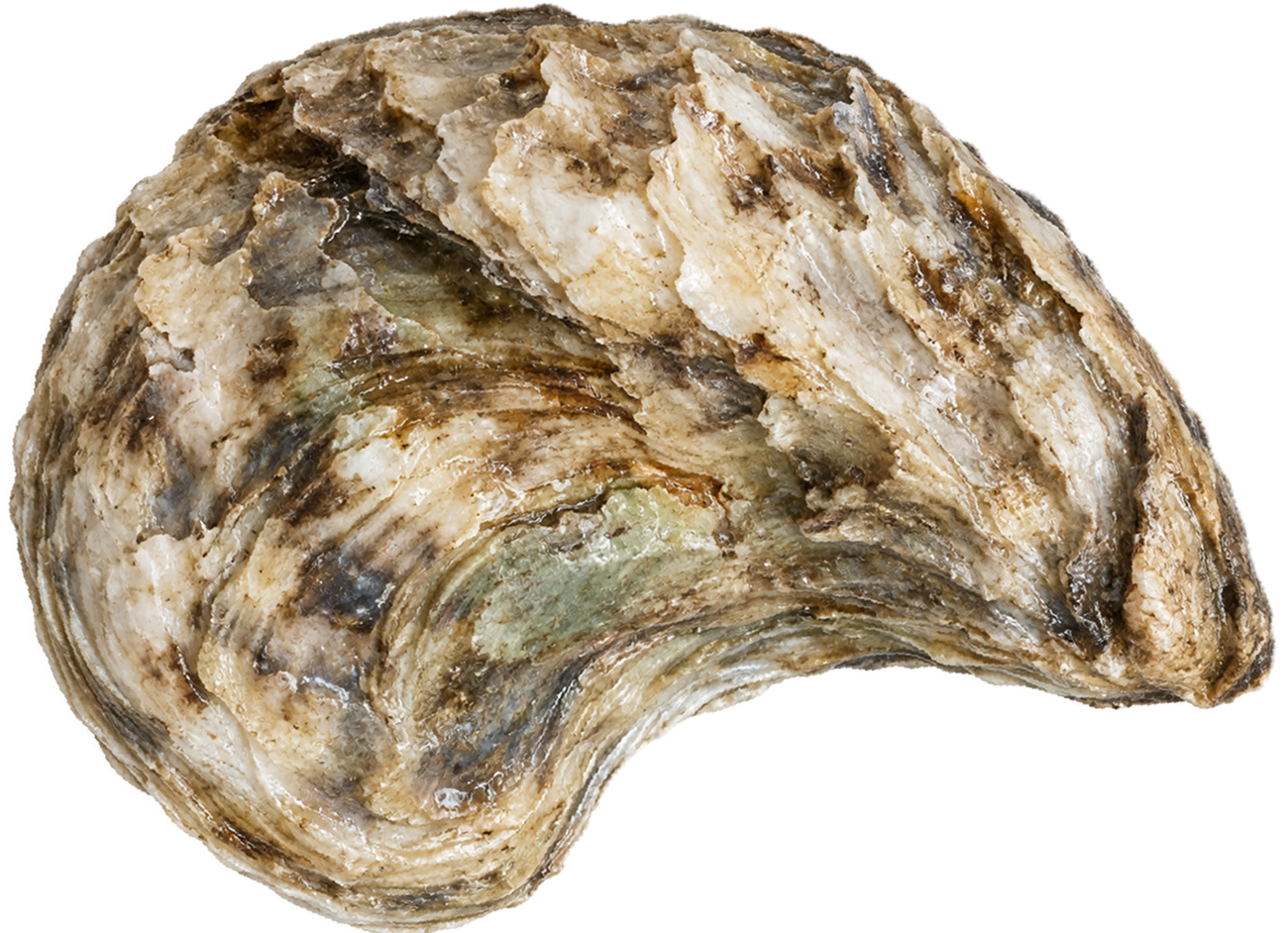 Curvostrea |
C. baia3115Squires, R. L. (2017). Late Cretaceous oysters from the Pacific Slope of North America: Revision of named species and discovery of new species. Contributions in Science, 525, 25–53. doi:10.5962/p.318346 | Moreno Formation | USA (Kalifornien) | 72–66 Ma | selten | Flemingostreidae |
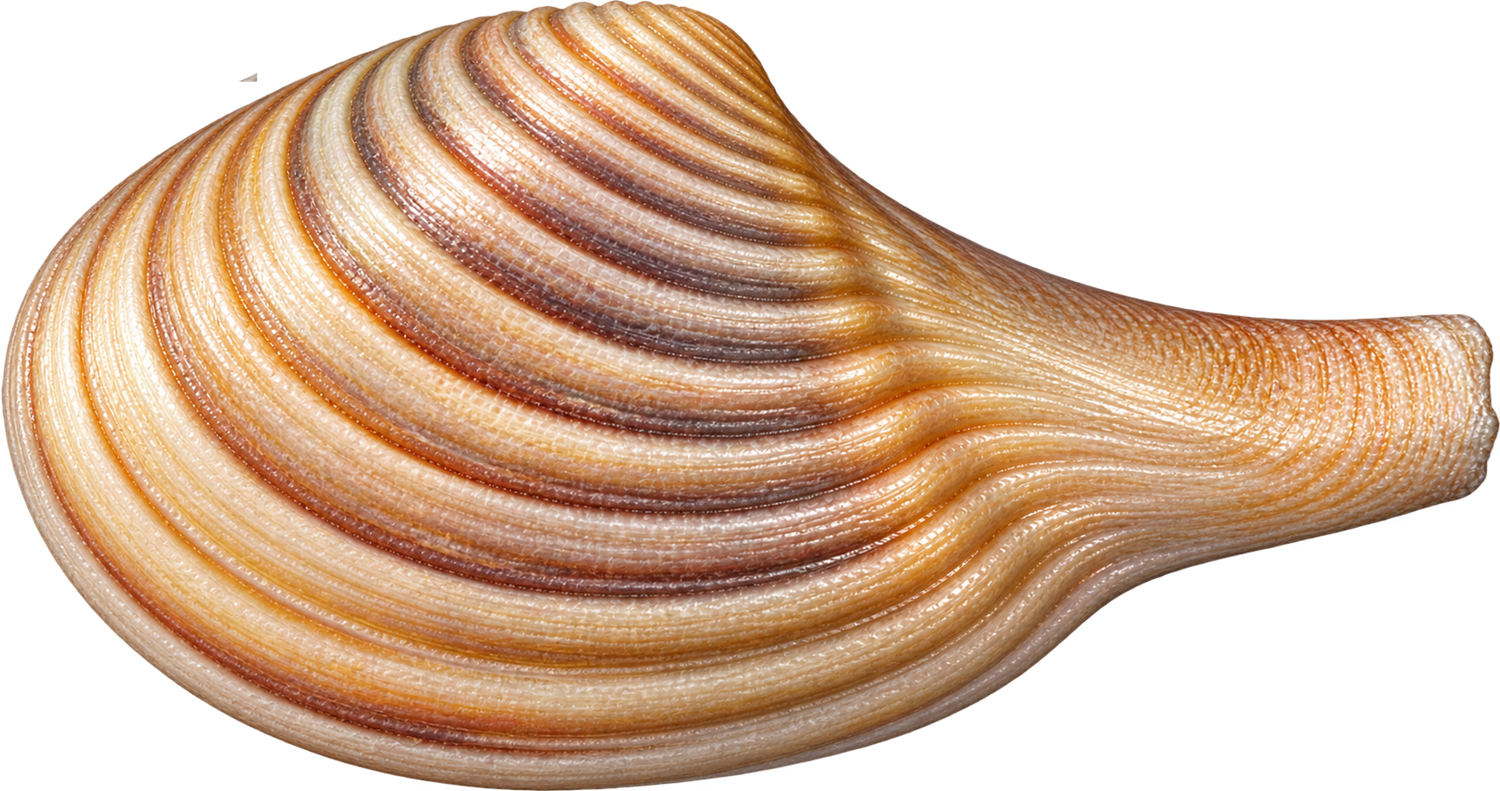 Cuspidaria |
C. grandis3116Stephenson, L. W. (1941). The larger invertebrate fossils of the Navarro Group of Texas (exclusive of corals and crustaceans and exclusive of the fauna of the Escondido Formation). The University of Texas Publication, 4101, 1–6413117Foster, W. J. et al. (2020). Resilience of marine invertebrate communities during the early Cenozoic hyperthermals. Scientific Reports 10, 2176. Supplementary Data 1 doi:10.1038/s41598-020-58986-53118Stephenson, L. W. (1941). The larger invertebrate fossils of the Navarro group of Texas (exclusive of corals and crustaceans and exclusive of the fauna of the Escondido formation). University of Texas Publication 4101, 1–6413119Foster, W. J. et al. (2020). Resilience of marine invertebrate communities during the early Cenozoic hyperthermals. Scientific Reports 10, 2176. Dataset S1. Prairie Bluff Chalk; Dataset-IDs 15192. Quellenbezeichnung: Cuspidaria grandis. doi:10.1038/s41598-020-58986-5 C. grovensis3120Stephenson, L. W. (1941). The larger invertebrate fossils of the Navarro Group of Texas (exclusive of corals and crustaceans and exclusive of the fauna of the Escondido Formation). The University of Texas Publication, 4101, 1–641 C. cf. jerseyensis3121Foster, W. J. et al. (2020). Resilience of marine invertebrate communities during the early Cenozoic hyperthermals. Scientific Reports 10, 2176. Dataset S1. Prairie Bluff Chalk; Dataset-IDs 14237, 14437, 14533, 14569, 15641. Quellenbezeichnung: Cuspidaria jerseyensis. doi:10.1038/s41598-020-58986-5 C. moreauensis3122Landman, N. H., Slattery, J. S. & Harries, P. J. (2016): Encrustation of inarticulate brachiopods on scaphitid ammonites and inoceramid bivalves from the Upper Cretaceous U.S. Western Interior. Acta Geologica Polonica 66(4): 645–662. Anhang, Tabelle 1. doi:10.1515/agp-2016-00343123Speden, I. G. (1970). The type Fox Hills Formation, Cretaceous (Maestrichtian), South Dakota. Part 2. Systematics of the Bivalvia. Bulletin of the Peabody Museum of Natural History 33: 1–222. S. 154–156. Originalveröffentlichung C. cf. moreauensis3124Crider, A. F. (1906). Geology and mineral resources of Mississippi. United States Geological Survey Bulletin 283, 1–99. S. 21, Ripley-Fossilien aus Tippah County. doi:10.3133/b283 C. variabilis3125Gill, J. R. & Cobban, W. A. (1966): The Red Bird section of the Upper Cretaceous Pierre Shale in Wyoming. U.S. Geological Survey Professional Paper 393-A: A1–A73. S. A52, Einheiten 89 und 91. doi:10.3133/pp393A C. ventricosa3126Landman, N. H., Slattery, J. S. & Harries, P. J. (2016): Encrustation of inarticulate brachiopods on scaphitid ammonites and inoceramid bivalves from the Upper Cretaceous U.S. Western Interior. Acta Geologica Polonica 66(4): 645–662. Anhang, Tabelle 1. doi:10.1515/agp-2016-00343127Sava, L. A. (2007): The Molluscan and Brachiopod Fauna of the Late Cretaceous Pierre Shale (Baculites compressus/Baculites cuneatus biozones) near Kremmling, Colorado. M.Sc.-Abschlussarbeit, University of South Florida, Tampa. Tabelle 1 und systematischer Teil, S. 21–52. Originalveröffentlichung3128Speden, I. G. (1970). The type Fox Hills Formation, Cretaceous (Maestrichtian), South Dakota. Part 2. Systematics of the Bivalvia. Bulletin of the Peabody Museum of Natural History 33: 1–222. S. 154–156. Originalveröffentlichung3129Erickson, J. M. (1978). Bivalve mollusk range extensions in the Fox Hills Formation (Maestrichtian) of North and South Dakota and their implications for the Late Cretaceous geologic history of the Williston Basin. Proceedings of the North Dakota Academy of Science 32(2): 79–89. Originalveröffentlichung C. spp.3130Vega, F. J., Feldmann, R. M. & Sour-Tovar, F. (1995). Fossil crabs (Crustacea: Decapoda) from the Late Cretaceous Cárdenas Formation, east-central Mexico. Journal of Paleontology, 69(2), 340–350. doi:10.1017/S00223360000346613131Stephenson, L. W. (1941). The larger invertebrate fossils of the Navarro Group of Texas (exclusive of corals and crustaceans and exclusive of the fauna of the Escondido Formation). The University of Texas Publication, 4101, 1–6413132Sohl, N. F. & Koch, C. F. (1984). Upper Cretaceous (Maastrichtian) larger invertebrate fossils from the Haustator bilira assemblage zone in the West Gulf Coastal Plain. U.S. Geological Survey Open-File Report, 84-687, 1–282. doi:10.3133/ofr846873133Foster, W. J. et al. (2020). Resilience of marine invertebrate communities during the early Cenozoic hyperthermals. Scientific Reports 10, 2176. Supplementary Data 1 doi:10.1038/s41598-020-58986-53134Foster, W. J. et al. (2020). Resilience of marine invertebrate communities during the early Cenozoic hyperthermals. Scientific Reports 10, 2176. Dataset S1. Prairie Bluff Chalk; Dataset-IDs 16223. Quellenbezeichnung: Cuspidaria sp.. doi:10.1038/s41598-020-58986-53135Bryan, J. R. & Jones, D. S. (1989). Fabric of the Cretaceous-Tertiary marine macrofaunal transition at Braggs, Alabama. Palaeogeography, Palaeoclimatology, Palaeoecology 69, 279–301. Appendix I, S. 296, Prairie-Bluff-Spalten M. Quellenbezeichnung: Cuspidaria sp. doi:10.1016/0031-0182(89)90170-3 |
Corsicana Marl Cárdenas Formation Escondido Formation Fox Hills Formation Kemp Clay Pierre Shale Prairie Bluff Chalk Ripley Formation |
USA (Alabama, Colorado, Mississippi, Montana, North Dakota, South Dakota, Texas, Wyoming); Mexiko (San Luis Potosí) | 74–66 Ma (Gattung 100 Ma bis heute) | sehr häufig | Cuspidariidae |
| Cyclina | C. magna3136Bandel, K. & Dockery, D. T. III (2016). Mollusca of the Coon Creek Formation in Tennessee and Mississippi with a systematic discussion of the Gastropoda. Bulletin of the Alabama Museum of Natural History 33(1), 34–96. Muschelliste S. 90–92. 90 Originalpublikation3137Foster, W. J. et al. (2020). Resilience of marine invertebrate communities during the early Cenozoic hyperthermals. Scientific Reports 10, 2176. Dataset S1. Dataset S1, ID 23985 doi:10.1038/s41598-020-58986-53138Wade, B. (1926). The fauna of the Ripley Formation on Coon Creek, Tennessee. United States Geological Survey Professional Paper 137, 1–272. Ripley-Vorkommensindex PBDB, Literatur 7434. doi:10.3133/pp137 | Ripley Formation | USA (Tennessee) | 72–66 Ma | nicht quantifiziert | Veneridae (Venusmuschel) |
| Cyclorisma | C. parva3139Bandel, K. & Dockery, D. T. III (2016). Mollusca of the Coon Creek Formation in Tennessee and Mississippi with a systematic discussion of the Gastropoda. Bulletin of the Alabama Museum of Natural History 33(1), 34–96. Muschelliste S. 90–92. 89 Originalpublikation3140Sohl, N. F. & Koch, C. F. (1983). Upper Cretaceous (Maestrichtian) Mollusca from the Haustator bilira Assemblage Zone in the East Gulf Coastal Plain. United States Geological Survey Open-File Report 83–451, 238 S. Loc.9; Loc.10 doi:10.3133/ofr834513141Bryan, J. R. & Jones, D. S. (1989). Fabric of the Cretaceous-Tertiary marine macrofaunal transition at Braggs, Alabama. Palaeogeography, Palaeoclimatology, Palaeoecology 69, 279–301. Appendix I, S. 295–296, Spalte Ripley. Appendix I, S.295–296 doi:10.1016/0031-0182(89)90170-33142Foster, W. J. et al. (2020). Resilience of marine invertebrate communities during the early Cenozoic hyperthermals. Scientific Reports 10, 2176. Dataset S1. Dataset S1, ID 23984; Dataset S1, ID 12967; Dataset S1, ID 13292 doi:10.1038/s41598-020-58986-53143Foster, W. J. et al. (2020). Resilience of marine invertebrate communities during the early Cenozoic hyperthermals. Scientific Reports 10, 2176. Dataset S1, Formation Owl Creek; Datensatz-IDs 13572, 13629, 13712. doi:10.1038/s41598-020-58986-53144Sohl, N. F. & Koch, C. F. (1983). Upper Cretaceous (Maestrichtian) Mollusca from the Haustator bilira Assemblage Zone in the East Gulf Coastal Plain. U.S. Geological Survey Open-File Report 83-451, 1–239. Owl Creek Formation, Aufsammlungen 44, 45, 46. doi:10.3133/ofr834513145Foster, W. J. et al. (2020). Resilience of marine invertebrate communities during the early Cenozoic hyperthermals. Scientific Reports 10, 2176. Dataset S1. Prairie Bluff Chalk; Dataset-IDs 15412, 15575, 16034, 16266, 16734. Quellenbezeichnung: Cyclorisma parva. doi:10.1038/s41598-020-58986-53146Bryan, J. R. & Jones, D. S. (1989). Fabric of the Cretaceous-Tertiary marine macrofaunal transition at Braggs, Alabama. Palaeogeography, Palaeoclimatology, Palaeoecology 69, 279–301. Appendix I, S. 296, Prairie-Bluff-Spalten U. Quellenbezeichnung: Cyclorisma parva. doi:10.1016/0031-0182(89)90170-3 C. spp.3147Foster, W. J. et al. (2020). Resilience of marine invertebrate communities during the early Cenozoic hyperthermals. Scientific Reports 10, 2176. Dataset S1. Prairie Bluff Chalk; Dataset-IDs 14822. Quellenbezeichnung: Cyclorisma sp.. doi:10.1038/s41598-020-58986-5 |
Owl Creek Formation Prairie Bluff Chalk Ripley Formation |
USA (Alabama, Mississippi, Tennessee) | 72–66 Ma | häufig | Veneridae (Venusmuschel) |
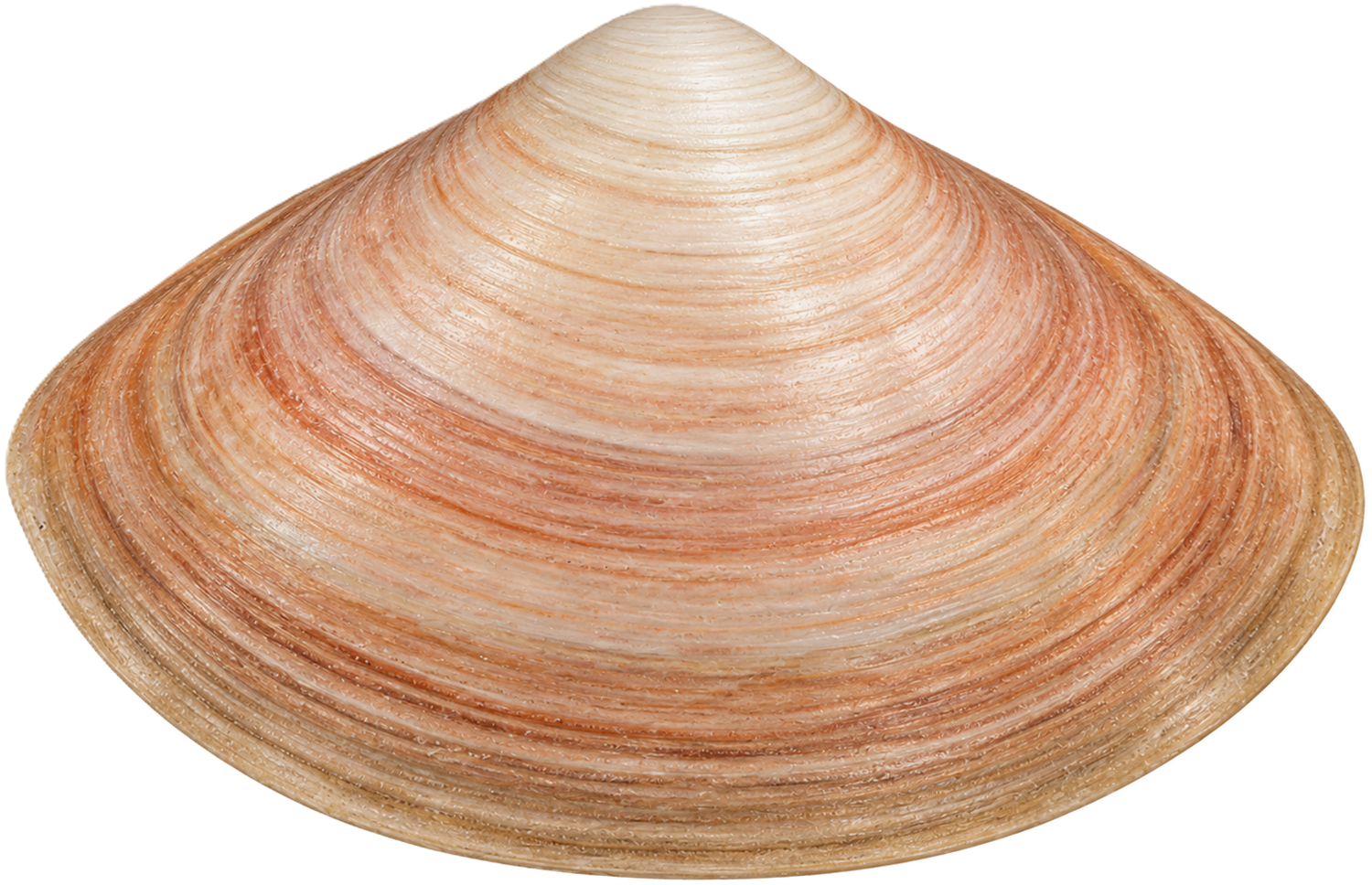 Cymbophora |
C. appressa3148Sohl, N. F. & Koch, C. F. (1984). Upper Cretaceous (Maastrichtian) larger invertebrate fossils from the Haustator bilira assemblage zone in the West Gulf Coastal Plain. U.S. Geological Survey Open-File Report, 84-687, 1–282. doi:10.3133/ofr846873149Foster, W. J. et al. (2020). Resilience of marine invertebrate communities during the early Cenozoic hyperthermals. Scientific Reports 10, 2176. Dataset S1. Dataset S1, ID 13056; Dataset S1, ID 13120 doi:10.1038/s41598-020-58986-53150Foster, W. J. et al. (2020). Resilience of marine invertebrate communities during the early Cenozoic hyperthermals. Scientific Reports 10, 2176. Dataset S1, Formation Owl Creek; Datensatz-IDs 23883. doi:10.1038/s41598-020-58986-53151Foster, W. J. et al. (2020). Resilience of marine invertebrate communities during the early Cenozoic hyperthermals. Scientific Reports 10, 2176. Dataset S1. Prairie Bluff Chalk; Dataset-IDs 16738. Quellenbezeichnung: Cymbophora appressa. doi:10.1038/s41598-020-58986-5 C. berryi3152Sohl, N. F. & Koch, C. F. (1984). Upper Cretaceous (Maastrichtian) larger invertebrate fossils from the Haustator bilira assemblage zone in the West Gulf Coastal Plain. U.S. Geological Survey Open-File Report, 84-687, 1–282. doi:10.3133/ofr846873153Sohl, N. F. & Koch, C. F. (1983). Upper Cretaceous (Maestrichtian) Mollusca from the Haustator bilira Assemblage Zone in the East Gulf Coastal Plain. United States Geological Survey Open-File Report 83–451, 238 S. Loc.10; Loc.221 doi:10.3133/ofr834513154Foster, W. J. et al. (2020). Resilience of marine invertebrate communities during the early Cenozoic hyperthermals. Scientific Reports 10, 2176. Dataset S1. Dataset S1, ID 12969; Dataset S1, ID 13157; Dataset S1, ID 13208; Dataset S1, ID 13293; Dataset S1, ID 17695 doi:10.1038/s41598-020-58986-53155Foster, W. J. et al. (2020). Resilience of marine invertebrate communities during the early Cenozoic hyperthermals. Scientific Reports 10, 2176. Dataset S1, Formation Owl Creek; Datensatz-IDs 23780, 23819, 23850, 23884. doi:10.1038/s41598-020-58986-53156Foster, W. J. et al. (2020). Resilience of marine invertebrate communities during the early Cenozoic hyperthermals. Scientific Reports 10, 2176. Dataset S1. Prairie Bluff Chalk; Dataset-IDs 15542, 15956, 16007, 16224, 16419, 16667, 16688, 16737. Quellenbezeichnung: Cymbophora berryi. doi:10.1038/s41598-020-58986-53157Bryan, J. R. & Jones, D. S. (1989). Fabric of the Cretaceous-Tertiary marine macrofaunal transition at Braggs, Alabama. Palaeogeography, Palaeoclimatology, Palaeoecology 69, 279–301. Appendix I, S. 296, Prairie-Bluff-Spalten M. Quellenbezeichnung: Cymbophora berryi. doi:10.1016/0031-0182(89)90170-3 C. cancellosa3158Stephenson, L. W. (1941). The larger invertebrate fossils of the Navarro group of Texas (exclusive of corals and crustaceans and exclusive of the fauna of the Escondido formation). University of Texas Publication 4101, 1–6413159Bryan, J. R. & Jones, D. S. (1989). Fabric of the Cretaceous-Tertiary marine macrofaunal transition at Braggs, Alabama. Palaeogeography, Palaeoclimatology, Palaeoecology 69, 279–301. Appendix I, S. 295–296, Spalte Ripley. Appendix I, S.295–296 doi:10.1016/0031-0182(89)90170-3 C. cf. cancellosa3160Foster, W. J. et al. (2020). Resilience of marine invertebrate communities during the early Cenozoic hyperthermals. Scientific Reports 10, 2176. Supplementary Data 1 doi:10.1038/s41598-020-58986-5 C. gracilis3161Bandel, K. & Dockery, D. T. III (2016). Mollusca of the Coon Creek Formation in Tennessee and Mississippi with a systematic discussion of the Gastropoda. Bulletin of the Alabama Museum of Natural History 33(1), 34–96. Muschelliste S. 90–92. 71 Originalpublikation3162Wade, B. (1926). The fauna of the Ripley Formation on Coon Creek, Tennessee. United States Geological Survey Professional Paper 137, 1–272. Ripley-Vorkommensindex PBDB, Literatur 7434. doi:10.3133/pp137 C. inflata3163Sohl, N. F. & Koch, C. F. (1984). Upper Cretaceous (Maastrichtian) larger invertebrate fossils from the Haustator bilira assemblage zone in the West Gulf Coastal Plain. U.S. Geological Survey Open-File Report, 84-687, 1–282. doi:10.3133/ofr84687 C. lintea3164Veatch, O. & Stephenson, L. W. (1911). Preliminary report on the geology of the coastal plain of Georgia. Geological Survey of Georgia Bulletin 26, 1–466. S. 176–177, Eufaula-Liste. Originalpublikation3165Foster, W. J. et al. (2020). Resilience of marine invertebrate communities during the early Cenozoic hyperthermals. Scientific Reports 10, 2176. Dataset S1, Formation Owl Creek; Datensatz-IDs 13715, 13840. Publiziert als Cymbophora lintea. Gattungszuordnung fraglich. doi:10.1038/s41598-020-58986-5 C. lintea?3166Sohl, N. F. & Koch, C. F. (1983). Upper Cretaceous (Maestrichtian) Mollusca from the Haustator bilira Assemblage Zone in the East Gulf Coastal Plain. U.S. Geological Survey Open-File Report 83-451, 1–239. Owl Creek Formation, Aufsammlungen 46, 47. doi:10.3133/ofr834513167Foster, W. J. et al. (2020). Resilience of marine invertebrate communities during the early Cenozoic hyperthermals. Scientific Reports 10, 2176. Dataset S1. Prairie Bluff Chalk; Dataset-IDs 14377, 14633, 15968, 15982. Quellenbezeichnung: Cymbophora lintea. doi:10.1038/s41598-020-58986-5 C. nitidula (?)3168Speden, I. G. (1970). The type Fox Hills Formation, Cretaceous (Maestrichtian), South Dakota. Part 2. Systematics of the Bivalvia. Bulletin of the Peabody Museum of Natural History 33: 1–222. S. 130–131. Originalveröffentlichung C. cf. subtilis3169Foster, W. J. et al. (2020). Resilience of marine invertebrate communities during the early Cenozoic hyperthermals. Scientific Reports 10, 2176. Supplementary Data 1 doi:10.1038/s41598-020-58986-5 C. subtilis3170Stephenson, L. W. (1941). The larger invertebrate fossils of the Navarro group of Texas (exclusive of corals and crustaceans and exclusive of the fauna of the Escondido formation). University of Texas Publication 4101, 1–641 C. warrenana3171Landman, N. H., Slattery, J. S. & Harries, P. J. (2016): Encrustation of inarticulate brachiopods on scaphitid ammonites and inoceramid bivalves from the Upper Cretaceous U.S. Western Interior. Acta Geologica Polonica 66(4): 645–662. Anhang, Tabelle 1. doi:10.1515/agp-2016-00343172Brinster, K. F. (1970): Molluscan paleontology of the Pierre Shale (Upper Cretaceous), Bowman County, North Dakota. M.Sc.-Abschlussarbeit, University of North Dakota, Grand Forks. Systematik S. 52–88. Originalveröffentlichung3173Speden, I. G. (1970). The type Fox Hills Formation, Cretaceous (Maestrichtian), South Dakota. Part 2. Systematics of the Bivalvia. Bulletin of the Peabody Museum of Natural History 33: 1–222. S. 128–130. Originalveröffentlichung3174Feldmann, R. M. (1967). Bivalvia and paleoecology of the Fox Hills Formation (Upper Cretaceous) of North Dakota. Dissertation, University of North Dakota, Grand Forks. Tabelle 2, S. 105–107; systematischer Teil. Originalveröffentlichung C. wordeni3175Sohl, N. F. & Koch, C. F. (1984). Upper Cretaceous (Maastrichtian) larger invertebrate fossils from the Haustator bilira assemblage zone in the West Gulf Coastal Plain. U.S. Geological Survey Open-File Report, 84-687, 1–282. doi:10.3133/ofr84687 C. spp.3176Stephenson, L. W. (1941). The larger invertebrate fossils of the Navarro Group of Texas (exclusive of corals and crustaceans and exclusive of the fauna of the Escondido Formation). The University of Texas Publication, 4101, 1–6413177Sohl, N. F. & Koch, C. F. (1984). Upper Cretaceous (Maastrichtian) larger invertebrate fossils from the Haustator bilira assemblage zone in the West Gulf Coastal Plain. U.S. Geological Survey Open-File Report, 84-687, 1–282. doi:10.3133/ofr846873178Foster, W. J. et al. (2020). Resilience of marine invertebrate communities during the early Cenozoic hyperthermals. Scientific Reports 10, 2176. Supplementary Data 1 doi:10.1038/s41598-020-58986-53179Stephenson, L. W. (1941). The larger invertebrate fossils of the Navarro group of Texas (exclusive of corals and crustaceans and exclusive of the fauna of the Escondido formation). University of Texas Publication 4101, 1–6413180Sohl, N. F. & Koch, C. F. (1983). Upper Cretaceous (Maestrichtian) Mollusca from the Haustator bilira Assemblage Zone in the East Gulf Coastal Plain. United States Geological Survey Open-File Report 83–451, 238 S. Loc.11; Loc.32 doi:10.3133/ofr834513181Foster, W. J. et al. (2020). Resilience of marine invertebrate communities during the early Cenozoic hyperthermals. Scientific Reports 10, 2176. Dataset S1. Dataset S1, ID 24101; Dataset S1, ID 13034; Dataset S1, ID 13421 doi:10.1038/s41598-020-58986-53182Foster, W. J. et al. (2020). Resilience of marine invertebrate communities during the early Cenozoic hyperthermals. Scientific Reports 10, 2176. Dataset S1, Formation Owl Creek; Datensatz-IDs 13531. doi:10.1038/s41598-020-58986-53183Sohl, N. F. & Koch, C. F. (1983). Upper Cretaceous (Maestrichtian) Mollusca from the Haustator bilira Assemblage Zone in the East Gulf Coastal Plain. U.S. Geological Survey Open-File Report 83-451, 1–239. Owl Creek Formation, Aufsammlungen 43. doi:10.3133/ofr834513184Foster, W. J. et al. (2020). Resilience of marine invertebrate communities during the early Cenozoic hyperthermals. Scientific Reports 10, 2176. Dataset S1. Prairie Bluff Chalk; Dataset-IDs 13901, 14139, 14300, 14338, 14570, 15967, 16267, 16458, 16524. Quellenbezeichnung: Cymbophora sp.. doi:10.1038/s41598-020-58986-53185Bryan, J. R. & Jones, D. S. (1989). Fabric of the Cretaceous-Tertiary marine macrofaunal transition at Braggs, Alabama. Palaeogeography, Palaeoclimatology, Palaeoecology 69, 279–301. Appendix I, S. 296, Prairie-Bluff-Spalten U. Quellenbezeichnung: Cymbophora sp.*. doi:10.1016/0031-0182(89)90170-3 |
Corsicana Marl Escondido Formation Fox Hills Formation Kemp Clay Owl Creek Formation Pierre Shale Prairie Bluff Chalk Ripley Formation |
USA (Alabama, Mississippi, Missouri, Montana, North Dakota, South Dakota, Tennessee, Texas, Wyoming) | 72–66 Ma | sehr häufig | Mactridae (Trogmuschel) |
| Cymella | C. ? bella3186Sohl, N. F. (1960). Archeogastropoda, Mesogastropoda, and stratigraphy of the Ripley, Owl Creek, and Prairie Bluff formations. United States Geological Survey Professional Paper 331-A, 1–151. Ripley-Vorkommensindex PBDB, Literatur 463. doi:10.3133/pp331A | Ripley Formation | USA (Mississippi) | 72–66 Ma | nicht quantifiziert | Mactridae |
 Cyprimeria |
C. alta3187Sohl, N. F. & Koch, C. F. (1984). Upper Cretaceous (Maastrichtian) larger invertebrate fossils from the Haustator bilira assemblage zone in the West Gulf Coastal Plain. U.S. Geological Survey Open-File Report, 84-687, 1–282. doi:10.3133/ofr846873188Stephenson, L. W. (1941). The larger invertebrate fossils of the Navarro Group of Texas (exclusive of corals and crustaceans and exclusive of the fauna of the Escondido Formation). The University of Texas Publication, 4101, 1–6413189Stephenson, L. W. (1941). The larger invertebrate fossils of the Navarro group of Texas (exclusive of corals and crustaceans and exclusive of the fauna of the Escondido formation). University of Texas Publication 4101, 1–6413190Bandel, K. & Dockery, D. T. III (2016). Mollusca of the Coon Creek Formation in Tennessee and Mississippi with a systematic discussion of the Gastropoda. Bulletin of the Alabama Museum of Natural History 33(1), 34–96. Muschelliste S. 90–92. 91 Originalpublikation3191Veatch, O. & Stephenson, L. W. (1911). Preliminary report on the geology of the coastal plain of Georgia. Geological Survey of Georgia Bulletin 26, 1–466. S. 176–177, Eufaula-Liste. Originalpublikation3192Crider, A. F. (1906). Geology and mineral resources of Mississippi. United States Geological Survey Bulletin 283, 1–99. S. 21, Ripley-Fossilien aus Tippah County. doi:10.3133/b2833193Foster, W. J. et al. (2020). Resilience of marine invertebrate communities during the early Cenozoic hyperthermals. Scientific Reports 10, 2176. Dataset S1. Dataset S1, ID 23978; Dataset S1, ID 13057; Dataset S1, ID 13084; Dataset S1, ID 13121; Dataset S1, ID 13183; Dataset S1, ID 13261; Dataset S1, ID 13294; Dataset S1, ID 13327; Dataset S1, ID 13352 doi:10.1038/s41598-020-58986-53194Wade, B. (1926). The fauna of the Ripley Formation on Coon Creek, Tennessee. United States Geological Survey Professional Paper 137, 1–272. Ripley-Vorkommensindex PBDB, Literatur 7434. doi:10.3133/pp1373195Foster, W. J. et al. (2020). Resilience of marine invertebrate communities during the early Cenozoic hyperthermals. Scientific Reports 10, 2176. Dataset S1, Formation Owl Creek; Datensatz-IDs 13500, 13532, 13574, 13631, 13717, 13841, 13864, 23782, 23821, 23885. doi:10.1038/s41598-020-58986-53196Stephenson, L. W. (1955). Owl Creek (Upper Cretaceous) fossils from Crowleys Ridge, southeastern Missouri. U.S. Geological Survey Professional Paper 274-E, 97–140. Owl Creek Formation, Missouri; Verbreitungstabelle S. 104–105. doi:10.3133/pp274E3197Sohl, N. F. & Koch, C. F. (1983). Upper Cretaceous (Maestrichtian) Mollusca from the Haustator bilira Assemblage Zone in the East Gulf Coastal Plain. U.S. Geological Survey Open-File Report 83-451, 1–239. Owl Creek Formation, Aufsammlungen 42, 43, 44, 45, 46, 47, 48. doi:10.3133/ofr834513198Foster, W. J. et al. (2020). Resilience of marine invertebrate communities during the early Cenozoic hyperthermals. Scientific Reports 10, 2176. Dataset S1. Prairie Bluff Chalk; Dataset-IDs 13932, 13970, 14140, 14208, 14238, 14339, 14378, 14571, 14727, 15477, 15642. Quellenbezeichnung: Cyprimeria alta. doi:10.1038/s41598-020-58986-53199Bryan, J. R. & Jones, D. S. (1989). Fabric of the Cretaceous-Tertiary marine macrofaunal transition at Braggs, Alabama. Palaeogeography, Palaeoclimatology, Palaeoecology 69, 279–301. Appendix I, S. 296, Prairie-Bluff-Spalten U. Quellenbezeichnung: Cyprimeria alia*. doi:10.1016/0031-0182(89)90170-3 C. coonensis3200Vega, F.J., Feldmann, R.M. & Sour-Tovar, F. (1995): Fossil crabs (Crustacea: Decapoda) from the Late Cretaceous Cárdenas Formation, east-central Mexico. Journal of Paleontology 69(2): 340–350. Volltext C. depressa3201Stephenson, L. W. (1941). The larger invertebrate fossils of the Navarro Group of Texas (exclusive of corals and crustaceans and exclusive of the fauna of the Escondido Formation). The University of Texas Publication, 4101, 1–6413202Sohl, N. F. & Koch, C. F. (1984). Upper Cretaceous (Maastrichtian) larger invertebrate fossils from the Haustator bilira assemblage zone in the West Gulf Coastal Plain. U.S. Geological Survey Open-File Report, 84-687, 1–282. doi:10.3133/ofr846873203Stephenson, L. W. (1941). The larger invertebrate fossils of the Navarro group of Texas (exclusive of corals and crustaceans and exclusive of the fauna of the Escondido formation). University of Texas Publication 4101, 1–6413204Veatch, O. & Stephenson, L. W. (1911). Preliminary report on the geology of the coastal plain of Georgia. Geological Survey of Georgia Bulletin 26, 1–466. S. 176–177, Eufaula-Liste. Originalpublikation3205Crider, A. F. (1906). Geology and mineral resources of Mississippi. United States Geological Survey Bulletin 283, 1–99. S. 21, Ripley-Fossilien aus Tippah County. doi:10.3133/b2833206Sohl, N. F. & Koch, C. F. (1983). Upper Cretaceous (Maestrichtian) Mollusca from the Haustator bilira Assemblage Zone in the East Gulf Coastal Plain. United States Geological Survey Open-File Report 83–451, 238 S. Loc.10 doi:10.3133/ofr834513207Bryan, J. R. & Jones, D. S. (1989). Fabric of the Cretaceous-Tertiary marine macrofaunal transition at Braggs, Alabama. Palaeogeography, Palaeoclimatology, Palaeoecology 69, 279–301. Appendix I, S. 295–296, Spalte Ripley. Appendix I, S.295–296 doi:10.1016/0031-0182(89)90170-33208Foster, W. J. et al. (2020). Resilience of marine invertebrate communities during the early Cenozoic hyperthermals. Scientific Reports 10, 2176. Dataset S1. Dataset S1, ID 12970 doi:10.1038/s41598-020-58986-53209Foster, W. J. et al. (2020). Resilience of marine invertebrate communities during the early Cenozoic hyperthermals. Scientific Reports 10, 2176. Dataset S1, Formation Owl Creek; Datensatz-IDs 11676, 13476, 13501, 13575, 13716. doi:10.1038/s41598-020-58986-53210Sohl, N. F. & Koch, C. F. (1983). Upper Cretaceous (Maestrichtian) Mollusca from the Haustator bilira Assemblage Zone in the East Gulf Coastal Plain. U.S. Geological Survey Open-File Report 83-451, 1–239. Owl Creek Formation, Aufsammlungen 40, 41, 42, 44, 46. Aufsammlung 40: umgelagert. doi:10.3133/ofr834513211Foster, W. J. et al. (2020). Resilience of marine invertebrate communities during the early Cenozoic hyperthermals. Scientific Reports 10, 2176. Dataset S1. Prairie Bluff Chalk; Dataset-IDs 14670, 15193, 15284, 15373. Quellenbezeichnung: Cyprimeria depressa. doi:10.1038/s41598-020-58986-5 C. spp.3212Sohl, N. F. & Koch, C. F. (1984). Upper Cretaceous (Maastrichtian) larger invertebrate fossils from the Haustator bilira assemblage zone in the West Gulf Coastal Plain. U.S. Geological Survey Open-File Report, 84-687, 1–282. doi:10.3133/ofr846873213Foster, W. J. et al. (2020). Resilience of marine invertebrate communities during the early Cenozoic hyperthermals. Scientific Reports 10, 2176. Supplementary Data 1 doi:10.1038/s41598-020-58986-53214Foster, W. J. et al. (2020). Resilience of marine invertebrate communities during the early Cenozoic hyperthermals. Scientific Reports 10, 2176. Dataset S1. Dataset S1, ID 23976 doi:10.1038/s41598-020-58986-53215Foster, W. J. et al. (2020). Resilience of marine invertebrate communities during the early Cenozoic hyperthermals. Scientific Reports 10, 2176. Dataset S1, Formation Owl Creek; Datensatz-IDs 11677. doi:10.1038/s41598-020-58986-53216Foster, W. J. et al. (2020). Resilience of marine invertebrate communities during the early Cenozoic hyperthermals. Scientific Reports 10, 2176. Dataset S1. Prairie Bluff Chalk; Dataset-IDs 15097, 15723, 15846, 16525, 16611, 16689, 16739. Quellenbezeichnung: Cyprimeria sp.. doi:10.1038/s41598-020-58986-5 |
Arkadelphia Marl Corsicana Marl Escondido Formation Kemp Clay Owl Creek Formation Potrerillos Formation Prairie Bluff Chalk Ripley Formation |
USA (Alabama, Arkansas, Mississippi, Missouri, Tennessee, Texas); Mexiko (Nuevo León) | 72–66 Ma (Gattung bis 34 Ma); Potrerillos: Maastrichtium (72–66 Ma) | sehr häufig | Veneridae (Venusmuschel) |
| Deceptrix | D. compar3217Foster, W. J. et al. (2020). Resilience of marine invertebrate communities during the early Cenozoic hyperthermals. Scientific Reports 10, 2176. Dataset S1. Dataset S1, ID 12971 doi:10.1038/s41598-020-58986-53218Foster, W. J. et al. (2020). Resilience of marine invertebrate communities during the early Cenozoic hyperthermals. Scientific Reports 10, 2176. Dataset S1, Formation Owl Creek; Datensatz-IDs 13477, 13718. doi:10.1038/s41598-020-58986-53219Foster, W. J. et al. (2020). Resilience of marine invertebrate communities during the early Cenozoic hyperthermals. Scientific Reports 10, 2176. Dataset S1. Prairie Bluff Chalk; Dataset-IDs 14671, 15414, 15643, 16035, 16526. Quellenbezeichnung: Deceptrix compar. doi:10.1038/s41598-020-58986-5 | Owl Creek Formation Prairie Bluff Chalk Ripley Formation |
USA (Alabama, Mississippi) | 72–66 Ma | häufig | Nuculidae (Nussmuschel) |
 Dhondtichlamys |
D. cretosus3220Foster, W. J. et al. (2020). Resilience of marine invertebrate communities during the early Cenozoic hyperthermals. Scientific Reports 10, 2176. Dataset S1. Prairie Bluff Chalk; Dataset-IDs 14796, 14826. Quellenbezeichnung: Lyriochlamys cretosus. doi:10.1038/s41598-020-58986-5 D. venustus3221Stephenson, L. W. (1941). The larger invertebrate fossils of the Navarro Group of Texas (exclusive of corals and crustaceans and exclusive of the fauna of the Escondido Formation). The University of Texas Publication, 4101, 1–641. |
Corsicana Marl Prairie Bluff Chalk |
USA (Alabama, Mississippi, Texas) | 70–66 Ma (Gattung bis 34 Ma) | selten | Pectinidae (Kammmuschel) |
| Dosiniopsis | D. deweyi3222Gill, J. R. & Cobban, W. A. (1966): The Red Bird section of the Upper Cretaceous Pierre Shale in Wyoming. U.S. Geological Survey Professional Paper 393-A: A1–A73. S. A52, Einheit 91. doi:10.3133/pp393A3223Speden, I. G. (1970). The type Fox Hills Formation, Cretaceous (Maestrichtian), South Dakota. Part 2. Systematics of the Bivalvia. Bulletin of the Peabody Museum of Natural History 33: 1–222. S. 123–127. Originalveröffentlichung3224Feldmann, R. M. (1967). Bivalvia and paleoecology of the Fox Hills Formation (Upper Cretaceous) of North Dakota. Dissertation, University of North Dakota, Grand Forks. Tabelle 2, S. 105–107; systematischer Teil. Originalveröffentlichung | Fox Hills Formation Pierre Shale |
USA (North Dakota, South Dakota, Wyoming) | 72–66 Ma | sehr häufig | Veneridae |
| Endocostea | E. typica3225Landman, N. H., Slattery, J. S. & Harries, P. J. (2016): Encrustation of inarticulate brachiopods on scaphitid ammonites and inoceramid bivalves from the Upper Cretaceous U.S. Western Interior. Acta Geologica Polonica 66(4): 645–662. Anhang, Tabelle 1. doi:10.1515/agp-2016-00343226Sealey, P. L., Berry, K. & Lucas, S. G. (2019): The Campanian-Maastrichtian baculite zonal sequence in the Pierre Shale, Berwind Canyon, Las Animas County, Colorado. New Mexico Geological Society Guidebook 70: 81–88. Tabelle 1, Baculites baculus-Zone. doi:10.56577/FFC-70.81 | Pierre Shale | USA (Colorado, Montana) | 72–71 Ma | selten | Inoceramidae |
| Ensis | E. spp.3227Foster, W. J. et al. (2020). Resilience of marine invertebrate communities during the early Cenozoic hyperthermals. Scientific Reports 10, 2176. Supplementary Data 1 doi:10.1038/s41598-020-58986-53228Foster, W. J. et al. (2020). Resilience of marine invertebrate communities during the early Cenozoic hyperthermals. Scientific Reports 10, 2176. Supplementary Data 1 doi:10.1038/s41598-020-58986-5 | Kemp Clay | USA (Texas) | 68–66 Ma | selten | Pharidae |
| Eophysema | E. spp.3229Foster, W. J. et al. (2020). Resilience of marine invertebrate communities during the early Cenozoic hyperthermals. Scientific Reports 10, 2176. Supplementary Data 1 doi:10.1038/s41598-020-58986-5 | Kemp Clay | USA (Texas) | 68–66 Ma | selten | Lucinidae |
| Epilucina | E. cedrensis (?)3230Speden, I. G. (1970). The type Fox Hills Formation, Cretaceous (Maestrichtian), South Dakota. Part 2. Systematics of the Bivalvia. Bulletin of the Peabody Museum of Natural History 33: 1–222. S. 103–104. Gattungszuordnung bzw. Bestimmung fraglich. Originalveröffentlichung | Fox Hills Formation | USA (South Dakota) | 69–66 Ma | selten | Lucinidae (Mondmuschel) |
| Erycina | E. spp.3231Speden, I. G. (1970). The type Fox Hills Formation, Cretaceous (Maestrichtian), South Dakota. Part 2. Systematics of the Bivalvia. Bulletin of the Peabody Museum of Natural History 33: 1–222. S. 102. Gattungszuordnung bzw. Bestimmung fraglich. Originalveröffentlichung | Fox Hills Formation | USA (South Dakota) | 69–66 Ma | Einzelfund | Lasaeidae |
 Etea |
E. carolinensis3232Bandel, K. & Dockery, D. T. III (2016). Mollusca of the Coon Creek Formation in Tennessee and Mississippi with a systematic discussion of the Gastropoda. Bulletin of the Alabama Museum of Natural History 33(1), 34–96. Muschelliste S. 90–92. 82 Originalpublikation3233Bryan, J. R. & Jones, D. S. (1989). Fabric of the Cretaceous-Tertiary marine macrofaunal transition at Braggs, Alabama. Palaeogeography, Palaeoclimatology, Palaeoecology 69, 279–301. Appendix I, S. 295–296, Spalte Ripley. Appendix I, S.295–296 doi:10.1016/0031-0182(89)90170-33234Foster, W. J. et al. (2020). Resilience of marine invertebrate communities during the early Cenozoic hyperthermals. Scientific Reports 10, 2176. Dataset S1. Dataset S1, ID 13423 doi:10.1038/s41598-020-58986-53235Wade, B. (1926). The fauna of the Ripley Formation on Coon Creek, Tennessee. United States Geological Survey Professional Paper 137, 1–272. Ripley-Vorkommensindex PBDB, Literatur 7434. doi:10.3133/pp1373236Foster, W. J. et al. (2020). Resilience of marine invertebrate communities during the early Cenozoic hyperthermals. Scientific Reports 10, 2176. Dataset S1. Prairie Bluff Chalk; Dataset-IDs 14261, 14575, 15229. Quellenbezeichnung: Etea carolinensis. doi:10.1038/s41598-020-58986-53237Bryan, J. R. & Jones, D. S. (1989). Fabric of the Cretaceous-Tertiary marine macrofaunal transition at Braggs, Alabama. Palaeogeography, Palaeoclimatology, Palaeoecology 69, 279–301. Appendix I, S. 296, Prairie-Bluff-Spalten U. Quellenbezeichnung: Etea carolinensis*. doi:10.1016/0031-0182(89)90170-3 E. cf. carolinensis3238Sohl, N. F. & Koch, C. F. (1983). Upper Cretaceous (Maestrichtian) Mollusca from the Haustator bilira Assemblage Zone in the East Gulf Coastal Plain. United States Geological Survey Open-File Report 83–451, 238 S. Loc.32 doi:10.3133/ofr83451 E. spp.3239Sohl, N. F. & Koch, C. F. (1984). Upper Cretaceous (Maastrichtian) larger invertebrate fossils from the Haustator bilira assemblage zone in the West Gulf Coastal Plain. U.S. Geological Survey Open-File Report, 84-687, 1–282. doi:10.3133/ofr846873240Foster, W. J. et al. (2020). Resilience of marine invertebrate communities during the early Cenozoic hyperthermals. Scientific Reports 10, 2176. Supplementary Data 1 doi:10.1038/s41598-020-58986-53241Foster, W. J. et al. (2020). Resilience of marine invertebrate communities during the early Cenozoic hyperthermals. Scientific Reports 10, 2176. Dataset S1. Dataset S1, ID 24100 doi:10.1038/s41598-020-58986-53242Foster, W. J. et al. (2020). Resilience of marine invertebrate communities during the early Cenozoic hyperthermals. Scientific Reports 10, 2176. Dataset S1. Prairie Bluff Chalk; Dataset-IDs 15007, 15100, 15288, 15647, 16036, 16744. Quellenbezeichnung: Etea sp.. doi:10.1038/s41598-020-58986-5 |
Escondido Formation Kemp Clay Prairie Bluff Chalk Ripley Formation |
USA (Alabama, Mississippi, Tennessee, Texas) | 72–66 Ma (Gattung bis 48 Ma) | häufig | Arcticidae (Islandmuschel) |
| Eufistulana | E. ripleyana3243Sohl, N. F. & Koch, C. F. (1983). Upper Cretaceous (Maestrichtian) Mollusca from the Haustator bilira Assemblage Zone in the East Gulf Coastal Plain. United States Geological Survey Open-File Report 83–451, 238 S. Loc.9 doi:10.3133/ofr834513244Foster, W. J. et al. (2020). Resilience of marine invertebrate communities during the early Cenozoic hyperthermals. Scientific Reports 10, 2176. Dataset S1. Dataset S1, ID 12919 doi:10.1038/s41598-020-58986-53245Foster, W. J. et al. (2020). Resilience of marine invertebrate communities during the early Cenozoic hyperthermals. Scientific Reports 10, 2176. Dataset S1, Formation Owl Creek; Datensatz-IDs 13505, 13732, 13842, 13888. Publiziert als Eufistulina ripleyana. doi:10.1038/s41598-020-58986-53246Farke, A. A. & Phillips, G. (2017). The first reported ceratopsid dinosaur from eastern North America (Owl Creek Formation, Upper Cretaceous, Mississippi, USA). PeerJ 5, e3342. Tabelle 1, Owl Creek Formation, Union County, Mississippi; MMNS MS.73.001b. doi:10.7717/peerj.33423247Stephenson, L. W. (1955). Owl Creek (Upper Cretaceous) fossils from Crowleys Ridge, southeastern Missouri. U.S. Geological Survey Professional Paper 274-E, 97–140. Owl Creek Formation, Missouri; Verbreitungstabelle S. 104–105. doi:10.3133/pp274E3248Sohl, N. F. & Koch, C. F. (1983). Upper Cretaceous (Maestrichtian) Mollusca from the Haustator bilira Assemblage Zone in the East Gulf Coastal Plain. U.S. Geological Survey Open-File Report 83-451, 1–239. Owl Creek Formation, Aufsammlungen 42, 46, 47, 51. doi:10.3133/ofr834513249Foster, W. J. et al. (2020). Resilience of marine invertebrate communities during the early Cenozoic hyperthermals. Scientific Reports 10, 2176. Dataset S1. Prairie Bluff Chalk; Dataset-IDs 14144, 15377, 15580, 16121, 16167, 16376, 16460, 16490, 16530. Quellenbezeichnung: Eufistulina ripleyana. doi:10.1038/s41598-020-58986-53250Bryan, J. R. & Jones, D. S. (1989). Fabric of the Cretaceous-Tertiary marine macrofaunal transition at Braggs, Alabama. Palaeogeography, Palaeoclimatology, Palaeoecology 69, 279–301. Appendix I, S. 296, Prairie-Bluff-Spalten L, U. Quellenbezeichnung: Eufistulina ripleyana*. doi:10.1016/0031-0182(89)90170-3 E. spp.3251Foster, W. J. et al. (2020). Resilience of marine invertebrate communities during the early Cenozoic hyperthermals. Scientific Reports 10, 2176. Dataset S1. Dataset S1, ID 13085; Dataset S1, ID 13158 doi:10.1038/s41598-020-58986-53252Foster, W. J. et al. (2020). Resilience of marine invertebrate communities during the early Cenozoic hyperthermals. Scientific Reports 10, 2176. Dataset S1, Formation Owl Creek; Datensatz-IDs 23783, 23890. Publiziert als Eufistulina sp.. doi:10.1038/s41598-020-58986-5 |
Owl Creek Formation Prairie Bluff Chalk Ripley Formation |
USA (Alabama, Mississippi, Missouri) | 72–66 Ma | sehr häufig | Gastrochaenidae (Bohrklaffmuschel); historische bzw. alternative Kombinationen: Eufistulana ripleyana; bisherige Tabellenbeschriftung: Eufistulina; historische bzw. alternative Kombinationen: Gastrochaena ripleyana |
 Exogyra |
E. cancellata3253Bandel, K. & Dockery, D. T. III (2016). Mollusca of the Coon Creek Formation in Tennessee and Mississippi with a systematic discussion of the Gastropoda. Bulletin of the Alabama Museum of Natural History 33(1), 34–96. Muschelliste S. 90–92. 51 Originalpublikation3254Foster, W. J. et al. (2020). Resilience of marine invertebrate communities during the early Cenozoic hyperthermals. Scientific Reports 10, 2176. Dataset S1. Dataset S1, ID 23925 doi:10.1038/s41598-020-58986-53255Wade, B. (1926). The fauna of the Ripley Formation on Coon Creek, Tennessee. United States Geological Survey Professional Paper 137, 1–272. Ripley-Vorkommensindex PBDB, Literatur 7434. doi:10.3133/pp137 E. costata3256Wolleben, J.A. (1977): Paleontology of the Difunta Group (Upper Cretaceous–Tertiary) in northeastern Mexico. Journal of Paleontology 51(2): 373–398.3257Vega-Vera, F.J. & Perrilliat Montoya, M. del C. (1990): Moluscos del Maastrichtiano de la sierra El Antrisco, Estado de Nuevo León. Paleontología Mexicana 55: 1–69. doi:10.22201/igl.05437652e.1990.0.55.3373258Sohl, N. F. & Koch, C. F. (1984). Upper Cretaceous (Maastrichtian) larger invertebrate fossils from the Haustator bilira assemblage zone in the West Gulf Coastal Plain. U.S. Geological Survey Open-File Report, 84-687, 1–282. doi:10.3133/ofr846873259Vega, F. J., Feldmann, R. M. & Sour-Tovar, F. (1995). Fossil crabs (Crustacea: Decapoda) from the Late Cretaceous Cárdenas Formation, east-central Mexico. Journal of Paleontology, 69(2), 340–350. doi:10.1017/S00223360000346613260Stephenson, L. W. (1941). The larger invertebrate fossils of the Navarro Group of Texas (exclusive of corals and crustaceans and exclusive of the fauna of the Escondido Formation). The University of Texas Publication, 4101, 1–6413261Foster, W. J. et al. (2020). Resilience of marine invertebrate communities during the early Cenozoic hyperthermals. Scientific Reports 10, 2176. Supplementary Data 1 doi:10.1038/s41598-020-58986-53262Stephenson, L. W. (1941). The larger invertebrate fossils of the Navarro group of Texas (exclusive of corals and crustaceans and exclusive of the fauna of the Escondido formation). University of Texas Publication 4101, 1–6413263Gill, J. R. et al. (1975): Unedited stratigraphic sections of the Pierre Shale near Round Butte and Buckeye in Larimer County, northern Colorado. U.S. Geological Survey Open-File Report 75-129: 1–12. Larimer Sandstone Member, D1013. doi:10.3133/ofr751293264Kunath, M., Phillips, G. & Clary, R. M. (2020): Cretaceous cultch: substrate availability for oyster Exogyra in the Maastrichtian of the eastern Mississippi Embayment. Revista Mexicana de Ciencias Geológicas 37(3): 197–211. doi:10.22201/cgeo.20072902e.2020.3.15803265Bandel, K. & Dockery, D. T. III (2016). Mollusca of the Coon Creek Formation in Tennessee and Mississippi with a systematic discussion of the Gastropoda. Bulletin of the Alabama Museum of Natural History 33(1), 34–96. Muschelliste S. 90–92. 52 Originalpublikation3266Veatch, O. & Stephenson, L. W. (1911). Preliminary report on the geology of the coastal plain of Georgia. Geological Survey of Georgia Bulletin 26, 1–466. S. 176–177, Eufaula-Liste. Originalpublikation3267Crider, A. F. (1906). Geology and mineral resources of Mississippi. United States Geological Survey Bulletin 283, 1–99. S. 21, Ripley-Fossilien aus Tippah County. doi:10.3133/b2833268Sohl, N. F. & Koch, C. F. (1983). Upper Cretaceous (Maestrichtian) Mollusca from the Haustator bilira Assemblage Zone in the East Gulf Coastal Plain. United States Geological Survey Open-File Report 83–451, 238 S. Loc.8; Loc.9; Loc.11; Loc.32; Loc.37; Loc.38; Loc.220 doi:10.3133/ofr834513269Bryan, J. R. & Jones, D. S. (1989). Fabric of the Cretaceous-Tertiary marine macrofaunal transition at Braggs, Alabama. Palaeogeography, Palaeoclimatology, Palaeoecology 69, 279–301. Appendix I, S. 295–296, Spalte Ripley. Appendix I, S.295–296 doi:10.1016/0031-0182(89)90170-33270Foster, W. J. et al. (2020). Resilience of marine invertebrate communities during the early Cenozoic hyperthermals. Scientific Reports 10, 2176. Dataset S1. Dataset S1, ID 23924; Dataset S1, ID 12905; Dataset S1, ID 12920; Dataset S1, ID 13036; Dataset S1, ID 13086; Dataset S1, ID 13123; Dataset S1, ID 13159; Dataset S1, ID 13185; Dataset S1, ID 13210; Dataset S1, ID 13235; Dataset S1, ID 13265; Dataset S1, ID 13296; Dataset S1, ID 13328; Dataset S1, ID 13353; Dataset S1, ID 13376; Dataset S1, ID 13397; Dataset S1, ID 13425; Dataset S1, ID 13452; Dataset S1, ID 13461; Dataset S1, ID 17682 doi:10.1038/s41598-020-58986-53271Sohl, N. F. (1960). Archeogastropoda, Mesogastropoda, and stratigraphy of the Ripley, Owl Creek, and Prairie Bluff formations. United States Geological Survey Professional Paper 331-A, 1–151. Ripley-Vorkommensindex PBDB, Literatur 463. doi:10.3133/pp331A3272Wade, B. (1926). The fauna of the Ripley Formation on Coon Creek, Tennessee. United States Geological Survey Professional Paper 137, 1–272. Ripley-Vorkommensindex PBDB, Literatur 7434. doi:10.3133/pp1373273Stephenson, L. W. (1914). Cretaceous deposits of the eastern Gulf region and species of Exogyra from the eastern Gulf region and the Carolinas. United States Geological Survey Professional Paper 81, 1–77. Ripley-Vorkommensindex PBDB, Literatur 91288. doi:10.3133/pp813274Foster, W. J. et al. (2020). Resilience of marine invertebrate communities during the early Cenozoic hyperthermals. Scientific Reports 10, 2176. Dataset S1, Formation Owl Creek; Datensatz-IDs 11683, 13506, 13534, 13578, 13637, 13736, 13844, 13865, 13889, 13895, 23779, 23784. doi:10.1038/s41598-020-58986-53275Farke, A. A. & Phillips, G. (2017). The first reported ceratopsid dinosaur from eastern North America (Owl Creek Formation, Upper Cretaceous, Mississippi, USA). PeerJ 5, e3342. Tabelle 1, Owl Creek Formation, Union County, Mississippi; MMNS MS.73.001b. doi:10.7717/peerj.33423276Stephenson, L. W. (1955). Owl Creek (Upper Cretaceous) fossils from Crowleys Ridge, southeastern Missouri. U.S. Geological Survey Professional Paper 274-E, 97–140. Owl Creek Formation, Missouri; Verbreitungstabelle S. 104–105. doi:10.3133/pp274E3277Sohl, N. F. & Koch, C. F. (1983). Upper Cretaceous (Maestrichtian) Mollusca from the Haustator bilira Assemblage Zone in the East Gulf Coastal Plain. U.S. Geological Survey Open-File Report 83-451, 1–239. Owl Creek Formation, Aufsammlungen 40, 42, 43, 44, 45, 46, 47, 48, 51, 52. Aufsammlung 40: umgelagert. doi:10.3133/ofr834513278Witts, J. D. et al. (2018). A fossiliferous spherule-rich bed at the Cretaceous–Paleogene (K–Pg) boundary in Mississippi, USA: Implications for the K–Pg mass extinction event in the Mississippi Embayment and Eastern Gulf Coastal Plain. Cretaceous Research 91, 147–167. Anhang 1, nur Owl-Creek-Spalten, Zeilen 24. doi:10.1016/j.cretres.2018.06.0023279Foster, W. J. et al. (2020). Resilience of marine invertebrate communities during the early Cenozoic hyperthermals. Scientific Reports 10, 2176. Dataset S1. Prairie Bluff Chalk; Dataset-IDs 13917, 13975, 14026, 14034, 14050, 14084, 14105, 14115, 14146, 14213, 14240, 14263, 14282, 14293, 14302, 14344, 14381, 14419, 14444, 14499, 14577, 14607, 14638, 14674, 14704, 14729, 14750, 14789, 14823, 14854, 14892, 14921, 14952, 15010, 15059, 15103, 15144, 15164, 15197, 15230, 15291, 15346, 15357, 15379, 15419, 15482, 15524, 15546, 15583, 15650, 15730, 15799, 15853, 15909, 15958, 15983, 16060, 16088, 16122, 16169, 16226, 16251, 16292, 16314, 16331, 16349, 16379, 16420, 16443, 16461, 16491, 16533, 16586, 16612, 16628, 16644, 16668, 16691, 16746. Quellenbezeichnung: Exogyra costata. doi:10.1038/s41598-020-58986-53280Bryan, J. R. & Jones, D. S. (1989). Fabric of the Cretaceous-Tertiary marine macrofaunal transition at Braggs, Alabama. Palaeogeography, Palaeoclimatology, Palaeoecology 69, 279–301. Appendix I, S. 295, Prairie-Bluff-Spalten L, M, U. Quellenbezeichnung: Exogyra costata. doi:10.1016/0031-0182(89)90170-3 E. spp.3281Sohl, N. F. & Koch, C. F. (1984). Upper Cretaceous (Maastrichtian) larger invertebrate fossils from the Haustator bilira assemblage zone in the West Gulf Coastal Plain. U.S. Geological Survey Open-File Report, 84-687, 1–282. doi:10.3133/ofr846873282Foster, W. J. et al. (2020). Resilience of marine invertebrate communities during the early Cenozoic hyperthermals. Scientific Reports 10, 2176. Dataset S1. Prairie Bluff Chalk; Dataset-IDs 14730, 14751, 14790, 15143, 15163, 15455, 15483, 16303. Quellenbezeichnung: Exogyra sp.. doi:10.1038/s41598-020-58986-5 |
Arkadelphia Marl Corsicana Marl Cárdenas Formation Escondido Formation Kemp Clay Owl Creek Formation Pierre Shale Potrerillos Formation Prairie Bluff Chalk Ripley Formation |
USA (Alabama, Arkansas, Colorado, Mississippi, Missouri, Tennessee, Texas); Mexiko (Coahuila, Nuevo León, San Luis Potosí) | 74–66 Ma | sehr häufig | Gryphaeidae |
| Flemingostrea | F. subspatulata3283Vega-Vera, F.J. & Perrilliat Montoya, M. del C. (1990): Moluscos del Maastrichtiano de la sierra El Antrisco, Estado de Nuevo León. Paleontología Mexicana 55: 1–69. doi:10.22201/igl.05437652e.1990.0.55.3373284Cocker, M. D. (2004). Geologic atlas of the Benevolence, Lumpkin, and Richland, Georgia 7.5 minute quadrangles. Georgia Geologic Survey Open File Report 04–1. Tabelle 3. Originalpublikation3285Veatch, O. & Stephenson, L. W. (1911). Preliminary report on the geology of the coastal plain of Georgia. Geological Survey of Georgia Bulletin 26, 1–466. S. 176–177, Eufaula-Liste. Originalpublikation3286Crider, A. F. (1906). Geology and mineral resources of Mississippi. United States Geological Survey Bulletin 283, 1–99. S. 21, Ripley-Fossilien aus Tippah County. doi:10.3133/b2833287Bryan, J. R. & Jones, D. S. (1989). Fabric of the Cretaceous-Tertiary marine macrofaunal transition at Braggs, Alabama. Palaeogeography, Palaeoclimatology, Palaeoecology 69, 279–301. Appendix I, S. 295–296, Spalte Ripley. Appendix I, S.295–296 doi:10.1016/0031-0182(89)90170-3 | Potrerillos Formation Ripley Formation |
USA (Alabama, Georgia, Mississippi); Mexiko (Nuevo León) | 72–66 Ma (Maastrichtium) | nicht quantifiziert | Flemingostreidae (Muschel); historische bzw. alternative Kombinationen: Ostrea subspatulata |
| Gabbigonia | G. eufalensis3288Bandel, K. & Dockery, D. T. III (2016). Mollusca of the Coon Creek Formation in Tennessee and Mississippi with a systematic discussion of the Gastropoda. Bulletin of the Alabama Museum of Natural History 33(1), 34–96. Muschelliste S. 90–92. 55 Originalpublikation3289Veatch, O. & Stephenson, L. W. (1911). Preliminary report on the geology of the coastal plain of Georgia. Geological Survey of Georgia Bulletin 26, 1–466. S. 176–177, Eufaula-Liste. Originalpublikation3290Crider, A. F. (1906). Geology and mineral resources of Mississippi. United States Geological Survey Bulletin 283, 1–99. S. 21, Ripley-Fossilien aus Tippah County. doi:10.3133/b2833291Sohl, N. F. & Koch, C. F. (1983). Upper Cretaceous (Maestrichtian) Mollusca from the Haustator bilira Assemblage Zone in the East Gulf Coastal Plain. United States Geological Survey Open-File Report 83–451, 238 S. Loc.10; Loc.32; Loc.37 doi:10.3133/ofr834513292Bryan, J. R. & Jones, D. S. (1989). Fabric of the Cretaceous-Tertiary marine macrofaunal transition at Braggs, Alabama. Palaeogeography, Palaeoclimatology, Palaeoecology 69, 279–301. Appendix I, S. 295–296, Spalte Ripley. Appendix I, S.295–296 doi:10.1016/0031-0182(89)90170-33293Foster, W. J. et al. (2020). Resilience of marine invertebrate communities during the early Cenozoic hyperthermals. Scientific Reports 10, 2176. Dataset S1. Dataset S1, ID 23950; Dataset S1, ID 13013; Dataset S1, ID 13064; Dataset S1, ID 13098; Dataset S1, ID 13141; Dataset S1, ID 13168; Dataset S1, ID 13194; Dataset S1, ID 13219; Dataset S1, ID 13240; Dataset S1, ID 13336; Dataset S1, ID 13363; Dataset S1, ID 13380; Dataset S1, ID 13390; Dataset S1, ID 13403; Dataset S1, ID 13441; Dataset S1, ID 13455 doi:10.1038/s41598-020-58986-53294Wade, B. (1926). The fauna of the Ripley Formation on Coon Creek, Tennessee. United States Geological Survey Professional Paper 137, 1–272. Ripley-Vorkommensindex PBDB, Literatur 7434. doi:10.3133/pp1373295Foster, W. J. et al. (2020). Resilience of marine invertebrate communities during the early Cenozoic hyperthermals. Scientific Reports 10, 2176. Dataset S1. Prairie Bluff Chalk; Dataset-IDs 13948, 14001, 14068, 14690, 15323, 16242, 16283, 16298, 16432, 16674, 16783. Quellenbezeichnung: Pterotrigonia eufaulensis. doi:10.1038/s41598-020-58986-53296Bryan, J. R. & Jones, D. S. (1989). Fabric of the Cretaceous-Tertiary marine macrofaunal transition at Braggs, Alabama. Palaeogeography, Palaeoclimatology, Palaeoecology 69, 279–301. Appendix I, S. 295, Prairie-Bluff-Spalten M, U. Quellenbezeichnung: Seabrotrigonia eufaulensis. doi:10.1016/0031-0182(89)90170-3 | Prairie Bluff Chalk Ripley Formation |
USA (Alabama, Mississippi, Tennessee) | 72–66 Ma | häufig | Pterotrigoniidae (Dreiecksmuschel) |
| Gari | G. elliptica3297Crider, A. F. (1906). Geology and mineral resources of Mississippi. United States Geological Survey Bulletin 283, 1–99. S. 21, Ripley-Fossilien aus Tippah County. doi:10.3133/b283 | Ripley Formation | USA (Mississippi) | 72–66 Ma | nicht quantifiziert | Psammobiidae |
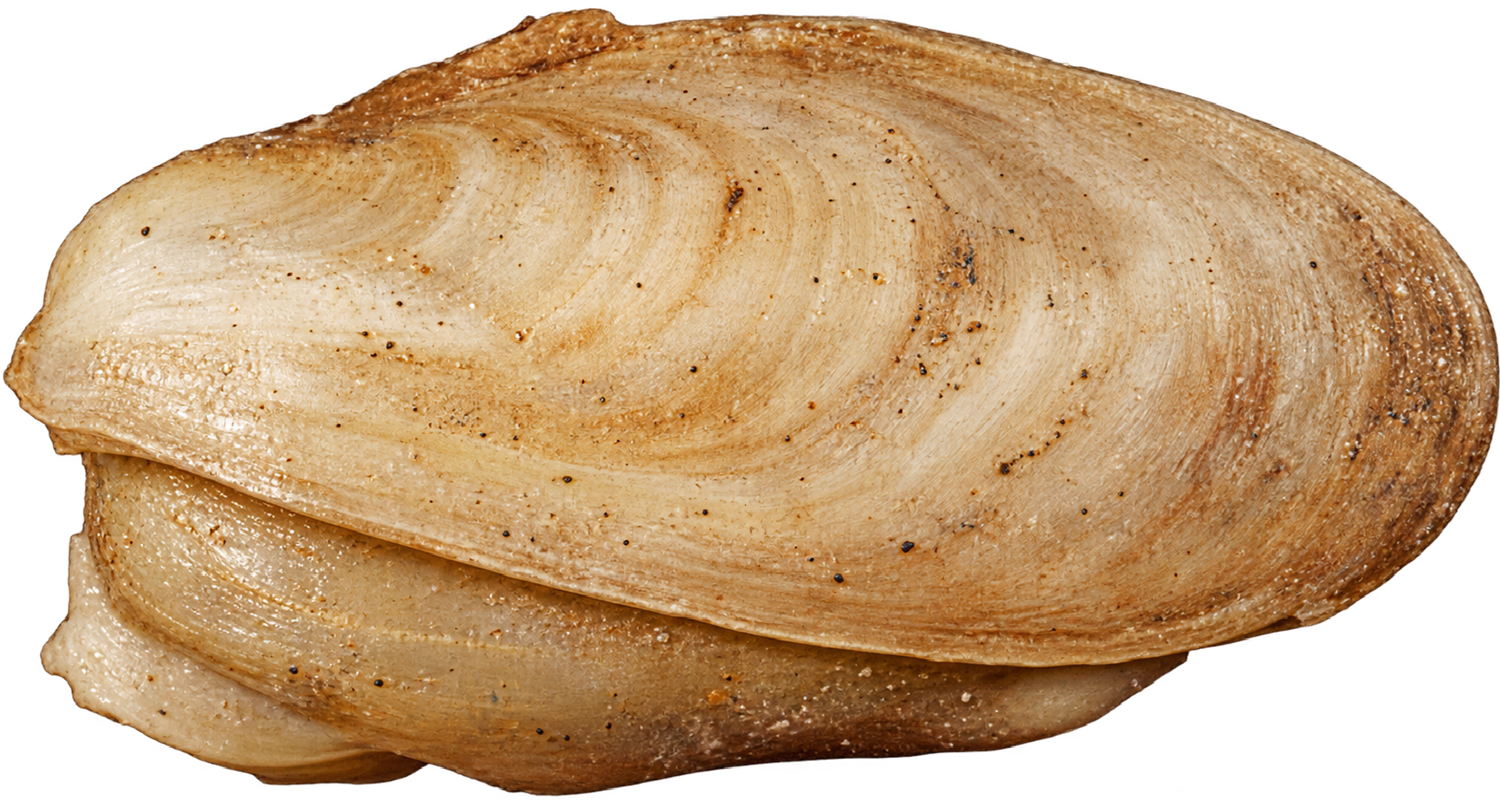 Gastrochaena |
G. americana3298Stephenson, L. W. (1941). The larger invertebrate fossils of the Navarro Group of Texas (exclusive of corals and crustaceans and exclusive of the fauna of the Escondido Formation). The University of Texas Publication, 4101, 1–6413299Bandel, K. & Dockery, D. T. III (2016). Mollusca of the Coon Creek Formation in Tennessee and Mississippi with a systematic discussion of the Gastropoda. Bulletin of the Alabama Museum of Natural History 33(1), 34–96. Muschelliste S. 90–92. 98 Originalpublikation3300Crider, A. F. (1906). Geology and mineral resources of Mississippi. United States Geological Survey Bulletin 283, 1–99. S. 21, Ripley-Fossilien aus Tippah County. doi:10.3133/b2833301Wade, B. (1926). The fauna of the Ripley Formation on Coon Creek, Tennessee. United States Geological Survey Professional Paper 137, 1–272. Ripley-Vorkommensindex PBDB, Literatur 7434. doi:10.3133/pp1373302Cocker, M. D. (2004). Geologic atlas of the Benevolence, Lumpkin, and Richland, Georgia 7.5 minute quadrangles. Georgia Geologic Survey Open File Report 04–1. Tabelle 3. Originalpublikation G. spp.3303Foster, W. J. et al. (2020). Resilience of marine invertebrate communities during the early Cenozoic hyperthermals. Scientific Reports 10, 2176. Supplementary Data 1 doi:10.1038/s41598-020-58986-5 |
Corsicana Marl Kemp Clay Ripley Formation |
USA (Georgia, Mississippi, Tennessee, Texas) | 72–66 Ma (Gattung 162 Ma bis heute) | häufig | Gastrochaenidae (Bohrklaffmuschel); synonym zu Gastrochaena ripleyana; historische bzw. alternative Kombinationen: Gastrochaena ripleyana |
| Gervillia | G. wellsi3304Stephenson, L. W. (1941). The larger invertebrate fossils of the Navarro group of Texas (exclusive of corals and crustaceans and exclusive of the fauna of the Escondido formation). University of Texas Publication 4101, 1–641 G. spp.3305Foster, W. J. et al. (2020). Resilience of marine invertebrate communities during the early Cenozoic hyperthermals. Scientific Reports 10, 2176. Dataset S1, Formation Owl Creek; Datensatz-IDs 13579, 13739. doi:10.1038/s41598-020-58986-53306Sohl, N. F. & Koch, C. F. (1983). Upper Cretaceous (Maestrichtian) Mollusca from the Haustator bilira Assemblage Zone in the East Gulf Coastal Plain. U.S. Geological Survey Open-File Report 83-451, 1–239. Owl Creek Formation, Aufsammlungen 44, 46. doi:10.3133/ofr834513307Foster, W. J. et al. (2020). Resilience of marine invertebrate communities during the early Cenozoic hyperthermals. Scientific Reports 10, 2176. Dataset S1. Prairie Bluff Chalk; Dataset-IDs 13976. Quellenbezeichnung: Gervillia sp.. doi:10.1038/s41598-020-58986-5 |
Kemp Clay Owl Creek Formation Prairie Bluff Chalk |
USA (Mississippi, Texas) | 69–66 Ma | häufig | Bakevelliidae |
| Gervilliopsis | G. ensiformis3308Bandel, K. & Dockery, D. T. III (2016). Mollusca of the Coon Creek Formation in Tennessee and Mississippi with a systematic discussion of the Gastropoda. Bulletin of the Alabama Museum of Natural History 33(1), 34–96. Muschelliste S. 90–92. 32 Originalpublikation3309Veatch, O. & Stephenson, L. W. (1911). Preliminary report on the geology of the coastal plain of Georgia. Geological Survey of Georgia Bulletin 26, 1–466. S. 176–177, Eufaula-Liste. Originalpublikation3310Crider, A. F. (1906). Geology and mineral resources of Mississippi. United States Geological Survey Bulletin 283, 1–99. S. 21, Ripley-Fossilien aus Tippah County. doi:10.3133/b2833311Foster, W. J. et al. (2020). Resilience of marine invertebrate communities during the early Cenozoic hyperthermals. Scientific Reports 10, 2176. Dataset S1. Dataset S1, ID 23967 doi:10.1038/s41598-020-58986-53312Wade, B. (1926). The fauna of the Ripley Formation on Coon Creek, Tennessee. United States Geological Survey Professional Paper 137, 1–272. Ripley-Vorkommensindex PBDB, Literatur 7434. doi:10.3133/pp1373313Foster, W. J. et al. (2020). Resilience of marine invertebrate communities during the early Cenozoic hyperthermals. Scientific Reports 10, 2176. Dataset S1, Formation Owl Creek; Datensatz-IDs 13507, 13580, 13641, 13740, 13845, 13890. doi:10.1038/s41598-020-58986-53314Sohl, N. F. & Koch, C. F. (1983). Upper Cretaceous (Maestrichtian) Mollusca from the Haustator bilira Assemblage Zone in the East Gulf Coastal Plain. U.S. Geological Survey Open-File Report 83-451, 1–239. Owl Creek Formation, Aufsammlungen 42, 44, 45, 46, 47, 51. doi:10.3133/ofr834513315Foster, W. J. et al. (2020). Resilience of marine invertebrate communities during the early Cenozoic hyperthermals. Scientific Reports 10, 2176. Dataset S1. Prairie Bluff Chalk; Dataset-IDs 13902, 13977, 14147, 15731. Quellenbezeichnung: Gervilliopsis ensiformis. doi:10.1038/s41598-020-58986-5 G. spp.3316Foster, W. J. et al. (2020). Resilience of marine invertebrate communities during the early Cenozoic hyperthermals. Scientific Reports 10, 2176. Dataset S1. Dataset S1, ID 23966 doi:10.1038/s41598-020-58986-5 |
Owl Creek Formation Prairie Bluff Chalk Ripley Formation |
USA (Alabama, Mississippi, Tennessee) | 72–66 Ma | sehr häufig | Bakevelliidae |
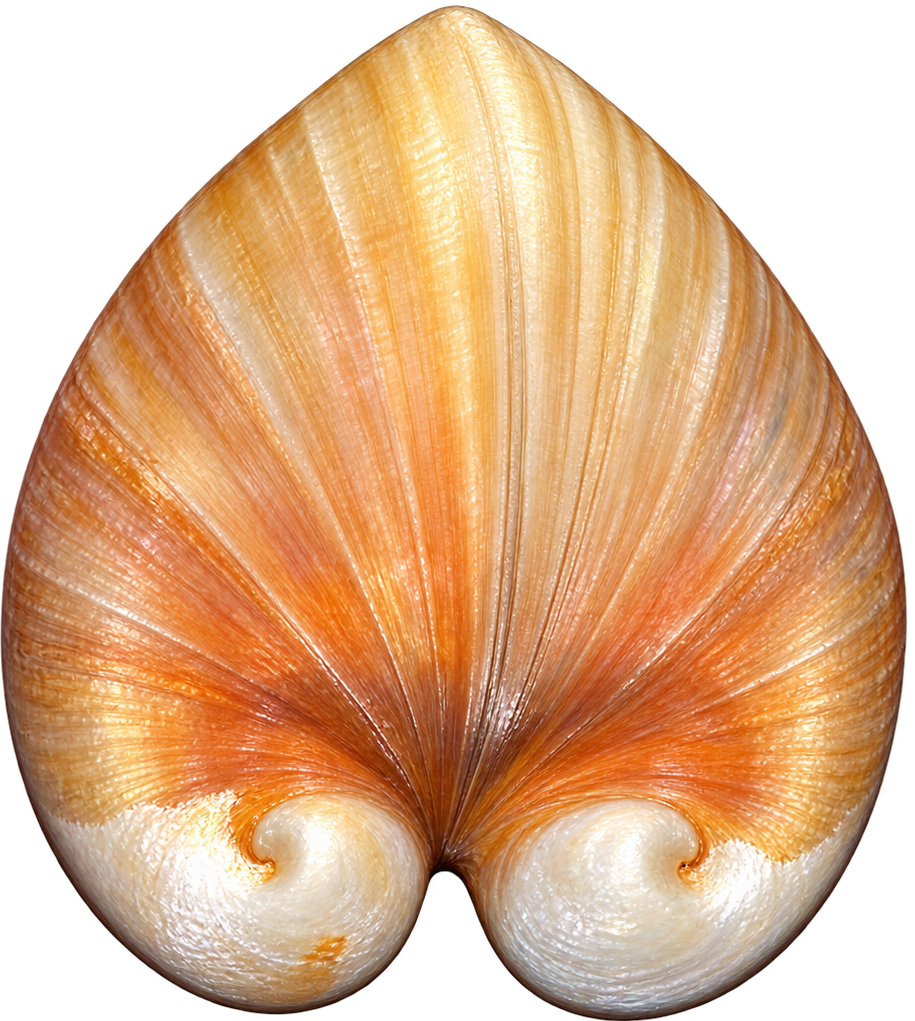 Glossus |
G. conradi3317Bandel, K. & Dockery, D. T. III (2016). Mollusca of the Coon Creek Formation in Tennessee and Mississippi with a systematic discussion of the Gastropoda. Bulletin of the Alabama Museum of Natural History 33(1), 34–96. Muschelliste S. 90–92. 85 Originalpublikation3318Wade, B. (1926). The fauna of the Ripley Formation on Coon Creek, Tennessee. United States Geological Survey Professional Paper 137, 1–272. Ripley-Vorkommensindex PBDB, Literatur 7434. doi:10.3133/pp137 G. spp.3319Stephenson, L. W. (1941). The larger invertebrate fossils of the Navarro Group of Texas (exclusive of corals and crustaceans and exclusive of the fauna of the Escondido Formation). The University of Texas Publication, 4101, 1–641.3320Sohl, N. F. & Koch, C. F. (1984). Upper Cretaceous (Maastrichtian) larger invertebrate fossils from the Haustator bilira assemblage zone in the West Gulf Coastal Plain. U.S. Geological Survey Open-File Report, 84-687, 1–282. doi:10.3133/ofr846873321Sohl, N. F. & Koch, C. F. (1983). Upper Cretaceous (Maestrichtian) Mollusca from the Haustator bilira Assemblage Zone in the East Gulf Coastal Plain. United States Geological Survey Open-File Report 83–451, 238 S. Loc.10 doi:10.3133/ofr834513322Foster, W. J. et al. (2020). Resilience of marine invertebrate communities during the early Cenozoic hyperthermals. Scientific Reports 10, 2176. Dataset S1. Dataset S1, ID 12977 doi:10.1038/s41598-020-58986-53323Foster, W. J. et al. (2020). Resilience of marine invertebrate communities during the early Cenozoic hyperthermals. Scientific Reports 10, 2176. Dataset S1, Formation Owl Creek; Datensatz-IDs 13741. doi:10.1038/s41598-020-58986-53324Sohl, N. F. & Koch, C. F. (1983). Upper Cretaceous (Maestrichtian) Mollusca from the Haustator bilira Assemblage Zone in the East Gulf Coastal Plain. U.S. Geological Survey Open-File Report 83-451, 1–239. Owl Creek Formation, Aufsammlungen 46. doi:10.3133/ofr834513325Foster, W. J. et al. (2020). Resilience of marine invertebrate communities during the early Cenozoic hyperthermals. Scientific Reports 10, 2176. Dataset S1. Prairie Bluff Chalk; Dataset-IDs 14116. Quellenbezeichnung: Glossus sp.. doi:10.1038/s41598-020-58986-5 |
Corsicana Marl Escondido Formation Owl Creek Formation Prairie Bluff Chalk Ripley Formation |
USA (Mississippi, Tennessee, Texas) | 72–66 Ma (Gattung mindestens 72 Ma bis heute) | sehr häufig | Glossidae (Zungenmuschel); synonym zu Isocardia sp.; historische bzw. alternative Kombinationen: Isocardia conradi |
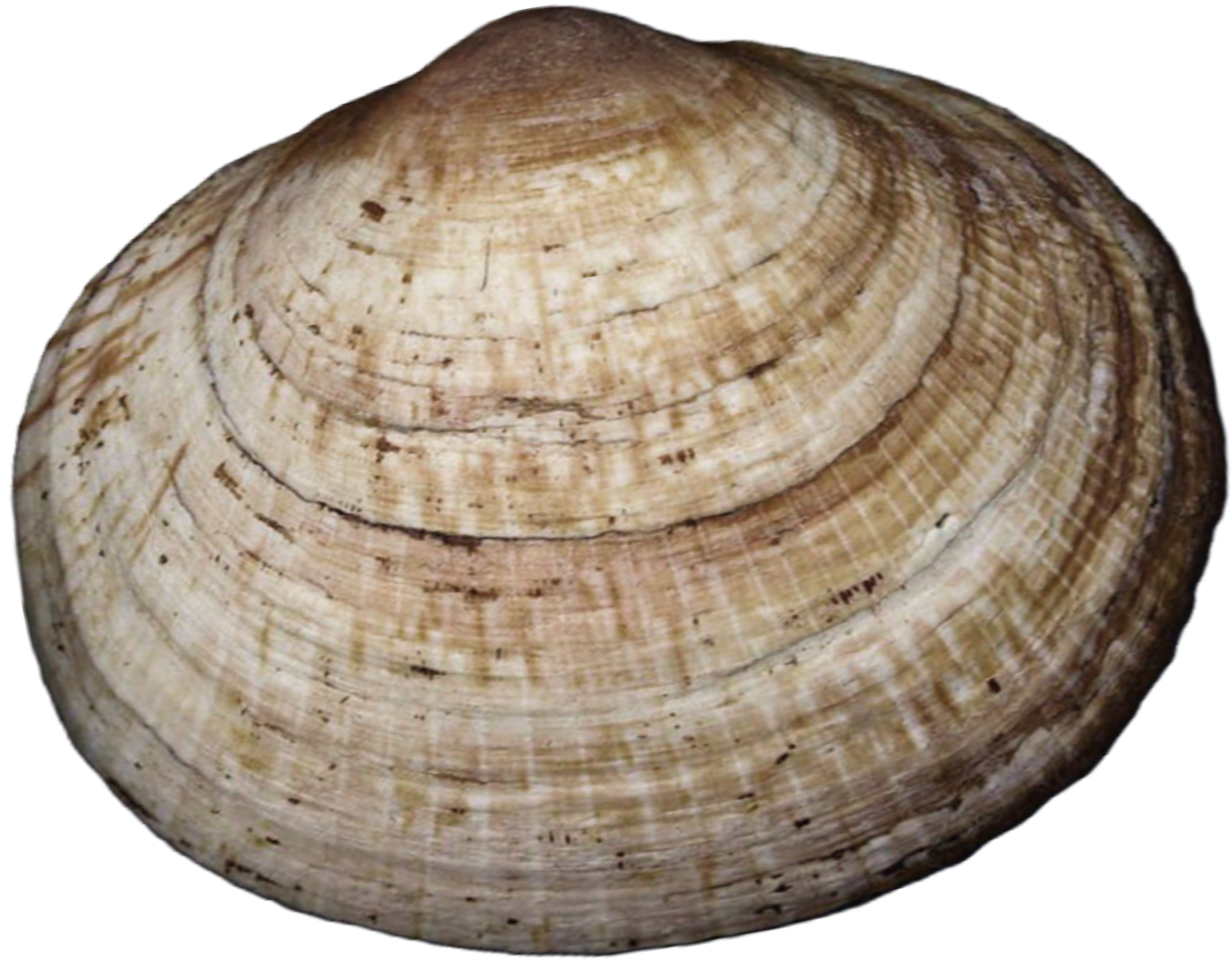 Glycymeris |
G. compressa3326Foster, W. J. et al. (2020). Resilience of marine invertebrate communities during the early Cenozoic hyperthermals. Scientific Reports 10, 2176. Dataset S1, Formation Owl Creek; Datensatz-IDs 23894. doi:10.1038/s41598-020-58986-5 G. hamula3327Foster, W. J. et al. (2020). Resilience of marine invertebrate communities during the early Cenozoic hyperthermals. Scientific Reports 10, 2176. Dataset S1. Prairie Bluff Chalk; Dataset-IDs 15801. Quellenbezeichnung: Glycymeris hamula. doi:10.1038/s41598-020-58986-5 G. lacertosa3328Bandel, K. & Dockery, D. T. III (2016). Mollusca of the Coon Creek Formation in Tennessee and Mississippi with a systematic discussion of the Gastropoda. Bulletin of the Alabama Museum of Natural History 33(1), 34–96. Muschelliste S. 90–92. 23 Originalpublikation3329Foster, W. J. et al. (2020). Resilience of marine invertebrate communities during the early Cenozoic hyperthermals. Scientific Reports 10, 2176. Dataset S1. Dataset S1, ID 23938 doi:10.1038/s41598-020-58986-53330Wade, B. (1926). The fauna of the Ripley Formation on Coon Creek, Tennessee. United States Geological Survey Professional Paper 137, 1–272. Ripley-Vorkommensindex PBDB, Literatur 7434. doi:10.3133/pp137 G. microsulci3331Bandel, K. & Dockery, D. T. III (2016). Mollusca of the Coon Creek Formation in Tennessee and Mississippi with a systematic discussion of the Gastropoda. Bulletin of the Alabama Museum of Natural History 33(1), 34–96. Muschelliste S. 90–92. 22 Originalpublikation3332Wade, B. (1926). The fauna of the Ripley Formation on Coon Creek, Tennessee. United States Geological Survey Professional Paper 137, 1–272. Ripley-Vorkommensindex PBDB, Literatur 7434. doi:10.3133/pp137 G. rotundata3333Sohl, N. F. & Koch, C. F. (1983). Upper Cretaceous (Maestrichtian) Mollusca from the Haustator bilira Assemblage Zone in the East Gulf Coastal Plain. United States Geological Survey Open-File Report 83–451, 238 S. Loc.9; Loc.11 doi:10.3133/ofr834513334Foster, W. J. et al. (2020). Resilience of marine invertebrate communities during the early Cenozoic hyperthermals. Scientific Reports 10, 2176. Dataset S1. Dataset S1, ID 12921; Dataset S1, ID 13037; Dataset S1, ID 13058; Dataset S1, ID 13087; Dataset S1, ID 13186; Dataset S1, ID 13297; Dataset S1, ID 13354; Dataset S1, ID 13387 doi:10.1038/s41598-020-58986-53335Sohl, N. F. (1960). Archeogastropoda, Mesogastropoda, and stratigraphy of the Ripley, Owl Creek, and Prairie Bluff formations. United States Geological Survey Professional Paper 331-A, 1–151. Ripley-Vorkommensindex PBDB, Literatur 463. doi:10.3133/pp331A3336Foster, W. J. et al. (2020). Resilience of marine invertebrate communities during the early Cenozoic hyperthermals. Scientific Reports 10, 2176. Dataset S1, Formation Owl Creek; Datensatz-IDs 13508, 23824, 23895, 23953. doi:10.1038/s41598-020-58986-53337Stephenson, L. W. (1955). Owl Creek (Upper Cretaceous) fossils from Crowleys Ridge, southeastern Missouri. U.S. Geological Survey Professional Paper 274-E, 97–140. Owl Creek Formation, Missouri; Verbreitungstabelle S. 104–105. doi:10.3133/pp274E3338Sohl, N. F. & Koch, C. F. (1983). Upper Cretaceous (Maestrichtian) Mollusca from the Haustator bilira Assemblage Zone in the East Gulf Coastal Plain. U.S. Geological Survey Open-File Report 83-451, 1–239. Owl Creek Formation, Aufsammlungen 42. doi:10.3133/ofr834513339Foster, W. J. et al. (2020). Resilience of marine invertebrate communities during the early Cenozoic hyperthermals. Scientific Reports 10, 2176. Dataset S1. Prairie Bluff Chalk; Dataset-IDs 13935, 16534, 16645, 16748. Quellenbezeichnung: Glycymeris rotundata. doi:10.1038/s41598-020-58986-5 G. cf. rotundata3340Foster, W. J. et al. (2020). Resilience of marine invertebrate communities during the early Cenozoic hyperthermals. Scientific Reports 10, 2176. Dataset S1, Formation Owl Creek; Datensatz-IDs 13742. Publiziert als Glycymeris rotundata. doi:10.1038/s41598-020-58986-53341Sohl, N. F. & Koch, C. F. (1983). Upper Cretaceous (Maestrichtian) Mollusca from the Haustator bilira Assemblage Zone in the East Gulf Coastal Plain. U.S. Geological Survey Open-File Report 83-451, 1–239. Owl Creek Formation, Aufsammlungen 46. doi:10.3133/ofr834513342Foster, W. J. et al. (2020). Resilience of marine invertebrate communities during the early Cenozoic hyperthermals. Scientific Reports 10, 2176. Dataset S1. Prairie Bluff Chalk; Dataset-IDs 15854. Quellenbezeichnung: Glycymeris rotundata. doi:10.1038/s41598-020-58986-5 G. rotundata kaufmanensis3343Foster, W. J. et al. (2020). Resilience of marine invertebrate communities during the early Cenozoic hyperthermals. Scientific Reports 10, 2176. Dataset S1, Formation Owl Creek; Datensatz-IDs 11684. Publiziert als Glycymeris rotundata. doi:10.1038/s41598-020-58986-5 G. subaustralis3344Veatch, O. & Stephenson, L. W. (1911). Preliminary report on the geology of the coastal plain of Georgia. Geological Survey of Georgia Bulletin 26, 1–466. S. 176–177, Eufaula-Liste. Originalpublikation3345Crider, A. F. (1906). Geology and mineral resources of Mississippi. United States Geological Survey Bulletin 283, 1–99. S. 21, Ripley-Fossilien aus Tippah County. doi:10.3133/b2833346Foster, W. J. et al. (2020). Resilience of marine invertebrate communities during the early Cenozoic hyperthermals. Scientific Reports 10, 2176. Dataset S1. Prairie Bluff Chalk; Dataset-IDs 15732, 15800. Quellenbezeichnung: Glycymeris subaustralis. doi:10.1038/s41598-020-58986-5 G. subcrenata3347Bandel, K. & Dockery, D. T. III (2016). Mollusca of the Coon Creek Formation in Tennessee and Mississippi with a systematic discussion of the Gastropoda. Bulletin of the Alabama Museum of Natural History 33(1), 34–96. Muschelliste S. 90–92. 21 Originalpublikation3348Wade, B. (1926). The fauna of the Ripley Formation on Coon Creek, Tennessee. United States Geological Survey Professional Paper 137, 1–272. Ripley-Vorkommensindex PBDB, Literatur 7434. doi:10.3133/pp137 G. spp.3349Vega, F. J., Feldmann, R. M. & Sour-Tovar, F. (1995). Fossil crabs (Crustacea: Decapoda) from the Late Cretaceous Cárdenas Formation, east-central Mexico. Journal of Paleontology, 69(2), 340–350. doi:10.1017/S00223360000346613350Vega-Vera, F.J. & Perrilliat Montoya, M. del C. (1990): Moluscos del Maastrichtiano de la sierra El Antrisco, Estado de Nuevo León. Paleontología Mexicana 55: 1–69. doi:10.22201/igl.05437652e.1990.0.55.3373351Richards, H. G. (1969). Illustrated fossils of the Georgia coastal plain. Georgia Department of Mines, Mining and Geology, Atlanta. Ripley-Abschnitt, Eufaula. Originalpublikation3352Sohl, N. F. & Koch, C. F. (1983). Upper Cretaceous (Maestrichtian) Mollusca from the Haustator bilira Assemblage Zone in the East Gulf Coastal Plain. United States Geological Survey Open-File Report 83–451, 238 S. Loc.10; Loc.32; Loc.220 doi:10.3133/ofr834513353Bryan, J. R. & Jones, D. S. (1989). Fabric of the Cretaceous-Tertiary marine macrofaunal transition at Braggs, Alabama. Palaeogeography, Palaeoclimatology, Palaeoecology 69, 279–301. Appendix I, S. 295–296, Spalte Ripley. Appendix I, S.295–296 doi:10.1016/0031-0182(89)90170-33354Foster, W. J. et al. (2020). Resilience of marine invertebrate communities during the early Cenozoic hyperthermals. Scientific Reports 10, 2176. Dataset S1. Dataset S1, ID 12978; Dataset S1, ID 13124; Dataset S1, ID 13266; Dataset S1, ID 13426; Dataset S1, ID 17683 doi:10.1038/s41598-020-58986-53355Foster, W. J. et al. (2020). Resilience of marine invertebrate communities during the early Cenozoic hyperthermals. Scientific Reports 10, 2176. Dataset S1, Formation Owl Creek; Datensatz-IDs 13846, 13891, 23774. doi:10.1038/s41598-020-58986-53356Sohl, N. F. & Koch, C. F. (1983). Upper Cretaceous (Maestrichtian) Mollusca from the Haustator bilira Assemblage Zone in the East Gulf Coastal Plain. U.S. Geological Survey Open-File Report 83-451, 1–239. Owl Creek Formation, Aufsammlungen 40, 47, 51. Aufsammlung 40: umgelagert. doi:10.3133/ofr834513357Foster, W. J. et al. (2020). Resilience of marine invertebrate communities during the early Cenozoic hyperthermals. Scientific Reports 10, 2176. Dataset S1. Prairie Bluff Chalk; Dataset-IDs 14241, 14303, 14345. Quellenbezeichnung: Glycymeris sp.. doi:10.1038/s41598-020-58986-5 |
Cárdenas Formation Owl Creek Formation Potrerillos Formation Prairie Bluff Chalk Ripley Formation |
USA (Alabama, Mississippi, Missouri, Tennessee); Mexiko (Nuevo León) | 72–66 Ma (Gattung 143 Ma bis heute); Potrerillos: Maastrichtium (72–66 Ma) | sehr häufig | Glycymerididae (Samtmuschel) |
| Goniocasma | G. sp.3358Foster, W. J. et al. (2020). Resilience of marine invertebrate communities during the early Cenozoic hyperthermals. Scientific Reports 10, 2176. Dataset S1, Formation Owl Creek; Datensatz-IDs 23896. Publiziert als Goniochasma sp.. doi:10.1038/s41598-020-58986-53359Stephenson, L. W. (1955). Owl Creek (Upper Cretaceous) fossils from Crowleys Ridge, southeastern Missouri. U.S. Geological Survey Professional Paper 274-E, 97–140. Owl Creek Formation, Missouri; Verbreitungstabelle S. 104–105. Gattungszuordnung fraglich. doi:10.3133/pp274E | Owl Creek Formation | USA (Missouri) | 68–66 Ma | nicht quantifiziert | Pholadidae (Muschel) |
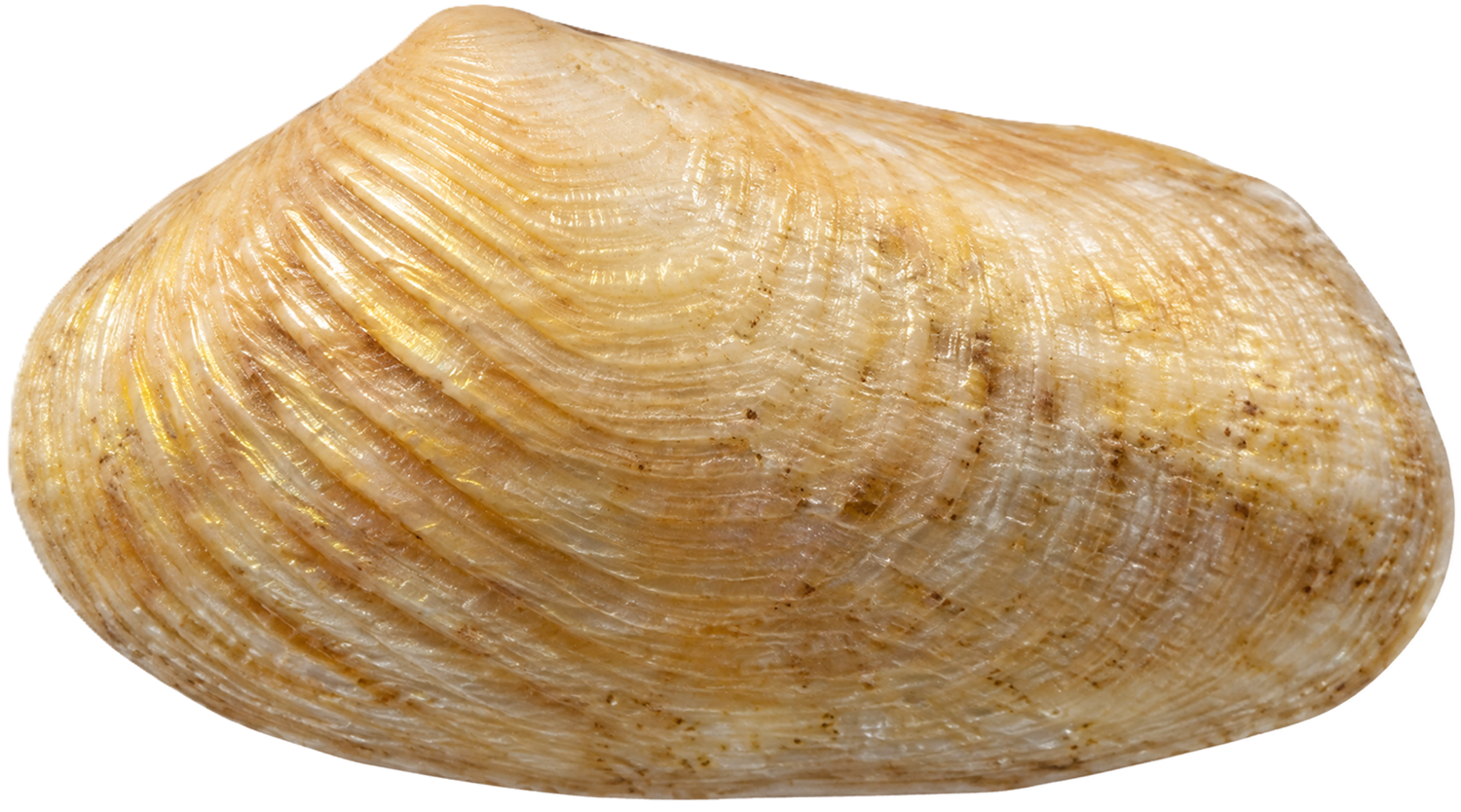 Goniomya |
G. americana3360Speden, I. G. (1970). The type Fox Hills Formation, Cretaceous (Maestrichtian), South Dakota. Part 2. Systematics of the Bivalvia. Bulletin of the Peabody Museum of Natural History 33: 1–222. S. 152–153. Originalveröffentlichung3361Feldmann, R. M. (1967). Bivalvia and paleoecology of the Fox Hills Formation (Upper Cretaceous) of North Dakota. Dissertation, University of North Dakota, Grand Forks. Tabelle 2, S. 105–107; systematischer Teil. Originalveröffentlichung G. spp.3362Jones, D. L. & Detterman, R. L. (1966). Cretaceous stratigraphy of the Kamishak Hills, Alaska Peninsula. U.S. Geological Survey Professional Paper, 550-D, D53–D58.3363Stephenson, L. W. (1941). The larger invertebrate fossils of the Navarro Group of Texas (exclusive of corals and crustaceans and exclusive of the fauna of the Escondido Formation). The University of Texas Publication, 4101, 1–641. |
Fox Hills Formation Kaguyak Formation |
USA (Alaska, North Dakota, South Dakota) | 72–66 Ma (Gattung bis 34 Ma) | häufig | Pholadomyidae |
 Granocardium |
G. alabamense3364Foster, W. J. et al. (2020). Resilience of marine invertebrate communities during the early Cenozoic hyperthermals. Scientific Reports 10, 2176. Dataset S1. Prairie Bluff Chalk; Dataset-IDs 15294, 15652. Quellenbezeichnung: Granocardium alabam. doi:10.1038/s41598-020-58986-5 G. bowenae3365Vega, F. J., Feldmann, R. M. & Sour-Tovar, F. (1995). Fossil crabs (Crustacea: Decapoda) from the Late Cretaceous Cárdenas Formation, east-central Mexico. Journal of Paleontology, 69(2), 340–350. doi:10.1017/S0022336000034661 G. dumosum3366Bandel, K. & Dockery, D. T. III (2016). Mollusca of the Coon Creek Formation in Tennessee and Mississippi with a systematic discussion of the Gastropoda. Bulletin of the Alabama Museum of Natural History 33(1), 34–96. Muschelliste S. 90–92. 66 Originalpublikation3367Crider, A. F. (1906). Geology and mineral resources of Mississippi. United States Geological Survey Bulletin 283, 1–99. S. 21, Ripley-Fossilien aus Tippah County. doi:10.3133/b2833368Foster, W. J. et al. (2020). Resilience of marine invertebrate communities during the early Cenozoic hyperthermals. Scientific Reports 10, 2176. Dataset S1. Dataset S1, ID 23958 doi:10.1038/s41598-020-58986-53369Wade, B. (1926). The fauna of the Ripley Formation on Coon Creek, Tennessee. United States Geological Survey Professional Paper 137, 1–272. Ripley-Vorkommensindex PBDB, Literatur 7434. doi:10.3133/pp137 G. kuemmeli3370Bandel, K. & Dockery, D. T. III (2016). Mollusca of the Coon Creek Formation in Tennessee and Mississippi with a systematic discussion of the Gastropoda. Bulletin of the Alabama Museum of Natural History 33(1), 34–96. Muschelliste S. 90–92. 68 Originalpublikation3371Sohl, N. F. & Koch, C. F. (1983). Upper Cretaceous (Maestrichtian) Mollusca from the Haustator bilira Assemblage Zone in the East Gulf Coastal Plain. United States Geological Survey Open-File Report 83–451, 238 S. Loc.9; Loc.10; Loc.32 doi:10.3133/ofr834513372Bryan, J. R. & Jones, D. S. (1989). Fabric of the Cretaceous-Tertiary marine macrofaunal transition at Braggs, Alabama. Palaeogeography, Palaeoclimatology, Palaeoecology 69, 279–301. Appendix I, S. 295–296, Spalte Ripley. Appendix I, S.295–296 doi:10.1016/0031-0182(89)90170-33373Foster, W. J. et al. (2020). Resilience of marine invertebrate communities during the early Cenozoic hyperthermals. Scientific Reports 10, 2176. Dataset S1. Dataset S1, ID 23952; Dataset S1, ID 12923; Dataset S1, ID 12980; Dataset S1, ID 13088; Dataset S1, ID 13125; Dataset S1, ID 13187; Dataset S1, ID 13211; Dataset S1, ID 13355; Dataset S1, ID 13388; Dataset S1, ID 13427 doi:10.1038/s41598-020-58986-53374Wade, B. (1926). The fauna of the Ripley Formation on Coon Creek, Tennessee. United States Geological Survey Professional Paper 137, 1–272. Ripley-Vorkommensindex PBDB, Literatur 7434. doi:10.3133/pp1373375Foster, W. J. et al. (2020). Resilience of marine invertebrate communities during the early Cenozoic hyperthermals. Scientific Reports 10, 2176. Dataset S1. Prairie Bluff Chalk; Dataset-IDs 15292, 15855, 16123, 16170, 16751. Quellenbezeichnung: Granocardium kummeli. doi:10.1038/s41598-020-58986-53376Bryan, J. R. & Jones, D. S. (1989). Fabric of the Cretaceous-Tertiary marine macrofaunal transition at Braggs, Alabama. Palaeogeography, Palaeoclimatology, Palaeoecology 69, 279–301. Appendix I, S. 296, Prairie-Bluff-Spalten L. Quellenbezeichnung: Granocardium (Granocardium) kummeli. doi:10.1016/0031-0182(89)90170-3 G. lowei3377Sohl, N. F. & Koch, C. F. (1983). Upper Cretaceous (Maestrichtian) Mollusca from the Haustator bilira Assemblage Zone in the East Gulf Coastal Plain. United States Geological Survey Open-File Report 83–451, 238 S. Loc.10 doi:10.3133/ofr834513378Foster, W. J. et al. (2020). Resilience of marine invertebrate communities during the early Cenozoic hyperthermals. Scientific Reports 10, 2176. Dataset S1. Dataset S1, ID 12981 doi:10.1038/s41598-020-58986-53379Foster, W. J. et al. (2020). Resilience of marine invertebrate communities during the early Cenozoic hyperthermals. Scientific Reports 10, 2176. Dataset S1, Formation Owl Creek; Datensatz-IDs 23786, 23825, 23897, 23954. doi:10.1038/s41598-020-58986-53380Stephenson, L. W. (1955). Owl Creek (Upper Cretaceous) fossils from Crowleys Ridge, southeastern Missouri. U.S. Geological Survey Professional Paper 274-E, 97–140. Owl Creek Formation, Missouri; Verbreitungstabelle S. 104–105; Granocardium lowei auch Mississippi, S. 119. doi:10.3133/pp274E3381Foster, W. J. et al. (2020). Resilience of marine invertebrate communities during the early Cenozoic hyperthermals. Scientific Reports 10, 2176. Dataset S1. Prairie Bluff Chalk; Dataset-IDs 16227, 16268, 16749. Quellenbezeichnung: Granocardium lowei. doi:10.1038/s41598-020-58986-53382Bryan, J. R. & Jones, D. S. (1989). Fabric of the Cretaceous-Tertiary marine macrofaunal transition at Braggs, Alabama. Palaeogeography, Palaeoclimatology, Palaeoecology 69, 279–301. Appendix I, S. 296, Prairie-Bluff-Spalten L, M, U. Quellenbezeichnung: Granocardium (Granocardium) lowei. doi:10.1016/0031-0182(89)90170-3 G. tenuistriatum3383Bandel, K. & Dockery, D. T. III (2016). Mollusca of the Coon Creek Formation in Tennessee and Mississippi with a systematic discussion of the Gastropoda. Bulletin of the Alabama Museum of Natural History 33(1), 34–96. Muschelliste S. 90–92. 67 Originalpublikation3384Wade, B. (1926). The fauna of the Ripley Formation on Coon Creek, Tennessee. United States Geological Survey Professional Paper 137, 1–272. Ripley-Vorkommensindex PBDB, Literatur 7434. doi:10.3133/pp137 G. tippanum3385Stephenson, L. W. (1941). The larger invertebrate fossils of the Navarro Group of Texas (exclusive of corals and crustaceans and exclusive of the fauna of the Escondido Formation). The University of Texas Publication, 4101, 1–641.3386Crider, A. F. (1906). Geology and mineral resources of Mississippi. United States Geological Survey Bulletin 283, 1–99. S. 21, Ripley-Fossilien aus Tippah County. doi:10.3133/b2833387Foster, W. J. et al. (2020). Resilience of marine invertebrate communities during the early Cenozoic hyperthermals. Scientific Reports 10, 2176. Dataset S1. Dataset S1, ID 13059; Dataset S1, ID 13212; Dataset S1, ID 13298 doi:10.1038/s41598-020-58986-53388Foster, W. J. et al. (2020). Resilience of marine invertebrate communities during the early Cenozoic hyperthermals. Scientific Reports 10, 2176. Dataset S1, Formation Owl Creek; Datensatz-IDs 11666, 13744, 13892, 23784, 23787, 23826, 23852, 23898, 23955. Publiziert als Granocardium tippananum. doi:10.1038/s41598-020-58986-53389Stephenson, L. W. (1955). Owl Creek (Upper Cretaceous) fossils from Crowleys Ridge, southeastern Missouri. U.S. Geological Survey Professional Paper 274-E, 97–140. Owl Creek Formation, Missouri; Verbreitungstabelle S. 104–105. doi:10.3133/pp274E3390Sohl, N. F. & Koch, C. F. (1983). Upper Cretaceous (Maestrichtian) Mollusca from the Haustator bilira Assemblage Zone in the East Gulf Coastal Plain. U.S. Geological Survey Open-File Report 83-451, 1–239. Owl Creek Formation, Aufsammlungen 40, 46, 51. Aufsammlung 40: umgelagert. doi:10.3133/ofr834513391Witts, J. D. et al. (2018). A fossiliferous spherule-rich bed at the Cretaceous–Paleogene (K–Pg) boundary in Mississippi, USA: Implications for the K–Pg mass extinction event in the Mississippi Embayment and Eastern Gulf Coastal Plain. Cretaceous Research 91, 147–167. Anhang 1, nur Owl-Creek-Spalten, Zeilen 25. doi:10.1016/j.cretres.2018.06.0023392Foster, W. J. et al. (2020). Resilience of marine invertebrate communities during the early Cenozoic hyperthermals. Scientific Reports 10, 2176. Dataset S1. Prairie Bluff Chalk; Dataset-IDs 13903, 13936, 16750. Quellenbezeichnung: Granocardium tippananum. doi:10.1038/s41598-020-58986-5 G. aff. whitei3393Speden, I. G. (1970). The type Fox Hills Formation, Cretaceous (Maestrichtian), South Dakota. Part 2. Systematics of the Bivalvia. Bulletin of the Peabody Museum of Natural History 33: 1–222. S. 116. Originalveröffentlichung G. spp.3394Vega, F. J., Feldmann, R. M. & Sour-Tovar, F. (1995). Fossil crabs (Crustacea: Decapoda) from the Late Cretaceous Cárdenas Formation, east-central Mexico. Journal of Paleontology, 69(2), 340–350. doi:10.1017/S00223360000346613395Hartman, J. H. & Kirkland, J. I. (2002). Brackish and marine mollusks of the Hell Creek Formation of North Dakota: Evidence for a persisting Cretaceous seaway. In J. H. Hartman, K. R. Johnson & D. J. Nichols (Eds.), The Hell Creek Formation and the Cretaceous–Tertiary Boundary in the Northern Great Plains. Geological Society of America Special Paper, 361, 271–296. doi:10.1130/0-8137-2361-2.2713396Ifrim, C., Stinnesbeck, W. & Schafhauser, A. (2005). Maastrichtian shallow-water ammonites of northeastern Mexico. Revista Mexicana de Ciencias Geológicas, 22(1), 48–64. Volltext3397Vega-Vera, F.J. & Perrilliat Montoya, M. del C. (1990): Moluscos del Maastrichtiano de la sierra El Antrisco, Estado de Nuevo León. Paleontología Mexicana 55: 1–69. doi:10.22201/igl.05437652e.1990.0.55.3373398Foster, W. J. et al. (2020). Resilience of marine invertebrate communities during the early Cenozoic hyperthermals. Scientific Reports 10, 2176. Dataset S1. Dataset S1, ID 13329 doi:10.1038/s41598-020-58986-53399Foster, W. J. et al. (2020). Resilience of marine invertebrate communities during the early Cenozoic hyperthermals. Scientific Reports 10, 2176. Dataset S1, Formation Owl Creek; Datensatz-IDs 13536, 13643, 13745, 13866. doi:10.1038/s41598-020-58986-53400Sohl, N. F. & Koch, C. F. (1983). Upper Cretaceous (Maestrichtian) Mollusca from the Haustator bilira Assemblage Zone in the East Gulf Coastal Plain. U.S. Geological Survey Open-File Report 83-451, 1–239. Owl Creek Formation, Aufsammlungen 43, 45, 46, 48. doi:10.3133/ofr834513401Witts, J. D. et al. (2018). A fossiliferous spherule-rich bed at the Cretaceous–Paleogene (K–Pg) boundary in Mississippi, USA: Implications for the K–Pg mass extinction event in the Mississippi Embayment and Eastern Gulf Coastal Plain. Cretaceous Research 91, 147–167. Anhang 1, nur Owl-Creek-Spalten, Zeilen 26. doi:10.1016/j.cretres.2018.06.0023402Foster, W. J. et al. (2020). Resilience of marine invertebrate communities during the early Cenozoic hyperthermals. Scientific Reports 10, 2176. Dataset S1. Prairie Bluff Chalk; Dataset-IDs 13904, 14382, 14791, 14953, 15104, 15145, 15293, 16462. Quellenbezeichnung: Granocardium sp.. doi:10.1038/s41598-020-58986-5 |
Corsicana Marl Cárdenas Formation Escondido Formation Fox Hills Formation Hell Creek Formation Owl Creek Formation Potrerillos Formation Prairie Bluff Chalk Ripley Formation |
USA (Alabama, Mississippi, Missouri, South Dakota, Tennessee, Texas); Mexiko (Nuevo León, San Luis Potosí, Zacatecas) | 72–66 Ma; Potrerillos: Maastrichtium (72–66 Ma) | sehr häufig | Cardiidae (Herzmuschel); G. whitei: Ersatzname für Cardium speciosum Meek & Hayden; historische bzw. alternative Kombinationen: Cardium tippanum, Granocardium tippananum |
| Gryphaea | G. belli3403Stephenson, L. W. (1941). The larger invertebrate fossils of the Navarro group of Texas (exclusive of corals and crustaceans and exclusive of the fauna of the Escondido formation). University of Texas Publication 4101, 1–641 G. convexa3404Richards, H. G. (1969). Illustrated fossils of the Georgia coastal plain. Georgia Department of Mines, Mining and Geology, Atlanta. Ripley-Abschnitt, Eufaula. Originalpublikation G. mutabilis3405Stephenson, L. W. (1941). The larger invertebrate fossils of the Navarro group of Texas (exclusive of corals and crustaceans and exclusive of the fauna of the Escondido formation). University of Texas Publication 4101, 1–641 |
Kemp Clay Ripley Formation |
USA (Alabama, Texas) | 72–66 Ma | selten | Gryphaeidae (Auster) |
 Gryphaeostrea |
G. vomer3406Sohl, N. F. & Koch, C. F. (1984). Upper Cretaceous (Maastrichtian) larger invertebrate fossils from the Haustator bilira assemblage zone in the West Gulf Coastal Plain. U.S. Geological Survey Open-File Report, 84-687, 1–282. doi:10.3133/ofr846873407Stephenson, L. W. (1941). The larger invertebrate fossils of the Navarro Group of Texas (exclusive of corals and crustaceans and exclusive of the fauna of the Escondido Formation). The University of Texas Publication, 4101, 1–6413408Stephenson, L. W. (1941). The larger invertebrate fossils of the Navarro group of Texas (exclusive of corals and crustaceans and exclusive of the fauna of the Escondido formation). University of Texas Publication 4101, 1–6413409Bryan, J. R. & Jones, D. S. (1989). Fabric of the Cretaceous-Tertiary marine macrofaunal transition at Braggs, Alabama. Palaeogeography, Palaeoclimatology, Palaeoecology 69, 279–301. Appendix I, S. 295–296, Spalte Ripley. Appendix I, S.295–296 doi:10.1016/0031-0182(89)90170-33410Foster, W. J. et al. (2020). Resilience of marine invertebrate communities during the early Cenozoic hyperthermals. Scientific Reports 10, 2176. Dataset S1. Dataset S1, ID 13089; Dataset S1, ID 13126; Dataset S1, ID 13160; Dataset S1, ID 13236; Dataset S1, ID 13267; Dataset S1, ID 13299; Dataset S1, ID 13330; Dataset S1, ID 13356; Dataset S1, ID 13398 doi:10.1038/s41598-020-58986-53411Foster, W. J. et al. (2020). Resilience of marine invertebrate communities during the early Cenozoic hyperthermals. Scientific Reports 10, 2176. Dataset S1, Formation Owl Creek; Datensatz-IDs 13644, 13867, 23780, 23899, 23956. doi:10.1038/s41598-020-58986-53412Sohl, N. F. & Koch, C. F. (1983). Upper Cretaceous (Maestrichtian) Mollusca from the Haustator bilira Assemblage Zone in the East Gulf Coastal Plain. U.S. Geological Survey Open-File Report 83-451, 1–239. Owl Creek Formation, Aufsammlungen 40, 45, 48. Aufsammlung 40: umgelagert. doi:10.3133/ofr834513413Foster, W. J. et al. (2020). Resilience of marine invertebrate communities during the early Cenozoic hyperthermals. Scientific Reports 10, 2176. Dataset S1. Prairie Bluff Chalk; Dataset-IDs 13937, 13978, 14017, 14027, 14035, 14051, 14085, 14106, 14117, 14283, 14321, 14383, 14445, 14524, 14539, 14578, 14639, 14675, 14752, 14894, 14954, 15011, 15060, 15105, 15165, 15231, 15347, 15380, 15420, 15484, 15547, 15653, 15733, 15856, 15910, 15936, 16061, 16089, 16124, 16171, 16293, 16350, 16380, 16421, 16444, 16535, 16629. Quellenbezeichnung: Gryphaeostrea vomer. doi:10.1038/s41598-020-58986-53414Bryan, J. R. & Jones, D. S. (1989). Fabric of the Cretaceous-Tertiary marine macrofaunal transition at Braggs, Alabama. Palaeogeography, Palaeoclimatology, Palaeoecology 69, 279–301. Appendix I, S. 295, Prairie-Bluff-Spalten L, M, U. Quellenbezeichnung: Gryphaeostrea vomer. doi:10.1016/0031-0182(89)90170-3 G. spp.3415Foster, W. J. et al. (2020). Resilience of marine invertebrate communities during the early Cenozoic hyperthermals. Scientific Reports 10, 2176. Dataset S1. Prairie Bluff Chalk; Dataset-IDs 15585. Quellenbezeichnung: Gryphaeostrea sp.. doi:10.1038/s41598-020-58986-5 |
Arkadelphia Marl Corsicana Marl Escondido Formation Kemp Clay Owl Creek Formation Prairie Bluff Chalk Ripley Formation |
USA (Alabama, Arkansas, Mississippi, Missouri, Tennessee, Texas) | 72–66 Ma (Gattung bis 7 Ma) | sehr häufig | Ostreidae (Auster) |
| Gyropleura | G. spp.3416Foster, W. J. et al. (2020). Resilience of marine invertebrate communities during the early Cenozoic hyperthermals. Scientific Reports 10, 2176. Dataset S1. Prairie Bluff Chalk; Dataset-IDs 14856. Quellenbezeichnung: Gyropleura sp.. doi:10.1038/s41598-020-58986-53417Paleobiology Database (2026). Gattungs-Vorkommensrahmen; Datenabfrage vom 24. Oktober 2026. Gerundeter Gattungsrahmen für Gyropleura; durch die direkt geprüften Formationsnachweise gegebenenfalls erweitert. Originalpublikation | Prairie Bluff Chalk | USA (Alabama) | 100–66 Ma | nicht quantifiziert | Monopleuridae (Muschel) |
 Hiatella |
H. spp.3418Hartman, J. H. & Kirkland, J. I. (2002). Brackish and marine mollusks of the Hell Creek Formation of North Dakota: Evidence for a persisting Cretaceous seaway. In J. H. Hartman, K. R. Johnson & D. J. Nichols (Eds.), The Hell Creek Formation and the Cretaceous–Tertiary Boundary in the Northern Great Plains. Geological Society of America Special Paper, 361, 271–296. doi:10.1130/0-8137-2361-2.2713419Speden, I. G. (1970). The type Fox Hills Formation, Cretaceous (Maestrichtian), South Dakota. Part 2. Systematics of the Bivalvia. Bulletin of the Peabody Museum of Natural History 33: 1–222. S. 137. Gattungszuordnung bzw. Bestimmung fraglich. Originalveröffentlichung | Fox Hills Formation Hell Creek Formation |
USA (South Dakota) | 69–66 Ma (Gattung 162 Ma bis heute) | selten | Hiatellidae (Felsenbohrer) |
| Hilgardella | H. compressa3420Stephenson, L. W. (1956). A new bivalve genus and species from the Ripley formation of Mississippi. Journal of Paleontology 30(3), 752–753. Stephenson, L. W. (1957). Hilgardella, new name for the Cretaceous bivalve Hilgardia, preoccupied. Journal of Paleontology 31(4), 795. Originalpublikation | Ripley Formation | USA (Mississippi) | 72–66 Ma | nicht quantifiziert | Mytilidae (Miesmuschel) |
| Hindsiella | H. corsonensis3421Speden, I. G. (1970). The type Fox Hills Formation, Cretaceous (Maestrichtian), South Dakota. Part 2. Systematics of the Bivalvia. Bulletin of the Peabody Museum of Natural History 33: 1–222. S. 101–102. Originalveröffentlichung | Fox Hills Formation | USA (South Dakota) | 69–66 Ma | nicht quantifiziert | Galeommatidae |
 |
Hippuritida indet. (?)3422iDigBio (o. J.). Hippuritida, Katalognummer NPL00000994.000. Originaler Museumskatalog über iDigBio (abgerufen am 1. Oktober 2026). | Escondido Formation (?) | Mexiko (Coahuila) | 72–66 Ma | selten | unbestimmte Rudisten |
| Homomya | H. thrasheri (?)3423Stephenson, L. W. (1941). The larger invertebrate fossils of the Navarro group of Texas (exclusive of corals and crustaceans and exclusive of the fauna of the Escondido formation). University of Texas Publication 4101, 1–641 | Kemp Clay | USA (Texas) | 68–66 Ma | selten | Pholadomyidae |
 Huasteca |
H. huasteca (?)3424Pons, J. M. et al. (2021). Mexican Upper Cretaceous rudists (Hippuritida, Bivalvia): Taxonomic, stratigraphic, and geologic data. Journal of South American Earth Sciences 109, 103237. doi:10.1016/j.jsames.2021.103237 H. ojanchalensis3425Pons, J. M., García-Barrera, P., Oviedo, A. & Vicens, E. (2021). Mexican Upper Cretaceous rudists (Hippuritida, Bivalvia): Taxonomic, stratigraphic, and geologic data. Journal of South American Earth Sciences, 109, 103237. doi:10.1016/j.jsames.2021.103237 |
Cárdenas Formation Méndez Formation |
Mexiko (Tamaulipas, San Luis Potosí) | 72–66 Ma | häufig | Radiolitidae; H. huasteca: früher Durania huasteca; möglicherweise synonym mit H. ojanchalensis |
| Icanotia | I. pulchra3426Bandel, K. & Dockery, D. T. III (2016). Mollusca of the Coon Creek Formation in Tennessee and Mississippi with a systematic discussion of the Gastropoda. Bulletin of the Alabama Museum of Natural History 33(1), 34–96. Muschelliste S. 90–92. 79 Originalpublikation3427Wade, B. (1926). The fauna of the Ripley Formation on Coon Creek, Tennessee. United States Geological Survey Professional Paper 137, 1–272. Ripley-Vorkommensindex PBDB, Literatur 7434. doi:10.3133/pp137 I. spp.3428Foster, W. J. et al. (2020). Resilience of marine invertebrate communities during the early Cenozoic hyperthermals. Scientific Reports 10, 2176. Dataset S1. Prairie Bluff Chalk; Dataset-IDs 16269. Quellenbezeichnung: Icanotia sp.. doi:10.1038/s41598-020-58986-53429Bryan, J. R. & Jones, D. S. (1989). Fabric of the Cretaceous-Tertiary marine macrofaunal transition at Braggs, Alabama. Palaeogeography, Palaeoclimatology, Palaeoecology 69, 279–301. Appendix I, S. 296, Prairie-Bluff-Spalten U. Quellenbezeichnung: Icanotia? sp. doi:10.1016/0031-0182(89)90170-33430Bryan, J. R. & Jones, D. S. (1989). Fabric of the Cretaceous-Tertiary marine macrofaunal transition at Braggs, Alabama. Palaeogeography, Palaeoclimatology, Palaeoecology 69, 279–301. Appendix I, S. 296, Prairie-Bluff-Spalten U. Quellenbezeichnung: Icanotia? sp. doi:10.1016/0031-0182(89)90170-3 |
Prairie Bluff Chalk Ripley Formation |
USA (Alabama, Tennessee) | 72–66 Ma | nicht quantifiziert | Icanotiidae |
| Ichthyosarcolites | I. spp.3431Speden, I. G. (1970). The type Fox Hills Formation, Cretaceous (Maestrichtian), South Dakota. Part 2. Systematics of the Bivalvia. Bulletin of the Peabody Museum of Natural History 33: 1–222. S. 157–158. Gattungszuordnung bzw. Bestimmung fraglich. Originalveröffentlichung | Fox Hills Formation | USA (South Dakota) | 69–66 Ma | selten | Ichthyosarcolitidae (Rudist) |
 Idonearca |
I. capax3432Sohl, N. F. & Koch, C. F. (1984). Upper Cretaceous (Maastrichtian) larger invertebrate fossils from the Haustator bilira assemblage zone in the West Gulf Coastal Plain. U.S. Geological Survey Open-File Report, 84-687, 1–282. doi:10.3133/ofr846873433Vega, F. J., Feldmann, R. M. & Sour-Tovar, F. (1995). Fossil crabs (Crustacea: Decapoda) from the Late Cretaceous Cárdenas Formation, east-central Mexico. Journal of Paleontology, 69(2), 340–350. doi:10.1017/S00223360000346613434Stephenson, L. W. (1941). The larger invertebrate fossils of the Navarro Group of Texas (exclusive of corals and crustaceans and exclusive of the fauna of the Escondido Formation). The University of Texas Publication, 4101, 1–641 I. deatsvillensis3435Stephenson, L. W. (1941). The larger invertebrate fossils of the Navarro group of Texas (exclusive of corals and crustaceans and exclusive of the fauna of the Escondido formation). University of Texas Publication 4101, 1–641 I. dentonvillensis3436Stephenson, L. W. (1941). The larger invertebrate fossils of the Navarro Group of Texas (exclusive of corals and crustaceans and exclusive of the fauna of the Escondido Formation). The University of Texas Publication, 4101, 1–641 I. neglectus3437Vega, F. J., Feldmann, R. M. & Sour-Tovar, F. (1995). Fossil crabs (Crustacea: Decapoda) from the Late Cretaceous Cárdenas Formation, east-central Mexico. Journal of Paleontology, 69(2), 340–350. doi:10.1017/S0022336000034661 I. shumardi3438Mapel, W. J. & Pillmore, C. L. (1964): Geology of the Upton quadrangle, Crook and Weston Counties, Wyoming. U.S. Geological Survey Bulletin 1181-J. oberer Pierre Shale, Fundstellen D407, D435, D437 und D434. doi:10.3133/b1181J3439Gill, J. R. & Cobban, W. A. (1966): The Red Bird section of the Upper Cretaceous Pierre Shale in Wyoming. U.S. Geological Survey Professional Paper 393-A: A1–A73. S. A51, Einheiten 93, 95 und 96. doi:10.3133/pp393A I. spp.3440Stephenson, L. W. (1941). The larger invertebrate fossils of the Navarro Group of Texas (exclusive of corals and crustaceans and exclusive of the fauna of the Escondido Formation). The University of Texas Publication, 4101, 1–641 |
Arkadelphia Marl Corsicana Marl Cárdenas Formation Escondido Formation Kemp Clay Pierre Shale |
USA (Arkansas, Texas, Wyoming); Mexiko (Nuevo León, San Luis Potosí) | 72–66 Ma | sehr häufig | Cucullaeidae |
 |
Inoceramidae indet. (?)3441Doe, N. (2017). Gabriola Island’s late-Cretaceous fossils. SILT, 21, 1–46. | Gabriola Formation | Kanada (British Columbia) | 68–66 Ma | selten | unbestimmte Inoceramidae |
 Inoceramus |
I. cripsi var. barabini3442Crider, A. F. (1906). Geology and mineral resources of Mississippi. United States Geological Survey Bulletin 283, 1–99. S. 21, Ripley-Fossilien aus Tippah County. doi:10.3133/b283 I. glendivensis3443Landman, N. H. et al. (2026): The Campanian-Maastrichtian Boundary in the Pierre Shale, Cedar Creek Anticline, Montana: Environment of Deposition Based on Geochemical, Sedimentological, and Paleontological Evidence. American Museum Novitates 4052: 1–53. Text, Abbildungen und Anhang 1. doi:10.1206/4052.13444Sealey, P. L., Berry, K. & Lucas, S. G. (2019): The Campanian-Maastrichtian baculite zonal sequence in the Pierre Shale, Berwind Canyon, Las Animas County, Colorado. New Mexico Geological Society Guidebook 70: 81–88. Tabelle 1, Baculites baculus-Zone. doi:10.56577/FFC-70.81 I. incurvus3445Landman, N. H. et al. (2026): The Campanian-Maastrichtian Boundary in the Pierre Shale, Cedar Creek Anticline, Montana: Environment of Deposition Based on Geochemical, Sedimentological, and Paleontological Evidence. American Museum Novitates 4052: 1–53. Text, Abbildungen und Anhang 1. doi:10.1206/4052.13446Sealey, P. L., Berry, K. & Lucas, S. G. (2019): The Campanian-Maastrichtian baculite zonal sequence in the Pierre Shale, Berwind Canyon, Las Animas County, Colorado. New Mexico Geological Society Guidebook 70: 81–88. Tabelle 1, Baculites baculus-Zone. doi:10.56577/FFC-70.81 I. proximus3447Bandel, K. & Dockery, D. T. III (2016). Mollusca of the Coon Creek Formation in Tennessee and Mississippi with a systematic discussion of the Gastropoda. Bulletin of the Alabama Museum of Natural History 33(1), 34–96. Muschelliste S. 90–92. 33 Originalpublikation3448Crider, A. F. (1906). Geology and mineral resources of Mississippi. United States Geological Survey Bulletin 283, 1–99. S. 21, Ripley-Fossilien aus Tippah County. doi:10.3133/b2833449Foster, W. J. et al. (2020). Resilience of marine invertebrate communities during the early Cenozoic hyperthermals. Scientific Reports 10, 2176. Dataset S1. Dataset S1, ID 23963 doi:10.1038/s41598-020-58986-53450Wade, B. (1926). The fauna of the Ripley Formation on Coon Creek, Tennessee. United States Geological Survey Professional Paper 137, 1–272. Ripley-Vorkommensindex PBDB, Literatur 7434. doi:10.3133/pp137 I. sagensis3451Bandel, K. & Dockery, D. T. III (2016). Mollusca of the Coon Creek Formation in Tennessee and Mississippi with a systematic discussion of the Gastropoda. Bulletin of the Alabama Museum of Natural History 33(1), 34–96. Muschelliste S. 90–92. 34 Originalpublikation3452Crider, A. F. (1906). Geology and mineral resources of Mississippi. United States Geological Survey Bulletin 283, 1–99. S. 21, Ripley-Fossilien aus Tippah County. doi:10.3133/b2833453Foster, W. J. et al. (2020). Resilience of marine invertebrate communities during the early Cenozoic hyperthermals. Scientific Reports 10, 2176. Dataset S1. Dataset S1, ID 23964 doi:10.1038/s41598-020-58986-53454Wade, B. (1926). The fauna of the Ripley Formation on Coon Creek, Tennessee. United States Geological Survey Professional Paper 137, 1–272. Ripley-Vorkommensindex PBDB, Literatur 7434. doi:10.3133/pp137 I. subundatus (?)3455Jones, D. L. (1963). Upper Cretaceous (Campanian and Maestrichtian) ammonites from southern Alaska. U.S. Geological Survey Professional Paper, 432, 1–53. doi:10.3133/pp432 I. vanuxemi (?)3456Vega-Vera, F.J. & Perrilliat Montoya, M. del C. (1990): Moluscos del Maastrichtiano de la sierra El Antrisco, Estado de Nuevo León. Paleontología Mexicana 55: 1–69. doi:10.22201/igl.05437652e.1990.0.55.337 I. spp.3457Jones, D. L. & Detterman, R. L. (1966). Cretaceous stratigraphy of the Kamishak Hills, Alaska Peninsula. U.S. Geological Survey Professional Paper, 550-D, D53–D583458Hoganson, J. W., Campbell, J. M. & Murphy, E. C. (1994). Stratigraphy and paleontology of the Cretaceous Hell Creek Formation, Stumpf site, Morton County, North Dakota. Proceedings of the North Dakota Academy of Science, 48, 953459Vega, F. J., Feldmann, R. M. & Sour-Tovar, F. (1995). Fossil crabs (Crustacea: Decapoda) from the Late Cretaceous Cárdenas Formation, east-central Mexico. Journal of Paleontology, 69(2), 340–350. doi:10.1017/S00223360000346613460Stephenson, L. W. (1941). The larger invertebrate fossils of the Navarro Group of Texas (exclusive of corals and crustaceans and exclusive of the fauna of the Escondido Formation). The University of Texas Publication, 4101, 1–6413461Sohl, N. F. & Koch, C. F. (1984). Upper Cretaceous (Maastrichtian) larger invertebrate fossils from the Haustator bilira assemblage zone in the West Gulf Coastal Plain. U.S. Geological Survey Open-File Report, 84-687, 1–282. doi:10.3133/ofr846873462Foster, W. J. et al. (2020). Resilience of marine invertebrate communities during the early Cenozoic hyperthermals. Scientific Reports 10, 2176. Supplementary Data 1 doi:10.1038/s41598-020-58986-53463Ifrim, C., Stinnesbeck, W. & López-Oliva, J. G. (2004). Maastrichtian cephalopods from Cerralvo, north-eastern Mexico. Palaeontology 47(6), 1575–1627. doi:10.1111/j.0031-0239.2004.00426.x3464Vega, F.J., Feldmann, R.M. & Sour-Tovar, F. (1995): Fossil crabs (Crustacea: Decapoda) from the Late Cretaceous Cárdenas Formation, east-central Mexico. Journal of Paleontology 69(2): 340–350. Volltext3465Veatch, O. & Stephenson, L. W. (1911). Preliminary report on the geology of the coastal plain of Georgia. Geological Survey of Georgia Bulletin 26, 1–466. S. 176–177, Eufaula-Liste. Originalpublikation3466Sohl, N. F. & Koch, C. F. (1983). Upper Cretaceous (Maestrichtian) Mollusca from the Haustator bilira Assemblage Zone in the East Gulf Coastal Plain. United States Geological Survey Open-File Report 83–451, 238 S. Loc.9; Loc.10; Loc.37 doi:10.3133/ofr834513467Foster, W. J. et al. (2020). Resilience of marine invertebrate communities during the early Cenozoic hyperthermals. Scientific Reports 10, 2176. Dataset S1. Dataset S1, ID 24099; Dataset S1, ID 12924; Dataset S1, ID 12984; Dataset S1, ID 13453 doi:10.1038/s41598-020-58986-53468Foster, W. J. et al. (2020). Resilience of marine invertebrate communities during the early Cenozoic hyperthermals. Scientific Reports 10, 2176. Dataset S1, Formation Owl Creek; Datensatz-IDs 11688, 13751. doi:10.1038/s41598-020-58986-53469Sohl, N. F. & Koch, C. F. (1983). Upper Cretaceous (Maestrichtian) Mollusca from the Haustator bilira Assemblage Zone in the East Gulf Coastal Plain. U.S. Geological Survey Open-File Report 83-451, 1–239. Owl Creek Formation, Aufsammlungen 46. doi:10.3133/ofr834513470Foster, W. J. et al. (2020). Resilience of marine invertebrate communities during the early Cenozoic hyperthermals. Scientific Reports 10, 2176. Dataset S1. Prairie Bluff Chalk; Dataset-IDs 14038, 14055, 14151, 14284, 14348, 14449, 14541, 14580, 14641, 14676, 14731, 14753, 14792, 14824, 14896, 14922, 14956, 15015, 15063, 15109, 15199, 15297, 15447, 15736, 15860, 15861, 16064, 16128, 16229, 16493, 16539, 16587, 16692. Quellenbezeichnung: Inoceramus sp.. doi:10.1038/s41598-020-58986-53471Bryan, J. R. & Jones, D. S. (1989). Fabric of the Cretaceous-Tertiary marine macrofaunal transition at Braggs, Alabama. Palaeogeography, Palaeoclimatology, Palaeoecology 69, 279–301. Appendix I, S. 296, Prairie-Bluff-Spalten L. Quellenbezeichnung: Inoceramus (Endocostea) sp. doi:10.1016/0031-0182(89)90170-33472Bryan, J. R. & Jones, D. S. (1989). Fabric of the Cretaceous-Tertiary marine macrofaunal transition at Braggs, Alabama. Palaeogeography, Palaeoclimatology, Palaeoecology 69, 279–301. Appendix I, S. 296, Prairie-Bluff-Spalten L, M. Quellenbezeichnung: Inoceramus (Inoceramus) sp. doi:10.1016/0031-0182(89)90170-3 |
Corsicana Marl Cárdenas Formation Escondido Formation Hell Creek Formation Kaguyak Formation Kemp Clay Matanuska Formation Méndez Formation Owl Creek Formation Pierre Shale Potrerillos Formation Prairie Bluff Chalk Ripley Formation |
USA (Alabama, Alaska, Colorado, Mississippi, Montana, North Dakota, Tennessee, Texas); Mexiko (Coahuila, Nuevo León, San Luis Potosí) | 72–66 Ma | sehr häufig | Inoceramidae |
 Inoceramya |
I. concentrica3473Clark, S. H. B. & Jones, D. L. (1973). Upper Cretaceous (Maestrichtian) fossils from the Kenai-Chugach Mountains, Kodiak and Shumagin Islands, southern Alaska. Journal of Research of the U.S. Geological Survey, 1(2), 125–136. | Matanuska Formation | USA (Alaska) | 69–68 Ma (Gattung bis 66 Ma) | selten | Inoceramidae |
| Inoperna | I. carolinensis3474Bandel, K. & Dockery, D. T. III (2016). Mollusca of the Coon Creek Formation in Tennessee and Mississippi with a systematic discussion of the Gastropoda. Bulletin of the Alabama Museum of Natural History 33(1), 34–96. Muschelliste S. 90–92. 29 Originalpublikation3475Wade, B. (1926). The fauna of the Ripley Formation on Coon Creek, Tennessee. United States Geological Survey Professional Paper 137, 1–272. Ripley-Vorkommensindex PBDB, Literatur 7434. doi:10.3133/pp137 I. sp.3476Foster, W. J. et al. (2020). Resilience of marine invertebrate communities during the early Cenozoic hyperthermals. Scientific Reports 10, 2176. Dataset S1, Formation Owl Creek; Datensatz-IDs 13752. doi:10.1038/s41598-020-58986-53477Sohl, N. F. & Koch, C. F. (1983). Upper Cretaceous (Maestrichtian) Mollusca from the Haustator bilira Assemblage Zone in the East Gulf Coastal Plain. U.S. Geological Survey Open-File Report 83-451, 1–239. Owl Creek Formation, Aufsammlungen 46. doi:10.3133/ofr83451 |
Owl Creek Formation Ripley Formation |
USA (Mississippi, Tennessee) | 72–66 Ma | nicht quantifiziert | Mytilidae (Miesmuschel) |
| Isognomon | I. cf. carolinensis3478Bryan, J. R. & Jones, D. S. (1989). Fabric of the Cretaceous-Tertiary marine macrofaunal transition at Braggs, Alabama. Palaeogeography, Palaeoclimatology, Palaeoecology 69, 279–301. Appendix I, S. 295–296, Spalte Ripley. Appendix I, S.295–296 doi:10.1016/0031-0182(89)90170-33479Bryan, J. R. & Jones, D. S. (1989). Fabric of the Cretaceous-Tertiary marine macrofaunal transition at Braggs, Alabama. Palaeogeography, Palaeoclimatology, Palaeoecology 69, 279–301. Appendix I, S. 295, Prairie-Bluff-Spalten M. Quellenbezeichnung: Isognomon cf. I. carolinensis. doi:10.1016/0031-0182(89)90170-3 I. periridescens3480Bandel, K. & Dockery, D. T. III (2016). Mollusca of the Coon Creek Formation in Tennessee and Mississippi with a systematic discussion of the Gastropoda. Bulletin of the Alabama Museum of Natural History 33(1), 34–96. Muschelliste S. 90–92. 35 Originalpublikation3481Foster, W. J. et al. (2020). Resilience of marine invertebrate communities during the early Cenozoic hyperthermals. Scientific Reports 10, 2176. Dataset S1. Dataset S1, ID 23956 doi:10.1038/s41598-020-58986-53482Wade, B. (1926). The fauna of the Ripley Formation on Coon Creek, Tennessee. United States Geological Survey Professional Paper 137, 1–272. Ripley-Vorkommensindex PBDB, Literatur 7434. doi:10.3133/pp1373483Foster, W. J. et al. (2020). Resilience of marine invertebrate communities during the early Cenozoic hyperthermals. Scientific Reports 10, 2176. Dataset S1. Ripley-Vorkommensindex PBDB, Literatur 28119. doi:10.1038/s41598-020-58986-5 I. spp.3484Foster, W. J. et al. (2020). Resilience of marine invertebrate communities during the early Cenozoic hyperthermals. Scientific Reports 10, 2176. Dataset S1. Prairie Bluff Chalk; Dataset-IDs 16230. Quellenbezeichnung: Isognomon sp.. doi:10.1038/s41598-020-58986-5 |
Prairie Bluff Chalk Ripley Formation |
USA (Alabama, Tennessee) | 72–66 Ma | nicht quantifiziert | Isognomonidae; historische bzw. alternative Kombinationen: Pedalion periridescens |
| Juliacorbula | J. monmouthensis3485Foster, W. J. et al. (2020). Resilience of marine invertebrate communities during the early Cenozoic hyperthermals. Scientific Reports 10, 2176. Dataset S1, Formation Owl Creek; Datensatz-IDs 23776, 23848, 23878. doi:10.1038/s41598-020-58986-53486Foster, W. J. et al. (2020). Resilience of marine invertebrate communities during the early Cenozoic hyperthermals. Scientific Reports 10, 2176. Dataset S1. Prairie Bluff Chalk; Dataset-IDs 14857, 16231, 16384, 16755. Quellenbezeichnung: Juliacorbula monmouthensis. doi:10.1038/s41598-020-58986-53487Bryan, J. R. & Jones, D. S. (1989). Fabric of the Cretaceous-Tertiary marine macrofaunal transition at Braggs, Alabama. Palaeogeography, Palaeoclimatology, Palaeoecology 69, 279–301. Appendix I, S. 296, Prairie-Bluff-Spalten L, M. Quellenbezeichnung: Corbula monmouthensis. doi:10.1016/0031-0182(89)90170-3 | Owl Creek Formation Prairie Bluff Chalk |
USA (Alabama, Missouri) | 69–66 Ma | häufig | Corbulidae (Muschel) |
| Kummelia | K. spp.3488Foster, W. J. et al. (2020). Resilience of marine invertebrate communities during the early Cenozoic hyperthermals. Scientific Reports 10, 2176. Dataset S1. Prairie Bluff Chalk; Dataset-IDs 14754, 16693. Quellenbezeichnung: Kummelia sp.. doi:10.1038/s41598-020-58986-53489Paleobiology Database (2026). Gattungs-Vorkommensrahmen; Datenabfrage vom 24. Oktober 2026. Gerundeter Gattungsrahmen für Kummelia; durch die direkt geprüften Formationsnachweise gegebenenfalls erweitert. Originalpublikation3490Bryan, J. R. & Jones, D. S. (1989). Fabric of the Cretaceous-Tertiary marine macrofaunal transition at Braggs, Alabama. Palaeogeography, Palaeoclimatology, Palaeoecology 69, 279–301. Appendix I, S. 296, Prairie-Bluff-Spalten L. Quellenbezeichnung: Kummelia sp. doi:10.1016/0031-0182(89)90170-3 | Prairie Bluff Chalk | USA (Alabama, Mississippi) | 72–56 Ma | nicht quantifiziert | Gastrochaenidae (Muschel) |
| Laternula | L. cf. jerseyensis3491Foster, W. J. et al. (2020). Resilience of marine invertebrate communities during the early Cenozoic hyperthermals. Scientific Reports 10, 2176. Dataset S1, Formation Owl Creek; Datensatz-IDs 13646. Publiziert als Laternula jerseyensis. doi:10.1038/s41598-020-58986-5 L. robusta3492Foster, W. J. et al. (2020). Resilience of marine invertebrate communities during the early Cenozoic hyperthermals. Scientific Reports 10, 2176. Dataset S1, Formation Owl Creek; Datensatz-IDs 13539, 13753. Publiziert als Laternula robusta. Gattungszuordnung fraglich. doi:10.1038/s41598-020-58986-53493Sohl, N. F. & Koch, C. F. (1983). Upper Cretaceous (Maestrichtian) Mollusca from the Haustator bilira Assemblage Zone in the East Gulf Coastal Plain. U.S. Geological Survey Open-File Report 83-451, 1–239. Owl Creek Formation, Aufsammlungen 43, 45, 46. Gattungszuordnung fraglich. doi:10.3133/ofr83451 L. ? robusta3494Foster, W. J. et al. (2020). Resilience of marine invertebrate communities during the early Cenozoic hyperthermals. Scientific Reports 10, 2176. Dataset S1. Prairie Bluff Chalk; Dataset-IDs 14581, 14677. Quellenbezeichnung: Laternula robusta. doi:10.1038/s41598-020-58986-53495Bryan, J. R. & Jones, D. S. (1989). Fabric of the Cretaceous-Tertiary marine macrofaunal transition at Braggs, Alabama. Palaeogeography, Palaeoclimatology, Palaeoecology 69, 279–301. Appendix I, S. 296, Prairie-Bluff-Spalten U. Quellenbezeichnung: Laternula? robusta*. doi:10.1016/0031-0182(89)90170-3 L. spp.3496Foster, W. J. et al. (2020). Resilience of marine invertebrate communities during the early Cenozoic hyperthermals. Scientific Reports 10, 2176. Dataset S1. Prairie Bluff Chalk; Dataset-IDs 13982. Quellenbezeichnung: Laternula sp.. doi:10.1038/s41598-020-58986-5 |
Owl Creek Formation Prairie Bluff Chalk |
USA (Alabama, Mississippi) | 69–66 Ma | häufig | Laternulidae (Muschel) |
 Legumen |
L. ellipticum3497Foster, W. J. et al. (2020). Resilience of marine invertebrate communities during the early Cenozoic hyperthermals. Scientific Reports 10, 2176. Dataset S1. Prairie Bluff Chalk; Dataset-IDs 13940, 13983, 14056, 14153, 14217, 14451, 14501, 14582, 15064, 15298, 15486, 15588, 15658, 15738, 15862, 16129, 16176, 16386, 16588, 16757. Quellenbezeichnung: Legumen ellipticum. doi:10.1038/s41598-020-58986-53498Bryan, J. R. & Jones, D. S. (1989). Fabric of the Cretaceous-Tertiary marine macrofaunal transition at Braggs, Alabama. Palaeogeography, Palaeoclimatology, Palaeoecology 69, 279–301. Appendix I, S. 296, Prairie-Bluff-Spalten L, U. Quellenbezeichnung: Legumen ellipticum*. doi:10.1016/0031-0182(89)90170-3 L. ellipticum (?)3499Stephenson, L. W. (1941). The larger invertebrate fossils of the Navarro Group of Texas (exclusive of corals and crustaceans and exclusive of the fauna of the Escondido Formation). The University of Texas Publication, 4101, 1–6413500Sohl, N. F. & Koch, C. F. (1983). Upper Cretaceous (Maestrichtian) Mollusca from the Haustator bilira Assemblage Zone in the East Gulf Coastal Plain. United States Geological Survey Open-File Report 83–451, 238 S. Loc.11 doi:10.3133/ofr834513501Foster, W. J. et al. (2020). Resilience of marine invertebrate communities during the early Cenozoic hyperthermals. Scientific Reports 10, 2176. Dataset S1. Dataset S1, ID 13039 doi:10.1038/s41598-020-58986-53502Foster, W. J. et al. (2020). Resilience of marine invertebrate communities during the early Cenozoic hyperthermals. Scientific Reports 10, 2176. Dataset S1, Formation Owl Creek; Datensatz-IDs 13482, 13509, 13540, 13583, 13647, 13754, 13848, 23788, 23827, 23853, 23959. doi:10.1038/s41598-020-58986-53503Stephenson, L. W. (1955). Owl Creek (Upper Cretaceous) fossils from Crowleys Ridge, southeastern Missouri. U.S. Geological Survey Professional Paper 274-E, 97–140. Owl Creek Formation, Missouri; Verbreitungstabelle S. 104–105. doi:10.3133/pp274E3504Sohl, N. F. & Koch, C. F. (1983). Upper Cretaceous (Maestrichtian) Mollusca from the Haustator bilira Assemblage Zone in the East Gulf Coastal Plain. U.S. Geological Survey Open-File Report 83-451, 1–239. Owl Creek Formation, Aufsammlungen 41, 42, 43, 44, 45, 46, 47. doi:10.3133/ofr834513505Witts, J. D. et al. (2018). A fossiliferous spherule-rich bed at the Cretaceous–Paleogene (K–Pg) boundary in Mississippi, USA: Implications for the K–Pg mass extinction event in the Mississippi Embayment and Eastern Gulf Coastal Plain. Cretaceous Research 91, 147–167. Anhang 1, nur Owl-Creek-Spalten, Zeilen 29. doi:10.1016/j.cretres.2018.06.002 L. planulatum3506Bandel, K. & Dockery, D. T. III (2016). Mollusca of the Coon Creek Formation in Tennessee and Mississippi with a systematic discussion of the Gastropoda. Bulletin of the Alabama Museum of Natural History 33(1), 34–96. Muschelliste S. 90–92. 92 Originalpublikation3507Veatch, O. & Stephenson, L. W. (1911). Preliminary report on the geology of the coastal plain of Georgia. Geological Survey of Georgia Bulletin 26, 1–466. S. 176–177, Eufaula-Liste. Originalpublikation3508Crider, A. F. (1906). Geology and mineral resources of Mississippi. United States Geological Survey Bulletin 283, 1–99. S. 21, Ripley-Fossilien aus Tippah County. doi:10.3133/b2833509Foster, W. J. et al. (2020). Resilience of marine invertebrate communities during the early Cenozoic hyperthermals. Scientific Reports 10, 2176. Dataset S1. Dataset S1, ID 23968 doi:10.1038/s41598-020-58986-53510Wade, B. (1926). The fauna of the Ripley Formation on Coon Creek, Tennessee. United States Geological Survey Professional Paper 137, 1–272. Ripley-Vorkommensindex PBDB, Literatur 7434. doi:10.3133/pp1373511Foster, W. J. et al. (2020). Resilience of marine invertebrate communities during the early Cenozoic hyperthermals. Scientific Reports 10, 2176. Dataset S1, Formation Owl Creek; Datensatz-IDs 11689. doi:10.1038/s41598-020-58986-5 L. spp.3512Vega, F. J., Feldmann, R. M. & Sour-Tovar, F. (1995). Fossil crabs (Crustacea: Decapoda) from the Late Cretaceous Cárdenas Formation, east-central Mexico. Journal of Paleontology, 69(2), 340–350. doi:10.1017/S00223360000346613513Foster, W. J. et al. (2020). Resilience of marine invertebrate communities during the early Cenozoic hyperthermals. Scientific Reports 10, 2176. Supplementary Data 1 doi:10.1038/s41598-020-58986-53514Foster, W. J. et al. (2020). Resilience of marine invertebrate communities during the early Cenozoic hyperthermals. Scientific Reports 10, 2176. Dataset S1, Formation Owl Creek; Datensatz-IDs 11690. doi:10.1038/s41598-020-58986-53515Foster, W. J. et al. (2020). Resilience of marine invertebrate communities during the early Cenozoic hyperthermals. Scientific Reports 10, 2176. Dataset S1. Prairie Bluff Chalk; Dataset-IDs 15016, 15422, 16038, 16541. Quellenbezeichnung: Legumen sp.. doi:10.1038/s41598-020-58986-5 |
Corsicana Marl Cárdenas Formation Kemp Clay Owl Creek Formation Prairie Bluff Chalk Ripley Formation |
USA (Alabama, Mississippi, Missouri, Tennessee, Texas); Mexiko (San Luis Potosí) | 72–66 Ma (Gattung bis 34 Ma) | sehr häufig | Veneridae (Venusmuschel) |
 Leptosolen |
L. cf. biplicata3516Foster, W. J. et al. (2020). Resilience of marine invertebrate communities during the early Cenozoic hyperthermals. Scientific Reports 10, 2176. Supplementary Data 1 doi:10.1038/s41598-020-58986-5 L. biplicata3517Foster, W. J. et al. (2020). Resilience of marine invertebrate communities during the early Cenozoic hyperthermals. Scientific Reports 10, 2176. Dataset S1, Formation Owl Creek; Datensatz-IDs 13483, 13755, 23789, 23828, 23854, 23903. doi:10.1038/s41598-020-58986-53518Stephenson, L. W. (1955). Owl Creek (Upper Cretaceous) fossils from Crowleys Ridge, southeastern Missouri. U.S. Geological Survey Professional Paper 274-E, 97–140. Owl Creek Formation, Missouri; Verbreitungstabelle S. 104–105. doi:10.3133/pp274E3519Sohl, N. F. & Koch, C. F. (1983). Upper Cretaceous (Maestrichtian) Mollusca from the Haustator bilira Assemblage Zone in the East Gulf Coastal Plain. U.S. Geological Survey Open-File Report 83-451, 1–239. Owl Creek Formation, Aufsammlungen 41, 46. doi:10.3133/ofr834513520Foster, W. J. et al. (2020). Resilience of marine invertebrate communities during the early Cenozoic hyperthermals. Scientific Reports 10, 2176. Dataset S1. Prairie Bluff Chalk; Dataset-IDs 13984, 14154, 16012, 16039, 16271. Quellenbezeichnung: Leptosolen biplicata. doi:10.1038/s41598-020-58986-53521Bryan, J. R. & Jones, D. S. (1989). Fabric of the Cretaceous-Tertiary marine macrofaunal transition at Braggs, Alabama. Palaeogeography, Palaeoclimatology, Palaeoecology 69, 279–301. Appendix I, S. 296, Prairie-Bluff-Spalten U. Quellenbezeichnung: Leptosolen bipticatus. doi:10.1016/0031-0182(89)90170-3 L. biplicatus3522Bandel, K. & Dockery, D. T. III (2016). Mollusca of the Coon Creek Formation in Tennessee and Mississippi with a systematic discussion of the Gastropoda. Bulletin of the Alabama Museum of Natural History 33(1), 34–96. Muschelliste S. 90–92. 72 Originalpublikation3523Veatch, O. & Stephenson, L. W. (1911). Preliminary report on the geology of the coastal plain of Georgia. Geological Survey of Georgia Bulletin 26, 1–466. S. 176–177, Eufaula-Liste. Originalpublikation3524Crider, A. F. (1906). Geology and mineral resources of Mississippi. United States Geological Survey Bulletin 283, 1–99. S. 21, Ripley-Fossilien aus Tippah County. doi:10.3133/b2833525Sohl, N. F. & Koch, C. F. (1983). Upper Cretaceous (Maestrichtian) Mollusca from the Haustator bilira Assemblage Zone in the East Gulf Coastal Plain. United States Geological Survey Open-File Report 83–451, 238 S. Loc.10; Loc.32; Loc.221 doi:10.3133/ofr834513526Foster, W. J. et al. (2020). Resilience of marine invertebrate communities during the early Cenozoic hyperthermals. Scientific Reports 10, 2176. Dataset S1. Dataset S1, ID 23965; Dataset S1, ID 12987; Dataset S1, ID 13129; Dataset S1, ID 13430; Dataset S1, ID 17696 doi:10.1038/s41598-020-58986-53527Wade, B. (1926). The fauna of the Ripley Formation on Coon Creek, Tennessee. United States Geological Survey Professional Paper 137, 1–272. Ripley-Vorkommensindex PBDB, Literatur 7434. doi:10.3133/pp1373528Vega, F.J., Feldmann, R.M. & Sour-Tovar, F. (1995): Fossil crabs (Crustacea: Decapoda) from the Late Cretaceous Cárdenas Formation, east-central Mexico. Journal of Paleontology 69(2): 340–350. Volltext3529Vega, F. J., Feldmann, R. M. & Sour-Tovar, F. (1995). Fossil crabs (Crustacea: Decapoda) from the Late Cretaceous Cárdenas Formation, east-central Mexico. Journal of Paleontology, 69(2), 340–350. doi:10.1017/S00223360000346613530Sohl, N. F. & Koch, C. F. (1984). Upper Cretaceous (Maastrichtian) larger invertebrate fossils from the Haustator bilira assemblage zone in the West Gulf Coastal Plain. U.S. Geological Survey Open-File Report, 84-687, 1–282. doi:10.3133/ofr846873531Stephenson, L. W. (1941). The larger invertebrate fossils of the Navarro group of Texas (exclusive of corals and crustaceans and exclusive of the fauna of the Escondido formation). University of Texas Publication 4101, 1–641 L. spp.3532Hartman, J. H. & Kirkland, J. I. (2002). Brackish and marine mollusks of the Hell Creek Formation of North Dakota: Evidence for a persisting Cretaceous seaway. In J. H. Hartman, K. R. Johnson & D. J. Nichols (Eds.), The Hell Creek Formation and the Cretaceous–Tertiary Boundary in the Northern Great Plains. Geological Society of America Special Paper, 361, 271–296. doi:10.1130/0-8137-2361-2.2713533Foster, W. J. et al. (2020). Resilience of marine invertebrate communities during the early Cenozoic hyperthermals. Scientific Reports 10, 2176. Supplementary Data 1 doi:10.1038/s41598-020-58986-5 |
Cárdenas Formation Escondido Formation Hell Creek Formation Kemp Clay Owl Creek Formation Potrerillos Formation Prairie Bluff Chalk Ripley Formation |
USA (Alabama, Mississippi, Missouri, South Dakota, Tennessee, Texas); Mexiko (Nuevo León) | 72–66 Ma (Gattung bis 62 Ma); Potrerillos: Maastrichtium (72–66 Ma) | sehr häufig | Solenidae (Scheidenmuschel) |
 Lima |
L. acutilineata3534Stephenson, L. W. (1941). The larger invertebrate fossils of the Navarro Group of Texas (exclusive of corals and crustaceans and exclusive of the fauna of the Escondido Formation). The University of Texas Publication, 4101, 1–6413535Crider, A. F. (1906). Geology and mineral resources of Mississippi. United States Geological Survey Bulletin 283, 1–99. S. 21, Ripley-Fossilien aus Tippah County. doi:10.3133/b2833536Sohl, N. F. & Koch, C. F. (1983). Upper Cretaceous (Maestrichtian) Mollusca from the Haustator bilira Assemblage Zone in the East Gulf Coastal Plain. United States Geological Survey Open-File Report 83–451, 238 S. Loc.10; Loc.11 doi:10.3133/ofr83451 L. acutilineata texana (?)3537Stephenson, L. W. (1941). The larger invertebrate fossils of the Navarro group of Texas (exclusive of corals and crustaceans and exclusive of the fauna of the Escondido formation). University of Texas Publication 4101, 1–641 L. cokei3538Stephenson, L. W. (1941). The larger invertebrate fossils of the Navarro Group of Texas (exclusive of corals and crustaceans and exclusive of the fauna of the Escondido Formation). The University of Texas Publication, 4101, 1–641 L. deatsvillensis3539Stephenson, L. W. (1941). The larger invertebrate fossils of the Navarro Group of Texas (exclusive of corals and crustaceans and exclusive of the fauna of the Escondido Formation). The University of Texas Publication, 4101, 1–6413540Stephenson, L. W. (1941). The larger invertebrate fossils of the Navarro group of Texas (exclusive of corals and crustaceans and exclusive of the fauna of the Escondido formation). University of Texas Publication 4101, 1–6413541Foster, W. J. et al. (2020). Resilience of marine invertebrate communities during the early Cenozoic hyperthermals. Scientific Reports 10, 2176. Dataset S1. Prairie Bluff Chalk; Dataset-IDs 15864, 16130, 16542. Quellenbezeichnung: Lima deatsvillensis. doi:10.1038/s41598-020-58986-53542Bryan, J. R. & Jones, D. S. (1989). Fabric of the Cretaceous-Tertiary marine macrofaunal transition at Braggs, Alabama. Palaeogeography, Palaeoclimatology, Palaeoecology 69, 279–301. Appendix I, S. 295, Prairie-Bluff-Spalten L. Quellenbezeichnung: Lima deatsvillensis. doi:10.1016/0031-0182(89)90170-3 L. geronimoensis3543Sohl, N. F. & Koch, C. F. (1984). Upper Cretaceous (Maastrichtian) larger invertebrate fossils from the Haustator bilira assemblage zone in the West Gulf Coastal Plain. U.S. Geological Survey Open-File Report, 84-687, 1–282. doi:10.3133/ofr846873544Foster, W. J. et al. (2020). Resilience of marine invertebrate communities during the early Cenozoic hyperthermals. Scientific Reports 10, 2176. Dataset S1. Prairie Bluff Chalk; Dataset-IDs 16316, 16332. Quellenbezeichnung: Lima geronimoensis. doi:10.1038/s41598-020-58986-53545Bryan, J. R. & Jones, D. S. (1989). Fabric of the Cretaceous-Tertiary marine macrofaunal transition at Braggs, Alabama. Palaeogeography, Palaeoclimatology, Palaeoecology 69, 279–301. Appendix I, S. 295, Prairie-Bluff-Spalten L. Quellenbezeichnung: Lima geronimoensis. doi:10.1016/0031-0182(89)90170-3 L. guadalupensis3546Stephenson, L. W. (1941). The larger invertebrate fossils of the Navarro Group of Texas (exclusive of corals and crustaceans and exclusive of the fauna of the Escondido Formation). The University of Texas Publication, 4101, 1–6413547Stephenson, L. W. (1941). The larger invertebrate fossils of the Navarro group of Texas (exclusive of corals and crustaceans and exclusive of the fauna of the Escondido formation). University of Texas Publication 4101, 1–641 L. kimbroensis3548Stephenson, L. W. (1941). The larger invertebrate fossils of the Navarro Group of Texas (exclusive of corals and crustaceans and exclusive of the fauna of the Escondido Formation). The University of Texas Publication, 4101, 1–641 L. pelagica3549Stephenson, L. W. (1941). The larger invertebrate fossils of the Navarro Group of Texas (exclusive of corals and crustaceans and exclusive of the fauna of the Escondido Formation). The University of Texas Publication, 4101, 1–6413550Sohl, N. F. & Koch, C. F. (1984). Upper Cretaceous (Maastrichtian) larger invertebrate fossils from the Haustator bilira assemblage zone in the West Gulf Coastal Plain. U.S. Geological Survey Open-File Report, 84-687, 1–282. doi:10.3133/ofr846873551Foster, W. J. et al. (2020). Resilience of marine invertebrate communities during the early Cenozoic hyperthermals. Scientific Reports 10, 2176. Dataset S1. Dataset S1, ID 13269; Dataset S1, ID 13303 doi:10.1038/s41598-020-58986-53552Foster, W. J. et al. (2020). Resilience of marine invertebrate communities during the early Cenozoic hyperthermals. Scientific Reports 10, 2176. Dataset S1, Formation Owl Creek; Datensatz-IDs 23830. doi:10.1038/s41598-020-58986-53553Foster, W. J. et al. (2020). Resilience of marine invertebrate communities during the early Cenozoic hyperthermals. Scientific Reports 10, 2176. Dataset S1. Prairie Bluff Chalk; Dataset-IDs 14155, 14285, 14583, 14642, 14755, 14858, 15865, 16758. Quellenbezeichnung: Lima pelagica. doi:10.1038/s41598-020-58986-5 L. aff. pelagica3554Foster, W. J. et al. (2020). Resilience of marine invertebrate communities during the early Cenozoic hyperthermals. Scientific Reports 10, 2176. Supplementary Data 1 doi:10.1038/s41598-020-58986-5 L. sayrei (?)3555Stephenson, L. W. (1941). The larger invertebrate fossils of the Navarro Group of Texas (exclusive of corals and crustaceans and exclusive of the fauna of the Escondido Formation). The University of Texas Publication, 4101, 1–641 L. sellardsi3556Sohl, N. F. & Koch, C. F. (1984). Upper Cretaceous (Maastrichtian) larger invertebrate fossils from the Haustator bilira assemblage zone in the West Gulf Coastal Plain. U.S. Geological Survey Open-File Report, 84-687, 1–282. doi:10.3133/ofr846873557Stephenson, L. W. (1941). The larger invertebrate fossils of the Navarro group of Texas (exclusive of corals and crustaceans and exclusive of the fauna of the Escondido formation). University of Texas Publication 4101, 1–641 L. woodsi3558Wade, B. (1926). The fauna of the Ripley Formation on Coon Creek, Tennessee. United States Geological Survey Professional Paper 137, 1–272. Ripley-Vorkommensindex PBDB, Literatur 7434. doi:10.3133/pp137 L. ? woodsi3559Foster, W. J. et al. (2020). Resilience of marine invertebrate communities during the early Cenozoic hyperthermals. Scientific Reports 10, 2176. Dataset S1. Prairie Bluff Chalk; Dataset-IDs 14709, 14800, 14830, 15450. Quellenbezeichnung: Plagiostoma woodsi. doi:10.1038/s41598-020-58986-5 L. spp.3560Foster, W. J. et al. (2020). Resilience of marine invertebrate communities during the early Cenozoic hyperthermals. Scientific Reports 10, 2176. Supplementary Data 1 doi:10.1038/s41598-020-58986-53561Stephenson, L. W. (1941). The larger invertebrate fossils of the Navarro group of Texas (exclusive of corals and crustaceans and exclusive of the fauna of the Escondido formation). University of Texas Publication 4101, 1–6413562Stephenson, L. W. (1941). The larger invertebrate fossils of the Navarro Group of Texas (exclusive of corals and crustaceans and exclusive of the fauna of the Escondido Formation). The University of Texas Publication, 4101, 1–6413563Sohl, N. F. & Koch, C. F. (1984). Upper Cretaceous (Maastrichtian) larger invertebrate fossils from the Haustator bilira assemblage zone in the West Gulf Coastal Plain. U.S. Geological Survey Open-File Report, 84-687, 1–282. doi:10.3133/ofr846873564Sohl, N. F. & Koch, C. F. (1983). Upper Cretaceous (Maestrichtian) Mollusca from the Haustator bilira Assemblage Zone in the East Gulf Coastal Plain. United States Geological Survey Open-File Report 83–451, 238 S. Loc.10; Loc.38 doi:10.3133/ofr834513565Foster, W. J. et al. (2020). Resilience of marine invertebrate communities during the early Cenozoic hyperthermals. Scientific Reports 10, 2176. Dataset S1. Dataset S1, ID 12988; Dataset S1, ID 13462 doi:10.1038/s41598-020-58986-53566Sohl, N. F. (1960). Archeogastropoda, Mesogastropoda, and stratigraphy of the Ripley, Owl Creek, and Prairie Bluff formations. United States Geological Survey Professional Paper 331-A, 1–151. Ripley-Vorkommensindex PBDB, Literatur 463. doi:10.3133/pp331A3567Foster, W. J. et al. (2020). Resilience of marine invertebrate communities during the early Cenozoic hyperthermals. Scientific Reports 10, 2176. Dataset S1, Formation Owl Creek; Datensatz-IDs 11691. doi:10.1038/s41598-020-58986-53568Foster, W. J. et al. (2020). Resilience of marine invertebrate communities during the early Cenozoic hyperthermals. Scientific Reports 10, 2176. Dataset S1. Prairie Bluff Chalk; Dataset-IDs 14678, 14706, 14859, 14897, 15017, 15167, 15299, 15659, 15739, 15804, 15863, 15984, 16177, 16233, 16272, 16304, 16317, 16334, 16352, 16387, 16647. Quellenbezeichnung: Lima sp.. doi:10.1038/s41598-020-58986-5 |
Corsicana Marl Escondido Formation Kemp Clay Owl Creek Formation Prairie Bluff Chalk Ripley Formation |
USA (Alabama, Mississippi, Missouri, Tennessee, Texas) | 72–66 Ma (Gattung mindestens 72 Ma bis heute) | sehr häufig | Limidae (Feilenmuschel) |
 Limaria |
L. loscombi3569Stephenson, L. W. (1941). The larger invertebrate fossils of the Navarro Group of Texas (exclusive of corals and crustaceans and exclusive of the fauna of the Escondido Formation). The University of Texas Publication, 4101, 1–641. | Corsicana Marl | USA (Texas) | 70–66 Ma (Gattung mindestens 70 Ma bis heute) | selten | Limidae (Feilenmuschel); synonym zu Lima reticulata. |
| Limatula | L. acutilineata3570Foster, W. J. et al. (2020). Resilience of marine invertebrate communities during the early Cenozoic hyperthermals. Scientific Reports 10, 2176. Dataset S1. Prairie Bluff Chalk; Dataset-IDs 13941, 13985, 14087, 14349, 14452, 14679, 14707, 14794, 14825, 14923, 15065, 15255, 15300, 15383, 15448, 15660, 15866, 16092, 16252, 16273, 16315, 16318, 16333, 16335, 16388, 16494, 16759. Quellenbezeichnung: Limatula acutilineata. doi:10.1038/s41598-020-58986-5 L. acutilineata (?)3571Foster, W. J. et al. (2020). Resilience of marine invertebrate communities during the early Cenozoic hyperthermals. Scientific Reports 10, 2176. Supplementary Data 1 doi:10.1038/s41598-020-58986-53572Foster, W. J. et al. (2020). Resilience of marine invertebrate communities during the early Cenozoic hyperthermals. Scientific Reports 10, 2176. Dataset S1. Dataset S1, ID 12989; Dataset S1, ID 13040; Dataset S1, ID 13130; Dataset S1, ID 13163; Dataset S1, ID 13304; Dataset S1, ID 13358; Dataset S1, ID 13377 doi:10.1038/s41598-020-58986-53573Foster, W. J. et al. (2020). Resilience of marine invertebrate communities during the early Cenozoic hyperthermals. Scientific Reports 10, 2176. Dataset S1, Formation Owl Creek; Datensatz-IDs 13484, 13541, 13648, 13756, 13878, 23790, 23829, 23904, 23960. doi:10.1038/s41598-020-58986-53574Stephenson, L. W. (1955). Owl Creek (Upper Cretaceous) fossils from Crowleys Ridge, southeastern Missouri. U.S. Geological Survey Professional Paper 274-E, 97–140. Owl Creek Formation, Missouri; Verbreitungstabelle S. 104–105. doi:10.3133/pp274E3575Sohl, N. F. & Koch, C. F. (1983). Upper Cretaceous (Maestrichtian) Mollusca from the Haustator bilira Assemblage Zone in the East Gulf Coastal Plain. U.S. Geological Survey Open-File Report 83-451, 1–239. Owl Creek Formation, Aufsammlungen 41, 43, 45, 46, 50. doi:10.3133/ofr834513576Witts, J. D. et al. (2018). A fossiliferous spherule-rich bed at the Cretaceous–Paleogene (K–Pg) boundary in Mississippi, USA: Implications for the K–Pg mass extinction event in the Mississippi Embayment and Eastern Gulf Coastal Plain. Cretaceous Research 91, 147–167. Anhang 1, nur Owl-Creek-Spalten, Zeilen 30. doi:10.1016/j.cretres.2018.06.0023577Bryan, J. R. & Jones, D. S. (1989). Fabric of the Cretaceous-Tertiary marine macrofaunal transition at Braggs, Alabama. Palaeogeography, Palaeoclimatology, Palaeoecology 69, 279–301. Appendix I, S. 295, Prairie-Bluff-Spalten L, U. Quellenbezeichnung: Limatula? acutilineata*. doi:10.1016/0031-0182(89)90170-3 |
Kemp Clay Owl Creek Formation Prairie Bluff Chalk Ripley Formation |
USA (Alabama, Mississippi, Missouri, Texas) | 72–66 Ma | sehr häufig | Limidae (Feilenmuschel) |
 Limopsis |
L. meeki3578Bandel, K. & Dockery, D. T. III (2016). Mollusca of the Coon Creek Formation in Tennessee and Mississippi with a systematic discussion of the Gastropoda. Bulletin of the Alabama Museum of Natural History 33(1), 34–96. Muschelliste S. 90–92. 19 Originalpublikation3579Wade, B. (1926). The fauna of the Ripley Formation on Coon Creek, Tennessee. United States Geological Survey Professional Paper 137, 1–272. Ripley-Vorkommensindex PBDB, Literatur 7434. doi:10.3133/pp1373580Sohl, N. F. & Koch, C. F. (1983). Upper Cretaceous (Maestrichtian) Mollusca from the Haustator bilira Assemblage Zone in the East Gulf Coastal Plain. U.S. Geological Survey Open-File Report 83-451, 1–239. Owl Creek Formation, Aufsammlungen 43. doi:10.3133/ofr83451 L. perbrevis3581Bandel, K. & Dockery, D. T. III (2016). Mollusca of the Coon Creek Formation in Tennessee and Mississippi with a systematic discussion of the Gastropoda. Bulletin of the Alabama Museum of Natural History 33(1), 34–96. Muschelliste S. 90–92. 20 Originalpublikation3582Foster, W. J. et al. (2020). Resilience of marine invertebrate communities during the early Cenozoic hyperthermals. Scientific Reports 10, 2176. Dataset S1. Dataset S1, ID 23936 doi:10.1038/s41598-020-58986-53583Wade, B. (1926). The fauna of the Ripley Formation on Coon Creek, Tennessee. United States Geological Survey Professional Paper 137, 1–272. Ripley-Vorkommensindex PBDB, Literatur 7434. doi:10.3133/pp1373584Foster, W. J. et al. (2020). Resilience of marine invertebrate communities during the early Cenozoic hyperthermals. Scientific Reports 10, 2176. Dataset S1, Formation Owl Creek; Datensatz-IDs 13584. doi:10.1038/s41598-020-58986-53585Sohl, N. F. & Koch, C. F. (1983). Upper Cretaceous (Maestrichtian) Mollusca from the Haustator bilira Assemblage Zone in the East Gulf Coastal Plain. U.S. Geological Survey Open-File Report 83-451, 1–239. Owl Creek Formation, Aufsammlungen 44. doi:10.3133/ofr83451 L. striatopunctata3586Landman, N. H., Slattery, J. S. & Harries, P. J. (2016): Encrustation of inarticulate brachiopods on scaphitid ammonites and inoceramid bivalves from the Upper Cretaceous U.S. Western Interior. Acta Geologica Polonica 66(4): 645–662. Anhang, Tabelle 1. doi:10.1515/agp-2016-00343587Speden, I. G. (1970). The type Fox Hills Formation, Cretaceous (Maestrichtian), South Dakota. Part 2. Systematics of the Bivalvia. Bulletin of the Peabody Museum of Natural History 33: 1–222. S. 46–48. Originalveröffentlichung3588Feldmann, R. M. (1967). Bivalvia and paleoecology of the Fox Hills Formation (Upper Cretaceous) of North Dakota. Dissertation, University of North Dakota, Grand Forks. Tabelle 2, S. 105–107; systematischer Teil. Originalveröffentlichung L. spp.3589Sohl, N. F. & Koch, C. F. (1984). Upper Cretaceous (Maastrichtian) larger invertebrate fossils from the Haustator bilira assemblage zone in the West Gulf Coastal Plain. U.S. Geological Survey Open-File Report, 84-687, 1–282. doi:10.3133/ofr846873590Foster, W. J. et al. (2020). Resilience of marine invertebrate communities during the early Cenozoic hyperthermals. Scientific Reports 10, 2176. Dataset S1. Prairie Bluff Chalk; Dataset-IDs 15661, 16760. Quellenbezeichnung: Limopsis sp.. doi:10.1038/s41598-020-58986-5 |
Escondido Formation Fox Hills Formation Owl Creek Formation Pierre Shale Prairie Bluff Chalk Ripley Formation |
USA (Alabama, Mississippi, Montana, North Dakota, South Dakota, Tennessee, Texas) | 72–66 Ma (Gattung 175 Ma bis heute) | sehr häufig | Limopsidae; L. striatopunctata: historische Schreibweise L. striatopunctatus |
 Linearia |
L. cf. carolinensis3591Veatch, O. & Stephenson, L. W. (1911). Preliminary report on the geology of the coastal plain of Georgia. Geological Survey of Georgia Bulletin 26, 1–466. S. 176–177, Eufaula-Liste. Originalpublikation L. cribelli3592Stephenson, L. W. (1941). The larger invertebrate fossils of the Navarro Group of Texas (exclusive of corals and crustaceans and exclusive of the fauna of the Escondido Formation). The University of Texas Publication, 4101, 1–641 L. magnoliensis3593Sohl, N. F. & Koch, C. F. (1983). Upper Cretaceous (Maestrichtian) Mollusca from the Haustator bilira Assemblage Zone in the East Gulf Coastal Plain. United States Geological Survey Open-File Report 83–451, 238 S. Loc.10 doi:10.3133/ofr834513594Foster, W. J. et al. (2020). Resilience of marine invertebrate communities during the early Cenozoic hyperthermals. Scientific Reports 10, 2176. Dataset S1. Dataset S1, ID 12990 doi:10.1038/s41598-020-58986-53595Foster, W. J. et al. (2020). Resilience of marine invertebrate communities during the early Cenozoic hyperthermals. Scientific Reports 10, 2176. Dataset S1. Prairie Bluff Chalk; Dataset-IDs 16762. Quellenbezeichnung: Linearia magnoliensis. doi:10.1038/s41598-020-58986-5 L. metastriata3596Bandel, K. & Dockery, D. T. III (2016). Mollusca of the Coon Creek Formation in Tennessee and Mississippi with a systematic discussion of the Gastropoda. Bulletin of the Alabama Museum of Natural History 33(1), 34–96. Muschelliste S. 90–92. 75 Originalpublikation3597Crider, A. F. (1906). Geology and mineral resources of Mississippi. United States Geological Survey Bulletin 283, 1–99. S. 21, Ripley-Fossilien aus Tippah County. doi:10.3133/b2833598Sohl, N. F. & Koch, C. F. (1983). Upper Cretaceous (Maestrichtian) Mollusca from the Haustator bilira Assemblage Zone in the East Gulf Coastal Plain. United States Geological Survey Open-File Report 83–451, 238 S. Loc.11; Loc.38 doi:10.3133/ofr834513599Foster, W. J. et al. (2020). Resilience of marine invertebrate communities during the early Cenozoic hyperthermals. Scientific Reports 10, 2176. Dataset S1. Dataset S1, ID 23974; Dataset S1, ID 13041; Dataset S1, ID 13463 doi:10.1038/s41598-020-58986-53600Wade, B. (1926). The fauna of the Ripley Formation on Coon Creek, Tennessee. United States Geological Survey Professional Paper 137, 1–272. Ripley-Vorkommensindex PBDB, Literatur 7434. doi:10.3133/pp1373601Foster, W. J. et al. (2020). Resilience of marine invertebrate communities during the early Cenozoic hyperthermals. Scientific Reports 10, 2176. Dataset S1, Formation Owl Creek; Datensatz-IDs 13543, 13585, 13649, 13757, 23905, 23961. doi:10.1038/s41598-020-58986-53602Stephenson, L. W. (1955). Owl Creek (Upper Cretaceous) fossils from Crowleys Ridge, southeastern Missouri. U.S. Geological Survey Professional Paper 274-E, 97–140. Owl Creek Formation, Missouri; Verbreitungstabelle S. 104–105. doi:10.3133/pp274E3603Sohl, N. F. & Koch, C. F. (1983). Upper Cretaceous (Maestrichtian) Mollusca from the Haustator bilira Assemblage Zone in the East Gulf Coastal Plain. U.S. Geological Survey Open-File Report 83-451, 1–239. Owl Creek Formation, Aufsammlungen 43, 44, 45, 46. doi:10.3133/ofr834513604Foster, W. J. et al. (2020). Resilience of marine invertebrate communities during the early Cenozoic hyperthermals. Scientific Reports 10, 2176. Dataset S1. Prairie Bluff Chalk; Dataset-IDs 14680, 14756, 15110, 16234, 16274, 16389, 16424, 16543, 16648, 16761. Quellenbezeichnung: Linearia metastriata. doi:10.1038/s41598-020-58986-53605Bryan, J. R. & Jones, D. S. (1989). Fabric of the Cretaceous-Tertiary marine macrofaunal transition at Braggs, Alabama. Palaeogeography, Palaeoclimatology, Palaeoecology 69, 279–301. Appendix I, S. 296, Prairie-Bluff-Spalten L, M, U. Quellenbezeichnung: Linearia metastriata. doi:10.1016/0031-0182(89)90170-3 L. cf. metastriata3606Farke, A. A. & Phillips, G. (2017). The first reported ceratopsid dinosaur from eastern North America (Owl Creek Formation, Upper Cretaceous, Mississippi, USA). PeerJ 5, e3342. Tabelle 1, Owl Creek Formation, Union County, Mississippi; MMNS MS.73.001b. doi:10.7717/peerj.3342 L. ornatissima3607Bandel, K. & Dockery, D. T. III (2016). Mollusca of the Coon Creek Formation in Tennessee and Mississippi with a systematic discussion of the Gastropoda. Bulletin of the Alabama Museum of Natural History 33(1), 34–96. Muschelliste S. 90–92. 76 Originalpublikation3608Foster, W. J. et al. (2020). Resilience of marine invertebrate communities during the early Cenozoic hyperthermals. Scientific Reports 10, 2176. Dataset S1. Dataset S1, ID 23973 doi:10.1038/s41598-020-58986-53609Wade, B. (1926). The fauna of the Ripley Formation on Coon Creek, Tennessee. United States Geological Survey Professional Paper 137, 1–272. Ripley-Vorkommensindex PBDB, Literatur 7434. doi:10.3133/pp137 L. pectinis3610Stephenson, L. W. (1941). The larger invertebrate fossils of the Navarro Group of Texas (exclusive of corals and crustaceans and exclusive of the fauna of the Escondido Formation). The University of Texas Publication, 4101, 1–6413611Sohl, N. F. & Koch, C. F. (1983). Upper Cretaceous (Maestrichtian) Mollusca from the Haustator bilira Assemblage Zone in the East Gulf Coastal Plain. United States Geological Survey Open-File Report 83–451, 238 S. Loc.32 doi:10.3133/ofr834513612Foster, W. J. et al. (2020). Resilience of marine invertebrate communities during the early Cenozoic hyperthermals. Scientific Reports 10, 2176. Dataset S1. Dataset S1, ID 13431 doi:10.1038/s41598-020-58986-53613Foster, W. J. et al. (2020). Resilience of marine invertebrate communities during the early Cenozoic hyperthermals. Scientific Reports 10, 2176. Dataset S1, Formation Owl Creek; Datensatz-IDs 13542, 13586, 13758, 13869, 13896. doi:10.1038/s41598-020-58986-53614Sohl, N. F. & Koch, C. F. (1983). Upper Cretaceous (Maestrichtian) Mollusca from the Haustator bilira Assemblage Zone in the East Gulf Coastal Plain. U.S. Geological Survey Open-File Report 83-451, 1–239. Owl Creek Formation, Aufsammlungen 43, 44, 46, 48, 52. doi:10.3133/ofr834513615Foster, W. J. et al. (2020). Resilience of marine invertebrate communities during the early Cenozoic hyperthermals. Scientific Reports 10, 2176. Dataset S1. Prairie Bluff Chalk; Dataset-IDs 13906, 13942, 13986, 14057, 14156, 14218, 14265. Quellenbezeichnung: Linearia pectinis. doi:10.1038/s41598-020-58986-5 L. spp.3616Foster, W. J. et al. (2020). Resilience of marine invertebrate communities during the early Cenozoic hyperthermals. Scientific Reports 10, 2176. Supplementary Data 1 doi:10.1038/s41598-020-58986-53617Stephenson, L. W. (1941). The larger invertebrate fossils of the Navarro Group of Texas (exclusive of corals and crustaceans and exclusive of the fauna of the Escondido Formation). The University of Texas Publication, 4101, 1–6413618Sohl, N. F. & Koch, C. F. (1984). Upper Cretaceous (Maastrichtian) larger invertebrate fossils from the Haustator bilira assemblage zone in the West Gulf Coastal Plain. U.S. Geological Survey Open-File Report, 84-687, 1–282. doi:10.3133/ofr846873619Vega, F.J., Feldmann, R.M. & Sour-Tovar, F. (1995): Fossil crabs (Crustacea: Decapoda) from the Late Cretaceous Cárdenas Formation, east-central Mexico. Journal of Paleontology 69(2): 340–350. Volltext3620Veatch, O. & Stephenson, L. W. (1911). Preliminary report on the geology of the coastal plain of Georgia. Geological Survey of Georgia Bulletin 26, 1–466. S. 176–177, Eufaula-Liste. Originalpublikation3621Bryan, J. R. & Jones, D. S. (1989). Fabric of the Cretaceous-Tertiary marine macrofaunal transition at Braggs, Alabama. Palaeogeography, Palaeoclimatology, Palaeoecology 69, 279–301. Appendix I, S. 295–296, Spalte Ripley. Appendix I, S.295–296 doi:10.1016/0031-0182(89)90170-33622Foster, W. J. et al. (2020). Resilience of marine invertebrate communities during the early Cenozoic hyperthermals. Scientific Reports 10, 2176. Dataset S1. Prairie Bluff Chalk; Dataset-IDs 14708, 15018, 15301, 15662, 15805, 16178. Quellenbezeichnung: Linearia sp.. doi:10.1038/s41598-020-58986-5 |
Corsicana Marl Escondido Formation Kemp Clay Owl Creek Formation Potrerillos Formation Prairie Bluff Chalk Ripley Formation |
USA (Alabama, Mississippi, Missouri, Tennessee, Texas); Mexiko (Nuevo León) | 72–66 Ma; Potrerillos: Maastrichtium (72–66 Ma) | sehr häufig | Tellinidae (Tellmuschel); historische bzw. alternative Kombinationen: Linearis metastriata, Linearis ornatissima |
 Linter |
L. acutata3623Sohl, N. F. & Koch, C. F. (1984). Upper Cretaceous (Maastrichtian) larger invertebrate fossils from the Haustator bilira assemblage zone in the West Gulf Coastal Plain. U.S. Geological Survey Open-File Report, 84-687, 1–282. doi:10.3133/ofr84687 L. spp.3624Sohl, N. F. & Koch, C. F. (1984). Upper Cretaceous (Maastrichtian) larger invertebrate fossils from the Haustator bilira assemblage zone in the West Gulf Coastal Plain. U.S. Geological Survey Open-File Report, 84-687, 1–282. doi:10.3133/ofr84687 |
Escondido Formation | USA (Texas) | 72–66 Ma | selten | Arcidae (Archenmuschel) |
| Liopistha | L. bella3625Foster, W. J. et al. (2020). Resilience of marine invertebrate communities during the early Cenozoic hyperthermals. Scientific Reports 10, 2176. Dataset S1, Formation Owl Creek; Datensatz-IDs 13764, 23781, 23820. doi:10.1038/s41598-020-58986-53626Sohl, N. F. & Koch, C. F. (1983). Upper Cretaceous (Maestrichtian) Mollusca from the Haustator bilira Assemblage Zone in the East Gulf Coastal Plain. U.S. Geological Survey Open-File Report 83-451, 1–239. Owl Creek Formation, Aufsammlungen 46. doi:10.3133/ofr834513627Foster, W. J. et al. (2020). Resilience of marine invertebrate communities during the early Cenozoic hyperthermals. Scientific Reports 10, 2176. Dataset S1. Prairie Bluff Chalk; Dataset-IDs 16764. Quellenbezeichnung: Liopistha bella. doi:10.1038/s41598-020-58986-5 L. coahuilensis3628Wolleben, J.A. (1977): Paleontology of the Difunta Group (Upper Cretaceous–Tertiary) in northeastern Mexico. Journal of Paleontology 51(2): 373–398. L. inflata3629Bandel, K. & Dockery, D. T. III (2016). Mollusca of the Coon Creek Formation in Tennessee and Mississippi with a systematic discussion of the Gastropoda. Bulletin of the Alabama Museum of Natural History 33(1), 34–96. Muschelliste S. 90–92. 110 Originalpublikation3630Foster, W. J. et al. (2020). Resilience of marine invertebrate communities during the early Cenozoic hyperthermals. Scientific Reports 10, 2176. Dataset S1. Dataset S1, ID 23937 doi:10.1038/s41598-020-58986-53631Wade, B. (1926). The fauna of the Ripley Formation on Coon Creek, Tennessee. United States Geological Survey Professional Paper 137, 1–272. Ripley-Vorkommensindex PBDB, Literatur 7434. doi:10.3133/pp137 L. protexta3632Bandel, K. & Dockery, D. T. III (2016). Mollusca of the Coon Creek Formation in Tennessee and Mississippi with a systematic discussion of the Gastropoda. Bulletin of the Alabama Museum of Natural History 33(1), 34–96. Muschelliste S. 90–92. 109 Originalpublikation3633Crider, A. F. (1906). Geology and mineral resources of Mississippi. United States Geological Survey Bulletin 283, 1–99. S. 21, Ripley-Fossilien aus Tippah County. doi:10.3133/b2833634Sohl, N. F. & Koch, C. F. (1983). Upper Cretaceous (Maestrichtian) Mollusca from the Haustator bilira Assemblage Zone in the East Gulf Coastal Plain. United States Geological Survey Open-File Report 83–451, 238 S. Loc.8; Loc.9; Loc.10; Loc.11; Loc.32 doi:10.3133/ofr834513635Bryan, J. R. & Jones, D. S. (1989). Fabric of the Cretaceous-Tertiary marine macrofaunal transition at Braggs, Alabama. Palaeogeography, Palaeoclimatology, Palaeoecology 69, 279–301. Appendix I, S. 295–296, Spalte Ripley. Appendix I, S.295–296 doi:10.1016/0031-0182(89)90170-33636Foster, W. J. et al. (2020). Resilience of marine invertebrate communities during the early Cenozoic hyperthermals. Scientific Reports 10, 2176. Dataset S1. Dataset S1, ID 12906; Dataset S1, ID 12925; Dataset S1, ID 12991; Dataset S1, ID 13042; Dataset S1, ID 13132; Dataset S1, ID 13433 doi:10.1038/s41598-020-58986-53637Wade, B. (1926). The fauna of the Ripley Formation on Coon Creek, Tennessee. United States Geological Survey Professional Paper 137, 1–272. Ripley-Vorkommensindex PBDB, Literatur 7434. doi:10.3133/pp1373638Stephenson, L. W. (1914). Cretaceous deposits of the eastern Gulf region and species of Exogyra from the eastern Gulf region and the Carolinas. United States Geological Survey Professional Paper 81, 1–77. Ripley-Vorkommensindex PBDB, Literatur 91288. doi:10.3133/pp813639Foster, W. J. et al. (2020). Resilience of marine invertebrate communities during the early Cenozoic hyperthermals. Scientific Reports 10, 2176. Dataset S1, Formation Owl Creek; Datensatz-IDs 11693, 13544, 13588, 13763, 23791, 23831, 23906, 23963. doi:10.1038/s41598-020-58986-53640Farke, A. A. & Phillips, G. (2017). The first reported ceratopsid dinosaur from eastern North America (Owl Creek Formation, Upper Cretaceous, Mississippi, USA). PeerJ 5, e3342. Tabelle 1, Owl Creek Formation, Union County, Mississippi; MMNS MS.73.001b. doi:10.7717/peerj.33423641Stephenson, L. W. (1955). Owl Creek (Upper Cretaceous) fossils from Crowleys Ridge, southeastern Missouri. U.S. Geological Survey Professional Paper 274-E, 97–140. Owl Creek Formation, Missouri; Verbreitungstabelle S. 104–105. doi:10.3133/pp274E3642Sohl, N. F. & Koch, C. F. (1983). Upper Cretaceous (Maestrichtian) Mollusca from the Haustator bilira Assemblage Zone in the East Gulf Coastal Plain. U.S. Geological Survey Open-File Report 83-451, 1–239. Owl Creek Formation, Aufsammlungen 43, 44, 46. doi:10.3133/ofr834513643Witts, J. D. et al. (2018). A fossiliferous spherule-rich bed at the Cretaceous–Paleogene (K–Pg) boundary in Mississippi, USA: Implications for the K–Pg mass extinction event in the Mississippi Embayment and Eastern Gulf Coastal Plain. Cretaceous Research 91, 147–167. Anhang 1, nur Owl-Creek-Spalten, Zeilen 32. doi:10.1016/j.cretres.2018.06.0023644Foster, W. J. et al. (2020). Resilience of marine invertebrate communities during the early Cenozoic hyperthermals. Scientific Reports 10, 2176. Dataset S1. Prairie Bluff Chalk; Dataset-IDs 13943, 13987, 14058, 14158, 14219, 14266, 14350, 14387, 14584, 14643, 15020, 15113, 15168, 15200, 15234, 15385, 15487, 15526, 15551, 15663, 15742, 15807, 15868, 15913, 16235, 16276, 16465, 16495, 16545, 16589, 16694, 16763. Quellenbezeichnung: Liopistha protexta. doi:10.1038/s41598-020-58986-53645Bryan, J. R. & Jones, D. S. (1989). Fabric of the Cretaceous-Tertiary marine macrofaunal transition at Braggs, Alabama. Palaeogeography, Palaeoclimatology, Palaeoecology 69, 279–301. Appendix I, S. 296, Prairie-Bluff-Spalten M, U. Quellenbezeichnung: Liopistha protexta. doi:10.1016/0031-0182(89)90170-3 L. spp.3646Foster, W. J. et al. (2020). Resilience of marine invertebrate communities during the early Cenozoic hyperthermals. Scientific Reports 10, 2176. Supplementary Data 1 doi:10.1038/s41598-020-58986-53647Foster, W. J. et al. (2020). Resilience of marine invertebrate communities during the early Cenozoic hyperthermals. Scientific Reports 10, 2176. Dataset S1. Prairie Bluff Chalk; Dataset-IDs 16179, 16295. Quellenbezeichnung: Liopistha sp.. doi:10.1038/s41598-020-58986-53648Bryan, J. R. & Jones, D. S. (1989). Fabric of the Cretaceous-Tertiary marine macrofaunal transition at Braggs, Alabama. Palaeogeography, Palaeoclimatology, Palaeoecology 69, 279–301. Appendix I, S. 296, Prairie-Bluff-Spalten L. Quellenbezeichnung: Liopistha n. sp. doi:10.1016/0031-0182(89)90170-3 |
Kemp Clay Owl Creek Formation Potrerillos Formation Prairie Bluff Chalk Ripley Formation |
USA (Alabama, Mississippi, Missouri, Tennessee, Texas); Mexiko (Nuevo León) | 72–66 Ma; Potrerillos: Maastrichtium (72–66 Ma) | sehr häufig | Poromyidae |
 Liothyris |
L. carolinensis3649Bandel, K. & Dockery, D. T. III (2016). Mollusca of the Coon Creek Formation in Tennessee and Mississippi with a systematic discussion of the Gastropoda. Bulletin of the Alabama Museum of Natural History 33(1), 34–96. Muschelliste S. 90–92. 77 Originalpublikation3650Foster, W. J. et al. (2020). Resilience of marine invertebrate communities during the early Cenozoic hyperthermals. Scientific Reports 10, 2176. Dataset S1. Dataset S1, ID 23979; Dataset S1, ID 12992 doi:10.1038/s41598-020-58986-53651Wade, B. (1926). The fauna of the Ripley Formation on Coon Creek, Tennessee. United States Geological Survey Professional Paper 137, 1–272. Ripley-Vorkommensindex PBDB, Literatur 7434. doi:10.3133/pp1373652Foster, W. J. et al. (2020). Resilience of marine invertebrate communities during the early Cenozoic hyperthermals. Scientific Reports 10, 2176. Dataset S1, Formation Owl Creek; Datensatz-IDs 13513, 13545, 13765. doi:10.1038/s41598-020-58986-5 L. cf. carolinensis (?)3653Sohl, N. F. & Koch, C. F. (1984). Upper Cretaceous (Maastrichtian) larger invertebrate fossils from the Haustator bilira assemblage zone in the West Gulf Coastal Plain. U.S. Geological Survey Open-File Report, 84-687, 1–282. doi:10.3133/ofr846873654Sohl, N. F. & Koch, C. F. (1983). Upper Cretaceous (Maestrichtian) Mollusca from the Haustator bilira Assemblage Zone in the East Gulf Coastal Plain. United States Geological Survey Open-File Report 83–451, 238 S. Loc.10 doi:10.3133/ofr834513655Sohl, N. F. & Koch, C. F. (1983). Upper Cretaceous (Maestrichtian) Mollusca from the Haustator bilira Assemblage Zone in the East Gulf Coastal Plain. U.S. Geological Survey Open-File Report 83-451, 1–239. Owl Creek Formation, Aufsammlungen 43, 46. doi:10.3133/ofr83451 L. spp.3656Sohl, N. F. & Koch, C. F. (1984). Upper Cretaceous (Maastrichtian) larger invertebrate fossils from the Haustator bilira assemblage zone in the West Gulf Coastal Plain. U.S. Geological Survey Open-File Report, 84-687, 1–282. doi:10.3133/ofr846873657Foster, W. J. et al. (2020). Resilience of marine invertebrate communities during the early Cenozoic hyperthermals. Scientific Reports 10, 2176. Supplementary Data 1 doi:10.1038/s41598-020-58986-53658Foster, W. J. et al. (2020). Resilience of marine invertebrate communities during the early Cenozoic hyperthermals. Scientific Reports 10, 2176. Dataset S1. Dataset S1, ID 13092 doi:10.1038/s41598-020-58986-53659Foster, W. J. et al. (2020). Resilience of marine invertebrate communities during the early Cenozoic hyperthermals. Scientific Reports 10, 2176. Dataset S1, Formation Owl Creek; Datensatz-IDs 11694, 23907. doi:10.1038/s41598-020-58986-53660Foster, W. J. et al. (2020). Resilience of marine invertebrate communities during the early Cenozoic hyperthermals. Scientific Reports 10, 2176. Dataset S1. Prairie Bluff Chalk; Dataset-IDs 15488. Quellenbezeichnung: Liothyris sp.. doi:10.1038/s41598-020-58986-5 |
Escondido Formation Kemp Clay Owl Creek Formation Prairie Bluff Chalk Ripley Formation |
USA (Alabama, Mississippi, Missouri, Tennessee, Texas) | 72–66 Ma | sehr häufig | Tellinidae (Tellmuschel) |
 Lithophaga |
L. cf. borealis3661Foster, W. J. et al. (2020). Resilience of marine invertebrate communities during the early Cenozoic hyperthermals. Scientific Reports 10, 2176. Dataset S1. Prairie Bluff Chalk; Dataset-IDs 15664. Quellenbezeichnung: Lithophaga borealis. doi:10.1038/s41598-020-58986-5 L. carolinensis3662Stephenson, L. W. (1941). The larger invertebrate fossils of the Navarro Group of Texas (exclusive of corals and crustaceans and exclusive of the fauna of the Escondido Formation). The University of Texas Publication, 4101, 1–6413663Stephenson, L. W. (1941). The larger invertebrate fossils of the Navarro group of Texas (exclusive of corals and crustaceans and exclusive of the fauna of the Escondido formation). University of Texas Publication 4101, 1–641 L. conchafodentis3664Bandel, K. & Dockery, D. T. III (2016). Mollusca of the Coon Creek Formation in Tennessee and Mississippi with a systematic discussion of the Gastropoda. Bulletin of the Alabama Museum of Natural History 33(1), 34–96. Muschelliste S. 90–92. 28 Originalpublikation3665Foster, W. J. et al. (2020). Resilience of marine invertebrate communities during the early Cenozoic hyperthermals. Scientific Reports 10, 2176. Dataset S1. Dataset S1, ID 23994 doi:10.1038/s41598-020-58986-53666Wade, B. (1926). The fauna of the Ripley Formation on Coon Creek, Tennessee. United States Geological Survey Professional Paper 137, 1–272. Ripley-Vorkommensindex PBDB, Literatur 7434. doi:10.3133/pp137 L. ripleyana3667Bandel, K. & Dockery, D. T. III (2016). Mollusca of the Coon Creek Formation in Tennessee and Mississippi with a systematic discussion of the Gastropoda. Bulletin of the Alabama Museum of Natural History 33(1), 34–96. Muschelliste S. 90–92. 27 Originalpublikation3668Wade, B. (1926). The fauna of the Ripley Formation on Coon Creek, Tennessee. United States Geological Survey Professional Paper 137, 1–272. Ripley-Vorkommensindex PBDB, Literatur 7434. doi:10.3133/pp137 L. spp.3669Foster, W. J. et al. (2020). Resilience of marine invertebrate communities during the early Cenozoic hyperthermals. Scientific Reports 10, 2176. Dataset S1. Dataset S1, ID 23992; Dataset S1, ID 13213; Dataset S1, ID 13238; Dataset S1, ID 13306; Dataset S1, ID 13332; Dataset S1, ID 13399 doi:10.1038/s41598-020-58986-53670Foster, W. J. et al. (2020). Resilience of marine invertebrate communities during the early Cenozoic hyperthermals. Scientific Reports 10, 2176. Dataset S1. Prairie Bluff Chalk; Dataset-IDs 14757, 15303, 15423, 15743, 15985, 16180, 16253, 16296, 16390, 16546. Quellenbezeichnung: Lithophaga sp.. doi:10.1038/s41598-020-58986-53671Bryan, J. R. & Jones, D. S. (1989). Fabric of the Cretaceous-Tertiary marine macrofaunal transition at Braggs, Alabama. Palaeogeography, Palaeoclimatology, Palaeoecology 69, 279–301. Appendix I, S. 295, Prairie-Bluff-Spalten L, M, U. Quellenbezeichnung: Lithophaga sp. doi:10.1016/0031-0182(89)90170-3 |
Corsicana Marl Kemp Clay Prairie Bluff Chalk Ripley Formation |
USA (Alabama, Mississippi, Tennessee, Texas) | 72–66 Ma (Gattung 359 Ma bis heute) | häufig | Lithophagidae (Bohrmuschel) |
|
Lithophagidae indet.3672Sohl, N. F. & Koch, C. F. (1984). Upper Cretaceous (Maastrichtian) larger invertebrate fossils from the Haustator bilira assemblage zone in the West Gulf Coastal Plain. U.S. Geological Survey Open-File Report, 84-687, 1–282. doi:10.3133/ofr84687 | Corsicana Marl | USA (Texas) | 72–66 Ma | selten | unbestimmte Bohrmuscheln |
 Lopha |
L. quadriplicata (?)3673iDigBio (o. J.). Lopha quadriplicata, Katalognummer WSA00004742.000. Originaler Museumskatalog über iDigBio (abgerufen am 1. Oktober 2026). L. spp.3674Vega, F.J., Feldmann, R.M. & Sour-Tovar, F. (1995): Fossil crabs (Crustacea: Decapoda) from the Late Cretaceous Cárdenas Formation, east-central Mexico. Journal of Paleontology 69(2): 340–350. Volltext |
Escondido Formation Potrerillos Formation |
USA (Texas); Mexiko (Nuevo León) | 72–66 Ma (Gattung 252 Ma bis heute); Potrerillos: Maastrichtium (72–66 Ma) | selten; Potrerillos: nicht quantifiziert | Ostreidae (Auster) |
 Lucina |
L. linearia3675Stephenson, L. W. (1941). The larger invertebrate fossils of the Navarro group of Texas (exclusive of corals and crustaceans and exclusive of the fauna of the Escondido formation). University of Texas Publication 4101, 1–641 L. lineata3676Stephenson, L. W. (1941). The larger invertebrate fossils of the Navarro Group of Texas (exclusive of corals and crustaceans and exclusive of the fauna of the Escondido Formation). The University of Texas Publication, 4101, 1–641 L. parva3677Kelley, P. H. & Hansen, T. A. (1993). Evolution of the naticid gastropod predator-prey system: an evaluation of the hypothesis of escalation. PALAIOS 8, 358–375. Tabellen 1, 4 und 5, Ripley/Georgia. Originalpublikation L. parvilineata3678Bryan, J. R. & Jones, D. S. (1989). Fabric of the Cretaceous-Tertiary marine macrofaunal transition at Braggs, Alabama. Palaeogeography, Palaeoclimatology, Palaeoecology 69, 279–301. Appendix I, S. 295–296, Spalte Ripley. Appendix I, S.295–296 doi:10.1016/0031-0182(89)90170-3 L. ripleyana3679Bandel, K. & Dockery, D. T. III (2016). Mollusca of the Coon Creek Formation in Tennessee and Mississippi with a systematic discussion of the Gastropoda. Bulletin of the Alabama Museum of Natural History 33(1), 34–96. Muschelliste S. 90–92. 56 Originalpublikation3680Foster, W. J. et al. (2020). Resilience of marine invertebrate communities during the early Cenozoic hyperthermals. Scientific Reports 10, 2176. Dataset S1. Dataset S1, ID 23962 doi:10.1038/s41598-020-58986-53681Wade, B. (1926). The fauna of the Ripley Formation on Coon Creek, Tennessee. United States Geological Survey Professional Paper 137, 1–272. Ripley-Vorkommensindex PBDB, Literatur 7434. doi:10.3133/pp137 L. spp.3682Vega, F. J., Feldmann, R. M. & Sour-Tovar, F. (1995). Fossil crabs (Crustacea: Decapoda) from the Late Cretaceous Cárdenas Formation, east-central Mexico. Journal of Paleontology, 69(2), 340–350. doi:10.1017/S00223360000346613683Stephenson, L. W. (1941). The larger invertebrate fossils of the Navarro Group of Texas (exclusive of corals and crustaceans and exclusive of the fauna of the Escondido Formation). The University of Texas Publication, 4101, 1–6413684Foster, W. J. et al. (2020). Resilience of marine invertebrate communities during the early Cenozoic hyperthermals. Scientific Reports 10, 2176. Supplementary Data 1 doi:10.1038/s41598-020-58986-53685Bryan, J. R. & Jones, D. S. (1989). Fabric of the Cretaceous-Tertiary marine macrofaunal transition at Braggs, Alabama. Palaeogeography, Palaeoclimatology, Palaeoecology 69, 279–301. Appendix I, S. 295–296, Spalte Ripley. Appendix I, S.295–296 doi:10.1016/0031-0182(89)90170-33686Foster, W. J. et al. (2020). Resilience of marine invertebrate communities during the early Cenozoic hyperthermals. Scientific Reports 10, 2176. Dataset S1. Prairie Bluff Chalk; Dataset-IDs 14795, 14860, 16013, 16040, 16133, 16392, 16549, 16670. Quellenbezeichnung: Lucina sp.. doi:10.1038/s41598-020-58986-53687Bryan, J. R. & Jones, D. S. (1989). Fabric of the Cretaceous-Tertiary marine macrofaunal transition at Braggs, Alabama. Palaeogeography, Palaeoclimatology, Palaeoecology 69, 279–301. Appendix I, S. 296, Prairie-Bluff-Spalten L, U. Quellenbezeichnung: Lucina? sp.*. doi:10.1016/0031-0182(89)90170-3 |
Corsicana Marl Cárdenas Formation Kemp Clay Prairie Bluff Chalk Ripley Formation |
USA (Alabama, Georgia, Mississippi, Tennessee, Texas); Mexiko (San Luis Potosí) | 72–66 Ma (Gattung 100 Ma bis heute) | sehr häufig | Lucinidae (Mondmuschel) |
|
Lucinidae indet. (?)3688iDigBio (o. J.). Lucinidae, Katalognummer WSA00017018.000. Originaler Museumskatalog über iDigBio (abgerufen am 1. Oktober 2026). | Escondido Formation | USA (Texas) | 72–66 Ma | selten | unbestimmte Mondmuscheln |
| Lutetia | L. sp.3689Foster, W. J. et al. (2020). Resilience of marine invertebrate communities during the early Cenozoic hyperthermals. Scientific Reports 10, 2176. Dataset S1, Formation Owl Creek; Datensatz-IDs 11696. doi:10.1038/s41598-020-58986-5 | Owl Creek Formation | USA (Mississippi) | 68–66 Ma | nicht quantifiziert | Lutetiidae (Muschel) |
| Lycettia | L. tippanus3690Foster, W. J. et al. (2020). Resilience of marine invertebrate communities during the early Cenozoic hyperthermals. Scientific Reports 10, 2176. Dataset S1, Formation Owl Creek; Datensatz-IDs 11697, 13768, 13849, 23908. doi:10.1038/s41598-020-58986-53691Stephenson, L. W. (1955). Owl Creek (Upper Cretaceous) fossils from Crowleys Ridge, southeastern Missouri. U.S. Geological Survey Professional Paper 274-E, 97–140. Owl Creek Formation, Missouri; Verbreitungstabelle S. 104–105. doi:10.3133/pp274E3692Sohl, N. F. & Koch, C. F. (1983). Upper Cretaceous (Maestrichtian) Mollusca from the Haustator bilira Assemblage Zone in the East Gulf Coastal Plain. U.S. Geological Survey Open-File Report 83-451, 1–239. Owl Creek Formation, Aufsammlungen 46, 47. doi:10.3133/ofr83451 | Owl Creek Formation | USA (Mississippi, Missouri) | 68–66 Ma | häufig | Mytilidae (Muschel); historische bzw. alternative Kombinationen: Cuneolus tippanus |
 Malletia |
M. aff. evansi3693Foster, W. J. et al. (2020). Resilience of marine invertebrate communities during the early Cenozoic hyperthermals. Scientific Reports 10, 2176. Supplementary Data 1 doi:10.1038/s41598-020-58986-5 M. evansi3694Landman, N. H., Slattery, J. S. & Harries, P. J. (2016): Encrustation of inarticulate brachiopods on scaphitid ammonites and inoceramid bivalves from the Upper Cretaceous U.S. Western Interior. Acta Geologica Polonica 66(4): 645–662. Anhang, Tabelle 1. doi:10.1515/agp-2016-00343695Brinster, K. F. (1970): Molluscan paleontology of the Pierre Shale (Upper Cretaceous), Bowman County, North Dakota. M.Sc.-Abschlussarbeit, University of North Dakota, Grand Forks. Systematik S. 52–88. Originalveröffentlichung3696Speden, I. G. (1970). The type Fox Hills Formation, Cretaceous (Maestrichtian), South Dakota. Part 2. Systematics of the Bivalvia. Bulletin of the Peabody Museum of Natural History 33: 1–222. S. 42–43. Originalveröffentlichung3697Mapel, W. J. & Pillmore, C. L. (1964). Geology of the Upton Quadrangle, Crook and Weston counties, Wyoming. U.S. Geological Survey Bulletin 1181-J: J1–J54. S. J36, Fox-Hills-Fundort USGS 11924. doi:10.3133/b1181J Originalveröffentlichung3698Feldmann, R. M. (1967). Bivalvia and paleoecology of the Fox Hills Formation (Upper Cretaceous) of North Dakota. Dissertation, University of North Dakota, Grand Forks. Tabelle 2, S. 105–107; systematischer Teil. Originalveröffentlichung M. longifrons3699Sohl, N. F. & Koch, C. F. (1984). Upper Cretaceous (Maastrichtian) larger invertebrate fossils from the Haustator bilira assemblage zone in the West Gulf Coastal Plain. U.S. Geological Survey Open-File Report, 84-687, 1–282. doi:10.3133/ofr846873700Sohl, N. F. & Koch, C. F. (1983). Upper Cretaceous (Maestrichtian) Mollusca from the Haustator bilira Assemblage Zone in the East Gulf Coastal Plain. United States Geological Survey Open-File Report 83–451, 238 S. Loc.10 doi:10.3133/ofr834513701Foster, W. J. et al. (2020). Resilience of marine invertebrate communities during the early Cenozoic hyperthermals. Scientific Reports 10, 2176. Dataset S1. Dataset S1, ID 12994 doi:10.1038/s41598-020-58986-53702Foster, W. J. et al. (2020). Resilience of marine invertebrate communities during the early Cenozoic hyperthermals. Scientific Reports 10, 2176. Dataset S1, Formation Owl Creek; Datensatz-IDs 13769, 23792, 23832, 23909. Publiziert als Malletia longfrons. doi:10.1038/s41598-020-58986-53703Stephenson, L. W. (1955). Owl Creek (Upper Cretaceous) fossils from Crowleys Ridge, southeastern Missouri. U.S. Geological Survey Professional Paper 274-E, 97–140. Owl Creek Formation, Missouri; Verbreitungstabelle S. 104–105. doi:10.3133/pp274E3704Sohl, N. F. & Koch, C. F. (1983). Upper Cretaceous (Maestrichtian) Mollusca from the Haustator bilira Assemblage Zone in the East Gulf Coastal Plain. U.S. Geological Survey Open-File Report 83-451, 1–239. Owl Creek Formation, Aufsammlungen 46. doi:10.3133/ofr834513705Foster, W. J. et al. (2020). Resilience of marine invertebrate communities during the early Cenozoic hyperthermals. Scientific Reports 10, 2176. Dataset S1. Prairie Bluff Chalk; Dataset-IDs 14457, 14959, 15236, 15490, 15667, 16041, 16067, 16095, 16134, 16237, 16393, 16425. Quellenbezeichnung: Malletia longfrons. doi:10.1038/s41598-020-58986-53706Bryan, J. R. & Jones, D. S. (1989). Fabric of the Cretaceous-Tertiary marine macrofaunal transition at Braggs, Alabama. Palaeogeography, Palaeoclimatology, Palaeoecology 69, 279–301. Appendix I, S. 295, Prairie-Bluff-Spalten L, M, U. Quellenbezeichnung: Nuculana longifrons. doi:10.1016/0031-0182(89)90170-3 |
Arkadelphia Marl Escondido Formation Fox Hills Formation Kemp Clay Owl Creek Formation Pierre Shale Prairie Bluff Chalk Ripley Formation |
USA (Alabama, Arkansas, Mississippi, Missouri, Montana, North Dakota, South Dakota, Texas, Wyoming) | 72–66 Ma (Gattung 252 Ma bis heute) | sehr häufig | Malletiidae |
| Martesia | M. procurva3707Bandel, K. & Dockery, D. T. III (2016). Mollusca of the Coon Creek Formation in Tennessee and Mississippi with a systematic discussion of the Gastropoda. Bulletin of the Alabama Museum of Natural History 33(1), 34–96. Muschelliste S. 90–92. 101 Originalpublikation3708Foster, W. J. et al. (2020). Resilience of marine invertebrate communities during the early Cenozoic hyperthermals. Scientific Reports 10, 2176. Dataset S1. Dataset S1, ID 23949 doi:10.1038/s41598-020-58986-53709Wade, B. (1926). The fauna of the Ripley Formation on Coon Creek, Tennessee. United States Geological Survey Professional Paper 137, 1–272. Ripley-Vorkommensindex PBDB, Literatur 7434. doi:10.3133/pp137 M. truncata3710Bandel, K. & Dockery, D. T. III (2016). Mollusca of the Coon Creek Formation in Tennessee and Mississippi with a systematic discussion of the Gastropoda. Bulletin of the Alabama Museum of Natural History 33(1), 34–96. Muschelliste S. 90–92. 100 Originalpublikation3711Wade, B. (1926). The fauna of the Ripley Formation on Coon Creek, Tennessee. United States Geological Survey Professional Paper 137, 1–272. Ripley-Vorkommensindex PBDB, Literatur 7434. doi:10.3133/pp137 M. spp.3712Bryan, J. R. & Jones, D. S. (1989). Fabric of the Cretaceous-Tertiary marine macrofaunal transition at Braggs, Alabama. Palaeogeography, Palaeoclimatology, Palaeoecology 69, 279–301. Appendix I, S. 296, Prairie-Bluff-Spalten U. Quellenbezeichnung: Martesia sp. doi:10.1016/0031-0182(89)90170-3 |
Prairie Bluff Chalk Ripley Formation |
USA (Alabama, Tennessee) | 72–66 Ma | nicht quantifiziert | Pholadidae (Bohrmuschel) |
| Meretrix | M. spp.3713Foster, W. J. et al. (2020). Resilience of marine invertebrate communities during the early Cenozoic hyperthermals. Scientific Reports 10, 2176. Dataset S1. Dataset S1, ID 23989 doi:10.1038/s41598-020-58986-53714Sohl, N. F. (1960). Archeogastropoda, Mesogastropoda, and stratigraphy of the Ripley, Owl Creek, and Prairie Bluff formations. United States Geological Survey Professional Paper 331-A, 1–151. Ripley-Vorkommensindex PBDB, Literatur 463. doi:10.3133/pp331A | Ripley Formation | USA (Mississippi, Tennessee) | 72–66 Ma | nicht quantifiziert | Veneridae (Venusmuschel) |
 Mitrocaprina |
M. tschoppi3715Pons, J. M., García-Barrera, P., Oviedo, A. & Vicens, E. (2021). Mexican Upper Cretaceous rudists (Hippuritida, Bivalvia): Taxonomic, stratigraphic, and geologic data. Journal of South American Earth Sciences, 109, 103237. doi:10.1016/j.jsames.2021.103237 | Cárdenas Formation | Mexiko (San Luis Potosí) | 72–68 Ma (Gattung bis 66 Ma) | selten | Plagioptychidae |
 Modiolus |
M. aff. attenuatus3716Speden, I. G. (1970). The type Fox Hills Formation, Cretaceous (Maestrichtian), South Dakota. Part 2. Systematics of the Bivalvia. Bulletin of the Peabody Museum of Natural History 33: 1–222. S. 74–77. Originalveröffentlichung M. galpinianus3717Landman, N. H., Slattery, J. S. & Harries, P. J. (2016): Encrustation of inarticulate brachiopods on scaphitid ammonites and inoceramid bivalves from the Upper Cretaceous U.S. Western Interior. Acta Geologica Polonica 66(4): 645–662. Anhang, Tabelle 1. doi:10.1515/agp-2016-00343718Speden, I. G. (1970). The type Fox Hills Formation, Cretaceous (Maestrichtian), South Dakota. Part 2. Systematics of the Bivalvia. Bulletin of the Peabody Museum of Natural History 33: 1–222. S. 74–77. Originalveröffentlichung3719Feldmann, R. M. (1967). Bivalvia and paleoecology of the Fox Hills Formation (Upper Cretaceous) of North Dakota. Dissertation, University of North Dakota, Grand Forks. Tabelle 2, S. 105–107; systematischer Teil. Originalveröffentlichung M. cf. galpinianus (?)3720Hoganson, J. W., Campbell, J. M. & Murphy, E. C. (1994). Stratigraphy and paleontology of the Cretaceous Hell Creek Formation, Stumpf site, Morton County, North Dakota. Proceedings of the North Dakota Academy of Science, 48, 95. M. meeki3721Landman, N. H., Slattery, J. S. & Harries, P. J. (2016): Encrustation of inarticulate brachiopods on scaphitid ammonites and inoceramid bivalves from the Upper Cretaceous U.S. Western Interior. Acta Geologica Polonica 66(4): 645–662. Anhang, Tabelle 1. doi:10.1515/agp-2016-00343722Sava, L. A. (2007): The Molluscan and Brachiopod Fauna of the Late Cretaceous Pierre Shale (Baculites compressus/Baculites cuneatus biozones) near Kremmling, Colorado. M.Sc.-Abschlussarbeit, University of South Florida, Tampa. Tabelle 1 und systematischer Teil, S. 21–52. Originalveröffentlichung3723Brinster, K. F. (1970): Molluscan paleontology of the Pierre Shale (Upper Cretaceous), Bowman County, North Dakota. M.Sc.-Abschlussarbeit, University of North Dakota, Grand Forks. Systematik S. 52–88. Originalveröffentlichung3724Speden, I. G. (1970). The type Fox Hills Formation, Cretaceous (Maestrichtian), South Dakota. Part 2. Systematics of the Bivalvia. Bulletin of the Peabody Museum of Natural History 33: 1–222. S. 74–77. Originalveröffentlichung M. sedesclaris3725Sohl, N. F. & Koch, C. F. (1984). Upper Cretaceous (Maastrichtian) larger invertebrate fossils from the Haustator bilira assemblage zone in the West Gulf Coastal Plain. U.S. Geological Survey Open-File Report, 84-687, 1–282. doi:10.3133/ofr846873726Sohl, N. F. & Koch, C. F. (1983). Upper Cretaceous (Maestrichtian) Mollusca from the Haustator bilira Assemblage Zone in the East Gulf Coastal Plain. United States Geological Survey Open-File Report 83–451, 238 S. Loc.8; Loc.10 doi:10.3133/ofr834513727Foster, W. J. et al. (2020). Resilience of marine invertebrate communities during the early Cenozoic hyperthermals. Scientific Reports 10, 2176. Dataset S1. Dataset S1, ID 12908; Dataset S1, ID 12995 doi:10.1038/s41598-020-58986-53728Foster, W. J. et al. (2020). Resilience of marine invertebrate communities during the early Cenozoic hyperthermals. Scientific Reports 10, 2176. Dataset S1, Formation Owl Creek; Datensatz-IDs 13546, 13771. doi:10.1038/s41598-020-58986-53729Sohl, N. F. & Koch, C. F. (1983). Upper Cretaceous (Maestrichtian) Mollusca from the Haustator bilira Assemblage Zone in the East Gulf Coastal Plain. U.S. Geological Survey Open-File Report 83-451, 1–239. Owl Creek Formation, Aufsammlungen 43, 46. doi:10.3133/ofr83451 M. spp.3730Sohl, N. F. & Koch, C. F. (1984). Upper Cretaceous (Maastrichtian) larger invertebrate fossils from the Haustator bilira assemblage zone in the West Gulf Coastal Plain. U.S. Geological Survey Open-File Report, 84-687, 1–282. doi:10.3133/ofr846873731Ryan, D. R., Witts, J. D. & Landman, N. H. (2021): Palaeoecological analysis of a methane seep deposit from the Upper Cretaceous (Maastrichtian) of the U.S. Western Interior. Lethaia 54(2): 185–203. Tabelle 1. doi:10.1111/let.123963732Foster, W. J. et al. (2020). Resilience of marine invertebrate communities during the early Cenozoic hyperthermals. Scientific Reports 10, 2176. Dataset S1, Formation Owl Creek; Datensatz-IDs 11698. doi:10.1038/s41598-020-58986-53733Foster, W. J. et al. (2020). Resilience of marine invertebrate communities during the early Cenozoic hyperthermals. Scientific Reports 10, 2176. Dataset S1. Prairie Bluff Chalk; Dataset-IDs 15204, 15747. Quellenbezeichnung: Modiolus sp.. doi:10.1038/s41598-020-58986-5 |
Escondido Formation Fox Hills Formation Hell Creek Formation Owl Creek Formation Pierre Shale Prairie Bluff Chalk Ripley Formation |
USA (Alabama, Colorado, Mississippi, Montana, North Dakota, South Dakota, Texas) | 74–66 Ma (Gattung 419 Ma bis heute) | sehr häufig | Mytilidae (Miesmuschel) |
| Mya | M. spp.3734Speden, I. G. (1970). The type Fox Hills Formation, Cretaceous (Maestrichtian), South Dakota. Part 2. Systematics of the Bivalvia. Bulletin of the Peabody Museum of Natural History 33: 1–222. S. 140. Gattungszuordnung bzw. Bestimmung fraglich. Originalveröffentlichung | Fox Hills Formation | USA (South Dakota) | 69–66 Ma | selten | Myidae (Klaffmuschel) |
| Myrtea | M. stephensoni3735Sohl, N. F. & Koch, C. F. (1983). Upper Cretaceous (Maestrichtian) Mollusca from the Haustator bilira Assemblage Zone in the East Gulf Coastal Plain. United States Geological Survey Open-File Report 83–451, 238 S. Loc.10 doi:10.3133/ofr834513736Foster, W. J. et al. (2020). Resilience of marine invertebrate communities during the early Cenozoic hyperthermals. Scientific Reports 10, 2176. Dataset S1. Dataset S1, ID 12996; Dataset S1, ID 13061 doi:10.1038/s41598-020-58986-53737Foster, W. J. et al. (2020). Resilience of marine invertebrate communities during the early Cenozoic hyperthermals. Scientific Reports 10, 2176. Dataset S1. Prairie Bluff Chalk; Dataset-IDs 14682, 14862. Quellenbezeichnung: Myrtea stephensoni. doi:10.1038/s41598-020-58986-5 | Prairie Bluff Chalk Ripley Formation |
USA (Alabama, Mississippi) | 72–66 Ma | nicht quantifiziert | Lucinidae (Mondmuschel) |
 |
Mytilidae indet.3738Sohl, N. F. & Koch, C. F. (1984). Upper Cretaceous (Maastrichtian) larger invertebrate fossils from the Haustator bilira assemblage zone in the West Gulf Coastal Plain. U.S. Geological Survey Open-File Report, 84-687, 1–282. doi:10.3133/ofr84687 | Arkadelphia Marl Escondido Formation |
USA (Arkansas, Texas) | 72–66 Ma | häufig | unbestimmte Miesmuscheln |
 Mytilus |
M. spp.3739Sohl, N. F. & Koch, C. F. (1984). Upper Cretaceous (Maastrichtian) larger invertebrate fossils from the Haustator bilira assemblage zone in the West Gulf Coastal Plain. U.S. Geological Survey Open-File Report, 84-687, 1–282. doi:10.3133/ofr846873740Foster, W. J. et al. (2020). Resilience of marine invertebrate communities during the early Cenozoic hyperthermals. Scientific Reports 10, 2176. Dataset S1. Dataset S1, ID 13190 doi:10.1038/s41598-020-58986-5 | Escondido Formation Ripley Formation |
USA (Mississippi, Texas) | 72–66 Ma (Gattung 162 Ma bis heute) | selten | Mytilidae (Miesmuschel) |
 Neithea |
N. bexarensis3741Stephenson, L. W. (1941). The larger invertebrate fossils of the Navarro Group of Texas (exclusive of corals and crustaceans and exclusive of the fauna of the Escondido Formation). The University of Texas Publication, 4101, 1–641.3742Foster, W. J. et al. (2020). Resilience of marine invertebrate communities during the early Cenozoic hyperthermals. Scientific Reports 10, 2176. Dataset S1. Dataset S1, ID 13093; Dataset S1, ID 13133; Dataset S1, ID 13191; Dataset S1, ID 13214; Dataset S1, ID 13360 doi:10.1038/s41598-020-58986-53743Foster, W. J. et al. (2020). Resilience of marine invertebrate communities during the early Cenozoic hyperthermals. Scientific Reports 10, 2176. Dataset S1. Prairie Bluff Chalk; Dataset-IDs 14760, 15749. Quellenbezeichnung: Neithea bexarensis. doi:10.1038/s41598-020-58986-5 N. quinquecostata3744Bandel, K. & Dockery, D. T. III (2016). Mollusca of the Coon Creek Formation in Tennessee and Mississippi with a systematic discussion of the Gastropoda. Bulletin of the Alabama Museum of Natural History 33(1), 34–96. Muschelliste S. 90–92. 40 Originalpublikation3745Foster, W. J. et al. (2020). Resilience of marine invertebrate communities during the early Cenozoic hyperthermals. Scientific Reports 10, 2176. Dataset S1. Dataset S1, ID 23941 doi:10.1038/s41598-020-58986-53746Foster, W. J. et al. (2020). Resilience of marine invertebrate communities during the early Cenozoic hyperthermals. Scientific Reports 10, 2176. Dataset S1. Prairie Bluff Chalk; Dataset-IDs 16069, 16097, 16136, 16185, 16305, 16319, 16354, 16395, 16551. Quellenbezeichnung: Neithea quinquecostata. doi:10.1038/s41598-020-58986-53747Bryan, J. R. & Jones, D. S. (1989). Fabric of the Cretaceous-Tertiary marine macrofaunal transition at Braggs, Alabama. Palaeogeography, Palaeoclimatology, Palaeoecology 69, 279–301. Appendix I, S. 295, Prairie-Bluff-Spalten L. Quellenbezeichnung: Neithea quinquecostatus. doi:10.1016/0031-0182(89)90170-3 N. youngi3748Vega, F.J., Feldmann, R.M. & Sour-Tovar, F. (1995): Fossil crabs (Crustacea: Decapoda) from the Late Cretaceous Cárdenas Formation, east-central Mexico. Journal of Paleontology 69(2): 340–350. Volltext3749Vega, F. J., Feldmann, R. M. & Sour-Tovar, F. (1995). Fossil crabs (Crustacea: Decapoda) from the Late Cretaceous Cárdenas Formation, east-central Mexico. Journal of Paleontology, 69(2), 340–350. doi:10.1017/S0022336000034661 N. spp.3750iDigBio (o. J.). Neithea, Katalognummer WSA00004029.000. Originaler Museumskatalog über iDigBio (abgerufen am 1. Oktober 2026).3751Sohl, N. F. & Koch, C. F. (1983). Upper Cretaceous (Maestrichtian) Mollusca from the Haustator bilira Assemblage Zone in the East Gulf Coastal Plain. United States Geological Survey Open-File Report 83–451, 238 S. Loc.30 doi:10.3133/ofr834513752Foster, W. J. et al. (2020). Resilience of marine invertebrate communities during the early Cenozoic hyperthermals. Scientific Reports 10, 2176. Dataset S1. Dataset S1, ID 13407 doi:10.1038/s41598-020-58986-53753Foster, W. J. et al. (2020). Resilience of marine invertebrate communities during the early Cenozoic hyperthermals. Scientific Reports 10, 2176. Dataset S1. Prairie Bluff Chalk; Dataset-IDs 13991, 14062, 14091, 14389, 14827, 14924, 15308, 15528, 15750, 16336, 16496, 16591. Quellenbezeichnung: Neithea sp.. doi:10.1038/s41598-020-58986-5 |
Corsicana Marl Cárdenas Formation Escondido Formation (?) Potrerillos Formation Prairie Bluff Chalk Ripley Formation |
USA (Alabama, Mississippi, Tennessee, Texas); Mexiko (Nuevo León) | 72–66 Ma (Gattung bis 62 Ma); Potrerillos: Maastrichtium (72–66 Ma) | sehr häufig | Neitheidae; N. bexarensis: synonym zu Pecten bexarensis |
| Nemocardium | N. fragile3754Foster, W. J. et al. (2020). Resilience of marine invertebrate communities during the early Cenozoic hyperthermals. Scientific Reports 10, 2176. Dataset S1, Formation Owl Creek; Datensatz-IDs 13775, 23795. doi:10.1038/s41598-020-58986-53755Stephenson, L. W. (1955). Owl Creek (Upper Cretaceous) fossils from Crowleys Ridge, southeastern Missouri. U.S. Geological Survey Professional Paper 274-E, 97–140. Owl Creek Formation, Missouri; Verbreitungstabelle S. 104–105. doi:10.3133/pp274E3756Sohl, N. F. & Koch, C. F. (1983). Upper Cretaceous (Maestrichtian) Mollusca from the Haustator bilira Assemblage Zone in the East Gulf Coastal Plain. U.S. Geological Survey Open-File Report 83-451, 1–239. Owl Creek Formation, Aufsammlungen 46. doi:10.3133/ofr834513757Foster, W. J. et al. (2020). Resilience of marine invertebrate communities during the early Cenozoic hyperthermals. Scientific Reports 10, 2176. Dataset S1. Prairie Bluff Chalk; Dataset-IDs 15427, 15431b, 15673. Quellenbezeichnung: Nemocardium fragile; Protocardia fragile. doi:10.1038/s41598-020-58986-5 N. spp.3758Foster, W. J. et al. (2020). Resilience of marine invertebrate communities during the early Cenozoic hyperthermals. Scientific Reports 10, 2176. Supplementary Data 1 doi:10.1038/s41598-020-58986-5 |
Kemp Clay Owl Creek Formation Prairie Bluff Chalk |
USA (Alabama, Mississippi, Missouri, Texas) | 69–66 Ma | häufig | Cardiidae (Herzmuschel) |
 Nemodon |
N. bowiei3759Foster, W. J. et al. (2020). Resilience of marine invertebrate communities during the early Cenozoic hyperthermals. Scientific Reports 10, 2176. Dataset S1. Dataset S1, ID 23930 doi:10.1038/s41598-020-58986-5 N. breviformis3760Crider, A. F. (1906). Geology and mineral resources of Mississippi. United States Geological Survey Bulletin 283, 1–99. S. 21, Ripley-Fossilien aus Tippah County. doi:10.3133/b283 N. eufaulensis3761Sohl, N. F. & Koch, C. F. (1984). Upper Cretaceous (Maastrichtian) larger invertebrate fossils from the Haustator bilira assemblage zone in the West Gulf Coastal Plain. U.S. Geological Survey Open-File Report, 84-687, 1–282. doi:10.3133/ofr846873762Foster, W. J. et al. (2020). Resilience of marine invertebrate communities during the early Cenozoic hyperthermals. Scientific Reports 10, 2176. Supplementary Data 1 doi:10.1038/s41598-020-58986-53763Bandel, K. & Dockery, D. T. III (2016). Mollusca of the Coon Creek Formation in Tennessee and Mississippi with a systematic discussion of the Gastropoda. Bulletin of the Alabama Museum of Natural History 33(1), 34–96. Muschelliste S. 90–92. 14 Originalpublikation3764Veatch, O. & Stephenson, L. W. (1911). Preliminary report on the geology of the coastal plain of Georgia. Geological Survey of Georgia Bulletin 26, 1–466. S. 176–177, Eufaula-Liste. Originalpublikation3765Crider, A. F. (1906). Geology and mineral resources of Mississippi. United States Geological Survey Bulletin 283, 1–99. S. 21, Ripley-Fossilien aus Tippah County. doi:10.3133/b2833766Sohl, N. F. & Koch, C. F. (1983). Upper Cretaceous (Maestrichtian) Mollusca from the Haustator bilira Assemblage Zone in the East Gulf Coastal Plain. United States Geological Survey Open-File Report 83–451, 238 S. Loc.10 doi:10.3133/ofr834513767Foster, W. J. et al. (2020). Resilience of marine invertebrate communities during the early Cenozoic hyperthermals. Scientific Reports 10, 2176. Dataset S1. Dataset S1, ID 23929; Dataset S1, ID 12997; Dataset S1, ID 13400 doi:10.1038/s41598-020-58986-53768Wade, B. (1926). The fauna of the Ripley Formation on Coon Creek, Tennessee. United States Geological Survey Professional Paper 137, 1–272. Ripley-Vorkommensindex PBDB, Literatur 7434. doi:10.3133/pp1373769Foster, W. J. et al. (2020). Resilience of marine invertebrate communities during the early Cenozoic hyperthermals. Scientific Reports 10, 2176. Dataset S1, Formation Owl Creek; Datensatz-IDs 13515, 13548, 13776, 13850, 13879, 23833, 23855, 23912. doi:10.1038/s41598-020-58986-53770Stephenson, L. W. (1955). Owl Creek (Upper Cretaceous) fossils from Crowleys Ridge, southeastern Missouri. U.S. Geological Survey Professional Paper 274-E, 97–140. Owl Creek Formation, Missouri; Verbreitungstabelle S. 104–105. doi:10.3133/pp274E3771Sohl, N. F. & Koch, C. F. (1983). Upper Cretaceous (Maestrichtian) Mollusca from the Haustator bilira Assemblage Zone in the East Gulf Coastal Plain. U.S. Geological Survey Open-File Report 83-451, 1–239. Owl Creek Formation, Aufsammlungen 42, 43, 46, 47, 50. doi:10.3133/ofr834513772Foster, W. J. et al. (2020). Resilience of marine invertebrate communities during the early Cenozoic hyperthermals. Scientific Reports 10, 2176. Dataset S1. Prairie Bluff Chalk; Dataset-IDs 13910, 14962, 15594, 15969, 16014, 16042, 16238, 16277, 16426, 16769. Quellenbezeichnung: Nemodon eufaulensis. doi:10.1038/s41598-020-58986-53773Bryan, J. R. & Jones, D. S. (1989). Fabric of the Cretaceous-Tertiary marine macrofaunal transition at Braggs, Alabama. Palaeogeography, Palaeoclimatology, Palaeoecology 69, 279–301. Appendix I, S. 295, Prairie-Bluff-Spalten M, U. Quellenbezeichnung: Nemodon eufaulensis. doi:10.1016/0031-0182(89)90170-3 N. grandis3774Bandel, K. & Dockery, D. T. III (2016). Mollusca of the Coon Creek Formation in Tennessee and Mississippi with a systematic discussion of the Gastropoda. Bulletin of the Alabama Museum of Natural History 33(1), 34–96. Muschelliste S. 90–92. 15 Originalpublikation3775Foster, W. J. et al. (2020). Resilience of marine invertebrate communities during the early Cenozoic hyperthermals. Scientific Reports 10, 2176. Dataset S1. Dataset S1, ID 23935; Dataset S1, ID 12998 doi:10.1038/s41598-020-58986-53776Wade, B. (1926). The fauna of the Ripley Formation on Coon Creek, Tennessee. United States Geological Survey Professional Paper 137, 1–272. Ripley-Vorkommensindex PBDB, Literatur 7434. doi:10.3133/pp137 N. cf. grandis (?)3777Sohl, N. F. & Koch, C. F. (1984). Upper Cretaceous (Maastrichtian) larger invertebrate fossils from the Haustator bilira assemblage zone in the West Gulf Coastal Plain. U.S. Geological Survey Open-File Report, 84-687, 1–282. doi:10.3133/ofr846873778Sohl, N. F. & Koch, C. F. (1983). Upper Cretaceous (Maestrichtian) Mollusca from the Haustator bilira Assemblage Zone in the East Gulf Coastal Plain. United States Geological Survey Open-File Report 83–451, 238 S. Loc.10 doi:10.3133/ofr83451 N. stantoni3779Bandel, K. & Dockery, D. T. III (2016). Mollusca of the Coon Creek Formation in Tennessee and Mississippi with a systematic discussion of the Gastropoda. Bulletin of the Alabama Museum of Natural History 33(1), 34–96. Muschelliste S. 90–92. 16 Originalpublikation3780Wade, B. (1926). The fauna of the Ripley Formation on Coon Creek, Tennessee. United States Geological Survey Professional Paper 137, 1–272. Ripley-Vorkommensindex PBDB, Literatur 7434. doi:10.3133/pp137 N. cf. stantoni3781Foster, W. J. et al. (2020). Resilience of marine invertebrate communities during the early Cenozoic hyperthermals. Scientific Reports 10, 2176. Dataset S1. Dataset S1, ID 24081 doi:10.1038/s41598-020-58986-53782Foster, W. J. et al. (2020). Resilience of marine invertebrate communities during the early Cenozoic hyperthermals. Scientific Reports 10, 2176. Dataset S1, Formation Owl Creek; Datensatz-IDs 11702. Publiziert als Nemodon stantoni. doi:10.1038/s41598-020-58986-5 N. spp.3783Sohl, N. F. & Koch, C. F. (1984). Upper Cretaceous (Maastrichtian) larger invertebrate fossils from the Haustator bilira assemblage zone in the West Gulf Coastal Plain. U.S. Geological Survey Open-File Report, 84-687, 1–282. doi:10.3133/ofr846873784Foster, W. J. et al. (2020). Resilience of marine invertebrate communities during the early Cenozoic hyperthermals. Scientific Reports 10, 2176. Supplementary Data 1 doi:10.1038/s41598-020-58986-53785Stephenson, L. W. (1941). The larger invertebrate fossils of the Navarro group of Texas (exclusive of corals and crustaceans and exclusive of the fauna of the Escondido formation). University of Texas Publication 4101, 1–6413786Vega-Vera, F.J. & Perrilliat Montoya, M. del C. (1990): Moluscos del Maastrichtiano de la sierra El Antrisco, Estado de Nuevo León. Paleontología Mexicana 55: 1–69. doi:10.22201/igl.05437652e.1990.0.55.3373787Bryan, J. R. & Jones, D. S. (1989). Fabric of the Cretaceous-Tertiary marine macrofaunal transition at Braggs, Alabama. Palaeogeography, Palaeoclimatology, Palaeoecology 69, 279–301. Appendix I, S. 295–296, Spalte Ripley. Appendix I, S.295–296 doi:10.1016/0031-0182(89)90170-33788Foster, W. J. et al. (2020). Resilience of marine invertebrate communities during the early Cenozoic hyperthermals. Scientific Reports 10, 2176. Dataset S1, Formation Owl Creek; Datensatz-IDs 23793. doi:10.1038/s41598-020-58986-53789Foster, W. J. et al. (2020). Resilience of marine invertebrate communities during the early Cenozoic hyperthermals. Scientific Reports 10, 2176. Dataset S1. Prairie Bluff Chalk; Dataset-IDs 14899, 15025, 15118, 15428, 15593, 15674, 16137, 16255, 16552, 16614. Quellenbezeichnung: Nemodon sp.. doi:10.1038/s41598-020-58986-53790Bryan, J. R. & Jones, D. S. (1989). Fabric of the Cretaceous-Tertiary marine macrofaunal transition at Braggs, Alabama. Palaeogeography, Palaeoclimatology, Palaeoecology 69, 279–301. Appendix I, S. 295, Prairie-Bluff-Spalten L, U. Quellenbezeichnung: Nemodon sp. doi:10.1016/0031-0182(89)90170-3 |
Escondido Formation Kemp Clay Owl Creek Formation Potrerillos Formation Prairie Bluff Chalk Ripley Formation |
USA (Alabama, Mississippi, Missouri, Tennessee, Texas); Mexiko (Nuevo León) | 72–66 Ma (Gattung bis 38 Ma); Potrerillos: Maastrichtium (72–66 Ma) | sehr häufig | Parallelodontidae |
 Notodonax |
N. spp.3791Sohl, N. F. & Koch, C. F. (1984). Upper Cretaceous (Maastrichtian) larger invertebrate fossils from the Haustator bilira assemblage zone in the West Gulf Coastal Plain. U.S. Geological Survey Open-File Report, 84-687, 1–282. doi:10.3133/ofr84687 | Escondido Formation | USA (Texas) | 72–66 Ma (Gattung bis 59 Ma) | selten | Donacidae |
 Nucula |
N. amica3792Bandel, K. & Dockery, D. T. III (2016). Mollusca of the Coon Creek Formation in Tennessee and Mississippi with a systematic discussion of the Gastropoda. Bulletin of the Alabama Museum of Natural History 33(1), 34–96. Muschelliste S. 90–92. 2 Originalpublikation3793Sohl, N. F. & Koch, C. F. (1983). Upper Cretaceous (Maestrichtian) Mollusca from the Haustator bilira Assemblage Zone in the East Gulf Coastal Plain. United States Geological Survey Open-File Report 83–451, 238 S. Loc.10 doi:10.3133/ofr834513794Foster, W. J. et al. (2020). Resilience of marine invertebrate communities during the early Cenozoic hyperthermals. Scientific Reports 10, 2176. Dataset S1. Dataset S1, ID 23927 doi:10.1038/s41598-020-58986-53795Wade, B. (1926). The fauna of the Ripley Formation on Coon Creek, Tennessee. United States Geological Survey Professional Paper 137, 1–272. Ripley-Vorkommensindex PBDB, Literatur 7434. doi:10.3133/pp1373796Foster, W. J. et al. (2020). Resilience of marine invertebrate communities during the early Cenozoic hyperthermals. Scientific Reports 10, 2176. Dataset S1, Formation Owl Creek; Datensatz-IDs 23835. doi:10.1038/s41598-020-58986-53797Sohl, N. F. & Koch, C. F. (1983). Upper Cretaceous (Maestrichtian) Mollusca from the Haustator bilira Assemblage Zone in the East Gulf Coastal Plain. U.S. Geological Survey Open-File Report 83-451, 1–239. Owl Creek Formation, Aufsammlungen 41, 46. doi:10.3133/ofr83451 N. cancellata3798Landman, N. H., Slattery, J. S. & Harries, P. J. (2016): Encrustation of inarticulate brachiopods on scaphitid ammonites and inoceramid bivalves from the Upper Cretaceous U.S. Western Interior. Acta Geologica Polonica 66(4): 645–662. Anhang, Tabelle 1. doi:10.1515/agp-2016-00343799Speden, I. G. (1970). The type Fox Hills Formation, Cretaceous (Maestrichtian), South Dakota. Part 2. Systematics of the Bivalvia. Bulletin of the Peabody Museum of Natural History 33: 1–222. S. 29–34. Originalveröffentlichung3800Feldmann, R. M. (1967). Bivalvia and paleoecology of the Fox Hills Formation (Upper Cretaceous) of North Dakota. Dissertation, University of North Dakota, Grand Forks. Tabelle 2, S. 105–107; systematischer Teil. Originalveröffentlichung N. chatfieldensis3801Stephenson, L. W. (1941). The larger invertebrate fossils of the Navarro Group of Texas (exclusive of corals and crustaceans and exclusive of the fauna of the Escondido Formation). The University of Texas Publication, 4101, 1–6413802Vega-Vera, F.J. & Perrilliat Montoya, M. del C. (1990): Moluscos del Maastrichtiano de la sierra El Antrisco, Estado de Nuevo León. Paleontología Mexicana 55: 1–69. doi:10.22201/igl.05437652e.1990.0.55.337 N. ciboloensis3803Stephenson, L. W. (1941). The larger invertebrate fossils of the Navarro group of Texas (exclusive of corals and crustaceans and exclusive of the fauna of the Escondido formation). University of Texas Publication 4101, 1–641 N. cuneiformis3804Crider, A. F. (1906). Geology and mineral resources of Mississippi. United States Geological Survey Bulletin 283, 1–99. S. 21, Ripley-Fossilien aus Tippah County. doi:10.3133/b283 N. cunifrons3805Foster, W. J. et al. (2020). Resilience of marine invertebrate communities during the early Cenozoic hyperthermals. Scientific Reports 10, 2176. Dataset S1, Formation Owl Creek; Datensatz-IDs 13780. doi:10.1038/s41598-020-58986-53806Sohl, N. F. & Koch, C. F. (1983). Upper Cretaceous (Maestrichtian) Mollusca from the Haustator bilira Assemblage Zone in the East Gulf Coastal Plain. U.S. Geological Survey Open-File Report 83-451, 1–239. Owl Creek Formation, Aufsammlungen 46. doi:10.3133/ofr83451 N. cf. distorta3807Veatch, O. & Stephenson, L. W. (1911). Preliminary report on the geology of the coastal plain of Georgia. Geological Survey of Georgia Bulletin 26, 1–466. S. 176–177, Eufaula-Liste. Originalpublikation N. microconcentrica3808Bandel, K. & Dockery, D. T. III (2016). Mollusca of the Coon Creek Formation in Tennessee and Mississippi with a systematic discussion of the Gastropoda. Bulletin of the Alabama Museum of Natural History 33(1), 34–96. Muschelliste S. 90–92. 3 Originalpublikation3809Wade, B. (1926). The fauna of the Ripley Formation on Coon Creek, Tennessee. United States Geological Survey Professional Paper 137, 1–272. Ripley-Vorkommensindex PBDB, Literatur 7434. doi:10.3133/pp137 N. obsoletastriata3810Feldmann, R. M. (1967). Bivalvia and paleoecology of the Fox Hills Formation (Upper Cretaceous) of North Dakota. Dissertation, University of North Dakota, Grand Forks. Tabelle 2, S. 105–107; systematischer Teil. Originalveröffentlichung N. percrassa3811Sohl, N. F. & Koch, C. F. (1984). Upper Cretaceous (Maastrichtian) larger invertebrate fossils from the Haustator bilira assemblage zone in the West Gulf Coastal Plain. U.S. Geological Survey Open-File Report, 84-687, 1–282. doi:10.3133/ofr846873812Landman, N. H., Slattery, J. S. & Harries, P. J. (2016): Encrustation of inarticulate brachiopods on scaphitid ammonites and inoceramid bivalves from the Upper Cretaceous U.S. Western Interior. Acta Geologica Polonica 66(4): 645–662. Anhang, Tabelle 1. doi:10.1515/agp-2016-00343813Sava, L. A. (2007): The Molluscan and Brachiopod Fauna of the Late Cretaceous Pierre Shale (Baculites compressus/Baculites cuneatus biozones) near Kremmling, Colorado. M.Sc.-Abschlussarbeit, University of South Florida, Tampa. Tabelle 1 und systematischer Teil, S. 21–52. Originalveröffentlichung3814Speden, I. G. (1970). The type Fox Hills Formation, Cretaceous (Maestrichtian), South Dakota. Part 2. Systematics of the Bivalvia. Bulletin of the Peabody Museum of Natural History 33: 1–222. S. 29–34. Originalveröffentlichung3815Bandel, K. & Dockery, D. T. III (2016). Mollusca of the Coon Creek Formation in Tennessee and Mississippi with a systematic discussion of the Gastropoda. Bulletin of the Alabama Museum of Natural History 33(1), 34–96. Muschelliste S. 90–92. 1 Originalpublikation3816Veatch, O. & Stephenson, L. W. (1911). Preliminary report on the geology of the coastal plain of Georgia. Geological Survey of Georgia Bulletin 26, 1–466. S. 176–177, Eufaula-Liste. Originalpublikation3817Crider, A. F. (1906). Geology and mineral resources of Mississippi. United States Geological Survey Bulletin 283, 1–99. S. 21, Ripley-Fossilien aus Tippah County. doi:10.3133/b2833818Sohl, N. F. & Koch, C. F. (1983). Upper Cretaceous (Maestrichtian) Mollusca from the Haustator bilira Assemblage Zone in the East Gulf Coastal Plain. United States Geological Survey Open-File Report 83–451, 238 S. Loc.32 doi:10.3133/ofr834513819Foster, W. J. et al. (2020). Resilience of marine invertebrate communities during the early Cenozoic hyperthermals. Scientific Reports 10, 2176. Dataset S1. Dataset S1, ID 4803; Dataset S1, ID 23926; Dataset S1, ID 13271; Dataset S1, ID 13436 doi:10.1038/s41598-020-58986-53820Wade, B. (1926). The fauna of the Ripley Formation on Coon Creek, Tennessee. United States Geological Survey Professional Paper 137, 1–272. Ripley-Vorkommensindex PBDB, Literatur 7434. doi:10.3133/pp1373821Foster, W. J. et al. (2020). Resilience of marine invertebrate communities during the early Cenozoic hyperthermals. Scientific Reports 10, 2176. Dataset S1, Formation Owl Creek; Datensatz-IDs 11703, 13485, 13516, 13589, 13655, 13779, 13851, 13880, 23787, 23914. doi:10.1038/s41598-020-58986-53822Stephenson, L. W. (1955). Owl Creek (Upper Cretaceous) fossils from Crowleys Ridge, southeastern Missouri. U.S. Geological Survey Professional Paper 274-E, 97–140. Owl Creek Formation, Missouri; Verbreitungstabelle S. 104–105. doi:10.3133/pp274E3823Sohl, N. F. & Koch, C. F. (1983). Upper Cretaceous (Maestrichtian) Mollusca from the Haustator bilira Assemblage Zone in the East Gulf Coastal Plain. U.S. Geological Survey Open-File Report 83-451, 1–239. Owl Creek Formation, Aufsammlungen 40, 41, 42, 44, 45, 46, 47, 50. Aufsammlung 40: umgelagert. doi:10.3133/ofr834513824Foster, W. J. et al. (2020). Resilience of marine invertebrate communities during the early Cenozoic hyperthermals. Scientific Reports 10, 2176. Dataset S1. Prairie Bluff Chalk; Dataset-IDs 13911, 13944, 13993, 14093, 14120, 14353, 14460, 14545, 14586, 14646, 14683, 14964, 15027, 15208, 15310, 15596, 15676, 15752, 16070, 16138, 16186, 16397. Quellenbezeichnung: Nucula percrassa. doi:10.1038/s41598-020-58986-53825Bryan, J. R. & Jones, D. S. (1989). Fabric of the Cretaceous-Tertiary marine macrofaunal transition at Braggs, Alabama. Palaeogeography, Palaeoclimatology, Palaeoecology 69, 279–301. Appendix I, S. 295, Prairie-Bluff-Spalten L, U. Quellenbezeichnung: Nucula percrassa*. doi:10.1016/0031-0182(89)90170-3 N. perequalis3826Foster, W. J. et al. (2020). Resilience of marine invertebrate communities during the early Cenozoic hyperthermals. Scientific Reports 10, 2176. Dataset S1. Prairie Bluff Chalk; Dataset-IDs 14063, 14119, 14354, 14504, 14647. Quellenbezeichnung: Nucula perequalis. doi:10.1038/s41598-020-58986-5 N. planomarginata3827Landman, N. H., Slattery, J. S. & Harries, P. J. (2016): Encrustation of inarticulate brachiopods on scaphitid ammonites and inoceramid bivalves from the Upper Cretaceous U.S. Western Interior. Acta Geologica Polonica 66(4): 645–662. Anhang, Tabelle 1. doi:10.1515/agp-2016-00343828Speden, I. G. (1970). The type Fox Hills Formation, Cretaceous (Maestrichtian), South Dakota. Part 2. Systematics of the Bivalvia. Bulletin of the Peabody Museum of Natural History 33: 1–222. S. 29–34. Originalveröffentlichung3829Feldmann, R. M. (1967). Bivalvia and paleoecology of the Fox Hills Formation (Upper Cretaceous) of North Dakota. Dissertation, University of North Dakota, Grand Forks. Tabelle 2, S. 105–107; systematischer Teil. Originalveröffentlichung N. slackiana3830Crider, A. F. (1906). Geology and mineral resources of Mississippi. United States Geological Survey Bulletin 283, 1–99. S. 21, Ripley-Fossilien aus Tippah County. doi:10.3133/b283 N. spp.3831Vega, F. J., Feldmann, R. M. & Sour-Tovar, F. (1995). Fossil crabs (Crustacea: Decapoda) from the Late Cretaceous Cárdenas Formation, east-central Mexico. Journal of Paleontology, 69(2), 340–350. doi:10.1017/S00223360000346613832Stephenson, L. W. (1941). The larger invertebrate fossils of the Navarro Group of Texas (exclusive of corals and crustaceans and exclusive of the fauna of the Escondido Formation). The University of Texas Publication, 4101, 1–6413833Sohl, N. F. & Koch, C. F. (1984). Upper Cretaceous (Maastrichtian) larger invertebrate fossils from the Haustator bilira assemblage zone in the West Gulf Coastal Plain. U.S. Geological Survey Open-File Report, 84-687, 1–282. doi:10.3133/ofr846873834Foster, W. J. et al. (2020). Resilience of marine invertebrate communities during the early Cenozoic hyperthermals. Scientific Reports 10, 2176. Supplementary Data 1 doi:10.1038/s41598-020-58986-53835Ifrim, C., Stinnesbeck, W. & López-Oliva, J. G. (2004). Maastrichtian cephalopods from Cerralvo, north-eastern Mexico. Palaeontology 47(6), 1575–1627. doi:10.1111/j.0031-0239.2004.00426.x3836Ryan, D. R., Witts, J. D. & Landman, N. H. (2021): Palaeoecological analysis of a methane seep deposit from the Upper Cretaceous (Maastrichtian) of the U.S. Western Interior. Lethaia 54(2): 185–203. Tabelle 1. doi:10.1111/let.123963837Mapel, W. J. & Pillmore, C. L. (1964). Geology of the Upton Quadrangle, Crook and Weston counties, Wyoming. U.S. Geological Survey Bulletin 1181-J: J1–J54. S. J36, Fox-Hills-Fundort USGS 11924. doi:10.3133/b1181J Originalveröffentlichung3838Stephenson, L. W. (1941). The larger invertebrate fossils of the Navarro group of Texas (exclusive of corals and crustaceans and exclusive of the fauna of the Escondido formation). University of Texas Publication 4101, 1–6413839Vega, F.J., Feldmann, R.M. & Sour-Tovar, F. (1995): Fossil crabs (Crustacea: Decapoda) from the Late Cretaceous Cárdenas Formation, east-central Mexico. Journal of Paleontology 69(2): 340–350. Volltext3840Veatch, O. & Stephenson, L. W. (1911). Preliminary report on the geology of the coastal plain of Georgia. Geological Survey of Georgia Bulletin 26, 1–466. S. 176–177, Eufaula-Liste. Originalpublikation3841Foster, W. J. et al. (2020). Resilience of marine invertebrate communities during the early Cenozoic hyperthermals. Scientific Reports 10, 2176. Dataset S1, Formation Owl Creek; Datensatz-IDs 23856. doi:10.1038/s41598-020-58986-53842Stephenson, L. W. (1955). Owl Creek (Upper Cretaceous) fossils from Crowleys Ridge, southeastern Missouri. U.S. Geological Survey Professional Paper 274-E, 97–140. Owl Creek Formation, Missouri; Verbreitungstabelle S. 104–105. doi:10.3133/pp274E3843Foster, W. J. et al. (2020). Resilience of marine invertebrate communities during the early Cenozoic hyperthermals. Scientific Reports 10, 2176. Dataset S1. Prairie Bluff Chalk; Dataset-IDs 14684, 15987, 16239. Quellenbezeichnung: Nucula sp.. doi:10.1038/s41598-020-58986-53844Bryan, J. R. & Jones, D. S. (1989). Fabric of the Cretaceous-Tertiary marine macrofaunal transition at Braggs, Alabama. Palaeogeography, Palaeoclimatology, Palaeoecology 69, 279–301. Appendix I, S. 295, Prairie-Bluff-Spalten L, M, U. Quellenbezeichnung: Nucula sp.*. doi:10.1016/0031-0182(89)90170-3 |
Corsicana Marl Cárdenas Formation Escondido Formation Fox Hills Formation Kemp Clay Méndez Formation Owl Creek Formation Pierre Shale Potrerillos Formation Prairie Bluff Chalk Ripley Formation |
USA (Alabama, Colorado, Mississippi, Missouri, Montana, North Dakota, South Dakota, Tennessee, Texas, Wyoming); Mexiko (Nuevo León, San Luis Potosí) | 74–66 Ma (Gattung 477 Ma bis heute) | sehr häufig | Nuculidae (Nussmuschel) |
 Nuculana |
N. australis3845Bandel, K. & Dockery, D. T. III (2016). Mollusca of the Coon Creek Formation in Tennessee and Mississippi with a systematic discussion of the Gastropoda. Bulletin of the Alabama Museum of Natural History 33(1), 34–96. Muschelliste S. 90–92. 4 Originalpublikation3846Foster, W. J. et al. (2020). Resilience of marine invertebrate communities during the early Cenozoic hyperthermals. Scientific Reports 10, 2176. Dataset S1. Dataset S1, ID 24097 doi:10.1038/s41598-020-58986-53847Wade, B. (1926). The fauna of the Ripley Formation on Coon Creek, Tennessee. United States Geological Survey Professional Paper 137, 1–272. Ripley-Vorkommensindex PBDB, Literatur 7434. doi:10.3133/pp137 N. bisulcata3848Gill, J. R. & Cobban, W. A. (1966): The Red Bird section of the Upper Cretaceous Pierre Shale in Wyoming. U.S. Geological Survey Professional Paper 393-A: A1–A73. S. A51, Einheit 98, D2119, Baculites grandis-Zone. doi:10.3133/pp393A N. coloradoensis3849Foster, W. J. et al. (2020). Resilience of marine invertebrate communities during the early Cenozoic hyperthermals. Scientific Reports 10, 2176. Supplementary Data 1 doi:10.1038/s41598-020-58986-53850Stephenson, L. W. (1941). The larger invertebrate fossils of the Navarro group of Texas (exclusive of corals and crustaceans and exclusive of the fauna of the Escondido formation). University of Texas Publication 4101, 1–641 N. corbetensis3851Bryan, J. R. & Jones, D. S. (1989). Fabric of the Cretaceous-Tertiary marine macrofaunal transition at Braggs, Alabama. Palaeogeography, Palaeoclimatology, Palaeoecology 69, 279–301. Appendix I, S. 295, Prairie-Bluff-Spalten U. Quellenbezeichnung: Nuculana corbetensis*. doi:10.1016/0031-0182(89)90170-3 N. cf. grandensis3852Foster, W. J. et al. (2020). Resilience of marine invertebrate communities during the early Cenozoic hyperthermals. Scientific Reports 10, 2176. Supplementary Data 1 doi:10.1038/s41598-020-58986-5 N. grandensis3853Landman, N. H., Slattery, J. S. & Harries, P. J. (2016): Encrustation of inarticulate brachiopods on scaphitid ammonites and inoceramid bivalves from the Upper Cretaceous U.S. Western Interior. Acta Geologica Polonica 66(4): 645–662. Anhang, Tabelle 1. doi:10.1515/agp-2016-00343854Speden, I. G. (1970). The type Fox Hills Formation, Cretaceous (Maestrichtian), South Dakota. Part 2. Systematics of the Bivalvia. Bulletin of the Peabody Museum of Natural History 33: 1–222. S. 35–39. Originalveröffentlichung N. longifrons3855Stephenson, L. W. (1941). The larger invertebrate fossils of the Navarro Group of Texas (exclusive of corals and crustaceans and exclusive of the fauna of the Escondido Formation). The University of Texas Publication, 4101, 1–6413856Foster, W. J. et al. (2020). Resilience of marine invertebrate communities during the early Cenozoic hyperthermals. Scientific Reports 10, 2176. Supplementary Data 1 doi:10.1038/s41598-020-58986-53857Stephenson, L. W. (1941). The larger invertebrate fossils of the Navarro group of Texas (exclusive of corals and crustaceans and exclusive of the fauna of the Escondido formation). University of Texas Publication 4101, 1–6413858Crider, A. F. (1906). Geology and mineral resources of Mississippi. United States Geological Survey Bulletin 283, 1–99. S. 21, Ripley-Fossilien aus Tippah County. doi:10.3133/b2833859Bryan, J. R. & Jones, D. S. (1989). Fabric of the Cretaceous-Tertiary marine macrofaunal transition at Braggs, Alabama. Palaeogeography, Palaeoclimatology, Palaeoecology 69, 279–301. Appendix I, S. 295–296, Spalte Ripley. Appendix I, S.295–296 doi:10.1016/0031-0182(89)90170-33860Foster, W. J. et al. (2020). Resilience of marine invertebrate communities during the early Cenozoic hyperthermals. Scientific Reports 10, 2176. Dataset S1, Formation Owl Creek; Datensatz-IDs 11704. doi:10.1038/s41598-020-58986-5 N. martindalensis3861Stephenson, L. W. (1941). The larger invertebrate fossils of the Navarro Group of Texas (exclusive of corals and crustaceans and exclusive of the fauna of the Escondido Formation). The University of Texas Publication, 4101, 1–641 N. pinnaforma3862Veatch, O. & Stephenson, L. W. (1911). Preliminary report on the geology of the coastal plain of Georgia. Geological Survey of Georgia Bulletin 26, 1–466. S. 176–177, Eufaula-Liste. Originalpublikation N. pinniformis3863Crider, A. F. (1906). Geology and mineral resources of Mississippi. United States Geological Survey Bulletin 283, 1–99. S. 21, Ripley-Fossilien aus Tippah County. doi:10.3133/b283 N. protexta3864Crider, A. F. (1906). Geology and mineral resources of Mississippi. United States Geological Survey Bulletin 283, 1–99. S. 21, Ripley-Fossilien aus Tippah County. doi:10.3133/b283 N. scitula3865Landman, N. H., Slattery, J. S. & Harries, P. J. (2016): Encrustation of inarticulate brachiopods on scaphitid ammonites and inoceramid bivalves from the Upper Cretaceous U.S. Western Interior. Acta Geologica Polonica 66(4): 645–662. Anhang, Tabelle 1. doi:10.1515/agp-2016-00343866Sava, L. A. (2007): The Molluscan and Brachiopod Fauna of the Late Cretaceous Pierre Shale (Baculites compressus/Baculites cuneatus biozones) near Kremmling, Colorado. M.Sc.-Abschlussarbeit, University of South Florida, Tampa. Tabelle 1 und systematischer Teil, S. 21–52. Originalveröffentlichung3867Speden, I. G. (1970). The type Fox Hills Formation, Cretaceous (Maestrichtian), South Dakota. Part 2. Systematics of the Bivalvia. Bulletin of the Peabody Museum of Natural History 33: 1–222. S. 35–39. Originalveröffentlichung3868Feldmann, R. M. (1967). Bivalvia and paleoecology of the Fox Hills Formation (Upper Cretaceous) of North Dakota. Dissertation, University of North Dakota, Grand Forks. Tabelle 2, S. 105–107; systematischer Teil. Originalveröffentlichung N. tarensis3869Feldmann, R. M. (1967). Bivalvia and paleoecology of the Fox Hills Formation (Upper Cretaceous) of North Dakota. Dissertation, University of North Dakota, Grand Forks. Tabelle 2, S. 105–107; systematischer Teil. Originalveröffentlichung N. travisana3870Stephenson, L. W. (1941). The larger invertebrate fossils of the Navarro group of Texas (exclusive of corals and crustaceans and exclusive of the fauna of the Escondido formation). University of Texas Publication 4101, 1–641 N. travisiana3871Foster, W. J. et al. (2020). Resilience of marine invertebrate communities during the early Cenozoic hyperthermals. Scientific Reports 10, 2176. Supplementary Data 1 doi:10.1038/s41598-020-58986-5 N. whitfieldi3872Sohl, N. F. & Koch, C. F. (1984). Upper Cretaceous (Maastrichtian) larger invertebrate fossils from the Haustator bilira assemblage zone in the West Gulf Coastal Plain. U.S. Geological Survey Open-File Report, 84-687, 1–282. doi:10.3133/ofr846873873Bandel, K. & Dockery, D. T. III (2016). Mollusca of the Coon Creek Formation in Tennessee and Mississippi with a systematic discussion of the Gastropoda. Bulletin of the Alabama Museum of Natural History 33(1), 34–96. Muschelliste S. 90–92. 5 Originalpublikation3874Sohl, N. F. & Koch, C. F. (1983). Upper Cretaceous (Maestrichtian) Mollusca from the Haustator bilira Assemblage Zone in the East Gulf Coastal Plain. United States Geological Survey Open-File Report 83–451, 238 S. Loc.9; Loc.10; Loc.32 doi:10.3133/ofr834513875Foster, W. J. et al. (2020). Resilience of marine invertebrate communities during the early Cenozoic hyperthermals. Scientific Reports 10, 2176. Dataset S1. Dataset S1, ID 23928; Dataset S1, ID 12928; Dataset S1, ID 12999; Dataset S1, ID 13165; Dataset S1, ID 13437 doi:10.1038/s41598-020-58986-53876Wade, B. (1926). The fauna of the Ripley Formation on Coon Creek, Tennessee. United States Geological Survey Professional Paper 137, 1–272. Ripley-Vorkommensindex PBDB, Literatur 7434. doi:10.3133/pp1373877Foster, W. J. et al. (2020). Resilience of marine invertebrate communities during the early Cenozoic hyperthermals. Scientific Reports 10, 2176. Dataset S1, Formation Owl Creek; Datensatz-IDs 13486, 13591, 13656, 13781, 23836, 23915, 23966. doi:10.1038/s41598-020-58986-53878Sohl, N. F. & Koch, C. F. (1983). Upper Cretaceous (Maestrichtian) Mollusca from the Haustator bilira Assemblage Zone in the East Gulf Coastal Plain. U.S. Geological Survey Open-File Report 83-451, 1–239. Owl Creek Formation, Aufsammlungen 41, 44, 45, 46. doi:10.3133/ofr834513879Foster, W. J. et al. (2020). Resilience of marine invertebrate communities during the early Cenozoic hyperthermals. Scientific Reports 10, 2176. Dataset S1. Prairie Bluff Chalk; Dataset-IDs 14309, 14865, 14966, 15677, 15970, 16044, 16278, 16770. Quellenbezeichnung: Nuculana whitfieldi. doi:10.1038/s41598-020-58986-53880Bryan, J. R. & Jones, D. S. (1989). Fabric of the Cretaceous-Tertiary marine macrofaunal transition at Braggs, Alabama. Palaeogeography, Palaeoclimatology, Palaeoecology 69, 279–301. Appendix I, S. 295, Prairie-Bluff-Spalten U. Quellenbezeichnung: Nuculana whitfieldi. doi:10.1016/0031-0182(89)90170-3 N. spp.3881Foster, W. J. et al. (2020). Resilience of marine invertebrate communities during the early Cenozoic hyperthermals. Scientific Reports 10, 2176. Supplementary Data 1 doi:10.1038/s41598-020-58986-53882Stephenson, L. W. (1941). The larger invertebrate fossils of the Navarro group of Texas (exclusive of corals and crustaceans and exclusive of the fauna of the Escondido formation). University of Texas Publication 4101, 1–6413883Ifrim, C., Stinnesbeck, W. & López-Oliva, J. G. (2004). Maastrichtian cephalopods from Cerralvo, north-eastern Mexico. Palaeontology 47(6), 1575–1627. doi:10.1111/j.0031-0239.2004.00426.x3884Stephenson, L. W. (1941). The larger invertebrate fossils of the Navarro Group of Texas (exclusive of corals and crustaceans and exclusive of the fauna of the Escondido Formation). The University of Texas Publication, 4101, 1–6413885Sohl, N. F. & Koch, C. F. (1984). Upper Cretaceous (Maastrichtian) larger invertebrate fossils from the Haustator bilira assemblage zone in the West Gulf Coastal Plain. U.S. Geological Survey Open-File Report, 84-687, 1–282. doi:10.3133/ofr846873886Sohl, N. F. & Koch, C. F. (1983). Upper Cretaceous (Maestrichtian) Mollusca from the Haustator bilira Assemblage Zone in the East Gulf Coastal Plain. United States Geological Survey Open-File Report 83–451, 238 S. Loc.10 doi:10.3133/ofr834513887Foster, W. J. et al. (2020). Resilience of marine invertebrate communities during the early Cenozoic hyperthermals. Scientific Reports 10, 2176. Dataset S1. Dataset S1, ID 13000 doi:10.1038/s41598-020-58986-53888Foster, W. J. et al. (2020). Resilience of marine invertebrate communities during the early Cenozoic hyperthermals. Scientific Reports 10, 2176. Dataset S1, Formation Owl Creek; Datensatz-IDs 11705, 13487, 13590, 23857. doi:10.1038/s41598-020-58986-53889Stephenson, L. W. (1955). Owl Creek (Upper Cretaceous) fossils from Crowleys Ridge, southeastern Missouri. U.S. Geological Survey Professional Paper 274-E, 97–140. Owl Creek Formation, Missouri; Verbreitungstabelle S. 104–105. doi:10.3133/pp274E3890Sohl, N. F. & Koch, C. F. (1983). Upper Cretaceous (Maestrichtian) Mollusca from the Haustator bilira Assemblage Zone in the East Gulf Coastal Plain. U.S. Geological Survey Open-File Report 83-451, 1–239. Owl Creek Formation, Aufsammlungen 41, 44. doi:10.3133/ofr834513891Foster, W. J. et al. (2020). Resilience of marine invertebrate communities during the early Cenozoic hyperthermals. Scientific Reports 10, 2176. Dataset S1. Prairie Bluff Chalk; Dataset-IDs 14901, 14965, 15028, 15068, 15597, 15678, 15753, 15811, 15874, 16015, 16071, 16187, 16554, 16616, 16650, 16671. Quellenbezeichnung: Nuculana sp.. doi:10.1038/s41598-020-58986-5 |
Arkadelphia Marl Corsicana Marl Escondido Formation Fox Hills Formation Kemp Clay Méndez Formation Owl Creek Formation Pierre Shale Prairie Bluff Chalk Ripley Formation |
USA (Alabama, Arkansas, Colorado, Mississippi, Missouri, Montana, North Dakota, South Dakota, Tennessee, Texas, Wyoming); Mexiko (Nuevo León) | 74–66 Ma (Gattung 252 Ma bis heute) | sehr häufig | Nuculanidae (Schnabelmuschel); N. bisulcata: synonym zu Leda bisulcata; historische bzw. alternative Kombinationen: Leda pinnaforma, Leda pinniformis, Leda protexta |
| Nymphalucina | N. linearia3892Foster, W. J. et al. (2020). Resilience of marine invertebrate communities during the early Cenozoic hyperthermals. Scientific Reports 10, 2176. Supplementary Data 1 doi:10.1038/s41598-020-58986-53893Foster, W. J. et al. (2020). Resilience of marine invertebrate communities during the early Cenozoic hyperthermals. Scientific Reports 10, 2176. Dataset S1. Dataset S1, ID 13001 doi:10.1038/s41598-020-58986-53894Foster, W. J. et al. (2020). Resilience of marine invertebrate communities during the early Cenozoic hyperthermals. Scientific Reports 10, 2176. Dataset S1. Prairie Bluff Chalk; Dataset-IDs 15971, 15988, 16771. Quellenbezeichnung: Nymphalucina linearia. doi:10.1038/s41598-020-58986-5 N. ? linearia3895Sohl, N. F. & Koch, C. F. (1983). Upper Cretaceous (Maestrichtian) Mollusca from the Haustator bilira Assemblage Zone in the East Gulf Coastal Plain. United States Geological Survey Open-File Report 83–451, 238 S. Loc.10 doi:10.3133/ofr83451 N. occidentalis3896Landman, N. H., Slattery, J. S. & Harries, P. J. (2016): Encrustation of inarticulate brachiopods on scaphitid ammonites and inoceramid bivalves from the Upper Cretaceous U.S. Western Interior. Acta Geologica Polonica 66(4): 645–662. Anhang, Tabelle 1. doi:10.1515/agp-2016-00343897Brinster, K. F. (1970): Molluscan paleontology of the Pierre Shale (Upper Cretaceous), Bowman County, North Dakota. M.Sc.-Abschlussarbeit, University of North Dakota, Grand Forks. Systematik S. 52–88. Originalveröffentlichung3898Speden, I. G. (1970). The type Fox Hills Formation, Cretaceous (Maestrichtian), South Dakota. Part 2. Systematics of the Bivalvia. Bulletin of the Peabody Museum of Natural History 33: 1–222. S. 105–108. Originalveröffentlichung |
Fox Hills Formation Kemp Clay Pierre Shale Prairie Bluff Chalk Ripley Formation |
USA (Alabama, Mississippi, Montana, North Dakota, South Dakota, Texas) | 72–66 Ma | sehr häufig | Lucinidae; historische bzw. alternative Kombinationen: Nymphalucina ? linearea |
 Obovaria |
O. pyramidella (?)3899Russell, L. S. (1976). Pelecypods of the Hell Creek Formation (Uppermost Cretaceous) of Garfield County, Montana. Canadian Journal of Earth Sciences, 13, 365–388. doi:10.1139/e76-039 | Hell Creek Formation | USA (Montana) | 68–66 Ma (Gattung mindestens 68 Ma bis heute) | selten | Unionidae (Flussmuschel) |
| Opertochasma | O. cuneatum3900Speden, I. G. (1970). The type Fox Hills Formation, Cretaceous (Maestrichtian), South Dakota. Part 2. Systematics of the Bivalvia. Bulletin of the Peabody Museum of Natural History 33: 1–222. S. 148–149. Originalveröffentlichung O. spp.3901Sohl, N. F. & Koch, C. F. (1983). Upper Cretaceous (Maestrichtian) Mollusca from the Haustator bilira Assemblage Zone in the East Gulf Coastal Plain. United States Geological Survey Open-File Report 83–451, 238 S. Loc.10 doi:10.3133/ofr834513902Foster, W. J. et al. (2020). Resilience of marine invertebrate communities during the early Cenozoic hyperthermals. Scientific Reports 10, 2176. Dataset S1. Dataset S1, ID 13002 doi:10.1038/s41598-020-58986-53903Foster, W. J. et al. (2020). Resilience of marine invertebrate communities during the early Cenozoic hyperthermals. Scientific Reports 10, 2176. Dataset S1. Prairie Bluff Chalk; Dataset-IDs 16188. Quellenbezeichnung: Opertochasma sp.. doi:10.1038/s41598-020-58986-53904Bryan, J. R. & Jones, D. S. (1989). Fabric of the Cretaceous-Tertiary marine macrofaunal transition at Braggs, Alabama. Palaeogeography, Palaeoclimatology, Palaeoecology 69, 279–301. Appendix I, S. 296, Prairie-Bluff-Spalten L, U. Quellenbezeichnung: Opertochasma sp. doi:10.1016/0031-0182(89)90170-3 |
Fox Hills Formation Prairie Bluff Chalk Ripley Formation |
USA (Alabama, Mississippi, South Dakota) | 72–66 Ma | sehr häufig | Pholadidae (Bohrmuschel) |
 Opis |
O. triangulata3905Squires, R. L. & Saul, L. R. (2009). Cretaceous opine bivalves from the Pacific slope of North America and palaeobiogeography of subfamily Opinae Chavan, 1969. Palaeontology, 52(6), 1315–1346. doi:10.1111/j.1475-4983.2009.00905.x | Cabrillo Formation | USA (Kalifornien) | 70–66 Ma (Gattung bis 56 Ma) | selten | Astartidae (Astarte); historisch als Hesperopis triangulata geführt |
 Ostrea |
O. bella3906Sohl, N. F. & Koch, C. F. (1984). Upper Cretaceous (Maastrichtian) larger invertebrate fossils from the Haustator bilira assemblage zone in the West Gulf Coastal Plain. U.S. Geological Survey Open-File Report, 84-687, 1–282. doi:10.3133/ofr84687 O. ? bryani3907Foster, W. J. et al. (2020). Resilience of marine invertebrate communities during the early Cenozoic hyperthermals. Scientific Reports 10, 2176. Dataset S1. Dataset S1, ID 23944 doi:10.1038/s41598-020-58986-53908Wade, B. (1926). The fauna of the Ripley Formation on Coon Creek, Tennessee. United States Geological Survey Professional Paper 137, 1–272. Ripley-Vorkommensindex PBDB, Literatur 7434. doi:10.3133/pp137 O. falcata3909Stephenson, L. W. (1941). The larger invertebrate fossils of the Navarro group of Texas (exclusive of corals and crustaceans and exclusive of the fauna of the Escondido formation). University of Texas Publication 4101, 1–641 O. mcnairyensis3910Bandel, K. & Dockery, D. T. III (2016). Mollusca of the Coon Creek Formation in Tennessee and Mississippi with a systematic discussion of the Gastropoda. Bulletin of the Alabama Museum of Natural History 33(1), 34–96. Muschelliste S. 90–92. 50 Originalpublikation3911Wade, B. (1926). The fauna of the Ripley Formation on Coon Creek, Tennessee. United States Geological Survey Professional Paper 137, 1–272. Ripley-Vorkommensindex PBDB, Literatur 7434. doi:10.3133/pp137 O. mesenterica3912Stephenson, L. W. (1941). The larger invertebrate fossils of the Navarro Group of Texas (exclusive of corals and crustaceans and exclusive of the fauna of the Escondido Formation). The University of Texas Publication, 4101, 1–6413913Stephenson, L. W. (1941). The larger invertebrate fossils of the Navarro group of Texas (exclusive of corals and crustaceans and exclusive of the fauna of the Escondido formation). University of Texas Publication 4101, 1–641 O. monmouthensis3914Bandel, K. & Dockery, D. T. III (2016). Mollusca of the Coon Creek Formation in Tennessee and Mississippi with a systematic discussion of the Gastropoda. Bulletin of the Alabama Museum of Natural History 33(1), 34–96. Muschelliste S. 90–92. 47 Originalpublikation3915Wade, B. (1926). The fauna of the Ripley Formation on Coon Creek, Tennessee. United States Geological Survey Professional Paper 137, 1–272. Ripley-Vorkommensindex PBDB, Literatur 7434. doi:10.3133/pp137 O. panda3916Stephenson, L. W. (1914). Cretaceous deposits of the eastern Gulf region and species of Exogyra from the eastern Gulf region and the Carolinas. United States Geological Survey Professional Paper 81, 1–77. Ripley-Vorkommensindex PBDB, Literatur 91288. doi:10.3133/pp81 O. peculiaris3917Veatch, O. & Stephenson, L. W. (1911). Preliminary report on the geology of the coastal plain of Georgia. Geological Survey of Georgia Bulletin 26, 1–466. S. 176–177, Eufaula-Liste. Originalpublikation3918Stephenson, L. W. (1914). Cretaceous deposits of the eastern Gulf region and species of Exogyra from the eastern Gulf region and the Carolinas. United States Geological Survey Professional Paper 81, 1–77. Ripley-Vorkommensindex PBDB, Literatur 91288. doi:10.3133/pp81 O. penegemmea3919Bandel, K. & Dockery, D. T. III (2016). Mollusca of the Coon Creek Formation in Tennessee and Mississippi with a systematic discussion of the Gastropoda. Bulletin of the Alabama Museum of Natural History 33(1), 34–96. Muschelliste S. 90–92. 49 Originalpublikation3920Wade, B. (1926). The fauna of the Ripley Formation on Coon Creek, Tennessee. United States Geological Survey Professional Paper 137, 1–272. Ripley-Vorkommensindex PBDB, Literatur 7434. doi:10.3133/pp137 O. cf. pratti (?)3921iDigBio (o. J.). Ostrea pratti, Katalognummer UT000043345.000. Originaler Museumskatalog über iDigBio (abgerufen am 1. Oktober 2026) O. semiarmata3922Wolleben, J.A. (1977): Paleontology of the Difunta Group (Upper Cretaceous–Tertiary) in northeastern Mexico. Journal of Paleontology 51(2): 373–398. O. tecticosta3923Stephenson, L. W. (1941). The larger invertebrate fossils of the Navarro group of Texas (exclusive of corals and crustaceans and exclusive of the fauna of the Escondido formation). University of Texas Publication 4101, 1–641 O. translucida3924Landman, N. H., Slattery, J. S. & Harries, P. J. (2016): Encrustation of inarticulate brachiopods on scaphitid ammonites and inoceramid bivalves from the Upper Cretaceous U.S. Western Interior. Acta Geologica Polonica 66(4): 645–662. Anhang, Tabelle 2. doi:10.1515/agp-2016-00343925Speden, I. G. (1970). The type Fox Hills Formation, Cretaceous (Maestrichtian), South Dakota. Part 2. Systematics of the Bivalvia. Bulletin of the Peabody Museum of Natural History 33: 1–222. S. 91–92. Originalveröffentlichung3926Feldmann, R. M. (1967). Bivalvia and paleoecology of the Fox Hills Formation (Upper Cretaceous) of North Dakota. Dissertation, University of North Dakota, Grand Forks. Tabelle 2, S. 105–107; systematischer Teil. Originalveröffentlichung O. spp.3927Dawson, M. K. (1978). The paleontology of the Cabrillo Formation. M.S. thesis, San Diego State University, 1–873928Sohl, N. F. & Koch, C. F. (1984). Upper Cretaceous (Maastrichtian) larger invertebrate fossils from the Haustator bilira assemblage zone in the West Gulf Coastal Plain. U.S. Geological Survey Open-File Report, 84-687, 1–282. doi:10.3133/ofr846873929Müllerried, F. K. G. (1931). Un reptil y algunos invertebrados fósiles de Rayón, estado de Tamaulipas. Anales del Instituto de Biología 2(2), 171–178. Originalpublikation3930Sohl, N. F. & Koch, C. F. (1983). Upper Cretaceous (Maestrichtian) Mollusca from the Haustator bilira Assemblage Zone in the East Gulf Coastal Plain. United States Geological Survey Open-File Report 83–451, 238 S. Loc.220; Loc.221 doi:10.3133/ofr834513931Foster, W. J. et al. (2020). Resilience of marine invertebrate communities during the early Cenozoic hyperthermals. Scientific Reports 10, 2176. Dataset S1. Dataset S1, ID 17685; Dataset S1, ID 17697 doi:10.1038/s41598-020-58986-53932Foster, W. J. et al. (2020). Resilience of marine invertebrate communities during the early Cenozoic hyperthermals. Scientific Reports 10, 2176. Dataset S1. Prairie Bluff Chalk; Dataset-IDs 14902, 15069, 15239, 15350, 15495, 15679, 15754, 15960, 16016, 16045, 16306, 16555, 16617, 16651, 16672. Quellenbezeichnung: Ostrea sp.. doi:10.1038/s41598-020-58986-5 |
Arkadelphia Marl Cabrillo Formation Corsicana Marl Cárdenas Formation Escondido Formation Fox Hills Formation Kemp Clay Méndez Formation Pierre Shale Potrerillos Formation Prairie Bluff Chalk Ripley Formation |
USA (Alabama, Arkansas, Kalifornien, North Dakota, South Dakota, Tennessee, Texas, Wyoming); Mexiko (Coahuila, Nuevo León, San Luis Potosí, Tamaulipas) | 72–66 Ma (Gattung 143 Ma bis heute) | sehr häufig | Ostreidae (Auster); O. translucida: synonym zu Ostrea pellucida |
 |
Ostreidae indet.3933Cope, E. D. (1872). On the existence of Dinosauria in the transition beds of Wyoming. Proceedings of the American Philosophical Society, 12, 481–483. | Escondido Formation Lance Formation |
USA (Wyoming, Texas); Mexiko (Zacatecas) | 72–66 Ma | häufig | unbestimmte Austern |
| Oxytoma | O. nebrascana3934Landman, N. H., Slattery, J. S. & Harries, P. J. (2016): Encrustation of inarticulate brachiopods on scaphitid ammonites and inoceramid bivalves from the Upper Cretaceous U.S. Western Interior. Acta Geologica Polonica 66(4): 645–662. Anhang, Tabelle 1. doi:10.1515/agp-2016-00343935Speden, I. G. (1970). The type Fox Hills Formation, Cretaceous (Maestrichtian), South Dakota. Part 2. Systematics of the Bivalvia. Bulletin of the Peabody Museum of Natural History 33: 1–222. S. 82–86. Originalveröffentlichung3936Feldmann, R. M. (1967). Bivalvia and paleoecology of the Fox Hills Formation (Upper Cretaceous) of North Dakota. Dissertation, University of North Dakota, Grand Forks. Tabelle 2, S. 105–107; systematischer Teil. Originalveröffentlichung | Fox Hills Formation Pierre Shale |
USA (Montana, North Dakota, South Dakota) | 72–66 Ma | sehr häufig | Oxytomidae |
 Pachycardium |
P. stantoni3937Vega-Vera, F.J. & Perrilliat Montoya, M. del C. (1990): Moluscos del Maastrichtiano de la sierra El Antrisco, Estado de Nuevo León. Paleontología Mexicana 55: 1–69. doi:10.22201/igl.05437652e.1990.0.55.337 P. spp.3938Vega, F. J., Feldmann, R. M. & Sour-Tovar, F. (1995). Fossil crabs (Crustacea: Decapoda) from the Late Cretaceous Cárdenas Formation, east-central Mexico. Journal of Paleontology, 69(2), 340–350. doi:10.1017/S00223360000346613939Vega, F.J., Feldmann, R.M. & Sour-Tovar, F. (1995): Fossil crabs (Crustacea: Decapoda) from the Late Cretaceous Cárdenas Formation, east-central Mexico. Journal of Paleontology 69(2): 340–350. Volltext |
Cárdenas Formation Potrerillos Formation |
Mexiko (San Luis Potosí); Mexiko (Nuevo León) | 72–68 Ma; Potrerillos: Maastrichtium (72–66 Ma) | selten; Potrerillos: nicht quantifiziert | Cardiidae (Herzmuschel) |
 Panopea |
P. decisa3940Vega, F.J., Feldmann, R.M. & Sour-Tovar, F. (1995): Fossil crabs (Crustacea: Decapoda) from the Late Cretaceous Cárdenas Formation, east-central Mexico. Journal of Paleontology 69(2): 340–350. Volltext3941Bandel, K. & Dockery, D. T. III (2016). Mollusca of the Coon Creek Formation in Tennessee and Mississippi with a systematic discussion of the Gastropoda. Bulletin of the Alabama Museum of Natural History 33(1), 34–96. Muschelliste S. 90–92. 99 Originalpublikation3942Crider, A. F. (1906). Geology and mineral resources of Mississippi. United States Geological Survey Bulletin 283, 1–99. S. 21, Ripley-Fossilien aus Tippah County. doi:10.3133/b2833943Foster, W. J. et al. (2020). Resilience of marine invertebrate communities during the early Cenozoic hyperthermals. Scientific Reports 10, 2176. Dataset S1. Dataset S1, ID 23991 doi:10.1038/s41598-020-58986-53944Wade, B. (1926). The fauna of the Ripley Formation on Coon Creek, Tennessee. United States Geological Survey Professional Paper 137, 1–272. Ripley-Vorkommensindex PBDB, Literatur 7434. doi:10.3133/pp137 P. monmouthensis3945Foster, W. J. et al. (2020). Resilience of marine invertebrate communities during the early Cenozoic hyperthermals. Scientific Reports 10, 2176. Dataset S1, Formation Owl Creek; Datensatz-IDs 13784, 23967. doi:10.1038/s41598-020-58986-53946Stephenson, L. W. (1955). Owl Creek (Upper Cretaceous) fossils from Crowleys Ridge, southeastern Missouri. U.S. Geological Survey Professional Paper 274-E, 97–140. Owl Creek Formation, Missouri; Verbreitungstabelle S. 104–105. doi:10.3133/pp274E3947Sohl, N. F. & Koch, C. F. (1983). Upper Cretaceous (Maestrichtian) Mollusca from the Haustator bilira Assemblage Zone in the East Gulf Coastal Plain. U.S. Geological Survey Open-File Report 83-451, 1–239. Owl Creek Formation, Aufsammlungen 46. doi:10.3133/ofr834513948Foster, W. J. et al. (2020). Resilience of marine invertebrate communities during the early Cenozoic hyperthermals. Scientific Reports 10, 2176. Dataset S1. Prairie Bluff Chalk; Dataset-IDs 13994, 14167, 14463. Quellenbezeichnung: Panopea monmouthensis. doi:10.1038/s41598-020-58986-5 P. occidentalis3949Speden, I. G. (1970). The type Fox Hills Formation, Cretaceous (Maestrichtian), South Dakota. Part 2. Systematics of the Bivalvia. Bulletin of the Peabody Museum of Natural History 33: 1–222. S. 137–138. Originalveröffentlichung3950Feldmann, R. M. (1967). Bivalvia and paleoecology of the Fox Hills Formation (Upper Cretaceous) of North Dakota. Dissertation, University of North Dakota, Grand Forks. Tabelle 2, S. 105–107; systematischer Teil. Originalveröffentlichung P. subplicata3951Vega, F. J., Feldmann, R. M. & Sour-Tovar, F. (1995). Fossil crabs (Crustacea: Decapoda) from the Late Cretaceous Cárdenas Formation, east-central Mexico. Journal of Paleontology, 69(2), 340–350. doi:10.1017/S0022336000034661 P. spp.3952Vega, F. J., Feldmann, R. M. & Sour-Tovar, F. (1995). Fossil crabs (Crustacea: Decapoda) from the Late Cretaceous Cárdenas Formation, east-central Mexico. Journal of Paleontology, 69(2), 340–350. doi:10.1017/S00223360000346613953Foster, W. J. et al. (2020). Resilience of marine invertebrate communities during the early Cenozoic hyperthermals. Scientific Reports 10, 2176. Supplementary Data 1 doi:10.1038/s41598-020-58986-53954Wolleben, J.A. (1977): Paleontology of the Difunta Group (Upper Cretaceous–Tertiary) in northeastern Mexico. Journal of Paleontology 51(2): 373–398.3955Foster, W. J. et al. (2020). Resilience of marine invertebrate communities during the early Cenozoic hyperthermals. Scientific Reports 10, 2176. Dataset S1. Prairie Bluff Chalk; Dataset-IDs 15210, 15390, 15755, 15876. Quellenbezeichnung: Panopea sp.. doi:10.1038/s41598-020-58986-53956Bryan, J. R. & Jones, D. S. (1989). Fabric of the Cretaceous-Tertiary marine macrofaunal transition at Braggs, Alabama. Palaeogeography, Palaeoclimatology, Palaeoecology 69, 279–301. Appendix I, S. 296, Prairie-Bluff-Spalten M. Quellenbezeichnung: Pano_pea sp. doi:10.1016/0031-0182(89)90170-3 |
Cárdenas Formation Fox Hills Formation Kemp Clay Owl Creek Formation Potrerillos Formation Prairie Bluff Chalk Ripley Formation |
USA (Alabama, Mississippi, Missouri, North Dakota, South Dakota, Tennessee, Texas); Mexiko (Nuevo León, San Luis Potosí) | 72–66 Ma (Gattung 252 Ma bis heute); Potrerillos: Maastrichtium (72–66 Ma) | sehr häufig | Hiatellidae (Felsenbohrer) |
| Parallelodon | P. sulcatinus3957Speden, I. G. (1970). The type Fox Hills Formation, Cretaceous (Maestrichtian), South Dakota. Part 2. Systematics of the Bivalvia. Bulletin of the Peabody Museum of Natural History 33: 1–222. S. 57–61. Originalveröffentlichung | Fox Hills Formation | USA (South Dakota) | 69–66 Ma | sehr häufig | Parallelodontidae; P. sulcatinus: auch als Nemodon sulcatinus und Grammatodon sulcatinus geführt |
 Paranomia |
P. scabra3958Vega, F.J., Feldmann, R.M. & Sour-Tovar, F. (1995): Fossil crabs (Crustacea: Decapoda) from the Late Cretaceous Cárdenas Formation, east-central Mexico. Journal of Paleontology 69(2): 340–350. Volltext3959Vega, F. J., Feldmann, R. M. & Sour-Tovar, F. (1995). Fossil crabs (Crustacea: Decapoda) from the Late Cretaceous Cárdenas Formation, east-central Mexico. Journal of Paleontology, 69(2), 340–350. doi:10.1017/S00223360000346613960Bandel, K. & Dockery, D. T. III (2016). Mollusca of the Coon Creek Formation in Tennessee and Mississippi with a systematic discussion of the Gastropoda. Bulletin of the Alabama Museum of Natural History 33(1), 34–96. Muschelliste S. 90–92. 44 Originalpublikation3961Veatch, O. & Stephenson, L. W. (1911). Preliminary report on the geology of the coastal plain of Georgia. Geological Survey of Georgia Bulletin 26, 1–466. S. 176–177, Eufaula-Liste. Originalpublikation3962Wade, B. (1926). The fauna of the Ripley Formation on Coon Creek, Tennessee. United States Geological Survey Professional Paper 137, 1–272. Ripley-Vorkommensindex PBDB, Literatur 7434. doi:10.3133/pp1373963Foster, W. J. et al. (2020). Resilience of marine invertebrate communities during the early Cenozoic hyperthermals. Scientific Reports 10, 2176. Dataset S1. Ripley-Vorkommensindex PBDB, Literatur 28119. doi:10.1038/s41598-020-58986-53964Stephenson, L. W. (1914). Cretaceous deposits of the eastern Gulf region and species of Exogyra from the eastern Gulf region and the Carolinas. United States Geological Survey Professional Paper 81, 1–77. Ripley-Vorkommensindex PBDB, Literatur 91288. doi:10.3133/pp813965Foster, W. J. et al. (2020). Resilience of marine invertebrate communities during the early Cenozoic hyperthermals. Scientific Reports 10, 2176. Dataset S1. Dataset S1, ID 23948 doi:10.1038/s41598-020-58986-53966Foster, W. J. et al. (2020). Resilience of marine invertebrate communities during the early Cenozoic hyperthermals. Scientific Reports 10, 2176. Dataset S1. Prairie Bluff Chalk; Dataset-IDs 14173, 14221, 14287, 14356, 14391, 14420, 14467, 14588, 14650, 14711, 14801, 15031, 15073, 15121, 15150, 15172, 15316, 15686, 15759, 16321. Quellenbezeichnung: Pododesmus scabra. doi:10.1038/s41598-020-58986-53967Bryan, J. R. & Jones, D. S. (1989). Fabric of the Cretaceous-Tertiary marine macrofaunal transition at Braggs, Alabama. Palaeogeography, Palaeoclimatology, Palaeoecology 69, 279–301. Appendix I, S. 296, Prairie-Bluff-Spalten L. Quellenbezeichnung: Paranomia scabra. doi:10.1016/0031-0182(89)90170-3 | Cárdenas Formation Potrerillos Formation Prairie Bluff Chalk Ripley Formation |
USA (Alabama, Mississippi, Tennessee); Mexiko (Nuevo León) | 72–66 Ma (Gattung bis 62 Ma); Potrerillos: Maastrichtium (72–66 Ma) | sehr häufig | Anomiidae (Sattelmuschel); historische bzw. alternative Kombinationen: Pododesmus scabra |
| Parapholas | P. spp.3968Speden, I. G. (1970). The type Fox Hills Formation, Cretaceous (Maestrichtian), South Dakota. Part 2. Systematics of the Bivalvia. Bulletin of the Peabody Museum of Natural History 33: 1–222. S. 146. Originalveröffentlichung | Fox Hills Formation | USA (South Dakota) | 69–66 Ma | Einzelfund | Pholadidae (Bohrmuschel) |
| Parmicorbula | P. suffalciata3969Foster, W. J. et al. (2020). Resilience of marine invertebrate communities during the early Cenozoic hyperthermals. Scientific Reports 10, 2176. Dataset S1, Formation Owl Creek; Datensatz-IDs 13700, 13836. Publiziert als Caestocorbula suffalciata. doi:10.1038/s41598-020-58986-53970Sohl, N. F. & Koch, C. F. (1983). Upper Cretaceous (Maestrichtian) Mollusca from the Haustator bilira Assemblage Zone in the East Gulf Coastal Plain. U.S. Geological Survey Open-File Report 83-451, 1–239. Owl Creek Formation, Aufsammlungen 46, 47. doi:10.3133/ofr83451 P. sp.3971Foster, W. J. et al. (2020). Resilience of marine invertebrate communities during the early Cenozoic hyperthermals. Scientific Reports 10, 2176. Dataset S1, Formation Owl Creek; Datensatz-IDs 13701. Publiziert als Caestocorbula sp.. doi:10.1038/s41598-020-58986-53972Sohl, N. F. & Koch, C. F. (1983). Upper Cretaceous (Maestrichtian) Mollusca from the Haustator bilira Assemblage Zone in the East Gulf Coastal Plain. U.S. Geological Survey Open-File Report 83-451, 1–239. Owl Creek Formation, Aufsammlungen 46. doi:10.3133/ofr83451 |
Owl Creek Formation | USA (Mississippi) | 68–66 Ma | nicht quantifiziert | Corbulidae (Muschel) |
 Pecten |
P. (Chlamys) nebrascensis3973Landman, N. H., Slattery, J. S. & Harries, P. J. (2016): Encrustation of inarticulate brachiopods on scaphitid ammonites and inoceramid bivalves from the Upper Cretaceous U.S. Western Interior. Acta Geologica Polonica 66(4): 645–662. Anhang, Tabelle 1. doi:10.1515/agp-2016-00343974Brinster, K. F. (1970): Molluscan paleontology of the Pierre Shale (Upper Cretaceous), Bowman County, North Dakota. M.Sc.-Abschlussarbeit, University of North Dakota, Grand Forks. Systematik S. 52–88. Originalveröffentlichung P. (Pecten?) venustus3975Stephenson, L. W. (1941). The larger invertebrate fossils of the Navarro group of Texas (exclusive of corals and crustaceans and exclusive of the fauna of the Escondido formation). University of Texas Publication 4101, 1–641 P. (Syncyclonema?) sp.3976Stephenson, L. W. (1941). The larger invertebrate fossils of the Navarro group of Texas (exclusive of corals and crustaceans and exclusive of the fauna of the Escondido formation). University of Texas Publication 4101, 1–641 P. argillensis3977Bandel, K. & Dockery, D. T. III (2016). Mollusca of the Coon Creek Formation in Tennessee and Mississippi with a systematic discussion of the Gastropoda. Bulletin of the Alabama Museum of Natural History 33(1), 34–96. Muschelliste S. 90–92. 38 Originalpublikation3978Veatch, O. & Stephenson, L. W. (1911). Preliminary report on the geology of the coastal plain of Georgia. Geological Survey of Georgia Bulletin 26, 1–466. S. 176–177, Eufaula-Liste. Originalpublikation3979Wade, B. (1926). The fauna of the Ripley Formation on Coon Creek, Tennessee. United States Geological Survey Professional Paper 137, 1–272. Ripley-Vorkommensindex PBDB, Literatur 7434. doi:10.3133/pp137 P. quinquecostatus3980Wade, B. (1926). The fauna of the Ripley Formation on Coon Creek, Tennessee. United States Geological Survey Professional Paper 137, 1–272. Ripley-Vorkommensindex PBDB, Literatur 7434. doi:10.3133/pp1373981Stephenson, L. W. (1914). Cretaceous deposits of the eastern Gulf region and species of Exogyra from the eastern Gulf region and the Carolinas. United States Geological Survey Professional Paper 81, 1–77. Ripley-Vorkommensindex PBDB, Literatur 91288. doi:10.3133/pp81 P. quinquenarius3982Crider, A. F. (1906). Geology and mineral resources of Mississippi. United States Geological Survey Bulletin 283, 1–99. S. 21, Ripley-Fossilien aus Tippah County. doi:10.3133/b2833983Foster, W. J. et al. (2020). Resilience of marine invertebrate communities during the early Cenozoic hyperthermals. Scientific Reports 10, 2176. Dataset S1. Dataset S1, ID 23943 doi:10.1038/s41598-020-58986-53984Wade, B. (1926). The fauna of the Ripley Formation on Coon Creek, Tennessee. United States Geological Survey Professional Paper 137, 1–272. Ripley-Vorkommensindex PBDB, Literatur 7434. doi:10.3133/pp137 P. tenuitestus3985Veatch, O. & Stephenson, L. W. (1911). Preliminary report on the geology of the coastal plain of Georgia. Geological Survey of Georgia Bulletin 26, 1–466. S. 176–177, Eufaula-Liste. Originalpublikation P. spp.3986Sohl, N. F. & Koch, C. F. (1984). Upper Cretaceous (Maastrichtian) larger invertebrate fossils from the Haustator bilira assemblage zone in the West Gulf Coastal Plain. U.S. Geological Survey Open-File Report, 84-687, 1–282. doi:10.3133/ofr846873987Stephenson, L. W. (1941). The larger invertebrate fossils of the Navarro group of Texas (exclusive of corals and crustaceans and exclusive of the fauna of the Escondido formation). University of Texas Publication 4101, 1–6413988Vega, F.J., Feldmann, R.M. & Sour-Tovar, F. (1995): Fossil crabs (Crustacea: Decapoda) from the Late Cretaceous Cárdenas Formation, east-central Mexico. Journal of Paleontology 69(2): 340–350. Volltext3989Veatch, O. & Stephenson, L. W. (1911). Preliminary report on the geology of the coastal plain of Georgia. Geological Survey of Georgia Bulletin 26, 1–466. S. 176–177, Eufaula-Liste. Originalpublikation3990Sohl, N. F. & Koch, C. F. (1983). Upper Cretaceous (Maestrichtian) Mollusca from the Haustator bilira Assemblage Zone in the East Gulf Coastal Plain. United States Geological Survey Open-File Report 83–451, 238 S. Loc.38 doi:10.3133/ofr834513991Foster, W. J. et al. (2020). Resilience of marine invertebrate communities during the early Cenozoic hyperthermals. Scientific Reports 10, 2176. Dataset S1. Dataset S1, ID 13464 doi:10.1038/s41598-020-58986-53992Foster, W. J. et al. (2020). Resilience of marine invertebrate communities during the early Cenozoic hyperthermals. Scientific Reports 10, 2176. Dataset S1, Formation Owl Creek; Datensatz-IDs 13786. doi:10.1038/s41598-020-58986-53993Sohl, N. F. & Koch, C. F. (1983). Upper Cretaceous (Maestrichtian) Mollusca from the Haustator bilira Assemblage Zone in the East Gulf Coastal Plain. U.S. Geological Survey Open-File Report 83-451, 1–239. Owl Creek Formation, Aufsammlungen 46. doi:10.3133/ofr834513994Foster, W. J. et al. (2020). Resilience of marine invertebrate communities during the early Cenozoic hyperthermals. Scientific Reports 10, 2176. Dataset S1. Prairie Bluff Chalk; Dataset-IDs 14022, 14109, 14168, 14286, 14866, 15972, 15990. Quellenbezeichnung: Pecten sp.. doi:10.1038/s41598-020-58986-5 |
Escondido Formation Kemp Clay Owl Creek Formation Pierre Shale Potrerillos Formation Prairie Bluff Chalk Ripley Formation |
USA (Alabama, Mississippi, Montana, North Dakota, Tennessee, Texas); Mexiko (Nuevo León) | 72–66 Ma (Gattung mindestens 72 Ma bis heute) | sehr häufig | Pectinidae (Kammmuschel) |
| Pectinella | P. simplicius3995Foster, W. J. et al. (2020). Resilience of marine invertebrate communities during the early Cenozoic hyperthermals. Scientific Reports 10, 2176. Dataset S1, Formation Owl Creek; Datensatz-IDs 11712, 13489, 13660, 13787, 13853, 23777, 23801, 23842, 23926. doi:10.1038/s41598-020-58986-53996Stephenson, L. W. (1955). Owl Creek (Upper Cretaceous) fossils from Crowleys Ridge, southeastern Missouri. U.S. Geological Survey Professional Paper 274-E, 97–140. Owl Creek Formation, Missouri; Verbreitungstabelle S. 104–105. doi:10.3133/pp274E3997Sohl, N. F. & Koch, C. F. (1983). Upper Cretaceous (Maestrichtian) Mollusca from the Haustator bilira Assemblage Zone in the East Gulf Coastal Plain. U.S. Geological Survey Open-File Report 83-451, 1–239. Owl Creek Formation, Aufsammlungen 40, 41, 45, 46, 47. Aufsammlung 40: umgelagert. doi:10.3133/ofr83451 P. travisanus3998Foster, W. J. et al. (2020). Resilience of marine invertebrate communities during the early Cenozoic hyperthermals. Scientific Reports 10, 2176. Supplementary Data 1 doi:10.1038/s41598-020-58986-5 P. venustus3999Foster, W. J. et al. (2020). Resilience of marine invertebrate communities during the early Cenozoic hyperthermals. Scientific Reports 10, 2176. Dataset S1, Formation Owl Creek; Datensatz-IDs 13881. doi:10.1038/s41598-020-58986-54000Sohl, N. F. & Koch, C. F. (1983). Upper Cretaceous (Maestrichtian) Mollusca from the Haustator bilira Assemblage Zone in the East Gulf Coastal Plain. U.S. Geological Survey Open-File Report 83-451, 1–239. Owl Creek Formation, Aufsammlungen 50. doi:10.3133/ofr83451 P. spp.4001Foster, W. J. et al. (2020). Resilience of marine invertebrate communities during the early Cenozoic hyperthermals. Scientific Reports 10, 2176. Dataset S1. Prairie Bluff Chalk; Dataset-IDs 15148. Quellenbezeichnung: Pectinella sp.. doi:10.1038/s41598-020-58986-5 |
Kemp Clay Owl Creek Formation Prairie Bluff Chalk |
USA (Alabama, Mississippi, Missouri, Tennessee, Texas) | 69–66 Ma | sehr häufig | Entoliidae; historische bzw. alternative Kombinationen: Syncyclonema simplicius; Syncylonema simplicus |
| Periploma | P. applicata4002Wade, B. (1926). The fauna of the Ripley Formation on Coon Creek, Tennessee. United States Geological Survey Professional Paper 137, 1–272. Ripley-Vorkommensindex PBDB, Literatur 7434. doi:10.3133/pp137 P. subgracile4003Speden, I. G. (1970). The type Fox Hills Formation, Cretaceous (Maestrichtian), South Dakota. Part 2. Systematics of the Bivalvia. Bulletin of the Peabody Museum of Natural History 33: 1–222. S. 149–150. Originalveröffentlichung4004Erickson, J. M. (1978). Bivalve mollusk range extensions in the Fox Hills Formation (Maestrichtian) of North and South Dakota and their implications for the Late Cretaceous geologic history of the Williston Basin. Proceedings of the North Dakota Academy of Science 32(2): 79–89. Originalveröffentlichung P. spp.4005Foster, W. J. et al. (2020). Resilience of marine invertebrate communities during the early Cenozoic hyperthermals. Scientific Reports 10, 2176. Supplementary Data 1 doi:10.1038/s41598-020-58986-54006Stephenson, L. W. (1941). The larger invertebrate fossils of the Navarro group of Texas (exclusive of corals and crustaceans and exclusive of the fauna of the Escondido formation). University of Texas Publication 4101, 1–641 |
Fox Hills Formation Kemp Clay Ripley Formation |
USA (North Dakota, South Dakota, Tennessee, Texas) | 72–66 Ma | häufig | Periplomatidae |
 Periplomya |
P. applicata4007Bandel, K. & Dockery, D. T. III (2016). Mollusca of the Coon Creek Formation in Tennessee and Mississippi with a systematic discussion of the Gastropoda. Bulletin of the Alabama Museum of Natural History 33(1), 34–96. Muschelliste S. 90–92. 108 Originalpublikation4008Foster, W. J. et al. (2020). Resilience of marine invertebrate communities during the early Cenozoic hyperthermals. Scientific Reports 10, 2176. Dataset S1, Formation Owl Creek; Datensatz-IDs 13490, 13788. doi:10.1038/s41598-020-58986-54009Sohl, N. F. & Koch, C. F. (1983). Upper Cretaceous (Maestrichtian) Mollusca from the Haustator bilira Assemblage Zone in the East Gulf Coastal Plain. U.S. Geological Survey Open-File Report 83-451, 1–239. Owl Creek Formation, Aufsammlungen 41, 46. doi:10.3133/ofr83451 P. elliptica4010Bandel, K. & Dockery, D. T. III (2016). Mollusca of the Coon Creek Formation in Tennessee and Mississippi with a systematic discussion of the Gastropoda. Bulletin of the Alabama Museum of Natural History 33(1), 34–96. Muschelliste S. 90–92. 107 Originalpublikation4011Wade, B. (1926). The fauna of the Ripley Formation on Coon Creek, Tennessee. United States Geological Survey Professional Paper 137, 1–272. Ripley-Vorkommensindex PBDB, Literatur 7434. doi:10.3133/pp137 P. sulcatina (?)4012Vega-Vera, F.J. & Perrilliat Montoya, M. del C. (1990): Moluscos del Maastrichtiano de la sierra El Antrisco, Estado de Nuevo León. Paleontología Mexicana 55: 1–69. doi:10.22201/igl.05437652e.1990.0.55.3374013Wolleben, J.A. (1977): Paleontology of the Difunta Group (Upper Cretaceous–Tertiary) in northeastern Mexico. Journal of Paleontology 51(2): 373–398. P. spp.4014Sohl, N. F. & Koch, C. F. (1984). Upper Cretaceous (Maastrichtian) larger invertebrate fossils from the Haustator bilira assemblage zone in the West Gulf Coastal Plain. U.S. Geological Survey Open-File Report, 84-687, 1–282. doi:10.3133/ofr84687 |
Escondido Formation Owl Creek Formation Potrerillos Formation Ripley Formation |
USA (Mississippi, Tennessee, Texas); Mexiko (Nuevo León) | 72–66 Ma (Gattung bis 56 Ma); Potrerillos: Maastrichtium (72–66 Ma) | häufig | Laternulidae |
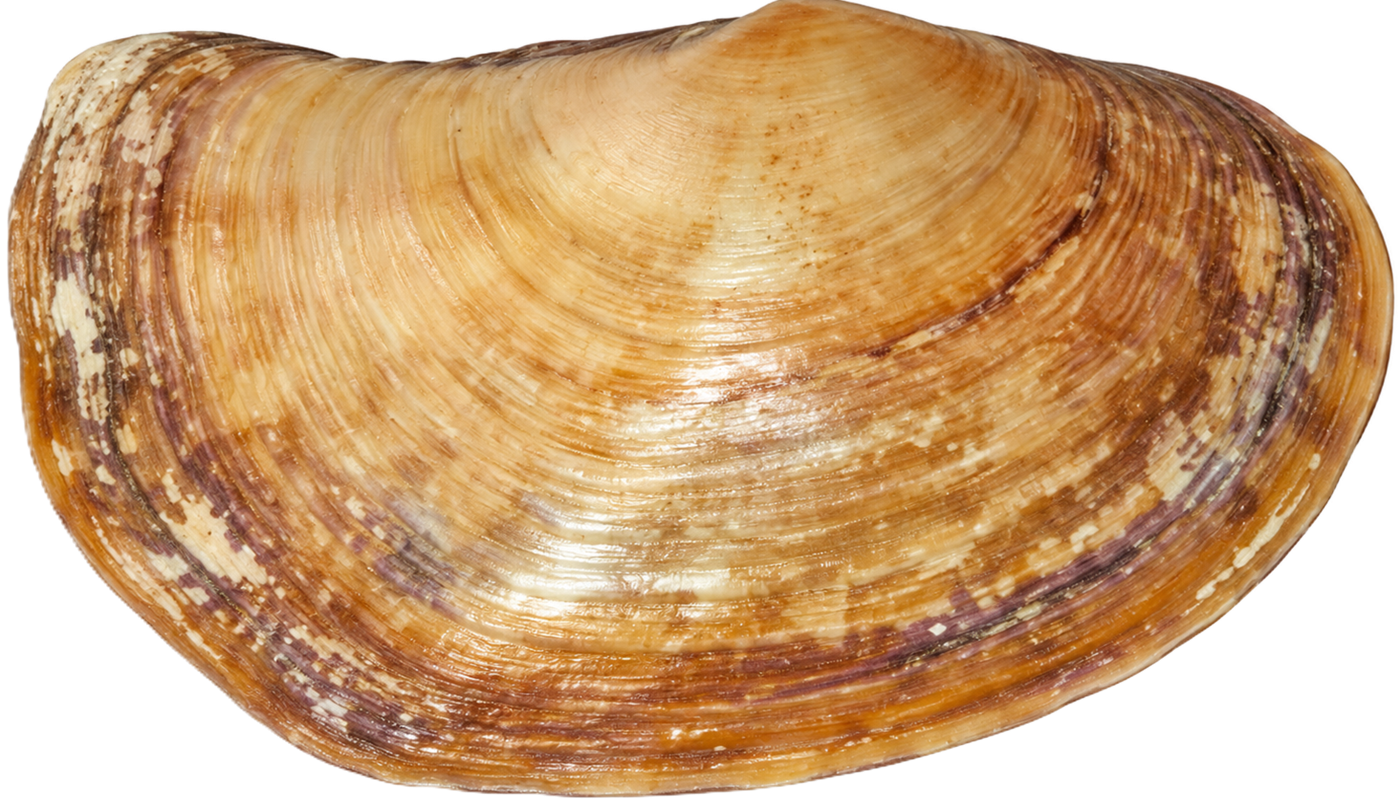 Perissonata |
P. littlei4015Foster, W. J. et al. (2020). Resilience of marine invertebrate communities during the early Cenozoic hyperthermals. Scientific Reports 10, 2176. Dataset S1. Prairie Bluff Chalk; Dataset-IDs 15682. Quellenbezeichnung: Perrisonota littlei. doi:10.1038/s41598-020-58986-5 P. protexta4016Sohl, N. F. & Koch, C. F. (1983). Upper Cretaceous (Maestrichtian) Mollusca from the Haustator bilira Assemblage Zone in the East Gulf Coastal Plain. U.S. Geological Survey Open-File Report 83-451, 1–239. Owl Creek Formation, Aufsammlungen 45. Perissonata protexta (Conrad), non Gabb. doi:10.3133/ofr834514017Foster, W. J. et al. (2020). Resilience of marine invertebrate communities during the early Cenozoic hyperthermals. Scientific Reports 10, 2176. Dataset S1. Prairie Bluff Chalk; Dataset-IDs 16190, 16398. Quellenbezeichnung: Perrisonota protexta. doi:10.1038/s41598-020-58986-5 P. spp.4018Sohl, N. F. & Koch, C. F. (1984). Upper Cretaceous (Maastrichtian) larger invertebrate fossils from the Haustator bilira assemblage zone in the West Gulf Coastal Plain. U.S. Geological Survey Open-File Report, 84-687, 1–282. doi:10.3133/ofr846874019Foster, W. J. et al. (2020). Resilience of marine invertebrate communities during the early Cenozoic hyperthermals. Scientific Reports 10, 2176. Dataset S1. Prairie Bluff Chalk; Dataset-IDs 16774. Quellenbezeichnung: Perrisonota sp.. doi:10.1038/s41598-020-58986-5 |
Escondido Formation Owl Creek Formation Prairie Bluff Chalk |
USA (Alabama, Mississippi, Texas) | 72–66 Ma | häufig | Malletiidae |
| Perna | P. spp.4020Foster, W. J. et al. (2020). Resilience of marine invertebrate communities during the early Cenozoic hyperthermals. Scientific Reports 10, 2176. Supplementary Data 1 doi:10.1038/s41598-020-58986-5 | Kemp Clay | USA (Texas) | 68–66 Ma | selten | Mytilidae (Miesmuschel) |
| Phacoides | P. ? mattiformis4021Sohl, N. F. & Koch, C. F. (1983). Upper Cretaceous (Maestrichtian) Mollusca from the Haustator bilira Assemblage Zone in the East Gulf Coastal Plain. United States Geological Survey Open-File Report 83–451, 238 S. Loc.10 doi:10.3133/ofr834514022Foster, W. J. et al. (2020). Resilience of marine invertebrate communities during the early Cenozoic hyperthermals. Scientific Reports 10, 2176. Dataset S1. Dataset S1, ID 13007 doi:10.1038/s41598-020-58986-54023Foster, W. J. et al. (2020). Resilience of marine invertebrate communities during the early Cenozoic hyperthermals. Scientific Reports 10, 2176. Dataset S1. Prairie Bluff Chalk; Dataset-IDs 15313, 15496. Quellenbezeichnung: Phacoides mattiformis. doi:10.1038/s41598-020-58986-5 | Prairie Bluff Chalk Ripley Formation |
USA (Alabama, Mississippi) | 72–66 Ma | nicht quantifiziert | Lucinidae (Mondmuschel) |
| Phelopteria | P. linguiformis4024Landman, N. H., Slattery, J. S. & Harries, P. J. (2016): Encrustation of inarticulate brachiopods on scaphitid ammonites and inoceramid bivalves from the Upper Cretaceous U.S. Western Interior. Acta Geologica Polonica 66(4): 645–662. Anhang, Tabelle 1. doi:10.1515/agp-2016-00344025Sava, L. A. (2007): The Molluscan and Brachiopod Fauna of the Late Cretaceous Pierre Shale (Baculites compressus/Baculites cuneatus biozones) near Kremmling, Colorado. M.Sc.-Abschlussarbeit, University of South Florida, Tampa. Tabelle 1 und systematischer Teil, S. 21–52. Originalveröffentlichung4026Brinster, K. F. (1970): Molluscan paleontology of the Pierre Shale (Upper Cretaceous), Bowman County, North Dakota. M.Sc.-Abschlussarbeit, University of North Dakota, Grand Forks. Systematik S. 52–88. Originalveröffentlichung4027Speden, I. G. (1970). The type Fox Hills Formation, Cretaceous (Maestrichtian), South Dakota. Part 2. Systematics of the Bivalvia. Bulletin of the Peabody Museum of Natural History 33: 1–222. S. 71–73. Originalveröffentlichung4028Feldmann, R. M. (1967). Bivalvia and paleoecology of the Fox Hills Formation (Upper Cretaceous) of North Dakota. Dissertation, University of North Dakota, Grand Forks. Tabelle 2, S. 105–107; systematischer Teil. Originalveröffentlichung4029Foster, W. J. et al. (2020). Resilience of marine invertebrate communities during the early Cenozoic hyperthermals. Scientific Reports 10, 2176. Dataset S1, Formation Owl Creek; Datensatz-IDs 13661. doi:10.1038/s41598-020-58986-54030Sohl, N. F. & Koch, C. F. (1983). Upper Cretaceous (Maestrichtian) Mollusca from the Haustator bilira Assemblage Zone in the East Gulf Coastal Plain. U.S. Geological Survey Open-File Report 83-451, 1–239. Owl Creek Formation, Aufsammlungen 45. doi:10.3133/ofr83451 | Fox Hills Formation Owl Creek Formation Pierre Shale |
USA (Colorado, Mississippi, Montana, North Dakota, South Dakota) | 74–66 Ma | sehr häufig | Bakevelliidae; P. linguiformis: auch als P. linguaeformis geführt |
|
Pholadidae indet. (?)4031Sohl, N. F. & Koch, C. F. (1984). Upper Cretaceous (Maastrichtian) larger invertebrate fossils from the Haustator bilira assemblage zone in the West Gulf Coastal Plain. U.S. Geological Survey Open-File Report, 84-687, 1–282. doi:10.3133/ofr84687 | Escondido Formation | USA (Texas) | 72–66 Ma | selten | unbestimmte Bohrmuscheln |
| Pholadidea | P. spp.4032Stephenson, L. W. (1941). The larger invertebrate fossils of the Navarro group of Texas (exclusive of corals and crustaceans and exclusive of the fauna of the Escondido formation). University of Texas Publication 4101, 1–641 | Kemp Clay | USA (Texas) | 68–66 Ma | selten | Pholadidae (Bohrmuschel) |
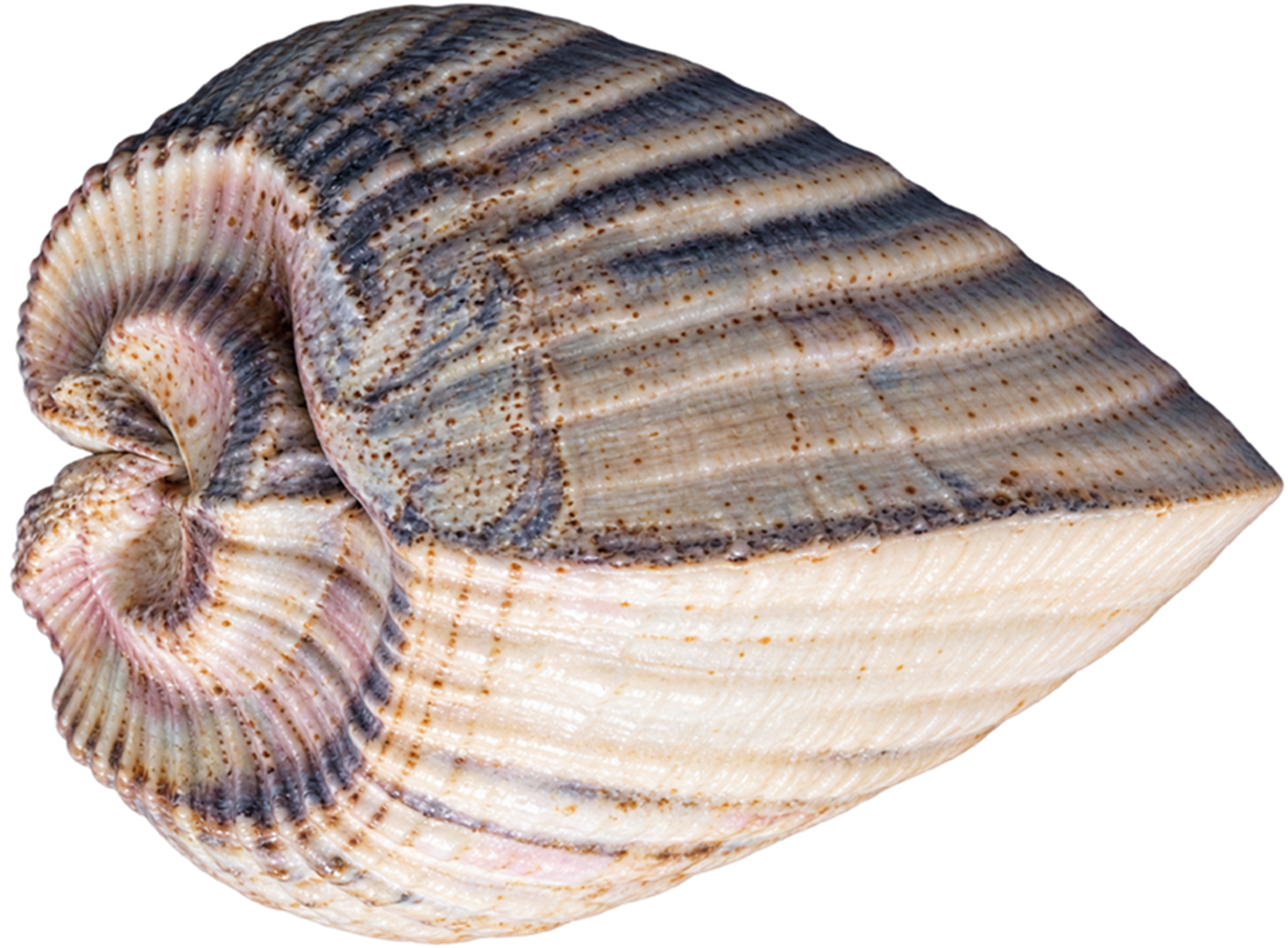 Pholadomya |
P. coahuilensis4033Vega-Vera, F.J. & Perrilliat Montoya, M. del C. (1990): Moluscos del Maastrichtiano de la sierra El Antrisco, Estado de Nuevo León. Paleontología Mexicana 55: 1–69. doi:10.22201/igl.05437652e.1990.0.55.337 P. conradi4034Bandel, K. & Dockery, D. T. III (2016). Mollusca of the Coon Creek Formation in Tennessee and Mississippi with a systematic discussion of the Gastropoda. Bulletin of the Alabama Museum of Natural History 33(1), 34–96. Muschelliste S. 90–92. 105 Originalpublikation4035Wade, B. (1926). The fauna of the Ripley Formation on Coon Creek, Tennessee. United States Geological Survey Professional Paper 137, 1–272. Ripley-Vorkommensindex PBDB, Literatur 7434. doi:10.3133/pp137 P. deweyensis4036Landman, N. H., Slattery, J. S. & Harries, P. J. (2016): Encrustation of inarticulate brachiopods on scaphitid ammonites and inoceramid bivalves from the Upper Cretaceous U.S. Western Interior. Acta Geologica Polonica 66(4): 645–662. Anhang, Tabelle 1. doi:10.1515/agp-2016-00344037Speden, I. G. (1970). The type Fox Hills Formation, Cretaceous (Maestrichtian), South Dakota. Part 2. Systematics of the Bivalvia. Bulletin of the Peabody Museum of Natural History 33: 1–222. S. 151–152. Originalveröffentlichung P. occidentalis4038Vega-Vera, F.J. & Perrilliat Montoya, M. del C. (1990): Moluscos del Maastrichtiano de la sierra El Antrisco, Estado de Nuevo León. Paleontología Mexicana 55: 1–69. doi:10.22201/igl.05437652e.1990.0.55.3374039Vega, F. J., Feldmann, R. M. & Sour-Tovar, F. (1995). Fossil crabs (Crustacea: Decapoda) from the Late Cretaceous Cárdenas Formation, east-central Mexico. Journal of Paleontology, 69(2), 340–350. doi:10.1017/S00223360000346614040Sohl, N. F. & Koch, C. F. (1984). Upper Cretaceous (Maastrichtian) larger invertebrate fossils from the Haustator bilira assemblage zone in the West Gulf Coastal Plain. U.S. Geological Survey Open-File Report, 84-687, 1–282. doi:10.3133/ofr846874041Bandel, K. & Dockery, D. T. III (2016). Mollusca of the Coon Creek Formation in Tennessee and Mississippi with a systematic discussion of the Gastropoda. Bulletin of the Alabama Museum of Natural History 33(1), 34–96. Muschelliste S. 90–92. 104 Originalpublikation4042Veatch, O. & Stephenson, L. W. (1911). Preliminary report on the geology of the coastal plain of Georgia. Geological Survey of Georgia Bulletin 26, 1–466. S. 176–177, Eufaula-Liste. Originalpublikation4043Crider, A. F. (1906). Geology and mineral resources of Mississippi. United States Geological Survey Bulletin 283, 1–99. S. 21, Ripley-Fossilien aus Tippah County. doi:10.3133/b2834044Wade, B. (1926). The fauna of the Ripley Formation on Coon Creek, Tennessee. United States Geological Survey Professional Paper 137, 1–272. Ripley-Vorkommensindex PBDB, Literatur 7434. doi:10.3133/pp1374045Foster, W. J. et al. (2020). Resilience of marine invertebrate communities during the early Cenozoic hyperthermals. Scientific Reports 10, 2176. Dataset S1, Formation Owl Creek; Datensatz-IDs 13593, 13662, 13789, 23837. doi:10.1038/s41598-020-58986-54046Sohl, N. F. & Koch, C. F. (1983). Upper Cretaceous (Maestrichtian) Mollusca from the Haustator bilira Assemblage Zone in the East Gulf Coastal Plain. U.S. Geological Survey Open-File Report 83-451, 1–239. Owl Creek Formation, Aufsammlungen 44, 45, 46. doi:10.3133/ofr834514047Foster, W. J. et al. (2020). Resilience of marine invertebrate communities during the early Cenozoic hyperthermals. Scientific Reports 10, 2176. Dataset S1. Prairie Bluff Chalk; Dataset-IDs 15974, 16557, 16775. Quellenbezeichnung: Pholadomya occidentalis. doi:10.1038/s41598-020-58986-5 P. tippana4048Vega, F.J., Feldmann, R.M. & Sour-Tovar, F. (1995): Fossil crabs (Crustacea: Decapoda) from the Late Cretaceous Cárdenas Formation, east-central Mexico. Journal of Paleontology 69(2): 340–350. Volltext4049Stephenson, L. W. (1955). Owl Creek (Upper Cretaceous) fossils from Crowleys Ridge, southeastern Missouri. U.S. Geological Survey Professional Paper 274-E, 97–140. Owl Creek Formation, Missouri; Verbreitungstabelle S. 104–105. doi:10.3133/pp274E4050Witts, J. D. et al. (2018). A fossiliferous spherule-rich bed at the Cretaceous–Paleogene (K–Pg) boundary in Mississippi, USA: Implications for the K–Pg mass extinction event in the Mississippi Embayment and Eastern Gulf Coastal Plain. Cretaceous Research 91, 147–167. Anhang 1, nur Owl-Creek-Spalten, Zeilen 39. doi:10.1016/j.cretres.2018.06.0024051Bryan, J. R. & Jones, D. S. (1989). Fabric of the Cretaceous-Tertiary marine macrofaunal transition at Braggs, Alabama. Palaeogeography, Palaeoclimatology, Palaeoecology 69, 279–301. Appendix I, S. 296, Prairie-Bluff-Spalten L, M, U. Quellenbezeichnung: Pholadomya tippana. doi:10.1016/0031-0182(89)90170-3 P. spp.4052Vega, F. J., Feldmann, R. M. & Sour-Tovar, F. (1995). Fossil crabs (Crustacea: Decapoda) from the Late Cretaceous Cárdenas Formation, east-central Mexico. Journal of Paleontology, 69(2), 340–350. doi:10.1017/S00223360000346614053Sohl, N. F. & Koch, C. F. (1984). Upper Cretaceous (Maastrichtian) larger invertebrate fossils from the Haustator bilira assemblage zone in the West Gulf Coastal Plain. U.S. Geological Survey Open-File Report, 84-687, 1–282. doi:10.3133/ofr846874054Foster, W. J. et al. (2020). Resilience of marine invertebrate communities during the early Cenozoic hyperthermals. Scientific Reports 10, 2176. Supplementary Data 1 doi:10.1038/s41598-020-58986-54055Stephenson, L. W. (1941). The larger invertebrate fossils of the Navarro group of Texas (exclusive of corals and crustaceans and exclusive of the fauna of the Escondido formation). University of Texas Publication 4101, 1–6414056Vega-Vera, F.J. & Perrilliat Montoya, M. del C. (1990): Moluscos del Maastrichtiano de la sierra El Antrisco, Estado de Nuevo León. Paleontología Mexicana 55: 1–69. doi:10.22201/igl.05437652e.1990.0.55.3374057Foster, W. J. et al. (2020). Resilience of marine invertebrate communities during the early Cenozoic hyperthermals. Scientific Reports 10, 2176. Dataset S1, Formation Owl Creek; Datensatz-IDs 11713, 13790. doi:10.1038/s41598-020-58986-54058Sohl, N. F. & Koch, C. F. (1983). Upper Cretaceous (Maestrichtian) Mollusca from the Haustator bilira Assemblage Zone in the East Gulf Coastal Plain. U.S. Geological Survey Open-File Report 83-451, 1–239. Owl Creek Formation, Aufsammlungen 46. doi:10.3133/ofr834514059Foster, W. J. et al. (2020). Resilience of marine invertebrate communities during the early Cenozoic hyperthermals. Scientific Reports 10, 2176. Dataset S1. Prairie Bluff Chalk; Dataset-IDs 16355, 16429, 16594. Quellenbezeichnung: Pholadomya sp.. doi:10.1038/s41598-020-58986-5 |
Cárdenas Formation Escondido Formation Fox Hills Formation Kemp Clay Owl Creek Formation Pierre Shale Potrerillos Formation Prairie Bluff Chalk Ripley Formation |
USA (Alabama, Mississippi, Missouri, Montana, South Dakota, Tennessee, Texas); Mexiko (Nuevo León, San Luis Potosí) | 72–66 Ma (Gattung 237 Ma bis heute) | sehr häufig | Pholadomyidae |
| Pholas | P. cithara4060Crider, A. F. (1906). Geology and mineral resources of Mississippi. United States Geological Survey Bulletin 283, 1–99. S. 21, Ripley-Fossilien aus Tippah County. doi:10.3133/b283 P. pectorosa4061Vega-Vera, F.J. & Perrilliat Montoya, M. del C. (1990): Moluscos del Maastrichtiano de la sierra El Antrisco, Estado de Nuevo León. Paleontología Mexicana 55: 1–69. doi:10.22201/igl.05437652e.1990.0.55.337 |
Potrerillos Formation Ripley Formation |
USA (Mississippi); Mexiko (Nuevo León) | 72–66 Ma (Maastrichtium) | nicht quantifiziert | (Muschel) |
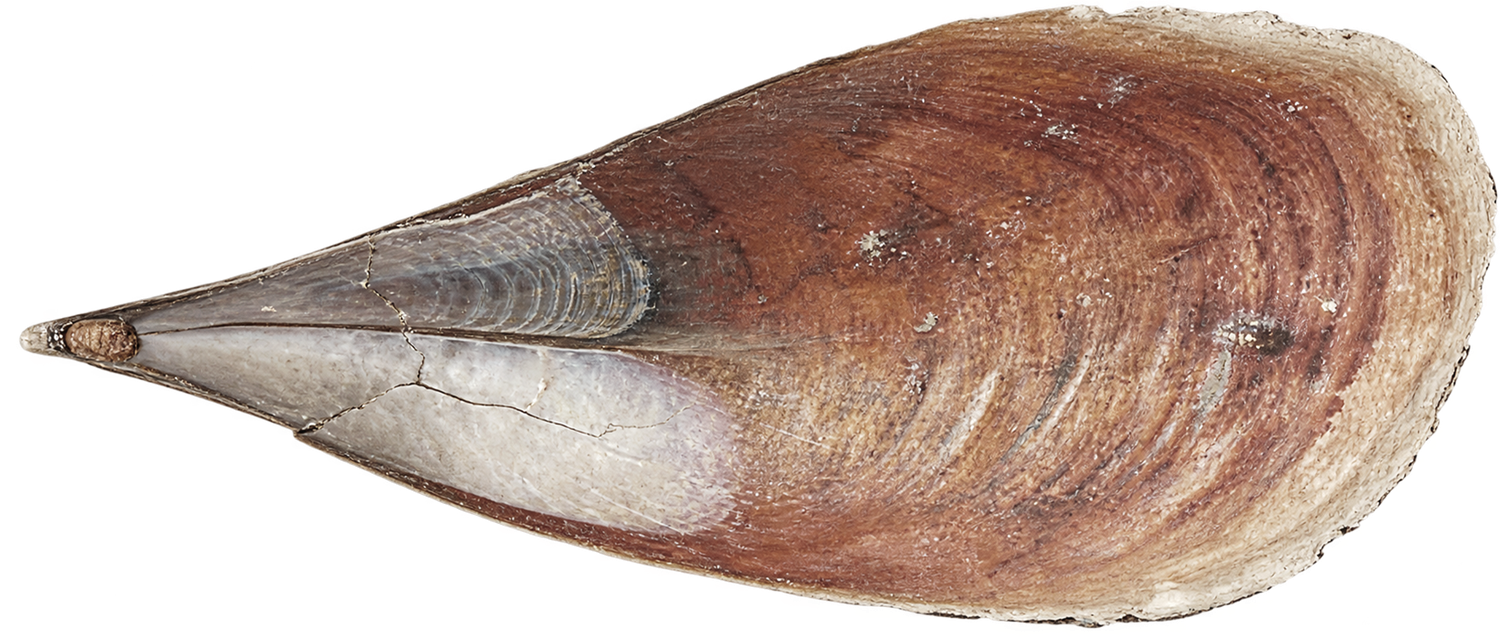 Pinna |
P. laqueata4062Vega, F.J., Feldmann, R.M. & Sour-Tovar, F. (1995): Fossil crabs (Crustacea: Decapoda) from the Late Cretaceous Cárdenas Formation, east-central Mexico. Journal of Paleontology 69(2): 340–350. Volltext4063Vega, F. J., Feldmann, R. M. & Sour-Tovar, F. (1995). Fossil crabs (Crustacea: Decapoda) from the Late Cretaceous Cárdenas Formation, east-central Mexico. Journal of Paleontology, 69(2), 340–350. doi:10.1017/S00223360000346614064Crider, A. F. (1906). Geology and mineral resources of Mississippi. United States Geological Survey Bulletin 283, 1–99. S. 21, Ripley-Fossilien aus Tippah County. doi:10.3133/b2834065Sohl, N. F. & Koch, C. F. (1983). Upper Cretaceous (Maestrichtian) Mollusca from the Haustator bilira Assemblage Zone in the East Gulf Coastal Plain. United States Geological Survey Open-File Report 83–451, 238 S. Loc.8 doi:10.3133/ofr834514066Foster, W. J. et al. (2020). Resilience of marine invertebrate communities during the early Cenozoic hyperthermals. Scientific Reports 10, 2176. Dataset S1. Dataset S1, ID 23940; Dataset S1, ID 12909; Dataset S1, ID 12929 doi:10.1038/s41598-020-58986-54067Vega-Vera, F.J. & Perrilliat Montoya, M. del C. (1990): Moluscos del Maastrichtiano de la sierra El Antrisco, Estado de Nuevo León. Paleontología Mexicana 55: 1–69. doi:10.22201/igl.05437652e.1990.0.55.3374068Foster, W. J. et al. (2020). Resilience of marine invertebrate communities during the early Cenozoic hyperthermals. Scientific Reports 10, 2176. Dataset S1, Formation Owl Creek; Datensatz-IDs 13550, 13594, 13663, 13792, 13882, 23794. doi:10.1038/s41598-020-58986-54069Stephenson, L. W. (1955). Owl Creek (Upper Cretaceous) fossils from Crowleys Ridge, southeastern Missouri. U.S. Geological Survey Professional Paper 274-E, 97–140. Owl Creek Formation, Missouri; Verbreitungstabelle S. 104–105. doi:10.3133/pp274E4070Sohl, N. F. & Koch, C. F. (1983). Upper Cretaceous (Maestrichtian) Mollusca from the Haustator bilira Assemblage Zone in the East Gulf Coastal Plain. U.S. Geological Survey Open-File Report 83-451, 1–239. Owl Creek Formation, Aufsammlungen 43, 44, 45, 46, 50. doi:10.3133/ofr834514071Witts, J. D. et al. (2018). A fossiliferous spherule-rich bed at the Cretaceous–Paleogene (K–Pg) boundary in Mississippi, USA: Implications for the K–Pg mass extinction event in the Mississippi Embayment and Eastern Gulf Coastal Plain. Cretaceous Research 91, 147–167. Anhang 1, nur Owl-Creek-Spalten, Zeilen 40. doi:10.1016/j.cretres.2018.06.0024072Foster, W. J. et al. (2020). Resilience of marine invertebrate communities during the early Cenozoic hyperthermals. Scientific Reports 10, 2176. Dataset S1. Prairie Bluff Chalk; Dataset-IDs 13912, 13995, 14094, 14170, 14686, 16776. Quellenbezeichnung: Pinna laqueata. doi:10.1038/s41598-020-58986-54073Bryan, J. R. & Jones, D. S. (1989). Fabric of the Cretaceous-Tertiary marine macrofaunal transition at Braggs, Alabama. Palaeogeography, Palaeoclimatology, Palaeoecology 69, 279–301. Appendix I, S. 295, Prairie-Bluff-Spalten U. Quellenbezeichnung: Pinna (Pinna) laqueata*. doi:10.1016/0031-0182(89)90170-3 P. cf. laqueata4074Farke, A. A. & Phillips, G. (2017). The first reported ceratopsid dinosaur from eastern North America (Owl Creek Formation, Upper Cretaceous, Mississippi, USA). PeerJ 5, e3342. Tabelle 1, Owl Creek Formation, Union County, Mississippi; MMNS MS.73.001b. doi:10.7717/peerj.3342 P. spp.4075Foster, W. J. et al. (2020). Resilience of marine invertebrate communities during the early Cenozoic hyperthermals. Scientific Reports 10, 2176. Supplementary Data 1 doi:10.1038/s41598-020-58986-54076Foster, W. J. et al. (2020). Resilience of marine invertebrate communities during the early Cenozoic hyperthermals. Scientific Reports 10, 2176. Dataset S1. Dataset S1, ID 23939 doi:10.1038/s41598-020-58986-54077Foster, W. J. et al. (2020). Resilience of marine invertebrate communities during the early Cenozoic hyperthermals. Scientific Reports 10, 2176. Dataset S1, Formation Owl Creek; Datensatz-IDs 23917. doi:10.1038/s41598-020-58986-54078Foster, W. J. et al. (2020). Resilience of marine invertebrate communities during the early Cenozoic hyperthermals. Scientific Reports 10, 2176. Dataset S1. Prairie Bluff Chalk; Dataset-IDs 15497, 15683, 16192, 16281, 16595, 16697. Quellenbezeichnung: Pinna sp.. doi:10.1038/s41598-020-58986-54079Bryan, J. R. & Jones, D. S. (1989). Fabric of the Cretaceous-Tertiary marine macrofaunal transition at Braggs, Alabama. Palaeogeography, Palaeoclimatology, Palaeoecology 69, 279–301. Appendix I, S. 295, Prairie-Bluff-Spalten L, U. Quellenbezeichnung: Pinna sp. doi:10.1016/0031-0182(89)90170-3 |
Cárdenas Formation Escondido Formation (?) Kemp Clay Owl Creek Formation Potrerillos Formation Prairie Bluff Chalk Ripley Formation |
USA (Alabama, Mississippi, Missouri, Tennessee, Texas); Mexiko (Nuevo León) | 72–66 Ma (Gattung 359 Ma bis heute); Potrerillos: Maastrichtium (72–66 Ma) | sehr häufig | Pinnidae (Steckmuschel) |
| Pitar | P. spp.4080Foster, W. J. et al. (2020). Resilience of marine invertebrate communities during the early Cenozoic hyperthermals. Scientific Reports 10, 2176. Dataset S1. Dataset S1, ID 24104; Dataset S1, ID 24105 doi:10.1038/s41598-020-58986-5 | Ripley Formation | USA (Tennessee) | 72–66 Ma | nicht quantifiziert | Veneridae (Venusmuschel) |
| Platyceramus | P. balchii4081Sealey, P. L., Berry, K. & Lucas, S. G. (2019): The Campanian-Maastrichtian baculite zonal sequence in the Pierre Shale, Berwind Canyon, Las Animas County, Colorado. New Mexico Geological Society Guidebook 70: 81–88. Tabelle 1, Baculites clinolobatus-Zone. doi:10.56577/FFC-70.81 P. stephensoni4082Sealey, P. L., Berry, K. & Lucas, S. G. (2019): The Campanian-Maastrichtian baculite zonal sequence in the Pierre Shale, Berwind Canyon, Las Animas County, Colorado. New Mexico Geological Society Guidebook 70: 81–88. Tabelle 1, Baculites clinolobatus-Zone. doi:10.56577/FFC-70.81 |
Pierre Shale | USA (Colorado) | 70–69 Ma | selten | Inoceramidae |
| Plectomya | P. spp.4083Foster, W. J. et al. (2020). Resilience of marine invertebrate communities during the early Cenozoic hyperthermals. Scientific Reports 10, 2176. Dataset S1, Formation Owl Creek; Datensatz-IDs 13793. doi:10.1038/s41598-020-58986-54084Sohl, N. F. & Koch, C. F. (1983). Upper Cretaceous (Maestrichtian) Mollusca from the Haustator bilira Assemblage Zone in the East Gulf Coastal Plain. U.S. Geological Survey Open-File Report 83-451, 1–239. Owl Creek Formation, Aufsammlungen 46. doi:10.3133/ofr834514085Foster, W. J. et al. (2020). Resilience of marine invertebrate communities during the early Cenozoic hyperthermals. Scientific Reports 10, 2176. Dataset S1. Prairie Bluff Chalk; Dataset-IDs 13996, 14171, 14390. Quellenbezeichnung: Plectomya sp.. doi:10.1038/s41598-020-58986-5 | Owl Creek Formation Prairie Bluff Chalk |
USA (Mississippi) | 69–66 Ma | nicht quantifiziert | Laternulidae (Muschel) |
| Pleuriocardia | P. spp.4086Ifrim, C., Stinnesbeck, W. & López-Oliva, J. G. (2004). Maastrichtian cephalopods from Cerralvo, north-eastern Mexico. Palaeontology 47(6), 1575–1627. doi:10.1111/j.0031-0239.2004.00426.x | Méndez Formation | Mexiko (Nuevo León) | 71–69 Ma | selten | Cardiidae (Herzmuschel) |
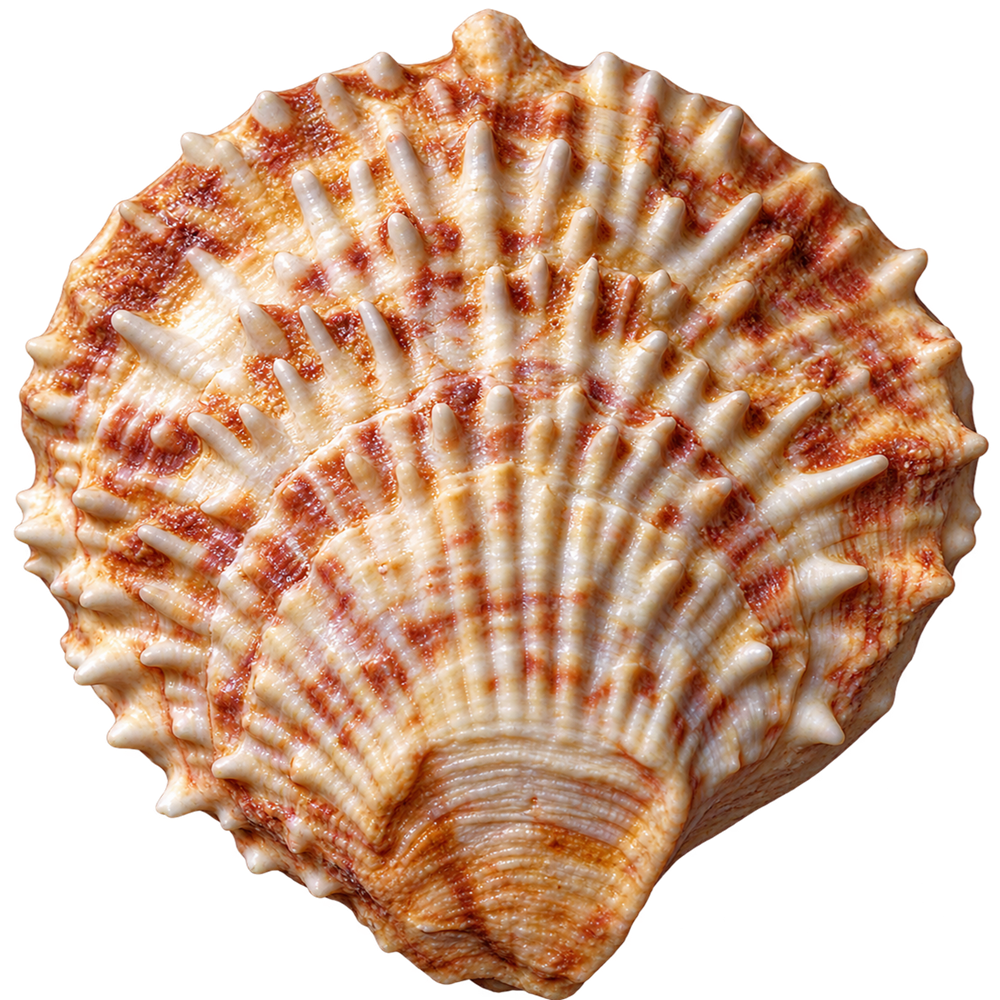 Plicatula |
P. mullicaensis4087Stephenson, L. W. (1941). The larger invertebrate fossils of the Navarro Group of Texas (exclusive of corals and crustaceans and exclusive of the fauna of the Escondido Formation). The University of Texas Publication, 4101, 1–6414088Foster, W. J. et al. (2020). Resilience of marine invertebrate communities during the early Cenozoic hyperthermals. Scientific Reports 10, 2176. Dataset S1. Prairie Bluff Chalk; Dataset-IDs 14066, 14220, 14465, 14507, 14548, 14649, 14710, 14831, 14867, 14904, 14925, 14969, 15030, 15071, 15171, 15241, 15257, 15391, 15459, 15498, 15531, 15685, 15756, 15814, 15829, 15877, 15918, 16469, 16497, 16559, 16698, 16778. Quellenbezeichnung: Plicatula mullicaensis. doi:10.1038/s41598-020-58986-5 P. tetrica4089Stephenson, L. W. (1941). The larger invertebrate fossils of the Navarro Group of Texas (exclusive of corals and crustaceans and exclusive of the fauna of the Escondido Formation). The University of Texas Publication, 4101, 1–6414090Sohl, N. F. & Koch, C. F. (1983). Upper Cretaceous (Maestrichtian) Mollusca from the Haustator bilira Assemblage Zone in the East Gulf Coastal Plain. United States Geological Survey Open-File Report 83–451, 238 S. Loc.37 doi:10.3133/ofr834514091Foster, W. J. et al. (2020). Resilience of marine invertebrate communities during the early Cenozoic hyperthermals. Scientific Reports 10, 2176. Dataset S1. Dataset S1, ID 13454 doi:10.1038/s41598-020-58986-54092Foster, W. J. et al. (2020). Resilience of marine invertebrate communities during the early Cenozoic hyperthermals. Scientific Reports 10, 2176. Dataset S1, Formation Owl Creek; Datensatz-IDs 13551. doi:10.1038/s41598-020-58986-54093Sohl, N. F. & Koch, C. F. (1983). Upper Cretaceous (Maestrichtian) Mollusca from the Haustator bilira Assemblage Zone in the East Gulf Coastal Plain. U.S. Geological Survey Open-File Report 83-451, 1–239. Owl Creek Formation, Aufsammlungen 43. doi:10.3133/ofr834514094Foster, W. J. et al. (2020). Resilience of marine invertebrate communities during the early Cenozoic hyperthermals. Scientific Reports 10, 2176. Dataset S1. Prairie Bluff Chalk; Dataset-IDs 13945, 13997, 14172, 14409, 14466, 15072, 15499, 15878, 16072, 16098, 16139, 16193, 16320, 16339, 16356, 16399, 16777. Quellenbezeichnung: Plicatula tetrica. doi:10.1038/s41598-020-58986-54095Bryan, J. R. & Jones, D. S. (1989). Fabric of the Cretaceous-Tertiary marine macrofaunal transition at Braggs, Alabama. Palaeogeography, Palaeoclimatology, Palaeoecology 69, 279–301. Appendix I, S. 295, Prairie-Bluff-Spalten L. Quellenbezeichnung: Plicatula tetrica. doi:10.1016/0031-0182(89)90170-3 P. spp.4096Stephenson, L. W. (1941). The larger invertebrate fossils of the Navarro Group of Texas (exclusive of corals and crustaceans and exclusive of the fauna of the Escondido Formation). The University of Texas Publication, 4101, 1–6414097Sohl, N. F. & Koch, C. F. (1984). Upper Cretaceous (Maastrichtian) larger invertebrate fossils from the Haustator bilira assemblage zone in the West Gulf Coastal Plain. U.S. Geological Survey Open-File Report, 84-687, 1–282. doi:10.3133/ofr846874098Stephenson, L. W. (1941). The larger invertebrate fossils of the Navarro group of Texas (exclusive of corals and crustaceans and exclusive of the fauna of the Escondido formation). University of Texas Publication 4101, 1–6414099Bryan, J. R. & Jones, D. S. (1989). Fabric of the Cretaceous-Tertiary marine macrofaunal transition at Braggs, Alabama. Palaeogeography, Palaeoclimatology, Palaeoecology 69, 279–301. Appendix I, S. 295–296, Spalte Ripley. Appendix I, S.295–296 doi:10.1016/0031-0182(89)90170-34100Foster, W. J. et al. (2020). Resilience of marine invertebrate communities during the early Cenozoic hyperthermals. Scientific Reports 10, 2176. Dataset S1. Prairie Bluff Chalk; Dataset-IDs 14687, 14832, 14869, 15149, 15211, 15315, 15460, 15530, 15684, 15758, 16470, 16558. Quellenbezeichnung: Plicatula sp.. doi:10.1038/s41598-020-58986-54101Bryan, J. R. & Jones, D. S. (1989). Fabric of the Cretaceous-Tertiary marine macrofaunal transition at Braggs, Alabama. Palaeogeography, Palaeoclimatology, Palaeoecology 69, 279–301. Appendix I, S. 295, Prairie-Bluff-Spalten U. Quellenbezeichnung: Plicatula sp.*. doi:10.1016/0031-0182(89)90170-3 |
Corsicana Marl Escondido Formation Kemp Clay Owl Creek Formation Prairie Bluff Chalk Ripley Formation |
USA (Alabama, Mississippi, Texas) | 72–66 Ma (Gattung 241 Ma bis heute) | sehr häufig | Plicatulidae (Faltenmuschel) |
| Poromya | P. spp.4102Foster, W. J. et al. (2020). Resilience of marine invertebrate communities during the early Cenozoic hyperthermals. Scientific Reports 10, 2176. Supplementary Data 1 doi:10.1038/s41598-020-58986-5 | Kemp Clay | USA (Texas) | 68–66 Ma | selten | Poromyidae |
 Postligata |
P. crenata4103Bandel, K. & Dockery, D. T. III (2016). Mollusca of the Coon Creek Formation in Tennessee and Mississippi with a systematic discussion of the Gastropoda. Bulletin of the Alabama Museum of Natural History 33(1), 34–96. Muschelliste S. 90–92. 24 Originalpublikation4104Foster, W. J. et al. (2020). Resilience of marine invertebrate communities during the early Cenozoic hyperthermals. Scientific Reports 10, 2176. Dataset S1. Dataset S1, ID 23934 doi:10.1038/s41598-020-58986-54105Wade, B. (1926). The fauna of the Ripley Formation on Coon Creek, Tennessee. United States Geological Survey Professional Paper 137, 1–272. Ripley-Vorkommensindex PBDB, Literatur 7434. doi:10.3133/pp137 P. wordeni4106Sohl, N. F. & Koch, C. F. (1983). Upper Cretaceous (Maestrichtian) Mollusca from the Haustator bilira Assemblage Zone in the East Gulf Coastal Plain. United States Geological Survey Open-File Report 83–451, 238 S. Loc.10; Loc.11 doi:10.3133/ofr834514107Foster, W. J. et al. (2020). Resilience of marine invertebrate communities during the early Cenozoic hyperthermals. Scientific Reports 10, 2176. Dataset S1. Dataset S1, ID 13009; Dataset S1, ID 13044; Dataset S1, ID 13137 doi:10.1038/s41598-020-58986-54108Foster, W. J. et al. (2020). Resilience of marine invertebrate communities during the early Cenozoic hyperthermals. Scientific Reports 10, 2176. Dataset S1, Formation Owl Creek; Datensatz-IDs 13595, 13664, 13795, 13854, 23775. doi:10.1038/s41598-020-58986-54109Sohl, N. F. & Koch, C. F. (1983). Upper Cretaceous (Maestrichtian) Mollusca from the Haustator bilira Assemblage Zone in the East Gulf Coastal Plain. U.S. Geological Survey Open-File Report 83-451, 1–239. Owl Creek Formation, Aufsammlungen 40, 44, 45, 46, 47. Aufsammlung 40: umgelagert. doi:10.3133/ofr834514110Foster, W. J. et al. (2020). Resilience of marine invertebrate communities during the early Cenozoic hyperthermals. Scientific Reports 10, 2176. Dataset S1. Prairie Bluff Chalk; Dataset-IDs 16779. Quellenbezeichnung: Postligata wordeni. doi:10.1038/s41598-020-58986-5 P. spp.4111Sohl, N. F. & Koch, C. F. (1984). Upper Cretaceous (Maastrichtian) larger invertebrate fossils from the Haustator bilira assemblage zone in the West Gulf Coastal Plain. U.S. Geological Survey Open-File Report, 84-687, 1–282. doi:10.3133/ofr84687 |
Escondido Formation Owl Creek Formation Prairie Bluff Chalk Ripley Formation |
USA (Alabama, Mississippi, Tennessee, Texas) | 72–66 Ma | sehr häufig | Glycymerididae (Samtmuschel) |
 Praebarrettia |
P. armini4112Pons, J. M., García-Barrera, P., Oviedo, A. & Vicens, E. (2021). Mexican Upper Cretaceous rudists (Hippuritida, Bivalvia): Taxonomic, stratigraphic, and geologic data. Journal of South American Earth Sciences, 109, 103237. doi:10.1016/j.jsames.2021.103237 | Cárdenas Formation | Mexiko (San Luis Potosí) | 72–68 Ma (Gattung bis 66 Ma) | selten | Hippuritidae (Rudist) |
| Protocardia | P. parahillana4113Bandel, K. & Dockery, D. T. III (2016). Mollusca of the Coon Creek Formation in Tennessee and Mississippi with a systematic discussion of the Gastropoda. Bulletin of the Alabama Museum of Natural History 33(1), 34–96. Muschelliste S. 90–92. 70 Originalpublikation4114Foster, W. J. et al. (2020). Resilience of marine invertebrate communities during the early Cenozoic hyperthermals. Scientific Reports 10, 2176. Dataset S1. Dataset S1, ID 23954 doi:10.1038/s41598-020-58986-54115Wade, B. (1926). The fauna of the Ripley Formation on Coon Creek, Tennessee. United States Geological Survey Professional Paper 137, 1–272. Ripley-Vorkommensindex PBDB, Literatur 7434. doi:10.3133/pp137 P. spillmani4116Veatch, O. & Stephenson, L. W. (1911). Preliminary report on the geology of the coastal plain of Georgia. Geological Survey of Georgia Bulletin 26, 1–466. S. 176–177, Eufaula-Liste. Originalpublikation4117Sohl, N. F. (1960). Archeogastropoda, Mesogastropoda, and stratigraphy of the Ripley, Owl Creek, and Prairie Bluff formations. United States Geological Survey Professional Paper 331-A, 1–151. Ripley-Vorkommensindex PBDB, Literatur 463. doi:10.3133/pp331A4118Crider, A. F. (1906). Geology and mineral resources of Mississippi. United States Geological Survey Bulletin 283, 1–99. S. 21, Ripley-Fossilien aus Tippah County. doi:10.3133/b2834119Sohl, N. F. & Koch, C. F. (1983). Upper Cretaceous (Maestrichtian) Mollusca from the Haustator bilira Assemblage Zone in the East Gulf Coastal Plain. United States Geological Survey Open-File Report 83–451, 238 S. Loc.9; Loc.32; Loc.220 doi:10.3133/ofr834514120Bryan, J. R. & Jones, D. S. (1989). Fabric of the Cretaceous-Tertiary marine macrofaunal transition at Braggs, Alabama. Palaeogeography, Palaeoclimatology, Palaeoecology 69, 279–301. Appendix I, S. 295–296, Spalte Ripley. Appendix I, S.295–296 doi:10.1016/0031-0182(89)90170-34121Foster, W. J. et al. (2020). Resilience of marine invertebrate communities during the early Cenozoic hyperthermals. Scientific Reports 10, 2176. Dataset S1. Dataset S1, ID 13096; Dataset S1, ID 13138; Dataset S1, ID 13334; Dataset S1, ID 13438; Dataset S1, ID 17687 doi:10.1038/s41598-020-58986-54122Foster, W. J. et al. (2020). Resilience of marine invertebrate communities during the early Cenozoic hyperthermals. Scientific Reports 10, 2176. Dataset S1, Formation Owl Creek; Datensatz-IDs 13552, 13665, 13796, 13870, 23796. doi:10.1038/s41598-020-58986-54123Stephenson, L. W. (1955). Owl Creek (Upper Cretaceous) fossils from Crowleys Ridge, southeastern Missouri. U.S. Geological Survey Professional Paper 274-E, 97–140. Owl Creek Formation, Missouri; Verbreitungstabelle S. 104–105. doi:10.3133/pp274E4124Sohl, N. F. & Koch, C. F. (1983). Upper Cretaceous (Maestrichtian) Mollusca from the Haustator bilira Assemblage Zone in the East Gulf Coastal Plain. U.S. Geological Survey Open-File Report 83-451, 1–239. Owl Creek Formation, Aufsammlungen 43, 45, 46, 48. doi:10.3133/ofr834514125Foster, W. J. et al. (2020). Resilience of marine invertebrate communities during the early Cenozoic hyperthermals. Scientific Reports 10, 2176. Dataset S1. Prairie Bluff Chalk; Dataset-IDs 13946, 13998, 14357, 14508, 14733, 15919. Quellenbezeichnung: Protocardia spillmani. doi:10.1038/s41598-020-58986-5 P. stantoni4126Bandel, K. & Dockery, D. T. III (2016). Mollusca of the Coon Creek Formation in Tennessee and Mississippi with a systematic discussion of the Gastropoda. Bulletin of the Alabama Museum of Natural History 33(1), 34–96. Muschelliste S. 90–92. 69 Originalpublikation4127Foster, W. J. et al. (2020). Resilience of marine invertebrate communities during the early Cenozoic hyperthermals. Scientific Reports 10, 2176. Dataset S1. Dataset S1, ID 23955 doi:10.1038/s41598-020-58986-54128Wade, B. (1926). The fauna of the Ripley Formation on Coon Creek, Tennessee. United States Geological Survey Professional Paper 137, 1–272. Ripley-Vorkommensindex PBDB, Literatur 7434. doi:10.3133/pp137 P. subquadrata4129Gill, J. R. & Cobban, W. A. (1966): The Red Bird section of the Upper Cretaceous Pierre Shale in Wyoming. U.S. Geological Survey Professional Paper 393-A: A1–A73. S. A52, Einheiten 89 und 91. doi:10.3133/pp393A4130Brinster, K. F. (1970): Molluscan paleontology of the Pierre Shale (Upper Cretaceous), Bowman County, North Dakota. M.Sc.-Abschlussarbeit, University of North Dakota, Grand Forks. Systematik S. 52–88. Originalveröffentlichung4131Landman, N. H., Slattery, J. S. & Harries, P. J. (2016): Encrustation of inarticulate brachiopods on scaphitid ammonites and inoceramid bivalves from the Upper Cretaceous U.S. Western Interior. Acta Geologica Polonica 66(4): 645–662. Anhang, Tabelle 1. doi:10.1515/agp-2016-00344132Speden, I. G. (1970). The type Fox Hills Formation, Cretaceous (Maestrichtian), South Dakota. Part 2. Systematics of the Bivalvia. Bulletin of the Peabody Museum of Natural History 33: 1–222. S. 117–122. Originalveröffentlichung4133Feldmann, R. M. (1967). Bivalvia and paleoecology of the Fox Hills Formation (Upper Cretaceous) of North Dakota. Dissertation, University of North Dakota, Grand Forks. Tabelle 2, S. 105–107; systematischer Teil. Originalveröffentlichung P. spp.4134Speden, I. G. (1970). The type Fox Hills Formation, Cretaceous (Maestrichtian), South Dakota. Part 2. Systematics of the Bivalvia. Bulletin of the Peabody Museum of Natural History 33: 1–222. S. 117–122. Originalveröffentlichung4135Foster, W. J. et al. (2020). Resilience of marine invertebrate communities during the early Cenozoic hyperthermals. Scientific Reports 10, 2176. Dataset S1, Formation Owl Creek; Datensatz-IDs 11717. Publiziert als Protocardia sp.. Gattungszuordnung fraglich. doi:10.1038/s41598-020-58986-54136Foster, W. J. et al. (2020). Resilience of marine invertebrate communities during the early Cenozoic hyperthermals. Scientific Reports 10, 2176. Dataset S1. Prairie Bluff Chalk; Dataset-IDs 14621, 14688, 14905, 14970, 15032, 15317, 15431, 15602, 15688, 15760, 15879, 15943, 16430, 16560, 16699, 16780. Quellenbezeichnung: Protocardia sp.. doi:10.1038/s41598-020-58986-54137Bryan, J. R. & Jones, D. S. (1989). Fabric of the Cretaceous-Tertiary marine macrofaunal transition at Braggs, Alabama. Palaeogeography, Palaeoclimatology, Palaeoecology 69, 279–301. Appendix I, S. 296, Prairie-Bluff-Spalten M, U. Quellenbezeichnung: Protocardia (Brevicardium)? sp.*. doi:10.1016/0031-0182(89)90170-3 |
Fox Hills Formation Owl Creek Formation Pierre Shale Prairie Bluff Chalk Ripley Formation |
USA (Alabama, Mississippi, Missouri, Montana, North Dakota, South Dakota, Tennessee, Wyoming) | 72–66 Ma | sehr häufig | Cardiidae; P. subquadrata: synonym zu Cardium rarum / Protocardia rara sensu Speden (1970); historische bzw. alternative Kombinationen: Cardium spillmani |
| Protodonax | P. spp.4138Speden, I. G. (1970). The type Fox Hills Formation, Cretaceous (Maestrichtian), South Dakota. Part 2. Systematics of the Bivalvia. Bulletin of the Peabody Museum of Natural History 33: 1–222. S. 131. Gattungszuordnung bzw. Bestimmung fraglich. Originalveröffentlichung | Fox Hills Formation | USA (South Dakota) | 69–66 Ma | Einzelfund | Donacidae (Keilmuschel) |
| Pseudocardia | P. gregaria4139Bandel, K. & Dockery, D. T. III (2016). Mollusca of the Coon Creek Formation in Tennessee and Mississippi with a systematic discussion of the Gastropoda. Bulletin of the Alabama Museum of Natural History 33(1), 34–96. Muschelliste S. 90–92. 60 Originalpublikation4140Wade, B. (1926). The fauna of the Ripley Formation on Coon Creek, Tennessee. United States Geological Survey Professional Paper 137, 1–272. Ripley-Vorkommensindex PBDB, Literatur 7434. doi:10.3133/pp137 P. subangulata4141Bandel, K. & Dockery, D. T. III (2016). Mollusca of the Coon Creek Formation in Tennessee and Mississippi with a systematic discussion of the Gastropoda. Bulletin of the Alabama Museum of Natural History 33(1), 34–96. Muschelliste S. 90–92. 59 Originalpublikation4142Wade, B. (1926). The fauna of the Ripley Formation on Coon Creek, Tennessee. United States Geological Survey Professional Paper 137, 1–272. Ripley-Vorkommensindex PBDB, Literatur 7434. doi:10.3133/pp137 P. subcircula4143Bandel, K. & Dockery, D. T. III (2016). Mollusca of the Coon Creek Formation in Tennessee and Mississippi with a systematic discussion of the Gastropoda. Bulletin of the Alabama Museum of Natural History 33(1), 34–96. Muschelliste S. 90–92. 61 Originalpublikation4144Wade, B. (1926). The fauna of the Ripley Formation on Coon Creek, Tennessee. United States Geological Survey Professional Paper 137, 1–272. Ripley-Vorkommensindex PBDB, Literatur 7434. doi:10.3133/pp137 |
Ripley Formation | USA (Tennessee) | 72–66 Ma | nicht quantifiziert | Carditidae (Trapezmuschel); historische bzw. alternative Kombinationen: Vetericardia gregaria, Vetericardia subangulata, Vetericardia subcircula |
| Pseudolimea | P. ? reticulata4145Bryan, J. R. & Jones, D. S. (1989). Fabric of the Cretaceous-Tertiary marine macrofaunal transition at Braggs, Alabama. Palaeogeography, Palaeoclimatology, Palaeoecology 69, 279–301. Appendix I, S. 295–296, Spalte Ripley. Appendix I, S.295–296 doi:10.1016/0031-0182(89)90170-34146Bryan, J. R. & Jones, D. S. (1989). Fabric of the Cretaceous-Tertiary marine macrofaunal transition at Braggs, Alabama. Palaeogeography, Palaeoclimatology, Palaeoecology 69, 279–301. Appendix I, S. 295, Prairie-Bluff-Spalten L, M, U. Quellenbezeichnung: Pseudualimea? reticulata. doi:10.1016/0031-0182(89)90170-3 P. reticulata4147Veatch, O. & Stephenson, L. W. (1911). Preliminary report on the geology of the coastal plain of Georgia. Geological Survey of Georgia Bulletin 26, 1–466. S. 176–177, Eufaula-Liste. Originalpublikation4148Crider, A. F. (1906). Geology and mineral resources of Mississippi. United States Geological Survey Bulletin 283, 1–99. S. 21, Ripley-Fossilien aus Tippah County. doi:10.3133/b2834149Sohl, N. F. & Koch, C. F. (1983). Upper Cretaceous (Maestrichtian) Mollusca from the Haustator bilira Assemblage Zone in the East Gulf Coastal Plain. United States Geological Survey Open-File Report 83–451, 238 S. Loc.8; Loc.10; Loc.32; Loc.220 doi:10.3133/ofr834514150Foster, W. J. et al. (2020). Resilience of marine invertebrate communities during the early Cenozoic hyperthermals. Scientific Reports 10, 2176. Dataset S1. Dataset S1, ID 23942; Dataset S1, ID 12910; Dataset S1, ID 12930; Dataset S1, ID 13010; Dataset S1, ID 13097; Dataset S1, ID 13139; Dataset S1, ID 13167; Dataset S1, ID 13193; Dataset S1, ID 13218; Dataset S1, ID 13239; Dataset S1, ID 13310; Dataset S1, ID 13335; Dataset S1, ID 13362; Dataset S1, ID 13379; Dataset S1, ID 13402; Dataset S1, ID 13439; Dataset S1, ID 17688 doi:10.1038/s41598-020-58986-54151Sohl, N. F. (1960). Archeogastropoda, Mesogastropoda, and stratigraphy of the Ripley, Owl Creek, and Prairie Bluff formations. United States Geological Survey Professional Paper 331-A, 1–151. Ripley-Vorkommensindex PBDB, Literatur 463. doi:10.3133/pp331A4152Wade, B. (1926). The fauna of the Ripley Formation on Coon Creek, Tennessee. United States Geological Survey Professional Paper 137, 1–272. Ripley-Vorkommensindex PBDB, Literatur 7434. doi:10.3133/pp1374153Foster, W. J. et al. (2020). Resilience of marine invertebrate communities during the early Cenozoic hyperthermals. Scientific Reports 10, 2176. Dataset S1, Formation Owl Creek; Datensatz-IDs 13518, 13797, 13855, 13883, 13897. doi:10.1038/s41598-020-58986-54154Sohl, N. F. & Koch, C. F. (1983). Upper Cretaceous (Maestrichtian) Mollusca from the Haustator bilira Assemblage Zone in the East Gulf Coastal Plain. U.S. Geological Survey Open-File Report 83-451, 1–239. Owl Creek Formation, Aufsammlungen 42, 46, 47, 50, 51, 52. doi:10.3133/ofr834514155Foster, W. J. et al. (2020). Resilience of marine invertebrate communities during the early Cenozoic hyperthermals. Scientific Reports 10, 2176. Dataset S1. Prairie Bluff Chalk; Dataset-IDs 13999, 14174, 14358, 14589, 14689, 14712, 14734, 14802, 14833, 15033, 15074, 15122, 15151, 15173, 15258, 15318, 15451, 15461, 15761, 15880, 16282, 16308, 16431, 16471, 16561, 16781. Quellenbezeichnung: Pseudolimea reticulata. doi:10.1038/s41598-020-58986-5 P. sellardsi4156Foster, W. J. et al. (2020). Resilience of marine invertebrate communities during the early Cenozoic hyperthermals. Scientific Reports 10, 2176. Dataset S1. Prairie Bluff Chalk; Dataset-IDs 14870, 15034, 16498. Quellenbezeichnung: Pseudolimea sellardsi. doi:10.1038/s41598-020-58986-5 |
Owl Creek Formation Prairie Bluff Chalk Ripley Formation |
USA (Alabama, Mississippi, Tennessee) | 72–66 Ma | sehr häufig | Limidae (Feilenmuschel) |
| Pseudoptera | P. subtortuosa4157Speden, I. G. (1970). The type Fox Hills Formation, Cretaceous (Maestrichtian), South Dakota. Part 2. Systematics of the Bivalvia. Bulletin of the Peabody Museum of Natural History 33: 1–222. S. 66–70. Originalveröffentlichung4158Feldmann, R. M. (1967). Bivalvia and paleoecology of the Fox Hills Formation (Upper Cretaceous) of North Dakota. Dissertation, University of North Dakota, Grand Forks. Tabelle 2, S. 105–107; systematischer Teil. Originalveröffentlichung P. sp.4159Foster, W. J. et al. (2020). Resilience of marine invertebrate communities during the early Cenozoic hyperthermals. Scientific Reports 10, 2176. Dataset S1, Formation Owl Creek; Datensatz-IDs 11718. Publiziert als Pseudoptera sp.. Gattungszuordnung fraglich. doi:10.1038/s41598-020-58986-5 |
Fox Hills Formation Owl Creek Formation |
USA (Mississippi, North Dakota, South Dakota) | 69–66 Ma | sehr häufig | Bakevelliidae; P. subtortuosa: synonym zu Gervillia subtortuosa und Gervillia recta |
 Pteria |
P. percompressa4160Bandel, K. & Dockery, D. T. III (2016). Mollusca of the Coon Creek Formation in Tennessee and Mississippi with a systematic discussion of the Gastropoda. Bulletin of the Alabama Museum of Natural History 33(1), 34–96. Muschelliste S. 90–92. 31 Originalpublikation4161Wade, B. (1926). The fauna of the Ripley Formation on Coon Creek, Tennessee. United States Geological Survey Professional Paper 137, 1–272. Ripley-Vorkommensindex PBDB, Literatur 7434. doi:10.3133/pp137 P. petrosa4162Bandel, K. & Dockery, D. T. III (2016). Mollusca of the Coon Creek Formation in Tennessee and Mississippi with a systematic discussion of the Gastropoda. Bulletin of the Alabama Museum of Natural History 33(1), 34–96. Muschelliste S. 90–92. 30 Originalpublikation4163Wade, B. (1926). The fauna of the Ripley Formation on Coon Creek, Tennessee. United States Geological Survey Professional Paper 137, 1–272. Ripley-Vorkommensindex PBDB, Literatur 7434. doi:10.3133/pp137 P. rhombica4164Sohl, N. F. & Koch, C. F. (1984). Upper Cretaceous (Maastrichtian) larger invertebrate fossils from the Haustator bilira assemblage zone in the West Gulf Coastal Plain. U.S. Geological Survey Open-File Report, 84-687, 1–282. doi:10.3133/ofr846874165Sohl, N. F. & Koch, C. F. (1983). Upper Cretaceous (Maestrichtian) Mollusca from the Haustator bilira Assemblage Zone in the East Gulf Coastal Plain. United States Geological Survey Open-File Report 83–451, 238 S. Loc.10; Loc.32 doi:10.3133/ofr834514166Foster, W. J. et al. (2020). Resilience of marine invertebrate communities during the early Cenozoic hyperthermals. Scientific Reports 10, 2176. Dataset S1. Dataset S1, ID 13012; Dataset S1, ID 13440 doi:10.1038/s41598-020-58986-54167Foster, W. J. et al. (2020). Resilience of marine invertebrate communities during the early Cenozoic hyperthermals. Scientific Reports 10, 2176. Dataset S1. Prairie Bluff Chalk; Dataset-IDs 15975. Quellenbezeichnung: Pteria rhombica. doi:10.1038/s41598-020-58986-5 P. spp.4168Sohl, N. F. & Koch, C. F. (1984). Upper Cretaceous (Maastrichtian) larger invertebrate fossils from the Haustator bilira assemblage zone in the West Gulf Coastal Plain. U.S. Geological Survey Open-File Report, 84-687, 1–282. doi:10.3133/ofr846874169Foster, W. J. et al. (2020). Resilience of marine invertebrate communities during the early Cenozoic hyperthermals. Scientific Reports 10, 2176. Supplementary Data 1 doi:10.1038/s41598-020-58986-54170Stephenson, L. W. (1941). The larger invertebrate fossils of the Navarro group of Texas (exclusive of corals and crustaceans and exclusive of the fauna of the Escondido formation). University of Texas Publication 4101, 1–6414171Veatch, O. & Stephenson, L. W. (1911). Preliminary report on the geology of the coastal plain of Georgia. Geological Survey of Georgia Bulletin 26, 1–466. S. 176–177, Eufaula-Liste. Originalpublikation4172Foster, W. J. et al. (2020). Resilience of marine invertebrate communities during the early Cenozoic hyperthermals. Scientific Reports 10, 2176. Dataset S1. Dataset S1, ID 13140 doi:10.1038/s41598-020-58986-54173Foster, W. J. et al. (2020). Resilience of marine invertebrate communities during the early Cenozoic hyperthermals. Scientific Reports 10, 2176. Dataset S1, Formation Owl Creek; Datensatz-IDs 13799. doi:10.1038/s41598-020-58986-54174Sohl, N. F. & Koch, C. F. (1983). Upper Cretaceous (Maestrichtian) Mollusca from the Haustator bilira Assemblage Zone in the East Gulf Coastal Plain. U.S. Geological Survey Open-File Report 83-451, 1–239. Owl Creek Formation, Aufsammlungen 46. doi:10.3133/ofr834514175Foster, W. J. et al. (2020). Resilience of marine invertebrate communities during the early Cenozoic hyperthermals. Scientific Reports 10, 2176. Dataset S1. Prairie Bluff Chalk; Dataset-IDs 13947, 14803. Quellenbezeichnung: Pteria sp.. doi:10.1038/s41598-020-58986-5 |
Arkadelphia Marl Escondido Formation Kemp Clay Owl Creek Formation Prairie Bluff Chalk Ripley Formation |
USA (Alabama, Arkansas, Mississippi, Tennessee, Texas) | 72–66 Ma (Gattung 247 Ma bis heute) | sehr häufig | Pteriidae (Flügelmuschel) |
 Pterotrigonia |
P. angulicostata4176Crider, A. F. (1906). Geology and mineral resources of Mississippi. United States Geological Survey Bulletin 283, 1–99. S. 21, Ripley-Fossilien aus Tippah County. doi:10.3133/b2834177Foster, W. J. et al. (2020). Resilience of marine invertebrate communities during the early Cenozoic hyperthermals. Scientific Reports 10, 2176. Dataset S1. Dataset S1, ID 13099; Dataset S1, ID 13142; Dataset S1, ID 13195; Dataset S1, ID 13311; Dataset S1, ID 13364 doi:10.1038/s41598-020-58986-54178Sohl, N. F. (1960). Archeogastropoda, Mesogastropoda, and stratigraphy of the Ripley, Owl Creek, and Prairie Bluff formations. United States Geological Survey Professional Paper 331-A, 1–151. Ripley-Vorkommensindex PBDB, Literatur 463. doi:10.3133/pp331A4179Foster, W. J. et al. (2020). Resilience of marine invertebrate communities during the early Cenozoic hyperthermals. Scientific Reports 10, 2176. Dataset S1, Formation Owl Creek; Datensatz-IDs 11725, 13519, 13553, 13597, 13667, 13803, 13856, 23785, 23838, 23858, 23919, 23968. doi:10.1038/s41598-020-58986-54180Stephenson, L. W. (1955). Owl Creek (Upper Cretaceous) fossils from Crowleys Ridge, southeastern Missouri. U.S. Geological Survey Professional Paper 274-E, 97–140. Owl Creek Formation, Missouri; Verbreitungstabelle S. 104–105. doi:10.3133/pp274E4181Sohl, N. F. & Koch, C. F. (1983). Upper Cretaceous (Maestrichtian) Mollusca from the Haustator bilira Assemblage Zone in the East Gulf Coastal Plain. U.S. Geological Survey Open-File Report 83-451, 1–239. Owl Creek Formation, Aufsammlungen 40, 42, 43, 44, 45, 46, 47. Aufsammlung 40: umgelagert. doi:10.3133/ofr834514182Witts, J. D. et al. (2018). A fossiliferous spherule-rich bed at the Cretaceous–Paleogene (K–Pg) boundary in Mississippi, USA: Implications for the K–Pg mass extinction event in the Mississippi Embayment and Eastern Gulf Coastal Plain. Cretaceous Research 91, 147–167. Anhang 1, nur Owl-Creek-Spalten, Zeilen 45. doi:10.1016/j.cretres.2018.06.0024183Foster, W. J. et al. (2020). Resilience of marine invertebrate communities during the early Cenozoic hyperthermals. Scientific Reports 10, 2176. Dataset S1. Prairie Bluff Chalk; Dataset-IDs 13949. Quellenbezeichnung: Pterotrigonia angulicostata. doi:10.1038/s41598-020-58986-5 P. cf. castrovillensis4184Foster, W. J. et al. (2020). Resilience of marine invertebrate communities during the early Cenozoic hyperthermals. Scientific Reports 10, 2176. Supplementary Data 1 doi:10.1038/s41598-020-58986-5 P. (Scabrotrigonia) sp.4185Sohl, N. F. & Koch, C. F. (1984). Upper Cretaceous (Maastrichtian) larger invertebrate fossils from the Haustator bilira assemblage zone in the West Gulf Coastal Plain. U.S. Geological Survey Open-File Report, 84-687, 1–282. doi:10.3133/ofr84687 P. eufaulensis4186Foster, W. J. et al. (2020). Resilience of marine invertebrate communities during the early Cenozoic hyperthermals. Scientific Reports 10, 2176. Dataset S1, Formation Owl Creek; Datensatz-IDs 13596, 13666, 13802, 13871, 23797, 23839, 23859, 23920, 23969. doi:10.1038/s41598-020-58986-54187Stephenson, L. W. (1955). Owl Creek (Upper Cretaceous) fossils from Crowleys Ridge, southeastern Missouri. U.S. Geological Survey Professional Paper 274-E, 97–140. Owl Creek Formation, Missouri; Verbreitungstabelle S. 104–105. doi:10.3133/pp274E4188Sohl, N. F. & Koch, C. F. (1983). Upper Cretaceous (Maestrichtian) Mollusca from the Haustator bilira Assemblage Zone in the East Gulf Coastal Plain. U.S. Geological Survey Open-File Report 83-451, 1–239. Owl Creek Formation, Aufsammlungen 44, 45, 46, 48. doi:10.3133/ofr83451 P. cf. eufaulensis4189Farke, A. A. & Phillips, G. (2017). The first reported ceratopsid dinosaur from eastern North America (Owl Creek Formation, Upper Cretaceous, Mississippi, USA). PeerJ 5, e3342. Tabelle 1, Owl Creek Formation, Union County, Mississippi; MMNS MS.73.001b. doi:10.7717/peerj.3342 P. spp.4190Sohl, N. F. & Koch, C. F. (1984). Upper Cretaceous (Maastrichtian) larger invertebrate fossils from the Haustator bilira assemblage zone in the West Gulf Coastal Plain. U.S. Geological Survey Open-File Report, 84-687, 1–282. doi:10.3133/ofr846874191Sohl, N. F. & Koch, C. F. (1983). Upper Cretaceous (Maestrichtian) Mollusca from the Haustator bilira Assemblage Zone in the East Gulf Coastal Plain. United States Geological Survey Open-File Report 83–451, 238 S. Loc.30 doi:10.3133/ofr834514192Foster, W. J. et al. (2020). Resilience of marine invertebrate communities during the early Cenozoic hyperthermals. Scientific Reports 10, 2176. Dataset S1. Dataset S1, ID 13408 doi:10.1038/s41598-020-58986-54193Foster, W. J. et al. (2020). Resilience of marine invertebrate communities during the early Cenozoic hyperthermals. Scientific Reports 10, 2176. Dataset S1, Formation Owl Creek; Datensatz-IDs 23786. doi:10.1038/s41598-020-58986-54194Farke, A. A. & Phillips, G. (2017). The first reported ceratopsid dinosaur from eastern North America (Owl Creek Formation, Upper Cretaceous, Mississippi, USA). PeerJ 5, e3342. Tabelle 1, Owl Creek Formation, Union County, Mississippi; MMNS MS.73.001b. doi:10.7717/peerj.33424195Sohl, N. F. & Koch, C. F. (1983). Upper Cretaceous (Maestrichtian) Mollusca from the Haustator bilira Assemblage Zone in the East Gulf Coastal Plain. U.S. Geological Survey Open-File Report 83-451, 1–239. Owl Creek Formation, Aufsammlungen 40. Aufsammlung 40: umgelagert. doi:10.3133/ofr834514196Foster, W. J. et al. (2020). Resilience of marine invertebrate communities during the early Cenozoic hyperthermals. Scientific Reports 10, 2176. Dataset S1. Prairie Bluff Chalk; Dataset-IDs 14095, 14288, 14713, 14735, 14834, 14906, 14971, 15035, 15124, 15213, 15243, 15321, 15432, 15462, 15532, 15765, 15882, 16257, 16701. Quellenbezeichnung: Pterotrigonia sp.. doi:10.1038/s41598-020-58986-5 |
Arkadelphia Marl Escondido Formation Kemp Clay Owl Creek Formation Prairie Bluff Chalk Ripley Formation |
USA (Alabama, Arkansas, Mississippi, Missouri, Tennessee, Texas) | 72–66 Ma | sehr häufig | Megatrigoniidae (?) |
 Pulvinites |
P. argenteus4197Stephenson, L. W. (1941). The larger invertebrate fossils of the Navarro Group of Texas (exclusive of corals and crustaceans and exclusive of the fauna of the Escondido Formation). The University of Texas Publication, 4101, 1–641.4198Bandel, K. & Dockery, D. T. III (2016). Mollusca of the Coon Creek Formation in Tennessee and Mississippi with a systematic discussion of the Gastropoda. Bulletin of the Alabama Museum of Natural History 33(1), 34–96. Muschelliste S. 90–92. 36 Originalpublikation4199Crider, A. F. (1906). Geology and mineral resources of Mississippi. United States Geological Survey Bulletin 283, 1–99. S. 21, Ripley-Fossilien aus Tippah County. doi:10.3133/b2834200Wade, B. (1926). The fauna of the Ripley Formation on Coon Creek, Tennessee. United States Geological Survey Professional Paper 137, 1–272. Ripley-Vorkommensindex PBDB, Literatur 7434. doi:10.3133/pp1374201Crider, A. F. (1906). Geology and mineral resources of Mississippi. United States Geological Survey Bulletin 283, 1–99. S. 21, Ripley-Fossilien aus Tippah County. doi:10.3133/b283 | Corsicana Marl Ripley Formation |
USA (Mississippi, Tennessee, Texas) | 72–66 Ma (Gattung 100 Ma bis heute) | selten | Pulvinitidae; synonym zu Inoceramus argenteus.; historische bzw. alternative Kombinationen: Inoceramus argenteus, Pulvinites argentea |
 Pycnodonte |
P. arida4202Squires, R. L. (2017). Late Cretaceous oysters from the Pacific Slope of North America: Revision of named species and discovery of new species. Contributions in Science, 525, 25–53. doi:10.5962/p.318346 P. belli4203Stephenson, L. W. (1941). The larger invertebrate fossils of the Navarro Group of Texas (exclusive of corals and crustaceans and exclusive of the fauna of the Escondido Formation). The University of Texas Publication, 4101, 1–641.4204Sohl, N. F. & Koch, C. F. (1984). Upper Cretaceous (Maastrichtian) larger invertebrate fossils from the Haustator bilira assemblage zone in the West Gulf Coastal Plain. U.S. Geological Survey Open-File Report, 84-687, 1–282. doi:10.3133/ofr846874205Foster, W. J. et al. (2020). Resilience of marine invertebrate communities during the early Cenozoic hyperthermals. Scientific Reports 10, 2176. Dataset S1. Prairie Bluff Chalk; Dataset-IDs 14714. Quellenbezeichnung: Pycnodonte belli. doi:10.1038/s41598-020-58986-5 P. aff. belli4206Foster, W. J. et al. (2020). Resilience of marine invertebrate communities during the early Cenozoic hyperthermals. Scientific Reports 10, 2176. Dataset S1. Dataset S1, ID 13169; Dataset S1, ID 13220; Dataset S1, ID 13313 doi:10.1038/s41598-020-58986-5 P. mutabilis4207Vega, F.J., Feldmann, R.M. & Sour-Tovar, F. (1995): Fossil crabs (Crustacea: Decapoda) from the Late Cretaceous Cárdenas Formation, east-central Mexico. Journal of Paleontology 69(2): 340–350. Volltext4208Vega, F. J., Feldmann, R. M. & Sour-Tovar, F. (1995). Fossil crabs (Crustacea: Decapoda) from the Late Cretaceous Cárdenas Formation, east-central Mexico. Journal of Paleontology, 69(2), 340–350. doi:10.1017/S00223360000346614209Stephenson, L. W. (1941). The larger invertebrate fossils of the Navarro Group of Texas (exclusive of corals and crustaceans and exclusive of the fauna of the Escondido Formation). The University of Texas Publication, 4101, 1–641.4210Bryan, J. R. & Jones, D. S. (1989). Fabric of the Cretaceous-Tertiary marine macrofaunal transition at Braggs, Alabama. Palaeogeography, Palaeoclimatology, Palaeoecology 69, 279–301. Appendix I, S. 295, Prairie-Bluff-Spalten L, M. Quellenbezeichnung: Pycnodonte mutabilis. doi:10.1016/0031-0182(89)90170-3 P. vesicularis4211Sohl, N. F. & Koch, C. F. (1984). Upper Cretaceous (Maastrichtian) larger invertebrate fossils from the Haustator bilira assemblage zone in the West Gulf Coastal Plain. U.S. Geological Survey Open-File Report, 84-687, 1–282. doi:10.3133/ofr846874212Bandel, K. & Dockery, D. T. III (2016). Mollusca of the Coon Creek Formation in Tennessee and Mississippi with a systematic discussion of the Gastropoda. Bulletin of the Alabama Museum of Natural History 33(1), 34–96. Muschelliste S. 90–92. 53 Originalpublikation4213Veatch, O. & Stephenson, L. W. (1911). Preliminary report on the geology of the coastal plain of Georgia. Geological Survey of Georgia Bulletin 26, 1–466. S. 176–177, Eufaula-Liste. Originalpublikation4214Sohl, N. F. & Koch, C. F. (1983). Upper Cretaceous (Maestrichtian) Mollusca from the Haustator bilira Assemblage Zone in the East Gulf Coastal Plain. United States Geological Survey Open-File Report 83–451, 238 S. Loc.30; Loc.38 doi:10.3133/ofr834514215Foster, W. J. et al. (2020). Resilience of marine invertebrate communities during the early Cenozoic hyperthermals. Scientific Reports 10, 2176. Dataset S1. Dataset S1, ID 13100; Dataset S1, ID 13143; Dataset S1, ID 13221; Dataset S1, ID 13241; Dataset S1, ID 13314; Dataset S1, ID 13337; Dataset S1, ID 13365; Dataset S1, ID 13391; Dataset S1, ID 13404; Dataset S1, ID 13410; Dataset S1, ID 13465 doi:10.1038/s41598-020-58986-54216Wade, B. (1926). The fauna of the Ripley Formation on Coon Creek, Tennessee. United States Geological Survey Professional Paper 137, 1–272. Ripley-Vorkommensindex PBDB, Literatur 7434. doi:10.3133/pp1374217Stephenson, L. W. (1914). Cretaceous deposits of the eastern Gulf region and species of Exogyra from the eastern Gulf region and the Carolinas. United States Geological Survey Professional Paper 81, 1–77. Ripley-Vorkommensindex PBDB, Literatur 91288. doi:10.3133/pp814218Foster, W. J. et al. (2020). Resilience of marine invertebrate communities during the early Cenozoic hyperthermals. Scientific Reports 10, 2176. Dataset S1, Formation Owl Creek; Datensatz-IDs 13872. doi:10.1038/s41598-020-58986-54219Farke, A. A. & Phillips, G. (2017). The first reported ceratopsid dinosaur from eastern North America (Owl Creek Formation, Upper Cretaceous, Mississippi, USA). PeerJ 5, e3342. Tabelle 1, Owl Creek Formation, Union County, Mississippi; MMNS MS.73.001b. doi:10.7717/peerj.33424220Sohl, N. F. & Koch, C. F. (1983). Upper Cretaceous (Maestrichtian) Mollusca from the Haustator bilira Assemblage Zone in the East Gulf Coastal Plain. U.S. Geological Survey Open-File Report 83-451, 1–239. Owl Creek Formation, Aufsammlungen 48. doi:10.3133/ofr834514221Foster, W. J. et al. (2020). Resilience of marine invertebrate communities during the early Cenozoic hyperthermals. Scientific Reports 10, 2176. Dataset S1. Prairie Bluff Chalk; Dataset-IDs 14028, 14039, 14070, 14097, 14180, 14222, 14247, 14325, 14361, 14394, 14421, 14470, 14510, 14525, 14549, 14590, 14611, 14651, 14692, 14736, 14762, 14805, 14835, 14871, 14927, 14972, 15038, 15075, 15152, 15175, 15244, 15325, 15394, 15434, 15501, 15535, 15556, 15604, 15690, 15767, 15816, 15884, 15921, 15992, 16141, 16196, 16402, 16433, 16473, 16499, 16562, 16597, 16619, 16631, 16653, 16675, 16702. Quellenbezeichnung: Pycnodonte vesicularis. doi:10.1038/s41598-020-58986-5 P. spp.4222Foster, W. J. et al. (2020). Resilience of marine invertebrate communities during the early Cenozoic hyperthermals. Scientific Reports 10, 2176. Dataset S1. Dataset S1, ID 13381 doi:10.1038/s41598-020-58986-54223Foster, W. J. et al. (2020). Resilience of marine invertebrate communities during the early Cenozoic hyperthermals. Scientific Reports 10, 2176. Dataset S1. Prairie Bluff Chalk; Dataset-IDs 14926, 15037, 15126, 15214, 15326, 15352, 15359, 15534, 15768, 15815, 15885, 16322, 16357, 16500, 16654, 16676. Quellenbezeichnung: Pycnodonte sp.. doi:10.1038/s41598-020-58986-5 |
Arkadelphia Marl Corsicana Marl Cárdenas Formation Escondido Formation Moreno Formation Owl Creek Formation Potrerillos Formation Prairie Bluff Chalk Ripley Formation |
USA (Alabama, Arkansas, Kalifornien, Mississippi, Tennessee, Texas); Mexiko (Nuevo León) | 72–66 Ma (Gattung bis 1 Ma); Potrerillos: Maastrichtium (72–66 Ma) | sehr häufig | Gryphaeidae (Wabenauster); P. arida: ursprünglich als Phygraea arida beschrieben |
| Radiolitidae indet.4224Foster, W. J. et al. (2020). Resilience of marine invertebrate communities during the early Cenozoic hyperthermals. Scientific Reports 10, 2176. Dataset S1. Prairie Bluff Chalk; Dataset-IDs 15217, 16599. Quellenbezeichnung: Radiolitidae sp.. doi:10.1038/s41598-020-58986-5 | Prairie Bluff Chalk | USA (Alabama) | 69–66 Ma | nicht quantifiziert | Radiolitidae (Muschel) | |
 Sauvagesia |
S. belti4225Pons, J. M. et al. (2021). Mexican Upper Cretaceous rudists (Hippuritida, Bivalvia): Taxonomic, stratigraphic, and geologic data. Journal of South American Earth Sciences 109, 103237. doi:10.1016/j.jsames.2021.103237 S. coloradensis4226Pons, J. M. et al. (2021). Mexican Upper Cretaceous rudists (Hippuritida, Bivalvia): Taxonomic, stratigraphic, and geologic data. Journal of South American Earth Sciences 109, 103237. doi:10.1016/j.jsames.2021.103237 S. hilli (?)4227Stephenson, L. W. (1941). The larger invertebrate fossils of the Navarro Group of Texas (exclusive of corals and crustaceans and exclusive of the fauna of the Escondido Formation). The University of Texas Publication, 4101, 1–641. S. morgani4228Pons, J. M. et al. (2021). Mexican Upper Cretaceous rudists (Hippuritida, Bivalvia): Taxonomic, stratigraphic, and geologic data. Journal of South American Earth Sciences 109, 103237. doi:10.1016/j.jsames.2021.103237 |
Corsicana Marl Méndez Formation |
USA (Texas); Mexiko (Tamaulipas) | 72–66 Ma | häufig | Radiolitidae |
| Saxicavella | S. minuta4229Speden, I. G. (1970). The type Fox Hills Formation, Cretaceous (Maestrichtian), South Dakota. Part 2. Systematics of the Bivalvia. Bulletin of the Peabody Museum of Natural History 33: 1–222. S. 139–140. Originalveröffentlichung4230Hryniewicz, K. et al. (2019). A late Paleocene fauna from shallow-water chemosynthesis-based ecosystems, Spitsbergen, Svalbard. Acta Palaeontologica Polonica 64(1): 101–141. S. 123: Zuordnung von Cyrtodaria? minuta zu Saxicavella. doi:10.4202/app.00554.2018 Originalveröffentlichung | Fox Hills Formation | USA (South Dakota) | 69–66 Ma | nicht quantifiziert | Hiatellidae (Felsenbohrer); S. minuta: früher Cyrtodaria? minuta |
 Scambula |
S. perplana4231Stephenson, L. W. (1941). The larger invertebrate fossils of the Navarro Group of Texas (exclusive of corals and crustaceans and exclusive of the fauna of the Escondido Formation). The University of Texas Publication, 4101, 1–641.4232Bandel, K. & Dockery, D. T. III (2016). Mollusca of the Coon Creek Formation in Tennessee and Mississippi with a systematic discussion of the Gastropoda. Bulletin of the Alabama Museum of Natural History 33(1), 34–96. Muschelliste S. 90–92. 65 Originalpublikation4233Bryan, J. R. & Jones, D. S. (1989). Fabric of the Cretaceous-Tertiary marine macrofaunal transition at Braggs, Alabama. Palaeogeography, Palaeoclimatology, Palaeoecology 69, 279–301. Appendix I, S. 295–296, Spalte Ripley. Appendix I, S.295–296 doi:10.1016/0031-0182(89)90170-34234Wade, B. (1926). The fauna of the Ripley Formation on Coon Creek, Tennessee. United States Geological Survey Professional Paper 137, 1–272. Ripley-Vorkommensindex PBDB, Literatur 7434. doi:10.3133/pp1374235Foster, W. J. et al. (2020). Resilience of marine invertebrate communities during the early Cenozoic hyperthermals. Scientific Reports 10, 2176. Dataset S1, Formation Owl Creek; Datensatz-IDs 13811, 23798, 23922. doi:10.1038/s41598-020-58986-54236Stephenson, L. W. (1955). Owl Creek (Upper Cretaceous) fossils from Crowleys Ridge, southeastern Missouri. U.S. Geological Survey Professional Paper 274-E, 97–140. Owl Creek Formation, Missouri; Verbreitungstabelle S. 104–105. doi:10.3133/pp274E4237Sohl, N. F. & Koch, C. F. (1983). Upper Cretaceous (Maestrichtian) Mollusca from the Haustator bilira Assemblage Zone in the East Gulf Coastal Plain. U.S. Geological Survey Open-File Report 83-451, 1–239. Owl Creek Formation, Aufsammlungen 46. doi:10.3133/ofr834514238Foster, W. J. et al. (2020). Resilience of marine invertebrate communities during the early Cenozoic hyperthermals. Scientific Reports 10, 2176. Dataset S1. Prairie Bluff Chalk; Dataset-IDs 16786. Quellenbezeichnung: Scambula perplana. doi:10.1038/s41598-020-58986-5 S. sp.4239Foster, W. J. et al. (2020). Resilience of marine invertebrate communities during the early Cenozoic hyperthermals. Scientific Reports 10, 2176. Dataset S1, Formation Owl Creek; Datensatz-IDs 11721. doi:10.1038/s41598-020-58986-5 |
Corsicana Marl Owl Creek Formation Prairie Bluff Chalk Ripley Formation |
USA (Alabama, Mississippi, Missouri, Tennessee, Texas) | 72–66 Ma (Gattung bis 3 Ma) | häufig | Crassatellidae (Dickmuschel) |
 Schachmaticeramus |
S. kusiroensis4240Clark, S. H. B. & Jones, D. L. (1973). Upper Cretaceous (Maestrichtian) fossils from the Kenai-Chugach Mountains, Kodiak and Shumagin Islands, southern Alaska. Journal of Research of the U.S. Geological Survey, 1(2), 125–136. | Matanuska Formation | USA (Alaska) | 69–68 Ma | selten | Inoceramidae; historisch als Inoceramus kusiroensis geführt |
| Scintilla | S. spp.4241Foster, W. J. et al. (2020). Resilience of marine invertebrate communities during the early Cenozoic hyperthermals. Scientific Reports 10, 2176. Supplementary Data 1 doi:10.1038/s41598-020-58986-5 | Kemp Clay | USA (Texas) | 68–66 Ma | selten | Galeommatidae |
| Solemya | S. subplicata4242Landman, N. H., Slattery, J. S. & Harries, P. J. (2016): Encrustation of inarticulate brachiopods on scaphitid ammonites and inoceramid bivalves from the Upper Cretaceous U.S. Western Interior. Acta Geologica Polonica 66(4): 645–662. Anhang, Tabelle 1. doi:10.1515/agp-2016-00344243Speden, I. G. (1970). The type Fox Hills Formation, Cretaceous (Maestrichtian), South Dakota. Part 2. Systematics of the Bivalvia. Bulletin of the Peabody Museum of Natural History 33: 1–222. S. 44–45. Originalveröffentlichung | Fox Hills Formation Pierre Shale |
USA (Montana, South Dakota) | 72–66 Ma | nicht quantifiziert | Solemyidae |
| Solyma | S. lineolata4244Crider, A. F. (1906). Geology and mineral resources of Mississippi. United States Geological Survey Bulletin 283, 1–99. S. 21, Ripley-Fossilien aus Tippah County. doi:10.3133/b283 S. spp.4245Foster, W. J. et al. (2020). Resilience of marine invertebrate communities during the early Cenozoic hyperthermals. Scientific Reports 10, 2176. Dataset S1, Formation Owl Creek; Datensatz-IDs 13520, 13600, 13812. doi:10.1038/s41598-020-58986-54246Sohl, N. F. & Koch, C. F. (1983). Upper Cretaceous (Maestrichtian) Mollusca from the Haustator bilira Assemblage Zone in the East Gulf Coastal Plain. U.S. Geological Survey Open-File Report 83-451, 1–239. Owl Creek Formation, Aufsammlungen 42, 44, 46. Gattungszuordnung fraglich. doi:10.3133/ofr834514247Foster, W. J. et al. (2020). Resilience of marine invertebrate communities during the early Cenozoic hyperthermals. Scientific Reports 10, 2176. Dataset S1. Prairie Bluff Chalk; Dataset-IDs 14251. Quellenbezeichnung: Solyma sp.. doi:10.1038/s41598-020-58986-54248Bryan, J. R. & Jones, D. S. (1989). Fabric of the Cretaceous-Tertiary marine macrofaunal transition at Braggs, Alabama. Palaeogeography, Palaeoclimatology, Palaeoecology 69, 279–301. Appendix I, S. 296, Prairie-Bluff-Spalten U. Quellenbezeichnung: Solyma? sp.*. doi:10.1016/0031-0182(89)90170-3 |
Owl Creek Formation Prairie Bluff Chalk Ripley Formation |
USA (Alabama, Mississippi) | 72–66 Ma | häufig | Laternulidae |
| Sourimis | S. equilateralis4249Speden, I. G. (1970). The type Fox Hills Formation, Cretaceous (Maestrichtian), South Dakota. Part 2. Systematics of the Bivalvia. Bulletin of the Peabody Museum of Natural History 33: 1–222. S. 135–136. Originalveröffentlichung | Fox Hills Formation | USA (South Dakota) | 69–66 Ma | nicht quantifiziert | Tellinidae (Tellmuschel); S. equilateralis: früher Tellina equilateralis |
| Spaniorinus | S. nicolleti4250Speden, I. G. (1970). The type Fox Hills Formation, Cretaceous (Maestrichtian), South Dakota. Part 2. Systematics of the Bivalvia. Bulletin of the Peabody Museum of Natural History 33: 1–222. S. 99–101. Originalveröffentlichung | Fox Hills Formation | USA (South Dakota) | 69–66 Ma | sehr häufig | Galeommatidae |
| Spisula | S. spp.4251Speden, I. G. (1970). The type Fox Hills Formation, Cretaceous (Maestrichtian), South Dakota. Part 2. Systematics of the Bivalvia. Bulletin of the Peabody Museum of Natural History 33: 1–222. S. 126–127. Gattungszuordnung bzw. Bestimmung fraglich. Originalveröffentlichung | Fox Hills Formation | USA (South Dakota) | 69–66 Ma | nicht quantifiziert | Mactridae (Trogmuschel) |
 Spondylus |
S. gregalis4252Foster, W. J. et al. (2020). Resilience of marine invertebrate communities during the early Cenozoic hyperthermals. Scientific Reports 10, 2176. Dataset S1. Prairie Bluff Chalk; Dataset-IDs 15505. Quellenbezeichnung: Spondylus gregalis. doi:10.1038/s41598-020-58986-5 S. munitus4253Stephenson, L. W. (1941). The larger invertebrate fossils of the Navarro Group of Texas (exclusive of corals and crustaceans and exclusive of the fauna of the Escondido Formation). The University of Texas Publication, 4101, 1–641. S. striatus4254Dawson, M. K. (1978). The paleontology of the Cabrillo Formation. M.S. thesis, San Diego State University, 1–87. S. spp.4255Stephenson, L. W. (1941). The larger invertebrate fossils of the Navarro Group of Texas (exclusive of corals and crustaceans and exclusive of the fauna of the Escondido Formation). The University of Texas Publication, 4101, 1–641.4256Sohl, N. F. & Koch, C. F. (1983). Upper Cretaceous (Maestrichtian) Mollusca from the Haustator bilira Assemblage Zone in the East Gulf Coastal Plain. United States Geological Survey Open-File Report 83–451, 238 S. Loc.37 doi:10.3133/ofr834514257Foster, W. J. et al. (2020). Resilience of marine invertebrate communities during the early Cenozoic hyperthermals. Scientific Reports 10, 2176. Dataset S1. Dataset S1, ID 13456 doi:10.1038/s41598-020-58986-54258Sohl, N. F. (1960). Archeogastropoda, Mesogastropoda, and stratigraphy of the Ripley, Owl Creek, and Prairie Bluff formations. United States Geological Survey Professional Paper 331-A, 1–151. Ripley-Vorkommensindex PBDB, Literatur 463. doi:10.3133/pp331A4259Foster, W. J. et al. (2020). Resilience of marine invertebrate communities during the early Cenozoic hyperthermals. Scientific Reports 10, 2176. Dataset S1. Prairie Bluff Chalk; Dataset-IDs 14474, 14526, 14553, 14836, 14872, 14908, 14928, 14975, 15219, 15397, 15608, 15694, 15772, 15819, 15888, 16075, 16103, 16143, 16200, 16323, 16340, 16358, 16405, 16501, 16787. Quellenbezeichnung: Spondylus sp.. doi:10.1038/s41598-020-58986-54260Bryan, J. R. & Jones, D. S. (1989). Fabric of the Cretaceous-Tertiary marine macrofaunal transition at Braggs, Alabama. Palaeogeography, Palaeoclimatology, Palaeoecology 69, 279–301. Appendix I, S. 295, Prairie-Bluff-Spalten L. Quellenbezeichnung: Spondylus sp. doi:10.1016/0031-0182(89)90170-3 |
Cabrillo Formation Corsicana Marl Prairie Bluff Chalk Ripley Formation |
USA (Alabama, Kalifornien, Mississippi, Texas) | 72–66 Ma (Gattung 201 Ma bis heute) | sehr häufig | Spondylidae (Stachelauster) |
 Striarca |
S. cuneata4261Sohl, N. F. & Koch, C. F. (1984). Upper Cretaceous (Maastrichtian) larger invertebrate fossils from the Haustator bilira assemblage zone in the West Gulf Coastal Plain. U.S. Geological Survey Open-File Report, 84-687, 1–282. doi:10.3133/ofr846874262Foster, W. J. et al. (2020). Resilience of marine invertebrate communities during the early Cenozoic hyperthermals. Scientific Reports 10, 2176. Dataset S1, Formation Owl Creek; Datensatz-IDs 23924. doi:10.1038/s41598-020-58986-5 S. saffordi4263Bandel, K. & Dockery, D. T. III (2016). Mollusca of the Coon Creek Formation in Tennessee and Mississippi with a systematic discussion of the Gastropoda. Bulletin of the Alabama Museum of Natural History 33(1), 34–96. Muschelliste S. 90–92. 13 Originalpublikation4264Foster, W. J. et al. (2020). Resilience of marine invertebrate communities during the early Cenozoic hyperthermals. Scientific Reports 10, 2176. Dataset S1. Dataset S1, ID 23932 doi:10.1038/s41598-020-58986-54265Foster, W. J. et al. (2020). Resilience of marine invertebrate communities during the early Cenozoic hyperthermals. Scientific Reports 10, 2176. Dataset S1, Formation Owl Creek; Datensatz-IDs 13813, 23925. Bestimmung nach Gardner, non Gabb; die Autorenabgrenzung der ursprünglichen Liste ist zu beachten. doi:10.1038/s41598-020-58986-54266Sohl, N. F. & Koch, C. F. (1983). Upper Cretaceous (Maestrichtian) Mollusca from the Haustator bilira Assemblage Zone in the East Gulf Coastal Plain. U.S. Geological Survey Open-File Report 83-451, 1–239. Owl Creek Formation, Aufsammlungen 46. Bestimmung nach Gardner, non Gabb; die Autorenabgrenzung der ursprünglichen Liste ist zu beachten. doi:10.3133/ofr834514267Foster, W. J. et al. (2020). Resilience of marine invertebrate communities during the early Cenozoic hyperthermals. Scientific Reports 10, 2176. Dataset S1. Prairie Bluff Chalk; Dataset-IDs 15696, 16284, 16788. Quellenbezeichnung: Striarca saffordi. doi:10.1038/s41598-020-58986-54268Bryan, J. R. & Jones, D. S. (1989). Fabric of the Cretaceous-Tertiary marine macrofaunal transition at Braggs, Alabama. Palaeogeography, Palaeoclimatology, Palaeoecology 69, 279–301. Appendix I, S. 295, Prairie-Bluff-Spalten U. Quellenbezeichnung: Striarea saffordi. doi:10.1016/0031-0182(89)90170-3 S. webbervillensis4269Sohl, N. F. & Koch, C. F. (1984). Upper Cretaceous (Maastrichtian) larger invertebrate fossils from the Haustator bilira assemblage zone in the West Gulf Coastal Plain. U.S. Geological Survey Open-File Report, 84-687, 1–282. doi:10.3133/ofr84687 S. spp.4270Sohl, N. F. & Koch, C. F. (1984). Upper Cretaceous (Maastrichtian) larger invertebrate fossils from the Haustator bilira assemblage zone in the West Gulf Coastal Plain. U.S. Geological Survey Open-File Report, 84-687, 1–282. doi:10.3133/ofr846874271Ifrim, C., Stinnesbeck, W. & López-Oliva, J. G. (2004). Maastrichtian cephalopods from Cerralvo, north-eastern Mexico. Palaeontology 47(6), 1575–1627. doi:10.1111/j.0031-0239.2004.00426.x4272Kelley, P. H. & Hansen, T. A. (1993). Evolution of the naticid gastropod predator-prey system: an evaluation of the hypothesis of escalation. PALAIOS 8, 358–375. Tabellen 1, 4 und 5, Ripley/Georgia. Originalpublikation4273Foster, W. J. et al. (2020). Resilience of marine invertebrate communities during the early Cenozoic hyperthermals. Scientific Reports 10, 2176. Dataset S1, Formation Owl Creek; Datensatz-IDs 13521, 13601, 23800, 23841. doi:10.1038/s41598-020-58986-54274Sohl, N. F. & Koch, C. F. (1983). Upper Cretaceous (Maestrichtian) Mollusca from the Haustator bilira Assemblage Zone in the East Gulf Coastal Plain. U.S. Geological Survey Open-File Report 83-451, 1–239. Owl Creek Formation, Aufsammlungen 40, 42, 44. Aufsammlung 40: umgelagert. doi:10.3133/ofr834514275Foster, W. J. et al. (2020). Resilience of marine invertebrate communities during the early Cenozoic hyperthermals. Scientific Reports 10, 2176. Dataset S1. Prairie Bluff Chalk; Dataset-IDs 14909, 14977, 15247, 15609, 15695, 16020, 16048, 16677. Quellenbezeichnung: Striarca sp.. doi:10.1038/s41598-020-58986-5 |
Arkadelphia Marl Escondido Formation Méndez Formation Owl Creek Formation Prairie Bluff Chalk Ripley Formation |
USA (Alabama, Arkansas, Georgia, Mississippi, Missouri, Tennessee, Texas); Mexiko (Nuevo León) | 72–66 Ma (Gattung 100 Ma bis heute) | sehr häufig | Arcidae (Archenmuschel); historische bzw. alternative Kombinationen: Barbatia saffordi |
 Syncyclonema |
S. conradi4276Crider, A. F. (1906). Geology and mineral resources of Mississippi. United States Geological Survey Bulletin 283, 1–99. S. 21, Ripley-Fossilien aus Tippah County. doi:10.3133/b283 S. halli4277Speden, I. G. (1970). The type Fox Hills Formation, Cretaceous (Maestrichtian), South Dakota. Part 2. Systematics of the Bivalvia. Bulletin of the Peabody Museum of Natural History 33: 1–222. S. 87–88. Originalveröffentlichung S. kingi4278Stephenson, L. W. (1941). The larger invertebrate fossils of the Navarro Group of Texas (exclusive of corals and crustaceans and exclusive of the fauna of the Escondido Formation). The University of Texas Publication, 4101, 1–641 S. simplicus4279Sohl, N. F. & Koch, C. F. (1984). Upper Cretaceous (Maastrichtian) larger invertebrate fossils from the Haustator bilira assemblage zone in the West Gulf Coastal Plain. U.S. Geological Survey Open-File Report, 84-687, 1–282. doi:10.3133/ofr846874280Stephenson, L. W. (1941). The larger invertebrate fossils of the Navarro Group of Texas (exclusive of corals and crustaceans and exclusive of the fauna of the Escondido Formation). The University of Texas Publication, 4101, 1–6414281Stephenson, L. W. (1941). The larger invertebrate fossils of the Navarro group of Texas (exclusive of corals and crustaceans and exclusive of the fauna of the Escondido formation). University of Texas Publication 4101, 1–6414282Sava, L. A. (2007): The Molluscan and Brachiopod Fauna of the Late Cretaceous Pierre Shale (Baculites compressus/Baculites cuneatus biozones) near Kremmling, Colorado. M.Sc.-Abschlussarbeit, University of South Florida, Tampa. S. 35–36 und 47–48. Originalveröffentlichung4283Kunath, M., Phillips, G. & Clary, R. M. (2020): Cretaceous cultch: substrate availability for oyster Exogyra in the Maastrichtian of the eastern Mississippi Embayment. Revista Mexicana de Ciencias Geológicas 37(3): 197–211. Ergänzungstabelle S2. doi:10.22201/cgeo.20072902e.2020.3.15804284Bandel, K. & Dockery, D. T. III (2016). Mollusca of the Coon Creek Formation in Tennessee and Mississippi with a systematic discussion of the Gastropoda. Bulletin of the Alabama Museum of Natural History 33(1), 34–96. Muschelliste S. 90–92. 39 Originalpublikation4285Veatch, O. & Stephenson, L. W. (1911). Preliminary report on the geology of the coastal plain of Georgia. Geological Survey of Georgia Bulletin 26, 1–466. S. 176–177, Eufaula-Liste. Originalpublikation4286Sohl, N. F. & Koch, C. F. (1983). Upper Cretaceous (Maestrichtian) Mollusca from the Haustator bilira Assemblage Zone in the East Gulf Coastal Plain. United States Geological Survey Open-File Report 83–451, 238 S. Loc.10; Loc.220; Loc.221 doi:10.3133/ofr834514287Bryan, J. R. & Jones, D. S. (1989). Fabric of the Cretaceous-Tertiary marine macrofaunal transition at Braggs, Alabama. Palaeogeography, Palaeoclimatology, Palaeoecology 69, 279–301. Appendix I, S. 295–296, Spalte Ripley. Appendix I, S.295–296 doi:10.1016/0031-0182(89)90170-34288Crider, A. F. (1906). Geology and mineral resources of Mississippi. United States Geological Survey Bulletin 283, 1–99. S. 21, Ripley-Fossilien aus Tippah County. doi:10.3133/b2834289Foster, W. J. et al. (2020). Resilience of marine invertebrate communities during the early Cenozoic hyperthermals. Scientific Reports 10, 2176. Dataset S1. Dataset S1, ID 23945; Dataset S1, ID 13006; Dataset S1, ID 13063; Dataset S1, ID 13095; Dataset S1, ID 13136; Dataset S1, ID 13166; Dataset S1, ID 13192; Dataset S1, ID 13217; Dataset S1, ID 13272; Dataset S1, ID 13309; Dataset S1, ID 13361; Dataset S1, ID 13378; Dataset S1, ID 13389; Dataset S1, ID 13401; Dataset S1, ID 17686; Dataset S1, ID 17698 doi:10.1038/s41598-020-58986-54290Foster, W. J. et al. (2020). Resilience of marine invertebrate communities during the early Cenozoic hyperthermals. Scientific Reports 10, 2176. Dataset S1. Prairie Bluff Chalk; Dataset-IDs 14685, 14761, 14799, 14903, 14968, 15601, 15681, 15961, 15973, 15991, 16018, 16047, 16241, 16256, 16280, 16307, 16338, 16428, 16556, 16593, 16673, 16696, 16773. Quellenbezeichnung: Pectinella simplicius. doi:10.1038/s41598-020-58986-54291Bryan, J. R. & Jones, D. S. (1989). Fabric of the Cretaceous-Tertiary marine macrofaunal transition at Braggs, Alabama. Palaeogeography, Palaeoclimatology, Palaeoecology 69, 279–301. Appendix I, S. 295, Prairie-Bluff-Spalten L, M, U. Quellenbezeichnung: Syncyclonema simplicus. doi:10.1016/0031-0182(89)90170-3 S. travisanus4292Sohl, N. F. & Koch, C. F. (1984). Upper Cretaceous (Maastrichtian) larger invertebrate fossils from the Haustator bilira assemblage zone in the West Gulf Coastal Plain. U.S. Geological Survey Open-File Report, 84-687, 1–282. doi:10.3133/ofr846874293Stephenson, L. W. (1941). The larger invertebrate fossils of the Navarro group of Texas (exclusive of corals and crustaceans and exclusive of the fauna of the Escondido formation). University of Texas Publication 4101, 1–641 S. venustus4294Foster, W. J. et al. (2020). Resilience of marine invertebrate communities during the early Cenozoic hyperthermals. Scientific Reports 10, 2176. Dataset S1. Prairie Bluff Chalk; Dataset-IDs 14065, 14245, 14269, 14464, 14547, 14587, 14610, 14648, 14798, 14829, 15070, 15120, 15147, 15170, 15240, 15312, 15430, 15449, 15458, 15555, 15600, 15680. Quellenbezeichnung: Pectinella venustus. doi:10.1038/s41598-020-58986-5 |
Arkadelphia Marl Corsicana Marl Escondido Formation Fox Hills Formation Kemp Clay Pierre Shale Prairie Bluff Chalk Ripley Formation |
USA (Alabama, Arkansas, Colorado, Mississippi, South Dakota, Tennessee, Texas) | 74–66 Ma (Gattung bis 62 Ma) | sehr häufig | Entoliidae; S. kingi: synonym zu Pecten kingi; S. simplicus: synonym zu Pecten simplicus; S. travisanus: synonym zu Pecten travisanus; historische bzw. alternative Kombinationen: Pectinella simplicius, Syncyclonema simplica, Syncyclonema simplicius |
 Tampsia |
T. bishopi4295Pons, J. M. et al. (2021). Mexican Upper Cretaceous rudists (Hippuritida, Bivalvia): Taxonomic, stratigraphic, and geologic data. Journal of South American Earth Sciences 109, 103237. doi:10.1016/j.jsames.2021.103237 T. chocoyensis4296Pons, J. M. et al. (2021). Mexican Upper Cretaceous rudists (Hippuritida, Bivalvia): Taxonomic, stratigraphic, and geologic data. Journal of South American Earth Sciences 109, 103237. doi:10.1016/j.jsames.2021.103237 T. floriformis4297Pons, J. M., García-Barrera, P., Oviedo, A. & Vicens, E. (2021). Mexican Upper Cretaceous rudists (Hippuritida, Bivalvia): Taxonomic, stratigraphic, and geologic data. Journal of South American Earth Sciences, 109, 103237. doi:10.1016/j.jsames.2021.103237 T. spp.4298Ifrim, C., Stinnesbeck, W. & López-Oliva, J. G. (2004). Maastrichtian cephalopods from Cerralvo, north-eastern Mexico. Palaeontology 47(6), 1575–1627. doi:10.1111/j.0031-0239.2004.00426.x |
Cárdenas Formation Méndez Formation |
Mexiko (Nuevo León, Tamaulipas, San Luis Potosí) | 72–66 Ma (Gattung bis 66 Ma) | häufig | Radiolitidae |
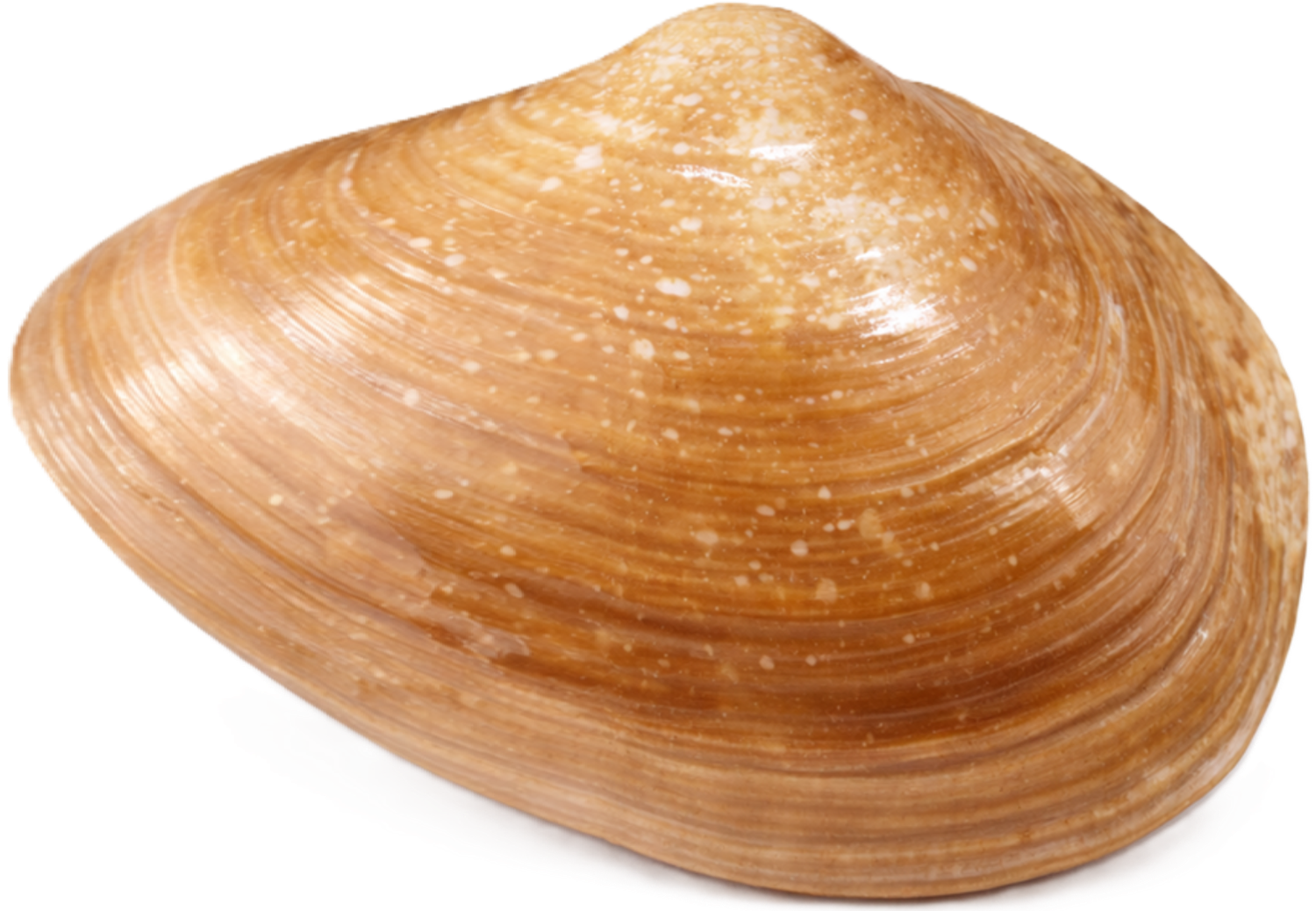 Tancredia |
T. americana4299Speden, I. G. (1970). The type Fox Hills Formation, Cretaceous (Maestrichtian), South Dakota. Part 2. Systematics of the Bivalvia. Bulletin of the Peabody Museum of Natural History 33: 1–222. S. 113–115. Originalveröffentlichung4300Feldmann, R. M. (1967). Bivalvia and paleoecology of the Fox Hills Formation (Upper Cretaceous) of North Dakota. Dissertation, University of North Dakota, Grand Forks. Tabelle 2, S. 105–107; systematischer Teil. Originalveröffentlichung T. spp.4301Sohl, N. F. & Koch, C. F. (1984). Upper Cretaceous (Maastrichtian) larger invertebrate fossils from the Haustator bilira assemblage zone in the West Gulf Coastal Plain. U.S. Geological Survey Open-File Report, 84-687, 1–282. doi:10.3133/ofr84687 |
Escondido Formation Fox Hills Formation |
USA (North Dakota, South Dakota, Texas) | 72–66 Ma (Gattung bis 62 Ma) | sehr häufig | Tancrediidae |
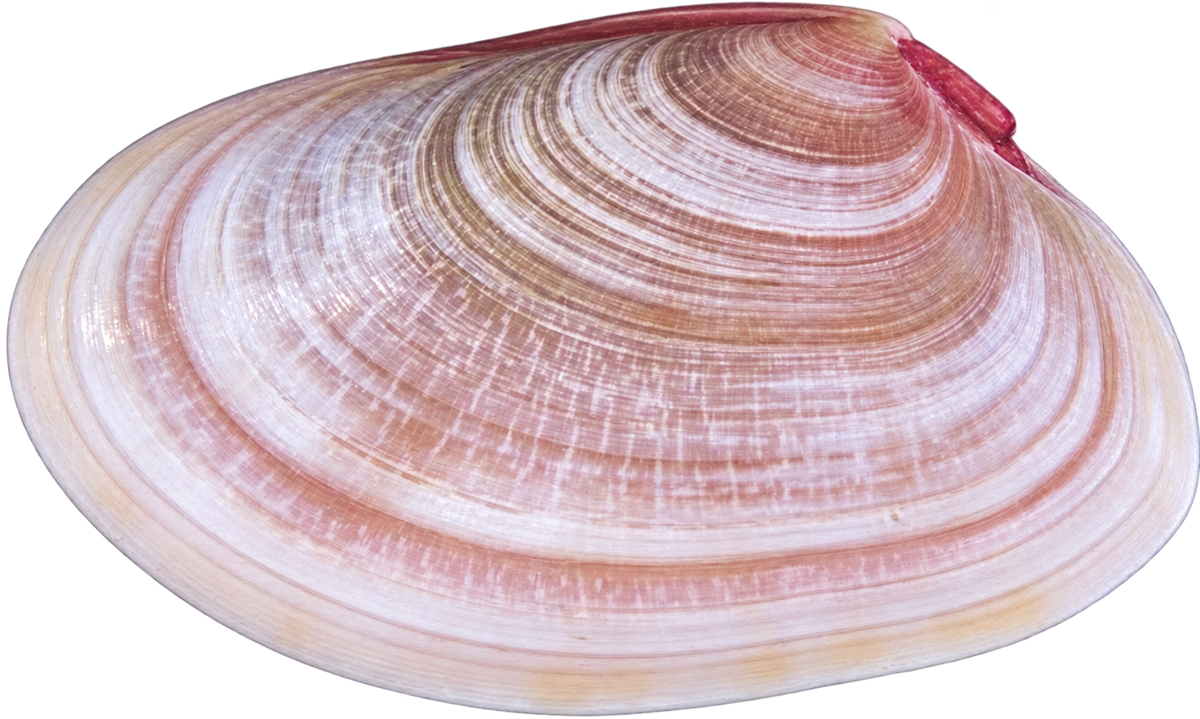 Tellina |
T. cheyennensis4302Feldmann, R. M. (1967). Bivalvia and paleoecology of the Fox Hills Formation (Upper Cretaceous) of North Dakota. Dissertation, University of North Dakota, Grand Forks. Tabelle 2, S. 105–107; systematischer Teil. Originalveröffentlichung T. immata4303Stephenson, L. W. (1941). The larger invertebrate fossils of the Navarro group of Texas (exclusive of corals and crustaceans and exclusive of the fauna of the Escondido formation). University of Texas Publication 4101, 1–641 T. ? marcosensis4304Foster, W. J. et al. (2020). Resilience of marine invertebrate communities during the early Cenozoic hyperthermals. Scientific Reports 10, 2176. Dataset S1. Dataset S1, ID 23980 doi:10.1038/s41598-020-58986-5 T. marcosensis4305Foster, W. J. et al. (2020). Resilience of marine invertebrate communities during the early Cenozoic hyperthermals. Scientific Reports 10, 2176. Supplementary Data 1 doi:10.1038/s41598-020-58986-54306Stephenson, L. W. (1941). The larger invertebrate fossils of the Navarro Group of Texas (exclusive of corals and crustaceans and exclusive of the fauna of the Escondido Formation). The University of Texas Publication, 4101, 1–641 T. cf. marcosensis4307Bryan, J. R. & Jones, D. S. (1989). Fabric of the Cretaceous-Tertiary marine macrofaunal transition at Braggs, Alabama. Palaeogeography, Palaeoclimatology, Palaeoecology 69, 279–301. Appendix I, S. 295–296, Spalte Ripley. Appendix I, S.295–296 doi:10.1016/0031-0182(89)90170-3 T. multiconcentrica4308Bandel, K. & Dockery, D. T. III (2016). Mollusca of the Coon Creek Formation in Tennessee and Mississippi with a systematic discussion of the Gastropoda. Bulletin of the Alabama Museum of Natural History 33(1), 34–96. Muschelliste S. 90–92. 73 Originalpublikation4309Foster, W. J. et al. (2020). Resilience of marine invertebrate communities during the early Cenozoic hyperthermals. Scientific Reports 10, 2176. Dataset S1. Dataset S1, ID 24102 doi:10.1038/s41598-020-58986-54310Wade, B. (1926). The fauna of the Ripley Formation on Coon Creek, Tennessee. United States Geological Survey Professional Paper 137, 1–272. Ripley-Vorkommensindex PBDB, Literatur 7434. doi:10.3133/pp137 T. munda4311Bryan, J. R. & Jones, D. S. (1989). Fabric of the Cretaceous-Tertiary marine macrofaunal transition at Braggs, Alabama. Palaeogeography, Palaeoclimatology, Palaeoecology 69, 279–301. Appendix I, S. 296, Prairie-Bluff-Spalten U. Quellenbezeichnung: Tellina munda*. doi:10.1016/0031-0182(89)90170-3 T. spp.4312Foster, W. J. et al. (2020). Resilience of marine invertebrate communities during the early Cenozoic hyperthermals. Scientific Reports 10, 2176. Supplementary Data 1 doi:10.1038/s41598-020-58986-54313Stephenson, L. W. (1941). The larger invertebrate fossils of the Navarro group of Texas (exclusive of corals and crustaceans and exclusive of the fauna of the Escondido formation). University of Texas Publication 4101, 1–6414314Stephenson, L. W. (1941). The larger invertebrate fossils of the Navarro Group of Texas (exclusive of corals and crustaceans and exclusive of the fauna of the Escondido Formation). The University of Texas Publication, 4101, 1–6414315Sohl, N. F. & Koch, C. F. (1984). Upper Cretaceous (Maastrichtian) larger invertebrate fossils from the Haustator bilira assemblage zone in the West Gulf Coastal Plain. U.S. Geological Survey Open-File Report, 84-687, 1–282. doi:10.3133/ofr846874316Sohl, N. F. & Koch, C. F. (1983). Upper Cretaceous (Maestrichtian) Mollusca from the Haustator bilira Assemblage Zone in the East Gulf Coastal Plain. United States Geological Survey Open-File Report 83–451, 238 S. Loc.10 doi:10.3133/ofr834514317Foster, W. J. et al. (2020). Resilience of marine invertebrate communities during the early Cenozoic hyperthermals. Scientific Reports 10, 2176. Dataset S1. Dataset S1, ID 23981; Dataset S1, ID 13016; Dataset S1, ID 13065; Dataset S1, ID 13103; Dataset S1, ID 13338 doi:10.1038/s41598-020-58986-54318Foster, W. J. et al. (2020). Resilience of marine invertebrate communities during the early Cenozoic hyperthermals. Scientific Reports 10, 2176. Dataset S1, Formation Owl Creek; Datensatz-IDs 11723, 23802. doi:10.1038/s41598-020-58986-54319Foster, W. J. et al. (2020). Resilience of marine invertebrate communities during the early Cenozoic hyperthermals. Scientific Reports 10, 2176. Dataset S1. Prairie Bluff Chalk; Dataset-IDs 14186, 14693, 14838, 14874, 15131, 15248, 16144. Quellenbezeichnung: Tellina sp.. doi:10.1038/s41598-020-58986-5 |
Corsicana Marl Escondido Formation Fox Hills Formation Kemp Clay Owl Creek Formation Prairie Bluff Chalk Ripley Formation |
USA (Alabama, Mississippi, Missouri, North Dakota, Tennessee, Texas) | 72–66 Ma (Gattung 143 Ma bis heute) | sehr häufig | Tellinidae (Tellmuschel) |
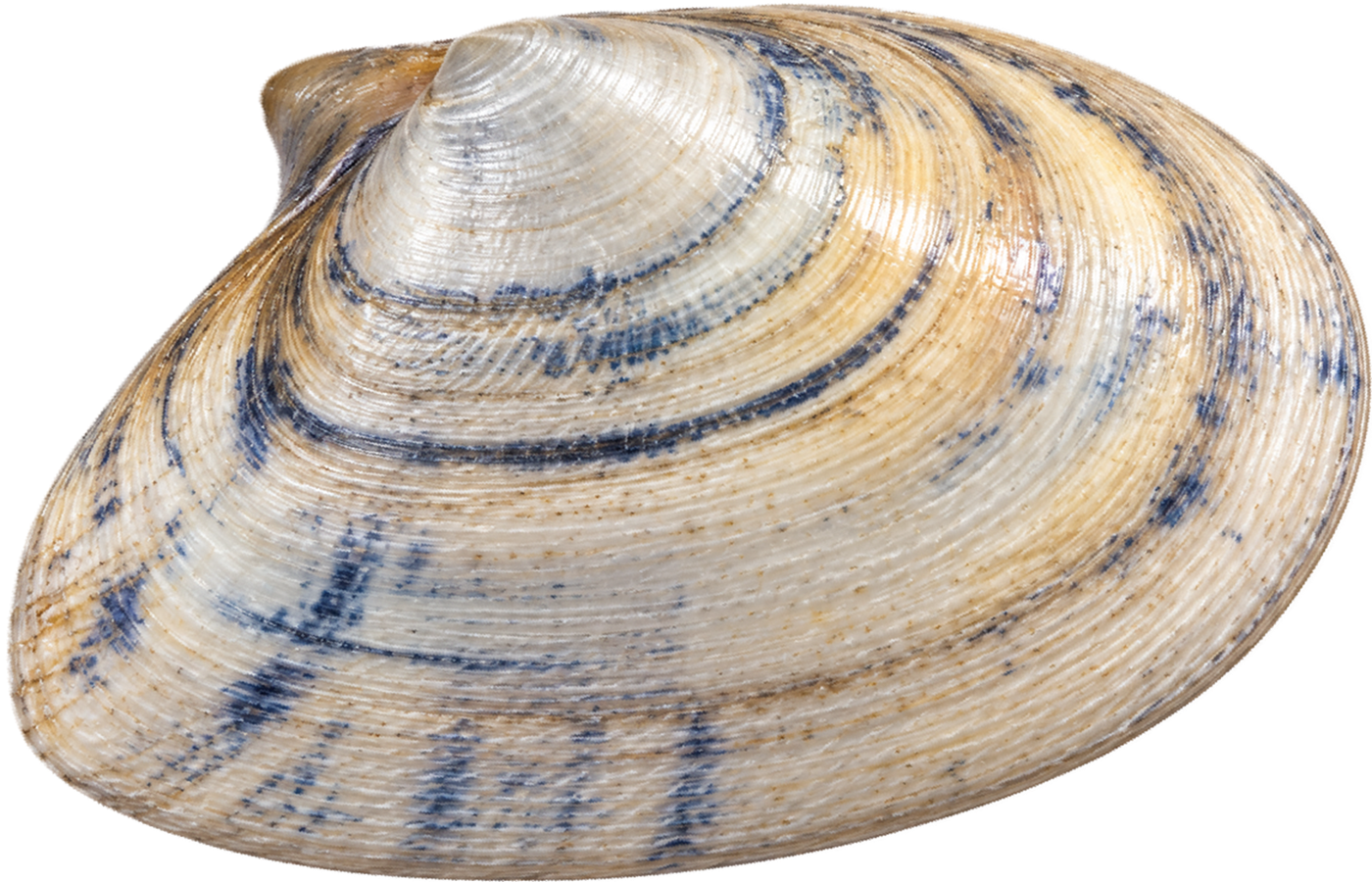 Tellinimera |
T. buboana4320Sohl, N. F. & Koch, C. F. (1984). Upper Cretaceous (Maastrichtian) larger invertebrate fossils from the Haustator bilira assemblage zone in the West Gulf Coastal Plain. U.S. Geological Survey Open-File Report, 84-687, 1–282. doi:10.3133/ofr846874321Sohl, N. F. & Koch, C. F. (1983). Upper Cretaceous (Maestrichtian) Mollusca from the Haustator bilira Assemblage Zone in the East Gulf Coastal Plain. United States Geological Survey Open-File Report 83–451, 238 S. Loc.10 doi:10.3133/ofr834514322Foster, W. J. et al. (2020). Resilience of marine invertebrate communities during the early Cenozoic hyperthermals. Scientific Reports 10, 2176. Dataset S1. Dataset S1, ID 13017 doi:10.1038/s41598-020-58986-54323Foster, W. J. et al. (2020). Resilience of marine invertebrate communities during the early Cenozoic hyperthermals. Scientific Reports 10, 2176. Dataset S1, Formation Owl Creek; Datensatz-IDs 23843, 23927. doi:10.1038/s41598-020-58986-54324Stephenson, L. W. (1955). Owl Creek (Upper Cretaceous) fossils from Crowleys Ridge, southeastern Missouri. U.S. Geological Survey Professional Paper 274-E, 97–140. Owl Creek Formation, Missouri; Verbreitungstabelle S. 104–105. doi:10.3133/pp274E4325Foster, W. J. et al. (2020). Resilience of marine invertebrate communities during the early Cenozoic hyperthermals. Scientific Reports 10, 2176. Dataset S1. Prairie Bluff Chalk; Dataset-IDs 14595. Quellenbezeichnung: Tellinimera buboana. doi:10.1038/s41598-020-58986-5 T. eborea4326Bandel, K. & Dockery, D. T. III (2016). Mollusca of the Coon Creek Formation in Tennessee and Mississippi with a systematic discussion of the Gastropoda. Bulletin of the Alabama Museum of Natural History 33(1), 34–96. Muschelliste S. 90–92. 78 Originalpublikation4327Crider, A. F. (1906). Geology and mineral resources of Mississippi. United States Geological Survey Bulletin 283, 1–99. S. 21, Ripley-Fossilien aus Tippah County. doi:10.3133/b2834328Wade, B. (1926). The fauna of the Ripley Formation on Coon Creek, Tennessee. United States Geological Survey Professional Paper 137, 1–272. Ripley-Vorkommensindex PBDB, Literatur 7434. doi:10.3133/pp137 T. gabbi4329Sohl, N. F. & Koch, C. F. (1984). Upper Cretaceous (Maastrichtian) larger invertebrate fossils from the Haustator bilira assemblage zone in the West Gulf Coastal Plain. U.S. Geological Survey Open-File Report, 84-687, 1–282. doi:10.3133/ofr846874330Foster, W. J. et al. (2020). Resilience of marine invertebrate communities during the early Cenozoic hyperthermals. Scientific Reports 10, 2176. Dataset S1. Dataset S1, ID 13367 doi:10.1038/s41598-020-58986-54331Foster, W. J. et al. (2020). Resilience of marine invertebrate communities during the early Cenozoic hyperthermals. Scientific Reports 10, 2176. Dataset S1. Prairie Bluff Chalk; Dataset-IDs 15078. Quellenbezeichnung: Tellinimera gabbi. doi:10.1038/s41598-020-58986-5 T. scitula4332Speden, I. G. (1970). The type Fox Hills Formation, Cretaceous (Maestrichtian), South Dakota. Part 2. Systematics of the Bivalvia. Bulletin of the Peabody Museum of Natural History 33: 1–222. S. 132–134. Originalveröffentlichung4333Mapel, W. J. & Pillmore, C. L. (1964). Geology of the Upton Quadrangle, Crook and Weston counties, Wyoming. U.S. Geological Survey Bulletin 1181-J: J1–J54. S. J36, Fox-Hills-Fundort USGS 11924. doi:10.3133/b1181J Originalveröffentlichung4334Feldmann, R. M. (1967). Bivalvia and paleoecology of the Fox Hills Formation (Upper Cretaceous) of North Dakota. Dissertation, University of North Dakota, Grand Forks. Tabelle 2, S. 105–107; systematischer Teil. Originalveröffentlichung T. spp.4335Foster, W. J. et al. (2020). Resilience of marine invertebrate communities during the early Cenozoic hyperthermals. Scientific Reports 10, 2176. Dataset S1. Prairie Bluff Chalk; Dataset-IDs 14596. Quellenbezeichnung: Tellinimera sp.. doi:10.1038/s41598-020-58986-5 |
Escondido Formation Fox Hills Formation Owl Creek Formation Prairie Bluff Chalk Ripley Formation |
USA (Alabama, Mississippi, Missouri, North Dakota, South Dakota, Tennessee, Texas, Wyoming) | 72–66 Ma (Gattung bis 5 Ma) | sehr häufig | Tellinidae (Tellmuschel); T. scitula: früher Tellina scitula; historische bzw. alternative Kombinationen: Tellina buboana |
 Tenea |
T. parilis4336Stephenson, L. W. (1941). The larger invertebrate fossils of the Navarro Group of Texas (exclusive of corals and crustaceans and exclusive of the fauna of the Escondido Formation). The University of Texas Publication, 4101, 1–6414337Stephenson, L. W. (1941). The larger invertebrate fossils of the Navarro group of Texas (exclusive of corals and crustaceans and exclusive of the fauna of the Escondido formation). University of Texas Publication 4101, 1–6414338Sava, L. A. (2007): The Molluscan and Brachiopod Fauna of the Late Cretaceous Pierre Shale (Baculites compressus/Baculites cuneatus biozones) near Kremmling, Colorado. M.Sc.-Abschlussarbeit, University of South Florida, Tampa. S. 35–36 und 47–48. Originalveröffentlichung4339Kunath, M., Phillips, G. & Clary, R. M. (2020): Cretaceous cultch: substrate availability for oyster Exogyra in the Maastrichtian of the eastern Mississippi Embayment. Revista Mexicana de Ciencias Geológicas 37(3): 197–211. Ergänzungstabelle S2. doi:10.22201/cgeo.20072902e.2020.3.15804340Bandel, K. & Dockery, D. T. III (2016). Mollusca of the Coon Creek Formation in Tennessee and Mississippi with a systematic discussion of the Gastropoda. Bulletin of the Alabama Museum of Natural History 33(1), 34–96. Muschelliste S. 90–92. 84 Originalpublikation4341Sohl, N. F. & Koch, C. F. (1983). Upper Cretaceous (Maestrichtian) Mollusca from the Haustator bilira Assemblage Zone in the East Gulf Coastal Plain. United States Geological Survey Open-File Report 83–451, 238 S. Loc.9; Loc.10; Loc.11; Loc.32 doi:10.3133/ofr834514342Foster, W. J. et al. (2020). Resilience of marine invertebrate communities during the early Cenozoic hyperthermals. Scientific Reports 10, 2176. Dataset S1. Dataset S1, ID 12933; Dataset S1, ID 13018; Dataset S1, ID 13047; Dataset S1, ID 13443 doi:10.1038/s41598-020-58986-54343Wade, B. (1926). The fauna of the Ripley Formation on Coon Creek, Tennessee. United States Geological Survey Professional Paper 137, 1–272. Ripley-Vorkommensindex PBDB, Literatur 7434. doi:10.3133/pp1374344Foster, W. J. et al. (2020). Resilience of marine invertebrate communities during the early Cenozoic hyperthermals. Scientific Reports 10, 2176. Dataset S1, Formation Owl Creek; Datensatz-IDs 13814, 23803, 23844, 23860, 23928, 23970. doi:10.1038/s41598-020-58986-54345Stephenson, L. W. (1955). Owl Creek (Upper Cretaceous) fossils from Crowleys Ridge, southeastern Missouri. U.S. Geological Survey Professional Paper 274-E, 97–140. Owl Creek Formation, Missouri; Verbreitungstabelle S. 104–105. doi:10.3133/pp274E4346Sohl, N. F. & Koch, C. F. (1983). Upper Cretaceous (Maestrichtian) Mollusca from the Haustator bilira Assemblage Zone in the East Gulf Coastal Plain. U.S. Geological Survey Open-File Report 83-451, 1–239. Owl Creek Formation, Aufsammlungen 46. doi:10.3133/ofr834514347Foster, W. J. et al. (2020). Resilience of marine invertebrate communities during the early Cenozoic hyperthermals. Scientific Reports 10, 2176. Dataset S1. Prairie Bluff Chalk; Dataset-IDs 14005, 14479, 14655, 16566, 16790. Quellenbezeichnung: Tenea parilis. doi:10.1038/s41598-020-58986-5 T. cf. pinguis4348Veatch, O. & Stephenson, L. W. (1911). Preliminary report on the geology of the coastal plain of Georgia. Geological Survey of Georgia Bulletin 26, 1–466. S. 176–177, Eufaula-Liste. Originalpublikation T. pinguis4349Crider, A. F. (1906). Geology and mineral resources of Mississippi. United States Geological Survey Bulletin 283, 1–99. S. 21, Ripley-Fossilien aus Tippah County. doi:10.3133/b283 T. spp.4350Foster, W. J. et al. (2020). Resilience of marine invertebrate communities during the early Cenozoic hyperthermals. Scientific Reports 10, 2176. Supplementary Data 1 doi:10.1038/s41598-020-58986-54351Bryan, J. R. & Jones, D. S. (1989). Fabric of the Cretaceous-Tertiary marine macrofaunal transition at Braggs, Alabama. Palaeogeography, Palaeoclimatology, Palaeoecology 69, 279–301. Appendix I, S. 295–296, Spalte Ripley. Appendix I, S.295–296 doi:10.1016/0031-0182(89)90170-34352Foster, W. J. et al. (2020). Resilience of marine invertebrate communities during the early Cenozoic hyperthermals. Scientific Reports 10, 2176. Dataset S1. Prairie Bluff Chalk; Dataset-IDs 15079, 15332, 15774, 16201. Quellenbezeichnung: Tenea sp.. doi:10.1038/s41598-020-58986-54353Bryan, J. R. & Jones, D. S. (1989). Fabric of the Cretaceous-Tertiary marine macrofaunal transition at Braggs, Alabama. Palaeogeography, Palaeoclimatology, Palaeoecology 69, 279–301. Appendix I, S. 296, Prairie-Bluff-Spalten L. Quellenbezeichnung: Tenea? sp. doi:10.1016/0031-0182(89)90170-3 |
Corsicana Marl Kemp Clay Owl Creek Formation Pierre Shale Prairie Bluff Chalk Ripley Formation |
USA (Alabama, Colorado, Mississippi, Missouri, Tennessee, Texas) | 74–66 Ma (Gattung bis 56 Ma) | sehr häufig | Arcticidae (?) (Islandmuschel) |
 Tennessiella |
T. castrovillensis4354Vega, F. J., Feldmann, R. M. & Sour-Tovar, F. (1995). Fossil crabs (Crustacea: Decapoda) from the Late Cretaceous Cárdenas Formation, east-central Mexico. Journal of Paleontology, 69(2), 340–350. doi:10.1017/S00223360000346614355Stephenson, L. W. (1941). The larger invertebrate fossils of the Navarro Group of Texas (exclusive of corals and crustaceans and exclusive of the fauna of the Escondido Formation). The University of Texas Publication, 4101, 1–641. T. thoracica4356Bandel, K. & Dockery, D. T. III (2016). Mollusca of the Coon Creek Formation in Tennessee and Mississippi with a systematic discussion of the Gastropoda. Bulletin of the Alabama Museum of Natural History 33(1), 34–96. Muschelliste S. 90–92. 54 Originalpublikation4357Crider, A. F. (1906). Geology and mineral resources of Mississippi. United States Geological Survey Bulletin 283, 1–99. S. 21, Ripley-Fossilien aus Tippah County. doi:10.3133/b2834358Foster, W. J. et al. (2020). Resilience of marine invertebrate communities during the early Cenozoic hyperthermals. Scientific Reports 10, 2176. Dataset S1. Dataset S1, ID 23961; Dataset S1, ID 12931; Dataset S1, ID 17689; Dataset S1, ID 17699 doi:10.1038/s41598-020-58986-54359Sohl, N. F. & Koch, C. F. (1983). Upper Cretaceous (Maestrichtian) Mollusca from the Haustator bilira Assemblage Zone in the East Gulf Coastal Plain. United States Geological Survey Open-File Report 83–451, 238 S. Ripley-Vorkommensindex PBDB, Literatur 283. doi:10.3133/ofr834514360Sohl, N. F. (1960). Archeogastropoda, Mesogastropoda, and stratigraphy of the Ripley, Owl Creek, and Prairie Bluff formations. United States Geological Survey Professional Paper 331-A, 1–151. Ripley-Vorkommensindex PBDB, Literatur 463. doi:10.3133/pp331A4361Wade, B. (1926). The fauna of the Ripley Formation on Coon Creek, Tennessee. United States Geological Survey Professional Paper 137, 1–272. Ripley-Vorkommensindex PBDB, Literatur 7434. doi:10.3133/pp1374362Foster, W. J. et al. (2020). Resilience of marine invertebrate communities during the early Cenozoic hyperthermals. Scientific Reports 10, 2176. Dataset S1. Prairie Bluff Chalk; Dataset-IDs 14177, 14310, 14359, 14393, 14468, 14509, 14691, 14804, 15123, 15212, 15322, 15392, 15433, 15500, 15533, 15603, 15689, 15764, 15830, 15881, 15920, 15944, 16073, 16099, 16140, 16194, 16400, 16472, 16596, 16618, 16652, 16700. Quellenbezeichnung: Pterotrigonia thoracica. doi:10.1038/s41598-020-58986-54363Bryan, J. R. & Jones, D. S. (1989). Fabric of the Cretaceous-Tertiary marine macrofaunal transition at Braggs, Alabama. Palaeogeography, Palaeoclimatology, Palaeoecology 69, 279–301. Appendix I, S. 296, Prairie-Bluff-Spalten L. Quellenbezeichnung: Scabrotrigonia thoracica. doi:10.1016/0031-0182(89)90170-3 T. cf. thoracica4364Sohl, N. F. & Koch, C. F. (1983). Upper Cretaceous (Maestrichtian) Mollusca from the Haustator bilira Assemblage Zone in the East Gulf Coastal Plain. United States Geological Survey Open-File Report 83–451, 238 S. Loc.9; Loc.220; Loc.221 doi:10.3133/ofr83451 |
Corsicana Marl Cárdenas Formation Prairie Bluff Chalk Ripley Formation |
USA (Alabama, Mississippi, Tennessee, Texas); Mexiko (San Luis Potosí) | 72–66 Ma | sehr häufig | Trigoniidae (Dreiecksmuschel); synonym zu Trigonia castrovillensis und Scabrotrigonia castrovillensis |
| Tenuipteria | T. argentea4365Sohl, N. F. & Koch, C. F. (1983). Upper Cretaceous (Maestrichtian) Mollusca from the Haustator bilira Assemblage Zone in the East Gulf Coastal Plain. United States Geological Survey Open-File Report 83–451, 238 S. Loc.8 doi:10.3133/ofr834514366Foster, W. J. et al. (2020). Resilience of marine invertebrate communities during the early Cenozoic hyperthermals. Scientific Reports 10, 2176. Dataset S1. Dataset S1, ID 12911 doi:10.1038/s41598-020-58986-54367Foster, W. J. et al. (2020). Resilience of marine invertebrate communities during the early Cenozoic hyperthermals. Scientific Reports 10, 2176. Dataset S1, Formation Owl Creek; Datensatz-IDs 13491, 13602, 13672, 13815, 13857, 13884, 23804, 23929, 23971. Publiziert als Tenuipteria argenteus. doi:10.1038/s41598-020-58986-54368Farke, A. A. & Phillips, G. (2017). The first reported ceratopsid dinosaur from eastern North America (Owl Creek Formation, Upper Cretaceous, Mississippi, USA). PeerJ 5, e3342. Tabelle 1, Owl Creek Formation, Union County, Mississippi; MMNS MS.73.001b. doi:10.7717/peerj.33424369Stephenson, L. W. (1955). Owl Creek (Upper Cretaceous) fossils from Crowleys Ridge, southeastern Missouri. U.S. Geological Survey Professional Paper 274-E, 97–140. Owl Creek Formation, Missouri; Verbreitungstabelle S. 104–105. doi:10.3133/pp274E4370Sohl, N. F. & Koch, C. F. (1983). Upper Cretaceous (Maestrichtian) Mollusca from the Haustator bilira Assemblage Zone in the East Gulf Coastal Plain. U.S. Geological Survey Open-File Report 83-451, 1–239. Owl Creek Formation, Aufsammlungen 41, 44, 45, 46, 47, 50. doi:10.3133/ofr834514371Foster, W. J. et al. (2020). Resilience of marine invertebrate communities during the early Cenozoic hyperthermals. Scientific Reports 10, 2176. Dataset S1. Prairie Bluff Chalk; Dataset-IDs 14018, 14694, 16791. Quellenbezeichnung: Tenuipteria argenteus. doi:10.1038/s41598-020-58986-5 T. fibrosa4372Landman, N. H., Slattery, J. S. & Harries, P. J. (2016): Encrustation of inarticulate brachiopods on scaphitid ammonites and inoceramid bivalves from the Upper Cretaceous U.S. Western Interior. Acta Geologica Polonica 66(4): 645–662. Anhang, Tabelle 1. doi:10.1515/agp-2016-00344373Brinster, K. F. (1970): Molluscan paleontology of the Pierre Shale (Upper Cretaceous), Bowman County, North Dakota. M.Sc.-Abschlussarbeit, University of North Dakota, Grand Forks. Systematik S. 52–88. Originalveröffentlichung4374Speden, I. G. (1970). The type Fox Hills Formation, Cretaceous (Maestrichtian), South Dakota. Part 2. Systematics of the Bivalvia. Bulletin of the Peabody Museum of Natural History 33: 1–222. S. 62–65. Originalveröffentlichung |
Fox Hills Formation Owl Creek Formation Pierre Shale Prairie Bluff Chalk Ripley Formation |
USA (Alabama, Mississippi, Missouri, Montana, North Dakota, South Dakota) | 72–66 Ma | sehr häufig | Inoceramidae; T. fibrosa: früher Inoceramus fibrosus; historische bzw. alternative Kombinationen: Tenuiptereus argenteus, Tenuipteria argenteus |
| Teredo | T. rectus4375Bandel, K. & Dockery, D. T. III (2016). Mollusca of the Coon Creek Formation in Tennessee and Mississippi with a systematic discussion of the Gastropoda. Bulletin of the Alabama Museum of Natural History 33(1), 34–96. Muschelliste S. 90–92. 102 Originalpublikation4376Foster, W. J. et al. (2020). Resilience of marine invertebrate communities during the early Cenozoic hyperthermals. Scientific Reports 10, 2176. Dataset S1. Dataset S1, ID 23990 doi:10.1038/s41598-020-58986-54377Wade, B. (1926). The fauna of the Ripley Formation on Coon Creek, Tennessee. United States Geological Survey Professional Paper 137, 1–272. Ripley-Vorkommensindex PBDB, Literatur 7434. doi:10.3133/pp137 T. spp.4378Veatch, O. & Stephenson, L. W. (1911). Preliminary report on the geology of the coastal plain of Georgia. Geological Survey of Georgia Bulletin 26, 1–466. S. 176–177, Eufaula-Liste. Originalpublikation4379Dilcher, D. (2016). Fossil plants from the Coon Creek Formation of Tennessee. Bulletin of the Alabama Museum of Natural History 33(2), 118–121. Ripley-Vorkommensindex PBDB, Literatur 95723. Originalpublikation4380Foster, W. J. et al. (2020). Resilience of marine invertebrate communities during the early Cenozoic hyperthermals. Scientific Reports 10, 2176. Dataset S1, Formation Owl Creek; Datensatz-IDs 11724. doi:10.1038/s41598-020-58986-5 |
Owl Creek Formation Ripley Formation |
USA (Alabama, Mississippi, Tennessee) | 72–66 Ma | nicht quantifiziert | Teredinidae (Schiffsbohrmuschel) |
| Thracia | T. sp.4381Foster, W. J. et al. (2020). Resilience of marine invertebrate communities during the early Cenozoic hyperthermals. Scientific Reports 10, 2176. Dataset S1, Formation Owl Creek; Datensatz-IDs 13492, 13522, 13603, 13673, 13816. Publiziert als Thracia sp.. Gattungszuordnung fraglich. doi:10.1038/s41598-020-58986-54382Sohl, N. F. & Koch, C. F. (1983). Upper Cretaceous (Maestrichtian) Mollusca from the Haustator bilira Assemblage Zone in the East Gulf Coastal Plain. U.S. Geological Survey Open-File Report 83-451, 1–239. Owl Creek Formation, Aufsammlungen 41, 42, 44, 45, 46. Gattungszuordnung fraglich. doi:10.3133/ofr834514383Witts, J. D. et al. (2018). A fossiliferous spherule-rich bed at the Cretaceous–Paleogene (K–Pg) boundary in Mississippi, USA: Implications for the K–Pg mass extinction event in the Mississippi Embayment and Eastern Gulf Coastal Plain. Cretaceous Research 91, 147–167. Anhang 1, nur Owl-Creek-Spalten, Zeilen 44. Gattungszuordnung fraglich. doi:10.1016/j.cretres.2018.06.002 | Owl Creek Formation | USA (Mississippi) | 68–66 Ma | sehr häufig | Thraciidae (Muschel) |
| Titanosarcolites | T. oddsensis4384Stephenson, L. W. (1941). The larger invertebrate fossils of the Navarro group of Texas (exclusive of corals and crustaceans and exclusive of the fauna of the Escondido formation). University of Texas Publication 4101, 1–641 T. spp.4385Stephenson, L. W. (1941). The larger invertebrate fossils of the Navarro group of Texas (exclusive of corals and crustaceans and exclusive of the fauna of the Escondido formation). University of Texas Publication 4101, 1–6414386Sohl, N. F. (1960). Archeogastropoda, Mesogastropoda, and stratigraphy of the Ripley, Owl Creek, and Prairie Bluff formations. United States Geological Survey Professional Paper 331-A, 1–151. Ripley-Vorkommensindex PBDB, Literatur 463. doi:10.3133/pp331A4387Foster, W. J. et al. (2020). Resilience of marine invertebrate communities during the early Cenozoic hyperthermals. Scientific Reports 10, 2176. Dataset S1. Prairie Bluff Chalk; Dataset-IDs 15611. Quellenbezeichnung: Titanosarcolites sp.. doi:10.1038/s41598-020-58986-5 |
Kemp Clay Prairie Bluff Chalk Ripley Formation |
USA (Alabama, Mississippi, Texas) | 72–66 Ma | häufig | Titanosarcolitidae |
 Trachycardium |
T. eufaulense4388Vega-Vera, F.J. & Perrilliat Montoya, M. del C. (1990): Moluscos del Maastrichtiano de la sierra El Antrisco, Estado de Nuevo León. Paleontología Mexicana 55: 1–69. doi:10.22201/igl.05437652e.1990.0.55.3374389Sohl, N. F. & Koch, C. F. (1984). Upper Cretaceous (Maastrichtian) larger invertebrate fossils from the Haustator bilira assemblage zone in the West Gulf Coastal Plain. U.S. Geological Survey Open-File Report, 84-687, 1–282. doi:10.3133/ofr846874390Veatch, O. & Stephenson, L. W. (1911). Preliminary report on the geology of the coastal plain of Georgia. Geological Survey of Georgia Bulletin 26, 1–466. S. 176–177, Eufaula-Liste. Originalpublikation4391Crider, A. F. (1906). Geology and mineral resources of Mississippi. United States Geological Survey Bulletin 283, 1–99. S. 21, Ripley-Fossilien aus Tippah County. doi:10.3133/b2834392Sohl, N. F. & Koch, C. F. (1983). Upper Cretaceous (Maestrichtian) Mollusca from the Haustator bilira Assemblage Zone in the East Gulf Coastal Plain. United States Geological Survey Open-File Report 83–451, 238 S. Loc.9; Loc.10; Loc.32; Loc.221 doi:10.3133/ofr834514393Bryan, J. R. & Jones, D. S. (1989). Fabric of the Cretaceous-Tertiary marine macrofaunal transition at Braggs, Alabama. Palaeogeography, Palaeoclimatology, Palaeoecology 69, 279–301. Appendix I, S. 295–296, Spalte Ripley. Appendix I, S.295–296 doi:10.1016/0031-0182(89)90170-34394Foster, W. J. et al. (2020). Resilience of marine invertebrate communities during the early Cenozoic hyperthermals. Scientific Reports 10, 2176. Dataset S1. Dataset S1, ID 12935; Dataset S1, ID 13019; Dataset S1, ID 13066; Dataset S1, ID 13104; Dataset S1, ID 13144; Dataset S1, ID 13171; Dataset S1, ID 13198; Dataset S1, ID 13223; Dataset S1, ID 13244; Dataset S1, ID 13275; Dataset S1, ID 13315; Dataset S1, ID 13339; Dataset S1, ID 13368; Dataset S1, ID 13382; Dataset S1, ID 13392; Dataset S1, ID 13405; Dataset S1, ID 13444; Dataset S1, ID 17701 doi:10.1038/s41598-020-58986-54395Foster, W. J. et al. (2020). Resilience of marine invertebrate communities during the early Cenozoic hyperthermals. Scientific Reports 10, 2176. Dataset S1. Prairie Bluff Chalk; Dataset-IDs 16792. Quellenbezeichnung: Trachycardium eufaulensis. doi:10.1038/s41598-020-58986-54396Bryan, J. R. & Jones, D. S. (1989). Fabric of the Cretaceous-Tertiary marine macrofaunal transition at Braggs, Alabama. Palaeogeography, Palaeoclimatology, Palaeoecology 69, 279–301. Appendix I, S. 296, Prairie-Bluff-Spalten M. Quellenbezeichnung: Trachycardium eufaulense. doi:10.1016/0031-0182(89)90170-3 T. eufaulensis4397Foster, W. J. et al. (2020). Resilience of marine invertebrate communities during the early Cenozoic hyperthermals. Scientific Reports 10, 2176. Dataset S1, Formation Owl Creek; Datensatz-IDs 13818. doi:10.1038/s41598-020-58986-54398Sohl, N. F. & Koch, C. F. (1983). Upper Cretaceous (Maestrichtian) Mollusca from the Haustator bilira Assemblage Zone in the East Gulf Coastal Plain. U.S. Geological Survey Open-File Report 83-451, 1–239. Owl Creek Formation, Aufsammlungen 46. doi:10.3133/ofr83451 T. spp.4399Sohl, N. F. & Koch, C. F. (1984). Upper Cretaceous (Maastrichtian) larger invertebrate fossils from the Haustator bilira assemblage zone in the West Gulf Coastal Plain. U.S. Geological Survey Open-File Report, 84-687, 1–282. doi:10.3133/ofr846874400Foster, W. J. et al. (2020). Resilience of marine invertebrate communities during the early Cenozoic hyperthermals. Scientific Reports 10, 2176. Dataset S1, Formation Owl Creek; Datensatz-IDs 23861. doi:10.1038/s41598-020-58986-54401Foster, W. J. et al. (2020). Resilience of marine invertebrate communities during the early Cenozoic hyperthermals. Scientific Reports 10, 2176. Dataset S1. Prairie Bluff Chalk; Dataset-IDs 14695, 15775. Quellenbezeichnung: Trachycardium sp.. doi:10.1038/s41598-020-58986-5 |
Arkadelphia Marl Escondido Formation Owl Creek Formation Potrerillos Formation Prairie Bluff Chalk Ripley Formation |
USA (Alabama, Arkansas, Mississippi, Missouri, Texas); Mexiko (Nuevo León) | 72–66 Ma (Gattung mindestens 72 Ma bis heute); Potrerillos: Maastrichtium (72–66 Ma) | sehr häufig | Cardiidae (Herzmuschel); historische bzw. alternative Kombinationen: Cardium eufaulense, Trachycardium eufaulensis |
 Trechmannites |
T. rudissimus4402Pons, J. M., García-Barrera, P., Oviedo, A. & Vicens, E. (2021). Mexican Upper Cretaceous rudists (Hippuritida, Bivalvia): Taxonomic, stratigraphic, and geologic data. Journal of South American Earth Sciences, 109, 103237. doi:10.1016/j.jsames.2021.103237 | Cárdenas Formation | Mexiko (San Luis Potosí) | 72–68 Ma | selten | Radiolitidae |
 Trigonia |
T. castrovillensis4403Vega, F.J., Feldmann, R.M. & Sour-Tovar, F. (1995): Fossil crabs (Crustacea: Decapoda) from the Late Cretaceous Cárdenas Formation, east-central Mexico. Journal of Paleontology 69(2): 340–350. Volltext T. spp.4404Vega, F. J., Feldmann, R. M. & Sour-Tovar, F. (1995). Fossil crabs (Crustacea: Decapoda) from the Late Cretaceous Cárdenas Formation, east-central Mexico. Journal of Paleontology, 69(2), 340–350. doi:10.1017/S00223360000346614405Foster, W. J. et al. (2020). Resilience of marine invertebrate communities during the early Cenozoic hyperthermals. Scientific Reports 10, 2176. Supplementary Data 1 doi:10.1038/s41598-020-58986-54406Stephenson, L. W. (1941). The larger invertebrate fossils of the Navarro group of Texas (exclusive of corals and crustaceans and exclusive of the fauna of the Escondido formation). University of Texas Publication 4101, 1–6414407Veatch, O. & Stephenson, L. W. (1911). Preliminary report on the geology of the coastal plain of Georgia. Geological Survey of Georgia Bulletin 26, 1–466. S. 176–177, Eufaula-Liste. Originalpublikation4408Vega-Vera, F.J. & Perrilliat Montoya, M. del C. (1990): Moluscos del Maastrichtiano de la sierra El Antrisco, Estado de Nuevo León. Paleontología Mexicana 55: 1–69. doi:10.22201/igl.05437652e.1990.0.55.337 |
Cárdenas Formation Escondido Formation (?) Kemp Clay Potrerillos Formation Ripley Formation |
USA (Alabama, Texas); Mexiko (Nuevo León) | 72–66 Ma (Gattung bis 56 Ma); Potrerillos: Maastrichtium (72–66 Ma) | sehr häufig | Trigoniidae (Dreiecksmuschel) |
| Trochoceramus | T. radiosus4409Landman, N. H. et al. (2026): The Campanian-Maastrichtian Boundary in the Pierre Shale, Cedar Creek Anticline, Montana: Environment of Deposition Based on Geochemical, Sedimentological, and Paleontological Evidence. American Museum Novitates 4052: 1–53. Text, Abbildungen und Anhang 1. doi:10.1206/4052.14410Sealey, P. L., Berry, K. & Lucas, S. G. (2019): The Campanian-Maastrichtian baculite zonal sequence in the Pierre Shale, Berwind Canyon, Las Animas County, Colorado. New Mexico Geological Society Guidebook 70: 81–88. Tabelle 1, Baculites grandis-Zone. doi:10.56577/FFC-70.81 | Pierre Shale | USA (Colorado, Montana) | 72–70 Ma | selten | Inoceramidae |
 Uddenia |
U. spp.4411Foster, W. J. et al. (2020). Resilience of marine invertebrate communities during the early Cenozoic hyperthermals. Scientific Reports 10, 2176. Supplementary Data 1 doi:10.1038/s41598-020-58986-54412Stephenson, L. W. (1941). The larger invertebrate fossils of the Navarro group of Texas (exclusive of corals and crustaceans and exclusive of the fauna of the Escondido formation). University of Texas Publication 4101, 1–6414413Stephenson, L. W. (1941). The larger invertebrate fossils of the Navarro Group of Texas (exclusive of corals and crustaceans and exclusive of the fauna of the Escondido Formation). The University of Texas Publication, 4101, 1–6414414Foster, W. J. et al. (2020). Resilience of marine invertebrate communities during the early Cenozoic hyperthermals. Scientific Reports 10, 2176. Dataset S1, Formation Owl Creek; Datensatz-IDs 13859. doi:10.1038/s41598-020-58986-54415Sohl, N. F. & Koch, C. F. (1983). Upper Cretaceous (Maestrichtian) Mollusca from the Haustator bilira Assemblage Zone in the East Gulf Coastal Plain. U.S. Geological Survey Open-File Report 83-451, 1–239. Owl Creek Formation, Aufsammlungen 47. doi:10.3133/ofr83451 | Corsicana Marl Kemp Clay Owl Creek Formation |
USA (Mississippi, Texas) | 70–66 Ma (Gattung bis 62 Ma) | häufig | Crassatellidae (Dickmuschel) |
 Unicardium |
U. concentricum4416Sohl, N. F. & Koch, C. F. (1984). Upper Cretaceous (Maastrichtian) larger invertebrate fossils from the Haustator bilira assemblage zone in the West Gulf Coastal Plain. U.S. Geological Survey Open-File Report, 84-687, 1–282. doi:10.3133/ofr846874417Bandel, K. & Dockery, D. T. III (2016). Mollusca of the Coon Creek Formation in Tennessee and Mississippi with a systematic discussion of the Gastropoda. Bulletin of the Alabama Museum of Natural History 33(1), 34–96. Muschelliste S. 90–92. 57 Originalpublikation4418Wade, B. (1926). The fauna of the Ripley Formation on Coon Creek, Tennessee. United States Geological Survey Professional Paper 137, 1–272. Ripley-Vorkommensindex PBDB, Literatur 7434. doi:10.3133/pp1374419Foster, W. J. et al. (2020). Resilience of marine invertebrate communities during the early Cenozoic hyperthermals. Scientific Reports 10, 2176. Dataset S1, Formation Owl Creek; Datensatz-IDs 13824. doi:10.1038/s41598-020-58986-54420Sohl, N. F. & Koch, C. F. (1983). Upper Cretaceous (Maestrichtian) Mollusca from the Haustator bilira Assemblage Zone in the East Gulf Coastal Plain. U.S. Geological Survey Open-File Report 83-451, 1–239. Owl Creek Formation, Aufsammlungen 46. doi:10.3133/ofr834514421Foster, W. J. et al. (2020). Resilience of marine invertebrate communities during the early Cenozoic hyperthermals. Scientific Reports 10, 2176. Dataset S1. Prairie Bluff Chalk; Dataset-IDs 14982, 15045, 15510, 15701. Quellenbezeichnung: Unicardium concentricum. doi:10.1038/s41598-020-58986-5 U. spp.4422Stephenson, L. W. (1941). The larger invertebrate fossils of the Navarro Group of Texas (exclusive of corals and crustaceans and exclusive of the fauna of the Escondido Formation). The University of Texas Publication, 4101, 1–641.4423Foster, W. J. et al. (2020). Resilience of marine invertebrate communities during the early Cenozoic hyperthermals. Scientific Reports 10, 2176. Dataset S1. Dataset S1, ID 13067 doi:10.1038/s41598-020-58986-54424Foster, W. J. et al. (2020). Resilience of marine invertebrate communities during the early Cenozoic hyperthermals. Scientific Reports 10, 2176. Dataset S1, Formation Owl Creek; Datensatz-IDs 23934, 23974. doi:10.1038/s41598-020-58986-54425Foster, W. J. et al. (2020). Resilience of marine invertebrate communities during the early Cenozoic hyperthermals. Scientific Reports 10, 2176. Dataset S1. Prairie Bluff Chalk; Dataset-IDs 14099, 15335, 15536, 15825, 15893, 16570. Quellenbezeichnung: Unicardium sp.. doi:10.1038/s41598-020-58986-5 |
Corsicana Marl Escondido Formation Owl Creek Formation Prairie Bluff Chalk Ripley Formation |
USA (Alabama, Mississippi, Missouri, Tennessee, Texas) | 72–66 Ma (Gattung bis 34 Ma) | sehr häufig | Mactromyidae |
 Vaccinites |
V. vermunti4426Pons, J. M., García-Barrera, P., Oviedo, A. & Vicens, E. (2021). Mexican Upper Cretaceous rudists (Hippuritida, Bivalvia): Taxonomic, stratigraphic, and geologic data. Journal of South American Earth Sciences, 109, 103237. doi:10.1016/j.jsames.2021.103237 | Cárdenas Formation | Mexiko (San Luis Potosí) | 72–68 Ma (Gattung bis 66 Ma) | selten | Hippuritidae (Rudist) |
| Varicorbula | V. crassimarginata4427Gill, J. R. & Cobban, W. A. (1966): The Red Bird section of the Upper Cretaceous Pierre Shale in Wyoming. U.S. Geological Survey Professional Paper 393-A: A1–A73. S. A51, Einheit 93, D1982–D1984, Baculites baculus-Zone. doi:10.3133/pp393A4428Speden, I. G. (1970). The type Fox Hills Formation, Cretaceous (Maestrichtian), South Dakota. Part 2. Systematics of the Bivalvia. Bulletin of the Peabody Museum of Natural History 33: 1–222. S. 141–143. Originalveröffentlichung | Fox Hills Formation Pierre Shale |
USA (South Dakota, Wyoming) | 72–66 Ma (Gattung 143 Ma bis heute) | nicht quantifiziert | Corbulidae (Korbmuschel); V. crassimarginata: früher Corbula crassimarginata |
 Venericardia |
V. spp.4429iDigBio (o. J.). Venericardia, Katalognummer UT000048273.000. Originaler Museumskatalog über iDigBio (abgerufen am 1. Oktober 2026). | Escondido Formation | USA (Texas) | 72–66 Ma (Gattung bis 34 Ma) | selten | Carditidae (Trapezmuschel) |
 Veniella |
V. conradi4430Vega, F.J., Feldmann, R.M. & Sour-Tovar, F. (1995): Fossil crabs (Crustacea: Decapoda) from the Late Cretaceous Cárdenas Formation, east-central Mexico. Journal of Paleontology 69(2): 340–350. Volltext4431Sohl, N. F. & Koch, C. F. (1984). Upper Cretaceous (Maastrichtian) larger invertebrate fossils from the Haustator bilira assemblage zone in the West Gulf Coastal Plain. U.S. Geological Survey Open-File Report, 84-687, 1–282. doi:10.3133/ofr846874432Vega, F. J., Feldmann, R. M. & Sour-Tovar, F. (1995). Fossil crabs (Crustacea: Decapoda) from the Late Cretaceous Cárdenas Formation, east-central Mexico. Journal of Paleontology, 69(2), 340–350. doi:10.1017/S00223360000346614433Stephenson, L. W. (1941). The larger invertebrate fossils of the Navarro Group of Texas (exclusive of corals and crustaceans and exclusive of the fauna of the Escondido Formation). The University of Texas Publication, 4101, 1–6414434Stephenson, L. W. (1941). The larger invertebrate fossils of the Navarro group of Texas (exclusive of corals and crustaceans and exclusive of the fauna of the Escondido formation). University of Texas Publication 4101, 1–6414435Bandel, K. & Dockery, D. T. III (2016). Mollusca of the Coon Creek Formation in Tennessee and Mississippi with a systematic discussion of the Gastropoda. Bulletin of the Alabama Museum of Natural History 33(1), 34–96. Muschelliste S. 90–92. 83 Originalpublikation4436Veatch, O. & Stephenson, L. W. (1911). Preliminary report on the geology of the coastal plain of Georgia. Geological Survey of Georgia Bulletin 26, 1–466. S. 176–177, Eufaula-Liste. Originalpublikation4437Crider, A. F. (1906). Geology and mineral resources of Mississippi. United States Geological Survey Bulletin 283, 1–99. S. 21, Ripley-Fossilien aus Tippah County. doi:10.3133/b2834438Sohl, N. F. & Koch, C. F. (1983). Upper Cretaceous (Maestrichtian) Mollusca from the Haustator bilira Assemblage Zone in the East Gulf Coastal Plain. United States Geological Survey Open-File Report 83–451, 238 S. Loc.9; Loc.10; Loc.32 doi:10.3133/ofr834514439Bryan, J. R. & Jones, D. S. (1989). Fabric of the Cretaceous-Tertiary marine macrofaunal transition at Braggs, Alabama. Palaeogeography, Palaeoclimatology, Palaeoecology 69, 279–301. Appendix I, S. 295–296, Spalte Ripley. Appendix I, S.295–296 doi:10.1016/0031-0182(89)90170-34440Foster, W. J. et al. (2020). Resilience of marine invertebrate communities during the early Cenozoic hyperthermals. Scientific Reports 10, 2176. Dataset S1. Dataset S1, ID 23971; Dataset S1, ID 12941; Dataset S1, ID 13026; Dataset S1, ID 13110; Dataset S1, ID 13176; Dataset S1, ID 13201; Dataset S1, ID 13371; Dataset S1, ID 13383; Dataset S1, ID 13393; Dataset S1, ID 13447 doi:10.1038/s41598-020-58986-54441Wade, B. (1926). The fauna of the Ripley Formation on Coon Creek, Tennessee. United States Geological Survey Professional Paper 137, 1–272. Ripley-Vorkommensindex PBDB, Literatur 7434. doi:10.3133/pp1374442Kirby, M. X. & Saul, L. R. (1995). The Tethyan bivalve Roudairia from the Upper Cretaceous of California. Palaeontology 38(1), 23–38. Vergleichsmaterial von Veniella aus Coon Creek. Ripley-Vorkommensindex PBDB, Literatur 80646. Originalpublikation4443Foster, W. J. et al. (2020). Resilience of marine invertebrate communities during the early Cenozoic hyperthermals. Scientific Reports 10, 2176. Dataset S1, Formation Owl Creek; Datensatz-IDs 11729, 13524, 13560, 13608, 13678, 13826, 13860, 23783, 23807, 23936, 23975. doi:10.1038/s41598-020-58986-54444Stephenson, L. W. (1955). Owl Creek (Upper Cretaceous) fossils from Crowleys Ridge, southeastern Missouri. U.S. Geological Survey Professional Paper 274-E, 97–140. Owl Creek Formation, Missouri; Verbreitungstabelle S. 104–105. doi:10.3133/pp274E4445Sohl, N. F. & Koch, C. F. (1983). Upper Cretaceous (Maestrichtian) Mollusca from the Haustator bilira Assemblage Zone in the East Gulf Coastal Plain. U.S. Geological Survey Open-File Report 83-451, 1–239. Owl Creek Formation, Aufsammlungen 40, 42, 43, 44, 45, 46, 47. Aufsammlung 40: umgelagert. doi:10.3133/ofr834514446Witts, J. D. et al. (2018). A fossiliferous spherule-rich bed at the Cretaceous–Paleogene (K–Pg) boundary in Mississippi, USA: Implications for the K–Pg mass extinction event in the Mississippi Embayment and Eastern Gulf Coastal Plain. Cretaceous Research 91, 147–167. Anhang 1, nur Owl-Creek-Spalten, Zeilen 49. doi:10.1016/j.cretres.2018.06.0024447Foster, W. J. et al. (2020). Resilience of marine invertebrate communities during the early Cenozoic hyperthermals. Scientific Reports 10, 2176. Dataset S1. Prairie Bluff Chalk; Dataset-IDs 13914, 13953, 14010, 14073, 14100, 14289, 14315, 14370, 14399, 14422, 14598, 14659, 14699, 14767, 14813, 14915, 14983, 15046, 15083, 15136, 15179, 15221, 15250, 15336, 15440, 15511, 15614, 15703, 15780, 15826, 15894, 15927, 15977, 15995, 16079, 16107, 16149, 16207, 16245, 16259, 16288, 16360, 16410, 16438, 16479, 16572, 16605, 16623, 16658, 16679, 16706, 16800. Quellenbezeichnung: Veniella conradi. doi:10.1038/s41598-020-58986-54448Bryan, J. R. & Jones, D. S. (1989). Fabric of the Cretaceous-Tertiary marine macrofaunal transition at Braggs, Alabama. Palaeogeography, Palaeoclimatology, Palaeoecology 69, 279–301. Appendix I, S. 296, Prairie-Bluff-Spalten L, M, U. Quellenbezeichnung: Veniella conradi. doi:10.1016/0031-0182(89)90170-3 V. humilis4449Mapel, W. J. & Pillmore, C. L. (1964). Geology of the Upton Quadrangle, Crook and Weston counties, Wyoming. U.S. Geological Survey Bulletin 1181-J: J1–J54. S. J36, Fox-Hills-Fundort USGS 11924. doi:10.3133/b1181J Originalveröffentlichung V. lineata4450Foster, W. J. et al. (2020). Resilience of marine invertebrate communities during the early Cenozoic hyperthermals. Scientific Reports 10, 2176. Supplementary Data 1 doi:10.1038/s41598-020-58986-5 V. spp.4451Vega, F. J., Feldmann, R. M. & Sour-Tovar, F. (1995). Fossil crabs (Crustacea: Decapoda) from the Late Cretaceous Cárdenas Formation, east-central Mexico. Journal of Paleontology, 69(2), 340–350. doi:10.1017/S00223360000346614452Foster, W. J. et al. (2020). Resilience of marine invertebrate communities during the early Cenozoic hyperthermals. Scientific Reports 10, 2176. Supplementary Data 1 doi:10.1038/s41598-020-58986-54453Sohl, N. F. (1960). Archeogastropoda, Mesogastropoda, and stratigraphy of the Ripley, Owl Creek, and Prairie Bluff formations. United States Geological Survey Professional Paper 331-A, 1–151. Ripley-Vorkommensindex PBDB, Literat |