Skip to content

Die Weißen Steine

Entdeckungsreise in die Welt der Urzeit

Menu
  • Über uns
    • Wer ist Markus Peter Kretschmer?
    • Wer ist Sahar Kretschmer?
    • Die Weißen Steine
    • Persönliche Statements
    • Stark gegen Extremismus
    • Danksagung
  • Produkte & Services
    • Meine Bücher
      • Die Weißen Steine
      • Traumreisen
      • Das Königreich unter der Erde
      • De-Extinktion: Die Rückkehr der Urzeit-Wesen
    • Sahars Kunst
    • Enrichment
    • Lesungen
  • Meine Welt
    • Interessante Urzeit-Orte
    • Ökologie und Landschaften
    • Lagerstätten
    • Fossilberichte
    • Figurenprofile
  • Leben in der Urzeit
    • Wirbellose
    • Fische
    • Amphibien
    • Sauropsiden
    • Säugetiere
    • Pilze, Pollen und Pflanzen
  • Artikel der Woche
    • Videos
  • Urzeitforschung
    • Paläo-News
    • Neue Dinosaurier
    • Dinosaurierforschung
  • Veranstaltungen
    • Lesungen
    • Podcasts
    • Dino-Treffen
    • Fossiliensuchen
    • Gewinnspiele
    • Enrichment
    • Bisherige Abenteuer
  • Danksagung
Menu

Pilze, Pollen und Pflanzen

Lesedauer 45 Minuten

Den bei weitem größten Teil der Land-Biomasse machen Pilze und Pflanzen aus. Ein großer Teil davon ist noch nicht einmal sichtbar, weil er sich tief unter der Erdoberfläche verbirgt. Das grüne Reich des fruchtbaren Lebens erstreckt sich bis tief hinein ins Erdreich, wo es eine einzigartige Lebensgemeinschaft aus Pflanzen, Pilzen, Mikroorganismen, Wirbellosen und auch einigen kleinen Wirbeltieren bildet. Pflanzen stellen für alle Landtiere den Grundpfeiler der Nahrungskette dar.


Ohne Pflanzen könnte kein einziges Tier auf der Erde leben. Aber auch viele Pflanzen sind Abhängig von ihren tierischen Mitbewohnern: der stetige Abfraß der Blätter bringt diese überhaupt erst zum Sprießen, der Dung der Tiere reichert den Boden mit für die Pflanzen lebenswichtigen Nitraten an und die Grabaktivität unter der Erde verteilt diese Nährstoffe. Insbesondere Blütenpflanzen sind zudem auf Insekten als Bestäuber angewiesen, ohne die sie sich nicht vermehren könnten.

Insbesondere in der Kreidezeit kam den Pflanzen eine ganz besondere Rolle zu. Sie war eines der grünsten Zeitalter der gesamten Erdgeschichte, mit einer unwahrscheinlich hohen Artenzahl an unterschiedlichen Spezies von Pflanzen, die unsere heutige Flora im Hinblick auf die Artenvielfalt deutlich übertraf. Hier wollen wir die Welt der Pilze und Pflanzen einmal genauer unter die Lupe nehmen. Und wir unternehmen auch eine kulinarische Reise in die Kreidezeit: Welche von ihnen waren essbar? Und was für Köstlichkeiten konnte man schon damals sammeln und genießen?


Bäume und Wälder

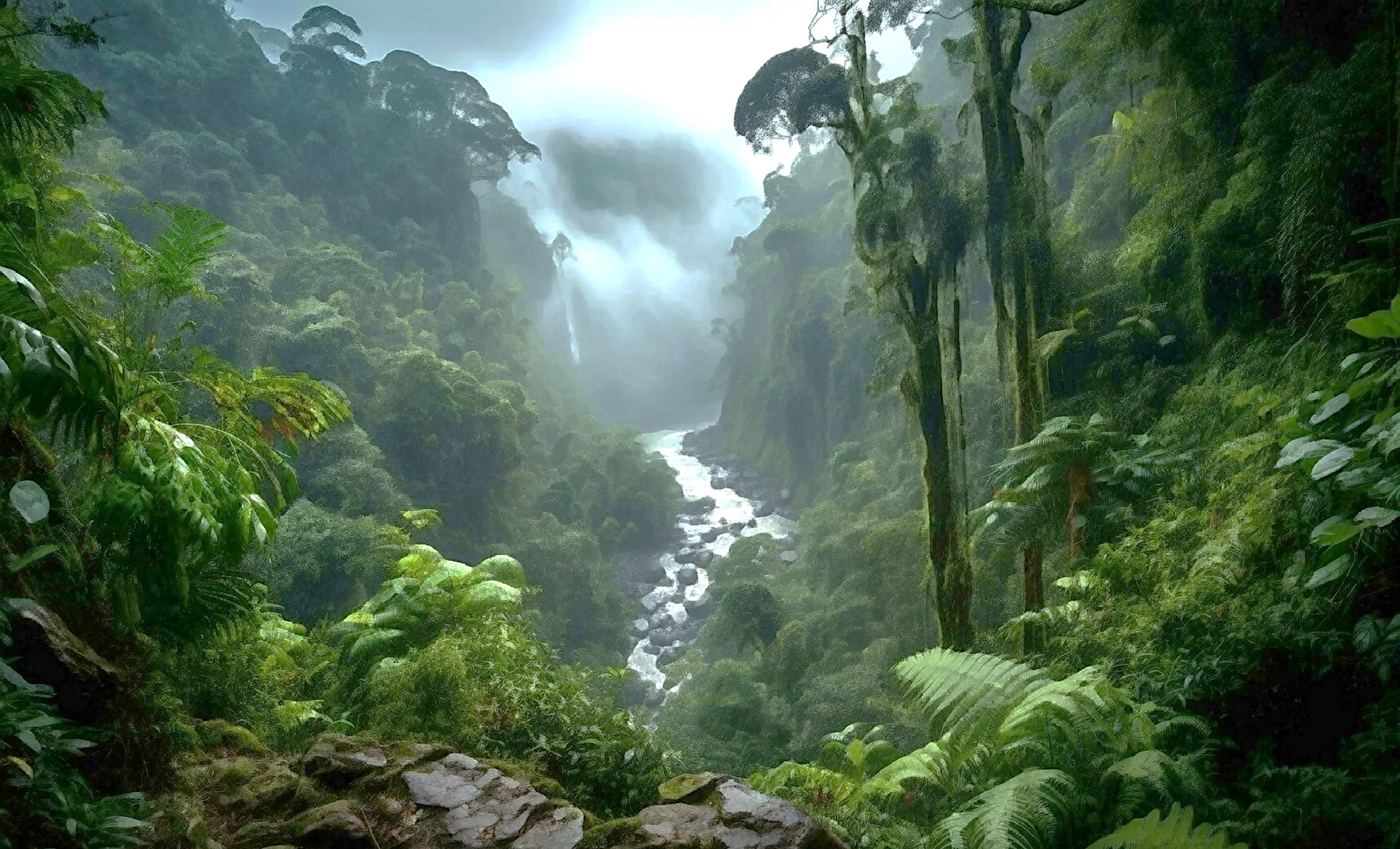
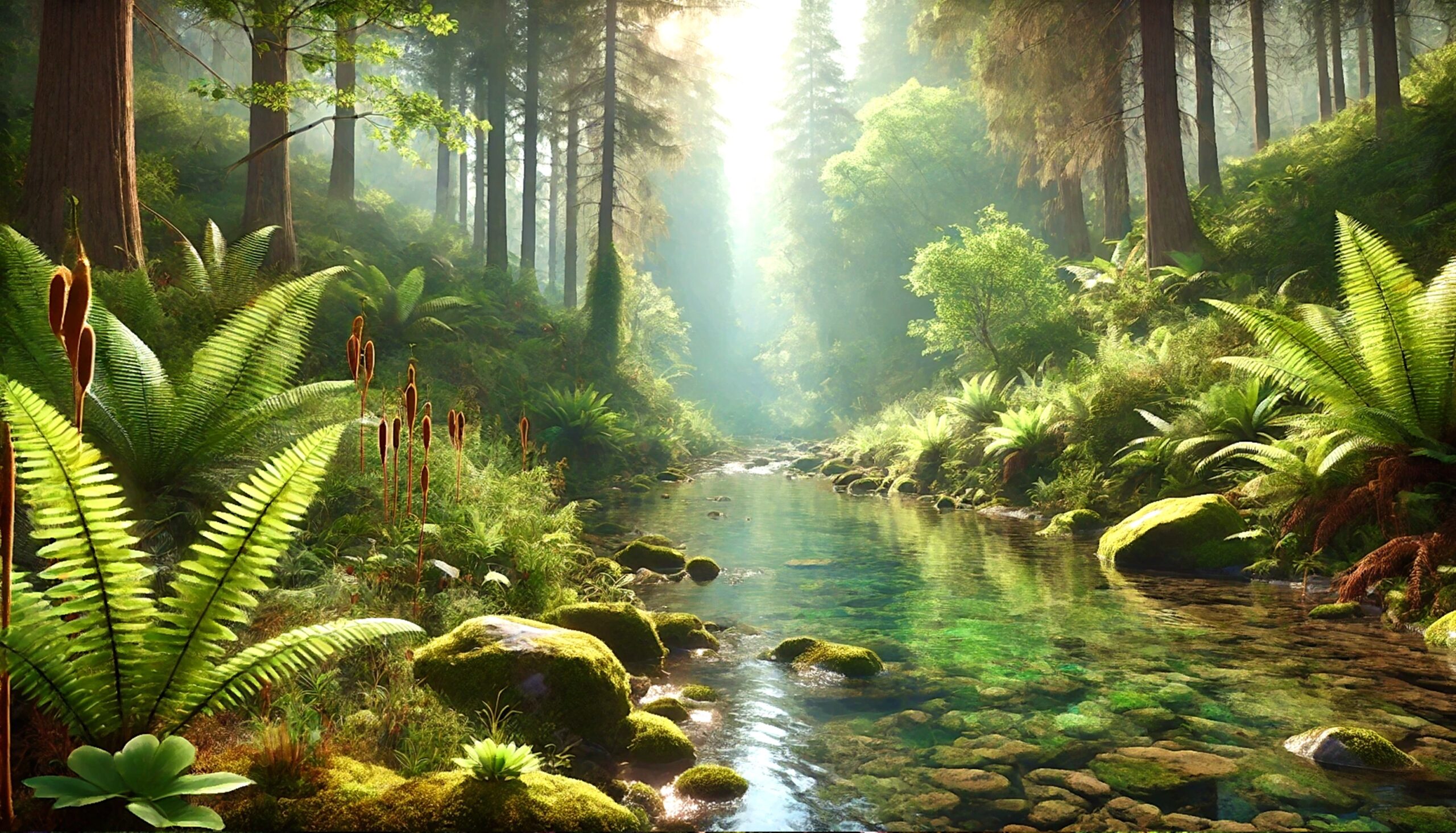
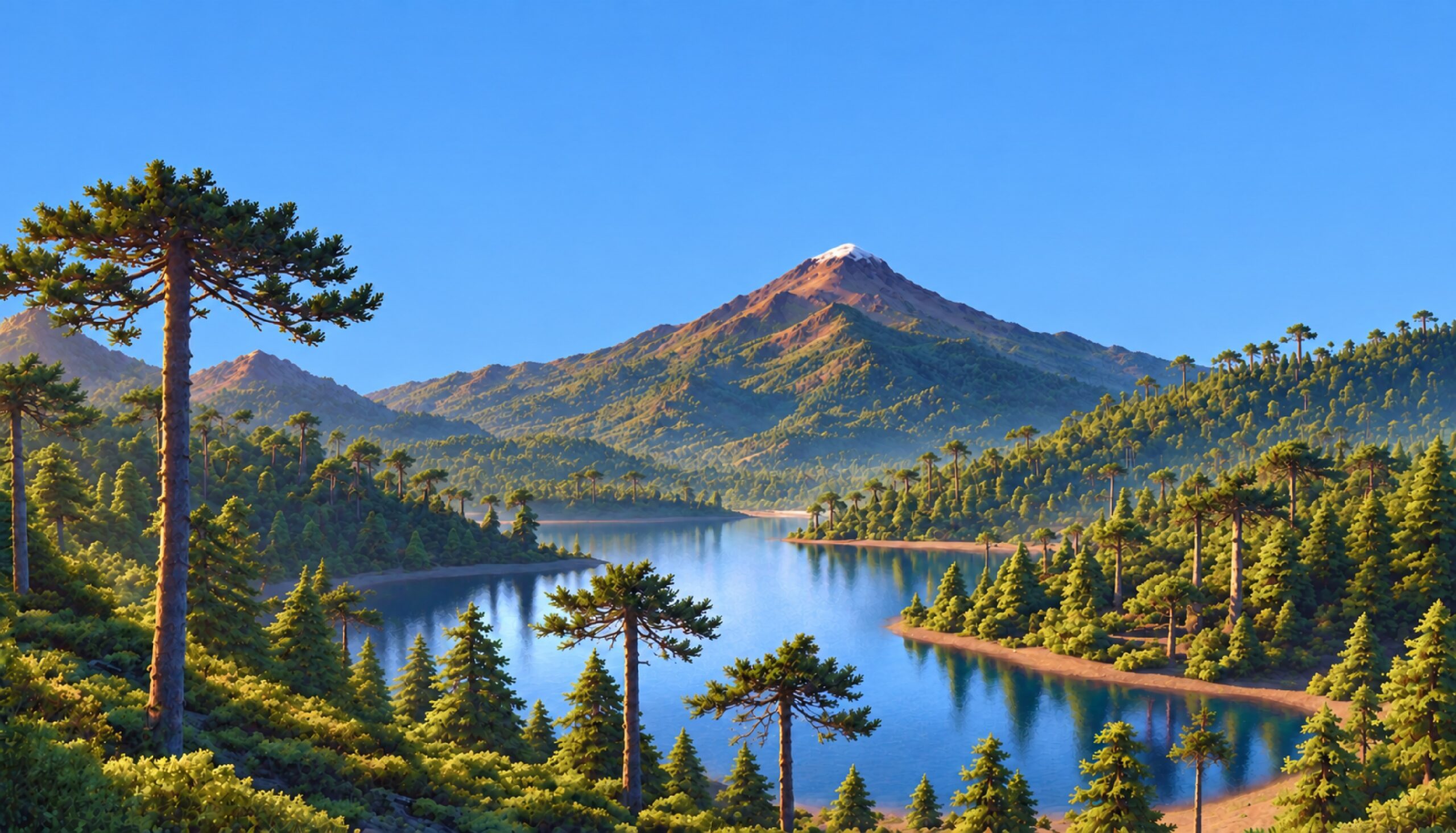
Die dominierenden Pflanzen in der Kreidezeit waren zunächst noch urtümliche Vertreter der Pflanzenwelt, wie zum Beispiel die Ginkgo-Bäume, die noch erheblich älter sind als die Dinosaurier und bereits lange vor ihrem Erscheinen auf der Erde wuchsen. Die größten Baumriesen stellten im Maastrichtium die Nadelbäume dar: Koniferen, Zypressen, Araukarien, und vor allem die gewaltigen Mammutbäume waren die höchsten Bäume, die in der Kreidezeit wuchsen. Am Waldboden gab es dagegen vor allem Farne, Palmfarne und Moose; Gräser waren in der Kreidezeit noch ausgesprochen selten. An Fluss- und Seeufern fand man häufig Schachtelhalme, die damals noch erheblich größer werden konnten als heute. Diese urtümlichen Pflanzen kamen auch gut mit Temperatur- und Witterungsunterschieden zurecht und hatten bereits mehrere große Artensterben überstanden, abgesehen von ihrer Größe sogar nahezu unverändert.
Die (R)evolution der Blütenpflanzen

Schon in der frühen Kreidezeit hatte die Natur allerdings einen ganz neuen Meilenstein in der Evolution der Pflanzenwelt gesetzt, denn in dieser Epoche begann die Entwicklung der Blütenpflanzen. Der große Vorteil dieser neuen Pflanzenfamilie war ihre erfolgreiche Partnerschaft mit den Insekten, die sie bereits in der Unterkreide begannen. Blütenpflanzen und die für ihre Verbreitung zuständigen Insekten revolutionierten die Ökosysteme auf der ganzen Welt. Die Symbiose zwischen Tier und Pflanze ging im Maastrichtium bereits so weit, dass einige Pflanzen nur von Insekten bestäubt und einige Insekten wie die Schmetterlinge nur vom Nektar der Blüten leben konnten. Die Blütenpflanzen profitierten durch ihre neue Form der Fortpflanzung und der damit verbundenen hohen Reproduktionsrate. Sie hatten zudem die Möglichkeit, ihre Samen über weite Strecken hin auszubreiten. So konnten sie schnell neue Lebensräume für sich erobern.
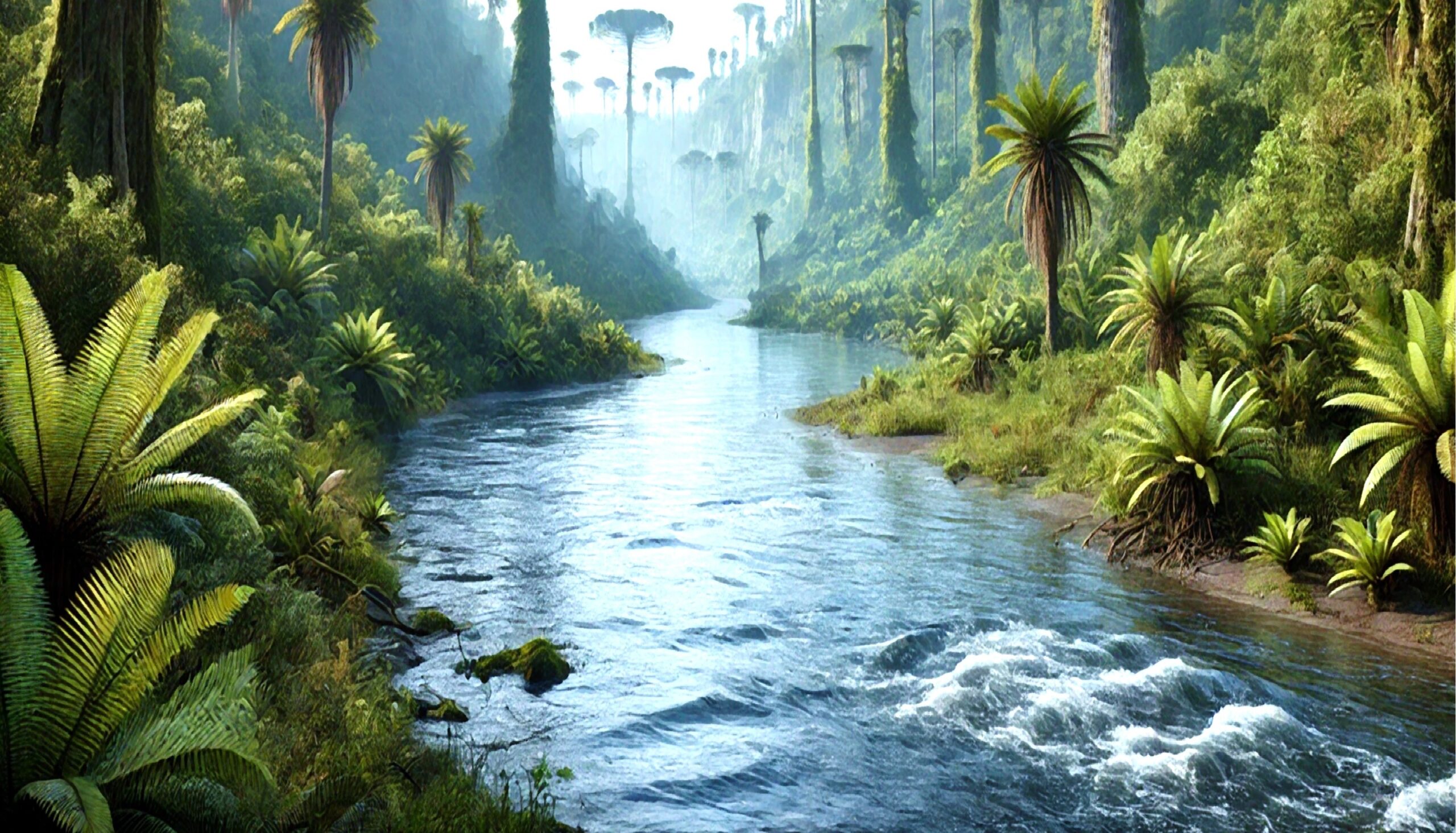
In der Welt von Tyrannosaurus und Triceratops gab es bereits üppige und fantastische Landschaften aus Blumenwiesen und blühenden Sträuchern. Malven, Rosen, Magnolien und Tulpenbäume versahen das Landschaftsbild schon damals mit bunten Tupfern. Auf dem Wasser trieben Seerosen und Wassersalat. Laubbäume wie Ahorne, Nussbäume, Buchen und Eichen waren schon recht häufig. In höheren Lagen gab es dagegen ausgedehnte Wälder aus Lorbeerbäumen, Pappeln und Linden.


Essbare Pflanzen

Eine der größten Fragen beim Schreiben von Die Weißen Steine stellte sich bereits ganz zu Beginn der Recherchearbeit: Einmal abgesehen vom Fleisch erlegter Tiere, wovon könnte sich ein Mensch in der späten Kreidezeit ernähren? Den größten Teil unserer Ernährung machen schließlich Pflanzenprodukte aus. Die wichtigsten Nahrungsgrundlagen der heutigen Zeit, zum Beispiel sämtliche Getreidesorten, hatten sich in der Kreidezeit jedoch noch gar nicht entwickelt. Trotzdem kam im späten Maastrichtium bereits eine sehr reichhaltige Pflanzenwelt vor, und tatsächlich war eines der Hauptkriterien bei der Auswahl des Handlungsortes die bereits sehr fortschrittliche und auch fossil gut überlieferte Pflanzenwelt der Hell-Creek-Formation, in der schon zahlreiche Pflanzen, die wir noch heute finden und sogar kultiviert haben, gewachsen sind.

Essbare Pflanzen
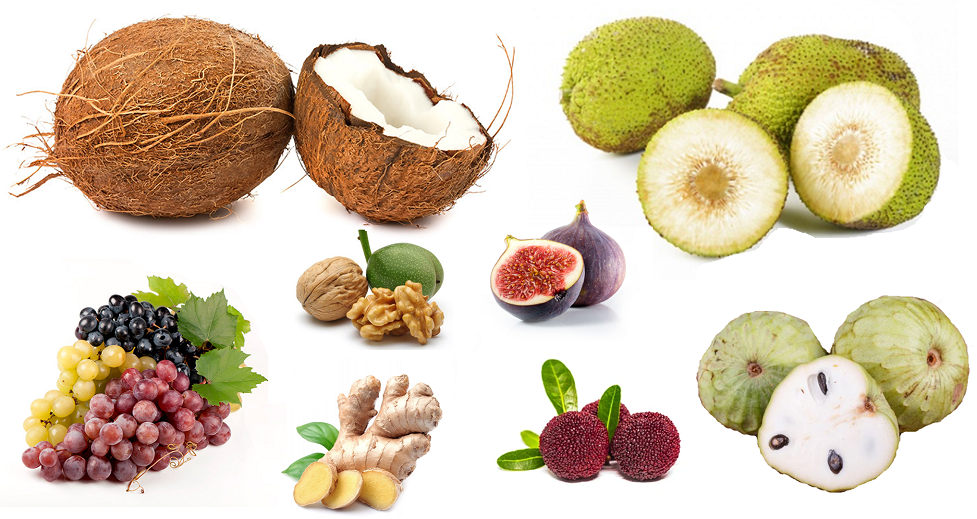
Die Figuren aus dem Roman finden in der Hell-Creek-Formation z.B. Kokosnüsse, Brotfrüchte, Weinbeeren, Walnüsse, Ingwerwurzeln, Feigen, Datteln, Myrica-Früchte, und Annonen (von links oben nach rechts unten).

Die Essbarkeit vieler anderer Pflanzen im Roman ist jedoch auch fiktional, da man natürlich nicht wissen kann, was ein Mensch damals wirklich verdauen konnte und welche Auswirkungen der Verzehr dieser Pflanzen eventuell auf uns gehabt hätte. Die Menschen orientieren sich bei ihrer Nahrungssuche deshalb vor allem daran, was pflanzenfressende Dinosaurier verzehren, und schauen sich ihre Nahrungsgewohnheiten ab.

Und noch etwas Wichtiges ist zu beachten: Viele Pflanzen, die im Laufe der langen Forschungsgeschichte der Hell Creek Formation beschrieben wurden, wurden einst modernen Pflanzen zugeordnet, denen die Fossilien ähnelten. Diese Einteilung sehen die meisten Paläobotaniker heute mit einiger Skepsis. Ähnlichkeiten können sich auch durch kovergente Evolution ergeben haben, was somit nicht heißt, dass hier tatsächliche Verwandtschaftsverhältnisse zu modernen Pflanzen bestehen, geschweige denn, dass die kreidezeitlichen Pflanzen heutigen Äquivalenten wirklich entsprachen. Aus diesem Grund hat man die meisten Taxa heute mit dem Präfix „aff.“ oder mit Anführungszeichen um den Gattungsnamen versehen, um auf diesen Umstand hinzuweisen. Es ist also keineswegs gesagt, dass trotz der botanischen Zuordnung im Lebensraum von T. rex und Co. wirklich Feigenbäume, Walnussbäume oder Weinreben gewachsen sind! Wir können das lediglich annehmen, aber nicht mit Gewissheit sagen.


Fossilbericht der Pflanzen aus der Hell Creek- und Lance Formation:

In dieser Liste sind alle fossil überlieferten Pflanzen aufgeführt, die in Montana, den Dakotas und Wyoming vor 66 Ma wuchsen. Natürlich bildet der Fossilbericht aber nur einen kleinen Teil der tatsächlichen Pflanzenvielfalt ab. Zu den Tieren, die dort in diesem Ökosystem lebten, gelangst du hier.

ACHTUNG: Wenn du dir die Liste der Pflanzen mit dem Smartphone anschaust, drehe es bitte in die Horizontale. Sonst kannst du die Bilder vielleicht nicht sehen!

Die Hell Creek Formation war eine wasserreiche, von Flüssen durchzogene und von saisonalen Überflutungen gekennzeichnetete Ebene. Während ihrer Ablagerungszeit zog sich das Meer immer weiter zurück. Auch dem feuchten Boden gediehen dichte Mischwälder aus Nadel- und Laubbäumen. Eine Vielfalt krautiger Blütenpflanzen, Farne und Moose wuchs im Unterholz des Waldes. An den freiliegenden Hängen großer Flusssysteme kamen Sträucher und Kletterpflanzen vor. Die Hinweise auf diese bewaldete Umgebung werden durch versteinertes Holz, verwurzelte Gley-Paläoböden und allgegenwärtige Blätter belegt. Der Aufbau dieser Wälder unterscheidet sich jedoch noch stark von jeder modernen Pflanzengesellschaft.1Fastovsky, D. E. & McSweeney, K. (1987). Paleosols spanning the Cretaceous–Paleogene transition, eastern Montana and western North Dakota. Geological Society of America Bulletin, 99(1), 66. doi:10.1130/0016-7606(1987)99<66:PSTCTE>2.0.CO;22Arens, N. C. & Allen, S. E. (2014). A florule from the base of the Hell Creek Formation in the type area of eastern Montana – implications for vegetation and climate. In Wilson, G. P., Clemens, W. A., Horner, J. R. & Hartman, J. H. (Eds.), Through the End of the Cretaceous in the Type Locality of the Hell Creek Formation in Montana and Adjacent Areas. Geological Society of America Special Paper 503, 173–207. doi:10.1130/2014.2503(06)3Peppe, D. J., Erickson, J. M. & Hickey, L. J. (2007). Fossil leaf species from the Fox Hills Formation (Upper Cretaceous, North Dakota, USA) and their paleogeographic significance. Journal of Paleontology, 81(3), 550–567. doi:10.1666/05067.14Stockey, R. A., Rothwell, G. W. & Johnson, K. R. (2016). Evaluating relationships among floating aquatic monocots – a new species of Cobbania (Araceae) from the Upper Maastrichtian of South Dakota. International Journal of Plant Sciences, 177(8), 706–725. doi:10.1086/6882855Manchester, S. R. & Hickey, L. J. (2007). Reproductive and vegetative organs of Browniea gen. n. (Nyssaceae) from the Paleocene of North America. International Journal of Plant Sciences, 168(2), 229–249. doi:10.1086/509661
Tatsächlich stellen bereits bedecktsamige Blütenpflanzen den bei weitem größten Teil des überlieferten Fossilberichts der Flora. Sie machen etwa etwa 90 Prozent aus, gefolgt von rund 5 Prozent Koniferen und 4 Prozent Farnen. Das letzte Prozent bilden alle anderen Pflanzengruppen. Verglichen mit den reichen Pflanzenfundstellen aus North und South Dakota wurden in Montana bislang relativ wenige Pflanzenfossilien gefunden. Einige Taxa wurden in den 1960er Jahren am Brownie Butte in Montana von Shoemaker gefunden und beschrieben6Shoemaker, R. E. (1966). Fossil leaves of the Hell Creek and Tullock Formations of eastern Montana. Palaeontographica B, 119, 54–75., aber die meisten stammen aus North Dakota (Slope County) und aus South Dakota. Unter den Fundlokalitäten sind die Mud Buttes in Bowman County, North Dakota, wahrscheinlich das reichste Megaflora-Vorkommen und der artenreichste Fundort für Blattfossilien aus der Hell Creek Formation. Der Großteil der Hell-Creek-Megaflora-Exemplare wird heute im Denver Museum of Nature & Science aufbewahrt.7Johnson, K. R. (2002). Megaflora of the Hell Creek and lower Fort Union Formations in the western Dakotas – vegetational response to climate change, the Cretaceous–Tertiary boundary event, and rapid marine transgression. In The Hell Creek Formation and the Cretaceous–Tertiary boundary in the northern Great Plains – An integrated continental record of the end of the Cretaceous. doi:10.1130/0-8137-2361-2.329

Karte mit den Aufschlüssen der marinen Pierre Shale- und Fox Hills Formation, sowie der lakustrinen Hell Creek- und Lance Formation aus der obersten Kreidezeit, sowie der paläozänen Fort Union Formation, alle in den Williston- und Powder-River-Becken. Modifizierte Karte nach Hartman (2002), aus dem als gemeinfrei gekennzeichneten Paper von Denver Fowler (2020). Dort heruntergeladen am 18.10.2025.

Entwicklung der Flora über die Zeit

Einen deutlichen Gegensatz zu den heutigen Great Plains zeigen wärmeliebende Taxa wie Palmen und Ingwergewächse. Sie belegen auch, dass das Klima damals wärmer und feuchter war als heute. Es unterlag allerdings auch einem stetigen Wandel, wie sich besonders in der Vegetation zeigt. Johnson hat insgesamt fünf Zonen der kreidezeitlichen Paläo-Flora werden heute unterschieden, beginnend mit der untersten und ältesten Zone: HCIa, HCIb, HCIIa, HCIIb und HCIII. Auch die jüngere, bereits paläozäne Fort Union Formation wurde von ihm entsprechend in Flora-Zonen unterteilt, mit FU0 in eine Zone unmittelbar nach der K-Pg-Grenze und FUI mit der Flora-Zone nach einer Phase der Erholung. 8Johnson, K. R. & Hickey, L. J. (1990). Megafloral change across the Cretaceous/Tertiary boundary in the northern Great Plains and Rocky Mountains, U.S.A. In Global Catastrophes in Earth History – An Interdisciplinary Conference on Impacts, Volcanism, and Mass Mortality. Geological Society of America Special Papers, 247, 433–444. doi:10.1130/SPE247-p433 Viele Taxa sind in den unteren Zonen selten oder fehlen ganz, während andere, früher häufige Formen, in den oberen (und jüngeren) Zonen seltener werden. Alles deutet darauf hin, dass die globalen Temperaturen in den letzten 300.000–500.000 Jahren der Kreidezeit zunahmen,9Johnson, K. R. (2002). Megaflora of the Hell Creek and lower Fort Union Formations in the western Dakotas – vegetational response to climate change, the Cretaceous–Tertiary boundary event, and rapid marine transgression. In The Hell Creek Formation and the Cretaceous–Tertiary boundary in the northern Great Plains – An integrated continental record of the end of the Cretaceous. doi:10.1130/0-8137-2361-2.32910Johnson, K. R., Nichols, D. J., Attrep, M. & Orth, C. J. (1989). High-resolution leaf-fossil record spanning the Cretaceous/Tertiary boundary. Nature, 340(6236), 708–711. doi:10.1038/340708a0, was wahrscheinlich mit dem Dekkan-Vulkanismus in Indien zusammenhängt.11Woelders, L. et al. (2017). Latest Cretaceous climatic and environmental change in the South Atlantic region. Paleoceanography and Paleoclimatology, 32(5), 466–483. doi:10.1002/2016PA00300712Barnet, J. S. K. et al. (2018). A new high-resolution chronology for the late Maastrichtian warming event – establishing robust temporal links with the onset of Deccan volcanism. Geology, 46(2), 147–150. doi:10.1130/G39771.113Barnet, J. S. K. et al. (2018). A new high-resolution chronology for the late Maastrichtian warming event – establishing robust temporal links with the onset of Deccan volcanism. Geology, 46(2), 147–150. doi:10.1130/G39771.1

Es gibt keinen Hinweis auf eine „Farnprärie“ in der Hell-Creek-Formation.14Retallack, G. J. (1994). A pedotype approach to latest Cretaceous and earliest Tertiary paleosols in eastern Montana. Geological Society of America Bulletin, 106(11), 1377–1397. doi:10.1130/0016-7606(1994)106<1377:APATLC>2.3.CO;2 Die genaue Beschaffenheit der Wälder ist höchst unsicher, da der Großteil der Gattungen der Angiospermen und Koniferen heute ausgestorben ist. Man geht davon aus, dass grob geschätzt 80 Prozent der terrestrischen Pflanzentaxa aus Hell Creek an der K–Pg-Grenze ausstarben. Andererseits gibt es einen starken Anstieg der fossilien Farnsporen in den zwei Zentimetern Gestein direkt oberhalb der K–Pg-Grenzschicht. Farne dürften die Flora somit in den ersten Jahrhunderten nach dem Einschlag dominiert haben, als sich die Natur langsam wieder erholte.15Johnson, K. R. (2002). Megaflora of the Hell Creek and lower Fort Union Formations in the western Dakotas – vegetational response to climate change, the Cretaceous–Tertiary boundary event, and rapid marine transgression. In The Hell Creek Formation and the Cretaceous–Tertiary boundary in the northern Great Plains – An integrated continental record of the end of the Cretaceous. doi:10.1130/0-8137-2361-2.329
Wichtige Hinweise zur Betrachtung des botanischen Fossilberichts

Viele Pflanzen, die im Laufe der langen Forschungsgeschichte der Hell Creek Formation beschrieben wurden, wurden einst modernen Pflanzen zugeordnet, denen die Fossilien ähnelten. Diese Einteilung sehen die meisten Forscher heute mit einiger Skepsis. Ähnlichkeiten können sich auch durch kovergente Evolution ergeben haben, was somit nicht heißt, dass hier tatsächliche Verwandtschaftsverhältnisse zu modernen Pflanzen bestehen, geschweige denn, dass die kreidezeitlichen Pflanzen heutigen Äquivalenten wirklich entsprachen. Aus diesem Grund hat man die meisten Taxa heute mit dem Präfix „aff.“ oder mit Anführungszeichen um den Gattungsnamen versehen, um auf diesen Umstand hinzuweisen. Es ist also keineswegs gesagt, dass trotz der botanischen Zuordnung im Lebensraum von T. rex und Co. wirklich Feigenbäume, Walnussbäume oder Weinreben gewachsen sind! Wir können das lediglich annehmen, aber nicht mit Gewissheit sagen.

Manche der Pflanzen, die hier nun Erwähnung finden, kamen mit unterschiedlichen Graden an Häufigkeit in den verschiedenen Flora-Zonen vor. In manchen sind sie auch überhaupt noch nicht nachgewiesen. Einige Pflanzen kommen beispielsweise in der untersten Zone, HCIa vor, fehlen aber in den darüberliegenden Zonen wie HCIII, tauchen dann aber nach dem Meteoriteneinschlag in FU0 und FUI wieder auf – manche sogar häufiger, als sie es in der Kreidezeit je waren. Somit kamen sie wahrscheinlich durchgängig im gesamten Ablagerungszeitraum bis zum Ende des Maastrichtiums in Hell Creek vor, waren in manchen Zeiten aber wohl eher selten. Die Zone, in denen eine Pflanze am häufigsten vorkam, ist in der Spalte „Stratigraphische Position“ grün markiert. So gewinnt der Leser hier auch eine Übersicht, welche Pflanzen in welcher Zeit häufiger oder seltener waren.


Moose, Bärlappe und Farne:

Bild: Spezies: Fundort: Stratigraphische Position: Bekanntes Material: Bemerkungen:

Equisetum sp.16Johnson, K. R. (2002). Megaflora of the Hell Creek and lower Fort Union Formations in the western Dakotas – vegetational response to climate change, the Cretaceous–Tertiary boundary event, and rapid marine transgression. In The Hell Creek Formation and the Cretaceous–Tertiary boundary in the northern Great Plains – An integrated continental record of the end of the Cretaceous. doi:10.1130/0-8137-2361-2.329 North Dakota, South Dakota HCIII 4 Exemplare Schachtelhalm (Equisetopsida)

Hydropteris pinnata17Johnson, K. R. (2002). Megaflora of the Hell Creek and lower Fort Union Formations in the western Dakotas – vegetational response to climate change, the Cretaceous–Tertiary boundary event, and rapid marine transgression. In The Hell Creek Formation and the Cretaceous–Tertiary boundary in the northern Great Plains – An integrated continental record of the end of the Cretaceous. doi:10.1130/0-8137-2361-2.329 North Dakota, South Dakota HCIIa 5 Exemplare Schwimmfarn (Salviniales)
Marchantia pealii18Johnson, K. R. (2002). Megaflora of the Hell Creek and lower Fort Union Formations in the western Dakotas – vegetational response to climate change, the Cretaceous–Tertiary boundary event, and rapid marine transgression. In The Hell Creek Formation and the Cretaceous–Tertiary boundary in the northern Great Plains – An integrated continental record of the end of the Cretaceous. doi:10.1130/0-8137-2361-2.329 North Dakota, South Dakota HCIa, HCIIa, FUI 33 Exemplare Lebermoos (Marchantiophyta)
Polypodiaceae indet.19Johnson, K. R. (2002). Megaflora of the Hell Creek and lower Fort Union Formations in the western Dakotas – vegetational response to climate change, the Cretaceous–Tertiary boundary event, and rapid marine transgression. In The Hell Creek Formation and the Cretaceous–Tertiary boundary in the northern Great Plains – An integrated continental record of the end of the Cretaceous. doi:10.1130/0-8137-2361-2.329 North Dakota, South Dakota HCIII 1 Exemplar Tüpfelfarn (Polypodiaceae)
Salvinia sp.20Johnson, K. R. (2002). Megaflora of the Hell Creek and lower Fort Union Formations in the western Dakotas – vegetational response to climate change, the Cretaceous–Tertiary boundary event, and rapid marine transgression. In The Hell Creek Formation and the Cretaceous–Tertiary boundary in the northern Great Plains – An integrated continental record of the end of the Cretaceous. doi:10.1130/0-8137-2361-2.329 North Dakota HCIII 1 Exemplar Schwimmfarn (Salviniales)

Nacktsamer:

Bild: Spezies: Fundort: Stratigraphische Position: Bekanntes Material: Bemerkungen:

Androvettia catenulata21Johnson, K. R. (2002). Megaflora of the Hell Creek and lower Fort Union Formations in the western Dakotas – vegetational response to climate change, the Cretaceous–Tertiary boundary event, and rapid marine transgression. In The Hell Creek Formation and the Cretaceous–Tertiary boundary in the northern Great Plains – An integrated continental record of the end of the Cretaceous. doi:10.1130/0-8137-2361-2.329 North Dakota, South Dakota HCIa, HCIIa, HCIII, FUI 54 Exemplare Zypresse (Cheirolepidiaceae)
Araucaria sp.22Johnson, K. R. (2002). Megaflora of the Hell Creek and lower Fort Union Formations in the western Dakotas – vegetational response to climate change, the Cretaceous–Tertiary boundary event, and rapid marine transgression. In The Hell Creek Formation and the Cretaceous–Tertiary boundary in the northern Great Plains – An integrated continental record of the end of the Cretaceous. doi:10.1130/0-8137-2361-2.329 North Dakota, South Dakota HCIa, HCIIb 33 Exemplare Araukarie (Araucaria)

Cupressinocladus interruptus23Johnson, K. R. (2002). Megaflora of the Hell Creek and lower Fort Union Formations in the western Dakotas – vegetational response to climate change, the Cretaceous–Tertiary boundary event, and rapid marine transgression. In The Hell Creek Formation and the Cretaceous–Tertiary boundary in the northern Great Plains – An integrated continental record of the end of the Cretaceous. doi:10.1130/0-8137-2361-2.32924Arens, N. C. & Allen, S. E. (2014). A florule from the base of the Hell Creek Formation in the type area of eastern Montana – implications for vegetation and climate. In Wilson, G. P., Clemens, W. A., Horner, J. R. & Hartman, J. H. (Eds.), Through the End of the Cretaceous in the Type Locality of the Hell Creek Formation in Montana and Adjacent Areas. Geological Society of America Special Paper 503, 173–207. doi:10.1130/2014.2503(06) North Dakota, South Dakota, Montana HCIa, FUo, FUI; Typlokalität 178 Exemplare Zypresse (Cupressaceae)

Dammarites sp.25Johnson, K. R. (2002). Megaflora of the Hell Creek and lower Fort Union Formations in the western Dakotas – vegetational response to climate change, the Cretaceous–Tertiary boundary event, and rapid marine transgression. In The Hell Creek Formation and the Cretaceous–Tertiary boundary in the northern Great Plains – An integrated continental record of the end of the Cretaceous. doi:10.1130/0-8137-2361-2.329 North Dakota, South Dakota HCIII 19 Exemplare Araukarie (Araucaria)
Ditaxocladus catenulata26Johnson, K. R. (2002). Megaflora of the Hell Creek and lower Fort Union Formations in the western Dakotas – vegetational response to climate change, the Cretaceous–Tertiary boundary event, and rapid marine transgression. In The Hell Creek Formation and the Cretaceous–Tertiary boundary in the northern Great Plains – An integrated continental record of the end of the Cretaceous. doi:10.1130/0-8137-2361-2.329 North Dakota, South Dakota HCIII 53 Exemplare Zypresse (Cupressaceae)

Elatides longifolia27Johnson, K. R. (2002). Megaflora of the Hell Creek and lower Fort Union Formations in the western Dakotas – vegetational response to climate change, the Cretaceous–Tertiary boundary event, and rapid marine transgression. In The Hell Creek Formation and the Cretaceous–Tertiary boundary in the northern Great Plains – An integrated continental record of the end of the Cretaceous. doi:10.1130/0-8137-2361-2.329 North Dakota, South Dakota HCIa, HCIII 88 Exemplare Nadelbaum (Pinophyta)
Ginkgo adiantoides28Johnson, K. R. (2002). Megaflora of the Hell Creek and lower Fort Union Formations in the western Dakotas – vegetational response to climate change, the Cretaceous–Tertiary boundary event, and rapid marine transgression. In The Hell Creek Formation and the Cretaceous–Tertiary boundary in the northern Great Plains – An integrated continental record of the end of the Cretaceous. doi:10.1130/0-8137-2361-2.32929Arens, N. C. & Allen, S. E. (2014). A florule from the base of the Hell Creek Formation in the type area of eastern Montana – implications for vegetation and climate. In Wilson, G. P., Clemens, W. A., Horner, J. R. & Hartman, J. H. (Eds.), Through the End of the Cretaceous in the Type Locality of the Hell Creek Formation in Montana and Adjacent Areas. Geological Society of America Special Paper 503, 173–207. doi:10.1130/2014.2503(06) North Dakota, South Dakota, Montana HCIa, HCIIa, HCIIb, Typlokalität 84 Exemplare Ginkgo (Ginkgoopsida)
Glyptostrobus europaeus30Johnson, K. R. (2002). Megaflora of the Hell Creek and lower Fort Union Formations in the western Dakotas – vegetational response to climate change, the Cretaceous–Tertiary boundary event, and rapid marine transgression. In The Hell Creek Formation and the Cretaceous–Tertiary boundary in the northern Great Plains – An integrated continental record of the end of the Cretaceous. doi:10.1130/0-8137-2361-2.32931Arens, N. C. & Allen, S. E. (2014). A florule from the base of the Hell Creek Formation in the type area of eastern Montana – implications for vegetation and climate. In Wilson, G. P., Clemens, W. A., Horner, J. R. & Hartman, J. H. (Eds.), Through the End of the Cretaceous in the Type Locality of the Hell Creek Formation in Montana and Adjacent Areas. Geological Society of America Special Paper 503, 173–207. doi:10.1130/2014.2503(06) North Dakota, South Dakota, Montana HCIa, FU0, FUI, Typlokalität 534 Exemplare Zypresse (Cupressaceae)

Glyptostrobus sp.32Johnson, K. R. (2002). Megaflora of the Hell Creek and lower Fort Union Formations in the western Dakotas – vegetational response to climate change, the Cretaceous–Tertiary boundary event, and rapid marine transgression. In The Hell Creek Formation and the Cretaceous–Tertiary boundary in the northern Great Plains – An integrated continental record of the end of the Cretaceous. doi:10.1130/0-8137-2361-2.329 North Dakota, South Dakota HCIIa, HCIIb, HCIII 22 Exemplare Zypresse (Cupressaceae)

Metasequoia occidentalis33Johnson, K. R. (2002). Megaflora of the Hell Creek and lower Fort Union Formations in the western Dakotas – vegetational response to climate change, the Cretaceous–Tertiary boundary event, and rapid marine transgression. In The Hell Creek Formation and the Cretaceous–Tertiary boundary in the northern Great Plains – An integrated continental record of the end of the Cretaceous. doi:10.1130/0-8137-2361-2.32934Arens, N. C. & Allen, S. E. (2014). A florule from the base of the Hell Creek Formation in the type area of eastern Montana – implications for vegetation and climate. In Wilson, G. P., Clemens, W. A., Horner, J. R. & Hartman, J. H. (Eds.), Through the End of the Cretaceous in the Type Locality of the Hell Creek Formation in Montana and Adjacent Areas. Geological Society of America Special Paper 503, 173–207. doi:10.1130/2014.2503(06) North Dakota, South Dakota, Montana HCIa, HCIIa, FUI; Typlokalität 190 Exemplare Mammutbaum (Sequoioideae)
Metasequoia sp.35Johnson, K. R. (2002). Megaflora of the Hell Creek and lower Fort Union Formations in the western Dakotas – vegetational response to climate change, the Cretaceous–Tertiary boundary event, and rapid marine transgression. In The Hell Creek Formation and the Cretaceous–Tertiary boundary in the northern Great Plains – An integrated continental record of the end of the Cretaceous. doi:10.1130/0-8137-2361-2.329 North Dakota, South Dakota HCIa, HCIIa, HCIIb, HCIII 58 Exemplare Mammutbaum (Sequoioideae)

Nilssoniocladus comtula36Shoemaker, R. E. (1966). Fossil leaves of the Hell Creek and Tullock Formations of eastern Montana. Palaeontographica B, 119, 54–75. Montana Brownie Butte site Viele Exemplare Palmfarn (Cycadopsida)
Nilssoniocladus yukonensis37Johnson, K. R. (2002). Megaflora of the Hell Creek and lower Fort Union Formations in the western Dakotas – vegetational response to climate change, the Cretaceous–Tertiary boundary event, and rapid marine transgression. In The Hell Creek Formation and the Cretaceous–Tertiary boundary in the northern Great Plains – An integrated continental record of the end of the Cretaceous. doi:10.1130/0-8137-2361-2.329 North Dakota, South Dakota HCIa, HCIIa, HCIII 16 Exemplare Palmfarn (Cycadopsida)

Sequoia sp.38Johnson, K. R. (2002). Megaflora of the Hell Creek and lower Fort Union Formations in the western Dakotas – vegetational response to climate change, the Cretaceous–Tertiary boundary event, and rapid marine transgression. In The Hell Creek Formation and the Cretaceous–Tertiary boundary in the northern Great Plains – An integrated continental record of the end of the Cretaceous. doi:10.1130/0-8137-2361-2.329 North Dakota, South Dakota HCIa, HCIb, HCIII 52 Exemplare Mammutbaum (Sequoioideae)

Sequoites artus39Shoemaker, R. E. (1966). Fossil leaves of the Hell Creek and Tullock Formations of eastern Montana. Palaeontographica B, 119, 54–75. Montana Brownie Butte site viele Exemplare Mammutbaum (Sequoioideae)
Taxodium olrikii40Johnson, K. R. (2002). Megaflora of the Hell Creek and lower Fort Union Formations in the western Dakotas – vegetational response to climate change, the Cretaceous–Tertiary boundary event, and rapid marine transgression. In The Hell Creek Formation and the Cretaceous–Tertiary boundary in the northern Great Plains – An integrated continental record of the end of the Cretaceous. doi:10.1130/0-8137-2361-2.329 North Dakota, South Dakota HCIa, HCIb, HCIIa, HCIII, FU0, FUI 92 Exemplare Sumpfzypresse (Taxodioideae)

Blütenpflanzen:

Bild: Spezies: Fundort: Stratigraphische Position: Bekanntes Material: Bemerkungen:
Annona robusta41Shoemaker, R. E. (1966). Fossil leaves of the Hell Creek and Tullock Formations of eastern Montana. Palaeontographica B, 119, 54–75. Montana Brownie Butte Site Wenige Exemplare Annone (Annonaceae)

Araliaephyllum polevoi42Johnson, K. R. (2002). Megaflora of the Hell Creek and lower Fort Union Formations in the western Dakotas – vegetational response to climate change, the Cretaceous–Tertiary boundary event, and rapid marine transgression. In The Hell Creek Formation and the Cretaceous–Tertiary boundary in the northern Great Plains – An integrated continental record of the end of the Cretaceous. doi:10.1130/0-8137-2361-2.329 North Dakota, South Dakota HCIII 13 Exemplare Araliengewächse (Araliaceae)
Artocarpus lessigiana43Johnson, K. R. (2002). Megaflora of the Hell Creek and lower Fort Union Formations in the western Dakotas – vegetational response to climate change, the Cretaceous–Tertiary boundary event, and rapid marine transgression. In The Hell Creek Formation and the Cretaceous–Tertiary boundary in the northern Great Plains – An integrated continental record of the end of the Cretaceous. doi:10.1130/0-8137-2361-2.32944Arens, N. C. & Allen, S. E. (2014). A florule from the base of the Hell Creek Formation in the type area of eastern Montana – implications for vegetation and climate. In Wilson, G. P., Clemens, W. A., Horner, J. R. & Hartman, J. H. (Eds.), Through the End of the Cretaceous in the Type Locality of the Hell Creek Formation in Montana and Adjacent Areas. Geological Society of America Special Paper 503, 173–207. doi:10.1130/2014.2503(06) North Dakota, South Dakota, Montana HCIIa, HCIII, Typlokalität 62 Exemplare Brotfruchtbaum; Maulbeergewächs (Moraceae)

Averrhoites affinis45Johnson, K. R. (2002). Megaflora of the Hell Creek and lower Fort Union Formations in the western Dakotas – vegetational response to climate change, the Cretaceous–Tertiary boundary event, and rapid marine transgression. In The Hell Creek Formation and the Cretaceous–Tertiary boundary in the northern Great Plains – An integrated continental record of the end of the Cretaceous. doi:10.1130/0-8137-2361-2.329 South Dakota Licking Leaves Locality 1 Exemplar Sauerkleegewächse (Oxalidaceae)
Berberidaceae indet.46Johnson, K. R. (2002). Megaflora of the Hell Creek and lower Fort Union Formations in the western Dakotas – vegetational response to climate change, the Cretaceous–Tertiary boundary event, and rapid marine transgression. In The Hell Creek Formation and the Cretaceous–Tertiary boundary in the northern Great Plains – An integrated continental record of the end of the Cretaceous. doi:10.1130/0-8137-2361-2.329 North Dakota, South Dakota HCIII 94 Exemplare Berberitze (Berberidaceae)

Betula perantigua47Arens, N. C. & Allen, S. E. (2014). A florule from the base of the Hell Creek Formation in the type area of eastern Montana – implications for vegetation and climate. In Wilson, G. P., Clemens, W. A., Horner, J. R. & Hartman, J. H. (Eds.), Through the End of the Cretaceous in the Type Locality of the Hell Creek Formation in Montana and Adjacent Areas. Geological Society of America Special Paper 503, 173–207. doi:10.1130/2014.2503(06) Montana Typolokalität 2 Exemplare Birke (Betulacae)

Bisonia niemii48Johnson, K. R. (2002). Megaflora of the Hell Creek and lower Fort Union Formations in the western Dakotas – vegetational response to climate change, the Cretaceous–Tertiary boundary event, and rapid marine transgression. In The Hell Creek Formation and the Cretaceous–Tertiary boundary in the northern Great Plains – An integrated continental record of the end of the Cretaceous. doi:10.1130/0-8137-2361-2.329 North Dakota, South Dakota HCIII 64 Exemplare Lorbeer (Lauraceae)
Browniea serrata49Shoemaker, R. E. (1966). Fossil leaves of the Hell Creek and Tullock Formations of eastern Montana. Palaeontographica B, 119, 54–75. Montana Brownie Butte Site Wenige Exemplare Tupelo (Nyssaceae)
Cannabaceae indet.50Johnson, K. R. (2002). Megaflora of the Hell Creek and lower Fort Union Formations in the western Dakotas – vegetational response to climate change, the Cretaceous–Tertiary boundary event, and rapid marine transgression. In The Hell Creek Formation and the Cretaceous–Tertiary boundary in the northern Great Plains – An integrated continental record of the end of the Cretaceous. doi:10.1130/0-8137-2361-2.329 North Dakota, South Dakota HCIb, HCIIa 365 Exemplare Hanfgewächs (Cannabaceae)
Carpites ulmiformis51Johnson, K. R. (2002). Megaflora of the Hell Creek and lower Fort Union Formations in the western Dakotas – vegetational response to climate change, the Cretaceous–Tertiary boundary event, and rapid marine transgression. In The Hell Creek Formation and the Cretaceous–Tertiary boundary in the northern Great Plains – An integrated continental record of the end of the Cretaceous. doi:10.1130/0-8137-2361-2.329 North Dakota, South Dakota HCIb, HCIIa, HCIIb, HCIII 9 Exemplare unsichere Zuordnung; Doldenblüter (Apiaceae)
Celastrus taurenensis52Johnson, K. R. (2002). Megaflora of the Hell Creek and lower Fort Union Formations in the western Dakotas – vegetational response to climate change, the Cretaceous–Tertiary boundary event, and rapid marine transgression. In The Hell Creek Formation and the Cretaceous–Tertiary boundary in the northern Great Plains – An integrated continental record of the end of the Cretaceous. doi:10.1130/0-8137-2361-2.32953Shoemaker, R. E. (1966). Fossil leaves of the Hell Creek and Tullock Formations of eastern Montana. Palaeontographica B, 119, 54–75.54Arens, N. C. & Allen, S. E. (2014). A florule from the base of the Hell Creek Formation in the type area of eastern Montana – implications for vegetation and climate. In Wilson, G. P., Clemens, W. A., Horner, J. R. & Hartman, J. H. (Eds.), Through the End of the Cretaceous in the Type Locality of the Hell Creek Formation in Montana and Adjacent Areas. Geological Society of America Special Paper 503, 173–207. doi:10.1130/2014.2503(06) North Dakota, South Dakota, Montana HCIa, HCIb, HCIIa, HCIIb; Brownie Butte Site; Typlokalität 151 Exemplare Baumwürger; Spindelbaumgewächs (Celastraceae)

Cercidiphyllum sp.55Johnson, K. R. (2002). Megaflora of the Hell Creek and lower Fort Union Formations in the western Dakotas – vegetational response to climate change, the Cretaceous–Tertiary boundary event, and rapid marine transgression. In The Hell Creek Formation and the Cretaceous–Tertiary boundary in the northern Great Plains – An integrated continental record of the end of the Cretaceous. doi:10.1130/0-8137-2361-2.329 North Dakota, South Dakota HCIa, HCIIa, HCIIb 41 Exemplare Kuchenbaum (Cercidiphyllaceae)
Cinnamomum lineafolia56Johnson, K. R. (2002). Megaflora of the Hell Creek and lower Fort Union Formations in the western Dakotas – vegetational response to climate change, the Cretaceous–Tertiary boundary event, and rapid marine transgression. In The Hell Creek Formation and the Cretaceous–Tertiary boundary in the northern Great Plains – An integrated continental record of the end of the Cretaceous. doi:10.1130/0-8137-2361-2.329 North Dakota, South Dakota HCIa, HCIb, HCIIa, HCIIb 259 Exemplare Zimtbaum; Lorbeer (Lauraceae)

Cissus marginatus57Shoemaker, R. E. (1966). Fossil leaves of the Hell Creek and Tullock Formations of eastern Montana. Palaeontographica B, 119, 54–75. Montana Brownie Butte Site Viele Exemplare Weinrebe (Vitaceae)

Cissites acerifolia58Johnson, K. R. (2002). Megaflora of the Hell Creek and lower Fort Union Formations in the western Dakotas – vegetational response to climate change, the Cretaceous–Tertiary boundary event, and rapid marine transgression. In The Hell Creek Formation and the Cretaceous–Tertiary boundary in the northern Great Plains – An integrated continental record of the end of the Cretaceous. doi:10.1130/0-8137-2361-2.329 North Dakota, South Dakota HCIa, HCIIa, HCIII 29 Exemplare Weinrebe (Vitaceae)

Cissites insignis59Johnson, K. R. (2002). Megaflora of the Hell Creek and lower Fort Union Formations in the western Dakotas – vegetational response to climate change, the Cretaceous–Tertiary boundary event, and rapid marine transgression. In The Hell Creek Formation and the Cretaceous–Tertiary boundary in the northern Great Plains – An integrated continental record of the end of the Cretaceous. doi:10.1130/0-8137-2361-2.329 North Dakota HCIII 1 Exemplar Weinrebe (Vitaceae)
Cissites lobata60Johnson, K. R. (2002). Megaflora of the Hell Creek and lower Fort Union Formations in the western Dakotas – vegetational response to climate change, the Cretaceous–Tertiary boundary event, and rapid marine transgression. In The Hell Creek Formation and the Cretaceous–Tertiary boundary in the northern Great Plains – An integrated continental record of the end of the Cretaceous. doi:10.1130/0-8137-2361-2.329 North Dakota, South Dakota HCIII 9 Exemplare Weinrebe (Vitaceae)
Cissites puilosokensis61Johnson, K. R. (2002). Megaflora of the Hell Creek and lower Fort Union Formations in the western Dakotas – vegetational response to climate change, the Cretaceous–Tertiary boundary event, and rapid marine transgression. In The Hell Creek Formation and the Cretaceous–Tertiary boundary in the northern Great Plains – An integrated continental record of the end of the Cretaceous. doi:10.1130/0-8137-2361-2.329 North Dakota, South Dakota HCIII 16 Exemplare Weinrebe (Vitaceae)
Cobbania corrugata62Johnson, K. R. (2002). Megaflora of the Hell Creek and lower Fort Union Formations in the western Dakotas – vegetational response to climate change, the Cretaceous–Tertiary boundary event, and rapid marine transgression. In The Hell Creek Formation and the Cretaceous–Tertiary boundary in the northern Great Plains – An integrated continental record of the end of the Cretaceous. doi:10.1130/0-8137-2361-2.329 North Dakota, South Dakota HCIa, HCIb, HCIIa, HCIIb 61 Exemplare Wassersalat, Aronstabgewächs (Araceae)
Cobbania hickeyi63Stockey, R. A., Rothwell, G. W. & Johnson, K. R. (2016). Evaluating relationships among floating aquatic monocots – a new species of Cobbania (Araceae) from the Upper Maastrichtian of South Dakota. International Journal of Plant Sciences, 177(8), 706–725. doi:10.1086/688285 South Dakota Oberste Hell Creek Formation Mehrere Exemplare Wassersalat, Aronstabgewächs (Araceae)
Cornophyllum newberryi64Johnson, K. R. (2002). Megaflora of the Hell Creek and lower Fort Union Formations in the western Dakotas – vegetational response to climate change, the Cretaceous–Tertiary boundary event, and rapid marine transgression. In The Hell Creek Formation and the Cretaceous–Tertiary boundary in the northern Great Plains – An integrated continental record of the end of the Cretaceous. doi:10.1130/0-8137-2361-2.329 North Dakota, South Dakota HCIIa, HCIII, FU0, FUI 185 Exemplare Kornelkirsche, Hartriegelgewächs (Cornaceae)
Dicotylophyllum anomalum65Johnson, K. R. (2002). Megaflora of the Hell Creek and lower Fort Union Formations in the western Dakotas – vegetational response to climate change, the Cretaceous–Tertiary boundary event, and rapid marine transgression. In The Hell Creek Formation and the Cretaceous–Tertiary boundary in the northern Great Plains – An integrated continental record of the end of the Cretaceous. doi:10.1130/0-8137-2361-2.329 North Dakota, South Dakota HCIII, FU0, FUI 373 Exemplare Unsichere Zuordnung, wahrscheinlich eine Magnolie (Magnoliopsida)
Dombeyopsis obtusa66Shoemaker, R. E. (1966). Fossil leaves of the Hell Creek and Tullock Formations of eastern Montana. Palaeontographica B, 119, 54–75. Montana Brownie Butte Site Viele Exemplare Unsichere Zuordnung, wahrscheinlich eine Malve (Malvaceae)
Dryophyllum subfalcatum67Johnson, K. R. (2002). Megaflora of the Hell Creek and lower Fort Union Formations in the western Dakotas – vegetational response to climate change, the Cretaceous–Tertiary boundary event, and rapid marine transgression. In The Hell Creek Formation and the Cretaceous–Tertiary boundary in the northern Great Plains – An integrated continental record of the end of the Cretaceous. doi:10.1130/0-8137-2361-2.32968Shoemaker, R. E. (1966). Fossil leaves of the Hell Creek and Tullock Formations of eastern Montana. Palaeontographica B, 119, 54–75.69Arens, N. C. & Allen, S. E. (2014). A florule from the base of the Hell Creek Formation in the type area of eastern Montana – implications for vegetation and climate. In Wilson, G. P., Clemens, W. A., Horner, J. R. & Hartman, J. H. (Eds.), Through the End of the Cretaceous in the Type Locality of the Hell Creek Formation in Montana and Adjacent Areas. Geological Society of America Special Paper 503, 173–207. doi:10.1130/2014.2503(06) North Dakota, South Dakota, Montana HCIa, HCIIa, HCIIb, HCIII, FU0; Brownie Butte Site; Typlokalität 1003 Exemplare Silberbaum (Sabiaceae)

Dryophyllum tenneseensis70Johnson, K. R. (2002). Megaflora of the Hell Creek and lower Fort Union Formations in the western Dakotas – vegetational response to climate change, the Cretaceous–Tertiary boundary event, and rapid marine transgression. In The Hell Creek Formation and the Cretaceous–Tertiary boundary in the northern Great Plains – An integrated continental record of the end of the Cretaceous. doi:10.1130/0-8137-2361-2.329 North Dakota, South Dakota HCIa, HCIIa, HCIII 99 Exemplare Silberbaum (Sabiaceae)
Erlingdorfia montana71Johnson, K. R. (2002). Megaflora of the Hell Creek and lower Fort Union Formations in the western Dakotas – vegetational response to climate change, the Cretaceous–Tertiary boundary event, and rapid marine transgression. In The Hell Creek Formation and the Cretaceous–Tertiary boundary in the northern Great Plains – An integrated continental record of the end of the Cretaceous. doi:10.1130/0-8137-2361-2.32972Arens, N. C. & Allen, S. E. (2014). A florule from the base of the Hell Creek Formation in the type area of eastern Montana – implications for vegetation and climate. In Wilson, G. P., Clemens, W. A., Horner, J. R. & Hartman, J. H. (Eds.), Through the End of the Cretaceous in the Type Locality of the Hell Creek Formation in Montana and Adjacent Areas. Geological Society of America Special Paper 503, 173–207. doi:10.1130/2014.2503(06) North Dakota, South Dakota, Montana HCIa, HCIIa, HCIIb, HCIII, Typlokalität 320 Exemplare Platane (Platanaceae)
Fagaceae indet.73Johnson, K. R. (2002). Megaflora of the Hell Creek and lower Fort Union Formations in the western Dakotas – vegetational response to climate change, the Cretaceous–Tertiary boundary event, and rapid marine transgression. In The Hell Creek Formation and the Cretaceous–Tertiary boundary in the northern Great Plains – An integrated continental record of the end of the Cretaceous. doi:10.1130/0-8137-2361-2.329 North Dakota, South Dakota HCIa, HCIIa 4 Exemplare Buche (Fagaceae)

Ficus planicostata74Johnson, K. R. (2002). Megaflora of the Hell Creek and lower Fort Union Formations in the western Dakotas – vegetational response to climate change, the Cretaceous–Tertiary boundary event, and rapid marine transgression. In The Hell Creek Formation and the Cretaceous–Tertiary boundary in the northern Great Plains – An integrated continental record of the end of the Cretaceous. doi:10.1130/0-8137-2361-2.329 North Dakota, South Dakota HCIII 66 Exemplare Feigenbaum; Maulbeergewächs (Moraceae)
Ficus trinervis75Shoemaker, R. E. (1966). Fossil leaves of the Hell Creek and Tullock Formations of eastern Montana. Palaeontographica B, 119, 54–75. Montana Brownie Butte Site Viele Exemplare Feigenbaum; Maulbeergewächs (Moraceae)
Grewiopsis mcleari76Arens, N. C. & Allen, S. E. (2014). A florule from the base of the Hell Creek Formation in the type area of eastern Montana – implications for vegetation and climate. In Wilson, G. P., Clemens, W. A., Horner, J. R. & Hartman, J. H. (Eds.), Through the End of the Cretaceous in the Type Locality of the Hell Creek Formation in Montana and Adjacent Areas. Geological Society of America Special Paper 503, 173–207. doi:10.1130/2014.2503(06) Montana Typlokalität 1 Exemplar Malve (Malvaceae)
Grewiopsis saportana77Johnson, K. R. (2002). Megaflora of the Hell Creek and lower Fort Union Formations in the western Dakotas – vegetational response to climate change, the Cretaceous–Tertiary boundary event, and rapid marine transgression. In The Hell Creek Formation and the Cretaceous–Tertiary boundary in the northern Great Plains – An integrated continental record of the end of the Cretaceous. doi:10.1130/0-8137-2361-2.329 North Dakota, South Dakota HCIa, HCIIa, HCIII 134 Exemplare Malve (Malvaceae)
Harmsia hydrocotyloidea78Johnson, K. R. (2002). Megaflora of the Hell Creek and lower Fort Union Formations in the western Dakotas – vegetational response to climate change, the Cretaceous–Tertiary boundary event, and rapid marine transgression. In The Hell Creek Formation and the Cretaceous–Tertiary boundary in the northern Great Plains – An integrated continental record of the end of the Cretaceous. doi:10.1130/0-8137-2361-2.329 North Dakota, South Dakota HCIII, FUI 30 Exemplare Unsichere Zuordnung, wahrscheinlich eine Malve (Malvaceae)
Humulus sp.79Johnson, K. R. (2002). Megaflora of the Hell Creek and lower Fort Union Formations in the western Dakotas – vegetational response to climate change, the Cretaceous–Tertiary boundary event, and rapid marine transgression. In The Hell Creek Formation and the Cretaceous–Tertiary boundary in the northern Great Plains – An integrated continental record of the end of the Cretaceous. doi:10.1130/0-8137-2361-2.329 North Dakota, South Dakota HCIII 93 Exemplare Hopfen; Hanfgewächs (Cannabaceae)
Juglans leconteana80Shoemaker, R. E. (1966). Fossil leaves of the Hell Creek and Tullock Formations of eastern Montana. Palaeontographica B, 119, 54–75. Montana Brownie Butte Site Mehrere Exemplare Walnussbaum (Juglandaceae)
Laurophyllum lanceolatum81Arens, N. C. & Allen, S. E. (2014). A florule from the base of the Hell Creek Formation in the type area of eastern Montana – implications for vegetation and climate. In Wilson, G. P., Clemens, W. A., Horner, J. R. & Hartman, J. H. (Eds.), Through the End of the Cretaceous in the Type Locality of the Hell Creek Formation in Montana and Adjacent Areas. Geological Society of America Special Paper 503, 173–207. doi:10.1130/2014.2503(06) Montana Typlokalität 1 Exemplar Lorbeer (Lauraceae)
Laurophyllum wardiana82Johnson, K. R. (2002). Megaflora of the Hell Creek and lower Fort Union Formations in the western Dakotas – vegetational response to climate change, the Cretaceous–Tertiary boundary event, and rapid marine transgression. In The Hell Creek Formation and the Cretaceous–Tertiary boundary in the northern Great Plains – An integrated continental record of the end of the Cretaceous. doi:10.1130/0-8137-2361-2.329 North Dakota HCIII 2 Exemplare Lorbeer (Lauraceae)
Leepierceia preartocarpoides83Johnson, K. R. (2002). Megaflora of the Hell Creek and lower Fort Union Formations in the western Dakotas – vegetational response to climate change, the Cretaceous–Tertiary boundary event, and rapid marine transgression. In The Hell Creek Formation and the Cretaceous–Tertiary boundary in the northern Great Plains – An integrated continental record of the end of the Cretaceous. doi:10.1130/0-8137-2361-2.32984Arens, N. C. & Allen, S. E. (2014). A florule from the base of the Hell Creek Formation in the type area of eastern Montana – implications for vegetation and climate. In Wilson, G. P., Clemens, W. A., Horner, J. R. & Hartman, J. H. (Eds.), Through the End of the Cretaceous in the Type Locality of the Hell Creek Formation in Montana and Adjacent Areas. Geological Society of America Special Paper 503, 173–207. doi:10.1130/2014.2503(06) North Dakota, South Dakota, Montana HCIa, HCIb, HCIIa; Typlokalität 204 Exemplare Platane (Platanaceae)

Limnobiophyllum scutatum85Johnson, K. R. (2002). Megaflora of the Hell Creek and lower Fort Union Formations in the western Dakotas – vegetational response to climate change, the Cretaceous–Tertiary boundary event, and rapid marine transgression. In The Hell Creek Formation and the Cretaceous–Tertiary boundary in the northern Great Plains – An integrated continental record of the end of the Cretaceous. doi:10.1130/0-8137-2361-2.329 North Dakota, South Dakota HCIa, HCIII, FUI 99 Exemplare Wasserlinse; Aronstabgewächs (Araceae)
Liriodendrites bradacii86Johnson, K. R. (2002). Megaflora of the Hell Creek and lower Fort Union Formations in the western Dakotas – vegetational response to climate change, the Cretaceous–Tertiary boundary event, and rapid marine transgression. In The Hell Creek Formation and the Cretaceous–Tertiary boundary in the northern Great Plains – An integrated continental record of the end of the Cretaceous. doi:10.1130/0-8137-2361-2.329 North Dakota, South Dakota HCIII 156 Exemplare Tulpenbaum (Magnoliaceae)
Liriodendron laramiense87Johnson, K. R. (2002). Megaflora of the Hell Creek and lower Fort Union Formations in the western Dakotas – vegetational response to climate change, the Cretaceous–Tertiary boundary event, and rapid marine transgression. In The Hell Creek Formation and the Cretaceous–Tertiary boundary in the northern Great Plains – An integrated continental record of the end of the Cretaceous. doi:10.1130/0-8137-2361-2.329 North Dakota, South Dakota HCIII Wenige Exemplare Tulpenbaum (Magnoliaceae)
Liriodendron sp.88Johnson, K. R. (2002). Megaflora of the Hell Creek and lower Fort Union Formations in the western Dakotas – vegetational response to climate change, the Cretaceous–Tertiary boundary event, and rapid marine transgression. In The Hell Creek Formation and the Cretaceous–Tertiary boundary in the northern Great Plains – An integrated continental record of the end of the Cretaceous. doi:10.1130/0-8137-2361-2.329 North Dakota, South Dakota HCIII 8 Exemplare Tulpenbaum (Magnoliaceae)

Magnoliaceae indet.89Johnson, K. R. (2002). Megaflora of the Hell Creek and lower Fort Union Formations in the western Dakotas – vegetational response to climate change, the Cretaceous–Tertiary boundary event, and rapid marine transgression. In The Hell Creek Formation and the Cretaceous–Tertiary boundary in the northern Great Plains – An integrated continental record of the end of the Cretaceous. doi:10.1130/0-8137-2361-2.329 North Dakota, South Dakota HCIa, HCIIa, HCIII 65 Exemplare Magnolie (Magnoliaceae)

Marmarthia johnsonii90Peppe, D. J., Erickson, J. M. & Hickey, L. J. (2007). Fossil leaf species from the Fox Hills Formation (Upper Cretaceous, North Dakota, USA) and their paleogeographic significance. Journal of Paleontology, 81(3), 550–567. doi:10.1666/05067.1 North Dakota Missouri River Valley 1 Exemplar Lorbeer (Lauraceae)

Marmarthia pearsonii91Johnson, K. R. (2002). Megaflora of the Hell Creek and lower Fort Union Formations in the western Dakotas – vegetational response to climate change, the Cretaceous–Tertiary boundary event, and rapid marine transgression. In The Hell Creek Formation and the Cretaceous–Tertiary boundary in the northern Great Plains – An integrated continental record of the end of the Cretaceous. doi:10.1130/0-8137-2361-2.329 North Dakota, South Dakota HCIIa, HCIIb, HCIII 249 Exemplare Lorbeer (Lauraceae)

Marmarthia trivialis92Johnson, K. R. (2002). Megaflora of the Hell Creek and lower Fort Union Formations in the western Dakotas – vegetational response to climate change, the Cretaceous–Tertiary boundary event, and rapid marine transgression. In The Hell Creek Formation and the Cretaceous–Tertiary boundary in the northern Great Plains – An integrated continental record of the end of the Cretaceous. doi:10.1130/0-8137-2361-2.329 North Dakota, South Dakota HCIIa, HCIII 282 Exemplare Lorbeer (Lauraceae)

Myrica torreyi93Johnson, K. R. (2002). Megaflora of the Hell Creek and lower Fort Union Formations in the western Dakotas – vegetational response to climate change, the Cretaceous–Tertiary boundary event, and rapid marine transgression. In The Hell Creek Formation and the Cretaceous–Tertiary boundary in the northern Great Plains – An integrated continental record of the end of the Cretaceous. doi:10.1130/0-8137-2361-2.329 North Dakota HCIII 2 Exemplare Myrica (Myricaceae)

Nelumbium montanum94Johnson, K. R. (2002). Megaflora of the Hell Creek and lower Fort Union Formations in the western Dakotas – vegetational response to climate change, the Cretaceous–Tertiary boundary event, and rapid marine transgression. In The Hell Creek Formation and the Cretaceous–Tertiary boundary in the northern Great Plains – An integrated continental record of the end of the Cretaceous. doi:10.1130/0-8137-2361-2.329 North Dakota, South Dakota HCIIa, HCIII, FUI 27 Exemplare Lotus (Nelumbonaceae)

Nelumbo sp.95Johnson, K. R. (2002). Megaflora of the Hell Creek and lower Fort Union Formations in the western Dakotas – vegetational response to climate change, the Cretaceous–Tertiary boundary event, and rapid marine transgression. In The Hell Creek Formation and the Cretaceous–Tertiary boundary in the northern Great Plains – An integrated continental record of the end of the Cretaceous. doi:10.1130/0-8137-2361-2.329 North Dakota, South Dakota HCIII 4 Exemplare Lotus (Nelumbonaceae)

—

Nordenskioldia borealis96Johnson, K. R. (2002). Megaflora of the Hell Creek and lower Fort Union Formations in the western Dakotas – vegetational response to climate change, the Cretaceous–Tertiary boundary event, and rapid marine transgression. In The Hell Creek Formation and the Cretaceous–Tertiary boundary in the northern Great Plains – An integrated continental record of the end of the Cretaceous. doi:10.1130/0-8137-2361-2.329 North Dakota, South Dakota FU0, FUI (erst Paläozän!) 15 Exemplare Kuchenbaum (Cercidiphyllaceae)
Nyssidium arcticum97Johnson, K. R. (2002). Megaflora of the Hell Creek and lower Fort Union Formations in the western Dakotas – vegetational response to climate change, the Cretaceous–Tertiary boundary event, and rapid marine transgression. In The Hell Creek Formation and the Cretaceous–Tertiary boundary in the northern Great Plains – An integrated continental record of the end of the Cretaceous. doi:10.1130/0-8137-2361-2.329 North Dakota, South Dakota HCIa, HCIIa, HCIII, FU0, FUI  49 Exemplare Araliengewächs (Araliaceae)
Palaeoaster inquirenda98Johnson, K. R. (2002). Megaflora of the Hell Creek and lower Fort Union Formations in the western Dakotas – vegetational response to climate change, the Cretaceous–Tertiary boundary event, and rapid marine transgression. In The Hell Creek Formation and the Cretaceous–Tertiary boundary in the northern Great Plains – An integrated continental record of the end of the Cretaceous. doi:10.1130/0-8137-2361-2.329 North Dakota, South Dakota HCIII 78 Exemplare Mohn (Papaveraceae)

—

Paranymphaea crassifolia99Johnson, K. R. (2002). Megaflora of the Hell Creek and lower Fort Union Formations in the western Dakotas – vegetational response to climate change, the Cretaceous–Tertiary boundary event, and rapid marine transgression. In The Hell Creek Formation and the Cretaceous–Tertiary boundary in the northern Great Plains – An integrated continental record of the end of the Cretaceous. doi:10.1130/0-8137-2361-2.329 North Dakota, South Dakota FUI (Nur Paläozän!) 108 Exemplare Seerose (Nymphaeaceae)
Paranymphaea hastata100Johnson, K. R. (2002). Megaflora of the Hell Creek and lower Fort Union Formations in the western Dakotas – vegetational response to climate change, the Cretaceous–Tertiary boundary event, and rapid marine transgression. In The Hell Creek Formation and the Cretaceous–Tertiary boundary in the northern Great Plains – An integrated continental record of the end of the Cretaceous. doi:10.1130/0-8137-2361-2.329 North Dakota, South Dakota HCIII 92 Exemplare Seerose (Nymphaeaceae)
Penosphyllum cordatum101Johnson, K. R. (2002). Megaflora of the Hell Creek and lower Fort Union Formations in the western Dakotas – vegetational response to climate change, the Cretaceous–Tertiary boundary event, and rapid marine transgression. In The Hell Creek Formation and the Cretaceous–Tertiary boundary in the northern Great Plains – An integrated continental record of the end of the Cretaceous. doi:10.1130/0-8137-2361-2.329 North Dakota, South Dakota HCIII, FUI 34 Exemplare Stinkbaum; Malvengewächse (Malvaceae)
Platanites marginata102Johnson, K. R. (2002). Megaflora of the Hell Creek and lower Fort Union Formations in the western Dakotas – vegetational response to climate change, the Cretaceous–Tertiary boundary event, and rapid marine transgression. In The Hell Creek Formation and the Cretaceous–Tertiary boundary in the northern Great Plains – An integrated continental record of the end of the Cretaceous. doi:10.1130/0-8137-2361-2.329 North Dakota, South Dakota HCIII 197 Exemplare Platane (Platanaceae)

Platanites raynoldsii103Johnson, K. R. (2002). Megaflora of the Hell Creek and lower Fort Union Formations in the western Dakotas – vegetational response to climate change, the Cretaceous–Tertiary boundary event, and rapid marine transgression. In The Hell Creek Formation and the Cretaceous–Tertiary boundary in the northern Great Plains – An integrated continental record of the end of the Cretaceous. doi:10.1130/0-8137-2361-2.329 North Dakota, South Dakota HCIII, FU0, FUI 209 Exemplare Platane (Platanaceae)
Platanophyllum sp.104Johnson, K. R. (2002). Megaflora of the Hell Creek and lower Fort Union Formations in the western Dakotas – vegetational response to climate change, the Cretaceous–Tertiary boundary event, and rapid marine transgression. In The Hell Creek Formation and the Cretaceous–Tertiary boundary in the northern Great Plains – An integrated continental record of the end of the Cretaceous. doi:10.1130/0-8137-2361-2.329105Arens, N. C. & Allen, S. E. (2014). A florule from the base of the Hell Creek Formation in the type area of eastern Montana – implications for vegetation and climate. In Wilson, G. P., Clemens, W. A., Horner, J. R. & Hartman, J. H. (Eds.), Through the End of the Cretaceous in the Type Locality of the Hell Creek Formation in Montana and Adjacent Areas. Geological Society of America Special Paper 503, 173–207. doi:10.1130/2014.2503(06) North Dakota, South Dakota, Montana HCIa, HCIb, HCIIa, HCIII; Typlokalität 20 Exemplare Platane (Platanaceae)
Populus nebrascaensis106Johnson, K. R. (2002). Megaflora of the Hell Creek and lower Fort Union Formations in the western Dakotas – vegetational response to climate change, the Cretaceous–Tertiary boundary event, and rapid marine transgression. In The Hell Creek Formation and the Cretaceous–Tertiary boundary in the northern Great Plains – An integrated continental record of the end of the Cretaceous. doi:10.1130/0-8137-2361-2.329 North Dakota, South Dakota HCIII, FU0, FUI 506 Exemplare Pappel; Weidengewächs (Salicaceae)
Porosia verrucosa107Johnson, K. R. (2002). Megaflora of the Hell Creek and lower Fort Union Formations in the western Dakotas – vegetational response to climate change, the Cretaceous–Tertiary boundary event, and rapid marine transgression. In The Hell Creek Formation and the Cretaceous–Tertiary boundary in the northern Great Plains – An integrated continental record of the end of the Cretaceous. doi:10.1130/0-8137-2361-2.329 North Dakota, South Dakota HCIII 3 Exemplare Zitrusbaum; Rautengewächs (Rutaceae)
Quereuxia angulata108Johnson, K. R. (2002). Megaflora of the Hell Creek and lower Fort Union Formations in the western Dakotas – vegetational response to climate change, the Cretaceous–Tertiary boundary event, and rapid marine transgression. In The Hell Creek Formation and the Cretaceous–Tertiary boundary in the northern Great Plains – An integrated continental record of the end of the Cretaceous. doi:10.1130/0-8137-2361-2.329 North Dakota, South Dakota HCIIa, HCIIb, HCIII, FUI 543 Exemplare Wassernuss (Lythraceae)
Ranunculaceae indet.109Johnson, K. R. (2002). Megaflora of the Hell Creek and lower Fort Union Formations in the western Dakotas – vegetational response to climate change, the Cretaceous–Tertiary boundary event, and rapid marine transgression. In The Hell Creek Formation and the Cretaceous–Tertiary boundary in the northern Great Plains – An integrated continental record of the end of the Cretaceous. doi:10.1130/0-8137-2361-2.329 North Dakota, South Dakota HCIa, HCIb, HCIIb 26 Exemplare Hahnenfußgewächs (Ranunculaceae)

Rhamnaceae indet.110Johnson, K. R. (2002). Megaflora of the Hell Creek and lower Fort Union Formations in the western Dakotas – vegetational response to climate change, the Cretaceous–Tertiary boundary event, and rapid marine transgression. In The Hell Creek Formation and the Cretaceous–Tertiary boundary in the northern Great Plains – An integrated continental record of the end of the Cretaceous. doi:10.1130/0-8137-2361-2.329 North Dakota, South Dakota HCIIa, HCIII 27 Exemplare Kreuzdorn (Rhamnaceae)

Rhamnica cleburnii111Johnson, K. R. (2002). Megaflora of the Hell Creek and lower Fort Union Formations in the western Dakotas – vegetational response to climate change, the Cretaceous–Tertiary boundary event, and rapid marine transgression. In The Hell Creek Formation and the Cretaceous–Tertiary boundary in the northern Great Plains – An integrated continental record of the end of the Cretaceous. doi:10.1130/0-8137-2361-2.329 North Dakota, South Dakota HCIIa, HCIIb, HCIII 177 Exemplare Kreuzdorn (Rhamnaceae)
Rhamnus salicifolius112Shoemaker, R. E. (1966). Fossil leaves of the Hell Creek and Tullock Formations of eastern Montana. Palaeontographica B, 119, 54–75. Montana Brownie Butte Site Mehrere Exemplare Kreuzdorn (Rhamnaceae)
Rosaceae indet.113Johnson, K. R. (2002). Megaflora of the Hell Creek and lower Fort Union Formations in the western Dakotas – vegetational response to climate change, the Cretaceous–Tertiary boundary event, and rapid marine transgression. In The Hell Creek Formation and the Cretaceous–Tertiary boundary in the northern Great Plains – An integrated continental record of the end of the Cretaceous. doi:10.1130/0-8137-2361-2.329 North Dakota, South Dakota HCIa, HCIIb, HCIII 217 Exemplare Rosengewächs (Rosaceae)
Sabalites sp.114Johnson, K. R. (2002). Megaflora of the Hell Creek and lower Fort Union Formations in the western Dakotas – vegetational response to climate change, the Cretaceous–Tertiary boundary event, and rapid marine transgression. In The Hell Creek Formation and the Cretaceous–Tertiary boundary in the northern Great Plains – An integrated continental record of the end of the Cretaceous. doi:10.1130/0-8137-2361-2.329 North Dakota, South Dakota HCIa, HCIIa, HCIII, FUI 87 Exemplare Palme (Arecaceae)
Salix sp.115Shoemaker, R. E. (1966). Fossil leaves of the Hell Creek and Tullock Formations of eastern Montana. Palaeontographica B, 119, 54–75. Montana Brownie Butte Site Mehrere Exemplare Weide (Salicaceae)
Sarcandra sp.116Arens, N. C. & Allen, S. E. (2014). A florule from the base of the Hell Creek Formation in the type area of eastern Montana – implications for vegetation and climate. In Wilson, G. P., Clemens, W. A., Horner, J. R. & Hartman, J. H. (Eds.), Through the End of the Cretaceous in the Type Locality of the Hell Creek Formation in Montana and Adjacent Areas. Geological Society of America Special Paper 503, 173–207. doi:10.1130/2014.2503(06) Montana Typlokalität 1 Exemplar Chloranthaceae

Spinifructus antiquus117McIver, E. E. (2002). The paleoenvironment of Tyrannosaurus rex from southwestern Saskatchewan, Canada. Canadian Journal of Earth Sciences, 39(2), 207–221. doi:10.1139/e01-073 Montana Dawson County Beds Mehrere Exemplare Palme (Arecaceae); Fruchtfossil

Symplocarpus hoffmaniae118Bogner, J. et al. (2007). New fossil leaves of Araceae from the Late Cretaceous and Paleogene of western North America. Zitteliana A, 47, 133–147. North Dakota Dean Street Site Wenige Exemplare Stinkkohl (Araceae)

Trochodendroides arctica119Shoemaker, R. E. (1966). Fossil leaves of the Hell Creek and Tullock Formations of eastern Montana. Palaeontographica B, 119, 54–75. Montana Brownie Butte Site Mehrere Exemplare Kuchenbaum (Cercidiphyllaceae)

Trochodendroides ellipticum120Johnson, K. R. (2002). Megaflora of the Hell Creek and lower Fort Union Formations in the western Dakotas – vegetational response to climate change, the Cretaceous–Tertiary boundary event, and rapid marine transgression. In The Hell Creek Formation and the Cretaceous–Tertiary boundary in the northern Great Plains – An integrated continental record of the end of the Cretaceous. doi:10.1130/0-8137-2361-2.329 North Dakota, South Dakota HCIa, HCIb, HCIIa, HCIII, FUI 162 Exemplare Kuchenbaum (Cercidiphyllaceae)

Trochodendroides genetrix121Johnson, K. R. (2002). Megaflora of the Hell Creek and lower Fort Union Formations in the western Dakotas – vegetational response to climate change, the Cretaceous–Tertiary boundary event, and rapid marine transgression. In The Hell Creek Formation and the Cretaceous–Tertiary boundary in the northern Great Plains – An integrated continental record of the end of the Cretaceous. doi:10.1130/0-8137-2361-2.329 North Dakota, South Dakota HCIa, HCIIa, HCIII, FU0, FUI 88 Exemplare Kuchenbaum (Cercidiphyllaceae)

Trochodendroides nebrascensis122Johnson, K. R. (2002). Megaflora of the Hell Creek and lower Fort Union Formations in the western Dakotas – vegetational response to climate change, the Cretaceous–Tertiary boundary event, and rapid marine transgression. In The Hell Creek Formation and the Cretaceous–Tertiary boundary in the northern Great Plains – An integrated continental record of the end of the Cretaceous. doi:10.1130/0-8137-2361-2.329 North Dakota, South Dakota HCIa, HCIIa, HCIII 113 Exemplare Kuchenbaum (Cercidiphyllaceae)
Urticaceae indet.123Johnson, K. R. (2002). Megaflora of the Hell Creek and lower Fort Union Formations in the western Dakotas – vegetational response to climate change, the Cretaceous–Tertiary boundary event, and rapid marine transgression. In The Hell Creek Formation and the Cretaceous–Tertiary boundary in the northern Great Plains – An integrated continental record of the end of the Cretaceous. doi:10.1130/0-8137-2361-2.329 North Dakota, South Dakota HCIb, HCIIb 34 Exemplare Brennessel (Urticaceae)

Viburnum sp.124Shoemaker, R. E. (1966). Fossil leaves of the Hell Creek and Tullock Formations of eastern Montana. Palaeontographica B, 119, 54–75. Montana Brownie Butte site Mehrere Exemplare Schneeball (Adoxaceae)

Vitis stantonii125Johnson, K. R. (2002). Megaflora of the Hell Creek and lower Fort Union Formations in the western Dakotas – vegetational response to climate change, the Cretaceous–Tertiary boundary event, and rapid marine transgression. In The Hell Creek Formation and the Cretaceous–Tertiary boundary in the northern Great Plains – An integrated continental record of the end of the Cretaceous. doi:10.1130/0-8137-2361-2.329126Arens, N. C. & Allen, S. E. (2014). A florule from the base of the Hell Creek Formation in the type area of eastern Montana – implications for vegetation and climate. In Wilson, G. P., Clemens, W. A., Horner, J. R. & Hartman, J. H. (Eds.), Through the End of the Cretaceous in the Type Locality of the Hell Creek Formation in Montana and Adjacent Areas. Geological Society of America Special Paper 503, 173–207. doi:10.1130/2014.2503(06) North Dakota, South Dakota, Montana HCIa, HCIb, HCIIa, HCIIb, HCIII; Typlokalität 234 Exemplare Weinrebe (Vitaceae); möglicherweise aber auch eine Platane (Platanaceae)

Zingiberopsis attenuata127Johnson, K. R. (2002). Megaflora of the Hell Creek and lower Fort Union Formations in the western Dakotas – vegetational response to climate change, the Cretaceous–Tertiary boundary event, and rapid marine transgression. In The Hell Creek Formation and the Cretaceous–Tertiary boundary in the northern Great Plains – An integrated continental record of the end of the Cretaceous. doi:10.1130/0-8137-2361-2.329 North Dakota, South Dakota HCIa, HCIIb 11 Exemplare Ingwer (Zingiberaceae)

Zingiberopsis magnifolia128Shoemaker, R. E. (1966). Fossil leaves of the Hell Creek and Tullock Formations of eastern Montana. Palaeontographica B, 119, 54–75. Montana Brownie Butte Site Wenige Exemplare Ingwer (Zingiberaceae)

Zizyphoides flabella129Johnson, K. R. (2002). Megaflora of the Hell Creek and lower Fort Union Formations in the western Dakotas – vegetational response to climate change, the Cretaceous–Tertiary boundary event, and rapid marine transgression. In The Hell Creek Formation and the Cretaceous–Tertiary boundary in the northern Great Plains – An integrated continental record of the end of the Cretaceous. doi:10.1130/0-8137-2361-2.329130Arens, N. C. & Allen, S. E. (2014). A florule from the base of the Hell Creek Formation in the type area of eastern Montana – implications for vegetation and climate. In Wilson, G. P., Clemens, W. A., Horner, J. R. & Hartman, J. H. (Eds.), Through the End of the Cretaceous in the Type Locality of the Hell Creek Formation in Montana and Adjacent Areas. Geological Society of America Special Paper 503, 173–207. doi:10.1130/2014.2503(06) North Dakota, South Dakota, Montana HCIa, HCIIb, FU0, FUI, Typlokalität 439 Exemplare Wahrscheinlich ein Kuchenbaum (Cercidiphyllaceae)

Ziziphus fibrillosus131Johnson, K. R. (2002). Megaflora of the Hell Creek and lower Fort Union Formations in the western Dakotas – vegetational response to climate change, the Cretaceous–Tertiary boundary event, and rapid marine transgression. In The Hell Creek Formation and the Cretaceous–Tertiary boundary in the northern Great Plains – An integrated continental record of the end of the Cretaceous. doi:10.1130/0-8137-2361-2.329 North Dakota, South Dakota HCIII 55 Exemplare Ziziphus-Strauch; Kreuzdorngewächse (Rhamnaceae); vielleicht auch eine Pfefferpflanze (Piperaceae)

Pollen:

Die umfassendste Abhandlung über die aus der Hell Creek Formation bekannten Pollenfossilien haben Norton & Hall (1969) abgefasst. Alle hier aufgeführten Angaben stammen aus dieser Quelle.132Norton, N. J. & Hall, J. H. (1969). Palynology of the Upper Cretaceous and Lower Tertiary in the type locality of the Hell Creek Formation, Montana, USA. Palaeontographica B, 125, 1–64.

Bild: Spezies: Fundort: Stratigraphische Position: Bekanntes Material: Bemerkungen:

—

Abietineaepollenites foveoreticulatus Montana Hell Creek Formation Pollenfossil Konifere

—

Abietineaepollenites microalatus Montana Hell Creek Formation Pollenfossil Konifere

—

Abietineaepollenites varius Montana Hell Creek Formation Pollenfossil Konifere

—

Acanthotriletes levidensis Montana Hell Creek Formation Pollenfossil

—

—

Alnipollenites verus Montana Hell Creek Formation Pollenfossil

—

—

Appendicisporites tricornitatus Montana Hell Creek Formation Pollenfossil

—

—

Aquilapollenites amplus Montana Hell Creek Formation Pollenfossil

—

—

Aquilapollenites attenuatus Montana Hell Creek Formation Pollenfossil

—

—

Aquilapollenites collaris Montana Hell Creek Formation Pollenfossil

—

—

Aquilapollenites conatus Montana Hell Creek Formation Pollenfossil

—

—

Aquilapollenites delicatus Montana Hell Creek Formation Pollenfossil

—

—

Aquilapollenites marmarthensis Montana Hell Creek Formation Pollenfossil

—

—

Aquilapollenites polaris Montana Hell Creek Formation Pollenfossil

—

—

Aquilapollenites pulvinus Montana Hell Creek Formation Pollenfossil

—

—

Aquilapollenites pyriformis Montana Hell Creek Formation Pollenfossil

—

—

Aquilapollenites quadricretaeus Montana Hell Creek Formation Pollenfossil

—

—

Aquilapollenites quadrilobus Montana Hell Creek Formation Pollenfossil

—

—

Aquilapollenites reductus Montana Hell Creek Formation Pollenfossil

—

—

Aquilapollenites reticulatus Montana Hell Creek Formation Pollenfossil

—

—

Aquilapollenites senonicus Montana Hell Creek Formation Pollenfossil

—

—

Aquilapollenites striatus Montana Hell Creek Formation Pollenfossil

—

—

Aquilapollenites turbidus Montana Hell Creek Formation Pollenfossil

—

—

Azolla cretacea Montana Hell Creek Formation Pollenfossil Schwimmfarn

—

Balmeisporites sp. Montana Hell Creek Formation Pollenfossil

—

—

Calamospora mesozoica Montana Hell Creek Formation Pollenfossil

—

—

Camarozonosporites heskemensis Montana Hell Creek Formation Pollenfossil

—

—

Cicatricosisporites carlylensis Montana Hell Creek Formation Pollenfossil

—

—

Cicatricosisporites dorogensis Montana Hell Creek Formation Pollenfossil

—

—

Cingulatisporites dakotaensis Montana Hell Creek Formation Pollenfossil

—

—

Cingulatisporites scabratus Montana Hell Creek Formation Pollenfossil

—

—

Clavatricolpites prolatus Montana Hell Creek Formation Pollenfossil

—

—

Concavisporites rugulatus Montana Hell Creek Formation Pollenfossil

—

—

Converrucosisporites sp. Montana Hell Creek Formation Pollenfossil

—

—

Corylus granilabratus Montana Hell Creek Formation Pollenfossil Haselnuss

—

Cupanieidites major Montana Hell Creek Formation Pollenfossil

—

—

Cyathidites foveolatus Montana Hell Creek Formation Pollenfossil Zykadee

—

Cyathidites minor Montana Hell Creek Formation Pollenfossil Zykadee

—

Cycadopites scabratus Montana Hell Creek Formation Pollenfossil Zykadee

—

Deltoidospora diaphana Montana Hell Creek Formation Pollenfossil

—

—

Dicotetradites granulatus Montana Hell Creek Formation Pollenfossil

—

—

Ephedripites ovatus Montana Hell Creek Formation Pollenfossil

—

—

Ephedripites undulatus Montana Hell Creek Formation Pollenfossil

—

—

Erdtmanipollis cretaceus Montana Hell Creek Formation Pollenfossil

—

—

Gleicheniidites excelsus Montana Hell Creek Formation Pollenfossil

—

—

Gleicheniidites senonicus Montana Hell Creek Formation Pollenfossil

—

—

Gnetaceaepollenites eocenipites Montana Hell Creek Formation Pollenfossil

—

—

Haloragacidites quadratus Montana Hell Creek Formation Pollenfossil

—

—

Hamulatisporis hamulatis Montana Hell Creek Formation Pollenfossil

—

—

Hymenophyllumsporites parvus Montana Hell Creek Formation Pollenfossil Farn

—

Hymenophyllumsporites pseudomaximus Montana Hell Creek Formation Pollenfossil Farn

—

Ilexpollenites compactus Montana Hell Creek Formation Pollenfossil

—

—

Inaperturopollenites rugulatus Montana Hell Creek Formation Pollenfossil

—

—

Interpollis cf. supplingensis Montana Hell Creek Formation Pollenfossil

—

—

Kurtzipites trispissatus Montana Hell Creek Formation Pollenfossil

—

—

Laevigatosporites anomalus Montana Hell Creek Formation Pollenfossil

—

—

Laevigatosporites discordatus Montana Hell Creek Formation Pollenfossil

—

—

Laevigatosporites gracilis Montana Hell Creek Formation Pollenfossil

—

—

Laevigatosporites ovatus Montana Hell Creek Formation Pollenfossil

—

—

Liliacidites variegatus Montana Hell Creek Formation Pollenfossil

—

—

Liliacidites sp. Montana Hell Creek Formation Pollenfossil

—

—

Lycopodiumsporites austroclavatidites Montana Hell Creek Formation Pollenfossil

—

—

Momipites circularis Montana Hell Creek Formation Pollenfossil

—

—

Momipites parvus Montana Hell Creek Formation Pollenfossil

—

—

Monosulcites carpentieri Montana Hell Creek Formation Pollenfossil

—

—

Monosulcites crescentus Montana Hell Creek Formation Pollenfossil

—

—

Monosulcites latus Montana Hell Creek Formation Pollenfossil

—

—

Monosulcites tectatus Montana Hell Creek Formation Pollenfossil

—

—

Monosulcites sp. Montana Hell Creek Formation Pollenfossil

—

—

Myrtipites granulatus Montana Hell Creek Formation Pollenfossil

—

—

Myrtipites scabratus Montana Hell Creek Formation Pollenfossil

—

—

Nyssapollenites analepticus Montana Hell Creek Formation Pollenfossil

—

—

Nyssapollenites pseudocruciatus Montana Hell Creek Formation Pollenfossil

—

—

Osmundacidites wellmanii Montana Hell Creek Formation Pollenfossil

—

—

Pachysandra cretaceae Montana Hell Creek Formation Pollenfossil

—

—

Palmidites maximus Montana Hell Creek Formation Pollenfossil

—

—

Peromonolites granulatus Montana Hell Creek Formation Pollenfossil

—

—

Phyllocladidites mawsonii Montana Hell Creek Formation Pollenfossil

—

—

Phyllocladidites ruei Montana Hell Creek Formation Pollenfossil

—

—

Podocarpidites otagoensis Montana Hell Creek Formation Pollenfossil

—

—

Polyadopollenites psilatus Montana Hell Creek Formation Pollenfossil

—

—

Polycolpites granulatus Montana Hell Creek Formation Pollenfossil

—

—

Polypodiidites inangahuensis Montana Hell Creek Formation Pollenfossil

—

—

Proteacidites retusus Montana Hell Creek Formation Pollenfossil

—

—

Proteacidites thalmannii Montana Hell Creek Formation Pollenfossil

—

—

Psilatricolporites prolatus Montana Hell Creek Formation Pollenfossil

—

—

Pterocaryapollenites stellatus Montana Hell Creek Formation Pollenfossil

—

—

Reticuloidosporites dentatus Montana Hell Creek Formation Pollenfossil

—

—

Schizosporis complexus Montana Hell Creek Formation Pollenfossil

—

—

Schizosporis parvus Montana Hell Creek Formation Pollenfossil

—

—

Spheripollenites subgranulatus Montana Hell Creek Formation Pollenfossil

—

—

Spinamonoporites typicus Montana Hell Creek Formation Pollenfossil

—

—

Stereisporites antiquasporites Montana Hell Creek Formation Pollenfossil

—

—

Stereisporites psilatus Montana Hell Creek Formation Pollenfossil

—

—

Striainaperturites ovatus Montana Hell Creek Formation Pollenfossil

—

—

Styx major Montana Hell Creek Formation Pollenfossil

—

—

Styx minor Montana Hell Creek Formation Pollenfossil

—

—

Taxodiaceaepollenites hiatus Montana Hell Creek Formation Pollenfossil

—

—

Triatriopollenites granilabratus Montana Hell Creek Formation Pollenfossil

—

—

Tricolpites bacustriatus Montana Hell Creek Formation Pollenfossil Mammutblatt

—

Tricolpites delicatulus Montana Hell Creek Formation Pollenfossil Mammutblatt

—

Tricolpites foveolatus Montana Hell Creek Formation Pollenfossil Mammutblatt

—

Tricolpites interangulus Montana Hell Creek Formation Pollenfossil Mammutblatt

—

Tricolpites parvistriatus Montana Hell Creek Formation Pollenfossil Mammutblatt

—

Tricolpites psilascabratus Montana Hell Creek Formation Pollenfossil Mammutblatt

—

Tricolpites reticulatus Montana Hell Creek Formation Pollenfossil Mammutblatt

—

Tricolpites striatus Montana Hell Creek Formation Pollenfossil Mammutblatt

—

Tricolpopollenites clavireticulatus Montana Hell Creek Formation Pollenfossil

—

—

Tricolpopollenites megaexactus Montana Hell Creek Formation Pollenfossil

—

—

Tricolpopollenites microreticulatus Montana Hell Creek Formation Pollenfossil

—

—

Tricolpopollenites microscabratus Montana Hell Creek Formation Pollenfossil

—

—

Tricolpopollenites spp. Montana Hell Creek Formation Pollenfossil

—

—

Tricolporopollenites elongatus Montana Hell Creek Formation Pollenfossil

—

—

Tricolporopollenites foveotectatus Montana Hell Creek Formation Pollenfossil

—

—

Tricolporopollenites granustriatus Montana Hell Creek Formation Pollenfossil

—

—

Tricolporopollenites megaexactus Montana Hell Creek Formation Pollenfossil

—

—

Tricolporopollenites prolatus Montana Hell Creek Formation Pollenfossil

—

—

Tricolporopollenites striatus Montana Hell Creek Formation Pollenfossil

—

—

Triplanosporites sinuosus Montana Hell Creek Formation Pollenfossil

—

—

Triporopollenites rugatus Montana Hell Creek Formation Pollenfossil

—

—

Ulmipollenites undulosus Montana Hell Creek Formation Pollenfossil

—

—

Ulmipollenites verrucatus Montana Hell Creek Formation Pollenfossil

—

—

Ulmoideipites tricostatus Montana Hell Creek Formation Pollenfossil

—

—

Wodehouseia spinata Montana Hell Creek Formation Pollenfossil

—

—

Zlivisporis blanensis Montana Hell Creek Formation Pollenfossil

—

Weitere Lagerstätten an den Gestaden des Binnenmeeres:

Hell Creek Formation

Lance Formation

Ferris Formation

Denver Formation

Laramie Formation

Cimarron Ridge Formation

Weitere Lagerstätten aus Mein traumhaftes Dinosaurier-Buch:

Hell Creek Formation – South Dakota (USA) vor 66 Ma

Prince Creek Formation – Alaska (USA) vor 69 Ma

Djadochta Formation – Mongolei vor 74 Ma

Niobrara Chalk Formation – Kansas vor 85 Ma

Bahariya Formation – Ägypten vor 100 Ma

Yixian Formation – Liaoning (China) vor 125 Ma

Altmühltal Formation – Bayern (Deutschland) vor 155 Ma

Posidonienschiefer – Baden-Württemberg (Deutschland) vor 180 Ma

Trossingen Formation – Baden Württemberg (Deutschland) vor 210 Ma

Chinle Formation – Arizona (USA) vor 225 Ma

Alle anderen Lagerstätten, die in meinen Büchern eine Rolle spielen, erreichst du über meine Interaktive Karte:


Zurück zur Hauptkategorie:

Leben in der Urzeit


Wirbellose


Fische


Amphibien


Sauropsiden


Säugetiere


Pilze, Pollen und Pflanzen

Hat dir dieser Beitrag gefallen?

Für noch mehr Lesestoff schau gerne in die Kategorie Meine Bücher. Alle meine Werke findest du auch in der Sidebar rechts. Dort gibt es auch einen Direktlink zu Amazon, wo du sie gleich bestellen kannst. ➡️

Wie kannst du Die Weißen Steine sonst noch unterstützen?

Klar, in erster Linie natürlich, wenn du dir eines meiner Bücher kaufst. Aber du kannst mir auch auf anderen Wegen eine große Freude machen:

  • Teile diesen Beitrag auf deinen Social-Media-Kanälen!
  • Schreibe mir eine nette Rezension auf Amazon!
  • Kaufe hier auf der Website über Affiliate Links ein!

Ich kriege übrigens auch eine kleine Unterstützung, wenn du etwas völlig anderes kaufst. Es muss nicht unbedingt der hier beworbene Artikel sein! Jeder kleine Centbetrag hilft, diese Seite am Laufen zu erhalten.

Zusammen mit meiner lieben Frau Sahar habe ich auch noch eine Menge mehr zu bieten! Sahar ist nämlich eine großartige Künstlerin und fertigt Gemälde, Lesezeichen, Stofftaschen und viele andere coole Artikel an. Auch mit tollen Urzeit-Motiven! Klick dich einfach mal durch die Beiträge in der Kategorie Produkte & Services. Bestimmt findest du da etwas nach deinem Geschmack. Oder auch ein schönes Geschenk für deine Lieben.

Einen Grund, anderen eine Freude zu bereiten, findet man schließlich immer!


Quellenangaben:

  • 1
    Fastovsky, D. E. & McSweeney, K. (1987). Paleosols spanning the Cretaceous–Paleogene transition, eastern Montana and western North Dakota. Geological Society of America Bulletin, 99(1), 66. doi:10.1130/0016-7606(1987)99<66:PSTCTE>2.0.CO;2
  • 2
    Arens, N. C. & Allen, S. E. (2014). A florule from the base of the Hell Creek Formation in the type area of eastern Montana – implications for vegetation and climate. In Wilson, G. P., Clemens, W. A., Horner, J. R. & Hartman, J. H. (Eds.), Through the End of the Cretaceous in the Type Locality of the Hell Creek Formation in Montana and Adjacent Areas. Geological Society of America Special Paper 503, 173–207. doi:10.1130/2014.2503(06)
  • 3
    Peppe, D. J., Erickson, J. M. & Hickey, L. J. (2007). Fossil leaf species from the Fox Hills Formation (Upper Cretaceous, North Dakota, USA) and their paleogeographic significance. Journal of Paleontology, 81(3), 550–567. doi:10.1666/05067.1
  • 4
    Stockey, R. A., Rothwell, G. W. & Johnson, K. R. (2016). Evaluating relationships among floating aquatic monocots – a new species of Cobbania (Araceae) from the Upper Maastrichtian of South Dakota. International Journal of Plant Sciences, 177(8), 706–725. doi:10.1086/688285
  • 5
    Manchester, S. R. & Hickey, L. J. (2007). Reproductive and vegetative organs of Browniea gen. n. (Nyssaceae) from the Paleocene of North America. International Journal of Plant Sciences, 168(2), 229–249. doi:10.1086/509661
  • 6
    Shoemaker, R. E. (1966). Fossil leaves of the Hell Creek and Tullock Formations of eastern Montana. Palaeontographica B, 119, 54–75.
  • 7
    Johnson, K. R. (2002). Megaflora of the Hell Creek and lower Fort Union Formations in the western Dakotas – vegetational response to climate change, the Cretaceous–Tertiary boundary event, and rapid marine transgression. In The Hell Creek Formation and the Cretaceous–Tertiary boundary in the northern Great Plains – An integrated continental record of the end of the Cretaceous. doi:10.1130/0-8137-2361-2.329
  • 8
    Johnson, K. R. & Hickey, L. J. (1990). Megafloral change across the Cretaceous/Tertiary boundary in the northern Great Plains and Rocky Mountains, U.S.A. In Global Catastrophes in Earth History – An Interdisciplinary Conference on Impacts, Volcanism, and Mass Mortality. Geological Society of America Special Papers, 247, 433–444. doi:10.1130/SPE247-p433
  • 9
    Johnson, K. R. (2002). Megaflora of the Hell Creek and lower Fort Union Formations in the western Dakotas – vegetational response to climate change, the Cretaceous–Tertiary boundary event, and rapid marine transgression. In The Hell Creek Formation and the Cretaceous–Tertiary boundary in the northern Great Plains – An integrated continental record of the end of the Cretaceous. doi:10.1130/0-8137-2361-2.329
  • 10
    Johnson, K. R., Nichols, D. J., Attrep, M. & Orth, C. J. (1989). High-resolution leaf-fossil record spanning the Cretaceous/Tertiary boundary. Nature, 340(6236), 708–711. doi:10.1038/340708a0
  • 11
    Woelders, L. et al. (2017). Latest Cretaceous climatic and environmental change in the South Atlantic region. Paleoceanography and Paleoclimatology, 32(5), 466–483. doi:10.1002/2016PA003007
  • 12
    Barnet, J. S. K. et al. (2018). A new high-resolution chronology for the late Maastrichtian warming event – establishing robust temporal links with the onset of Deccan volcanism. Geology, 46(2), 147–150. doi:10.1130/G39771.1
  • 13
    Barnet, J. S. K. et al. (2018). A new high-resolution chronology for the late Maastrichtian warming event – establishing robust temporal links with the onset of Deccan volcanism. Geology, 46(2), 147–150. doi:10.1130/G39771.1
  • 14
    Retallack, G. J. (1994). A pedotype approach to latest Cretaceous and earliest Tertiary paleosols in eastern Montana. Geological Society of America Bulletin, 106(11), 1377–1397. doi:10.1130/0016-7606(1994)106<1377:APATLC>2.3.CO;2
  • 15
    Johnson, K. R. (2002). Megaflora of the Hell Creek and lower Fort Union Formations in the western Dakotas – vegetational response to climate change, the Cretaceous–Tertiary boundary event, and rapid marine transgression. In The Hell Creek Formation and the Cretaceous–Tertiary boundary in the northern Great Plains – An integrated continental record of the end of the Cretaceous. doi:10.1130/0-8137-2361-2.329
  • 16
    Johnson, K. R. (2002). Megaflora of the Hell Creek and lower Fort Union Formations in the western Dakotas – vegetational response to climate change, the Cretaceous–Tertiary boundary event, and rapid marine transgression. In The Hell Creek Formation and the Cretaceous–Tertiary boundary in the northern Great Plains – An integrated continental record of the end of the Cretaceous. doi:10.1130/0-8137-2361-2.329
  • 17
    Johnson, K. R. (2002). Megaflora of the Hell Creek and lower Fort Union Formations in the western Dakotas – vegetational response to climate change, the Cretaceous–Tertiary boundary event, and rapid marine transgression. In The Hell Creek Formation and the Cretaceous–Tertiary boundary in the northern Great Plains – An integrated continental record of the end of the Cretaceous. doi:10.1130/0-8137-2361-2.329
  • 18
    Johnson, K. R. (2002). Megaflora of the Hell Creek and lower Fort Union Formations in the western Dakotas – vegetational response to climate change, the Cretaceous–Tertiary boundary event, and rapid marine transgression. In The Hell Creek Formation and the Cretaceous–Tertiary boundary in the northern Great Plains – An integrated continental record of the end of the Cretaceous. doi:10.1130/0-8137-2361-2.329
  • 19
    Johnson, K. R. (2002). Megaflora of the Hell Creek and lower Fort Union Formations in the western Dakotas – vegetational response to climate change, the Cretaceous–Tertiary boundary event, and rapid marine transgression. In The Hell Creek Formation and the Cretaceous–Tertiary boundary in the northern Great Plains – An integrated continental record of the end of the Cretaceous. doi:10.1130/0-8137-2361-2.329
  • 20
    Johnson, K. R. (2002). Megaflora of the Hell Creek and lower Fort Union Formations in the western Dakotas – vegetational response to climate change, the Cretaceous–Tertiary boundary event, and rapid marine transgression. In The Hell Creek Formation and the Cretaceous–Tertiary boundary in the northern Great Plains – An integrated continental record of the end of the Cretaceous. doi:10.1130/0-8137-2361-2.329
  • 21
    Johnson, K. R. (2002). Megaflora of the Hell Creek and lower Fort Union Formations in the western Dakotas – vegetational response to climate change, the Cretaceous–Tertiary boundary event, and rapid marine transgression. In The Hell Creek Formation and the Cretaceous–Tertiary boundary in the northern Great Plains – An integrated continental record of the end of the Cretaceous. doi:10.1130/0-8137-2361-2.329
  • 22
    Johnson, K. R. (2002). Megaflora of the Hell Creek and lower Fort Union Formations in the western Dakotas – vegetational response to climate change, the Cretaceous–Tertiary boundary event, and rapid marine transgression. In The Hell Creek Formation and the Cretaceous–Tertiary boundary in the northern Great Plains – An integrated continental record of the end of the Cretaceous. doi:10.1130/0-8137-2361-2.329
  • 23
    Johnson, K. R. (2002). Megaflora of the Hell Creek and lower Fort Union Formations in the western Dakotas – vegetational response to climate change, the Cretaceous–Tertiary boundary event, and rapid marine transgression. In The Hell Creek Formation and the Cretaceous–Tertiary boundary in the northern Great Plains – An integrated continental record of the end of the Cretaceous. doi:10.1130/0-8137-2361-2.329
  • 24
    Arens, N. C. & Allen, S. E. (2014). A florule from the base of the Hell Creek Formation in the type area of eastern Montana – implications for vegetation and climate. In Wilson, G. P., Clemens, W. A., Horner, J. R. & Hartman, J. H. (Eds.), Through the End of the Cretaceous in the Type Locality of the Hell Creek Formation in Montana and Adjacent Areas. Geological Society of America Special Paper 503, 173–207. doi:10.1130/2014.2503(06)
  • 25
    Johnson, K. R. (2002). Megaflora of the Hell Creek and lower Fort Union Formations in the western Dakotas – vegetational response to climate change, the Cretaceous–Tertiary boundary event, and rapid marine transgression. In The Hell Creek Formation and the Cretaceous–Tertiary boundary in the northern Great Plains – An integrated continental record of the end of the Cretaceous. doi:10.1130/0-8137-2361-2.329
  • 26
    Johnson, K. R. (2002). Megaflora of the Hell Creek and lower Fort Union Formations in the western Dakotas – vegetational response to climate change, the Cretaceous–Tertiary boundary event, and rapid marine transgression. In The Hell Creek Formation and the Cretaceous–Tertiary boundary in the northern Great Plains – An integrated continental record of the end of the Cretaceous. doi:10.1130/0-8137-2361-2.329
  • 27
    Johnson, K. R. (2002). Megaflora of the Hell Creek and lower Fort Union Formations in the western Dakotas – vegetational response to climate change, the Cretaceous–Tertiary boundary event, and rapid marine transgression. In The Hell Creek Formation and the Cretaceous–Tertiary boundary in the northern Great Plains – An integrated continental record of the end of the Cretaceous. doi:10.1130/0-8137-2361-2.329
  • 28
    Johnson, K. R. (2002). Megaflora of the Hell Creek and lower Fort Union Formations in the western Dakotas – vegetational response to climate change, the Cretaceous–Tertiary boundary event, and rapid marine transgression. In The Hell Creek Formation and the Cretaceous–Tertiary boundary in the northern Great Plains – An integrated continental record of the end of the Cretaceous. doi:10.1130/0-8137-2361-2.329
  • 29
    Arens, N. C. & Allen, S. E. (2014). A florule from the base of the Hell Creek Formation in the type area of eastern Montana – implications for vegetation and climate. In Wilson, G. P., Clemens, W. A., Horner, J. R. & Hartman, J. H. (Eds.), Through the End of the Cretaceous in the Type Locality of the Hell Creek Formation in Montana and Adjacent Areas. Geological Society of America Special Paper 503, 173–207. doi:10.1130/2014.2503(06)
  • 30
    Johnson, K. R. (2002). Megaflora of the Hell Creek and lower Fort Union Formations in the western Dakotas – vegetational response to climate change, the Cretaceous–Tertiary boundary event, and rapid marine transgression. In The Hell Creek Formation and the Cretaceous–Tertiary boundary in the northern Great Plains – An integrated continental record of the end of the Cretaceous. doi:10.1130/0-8137-2361-2.329
  • 31
    Arens, N. C. & Allen, S. E. (2014). A florule from the base of the Hell Creek Formation in the type area of eastern Montana – implications for vegetation and climate. In Wilson, G. P., Clemens, W. A., Horner, J. R. & Hartman, J. H. (Eds.), Through the End of the Cretaceous in the Type Locality of the Hell Creek Formation in Montana and Adjacent Areas. Geological Society of America Special Paper 503, 173–207. doi:10.1130/2014.2503(06)
  • 32
    Johnson, K. R. (2002). Megaflora of the Hell Creek and lower Fort Union Formations in the western Dakotas – vegetational response to climate change, the Cretaceous–Tertiary boundary event, and rapid marine transgression. In The Hell Creek Formation and the Cretaceous–Tertiary boundary in the northern Great Plains – An integrated continental record of the end of the Cretaceous. doi:10.1130/0-8137-2361-2.329
  • 33
    Johnson, K. R. (2002). Megaflora of the Hell Creek and lower Fort Union Formations in the western Dakotas – vegetational response to climate change, the Cretaceous–Tertiary boundary event, and rapid marine transgression. In The Hell Creek Formation and the Cretaceous–Tertiary boundary in the northern Great Plains – An integrated continental record of the end of the Cretaceous. doi:10.1130/0-8137-2361-2.329
  • 34
    Arens, N. C. & Allen, S. E. (2014). A florule from the base of the Hell Creek Formation in the type area of eastern Montana – implications for vegetation and climate. In Wilson, G. P., Clemens, W. A., Horner, J. R. & Hartman, J. H. (Eds.), Through the End of the Cretaceous in the Type Locality of the Hell Creek Formation in Montana and Adjacent Areas. Geological Society of America Special Paper 503, 173–207. doi:10.1130/2014.2503(06)
  • 35
    Johnson, K. R. (2002). Megaflora of the Hell Creek and lower Fort Union Formations in the western Dakotas – vegetational response to climate change, the Cretaceous–Tertiary boundary event, and rapid marine transgression. In The Hell Creek Formation and the Cretaceous–Tertiary boundary in the northern Great Plains – An integrated continental record of the end of the Cretaceous. doi:10.1130/0-8137-2361-2.329
  • 36
    Shoemaker, R. E. (1966). Fossil leaves of the Hell Creek and Tullock Formations of eastern Montana. Palaeontographica B, 119, 54–75.
  • 37
    Johnson, K. R. (2002). Megaflora of the Hell Creek and lower Fort Union Formations in the western Dakotas – vegetational response to climate change, the Cretaceous–Tertiary boundary event, and rapid marine transgression. In The Hell Creek Formation and the Cretaceous–Tertiary boundary in the northern Great Plains – An integrated continental record of the end of the Cretaceous. doi:10.1130/0-8137-2361-2.329
  • 38
    Johnson, K. R. (2002). Megaflora of the Hell Creek and lower Fort Union Formations in the western Dakotas – vegetational response to climate change, the Cretaceous–Tertiary boundary event, and rapid marine transgression. In The Hell Creek Formation and the Cretaceous–Tertiary boundary in the northern Great Plains – An integrated continental record of the end of the Cretaceous. doi:10.1130/0-8137-2361-2.329
  • 39
    Shoemaker, R. E. (1966). Fossil leaves of the Hell Creek and Tullock Formations of eastern Montana. Palaeontographica B, 119, 54–75.
  • 40
    Johnson, K. R. (2002). Megaflora of the Hell Creek and lower Fort Union Formations in the western Dakotas – vegetational response to climate change, the Cretaceous–Tertiary boundary event, and rapid marine transgression. In The Hell Creek Formation and the Cretaceous–Tertiary boundary in the northern Great Plains – An integrated continental record of the end of the Cretaceous. doi:10.1130/0-8137-2361-2.329
  • 41
    Shoemaker, R. E. (1966). Fossil leaves of the Hell Creek and Tullock Formations of eastern Montana. Palaeontographica B, 119, 54–75.
  • 42
    Johnson, K. R. (2002). Megaflora of the Hell Creek and lower Fort Union Formations in the western Dakotas – vegetational response to climate change, the Cretaceous–Tertiary boundary event, and rapid marine transgression. In The Hell Creek Formation and the Cretaceous–Tertiary boundary in the northern Great Plains – An integrated continental record of the end of the Cretaceous. doi:10.1130/0-8137-2361-2.329
  • 43
    Johnson, K. R. (2002). Megaflora of the Hell Creek and lower Fort Union Formations in the western Dakotas – vegetational response to climate change, the Cretaceous–Tertiary boundary event, and rapid marine transgression. In The Hell Creek Formation and the Cretaceous–Tertiary boundary in the northern Great Plains – An integrated continental record of the end of the Cretaceous. doi:10.1130/0-8137-2361-2.329
  • 44
    Arens, N. C. & Allen, S. E. (2014). A florule from the base of the Hell Creek Formation in the type area of eastern Montana – implications for vegetation and climate. In Wilson, G. P., Clemens, W. A., Horner, J. R. & Hartman, J. H. (Eds.), Through the End of the Cretaceous in the Type Locality of the Hell Creek Formation in Montana and Adjacent Areas. Geological Society of America Special Paper 503, 173–207. doi:10.1130/2014.2503(06)
  • 45
    Johnson, K. R. (2002). Megaflora of the Hell Creek and lower Fort Union Formations in the western Dakotas – vegetational response to climate change, the Cretaceous–Tertiary boundary event, and rapid marine transgression. In The Hell Creek Formation and the Cretaceous–Tertiary boundary in the northern Great Plains – An integrated continental record of the end of the Cretaceous. doi:10.1130/0-8137-2361-2.329
  • 46
    Johnson, K. R. (2002). Megaflora of the Hell Creek and lower Fort Union Formations in the western Dakotas – vegetational response to climate change, the Cretaceous–Tertiary boundary event, and rapid marine transgression. In The Hell Creek Formation and the Cretaceous–Tertiary boundary in the northern Great Plains – An integrated continental record of the end of the Cretaceous. doi:10.1130/0-8137-2361-2.329
  • 47
    Arens, N. C. & Allen, S. E. (2014). A florule from the base of the Hell Creek Formation in the type area of eastern Montana – implications for vegetation and climate. In Wilson, G. P., Clemens, W. A., Horner, J. R. & Hartman, J. H. (Eds.), Through the End of the Cretaceous in the Type Locality of the Hell Creek Formation in Montana and Adjacent Areas. Geological Society of America Special Paper 503, 173–207. doi:10.1130/2014.2503(06)
  • 48
    Johnson, K. R. (2002). Megaflora of the Hell Creek and lower Fort Union Formations in the western Dakotas – vegetational response to climate change, the Cretaceous–Tertiary boundary event, and rapid marine transgression. In The Hell Creek Formation and the Cretaceous–Tertiary boundary in the northern Great Plains – An integrated continental record of the end of the Cretaceous. doi:10.1130/0-8137-2361-2.329
  • 49
    Shoemaker, R. E. (1966). Fossil leaves of the Hell Creek and Tullock Formations of eastern Montana. Palaeontographica B, 119, 54–75.
  • 50
    Johnson, K. R. (2002). Megaflora of the Hell Creek and lower Fort Union Formations in the western Dakotas – vegetational response to climate change, the Cretaceous–Tertiary boundary event, and rapid marine transgression. In The Hell Creek Formation and the Cretaceous–Tertiary boundary in the northern Great Plains – An integrated continental record of the end of the Cretaceous. doi:10.1130/0-8137-2361-2.329
  • 51
    Johnson, K. R. (2002). Megaflora of the Hell Creek and lower Fort Union Formations in the western Dakotas – vegetational response to climate change, the Cretaceous–Tertiary boundary event, and rapid marine transgression. In The Hell Creek Formation and the Cretaceous–Tertiary boundary in the northern Great Plains – An integrated continental record of the end of the Cretaceous. doi:10.1130/0-8137-2361-2.329
  • 52
    Johnson, K. R. (2002). Megaflora of the Hell Creek and lower Fort Union Formations in the western Dakotas – vegetational response to climate change, the Cretaceous–Tertiary boundary event, and rapid marine transgression. In The Hell Creek Formation and the Cretaceous–Tertiary boundary in the northern Great Plains – An integrated continental record of the end of the Cretaceous. doi:10.1130/0-8137-2361-2.329
  • 53
    Shoemaker, R. E. (1966). Fossil leaves of the Hell Creek and Tullock Formations of eastern Montana. Palaeontographica B, 119, 54–75.
  • 54
    Arens, N. C. & Allen, S. E. (2014). A florule from the base of the Hell Creek Formation in the type area of eastern Montana – implications for vegetation and climate. In Wilson, G. P., Clemens, W. A., Horner, J. R. & Hartman, J. H. (Eds.), Through the End of the Cretaceous in the Type Locality of the Hell Creek Formation in Montana and Adjacent Areas. Geological Society of America Special Paper 503, 173–207. doi:10.1130/2014.2503(06)
  • 55
    Johnson, K. R. (2002). Megaflora of the Hell Creek and lower Fort Union Formations in the western Dakotas – vegetational response to climate change, the Cretaceous–Tertiary boundary event, and rapid marine transgression. In The Hell Creek Formation and the Cretaceous–Tertiary boundary in the northern Great Plains – An integrated continental record of the end of the Cretaceous. doi:10.1130/0-8137-2361-2.329
  • 56
    Johnson, K. R. (2002). Megaflora of the Hell Creek and lower Fort Union Formations in the western Dakotas – vegetational response to climate change, the Cretaceous–Tertiary boundary event, and rapid marine transgression. In The Hell Creek Formation and the Cretaceous–Tertiary boundary in the northern Great Plains – An integrated continental record of the end of the Cretaceous. doi:10.1130/0-8137-2361-2.329
  • 57
    Shoemaker, R. E. (1966). Fossil leaves of the Hell Creek and Tullock Formations of eastern Montana. Palaeontographica B, 119, 54–75.
  • 58
    Johnson, K. R. (2002). Megaflora of the Hell Creek and lower Fort Union Formations in the western Dakotas – vegetational response to climate change, the Cretaceous–Tertiary boundary event, and rapid marine transgression. In The Hell Creek Formation and the Cretaceous–Tertiary boundary in the northern Great Plains – An integrated continental record of the end of the Cretaceous. doi:10.1130/0-8137-2361-2.329
  • 59
    Johnson, K. R. (2002). Megaflora of the Hell Creek and lower Fort Union Formations in the western Dakotas – vegetational response to climate change, the Cretaceous–Tertiary boundary event, and rapid marine transgression. In The Hell Creek Formation and the Cretaceous–Tertiary boundary in the northern Great Plains – An integrated continental record of the end of the Cretaceous. doi:10.1130/0-8137-2361-2.329
  • 60
    Johnson, K. R. (2002). Megaflora of the Hell Creek and lower Fort Union Formations in the western Dakotas – vegetational response to climate change, the Cretaceous–Tertiary boundary event, and rapid marine transgression. In The Hell Creek Formation and the Cretaceous–Tertiary boundary in the northern Great Plains – An integrated continental record of the end of the Cretaceous. doi:10.1130/0-8137-2361-2.329
  • 61
    Johnson, K. R. (2002). Megaflora of the Hell Creek and lower Fort Union Formations in the western Dakotas – vegetational response to climate change, the Cretaceous–Tertiary boundary event, and rapid marine transgression. In The Hell Creek Formation and the Cretaceous–Tertiary boundary in the northern Great Plains – An integrated continental record of the end of the Cretaceous. doi:10.1130/0-8137-2361-2.329
  • 62
    Johnson, K. R. (2002). Megaflora of the Hell Creek and lower Fort Union Formations in the western Dakotas – vegetational response to climate change, the Cretaceous–Tertiary boundary event, and rapid marine transgression. In The Hell Creek Formation and the Cretaceous–Tertiary boundary in the northern Great Plains – An integrated continental record of the end of the Cretaceous. doi:10.1130/0-8137-2361-2.329
  • 63
    Stockey, R. A., Rothwell, G. W. & Johnson, K. R. (2016). Evaluating relationships among floating aquatic monocots – a new species of Cobbania (Araceae) from the Upper Maastrichtian of South Dakota. International Journal of Plant Sciences, 177(8), 706–725. doi:10.1086/688285
  • 64
    Johnson, K. R. (2002). Megaflora of the Hell Creek and lower Fort Union Formations in the western Dakotas – vegetational response to climate change, the Cretaceous–Tertiary boundary event, and rapid marine transgression. In The Hell Creek Formation and the Cretaceous–Tertiary boundary in the northern Great Plains – An integrated continental record of the end of the Cretaceous. doi:10.1130/0-8137-2361-2.329
  • 65
    Johnson, K. R. (2002). Megaflora of the Hell Creek and lower Fort Union Formations in the western Dakotas – vegetational response to climate change, the Cretaceous–Tertiary boundary event, and rapid marine transgression. In The Hell Creek Formation and the Cretaceous–Tertiary boundary in the northern Great Plains – An integrated continental record of the end of the Cretaceous. doi:10.1130/0-8137-2361-2.329
  • 66
    Shoemaker, R. E. (1966). Fossil leaves of the Hell Creek and Tullock Formations of eastern Montana. Palaeontographica B, 119, 54–75.
  • 67
    Johnson, K. R. (2002). Megaflora of the Hell Creek and lower Fort Union Formations in the western Dakotas – vegetational response to climate change, the Cretaceous–Tertiary boundary event, and rapid marine transgression. In The Hell Creek Formation and the Cretaceous–Tertiary boundary in the northern Great Plains – An integrated continental record of the end of the Cretaceous. doi:10.1130/0-8137-2361-2.329
  • 68
    Shoemaker, R. E. (1966). Fossil leaves of the Hell Creek and Tullock Formations of eastern Montana. Palaeontographica B, 119, 54–75.
  • 69
    Arens, N. C. & Allen, S. E. (2014). A florule from the base of the Hell Creek Formation in the type area of eastern Montana – implications for vegetation and climate. In Wilson, G. P., Clemens, W. A., Horner, J. R. & Hartman, J. H. (Eds.), Through the End of the Cretaceous in the Type Locality of the Hell Creek Formation in Montana and Adjacent Areas. Geological Society of America Special Paper 503, 173–207. doi:10.1130/2014.2503(06)
  • 70
    Johnson, K. R. (2002). Megaflora of the Hell Creek and lower Fort Union Formations in the western Dakotas – vegetational response to climate change, the Cretaceous–Tertiary boundary event, and rapid marine transgression. In The Hell Creek Formation and the Cretaceous–Tertiary boundary in the northern Great Plains – An integrated continental record of the end of the Cretaceous. doi:10.1130/0-8137-2361-2.329
  • 71
    Johnson, K. R. (2002). Megaflora of the Hell Creek and lower Fort Union Formations in the western Dakotas – vegetational response to climate change, the Cretaceous–Tertiary boundary event, and rapid marine transgression. In The Hell Creek Formation and the Cretaceous–Tertiary boundary in the northern Great Plains – An integrated continental record of the end of the Cretaceous. doi:10.1130/0-8137-2361-2.329
  • 72
    Arens, N. C. & Allen, S. E. (2014). A florule from the base of the Hell Creek Formation in the type area of eastern Montana – implications for vegetation and climate. In Wilson, G. P., Clemens, W. A., Horner, J. R. & Hartman, J. H. (Eds.), Through the End of the Cretaceous in the Type Locality of the Hell Creek Formation in Montana and Adjacent Areas. Geological Society of America Special Paper 503, 173–207. doi:10.1130/2014.2503(06)
  • 73
    Johnson, K. R. (2002). Megaflora of the Hell Creek and lower Fort Union Formations in the western Dakotas – vegetational response to climate change, the Cretaceous–Tertiary boundary event, and rapid marine transgression. In The Hell Creek Formation and the Cretaceous–Tertiary boundary in the northern Great Plains – An integrated continental record of the end of the Cretaceous. doi:10.1130/0-8137-2361-2.329
  • 74
    Johnson, K. R. (2002). Megaflora of the Hell Creek and lower Fort Union Formations in the western Dakotas – vegetational response to climate change, the Cretaceous–Tertiary boundary event, and rapid marine transgression. In The Hell Creek Formation and the Cretaceous–Tertiary boundary in the northern Great Plains – An integrated continental record of the end of the Cretaceous. doi:10.1130/0-8137-2361-2.329
  • 75
    Shoemaker, R. E. (1966). Fossil leaves of the Hell Creek and Tullock Formations of eastern Montana. Palaeontographica B, 119, 54–75.
  • 76
    Arens, N. C. & Allen, S. E. (2014). A florule from the base of the Hell Creek Formation in the type area of eastern Montana – implications for vegetation and climate. In Wilson, G. P., Clemens, W. A., Horner, J. R. & Hartman, J. H. (Eds.), Through the End of the Cretaceous in the Type Locality of the Hell Creek Formation in Montana and Adjacent Areas. Geological Society of America Special Paper 503, 173–207. doi:10.1130/2014.2503(06)
  • 77
    Johnson, K. R. (2002). Megaflora of the Hell Creek and lower Fort Union Formations in the western Dakotas – vegetational response to climate change, the Cretaceous–Tertiary boundary event, and rapid marine transgression. In The Hell Creek Formation and the Cretaceous–Tertiary boundary in the northern Great Plains – An integrated continental record of the end of the Cretaceous. doi:10.1130/0-8137-2361-2.329
  • 78
    Johnson, K. R. (2002). Megaflora of the Hell Creek and lower Fort Union Formations in the western Dakotas – vegetational response to climate change, the Cretaceous–Tertiary boundary event, and rapid marine transgression. In The Hell Creek Formation and the Cretaceous–Tertiary boundary in the northern Great Plains – An integrated continental record of the end of the Cretaceous. doi:10.1130/0-8137-2361-2.329
  • 79
    Johnson, K. R. (2002). Megaflora of the Hell Creek and lower Fort Union Formations in the western Dakotas – vegetational response to climate change, the Cretaceous–Tertiary boundary event, and rapid marine transgression. In The Hell Creek Formation and the Cretaceous–Tertiary boundary in the northern Great Plains – An integrated continental record of the end of the Cretaceous. doi:10.1130/0-8137-2361-2.329
  • 80
    Shoemaker, R. E. (1966). Fossil leaves of the Hell Creek and Tullock Formations of eastern Montana. Palaeontographica B, 119, 54–75.
  • 81
    Arens, N. C. & Allen, S. E. (2014). A florule from the base of the Hell Creek Formation in the type area of eastern Montana – implications for vegetation and climate. In Wilson, G. P., Clemens, W. A., Horner, J. R. & Hartman, J. H. (Eds.), Through the End of the Cretaceous in the Type Locality of the Hell Creek Formation in Montana and Adjacent Areas. Geological Society of America Special Paper 503, 173–207. doi:10.1130/2014.2503(06)
  • 82
    Johnson, K. R. (2002). Megaflora of the Hell Creek and lower Fort Union Formations in the western Dakotas – vegetational response to climate change, the Cretaceous–Tertiary boundary event, and rapid marine transgression. In The Hell Creek Formation and the Cretaceous–Tertiary boundary in the northern Great Plains – An integrated continental record of the end of the Cretaceous. doi:10.1130/0-8137-2361-2.329
  • 83
    Johnson, K. R. (2002). Megaflora of the Hell Creek and lower Fort Union Formations in the western Dakotas – vegetational response to climate change, the Cretaceous–Tertiary boundary event, and rapid marine transgression. In The Hell Creek Formation and the Cretaceous–Tertiary boundary in the northern Great Plains – An integrated continental record of the end of the Cretaceous. doi:10.1130/0-8137-2361-2.329
  • 84
    Arens, N. C. & Allen, S. E. (2014). A florule from the base of the Hell Creek Formation in the type area of eastern Montana – implications for vegetation and climate. In Wilson, G. P., Clemens, W. A., Horner, J. R. & Hartman, J. H. (Eds.), Through the End of the Cretaceous in the Type Locality of the Hell Creek Formation in Montana and Adjacent Areas. Geological Society of America Special Paper 503, 173–207. doi:10.1130/2014.2503(06)
  • 85
    Johnson, K. R. (2002). Megaflora of the Hell Creek and lower Fort Union Formations in the western Dakotas – vegetational response to climate change, the Cretaceous–Tertiary boundary event, and rapid marine transgression. In The Hell Creek Formation and the Cretaceous–Tertiary boundary in the northern Great Plains – An integrated continental record of the end of the Cretaceous. doi:10.1130/0-8137-2361-2.329
  • 86
    Johnson, K. R. (2002). Megaflora of the Hell Creek and lower Fort Union Formations in the western Dakotas – vegetational response to climate change, the Cretaceous–Tertiary boundary event, and rapid marine transgression. In The Hell Creek Formation and the Cretaceous–Tertiary boundary in the northern Great Plains – An integrated continental record of the end of the Cretaceous. doi:10.1130/0-8137-2361-2.329
  • 87
    Johnson, K. R. (2002). Megaflora of the Hell Creek and lower Fort Union Formations in the western Dakotas – vegetational response to climate change, the Cretaceous–Tertiary boundary event, and rapid marine transgression. In The Hell Creek Formation and the Cretaceous–Tertiary boundary in the northern Great Plains – An integrated continental record of the end of the Cretaceous. doi:10.1130/0-8137-2361-2.329
  • 88
    Johnson, K. R. (2002). Megaflora of the Hell Creek and lower Fort Union Formations in the western Dakotas – vegetational response to climate change, the Cretaceous–Tertiary boundary event, and rapid marine transgression. In The Hell Creek Formation and the Cretaceous–Tertiary boundary in the northern Great Plains – An integrated continental record of the end of the Cretaceous. doi:10.1130/0-8137-2361-2.329
  • 89
    Johnson, K. R. (2002). Megaflora of the Hell Creek and lower Fort Union Formations in the western Dakotas – vegetational response to climate change, the Cretaceous–Tertiary boundary event, and rapid marine transgression. In The Hell Creek Formation and the Cretaceous–Tertiary boundary in the northern Great Plains – An integrated continental record of the end of the Cretaceous. doi:10.1130/0-8137-2361-2.329
  • 90
    Peppe, D. J., Erickson, J. M. & Hickey, L. J. (2007). Fossil leaf species from the Fox Hills Formation (Upper Cretaceous, North Dakota, USA) and their paleogeographic significance. Journal of Paleontology, 81(3), 550–567. doi:10.1666/05067.1
  • 91
    Johnson, K. R. (2002). Megaflora of the Hell Creek and lower Fort Union Formations in the western Dakotas – vegetational response to climate change, the Cretaceous–Tertiary boundary event, and rapid marine transgression. In The Hell Creek Formation and the Cretaceous–Tertiary boundary in the northern Great Plains – An integrated continental record of the end of the Cretaceous. doi:10.1130/0-8137-2361-2.329
  • 92
    Johnson, K. R. (2002). Megaflora of the Hell Creek and lower Fort Union Formations in the western Dakotas – vegetational response to climate change, the Cretaceous–Tertiary boundary event, and rapid marine transgression. In The Hell Creek Formation and the Cretaceous–Tertiary boundary in the northern Great Plains – An integrated continental record of the end of the Cretaceous. doi:10.1130/0-8137-2361-2.329
  • 93
    Johnson, K. R. (2002). Megaflora of the Hell Creek and lower Fort Union Formations in the western Dakotas – vegetational response to climate change, the Cretaceous–Tertiary boundary event, and rapid marine transgression. In The Hell Creek Formation and the Cretaceous–Tertiary boundary in the northern Great Plains – An integrated continental record of the end of the Cretaceous. doi:10.1130/0-8137-2361-2.329
  • 94
    Johnson, K. R. (2002). Megaflora of the Hell Creek and lower Fort Union Formations in the western Dakotas – vegetational response to climate change, the Cretaceous–Tertiary boundary event, and rapid marine transgression. In The Hell Creek Formation and the Cretaceous–Tertiary boundary in the northern Great Plains – An integrated continental record of the end of the Cretaceous. doi:10.1130/0-8137-2361-2.329
  • 95
    Johnson, K. R. (2002). Megaflora of the Hell Creek and lower Fort Union Formations in the western Dakotas – vegetational response to climate change, the Cretaceous–Tertiary boundary event, and rapid marine transgression. In The Hell Creek Formation and the Cretaceous–Tertiary boundary in the northern Great Plains – An integrated continental record of the end of the Cretaceous. doi:10.1130/0-8137-2361-2.329
  • 96
    Johnson, K. R. (2002). Megaflora of the Hell Creek and lower Fort Union Formations in the western Dakotas – vegetational response to climate change, the Cretaceous–Tertiary boundary event, and rapid marine transgression. In The Hell Creek Formation and the Cretaceous–Tertiary boundary in the northern Great Plains – An integrated continental record of the end of the Cretaceous. doi:10.1130/0-8137-2361-2.329
  • 97
    Johnson, K. R. (2002). Megaflora of the Hell Creek and lower Fort Union Formations in the western Dakotas – vegetational response to climate change, the Cretaceous–Tertiary boundary event, and rapid marine transgression. In The Hell Creek Formation and the Cretaceous–Tertiary boundary in the northern Great Plains – An integrated continental record of the end of the Cretaceous. doi:10.1130/0-8137-2361-2.329
  • 98
    Johnson, K. R. (2002). Megaflora of the Hell Creek and lower Fort Union Formations in the western Dakotas – vegetational response to climate change, the Cretaceous–Tertiary boundary event, and rapid marine transgression. In The Hell Creek Formation and the Cretaceous–Tertiary boundary in the northern Great Plains – An integrated continental record of the end of the Cretaceous. doi:10.1130/0-8137-2361-2.329
  • 99
    Johnson, K. R. (2002). Megaflora of the Hell Creek and lower Fort Union Formations in the western Dakotas – vegetational response to climate change, the Cretaceous–Tertiary boundary event, and rapid marine transgression. In The Hell Creek Formation and the Cretaceous–Tertiary boundary in the northern Great Plains – An integrated continental record of the end of the Cretaceous. doi:10.1130/0-8137-2361-2.329
  • 100
    Johnson, K. R. (2002). Megaflora of the Hell Creek and lower Fort Union Formations in the western Dakotas – vegetational response to climate change, the Cretaceous–Tertiary boundary event, and rapid marine transgression. In The Hell Creek Formation and the Cretaceous–Tertiary boundary in the northern Great Plains – An integrated continental record of the end of the Cretaceous. doi:10.1130/0-8137-2361-2.329
  • 101
    Johnson, K. R. (2002). Megaflora of the Hell Creek and lower Fort Union Formations in the western Dakotas – vegetational response to climate change, the Cretaceous–Tertiary boundary event, and rapid marine transgression. In The Hell Creek Formation and the Cretaceous–Tertiary boundary in the northern Great Plains – An integrated continental record of the end of the Cretaceous. doi:10.1130/0-8137-2361-2.329
  • 102
    Johnson, K. R. (2002). Megaflora of the Hell Creek and lower Fort Union Formations in the western Dakotas – vegetational response to climate change, the Cretaceous–Tertiary boundary event, and rapid marine transgression. In The Hell Creek Formation and the Cretaceous–Tertiary boundary in the northern Great Plains – An integrated continental record of the end of the Cretaceous. doi:10.1130/0-8137-2361-2.329
  • 103
    Johnson, K. R. (2002). Megaflora of the Hell Creek and lower Fort Union Formations in the western Dakotas – vegetational response to climate change, the Cretaceous–Tertiary boundary event, and rapid marine transgression. In The Hell Creek Formation and the Cretaceous–Tertiary boundary in the northern Great Plains – An integrated continental record of the end of the Cretaceous. doi:10.1130/0-8137-2361-2.329
  • 104
    Johnson, K. R. (2002). Megaflora of the Hell Creek and lower Fort Union Formations in the western Dakotas – vegetational response to climate change, the Cretaceous–Tertiary boundary event, and rapid marine transgression. In The Hell Creek Formation and the Cretaceous–Tertiary boundary in the northern Great Plains – An integrated continental record of the end of the Cretaceous. doi:10.1130/0-8137-2361-2.329
  • 105
    Arens, N. C. & Allen, S. E. (2014). A florule from the base of the Hell Creek Formation in the type area of eastern Montana – implications for vegetation and climate. In Wilson, G. P., Clemens, W. A., Horner, J. R. & Hartman, J. H. (Eds.), Through the End of the Cretaceous in the Type Locality of the Hell Creek Formation in Montana and Adjacent Areas. Geological Society of America Special Paper 503, 173–207. doi:10.1130/2014.2503(06)
  • 106
    Johnson, K. R. (2002). Megaflora of the Hell Creek and lower Fort Union Formations in the western Dakotas – vegetational response to climate change, the Cretaceous–Tertiary boundary event, and rapid marine transgression. In The Hell Creek Formation and the Cretaceous–Tertiary boundary in the northern Great Plains – An integrated continental record of the end of the Cretaceous. doi:10.1130/0-8137-2361-2.329
  • 107
    Johnson, K. R. (2002). Megaflora of the Hell Creek and lower Fort Union Formations in the western Dakotas – vegetational response to climate change, the Cretaceous–Tertiary boundary event, and rapid marine transgression. In The Hell Creek Formation and the Cretaceous–Tertiary boundary in the northern Great Plains – An integrated continental record of the end of the Cretaceous. doi:10.1130/0-8137-2361-2.329
  • 108
    Johnson, K. R. (2002). Megaflora of the Hell Creek and lower Fort Union Formations in the western Dakotas – vegetational response to climate change, the Cretaceous–Tertiary boundary event, and rapid marine transgression. In The Hell Creek Formation and the Cretaceous–Tertiary boundary in the northern Great Plains – An integrated continental record of the end of the Cretaceous. doi:10.1130/0-8137-2361-2.329
  • 109
    Johnson, K. R. (2002). Megaflora of the Hell Creek and lower Fort Union Formations in the western Dakotas – vegetational response to climate change, the Cretaceous–Tertiary boundary event, and rapid marine transgression. In The Hell Creek Formation and the Cretaceous–Tertiary boundary in the northern Great Plains – An integrated continental record of the end of the Cretaceous. doi:10.1130/0-8137-2361-2.329
  • 110
    Johnson, K. R. (2002). Megaflora of the Hell Creek and lower Fort Union Formations in the western Dakotas – vegetational response to climate change, the Cretaceous–Tertiary boundary event, and rapid marine transgression. In The Hell Creek Formation and the Cretaceous–Tertiary boundary in the northern Great Plains – An integrated continental record of the end of the Cretaceous. doi:10.1130/0-8137-2361-2.329
  • 111
    Johnson, K. R. (2002). Megaflora of the Hell Creek and lower Fort Union Formations in the western Dakotas – vegetational response to climate change, the Cretaceous–Tertiary boundary event, and rapid marine transgression. In The Hell Creek Formation and the Cretaceous–Tertiary boundary in the northern Great Plains – An integrated continental record of the end of the Cretaceous. doi:10.1130/0-8137-2361-2.329
  • 112
    Shoemaker, R. E. (1966). Fossil leaves of the Hell Creek and Tullock Formations of eastern Montana. Palaeontographica B, 119, 54–75.
  • 113
    Johnson, K. R. (2002). Megaflora of the Hell Creek and lower Fort Union Formations in the western Dakotas – vegetational response to climate change, the Cretaceous–Tertiary boundary event, and rapid marine transgression. In The Hell Creek Formation and the Cretaceous–Tertiary boundary in the northern Great Plains – An integrated continental record of the end of the Cretaceous. doi:10.1130/0-8137-2361-2.329
  • 114
    Johnson, K. R. (2002). Megaflora of the Hell Creek and lower Fort Union Formations in the western Dakotas – vegetational response to climate change, the Cretaceous–Tertiary boundary event, and rapid marine transgression. In The Hell Creek Formation and the Cretaceous–Tertiary boundary in the northern Great Plains – An integrated continental record of the end of the Cretaceous. doi:10.1130/0-8137-2361-2.329
  • 115
    Shoemaker, R. E. (1966). Fossil leaves of the Hell Creek and Tullock Formations of eastern Montana. Palaeontographica B, 119, 54–75.
  • 116
    Arens, N. C. & Allen, S. E. (2014). A florule from the base of the Hell Creek Formation in the type area of eastern Montana – implications for vegetation and climate. In Wilson, G. P., Clemens, W. A., Horner, J. R. & Hartman, J. H. (Eds.), Through the End of the Cretaceous in the Type Locality of the Hell Creek Formation in Montana and Adjacent Areas. Geological Society of America Special Paper 503, 173–207. doi:10.1130/2014.2503(06)
  • 117
    McIver, E. E. (2002). The paleoenvironment of Tyrannosaurus rex from southwestern Saskatchewan, Canada. Canadian Journal of Earth Sciences, 39(2), 207–221. doi:10.1139/e01-073
  • 118
    Bogner, J. et al. (2007). New fossil leaves of Araceae from the Late Cretaceous and Paleogene of western North America. Zitteliana A, 47, 133–147.
  • 119
    Shoemaker, R. E. (1966). Fossil leaves of the Hell Creek and Tullock Formations of eastern Montana. Palaeontographica B, 119, 54–75.
  • 120
    Johnson, K. R. (2002). Megaflora of the Hell Creek and lower Fort Union Formations in the western Dakotas – vegetational response to climate change, the Cretaceous–Tertiary boundary event, and rapid marine transgression. In The Hell Creek Formation and the Cretaceous–Tertiary boundary in the northern Great Plains – An integrated continental record of the end of the Cretaceous. doi:10.1130/0-8137-2361-2.329
  • 121
    Johnson, K. R. (2002). Megaflora of the Hell Creek and lower Fort Union Formations in the western Dakotas – vegetational response to climate change, the Cretaceous–Tertiary boundary event, and rapid marine transgression. In The Hell Creek Formation and the Cretaceous–Tertiary boundary in the northern Great Plains – An integrated continental record of the end of the Cretaceous. doi:10.1130/0-8137-2361-2.329
  • 122
    Johnson, K. R. (2002). Megaflora of the Hell Creek and lower Fort Union Formations in the western Dakotas – vegetational response to climate change, the Cretaceous–Tertiary boundary event, and rapid marine transgression. In The Hell Creek Formation and the Cretaceous–Tertiary boundary in the northern Great Plains – An integrated continental record of the end of the Cretaceous. doi:10.1130/0-8137-2361-2.329
  • 123
    Johnson, K. R. (2002). Megaflora of the Hell Creek and lower Fort Union Formations in the western Dakotas – vegetational response to climate change, the Cretaceous–Tertiary boundary event, and rapid marine transgression. In The Hell Creek Formation and the Cretaceous–Tertiary boundary in the northern Great Plains – An integrated continental record of the end of the Cretaceous. doi:10.1130/0-8137-2361-2.329
  • 124
    Shoemaker, R. E. (1966). Fossil leaves of the Hell Creek and Tullock Formations of eastern Montana. Palaeontographica B, 119, 54–75.
  • 125
    Johnson, K. R. (2002). Megaflora of the Hell Creek and lower Fort Union Formations in the western Dakotas – vegetational response to climate change, the Cretaceous–Tertiary boundary event, and rapid marine transgression. In The Hell Creek Formation and the Cretaceous–Tertiary boundary in the northern Great Plains – An integrated continental record of the end of the Cretaceous. doi:10.1130/0-8137-2361-2.329
  • 126
    Arens, N. C. & Allen, S. E. (2014). A florule from the base of the Hell Creek Formation in the type area of eastern Montana – implications for vegetation and climate. In Wilson, G. P., Clemens, W. A., Horner, J. R. & Hartman, J. H. (Eds.), Through the End of the Cretaceous in the Type Locality of the Hell Creek Formation in Montana and Adjacent Areas. Geological Society of America Special Paper 503, 173–207. doi:10.1130/2014.2503(06)
  • 127
    Johnson, K. R. (2002). Megaflora of the Hell Creek and lower Fort Union Formations in the western Dakotas – vegetational response to climate change, the Cretaceous–Tertiary boundary event, and rapid marine transgression. In The Hell Creek Formation and the Cretaceous–Tertiary boundary in the northern Great Plains – An integrated continental record of the end of the Cretaceous. doi:10.1130/0-8137-2361-2.329
  • 128
    Shoemaker, R. E. (1966). Fossil leaves of the Hell Creek and Tullock Formations of eastern Montana. Palaeontographica B, 119, 54–75.
  • 129
    Johnson, K. R. (2002). Megaflora of the Hell Creek and lower Fort Union Formations in the western Dakotas – vegetational response to climate change, the Cretaceous–Tertiary boundary event, and rapid marine transgression. In The Hell Creek Formation and the Cretaceous–Tertiary boundary in the northern Great Plains – An integrated continental record of the end of the Cretaceous. doi:10.1130/0-8137-2361-2.329
  • 130
    Arens, N. C. & Allen, S. E. (2014). A florule from the base of the Hell Creek Formation in the type area of eastern Montana – implications for vegetation and climate. In Wilson, G. P., Clemens, W. A., Horner, J. R. & Hartman, J. H. (Eds.), Through the End of the Cretaceous in the Type Locality of the Hell Creek Formation in Montana and Adjacent Areas. Geological Society of America Special Paper 503, 173–207. doi:10.1130/2014.2503(06)
  • 131
    Johnson, K. R. (2002). Megaflora of the Hell Creek and lower Fort Union Formations in the western Dakotas – vegetational response to climate change, the Cretaceous–Tertiary boundary event, and rapid marine transgression. In The Hell Creek Formation and the Cretaceous–Tertiary boundary in the northern Great Plains – An integrated continental record of the end of the Cretaceous. doi:10.1130/0-8137-2361-2.329
  • 132
    Norton, N. J. & Hall, J. H. (1969). Palynology of the Upper Cretaceous and Lower Tertiary in the type locality of the Hell Creek Formation, Montana, USA. Palaeontographica B, 125, 1–64.

Paläo-News

Romane


Kinderbücher


Sachbücher

Neueste Beiträge

  • Paläo-News – aktuell!
  • Was ist Urzeitforschung?
  • Dinosaurier und andere Urzeit-Kreaturen in Star Wars
  • SchlePNAZ – Die schlechtesten Paläo-News aller Zeiten
  • Unseriöse Urzeit-Seiten im Internet und woran du sie erkennst

Neueste Kommentare

  • this review zu Unseriöse Urzeit-Seiten im Internet und woran du sie erkennst
  • over 50s zu Die neuen Dinosaurier aus 2024
  • Markus Kretschmer zu Prä-Astronautik – Ein persönliches Statement
  • Ulliminatus zu Prä-Astronautik – Ein persönliches Statement
  • wsm كازينو zu Naturalis Biodiversity Center

Archiv

  • Juli 2026
  • Juni 2026
  • Mai 2026
  • April 2026
  • März 2026
  • Februar 2026
  • Januar 2026
  • Dezember 2025
  • Oktober 2025
  • September 2025
  • August 2025
  • Juli 2025
  • Juni 2025
  • Mai 2025
  • April 2025
  • März 2025
  • Februar 2025
  • Januar 2025
  • Dezember 2024
  • September 2024
  • August 2024
  • Januar 2024
  • Dezember 2023
  • November 2023
  • Oktober 2023
  • Juli 2023
  • Januar 2023
  • Dezember 2022
  • November 2022
  • Oktober 2022
  • Juli 2022
  • April 2022
  • Februar 2022
  • Januar 2022
  • Dezember 2021
  • Oktober 2021
  • September 2021
  • August 2021
  • Juli 2021
  • Juni 2021
  • Mai 2021
  • April 2021
  • März 2021
  • März 2020
  • Februar 2020
  • November 2019
  • Juni 2019
  • September 2018
  • September 2016
  • September 2015
  • September 2014
  • September 2013

Social Media

Datenschutz, Nutzungsregeln und Impressum

©2026 Die Weißen Steine | WordPress Theme by Superbthemes.com
✕