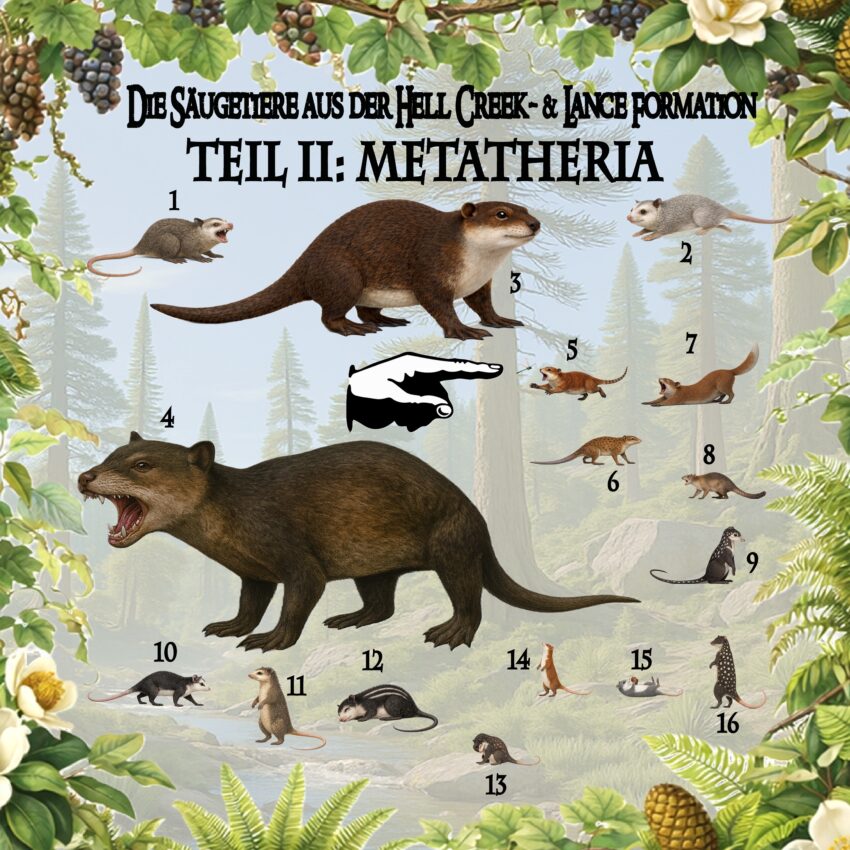
Die Metatheria, umgangssprachlich auch meist Beuteltiere genannt, bilden neben den Eutheria (Plazentatiere) und den Multituberculata eine der drei großen Entwicklungslinien der Säugetiere, die aus dem spätkreidezeitlichen Nordamerika überliefert sind. In der späten Kreidezeit waren Metatheria deutlich vielfältiger und ökologisch präsenter, als es ihre heutige Verbreitung vermuten lässt. In den Ablagerungen der Hell Creek- und Lance Formation sind Metatheria sogar deutlich artenreicher vertreten als Eutheria. Damit stellen sie einen wichtigen Bestandteil der damaligen Säugetierfauna kurz vor dem Massenaussterben vor 66 Ma dar.

Merkmale der Metatheria
Typisch für alle Metatheria ist ein besonderer Bau des Beckens sowie eine Fortpflanzungsstrategie, bei der die Jungtiere extrem unreif geboren werden und ihre weitere Entwicklung in einem Beutel vollziehen. Dort werden sie wie alle Säugetiere von der Mutter in der frühen Phase ihres Lebens gesäugt. Ob alle kreidezeitlichen Metatheria bereits exakt dieses Fortpflanzungsmuster besaßen, ist jedoch unklar. Wie bei den Eutheria lassen sich diese biologischen Merkmale im Fossilbericht aber natürlich nur indirekt erschließen. Sprich: wir können leider nicht mit Sicherheit sagen, ob sich kreidezeitliche Beuteltiere auch schon so verhalten haben. Die Zuordnung zu den Metatheria basiert vor allem auf Merkmalen des Gebisses, des Kiefers und einzelner Schädel- oder Skelettelemente, die allerdings sehr typisch für Beuteiltiere sind.
Im Gegensatz zu den Eutheria scheinen die Metatheria im späten Mesozoikum bereits eine längere eigenständige Evolutionsgeschichte hinter sich zu haben. In Hell Creek und Lance treten sie in einer bemerkenswerten Bandbreite an Körpergrößen, Ernährungsweisen und ökologischen Rollen auf. Das Spektrum reicht von winzigen, spitzmausgroßen Insektenfressern bis hin zu kräftigen, räuberischen Formen von bis zu einem Meter Länge, die zu den größten bekannten Säugetieren der Kreidezeit zählen.
Ökologische Rolle der Metatheria
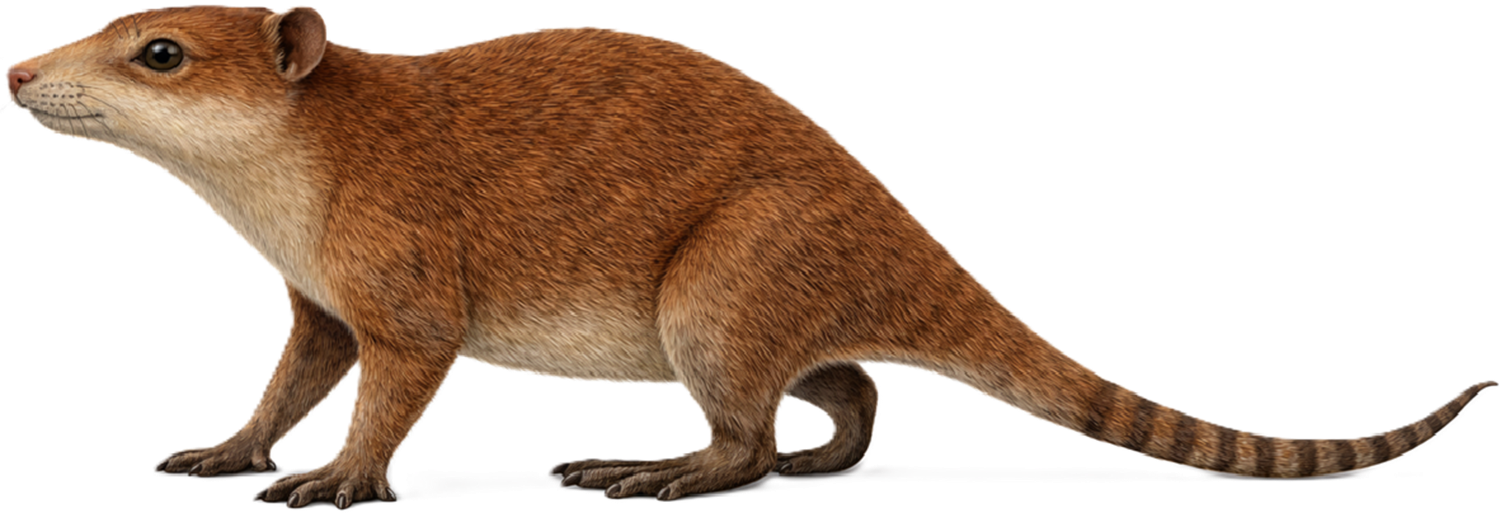
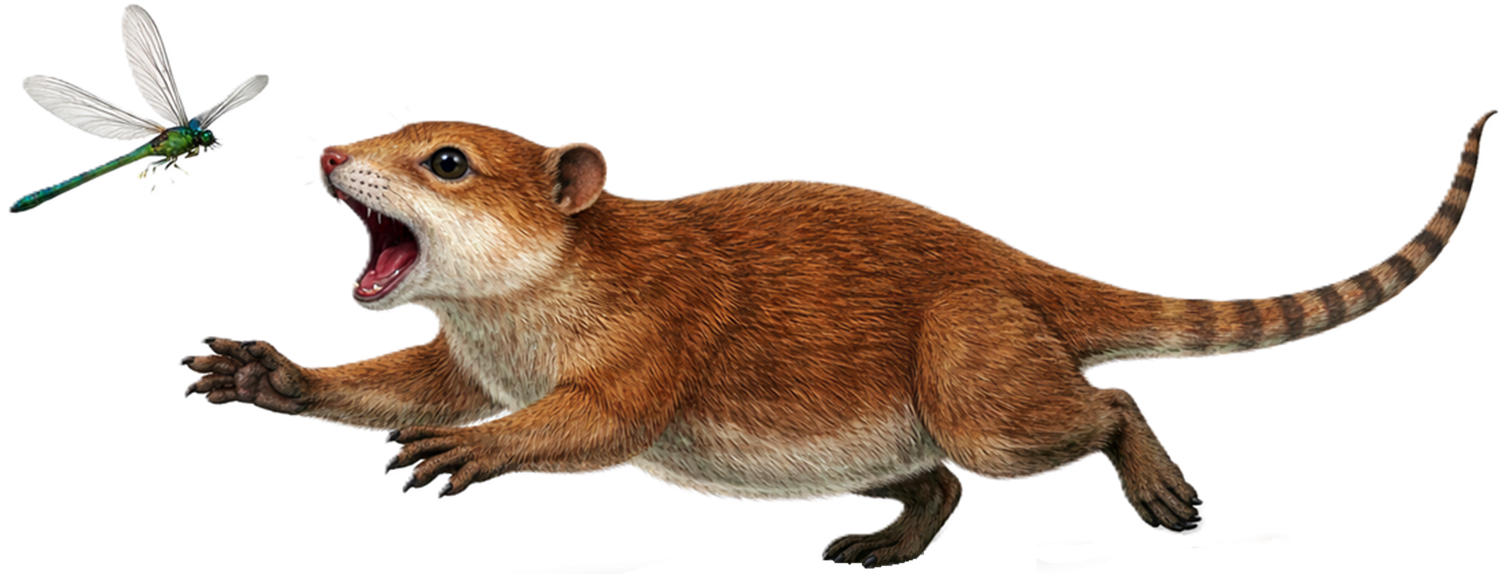
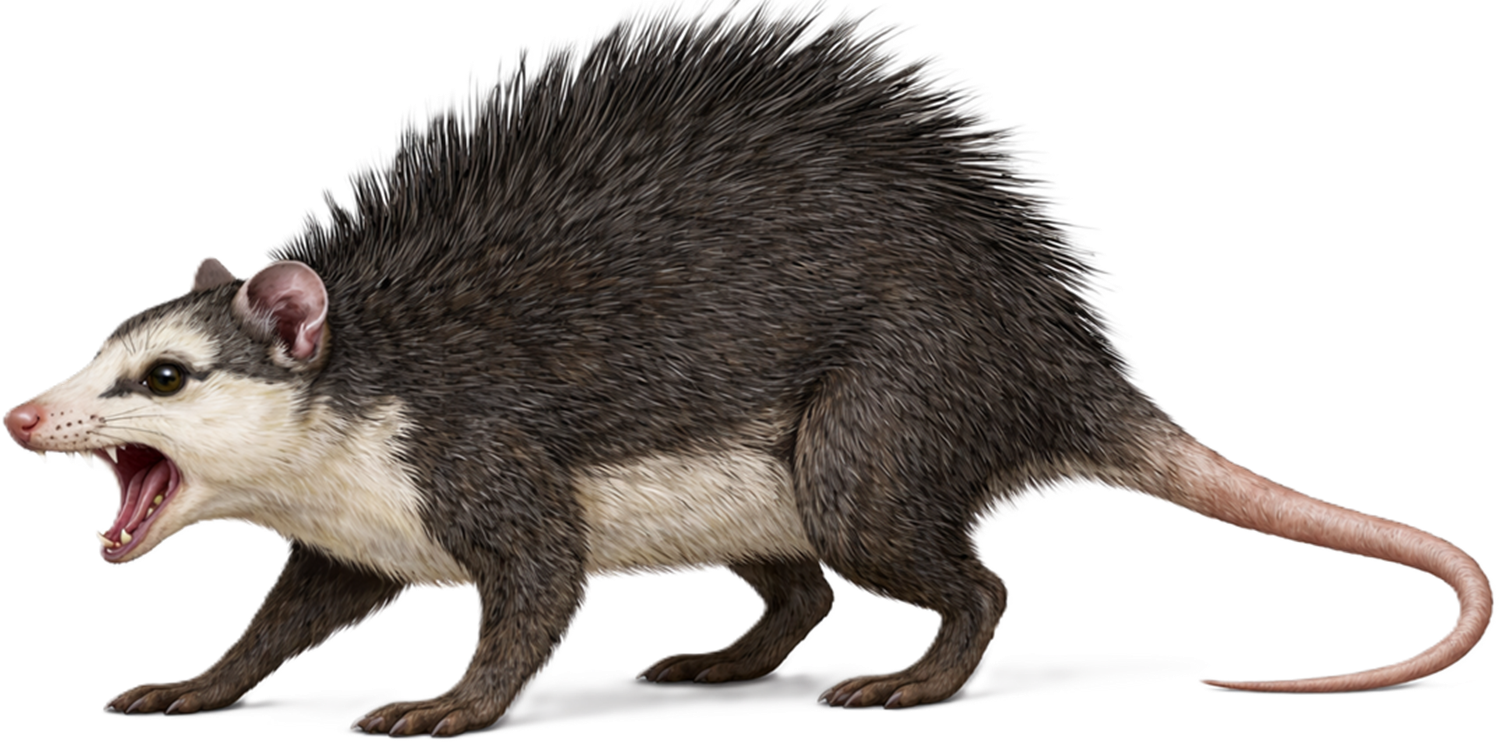
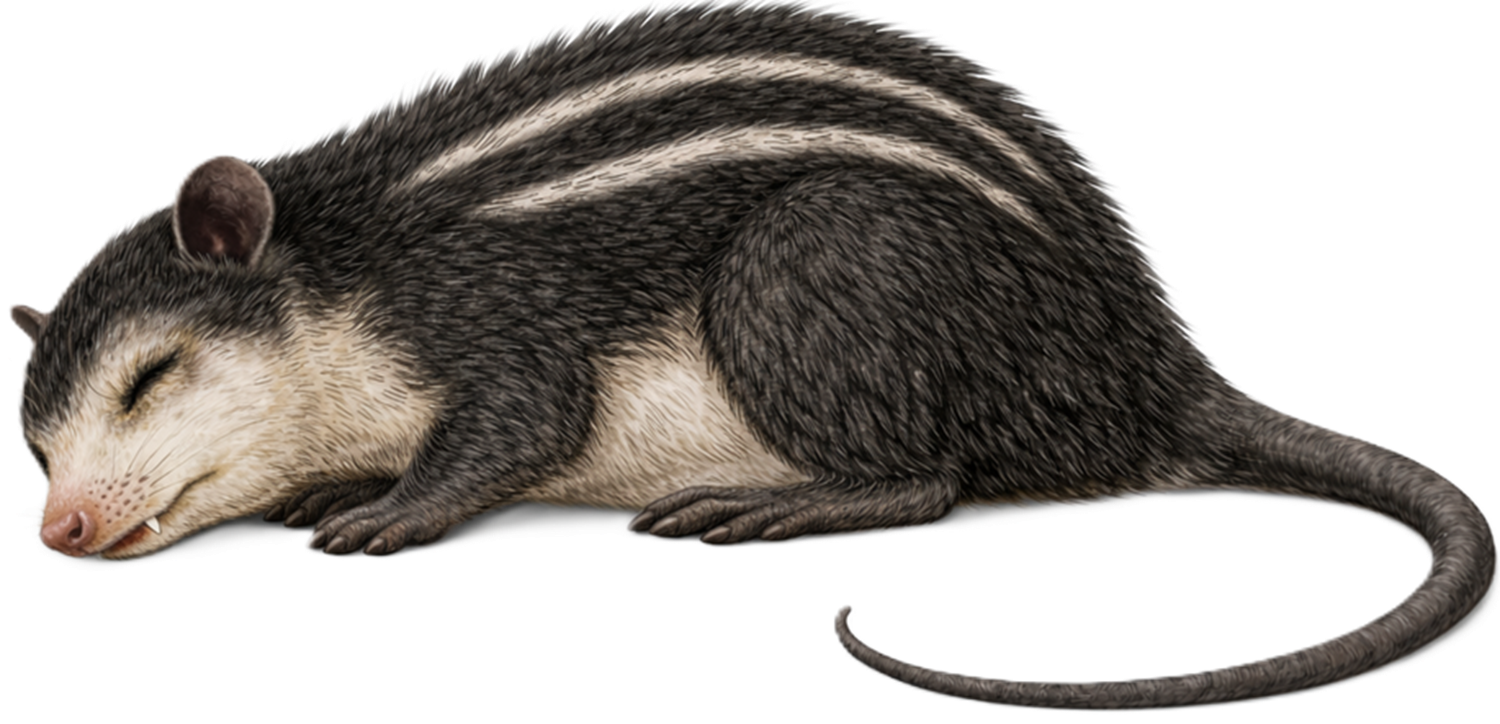
Zu den kleineren und vermutlich eher unscheinbaren Metatheria gehörten Arten der Gattung Alphadon, wie A. marshi (1) und A. wilsoni (2). Diese Tiere waren wahrscheinlich kleine Insekten- und Allesfresser, die bodennah lebten und sich von Wirbellosen, Larven sowie gelegentlich auch pflanzlicher Kost ernährten. Ihre Zahnmerkmale deuten auf eine relativ unspezialisierte Ernährungsweise hin, was ihnen eine gewisse ökologische Flexibilität verliehen haben dürfte.1Kielan-Jaworowska, Z., Cifelli, R. L. & Luo, Z.-X. (2004). Mammals from the Age of Dinosaurs – Origins, Evolution, and Structure. Columbia University Press, 98-99. doi:10.7312/kiel119182Clemens, W. A. (1964). Fossil mammals of the type Lance Formation, Wyoming – Part I. Introduction and Marsupialia. University of California Publications in Geological Sciences, 48, 1–105.3Eaton, J. G. (1993). Therian mammals from the Cenomanian (Upper Cretaceous) Dakota Formation, southwestern Utah. Journal of Vertebrate Paleontology, 13(1), 105–124.4Montellano, M. (1988). Alphadon halleyi (Didelphidae, Marsupialia) from the Two Medicine Formation (Late Cretaceous, Judithian) of Montana. Journal of Vertebrate Paleontology, 8(4), 378–382. doi:10.1080/02724634.1988.100117265Storer, J. E. (1991). The mammals of the Gryde local fauna, Frenchman Formation (Maastrichtian – Lancian), Saskatchewan. Journal of Vertebrate Paleontology, 11(3), 350–396.6Williamson, T. E. et al. (2012). The phylogeny and evolution of Cretaceous–Palaeogene metatherians – cladistic analysis and description of new early Palaeocene specimens from the Nacimiento Formation, New Mexico. Journal of Systematic Palaeontology, 10(4), 625–651. doi:10.1080/14772019.2011.6315927Rougier, G. W., Davis, B. M. & Novacek, M. J. (2015). A deltatheroidan mammal from the Upper Cretaceous Baynshiree Formation, eastern Mongolia. Cretaceous Research, 52, 167–177. doi:10.1016/j.cretres.2014.09.0098Bi, S. et al. (2015). A new Cretaceous metatherian mammal from Henan, China. PeerJ, 3, e896. doi:10.7717/peerj.8969Wilson, G. P. et al. (2016). A large carnivorous mammal from the Late Cretaceous and the North American origin of marsupials. Nature Communications, 7, 13734. doi:10.1038/ncomms13734
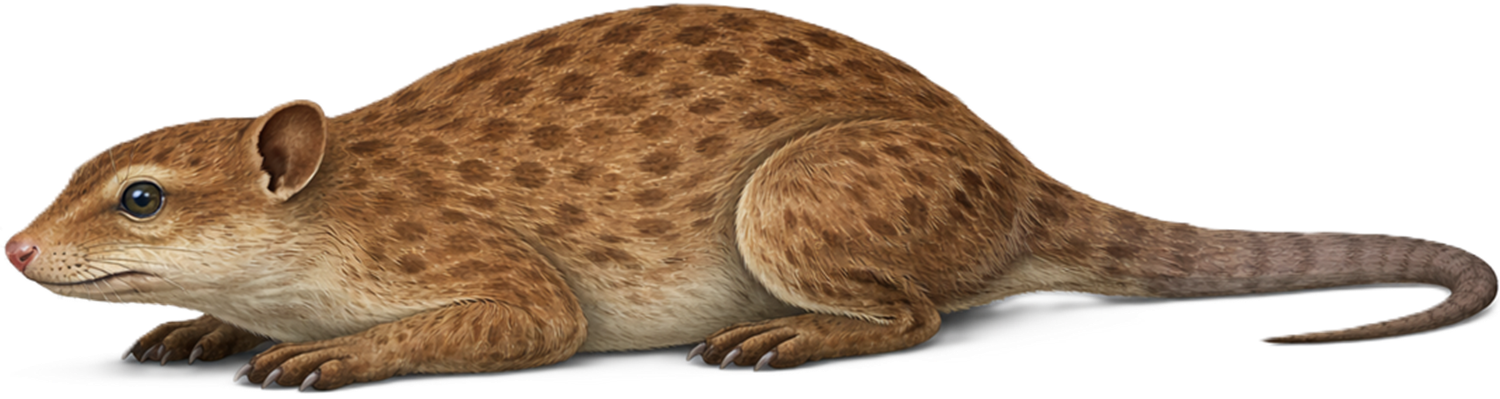
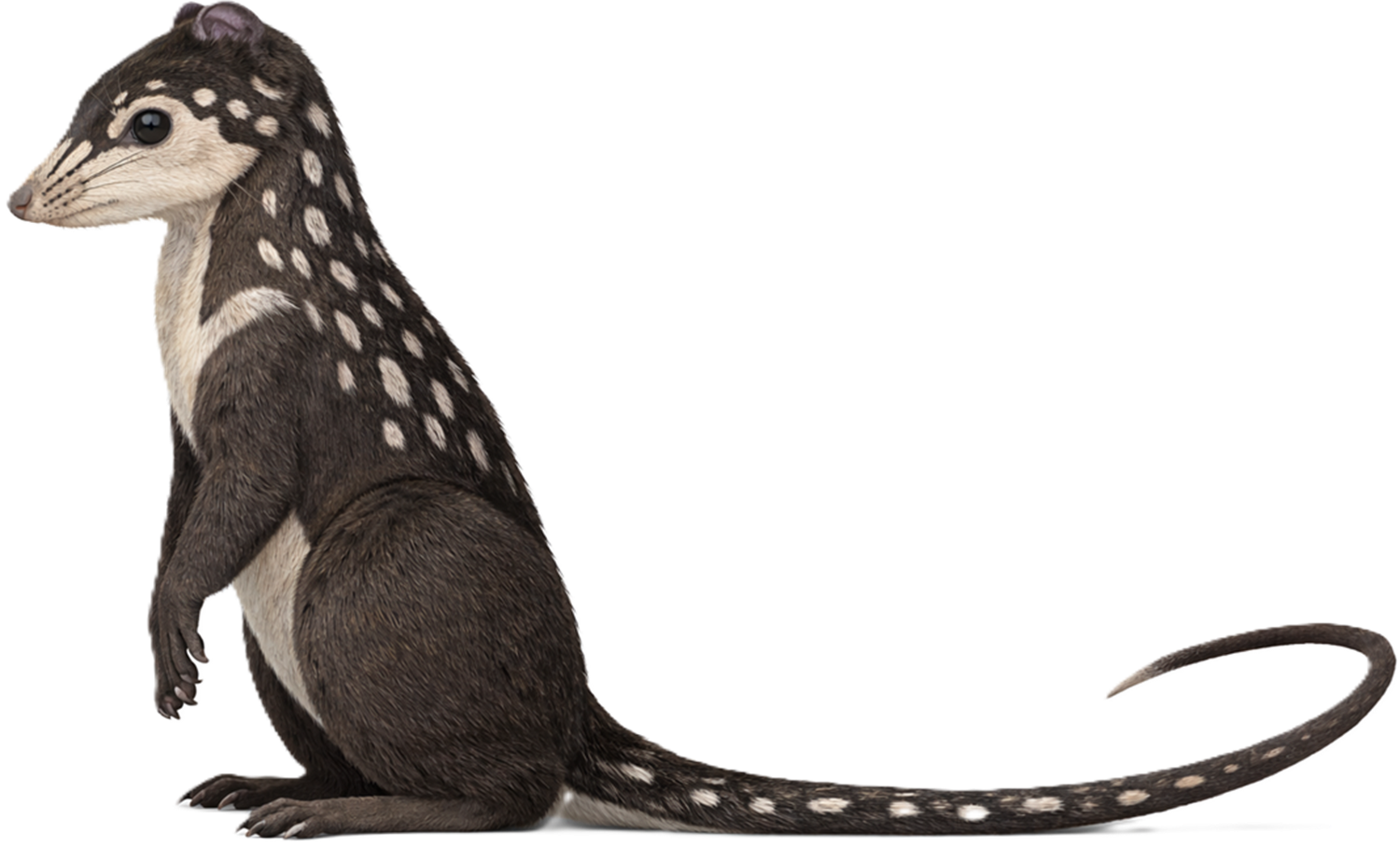
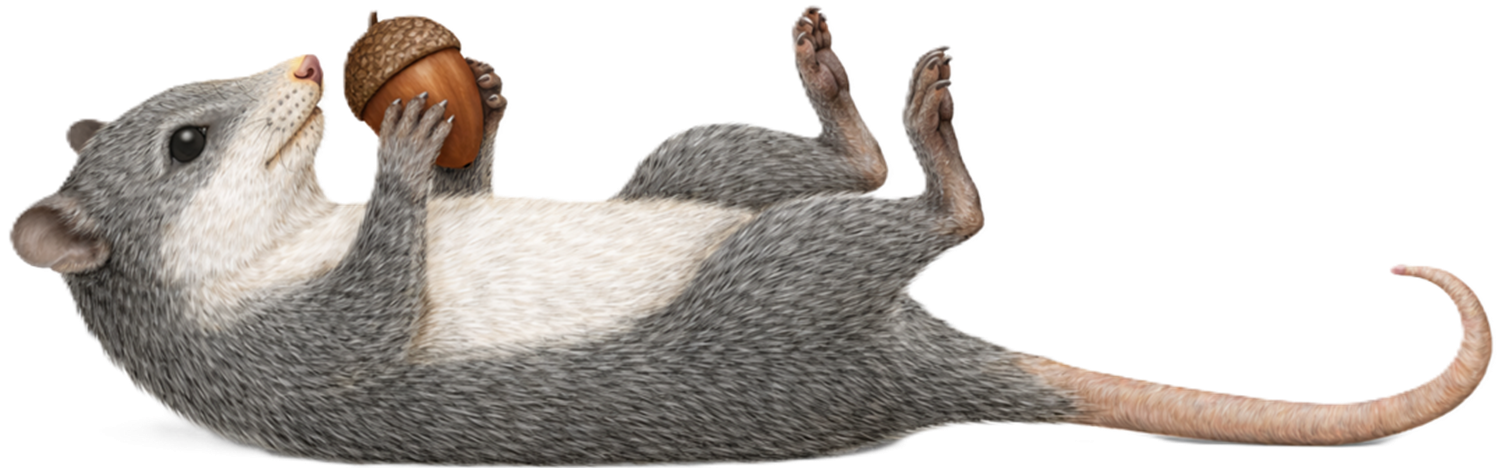
Eine ähnliche ökologische Nische, wenn auch teilweise mit etwas größerer Körpergröße, nahmen Arten wie Leptalestes cooki (6) und Leptalestes krejcii (7) ein. Diese sehr kleinen Metatheria waren kaum größer als heutige Mäuse oder Spitzmäuse und dürften vor allem Insektenfresser gewesen sein. Ihre zierlichen Molaren sprechen für eine leichte Beute und eine hohe Beweglichkeit, möglicherweise auch für ein teilweises Klettern in niedriger Vegetation.10Kielan-Jaworowska, Z., Cifelli, R. L. & Luo, Z.-X. (2004). Mammals from the Age of Dinosaurs – Origins, Evolution, and Structure. Columbia University Press, 98-99. doi:10.7312/kiel1191811Archibald, J. D., Zhang, Y., Harper, T. & Cifelli, R. L. (2011). Protungulatum, confirmed Cretaceous occurrence of an otherwise Paleocene eutherian (placental?) mammal. Journal of Mammalian Evolution, 18(3), 153–161. doi:10.1007/s10914-011-9162-112Clemens, W. A. (1964). Fossil mammals of the type Lance Formation, Wyoming – Part I. Introduction and Marsupialia. University of California Publications in Geological Sciences, 48, 1–105.13Hunter, J. P., Heinrich, R. E. & Weishampel, D. B. (2010). Mammals from the St. Mary River Formation (Upper Cretaceous), Montana. Journal of Vertebrate Paleontology, 30(3), 885–898. doi:10.1080/02724631003763490
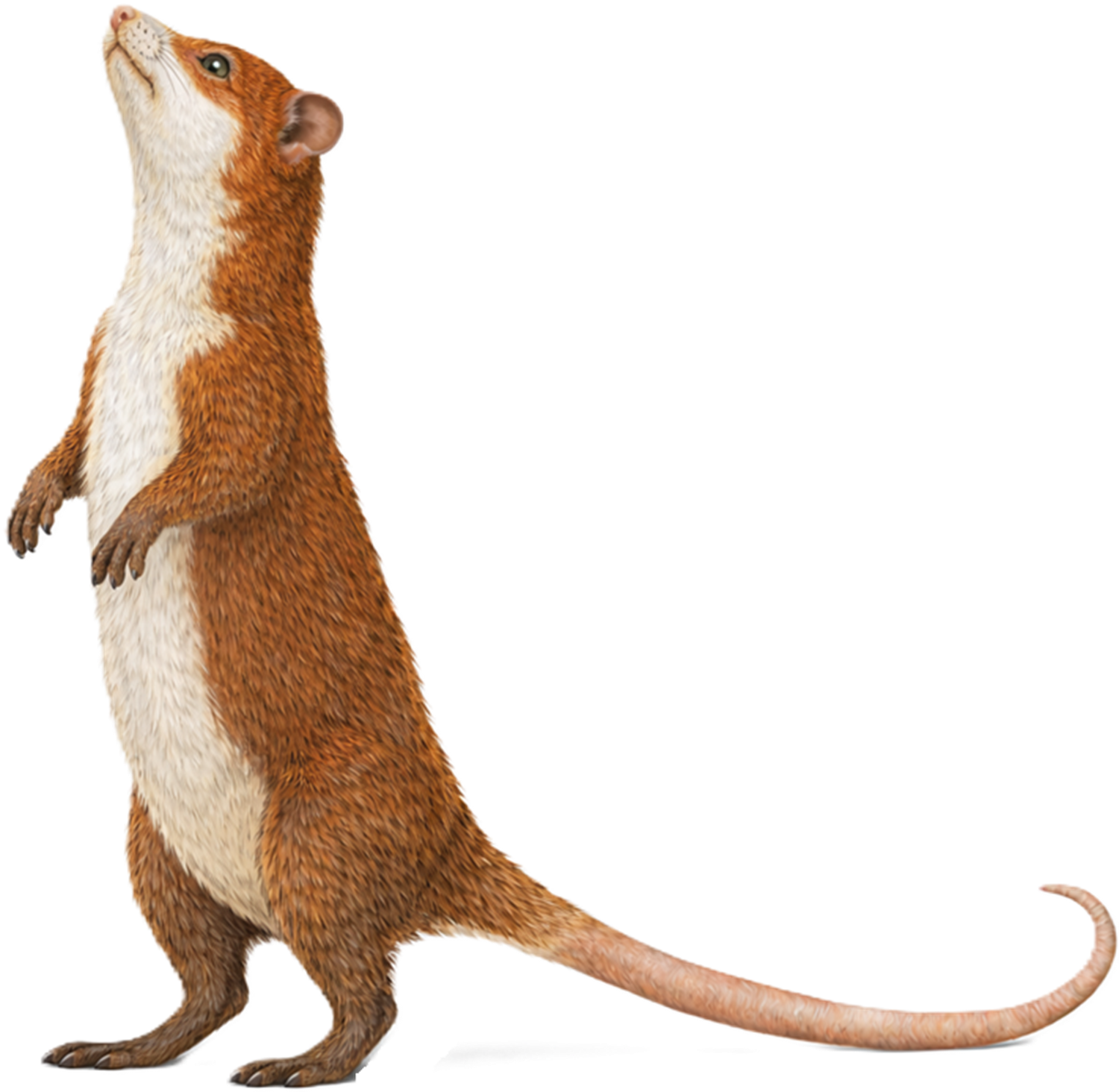
Zu den kleinsten bekannten Metatheria aus Hell Creek und Lance zählt Nanocuris improvida (8). Dieses Tier war extrem klein und dürfte eine Körpergröße im Bereich sehr kleiner Spitzmäuse erreicht haben. Solche Formen zeigen, wie fein die ökologische Aufteilung selbst unter den kleinsten Säugetieren bereits ausgeprägt war.14Wilson, G. P. (2013). Mammals across the K/Pg boundary in northeastern Montana, U.S.A. – dental morphology and body-size patterns reveal extinction selectivity and immigrant-fueled ecospace filling. Paleobiology, 39(3), 429–469. doi:10.1666/1204115Wilson, G. P. & Riedel, J. A. (2010). New specimen reveals deltatheroidan affinities of the North American Late Cretaceous mammal Nanocuris. Journal of Vertebrate Paleontology, 30(3), 872–884.16Fox, R. C., Scott, C. S. & Bryant, H. N. (2007). A new, unusual therian mammal from the Upper Cretaceous of Saskatchewan, Canada. Cretaceous Research, 28(5), 821–829.17Rougier, G. W., Davis, B. M. & Novacek, M. J. (2015). A deltatheroidan mammal from the Upper Cretaceous Baynshiree Formation, eastern Mongolia. Cretaceous Research, 52, 167–177.18Ni, X. et al. (2016). A late Paleocene probable metatherian (?deltatheroidan) survivor of the Cretaceous mass extinction. Science Reports, 6, 38547. doi:10.1038/srep38547
Einen Übergang zu mittelgroßen Metatheria bildet die Gattung Protalphadon, mit den Vertretern P. foxi (11) und P. lulli (12). Diese Tiere waren etwas größer und robuster gebaut als Leptalestes, blieben aber dennoch vergleichsweise klein. Sie dürften opportunistische Allesfresser gewesen sein, die sowohl Wirbellose als auch kleine Wirbeltiere und pflanzliche Nahrung nutzten.19Kielan-Jaworowska, Z., Cifelli, R. L. & Luo, Z.-X. (2004). Mammals from the Age of Dinosaurs – Origins, Evolution, and Structure. Columbia University Press, 98-99. doi:10.7312/kiel1191820Clemens, W. A. (1964). Fossil mammals of the type Lance Formation, Wyoming – Part I. Introduction and Marsupialia. University of California Publications in Geological Sciences, 48, 1–105.21Johanson, Z. (1993). A revision of the Late Cretaceous (Campanian) marsupial Iqualadelphis lactea Fox, 1987. Journal of Vertebrate Paleontology, 13(3), 373–377. doi:10.1080/02724634.1993.1001151822Cifelli, R. L. (1990). Cretaceous mammals of southern Utah. II. Marsupials and marsupial-like mammals from the Wahweap Formation (early Campanian). Journal of Vertebrate Paleontology, 10(3), 320–331. doi:10.1080/02724634.1990.10011817
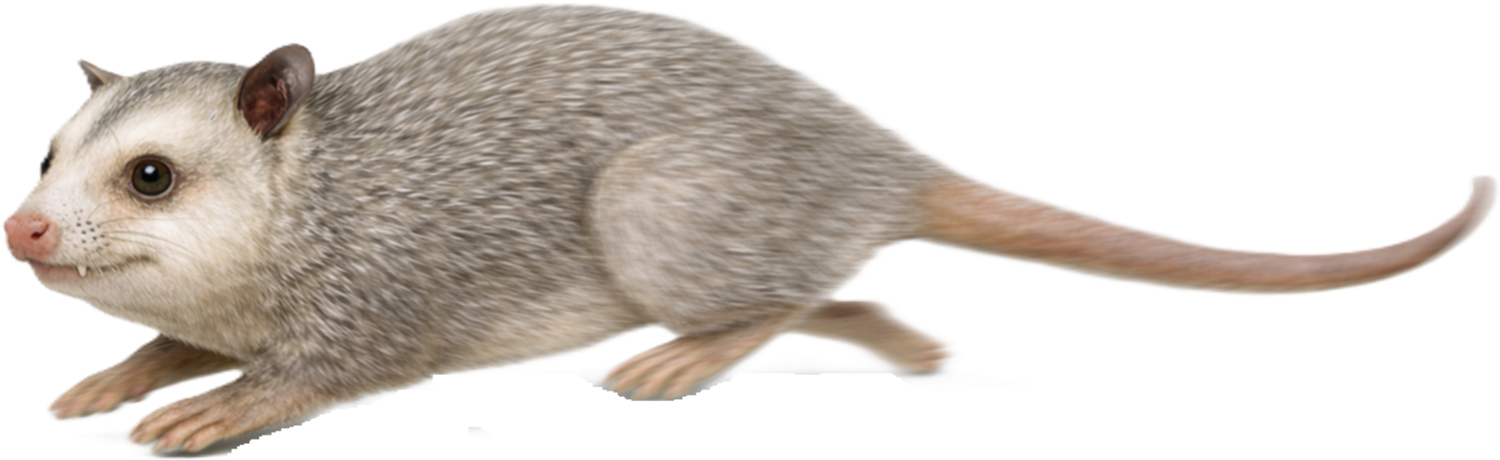
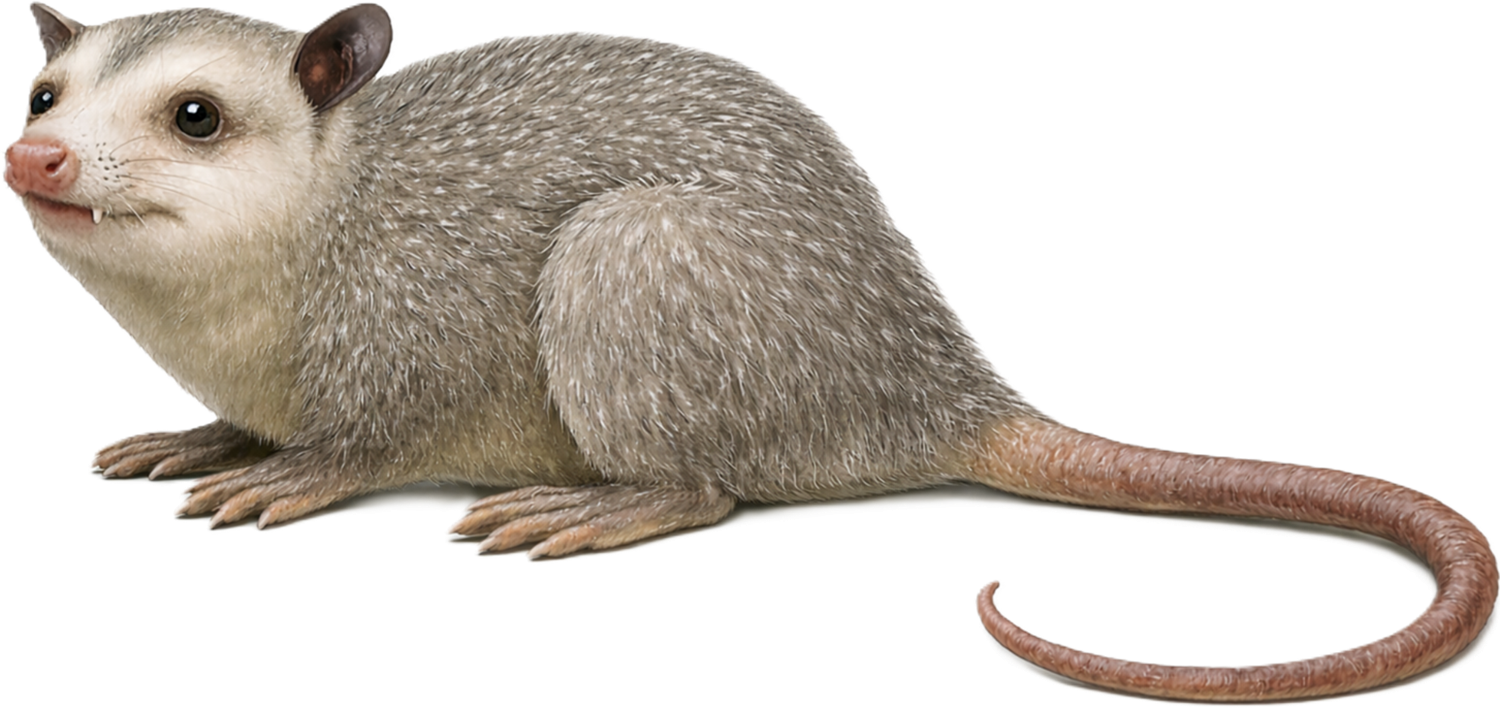
Zu den auffällig kräftig gebauten mittelgroßen Metatheria gehört Turgidodon rhaister (16). Seine breiten und massiven Molaren lassen auf eine härtere Nahrung schließen, möglicherweise auf eine stärkere Nutzung von gepanzerten Wirbellosen oder auch kleinen Wirbeltieren. Turgidodon nahm vermutlich eine mittlere trophische Position innerhalb der Säugetierfauna ein.23Kielan-Jaworowska, Z., Cifelli, R. L. & Luo, Z.-X. (2004). Mammals from the Age of Dinosaurs – Origins, Evolution, and Structure. Columbia University Press, 98-99. doi:10.7312/kiel1191824Clemens, W. A. (1964). Fossil mammals of the type Lance Formation, Wyoming – Part I. Introduction and Marsupialia. University of California Publications in Geological Sciences, 48, 1–105.25Cifelli, R. L. (1990). Cretaceous mammals of southern Utah. I. Marsupials from the Kaiparowits Formation (Judithian). Journal of Vertebrate Paleontology, 10(3), 295–319. doi:10.1080/02724634.1990.10011816
In einer ähnlichen Größenordnung spielte die Gattung Protolambda, mitP. florencae (13), P. hatcheri (14) und P. mcgilli (15). Diese Tiere waren klein bis mittelgroß und vermutlich unspezialisierte Allesfresser. Ihre genaue ökologische Rolle ist schwer zu bestimmen, doch sie zeigen, wie vielfältig selbst innerhalb scheinbar ähnlicher Zahnformen die Metatheria bereits differenziert waren.26Kielan-Jaworowska, Z., Cifelli, R. L. & Luo, Z.-X. (2004). Mammals from the Age of Dinosaurs – Origins, Evolution, and Structure. Columbia University Press, 98-99. doi:10.7312/kiel1191827Archibald, J. D., Zhang, Y., Harper, T. & Cifelli, R. L. (2011). Protungulatum, confirmed Cretaceous occurrence of an otherwise Paleocene eutherian (placental?) mammal. Journal of Mammalian Evolution, 18(3), 153–161. doi:10.1007/s10914-011-9162-128Davis, B. M. (2007). A revision of “pediomyid” marsupials from the Late Cretaceous of North America (PDF). Acta Palaeontologica Polonica, 52(2), 217–256.29Kelly, T. S. (2014). Preliminary report on the mammals from Lane’s Little Jaw Site Quarry – a latest Cretaceous (earliest Puercan?) local fauna, Hell Creek Formation, southeastern Montana (PDF). Paludicola, 10(1), 50–91.30Davis, B. (2007). A revision of pediomyid marsupials from the Late Cretaceous of North America. Acta Palaeontologica Polonica, 52, 217–256.31Williamson, T. E. et al. (2012). The phylogeny and evolution of Cretaceous–Palaeogene metatherians – cladistic analysis and description of new early Palaeocene specimens from the Nacimiento Formation, New Mexico. Journal of Systematic Palaeontology, 10(4), 625–651. doi:10.1080/14772019.2011.631592
Noch etwas größer waren Vertreter wie Nortedelphis jasoni (9) und Pediomys elegans (10). Diese Metatheria erreichten bereits Körpergrößen im Bereich kleiner Opossums und dürften aktive Jäger gewesen sein, die neben Insekten auch kleinere Wirbeltiere erbeuteten. Sie besetzten damit ökologische Rollen, die bei den Eutheria jener Zeit nur schwach vertreten waren. Mit Glasbius twitchelli (5) erscheint schließlich ein weiterer relativ großer Metatherier, der vermutlich zu den bedeutendsten Allesfressern oder Räubern unter den kreidezeitlichen Säugetieren gehörte. Glasbius war deutlich größer als die meisten anderen Metatheria, blieb aber immer noch klar unter der Größe der größten Didelphodontiden.32Kielan-Jaworowska, Z., Cifelli, R. L. & Luo, Z.-X. (2004). Mammals from the Age of Dinosaurs – Origins, Evolution, and Structure. Columbia University Press, 98-99. doi:10.7312/kiel1191833Clemens, W. A. (1966). Fossil mammals from the type Lance Formation, Wyoming. Part II. Marsupialia. University of California Publications in Geological Sciences, 62, 1–122.34Wilson, G. P. (2013). Mammals across the K/Pg boundary in northeastern Montana, U.S.A. – dental morphology and body-size patterns reveal extinction selectivity and immigrant-fueled ecospace filling. Paleobiology, 39(3), 429–469. doi:10.1666/1204135Williamson, T. E. et al. (2012). The phylogeny and evolution of Cretaceous–Palaeogene metatherians – cladistic analysis and description of new early Palaeocene specimens from the Nacimiento Formation, New Mexico. Journal of Systematic Palaeontology, 10(4), 625–651. doi:10.1080/14772019.2011.63159236Davis, B. (2007). A revision of pediomyid marsupials from the Late Cretaceous of North America. Acta Palaeontologica Polonica, 52, 217–256.37Gordon, C. L. (2003). Functional morphology and diet of Late Cretaceous mammals of North America. Dissertation, University of Oklahoma.38Eberle, J. et al. (2024). A new Late Cretaceous metatherian from the Williams Fork Formation, Colorado. PLoS ONE, 19(10), e0310948. doi:10.1371/journal.pone.0310948
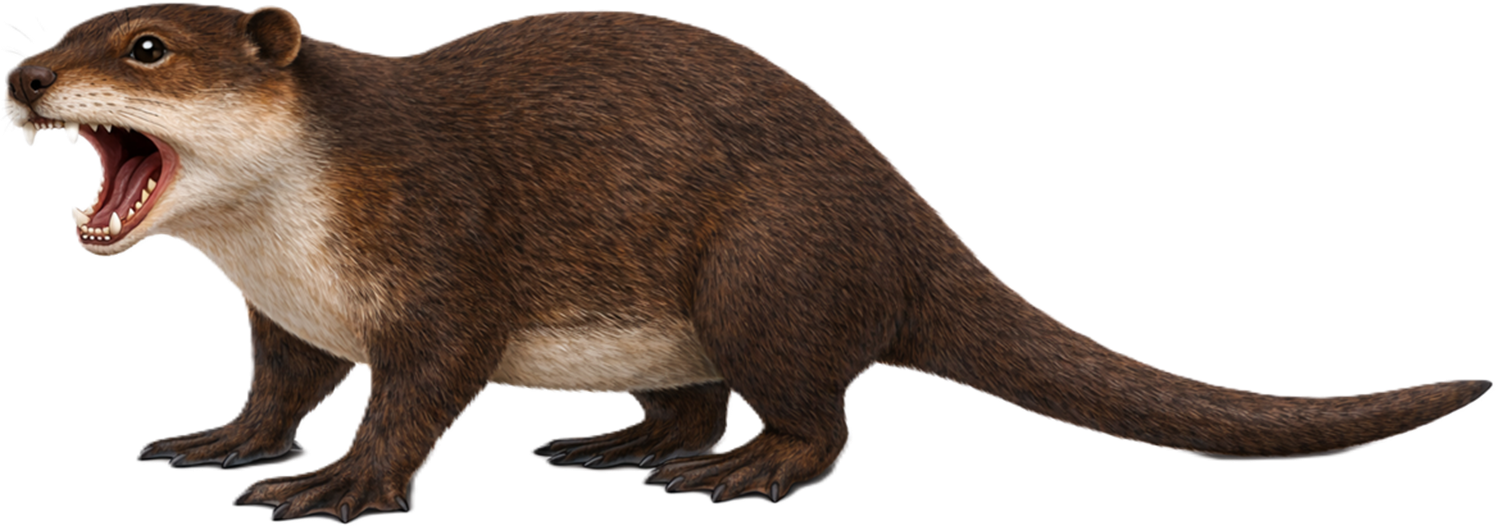
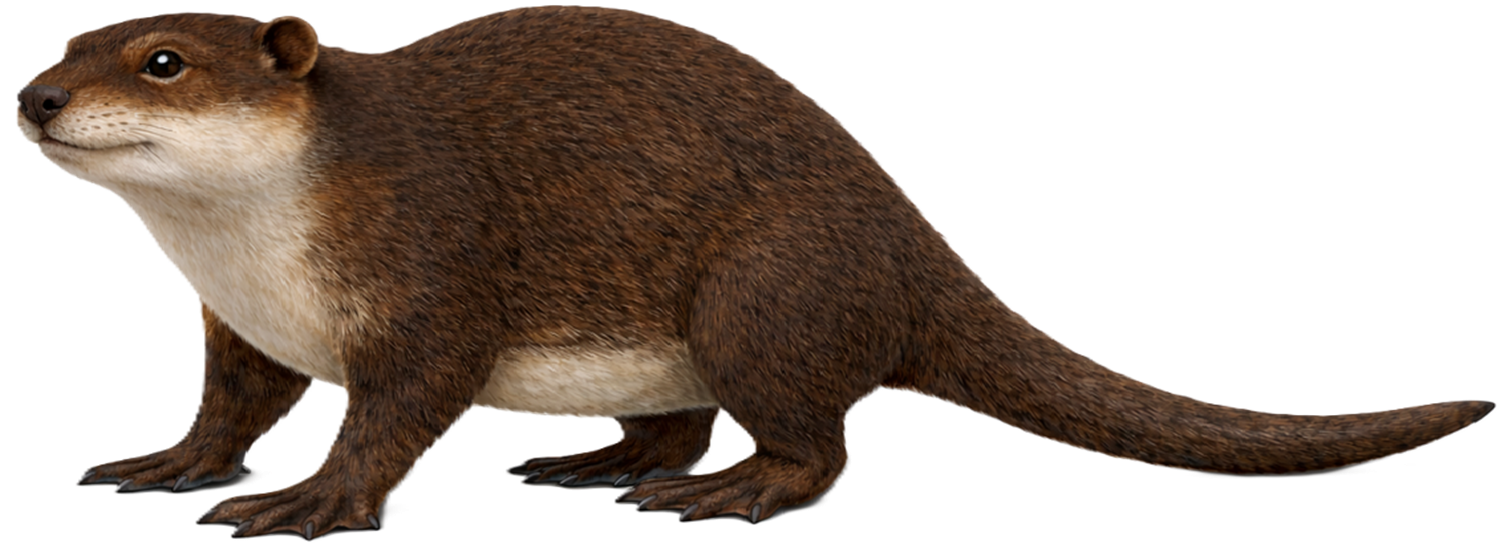
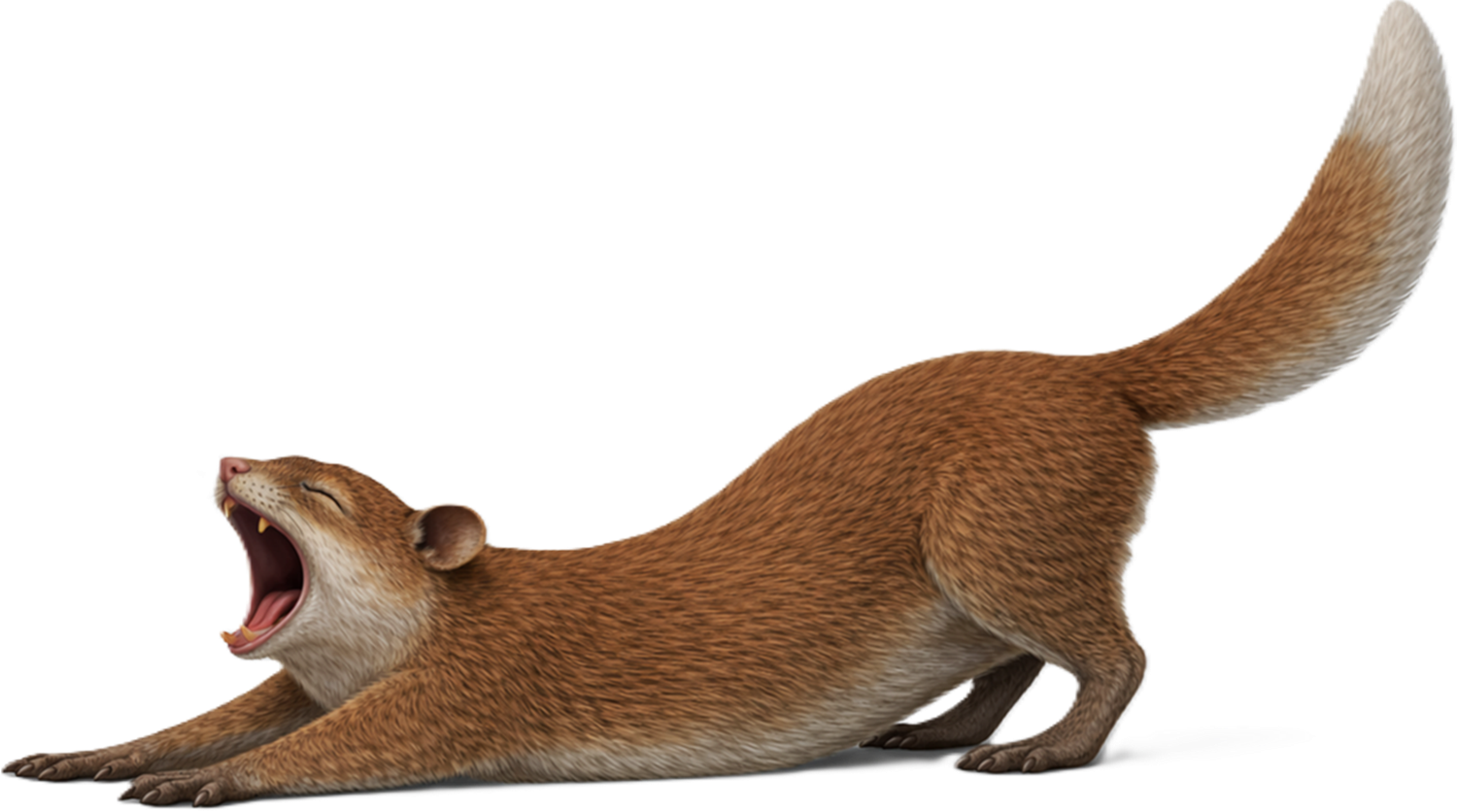
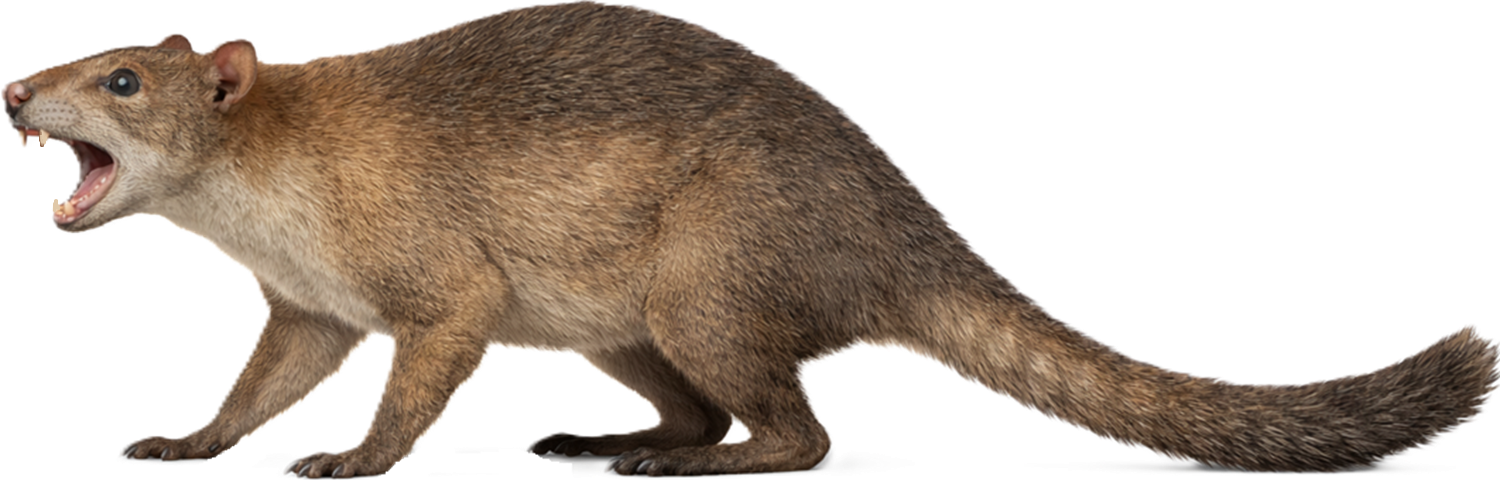
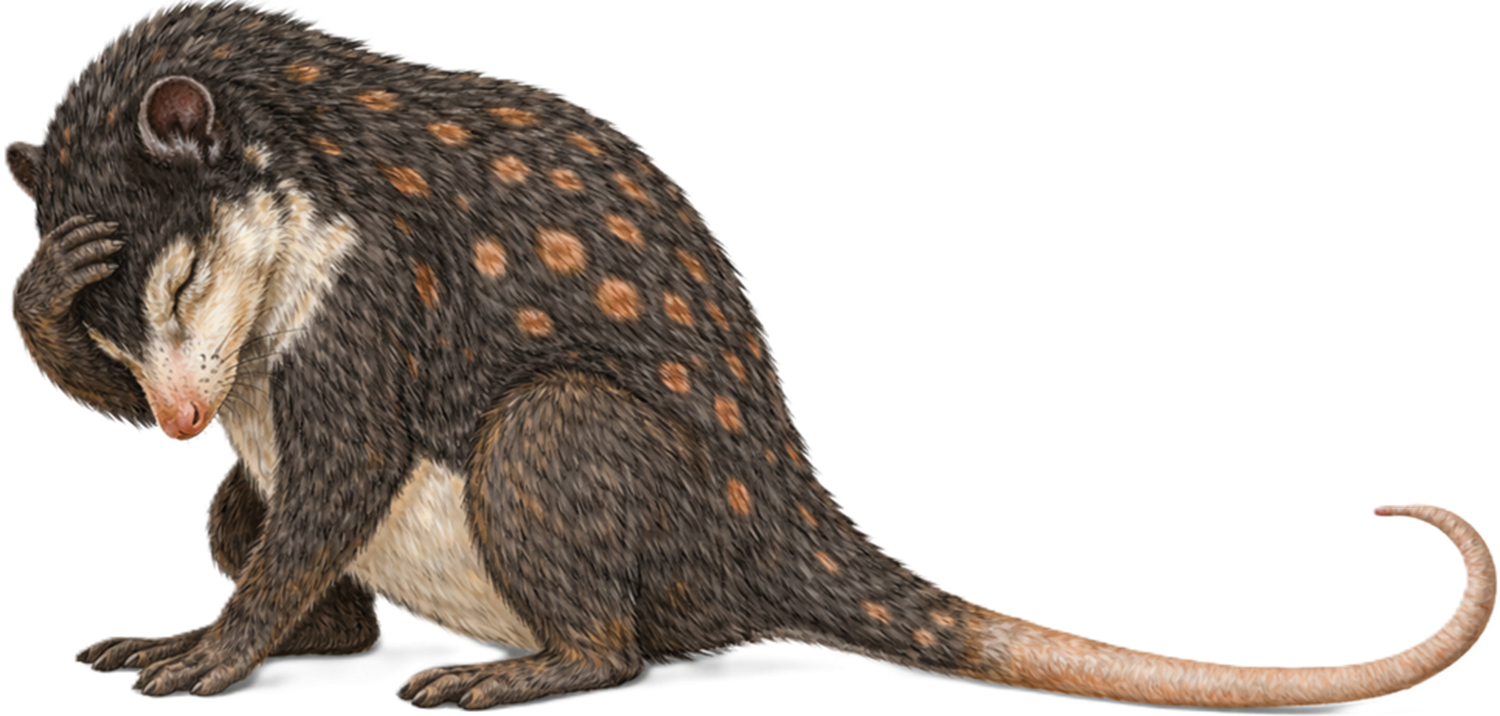
Die Spitzenstellung unter den Metatheria nahmen eben jene Didelphodontiden ein, vertreten durch Didelphodon padanicus (3) und seinen deutlich größeren Verwandten Didelphodon vorax (4). Sie waren die größten bekannten spätkreidezeitlichen Säugetiere Nordamerikas und besaßen ein extrem kräftiges Gebiss mit enormen Beißkräften. Während D. padanicus etwa so groß war wie ein heutiger Dachs, war D. vorax deutlich größer und erreichte die Ausmaße eines Vielfraßes. Verhalten haben sie sich aber beide wohl eher wie heutige Otter: Isotopenanalysen weisen darauf hin, dass sie semiaquatisch lebten. Ihr starkes Gebiss diente wahrscheinlich zum Aufbrechen der vielen, in Hell Creek und Lance auch sehr artenreichen Muscheln und Schnecken. Andere, kleinere Säugetiere, Amphibien, Reptilien und junge Vögel oder sogar Dinosaurier wurden aber sicherlich von ihnen auch nicht verschmäht.39Kielan-Jaworowska, Z., Cifelli, R. L. & Luo, Z.-X. (2004). Mammals from the Age of Dinosaurs – Origins, Evolution, and Structure. Columbia University Press, 98-99. doi:10.7312/kiel1191840Clemens, W. A. (1964). Fossil mammals of the type Lance Formation, Wyoming – Part I. Introduction and Marsupialia. University of California Publications in Geological Sciences, 48, 1–105.41Fox, R. C. & Naylor, B. G. (2006). Stagodontid marsupials from the Late Cretaceous of Canada and their systematic and functional implications. Acta Palaeontologica Polonica, 51(6), 13–36.42Wilson, G. P. et al. (2016). A large carnivorous mammal from the Late Cretaceous and the North American origin of marsupials. Nature Communications, 7, 13734. doi:10.1038/ncomms1373443Carneiro, L. M. & de Oliveira, E. V. (2017). Systematic affinities of the extinct metatherian Eobrasilia coutoi Simpson, 1947, a South American Early Eocene Stagodontidae – implications for Eobrasiliinae. Revista Brasileira de Paleontologia, 20(3), 355–372. doi:10.4072/rbp.2017.3.0744de Muizon, C. & Lange-Badré, B. (1997). Carnivorous dental adaptations in tribosphenic mammals and phylogenetic reconstruction. Lethaia, 30(4), 353–366. doi:10.1111/j.1502-3931.1997.tb00481.x45Chen, M. & Wilson, G. P. (2015). A multivariate approach to infer locomotor modes in Mesozoic mammals. Paleobiology, 41(2). doi:10.1017/pab.2014.1446Rougier, G. W., Davis, B. M. & Novacek, M. J. (2015). A deltatheroidan mammal from the Upper Cretaceous Baynshiree Formation, eastern Mongolia. Cretaceous Research, 52, 167–177. doi:10.1016/j.cretres.2014.09.00947Grossnickle, D. M. & Polly, P. D. (2013). Mammal disparity decreases during the Cretaceous angiosperm radiation. doi:10.1098/rspb.2013.2110
Obwohl die Metatheria in Hell Creek und Lance artenreicher waren als die Eutheria, blieben sie überwiegend klein. Die Eutheria erreichten im Durchschnitt schon etwas größere Körpergrößen. Didelphodon stellt dabei als größtes Säugetier seines Lebensraums zwar eine extreme Ausnahme dar und verzerrt diesen Größenvergleich, bestätigt aber nicht das allgemeine Muster.
Fossilüberlieferung und Grenzen der Rekonstruktion
Wie bei allen anderen Säugetieren ist auch bei den Metatheria die Fossilüberlieferung stark fragmentarisch. Der Großteil der Funde besteht aus isolierten Zähnen, Kieferfragmenten und wenigen Schädel- oder Skelettelementen. Besonders Zähne dominieren das Fossilmaterial, da sie durch ihren harten Zahnschmelz deutlich bessere Erhaltungsbedingungen besitzen. Gleichzeitig bergen sie jedoch erhebliche Probleme für die Interpretation: Ähnliche Zahnformen können sich mehrfach unabhängig entwickeln, was die systematische Einordnung erschwert.
Rekonstruktionen des Aussehens, der Lebensweise und des Verhaltens der Metatheria aus Hell Creek und Lance beruhen daher zwangsläufig auf Vergleichen mit heutigen Beuteltieren und anderen kleinen Säugetieren. Aussagen über Fellfarbe, Körperproportionen, und insbesondere über Sozialverhalten oder Aktivitätsmuster bleiben allesamt spekulativ. Selbst grundlegende Fragen, etwa ob ein Tier überwiegend bodennah oder kletternd lebte, lassen sich oft nur mit großer Unsicherheit beantworten. Selbst beim Blick auf den Größenvergleich sollte der Lerser also nicht auf die dargestellten Dimensionen der Tiere vertrauen: lediglich für Didelphodon gibt es solide Größenschätzungen.
Die hier vorgestellten Metatheria zeigen dennoch eindrucksvoll, dass Beuteltiere in der späten Kreidezeit eine zentrale Rolle in den Ökosystemen Nordamerikas spielten. Erst das Massenaussterben am Ende der Kreidezeit veränderte dieses Gleichgewicht grundlegend und ebnete den Weg für den späteren Aufstieg der Eutheria.

Fossilbericht der Beuteltiere der Hell Creek- und Lance Formation:
Im nun folgenden Fossilbericht werden alle überlieferten und wissenschaftlich beschriebenen Arten der Eutheria aufgeführt, die in der Hell Creek- und Lance Formation gefunden wurden. Dabei findest du folgende Informationen:
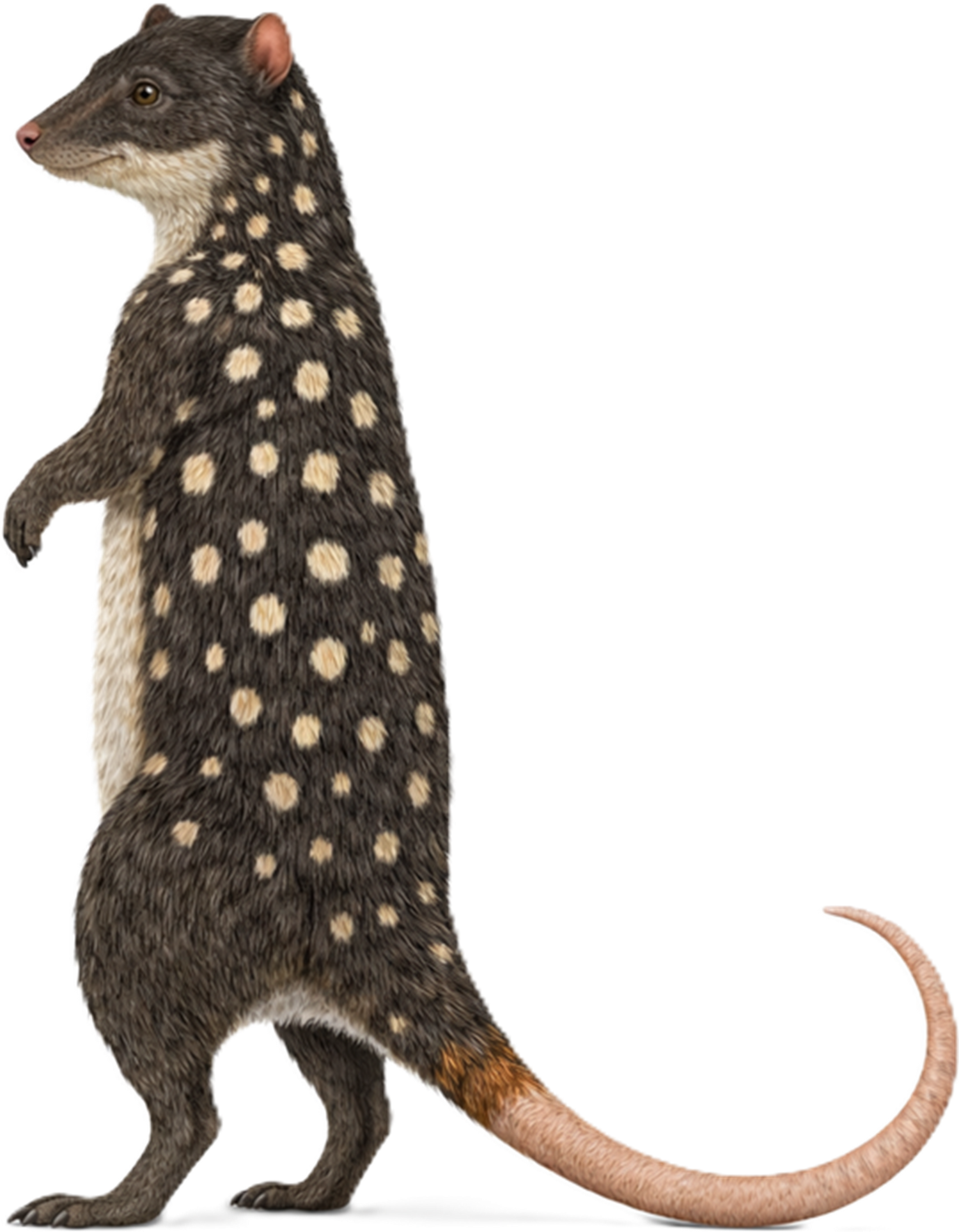
- Bild: Zuerst ein Bild der Art, wie sie zu Lebzeiten wahrscheinlich aussah. Alle Bilder habe ich auf Basis von Fotos der Originalfossilien, paläontologischen Zeichnungen und auch eigenen, also selbstgezeichneten Fossilien erstellt. Hierbei kam KI zum Einsatz, um die Lebewesen hyperrealistisch darzustellen. Es gilt dabei aber zu bedenken, dass es sich hier nur um meine eigene Interpretation bzw. die des KI-Bots handelt, allerdings mit dem Ziel, dem tatsächlichen Lebewesen dabei so ähnlich zu sein wie nur irgend möglich. Gibt es von der Art ein Tierprofil auf dieser Website, so gelangst du mit einem Klick aufs Bild direkt zum Artikel.
- Spezies: Hier der aktuelle wissenschaftliche Name der Spezies sowie die Quellenbelege zu wissenschaftlichen Fachpublikationen, welche die Anwesenheit des Lebewesens im Fossilbericht bestätigen. Ist der Name rot hervorgehoben, handelt es sich um eine Art, die höchstwahrscheinlich ungültig ist und daher eher nicht tatsächlich in Hell Creek oder Lance gelebt hat. Hellblau hervorgehobene Namen beschreiben Tiere, die zwar bereits wissenschaftlich bekannt sind und unzweifelhaft in Hell Creek und Lance gelebt haben, aber noch nicht formell beschrieben wurden. Gibt es von der Art ein Tierprofil auf dieser Website, ist der Name dunkelblau und unterstrichen. Mit einem Klick darauf gelangst du direkt zum Artikel.
- Fundort: Hier die Bundessstaaten, in welchen die Lebewesen konkret gefunden wurden.
- Stratigraphische Position: Hieraus kannst du das genaue Alter ablesen und aus welcher Zeit die Fossilien überliefert sind. Wenn dort z.B. „obere Hell Creek Formation“ steht, so ist damit die Zeit unmittelbar vor Chicxulub gemeint, also die letzten Jahrhunderttausende vor dem Einschlag. Die „untere Hell Creek Formation“ ist entsprechend älter. Bei einigen ist hier auch vermerkt, ob sie nur aus einer ganz bestimmten Fundstelle bekannt sind.
- Bekanntes Material: Soweit Informationen darüber verfügbar, kannst du hieraus ablesen, wie häufig die Fossilien dieser Art insgesamt sind. Die Daten stammen aus der PBDB (Paleobiology Database). Ich habe hier immer die Gesamtzahl der dort gemeldeten Fossilien vermerkt, nicht nur aus Hell Creek- und Lance, sondern aller überhaupt gefundenen. Dies soll dem Leser eine Übersicht über den Forschungsstand zur beschriebenen Kreatur geben.
- Bemerkungen: Hier findest du eine kurze Info zur Taxonomie, also der verwandtschaftlichen Zugehörigkeit des Fossils. Außerdem ist dort vermerkt, wenn noch andere (inzwischen aber veraltete!) Namen für das Fossil in der Fachliteratur kursieren, oder bei umstrittenen Arten, warum sie vielleicht doch nicht gültig sind.
| Bild: | Spezies: | Fundort: | Stratigraphische Position: | Bekanntes Material: | Bemerkungen: |
|---|---|---|---|---|---|
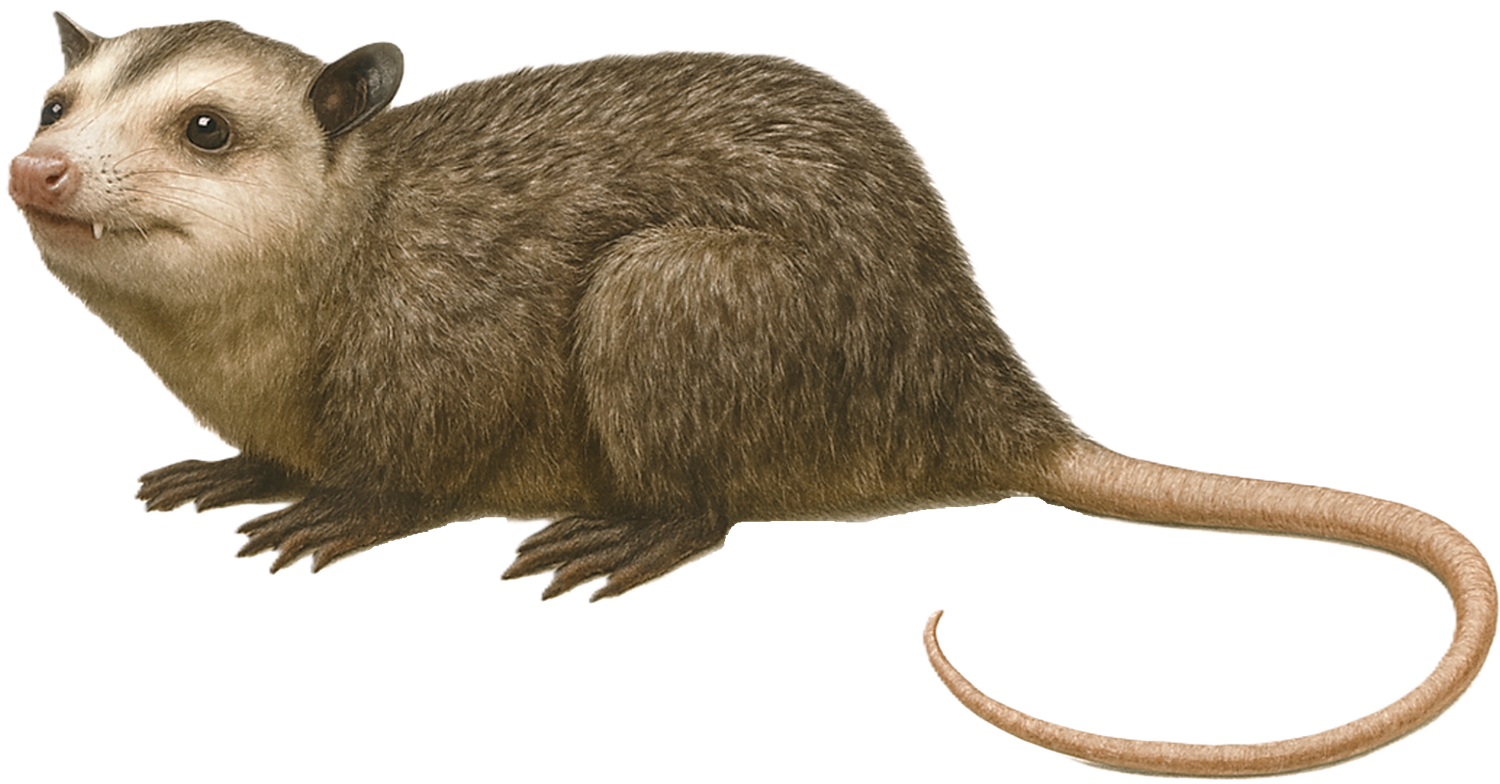 |
Alphadon cf. marshi | Montana, South Dakota | Hell Creek Formation | — | Alphadontidae |
|
|
Alphadon cf. wilsoni | Montana | Hell Creek Formation | — | Alphadontidae |
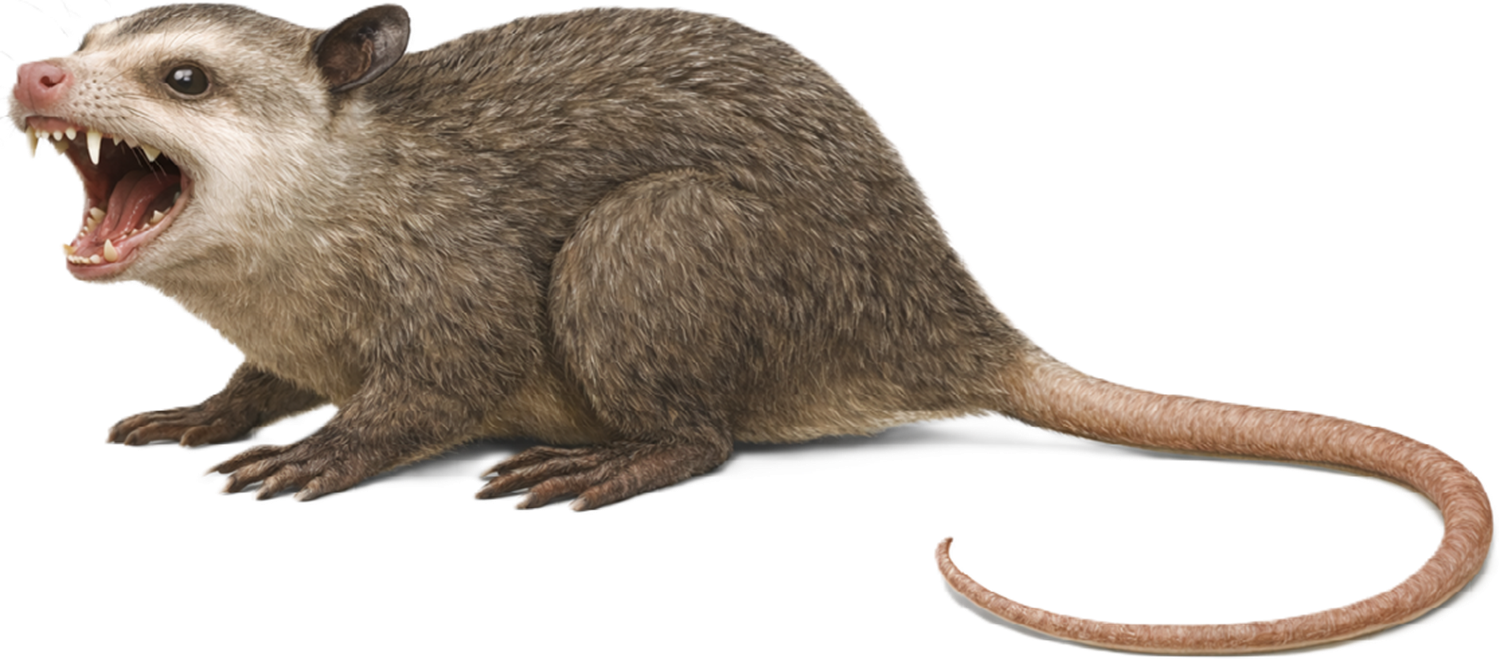 |
Alphadon marshi | Montana, North Dakota, South Dakota, Wyoming | Hell Creek Formation; Lance Formation | 30 Exemplare | Alphadontidae |
|
|
Alphadon wilsoni | Montana | Hell Creek Formation | 3 Exemplare | Alphadontidae |
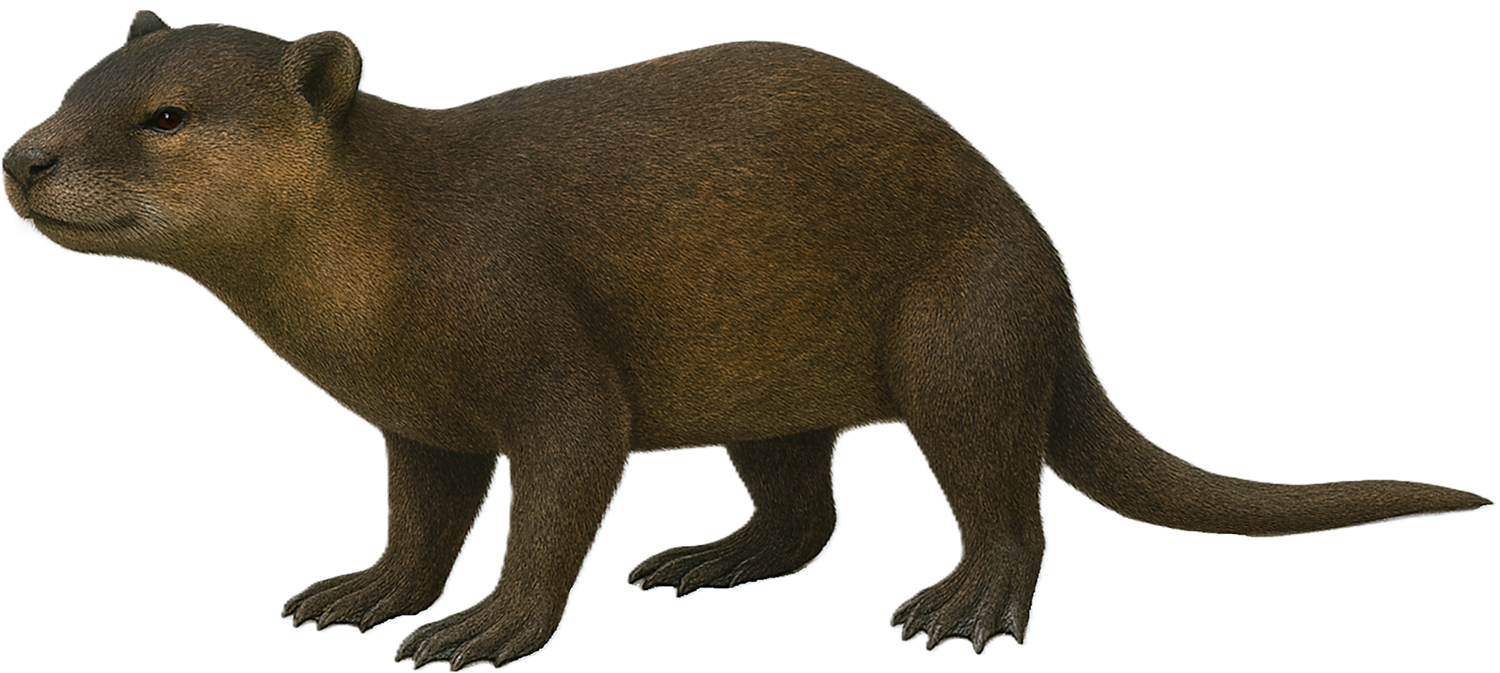 |
Didelphodon cf. vorax | South Dakota | Hell Creek Formation | — | Stagodontidae |
|
|
Didelphodon padanicus | South Dakota | Hell Creek Formation | 20 Exemplare | Stagodontidae |
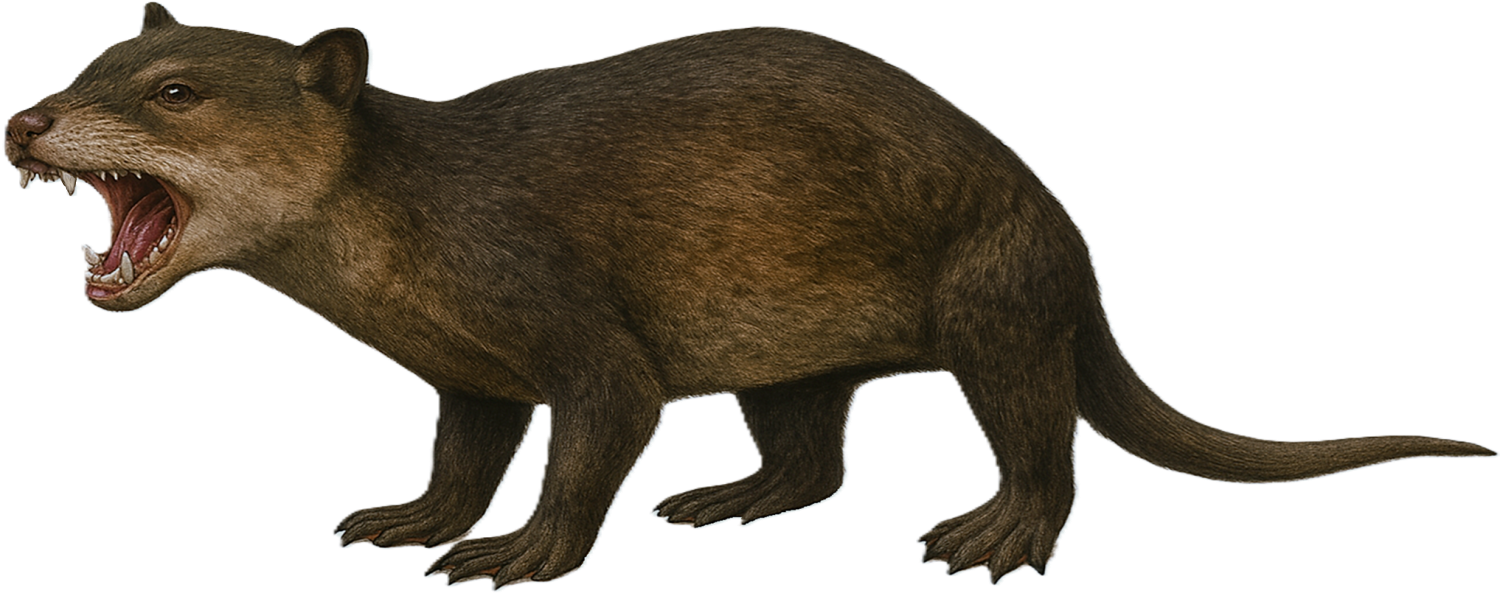 |
Didelphodon vorax | Montana, North Dakota, South Dakota, Wyoming | Hell Creek Formation; Lance Formation | 72 Exemplare | Stagodontidae |
|
|
Didelphodon sp. | North Dakota, South Dakota | Hell Creek Formation | Mehrere Exemplare | Stagodontidae |
|
|
Glasbius cf. twitchelli | Montana | Hell Creek Formation | — | Glasbiidae |
|
|
Glasbius twitchelli | Montana, North Dakota | Hell Creek Formation | 20 Exemplare | Glasbiidae |
|
|
Leptalestes cooki | Montana, South Dakota, Wyoming | Hell Creek Formation; Lance Formation | 22 Exemplare | Pediomyidae |
|
|
Leptalestes krejcii | Montana, South Dakota, Wyoming | Hell Creek Formation; Lance Formation | 23 Exemplare | Pediomyidae |
|
|
Nanocuris improvida | Wyoming | Hell Creek Formation; Lance Formation | 2 Exemplare | Deltatheridiidae |
|
|
Nortedelphys jasoni | Montana, South Dakota, Wyoming | Hell Creek Formation; Lance Formation | 13 Exemplare | Herpetotheriidae |
|
|
Pediomys elegans | Montana, South Dakota, Wyoming | Hell Creek Formation; Lance Formation | 35 Exemplare | Pediomyidae |
|
|
Protalphadon foxi | Montana | Hell Creek Formation | 1 Exemplar | Alphadontidae |
|
|
Protalphadon lulli | Montana, South Dakota, Wyoming | Hell Creek Formation; Lance Formation | 11 Exemplare | Alphadontidae; synonym zu Alphadon lulli |
|
|
Protolambda florencae | Montana, North Dakota, South Dakota, Wyoming | Hell Creek Formation; Lance Formation | 31 Exemplare | Pediomyidae |
|
|
Protolambda hatcheri | Montana, South Dakota, Wyoming | Hell Creek Formation; Lance Formation | 38 Exemplare | Pediomyidae |
|
|
Protolambda mcgilli | Montana | Hell Creek Formation | 1 Exemplar | Pediomyidae |
|
|
Turgidodon rhaister | Montana, Wyoming | Hell Creek Formation; Lance Formation | 18 Exemplare | Alphadontidae |

 |
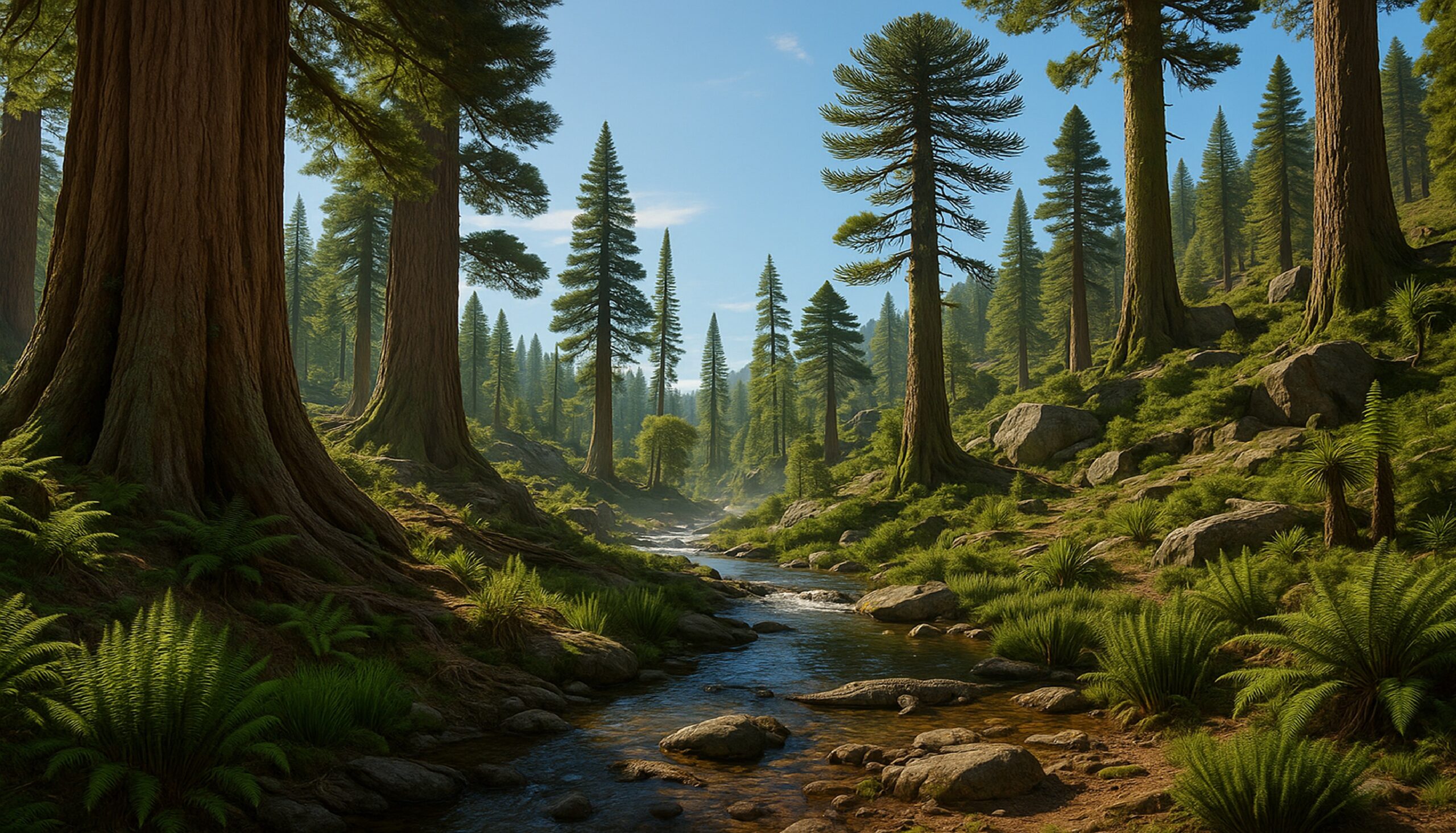
Fossilbericht der Hell Creek- und Lance FormationDu möchtest wissen, wer und was noch alles im Lebensraum dieser kleinen Säugetiere lebte? Alle Lebewesen, die außerdem in der Hell Creek– und Lance Formation überliefert sind, findest du hier. |
Quellenangaben:
- 1Kielan-Jaworowska, Z., Cifelli, R. L. & Luo, Z.-X. (2004). Mammals from the Age of Dinosaurs – Origins, Evolution, and Structure. Columbia University Press, 98-99. doi:10.7312/kiel11918 ↩︎
- 2Clemens, W. A. (1964). Fossil mammals of the type Lance Formation, Wyoming – Part I. Introduction and Marsupialia. University of California Publications in Geological Sciences, 48, 1–105. ↩︎
- 3Eaton, J. G. (1993). Therian mammals from the Cenomanian (Upper Cretaceous) Dakota Formation, southwestern Utah. Journal of Vertebrate Paleontology, 13(1), 105–124. ↩︎
- 4Montellano, M. (1988). Alphadon halleyi (Didelphidae, Marsupialia) from the Two Medicine Formation (Late Cretaceous, Judithian) of Montana. Journal of Vertebrate Paleontology, 8(4), 378–382. doi:10.1080/02724634.1988.10011726 ↩︎
- 5Storer, J. E. (1991). The mammals of the Gryde local fauna, Frenchman Formation (Maastrichtian – Lancian), Saskatchewan. Journal of Vertebrate Paleontology, 11(3), 350–396. ↩︎
- 6Williamson, T. E. et al. (2012). The phylogeny and evolution of Cretaceous–Palaeogene metatherians – cladistic analysis and description of new early Palaeocene specimens from the Nacimiento Formation, New Mexico. Journal of Systematic Palaeontology, 10(4), 625–651. doi:10.1080/14772019.2011.631592 ↩︎
- 7Rougier, G. W., Davis, B. M. & Novacek, M. J. (2015). A deltatheroidan mammal from the Upper Cretaceous Baynshiree Formation, eastern Mongolia. Cretaceous Research, 52, 167–177. doi:10.1016/j.cretres.2014.09.009 ↩︎
- 8Bi, S. et al. (2015). A new Cretaceous metatherian mammal from Henan, China. PeerJ, 3, e896. doi:10.7717/peerj.896 ↩︎
- 9Wilson, G. P. et al. (2016). A large carnivorous mammal from the Late Cretaceous and the North American origin of marsupials. Nature Communications, 7, 13734. doi:10.1038/ncomms13734 ↩︎
- 10Kielan-Jaworowska, Z., Cifelli, R. L. & Luo, Z.-X. (2004). Mammals from the Age of Dinosaurs – Origins, Evolution, and Structure. Columbia University Press, 98-99. doi:10.7312/kiel11918 ↩︎
- 11Archibald, J. D., Zhang, Y., Harper, T. & Cifelli, R. L. (2011). Protungulatum, confirmed Cretaceous occurrence of an otherwise Paleocene eutherian (placental?) mammal. Journal of Mammalian Evolution, 18(3), 153–161. doi:10.1007/s10914-011-9162-1 ↩︎
- 12Clemens, W. A. (1964). Fossil mammals of the type Lance Formation, Wyoming – Part I. Introduction and Marsupialia. University of California Publications in Geological Sciences, 48, 1–105. ↩︎
- 13Hunter, J. P., Heinrich, R. E. & Weishampel, D. B. (2010). Mammals from the St. Mary River Formation (Upper Cretaceous), Montana. Journal of Vertebrate Paleontology, 30(3), 885–898. doi:10.1080/02724631003763490 ↩︎
- 14Wilson, G. P. (2013). Mammals across the K/Pg boundary in northeastern Montana, U.S.A. – dental morphology and body-size patterns reveal extinction selectivity and immigrant-fueled ecospace filling. Paleobiology, 39(3), 429–469. doi:10.1666/12041 ↩︎
- 15Wilson, G. P. & Riedel, J. A. (2010). New specimen reveals deltatheroidan affinities of the North American Late Cretaceous mammal Nanocuris. Journal of Vertebrate Paleontology, 30(3), 872–884. ↩︎
- 16Fox, R. C., Scott, C. S. & Bryant, H. N. (2007). A new, unusual therian mammal from the Upper Cretaceous of Saskatchewan, Canada. Cretaceous Research, 28(5), 821–829. ↩︎
- 17Rougier, G. W., Davis, B. M. & Novacek, M. J. (2015). A deltatheroidan mammal from the Upper Cretaceous Baynshiree Formation, eastern Mongolia. Cretaceous Research, 52, 167–177. ↩︎
- 18Ni, X. et al. (2016). A late Paleocene probable metatherian (?deltatheroidan) survivor of the Cretaceous mass extinction. Science Reports, 6, 38547. doi:10.1038/srep38547 ↩︎
- 19Kielan-Jaworowska, Z., Cifelli, R. L. & Luo, Z.-X. (2004). Mammals from the Age of Dinosaurs – Origins, Evolution, and Structure. Columbia University Press, 98-99. doi:10.7312/kiel11918 ↩︎
- 20Clemens, W. A. (1964). Fossil mammals of the type Lance Formation, Wyoming – Part I. Introduction and Marsupialia. University of California Publications in Geological Sciences, 48, 1–105. ↩︎
- 21Johanson, Z. (1993). A revision of the Late Cretaceous (Campanian) marsupial Iqualadelphis lactea Fox, 1987. Journal of Vertebrate Paleontology, 13(3), 373–377. doi:10.1080/02724634.1993.10011518 ↩︎
- 22Cifelli, R. L. (1990). Cretaceous mammals of southern Utah. II. Marsupials and marsupial-like mammals from the Wahweap Formation (early Campanian). Journal of Vertebrate Paleontology, 10(3), 320–331. doi:10.1080/02724634.1990.10011817 ↩︎
- 23Kielan-Jaworowska, Z., Cifelli, R. L. & Luo, Z.-X. (2004). Mammals from the Age of Dinosaurs – Origins, Evolution, and Structure. Columbia University Press, 98-99. doi:10.7312/kiel11918 ↩︎
- 24Clemens, W. A. (1964). Fossil mammals of the type Lance Formation, Wyoming – Part I. Introduction and Marsupialia. University of California Publications in Geological Sciences, 48, 1–105. ↩︎
- 25Cifelli, R. L. (1990). Cretaceous mammals of southern Utah. I. Marsupials from the Kaiparowits Formation (Judithian). Journal of Vertebrate Paleontology, 10(3), 295–319. doi:10.1080/02724634.1990.10011816 ↩︎
- 26Kielan-Jaworowska, Z., Cifelli, R. L. & Luo, Z.-X. (2004). Mammals from the Age of Dinosaurs – Origins, Evolution, and Structure. Columbia University Press, 98-99. doi:10.7312/kiel11918 ↩︎
- 27Archibald, J. D., Zhang, Y., Harper, T. & Cifelli, R. L. (2011). Protungulatum, confirmed Cretaceous occurrence of an otherwise Paleocene eutherian (placental?) mammal. Journal of Mammalian Evolution, 18(3), 153–161. doi:10.1007/s10914-011-9162-1 ↩︎
- 28Davis, B. M. (2007). A revision of “pediomyid” marsupials from the Late Cretaceous of North America (PDF). Acta Palaeontologica Polonica, 52(2), 217–256. ↩︎
- 29Kelly, T. S. (2014). Preliminary report on the mammals from Lane’s Little Jaw Site Quarry – a latest Cretaceous (earliest Puercan?) local fauna, Hell Creek Formation, southeastern Montana (PDF). Paludicola, 10(1), 50–91. ↩︎
- 30Davis, B. (2007). A revision of pediomyid marsupials from the Late Cretaceous of North America. Acta Palaeontologica Polonica, 52, 217–256. ↩︎
- 31Williamson, T. E. et al. (2012). The phylogeny and evolution of Cretaceous–Palaeogene metatherians – cladistic analysis and description of new early Palaeocene specimens from the Nacimiento Formation, New Mexico. Journal of Systematic Palaeontology, 10(4), 625–651. doi:10.1080/14772019.2011.631592 ↩︎
- 32Kielan-Jaworowska, Z., Cifelli, R. L. & Luo, Z.-X. (2004). Mammals from the Age of Dinosaurs – Origins, Evolution, and Structure. Columbia University Press, 98-99. doi:10.7312/kiel11918 ↩︎
- 33Clemens, W. A. (1966). Fossil mammals from the type Lance Formation, Wyoming. Part II. Marsupialia. University of California Publications in Geological Sciences, 62, 1–122. ↩︎
- 34Wilson, G. P. (2013). Mammals across the K/Pg boundary in northeastern Montana, U.S.A. – dental morphology and body-size patterns reveal extinction selectivity and immigrant-fueled ecospace filling. Paleobiology, 39(3), 429–469. doi:10.1666/12041 ↩︎
- 35Williamson, T. E. et al. (2012). The phylogeny and evolution of Cretaceous–Palaeogene metatherians – cladistic analysis and description of new early Palaeocene specimens from the Nacimiento Formation, New Mexico. Journal of Systematic Palaeontology, 10(4), 625–651. doi:10.1080/14772019.2011.631592 ↩︎
- 36Davis, B. (2007). A revision of pediomyid marsupials from the Late Cretaceous of North America. Acta Palaeontologica Polonica, 52, 217–256. ↩︎
- 37Gordon, C. L. (2003). Functional morphology and diet of Late Cretaceous mammals of North America. Dissertation, University of Oklahoma. ↩︎
- 38Eberle, J. et al. (2024). A new Late Cretaceous metatherian from the Williams Fork Formation, Colorado. PLoS ONE, 19(10), e0310948. doi:10.1371/journal.pone.0310948 ↩︎
- 39Kielan-Jaworowska, Z., Cifelli, R. L. & Luo, Z.-X. (2004). Mammals from the Age of Dinosaurs – Origins, Evolution, and Structure. Columbia University Press, 98-99. doi:10.7312/kiel11918 ↩︎
- 40Clemens, W. A. (1964). Fossil mammals of the type Lance Formation, Wyoming – Part I. Introduction and Marsupialia. University of California Publications in Geological Sciences, 48, 1–105. ↩︎
- 41Fox, R. C. & Naylor, B. G. (2006). Stagodontid marsupials from the Late Cretaceous of Canada and their systematic and functional implications. Acta Palaeontologica Polonica, 51(6), 13–36. ↩︎
- 42Wilson, G. P. et al. (2016). A large carnivorous mammal from the Late Cretaceous and the North American origin of marsupials. Nature Communications, 7, 13734. doi:10.1038/ncomms13734 ↩︎
- 43Carneiro, L. M. & de Oliveira, E. V. (2017). Systematic affinities of the extinct metatherian Eobrasilia coutoi Simpson, 1947, a South American Early Eocene Stagodontidae – implications for Eobrasiliinae. Revista Brasileira de Paleontologia, 20(3), 355–372. doi:10.4072/rbp.2017.3.07 ↩︎
- 44de Muizon, C. & Lange-Badré, B. (1997). Carnivorous dental adaptations in tribosphenic mammals and phylogenetic reconstruction. Lethaia, 30(4), 353–366. doi:10.1111/j.1502-3931.1997.tb00481.x ↩︎
- 45Chen, M. & Wilson, G. P. (2015). A multivariate approach to infer locomotor modes in Mesozoic mammals. Paleobiology, 41(2). doi:10.1017/pab.2014.14 ↩︎
- 46Rougier, G. W., Davis, B. M. & Novacek, M. J. (2015). A deltatheroidan mammal from the Upper Cretaceous Baynshiree Formation, eastern Mongolia. Cretaceous Research, 52, 167–177. doi:10.1016/j.cretres.2014.09.009 ↩︎
- 47Grossnickle, D. M. & Polly, P. D. (2013). Mammal disparity decreases during the Cretaceous angiosperm radiation. doi:10.1098/rspb.2013.2110 ↩︎
Hat dir dieser Beitrag gefallen?
Für noch mehr Lesestoff schau gerne in die Kategorie Meine Bücher. Alle meine Werke findest du auch in der Sidebar rechts. Dort gibt es auch einen Direktlink zu Amazon, wo du sie gleich bestellen kannst. ➡️
Wie kannst du Die Weißen Steine sonst noch unterstützen?
Klar, in erster Linie natürlich, wenn du dir eines meiner Bücher kaufst. Aber du kannst mir auch auf anderen Wegen eine große Freude machen:
- Teile diesen Beitrag auf deinen Social-Media-Kanälen!
- Schreibe mir eine nette Rezension auf Amazon!
- Kaufe hier auf der Website über Affiliate Links ein!
Ich kriege übrigens auch eine kleine Unterstützung, wenn du etwas völlig anderes kaufst. Es muss nicht unbedingt der hier beworbene Artikel sein! Jeder kleine Centbetrag hilft, diese Seite am Laufen zu erhalten.
 |
Zusammen mit meiner lieben Frau Sahar habe ich auch noch eine Menge mehr zu bieten! Sahar ist nämlich eine großartige Künstlerin und fertigt Gemälde, Lesezeichen, Stofftaschen und viele andere coole Artikel an. Auch mit tollen Urzeit-Motiven! Klick dich einfach mal durch die Beiträge in der Kategorie Produkte & Services. Bestimmt findest du da etwas nach deinem Geschmack. Oder auch ein schönes Geschenk für deine Lieben. |
Einen Grund, anderen eine Freude zu bereiten, findet man schließlich immer!