Während der späten Kreidezeit durchzog ein riesiges Flachmeer den gesamten nordamerikanischen Kontinent, der Western Interior Seaway. Entlang der Gestade des Binnenmeeres erstreckte sich ein fruchtbarer, wasserreicher Lebensraum aus Sümpfen und Bruchwäldern, aber auch Farnebenen und Flussauen, die ideale Bedingungen für die Fossilerhaltung boten. Hier liegen einige der wohl bekanntesten Fossillagerstätten aus dem Maastrichtiums der USA und auch die am intensivsten erforschten auf der ganzen Welt, mit den besten Einblicke ins Ökosystem des westlichen Nordamerikas während der letzten Jahrmillionen des Mesozoikums. Sie waren nicht nur die Heimat vieler der berühmtesten Dinosaurier, auch eine Vielzahl weiterer interessanter Lebewesen war hier zuhause.
 |
Inhaltsverzeichnis: |
Geographie
Nicht zuletzt wegen ihrer vielen promineten Bewohner, wie Tyrannosaurus rex, Triceratops oder Ankylosaurus, habe ich diese Gegend auch als Handlungsort für meine Buchreihe ausgewählt. In Die Weißen Steine gelangt eine Schulklasse auf mysteriösem Wege in die späte Kreidezeit. Genauer: ins Maastrichtium, wie die Forscher den allerletzten Abschnitt der Kreidezeit nennen. Die unfreiwillige Zeitreise verschlägt die Teenager und ihre Lehrer ins prähistorische Nordamerika. Sie landen auf dem Gebiet, das heute zum US-amerikanischen Bundesstaat Wyoming gehört. Wir bereisen in meinen ersten beiden Büchern den amerikanischen Mittleren Westen, zwischen den Rocky Mountains und den endlosen Weiten der Prärie. Filmfans könnte diese Gegend bekannt vorkommen: denn sie ist uns auch aus zahlreichen Western-Filmen bekannt. Cowboys, Bisons und Indianer kommen in meinem Buch zwar nicht vor, doch auch in der Kreidezeit war dieses Gebiet bereits ein weites, gebrochenes Plateau, aus dem vereinzelte Bergkämme aufragten. Es lag damals jedoch an der Küste eines Binnenmeeres, sodass das Klima damals deutlich feuchter war als heute.
Die Lagerstätten dieser Region liegen heute aufgrund der Verschiebung der Kontinente geografisch mehrere hundert Kilometer südlich, als es noch während der Kreidezeit der Fall war. Ihr Zentrum lag damals etwa auf 55° nördlicher Breite und damit etwa auf der Höhe des heutigen Alberta (Kanada). Heute liegt es dagegen nur auf etwa 46° nördlicher Breite. Dies wirkte sich auch auf den Tag-Nacht-Zyklus im Jahresverlauf aus: im Winter schien die Sonne an den kürzesten Tagen weniger als 8 Stunden, an den längsten Sommertagen war es dagegen mehr als 17 Stunden durchgehend hell.
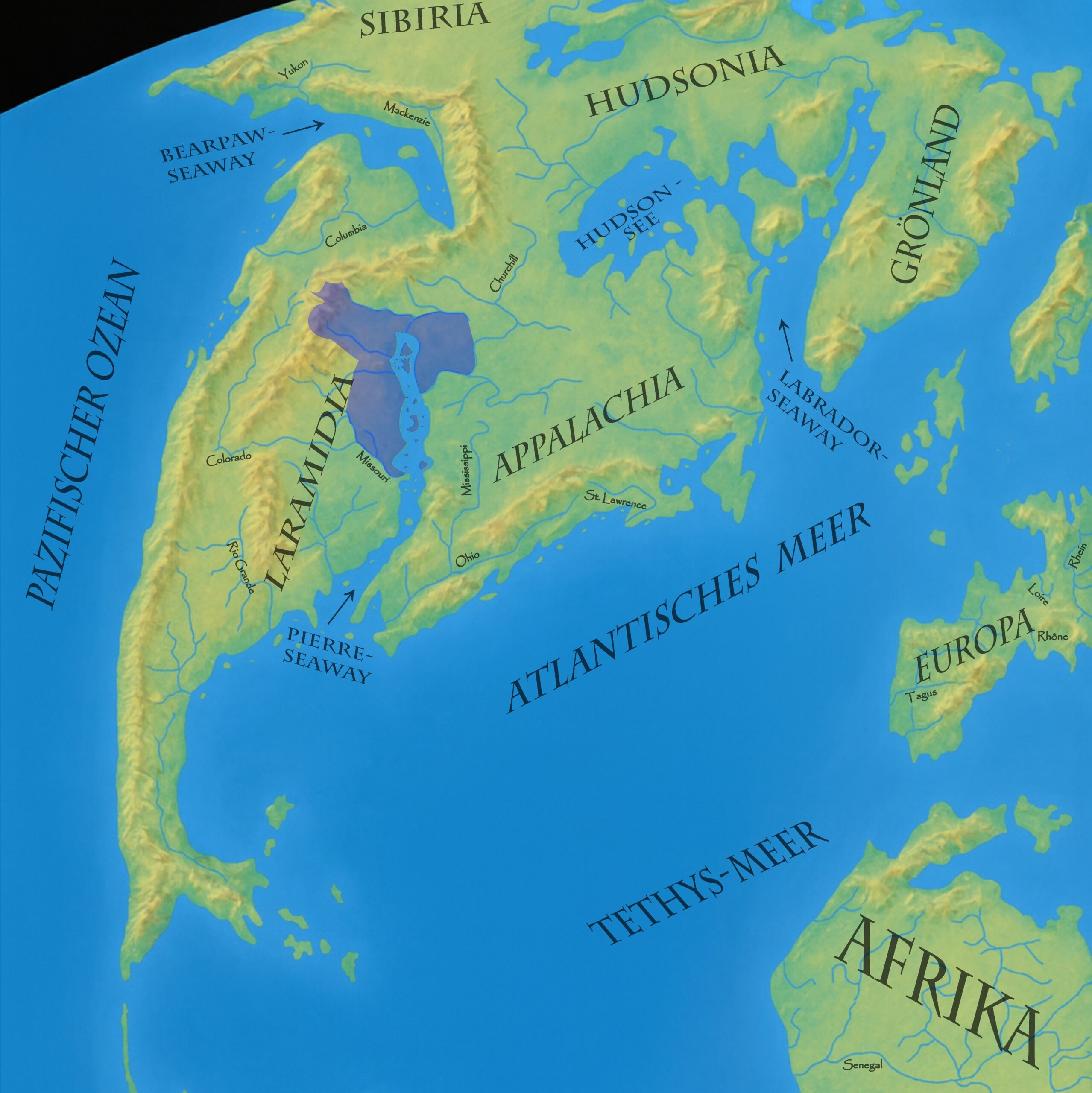
Noch wenige Jahrmillionen vor Beginn der Handlung von Die weißen Steine war fast die gesamte Gegend vollständig überflutet und Teil des Western Interior Seaway (WIS). Am Ende der Kreidezeit faltete sich jedoch das laramidische Gebirge immer weiter auf, und das Meer trat zurück. Nun gab es drei Meeresarme in Nordamerika. Die hier beschriebenen Lagerstätten lagen alle in unmittelbarer Nähe des größten noch verbliebenen Rests des WIS, am Pierre Seaway. Über den Isthmus von Dakota, eine neuentstandene Landbrücke im Norden der heutigen USA und im Süden Kanadas, breiteten sie sich zwischen der Hudson-See und dem Labrador Seaway nach Osten und dem Bearpaw-Seaway nach Norden hin aus.
Klima
Heute ist der mittlere Westen Nordamerikas eine Gegend mit kontinentalem Klima. Niederschläge sind dort selten, das Land ist eher trocken. Interessanterweise finden wir in den kreidezeitlichen Gesteinsschichten dieser Gegend aber vor allem die Sedimente aus Flusslandschaften. Sie muss damals also ein regen- und damit wasserreicher Lebensraum gewesen sein, also ganz anders ausgesehen haben als heute!
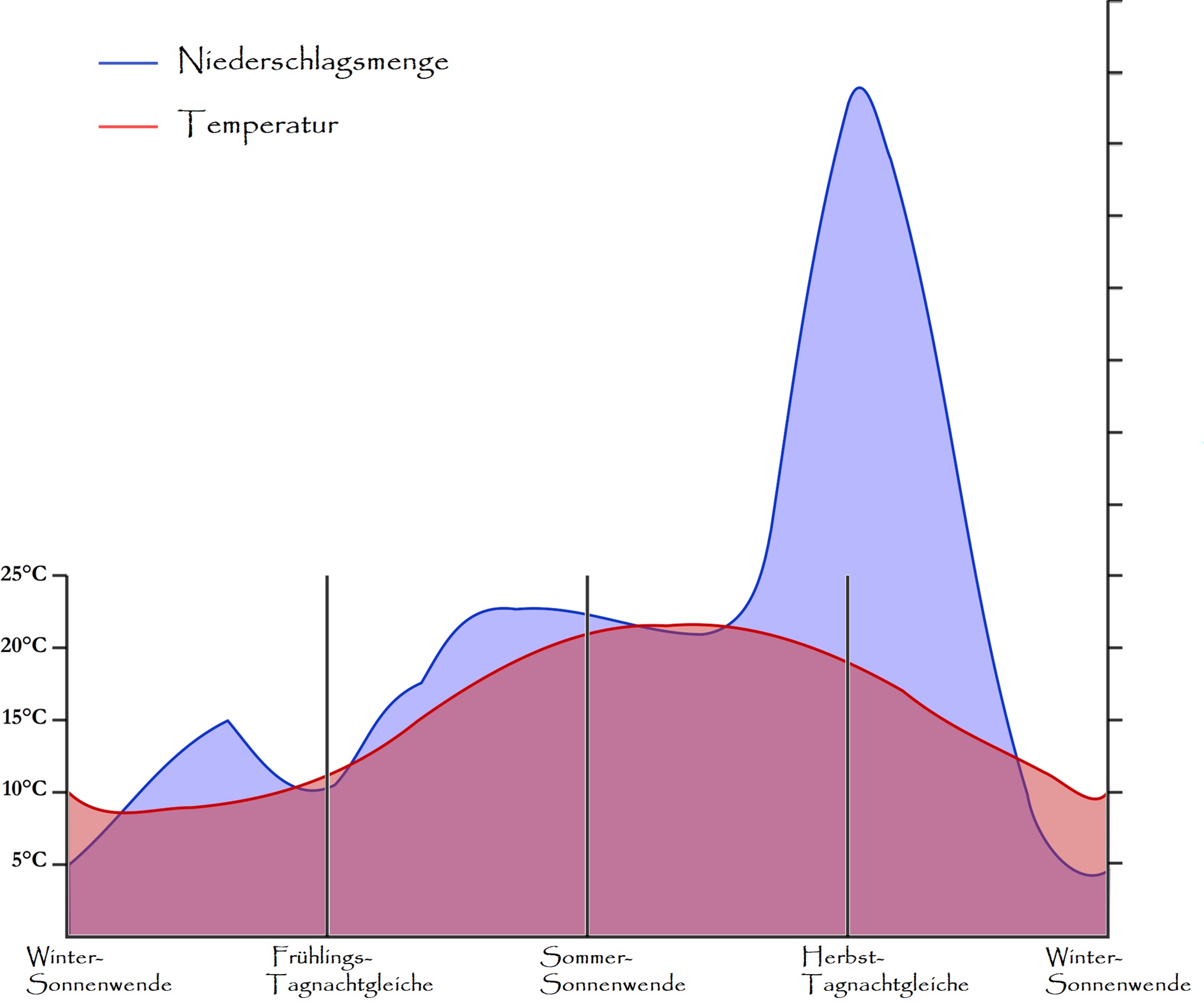
Reisen wir in die Zeit des Maastrichtiums, ist also vieles anders als heute. Im mittleren Westen, wo sich unserer Tage die Prärie als ein endloses Meer aus Gras erstreckt, gab es zu jener Zeit nämlich noch tatsächlich ein Meer! Durch seine Nähe zum Pierre Seaway herrschte hier vor 66 Millionen Jahren noch ein maritimes Klima vor. Über dem Meer verdunstete die subtropische Sonne tagein, tagaus ungeheure Wassermassen, die als Wolken durch den stetigen Südostwind aufs Festland getrieben wurden. An den Gebirgshängen im Landesinneren stauten sich die Wolken auf und es kam dort besonders während der Sommermonate zu starken Regenfällen. Das wissen wir durch Blattuntersuchungen der floralen Zone Hell Creek I: Eine Analyse ergab eine mittlere Jahrestemperatur von 11,3–11,6 °C, eine mittlere Temperatur des wärmsten Monats von 20,1–20,5 °C und eine mittlere Temperatur des kältesten Monats von 2,6 °C bei einem mittleren Jahresniederschlag von 191–197 Zentimetern.1Arens, N. C., & Allen, S. E. (2014). A florule from the base of the Hell Creek Formation in the type area of eastern Montana – Implications for vegetation and climate. In G. P. Wilson et al. (Eds.), Through the end of the Cretaceous in the type locality of the Hell Creek Formation in Montana and adjacent areas. Geological Society of America. doi: 10.1130/2014.2503(06)
Landschaft
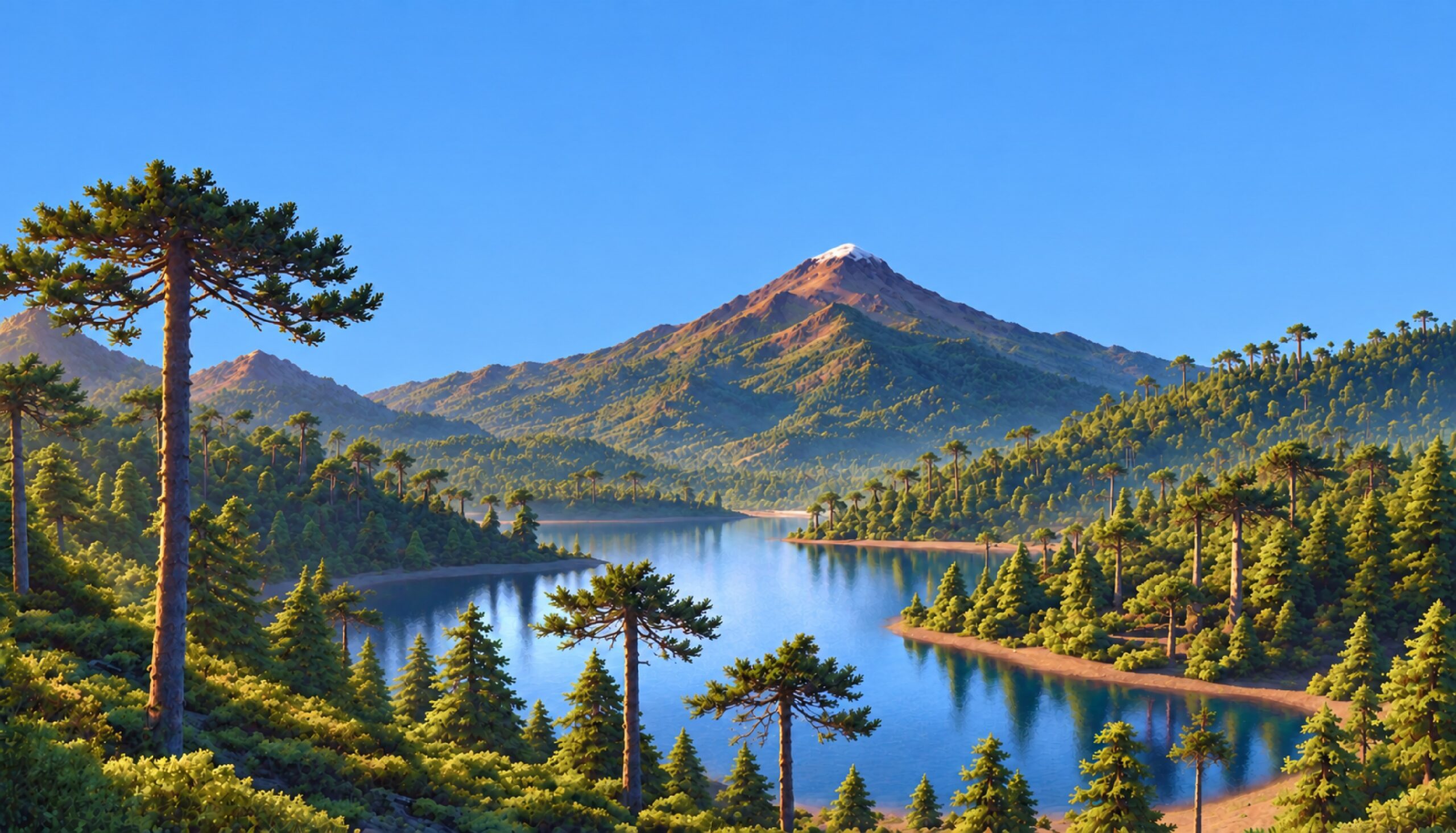
Eine große Menge fossiler Blätter wurde an Dutzenden verschiedener Fundstellen entdeckt, was darauf hinweist, dass das Gebiet größtenteils bewaldet war. Ein weitverzweigtes Netz aus Flüssen entwässerten das Land und mündeten in den Pierre Seaway. Einige der östlichsten Ablagerungen dieses Lebensraums entstanden daher auch in Küstensümpfen. Aus diesem Grund findet man hier nicht nur die Fossilien von an Land lebenden Dinosauriern, sondern auch die Überreste vieler Meerestiere.2Richardson, T. (2008). Spatial arrangements of fossil species at the Hell Creek Formation: Perspectives and conclusions. International Journal of Paleogeology, 12(24).3Lofgren, D. F. (1997). Hell Creek Formation. In P. J. Currie & K. Padian (Eds.), The encyclopedia of dinosaurs (pp. 302–303). Academic Press.4Breithaupt, B. H. (1997). Lance Formation. In P. J. Currie & K. Padian (Eds.), The encyclopedia of dinosaurs (pp. 394–395). Academic Press.5Eberth, D. A. (1997). Edmonton Group. In P. J. Currie & K. Padian (Eds.), The encyclopedia of dinosaurs (pp. 199–204). Academic Press. Weiter im Westen wurde die Landschaft schließlich bergiger. Hier erhoben sich die Gipfel der laramidischen Gebirgskette in die Höhe, die heutigen Rocky Mountains. Am Ende der Kreidezeit waren viele dieser Berge auch noch aktive Vulkane.6Pierce, K. L. (1979). History and dynamics of glaciation in the northern Yellowstone National Park area. U.S. Geological Survey Professional Paper 729-F, Washington, D.C., 1–90.7Doe, B. R. et al. (1979). Genesis of ore deposits in the San Juan volcanic field, southwestern Colorado—lead isotope evidence. Economic Geology, 74, 1–26. doi:10.2113/gsecongeo.74.1.18Jones, D. L. (1990). Synopsis of late Palaeozoic and Mesozoic terrane accretion within the Cordillera of western North America. Philosophical Transactions of the Royal Society of London. Series A, Mathematical and Physical Sciences, 331(1620), 479–486. doi:10.1098/rsta.1990.00849Roberts, L. N. R. & Kirschbaum, M. A. (1995). Paleogeography of the Late Cretaceous of the Western Interior of middle North America: Coal distribution and sediment accumulation. U.S. Geological Survey Professional Paper, 1561, 115. doi:10.3133/pp1561 10English, J. M. & Johnston, S. T. (2004). The Laramide Orogeny: What Were the Driving Forces? International Geology Review, 46(9), 833–838. doi:10.2747/0020-6814.46.9.833
Die Lancian Fauna
Die Tierfossilien, entlang der Gestade des Binnenmeeres gefunden wurden, werden in der Fachliteratur als Lancian Fauna bezeichnet. Dieser Begriff beschreibt die Tiergemeinschaft, die im letzten Abschnitt der Oberkreide Nordamerikas gemeinsam lebte, also zwischen 70,6 und 66 Millionen Jahren kurz vor dem Einschlag des Chicxulub-Meteoriten. Damals ereigneten sich tiefgreifende ökologische Umbrüche, ausgelöst durch den Rückzug des Western Interior Seaways und tektonische Hebungen im Westen des Kontinents. Beides führte zu einem klimatischen Wandel, und gleichzeitig auch zu einem Wandel in der Tierwelt des prähistorischen Nordamerikas, die große Ähnlichkeit mit zeitgleichen Faunengemeinschaften Ostasiens hatte. Wahrscheinlich befanden sich zwischen beiden Lebensräumen gelegentlich Landbrücken, die den Tieren Wanderbewegungen erlaubten. Charakteristisch für diese Zeit ist ein starker Artenrückgang bei den Dinosauriern: Statt vieler spezialisierter Formen, wie sie noch im Campanium zu finden waren, dominierten nun bloß wenige, weit verbreitete Großpflanzenfresser die Tierwelt.
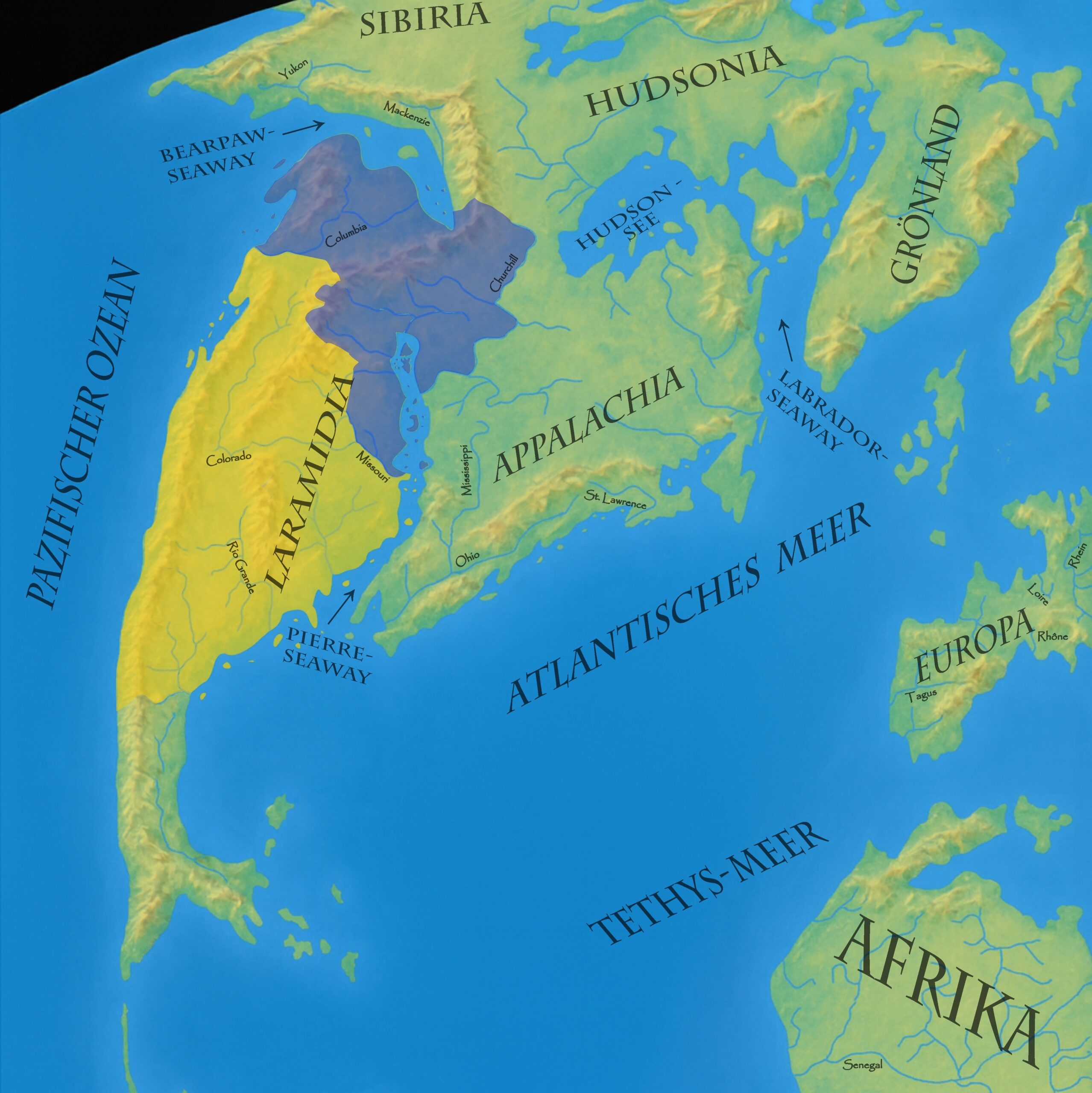 |
Viele Forscher gehen davon inzwischen davon aus, dass die laramidische Gebirgskette, aber auch die noch vorhandenen Meeresarme und vielleicht auch mächtige Flussläufe natürliche Barrieren darstellten, die das westlichen Nordamerika in mindestens zwei große Ökosphären teilte. |
- Die nördliche Ökosphäre (blau) reichte von Colorado über den Osten Wyomings nach Ost-Montana, und über North und South Dakota bis ins kanadische British Columbia, Alberta und Sasketchewan. Hier prägten Horndinosaurier wie Triceratops und Entenschnabeldinosaurier wie Edmontosaurus die Ökosysteme als pflanzenfressende Schlüsselspezies.
- In der südlichen Ökosphäre (gelb) war wiederum der rieisge Sauropode Alamosaurus der größte und dominante Pflanzenfresser. Hier trat außerdem auch der Riesenflugsaurier Quetzalcoatlus auf. Beide fehlen wiederum im Fossilbericht der nördlicheren Ökosysteme. Diese Ökosphäre erstreckte sich westlich vom Nordwesten Montanas über den Westen Wyomings und Utahs bis nach Nevada und Kalifornien, und reicht südlich nach Arizona, New Mexiko, Texas und in den mexikanischen Bundesstaat Sonora.
Insgesamt markiert die Lancian Fauna den letzten stabilen Zustand nordamerikanischer Dinosaurierökosysteme vor ihrem abrupten Aussterben am Ende der Kreidezeit.
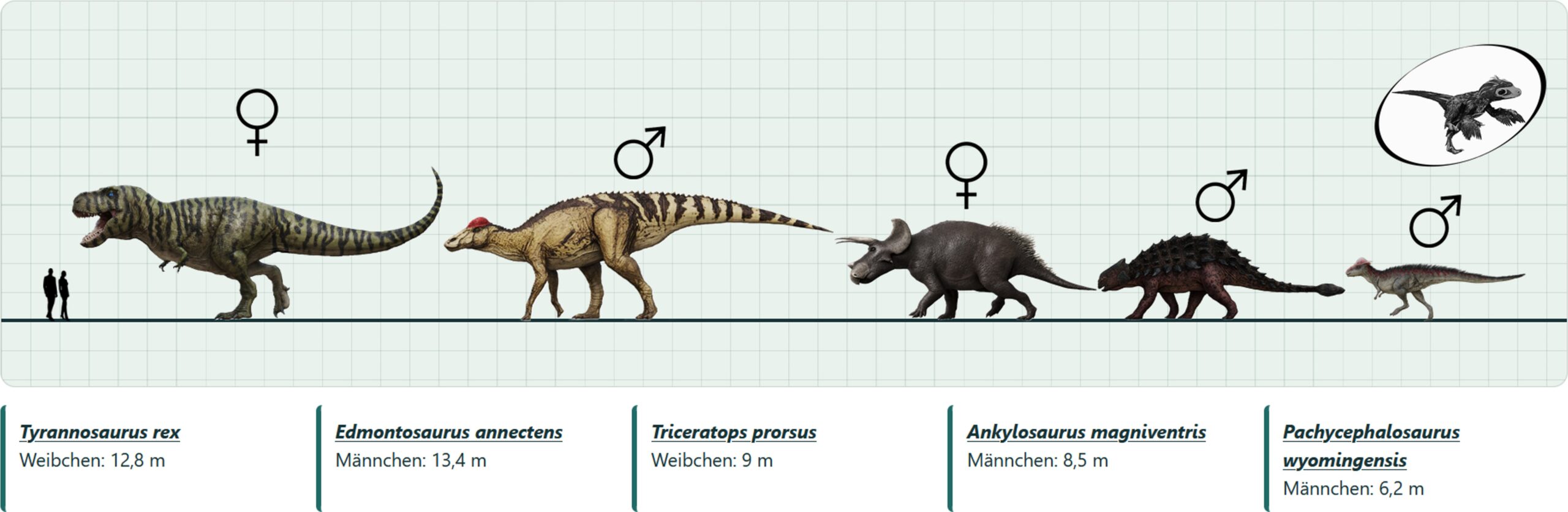
Mit meinem Editor kannst du die Tiere dieses bemerkenswerten Lebensraums miteinander vergleichen!
Marine Fazies
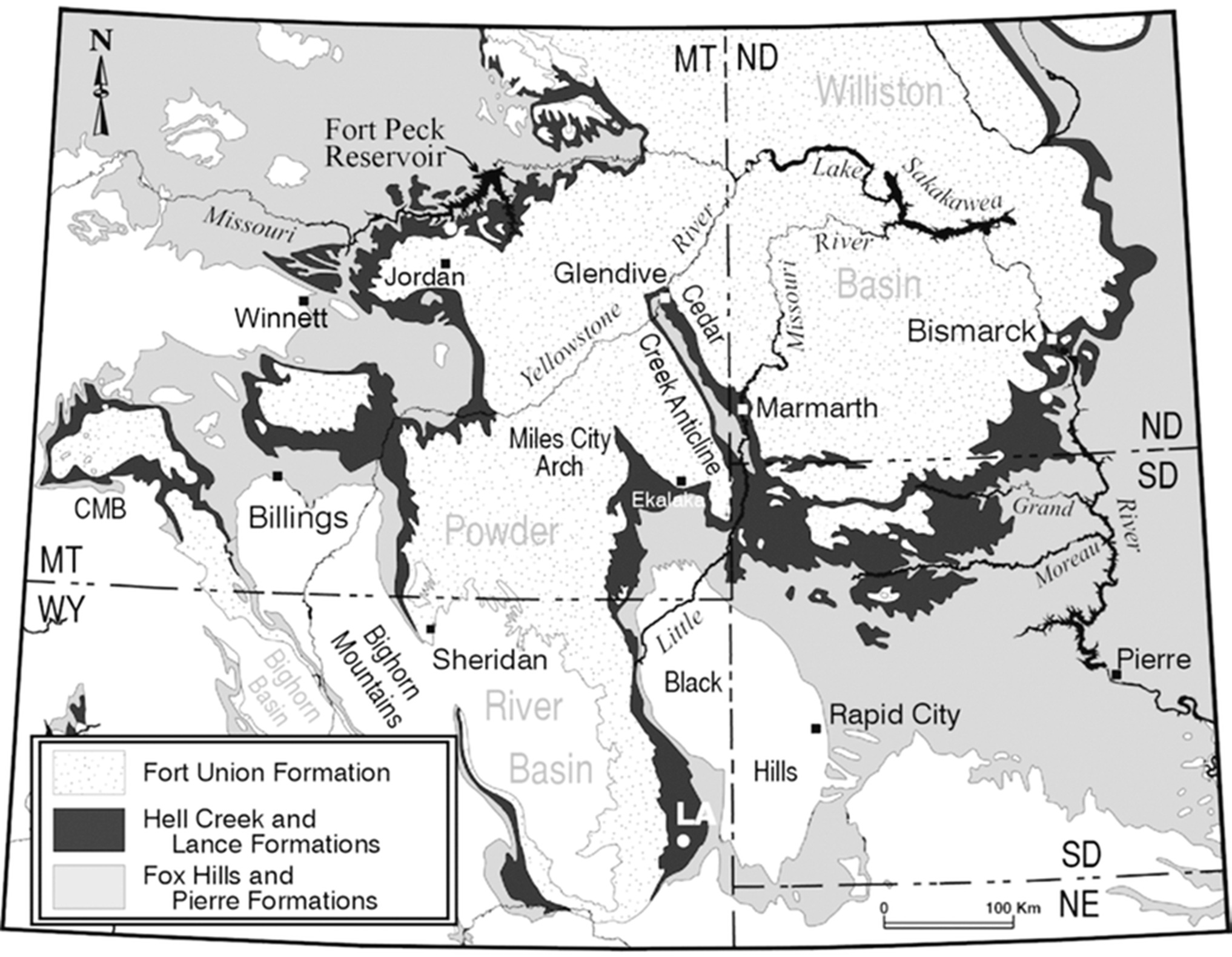
Sowohl aus der Hell Creek– als auch aus der Lance Formation sind auch marine Fazies bekannt, also Meeresablagerungen, wie etwa das Breien Member. Da es nicht die typische Fauna von Landlebewesen enthält, sondern vor allem marine Wirbellose, werden diese Abschnitte heute oft auch zum marinen Pierre Shale oder der Fox Hills Formation gezählt. Das jüngere Cannonball Marine Member, in manchen Quellen auch als Cannonball Formation klassifiziert, stammt dagegen wohl bereits aus dem frühesten Paläozän und damit der Zeit nach dem Massenaussterben am Ende der Kreidezeit, obwohl es hinstrorisch als Teil der Lance Formation geführt wurde.11Stanton, T. W. (1920). The fauna of the Cannonball marine member of the Lance formation. Professional Paper, U.S. Geological Survey, 128, 1–60. Dennoch erlaubt auch der Blick auf die späteren marien Fazies Rückschlüsse auf die Meereswelt am Ende der Kreidezeit, besonders, welche Spezies die gewaltigen Naturkatastrophen nach dem Chicxulub-Einschlag überlebten und welche danach neu auftraten.
Belege fürs Massenaussterben
Umfangreiche Grabungen in der oberen Hell Creek Formation von North Dakota erbrachten über 10.000 Wirbeltierfossilien. Sie zeigen auch, dass die Artenvielfalt bis unmittelbar vor die Kreide-Paläogen-Grenze stabil blieb. Dies schließt einen allmählichen Rückgang der Wirbeltierdiversität aus und legt nahe, dass das Aussterben am Ende der Kreidezeit sehr plötzlich erfolgte.12Pearson, D. A. et al. (2002). Vertebrate biostratigraphy of the Hell Creek Formation in southwestern North Dakota and northwestern South Dakota. In J. H. Hartman, K. R. Johnson, & D. J. Nichols (Eds.), The Hell Creek Formation and the Cretaceous–Tertiary boundary in the Northern Great Plains – An integrated continental record of the end of the Cretaceous (pp. 145–167). Geological Society of America.13Lofgren, D. L. (1995). The Bug Creek problem and the Cretaceous–Tertiary transition at McGuire Creek, Montana. University of California Publications in Geological Sciences, 140, 1–204.
Vorherige Studien auf Basis hochauflösender Profile entlang der Kreide-Paläogen-Grenze waren noch zu einem anderen Ergebnis gekommen. Sie konnten keine Sedimentabfolgen nachweisen, die kurzzeitige, biologisch katastrophale Aussterbeereignisse mit einer Dauer unter 100.000 Jahren eindeutig dokumentieren könnten. Damit erschien ein plötzlicher, global synchroner Nachweis für ein Massenaussterben in den geologischen Aufschlüssen methodisch sehr fraglich.14Dingus, L. (1983). A stratigraphic review and analysis of selected sections spanning the Cretaceous–Tertiary boundary (Doctoral dissertation). University of California, Berkeley, CA, USA.15Dingus, L. (1984). Effects of stratigraphic completeness on interpretations of extinction rates across the Cretaceous–Tertiary boundary. Paleobiology, 10(4), 420–438. doi: 10.1017/s0094837300008435Neue stratigraphische Analysen im Gebiet der Hell-Creek-Formation zeigen, dass die vermeintlichen „Übergangsfaunen“ der Bug-Creek-Schichten tatsächlich in paläozänen Kanälen auftreten, die in ältere Sedimente einschneiden. Damit erweist sich die Bug-Creek-Fauna als reworked und das kontinentale Fossilarchiv stimmt mit einem abrupten, katastrophalen Aussterben an der K–Pg-Grenze überein.16Smit, J., & Van der Kaars, S. (1984). Terminal Cretaceous extinctions in the Hell Creek area, Montana: Compatible with catastrophic extinction. Science, 223(4641), 1177–1179. doi: 10.1126/science.223.4641.1177 Hochauflösende ⁴⁰Ar/³⁹Ar-Datierungen von Vulkanaschen in Montana kamen zum gleichen Ergebnis.17Sprain, C. J., Renne, P. R., Wilson, G. P., & Clemens, W. A. (2015). High-resolution chronostratigraphy of the terrestrial Cretaceous–Paleogene transition and recovery interval in the Hell Creek region, Montana. Geological Society of America Bulletin, 127, 393–409. doi: 10.1130/B31076.1
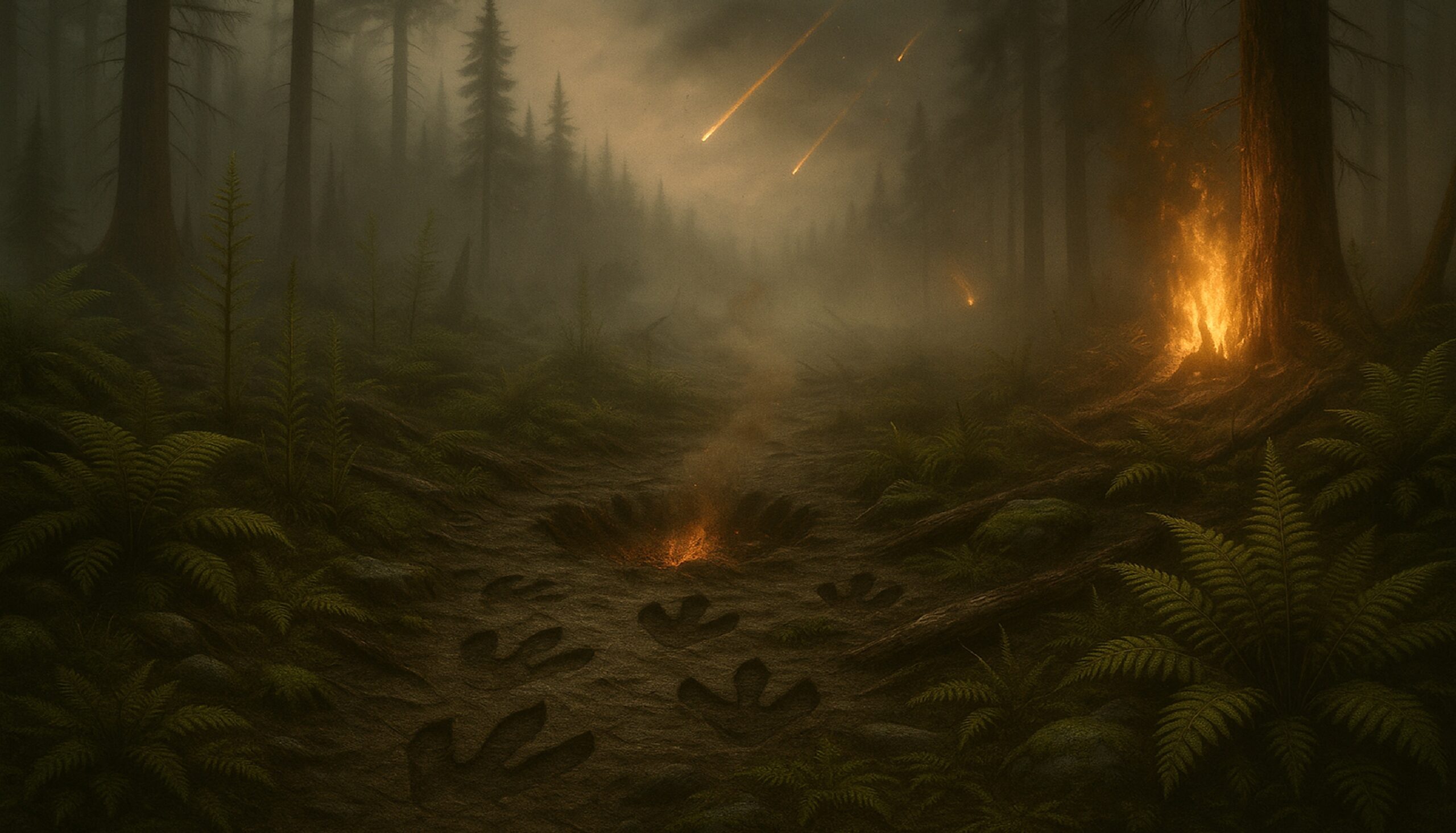
Besonders in der Hell Creek Formation kann man den Übergang von der Kreide zum Paläogen, dem darauffolgenden Zeitalter, selbst als Laie gut erkennen: Die sogenannte K-Pg-Grenze zeichnet sich in einer etwa 2cm dicken und schwarz gefärbten Linie in den Gesteinsschichten ab. Diese Linie entstand wahrscheinlich als direkte Folge eines gewaltigen Meteoriteneinschlages, welcher der Kreidezeit und der Herrschaft der Dinosaurier ein abruptes Ende setzte. Sie ist in gleichalten Ablagerungen auf der ganzen Welt zu sehen.18Hartman, J. H. (2002). Hell Creek Formation and the early picking of the Cretaceous–Tertiary boundary in the Williston Basin. Geological Society of America Special Paper, 361, 1–7. doi: 10.1130/0-8137-2361-2.1 Die Tanis-Fundstätte in North Dakota, die sich offenbar genau an jenem verhängnisvollen Tag bildete, als der Chicxulub-Meteorit auf der Erde einschlug, erlaubt spektakuläre Einblicke in den Hergang dieser Katastrophe.19DePalma, R. et al. (2017). Life after impact: A remarkable mammal burrow from the Chicxulub aftermath in the Hell Creek Formation, North Dakota. GSA Annual Meeting, Paper No. 113-16.20Smit, J. et al. (2017). Tanis, a mixed marine-continental event deposit at the KPG Boundary in North Dakota caused by a seiche triggered by seismic waves of the Chicxulub Impact. GSA Annual Meeting, Paper No. 113-15.21DePalma, R. A. et al. (2019). A seismically induced onshore surge deposit at the KPg boundary, North Dakota. Proceedings of the National Academy of Sciences, 116(17), 8190–8199. doi:10.1073/pnas.1817407116
Wie sich dieses beispiellose Ereignis am Schicksalstag der Dinosaurier zutrug, erfährst du in diesem Video, dass ich in Zusammenarbeit mit Michael Kubi (Darwinator) erstellt habe. Viel Spaß!
Die Lagerstätten
Meine Rekonstruktion der Lebensräumen an den Gestaden des Binnenmeeres basiert auf echten Erkenntnissen aus der paläontologischen Forschung. Um diese beeindruckende Welt wiederzuerschaffen, habe ich aus zahlreichen Studien zu folgenden Lagerstätten recherchiert. Klick dich gerne durch die einzelnen Beiträge, wenn du mehr über die wissenschaftlichen Hintergründe erfahren und auch einen virtuellen Spaziergang dort machen möchtest!
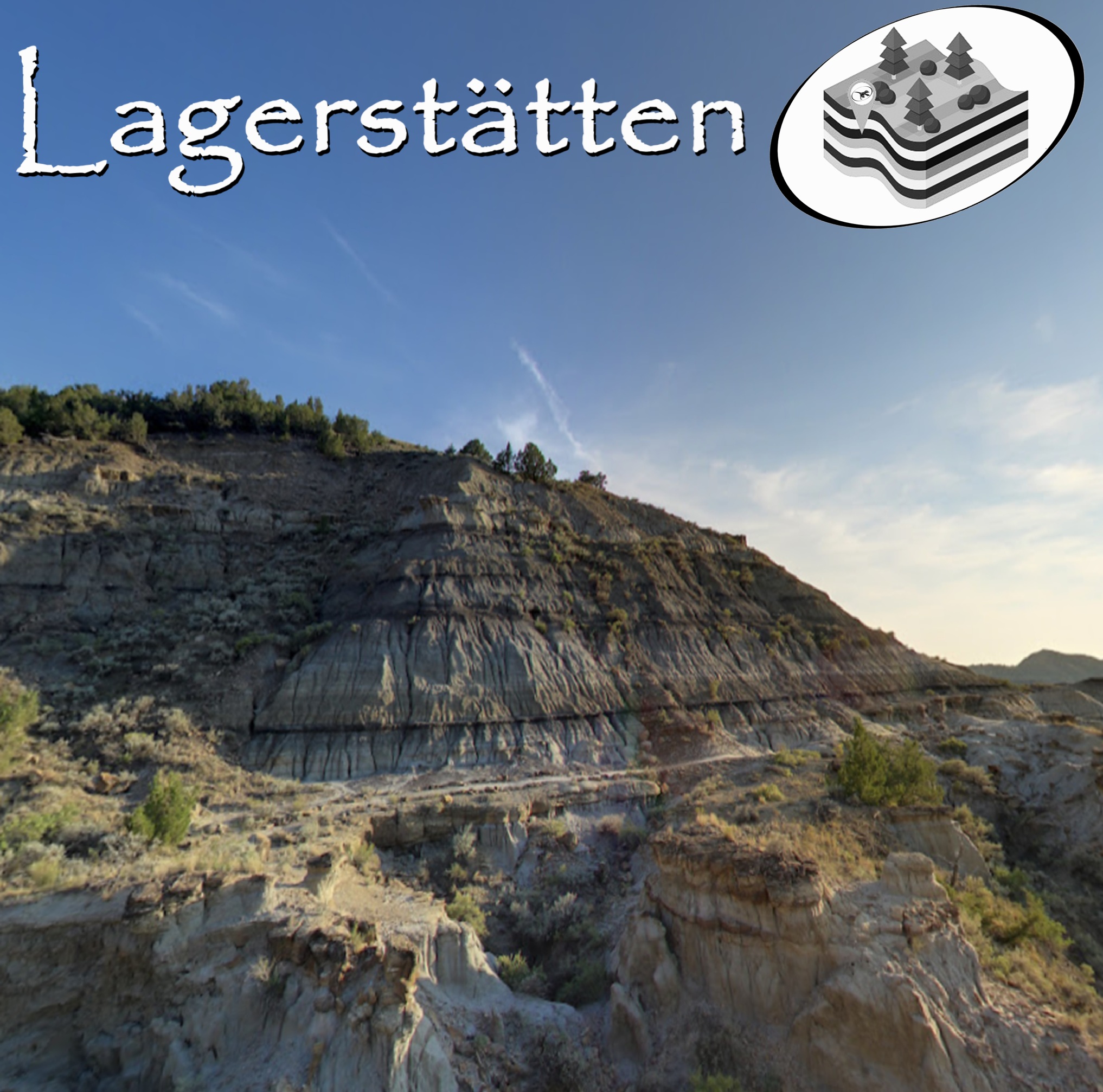 |
Im nördlichen Westen der USA, genauer gesagt auf dem Gebiet der heutigen Bundesstaaten North Dakota, South Dakota und Montana, liegt die berühmte Hell Creek Formation. Es handelt sich um eine der ergiebigsten Lagerstätten der Welt, aus der viele absolute Dino-Superstars der späten Kreidezeit stammen. |
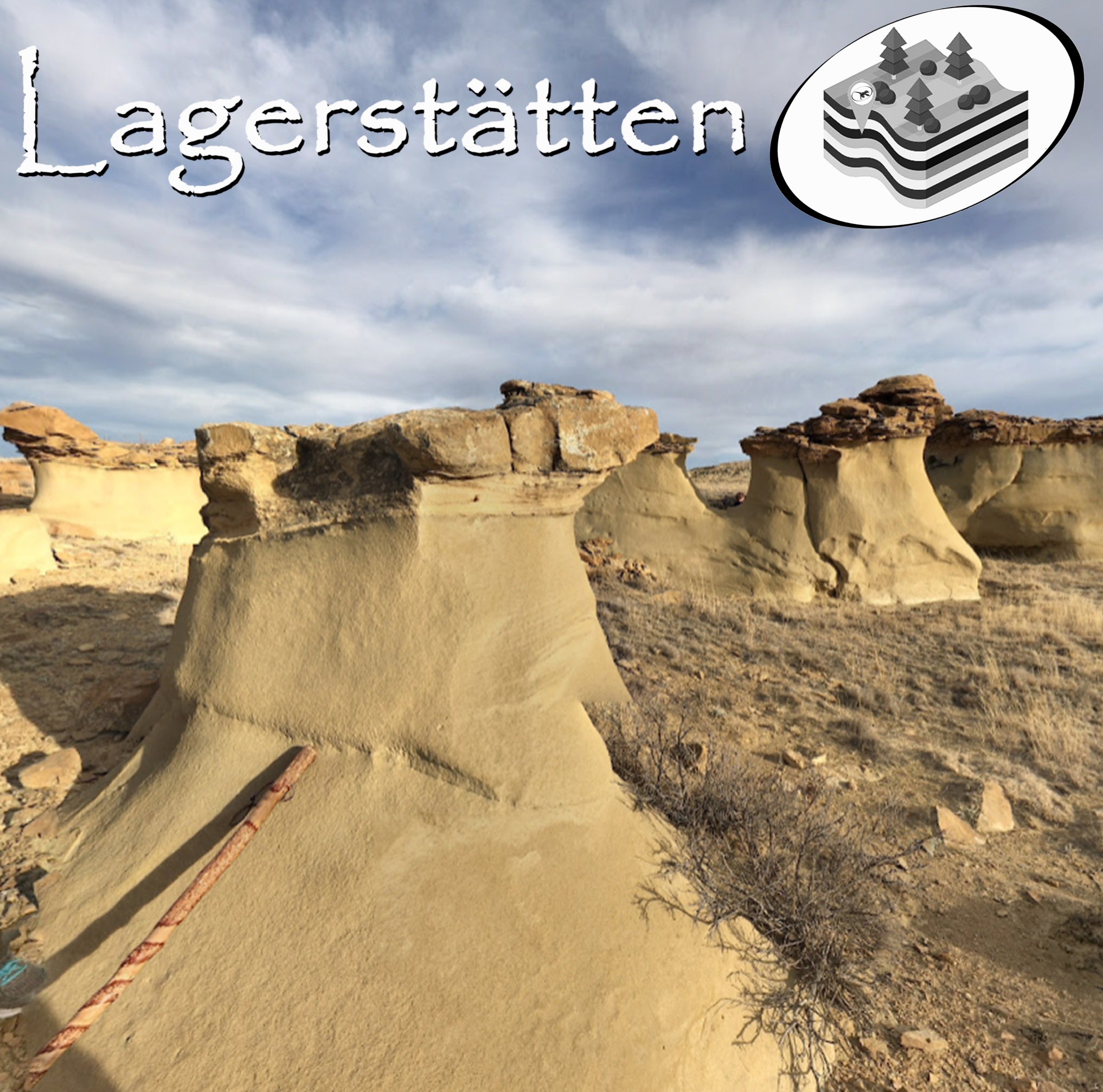 |
Die Aufschlüsse aus dem späten Maastrichtium, die im Nordosten von Wyoming aufgeschlossen sind, werden der Lance Formation zugerechnet. Diese Lagerstätte lag einst in einem prähistroischen Küstengebiet. Von hier stammen einige der berühmtesten Dinosaurier der späten Kreidezeit, aber auch einige andere, weniger bekannter Kreaturen. |
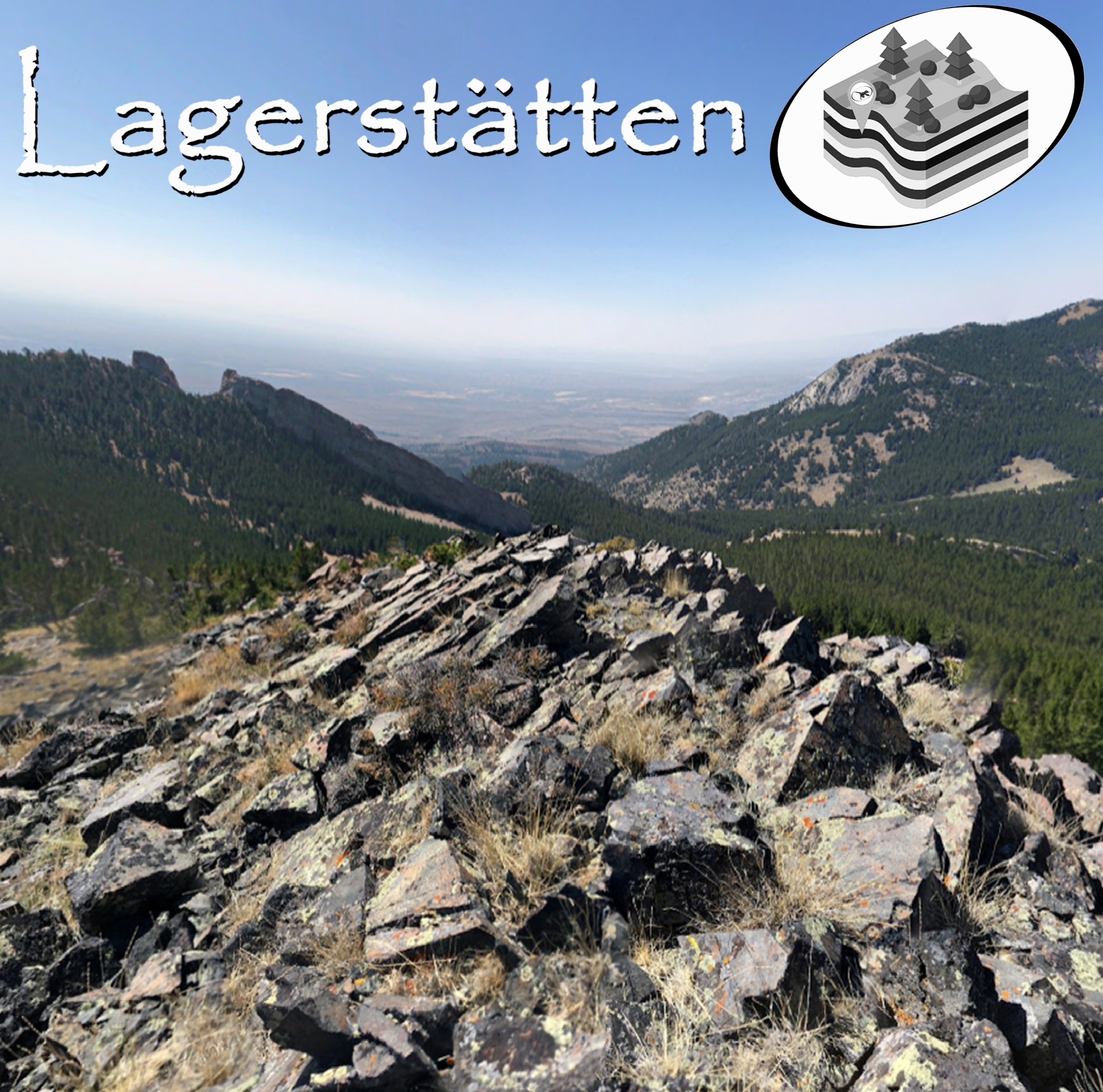 |
Vor 66 bis 63 MA lagerte sich im Süden von Wyoming die Ferris Formation ab. Sie enthält eine Vielzahl von Fossilien, die in sandigen Flussbettablagerungen und Überflutungseinheiten erhalten sind, darunter auch zahlreiche, wenn auch oft nur fragmentarisch erhaltene Dinosaurierüberreste. |
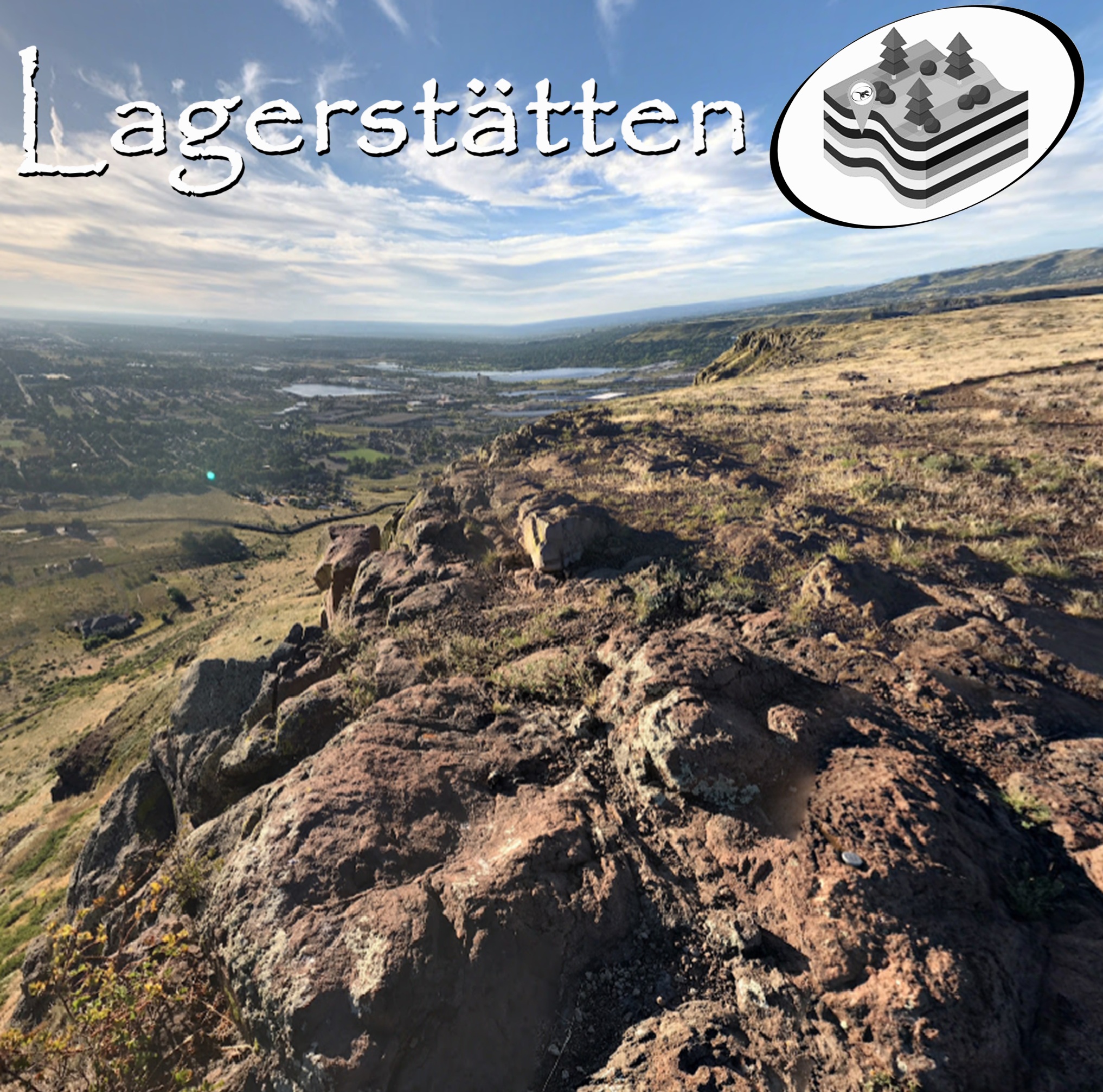 |
An den Hängen des North Table Mountain in Colorado liegt die Denver Formation, die wertvolle Einblicke in die Umwelt und das Leben vor etwa 70 bis 60 Millionen Jahren bietet. Dies muss eine hoch dynamische Zeit gewesen sein, geprägt von Vulkanismus, Flusslandschaften und Alluvialkegeln, die durch die Entstehung der Rocky Mountains beeinflusst wurden. |
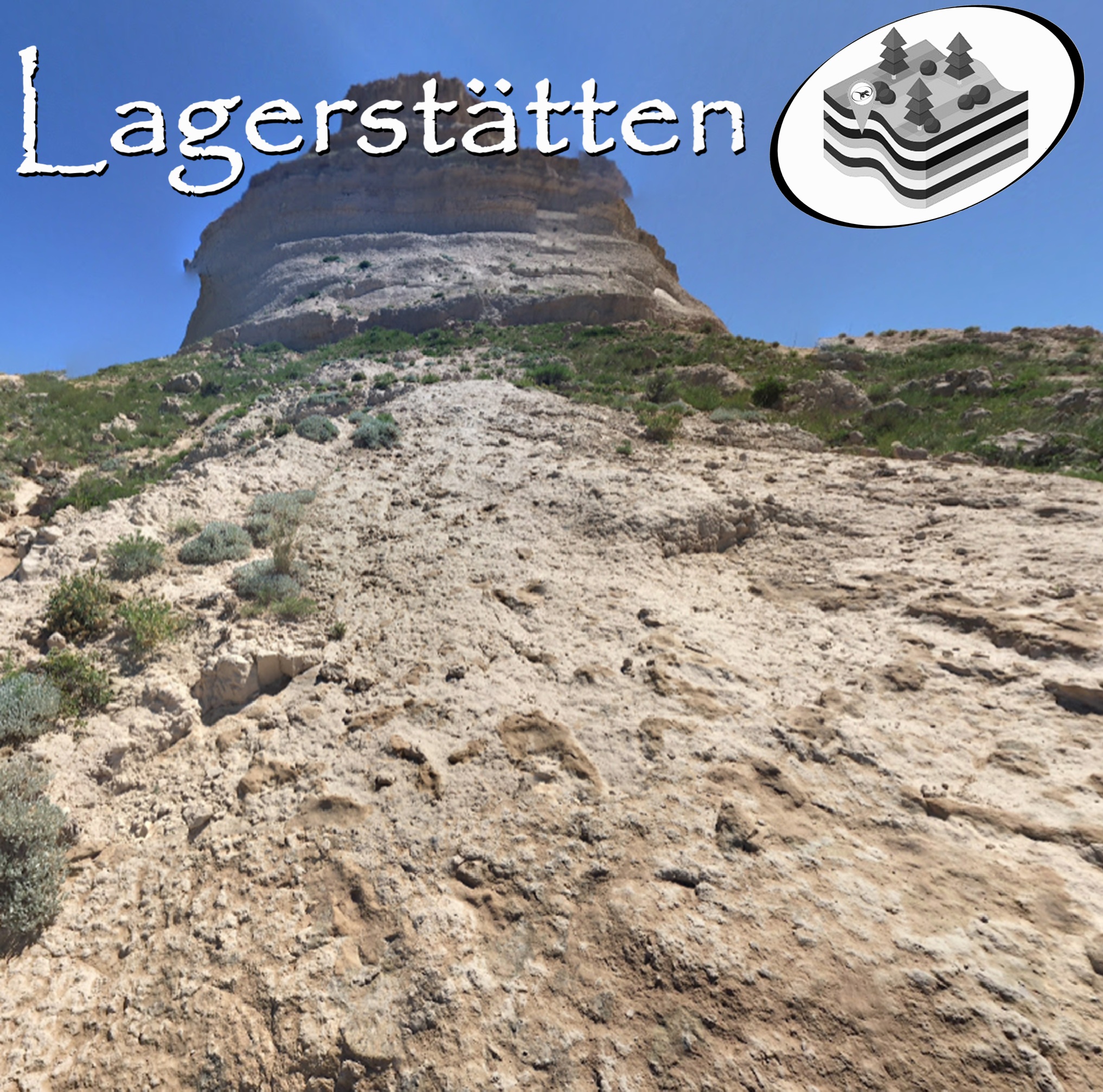 |
Entlang des Denver-Beckens in Colorado sind die Schichten der Laramie Formation aufgeschlossen. Diese Lagerstätte ist in den Küstenebenen und Sümpfen entlang des Pierre Seaway entstanden und enthält reichhaltige Kohle- und Tonablagerungen sowie zahlreiche Fossilien von Pflanzen und Tieren aus der späten Kreidezeit. |
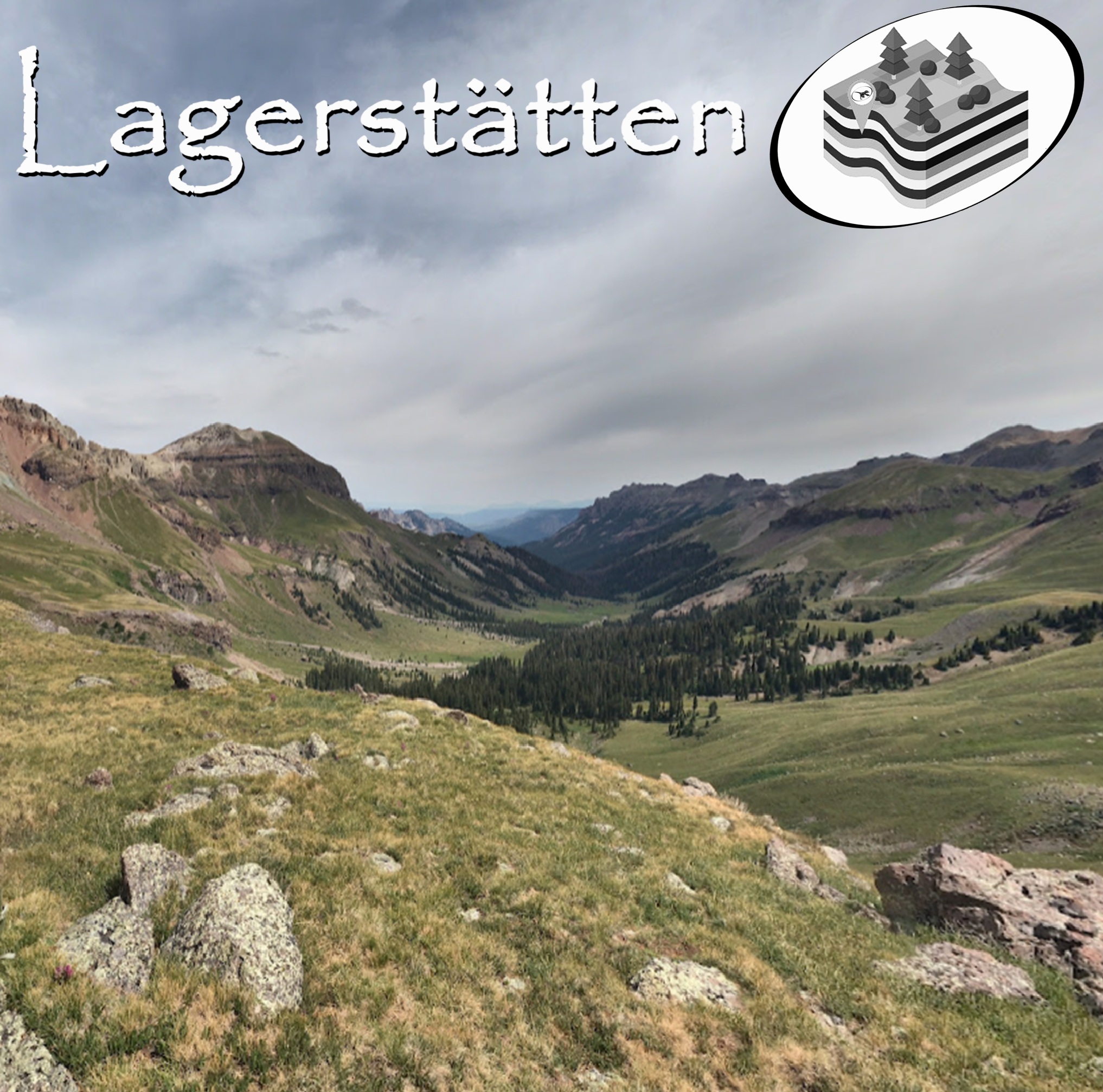 |
Bei den Aufschlüssen der Cimarron Ridge Formation in Colorado handelt es sich vor allem um Erosionsreste mehrerer größerer Vulkane, die während der späten Kreidezeit aktiv waren. Die meisten Teile dieses Vulkankomplexes wurden während der frühen Tertiärzeit durch Erosion abgetragen. Diese Lagerstätte gibt uns wertvolle Aufschlüsse über die tektonische Aktivität im Nordamerika der späten Kreidezeit, auch wenn Fossilfunde dort rar sind. |
Alle diese Lagerstätten und viele weitere interessante Urzeit-Orte wie Museen und Freizeitparks findest du auf meiner interaktiven Karte!

Fossilbericht der Tiere |
Insbesondere die Hell Creek Formation ist die bei weitem bekannteste Fossillagerstätte aus dem Maastrichtium der USA und gehört auch zu den am intensivsten erforschten auf der ganzen Welt. Zusammen mit der stratigraphisch identischen Lance Formation, sowie der Ferris Formation, Denver Formation, Laramie Formation und Cimarron Ridge Formation bietet sie hervorragende Einblicke ins Ökosystem des westlichen Nordamerikas während der letzten beiden Jahrmillionen des Mesozoikums.
WICHTIG: Diese Seite befindet sich in ständiger Überarbeitung. Neue wissenschaftliche Erkenntnisse werden hier regelmäßig eingearbeitet, was allerdings manchmal etwas Zeit braucht. Du kannst aber gerne mithelfen: wenn du eine Anmerkung oder eine mir noch fehlende Information hast, oder auch einen Fehler findest, schreib mir bitte gern eine Nachricht über meine Social-Media-Kanäle.
 |
 |
 |
 |
 |
 |

Vögel:
| Bild: | Spezies: | Formation: | Fundort: | Alter: | Häufigkeit: | Bemerkungen: |
|---|---|---|---|---|---|---|
 |
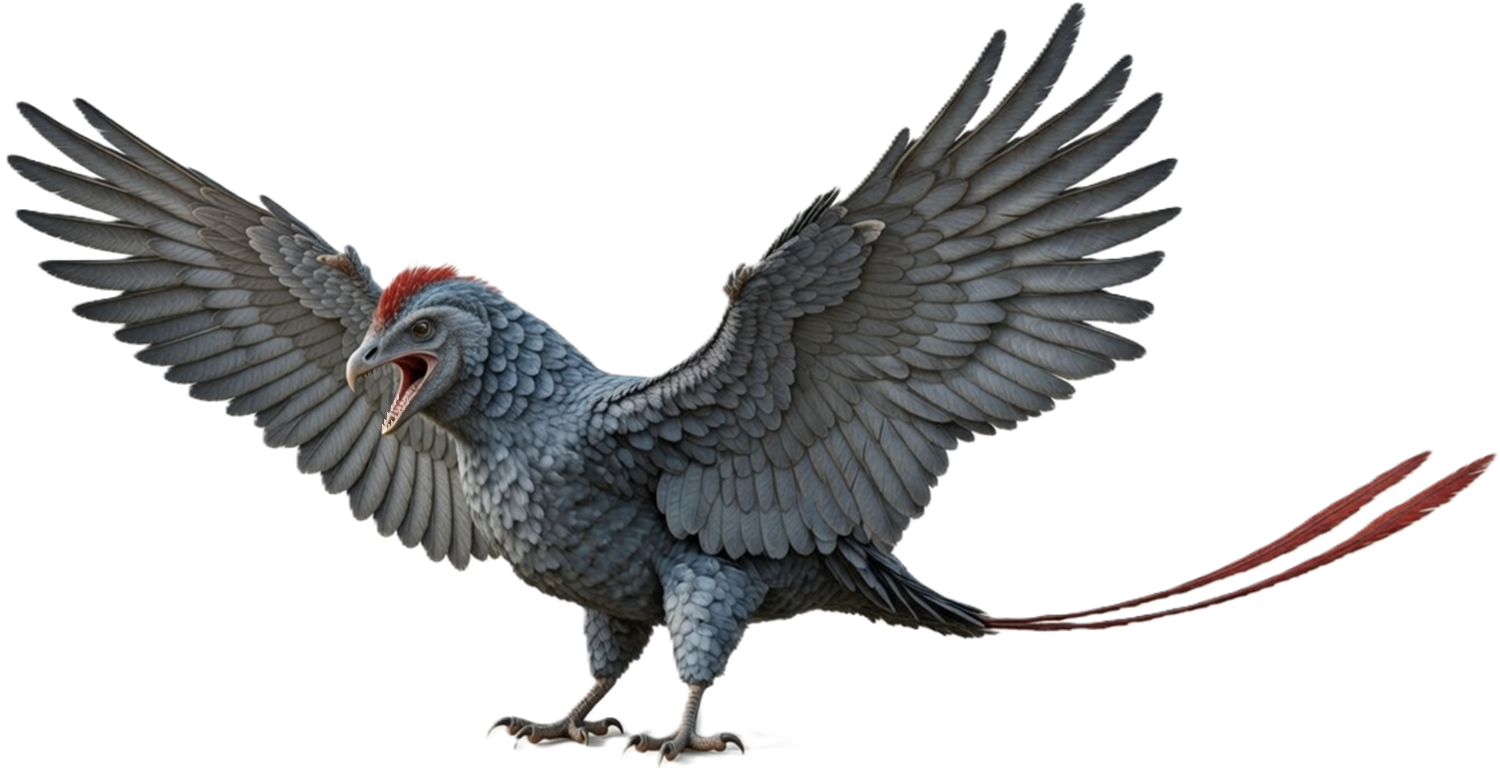
Aves indet.22Wroblewski, A. F.-J. (2026). Systematics and biostratigraphy of non-mammalian vertebrates across the K–Pg transition, southern Wyoming, USA. Journal of Paleontology, 100(1), 222–250. doi:10.1017/jpa.2025.10191 | Ferris Formation | Wyoming | 68–66 Ma | selten | Nicht näher bestimmbarer Vogel |
 |
Avisaurus archibaldi23Brett-Surman, M. K. & Paul, G. S. (1985). A new family of bird-like dinosaurs linking Laurasia and Gondwanaland. Journal of Vertebrate Paleontology, 5(2), 133–138. doi:10.1080/02724634.1985.10011850 | Hell Creek Formation | Montana | 68–66 Ma | selten | Enantiornithes (Avisauridae) |
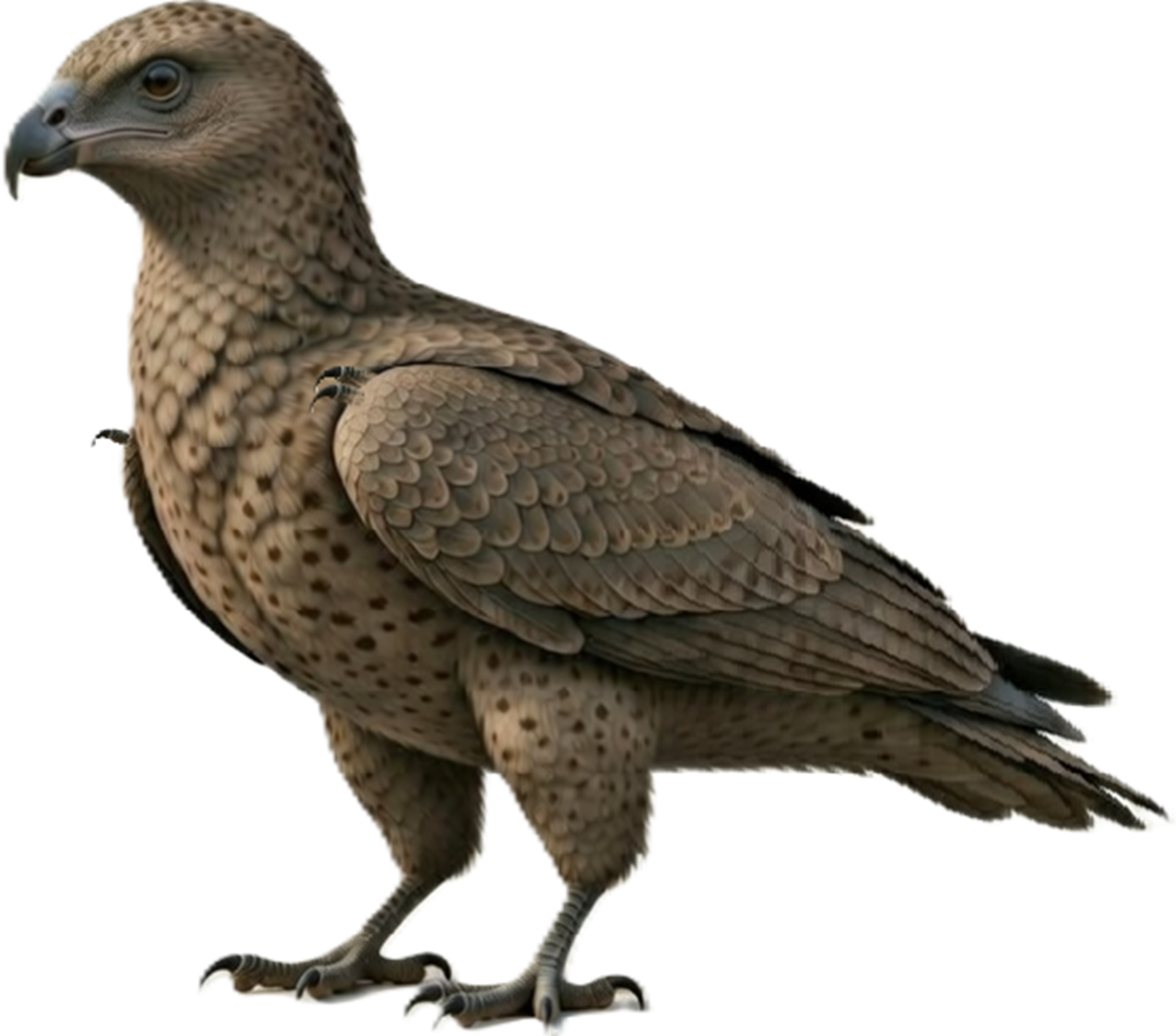 |
Avisaurus cf. archibaldi24Longrich, N. R., Tokaryk, T. & Field, D. J. (2011). Mass extinction of birds at the Cretaceous–Paleogene (K–Pg) boundary. Proceedings of the National Academy of Sciences, 108(37), 15253–15257. doi:10.1073/pnas.1110395108 | Hell Creek Formation | Montana | 66 Ma | Einzelfund | Enantiornithes (Avisauridae); ähnelt Avisaurus archibaldi |
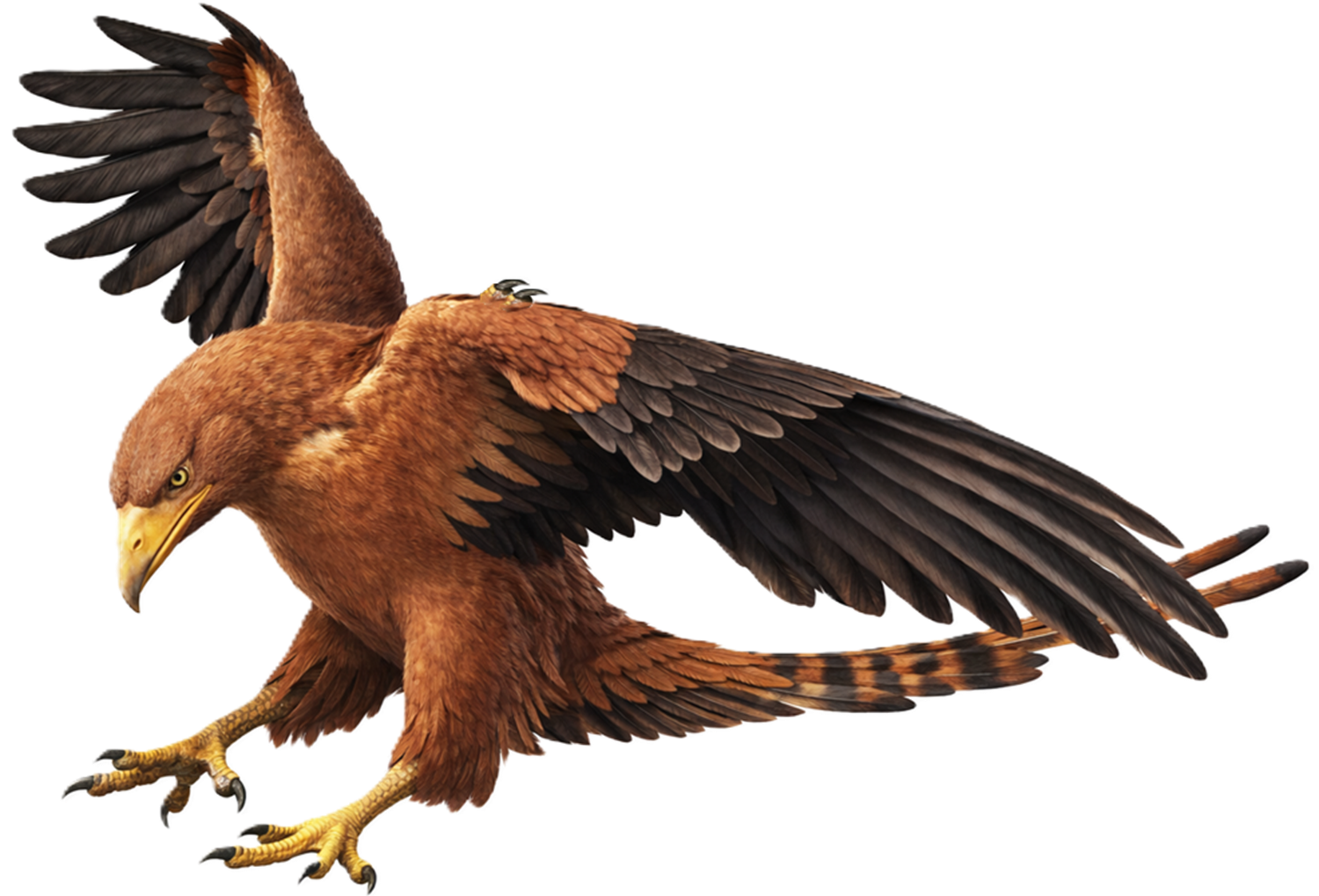 |
Avisaurus darwini25Clark, A. D. et al. (2024). New enantiornithine diversity in the Hell Creek Formation and the functional morphology of the avisaurid tarsometatarsus. PLOS ONE, 19(10), e0310686. doi:10.1371/journal.pone.0310686 | Hell Creek Formation | Montana | ca. 66 Ma | Einzelfund | Enantiornithes (Avisauridae) |
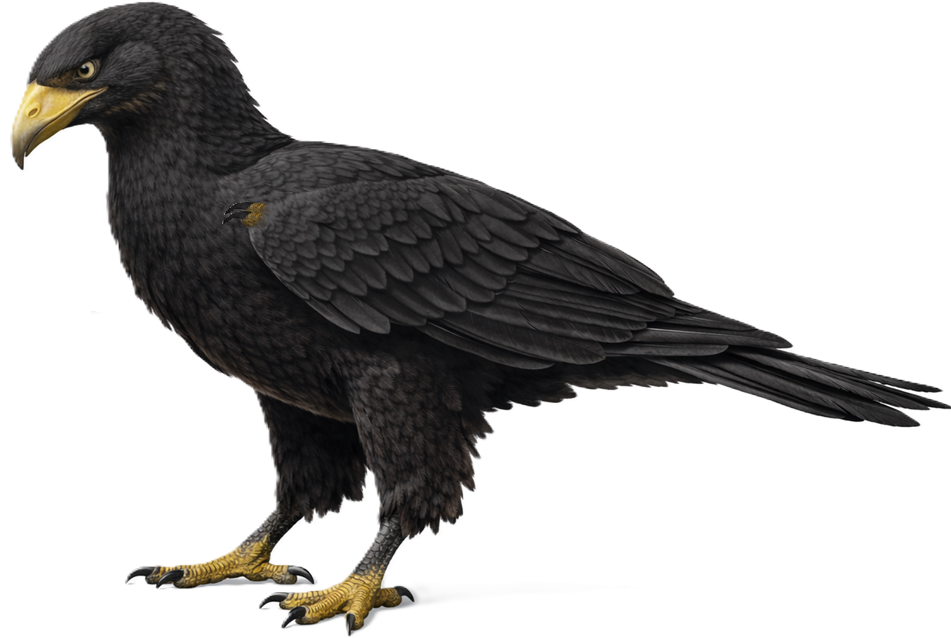 |
Avisaurus sp.26Clark, A. D. et al. (2024). New enantiornithine diversity in the Hell Creek Formation and the functional morphology of the avisaurid tarsometatarsus. PLOS ONE, 19(10), e0310686. doi:10.1371/journal.pone.0310686 | Hell Creek Formation | Montana | 68–66 Ma | selten | Enantiornithes (Avisauridae); Bestimmung unsicher |
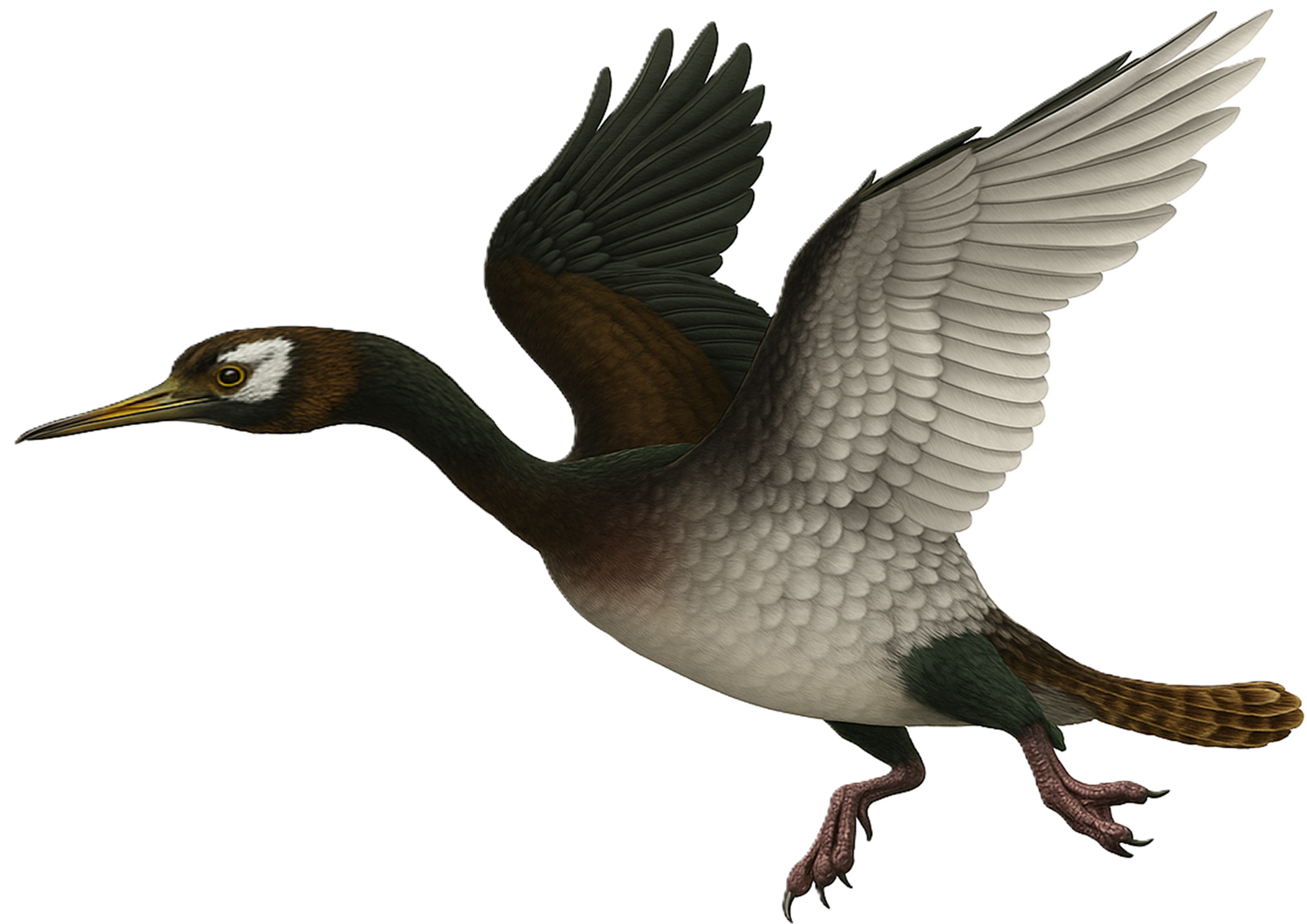 |
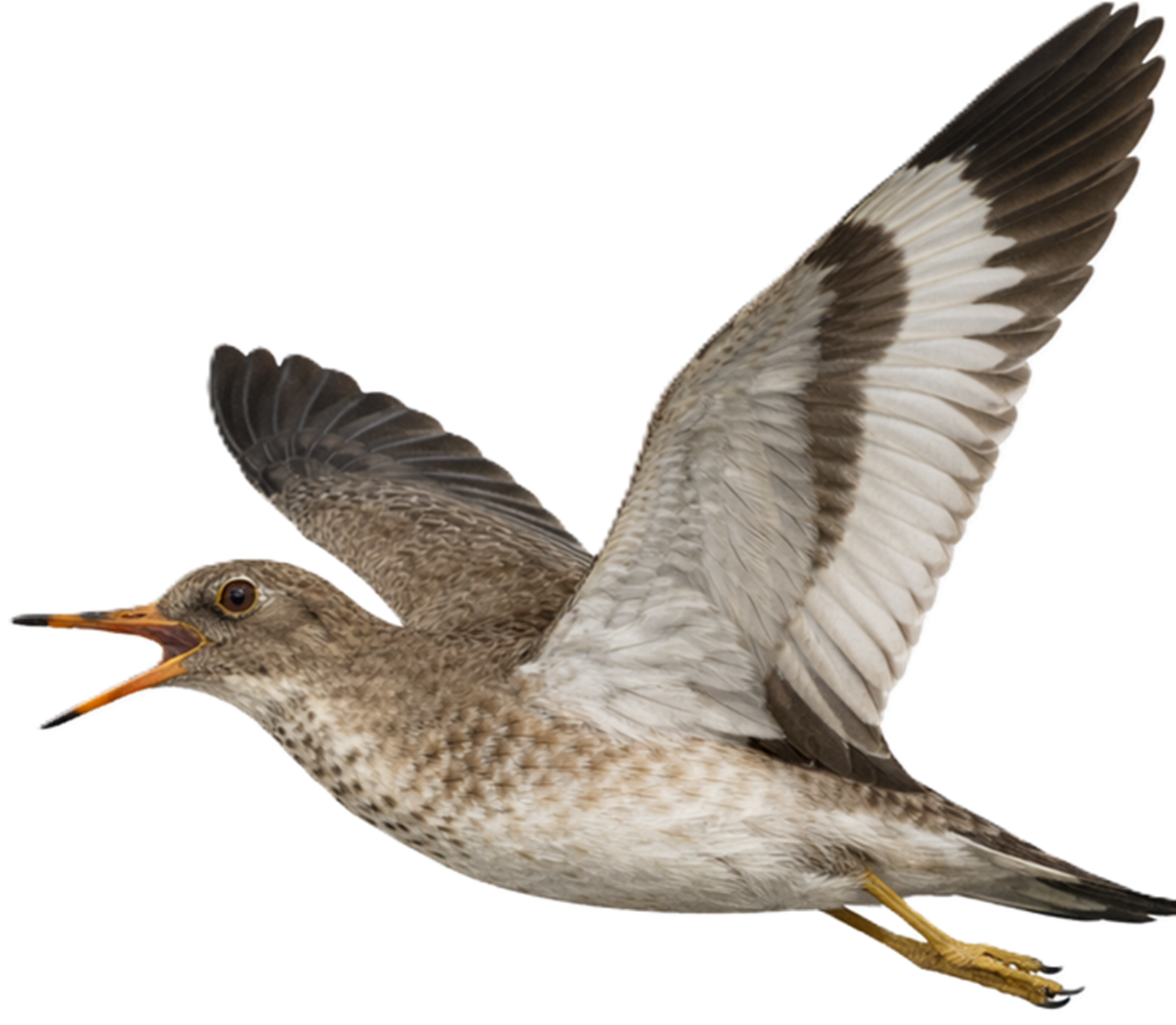
Brodavis baileyi27Martin, L. D., Kurochkin, E. N. & Tokaryk, T. T. (2012). A new evolutionary lineage of diving birds from the Late Cretaceous of North America and Asia. Palaeoworld, 21, 59–63. doi:10.1016/j.palwor.2012.02.005 | Hell Creek Formation | South Dakota | 68–66 Ma | Einzelfund | Hesperornithes (Brodavidae) |
 |
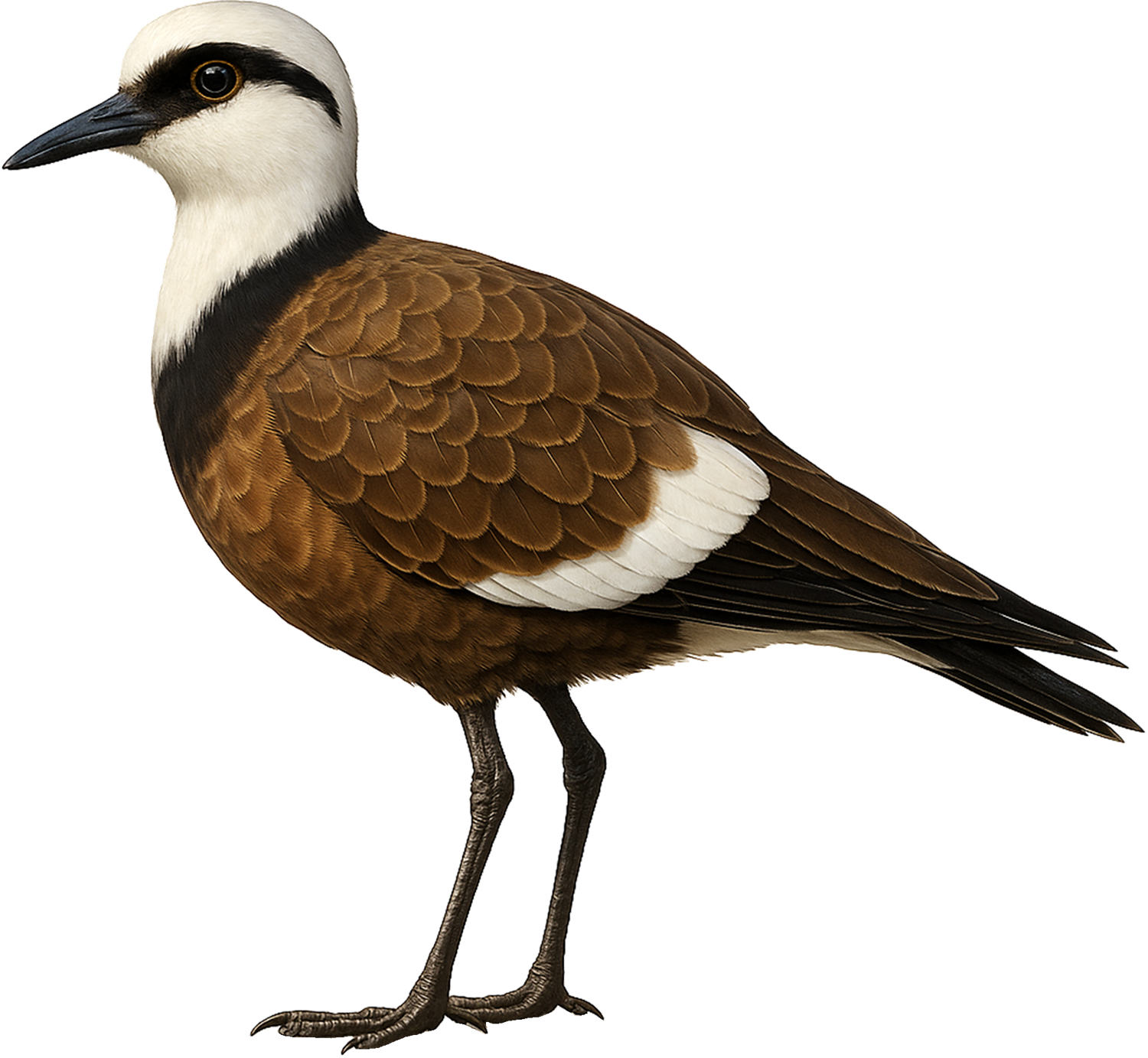
Ceramornis major28Brodkorb, P. (1963). Birds from the Upper Cretaceous of Wyoming. Proceedings of the XIII International Ornithological Congress, 55–70. | Lance Formation | Wyoming | 68–66 Ma | Einzelfund | Ornithurae (Cimolopterygidae?) |
 |
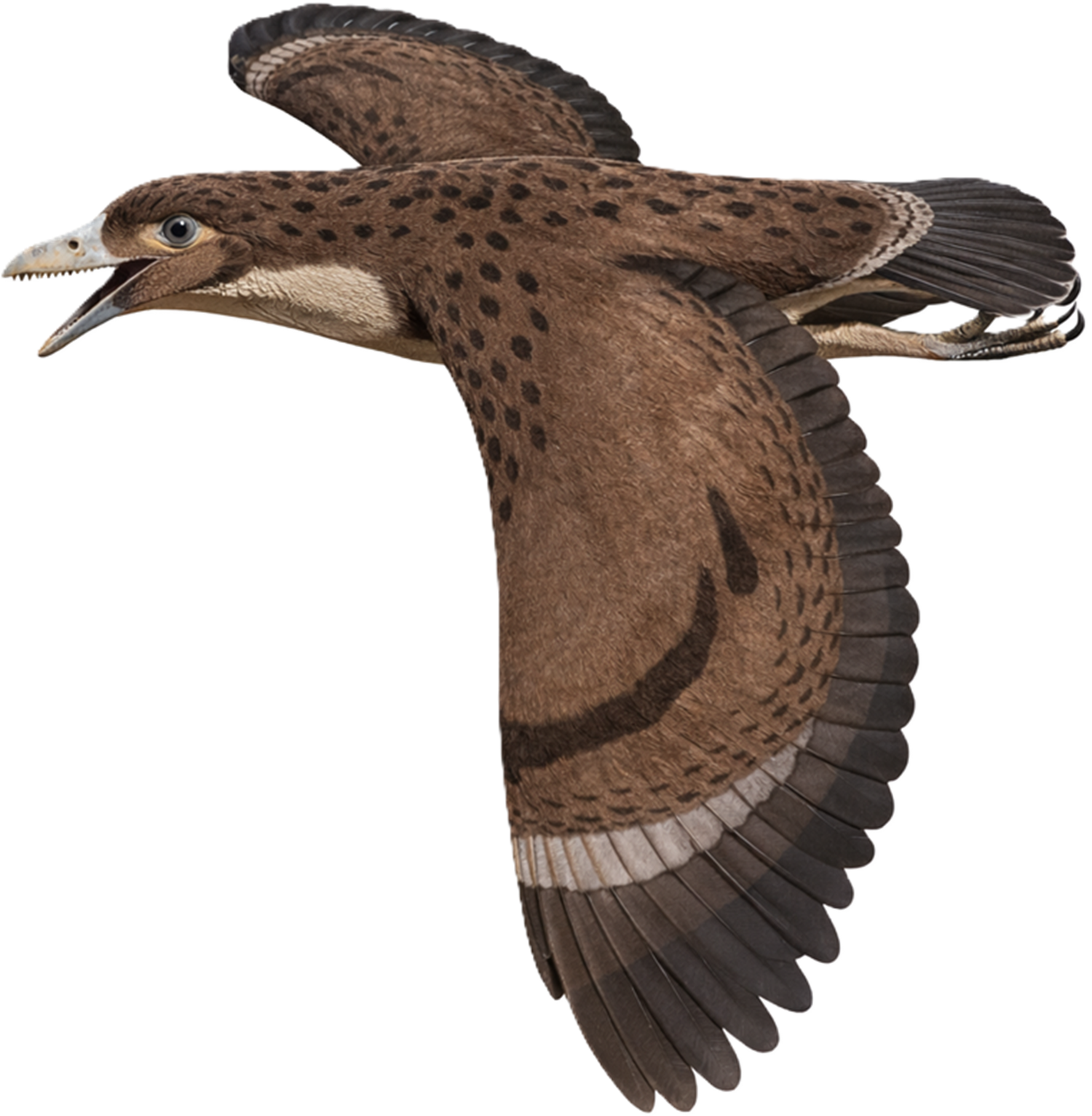
Cimolopteryx rara29Brodkorb, P. (1963). Birds from the Upper Cretaceous of Wyoming. Proceedings of the XIII International Ornithological Congress, 55–70. | Lance Formation | Wyoming | 68–66 Ma | Einzelfund | Ornithurae (Cimolopterygidae) |
 |
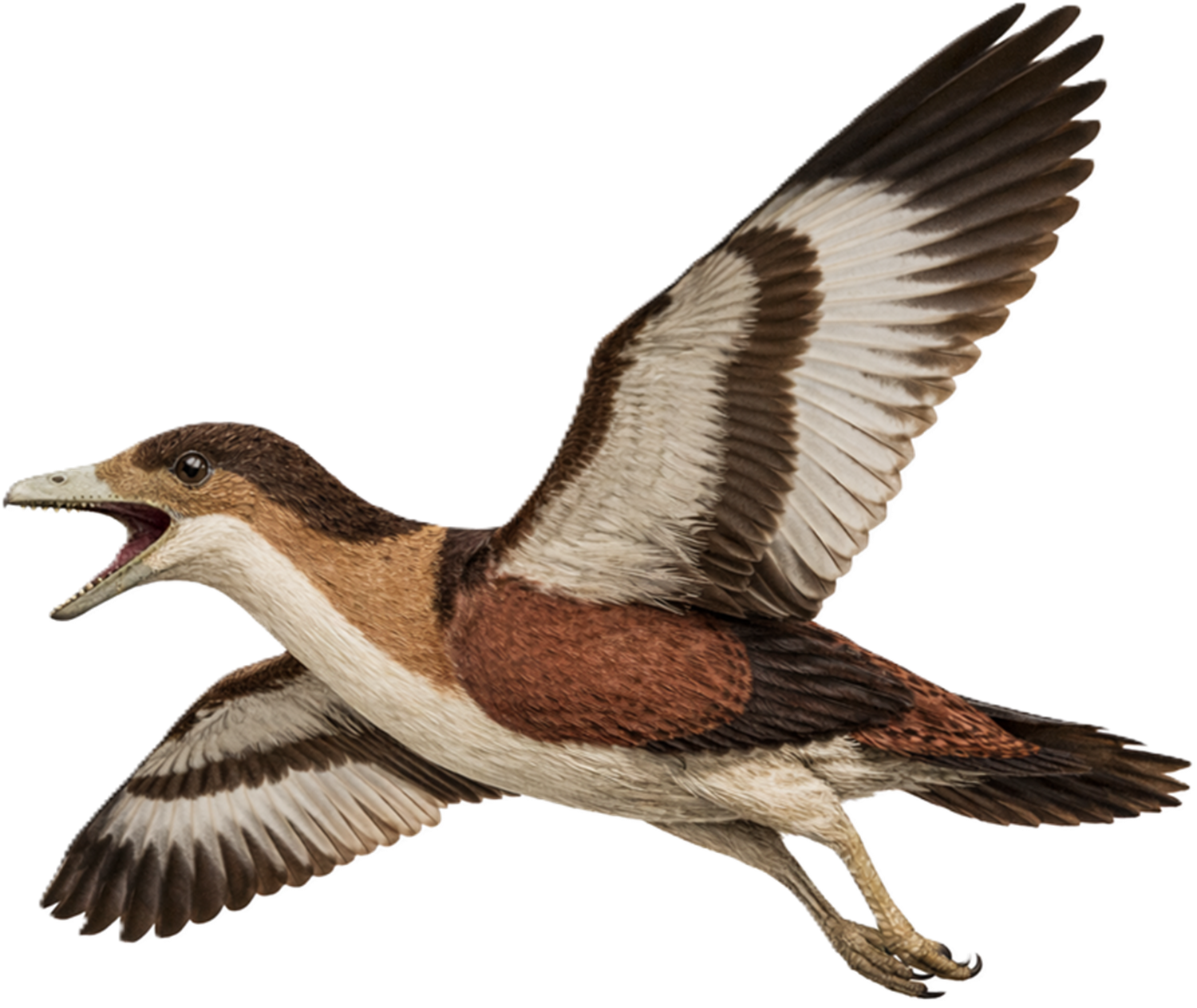
„Enantiornithes A“30Chiappe, L. M. & Walker, C. A. (2002). Skeletal morphology and systematics of the Cretaceous Euenantiornithes (Ornithothoraces: Enantiornithes). In L. M. Chiappe & L. M. Witmer (Hrsg.), Mesozoic Birds: Above the Heads of Dinosaurs, 240–267. University of California Press. | Lance Formation | Wyoming | 68–66 Ma | Einzelfund | Unbenannter Vertreter der Enantiornithes |
 |
„Enantiornithes B“31Longrich, N. R., Tokaryk, T. & Field, D. J. (2011). Mass extinction of birds at the Cretaceous–Paleogene (K–Pg) boundary. Proceedings of the National Academy of Sciences, 108(37), 15253–15257. doi:10.1073/pnas.1110395108 | Hell Creek Formation | Montana | 66 Ma | Einzelfund | Unbenannter Vertreter der Enantiornithes |
 |
Ornithurae indet.32Brownstein, C. D. (2024). A juvenile bird with possible crown-group affinities from a dinosaur-rich Cretaceous ecosystem in North America. BMC Ecology and Evolution, 24, 20. doi:10.1186/s12862-024-02210-933Hope, S. (2002). The Mesozoic radiation of Neornithes. In L. M. Chiappe & L. M. Witmer (Hrsg.), Mesozoic Birds: Above the Heads of Dinosaurs, 339–388. University of California Press. | Lance Formation | Wyoming | 68–66 Ma | häufig | Mehrere Funde von bislang unbestimmbaren Vögeln. |
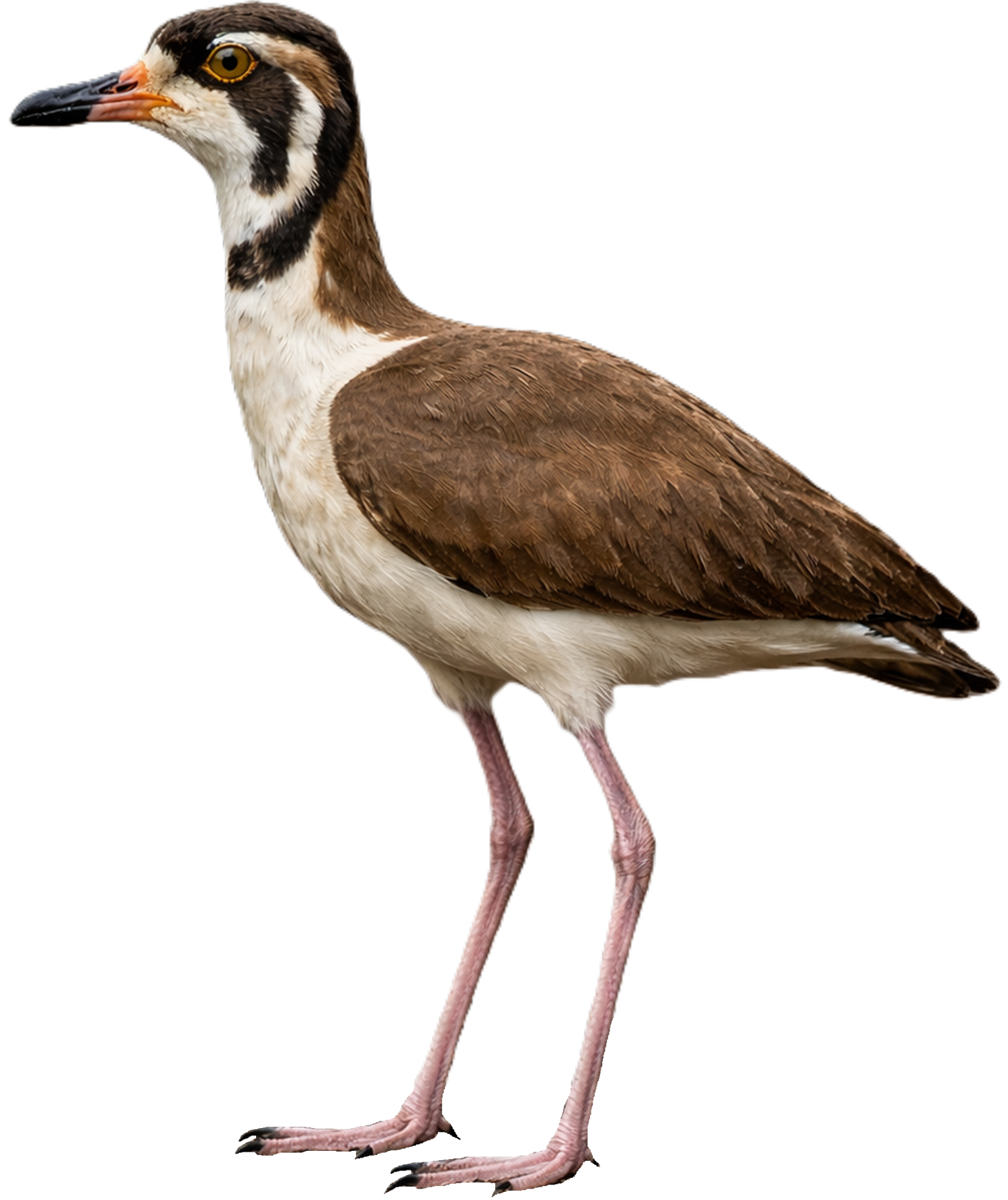 |
Graculavus augustus34Hope, S. (1999). A new species of Graculavus from the Cretaceous of Wyoming. Smithsonian Contributions to Paleobiology, 89, 261–266. | Lance Formation | Wyoming | 68–66 Ma | Einzelfund | Ornithurae |
 |
Hesperornithes indet.35Longrich, N. R., Tokaryk, T. & Field, D. J. (2011). Mass extinction of birds at the Cretaceous–Paleogene (K–Pg) boundary. Proceedings of the National Academy of Sciences, 108(37), 15253–15257. doi:10.1073/pnas.1110395108 | Hell Creek Formation | Montana | 66 Ma | Einzelfund | Unbenannter Hesperornithide; ähnelt Potamornis |
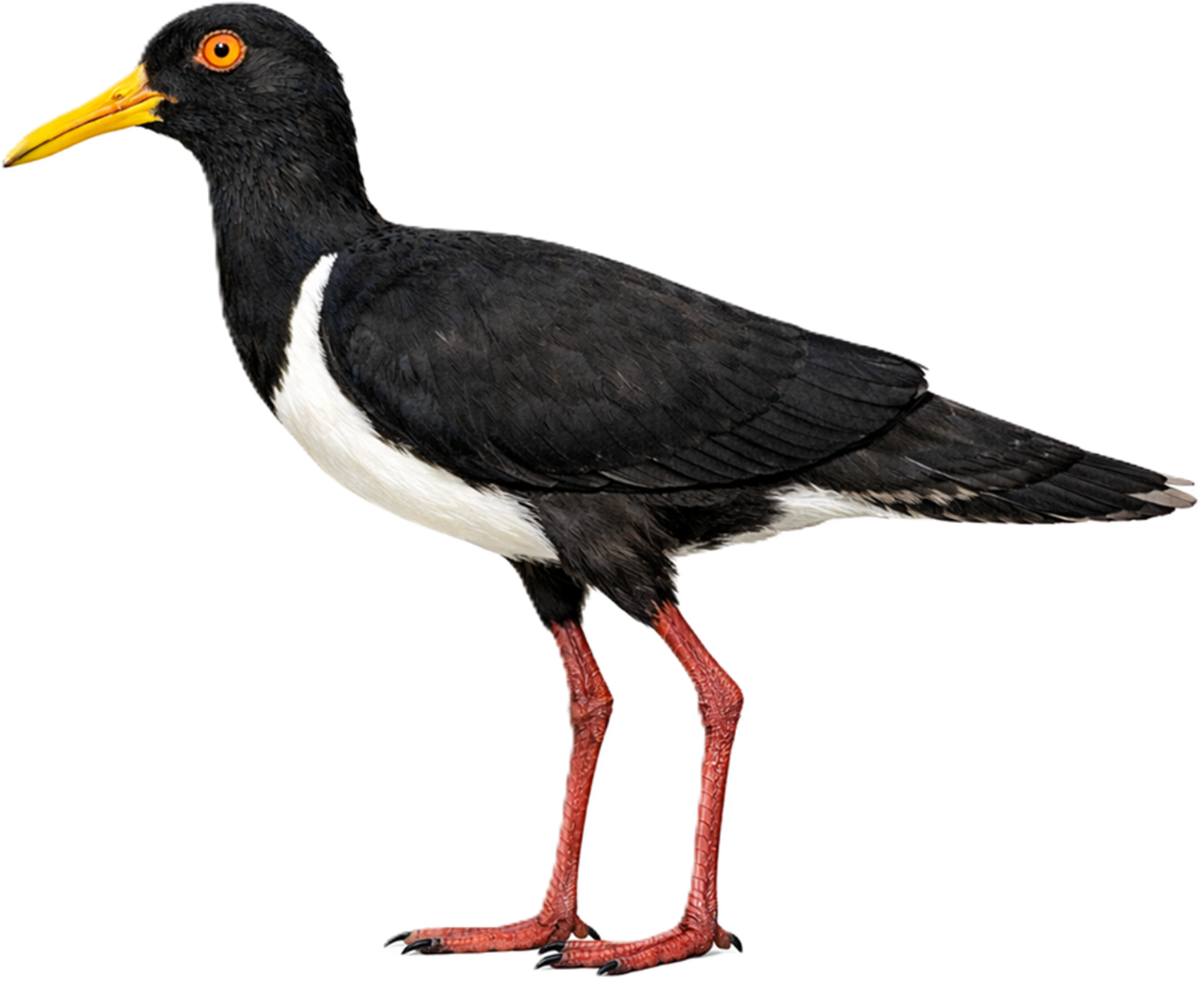 |
Lamarqueavis minima36Brodkorb, P. (1963). Birds from the Upper Cretaceous of Wyoming. Proceedings of the XIII International Ornithological Congress, 55–70. | Lance Formation | Wyoming | 68–66 Ma | Einzelfund | Ornithurae (Cimolopterygidae); historisch als Cimolopteryx minima geführt |
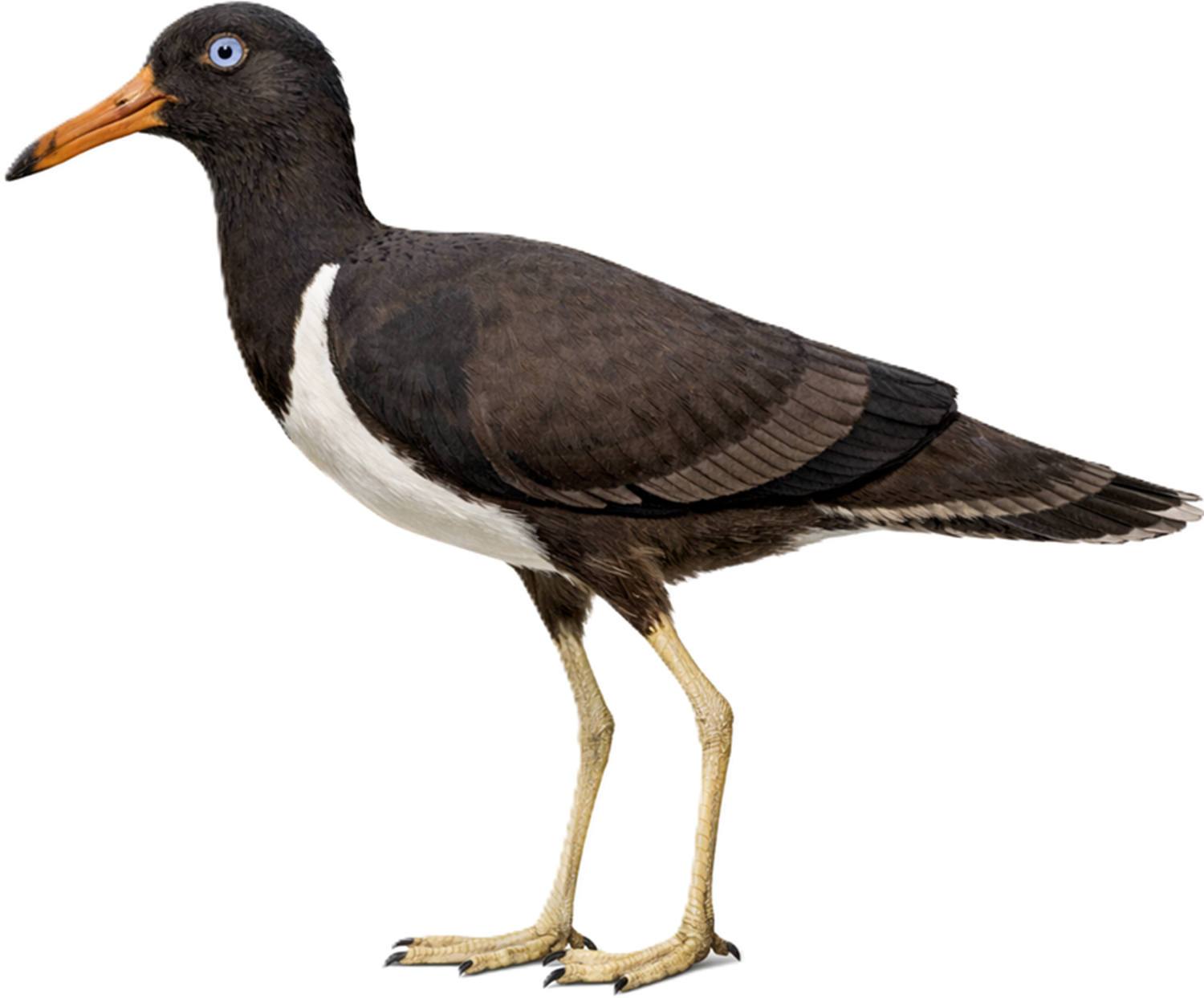 |
Lamarqueavis petra37Hope, S. (2002). The Mesozoic radiation of Neornithes. In L. M. Chiappe & L. M. Witmer (Hrsg.), Mesozoic Birds: Above the Heads of Dinosaurs, 339–388. University of California Press. | Lance Formation | Wyoming | 68–66 Ma | Einzelfund | Ornithurae (Cimolopterygidae); historisch als Cimolopteryx petra geführt |
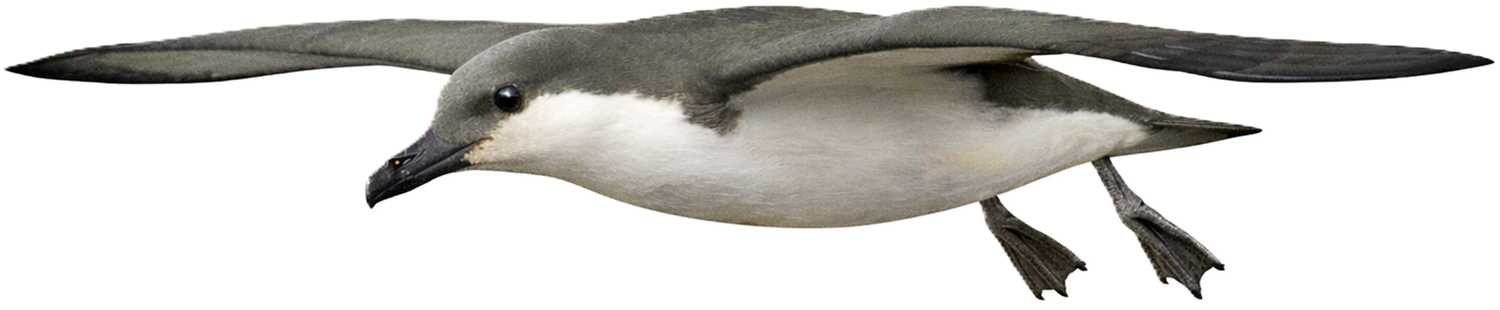 |
Lonchodytes estesi38Brodkorb, P. (1963). Birds from the Upper Cretaceous of Wyoming. Proceedings of the XIII International Ornithological Congress, 55–70. | Lance Formation | Wyoming | 68–66 Ma | Einzelfund | Ornithurae |
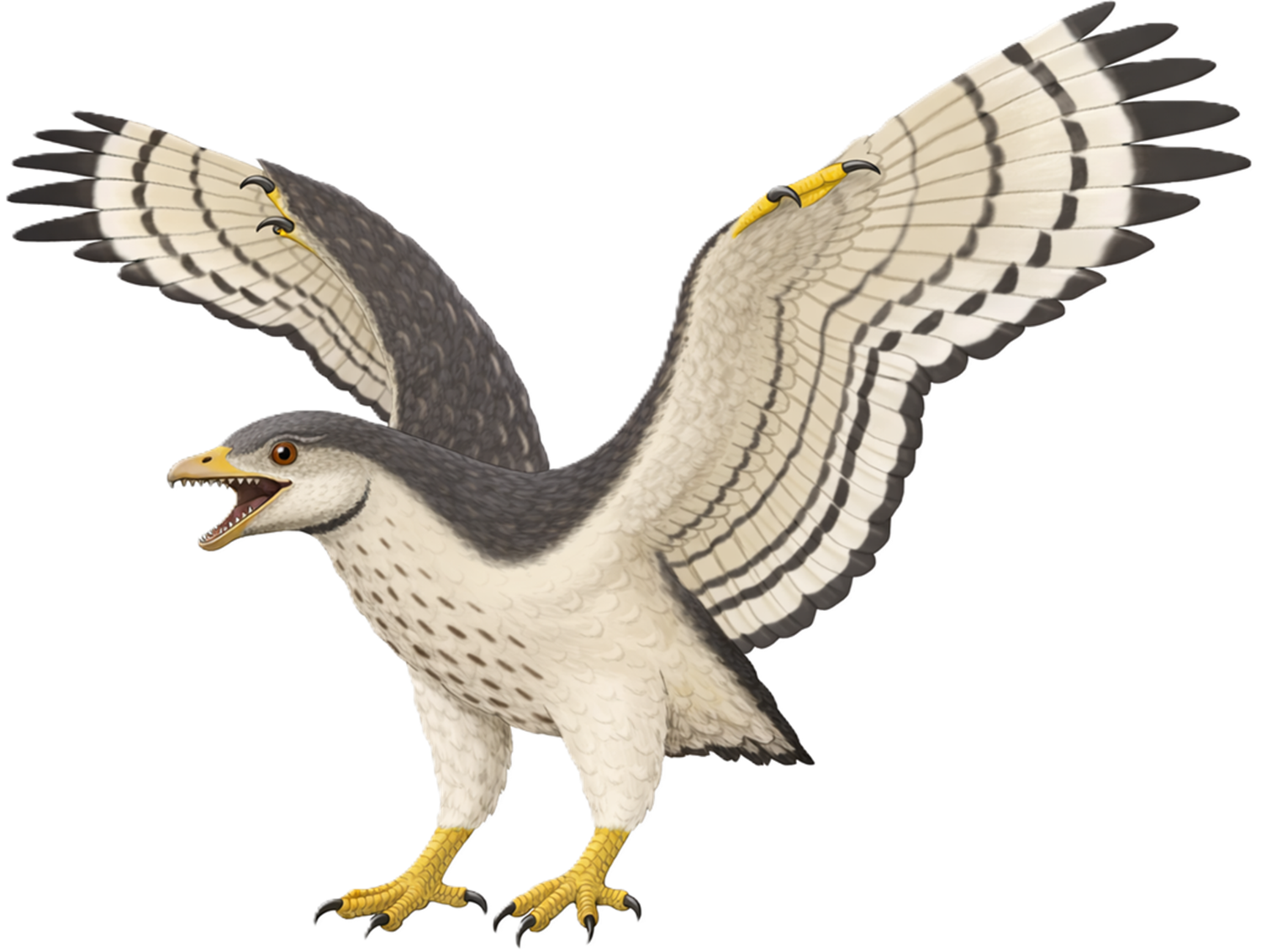 |
Magnusavis ekalakaensis39Clark, A. D. et al. (2024). New enantiornithine diversity in the Hell Creek Formation and the functional morphology of the avisaurid tarsometatarsus. PLOS ONE, 19(10), e0310686. doi:10.1371/journal.pone.0310686 | Hell Creek Formation | Montana | ca. 66 Ma | Einzelfund | Avisauridae? |
 |
Cimolopterygidae indet.(?)40Brodkorb, P. (1963). Birds from the Upper Cretaceous of Wyoming. Proceedings of the XIII International Ornithological Congress, 55–70.41Archibald, J. D. & Clemens, W. A. (1984). Mammal evolution near the Cretaceous–Tertiary boundary. In W. A. Berggren & J. A. Van Couvering (Hrsg.), Catastrophes and Earth History: The New Uniformitarianism, 339–372. Princeton University Press. | Hell Creek Formation, Lance Formation | Montana, Wyoming | 68–66 Ma | selten | Historisch als Cimolopteryx maxima geführt; Zugehörigkeit umstritten |
 |
Gruimorphae indet. (?)42Hope, S. (2002). The Mesozoic radiation of Neornithes. In L. M. Chiappe & L. M. Witmer (Hrsg.), Mesozoic Birds: Above the Heads of Dinosaurs, 339–388. University of California Press. | Lance Formation | Wyoming | 68–66 Ma | Einzelfund | Fragmentarische Beinknochen eines möglichen Kranichartigen; historisch als Palaeotringa vetus geführt |
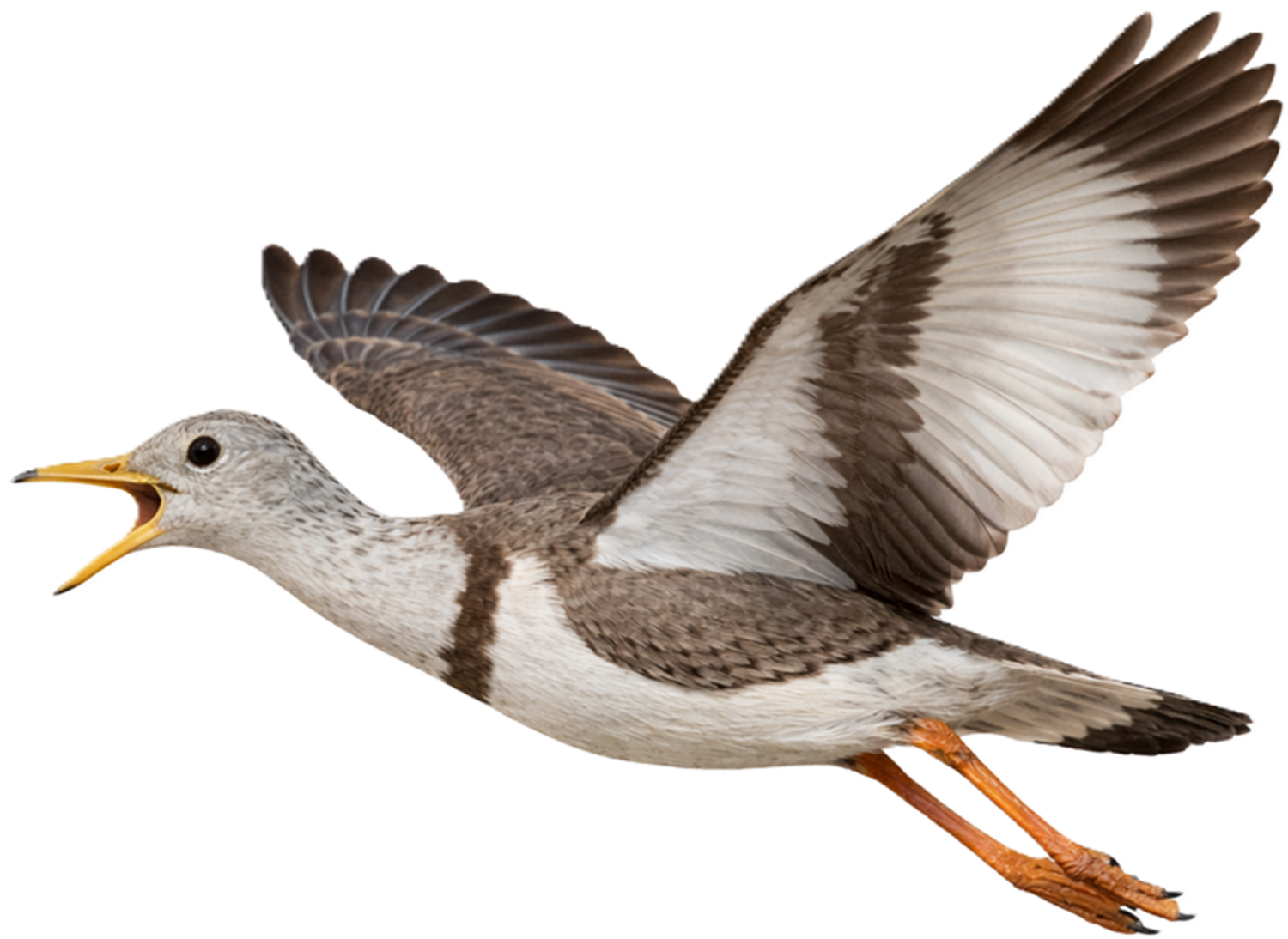 |
„Ornithurine A“43Longrich, N. R., Tokaryk, T. & Field, D. J. (2011). Mass extinction of birds at the Cretaceous–Paleogene (K–Pg) boundary. Proceedings of the National Academy of Sciences, 108(37), 15253–15257. doi:10.1073/pnas.1110395108 | Lance Formation | Wyoming | 66 Ma | selten | Unbenannter Ornithure; ähnelt Cimolopteryx |
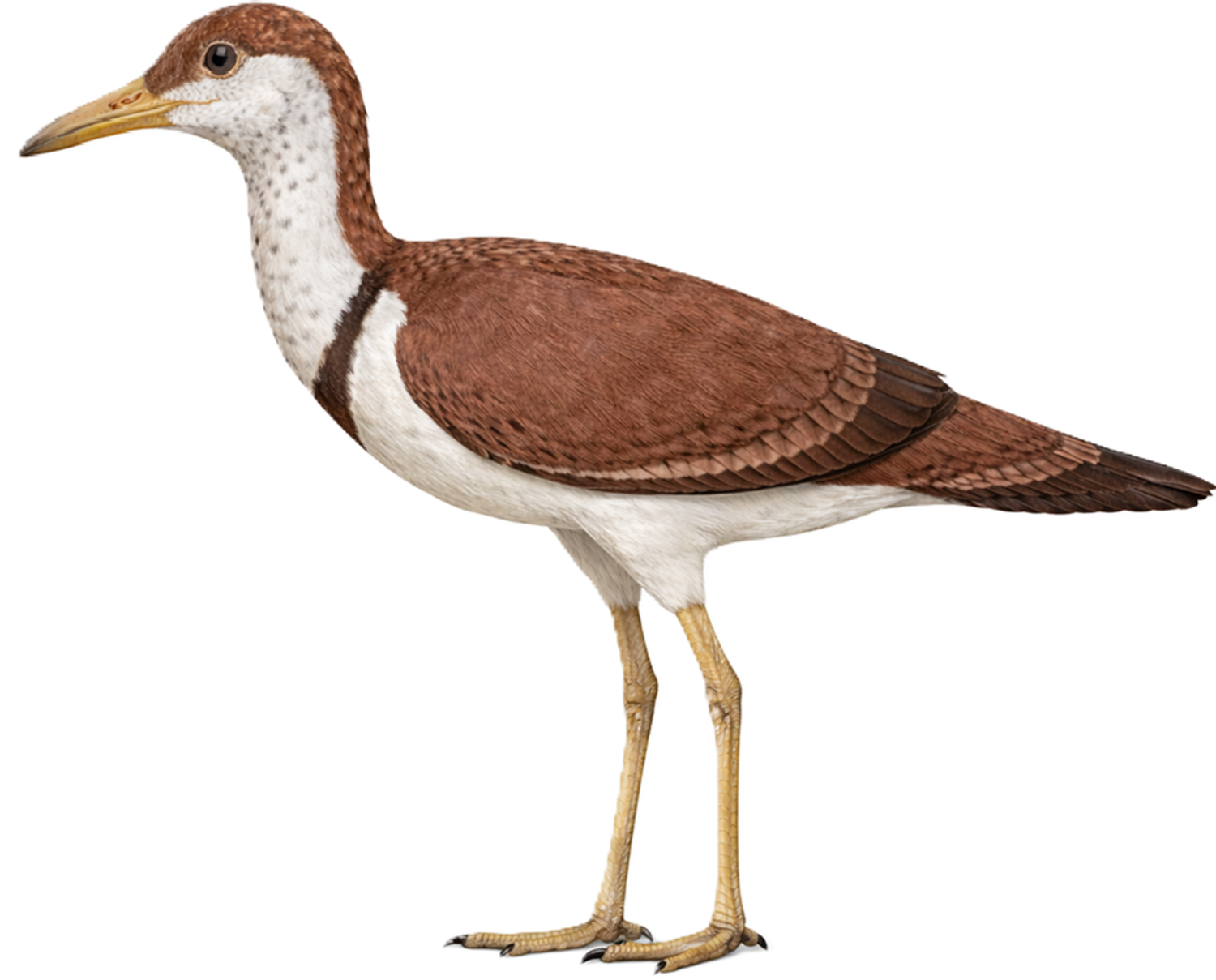 |
„Ornithurine B“44Longrich, N. R., Tokaryk, T. & Field, D. J. (2011). Mass extinction of birds at the Cretaceous–Paleogene (K–Pg) boundary. Proceedings of the National Academy of Sciences, 108(37), 15253–15257. doi:10.1073/pnas.1110395108 | Hell Creek Formation | Montana | 66 Ma | Einzelfund | Unbenannter Ornithure; ähnelt Cimolopteryx |
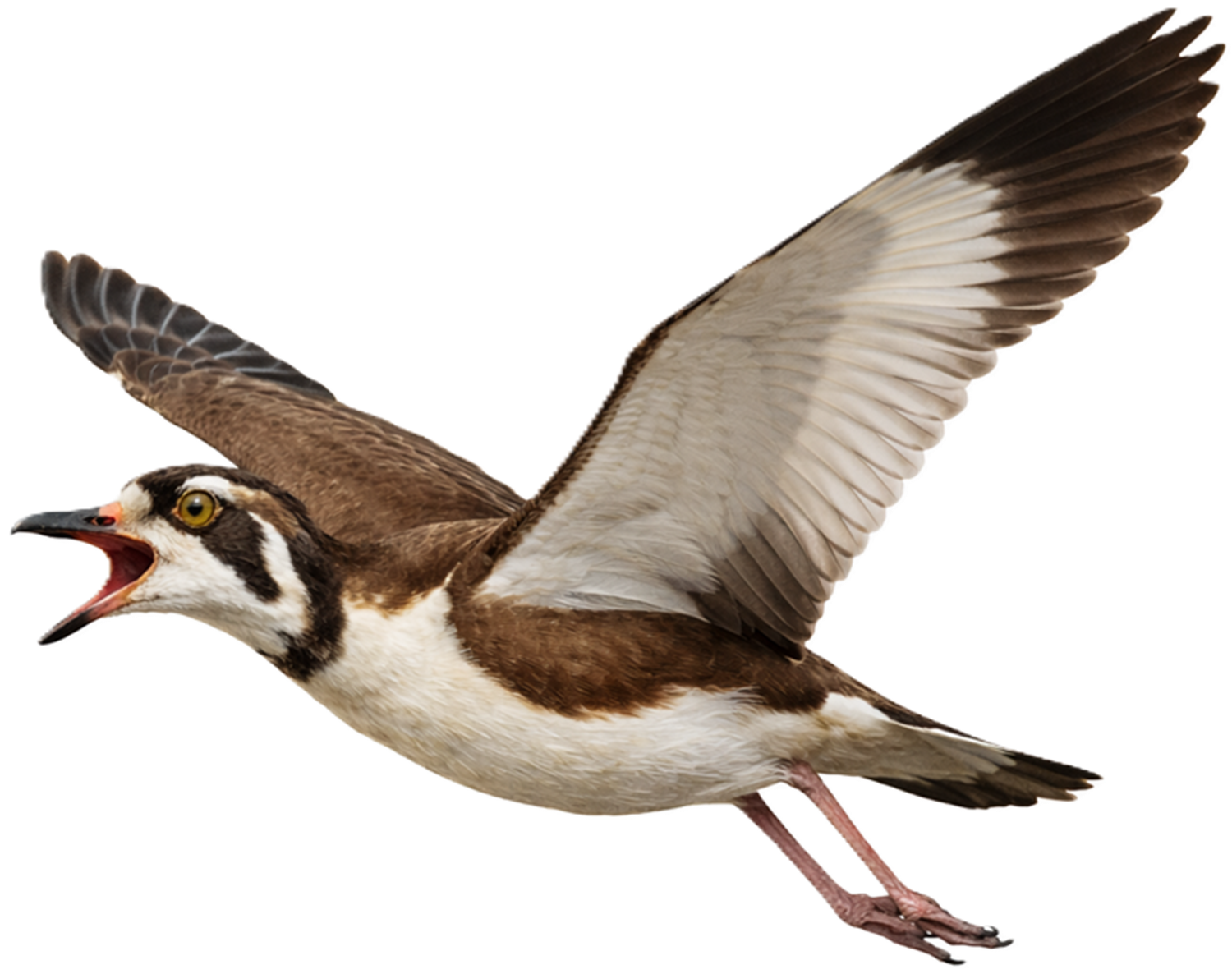 |
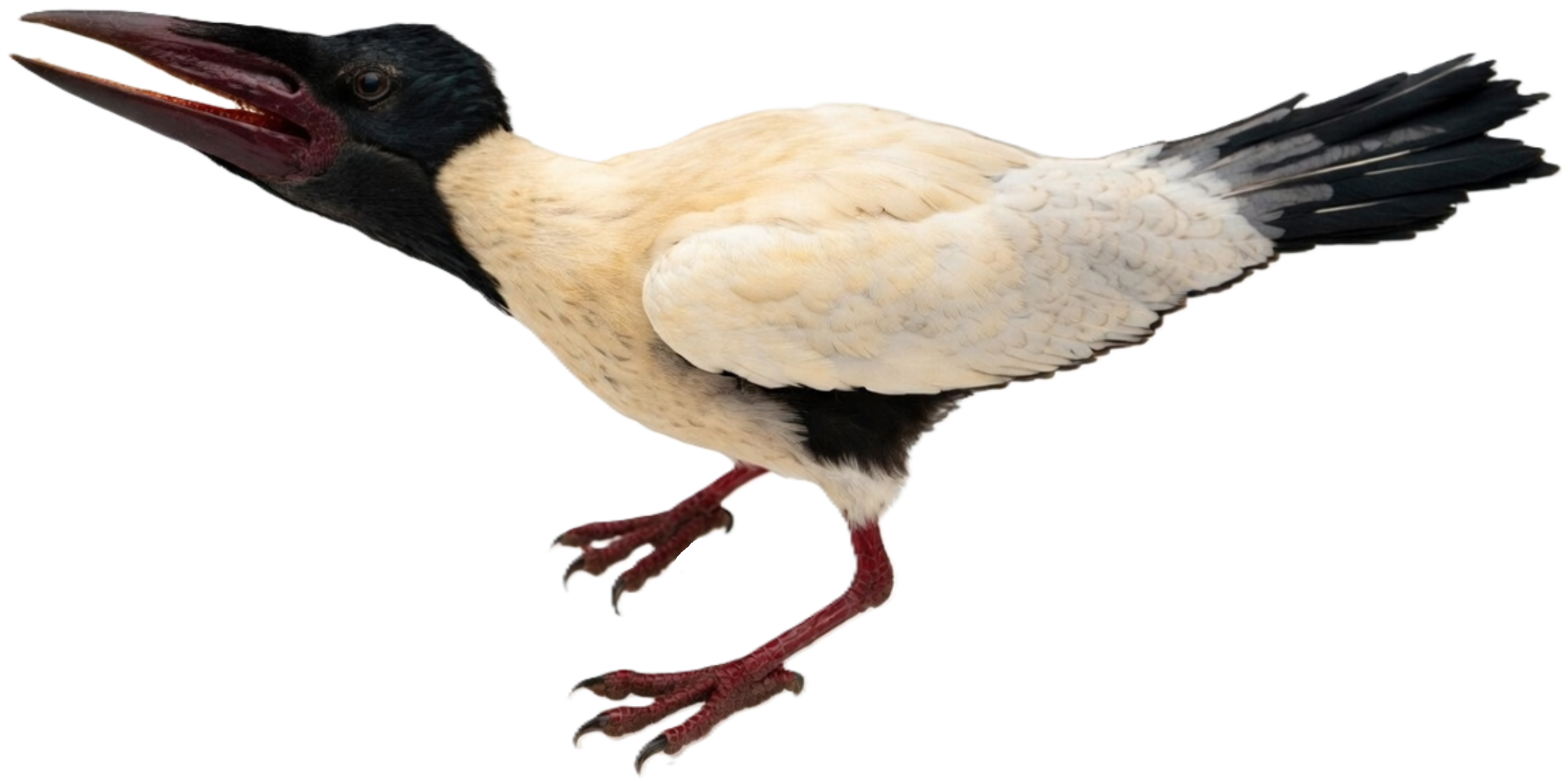
„Ornithurine C“45Longrich, N. R., Tokaryk, T. & Field, D. J. (2011). Mass extinction of birds at the Cretaceous–Paleogene (K–Pg) boundary. Proceedings of the National Academy of Sciences, 108(37), 15253–15257. doi:10.1073/pnas.1110395108 | Hell Creek Formation, Lance Formation | Montana, South Dakota, Wyoming | 66 Ma | Einzelfund | Unbenannter Ornithure |
 |
„Ornithurine D„46Longrich, N. R., Tokaryk, T. & Field, D. J. (2011). Mass extinction of birds at the Cretaceous–Paleogene (K–Pg) boundary. Proceedings of the National Academy of Sciences, 108(37), 15253–15257. doi:10.1073/pnas.1110395108 | Hell Creek Formation, Lance Formation | Montana, Wyoming | 66 Ma | Einzelfund | Unbenannter Ornithure; ähnelt Ichthyornis |
 |
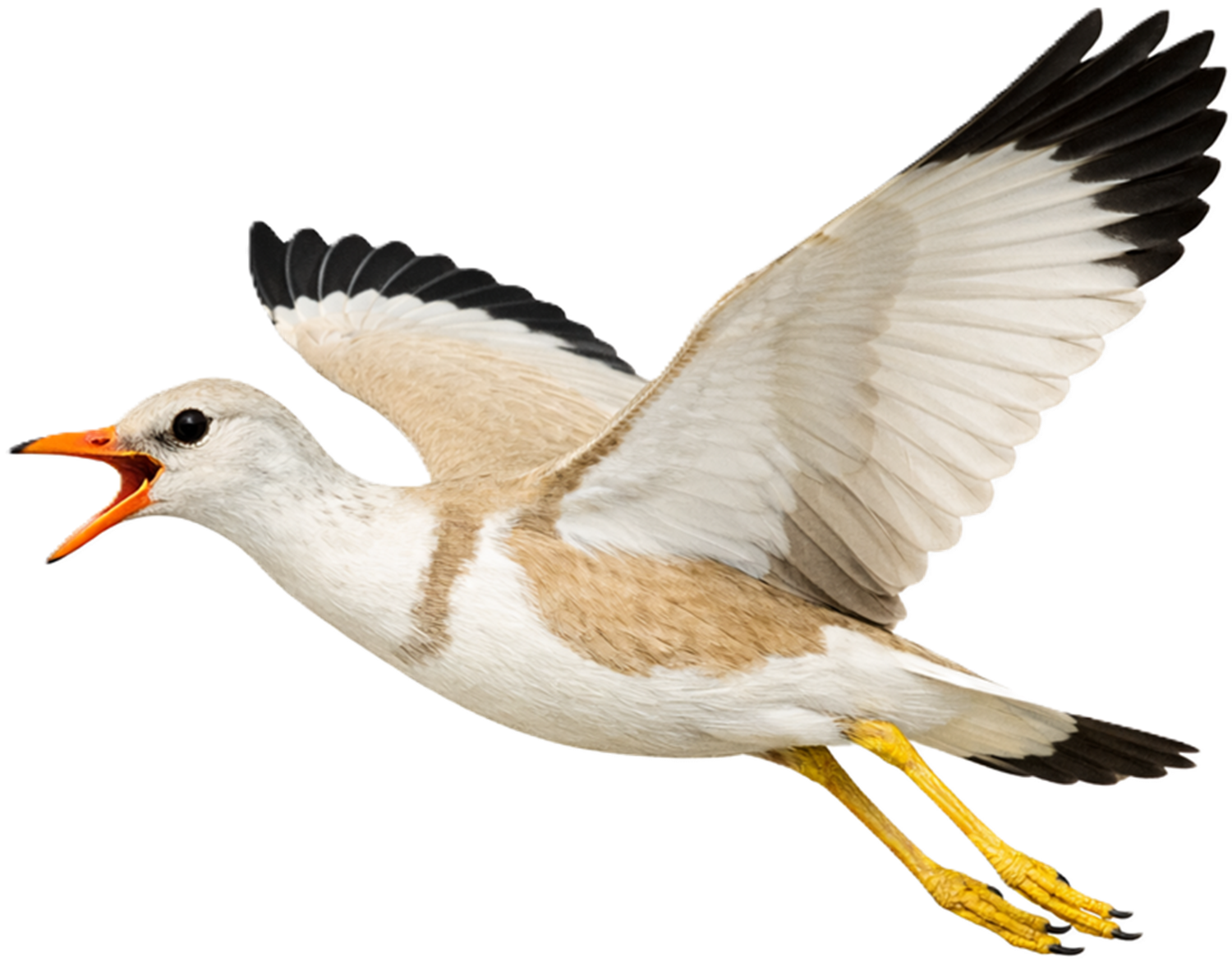
„Ornithurine E“47Longrich, N. R., Tokaryk, T. & Field, D. J. (2011). Mass extinction of birds at the Cretaceous–Paleogene (K–Pg) boundary. Proceedings of the National Academy of Sciences, 108(37), 15253–15257. doi:10.1073/pnas.1110395108 | Hell Creek Formation, Lance Formation | Montana, South Dakota, Wyoming | 66 Ma | selten | Unbenannter Ornithure |
 |
„Ornithurine F“48Longrich, N. R., Tokaryk, T. & Field, D. J. (2011). Mass extinction of birds at the Cretaceous–Paleogene (K–Pg) boundary. Proceedings of the National Academy of Sciences, 108(37), 15253–15257. doi:10.1073/pnas.1110395108 | Lance Formation | Wyoming | 66 Ma | selten | Unbenannter Ornithure |
 |
Phalacrocoracidae indet. (?)49Hope, S. (2002). The Mesozoic radiation of Neornithes. In L. M. Chiappe & L. M. Witmer (Hrsg.), Mesozoic Birds: Above the Heads of Dinosaurs, 339–388. University of California Press. | Lance Formation | Wyoming | 68–66 Ma | Einzelfund | Möglicher Kormoranverwandter |
 |
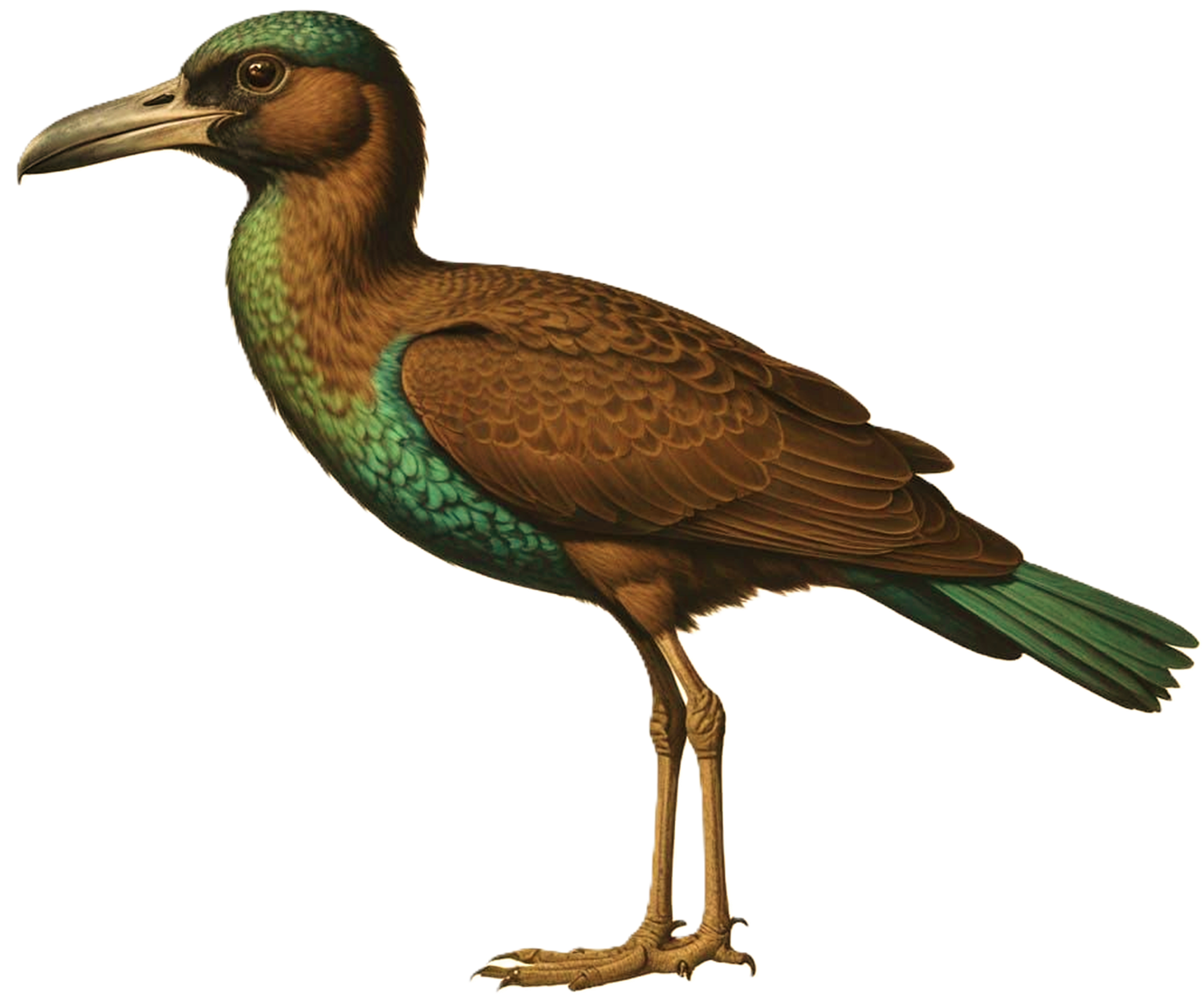
Presbyornithidae indet. (?)50Hope, S. (2002). The Mesozoic radiation of Neornithes. In L. M. Chiappe & L. M. Witmer (Hrsg.), Mesozoic Birds: Above the Heads of Dinosaurs, 339–388. University of California Press. | Lance Formation | Wyoming | 68–66 Ma | selten | Möglicher Presbyornithidae |
 |
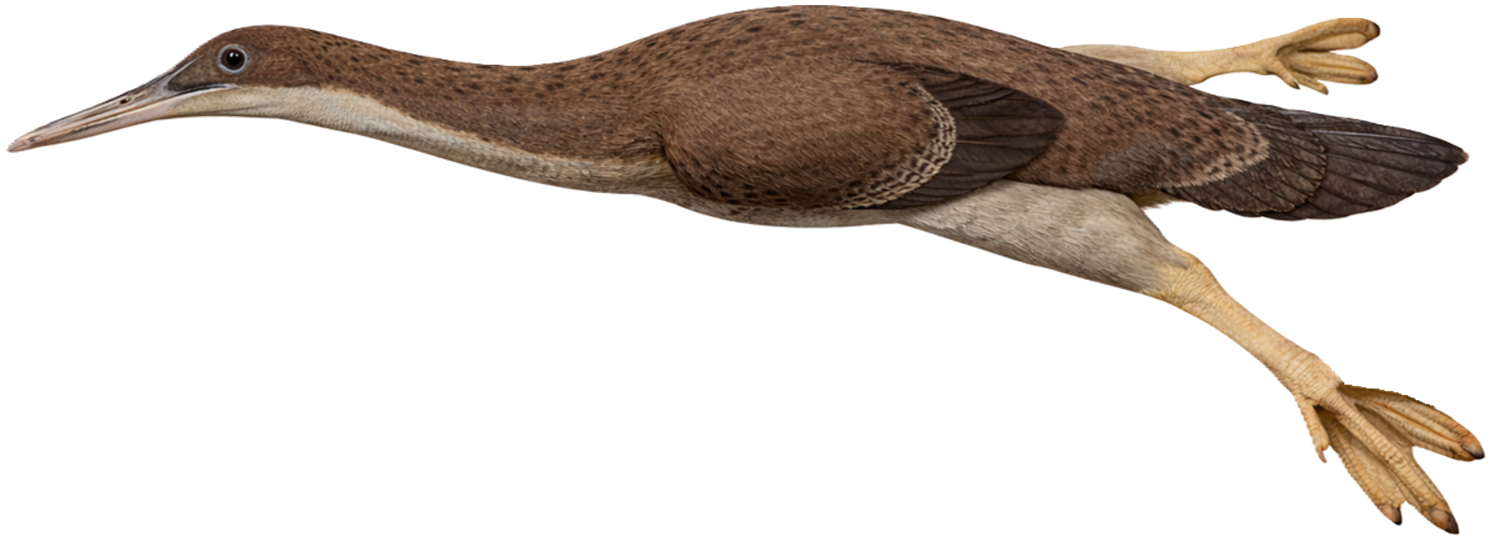
Palintropus retusus51Shufeldt, R. W. (1915). Fossil birds in the Marsh Collection of Yale University. Transactions of the Connecticut Academy of Arts and Sciences, 19, 1–110. | Lance Formation | Wyoming | 68–66 Ma | Einzelfund | Ornithuromorpha |
 |
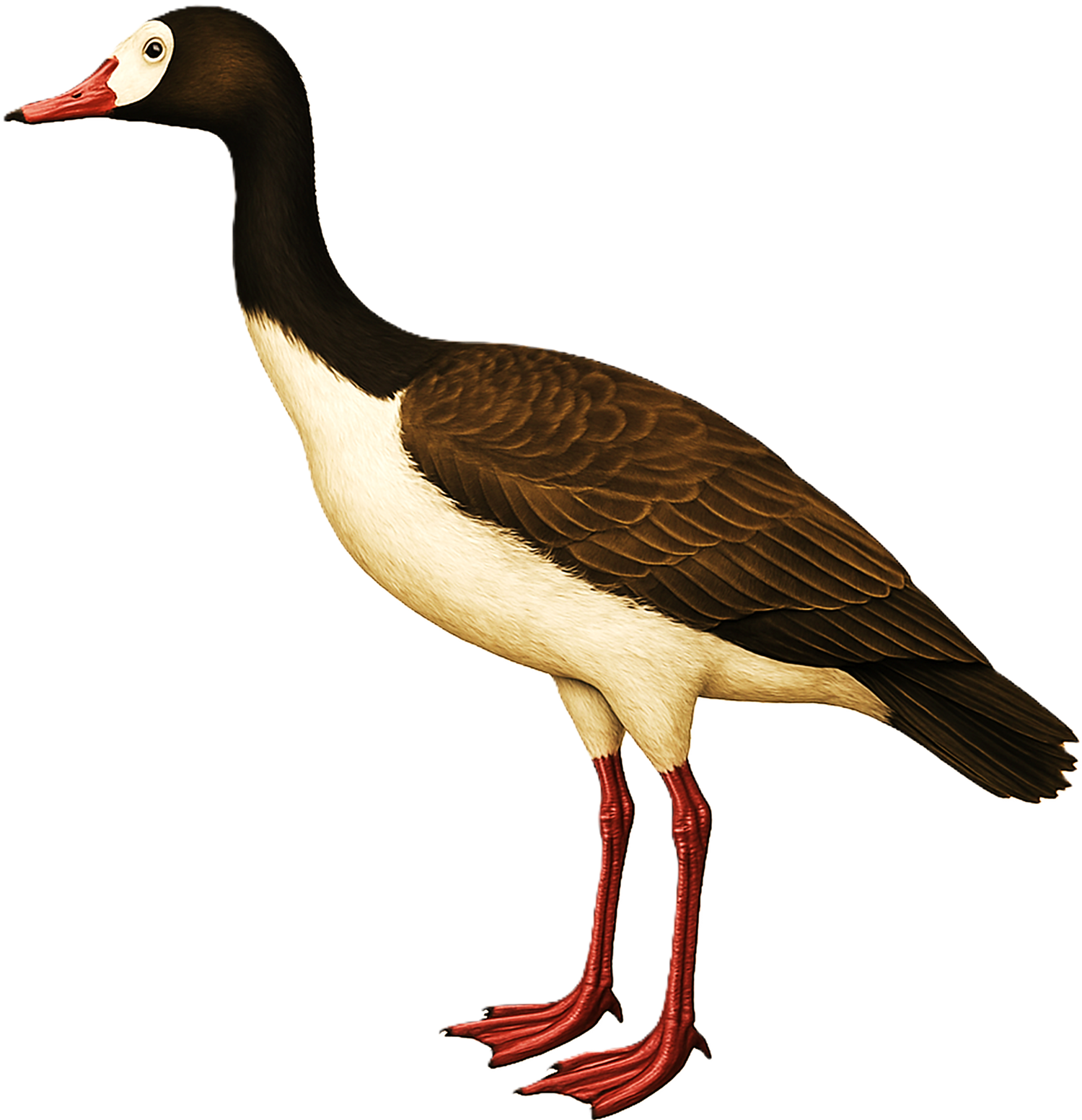
Potamornis skutchi52Elzanowski, A., Paul, G. S. & Stidham, T. A. (2001). An avian quadrate from the Late Cretaceous Lance Formation of Wyoming. Journal of Vertebrate Paleontology, 20(4), 712–719. doi:10.1671/0272-4634(2000)020[0712:AAQFTL]2.0.CO;2 | Lance Formation | Wyoming | 68–66 Ma | selten | Hesperornithes |
 |
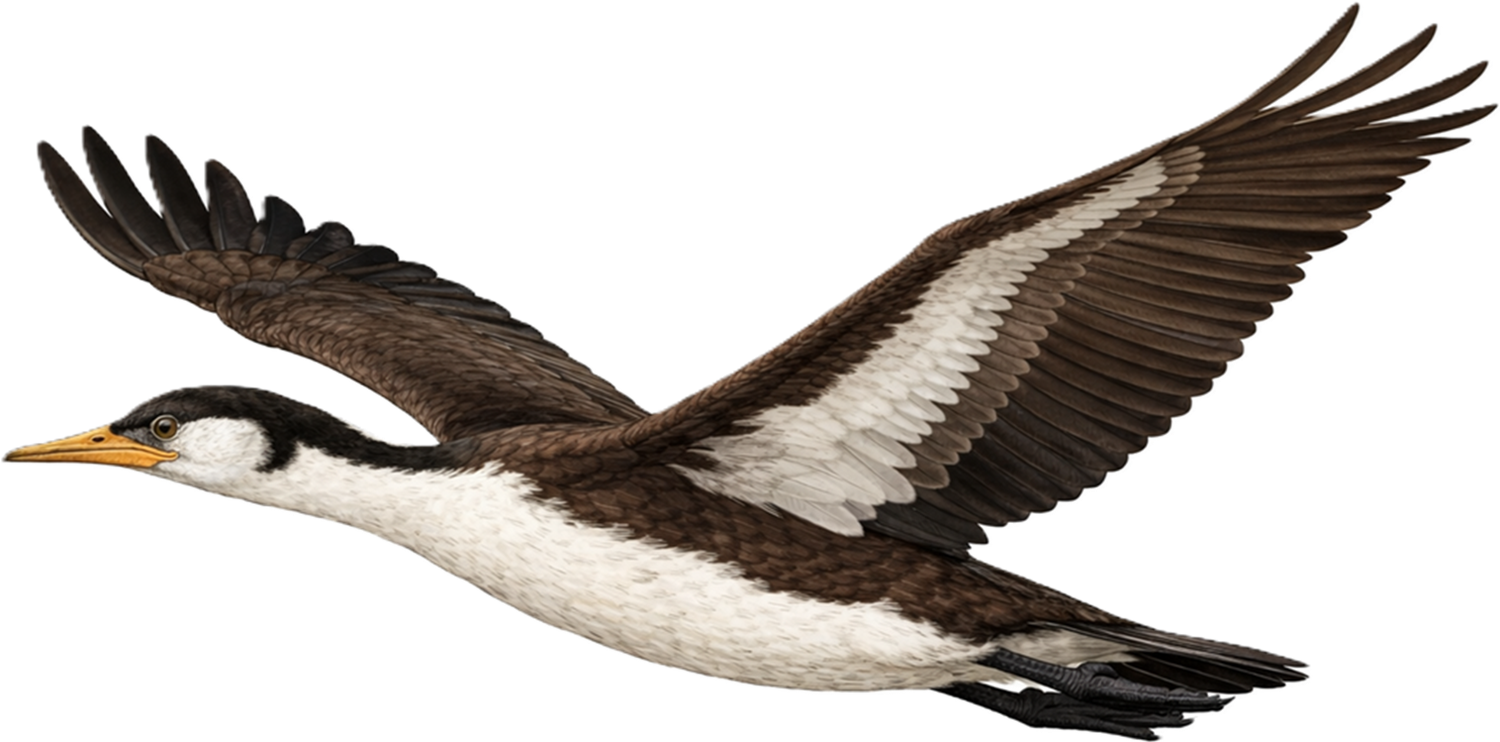
„Styginetta lofgreni“53Stidham, T. A. (2001). The origin and ecological diversification of modern birds: Evidence from the extinct wading ducks, Presbyornithidae (Neornithes: Anseriformes). Ph.D. dissertation, University of California, Berkeley, 514 S. | Hell Creek Formation | Montana | 68–66 Ma | selten | Nomen nudum; Möglicher Presbyornithidae |
 |
Torotix clemensi54Brodkorb, P. (1963). Birds from the Upper Cretaceous of Wyoming. Proceedings of the XIII International Ornithological Congress, 55–70. | Lance Formation | Wyoming | 68–66 Ma | Einzelfund | Ornithurae; möglicherweise mit Pelikanen verwandt |
Aus der Hell Creek- und Lance Formation sind einige Vogelfossilien bekannt, die bereits gut untersucht wurden. Leider ist das Material aber so dürftig, dass sich eine genaue systematische Zuordnung oft schwierig erweist, weshalb die Autoren auch auf offizielle Benennungen verzichtet haben. Statt eines Namens sind diese Vögel als „Enantiornithes A & B“ sowie als „Ornithurae A-F“ bekannt. Es dürfte sich bei jedem um mindestens eine eigene Art handeln.55Chiappe, L. M. & Walker, C. A. (2002). Skeletal morphology and systematics of the Cretaceous Euenantiornithes (Ornithothoraces: Enantiornithes). In L. M. Chiappe & L. M. Witmer (Hrsg.), Mesozoic Birds: Above the Heads of Dinosaurs, 240–267. University of California Press.56Longrich, N. R., Tokaryk, T. & Field, D. J. (2011). Mass extinction of birds at the Cretaceous–Paleogene (K–Pg) boundary. Proceedings of the National Academy of Sciences, 108(37), 15253–15257. doi:10.1073/pnas.1110395108 Ein weiterer Vogel, der noch auf seinen Namen wartet, ist „Styginetta lofgreni“. Die Art wurde bislang nur in einer Doktorarbeit von Thomas A. Stidham im Jahr 2001 benannt, die jedoch nicht offiziell publiziert worden ist.57Stidham, T. A. (2001). The origin and ecological diversification of modern birds: Evidence from the extinct wading ducks, Presbyornithidae (Neornithes: Anseriformes). Ph.D. dissertation, University of California, Berkeley, 514 S. Eine Zuordnung zu den Presbyornithidae und damit zu einer modernen Linie der Gänsevögel ist bislang noch nicht durch eine überprüfbare wissenschaftliche Beschreibung abgesichert, gilt jedoch als wahrscheinlich.

Echsenbecken-Dinosaurier:
| Bild: | Spezies: | Formation: | Fundort: | Alter: | Häufigkeit: | Bemerkungen: |
|---|---|---|---|---|---|---|
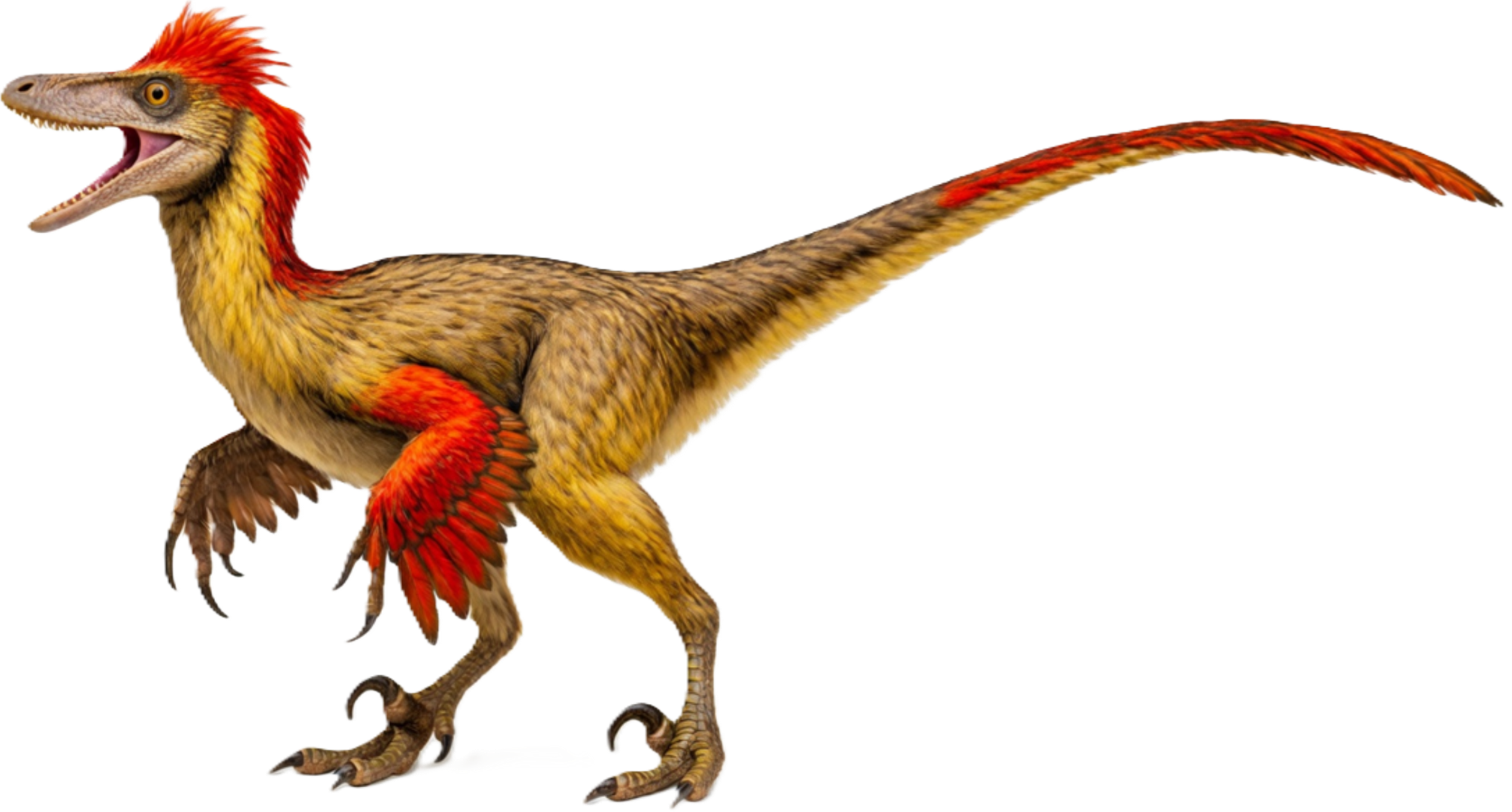 |
Acheroraptor temertyorum58Evans, D. C., Larson, D. W. & Currie, P. J. (2013). A new dromaeosaurid (Dinosauria: Theropoda) with Asian affinities from the latest Cretaceous of North America. Naturwissenschaften, 100, 1041–1049. doi:10.1007/s00114-013-1107-559Wroblewski, A. F.-J. (2026). Systematics and biostratigraphy of non-mammalian vertebrates across the K–Pg transition, southern Wyoming, USA. Journal of Paleontology, 100(1), 222–250. doi:10.1017/jpa.2025.10191 | Hell Creek Formation, Ferris Formation | Montana, South Dakota, Wyoming | 68–66 Ma | selten | Dromaeosauridae (Velociraptorini) |
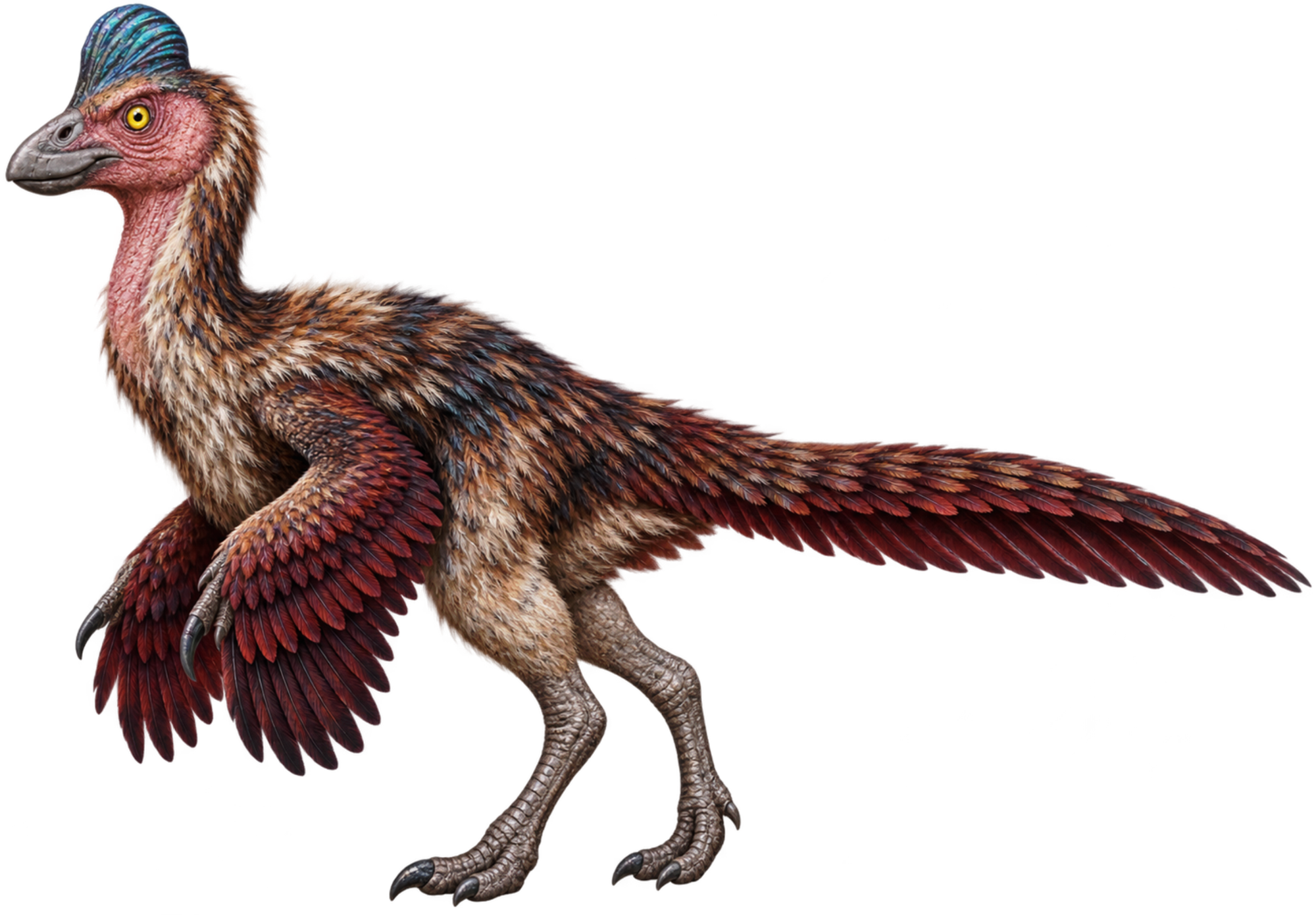 |
Anzu wyliei60Lamanna, M. C. et al. (2014). A new large-bodied oviraptorosaurian theropod dinosaur from the latest Cretaceous of western North America. PLOS ONE, 9(3), e92022. doi:10.1371/journal.pone.0092022 | Hell Creek Formation | Montana, North Dakota, South Dakota | 68–66 Ma | häufig | Caenagnathidae |
 |
Caenagnathidae indet.61Benner, E. K. C., Cullen, T. M. & Evans, D. C. (2016). Morphological and histological analysis of a new large-bodied caenagnathid specimen (Theropoda: Oviraptorosauria) from the Hell Creek Formation (Montana). Canadian Society of Vertebrate Paleontology, 17–18.62Dyke, G. J. & Mayr, G. (1999). Did parrots exist in the Cretaceous period? Nature, 399, 317–318. doi:10.1038/20583 | Hell Creek Formation, Lance Formation | Montana, Wyoming | 68–66 Ma | selten | Zwei unbestimmte Oviraptorosaurier |
 |
Coelurosauria indet.63Wroblewski, A. F.-J. (2026). Systematics and biostratigraphy of non-mammalian vertebrates across the K–Pg transition, southern Wyoming, USA. Journal of Paleontology, 100(1), 222–250. doi:10.1017/jpa.2025.10191 | Ferris Formation | Wyoming | 68–66 Ma | selten | Nicht näher bestimmter Coelurosaurier |
 |
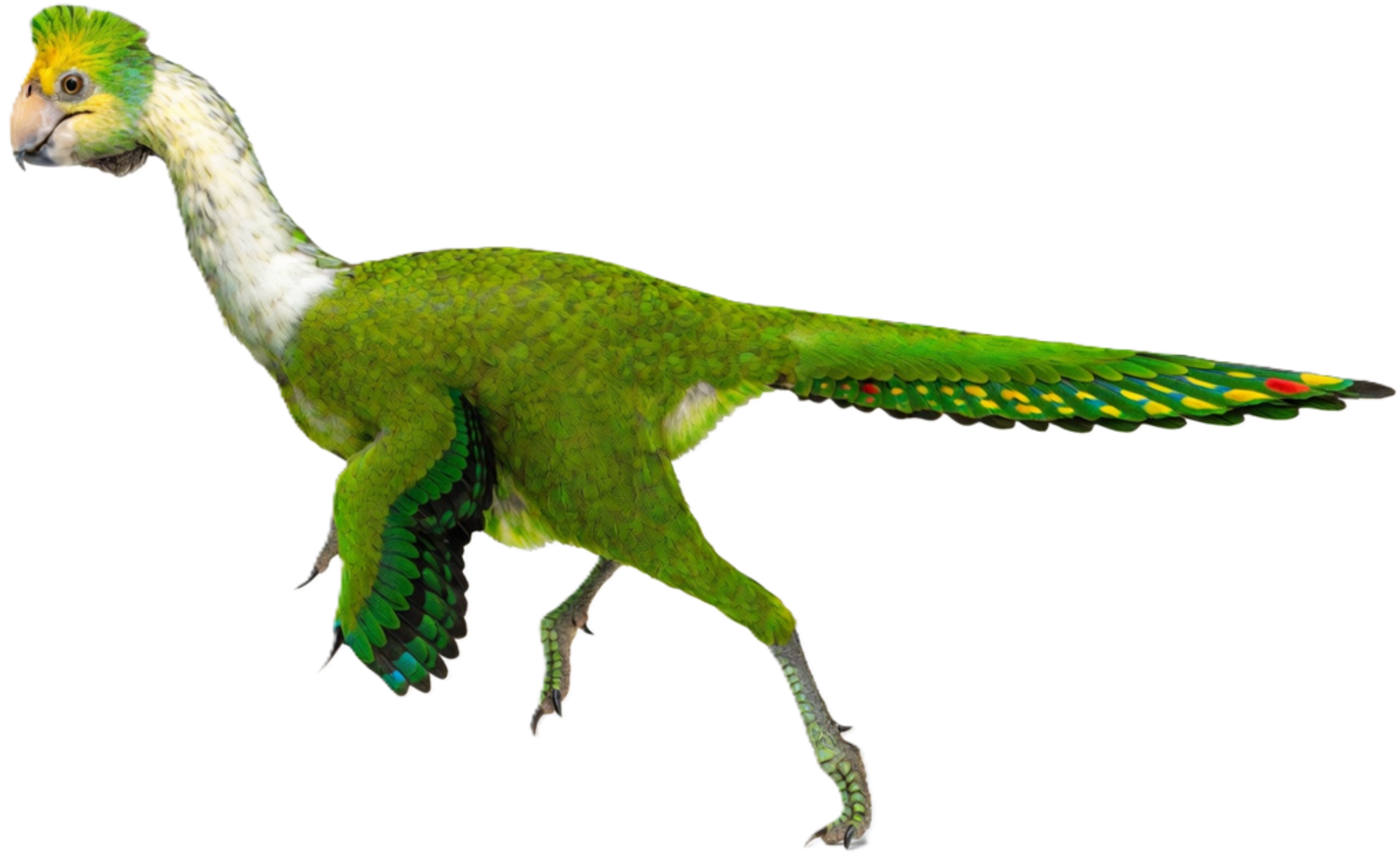
Dakotaraptor steini64DePalma, R. A. et al. (2015). The first giant raptor (Theropoda: Dromaeosauridae) from the Hell Creek Formation. Paleontological Contributions, 14, 1–16. doi:10.17161/paleo.1808.1876465Wroblewski, A. F.-J. (2026). Systematics and biostratigraphy of non-mammalian vertebrates across the K–Pg transition, southern Wyoming, USA. Journal of Paleontology, 100(1), 222–250. doi:10.1017/jpa.2025.10191 | Hell Creek Formation, Ferris Formation | South Dakota, Wyoming | 68–66 Ma | selten | Dromaeosauridae; umstritten, vielleicht eine Chimäre |
 |
Eoneophron infernalis66Atkins-Weltman, K. L. et al. (2024). A new oviraptorosaur (Dinosauria: Theropoda) from the end-Maastrichtian Hell Creek Formation of North America. PLOS ONE, 19(1), e0294901. doi:10.1371/journal.pone.0294901 | Hell Creek Formation | South Dakota | 66 Ma | Einzelfund | Caenagnathidae |
 |
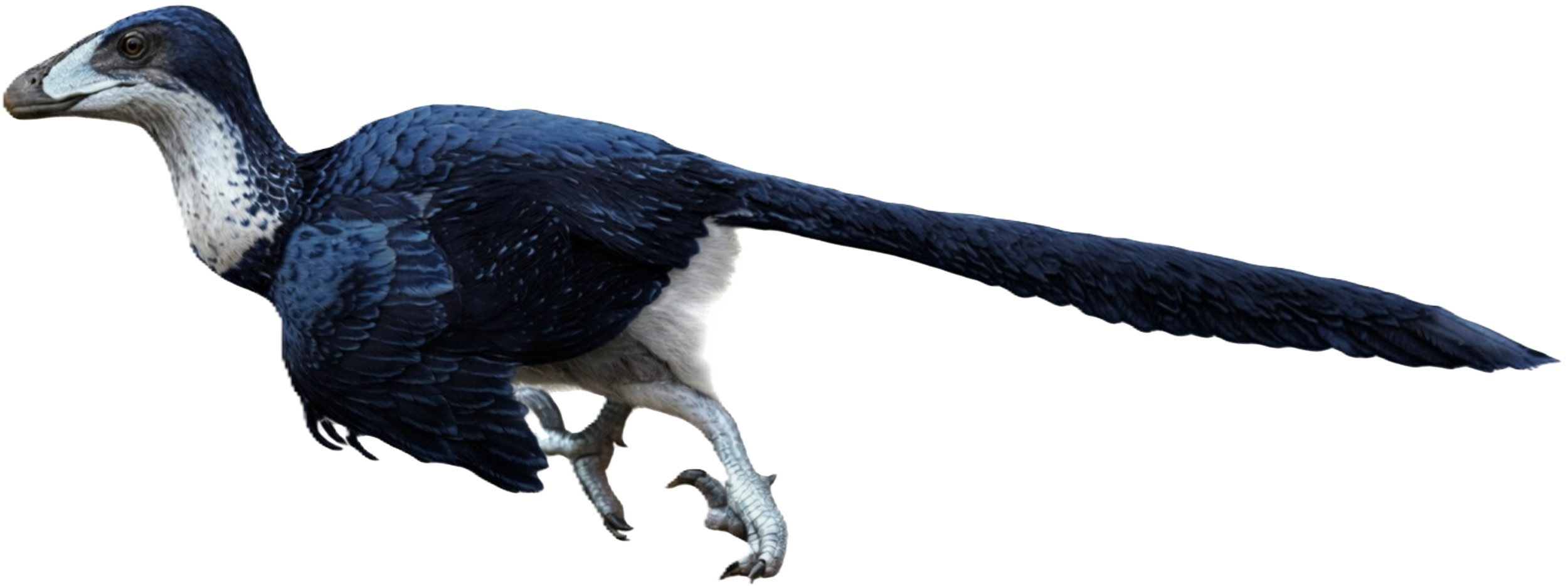
Microraptoria indet.67Brownstein, C. D. (2024). A juvenile bird with possible crown-group affinities from a dinosaur-rich Cretaceous ecosystem in North America. BMC Ecology and Evolution, 24, 20. doi:10.1186/s12862-024-02210-9 | Lance Formation | Wyoming | 68–66 Ma | selten | Möglicherweise ein Microraptoride, Halszkaraptorine oder kleiner Unenlagiinae |
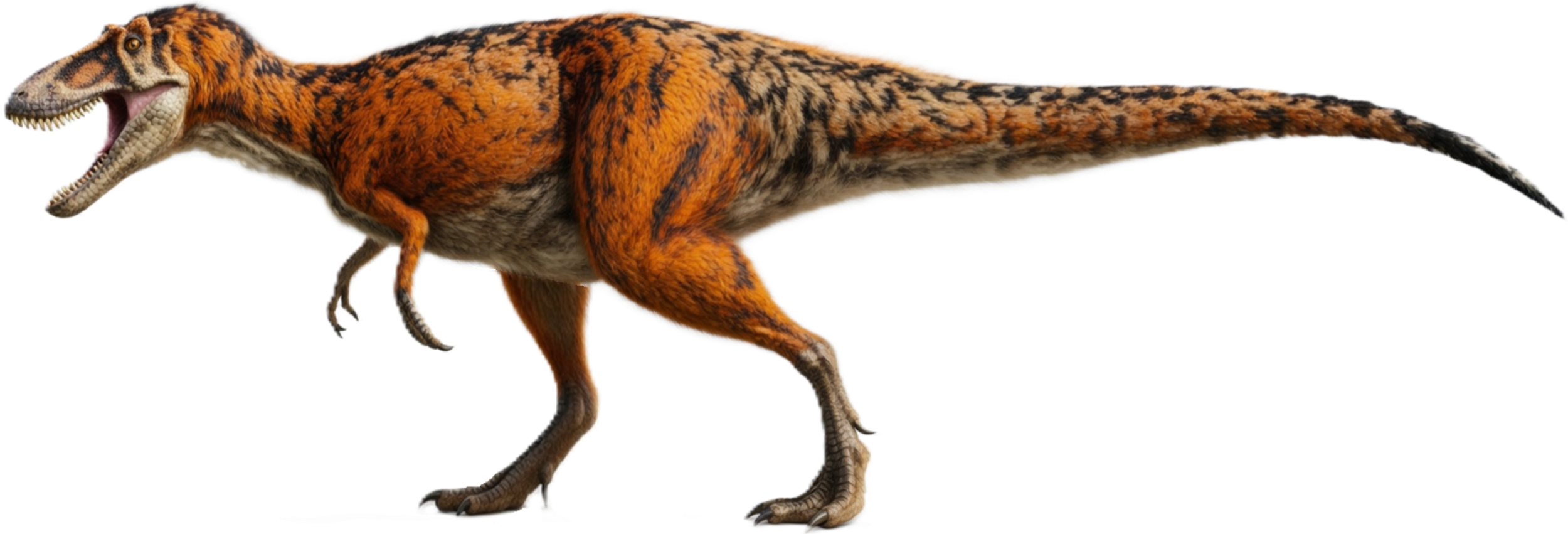 |
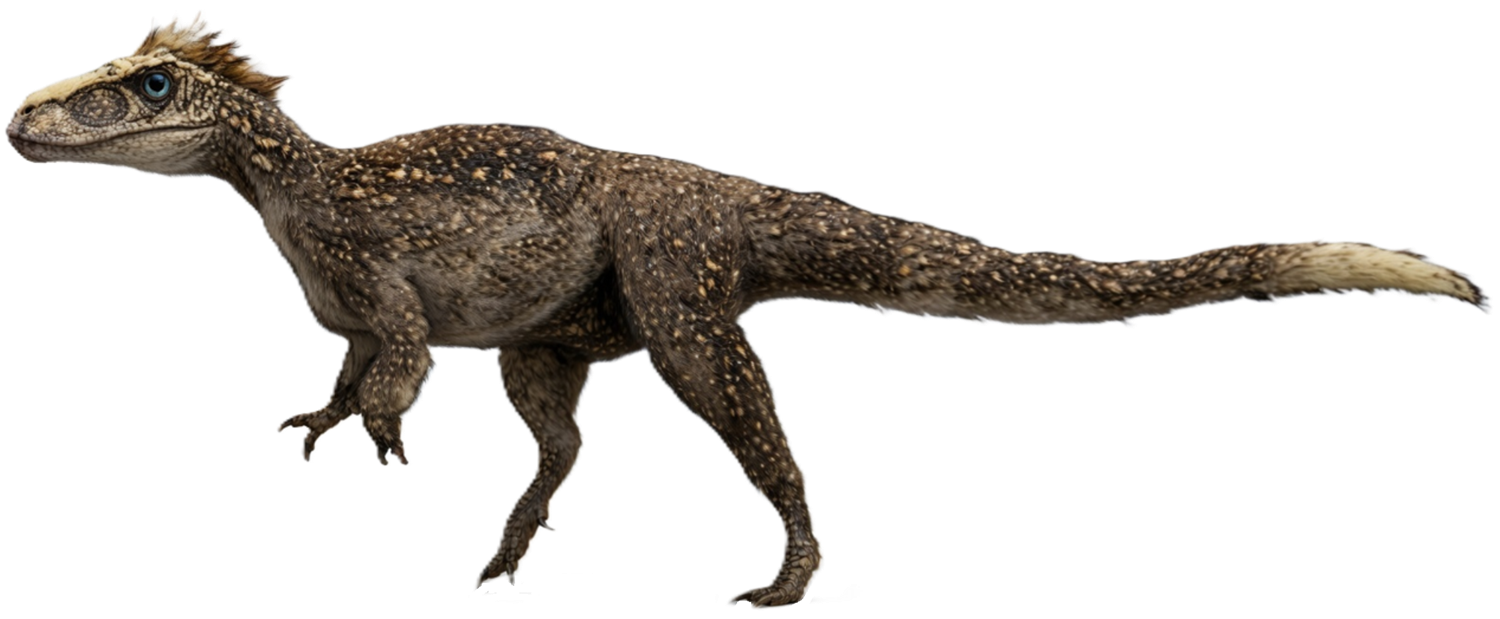
Nanotyrannus lancensis68Gilmore, C. W. (1946). A new carnivorous dinosaur from the Lance Formation of Montana. Smithsonian Miscellaneous Collections, 106, 1–19.69Wroblewski, A. F.-J. (2026). Systematics and biostratigraphy of non-mammalian vertebrates across the K–Pg transition, southern Wyoming, USA. Journal of Paleontology, 100(1), 222–250. doi:10.1017/jpa.2025.10191 | Hell Creek Formation, Ferris Formation | Montana, Wyoming | 68–66 Ma | Einzelfund | Nanotyrannidae (Dryptosauridae?) |
 |
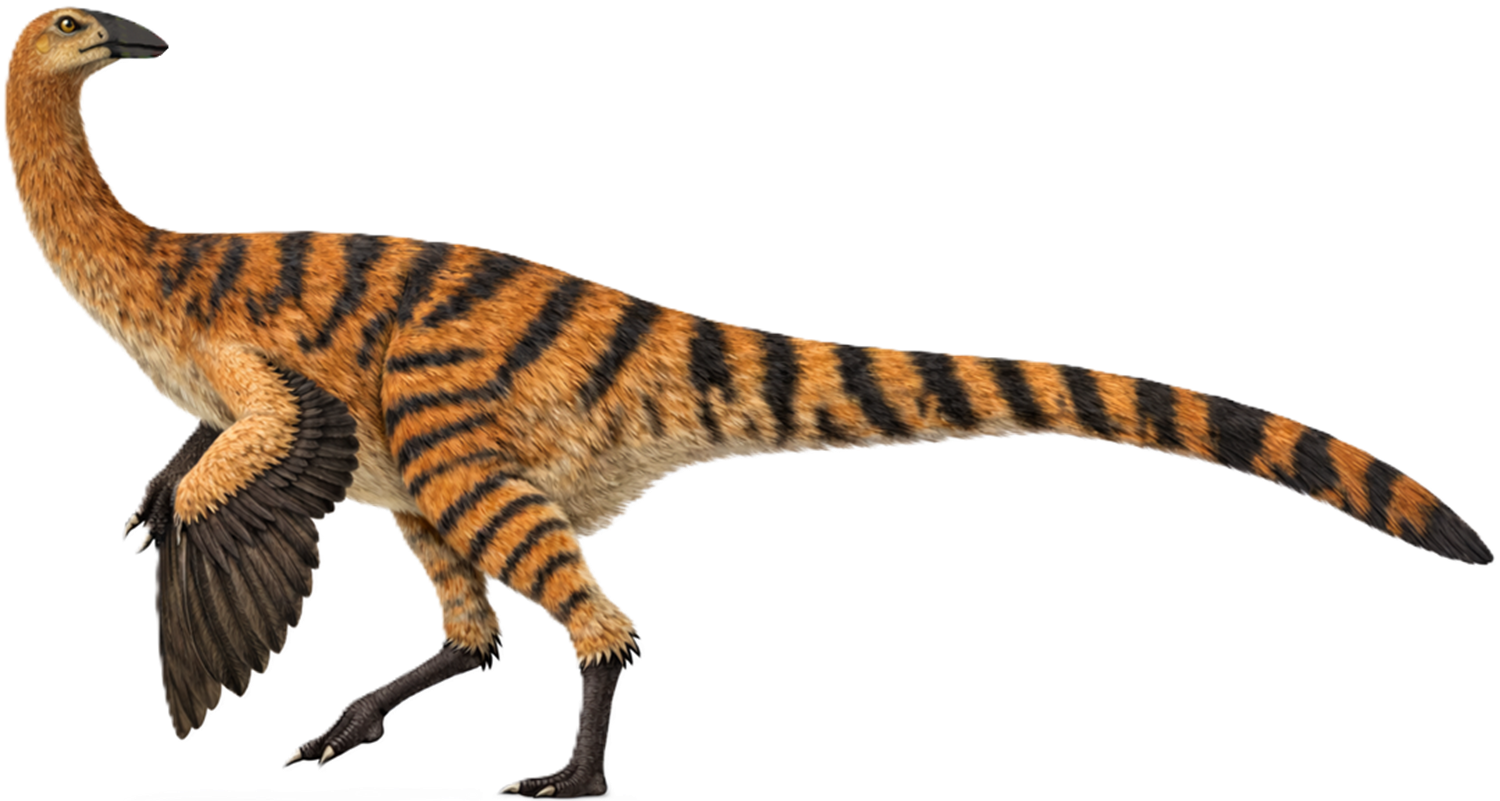
Nanotyrannus lethaeus70Zanno, L. E. & Napoli, J. G. (2025). Nanotyrannus and Tyrannosaurus coexisted at the close of the Cretaceous. Nature. doi:10.1038/s41586-025-09801-6 | Hell Creek Formation | Montana | 68–66 Ma | Einzelfund | Nanotyrannidae (Dryptosauridae?); umstritten; vielleicht synonym mit Tyrannosaurus (Jungtier) |
 |
„Orcomimus“71Triebold, W. (1997). The Sandy Site: Small dinosaurs from the Hell Creek Formation of South Dakota. In D. L. Wolberg, E. Stump & G. D. Rosenberg (Hrsg.), Dinofest International: Proceedings of a symposium sponsored by Arizona State University. Academy of Natural Sciences, 245–248. | Hell Creek Formation | South Dakota | 68–66 Ma | Einzelfund | Numen nudum, gehört vielleicht zu Ornithomimus |
 |
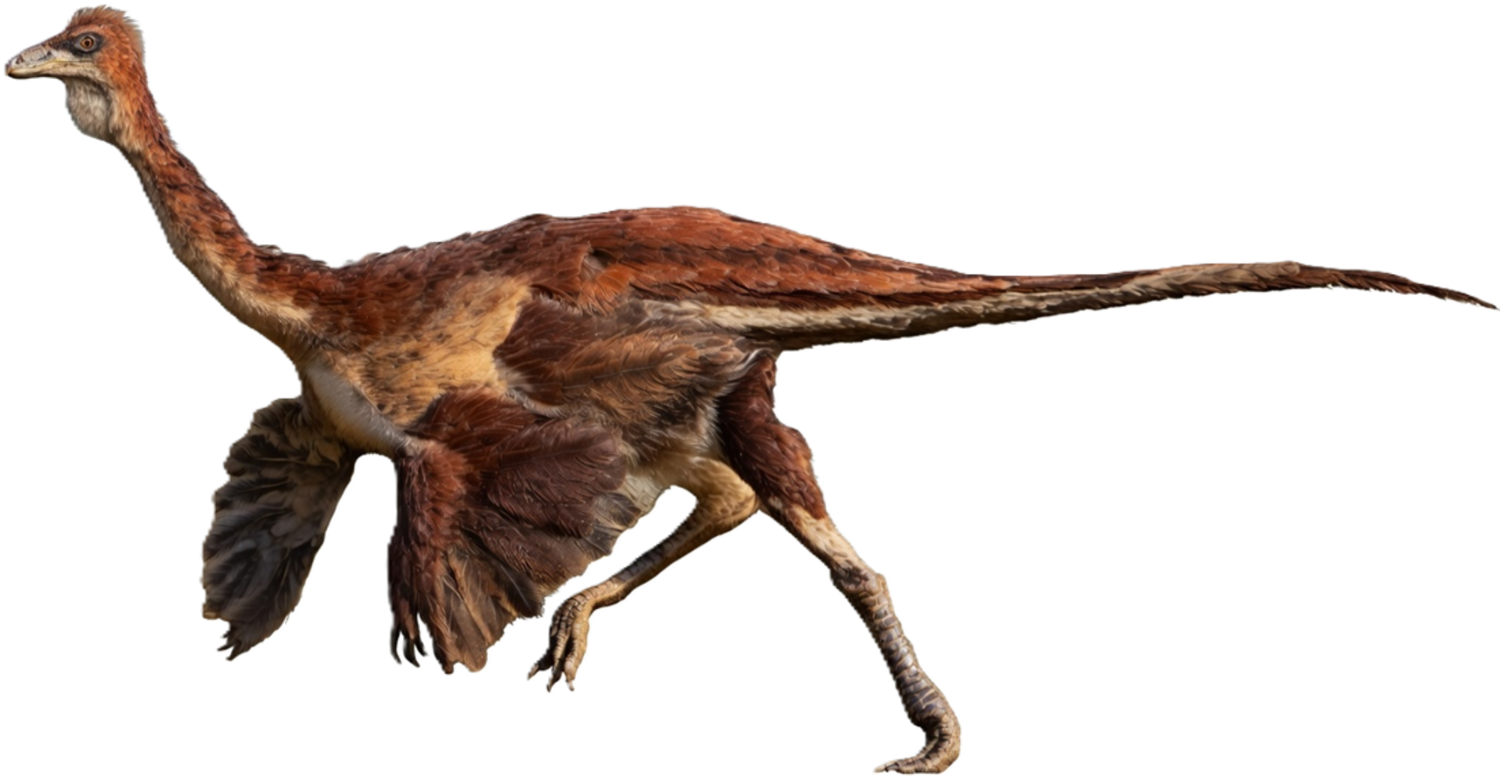
Ornithomimidae indet.72Estes, R. (1964). Fossil vertebrates from the Late Cretaceous Lance Formation, eastern Wyoming. University of California Publications in Geological Sciences, 49, 1–187.73Pearson, D. A. et al. (2002). Vertebrate biostratigraphy of the Hell Creek Formation in southwestern North Dakota and northwestern South Dakota. In J. H. Hartman, K. R. Johnson & D. J. Nichols (Hrsg.), The Hell Creek Formation and the Cretaceous–Tertiary boundary in the northern Great Plains. Geological Society of America Special Paper 361, 145–167. doi:10.1130/0-8137-2361-2.145 | Hell Creek Formation, Lance Formation | Montana, North Dakota, South Dakota, Wyoming | 68–66 Ma | häufig | Nicht näher bestimmtes Material von Ornithomimiden |
 |
Ornithomimus velox74Marsh, O. C. (1890). Description of new dinosaurian reptiles. American Journal of Science, 39, 81–86. | Denver Formation | Colorado | ca. 66 Ma | selten | Ornithomimidae |
 |
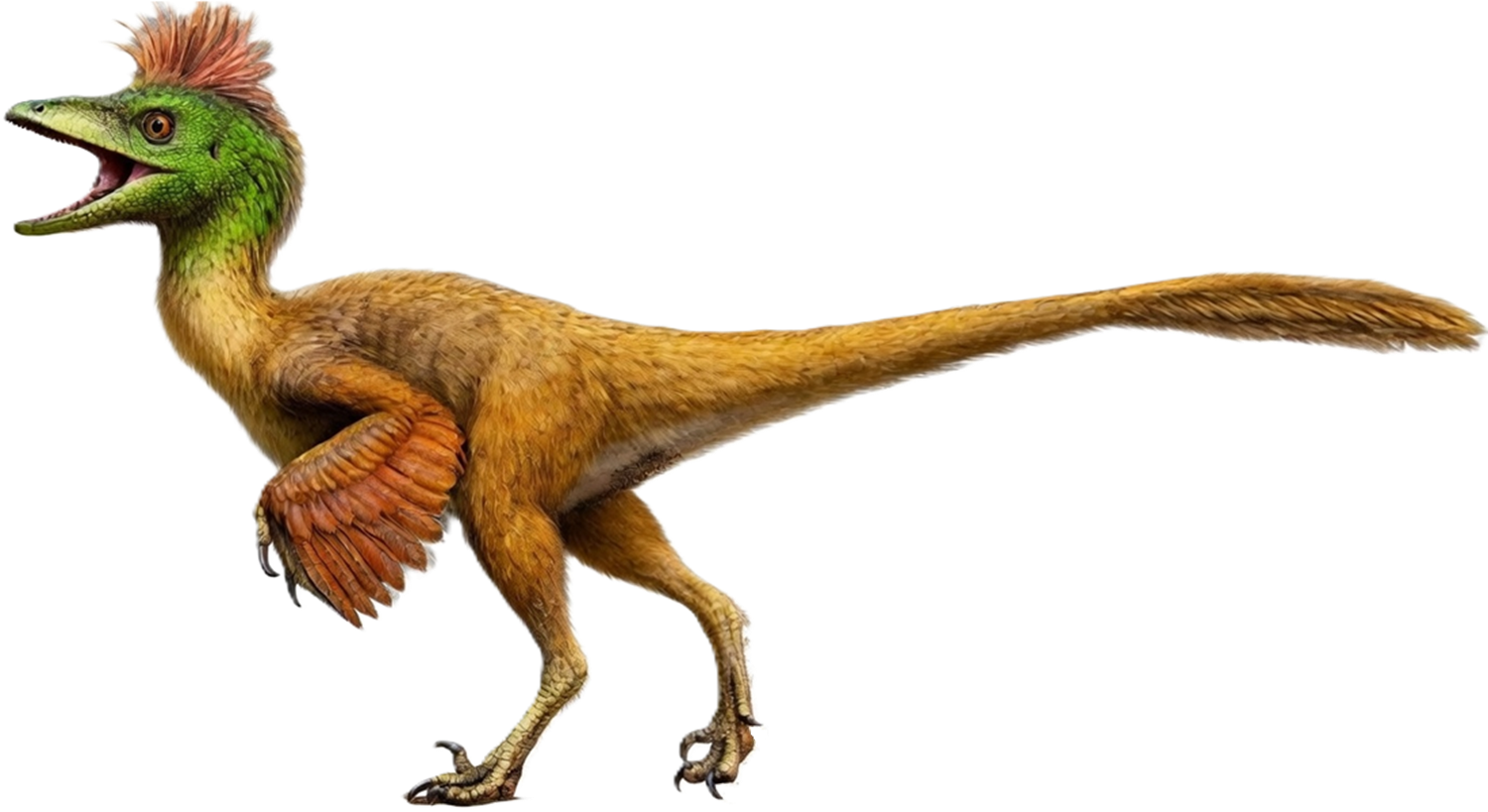
Paronychodon sp.75Marsh, O. C. (1889). Discovery of Cretaceous Mammalia. American Journal of Science, 38, 81–92.76Pearson, D. A. et al. (2002). Vertebrate biostratigraphy of the Hell Creek Formation in southwestern North Dakota and northwestern South Dakota. In J. H. Hartman, K. R. Johnson & D. J. Nichols (Hrsg.), The Hell Creek Formation and the Cretaceous–Tertiary boundary in the northern Great Plains. Geological Society of America Special Paper 361, 145–167. doi:10.1130/0-8137-2361-2.14577Wroblewski, A. F.-J. (2026). Systematics and biostratigraphy of non-mammalian vertebrates across the K–Pg transition, southern Wyoming, USA. Journal of Paleontology, 100(1), 222–250. doi:10.1017/jpa.2025.10191 | Hell Creek Formation, Lance Formation, Ferris Formation | Montana, North Dakota, South Dakota, Wyoming | 68–66 Ma | häufig | Umstrittenes Zahntaxon. Vielleicht keine eigene Gattung. |
 |
Pectinodon bakkeri78Carpenter, K. (1982). Baby dinosaurs from the Late Cretaceous Lance and Hell Creek formations and a description of a new species of theropod. Contributions to Geology, University of Wyoming, 20(2), 123–134.79Carpenter, K. (1982). Baby dinosaurs from the Late Cretaceous Lance and Hell Creek formations and a description of a new species of theropod. Contributions to Geology, University of Wyoming, 20(2), 123–134.80Wroblewski, A. F.-J. (2026). Systematics and biostratigraphy of non-mammalian vertebrates across the K–Pg transition, southern Wyoming, USA. Journal of Paleontology, 100(1), 222–250. doi:10.1017/jpa.2025.10191 | Hell Creek Formation, Lance Formation, Ferris Formation | Montana, North Dakota, South Dakota, Wyoming | 68–66 Ma | selten | Troodontidae |
|
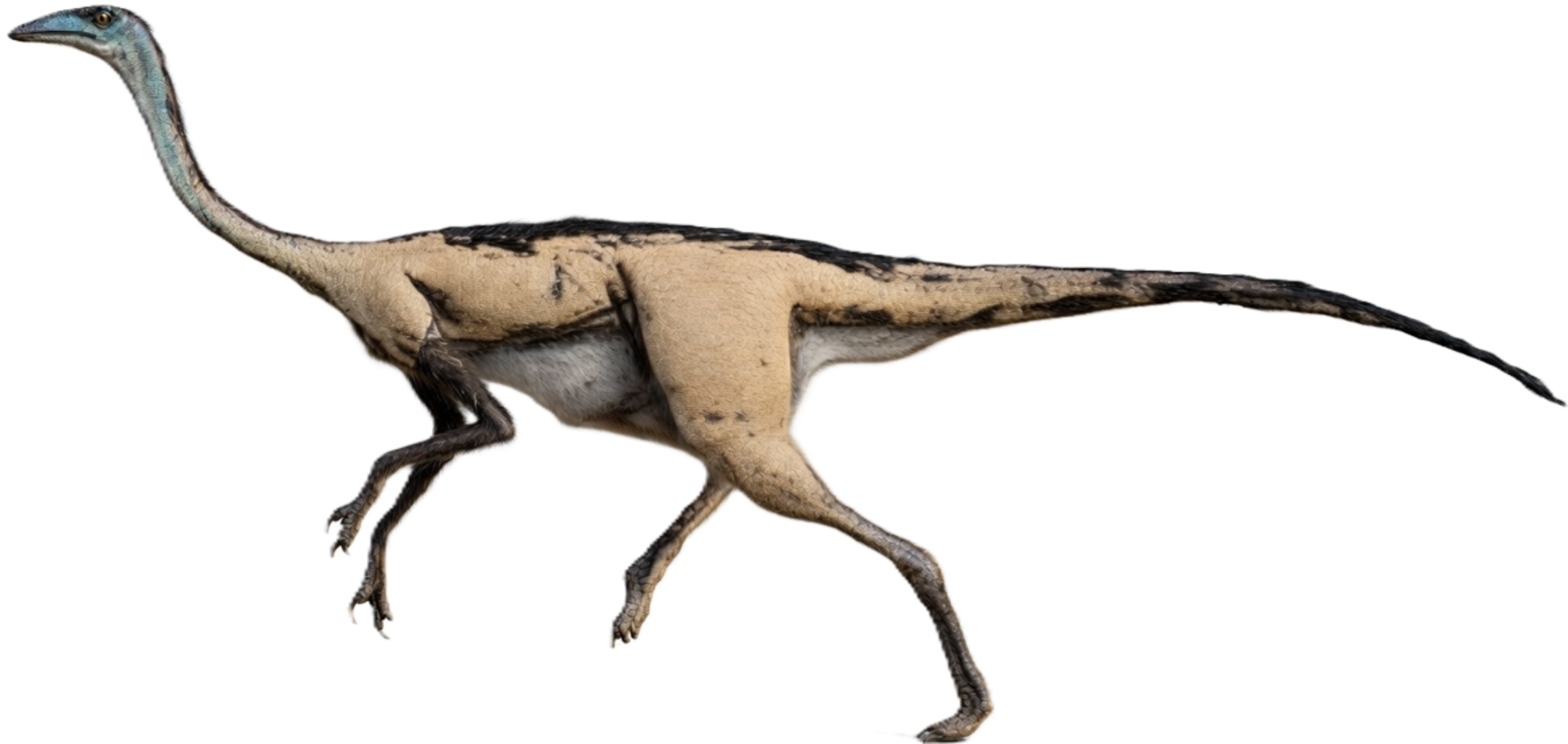
Richardoestesia sp.81Estes, R. (1964). Fossil vertebrates from the Late Cretaceous Lance Formation, eastern Wyoming. University of California Publications in Geological Sciences, 49, 1–187.82Pearson, D. A. et al. (2002). Vertebrate biostratigraphy of the Hell Creek Formation in southwestern North Dakota and northwestern South Dakota. In J. H. Hartman, K. R. Johnson & D. J. Nichols (Hrsg.), The Hell Creek Formation and the Cretaceous–Tertiary boundary in the northern Great Plains. Geological Society of America Special Paper 361, 145–167. doi:10.1130/0-8137-2361-2.14583Wroblewski, A. F.-J. (2026). Systematics and biostratigraphy of non-mammalian vertebrates across the K–Pg transition, southern Wyoming, USA. Journal of Paleontology, 100(1), 222–250. doi:10.1017/jpa.2025.10191 | Hell Creek Formation, Lance Formation, Ferris Formation | Montana, North Dakota, South Dakota, Wyoming | 68–66 Ma | häufig | Umstrittenes Zahntaxon. Vielleicht keine eigene Gattung. |
 |
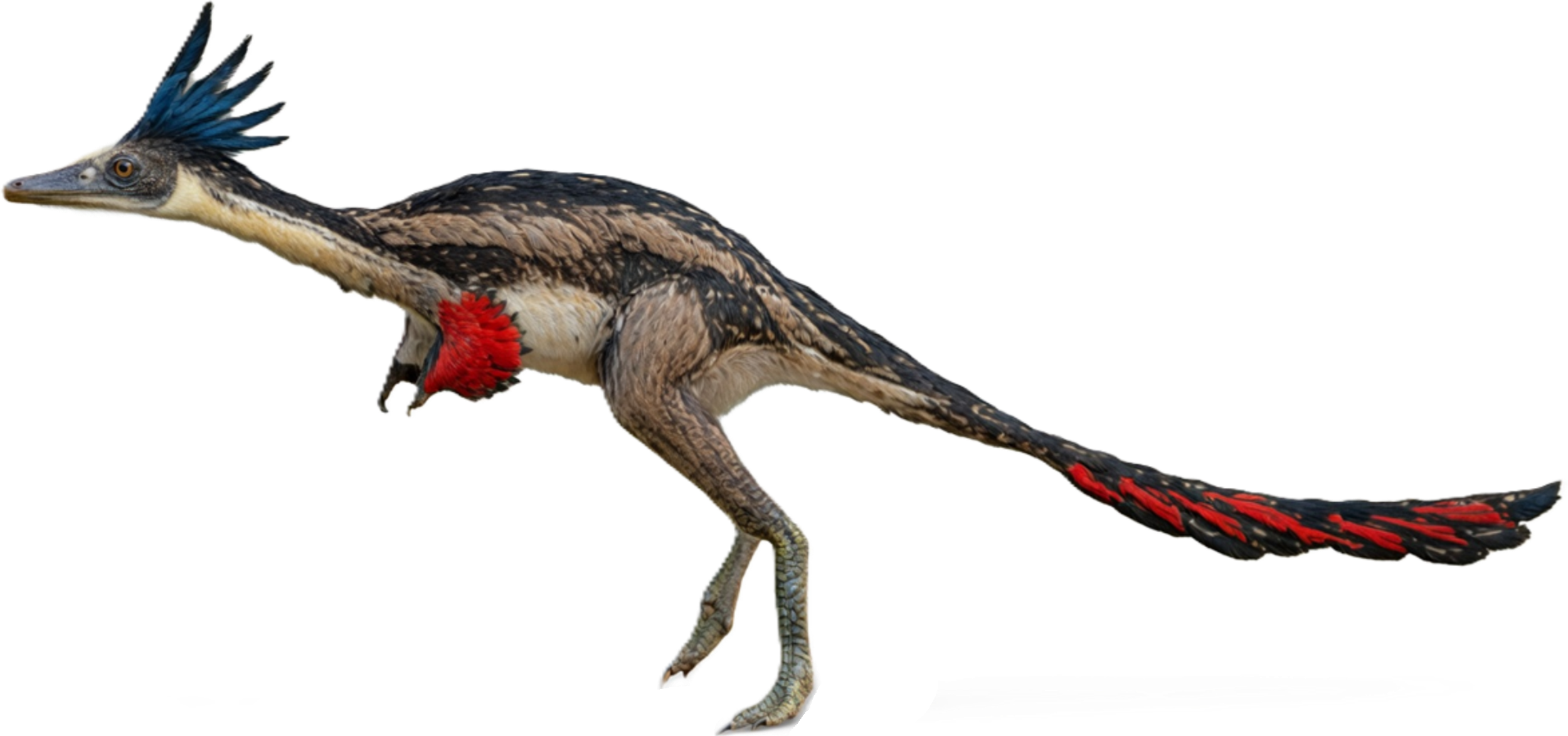
Struthiomimus sedens84Marsh, O. C. (1892). Notice of new reptiles from the Laramie Formation. American Journal of Science, 43, 449–453.85Longrich, N. R. (2008). A new, large ornithomimid from the Cretaceous Dinosaur Park Formation of Alberta, Canada: Implications for the study of dissociated dinosaur remains. Palaeontology, 51(4), 983–997. doi:10.1111/j.1475-4983.2008.00791.x86Wroblewski, A. F.-J. (2026). Systematics and biostratigraphy of non-mammalian vertebrates across the K–Pg transition, southern Wyoming, USA. Journal of Paleontology, 100(1), 222–250. doi:10.1017/jpa.2025.10191 | Hell Creek Formation, Lance Formation, Ferris Formation | Montana, Wyoming | 68–66 Ma | selten | Ornithomimidae |
 |
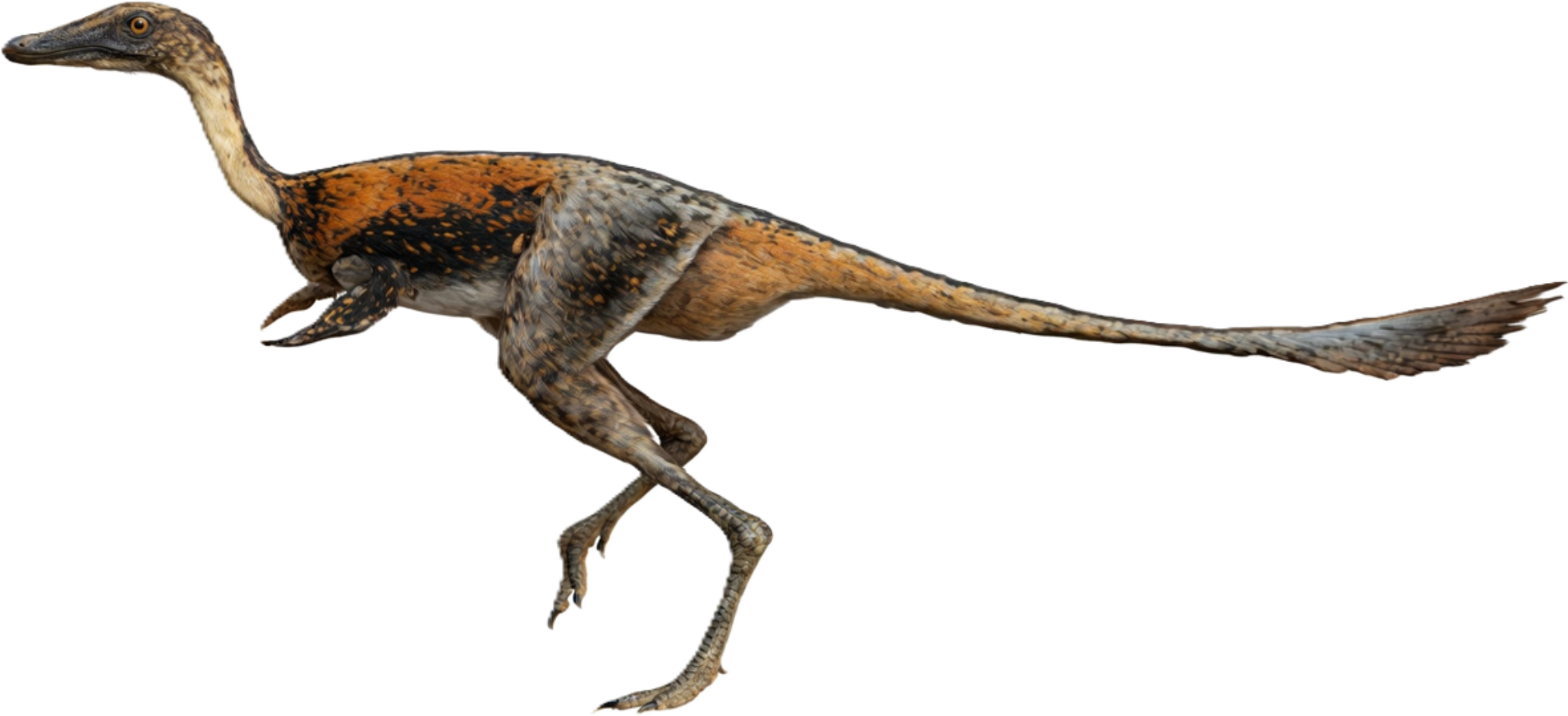
Trierarchuncus prairiensis87Fowler, D. W. et al. (2020). Trierarchuncus prairiensis gen. et sp. nov., the last alvarezsaurid: Hell Creek Formation (uppermost Maastrichtian), Montana. Cretaceous Research, 116, 104560. doi:10.1016/j.cretres.2020.104560 | Hell Creek Formation | Montana | 66 Ma | selten | Alvarezsauridae |
 |
Trierarchuncus sp.88Brownstein, C. D. (2024). A juvenile bird with possible crown-group affinities from a dinosaur-rich Cretaceous ecosystem in North America. BMC Ecology and Evolution, 24, 20. doi:10.1186/s12862-024-02210-9 | Lance Formation | Wyoming | 68–66 Ma | selten | Alvarezsauridae; Bestimmung unsicher |
 |
Tyrannosauridae indet.89Wroblewski, A. F.-J. (2026). Systematics and biostratigraphy of non-mammalian vertebrates across the K–Pg transition, southern Wyoming, USA. Journal of Paleontology, 100(1), 222–250. doi:10.1017/jpa.2025.10191 | Ferris Formation | Wyoming | 68–66 Ma | selten | Wahrscheinlich Tyrannosaurus. |
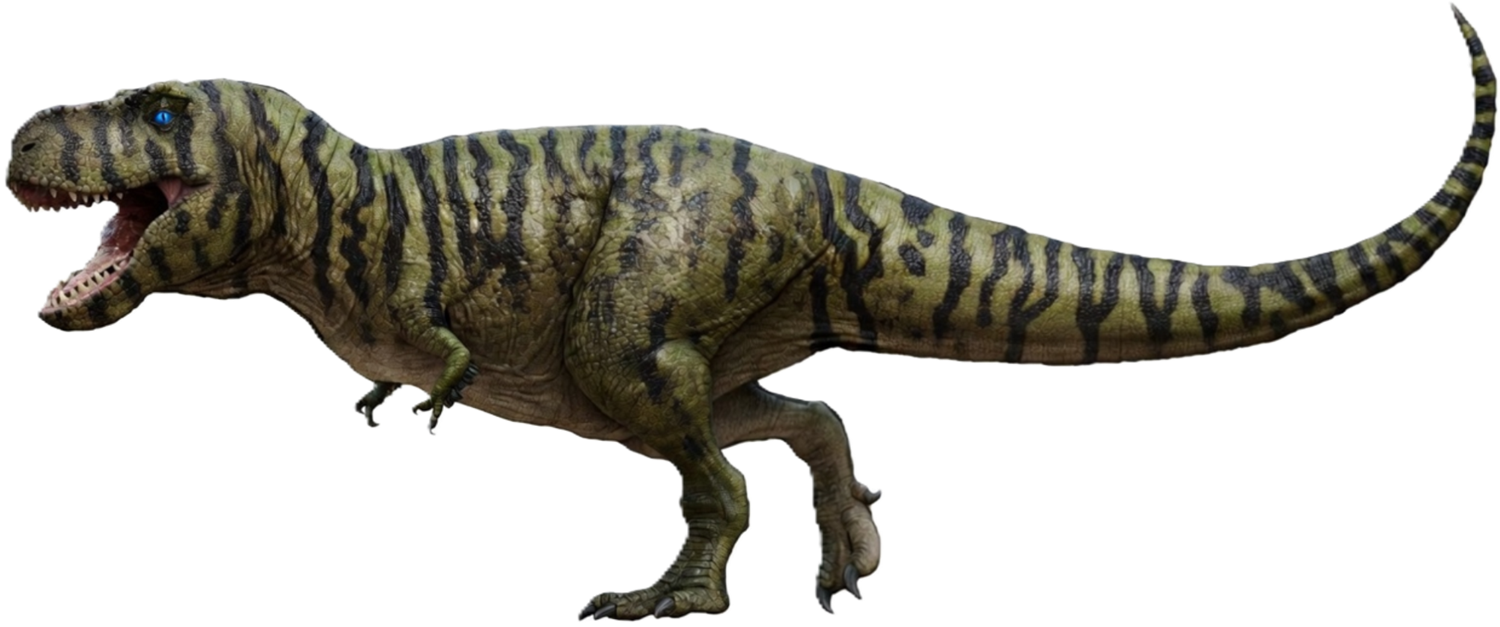 |
Tyrannosaurus rex90Osborn, H. F. (1905). Tyrannosaurus and other Cretaceous carnivorous dinosaurs. Bulletin of the American Museum of Natural History, 21(14), 259–265.91Osborn, H. F. (1905). Tyrannosaurus and other Cretaceous carnivorous dinosaurs. Bulletin of the American Museum of Natural History, 21(14), 259–265.92Lillegraven, J. A. & Eberle, J. J. (1999). Vertebrate faunal changes through Lancian and Puercan time in southern Wyoming. Journal of Paleontology, 73(4), 691–710.93Carpenter, K. & Young, D. B. (2002). Late Cretaceous dinosaurs from the Denver Basin, Colorado. Rocky Mountain Geology, 37(2), 237–254. doi:10.2113/gsrocky.37.2.23794Carpenter, K. & Young, D. B. (2002). Late Cretaceous dinosaurs from the Denver Basin, Colorado. Rocky Mountain Geology, 37(2), 237–254. doi:10.2113/gsrocky.37.2.237 | Hell Creek Formation, Lance Formation, Ferris Formation, Denver Formation, Laramie Formation | Colorado, Montana, North Dakota, South Dakota, Wyoming | 68–66 Ma | sehr häufig | Tyrannosauridae |
Aus der Hell Creek-, Lance– und Ferris Formation sind mehrere Zahnfunde bekannt, die möglicherweise zu Troodontiden gehören und in die „Mülleimer-Gattungen“ Paronychodon und Richardoestesia gesteckt wurden. Es könnte sich hierbei sehr wohl um eigene Arten handeln, die nicht zum etwas besser bekannten Pectinodon gehören.95Marsh, O. C. (1889). Discovery of Cretaceous Mammalia. American Journal of Science, 38, 81–92.96Pearson, D. A. et al. (2002). Vertebrate biostratigraphy of the Hell Creek Formation in southwestern North Dakota and northwestern South Dakota. In J. H. Hartman, K. R. Johnson & D. J. Nichols (Hrsg.), The Hell Creek Formation and the Cretaceous–Tertiary boundary in the northern Great Plains. Geological Society of America Special Paper 361, 145–167. doi:10.1130/0-8137-2361-2.14597Wroblewski, A. F.-J. (2026). Systematics and biostratigraphy of non-mammalian vertebrates across the K–Pg transition, southern Wyoming, USA. Journal of Paleontology, 100(1), 222–250. doi:10.1017/jpa.2025.1019198Estes, R. (1964). Fossil vertebrates from the Late Cretaceous Lance Formation, eastern Wyoming. University of California Publications in Geological Sciences, 49, 1–187.99Pearson, D. A. et al. (2002). Vertebrate biostratigraphy of the Hell Creek Formation in southwestern North Dakota and northwestern South Dakota. In J. H. Hartman, K. R. Johnson & D. J. Nichols (Hrsg.), The Hell Creek Formation and the Cretaceous–Tertiary boundary in the northern Great Plains. Geological Society of America Special Paper 361, 145–167. doi:10.1130/0-8137-2361-2.145100Wroblewski, A. F.-J. (2026). Systematics and biostratigraphy of non-mammalian vertebrates across the K–Pg transition, southern Wyoming, USA. Journal of Paleontology, 100(1), 222–250. doi:10.1017/jpa.2025.10191
Aus der Hell Creek Formation stammt außerdem Material eines bislang unbeschriebenen Ornithomimosauriers, das vorläufig unter dem Nomen nudum „Orcomimus“ geführt wird. Ob es sich dabei tatsächlich um eine eigenständige Art oder lediglich um Material bereits bekannter Ornithomimiden handelt, muss noch geklärt werden.101Triebold, W. (1997). The Sandy Site: Small dinosaurs from the Hell Creek Formation of South Dakota. In D. L. Wolberg, E. Stump & G. D. Rosenberg (Hrsg.), Dinofest International: Proceedings of a symposium sponsored by Arizona State University. Academy of Natural Sciences, 245–248.
Ebenfalls aus der Hell Creek Formation stammen die Überreste eines bislang unbeschriebenen, aber sehr großen Oviraptorosauriers, der möglicherweise deutlich größer als Anzu war und vielleicht sogar an den asiatischen Gigantoraptor heranreichte.102Benner, E. K. C., Cullen, T. M. & Evans, D. C. (2016). Morphological and histological analysis of a new large-bodied caenagnathid specimen (Theropoda: Oviraptorosauria) from the Hell Creek Formation (Montana). Canadian Society of Vertebrate Paleontology, 17–18. Außerdem ist auch ein sehr kleiner partieller Kiefer eines Oviraptorosauriers aus der Lance Formation bekannt, der ursprünglich für den Schnabel eines Papageien gehalten wurde.103Dyke, G. J. & Mayr, G. (1999). Did parrots exist in the Cretaceous period? Nature, 399, 317–318. doi:10.1038/20583
Möglicherweise stammt aus der Hell Creek Formation auch der bislang jüngste Nachweis für einen Microraptoriden. Das Material könnte jedoch auch zu den Halszkaraptorinae oder einem kleinen Vertreter der Unenlagiinae gehören.104Brownstein, C. D. (2024). A juvenile bird with possible crown-group affinities from a dinosaur-rich Cretaceous ecosystem in North America. BMC Ecology and Evolution, 24, 20. doi:10.1186/s12862-024-02210-9

Vogelbecken-Dinosaurier:
| Bild: | Spezies: | Formation: | Fundort: | Alter: | Häufigkeit: | Bemerkungen: |
|---|---|---|---|---|---|---|
 |
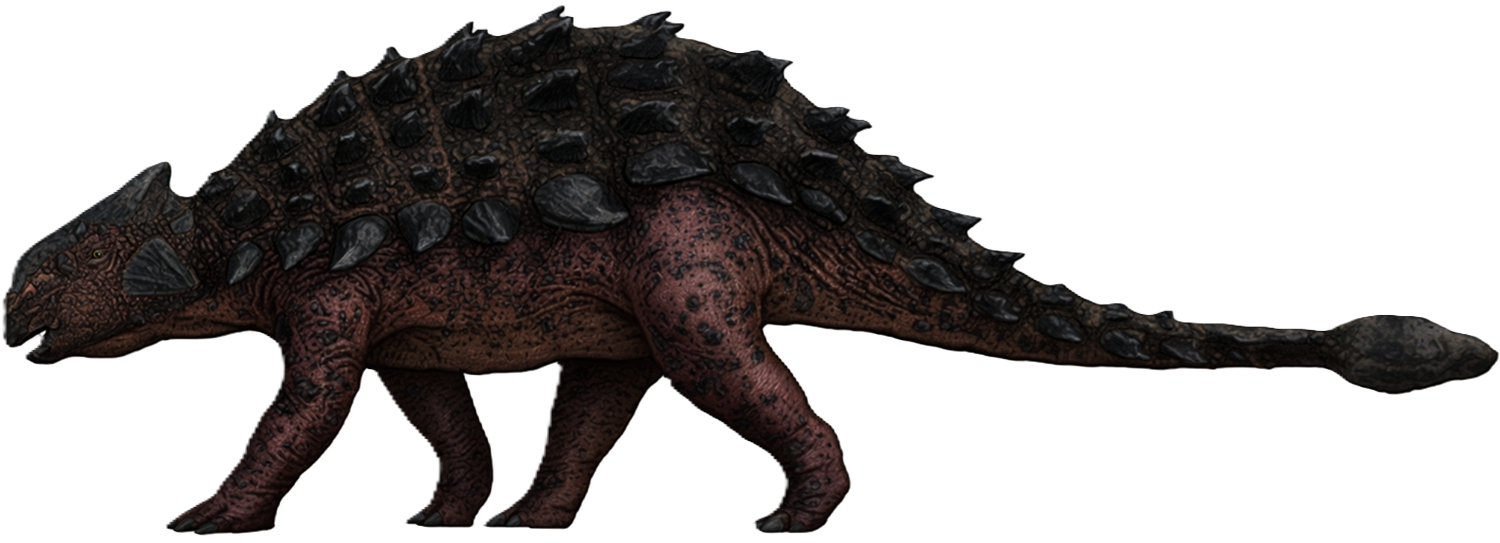
Ankylosauridae indet.105Wroblewski, A. F.-J. (2026). Systematics and biostratigraphy of non-mammalian vertebrates across the K–Pg transition, southern Wyoming, USA. Journal of Paleontology, 100(1), 222–250. doi:10.1017/jpa.2025.10191 | Ferris Formation | Wyoming | ca. 66 Ma | selten | Wahrscheinlich Ankylosaurus |
 |
Ankylosaurus magniventris106Brown, B. (1908). The Ankylosauridae, a new family of armored dinosaurs from the Upper Cretaceous. Bulletin of the American Museum of Natural History, 24, 187–201.107Carpenter, K. (1982). Baby dinosaurs from the Late Cretaceous Lance and Hell Creek formations and a description of a new species of theropod. Contributions to Geology, University of Wyoming, 20(2), 123–134. | Hell Creek Formation, Lance Formation | Montana, South Dakota, Wyoming | 68–66 Ma | häufig | Ankylosauridae |
 |
Chasmosaurinae indet.108Wroblewski, A. F.-J. (2026). Systematics and biostratigraphy of non-mammalian vertebrates across the K–Pg transition, southern Wyoming, USA. Journal of Paleontology, 100(1), 222–250. doi:10.1017/jpa.2025.10191 | Ferris Formation | Wyoming | ca. 66 Ma | selten | Wahrscheinlich Triceratops |
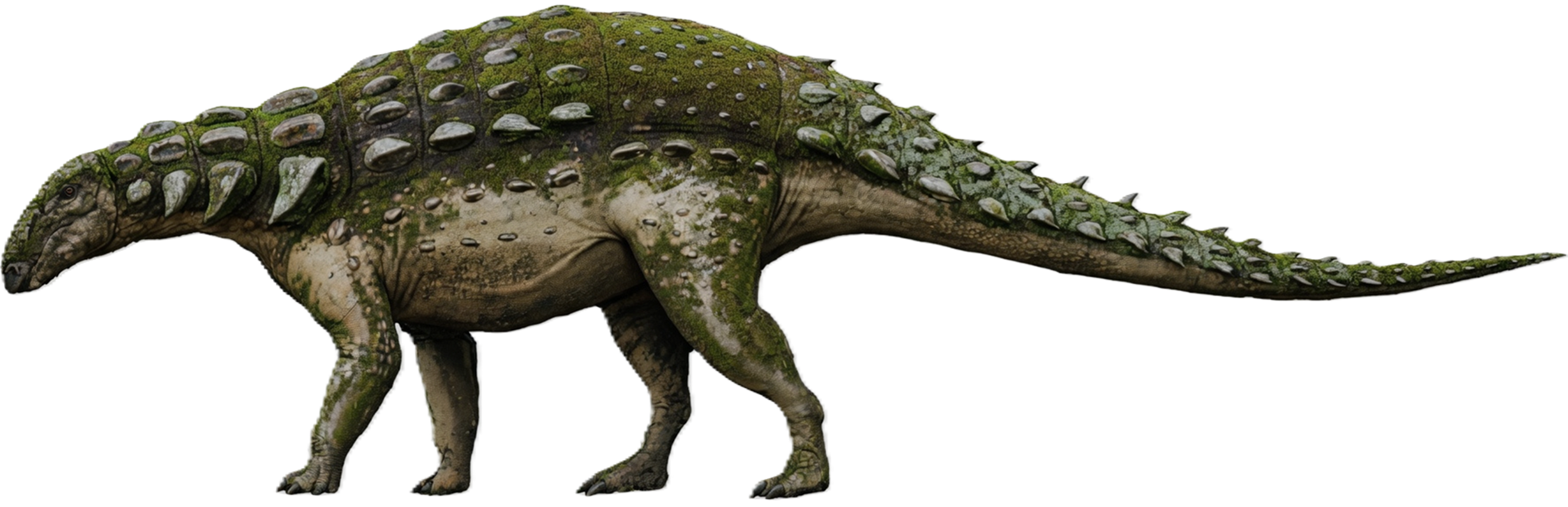 |
Denversaurus schlessmani109Carpenter, K. & Breithaupt, B. H. (1986). Latest Cretaceous occurrence of nodosaurid ankylosaurs (Dinosauria, Ornithischia) in western North America and the gradual extinction of the dinosaurs. Journal of Vertebrate Paleontology, 6(3), 251–257. doi:10.1080/02724634.1986.10011619110Carpenter, K. et al. (2013). Pelvis of Gargoyleosaurus (Dinosauria: Ankylosauria) and the origin and evolution of the ankylosaur pelvis. PLOS ONE, 8(11), e79887. doi:10.1371/journal.pone.0079887 | Hell Creek Formation, Lance Formation | Montana, South Dakota, Wyoming | 68–66 Ma | selten | Nodosauridae |
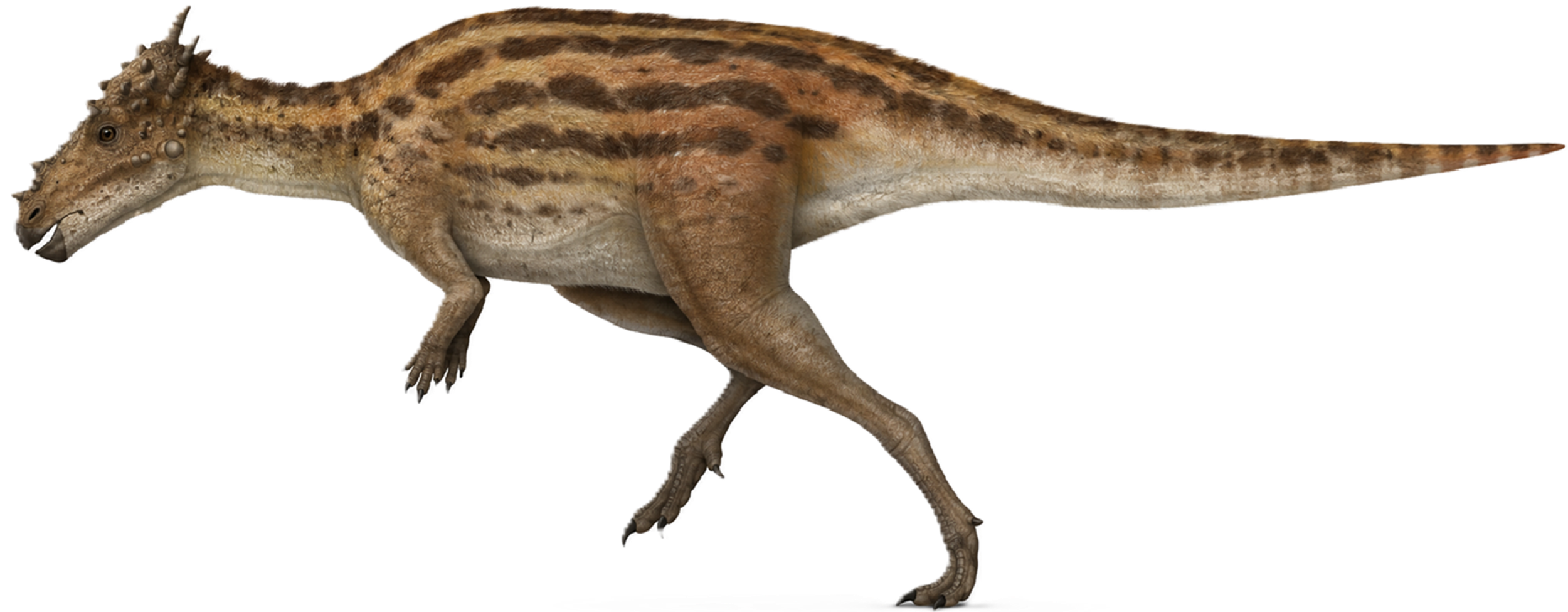 |
Dracorex hogwartsia111Bakker, R. T. et al. (2006). Dracorex hogwartsia n. gen., n. sp., a spiked, flat-headed pachycephalosaurid dinosaur from the Upper Cretaceous Hell Creek Formation of South Dakota. New Mexico Museum of Natural History and Science Bulletin, 35, 331–345. | Hell Creek Formation | South Dakota | ca. 67 Ma | selten | Pachycephalosauridae; wahrscheinlich synonym zu Pachycephalosaurus (Jungtier?) |
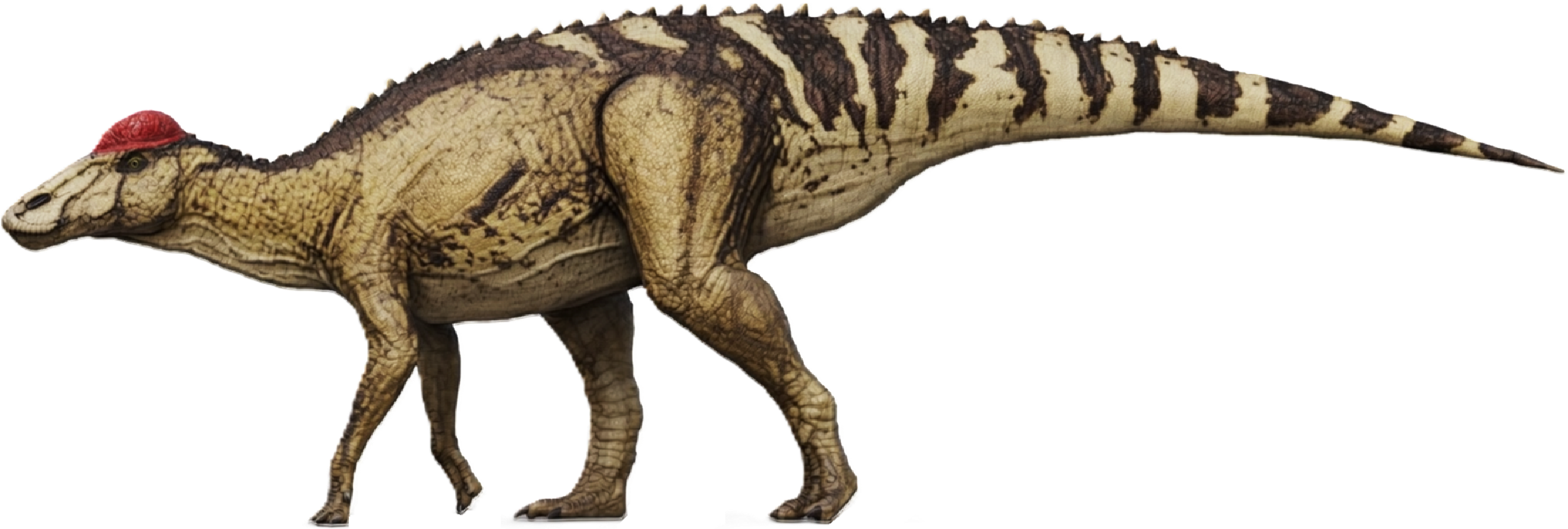 |
Edmontosaurus annectens112Cope, E. D. (1883). On the characters of the skull in the Hadrosauridae. Proceedings of the Academy of Natural Sciences of Philadelphia, 35, 97–107.113Marsh, O. C. (1892). Notice of new reptiles from the Laramie Formation. American Journal of Science, 43(257), 449–453. doi:10.2475/ajs.s3-43.257.449114Wroblewski, A. F.-J. (2026). Systematics and biostratigraphy of non-mammalian vertebrates across the K–Pg transition, southern Wyoming, USA. Journal of Paleontology, 100(1), 222–250. doi:10.1017/jpa.2025.10191 | Hell Creek Formation, Lance Formation, Ferris Formation | Montana, North Dakota, South Dakota, Wyoming | 68–66 Ma | sehr häufig | Hadrosaurier (Saurolophini) |
 |
Hadrosauridae indet.115Carpenter, K. & Young, D. B. (2002). Late Cretaceous dinosaurs from the Denver Basin, Colorado. Rocky Mountain Geology, 37(2), 237–254. doi:10.2113/gsrocky.37.2.237116Carpenter, K. (1979). Vertebrate fauna of the Laramie Formation (Maestrichtian), Weld County, Colorado. Contributions to Geology, University of Wyoming, 17(1), 37–49. | Denver Formation, Laramie Formation | Colorado | 68–66 Ma | selten | Wahrscheinlich Edmontosaurus |
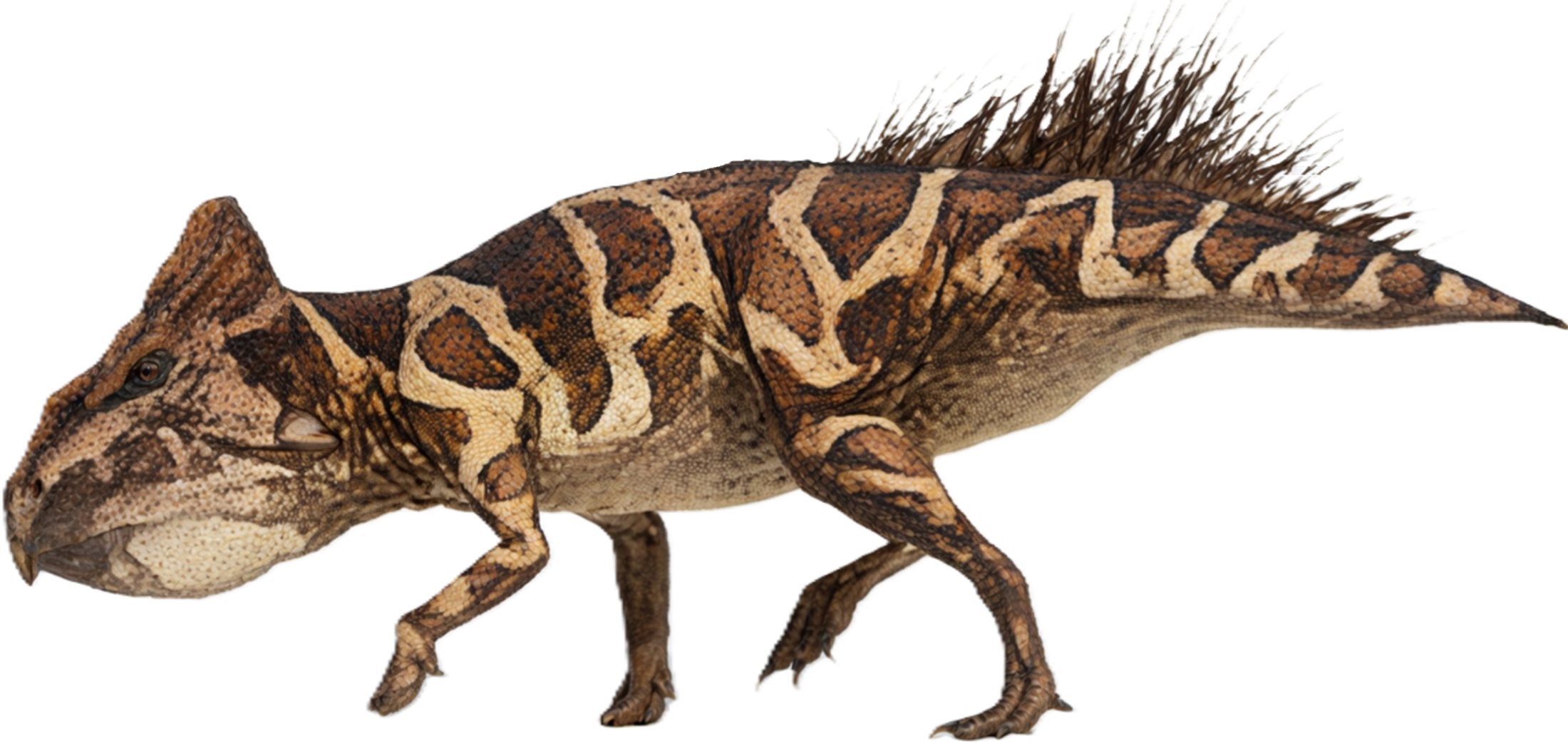 |
Leptoceratops gracilis117Ott, C. J. (2007). Cranial anatomy and biogeography of the first Leptoceratops gracilis specimens from the Hell Creek Formation, southeast Montana. In K. Carpenter (Ed.), Horns and Beaks: Ceratopsian and Ornithopod Dinosaurs. Indiana University Press, 129–145.118Ostrom, J. H. (1978). Leptoceratops gracilis from the “Lance” Formation of Wyoming. Journal of Paleontology, 52(3), 697–704. | Hell Creek Formation, Lance Formation | Montana, Wyoming | 68–66 Ma | selten | Leptoceratopsidae |
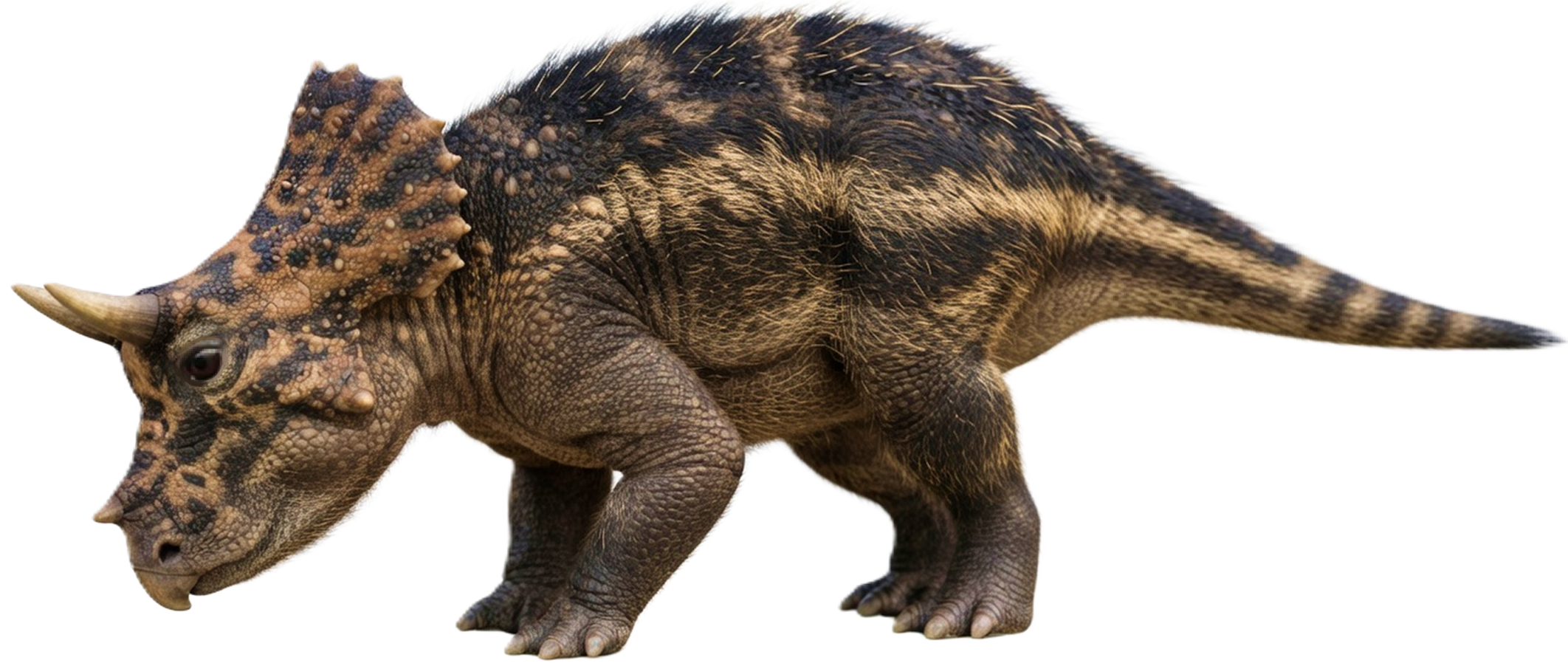 |
Nedoceratops hatcheri119Hatcher, J. B. (1905). Two new Ceratopsia from the Laramie of Converse County, Wyoming. American Journal of Science, 20(120), 413–419. doi:10.2475/ajs.s4-20.120.413 | Lance Formation | Wyoming | 68–66 Ma | selten | Ceratopsier (Chasmosaurinae); umstritten; wahrscheinlich synonym zu Triceratops |
 |
Nodosauridae indet.120Carpenter, K. & Breithaupt, B. H. (1986). Latest Cretaceous occurrence of nodosaurid ankylosaurs (Dinosauria, Ornithischia) in western North America and the gradual extinction of the dinosaurs. Journal of Vertebrate Paleontology, 6(3), 251–257. doi:10.1080/02724634.1986.10011619121Wroblewski, A. F.-J. (2026). Systematics and biostratigraphy of non-mammalian vertebrates across the K–Pg transition, southern Wyoming, USA. Journal of Paleontology, 100(1), 222–250. doi:10.1017/jpa.2025.10191122Carpenter, K. & Young, D. B. (2002). Late Cretaceous dinosaurs from the Denver Basin, Colorado. Rocky Mountain Geology, 37(2), 237–254. doi:10.2113/gsrocky.37.2.237123Carpenter, K. & Young, D. B. (2002). Late Cretaceous dinosaurs from the Denver Basin, Colorado. Rocky Mountain Geology, 37(2), 237–254. doi:10.2113/gsrocky.37.2.237 | Lance Formation, Ferris Formation, Denver Formation, Laramie Formation | Colorado, Wyoming | 68–66 Ma | selten | Wahrscheinlich Denversaurus |
 |
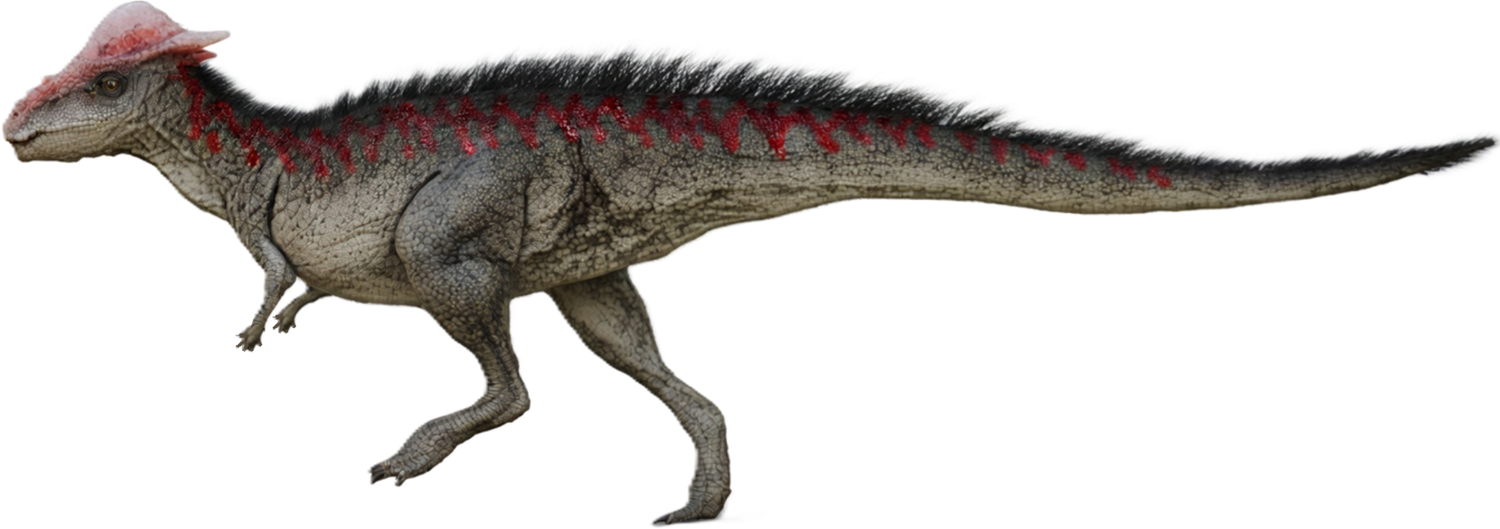
Pachycephalosauridae indet.124Carpenter, K. & Young, D. B. (2002). Late Cretaceous dinosaurs from the Denver Basin, Colorado. Rocky Mountain Geology, 37(2), 237–254. doi:10.2113/gsrocky.37.2.237 | Denver Formation | Colorado | ca. 66 Ma | selten | Wahrscheinlich Pachycephalosaurus. |
 |
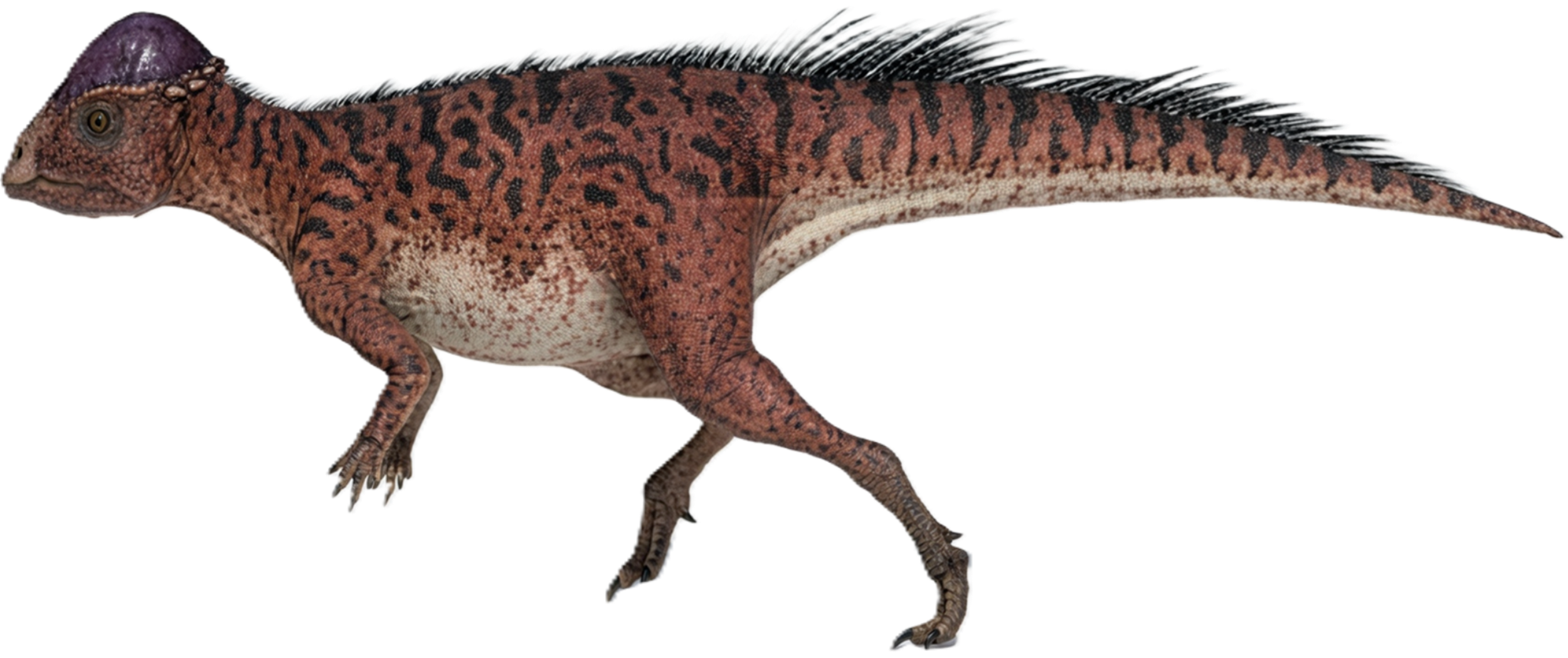
Pachycephalosaurus wyomingensis125Galton, P. M. & Sues, H.-D. (1983). New data on pachycephalosaurid dinosaurs (Reptilia: Ornithischia) from North America. Canadian Journal of Earth Sciences, 20(3), 462–472. doi:10.1139/e83-043126Gilmore, C. W. (1931). A new species of troodont dinosaur from the Lance Formation of Wyoming. Proceedings of the United States National Museum, 79(2875), 1–6. doi:10.5479/si.00963801.79-2875.1 | Hell Creek Formation, Lance Formation | Montana, North Dakota, South Dakota, Wyoming | 68–66 Ma | häufig | Pachycephalosauridae |
 |
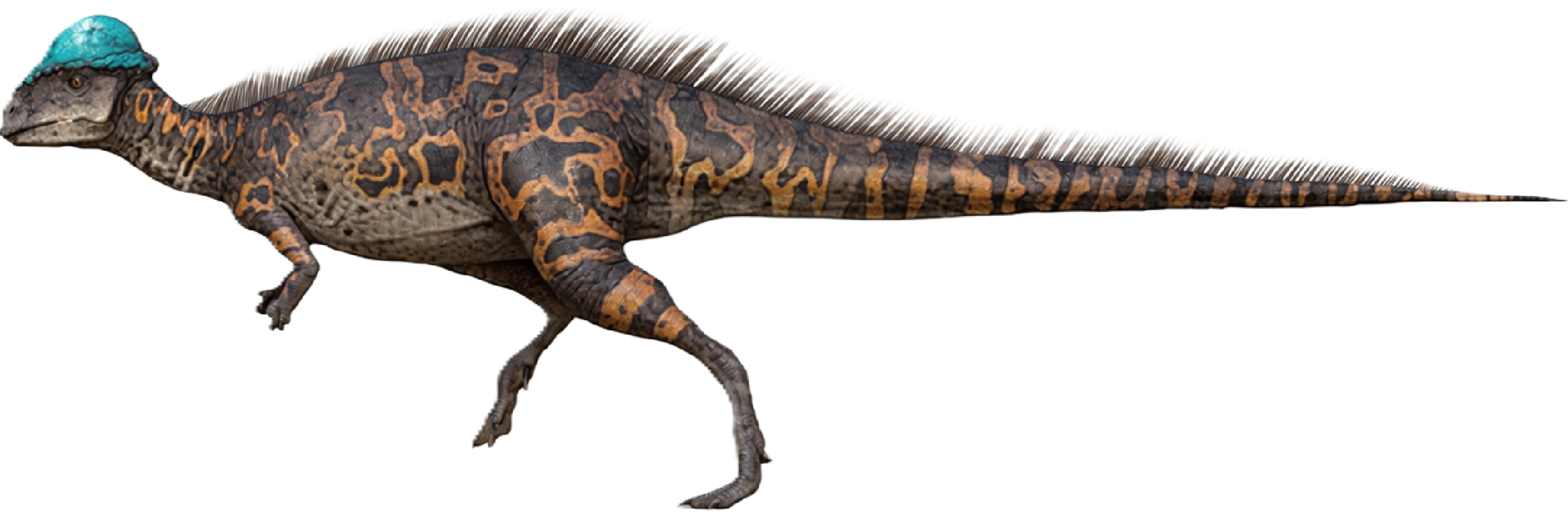
Platytholus clemensi127Horner, J. R., Goodwin, M. B. & Evans, D. C. (2023). A new pachycephalosaurid from the Hell Creek Formation, Garfield County, Montana, U.S.A. Journal of Vertebrate Paleontology, 42(4), e2190369. doi:10.1080/02724634.2023.2190369 | Hell Creek Formation | Montana | ca. 68 Ma | Einzelfund | Pachycephalosauridae |
 |
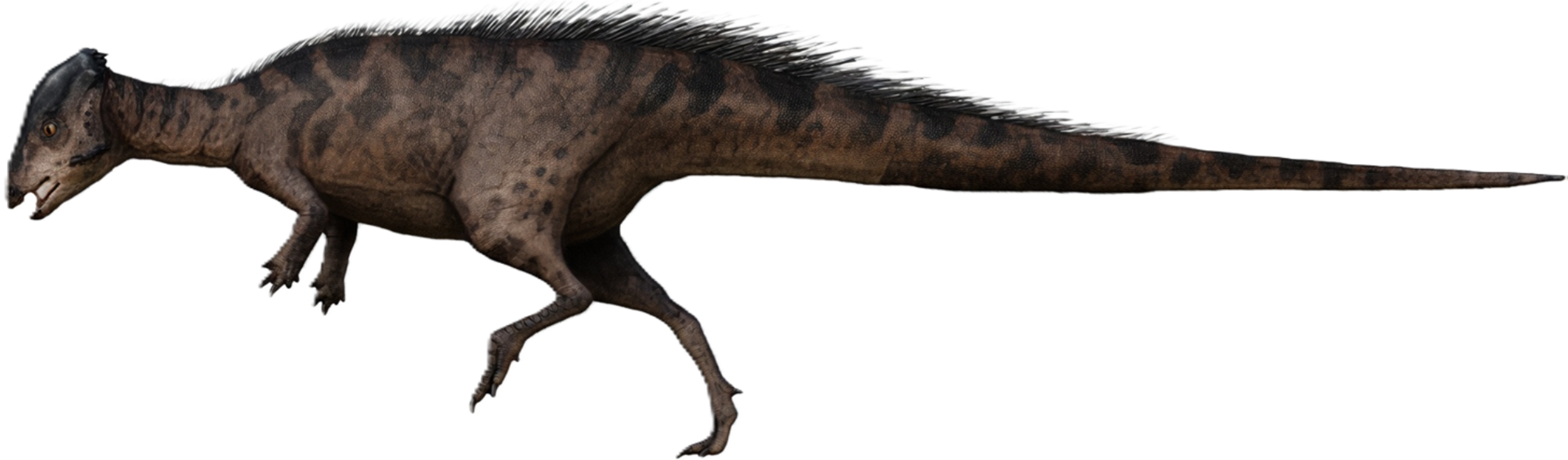
Sphaerotholus buchholtzae128Williamson, T. E. & Carr, T. D. (2002). A new genus of derived pachycephalosaurian from western North America. Journal of Vertebrate Paleontology, 22(4), 779–801. doi:10.1671/0272-4634(2002)022[0779:ANGODP]2.0.CO;2 | Hell Creek Formation | Montana | 68–66 Ma | selten | Pachycephalosauridae |
 |
Sphaerotholus triregnum129Woodruff, D. C., Schott, R. K. & Evans, D. C. (2023). Two new species of small-bodied pachycephalosaurine from the uppermost Cretaceous of North America suggest hidden diversity in well-sampled formations. Papers in Palaeontology, 9(6), e1535. doi:10.1002/spp2.1535 | Hell Creek Formation | Montana | ca. 67 Ma | Einzelfund | Pachycephalosauridae |
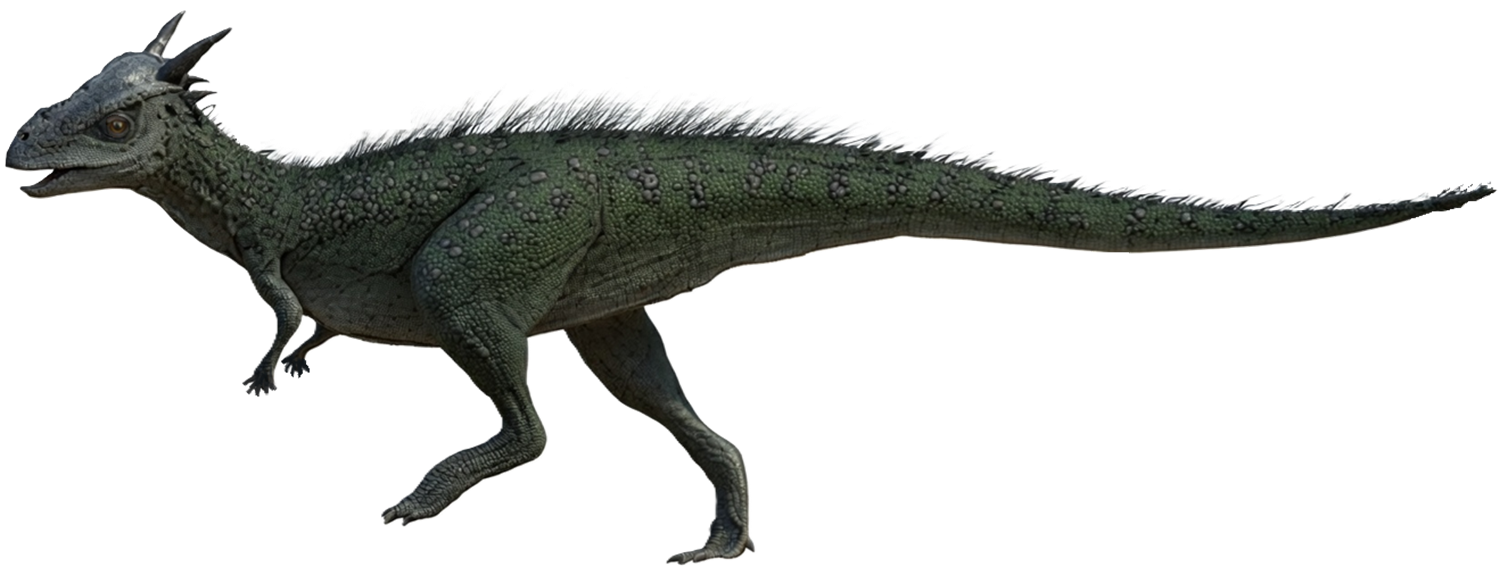 |
Stygimoloch spinifer130Galton, P. M. & Sues, H.-D. (1983). New data on pachycephalosaurid dinosaurs (Reptilia: Ornithischia) from North America. Canadian Journal of Earth Sciences, 20(3), 462–472. doi:10.1139/e83-043131Galton, P. M. & Sues, H.-D. (1983). New data on pachycephalosaurid dinosaurs (Reptilia: Ornithischia) from North America. Canadian Journal of Earth Sciences, 20(3), 462–472. doi:10.1139/e83-043132Wroblewski, A. F.-J. (2024). Southernmost record of the pachycephalosaurine Stygimoloch spinifer and palaeobiogeography of latest Cretaceous North American dinosaurs. Lethaia, 57(4), 1–10. doi:10.18261/let.57.4.7 | Hell Creek Formation, Lance Formation, Ferris Formation | Montana, North Dakota, South Dakota, Wyoming | 68–66 Ma | selten | Pachycephalosauridae; umstritten, vielleicht synonym zu Pachycephalosaurus oder jüngere Chronospezies |
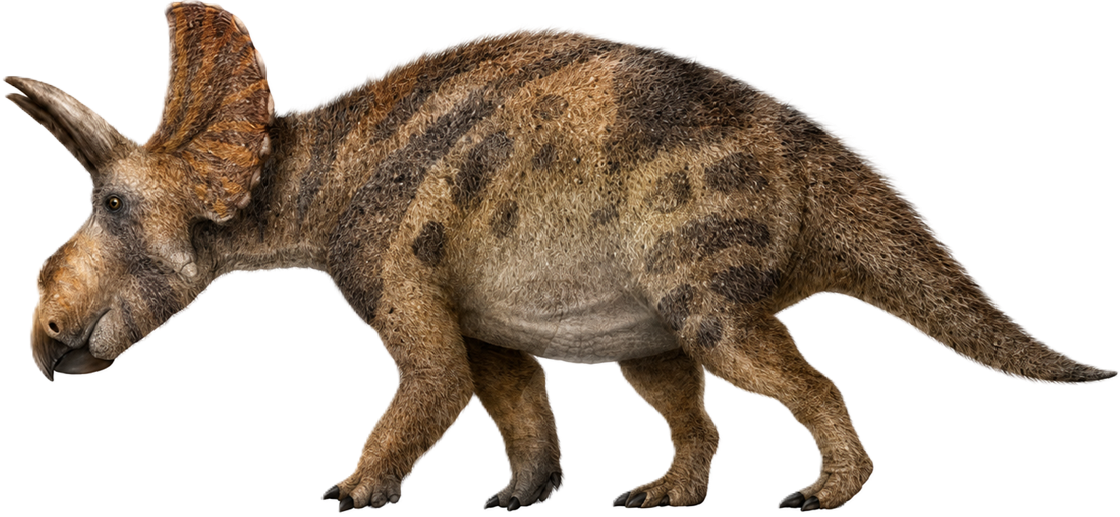 |
Tatankaceratops sacrisonorum133Ott, C. J. & Larson, P. L. (2010). A new, small ceratopsian dinosaur from the latest Cretaceous Hell Creek Formation, northwest South Dakota, United States: A preliminary description. In M. J. Ryan, B. J. Chinnery-Allgeier & D. A. Eberth (Eds.), New Perspectives on Horned Dinosaurs. Indiana University Press, 203–218. | Hell Creek Formation | South Dakota | 68–66 Ma | Einzelfund | Ceratopsier (Chasmosaurinae); umstritten; wahrscheinlich synonym zu Triceratops |
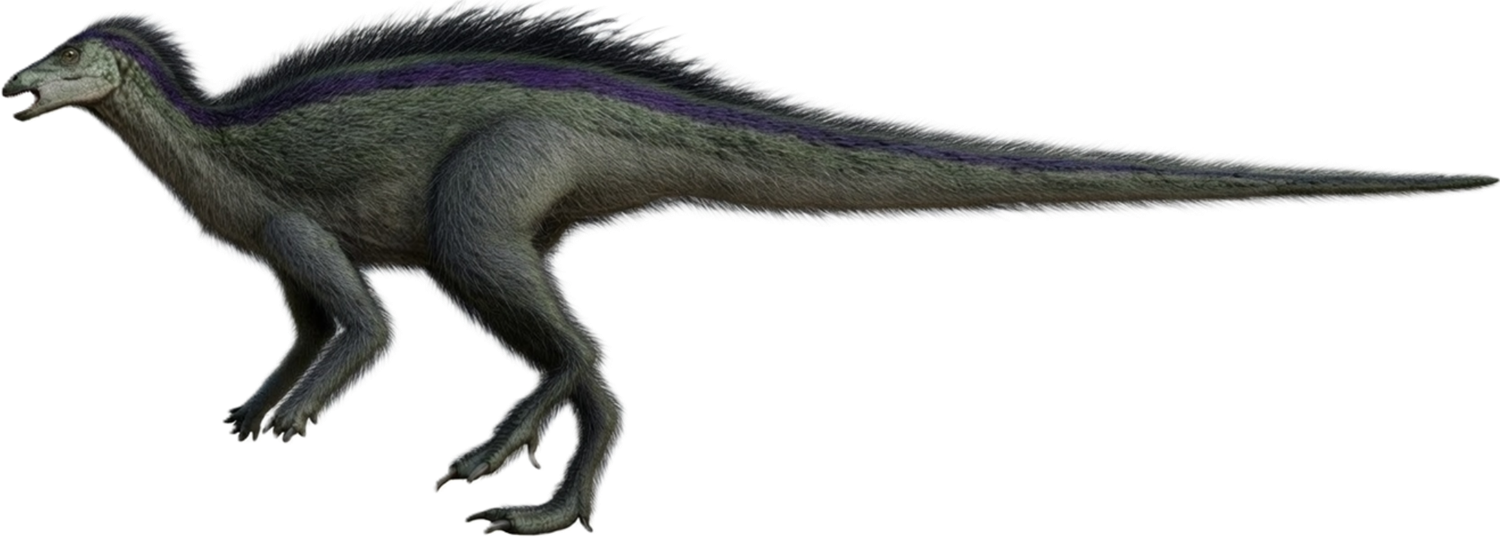 |
Thescelosaurus garbanii134Morris, W. J. (1976). Hypsilophodont dinosaurs: A new species and comments on their systematics. In C. S. Churcher (Ed.), Athlon: Essays on Palaeontology in Honour of Loris Shano Russell. Royal Ontario Museum, 93–113. | Hell Creek Formation | Montana | 68–66 Ma | selten | Thescelosauridae |
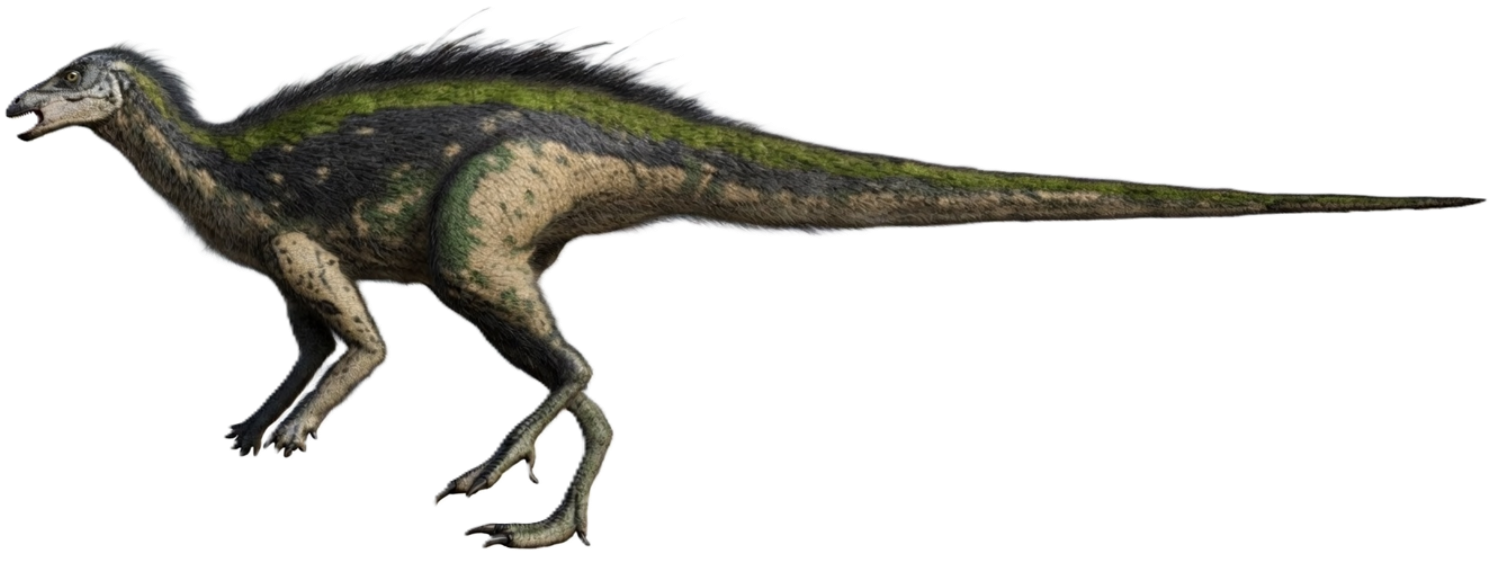 |
Thescelosaurus neglectus135Galton, P. M. (1974). Notes on Thescelosaurus, a conservative ornithopod dinosaur from the Upper Cretaceous of North America, with comments on ornithopod classification. Journal of Paleontology, 48(5), 1048–1067.136Gilmore, C. W. (1913). A new dinosaur from the Lance Formation of Wyoming. Smithsonian Miscellaneous Collections, 61(5), 1–5. | Hell Creek Formation, Lance Formation | Montana, North Dakota, South Dakota, Wyoming | 68–66 Ma | sehr häufig | Thescelosauridae |
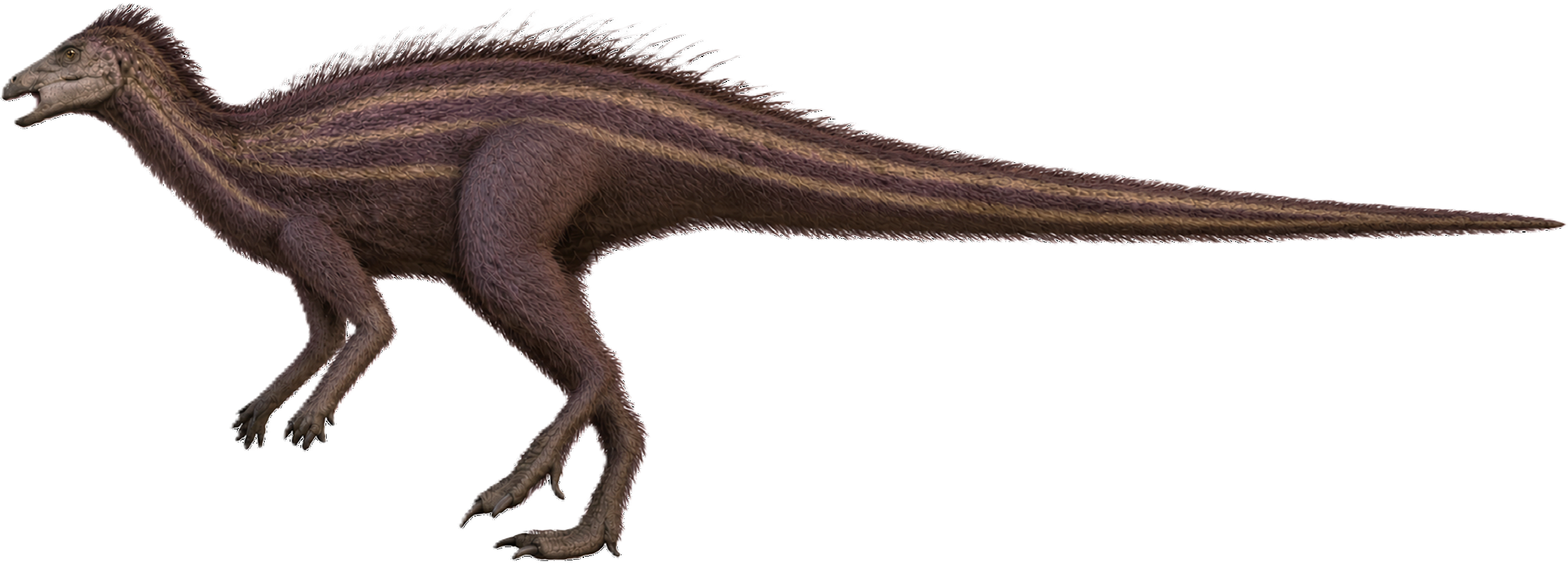 |
Thescelosaurus sp.137Wroblewski, A. F.-J. (2026). Systematics and biostratigraphy of non-mammalian vertebrates across the K–Pg transition, southern Wyoming, USA. Journal of Paleontology, 100(1), 222–250. doi:10.1017/jpa.2025.10191138Carpenter, K. (1979). Vertebrate fauna of the Laramie Formation (Maestrichtian), Weld County, Colorado. Contributions to Geology, University of Wyoming, 17(1), 37–49. | Ferris Formation, Laramie Formation | Colorado, Wyoming | 68–66 Ma | selten | Thescelosauridae; Bestimmung unsicher |
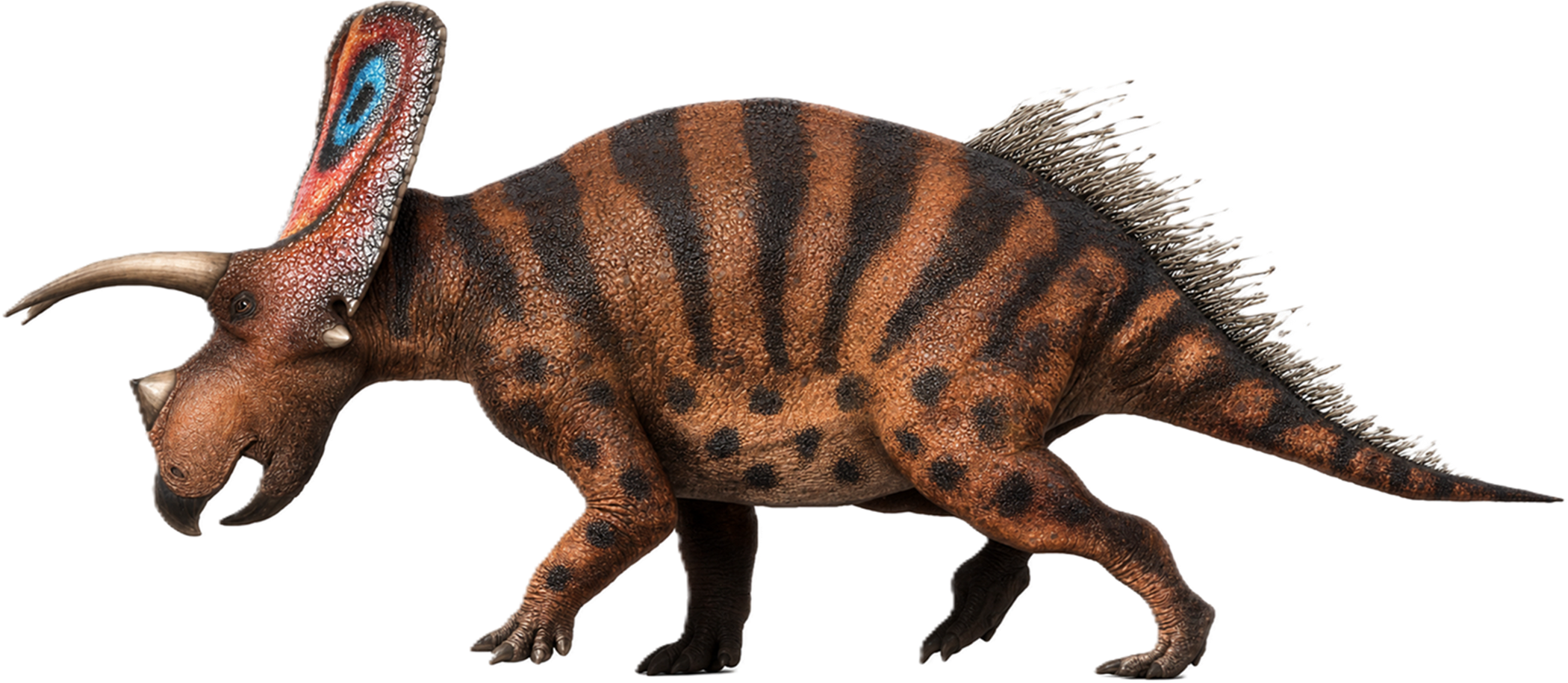 |
Torosaurus latus139Colbert, E. H. & Bump, J. D. (1947). A skull of Torosaurus from South Dakota and a revision of the genus. Proceedings of the Academy of Natural Sciences of Philadelphia, 99, 93–106.140Marsh, O. C. (1891). Notice of new vertebrate fossils. American Journal of Science, 42(249), 265–269. doi:10.2475/ajs.s3-42.249.265 | Hell Creek Formation, Lance Formation | Montana, North Dakota, South Dakota, Wyoming | 68–66 Ma | selten | Ceratopsier (Chasmosaurinae); umstritten; vielleicht synonym zu Triceratops |
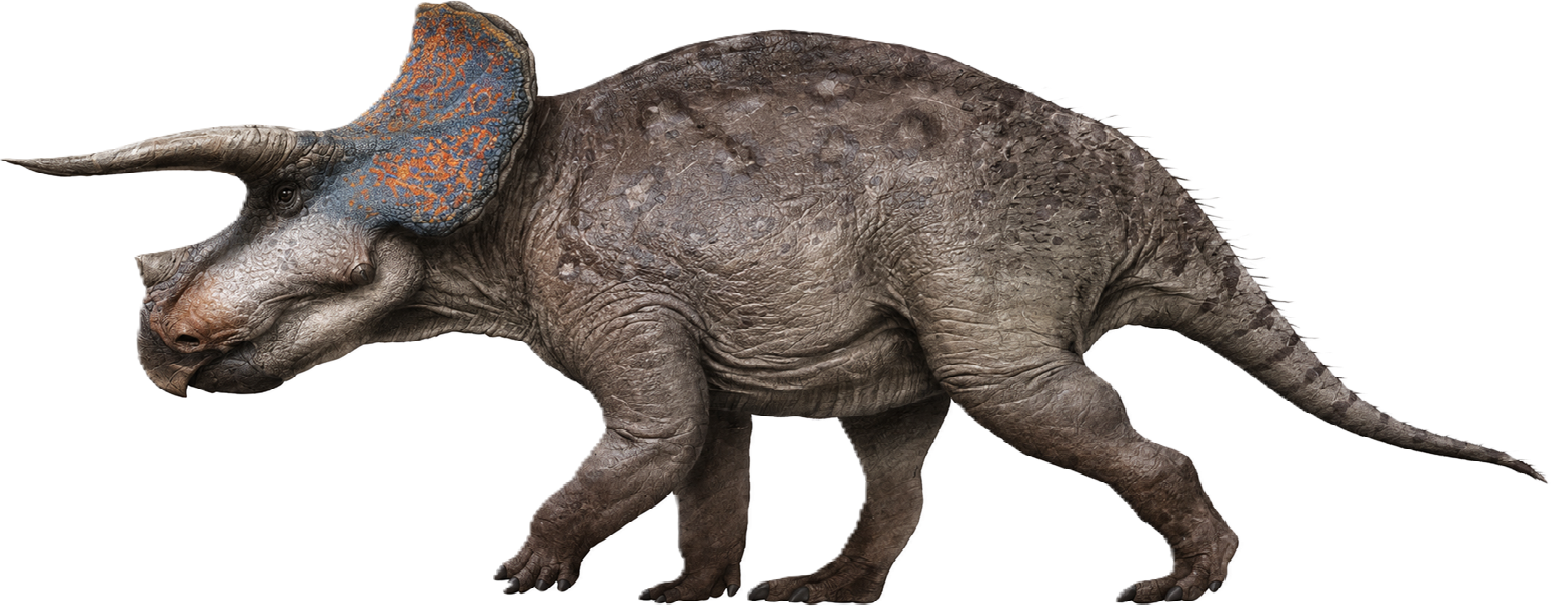 |
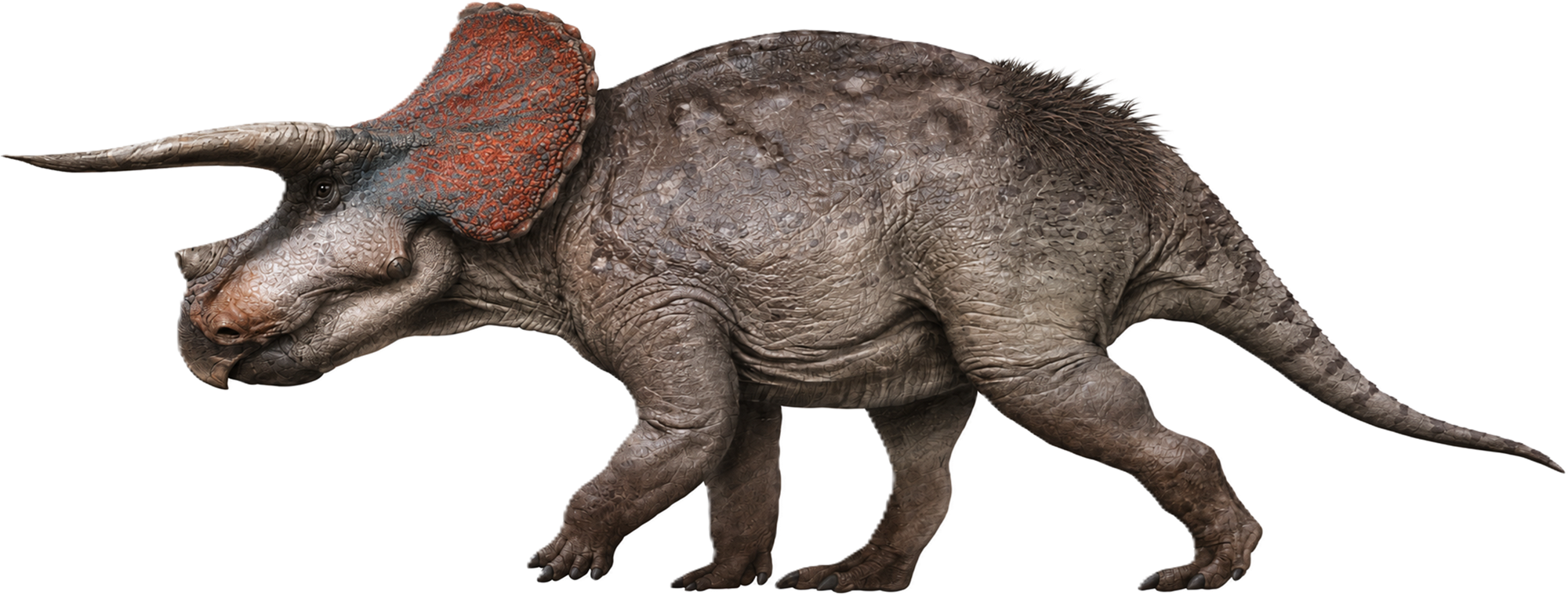
Triceratops horridus141Scannella, J. B. et al. (2014). Evolutionary trends in Triceratops from the Hell Creek Formation, Montana. Proceedings of the National Academy of Sciences of the United States of America, 111(28), 10245–10250. doi:10.1073/pnas.1313334111142Marsh, O. C. (1889). Notice of new American Dinosauria. American Journal of Science, 37(220), 331–336. doi:10.2475/ajs.s3-37.220.331143Carpenter, K. & Young, D. B. (2002). Late Cretaceous dinosaurs from the Denver Basin, Colorado. Rocky Mountain Geology, 37(2), 237–254. doi:10.2113/gsrocky.37.2.237 | Hell Creek Formation, Lance Formation, Laramie Formation | Colorado, Montana, North Dakota, South Dakota, Wyoming | 68–66 Ma | sehr häufig | Ceratopsier (Chasmosaurinae) |
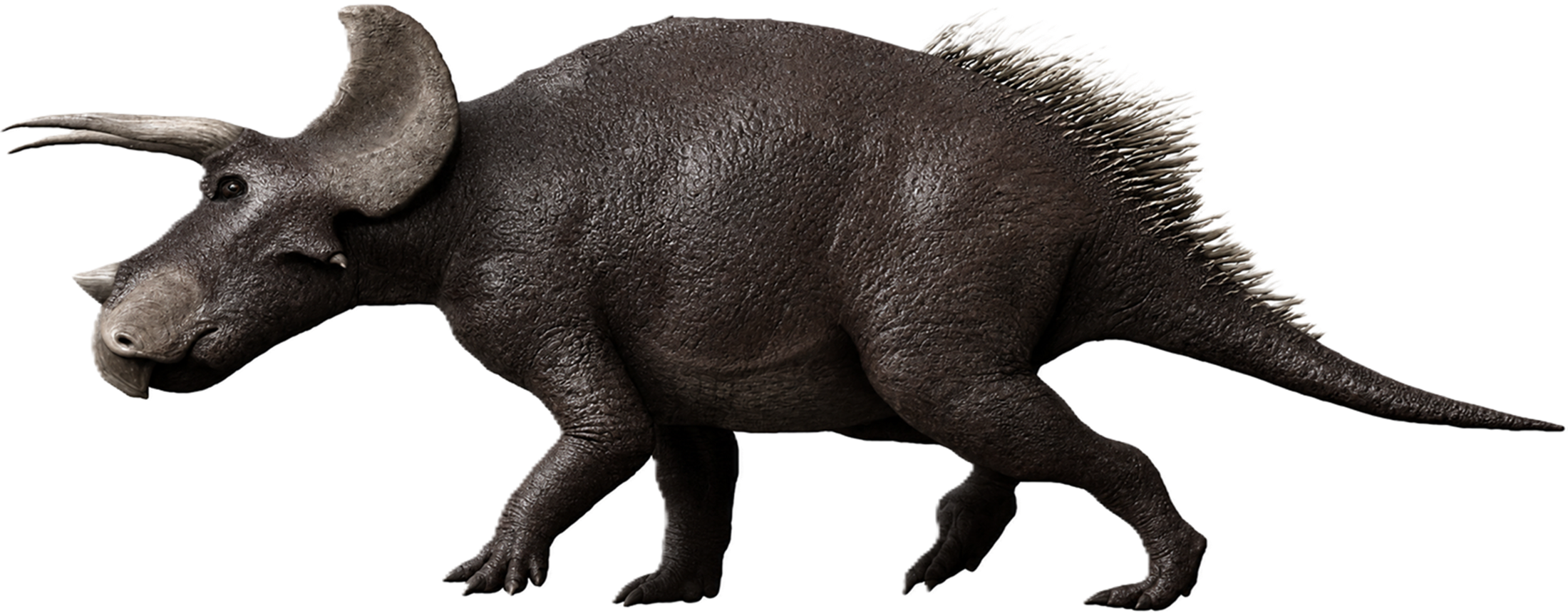 |
Triceratops prorsus144Scannella, J. B. & Fowler, D. W. (2009). Anagenesis in Triceratops: Evidence from a newly resolved stratigraphic framework for the Hell Creek Formation. 9th North American Paleontological Convention Abstracts, Cincinnati Museum Center Scientific Contributions, 3, 148–149.145Marsh, O. C. (1890). Additional characters of the Ceratopsidae, with notice of new Cretaceous dinosaurs. American Journal of Science, 39(233), 418–426. doi:10.2475/ajs.s3-39.233.418 | Hell Creek Formation, Lance Formation | Montana, North Dakota, South Dakota, Wyoming | ca. 66 Ma | sehr häufig | Ceratopsier (Chasmosaurinae); wahrscheinlich jüngere Chronospezies von Triceratops horridus |
 |
Triceratops sp.146Carpenter, K. & Young, D. B. (2002). Late Cretaceous dinosaurs from the Denver Basin, Colorado. Rocky Mountain Geology, 37(2), 237–254. doi:10.2113/gsrocky.37.2.237 | Denver Formation | Colorado | ca. 66 Ma | selten | Ceratopsier (Chasmosaurinae); Bestimmung unsicher |

Pterosaurier:
| Bild: | Spezies: | Formation: | Fundort: | Alter: | Häufigkeit: | Bemerkungen: |
|---|---|---|---|---|---|---|
 |
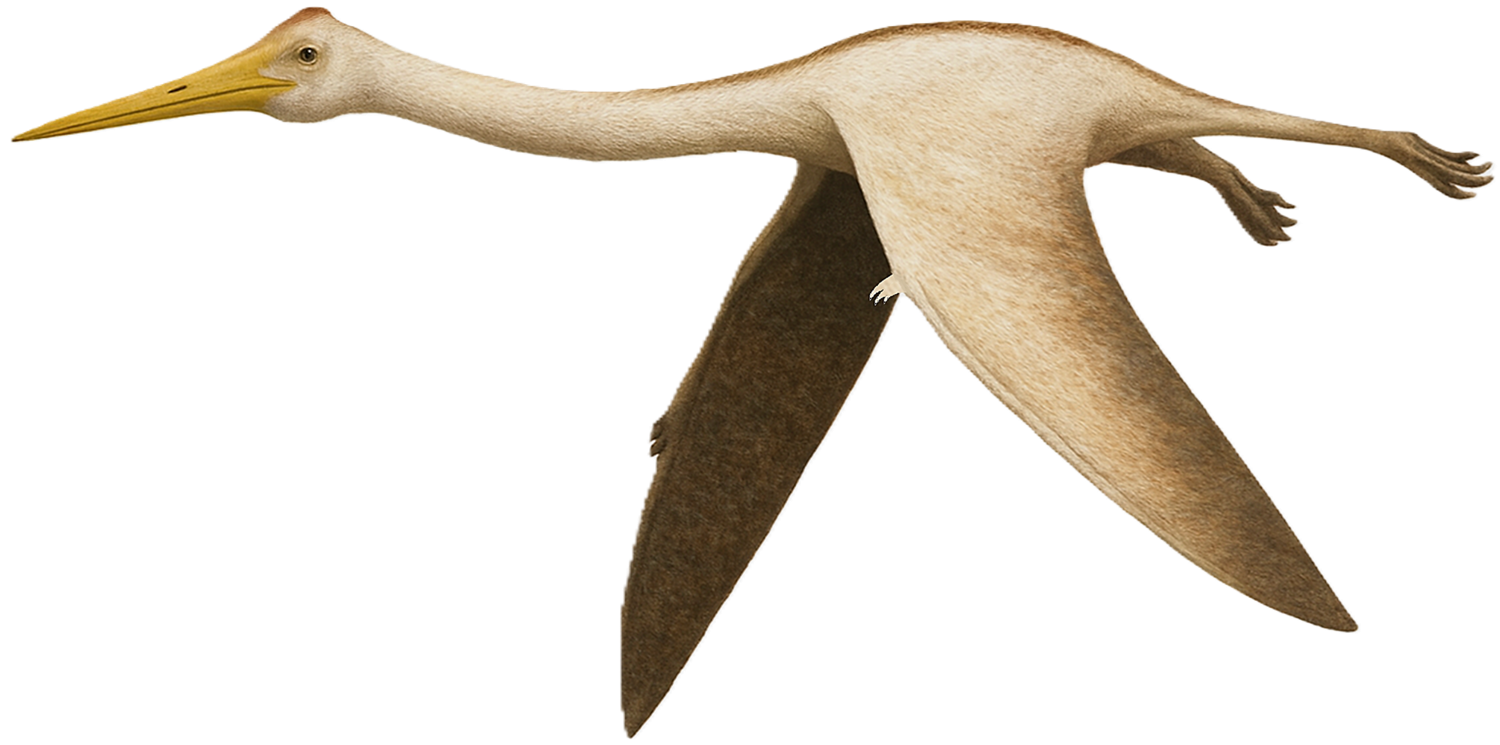
Azhdarchoidea indet.147Darling, C. J. & McLain, M. (2022). Peculiar fossil in Lance Formation (Cretaceous) bonebed in Wyoming determined to belong to a pterosaur. Geological Society of America Abstracts with Programs, 54(5). doi:10.1130/abs/2022AM-379940148Darling, C. J. et al. (2024). New azhdarchoid (Pterosauria: Pterodactyloidea) remains from the Lance Formation (Maastrichtian), Wyoming. Geological Society of America Abstracts with Programs, 56(5). doi:10.1130/abs/2024AM-401275 | Lance Formation | Wyoming | 68–66 Ma | selten | Unbestimmter Vertreter der Azhdarchoidea |
 |
Infernodrakon hastacollis149Thomas, H. N. et al. (2024). Infernodrakon hastacollis gen. et sp. nov., a new azhdarchid pterosaur from the Hell Creek Formation of Montana, and the pterosaur diversity of Maastrichtian North America. Journal of Vertebrate Paleontology, 44(4), e2442476. doi:10.1080/02724634.2024.2442476150Henderson, M. D. & Peterson, J. E. (2006). An azhdarchid pterosaur cervical vertebra from the Hell Creek Formation (Maastrichtian) of southeastern Montana. Journal of Vertebrate Paleontology, 26(1), 192–195. doi:10.1671/0272-4634(2006)26[192:AAPCVF]2.0.CO;2 | Hell Creek Formation | Montana | 68–66 Ma | Einzelfund | Azhdarchidae |
 |
Pteranodontidae indet. (?)151Longrich, N. R., Martill, D. M. & Andres, B. (2018). Late Maastrichtian pterosaurs from North Africa and mass extinction of Pterosauria at the Cretaceous–Paleogene boundary. PLOS Biology, 16(3), e2001663. doi:10.1371/journal.pbio.2001663 | Hell Creek Formation | — | 68–66 Ma | Einzelfund | Möglicher Vertreter der Pteranodontidae |

Krokodile:
| Bild: | Spezies: | Formation: | Fundort: | Alter: | Häufigkeit: | Bemerkungen: |
|---|---|---|---|---|---|---|
 |
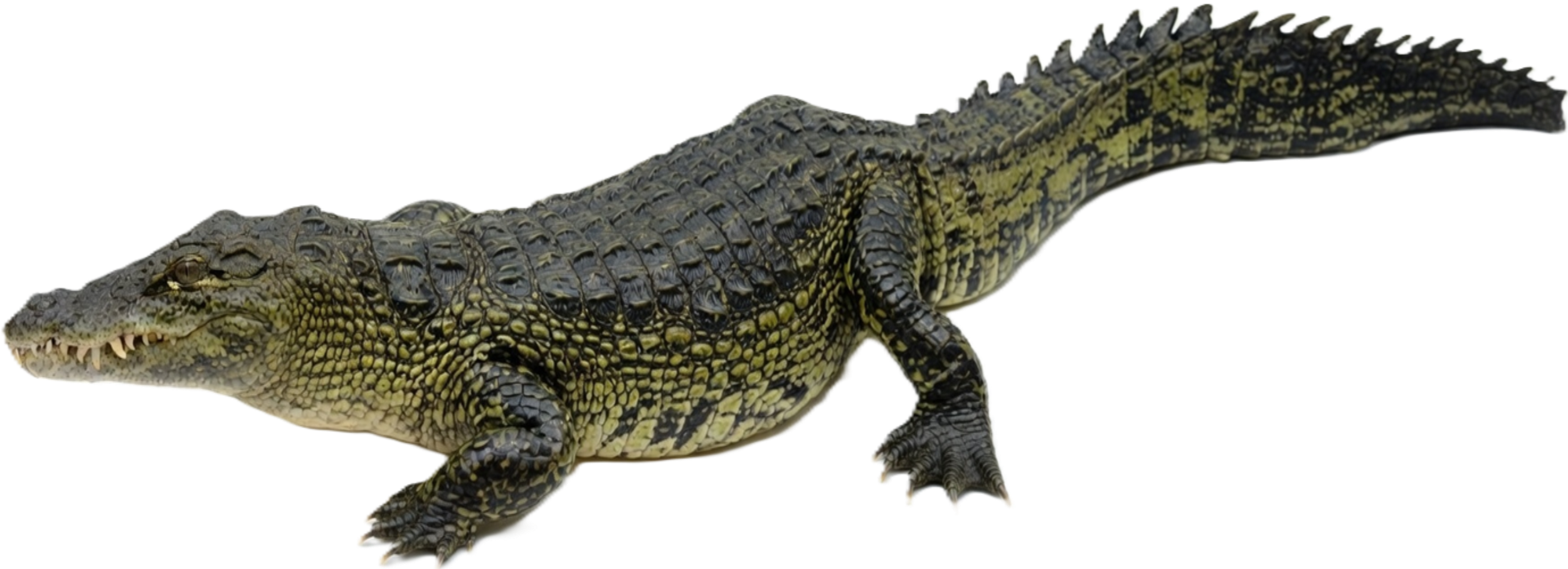
Alligatoroidea indet.152Wroblewski, A. F.-J. (2026). Systematics and biostratigraphy of non-mammalian vertebrates across the K/Pg transition, southern Wyoming, USA. Journal of Paleontology. doi:10.1017/jpa.2025.10191 | Ferris Formation | Wyoming | 67–63 Ma | sehr häufig | Nicht näher bestimmbare Alligatoroiden. |
 |
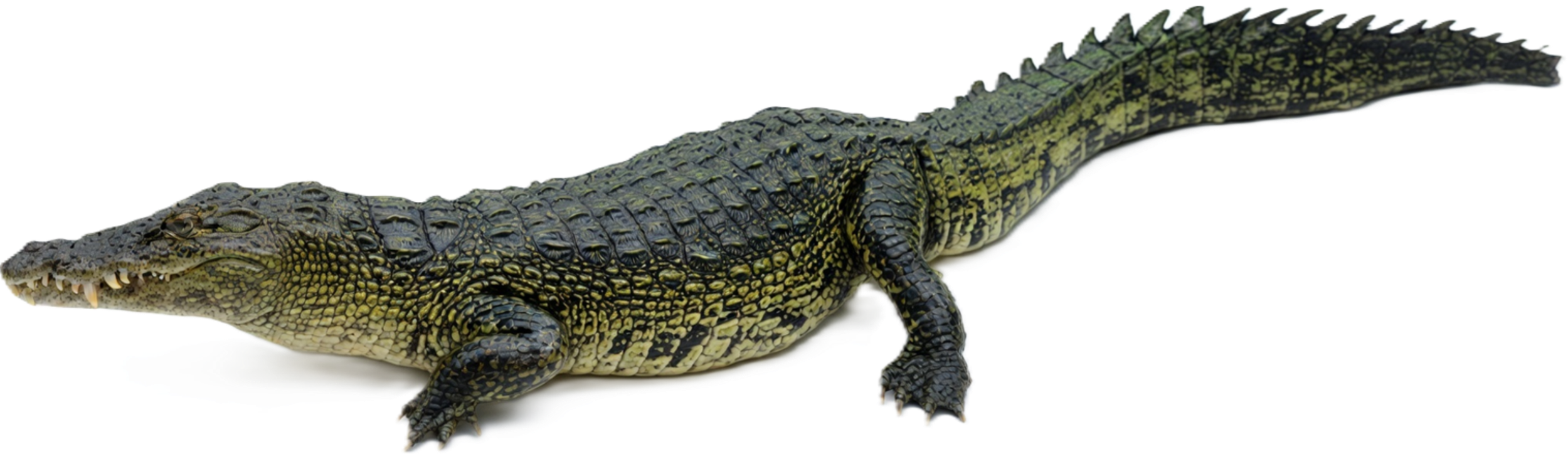
Borealosuchus sternbergii153Brochu, C. A. (1997). A review of “Leidyosuchus” (Crocodyliformes, Eusuchia) from the Cretaceous through Eocene of North America. Journal of Vertebrate Paleontology, 17(4), 679–697. doi:10.1080/02724634.1997.10011017154Rio, J. P. & Mannion, P. D. (2021). Phylogenetic analysis of a new morphological dataset elucidates the evolutionary history of Crocodylia and resolves the long-standing gharial problem. PeerJ, 9, e12094. doi:10.7717/peerj.12094155Lessner, E. J., Petermann, H. & Lyson, T. R. (2025). First record of Borealosuchus sternbergii from the lower Paleocene Denver Formation (lower Danian), Colorado (Denver Basin). Journal of Vertebrate Paleontology, e2435490. doi:10.1080/02724634.2024.2435490 | Hell Creek Formation, Lance Formation, Denver Formation, Laramie Formation | Montana, North Dakota, South Dakota, Wyoming, Colorado | 68–64 Ma | häufig | Krokodil (Borealosuchidae) |
 |
cf. Borealosuchus sp.156Wroblewski, A. F.-J. (2026). Systematics and biostratigraphy of non-mammalian vertebrates across the K/Pg transition, southern Wyoming, USA. Journal of Paleontology. doi:10.1017/jpa.2025.10191 | Ferris Formation | Wyoming | 67–63 Ma | häufig | Krokodil (Borealosuchidae); Bestimmung unsicher |
 |
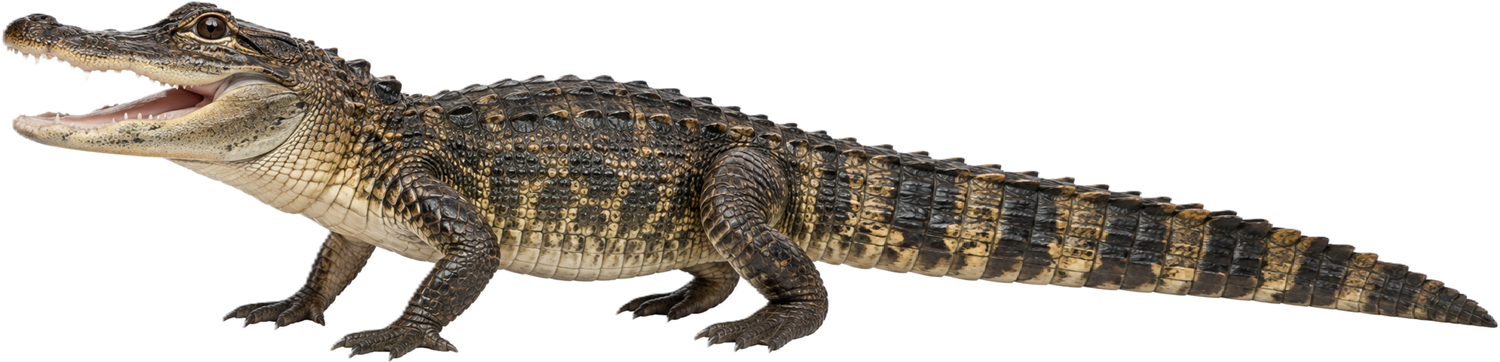
Brachychampsa montana157Gilmore, C. W. (1911). A new fossil alligator from the Hell Creek beds of Montana. Proceedings of the United States National Museum, 41(1860), 297–302. doi:10.5479/si.00963801.41-1860.297158Norell, M. A., Clark, J. M. & Hutchison, J. H. (1994). The Late Cretaceous alligatoroid Brachychampsa montana (Crocodylia): new material and putative relationships. American Museum Novitates, 3116, 1–26.159Snyder, K. et al. (2022). Vertebrate microfossils from the Hanson Bonebed, Lance Formation (Maastrichtian), Niobrara County, Wyoming, USA. Geological Society of America Abstracts with Programs.160Carpenter, K. (1979). Vertebrate fauna of the Laramie Formation (Maastrichtian), Weld County, Colorado. Contributions to Geology, University of Wyoming, 17, 37–49. | Hell Creek Formation, Lance Formation, Laramie Formation | Montana, North Dakota, South Dakota, Wyoming, Colorado | 68–66 Ma | häufig | Alligator (Alligatoroidea) |
 |
Mandrasuchus milleri161Lessner, E. J. et al. (2026). New alligatorid, Mandrasuchus milleri, from the Early Paleocene (Danian) of the Denver Basin supports earliest Paleocene North American alligatorid radiation. Journal of Vertebrate Paleontology, e2712566. doi:10.1080/02724634.2026.2712566 | Denver Formation | Colorado | ca. 66–65,6 Ma | häufig | Alligator (Alligatoridae) |
 |
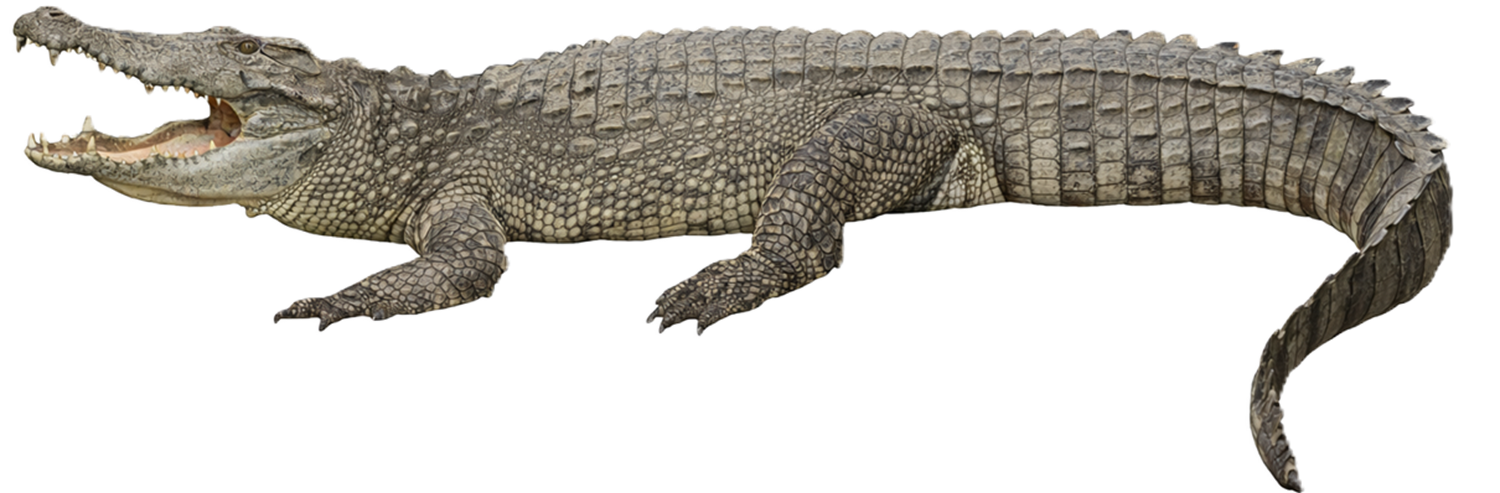
Navajosuchus mooki162Wroblewski, A. F.-J. (2026). Systematics and biostratigraphy of non-mammalian vertebrates across the K/Pg transition, southern Wyoming, USA. Journal of Paleontology. doi:10.1017/jpa.2025.10191 | Ferris Formation | Wyoming | 66–65 Ma | Einzelfund | Alligator (Alligatoroidea) |
 |
Prodiplocynodon langi163Mook, C. C. (1941). A new crocodilian from the Lance Formation. American Museum Novitates, 1128, 1–5.164Brochu, C. A. (2003). Phylogenetic approaches toward crocodylian history. Annual Review of Earth and Planetary Sciences, 31, 357–397. doi:10.1146/annurev.earth.31.100901.141308165Rio, J. P. & Mannion, P. D. (2021). Phylogenetic analysis of a new morphological dataset elucidates the evolutionary history of Crocodylia and resolves the long-standing gharial problem. PeerJ, 9, e12094. doi:10.7717/peerj.12094 | Lance Formation | Wyoming | 68–66 Ma | Einzelfund | Krokodil (Crocodyloidea) |
 |
Thoracosaurus neocesariensis166Spamer, E. E., Daeschler, E. & Vostreys-Shapiro, L. G. (1995). A study of fossil vertebrate types in the Academy of Natural Sciences of Philadelphia: taxonomic, systematic, and historical perspectives. Academy of Natural Sciences of Philadelphia Special Publication, 16, 1–434.167Rio, J. P. & Mannion, P. D. (2021). Phylogenetic analysis of a new morphological dataset elucidates the evolutionary history of Crocodylia and resolves the long-standing gharial problem. PeerJ, 9, e12094. doi:10.7717/peerj.12094 | Hell Creek Formation | North Dakota | 68–66 Ma | häufig | Scheinkrokodil (Eusuchia); systematische Stellung umstritten. |
1.728 Zähne, Knochen und Osteoderme stammen allein aus der Ferris Formation. Das Material wurde früher teilweise als Brachychampsa sp., Allognathosuchus sp. oder Eusuchia indet. bestimmt, doch ist die Klassifikation auf Basis dieses Materials zu unsicher. Ein Exemplar von Thoracosaurus neocesariensis aus der Navesink Formation von New Jersey war ausgesprochen groß und könnte schätzungsweise 7–8 m lang geworden sein.168Brownstein, C. D. (2018). Trace fossils on dinosaur bones reveal ecosystem dynamics along the coast of eastern North America during the latest Cretaceous. PeerJ, 6, e4973. doi:10.7717/peerj.4973 Gelegentlich wird auch ein ähnlich großes, bislang unbeschriebenes Exemplar aus der Hell Creek Formation erwähnt, doch liegt hierfür gegenwärtig kein überprüfbarer wissenschaftlicher Beleg vor.
Choristodera:
| Bild: | Spezies: | Formation: | Fundort: | Alter: | Häufigkeit: | Bemerkungen: |
|---|---|---|---|---|---|---|
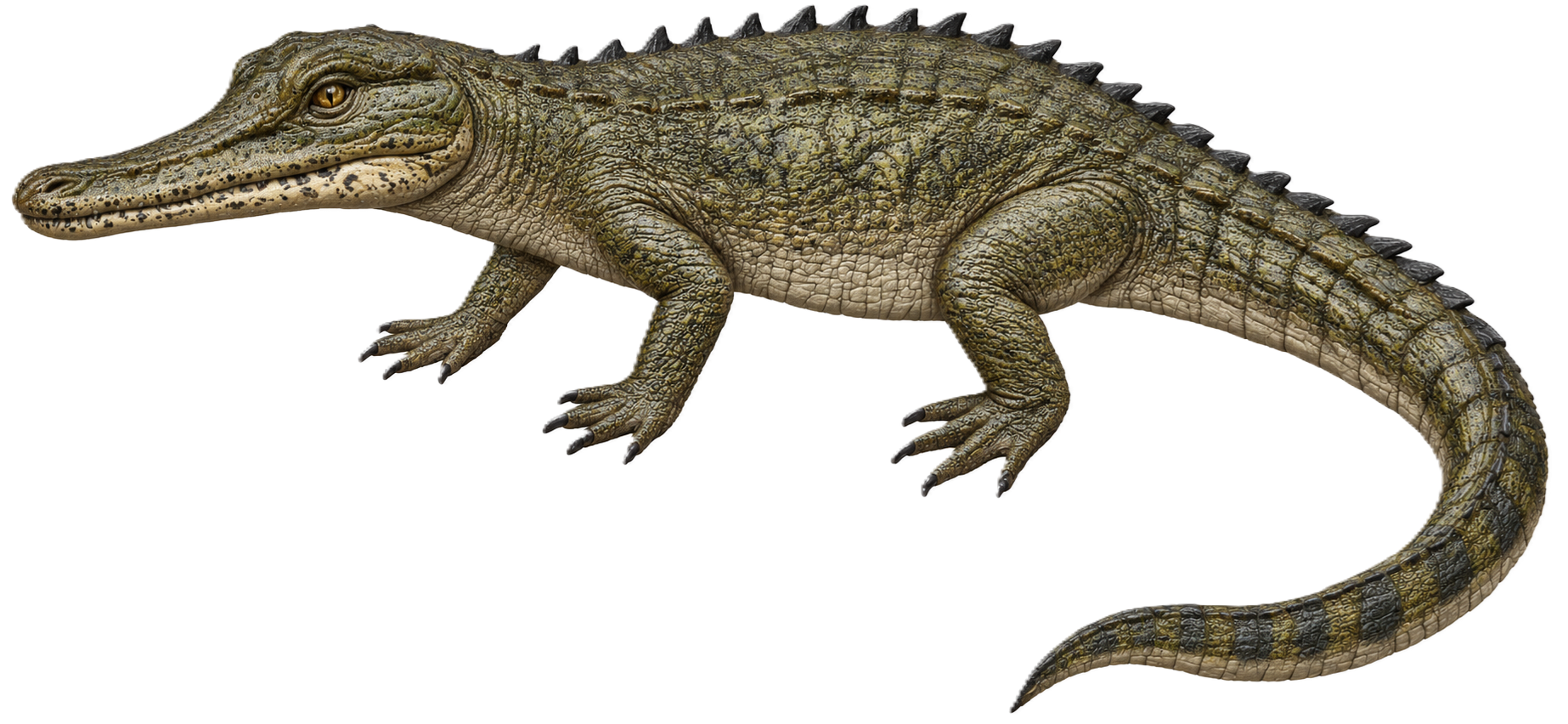 |
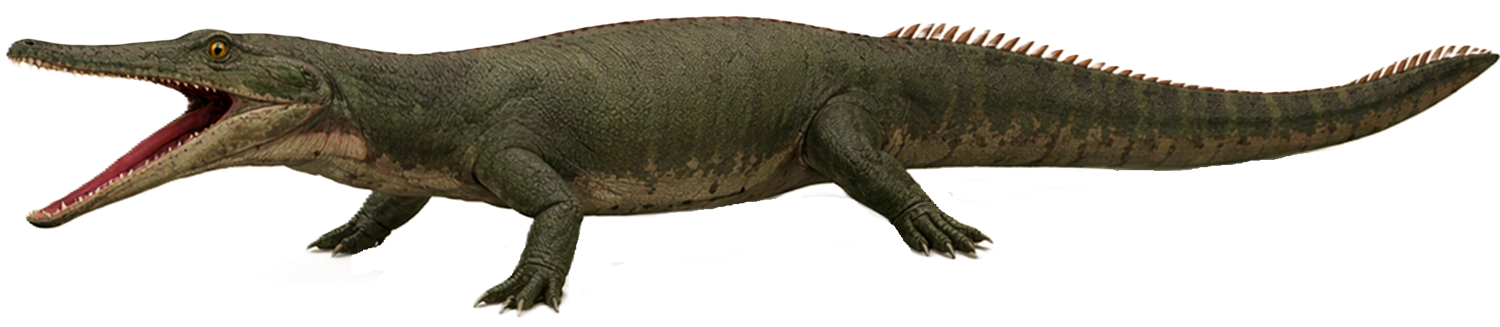
Champsosaurus ambulator169Brown, B. (1905). The osteology of Champsosaurus Cope. American Museum of Natural History Memoir, 9, 1–26.170Katsura, Y. (2004). Sexual dimorphism in Champsosaurus (Diapsida, Choristodera). Lethaia, 37, 37–42. doi:10.1080/00241160410006447171Matsumoto, R. & Evans, S. E. (2010). Choristoderes and the freshwater assemblages of Laurasia. Journal of Iberian Geology, 36(2), 253–274. doi:10.5209/rev_JIGE.2010.v36.n2.11 | Hell Creek Formation | Montana | 68–66 Ma | Einzelfund | Champsosaurier (Champsosauridae); vielleicht synonym zu Champsosaurus laramiensis(Geschlechtsmorph?) |
 |
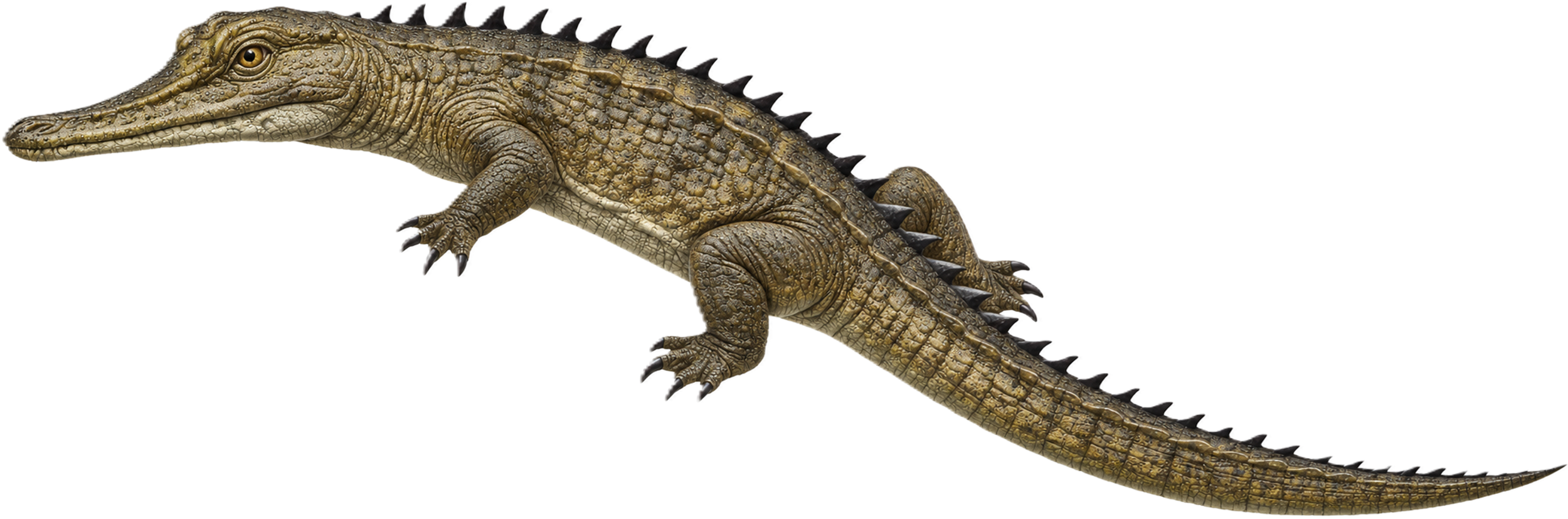
Champsosaurus laramiensis172Brown, B. (1905). The osteology of Champsosaurus Cope. American Museum of Natural History Memoir, 9, 1–26.173Katsura, Y. (2004). Sexual dimorphism in Champsosaurus (Diapsida, Choristodera). Lethaia, 37, 37–42. doi:10.1080/00241160410006447174Matsumoto, R. & Evans, S. E. (2010). Choristoderes and the freshwater assemblages of Laurasia. Journal of Iberian Geology, 36(2), 253–274. doi:10.5209/rev_JIGE.2010.v36.n2.11 | Hell Creek Formation | Montana | 68–66 Ma | selten | Champsosaurier (Champsosauridae) |
 |
Champsosaurus sp.175Estes, R. (1964). Fossil vertebrates from the Late Cretaceous Lance Formation, eastern Wyoming. University of California Publications in Geological Sciences, 49, 1–187.176Carpenter, K. (1979). Vertebrate fauna of the Laramie Formation (Maastrichtian), Weld County, Colorado. Contributions to Geology, University of Wyoming, 17, 37–49.177Lillegraven, J. A. & Eberle, J. J. (1999). Vertebrate faunal changes through Lancian and Puercan time in southern Wyoming. Journal of Paleontology, 73(4), 691–710.178Wroblewski, A. F.-J. (2026). Systematics and biostratigraphy of non-mammalian vertebrates across the K–Pg transition, southern Wyoming, USA. Journal of Paleontology. doi:10.1017/jpa.2025.10191 | Lance Formation, Ferris Formation, Laramie Formation | Wyoming, Colorado | 68–66 Ma | häufig | Champsosaurier (Champsosauridae); Bestimmung unsicher |
Aus der Ferris Formation sind mindestens 33 zugeordnete Skelettelemente von Champsosaurus bekannt, die allerdings nicht auf Artebene bestimmt sind.179Wroblewski, A. F.-J. (2026). Systematics and biostratigraphy of non-mammalian vertebrates across the K–Pg transition, southern Wyoming, USA. Journal of Paleontology. doi:10.1017/jpa.2025.10191

Schildkröten:
| Bild: | Spezies: | Formation: | Fundort: | Alter: | Häufigkeit: | Bemerkungen: |
|---|---|---|---|---|---|---|
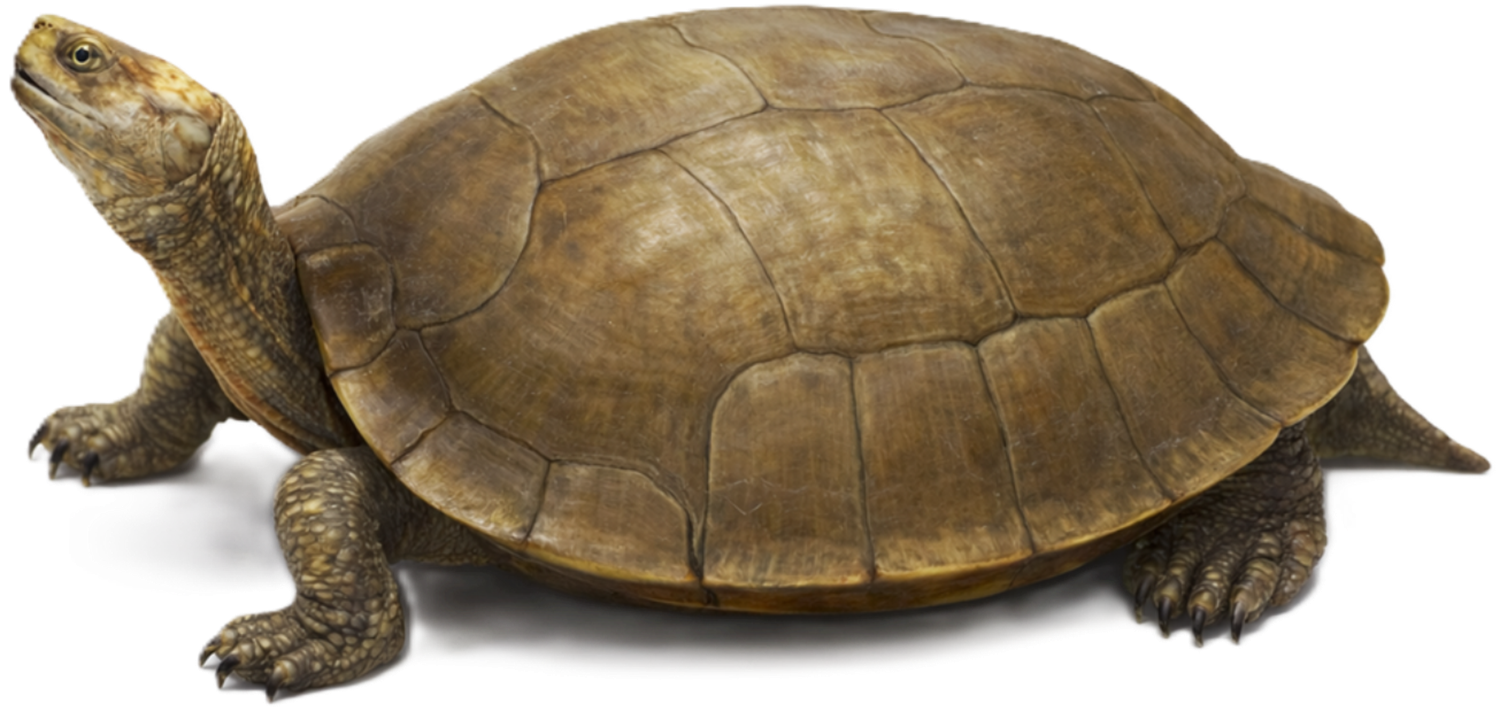 |
Adocus sp.180Estes, R. & Berberian, P. (1970). Paleoecology of a late Cretaceous vertebrate community from Montana. Breviora, 343, 1–35.181Holroyd, P. A. & Hutchison, J. H. (2002). Patterns of geographic variation in latest Cretaceous vertebrates: evidence from the turtle component. Geological Society of America Special Paper, 361, 177–190. doi:10.1130/0-8137-2361-2.177182Carpenter, K. (1979). Vertebrate fauna of the Laramie Formation (Maastrichtian), Weld County, Colorado. Contributions to Geology, University of Wyoming, 17, 37–49. | Hell Creek Formation, Lance Formation, Ferris Formation, Laramie Formation | Montana, North Dakota, South Dakota, Wyoming, Colorado | 68–66 Ma | selten | Halsberger-Schildkröte (Adocidae); Bestimmung unsicher |
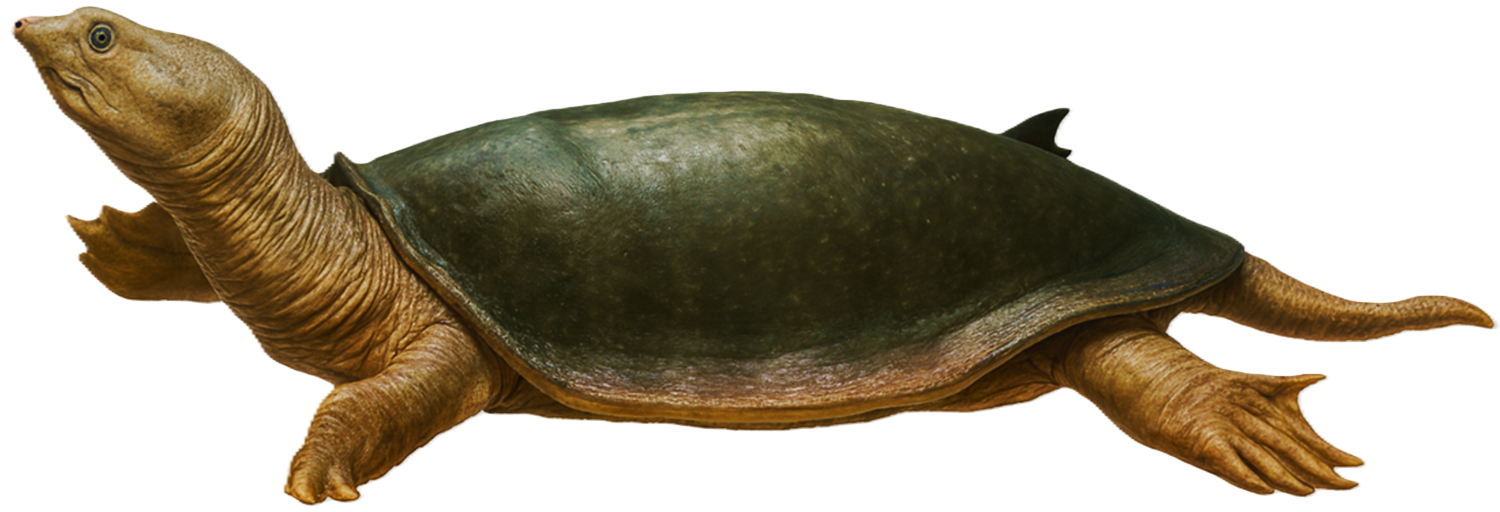 |
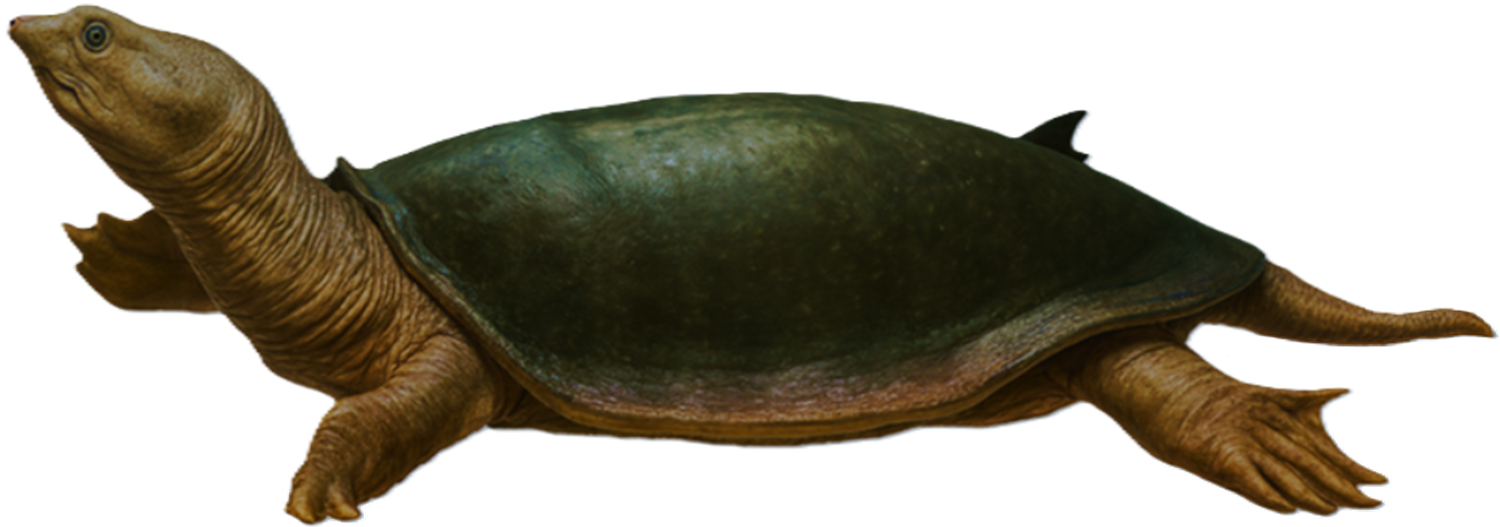
Axestemys infernalis183Joyce, W. G., Brinkman, D. B. & Lyson, T. R. (2019). A new species of trionychid turtle, Axestemys infernalis sp. nov., from the Late Cretaceous (Maastrichtian) Hell Creek and Lance formations of the Northern Great Plains, USA. Palaeontologia Electronica, 22.3.72, 1–28. doi:10.26879/949 | Hell Creek Formation, Lance Formation | Montana, North Dakota, South Dakota, Wyoming | 68–66 Ma | häufig | Weichschildkröte (Trionychidae) |
 |
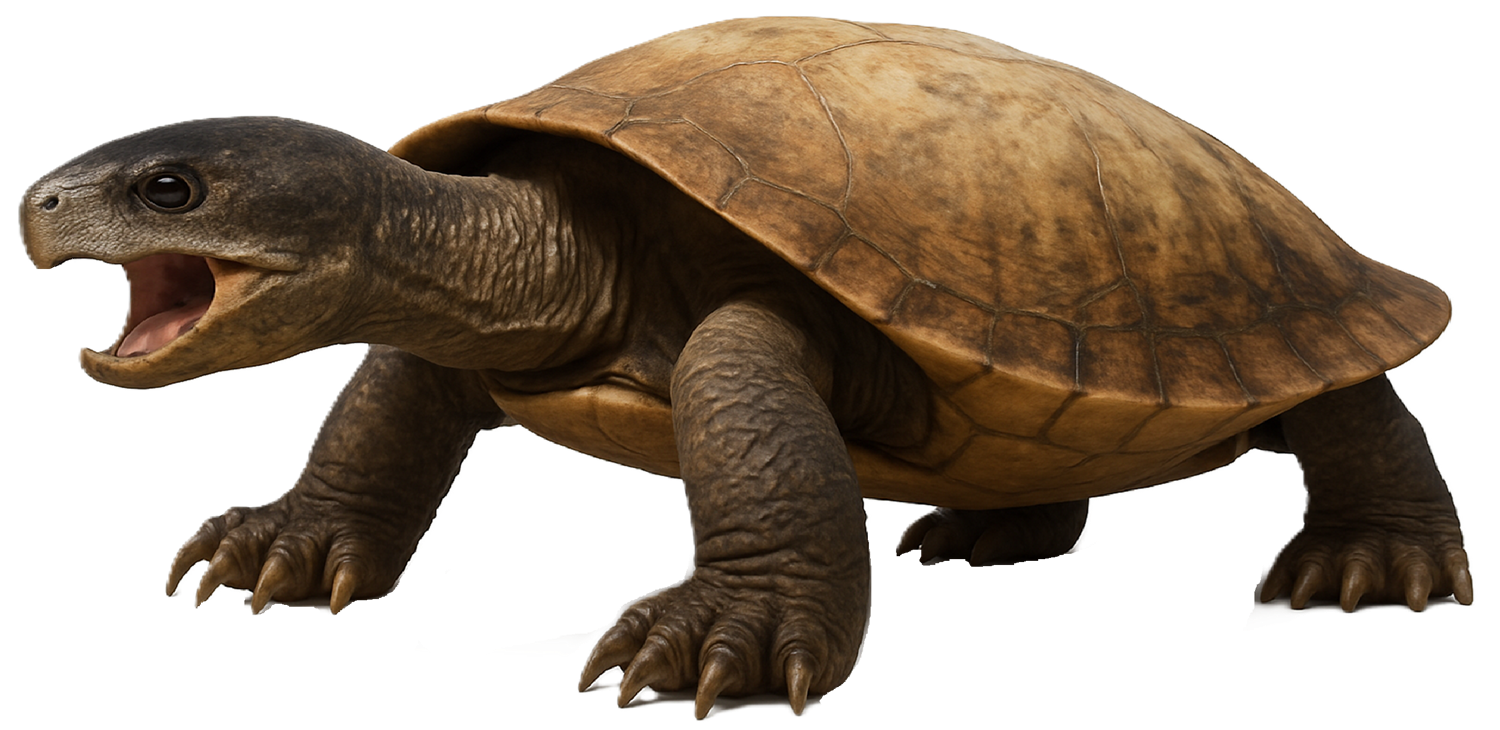
Axestemys sp.184Hutchison, J. H. & Holroyd, P. A. (2003). Late Cretaceous and early Paleocene turtles of the Denver Basin, Colorado. Rocky Mountain Geology, 38(1), 121–142. doi:10.2113/gsrocky.38.1.121 | Denver Formation | Colorado | 66–64 Ma | selten | Weichschildkröte (Trionychidae); Bestimmung unsicher |
 |
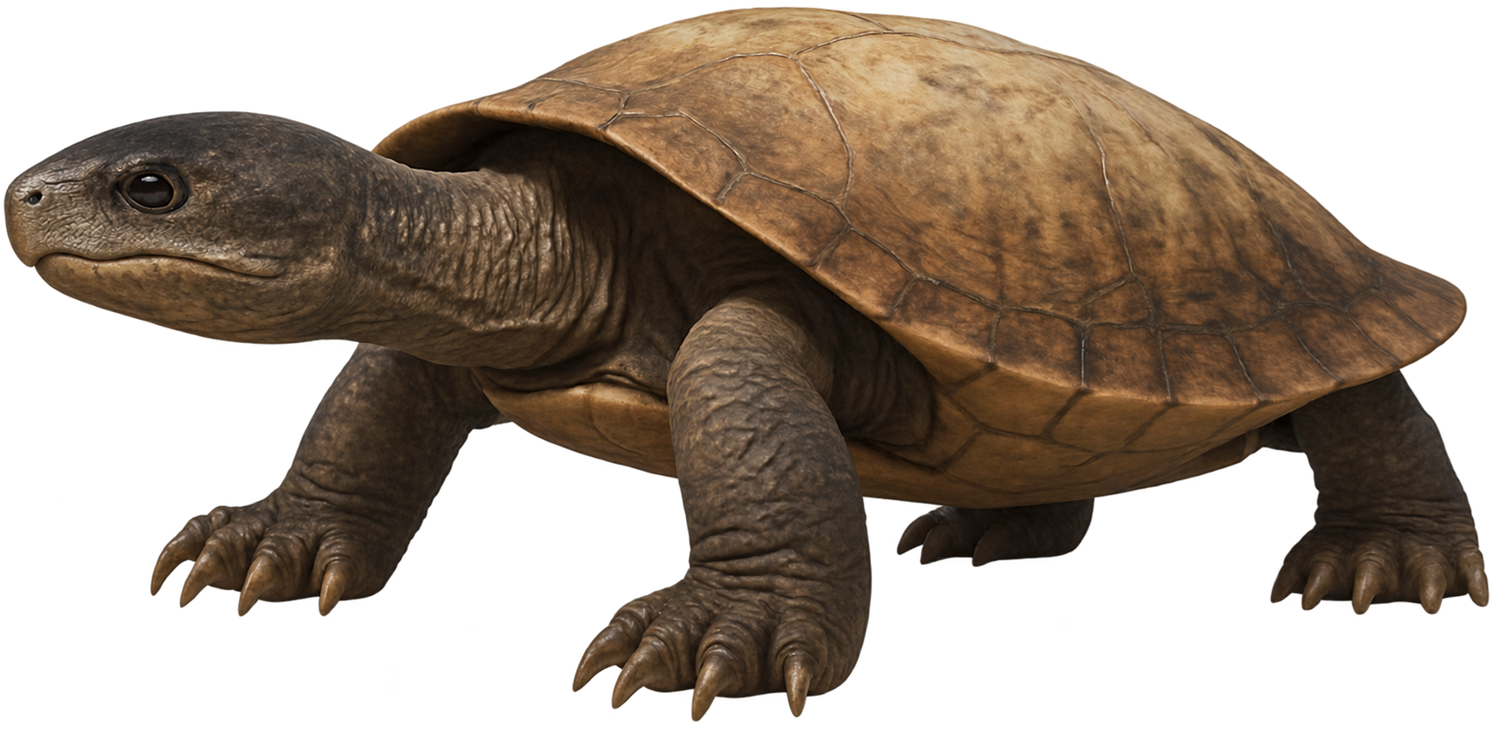
Basilemys sinuosa185Brinkman, D. B. (1998). The skull and neck of the Cretaceous turtle Basilemys and the interrelationships of the genus. Paludicola, 1(4), 150–157.186Lillegraven, J. A. & Eberle, J. J. (1999). Vertebrate faunal changes through Lancian and Puercan time in southern Wyoming. Journal of Paleontology, 73(4), 691–710. doi:10.1017/S0022336000032496187Wroblewski, A. F. (2026). Systematics and biostratigraphy of non-mammalian vertebrates across the K/Pg transition, southern Wyoming, USA. Journal of Paleontology, 100, 222–250. doi:10.1017/jpa.2025.10191 | Hell Creek Formation, Lance Formation, Ferris Formation | Montana, North Dakota, South Dakota, Wyoming | 68–66 Ma | häufig | Landschildkröte (Nanhsiungchelyidae) |
 |
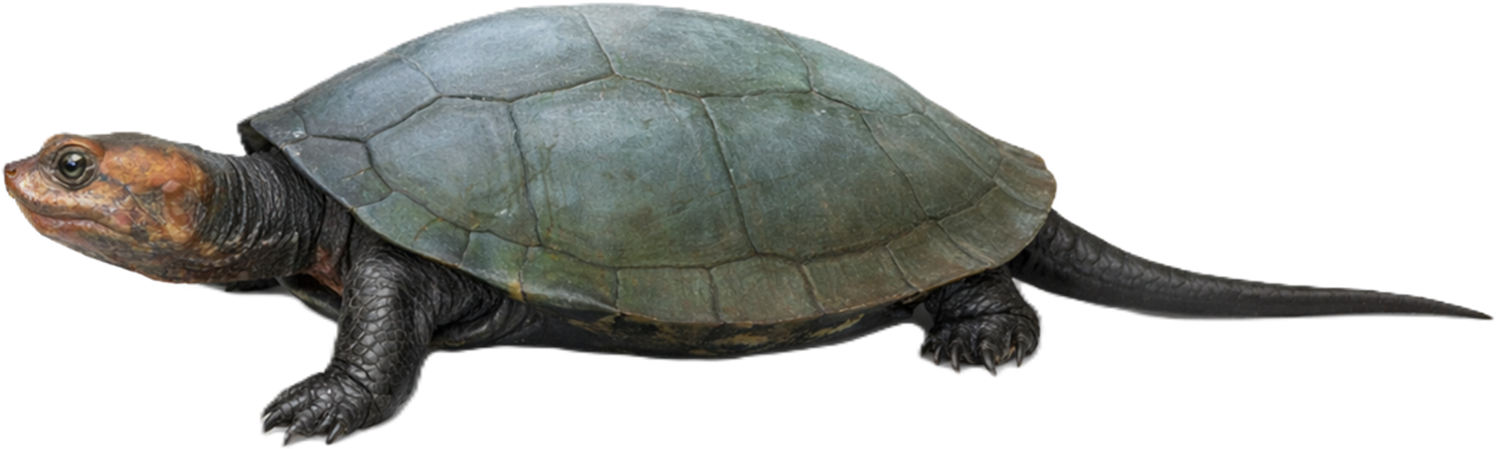
Basilemys sp.188Carpenter, K. (1979). Vertebrate fauna of the Laramie Formation (Maastrichtian), Weld County, Colorado. Contributions to Geology, University of Wyoming, 17, 37–49.189Hutchison, J. H. & Holroyd, P. A. (2003). Late Cretaceous and early Paleocene turtles of the Denver Basin, Colorado. Rocky Mountain Geology, 38(1), 121–142. doi:10.2113/gsrocky.38.1.121 | Laramie Formation | Colorado | 68–66 Ma | selten | Landschildkröte (Nanhsiungchelyidae); Bestimmung unsicher |
 |
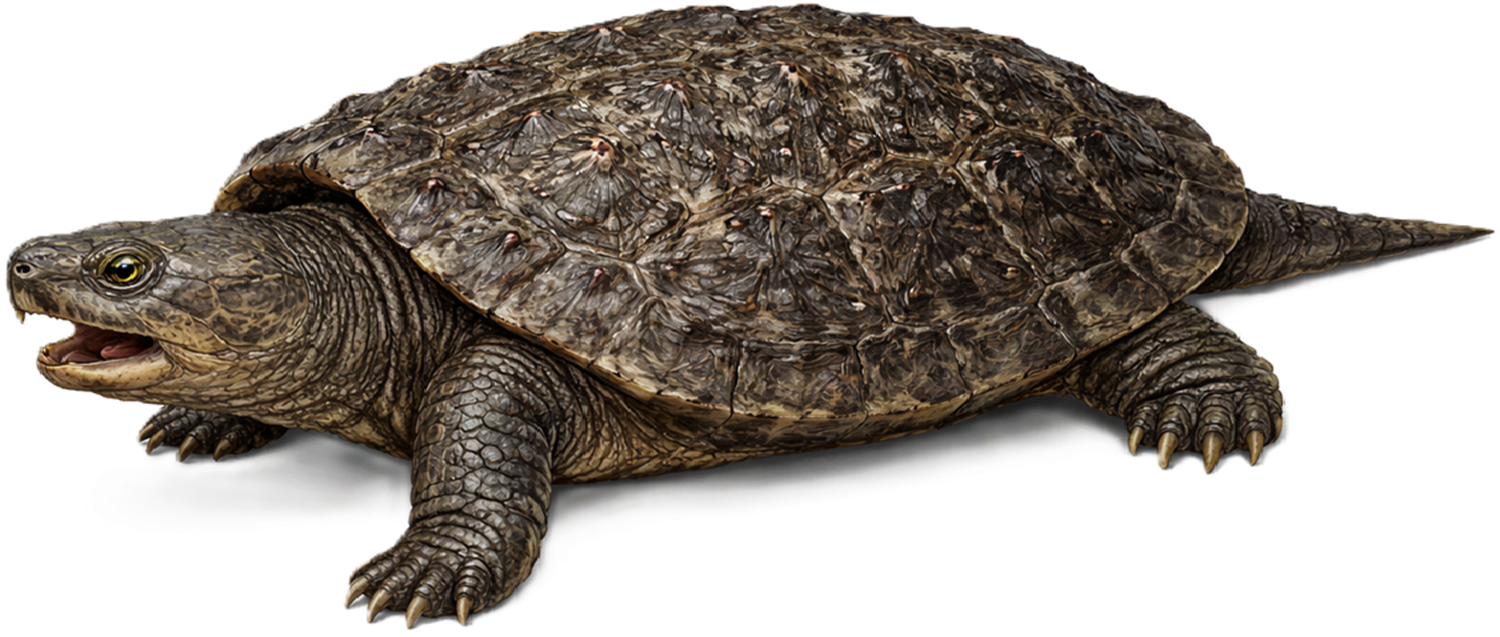
Cedrobaena putorius190Lyson, T. R. & Joyce, W. G. (2009). A revision of Plesiobaena (Testudines: Baenidae) and an assessment of baenid ecology across the K/T boundary. Journal of Paleontology, 83(6), 833–853. doi:10.1666/09-035.1191Gaffney, E. S. (1972). The systematics of the North American family Baenidae. Bulletin of the American Museum of Natural History, 147, 241–320. | Hell Creek Formation | North Dakota, South Dakota | 68–66 Ma | selten | Süßwasserschildkröte (Baenidae) |
 |
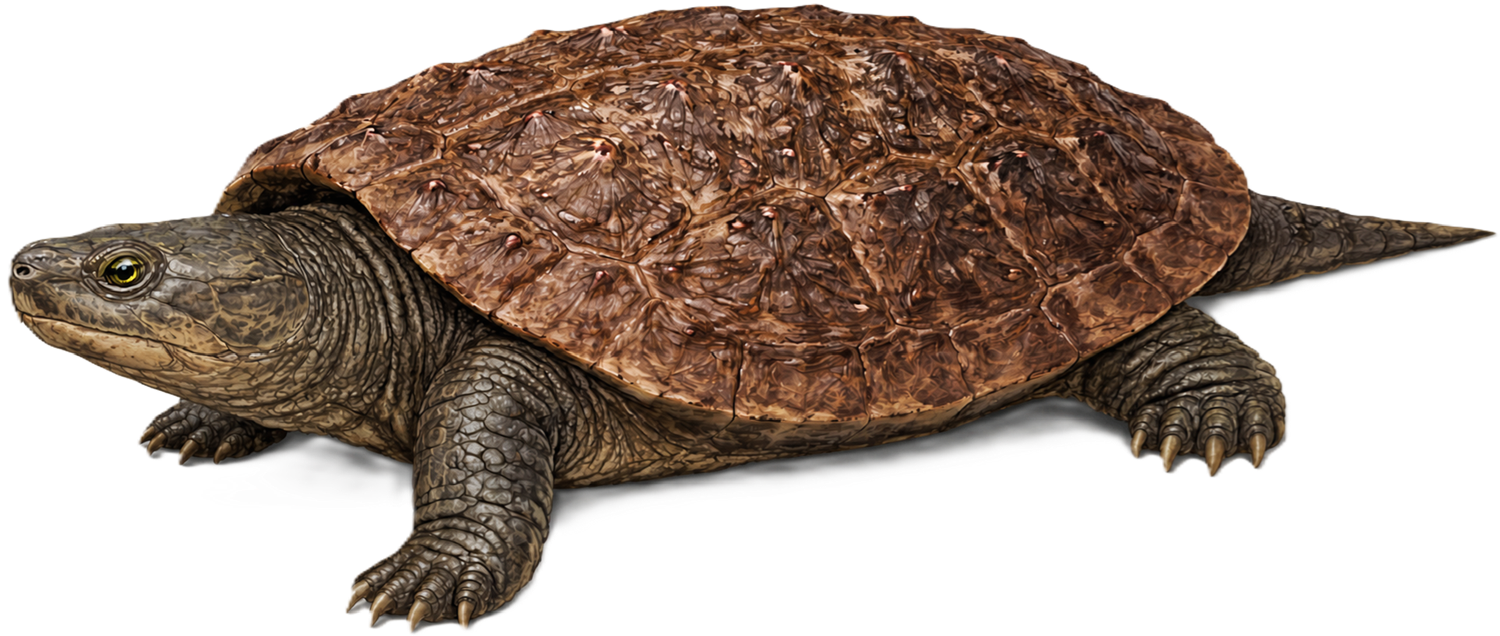
Compsemys victa192Estes, R. & Berberian, P. (1970). Paleoecology of a late Cretaceous vertebrate community from Montana. Breviora, 343, 1–35.193Lillegraven, J. A. & Eberle, J. J. (1999). Vertebrate faunal changes through Lancian and Puercan time in southern Wyoming. Journal of Paleontology, 73(4), 691–710. doi:10.1017/S0022336000032496194Carpenter, K. (1979). Vertebrate fauna of the Laramie Formation (Maastrichtian), Weld County, Colorado. Contributions to Geology, University of Wyoming, 17, 37–49. | Hell Creek Formation, Lance Formation, Ferris Formation, Laramie Formation | Montana, North Dakota, South Dakota, Wyoming, Colorado | 68–66 Ma | sehr häufig | Süßwasserschildkröte (Compsemydidae) |
 |
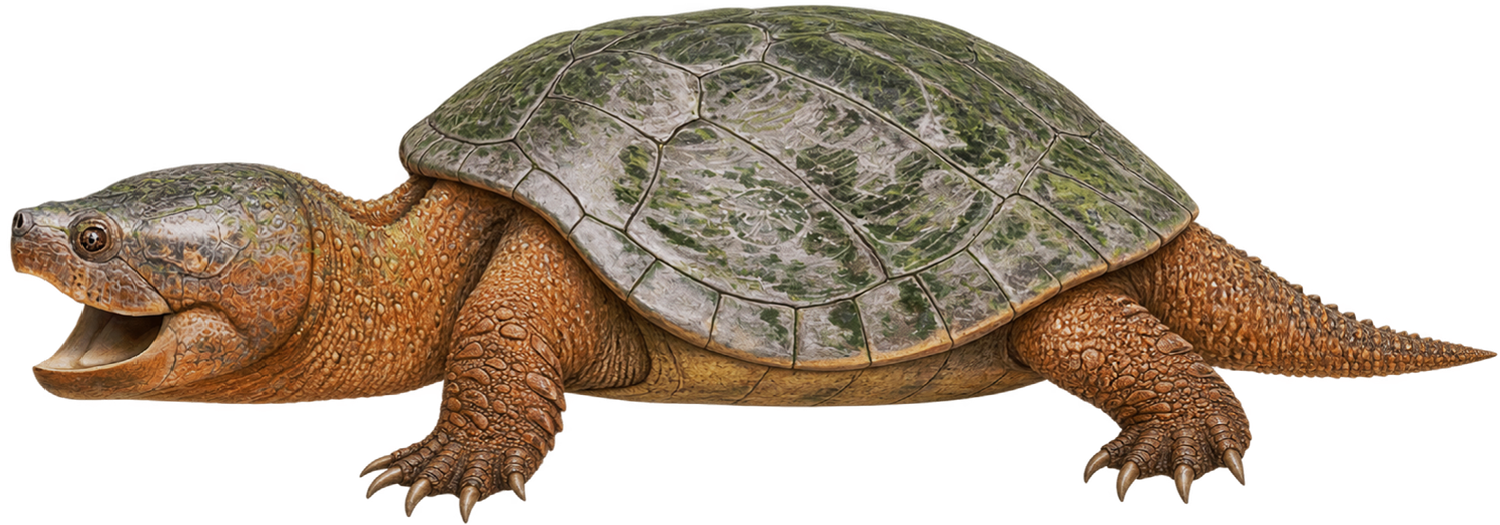
Compsemys sp.195Hutchison, J. H. & Holroyd, P. A. (2003). Late Cretaceous and early Paleocene turtles of the Denver Basin, Colorado. Rocky Mountain Geology, 38(1), 121–142. doi:10.2113/gsrocky.38.1.121 | Denver Formation | Colorado | 66–64 Ma | selten | Süßwasserschildkröte (Compsemydidae); Bestimmung unsicher |
 |
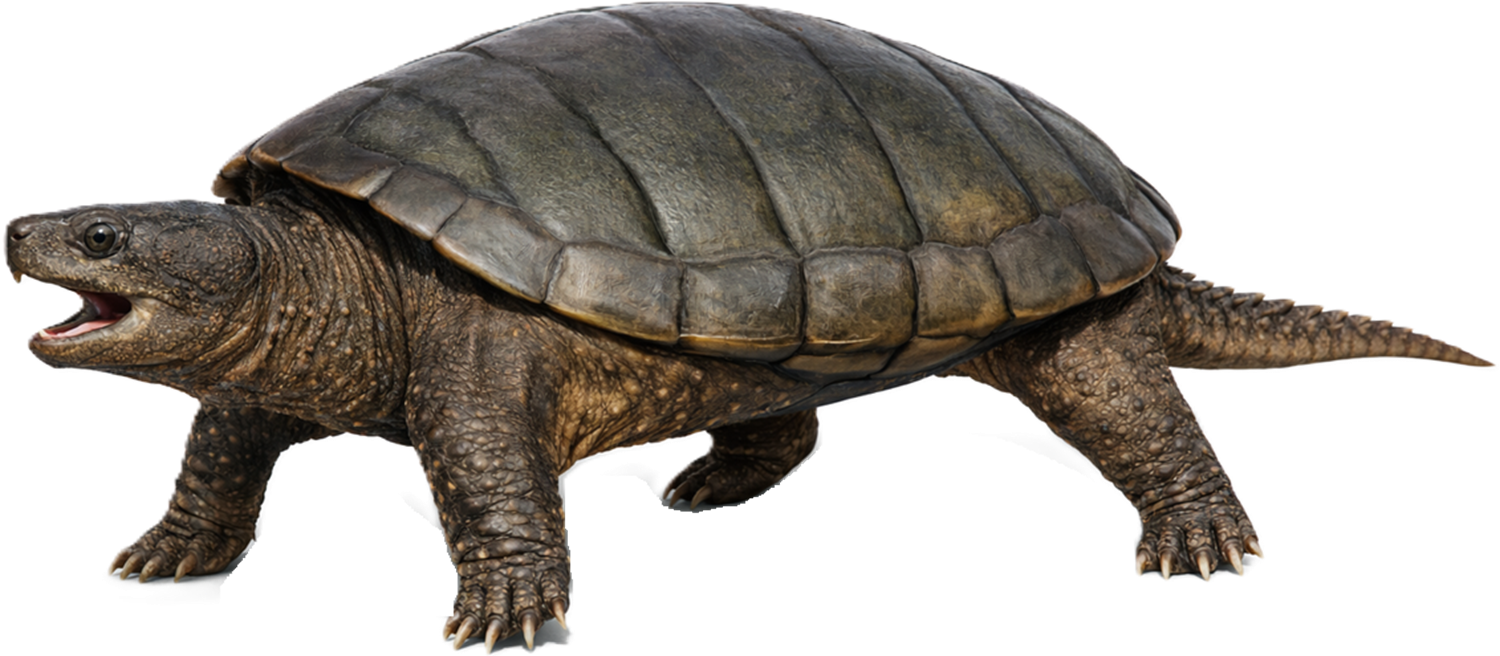
Denverus middletoni196Hutchison, J. H. & Holroyd, P. A. (2003). Late Cretaceous and early Paleocene turtles of the Denver Basin, Colorado. Rocky Mountain Geology, 38(1), 121–142. doi:10.2113/gsrocky.38.1.121197Lyson, T. R. et al. (2025). A new pan-chelydrid turtle, Tavachelydra stevensoni gen. et sp. nov., from the lower Paleocene Corral Bluffs Study Area in the Denver Basin, Colorado. Papers in Palaeontology, 11, e70032. doi:10.1002/spp2.70032 | Denver Formation | Colorado | 66–64 Ma | Einzelfund | Schnappschildkröte (Pan-Chelydridae) |
 |
Emarginachelys cretacea198Knauss, G. E. et al. (2011). A new kinosternoid from the Late Cretaceous Hell Creek Formation of North Dakota and Montana and the origin of the Dermatemys mawii lineage. Paläontologische Zeitschrift, 85(2), 125–142. doi:10.1007/s12542-010-0081-x | Hell Creek Formation | Montana, North Dakota | 68–66 Ma | selten | Schildkröte aus der Stammlinie der Tabasco-Flussschildkröte (Kinosternoidae) |
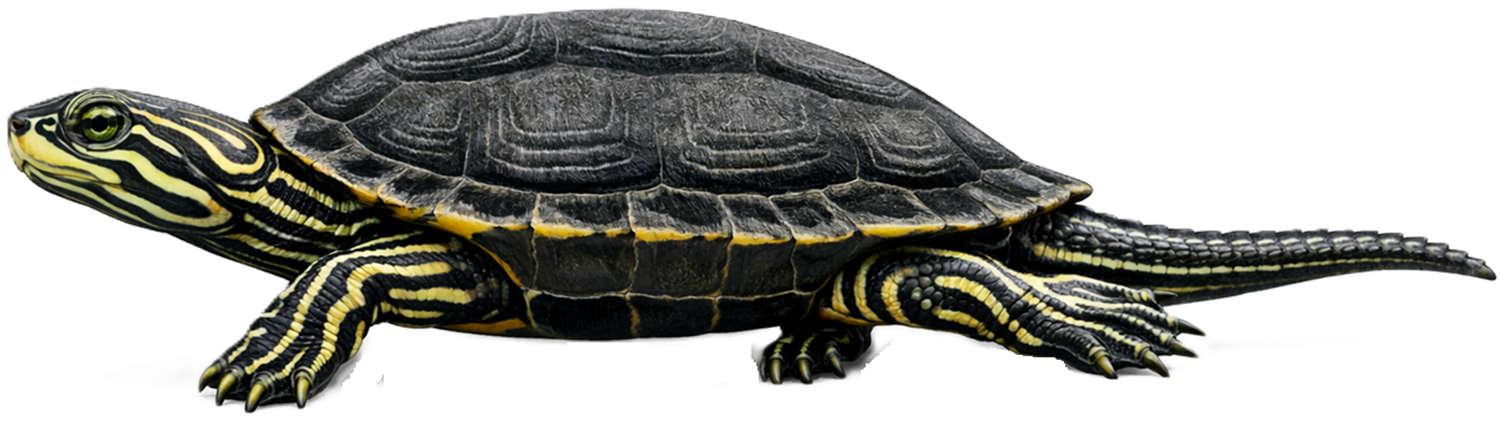 |
Eubaena cephalica199Gaffney, E. S. (1972). The systematics of the North American family Baenidae. Bulletin of the American Museum of Natural History, 147, 241–320.200Rollot, Y., Lyson, T. R. & Joyce, W. G. (2018). A description of the skull of Eubaena cephalica and new insights into the cranial circulation and innervation of baenid turtles. Journal of Vertebrate Paleontology, 38(3), e1474886. doi:10.1080/02724634.2018.1474886 | Hell Creek Formation, Lance Formation | Montana, North Dakota, Wyoming | 68–66 Ma | selten | Süßwasserschildkröte (Baenidae) |
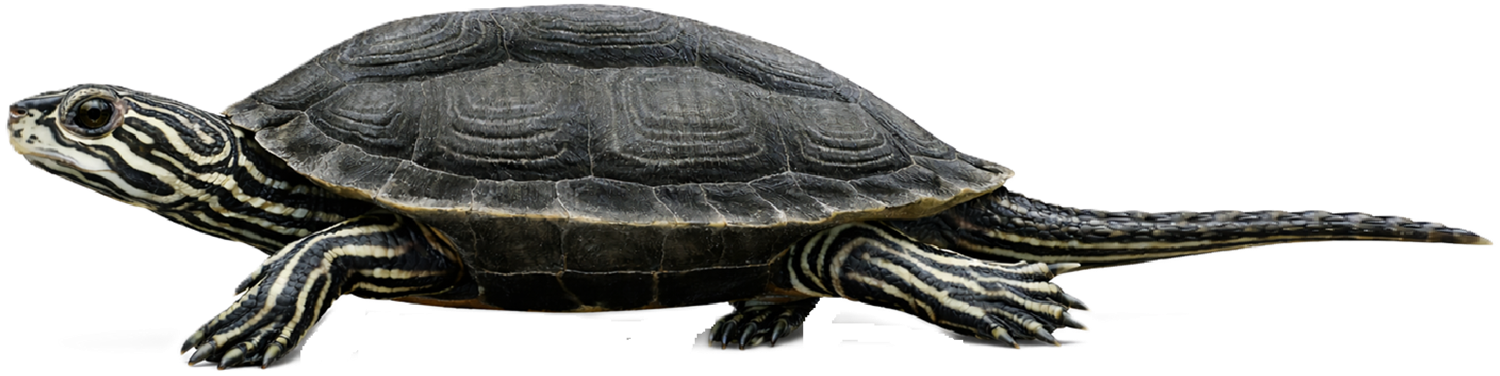 |
Gamerabaena sonsalla201Lyson, T. R. & Joyce, W. G. (2010). A new baenid turtle from the Upper Cretaceous (Maastrichtian) Hell Creek Formation of North Dakota and a preliminary taxonomic review of Cretaceous Baenidae. Journal of Vertebrate Paleontology, 30(2), 394–402. doi:10.1080/02724631003618389 | Hell Creek Formation | North Dakota | 68–66 Ma | Einzelfund | Süßwasserschildkröte (Baenidae) |
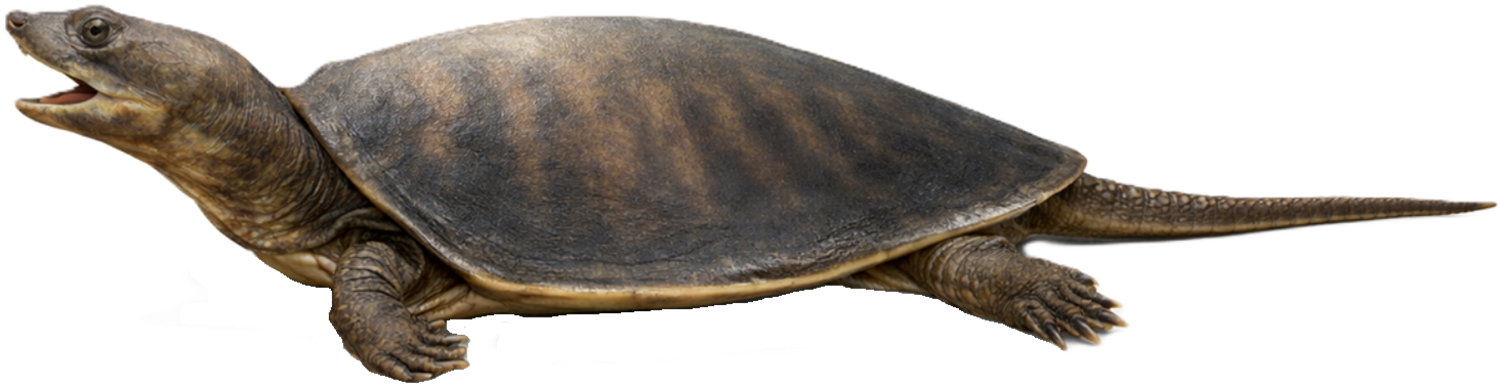 |
Gilmoremys lancensis202Joyce, W. G. & Lyson, T. R. (2011). New material of Gilmoremys lancensis nov. comb. from the Hell Creek Formation and the diagnosis of plastomenid turtles. Journal of Paleontology, 85(3), 442–459. doi:10.1666/10-127.1 | Hell Creek Formation, Lance Formation | Montana, North Dakota, Wyoming | 68–66 Ma | selten | Weichschildkröte (Trionychidae) |
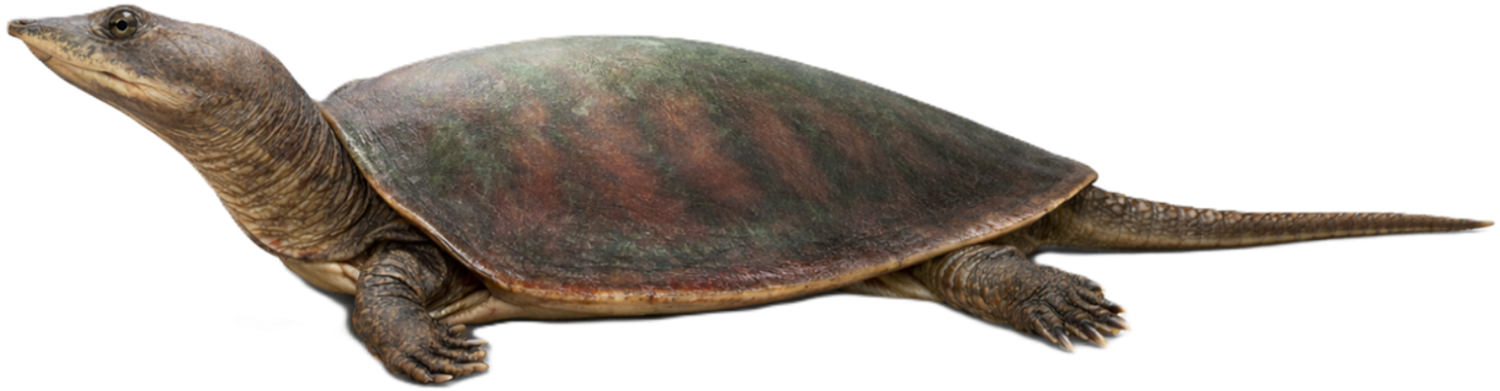 |
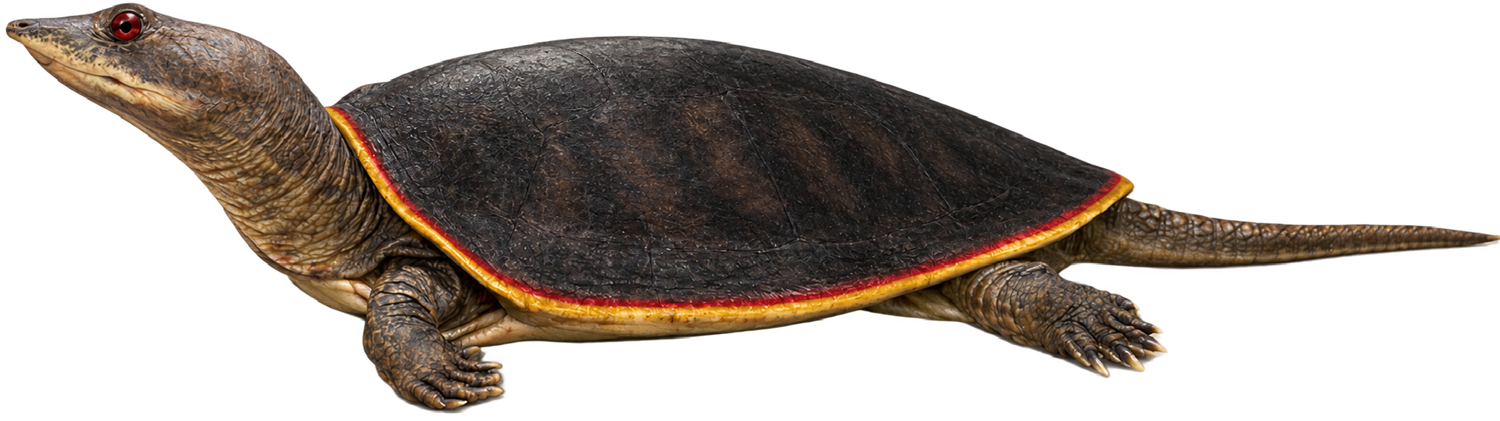
Helopanoplia beecheri203Joyce, W. G. et al. (2026). A reassessment of the latest Cretaceous pan-trionychid turtle Helopanoplia beecheri comb. nov. Swiss Journal of Palaeontology, 145. doi:10.3897/sjp.145.189487 | Hell Creek Formation, Lance Formation | Montana, North Dakota, South Dakota, Wyoming | 68–66 Ma | häufig | Weichschildkröte (Trionychidae); synonym zu Helopanoplia distincta und Aspideretes beecheri |
 |
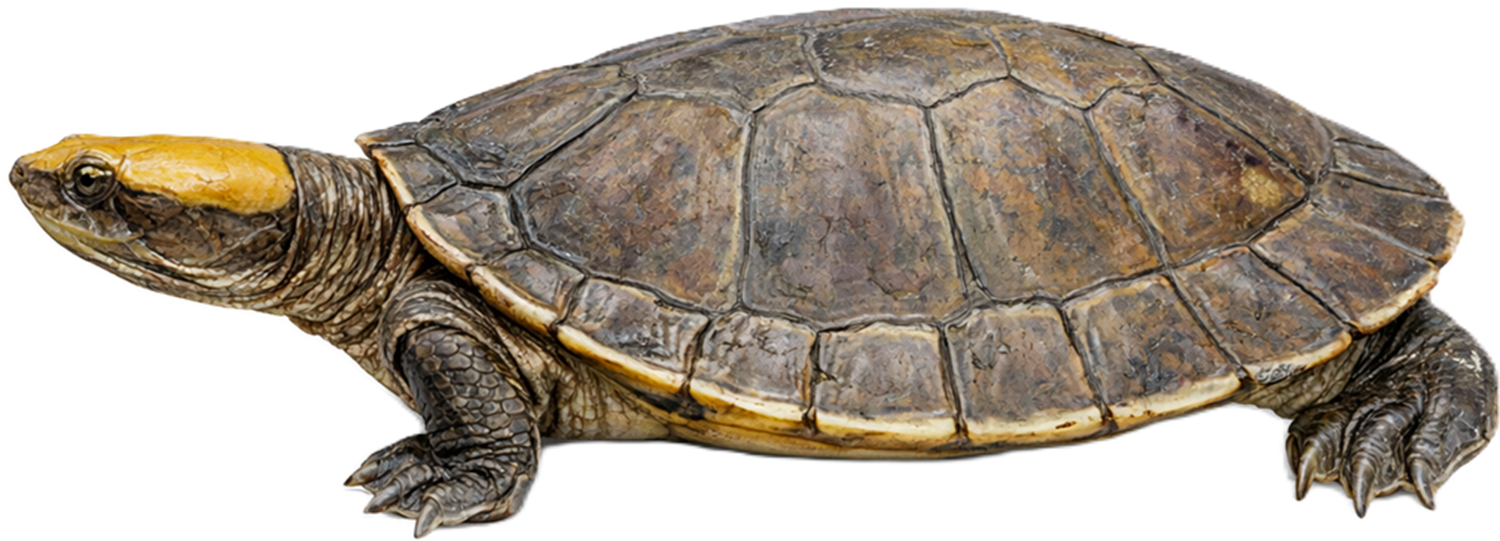
Helopanoplia sp.204Carpenter, K. (1979). Vertebrate fauna of the Laramie Formation (Maastrichtian), Weld County, Colorado. Contributions to Geology, University of Wyoming, 17, 37–49.205Hutchison, J. H. & Holroyd, P. A. (2003). Late Cretaceous and early Paleocene turtles of the Denver Basin, Colorado. Rocky Mountain Geology, 38(1), 121–142. doi:10.2113/gsrocky.38.1.121 | Laramie Formation | Colorado | 68–66 Ma | selten | Weichschildkröte (Trionychidae); Bestimmung unsicher |
 |
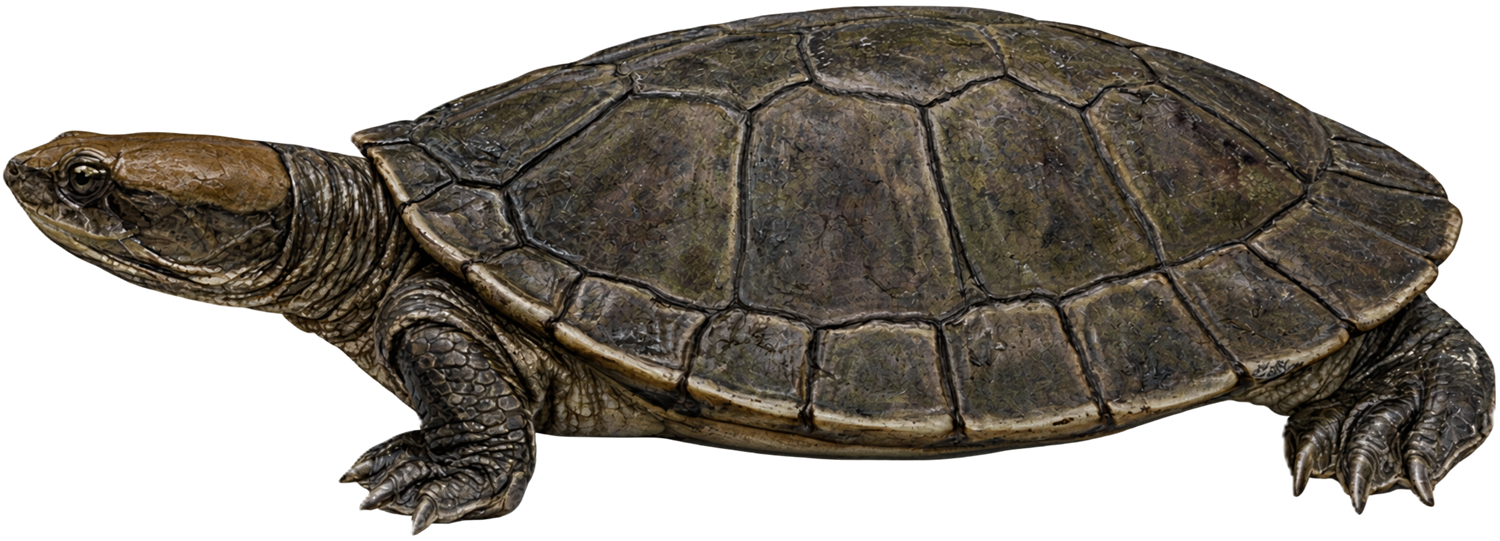
Hoplochelys clark206Knauss, G. E. et al. (2011). A new kinosternoid from the Late Cretaceous Hell Creek Formation of North Dakota and Montana and the origin of the Dermatemys mawii lineage. Paläontologische Zeitschrift, 85(2), 125–142. doi:10.1007/s12542-010-0081-x | Hell Creek Formation | North Dakota | 68–66 Ma | Einzelfund | Schlammschildkröte (Kinosternidae) |
 |
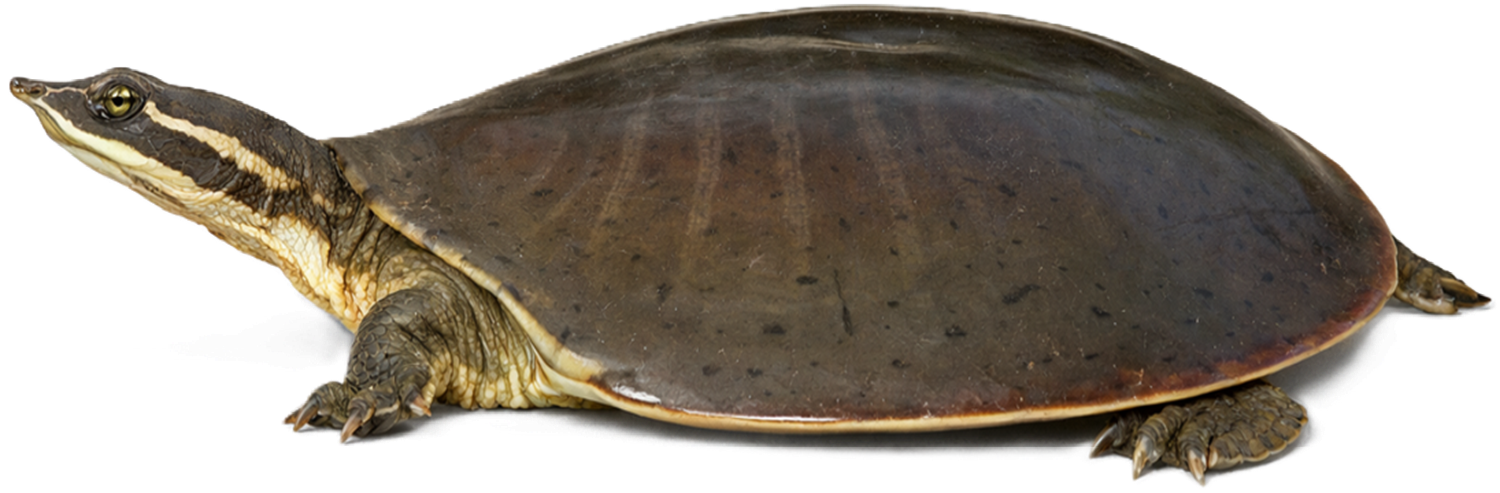
Hoplochelys sp.207Hutchison, J. H. & Holroyd, P. A. (2003). Late Cretaceous and early Paleocene turtles of the Denver Basin, Colorado. Rocky Mountain Geology, 38(1), 121–142. doi:10.2113/gsrocky.38.1.121 | Denver Formation | Colorado | 66–64 Ma | selten | Schlammschildkröte (Kinosternidae); Bestimmung unsicher |
 |
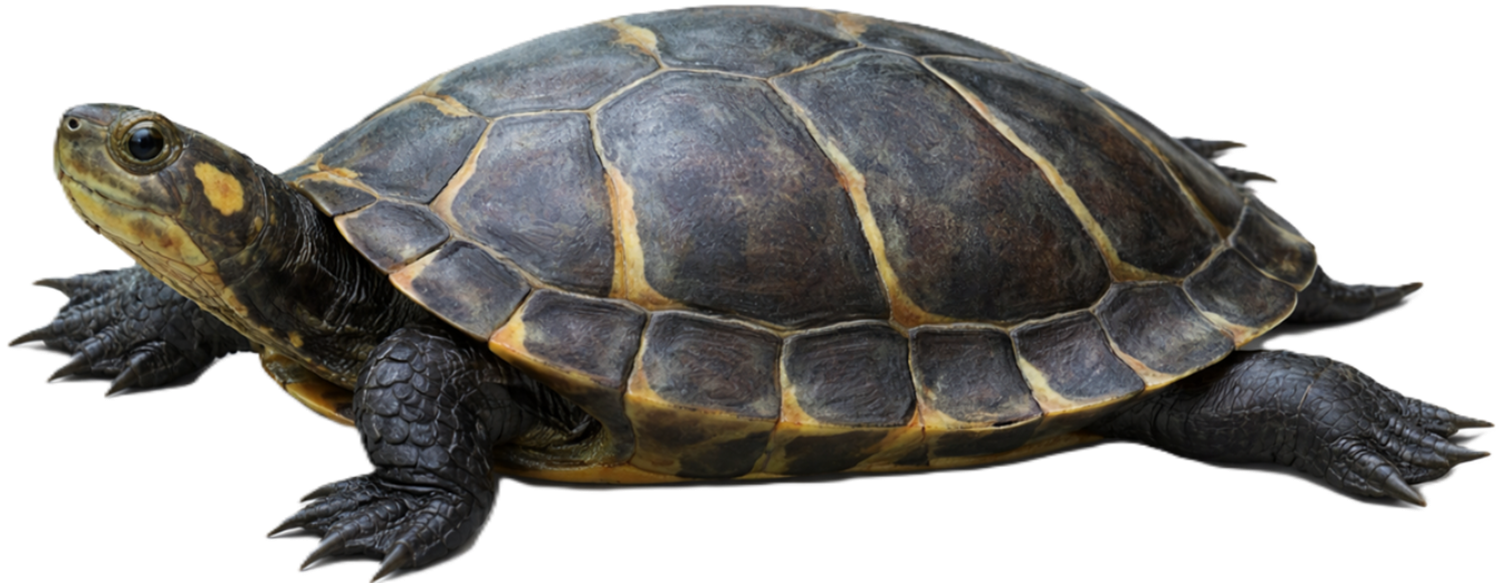
Hutchemys walkerorum208Jasinski, S. E. et al. (2022). A softshell turtle from the uppermost Cretaceous Hell Creek Formation, North Dakota, USA, with implications for the evolutionary relationships of plastomenines and other trionychids. Cretaceous Research, 135, 105172. doi:10.1016/j.cretres.2022.105172209Joyce, W. G. et al. (2026). A reassessment of the latest Cretaceous pan-trionychid turtle Helopanoplia beecheri comb. nov. Swiss Journal of Palaeontology, 145. doi:10.3897/sjp.145.189487 | Hell Creek Formation | North Dakota | 66 Ma | Einzelfund | Weichschildkröte (Trionychidae) |
 |
Judithemys backmani210Holroyd, P. A. & Hutchison, J. H. (2002). Patterns of geographic variation in latest Cretaceous vertebrates: evidence from the turtle component. Geological Society of America Special Paper, 361, 177–190. doi:10.1130/0-8137-2361-2.177211Brinkman, D. B. et al. (2010). New material of the turtle Judithemys sukhanovi from the Judith River Group of Alberta, Canada. Canadian Journal of Earth Sciences, 47, 63–72. doi:10.1139/E09-069 | Hell Creek Formation, Lance Formation | Montana, North Dakota, Wyoming | 68–66 Ma | häufig | Süßwasserschildkröte (Macrobaenidae); synonym zu Osteopygis backmani. Gattungszugehörigkeit umstritten. |
 |
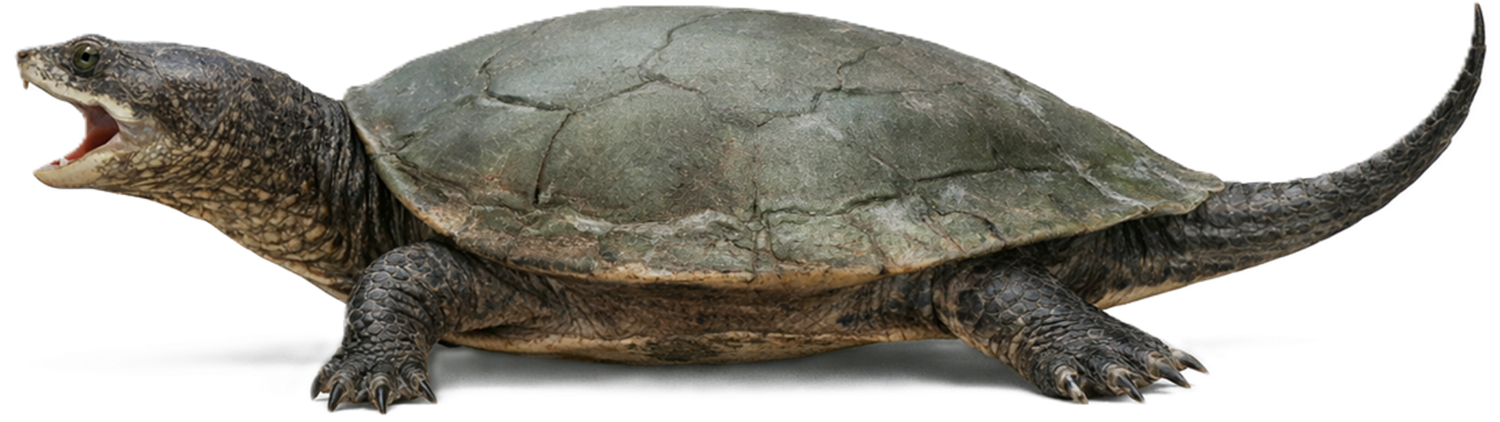
Macrobaenidae indet.212Hutchison, J. H. & Holroyd, P. A. (2003). Late Cretaceous and early Paleocene turtles of the Denver Basin, Colorado. Rocky Mountain Geology, 38(1), 121–142. doi:10.2113/gsrocky.38.1.121 | Denver Formation | Colorado | 66–64 Ma | selten | Unbestimmter Macrobaenide |
 |
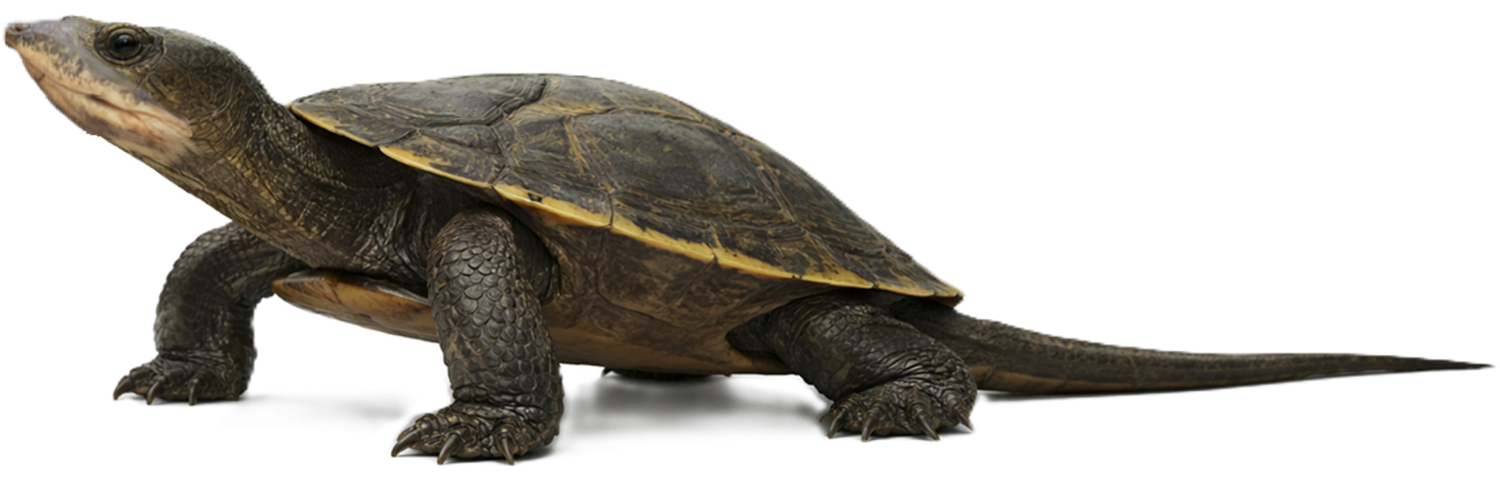
Neurankylus sp.213Joyce, W. G. & Lyson, T. R. (2015). A review of the fossil record of turtles of the clade Baenidae. Bulletin of the Peabody Museum of Natural History, 56, 147–183. doi:10.3374/014.056.0203 | Hell Creek Formation | Montana | 68–66 Ma | selten | Süßwasserschildkröte (Baenidae); Bestimmung unsicher |
 |
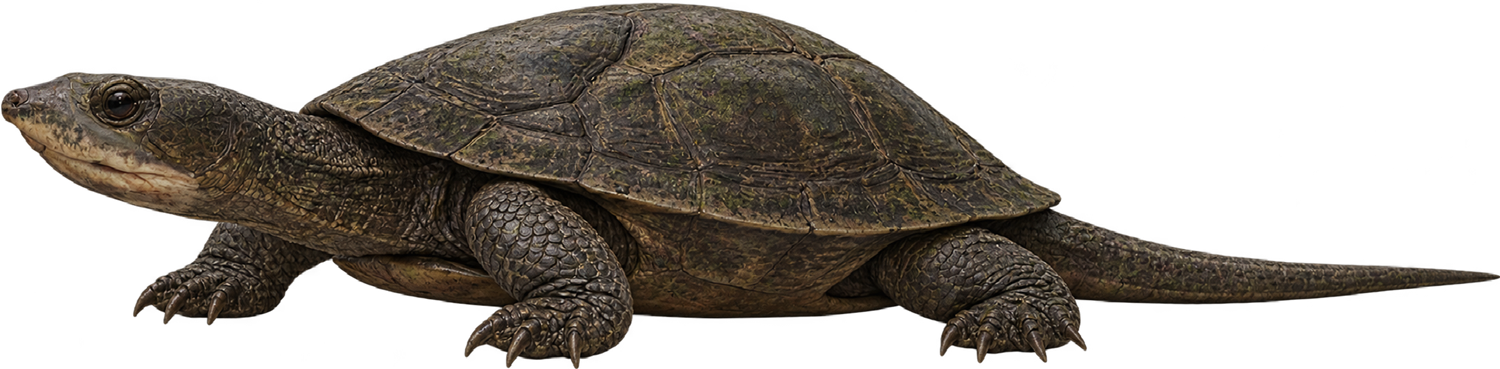
Palatobaena cohen214Lyson, T. R. & Joyce, W. G. (2009). A new species of Palatobaena and a maximum parsimony and Bayesian phylogenetic analysis of Baenidae. Journal of Paleontology, 83(3), 457–470. doi:10.1666/08-172.1 | Hell Creek Formation | Montana, North Dakota | 68–66 Ma | selten | Süßwasserschildkröte (Baenidae) |
 |
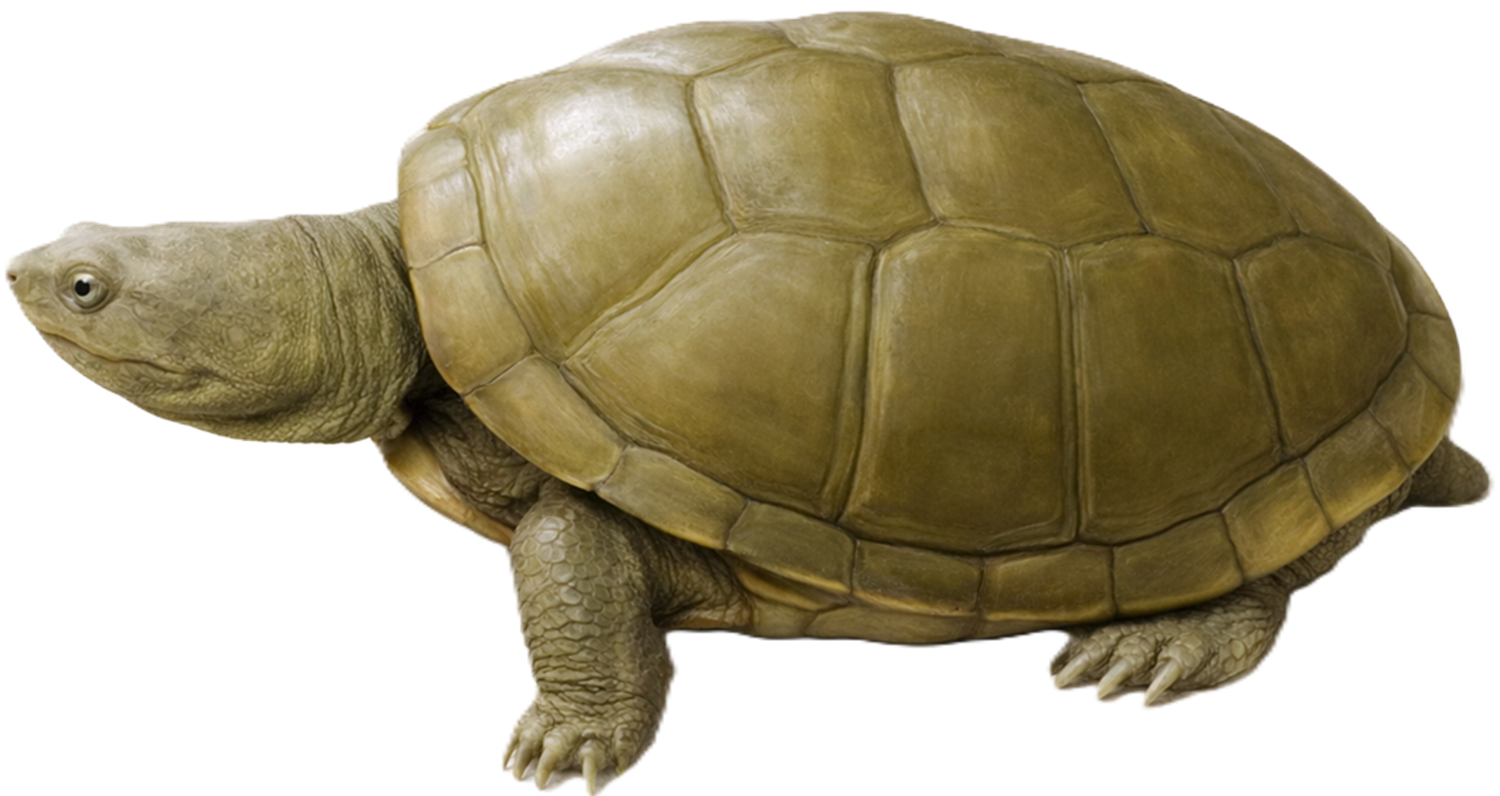
Palatobaena knellerorum215Lyson, T. R. et al. (2021). A new baenid turtle, Palatobaena knellerorum sp. nov., from the lower Paleocene Denver Formation of south-central Colorado, U.S.A. Journal of Vertebrate Paleontology, 41(2), e1925558. doi:10.1080/02724634.2021.1925558 | Denver Formation | Colorado | 66–64 Ma | Einzelfund | Süßwasserschildkröte (Baenidae) |
 |
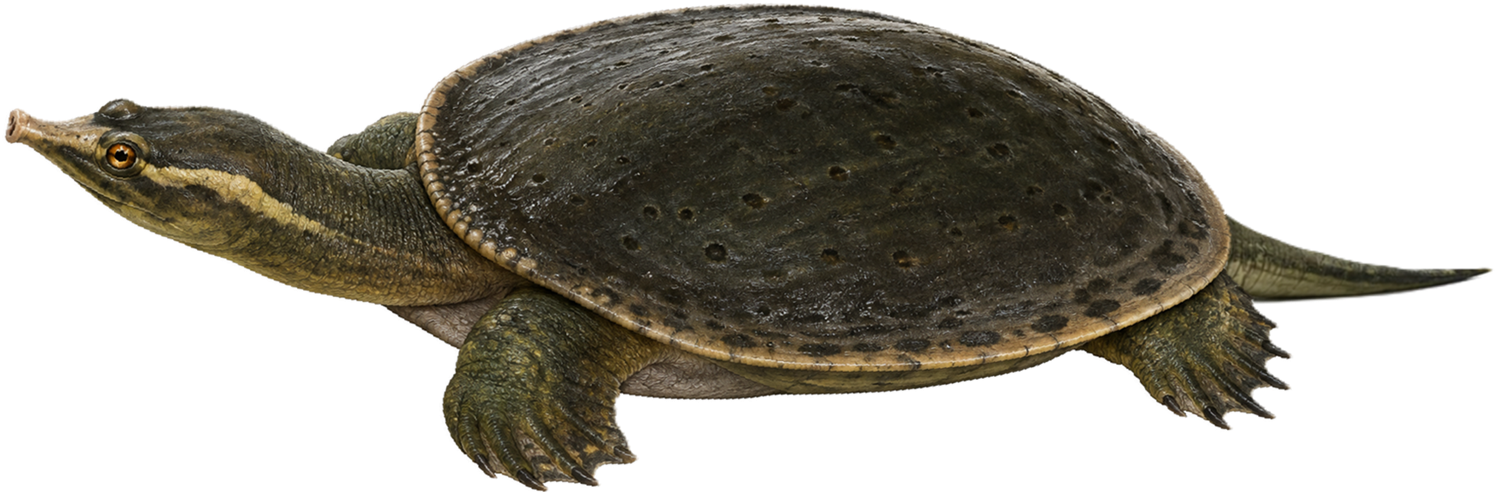
Peckemys brinkman216Lyson, T. R. & Joyce, W. G. (2009). A revision of Plesiobaena and an assessment of baenid ecology across the K/T boundary. Journal of Paleontology, 83(6), 833–853. doi:10.1666/09-035.1 | Hell Creek Formation, Lance Formation | Montana, North Dakota, Wyoming | 68–66 Ma | selten | Süßwasserschildkröte (Baenidae); teilweise auch als Cedrobaena brinkman geführt |
 |
Plastomenus joycei217Lyson, T. R., Petermann, H. & Miller, I. M. (2021). A new plastomenid trionychid turtle, Plastomenus joycei sp. nov., from the earliest Paleocene Denver Formation of south-central Colorado, U.S.A. Journal of Vertebrate Paleontology, 41(1), e1913600. doi:10.1080/02724634.2021.1913600 | Denver Formation | Colorado | 66–64 Ma | Einzelfund | Weichschildkröte (Trionychidae) |
 |
Pan-Trionychidae indet.218Estes, R. & Berberian, P. (1970). Paleoecology of a late Cretaceous vertebrate community from Montana. Breviora, 343, 1–35.219Holroyd, P. A. & Hutchison, J. H. (2002). Patterns of geographic variation in latest Cretaceous vertebrates: evidence from the turtle component. Geological Society of America Special Paper, 361, 177–190. doi:10.1130/0-8137-2361-2.177 | Hell Creek Formation, Lance Formation, Ferris Formation | Montana, Wyoming | 68–66 Ma | selten | Unbestimmte Weichschildkröte; historisch als Plastomenus oder Trionyx geführt. |
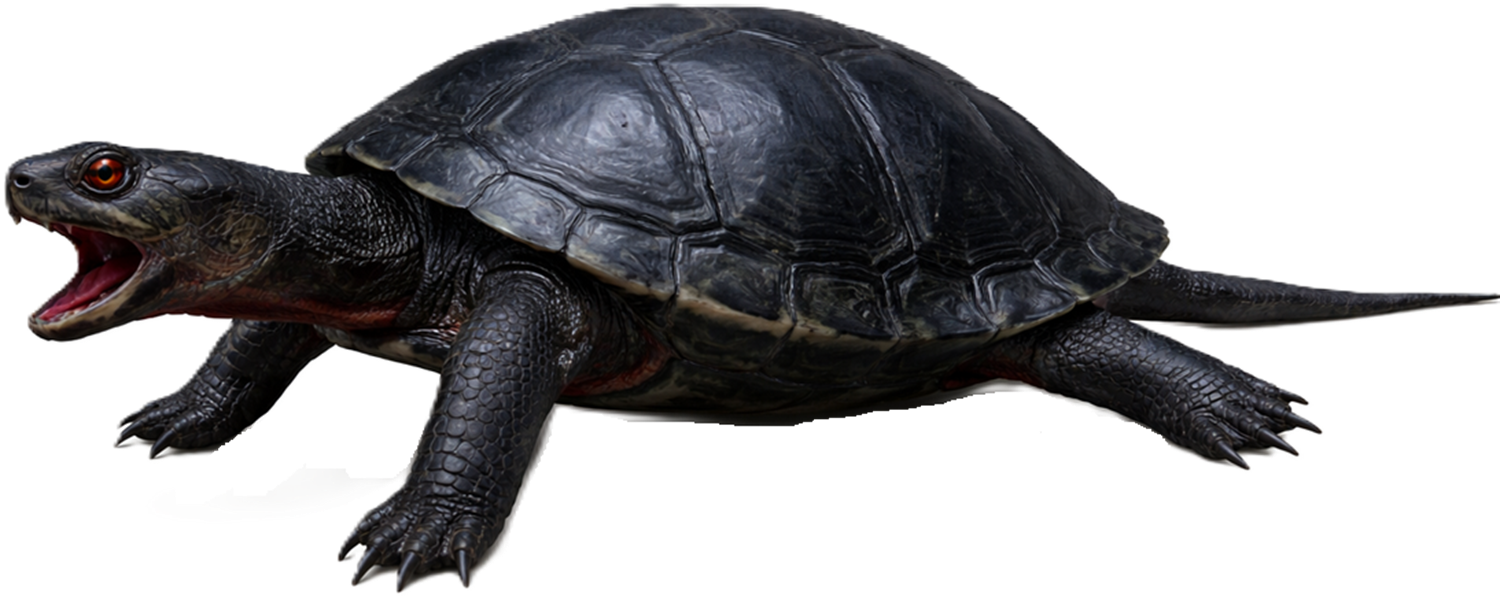 |
Plesiobaena sp.220Carpenter, K. (1979). Vertebrate fauna of the Laramie Formation (Maastrichtian), Weld County, Colorado. Contributions to Geology, University of Wyoming, 17, 37–49.221Hutchison, J. H. & Holroyd, P. A. (2003). Late Cretaceous and early Paleocene turtles of the Denver Basin, Colorado. Rocky Mountain Geology, 38(1), 121–142. doi:10.2113/gsrocky.38.1.121 | Laramie Formation | Colorado | 68–66 Ma | selten | Süßwasserschildkröte (Baenidae); Bestimmung unsicher, historisch als Plesiobaena antiqua geführt, wahrscheinlich eigene Art |
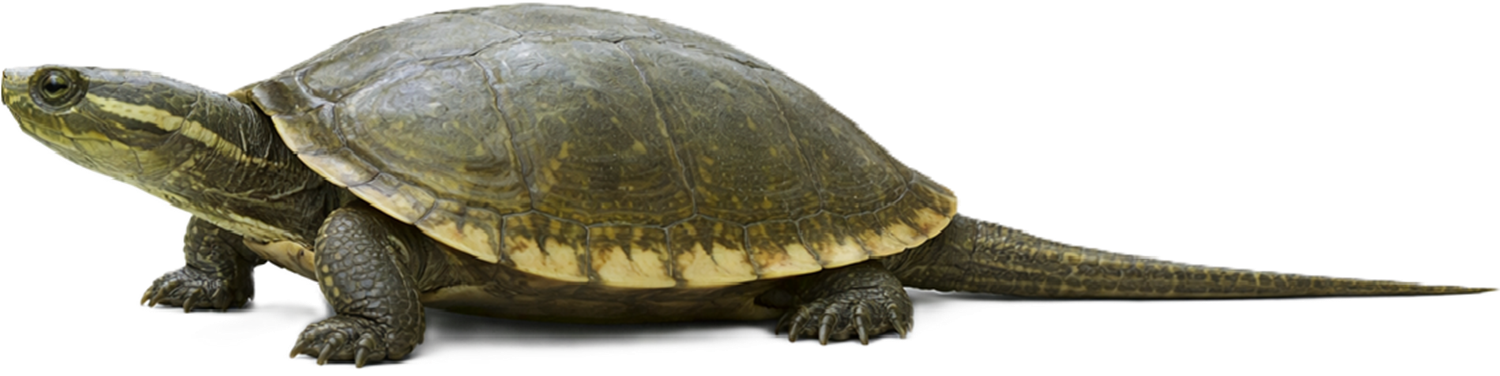 |
Saxochelys gilberti222Lyson, T. R., Sayler, J. L. & Joyce, W. G. (2019). A new baenid turtle, Saxochelys gilberti gen. et sp. nov., from the uppermost Cretaceous Hell Creek Formation. Journal of Vertebrate Paleontology, 39(4), e1662428. doi:10.1080/02724634.2019.1662428 | Hell Creek Formation | North Dakota, South Dakota | 66 Ma | häufig | Süßwasserschildkröte (Baenidae) |
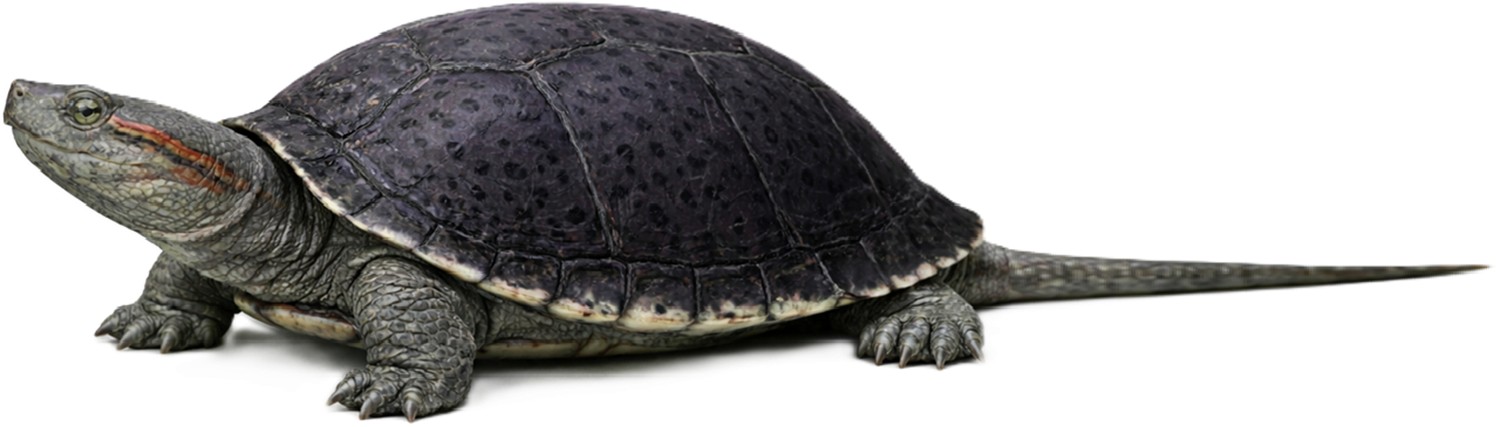 |
Stygiochelys estesi223Gaffney, E. S. (1971). A new baenid turtle from the Upper Cretaceous of Montana. American Museum Novitates, 2443, 1–9. | Hell Creek Formation | Montana | 68–66 Ma | selten | Süßwasserschildkröte (Baenidae) |
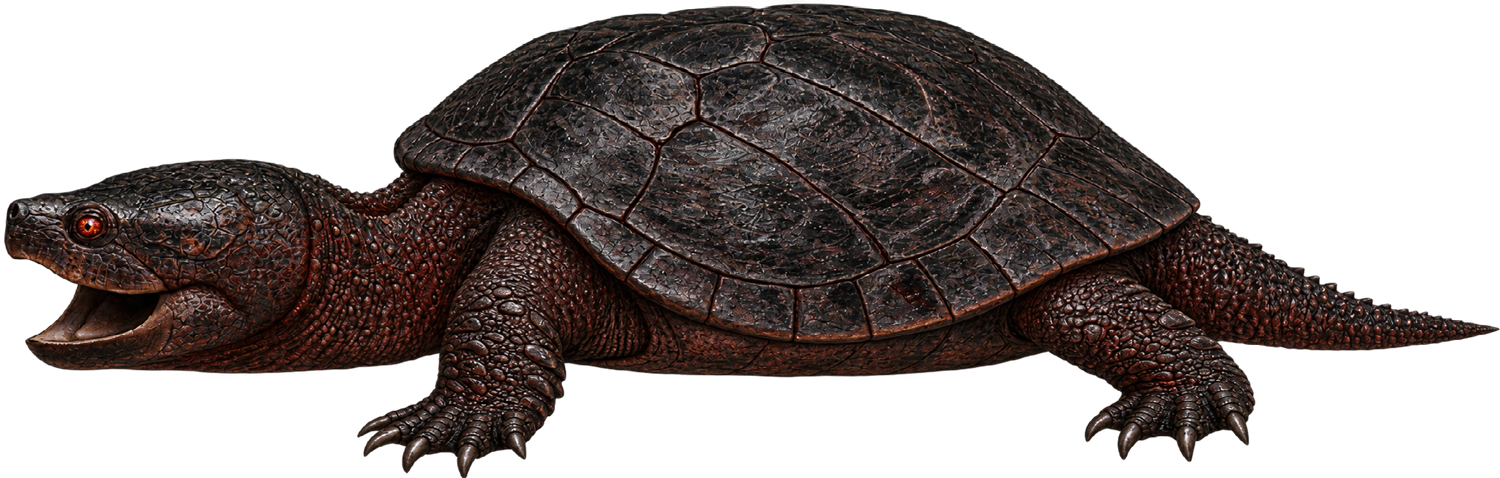 |
Tavachelydra stevensoni224Lyson, T. R. et al. (2025). A new pan-chelydrid turtle, Tavachelydra stevensoni gen. et sp. nov., from the lower Paleocene Corral Bluffs Study Area in the Denver Basin, Colorado. Papers in Palaeontology, 11, e70032. doi:10.1002/spp2.70032 | Denver Formation | Colorado | 66–64 Ma | selten | Schnappschildkröte (Pan-Chelydridae) |
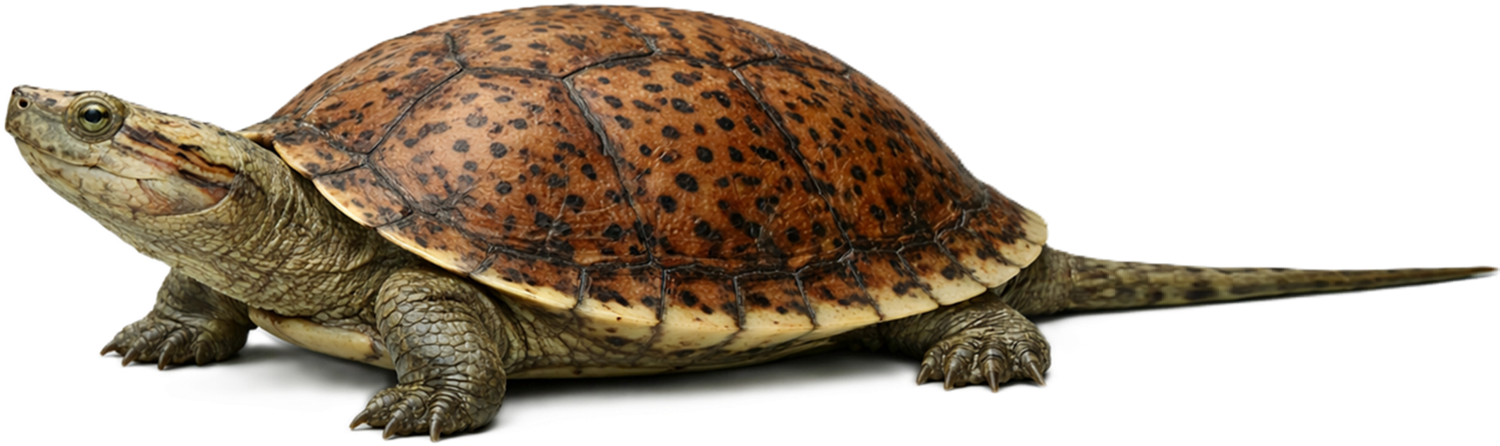 |
Thescelus insiliens225Joyce, W. G. & Lyson, T. R. (2015). A review of the fossil record of turtles of the clade Baenidae. Bulletin of the Peabody Museum of Natural History, 56, 147–183. doi:10.3374/014.056.0203226Gaffney, E. S. (1972). The systematics of the North American family Baenidae. Bulletin of the American Museum of Natural History, 147, 241–320. | Hell Creek Formation, Lance Formation | Montana, Wyoming | 68–66 Ma | selten | Süßwasserschildkröte (Baenidae) |
Schuppenechsen:
| Bild: | Spezies: | Formation: | Fundort: | Alter: | Häufigkeit: | Bemerkungen: |
|---|---|---|---|---|---|---|
 |
Cemeterius monstrosus227Longrich, N. R., Bhullar, B. S. & Gauthier, J. A. (2012). Mass extinction of lizards and snakes at the Cretaceous–Paleogene boundary. Proceedings of the National Academy of Sciences of the United States of America, 109(52), 21396–21401. doi:10.1073/pnas.1211526110228Longrich, N. R., Bhullar, B. S. & Gauthier, J. A. (2013). Correction for “Mass extinction of lizards and snakes at the Cretaceous–Paleogene boundary.” Proceedings of the National Academy of Sciences of the United States of America, 110(16), 6608. doi:10.1073/pnas.1303907110 | Hell Creek Formation, Lance Formation |
Montana, Wyoming | 68–66 Ma | selten | Schuppenkriechtier (Platynota) |
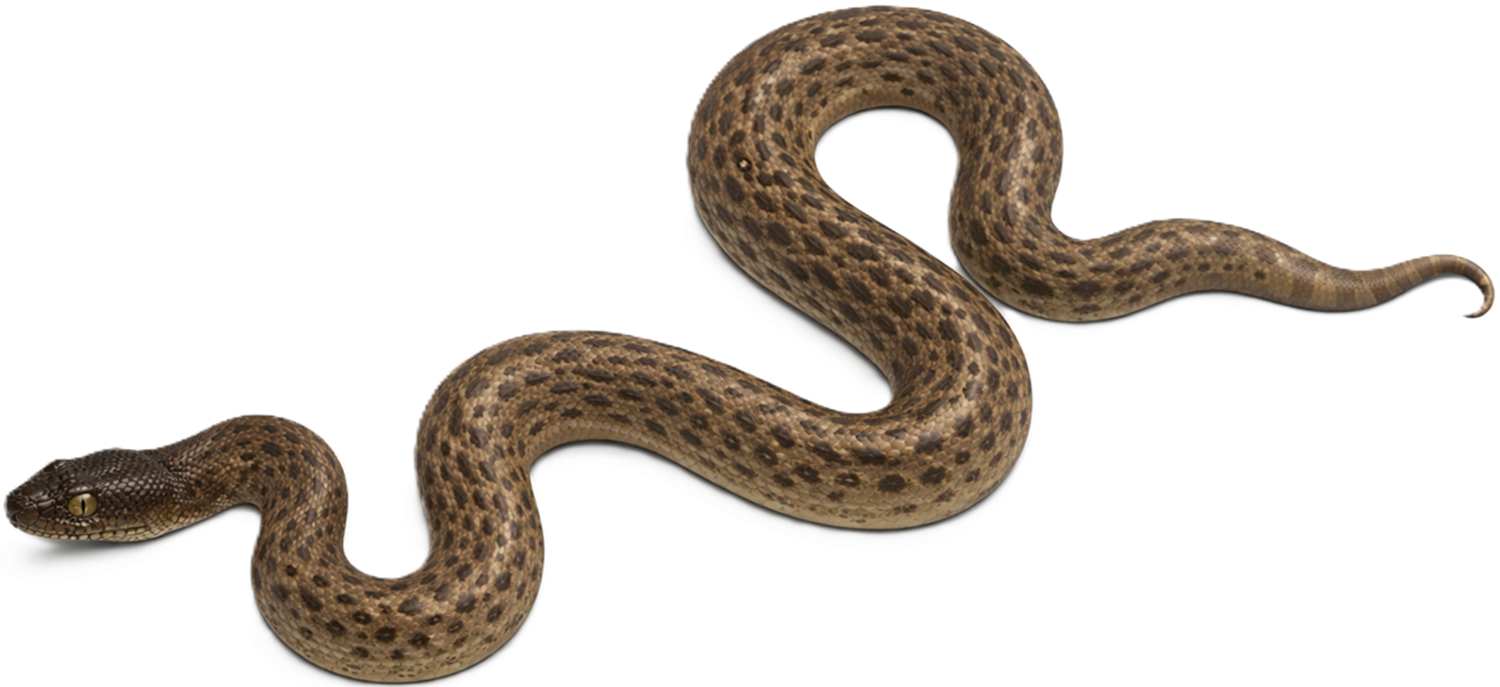 |
Cerberophis robustus229Longrich, N. R., Bhullar, B. S. & Gauthier, J. A. (2012). Mass extinction of lizards and snakes at the Cretaceous–Paleogene boundary. Proceedings of the National Academy of Sciences of the United States of America, 109(52), 21396–21401. doi:10.1073/pnas.1211526110230Longrich, N. R., Bhullar, B. S. & Gauthier, J. A. (2013). Correction for “Mass extinction of lizards and snakes at the Cretaceous–Paleogene boundary.” Proceedings of the National Academy of Sciences of the United States of America, 110(16), 6608. doi:10.1073/pnas.1303907110 | Hell Creek Formation | Montana | 68–66 Ma | Einzelfund | Schlange (Alethinophidia) |
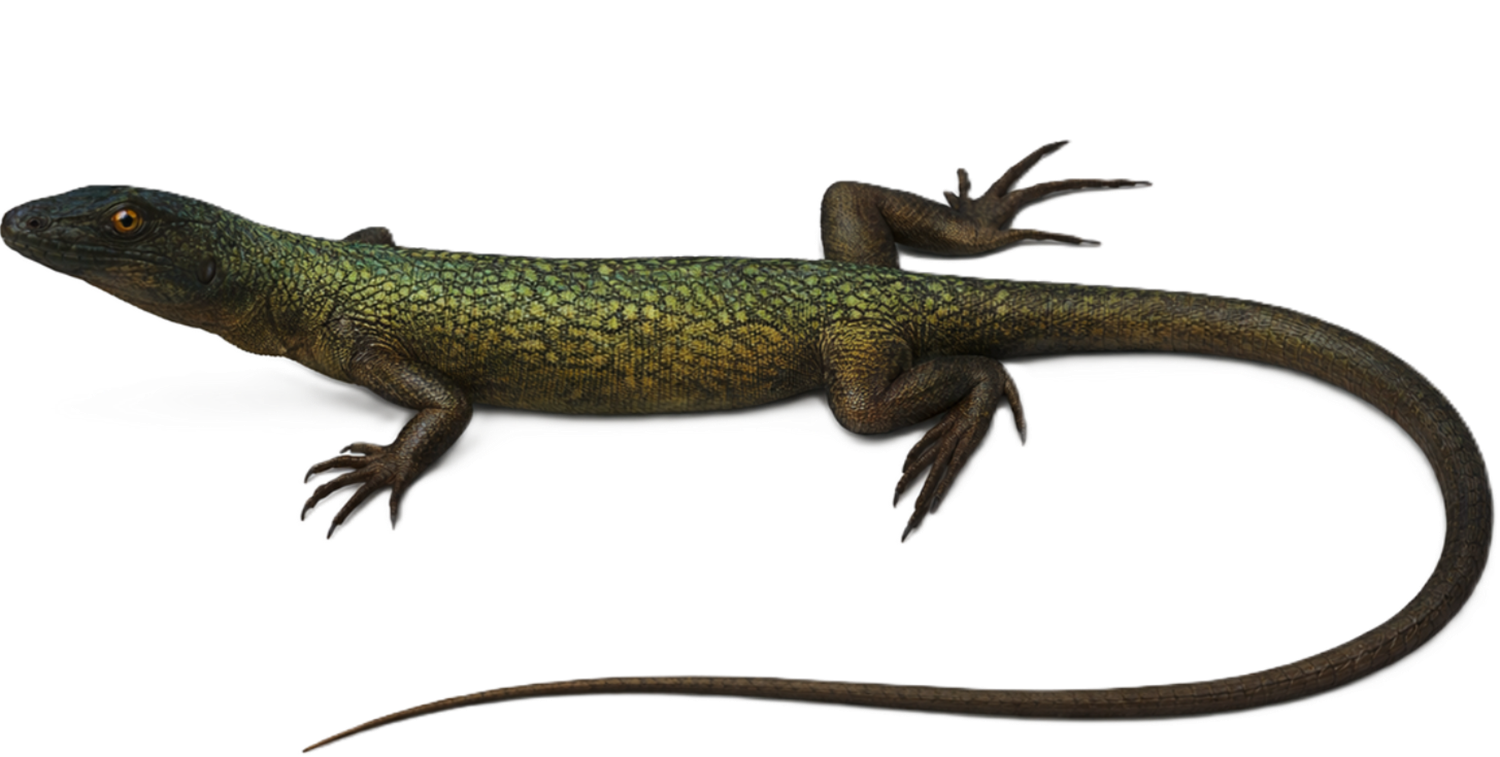 |
Chamops segnis231Estes, R. (1964). Fossil vertebrates from the Late Cretaceous Lance Formation, eastern Wyoming. University of California Publications in Geological Sciences, 49, 1–187.232Longrich, N. R., Bhullar, B. S. & Gauthier, J. A. (2012). Mass extinction of lizards and snakes at the Cretaceous–Paleogene boundary. Proceedings of the National Academy of Sciences of the United States of America, 109(52), 21396–21401. doi:10.1073/pnas.1211526110 | Hell Creek Formation, Lance Formation |
Montana, South Dakota, Wyoming | 68–66 Ma | häufig | Schienenechse (Chamopsidae) |
 |
Chamopsidae indet.233Carpenter, K. (1979). Vertebrate fauna of the Laramie Formation (Maastrichtian), Weld County, Colorado. Contributions to Geology, University of Wyoming, 17, 37–49. | Laramie Formation | Colorado | 68–66 Ma | selten | Unbestimmter Chamopside |
 |
Colpodontosaurus cracens234Estes, R. (1964). Fossil vertebrates from the Late Cretaceous Lance Formation, eastern Wyoming. University of California Publications in Geological Sciences, 49, 1–187.235Longrich, N. R., Bhullar, B. S. & Gauthier, J. A. (2012). Mass extinction of lizards and snakes at the Cretaceous–Paleogene boundary. Proceedings of the National Academy of Sciences of the United States of America, 109(52), 21396–21401. doi:10.1073/pnas.1211526110 | Lance Formation | Wyoming | 68–66 Ma | selten | Schleichenartiger (Anguimorpha) |
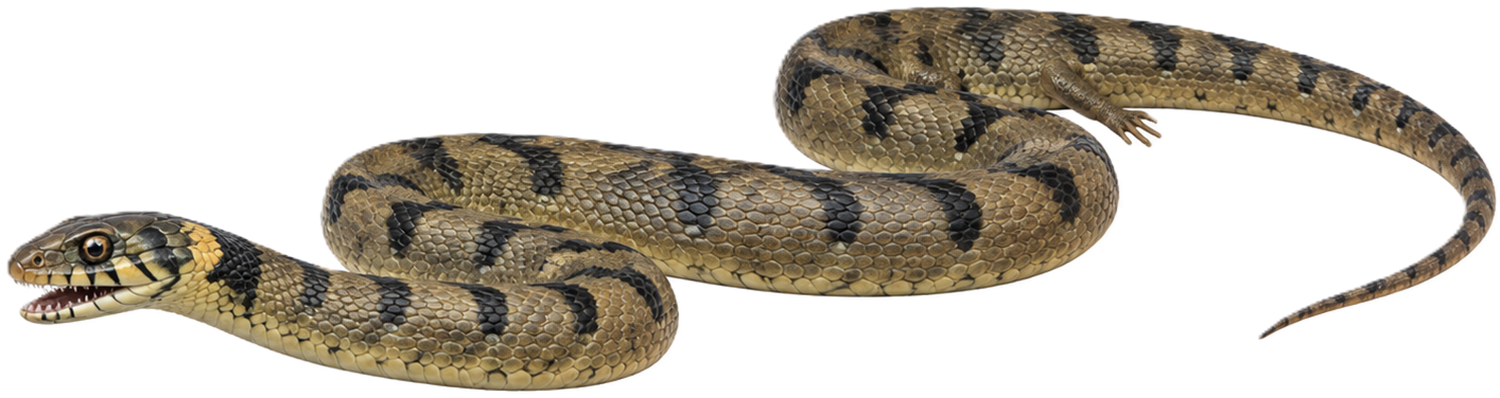 |
cf. Coniophis precedens236Petermann, H. & Lyson, T. R. (2025). Squamate fauna from the Denver Basin shows major ecosystem disruption across the K/Pg boundary. Proceedings of the Royal Society B: Biological Sciences, 292, 20251234. doi:10.1098/rspb.2025.1234 | Denver Formation | Colorado | 66 Ma | selten | Echte Schlange (Alethinophidia); Bestimmung unsicher |
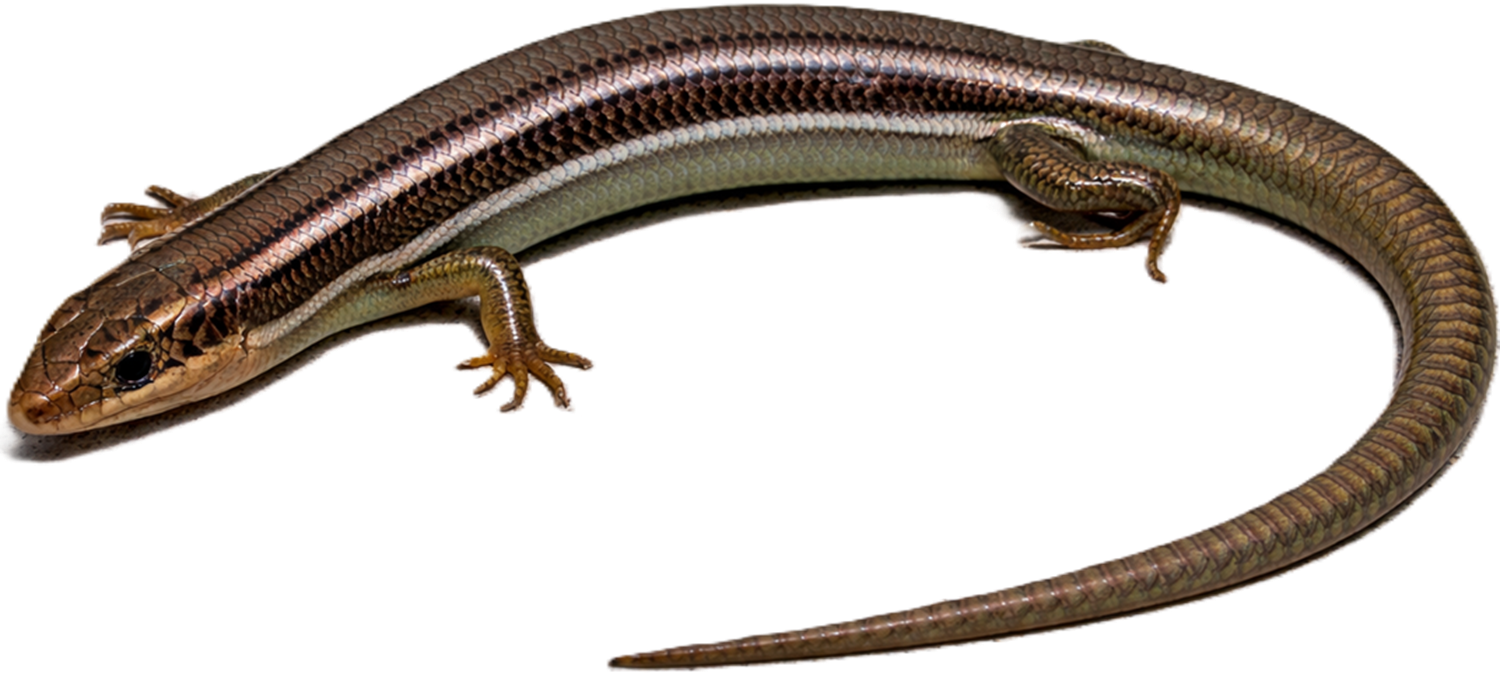 |
Contogenys sloani237Longrich, N. R., Bhullar, B. S. & Gauthier, J. A. (2012). Mass extinction of lizards and snakes at the Cretaceous–Paleogene boundary. Proceedings of the National Academy of Sciences of the United States of America, 109(52), 21396–21401. doi:10.1073/pnas.1211526110 | Hell Creek Formation | Montana, South Dakota | 68–66 Ma | selten | Skink (Scincidae) |
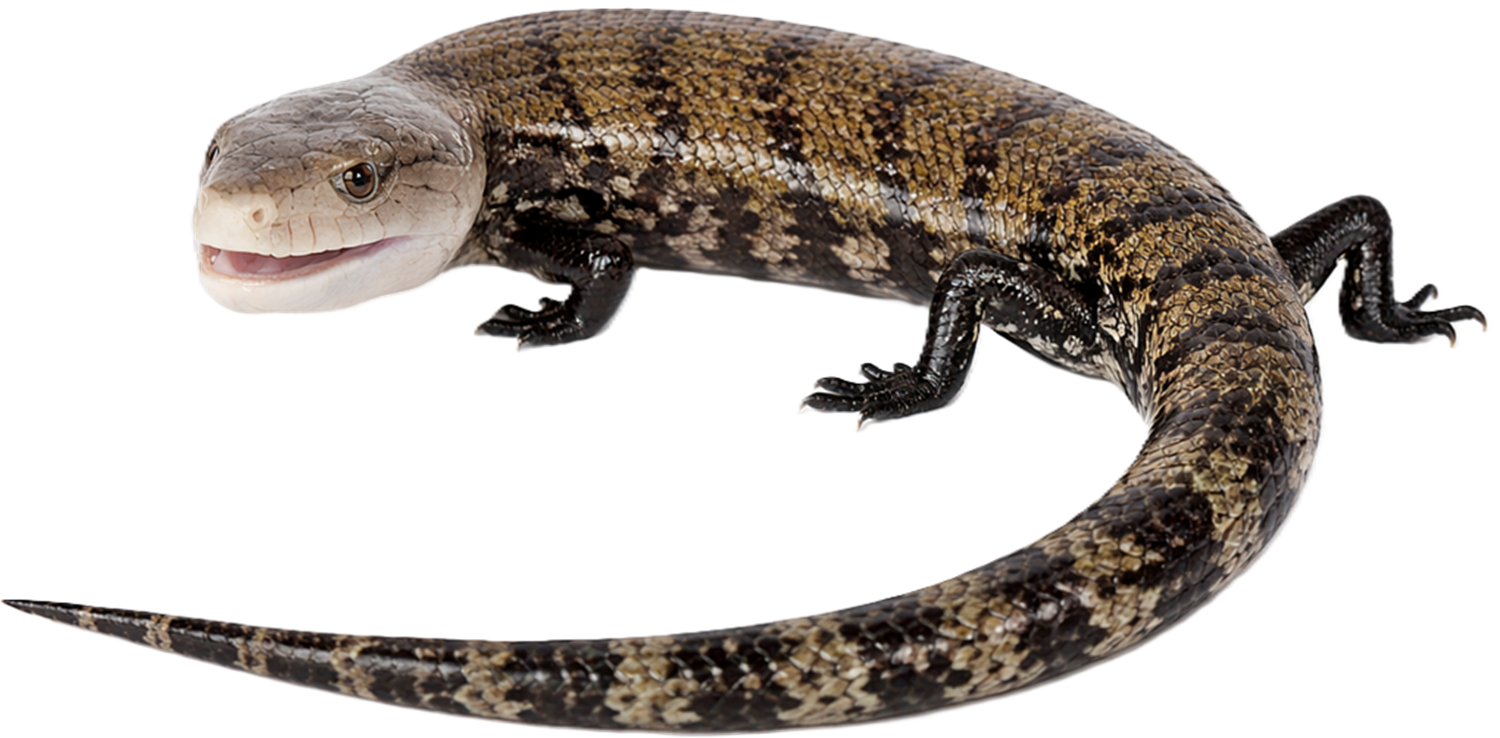 |
Estescincosaurus cooki238Estes, R. (1964). Fossil vertebrates from the Late Cretaceous Lance Formation, eastern Wyoming. University of California Publications in Geological Sciences, 49, 1–187.239Longrich, N. R., Bhullar, B. S. & Gauthier, J. A. (2013). Correction for “Mass extinction of lizards and snakes at the Cretaceous–Paleogene boundary.” Proceedings of the National Academy of Sciences of the United States of America, 110(16), 6608. doi:10.1073/pnas.1303907110 | Lance Formation | Wyoming | 68–66 Ma | selten | Skink (Scincidae) |
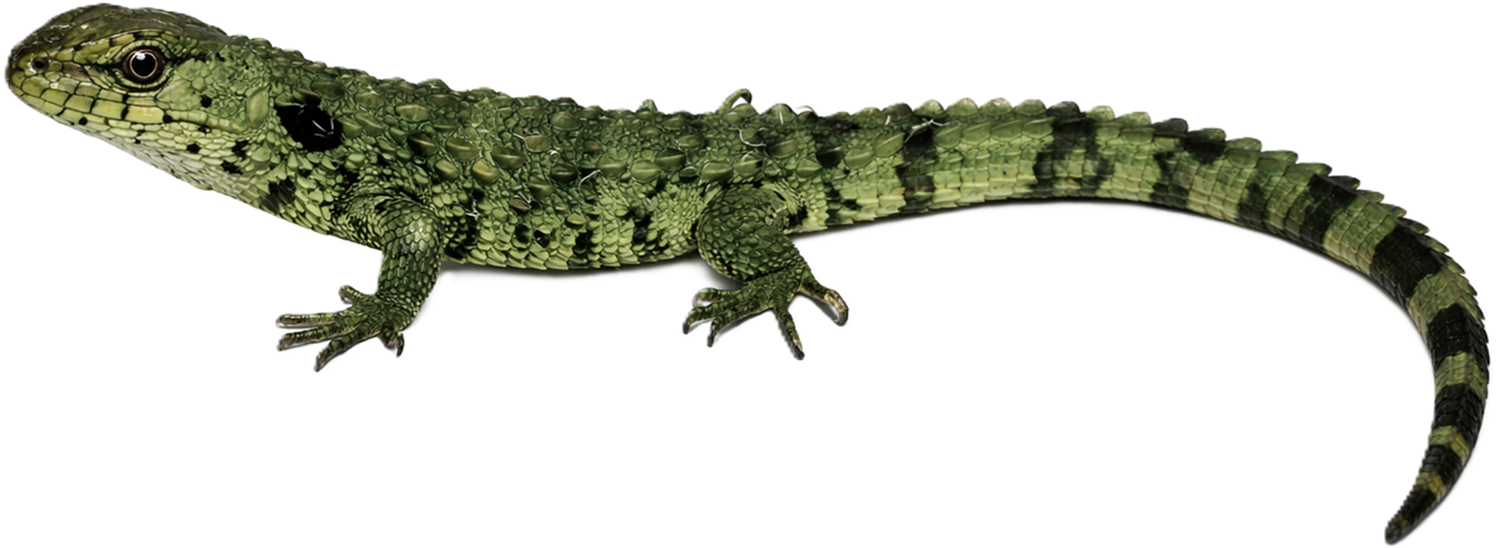 |
Exostinus lancensis240Estes, R. (1964). Fossil vertebrates from the Late Cretaceous Lance Formation, eastern Wyoming. University of California Publications in Geological Sciences, 49, 1–187.241Longrich, N. R., Bhullar, B. S. & Gauthier, J. A. (2012). Mass extinction of lizards and snakes at the Cretaceous–Paleogene boundary. Proceedings of the National Academy of Sciences of the United States of America, 109(52), 21396–21401. doi:10.1073/pnas.1211526110 | Hell Creek Formation, Lance Formation |
Montana, South Dakota, Wyoming | 68–66 Ma | häufig | Höckerechse (Xenosauridae) |
 |
Haptosphenus placodon242Estes, R. (1964). Fossil vertebrates from the Late Cretaceous Lance Formation, eastern Wyoming. University of California Publications in Geological Sciences, 49, 1–187. | Hell Creek Formation, Lance Formation |
Montana, Wyoming | 68–66 Ma | selten | Schienenechse (Teiidae) |
 |
Leptochamops denticulatus243Estes, R. (1964). Fossil vertebrates from the Late Cretaceous Lance Formation, eastern Wyoming. University of California Publications in Geological Sciences, 49, 1–187.244Longrich, N. R., Bhullar, B. S. & Gauthier, J. A. (2012). Mass extinction of lizards and snakes at the Cretaceous–Paleogene boundary. Proceedings of the National Academy of Sciences of the United States of America, 109(52), 21396–21401. doi:10.1073/pnas.1211526110 | Hell Creek Formation, Lance Formation |
Montana, South Dakota, Wyoming | 68–66 Ma | häufig | Schienenechse (Chamopsidae) |
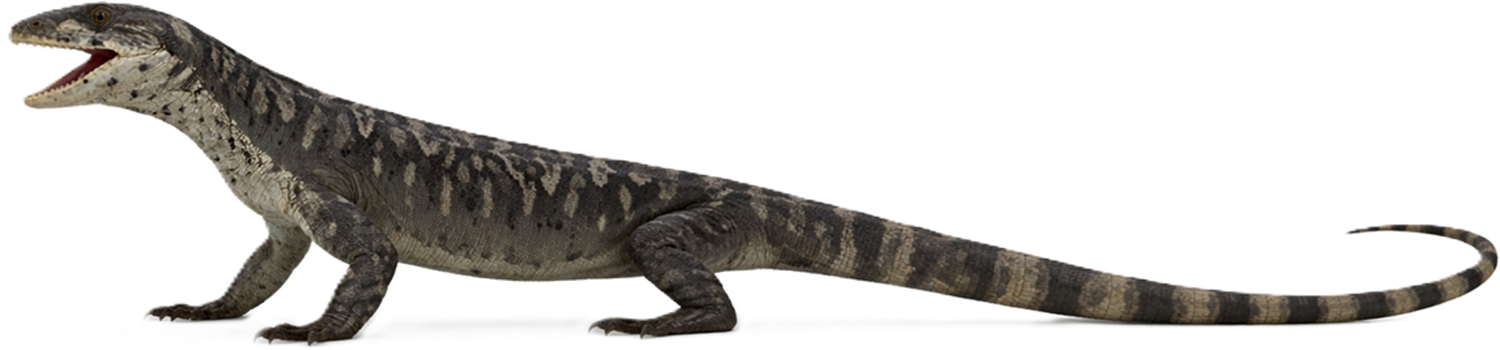 |
Litakis gilmorei245Estes, R. (1964). Fossil vertebrates from the Late Cretaceous Lance Formation, eastern Wyoming. University of California Publications in Geological Sciences, 49, 1–187. | Lance Formation | Wyoming | 68–66 Ma | selten | Schuppenkriechtier (Squamata) |
 |
Meniscognathus altmani246Estes, R. (1964). Fossil vertebrates from the Late Cretaceous Lance Formation, eastern Wyoming. University of California Publications in Geological Sciences, 49, 1–187.247Petermann, H. & Lyson, T. R. (2025). Squamate fauna from the Denver Basin shows major ecosystem disruption across the K/Pg boundary. Proceedings of the Royal Society B: Biological Sciences, 292, 20251234. doi:10.1098/rspb.2025.1234 | Lance Formation, Denver Formation |
Wyoming, Colorado | 68–66 Ma | häufig | Schienenechse (Chamopsidae) |
 |
Mosasaurinae indet.248Van Vranken, N. E. & Boyd, C. A. (2021). The first in situ collection of a mosasaurine from the marine Breien Member of the Hell Creek Formation in south-central North Dakota, USA. PaleoBios, 38(1). doi:10.5070/P938054460 | Hell Creek Formation | North Dakota | ca. 68 Ma | Einzelfund | Großer Mosasaurier; Bestimmung unsicher |
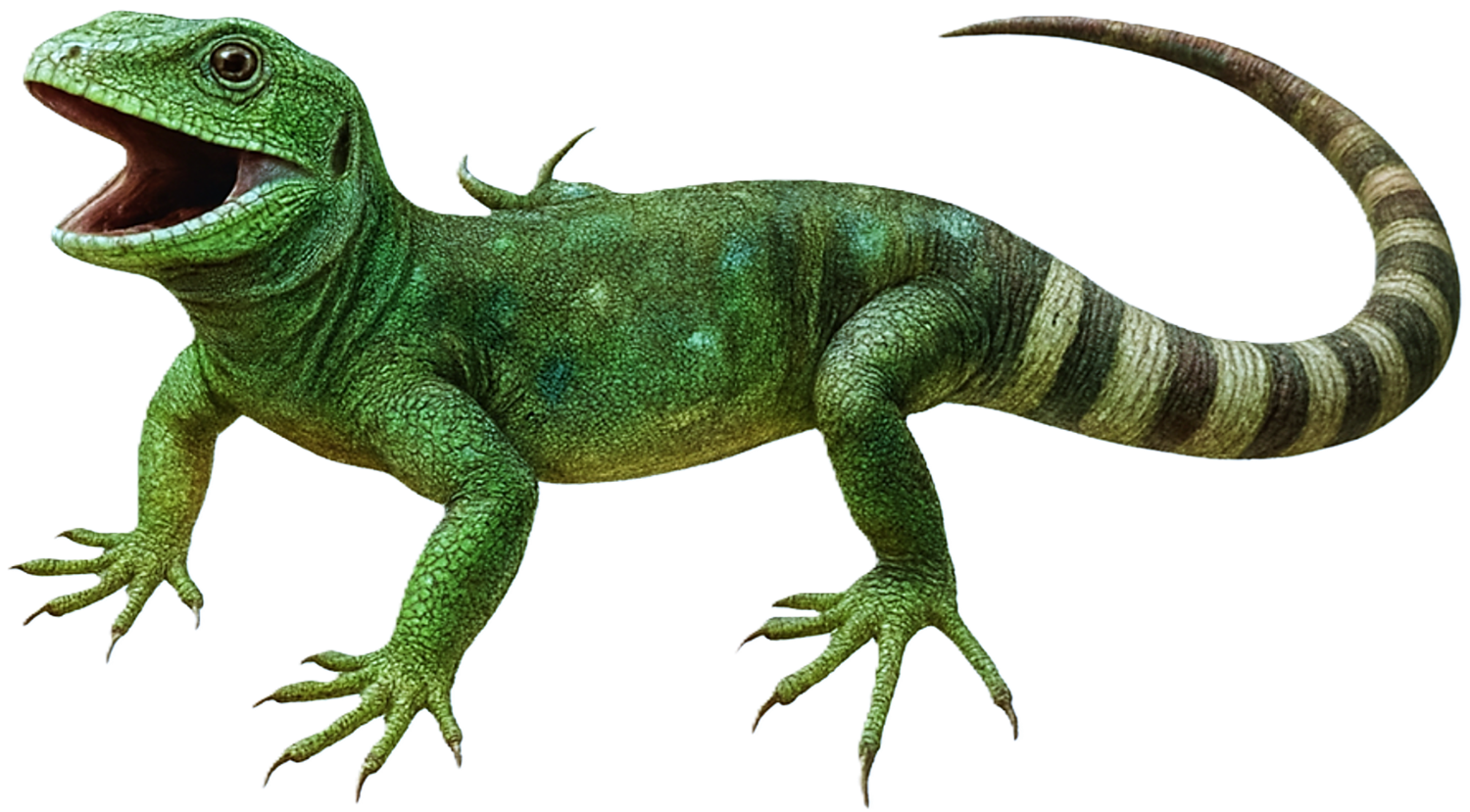 |
Obamadon gracilis249Longrich, N. R., Bhullar, B. S. & Gauthier, J. A. (2012). Mass extinction of lizards and snakes at the Cretaceous–Paleogene boundary. Proceedings of the National Academy of Sciences of the United States of America, 109(52), 21396–21401. doi:10.1073/pnas.1211526110250Longrich, N. R., Bhullar, B. S. & Gauthier, J. A. (2013). Correction for “Mass extinction of lizards and snakes at the Cretaceous–Paleogene boundary.” Proceedings of the National Academy of Sciences of the United States of America, 110(16), 6608. doi:10.1073/pnas.1303907110 | Hell Creek Formation, Lance Formation |
Montana, Wyoming | 68–66 Ma | selten | Schuppenkriechtier (Polyglyphanodontia) |
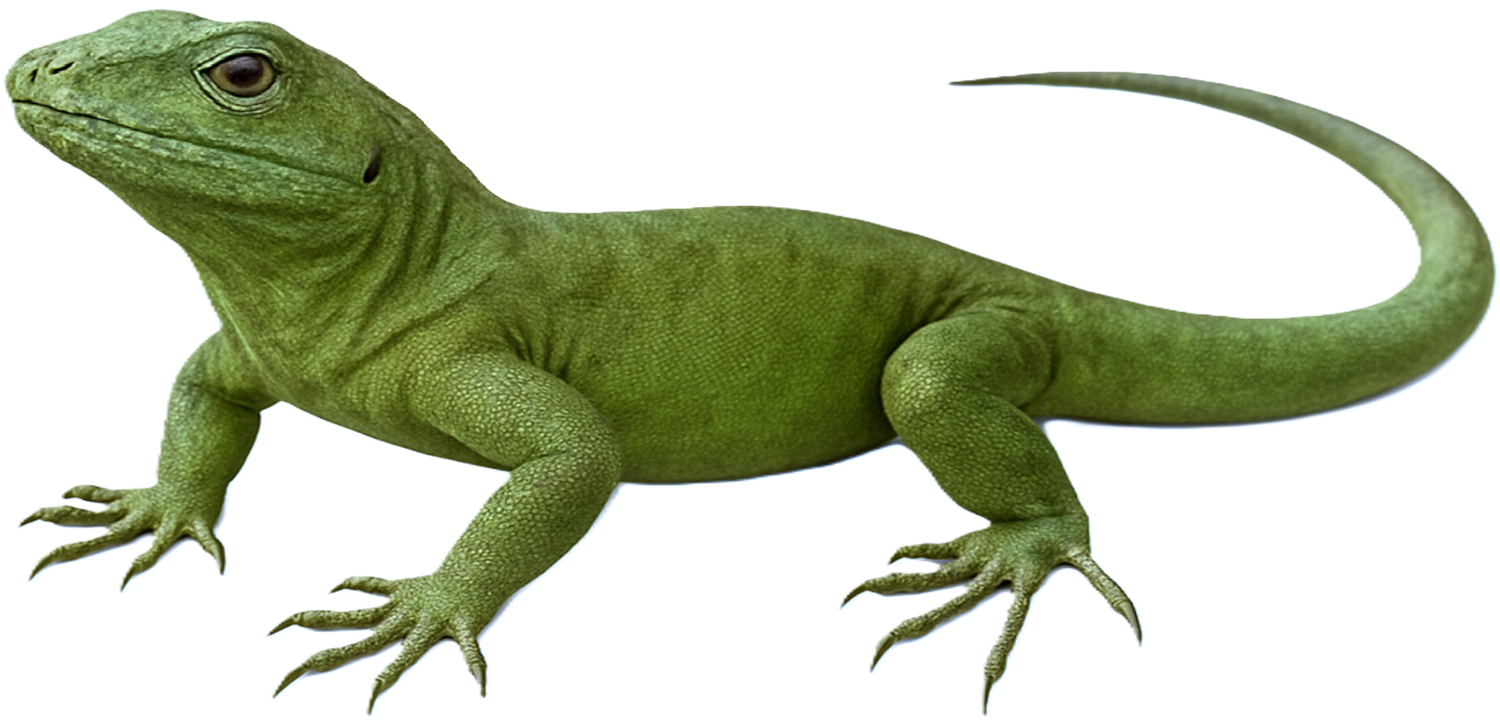 |
cf. Obamadon sp.251Petermann, H. & Lyson, T. R. (2025). Squamate fauna from the Denver Basin shows major ecosystem disruption across K/Pg boundary. Proceedings of the Royal Society B: Biological Sciences, 292, 20251234. doi:10.1098/rspb.2025.1234 | Denver Formation | Colorado | 66 Ma | selten | Schuppenkriechtier (Polyglyphanodontia); Bestimmung unsicher |
 |
Odaxosaurus piger252Carpenter, K. (1979). Vertebrate fauna of the Laramie Formation (Maastrichtian), Weld County, Colorado. Contributions to Geology, University of Wyoming, 17, 37–49.253Petermann, H. & Lyson, T. R. (2025). Squamate fauna from the Denver Basin shows major ecosystem disruption across K/Pg boundary. Proceedings of the Royal Society B: Biological Sciences, 292, 20251234. doi:10.1098/rspb.2025.1234 | Denver Formation, Laramie Formation |
Colorado | 68–66 Ma | selten | Schleichenverwandte (Anguimorpha) |
 |
cf. Odaxosaurus piger254Wroblewski, A. F. (2026). Systematics and biostratigraphy of non-mammalian vertebrates across the K/Pg transition, southern Wyoming, USA. Journal of Paleontology, 100, 222–250. doi:10.1017/jpa.2025.10191 | Ferris Formation | Wyoming | 68–66 Ma | häufig | Schleichenverwandte (Anguimorpha); Bestimmung unsicher |
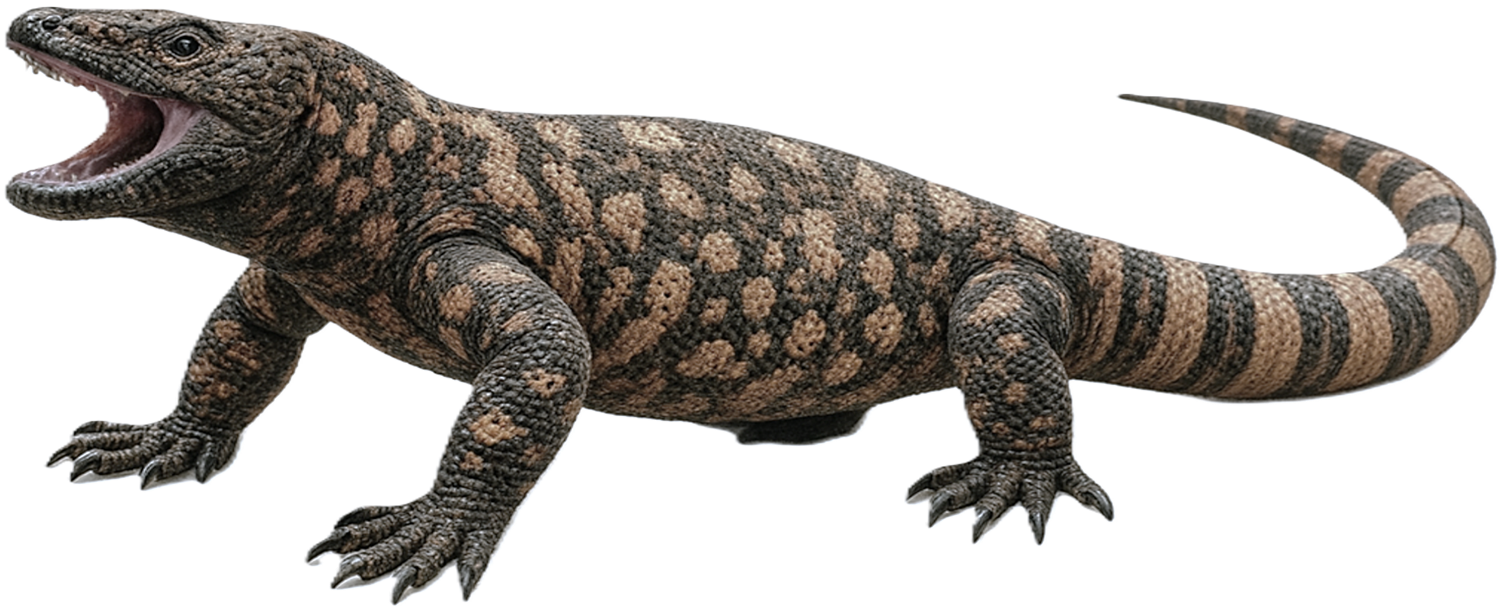 |
Palaeosaniwa canadensis255Estes, R. (1964). Fossil vertebrates from the Late Cretaceous Lance Formation, eastern Wyoming. University of California Publications in Geological Sciences, 49, 1–187.256Longrich, N. R., Bhullar, B. S. & Gauthier, J. A. (2012). Mass extinction of lizards and snakes at the Cretaceous–Paleogene boundary. Proceedings of the National Academy of Sciences of the United States of America, 109(52), 21396–21401. doi:10.1073/pnas.1211526110 | Hell Creek Formation, Lance Formation |
Montana, North Dakota, Wyoming | 68–66 Ma | häufig | Krustenechse (Monstersauria) |
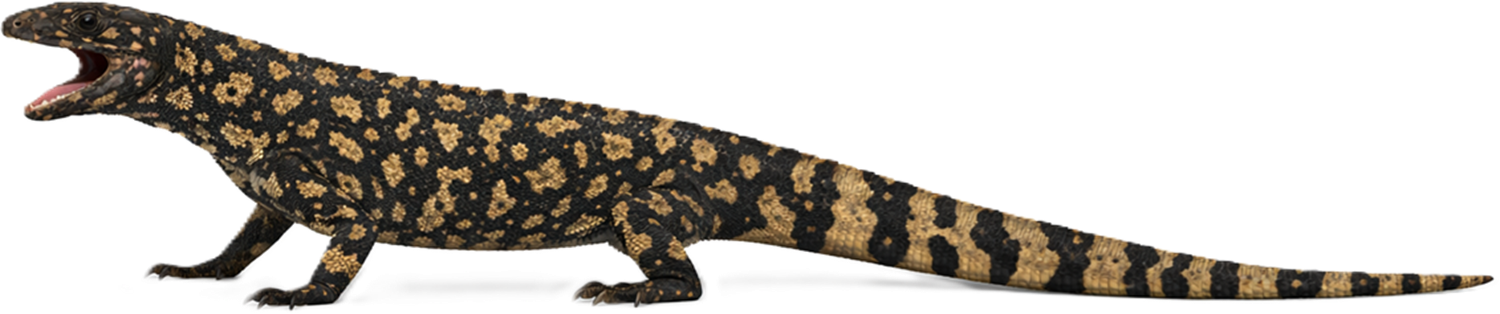 |
Paraderma bogerti257Estes, R. (1964). Fossil vertebrates from the Late Cretaceous Lance Formation, eastern Wyoming. University of California Publications in Geological Sciences, 49, 1–187.258Longrich, N. R., Bhullar, B. S. & Gauthier, J. A. (2012). Mass extinction of lizards and snakes at the Cretaceous–Paleogene boundary. Proceedings of the National Academy of Sciences of the United States of America, 109(52), 21396–21401. doi:10.1073/pnas.1211526110 | Hell Creek Formation, Lance Formation |
Montana, Wyoming | 68–66 Ma | häufig | Krustenechse (Monstersauria) |
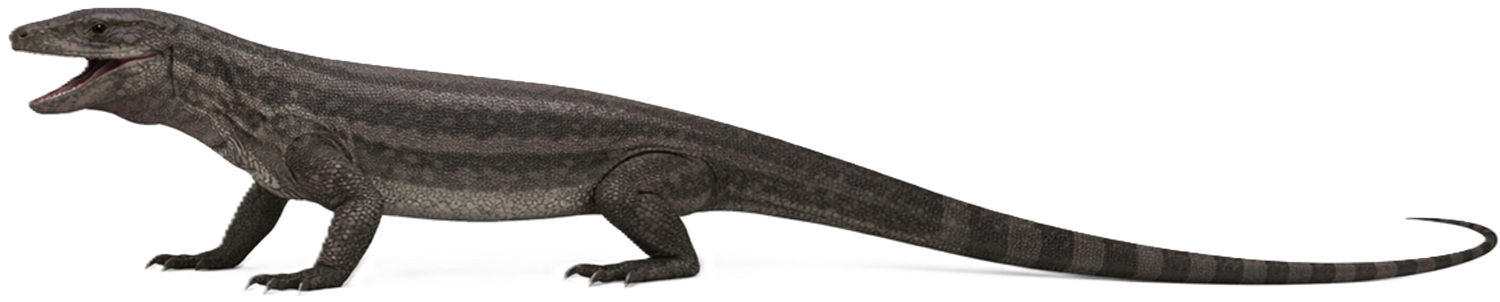 |
Parasaniwa wyomingensis259Estes, R. (1964). Fossil vertebrates from the Late Cretaceous Lance Formation, eastern Wyoming. University of California Publications in Geological Sciences, 49, 1–187.260Longrich, N. R., Bhullar, B. S. & Gauthier, J. A. (2012). Mass extinction of lizards and snakes at the Cretaceous–Paleogene boundary. Proceedings of the National Academy of Sciences of the United States of America, 109(52), 21396–21401. doi:10.1073/pnas.1211526110 | Hell Creek Formation, Lance Formation |
Montana, South Dakota, Wyoming | 68–66 Ma | häufig | Ur-Waran (Palaeovaranidae) |
 |
Peneteius aquilonius261Longrich, N. R., Bhullar, B. S. & Gauthier, J. A. (2012). Mass extinction of lizards and snakes at the Cretaceous–Paleogene boundary. Proceedings of the National Academy of Sciences of the United States of America, 109(52), 21396–21401. doi:10.1073/pnas.1211526110262Longrich, N. R., Bhullar, B. S. & Gauthier, J. A. (2013). Correction for “Mass extinction of lizards and snakes at the Cretaceous–Paleogene boundary.” Proceedings of the National Academy of Sciences of the United States of America, 110(16), 6608. doi:10.1073/pnas.1303907110 | Hell Creek Formation | Montana | 68–66 Ma | selten | Schuppenkriechtier (Polyglyphanodontia) |
 |
Prognathodontini indet.263During, M. A. D. et al. (2025). King of the Riverside, a multi-proxy approach offers a new perspective on mosasaurs before their extinction. BMC Zoology, 10(1), 25. doi:10.1186/s40850-025-00246-y | Hell Creek Formation | North Dakota | 66 Ma | Einzelfund | Mosasaurier; Bestimmung unsicher |
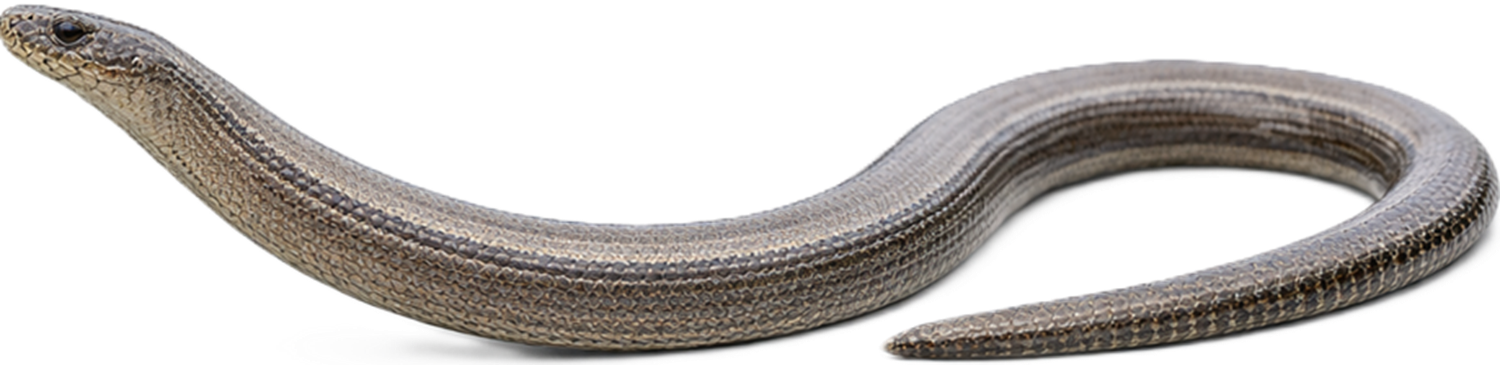 |
Proxestops sp. (?)264Bartlett, J. A. (2004). The small vertebrate fauna of the Hell Creek Formation in the vicinity of Marmarth, North Dakota. Master’s thesis, University of Oklahoma.265Sullivan, R. M. (1991). The fossil lizards and snakes of New Mexico. New Mexico Museum of Natural History and Science Bulletin, 1, 1–37. | Hell Creek Formation | Montana, South Dakota | 68–66 Ma | selten | Schleichenverwandte (Anguimorpha); Bestimmung unsicher, historisch als Proxestops jepseni geführt |
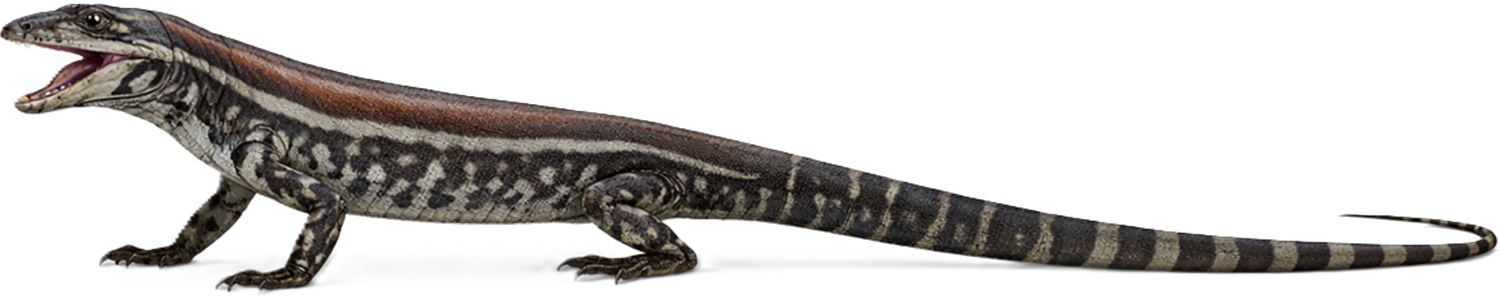 |
Socognathus brachyodon266Estes, R. (1964). Fossil vertebrates from the Late Cretaceous Lance Formation, eastern Wyoming. University of California Publications in Geological Sciences, 49, 1–187. | Lance Formation | Wyoming | 68–66 Ma | Einzelfund | Schienenechse (Chamopsidae) |
 |
Squamata indet.267Petermann, H. & Lyson, T. R. (2025). Squamate fauna from the Denver Basin shows major ecosystem disruption across K/Pg boundary. Proceedings of the Royal Society B: Biological Sciences, 292, 20251234. doi:10.1098/rspb.2025.1234268Wroblewski, A. F. (2026). Systematics and biostratigraphy of non-mammalian vertebrates across the K/Pg transition, southern Wyoming, USA. Journal of Paleontology, 100, 222–250. doi:10.1017/jpa.2025.10191 | Ferris Formation, Denver Formation | Colorado | 66 Ma | sehr häufig | Viele hundert weitere Funde von bislang unbestimmten Schuppenechsen. |
Aus einer ungefähr 57.000 Jahre vor der K-Pg-Grenze abgelagerten Fundstelle der Denver Formation wurden insgesamt 235 Fossilien beschrieben, die zu mindestens 27 taxonomischen Einheiten gehören.269Petermann, H. & Lyson, T. R. (2025). Squamate fauna from the Denver Basin shows major ecosystem disruption across K/Pg boundary. Proceedings of the Royal Society B: Biological Sciences, 292, 20251234. doi:10.1098/rspb.2025.1234 Älteres Material aus der Ferris Formation war teilweise als Leptochamops denticulatus eingeordnet worden, lässt sich nach der Neubearbeitung aber nicht sicher dieser Art zuweisen.270Wroblewski, A. F. (2026). Systematics and biostratigraphy of non-mammalian vertebrates across the K/Pg transition, southern Wyoming, USA. Journal of Paleontology, 100, 222–250. doi:10.1017/jpa.2025.10191 Aus den marinen Faszies der Hell Creek Formation sind außerdem die bislang noch unbestimmten Fossilien eines großen Mosasauriers bekannt, der eine geschätzte Länge von 11 m gehabt haben könnte.271Van Vranken, N. E., & Boyd, C. A. (2021). The first in situ collection of a mosasaurine from the marine Breien Member of the Hell Creek Formation in south-central North Dakota, USA. PaleoBios, 38(1). doi:10.5070/P938054460 Doch Mosasaurier kamen in Hell Creek auch im Süßwasser vor! Bekannt ist eine Zahnkrone, die in Süßwasserablagerungen gemeinsam mit einem Zahn von T. rex, einem Oberkieferknochen eines Krokodilverwandten sowie einem Hadrosaurierzahn gefunden wurde; die stratigraphische Position liegt oberhalb des marinen Breien Members.272During, M. A. D. et al. (2025). King of the Riverside, a multi-proxy approach offers a new perspective on mosasaurs before their extinction. BMC Zoology, 10(1), 25. doi:10.1186/s40850-025-00246-y

Eutheria:
| Bild: | Spezies: | Formation: | Fundort: | Alter: | Häufigkeit: | Bemerkungen: |
|---|---|---|---|---|---|---|
 |
Alostera saskatchewanensis273Kielan-Jaworowska, Z., Cifelli, R. L. & Luo, Z.-X. (2004). Mammals from the Age of Dinosaurs – Origins, Evolution, and Structure. Columbia University Press, 98–99. doi:10.7312/kiel11918274Averianov, A. O. & Archibald, J. D. (2013). Species composition of the Late Cretaceous eutherian mammal Paranyctoides Fox. Canadian Journal of Earth Sciences, 50(7), 693–700. doi:10.1139/cjes-2012-0156 | Hell Creek Formation, Lance Formation | Montana, Wyoming | 68–66 Ma | selten | Eutheria, unklare Verwandtschaft; historisch als Paranyctoides geführt |
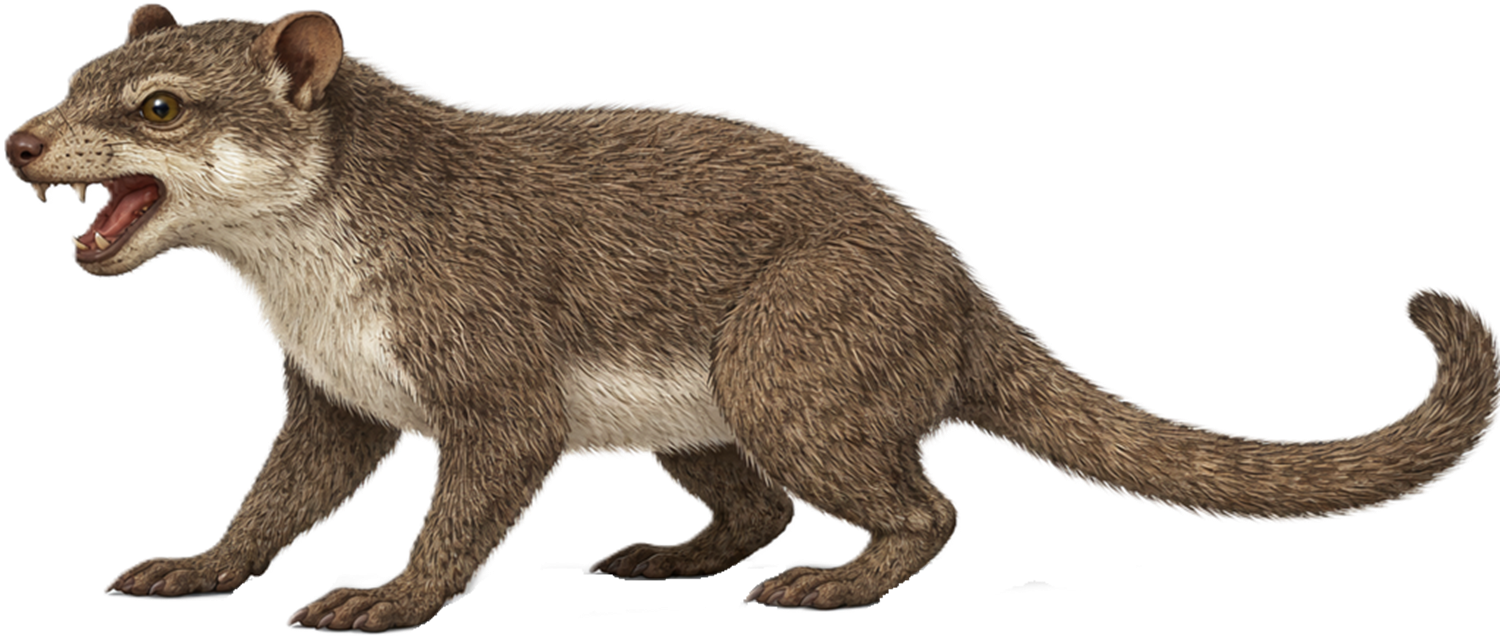 |
Altacreodus magnus275Fox, R. C. (2015). A revision of the Late Cretaceous–Paleocene eutherian mammal Cimolestes Marsh, 1889. Canadian Journal of Earth Sciences, 52(12), 1137–1149. doi:10.1139/cjes-2015-0113 | Hell Creek Formation, Lance Formation | Montana, North Dakota, Wyoming | 68–66 Ma | selten | Vielleicht ein Creodont (Creodonta) |
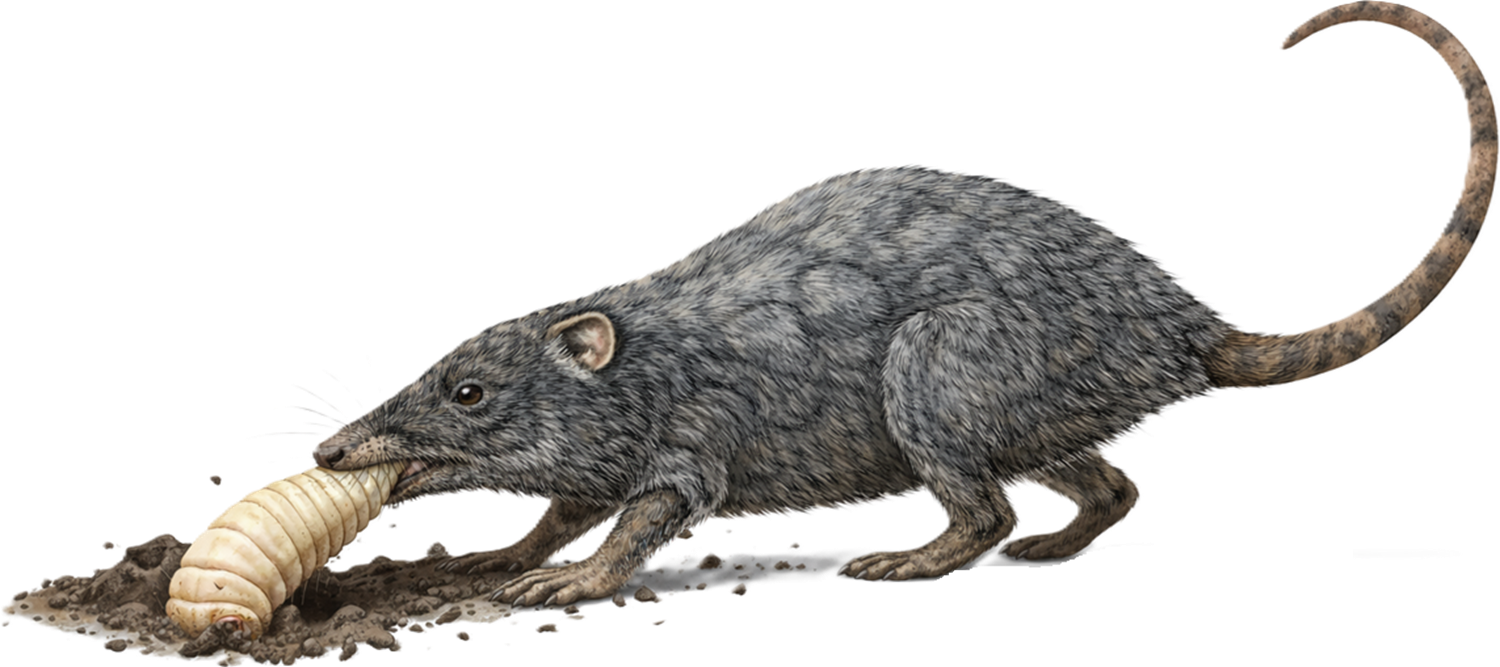 |
Ambilestes cerberoides276Fox, R. C. (2015). A revision of the Late Cretaceous–Paleocene eutherian mammal Cimolestes Marsh, 1889. Canadian Journal of Earth Sciences, 52(12), 1137–1149. doi:10.1139/cjes-2015-0113 | Hell Creek Formation | Montana | 68–66 Ma | selten | Eutheria, unklare Verwandtschaft |
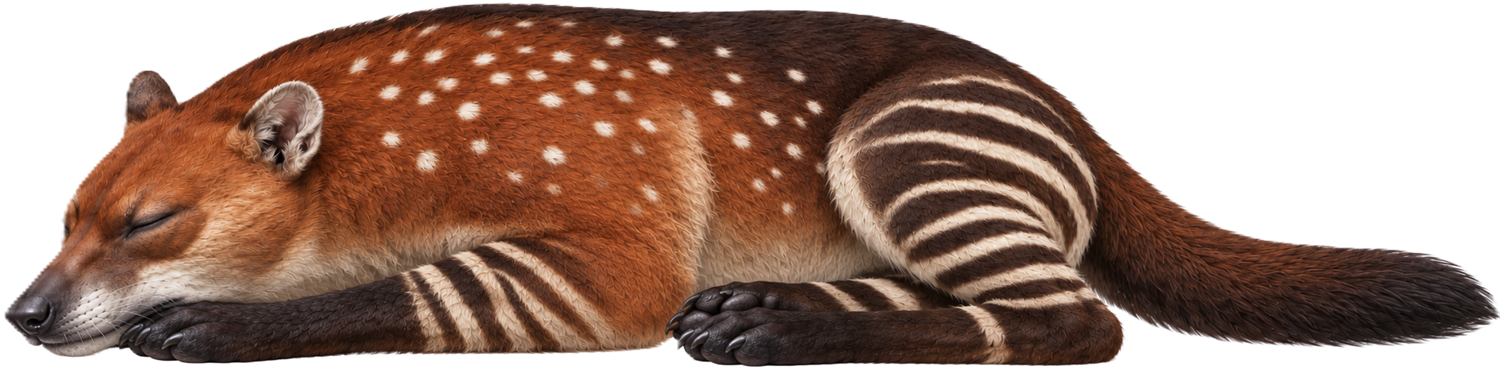 |
Baioconodon sp. cf. B. nordicus277Kelly, T. S. (2014). Preliminary report on the mammals from Lane’s Little Jaw Site Quarry: A latest Cretaceous (earliest Puercan?) local fauna, Hell Creek Formation, southeastern Montana. Paludicola, 10(1), 50–91. | Hell Creek Formation | Montana | 66–65 Ma | selten | Arctocyonidae; Bestimmung unsicher |
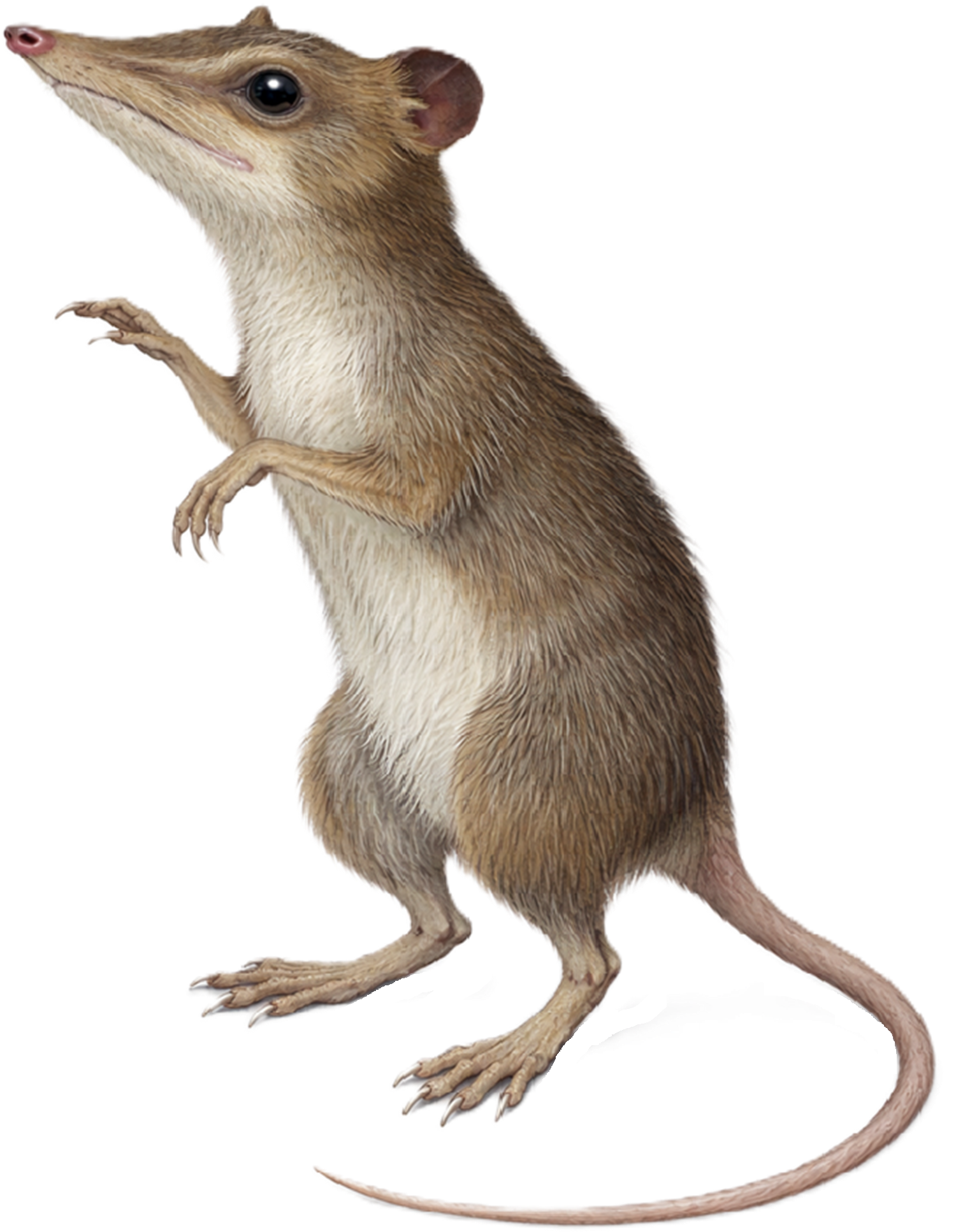 |
Batodon tenuis278Kielan-Jaworowska, Z., Cifelli, R. L. & Luo, Z.-X. (2004). Mammals from the Age of Dinosaurs – Origins, Evolution, and Structure. Columbia University Press, 98–99. doi:10.7312/kiel11918 | Hell Creek Formation, Lance Formation | Montana, Wyoming | 68–66 Ma | häufig | Cimolestidae |
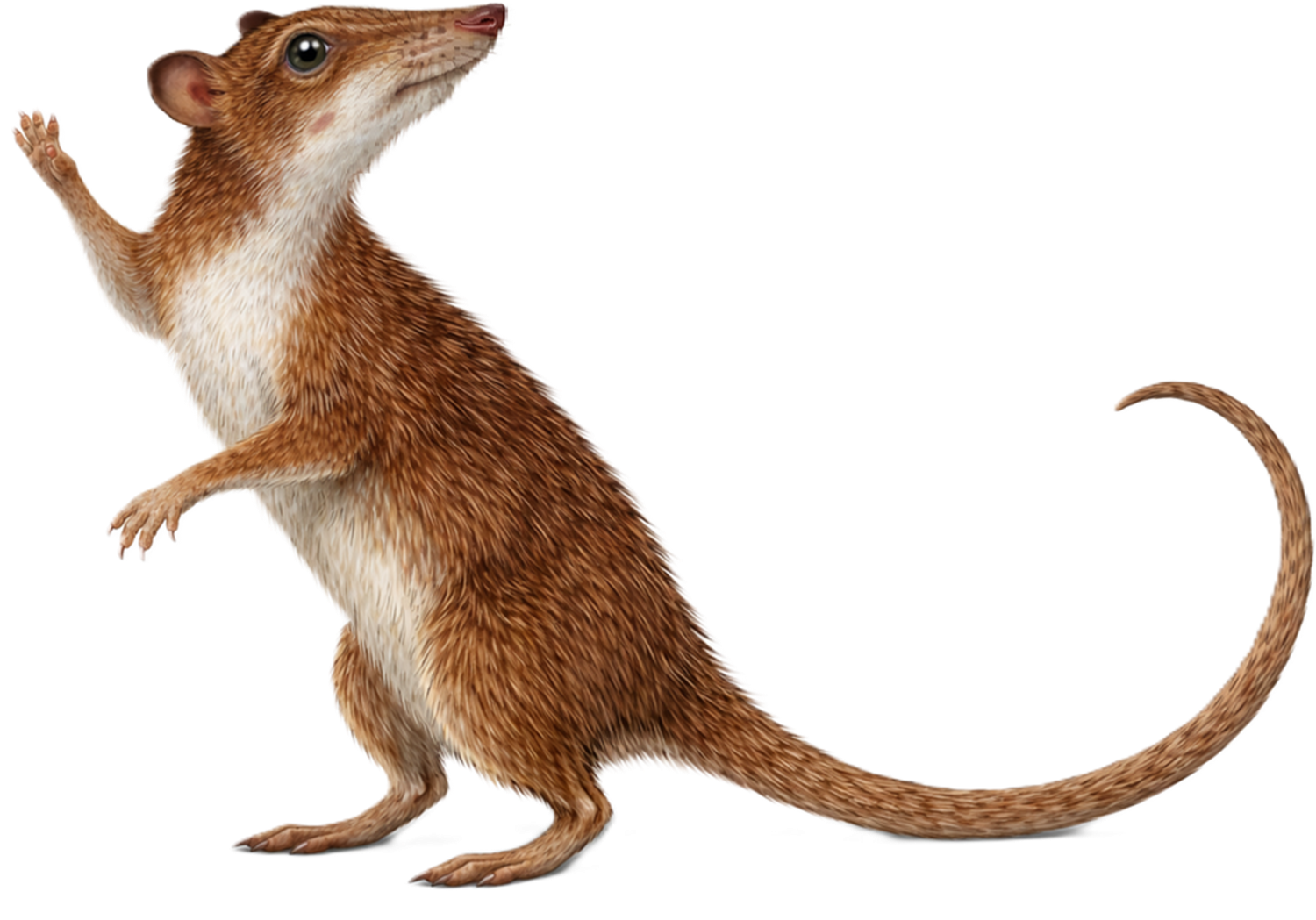 |
Cimolestes incisus279Fox, R. C. (2015). A revision of the Late Cretaceous–Paleocene eutherian mammal Cimolestes Marsh, 1889. Canadian Journal of Earth Sciences, 52(12), 1137–1149. doi:10.1139/cjes-2015-0113 | Hell Creek Formation, Lance Formation | Montana, Wyoming | 68–66 Ma | häufig | Cimolestidae |
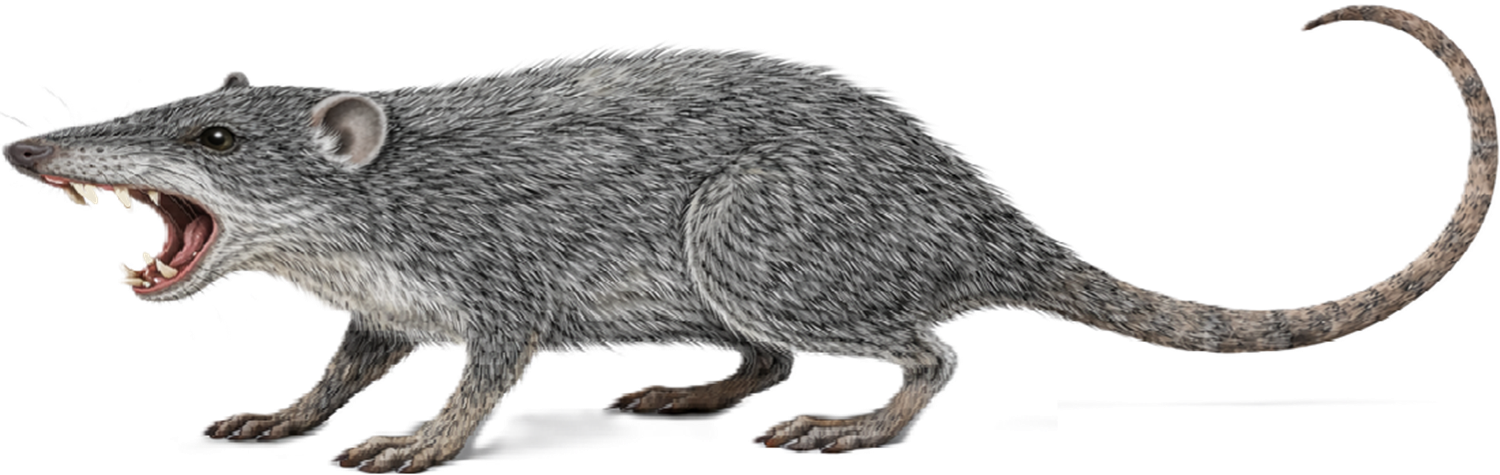 |
Cimolestes sp.280Kelly, T. S. (2014). Preliminary report on the mammals from Lane’s Little Jaw Site Quarry: A latest Cretaceous (earliest Puercan?) local fauna, Hell Creek Formation, southeastern Montana. Paludicola, 10(1), 50–91. | Hell Creek Formation | Montana | 66–65 Ma | selten | Cimolestidae; nicht auf Artebene bestimmbar |
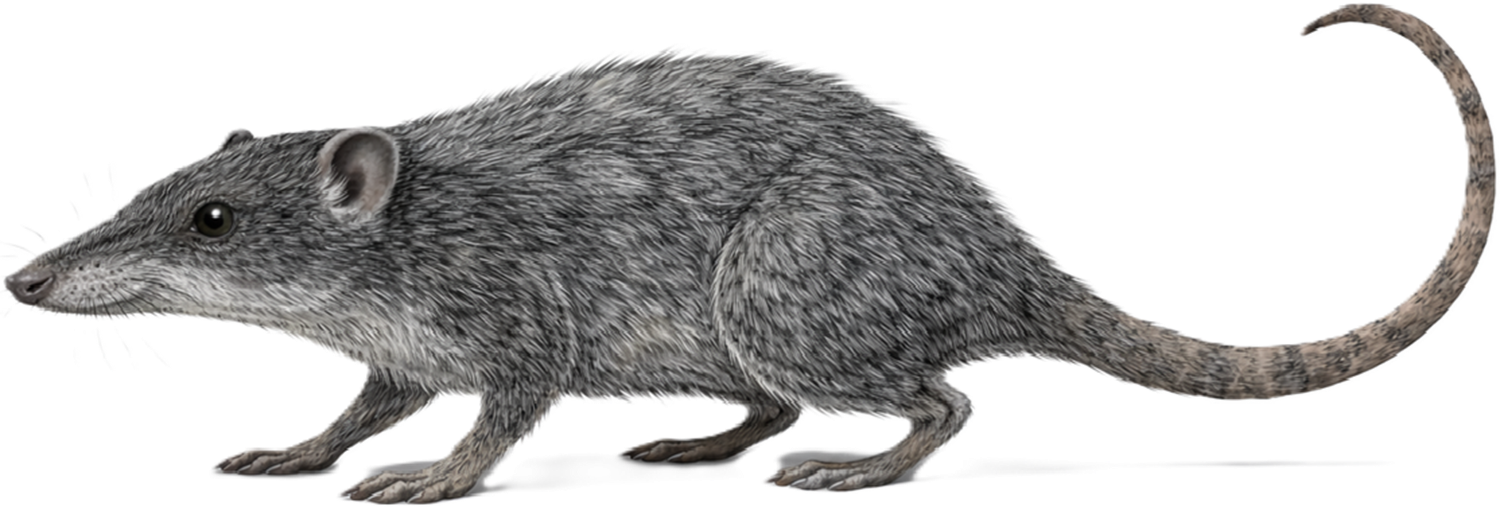 |
Cimolestes stirtoni281Fox, R. C. (2015). A revision of the Late Cretaceous–Paleocene eutherian mammal Cimolestes Marsh, 1889. Canadian Journal of Earth Sciences, 52(12), 1137–1149. doi:10.1139/cjes-2015-0113 | Hell Creek Formation, Lance Formation | Montana, Wyoming | 68–66 Ma | selten | Cimolestidae |
 |
Eutheria indet.282Wilson, G. P. et al. (2010). New latest Cretaceous mammals from northeastern Colorado with biochronologic and biogeographic implications. Journal of Vertebrate Paleontology, 30(2), 499–520. doi:10.1080/02724631003620955 | Denver Formation | Colorado | ca. 66 Ma | Einzelfund | Nicht näher bestimmbarer Eutherier |
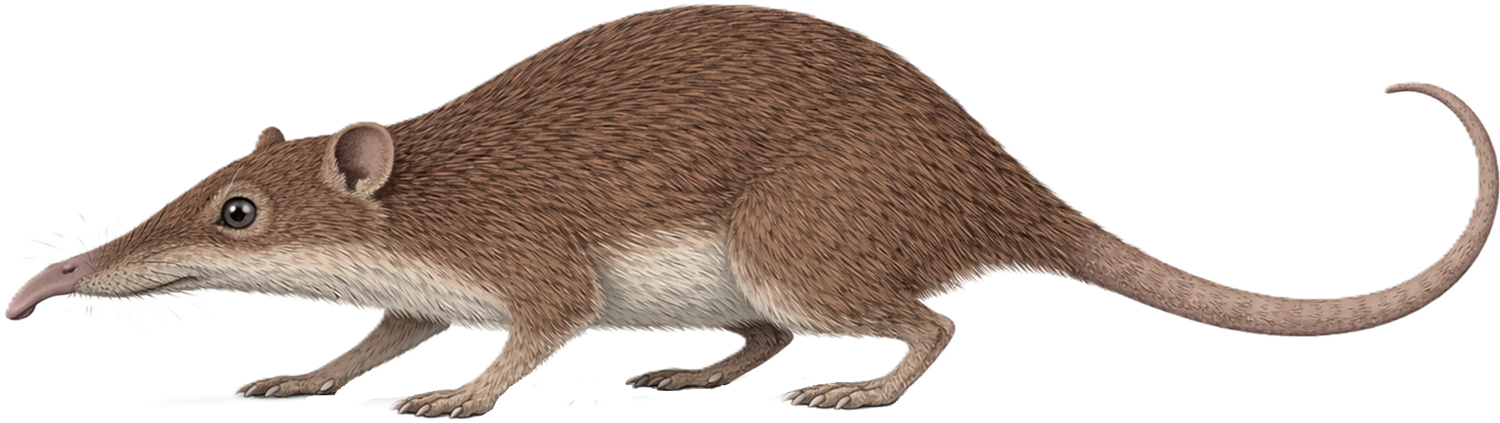 |
Gypsonictops cf. G. illuminatus283Kielan-Jaworowska, Z., Cifelli, R. L. & Luo, Z.-X. (2004). Mammals from the Age of Dinosaurs – Origins, Evolution, and Structure. Columbia University Press, 98–99. doi:10.7312/kiel11918 | Hell Creek Formation | Montana | 68–66 Ma | selten | Gypsonictopidae; Bestimmung unsicher |
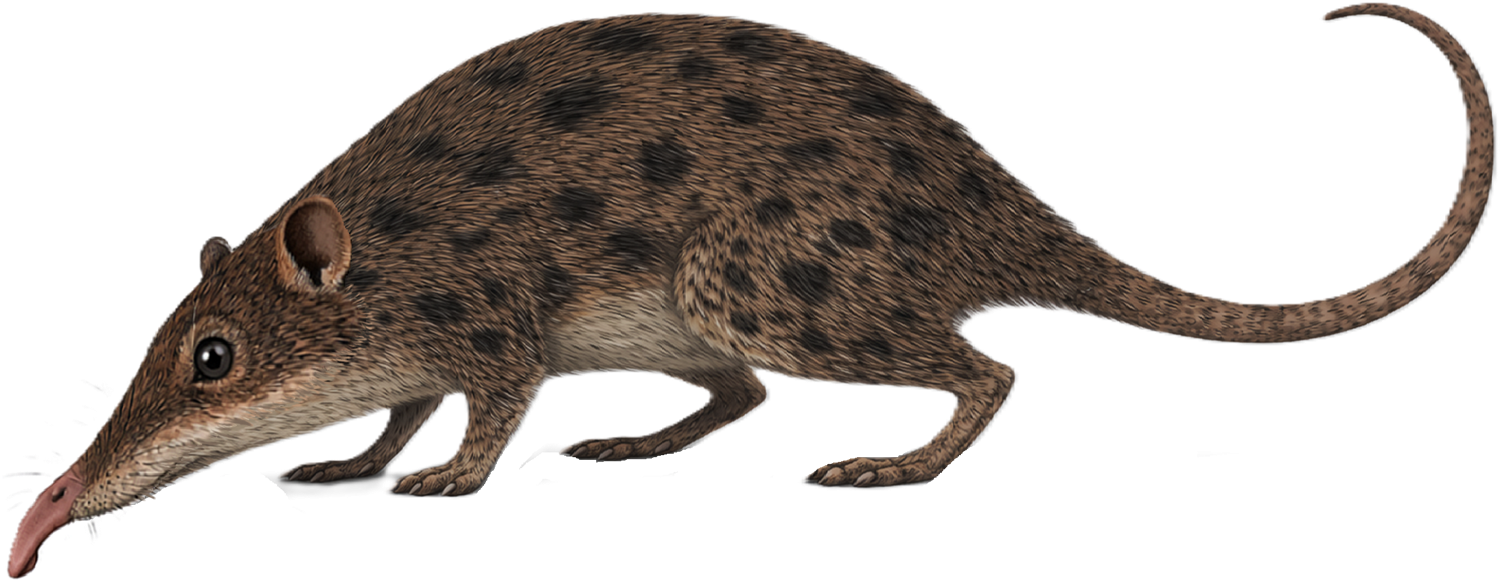 |
Gypsonictops hypoconus284Kielan-Jaworowska, Z., Cifelli, R. L. & Luo, Z.-X. (2004). Mammals from the Age of Dinosaurs – Origins, Evolution, and Structure. Columbia University Press, 98–99. doi:10.7312/kiel11918 | Hell Creek Formation, Lance Formation | Montana, South Dakota, Wyoming | 68–66 Ma | häufig | Gypsonictopidae |
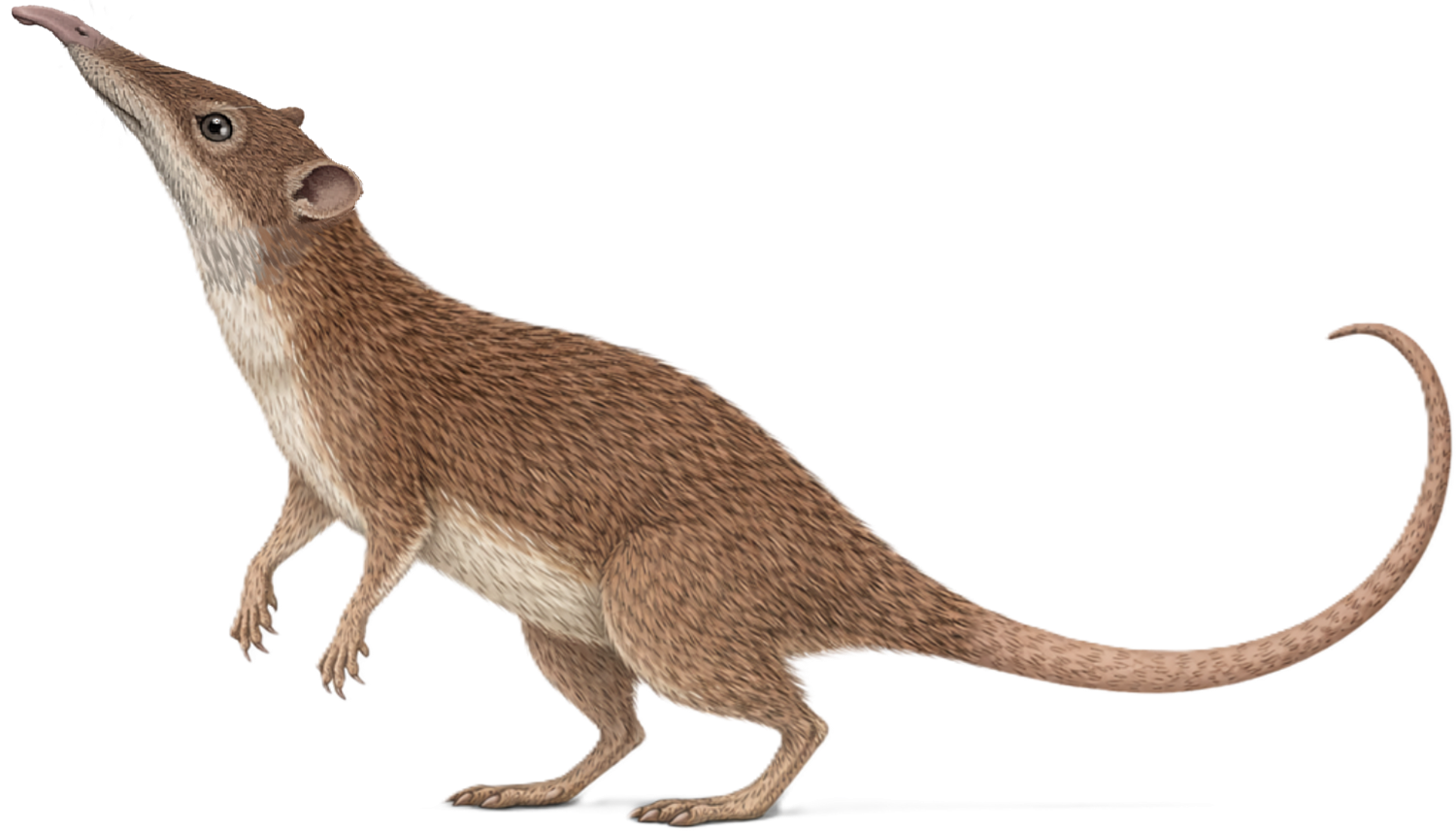 |
Gypsonictops illuminatus285Kielan-Jaworowska, Z., Cifelli, R. L. & Luo, Z.-X. (2004). Mammals from the Age of Dinosaurs – Origins, Evolution, and Structure. Columbia University Press, 98–99. doi:10.7312/kiel11918 | Hell Creek Formation | Montana, North Dakota | 68–66 Ma | häufig | Gypsonictopidae |
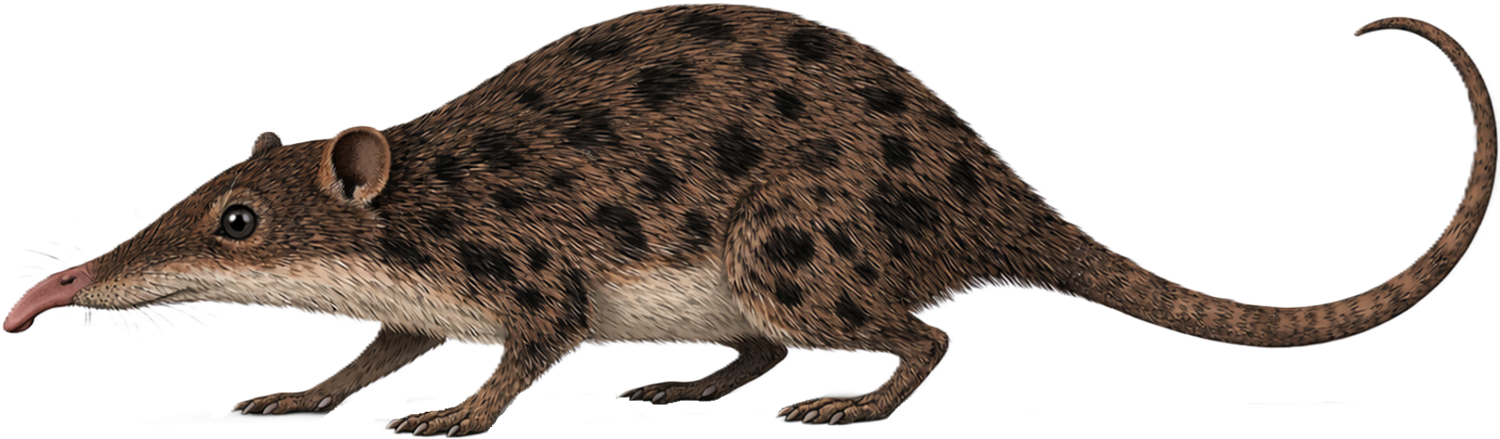 |
Gypsonictops sp.286Kielan-Jaworowska, Z., Cifelli, R. L. & Luo, Z.-X. (2004). Mammals from the Age of Dinosaurs – Origins, Evolution, and Structure. Columbia University Press, 98–99. doi:10.7312/kiel11918 | Hell Creek Formation | Montana | 68–66 Ma | selten | Gypsonictopidae; Bestimmung unsicher |
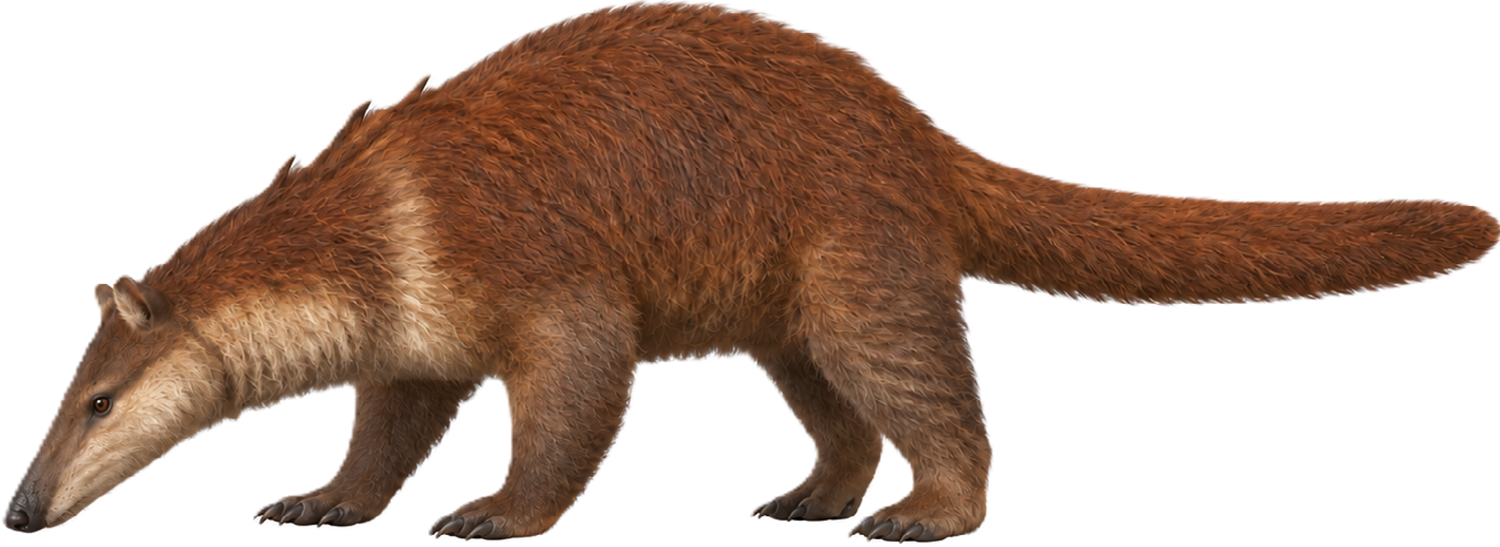 |
Paleoungulatum hooleyi287Kelly, T. S. (2014). Preliminary report on the mammals from Lane’s Little Jaw Site Quarry: A latest Cretaceous (earliest Puercan?) local fauna, Hell Creek Formation, southeastern Montana. Paludicola, 10(1), 50–91. | Hell Creek Formation | Montana | 66–65 Ma | selten | Periptychidae? |
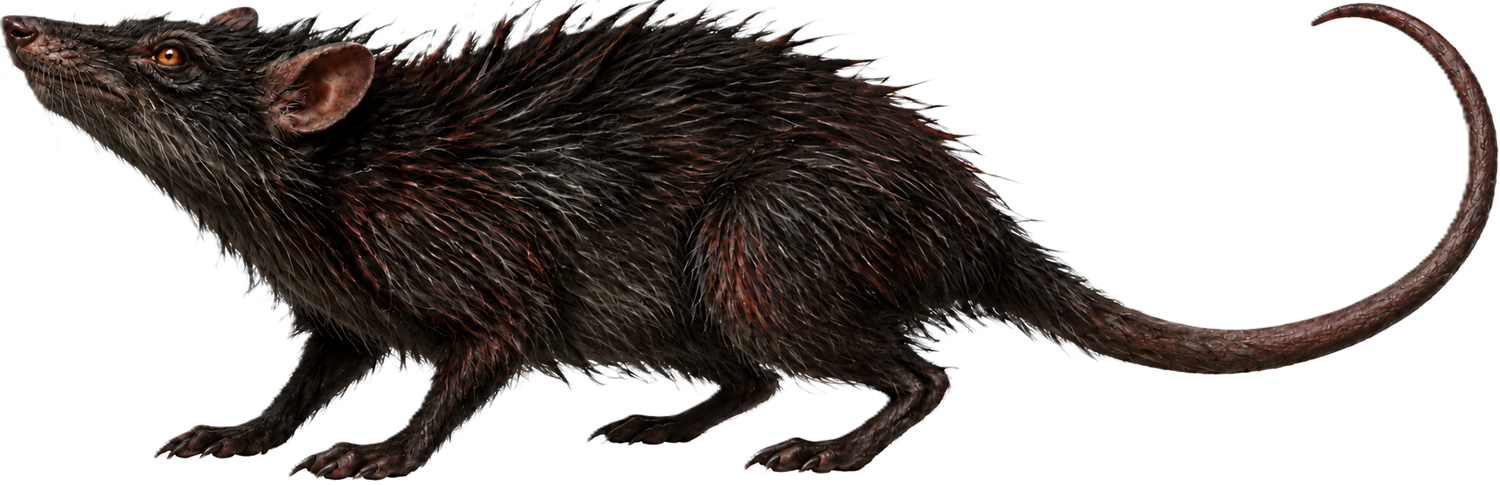 |
Procerberus sp.288Kelly, T. S. (2014). Preliminary report on the mammals from Lane’s Little Jaw Site Quarry: A latest Cretaceous (earliest Puercan?) local fauna, Hell Creek Formation, southeastern Montana. Paludicola, 10(1), 50–91. | Hell Creek Formation | Montana | 66–65 Ma | selten | Cimolestidae; Bestimmung unsicher, ein großer und ein kleiner Morph |
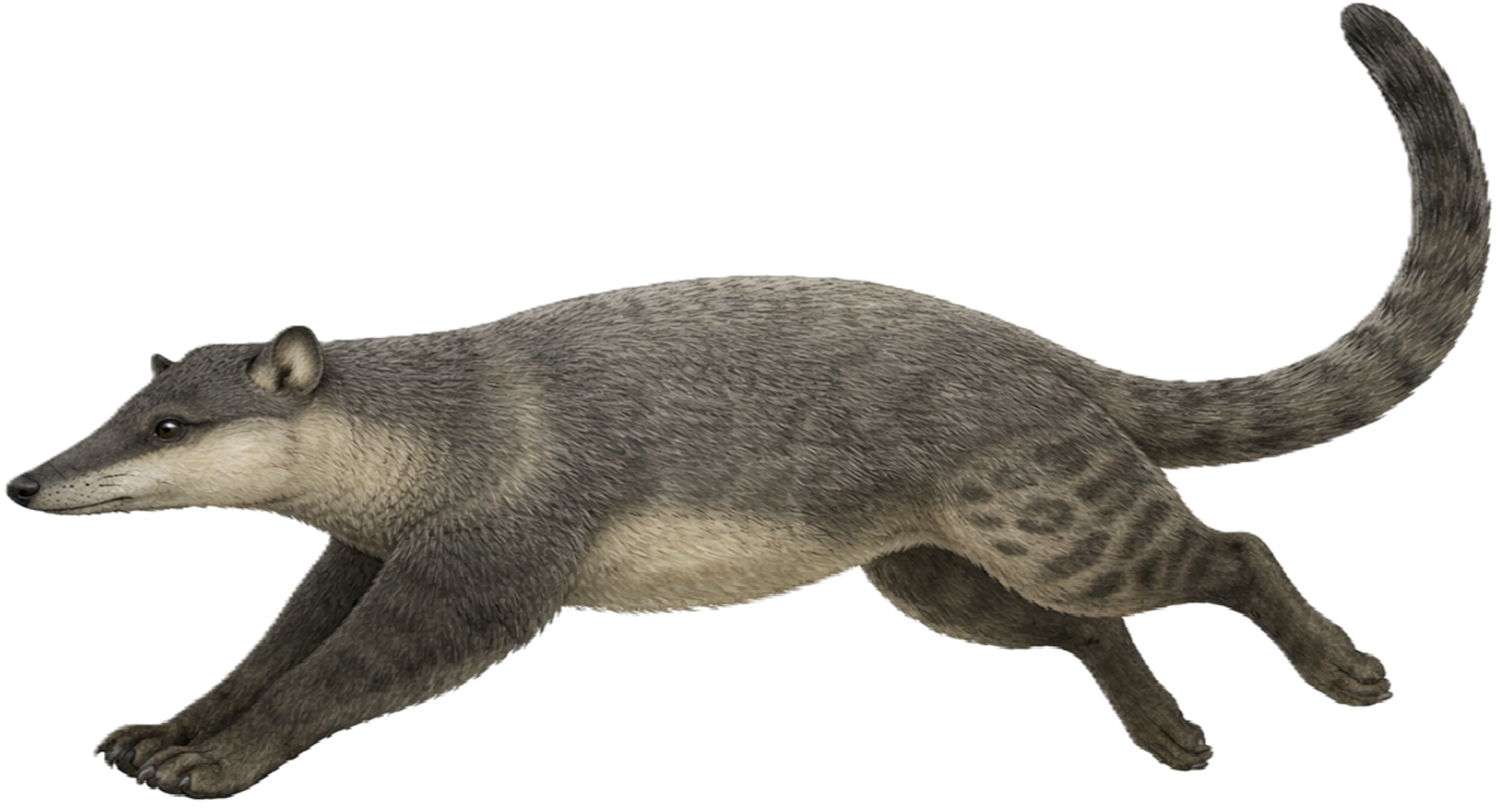 |
Protungulatum coombsi289Archibald, J. D., Zhang, Y., Harper, T. & Cifelli, R. L. (2011). Protungulatum, confirmed Cretaceous occurrence of an otherwise Paleocene eutherian (placental?) mammal. Journal of Mammalian Evolution, 18(3), 153–161. doi:10.1007/s10914-011-9162-1 | Hell Creek Formation | Montana | ca. 66 Ma | Einzelfund | Vielleicht ein Verwandter der Huftiere |
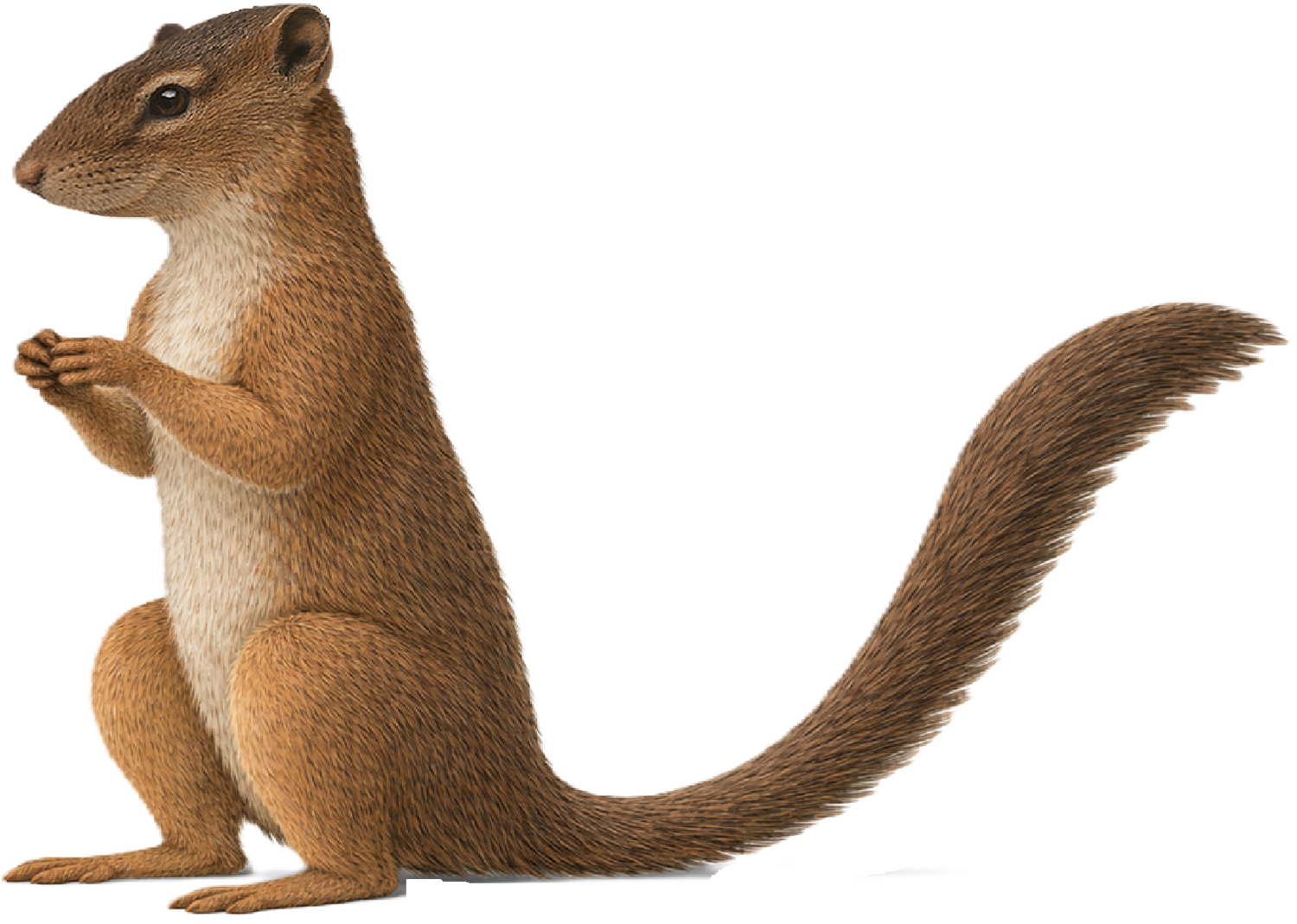 |
Purgatorius ceratops290Van Valen, L. & Sloan, R. E. (1965). The earliest primates. Science, 150(3697), 743–745. doi:10.1126/science.150.3697.743291Clemens, W. A. (2004). Purgatorius (Plesiadapiformes, Primates?, Mammalia), a Paleocene immigrant into northeastern Montana: Stratigraphic occurrences and incisor proportions. Bulletin of Carnegie Museum of Natural History, 36, 3–13. doi:10.2992/0145-9058(2004)36[3:PPPMAP]2.0.CO;2292Wilson Mantilla, G. P. et al. (2021). Earliest Palaeocene purgatoriids and the initial radiation of stem primates. Royal Society Open Science, 8(2), 210050. doi:10.1098/rsos.210050 | Hell Creek Formation | Montana | 66–65 Ma | Einzelfund | Panprimates (Purgatoriidae); Bestimmung und Alter unsicher |
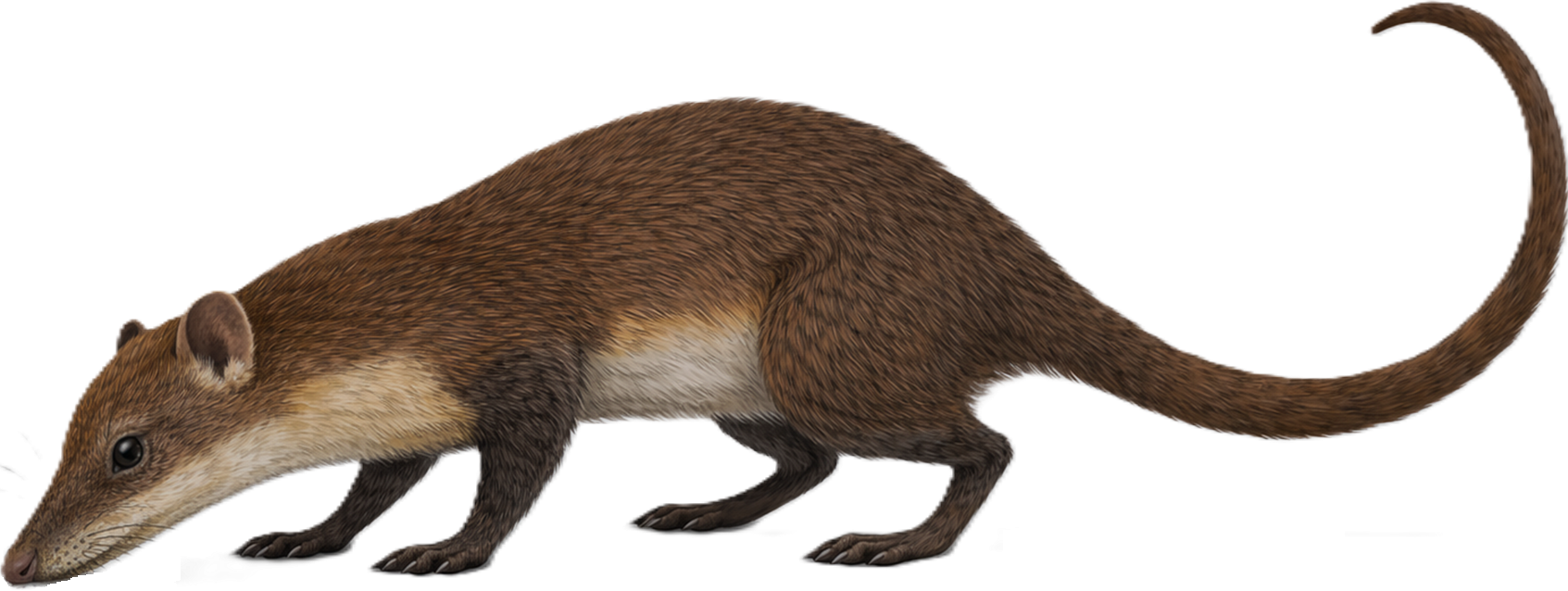 |
Scollardius propalaeoryctes293Fox, R. C. (2015). A revision of the Late Cretaceous–Paleocene eutherian mammal Cimolestes Marsh, 1889. Canadian Journal of Earth Sciences, 52(12), 1137–1149. doi:10.1139/cjes-2015-0113 | Hell Creek Formation | Montana | 68–66 Ma | selten | Cimolestidae |
Protungulatum coombsi ist bislang nur durch einen einzelnen oberen Prämolaren aus sicher kreidezeitlichen Schichten der Hell Creek Formation belegt. Der Fund stammt aus einer Schicht, die mindestens etwa 300.000 Jahre unterhalb der K–Pg-Grenze liegt. Damit ist die Gattung Protungulatum sowohl aus der späten Kreidezeit als auch aus dem frühen Paläozän nachgewiesen. Die systematische Stellung der Gattung ist allerdings umstritten. Sie wurde traditionell in die Nähe früher Huftierverwandter gestellt, könnte aber vielleicht auch gar nicht zu den eigentlichen Placentalia gehören.294Archibald, J. D., Zhang, Y., Harper, T. & Cifelli, R. L. (2011). Protungulatum, confirmed Cretaceous occurrence of an otherwise Paleocene eutherian (placental?) mammal. Journal of Mammalian Evolution, 18(3), 153–161. doi:10.1007/s10914-011-9162-1
Purgatorius ceratops beruht auf einem einzelnen, abgenutzten Zahn aus der Harbicht-Hill-Fauna der Hell Creek Formation. Der Fundort enthält eine zeitlich vermischte Ansammlung aus kreidezeitlichen und frühpaläozänen Fossilien. Daher sind sowohl die Zuordnung des Zahns zu Purgatorius als auch sein kreidezeitliches Alter umstritten. Sollte die ursprüngliche Bestimmung und Datierung zutreffen, wäre P. ceratops der einzige bislang bekannte Purgatoriide aus der Kreidezeit. Die ältesten eindeutig nachgewiesenen Vertreter der Gruppe stammen dagegen aus dem frühesten Paläozän.295Clemens, W. A. (2004). Purgatorius (Plesiadapiformes, Primates?, Mammalia), a Paleocene immigrant into northeastern Montana: Stratigraphic occurrences and incisor proportions. Bulletin of Carnegie Museum of Natural History, 36, 3–13. doi:10.2992/0145-9058(2004)36[3:PPPMAP]2.0.CO;2296Wilson Mantilla, G. P. et al. (2021). Earliest Palaeocene purgatoriids and the initial radiation of stem primates. Royal Society Open Science, 8(2), 210050. doi:10.1098/rsos.210050
Auch das genaue Alter der Säugetierfauna von Lane’s Little Jaw Site in der oberen Hell Creek Formation ist nicht abschließend geklärt. Die Fauna wurde ursprünglich als spätestkreidezeitlich interpretiert, enthält mit Baioconodon, Paleoungulatum und Procerberus jedoch mehrere Formen, die ansonsten vor allem aus dem frühesten Paläozän bekannt sind. Die betreffenden Taxa werden deshalb hier mit einem Alter von 66–65 Ma als mögliche Grenzfauna geführt.297Kelly, T. S. (2014). Preliminary report on the mammals from Lane’s Little Jaw Site Quarry: A latest Cretaceous (earliest Puercan?) local fauna, Hell Creek Formation, southeastern Montana. Paludicola, 10(1), 50–91.
Aus dem kreidezeitlichen Teil der D1-Sequenz ist bislang nur ein nicht näher bestimmbares Exemplar sicher als Eutherier bekannt. Es stammt von Ingrid’s Jaw. Die dortigen Schichten wurden traditionell als Laramie Formation kartiert, entsprechen aber wahrscheinlich dem obersten kreidezeitlichen Abschnitt der D1-Sequenz im Denver Basin.298Wilson, G. P. et al. (2010). New latest Cretaceous mammals from northeastern Colorado with biochronologic and biogeographic implications. Journal of Vertebrate Paleontology, 30(2), 499–520. doi:10.1080/02724631003620955
Nach dem großen Massenaussterben am Ende der Kreidezeit schlug die große Stunde der Eutheria. Aus den obersten Schichten der Ferris Formation ist eine vielfältige Eutherierfauna bekannt. Diese Tiere werden aber nicht in der vorstehenden Tabelle geführt, da sie nicht Teil der Lancian– sondern der späteren, sogenannten Puercian-Fauna sind. Sie haben sich wohl erst im Paläozän entwickelt und lebten nicht zeitgleich mit den letzten Dinosauriern.299Eberle, J. J. & Lillegraven, J. A. (1998). A new important record of earliest Cenozoic mammalian history: Eutheria and paleogeographic/biostratigraphic summaries. Rocky Mountain Geology, 33(1), 49–117. doi:10.2113/33.1.49 Dazu gehören:
- Ampliconus antoni
- Baioconodon denverensis
- Baioconodon middletoni
- Conacodon delphae
- Conacodon harbourae
- Ectoconus sp.
- Gypsonictops sp.
- Maiorana ferrisensis
- Mimatuta sp.
- Mithrandir gillianus
- Oxyacodon agapetillus
- Oxyacodon apiculatus
- Oxyacodon priscilla
- Protungulatum donnae
- Protungulatum gorgun
- Protungulatum sloani.
Aus dem kreidezeitlichen Abschnitt der D1-Sequenz der Denver Formation ist dagegen bislang lediglich ein nicht näher bestimmbares Eutherium von Ingrid’s Jaw sicher nachgewiesen. Die mit Blick auf Säugetiere fossilreichsten Schichten stammen aber wiederum auch von oberhalb der K-Pg-Grenze, weshalb die Arten, die bislang nur aus dem Paläozän bekannt sind, sich nicht in der Tabelle befinden. Sie sind ebenfalls Teil der Puercian-Fauna.300Eberle, J. J. (2003). Puercan mammalian systematics and biostratigraphy in the Denver Formation, Denver Basin, Colorado. Rocky Mountain Geology, 38(1), 143–169. doi:10.2113/gsrocky.38.1.143301Middleton, M. D. & Dewar, E. W. (2004). New mammals from the early Paleocene Littleton fauna (Denver Formation, Colorado). New Mexico Museum of Natural History and Science Bulletin, 26, 59–80. Dabei geht es um:
- Alticonus gazini
- Ampliconus browni
- Auraria urbana
- Baioconodon denverensis
- Baioconodon nordicus
- Conacodon delphae
- Conacodon harbourae
- Conacodon matthewi
- Desmatoclaenus protogonioides
- Procerberus andesiticus
- Procerberus grandis

Beuteltiere:
| Bild: | Spezies: | Formation: | Fundort: | Alter: | Häufigkeit: | Bemerkungen: |
|---|---|---|---|---|---|---|
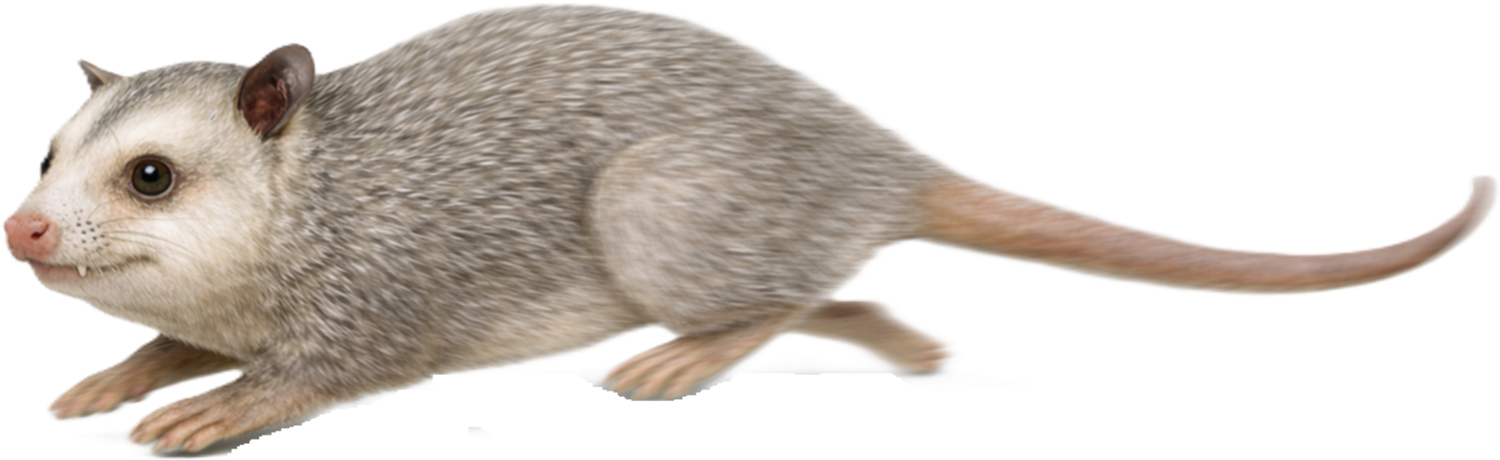 |
Alphadon cf. wilsoni302Kielan-Jaworowska, Z., Cifelli, R. L. & Luo, Z.-X. (2004). Mammals from the Age of Dinosaurs – Origins, Evolution, and Structure. Columbia University Press, 98–99. doi:10.7312/kiel11918 | Hell Creek Formation | Montana | 68–66 Ma | selten | Alphadontidae; Bestimmung unsicher |
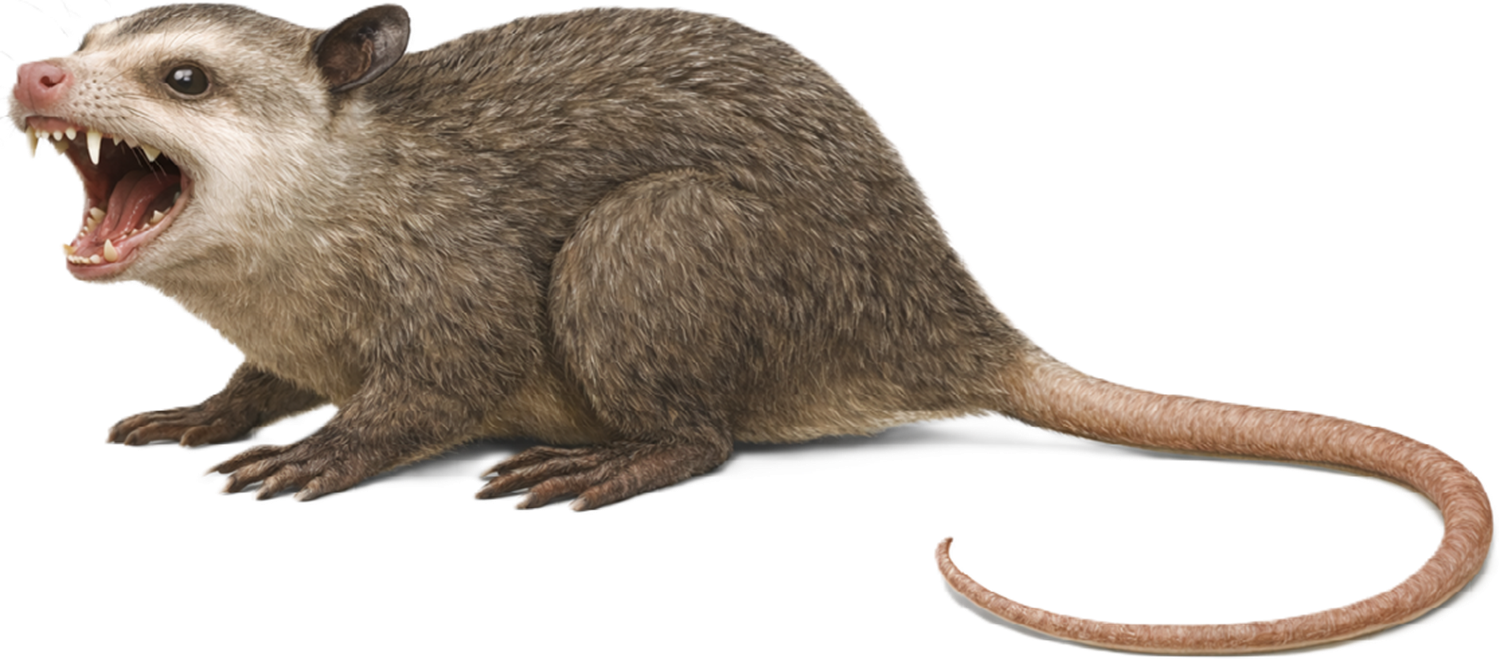 |
Alphadon marshi303Clemens, W. A. (1964). Fossil mammals of the type Lance Formation, Wyoming – Part I. Introduction and Marsupialia. University of California Publications in Geological Sciences, 48, 1–105.304Kielan-Jaworowska, Z., Cifelli, R. L. & Luo, Z.-X. (2004). Mammals from the Age of Dinosaurs – Origins, Evolution, and Structure. Columbia University Press, 98–99. doi:10.7312/kiel11918 | Hell Creek Formation, Lance Formation | Montana, North Dakota, South Dakota, Wyoming | 68–66 Ma | häufig | Alphadontidae |
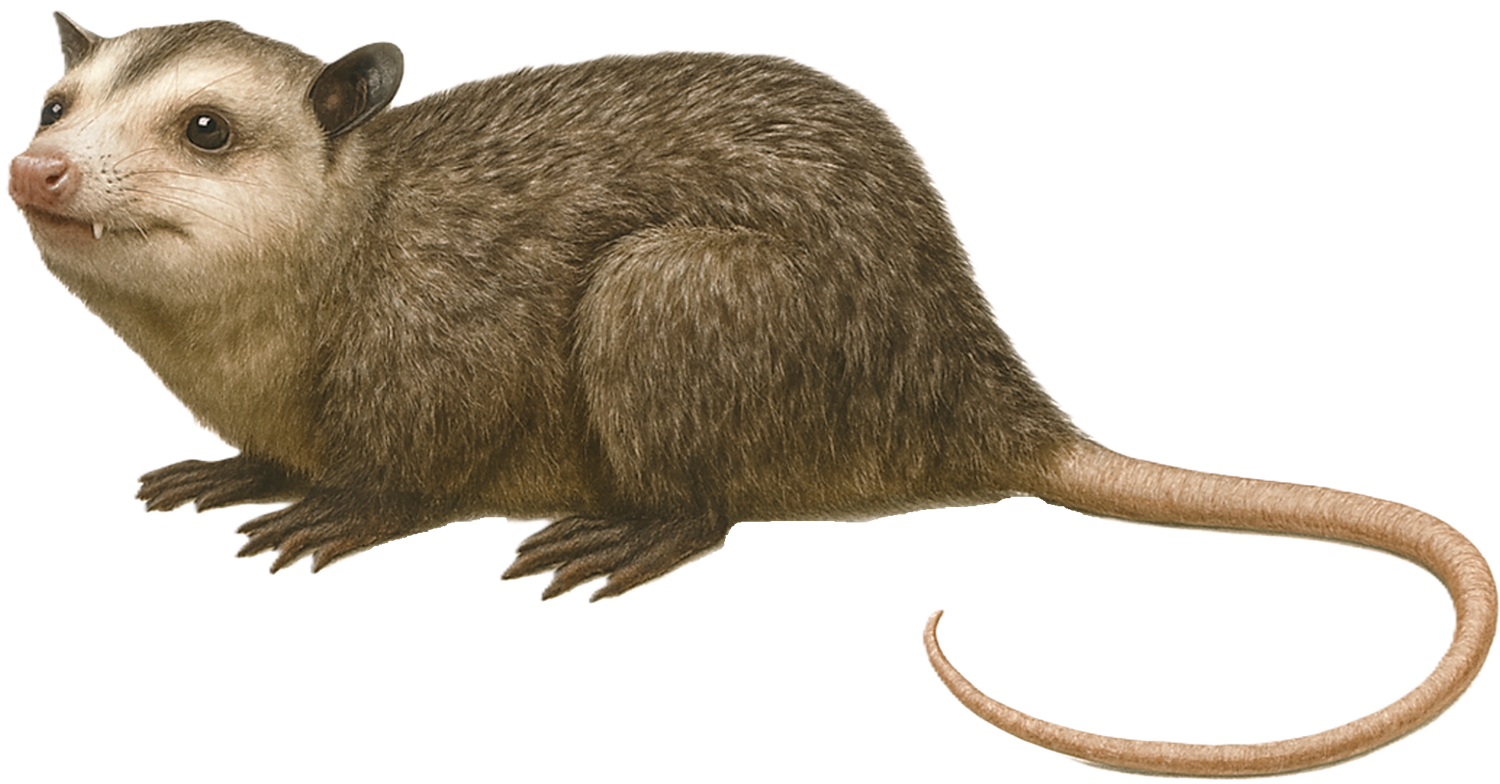 |
Alphadon sp.305Boyd, C. A., Person, J. J. & Barnes, B. (2017). Additions to the Lancian mammalian fauna from southwest North Dakota. Journal of Vertebrate Paleontology, e1325368. doi:10.1080/02724634.2017.1325368 | Hell Creek Formation | North Dakota, South Dakota | 68–66 Ma | selten | Alphadontidae; Bestimmung unsicher |
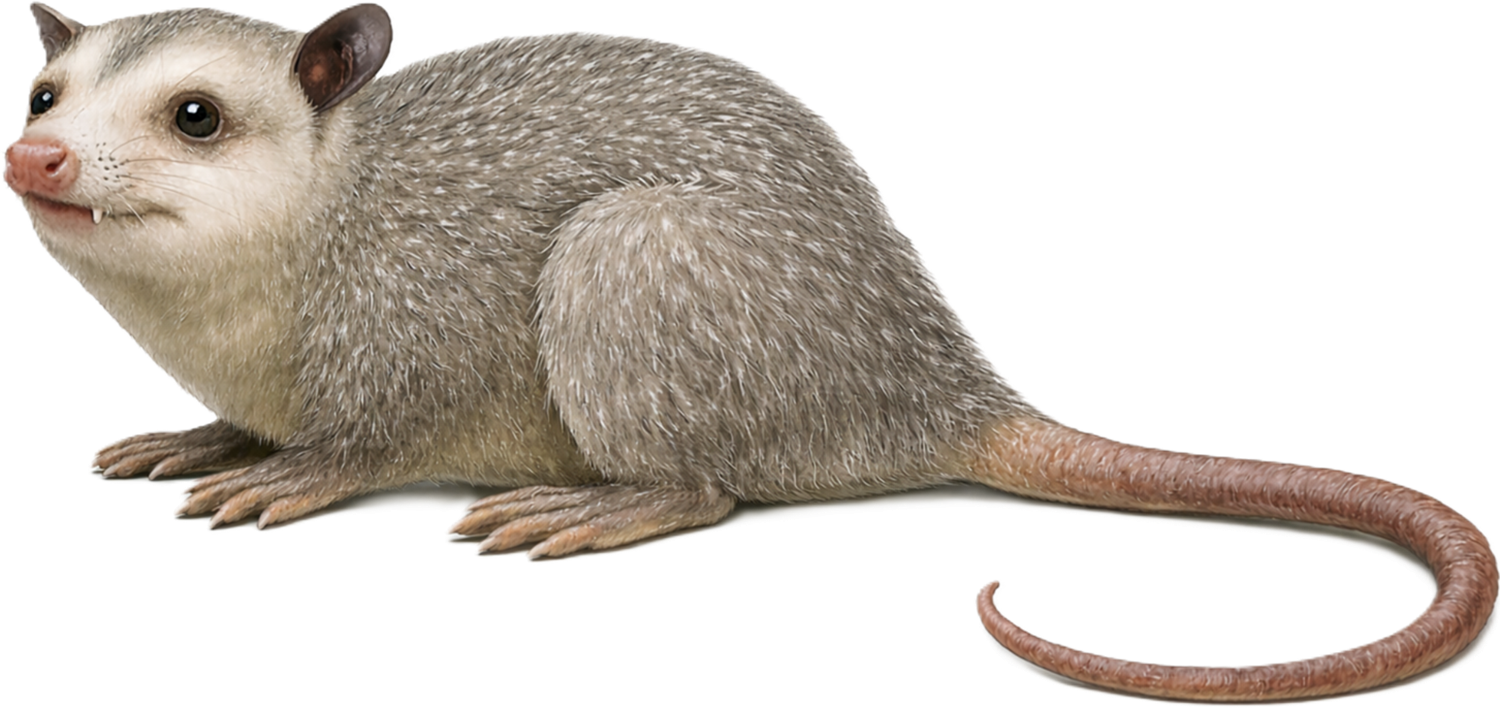 |
Alphadon wilsoni306Kielan-Jaworowska, Z., Cifelli, R. L. & Luo, Z.-X. (2004). Mammals from the Age of Dinosaurs – Origins, Evolution, and Structure. Columbia University Press, 98–99. doi:10.7312/kiel11918 | Hell Creek Formation | Montana | 68–66 Ma | selten | Alphadontidae |
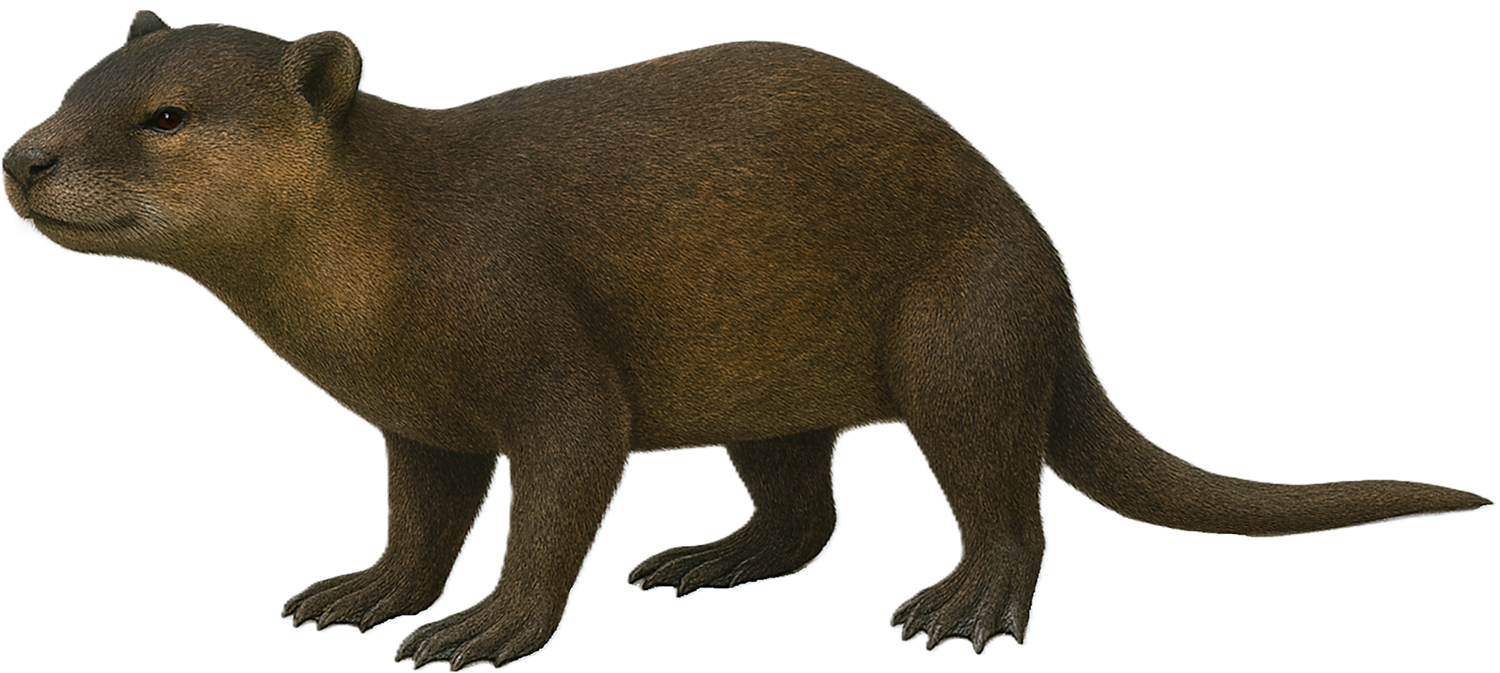 |
Didelphodon cf. vorax307Kielan-Jaworowska, Z., Cifelli, R. L. & Luo, Z.-X. (2004). Mammals from the Age of Dinosaurs – Origins, Evolution, and Structure. Columbia University Press, 98–99. doi:10.7312/kiel11918 | Hell Creek Formation | South Dakota | 68–66 Ma | selten | Stagodontidae; Bestimmung unsicher |
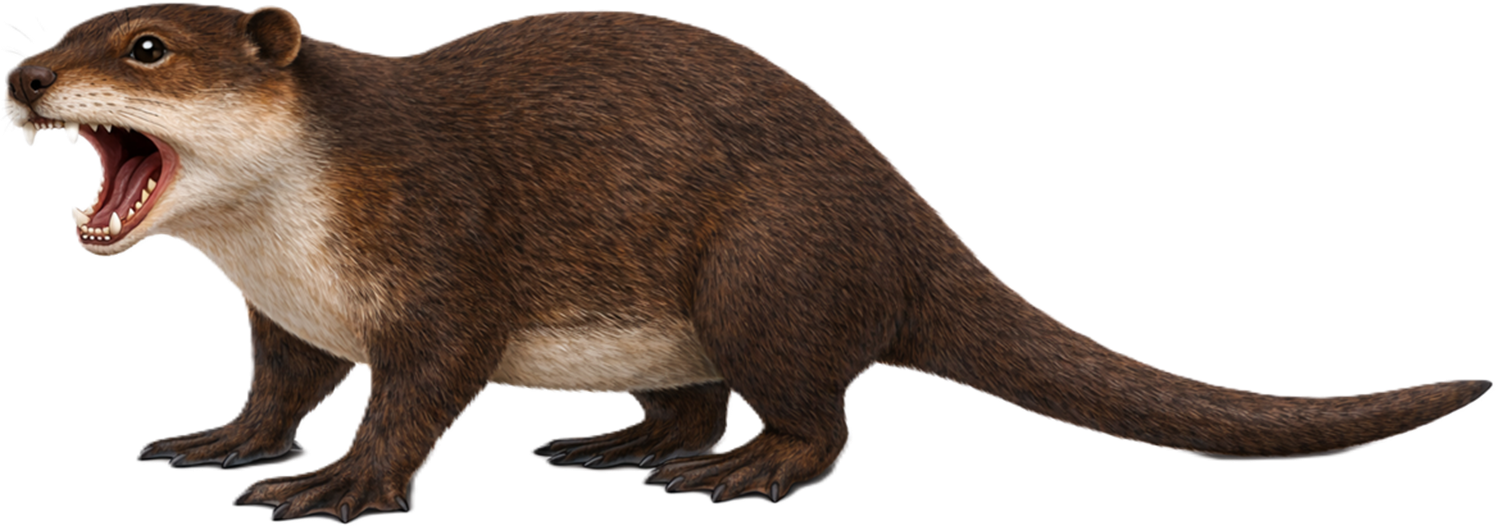 |
„Didelphodon padanicus“308Cope, E. D. (1892). On a new horizon of fossil mammals. American Naturalist, 26, 758–762.309Cifelli, R. L. & Muizon, C. de (1998). Marsupial mammal from the Upper Cretaceous North Horn Formation, central Utah. Journal of Paleontology, 72(3), 532–537. doi:10.1017/S0022336000024257 | Hell Creek Formation | South Dakota | 68–66 Ma | selten | Stagodontidae, Nomen nudum |
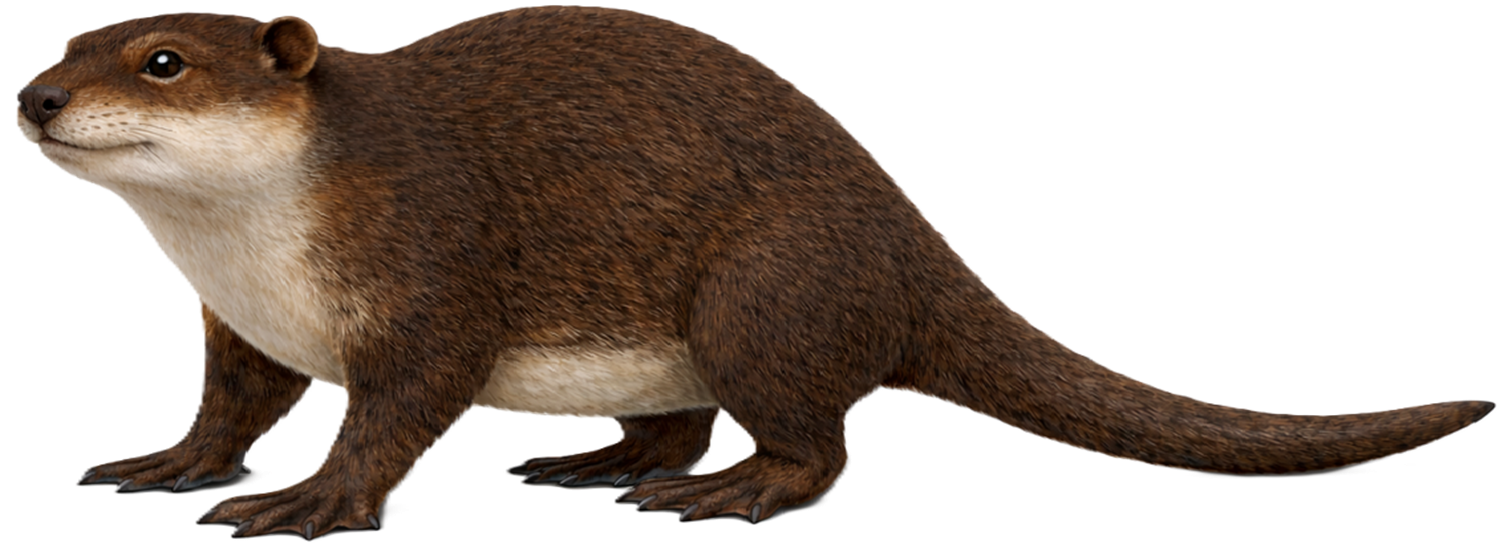 |
Didelphodon sp.310Kielan-Jaworowska, Z., Cifelli, R. L. & Luo, Z.-X. (2004). Mammals from the Age of Dinosaurs – Origins, Evolution, and Structure. Columbia University Press, 98–99. doi:10.7312/kiel11918 | Hell Creek Formation | North Dakota, South Dakota | 68–66 Ma | selten | Stagodontidae; Bestimmung unsicher |
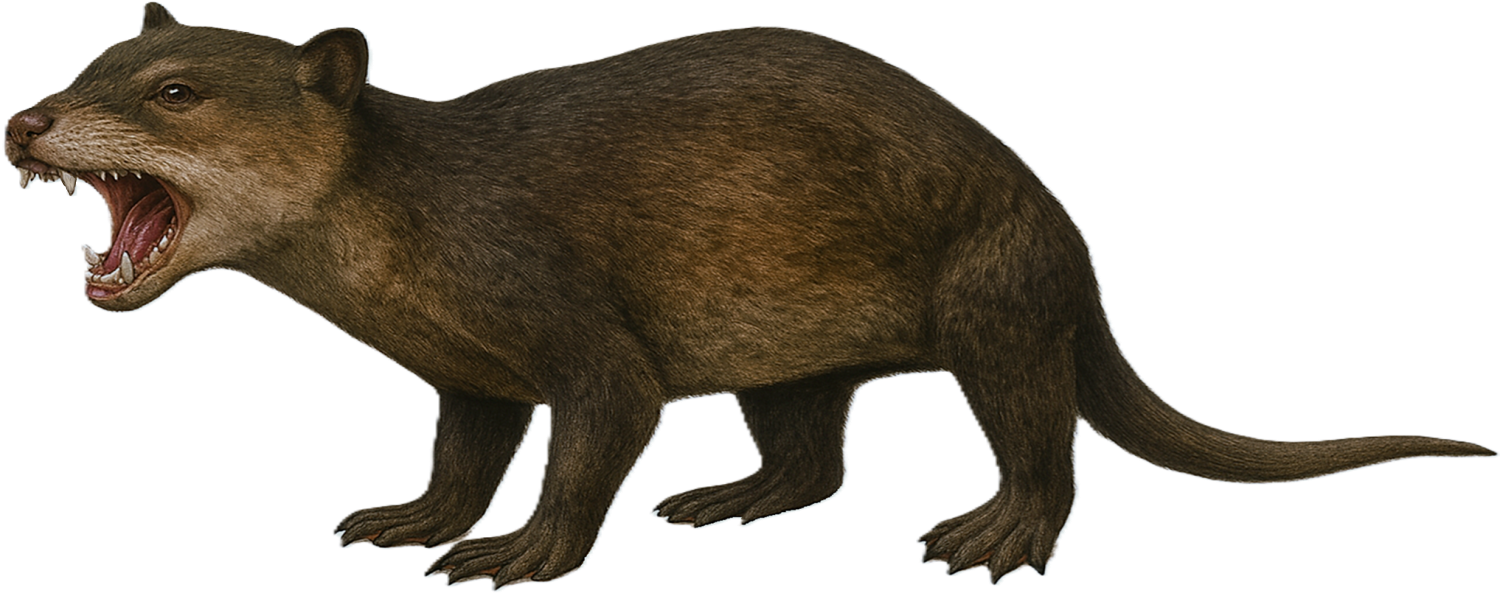 |
Didelphodon vorax311Clemens, W. A. (1964). Fossil mammals of the type Lance Formation, Wyoming – Part I. Introduction and Marsupialia. University of California Publications in Geological Sciences, 48, 1–105.312Kielan-Jaworowska, Z., Cifelli, R. L. & Luo, Z.-X. (2004). Mammals from the Age of Dinosaurs – Origins, Evolution, and Structure. Columbia University Press, 98–99. doi:10.7312/kiel11918 | Hell Creek Formation, Lance Formation | Montana, North Dakota, South Dakota, Wyoming | 68–66 Ma | häufig | Stagodontidae |
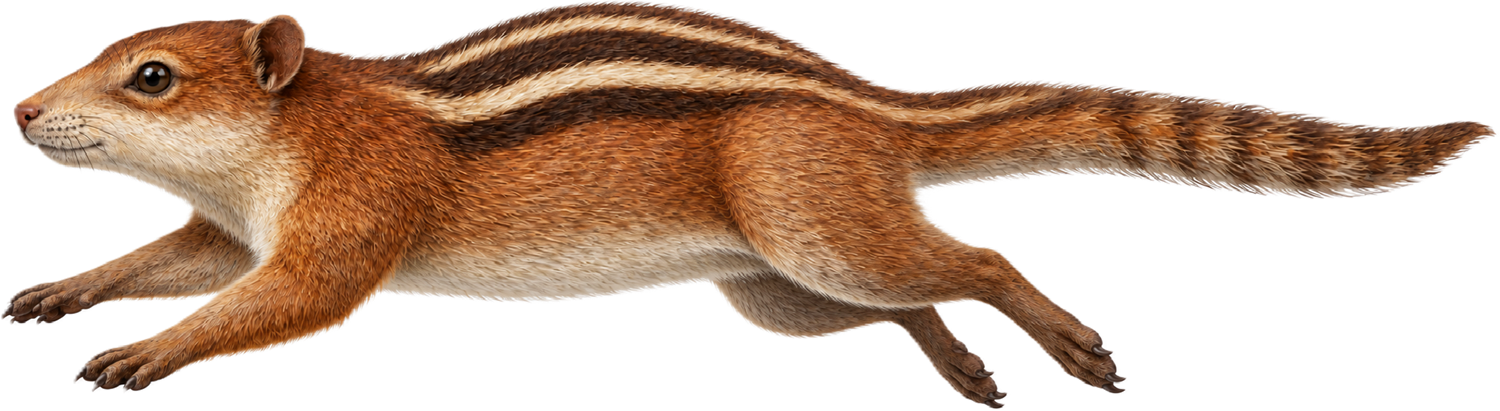 |
Glasbius intricatus313Clemens, W. A. (1966). Fossil mammals of the type Lance Formation, Wyoming – Part II. Marsupialia. University of California Publications in Geological Sciences, 62, 1–122.314Davis, B. M. (2007). A revision of “pediomyid” marsupials from the Late Cretaceous of North America. Acta Palaeontologica Polonica, 52(2), 217–256.315Eberle, J. J. et al. (2024). A new Late Cretaceous metatherian from the Williams Fork Formation, Colorado. PLOS ONE, 19, e0310948. doi:10.1371/journal.pone.0310948 | Hell Creek Formation, Lance Formation | Montana, Wyoming | 68–66 Ma | selten | Glasbiidae |
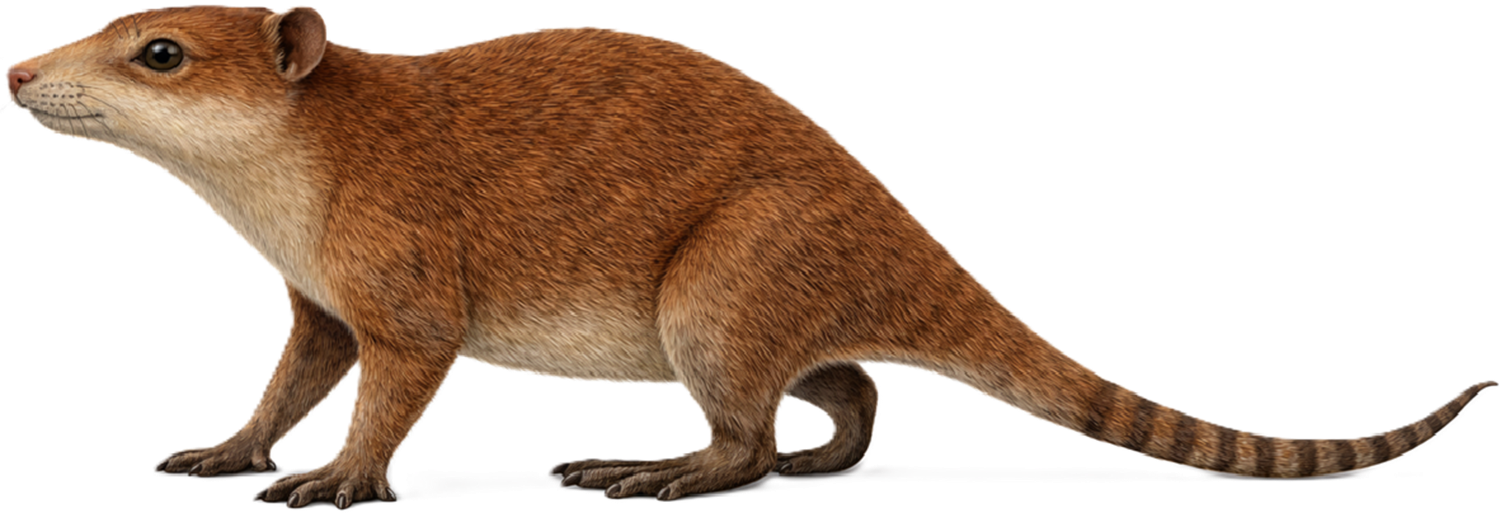 |
Glasbius cf. twitchelli316Kielan-Jaworowska, Z., Cifelli, R. L. & Luo, Z.-X. (2004). Mammals from the Age of Dinosaurs – Origins, Evolution, and Structure. Columbia University Press, 98–99. doi:10.7312/kiel11918 | Hell Creek Formation | Montana | 68–66 Ma | selten | Glasbiidae; Bestimmung unsicher |
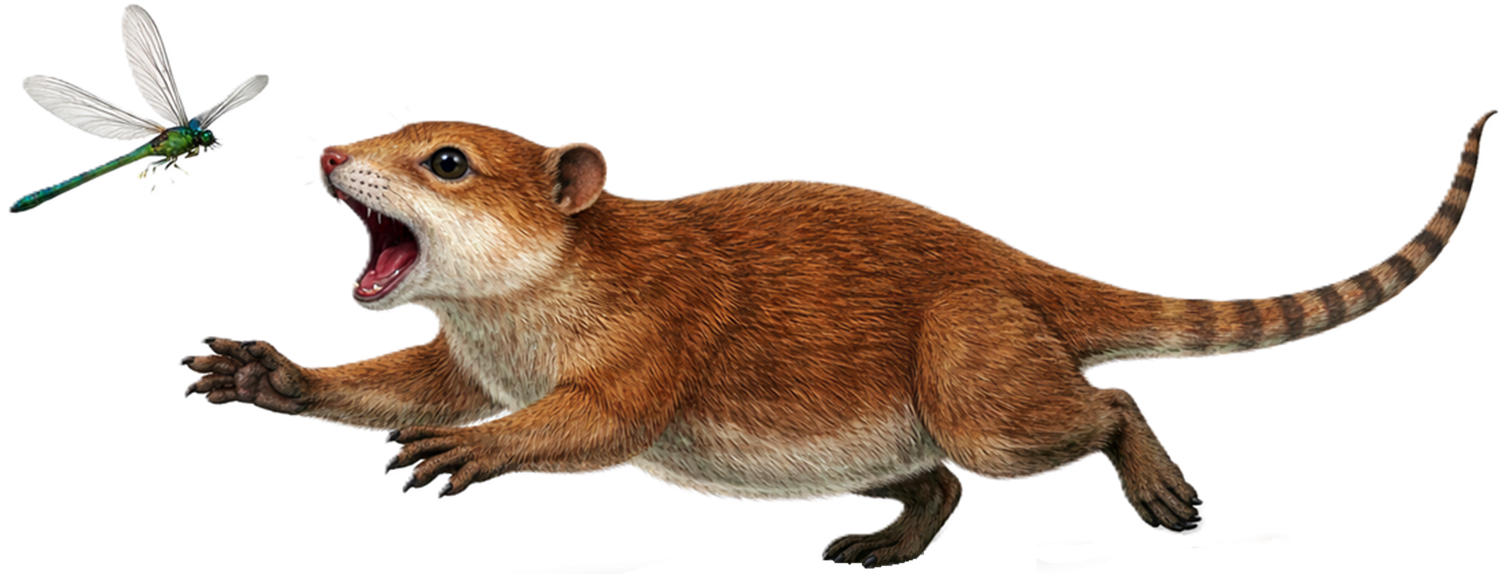 |
Glasbius twitchelli317Davis, B. M. (2007). A revision of “pediomyid” marsupials from the Late Cretaceous of North America. Acta Palaeontologica Polonica, 52(2), 217–256.318Boyd, C. A., Person, J. J. & Barnes, B. (2017). Additions to the Lancian mammalian fauna from southwest North Dakota. Journal of Vertebrate Paleontology, e1325368. doi:10.1080/02724634.2017.1325368 | Hell Creek Formation, Lance Formation | Montana, North Dakota, Wyoming | 68–66 Ma | häufig | Glasbiidae |
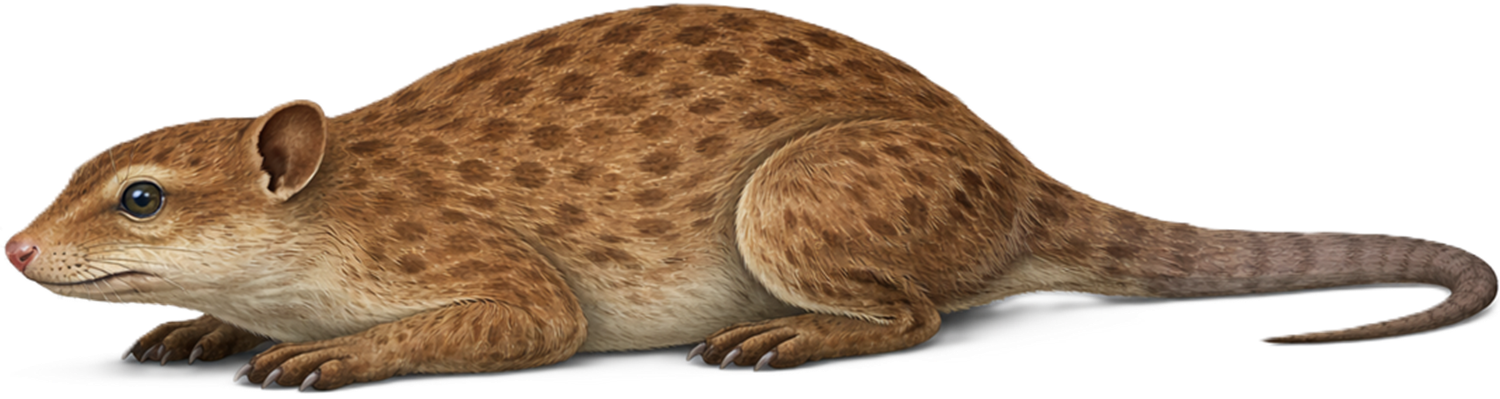 |
Leptalestes cooki (?)319Clemens, W. A. (1964). Fossil mammals of the type Lance Formation, Wyoming – Part I. Introduction and Marsupialia. University of California Publications in Geological Sciences, 48, 1–105.320Davis, B. M. (2007). A revision of “pediomyid” marsupials from the Late Cretaceous of North America. Acta Palaeontologica Polonica, 52(2), 217–256.321Wilson, G. P., Dechesne, M. & Anderson, I. R. (2010). New latest Cretaceous mammals from northeastern Colorado, with biochronologic and biogeographic implications. Journal of Vertebrate Paleontology, 30(2), 499–520. doi:10.1080/02724631003620955 | Hell Creek Formation, Lance Formation, Denver Formation | Montana, South Dakota, Wyoming, Colorado | 68–66 Ma | häufig | Pediomyidae; Bestimmung unsicher |
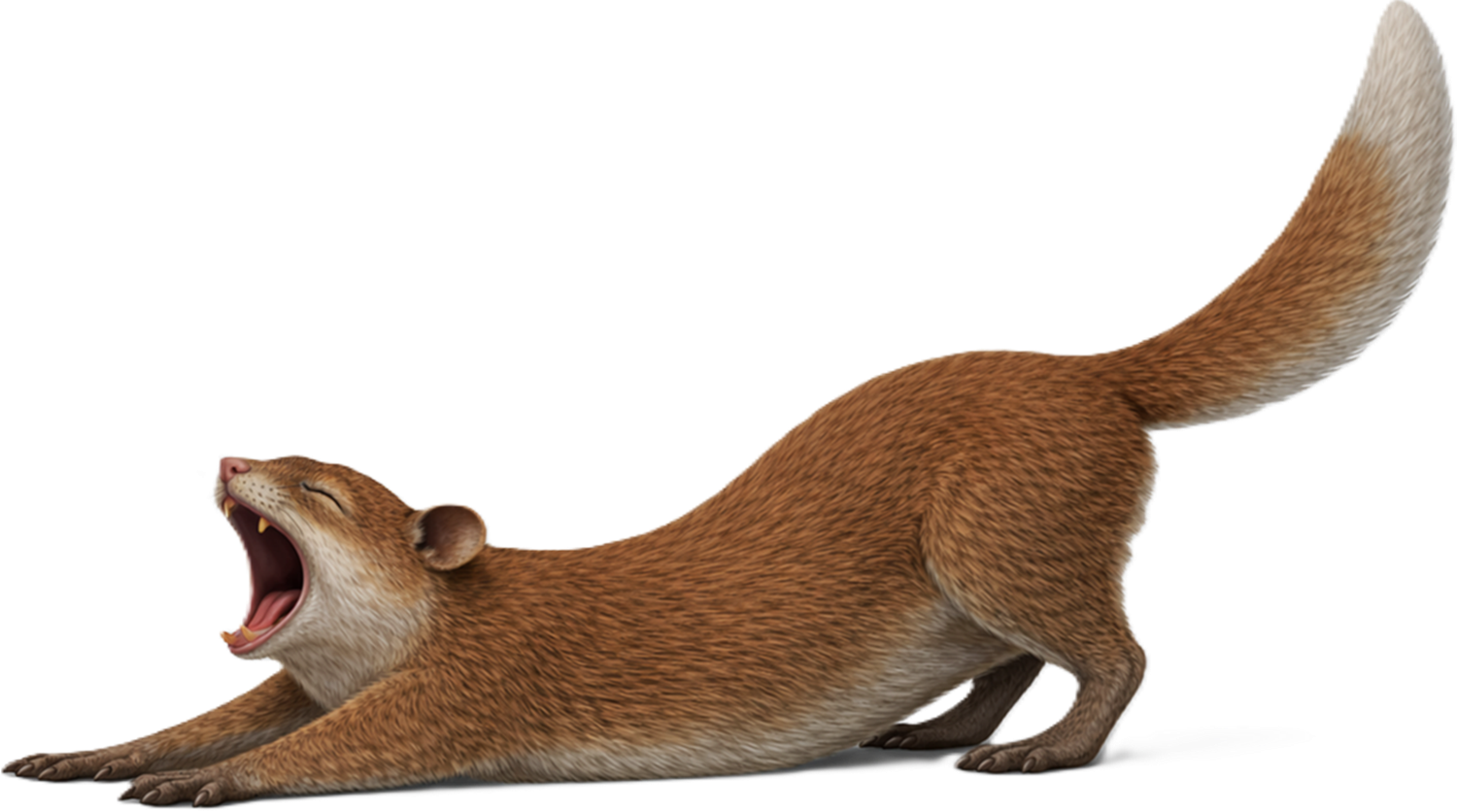 |
Leptalestes krejcii322Clemens, W. A. (1964). Fossil mammals of the type Lance Formation, Wyoming – Part I. Introduction and Marsupialia. University of California Publications in Geological Sciences, 48, 1–105.323Davis, B. M. (2007). A revision of “pediomyid” marsupials from the Late Cretaceous of North America. Acta Palaeontologica Polonica, 52(2), 217–256.324Kielan-Jaworowska, Z., Cifelli, R. L. & Luo, Z.-X. (2004). Mammals from the Age of Dinosaurs – Origins, Evolution, and Structure. Columbia University Press, 98–99. doi:10.7312/kiel11918 | Hell Creek Formation, Lance Formation | Montana, South Dakota, Wyoming | 68–66 Ma | häufig | Pediomyidae |
 |
Metatheria indet.325Wilson, G. P., Dechesne, M. & Anderson, I. R. (2010). New latest Cretaceous mammals from northeastern Colorado, with biochronologic and biogeographic implications. Journal of Vertebrate Paleontology, 30(2), 499–520. doi:10.1080/02724631003620955 | Denver Formation | Colorado | 67–66 Ma | selten | Nicht näher bestimmte Beuteltierverwandte |
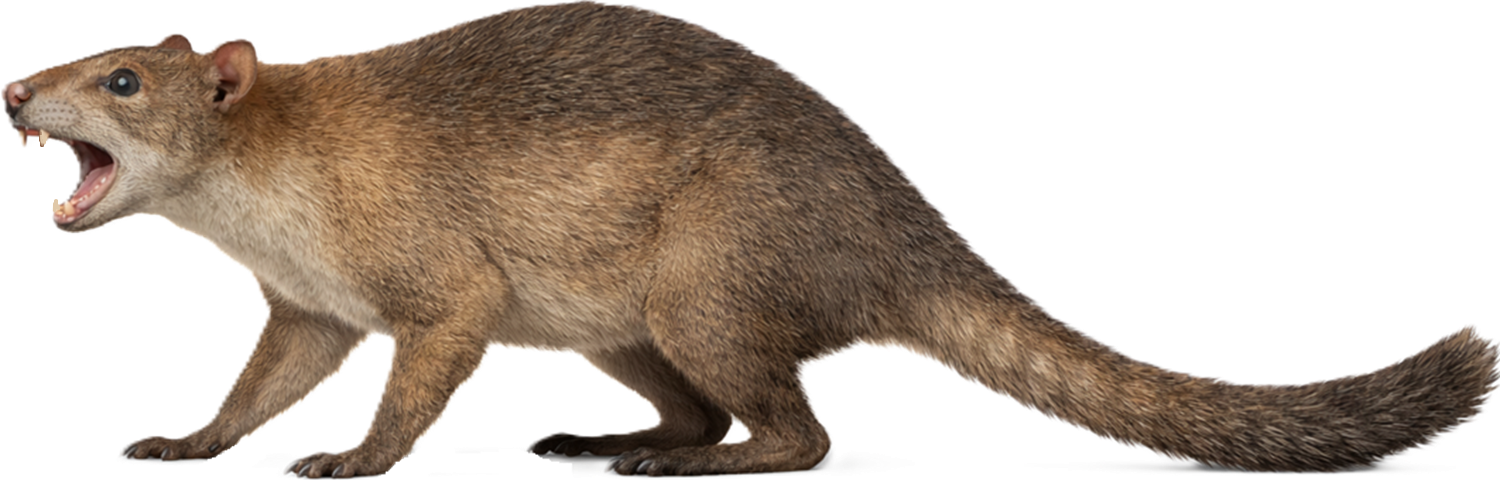 |
Nanocuris improvida326Fox, R. C., Scott, C. S. & Bryant, H. N. (2007). A new, unusual therian mammal from the Upper Cretaceous of Saskatchewan, Canada. Cretaceous Research, 28(5), 821–829. doi:10.1016/j.cretres.2006.12.003327Wilson, G. P. (2013). Mammals across the K/Pg boundary in northeastern Montana, U.S.A. – dental morphology and body-size patterns reveal extinction selectivity and immigrant-fueled ecospace filling. Paleobiology, 39(3), 429–469. doi:10.1666/12041 | Hell Creek Formation, Lance Formation | Montana, Wyoming | 68–66 Ma | selten | Deltatheridiidae |
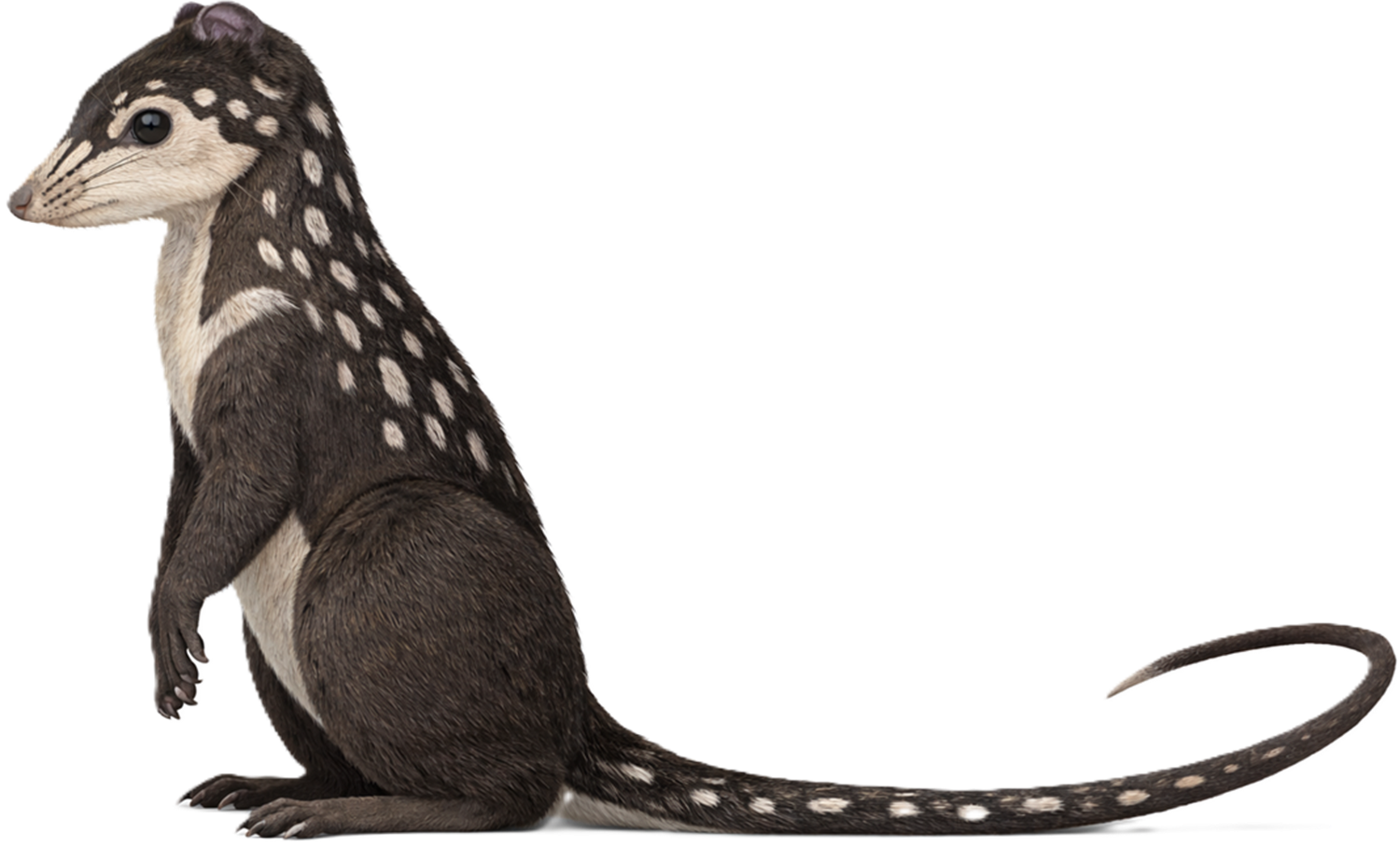 |
Nortedelphys jasoni328Clemens, W. A. (1964). Fossil mammals of the type Lance Formation, Wyoming – Part I. Introduction and Marsupialia. University of California Publications in Geological Sciences, 48, 1–105.329Wilson, G. P., Dechesne, M. & Anderson, I. R. (2010). New latest Cretaceous mammals from northeastern Colorado, with biochronologic and biogeographic implications. Journal of Vertebrate Paleontology, 30(2), 499–520. doi:10.1080/02724631003620955330Williamson, T. E. et al. (2012). The phylogeny and evolution of Cretaceous–Palaeogene metatherians – cladistic analysis and description of new early Palaeocene specimens from the Nacimiento Formation, New Mexico. Journal of Systematic Palaeontology, 10(4), 625–651. doi:10.1080/14772019.2011.631592331Wilson, G. P. (2013). Mammals across the K/Pg boundary in northeastern Montana, U.S.A. – dental morphology and body-size patterns reveal extinction selectivity and immigrant-fueled ecospace filling. Paleobiology, 39(3), 429–469. doi:10.1666/12041 | Hell Creek Formation, Lance Formation, Denver Formation | Montana, South Dakota, Wyoming, Colorado | 68–66 Ma | häufig | Herpetotheriidae |
 |
Pediomyidae indet.332Wilson, G. P., Dechesne, M. & Anderson, I. R. (2010). New latest Cretaceous mammals from northeastern Colorado, with biochronologic and biogeographic implications. Journal of Vertebrate Paleontology, 30(2), 499–520. doi:10.1080/02724631003620955 | Denver Formation | Colorado | ca. 66 Ma | Einzelfund | Unbestimmter Pediomyide |
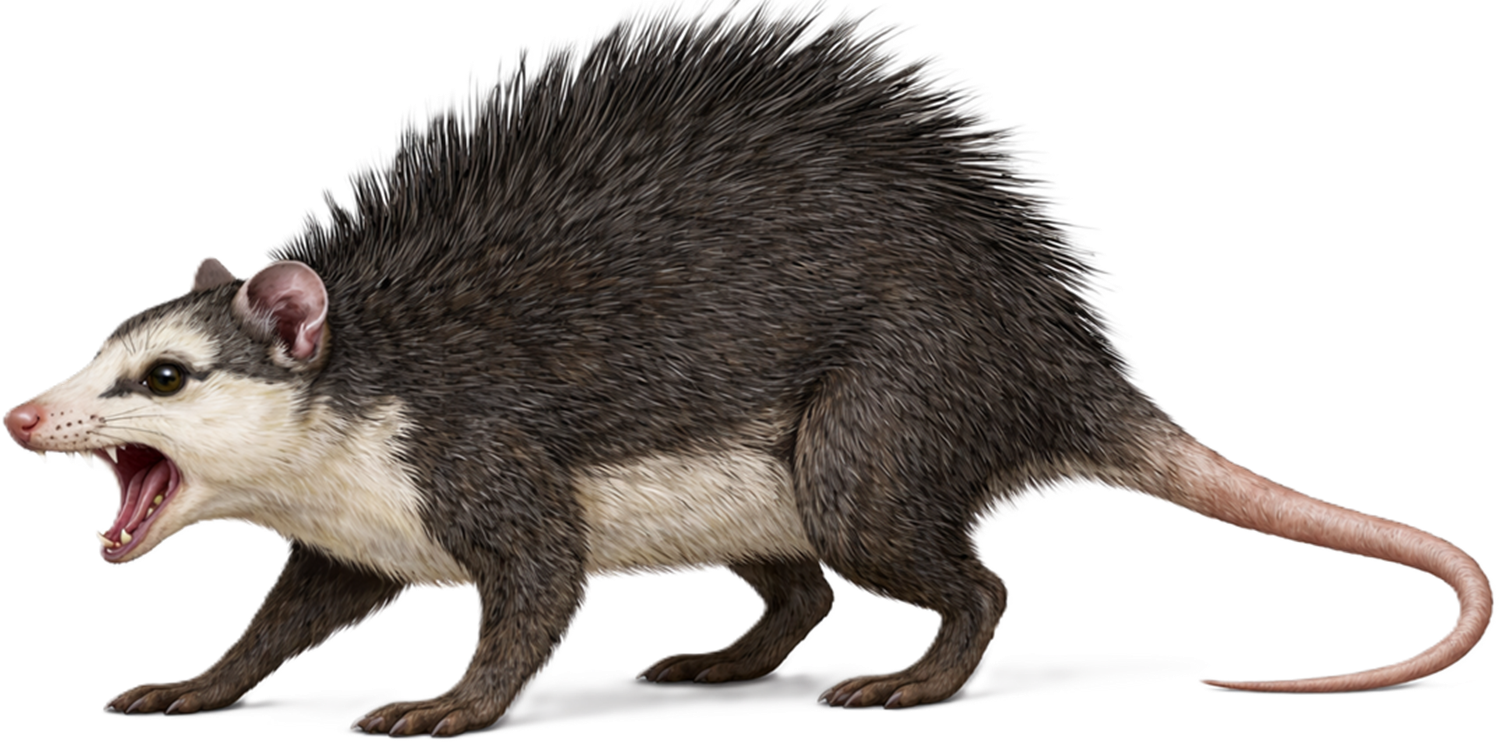 |
Pediomys elegans333Clemens, W. A. (1964). Fossil mammals of the type Lance Formation, Wyoming – Part I. Introduction and Marsupialia. University of California Publications in Geological Sciences, 48, 1–105.334Davis, B. M. (2007). A revision of “pediomyid” marsupials from the Late Cretaceous of North America. Acta Palaeontologica Polonica, 52(2), 217–256.335Kielan-Jaworowska, Z., Cifelli, R. L. & Luo, Z.-X. (2004). Mammals from the Age of Dinosaurs – Origins, Evolution, and Structure. Columbia University Press, 98–99. doi:10.7312/kiel11918 | Hell Creek Formation, Lance Formation | Montana, South Dakota, Wyoming | 68–66 Ma | häufig | Pediomyidae |
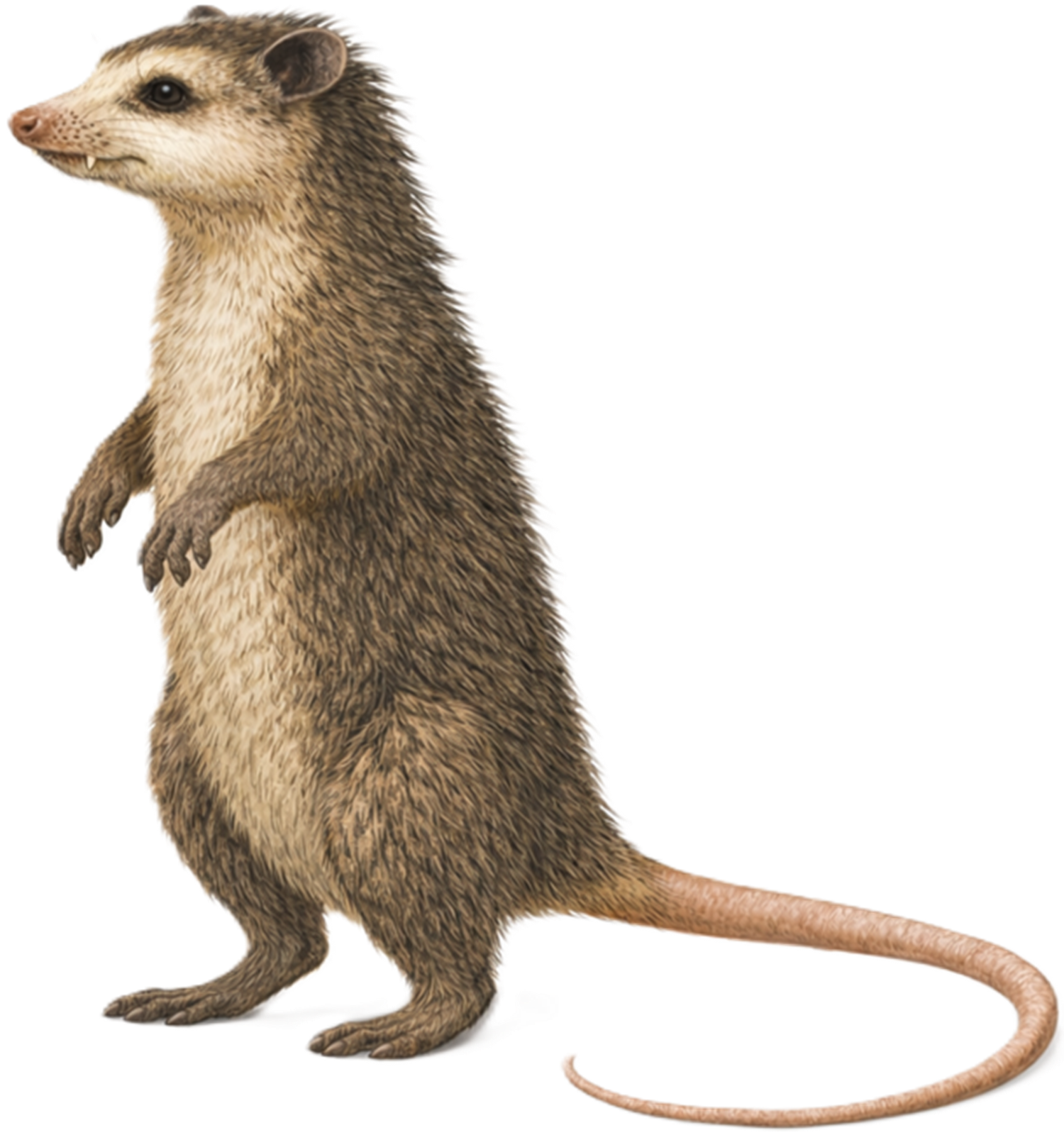 |
Protalphadon foxi336Kielan-Jaworowska, Z., Cifelli, R. L. & Luo, Z.-X. (2004). Mammals from the Age of Dinosaurs – Origins, Evolution, and Structure. Columbia University Press, 98–99. doi:10.7312/kiel11918 | Hell Creek Formation | Montana | 68–66 Ma | Einzelfund | Alphadontidae |
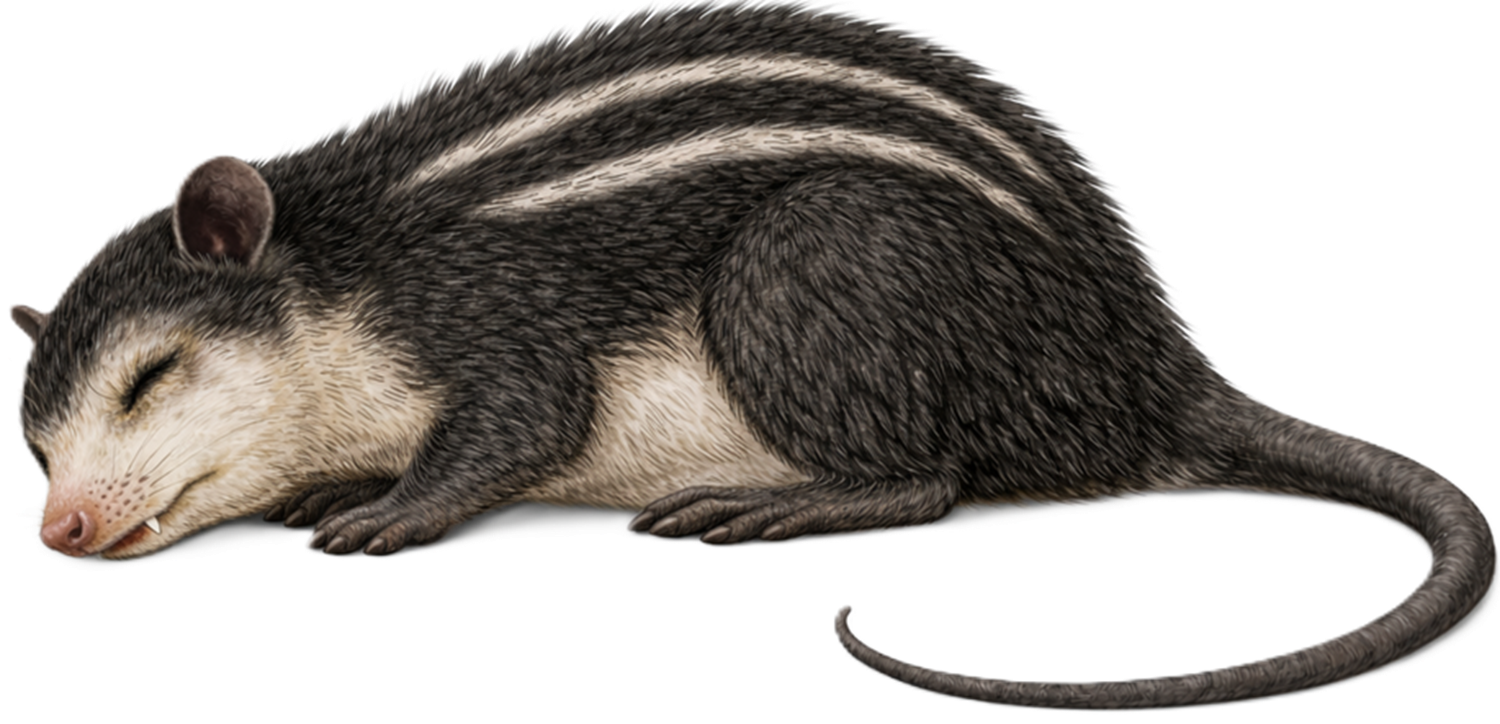 |
Protalphadon lulli337Clemens, W. A. (1964). Fossil mammals of the type Lance Formation, Wyoming – Part I. Introduction and Marsupialia. University of California Publications in Geological Sciences, 48, 1–105.338Eberle, J. J. & Lillegraven, J. A. (1998). A new important record of earliest Cenozoic mammalian history: geologic setting, Multituberculata, and Peradectia. Rocky Mountain Geology, 33(1), 3–47.339Lillegraven, J. A. & Eberle, J. J. (1999). Vertebrate faunal changes through Lancian and Puercan time in southern Wyoming. Journal of Paleontology, 73(4), 691–710. doi:10.1017/S0022336000032515340Kielan-Jaworowska, Z., Cifelli, R. L. & Luo, Z.-X. (2004). Mammals from the Age of Dinosaurs – Origins, Evolution, and Structure. Columbia University Press, 98–99. doi:10.7312/kiel11918 | Hell Creek Formation, Lance Formation, Ferris Formation | Montana, South Dakota, Wyoming | 68–66 Ma | häufig | Alphadontidae; synonym zu Alphadon lulli |
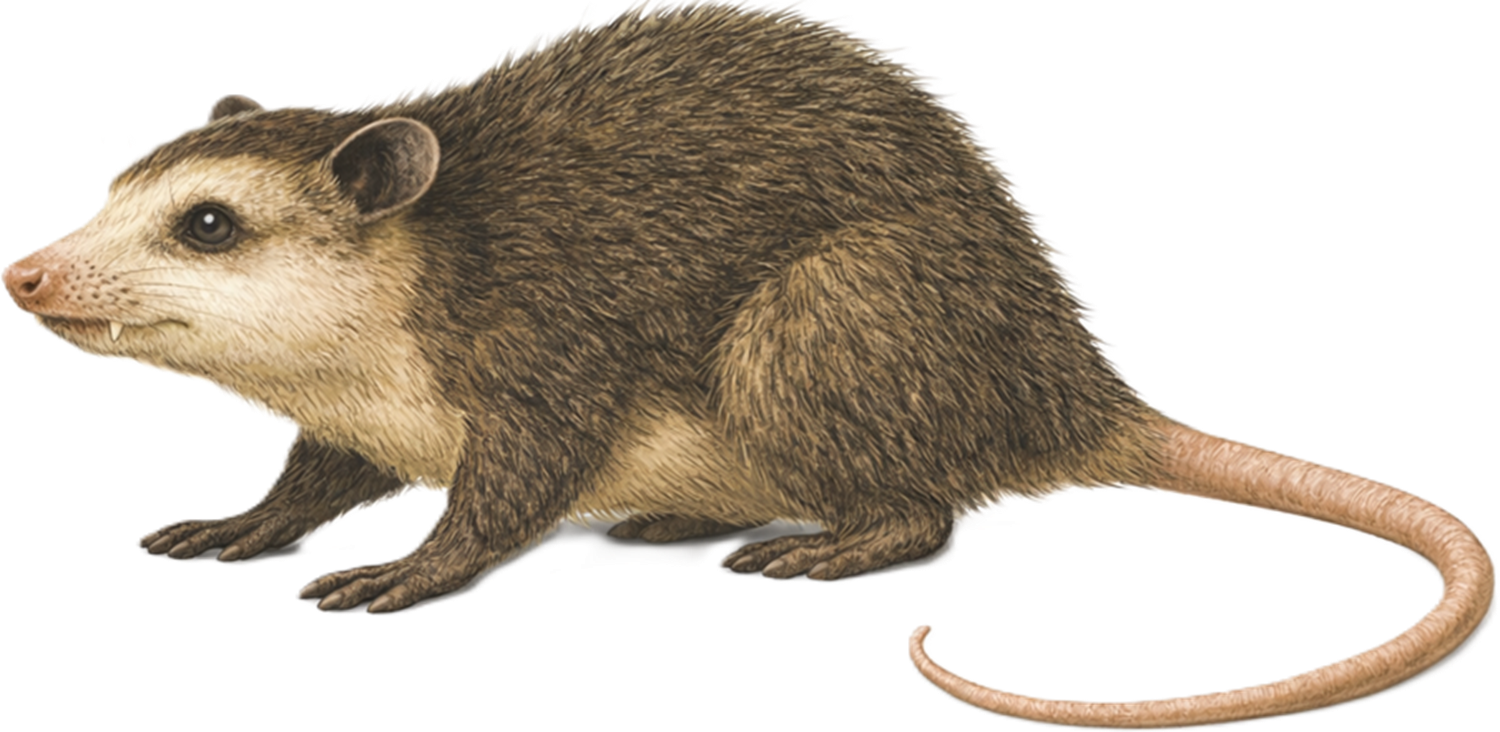 |
Protalphadon sp.341Wilson, G. P., Dechesne, M. & Anderson, I. R. (2010). New latest Cretaceous mammals from northeastern Colorado, with biochronologic and biogeographic implications. Journal of Vertebrate Paleontology, 30(2), 499–520. doi:10.1080/02724631003620955 | Denver Formation | Colorado | 67–66 Ma | Einzelfund | Alphadontidae; Bestimmung unsicher |
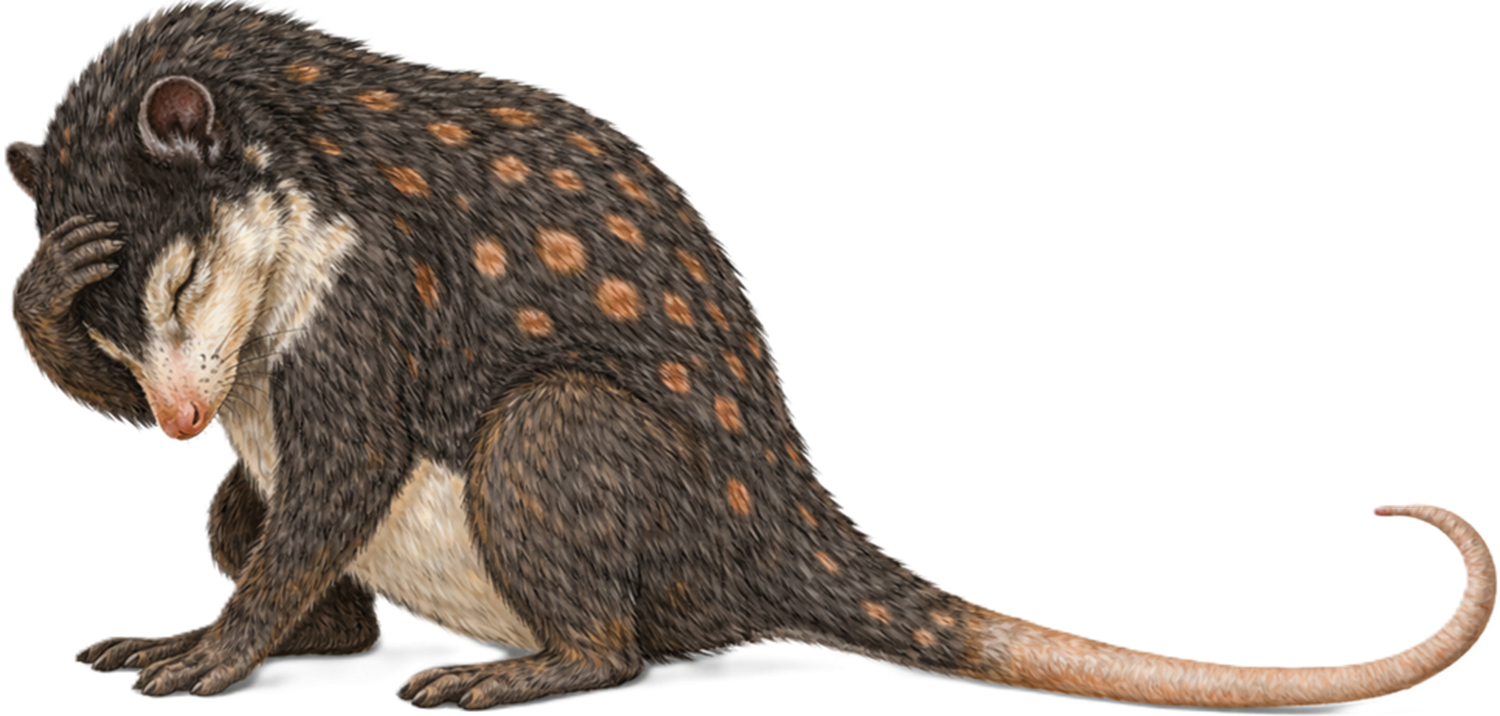 |
Protolambda florencae342Clemens, W. A. (1964). Fossil mammals of the type Lance Formation, Wyoming – Part I. Introduction and Marsupialia. University of California Publications in Geological Sciences, 48, 1–105.343Davis, B. M. (2007). A revision of “pediomyid” marsupials from the Late Cretaceous of North America. Acta Palaeontologica Polonica, 52(2), 217–256.344Kielan-Jaworowska, Z., Cifelli, R. L. & Luo, Z.-X. (2004). Mammals from the Age of Dinosaurs – Origins, Evolution, and Structure. Columbia University Press, 98–99. doi:10.7312/kiel11918 | Hell Creek Formation, Lance Formation | Montana, North Dakota, South Dakota, Wyoming | 68–66 Ma | häufig | Pediomyidae |
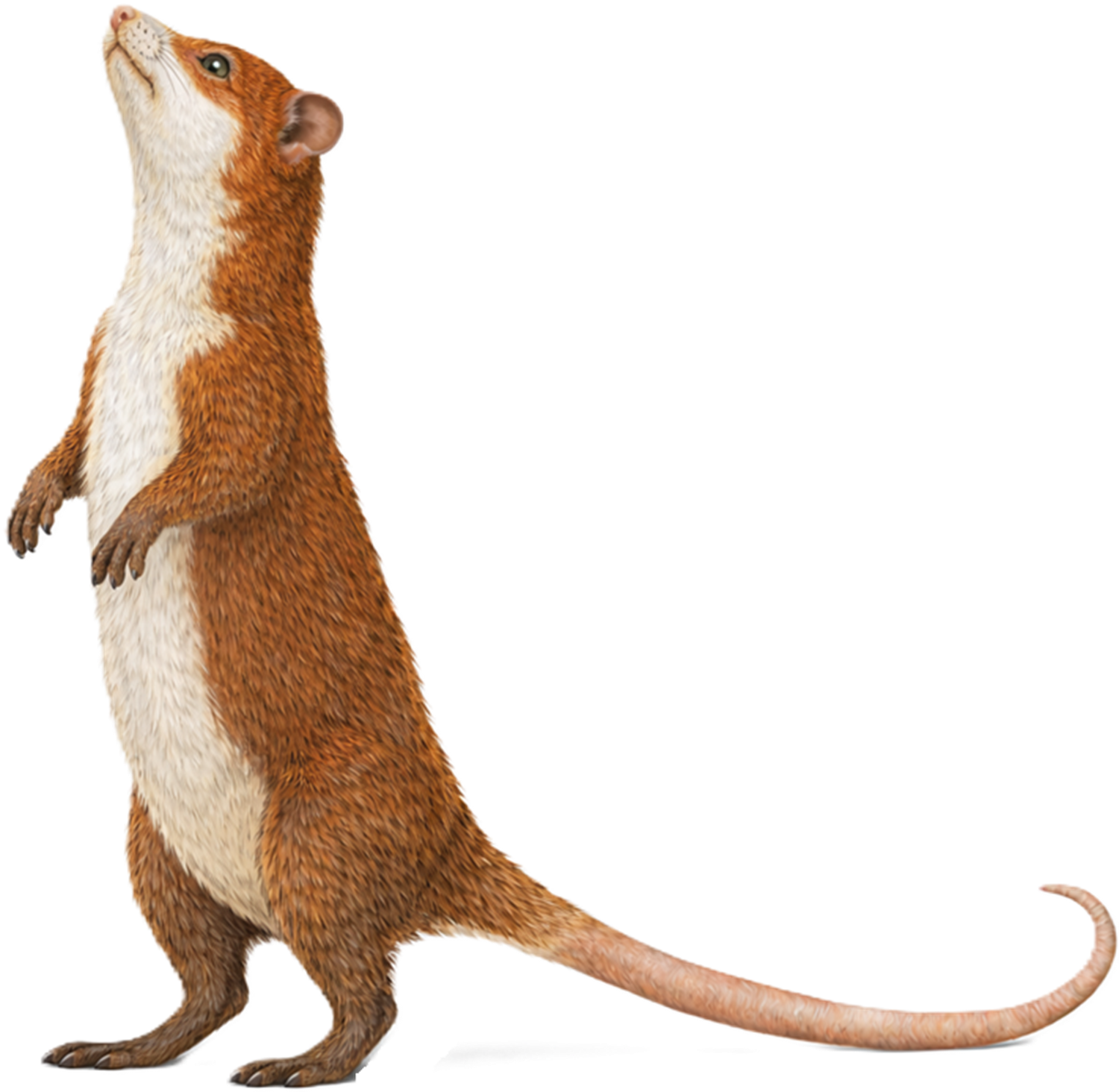 |
Protolambda hatcheri345Clemens, W. A. (1964). Fossil mammals of the type Lance Formation, Wyoming – Part I. Introduction and Marsupialia. University of California Publications in Geological Sciences, 48, 1–105.346Davis, B. M. (2007). A revision of “pediomyid” marsupials from the Late Cretaceous of North America. Acta Palaeontologica Polonica, 52(2), 217–256.347Wilson, G. P., Dechesne, M. & Anderson, I. R. (2010). New latest Cretaceous mammals from northeastern Colorado, with biochronologic and biogeographic implications. Journal of Vertebrate Paleontology, 30(2), 499–520. doi:10.1080/02724631003620955348Kielan-Jaworowska, Z., Cifelli, R. L. & Luo, Z.-X. (2004). Mammals from the Age of Dinosaurs – Origins, Evolution, and Structure. Columbia University Press, 98–99. doi:10.7312/kiel11918 | Hell Creek Formation, Lance Formation, Denver Formation | Montana, South Dakota, Wyoming, Colorado | 68–66 Ma | häufig | Pediomyidae |
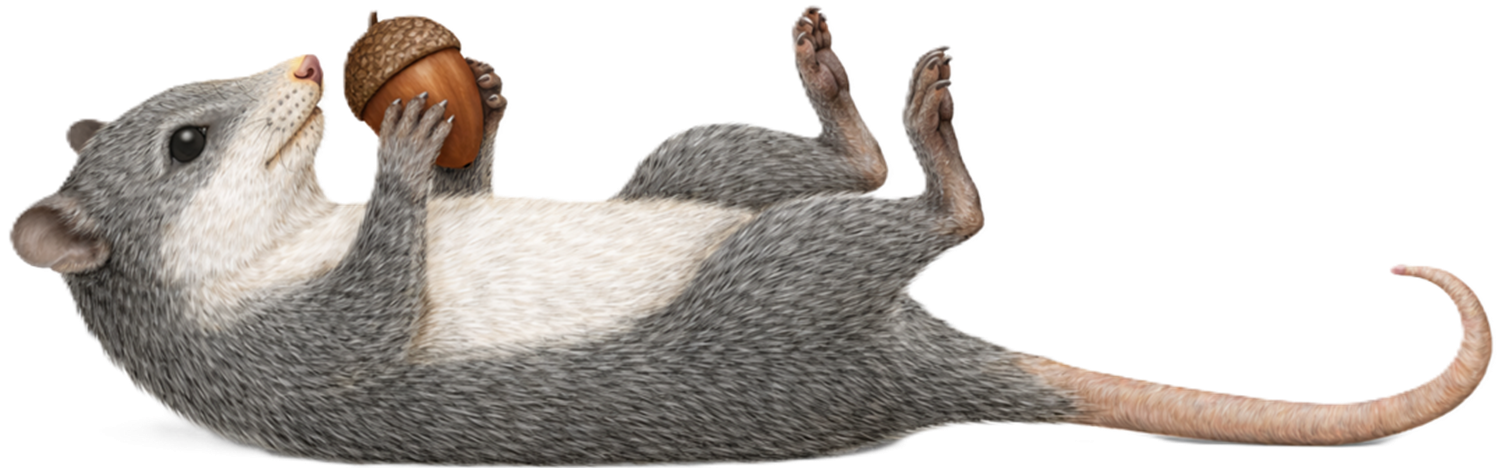 |
Protolambda mcgilli349Kelly, T. S. (2014). Preliminary report on the mammals from Lane’s Little Jaw Site Quarry – a latest Cretaceous (earliest Puercan?) local fauna, Hell Creek Formation, southeastern Montana. Paludicola, 10(1), 50–91. | Hell Creek Formation | Montana | 66–65 Ma | Einzelfund | Pediomyidae |
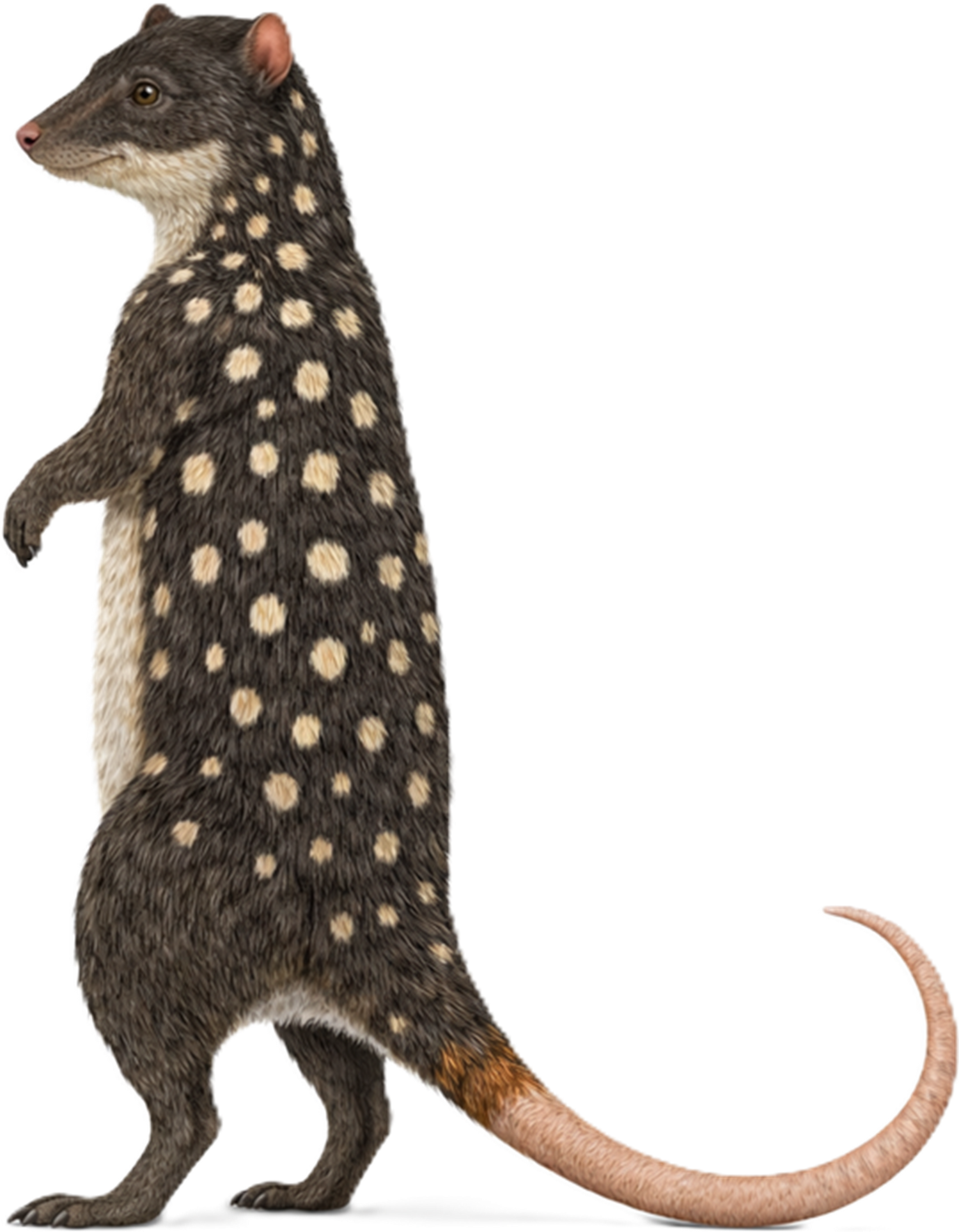 |
Turgidodon rhaister350Clemens, W. A. (1964). Fossil mammals of the type Lance Formation, Wyoming – Part I. Introduction and Marsupialia. University of California Publications in Geological Sciences, 48, 1–105.351Kielan-Jaworowska, Z., Cifelli, R. L. & Luo, Z.-X. (2004). Mammals from the Age of Dinosaurs – Origins, Evolution, and Structure. Columbia University Press, 98–99. doi:10.7312/kiel11918 | Hell Creek Formation, Lance Formation | Montana, Wyoming | 68–66 Ma | häufig | Alphadontidae |
Unter dem allgemein verständlichen Begriff „Beuteltiere“ werden hier auch frühe Metatheria und Marsupialiformes zusammengefasst, die zwar zur Entwicklungslinie der heutigen Beuteltiere gehören, aber nicht unbedingt bereits Mitglieder der modernen Kronengruppe Marsupialia waren.
Didelphodon padanicus wurde ursprünglich von Edward Drinker Cope benannt, nach Auffassung einiger späterer Autoren aber nicht ausreichend formal beschrieben. Cifelli und de Muizon betrachteten den Namen deshalb als Nomen nudum. Da das Taxon dennoch wiederholt in der Fachliteratur und in paläontologischen Datenbanken verwendet wird, ist es hier weiterhin aufgeführt.
Bei Leptalestes cooki (?), Nortedelphys jasoni, Protalphadon sp., Protolambda hatcheri, Pediomyidae indet. und Metatheria indet. ist die Zuweisung zu einer bestimmten Lagerstätte unsicher und komplex. Sie stammen aus dem Cheyenne Basin in Colorado aus traditionell als Laramie Formation kartierten Schichten, die aber wahrscheinlich dem kreidezeitlichen Abschnitt der D1-Sequenz im Denver Basin entsprechen. Deshalb werden diese Funde hier der Denver Formation zugeordnet.352Wilson, G. P., Dechesne, M. & Anderson, I. R. (2010). New latest Cretaceous mammals from northeastern Colorado, with biochronologic and biogeographic implications. Journal of Vertebrate Paleontology, 30(2), 499–520. doi:10.1080/02724631003620955
Die genaue stratigraphische Stellung der Lane’s-Little-Jaw-Fauna mit Protolambda mcgilli ist ebenfalls nicht abschließend geklärt. Die Fundstelle liegt im oberen Bereich der Hell Creek Formation und enthält sowohl typische kreidezeitliche als auch frühpaläozäne Faunenelemente. Deshalb wird für diesen Fund ein Alter von 66–65 Ma angegeben.

Multituberculata:
| Bild: | Spezies: | Formation: | Fundort: | Alter: | Häufigkeit: | Bemerkungen: |
|---|---|---|---|---|---|---|
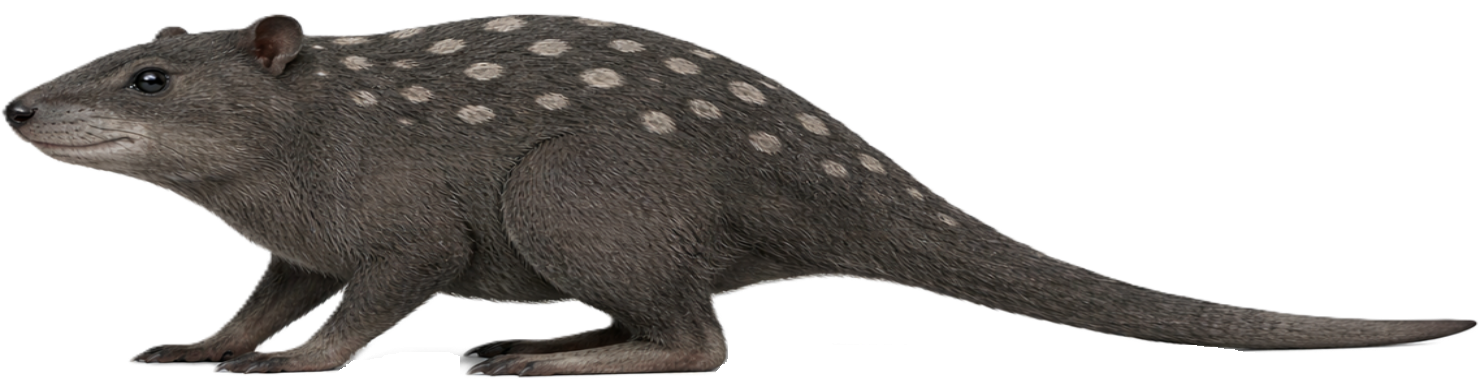 |
Cimexomys cf. minor353Donohue, S. L. et al. (2013). Latest Cretaceous multituberculates of the Black Butte Station local fauna (Lance Formation, southwestern Wyoming), with implications for compositional differences among mammalian local faunas of the western interior. Journal of Vertebrate Paleontology, 33(3), 677–695. doi:10.1080/02724634.2013.745416 | Lance Formation | Wyoming | 68–66 Ma | Einzelfund | Multituberculata, unsichere Verwandtschaft; Bestimmung unsicher |
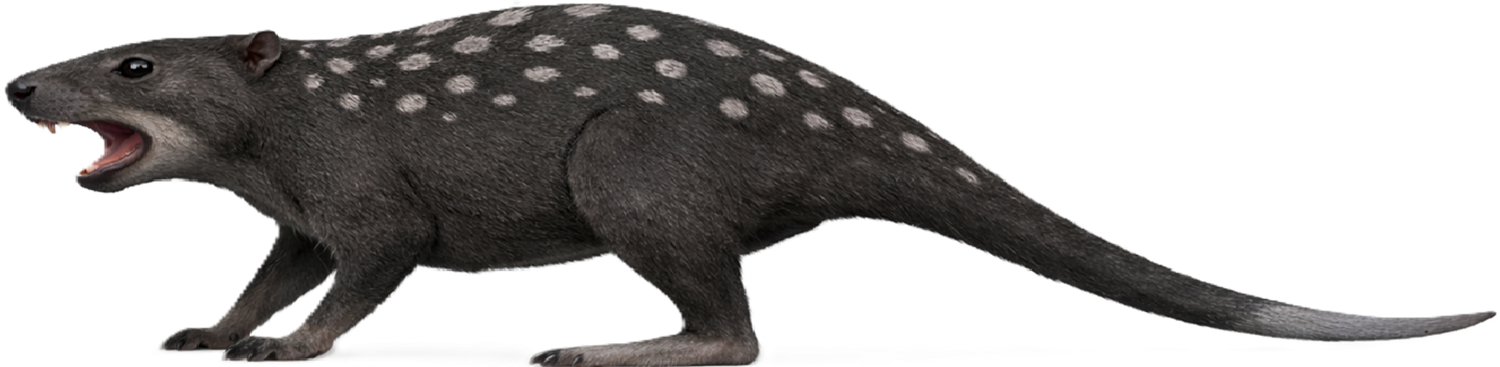 |
Cimexomys minor354Kielan-Jaworowska, Z., Cifelli, R. L. & Luo, Z.-X. (2004). Mammals from the Age of Dinosaurs – Origins, Evolution, and Structure. Columbia University Press, 98–99. doi:10.7312/kiel11918355Donohue, S. L. et al. (2013). Latest Cretaceous multituberculates of the Black Butte Station local fauna (Lance Formation, southwestern Wyoming), with implications for compositional differences among mammalian local faunas of the western interior. Journal of Vertebrate Paleontology, 33(3), 677–695. doi:10.1080/02724634.2013.745416 | Hell Creek Formation, Lance Formation | Montana, Wyoming | 68–66 Ma | häufig | Multituberculata, unsichere Verwandtschaft |
|
Cimexomys sp.356Donohue, S. L. et al. (2013). Latest Cretaceous multituberculates of the Black Butte Station local fauna (Lance Formation, southwestern Wyoming), with implications for compositional differences among mammalian local faunas of the western interior. Journal of Vertebrate Paleontology, 33(3), 677–695. doi:10.1080/02724634.2013.745416 | Lance Formation | Wyoming | 68–66 Ma | Einzelfund | Multituberculata, unsichere Verwandtschaft; Bestimmung unsicher |
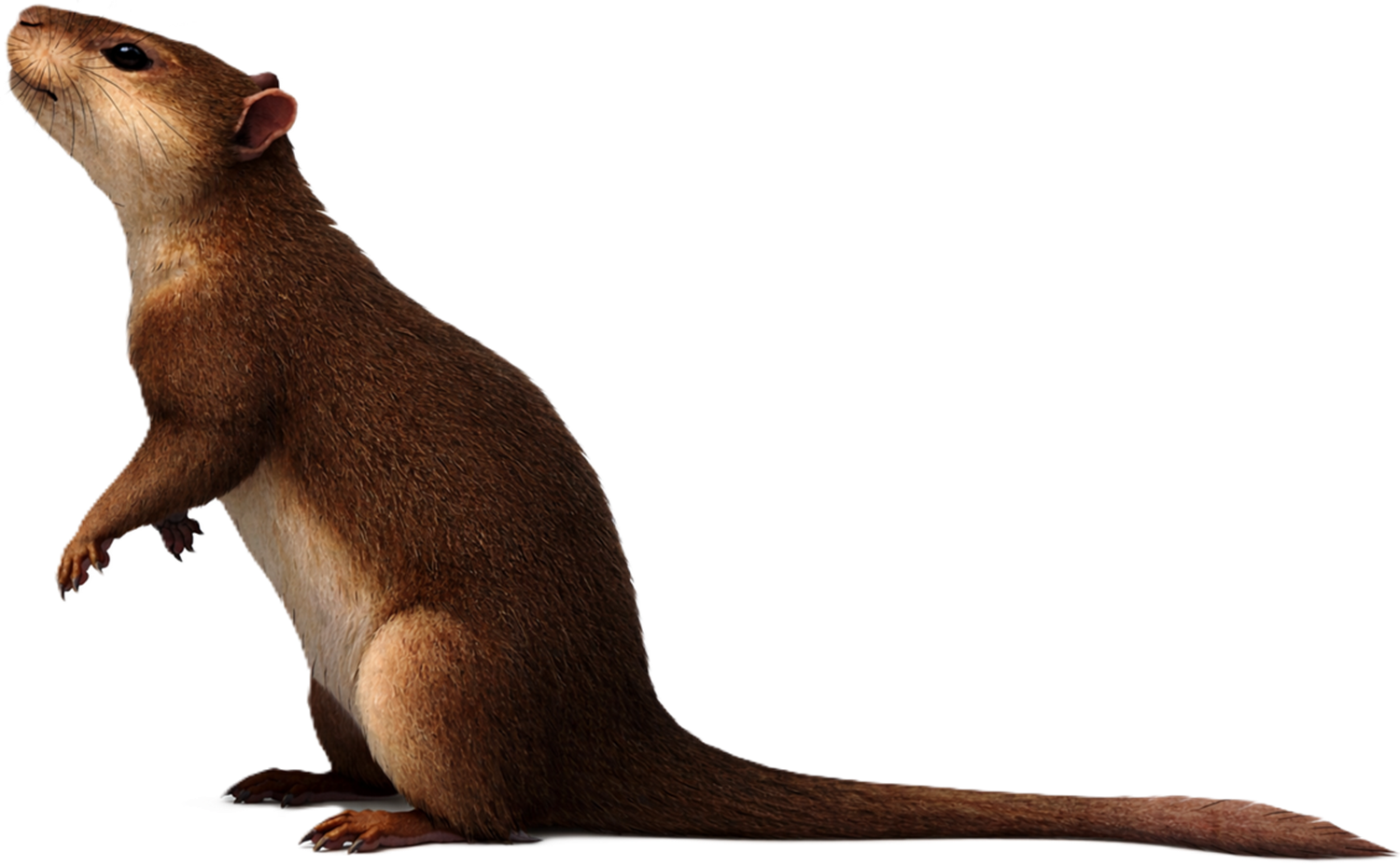 |
Cimolodon cf. nitidus357Kielan-Jaworowska, Z., Cifelli, R. L. & Luo, Z.-X. (2004). Mammals from the Age of Dinosaurs – Origins, Evolution, and Structure. Columbia University Press, 98–99. doi:10.7312/kiel11918358Donohue, S. L. et al. (2013). Latest Cretaceous multituberculates of the Black Butte Station local fauna (Lance Formation, southwestern Wyoming), with implications for compositional differences among mammalian local faunas of the western interior. Journal of Vertebrate Paleontology, 33(3), 677–695. doi:10.1080/02724634.2013.745416 | Hell Creek Formation, Lance Formation | South Dakota, Wyoming | 68–66 Ma | selten | Cimolodontidae |
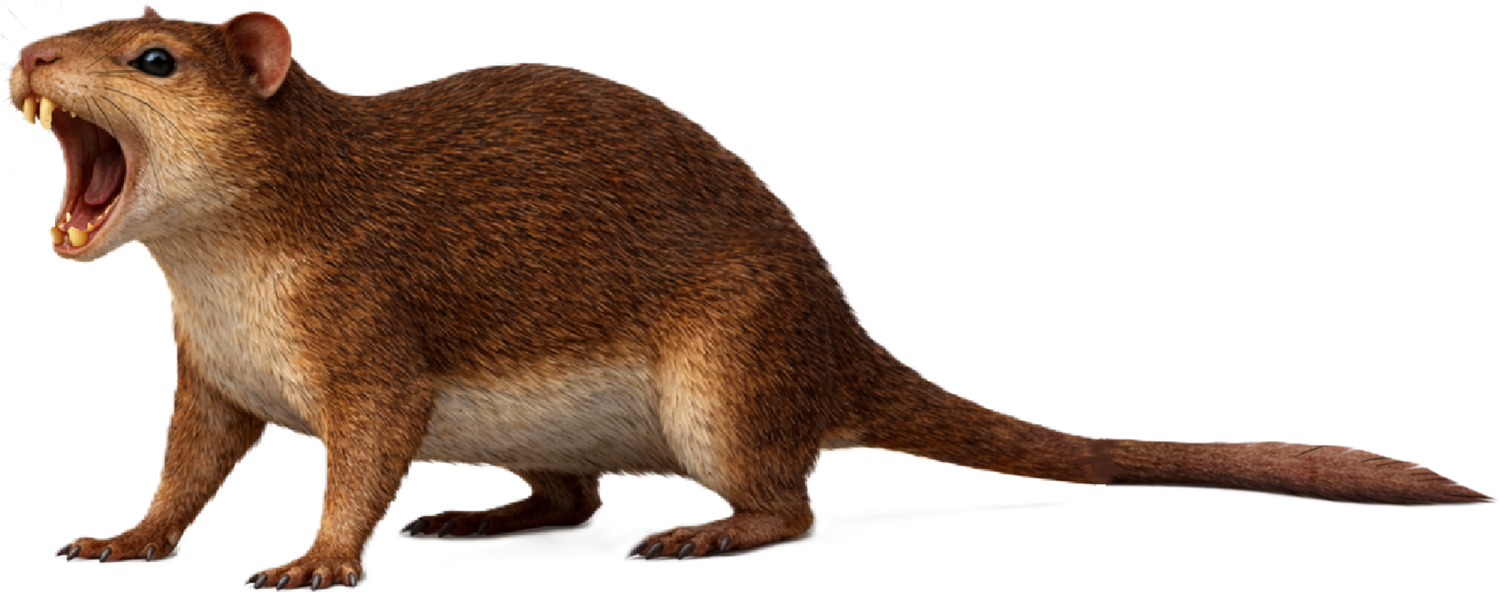 |
Cimolodon nitidus359Eberle, J. J. & Lillegraven, J. A. (1998). A new important record of earliest Cenozoic mammalian history: geologic setting, Multituberculata, and Peradectia. Rocky Mountain Geology, 33(1), 3–47.360Kielan-Jaworowska, Z., Cifelli, R. L. & Luo, Z.-X. (2004). Mammals from the Age of Dinosaurs – Origins, Evolution, and Structure. Columbia University Press, 98–99. doi:10.7312/kiel11918361Donohue, S. L. et al. (2013). Latest Cretaceous multituberculates of the Black Butte Station local fauna (Lance Formation, southwestern Wyoming), with implications for compositional differences among mammalian local faunas of the western interior. Journal of Vertebrate Paleontology, 33(3), 677–695. doi:10.1080/02724634.2013.745416 | Hell Creek Formation, Lance Formation, Ferris Formation | Montana, North Dakota, South Dakota, Wyoming | 68–66 Ma | häufig | Cimolodontidae |
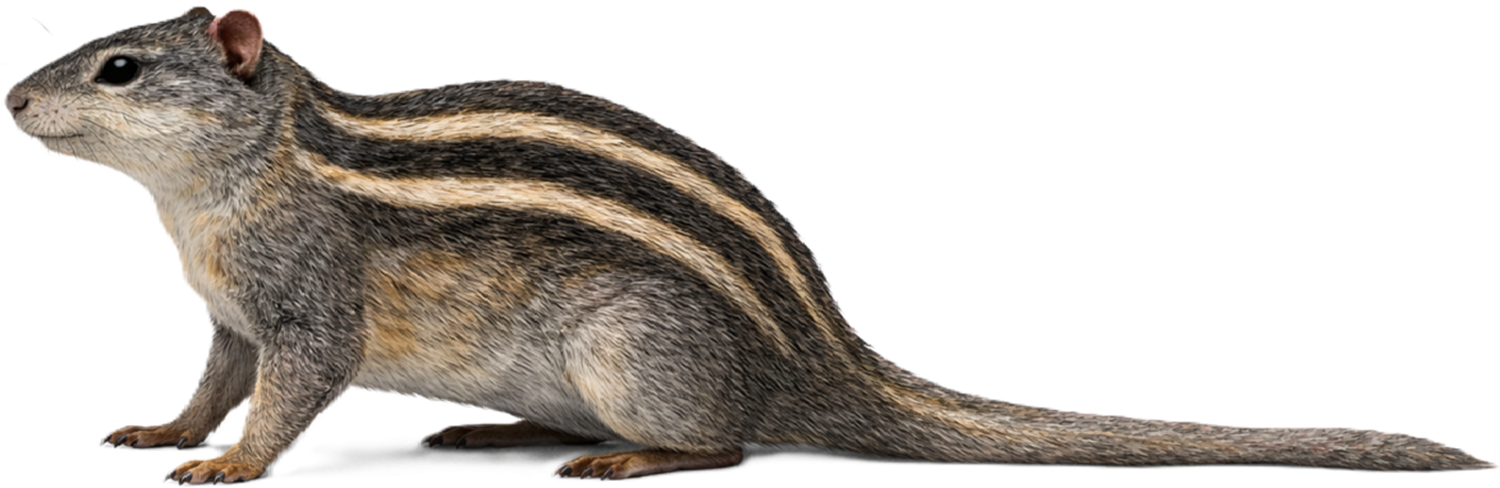 |
Cimolodon peregrinus362Donohue, S. L. et al. (2013). Latest Cretaceous multituberculates of the Black Butte Station local fauna (Lance Formation, southwestern Wyoming), with implications for compositional differences among mammalian local faunas of the western interior. Journal of Vertebrate Paleontology, 33(3), 677–695. doi:10.1080/02724634.2013.745416 | Lance Formation | Wyoming | 68–66 Ma | Einzelfund | Cimolodontidae |
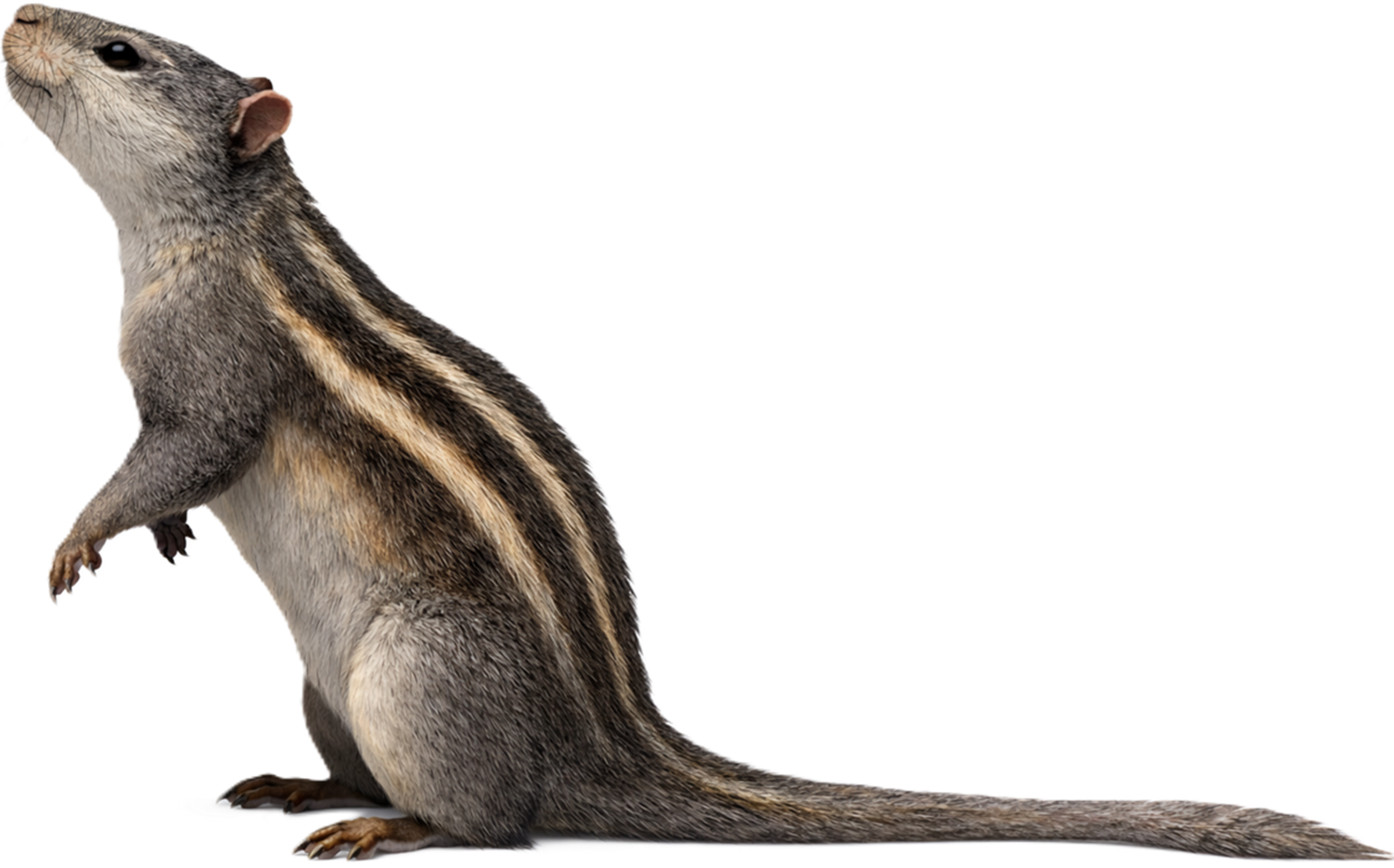 |
Cimolodon sp. (?)363Kielan-Jaworowska, Z., Cifelli, R. L. & Luo, Z.-X. (2004). Mammals from the Age of Dinosaurs – Origins, Evolution, and Structure. Columbia University Press, 98–99. doi:10.7312/kiel11918364Wilson, G. P., Dechesne, M. & Anderson, I. R. (2010). New latest Cretaceous mammals from northeastern Colorado, with biochronologic and biogeographic implications. Journal of Vertebrate Paleontology, 30(2), 499–520. doi:10.1080/02724631003620955 | Hell Creek Formation, Denver Formation | North Dakota, Colorado | 68–66 Ma | selten | Cimolodontidae; Bestimmung unsicher |
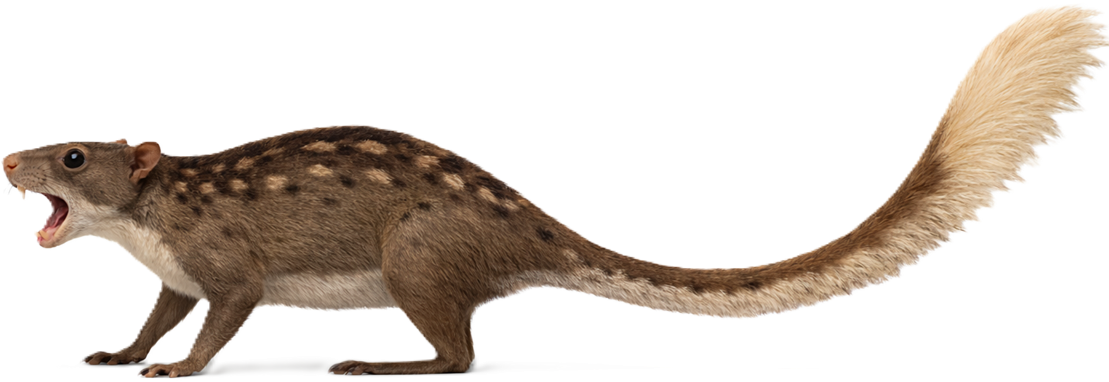 |
Cimolomys gracilis365Kielan-Jaworowska, Z., Cifelli, R. L. & Luo, Z.-X. (2004). Mammals from the Age of Dinosaurs – Origins, Evolution, and Structure. Columbia University Press, 98–99. doi:10.7312/kiel11918 | Hell Creek Formation, Lance Formation | Montana, South Dakota, Wyoming | 68–66 Ma | häufig | Cimolomyidae |
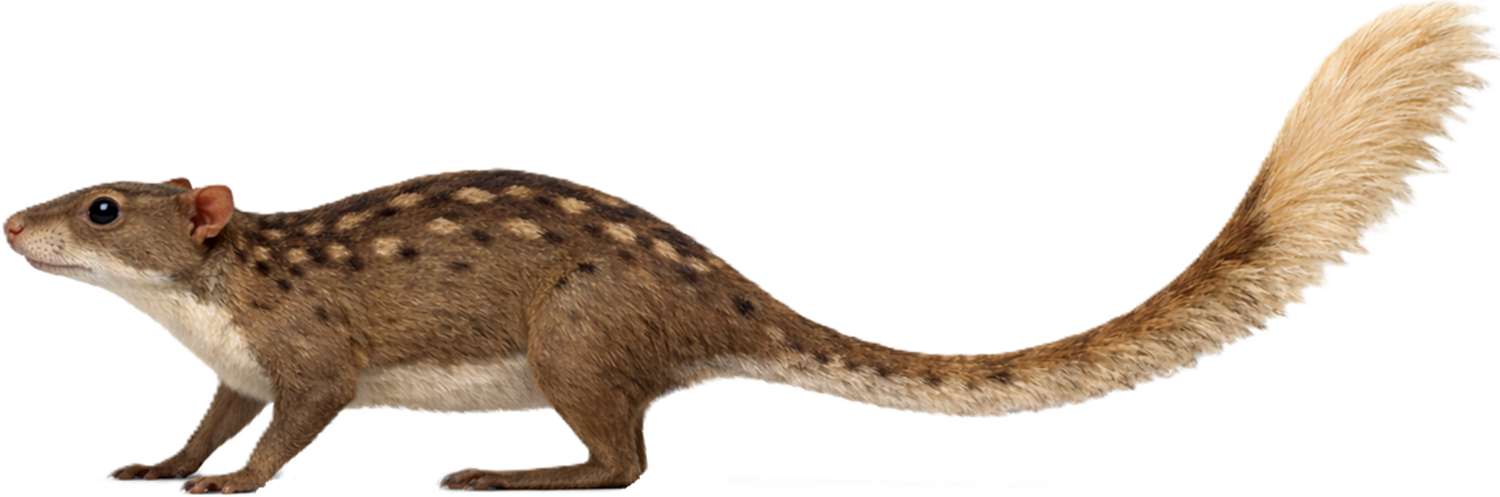 |
Cimolomys sp. (?)366Wilson, G. P., Dechesne, M. & Anderson, I. R. (2010). New latest Cretaceous mammals from northeastern Colorado, with biochronologic and biogeographic implications. Journal of Vertebrate Paleontology, 30(2), 499–520. doi:10.1080/02724631003620955 | Denver Formation | Colorado | 67–66 Ma | Einzelfund | Cimolomyidae; Bestimmung unsicher |
 |
Cimolomyidae indet.367Wilson, G. P., Dechesne, M. & Anderson, I. R. (2010). New latest Cretaceous mammals from northeastern Colorado, with biochronologic and biogeographic implications. Journal of Vertebrate Paleontology, 30(2), 499–520. doi:10.1080/02724631003620955 | Denver Formation | Colorado | ca. 66 Ma | Einzelfund | Cimolomyidae |
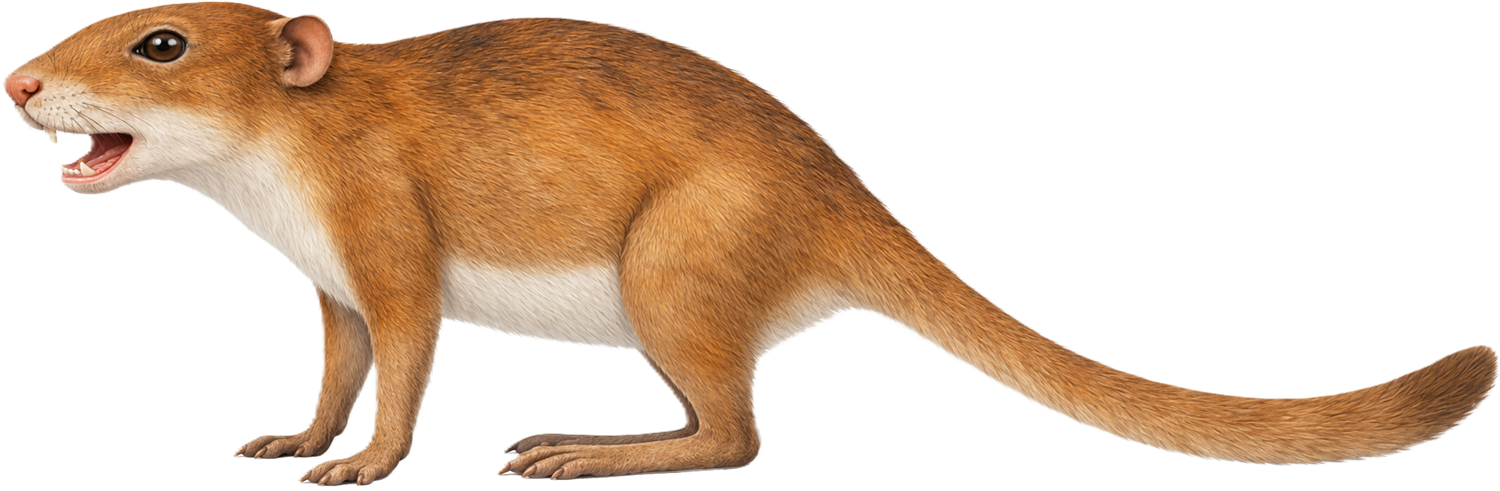 |
Clemensodon megaloba368Krause, D. W. (1992). Clemensodon megaloba, a new genus and species of Multituberculata (Mammalia) from the Upper Cretaceous type Lance Formation, Powder River Basin, Wyoming. PaleoBios, 14(2), 1–8. | Lance Formation | Wyoming | 68–66 Ma | selten | Cimolodonta |
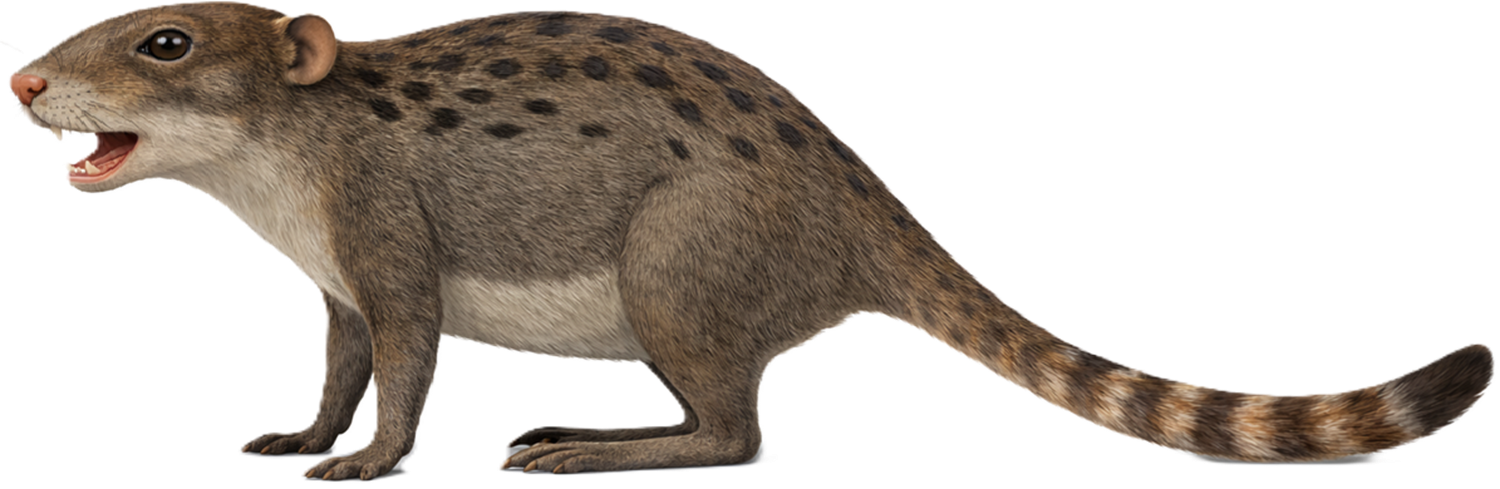 |
Essonodon browni369Kielan-Jaworowska, Z., Cifelli, R. L. & Luo, Z.-X. (2004). Mammals from the Age of Dinosaurs – Origins, Evolution, and Structure. Columbia University Press, 98–99. doi:10.7312/kiel11918370Donohue, S. L. et al. (2013). Latest Cretaceous multituberculates of the Black Butte Station local fauna (Lance Formation, southwestern Wyoming), with implications for compositional differences among mammalian local faunas of the western interior. Journal of Vertebrate Paleontology, 33(3), 677–695. doi:10.1080/02724634.2013.745416 | Hell Creek Formation, Lance Formation | Montana, North Dakota, Wyoming | 68–66 Ma | häufig | Cimolomyidae |
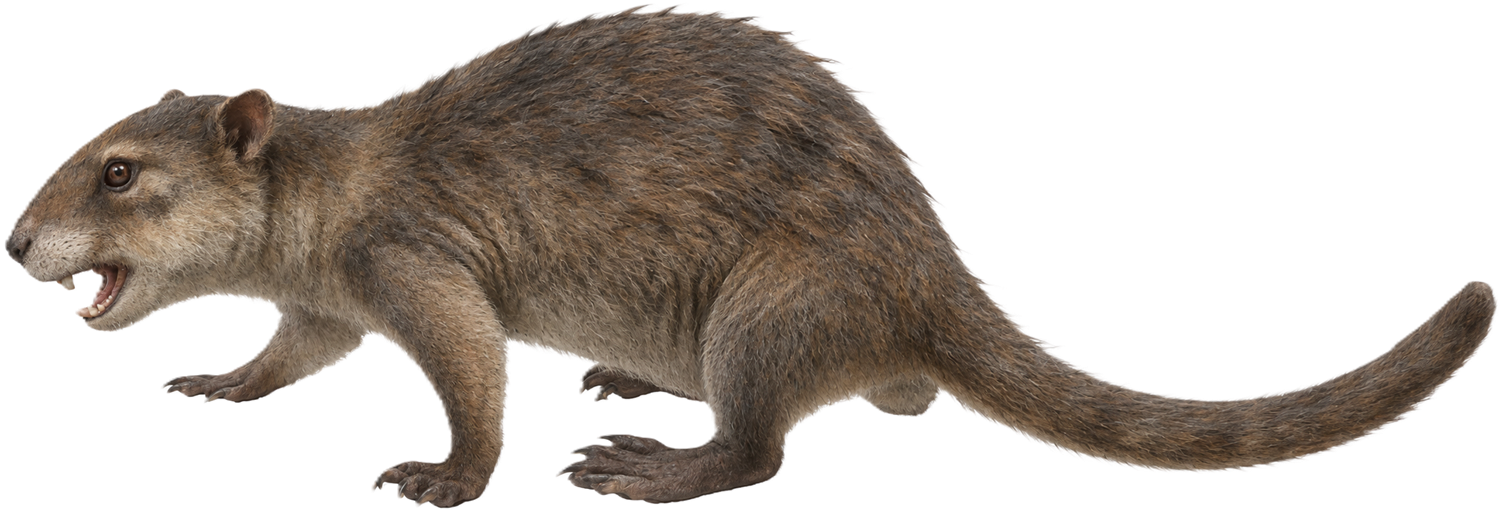 |
Meniscoessus collomensis371Wilson, G. P., Dechesne, M. & Anderson, I. R. (2010). New latest Cretaceous mammals from northeastern Colorado, with biochronologic and biogeographic implications. Journal of Vertebrate Paleontology, 30(2), 499–520. doi:10.1080/02724631003620955 | Laramie Formation | Colorado | ca. 68 Ma | selten | Cimolomyidae |
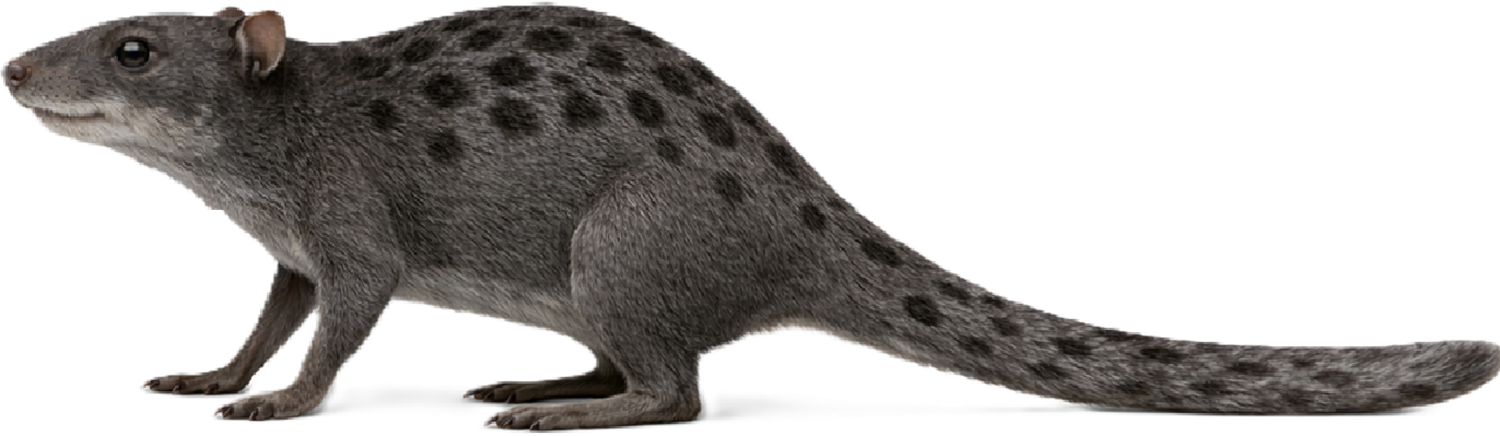 |
Meniscoessus conquistus372Kielan-Jaworowska, Z., Cifelli, R. L. & Luo, Z.-X. (2004). Mammals from the Age of Dinosaurs – Origins, Evolution, and Structure. Columbia University Press, 98–99. doi:10.7312/kiel11918 | Hell Creek Formation | South Dakota | 68–66 Ma | selten | Cimolomyidae |
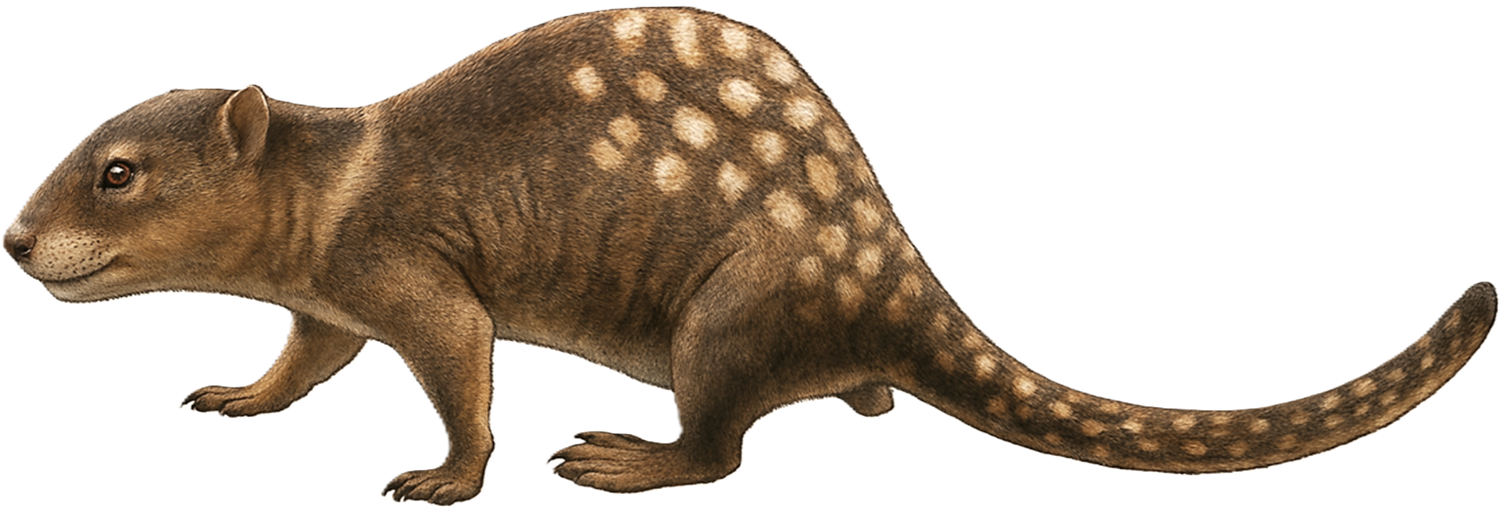 |
Meniscoessus cf. robustus373Kielan-Jaworowska, Z., Cifelli, R. L. & Luo, Z.-X. (2004). Mammals from the Age of Dinosaurs – Origins, Evolution, and Structure. Columbia University Press, 98–99. doi:10.7312/kiel11918374Wilson, G. P., Dechesne, M. & Anderson, I. R. (2010). New latest Cretaceous mammals from northeastern Colorado, with biochronologic and biogeographic implications. Journal of Vertebrate Paleontology, 30(2), 499–520. doi:10.1080/02724631003620955375Donohue, S. L. et al. (2013). Latest Cretaceous multituberculates of the Black Butte Station local fauna (Lance Formation, southwestern Wyoming), with implications for compositional differences among mammalian local faunas of the western interior. Journal of Vertebrate Paleontology, 33(3), 677–695. doi:10.1080/02724634.2013.745416 | Hell Creek Formation, Lance Formation, Denver Formation | South Dakota, Wyoming, Colorado | 68–66 Ma | selten | Cimolomyidae; Bestimmung unsicher |
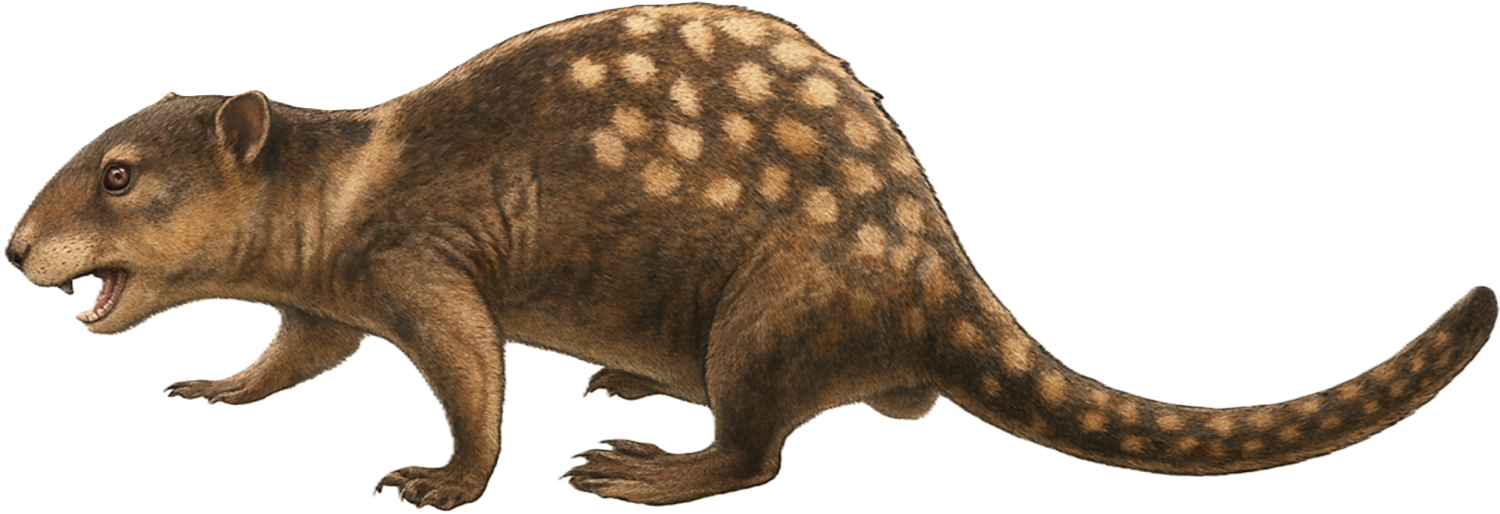 |
Meniscoessus robustus376Kielan-Jaworowska, Z., Cifelli, R. L. & Luo, Z.-X. (2004). Mammals from the Age of Dinosaurs – Origins, Evolution, and Structure. Columbia University Press, 98–99. doi:10.7312/kiel11918377Donohue, S. L. et al. (2013). Latest Cretaceous multituberculates of the Black Butte Station local fauna (Lance Formation, southwestern Wyoming), with implications for compositional differences among mammalian local faunas of the western interior. Journal of Vertebrate Paleontology, 33(3), 677–695. doi:10.1080/02724634.2013.745416 | Hell Creek Formation, Lance Formation | Montana, North Dakota, South Dakota, Wyoming | 68–66 Ma | sehr häufig | Cimolomyidae |
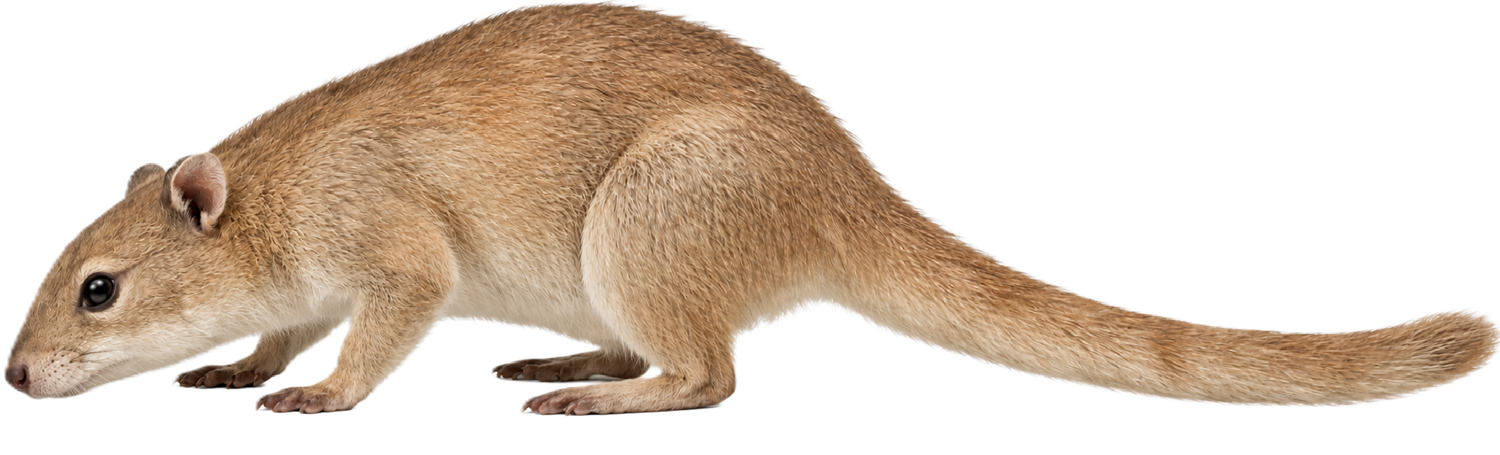 |
Meniscoessus seminoensis378Eberle, J. J. & Lillegraven, J. A. (1998). A new important record of earliest Cenozoic mammalian history: geologic setting, Multituberculata, and Peradectia. Rocky Mountain Geology, 33(1), 3–47. | Ferris Formation | Wyoming | 68–66 Ma | Einzelfund | Cimolomyidae |
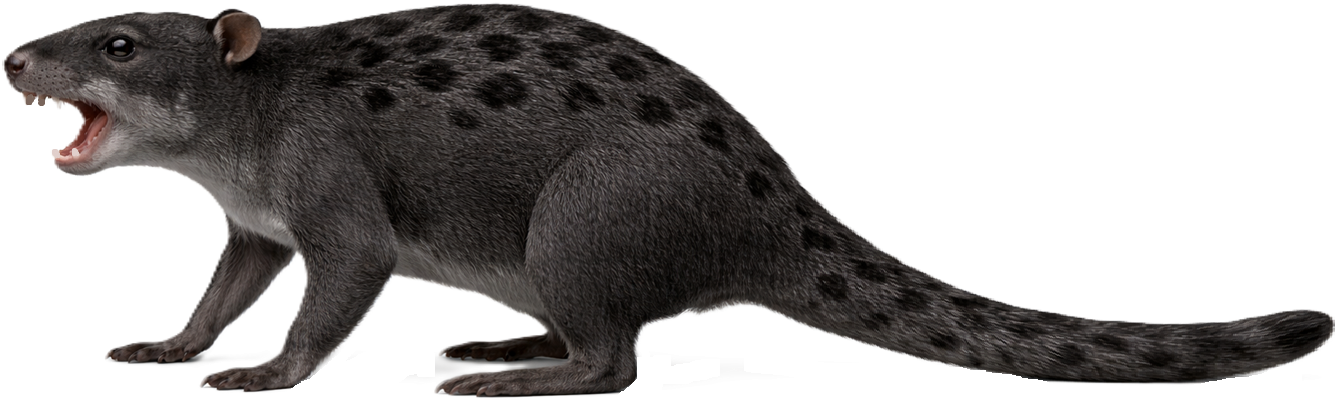 |
Meniscoessus sp.379Kielan-Jaworowska, Z., Cifelli, R. L. & Luo, Z.-X. (2004). Mammals from the Age of Dinosaurs – Origins, Evolution, and Structure. Columbia University Press, 98–99. doi:10.7312/kiel11918380Wilson, G. P., Dechesne, M. & Anderson, I. R. (2010). New latest Cretaceous mammals from northeastern Colorado, with biochronologic and biogeographic implications. Journal of Vertebrate Paleontology, 30(2), 499–520. doi:10.1080/02724631003620955 | Hell Creek Formation, Laramie Formation | North Dakota, Colorado | 68–66 Ma | selten | Cimolomyidae; Bestimmung unsicher |
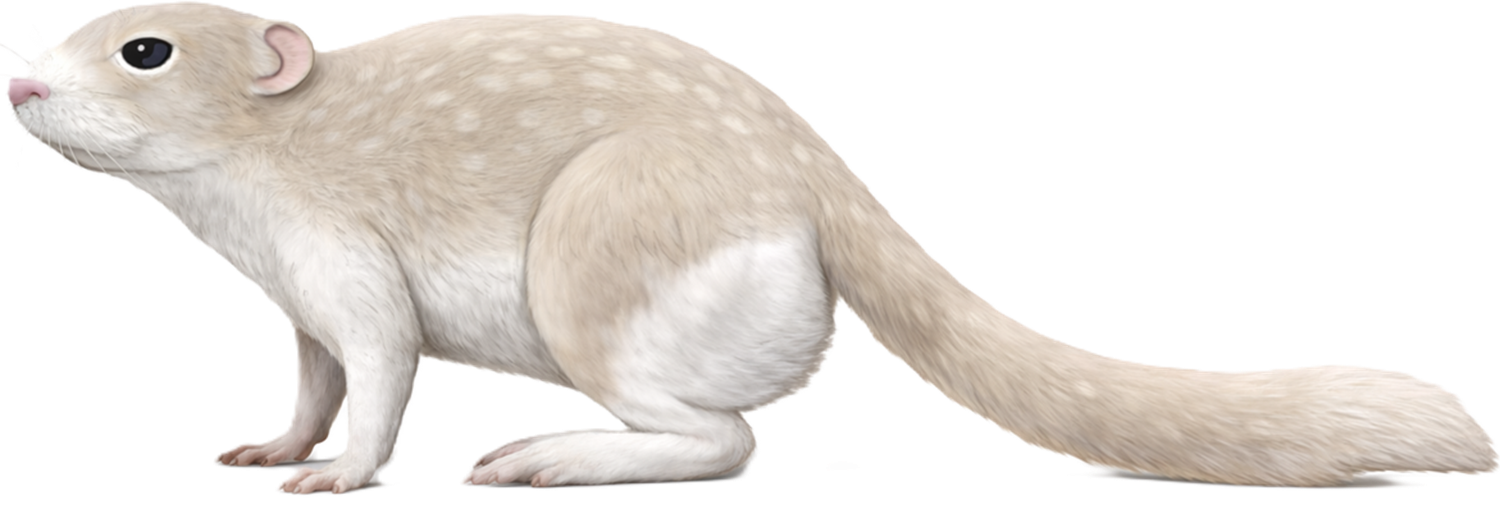 |
Mesodma cf. formosa381Kielan-Jaworowska, Z., Cifelli, R. L. & Luo, Z.-X. (2004). Mammals from the Age of Dinosaurs – Origins, Evolution, and Structure. Columbia University Press, 98–99. doi:10.7312/kiel11918382Wilson, G. P., Dechesne, M. & Anderson, I. R. (2010). New latest Cretaceous mammals from northeastern Colorado, with biochronologic and biogeographic implications. Journal of Vertebrate Paleontology, 30(2), 499–520. doi:10.1080/02724631003620955 | Hell Creek Formation, Denver Formation | Montana, Colorado | 68–66 Ma | selten | Neoplagiaulacidae; Bestimmung unsicher |
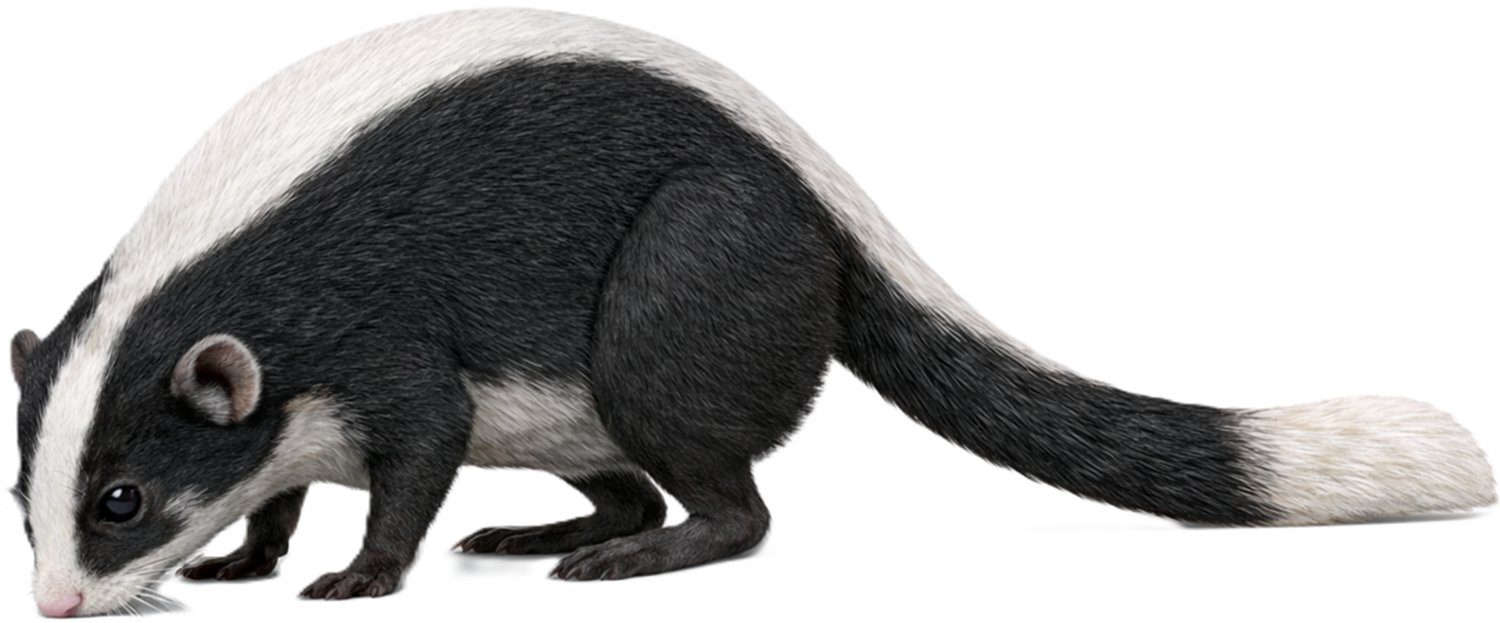 |
Mesodma cf. hensleighi383Kielan-Jaworowska, Z., Cifelli, R. L. & Luo, Z.-X. (2004). Mammals from the Age of Dinosaurs – Origins, Evolution, and Structure. Columbia University Press, 98–99. doi:10.7312/kiel11918 | Hell Creek Formation | South Dakota | 68–66 Ma | selten | Neoplagiaulacidae; Bestimmung unsicher |
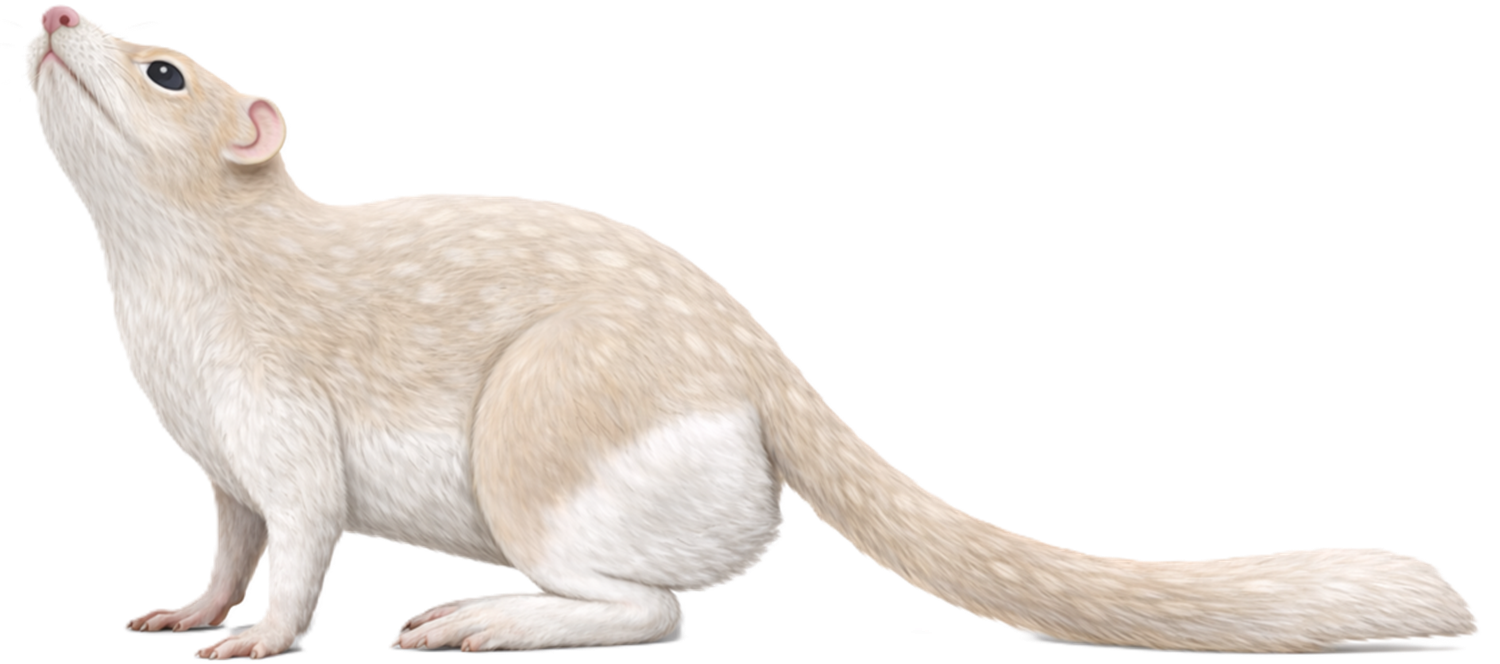 |
Mesodma formosa384Kielan-Jaworowska, Z., Cifelli, R. L. & Luo, Z.-X. (2004). Mammals from the Age of Dinosaurs – Origins, Evolution, and Structure. Columbia University Press, 98–99. doi:10.7312/kiel11918385Donohue, S. L. et al. (2013). Latest Cretaceous multituberculates of the Black Butte Station local fauna (Lance Formation, southwestern Wyoming), with implications for compositional differences among mammalian local faunas of the western interior. Journal of Vertebrate Paleontology, 33(3), 677–695. doi:10.1080/02724634.2013.745416 | Hell Creek Formation, Lance Formation | Montana, North Dakota, South Dakota, Wyoming | 68–66 Ma | häufig | Neoplagiaulacidae |
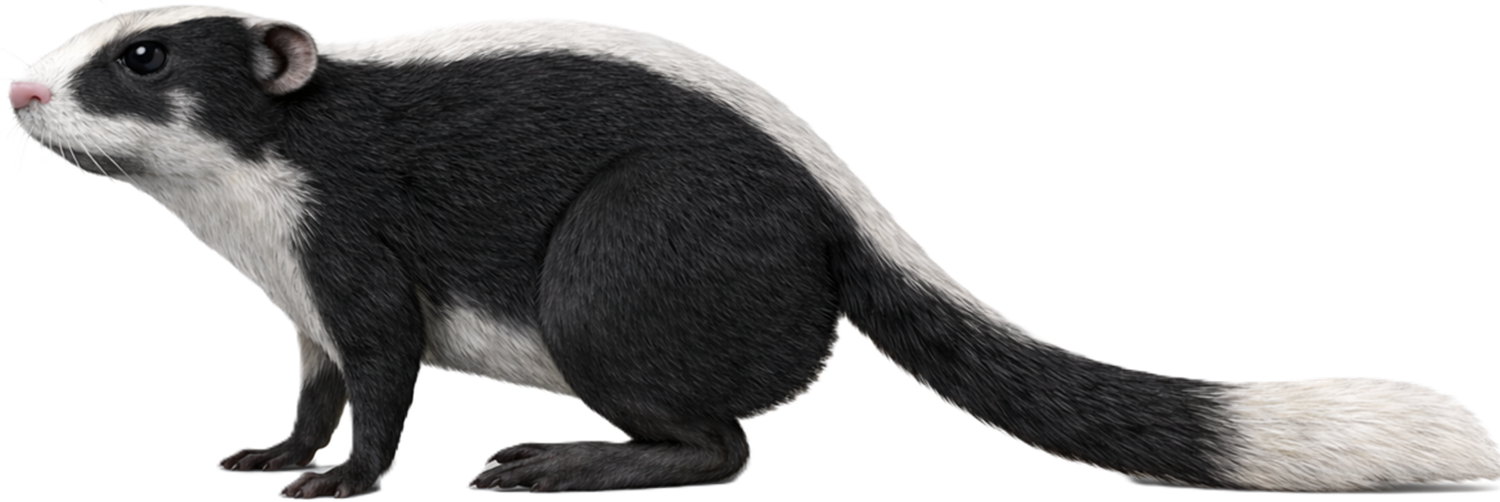 |
Mesodma hensleighi386Kielan-Jaworowska, Z., Cifelli, R. L. & Luo, Z.-X. (2004). Mammals from the Age of Dinosaurs – Origins, Evolution, and Structure. Columbia University Press, 98–99. doi:10.7312/kiel11918387Donohue, S. L. et al. (2013). Latest Cretaceous multituberculates of the Black Butte Station local fauna (Lance Formation, southwestern Wyoming), with implications for compositional differences among mammalian local faunas of the western interior. Journal of Vertebrate Paleontology, 33(3), 677–695. doi:10.1080/02724634.2013.745416 | Hell Creek Formation, Lance Formation | Montana, South Dakota, Wyoming | 68–66 Ma | häufig | Neoplagiaulacidae |
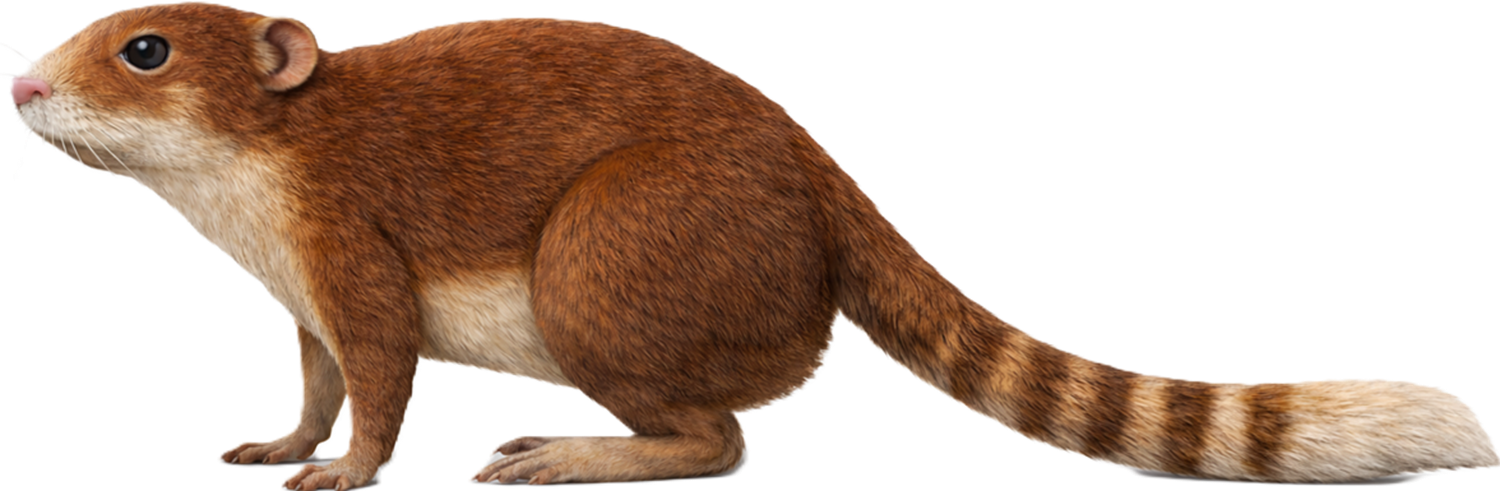 |
Mesodma sp.388Donohue, S. L. et al. (2013). Latest Cretaceous multituberculates of the Black Butte Station local fauna (Lance Formation, southwestern Wyoming), with implications for compositional differences among mammalian local faunas of the western interior. Journal of Vertebrate Paleontology, 33(3), 677–695. doi:10.1080/02724634.2013.745416 | Lance Formation | Wyoming | 68–66 Ma | Einzelfund | Neoplagiaulacidae; Bestimmung unsicher |
 |
Mesodma thompsoni389Kielan-Jaworowska, Z., Cifelli, R. L. & Luo, Z.-X. (2004). Mammals from the Age of Dinosaurs – Origins, Evolution, and Structure. Columbia University Press, 98–99. doi:10.7312/kiel11918390Donohue, S. L. et al. (2013). Latest Cretaceous multituberculates of the Black Butte Station local fauna (Lance Formation, southwestern Wyoming), with implications for compositional differences among mammalian local faunas of the western interior. Journal of Vertebrate Paleontology, 33(3), 677–695. doi:10.1080/02724634.2013.745416 | Hell Creek Formation, Lance Formation | Montana, North Dakota, South Dakota, Wyoming | 68–66 Ma | häufig | Neoplagiaulacidae |
 |
Multituberculata indet.391Wilson, G. P., Dechesne, M. & Anderson, I. R. (2010). New latest Cretaceous mammals from northeastern Colorado, with biochronologic and biogeographic implications. Journal of Vertebrate Paleontology, 30(2), 499–520. doi:10.1080/02724631003620955392Donohue, S. L. et al. (2013). Latest Cretaceous multituberculates of the Black Butte Station local fauna (Lance Formation, southwestern Wyoming), with implications for compositional differences among mammalian local faunas of the western interior. Journal of Vertebrate Paleontology, 33(3), 677–695. doi:10.1080/02724634.2013.745416 | Lance Formation, Denver Formation, Laramie Formation | Wyoming, Colorado | 68–66 Ma | häufig | Bislang unbestimmte Multituberculata |
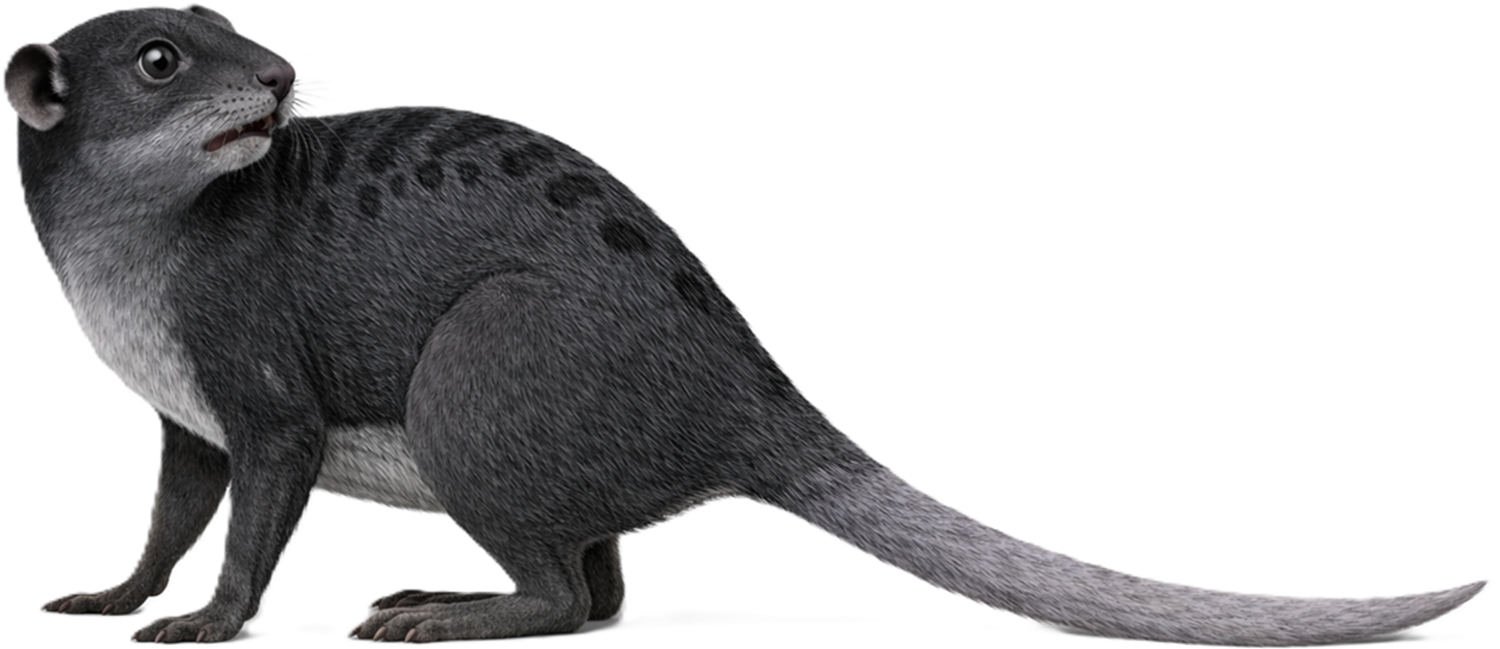 |
Neoplagiaulax burgessi393Kielan-Jaworowska, Z., Cifelli, R. L. & Luo, Z.-X. (2004). Mammals from the Age of Dinosaurs – Origins, Evolution, and Structure. Columbia University Press, 98–99. doi:10.7312/kiel11918 | Hell Creek Formation | Montana | 68–66 Ma | Einzelfund | Neoplagiaulacidae |
 |
Neoplagiaulacidae indet.394Donohue, S. L. et al. (2013). Latest Cretaceous multituberculates of the Black Butte Station local fauna (Lance Formation, southwestern Wyoming), with implications for compositional differences among mammalian local faunas of the western interior. Journal of Vertebrate Paleontology, 33(3), 677–695. doi:10.1080/02724634.2013.745416 | Lance Formation | Wyoming | 68–66 Ma | Einzelfund | Neoplagiaulacidae |
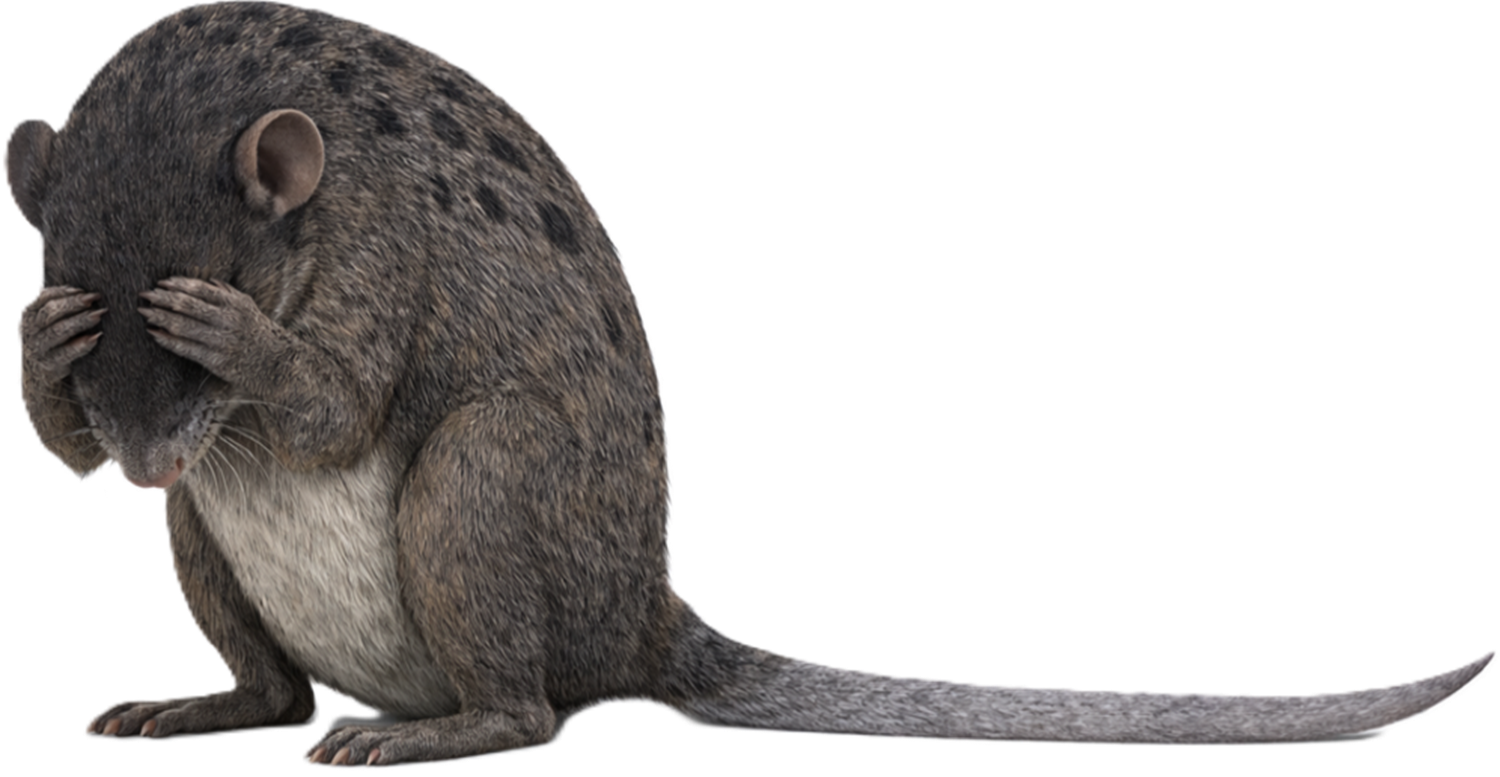 |
Paracimexomys priscus395Kielan-Jaworowska, Z., Cifelli, R. L. & Luo, Z.-X. (2004). Mammals from the Age of Dinosaurs – Origins, Evolution, and Structure. Columbia University Press, 98–99. doi:10.7312/kiel11918396Donohue, S. L. et al. (2013). Latest Cretaceous multituberculates of the Black Butte Station local fauna (Lance Formation, southwestern Wyoming), with implications for compositional differences among mammalian local faunas of the western interior. Journal of Vertebrate Paleontology, 33(3), 677–695. doi:10.1080/02724634.2013.745416 | Hell Creek Formation, Lance Formation | Montana, Wyoming | 68–66 Ma | häufig | Multituberculata, unsichere Verwandtschaft |
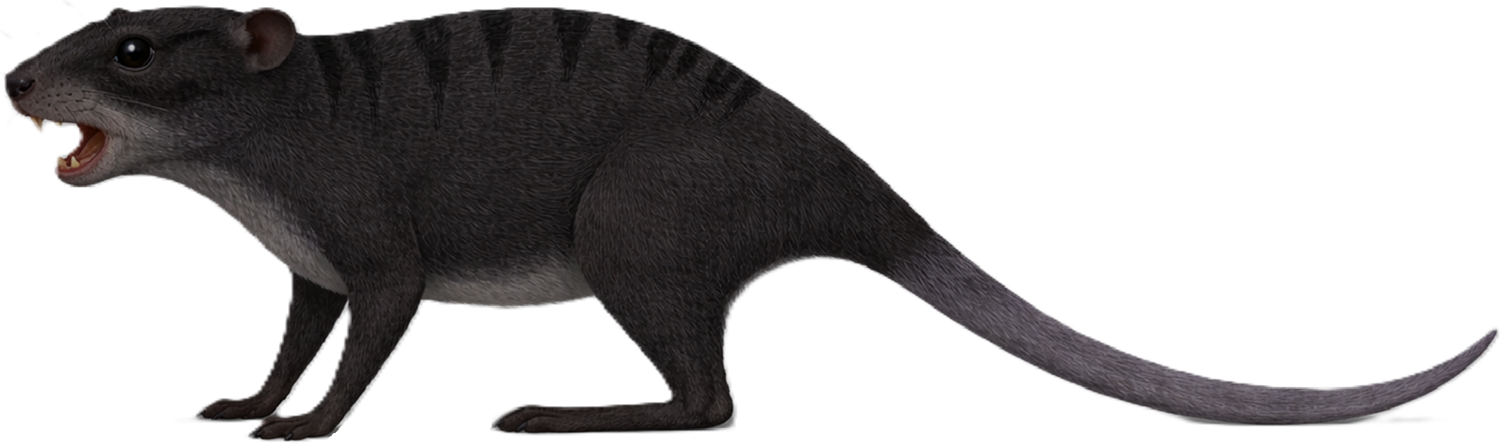 |
Paressonodon cf. nelsoni397Wilson, G. P., Dechesne, M. & Anderson, I. R. (2010). New latest Cretaceous mammals from northeastern Colorado, with biochronologic and biogeographic implications. Journal of Vertebrate Paleontology, 30(2), 499–520. doi:10.1080/02724631003620955 | Denver Formation | Colorado | ca. 66 Ma | Einzelfund | Cimolomyidae? |
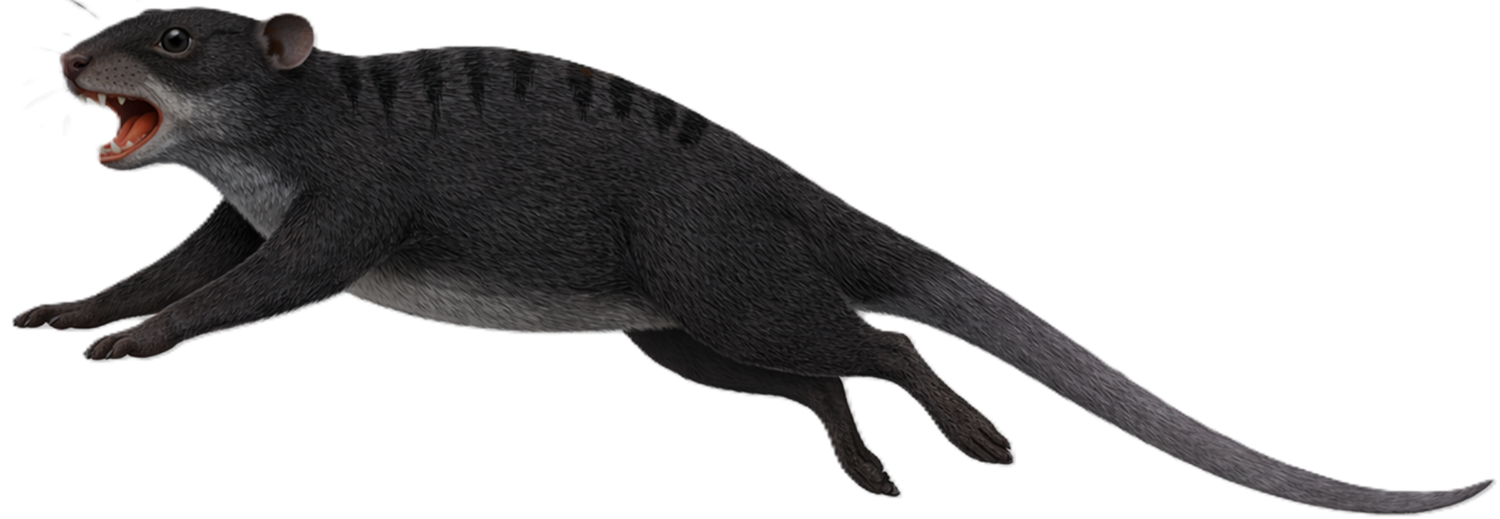 |
Paressonodon nelsoni398Wilson, G. P., Dechesne, M. & Anderson, I. R. (2010). New latest Cretaceous mammals from northeastern Colorado, with biochronologic and biogeographic implications. Journal of Vertebrate Paleontology, 30(2), 499–520. doi:10.1080/02724631003620955399Wilson, G. P. (2013). Mammals across the K/Pg boundary in northeastern Montana, U.S.A. – dental morphology and body-size patterns reveal extinction selectivity and immigrant-fueled ecospace filling. Paleobiology, 39(3), 429–469. doi:10.1666/12041400Donohue, S. L. et al. (2013). Latest Cretaceous multituberculates of the Black Butte Station local fauna (Lance Formation, southwestern Wyoming), with implications for compositional differences among mammalian local faunas of the western interior. Journal of Vertebrate Paleontology, 33(3), 677–695. doi:10.1080/02724634.2013.745416 | Hell Creek Formation, Lance Formation, Denver Formation | Montana, Wyoming, Colorado | 68–66 Ma | selten | Cimolomyidae? |
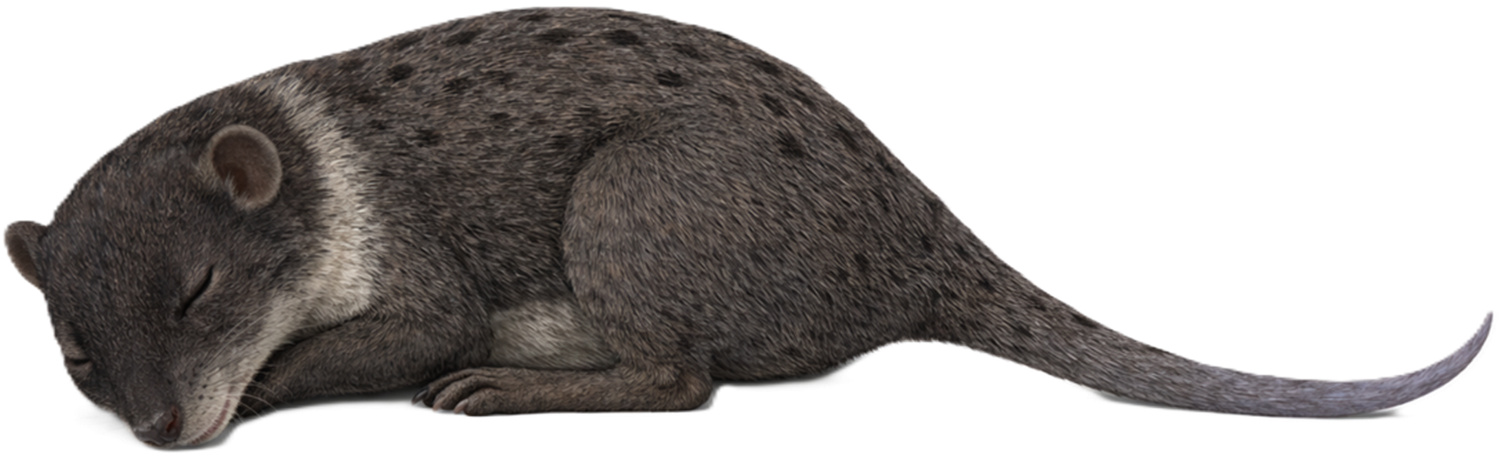 |
Parikimys carpenteri401Wilson, G. P., Dechesne, M. & Anderson, I. R. (2010). New latest Cretaceous mammals from northeastern Colorado, with biochronologic and biogeographic implications. Journal of Vertebrate Paleontology, 30(2), 499–520. doi:10.1080/02724631003620955402Donohue, S. L. et al. (2013). Latest Cretaceous multituberculates of the Black Butte Station local fauna (Lance Formation, southwestern Wyoming), with implications for compositional differences among mammalian local faunas of the western interior. Journal of Vertebrate Paleontology, 33(3), 677–695. doi:10.1080/02724634.2013.745416 | Lance Formation, Denver Formation | Wyoming, Colorado | 68–66 Ma | selten | Neoplagiaulacidae |
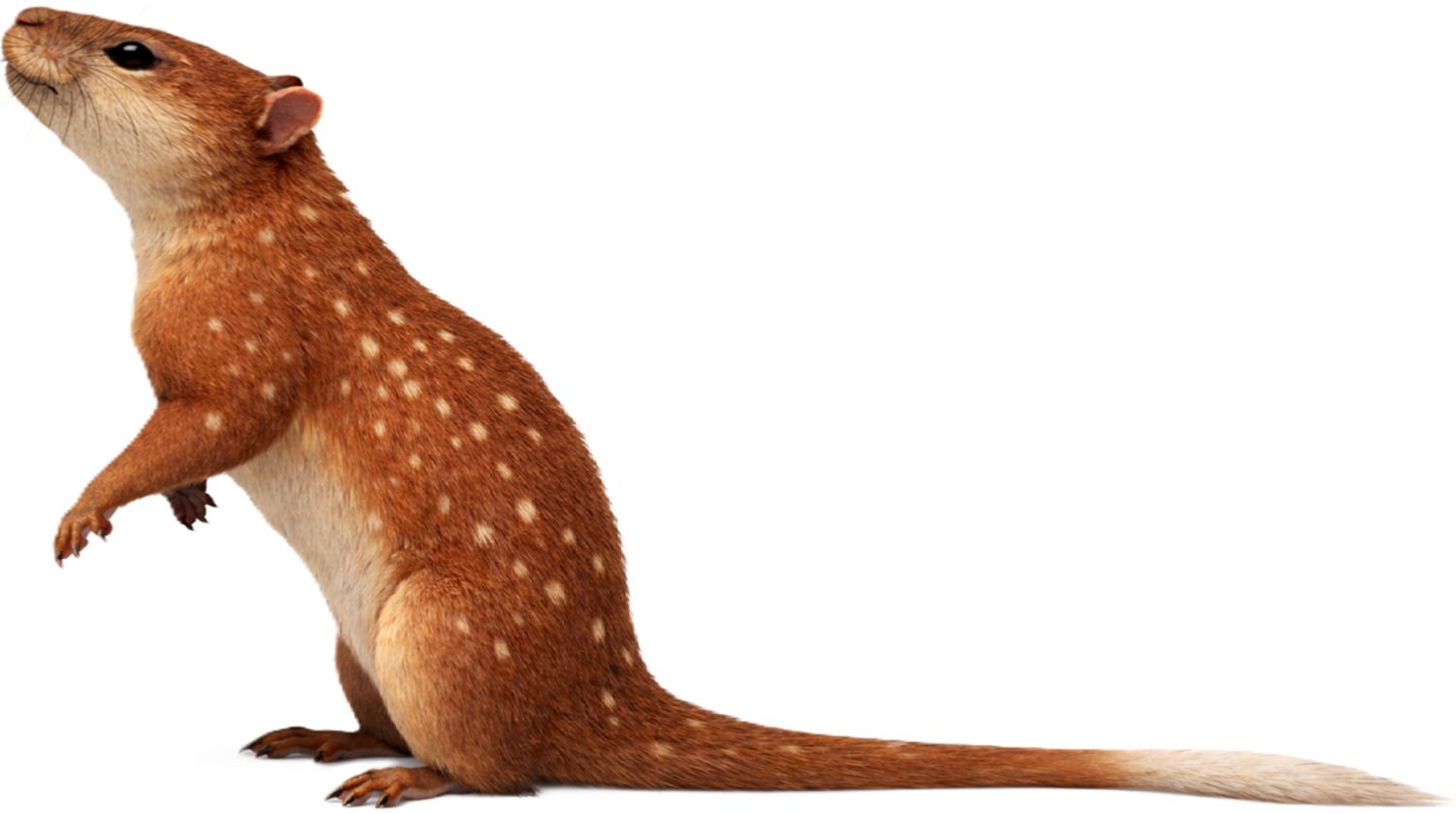 |
Stygimys kuszmauli403Adams, N. et al. (2019). Functional tests of the competitive exclusion hypothesis for multituberculate extinction. Royal Society Open Science, 6, 181536. doi:10.1098/rsos.181536 | Hell Creek Formation | Montana | 68–66 Ma | häufig | Eucosmodontidae |
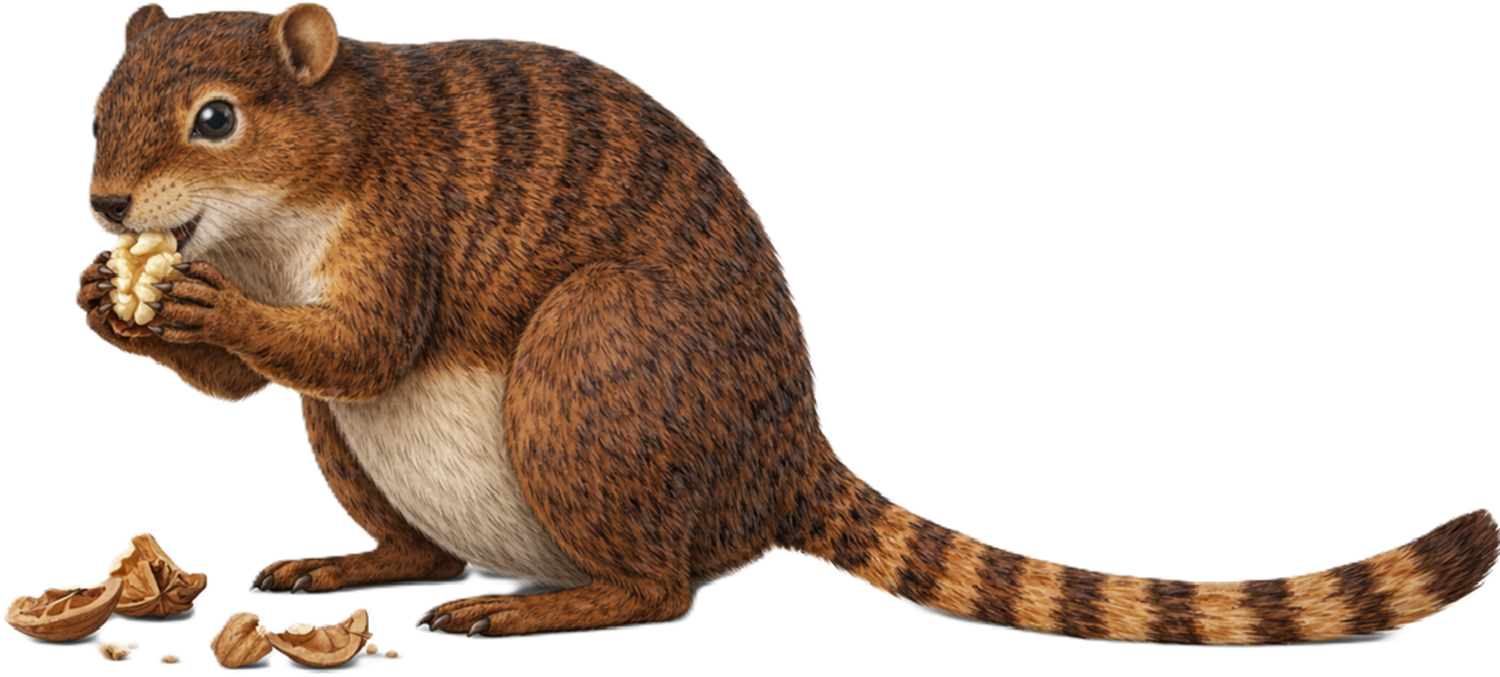 |
Valenopsalis joyneri404Williamson, T. E., Brusatte, S. L., Secord, R. & Shelley, S. (2016). A new taeniolabidoid multituberculate (Mammalia) from the middle Puercan of the Nacimiento Formation, New Mexico, and a revision of taeniolabidoid systematics and phylogeny. Zoological Journal of the Linnean Society, 177, 183–208. doi:10.1111/zoj.12336 | Hell Creek Formation | Montana | 66–65 Ma | selten | Taeniolabidoidea |
Bei Cimolodon sp. (?), Cimolomys sp. (?), Cimolomyidae indet., Meniscoessus cf. robustus, Mesodma cf. formosa, Multituberculata indet., Paressonodon cf. nelsoni, Paressonodon nelsoni und Parikimys carpenteri ist die Zuweisung zu einer bestimmten Lagerstätte unsicher und komplex. Sie stammen aus dem Cheyenne Basin in Colorado aus traditionell als Laramie Formation kartierten Schichten, die aber wahrscheinlich dem kreidezeitlichen Abschnitt der D1-Sequenz im Denver Basin entsprechen. Deshalb werden diese Funde hier der Denver Formation zugeordnet.405Wilson, G. P., Dechesne, M. & Anderson, I. R. (2010). New latest Cretaceous mammals from northeastern Colorado, with biochronologic and biogeographic implications. Journal of Vertebrate Paleontology, 30(2), 499–520. doi:10.1080/02724631003620955
Valenopsalis joyneri ist sicher aus dem frühesten Paläozän nachgewiesen, die Art wird hier dennoch bei der Hell Creek Formation aufgeführt, da es Funde auch aus der unmittelbaren Grenzschicht zwischen Kreidezeit und Känozoikum gibt.406Williamson, T. E., Brusatte, S. L., Secord, R. & Shelley, S. (2016). A new taeniolabidoid multituberculate (Mammalia) from the middle Puercan of the Nacimiento Formation, New Mexico, and a revision of taeniolabidoid systematics and phylogeny. Zoological Journal of the Linnean Society, 177, 183–208. doi:10.1111/zoj.12336

Amphibien:
| Bild: | Spezies: | Formation: | Fundort: | Alter: | Häufigkeit: | Bemerkungen: |
|---|---|---|---|---|---|---|
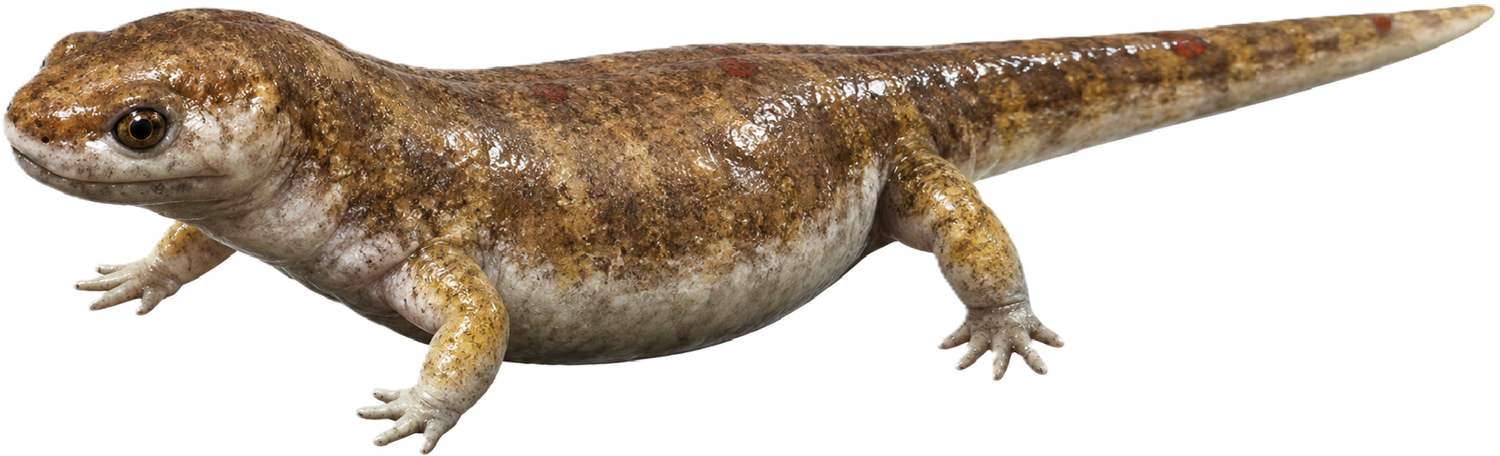 |
Albanerpeton galaktion407Gardner, J. D. & DeMar, D. G. Jr. (2013). Mesozoic and Palaeocene lissamphibian assemblages of North America: a comprehensive review. Palaeobiodiversity and Palaeoenvironments, 93, 459–515. doi:10.1007/s12549-013-0130-z | Hell Creek Formation, Lance Formation | Montana, Wyoming | 68–66 Ma | selten | Albanerpetontidae |
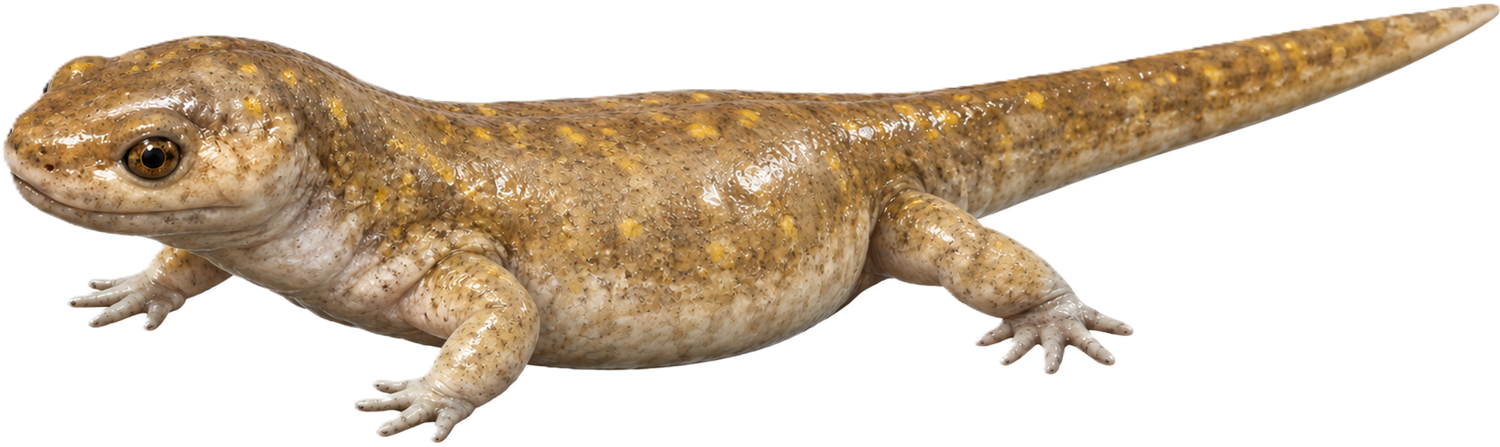 |
Albanerpeton nexuosum408Gardner, J. D. (2000). Albanerpetontid amphibians from the Upper Cretaceous (Campanian and Maastrichtian) of North America. Geodiversitas, 22(3), 349–388.409Gardner, J. D. & DeMar, D. G. Jr. (2013). Mesozoic and Palaeocene lissamphibian assemblages of North America: a comprehensive review. Palaeobiodiversity and Palaeoenvironments, 93, 459–515. doi:10.1007/s12549-013-0130-z410Carpenter, K. (1979). Vertebrate fauna of the Laramie Formation (Maastrichtian), Weld County, Colorado. Contributions to Geology, University of Wyoming, 17, 37–49. | Hell Creek Formation, Lance Formation, Laramie Formation | Montana, Wyoming, Colorado | 68–66 Ma | selten | Albanerpetontidae |
 |
Anura indet.411Pearson, D. A. et al. (2002). Vertebrate biostratigraphy of the Hell Creek Formation in southwestern North Dakota and northwestern South Dakota. In J. H. Hartman, K. R. Johnson & D. J. Nichols (Hrsg.), The Hell Creek Formation and the Cretaceous–Tertiary boundary in the Northern Great Plains. Geological Society of America Special Paper 361, 145–167. doi:10.1130/0-8137-2361-2.145 | Hell Creek Formation | North Dakota, South Dakota | ca. 67–66 Ma | selten | Unbestimmter Froschlurch (Anura) |
 |
Caudata indet.412Pearson, D. A. et al. (2002). Vertebrate biostratigraphy of the Hell Creek Formation in southwestern North Dakota and northwestern South Dakota. In J. H. Hartman, K. R. Johnson & D. J. Nichols (Hrsg.), The Hell Creek Formation and the Cretaceous–Tertiary boundary in the Northern Great Plains. Geological Society of America Special Paper 361, 145–167. doi:10.1130/0-8137-2361-2.145 | Hell Creek Formation | North Dakota, South Dakota | 68–66 Ma | sehr häufig | Unbestimmte Schwanzlurche (Caudata) |
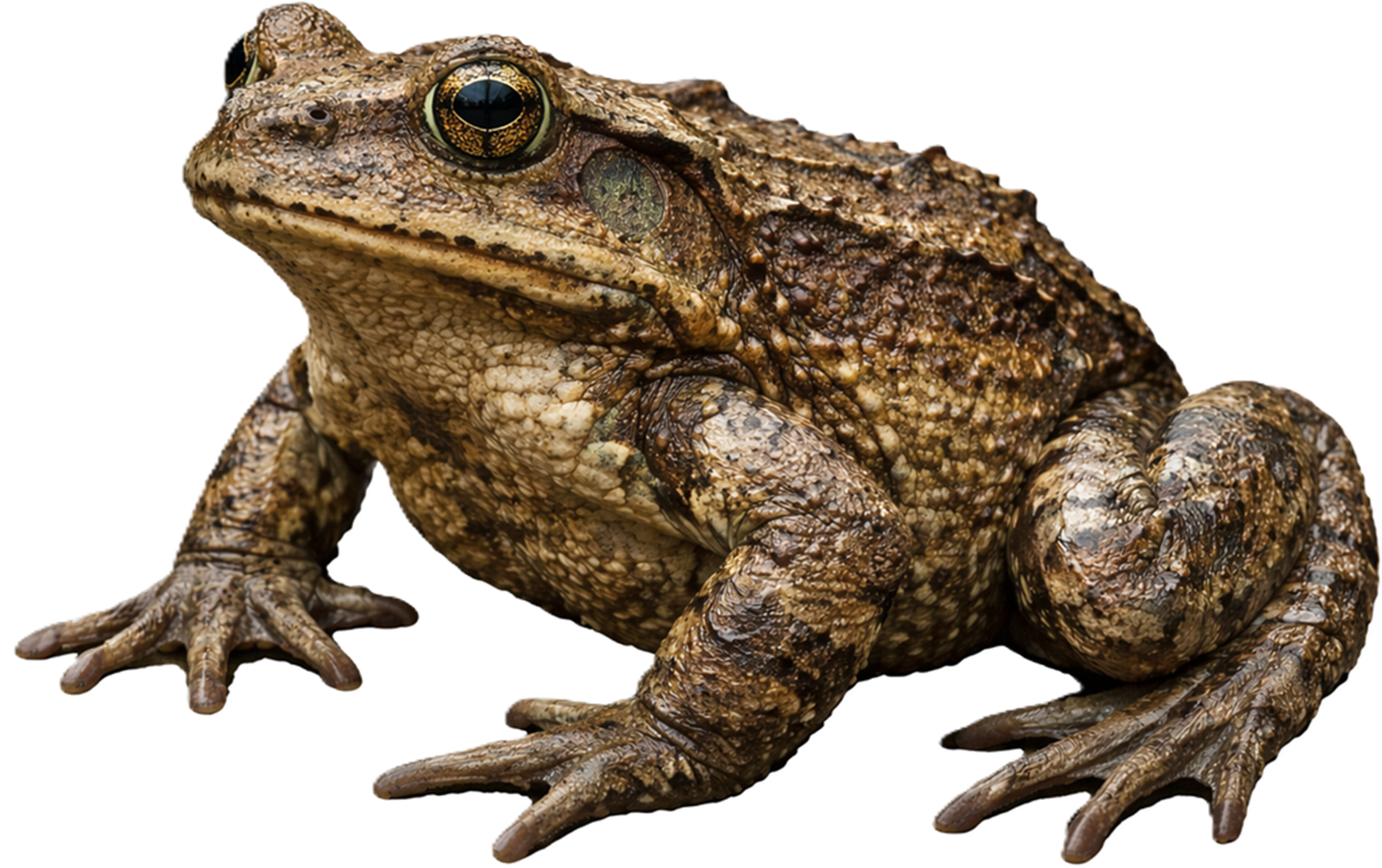 |
cf. Eopelobates sp.413Estes, R. & Sanchíz, B. (1982). New discoglossid and palaeobatrachid frogs from the Late Cretaceous of Wyoming and Montana, and a review of other frogs from the Lance and Hell Creek formations. Journal of Vertebrate Paleontology, 2(1), 9–20. doi:10.1080/02724634.1982.10011914414Gardner, J. D. & DeMar, D. G. Jr. (2013). Mesozoic and Palaeocene lissamphibian assemblages of North America: a comprehensive review. Palaeobiodiversity and Palaeoenvironments, 93, 459–515. doi:10.1007/s12549-013-0130-z | Lance Formation | Wyoming | 68–66 Ma | selten | Froschlurch (Anurae); Bestimmung unsicher |
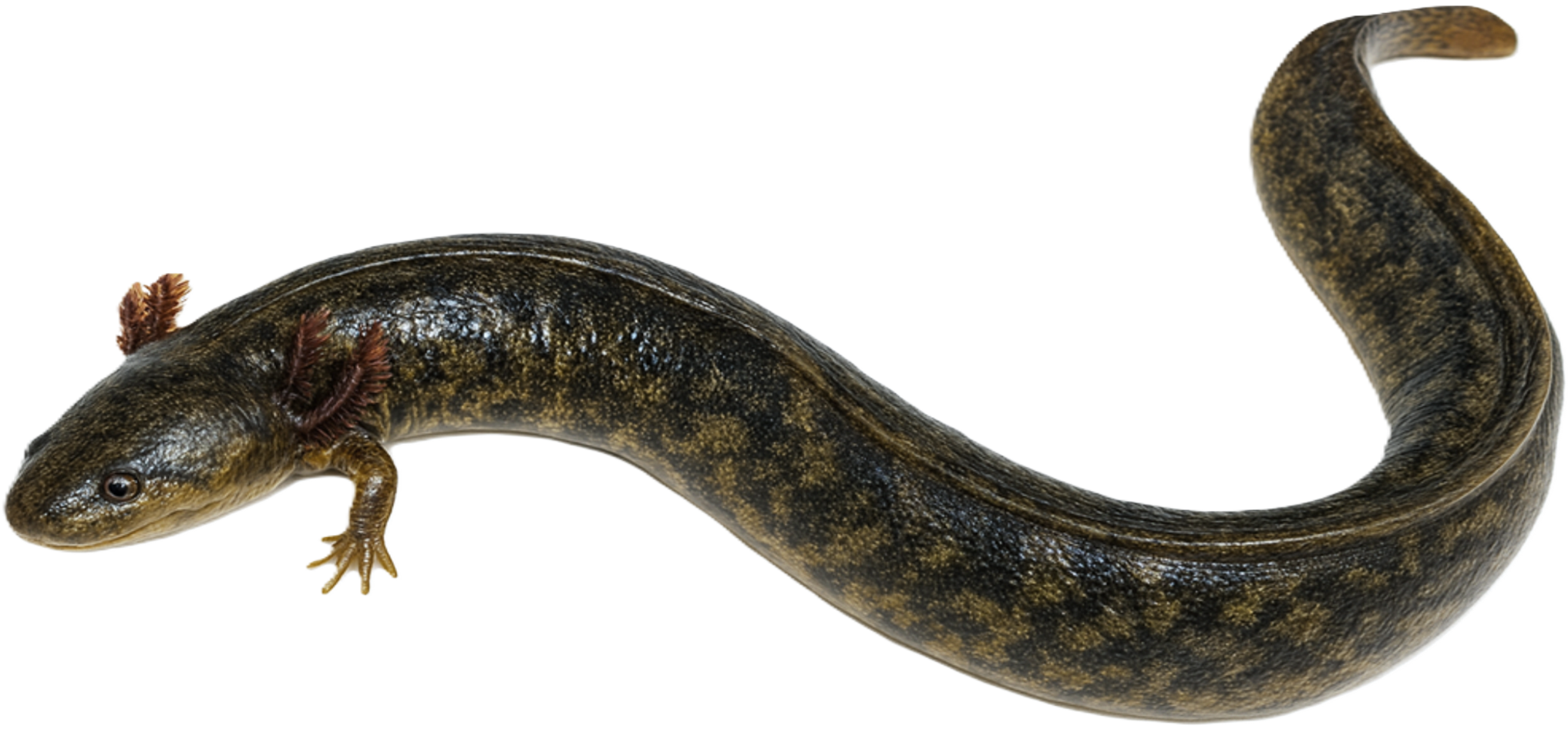 |
Habrosaurus dilatus415Pearson, D. A. et al. (2002). Vertebrate biostratigraphy of the Hell Creek Formation in southwestern North Dakota and northwestern South Dakota. In J. H. Hartman, K. R. Johnson & D. J. Nichols (Hrsg.), The Hell Creek Formation and the Cretaceous–Tertiary boundary in the Northern Great Plains. Geological Society of America Special Paper 361, 145–167. doi:10.1130/0-8137-2361-2.145416Gardner, J. D. & DeMar, D. G. Jr. (2013). Mesozoic and Palaeocene lissamphibian assemblages of North America: a comprehensive review. Palaeobiodiversity and Palaeoenvironments, 93, 459–515. doi:10.1007/s12549-013-0130-z417Wroblewski, A. F. (2026). Systematics and biostratigraphy of non-mammalian vertebrates across the K/Pg transition, southern Wyoming, USA. Journal of Paleontology, 100, 222–250. doi:10.1017/jpa.2025.10191 | Hell Creek Formation, Lance Formation, Ferris Formation | Montana, North Dakota, South Dakota, Wyoming | 68–66 Ma | häufig | Armmolch (Sirenidae) |
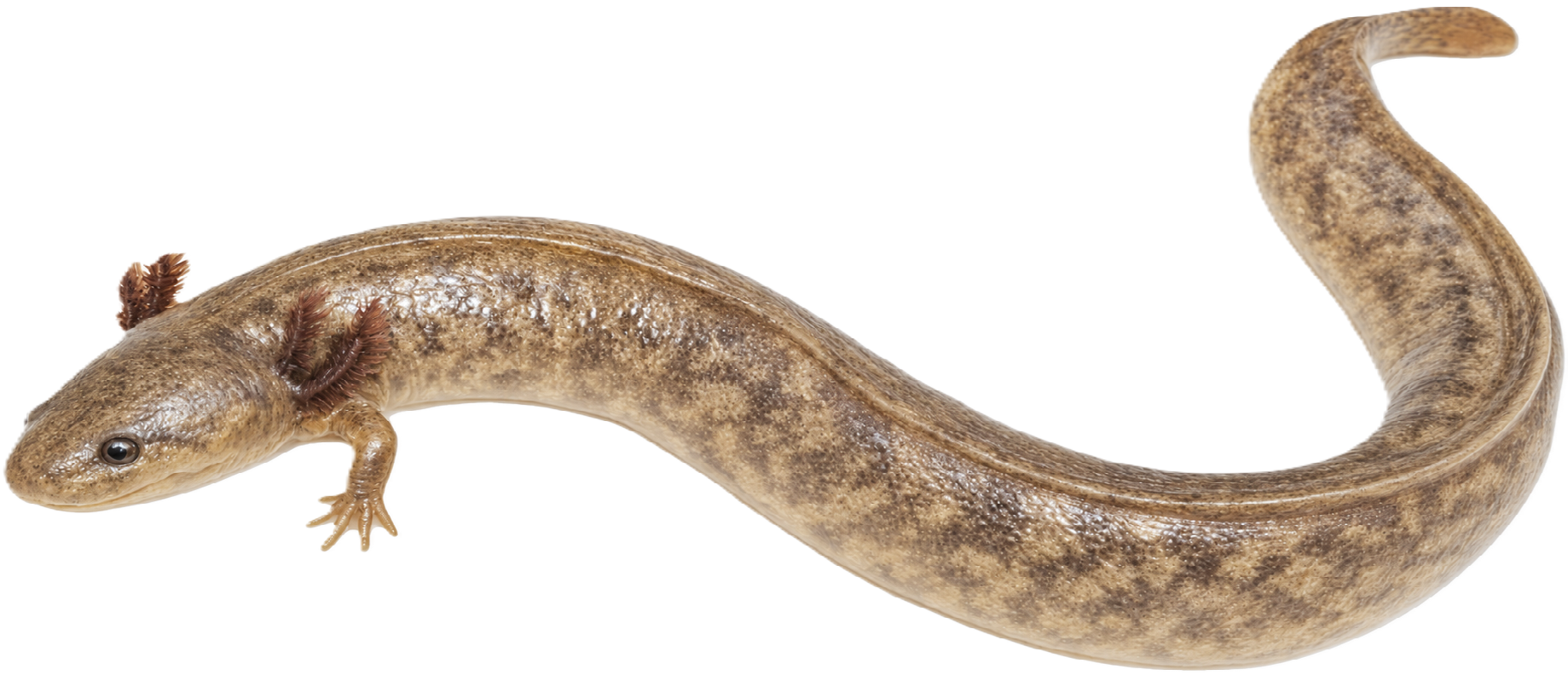 |
Habrosaurus prodilatus418Gardner, J. D. & DeMar, D. G. Jr. (2013). Mesozoic and Palaeocene lissamphibian assemblages of North America: a comprehensive review. Palaeobiodiversity and Palaeoenvironments, 93, 459–515. doi:10.1007/s12549-013-0130-z | Hell Creek Formation | Montana | 68–66 Ma | selten | Armmolch (Sirenidae) |
 |
Lisserpeton bairdi419Estes, R. (1964). Fossil vertebrates from the Late Cretaceous Lance Formation, eastern Wyoming. University of California Publications in Geological Sciences, 49, 1–187.420Carpenter, K. (1979). Vertebrate fauna of the Laramie Formation (Maastrichtian), Weld County, Colorado. Contributions to Geology, University of Wyoming, 17, 37–49.421Gardner, J. D. & DeMar, D. G. Jr. (2013). Mesozoic and Palaeocene lissamphibian assemblages of North America: a comprehensive review. Palaeobiodiversity and Palaeoenvironments, 93, 459–515. doi:10.1007/s12549-013-0130-z | Hell Creek Formation, Lance Formation, Laramie Formation | Montana, North Dakota, Wyoming, Colorado | 68–66 Ma | häufig | Schwanzlurch (Scapherpetontidae) |
 |
Opisthotriton kayi422Pearson, D. A. et al. (2002). Vertebrate biostratigraphy of the Hell Creek Formation in southwestern North Dakota and northwestern South Dakota. In J. H. Hartman, K. R. Johnson & D. J. Nichols (Hrsg.), The Hell Creek Formation and the Cretaceous–Tertiary boundary in the Northern Great Plains. Geological Society of America Special Paper 361, 145–167. doi:10.1130/0-8137-2361-2.145423Carpenter, K. (1979). Vertebrate fauna of the Laramie Formation (Maastrichtian), Weld County, Colorado. Contributions to Geology, University of Wyoming, 17, 37–49.424Gardner, J. D. & DeMar, D. G. Jr. (2013). Mesozoic and Palaeocene lissamphibian assemblages of North America: a comprehensive review. Palaeobiodiversity and Palaeoenvironments, 93, 459–515. doi:10.1007/s12549-013-0130-z | Hell Creek Formation, Lance Formation, Laramie Formation, Denver Formation | Montana, North Dakota, South Dakota, Wyoming, Colorado | 68–64 Ma | sehr häufig | Salamander (Batrachosauroididae) |
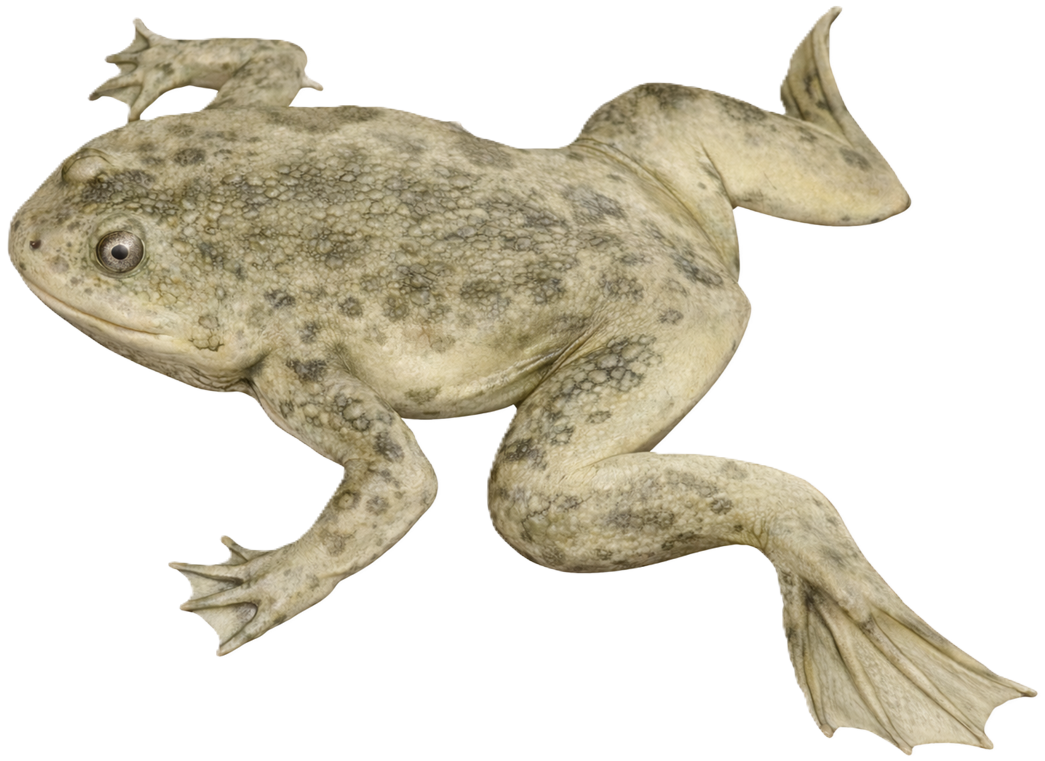 |
Palaeobatrachus occidentalis (?)425Estes, R. & Sanchíz, B. (1982). New discoglossid and palaeobatrachid frogs from the Late Cretaceous of Wyoming and Montana, and a review of other frogs from the Lance and Hell Creek formations. Journal of Vertebrate Paleontology, 2(1), 9–20. doi:10.1080/02724634.1982.10011914426Gardner, J. D. & DeMar, D. G. Jr. (2013). Mesozoic and Palaeocene lissamphibian assemblages of North America: a comprehensive review. Palaeobiodiversity and Palaeoenvironments, 93, 459–515. doi:10.1007/s12549-013-0130-z | Lance Formation | Wyoming | 68–66 Ma | selten | Froschlurch (Anurae); Bestimmung unsicher |
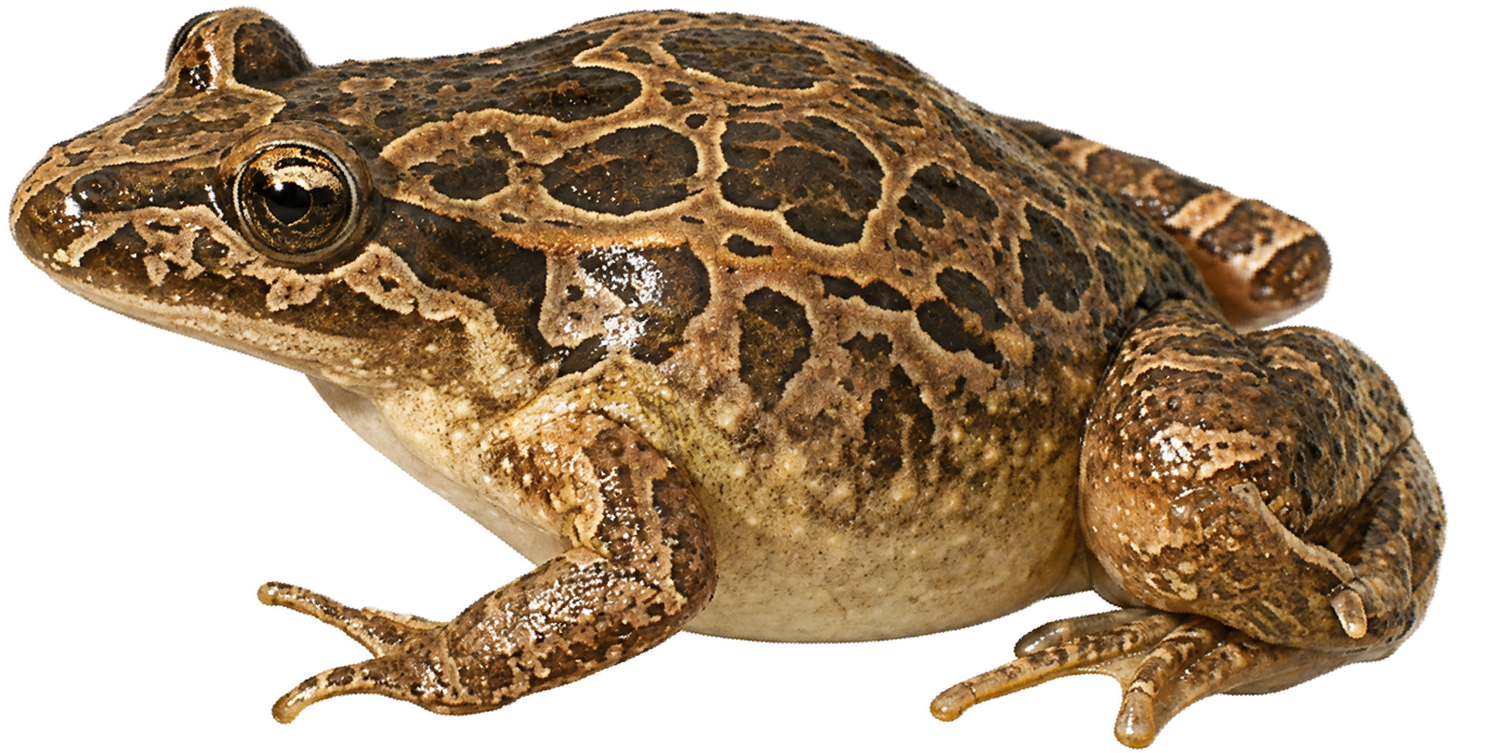 |
Paradiscoglossus americanus427Estes, R. & Sanchíz, B. (1982). New discoglossid and palaeobatrachid frogs from the Late Cretaceous of Wyoming and Montana, and a review of other frogs from the Lance and Hell Creek formations. Journal of Vertebrate Paleontology, 2(1), 9–20. doi:10.1080/02724634.1982.10011914428Gardner, J. D. & DeMar, D. G. Jr. (2013). Mesozoic and Palaeocene lissamphibian assemblages of North America: a comprehensive review. Palaeobiodiversity and Palaeoenvironments, 93, 459–515. doi:10.1007/s12549-013-0130-z | Lance Formation | Wyoming | 68–66 Ma | selten | Froschlurch (Anurae) |
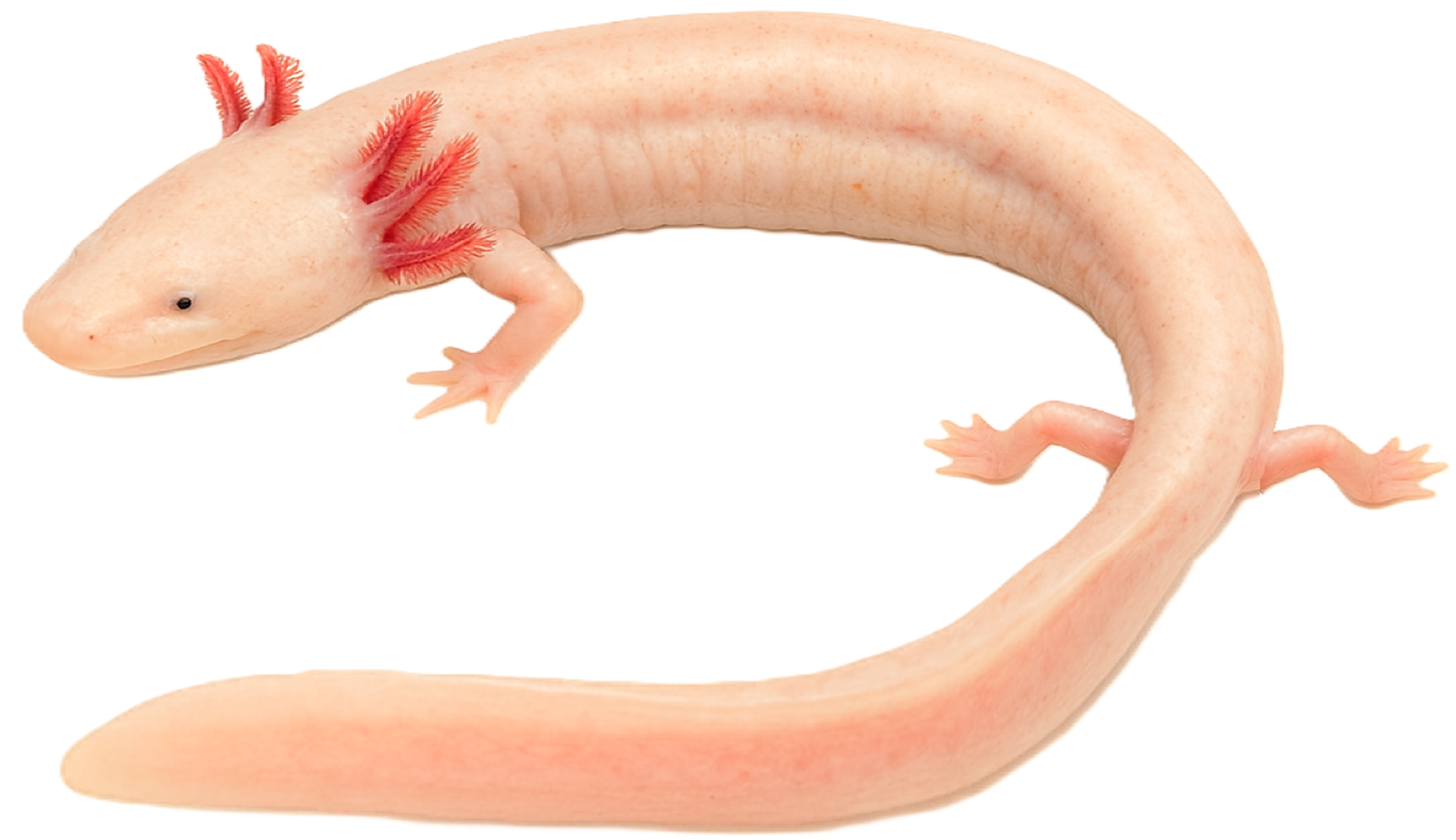 |
Paranecturus garbanii429DeMar, D. G. Jr. (2013). A new fossil salamander (Caudata, Proteidae) from the Upper Cretaceous (Maastrichtian) Hell Creek Formation, Montana, U.S.A. Journal of Vertebrate Paleontology, 33(3), 588–598. doi:10.1080/02724634.2013.734887 | Hell Creek Formation | Montana | 68–66 Ma | selten | Grottenolm (Proteidae) |
 |
Piceoerpeton naylori430Gardner, J. D. & DeMar, D. G. Jr. (2013). Mesozoic and Palaeocene lissamphibian assemblages of North America: a comprehensive review. Palaeobiodiversity and Palaeoenvironments, 93, 459–515. doi:10.1007/s12549-013-0130-z | Hell Creek Formation, Lance Formation | Montana, Wyoming | 68–66 Ma | selten | Schwanzlurch (Scapherpetontidae) |
 |
Proamphiuma cretacea431Gardner, J. D. & DeMar, D. G. Jr. (2013). Mesozoic and Palaeocene lissamphibian assemblages of North America: a comprehensive review. Palaeobiodiversity and Palaeoenvironments, 93, 459–515. doi:10.1007/s12549-013-0130-z | Hell Creek Formation | North Dakota | 68–66 Ma | selten | Schwanzlurch (Amphiumidae) |
 |
Prodesmodon copei432Estes, R. (1964). Fossil vertebrates from the Late Cretaceous Lance Formation, eastern Wyoming. University of California Publications in Geological Sciences, 49, 1–187.433Gardner, J. D. & DeMar, D. G. Jr. (2013). Mesozoic and Palaeocene lissamphibian assemblages of North America: a comprehensive review. Palaeobiodiversity and Palaeoenvironments, 93, 459–515. doi:10.1007/s12549-013-0130-z | Hell Creek Formation, Lance Formation | Montana, North Dakota, Wyoming | 68–66 Ma | häufig | Salamander (Batrachosauroididae) |
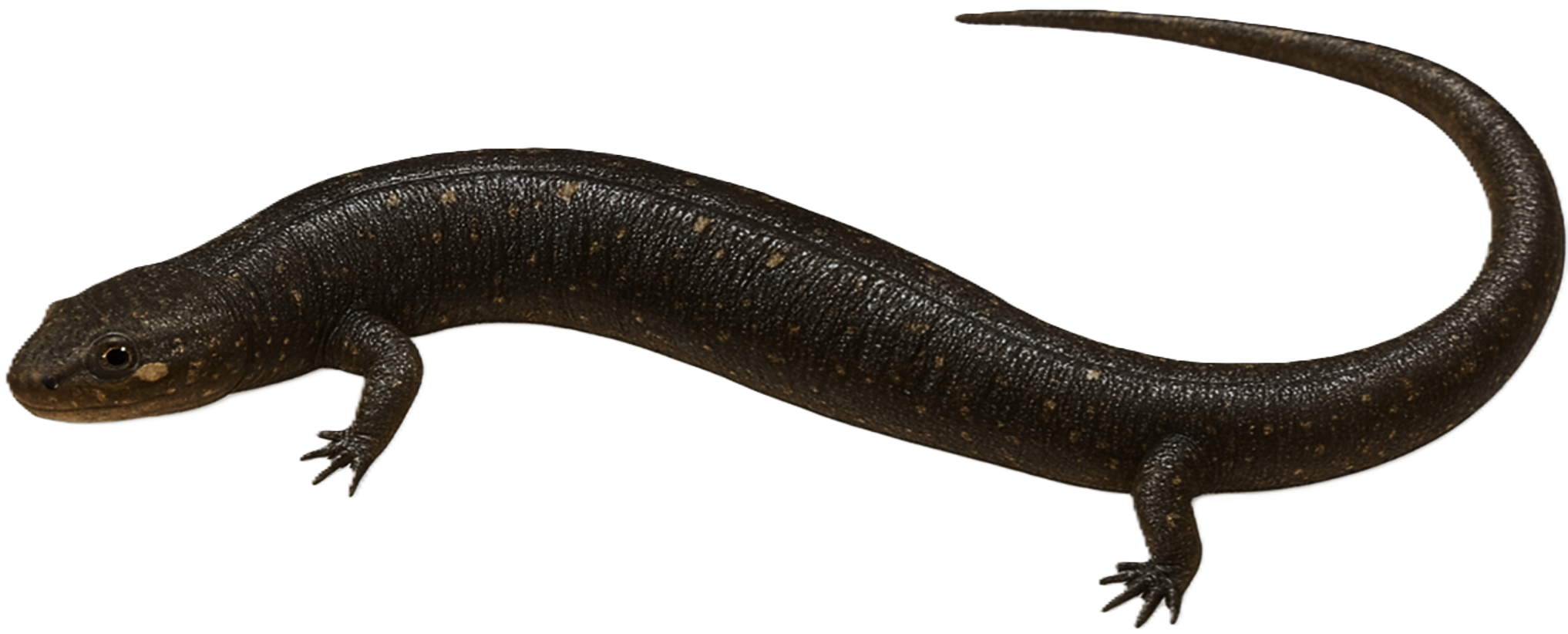 |
Scapherpeton tectum434Pearson, D. A. et al. (2002). Vertebrate biostratigraphy of the Hell Creek Formation in southwestern North Dakota and northwestern South Dakota. In J. H. Hartman, K. R. Johnson & D. J. Nichols (Hrsg.), The Hell Creek Formation and the Cretaceous–Tertiary boundary in the Northern Great Plains. Geological Society of America Special Paper 361, 145–167. doi:10.1130/0-8137-2361-2.145435Carpenter, K. (1979). Vertebrate fauna of the Laramie Formation (Maastrichtian), Weld County, Colorado. Contributions to Geology, University of Wyoming, 17, 37–49.436Wroblewski, A. F. (2026). Systematics and biostratigraphy of non-mammalian vertebrates across the K/Pg transition, southern Wyoming, USA. Journal of Paleontology, 100, 222–250. doi:10.1017/jpa.2025.10191 | Hell Creek Formation, Lance Formation, Ferris Formation, Laramie Formation | Montana, North Dakota, South Dakota, Wyoming, Colorado | 68–66 Ma | sehr häufig | Schwanzlurch (Scapherpetontidae) |
 |
Scapherpetontidae indet.437Gardner, J. D. & DeMar, D. G. Jr. (2013). Mesozoic and Palaeocene lissamphibian assemblages of North America: a comprehensive review. Palaeobiodiversity and Palaeoenvironments, 93, 459–515. doi:10.1007/s12549-013-0130-z | Denver Formation | Colorado | 66–64 Ma | selten | Unbestimmter Scapherpetontide |
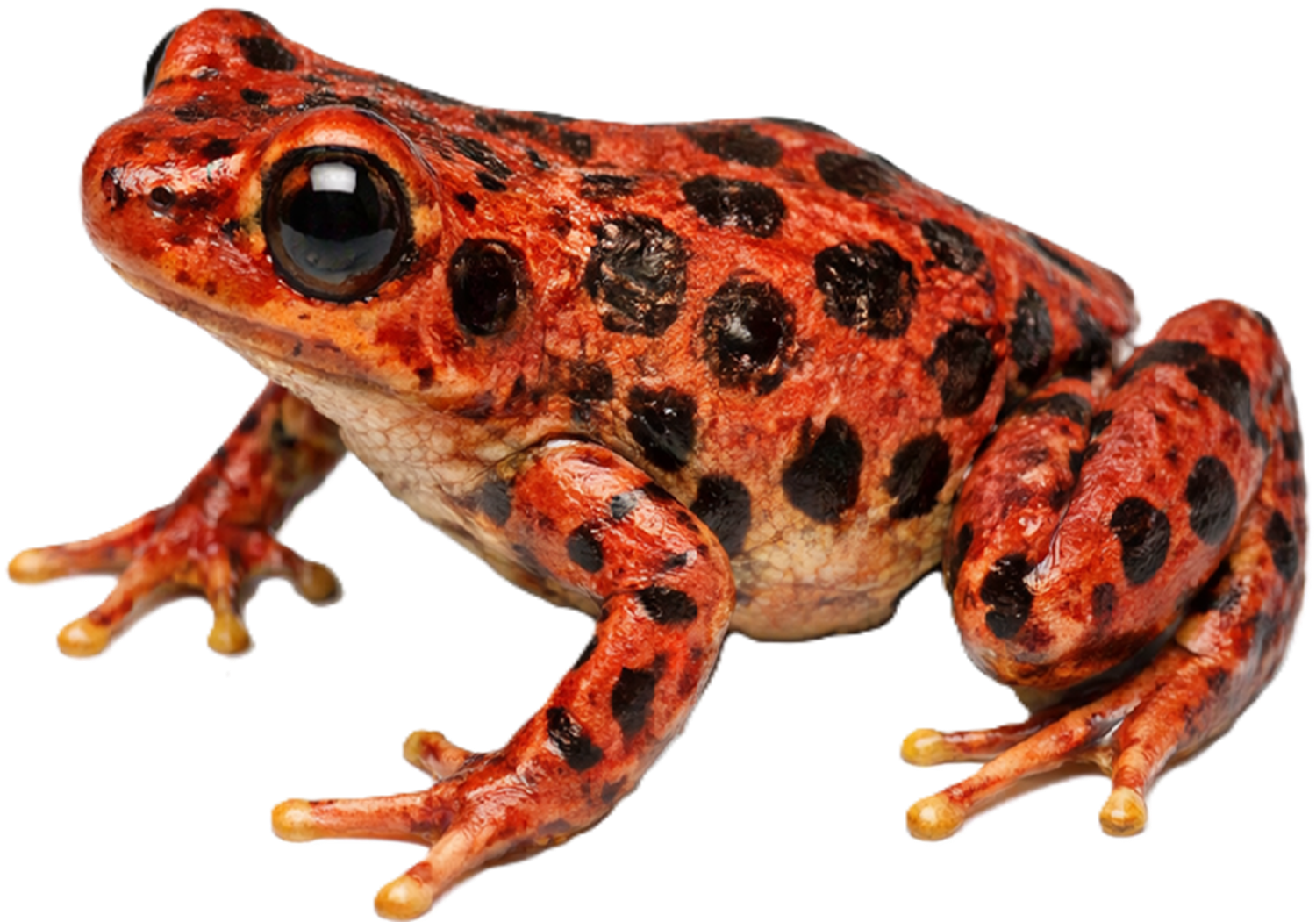 |
Scotiophryne pustulosa438Estes, R. & Sanchíz, B. (1982). New discoglossid and palaeobatrachid frogs from the Late Cretaceous of Wyoming and Montana, and a review of other frogs from the Lance and Hell Creek formations. Journal of Vertebrate Paleontology, 2(1), 9–20. doi:10.1080/02724634.1982.10011914439Gardner, J. D. & DeMar, D. G. Jr. (2013). Mesozoic and Palaeocene lissamphibian assemblages of North America: a comprehensive review. Palaeobiodiversity and Palaeoenvironments, 93, 459–515. doi:10.1007/s12549-013-0130-z | Hell Creek Formation, Lance Formation | Montana, Wyoming | 68–66 Ma | häufig | Froschlurch (Anura) |
 |
Theatonius lancensis440Fox, R. C. (1976). An edentulous frog (Theatonius lancensis, new genus and species) from the Upper Cretaceous Lance Formation of Wyoming. Canadian Journal of Earth Sciences, 13(10), 1486–1490. doi:10.1139/e76-154441Gardner, J. D. & DeMar, D. G. Jr. (2013). Mesozoic and Palaeocene lissamphibian assemblages of North America: a comprehensive review. Palaeobiodiversity and Palaeoenvironments, 93, 459–515. doi:10.1007/s12549-013-0130-z | Hell Creek Formation, Lance Formation | Montana, Wyoming | 68–66 Ma | selten | Froschlurch (Anura) |
 |
Urodela indet.442Gardner, J. D. & DeMar, D. G. Jr. (2013). Mesozoic and Palaeocene lissamphibian assemblages of North America: a comprehensive review. Palaeobiodiversity and Palaeoenvironments, 93, 459–515. doi:10.1007/s12549-013-0130-z443Wroblewski, A. F. (2026). Systematics and biostratigraphy of non-mammalian vertebrates across the K/Pg transition, southern Wyoming, USA. Journal of Paleontology, 100, 222–250. doi:10.1017/jpa.2025.10191 | Ferris Formation | Wyoming | 68–66 Ma | selten | Unbestimmter Schwanzlurch (Urodela) |

Knochenfische:
| Bild: | Spezies: | Formation: | Fundort: | Alter: | Häufigkeit: | Bemerkungen: |
|---|---|---|---|---|---|---|
 |
Acanthomorpha indet.444Brinkman, D. B., Newbrey, M. G. & Neuman, A. G. (2014). Diversity and paleoecology of actinopterygian fish from vertebrate microfossil localities of the Maastrichtian Hell Creek Formation of Montana. In G. P. Wilson et al. (Hrsg.), Through the End of the Cretaceous in the Type Locality of the Hell Creek Formation in Montana and Adjacent Areas. Geological Society of America Special Paper 503, 247–270. doi:10.1130/2014.2503(09) | Hell Creek Formation | Montana | 68–66 Ma | selten | Unbestimmter Stachelflosser (Acanthomorpha); mehrere Morphotypen |
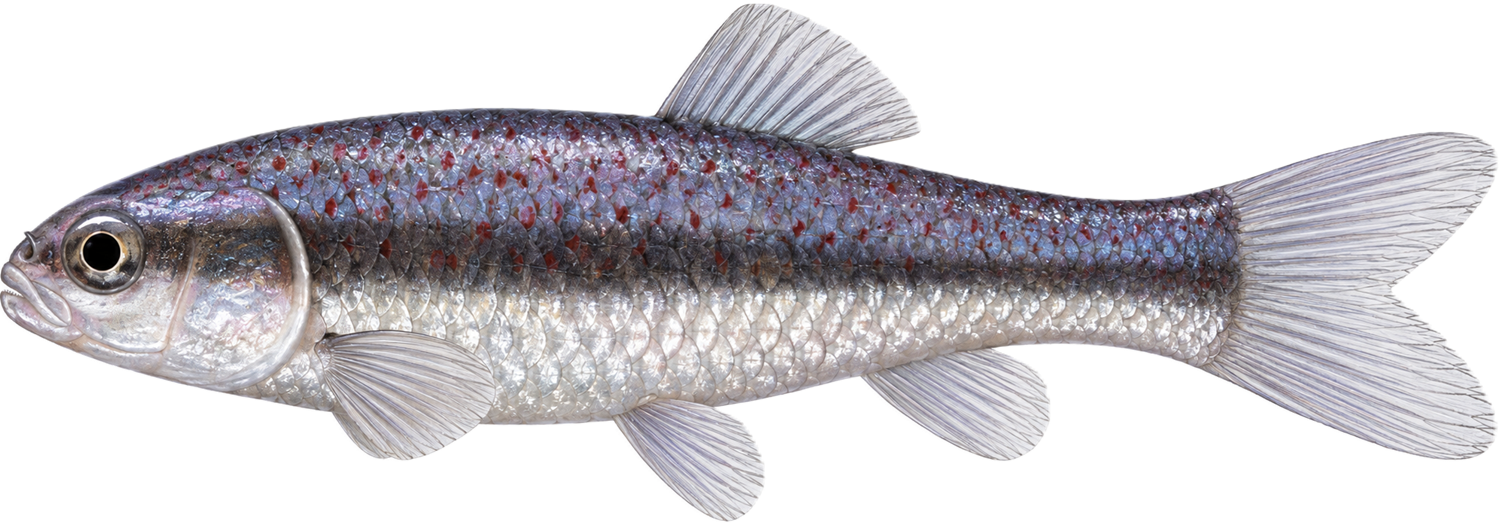 |
Acronichthys sp.445Brinkman, D. B. et al. (2025). Teleost fishes across the Cretaceous–Paleogene boundary. Palaeontologia Electronica. doi:10.26879/1559 | Hell Creek Formation | Montana | 68–66 Ma | selten | Otophysi; Bestimmung unsicher |
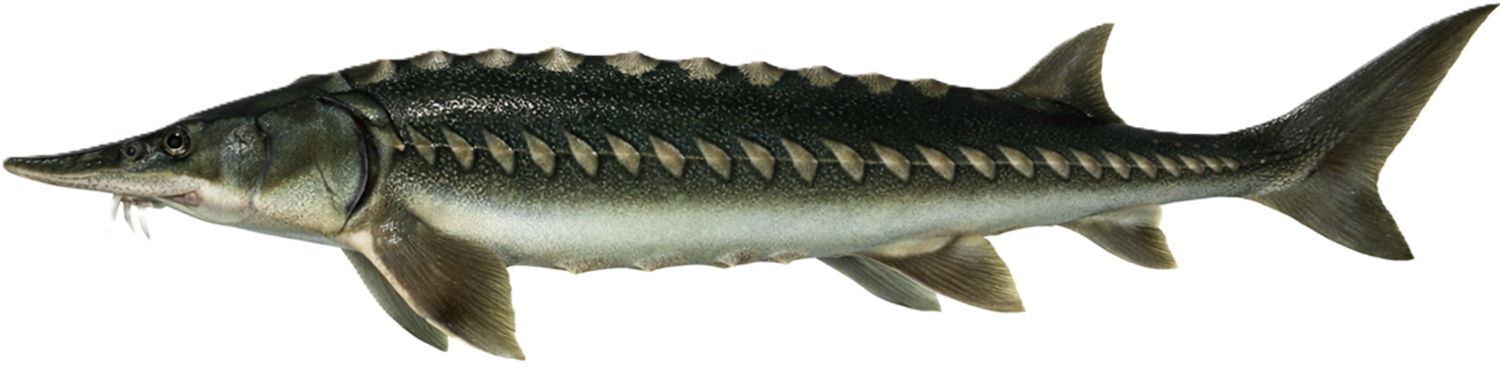 |
Acipenser amnisinferos446Hilton, E. J. & Grande, L. (2023). Late Cretaceous sturgeons (Acipenseridae) from North America, with two new species from the Tanis site in the Hell Creek Formation of North Dakota. Journal of Paleontology, 97(1), 189–217. doi:10.1017/jpa.2022.81 | Hell Creek Formation | North Dakota (Tanis) | 66 Ma | selten | Stör (Acipenseridae) |
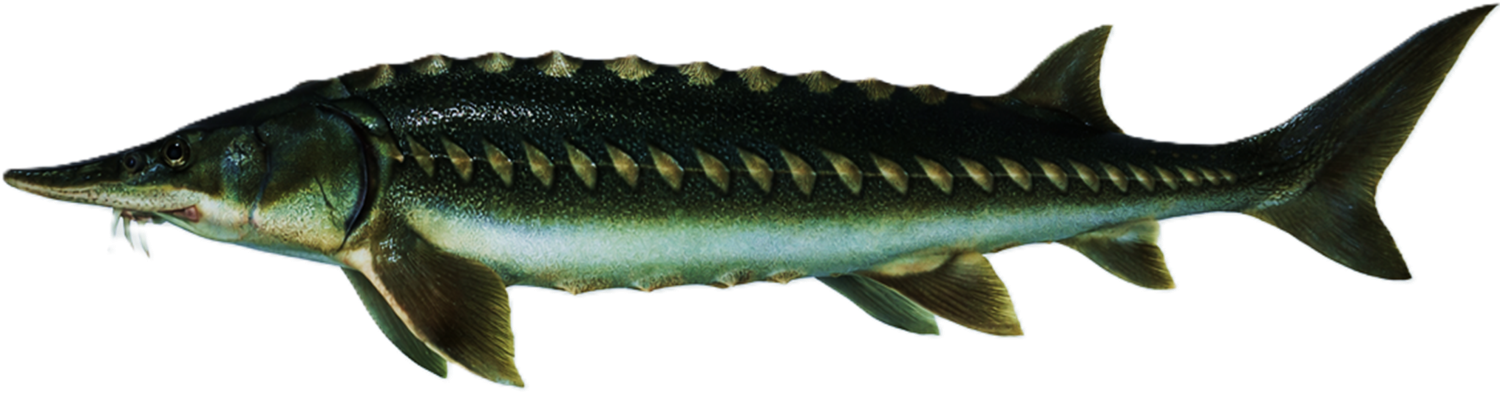 |
Acipenser cf. A. amnisinferos447Hilton, E. J. & Grande, L. (2023). Late Cretaceous sturgeons (Acipenseridae) from North America, with two new species from the Tanis site in the Hell Creek Formation of North Dakota. Journal of Paleontology, 97(1), 189–217. doi:10.1017/jpa.2022.81 | Hell Creek Formation | North Dakota (Tanis) | 66 Ma | selten | Stör (Acipenseridae); Bestimmung unsicher |
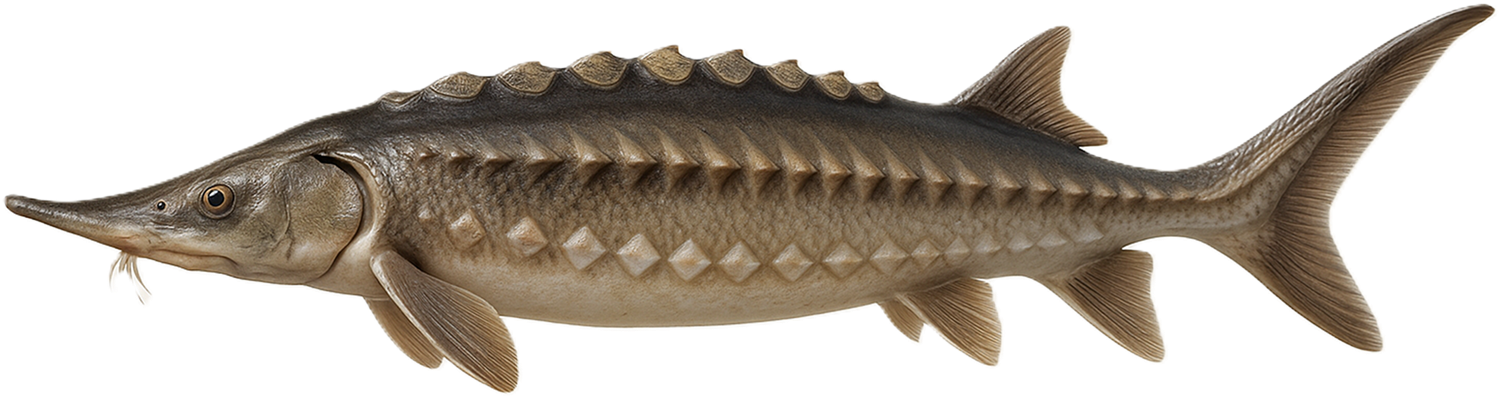 |
„Acipenser“ eruciferus448Estes, R. & Berberian, P. (1970). Paleoecology of a Late Cretaceous vertebrate community from Montana. Breviora, 343, 1–35.449Hilton, E. J. & Grande, L. (2006). Review of the fossil record of sturgeons, family Acipenseridae (Actinopterygii: Acipenseriformes), from North America. Journal of Paleontology, 80(4), 672–683. doi:10.1666/0022-3360(2006)80[672:ROTFRO]2.0.CO;2 | Hell Creek Formation | Montana | 68–66 Ma | häufig | Stör (Acipenseridae); Nomen dubium |
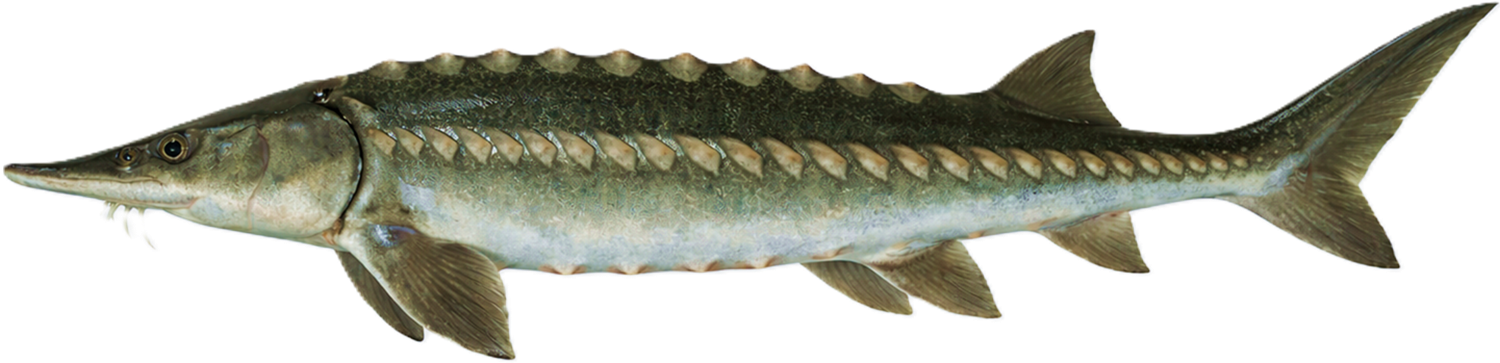 |
Acipenser praeparatorum450Hilton, E. J. & Grande, L. (2023). Late Cretaceous sturgeons (Acipenseridae) from North America, with two new species from the Tanis site in the Hell Creek Formation of North Dakota. Journal of Paleontology, 97(1), 189–217. doi:10.1017/jpa.2022.81 | Hell Creek Formation | North Dakota (Tanis) | 66 Ma | selten | Stör (Acipenseridae) |
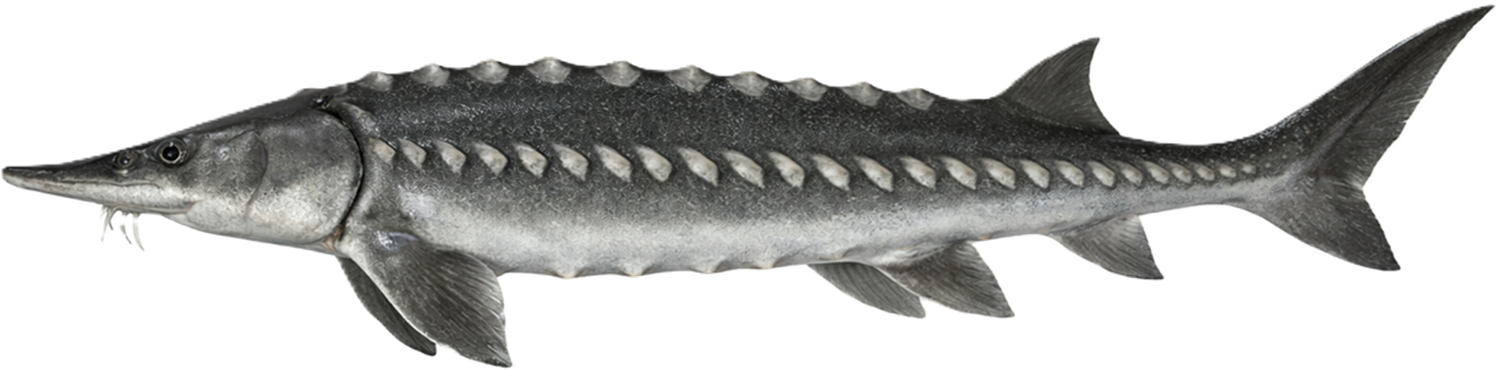 |
cf. Acipenser sp.451Pearson, D. A. et al. (2002). Vertebrate biostratigraphy of the Hell Creek Formation in southwestern North Dakota and northwestern South Dakota. In J. H. Hartman et al. (Hrsg.), The Hell Creek Formation and the Cretaceous–Tertiary Boundary in the Northern Great Plains. Geological Society of America Special Paper 361, 145–167. doi:10.1130/0-8137-2361-2.145 | Hell Creek Formation | North Dakota, South Dakota | 68–66 Ma | häufig | Stör (Acipenseridae); Bestimmung unsicher |
 |
Amiidae indet.452Brinkman, D. B., Newbrey, M. G. & Neuman, A. G. (2014). Diversity and paleoecology of actinopterygian fish from vertebrate microfossil localities of the Maastrichtian Hell Creek Formation of Montana. In G. P. Wilson et al. (Hrsg.), Through the End of the Cretaceous in the Type Locality of the Hell Creek Formation in Montana and Adjacent Areas. Geological Society of America Special Paper 503, 247–270. doi:10.1130/2014.2503(09)453Carpenter, K. (1979). Vertebrate fauna of the Laramie Formation (Maastrichtian), Weld County, Colorado. Contributions to Geology, University of Wyoming, 17(1), 37–49.454Wroblewski, A. F. (2026). Systematics and biostratigraphy of non-mammalian vertebrates across the K/Pg transition, southern Wyoming, USA. Journal of Paleontology, 100(1), 222–250. doi:10.1017/jpa.2025.10191 | Hell Creek Formation, Ferris Formation, Laramie Formation |
Montana, Wyoming, Colorado | 68–66 Ma | sehr häufig | Nicht näher bestimmte Kahlhechte (Amiidae); darunter fällt auch Material, das historisch als Protamia, Cyclurus oder Kindleia geführt wurde |
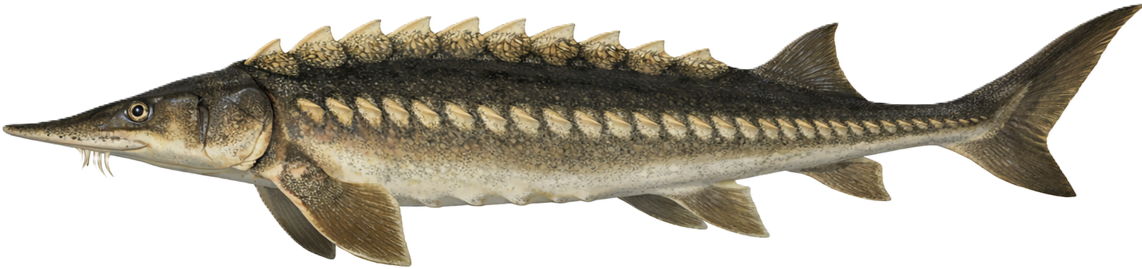 |
Anchiacipenser acanthaspis455Sato, H. et al. (2018). A rare, articulated sturgeon (Chondrostei: Acipenseriformes) from the Upper Cretaceous of Dinosaur Provincial Park, Alberta, Canada. Journal of Vertebrate Paleontology, 38(4), e1488137. doi:10.1080/02724634.2018.1488137456Hilton, E. J. & Grande, L. (2023). Late Cretaceous sturgeons (Acipenseridae) from North America, with two new species from the Tanis site in the Hell Creek Formation of North Dakota. Journal of Paleontology, 97(1), 189–217. doi:10.1017/jpa.2022.81 | Hell Creek Formation | Montana | 68–66 Ma | selten | Stör (Acipenseridae) |
 |
Atractosteus cf. occidentalis457Carpenter, K. (1979). Vertebrate fauna of the Laramie Formation (Maastrichtian), Weld County, Colorado. Contributions to Geology, University of Wyoming, 17(1), 37–49. | Laramie Formation | Colorado | 68–66 Ma | selten | Knochenhecht (Lepisosteidae); Bestimmung unsicher |
 |
Belonostomus longirostris458Estes, R. (1964). Fossil vertebrates from the Late Cretaceous Lance Formation, eastern Wyoming. University of California Publications in Geological Sciences, 49, 1–180.459Pearson, D. A. et al. (2002). Vertebrate biostratigraphy of the Hell Creek Formation in southwestern North Dakota and northwestern South Dakota. In J. H. Hartman et al. (Hrsg.), The Hell Creek Formation and the Cretaceous–Tertiary Boundary in the Northern Great Plains. Geological Society of America Special Paper 361, 145–167. doi:10.1130/0-8137-2361-2.145460Brinkman, D. B., Newbrey, M. G. & Neuman, A. G. (2014). Diversity and paleoecology of actinopterygian fish from vertebrate microfossil localities of the Maastrichtian Hell Creek Formation of Montana. In G. P. Wilson et al. (Hrsg.), Through the End of the Cretaceous in the Type Locality of the Hell Creek Formation in Montana and Adjacent Areas. Geological Society of America Special Paper 503, 247–270. doi:10.1130/2014.2503(09) | Hell Creek Formation, Lance Formation |
Montana, North Dakota, South Dakota, Wyoming | 68–66 Ma | häufig | Knochenfisch (Aspidorhynchiformes) |
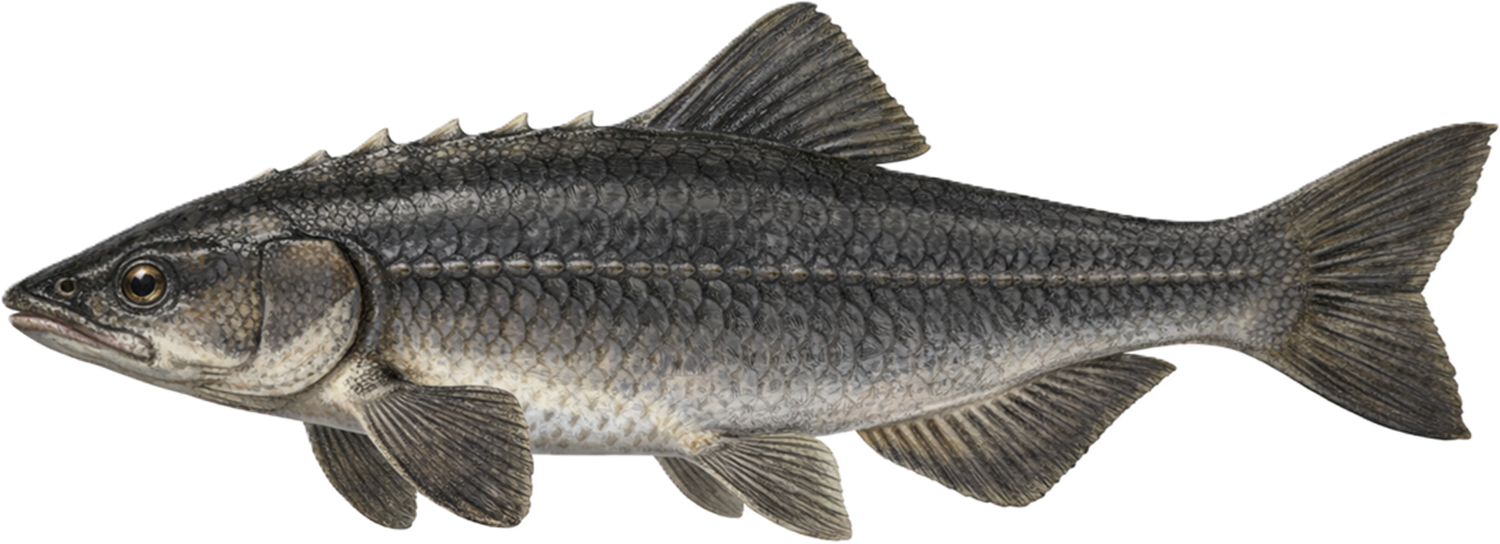 |
Coriops amnicolus461Estes, R. (1964). Fossil vertebrates from the Late Cretaceous Lance Formation, eastern Wyoming. University of California Publications in Geological Sciences, 49, 1–180.462Estes, R. & Berberian, P. (1970). Paleoecology of a Late Cretaceous vertebrate community from Montana. Breviora, 343, 1–35.463Brinkman, D. B., Newbrey, M. G. & Neuman, A. G. (2014). Diversity and paleoecology of actinopterygian fish from vertebrate microfossil localities of the Maastrichtian Hell Creek Formation of Montana. In G. P. Wilson et al. (Hrsg.), Through the End of the Cretaceous in the Type Locality of the Hell Creek Formation in Montana and Adjacent Areas. Geological Society of America Special Paper 503, 247–270. doi:10.1130/2014.2503(09) | Hell Creek Formation, Lance Formation |
Montana, North Dakota, South Dakota, Wyoming | 68–66 Ma | häufig | Knochenfisch (Osteoglossomorpha) |
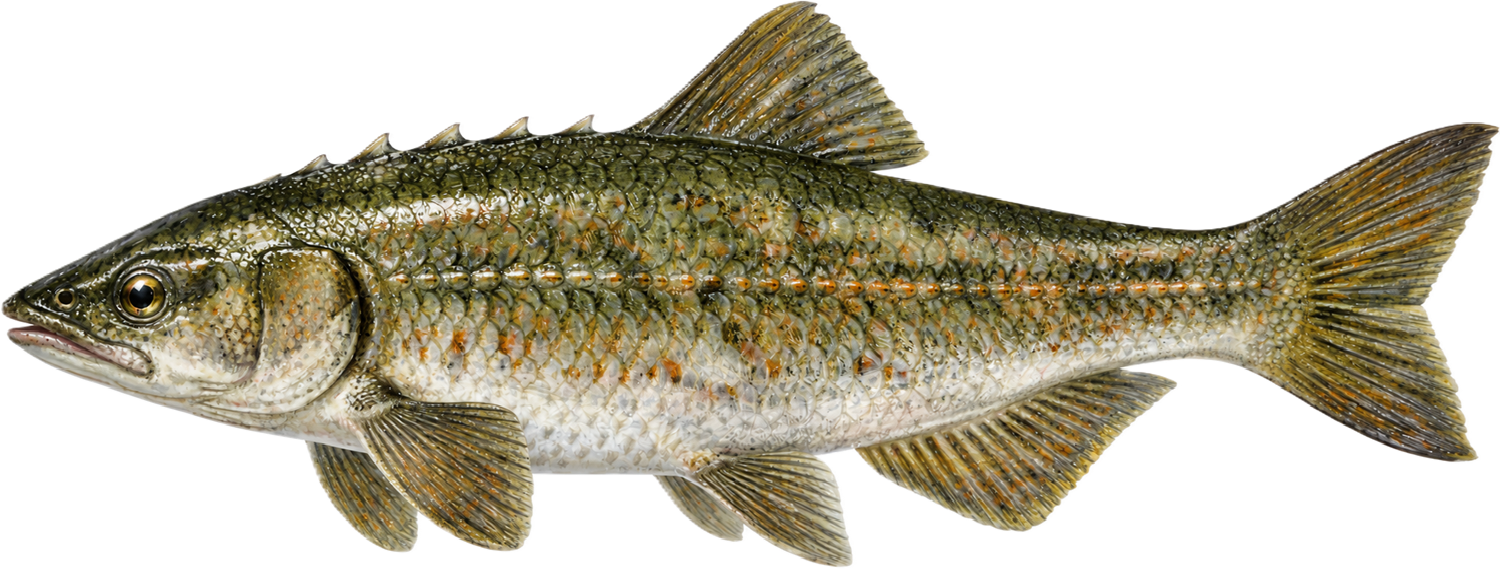 |
Coriops sp.464Brinkman, D. B., Newbrey, M. G. & Neuman, A. G. (2014). Diversity and paleoecology of actinopterygian fish from vertebrate microfossil localities of the Maastrichtian Hell Creek Formation of Montana. In G. P. Wilson et al. (Hrsg.), Through the End of the Cretaceous in the Type Locality of the Hell Creek Formation in Montana and Adjacent Areas. Geological Society of America Special Paper 503, 247–270. doi:10.1130/2014.2503(09) | Hell Creek Formation | Montana | 68–66 Ma | selten | Knochenfisch (Osteoglossomorpha); Bestimmung unsicher |
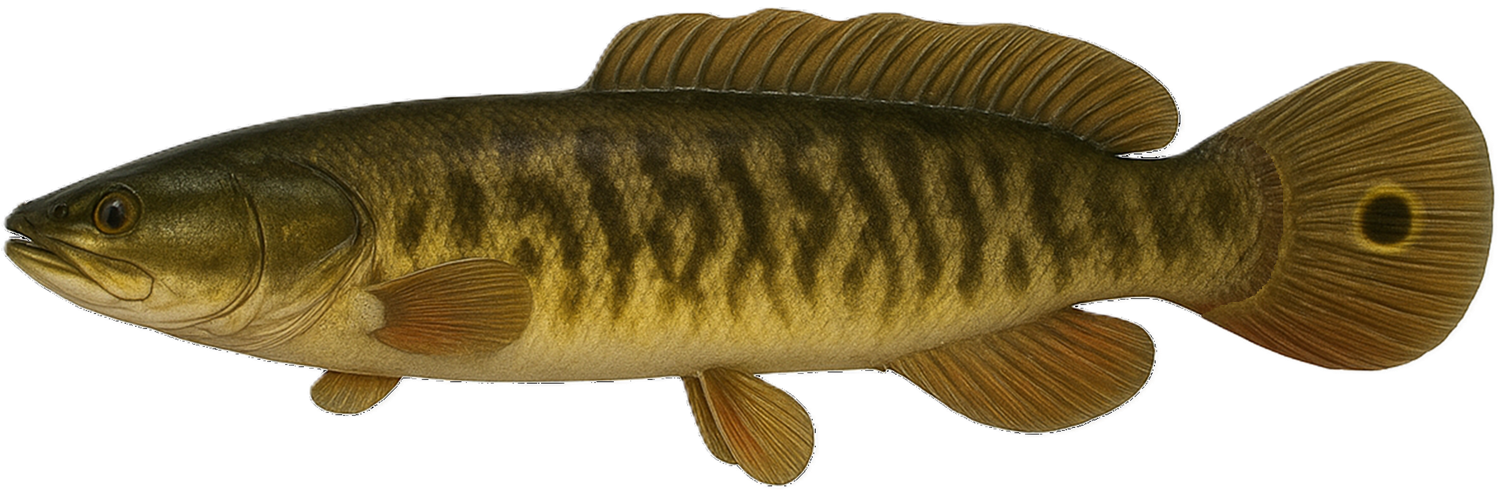 |
Cyclurus fragosus465Estes, R. (1964). Fossil vertebrates from the Late Cretaceous Lance Formation, eastern Wyoming. University of California Publications in Geological Sciences, 49, 1–180.466Estes, R. & Berberian, P. (1970). Paleoecology of a Late Cretaceous vertebrate community from Montana. Breviora, 343, 1–35.467Brinkman, D. B., Newbrey, M. G. & Neuman, A. G. (2014). Diversity and paleoecology of actinopterygian fish from vertebrate microfossil localities of the Maastrichtian Hell Creek Formation of Montana. In G. P. Wilson et al. (Hrsg.), Through the End of the Cretaceous in the Type Locality of the Hell Creek Formation in Montana and Adjacent Areas. Geological Society of America Special Paper 503, 247–270. doi:10.1130/2014.2503(09) | Hell Creek Formation, Lance Formation |
Montana, North Dakota, South Dakota, Wyoming | 68–66 Ma | sehr häufig | Kahlhecht (Amiidae); synonym zu Amia fragosa und Kindleia fragosa |
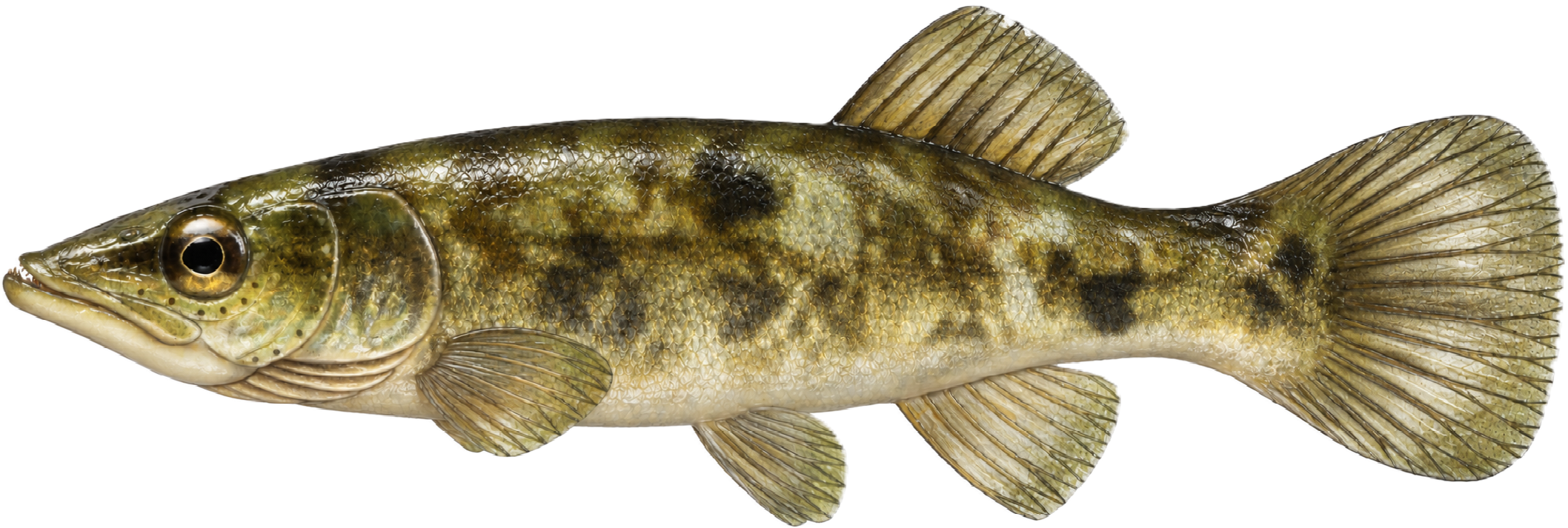 |
Estesesox foxi468Wilson, M. V. H., Brinkman, D. B. & Neuman, A. G. (1992). Cretaceous Esocoidei (Teleostei): early radiation of the pikes in North American fresh waters. Journal of Paleontology, 66(5), 839–846.469Brinkman, D. B., Newbrey, M. G. & Neuman, A. G. (2014). Diversity and paleoecology of actinopterygian fish from vertebrate microfossil localities of the Maastrichtian Hell Creek Formation of Montana. In G. P. Wilson et al. (Hrsg.), Through the End of the Cretaceous in the Type Locality of the Hell Creek Formation in Montana and Adjacent Areas. Geological Society of America Special Paper 503, 247–270. doi:10.1130/2014.2503(09) | Hell Creek Formation, Lance Formation |
Montana, Wyoming | 68–66 Ma | selten | Hecht (Esocoidei) |
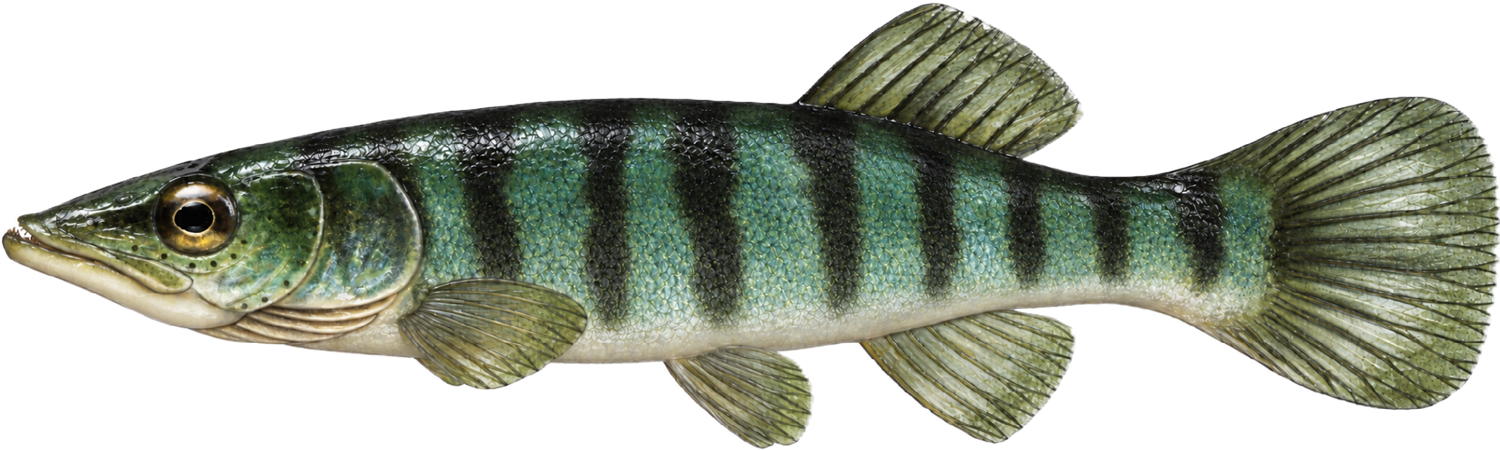 |
Estesesox sp.470Brinkman, D. B., Newbrey, M. G. & Neuman, A. G. (2014). Diversity and paleoecology of actinopterygian fish from vertebrate microfossil localities of the Maastrichtian Hell Creek Formation of Montana. In G. P. Wilson et al. (Hrsg.), Through the End of the Cretaceous in the Type Locality of the Hell Creek Formation in Montana and Adjacent Areas. Geological Society of America Special Paper 503, 247–270. doi:10.1130/2014.2503(09) | Hell Creek Formation | Montana | 68–66 Ma | selten | Hecht (Esocoidei); Bestimmung unsicher |
 |
Hiodontidae indet.471Brinkman, D. B., Newbrey, M. G. & Neuman, A. G. (2014). Diversity and paleoecology of actinopterygian fish from vertebrate microfossil localities of the Maastrichtian Hell Creek Formation of Montana. In G. P. Wilson et al. (Hrsg.), Through the End of the Cretaceous in the Type Locality of the Hell Creek Formation in Montana and Adjacent Areas. Geological Society of America Special Paper 503, 247–270. doi:10.1130/2014.2503(09) | Hell Creek Formation | Montana | 68–66 Ma | selten | Mehrere kleine, aber auch große Vertreter der Mondaugen (Hiodontidae) |
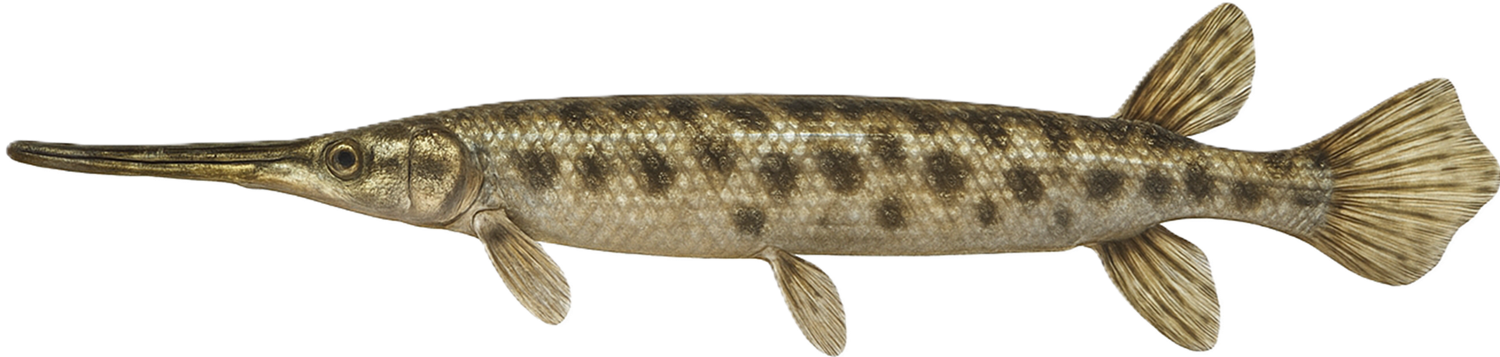 |
„Holostean A„472Brinkman, D. B., Newbrey, M. G. & Neuman, A. G. (2014). Diversity and paleoecology of actinopterygian fish from vertebrate microfossil localities of the Maastrichtian Hell Creek Formation of Montana. In G. P. Wilson et al. (Hrsg.), Through the End of the Cretaceous in the Type Locality of the Hell Creek Formation in Montana and Adjacent Areas. Geological Society of America Special Paper 503, 247–270. doi:10.1130/2014.2503(09) | Hell Creek Formation | Montana | 68–66 Ma | selten | Unbenannter Knochenhecht (Semionotiformes) |
 |
Lepisosteidae indet.473Estes, R. (1964). Fossil vertebrates from the Late Cretaceous Lance Formation, eastern Wyoming. University of California Publications in Geological Sciences, 49, 1–180.474Pearson, D. A. et al. (2002). Vertebrate biostratigraphy of the Hell Creek Formation in southwestern North Dakota and northwestern South Dakota. In J. H. Hartman et al. (Hrsg.), The Hell Creek Formation and the Cretaceous–Tertiary Boundary in the Northern Great Plains. Geological Society of America Special Paper 361, 145–167. doi:10.1130/0-8137-2361-2.145475Brinkman, D. B., Newbrey, M. G. & Neuman, A. G. (2014). Diversity and paleoecology of actinopterygian fish from vertebrate microfossil localities of the Maastrichtian Hell Creek Formation of Montana. In G. P. Wilson et al. (Hrsg.), Through the End of the Cretaceous in the Type Locality of the Hell Creek Formation in Montana and Adjacent Areas. Geological Society of America Special Paper 503, 247–270. doi:10.1130/2014.2503(09)476Carpenter, K. (1979). Vertebrate fauna of the Laramie Formation (Maastrichtian), Weld County, Colorado. Contributions to Geology, University of Wyoming, 17(1), 37–49.477Wroblewski, A. F. (2026). Systematics and biostratigraphy of non-mammalian vertebrates across the K/Pg transition, southern Wyoming, USA. Journal of Paleontology, 100(1), 222–250. doi:10.1017/jpa.2025.10191 | Hell Creek Formation, Lance Formation, Ferris Formation, Laramie Formation |
Montana, North Dakota, South Dakota, Wyoming, Colorado | 68–66 Ma | sehr häufig | Unbestimmter Knochenhecht (Lepisosteidae); historisch als Lepisosteus occidentalis geführt |
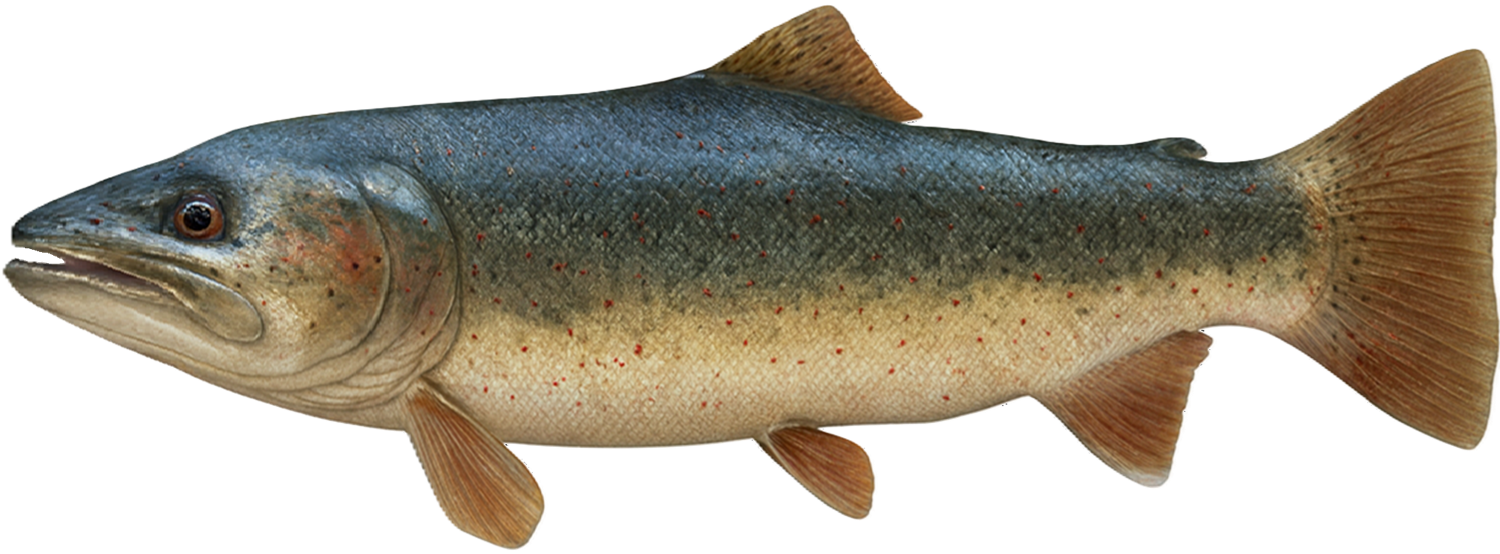 |
Melvius thomasi478Estes, R. (1964). Fossil vertebrates from the Late Cretaceous Lance Formation, eastern Wyoming. University of California Publications in Geological Sciences, 49, 1–180.479Pearson, D. A. et al. (2002). Vertebrate biostratigraphy of the Hell Creek Formation in southwestern North Dakota and northwestern South Dakota. In J. H. Hartman et al. (Hrsg.), The Hell Creek Formation and the Cretaceous–Tertiary Boundary in the Northern Great Plains. Geological Society of America Special Paper 361, 145–167. doi:10.1130/0-8137-2361-2.145480Brinkman, D. B., Newbrey, M. G. & Neuman, A. G. (2014). Diversity and paleoecology of actinopterygian fish from vertebrate microfossil localities of the Maastrichtian Hell Creek Formation of Montana. In G. P. Wilson et al. (Hrsg.), Through the End of the Cretaceous in the Type Locality of the Hell Creek Formation in Montana and Adjacent Areas. Geological Society of America Special Paper 503, 247–270. doi:10.1130/2014.2503(09) | Hell Creek Formation, Lance Formation |
Montana, North Dakota, South Dakota, Wyoming | 68–66 Ma | häufig | Kahlhecht (Amiidae) |
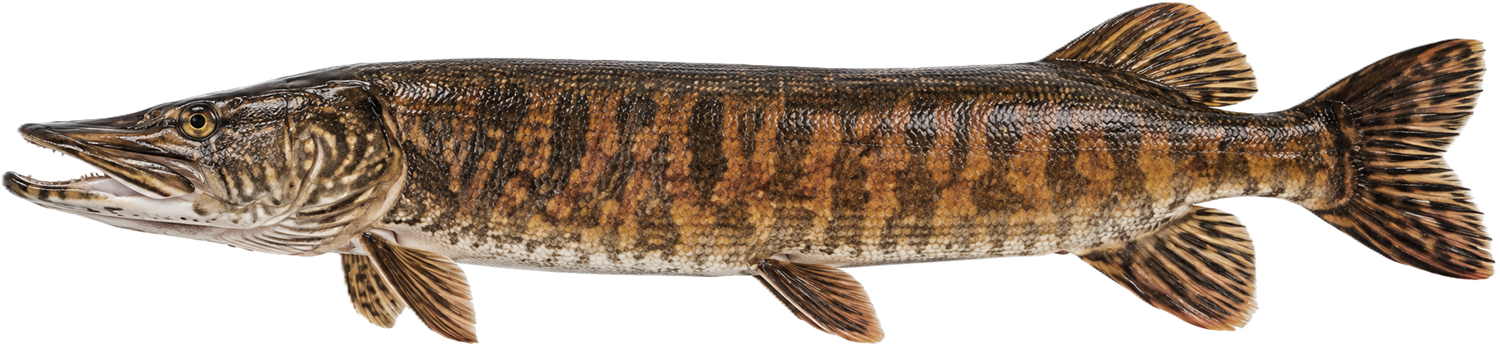 |
Oldmanesox sp.481Brinkman, D. B., Newbrey, M. G. & Neuman, A. G. (2014). Diversity and paleoecology of actinopterygian fish from vertebrate microfossil localities of the Maastrichtian Hell Creek Formation of Montana. In G. P. Wilson et al. (Hrsg.), Through the End of the Cretaceous in the Type Locality of the Hell Creek Formation in Montana and Adjacent Areas. Geological Society of America Special Paper 503, 247–270. doi:10.1130/2014.2503(09) | Hell Creek Formation | Montana | 68–66 Ma | selten | Hecht (Esocoidei) |
 |
Ostariophysi indet.482Brinkman, D. B., Newbrey, M. G. & Neuman, A. G. (2014). Diversity and paleoecology of actinopterygian fish from vertebrate microfossil localities of the Maastrichtian Hell Creek Formation of Montana. In G. P. Wilson et al. (Hrsg.), Through the End of the Cretaceous in the Type Locality of the Hell Creek Formation in Montana and Adjacent Areas. Geological Society of America Special Paper 503, 247–270. doi:10.1130/2014.2503(09) | Hell Creek Formation | Montana | 68–66 Ma | selten | Nicht näher bestimmter Ostariophysi, vielleicht ein Wels |
 |
Pachyrhizodontoidei indet.483Bryant, L. J. (1989). Non-dinosaurian lower vertebrates across the Cretaceous–Tertiary boundary in northeastern Montana. University of California Publications in Geological Sciences, 134, 1–107. | Hell Creek Formation | Montana | 68–66 Ma | selten | Nicht näher bestimmter Pachyrhizodontoidei |
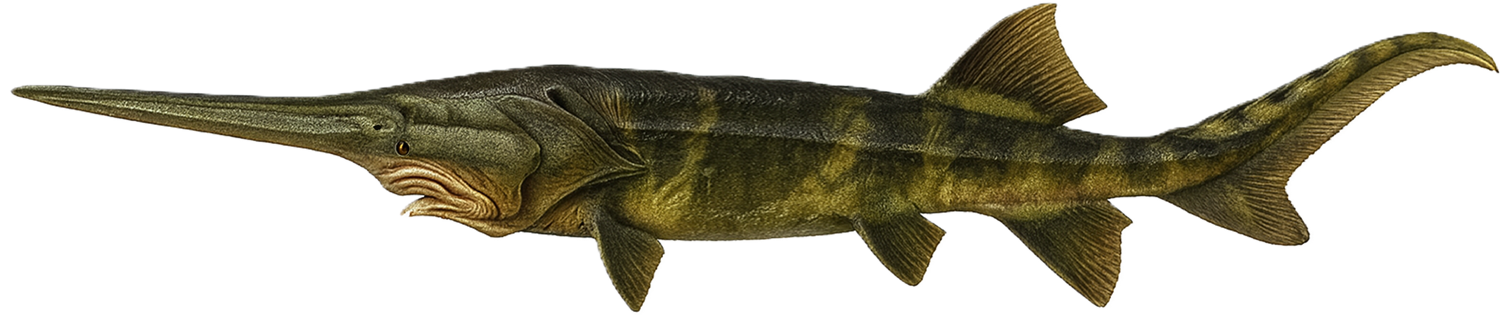 |
Paleopsephurus wilsoni484Grande, L. & Bemis, W. E. (1991). Osteology and phylogenetic relationships of fossil and recent paddlefishes (Polyodontidae) with comments on the interrelationships of Acipenseriformes. Journal of Vertebrate Paleontology, Memoir, 1, 1–121. doi:10.2307/3889328485Brinkman, D. B., Newbrey, M. G. & Neuman, A. G. (2014). Diversity and paleoecology of actinopterygian fish from vertebrate microfossil localities of the Maastrichtian Hell Creek Formation of Montana. In G. P. Wilson et al. (Hrsg.), Through the End of the Cretaceous in the Type Locality of the Hell Creek Formation in Montana and Adjacent Areas. Geological Society of America Special Paper 503, 247–270. doi:10.1130/2014.2503(09) | Hell Creek Formation | Montana | 68–66 Ma | selten | Löffelstör (Polyodontidae) |
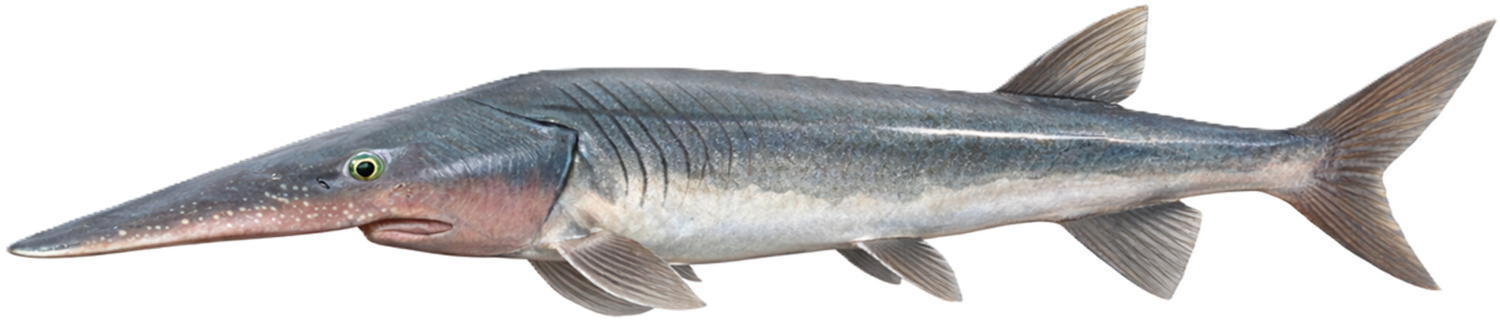 |
Parapsephurus willybemisi486Hilton, E. J. et al. (2023). New paddlefishes (Acipenseriformes, Polyodontidae) from the Late Cretaceous Tanis Site of the Hell Creek Formation in North Dakota, USA. Journal of Paleontology, 97(3), 675–692. doi:10.1017/jpa.2023.19 | Hell Creek Formation | North Dakota (Tanis) | 66 Ma | selten | Löffelstör (Polyodontidae) |
 |
Percopsiformes indet.487Brinkman, D. B., Newbrey, M. G. & Neuman, A. G. (2014). Diversity and paleoecology of actinopterygian fish from vertebrate microfossil localities of the Maastrichtian Hell Creek Formation of Montana. In G. P. Wilson et al. (Hrsg.), Through the End of the Cretaceous in the Type Locality of the Hell Creek Formation in Montana and Adjacent Areas. Geological Society of America Special Paper 503, 247–270. doi:10.1130/2014.2503(09) | Hell Creek Formation | Montana | 68–66 Ma | selten | Nicht näher bestimmter Barschlachsartiger (Percopsiformes) |
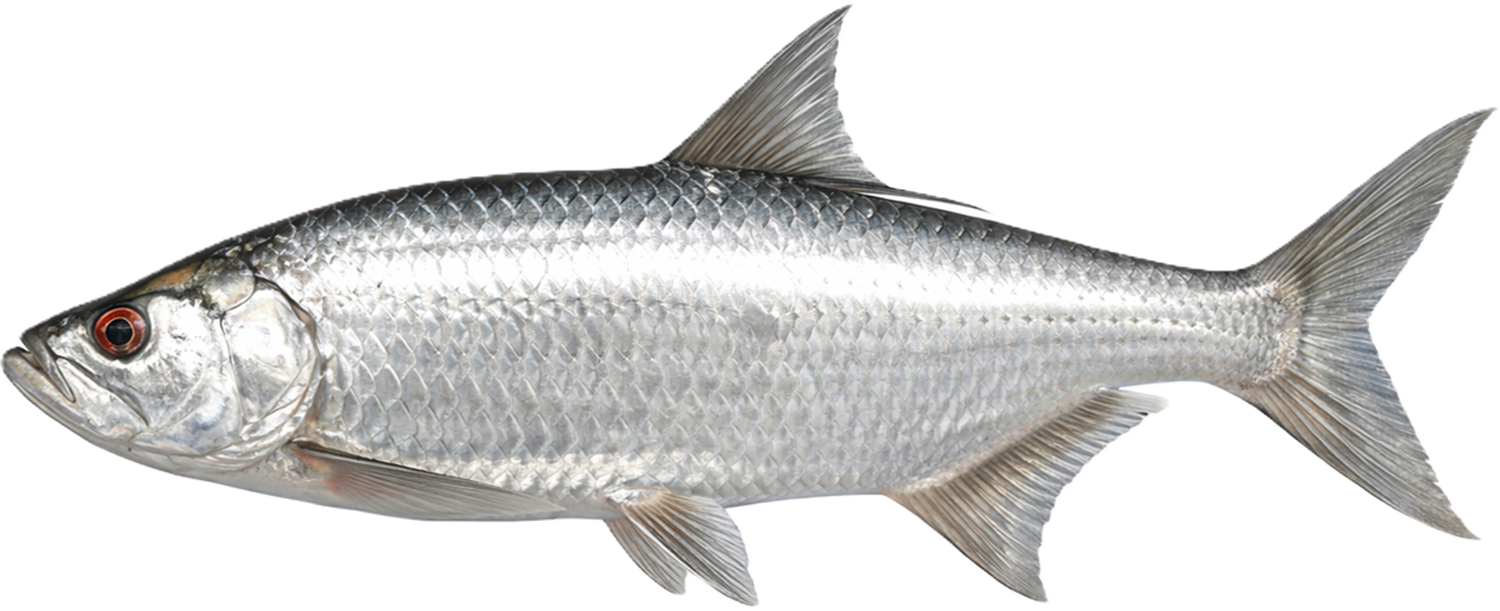 |
Phyllodus paulkatoi488Estes, R. & Hiatt, R. W. (1978). Studies on fossil phyllodont fishes: interrelationships and evolution in the Phyllodontidae (Albuloidei). Copeia, 1978(2), 317–331.489Brinkman, D. B., Newbrey, M. G. & Neuman, A. G. (2014). Diversity and paleoecology of actinopterygian fish from vertebrate microfossil localities of the Maastrichtian Hell Creek Formation of Montana. In G. P. Wilson et al. (Hrsg.), Through the End of the Cretaceous in the Type Locality of the Hell Creek Formation in Montana and Adjacent Areas. Geological Society of America Special Paper 503, 247–270. doi:10.1130/2014.2503(09)490Wroblewski, A. F. (2026). Systematics and biostratigraphy of non-mammalian vertebrates across the K/Pg transition, southern Wyoming, USA. Journal of Paleontology, 100(1), 222–250. doi:10.1017/jpa.2025.10191 | Hell Creek Formation, Ferris Formation |
Montana, Wyoming | 68–66 Ma | selten | Knochenfisch (Phyllodontidae) |
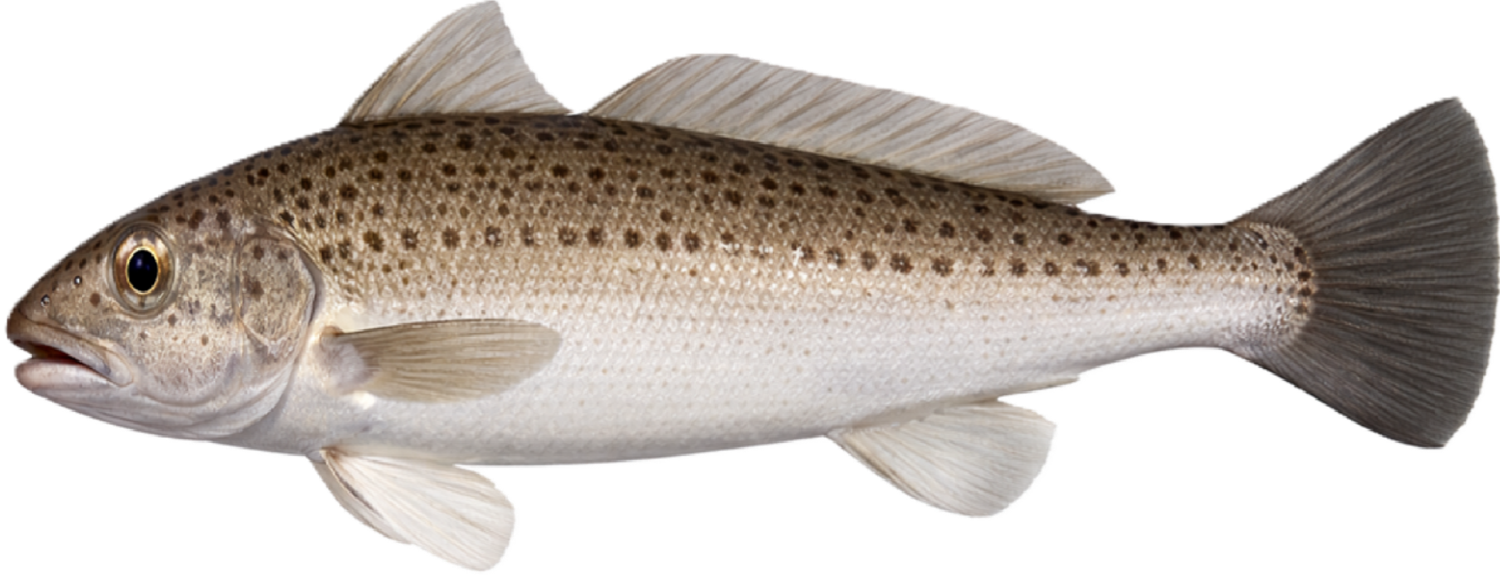 |
Platacodon nanus491Estes, R. (1964). Fossil vertebrates from the Late Cretaceous Lance Formation, eastern Wyoming. University of California Publications in Geological Sciences, 49, 1–180.492Estes, R. & Berberian, P. (1970). Paleoecology of a Late Cretaceous vertebrate community from Montana. Breviora, 343, 1–35.493Brinkman, D. B., Newbrey, M. G. & Neuman, A. G. (2014). Diversity and paleoecology of actinopterygian fish from vertebrate microfossil localities of the Maastrichtian Hell Creek Formation of Montana. In G. P. Wilson et al. (Hrsg.), Through the End of the Cretaceous in the Type Locality of the Hell Creek Formation in Montana and Adjacent Areas. Geological Society of America Special Paper 503, 247–270. doi:10.1130/2014.2503(09) | Hell Creek Formation, Lance Formation |
Montana, Wyoming | 68–66 Ma | häufig | Unklare systematische Stellung, vielleicht ein Umberfisch (Sciaenidae) |
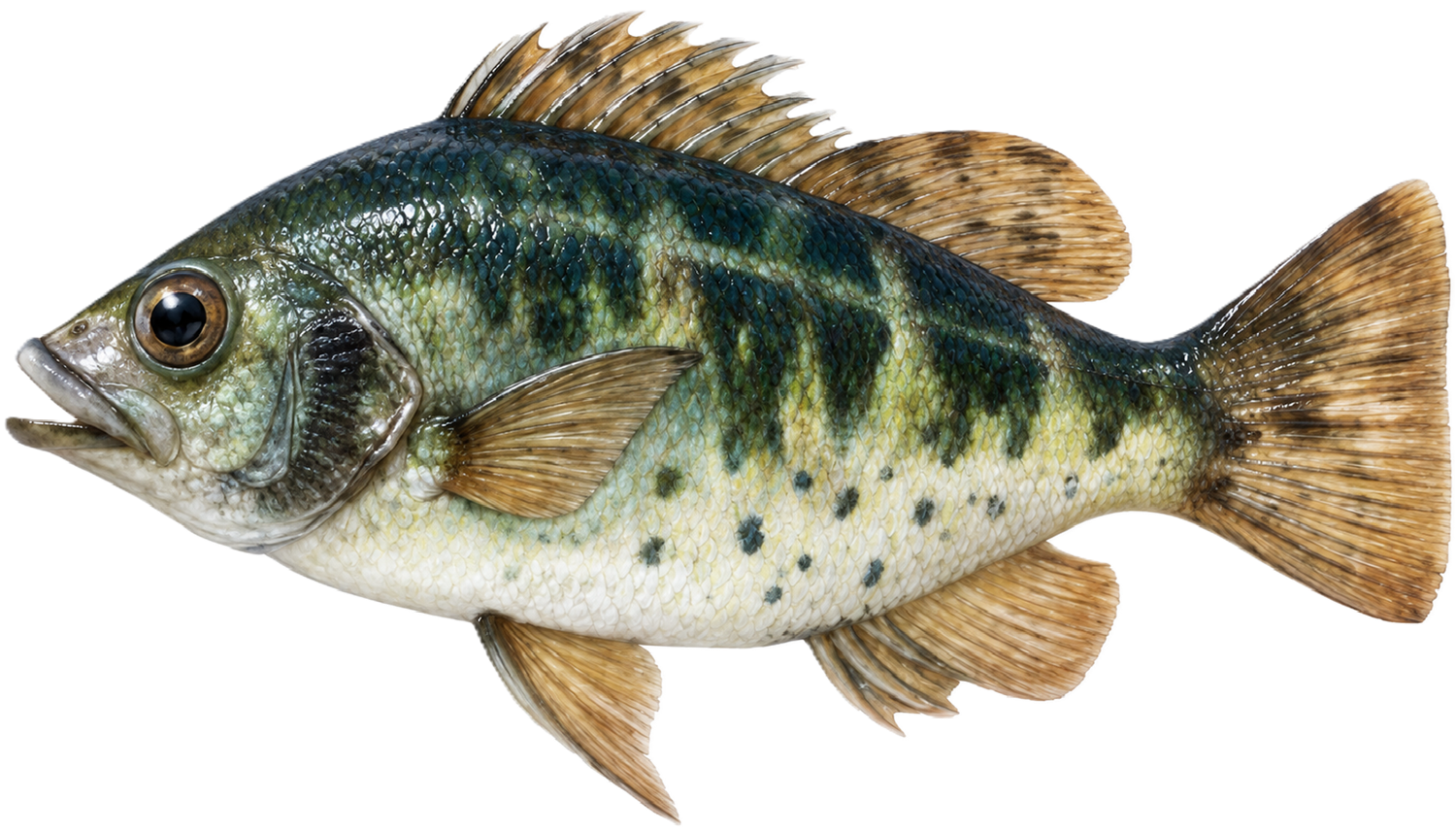 |
Priscacara sp.494Brinkman, D. B., Newbrey, M. G. & Neuman, A. G. (2014). Diversity and paleoecology of actinopterygian fish from vertebrate microfossil localities of the Maastrichtian Hell Creek Formation of Montana. In G. P. Wilson et al. (Hrsg.), Through the End of the Cretaceous in the Type Locality of the Hell Creek Formation in Montana and Adjacent Areas. Geological Society of America Special Paper 503, 247–270. doi:10.1130/2014.2503(09) | Hell Creek Formation | Montana | 68–66 Ma | selten | Barschähnlicher Knochenfisch (Percomorphaceae) |
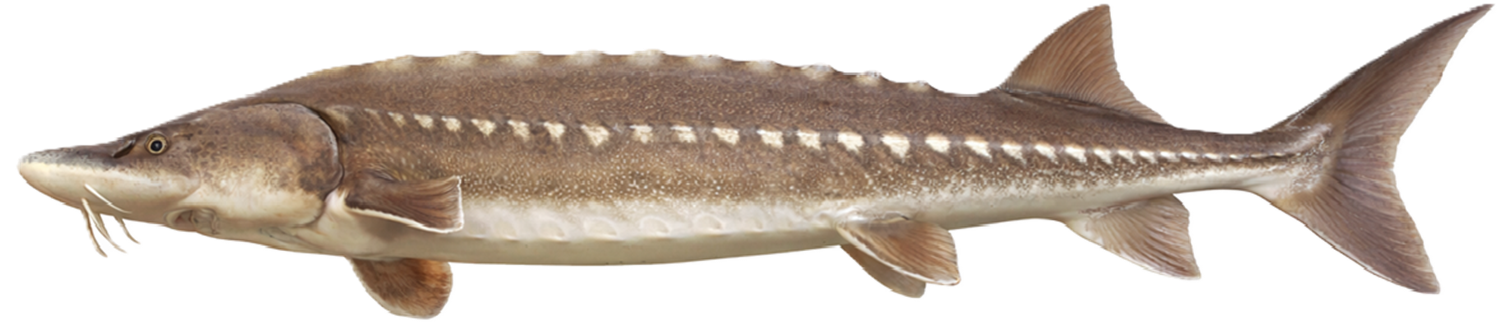 |
Protoscaphirhynchus squamosus495Wilimovsky, N. J. (1956). Protoscaphirhynchus squamosus, a new sturgeon from the Upper Cretaceous of Montana. Journal of Paleontology, 30(5), 1205–1208.496Hilton, E. J. & Grande, L. (2006). Review of the fossil record of sturgeons, family Acipenseridae (Actinopterygii: Acipenseriformes), from North America. Journal of Paleontology, 80(4), 672–683. doi:10.1666/0022-3360(2006)80[672:ROTFRO]2.0.CO;2 | Hell Creek Formation | Montana | 68–66 Ma | Einzelfund | Stör (Acipenseridae) |
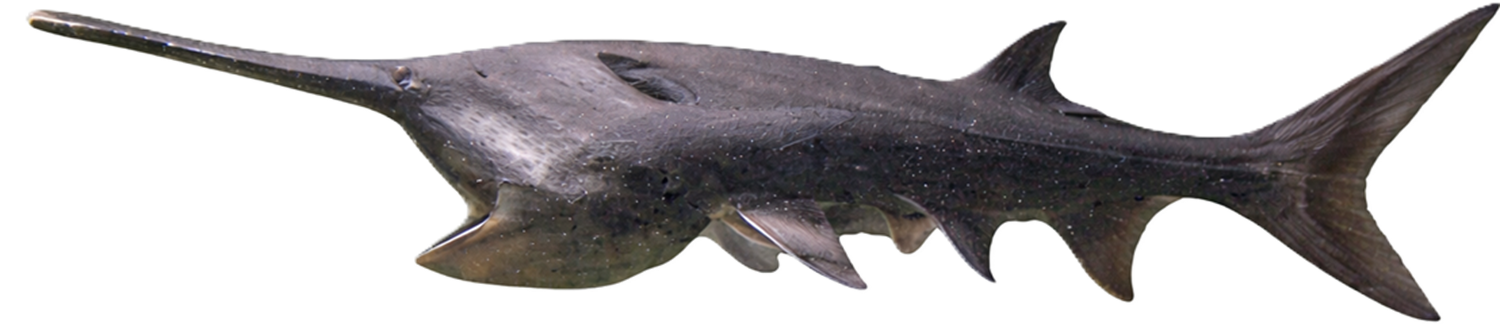 |
Pugiopsephurus inundatus497Hilton, E. J. et al. (2023). New paddlefishes (Acipenseriformes, Polyodontidae) from the Late Cretaceous Tanis Site of the Hell Creek Formation in North Dakota, USA. Journal of Paleontology, 97(3), 675–692. doi:10.1017/jpa.2023.19 | Hell Creek Formation | North Dakota (Tanis) | 66 Ma | selten | Löffelstör (Polyodontidae) |
|
Teleostei indet.498Brinkman, D. B., Newbrey, M. G. & Neuman, A. G. (2014). Diversity and paleoecology of actinopterygian fish from vertebrate microfossil localities of the Maastrichtian Hell Creek Formation of Montana. In G. P. Wilson et al. (Hrsg.), Through the End of the Cretaceous in the Type Locality of the Hell Creek Formation in Montana and Adjacent Areas. Geological Society of America Special Paper 503, 247–270. doi:10.1130/2014.2503(09)499Wroblewski, A. F. (2026). Systematics and biostratigraphy of non-mammalian vertebrates across the K/Pg transition, southern Wyoming, USA. Journal of Paleontology, 100(1), 222–250. doi:10.1017/jpa.2025.10191 | Hell Creek Formation, Ferris Formation |
Montana, Wyoming | 68–66 Ma | häufig | Nicht näher bestimmte Echte Knochenfische; mehrere unterschiedliche Morphotypen |

Knorpelfische:
| Bild: | Spezies: | Formation: | Fundort: | Alter: | Häufigkeit: | Bemerkungen: |
|---|---|---|---|---|---|---|
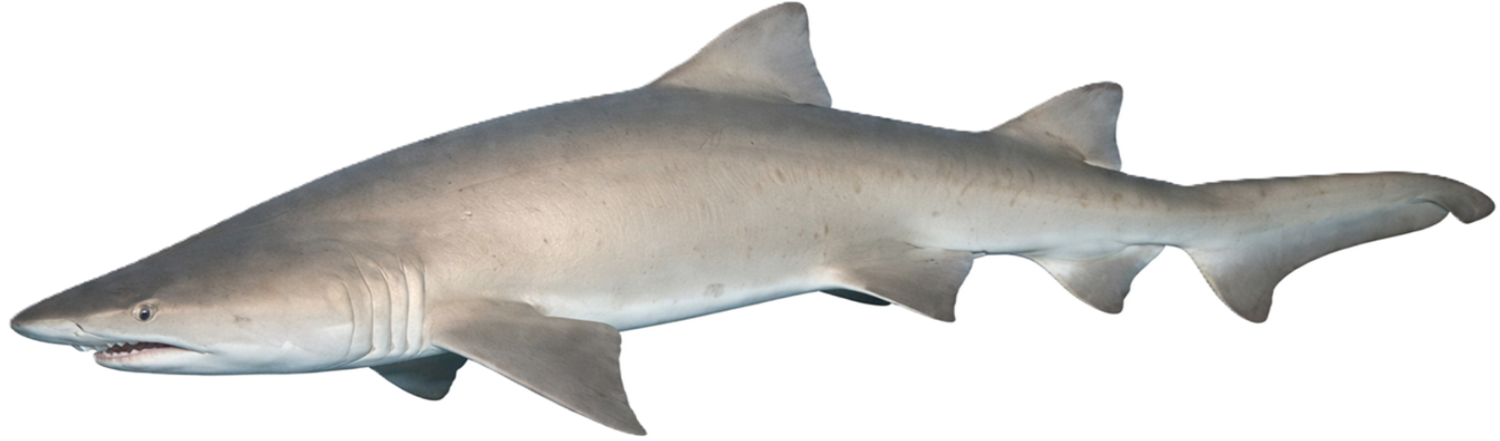 |
Carcharias sp.500Hoganson, J. W., Campbell, J. M. & Murphy, E. C. (1994). Stratigraphy and paleontology of the Cretaceous Hell Creek Formation, Stumpf site, Morton County, North Dakota. Proceedings of the North Dakota Academy of Sciences, 48. | Hell Creek Formation | North Dakota | 68–66 Ma | selten | Sandtigerhai (Carchariidae); Bestimmung unsicher |
 |
Carcharhinidae indet.501Gates, T. A., Gorscak, E. & Makovicky, P. J. (2019). New sharks and other chondrichthyans from the latest Maastrichtian (Late Cretaceous) of North America. Journal of Paleontology, 93(3), 512–530. doi:10.1017/jpa.2018.92 | Hell Creek Formation | South Dakota | ca. 66 Ma | selten | Unbestimmter Requiemhai (Carcharhinidae) |
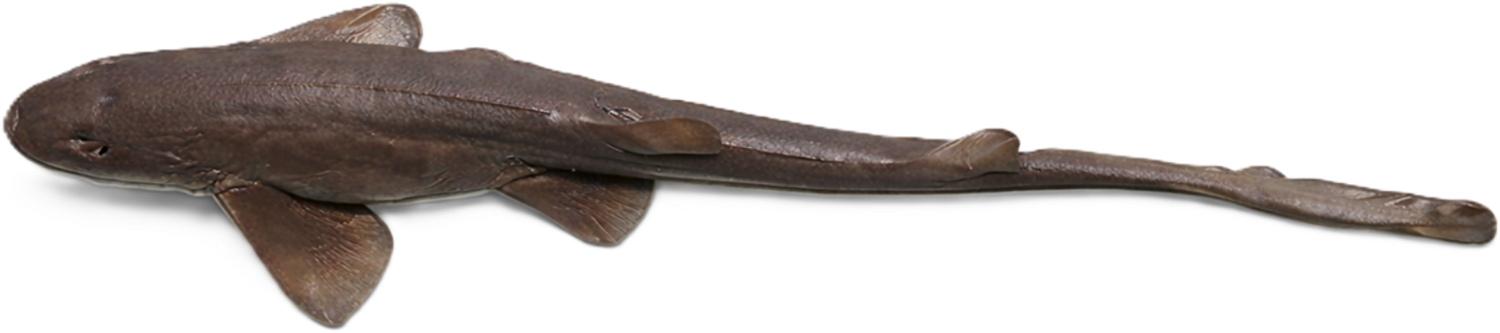 |
Chiloscyllium sp.502Cook, T. D. et al. (2014). Euselachians from the freshwater deposits of the Hell Creek Formation of Montana. In G. P. Wilson et al. (Hrsg.), Through the End of the Cretaceous in the Type Locality of the Hell Creek Formation in Montana and Adjacent Areas. Geological Society of America Special Paper 503, 229–246. doi:10.1130/2014.2503(08) | Hell Creek Formation | Montana | 68–66 Ma | selten | Bambushai (Hemiscylliidae); Bestimmung unsicher |
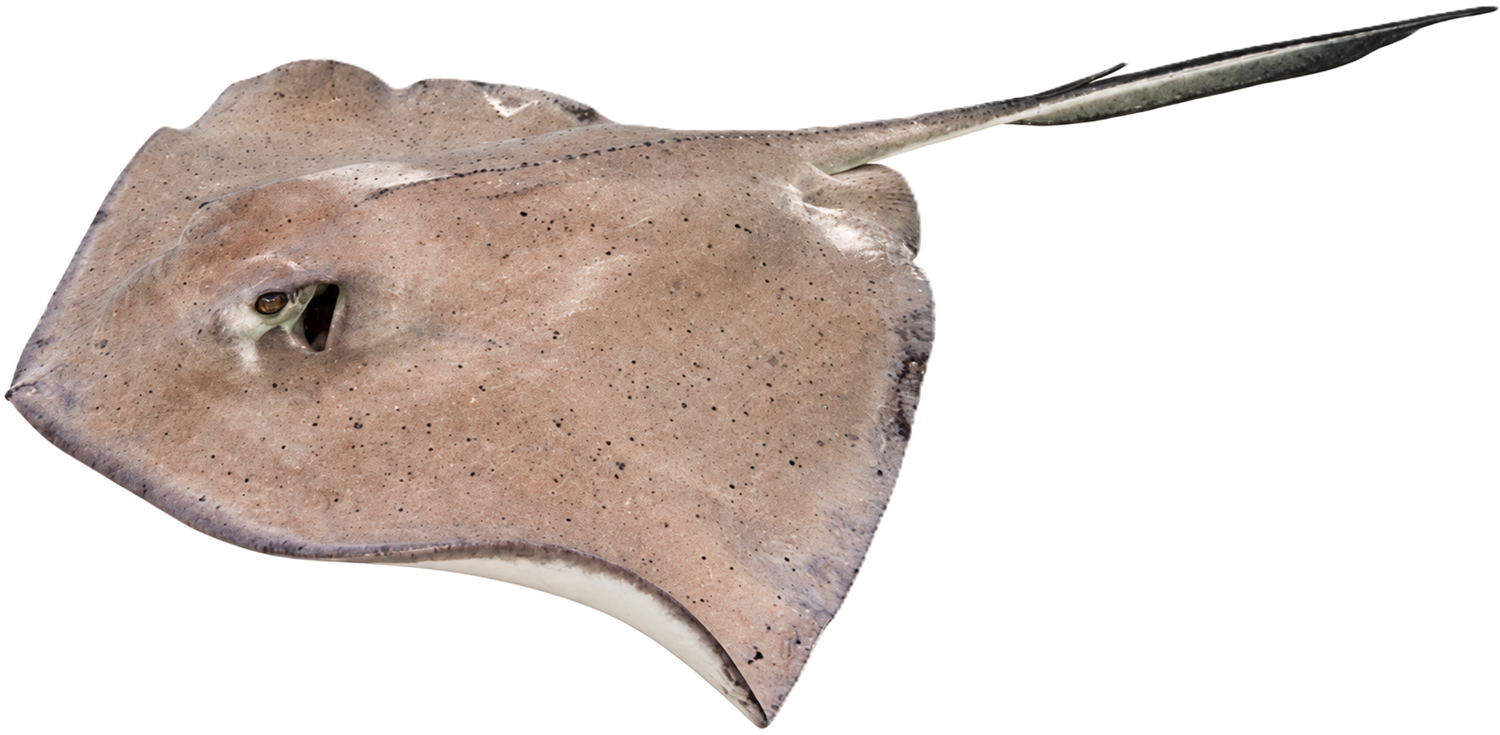 |
Dasyatis sp.503Wroblewski, A. F. (2026). Systematics and biostratigraphy of non-mammalian vertebrates across the K/Pg transition, southern Wyoming, USA. Journal of Paleontology, 100(1), 222–250. doi:10.1017/jpa.2025.10191 | Ferris Formation | Wyoming | 67–66 Ma | selten | Stechrochen (Dasyatidae); Bestimmung unsicher |
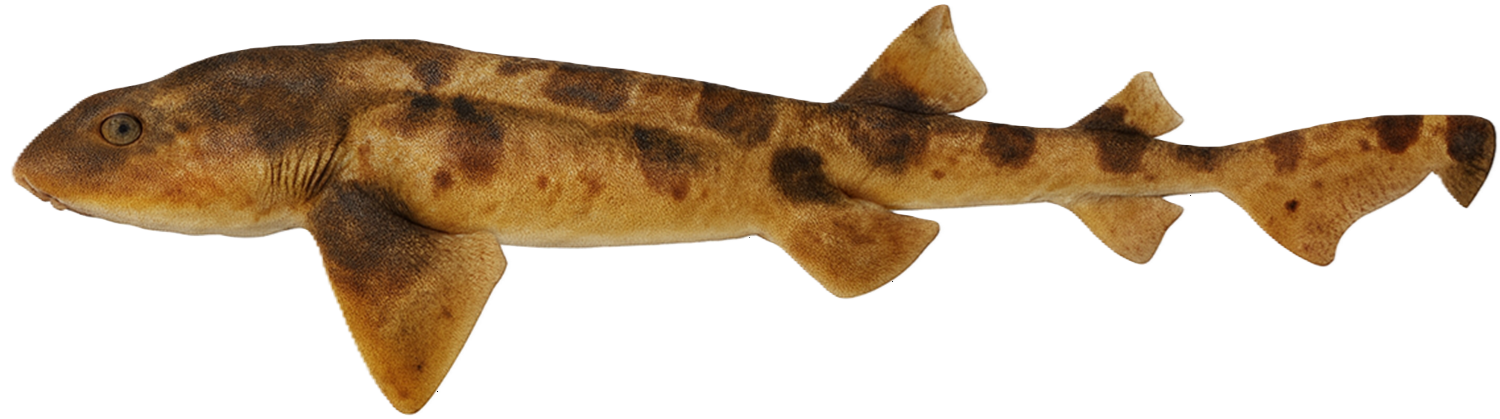 |
Galagadon nordquistae504Gates, T. A., Gorscak, E. & Makovicky, P. J. (2019). New sharks and other chondrichthyans from the latest Maastrichtian (Late Cretaceous) of North America. Journal of Paleontology, 93(3), 512–530. doi:10.1017/jpa.2018.92 | Hell Creek Formation | South Dakota | ca. 66 Ma | Einzelfund | Teppichhai (Orectolobiformes) |
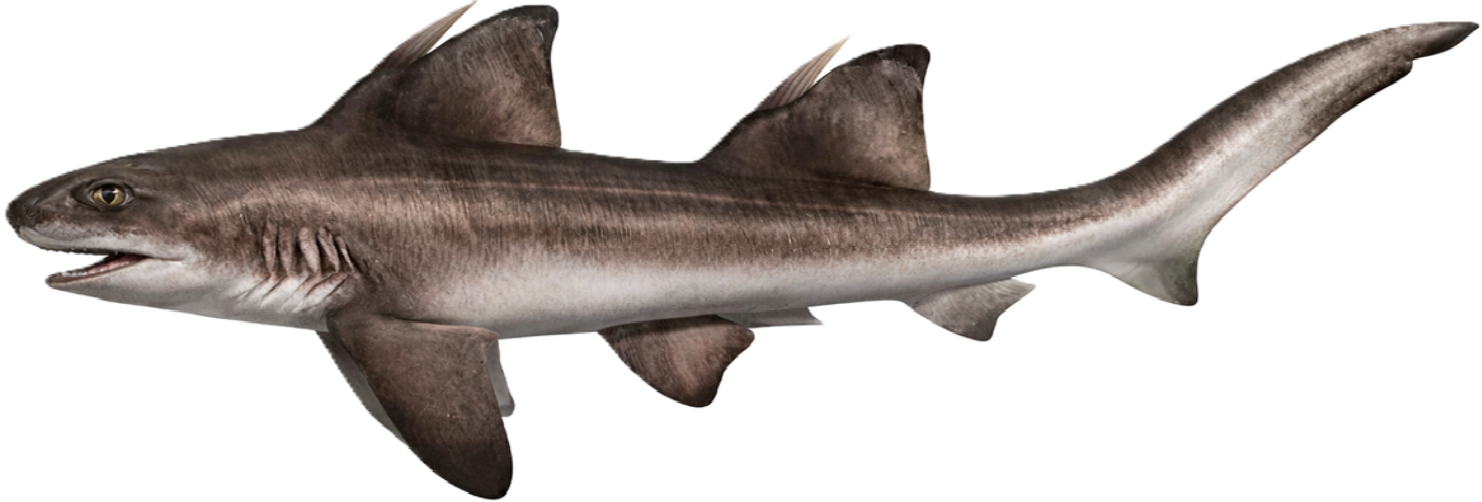 |
Lonchidion selachos505Estes, R. & Berberian, P. (1970). Paleoecology of a Late Cretaceous vertebrate community from Montana. Breviora, 343, 1–35.506Estes, R. (1964). Fossil vertebrates from the Late Cretaceous Lance Formation, eastern Wyoming. University of California Publications in Geological Sciences, 49, 1–180.507Carpenter, K. (1979). Vertebrate fauna of the Laramie Formation (Maastrichtian), Weld County, Colorado. Contributions to Geology, University of Wyoming, 17(1), 37–49.508Wroblewski, A. F. (2026). Systematics and biostratigraphy of non-mammalian vertebrates across the K/Pg transition, southern Wyoming, USA. Journal of Paleontology, 100(1), 222–250. doi:10.1017/jpa.2025.10191 | Hell Creek Formation, Lance Formation, Ferris Formation, Laramie Formation |
Montana, North Dakota, South Dakota, Wyoming, Colorado | 68–66 Ma | häufig | Hybodonter Hai (Lonchidiidae) |
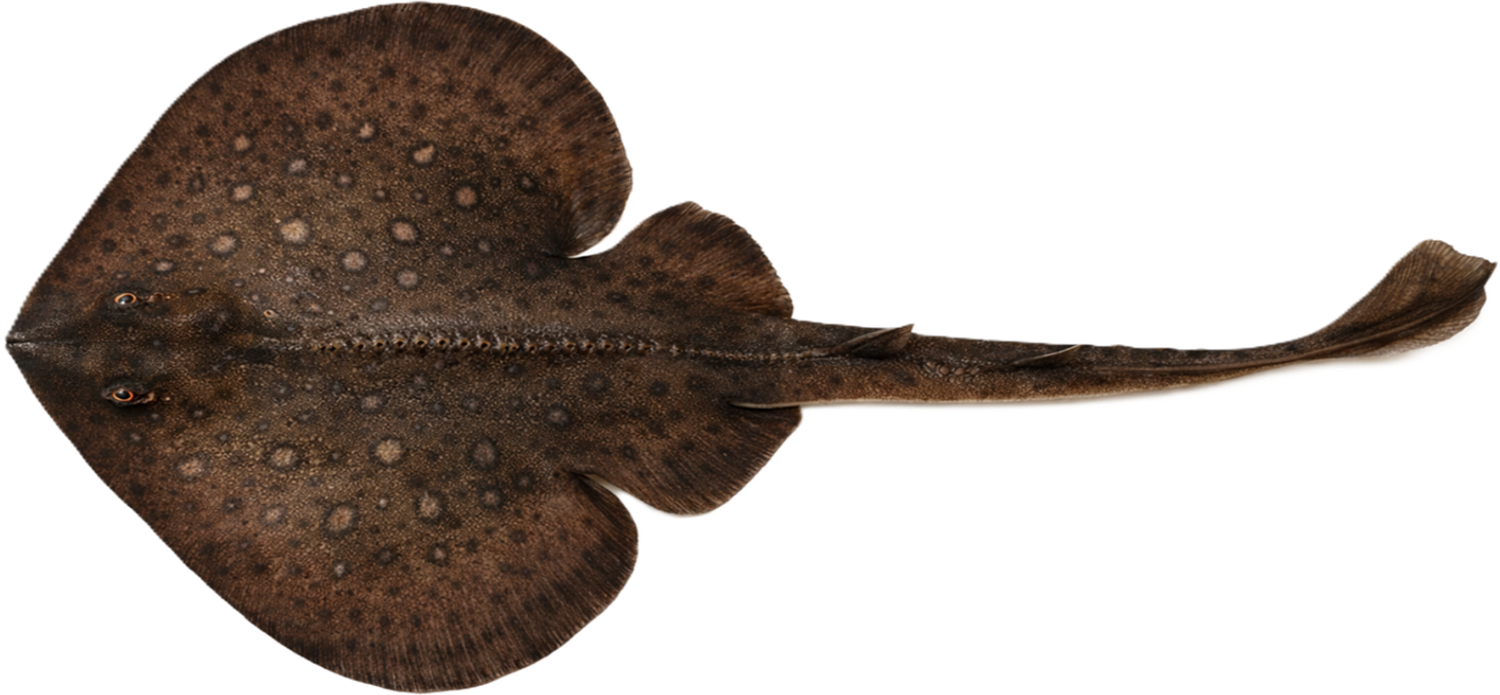 |
Myledaphus bipartitus509Estes, R. (1964). Fossil vertebrates from the Late Cretaceous Lance Formation, eastern Wyoming. University of California Publications in Geological Sciences, 49, 1–180.510Carpenter, K. (1979). Vertebrate fauna of the Laramie Formation (Maastrichtian), Weld County, Colorado. Contributions to Geology, University of Wyoming, 17(1), 37–49. | Lance Formation, Laramie Formation |
Wyoming, Colorado | 68–66 Ma | sehr häufig | Gitarrenrochen (Rhinobatidae) |
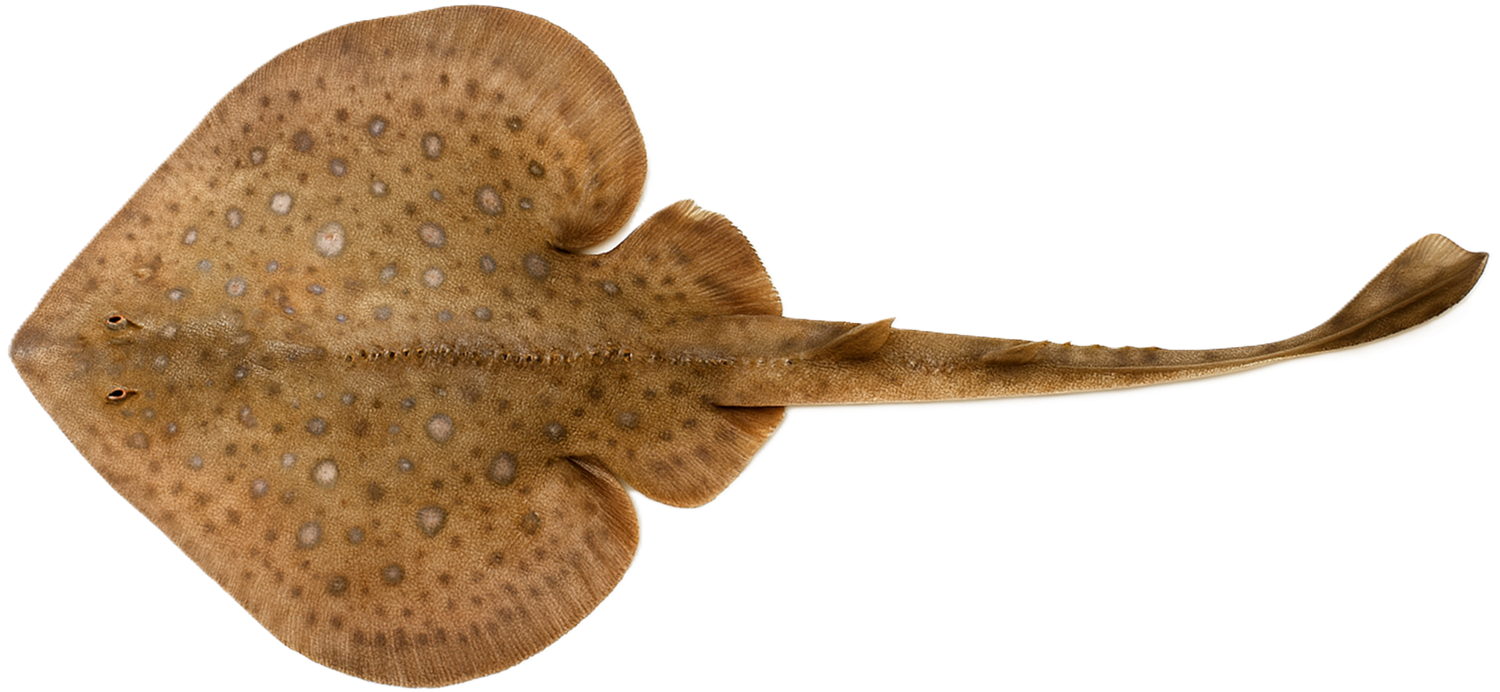 |
Myledaphus pustulosus511Pearson, D. A. et al. (2002). Vertebrate biostratigraphy of the Hell Creek Formation in southwestern North Dakota and northwestern South Dakota. In J. H. Hartman et al. (Hrsg.), The Hell Creek Formation and the Cretaceous–Tertiary Boundary in the Northern Great Plains. Geological Society of America Special Paper 361, 145–167. doi:10.1130/0-8137-2361-2.145512Cook, T. D. et al. (2014). Euselachians from the freshwater deposits of the Hell Creek Formation of Montana. In G. P. Wilson et al. (Hrsg.), Through the End of the Cretaceous in the Type Locality of the Hell Creek Formation in Montana and Adjacent Areas. Geological Society of America Special Paper 503, 229–246. doi:10.1130/2014.2503(08)513Wroblewski, A. F. (2026). Systematics and biostratigraphy of non-mammalian vertebrates across the K/Pg transition, southern Wyoming, USA. Journal of Paleontology, 100(1), 222–250. doi:10.1017/jpa.2025.10191 | Hell Creek Formation, Ferris Formation |
Montana, North Dakota, South Dakota, Wyoming | 68–66 Ma | sehr häufig | Gitarrenrochen (Rhinobatidae) |
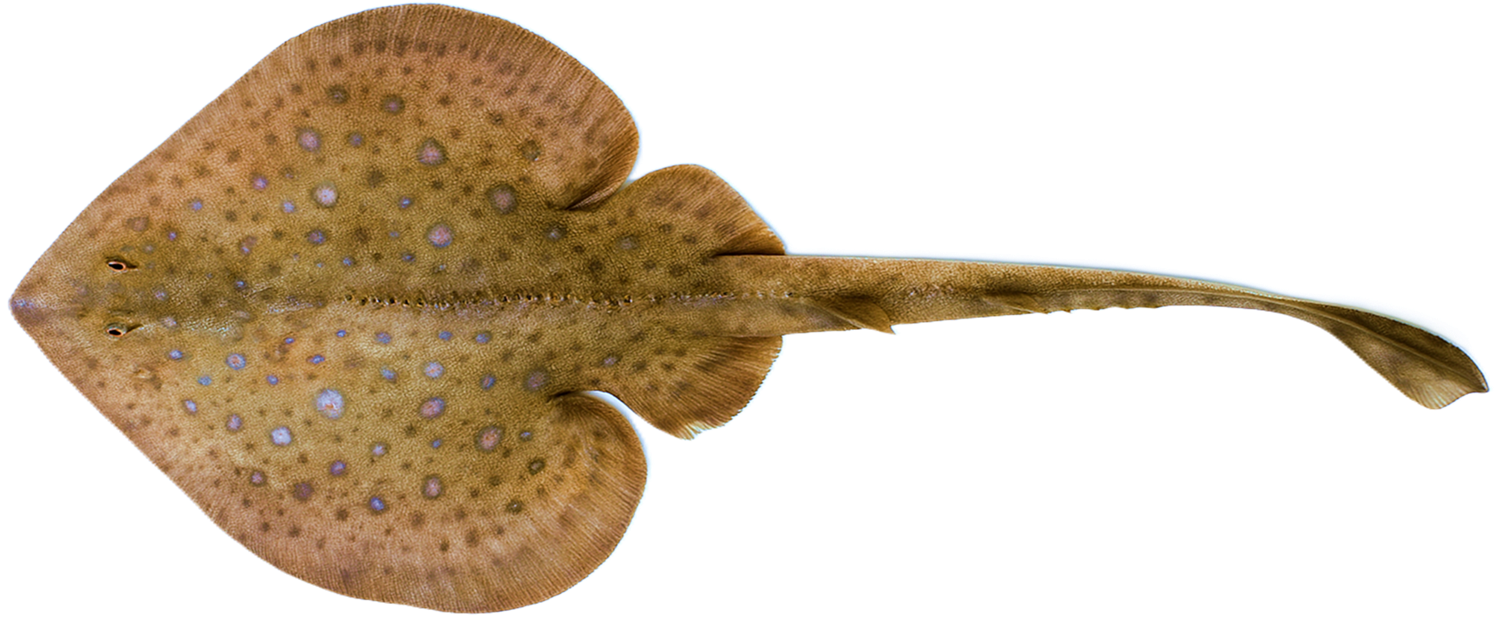 |
Myledaphus sp.514Wroblewski, A. F. (2026). Systematics and biostratigraphy of non-mammalian vertebrates across the K/Pg transition, southern Wyoming, USA. Journal of Paleontology, 100(1), 222–250. doi:10.1017/jpa.2025.10191 | Ferris Formation | Wyoming | 67–66 Ma | häufig | Gitarrenrochen (Rhinobatidae); Bestimmung unsicher |
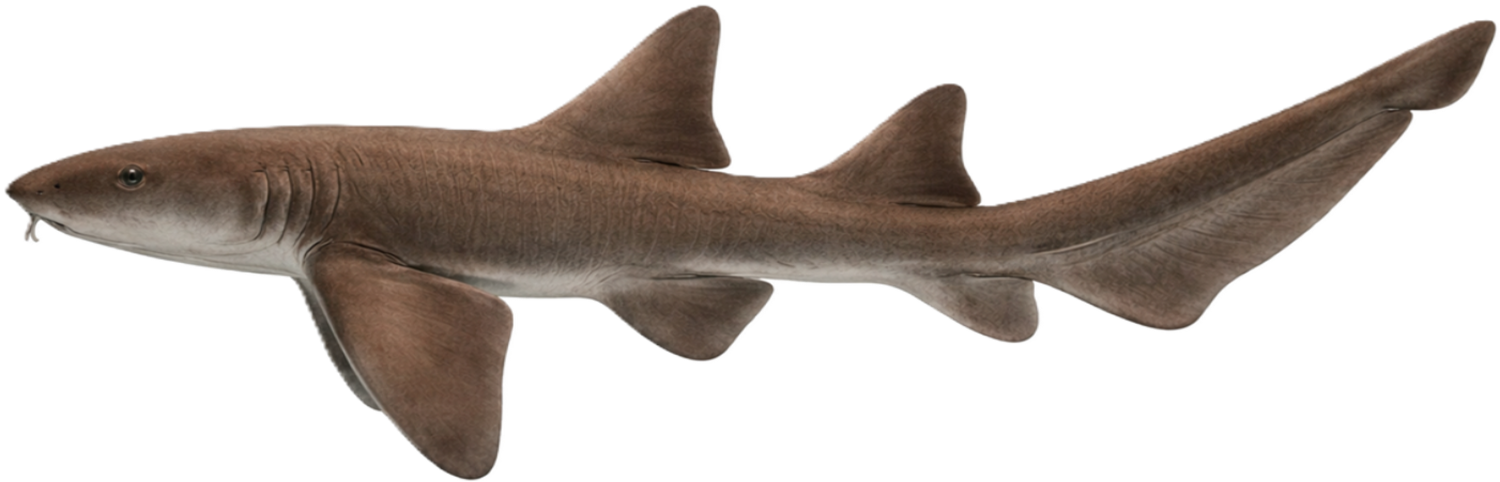 |
Protoginglymostoma estesi515Cook, T. D. et al. (2014). Euselachians from the freshwater deposits of the Hell Creek Formation of Montana. In G. P. Wilson et al. (Hrsg.), Through the End of the Cretaceous in the Type Locality of the Hell Creek Formation in Montana and Adjacent Areas. Geological Society of America Special Paper 503, 229–246. doi:10.1130/2014.2503(08) | Hell Creek Formation | Montana | 68–66 Ma | selten | Ammenhai (Ginglymostomatidae) |
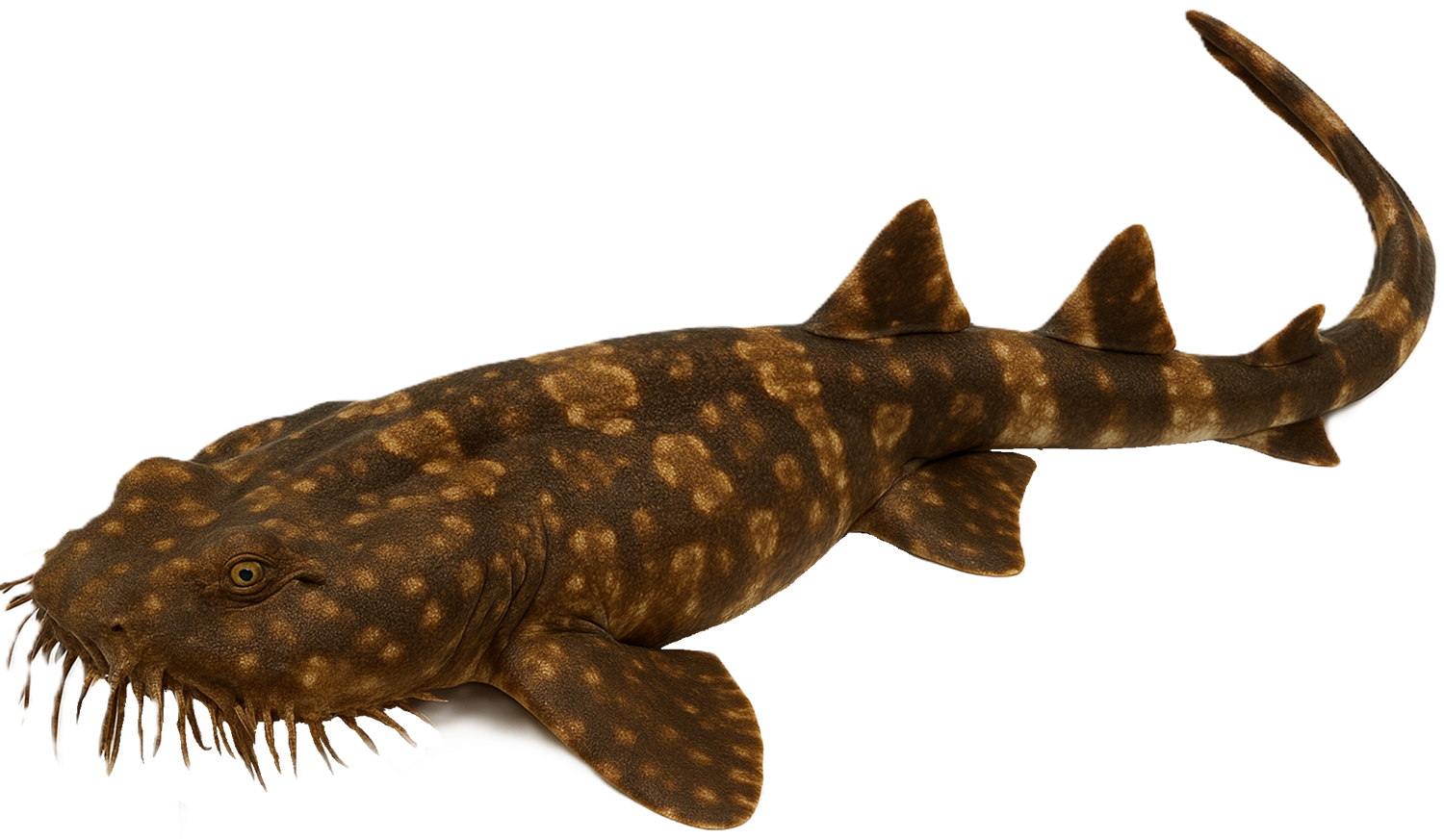 |
Restesia americana516Pearson, D. A. et al. (2002). Vertebrate biostratigraphy of the Hell Creek Formation in southwestern North Dakota and northwestern South Dakota. In J. H. Hartman et al. (Hrsg.), The Hell Creek Formation and the Cretaceous–Tertiary Boundary in the Northern Great Plains. Geological Society of America Special Paper 361, 145–167. doi:10.1130/0-8137-2361-2.145517Cook, T. D. et al. (2014). Euselachians from the freshwater deposits of the Hell Creek Formation of Montana. In G. P. Wilson et al. (Hrsg.), Through the End of the Cretaceous in the Type Locality of the Hell Creek Formation in Montana and Adjacent Areas. Geological Society of America Special Paper 503, 229–246. doi:10.1130/2014.2503(08)518Estes, R. (1964). Fossil vertebrates from the Late Cretaceous Lance Formation, eastern Wyoming. University of California Publications in Geological Sciences, 49, 1–180.519Carpenter, K. (1979). Vertebrate fauna of the Laramie Formation (Maastrichtian), Weld County, Colorado. Contributions to Geology, University of Wyoming, 17(1), 37–49.520Wroblewski, A. F. (2026). Systematics and biostratigraphy of non-mammalian vertebrates across the K/Pg transition, southern Wyoming, USA. Journal of Paleontology, 100(1), 222–250. doi:10.1017/jpa.2025.10191 | Hell Creek Formation, Lance Formation, Ferris Formation, Laramie Formation |
Montana, North Dakota, South Dakota, Wyoming, Colorado | 68–66 Ma | häufig | Teppichhai (Orectolobiformes) |
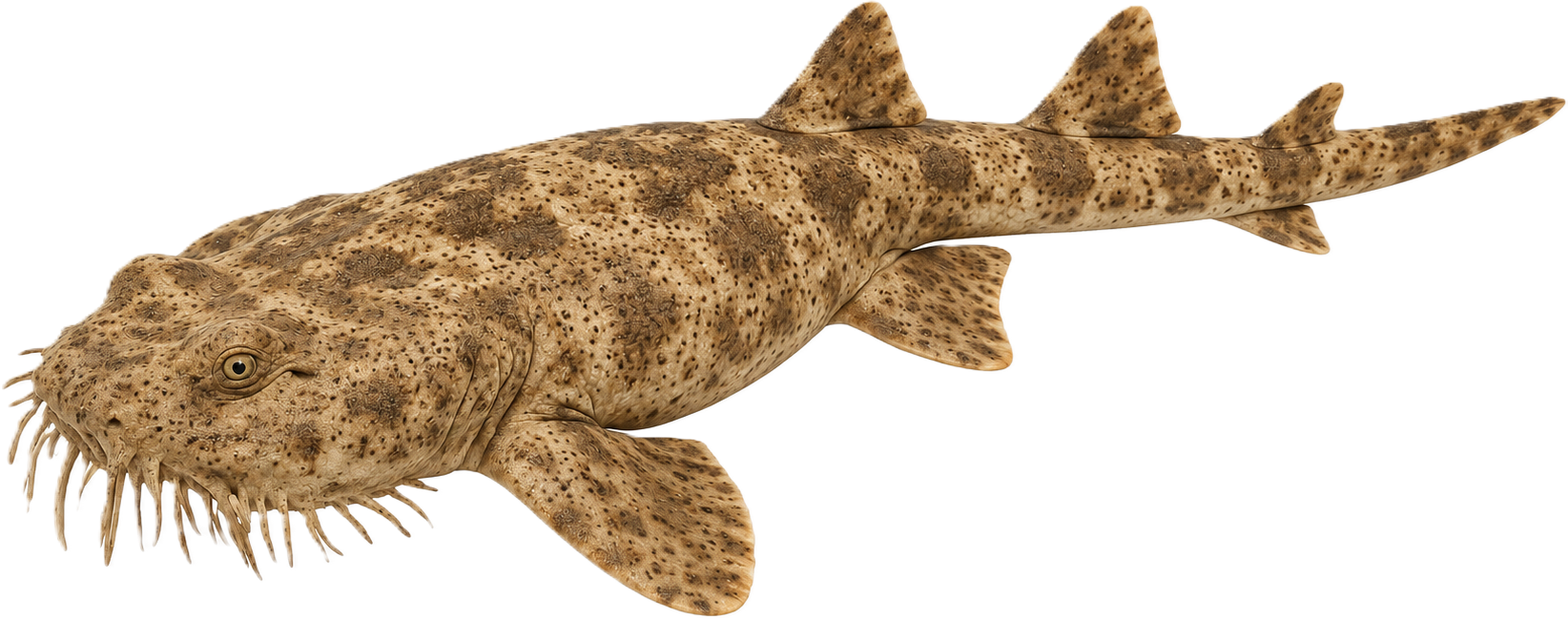 |
Restesia monocuspilatus521Wroblewski, A. F. (2026). Systematics and biostratigraphy of non-mammalian vertebrates across the K/Pg transition, southern Wyoming, USA. Journal of Paleontology, 100(1), 222–250. doi:10.1017/jpa.2025.10191 | Ferris Formation | Wyoming | 67–66 Ma | häufig | Teppichhai (Orectolobiformes) |
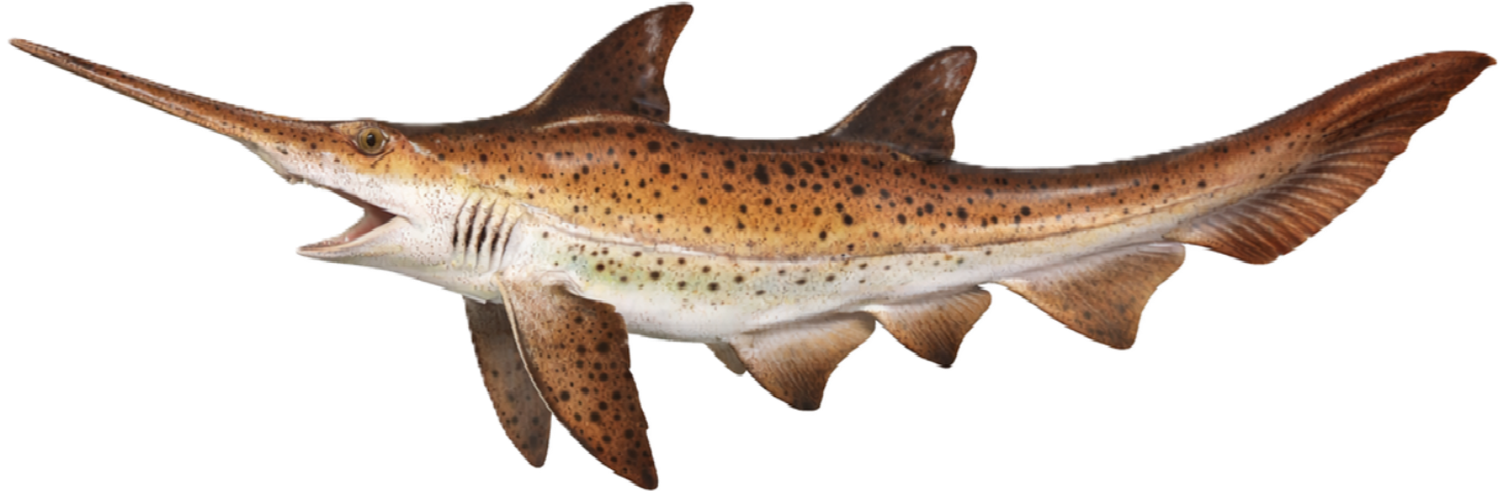 |
Scapanorhynchus sp.522Hoganson, J. W., Campbell, J. M. & Murphy, E. C. (1994). Stratigraphy and paleontology of the Cretaceous Hell Creek Formation, Stumpf site, Morton County, North Dakota. Proceedings of the North Dakota Academy of Sciences, 48. | Hell Creek Formation | North Dakota | 68–66 Ma | selten | Koboldhai (Mitsukurinidae); Bestimmung unsicher |
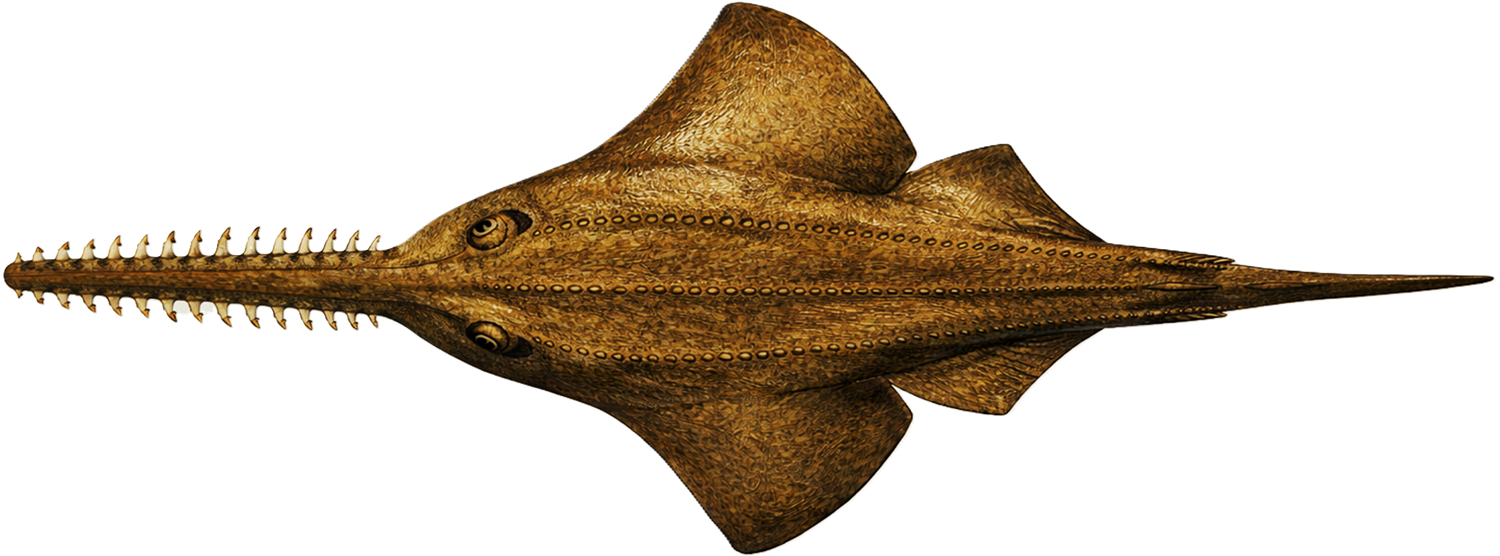 |
Texatrygon avonicola523Estes, R. (1964). Fossil vertebrates from the Late Cretaceous Lance Formation, eastern Wyoming. University of California Publications in Geological Sciences, 49, 1–180.524Carpenter, K. (1979). Vertebrate fauna of the Laramie Formation (Maastrichtian), Weld County, Colorado. Contributions to Geology, University of Wyoming, 17(1), 37–49. | Lance Formation, Laramie Formation |
Wyoming, Colorado | 68–66 Ma | häufig | Scheinsägerochen (Ptychotrygonidae) |
Kopffüßer:
| Bild: | Spezies: | Formation: | Fundort: | Alter: | Häufigkeit: | Bemerkungen: |
|---|---|---|---|---|---|---|
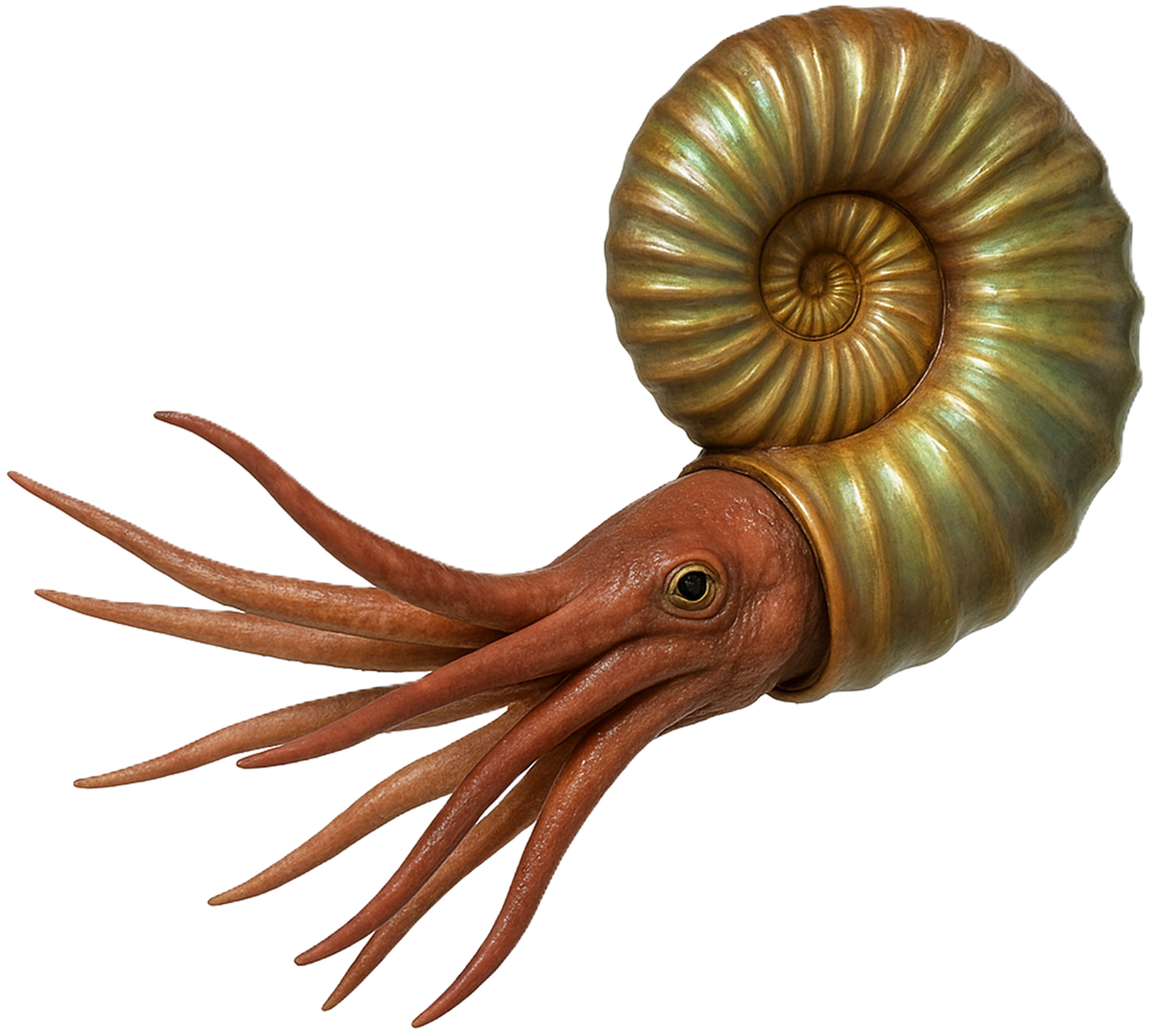 |
Discoscaphites rossi525Landman, N. H. & Waage, K. M. (1993). Scaphitid ammonites of the Upper Cretaceous (Maastrichtian) Fox Hills Formation in South Dakota and Wyoming. Bulletin of the American Museum of Natural History, 215, 1–257. | Hell Creek Formation | South Dakota | 68–66 Ma | selten | Ammonit (Scaphitidae) |
 |
Jeletzkytes nebrascensis526Hoganson, J. W. & Murphy, E. C. (2002). Marine Breien Member (Maastrichtian) of the Hell Creek Formation in North Dakota: Stratigraphy, vertebrate fossil record, and age. In J. H. Hartman, K. R. Johnson & D. J. Nichols (Hrsg.), The Hell Creek Formation and the Cretaceous-Tertiary boundary in the northern Great Plains: An integrated continental record of the end of the Cretaceous. Geological Society of America Special Paper, 361, 247–269. doi:10.1130/0-8137-2361-2.247 | Hell Creek Formation | North Dakota | ca. 68 Ma | häufig | Ammonit (Scaphitidae); synonym zu Scaphites (Discoscaphites) cheyennensis |
 |
Scaphitidae indet.527Daeschler, E. & Fiorillo, A. R. (1989). Rediscovery of fossil material at the Academy of Natural Sciences of Philadelphia from Edward Drinker Cope’s 1893 expedition to the Dakotas. The Mosasaur, 4, 143–148. | Hell Creek Formation | South Dakota | 68–66 Ma | häufig | Ammonit (Scaphitidae) |
 |
Sphenodiscus lenticularis528Landman, N. H. & Waage, K. M. (1993). Scaphitid ammonites of the Upper Cretaceous (Maastrichtian) Fox Hills Formation in South Dakota and Wyoming. Bulletin of the American Museum of Natural History, 215, 1–257. | Hell Creek Formation | South Dakota | 68–66 Ma | häufig | Ammonit (Sphenodiscidae) |

Schnecken:
| Bild: | Spezies: | Formation: | Fundort: | Alter: | Häufigkeit: | Bemerkungen: |
|---|---|---|---|---|---|---|
 |
„New Genus A“529Roth, B. & Hartman, J. H. (1998). A probable Cerion (Gastropoda: Pulmonata) from the uppermost Cretaceous Hell Creek Formation, Garfield County, Montana. PaleoBios, 18(2–3), 16–20. | Hell Creek Formation | Montana | 68–66 Ma | selten | Nicht formell benannte Süßwasserschnecke; historisch der Gattung Bulimus zugeordnet |
 |
Campeloma acroterion530Hartman, J. H. (2015). New viviparid gastropods from the end Cretaceous and early Paleogene of the Williston Basin, USA and Canada. The Nautilus, 129(1), 1–22. | Hell Creek Formation | North Dakota | 68–66 Ma | selten | Süßwasserschnecke (Viviparidae) |
 |
Campeloma amarillensis531Yen, T.-C. (1954). Nonmarine mollusks of Late Cretaceous age from Wyoming, Utah, and Colorado. U.S. Geological Survey Professional Paper, 254-B. doi:10.3133/pp254B | Lance Formation, Laramie Formation |
Colorado; Wyoming | 68–66 Ma | selten | Süßwasserschnecke (Viviparidae) |
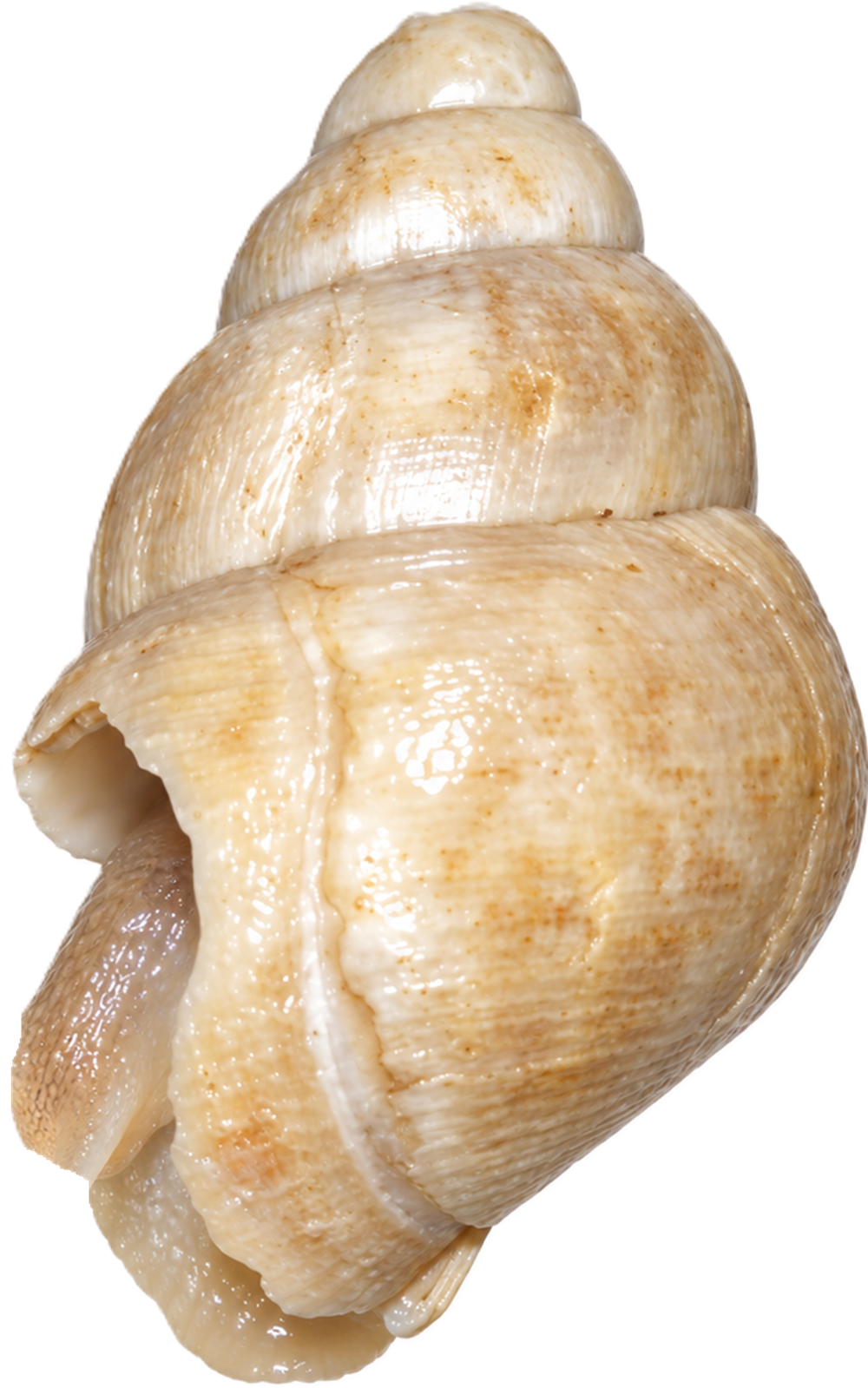 |
Campeloma nebrascensis532Cretaceous Atlas of Ancient Life. Campeloma nebrascensis. | Hell Creek Formation, Lance Formation |
Montana; Wyoming | 68–66 Ma | selten | Süßwasserschnecke (Viviparidae) |
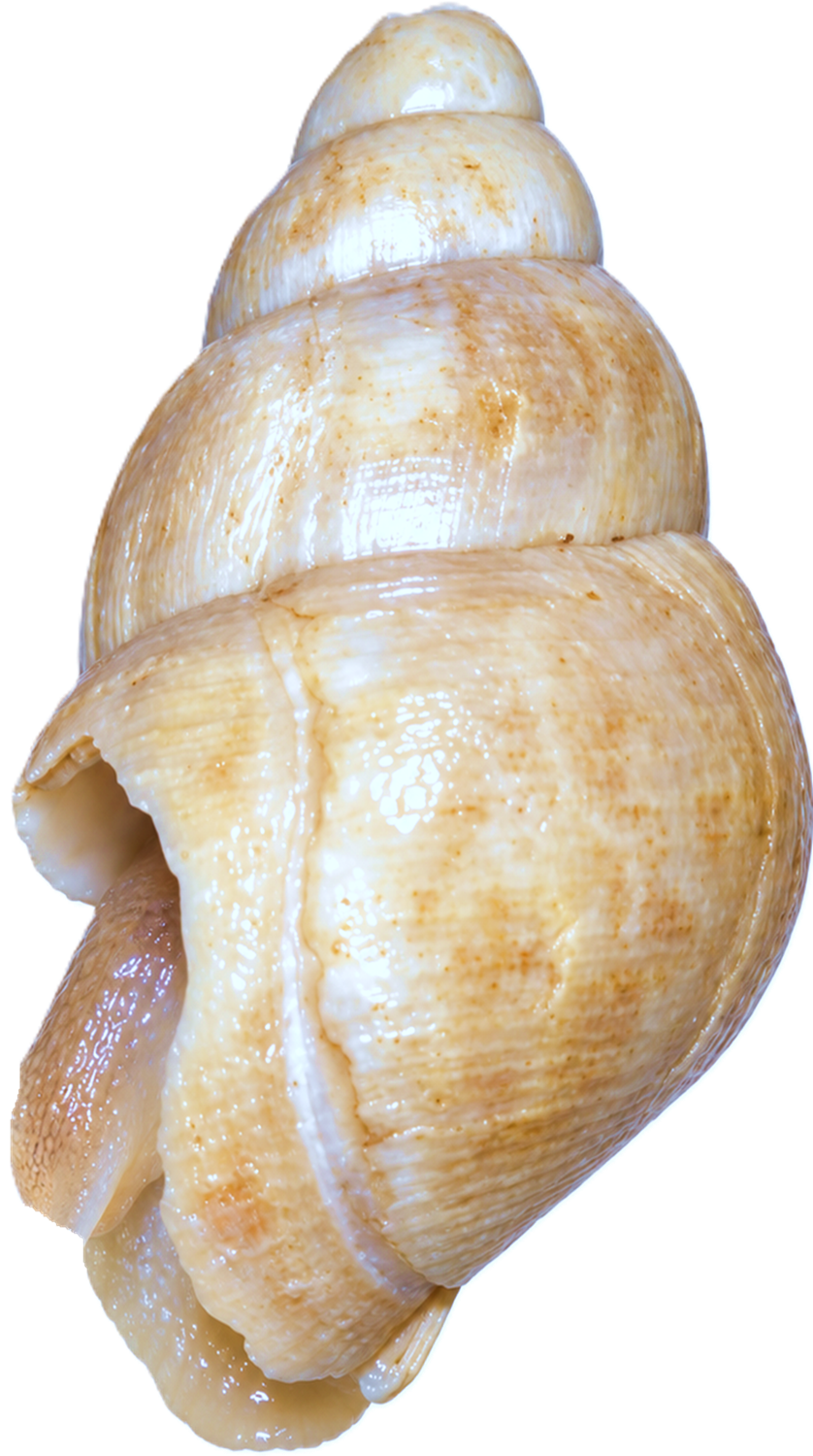 |
Campeloma sp.533Stanton, T. W. (1909). The age and stratigraphic relationships of the “Ceratops beds” of Wyoming and Montana. Proceedings of the Washington Academy of Sciences, 11(3), 239–293.534Hoganson, J. W., Campbell, J. M. & Murphy, E. C. (1994). Stratigraphy and paleontology of the Cretaceous Hell Creek Formation, Stumpf site, Morton County, North Dakota. Proceedings of the North Dakota Academy of Sciences, 48, 95.535Gould, R., Larson, R. & Nellermoe, R. (2003). An allometric study comparing metatarsal II’s in Edmontosaurus from a low-diversity hadrosaur bone bed in Corson Co., S. D. Journal of Vertebrate Paleontology, 23(3, Suppl.), 56A.536Breithaupt, B. H. (1982). Paleontology and paleoecology of the Lance Formation (Maastrichtian), east flank of Rock Springs Uplift, Sweetwater County, Wyoming. Contributions to Geology, University of Wyoming, 21(2), 123–151. | Hell Creek Formation, Lance Formation |
Montana; South Dakota; Wyoming | 68–66 Ma | selten | Süßwasserschnecke (Viviparidae) |
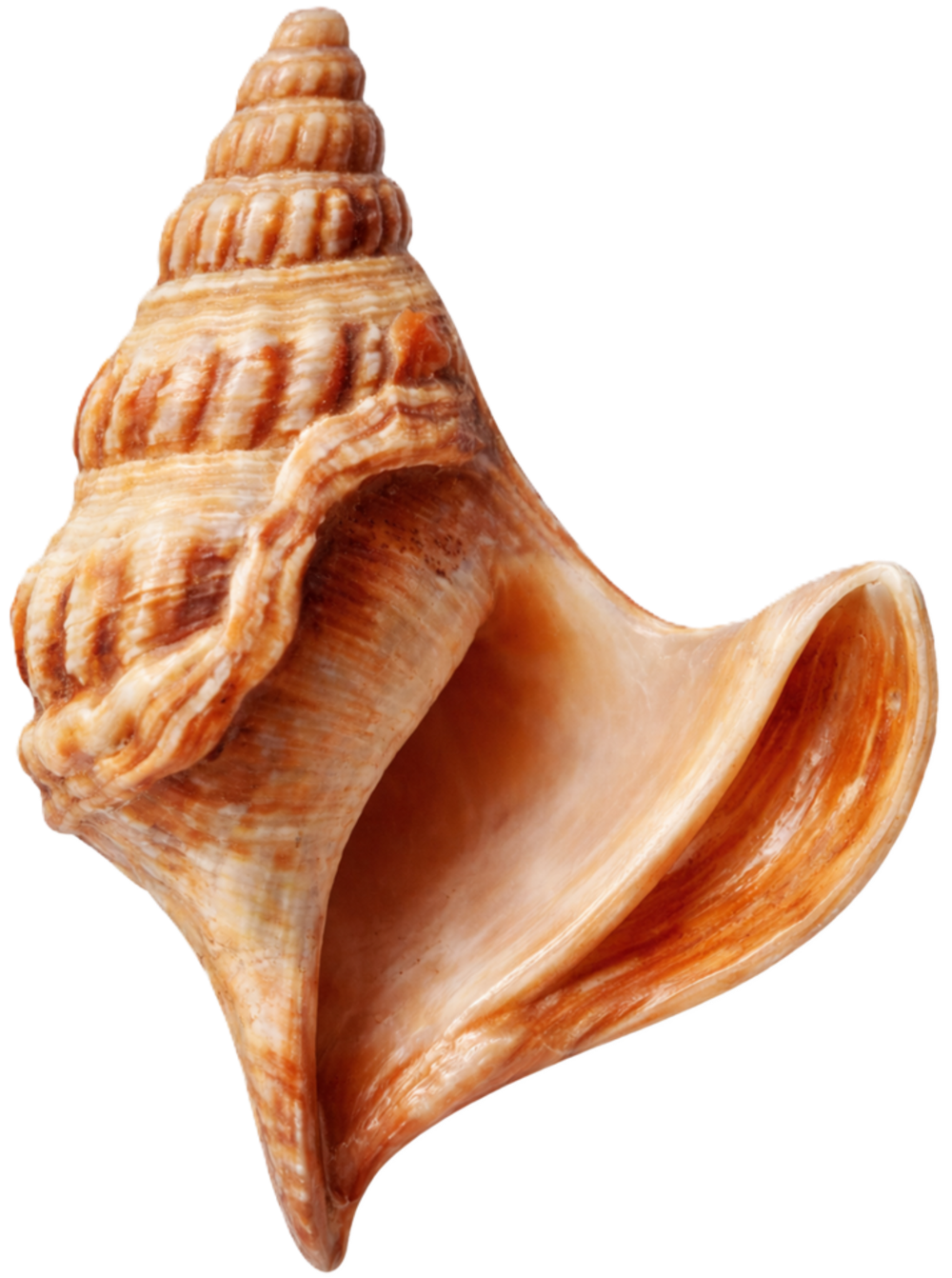 |
Drepanochilus sp.537Erickson, J. M. (1992). Subsurface stratigraphy, lithofacies and paleoenvironments of the Fox Hills Formation (Maastrichtian: Late Cretaceous) adjacent to the type area, North Dakota and South Dakota. In Erickson, J. M. & Hoganson, J. W. (Hrsg.), Proceedings of the F. D. Holland, Jr., Geological Symposium, North Dakota Geological Survey Miscellaneous Series, 76. | Hell Creek Formation | North Dakota | 68–66 Ma | selten | Marine Schnecke (Aporrhaidae); Bestimmung unsicher |
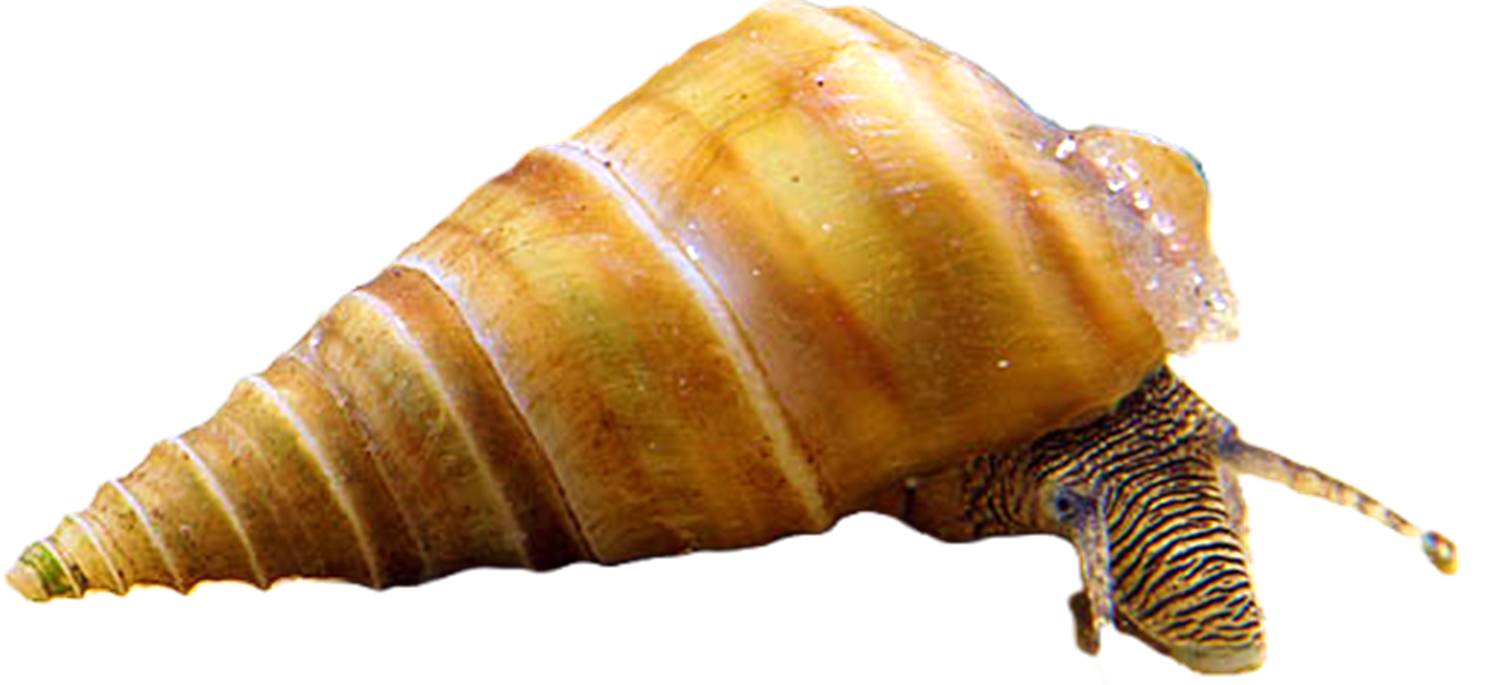 |
Goniobasis sp.538Stanton, T. W. (1909). The age and stratigraphic relationships of the “Ceratops beds” of Wyoming and Montana. Proceedings of the Washington Academy of Sciences, 11(3), 239–293. | Hell Creek Formation | Montana | 68–66 Ma | selten | Süßwasserschnecke (Pleuroceridae); Bestimmung unsicher |
 |
Goniobasis tricarinata539Emmons, S. F., Cross, W. & Eldridge, G. H. (1896). Geology of the Denver Basin in Colorado. U.S. Geological Survey Monograph, 27. | Denver Formation | Colorado | 66–64 Ma | selten | Süßwasserschnecke (Pleuroceridae) |
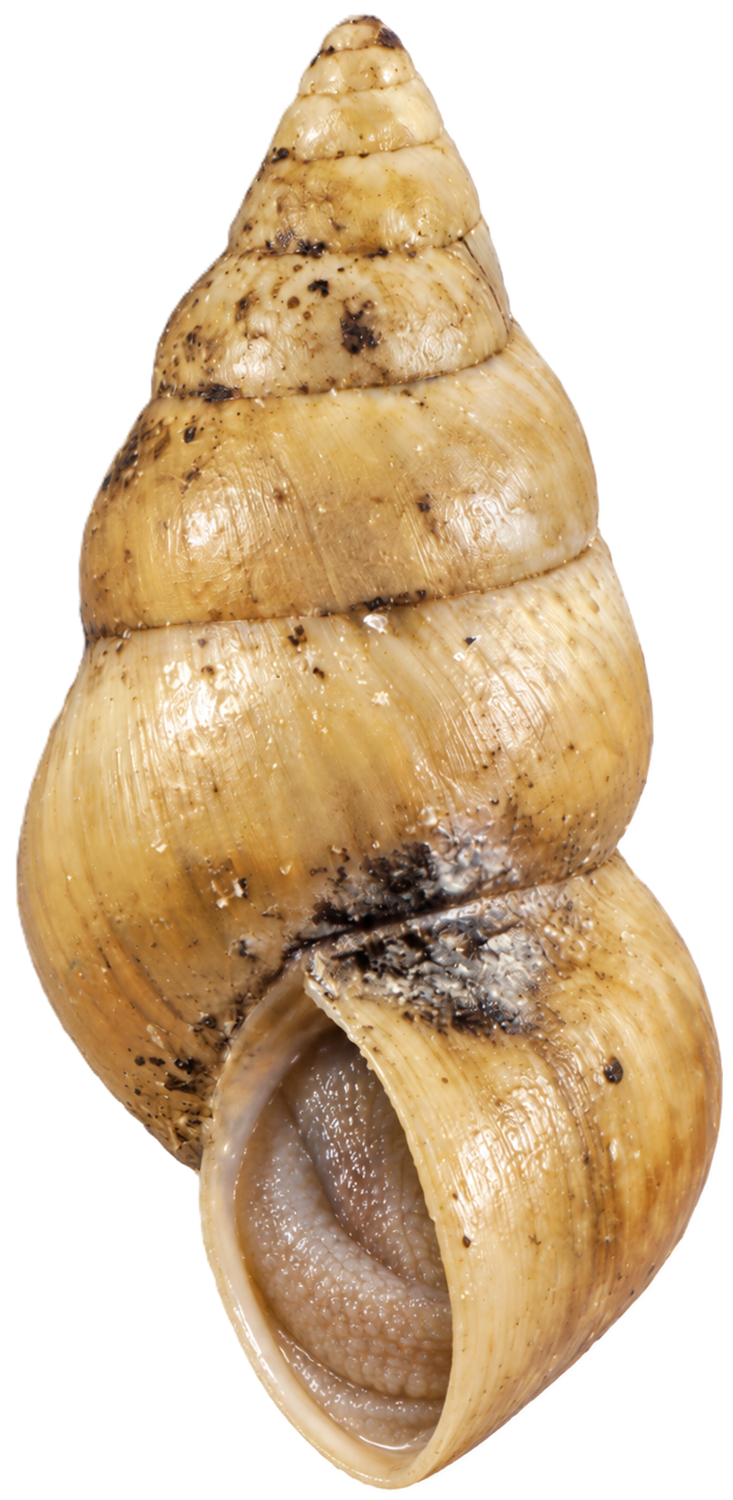 |
Hydrobia cf. anthonyi540Roth, B. & Hartman, J. H. (1998). A probable Cerion (Gastropoda: Pulmonata) from the uppermost Cretaceous Hell Creek Formation, Garfield County, Montana. PaleoBios, 18(2–3), 16–20. | Hell Creek Formation | Montana | 68–66 Ma | selten | Süß- oder Brackwasserschnecke (Hydrobiidae); Bestimmung unsicher |
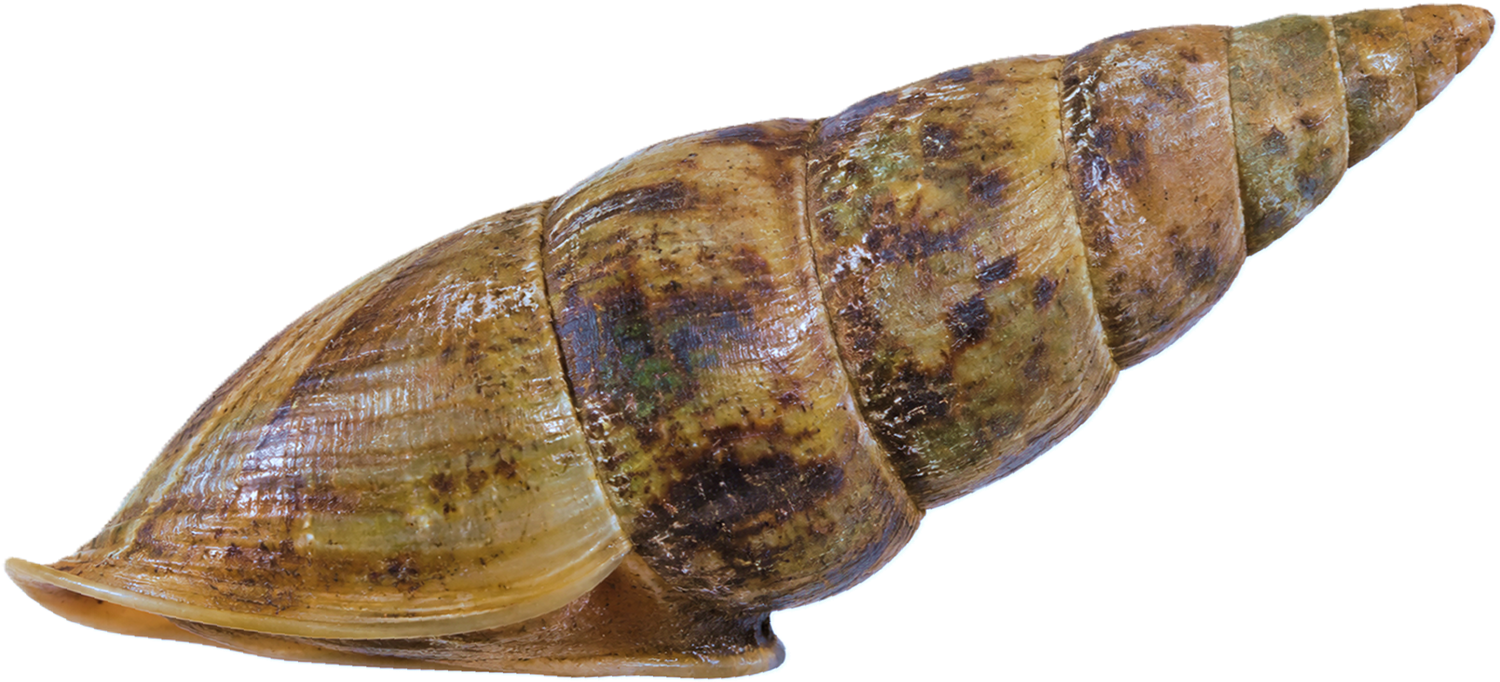 |
Lioplacodes sp.541Roth, B. & Hartman, J. H. (1998). A probable Cerion (Gastropoda: Pulmonata) from the uppermost Cretaceous Hell Creek Formation, Garfield County, Montana. PaleoBios, 18(2–3), 16–20. | Hell Creek Formation, Lance Formation |
North Dakota; South Dakota; Wyoming | 68–66 Ma | selten | Süßwasserschnecke (Viviparidae); Bestimmung unsicher |
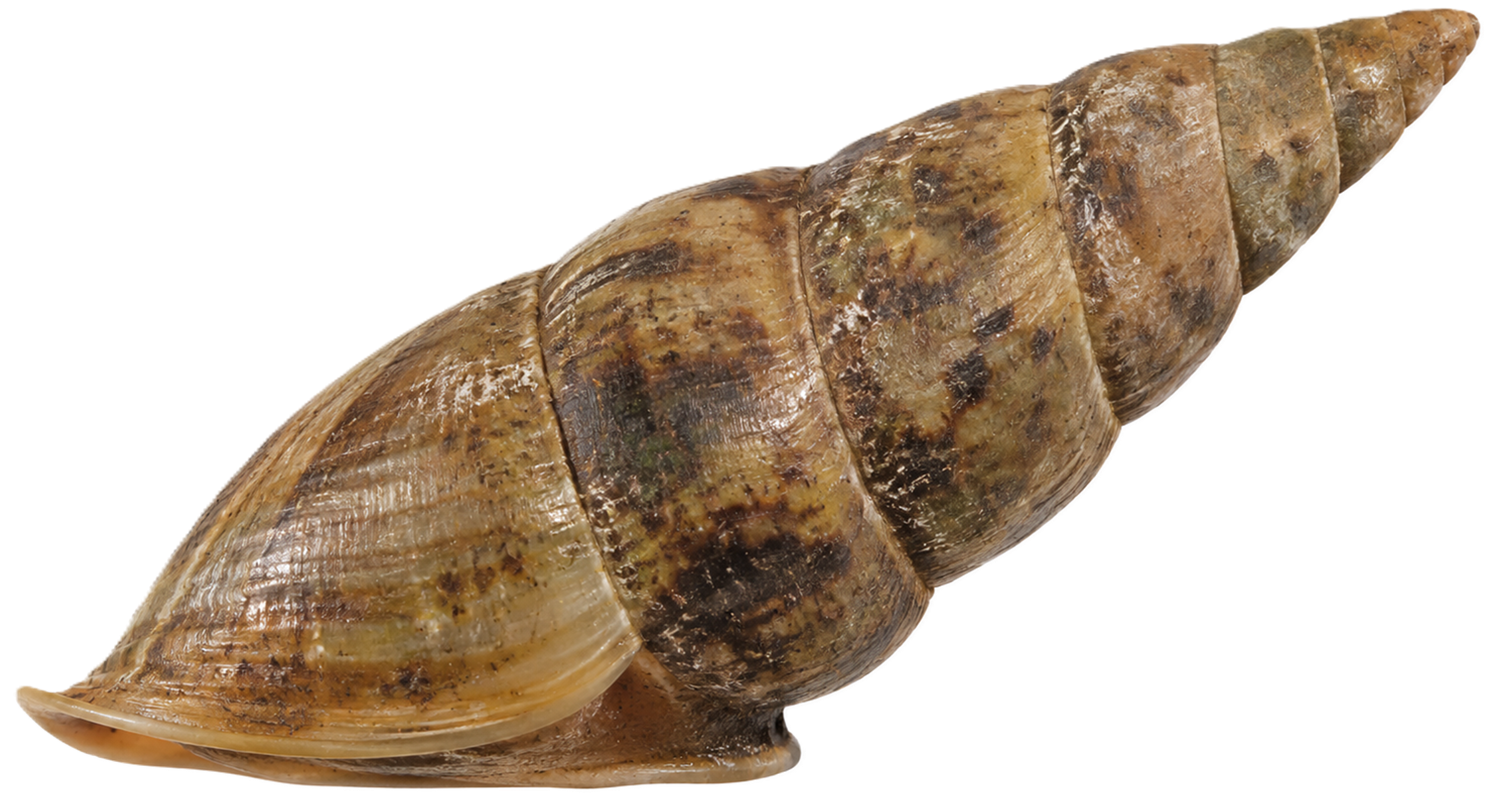 |
Lioplacodes tenuicarinata542Roth, B. & Hartman, J. H. (1998). A probable Cerion (Gastropoda: Pulmonata) from the uppermost Cretaceous Hell Creek Formation, Garfield County, Montana. PaleoBios, 18(2–3), 16–20. | Hell Creek Formation | Montana | 68–66 Ma | selten | Süßwasserschnecke (Viviparidae); synonym zu Goniobasis tenuicarinata |
 |
Neritina loganensis543Erickson, J. M. (1999). The Dakota Isthmus—Closing the Late Cretaceous Western Interior Seaway. In Hoganson, J. W. (Hrsg.), Proceedings of the F. D. Holland, Jr., Geological Symposium. | Hell Creek Formation | North Dakota | 68–66 Ma | selten | Kahnschnecke (Neritidae) |
 |
Pachymelania wyomingensis544Hartman, J. H. & Kirkland, J. I. (2002). Brackish and marine mollusks of the Hell Creek Formation of North Dakota: Evidence for a persisting Cretaceous seaway. Geological Society of America Special Paper, 361, 271–296. doi:10.1130/0-8137-2361-2.271 | Hell Creek Formation | North Dakota | 68–66 Ma | selten | Brackwasserschnecke (Hemisinidae); synonym zu Melania wyomingensis |
 |
Physa sp.545Emmons, S. F., Cross, W. & Eldridge, G. H. (1896). Geology of the Denver Basin in Colorado. U.S. Geological Survey Monograph, 27. | Hell Creek Formation, Lance Formation, Denver Formation |
Colorado; Montana; North Dakota; Wyoming | 68–66 Ma (HC/LC); 66–64 Ma (DE) | selten | Süßwasserschnecke (Physidae); Bestimmung unsicher |
 |
Protocerion acherontis546Roth, B. & Hartman, J. H. (1998). A probable Cerion (Gastropoda: Pulmonata) from the uppermost Cretaceous Hell Creek Formation, Garfield County, Montana. PaleoBios, 18(2–3), 16–20.547Harasewych, M. G. et al. (2015). On the phylogenetic relationships of the genus Mexistrophia and of the family Cerionidae (Gastropoda: Eupulmonata). The Nautilus, 129(4), 156–162. | Hell Creek Formation | Montana | ca. 67 Ma | Einzelfund | Landschnecke (Cerionidae); synonym zu Cerion acherontis |
 |
Reesidella sp.548Estes, R. (1964). Fossil vertebrates from the Late Cretaceous Lance Formation, eastern Wyoming. University of California Publications in Geological Sciences, 49, 1–187. | Lance Formation | Wyoming | 68–66 Ma | selten | Süßwasserschnecke (Amnicolidae) |
 |
Viviparus sp.549Emmons, S. F., Cross, W. & Eldridge, G. H. (1896). Geology of the Denver Basin in Colorado. U.S. Geological Survey Monograph, 27.550Roth, B. & Hartman, J. H. (1998). A probable Cerion (Gastropoda: Pulmonata) from the uppermost Cretaceous Hell Creek Formation, Garfield County, Montana. PaleoBios, 18(2–3), 16–20. | Hell Creek Formation, Lance Formation, Denver Formation |
South Dakota; Wyoming | 68–66 Ma | selten | Süßwasserschnecke (Viviparidae); Bestimmung unsicher |
 |
Viviparus thompsoni551Roth, B. & Hartman, J. H. (1998). A probable Cerion (Gastropoda: Pulmonata) from the uppermost Cretaceous Hell Creek Formation, Garfield County, Montana. PaleoBios, 18(2–3), 16–20. | Hell Creek Formation | Montana | 68–66 Ma | selten | Süßwasserschnecke (Viviparidae) |
 |
Viviparus trochiformis552Emmons, S. F., Cross, W. & Eldridge, G. H. (1896). Geology of the Denver Basin in Colorado. U.S. Geological Survey Monograph, 27. | Denver Formation | Colorado | 66–64 Ma | selten | Süßwasserschnecke (Viviparidae) |

Muscheln:
| Bild: | Spezies: | Formation: | Fundort: | Alter: | Häufigkeit: | Bemerkungen: |
|---|---|---|---|---|---|---|
 |
Anomia gryphorhyncha553Landman, N. H. & Waage, K. M. (1993). Scaphitid ammonites of the Upper Cretaceous (Maastrichtian) Fox Hills Formation in South Dakota and Wyoming. Bulletin of the American Museum of Natural History, 215, 1–257. | Hell Creek Formation | North Dakota, South Dakota | 68–66 Ma | selten | Sattelmuschel (Anomiidae) |
 |
Corbicula cf. subelliptica554Russell, L. S. (1976). Pelecypods of the Hell Creek Formation (Uppermost Cretaceous) of Garfield County, Montana. Canadian Journal of Earth Sciences, 13, 365–388. doi:10.1139/e76-039 | Hell Creek Formation | Montana | 68–66 Ma | selten | Körbchenmuschel (Corbiculidae) |
 |
Corbicula cytheriformis555Emmons, S. F., Cross, W. & Eldridge, G. H. (1896). Geology of the Denver Basin in Colorado. United States Geological Survey Monograph, 27, 1–556.556Lee, W. T. (1912). Coal fields of Grand Mesa and the West Elk Mountains, Colorado. United States Geological Survey Bulletin, 510, 1–237. | Denver Formation, Laramie Formation |
Colorado | 66–64 Ma | selten | Körbchenmuschel (Corbiculidae) |
 |
Corbicula sp.557Henderson, J. (1920). The Cretaceous formations of northeastern Colorado. Colorado Geological Survey Bulletin, 19, 1–83. | Laramie Formation | Colorado | 68–66 Ma | selten | Körbchenmuschel (Corbiculidae) |
 |
Corbiculidae indet.558Hartman, J. H. & Kirkland, J. I. (2002). Brackish and marine mollusks of the Hell Creek Formation of North Dakota: Evidence for a persisting Cretaceous seaway. In J. H. Hartman, K. R. Johnson & D. J. Nichols (Eds.), The Hell Creek Formation and the Cretaceous–Tertiary Boundary in the Northern Great Plains. Geological Society of America Special Paper, 361, 271–296. doi:10.1130/0-8137-2361-2.271 | Hell Creek Formation, Lance Formation |
South Dakota, Wyoming | 68–66 Ma | selten | Körbchenmuschel (Corbiculidae) |
 |
Crassostrea sp.559Hoganson, J. W., Campbell, J. M. & Murphy, E. C. (1994). Stratigraphy and paleontology of the Cretaceous Hell Creek Formation, Stumpf site, Morton County, North Dakota. Proceedings of the North Dakota Academy of Science, 48, 95. | Hell Creek Formation | North Dakota | 68–66 Ma | selten | Auster (Ostreidae) |
 |
Crassostrea subtrigonalis560Hartman, J. H. & Kirkland, J. I. (2002). Brackish and marine mollusks of the Hell Creek Formation of North Dakota: Evidence for a persisting Cretaceous seaway. In J. H. Hartman, K. R. Johnson & D. J. Nichols (Eds.), The Hell Creek Formation and the Cretaceous–Tertiary Boundary in the Northern Great Plains. Geological Society of America Special Paper, 361, 271–296. doi:10.1130/0-8137-2361-2.271 | Hell Creek Formation | South Dakota | 68–66 Ma | selten | Auster (Ostreidae) |
 |
Granocardium sp.561Hartman, J. H. & Kirkland, J. I. (2002). Brackish and marine mollusks of the Hell Creek Formation of North Dakota: Evidence for a persisting Cretaceous seaway. In J. H. Hartman, K. R. Johnson & D. J. Nichols (Eds.), The Hell Creek Formation and the Cretaceous–Tertiary Boundary in the Northern Great Plains. Geological Society of America Special Paper, 361, 271–296. doi:10.1130/0-8137-2361-2.271 | Hell Creek Formation | South Dakota | 68–66 Ma | selten | Herzmuschel (Cardiidae) |
 |
Hiatella sp. (?)562Hartman, J. H. & Kirkland, J. I. (2002). Brackish and marine mollusks of the Hell Creek Formation of North Dakota: Evidence for a persisting Cretaceous seaway. In J. H. Hartman, K. R. Johnson & D. J. Nichols (Eds.), The Hell Creek Formation and the Cretaceous–Tertiary Boundary in the Northern Great Plains. Geological Society of America Special Paper, 361, 271–296. doi:10.1130/0-8137-2361-2.271 | Hell Creek Formation | South Dakota | 68–66 Ma | selten | Felsenbohrer (Hiatellidae); Bestimmung unsicher |
 |
Inoceramus sp. (?)563Hoganson, J. W., Campbell, J. M. & Murphy, E. C. (1994). Stratigraphy and paleontology of the Cretaceous Hell Creek Formation, Stumpf site, Morton County, North Dakota. Proceedings of the North Dakota Academy of Science, 48, 95. | Hell Creek Formation | North Dakota | 68–66 Ma | selten | Inoceramidae; Bestimmung unsicher |
 |
Leptosolen sp.564Hartman, J. H. & Kirkland, J. I. (2002). Brackish and marine mollusks of the Hell Creek Formation of North Dakota: Evidence for a persisting Cretaceous seaway. In J. H. Hartman, K. R. Johnson & D. J. Nichols (Eds.), The Hell Creek Formation and the Cretaceous–Tertiary Boundary in the Northern Great Plains. Geological Society of America Special Paper, 361, 271–296. doi:10.1130/0-8137-2361-2.271 | Hell Creek Formation | South Dakota | 68–66 Ma | selten | Salzwassermuschel (Cultellidae) |
 |
Modiolus cf. galpinianus565Hoganson, J. W., Campbell, J. M. & Murphy, E. C. (1994). Stratigraphy and paleontology of the Cretaceous Hell Creek Formation, Stumpf site, Morton County, North Dakota. Proceedings of the North Dakota Academy of Science, 48, 95. | Hell Creek Formation | North Dakota | 68–66 Ma | selten | Miesmuschel (Mytilidae) |
 |
Obovaria pyramidella (?)566Russell, L. S. (1976). Pelecypods of the Hell Creek Formation (Uppermost Cretaceous) of Garfield County, Montana. Canadian Journal of Earth Sciences, 13, 365–388. doi:10.1139/e76-039 | Hell Creek Formation | Montana | 68–66 Ma | selten | Süßwassermuschel (Unionidae); Bestimmung unsicher |
 |
Ostreidae indet.567Cope, E. D. (1872). On the existence of Dinosauria in the transition beds of Wyoming. Proceedings of the American Philosophical Society, 12, 481–483. | Lance Formation | Wyoming | 68–66 Ma | selten | Auster (Ostreidae); Bestimmung unsicher |
 |
Pleiodon sp.568Russell, L. S. (1976). Pelecypods of the Hell Creek Formation (Uppermost Cretaceous) of Garfield County, Montana. Canadian Journal of Earth Sciences, 13, 365–388. doi:10.1139/e76-039 | Hell Creek Formation | Montana | 68–66 Ma | selten | Süßwassermuschel (Iridinidae), Bestimmung unsicher |
 |
Plesielliptio cf. brachyopisthus569Roth, B. & Hartman, J. H. (1998). A probable Cerion (Gastropoda: Pulmonata) from the uppermost Cretaceous Hell Creek Formation, Garfield County, Montana. PaleoBios, 18(2–3), 16–20. | Hell Creek Formation | Montana | 68–66 Ma | selten | Süßwassermuschel (Unionidae); Bestimmung unsicher |
 |
Plesielliptio postbiplicatus570Russell, L. S. (1976). Pelecypods of the Hell Creek Formation (Uppermost Cretaceous) of Garfield County, Montana. Canadian Journal of Earth Sciences, 13, 365–388. doi:10.1139/e76-039 | Hell Creek Formation | Montana, North Dakota | 68–66 Ma | Einzelfund | Süßwassermuschel (Unionidae) |
 |
Plesielliptio stantoni571Russell, L. S. (1976). Pelecypods of the Hell Creek Formation (Uppermost Cretaceous) of Garfield County, Montana. Canadian Journal of Earth Sciences, 13, 365–388. doi:10.1139/e76-039 | Hell Creek Formation | Montana | 68–66 Ma | selten | Süßwassermuschel (Unionidae), synonym zu Plesielliptio gibbosoides |
 |
Plesielliptio whitfieldi572Russell, L. S. (1976). Pelecypods of the Hell Creek Formation (Uppermost Cretaceous) of Garfield County, Montana. Canadian Journal of Earth Sciences, 13, 365–388. doi:10.1139/e76-039 | Hell Creek Formation | Montana | 68–66 Ma | selten | Süßwassermuschel (Unionidae) |
 |
Plethobasus aesopiformis573Russell, L. S. (1976). Pelecypods of the Hell Creek Formation (Uppermost Cretaceous) of Garfield County, Montana. Canadian Journal of Earth Sciences, 13, 365–388. doi:10.1139/e76-039 | Hell Creek Formation | Montana | 68–66 Ma | selten | Süßwassermuschel (Unionidae) |
 |
Plethobasus biesopoides574Russell, L. S. (1976). Pelecypods of the Hell Creek Formation (Uppermost Cretaceous) of Garfield County, Montana. Canadian Journal of Earth Sciences, 13, 365–388. doi:10.1139/e76-039 | Hell Creek Formation | Montana | 68–66 Ma | selten | Süßwassermuschel (Unionidae) |
 |
Pleurobema cryptorhynchus575Russell, L. S. (1976). Pelecypods of the Hell Creek Formation (Uppermost Cretaceous) of Garfield County, Montana. Canadian Journal of Earth Sciences, 13, 365–388. doi:10.1139/e76-039 | Hell Creek Formation | Montana | 68–66 Ma | selten | Süßwassermuschel (Unionidae) |
 |
Proparreysia barnumi576Russell, L. S. (1976). Pelecypods of the Hell Creek Formation (Uppermost Cretaceous) of Garfield County, Montana. Canadian Journal of Earth Sciences, 13, 365–388. doi:10.1139/e76-039 | Hell Creek Formation | Montana | 68–66 Ma | selten | Süßwassermuschel (Unionidae) |
 |
Proparreysia corbiculoides577Russell, L. S. (1976). Pelecypods of the Hell Creek Formation (Uppermost Cretaceous) of Garfield County, Montana. Canadian Journal of Earth Sciences, 13, 365–388. doi:10.1139/e76-039 | Hell Creek Formation | Montana | 68–66 Ma | selten | Süßwassermuschel (Unionidae) |
 |
Proparreysia holmesiana578Russell, L. S. (1976). Pelecypods of the Hell Creek Formation (Uppermost Cretaceous) of Garfield County, Montana. Canadian Journal of Earth Sciences, 13, 365–388. doi:10.1139/e76-039 | Hell Creek Formation | Montana | 68–66 Ma | selten | Süßwassermuschel (Unionidae) |
 |
Proparreysia letsoni579Russell, L. S. (1976). Pelecypods of the Hell Creek Formation (Uppermost Cretaceous) of Garfield County, Montana. Canadian Journal of Earth Sciences, 13, 365–388. doi:10.1139/e76-039 | Hell Creek Formation | Montana | 68–66 Ma | selten | Süßwassermuschel (Unionidae) |
 |
Proparreysia paucinodosa580Russell, L. S. (1976). Pelecypods of the Hell Creek Formation (Uppermost Cretaceous) of Garfield County, Montana. Canadian Journal of Earth Sciences, 13, 365–388. doi:10.1139/e76-039 | Hell Creek Formation | Montana | 68–66 Ma | selten | Süßwassermuschel (Unionidae) |
 |
Proparreysia percorrugata581Russell, L. S. (1976). Pelecypods of the Hell Creek Formation (Uppermost Cretaceous) of Garfield County, Montana. Canadian Journal of Earth Sciences, 13, 365–388. doi:10.1139/e76-039 | Hell Creek Formation | Montana | 68–66 Ma | selten | Süßwassermuschel (Unionidae) |
 |
Proparreysia pyramidatoides582Russell, L. S. (1976). Pelecypods of the Hell Creek Formation (Uppermost Cretaceous) of Garfield County, Montana. Canadian Journal of Earth Sciences, 13, 365–388. doi:10.1139/e76-039 | Hell Creek Formation | Montana | 68–66 Ma | selten | Süßwassermuschel (Unionidae) |
 |
Proparreysia retusoides583Russell, L. S. (1976). Pelecypods of the Hell Creek Formation (Uppermost Cretaceous) of Garfield County, Montana. Canadian Journal of Earth Sciences, 13, 365–388. doi:10.1139/e76-039 | Hell Creek Formation | Montana | 68–66 Ma | selten | Süßwassermuschel (Unionidae) |
 |
Proparreysia verrucosiformis584Russell, L. S. (1976). Pelecypods of the Hell Creek Formation (Uppermost Cretaceous) of Garfield County, Montana. Canadian Journal of Earth Sciences, 13, 365–388. doi:10.1139/e76-039 | Hell Creek Formation | Montana | 68–66 Ma | selten | Süßwassermuschel (Unionidae) |
 |
Quadrula cylindricoides585Russell, L. S. (1976). Pelecypods of the Hell Creek Formation (Uppermost Cretaceous) of Garfield County, Montana. Canadian Journal of Earth Sciences, 13, 365–388. doi:10.1139/e76-039 | Hell Creek Formation | Montana | 68–66 Ma | selten | Süßwassermuschel (Unionidae) |
 |
Rhabdotophorus aldrichi586Russell, L. S. (1976). Pelecypods of the Hell Creek Formation (Uppermost Cretaceous) of Garfield County, Montana. Canadian Journal of Earth Sciences, 13, 365–388. doi:10.1139/e76-039 | Hell Creek Formation | Montana | 68–66 Ma | selten | Süßwassermuschel (Unionidae) |
 |
Sphaerium beckmani587Russell, L. S. (1976). Pelecypods of the Hell Creek Formation (Uppermost Cretaceous) of Garfield County, Montana. Canadian Journal of Earth Sciences, 13, 365–388. doi:10.1139/e76-039 | Hell Creek Formation | Montana | 68–66 Ma | selten | Süßwassermuschel (Sphaeriidae) |
 |
Sphaerium cf. subellipticum588Roth, B. & Hartman, J. H. (1998). A probable Cerion (Gastropoda: Pulmonata) from the uppermost Cretaceous Hell Creek Formation, Garfield County, Montana. PaleoBios, 18(2–3), 16–20. | Hell Creek Formation | Montana | 68–66 Ma | selten | Süßwassermuschel (Sphaeriidae); Bestimmung unsicher |
 |
Sphaerium sp.589Stanton, T. W. (1909). The age and stratigraphic relationships of the “Ceratops beds” of Wyoming and Montana. Proceedings of the Washington Academy of Sciences, 11(3), 239–293.590Breithaupt, B. H. (1982). Paleontology and paleoecology of the Lance Formation, east flank of Rock Springs Uplift, southwestern Wyoming. Contributions to Geology, 21(2), 123–151. | Hell Creek Formation, Lance Formation |
Montana, North Dakota, South Dakota, Wyoming | 68–66 Ma | selten | Süßwassermuschel (Sphaeriidae); Bestimmung unsicher |
 |
cf. Strophitus sp.591Roth, B. & Hartman, J. H. (1998). A probable Cerion (Gastropoda: Pulmonata) from the uppermost Cretaceous Hell Creek Formation, Garfield County, Montana. PaleoBios, 18(2–3), 16–20. | Hell Creek Formation | Montana | 68–66 Ma | selten | Süßwassermuschel (Unionidae); Bestimmung unsicher |
 |
Unio sp.592Emmons, S. F., Cross, W. & Eldridge, G. H. (1896). Geology of the Denver Basin in Colorado. United States Geological Survey Monograph, 27, 1–556. | Laramie Formation | Colorado | 68–66 Ma | selten | Süßwassermuschel (Unionidae); Bestimmung unsicher |
 |
Unionidae indet.593Hoganson, J. W., Campbell, J. M. & Murphy, E. C. (1994). Stratigraphy and paleontology of the Cretaceous Hell Creek Formation, Stumpf site, Morton County, North Dakota. Proceedings of the North Dakota Academy of Science, 48, 95.594Breithaupt, B. H. (1982). Paleontology and paleoecology of the Lance Formation, east flank of Rock Springs Uplift, southwestern Wyoming. Contributions to Geology, 21(2), 123–151. | Hell Creek Formation, Lance Formation |
Montana, North Dakota, South Dakota, Wyoming | 68–66 Ma | selten | Süßwassermuschel (Unionidae); Bestimmung unsicher |

Gliederfüßer:
| Bild: | Spezies: | Formation: | Fundort: | Alter: | Häufigkeit: | Bemerkungen: |
|---|---|---|---|---|---|---|
 |
Aeschnidiidae indet.595Nel, A. (2021). Maastrichtian representatives of the dragonfly family Aeschnidiidae question the entomofaunal turnover of the early Late Cretaceous. Palaeoentomology, 4, 209–215. doi:10.11646/palaeoentomology.4.3.5 | Hell Creek Formation | North Dakota | 68–66 Ma | selten | Libelle (Aeschnidiidae) |
 |
Brachycera indet.596DePalma, R. et al. (2010). Preliminary notes on the first recorded amber insects from the Hell Creek Formation. The Journal of Paleontological Sciences, C.10.0001, 1–7. | Hell Creek Formation | South Dakota | 66 Ma | selten | Fliege (Brachycera) |
 |
Cephaloleichnites strongi597Wilf, P. et al. (2000). Timing the radiations of leaf beetles: Hispines on gingers from latest Cretaceous to Recent. Science, 289, 291–294. doi:10.1126/science.289.5477.291 | Hell Creek Formation | North Dakota | 68–66 Ma | selten | Fraßspur eines Käfers auf Ingwerblatt |
 |
Corydalites fecundum598Scudder, S. H. (1878). An account of some insects of unusual interest from the Tertiary rocks of Colorado and Wyoming. Bulletin of the United States Geological and Geographical Survey of the Territories, 4, 519–543. | Laramie Formation | Colorado | 68–66 Ma | selten | Fossiles Eigelege eines Insekts; vielleicht von einem Großflügler (Megaloptera) |
 |
Diptera indet.599DePalma, R. et al. (2010). Preliminary notes on the first recorded amber insects from the Hell Creek Formation. The Journal of Paleontological Sciences, C.10.0001, 1–7. | Hell Creek Formation | South Dakota | 66 Ma | selten | Zweiflügler (Diptera) |
 |
Hemiphlebiidae indet. (?)600Nel, A., Arillo, A., Azar, D. & Garrouste, R. (2010). A possible hemiphlebiid damselfly in Late Cretaceous amber from South Dakota (Odonata: Zygoptera). Transactions of the Kansas Academy of Science, 113(3–4), 231–234. doi:10.1660/062.113.0311 | Hell Creek Formation | South Dakota | 66 Ma | selten | Damselfliege (Hemiphlebiidae) |
 |
Nematocera indet.601DePalma, R. et al. (2010). Preliminary notes on the first recorded amber insects from the Hell Creek Formation. The Journal of Paleontological Sciences, C.10.0001, 1–7. | Hell Creek Formation | South Dakota | 66 Ma | selten | Mücke (Nematocera) |
Die unbestimmten Brachycera, Nematocera und Diptera sowie der mögliche Vertreter der Hemiphlebiidae sind aus Bernsteineinschlüssen der oberen Hell Creek Formation in South Dakota bekannt. In etwa 400 Gramm Bernstein wurden insgesamt 22 vollständige oder fragmentarische Insekten entdeckt, die mindestens elf unterschiedliche Morphotypen repräsentieren.602DePalma, R. et al. (2010). Preliminary notes on the first recorded amber insects from the Hell Creek Formation. The Journal of Paleontological Sciences, C.10.0001, 1–7. Aus der bereits paläozänen Fort Union Formation in Montana stammen außerdem Fraßspuren eines bislang unbestimmten Vertreters der Gracillariidae (Miniermotten). Da diese Tiergruppe auch schon im Mesozoikum vorkam, ist es sehr wahrscheinlich, dass sie auch bereits an den Gestaden des kreidezeitlichen Binnenmeers lebte und bislang bloß noch nicht nachgewiesen ist.
Korallen:
| Bild: | Spezies: | Formation: | Fundort: | Alter: | Häufigkeit: | Bemerkungen: |
|---|---|---|---|---|---|---|
 |
Bathycyathus lloydi603Vaughan, T. W. (1920). Corals from the Cannonball marine member of the Lance Formation. Professional Paper, U.S. Geological Survey, 128, 61–66.604Baron-Szabo, R. C. & Leloux, J. (2024). Distribution and palaeoecology of scleractinian corals during the Maastrichtian (Late Cretaceous). Netherlands Journal of Geosciences, 103, e14. doi:10.1017/njg.2024.7 | Lance Formation | North Dakota | 66 Ma | selten | Steinkoralle (Caryophylliidae); synonym zu Paracyathus lloydi, Paracyathus thomi und Paracyathus kayserensis |
 |
Palaeopsammia zitteli605Vaughan, T. W. (1920). Corals from the Cannonball marine member of the Lance Formation. Professional Paper, U.S. Geological Survey, 128, 61–66.606Baron-Szabo, R. C. & Leloux, J. (2024). Distribution and palaeoecology of scleractinian corals during the Maastrichtian (Late Cretaceous). Netherlands Journal of Geosciences, 103, e14. doi:10.1017/njg.2024.7 | Lance Formation | North Dakota | 66 Ma | selten | Hartkoralle (Dendrophylliidae); synonym zu Steriphonotrochus leithensis |
 |
Trochocyathus mitratus607Vaughan, T. W. (1920). Corals from the Cannonball marine member of the Lance Formation. Professional Paper, U.S. Geological Survey, 128, 61–66.608Baron-Szabo, R. C. & Leloux, J. (2024). Distribution and palaeoecology of scleractinian corals during the Maastrichtian (Late Cretaceous). Netherlands Journal of Geosciences, 103, e14. doi:10.1017/njg.2024.7 | Lance Formation | North Dakota | 66 Ma | selten | Steinkoralle (Caryophylliidae); synonym zu Trochocyathus dakotaensis und Trochocyathus neumani |

Fossilbericht der Pilze, Pollen und Pflanzen |
 Kirk R. Johnson Kirk R. Johnson |
Die meisten der hier behandelten Pflanzenfossilien stammen von der Typlokalität der Hell Creek Formation im Tal des Hell Creek nahe Jordan im Garfield County im Osten Montanas, genauer im Gebiet südlich des heutigen Fort Peck-Reservoirs. Zu ihnen hat Kirk R. Johnson die bislang umfangreichste paläobotanische Arbeit vorgelegt. Johnson teilte die Formation in mehrere Altersabschnitte, sogenannte Flora-Zonen ein. In dem mehr als zwei Millionen Jahre umfassenden Ablagerungszeitraum haben sich Landschaft und Pflanzenwelt mehrfach verändert. Die Kürzel HCIa bis HCIII bezeichnen aufeinanderfolgende Flora-Zonen innerhalb der Hell Creek Formation.609Johnson, K. R. (2002). Megaflora of the Hell Creek and lower Fort Union Formations in the western Dakotas – vegetational response to climate change, the Cretaceous–Tertiary boundary event, and rapid marine transgression. In The Hell Creek Formation and the Cretaceous–Tertiary boundary in the northern Great Plains – An integrated continental record of the end of the Cretaceous. doi:10.1130/0-8137-2361-2.329 |
In den folgenden Tabellen ist bei jeder Pflanze eben jene Flora-Zone grün markiert, in der die betreffende Art nach den ausgewerteten Fundzahlen von Johnson am häufigsten war. Wo lediglich das Vorkommen in mehreren Zonen, aber kein belastbares Häufigkeitsmaximum dokumentiert ist, habe ich keine Markierung vorgenommen. Johnson erfasste insgesamt mehr als 300 Pflanzenmorphen, allein 278 Morphotypen von Angiospermen aus der Hell Creek Formation der Fort Peck-Lokalität.610Johnson, K. R. (2002). Megaflora of the Hell Creek and lower Fort Union Formations in the western Dakotas – vegetational response to climate change, the Cretaceous–Tertiary boundary event, and rapid marine transgression. In The Hell Creek Formation and the Cretaceous–Tertiary boundary in the northern Great Plains – An integrated continental record of the end of the Cretaceous. doi:10.1130/0-8137-2361-2.329 Die meisten konnten aber nicht näher bestimmt werden, besitzen lediglich Arbeitsnummern und keine wissenschaftlich publizierten Namen. Daher tauchen sie hier nicht in der Tabelle auf. Dennoch war die Pflanzenwelt zu jener Zeit noch deutlich vielfältiger als es hier in den folgenden Tabellen den Anschein hat! Ein zwar weniger umfangreicher, aber ebenfalls interessanter Fundbericht existiert auch zur Brownie Butte-Lokalität, ebenfalls in Montana. Aus der Lance Formation in Wyoming ist ebenfalls eine umfangreiche fossile Flora bekannt. Die historischen Bestimmungen der dort gefundenen Farne lassen sich jedoch noch nicht zuverlässig mit der modernen Systematik in Einklang bringen. Aus der Ferris Formation sind Pflanzenreste und Palynomorphen überliefert. Aus der Cimarron Ridge Formation liegt gegenwärtig kein sicher benanntes Pflanzenfossil vor, dort findet sich aber wiederum Kohle, was auf eine dichte Bewaldung oder Gebiete hinweist, in denen sich Torf bildete.
Bei mehreren älteren, allein anhand der Blattmorphologie aufgestellten Namen ist die Zuordnung zu einer heutigen Gattung oder Familie unsicher. Diese Fälle sind in der Tabelle durch ein Fragezeichen gekennzeichnet. Einige der hier aufgeführten Pflanzen stammen aus den Flora-Zonen FU0 und FUI und gehören damit bereits zur paläozänen Fort Union Formation, andere auch aus der ebenfalls paläozänen D1-Sequenz der Denver Formation. Sie wurden hier zur Veranschaulichung des tiefgreifenden Florenwandels nach dem Meteoriteneinschlag aber mitgeführt. Eine Kennzeichnung „Hell Creek Formation (?)“ bedeutet somit, dass keine gesicherte Herkunft aus kreidezeitlichen Hell Creek-Schichten direkt belegt ist, sondern weist lediglich auf ein mögliches, bislang nicht nachgewiesenes Vorkommen unmittelbar vor der K–Pg-Grenze hin. Nach dem Meteoriteneinschlag veränderte sich die Pflanzenwelt massiv. Zahlreiche kreidezeitliche Pflanzen verschwanden, während Farne unmittelbar nach dem Massenaussterben besonders stark zunahmen. Dieser sogenannte Farn-Spike zeigt die vorübergehende Ausbreitung von Farnen in den gestörten Landschaften an. Anschließend entwickelten sich neue paläozäne Pflanzengesellschaften.
Lebermoose:
| Bild: | Spezies: | Formation: | Fundort: | Alter: | Häufigkeit: | Bemerkungen: |
|---|---|---|---|---|---|---|
 |
Marchantia pealii611Johnson, K. R. (2002). Megaflora of the Hell Creek and lower Fort Union Formations in the western Dakotas – vegetational response to climate change, the Cretaceous–Tertiary boundary event, and rapid marine transgression. In The Hell Creek Formation and the Cretaceous–Tertiary boundary in the northern Great Plains – An integrated continental record of the end of the Cretaceous, 329–391. doi:10.1130/0-8137-2361-2.329 | Hell Creek Formation (HCIa, HCIIa), Fort Union Formation (FUI) | North Dakota, South Dakota | ca. 68–65 Ma | häufig | Lebermoos (Marchantiophyta) |
Schachtelhalme:
| Bild: | Spezies: | Formation: | Fundort: | Alter: | Häufigkeit: | Bemerkungen: |
|---|---|---|---|---|---|---|
 |
Equisetum sp.612Johnson, K. R. (2002). Megaflora of the Hell Creek and lower Fort Union Formations in the western Dakotas – vegetational response to climate change, the Cretaceous–Tertiary boundary event, and rapid marine transgression. In The Hell Creek Formation and the Cretaceous–Tertiary boundary in the northern Great Plains – An integrated continental record of the end of the Cretaceous, 329–391. doi:10.1130/0-8137-2361-2.329 | Hell Creek Formation (HCIII) | North Dakota, South Dakota | 66 Ma | selten | Schachtelhalm (Equisetaceae) |

Farne:
| Bild: | Spezies: | Formation: | Fundort: | Alter: | Häufigkeit: | Bemerkungen: |
|---|---|---|---|---|---|---|
| Dryopteris carbonensis613Knowlton, F. H. (1922). The Laramie flora of the Denver Basin, with a review of the Laramie problem. Professional Paper, U.S. Geological Survey, 130, 1–175. | Laramie Formation | Colorado | ca. 69–68 Ma | selten | Farn; historische Formart, deren genaue Familienzuordnung unsicher ist | |
| Dryopteris lakesii614Knowlton, F. H. (1922). The Laramie flora of the Denver Basin, with a review of the Laramie problem. Professional Paper, U.S. Geological Survey, 130, 1–175.615Holian, F. B. et al. (2026). Application of a novel schema for describing fossil fern foliage and investigating taxonomic and morphological change across the Cretaceous–Paleogene boundary in western North America. American Journal of Botany, 113(8), e70243. doi:10.1002/ajb2.70243 | Laramie Formation | Colorado | ca. 69–68 Ma | selten | Farn (Dryopteridaceae); historische Formart | |
 |
Hydropteridium pinnatum616Johnson, K. R. (2002). Megaflora of the Hell Creek and lower Fort Union Formations in the western Dakotas – vegetational response to climate change, the Cretaceous–Tertiary boundary event, and rapid marine transgression. In The Hell Creek Formation and the Cretaceous–Tertiary boundary in the northern Great Plains – An integrated continental record of the end of the Cretaceous, 329–391. doi:10.1130/0-8137-2361-2.329617Hermsen, E. J. & Jud, N. A. (2025). Filicites, Dorfiella, Hydropteris, or Hydropteridium: The correct name for a group of aquatic ferns from the Late Cretaceous and Paleocene of North America. Phytotaxa. doi:10.11646/phytotaxa.732.2.1618Holian, F. B. et al. (2026). Application of a novel schema for describing fossil fern foliage and investigating taxonomic and morphological change across the Cretaceous–Paleogene boundary in western North America. American Journal of Botany, 113(8), e70243. doi:10.1002/ajb2.70243 | Hell Creek Formation (HCIIa) | North Dakota, South Dakota | ca. 67 Ma | selten | Heterosporer Wasserfarn (Salviniales); früher als Hydropteris pinnata bezeichnet |
| Polypodiales indet.619Holian, F. B. et al. (2026). Application of a novel schema for describing fossil fern foliage and investigating taxonomic and morphological change across the Cretaceous–Paleogene boundary in western North America. American Journal of Botany, 113(8), e70243. doi:10.1002/ajb2.70243620Johnson, K. R. (2002). Megaflora of the Hell Creek and lower Fort Union Formations in the western Dakotas – vegetational response to climate change, the Cretaceous–Tertiary boundary event, and rapid marine transgression. In The Hell Creek Formation and the Cretaceous–Tertiary boundary in the northern Great Plains – An integrated continental record of the end of the Cretaceous, 329–391. doi:10.1130/0-8137-2361-2.329 | Denver Formation, Hell Creek Formation (HCIII) | North Dakota, South Dakota, Colorado | ca. 66 Ma | selten | Nicht näher bestimmbarer Farn (Polypodiales); das Hell-Creek-Material wurde früher den Polypodiaceae zugeordnet | |
 |
Salvinia sp.621Johnson, K. R. (2002). Megaflora of the Hell Creek and lower Fort Union Formations in the western Dakotas – vegetational response to climate change, the Cretaceous–Tertiary boundary event, and rapid marine transgression. In The Hell Creek Formation and the Cretaceous–Tertiary boundary in the northern Great Plains – An integrated continental record of the end of the Cretaceous, 329–391. doi:10.1130/0-8137-2361-2.329622Holian, F. B. et al. (2026). Application of a novel schema for describing fossil fern foliage and investigating taxonomic and morphological change across the Cretaceous–Paleogene boundary in western North America. American Journal of Botany, 113(8), e70243. doi:10.1002/ajb2.70243 | Hell Creek Formation (HCIII) | North Dakota | 66 Ma | Einzelfund | Schwimmfarn (Salviniaceae) |

Palmfarne und Bennettitales:
| Bild: | Spezies: | Formation: | Fundort: | Alter: | Häufigkeit: | Bemerkungen: |
|---|---|---|---|---|---|---|
| Cycadophyta indet.623Johnson, K. R. et al. (2003). Overview of the Late Cretaceous, early Paleocene, and early Eocene megafloras of the Denver Basin, Colorado. Rocky Mountain Geology, 38(1), 101–120. doi:10.2113/gsrocky.38.1.101 | Laramie Formation | Colorado | 68–66 Ma | Einzelfund | Palmfarn (Cycadophyta); Blattfossil | |
 |
Nilssoniocladus comtula624Shoemaker, R. E. (1966). Fossil leaves of the Hell Creek and Tullock Formations of eastern Montana. Palaeontographica B, 119, 54–75. | Hell Creek Formation (Brownie Butte) | Montana | 68–66 Ma | häufig | Cycadeoidee (Williamsoniaceae?); Blattfossil; wahrscheinlich ein Vertreter der Bennettitales |
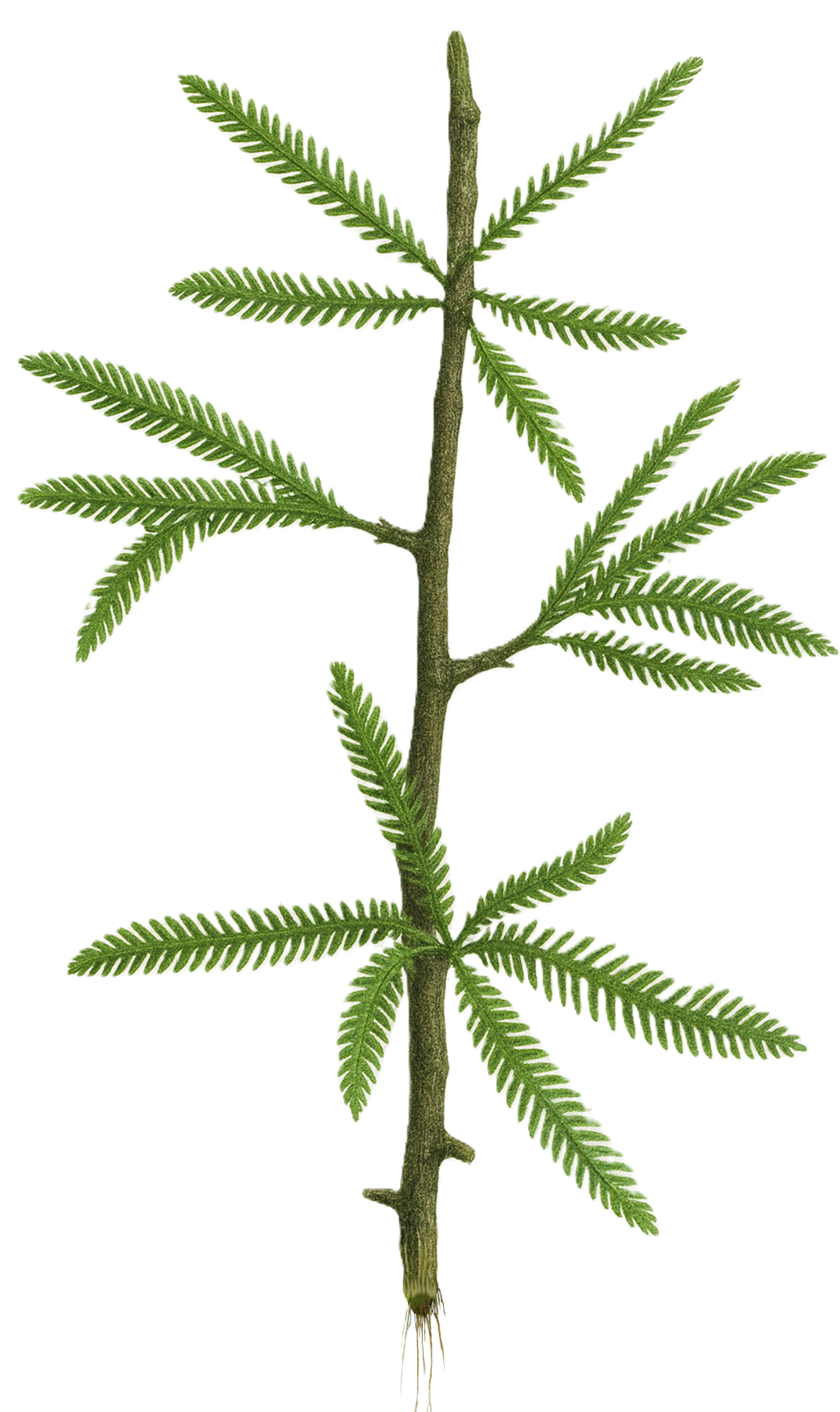 |
Nilssoniocladus yukonensis625Johnson, K. R. (2002). Megaflora of the Hell Creek and lower Fort Union Formations in the western Dakotas – vegetational response to climate change, the Cretaceous–Tertiary boundary event, and rapid marine transgression. In Hartman, J. H., Johnson, K. R. & Nichols, D. J. (Eds.), The Hell Creek Formation and the Cretaceous–Tertiary Boundary in the Northern Great Plains. Geological Society of America Special Paper 361, 329–391. doi:10.1130/0-8137-2361-2.329 | Hell Creek Formation (HCIa, HCIIa, HCIII) | North Dakota, South Dakota | 68–66 Ma | häufig | Cycadeoidee (Williamsoniaceae?); Blattfossil; wahrscheinlich ein Vertreter der Bennettitales |
Nilssoniocladus wird hier mit den palmfarnartigen Samenpflanzen und Bennettitales zusammengefasst, weil seine systematische Stellung historisch unterschiedlich beurteilt wurde. Die Gattung wird in neueren Datenbanken den Cycadales zugewiesen, wurde in der Literatur aber auch als cycadeoide beziehungsweise möglicherweise bennettitale Pflanze angesprochen.

Ginkgos:
| Bild: | Spezies: | Formation: | Fundort: | Alter: | Häufigkeit: | Bemerkungen: |
|---|---|---|---|---|---|---|
| Czekanowskia sp.626Diepenbrock, J. E. H. (2023). The Ferris Formation: An overlooked yet diverse end-Cretaceous formation in Wyoming. The Anatomical Record, 306, Supplement S1. doi:10.1002/ar.25219 | Ferris Formation | Wyoming | 68–66 Ma | selten | Czekanowskiaceae; Blattfossil | |
 |
Ginkgo adiantoides627Johnson, K. R. (2002). Megaflora of the Hell Creek and lower Fort Union Formations in the western Dakotas – vegetational response to climate change, the Cretaceous–Tertiary boundary event, and rapid marine transgression. In Hartman, J. H., Johnson, K. R. & Nichols, D. J. (Eds.), The Hell Creek Formation and the Cretaceous–Tertiary Boundary in the Northern Great Plains. Geological Society of America Special Paper 361, 329–391. doi:10.1130/0-8137-2361-2.329628Dorf, E. (1942). Upper Cretaceous floras of the Rocky Mountain region. Carnegie Institution of Washington Publication, 508, 1–168.629Arens, N. C. & Allen, S. E. (2014). A florule from the base of the Hell Creek Formation in the type area of eastern Montana – implications for vegetation and climate. In Wilson, G. P. et al. (Eds.), Through the End of the Cretaceous in the Type Locality of the Hell Creek Formation in Montana and Adjacent Areas. Geological Society of America Special Paper 503, 173–207. doi:10.1130/2014.2503(06) | Hell Creek Formation (HCIa, HCIIa, HCIIb), Lance Formation | Montana, North Dakota, South Dakota, Wyoming | 68–66 Ma | häufig | Ginkgoaceae; Blattfossil |
| Ginkgo cf. G. spitzbergensis630Barclay, R. S., Johnson, K. R., Betterton, W. J. & Dilcher, D. L. (2003). Stratigraphy and megaflora of a K–T boundary section in the eastern Denver Basin, Colorado. Rocky Mountain Geology, 38(1), 45–71. doi:10.2113/gsrocky.38.1.45 | Denver Formation (D1-Sequenz) | Colorado | 66–64 Ma | selten | Ginkgoaceae; Blattfossil | |
| Ginkgo sp.631Diepenbrock, J. E. H. (2023). The Ferris Formation: An overlooked yet diverse end-Cretaceous formation in Wyoming. The Anatomical Record, 306, Supplement S1. doi:10.1002/ar.25219632Knowlton, F. H. (1922). The Laramie flora of the Denver Basin, with a review of the Laramie problem. United States Geological Survey Professional Paper, 130, 1–175. | Ferris Formation, Laramie Formation | Colorado, Wyoming | 68–66 Ma | selten | Ginkgoaceae; Blattfossil |
Mehrere Forscher schlagen aufgrund ähnlicher erhaltener molekularer Signaturen fossiler Cuticulaeeine eine enge Verwandtschaft zwischen den (heute ausgestorbenen) Czekanowszien und Ginkgos vor.633Vajda, V. et al. (2017). Molecular signatures of fossil leaves provide unexpected new evidence for extinct plant relationships. Nature Ecology & Evolution, 1(8), 1093–1099. doi:10.1038/s41559-017-0224-5 Einige Autoren stellen die Ginkgoales und Czekanowskiales gemeinsam in die weiter gefasste Gruppe der Ginkgophyta.634Wang, J.-J. et al. (2022). Numerical taxonomy of Ginkgophyta fossils in China. Historical Biology, 34(10), 2037–2052. doi:10.1080/08912963.2021.1999939 Die Funde aus der Ferris Formation sind bislang nur vorläufig veröffentlicht worden. Daher lassen sich für Czekanowskia sp. und Ginkgo sp. gegenwärtig weder eine genauere stratigraphische Position noch belastbare Angaben zur Anzahl der bekannten Exemplare nennen.635Diepenbrock, J. E. H. (2023). The Ferris Formation: An overlooked yet diverse end-Cretaceous formation in Wyoming. The Anatomical Record, 306, Supplement S1. doi:10.1002/ar.25219

Koniferen:
| Bild: | Spezies: | Formation: | Fundort: | Alter: | Häufigkeit: | Bemerkungen: |
|---|---|---|---|---|---|---|
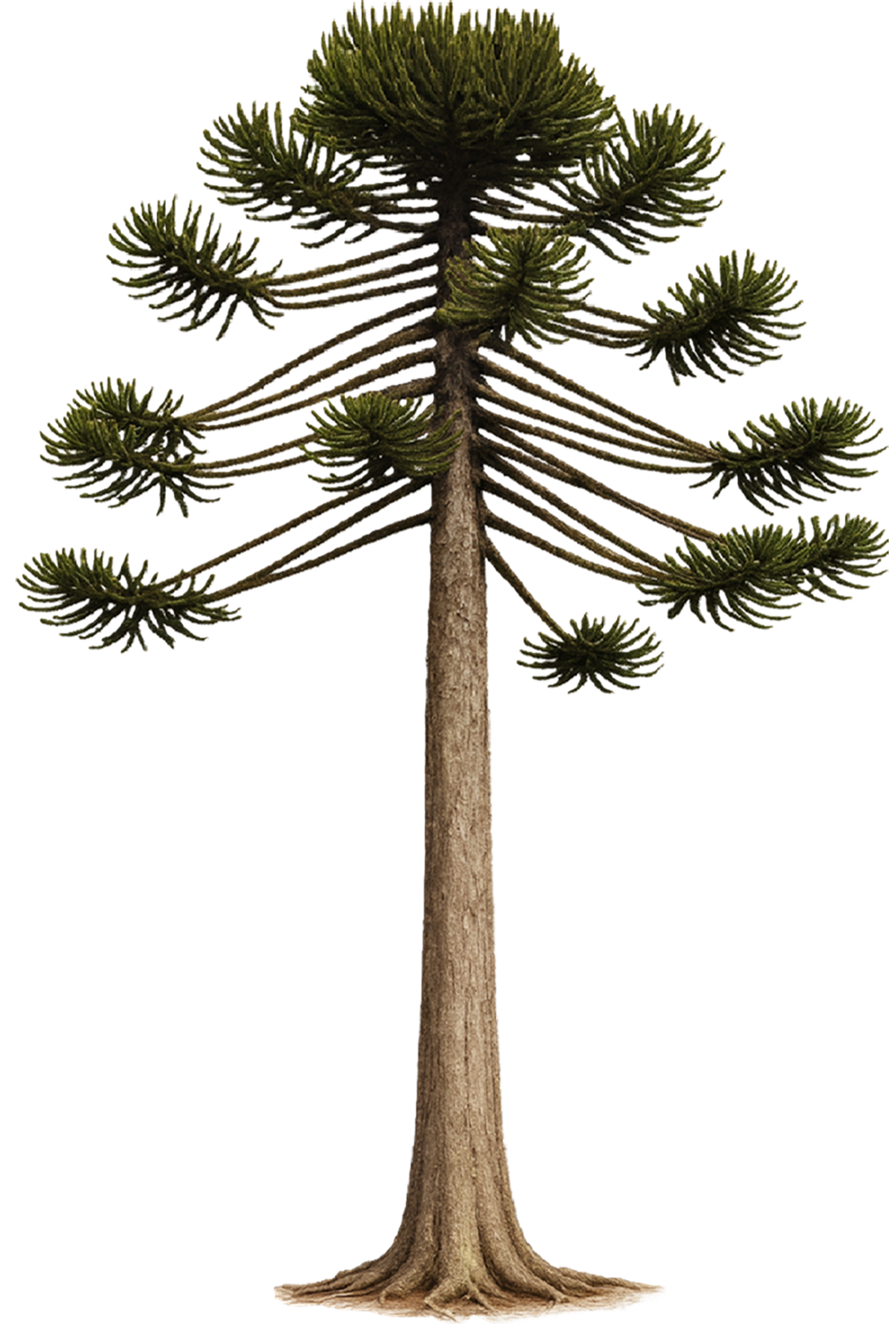 |
Araucaria sp.636Johnson, K. R. (2002). Megaflora of the Hell Creek and lower Fort Union Formations in the western Dakotas – vegetational response to climate change, the Cretaceous–Tertiary boundary event, and rapid marine transgression. In Hartman, J. H., Johnson, K. R. & Nichols, D. J. (Eds.), The Hell Creek Formation and the Cretaceous–Tertiary Boundary in the Northern Great Plains. Geological Society of America Special Paper 361, 329–391. doi:10.1130/0-8137-2361-2.329 | Hell Creek Formation (HCIa, HCIIb) | North Dakota, South Dakota | 68–66 Ma | häufig | Araukarie (Araucariaceae); Blattfossil |
| Cryptomeria subulata637Dorf, E. (1942). Upper Cretaceous floras of the Rocky Mountain region. Carnegie Institution of Washington Publication, 508, 1–168. | Lance Formation | Wyoming | 68–66 Ma | selten | Zypresse (Cupressaceae); Blattfossil | |
| Cupressaceae indet.638Barclay, R. S., Johnson, K. R., Betterton, W. J. & Dilcher, D. L. (2003). Stratigraphy and megaflora of a K–T boundary section in the eastern Denver Basin, Colorado. Rocky Mountain Geology, 38(1), 45–71. doi:10.2113/gsrocky.38.1.45 | Denver Formation (D1-Sequenz) | Colorado | ca. 66 Ma | selten | Zypresse (Cupressaceae); Blattfossil | |
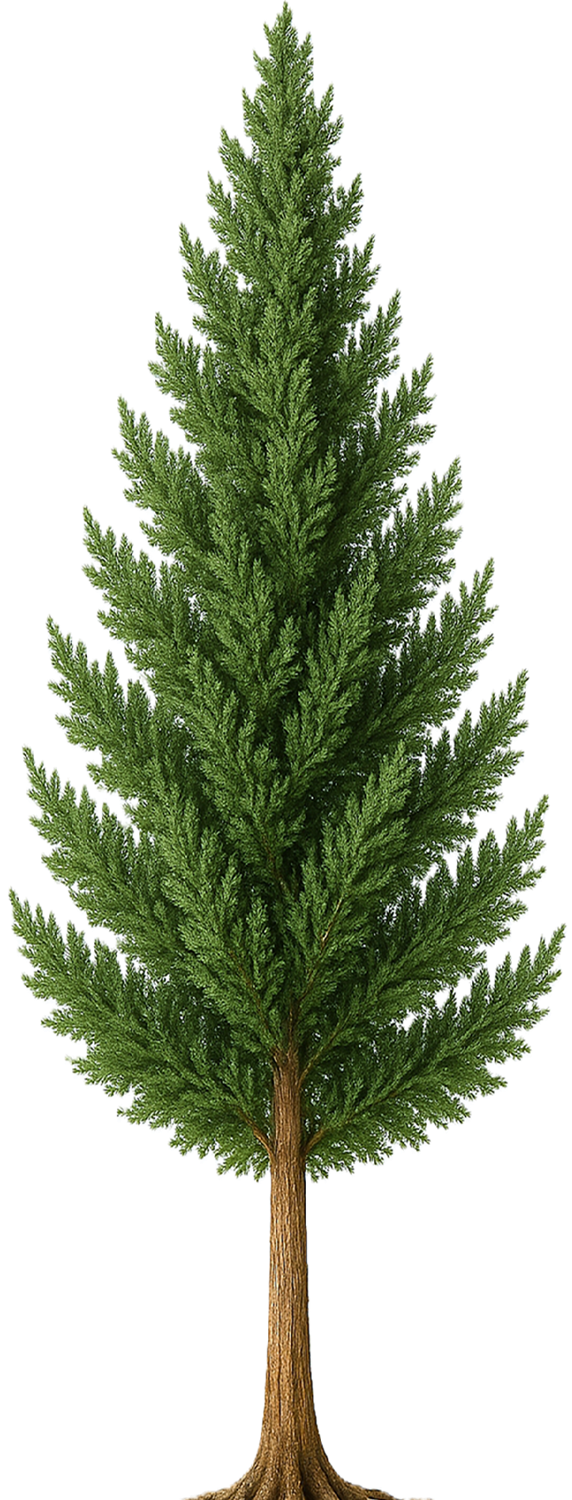 |
Cupressinocladus interruptus639Johnson, K. R. (2002). Megaflora of the Hell Creek and lower Fort Union Formations in the western Dakotas – vegetational response to climate change, the Cretaceous–Tertiary boundary event, and rapid marine transgression. In Hartman, J. H., Johnson, K. R. & Nichols, D. J. (Eds.), The Hell Creek Formation and the Cretaceous–Tertiary Boundary in the Northern Great Plains. Geological Society of America Special Paper 361, 329–391. doi:10.1130/0-8137-2361-2.329640Arens, N. C. & Allen, S. E. (2014). A florule from the base of the Hell Creek Formation in the type area of eastern Montana – implications for vegetation and climate. In Wilson, G. P. et al. (Eds.), Through the End of the Cretaceous in the Type Locality of the Hell Creek Formation in Montana and Adjacent Areas. Geological Society of America Special Paper 503, 173–207. doi:10.1130/2014.2503(06) | Hell Creek Formation (HCIa), Fort Union Formation (FU0, FUI) | Montana, North Dakota, South Dakota | 68–65 Ma | sehr häufig | Zypresse (Cupressaceae); Blattfossil |
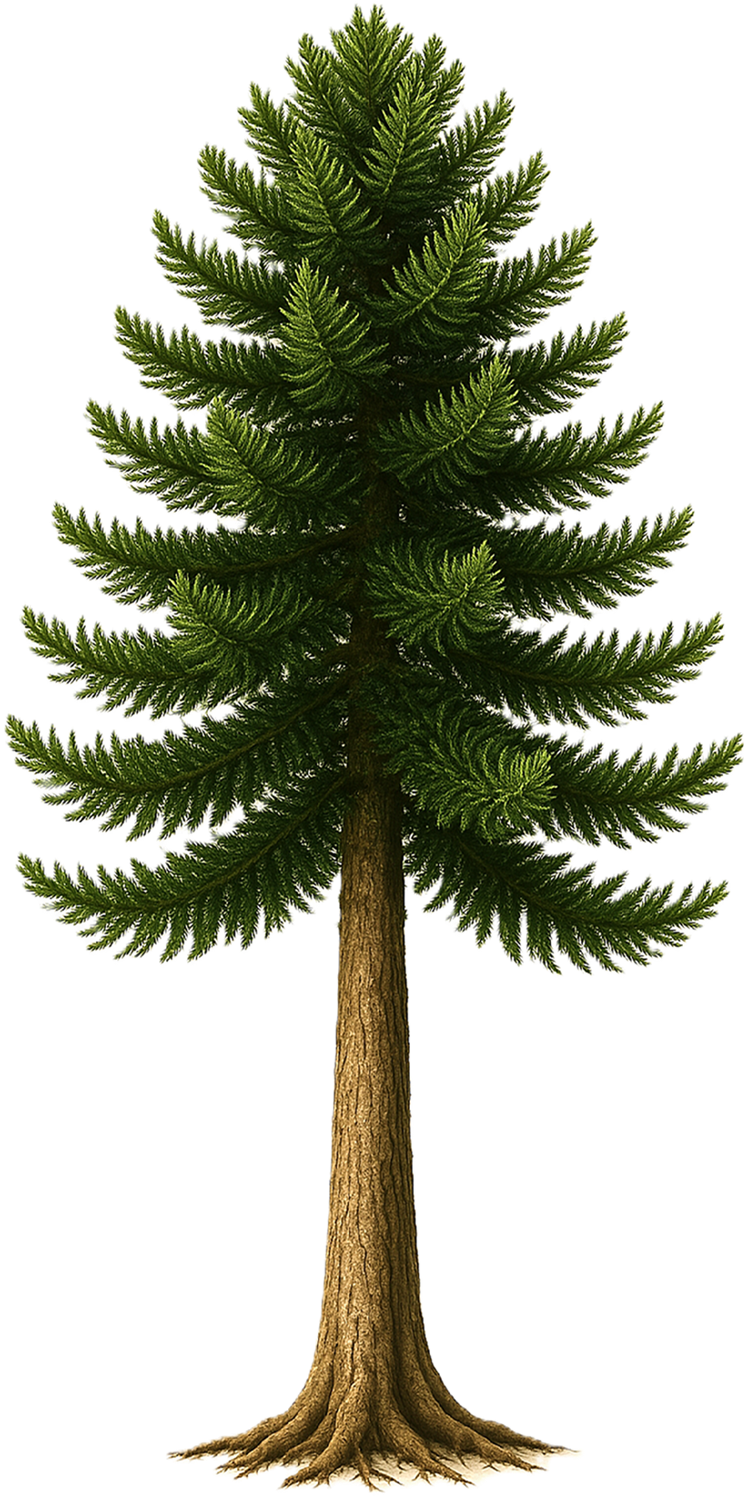 |
Dammarites sp.641Johnson, K. R. (2002). Megaflora of the Hell Creek and lower Fort Union Formations in the western Dakotas – vegetational response to climate change, the Cretaceous–Tertiary boundary event, and rapid marine transgression. In Hartman, J. H., Johnson, K. R. & Nichols, D. J. (Eds.), The Hell Creek Formation and the Cretaceous–Tertiary Boundary in the Northern Great Plains. Geological Society of America Special Paper 361, 329–391. doi:10.1130/0-8137-2361-2.329 | Hell Creek Formation (HCIII) | North Dakota, South Dakota | ca. 66 Ma | häufig | Araukarie (Araucariaceae); Zapfenfossil |
 |
Ditaxocladus catenulatus642Johnson, K. R. (2002). Megaflora of the Hell Creek and lower Fort Union Formations in the western Dakotas – vegetational response to climate change, the Cretaceous–Tertiary boundary event, and rapid marine transgression. In Hartman, J. H., Johnson, K. R. & Nichols, D. J. (Eds.), The Hell Creek Formation and the Cretaceous–Tertiary Boundary in the Northern Great Plains. Geological Society of America Special Paper 361, 329–391. doi:10.1130/0-8137-2361-2.329 | Hell Creek Formation (HCIa, HCIIa, HCIII), Fort Union Formation (FUI) | North Dakota, South Dakota | 68–65 Ma | sehr häufig | Zypresse (Cheirolepidiaceae); Blattfossil; umfasst das zuvor als Androvettia catenulata geführte Material |
 |
Elatides longifolia643Johnson, K. R. (2002). Megaflora of the Hell Creek and lower Fort Union Formations in the western Dakotas – vegetational response to climate change, the Cretaceous–Tertiary boundary event, and rapid marine transgression. In Hartman, J. H., Johnson, K. R. & Nichols, D. J. (Eds.), The Hell Creek Formation and the Cretaceous–Tertiary Boundary in the Northern Great Plains. Geological Society of America Special Paper 361, 329–391. doi:10.1130/0-8137-2361-2.329 | Hell Creek Formation (HCIa, HCIII) | North Dakota, South Dakota | 68–66 Ma | häufig | Nadelbaum (Pinophyta); Blattfossil |
 |
Glyptostrobus europaeus644Johnson, K. R. (2002). Megaflora of the Hell Creek and lower Fort Union Formations in the western Dakotas – vegetational response to climate change, the Cretaceous–Tertiary boundary event, and rapid marine transgression. In Hartman, J. H., Johnson, K. R. & Nichols, D. J. (Eds.), The Hell Creek Formation and the Cretaceous–Tertiary Boundary in the Northern Great Plains. Geological Society of America Special Paper 361, 329–391. doi:10.1130/0-8137-2361-2.329645Arens, N. C. & Allen, S. E. (2014). A florule from the base of the Hell Creek Formation in the type area of eastern Montana – implications for vegetation and climate. In Wilson, G. P. et al. (Eds.), Through the End of the Cretaceous in the Type Locality of the Hell Creek Formation in Montana and Adjacent Areas. Geological Society of America Special Paper 503, 173–207. doi:10.1130/2014.2503(06) | Hell Creek Formation (HCIa), Fort Union Formation (FU0, FUI) | Montana, North Dakota, South Dakota | 68–65 Ma | sehr häufig | Wasserfichte (Cupressaceae) |
 |
Glyptostrobus sp.646Johnson, K. R. (2002). Megaflora of the Hell Creek and lower Fort Union Formations in the western Dakotas – vegetational response to climate change, the Cretaceous–Tertiary boundary event, and rapid marine transgression. In Hartman, J. H., Johnson, K. R. & Nichols, D. J. (Eds.), The Hell Creek Formation and the Cretaceous–Tertiary Boundary in the Northern Great Plains. Geological Society of America Special Paper 361, 329–391. doi:10.1130/0-8137-2361-2.329 | Hell Creek Formation (HCIIa, HCIIb, HCIII) | North Dakota, South Dakota | 67–66 Ma | häufig | Wasserfichte (Cupressaceae); Blattfossil |
| Metasequoia cuneata647Dorf, E. (1942). Upper Cretaceous floras of the Rocky Mountain region. Carnegie Institution of Washington Publication, 508, 1–168. | Lance Formation | Wyoming | 68–66 Ma | selten | Urweltmammutbaum (Sequoioideae); Blattfossil | |
 |
Metasequoia occidentalis648Johnson, K. R. (2002). Megaflora of the Hell Creek and lower Fort Union Formations in the western Dakotas – vegetational response to climate change, the Cretaceous–Tertiary boundary event, and rapid marine transgression. In Hartman, J. H., Johnson, K. R. & Nichols, D. J. (Eds.), The Hell Creek Formation and the Cretaceous–Tertiary Boundary in the Northern Great Plains. Geological Society of America Special Paper 361, 329–391. doi:10.1130/0-8137-2361-2.329649Arens, N. C. & Allen, S. E. (2014). A florule from the base of the Hell Creek Formation in the type area of eastern Montana – implications for vegetation and climate. In Wilson, G. P. et al. (Eds.), Through the End of the Cretaceous in the Type Locality of the Hell Creek Formation in Montana and Adjacent Areas. Geological Society of America Special Paper 503, 173–207. doi:10.1130/2014.2503(06)650Johnson, K. R. et al. (2003). Overview of the Late Cretaceous, early Paleocene, and early Eocene megafloras of the Denver Basin, Colorado. Rocky Mountain Geology, 38(1), 101–120. doi:10.2113/gsrocky.38.1.101 | Hell Creek Formation (HCIa, HCIIa), Fort Union Formation (FUI), Denver Formation (D1-Sequenz) | Colorado, Montana, North Dakota, South Dakota | 68–64 Ma | sehr häufig | Urweltmammutbaum (Sequoioideae) |
 |
Metasequoia sp.651Johnson, K. R. (2002). Megaflora of the Hell Creek and lower Fort Union Formations in the western Dakotas – vegetational response to climate change, the Cretaceous–Tertiary boundary event, and rapid marine transgression. In Hartman, J. H., Johnson, K. R. & Nichols, D. J. (Eds.), The Hell Creek Formation and the Cretaceous–Tertiary Boundary in the Northern Great Plains. Geological Society of America Special Paper 361, 329–391. doi:10.1130/0-8137-2361-2.329 | Hell Creek Formation (HCIa, HCIIa, HCIIb, HCIII) | North Dakota, South Dakota | 68–66 Ma | häufig | Urweltmammutbaum (Sequoioideae); Blattfossil |
 |
Sequoia sp.652Johnson, K. R. (2002). Megaflora of the Hell Creek and lower Fort Union Formations in the western Dakotas – vegetational response to climate change, the Cretaceous–Tertiary boundary event, and rapid marine transgression. In Hartman, J. H., Johnson, K. R. & Nichols, D. J. (Eds.), The Hell Creek Formation and the Cretaceous–Tertiary Boundary in the Northern Great Plains. Geological Society of America Special Paper 361, 329–391. doi:10.1130/0-8137-2361-2.329 | Hell Creek Formation (HCIa, HCIb, HCIII) | North Dakota, South Dakota | 68–66 Ma | häufig | Mammutbaum (Sequoioideae); Blattfossil |
 |
Sequoites artus653Shoemaker, R. E. (1966). Fossil leaves of the Hell Creek and Tullock Formations of eastern Montana. Palaeontographica B, 119, 54–75. | Hell Creek Formation (Brownie Butte) | Montana | 68–66 Ma | häufig | Mammutbaum (Sequoioideae); Blattfossil |
 |
Taxodium olrikii654Johnson, K. R. (2002). Megaflora of the Hell Creek and lower Fort Union Formations in the western Dakotas – vegetational response to climate change, the Cretaceous–Tertiary boundary event, and rapid marine transgression. In Hartman, J. H., Johnson, K. R. & Nichols, D. J. (Eds.), The Hell Creek Formation and the Cretaceous–Tertiary boundary in the Northern Great Plains. Geological Society of America Special Paper 361, 329–391. doi:10.1130/0-8137-2361-2.329 | Hell Creek Formation (HCIa, HCIb, HCIIa, HCIII), Fort Union Formation (FU0, FUI) | North Dakota, South Dakota | 68–65 Ma | häufig | Sumpfzypresse (Taxodioideae); Blattfossil; Zuordnung zur Gattung nicht vollständig gesichert |

Blütenpflanzen:
| Bild: | Spezies: | Formation: | Fundort: | Alter: | Häufigkeit: | Bemerkungen: |
|---|---|---|---|---|---|---|
| Angiospermae indet.655Diepenbrock, J. P. et al. (2023). The Ferris Formation: an overlooked yet diverse end-Cretaceous formation in Wyoming. Abstract, 14th Symposium on Mesozoic Terrestrial Ecosystems and Biota. The Anatomical Record, 306(S1). doi:10.1002/ar.25219 | Ferris Formation | Wyoming | 68–66 Ma | selten | Bislang unbestimmte Blütenpflanzen | |
 |
Annona robusta (?)656Shoemaker, R. E. (1966). Fossil leaves of the Hell Creek and Tullock Formations of eastern Montana. Palaeontographica B, 119, 54–75. | Hell Creek Formation (Brownie Butte) | Montana | 68–66 Ma | selten | Annone (Annonaceae?) |
 |
Araliaephyllum polevoi657Johnson, K. R. (2002). Megaflora of the Hell Creek and lower Fort Union Formations in the western Dakotas – vegetational response to climate change, the Cretaceous–Tertiary boundary event, and rapid marine transgression. In The Hell Creek Formation and the Cretaceous–Tertiary boundary in the northern Great Plains – An integrated continental record of the end of the Cretaceous. doi:10.1130/0-8137-2361-2.329 | Hell Creek Formation (HCIII) | North Dakota, South Dakota | 68–66 Ma | häufig | Araliengewächse (Araliaceae) |
 |
Artocarpus lessigiana (?)658Johnson, K. R. (2002). Megaflora of the Hell Creek and lower Fort Union Formations in the western Dakotas – vegetational response to climate change, the Cretaceous–Tertiary boundary event, and rapid marine transgression. In The Hell Creek Formation and the Cretaceous–Tertiary boundary in the northern Great Plains – An integrated continental record of the end of the Cretaceous. doi:10.1130/0-8137-2361-2.329659Arens, N. C. & Allen, S. E. (2014). A florule from the base of the Hell Creek Formation in the type area of eastern Montana – implications for vegetation and climate. In Wilson, G. P., Clemens, W. A., Horner, J. R. & Hartman, J. H. (Eds.), Through the End of the Cretaceous in the Type Locality of the Hell Creek Formation in Montana and Adjacent Areas. Geological Society of America Special Paper 503, 173–207. doi:10.1130/2014.2503(06) | Hell Creek Formation (HCIIa, HCIII, Typlokalität) | North Dakota, South Dakota, Montana | 68–66 Ma | häufig | Brotfruchtbaum; Maulbeergewächse (Moraceae?) |
 |
Averrhoites affinis660Johnson, K. R. (2002). Megaflora of the Hell Creek and lower Fort Union Formations in the western Dakotas – vegetational response to climate change, the Cretaceous–Tertiary boundary event, and rapid marine transgression. In The Hell Creek Formation and the Cretaceous–Tertiary boundary in the northern Great Plains – An integrated continental record of the end of the Cretaceous. doi:10.1130/0-8137-2361-2.329661Johnson, K. R. et al. (2003). Overview of the Late Cretaceous, early Paleocene, and early Eocene megafloras of the Denver Basin, Colorado. Rocky Mountain Geology, 38(1), 101–120. doi:10.2113/gsrocky.38.1.101 | Denver Formation | South Dakota, Colorado | 66–64 Ma | Einzelfund | Sauerkleegewächse (Oxalidaceae) |
 |
Berberidaceae indet.662Johnson, K. R. (2002). Megaflora of the Hell Creek and lower Fort Union Formations in the western Dakotas – vegetational response to climate change, the Cretaceous–Tertiary boundary event, and rapid marine transgression. In The Hell Creek Formation and the Cretaceous–Tertiary boundary in the northern Great Plains – An integrated continental record of the end of the Cretaceous. doi:10.1130/0-8137-2361-2.329 | Hell Creek Formation (HCIII) | North Dakota, South Dakota | 68–66 Ma | häufig | Berberitze (Berberidaceae) |
 |
Betula perantigua (?)663Arens, N. C. & Allen, S. E. (2014). A florule from the base of the Hell Creek Formation in the type area of eastern Montana – implications for vegetation and climate. In Wilson, G. P., Clemens, W. A., Horner, J. R. & Hartman, J. H. (Eds.), Through the End of the Cretaceous in the Type Locality of the Hell Creek Formation in Montana and Adjacent Areas. Geological Society of America Special Paper 503, 173–207. doi:10.1130/2014.2503(06) | Hell Creek Formation | Montana | 68–66 Ma | selten | Birke (Betulaceae?) |
 |
Bisonia niemii664Johnson, K. R. (2002). Megaflora of the Hell Creek and lower Fort Union Formations in the western Dakotas – vegetational response to climate change, the Cretaceous–Tertiary boundary event, and rapid marine transgression. In The Hell Creek Formation and the Cretaceous–Tertiary boundary in the northern Great Plains – An integrated continental record of the end of the Cretaceous. doi:10.1130/0-8137-2361-2.329 | Hell Creek Formation (HCIII) | North Dakota, South Dakota | 68–66 Ma | häufig | Lorbeer (Lauraceae) |
 |
Browniea serrata665Shoemaker, R. E. (1966). Fossil leaves of the Hell Creek and Tullock Formations of eastern Montana. Palaeontographica B, 119, 54–75. | Hell Creek Formation (Brownie Butte) | Montana | 68–66 Ma | selten | Tupelo (Nyssaceae) |
 |
Cannabaceae indet.666Johnson, K. R. (2002). Megaflora of the Hell Creek and lower Fort Union Formations in the western Dakotas – vegetational response to climate change, the Cretaceous–Tertiary boundary event, and rapid marine transgression. In The Hell Creek Formation and the Cretaceous–Tertiary boundary in the northern Great Plains – An integrated continental record of the end of the Cretaceous. doi:10.1130/0-8137-2361-2.329 | Hell Creek Formation (HCIb, HCIIa) | North Dakota, South Dakota | 68–66 Ma | sehr häufig | Hanfgewächs (Cannabaceae) |
 |
Carpites ulmiformis667Johnson, K. R. (2002). Megaflora of the Hell Creek and lower Fort Union Formations in the western Dakotas – vegetational response to climate change, the Cretaceous–Tertiary boundary event, and rapid marine transgression. In The Hell Creek Formation and the Cretaceous–Tertiary boundary in the northern Great Plains – An integrated continental record of the end of the Cretaceous. doi:10.1130/0-8137-2361-2.329 | Hell Creek Formation (HCIb, HCIIa, HCIIb, HCIII) | North Dakota, South Dakota | 68–66 Ma | selten | unsichere Zuordnung; Doldenblüter (Apiaceae) |
 |
Celastrus taurenensis (?)668Johnson, K. R. (2002). Megaflora of the Hell Creek and lower Fort Union Formations in the western Dakotas – vegetational response to climate change, the Cretaceous–Tertiary boundary event, and rapid marine transgression. In The Hell Creek Formation and the Cretaceous–Tertiary boundary in the northern Great Plains – An integrated continental record of the end of the Cretaceous. doi:10.1130/0-8137-2361-2.329669Shoemaker, R. E. (1966). Fossil leaves of the Hell Creek and Tullock Formations of eastern Montana. Palaeontographica B, 119, 54–75.670Arens, N. C. & Allen, S. E. (2014). A florule from the base of the Hell Creek Formation in the type area of eastern Montana – implications for vegetation and climate. In Wilson, G. P., Clemens, W. A., Horner, J. R. & Hartman, J. H. (Eds.), Through the End of the Cretaceous in the Type Locality of the Hell Creek Formation in Montana and Adjacent Areas. Geological Society of America Special Paper 503, 173–207. doi:10.1130/2014.2503(06) | Hell Creek Formation (HCIa, HCIb, HCIIa, HCIIb, Brownie Butte, Typlokalität) | North Dakota, South Dakota, Montana | 68–66 Ma | sehr häufig | Baumwürger; Spindelbaumgewächse (Celastraceae?) |
 |
Cercidiphyllum sp. (?)671Johnson, K. R. (2002). Megaflora of the Hell Creek and lower Fort Union Formations in the western Dakotas – vegetational response to climate change, the Cretaceous–Tertiary boundary event, and rapid marine transgression. In The Hell Creek Formation and the Cretaceous–Tertiary boundary in the northern Great Plains – An integrated continental record of the end of the Cretaceous. doi:10.1130/0-8137-2361-2.329 | Hell Creek Formation (HCIa, HCIIa, HCIIb) | North Dakota, South Dakota | 68–66 Ma | häufig | Kuchenbaumgewächse (Cercidiphyllaceae?) |
 |
Cinnamomum lineafolia (?)672Johnson, K. R. (2002). Megaflora of the Hell Creek and lower Fort Union Formations in the western Dakotas – vegetational response to climate change, the Cretaceous–Tertiary boundary event, and rapid marine transgression. In The Hell Creek Formation and the Cretaceous–Tertiary boundary in the northern Great Plains – An integrated continental record of the end of the Cretaceous. doi:10.1130/0-8137-2361-2.329 | Hell Creek Formation (HCIa, HCIb, HCIIa, HCIIb) | North Dakota, South Dakota | 68–66 Ma | sehr häufig | Zimtbaum; Lorbeergewächse (Lauraceae?) |
 |
Cissites acerifolia (?)673Johnson, K. R. (2002). Megaflora of the Hell Creek and lower Fort Union Formations in the western Dakotas – vegetational response to climate change, the Cretaceous–Tertiary boundary event, and rapid marine transgression. In The Hell Creek Formation and the Cretaceous–Tertiary boundary in the northern Great Plains – An integrated continental record of the end of the Cretaceous. doi:10.1130/0-8137-2361-2.329 | Hell Creek Formation (HCIa, HCIIa, HCIII) | North Dakota, South Dakota | 68–66 Ma | häufig | Weinrebe (Vitaceae) |
 |
Cissites insignis (?)674Johnson, K. R. (2002). Megaflora of the Hell Creek and lower Fort Union Formations in the western Dakotas – vegetational response to climate change, the Cretaceous–Tertiary boundary event, and rapid marine transgression. In The Hell Creek Formation and the Cretaceous–Tertiary boundary in the northern Great Plains – An integrated continental record of the end of the Cretaceous. doi:10.1130/0-8137-2361-2.329 | Hell Creek Formation (HCIII) | North Dakota | 68–66 Ma | Einzelfund | Weinrebe (Vitaceae) |
 |
Cissites lobata (?)675Johnson, K. R. (2002). Megaflora of the Hell Creek and lower Fort Union Formations in the western Dakotas – vegetational response to climate change, the Cretaceous–Tertiary boundary event, and rapid marine transgression. In The Hell Creek Formation and the Cretaceous–Tertiary boundary in the northern Great Plains – An integrated continental record of the end of the Cretaceous. doi:10.1130/0-8137-2361-2.329 | Hell Creek Formation (HCIII) | North Dakota, South Dakota | 68–66 Ma | selten | Weinrebe (Vitaceae) |
 |
Cissites puilosokensis (?)676Johnson, K. R. (2002). Megaflora of the Hell Creek and lower Fort Union Formations in the western Dakotas – vegetational response to climate change, the Cretaceous–Tertiary boundary event, and rapid marine transgression. In The Hell Creek Formation and the Cretaceous–Tertiary boundary in the northern Great Plains – An integrated continental record of the end of the Cretaceous. doi:10.1130/0-8137-2361-2.329 | Hell Creek Formation (HCIII) | North Dakota, South Dakota | 68–66 Ma | häufig | Weinrebe (Vitaceae) |
 |
Cissus marginatus (?)677Shoemaker, R. E. (1966). Fossil leaves of the Hell Creek and Tullock Formations of eastern Montana. Palaeontographica B, 119, 54–75. | Hell Creek Formation (Brownie Butte) | Montana | 68–66 Ma | häufig | Weinrebengewächse (Vitaceae?) |
 |
Cobbania corrugata678Johnson, K. R. (2002). Megaflora of the Hell Creek and lower Fort Union Formations in the western Dakotas – vegetational response to climate change, the Cretaceous–Tertiary boundary event, and rapid marine transgression. In The Hell Creek Formation and the Cretaceous–Tertiary boundary in the northern Great Plains – An integrated continental record of the end of the Cretaceous. doi:10.1130/0-8137-2361-2.329 | Hell Creek Formation (HCIa, HCIb, HCIIa, HCIIb) | North Dakota, South Dakota | 68–66 Ma | häufig | Wassersalat, Aronstabgewächs (Araceae) |
 |
Cobbania hickeyi679Stockey, R. A., Rothwell, G. W. & Johnson, K. R. (2016). Evaluating relationships among floating aquatic monocots – a new species of Cobbania (Araceae) from the Upper Maastrichtian of South Dakota. International Journal of Plant Sciences, 177(8), 706–725. doi:10.1086/688285 | Hell Creek Formation (oberste Schichten) | South Dakota | ca. 66 Ma | selten | Wassersalat, Aronstabgewächs (Araceae) |
 |
Cornophyllum newberryi680Johnson, K. R. (2002). Megaflora of the Hell Creek and lower Fort Union Formations in the western Dakotas – vegetational response to climate change, the Cretaceous–Tertiary boundary event, and rapid marine transgression. In The Hell Creek Formation and the Cretaceous–Tertiary boundary in the northern Great Plains – An integrated continental record of the end of the Cretaceous. doi:10.1130/0-8137-2361-2.329681Johnson, K. R. et al. (2003). Overview of the Late Cretaceous, early Paleocene, and early Eocene megafloras of the Denver Basin, Colorado. Rocky Mountain Geology, 38(1), 101–120. doi:10.2113/gsrocky.38.1.101 | Hell Creek Formation (HCIIa, HCIII), Denver Formation, Fort Union Formation (FU0, FUI) | North Dakota, South Dakota, Colorado | 68–64 Ma | sehr häufig | Kornelkirsche, Hartriegelgewächs (Cornaceae) |
 |
Dicotylophyllum anomalum682Johnson, K. R. (2002). Megaflora of the Hell Creek and lower Fort Union Formations in the western Dakotas – vegetational response to climate change, the Cretaceous–Tertiary boundary event, and rapid marine transgression. In The Hell Creek Formation and the Cretaceous–Tertiary boundary in the northern Great Plains – An integrated continental record of the end of the Cretaceous. doi:10.1130/0-8137-2361-2.329 | Hell Creek Formation (HCIII), Fort Union Formation (FU0, FUI) | North Dakota, South Dakota | 68–64 Ma | sehr häufig | Unsichere Zuordnung, wahrscheinlich eine Magnolie (Magnoliopsida) |
 |
Dombeyopsis obtusa (?)683Shoemaker, R. E. (1966). Fossil leaves of the Hell Creek and Tullock Formations of eastern Montana. Palaeontographica B, 119, 54–75. | Hell Creek Formation (Brownie Butte) | Montana | 68–66 Ma | häufig | Malvengewächse (Malvaceae?) |
 |
Dryophyllum subfalcatum (?)684Johnson, K. R. (2002). Megaflora of the Hell Creek and lower Fort Union Formations in the western Dakotas – vegetational response to climate change, the Cretaceous–Tertiary boundary event, and rapid marine transgression. In The Hell Creek Formation and the Cretaceous–Tertiary boundary in the northern Great Plains – An integrated continental record of the end of the Cretaceous. doi:10.1130/0-8137-2361-2.329685Shoemaker, R. E. (1966). Fossil leaves of the Hell Creek and Tullock Formations of eastern Montana. Palaeontographica B, 119, 54–75.686Arens, N. C. & Allen, S. E. (2014). A florule from the base of the Hell Creek Formation in the type area of eastern Montana – implications for vegetation and climate. In Wilson, G. P., Clemens, W. A., Horner, J. R. & Hartman, J. H. (Eds.), Through the End of the Cretaceous in the Type Locality of the Hell Creek Formation in Montana and Adjacent Areas. Geological Society of America Special Paper 503, 173–207. doi:10.1130/2014.2503(06)687Riddle, J., Starkey, R. & Persons, W. S. (2026). A fossil-leaf and insect-trace assemblage from the Glenrock Exposure of the Upper Cretaceous Lance Formation, Wyoming. Cretaceous Research, 184, 106368. doi:10.1016/j.cretres.2026.106368 | Hell Creek Formation (HCIa, HCIIa, HCIIb, HCIII, Brownie Butte, Typlokalität), Lance Formation, Fort Union Formation (FU0) | North Dakota, South Dakota, Montana, Wyoming | 68–64 Ma | sehr häufig | Silberbaumgewächse (Sabiaceae?) |
 |
Dryophyllum tennesseensis (?)688Johnson, K. R. (2002). Megaflora of the Hell Creek and lower Fort Union Formations in the western Dakotas – vegetational response to climate change, the Cretaceous–Tertiary boundary event, and rapid marine transgression. In The Hell Creek Formation and the Cretaceous–Tertiary boundary in the northern Great Plains – An integrated continental record of the end of the Cretaceous. doi:10.1130/0-8137-2361-2.329689Riddle, J., Starkey, R. & Persons, W. S. (2026). A fossil-leaf and insect-trace assemblage from the Glenrock Exposure of the Upper Cretaceous Lance Formation, Wyoming. Cretaceous Research, 184, 106368. doi:10.1016/j.cretres.2026.106368 | Hell Creek Formation (HCIa, HCIIa, HCIII), Lance Formation | North Dakota, South Dakota, Wyoming | 68–66 Ma | häufig | Silberbaumgewächse (Sabiaceae?) |
 |
Erlingdorfia montana690Johnson, K. R. (2002). Megaflora of the Hell Creek and lower Fort Union Formations in the western Dakotas – vegetational response to climate change, the Cretaceous–Tertiary boundary event, and rapid marine transgression. In The Hell Creek Formation and the Cretaceous–Tertiary boundary in the northern Great Plains – An integrated continental record of the end of the Cretaceous. doi:10.1130/0-8137-2361-2.329691Arens, N. C. & Allen, S. E. (2014). A florule from the base of the Hell Creek Formation in the type area of eastern Montana – implications for vegetation and climate. In Wilson, G. P., Clemens, W. A., Horner, J. R. & Hartman, J. H. (Eds.), Through the End of the Cretaceous in the Type Locality of the Hell Creek Formation in Montana and Adjacent Areas. Geological Society of America Special Paper 503, 173–207. doi:10.1130/2014.2503(06) | Hell Creek Formation (HCIa, HCIIa, HCIIb, HCIII, Typlokalität) | North Dakota, South Dakota, Montana | 68–66 Ma | sehr häufig | Platane (Platanaceae) |
 |
Fagaceae indet.692Johnson, K. R. (2002). Megaflora of the Hell Creek and lower Fort Union Formations in the western Dakotas – vegetational response to climate change, the Cretaceous–Tertiary boundary event, and rapid marine transgression. In The Hell Creek Formation and the Cretaceous–Tertiary boundary in the northern Great Plains – An integrated continental record of the end of the Cretaceous. doi:10.1130/0-8137-2361-2.329 | Hell Creek Formation (HCIa, HCIIa) | North Dakota, South Dakota | 68–66 Ma | selten | Buche (Fagaceae) |
 |
Ficus planicostata (?)693Johnson, K. R. (2002). Megaflora of the Hell Creek and lower Fort Union Formations in the western Dakotas – vegetational response to climate change, the Cretaceous–Tertiary boundary event, and rapid marine transgression. In The Hell Creek Formation and the Cretaceous–Tertiary boundary in the northern Great Plains – An integrated continental record of the end of the Cretaceous. doi:10.1130/0-8137-2361-2.329694Knowlton, F. H. (1922). The Laramie flora of the Denver Basin, with a review of the Laramie problem. U.S. Geological Survey Professional Paper 130, 1–175. | Hell Creek Formation (HCIII), Laramie Formation | North Dakota, South Dakota, Colorado | 68–66 Ma | häufig | Feigenbaum; Maulbeergewächse (Moraceae?) |
 |
Ficus trinervis (?)695Shoemaker, R. E. (1966). Fossil leaves of the Hell Creek and Tullock Formations of eastern Montana. Palaeontographica B, 119, 54–75. | Hell Creek Formation (Brownie Butte) | Montana | 68–66 Ma | häufig | Feigenbaum; Maulbeergewächse (Moraceae?) |
 |
Grewiopsis mclearni696Arens, N. C. & Allen, S. E. (2014). A florule from the base of the Hell Creek Formation in the type area of eastern Montana – implications for vegetation and climate. In Wilson, G. P., Clemens, W. A., Horner, J. R. & Hartman, J. H. (Eds.), Through the End of the Cretaceous in the Type Locality of the Hell Creek Formation in Montana and Adjacent Areas. Geological Society of America Special Paper 503, 173–207. doi:10.1130/2014.2503(06) | Hell Creek Formation (Typlokalität) | Montana | 68–66 Ma | Einzelfund | Malve (Malvaceae) |
 |
Grewiopsis saportana697Johnson, K. R. (2002). Megaflora of the Hell Creek and lower Fort Union Formations in the western Dakotas – vegetational response to climate change, the Cretaceous–Tertiary boundary event, and rapid marine transgression. In The Hell Creek Formation and the Cretaceous–Tertiary boundary in the northern Great Plains – An integrated continental record of the end of the Cretaceous. doi:10.1130/0-8137-2361-2.329698Riddle, J., Starkey, R. & Persons, W. S. (2026). A fossil-leaf and insect-trace assemblage from the Glenrock Exposure of the Upper Cretaceous Lance Formation, Wyoming. Cretaceous Research, 184, 106368. doi:10.1016/j.cretres.2026.106368 | Hell Creek Formation (HCIa, HCIIa, HCIII), Lance Formation | North Dakota, South Dakota, Wyoming | 68–66 Ma | sehr häufig | Malve (Malvaceae) |
 |
Harmsia hydrocotyloidea699Johnson, K. R. (2002). Megaflora of the Hell Creek and lower Fort Union Formations in the western Dakotas – vegetational response to climate change, the Cretaceous–Tertiary boundary event, and rapid marine transgression. In The Hell Creek Formation and the Cretaceous–Tertiary boundary in the northern Great Plains – An integrated continental record of the end of the Cretaceous. doi:10.1130/0-8137-2361-2.329 | Hell Creek Formation (HCIII), Fort Union Formation (FUI) | North Dakota, South Dakota | 68–64 Ma | häufig | Unsichere Zuordnung, wahrscheinlich eine Malve (Malvaceae) |
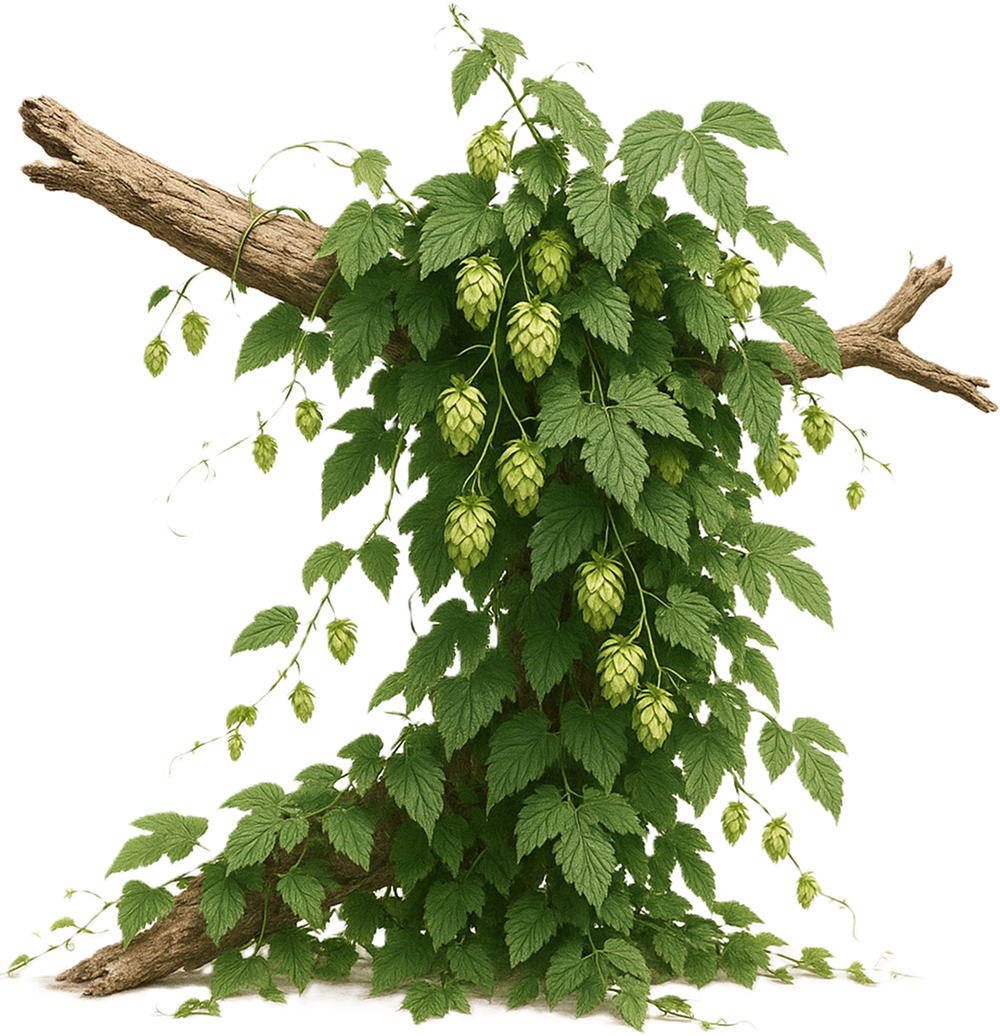 |
Humulus sp. (?)700Johnson, K. R. (2002). Megaflora of the Hell Creek and lower Fort Union Formations in the western Dakotas – vegetational response to climate change, the Cretaceous–Tertiary boundary event, and rapid marine transgression. In The Hell Creek Formation and the Cretaceous–Tertiary boundary in the northern Great Plains – An integrated continental record of the end of the Cretaceous. doi:10.1130/0-8137-2361-2.329 | Hell Creek Formation (HCIII) | North Dakota, South Dakota | 68–66 Ma | häufig | Hopfen; Hanfgewächse (Cannabaceae?) |
 |
Juglans leconteana (?)701Shoemaker, R. E. (1966). Fossil leaves of the Hell Creek and Tullock Formations of eastern Montana. Palaeontographica B, 119, 54–75. | Hell Creek Formation (Brownie Butte) | Montana | 68–66 Ma | selten | Walnussgewächse (Juglandaceae?) |
| Lauraceae indet.702Riddle, J., Starkey, R. & Persons, W. S. (2026). A fossil-leaf and insect-trace assemblage from the Glenrock Exposure of the Upper Cretaceous Lance Formation, Wyoming. Cretaceous Research, 184, 106368. doi:10.1016/j.cretres.2026.106368 | Lance Formation | Wyoming | 68–66 Ma | selten | Lorbeergewächse (Lauraceae); Blattfossil | |
 |
Laurophyllum lanceolatum703Arens, N. C. & Allen, S. E. (2014). A florule from the base of the Hell Creek Formation in the type area of eastern Montana – implications for vegetation and climate. In Wilson, G. P., Clemens, W. A., Horner, J. R. & Hartman, J. H. (Eds.), Through the End of the Cretaceous in the Type Locality of the Hell Creek Formation in Montana and Adjacent Areas. Geological Society of America Special Paper 503, 173–207. doi:10.1130/2014.2503(06) | Hell Creek Formation (Typlokalität) | Montana | 68–66 Ma | Einzelfund | Lorbeer (Lauraceae) |
 |
Laurophyllum wardiana704Johnson, K. R. (2002). Megaflora of the Hell Creek and lower Fort Union Formations in the western Dakotas – vegetational response to climate change, the Cretaceous–Tertiary boundary event, and rapid marine transgression. In The Hell Creek Formation and the Cretaceous–Tertiary boundary in the northern Great Plains – An integrated continental record of the end of the Cretaceous. doi:10.1130/0-8137-2361-2.329 | Hell Creek Formation (HCIII) | North Dakota | 68–66 Ma | selten | Lorbeer (Lauraceae) |
 |
Leepierceia preartocarpoides705Johnson, K. R. (2002). Megaflora of the Hell Creek and lower Fort Union Formations in the western Dakotas – vegetational response to climate change, the Cretaceous–Tertiary boundary event, and rapid marine transgression. In The Hell Creek Formation and the Cretaceous–Tertiary boundary in the northern Great Plains – An integrated continental record of the end of the Cretaceous. doi:10.1130/0-8137-2361-2.329706Arens, N. C. & Allen, S. E. (2014). A florule from the base of the Hell Creek Formation in the type area of eastern Montana – implications for vegetation and climate. In Wilson, G. P., Clemens, W. A., Horner, J. R. & Hartman, J. H. (Eds.), Through the End of the Cretaceous in the Type Locality of the Hell Creek Formation in Montana and Adjacent Areas. Geological Society of America Special Paper 503, 173–207. doi:10.1130/2014.2503(06) | Hell Creek Formation (HCIa, HCIb, HCIIa, Typlokalität) | North Dakota, South Dakota, Montana | 68–66 Ma | sehr häufig | Platane (Platanaceae) |
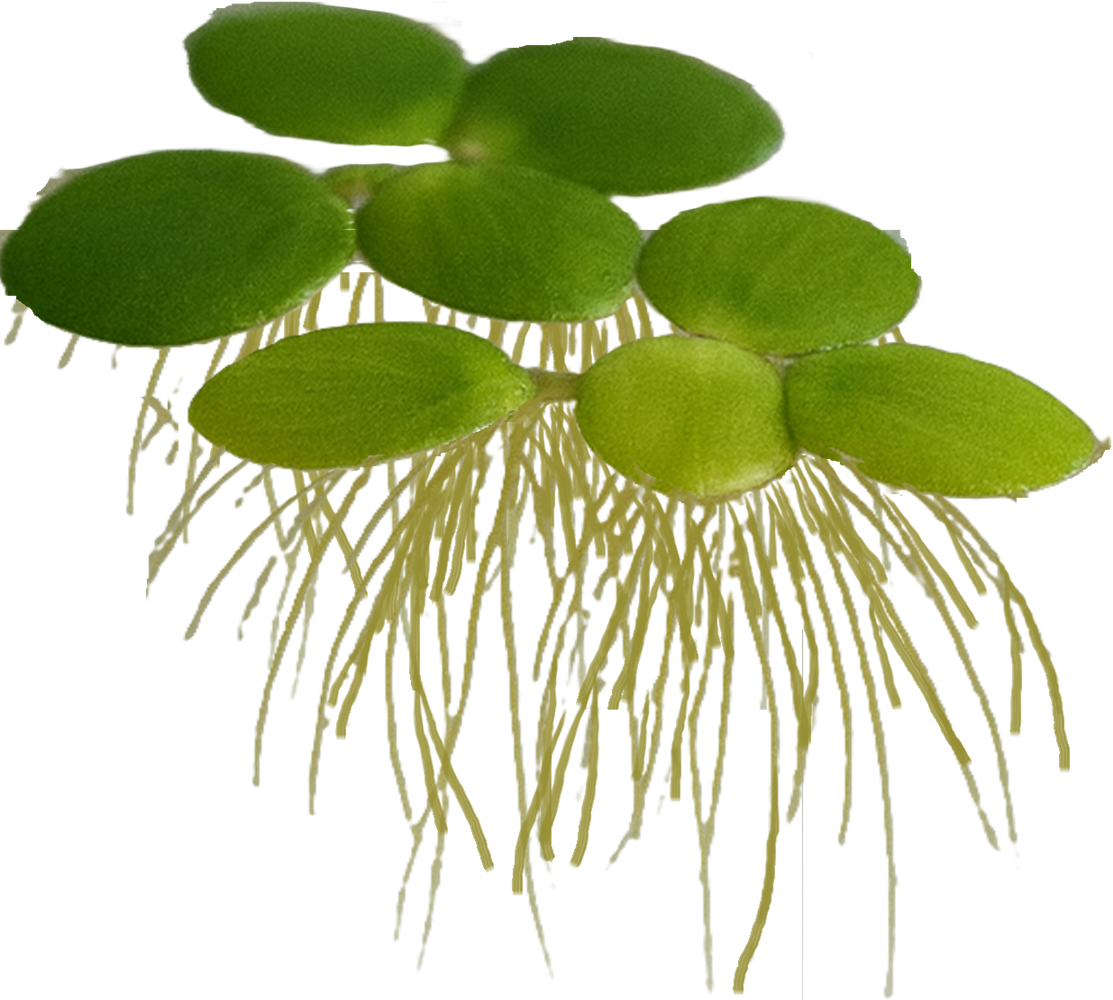 |
Limnobiophyllum scutatum707Johnson, K. R. (2002). Megaflora of the Hell Creek and lower Fort Union Formations in the western Dakotas – vegetational response to climate change, the Cretaceous–Tertiary boundary event, and rapid marine transgression. In The Hell Creek Formation and the Cretaceous–Tertiary boundary in the northern Great Plains – An integrated continental record of the end of the Cretaceous. doi:10.1130/0-8137-2361-2.329 | Hell Creek Formation (HCIa, HCIII), Fort Union Formation (FUI) | North Dakota, South Dakota | 68–64 Ma | häufig | Wasserlinse; Aronstabgewächs (Araceae) |
 |
Liriodendrites bradacii708Johnson, K. R. (2002). Megaflora of the Hell Creek and lower Fort Union Formations in the western Dakotas – vegetational response to climate change, the Cretaceous–Tertiary boundary event, and rapid marine transgression. In The Hell Creek Formation and the Cretaceous–Tertiary boundary in the northern Great Plains – An integrated continental record of the end of the Cretaceous. doi:10.1130/0-8137-2361-2.329 | Hell Creek Formation (HCIII) | North Dakota, South Dakota | 68–66 Ma | sehr häufig | Tulpenbaum (Magnoliaceae) |
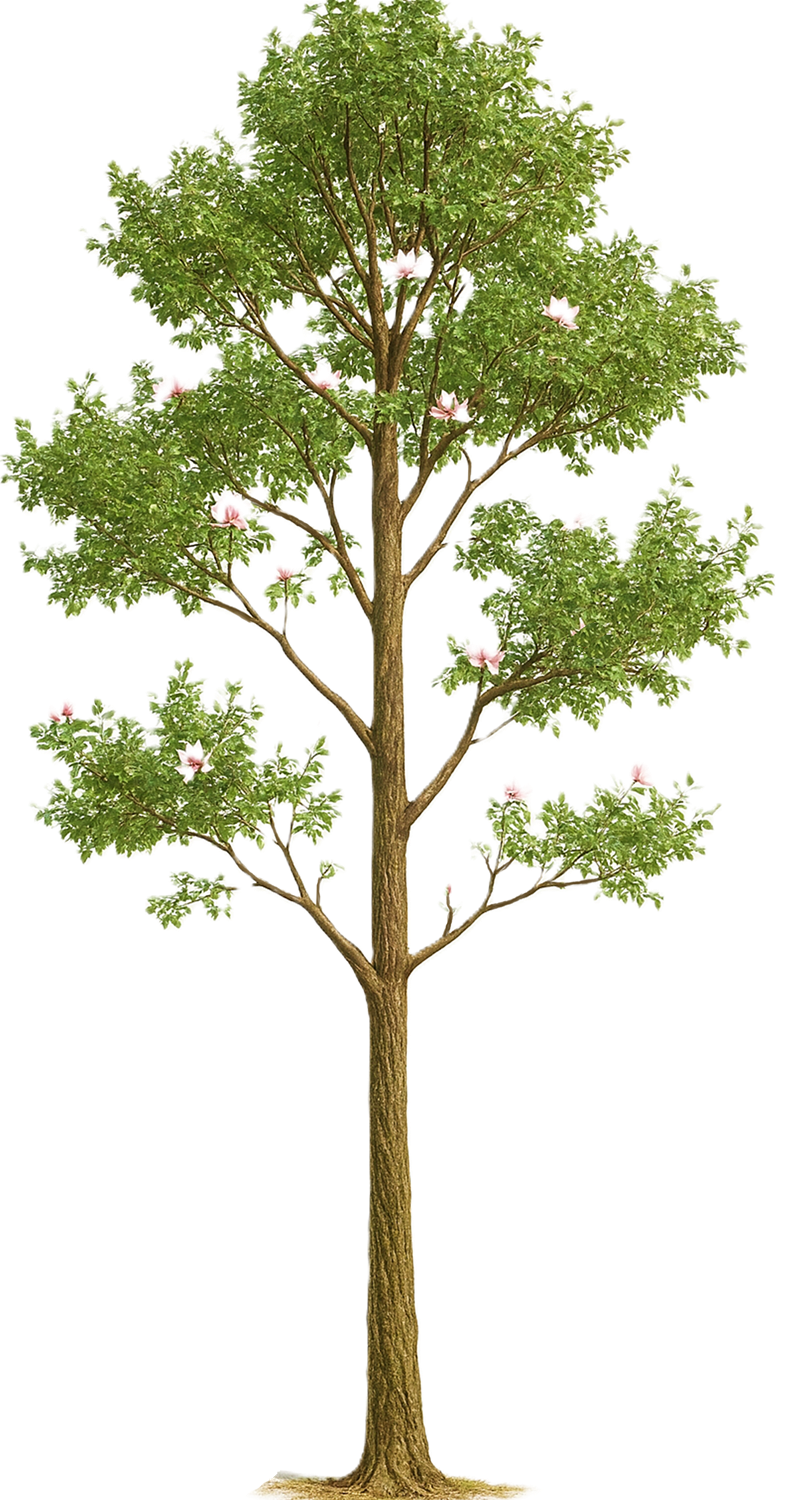 |
Liriodendron laramiense (?)709Johnson, K. R. (2002). Megaflora of the Hell Creek and lower Fort Union Formations in the western Dakotas – vegetational response to climate change, the Cretaceous–Tertiary boundary event, and rapid marine transgression. In The Hell Creek Formation and the Cretaceous–Tertiary boundary in the northern Great Plains – An integrated continental record of the end of the Cretaceous. doi:10.1130/0-8137-2361-2.329 | Hell Creek Formation (HCIII) | North Dakota, South Dakota | 68–66 Ma | selten | Tulpenbaum (Magnoliaceae) |
 |
Liriodendron sp.710Johnson, K. R. (2002). Megaflora of the Hell Creek and lower Fort Union Formations in the western Dakotas – vegetational response to climate change, the Cretaceous–Tertiary boundary event, and rapid marine transgression. In The Hell Creek Formation and the Cretaceous–Tertiary boundary in the northern Great Plains – An integrated continental record of the end of the Cretaceous. doi:10.1130/0-8137-2361-2.329 | Hell Creek Formation (HCIII) | North Dakota, South Dakota | 68–66 Ma | selten | Tulpenbaum (Magnoliaceae) |
 |
Magnoliaceae indet.711Johnson, K. R. (2002). Megaflora of the Hell Creek and lower Fort Union Formations in the western Dakotas – vegetational response to climate change, the Cretaceous–Tertiary boundary event, and rapid marine transgression. In The Hell Creek Formation and the Cretaceous–Tertiary boundary in the northern Great Plains – An integrated continental record of the end of the Cretaceous. doi:10.1130/0-8137-2361-2.329 | Hell Creek Formation (HCIa, HCIIa, HCIII) | North Dakota, South Dakota | 68–66 Ma | häufig | Magnolie (Magnoliaceae) |
 |
Marmarthia johnsonii712Peppe, D. J., Erickson, J. M. & Hickey, L. J. (2007). Fossil leaf species from the Fox Hills Formation (Upper Cretaceous, North Dakota, USA) and their paleogeographic significance. Journal of Paleontology, 81(3), 550–567. doi:10.1666/05067.1 | Hell Creek Formation | North Dakota | 68–66 Ma | Einzelfund | Lorbeer (Lauraceae) |
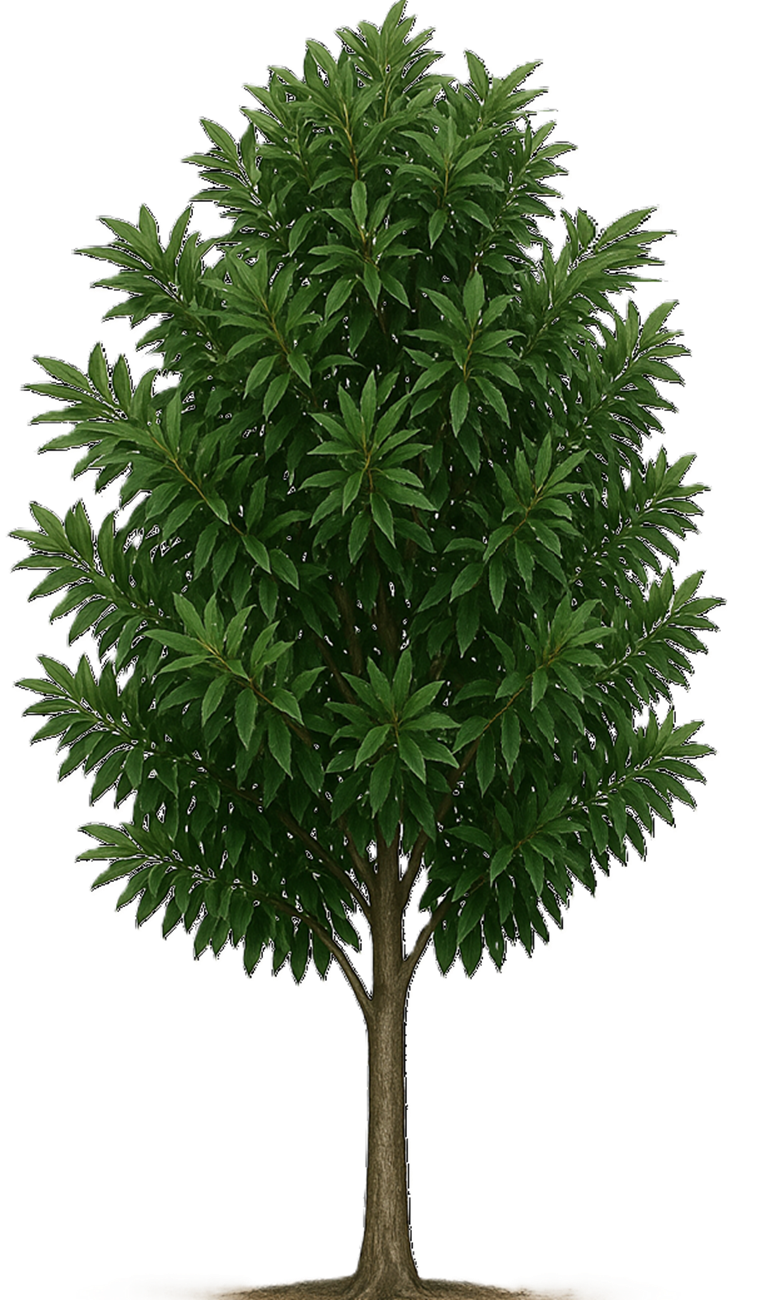 |
Marmarthia pearsonii713Johnson, K. R. (2002). Megaflora of the Hell Creek and lower Fort Union Formations in the western Dakotas – vegetational response to climate change, the Cretaceous–Tertiary boundary event, and rapid marine transgression. In The Hell Creek Formation and the Cretaceous–Tertiary boundary in the northern Great Plains – An integrated continental record of the end of the Cretaceous. doi:10.1130/0-8137-2361-2.329714Knowlton, F. H. (1922). The Laramie flora of the Denver Basin, with a review of the Laramie problem. U.S. Geological Survey Professional Paper 130, 1–175. | Hell Creek Formation (HCIIa, HCIIb, HCIII), Laramie Formation | North Dakota, South Dakota, Colorado | 68–66 Ma | sehr häufig | Lorbeer (Lauraceae) |
 |
Marmarthia trivialis715Johnson, K. R. (2002). Megaflora of the Hell Creek and lower Fort Union Formations in the western Dakotas – vegetational response to climate change, the Cretaceous–Tertiary boundary event, and rapid marine transgression. In The Hell Creek Formation and the Cretaceous–Tertiary boundary in the northern Great Plains – An integrated continental record of the end of the Cretaceous. doi:10.1130/0-8137-2361-2.329 | Hell Creek Formation (HCIIa, HCIII) | North Dakota, South Dakota | 68–66 Ma | sehr häufig | Lorbeer (Lauraceae) |
 |
Myrica torreyi (?)716Johnson, K. R. (2002). Megaflora of the Hell Creek and lower Fort Union Formations in the western Dakotas – vegetational response to climate change, the Cretaceous–Tertiary boundary event, and rapid marine transgression. In The Hell Creek Formation and the Cretaceous–Tertiary boundary in the northern Great Plains – An integrated continental record of the end of the Cretaceous. doi:10.1130/0-8137-2361-2.329717Knowlton, F. H. (1922). The Laramie flora of the Denver Basin, with a review of the Laramie problem. U.S. Geological Survey Professional Paper 130, 1–175. | Hell Creek Formation (HCIII), Laramie Formation | North Dakota, Colorado | 68–66 Ma | selten | Gagelstrauchgewächse (Myricaceae?) |
 |
Nelumbium montanum718Johnson, K. R. (2002). Megaflora of the Hell Creek and lower Fort Union Formations in the western Dakotas – vegetational response to climate change, the Cretaceous–Tertiary boundary event, and rapid marine transgression. In The Hell Creek Formation and the Cretaceous–Tertiary boundary in the northern Great Plains – An integrated continental record of the end of the Cretaceous. doi:10.1130/0-8137-2361-2.329 | Hell Creek Formation (HCIIa, HCIII), Fort Union Formation (FUI) | North Dakota, South Dakota | 68–64 Ma | häufig | Lotus (Nelumbonaceae) |
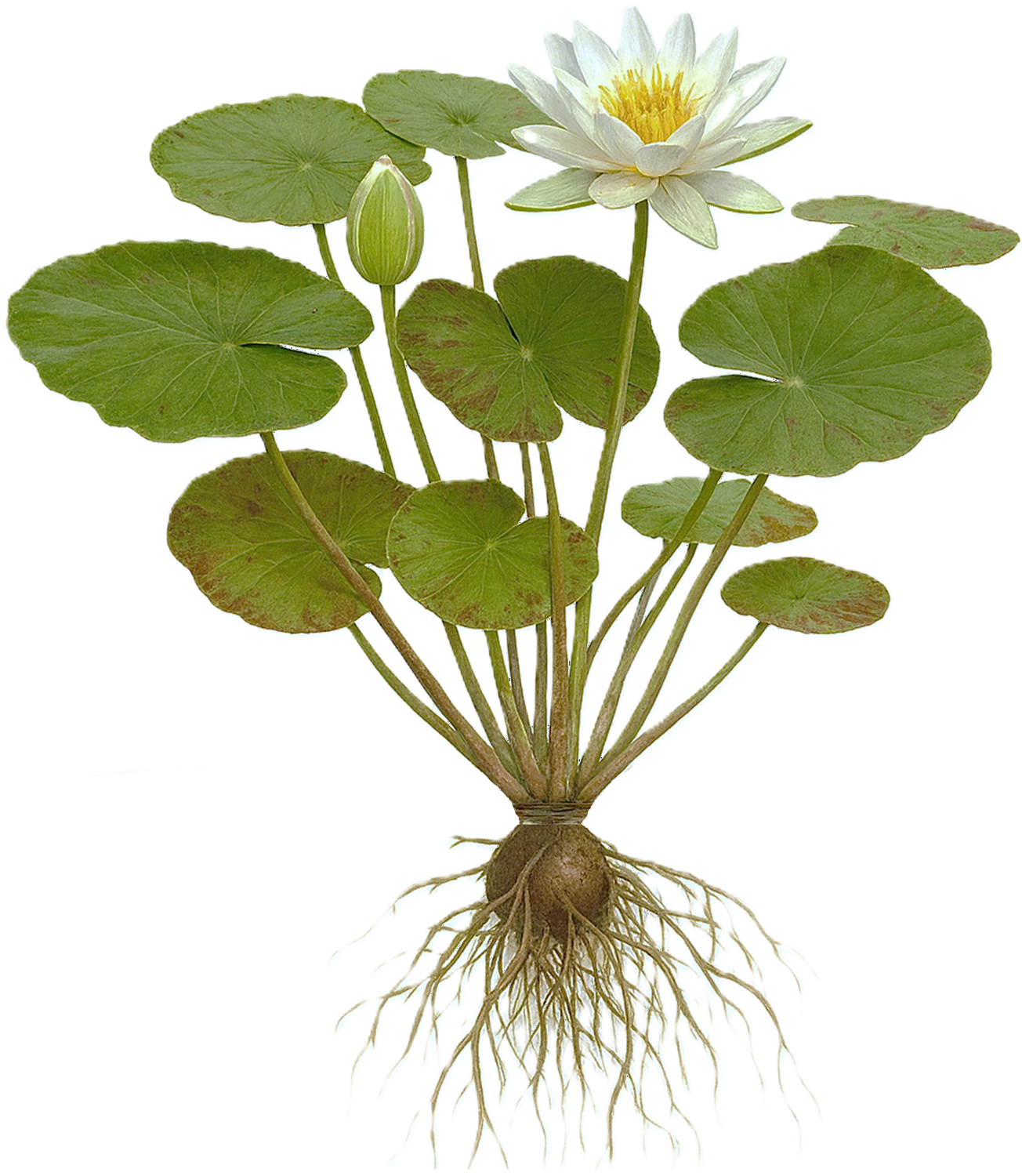 |
Nelumbo sp.719Johnson, K. R. (2002). Megaflora of the Hell Creek and lower Fort Union Formations in the western Dakotas – vegetational response to climate change, the Cretaceous–Tertiary boundary event, and rapid marine transgression. In The Hell Creek Formation and the Cretaceous–Tertiary boundary in the northern Great Plains – An integrated continental record of the end of the Cretaceous. doi:10.1130/0-8137-2361-2.329 | Hell Creek Formation (HCIII) | North Dakota, South Dakota | 68–66 Ma | selten | Lotus (Nelumbonaceae) |
| — | Nordenskioldia borealis720Johnson, K. R. (2002). Megaflora of the Hell Creek and lower Fort Union Formations in the western Dakotas – vegetational response to climate change, the Cretaceous–Tertiary boundary event, and rapid marine transgression. In The Hell Creek Formation and the Cretaceous–Tertiary boundary in the northern Great Plains – An integrated continental record of the end of the Cretaceous. doi:10.1130/0-8137-2361-2.329 | Hell Creek Formation (?), Fort Union Formation (FU0, FUI) | North Dakota, South Dakota | 66–64 Ma | häufig | Kuchenbaum (Cercidiphyllaceae) |
 |
Nyssidium arcticum721Johnson, K. R. (2002). Megaflora of the Hell Creek and lower Fort Union Formations in the western Dakotas – vegetational response to climate change, the Cretaceous–Tertiary boundary event, and rapid marine transgression. In The Hell Creek Formation and the Cretaceous–Tertiary boundary in the northern Great Plains – An integrated continental record of the end of the Cretaceous. doi:10.1130/0-8137-2361-2.329 | Hell Creek Formation (HCIa, HCIIa, HCIII), Fort Union Formation (FU0, FUI) | North Dakota, South Dakota | 68–64 Ma | häufig | Araliengewächs (Araliaceae) |
 |
Palaeoaster inquirenda722Johnson, K. R. (2002). Megaflora of the Hell Creek and lower Fort Union Formations in the western Dakotas – vegetational response to climate change, the Cretaceous–Tertiary boundary event, and rapid marine transgression. In The Hell Creek Formation and the Cretaceous–Tertiary boundary in the northern Great Plains – An integrated continental record of the end of the Cretaceous. doi:10.1130/0-8137-2361-2.329 | Hell Creek Formation (HCIII) | North Dakota, South Dakota | 68–66 Ma | häufig | Mohn (Papaveraceae) |
| — | Paranymphaea crassifolia723Johnson, K. R. (2002). Megaflora of the Hell Creek and lower Fort Union Formations in the western Dakotas – vegetational response to climate change, the Cretaceous–Tertiary boundary event, and rapid marine transgression. In The Hell Creek Formation and the Cretaceous–Tertiary boundary in the northern Great Plains – An integrated continental record of the end of the Cretaceous. doi:10.1130/0-8137-2361-2.329 | Hell Creek Formation (?), Fort Union Formation (FUI) | North Dakota, South Dakota | 66–64 Ma | sehr häufig | Seerose (Nymphaeaceae) |
 |
Paranymphaea hastata724Johnson, K. R. (2002). Megaflora of the Hell Creek and lower Fort Union Formations in the western Dakotas – vegetational response to climate change, the Cretaceous–Tertiary boundary event, and rapid marine transgression. In The Hell Creek Formation and the Cretaceous–Tertiary boundary in the northern Great Plains – An integrated continental record of the end of the Cretaceous. doi:10.1130/0-8137-2361-2.329 | Hell Creek Formation (HCIII) | North Dakota, South Dakota | 68–66 Ma | häufig | Seerose (Nymphaeaceae) |
 |
Penosphyllum cordatum725Johnson, K. R. (2002). Megaflora of the Hell Creek and lower Fort Union Formations in the western Dakotas – vegetational response to climate change, the Cretaceous–Tertiary boundary event, and rapid marine transgression. In The Hell Creek Formation and the Cretaceous–Tertiary boundary in the northern Great Plains – An integrated continental record of the end of the Cretaceous. doi:10.1130/0-8137-2361-2.329726Johnson, K. R. et al. (2003). Overview of the Late Cretaceous, early Paleocene, and early Eocene megafloras of the Denver Basin, Colorado. Rocky Mountain Geology, 38(1), 101–120. doi:10.2113/gsrocky.38.1.101 | Hell Creek Formation (HCIII), Denver Formation, Fort Union Formation (FUI) | North Dakota, South Dakota, Colorado | 68–64 Ma | häufig | Stinkbaum; Malvengewächse (Malvaceae) |
| Phragmites falcata (?)727Knowlton, F. H. (1922). The Laramie flora of the Denver Basin, with a review of the Laramie problem. U.S. Geological Survey Professional Paper 130, 1–175. | Laramie Formation | Colorado | 69–68 Ma | selten | Süßgräser (Poaceae?); Blattfossil | |
| Platanaceae indet.728Riddle, J., Starkey, R. & Persons, W. S. (2026). A fossil-leaf and insect-trace assemblage from the Glenrock Exposure of the Upper Cretaceous Lance Formation, Wyoming. Cretaceous Research, 184, 106368. doi:10.1016/j.cretres.2026.106368 | Lance Formation | Wyoming | 68–66 Ma | selten | Platanengewächse (Platanaceae); Blattfossil | |
 |
Platanites marginata729Johnson, K. R. (2002). Megaflora of the Hell Creek and lower Fort Union Formations in the western Dakotas – vegetational response to climate change, the Cretaceous–Tertiary boundary event, and rapid marine transgression. In The Hell Creek Formation and the Cretaceous–Tertiary boundary in the northern Great Plains – An integrated continental record of the end of the Cretaceous. doi:10.1130/0-8137-2361-2.329730Knowlton, F. H. (1922). The Laramie flora of the Denver Basin, with a review of the Laramie problem. U.S. Geological Survey Professional Paper 130, 1–175. | Hell Creek Formation (HCIII), Laramie Formation | North Dakota, South Dakota, Colorado | 68–66 Ma | sehr häufig | Platane (Platanaceae) |
 |
Platanites raynoldsii731Johnson, K. R. (2002). Megaflora of the Hell Creek and lower Fort Union Formations in the western Dakotas – vegetational response to climate change, the Cretaceous–Tertiary boundary event, and rapid marine transgression. In The Hell Creek Formation and the Cretaceous–Tertiary boundary in the northern Great Plains – An integrated continental record of the end of the Cretaceous. doi:10.1130/0-8137-2361-2.329 | Hell Creek Formation (HCIII), Fort Union Formation (FU0, FUI) | North Dakota, South Dakota | 68–64 Ma | sehr häufig | Platane (Platanaceae) |
 |
Platanophyllum sp.732Johnson, K. R. (2002). Megaflora of the Hell Creek and lower Fort Union Formations in the western Dakotas – vegetational response to climate change, the Cretaceous–Tertiary boundary event, and rapid marine transgression. In The Hell Creek Formation and the Cretaceous–Tertiary boundary in the northern Great Plains – An integrated continental record of the end of the Cretaceous. doi:10.1130/0-8137-2361-2.329733Arens, N. C. & Allen, S. E. (2014). A florule from the base of the Hell Creek Formation in the type area of eastern Montana – implications for vegetation and climate. In Wilson, G. P., Clemens, W. A., Horner, J. R. & Hartman, J. H. (Eds.), Through the End of the Cretaceous in the Type Locality of the Hell Creek Formation in Montana and Adjacent Areas. Geological Society of America Special Paper 503, 173–207. doi:10.1130/2014.2503(06) | Hell Creek Formation (HCIa, HCIb, HCIIa, HCIII, Typlokalität) | North Dakota, South Dakota, Montana | 68–66 Ma | häufig | Platane (Platanaceae) |
 |
Populus nebrascensis (?)734Johnson, K. R. (2002). Megaflora of the Hell Creek and lower Fort Union Formations in the western Dakotas – vegetational response to climate change, the Cretaceous–Tertiary boundary event, and rapid marine transgression. In The Hell Creek Formation and the Cretaceous–Tertiary boundary in the northern Great Plains – An integrated continental record of the end of the Cretaceous. doi:10.1130/0-8137-2361-2.329 | Hell Creek Formation (HCIII), Fort Union Formation (FU0, FUI) | North Dakota, South Dakota | 68–64 Ma | sehr häufig | Pappel; Weidengewächse (Salicaceae?) |
 |
Porosia verrucosa735Johnson, K. R. (2002). Megaflora of the Hell Creek and lower Fort Union Formations in the western Dakotas – vegetational response to climate change, the Cretaceous–Tertiary boundary event, and rapid marine transgression. In The Hell Creek Formation and the Cretaceous–Tertiary boundary in the northern Great Plains – An integrated continental record of the end of the Cretaceous. doi:10.1130/0-8137-2361-2.329 | Hell Creek Formation (HCIII) | North Dakota, South Dakota | 68–66 Ma | selten | Zitrusbaum; Rautengewächs (Rutaceae) |
| Potamogeton sp.736Johnson, K. R. et al. (2003). Overview of the Late Cretaceous, early Paleocene, and early Eocene megafloras of the Denver Basin, Colorado. Rocky Mountain Geology, 38(1), 101–120. doi:10.2113/gsrocky.38.1.101 | Denver Formation | Colorado | 66–64 Ma | selten | Laichkrautgewächse (Potamogetonaceae); Blattfossil | |
 |
Quereuxia angulata737Johnson, K. R. (2002). Megaflora of the Hell Creek and lower Fort Union Formations in the western Dakotas – vegetational response to climate change, the Cretaceous–Tertiary boundary event, and rapid marine transgression. In The Hell Creek Formation and the Cretaceous–Tertiary boundary in the northern Great Plains – An integrated continental record of the end of the Cretaceous. doi:10.1130/0-8137-2361-2.329 | Hell Creek Formation (HCIIa, HCIIb, HCIII), Fort Union Formation (FUI) | North Dakota, South Dakota | 68–64 Ma | sehr häufig | Wassernuss (Lythraceae) |
 |
Ranunculaceae indet.738Johnson, K. R. (2002). Megaflora of the Hell Creek and lower Fort Union Formations in the western Dakotas – vegetational response to climate change, the Cretaceous–Tertiary boundary event, and rapid marine transgression. In The Hell Creek Formation and the Cretaceous–Tertiary boundary in the northern Great Plains – An integrated continental record of the end of the Cretaceous. doi:10.1130/0-8137-2361-2.329 | Hell Creek Formation (HCIa, HCIb, HCIIb) | North Dakota, South Dakota | 68–66 Ma | häufig | Hahnenfußgewächs (Ranunculaceae) |
 |
Rhamnaceae indet.739Johnson, K. R. (2002). Megaflora of the Hell Creek and lower Fort Union Formations in the western Dakotas – vegetational response to climate change, the Cretaceous–Tertiary boundary event, and rapid marine transgression. In The Hell Creek Formation and the Cretaceous–Tertiary boundary in the northern Great Plains – An integrated continental record of the end of the Cretaceous. doi:10.1130/0-8137-2361-2.329 | Hell Creek Formation (HCIIa, HCIII) | North Dakota, South Dakota | 68–66 Ma | häufig | Kreuzdorn (Rhamnaceae) |
 |
Rhamnica cleburnii740Johnson, K. R. (2002). Megaflora of the Hell Creek and lower Fort Union Formations in the western Dakotas – vegetational response to climate change, the Cretaceous–Tertiary boundary event, and rapid marine transgression. In The Hell Creek Formation and the Cretaceous–Tertiary boundary in the northern Great Plains – An integrated continental record of the end of the Cretaceous. doi:10.1130/0-8137-2361-2.329 | Hell Creek Formation (HCIIa, HCIIb, HCIII) | North Dakota, South Dakota | 68–66 Ma | sehr häufig | Kreuzdorn (Rhamnaceae) |
 |
Rhamnus salicifolius (?)741Shoemaker, R. E. (1966). Fossil leaves of the Hell Creek and Tullock Formations of eastern Montana. Palaeontographica B, 119, 54–75. | Hell Creek Formation (Brownie Butte) | Montana | 68–66 Ma | selten | Kreuzdorngewächse (Rhamnaceae?) |
 |
Rosaceae indet.742Johnson, K. R. (2002). Megaflora of the Hell Creek and lower Fort Union Formations in the western Dakotas – vegetational response to climate change, the Cretaceous–Tertiary boundary event, and rapid marine transgression. In The Hell Creek Formation and the Cretaceous–Tertiary boundary in the northern Great Plains – An integrated continental record of the end of the Cretaceous. doi:10.1130/0-8137-2361-2.329 | Hell Creek Formation (HCIa, HCIIb, HCIII) | North Dakota, South Dakota | 68–66 Ma | sehr häufig | Rosengewächs (Rosaceae) |
 |
Sabalites sp.743Johnson, K. R. (2002). Megaflora of the Hell Creek and lower Fort Union Formations in the western Dakotas – vegetational response to climate change, the Cretaceous–Tertiary boundary event, and rapid marine transgression. In The Hell Creek Formation and the Cretaceous–Tertiary boundary in the northern Great Plains – An integrated continental record of the end of the Cretaceous. doi:10.1130/0-8137-2361-2.329744Knowlton, F. H. (1922). The Laramie flora of the Denver Basin, with a review of the Laramie problem. U.S. Geological Survey Professional Paper 130, 1–175. | Hell Creek Formation (HCIa, HCIIa, HCIII), Laramie Formation, Fort Union Formation (FUI) | North Dakota, South Dakota, Colorado | 68–64 Ma | häufig | Palme (Arecaceae) |
 |
Salix sp. (?)745Shoemaker, R. E. (1966). Fossil leaves of the Hell Creek and Tullock Formations of eastern Montana. Palaeontographica B, 119, 54–75. | Hell Creek Formation (Brownie Butte) | Montana | 68–66 Ma | selten | Weide; Weidengewächse (Salicaceae?) |
 |
Sarcandra sp.746Arens, N. C. & Allen, S. E. (2014). A florule from the base of the Hell Creek Formation in the type area of eastern Montana – implications for vegetation and climate. In Wilson, G. P., Clemens, W. A., Horner, J. R. & Hartman, J. H. (Eds.), Through the End of the Cretaceous in the Type Locality of the Hell Creek Formation in Montana and Adjacent Areas. Geological Society of America Special Paper 503, 173–207. doi:10.1130/2014.2503(06) | Hell Creek Formation (Typlokalität) | Montana | 68–66 Ma | Einzelfund | Chloranthaceae |
 |
Spinifructus antiquus747McIver, E. E. (2002). The paleoenvironment of Tyrannosaurus rex from southwestern Saskatchewan, Canada. Canadian Journal of Earth Sciences, 39(2), 207–221. doi:10.1139/e01-073 | Hell Creek Formation (Dawson County Beds) | Montana | 68–66 Ma | selten | Palme (Arecaceae); Fruchtfossil |
 |
Symplocarpus hoffmaniae748Bogner, J. et al. (2007). New fossil leaves of Araceae from the Late Cretaceous and Paleogene of western North America. Zitteliana A, 47, 133–147. | Hell Creek Formation (Dean Street) | North Dakota | 68–66 Ma | selten | Stinkkohl (Araceae) |
| Trochodendraceae indet.749Riddle, J., Starkey, R. & Persons, W. S. (2026). A fossil-leaf and insect-trace assemblage from the Glenrock Exposure of the Upper Cretaceous Lance Formation, Wyoming. Cretaceous Research, 184, 106368. doi:10.1016/j.cretres.2026.106368 | Lance Formation | Wyoming | 68–66 Ma | selten | Trochodendraceae; Blattfossil | |
 |
Trochodendroides arctica750Shoemaker, R. E. (1966). Fossil leaves of the Hell Creek and Tullock Formations of eastern Montana. Palaeontographica B, 119, 54–75. | Hell Creek Formation (Brownie Butte) | Montana | 68–66 Ma | selten | Kuchenbaum (Cercidiphyllaceae) |
 |
Trochodendroides ellipticum751Johnson, K. R. (2002). Megaflora of the Hell Creek and lower Fort Union Formations in the western Dakotas – vegetational response to climate change, the Cretaceous–Tertiary boundary event, and rapid marine transgression. In The Hell Creek Formation and the Cretaceous–Tertiary boundary in the northern Great Plains – An integrated continental record of the end of the Cretaceous. doi:10.1130/0-8137-2361-2.329 | Hell Creek Formation (HCIa, HCIb, HCIIa, HCIII), Fort Union Formation (FUI) | North Dakota, South Dakota | 68–64 Ma | sehr häufig | Kuchenbaum (Cercidiphyllaceae) |
 |
Trochodendroides genetrix752Johnson, K. R. (2002). Megaflora of the Hell Creek and lower Fort Union Formations in the western Dakotas – vegetational response to climate change, the Cretaceous–Tertiary boundary event, and rapid marine transgression. In The Hell Creek Formation and the Cretaceous–Tertiary boundary in the northern Great Plains – An integrated continental record of the end of the Cretaceous. doi:10.1130/0-8137-2361-2.329 | Hell Creek Formation (HCIa, HCIIa, HCIII), Fort Union Formation (FU0, FUI) | North Dakota, South Dakota | 68–64 Ma | häufig | Kuchenbaum (Cercidiphyllaceae) |
 |
Trochodendroides nebrascensis753Johnson, K. R. (2002). Megaflora of the Hell Creek and lower Fort Union Formations in the western Dakotas – vegetational response to climate change, the Cretaceous–Tertiary boundary event, and rapid marine transgression. In The Hell Creek Formation and the Cretaceous–Tertiary boundary in the northern Great Plains – An integrated continental record of the end of the Cretaceous. doi:10.1130/0-8137-2361-2.329 | Hell Creek Formation (HCIa, HCIIa, HCIII) | North Dakota, South Dakota | 68–66 Ma | sehr häufig | Kuchenbaum (Cercidiphyllaceae) |
 |
Urticaceae indet.754Johnson, K. R. (2002). Megaflora of the Hell Creek and lower Fort Union Formations in the western Dakotas – vegetational response to climate change, the Cretaceous–Tertiary boundary event, and rapid marine transgression. In The Hell Creek Formation and the Cretaceous–Tertiary boundary in the northern Great Plains – An integrated continental record of the end of the Cretaceous. doi:10.1130/0-8137-2361-2.329 | Hell Creek Formation (HCIb, HCIIb) | North Dakota, South Dakota | 68–66 Ma | häufig | Brennnessel (Urticaceae) |
 |
Viburnum sp. (?)755Shoemaker, R. E. (1966). Fossil leaves of the Hell Creek and Tullock Formations of eastern Montana. Palaeontographica B, 119, 54–75. | Hell Creek Formation (Brownie Butte) | Montana | 68–66 Ma | selten | Schneeball; Moschuskrautgewächse (Adoxaceae?) |
 |
Vitis stantonii (?)756Johnson, K. R. (2002). Megaflora of the Hell Creek and lower Fort Union Formations in the western Dakotas – vegetational response to climate change, the Cretaceous–Tertiary boundary event, and rapid marine transgression. In The Hell Creek Formation and the Cretaceous–Tertiary boundary in the northern Great Plains – An integrated continental record of the end of the Cretaceous. doi:10.1130/0-8137-2361-2.329757Arens, N. C. & Allen, S. E. (2014). A florule from the base of the Hell Creek Formation in the type area of eastern Montana – implications for vegetation and climate. In Wilson, G. P., Clemens, W. A., Horner, J. R. & Hartman, J. H. (Eds.), Through the End of the Cretaceous in the Type Locality of the Hell Creek Formation in Montana and Adjacent Areas. Geological Society of America Special Paper 503, 173–207. doi:10.1130/2014.2503(06)758Riddle, J., Starkey, R. & Persons, W. S. (2026). A fossil-leaf and insect-trace assemblage from the Glenrock Exposure of the Upper Cretaceous Lance Formation, Wyoming. Cretaceous Research, 184, 106368. doi:10.1016/j.cretres.2026.106368 | Hell Creek Formation (HCIa, HCIb, HCIIa, HCIIb, HCIII, Typlokalität), Lance Formation | North Dakota, South Dakota, Montana, Wyoming | 68–66 Ma | sehr häufig | Weinrebengewächse (Vitaceae?); möglicherweise Platanengewächse (Platanaceae?) |
 |
Zingiberopsis attenuata759Johnson, K. R. (2002). Megaflora of the Hell Creek and lower Fort Union Formations in the western Dakotas – vegetational response to climate change, the Cretaceous–Tertiary boundary event, and rapid marine transgression. In The Hell Creek Formation and the Cretaceous–Tertiary boundary in the northern Great Plains – An integrated continental record of the end of the Cretaceous. doi:10.1130/0-8137-2361-2.329 | Hell Creek Formation (HCIa, HCIIb) | North Dakota, South Dakota | 68–66 Ma | häufig | Ingwer (Zingiberaceae) |
 |
Zingiberopsis magnifolia760Shoemaker, R. E. (1966). Fossil leaves of the Hell Creek and Tullock Formations of eastern Montana. Palaeontographica B, 119, 54–75. | Hell Creek Formation (Brownie Butte) | Montana | 68–66 Ma | selten | Ingwer (Zingiberaceae) |
 |
Ziziphus fibrillosus (?)761Johnson, K. R. (2002). Megaflora of the Hell Creek and lower Fort Union Formations in the western Dakotas – vegetational response to climate change, the Cretaceous–Tertiary boundary event, and rapid marine transgression. In The Hell Creek Formation and the Cretaceous–Tertiary boundary in the northern Great Plains – An integrated continental record of the end of the Cretaceous. doi:10.1130/0-8137-2361-2.329 | Hell Creek Formation (HCIII) | North Dakota, South Dakota | 68–66 Ma | häufig | Kreuzdorngewächse (Rhamnaceae?); möglicherweise Pfeffergewächse (Piperaceae?) |
 |
Zizyphoides flabella762Johnson, K. R. (2002). Megaflora of the Hell Creek and lower Fort Union Formations in the western Dakotas – vegetational response to climate change, the Cretaceous–Tertiary boundary event, and rapid marine transgression. In The Hell Creek Formation and the Cretaceous–Tertiary boundary in the northern Great Plains – An integrated continental record of the end of the Cretaceous. doi:10.1130/0-8137-2361-2.329763Arens, N. C. & Allen, S. E. (2014). A florule from the base of the Hell Creek Formation in the type area of eastern Montana – implications for vegetation and climate. In Wilson, G. P., Clemens, W. A., Horner, J. R. & Hartman, J. H. (Eds.), Through the End of the Cretaceous in the Type Locality of the Hell Creek Formation in Montana and Adjacent Areas. Geological Society of America Special Paper 503, 173–207. doi:10.1130/2014.2503(06) | Hell Creek Formation (HCIa, HCIIb, Typlokalität), Fort Union Formation (FU0, FUI) | North Dakota, South Dakota, Montana | 68–64 Ma | sehr häufig | Wahrscheinlich ein Kuchenbaum (Cercidiphyllaceae) |

Pollen und Sporen:
Die umfassendste taxonomische Bearbeitung der Palynomorphen aus der Typlokalität der Hell Creek Formation stammt von Norton & Hall. Die Lance-Formation wurde monografisch von Leffingwell sowie für ihren unteren Abschnitt von Farabee & Canright untersucht; die Palynostratigraphie der Laramie- und Denver-Formation folgt Nichols & Fleming.764Norton, N. J. & Hall, J. H. (1969). Palynology of the Upper Cretaceous and Lower Tertiary in the type locality of the Hell Creek Formation, Montana, USA. Palaeontographica B, 125, 1–64.765Leffingwell, H. A. (1971). Palynology of the Lance (Late Cretaceous) and Fort Union (Paleocene) Formations of the type Lance area, Wyoming. Geological Society of America Special Paper, 127, 1–64. doi:10.1130/SPE127-P1766Farabee, M. J. & Canright, J. E. (1986). Stratigraphic palynology of the lower part of the Lance Formation (Maastrichtian) of Wyoming. Palaeontographica B, 199, 1–89.767Nichols, D. J. & Fleming, R. F. (2002). Palynology and palynostratigraphy of Maastrichtian, Paleocene, and Eocene strata in the Denver Basin, Colorado. Rocky Mountain Geology, 37(2), 135–163. doi:10.2113/gsrocky.37.2.135
Der traditionelle Abschnittstitel „Pollen“ umfasst in der Literatur nicht nur eigentliche Pollenkörner von Samenpflanzen, sondern auch Sporen von Moosen, Bärlappen, Schachtelhalmen und Farnen sowie einzelne problematische Palynomorphen. Deshalb lautet die Überschrift hier präziser „Pollen und Sporen“.
| Spezies: | Fundort: | Formation: | Alter: | Bemerkungen: |
|---|---|---|---|---|
| Abietineaepollenites foveoreticulatus | Montana | Hell Creek Formation | 68–66 Ma | Kiefernartige Konifere (Pinaceae?) |
| Abietineaepollenites microalatus | Montana | Hell Creek Formation | 68–66 Ma | Kiefernartige Konifere (Pinaceae?) |
| Abietineaepollenites varius | Montana | Hell Creek Formation | 68–66 Ma | Kiefernartige Konifere (Pinaceae?) |
| Acanthotriletes levidensis | Montana | Hell Creek Formation | 68–66 Ma | Farn oder Bärlapp (unsicher) |
| Alnipollenites verus | Montana | Hell Creek Formation | 68–66 Ma | Birkengewächse (Betulaceae?) |
| Appendicisporites tricornitatus | Montana | Hell Creek Formation | 68–66 Ma | Kletterfarngewächse (Schizaeaceae?) |
| Aquilapollenites amplus | Montana | Hell Creek Formation | 68–66 Ma | Sandelholzartige Blütenpflanze (Santalales?) |
| Aquilapollenites attenuatus | Montana | Hell Creek Formation | 68–66 Ma | Sandelholzartige Blütenpflanze (Santalales?) |
| Aquilapollenites collaris | Montana | Hell Creek Formation | 68–66 Ma | Sandelholzartige Blütenpflanze (Santalales?) |
| Aquilapollenites conatus | Montana | Hell Creek Formation | 68–66 Ma | Sandelholzartige Blütenpflanze (Santalales?) |
| Aquilapollenites delicatus | Montana | Hell Creek Formation | 68–66 Ma | Sandelholzartige Blütenpflanze (Santalales?) |
| Aquilapollenites marmarthensis | Montana | Hell Creek Formation | 68–66 Ma | Sandelholzartige Blütenpflanze (Santalales?) |
| Aquilapollenites polaris | Montana | Hell Creek Formation | 68–66 Ma | Sandelholzartige Blütenpflanze (Santalales?) |
| Aquilapollenites pulvinus | Montana | Hell Creek Formation | 68–66 Ma | Sandelholzartige Blütenpflanze (Santalales?) |
| Aquilapollenites pyriformis | Montana | Hell Creek Formation | 68–66 Ma | Sandelholzartige Blütenpflanze (Santalales?) |
| Aquilapollenites quadricretaeus | Montana | Hell Creek Formation | 68–66 Ma | Sandelholzartige Blütenpflanze (Santalales?) |
| Aquilapollenites quadrilobus | Montana | Hell Creek Formation | 68–66 Ma | Sandelholzartige Blütenpflanze (Santalales?) |
| Aquilapollenites reductus | Montana | Hell Creek Formation | 68–66 Ma | Sandelholzartige Blütenpflanze (Santalales?) |
| Aquilapollenites reticulatus | Montana | Hell Creek Formation | 68–66 Ma | Sandelholzartige Blütenpflanze (Santalales?) |
| Aquilapollenites senonicus | Montana | Hell Creek Formation | 68–66 Ma | Sandelholzartige Blütenpflanze (Santalales?) |
| Aquilapollenites striatus | Montana, Colorado | Hell Creek Formation, Laramie Formation | 69–66 Ma | Sandelholzartige Blütenpflanze (Santalales?) |
| Aquilapollenites turbidus | Montana | Hell Creek Formation | 68–66 Ma | Sandelholzartige Blütenpflanze (Santalales?) |
| Azolla cretacea | Montana | Hell Creek Formation | 68–66 Ma | Schwimmfarn (Salviniaceae) |
| Balmeisporites sp. | Montana | Hell Creek Formation | 68–66 Ma | Möglicherweise Brachsenkrautartige (Isoetales?) |
| Calamospora mesozoica | Montana | Hell Creek Formation | 68–66 Ma | Schachtelhalmartige Pflanze (Equisetales?) |
| Camarozonosporites heskemensis | Montana | Hell Creek Formation | 68–66 Ma | Moos oder Bärlapp (unsicher) |
| Cicatricosisporites carlylensis | Montana | Hell Creek Formation | 68–66 Ma | Kletterfarngewächse (Schizaeaceae?) |
| Cicatricosisporites dorogensis | Montana | Hell Creek Formation | 68–66 Ma | Kletterfarngewächse (Schizaeaceae?) |
| Cingulatisporites dakotaensis | Montana | Hell Creek Formation | 68–66 Ma | Farn oder Bärlapp (unsicher) |
| Cingulatisporites scabratus | Montana | Hell Creek Formation | 68–66 Ma | Farn oder Bärlapp (unsicher) |
| Clavatricolpites prolatus | Montana | Hell Creek Formation | 68–66 Ma | Blütenpflanze (Eudikotyledonen; nähere Zugehörigkeit unbekannt) |
| Concavisporites rugulatus | Montana | Hell Creek Formation | 68–66 Ma | Farn (Familie unbekannt) |
| Converrucosisporites sp. | Montana | Hell Creek Formation | 68–66 Ma | Farn oder Bärlapp (unsicher) |
| Corylus granilabratus | Montana | Hell Creek Formation | 68–66 Ma | Birkengewächse (Betulaceae?) |
| Cranwellia spp. | Wyoming | Lance Formation | 68–66 Ma | Ausgestorbene Blütenpflanze; nähere Zugehörigkeit unbekannt |
| Cupanieidites major | Montana | Hell Creek Formation | 68–66 Ma | Seifenbaumgewächse (Sapindaceae?) |
| Cyathidites foveolatus | Montana | Hell Creek Formation | 68–66 Ma | Baumfarnartige Pflanze (Cyatheales?) |
| Cyathidites minor | Montana | Hell Creek Formation | 68–66 Ma | Baumfarnartige Pflanze (Cyatheales?) |
| Cycadopites scabratus | Montana | Hell Creek Formation | 68–66 Ma | Palmfarn oder Bennettitales (unsicher) |
| Deltoidospora diaphana | Montana | Hell Creek Formation | 68–66 Ma | Farn (Familie unbekannt) |
| Dicotetradites granulatus | Montana | Hell Creek Formation | 68–66 Ma | Blütenpflanze (Eudikotyledonen; nähere Zugehörigkeit unbekannt) |
| Ephedripites ovatus | Montana | Hell Creek Formation | 68–66 Ma | Meerträubelgewächse (Ephedraceae?) |
| Ephedripites undulatus | Montana | Hell Creek Formation | 68–66 Ma | Meerträubelgewächse (Ephedraceae?) |
| Erdtmanipollis cretaceus | Montana | Hell Creek Formation | 68–66 Ma | Erdtmanithecales; ausgestorbene Samenpflanze |
| Gleicheniidites excelsus | Montana | Hell Creek Formation | 68–66 Ma | Gabelblattfarngewächse (Gleicheniaceae?) |
| Gleicheniidites senonicus | Montana | Hell Creek Formation | 68–66 Ma | Gabelblattfarngewächse (Gleicheniaceae?) |
| Gnetaceaepollenites eocenipites | Montana | Hell Creek Formation | 68–66 Ma | Gnetophyten (Gnetales?) |
| Haloragacidites quadratus | Montana | Hell Creek Formation | 68–66 Ma | Tausendblattgewächse (Haloragaceae?) |
| Hamulatisporis hamulatis | Montana | Hell Creek Formation | 68–66 Ma | Farn (Familie unbekannt) |
| Hymenophyllumsporites parvus | Montana | Hell Creek Formation | 68–66 Ma | Hautfarngewächse (Hymenophyllaceae?) |
| Hymenophyllumsporites pseudomaximus | Montana | Hell Creek Formation | 68–66 Ma | Hautfarngewächse (Hymenophyllaceae?) |
| Ilexpollenites compactus | Montana, Colorado | Hell Creek Formation, Laramie Formation | 69–66 Ma | Stechpalmengewächse (Aquifoliaceae?) |
| Inaperturopollenites rugulatus | Montana | Hell Creek Formation | 68–66 Ma | Konifere, wahrscheinlich Zypressengewächse (Cupressaceae?) |
| Interpollis cf. supplingensis | Montana, Colorado | Hell Creek Formation, Laramie Formation | 69–66 Ma | Ausgestorbene Blütenpflanze der Normapolles-Gruppe |
| Kurtzipites trispissatus | Montana | Hell Creek Formation | 68–66 Ma | Vielleicht Hartriegelartige (Cornales?) |
| Laevigatosporites anomalus | Montana | Hell Creek Formation | 68–66 Ma | Tüpfelfarnartige Pflanze (Polypodiales?) |
| Laevigatosporites discordatus | Montana | Hell Creek Formation | 68–66 Ma | Tüpfelfarnartige Pflanze (Polypodiales?) |
| Laevigatosporites gracilis | Montana | Hell Creek Formation | 68–66 Ma | Tüpfelfarnartige Pflanze (Polypodiales?) |
| Laevigatosporites ovatus | Montana | Hell Creek Formation | 68–66 Ma | Tüpfelfarnartige Pflanze (Polypodiales?) |
| Liliacidites complexus | Wyoming | Lance Formation | 68–66 Ma | Einkeimblättrige Blütenpflanze (Monokotyledonen?) |
| Liliacidites sp. | Montana | Hell Creek Formation | 68–66 Ma | Einkeimblättrige Blütenpflanze (Monokotyledonen?) |
| Liliacidites variegatus | Montana | Hell Creek Formation | 68–66 Ma | Einkeimblättrige Blütenpflanze (Monokotyledonen?) |
| Lycopodiumsporites austroclavatidites | Montana | Hell Creek Formation | 68–66 Ma | Bärlappgewächse (Lycopodiaceae?) |
| Momipites circularis | Montana | Hell Creek Formation | 68–66 Ma | Walnussgewächse (Juglandaceae?) |
| Momipites parvus | Montana | Hell Creek Formation | 68–66 Ma | Walnussgewächse (Juglandaceae?) |
| Monosulcites carpentieri | Montana | Hell Creek Formation | 68–66 Ma | Samenpflanze; Palmfarn, Bennettitales oder Monokotyledone |
| Monosulcites crescentus | Montana | Hell Creek Formation | 68–66 Ma | Samenpflanze; Palmfarn, Bennettitales oder Monokotyledone |
| Monosulcites latus | Montana | Hell Creek Formation | 68–66 Ma | Samenpflanze; Palmfarn, Bennettitales oder Monokotyledone |
| Monosulcites sp. | Montana | Hell Creek Formation | 68–66 Ma | Samenpflanze; Palmfarn, Bennettitales oder Monokotyledone |
| Monosulcites tectatus | Montana | Hell Creek Formation | 68–66 Ma | Samenpflanze; Palmfarn, Bennettitales oder Monokotyledone |
| Myrtipites granulatus | Montana | Hell Creek Formation | 68–66 Ma | Myrtengewächse (Myrtaceae?) |
| Myrtipites scabratus | Montana | Hell Creek Formation | 68–66 Ma | Myrtengewächse (Myrtaceae?) |
| Nyssapollenites analepticus | Montana | Hell Creek Formation | 68–66 Ma | Tupelogewächse (Nyssaceae?) |
| Nyssapollenites pseudocruciatus | Montana | Hell Creek Formation | 68–66 Ma | Tupelogewächse (Nyssaceae?) |
| Osmundacidites wellmanii | Montana | Hell Creek Formation | 68–66 Ma | Königsfarngewächse (Osmundaceae?) |
| Pachysandra cretaceae | Montana | Hell Creek Formation | 68–66 Ma | Buchsbaumgewächse (Buxaceae?) |
| Palmidites maximus | Montana | Hell Creek Formation | 68–66 Ma | Palmengewächse (Arecaceae?) |
| Pandaniidites radicus | Wyoming | Lance Formation | 68–66 Ma | Schraubenbaumgewächse (Pandanaceae?) |
| Pandaniidites typicus | Wyoming | Lance Formation | 68–66 Ma | Schraubenbaumgewächse (Pandanaceae?) |
| Peromonolites granulatus | Montana | Hell Creek Formation | 68–66 Ma | Farn (Familie unbekannt) |
| Phyllocladidites mawsonii | Montana | Hell Creek Formation | 68–66 Ma | Steineibengewächse (Podocarpaceae?) |
| Phyllocladidites ruei | Montana | Hell Creek Formation | 68–66 Ma | Steineibengewächse (Podocarpaceae?) |
| Podocarpidites otagoensis | Montana | Hell Creek Formation | 68–66 Ma | Steineibengewächse (Podocarpaceae?) |
| Polyadopollenites psilatus | Montana | Hell Creek Formation | 68–66 Ma | möglicherweise Hülsenfrüchtler (Fabaceae?) |
| Polycolpites granulatus | Montana | Hell Creek Formation | 68–66 Ma | Blütenpflanze (Eudikotyledonen) |
| Polypodiidites inangahuensis | Montana | Hell Creek Formation | 68–66 Ma | Tüpfelfarngewächse (Polypodiaceae?) |
| Proteacidites retusus | Montana, Wyoming | Hell Creek Formation, Lance Formation | 68–66 Ma | Silberbaumgewächse (Proteaceae?) |
| Proteacidites spp. | Wyoming | Lance Formation | 68–66 Ma | Silberbaumgewächse (Proteaceae?) |
| Proteacidites thalmannii | Montana | Hell Creek Formation | 68–66 Ma | Silberbaumgewächse (Proteaceae?) |
| Psilatricolporites prolatus | Montana | Hell Creek Formation | 68–66 Ma | Blütenpflanze (Eudikotyledonen) |
| Pterocaryapollenites stellatus | Montana | Hell Creek Formation | 68–66 Ma | Walnussgewächse (Juglandaceae?) |
| Reticuloidosporites dentatus | Montana | Hell Creek Formation | 68–66 Ma | Farn oder Bärlapp (unsicher) |
| Schizosporis complexus | Montana | Hell Creek Formation | 68–66 Ma | Alge oder Pilz; botanische Affinität unsicher |
| Schizosporis parvus | Montana | Hell Creek Formation | 68–66 Ma | Alge oder Pilz; botanische Affinität unsicher |
| Spheripollenites subgranulatus | Montana | Hell Creek Formation | 68–66 Ma | Konifere (Familie unbekannt) |
| Spinamonoporites typicus | Montana | Hell Creek Formation | 68–66 Ma | Schraubenbaumgewächse (Pandanaceae?) |
| Stereisporites antiquasporites | Montana | Hell Creek Formation | 68–66 Ma | Torfmoos (Sphagnaceae?) |
| Stereisporites psilatus | Montana | Hell Creek Formation | 68–66 Ma | Torfmoos (Sphagnaceae?) |
| Striainaperturites ovatus | Montana | Hell Creek Formation | 68–66 Ma | Samenpflanze unbekannter Zugehörigkeit |
| Styx major | Montana | Hell Creek Formation | 68–66 Ma | Blütenpflanze unbekannter Zugehörigkeit |
| Styx minor | Montana | Hell Creek Formation | 68–66 Ma | Blütenpflanze unbekannter Zugehörigkeit |
| Taxodiaceaepollenites hiatus | Montana | Hell Creek Formation | 68–66 Ma | Zypressengewächse (Cupressaceae; Taxodioideae?) |
| Thomsonipollis magnificus | Wyoming | Lance Formation | 68–66 Ma | Blütenpflanze unbekannter Zugehörigkeit |
| Triatriopollenites granilabratus | Montana | Hell Creek Formation | 68–66 Ma | Birken- oder Gagelstrauchgewächse (Betulaceae/Myricaceae?) |
| Tricolpites anguloluminosus | Wyoming | Lance Formation | 68–66 Ma | Blütenpflanze (Eudikotyledonen) |
| Tricolpites bacustriatus | Montana | Hell Creek Formation | 68–66 Ma | Blütenpflanze (Eudikotyledonen) |
| Tricolpites delicatulus | Montana | Hell Creek Formation | 68–66 Ma | Blütenpflanze (Eudikotyledonen) |
| Tricolpites foveolatus | Montana | Hell Creek Formation | 68–66 Ma | Blütenpflanze (Eudikotyledonen) |
| Tricolpites interangulus | Montana, Colorado | Hell Creek Formation, Laramie Formation | 69–66 Ma | Blütenpflanze (Eudikotyledonen) |
| Tricolpites parvistriatus | Montana | Hell Creek Formation | 68–66 Ma | Blütenpflanze (Eudikotyledonen) |
| Tricolpites psilascabratus | Montana | Hell Creek Formation | 68–66 Ma | Blütenpflanze (Eudikotyledonen) |
| Tricolpites reticulatus | Montana | Hell Creek Formation | 68–66 Ma | Blütenpflanze (Eudikotyledonen) |
| Tricolpites striatus | Montana | Hell Creek Formation | 68–66 Ma | Blütenpflanze (Eudikotyledonen) |
| Tricolpopollenites clavireticulatus | Montana | Hell Creek Formation | 68–66 Ma | Blütenpflanze (Eudikotyledonen) |
| Tricolpopollenites megaexactus | Montana | Hell Creek Formation | 68–66 Ma | Blütenpflanze (Eudikotyledonen) |
| Tricolpopollenites microreticulatus | Montana | Hell Creek Formation | 68–66 Ma | Blütenpflanze (Eudikotyledonen) |
| Tricolpopollenites microscabratus | Montana | Hell Creek Formation | 68–66 Ma | Blütenpflanze (Eudikotyledonen) |
| Tricolpopollenites spp. | Montana | Hell Creek Formation | 68–66 Ma | Blütenpflanze (Eudikotyledonen) |
| Tricolporopollenites elongatus | Montana | Hell Creek Formation | 68–66 Ma | Blütenpflanze (Eudikotyledonen) |
| Tricolporopollenites foveotectatus | Montana | Hell Creek Formation | 68–66 Ma | Blütenpflanze (Eudikotyledonen) |
| Tricolporopollenites granustriatus | Montana | Hell Creek Formation | 68–66 Ma | Blütenpflanze (Eudikotyledonen) |
| Tricolporopollenites megaexactus | Montana | Hell Creek Formation | 68–66 Ma | Blütenpflanze (Eudikotyledonen) |
| Tricolporopollenites prolatus | Montana | Hell Creek Formation | 68–66 Ma | Blütenpflanze (Eudikotyledonen) |
| Tricolporopollenites striatus | Montana | Hell Creek Formation | 68–66 Ma | Blütenpflanze (Eudikotyledonen) |
| Triplanosporites sinuosus | Montana | Hell Creek Formation | 68–66 Ma | Farn (Familie unbekannt) |
| Triporopollenites rugatus | Montana | Hell Creek Formation | 68–66 Ma | Blütenpflanze (Eudikotyledonen; nähere Zugehörigkeit unbekannt) |
| Ulmipollenites undulosus | Montana | Hell Creek Formation | 68–66 Ma | Ulmengewächse (Ulmaceae?) |
| Ulmipollenites verrucatus | Montana | Hell Creek Formation | 68–66 Ma | Ulmengewächse (Ulmaceae?) |
| Ulmoideipites tricostatus | Montana | Hell Creek Formation | 68–66 Ma | Ulmengewächse (Ulmaceae?) |
| Wodehouseia spinata | Montana, Colorado, Wyoming | Hell Creek Formation, Lance Formation, Denver Formation | 68–66 Ma | Unbekannte, vermutlich an Feuchtgebiete angepasste Blütenpflanze |
| Zlivisporis blanensis | Montana | Hell Creek Formation | 68–66 Ma | Kletterfarnartiger (Schizaeales?) |
Eine Spalte „Häufigkeit“ wurde bewusst nicht aufgenommen. Die älteren taxonomischen Arbeiten dokumentieren Vorkommen und Probenverteilung, liefern aber nicht für sämtliche Morphotaxa untereinander vergleichbare Gesamtzahlen. Eine Einstufung als „selten“ oder „häufig“ wäre deshalb bei vielen Einträgen nicht belastbar.
Die Zuordnung fossiler Pollen- und Sporenmorphotypen zu ihren Erzeugerpflanzen ist häufig unsicher. Ein Fragezeichen hinter dem Familien- oder Ordnungsnamen kennzeichnet eine wahrscheinliche morphologische Affinität; Angaben ohne Fragezeichen gelten als hinreichend abgesichert. „Unbekannt“ bedeutet, dass sich der Morphotaxon gegenwärtig keiner bestimmten Pflanzengruppe verlässlich zuordnen lässt.
Für die Ferris Formation sind zwar terrestrische Pollen und Palynomorphen nachgewiesen, eine vollständige, wissenschaftlich publizierte taxonomische Artenliste des kreidezeitlichen Abschnitts liegt jedoch bislang nicht vor. Wesentliche Daten stammen aus unveröffentlichten Abschlussarbeiten oder vorläufigen Berichten. Für die Cimarron Ridge Formation konnte ebenfalls keine belastbare publizierte Liste benannter Pollen- oder Sporenmorphotypen ermittelt werden. Daher wurden für diese beiden Formationen keine spekulativen Einträge ergänzt.
Die Lance-Monografie nennt darüber hinaus weitere Vertreter von Aquilapollenites, Proteacidites und Cranwellia, deren genaue Abgrenzung und stratigraphische Verteilung innerhalb der Lance- und Fort-Union-Abfolge teilweise komplex ist. In der Tabelle erscheinen nur die für den kreidezeitlichen Lance-Anteil nachvollziehbar belegten Namen. Paläozäne Taxa der Fort Union Formation wurden nicht als kreidezeitliche Lance-Funde übernommen.

Forschung und Ausstellung
Diese schiere Anzahl der Fossilien, die entlang der Gestade des Binnenmeeres und schon allein in der Hell Creek Formation gefunden wurden, verblüfft umso mehr, wenn man sich vor Augen führt, dass nur ein Bruchteil der urzeitlichen Lebewesen überhaupt die Chance bekam, als Fossil überliefert zu werden. Und immer noch und immer wieder werden neue Arten aus diesen Lagerstätten beschrieben! Trotz des umfangreichen Fossilberichts ist uns das wahre Ausmaß der dortigen Artenvielfalt also noch gar nicht bekannt, und wir uns wahrscheinlich leider auch niemals vollständig bekannt sein. Wir haben zum Beispiel nur sehr wenige Arthropoden (Gliederfüßer) aus diesen Lagerstätten beschrieben. Heute bilden Insekten den größten Teil der Artenvielfalt eines Ökosystems ab. Da Hell Creek und Lance in einem sehr wasserreichen Lebensraum entstanden, überrascht es, dass wir sowohl von ihnen als auch von den wahrscheinlich zahlreichen Krebstieren noch kaum etwas wissen. Weiter landeinwärts gab es offenbar ausgedehnte Waldgebiete. Aber außer Kohle finden sich dort ebenfalls kaum Fossilien von Tieren. Viele von ihnen, vielleicht auch einige Spezies von Dinosauriern, die in diesen Wäldern lebten, sind also wahrscheinlich nicht bis heute als Fossil erhalten geblieben, sodass wir nie von ihnen erfahren werden.
 |
Weltweit werden etliche Nachbildungen und sogar einige Originalfossilien von vielen dieser interessanten Lebewesen gezeigt, sogar bei uns in Deutschland in allen größeren Museen. Die größte Sammlung von Fossilien aus beiden Formationen wird jedoch im Museum of the Rockies in Bozeman (Montana) aufbewahrt und ausgestellt. Die gezeigten Exemplare stammen aus dem Hell Creek Project, einer Initiative des Museums, der Montana State University, der University of Washington, der University of California in Berkeley, der University of North Dakota und der University of North Carolina, die bereits 1998 begann. 1966 wurde das Hell Creek Fossil Area vom National Park Service als National Natural Landmark ausgewiesen.768Boswell, E. (2007). Paradise in Hell Creek. Montana State University News. 2. April 2007, https://www.montana.edu/news/9301/paradise-in-hell-creek |
Quellenangaben:
- 1Arens, N. C., & Allen, S. E. (2014). A florule from the base of the Hell Creek Formation in the type area of eastern Montana – Implications for vegetation and climate. In G. P. Wilson et al. (Eds.), Through the end of the Cretaceous in the type locality of the Hell Creek Formation in Montana and adjacent areas. Geological Society of America. doi: 10.1130/2014.2503(06) ↩︎
- 2Richardson, T. (2008). Spatial arrangements of fossil species at the Hell Creek Formation: Perspectives and conclusions. International Journal of Paleogeology, 12(24). ↩︎
- 3Lofgren, D. F. (1997). Hell Creek Formation. In P. J. Currie & K. Padian (Eds.), The encyclopedia of dinosaurs (pp. 302–303). Academic Press. ↩︎
- 4Breithaupt, B. H. (1997). Lance Formation. In P. J. Currie & K. Padian (Eds.), The encyclopedia of dinosaurs (pp. 394–395). Academic Press. ↩︎
- 5Eberth, D. A. (1997). Edmonton Group. In P. J. Currie & K. Padian (Eds.), The encyclopedia of dinosaurs (pp. 199–204). Academic Press. ↩︎
- 6Pierce, K. L. (1979). History and dynamics of glaciation in the northern Yellowstone National Park area. U.S. Geological Survey Professional Paper 729-F, Washington, D.C., 1–90. ↩︎
- 7Doe, B. R. et al. (1979). Genesis of ore deposits in the San Juan volcanic field, southwestern Colorado—lead isotope evidence. Economic Geology, 74, 1–26. doi:10.2113/gsecongeo.74.1.1 ↩︎
- 8Jones, D. L. (1990). Synopsis of late Palaeozoic and Mesozoic terrane accretion within the Cordillera of western North America. Philosophical Transactions of the Royal Society of London. Series A, Mathematical and Physical Sciences, 331(1620), 479–486. doi:10.1098/rsta.1990.0084 ↩︎
- 9Roberts, L. N. R. & Kirschbaum, M. A. (1995). Paleogeography of the Late Cretaceous of the Western Interior of middle North America: Coal distribution and sediment accumulation. U.S. Geological Survey Professional Paper, 1561, 115. doi:10.3133/pp1561 ↩︎
- 10English, J. M. & Johnston, S. T. (2004). The Laramide Orogeny: What Were the Driving Forces? International Geology Review, 46(9), 833–838. doi:10.2747/0020-6814.46.9.833 ↩︎
- 11Stanton, T. W. (1920). The fauna of the Cannonball marine member of the Lance formation. Professional Paper, U.S. Geological Survey, 128, 1–60. ↩︎
- 12Pearson, D. A. et al. (2002). Vertebrate biostratigraphy of the Hell Creek Formation in southwestern North Dakota and northwestern South Dakota. In J. H. Hartman, K. R. Johnson, & D. J. Nichols (Eds.), The Hell Creek Formation and the Cretaceous–Tertiary boundary in the Northern Great Plains – An integrated continental record of the end of the Cretaceous (pp. 145–167). Geological Society of America. ↩︎
- 13Lofgren, D. L. (1995). The Bug Creek problem and the Cretaceous–Tertiary transition at McGuire Creek, Montana. University of California Publications in Geological Sciences, 140, 1–204. ↩︎
- 14Dingus, L. (1983). A stratigraphic review and analysis of selected sections spanning the Cretaceous–Tertiary boundary (Doctoral dissertation). University of California, Berkeley, CA, USA. ↩︎
- 15Dingus, L. (1984). Effects of stratigraphic completeness on interpretations of extinction rates across the Cretaceous–Tertiary boundary. Paleobiology, 10(4), 420–438. doi: 10.1017/s0094837300008435 ↩︎
- 16Smit, J., & Van der Kaars, S. (1984). Terminal Cretaceous extinctions in the Hell Creek area, Montana: Compatible with catastrophic extinction. Science, 223(4641), 1177–1179. doi: 10.1126/science.223.4641.1177 ↩︎
- 17Sprain, C. J., Renne, P. R., Wilson, G. P., & Clemens, W. A. (2015). High-resolution chronostratigraphy of the terrestrial Cretaceous–Paleogene transition and recovery interval in the Hell Creek region, Montana. Geological Society of America Bulletin, 127, 393–409. doi: 10.1130/B31076.1 ↩︎
- 18Hartman, J. H. (2002). Hell Creek Formation and the early picking of the Cretaceous–Tertiary boundary in the Williston Basin. Geological Society of America Special Paper, 361, 1–7. doi: 10.1130/0-8137-2361-2.1 ↩︎
- 19DePalma, R. et al. (2017). Life after impact: A remarkable mammal burrow from the Chicxulub aftermath in the Hell Creek Formation, North Dakota. GSA Annual Meeting, Paper No. 113-16. ↩︎
- 20Smit, J. et al. (2017). Tanis, a mixed marine-continental event deposit at the KPG Boundary in North Dakota caused by a seiche triggered by seismic waves of the Chicxulub Impact. GSA Annual Meeting, Paper No. 113-15. ↩︎
- 21DePalma, R. A. et al. (2019). A seismically induced onshore surge deposit at the KPg boundary, North Dakota. Proceedings of the National Academy of Sciences, 116(17), 8190–8199. doi:10.1073/pnas.1817407116 ↩︎
- 22Wroblewski, A. F.-J. (2026). Systematics and biostratigraphy of non-mammalian vertebrates across the K–Pg transition, southern Wyoming, USA. Journal of Paleontology, 100(1), 222–250. doi:10.1017/jpa.2025.10191 ↩︎
- 23Brett-Surman, M. K. & Paul, G. S. (1985). A new family of bird-like dinosaurs linking Laurasia and Gondwanaland. Journal of Vertebrate Paleontology, 5(2), 133–138. doi:10.1080/02724634.1985.10011850 ↩︎
- 24Longrich, N. R., Tokaryk, T. & Field, D. J. (2011). Mass extinction of birds at the Cretaceous–Paleogene (K–Pg) boundary. Proceedings of the National Academy of Sciences, 108(37), 15253–15257. doi:10.1073/pnas.1110395108 ↩︎
- 25Clark, A. D. et al. (2024). New enantiornithine diversity in the Hell Creek Formation and the functional morphology of the avisaurid tarsometatarsus. PLOS ONE, 19(10), e0310686. doi:10.1371/journal.pone.0310686 ↩︎
- 26Clark, A. D. et al. (2024). New enantiornithine diversity in the Hell Creek Formation and the functional morphology of the avisaurid tarsometatarsus. PLOS ONE, 19(10), e0310686. doi:10.1371/journal.pone.0310686 ↩︎
- 27Martin, L. D., Kurochkin, E. N. & Tokaryk, T. T. (2012). A new evolutionary lineage of diving birds from the Late Cretaceous of North America and Asia. Palaeoworld, 21, 59–63. doi:10.1016/j.palwor.2012.02.005 ↩︎
- 28Brodkorb, P. (1963). Birds from the Upper Cretaceous of Wyoming. Proceedings of the XIII International Ornithological Congress, 55–70. ↩︎
- 29Brodkorb, P. (1963). Birds from the Upper Cretaceous of Wyoming. Proceedings of the XIII International Ornithological Congress, 55–70. ↩︎
- 30Chiappe, L. M. & Walker, C. A. (2002). Skeletal morphology and systematics of the Cretaceous Euenantiornithes (Ornithothoraces: Enantiornithes). In L. M. Chiappe & L. M. Witmer (Hrsg.), Mesozoic Birds: Above the Heads of Dinosaurs, 240–267. University of California Press. ↩︎
- 31Longrich, N. R., Tokaryk, T. & Field, D. J. (2011). Mass extinction of birds at the Cretaceous–Paleogene (K–Pg) boundary. Proceedings of the National Academy of Sciences, 108(37), 15253–15257. doi:10.1073/pnas.1110395108 ↩︎
- 32Brownstein, C. D. (2024). A juvenile bird with possible crown-group affinities from a dinosaur-rich Cretaceous ecosystem in North America. BMC Ecology and Evolution, 24, 20. doi:10.1186/s12862-024-02210-9 ↩︎
- 33Hope, S. (2002). The Mesozoic radiation of Neornithes. In L. M. Chiappe & L. M. Witmer (Hrsg.), Mesozoic Birds: Above the Heads of Dinosaurs, 339–388. University of California Press. ↩︎
- 34Hope, S. (1999). A new species of Graculavus from the Cretaceous of Wyoming. Smithsonian Contributions to Paleobiology, 89, 261–266. ↩︎
- 35Longrich, N. R., Tokaryk, T. & Field, D. J. (2011). Mass extinction of birds at the Cretaceous–Paleogene (K–Pg) boundary. Proceedings of the National Academy of Sciences, 108(37), 15253–15257. doi:10.1073/pnas.1110395108 ↩︎
- 36Brodkorb, P. (1963). Birds from the Upper Cretaceous of Wyoming. Proceedings of the XIII International Ornithological Congress, 55–70. ↩︎
- 37Hope, S. (2002). The Mesozoic radiation of Neornithes. In L. M. Chiappe & L. M. Witmer (Hrsg.), Mesozoic Birds: Above the Heads of Dinosaurs, 339–388. University of California Press. ↩︎
- 38Brodkorb, P. (1963). Birds from the Upper Cretaceous of Wyoming. Proceedings of the XIII International Ornithological Congress, 55–70. ↩︎
- 39Clark, A. D. et al. (2024). New enantiornithine diversity in the Hell Creek Formation and the functional morphology of the avisaurid tarsometatarsus. PLOS ONE, 19(10), e0310686. doi:10.1371/journal.pone.0310686 ↩︎
- 40Brodkorb, P. (1963). Birds from the Upper Cretaceous of Wyoming. Proceedings of the XIII International Ornithological Congress, 55–70. ↩︎
- 41Archibald, J. D. & Clemens, W. A. (1984). Mammal evolution near the Cretaceous–Tertiary boundary. In W. A. Berggren & J. A. Van Couvering (Hrsg.), Catastrophes and Earth History: The New Uniformitarianism, 339–372. Princeton University Press. ↩︎
- 42Hope, S. (2002). The Mesozoic radiation of Neornithes. In L. M. Chiappe & L. M. Witmer (Hrsg.), Mesozoic Birds: Above the Heads of Dinosaurs, 339–388. University of California Press. ↩︎
- 43Longrich, N. R., Tokaryk, T. & Field, D. J. (2011). Mass extinction of birds at the Cretaceous–Paleogene (K–Pg) boundary. Proceedings of the National Academy of Sciences, 108(37), 15253–15257. doi:10.1073/pnas.1110395108 ↩︎
- 44Longrich, N. R., Tokaryk, T. & Field, D. J. (2011). Mass extinction of birds at the Cretaceous–Paleogene (K–Pg) boundary. Proceedings of the National Academy of Sciences, 108(37), 15253–15257. doi:10.1073/pnas.1110395108 ↩︎
- 45Longrich, N. R., Tokaryk, T. & Field, D. J. (2011). Mass extinction of birds at the Cretaceous–Paleogene (K–Pg) boundary. Proceedings of the National Academy of Sciences, 108(37), 15253–15257. doi:10.1073/pnas.1110395108 ↩︎
- 46Longrich, N. R., Tokaryk, T. & Field, D. J. (2011). Mass extinction of birds at the Cretaceous–Paleogene (K–Pg) boundary. Proceedings of the National Academy of Sciences, 108(37), 15253–15257. doi:10.1073/pnas.1110395108 ↩︎
- 47Longrich, N. R., Tokaryk, T. & Field, D. J. (2011). Mass extinction of birds at the Cretaceous–Paleogene (K–Pg) boundary. Proceedings of the National Academy of Sciences, 108(37), 15253–15257. doi:10.1073/pnas.1110395108 ↩︎
- 48Longrich, N. R., Tokaryk, T. & Field, D. J. (2011). Mass extinction of birds at the Cretaceous–Paleogene (K–Pg) boundary. Proceedings of the National Academy of Sciences, 108(37), 15253–15257. doi:10.1073/pnas.1110395108 ↩︎
- 49Hope, S. (2002). The Mesozoic radiation of Neornithes. In L. M. Chiappe & L. M. Witmer (Hrsg.), Mesozoic Birds: Above the Heads of Dinosaurs, 339–388. University of California Press. ↩︎
- 50Hope, S. (2002). The Mesozoic radiation of Neornithes. In L. M. Chiappe & L. M. Witmer (Hrsg.), Mesozoic Birds: Above the Heads of Dinosaurs, 339–388. University of California Press. ↩︎
- 51Shufeldt, R. W. (1915). Fossil birds in the Marsh Collection of Yale University. Transactions of the Connecticut Academy of Arts and Sciences, 19, 1–110. ↩︎
- 52Elzanowski, A., Paul, G. S. & Stidham, T. A. (2001). An avian quadrate from the Late Cretaceous Lance Formation of Wyoming. Journal of Vertebrate Paleontology, 20(4), 712–719. doi:10.1671/0272-4634(2000)020[0712:AAQFTL]2.0.CO;2 ↩︎
- 53Stidham, T. A. (2001). The origin and ecological diversification of modern birds: Evidence from the extinct wading ducks, Presbyornithidae (Neornithes: Anseriformes). Ph.D. dissertation, University of California, Berkeley, 514 S. ↩︎
- 54Brodkorb, P. (1963). Birds from the Upper Cretaceous of Wyoming. Proceedings of the XIII International Ornithological Congress, 55–70. ↩︎
- 55Chiappe, L. M. & Walker, C. A. (2002). Skeletal morphology and systematics of the Cretaceous Euenantiornithes (Ornithothoraces: Enantiornithes). In L. M. Chiappe & L. M. Witmer (Hrsg.), Mesozoic Birds: Above the Heads of Dinosaurs, 240–267. University of California Press. ↩︎
- 56Longrich, N. R., Tokaryk, T. & Field, D. J. (2011). Mass extinction of birds at the Cretaceous–Paleogene (K–Pg) boundary. Proceedings of the National Academy of Sciences, 108(37), 15253–15257. doi:10.1073/pnas.1110395108 ↩︎
- 57Stidham, T. A. (2001). The origin and ecological diversification of modern birds: Evidence from the extinct wading ducks, Presbyornithidae (Neornithes: Anseriformes). Ph.D. dissertation, University of California, Berkeley, 514 S. ↩︎
- 58Evans, D. C., Larson, D. W. & Currie, P. J. (2013). A new dromaeosaurid (Dinosauria: Theropoda) with Asian affinities from the latest Cretaceous of North America. Naturwissenschaften, 100, 1041–1049. doi:10.1007/s00114-013-1107-5 ↩︎
- 59Wroblewski, A. F.-J. (2026). Systematics and biostratigraphy of non-mammalian vertebrates across the K–Pg transition, southern Wyoming, USA. Journal of Paleontology, 100(1), 222–250. doi:10.1017/jpa.2025.10191 ↩︎
- 60Lamanna, M. C. et al. (2014). A new large-bodied oviraptorosaurian theropod dinosaur from the latest Cretaceous of western North America. PLOS ONE, 9(3), e92022. doi:10.1371/journal.pone.0092022 ↩︎
- 61Benner, E. K. C., Cullen, T. M. & Evans, D. C. (2016). Morphological and histological analysis of a new large-bodied caenagnathid specimen (Theropoda: Oviraptorosauria) from the Hell Creek Formation (Montana). Canadian Society of Vertebrate Paleontology, 17–18. ↩︎
- 62Dyke, G. J. & Mayr, G. (1999). Did parrots exist in the Cretaceous period? Nature, 399, 317–318. doi:10.1038/20583 ↩︎
- 63Wroblewski, A. F.-J. (2026). Systematics and biostratigraphy of non-mammalian vertebrates across the K–Pg transition, southern Wyoming, USA. Journal of Paleontology, 100(1), 222–250. doi:10.1017/jpa.2025.10191 ↩︎
- 64DePalma, R. A. et al. (2015). The first giant raptor (Theropoda: Dromaeosauridae) from the Hell Creek Formation. Paleontological Contributions, 14, 1–16. doi:10.17161/paleo.1808.18764 ↩︎
- 65Wroblewski, A. F.-J. (2026). Systematics and biostratigraphy of non-mammalian vertebrates across the K–Pg transition, southern Wyoming, USA. Journal of Paleontology, 100(1), 222–250. doi:10.1017/jpa.2025.10191 ↩︎
- 66Atkins-Weltman, K. L. et al. (2024). A new oviraptorosaur (Dinosauria: Theropoda) from the end-Maastrichtian Hell Creek Formation of North America. PLOS ONE, 19(1), e0294901. doi:10.1371/journal.pone.0294901 ↩︎
- 67Brownstein, C. D. (2024). A juvenile bird with possible crown-group affinities from a dinosaur-rich Cretaceous ecosystem in North America. BMC Ecology and Evolution, 24, 20. doi:10.1186/s12862-024-02210-9 ↩︎
- 68Gilmore, C. W. (1946). A new carnivorous dinosaur from the Lance Formation of Montana. Smithsonian Miscellaneous Collections, 106, 1–19. ↩︎
- 69Wroblewski, A. F.-J. (2026). Systematics and biostratigraphy of non-mammalian vertebrates across the K–Pg transition, southern Wyoming, USA. Journal of Paleontology, 100(1), 222–250. doi:10.1017/jpa.2025.10191 ↩︎
- 70Zanno, L. E. & Napoli, J. G. (2025). Nanotyrannus and Tyrannosaurus coexisted at the close of the Cretaceous. Nature. doi:10.1038/s41586-025-09801-6 ↩︎
- 71Triebold, W. (1997). The Sandy Site: Small dinosaurs from the Hell Creek Formation of South Dakota. In D. L. Wolberg, E. Stump & G. D. Rosenberg (Hrsg.), Dinofest International: Proceedings of a symposium sponsored by Arizona State University. Academy of Natural Sciences, 245–248. ↩︎
- 72Estes, R. (1964). Fossil vertebrates from the Late Cretaceous Lance Formation, eastern Wyoming. University of California Publications in Geological Sciences, 49, 1–187. ↩︎
- 73Pearson, D. A. et al. (2002). Vertebrate biostratigraphy of the Hell Creek Formation in southwestern North Dakota and northwestern South Dakota. In J. H. Hartman, K. R. Johnson & D. J. Nichols (Hrsg.), The Hell Creek Formation and the Cretaceous–Tertiary boundary in the northern Great Plains. Geological Society of America Special Paper 361, 145–167. doi:10.1130/0-8137-2361-2.145 ↩︎
- 74Marsh, O. C. (1890). Description of new dinosaurian reptiles. American Journal of Science, 39, 81–86. ↩︎
- 75Marsh, O. C. (1889). Discovery of Cretaceous Mammalia. American Journal of Science, 38, 81–92. ↩︎
- 76Pearson, D. A. et al. (2002). Vertebrate biostratigraphy of the Hell Creek Formation in southwestern North Dakota and northwestern South Dakota. In J. H. Hartman, K. R. Johnson & D. J. Nichols (Hrsg.), The Hell Creek Formation and the Cretaceous–Tertiary boundary in the northern Great Plains. Geological Society of America Special Paper 361, 145–167. doi:10.1130/0-8137-2361-2.145 ↩︎
- 77Wroblewski, A. F.-J. (2026). Systematics and biostratigraphy of non-mammalian vertebrates across the K–Pg transition, southern Wyoming, USA. Journal of Paleontology, 100(1), 222–250. doi:10.1017/jpa.2025.10191 ↩︎
- 78Carpenter, K. (1982). Baby dinosaurs from the Late Cretaceous Lance and Hell Creek formations and a description of a new species of theropod. Contributions to Geology, University of Wyoming, 20(2), 123–134. ↩︎
- 79Carpenter, K. (1982). Baby dinosaurs from the Late Cretaceous Lance and Hell Creek formations and a description of a new species of theropod. Contributions to Geology, University of Wyoming, 20(2), 123–134. ↩︎
- 80Wroblewski, A. F.-J. (2026). Systematics and biostratigraphy of non-mammalian vertebrates across the K–Pg transition, southern Wyoming, USA. Journal of Paleontology, 100(1), 222–250. doi:10.1017/jpa.2025.10191 ↩︎
- 81Estes, R. (1964). Fossil vertebrates from the Late Cretaceous Lance Formation, eastern Wyoming. University of California Publications in Geological Sciences, 49, 1–187. ↩︎
- 82Pearson, D. A. et al. (2002). Vertebrate biostratigraphy of the Hell Creek Formation in southwestern North Dakota and northwestern South Dakota. In J. H. Hartman, K. R. Johnson & D. J. Nichols (Hrsg.), The Hell Creek Formation and the Cretaceous–Tertiary boundary in the northern Great Plains. Geological Society of America Special Paper 361, 145–167. doi:10.1130/0-8137-2361-2.145 ↩︎
- 83Wroblewski, A. F.-J. (2026). Systematics and biostratigraphy of non-mammalian vertebrates across the K–Pg transition, southern Wyoming, USA. Journal of Paleontology, 100(1), 222–250. doi:10.1017/jpa.2025.10191 ↩︎
- 84Marsh, O. C. (1892). Notice of new reptiles from the Laramie Formation. American Journal of Science, 43, 449–453. ↩︎
- 85Longrich, N. R. (2008). A new, large ornithomimid from the Cretaceous Dinosaur Park Formation of Alberta, Canada: Implications for the study of dissociated dinosaur remains. Palaeontology, 51(4), 983–997. doi:10.1111/j.1475-4983.2008.00791.x ↩︎
- 86Wroblewski, A. F.-J. (2026). Systematics and biostratigraphy of non-mammalian vertebrates across the K–Pg transition, southern Wyoming, USA. Journal of Paleontology, 100(1), 222–250. doi:10.1017/jpa.2025.10191 ↩︎
- 87Fowler, D. W. et al. (2020). Trierarchuncus prairiensis gen. et sp. nov., the last alvarezsaurid: Hell Creek Formation (uppermost Maastrichtian), Montana. Cretaceous Research, 116, 104560. doi:10.1016/j.cretres.2020.104560 ↩︎
- 88Brownstein, C. D. (2024). A juvenile bird with possible crown-group affinities from a dinosaur-rich Cretaceous ecosystem in North America. BMC Ecology and Evolution, 24, 20. doi:10.1186/s12862-024-02210-9 ↩︎
- 89Wroblewski, A. F.-J. (2026). Systematics and biostratigraphy of non-mammalian vertebrates across the K–Pg transition, southern Wyoming, USA. Journal of Paleontology, 100(1), 222–250. doi:10.1017/jpa.2025.10191 ↩︎
- 90Osborn, H. F. (1905). Tyrannosaurus and other Cretaceous carnivorous dinosaurs. Bulletin of the American Museum of Natural History, 21(14), 259–265. ↩︎
- 91Osborn, H. F. (1905). Tyrannosaurus and other Cretaceous carnivorous dinosaurs. Bulletin of the American Museum of Natural History, 21(14), 259–265. ↩︎
- 92Lillegraven, J. A. & Eberle, J. J. (1999). Vertebrate faunal changes through Lancian and Puercan time in southern Wyoming. Journal of Paleontology, 73(4), 691–710. ↩︎
- 93Carpenter, K. & Young, D. B. (2002). Late Cretaceous dinosaurs from the Denver Basin, Colorado. Rocky Mountain Geology, 37(2), 237–254. doi:10.2113/gsrocky.37.2.237 ↩︎
- 94Carpenter, K. & Young, D. B. (2002). Late Cretaceous dinosaurs from the Denver Basin, Colorado. Rocky Mountain Geology, 37(2), 237–254. doi:10.2113/gsrocky.37.2.237 ↩︎
- 95Marsh, O. C. (1889). Discovery of Cretaceous Mammalia. American Journal of Science, 38, 81–92. ↩︎
- 96Pearson, D. A. et al. (2002). Vertebrate biostratigraphy of the Hell Creek Formation in southwestern North Dakota and northwestern South Dakota. In J. H. Hartman, K. R. Johnson & D. J. Nichols (Hrsg.), The Hell Creek Formation and the Cretaceous–Tertiary boundary in the northern Great Plains. Geological Society of America Special Paper 361, 145–167. doi:10.1130/0-8137-2361-2.145 ↩︎
- 97Wroblewski, A. F.-J. (2026). Systematics and biostratigraphy of non-mammalian vertebrates across the K–Pg transition, southern Wyoming, USA. Journal of Paleontology, 100(1), 222–250. doi:10.1017/jpa.2025.10191 ↩︎
- 98Estes, R. (1964). Fossil vertebrates from the Late Cretaceous Lance Formation, eastern Wyoming. University of California Publications in Geological Sciences, 49, 1–187. ↩︎
- 99Pearson, D. A. et al. (2002). Vertebrate biostratigraphy of the Hell Creek Formation in southwestern North Dakota and northwestern South Dakota. In J. H. Hartman, K. R. Johnson & D. J. Nichols (Hrsg.), The Hell Creek Formation and the Cretaceous–Tertiary boundary in the northern Great Plains. Geological Society of America Special Paper 361, 145–167. doi:10.1130/0-8137-2361-2.145 ↩︎
- 100Wroblewski, A. F.-J. (2026). Systematics and biostratigraphy of non-mammalian vertebrates across the K–Pg transition, southern Wyoming, USA. Journal of Paleontology, 100(1), 222–250. doi:10.1017/jpa.2025.10191 ↩︎
- 101Triebold, W. (1997). The Sandy Site: Small dinosaurs from the Hell Creek Formation of South Dakota. In D. L. Wolberg, E. Stump & G. D. Rosenberg (Hrsg.), Dinofest International: Proceedings of a symposium sponsored by Arizona State University. Academy of Natural Sciences, 245–248. ↩︎
- 102Benner, E. K. C., Cullen, T. M. & Evans, D. C. (2016). Morphological and histological analysis of a new large-bodied caenagnathid specimen (Theropoda: Oviraptorosauria) from the Hell Creek Formation (Montana). Canadian Society of Vertebrate Paleontology, 17–18. ↩︎
- 103Dyke, G. J. & Mayr, G. (1999). Did parrots exist in the Cretaceous period? Nature, 399, 317–318. doi:10.1038/20583 ↩︎
- 104Brownstein, C. D. (2024). A juvenile bird with possible crown-group affinities from a dinosaur-rich Cretaceous ecosystem in North America. BMC Ecology and Evolution, 24, 20. doi:10.1186/s12862-024-02210-9 ↩︎
- 105Wroblewski, A. F.-J. (2026). Systematics and biostratigraphy of non-mammalian vertebrates across the K–Pg transition, southern Wyoming, USA. Journal of Paleontology, 100(1), 222–250. doi:10.1017/jpa.2025.10191 ↩︎
- 106Brown, B. (1908). The Ankylosauridae, a new family of armored dinosaurs from the Upper Cretaceous. Bulletin of the American Museum of Natural History, 24, 187–201. ↩︎
- 107Carpenter, K. (1982). Baby dinosaurs from the Late Cretaceous Lance and Hell Creek formations and a description of a new species of theropod. Contributions to Geology, University of Wyoming, 20(2), 123–134. ↩︎
- 108Wroblewski, A. F.-J. (2026). Systematics and biostratigraphy of non-mammalian vertebrates across the K–Pg transition, southern Wyoming, USA. Journal of Paleontology, 100(1), 222–250. doi:10.1017/jpa.2025.10191 ↩︎
- 109Carpenter, K. & Breithaupt, B. H. (1986). Latest Cretaceous occurrence of nodosaurid ankylosaurs (Dinosauria, Ornithischia) in western North America and the gradual extinction of the dinosaurs. Journal of Vertebrate Paleontology, 6(3), 251–257. doi:10.1080/02724634.1986.10011619 ↩︎
- 110Carpenter, K. et al. (2013). Pelvis of Gargoyleosaurus (Dinosauria: Ankylosauria) and the origin and evolution of the ankylosaur pelvis. PLOS ONE, 8(11), e79887. doi:10.1371/journal.pone.0079887 ↩︎
- 111Bakker, R. T. et al. (2006). Dracorex hogwartsia n. gen., n. sp., a spiked, flat-headed pachycephalosaurid dinosaur from the Upper Cretaceous Hell Creek Formation of South Dakota. New Mexico Museum of Natural History and Science Bulletin, 35, 331–345. ↩︎
- 112Cope, E. D. (1883). On the characters of the skull in the Hadrosauridae. Proceedings of the Academy of Natural Sciences of Philadelphia, 35, 97–107. ↩︎
- 113Marsh, O. C. (1892). Notice of new reptiles from the Laramie Formation. American Journal of Science, 43(257), 449–453. doi:10.2475/ajs.s3-43.257.449 ↩︎
- 114Wroblewski, A. F.-J. (2026). Systematics and biostratigraphy of non-mammalian vertebrates across the K–Pg transition, southern Wyoming, USA. Journal of Paleontology, 100(1), 222–250. doi:10.1017/jpa.2025.10191 ↩︎
- 115Carpenter, K. & Young, D. B. (2002). Late Cretaceous dinosaurs from the Denver Basin, Colorado. Rocky Mountain Geology, 37(2), 237–254. doi:10.2113/gsrocky.37.2.237 ↩︎
- 116Carpenter, K. (1979). Vertebrate fauna of the Laramie Formation (Maestrichtian), Weld County, Colorado. Contributions to Geology, University of Wyoming, 17(1), 37–49. ↩︎
- 117Ott, C. J. (2007). Cranial anatomy and biogeography of the first Leptoceratops gracilis specimens from the Hell Creek Formation, southeast Montana. In K. Carpenter (Ed.), Horns and Beaks: Ceratopsian and Ornithopod Dinosaurs. Indiana University Press, 129–145. ↩︎
- 118Ostrom, J. H. (1978). Leptoceratops gracilis from the “Lance” Formation of Wyoming. Journal of Paleontology, 52(3), 697–704. ↩︎
- 119Hatcher, J. B. (1905). Two new Ceratopsia from the Laramie of Converse County, Wyoming. American Journal of Science, 20(120), 413–419. doi:10.2475/ajs.s4-20.120.413 ↩︎
- 120Carpenter, K. & Breithaupt, B. H. (1986). Latest Cretaceous occurrence of nodosaurid ankylosaurs (Dinosauria, Ornithischia) in western North America and the gradual extinction of the dinosaurs. Journal of Vertebrate Paleontology, 6(3), 251–257. doi:10.1080/02724634.1986.10011619 ↩︎
- 121Wroblewski, A. F.-J. (2026). Systematics and biostratigraphy of non-mammalian vertebrates across the K–Pg transition, southern Wyoming, USA. Journal of Paleontology, 100(1), 222–250. doi:10.1017/jpa.2025.10191 ↩︎
- 122Carpenter, K. & Young, D. B. (2002). Late Cretaceous dinosaurs from the Denver Basin, Colorado. Rocky Mountain Geology, 37(2), 237–254. doi:10.2113/gsrocky.37.2.237 ↩︎
- 123Carpenter, K. & Young, D. B. (2002). Late Cretaceous dinosaurs from the Denver Basin, Colorado. Rocky Mountain Geology, 37(2), 237–254. doi:10.2113/gsrocky.37.2.237 ↩︎
- 124Carpenter, K. & Young, D. B. (2002). Late Cretaceous dinosaurs from the Denver Basin, Colorado. Rocky Mountain Geology, 37(2), 237–254. doi:10.2113/gsrocky.37.2.237 ↩︎
- 125Galton, P. M. & Sues, H.-D. (1983). New data on pachycephalosaurid dinosaurs (Reptilia: Ornithischia) from North America. Canadian Journal of Earth Sciences, 20(3), 462–472. doi:10.1139/e83-043 ↩︎
- 126Gilmore, C. W. (1931). A new species of troodont dinosaur from the Lance Formation of Wyoming. Proceedings of the United States National Museum, 79(2875), 1–6. doi:10.5479/si.00963801.79-2875.1 ↩︎
- 127Horner, J. R., Goodwin, M. B. & Evans, D. C. (2023). A new pachycephalosaurid from the Hell Creek Formation, Garfield County, Montana, U.S.A. Journal of Vertebrate Paleontology, 42(4), e2190369. doi:10.1080/02724634.2023.2190369 ↩︎
- 128Williamson, T. E. & Carr, T. D. (2002). A new genus of derived pachycephalosaurian from western North America. Journal of Vertebrate Paleontology, 22(4), 779–801. doi:10.1671/0272-4634(2002)022[0779:ANGODP]2.0.CO;2 ↩︎
- 129Woodruff, D. C., Schott, R. K. & Evans, D. C. (2023). Two new species of small-bodied pachycephalosaurine from the uppermost Cretaceous of North America suggest hidden diversity in well-sampled formations. Papers in Palaeontology, 9(6), e1535. doi:10.1002/spp2.1535 ↩︎
- 130Galton, P. M. & Sues, H.-D. (1983). New data on pachycephalosaurid dinosaurs (Reptilia: Ornithischia) from North America. Canadian Journal of Earth Sciences, 20(3), 462–472. doi:10.1139/e83-043 ↩︎
- 131Galton, P. M. & Sues, H.-D. (1983). New data on pachycephalosaurid dinosaurs (Reptilia: Ornithischia) from North America. Canadian Journal of Earth Sciences, 20(3), 462–472. doi:10.1139/e83-043 ↩︎
- 132Wroblewski, A. F.-J. (2024). Southernmost record of the pachycephalosaurine Stygimoloch spinifer and palaeobiogeography of latest Cretaceous North American dinosaurs. Lethaia, 57(4), 1–10. doi:10.18261/let.57.4.7 ↩︎
- 133Ott, C. J. & Larson, P. L. (2010). A new, small ceratopsian dinosaur from the latest Cretaceous Hell Creek Formation, northwest South Dakota, United States: A preliminary description. In M. J. Ryan, B. J. Chinnery-Allgeier & D. A. Eberth (Eds.), New Perspectives on Horned Dinosaurs. Indiana University Press, 203–218. ↩︎
- 134Morris, W. J. (1976). Hypsilophodont dinosaurs: A new species and comments on their systematics. In C. S. Churcher (Ed.), Athlon: Essays on Palaeontology in Honour of Loris Shano Russell. Royal Ontario Museum, 93–113. ↩︎
- 135Galton, P. M. (1974). Notes on Thescelosaurus, a conservative ornithopod dinosaur from the Upper Cretaceous of North America, with comments on ornithopod classification. Journal of Paleontology, 48(5), 1048–1067. ↩︎
- 136Gilmore, C. W. (1913). A new dinosaur from the Lance Formation of Wyoming. Smithsonian Miscellaneous Collections, 61(5), 1–5. ↩︎
- 137Wroblewski, A. F.-J. (2026). Systematics and biostratigraphy of non-mammalian vertebrates across the K–Pg transition, southern Wyoming, USA. Journal of Paleontology, 100(1), 222–250. doi:10.1017/jpa.2025.10191 ↩︎
- 138Carpenter, K. (1979). Vertebrate fauna of the Laramie Formation (Maestrichtian), Weld County, Colorado. Contributions to Geology, University of Wyoming, 17(1), 37–49. ↩︎
- 139Colbert, E. H. & Bump, J. D. (1947). A skull of Torosaurus from South Dakota and a revision of the genus. Proceedings of the Academy of Natural Sciences of Philadelphia, 99, 93–106. ↩︎
- 140Marsh, O. C. (1891). Notice of new vertebrate fossils. American Journal of Science, 42(249), 265–269. doi:10.2475/ajs.s3-42.249.265 ↩︎
- 141Scannella, J. B. et al. (2014). Evolutionary trends in Triceratops from the Hell Creek Formation, Montana. Proceedings of the National Academy of Sciences of the United States of America, 111(28), 10245–10250. doi:10.1073/pnas.1313334111 ↩︎
- 142Marsh, O. C. (1889). Notice of new American Dinosauria. American Journal of Science, 37(220), 331–336. doi:10.2475/ajs.s3-37.220.331 ↩︎
- 143Carpenter, K. & Young, D. B. (2002). Late Cretaceous dinosaurs from the Denver Basin, Colorado. Rocky Mountain Geology, 37(2), 237–254. doi:10.2113/gsrocky.37.2.237 ↩︎
- 144Scannella, J. B. & Fowler, D. W. (2009). Anagenesis in Triceratops: Evidence from a newly resolved stratigraphic framework for the Hell Creek Formation. 9th North American Paleontological Convention Abstracts, Cincinnati Museum Center Scientific Contributions, 3, 148–149. ↩︎
- 145Marsh, O. C. (1890). Additional characters of the Ceratopsidae, with notice of new Cretaceous dinosaurs. American Journal of Science, 39(233), 418–426. doi:10.2475/ajs.s3-39.233.418 ↩︎
- 146Carpenter, K. & Young, D. B. (2002). Late Cretaceous dinosaurs from the Denver Basin, Colorado. Rocky Mountain Geology, 37(2), 237–254. doi:10.2113/gsrocky.37.2.237 ↩︎
- 147Darling, C. J. & McLain, M. (2022). Peculiar fossil in Lance Formation (Cretaceous) bonebed in Wyoming determined to belong to a pterosaur. Geological Society of America Abstracts with Programs, 54(5). doi:10.1130/abs/2022AM-379940 ↩︎
- 148Darling, C. J. et al. (2024). New azhdarchoid (Pterosauria: Pterodactyloidea) remains from the Lance Formation (Maastrichtian), Wyoming. Geological Society of America Abstracts with Programs, 56(5). doi:10.1130/abs/2024AM-401275 ↩︎
- 149Thomas, H. N. et al. (2024). Infernodrakon hastacollis gen. et sp. nov., a new azhdarchid pterosaur from the Hell Creek Formation of Montana, and the pterosaur diversity of Maastrichtian North America. Journal of Vertebrate Paleontology, 44(4), e2442476. doi:10.1080/02724634.2024.2442476 ↩︎
- 150Henderson, M. D. & Peterson, J. E. (2006). An azhdarchid pterosaur cervical vertebra from the Hell Creek Formation (Maastrichtian) of southeastern Montana. Journal of Vertebrate Paleontology, 26(1), 192–195. doi:10.1671/0272-4634(2006)26[192:AAPCVF]2.0.CO;2 ↩︎
- 151Longrich, N. R., Martill, D. M. & Andres, B. (2018). Late Maastrichtian pterosaurs from North Africa and mass extinction of Pterosauria at the Cretaceous–Paleogene boundary. PLOS Biology, 16(3), e2001663. doi:10.1371/journal.pbio.2001663 ↩︎
- 152Wroblewski, A. F.-J. (2026). Systematics and biostratigraphy of non-mammalian vertebrates across the K/Pg transition, southern Wyoming, USA. Journal of Paleontology. doi:10.1017/jpa.2025.10191 ↩︎
- 153Brochu, C. A. (1997). A review of “Leidyosuchus” (Crocodyliformes, Eusuchia) from the Cretaceous through Eocene of North America. Journal of Vertebrate Paleontology, 17(4), 679–697. doi:10.1080/02724634.1997.10011017 ↩︎
- 154Rio, J. P. & Mannion, P. D. (2021). Phylogenetic analysis of a new morphological dataset elucidates the evolutionary history of Crocodylia and resolves the long-standing gharial problem. PeerJ, 9, e12094. doi:10.7717/peerj.12094 ↩︎
- 155Lessner, E. J., Petermann, H. & Lyson, T. R. (2025). First record of Borealosuchus sternbergii from the lower Paleocene Denver Formation (lower Danian), Colorado (Denver Basin). Journal of Vertebrate Paleontology, e2435490. doi:10.1080/02724634.2024.2435490 ↩︎
- 156Wroblewski, A. F.-J. (2026). Systematics and biostratigraphy of non-mammalian vertebrates across the K/Pg transition, southern Wyoming, USA. Journal of Paleontology. doi:10.1017/jpa.2025.10191 ↩︎
- 157Gilmore, C. W. (1911). A new fossil alligator from the Hell Creek beds of Montana. Proceedings of the United States National Museum, 41(1860), 297–302. doi:10.5479/si.00963801.41-1860.297 ↩︎
- 158Norell, M. A., Clark, J. M. & Hutchison, J. H. (1994). The Late Cretaceous alligatoroid Brachychampsa montana (Crocodylia): new material and putative relationships. American Museum Novitates, 3116, 1–26. ↩︎
- 159Snyder, K. et al. (2022). Vertebrate microfossils from the Hanson Bonebed, Lance Formation (Maastrichtian), Niobrara County, Wyoming, USA. Geological Society of America Abstracts with Programs. ↩︎
- 160Carpenter, K. (1979). Vertebrate fauna of the Laramie Formation (Maastrichtian), Weld County, Colorado. Contributions to Geology, University of Wyoming, 17, 37–49. ↩︎
- 161Lessner, E. J. et al. (2026). New alligatorid, Mandrasuchus milleri, from the Early Paleocene (Danian) of the Denver Basin supports earliest Paleocene North American alligatorid radiation. Journal of Vertebrate Paleontology, e2712566. doi:10.1080/02724634.2026.2712566 ↩︎
- 162Wroblewski, A. F.-J. (2026). Systematics and biostratigraphy of non-mammalian vertebrates across the K/Pg transition, southern Wyoming, USA. Journal of Paleontology. doi:10.1017/jpa.2025.10191 ↩︎
- 163Mook, C. C. (1941). A new crocodilian from the Lance Formation. American Museum Novitates, 1128, 1–5. ↩︎
- 164Brochu, C. A. (2003). Phylogenetic approaches toward crocodylian history. Annual Review of Earth and Planetary Sciences, 31, 357–397. doi:10.1146/annurev.earth.31.100901.141308 ↩︎
- 165Rio, J. P. & Mannion, P. D. (2021). Phylogenetic analysis of a new morphological dataset elucidates the evolutionary history of Crocodylia and resolves the long-standing gharial problem. PeerJ, 9, e12094. doi:10.7717/peerj.12094 ↩︎
- 166Spamer, E. E., Daeschler, E. & Vostreys-Shapiro, L. G. (1995). A study of fossil vertebrate types in the Academy of Natural Sciences of Philadelphia: taxonomic, systematic, and historical perspectives. Academy of Natural Sciences of Philadelphia Special Publication, 16, 1–434. ↩︎
- 167Rio, J. P. & Mannion, P. D. (2021). Phylogenetic analysis of a new morphological dataset elucidates the evolutionary history of Crocodylia and resolves the long-standing gharial problem. PeerJ, 9, e12094. doi:10.7717/peerj.12094 ↩︎
- 168Brownstein, C. D. (2018). Trace fossils on dinosaur bones reveal ecosystem dynamics along the coast of eastern North America during the latest Cretaceous. PeerJ, 6, e4973. doi:10.7717/peerj.4973 ↩︎
- 169Brown, B. (1905). The osteology of Champsosaurus Cope. American Museum of Natural History Memoir, 9, 1–26. ↩︎
- 170Katsura, Y. (2004). Sexual dimorphism in Champsosaurus (Diapsida, Choristodera). Lethaia, 37, 37–42. doi:10.1080/00241160410006447 ↩︎
- 171Matsumoto, R. & Evans, S. E. (2010). Choristoderes and the freshwater assemblages of Laurasia. Journal of Iberian Geology, 36(2), 253–274. doi:10.5209/rev_JIGE.2010.v36.n2.11 ↩︎
- 172Brown, B. (1905). The osteology of Champsosaurus Cope. American Museum of Natural History Memoir, 9, 1–26. ↩︎
- 173Katsura, Y. (2004). Sexual dimorphism in Champsosaurus (Diapsida, Choristodera). Lethaia, 37, 37–42. doi:10.1080/00241160410006447 ↩︎
- 174Matsumoto, R. & Evans, S. E. (2010). Choristoderes and the freshwater assemblages of Laurasia. Journal of Iberian Geology, 36(2), 253–274. doi:10.5209/rev_JIGE.2010.v36.n2.11 ↩︎
- 175Estes, R. (1964). Fossil vertebrates from the Late Cretaceous Lance Formation, eastern Wyoming. University of California Publications in Geological Sciences, 49, 1–187. ↩︎
- 176Carpenter, K. (1979). Vertebrate fauna of the Laramie Formation (Maastrichtian), Weld County, Colorado. Contributions to Geology, University of Wyoming, 17, 37–49. ↩︎
- 177Lillegraven, J. A. & Eberle, J. J. (1999). Vertebrate faunal changes through Lancian and Puercan time in southern Wyoming. Journal of Paleontology, 73(4), 691–710. ↩︎
- 178Wroblewski, A. F.-J. (2026). Systematics and biostratigraphy of non-mammalian vertebrates across the K–Pg transition, southern Wyoming, USA. Journal of Paleontology. doi:10.1017/jpa.2025.10191 ↩︎
- 179Wroblewski, A. F.-J. (2026). Systematics and biostratigraphy of non-mammalian vertebrates across the K–Pg transition, southern Wyoming, USA. Journal of Paleontology. doi:10.1017/jpa.2025.10191 ↩︎
- 180Estes, R. & Berberian, P. (1970). Paleoecology of a late Cretaceous vertebrate community from Montana. Breviora, 343, 1–35. ↩︎
- 181Holroyd, P. A. & Hutchison, J. H. (2002). Patterns of geographic variation in latest Cretaceous vertebrates: evidence from the turtle component. Geological Society of America Special Paper, 361, 177–190. doi:10.1130/0-8137-2361-2.177 ↩︎
- 182Carpenter, K. (1979). Vertebrate fauna of the Laramie Formation (Maastrichtian), Weld County, Colorado. Contributions to Geology, University of Wyoming, 17, 37–49. ↩︎
- 183Joyce, W. G., Brinkman, D. B. & Lyson, T. R. (2019). A new species of trionychid turtle, Axestemys infernalis sp. nov., from the Late Cretaceous (Maastrichtian) Hell Creek and Lance formations of the Northern Great Plains, USA. Palaeontologia Electronica, 22.3.72, 1–28. doi:10.26879/949 ↩︎
- 184Hutchison, J. H. & Holroyd, P. A. (2003). Late Cretaceous and early Paleocene turtles of the Denver Basin, Colorado. Rocky Mountain Geology, 38(1), 121–142. doi:10.2113/gsrocky.38.1.121 ↩︎
- 185Brinkman, D. B. (1998). The skull and neck of the Cretaceous turtle Basilemys and the interrelationships of the genus. Paludicola, 1(4), 150–157. ↩︎
- 186Lillegraven, J. A. & Eberle, J. J. (1999). Vertebrate faunal changes through Lancian and Puercan time in southern Wyoming. Journal of Paleontology, 73(4), 691–710. doi:10.1017/S0022336000032496 ↩︎
- 187Wroblewski, A. F. (2026). Systematics and biostratigraphy of non-mammalian vertebrates across the K/Pg transition, southern Wyoming, USA. Journal of Paleontology, 100, 222–250. doi:10.1017/jpa.2025.10191 ↩︎
- 188Carpenter, K. (1979). Vertebrate fauna of the Laramie Formation (Maastrichtian), Weld County, Colorado. Contributions to Geology, University of Wyoming, 17, 37–49. ↩︎
- 189Hutchison, J. H. & Holroyd, P. A. (2003). Late Cretaceous and early Paleocene turtles of the Denver Basin, Colorado. Rocky Mountain Geology, 38(1), 121–142. doi:10.2113/gsrocky.38.1.121 ↩︎
- 190Lyson, T. R. & Joyce, W. G. (2009). A revision of Plesiobaena (Testudines: Baenidae) and an assessment of baenid ecology across the K/T boundary. Journal of Paleontology, 83(6), 833–853. doi:10.1666/09-035.1 ↩︎
- 191Gaffney, E. S. (1972). The systematics of the North American family Baenidae. Bulletin of the American Museum of Natural History, 147, 241–320. ↩︎
- 192Estes, R. & Berberian, P. (1970). Paleoecology of a late Cretaceous vertebrate community from Montana. Breviora, 343, 1–35. ↩︎
- 193Lillegraven, J. A. & Eberle, J. J. (1999). Vertebrate faunal changes through Lancian and Puercan time in southern Wyoming. Journal of Paleontology, 73(4), 691–710. doi:10.1017/S0022336000032496 ↩︎
- 194Carpenter, K. (1979). Vertebrate fauna of the Laramie Formation (Maastrichtian), Weld County, Colorado. Contributions to Geology, University of Wyoming, 17, 37–49. ↩︎
- 195Hutchison, J. H. & Holroyd, P. A. (2003). Late Cretaceous and early Paleocene turtles of the Denver Basin, Colorado. Rocky Mountain Geology, 38(1), 121–142. doi:10.2113/gsrocky.38.1.121 ↩︎
- 196Hutchison, J. H. & Holroyd, P. A. (2003). Late Cretaceous and early Paleocene turtles of the Denver Basin, Colorado. Rocky Mountain Geology, 38(1), 121–142. doi:10.2113/gsrocky.38.1.121 ↩︎
- 197Lyson, T. R. et al. (2025). A new pan-chelydrid turtle, Tavachelydra stevensoni gen. et sp. nov., from the lower Paleocene Corral Bluffs Study Area in the Denver Basin, Colorado. Papers in Palaeontology, 11, e70032. doi:10.1002/spp2.70032 ↩︎
- 198Knauss, G. E. et al. (2011). A new kinosternoid from the Late Cretaceous Hell Creek Formation of North Dakota and Montana and the origin of the Dermatemys mawii lineage. Paläontologische Zeitschrift, 85(2), 125–142. doi:10.1007/s12542-010-0081-x ↩︎
- 199Gaffney, E. S. (1972). The systematics of the North American family Baenidae. Bulletin of the American Museum of Natural History, 147, 241–320. ↩︎
- 200Rollot, Y., Lyson, T. R. & Joyce, W. G. (2018). A description of the skull of Eubaena cephalica and new insights into the cranial circulation and innervation of baenid turtles. Journal of Vertebrate Paleontology, 38(3), e1474886. doi:10.1080/02724634.2018.1474886 ↩︎
- 201Lyson, T. R. & Joyce, W. G. (2010). A new baenid turtle from the Upper Cretaceous (Maastrichtian) Hell Creek Formation of North Dakota and a preliminary taxonomic review of Cretaceous Baenidae. Journal of Vertebrate Paleontology, 30(2), 394–402. doi:10.1080/02724631003618389 ↩︎
- 202Joyce, W. G. & Lyson, T. R. (2011). New material of Gilmoremys lancensis nov. comb. from the Hell Creek Formation and the diagnosis of plastomenid turtles. Journal of Paleontology, 85(3), 442–459. doi:10.1666/10-127.1 ↩︎
- 203Joyce, W. G. et al. (2026). A reassessment of the latest Cretaceous pan-trionychid turtle Helopanoplia beecheri comb. nov. Swiss Journal of Palaeontology, 145. doi:10.3897/sjp.145.189487 ↩︎
- 204Carpenter, K. (1979). Vertebrate fauna of the Laramie Formation (Maastrichtian), Weld County, Colorado. Contributions to Geology, University of Wyoming, 17, 37–49. ↩︎
- 205Hutchison, J. H. & Holroyd, P. A. (2003). Late Cretaceous and early Paleocene turtles of the Denver Basin, Colorado. Rocky Mountain Geology, 38(1), 121–142. doi:10.2113/gsrocky.38.1.121 ↩︎
- 206Knauss, G. E. et al. (2011). A new kinosternoid from the Late Cretaceous Hell Creek Formation of North Dakota and Montana and the origin of the Dermatemys mawii lineage. Paläontologische Zeitschrift, 85(2), 125–142. doi:10.1007/s12542-010-0081-x ↩︎
- 207Hutchison, J. H. & Holroyd, P. A. (2003). Late Cretaceous and early Paleocene turtles of the Denver Basin, Colorado. Rocky Mountain Geology, 38(1), 121–142. doi:10.2113/gsrocky.38.1.121 ↩︎
- 208Jasinski, S. E. et al. (2022). A softshell turtle from the uppermost Cretaceous Hell Creek Formation, North Dakota, USA, with implications for the evolutionary relationships of plastomenines and other trionychids. Cretaceous Research, 135, 105172. doi:10.1016/j.cretres.2022.105172 ↩︎
- 209Joyce, W. G. et al. (2026). A reassessment of the latest Cretaceous pan-trionychid turtle Helopanoplia beecheri comb. nov. Swiss Journal of Palaeontology, 145. doi:10.3897/sjp.145.189487 ↩︎
- 210Holroyd, P. A. & Hutchison, J. H. (2002). Patterns of geographic variation in latest Cretaceous vertebrates: evidence from the turtle component. Geological Society of America Special Paper, 361, 177–190. doi:10.1130/0-8137-2361-2.177 ↩︎
- 211Brinkman, D. B. et al. (2010). New material of the turtle Judithemys sukhanovi from the Judith River Group of Alberta, Canada. Canadian Journal of Earth Sciences, 47, 63–72. doi:10.1139/E09-069 ↩︎
- 212Hutchison, J. H. & Holroyd, P. A. (2003). Late Cretaceous and early Paleocene turtles of the Denver Basin, Colorado. Rocky Mountain Geology, 38(1), 121–142. doi:10.2113/gsrocky.38.1.121 ↩︎
- 213Joyce, W. G. & Lyson, T. R. (2015). A review of the fossil record of turtles of the clade Baenidae. Bulletin of the Peabody Museum of Natural History, 56, 147–183. doi:10.3374/014.056.0203 ↩︎
- 214Lyson, T. R. & Joyce, W. G. (2009). A new species of Palatobaena and a maximum parsimony and Bayesian phylogenetic analysis of Baenidae. Journal of Paleontology, 83(3), 457–470. doi:10.1666/08-172.1 ↩︎
- 215Lyson, T. R. et al. (2021). A new baenid turtle, Palatobaena knellerorum sp. nov., from the lower Paleocene Denver Formation of south-central Colorado, U.S.A. Journal of Vertebrate Paleontology, 41(2), e1925558. doi:10.1080/02724634.2021.1925558 ↩︎
- 216Lyson, T. R. & Joyce, W. G. (2009). A revision of Plesiobaena and an assessment of baenid ecology across the K/T boundary. Journal of Paleontology, 83(6), 833–853. doi:10.1666/09-035.1 ↩︎
- 217Lyson, T. R., Petermann, H. & Miller, I. M. (2021). A new plastomenid trionychid turtle, Plastomenus joycei sp. nov., from the earliest Paleocene Denver Formation of south-central Colorado, U.S.A. Journal of Vertebrate Paleontology, 41(1), e1913600. doi:10.1080/02724634.2021.1913600 ↩︎
- 218Estes, R. & Berberian, P. (1970). Paleoecology of a late Cretaceous vertebrate community from Montana. Breviora, 343, 1–35. ↩︎
- 219Holroyd, P. A. & Hutchison, J. H. (2002). Patterns of geographic variation in latest Cretaceous vertebrates: evidence from the turtle component. Geological Society of America Special Paper, 361, 177–190. doi:10.1130/0-8137-2361-2.177 ↩︎
- 220Carpenter, K. (1979). Vertebrate fauna of the Laramie Formation (Maastrichtian), Weld County, Colorado. Contributions to Geology, University of Wyoming, 17, 37–49. ↩︎
- 221Hutchison, J. H. & Holroyd, P. A. (2003). Late Cretaceous and early Paleocene turtles of the Denver Basin, Colorado. Rocky Mountain Geology, 38(1), 121–142. doi:10.2113/gsrocky.38.1.121 ↩︎
- 222Lyson, T. R., Sayler, J. L. & Joyce, W. G. (2019). A new baenid turtle, Saxochelys gilberti gen. et sp. nov., from the uppermost Cretaceous Hell Creek Formation. Journal of Vertebrate Paleontology, 39(4), e1662428. doi:10.1080/02724634.2019.1662428 ↩︎
- 223Gaffney, E. S. (1971). A new baenid turtle from the Upper Cretaceous of Montana. American Museum Novitates, 2443, 1–9. ↩︎
- 224Lyson, T. R. et al. (2025). A new pan-chelydrid turtle, Tavachelydra stevensoni gen. et sp. nov., from the lower Paleocene Corral Bluffs Study Area in the Denver Basin, Colorado. Papers in Palaeontology, 11, e70032. doi:10.1002/spp2.70032 ↩︎
- 225Joyce, W. G. & Lyson, T. R. (2015). A review of the fossil record of turtles of the clade Baenidae. Bulletin of the Peabody Museum of Natural History, 56, 147–183. doi:10.3374/014.056.0203 ↩︎
- 226Gaffney, E. S. (1972). The systematics of the North American family Baenidae. Bulletin of the American Museum of Natural History, 147, 241–320. ↩︎
- 227Longrich, N. R., Bhullar, B. S. & Gauthier, J. A. (2012). Mass extinction of lizards and snakes at the Cretaceous–Paleogene boundary. Proceedings of the National Academy of Sciences of the United States of America, 109(52), 21396–21401. doi:10.1073/pnas.1211526110 ↩︎
- 228Longrich, N. R., Bhullar, B. S. & Gauthier, J. A. (2013). Correction for “Mass extinction of lizards and snakes at the Cretaceous–Paleogene boundary.” Proceedings of the National Academy of Sciences of the United States of America, 110(16), 6608. doi:10.1073/pnas.1303907110 ↩︎
- 229Longrich, N. R., Bhullar, B. S. & Gauthier, J. A. (2012). Mass extinction of lizards and snakes at the Cretaceous–Paleogene boundary. Proceedings of the National Academy of Sciences of the United States of America, 109(52), 21396–21401. doi:10.1073/pnas.1211526110 ↩︎
- 230Longrich, N. R., Bhullar, B. S. & Gauthier, J. A. (2013). Correction for “Mass extinction of lizards and snakes at the Cretaceous–Paleogene boundary.” Proceedings of the National Academy of Sciences of the United States of America, 110(16), 6608. doi:10.1073/pnas.1303907110 ↩︎
- 231Estes, R. (1964). Fossil vertebrates from the Late Cretaceous Lance Formation, eastern Wyoming. University of California Publications in Geological Sciences, 49, 1–187. ↩︎
- 232Longrich, N. R., Bhullar, B. S. & Gauthier, J. A. (2012). Mass extinction of lizards and snakes at the Cretaceous–Paleogene boundary. Proceedings of the National Academy of Sciences of the United States of America, 109(52), 21396–21401. doi:10.1073/pnas.1211526110 ↩︎
- 233Carpenter, K. (1979). Vertebrate fauna of the Laramie Formation (Maastrichtian), Weld County, Colorado. Contributions to Geology, University of Wyoming, 17, 37–49. ↩︎
- 234Estes, R. (1964). Fossil vertebrates from the Late Cretaceous Lance Formation, eastern Wyoming. University of California Publications in Geological Sciences, 49, 1–187. ↩︎
- 235Longrich, N. R., Bhullar, B. S. & Gauthier, J. A. (2012). Mass extinction of lizards and snakes at the Cretaceous–Paleogene boundary. Proceedings of the National Academy of Sciences of the United States of America, 109(52), 21396–21401. doi:10.1073/pnas.1211526110 ↩︎
- 236Petermann, H. & Lyson, T. R. (2025). Squamate fauna from the Denver Basin shows major ecosystem disruption across the K/Pg boundary. Proceedings of the Royal Society B: Biological Sciences, 292, 20251234. doi:10.1098/rspb.2025.1234 ↩︎
- 237Longrich, N. R., Bhullar, B. S. & Gauthier, J. A. (2012). Mass extinction of lizards and snakes at the Cretaceous–Paleogene boundary. Proceedings of the National Academy of Sciences of the United States of America, 109(52), 21396–21401. doi:10.1073/pnas.1211526110 ↩︎
- 238Estes, R. (1964). Fossil vertebrates from the Late Cretaceous Lance Formation, eastern Wyoming. University of California Publications in Geological Sciences, 49, 1–187. ↩︎
- 239Longrich, N. R., Bhullar, B. S. & Gauthier, J. A. (2013). Correction for “Mass extinction of lizards and snakes at the Cretaceous–Paleogene boundary.” Proceedings of the National Academy of Sciences of the United States of America, 110(16), 6608. doi:10.1073/pnas.1303907110 ↩︎
- 240Estes, R. (1964). Fossil vertebrates from the Late Cretaceous Lance Formation, eastern Wyoming. University of California Publications in Geological Sciences, 49, 1–187. ↩︎
- 241Longrich, N. R., Bhullar, B. S. & Gauthier, J. A. (2012). Mass extinction of lizards and snakes at the Cretaceous–Paleogene boundary. Proceedings of the National Academy of Sciences of the United States of America, 109(52), 21396–21401. doi:10.1073/pnas.1211526110 ↩︎
- 242Estes, R. (1964). Fossil vertebrates from the Late Cretaceous Lance Formation, eastern Wyoming. University of California Publications in Geological Sciences, 49, 1–187. ↩︎
- 243Estes, R. (1964). Fossil vertebrates from the Late Cretaceous Lance Formation, eastern Wyoming. University of California Publications in Geological Sciences, 49, 1–187. ↩︎
- 244Longrich, N. R., Bhullar, B. S. & Gauthier, J. A. (2012). Mass extinction of lizards and snakes at the Cretaceous–Paleogene boundary. Proceedings of the National Academy of Sciences of the United States of America, 109(52), 21396–21401. doi:10.1073/pnas.1211526110 ↩︎
- 245Estes, R. (1964). Fossil vertebrates from the Late Cretaceous Lance Formation, eastern Wyoming. University of California Publications in Geological Sciences, 49, 1–187. ↩︎
- 246Estes, R. (1964). Fossil vertebrates from the Late Cretaceous Lance Formation, eastern Wyoming. University of California Publications in Geological Sciences, 49, 1–187. ↩︎
- 247Petermann, H. & Lyson, T. R. (2025). Squamate fauna from the Denver Basin shows major ecosystem disruption across the K/Pg boundary. Proceedings of the Royal Society B: Biological Sciences, 292, 20251234. doi:10.1098/rspb.2025.1234 ↩︎
- 248Van Vranken, N. E. & Boyd, C. A. (2021). The first in situ collection of a mosasaurine from the marine Breien Member of the Hell Creek Formation in south-central North Dakota, USA. PaleoBios, 38(1). doi:10.5070/P938054460 ↩︎
- 249Longrich, N. R., Bhullar, B. S. & Gauthier, J. A. (2012). Mass extinction of lizards and snakes at the Cretaceous–Paleogene boundary. Proceedings of the National Academy of Sciences of the United States of America, 109(52), 21396–21401. doi:10.1073/pnas.1211526110 ↩︎
- 250Longrich, N. R., Bhullar, B. S. & Gauthier, J. A. (2013). Correction for “Mass extinction of lizards and snakes at the Cretaceous–Paleogene boundary.” Proceedings of the National Academy of Sciences of the United States of America, 110(16), 6608. doi:10.1073/pnas.1303907110 ↩︎
- 251Petermann, H. & Lyson, T. R. (2025). Squamate fauna from the Denver Basin shows major ecosystem disruption across K/Pg boundary. Proceedings of the Royal Society B: Biological Sciences, 292, 20251234. doi:10.1098/rspb.2025.1234 ↩︎
- 252Carpenter, K. (1979). Vertebrate fauna of the Laramie Formation (Maastrichtian), Weld County, Colorado. Contributions to Geology, University of Wyoming, 17, 37–49. ↩︎
- 253Petermann, H. & Lyson, T. R. (2025). Squamate fauna from the Denver Basin shows major ecosystem disruption across K/Pg boundary. Proceedings of the Royal Society B: Biological Sciences, 292, 20251234. doi:10.1098/rspb.2025.1234 ↩︎
- 254Wroblewski, A. F. (2026). Systematics and biostratigraphy of non-mammalian vertebrates across the K/Pg transition, southern Wyoming, USA. Journal of Paleontology, 100, 222–250. doi:10.1017/jpa.2025.10191 ↩︎
- 255Estes, R. (1964). Fossil vertebrates from the Late Cretaceous Lance Formation, eastern Wyoming. University of California Publications in Geological Sciences, 49, 1–187. ↩︎
- 256Longrich, N. R., Bhullar, B. S. & Gauthier, J. A. (2012). Mass extinction of lizards and snakes at the Cretaceous–Paleogene boundary. Proceedings of the National Academy of Sciences of the United States of America, 109(52), 21396–21401. doi:10.1073/pnas.1211526110 ↩︎
- 257Estes, R. (1964). Fossil vertebrates from the Late Cretaceous Lance Formation, eastern Wyoming. University of California Publications in Geological Sciences, 49, 1–187. ↩︎
- 258Longrich, N. R., Bhullar, B. S. & Gauthier, J. A. (2012). Mass extinction of lizards and snakes at the Cretaceous–Paleogene boundary. Proceedings of the National Academy of Sciences of the United States of America, 109(52), 21396–21401. doi:10.1073/pnas.1211526110 ↩︎
- 259Estes, R. (1964). Fossil vertebrates from the Late Cretaceous Lance Formation, eastern Wyoming. University of California Publications in Geological Sciences, 49, 1–187. ↩︎
- 260Longrich, N. R., Bhullar, B. S. & Gauthier, J. A. (2012). Mass extinction of lizards and snakes at the Cretaceous–Paleogene boundary. Proceedings of the National Academy of Sciences of the United States of America, 109(52), 21396–21401. doi:10.1073/pnas.1211526110 ↩︎
- 261Longrich, N. R., Bhullar, B. S. & Gauthier, J. A. (2012). Mass extinction of lizards and snakes at the Cretaceous–Paleogene boundary. Proceedings of the National Academy of Sciences of the United States of America, 109(52), 21396–21401. doi:10.1073/pnas.1211526110 ↩︎
- 262Longrich, N. R., Bhullar, B. S. & Gauthier, J. A. (2013). Correction for “Mass extinction of lizards and snakes at the Cretaceous–Paleogene boundary.” Proceedings of the National Academy of Sciences of the United States of America, 110(16), 6608. doi:10.1073/pnas.1303907110 ↩︎
- 263During, M. A. D. et al. (2025). King of the Riverside, a multi-proxy approach offers a new perspective on mosasaurs before their extinction. BMC Zoology, 10(1), 25. doi:10.1186/s40850-025-00246-y ↩︎
- 264Bartlett, J. A. (2004). The small vertebrate fauna of the Hell Creek Formation in the vicinity of Marmarth, North Dakota. Master’s thesis, University of Oklahoma. ↩︎
- 265Sullivan, R. M. (1991). The fossil lizards and snakes of New Mexico. New Mexico Museum of Natural History and Science Bulletin, 1, 1–37. ↩︎
- 266Estes, R. (1964). Fossil vertebrates from the Late Cretaceous Lance Formation, eastern Wyoming. University of California Publications in Geological Sciences, 49, 1–187. ↩︎
- 267Petermann, H. & Lyson, T. R. (2025). Squamate fauna from the Denver Basin shows major ecosystem disruption across K/Pg boundary. Proceedings of the Royal Society B: Biological Sciences, 292, 20251234. doi:10.1098/rspb.2025.1234 ↩︎
- 268Wroblewski, A. F. (2026). Systematics and biostratigraphy of non-mammalian vertebrates across the K/Pg transition, southern Wyoming, USA. Journal of Paleontology, 100, 222–250. doi:10.1017/jpa.2025.10191 ↩︎
- 269Petermann, H. & Lyson, T. R. (2025). Squamate fauna from the Denver Basin shows major ecosystem disruption across K/Pg boundary. Proceedings of the Royal Society B: Biological Sciences, 292, 20251234. doi:10.1098/rspb.2025.1234 ↩︎
- 270Wroblewski, A. F. (2026). Systematics and biostratigraphy of non-mammalian vertebrates across the K/Pg transition, southern Wyoming, USA. Journal of Paleontology, 100, 222–250. doi:10.1017/jpa.2025.10191 ↩︎
- 271Van Vranken, N. E., & Boyd, C. A. (2021). The first in situ collection of a mosasaurine from the marine Breien Member of the Hell Creek Formation in south-central North Dakota, USA. PaleoBios, 38(1). doi:10.5070/P938054460 ↩︎
- 272During, M. A. D. et al. (2025). King of the Riverside, a multi-proxy approach offers a new perspective on mosasaurs before their extinction. BMC Zoology, 10(1), 25. doi:10.1186/s40850-025-00246-y ↩︎
- 273Kielan-Jaworowska, Z., Cifelli, R. L. & Luo, Z.-X. (2004). Mammals from the Age of Dinosaurs – Origins, Evolution, and Structure. Columbia University Press, 98–99. doi:10.7312/kiel11918 ↩︎
- 274Averianov, A. O. & Archibald, J. D. (2013). Species composition of the Late Cretaceous eutherian mammal Paranyctoides Fox. Canadian Journal of Earth Sciences, 50(7), 693–700. doi:10.1139/cjes-2012-0156 ↩︎
- 275Fox, R. C. (2015). A revision of the Late Cretaceous–Paleocene eutherian mammal Cimolestes Marsh, 1889. Canadian Journal of Earth Sciences, 52(12), 1137–1149. doi:10.1139/cjes-2015-0113 ↩︎
- 276Fox, R. C. (2015). A revision of the Late Cretaceous–Paleocene eutherian mammal Cimolestes Marsh, 1889. Canadian Journal of Earth Sciences, 52(12), 1137–1149. doi:10.1139/cjes-2015-0113 ↩︎
- 277Kelly, T. S. (2014). Preliminary report on the mammals from Lane’s Little Jaw Site Quarry: A latest Cretaceous (earliest Puercan?) local fauna, Hell Creek Formation, southeastern Montana. Paludicola, 10(1), 50–91. ↩︎
- 278Kielan-Jaworowska, Z., Cifelli, R. L. & Luo, Z.-X. (2004). Mammals from the Age of Dinosaurs – Origins, Evolution, and Structure. Columbia University Press, 98–99. doi:10.7312/kiel11918 ↩︎
- 279Fox, R. C. (2015). A revision of the Late Cretaceous–Paleocene eutherian mammal Cimolestes Marsh, 1889. Canadian Journal of Earth Sciences, 52(12), 1137–1149. doi:10.1139/cjes-2015-0113 ↩︎
- 280Kelly, T. S. (2014). Preliminary report on the mammals from Lane’s Little Jaw Site Quarry: A latest Cretaceous (earliest Puercan?) local fauna, Hell Creek Formation, southeastern Montana. Paludicola, 10(1), 50–91. ↩︎
- 281Fox, R. C. (2015). A revision of the Late Cretaceous–Paleocene eutherian mammal Cimolestes Marsh, 1889. Canadian Journal of Earth Sciences, 52(12), 1137–1149. doi:10.1139/cjes-2015-0113 ↩︎
- 282Wilson, G. P. et al. (2010). New latest Cretaceous mammals from northeastern Colorado with biochronologic and biogeographic implications. Journal of Vertebrate Paleontology, 30(2), 499–520. doi:10.1080/02724631003620955 ↩︎
- 283Kielan-Jaworowska, Z., Cifelli, R. L. & Luo, Z.-X. (2004). Mammals from the Age of Dinosaurs – Origins, Evolution, and Structure. Columbia University Press, 98–99. doi:10.7312/kiel11918 ↩︎
- 284Kielan-Jaworowska, Z., Cifelli, R. L. & Luo, Z.-X. (2004). Mammals from the Age of Dinosaurs – Origins, Evolution, and Structure. Columbia University Press, 98–99. doi:10.7312/kiel11918 ↩︎
- 285Kielan-Jaworowska, Z., Cifelli, R. L. & Luo, Z.-X. (2004). Mammals from the Age of Dinosaurs – Origins, Evolution, and Structure. Columbia University Press, 98–99. doi:10.7312/kiel11918 ↩︎
- 286Kielan-Jaworowska, Z., Cifelli, R. L. & Luo, Z.-X. (2004). Mammals from the Age of Dinosaurs – Origins, Evolution, and Structure. Columbia University Press, 98–99. doi:10.7312/kiel11918 ↩︎
- 287Kelly, T. S. (2014). Preliminary report on the mammals from Lane’s Little Jaw Site Quarry: A latest Cretaceous (earliest Puercan?) local fauna, Hell Creek Formation, southeastern Montana. Paludicola, 10(1), 50–91. ↩︎
- 288Kelly, T. S. (2014). Preliminary report on the mammals from Lane’s Little Jaw Site Quarry: A latest Cretaceous (earliest Puercan?) local fauna, Hell Creek Formation, southeastern Montana. Paludicola, 10(1), 50–91. ↩︎
- 289Archibald, J. D., Zhang, Y., Harper, T. & Cifelli, R. L. (2011). Protungulatum, confirmed Cretaceous occurrence of an otherwise Paleocene eutherian (placental?) mammal. Journal of Mammalian Evolution, 18(3), 153–161. doi:10.1007/s10914-011-9162-1 ↩︎
- 290Van Valen, L. & Sloan, R. E. (1965). The earliest primates. Science, 150(3697), 743–745. doi:10.1126/science.150.3697.743 ↩︎
- 291Clemens, W. A. (2004). Purgatorius (Plesiadapiformes, Primates?, Mammalia), a Paleocene immigrant into northeastern Montana: Stratigraphic occurrences and incisor proportions. Bulletin of Carnegie Museum of Natural History, 36, 3–13. doi:10.2992/0145-9058(2004)36[3:PPPMAP]2.0.CO;2 ↩︎
- 292Wilson Mantilla, G. P. et al. (2021). Earliest Palaeocene purgatoriids and the initial radiation of stem primates. Royal Society Open Science, 8(2), 210050. doi:10.1098/rsos.210050 ↩︎
- 293Fox, R. C. (2015). A revision of the Late Cretaceous–Paleocene eutherian mammal Cimolestes Marsh, 1889. Canadian Journal of Earth Sciences, 52(12), 1137–1149. doi:10.1139/cjes-2015-0113 ↩︎
- 294Archibald, J. D., Zhang, Y., Harper, T. & Cifelli, R. L. (2011). Protungulatum, confirmed Cretaceous occurrence of an otherwise Paleocene eutherian (placental?) mammal. Journal of Mammalian Evolution, 18(3), 153–161. doi:10.1007/s10914-011-9162-1 ↩︎
- 295Clemens, W. A. (2004). Purgatorius (Plesiadapiformes, Primates?, Mammalia), a Paleocene immigrant into northeastern Montana: Stratigraphic occurrences and incisor proportions. Bulletin of Carnegie Museum of Natural History, 36, 3–13. doi:10.2992/0145-9058(2004)36[3:PPPMAP]2.0.CO;2 ↩︎
- 296Wilson Mantilla, G. P. et al. (2021). Earliest Palaeocene purgatoriids and the initial radiation of stem primates. Royal Society Open Science, 8(2), 210050. doi:10.1098/rsos.210050 ↩︎
- 297Kelly, T. S. (2014). Preliminary report on the mammals from Lane’s Little Jaw Site Quarry: A latest Cretaceous (earliest Puercan?) local fauna, Hell Creek Formation, southeastern Montana. Paludicola, 10(1), 50–91. ↩︎
- 298Wilson, G. P. et al. (2010). New latest Cretaceous mammals from northeastern Colorado with biochronologic and biogeographic implications. Journal of Vertebrate Paleontology, 30(2), 499–520. doi:10.1080/02724631003620955 ↩︎
- 299Eberle, J. J. & Lillegraven, J. A. (1998). A new important record of earliest Cenozoic mammalian history: Eutheria and paleogeographic/biostratigraphic summaries. Rocky Mountain Geology, 33(1), 49–117. doi:10.2113/33.1.49 ↩︎
- 300Eberle, J. J. (2003). Puercan mammalian systematics and biostratigraphy in the Denver Formation, Denver Basin, Colorado. Rocky Mountain Geology, 38(1), 143–169. doi:10.2113/gsrocky.38.1.143 ↩︎
- 301Middleton, M. D. & Dewar, E. W. (2004). New mammals from the early Paleocene Littleton fauna (Denver Formation, Colorado). New Mexico Museum of Natural History and Science Bulletin, 26, 59–80. ↩︎
- 302Kielan-Jaworowska, Z., Cifelli, R. L. & Luo, Z.-X. (2004). Mammals from the Age of Dinosaurs – Origins, Evolution, and Structure. Columbia University Press, 98–99. doi:10.7312/kiel11918 ↩︎
- 303Clemens, W. A. (1964). Fossil mammals of the type Lance Formation, Wyoming – Part I. Introduction and Marsupialia. University of California Publications in Geological Sciences, 48, 1–105. ↩︎
- 304Kielan-Jaworowska, Z., Cifelli, R. L. & Luo, Z.-X. (2004). Mammals from the Age of Dinosaurs – Origins, Evolution, and Structure. Columbia University Press, 98–99. doi:10.7312/kiel11918 ↩︎
- 305Boyd, C. A., Person, J. J. & Barnes, B. (2017). Additions to the Lancian mammalian fauna from southwest North Dakota. Journal of Vertebrate Paleontology, e1325368. doi:10.1080/02724634.2017.1325368 ↩︎
- 306Kielan-Jaworowska, Z., Cifelli, R. L. & Luo, Z.-X. (2004). Mammals from the Age of Dinosaurs – Origins, Evolution, and Structure. Columbia University Press, 98–99. doi:10.7312/kiel11918 ↩︎
- 307Kielan-Jaworowska, Z., Cifelli, R. L. & Luo, Z.-X. (2004). Mammals from the Age of Dinosaurs – Origins, Evolution, and Structure. Columbia University Press, 98–99. doi:10.7312/kiel11918 ↩︎
- 308Cope, E. D. (1892). On a new horizon of fossil mammals. American Naturalist, 26, 758–762. ↩︎
- 309Cifelli, R. L. & Muizon, C. de (1998). Marsupial mammal from the Upper Cretaceous North Horn Formation, central Utah. Journal of Paleontology, 72(3), 532–537. doi:10.1017/S0022336000024257 ↩︎
- 310Kielan-Jaworowska, Z., Cifelli, R. L. & Luo, Z.-X. (2004). Mammals from the Age of Dinosaurs – Origins, Evolution, and Structure. Columbia University Press, 98–99. doi:10.7312/kiel11918 ↩︎
- 311Clemens, W. A. (1964). Fossil mammals of the type Lance Formation, Wyoming – Part I. Introduction and Marsupialia. University of California Publications in Geological Sciences, 48, 1–105. ↩︎
- 312Kielan-Jaworowska, Z., Cifelli, R. L. & Luo, Z.-X. (2004). Mammals from the Age of Dinosaurs – Origins, Evolution, and Structure. Columbia University Press, 98–99. doi:10.7312/kiel11918 ↩︎
- 313Clemens, W. A. (1966). Fossil mammals of the type Lance Formation, Wyoming – Part II. Marsupialia. University of California Publications in Geological Sciences, 62, 1–122. ↩︎
- 314Davis, B. M. (2007). A revision of “pediomyid” marsupials from the Late Cretaceous of North America. Acta Palaeontologica Polonica, 52(2), 217–256. ↩︎
- 315Eberle, J. J. et al. (2024). A new Late Cretaceous metatherian from the Williams Fork Formation, Colorado. PLOS ONE, 19, e0310948. doi:10.1371/journal.pone.0310948 ↩︎
- 316Kielan-Jaworowska, Z., Cifelli, R. L. & Luo, Z.-X. (2004). Mammals from the Age of Dinosaurs – Origins, Evolution, and Structure. Columbia University Press, 98–99. doi:10.7312/kiel11918 ↩︎
- 317Davis, B. M. (2007). A revision of “pediomyid” marsupials from the Late Cretaceous of North America. Acta Palaeontologica Polonica, 52(2), 217–256. ↩︎
- 318Boyd, C. A., Person, J. J. & Barnes, B. (2017). Additions to the Lancian mammalian fauna from southwest North Dakota. Journal of Vertebrate Paleontology, e1325368. doi:10.1080/02724634.2017.1325368 ↩︎
- 319Clemens, W. A. (1964). Fossil mammals of the type Lance Formation, Wyoming – Part I. Introduction and Marsupialia. University of California Publications in Geological Sciences, 48, 1–105. ↩︎
- 320Davis, B. M. (2007). A revision of “pediomyid” marsupials from the Late Cretaceous of North America. Acta Palaeontologica Polonica, 52(2), 217–256. ↩︎
- 321Wilson, G. P., Dechesne, M. & Anderson, I. R. (2010). New latest Cretaceous mammals from northeastern Colorado, with biochronologic and biogeographic implications. Journal of Vertebrate Paleontology, 30(2), 499–520. doi:10.1080/02724631003620955 ↩︎
- 322Clemens, W. A. (1964). Fossil mammals of the type Lance Formation, Wyoming – Part I. Introduction and Marsupialia. University of California Publications in Geological Sciences, 48, 1–105. ↩︎
- 323Davis, B. M. (2007). A revision of “pediomyid” marsupials from the Late Cretaceous of North America. Acta Palaeontologica Polonica, 52(2), 217–256. ↩︎
- 324Kielan-Jaworowska, Z., Cifelli, R. L. & Luo, Z.-X. (2004). Mammals from the Age of Dinosaurs – Origins, Evolution, and Structure. Columbia University Press, 98–99. doi:10.7312/kiel11918 ↩︎
- 325Wilson, G. P., Dechesne, M. & Anderson, I. R. (2010). New latest Cretaceous mammals from northeastern Colorado, with biochronologic and biogeographic implications. Journal of Vertebrate Paleontology, 30(2), 499–520. doi:10.1080/02724631003620955 ↩︎
- 326Fox, R. C., Scott, C. S. & Bryant, H. N. (2007). A new, unusual therian mammal from the Upper Cretaceous of Saskatchewan, Canada. Cretaceous Research, 28(5), 821–829. doi:10.1016/j.cretres.2006.12.003 ↩︎
- 327Wilson, G. P. (2013). Mammals across the K/Pg boundary in northeastern Montana, U.S.A. – dental morphology and body-size patterns reveal extinction selectivity and immigrant-fueled ecospace filling. Paleobiology, 39(3), 429–469. doi:10.1666/12041 ↩︎
- 328Clemens, W. A. (1964). Fossil mammals of the type Lance Formation, Wyoming – Part I. Introduction and Marsupialia. University of California Publications in Geological Sciences, 48, 1–105. ↩︎
- 329Wilson, G. P., Dechesne, M. & Anderson, I. R. (2010). New latest Cretaceous mammals from northeastern Colorado, with biochronologic and biogeographic implications. Journal of Vertebrate Paleontology, 30(2), 499–520. doi:10.1080/02724631003620955 ↩︎
- 330Williamson, T. E. et al. (2012). The phylogeny and evolution of Cretaceous–Palaeogene metatherians – cladistic analysis and description of new early Palaeocene specimens from the Nacimiento Formation, New Mexico. Journal of Systematic Palaeontology, 10(4), 625–651. doi:10.1080/14772019.2011.631592 ↩︎
- 331Wilson, G. P. (2013). Mammals across the K/Pg boundary in northeastern Montana, U.S.A. – dental morphology and body-size patterns reveal extinction selectivity and immigrant-fueled ecospace filling. Paleobiology, 39(3), 429–469. doi:10.1666/12041 ↩︎
- 332Wilson, G. P., Dechesne, M. & Anderson, I. R. (2010). New latest Cretaceous mammals from northeastern Colorado, with biochronologic and biogeographic implications. Journal of Vertebrate Paleontology, 30(2), 499–520. doi:10.1080/02724631003620955 ↩︎
- 333Clemens, W. A. (1964). Fossil mammals of the type Lance Formation, Wyoming – Part I. Introduction and Marsupialia. University of California Publications in Geological Sciences, 48, 1–105. ↩︎
- 334Davis, B. M. (2007). A revision of “pediomyid” marsupials from the Late Cretaceous of North America. Acta Palaeontologica Polonica, 52(2), 217–256. ↩︎
- 335Kielan-Jaworowska, Z., Cifelli, R. L. & Luo, Z.-X. (2004). Mammals from the Age of Dinosaurs – Origins, Evolution, and Structure. Columbia University Press, 98–99. doi:10.7312/kiel11918 ↩︎
- 336Kielan-Jaworowska, Z., Cifelli, R. L. & Luo, Z.-X. (2004). Mammals from the Age of Dinosaurs – Origins, Evolution, and Structure. Columbia University Press, 98–99. doi:10.7312/kiel11918 ↩︎
- 337Clemens, W. A. (1964). Fossil mammals of the type Lance Formation, Wyoming – Part I. Introduction and Marsupialia. University of California Publications in Geological Sciences, 48, 1–105. ↩︎
- 338Eberle, J. J. & Lillegraven, J. A. (1998). A new important record of earliest Cenozoic mammalian history: geologic setting, Multituberculata, and Peradectia. Rocky Mountain Geology, 33(1), 3–47. ↩︎
- 339Lillegraven, J. A. & Eberle, J. J. (1999). Vertebrate faunal changes through Lancian and Puercan time in southern Wyoming. Journal of Paleontology, 73(4), 691–710. doi:10.1017/S0022336000032515 ↩︎
- 340Kielan-Jaworowska, Z., Cifelli, R. L. & Luo, Z.-X. (2004). Mammals from the Age of Dinosaurs – Origins, Evolution, and Structure. Columbia University Press, 98–99. doi:10.7312/kiel11918 ↩︎
- 341Wilson, G. P., Dechesne, M. & Anderson, I. R. (2010). New latest Cretaceous mammals from northeastern Colorado, with biochronologic and biogeographic implications. Journal of Vertebrate Paleontology, 30(2), 499–520. doi:10.1080/02724631003620955 ↩︎
- 342Clemens, W. A. (1964). Fossil mammals of the type Lance Formation, Wyoming – Part I. Introduction and Marsupialia. University of California Publications in Geological Sciences, 48, 1–105. ↩︎
- 343Davis, B. M. (2007). A revision of “pediomyid” marsupials from the Late Cretaceous of North America. Acta Palaeontologica Polonica, 52(2), 217–256. ↩︎
- 344Kielan-Jaworowska, Z., Cifelli, R. L. & Luo, Z.-X. (2004). Mammals from the Age of Dinosaurs – Origins, Evolution, and Structure. Columbia University Press, 98–99. doi:10.7312/kiel11918 ↩︎
- 345Clemens, W. A. (1964). Fossil mammals of the type Lance Formation, Wyoming – Part I. Introduction and Marsupialia. University of California Publications in Geological Sciences, 48, 1–105. ↩︎
- 346Davis, B. M. (2007). A revision of “pediomyid” marsupials from the Late Cretaceous of North America. Acta Palaeontologica Polonica, 52(2), 217–256. ↩︎
- 347Wilson, G. P., Dechesne, M. & Anderson, I. R. (2010). New latest Cretaceous mammals from northeastern Colorado, with biochronologic and biogeographic implications. Journal of Vertebrate Paleontology, 30(2), 499–520. doi:10.1080/02724631003620955 ↩︎
- 348Kielan-Jaworowska, Z., Cifelli, R. L. & Luo, Z.-X. (2004). Mammals from the Age of Dinosaurs – Origins, Evolution, and Structure. Columbia University Press, 98–99. doi:10.7312/kiel11918 ↩︎
- 349Kelly, T. S. (2014). Preliminary report on the mammals from Lane’s Little Jaw Site Quarry – a latest Cretaceous (earliest Puercan?) local fauna, Hell Creek Formation, southeastern Montana. Paludicola, 10(1), 50–91. ↩︎
- 350Clemens, W. A. (1964). Fossil mammals of the type Lance Formation, Wyoming – Part I. Introduction and Marsupialia. University of California Publications in Geological Sciences, 48, 1–105. ↩︎
- 351Kielan-Jaworowska, Z., Cifelli, R. L. & Luo, Z.-X. (2004). Mammals from the Age of Dinosaurs – Origins, Evolution, and Structure. Columbia University Press, 98–99. doi:10.7312/kiel11918 ↩︎
- 352Wilson, G. P., Dechesne, M. & Anderson, I. R. (2010). New latest Cretaceous mammals from northeastern Colorado, with biochronologic and biogeographic implications. Journal of Vertebrate Paleontology, 30(2), 499–520. doi:10.1080/02724631003620955 ↩︎
- 353Donohue, S. L. et al. (2013). Latest Cretaceous multituberculates of the Black Butte Station local fauna (Lance Formation, southwestern Wyoming), with implications for compositional differences among mammalian local faunas of the western interior. Journal of Vertebrate Paleontology, 33(3), 677–695. doi:10.1080/02724634.2013.745416 ↩︎
- 354Kielan-Jaworowska, Z., Cifelli, R. L. & Luo, Z.-X. (2004). Mammals from the Age of Dinosaurs – Origins, Evolution, and Structure. Columbia University Press, 98–99. doi:10.7312/kiel11918 ↩︎
- 355Donohue, S. L. et al. (2013). Latest Cretaceous multituberculates of the Black Butte Station local fauna (Lance Formation, southwestern Wyoming), with implications for compositional differences among mammalian local faunas of the western interior. Journal of Vertebrate Paleontology, 33(3), 677–695. doi:10.1080/02724634.2013.745416 ↩︎
- 356Donohue, S. L. et al. (2013). Latest Cretaceous multituberculates of the Black Butte Station local fauna (Lance Formation, southwestern Wyoming), with implications for compositional differences among mammalian local faunas of the western interior. Journal of Vertebrate Paleontology, 33(3), 677–695. doi:10.1080/02724634.2013.745416 ↩︎
- 357Kielan-Jaworowska, Z., Cifelli, R. L. & Luo, Z.-X. (2004). Mammals from the Age of Dinosaurs – Origins, Evolution, and Structure. Columbia University Press, 98–99. doi:10.7312/kiel11918 ↩︎
- 358Donohue, S. L. et al. (2013). Latest Cretaceous multituberculates of the Black Butte Station local fauna (Lance Formation, southwestern Wyoming), with implications for compositional differences among mammalian local faunas of the western interior. Journal of Vertebrate Paleontology, 33(3), 677–695. doi:10.1080/02724634.2013.745416 ↩︎
- 359Eberle, J. J. & Lillegraven, J. A. (1998). A new important record of earliest Cenozoic mammalian history: geologic setting, Multituberculata, and Peradectia. Rocky Mountain Geology, 33(1), 3–47. ↩︎
- 360Kielan-Jaworowska, Z., Cifelli, R. L. & Luo, Z.-X. (2004). Mammals from the Age of Dinosaurs – Origins, Evolution, and Structure. Columbia University Press, 98–99. doi:10.7312/kiel11918 ↩︎
- 361Donohue, S. L. et al. (2013). Latest Cretaceous multituberculates of the Black Butte Station local fauna (Lance Formation, southwestern Wyoming), with implications for compositional differences among mammalian local faunas of the western interior. Journal of Vertebrate Paleontology, 33(3), 677–695. doi:10.1080/02724634.2013.745416 ↩︎
- 362Donohue, S. L. et al. (2013). Latest Cretaceous multituberculates of the Black Butte Station local fauna (Lance Formation, southwestern Wyoming), with implications for compositional differences among mammalian local faunas of the western interior. Journal of Vertebrate Paleontology, 33(3), 677–695. doi:10.1080/02724634.2013.745416 ↩︎
- 363Kielan-Jaworowska, Z., Cifelli, R. L. & Luo, Z.-X. (2004). Mammals from the Age of Dinosaurs – Origins, Evolution, and Structure. Columbia University Press, 98–99. doi:10.7312/kiel11918 ↩︎
- 364Wilson, G. P., Dechesne, M. & Anderson, I. R. (2010). New latest Cretaceous mammals from northeastern Colorado, with biochronologic and biogeographic implications. Journal of Vertebrate Paleontology, 30(2), 499–520. doi:10.1080/02724631003620955 ↩︎
- 365Kielan-Jaworowska, Z., Cifelli, R. L. & Luo, Z.-X. (2004). Mammals from the Age of Dinosaurs – Origins, Evolution, and Structure. Columbia University Press, 98–99. doi:10.7312/kiel11918 ↩︎
- 366Wilson, G. P., Dechesne, M. & Anderson, I. R. (2010). New latest Cretaceous mammals from northeastern Colorado, with biochronologic and biogeographic implications. Journal of Vertebrate Paleontology, 30(2), 499–520. doi:10.1080/02724631003620955 ↩︎
- 367Wilson, G. P., Dechesne, M. & Anderson, I. R. (2010). New latest Cretaceous mammals from northeastern Colorado, with biochronologic and biogeographic implications. Journal of Vertebrate Paleontology, 30(2), 499–520. doi:10.1080/02724631003620955 ↩︎
- 368Krause, D. W. (1992). Clemensodon megaloba, a new genus and species of Multituberculata (Mammalia) from the Upper Cretaceous type Lance Formation, Powder River Basin, Wyoming. PaleoBios, 14(2), 1–8. ↩︎
- 369Kielan-Jaworowska, Z., Cifelli, R. L. & Luo, Z.-X. (2004). Mammals from the Age of Dinosaurs – Origins, Evolution, and Structure. Columbia University Press, 98–99. doi:10.7312/kiel11918 ↩︎
- 370Donohue, S. L. et al. (2013). Latest Cretaceous multituberculates of the Black Butte Station local fauna (Lance Formation, southwestern Wyoming), with implications for compositional differences among mammalian local faunas of the western interior. Journal of Vertebrate Paleontology, 33(3), 677–695. doi:10.1080/02724634.2013.745416 ↩︎
- 371Wilson, G. P., Dechesne, M. & Anderson, I. R. (2010). New latest Cretaceous mammals from northeastern Colorado, with biochronologic and biogeographic implications. Journal of Vertebrate Paleontology, 30(2), 499–520. doi:10.1080/02724631003620955 ↩︎
- 372Kielan-Jaworowska, Z., Cifelli, R. L. & Luo, Z.-X. (2004). Mammals from the Age of Dinosaurs – Origins, Evolution, and Structure. Columbia University Press, 98–99. doi:10.7312/kiel11918 ↩︎
- 373Kielan-Jaworowska, Z., Cifelli, R. L. & Luo, Z.-X. (2004). Mammals from the Age of Dinosaurs – Origins, Evolution, and Structure. Columbia University Press, 98–99. doi:10.7312/kiel11918 ↩︎
- 374Wilson, G. P., Dechesne, M. & Anderson, I. R. (2010). New latest Cretaceous mammals from northeastern Colorado, with biochronologic and biogeographic implications. Journal of Vertebrate Paleontology, 30(2), 499–520. doi:10.1080/02724631003620955 ↩︎
- 375Donohue, S. L. et al. (2013). Latest Cretaceous multituberculates of the Black Butte Station local fauna (Lance Formation, southwestern Wyoming), with implications for compositional differences among mammalian local faunas of the western interior. Journal of Vertebrate Paleontology, 33(3), 677–695. doi:10.1080/02724634.2013.745416 ↩︎
- 376Kielan-Jaworowska, Z., Cifelli, R. L. & Luo, Z.-X. (2004). Mammals from the Age of Dinosaurs – Origins, Evolution, and Structure. Columbia University Press, 98–99. doi:10.7312/kiel11918 ↩︎
- 377Donohue, S. L. et al. (2013). Latest Cretaceous multituberculates of the Black Butte Station local fauna (Lance Formation, southwestern Wyoming), with implications for compositional differences among mammalian local faunas of the western interior. Journal of Vertebrate Paleontology, 33(3), 677–695. doi:10.1080/02724634.2013.745416 ↩︎
- 378Eberle, J. J. & Lillegraven, J. A. (1998). A new important record of earliest Cenozoic mammalian history: geologic setting, Multituberculata, and Peradectia. Rocky Mountain Geology, 33(1), 3–47. ↩︎
- 379Kielan-Jaworowska, Z., Cifelli, R. L. & Luo, Z.-X. (2004). Mammals from the Age of Dinosaurs – Origins, Evolution, and Structure. Columbia University Press, 98–99. doi:10.7312/kiel11918 ↩︎
- 380Wilson, G. P., Dechesne, M. & Anderson, I. R. (2010). New latest Cretaceous mammals from northeastern Colorado, with biochronologic and biogeographic implications. Journal of Vertebrate Paleontology, 30(2), 499–520. doi:10.1080/02724631003620955 ↩︎
- 381Kielan-Jaworowska, Z., Cifelli, R. L. & Luo, Z.-X. (2004). Mammals from the Age of Dinosaurs – Origins, Evolution, and Structure. Columbia University Press, 98–99. doi:10.7312/kiel11918 ↩︎
- 382Wilson, G. P., Dechesne, M. & Anderson, I. R. (2010). New latest Cretaceous mammals from northeastern Colorado, with biochronologic and biogeographic implications. Journal of Vertebrate Paleontology, 30(2), 499–520. doi:10.1080/02724631003620955 ↩︎
- 383Kielan-Jaworowska, Z., Cifelli, R. L. & Luo, Z.-X. (2004). Mammals from the Age of Dinosaurs – Origins, Evolution, and Structure. Columbia University Press, 98–99. doi:10.7312/kiel11918 ↩︎
- 384Kielan-Jaworowska, Z., Cifelli, R. L. & Luo, Z.-X. (2004). Mammals from the Age of Dinosaurs – Origins, Evolution, and Structure. Columbia University Press, 98–99. doi:10.7312/kiel11918 ↩︎
- 385Donohue, S. L. et al. (2013). Latest Cretaceous multituberculates of the Black Butte Station local fauna (Lance Formation, southwestern Wyoming), with implications for compositional differences among mammalian local faunas of the western interior. Journal of Vertebrate Paleontology, 33(3), 677–695. doi:10.1080/02724634.2013.745416 ↩︎
- 386Kielan-Jaworowska, Z., Cifelli, R. L. & Luo, Z.-X. (2004). Mammals from the Age of Dinosaurs – Origins, Evolution, and Structure. Columbia University Press, 98–99. doi:10.7312/kiel11918 ↩︎
- 387Donohue, S. L. et al. (2013). Latest Cretaceous multituberculates of the Black Butte Station local fauna (Lance Formation, southwestern Wyoming), with implications for compositional differences among mammalian local faunas of the western interior. Journal of Vertebrate Paleontology, 33(3), 677–695. doi:10.1080/02724634.2013.745416 ↩︎
- 388Donohue, S. L. et al. (2013). Latest Cretaceous multituberculates of the Black Butte Station local fauna (Lance Formation, southwestern Wyoming), with implications for compositional differences among mammalian local faunas of the western interior. Journal of Vertebrate Paleontology, 33(3), 677–695. doi:10.1080/02724634.2013.745416 ↩︎
- 389Kielan-Jaworowska, Z., Cifelli, R. L. & Luo, Z.-X. (2004). Mammals from the Age of Dinosaurs – Origins, Evolution, and Structure. Columbia University Press, 98–99. doi:10.7312/kiel11918 ↩︎
- 390Donohue, S. L. et al. (2013). Latest Cretaceous multituberculates of the Black Butte Station local fauna (Lance Formation, southwestern Wyoming), with implications for compositional differences among mammalian local faunas of the western interior. Journal of Vertebrate Paleontology, 33(3), 677–695. doi:10.1080/02724634.2013.745416 ↩︎
- 391Wilson, G. P., Dechesne, M. & Anderson, I. R. (2010). New latest Cretaceous mammals from northeastern Colorado, with biochronologic and biogeographic implications. Journal of Vertebrate Paleontology, 30(2), 499–520. doi:10.1080/02724631003620955 ↩︎
- 392Donohue, S. L. et al. (2013). Latest Cretaceous multituberculates of the Black Butte Station local fauna (Lance Formation, southwestern Wyoming), with implications for compositional differences among mammalian local faunas of the western interior. Journal of Vertebrate Paleontology, 33(3), 677–695. doi:10.1080/02724634.2013.745416 ↩︎
- 393Kielan-Jaworowska, Z., Cifelli, R. L. & Luo, Z.-X. (2004). Mammals from the Age of Dinosaurs – Origins, Evolution, and Structure. Columbia University Press, 98–99. doi:10.7312/kiel11918 ↩︎
- 394Donohue, S. L. et al. (2013). Latest Cretaceous multituberculates of the Black Butte Station local fauna (Lance Formation, southwestern Wyoming), with implications for compositional differences among mammalian local faunas of the western interior. Journal of Vertebrate Paleontology, 33(3), 677–695. doi:10.1080/02724634.2013.745416 ↩︎
- 395Kielan-Jaworowska, Z., Cifelli, R. L. & Luo, Z.-X. (2004). Mammals from the Age of Dinosaurs – Origins, Evolution, and Structure. Columbia University Press, 98–99. doi:10.7312/kiel11918 ↩︎
- 396Donohue, S. L. et al. (2013). Latest Cretaceous multituberculates of the Black Butte Station local fauna (Lance Formation, southwestern Wyoming), with implications for compositional differences among mammalian local faunas of the western interior. Journal of Vertebrate Paleontology, 33(3), 677–695. doi:10.1080/02724634.2013.745416 ↩︎
- 397Wilson, G. P., Dechesne, M. & Anderson, I. R. (2010). New latest Cretaceous mammals from northeastern Colorado, with biochronologic and biogeographic implications. Journal of Vertebrate Paleontology, 30(2), 499–520. doi:10.1080/02724631003620955 ↩︎
- 398Wilson, G. P., Dechesne, M. & Anderson, I. R. (2010). New latest Cretaceous mammals from northeastern Colorado, with biochronologic and biogeographic implications. Journal of Vertebrate Paleontology, 30(2), 499–520. doi:10.1080/02724631003620955 ↩︎
- 399Wilson, G. P. (2013). Mammals across the K/Pg boundary in northeastern Montana, U.S.A. – dental morphology and body-size patterns reveal extinction selectivity and immigrant-fueled ecospace filling. Paleobiology, 39(3), 429–469. doi:10.1666/12041 ↩︎
- 400Donohue, S. L. et al. (2013). Latest Cretaceous multituberculates of the Black Butte Station local fauna (Lance Formation, southwestern Wyoming), with implications for compositional differences among mammalian local faunas of the western interior. Journal of Vertebrate Paleontology, 33(3), 677–695. doi:10.1080/02724634.2013.745416 ↩︎
- 401Wilson, G. P., Dechesne, M. & Anderson, I. R. (2010). New latest Cretaceous mammals from northeastern Colorado, with biochronologic and biogeographic implications. Journal of Vertebrate Paleontology, 30(2), 499–520. doi:10.1080/02724631003620955 ↩︎
- 402Donohue, S. L. et al. (2013). Latest Cretaceous multituberculates of the Black Butte Station local fauna (Lance Formation, southwestern Wyoming), with implications for compositional differences among mammalian local faunas of the western interior. Journal of Vertebrate Paleontology, 33(3), 677–695. doi:10.1080/02724634.2013.745416 ↩︎
- 403Adams, N. et al. (2019). Functional tests of the competitive exclusion hypothesis for multituberculate extinction. Royal Society Open Science, 6, 181536. doi:10.1098/rsos.181536 ↩︎
- 404Williamson, T. E., Brusatte, S. L., Secord, R. & Shelley, S. (2016). A new taeniolabidoid multituberculate (Mammalia) from the middle Puercan of the Nacimiento Formation, New Mexico, and a revision of taeniolabidoid systematics and phylogeny. Zoological Journal of the Linnean Society, 177, 183–208. doi:10.1111/zoj.12336 ↩︎
- 405Wilson, G. P., Dechesne, M. & Anderson, I. R. (2010). New latest Cretaceous mammals from northeastern Colorado, with biochronologic and biogeographic implications. Journal of Vertebrate Paleontology, 30(2), 499–520. doi:10.1080/02724631003620955 ↩︎
- 406Williamson, T. E., Brusatte, S. L., Secord, R. & Shelley, S. (2016). A new taeniolabidoid multituberculate (Mammalia) from the middle Puercan of the Nacimiento Formation, New Mexico, and a revision of taeniolabidoid systematics and phylogeny. Zoological Journal of the Linnean Society, 177, 183–208. doi:10.1111/zoj.12336 ↩︎
- 407Gardner, J. D. & DeMar, D. G. Jr. (2013). Mesozoic and Palaeocene lissamphibian assemblages of North America: a comprehensive review. Palaeobiodiversity and Palaeoenvironments, 93, 459–515. doi:10.1007/s12549-013-0130-z ↩︎
- 408Gardner, J. D. (2000). Albanerpetontid amphibians from the Upper Cretaceous (Campanian and Maastrichtian) of North America. Geodiversitas, 22(3), 349–388. ↩︎
- 409Gardner, J. D. & DeMar, D. G. Jr. (2013). Mesozoic and Palaeocene lissamphibian assemblages of North America: a comprehensive review. Palaeobiodiversity and Palaeoenvironments, 93, 459–515. doi:10.1007/s12549-013-0130-z ↩︎
- 410Carpenter, K. (1979). Vertebrate fauna of the Laramie Formation (Maastrichtian), Weld County, Colorado. Contributions to Geology, University of Wyoming, 17, 37–49. ↩︎
- 411Pearson, D. A. et al. (2002). Vertebrate biostratigraphy of the Hell Creek Formation in southwestern North Dakota and northwestern South Dakota. In J. H. Hartman, K. R. Johnson & D. J. Nichols (Hrsg.), The Hell Creek Formation and the Cretaceous–Tertiary boundary in the Northern Great Plains. Geological Society of America Special Paper 361, 145–167. doi:10.1130/0-8137-2361-2.145 ↩︎
- 412Pearson, D. A. et al. (2002). Vertebrate biostratigraphy of the Hell Creek Formation in southwestern North Dakota and northwestern South Dakota. In J. H. Hartman, K. R. Johnson & D. J. Nichols (Hrsg.), The Hell Creek Formation and the Cretaceous–Tertiary boundary in the Northern Great Plains. Geological Society of America Special Paper 361, 145–167. doi:10.1130/0-8137-2361-2.145 ↩︎
- 413Estes, R. & Sanchíz, B. (1982). New discoglossid and palaeobatrachid frogs from the Late Cretaceous of Wyoming and Montana, and a review of other frogs from the Lance and Hell Creek formations. Journal of Vertebrate Paleontology, 2(1), 9–20. doi:10.1080/02724634.1982.10011914 ↩︎
- 414Gardner, J. D. & DeMar, D. G. Jr. (2013). Mesozoic and Palaeocene lissamphibian assemblages of North America: a comprehensive review. Palaeobiodiversity and Palaeoenvironments, 93, 459–515. doi:10.1007/s12549-013-0130-z ↩︎
- 415Pearson, D. A. et al. (2002). Vertebrate biostratigraphy of the Hell Creek Formation in southwestern North Dakota and northwestern South Dakota. In J. H. Hartman, K. R. Johnson & D. J. Nichols (Hrsg.), The Hell Creek Formation and the Cretaceous–Tertiary boundary in the Northern Great Plains. Geological Society of America Special Paper 361, 145–167. doi:10.1130/0-8137-2361-2.145 ↩︎
- 416Gardner, J. D. & DeMar, D. G. Jr. (2013). Mesozoic and Palaeocene lissamphibian assemblages of North America: a comprehensive review. Palaeobiodiversity and Palaeoenvironments, 93, 459–515. doi:10.1007/s12549-013-0130-z ↩︎
- 417Wroblewski, A. F. (2026). Systematics and biostratigraphy of non-mammalian vertebrates across the K/Pg transition, southern Wyoming, USA. Journal of Paleontology, 100, 222–250. doi:10.1017/jpa.2025.10191 ↩︎
- 418Gardner, J. D. & DeMar, D. G. Jr. (2013). Mesozoic and Palaeocene lissamphibian assemblages of North America: a comprehensive review. Palaeobiodiversity and Palaeoenvironments, 93, 459–515. doi:10.1007/s12549-013-0130-z ↩︎
- 419Estes, R. (1964). Fossil vertebrates from the Late Cretaceous Lance Formation, eastern Wyoming. University of California Publications in Geological Sciences, 49, 1–187. ↩︎
- 420Carpenter, K. (1979). Vertebrate fauna of the Laramie Formation (Maastrichtian), Weld County, Colorado. Contributions to Geology, University of Wyoming, 17, 37–49. ↩︎
- 421Gardner, J. D. & DeMar, D. G. Jr. (2013). Mesozoic and Palaeocene lissamphibian assemblages of North America: a comprehensive review. Palaeobiodiversity and Palaeoenvironments, 93, 459–515. doi:10.1007/s12549-013-0130-z ↩︎
- 422Pearson, D. A. et al. (2002). Vertebrate biostratigraphy of the Hell Creek Formation in southwestern North Dakota and northwestern South Dakota. In J. H. Hartman, K. R. Johnson & D. J. Nichols (Hrsg.), The Hell Creek Formation and the Cretaceous–Tertiary boundary in the Northern Great Plains. Geological Society of America Special Paper 361, 145–167. doi:10.1130/0-8137-2361-2.145 ↩︎
- 423Carpenter, K. (1979). Vertebrate fauna of the Laramie Formation (Maastrichtian), Weld County, Colorado. Contributions to Geology, University of Wyoming, 17, 37–49. ↩︎
- 424Gardner, J. D. & DeMar, D. G. Jr. (2013). Mesozoic and Palaeocene lissamphibian assemblages of North America: a comprehensive review. Palaeobiodiversity and Palaeoenvironments, 93, 459–515. doi:10.1007/s12549-013-0130-z ↩︎
- 425Estes, R. & Sanchíz, B. (1982). New discoglossid and palaeobatrachid frogs from the Late Cretaceous of Wyoming and Montana, and a review of other frogs from the Lance and Hell Creek formations. Journal of Vertebrate Paleontology, 2(1), 9–20. doi:10.1080/02724634.1982.10011914 ↩︎
- 426Gardner, J. D. & DeMar, D. G. Jr. (2013). Mesozoic and Palaeocene lissamphibian assemblages of North America: a comprehensive review. Palaeobiodiversity and Palaeoenvironments, 93, 459–515. doi:10.1007/s12549-013-0130-z ↩︎
- 427Estes, R. & Sanchíz, B. (1982). New discoglossid and palaeobatrachid frogs from the Late Cretaceous of Wyoming and Montana, and a review of other frogs from the Lance and Hell Creek formations. Journal of Vertebrate Paleontology, 2(1), 9–20. doi:10.1080/02724634.1982.10011914 ↩︎
- 428Gardner, J. D. & DeMar, D. G. Jr. (2013). Mesozoic and Palaeocene lissamphibian assemblages of North America: a comprehensive review. Palaeobiodiversity and Palaeoenvironments, 93, 459–515. doi:10.1007/s12549-013-0130-z ↩︎
- 429DeMar, D. G. Jr. (2013). A new fossil salamander (Caudata, Proteidae) from the Upper Cretaceous (Maastrichtian) Hell Creek Formation, Montana, U.S.A. Journal of Vertebrate Paleontology, 33(3), 588–598. doi:10.1080/02724634.2013.734887 ↩︎
- 430Gardner, J. D. & DeMar, D. G. Jr. (2013). Mesozoic and Palaeocene lissamphibian assemblages of North America: a comprehensive review. Palaeobiodiversity and Palaeoenvironments, 93, 459–515. doi:10.1007/s12549-013-0130-z ↩︎
- 431Gardner, J. D. & DeMar, D. G. Jr. (2013). Mesozoic and Palaeocene lissamphibian assemblages of North America: a comprehensive review. Palaeobiodiversity and Palaeoenvironments, 93, 459–515. doi:10.1007/s12549-013-0130-z ↩︎
- 432Estes, R. (1964). Fossil vertebrates from the Late Cretaceous Lance Formation, eastern Wyoming. University of California Publications in Geological Sciences, 49, 1–187. ↩︎
- 433Gardner, J. D. & DeMar, D. G. Jr. (2013). Mesozoic and Palaeocene lissamphibian assemblages of North America: a comprehensive review. Palaeobiodiversity and Palaeoenvironments, 93, 459–515. doi:10.1007/s12549-013-0130-z ↩︎
- 434Pearson, D. A. et al. (2002). Vertebrate biostratigraphy of the Hell Creek Formation in southwestern North Dakota and northwestern South Dakota. In J. H. Hartman, K. R. Johnson & D. J. Nichols (Hrsg.), The Hell Creek Formation and the Cretaceous–Tertiary boundary in the Northern Great Plains. Geological Society of America Special Paper 361, 145–167. doi:10.1130/0-8137-2361-2.145 ↩︎
- 435Carpenter, K. (1979). Vertebrate fauna of the Laramie Formation (Maastrichtian), Weld County, Colorado. Contributions to Geology, University of Wyoming, 17, 37–49. ↩︎
- 436Wroblewski, A. F. (2026). Systematics and biostratigraphy of non-mammalian vertebrates across the K/Pg transition, southern Wyoming, USA. Journal of Paleontology, 100, 222–250. doi:10.1017/jpa.2025.10191 ↩︎
- 437Gardner, J. D. & DeMar, D. G. Jr. (2013). Mesozoic and Palaeocene lissamphibian assemblages of North America: a comprehensive review. Palaeobiodiversity and Palaeoenvironments, 93, 459–515. doi:10.1007/s12549-013-0130-z ↩︎
- 438Estes, R. & Sanchíz, B. (1982). New discoglossid and palaeobatrachid frogs from the Late Cretaceous of Wyoming and Montana, and a review of other frogs from the Lance and Hell Creek formations. Journal of Vertebrate Paleontology, 2(1), 9–20. doi:10.1080/02724634.1982.10011914 ↩︎
- 439Gardner, J. D. & DeMar, D. G. Jr. (2013). Mesozoic and Palaeocene lissamphibian assemblages of North America: a comprehensive review. Palaeobiodiversity and Palaeoenvironments, 93, 459–515. doi:10.1007/s12549-013-0130-z ↩︎
- 440Fox, R. C. (1976). An edentulous frog (Theatonius lancensis, new genus and species) from the Upper Cretaceous Lance Formation of Wyoming. Canadian Journal of Earth Sciences, 13(10), 1486–1490. doi:10.1139/e76-154 ↩︎
- 441Gardner, J. D. & DeMar, D. G. Jr. (2013). Mesozoic and Palaeocene lissamphibian assemblages of North America: a comprehensive review. Palaeobiodiversity and Palaeoenvironments, 93, 459–515. doi:10.1007/s12549-013-0130-z ↩︎
- 442Gardner, J. D. & DeMar, D. G. Jr. (2013). Mesozoic and Palaeocene lissamphibian assemblages of North America: a comprehensive review. Palaeobiodiversity and Palaeoenvironments, 93, 459–515. doi:10.1007/s12549-013-0130-z ↩︎
- 443Wroblewski, A. F. (2026). Systematics and biostratigraphy of non-mammalian vertebrates across the K/Pg transition, southern Wyoming, USA. Journal of Paleontology, 100, 222–250. doi:10.1017/jpa.2025.10191 ↩︎
- 444Brinkman, D. B., Newbrey, M. G. & Neuman, A. G. (2014). Diversity and paleoecology of actinopterygian fish from vertebrate microfossil localities of the Maastrichtian Hell Creek Formation of Montana. In G. P. Wilson et al. (Hrsg.), Through the End of the Cretaceous in the Type Locality of the Hell Creek Formation in Montana and Adjacent Areas. Geological Society of America Special Paper 503, 247–270. doi:10.1130/2014.2503(09) ↩︎
- 445Brinkman, D. B. et al. (2025). Teleost fishes across the Cretaceous–Paleogene boundary. Palaeontologia Electronica. doi:10.26879/1559 ↩︎
- 446Hilton, E. J. & Grande, L. (2023). Late Cretaceous sturgeons (Acipenseridae) from North America, with two new species from the Tanis site in the Hell Creek Formation of North Dakota. Journal of Paleontology, 97(1), 189–217. doi:10.1017/jpa.2022.81 ↩︎
- 447Hilton, E. J. & Grande, L. (2023). Late Cretaceous sturgeons (Acipenseridae) from North America, with two new species from the Tanis site in the Hell Creek Formation of North Dakota. Journal of Paleontology, 97(1), 189–217. doi:10.1017/jpa.2022.81 ↩︎
- 448Estes, R. & Berberian, P. (1970). Paleoecology of a Late Cretaceous vertebrate community from Montana. Breviora, 343, 1–35. ↩︎
- 449Hilton, E. J. & Grande, L. (2006). Review of the fossil record of sturgeons, family Acipenseridae (Actinopterygii: Acipenseriformes), from North America. Journal of Paleontology, 80(4), 672–683. doi:10.1666/0022-3360(2006)80[672:ROTFRO]2.0.CO;2 ↩︎
- 450Hilton, E. J. & Grande, L. (2023). Late Cretaceous sturgeons (Acipenseridae) from North America, with two new species from the Tanis site in the Hell Creek Formation of North Dakota. Journal of Paleontology, 97(1), 189–217. doi:10.1017/jpa.2022.81 ↩︎
- 451Pearson, D. A. et al. (2002). Vertebrate biostratigraphy of the Hell Creek Formation in southwestern North Dakota and northwestern South Dakota. In J. H. Hartman et al. (Hrsg.), The Hell Creek Formation and the Cretaceous–Tertiary Boundary in the Northern Great Plains. Geological Society of America Special Paper 361, 145–167. doi:10.1130/0-8137-2361-2.145 ↩︎
- 452Brinkman, D. B., Newbrey, M. G. & Neuman, A. G. (2014). Diversity and paleoecology of actinopterygian fish from vertebrate microfossil localities of the Maastrichtian Hell Creek Formation of Montana. In G. P. Wilson et al. (Hrsg.), Through the End of the Cretaceous in the Type Locality of the Hell Creek Formation in Montana and Adjacent Areas. Geological Society of America Special Paper 503, 247–270. doi:10.1130/2014.2503(09) ↩︎
- 453Carpenter, K. (1979). Vertebrate fauna of the Laramie Formation (Maastrichtian), Weld County, Colorado. Contributions to Geology, University of Wyoming, 17(1), 37–49. ↩︎
- 454Wroblewski, A. F. (2026). Systematics and biostratigraphy of non-mammalian vertebrates across the K/Pg transition, southern Wyoming, USA. Journal of Paleontology, 100(1), 222–250. doi:10.1017/jpa.2025.10191 ↩︎
- 455Sato, H. et al. (2018). A rare, articulated sturgeon (Chondrostei: Acipenseriformes) from the Upper Cretaceous of Dinosaur Provincial Park, Alberta, Canada. Journal of Vertebrate Paleontology, 38(4), e1488137. doi:10.1080/02724634.2018.1488137 ↩︎
- 456Hilton, E. J. & Grande, L. (2023). Late Cretaceous sturgeons (Acipenseridae) from North America, with two new species from the Tanis site in the Hell Creek Formation of North Dakota. Journal of Paleontology, 97(1), 189–217. doi:10.1017/jpa.2022.81 ↩︎
- 457Carpenter, K. (1979). Vertebrate fauna of the Laramie Formation (Maastrichtian), Weld County, Colorado. Contributions to Geology, University of Wyoming, 17(1), 37–49. ↩︎
- 458Estes, R. (1964). Fossil vertebrates from the Late Cretaceous Lance Formation, eastern Wyoming. University of California Publications in Geological Sciences, 49, 1–180. ↩︎
- 459Pearson, D. A. et al. (2002). Vertebrate biostratigraphy of the Hell Creek Formation in southwestern North Dakota and northwestern South Dakota. In J. H. Hartman et al. (Hrsg.), The Hell Creek Formation and the Cretaceous–Tertiary Boundary in the Northern Great Plains. Geological Society of America Special Paper 361, 145–167. doi:10.1130/0-8137-2361-2.145 ↩︎
- 460Brinkman, D. B., Newbrey, M. G. & Neuman, A. G. (2014). Diversity and paleoecology of actinopterygian fish from vertebrate microfossil localities of the Maastrichtian Hell Creek Formation of Montana. In G. P. Wilson et al. (Hrsg.), Through the End of the Cretaceous in the Type Locality of the Hell Creek Formation in Montana and Adjacent Areas. Geological Society of America Special Paper 503, 247–270. doi:10.1130/2014.2503(09) ↩︎
- 461Estes, R. (1964). Fossil vertebrates from the Late Cretaceous Lance Formation, eastern Wyoming. University of California Publications in Geological Sciences, 49, 1–180. ↩︎
- 462Estes, R. & Berberian, P. (1970). Paleoecology of a Late Cretaceous vertebrate community from Montana. Breviora, 343, 1–35. ↩︎
- 463Brinkman, D. B., Newbrey, M. G. & Neuman, A. G. (2014). Diversity and paleoecology of actinopterygian fish from vertebrate microfossil localities of the Maastrichtian Hell Creek Formation of Montana. In G. P. Wilson et al. (Hrsg.), Through the End of the Cretaceous in the Type Locality of the Hell Creek Formation in Montana and Adjacent Areas. Geological Society of America Special Paper 503, 247–270. doi:10.1130/2014.2503(09) ↩︎
- 464Brinkman, D. B., Newbrey, M. G. & Neuman, A. G. (2014). Diversity and paleoecology of actinopterygian fish from vertebrate microfossil localities of the Maastrichtian Hell Creek Formation of Montana. In G. P. Wilson et al. (Hrsg.), Through the End of the Cretaceous in the Type Locality of the Hell Creek Formation in Montana and Adjacent Areas. Geological Society of America Special Paper 503, 247–270. doi:10.1130/2014.2503(09) ↩︎
- 465Estes, R. (1964). Fossil vertebrates from the Late Cretaceous Lance Formation, eastern Wyoming. University of California Publications in Geological Sciences, 49, 1–180. ↩︎
- 466Estes, R. & Berberian, P. (1970). Paleoecology of a Late Cretaceous vertebrate community from Montana. Breviora, 343, 1–35. ↩︎
- 467Brinkman, D. B., Newbrey, M. G. & Neuman, A. G. (2014). Diversity and paleoecology of actinopterygian fish from vertebrate microfossil localities of the Maastrichtian Hell Creek Formation of Montana. In G. P. Wilson et al. (Hrsg.), Through the End of the Cretaceous in the Type Locality of the Hell Creek Formation in Montana and Adjacent Areas. Geological Society of America Special Paper 503, 247–270. doi:10.1130/2014.2503(09) ↩︎
- 468Wilson, M. V. H., Brinkman, D. B. & Neuman, A. G. (1992). Cretaceous Esocoidei (Teleostei): early radiation of the pikes in North American fresh waters. Journal of Paleontology, 66(5), 839–846. ↩︎
- 469Brinkman, D. B., Newbrey, M. G. & Neuman, A. G. (2014). Diversity and paleoecology of actinopterygian fish from vertebrate microfossil localities of the Maastrichtian Hell Creek Formation of Montana. In G. P. Wilson et al. (Hrsg.), Through the End of the Cretaceous in the Type Locality of the Hell Creek Formation in Montana and Adjacent Areas. Geological Society of America Special Paper 503, 247–270. doi:10.1130/2014.2503(09) ↩︎
- 470Brinkman, D. B., Newbrey, M. G. & Neuman, A. G. (2014). Diversity and paleoecology of actinopterygian fish from vertebrate microfossil localities of the Maastrichtian Hell Creek Formation of Montana. In G. P. Wilson et al. (Hrsg.), Through the End of the Cretaceous in the Type Locality of the Hell Creek Formation in Montana and Adjacent Areas. Geological Society of America Special Paper 503, 247–270. doi:10.1130/2014.2503(09) ↩︎
- 471Brinkman, D. B., Newbrey, M. G. & Neuman, A. G. (2014). Diversity and paleoecology of actinopterygian fish from vertebrate microfossil localities of the Maastrichtian Hell Creek Formation of Montana. In G. P. Wilson et al. (Hrsg.), Through the End of the Cretaceous in the Type Locality of the Hell Creek Formation in Montana and Adjacent Areas. Geological Society of America Special Paper 503, 247–270. doi:10.1130/2014.2503(09) ↩︎
- 472Brinkman, D. B., Newbrey, M. G. & Neuman, A. G. (2014). Diversity and paleoecology of actinopterygian fish from vertebrate microfossil localities of the Maastrichtian Hell Creek Formation of Montana. In G. P. Wilson et al. (Hrsg.), Through the End of the Cretaceous in the Type Locality of the Hell Creek Formation in Montana and Adjacent Areas. Geological Society of America Special Paper 503, 247–270. doi:10.1130/2014.2503(09) ↩︎
- 473Estes, R. (1964). Fossil vertebrates from the Late Cretaceous Lance Formation, eastern Wyoming. University of California Publications in Geological Sciences, 49, 1–180. ↩︎
- 474Pearson, D. A. et al. (2002). Vertebrate biostratigraphy of the Hell Creek Formation in southwestern North Dakota and northwestern South Dakota. In J. H. Hartman et al. (Hrsg.), The Hell Creek Formation and the Cretaceous–Tertiary Boundary in the Northern Great Plains. Geological Society of America Special Paper 361, 145–167. doi:10.1130/0-8137-2361-2.145 ↩︎
- 475Brinkman, D. B., Newbrey, M. G. & Neuman, A. G. (2014). Diversity and paleoecology of actinopterygian fish from vertebrate microfossil localities of the Maastrichtian Hell Creek Formation of Montana. In G. P. Wilson et al. (Hrsg.), Through the End of the Cretaceous in the Type Locality of the Hell Creek Formation in Montana and Adjacent Areas. Geological Society of America Special Paper 503, 247–270. doi:10.1130/2014.2503(09) ↩︎
- 476Carpenter, K. (1979). Vertebrate fauna of the Laramie Formation (Maastrichtian), Weld County, Colorado. Contributions to Geology, University of Wyoming, 17(1), 37–49. ↩︎
- 477Wroblewski, A. F. (2026). Systematics and biostratigraphy of non-mammalian vertebrates across the K/Pg transition, southern Wyoming, USA. Journal of Paleontology, 100(1), 222–250. doi:10.1017/jpa.2025.10191 ↩︎
- 478Estes, R. (1964). Fossil vertebrates from the Late Cretaceous Lance Formation, eastern Wyoming. University of California Publications in Geological Sciences, 49, 1–180. ↩︎
- 479Pearson, D. A. et al. (2002). Vertebrate biostratigraphy of the Hell Creek Formation in southwestern North Dakota and northwestern South Dakota. In J. H. Hartman et al. (Hrsg.), The Hell Creek Formation and the Cretaceous–Tertiary Boundary in the Northern Great Plains. Geological Society of America Special Paper 361, 145–167. doi:10.1130/0-8137-2361-2.145 ↩︎
- 480Brinkman, D. B., Newbrey, M. G. & Neuman, A. G. (2014). Diversity and paleoecology of actinopterygian fish from vertebrate microfossil localities of the Maastrichtian Hell Creek Formation of Montana. In G. P. Wilson et al. (Hrsg.), Through the End of the Cretaceous in the Type Locality of the Hell Creek Formation in Montana and Adjacent Areas. Geological Society of America Special Paper 503, 247–270. doi:10.1130/2014.2503(09) ↩︎
- 481Brinkman, D. B., Newbrey, M. G. & Neuman, A. G. (2014). Diversity and paleoecology of actinopterygian fish from vertebrate microfossil localities of the Maastrichtian Hell Creek Formation of Montana. In G. P. Wilson et al. (Hrsg.), Through the End of the Cretaceous in the Type Locality of the Hell Creek Formation in Montana and Adjacent Areas. Geological Society of America Special Paper 503, 247–270. doi:10.1130/2014.2503(09) ↩︎
- 482Brinkman, D. B., Newbrey, M. G. & Neuman, A. G. (2014). Diversity and paleoecology of actinopterygian fish from vertebrate microfossil localities of the Maastrichtian Hell Creek Formation of Montana. In G. P. Wilson et al. (Hrsg.), Through the End of the Cretaceous in the Type Locality of the Hell Creek Formation in Montana and Adjacent Areas. Geological Society of America Special Paper 503, 247–270. doi:10.1130/2014.2503(09) ↩︎
- 483Bryant, L. J. (1989). Non-dinosaurian lower vertebrates across the Cretaceous–Tertiary boundary in northeastern Montana. University of California Publications in Geological Sciences, 134, 1–107. ↩︎
- 484Grande, L. & Bemis, W. E. (1991). Osteology and phylogenetic relationships of fossil and recent paddlefishes (Polyodontidae) with comments on the interrelationships of Acipenseriformes. Journal of Vertebrate Paleontology, Memoir, 1, 1–121. doi:10.2307/3889328 ↩︎
- 485Brinkman, D. B., Newbrey, M. G. & Neuman, A. G. (2014). Diversity and paleoecology of actinopterygian fish from vertebrate microfossil localities of the Maastrichtian Hell Creek Formation of Montana. In G. P. Wilson et al. (Hrsg.), Through the End of the Cretaceous in the Type Locality of the Hell Creek Formation in Montana and Adjacent Areas. Geological Society of America Special Paper 503, 247–270. doi:10.1130/2014.2503(09) ↩︎
- 486Hilton, E. J. et al. (2023). New paddlefishes (Acipenseriformes, Polyodontidae) from the Late Cretaceous Tanis Site of the Hell Creek Formation in North Dakota, USA. Journal of Paleontology, 97(3), 675–692. doi:10.1017/jpa.2023.19 ↩︎
- 487Brinkman, D. B., Newbrey, M. G. & Neuman, A. G. (2014). Diversity and paleoecology of actinopterygian fish from vertebrate microfossil localities of the Maastrichtian Hell Creek Formation of Montana. In G. P. Wilson et al. (Hrsg.), Through the End of the Cretaceous in the Type Locality of the Hell Creek Formation in Montana and Adjacent Areas. Geological Society of America Special Paper 503, 247–270. doi:10.1130/2014.2503(09) ↩︎
- 488Estes, R. & Hiatt, R. W. (1978). Studies on fossil phyllodont fishes: interrelationships and evolution in the Phyllodontidae (Albuloidei). Copeia, 1978(2), 317–331. ↩︎
- 489Brinkman, D. B., Newbrey, M. G. & Neuman, A. G. (2014). Diversity and paleoecology of actinopterygian fish from vertebrate microfossil localities of the Maastrichtian Hell Creek Formation of Montana. In G. P. Wilson et al. (Hrsg.), Through the End of the Cretaceous in the Type Locality of the Hell Creek Formation in Montana and Adjacent Areas. Geological Society of America Special Paper 503, 247–270. doi:10.1130/2014.2503(09) ↩︎
- 490Wroblewski, A. F. (2026). Systematics and biostratigraphy of non-mammalian vertebrates across the K/Pg transition, southern Wyoming, USA. Journal of Paleontology, 100(1), 222–250. doi:10.1017/jpa.2025.10191 ↩︎
- 491Estes, R. (1964). Fossil vertebrates from the Late Cretaceous Lance Formation, eastern Wyoming. University of California Publications in Geological Sciences, 49, 1–180. ↩︎
- 492Estes, R. & Berberian, P. (1970). Paleoecology of a Late Cretaceous vertebrate community from Montana. Breviora, 343, 1–35. ↩︎
- 493Brinkman, D. B., Newbrey, M. G. & Neuman, A. G. (2014). Diversity and paleoecology of actinopterygian fish from vertebrate microfossil localities of the Maastrichtian Hell Creek Formation of Montana. In G. P. Wilson et al. (Hrsg.), Through the End of the Cretaceous in the Type Locality of the Hell Creek Formation in Montana and Adjacent Areas. Geological Society of America Special Paper 503, 247–270. doi:10.1130/2014.2503(09) ↩︎
- 494Brinkman, D. B., Newbrey, M. G. & Neuman, A. G. (2014). Diversity and paleoecology of actinopterygian fish from vertebrate microfossil localities of the Maastrichtian Hell Creek Formation of Montana. In G. P. Wilson et al. (Hrsg.), Through the End of the Cretaceous in the Type Locality of the Hell Creek Formation in Montana and Adjacent Areas. Geological Society of America Special Paper 503, 247–270. doi:10.1130/2014.2503(09) ↩︎
- 495Wilimovsky, N. J. (1956). Protoscaphirhynchus squamosus, a new sturgeon from the Upper Cretaceous of Montana. Journal of Paleontology, 30(5), 1205–1208. ↩︎
- 496Hilton, E. J. & Grande, L. (2006). Review of the fossil record of sturgeons, family Acipenseridae (Actinopterygii: Acipenseriformes), from North America. Journal of Paleontology, 80(4), 672–683. doi:10.1666/0022-3360(2006)80[672:ROTFRO]2.0.CO;2 ↩︎
- 497Hilton, E. J. et al. (2023). New paddlefishes (Acipenseriformes, Polyodontidae) from the Late Cretaceous Tanis Site of the Hell Creek Formation in North Dakota, USA. Journal of Paleontology, 97(3), 675–692. doi:10.1017/jpa.2023.19 ↩︎
- 498Brinkman, D. B., Newbrey, M. G. & Neuman, A. G. (2014). Diversity and paleoecology of actinopterygian fish from vertebrate microfossil localities of the Maastrichtian Hell Creek Formation of Montana. In G. P. Wilson et al. (Hrsg.), Through the End of the Cretaceous in the Type Locality of the Hell Creek Formation in Montana and Adjacent Areas. Geological Society of America Special Paper 503, 247–270. doi:10.1130/2014.2503(09) ↩︎
- 499Wroblewski, A. F. (2026). Systematics and biostratigraphy of non-mammalian vertebrates across the K/Pg transition, southern Wyoming, USA. Journal of Paleontology, 100(1), 222–250. doi:10.1017/jpa.2025.10191 ↩︎
- 500Hoganson, J. W., Campbell, J. M. & Murphy, E. C. (1994). Stratigraphy and paleontology of the Cretaceous Hell Creek Formation, Stumpf site, Morton County, North Dakota. Proceedings of the North Dakota Academy of Sciences, 48. ↩︎
- 501Gates, T. A., Gorscak, E. & Makovicky, P. J. (2019). New sharks and other chondrichthyans from the latest Maastrichtian (Late Cretaceous) of North America. Journal of Paleontology, 93(3), 512–530. doi:10.1017/jpa.2018.92 ↩︎
- 502Cook, T. D. et al. (2014). Euselachians from the freshwater deposits of the Hell Creek Formation of Montana. In G. P. Wilson et al. (Hrsg.), Through the End of the Cretaceous in the Type Locality of the Hell Creek Formation in Montana and Adjacent Areas. Geological Society of America Special Paper 503, 229–246. doi:10.1130/2014.2503(08) ↩︎
- 503Wroblewski, A. F. (2026). Systematics and biostratigraphy of non-mammalian vertebrates across the K/Pg transition, southern Wyoming, USA. Journal of Paleontology, 100(1), 222–250. doi:10.1017/jpa.2025.10191 ↩︎
- 504Gates, T. A., Gorscak, E. & Makovicky, P. J. (2019). New sharks and other chondrichthyans from the latest Maastrichtian (Late Cretaceous) of North America. Journal of Paleontology, 93(3), 512–530. doi:10.1017/jpa.2018.92 ↩︎
- 505Estes, R. & Berberian, P. (1970). Paleoecology of a Late Cretaceous vertebrate community from Montana. Breviora, 343, 1–35. ↩︎
- 506Estes, R. (1964). Fossil vertebrates from the Late Cretaceous Lance Formation, eastern Wyoming. University of California Publications in Geological Sciences, 49, 1–180. ↩︎
- 507Carpenter, K. (1979). Vertebrate fauna of the Laramie Formation (Maastrichtian), Weld County, Colorado. Contributions to Geology, University of Wyoming, 17(1), 37–49. ↩︎
- 508Wroblewski, A. F. (2026). Systematics and biostratigraphy of non-mammalian vertebrates across the K/Pg transition, southern Wyoming, USA. Journal of Paleontology, 100(1), 222–250. doi:10.1017/jpa.2025.10191 ↩︎
- 509Estes, R. (1964). Fossil vertebrates from the Late Cretaceous Lance Formation, eastern Wyoming. University of California Publications in Geological Sciences, 49, 1–180. ↩︎
- 510Carpenter, K. (1979). Vertebrate fauna of the Laramie Formation (Maastrichtian), Weld County, Colorado. Contributions to Geology, University of Wyoming, 17(1), 37–49. ↩︎
- 511Pearson, D. A. et al. (2002). Vertebrate biostratigraphy of the Hell Creek Formation in southwestern North Dakota and northwestern South Dakota. In J. H. Hartman et al. (Hrsg.), The Hell Creek Formation and the Cretaceous–Tertiary Boundary in the Northern Great Plains. Geological Society of America Special Paper 361, 145–167. doi:10.1130/0-8137-2361-2.145 ↩︎
- 512Cook, T. D. et al. (2014). Euselachians from the freshwater deposits of the Hell Creek Formation of Montana. In G. P. Wilson et al. (Hrsg.), Through the End of the Cretaceous in the Type Locality of the Hell Creek Formation in Montana and Adjacent Areas. Geological Society of America Special Paper 503, 229–246. doi:10.1130/2014.2503(08) ↩︎
- 513Wroblewski, A. F. (2026). Systematics and biostratigraphy of non-mammalian vertebrates across the K/Pg transition, southern Wyoming, USA. Journal of Paleontology, 100(1), 222–250. doi:10.1017/jpa.2025.10191 ↩︎
- 514Wroblewski, A. F. (2026). Systematics and biostratigraphy of non-mammalian vertebrates across the K/Pg transition, southern Wyoming, USA. Journal of Paleontology, 100(1), 222–250. doi:10.1017/jpa.2025.10191 ↩︎
- 515Cook, T. D. et al. (2014). Euselachians from the freshwater deposits of the Hell Creek Formation of Montana. In G. P. Wilson et al. (Hrsg.), Through the End of the Cretaceous in the Type Locality of the Hell Creek Formation in Montana and Adjacent Areas. Geological Society of America Special Paper 503, 229–246. doi:10.1130/2014.2503(08) ↩︎
- 516Pearson, D. A. et al. (2002). Vertebrate biostratigraphy of the Hell Creek Formation in southwestern North Dakota and northwestern South Dakota. In J. H. Hartman et al. (Hrsg.), The Hell Creek Formation and the Cretaceous–Tertiary Boundary in the Northern Great Plains. Geological Society of America Special Paper 361, 145–167. doi:10.1130/0-8137-2361-2.145 ↩︎
- 517Cook, T. D. et al. (2014). Euselachians from the freshwater deposits of the Hell Creek Formation of Montana. In G. P. Wilson et al. (Hrsg.), Through the End of the Cretaceous in the Type Locality of the Hell Creek Formation in Montana and Adjacent Areas. Geological Society of America Special Paper 503, 229–246. doi:10.1130/2014.2503(08) ↩︎
- 518Estes, R. (1964). Fossil vertebrates from the Late Cretaceous Lance Formation, eastern Wyoming. University of California Publications in Geological Sciences, 49, 1–180. ↩︎
- 519Carpenter, K. (1979). Vertebrate fauna of the Laramie Formation (Maastrichtian), Weld County, Colorado. Contributions to Geology, University of Wyoming, 17(1), 37–49. ↩︎
- 520Wroblewski, A. F. (2026). Systematics and biostratigraphy of non-mammalian vertebrates across the K/Pg transition, southern Wyoming, USA. Journal of Paleontology, 100(1), 222–250. doi:10.1017/jpa.2025.10191 ↩︎
- 521Wroblewski, A. F. (2026). Systematics and biostratigraphy of non-mammalian vertebrates across the K/Pg transition, southern Wyoming, USA. Journal of Paleontology, 100(1), 222–250. doi:10.1017/jpa.2025.10191 ↩︎
- 522Hoganson, J. W., Campbell, J. M. & Murphy, E. C. (1994). Stratigraphy and paleontology of the Cretaceous Hell Creek Formation, Stumpf site, Morton County, North Dakota. Proceedings of the North Dakota Academy of Sciences, 48. ↩︎
- 523Estes, R. (1964). Fossil vertebrates from the Late Cretaceous Lance Formation, eastern Wyoming. University of California Publications in Geological Sciences, 49, 1–180. ↩︎
- 524Carpenter, K. (1979). Vertebrate fauna of the Laramie Formation (Maastrichtian), Weld County, Colorado. Contributions to Geology, University of Wyoming, 17(1), 37–49. ↩︎
- 525Landman, N. H. & Waage, K. M. (1993). Scaphitid ammonites of the Upper Cretaceous (Maastrichtian) Fox Hills Formation in South Dakota and Wyoming. Bulletin of the American Museum of Natural History, 215, 1–257. ↩︎
- 526Hoganson, J. W. & Murphy, E. C. (2002). Marine Breien Member (Maastrichtian) of the Hell Creek Formation in North Dakota: Stratigraphy, vertebrate fossil record, and age. In J. H. Hartman, K. R. Johnson & D. J. Nichols (Hrsg.), The Hell Creek Formation and the Cretaceous-Tertiary boundary in the northern Great Plains: An integrated continental record of the end of the Cretaceous. Geological Society of America Special Paper, 361, 247–269. doi:10.1130/0-8137-2361-2.247 ↩︎
- 527Daeschler, E. & Fiorillo, A. R. (1989). Rediscovery of fossil material at the Academy of Natural Sciences of Philadelphia from Edward Drinker Cope’s 1893 expedition to the Dakotas. The Mosasaur, 4, 143–148. ↩︎
- 528Landman, N. H. & Waage, K. M. (1993). Scaphitid ammonites of the Upper Cretaceous (Maastrichtian) Fox Hills Formation in South Dakota and Wyoming. Bulletin of the American Museum of Natural History, 215, 1–257. ↩︎
- 529Roth, B. & Hartman, J. H. (1998). A probable Cerion (Gastropoda: Pulmonata) from the uppermost Cretaceous Hell Creek Formation, Garfield County, Montana. PaleoBios, 18(2–3), 16–20. ↩︎
- 530Hartman, J. H. (2015). New viviparid gastropods from the end Cretaceous and early Paleogene of the Williston Basin, USA and Canada. The Nautilus, 129(1), 1–22. ↩︎
- 531Yen, T.-C. (1954). Nonmarine mollusks of Late Cretaceous age from Wyoming, Utah, and Colorado. U.S. Geological Survey Professional Paper, 254-B. doi:10.3133/pp254B ↩︎
- 532Cretaceous Atlas of Ancient Life. Campeloma nebrascensis. ↩︎
- 533Stanton, T. W. (1909). The age and stratigraphic relationships of the “Ceratops beds” of Wyoming and Montana. Proceedings of the Washington Academy of Sciences, 11(3), 239–293. ↩︎
- 534Hoganson, J. W., Campbell, J. M. & Murphy, E. C. (1994). Stratigraphy and paleontology of the Cretaceous Hell Creek Formation, Stumpf site, Morton County, North Dakota. Proceedings of the North Dakota Academy of Sciences, 48, 95. ↩︎
- 535Gould, R., Larson, R. & Nellermoe, R. (2003). An allometric study comparing metatarsal II’s in Edmontosaurus from a low-diversity hadrosaur bone bed in Corson Co., S. D. Journal of Vertebrate Paleontology, 23(3, Suppl.), 56A. ↩︎
- 536Breithaupt, B. H. (1982). Paleontology and paleoecology of the Lance Formation (Maastrichtian), east flank of Rock Springs Uplift, Sweetwater County, Wyoming. Contributions to Geology, University of Wyoming, 21(2), 123–151. ↩︎
- 537Erickson, J. M. (1992). Subsurface stratigraphy, lithofacies and paleoenvironments of the Fox Hills Formation (Maastrichtian: Late Cretaceous) adjacent to the type area, North Dakota and South Dakota. In Erickson, J. M. & Hoganson, J. W. (Hrsg.), Proceedings of the F. D. Holland, Jr., Geological Symposium, North Dakota Geological Survey Miscellaneous Series, 76. ↩︎
- 538Stanton, T. W. (1909). The age and stratigraphic relationships of the “Ceratops beds” of Wyoming and Montana. Proceedings of the Washington Academy of Sciences, 11(3), 239–293. ↩︎
- 539Emmons, S. F., Cross, W. & Eldridge, G. H. (1896). Geology of the Denver Basin in Colorado. U.S. Geological Survey Monograph, 27. ↩︎
- 540Roth, B. & Hartman, J. H. (1998). A probable Cerion (Gastropoda: Pulmonata) from the uppermost Cretaceous Hell Creek Formation, Garfield County, Montana. PaleoBios, 18(2–3), 16–20. ↩︎
- 541Roth, B. & Hartman, J. H. (1998). A probable Cerion (Gastropoda: Pulmonata) from the uppermost Cretaceous Hell Creek Formation, Garfield County, Montana. PaleoBios, 18(2–3), 16–20. ↩︎
- 542Roth, B. & Hartman, J. H. (1998). A probable Cerion (Gastropoda: Pulmonata) from the uppermost Cretaceous Hell Creek Formation, Garfield County, Montana. PaleoBios, 18(2–3), 16–20. ↩︎
- 543Erickson, J. M. (1999). The Dakota Isthmus—Closing the Late Cretaceous Western Interior Seaway. In Hoganson, J. W. (Hrsg.), Proceedings of the F. D. Holland, Jr., Geological Symposium. ↩︎
- 544Hartman, J. H. & Kirkland, J. I. (2002). Brackish and marine mollusks of the Hell Creek Formation of North Dakota: Evidence for a persisting Cretaceous seaway. Geological Society of America Special Paper, 361, 271–296. doi:10.1130/0-8137-2361-2.271 ↩︎
- 545Emmons, S. F., Cross, W. & Eldridge, G. H. (1896). Geology of the Denver Basin in Colorado. U.S. Geological Survey Monograph, 27. ↩︎
- 546Roth, B. & Hartman, J. H. (1998). A probable Cerion (Gastropoda: Pulmonata) from the uppermost Cretaceous Hell Creek Formation, Garfield County, Montana. PaleoBios, 18(2–3), 16–20. ↩︎
- 547Harasewych, M. G. et al. (2015). On the phylogenetic relationships of the genus Mexistrophia and of the family Cerionidae (Gastropoda: Eupulmonata). The Nautilus, 129(4), 156–162. ↩︎
- 548Estes, R. (1964). Fossil vertebrates from the Late Cretaceous Lance Formation, eastern Wyoming. University of California Publications in Geological Sciences, 49, 1–187. ↩︎
- 549Emmons, S. F., Cross, W. & Eldridge, G. H. (1896). Geology of the Denver Basin in Colorado. U.S. Geological Survey Monograph, 27. ↩︎
- 550Roth, B. & Hartman, J. H. (1998). A probable Cerion (Gastropoda: Pulmonata) from the uppermost Cretaceous Hell Creek Formation, Garfield County, Montana. PaleoBios, 18(2–3), 16–20. ↩︎
- 551Roth, B. & Hartman, J. H. (1998). A probable Cerion (Gastropoda: Pulmonata) from the uppermost Cretaceous Hell Creek Formation, Garfield County, Montana. PaleoBios, 18(2–3), 16–20. ↩︎
- 552Emmons, S. F., Cross, W. & Eldridge, G. H. (1896). Geology of the Denver Basin in Colorado. U.S. Geological Survey Monograph, 27. ↩︎
- 553Landman, N. H. & Waage, K. M. (1993). Scaphitid ammonites of the Upper Cretaceous (Maastrichtian) Fox Hills Formation in South Dakota and Wyoming. Bulletin of the American Museum of Natural History, 215, 1–257. ↩︎
- 554Russell, L. S. (1976). Pelecypods of the Hell Creek Formation (Uppermost Cretaceous) of Garfield County, Montana. Canadian Journal of Earth Sciences, 13, 365–388. doi:10.1139/e76-039 ↩︎
- 555Emmons, S. F., Cross, W. & Eldridge, G. H. (1896). Geology of the Denver Basin in Colorado. United States Geological Survey Monograph, 27, 1–556. ↩︎
- 556Lee, W. T. (1912). Coal fields of Grand Mesa and the West Elk Mountains, Colorado. United States Geological Survey Bulletin, 510, 1–237. ↩︎
- 557Henderson, J. (1920). The Cretaceous formations of northeastern Colorado. Colorado Geological Survey Bulletin, 19, 1–83. ↩︎
- 558Hartman, J. H. & Kirkland, J. I. (2002). Brackish and marine mollusks of the Hell Creek Formation of North Dakota: Evidence for a persisting Cretaceous seaway. In J. H. Hartman, K. R. Johnson & D. J. Nichols (Eds.), The Hell Creek Formation and the Cretaceous–Tertiary Boundary in the Northern Great Plains. Geological Society of America Special Paper, 361, 271–296. doi:10.1130/0-8137-2361-2.271 ↩︎
- 559Hoganson, J. W., Campbell, J. M. & Murphy, E. C. (1994). Stratigraphy and paleontology of the Cretaceous Hell Creek Formation, Stumpf site, Morton County, North Dakota. Proceedings of the North Dakota Academy of Science, 48, 95. ↩︎
- 560Hartman, J. H. & Kirkland, J. I. (2002). Brackish and marine mollusks of the Hell Creek Formation of North Dakota: Evidence for a persisting Cretaceous seaway. In J. H. Hartman, K. R. Johnson & D. J. Nichols (Eds.), The Hell Creek Formation and the Cretaceous–Tertiary Boundary in the Northern Great Plains. Geological Society of America Special Paper, 361, 271–296. doi:10.1130/0-8137-2361-2.271 ↩︎
- 561Hartman, J. H. & Kirkland, J. I. (2002). Brackish and marine mollusks of the Hell Creek Formation of North Dakota: Evidence for a persisting Cretaceous seaway. In J. H. Hartman, K. R. Johnson & D. J. Nichols (Eds.), The Hell Creek Formation and the Cretaceous–Tertiary Boundary in the Northern Great Plains. Geological Society of America Special Paper, 361, 271–296. doi:10.1130/0-8137-2361-2.271 ↩︎
- 562Hartman, J. H. & Kirkland, J. I. (2002). Brackish and marine mollusks of the Hell Creek Formation of North Dakota: Evidence for a persisting Cretaceous seaway. In J. H. Hartman, K. R. Johnson & D. J. Nichols (Eds.), The Hell Creek Formation and the Cretaceous–Tertiary Boundary in the Northern Great Plains. Geological Society of America Special Paper, 361, 271–296. doi:10.1130/0-8137-2361-2.271 ↩︎
- 563Hoganson, J. W., Campbell, J. M. & Murphy, E. C. (1994). Stratigraphy and paleontology of the Cretaceous Hell Creek Formation, Stumpf site, Morton County, North Dakota. Proceedings of the North Dakota Academy of Science, 48, 95. ↩︎
- 564Hartman, J. H. & Kirkland, J. I. (2002). Brackish and marine mollusks of the Hell Creek Formation of North Dakota: Evidence for a persisting Cretaceous seaway. In J. H. Hartman, K. R. Johnson & D. J. Nichols (Eds.), The Hell Creek Formation and the Cretaceous–Tertiary Boundary in the Northern Great Plains. Geological Society of America Special Paper, 361, 271–296. doi:10.1130/0-8137-2361-2.271 ↩︎
- 565Hoganson, J. W., Campbell, J. M. & Murphy, E. C. (1994). Stratigraphy and paleontology of the Cretaceous Hell Creek Formation, Stumpf site, Morton County, North Dakota. Proceedings of the North Dakota Academy of Science, 48, 95. ↩︎
- 566Russell, L. S. (1976). Pelecypods of the Hell Creek Formation (Uppermost Cretaceous) of Garfield County, Montana. Canadian Journal of Earth Sciences, 13, 365–388. doi:10.1139/e76-039 ↩︎
- 567Cope, E. D. (1872). On the existence of Dinosauria in the transition beds of Wyoming. Proceedings of the American Philosophical Society, 12, 481–483. ↩︎
- 568Russell, L. S. (1976). Pelecypods of the Hell Creek Formation (Uppermost Cretaceous) of Garfield County, Montana. Canadian Journal of Earth Sciences, 13, 365–388. doi:10.1139/e76-039 ↩︎
- 569Roth, B. & Hartman, J. H. (1998). A probable Cerion (Gastropoda: Pulmonata) from the uppermost Cretaceous Hell Creek Formation, Garfield County, Montana. PaleoBios, 18(2–3), 16–20. ↩︎
- 570Russell, L. S. (1976). Pelecypods of the Hell Creek Formation (Uppermost Cretaceous) of Garfield County, Montana. Canadian Journal of Earth Sciences, 13, 365–388. doi:10.1139/e76-039 ↩︎
- 571Russell, L. S. (1976). Pelecypods of the Hell Creek Formation (Uppermost Cretaceous) of Garfield County, Montana. Canadian Journal of Earth Sciences, 13, 365–388. doi:10.1139/e76-039 ↩︎
- 572Russell, L. S. (1976). Pelecypods of the Hell Creek Formation (Uppermost Cretaceous) of Garfield County, Montana. Canadian Journal of Earth Sciences, 13, 365–388. doi:10.1139/e76-039 ↩︎
- 573Russell, L. S. (1976). Pelecypods of the Hell Creek Formation (Uppermost Cretaceous) of Garfield County, Montana. Canadian Journal of Earth Sciences, 13, 365–388. doi:10.1139/e76-039 ↩︎
- 574Russell, L. S. (1976). Pelecypods of the Hell Creek Formation (Uppermost Cretaceous) of Garfield County, Montana. Canadian Journal of Earth Sciences, 13, 365–388. doi:10.1139/e76-039 ↩︎
- 575Russell, L. S. (1976). Pelecypods of the Hell Creek Formation (Uppermost Cretaceous) of Garfield County, Montana. Canadian Journal of Earth Sciences, 13, 365–388. doi:10.1139/e76-039 ↩︎
- 576Russell, L. S. (1976). Pelecypods of the Hell Creek Formation (Uppermost Cretaceous) of Garfield County, Montana. Canadian Journal of Earth Sciences, 13, 365–388. doi:10.1139/e76-039 ↩︎
- 577Russell, L. S. (1976). Pelecypods of the Hell Creek Formation (Uppermost Cretaceous) of Garfield County, Montana. Canadian Journal of Earth Sciences, 13, 365–388. doi:10.1139/e76-039 ↩︎
- 578Russell, L. S. (1976). Pelecypods of the Hell Creek Formation (Uppermost Cretaceous) of Garfield County, Montana. Canadian Journal of Earth Sciences, 13, 365–388. doi:10.1139/e76-039 ↩︎
- 579Russell, L. S. (1976). Pelecypods of the Hell Creek Formation (Uppermost Cretaceous) of Garfield County, Montana. Canadian Journal of Earth Sciences, 13, 365–388. doi:10.1139/e76-039 ↩︎
- 580Russell, L. S. (1976). Pelecypods of the Hell Creek Formation (Uppermost Cretaceous) of Garfield County, Montana. Canadian Journal of Earth Sciences, 13, 365–388. doi:10.1139/e76-039 ↩︎
- 581Russell, L. S. (1976). Pelecypods of the Hell Creek Formation (Uppermost Cretaceous) of Garfield County, Montana. Canadian Journal of Earth Sciences, 13, 365–388. doi:10.1139/e76-039 ↩︎
- 582Russell, L. S. (1976). Pelecypods of the Hell Creek Formation (Uppermost Cretaceous) of Garfield County, Montana. Canadian Journal of Earth Sciences, 13, 365–388. doi:10.1139/e76-039 ↩︎
- 583Russell, L. S. (1976). Pelecypods of the Hell Creek Formation (Uppermost Cretaceous) of Garfield County, Montana. Canadian Journal of Earth Sciences, 13, 365–388. doi:10.1139/e76-039 ↩︎
- 584Russell, L. S. (1976). Pelecypods of the Hell Creek Formation (Uppermost Cretaceous) of Garfield County, Montana. Canadian Journal of Earth Sciences, 13, 365–388. doi:10.1139/e76-039 ↩︎
- 585Russell, L. S. (1976). Pelecypods of the Hell Creek Formation (Uppermost Cretaceous) of Garfield County, Montana. Canadian Journal of Earth Sciences, 13, 365–388. doi:10.1139/e76-039 ↩︎
- 586Russell, L. S. (1976). Pelecypods of the Hell Creek Formation (Uppermost Cretaceous) of Garfield County, Montana. Canadian Journal of Earth Sciences, 13, 365–388. doi:10.1139/e76-039 ↩︎
- 587Russell, L. S. (1976). Pelecypods of the Hell Creek Formation (Uppermost Cretaceous) of Garfield County, Montana. Canadian Journal of Earth Sciences, 13, 365–388. doi:10.1139/e76-039 ↩︎
- 588Roth, B. & Hartman, J. H. (1998). A probable Cerion (Gastropoda: Pulmonata) from the uppermost Cretaceous Hell Creek Formation, Garfield County, Montana. PaleoBios, 18(2–3), 16–20. ↩︎
- 589Stanton, T. W. (1909). The age and stratigraphic relationships of the “Ceratops beds” of Wyoming and Montana. Proceedings of the Washington Academy of Sciences, 11(3), 239–293. ↩︎
- 590Breithaupt, B. H. (1982). Paleontology and paleoecology of the Lance Formation, east flank of Rock Springs Uplift, southwestern Wyoming. Contributions to Geology, 21(2), 123–151. ↩︎
- 591Roth, B. & Hartman, J. H. (1998). A probable Cerion (Gastropoda: Pulmonata) from the uppermost Cretaceous Hell Creek Formation, Garfield County, Montana. PaleoBios, 18(2–3), 16–20. ↩︎
- 592Emmons, S. F., Cross, W. & Eldridge, G. H. (1896). Geology of the Denver Basin in Colorado. United States Geological Survey Monograph, 27, 1–556. ↩︎
- 593Hoganson, J. W., Campbell, J. M. & Murphy, E. C. (1994). Stratigraphy and paleontology of the Cretaceous Hell Creek Formation, Stumpf site, Morton County, North Dakota. Proceedings of the North Dakota Academy of Science, 48, 95. ↩︎
- 594Breithaupt, B. H. (1982). Paleontology and paleoecology of the Lance Formation, east flank of Rock Springs Uplift, southwestern Wyoming. Contributions to Geology, 21(2), 123–151. ↩︎
- 595Nel, A. (2021). Maastrichtian representatives of the dragonfly family Aeschnidiidae question the entomofaunal turnover of the early Late Cretaceous. Palaeoentomology, 4, 209–215. doi:10.11646/palaeoentomology.4.3.5 ↩︎
- 596DePalma, R. et al. (2010). Preliminary notes on the first recorded amber insects from the Hell Creek Formation. The Journal of Paleontological Sciences, C.10.0001, 1–7. ↩︎
- 597Wilf, P. et al. (2000). Timing the radiations of leaf beetles: Hispines on gingers from latest Cretaceous to Recent. Science, 289, 291–294. doi:10.1126/science.289.5477.291 ↩︎
- 598Scudder, S. H. (1878). An account of some insects of unusual interest from the Tertiary rocks of Colorado and Wyoming. Bulletin of the United States Geological and Geographical Survey of the Territories, 4, 519–543. ↩︎
- 599DePalma, R. et al. (2010). Preliminary notes on the first recorded amber insects from the Hell Creek Formation. The Journal of Paleontological Sciences, C.10.0001, 1–7. ↩︎
- 600Nel, A., Arillo, A., Azar, D. & Garrouste, R. (2010). A possible hemiphlebiid damselfly in Late Cretaceous amber from South Dakota (Odonata: Zygoptera). Transactions of the Kansas Academy of Science, 113(3–4), 231–234. doi:10.1660/062.113.0311 ↩︎
- 601DePalma, R. et al. (2010). Preliminary notes on the first recorded amber insects from the Hell Creek Formation. The Journal of Paleontological Sciences, C.10.0001, 1–7. ↩︎
- 602DePalma, R. et al. (2010). Preliminary notes on the first recorded amber insects from the Hell Creek Formation. The Journal of Paleontological Sciences, C.10.0001, 1–7. ↩︎
- 603Vaughan, T. W. (1920). Corals from the Cannonball marine member of the Lance Formation. Professional Paper, U.S. Geological Survey, 128, 61–66. ↩︎
- 604Baron-Szabo, R. C. & Leloux, J. (2024). Distribution and palaeoecology of scleractinian corals during the Maastrichtian (Late Cretaceous). Netherlands Journal of Geosciences, 103, e14. doi:10.1017/njg.2024.7 ↩︎
- 605Vaughan, T. W. (1920). Corals from the Cannonball marine member of the Lance Formation. Professional Paper, U.S. Geological Survey, 128, 61–66. ↩︎
- 606Baron-Szabo, R. C. & Leloux, J. (2024). Distribution and palaeoecology of scleractinian corals during the Maastrichtian (Late Cretaceous). Netherlands Journal of Geosciences, 103, e14. doi:10.1017/njg.2024.7 ↩︎
- 607Vaughan, T. W. (1920). Corals from the Cannonball marine member of the Lance Formation. Professional Paper, U.S. Geological Survey, 128, 61–66. ↩︎
- 608Baron-Szabo, R. C. & Leloux, J. (2024). Distribution and palaeoecology of scleractinian corals during the Maastrichtian (Late Cretaceous). Netherlands Journal of Geosciences, 103, e14. doi:10.1017/njg.2024.7 ↩︎
- 609Johnson, K. R. (2002). Megaflora of the Hell Creek and lower Fort Union Formations in the western Dakotas – vegetational response to climate change, the Cretaceous–Tertiary boundary event, and rapid marine transgression. In The Hell Creek Formation and the Cretaceous–Tertiary boundary in the northern Great Plains – An integrated continental record of the end of the Cretaceous. doi:10.1130/0-8137-2361-2.329 ↩︎
- 610Johnson, K. R. (2002). Megaflora of the Hell Creek and lower Fort Union Formations in the western Dakotas – vegetational response to climate change, the Cretaceous–Tertiary boundary event, and rapid marine transgression. In The Hell Creek Formation and the Cretaceous–Tertiary boundary in the northern Great Plains – An integrated continental record of the end of the Cretaceous. doi:10.1130/0-8137-2361-2.329 ↩︎
- 611Johnson, K. R. (2002). Megaflora of the Hell Creek and lower Fort Union Formations in the western Dakotas – vegetational response to climate change, the Cretaceous–Tertiary boundary event, and rapid marine transgression. In The Hell Creek Formation and the Cretaceous–Tertiary boundary in the northern Great Plains – An integrated continental record of the end of the Cretaceous, 329–391. doi:10.1130/0-8137-2361-2.329 ↩︎
- 612Johnson, K. R. (2002). Megaflora of the Hell Creek and lower Fort Union Formations in the western Dakotas – vegetational response to climate change, the Cretaceous–Tertiary boundary event, and rapid marine transgression. In The Hell Creek Formation and the Cretaceous–Tertiary boundary in the northern Great Plains – An integrated continental record of the end of the Cretaceous, 329–391. doi:10.1130/0-8137-2361-2.329 ↩︎
- 613Knowlton, F. H. (1922). The Laramie flora of the Denver Basin, with a review of the Laramie problem. Professional Paper, U.S. Geological Survey, 130, 1–175. ↩︎
- 614Knowlton, F. H. (1922). The Laramie flora of the Denver Basin, with a review of the Laramie problem. Professional Paper, U.S. Geological Survey, 130, 1–175. ↩︎
- 615Holian, F. B. et al. (2026). Application of a novel schema for describing fossil fern foliage and investigating taxonomic and morphological change across the Cretaceous–Paleogene boundary in western North America. American Journal of Botany, 113(8), e70243. doi:10.1002/ajb2.70243 ↩︎
- 616Johnson, K. R. (2002). Megaflora of the Hell Creek and lower Fort Union Formations in the western Dakotas – vegetational response to climate change, the Cretaceous–Tertiary boundary event, and rapid marine transgression. In The Hell Creek Formation and the Cretaceous–Tertiary boundary in the northern Great Plains – An integrated continental record of the end of the Cretaceous, 329–391. doi:10.1130/0-8137-2361-2.329 ↩︎
- 617Hermsen, E. J. & Jud, N. A. (2025). Filicites, Dorfiella, Hydropteris, or Hydropteridium: The correct name for a group of aquatic ferns from the Late Cretaceous and Paleocene of North America. Phytotaxa. doi:10.11646/phytotaxa.732.2.1 ↩︎
- 618Holian, F. B. et al. (2026). Application of a novel schema for describing fossil fern foliage and investigating taxonomic and morphological change across the Cretaceous–Paleogene boundary in western North America. American Journal of Botany, 113(8), e70243. doi:10.1002/ajb2.70243 ↩︎
- 619Holian, F. B. et al. (2026). Application of a novel schema for describing fossil fern foliage and investigating taxonomic and morphological change across the Cretaceous–Paleogene boundary in western North America. American Journal of Botany, 113(8), e70243. doi:10.1002/ajb2.70243 ↩︎
- 620Johnson, K. R. (2002). Megaflora of the Hell Creek and lower Fort Union Formations in the western Dakotas – vegetational response to climate change, the Cretaceous–Tertiary boundary event, and rapid marine transgression. In The Hell Creek Formation and the Cretaceous–Tertiary boundary in the northern Great Plains – An integrated continental record of the end of the Cretaceous, 329–391. doi:10.1130/0-8137-2361-2.329 ↩︎
- 621Johnson, K. R. (2002). Megaflora of the Hell Creek and lower Fort Union Formations in the western Dakotas – vegetational response to climate change, the Cretaceous–Tertiary boundary event, and rapid marine transgression. In The Hell Creek Formation and the Cretaceous–Tertiary boundary in the northern Great Plains – An integrated continental record of the end of the Cretaceous, 329–391. doi:10.1130/0-8137-2361-2.329 ↩︎
- 622Holian, F. B. et al. (2026). Application of a novel schema for describing fossil fern foliage and investigating taxonomic and morphological change across the Cretaceous–Paleogene boundary in western North America. American Journal of Botany, 113(8), e70243. doi:10.1002/ajb2.70243 ↩︎
- 623Johnson, K. R. et al. (2003). Overview of the Late Cretaceous, early Paleocene, and early Eocene megafloras of the Denver Basin, Colorado. Rocky Mountain Geology, 38(1), 101–120. doi:10.2113/gsrocky.38.1.101 ↩︎
- 624Shoemaker, R. E. (1966). Fossil leaves of the Hell Creek and Tullock Formations of eastern Montana. Palaeontographica B, 119, 54–75. ↩︎
- 625Johnson, K. R. (2002). Megaflora of the Hell Creek and lower Fort Union Formations in the western Dakotas – vegetational response to climate change, the Cretaceous–Tertiary boundary event, and rapid marine transgression. In Hartman, J. H., Johnson, K. R. & Nichols, D. J. (Eds.), The Hell Creek Formation and the Cretaceous–Tertiary Boundary in the Northern Great Plains. Geological Society of America Special Paper 361, 329–391. doi:10.1130/0-8137-2361-2.329 ↩︎
- 626Diepenbrock, J. E. H. (2023). The Ferris Formation: An overlooked yet diverse end-Cretaceous formation in Wyoming. The Anatomical Record, 306, Supplement S1. doi:10.1002/ar.25219 ↩︎
- 627Johnson, K. R. (2002). Megaflora of the Hell Creek and lower Fort Union Formations in the western Dakotas – vegetational response to climate change, the Cretaceous–Tertiary boundary event, and rapid marine transgression. In Hartman, J. H., Johnson, K. R. & Nichols, D. J. (Eds.), The Hell Creek Formation and the Cretaceous–Tertiary Boundary in the Northern Great Plains. Geological Society of America Special Paper 361, 329–391. doi:10.1130/0-8137-2361-2.329 ↩︎
- 628Dorf, E. (1942). Upper Cretaceous floras of the Rocky Mountain region. Carnegie Institution of Washington Publication, 508, 1–168. ↩︎
- 629Arens, N. C. & Allen, S. E. (2014). A florule from the base of the Hell Creek Formation in the type area of eastern Montana – implications for vegetation and climate. In Wilson, G. P. et al. (Eds.), Through the End of the Cretaceous in the Type Locality of the Hell Creek Formation in Montana and Adjacent Areas. Geological Society of America Special Paper 503, 173–207. doi:10.1130/2014.2503(06) ↩︎
- 630Barclay, R. S., Johnson, K. R., Betterton, W. J. & Dilcher, D. L. (2003). Stratigraphy and megaflora of a K–T boundary section in the eastern Denver Basin, Colorado. Rocky Mountain Geology, 38(1), 45–71. doi:10.2113/gsrocky.38.1.45 ↩︎
- 631Diepenbrock, J. E. H. (2023). The Ferris Formation: An overlooked yet diverse end-Cretaceous formation in Wyoming. The Anatomical Record, 306, Supplement S1. doi:10.1002/ar.25219 ↩︎
- 632Knowlton, F. H. (1922). The Laramie flora of the Denver Basin, with a review of the Laramie problem. United States Geological Survey Professional Paper, 130, 1–175. ↩︎
- 633Vajda, V. et al. (2017). Molecular signatures of fossil leaves provide unexpected new evidence for extinct plant relationships. Nature Ecology & Evolution, 1(8), 1093–1099. doi:10.1038/s41559-017-0224-5 ↩︎
- 634Wang, J.-J. et al. (2022). Numerical taxonomy of Ginkgophyta fossils in China. Historical Biology, 34(10), 2037–2052. doi:10.1080/08912963.2021.1999939 ↩︎
- 635Diepenbrock, J. E. H. (2023). The Ferris Formation: An overlooked yet diverse end-Cretaceous formation in Wyoming. The Anatomical Record, 306, Supplement S1. doi:10.1002/ar.25219 ↩︎
- 636Johnson, K. R. (2002). Megaflora of the Hell Creek and lower Fort Union Formations in the western Dakotas – vegetational response to climate change, the Cretaceous–Tertiary boundary event, and rapid marine transgression. In Hartman, J. H., Johnson, K. R. & Nichols, D. J. (Eds.), The Hell Creek Formation and the Cretaceous–Tertiary Boundary in the Northern Great Plains. Geological Society of America Special Paper 361, 329–391. doi:10.1130/0-8137-2361-2.329 ↩︎
- 637Dorf, E. (1942). Upper Cretaceous floras of the Rocky Mountain region. Carnegie Institution of Washington Publication, 508, 1–168. ↩︎
- 638Barclay, R. S., Johnson, K. R., Betterton, W. J. & Dilcher, D. L. (2003). Stratigraphy and megaflora of a K–T boundary section in the eastern Denver Basin, Colorado. Rocky Mountain Geology, 38(1), 45–71. doi:10.2113/gsrocky.38.1.45 ↩︎
- 639Johnson, K. R. (2002). Megaflora of the Hell Creek and lower Fort Union Formations in the western Dakotas – vegetational response to climate change, the Cretaceous–Tertiary boundary event, and rapid marine transgression. In Hartman, J. H., Johnson, K. R. & Nichols, D. J. (Eds.), The Hell Creek Formation and the Cretaceous–Tertiary Boundary in the Northern Great Plains. Geological Society of America Special Paper 361, 329–391. doi:10.1130/0-8137-2361-2.329 ↩︎
- 640Arens, N. C. & Allen, S. E. (2014). A florule from the base of the Hell Creek Formation in the type area of eastern Montana – implications for vegetation and climate. In Wilson, G. P. et al. (Eds.), Through the End of the Cretaceous in the Type Locality of the Hell Creek Formation in Montana and Adjacent Areas. Geological Society of America Special Paper 503, 173–207. doi:10.1130/2014.2503(06) ↩︎
- 641Johnson, K. R. (2002). Megaflora of the Hell Creek and lower Fort Union Formations in the western Dakotas – vegetational response to climate change, the Cretaceous–Tertiary boundary event, and rapid marine transgression. In Hartman, J. H., Johnson, K. R. & Nichols, D. J. (Eds.), The Hell Creek Formation and the Cretaceous–Tertiary Boundary in the Northern Great Plains. Geological Society of America Special Paper 361, 329–391. doi:10.1130/0-8137-2361-2.329 ↩︎
- 642Johnson, K. R. (2002). Megaflora of the Hell Creek and lower Fort Union Formations in the western Dakotas – vegetational response to climate change, the Cretaceous–Tertiary boundary event, and rapid marine transgression. In Hartman, J. H., Johnson, K. R. & Nichols, D. J. (Eds.), The Hell Creek Formation and the Cretaceous–Tertiary Boundary in the Northern Great Plains. Geological Society of America Special Paper 361, 329–391. doi:10.1130/0-8137-2361-2.329 ↩︎
- 643Johnson, K. R. (2002). Megaflora of the Hell Creek and lower Fort Union Formations in the western Dakotas – vegetational response to climate change, the Cretaceous–Tertiary boundary event, and rapid marine transgression. In Hartman, J. H., Johnson, K. R. & Nichols, D. J. (Eds.), The Hell Creek Formation and the Cretaceous–Tertiary Boundary in the Northern Great Plains. Geological Society of America Special Paper 361, 329–391. doi:10.1130/0-8137-2361-2.329 ↩︎
- 644Johnson, K. R. (2002). Megaflora of the Hell Creek and lower Fort Union Formations in the western Dakotas – vegetational response to climate change, the Cretaceous–Tertiary boundary event, and rapid marine transgression. In Hartman, J. H., Johnson, K. R. & Nichols, D. J. (Eds.), The Hell Creek Formation and the Cretaceous–Tertiary Boundary in the Northern Great Plains. Geological Society of America Special Paper 361, 329–391. doi:10.1130/0-8137-2361-2.329 ↩︎
- 645Arens, N. C. & Allen, S. E. (2014). A florule from the base of the Hell Creek Formation in the type area of eastern Montana – implications for vegetation and climate. In Wilson, G. P. et al. (Eds.), Through the End of the Cretaceous in the Type Locality of the Hell Creek Formation in Montana and Adjacent Areas. Geological Society of America Special Paper 503, 173–207. doi:10.1130/2014.2503(06) ↩︎
- 646Johnson, K. R. (2002). Megaflora of the Hell Creek and lower Fort Union Formations in the western Dakotas – vegetational response to climate change, the Cretaceous–Tertiary boundary event, and rapid marine transgression. In Hartman, J. H., Johnson, K. R. & Nichols, D. J. (Eds.), The Hell Creek Formation and the Cretaceous–Tertiary Boundary in the Northern Great Plains. Geological Society of America Special Paper 361, 329–391. doi:10.1130/0-8137-2361-2.329 ↩︎
- 647Dorf, E. (1942). Upper Cretaceous floras of the Rocky Mountain region. Carnegie Institution of Washington Publication, 508, 1–168. ↩︎
- 648Johnson, K. R. (2002). Megaflora of the Hell Creek and lower Fort Union Formations in the western Dakotas – vegetational response to climate change, the Cretaceous–Tertiary boundary event, and rapid marine transgression. In Hartman, J. H., Johnson, K. R. & Nichols, D. J. (Eds.), The Hell Creek Formation and the Cretaceous–Tertiary Boundary in the Northern Great Plains. Geological Society of America Special Paper 361, 329–391. doi:10.1130/0-8137-2361-2.329 ↩︎
- 649Arens, N. C. & Allen, S. E. (2014). A florule from the base of the Hell Creek Formation in the type area of eastern Montana – implications for vegetation and climate. In Wilson, G. P. et al. (Eds.), Through the End of the Cretaceous in the Type Locality of the Hell Creek Formation in Montana and Adjacent Areas. Geological Society of America Special Paper 503, 173–207. doi:10.1130/2014.2503(06) ↩︎
- 650Johnson, K. R. et al. (2003). Overview of the Late Cretaceous, early Paleocene, and early Eocene megafloras of the Denver Basin, Colorado. Rocky Mountain Geology, 38(1), 101–120. doi:10.2113/gsrocky.38.1.101 ↩︎
- 651Johnson, K. R. (2002). Megaflora of the Hell Creek and lower Fort Union Formations in the western Dakotas – vegetational response to climate change, the Cretaceous–Tertiary boundary event, and rapid marine transgression. In Hartman, J. H., Johnson, K. R. & Nichols, D. J. (Eds.), The Hell Creek Formation and the Cretaceous–Tertiary Boundary in the Northern Great Plains. Geological Society of America Special Paper 361, 329–391. doi:10.1130/0-8137-2361-2.329 ↩︎
- 652Johnson, K. R. (2002). Megaflora of the Hell Creek and lower Fort Union Formations in the western Dakotas – vegetational response to climate change, the Cretaceous–Tertiary boundary event, and rapid marine transgression. In Hartman, J. H., Johnson, K. R. & Nichols, D. J. (Eds.), The Hell Creek Formation and the Cretaceous–Tertiary Boundary in the Northern Great Plains. Geological Society of America Special Paper 361, 329–391. doi:10.1130/0-8137-2361-2.329 ↩︎
- 653Shoemaker, R. E. (1966). Fossil leaves of the Hell Creek and Tullock Formations of eastern Montana. Palaeontographica B, 119, 54–75. ↩︎
- 654Johnson, K. R. (2002). Megaflora of the Hell Creek and lower Fort Union Formations in the western Dakotas – vegetational response to climate change, the Cretaceous–Tertiary boundary event, and rapid marine transgression. In Hartman, J. H., Johnson, K. R. & Nichols, D. J. (Eds.), The Hell Creek Formation and the Cretaceous–Tertiary boundary in the Northern Great Plains. Geological Society of America Special Paper 361, 329–391. doi:10.1130/0-8137-2361-2.329 ↩︎
- 655Diepenbrock, J. P. et al. (2023). The Ferris Formation: an overlooked yet diverse end-Cretaceous formation in Wyoming. Abstract, 14th Symposium on Mesozoic Terrestrial Ecosystems and Biota. The Anatomical Record, 306(S1). doi:10.1002/ar.25219 ↩︎
- 656Shoemaker, R. E. (1966). Fossil leaves of the Hell Creek and Tullock Formations of eastern Montana. Palaeontographica B, 119, 54–75. ↩︎
- 657Johnson, K. R. (2002). Megaflora of the Hell Creek and lower Fort Union Formations in the western Dakotas – vegetational response to climate change, the Cretaceous–Tertiary boundary event, and rapid marine transgression. In The Hell Creek Formation and the Cretaceous–Tertiary boundary in the northern Great Plains – An integrated continental record of the end of the Cretaceous. doi:10.1130/0-8137-2361-2.329 ↩︎
- 658Johnson, K. R. (2002). Megaflora of the Hell Creek and lower Fort Union Formations in the western Dakotas – vegetational response to climate change, the Cretaceous–Tertiary boundary event, and rapid marine transgression. In The Hell Creek Formation and the Cretaceous–Tertiary boundary in the northern Great Plains – An integrated continental record of the end of the Cretaceous. doi:10.1130/0-8137-2361-2.329 ↩︎
- 659Arens, N. C. & Allen, S. E. (2014). A florule from the base of the Hell Creek Formation in the type area of eastern Montana – implications for vegetation and climate. In Wilson, G. P., Clemens, W. A., Horner, J. R. & Hartman, J. H. (Eds.), Through the End of the Cretaceous in the Type Locality of the Hell Creek Formation in Montana and Adjacent Areas. Geological Society of America Special Paper 503, 173–207. doi:10.1130/2014.2503(06) ↩︎
- 660Johnson, K. R. (2002). Megaflora of the Hell Creek and lower Fort Union Formations in the western Dakotas – vegetational response to climate change, the Cretaceous–Tertiary boundary event, and rapid marine transgression. In The Hell Creek Formation and the Cretaceous–Tertiary boundary in the northern Great Plains – An integrated continental record of the end of the Cretaceous. doi:10.1130/0-8137-2361-2.329 ↩︎
- 661Johnson, K. R. et al. (2003). Overview of the Late Cretaceous, early Paleocene, and early Eocene megafloras of the Denver Basin, Colorado. Rocky Mountain Geology, 38(1), 101–120. doi:10.2113/gsrocky.38.1.101 ↩︎
- 662Johnson, K. R. (2002). Megaflora of the Hell Creek and lower Fort Union Formations in the western Dakotas – vegetational response to climate change, the Cretaceous–Tertiary boundary event, and rapid marine transgression. In The Hell Creek Formation and the Cretaceous–Tertiary boundary in the northern Great Plains – An integrated continental record of the end of the Cretaceous. doi:10.1130/0-8137-2361-2.329 ↩︎
- 663Arens, N. C. & Allen, S. E. (2014). A florule from the base of the Hell Creek Formation in the type area of eastern Montana – implications for vegetation and climate. In Wilson, G. P., Clemens, W. A., Horner, J. R. & Hartman, J. H. (Eds.), Through the End of the Cretaceous in the Type Locality of the Hell Creek Formation in Montana and Adjacent Areas. Geological Society of America Special Paper 503, 173–207. doi:10.1130/2014.2503(06) ↩︎
- 664Johnson, K. R. (2002). Megaflora of the Hell Creek and lower Fort Union Formations in the western Dakotas – vegetational response to climate change, the Cretaceous–Tertiary boundary event, and rapid marine transgression. In The Hell Creek Formation and the Cretaceous–Tertiary boundary in the northern Great Plains – An integrated continental record of the end of the Cretaceous. doi:10.1130/0-8137-2361-2.329 ↩︎
- 665Shoemaker, R. E. (1966). Fossil leaves of the Hell Creek and Tullock Formations of eastern Montana. Palaeontographica B, 119, 54–75. ↩︎
- 666Johnson, K. R. (2002). Megaflora of the Hell Creek and lower Fort Union Formations in the western Dakotas – vegetational response to climate change, the Cretaceous–Tertiary boundary event, and rapid marine transgression. In The Hell Creek Formation and the Cretaceous–Tertiary boundary in the northern Great Plains – An integrated continental record of the end of the Cretaceous. doi:10.1130/0-8137-2361-2.329 ↩︎
- 667Johnson, K. R. (2002). Megaflora of the Hell Creek and lower Fort Union Formations in the western Dakotas – vegetational response to climate change, the Cretaceous–Tertiary boundary event, and rapid marine transgression. In The Hell Creek Formation and the Cretaceous–Tertiary boundary in the northern Great Plains – An integrated continental record of the end of the Cretaceous. doi:10.1130/0-8137-2361-2.329 ↩︎
- 668Johnson, K. R. (2002). Megaflora of the Hell Creek and lower Fort Union Formations in the western Dakotas – vegetational response to climate change, the Cretaceous–Tertiary boundary event, and rapid marine transgression. In The Hell Creek Formation and the Cretaceous–Tertiary boundary in the northern Great Plains – An integrated continental record of the end of the Cretaceous. doi:10.1130/0-8137-2361-2.329 ↩︎
- 669Shoemaker, R. E. (1966). Fossil leaves of the Hell Creek and Tullock Formations of eastern Montana. Palaeontographica B, 119, 54–75. ↩︎
- 670Arens, N. C. & Allen, S. E. (2014). A florule from the base of the Hell Creek Formation in the type area of eastern Montana – implications for vegetation and climate. In Wilson, G. P., Clemens, W. A., Horner, J. R. & Hartman, J. H. (Eds.), Through the End of the Cretaceous in the Type Locality of the Hell Creek Formation in Montana and Adjacent Areas. Geological Society of America Special Paper 503, 173–207. doi:10.1130/2014.2503(06) ↩︎
- 671Johnson, K. R. (2002). Megaflora of the Hell Creek and lower Fort Union Formations in the western Dakotas – vegetational response to climate change, the Cretaceous–Tertiary boundary event, and rapid marine transgression. In The Hell Creek Formation and the Cretaceous–Tertiary boundary in the northern Great Plains – An integrated continental record of the end of the Cretaceous. doi:10.1130/0-8137-2361-2.329 ↩︎
- 672Johnson, K. R. (2002). Megaflora of the Hell Creek and lower Fort Union Formations in the western Dakotas – vegetational response to climate change, the Cretaceous–Tertiary boundary event, and rapid marine transgression. In The Hell Creek Formation and the Cretaceous–Tertiary boundary in the northern Great Plains – An integrated continental record of the end of the Cretaceous. doi:10.1130/0-8137-2361-2.329 ↩︎
- 673Johnson, K. R. (2002). Megaflora of the Hell Creek and lower Fort Union Formations in the western Dakotas – vegetational response to climate change, the Cretaceous–Tertiary boundary event, and rapid marine transgression. In The Hell Creek Formation and the Cretaceous–Tertiary boundary in the northern Great Plains – An integrated continental record of the end of the Cretaceous. doi:10.1130/0-8137-2361-2.329 ↩︎
- 674Johnson, K. R. (2002). Megaflora of the Hell Creek and lower Fort Union Formations in the western Dakotas – vegetational response to climate change, the Cretaceous–Tertiary boundary event, and rapid marine transgression. In The Hell Creek Formation and the Cretaceous–Tertiary boundary in the northern Great Plains – An integrated continental record of the end of the Cretaceous. doi:10.1130/0-8137-2361-2.329 ↩︎
- 675Johnson, K. R. (2002). Megaflora of the Hell Creek and lower Fort Union Formations in the western Dakotas – vegetational response to climate change, the Cretaceous–Tertiary boundary event, and rapid marine transgression. In The Hell Creek Formation and the Cretaceous–Tertiary boundary in the northern Great Plains – An integrated continental record of the end of the Cretaceous. doi:10.1130/0-8137-2361-2.329 ↩︎
- 676Johnson, K. R. (2002). Megaflora of the Hell Creek and lower Fort Union Formations in the western Dakotas – vegetational response to climate change, the Cretaceous–Tertiary boundary event, and rapid marine transgression. In The Hell Creek Formation and the Cretaceous–Tertiary boundary in the northern Great Plains – An integrated continental record of the end of the Cretaceous. doi:10.1130/0-8137-2361-2.329 ↩︎
- 677Shoemaker, R. E. (1966). Fossil leaves of the Hell Creek and Tullock Formations of eastern Montana. Palaeontographica B, 119, 54–75. ↩︎
- 678Johnson, K. R. (2002). Megaflora of the Hell Creek and lower Fort Union Formations in the western Dakotas – vegetational response to climate change, the Cretaceous–Tertiary boundary event, and rapid marine transgression. In The Hell Creek Formation and the Cretaceous–Tertiary boundary in the northern Great Plains – An integrated continental record of the end of the Cretaceous. doi:10.1130/0-8137-2361-2.329 ↩︎
- 679Stockey, R. A., Rothwell, G. W. & Johnson, K. R. (2016). Evaluating relationships among floating aquatic monocots – a new species of Cobbania (Araceae) from the Upper Maastrichtian of South Dakota. International Journal of Plant Sciences, 177(8), 706–725. doi:10.1086/688285 ↩︎
- 680Johnson, K. R. (2002). Megaflora of the Hell Creek and lower Fort Union Formations in the western Dakotas – vegetational response to climate change, the Cretaceous–Tertiary boundary event, and rapid marine transgression. In The Hell Creek Formation and the Cretaceous–Tertiary boundary in the northern Great Plains – An integrated continental record of the end of the Cretaceous. doi:10.1130/0-8137-2361-2.329 ↩︎
- 681Johnson, K. R. et al. (2003). Overview of the Late Cretaceous, early Paleocene, and early Eocene megafloras of the Denver Basin, Colorado. Rocky Mountain Geology, 38(1), 101–120. doi:10.2113/gsrocky.38.1.101 ↩︎
- 682Johnson, K. R. (2002). Megaflora of the Hell Creek and lower Fort Union Formations in the western Dakotas – vegetational response to climate change, the Cretaceous–Tertiary boundary event, and rapid marine transgression. In The Hell Creek Formation and the Cretaceous–Tertiary boundary in the northern Great Plains – An integrated continental record of the end of the Cretaceous. doi:10.1130/0-8137-2361-2.329 ↩︎
- 683Shoemaker, R. E. (1966). Fossil leaves of the Hell Creek and Tullock Formations of eastern Montana. Palaeontographica B, 119, 54–75. ↩︎
- 684Johnson, K. R. (2002). Megaflora of the Hell Creek and lower Fort Union Formations in the western Dakotas – vegetational response to climate change, the Cretaceous–Tertiary boundary event, and rapid marine transgression. In The Hell Creek Formation and the Cretaceous–Tertiary boundary in the northern Great Plains – An integrated continental record of the end of the Cretaceous. doi:10.1130/0-8137-2361-2.329 ↩︎
- 685Shoemaker, R. E. (1966). Fossil leaves of the Hell Creek and Tullock Formations of eastern Montana. Palaeontographica B, 119, 54–75. ↩︎
- 686Arens, N. C. & Allen, S. E. (2014). A florule from the base of the Hell Creek Formation in the type area of eastern Montana – implications for vegetation and climate. In Wilson, G. P., Clemens, W. A., Horner, J. R. & Hartman, J. H. (Eds.), Through the End of the Cretaceous in the Type Locality of the Hell Creek Formation in Montana and Adjacent Areas. Geological Society of America Special Paper 503, 173–207. doi:10.1130/2014.2503(06) ↩︎
- 687Riddle, J., Starkey, R. & Persons, W. S. (2026). A fossil-leaf and insect-trace assemblage from the Glenrock Exposure of the Upper Cretaceous Lance Formation, Wyoming. Cretaceous Research, 184, 106368. doi:10.1016/j.cretres.2026.106368 ↩︎
- 688Johnson, K. R. (2002). Megaflora of the Hell Creek and lower Fort Union Formations in the western Dakotas – vegetational response to climate change, the Cretaceous–Tertiary boundary event, and rapid marine transgression. In The Hell Creek Formation and the Cretaceous–Tertiary boundary in the northern Great Plains – An integrated continental record of the end of the Cretaceous. doi:10.1130/0-8137-2361-2.329 ↩︎
- 689Riddle, J., Starkey, R. & Persons, W. S. (2026). A fossil-leaf and insect-trace assemblage from the Glenrock Exposure of the Upper Cretaceous Lance Formation, Wyoming. Cretaceous Research, 184, 106368. doi:10.1016/j.cretres.2026.106368 ↩︎
- 690Johnson, K. R. (2002). Megaflora of the Hell Creek and lower Fort Union Formations in the western Dakotas – vegetational response to climate change, the Cretaceous–Tertiary boundary event, and rapid marine transgression. In The Hell Creek Formation and the Cretaceous–Tertiary boundary in the northern Great Plains – An integrated continental record of the end of the Cretaceous. doi:10.1130/0-8137-2361-2.329 ↩︎
- 691Arens, N. C. & Allen, S. E. (2014). A florule from the base of the Hell Creek Formation in the type area of eastern Montana – implications for vegetation and climate. In Wilson, G. P., Clemens, W. A., Horner, J. R. & Hartman, J. H. (Eds.), Through the End of the Cretaceous in the Type Locality of the Hell Creek Formation in Montana and Adjacent Areas. Geological Society of America Special Paper 503, 173–207. doi:10.1130/2014.2503(06) ↩︎
- 692Johnson, K. R. (2002). Megaflora of the Hell Creek and lower Fort Union Formations in the western Dakotas – vegetational response to climate change, the Cretaceous–Tertiary boundary event, and rapid marine transgression. In The Hell Creek Formation and the Cretaceous–Tertiary boundary in the northern Great Plains – An integrated continental record of the end of the Cretaceous. doi:10.1130/0-8137-2361-2.329 ↩︎
- 693Johnson, K. R. (2002). Megaflora of the Hell Creek and lower Fort Union Formations in the western Dakotas – vegetational response to climate change, the Cretaceous–Tertiary boundary event, and rapid marine transgression. In The Hell Creek Formation and the Cretaceous–Tertiary boundary in the northern Great Plains – An integrated continental record of the end of the Cretaceous. doi:10.1130/0-8137-2361-2.329 ↩︎
- 694Knowlton, F. H. (1922). The Laramie flora of the Denver Basin, with a review of the Laramie problem. U.S. Geological Survey Professional Paper 130, 1–175. ↩︎
- 695Shoemaker, R. E. (1966). Fossil leaves of the Hell Creek and Tullock Formations of eastern Montana. Palaeontographica B, 119, 54–75. ↩︎
- 696Arens, N. C. & Allen, S. E. (2014). A florule from the base of the Hell Creek Formation in the type area of eastern Montana – implications for vegetation and climate. In Wilson, G. P., Clemens, W. A., Horner, J. R. & Hartman, J. H. (Eds.), Through the End of the Cretaceous in the Type Locality of the Hell Creek Formation in Montana and Adjacent Areas. Geological Society of America Special Paper 503, 173–207. doi:10.1130/2014.2503(06) ↩︎
- 697Johnson, K. R. (2002). Megaflora of the Hell Creek and lower Fort Union Formations in the western Dakotas – vegetational response to climate change, the Cretaceous–Tertiary boundary event, and rapid marine transgression. In The Hell Creek Formation and the Cretaceous–Tertiary boundary in the northern Great Plains – An integrated continental record of the end of the Cretaceous. doi:10.1130/0-8137-2361-2.329 ↩︎
- 698Riddle, J., Starkey, R. & Persons, W. S. (2026). A fossil-leaf and insect-trace assemblage from the Glenrock Exposure of the Upper Cretaceous Lance Formation, Wyoming. Cretaceous Research, 184, 106368. doi:10.1016/j.cretres.2026.106368 ↩︎
- 699Johnson, K. R. (2002). Megaflora of the Hell Creek and lower Fort Union Formations in the western Dakotas – vegetational response to climate change, the Cretaceous–Tertiary boundary event, and rapid marine transgression. In The Hell Creek Formation and the Cretaceous–Tertiary boundary in the northern Great Plains – An integrated continental record of the end of the Cretaceous. doi:10.1130/0-8137-2361-2.329 ↩︎
- 700Johnson, K. R. (2002). Megaflora of the Hell Creek and lower Fort Union Formations in the western Dakotas – vegetational response to climate change, the Cretaceous–Tertiary boundary event, and rapid marine transgression. In The Hell Creek Formation and the Cretaceous–Tertiary boundary in the northern Great Plains – An integrated continental record of the end of the Cretaceous. doi:10.1130/0-8137-2361-2.329 ↩︎
- 701Shoemaker, R. E. (1966). Fossil leaves of the Hell Creek and Tullock Formations of eastern Montana. Palaeontographica B, 119, 54–75. ↩︎
- 702Riddle, J., Starkey, R. & Persons, W. S. (2026). A fossil-leaf and insect-trace assemblage from the Glenrock Exposure of the Upper Cretaceous Lance Formation, Wyoming. Cretaceous Research, 184, 106368. doi:10.1016/j.cretres.2026.106368 ↩︎
- 703Arens, N. C. & Allen, S. E. (2014). A florule from the base of the Hell Creek Formation in the type area of eastern Montana – implications for vegetation and climate. In Wilson, G. P., Clemens, W. A., Horner, J. R. & Hartman, J. H. (Eds.), Through the End of the Cretaceous in the Type Locality of the Hell Creek Formation in Montana and Adjacent Areas. Geological Society of America Special Paper 503, 173–207. doi:10.1130/2014.2503(06) ↩︎
- 704Johnson, K. R. (2002). Megaflora of the Hell Creek and lower Fort Union Formations in the western Dakotas – vegetational response to climate change, the Cretaceous–Tertiary boundary event, and rapid marine transgression. In The Hell Creek Formation and the Cretaceous–Tertiary boundary in the northern Great Plains – An integrated continental record of the end of the Cretaceous. doi:10.1130/0-8137-2361-2.329 ↩︎
- 705Johnson, K. R. (2002). Megaflora of the Hell Creek and lower Fort Union Formations in the western Dakotas – vegetational response to climate change, the Cretaceous–Tertiary boundary event, and rapid marine transgression. In The Hell Creek Formation and the Cretaceous–Tertiary boundary in the northern Great Plains – An integrated continental record of the end of the Cretaceous. doi:10.1130/0-8137-2361-2.329 ↩︎
- 706Arens, N. C. & Allen, S. E. (2014). A florule from the base of the Hell Creek Formation in the type area of eastern Montana – implications for vegetation and climate. In Wilson, G. P., Clemens, W. A., Horner, J. R. & Hartman, J. H. (Eds.), Through the End of the Cretaceous in the Type Locality of the Hell Creek Formation in Montana and Adjacent Areas. Geological Society of America Special Paper 503, 173–207. doi:10.1130/2014.2503(06) ↩︎
- 707Johnson, K. R. (2002). Megaflora of the Hell Creek and lower Fort Union Formations in the western Dakotas – vegetational response to climate change, the Cretaceous–Tertiary boundary event, and rapid marine transgression. In The Hell Creek Formation and the Cretaceous–Tertiary boundary in the northern Great Plains – An integrated continental record of the end of the Cretaceous. doi:10.1130/0-8137-2361-2.329 ↩︎
- 708Johnson, K. R. (2002). Megaflora of the Hell Creek and lower Fort Union Formations in the western Dakotas – vegetational response to climate change, the Cretaceous–Tertiary boundary event, and rapid marine transgression. In The Hell Creek Formation and the Cretaceous–Tertiary boundary in the northern Great Plains – An integrated continental record of the end of the Cretaceous. doi:10.1130/0-8137-2361-2.329 ↩︎
- 709Johnson, K. R. (2002). Megaflora of the Hell Creek and lower Fort Union Formations in the western Dakotas – vegetational response to climate change, the Cretaceous–Tertiary boundary event, and rapid marine transgression. In The Hell Creek Formation and the Cretaceous–Tertiary boundary in the northern Great Plains – An integrated continental record of the end of the Cretaceous. doi:10.1130/0-8137-2361-2.329 ↩︎
- 710Johnson, K. R. (2002). Megaflora of the Hell Creek and lower Fort Union Formations in the western Dakotas – vegetational response to climate change, the Cretaceous–Tertiary boundary event, and rapid marine transgression. In The Hell Creek Formation and the Cretaceous–Tertiary boundary in the northern Great Plains – An integrated continental record of the end of the Cretaceous. doi:10.1130/0-8137-2361-2.329 ↩︎
- 711Johnson, K. R. (2002). Megaflora of the Hell Creek and lower Fort Union Formations in the western Dakotas – vegetational response to climate change, the Cretaceous–Tertiary boundary event, and rapid marine transgression. In The Hell Creek Formation and the Cretaceous–Tertiary boundary in the northern Great Plains – An integrated continental record of the end of the Cretaceous. doi:10.1130/0-8137-2361-2.329 ↩︎
- 712Peppe, D. J., Erickson, J. M. & Hickey, L. J. (2007). Fossil leaf species from the Fox Hills Formation (Upper Cretaceous, North Dakota, USA) and their paleogeographic significance. Journal of Paleontology, 81(3), 550–567. doi:10.1666/05067.1 ↩︎
- 713Johnson, K. R. (2002). Megaflora of the Hell Creek and lower Fort Union Formations in the western Dakotas – vegetational response to climate change, the Cretaceous–Tertiary boundary event, and rapid marine transgression. In The Hell Creek Formation and the Cretaceous–Tertiary boundary in the northern Great Plains – An integrated continental record of the end of the Cretaceous. doi:10.1130/0-8137-2361-2.329 ↩︎
- 714Knowlton, F. H. (1922). The Laramie flora of the Denver Basin, with a review of the Laramie problem. U.S. Geological Survey Professional Paper 130, 1–175. ↩︎
- 715Johnson, K. R. (2002). Megaflora of the Hell Creek and lower Fort Union Formations in the western Dakotas – vegetational response to climate change, the Cretaceous–Tertiary boundary event, and rapid marine transgression. In The Hell Creek Formation and the Cretaceous–Tertiary boundary in the northern Great Plains – An integrated continental record of the end of the Cretaceous. doi:10.1130/0-8137-2361-2.329 ↩︎
- 716Johnson, K. R. (2002). Megaflora of the Hell Creek and lower Fort Union Formations in the western Dakotas – vegetational response to climate change, the Cretaceous–Tertiary boundary event, and rapid marine transgression. In The Hell Creek Formation and the Cretaceous–Tertiary boundary in the northern Great Plains – An integrated continental record of the end of the Cretaceous. doi:10.1130/0-8137-2361-2.329 ↩︎
- 717Knowlton, F. H. (1922). The Laramie flora of the Denver Basin, with a review of the Laramie problem. U.S. Geological Survey Professional Paper 130, 1–175. ↩︎
- 718Johnson, K. R. (2002). Megaflora of the Hell Creek and lower Fort Union Formations in the western Dakotas – vegetational response to climate change, the Cretaceous–Tertiary boundary event, and rapid marine transgression. In The Hell Creek Formation and the Cretaceous–Tertiary boundary in the northern Great Plains – An integrated continental record of the end of the Cretaceous. doi:10.1130/0-8137-2361-2.329 ↩︎
- 719Johnson, K. R. (2002). Megaflora of the Hell Creek and lower Fort Union Formations in the western Dakotas – vegetational response to climate change, the Cretaceous–Tertiary boundary event, and rapid marine transgression. In The Hell Creek Formation and the Cretaceous–Tertiary boundary in the northern Great Plains – An integrated continental record of the end of the Cretaceous. doi:10.1130/0-8137-2361-2.329 ↩︎
- 720Johnson, K. R. (2002). Megaflora of the Hell Creek and lower Fort Union Formations in the western Dakotas – vegetational response to climate change, the Cretaceous–Tertiary boundary event, and rapid marine transgression. In The Hell Creek Formation and the Cretaceous–Tertiary boundary in the northern Great Plains – An integrated continental record of the end of the Cretaceous. doi:10.1130/0-8137-2361-2.329 ↩︎
- 721Johnson, K. R. (2002). Megaflora of the Hell Creek and lower Fort Union Formations in the western Dakotas – vegetational response to climate change, the Cretaceous–Tertiary boundary event, and rapid marine transgression. In The Hell Creek Formation and the Cretaceous–Tertiary boundary in the northern Great Plains – An integrated continental record of the end of the Cretaceous. doi:10.1130/0-8137-2361-2.329 ↩︎
- 722Johnson, K. R. (2002). Megaflora of the Hell Creek and lower Fort Union Formations in the western Dakotas – vegetational response to climate change, the Cretaceous–Tertiary boundary event, and rapid marine transgression. In The Hell Creek Formation and the Cretaceous–Tertiary boundary in the northern Great Plains – An integrated continental record of the end of the Cretaceous. doi:10.1130/0-8137-2361-2.329 ↩︎
- 723Johnson, K. R. (2002). Megaflora of the Hell Creek and lower Fort Union Formations in the western Dakotas – vegetational response to climate change, the Cretaceous–Tertiary boundary event, and rapid marine transgression. In The Hell Creek Formation and the Cretaceous–Tertiary boundary in the northern Great Plains – An integrated continental record of the end of the Cretaceous. doi:10.1130/0-8137-2361-2.329 ↩︎
- 724Johnson, K. R. (2002). Megaflora of the Hell Creek and lower Fort Union Formations in the western Dakotas – vegetational response to climate change, the Cretaceous–Tertiary boundary event, and rapid marine transgression. In The Hell Creek Formation and the Cretaceous–Tertiary boundary in the northern Great Plains – An integrated continental record of the end of the Cretaceous. doi:10.1130/0-8137-2361-2.329 ↩︎
- 725Johnson, K. R. (2002). Megaflora of the Hell Creek and lower Fort Union Formations in the western Dakotas – vegetational response to climate change, the Cretaceous–Tertiary boundary event, and rapid marine transgression. In The Hell Creek Formation and the Cretaceous–Tertiary boundary in the northern Great Plains – An integrated continental record of the end of the Cretaceous. doi:10.1130/0-8137-2361-2.329 ↩︎
- 726Johnson, K. R. et al. (2003). Overview of the Late Cretaceous, early Paleocene, and early Eocene megafloras of the Denver Basin, Colorado. Rocky Mountain Geology, 38(1), 101–120. doi:10.2113/gsrocky.38.1.101 ↩︎
- 727Knowlton, F. H. (1922). The Laramie flora of the Denver Basin, with a review of the Laramie problem. U.S. Geological Survey Professional Paper 130, 1–175. ↩︎
- 728Riddle, J., Starkey, R. & Persons, W. S. (2026). A fossil-leaf and insect-trace assemblage from the Glenrock Exposure of the Upper Cretaceous Lance Formation, Wyoming. Cretaceous Research, 184, 106368. doi:10.1016/j.cretres.2026.106368 ↩︎
- 729Johnson, K. R. (2002). Megaflora of the Hell Creek and lower Fort Union Formations in the western Dakotas – vegetational response to climate change, the Cretaceous–Tertiary boundary event, and rapid marine transgression. In The Hell Creek Formation and the Cretaceous–Tertiary boundary in the northern Great Plains – An integrated continental record of the end of the Cretaceous. doi:10.1130/0-8137-2361-2.329 ↩︎
- 730Knowlton, F. H. (1922). The Laramie flora of the Denver Basin, with a review of the Laramie problem. U.S. Geological Survey Professional Paper 130, 1–175. ↩︎
- 731Johnson, K. R. (2002). Megaflora of the Hell Creek and lower Fort Union Formations in the western Dakotas – vegetational response to climate change, the Cretaceous–Tertiary boundary event, and rapid marine transgression. In The Hell Creek Formation and the Cretaceous–Tertiary boundary in the northern Great Plains – An integrated continental record of the end of the Cretaceous. doi:10.1130/0-8137-2361-2.329 ↩︎
- 732Johnson, K. R. (2002). Megaflora of the Hell Creek and lower Fort Union Formations in the western Dakotas – vegetational response to climate change, the Cretaceous–Tertiary boundary event, and rapid marine transgression. In The Hell Creek Formation and the Cretaceous–Tertiary boundary in the northern Great Plains – An integrated continental record of the end of the Cretaceous. doi:10.1130/0-8137-2361-2.329 ↩︎
- 733Arens, N. C. & Allen, S. E. (2014). A florule from the base of the Hell Creek Formation in the type area of eastern Montana – implications for vegetation and climate. In Wilson, G. P., Clemens, W. A., Horner, J. R. & Hartman, J. H. (Eds.), Through the End of the Cretaceous in the Type Locality of the Hell Creek Formation in Montana and Adjacent Areas. Geological Society of America Special Paper 503, 173–207. doi:10.1130/2014.2503(06) ↩︎
- 734Johnson, K. R. (2002). Megaflora of the Hell Creek and lower Fort Union Formations in the western Dakotas – vegetational response to climate change, the Cretaceous–Tertiary boundary event, and rapid marine transgression. In The Hell Creek Formation and the Cretaceous–Tertiary boundary in the northern Great Plains – An integrated continental record of the end of the Cretaceous. doi:10.1130/0-8137-2361-2.329 ↩︎
- 735Johnson, K. R. (2002). Megaflora of the Hell Creek and lower Fort Union Formations in the western Dakotas – vegetational response to climate change, the Cretaceous–Tertiary boundary event, and rapid marine transgression. In The Hell Creek Formation and the Cretaceous–Tertiary boundary in the northern Great Plains – An integrated continental record of the end of the Cretaceous. doi:10.1130/0-8137-2361-2.329 ↩︎
- 736Johnson, K. R. et al. (2003). Overview of the Late Cretaceous, early Paleocene, and early Eocene megafloras of the Denver Basin, Colorado. Rocky Mountain Geology, 38(1), 101–120. doi:10.2113/gsrocky.38.1.101 ↩︎
- 737Johnson, K. R. (2002). Megaflora of the Hell Creek and lower Fort Union Formations in the western Dakotas – vegetational response to climate change, the Cretaceous–Tertiary boundary event, and rapid marine transgression. In The Hell Creek Formation and the Cretaceous–Tertiary boundary in the northern Great Plains – An integrated continental record of the end of the Cretaceous. doi:10.1130/0-8137-2361-2.329 ↩︎
- 738Johnson, K. R. (2002). Megaflora of the Hell Creek and lower Fort Union Formations in the western Dakotas – vegetational response to climate change, the Cretaceous–Tertiary boundary event, and rapid marine transgression. In The Hell Creek Formation and the Cretaceous–Tertiary boundary in the northern Great Plains – An integrated continental record of the end of the Cretaceous. doi:10.1130/0-8137-2361-2.329 ↩︎
- 739Johnson, K. R. (2002). Megaflora of the Hell Creek and lower Fort Union Formations in the western Dakotas – vegetational response to climate change, the Cretaceous–Tertiary boundary event, and rapid marine transgression. In The Hell Creek Formation and the Cretaceous–Tertiary boundary in the northern Great Plains – An integrated continental record of the end of the Cretaceous. doi:10.1130/0-8137-2361-2.329 ↩︎
- 740Johnson, K. R. (2002). Megaflora of the Hell Creek and lower Fort Union Formations in the western Dakotas – vegetational response to climate change, the Cretaceous–Tertiary boundary event, and rapid marine transgression. In The Hell Creek Formation and the Cretaceous–Tertiary boundary in the northern Great Plains – An integrated continental record of the end of the Cretaceous. doi:10.1130/0-8137-2361-2.329 ↩︎
- 741Shoemaker, R. E. (1966). Fossil leaves of the Hell Creek and Tullock Formations of eastern Montana. Palaeontographica B, 119, 54–75. ↩︎
- 742Johnson, K. R. (2002). Megaflora of the Hell Creek and lower Fort Union Formations in the western Dakotas – vegetational response to climate change, the Cretaceous–Tertiary boundary event, and rapid marine transgression. In The Hell Creek Formation and the Cretaceous–Tertiary boundary in the northern Great Plains – An integrated continental record of the end of the Cretaceous. doi:10.1130/0-8137-2361-2.329 ↩︎
- 743Johnson, K. R. (2002). Megaflora of the Hell Creek and lower Fort Union Formations in the western Dakotas – vegetational response to climate change, the Cretaceous–Tertiary boundary event, and rapid marine transgression. In The Hell Creek Formation and the Cretaceous–Tertiary boundary in the northern Great Plains – An integrated continental record of the end of the Cretaceous. doi:10.1130/0-8137-2361-2.329 ↩︎
- 744Knowlton, F. H. (1922). The Laramie flora of the Denver Basin, with a review of the Laramie problem. U.S. Geological Survey Professional Paper 130, 1–175. ↩︎
- 745Shoemaker, R. E. (1966). Fossil leaves of the Hell Creek and Tullock Formations of eastern Montana. Palaeontographica B, 119, 54–75. ↩︎
- 746Arens, N. C. & Allen, S. E. (2014). A florule from the base of the Hell Creek Formation in the type area of eastern Montana – implications for vegetation and climate. In Wilson, G. P., Clemens, W. A., Horner, J. R. & Hartman, J. H. (Eds.), Through the End of the Cretaceous in the Type Locality of the Hell Creek Formation in Montana and Adjacent Areas. Geological Society of America Special Paper 503, 173–207. doi:10.1130/2014.2503(06) ↩︎
- 747McIver, E. E. (2002). The paleoenvironment of Tyrannosaurus rex from southwestern Saskatchewan, Canada. Canadian Journal of Earth Sciences, 39(2), 207–221. doi:10.1139/e01-073 ↩︎
- 748Bogner, J. et al. (2007). New fossil leaves of Araceae from the Late Cretaceous and Paleogene of western North America. Zitteliana A, 47, 133–147. ↩︎
- 749Riddle, J., Starkey, R. & Persons, W. S. (2026). A fossil-leaf and insect-trace assemblage from the Glenrock Exposure of the Upper Cretaceous Lance Formation, Wyoming. Cretaceous Research, 184, 106368. doi:10.1016/j.cretres.2026.106368 ↩︎
- 750Shoemaker, R. E. (1966). Fossil leaves of the Hell Creek and Tullock Formations of eastern Montana. Palaeontographica B, 119, 54–75. ↩︎
- 751Johnson, K. R. (2002). Megaflora of the Hell Creek and lower Fort Union Formations in the western Dakotas – vegetational response to climate change, the Cretaceous–Tertiary boundary event, and rapid marine transgression. In The Hell Creek Formation and the Cretaceous–Tertiary boundary in the northern Great Plains – An integrated continental record of the end of the Cretaceous. doi:10.1130/0-8137-2361-2.329 ↩︎
- 752Johnson, K. R. (2002). Megaflora of the Hell Creek and lower Fort Union Formations in the western Dakotas – vegetational response to climate change, the Cretaceous–Tertiary boundary event, and rapid marine transgression. In The Hell Creek Formation and the Cretaceous–Tertiary boundary in the northern Great Plains – An integrated continental record of the end of the Cretaceous. doi:10.1130/0-8137-2361-2.329 ↩︎
- 753Johnson, K. R. (2002). Megaflora of the Hell Creek and lower Fort Union Formations in the western Dakotas – vegetational response to climate change, the Cretaceous–Tertiary boundary event, and rapid marine transgression. In The Hell Creek Formation and the Cretaceous–Tertiary boundary in the northern Great Plains – An integrated continental record of the end of the Cretaceous. doi:10.1130/0-8137-2361-2.329 ↩︎
- 754Johnson, K. R. (2002). Megaflora of the Hell Creek and lower Fort Union Formations in the western Dakotas – vegetational response to climate change, the Cretaceous–Tertiary boundary event, and rapid marine transgression. In The Hell Creek Formation and the Cretaceous–Tertiary boundary in the northern Great Plains – An integrated continental record of the end of the Cretaceous. doi:10.1130/0-8137-2361-2.329 ↩︎
- 755Shoemaker, R. E. (1966). Fossil leaves of the Hell Creek and Tullock Formations of eastern Montana. Palaeontographica B, 119, 54–75. ↩︎
- 756Johnson, K. R. (2002). Megaflora of the Hell Creek and lower Fort Union Formations in the western Dakotas – vegetational response to climate change, the Cretaceous–Tertiary boundary event, and rapid marine transgression. In The Hell Creek Formation and the Cretaceous–Tertiary boundary in the northern Great Plains – An integrated continental record of the end of the Cretaceous. doi:10.1130/0-8137-2361-2.329 ↩︎
- 757Arens, N. C. & Allen, S. E. (2014). A florule from the base of the Hell Creek Formation in the type area of eastern Montana – implications for vegetation and climate. In Wilson, G. P., Clemens, W. A., Horner, J. R. & Hartman, J. H. (Eds.), Through the End of the Cretaceous in the Type Locality of the Hell Creek Formation in Montana and Adjacent Areas. Geological Society of America Special Paper 503, 173–207. doi:10.1130/2014.2503(06) ↩︎
- 758Riddle, J., Starkey, R. & Persons, W. S. (2026). A fossil-leaf and insect-trace assemblage from the Glenrock Exposure of the Upper Cretaceous Lance Formation, Wyoming. Cretaceous Research, 184, 106368. doi:10.1016/j.cretres.2026.106368 ↩︎
- 759Johnson, K. R. (2002). Megaflora of the Hell Creek and lower Fort Union Formations in the western Dakotas – vegetational response to climate change, the Cretaceous–Tertiary boundary event, and rapid marine transgression. In The Hell Creek Formation and the Cretaceous–Tertiary boundary in the northern Great Plains – An integrated continental record of the end of the Cretaceous. doi:10.1130/0-8137-2361-2.329 ↩︎
- 760Shoemaker, R. E. (1966). Fossil leaves of the Hell Creek and Tullock Formations of eastern Montana. Palaeontographica B, 119, 54–75. ↩︎
- 761Johnson, K. R. (2002). Megaflora of the Hell Creek and lower Fort Union Formations in the western Dakotas – vegetational response to climate change, the Cretaceous–Tertiary boundary event, and rapid marine transgression. In The Hell Creek Formation and the Cretaceous–Tertiary boundary in the northern Great Plains – An integrated continental record of the end of the Cretaceous. doi:10.1130/0-8137-2361-2.329 ↩︎
- 762Johnson, K. R. (2002). Megaflora of the Hell Creek and lower Fort Union Formations in the western Dakotas – vegetational response to climate change, the Cretaceous–Tertiary boundary event, and rapid marine transgression. In The Hell Creek Formation and the Cretaceous–Tertiary boundary in the northern Great Plains – An integrated continental record of the end of the Cretaceous. doi:10.1130/0-8137-2361-2.329 ↩︎
- 763Arens, N. C. & Allen, S. E. (2014). A florule from the base of the Hell Creek Formation in the type area of eastern Montana – implications for vegetation and climate. In Wilson, G. P., Clemens, W. A., Horner, J. R. & Hartman, J. H. (Eds.), Through the End of the Cretaceous in the Type Locality of the Hell Creek Formation in Montana and Adjacent Areas. Geological Society of America Special Paper 503, 173–207. doi:10.1130/2014.2503(06) ↩︎
- 764Norton, N. J. & Hall, J. H. (1969). Palynology of the Upper Cretaceous and Lower Tertiary in the type locality of the Hell Creek Formation, Montana, USA. Palaeontographica B, 125, 1–64. ↩︎
- 765Leffingwell, H. A. (1971). Palynology of the Lance (Late Cretaceous) and Fort Union (Paleocene) Formations of the type Lance area, Wyoming. Geological Society of America Special Paper, 127, 1–64. doi:10.1130/SPE127-P1 ↩︎
- 766Farabee, M. J. & Canright, J. E. (1986). Stratigraphic palynology of the lower part of the Lance Formation (Maastrichtian) of Wyoming. Palaeontographica B, 199, 1–89. ↩︎
- 767Nichols, D. J. & Fleming, R. F. (2002). Palynology and palynostratigraphy of Maastrichtian, Paleocene, and Eocene strata in the Denver Basin, Colorado. Rocky Mountain Geology, 37(2), 135–163. doi:10.2113/gsrocky.37.2.135 ↩︎
- 768Boswell, E. (2007). Paradise in Hell Creek. Montana State University News. 2. April 2007, https://www.montana.edu/news/9301/paradise-in-hell-creek ↩︎
Weitere Lebensräume:
 |
Der hohe Norden
Die Gestade des Binnenmeeres |
Hat dir dieser Beitrag gefallen?
Für noch mehr Lesestoff schau gerne in die Kategorie Meine Bücher. Alle meine Werke findest du auch in der Sidebar rechts. Dort gibt es auch einen Direktlink zu Amazon, wo du sie gleich bestellen kannst. ➡️
Wie kannst du Die Weißen Steine sonst noch unterstützen?
Klar, in erster Linie natürlich, wenn du dir eines meiner Bücher kaufst. Aber du kannst mir auch auf anderen Wegen eine große Freude machen:
- Teile diesen Beitrag auf deinen Social-Media-Kanälen!
- Schreibe mir eine nette Rezension auf Amazon!
- Kaufe hier auf der Website über Affiliate Links ein!
Ich kriege übrigens auch eine kleine Unterstützung, wenn du etwas völlig anderes kaufst. Es muss nicht unbedingt der hier beworbene Artikel sein! Jeder kleine Centbetrag hilft, diese Seite am Laufen zu erhalten.
 |
Zusammen mit meiner lieben Frau Sahar habe ich auch noch eine Menge mehr zu bieten! Sahar ist nämlich eine großartige Künstlerin und fertigt Gemälde, Lesezeichen, Stofftaschen und viele andere coole Artikel an. Auch mit tollen Urzeit-Motiven! Klick dich einfach mal durch die Beiträge in der Kategorie Produkte & Services. Bestimmt findest du da etwas nach deinem Geschmack. Oder auch ein schönes Geschenk für deine Lieben. |
Einen Grund, anderen eine Freude zu bereiten, findet man schließlich immer!